The NCCIH uses an external blind review process for documents that are research based, involve literature reviews or knowledge synthesis, or undertake an assessment of knowledge gaps. We would like to acknowledge our reviewers for their generous contributions of time and expertise to this manuscript.
This publication is available for download at: nccih.ca .
All NCCIH materials are available free of charge and can be reproduced in whole or in part with appropriate attribution and citation. All NCCIH materials are to be used solely for noncommercial purposes. To help us measure impact of these materials, please inform us of their use.
La version française est également disponible au ccnsa.ca sous le titre : Art, santé et bien-être des peuples autochtones : les stratégies de recherche fondées sur les arts.
Citation: Boivin, L., de Leeuw, S., & Stahl, D.G. (2026). Art and Indigenous health and well-being: Arts-based research strategies. National Collaborating Centre for Indigenous Health.
For further information or to obtain additional copies, please contact:
National Collaborating Centre for Indigenous Health (NCCIH) 3333 University Way Prince George, BC, V2N 4Z9 Canada
Tel: (250) 960-5250
Fax: (250) 960-5644
Email: nccih@unbc.ca
Web: nccih.ca
ISBN (print): 978-1-77368-748-3
ISBN (online): 978-1-77368-749-0
Download publications at nccih.ca/34/Publication-Search.nccih
Télécharger des publications à ccnsa.ca/524/Recherche-publication.nccih
issuu.com/nccah-ccnsa/stacks
INTRODUCTION
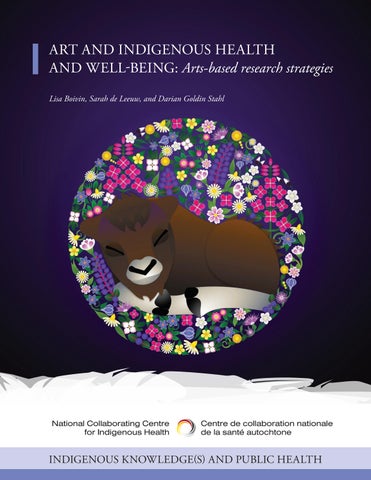
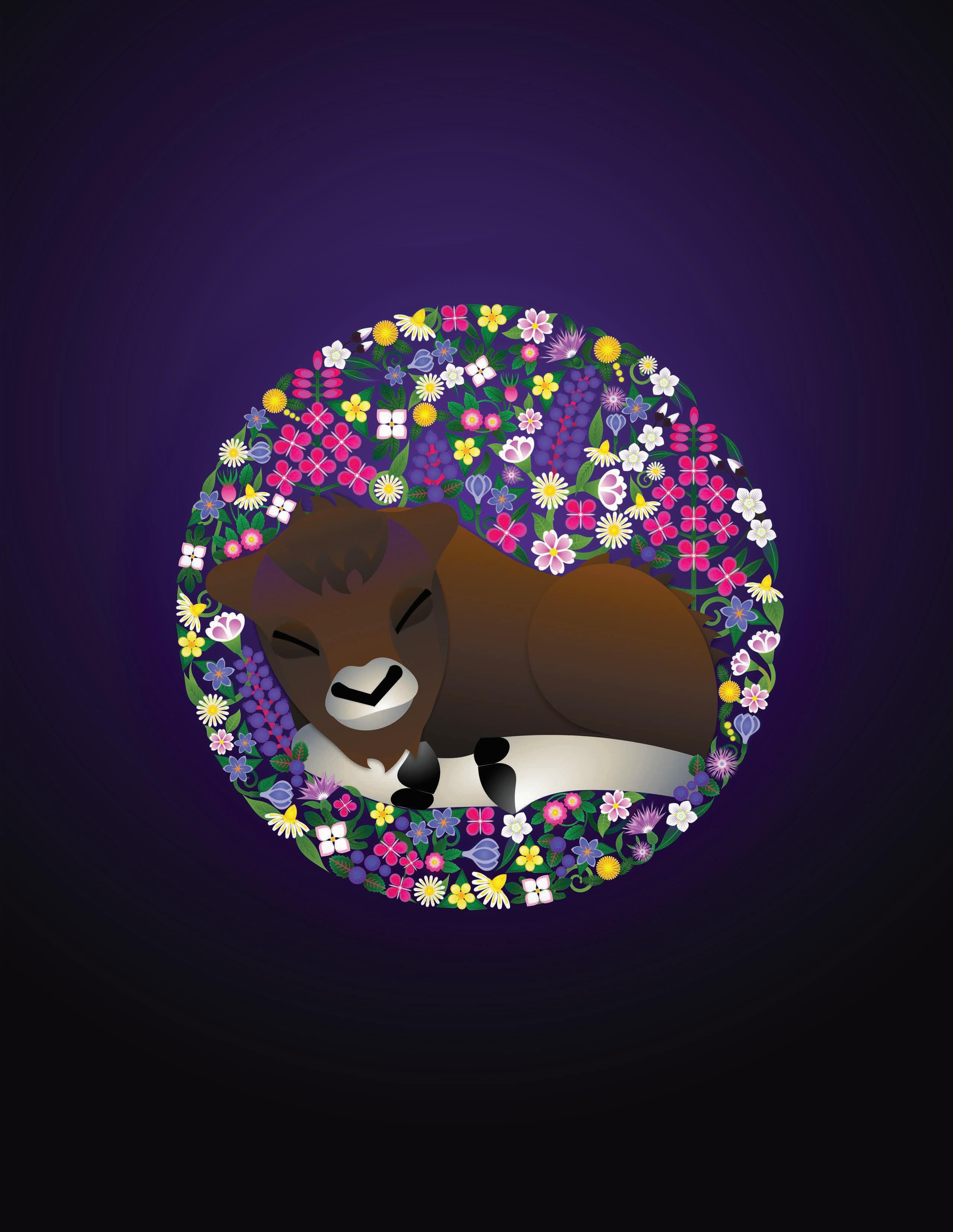
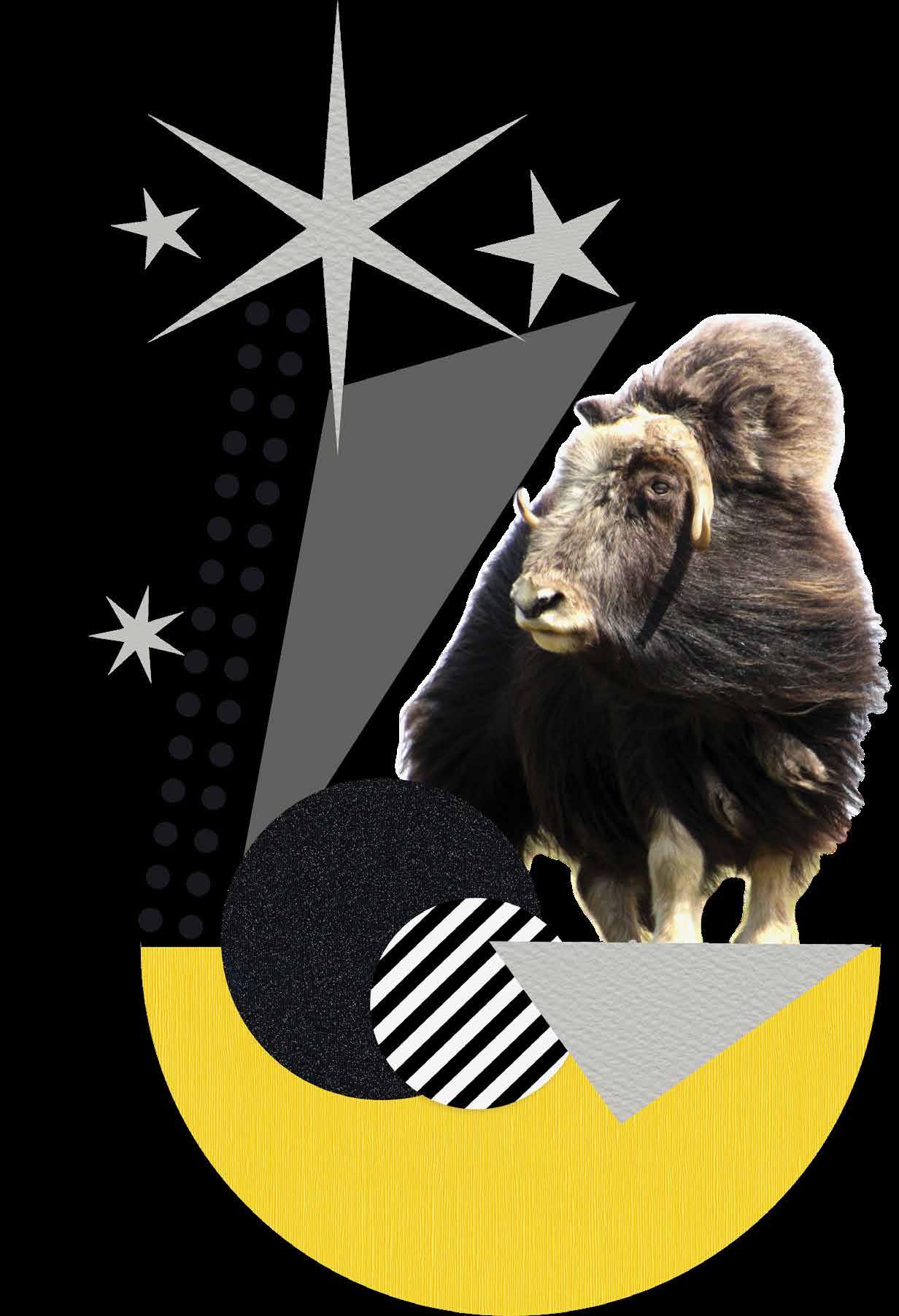
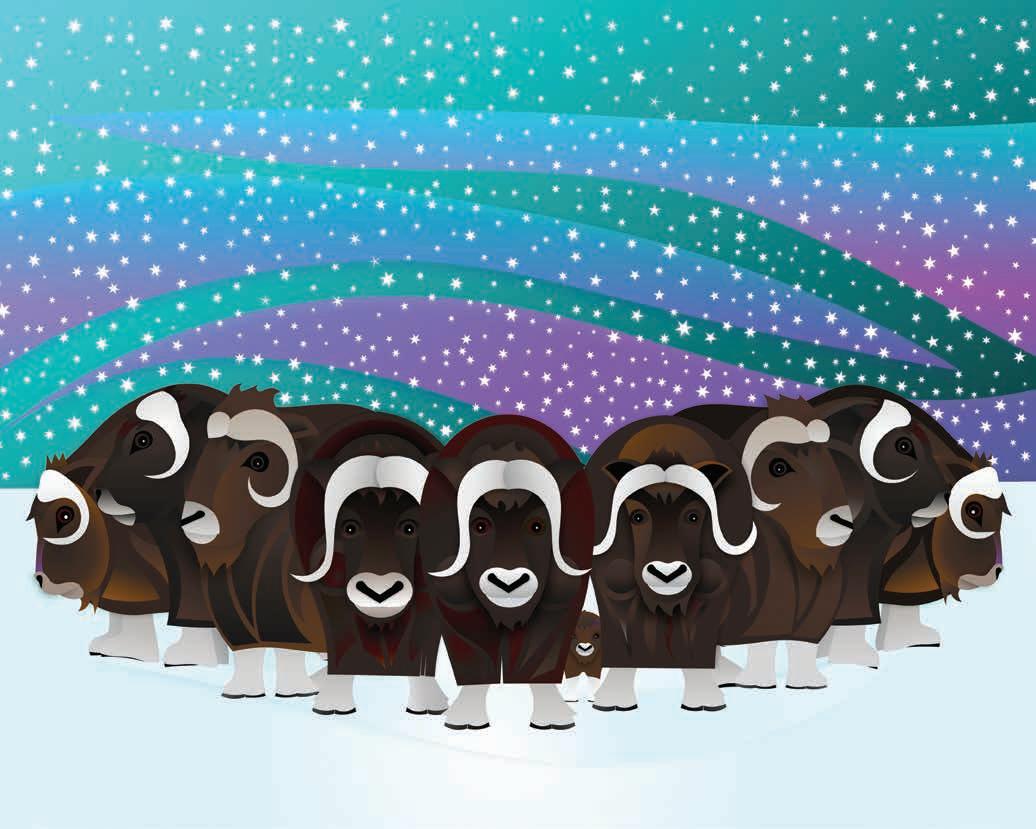
Artist and Bioethicist Dr. Lisa Boivin (Deninu Kųę First Nation) offers us an image of Muskox (Figure 1) to orient our discussion on art, research, and well-being. Sturdy and steadfast, Muskox easily braces the freezing arctic winds. The stars and halfmoon shape surrounding Muskox recall the long polar nights in the high Arctic where Muskox roam. Muskox is naturally protected against harsh elements and adversaries with their dense fur and formidable horns. However, Muskox is even stronger when they stand shoulder to shoulder with their kin. The repeated circles in Boivin’s artwork reference the circular formation adult muskoxen take to surround and protect their precious young. The circle is an important symbol in many First Nation, Inuit, and Métis traditions, referencing such teachings as the cycles of life and death, the seasons, and wholeness and harmony with nature. These extended meanings in Boivin’s artwork remind us that although Muskox and their kin are strong and resilient, they are nevertheless impacted by forces of disharmony, like climate change and deterritorialization. Muskox teaches us about our relational responsibility to recognize and address the forces that impede the health and well-being of all our relations. Together, we are stronger.
FIGURE 1. LISA BOIVIN, “WINDSWEPT MUSKOX “ DIGITAL COLLAGE, 2025.
Image courtesy of artist Lisa Boivin.
Indigenous Peoples 1 are one of the fastest growing populations in Canada. Meeting their health needs is an urgent priority for Canadian healthcare systems (National Indigenous Federal Accessibility Legislation Consultation, 2018). As it stands, health policies pertaining to Indigenous Peoples tend to be too broad and overgeneralize the unique contexts of hugely diverse First Nations, Inuit, and Métis peoples across Turtle Island (National Collaborating Centre for Indigenous Health [NCCIH], 2020). Varied, individualized, and creative health research strategies are needed to generate meaningful understandings of how unique determinants of Indigenous health (personal, social, economic, and environmental factors that determine health outcomes) impact diverse communities (Adams, 2018). Turning to and employing arts and creative practices within research, known as arts-based research (ABR),2 provides one important entry point into understanding and then enacting First Nations, Inuit, and Métis health and well-being.
As scholar Shawn Wilson (Opaskwayak Cree) (2008) points out, creative methods like storytelling have always been a feature of sharing Indigenous knowledges. Arts-based research in academic contexts only emerged in the 1970s, driven by a growing recognition that meaningful insights into social, environmental, and biomedical concerns may reside beyond conventional scientific frameworks (Eisner, 1981; Leavy, 2015). Although statistics and other numerical datasets may be essential aspects of research, they may do little to illuminate or explain the experience or meaning of healthcare concerns on the people they impact (McNiff, 2008). Since then, social and natural sciences researchers continue to deploy ABR to study the complex interactions between people and healthcare, including the impact of Canadian healthcare systems on First Nations, Inuit, and Métis communities. Scholars like Lisa Boivin, Anna Flaminio (Métis), Jo-Ann Archibald (Stó:lō First Nation), and Kelly Bird-
Naytowhow (Nēhiyaw or PlainsCree) are some of the leading Indigenous voices on arts-based research, chronicling the use of the arts to research and restore health and well-being.
With this in mind, the third installment of our Art and Indigenous health and well-being series offers insights into how artsbased research might form bridges between First Nations, Inuit, Métis, and western 3 knowledges and strengthen health and wellbeing for both human and morethan-human worlds. Artistic approaches to health research may prove to be particularly valuable for community and academic partnerships and for Indigenousled health studies. High quality ABR empowers communities to determine research protocols for artistic engagement as well as to interpret those findings in ways most relevant to that community (Flaminio et al., 2020). In contrast to dense academic research papers, artistic products like digital storytelling and photography may be more accessible to
1 The term ‘Indigenous Peoples’ is used throughout this report to refer to First Nations peoples, Inuit, and Métis peoples collectively, and is capitalized as a sign of respect for the distinct First Nations, Inuit, and Métis societies. Wherever relevant, the terms “First Nations,” “Inuit,” and “Métis” will be used when referring to specific Indigenous populations.
2 There are numerous names for research that integrates creative practices. While “arts-based research” is a common term in academic circles, community groups may prefer less institutional terms like “storywork” (Archibald, 2008, p. 2) or “embodied knowledge” (Simpson, 2017, p. 161). We acknowledge that our shorthand of “ABR” may be limiting and does not fully envelop the breadth of wholistic and artistic approaches to research.
3 “Western” is used in a short-handed way to denote complex power formations that, broadly speaking, stand in antithesis to Indigenous ways of knowing and being and are marked by, to name but a few things, privileging biomedical sciences and objectivity, viewing land and non-human beings as subordinate to human-led profit-making efforts, honouring secularity above the spiritual, and understanding both time and place as forwarding forces needing to be controlled and monetized.
diverse research stakeholders while also touching the hearts and minds of mass audiences (Willox et al., 2012). ABR is also a strengths-based approach to health research, as it showcases the cultural resiliency of First Nations, Inuit, and Métis Peoples (Flicker et al., 2014). Finally, artistic practices, such as playing instruments, dancing, singing, and storytelling, are already wholistically aligned within many First Nations, Inuit, and Métis conceptions of health and what it means to live a good life (Akearok et al., 2023; Flaminio et al., 2020; Thunderbird Partnership Foundation, 2020). Arts-based research is, as this paper documents, proving to be an accessible, insightful, and culturally enlivening approach for health and wellness research.
In order to explore ABR as it pertains to the health and well-being of First Nations, Inuit, and Métis peoples, we begin by detailing three main arts-based research frameworks: participatory action research, Two-Eyed Seeing, and Indigenous-led research. This is followed by a detailed discussion about the specific benefits to Indigenous health and wellness provided by ABR. Thirdly, we discuss the ethics of ABR, especially in the context of Indigenous data sovereignty. We end with some reflections on the challenges of ABR, as well as summaries and conclusions.
ARTS-BASED RESEARCH METHODS AND
METHODOLOGIES
First Nations, Inuit, and Métis communities have been “researched to death,” both literally and metaphorically (Peltier, 2018, p. 1). Medical experimentation conducted against non-consenting Indigenous men, women, and children, for instance, has led to a justified wariness of new health research studies proposed to community leadership (National Centre for Truth and Reconciliation, 2020). Even when health research is conducted with an Indigenous community rather than on it, research has typically been led by non-Indigenous researchers working within non-Indigenous worldviews about health and well-being (Government of Canada, 2022). The misalignment of community values and health study outcomes leads to “helicopter research,” wherein non-Indigenous research teams arrive in a First Nations, Inuit, or Métis community, conduct research, publish results in academic journals, and never speak to the community again (Forbes et al., 2020; Peltier, 2018; Wilson, 2008). This is a symptom
of an institutional research culture that sways heavily towards career advancement of non-Indigenous researchers rather than towards policy changes that could positively impact the daily lives of community members (Hammond et al., 2018; Yassi et al., 2016).
New reconciliatory health research protocols demand tangible benefits for First Nations, Inuit, and Métis communities, non-hierarchical frameworks, as well as the right to interpret resulting data within the communities’ own worldviews and standards of ethics (Wilson & Hughes, 2019). Research including or using the arts must also adhere to these considerations, despite the fact that arts-based research may be more democratizing than, for instance, randomized control trials or broad health surveys alone (Russell & de Leeuw, 2012). While arts-based research may be a means to empower First Nations, Inuit, and Métis co-researchers and allow creative insights about healing the soul or achieving health
equity, it still requires careful consideration. Arts methods and methodologies are included in a number of research frameworks, including participatory action research, Two-Eyed Seeing, and Indigenous-led research, each of which are discussed in detail below. A comparison chart between these three frameworks is also presented in Table 1.
Participatory action research (PAR)
The arts prove to be particularly useful when conducting participatory action research (PAR), also known as community-based participatory research or community-engaged scholarship, which is an antihierarchal framework where institutional and community researchers co-develop and carry out studies (Beaulé et al., 2021; Blodgett et al., 2013; Murphy et al., 2021; Peltier, 2018). The community collaborators in this research are thus “co-researchers” rather than “participants” or “subjects” (Bird-Naytowhow
TABLE 1: ARTS-BASED RESEARCH COMPARISON TABLE
Dimension Participatory action research (PAR)
Leadership structure Co-developed by institutional and community members; anti-hierarchical; community members are “co-researchers,” not subjects.
Philosophical orientation Democratizing; emphasizes lived experience and community-defined priorities.
Two-Eyed Seeing Indigenous-led research
Partnership model bridging Indigenous and western knowledges in shared leadership
Role of the arts Tool for engagement and data collection; elicit feelings of empowerment, accomplishment, and personal expression.
Primary strengths Democratizes research; engages youth and marginalized groups; often action-oriented toward policy change.
Dual-perspective philosophy (Etuaptmumk in Mi’kmaw) holding Indigenous and western knowledges side-by-side without blending them.
Arts function as a bridge between knowledge systems.
Indigenous leadership is primary; study is initiated, conducted, and interpreted entirely within First Nations, Inuit, or Métis worldviews
Grounded in Indigenous knowledge systems upheld by Elders, Knowledge Keepers, and local cultural frameworks.
Arts are intrinsic to cultural conceptions of health, relationships, and cultural continuity.
Prevents cultural misinterpretation; enables reconciliationoriented partnerships; widens interpretive perspectives.
Risk of superficial adoption without wholistic partnerships.
Produces highly specific, culturally grounded insights; strengthens data sovereignty and community-defined health measures.
Funding barriers; institutional constraints; outsider misrecognition of culturally specific health indicators.
et al., 2017, p. 2). Another core feature of PAR is addressing relevant concerns in collaborative ways that ensure reciprocity and tangible benefits for community partners. Respectful relationships are foundational to PAR, necessary for all phases of research from question development to protocol formation, data collection, analysis, and dissemination (Murphy et al., 2021, Wilson, 2008).
Arts-based PAR programs are incredibly diverse and, at their best, tailored to the values and creative strengths of a particular community while engaging a priority healthcare concern (Hammond et al., 2018). Scoping reviews of arts-based PAR with First Nations, Inuit, and Métis communities show a broad range of healthcare research topics addressed, such as aging, disability, food security, recreation, living well, mental health, women’s health, climate change impacts, and sexually transmitted and blood born infections. (Forbes et al., 2020; Vining & Finn, 2023). As well, many different arts-based methods are used to engage these topics, including murals, collages, mapping, textiles, digital storytelling, journalling, dance, applied theatre, and music (Hammond et al., 2020). Photovoice, however, is the most popular arts method used to study health in the current literature (Vining & Finn, 2023).
Photovoice involves community co-researchers capturing emblematic photographs of lived experiences and then using the images to initiate dialogues on the healthcare study topic (Bennett et al., 2019; BirdNaytowhow et al., 2017; Gabel et al., 2016; Vining & Finn, 2023). The photographs are meant to unveil, for example, the barriers to receiving equitable healthcare from the community co-researchers’ first-person perspectives. The most cited reason for deploying photovoice PAR is to counter the typical researcher/participant hierarchy, because the community coresearchers are determining their own qualitative data set to study (i.e., the photographs and written or oral context). Using this qualitative data, the results of the research may then go on to inform policy or funding changes aimed at leveling health inequities, as well as mobilizing the empathy-creation capacities of art to reduce antiIndigenous biases.
University of Guelph researchers Harper et al. (2015) provide a case study of photovoice PAR. The team sought to understand the various and most acute ways climate change is affecting the health of the Inuit Nunatsiavut community of Rigolet. The Inuit co-researchers’ photographs and dialogues showed that access to country food is drastically decreasing, as weather patterns and habitat loss disrupt caribou and bird migration, berry season, and seal pupping numbers. This has led to food insecurity and a reliance on processed, unhealthy, and expensive retail foods. Community members also fear tainted canned food and water, as cold storage has become unreliable. Sharing this photography with policy makers and stakeholders outside of Rigolet “increases legitimacy of priority areas, enables integration of Inuit knowledge, increases community representation in decision-making, and increases local capacity to respond to climate-related stressors” (Harper
When First Nations, Inuit, and Métis youth have the means to produce their own educational media, they “are able to self-represent, eschewing stereotypes or marginalizing discourses that attempt to oppress them, and replac[e] those representations with ones of strength, empowerment and cultural pride” (Flicker et al., 2014, p. 29).
et al., 2015 p. 15). Ultimately, the artwork prompted discussions that pinpointed the most relevant needs and concerns of the community pertaining to climate change and health.
In addition to unveiling emergent healthcare needs, arts-based PAR is also used to promote good health in culturally relevant and age-appropriate ways. A group of settler, Indigenous, Black, youth, and university- and communitybased researchers behind the project “Taking action! Building Indigenous leadership in HIV prevention using arts-based methods” sought to understand if arts-based methods could effectively educate Indigenous youth about sexual health (Flicker et al., 2014). The study included 85 youth from six First Nations, urban Indigenous, and Inuit communities. The research team also hired local youth coordinators to identify the most relevant and engaging arts methods for each group. Following the youth coordinators’ feedback, the teams used throat singing, painting, hip-hop dancing, theatre, carving, video making, and graffiti to prompt educational engagement and reflections on safer sexual practices. Creating the art was engaging and fun, which broke the ice on what might otherwise have been embarrassing or taboo healthcare topics. When First Nations, Inuit, and Métis youth have the means to produce their own educational media, they “are
able to self-represent, eschewing stereotypes or marginalizing discourses that attempt to oppress them, and replac[e] those representations with ones of strength, empowerment and cultural pride” (Flicker et al., 2014, p. 29). Ultimately, the participatory nature of creating art enhanced their sexual health education and motivated the youth to share the outcomes of arts workshops with their communities (Flicker et al., 2014).
In both case studies, empowering community co-researchers to collect their own data assists in identifying relevant research priorities, which contributes to producing the most actionable health research outcomes for each unique context. This kind of specificity resists panIndigenizing the results of one study across many distinct communities. What’s more, the accessible nature of the arts enables intergenerational age groups to participate in research that will go on to influence policy changes. This produces more accurate and representational data to draw from (Gabel et al., 2016). Engaging with healthcare concerns through participatory, fun, and culturally appropriate means, particularly for medically underrepresented and marginalized groups, subverts a paternalistic approach to healthcare studies that Indigenous Peoples have historically experienced.
“Two-Eyed Seeing”
Mi’kmaq Elders Murdena and Albert Marshall of the Eskasoni First Nation in Nova Scotia proposed the concept of “TwoEyed Seeing,” or Etuaptmumk in Mi’kmaw, to settler scholars in 2004. Two-Eyed Seeing is a guiding philosophy for partnered research that bridges the best of both Indigenous and western ways of knowing (Iwama et al., 2009). Two-Eyed Seeing does not attempt to blend Mi’kmaq and western ways of knowing but rather employs two perspectives to achieve a “wider, deeper, and more generative ‘field of view’ than either of these perspectives in permanent isolation” (Iwama et al., 2009, p. 5). Cindy Peltier (2018), an Anishinaabe-kwe scholar and health researcher, further explains that Two-Eyed Seeing is a wholistic research philosophy grounded in partnership, which is a “movement toward reconciliation and the inclusion of Indigenous knowledges” within academic institutions (p. 10). Since its inception, researchers have broadly adopted Two-Eyed Seeing as a collaborative methodology to guide respectful and selfdetermining communityacademic relationships in a variety of contexts, including arts-based research for health (Forbes et al., 2020; Government of Canada, 2022).
An example of Two-Eyed Seeing ABR is provided by Rieger et al. (2021), who describe a digital storytelling initiative aimed at understanding why First Nations women in northern Manitoba are more likely to be diagnosed with later-stage breast cancer than non-Indigenous patients. The research team wove together their knowledges of breast cancer and digital storytelling around the guiding structure of the Ojibwa medicine wheel, which represents the harmony of mental, emotional, physical, and spiritual aspects of life and
health. They integrated other culturally significant practices as well, “such as offering tobacco ties, smudging, talking circles, and a feast, to ensure that the workshop was culturally relevant and safe for the women” (Rieger et al., 2021, p. 2168). In addition to these welcoming acts, the medicine wheel structure provided a familiar reference for creating digital stories about difficult lived experiences of cancer and the barriers that prevented the women from attaining medical care sooner. The Two-Eyed Seeing approach
enabled the community coresearchers to uphold their cultural values while learning how to mobilize digital media as health research, which will ultimately extend the reach of their healthcare stories.
Darrien Morton, Kelley BirdNaytowhow (Nēhiyaw or PlainsCree), and Andrew Hatala (2021) give us another example of TwoEyed Seeing that demonstrates the necessity of Indigenous partnership for accurately interpreting the results of ABR. The research team conducted a
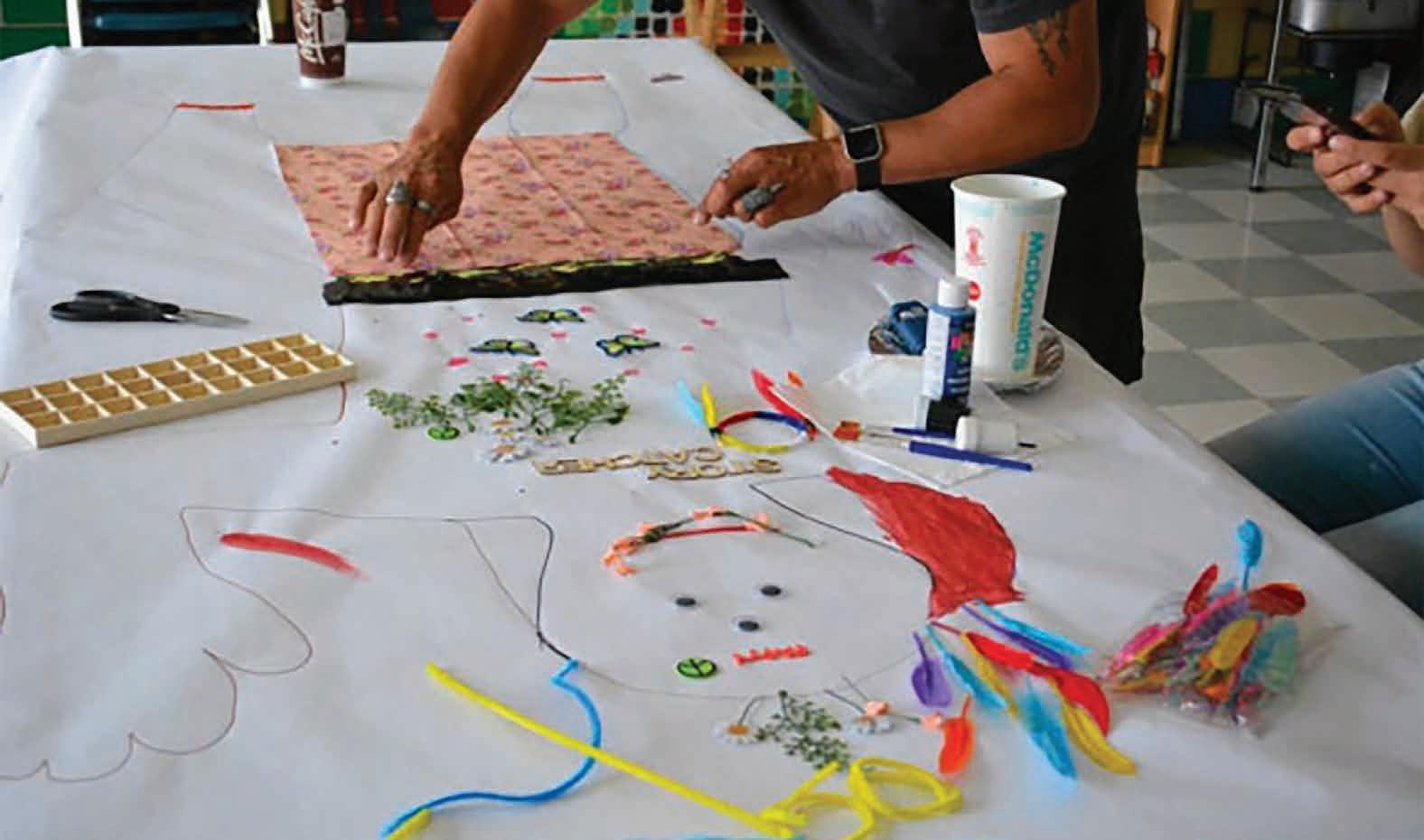
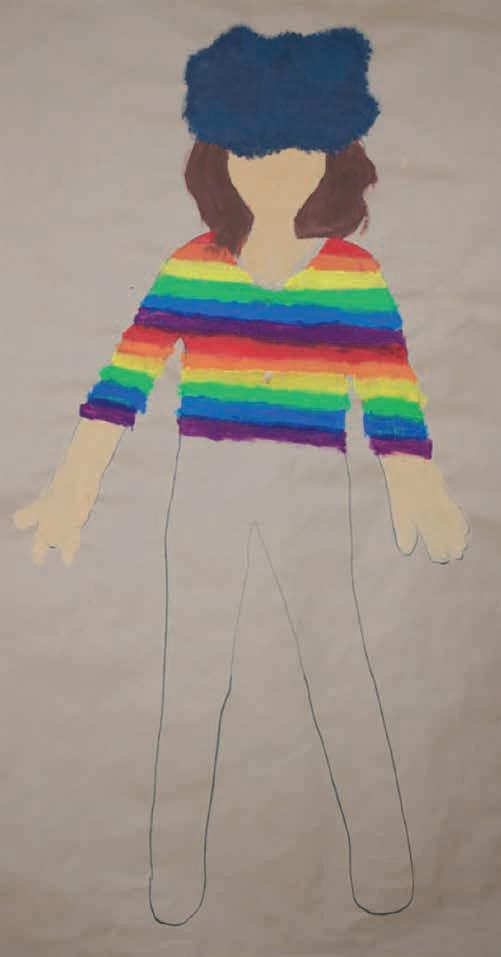
FIGURE 2: BODY MAPPING ARTS-BASED RESEARCH HELD BY DARRIEN MORTON, KELLEY BIRD-NAYTOWHOW, AND ANDREW R. HATALA, 2018.
Image courtesy of photographer Kelley Bird-Naytowhow.
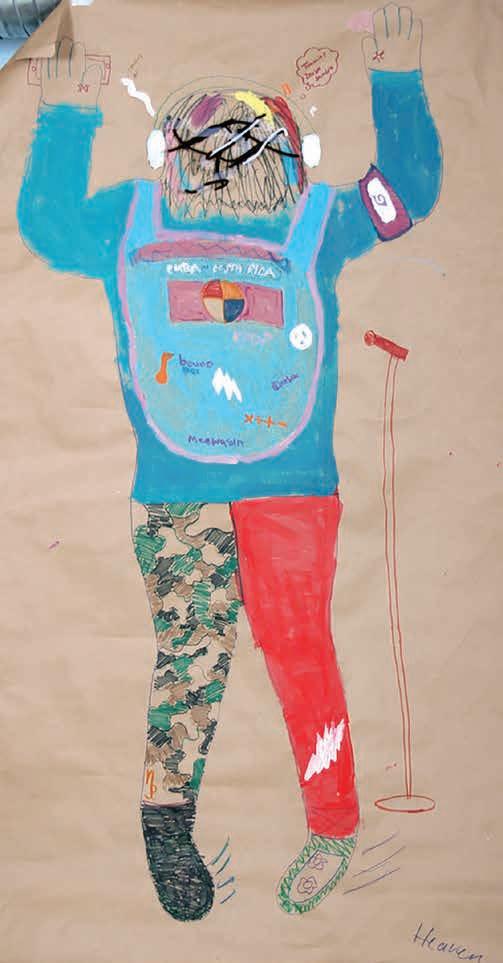
body mapping arts-based research study to evaluate the well-being and personal growth of Saskatoon inner-city youth of mostly Cree and Métis heritage (see Figures 2-4). The youth co-researchers outlined their bodies on large sheets of paper and filled in their silhouettes with drawings that offered insights around themes of identity and well-being. Although the team also attempted to conduct interviews, the youth were quiet and did not offer many explanations of their body maps. Researchers might misidentify silence as a study failure if they interpret it solely through western philosophies, where voicing one’s truth is seen as a moral good and evidence of agency. However, within Cree philosophies, silence may evidence “mamâhtâwisiwin or deep inward thinking” in these youth, for whom “storying self must not only nurture quietness, but equally remain mindful and slow” (Morton et al., 2021 p. 11 & 7). Within this Cree worldview, silence is a “generative, ethical, and culturally-grounded” standpoint to “protect sacred stories” (Morton et al., 2021 p. 10 & 7). Within the appropriate cultural paradigm, the youth co-researchers do not have to participate in interviews for their artistic creations to meaningfully “speak” about growth and well-being. Interpreting ABR through a Two-Eyed Seeing lens thus mitigated the risk of non-Indigenous cultural biases permeating the analysis.
When attempting to interpret creative and subjective arts media as health data, there is a risk of misrepresenting the makers’ intentions for their arts, especially if the analysis is conducted by those outside of the makers’ culture and worldviews (Willox et al., 2012). Worse yet, misinterpreting artistic research “can be used to reify, objectify, essentialize, and/or further marginalize individuals and communities” (Willox et al., 2012, p. 129). It is therefore essential that Indigenous co-
researchers are equally present and active throughout each stage of ABR, including interpretation and analysis (Yassi et al., 2016). To meet this aim, a Two-Eyed Seeing approach that is molded around the particular place, setting, time, cultural customs, and individuals involved, that is welcoming of all knowledges present throughout the research process, and that is built on a foundation of trust and relationship is an ethically grounded approach to health research (Iwama et al., 2009).
Image courtesy of photographer Kelley Bird-Naytowhow.
FIGURE 3/4: BODY MAPPING ARTS-BASED RESEARCH HELD BY DARRIEN MORTON, KELLEY BIRD-NAYTOWHOW, AND ANDREW R. HATALA, 2018.
Indigenous-led research
Rather than partnering with non-Indigenous research groups to co-develop a study, Indigenousled research is initiated, conducted, and analyzed entirely within First Nations, Inuit, or Métis communities. Indigenous Peoples now demand not only participation, but leadership in research projects about them. Wilson (2008) states,
As we Indigenous scholars have begun to assert our power, we are no longer allowing others to speak in our stead. We are beginning to articulate our own research paradigms and to demand that research conducted in our communities follows our codes of conduct and honors our systems of knowledge and worldviews (p. 8).
Indigenous-led research is “autonomously grounded in traditional Indigenous knowledge – maintained and upheld by local Elders, healers and Knowledge Keepers – rather than being grounded in Western medicine, structures and knowledge” (Allen et al., 2020, p. 209). NonIndigenous health researchers may play a supporting role, including in securing funding, aid in platforming and disseminating outcomes, or simply receiving the invitation to understand health and well-being from the diverse array of Indigenous knowledges. The arts may play an outsized role in this framework, as First Nations, Inuit, and
Métis peoples’ conceptions of health are typically wholistic and already include cultural arts like storytelling, dancing, give-away dances, cultural instruments, and singing (Thunderbird Partnership Foundation, 2020). Therefore, the arts can be an intuitive method to study health and well-being within Indigenous-led research.
Anna Corrigal Flaminio (Métis), Janice Cindy Gaudet (Métis), and Leah Marie Dorion (Métis) provide a case study of Indigenous-
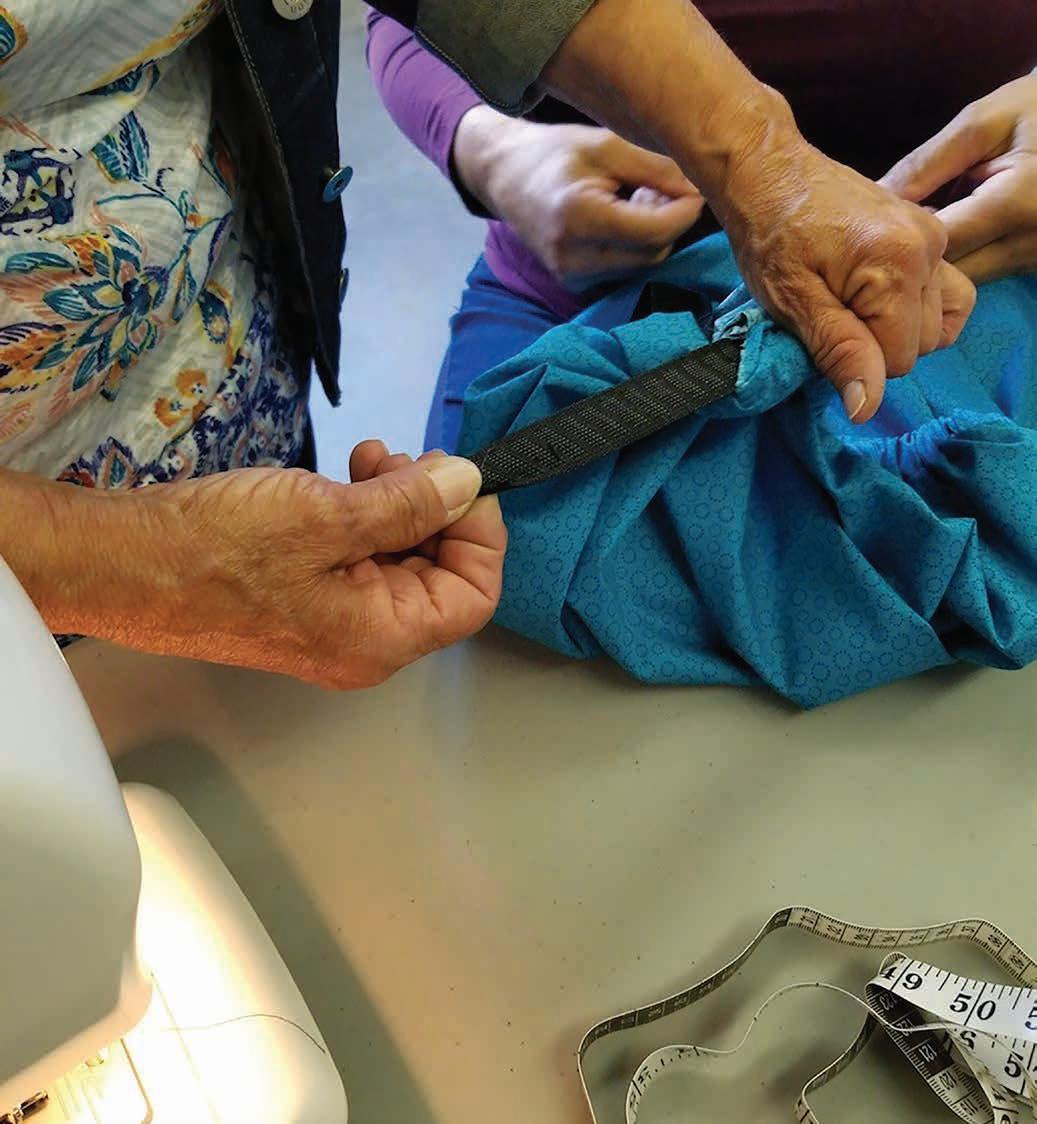
led ABR. Their positions as three “Métis women working with Métis women relatives on a Métis women’s research project” align with the cultural customs and worldviews of their coresearchers (Flaminio et al., 2020, p. 57). Responding to critical gaps in Métis women’s health research, Flaminio, Gaudet, and Dorion employ a whakotowin methodology, or Métis women’s kinship responsibilities, through the practice of kiyokewin, or gathering to visit with one another.
FIGURE 5: MÉTIS WOMEN’S GATHERING AS ARTS-BASED RESEARCH, HELD BY ANNA CORRIGAL FLAMINIO, JANICE CINDY GAUDET, AND LEAH MARIE DORION, 2018.
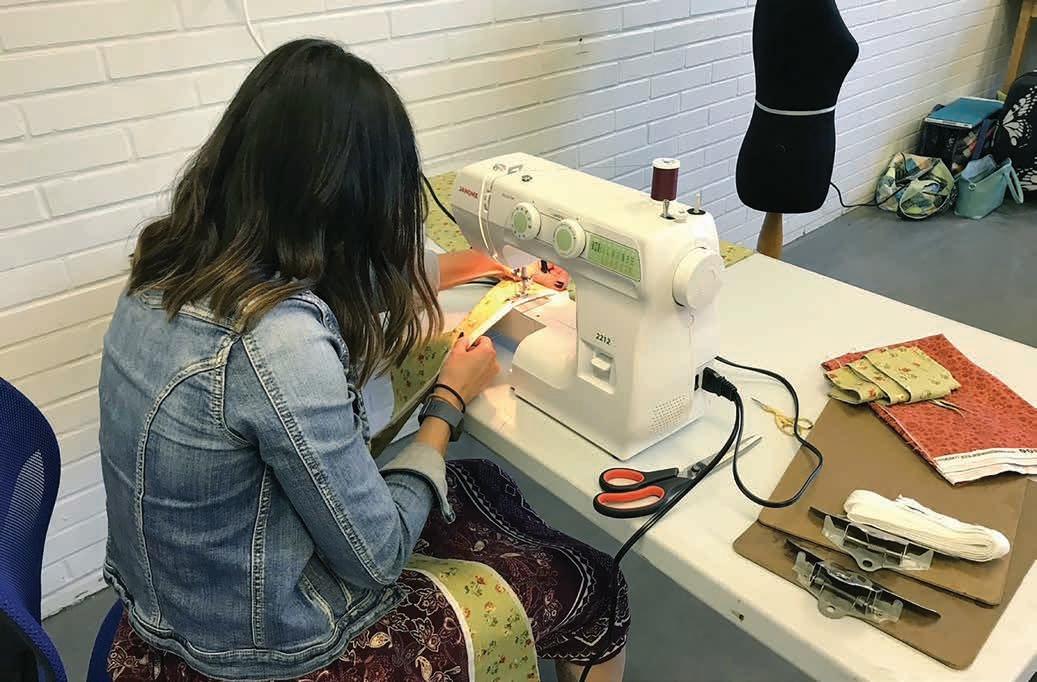
Sewing and beading are common features of kiyokewin and are examples of embodied Métis knowledges passed down from Elders, mothers, and aunties to younger generations (see Figures 5 and 6). As cultural connectedness and continuity are recognized determinants of Indigenous health (Akearok et al., 2023; Chandler & Dunlap, 2018; Masotti et al., 2020; Snowshoe et al., 2015), the researchers found that practicing these arts together greatly promoted Métis women’s health and well-being.
Indigenous-led research is vital for gathering the kinds of disaggregated data that will benefit specific communities. In the above example, Flaminio et al. (2020) recommended that a larger indoor community gathering space is needed to continue visiting, sewing, and beading for the promotion of Métis women’s wellness. Outsiders may not have been able to successfully conceptualize and conduct such a specific case study, be invited into such intimate gatherings, nor recognize the importance of visiting and sewing for health. These insights may have only emerged through Indigenous-led ABR, as the community coresearchers explained that limiting the study to Métis women was essential for their comfort and trust. Health and wellness recommendations for visiting with extended kinship groups and
FIGURE 6: MÉTIS WOMEN’S GATHERING AS ARTS-BASED RESEARCH, HELD BY ANNA CORRIGAL FLAMINIO, JANICE CINDY GAUDET, AND LEAH MARIE DORION, 2018.
sharing culturally specific arts may not fit well within western conceptions of health, which is generally defined as the absence of illness or disease. Within this Métis conception of health, however, strong community connections, reinforced through frequent gatherings and skills sharing around arts practices, is a central tenet of women’s health.
Flaminio, Gaudet, and Dorion’s (2020) research demonstrates the importance of measuring health and well-being according to each community’s own definitions and practices. When health is exclusively defined through western lenses, Indigenous Peoples’ health outcomes tend to be deficit-based and neglect to
include narratives of resiliency and thrivance 4 throughout the continuing process of colonization (Hammond et al, 2018; Rieger et al., 2020). As Murphy et al. (2021) summarize, “Indigenous Peoples have been researchers since time immemorial, collecting and analyzing information from the land, and from one another, to support and provide for the wellbeing of all their relations” (p. 16), yet are seldom acknowledged for these accomplishments by western institutions. However, when First Nations, Inuit, and Métis communities lead their own health studies, embedded in culturally specific knowledges and practices, clear and specific strategies for promoting health and wellbeing emerge.
4 “Thrivance” is a portmanteau of “thriving” and “resistance” that connotes “a positive sense of Indigenous identity and dignity” (Baumann, 2023, p. 1).
BENEFITS OF ABR
Indigenous health research may be considered high quality when it is grounded in ethics of cultural safety and humility, wholistically collaborative, and contains tangible positive outcomes to the co-researchers and community (First Nations Health Authority, 2025). Such frameworks for arts-based health research have the potential to benefit co-researchers in many ways. Integrating the arts within healthcare research presents an empowering means for community co-researchers to dictate exactly what, how, or whether to share healthcare experiences with institutional or non-Indigenous co-researchers (Blodgett et al., 2013). Part of this empowerment requires
democratizing research protocols and partnering with First Nations, Inuit, and Métis community leaders to ensure the research is relevant and actionable. The arts may also provide a means to disseminate public health messages to wide audiences (Hammond, et al., 2018). Next, multi-sensory productions invite fuller, more meaningful insights into healthcare topics than methods like surveys and interviews offer on their own (Lys et al., 2023). Finally, artsbased research, much like arts practices more broadly, promote well-being by connecting with culturally significant practices (Thunderbird Partnership Foundation, 2020).
Democratizing
Eurocentric healthcare research models tend to instill a hierarchy between researchers and subjects, wherein the institutional researchers retain the specialized knowledge to gather and interpret data extracted from the participants (Forbes et al., 2020). Settler researchers may knowingly or unknowingly compound this hierarchy by reinforcing deficitbased narratives and the notion that western medicine is superior to First Nations, Inuit, and Métis medicines (Willox et al., 2012). ABR challenges the idea that valuable health data can only be produced through topdown frameworks (Nicholson et al., 2022).
Arts-based research takes as its premise that community coresearchers are experts in their lived experiences and may choose to share those experiences through the arts so that they may be understood by others (Seppälä et al., 2021). Therefore, creating artworks about lived experience reorients hierarchies of expertise to the makers’ own embodied knowledges, defamiliarizing typical health research methodologies to the serendipity that occurs within arts expression (Hammond et al., 2018; Rieger et al., 2021). As Dr. Danièle Behn-Smith (Eh Cho Dene of Fort Nelson First Nation and Franco-Manitoban/ Métis from the Red River Valley) (2021) tells us, focusing on lived experience and ancestral teachings
“disrupts White supremacy in population health reporting by aligning and privileging Indigenous epistemologies [theories of knowledge] and perspectives of wellness” (p. 37). Community co-researchers are then in the empowered position to invite nonIndigenous researchers to learn from these artworks.
Next, the arts also make healthcare research outcomes more accessible. Artwork greatly expands what healthcare data can look like, dislodging dense quantitative data sets and often inaccessible academic research papers as the default deliverables of healthcare research. The arts demand to be experienced rather than solely described, which broadens access
channels to exhibitions, concerts, and other multimedia formats. These events invite community members and other stakeholders to witness the impacts of health and illness in meaningful and engaging ways. ABR thus “enabl[es] communities to learn and benefit from the knowledge created,” rather than restricting study outcomes within academic publishing channels (Hammond et al., 2018, p. 271). Incorporating First Nations, Inuit, and Métis theories of knowledge that reflect and honour oral and artistic traditions gestures towards anticolonial and democratic health research by establishing respectful, reciprocal relationships between institutions and communities (Forbes et al. 2020; Wilson, 2008).
Insightful
The arts are a method to gain insight into some of the most difficult healthcare topics. Social taboos against health concerns like domestic violence, mental health disorders, genital cancers, or sexually transmitted and blood born infections (STBBIs) may make these experiences difficult to disclose to co-researchers and physicians, especially when individuals also have other stigmatized histories like sex work or substance use disorders (Bennett et al., 2019; Russell & de Leeuw, 2012). For example, in the Willox et al. (2012) digital storytelling ABR project profiled previously, they “found that people were much more apt to share more personal and emotional experiences through digital stories, rather than the interviews and focus groups” (p. 138). The arts may provide more suitable pathways for communicating these lived experiences, as well as meditative time for supportive reflection (Morton et al., 2021).
If co-researchers choose, the initial translation of sensitive topics through the arts is an important steppingstone towards communication. This is because discussing illness and medical experiences directly may be retraumatizing, impossible to put into words, or not age appropriate. For example, the teams behind two arts-based
sexual health education initiatives, Fostering Open eXpression among Youth (FOXY) and Strengths, Masculinities & Sexual Health (SMASH), recruited 610 First Nations, Inuit, Métis, and non-Indigenous youth from across the Northwest Territories to see how the arts might break down barriers to communicating about sexual health (Lys et al., 2023).
The research findings “affirm that sexual health programming that is fun, arts-based, interactive, and tailored to the realities of Northern and Indigenous youth has the potential to advance sexual health and wellbeing” (Lys et al., 2023, p. 415) (see Figure 7).
In another study, Fanian et al.’s (2015) ABR with Tłįchǫ youth in Behchokǫ, Northwest Territories, found that the hip hop video
they made together empowered the youth to talk about the mental health challenges they face, such as online bullying and substance use. The youth then desired to share this artwork with other youth around the world in a collective effort to bolster circumpolar mental health.
When Elders are involved as co-researchers, ABR may also prompt intergenerational insights and relationships. Landy and Worthington’s (2021) filmmaking PAR initiative promoted intergenerational dialogue as NunatuKavut, Nunatsiavut, and Innu Nation Elders and youth created films around sexual health and preventing STTBIs to educate youth in their communities. Although “topics
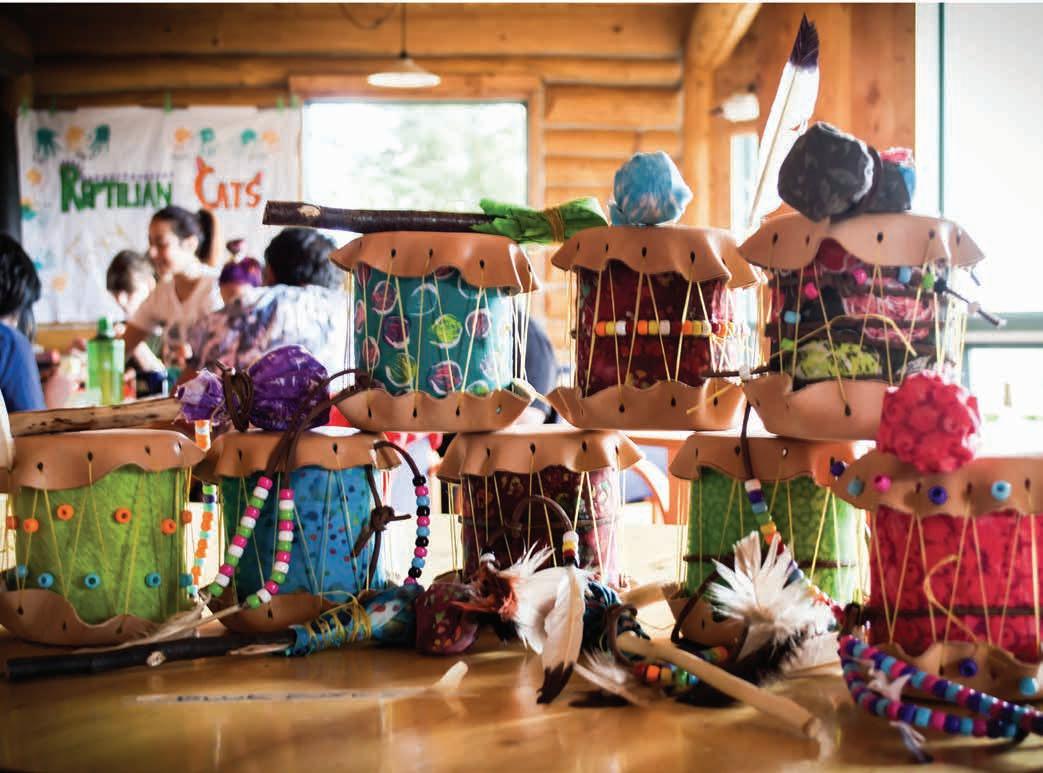
FIGURE 7: YOUTH ARTS-BASED WORKSHOP HELD BY FOXY/SMASH.
around sexual health became taboo in many communities as a result of colonial beliefs and values” instilled through residential schooling, this study aimed to document how artsbased initiatives may overcome social taboos and re-establish the dynamic of Elders teaching sexual health to new generations (Landy & Worthington, 2023, p. 1; see also Landy, 2018). The institutional researchers empowered the five Elder coresearchers by remaining flexible to their film’s direction and topic, which ultimately also included alcohol and drug use education. The outcomes of the ABR demonstrated the importance of Elder co-researchers to determine the best approach and methods of ABR for generating productive insights in each of their communities. In this example and others, the arts provided a safe and welcoming pathway to broach difficult healthcare topics.
Promote healing
ABR has the potential to promote healing and wellbeing in three main ways. First, collaborative research between Indigenous and non-Indigenous researchers can promote reconciliation. Authors Shawn Wilson (Cree), Andrea V. Breen,
and Lindsay DuPré (Métis) propose that research can be reconciliatory: “The way we see it, research and reconciliation are both ultimately about processes of growing, learning, and changing. We learn most when we are open to new ways of seeing” (2019, p. 11). Building trust and working together for the common benefit of communities are powerful means of healing relationships between Indigenous Peoples and settlers.
Next, being prompted to (re)connect with culturally significant artistic practices blends ancestral knowledge and spirituality in the promotion of wholistic health (Beaulé et al, 2021; Steinhauer & Lamouche, 2018). For example, Flicker et al.’s (2014) ABR on HIV prevention with Inuit youth in Puvirnituq incorporated throat singing, carving, drumming, and painting – arts that have been part of Inuit culture since time immemorial (Train, 2022). Practicing these arts connects co-researchers to their culture – a known determinant of Indigenous health (Akearok et al., 2023; Chandler & Dunlap, 2018; Masotti et al., 2020; NCCAH, 5 2016; Snowshoe et al, 2015). Therefore, artsbased programming promotes well-being by its very nature, in
addition to learning about the specific healthcare topic at hand.
Next, collectively creating and witnessing art supports opportunities for community members to build shared understandings of the barriers to health and well-being they encounter and how they may be overcome (Corbin et al., 2021; Russell & de Leeuw, 2012). Communally creating art around difficult healthcare experiences can produce a sense of agency over a narrative that had once been steeped with powerlessness (Archibald, 2012). Pandey et al. (2021), from their perceptions of ABR with First Nations, Inuit, and Métis youth on topics of mental health, found that creating artwork together bolsters selfesteem, enables youths to imagine new pathways towards health, and rewrites their own narratives to ones of strength and resiliency –“and thus possibly initiate[s] the process of healing” (p. 97). The arts are not only an accessible mode of communication in this regard, but also a reclamation of heritage and communal strength that the perpetrators of settler-colonialism attempted to stamp out.
5 The NCCIH underwent a formal name change on May 30, 2019 from the National Collaborating Centre for Aboriginal Health (NCCAH) to the National Collaborating Centre for Indigenous Health (NCCIH).
ETHICAL CONSIDERATIONS
The benefits of ABR outlined above are most likely to emerge when the study is structured around relational ethics and cultural values. Education researchers Verna Kirkness (Fisher River Cree Nation) and Ray Barnhardt (1991) popularized the idea of the “4 Rs” for research institutions to be welcoming and equitable to Indigenous Peoples: respect, relevance, reciprocity, and responsibility. The Canadian Institutes for Health Research (CIHR) adopted the 4 Rs as baseline standards of ethics for research involving Indigenous Peoples (Estey et al., 2009). CIHR also partnered with the Institute of Indigenous Peoples’ Health to develop updated guidelines for ethical research involving First Nations, Inuit, and Métis co-researchers (Estey et al., 2009; Government of Canada, 2022). These frameworks emphasize partnerships rather than researcher-subject hierarchies, and outline standards for reciprocity, building capacity, and adhering to data sovereignty frameworks. Special considerations are necessary where the arts are involved, as there is every possibility of misappropriating stories, objects,
and other creations when they are interpreted outside of Indigenous worldviews (Government of Canada, 2022). While each community’s leadership will provide the best research guidance, there are broad best practices for conducting artsbased research with community partners (Government of Canada, 2022; Sullivan & McIlduff, 2023; Yassi et al., 2016).
Ensuring reciprocity
Although First Nations, Inuit, and Métis peoples are incredibly diverse, they may “share some core values such as reciprocity –the obligation to give something back in return for gifts received – which they advance as the necessary basis for relationships that can benefit both Indigenous and research communities” (Government of Canada, 2022). Reciprocal ABR ensures that tangible benefits to the community are factored into the study from the very beginning. This could mean creating a list of policy recommendations to healthcare stakeholders (Forbes et al., 2020), platforming and distributing artistic creations to policymakers (Rieger et al.,
2021; Willox et al., 2012), or providing opportunities for arts sales and other monetary gains (Beaulé et al., 2021). These actionable benefits are in addition to learning a new artistic skill, engaging with a healthcare topic of concern, or gaining the natural well-being that may come with creative endeavors.
One way to account for reciprocity is to ensure the results of the study can have lasting impacts for community members after the official research concludes. For example, Blodgett et al.’s (2013) ABR on the well-being of local First Nations youth who moved off the Wikwemikong Unceded Indian Reserve to pursue athletic opportunities resulted in a large tapestry hung in the local recreation centre. This artwork continues to be used as a teaching resource by sports recreation staff to inspire upand-coming athletes. In another example, Plazas et al.’s (2019) theatre ABR program included Indigenous Community Health Representatives (CHRs) and an Indigenous liaison who coordinated the youth and their families with the theatre
instructors. The collaboration led to the successful lobbying and hiring of more CHRs at rural health facilities. Such activism builds trust between institutions and communities, which may lead to additional project opportunities.
Reciprocity is activist oriented: the stories and artistic expressions of oppressed groups demand change and are not simply a method of cross-cultural learning (Crawford et al., 2020). Unfortunately, too many ABR projects are started without a clear vision for how the outcomes might result in tangible benefits for the community. Vining and Finn (2023) found in their survey of 57 First Nations, Inuit, Métis, and Native American health photovoice publications that the vast majority lacked considerations for how the art projects could lead to health policy changes or other benefits to communities. They advised research teams to “identify potential policy pathways before commencing the research and continue developing these in collaboration with the community over the course of the project” (Vining & Finn,
2023, p. 8). If the research agenda is not action-oriented to serve the needs of the community, then it is difficult to imagine how the community would benefit from the research or why they would agree to participate again. The time and creative energy of the community co-researchers should be reciprocated with actions geared towards closing health inequities.
Capacity building
Capacity building means improving communities’ abilities to conduct, refine, and deploy research for themselves after the conclusion of a formal study; that is, carving pathways towards sustainable Indigenousled research (Bird-Naytowhow et al., 2017). CIHR states that research projects “should benefit the participating community (e.g., training, local hiring, recognition of contributors, return of results), as well as extend the boundaries of knowledge” (Government of Canada, 2022, article 9.13). Research leadership promotes building capacity as a tangible benefit for the community coresearchers, and ABR can build capacity in several ways.
Institutional seed money for equipment like “laptop computers, digital cameras, digital video recorders, computer and editing software, printer, scanner, and traveling cases” provided during the course of ABR can be significant assets for remote communities, where such equipment and training can be limited (Willox et al., 2012, p. 138). Experience with media technologies can have lasting benefits for Indigenous youth who gain “communication, self-efficacy, coping skills, and confidence” through “increased savvy with photography or film editing practices” (Hammond et al., 2018, p. 272). For example, the youth filmmaking participants in Loebach et al.’s (2019) ABR program produced work that was so well received by their community, the youth were then hired by their local Mi’kmaq Confederacy to produce videos “highlighting all of the employment, cultural and tourism opportunities on Lennox Island” (p. 294). Learning to use the tools of digital media production is an important skillset for the 21st century and expands future career options and horizons.
Promoting the development of internal community ethics boards, hiring and mentoring Community Research Assistants (CRAs) to collect and interpret data, and empowering community co-researchers to distribute project outcomes are other ways to build capacities for Indigenous-led research (Murphy et al., 2021; Peltier, 2018; Russell & de Leeuw, 2012; Sullivan & McIlduff, 2023). For example, the Cree and Métis youth involved in Bird-Naytowhow et al.’s (2017) photovoice project in Saskatoon presented their research at conferences, exhibitions, and multiple television and radio interviews, equipping them with the experience to take leadership roles in showcasing their research. This experience increased “their consultation skills, competence, confidence, and their trust of research and community partners – all central processes of a broader movement of capacity building and empowerment” (p. 5).
This is not to say that capacities are only built in one direction. Community co-researchers and CRAs mentor their nonIndigenous partners on proper cultural protocols (Sullivan & McIlduff, 2023) and impart their health and artistic knowledges in the course of ABR. For example, Beaulé et al. (2021), in their participatory action research with the Atikamekw Nehirowisiw Nation, Quebec, explain that although art mentors taught community co-researchers how to
silkscreen their cultural designs onto cloth, the participants taught them how to print with recycled, found, and natural materials they already had access to. This exchange of capacities led to new outlooks on the sustainability and longevity of the project. These kinds of reciprocal knowledge exchanges build capacities in both directions, as everyone both learns and teaches together.
Data sovereignty
Historically and today, First Nations, Inuit, and Métis populations have been studied without access and agency to interpret the resulting data for themselves (Government of Canada, 2022; Loebach et al., 2019; Plazas et al., 2019). To help correct this injustice, First Nations, Inuit, and Métis peoples developed guidelines to reclaim research data ownership.
Perhaps the most well-known data sovereignty framework is OCAP® (ownership, control, access, and possession), developed in 1998 by the First Nations Information Governance Centre (FNIGC) for collecting and storing data about First Nations Peoples. These principles “assert that First Nations have control over data collection processes, and that they own and control how this information can be used” (FNIGC, n.d., para. 1). The Canadian Institutes of Health Research formally integrated OCAP® for all
research involving First Nations, Inuit, and Métis peoples in 2018 (Government of Canada, 2022; Johnson et al., 2022).
Other data sovereignty frameworks are population-based. These include the Red River Métis Data Governance Strategy (Manitoba Métis Federation, 2025), and the National Inuit Strategy on Research (Inuit Tapiriit Kanatami, 2018). Other approaches are geographically specific, such as the Utility, Selfvoicing, Access, Inter-relationality (USAI) Research Framework, which was developed by the Ontario Federation of Indigenous Friendship Centres (OFIFC) (2016) to guide ethical data ownership pertaining to urban First Nations, Inuit, and Métis co-researchers in Ontario. Yet other frameworks are community specific. The Gwich’in Tribal Council (2004) of the Northwest Territories, for example, requires researchers to fill out and submit a Gwich’in Social and Cultural Institute Research Agreement Framework document before any study with them can be considered. As data sovereignty principles address “issues of privacy, intellectual property, data custody and secondary use of data” (Government of Canada, 2022), these principles may be less straightforwardly integrated with artistic outputs where copyright, public exhibition, or sale of artworks may be involved (Loebach et al., 2019).
Typically, institutions mandate that health research data is strictly anonymous to protect the identity and sensitive health information of participants. However, methods to distribute arts-based outcomes often require multi-media formats where content control and anonymity can be difficult to maintain, such as local exhibitions (Blodgett et al., 2013), traveling showcases (Bennett et al., 2019), online documentation (Fanian et al., 2015), video documentaries (Landy, 2018; Willox et al., 2012), and thirdparty applications for emerging arts like artificial intelligence and augmented reality (Hung et al., 2025; McMahon et al., 2019). The CIHR guidelines for conducting health research with First Nations, Inuit, and Métis community partners acknowledge that some co-researchers may wish to waive standards of anonymity (Government of Canada, 2022). Instead, like the Tłįchǫ youth in Behchokǫ who wished to share their hip hop dance video on social media (Fanian et al., 2015), community co-researchers may desire to be acknowledged for their art. In his research that included storytelling, Wilson (2008) explains that “the participants did not want anonymity because they understood that the information imparted, or story offered, would lose its power without knowledge of the teller” (p. 129). Each ABR group must weigh the potential benefits or harms of sharing co-researchers’
Artistic practices can be place, people, and language specific, and outsiders may not always be invited to interpret them regardless of being made during the course of a health research study (Government of Canada, 2022; Wilson, 2008).
lived experiences with health care to the public. Researchers must respect the community co-researchers’ shifting desires to share, anonymize, or withdraw their artwork.
On the other hand, some stories and arts are not meant for outsiders, either because they are contextually specific medicines or because the “wisdom contained in stories resides within Elders and knowledge keepers in a specific community” (Crawford et al., 2020 p. 101). Artistic practices can be place, people, and language specific, and outsiders may not always be invited to interpret them regardless of being made during the course of a health research study (Government of Canada, 2022; Wilson, 2008). This is especially true if nonIndigenous researchers create the study solely within western institutional frameworks, which are ill-equipped to capture the full context and worldview of the community co-researcher population (Morton et al., 2021). Community leadership may see publishing their arts as a kind of co-opting of First Nations, Inuit, and Métis narratives for
academic circles, particularly if there is no tangible benefit for the participants or community.
The best strategies to share ABR data and outcomes empower the makers of the art and community co-researchers to determine the limits of exposure. For example, researchers can edit their institution’s default research participant agreement forms to make it clear that artistic production ownership rights remain with the creator (Loebach et al., 2019). If community co-researchers agree to publicly share their art, they may request licensing agreements or artist fees to exhibit this work (Yassi et al., 2016). In addition to honorariums paid to the participants for their time, energy, and talents, setting up opportunities to sell the creations of the project is another way to create tangible benefits to participating in the research (Beaulé et al., 2021). These self-determining measures run the risk of the participants deciding to withdraw their work; however, such protocols are necessary to maintain trustworthy relationships (Loebach et al., 2019).
Principles of ownership and control may be particularly challenging when it comes to emerging arts technologies. Userfriendly platforms and applications for artificial intelligence, virtual reality, and augmented reality are typically owned and controlled by large technology corporations, which then own and control any uploaded content. Obtaining and operating independent servers to run open-source software is a pathway to maintain control over these arts but requires a higher threshold of information technology competence. Even if researchers find user-friendly applications that allow for content ownership, the fast-paced evolution of these technologies may render content obsolete or incompatible
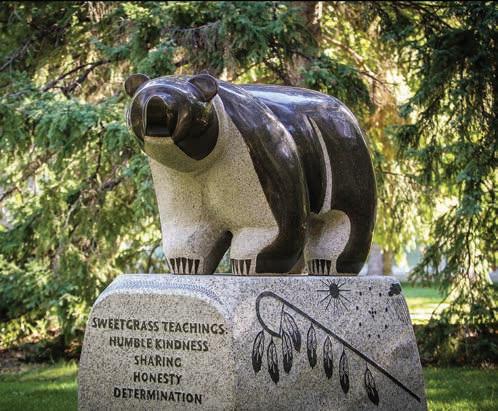
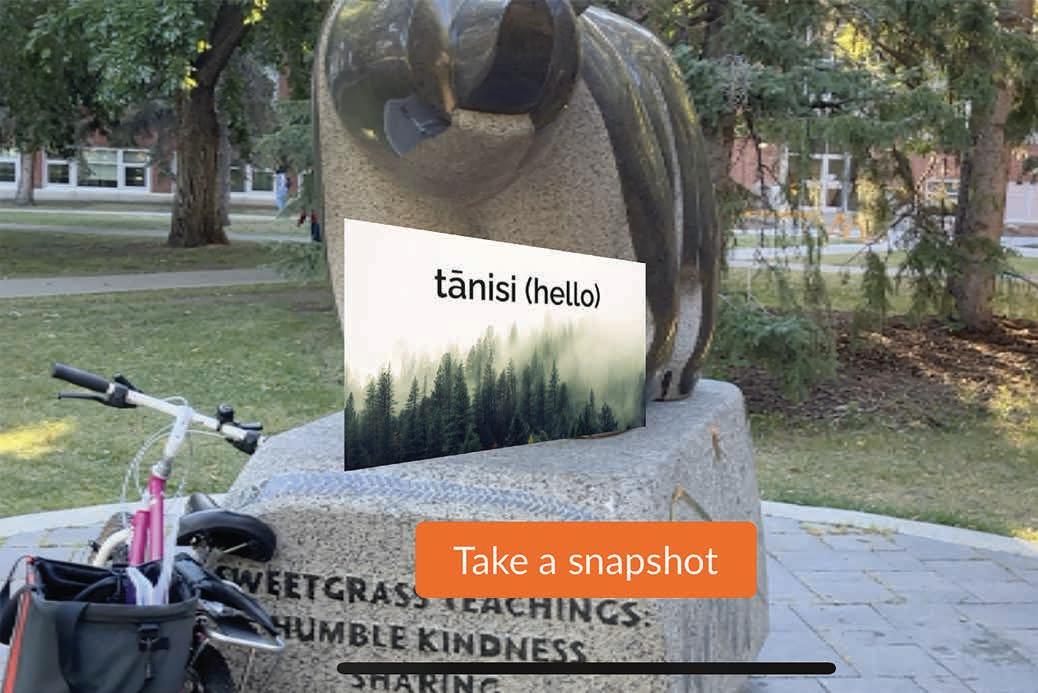
in just a few years. McMahon et al.’s (2019) augmented reality experience of Cree Knowledge Keeper teachings overlayed onto Stewart Steinhauer’s (Cree) Treaty 6 marker sculpture of Sweetgrass Bear in amiskwacw skahikan (Edmonton, Alberta) demonstrates these challenges (see Figures 8 and 9). After struggling to find an augmented reality application that allowed for even partial control of the content, a 2025 update on the project website explains that the application for the public access to the augmented reality storytelling is no longer available at this time (Sweetgrass AR, 2025).
Maintaining ownership and control of First Nations, Inuit, and Métis arts-based research
may be challenging at times, but the adoption of new media technologies are already proving to be valuable methods to promote cultural education and revitalize language (Hung et al., 2025; Running Wolf, n.d.). Wholistically participatory and co-designed arts-based research methods help to “ensure that technology aligns with community priorities, respects Indigenous knowledge systems, and upholds cultural integrity” (Hung et al., 2025, p. 2). Balancing the desires to share ABR outcomes while also maintaining control and access must be carefully negotiated and continuously updated as technology evolves.
(BELOW) FIGURE 8: STEWART STEINHAUER, SWEETGRASS BEAR , A TREATY 6 MARKER BEAR LOCATED IN AMISKWACÎWÂSKAHIKAN (EDMONTON), ALBERTA, 2016.
(ABOVE) FIGURE 9: AUGMENTED REALITY OVERLAY ONTO SWEETGRASS BEAR (2016) BY STEWART STEINHAUER. AUGMENTED REALITY CREATED BY ROB MCMAHON, AMANDA ALMOND, GREG WHISTANCE-SMITH, DIANA STEINHAUER, STEWART STEINHAUER, AND DIANE P. JANES, 2017
CHALLENGES
Tight timelines, rigid research protocols, funding management, and academic journal publishing are just some of the ways institutional health research may be misaligned with the priorities and values of the partnering First Nations, Inuit, or Métis communities. To establish and maintain respectful relationships, substantial investments of time and capital are necessary that may not initially follow institutions’ typical modes of operation (Sullivan & McIlduff, 2023). This section takes up some of these issues for closer scrutiny.
Time
Priorities of time are a blatant way the institutions of health research are misaligned with community values. In recent years, institutional pushes for equity, diversity, and inclusion in research have created significant momentum to conduct ABR that involves First Nations, Inuit, and Métis partnerships – momentum that is fundamentally at odds with the slow and methodical values of building authentic relationships (Nicholson et al., 2022). The rapid pace of granting bodies’ reporting deadlines places
pressures for time on communityinstitutional partnerships (Seppälä et al., 2021). This rush could result in researchers not allocating enough time to gain First Nations, Inuit, and Métis community ethics board approval, organize a diverse research team, and disseminate the productions of ABR in ways that truly benefit the partnering community (Vining & Finn, 2023). As well, hastily creating art about difficult topics may feel more like confessing one’s trauma than meaningfully engaging with healthcare topics (Crawford et al., 2020). These pressures for time oversights may break the trust and goodwill of community co-researchers.
Taking the necessary time to construct and conduct a research study according to the community’s priorities will benefit the study overall in multiple ways. Institutional partners who take the time to meaningfully integrate within the community, potentially even taking part in cultural events when community leadership extends an invitation, demonstrate the institutional researchers’ investment to relationship building (Bennett
et al., 2019). Understanding the history, culture, and values of the community increases the likelihood of insightful outcomes. This initial time will also assist in comprehending how potential policy changes can and should address the health needs of the community (Bennett et al., 2019). Therefore, taking the time to build trustworthy relationships is time well spent (Nicholson et al., 2022).
Funding
Institutional funding structures can undermine non-hierarchical research structures and culturally safe ABR. Academic funding models may insist on itemized budgets for what is predetermined to be necessary for research, which may not cover funding for relationshipbuilding events like sharing meals or sponsoring cultural activities (Sullivan & McIlduff, 2023). Budgets must be flexible to the changing goals and needs of community partners, as well as for the time to build relationships. This means institutional teams also need operational budgets or be willing to incur significant unpaid labour time for projects that may or may not ultimately receive funding to go forward (Sullivan & McIlduff, 2023). Funding structures are thus barriers to building authentic partnerships.
Standards of non-remuneration for community co-researchers are another funding point of tension. The presumption of volunteerism not only unfairly privileges wellfunded or salaried co-researchers, but also forces those with hourly shift work to either lose income or remove themselves from a study they would otherwise choose to participate in. Remunerating all co-researchers makes a study more accessible and respectful (Yassi et al., 2016).
Next, grants to conduct ABR are typically applied for and funneled through the academic partner’s institution, not the community, which creates a hierarchy between those who handle the funds and those who receive them. As Beaulé et al. (2021) report, “this was seen as an ongoing obstacle to developing real trust with Indigenous collaborators, and often imposed the very same hierarchies that we were trying to challenge in these collaborations” (pp. 159-160). Murphy et al.’s (2021) review found that only one of the 211 studies included in the review transferred granting funds directly to community government (Willox et al., 2012). Extra effort is required to alter default institutional funding structures to advance funding equity between partners.
Paperwork
Grant applications, academic publications, signing waivers, and other paperwork are operational standards of western institutions that may not always meld with First Nations, Inuit, and Métis values (Forbes et al., 2020). Peltier (2018) shares that even in her Indigenous-led study within her own Manitoulin Anishinaabek community, it was difficult to convince the other co-researchers to sign the university’s required consent forms. Yassi et al. (2016) experienced similar consent form tensions in their arts-based participatory action research with urban youth, where parents or guardians were unavailable or unwilling to sign the forms, in part because the dense academic language and signatures were seen as colonial constructs of control. These suspicions are justified, as surveillance through documentation has been weaponized for the systematic dismantling of First Nations, Inuit, and Métis peoples’ rights (Mamers, 2024). In her digital storytelling community-based participatory research with Inuit youth in Nunavik, Garakani (2014) received similar pushback as the youth co-researchers threw the consent forms away or left the study entirely. In this case, the team switched to oral consent, grounded in language that aligned with Inuit values.
Gaps in data
Indigenous healthcare advocates, like physician Evan Adams (Tla’Amin Nation) (2018), call on researchers to produce health data that accounts for the cultural variances of First Nations, Inuit, and Métis peoples’ determinants of health. Although participatory action research, Two-Eyed Seeing, and Indigenous-led research are currently gold standards for conducting research with Indigenous communities, Murphy et al.’s (2021) review of ABR publications found that, in general, the authors did not give enough detail on the community’s culture, geography, and context to meaningfully contribute health data. Without these details, it is difficult for other teams to emulate or avoid research strategies, depending on their success. Overall, more projects with specific contextualizing information are necessary to help fill the gaps of First Nations, Inuit, and Métis healthcare data.
The missing distinctions-based data for First Nations, Inuit, and Métis health care are immense, in part because every community is unique, with their own health challenges and worldviews for what constitutes health and well-being. At the same time, arts-based research is typically small in the number of coresearchers or scope due to the hands-on technical learning or mentoring features, especially
compared to large online health surveys. Although it may be tempting to apply the results of one profoundly insightful ABR study to another community, broadly applied results “to understand ‘the’ Indigenous voice may unwittingly perpetuate the colonial process of erasure of identity and sovereignty that health care has participated in” (Crawford et al., 2020, p. 102). The tradeoff for small-scale ABR, however, is rich, contextualized health and well-being insights, which may meaningfully contribute to actionable policy changes and tangibly benefit the co-researcher community.
That being said, another gap in the literature is the tangible connections between the outcomes of ABR and concrete policy changes that may go on to benefit the co-researchers and their communities (Vining & Finn, 2023). The First Nations Health Authority (2025) recommends that “data,
especially that which involves self-identification [as Indigenous], should only be collected when tied to concrete actions that will directly benefit Indigenous people and communities” (p. 35). While some of the literature explicitly states that the researchers distributed the outcomes of the ABR directly to policymakers (Willox et al., 2012), it is difficult to know how that material was received. As Pandey et al. (2021) explain, the effects of arts-based research can be largely personal and “unavailable for quantitative evaluation, leading to skepticism among academics and healthcare policy makers” (p. 99). The concept of art as health data is still relatively new, and it may take more time to become fully accepted and impactful among institutions. The impact of artsbased research on policymakers may be gradual and hard to trace, appearing as subtle shifts in perspective rather than explicitly linked to policy reforms.
Although it may be tempting to apply the results of one profoundly insightful ABR study to another community, broadly applied results “to understand ‘the’ Indigenous voice may unwittingly perpetuate the colonial process of erasure of identity and sovereignty that health care has participated in” (Crawford et al., 2020, p. 102).
CONCLUSION
Returning to the figure of Muskox, Dr. Boivin’s artwork reminds us that research, like well-being and even good health, can be a collective act of care. Forming a circle of protection, Muskox models the principles of reciprocity and responsibility. Within this circle, knowledge is shared between generations, sustained by the land, and enacted through creative expression. Arts-based research that joins these teachings with the innumerable other knowledges for health kept by the diversity of First Nations, Inuit, and Métis peoples cultivates ethical spaces of listening and witnessing. Just as the herd endures the cold and wind by
standing together, the best research practices for health and well-being are those that engage the strength of a whole community.
Arts-based research promotes accessible, culturally relevant, and insightful approaches to understanding determinants of health with First Nations, Inuit, and Métis peoples. Within collaborative methodologies like participatory action research and Two-Eyed Seeing, ABR has the potential to bridge First Nations, Inuit, Métis, and western worldviews for health. When most successful, accounting for reciprocity, capacity building, and
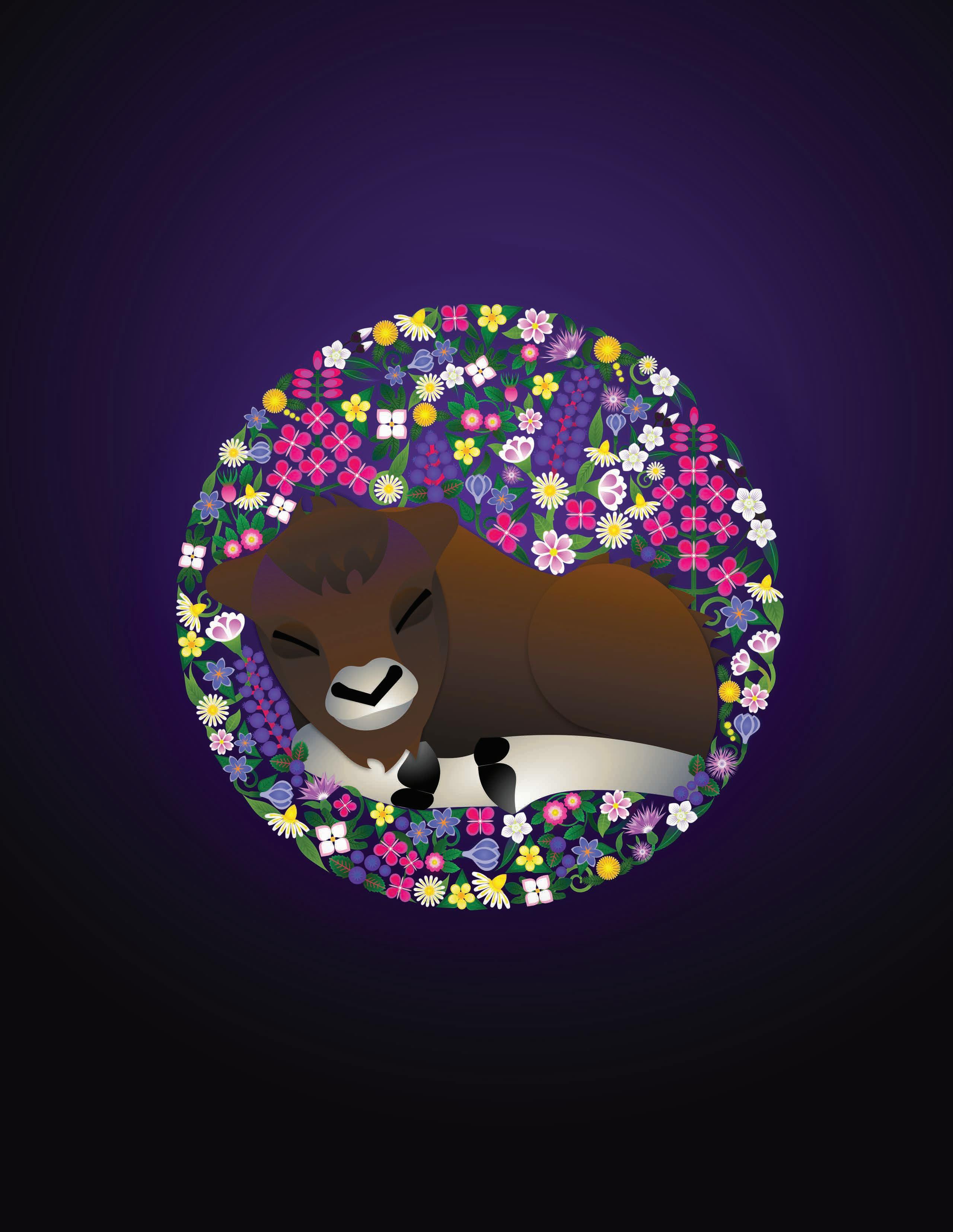
FIGURE 10: LISA BOIVIN, “WE ARE FAMILY, I GOT ALL MY SISTERS AND ME” DIGITAL PAINTING, 2026.
data sovereignty principles, ABR empowers communities to conduct self-determining and sustainable healthcare research for themselves. Indigenous-led ABR mitigates risks for misappropriation as the research study is constructed and interpreted through the worldviews of the community. Indigenous-led ABR also has the high likelihood of identifying the most relevant health needs of the community, studying those needs via culturally appropriate arts, and determining what steps need to be taken to promote health and well-being as each community defines it. ABR thus contributes to specific, actionable health studies while also supporting wellness-promoting cultural practices.
Building relationships for crosscultural ABR studies takes significant time and effort but is necessary to build trust between co-researchers. In order to undo the legacies of exploitative and hierarchical health research conducted on Indigenous Peoples, embedding the research agenda within each local community’s values of time, respect, and what it means to live a good and healthy life are essential aspects of health research today and going forward. Ultimately, seeing the arts as a means of generating health data can be a strength-based and democratizing framework for research.
REFERENCES
Adams, E. (2018). Forward. In M. Greenwood, S. de Leeuw, & N. M. Lindsay (Eds.), Determinants of Indigenous Peoples’ health: Beyond the social (pp. xi-xiv). Canadian Scholars Press.
Akearok, G. K., Mearns, C. L., & Mike, N. E. (2023). The Inuit Qaujimajatuqangit health system: A holistic, strengthbased, and health-promoting model from and for Inuit communities. Inuit Studies, 47(1-2), 427-446.
Allen, L., Hatala, A., Ijaz, S., Courchene, E. D., & Courchene, E. B. (2020). Indigenous-led health care partnerships in Canada. Canadian Medical Association Journal, 192, E208-216.
Archibald, J.-A. (2008). Indigenous storywork: Educating the heart, mind, body, and spirit. University of British Columbia Press.
Archibald, L. (2012). Dancing, singing, painting, and speaking the healing story: Healing through creative arts. The Aboriginal Healing Foundation.
Baumann, D. F. (2023). Thrivance is my identity: Moving beyond survival. Journal of Ethnic and Cultural Studies, 10(4), 1-12.
Beaulé, C. I., Roth, S., Marchand, A., & Awashish, K. (2021). Developing the relational dimension of participatory design through creativity-based methods. In T. Seppälä, M. Sarantou, & S. Miettinen (Eds.), Arts-based methods for decolonising participatory research (pp. 146-163). Routledge.
Behn-Smith, D. B. (2021). Data: The grandmother perspective. In National Collaborating Centre for Indigenous Health, Visioning the future: First Nations, Inuit, & Métis population and public health (pp. 37-38). NCCIH.
Bennett, B., Maar, M., Manitowabi, D., Moeke-Pickering, T., Trudeau-Peltier, D., & Trudeau, S. (2019). The Gaataa’aabing Visual Research Method: A culturally safe Anishinaabek transformation of photovoice. International Journal of Qualitative Methods, 18, 1-12.
Bird-Naytowhow, K., Hatala, A. R., Pearl, T., Judge, A., & Sjoblomand, E. (2017). Ceremonies of relationship: Engaging urban Indigenous youth in community-based research. International Journal of Qualitative Methods, 16, 1-14.
Blodgett, A. T., Coholic, D. A., Schinke, R. J., McGannon, K. R., Peltier, D., & Pheasant, C. (2013). Moving beyond words: Exploring the use of an arts-based method in Aboriginal community sport research. Qualitative Research in Sport, Exercise and Health, 5(3), 312-331.
Chandler, M. J., & Dunlop, W. L. (2018). Cultural wounds demand cultural medicines. In M. Greenwood, S. de Leeuw, & N. M. Lindsay (Eds.), Determinants of Indigenous Peoples’ health: Beyond the social (pp. 147-160). Canadian Scholars Press.
Corbin, J. H., Sanmartino, M., Hennessy, E. A., & Urke, H. B. (2021). Arts and health promotion tools and bridges for practice, research, and social transformation. Springer Nature.
Crawford, A., Boivin, L., & Richardson, L. (2020). Indigenous health humanities. In P. Crawford, B. Brown, & A. Charise (Eds.), The Routledge Companion to the Health Humanities (pp. 96-105). Routledge.
Eisner, E. W. (1981). On the differences between scientific and artistic approaches to qualitative research. Review of Research in Visual Arts Education, 7(1), 1-7.
Estey, E., Smylie, J., & Macaulay, A. (2009). Aboriginal knowledge translation: Understanding and respecting the distinct needs of Aboriginal communities in research. Canadian Institutes of Health Research, Institute of Aboriginal Peoples’ Health.
Fanian, S., Young, S. K., Mantla, M., Daniels, A., & Chatwood, S. (2015). Evaluation of the Kǫts’iìhtła (“We Light the Fire”) Project: Building resiliency and connections through strengths-based creative arts programming for Indigenous youth. International Journal of Circumpolar Health, 74(27672), 1-14.
First Nations Health Authority (FNHA). (2025). A System that Works for Us: Upholding Indigenous Perspectives for Decolonizing Patient-Centred Measurement. Michael Smith Health Research BC.
First Nations Information Governance Centre. (n.d.). The First Nations principles of OCAP®. Retrieved January 2026, from FNIGC: https://fnigc.ca/ocap-training/
Flaminio, A. C., Gaudet, J. C., & Dorion, L. M. (2020). Métis women gathering: Visiting together and voicing wellness for ourselves. AlterNative, 16(1), 55-63.
Flicker, S., Danforth, J. Y., Wilson, C., Oliver, V., Larkin, J., Restoule, J.-P., Mitchell, C., Knonsmo, E., Jackson, R., & Prentice, T. (2014). “Because we have really unique art”: Decolonizing research with Indigenous youth using the arts. International Journal of Indigenous Health, 10(1), 16-34.
Forbes, A., Ritchie, S., Walker, J., & Young, N. (2020). Applications of Two-Eyed Seeing in primary research focused on Indigenous health: A scoping review. International Journal of Qualitative Methods, 19, 1-18.
Gabel, C., Pace, J., & Ryan, C. (2016). Using photovoice to understand intergenerational influences on health and wellbeing in a southern Labrador Inuit community. International Journal of Indigenous Health, 11(1), 75-91.
Garakani, T. (2014). Young people have a lot to say... With trust, time, and tools: The voices of Inuit youth in Nunavik. Canadian Journal of Education, 37(1), 233-257.
Government of Canada. (2022). TCPS 2 (2022) – Chapter 9: Research involving the First Nations, Inuit, and Métis peoples of Canada; Panel on Research Ethics. https://ethics.gc.ca/eng/ tcps2-eptc2_2022_chapter9-chapitre9.html
Gwich’in Tribal Council. (2004). Traditional knowledge policy. Gwich’in Tribal Council Board of Directors.
Hammond, C., Gifford, W., Thomas, R., Rabaa, S., Thomas, O., & Domecq, M.-C. (2018). Arts-based research methods with Indigenous peoples: An international scoping review. AlterNative, 14(3), 260-276.
Harper, S. L., Edge, V. L., Ford, J., Willox, A. C., Wood, M., IHACC Research Team, RICG, & McEwen, S. A. (2015). Climate-sensitive health priorities in Nunatsiavut, Canada. BMC Public Health, 15, 1-18.
Hung, L., Fisher, L., Wong, J., Zhao, Y., Yuen, K., & Ren, L. (2025). Best practices and practical strategies for co-designing virtual reality with Indigenous peoples: A scoping review protocol. PLoS One, 20(6), e0325111.
Inuit Tapiriit Kanatami. (2018). National Inuit Strategy on Research. Ottawa: Inuit Tapiriit Kanatami.
Iwama, M., Marshall, M., Marshall, A., & Bartlett, C. (2009). Two-Eyed Seeing and the language of healing in community-based research. Canadian Journal of Native Education, 32(2), 3-23.
Johnson, H., Behn-Smith, D., & Beck, L. (2022). Systems innovation through First Nations self-determination . In M. Greenwood, S. de Leeuw, R. Stout, R. Larstone, & J. Sutherland (Eds.), Introduction to Determinants of First Nations, Inuit, and Métis peoples’ health in Canada (pp. 350263). Canadian Scholars Press.
Kirkness, V. J., & Barnhardt, R. (1991). First Nations and higher education: The Four R’s - Respect, relevance, reciprocity, responsibility. Journal of American Indian Education, 30(3), 1-15.
Landy, R. (2018). Evaluating knowledge and attitude change among participants in a participatory filmmaking and HIV and AIDS education workshop for Indigenous youth. Journal of Indigenous HIV Research, 9, 1-20.
Landy, R., & Worthington, C. (2021). “Do something with them!”: Developing “comfortable” engagement with Elders participating in an arts-based sexual health promotion and STBBI prevention workshop for Indigenous Youth in Labrador, Canada. International Journal of Circumpolar Health, 80, 1-10.
Leavy, P. (2015). Method meets art: Arts-based research practice. Guilford Press.
Loebach, J., Tilleczek, K., Chaisson, B., & Sharp, B. (2019). Keyboard warriors? Visualising technology and wellbeing with, for and by Indigenous youth through digital stories. Visual Studies, 34(3), 281-297.
Lys, C., Logie, C. H., Mackay, K. I., MacNeill, N., Loppie, C., Gittings, L., & Yasseen, A. (2023). Exploring uptake of HIV/STI knowledge and safer sex-efficacy in an arts-based sexual health workshop among Northern and Indigenous adolescents in the Northwest Territories, Canada. AIDS Care, 35(3), 411-416.
Mamers, D. T. (2024). Settler colonial ways of seeing: Documentation, administration, and the interventions of Indigenous art. Fordham University Press.
Manitoba Métis Federation. (2025). Red River Métis Data Governance Strategy: A Journey to Data Sovereignty. Winnipeg: Manitoba Métis Federation.
Masotti, P., Dennem, J., Hadani, S., Banuelos, K., King, J., Linton, J., Lockhart, B., & Patel, C. (2020). The Culture is Prevention Project: Measuring culture as a social determinant of mental health for Native/Indigenous Peoples. American Indian and Alaska native mental health research: Journal of the National Center, 27(1), 86-111.
McMahon, R., Almond, A., Whistance-Smith, G., Steinhauer, D., Steinhauer, S., & Janes, D. P. (2019). Sweetgrass AR: Exploring augmented reality as a resource for Indigenoussettler relations. International Journal of Communication, 13, 4530-4552.
McNiff, S. (2008). Art-based research . In J. G. Knowles, & A. L. Cole (Eds.), in Handbook of the arts in qualitative research: Perspectives, methodologies, examples, and issues. Sage Publications.
Morton, D., Bird-Naytowhow, K., & Hatala, A. R. (2021). Silent voices, absent bodies, and quiet methods: Revisiting the processes and outcomes of personal knowledge production through body-mapping methodologies among Indigenous youth. International Journal of Qualitative Methods, 20, 1-14.
Murphy, K., Branje, K., White, T., Cunsolo, A., Latimer, M., McMillan, J., Sylliboy, J. R., McKibbon, S., & Martin, D. (2021). Are we walking the talk of participatory Indigenous health research? A scoping review of the literature in Atlantic Canada. PLoS ONE, 16(7), e0255265.
National Centre for Truth and Reconciliation. (2020). Lessons learned: Survivor perspectives.
National Collaborating Centre for Indigenous Health (NCCIH). (2020). Poverty as a social determinant of First Nations, Inuit, and Métis health.
National Indigenous Federal Accessibility Legislation Consultation. (2018). British Colombia Aboriginal Network on Disability Society (BCANDS). BCANDS.
Nicholson, V., Gormley, R., Cardinal, D., Nyman, S., & Kaida, A. (2022). The changing tide: Indigenizing research with Indigenous women living with HIV to explore, understand, and support their health and well-being. International Journal of Qualitative Methods, 21(1), 1-14.
Pandey, M., Ribeiro, N. F., Linds, W., Goulet, L. M., Episkenew, J.-A., & Schmidt, K. (2021). Healthy connections: Facilitators’ perceptions of programming linking arts and wellness with Indigenous youth . In N. V. Styvendale, J. McDougall, R. Henry, & R. A. Innes (Eds.), The arts of Indigenous health and well-being (pp. 95-118). University of Manitoba Press.
Peltier, C. (2018). An application of Two-Eyed Seeing: Indigenous research methods with participatory action research. International Journal of Qualitative Methods, 17, 1-12.
Plazas, P. C., Cameron, B. L., Milford, K., Hunt, L. R., Bourque-Bearskin, L., & Salas, A. S. (2019). Engaging Indigenous youth through popular theatre: Knowledge mobilization of Indigenous peoples’ perspectives on access to healthcare services. Action Research, 17(4), 492-509.
Rieger, K. L., Bennett, M., Martin, D., Hack,T.F., Cook, L., & Hornan, B. (2021). Digital storytelling as a patient engagement and research approach with First Nations women: How the Medicine Wheel guided our debwewin journey. Qualitative Health Research, 31(12), 2163-2175.
Running Wolf, M. (n.d.). First languages AI reality. (Mila) Retrieved March 2026, from Mila Quebec: https://mila. quebec/en/ai4humanity/applied-projects/first-languages-aireality
Russell, V. L., & de Leeuw, S. (2012). Intimate stories: Aboriginal women’s lived experiences of health services in northern British Columbia and the potential of creative arts to raise awareness about HPV, cervical cancer, and screening. Journal of Aboriginal Health, 8(1), 18-27.
Seppälä, T., Sarantou, M., & Miettinen, S. (2021).
Introduction. In T. Seppälä, M. Sarantou, & S. Miettinen (Eds.), Arts-based methods for decolonising participatory research (pp. 1-18). Routledge.
Simpson, L. B. (2017). As we have always done: Indigenous freedom through radical resistance. University of Minnesota Press.
Snowshoe, A., Crooks, C. V., Tremblay, P. F., Craig, W. M., & Hinson, R. E. (2015). Development of a cultural connectedness scale for First Nations youth. Psychological Assessment, 27(1), 249-259.
Steinhauer, D., & Lamouche, J. (2018). miyo-pimâtisiwin, “A Good Path”: Indigenous knowledges, languages, and traditions in education and health. In M. Greenwood, S. de Leeuw, & N. M. Lindsday (Eds.), Determinants of Indigenous Peoples’ health: Beyond the social (pp. 80-92). Canadian Scholars Press.
Sullivan, P., & McIlduff, C. (2023). The long story of an Indigenous health research project. Healthy Populations Journal, 3(1), 55-81.
Sweetgrass AR. (2025). We are all related. (University of Alberta) Retrieved March 2026, from Sweetgrass AR: https:// sites.google.com/ualberta.ca/sweetgrassar/home
Train, C. (2022). Our land Nunavut: Inuit ways of knowing. Museum of Anthropology, University of British Columbia.
Vining, R., & Finn, M. (2023). Why and how is photovoice used as a decolonising method for health research with Indigenous communities in the United States and Canada? A scoping review. Nursing Inquiry, 2(3), 1-8.
Willox, A. C., Harper, S. L., Edge, V. L., ‘My Word’: Storytelling and Digital Media Lab, & Rigolet Inuit Community Government. (2012). Storytelling in a digital age: digital storytelling as an emerging narrative method for preserving and promoting indigenous oral wisdom. Qualitative Research, 13(2), 127-147.
Wilson, S. (2008). Research is ceremony. Fernwood Publishing.
Wilson, S., & Hughes, M. (2019). Why research is reconciliation. In S. Wilson, A. V. Breen, & L. DuPré (Eds.), Research and reconciliation: Unsettling ways of knowing through Indigenous relationships (pp. 21-34). Canadian Scholars Press.
Wilson, S., Breen, A. V., & DuPré, L. (2019). Introduction. In S. Wilson, A. V. Breen, & L. DuPré (Eds.), Research and reconciliation: Unsettling ways of knowing through Indigenous relationships (pp. 10-16). Canadian Scholars Press.
Yassi, A., Spiegel, J. B., Lockhart, K., Fels, L., Boydell, K., & Marcuse, J. (2016). Ethics in community-universityartist partnered research: Tensions, contradictions and gaps identified in an ‘arts for social change’ project. Journal of Academic Ethics, 14, 199-220.