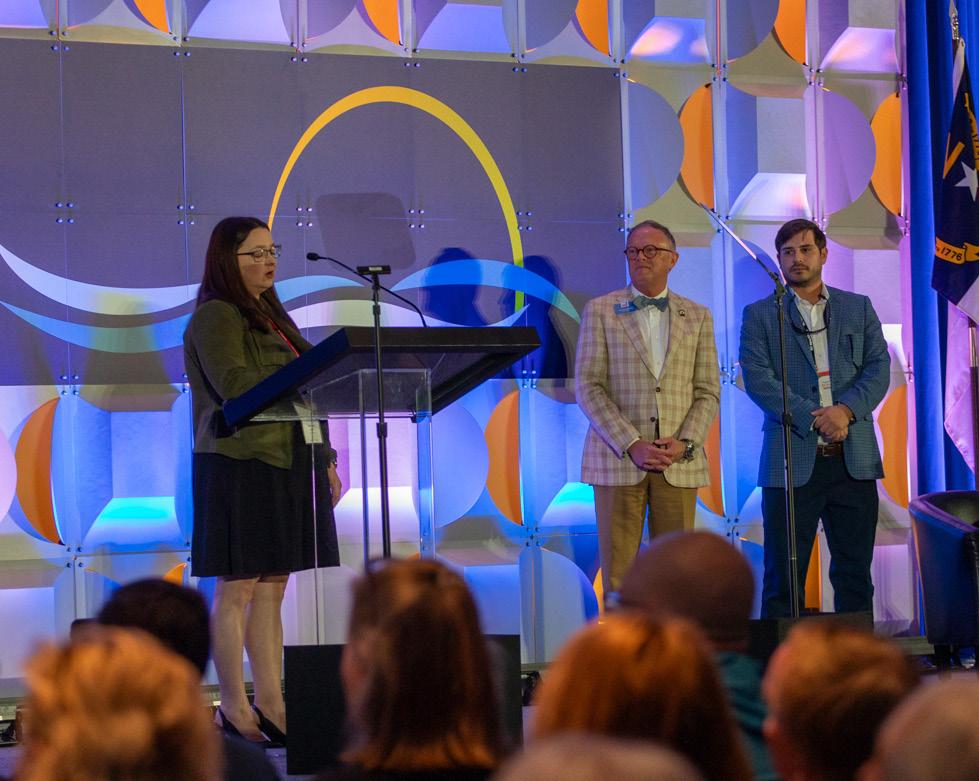
Get a front-row seat to the work of your association — from wherever you are! Our Virtual Committee & Business Meetings make it easy for all members to attend, listen in, and see how your membership powers progress and impact across North Carolina.
Insight, Volume 105, Issue 2
President Brenda Hayden
President-Elect
Brooke Rudd
First Vice President Renee Cooney
Treasurer Adam Upchurch
Immediate Past President John McPherson
Regional Vice Presidents
Region 1: Ben Myers, Surf City
Region 2: Bob Bates, Southport
Region 3: Melissa McKinney, Fayetteville
Region 4: Grace Jones, Durham
Region 5: Samantha Cole, Aberdeen
Region 6: Phillip Johnson, Winston-Salem
Region 7: Chris Puckett, Kannapolis
Region 8: Jamie Young, Charlotte
Region 8: Beverly Newell, Charlotte
Region 9: Caleb Phillips, Arden
Region 10: Sharon Gupton, Cary
Region 10: Lawrence Terry, Raleigh
At Large Representative: Cindy Chandler, Charlotte
Chief Executive Officer Andrea Bushnell, Esq.
Vice President of Communications & Marketing Mckenzie Allen
John Wait, Courtney McAlister, Savanna Reagin & Tikola McCree
For advertising information, visit ncrealtors.org/advertise or contact Keri Epps-Rashad at (336) 217-1049.
INSIGHT (ISSN 24714127) (USPS 17170) is published four times a year in February, May, August and November by NC REALTORS®, 4511 Weybridge Lane, Greensboro, NC 27407. Periodicals Postage Prices paid at Greensboro, N.C. and additional mailing offices.
This publication is designed to provide accurate and authoritative information regarding the subject matter covered. Articles which appear in Insight are an informational service to members and consumers. Their contents are the opinions of the authors alone and do not necessarily represent those of NC REALTORS®.
Advertising of a product or service does not imply endorsement, unless specifically stated.
To opt-out of paper copy mailings, email hello@ncrealtors.org with a subject line of “Insight opt-out.”
4511 Weybridge Lane, Greensboro, NC 27407
Phone: (336) 294-1415
ncrealtors.org
Dear NC REALTORS®,
As we move through the spring season, I’m reminded that this time of year often invites both growth and reflection. In many ways, it mirrors the work we do as REALTORS®, constantly adapting, building and caring for the people and communities we serve.
This month’s Insight highlights topics that speak directly to the heart of our profession: caring for our well-being, embracing innovation and celebrating the unique impact REALTORS® have across North Carolina. Each of these connects deeply to our 2026 theme, “Where Strength Meets Vision.”
Strength in Caring for Ourselves and Each Other May is Mental Health Awareness Month, and it’s an important reminder that our strength is not only measured by what we achieve, but also by how we care for ourselves and those around us. Real estate can be demanding, and taking time to prioritize your wellbeing is not a luxury, it’s essential. A healthy, supported REALTOR® is better equipped to serve clients, build relationships and lead with confidence and compassion.
Vision in Embracing Innovation
We are also seeing exciting conversations around the role of AI in our industry. Technology continues to shape the way we work, communicate and serve our clients. By approaching these advancements with curiosity and intention, we position ourselves not just to keep up, but to lead. Vision calls us to embrace tools that enhance our effectiveness while staying grounded in the relationships and trust that define our profession.
Strength and Vision in Every Community
From our largest cities to our smallest towns, REALTORS® across North Carolina are making a lasting impact. This month’s spotlight on a small-town REALTOR® is a powerful reminder that no matter the market size, the work you do matters deeply. You are trusted guides, community builders and advocates for the people you serve. Your presence strengthens the fabric of communities across our state.
As we continue through 2026, I encourage you to reflect on where strength and vision meet in your own work, whether that’s caring for your well-being, embracing new opportunities or continuing to serve your community with excellence.
It is an honor to serve alongside each of you.
Yours in service, Brenda Hayden 2026 NC REALTORS® President
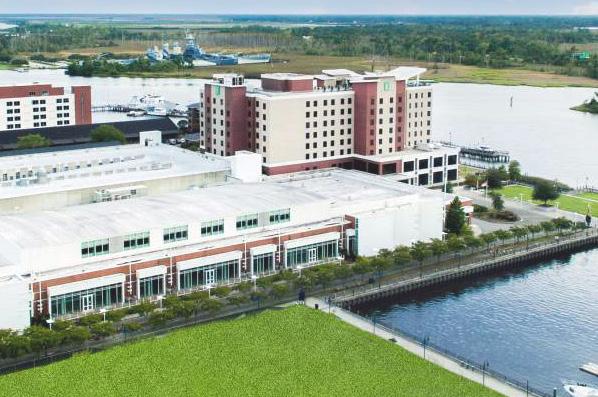
October 8-11, 2026
Wilmington Convention Center Wilmington, NC
MAY 13, 2026
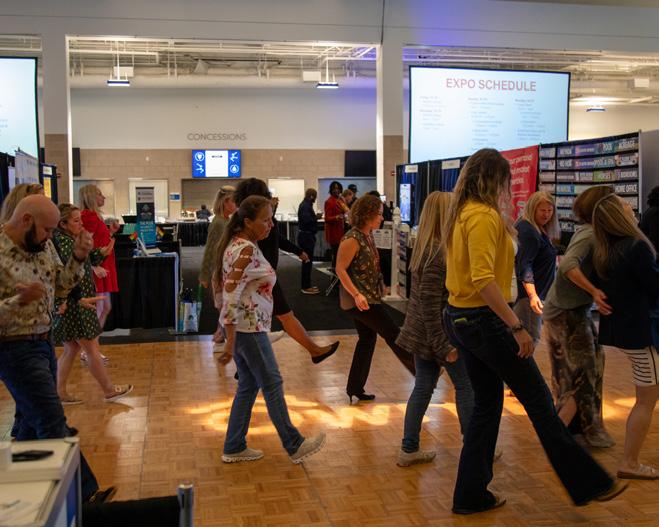
Our largest and most popular event of the year aims to inspire, motivate and educate REALTORS® from across North Carolina.
THERE’S STILL TIME TO REGISTER
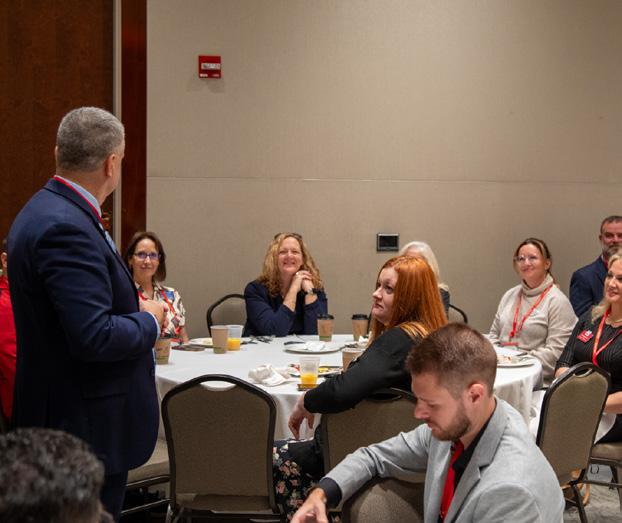
Connect with peers, collaborate across the industry, and advocate together for REALTOR® priorities that strengthen our profession and communities.
Tuesday, June 2, 2026 | 9:00 AM – 11:30 AM
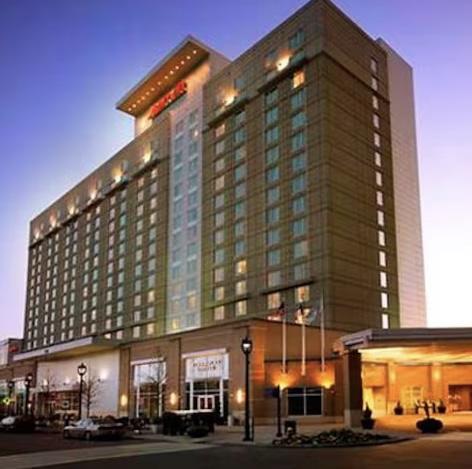
Raleigh Marriott City Center, Raleigh, NC
Registration Fee: $49
This event is held in conjunction with the NC REALTORS® Legislative Meetings.
What issues and trends are shaping your business and the future of real estate across North Carolina? Join us on June 2 for the State of Real Estate Conference as we explore the topics that have your attention. Be part of the conversation and walk away with insights that matter.
Registration deadline: May 18, 2026
MORE THAN DISCOUNTS Tools That Grow Your Business
NC REALTORS® brings members exclusive benefits, savings and solutions designed specifically for real estate professionals.
NC REALTORS® brings members exclusive benefits, savings, and solutions for real estate professionals.
Being a successful REALTOR® means managing far more than just buying and selling homes. From marketing and client communication to transaction management and dayto-day operations, running a real estate business requires the right tools and the right partners.
That’s where the NC REALTORS® Partner Program comes in. Through this program, members gain access to a curated network of trusted companies offering products, services and exclusive savings designed specifically for real estate professionals.
These aren’t one-size-fits-all vendors, they’re partners who understand your business and are committed to helping you succeed.
What Does That Look Like In Practice?
The Partner Program includes solutions across the areas REALTORS® rely on most, including:
• Technology & Marketing Tools: From CRM platforms and digital advertising solutions to social media tools and website services, partners help you stay competitive and visible in a crowded market.
• Transaction Management & Business Services: Streamline your workflow with tools that simplify contracts, document management and day-to-day operations.
• Insurance & Financial Services: Access options for health, auto, E&O and business insurance, along with financial tools designed to support both your business and personal goals.
• Client & Lifestyle Resources: From closing gifts and home services to travel and wellness discounts, these partners help you elevate your client experience while saving on everyday expenses.
Why It Matters
These partnerships are designed with your bottom line in mind. Members often receive:
Exclusive discounts not available to the general public
Preferred pricing on essential business tools
Special offers and promotions
Products and services tailored specifically for North Carolina REALTORS®
Instead of spending time researching vendors or guessing which tools are worth the investment, the Partner Program connects you with vetted companies that already understand your needs.
The result? You can make smarter decisions faster — and feel confident you’re getting real value.
More importantly, these benefits help you focus on what matters most: serving your clients, growing your business and closing deals.
Member Tip
If you haven’t explored your partner benefits recently, it’s worth a second look. There may be valuable resources waiting that you’re already paying for through your membership.
Contract Forms
Members gain exclusive access to 100+ contract forms via zipForms, saving hundreds in legal fees for drafting and reviewing.
Legislative Advocacy
Your membership powers NC REALTORS® PAC and advocacy wins like the 2023 repeal of the Privilege License Tax.
Member Savings $50 per year Industry Savings $3M You’ve already made a smart investment by joining NC REALTORS®. Now it’s time to take full advantage of what that investment offers.
Member Savings $239 for ZipForms software
Member Savings $800
To draft a multi-page contract form with outside attorney.
Classes & Events
Maximize your earning potential with our professional development courses, CE classes, and events. These opportunities help grow your business and increase referrals.
Through Peer Networking Unlimited Referrals & Growth
The Privilege License Tax repeal saves members $50 annually and $3M across the industry.
Legal Hotline
The NC REALTORS® Legal Hotline offers unlimited access to expert attorneys for advice on disclosures, contracts, and more. Just one call can cover the value of your membership dues.
Member Savings $225
(based on three 15-minute calls at $300/hour attorney rate)
Tech Helpline
Need tech support? As a member, you can access Tech Helpline for assistance with your computer, printer, or devices, saving you the cost of hiring an IT professional.
Member Savings Hundreds in IT support
Preferred Partners Discounts
Take advantage of exclusive discounts from partners like Pearl Insurance, Office Depot, Paperless Agent, and Answer Financial, saving you money on products and services you use daily.
Member Savings $900 per year
Get to Know Your 2026 NC REALTORS® PAC Trustees
The mission of the NC REALTORS® Political Action Committee (NC REALTORS® PAC) is to raise and disburse funds to promote homeownership, protect private property rights and increase political awareness for the real estate industry. The NC REALTORS® PAC Trustees are dedicated volunteers from the association membership that recognize the importance of NC REALTORS® PAC and are fully invested in its mission. Collectively, trustees make funding decisions based on recommendations/input from local associations, voting records for incumbents and a candidate’s support and/or knowledge of issues of concern to the real estate profession. Meet your NC REALTORS® PAC Trustees:
Contributions to RPAC are not deductible for federal or state income tax purposes. Contributions are voluntary and are used for political purposes. Suggested amounts are merely guidelines and you may contribute more or less than the suggested amounts. The National Association of REALTORS® and its state and local associations will not favor or disadvantage any member because of the amount contributed or a decision not to contribute. Your contribution is split between National RPAC and the State PAC in your state. NC RPAC supports the efforts of National RPAC and contributes a portion of its contributions to National RPAC. Contact your State Association or PAC for information about the percentages of your contribution provided to National RPAC and to the State PAC. The National RPAC portion is used to support federal candidates and is charged against your limits under 52 U.S.C. 30116. In-kind contributions/donations are not included for the purposes of the National RPAC State PAC split. NC law requires political committees to report the name, mailing address, job title or profession and name of employer or employee’s specific field for each individual whose contributions aggregate is in excess of $50 in an election cycle. North Carolina law prohibits contributions of cash in excess of $50 per day. Federal law prohibits contributions of cash in excess of $100 per year. Contributions can only be accepted from individuals; in the form of personal checks, credit/debit cards and cash
Pam Webb Region 5 Trustee
Marvette Artis Region 5 Trustee
Jennifer Franklin-Rowe Region 4 Trustee
Randy Voller Region 4 Trustee
Erica Sasser Region 3 Trustee
Michelle Morris Region 3 Trustee
Joe Burleson Region 7 Trustee
Sallie Myrick Region 8 Trustee
Patrick McDowell Region 8 Trustee
Michelle Steely Region 7 Trustee
Emily Wood Region 6 Trustee
Marcella Coley Region 6 Trustee
Wendy Harris NC REALTORS® Legislative Chair
Jamie Cooper AE Advisor (Non-Voting)
Bob Bates NAR Major Investor Council Rep.
Clif Cheek Region 2 Trustee
Michael Davenport Region 1 Trustee
Dennis Bailey Treasurer
Daniel Whited Region 2 Trustee
Jonathan Moore Region 1 Trustee
Cirila Cothran Immediate Past Chair
Carol Bradley Vice Chair
Jon McBride Chair
Brooke Rudd NC REALTORS® President Elect
Brenda Hayden NC REALTORS® President
Randall Blankenship Region 9 Trustee
Tim McBrayer Region 10 Trustee NAR Participation Council Rep.
Tim Mock Region 10 Trustee
John Muir Region 9 Trustee
Want to see what’s coming up? Head over to ncrealtors.org/events to check out upcoming classes and learning opportunities.
New sessions are added often, so stay tuned!
MAY
• 19th | Planning & Zoning In-Person | Elizabeth City, NC
• 19th | The Future of Technology in Real Estate | Virtual
• 21th | Military Relocation Professional | Virtual
• 29th | Radon and Real Estate in North Carolina | Virtual
JUNE
• 10th | Forms Update with John Wait | Virtual
• 17th | Bookkeeping for Short and Long Term Rentals | Virtual
• 24th | Essential Commercial Real Estate Insights | Virtual
QUIZ legal
BY JOHN WAIT, GENERAL COUNSEL
These questions are based on weekly Q&As published in the REALTOR® Rundown between September 2025 and February 2026.
1. Does the husband have to sign listing paperwork if the wife is sole owner of the property and the couple is getting divorced?
Answer
Yes. Unless you have a pre-nuptial agreement, court order, quitclaim deed, free-trader agreement or a power of attorney clearly showing that the husband has conveyed his marital life estate. Agents should be especially careful with pre-nups and court orders, because unlike the other items in this list, they are often insufficient on their own to convey a non-owner spouse’s marital life estate to the other spouse.
The marital life estate comes from N.C.G.S. § 29-30. As a simple example of how this statute works, let’s pretend a husband owned property before the marriage and later sells it during the marriage without his wife joining in the transaction. If the husband then dies, the wife can elect to take a life estate in that property.
Even though the property was owned by the husband before marriage, and even though the husband did not own the property at death, the wife never conveyed her right to a marital life estate which she obtained when she became married.
A marital life estate under section 29-30 is not an ownership interest in property, but it is an important right that can create an encumbrance on title, even while a couple is in the process of getting a divorce.
It is therefore very important to make sure that a nonowner spouse joins in the transaction unless proper documentation shows that the marital life estate has been properly, and completely, conveyed to the other spouse.
Q&A Release Date: 9/4/2025
2. Does my firm’s name need to appear in my posts when I advertise on social media?
Answer
Yes. Social media posts are a form of advertising. As such, they must comply with the North Carolina Real Commission’s advertising rule, which is 21 NCAC 58A .0105. Paragraph (a)(1) of that rule states all advertisements for brokerage services, or the sale, purchase, exchange, rent or lease of real estate for another, must include the name of the firm or sole proprietorship with which the broker is affiliated.
The Commission has made clear that it does not have a “one-click rule.” Therefore, brokers that use social media to advertise property must include the name of their firm somewhere in the post itself so a consumer can identify the name of the firm without clicking a link.
Q&A Release Date: 9/11/2025
3. Do I have to disclose things that impact the area around a listed home?
Answer
Yes. If the thing in issue is a material fact. A material fact is any fact that could affect a reasonable person’s decision to buy, sell or lease property. A material fact must be disclosed by a broker to the parties in the transaction and any interested third parties regardless of the broker’s agency role within the transaction.
Examples include nearby construction, substantial encroachments from neighboring properties, boundary issues and property access limitations. When in doubt, disclosure is almost always the best course.
Q&A Release Date: 9/18/2025
4. Can a seller accept a buyer’s offer after a listing agent makes a counteroffer in a text message?
Answer
No. Under North Carolina law, once an offer has been rejected or countered, it can no longer be accepted.
The same is true of counteroffers, which can also be rejected or countered themselves. A rejected or countered offer must be submitted again to renew the ability to accept it.
Real estate brokers have authority to communicate offers, counteroffers and even rejections of offers. Under the law of agency, these communications by agents are ordinarily binding on their clients, because the clients are directing their agents to communicate their desires and intentions.
Note, however, a broker’s authority to communicate offers, counteroffers, and rejections is not the same when it comes to acceptance of an offer. In most cases, a real estate broker does not have the authority necessary to bind their client to a real estate contract.
So, when a listing agent counters, even by text, the original offer is terminated.
Q&A Release Date: 10/30/2025
5. Does the seller’s signature on Form 350-T agreeing to release the Earnest Money Deposit mean the seller is agreeing with the buyer’s reason for termination?
Answer
No. In the Earnest Money Deposit release section at the bottom of Form 350-T, the last sentence, immediately above the signature block for a seller, says: “Seller reserves all rights to dispute or challenge Buyer’s alleged grounds for termination regardless of Seller’s decision to release the Earnest Money Deposit or not.”
This sentence means that the seller is only indicating whether they are agreeing to release the Earnest Money Deposit or not.
It also means that the seller has every right to dispute the buyer’s reasons for terminating if they wish later. Signing does not mean agreement with the buyers’ reasons for termination.
Q&A Release Date: 11/13/2025
6.
Can I use AI to enhance listing photos?
Answer
Yes, but with caution. You must avoid misrepresenting the property and clearly disclose exactly how the photos have been changed.
North Carolina brokers are prohibited from using advertising in a manner that misrepresents a property. Under the License Law, a broker may not make false assurances, exaggerations, or engage in any conduct that creates a misleading impression about a listed property. That standard applies regardless of whether an image is produced through traditional photo editing tools or newer AI technology.
The Code of Ethics reinforces the same principle. Article 2 prohibits exaggeration or concealment of pertinent facts, and Article 12 requires REALTORS® to present a “true picture” in their advertising and representations to the public.
Accepted uses for virtual editing include correcting lighting, removing clutter, adjusting perspective, or adding virtual furnishings, provided those edits do not change the actual condition or features of the home.
Problems arise when edits alter reality, such as hiding damage, stains or cracks, making fixtures appear new, or digitally remodeling a space without disclosure. If a buyer walks into a home and reasonably feels that the photos painted a false picture of its condition, then an agent may face discipline under both the License Law and the Code.
Q&A Release Date: 11/27/2025
7. Does the protection period in the Exclusive Right to Sell Listing Agreement (Form 101) apply if the client hires another agent?
Answer
No. The last sentence of the protection period in Form 101 states: “However, if Seller signs a valid listing agreement with another real estate broker before Seller agrees to sell, option, or convey the Property, then this protection period will not apply.”
This means if a former client lists their property with another real estate broker, then the protection period will not apply, and a commission will not be due even if the buyer was procured by your firm during the term of your
listing agreement. However, if the seller does not hire a new firm, and you provide proper notice of buyer prospects, then the protection period will apply, and a commission will be due if the seller sells their property.
Q&A Release Date: 12/4/2025
8. Should my firm implement a policy that says we will not work with unrepresented buyers?
Answer
No. Refusing to work with unrepresented buyers presents Code of Ethics, License Law, and antitrust issues.
Real estate agents have a fiduciary duty to put their clients’ interests first. Brokers also have a duty to present all offers to their sellers, regardless of whether the offer comes from a represented buyer or not. A policy that simply states your firm will not work with unrepresented buyers may violate both the License Law and the Code of Ethics. And, while there is no law or rule that requires a buyer to hire an agent to represent them, it could be argued that firms that only work with represented buyers are limiting access to the marketplace and increasing costs for consumers in violation of antitrust laws.
If your firm is thinking about a policy on unrepresented buyers, consider shifting the focus to guidance instead. Help listing agents evaluate each situation by asking:
• Do buyers understand the local market?
• Are they experienced or likely to need more support?
• Have they completed transactions before?
• Can they show proof of funds?
• Do they have legal support if needed?
• Can they handle the offer process on their own?
The answers to these questions will help the seller evaluate the strength or weakness of a potential transaction with the unrepresented buyer.
Q&A Release Date: 1/22/2026
9. Does a lawyer have to refund the Earnest Money Deposit to a buyer who has terminated during the Due Diligence Period even if a seller will not sign to release it?
Answer
No. A closing attorney acting as escrow agent must remain impartial and owes duties to both parties. As a result,
attorneys are often cautious when funds are in dispute. It is also why some closing attorneys require a signed release from one party to the contract before releasing the Earnest Money Deposit to the other side.
If a seller will not sign to release the Earnest Money Deposit, but the buyer is clearly entitled to it, then a buyer has three options:
1. Demand the seller initiate file a dispute within a certain time frame;
2. File a claim in small claims court (if the deposit is $10,000 or less); or
3. Wait 90 days for the funds to be deposited with clerk of court and file a claim there.
Q&A Release Date: 1/29/2026
10. Can I pay a referral fee to a broker whose license went inactive after we fully executed a referral agreement?
Answer
Yes. As long as the referring broker did not provide any brokerage services while their license was inactive, the referral is still valid.
If the referral was made while the license was active and no additional services were performed after it became inactive, payment is still allowed under the agreement.
Q&A Release Date: 2/26/2026
Inside the growing role of AI in real estate
BY LEE NELSON
Lee Nelson is a freelance journalist from Illinois. She writes for REALTOR® Magazine, several state REALTOR® Magazines and websites, & loanDepot.com.
It’s become part of Latrice McFadden’s daily routine to incorporate AI in a variety of ways to grow her real estate business and better serve clients.
“I use it for many communications such as simply writing a text or email, plus to keep my listing descriptions fresh. But I make sure to polish and edit all of it to sound more like me,” states McFadden, an agent with eXp Realty, Durham. She also is an AI-Certified agent.
She believes that if real estate professionals do not engage with AI or are unwilling to adapt, others will step in and do it better.
“All different ages of agents are using it. I’m sure there are some not wanting to use it. But I remember back when I didn’t want to buy a GPS device. I said I didn’t need it,” she adds. Things do change.
In a recent survey by REALTORS® Property Resource (RPR), 82 percent of 225 real estate professionals said they currently use AI in their business, and 92 percent say they are either using AI now or planning to. RPR is a wholly owned subsidiary of the National Association of REALTORS®.
“The analysis from the survey shows that the conversation with agents is shifting from ‘Should I use AI?’ to ‘Where can I trust it, and where do I still need to be careful?” says Reggie Nicolay, senior vice president of marketing and training for RPR. He realizes that professionals in real estate are
constantly seeking efficiencies and time-saving tools.
“Some real estate professionals feel that if they go to ChatGPT, they fear it will say something wrong. But now people are making videos with it, designing charts and doing all types of things,” he adds.
“The real opportunity now is confidence — confidence in output quality, confidence in compliance and confidence in how AI is used in client conversations.”
How It Changes a Real Estate Professional’s World
AI can elevate a real estate professional’s business by generating engaging listing descriptions and marketing materials such as flyers and brochures. It can also streamline workflows, saving hours of time, and quickly provide summaries of complex reports. And its capabilities continue to expand.
“To be honest, people think they know about AI. But they really don’t know what it can truly do,” says Scott Richard, a nationally recognized AI speaker, strategist and 2025 chair of the National Association of REALTORS® Emerging Business & Technology Forum.
He also is broker-owner of Richard Realty in Cody, Wyoming, and travels nationwide teaching agents how to use AI while developing new tools for the industry.
“I use it for many communications such as simply writing a text or email, plus to keep my listing descriptions fresh. But I make sure to polish and edit all of it to sound more like me.” – Latrice McFadden
“Software companies put us all in a box. But we are all different with workflows and processes. The tools coming out now and soon will allow individuals to create their own on-demand software,” he states. “You have a conversation with AI and tell it what you need.”
He expects a surge of new software at the end of this year to help agents in many aspects of their career.
Mark Saunders has always been an early user of technology even when he started in real estate in 2005.
“I was early to YouTube to build my property management business. I’ve just always tried to be an early adopter of everything,” remarks Saunders, CEO of Saunders Realty, Saunders HOA Management and Saunders Realty Brokers Academy, Charlotte.
He acknowledges that his entrepreneurial mindset often leads him to start new ventures. After selling his property management company, which managed 500 single-family homes, he launched an HOA management company that now serves 2,500 homes.
“That company is growing really fast. If it wasn’t for AI, I’d have to have two or three more full-time employees for that,” he comments. AI has saved him lots of money.
In the HOA world, every association is different, with different bylaws. Now, when his company onboards a new community, governing documents can be uploaded into one system, where AI helps organize and analyze them. You can ask, for instance, what the parking regulations are in a specific community, and it will provide the exact rules.
“That used to take a lot of time. We are building all that out and streamlining that database,” he adds.
McFadden uses AI across nearly every aspect of her business, from creating flyers and newsletters to producing homebuyer
seminars. Her newsletter can have anything from a health article like training for a marathon to a good recipe.
“Pretty much, AI will be in that newsletter somewhere,” she says.
She also uses AI for decision-making insights, such as identifying the best time to host an open house.
“It allows buyers to see how a property looks in the evening, then AI writes the description to put on Instagram,” she remarks.
The time savings alone have been significant. What once took 45 minutes or more to produce a polished, compliant MLS listing can now take a fraction of that time.
“With AI, sometimes it takes 30 seconds to maybe 5 minutes. I can rewrite it and add to it. But a lot of the times, I look at what it wrote and think that I would have never thought of that,” she adds.
“The real opportunity now is confidence — confidence in output quality, confidence in compliance and confidence in how AI is used in client conversations.” – Reggie Nicolay
Latrice McFadden Reggie Nicolay Scott Richard Mark Saunders
Uses of AI for Real Estate Professionals
AI tools continue to evolve rapidly. Here are a few ways professionals are using them to save time, reduce effort and enhance their marketing efforts:
ChatGPT or Gemini (marketing planning)
By inputting MLS data into generative AI tools like ChatGPT or Gemini, agents can quickly create a customized 30-day marketing plan. Saunders says, “I can do it in 10 minutes. Those are the opportunities that it will allow better communication and better customer service.”
Custom-trained AI tools (niche marketing)
Real estate professionals can train AI tools to focus on a specific niche, such as golf course communities or waterfront properties, so all generated content is tailored to that audience. “You basically have a dedicated marketing branch just for your niche,” Saunders says.
AI with vision capabilities (listing descriptions)
Some AI tools can now “see” and respond in real time. By walking through a property and speaking to the tool, agents can generate detailed, engaging listing descriptions and additional content for newsletters and social media. “You turn on the vision capabilities and walk through the house, talk to it, and then let it create a listing description,” Richard says.
Perplexity
(research and market insights)
Perplexity is an AI-powered answer engine that provides real-time, citation-based responses. It can be used to gather accurate market insights and then build marketing strategies from that information. “It’s like Google on steroids,” Richard says.
Canva (client engagement and personalization)
Canva’s AI features allow professionals to quickly create branded, personalized graphics, such as homeownership anniversary messages that include a client’s name, purchase year and brand colors. “I can do it in less than two minutes,” McFadden says.
AI avatars (video content creation)
For those who prefer not to be on camera or want to scale content quickly, AI avatars can generate video content that looks and sounds like the user. “I know it sounds so weird to do, but instead of setting up a camera and inventing the scrips, my avatar can create 10 times more content quickly,” Saunders says.
“Software companies put us all in a box. But we are all different with workflows and processes. The tools coming out now and soon will allow individuals to create their own on-demand software.“
– Scott Richard
What RPR Offers with AI
By logging into RPR, real estate professionals who are REALTOR® have access to a range of AI-powered tools designed to improve efficiency, creativity and data analysis.
One of the most notable features is ScriptWriter, available for both residential and commercial users. By entering ZIP codes, professionals can generate detailed market trend reports.
“When they do that, all of these market trends are returned. In some cases, it narrows it down by neighborhoods. Then, you can create monthly snapshots such as pending and sold,” Nicolay reveals.
Users can also tailor content based on their audience and generate blogs, newsletters, summaries and more for buyers, sellers, investors or media.
“Then, you just ask what prompts you want such as creating a blog article, an executive summary, a newsletter and more. It creates it with all the market trend information and your own information,” he states. “It also does it for a video script and now a social graphic card. You can pick your backgrounds such as a rural area, sunset, downtown street or more.”
The RPR website also gives real estate professionals who are REALTORS® access to “tons of training,” Nicolay adds. You can go to blog.narrpr.com or NARRPR.com. There’s a learning page with all the webinars, pictorials and eBooks.
No-Nos of AI for Real Estate Professionals
North Carolina brokers are already prohibited from using advertising in a manner that misrepresents a property. Under the License Law and Commission Rule 58A .0115, a broker may not make false assurances, exaggerations, or engage in any conduct that creates a misleading impression about a listed property.
That standard applies regardless of whether an image is produced through traditional photo editing tools or newer AI technology.
“The real power of AI is that it can handle all the heavy lifting of repetitive tasks as you can stay focused on what matters — the human connection.” – Scott Richard
The Code of Ethics reinforces the same principle. Article 2 prohibits exaggeration or concealment of pertinent facts, and Article 12 requires REALTORS® to present a “true picture” in their advertising and representations to the public. While AI can enhance images and descriptions, it cannot misrepresent what a buyer can expect when viewing a property.
Richard believes AI will continue to grow, but the human element remains essential.
“The real power of AI is that it can handle all the heavy lifting of repetitive tasks as you can stay focused on what matters — the human connection,” he comments. “AI shouldn’t replace you. It should amplify your message.”
Saunders echoes the importance of responsibility and ethics.
“AI is only as good as the information it gets. The opportunities to be an entrepreneur and have these types of tools is absolutely amazing,” he adds. “But it still comes back to ethics. There’s a fine line, and you have to constantly watch all that you are doing.”
New Things Coming
AI has not yet fully mastered fair housing regulations and compliance requirements, Richard says. To address this, he is developing new software called Compliance GPS, built on verified data and tested within his brokerage.
“It’s really made a big impact on me and my brokerage. My agents are getting compliance from all different levels,” he says.
Across the industry, professionals agree AI saves significant time — but what they do with that time matters most.
“So, once you get that time back from using AI, you can converse with humans. That’s what we need to not forget,” Nicolay says.
“This is the assistance in the background helping us build the relationships. That’s what we are good at.”
“ AI is only as good as the information it gets. The opportunities to be an entrepreneur and have these types of tools is absolutely amazing,” he adds. “But it still comes back to ethics. ” – Mark Saunders
Small Town. Big Impact.
How one real estate professional is building relationships, growing a business and serving her community in Boone.
Across North Carolina, real estate professionals are making an impact in the communities they call home. From building relationships to supporting local businesses and navigating unique markets, each story highlights what makes small-town real estate both personal and powerful.
BY LEE NELSON
When Hope Caroselli steps into her local grocery store, someone usually stops to talk with her.
“Even though Boone has grown, someone always recognizes me. I look at those as opportunities to make a connection, whether it’s something for business or helping someone,” she states. “Those interactions might be an annoyance to some, but I look at it as, ‘Who can I help today?’”
Caroselli, a broker at Blue Ridge Realty & Investments in Boone, has built a successful business and family life in Boone.
She and her husband, Bill, also a broker, work at the same company. They are now raising their teenage daughter in the same town where she grew up.
“I have a personality that loves being able to help and assist,” Caroselli adds. “The relationships we build are not just in the real estate industry but in the community as a whole. We do that to provide anything a client needs.”
When a client requires a carpet layer or anyone else to help them, she wants to be able to say, “I have someone for that.”
Living in a smaller town allows her to know the vendors and the specialists personally. She even found someone to fix a client’s claw machine (an arcade game where players use a joystick to control a claw to grab prizes).
“Those interactions might be an annoyance to some, but I look at it as who can I help today.”
– Hope Caroselli
Why Boone
Caroselli was born and raised in Boone, graduated from its high school and then earned a degree from Appalachian State University. She and her husband, who grew up in Philadelphia, moved to Palm Beach, Fla., in 2003, where they both pursued careers in real estate working for developers during the housing boom.
“But the market changed, and we moved back to North Carolina with our young daughter,” she says.
Her husband transitioned into banking, and Caroselli earned her real estate license, initially working part time. She also built websites and worked at a bank teaching financial literacy to children.
“It was great. But I made more money with real estate. So, I made that break to do it full time,” she adds.
Plus, real estate allows her the flexibility with raising her daughter and attending her activities.
“It has changed here, but it still has a lot of things that make it so quaint and wonderful,” she states.
She admits that during Hurricane Helene and the aftermath, she saw the best of her smaller community come out to help whoever needed it.
“It was a testament to who helps. It was neighbors helping you with chainsaws, and people volunteering to clean up wherever it was needed,” Caroselli states.
Community Involvement & Repeat Customers Help Her Succeed
Her commitment to the community includes serving as a board member for the Boone Area Chamber of Commerce and participating in other chambers across the region. She and her husband are also members of the Boone Sunrise Rotary and Habitat for Humanity. They have supported
“Whether she’s helping someone navigate a real estate deal or stepping up during a difficult time in the community, she consistently shows up with dedication and heart.”
– Elias Tobchi
Wine to Water, an organization focused on providing clean water solutions to communities in need.
For the past 12 years, Elias Tobchi has built a strong professional relationship with Caroselli that, as he puts it, eventually grew into a genuine friendship. Tobchi is the owner of Danely Builders.
“Hope represents the kind of professional every community hopes to have — someone who works hard, cares deeply and leads with integrity,” Tobchi comments.
“Whether she’s helping someone navigate a real estate deal or stepping up during a difficult time in the community, she consistently shows up with dedication and heart.”
The two have completed more than 10 real estate transactions together, and each experience has reinforced why he and his company continue to work with her.
“Hope approaches every deal with complete dedication. Because of her professionalism, reliability, and results, she has become our exclusive real estate agent,” he expresses.
Why Her Clients Come Back to Her
Brittany Olds, owner of Bold Branding and Over the Topp Lodge & Red Barn Resort, has worked with Caroselli as their buyer’s agent on two separate transactions.
Olds and her husband were searching for an investment property that could serve as both a second home and a luxury rental.
“When a stunning home with an unbelievable view came on the market, we immediately went to see it. We knew we wanted to make an offer,” she says.
As their real estate agent, Caroselli spent several hours on the phone with the couple late into the evening, helping them think through every detail. They went under contract the next day.
Their original lender began delaying the jumbo loan process a few days later. The couple walked away, and Caroselli connected them with one of her trusted lenders.
“Thanks to Hope’s guidance, connections and calm under pressure, we were able to secure the proper inspections and surveys, and still closed on time,” she adds. “Hope is a kind soul with an incredible depth of knowledge and an unmatched network of relationships in the area.”
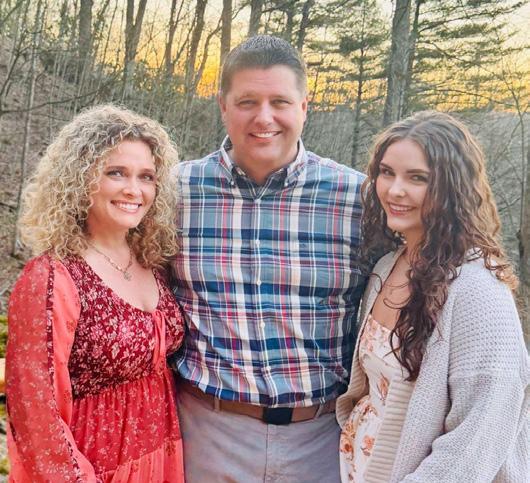
Hope & Her Family
Who Should We Feature Next?
We’re looking for real estate professionals across North Carolina who are making a difference in their communities. If you or someone you know has a story worth sharing, we’d love to hear it.
Send us a note at aross@ncrealtors.org.
Hope Caroselli
The Cost of Always Being On
Because the commission does not cover everything
BY TIKOLA MCCREE
Tikola McCree is a REALTOR®, Broker, instructor, and coach based in the greater Charlotte area — bringing this conversation directly to fellow REALTOR®s because she believes the well-being of the people in this profession matters.
This article is part of the Your Mental Wellness Matters series, an ongoing conversation about the real cost of a career in real estate and the people who show up for it every day. Through articles, podcast episodes, and our Mobile Mondays conversations on Facebook, we’re creating space for honest dialogue. Watch our October 2025 Mobile Mondays session and explore past installments in the series.
There is a moment many agents recognize but rarely say out loud. The deal closed. The clients are thrilled. The commission is coming. And you are exhausted in a way that a good night’s sleep will not fix — not because something went wrong, but because of how much it takes to do this work well, every single day.
Real estate is one of the most rewarding careers a person can choose — flexible, meaningful, built on helping people through some of life’s biggest moments. It is also one of the most emotionally demanding. Very few people in this industry talk about that second part honestly enough. This is that conversation.
This work gives a lot. It also asks for a lot.
Research from Market Leader found that people in real estate are 60 percent more likely to report being happy with their lives than workers in most other industries. The autonomy, the relationships, the impact of guiding someone home — those rewards are real.
Agents carry the emotional weight of deeply personal transactions — divorces, estate sales, first homes, new beginnings. They project steadiness regardless of what the market is doing, absorbing the pressure of shifting rates, scarce inventory, and uncertain conditions while the expectation to perform remains constant. Commissionbased income means months of work can dissolve at the
closing table — a financial unpredictability that takes a real psychological toll over time.
Real estate agents are asked to show up fully — emotionally, professionally and personally — for every client, every transaction, every day. That level of consistent giving requires consistent replenishment. Rest, support and honest self-awareness are not luxuries. They are professional necessities.
It rarely looks the way we expect.
Stress in this profession does not always announce itself. It looks like being the most responsive agent in the office — producing consistently while quietly running on empty. Some days it means showing up with energy for clients even when that no longer comes naturally, the gap between how we present and how we feel widening slowly, without warning.
The World Health Organization classifies burnout as an occupational phenomenon — not a personal failure — defined by exhaustion, emotional distance and reduced
profession and the clients you serve all matter.
effectiveness. A 2014 study cited in REALTOR® Magazine found real estate carries the second-highest rate of clinically diagnosed depression of any U.S. industry. The National Association of REALTORS® reports that 66 percent of agents identify stress as significant in their professional lives — a reflection of how much this profession asks of its people.
That awareness extends to leadership as well. Brokers and team leaders carry a meaningful role in this conversation. A check-in outside of a closing — a genuine question about how someone is doing, not just how their pipeline is performing — can mean more than most leaders realize. People remember the moments they felt seen, not just managed. For an agent navigating a difficult market or a quietly exhausting season, that gesture is often exactly the encouragement they needed that day.
What self-care actually looks like here.
• Ask yourself honestly: is what I am feeling a hard season, or has hard become my baseline? That distinction is more useful than managing it quietly.
• Identify what you are carrying. Fatigue, stress or emotional depletion — naming it clearly allows you to respond rather than simply absorb.
• Keep something that belongs only to you. A relationship, a morning, a practice outside of production — because you are a whole person, not only a professional.
• Practice saying no. In a profession built on availability, it is one of the most powerful boundaries a person can set — and it is a complete sentence.
• Talk to someone outside the industry. According to the American Psychological Association, more than 40 percent of Americans have worked with a mental health professional. You would not be the first agent to find it worthwhile.
•
• Ask what your brokerage offers — you may be surprised by the services and resources available to you, and using them is one of the most professional decisions you can make.
You give a lot. That deserves to be said.
The people who choose this career bring empathy, tenacity and genuine investment in the lives of the people they serve. Those qualities are renewable — but only when the person carrying them receives the same care they extend to everyone else.
Taking care of your well-being is not a distraction from being a great agent. It is what makes being a great agent sustainable.
You are not the only one who has sat quietly for a moment between calls, carrying more than the job description ever mentioned. You never were. And that honest awareness is exactly the right place to begin — because you, the
If you or someone you know needs support: 988 Suicide & Crisis Lifeline — call or text 988.
NAMI HelpLine: 1-800-950-6264 or nami.org. Ask your brokerage about Employee Assistance Program (EAP) benefits.
References | Market Leader. Career Satisfaction Study Across U.S. Professional Industries. • World Health Organization. Burn-out an Occupational Phenomenon: International Classification of Diseases (ICD-11). 2019. • REALTOR® Magazine. “Depression Rates by Industry.” 2014. • National Association of REALTORS®. Agent Stress and Well-Being Survey. • American Psychological Association. Stress in America: Workplace Stress and Health Outcomes.