All rights reserved. No part of this publication may be reproduced, distributed, or transmitted in any form or by any means, including photocopying, recording, or other electronic or mechanical methods, without the written permission of the publisher, except in the case of brief quotations embodied in reviews and certain other non-commercial used permitted by copyright law.
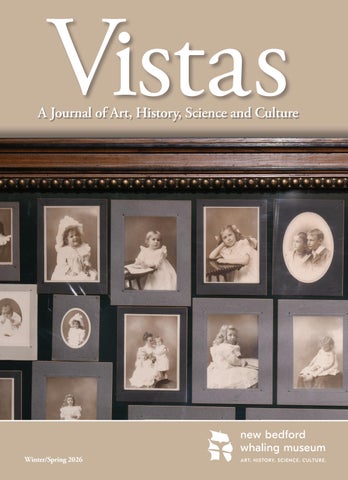
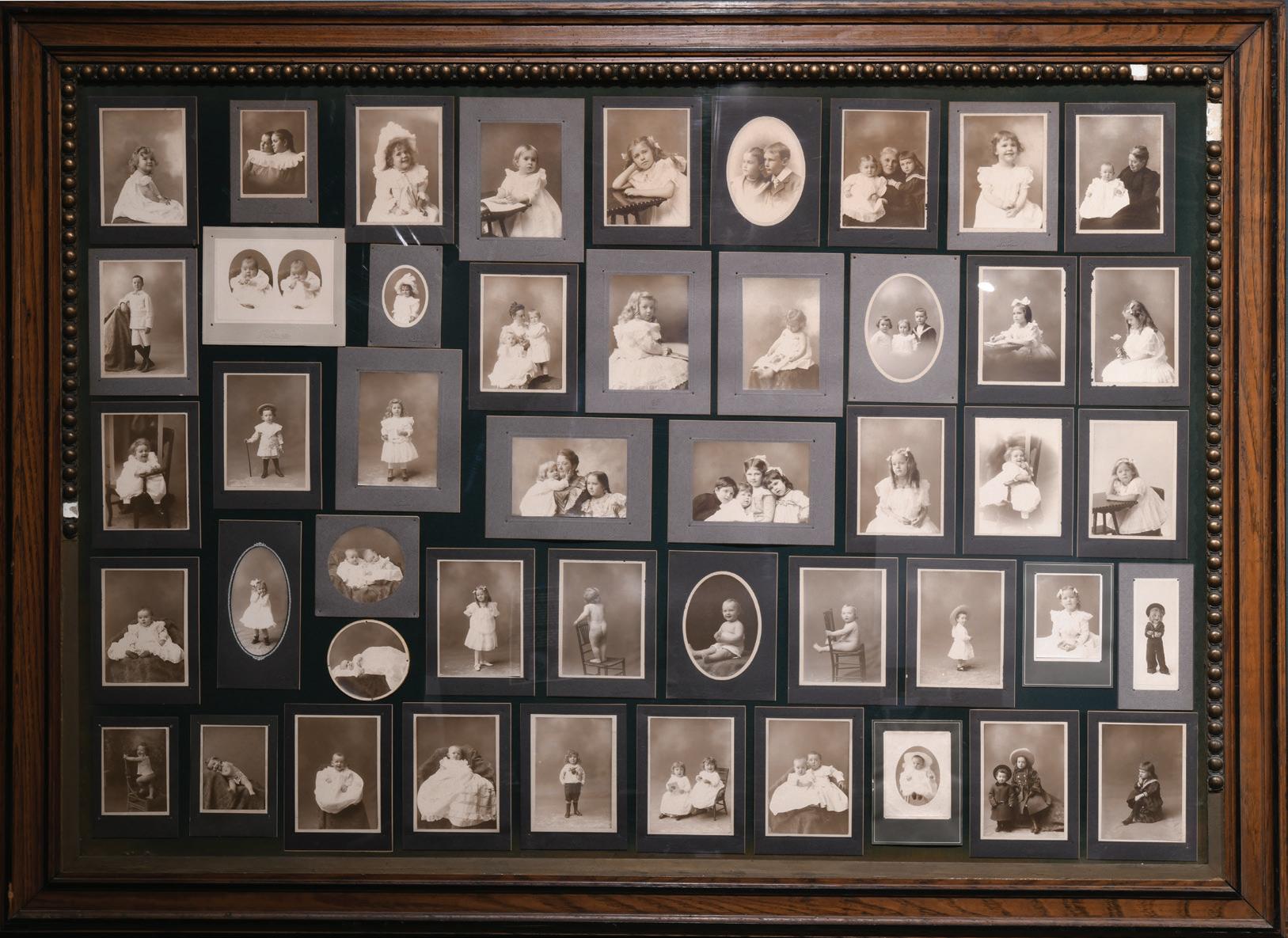
Front Cover: Detail: James E. Reed (1864–1939), Frame containing 47 portrait photographs, 1895. Cabinet Cards, Estate of James E. Reed, 1996.21.4
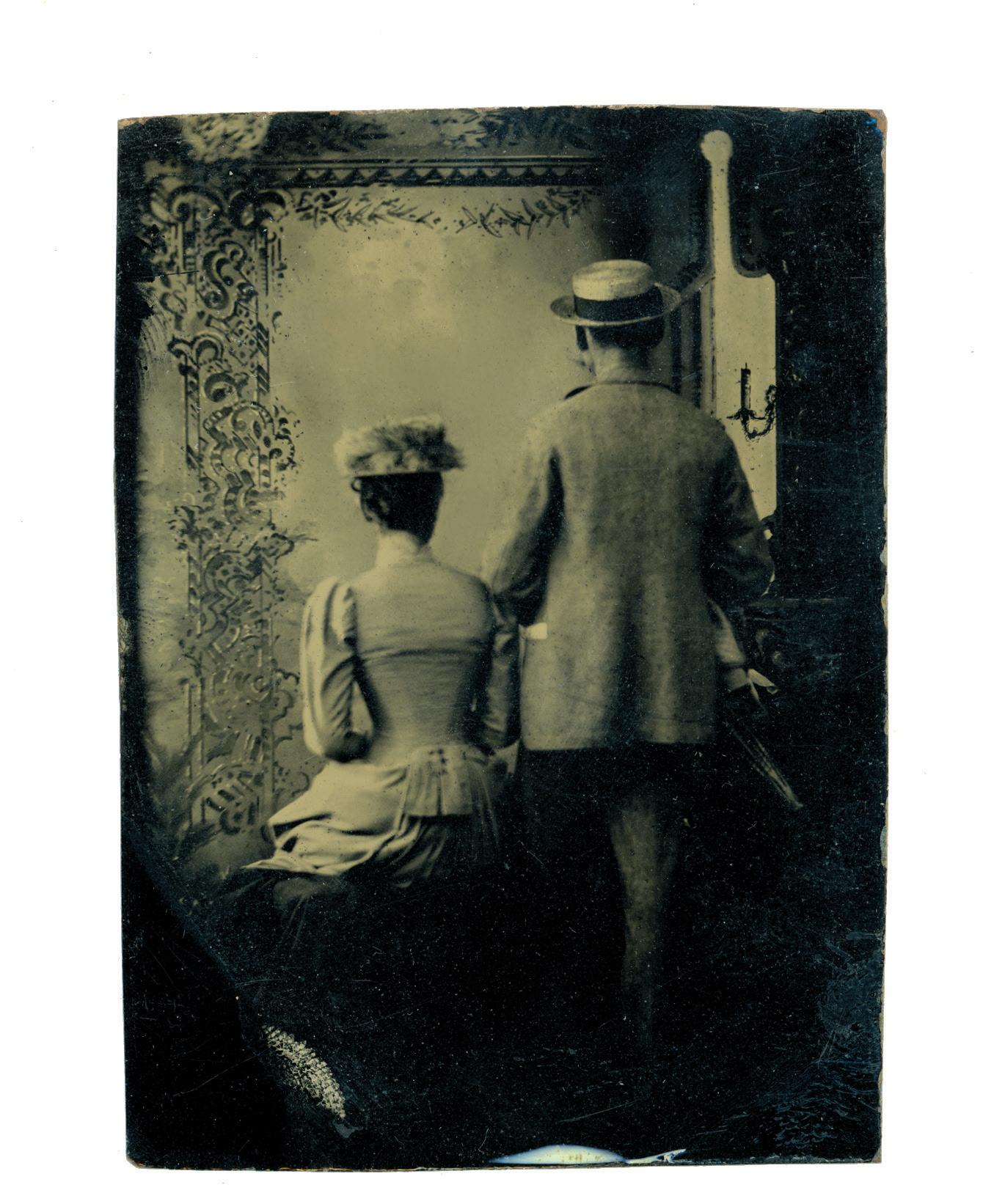
Back Cover: Photographer once known, Two sitters facing away from camera, ca. 1870. Tintype, Gift of Mr. David S. Hendrick, 1984.18.207
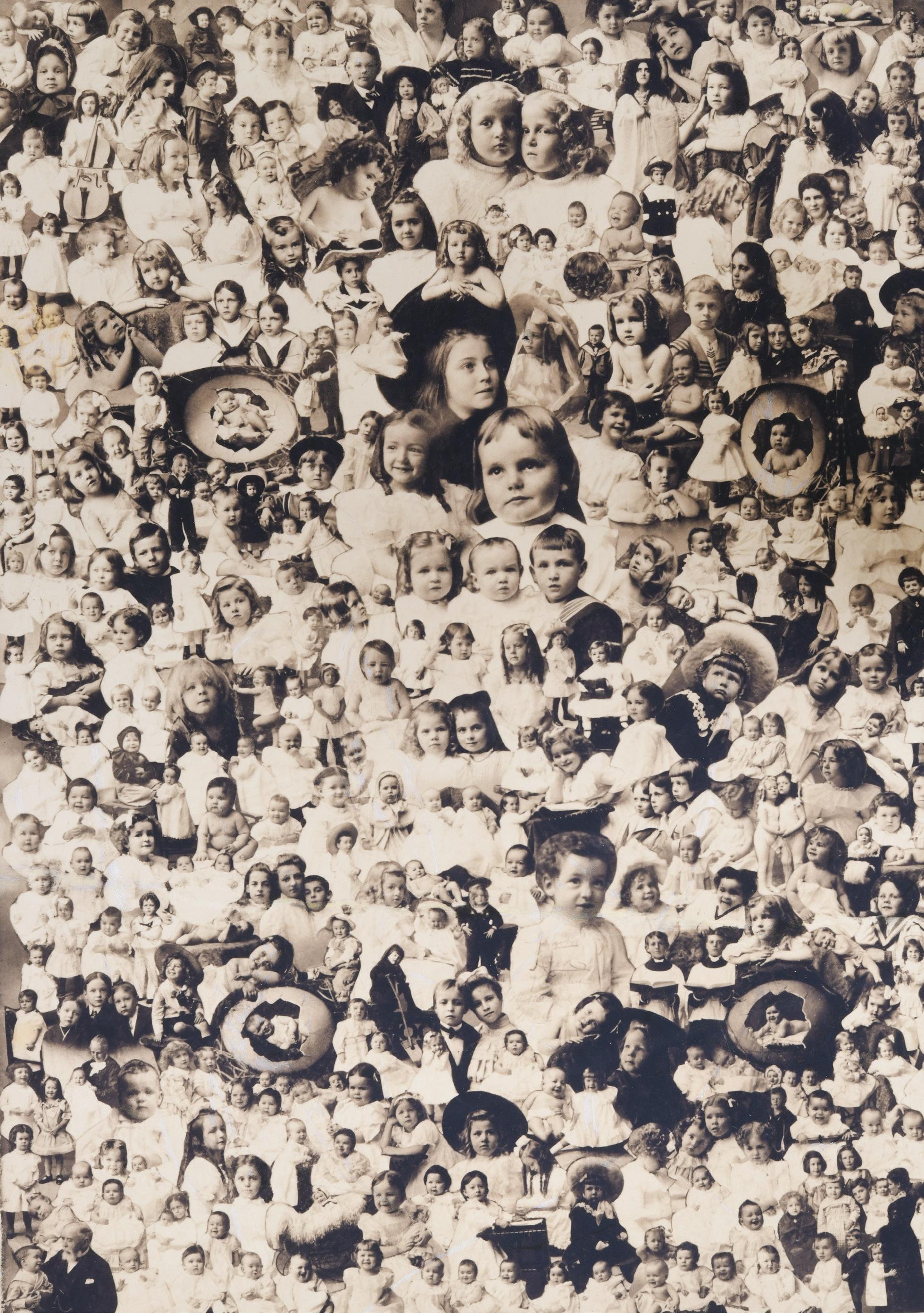
Page 1: James E. Reed (1864-1939), Portrait collage, 1900s. Mounted albumen print, Estate of James E. Reed, 1996.21.97.
With
President & CEO
Amanda McMullen
Photography
Emma Rocha
Winter 2025 - 2026
Managing Editor
Marina Dawn Wells
Design and Production
Editor Naomi Slipp
Brian Bierig, Graphic Designer
| Winter/Spring 2026
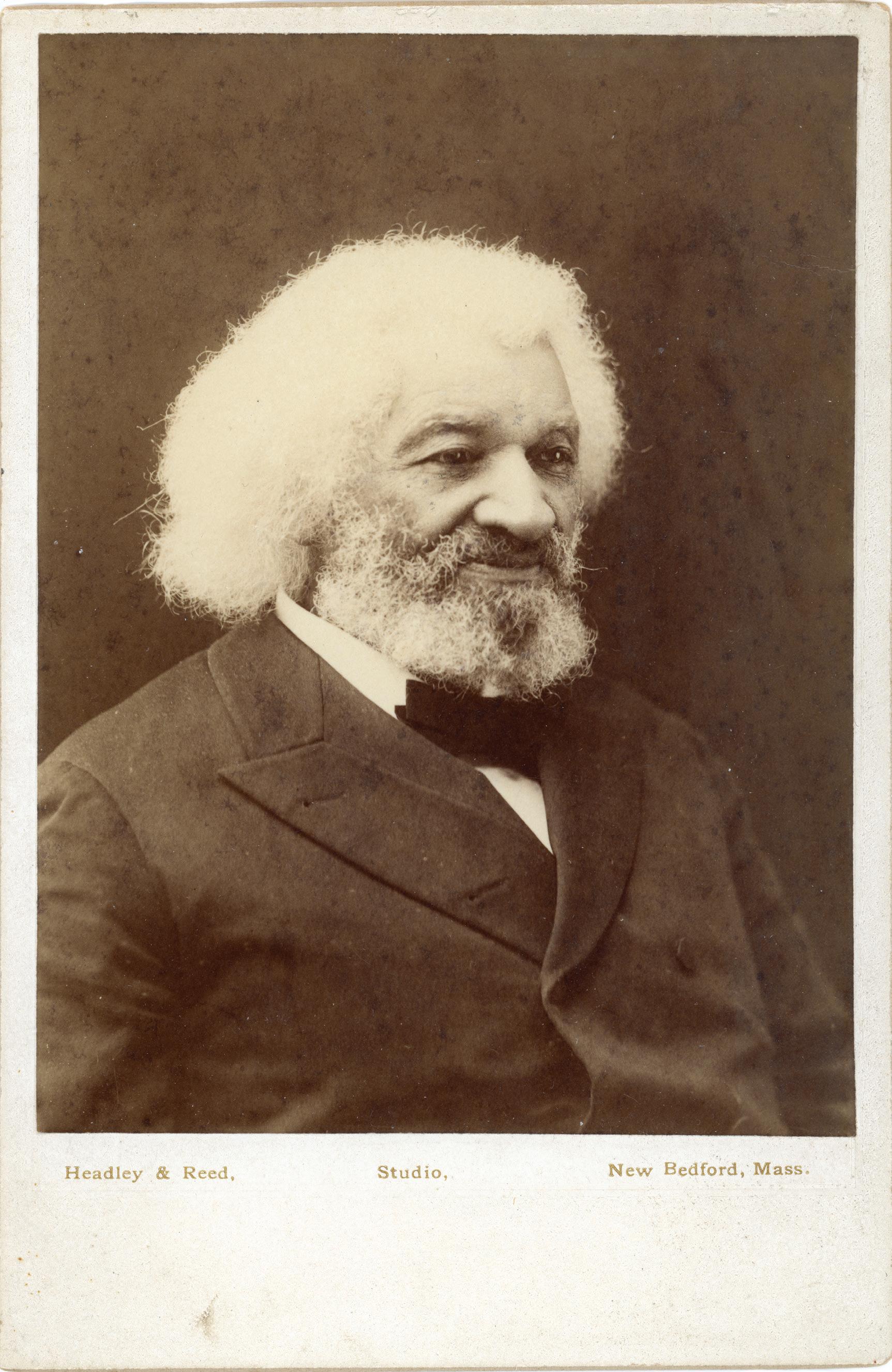
Headley & Reed, Portrait of Frederick Douglass,1894. Cabinet card, Estate of James E. Reed, 1996.21.54.
Foreword
The New Bedford Whaling Museum is still a few years from a large anniversary as we prepare to turn 125 years old in 2028. Roughly one hundred community members gathered in January 1903 at the Unitarian Church’s Unity Club of New Bedford. A local journalist and whaling descendant, Ellis Howland, gave a rousing speech on the need for a historical society and museum to preserve the power and impact of the whaling industry. While the industry had all but ended in New Bedford by then, he implored the community and descendants of whaling families to see the value of preserving the region’s story. A few months later, our institution was established as the Old Dartmouth Historical Society with the defined purpose to advance historical research, publications, and education—and also start a museum. One might say that the rest is history.
As I reflect on the articles in this edition of Vistas, it has me thinking about milestones. In its literal and historical meaning, a milestone was a stone used to mark the distance between places. Today, the term is often invoked to articulate a major moment.
Museums and our publications are in the business of narrating milestones. This edition holds to that principle well and you will enjoy the stories of several milestones on the following pages. For one, we are celebrating the new exhibition Forging Independence| Building a Nation which examines our own artifacts in celebration of the 250th anniversary of the American Revolution. All too often we think of our region’s history beginning with whaling, but this show explores stories of independence, struggle, and citizenship in the region during the
late colonial and early Republic period (1760-1830). With deference to our historical colleagues north of the New Bedford Whaling Museum, our region certainly has deep connections to this period not the least of which includes the fact that for the Boston Tea Party to occur, the locally built and owned vessel the Dartmouth needed to exist.
Milestones mark a moment. It is not a stretch to see our scrimshaw collection through this definition and Pilar Jefferson’s contribution explores the imagery on one of our pieces of scrimshaw through a new lens. Furthermore, the exhibition highlight by Marina Wells, “Look pleasant, please”: Early Portrait Photography in New Bedford brings to focus the groundbreaking changes this artform made when it first emerged, especially in how people marked their own personal milestones and moments.
We all know that the word “history” contains within it the word “story.” Borrowed from Greek “historia” which means “a narrative of past events, an account, tale, or story,” everything we hold dear as a historical society is—in one form or another—a milestone. Not all moments are as grand as the founding of a democracy, but they are markers of history in the making.
Amanda McMullen President & CEO New Bedford Whaling Museum
How the Land Remembers
Ecology, Memory, and Belonging on the Island of Brava
Francisca Pinharanda, Cultural Anthropologist
Brava has always lived between two forces: land and sea, presence and departure.1 For over two centuries, the smallest inhabited island in the Cape Verdean archipelago has been intertwined with Massachusetts. American whaling ships once anchored in its bays to stock up on provisions and recruit sailors, and many Bravenses settled in New England, forming one of the earliest Cape Verdean communities in the USA.2 This connection has never faded. Nearly every family on Brava has relatives across the Atlantic. American goods still fill storerooms; on the Massachusetts coast, Cape Verdean songs fill the air. These two distant shores have long been bound by shared identity. People on
Brava often say, “Brava is America,” because they rely, in very real ways, on the care of those abroad.
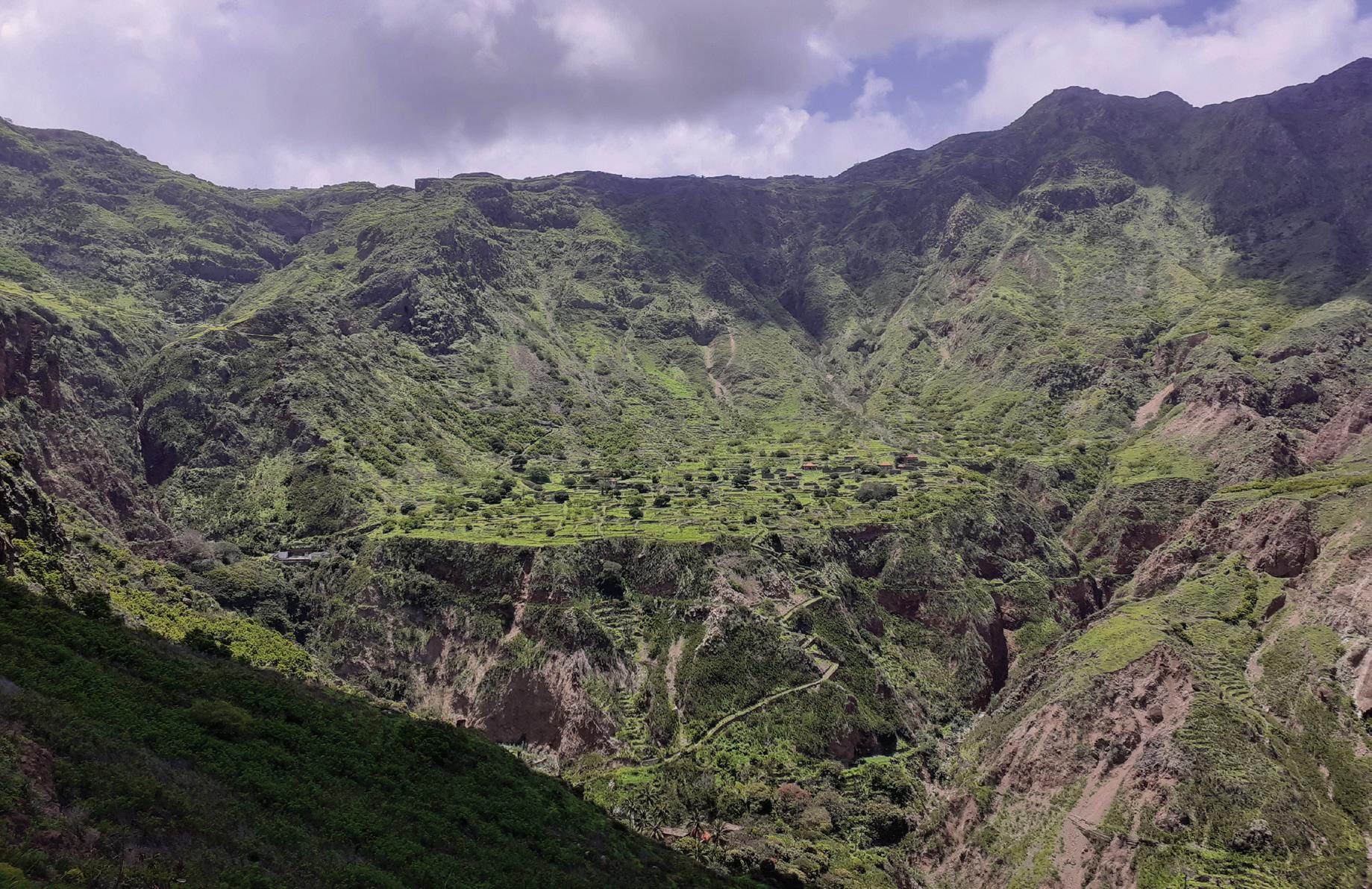
While stories and affection continue to flow across the ocean, Brava’s land and sea tell another, quieter story: one of erosion, drought, and depopulation - rooted in centuries of cyclical environmental hardship, today intensified by global climate change. Its landscape remembers everyone who has passed through it; its crumbling paths, its dead mango trees, and its silence hold the imprint of their departure. “Before, it was green, green, green!” people recall, but today, most streams are dry, terraced hillsides have worn away, invasive plants spread where crops once grew, and
Figure 1. The abandoned village of Fajã d’Água, Brava, and its terraced hillsides, once densely cultivated, now marked by erosion.
Photo by the author.
fewer hands remain for djunta mon. 3 The erosion of fertility mirrors that of relations, of rhythms of collaboration.
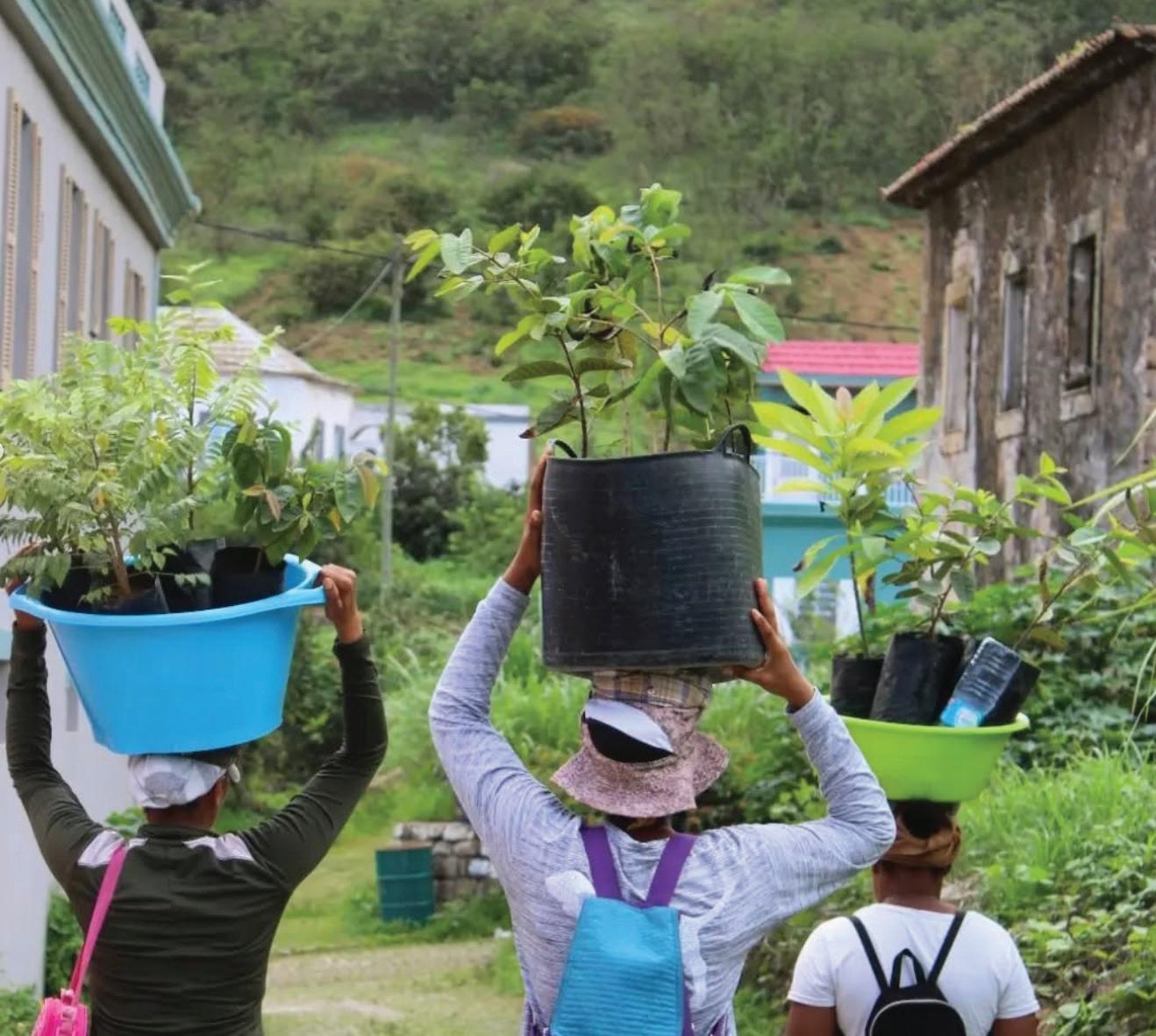
This is where associations like Biflores play a vital role.4 Working with herders and farmers to ease pressure on fragile slopes, and with fishers to sustain coastal livelihoods, Biflores treats ecology and community as inseparable. Its members reopen old footpaths, plant endemic trees, produce compost and biochar to heal exhausted soils, and capture fog along the ridges to water plants and livestock. Each gesture repairs land while reweaving cooperation between people.
Despite the economic support given by members of the diaspora, and the best efforts of environmental associations, Brava’s social and ecological reality remains dire. With most landowners abroad, management has grown fragmented, hindering coordinated land use and Biflores’ efforts to protect the island’s fragile biodiversity. Much of Brava’s future depends on knowing who still claims the land, and who still wishes to restore it. Meanwhile, isolation deepens as national institutions wane. In its double insularity, geographical and institutional, Brava faces ecological crisis with fewer voices and weaker representation. As I was once told, “Brava’s solution is also one of its greatest problems: emigration.”
Leaving, however, is not abandonment; it has long been survival. The question, then, is how to ensure that memory does not remain memory alone, but a concrete form of engagement - how those who left might help sustain the place that shaped them. The island’s future depends on such renewed ties between communities abroad and those who remain, on collaboration and the sharing of knowledge, resources, and visibility, and on collective efforts to recover land, access, and belonging. It is not simply a matter of shared memory: remembering becomes a question of recognition, representation, and policy action. For Brava to go on being remembered, it must also go on living. The challenge is to support both the people and the landscapes that sustain them, so that staying, too, becomes a viable form of survival. And that, perhaps, is the most enduring form of care.
Brava’s story shows that heritage is not static: it lives
in the soil, in the wind, in the movement of people between continents. It lives in the meeting of past and future, of diaspora and homeland.
Between land and sea, Brava continues to speak, and to ask that we listen.
Francisca Pinharanda is an environmental anthropologist whose work explores the intersections of ecology, memory, and belonging across Atlantic island worlds. She has conducted fieldwork on Brava, Cape Verde since 2019 and serves on the board of Biflores, the island’s biodiversity conservation association.
2. Local residents collaborate with Biflores, carrying seedlings to a reforestation site on Brava. Photo by the Biflores Team.
1 Located in the southern group of the archipelago of Cape Verde, Brava has a steep volcanic terrain and a long history of outmigration, rooted in colonial neglect, environmental hardship, and economic marginalisation. In the 1960s, its population numbered around 8,600; today, fewer than 5,000 remain. Most depend on remittances and small-scale subsistence agriculture, livestock rearing, and fishing, and many of those who remain also plan to emigrate, continuing a long tradition of departure as survival.
2 Brava’s connection to Massachusetts dates back to the end of the 1700s. Many Bravenses settled in ports such as New Bedford and that link has remained active through migration, trade routes, remittances, and now via digital communication and return visits.
3 Djunta mon (literally “joining hands”) is a Creole expression describing collective, voluntary labor: neighbors gathering to repair walls, cultivate fields, or share a task for the common good. It embodies mutual aid and reciprocity.
4 Founded by local initiative in 2016, Biflores is Brava’s only association for biodiversity conservation. Its work integrates ecological restoration with community participation. See https:// biflores.org/.
Figure
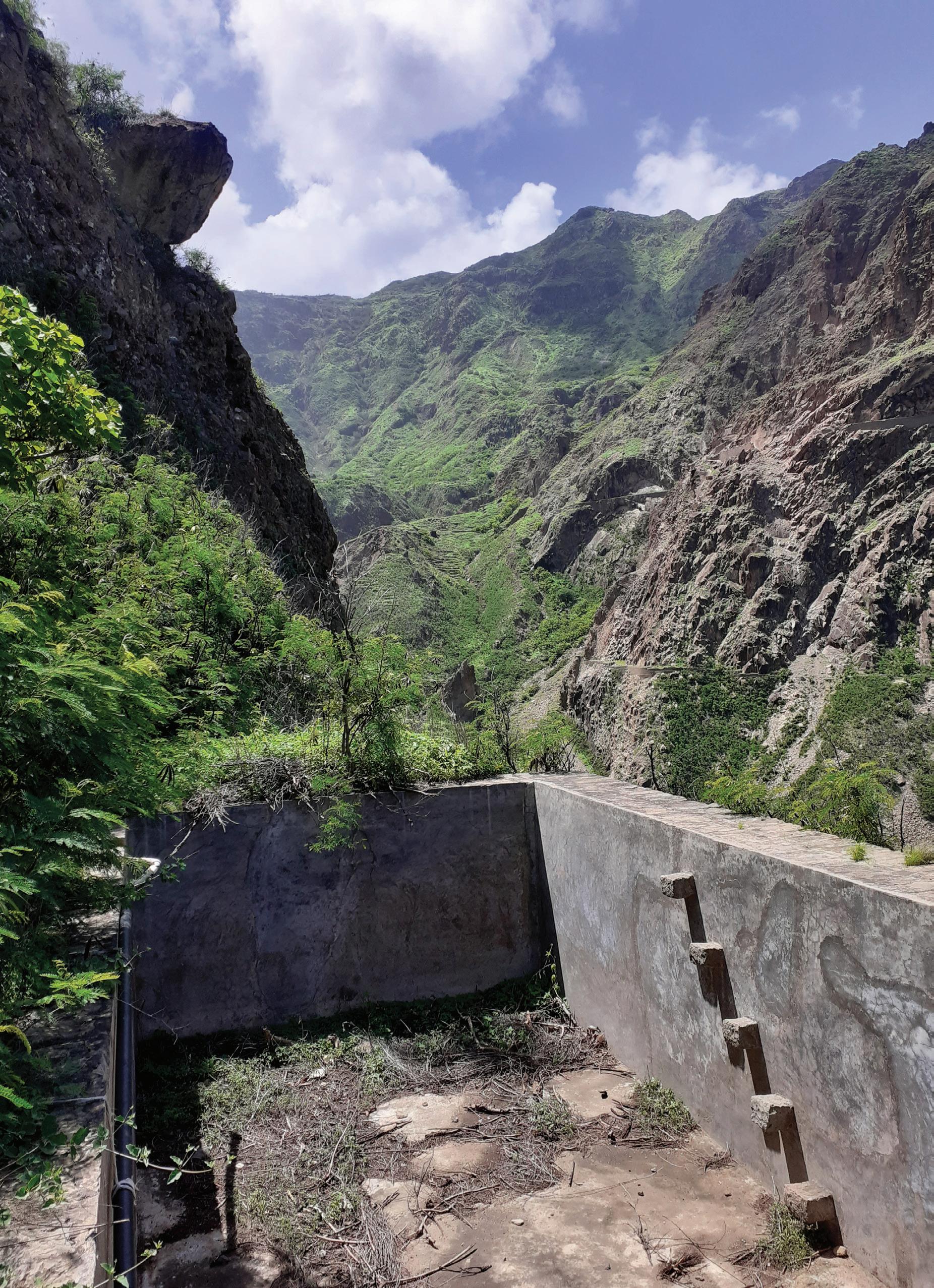
Figure 3. An abandoned water tank in Brava’s highlands, where traces of human work remain, slowly eroding into the mountain.
Photo by the author.
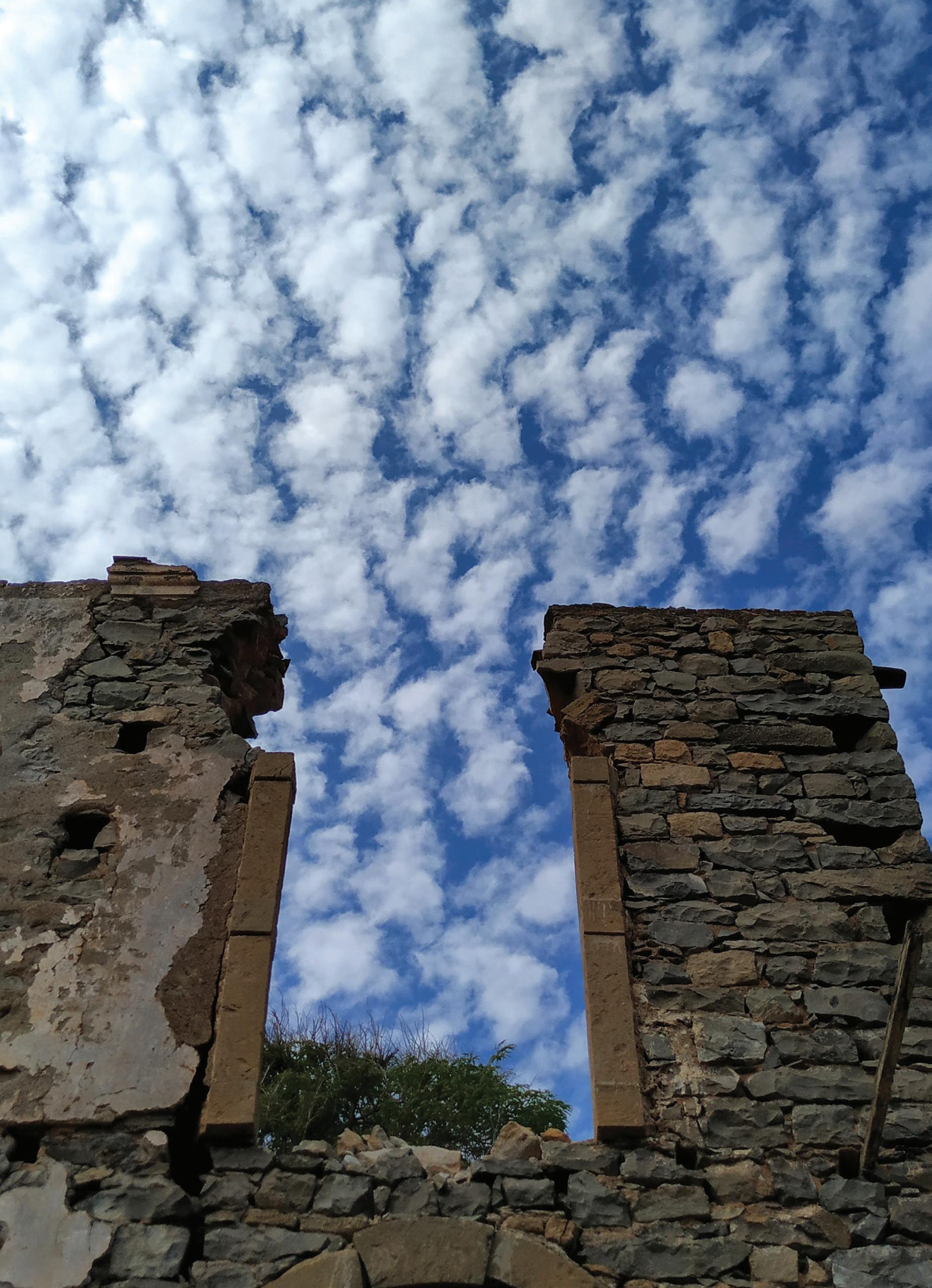
Figure 4. Looking up through the ruins of a stone house in the empty village of Vinagre, Brava. Photo by the author.
Figures of Freedom:
Race, Nation, and Slavery in Depictions of Black Seminoles
Pilar Jefferson, PhD Student, Ethnic Studies, University of California, Berkeley
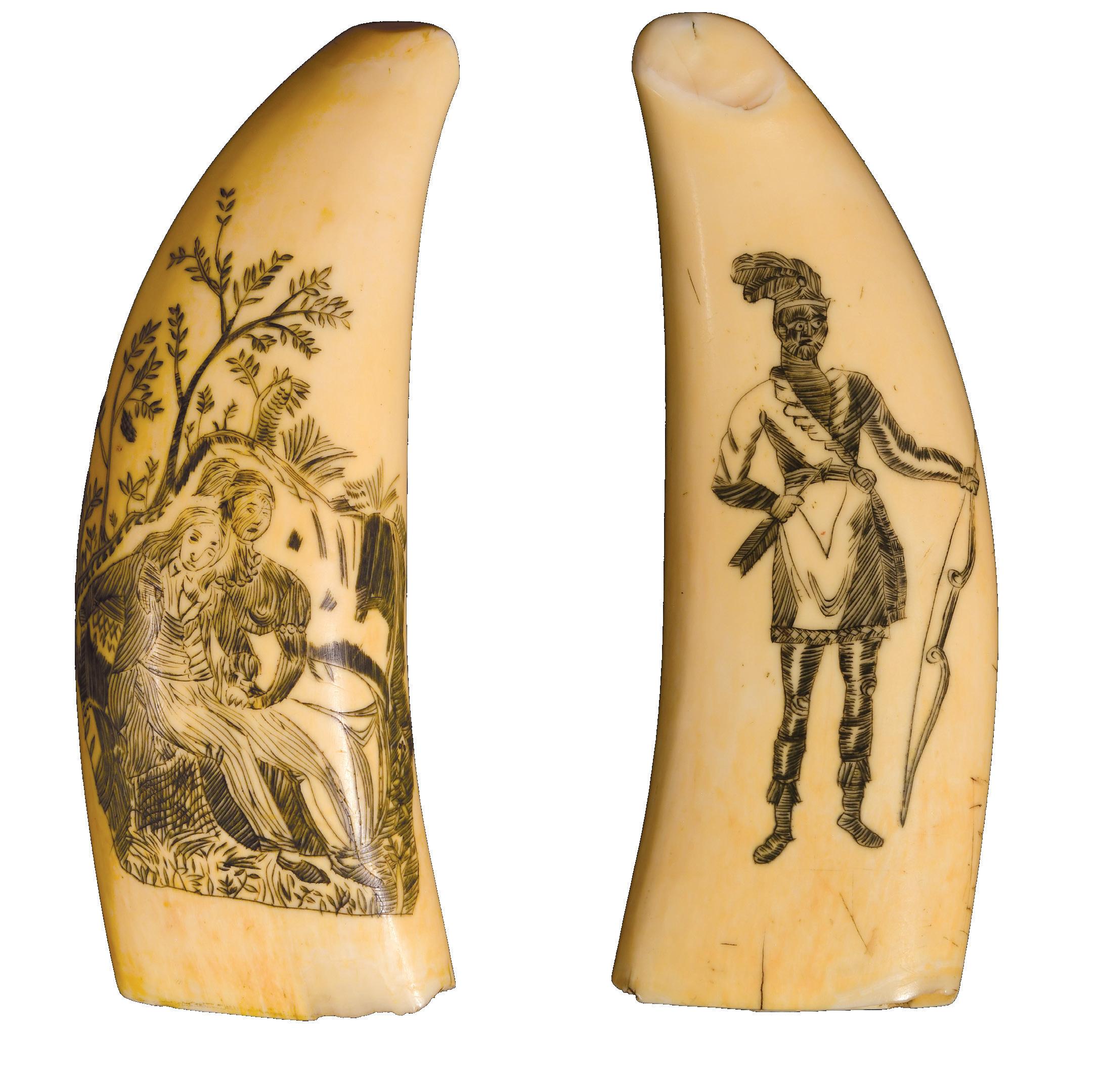
Figure 1. Maker once known, “Black Seminole Tooth,” 1800s. Whale tooth and ink, Given in memory of Clarence E. Purrington of Wakefield, Massachusetts, 1999.18.2.
At first glance this scrimshaw tooth resembles many others in the New Bedford Whaling Museum collection (Figure 1). The images on both sides presumably came from the newspapers, books, or magazines that circulated on whaling ships and provided inspiration for sailors who passed the time in artistic pursuits. One side features a domestic scene of a couple sitting in a bower and gazing out at the viewer. The other side is more unusual. On it, a dark skinned figure stands, wearing a longsleeved tunic that is belted at the waist, a headdress with feathers, and is carrying a long bow in one hand and an arrow in the other. While the bower scene is a typical scrimshaw image, the figure on the other side, identified as a “Black Seminole” in the museum’s record, is uncommon, showing up on only one other piece at the museum. Though there is no exact date for this tooth, white American public awareness of Black Seminole people spanned the first half of the nineteenth century, from the War of 1812 to the Civil War. The period was also the peak of scrimshaw production by American whalers. These two historical moments converge in the tooth, giving us an opportunity to examine how the figure of the Black Seminole appeared in the American imagination in the nineteenth century, especially in relation to the expansion of the United States into Florida, and the fight for the abolition of slavery in the newly formed nation.
Who are the Black Seminoles?
Today, Seminole people live across a vast diaspora, from Mexico to Oklahoma, though their roots are originally in the lands we currently call southern Alabama, Georgia, and Florida. During the early colonial period, as British and Spanish settlers encroached on the Southeast, Indigenous peoples from the southern Creek nation in present day Georgia and smaller Florida Native groups allied together to form a new tribe, the Seminole. The exact origins of the name Seminole are debated but the etymology connects it to the Spanish word “cimarron,” meaning “maroon” or “outlaw,” and the associated Mvskoke or Creek word “simanoli” also meaning “wild” or “runaway.” The current day Seminole Nation of Florida is proud of their origins, including the meaning of their name. On
the tribe’s website they write that they acquired the name because they “would not be controlled by the Spanish or brought into their mission colonies.”1 Refusing to integrate into settler society or be further displaced, the Seminole rooted themselves in what is now known as northern and central Florida.
This geography was both the homeland of the Seminole and the promised land of freedom for many enslaved Africans who escaped bondage in the southern British Colonies in the seventeenth and eighteenth centuries. Florida was a key site in the battle between the Spanish and British Empires, with the British temporarily taking over Florida between 1763 and 1785. To tip the scales in their favor, the Spanish strategically promised people enslaved by the British freedom under their colonial rule in exchange for conversion to Roman Catholicism and, for men, service in the Spanish militias.2 By this point, the Seminole and Spanish had diplomatic agreements that accounted for trade and mutual military protection between the two groups. African descended people entered Seminole society in one of two ways. As with the other major Southeastern Native tribes, the Seminole enslaved some Africans. Slavery under the Seminole followed a feudal system; the Seminole allowed enslaved people to build and live in their own homes, adjacent to Seminole communities, and required periodic tributes of food and labor.3 Other free Black people chose to marry into Seminole communities, as an alternative to being ruled by another colonial power. This situation was mutually advantageous because it guaranteed freedom for Black people and swelled the numbers of Seminole people to defend themselves against future colonial attacks. In the decades after the American Revolution, the US government set its sights on expanding into Florida, putting the now multigenerational bonds between Seminoles and Black members of their communities to the test. While all of them risked losing their homes to American invasion, the more
1 “Introduction,” Seminole Tribe of Florida - STOF, accessed October 29, 2025, https://www.semtribe.com/history/introduction.
2 Paul M. Pressly, A Southern Underground Railroad: Black Georgians and the Promise of Spanish Florida and Indian Country (University of Georgia Press, 2024), 2, https://doi.org/10.1353/book.125368.
3 Kenneth Wiggins Porter, The Black Seminoles: History of a Freedom Seeking People (University of Florida Press, 1996), 5.
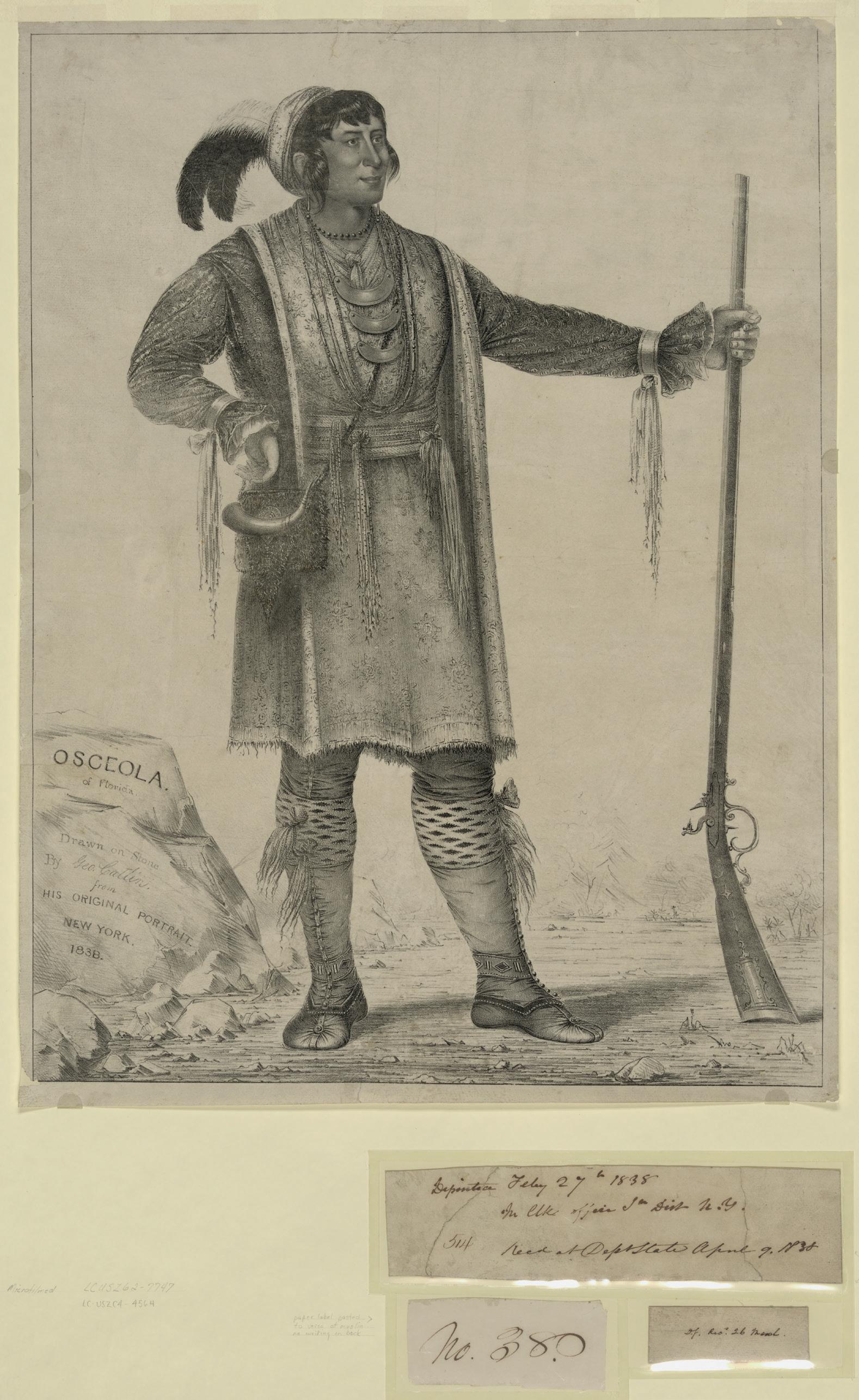
Figure 2. George Catlin (1796-1872), “Osceola of Florida,” 1838. Lithograph, Library of Congress Prints and Photographs Division.
dire threat of re-enslavement loomed over the heads of Black Seminole people.
The Figure of the Black Seminole & The Early Republic
There are two interesting aspects of the Black Seminole image on the tooth: the uncertainty of its origin, and the inclusion of the bow and arrow. These visual signals connect to larger issues of race and nationhood in the war between the Seminole people and the Early American Republic, which stretched from 1816 to 1858. Regarding the image’s uncertain origin, while there are a number of images of Seminole war leaders from the early to mid-nineteenth century, none match with this exact image, meaning that the scrimshaw artist may have either combined the portraits of two significant Seminole leaders, John Horse and Osceola, or that there is another historic image missing from contemporary records. The figure on the tooth stands in a pose that echoes George Catlin’s famous portrait of Osceola (Figure 2), but bears the skin tone of John Horse, who had mixed Spanish, Seminole, and African descent and served as an interpreter during the war. Portraits of Native leaders proliferated in the nineteenth century, led by white painters like Catlin (1796-1872) and Charles Bird King (1785-1862). While Catlin and King’s paintings capture incredibly detailed portraits of Native peoples, as opposed to solely racist caricatures, they still held within them an insidious belief: that capturing Native people in their glory was necessary because they were doomed to disappear in the face of American expansionism and civilized progress.4
Up until the nineteenth century, alliances with Indigenous nations were beneficial to European colonial governments in maintaining their strongholds and trade routes on the continent. But the United States experimented with a different sort of power, one where Indigenous communities were no longer regarded as nations in their own right, despite the treaties they continued to sign with these
4 Bruce Watson, “George Catlin’s Obsession,” Smithsonian Magazine, accessed October 31, 2025, https://www.smithsonianmag.com/artsculture/george-catlins-obsession-72840046/.
peoples. Instead, by suppressing Native power and subsuming Native peoples within the settler nation, the United States could prove itself an empire to rival those of Europe. To justify violence, removal, and political suppression, a paternalistic settler narrative spread that Native peoples could not adapt to the rapidly growing and evolving settler society and were doomed to die out, but should be appreciated for their wisdom and valor in the meantime. Today we call these the tropes of the “vanishing Indian” and the “noble savage,” which continue to haunt Native peoples.
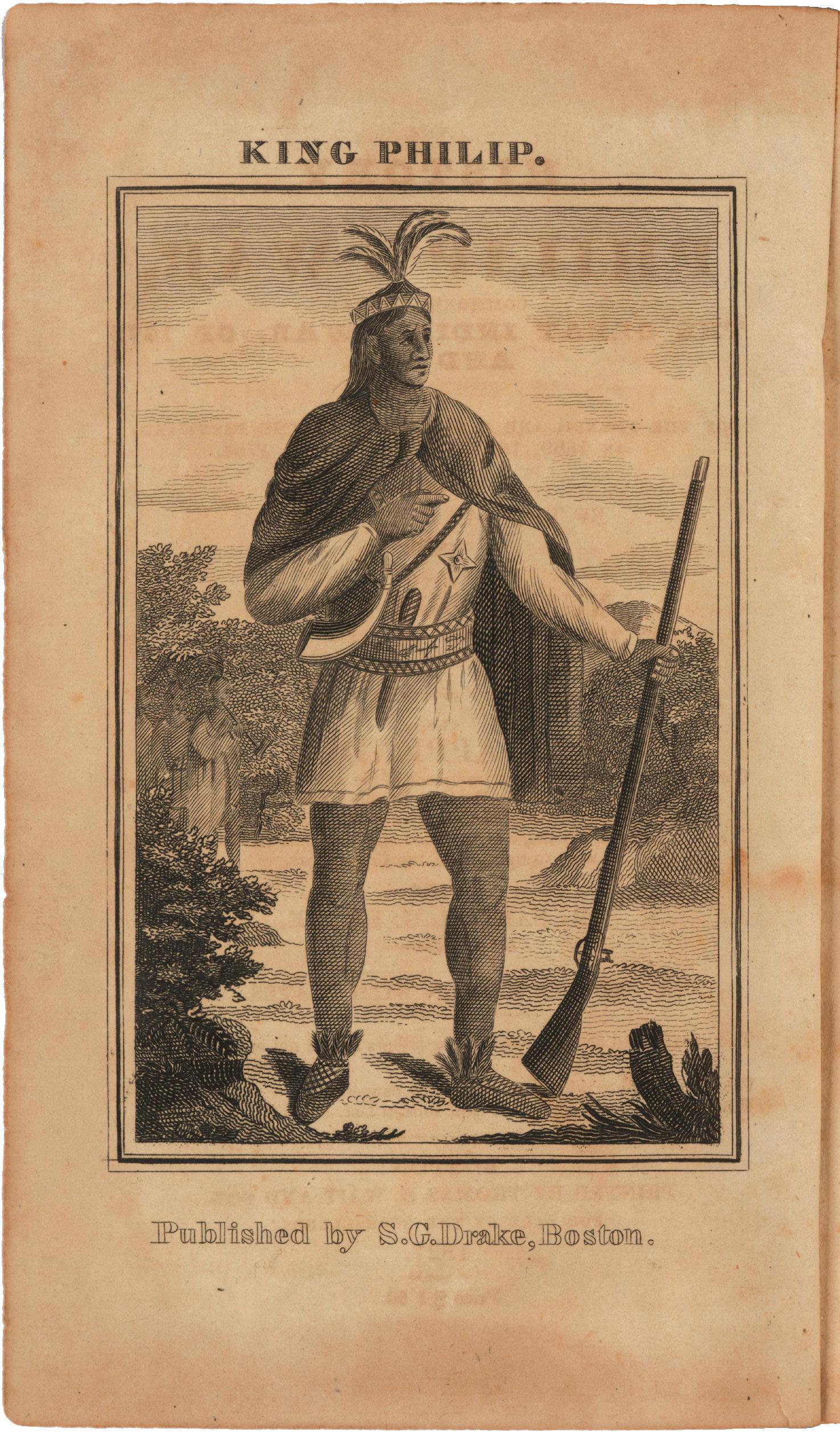
Artists like the painters mentioned above took it upon themselves to capture images of Native people before it was too late, perpetuating this myth. Indeed, the artist who etched this Black Seminole figure on scrimshaw may have been following their lead, imagining Natives as people doomed to live in the past. An important detail leads me to this conclusion: the Seminole War was primarily fought with muskets, on both sides. In the most widespread image of Osceola, copied after Catlin’s portrait of him, Osceola stands to one side and holds a musket on his other. The pose is copied nearly exactly on the scrimshaw tooth, except the Black Seminole warrior holds a long bow instead of a musket. In fact, besides the dark skin tone of the figure, he more closely resembles a Dutch etching of Wampanoag sachem Metacomet, also known as King Phillip, from the late seventeenth century, nearly 150 years before the Seminole Wars (Figure 3).5 It is possible that, to the artist, all Native people lived in a mythical past of bows and arrows. Here, the racial identity of the figure is important to note as well. In European colonial hierarchies of race, people of mixed African and Indigenous American descent were ranked at the bottom of the ladder of civilization, seen as closer to animals than human beings. Perhaps the artist, unable to imagine a person of African and Native descent expertly wielding a gun like his compatriots, returned to an earlier iteration of images of Indigenous peoples.
This is not the only case where a Black Seminole person did not fit into the noble and notable story
5 Chief Sachem Metacomet – Rhode Island Heritage Hall of Fame, n.d., accessed October 28, 2025, https://riheritagehalloffame.com/chiefsachem-metacomet/.
of Native war leadership that a white artist was attempting to portray. Scholar Bethany Montagno has written about how painter Augustus Choefft omitted Black Seminoles in a painting of a Native diplomatic party for the emperor of Mexico. Even though Black Seminoles were present at the event, they did not support Schoefft or the emperor’s romanticized or racialized images of indigeneity.6 This is one example of how Native people who also have African heritage confound the stereotypical figure of the “Indian warrior” and therefore are removed from the frame.
The Black Seminole & Abolition
Elsewhere in nineteenth-century popular culture, the African heritage of some Seminole people was emphasized by white artists and authors, to evoke the sympathies of white people to join the cause of abolition.7 The lithographs of Osceola and John Horse mentioned earlier were reproduced in other historical accounts including Joshua Reed Giddings’ book The Florida Exiles and the War for Slavery: Or, The Crimes Committed by Our Government Against the Maroons, who Fled from South Carolina and Other Slave States, Seeking Protection Under Spanish Laws (1863). Giddings, a white Ohioan abolitionist and congressman, used this historic account to argue that the Seminole War was not, in fact, fought to expand and secure the American foothold on the eastern seaboard, but was actually a war fought to return the African descended peoples who lived under Seminole and Spanish rule to their former enslavers. Giddings believed that enslaved people had the natural right of liberty and therefore it was an illegal exercise to try to reclaim them under the guise of protecting the American nation state. He was censured in the legislature for stating this on the House floor. Popular abolitionist newspapers during the Civil War also took up this narrative, outraged that their federal
6 Bethany Montagano, “Blacking out History,” in Gabrielle Tayac, ed., IndiVisible: African-Native American Lives in the Americas (Smithsonian Institution, 2009), 49.
7 The most popular pathetic abolitionist image is the woodcut of an enslaved man kneeling in supplication with the words “Am I not a Man and a Brother?” surrounding him. The New Bedford Whaling Museum has an Abolitionist scrimshaw tooth in the collection, where an American eagle swoops down to save an enslaved Black woman and her infant.
government used its power in direct opposition to the desires of free Northern states. In white abolitionist William Lloyd Garrison’s newspaper The Liberator an entire article in 1837 was dedicated to arguing that abolitionists should side with the Seminole people against the United States government in the Seminole War because of the number of African descended and formerly enslaved people amongst their number. Depending on the date of the Black Seminole tooth’s carving, one of these abolitionist texts might have been the artist’s reading material of choice.
Conclusion: Black Seminoles Today
While these popular culture debates raged on, Black Seminole people were forging their own path, trying to survive in a country that targeted them both for their blackness and their indigeneity. Some were displaced from Florida by the US army during the Indian Removal era of the 1830s and, alongside other Southeastern Native people, made new homes in current day Oklahoma. Others moved south into Mexico, seeking freedom in a country that abolished slavery in 1829. Called “Mascogos” in Mexico, these Black Seminoles fought against other Indigenous peoples on behalf of the Mexican army. And still others remained in Florida, maintaining their connection to the land despite the constant threat of American colonialism. Today, descendants of all of these branches of Seminole community celebrate their history while fighting for recognition and visibility in the broader landscape of Indigenous life in the present-day U.S.
Figure 3. S.G. Drake, publisher, “King Philip,” or Metacom, from Benjamin Church (1639-1718), The history of Philip’s War, commonly called the Great Indian War, of 1675 and 1676 ... (Boston, Mass.: Printed by Thomas B. Wait and son, 1827). Courtesy of the John Carter Brown Library.
Highlighting Melville
This year marks the 185th anniversary of Melville sailing out of New Bedford Harbor, the 175th anniversary of Moby-Dick’s publication, and the 135th anniversary of Herman Melville’s death. At the New Bedford Whaling Museum (NBWM), 2026 also marked thirty years of the annual Moby-Dick Marathon reading, and twenty-five years of partnership between the NBWM and the Melville Society Cultural Project (MSCP). In addition to other activities, the MSCP awards the Walter Bezanson Fellowship to support research at the Museum in our collections and in the MSCP Melville Archive, housed at the Museum. The following two articles are by authors who researched at the NBWM as Bezanson Fellows in 2025.
From Scrolls to Scrimshaw: Sequential Art and the Visual Imagination of Whaling
By Alan Van Brackel, PhD candidate at PRISMES, Université Sorbonne Nouvelle and 2025
Walter E. Bezanson Fellow
While reading Moby-Dick, I have always been captivated by the description of the Spouter-Inn, where a motley crowd of characters mingles amid a collection of objects:
“On one side stood a long, low, shelf-like table covered with cracked glass cases, filled with dusty rarities gathered from this wide world’s remotest nooks.” The New Bedford Whaling Museum is certainly not dusty, but for a visitor who is more literary than truly familiar with whaling, the same sense of wonder arises at the sudden appearance of an object originating from an unexpected place. At
the museum, that same sense of wonder arose—but this time, the objects seemed to tell their stories in sequence. Walking from one exhibit to the next, I felt as if I were following panels in a vast visual narrative of whaling history, one image leading into another. In June 2025, I travelled to New Bedford from France as one of the Melville Society’s Walter E. Bezanson Fellows.1 My PhD dissertation focuses on reception studies and pictures, so I consulted
1 I cannot thank Marina Wells, Samantha Santos and everyone at the museum enough for making my experience there pleasant and fulfilling.
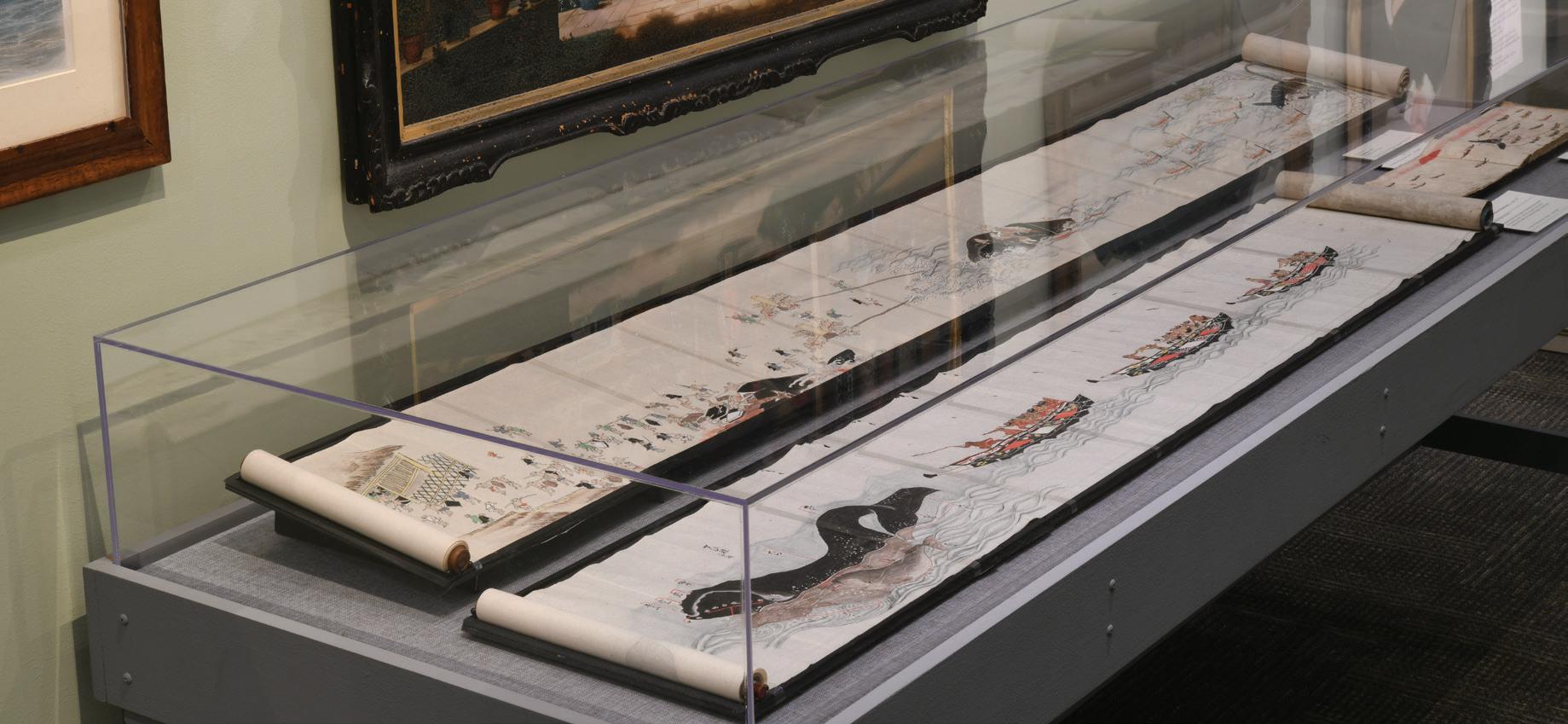
Figure 1. Japanese maker once known, Whaling, ca. 1850. Watercolor on paper scroll, Kendall Whaling Museum Collection Transfer, 2001.100.4494.
illustrated books as well as works of art inspired by Melville’s writings. My research focuses specifically on French adaptations of Moby-Dick in comics—of which there are many: around 70 of them since the 1950s and more still being published. A number of the artists in my corpus, however, first discovered Moby-Dick through images rather than text, for instance through John Huston’s film or other visual adaptations. This makes the question of Moby-Dick’s visual imagination, and of the whaling imaginary more broadly, particularly compelling. As Patrick Mallet once explained to me, he read and watched numerous documentaries while preparing his own comic series––and he is far from the only one. Nineteenth-century whaling prints and engravings, especially those depicting whaling scenes, therefore exert a direct influence on the works I study. Before arriving at the museum, I had not fully realized this connection and had focused primarily on direct adaptations of Melville’s text. Despite the mission I had set for myself, I kept an open mind, aware,
as many fellow researchers have reminded me, that archives move in mysterious ways.
As I explored the museum and its archives, materials I had not previously considered began to resonate with my research on comics through the discovery of several sequential images, beginning with panoramic scroll paintings. The question of how much “sequential art” is a form of comics is a matter of ongoing debate in specialized studies. For scholars such as Thierry Groensteen, comics ideally require a structured format: panel division, the co-presence of text and image, and a meaningful progression from one frame to the next. 2 Yet, as Groensteen acknowledges, contemporary and more experimental works often subvert these conventions, embracing absurdity, silence, or loss of narrative coherence. Some comics dispense entirely with text; others adapt animated films or cinema. Other theorists, following Will
2 Thierry Groensteen, Bart Beaty, and Nick Nguyen, The System of Comics (University Press of Mississippi, 2007).
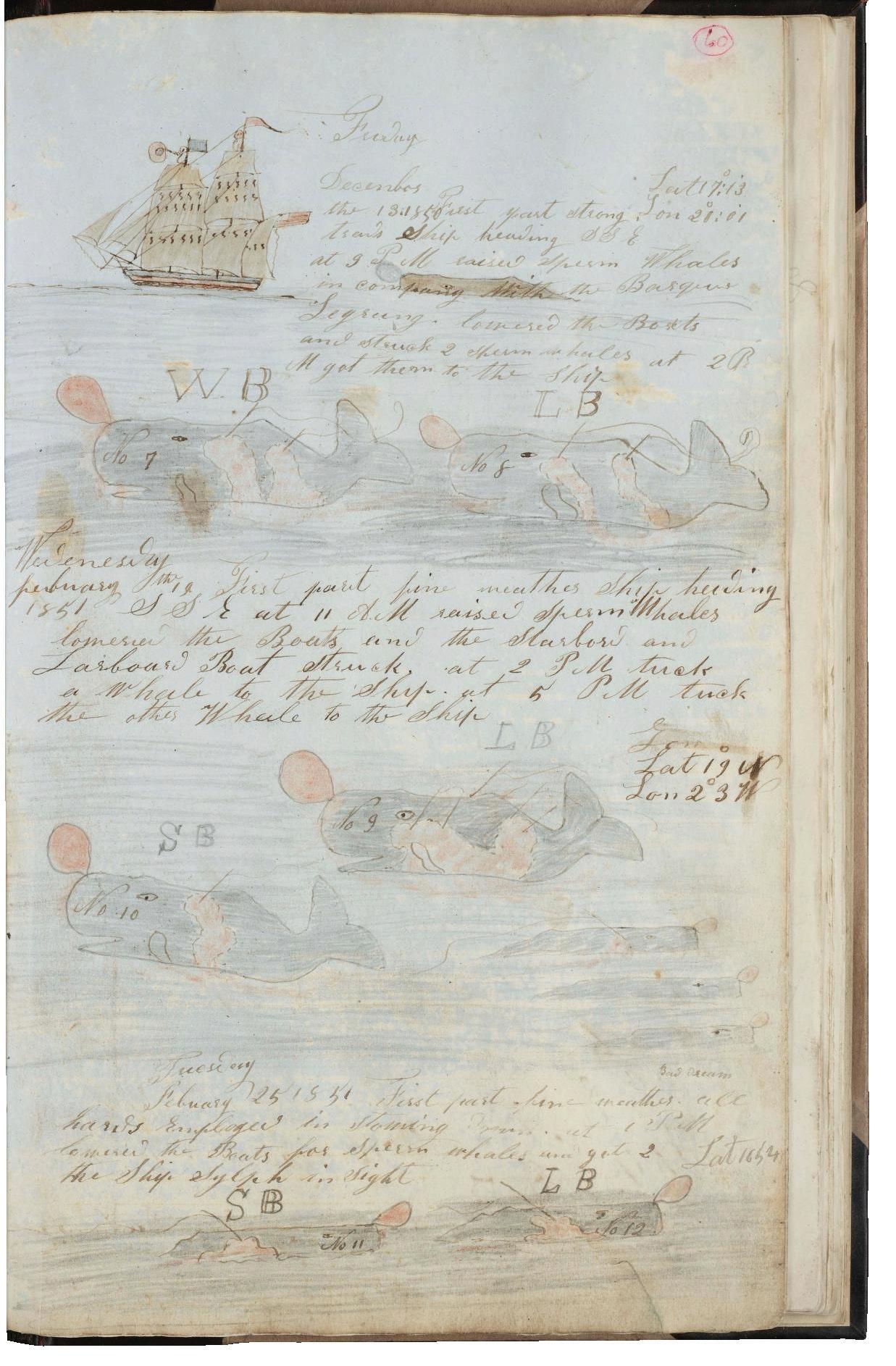
Figure 2. Logbook of the ship Corinthian of New Bedford, Mass., and the brig Leonidas of Westport, Mass., captained by George W. Armington and Peleg Cornell, kept by Warren W. Baker, on two voyages from 1847 October 9-1851 July 10. NBWM, KWM 60. P. 120-121.
Eisner’s notion of comics as a “sequential art,” argue for a more porous definition that includes diverse visual traditions from Chinese lianhuanhua to early narrative prints. Thierry Smolderen has traced this lineage back to William Hogarth’s engraved stories, while Andrea Andreani and others have examined how comics emerged as an autonomous art form from these earlier modes of sequential representation.
The New Bedford Whaling Museum’s collection includes several forms of sequential art, notably a Japanese watercolor scroll (Figure 1) six feet in length, depicting successive stages of the whaling process: the chase, the capture, and the hauling of the carcass ashore. This form of sequential art, however, had an extremely limited circulation at the time. Some such objects may have been imported to the United States, but they did not reach a broad public audience.
Similarly, one logbook in particular caught my attention. Of the museum’s large collection of whaling logbooks and journals, the NBWM estimates that around ten percent are illustrated. I had the chance to examine several of them, with drawings of varying refinement. The one most relevant to my research is the logbook of the Leonidas, kept from 1847 by Warren Baker, the ship’s second mate (Figure 2). The layout of pages 120–121 in the volume is particularly striking, as it alternates images and text in a sequential rhythm, much like contemporary graphic novels. While this is fascinating from the standpoint of comics history, it is worth noting that logbooks were never intended for public circulation.
I then began to wonder what kinds of images did
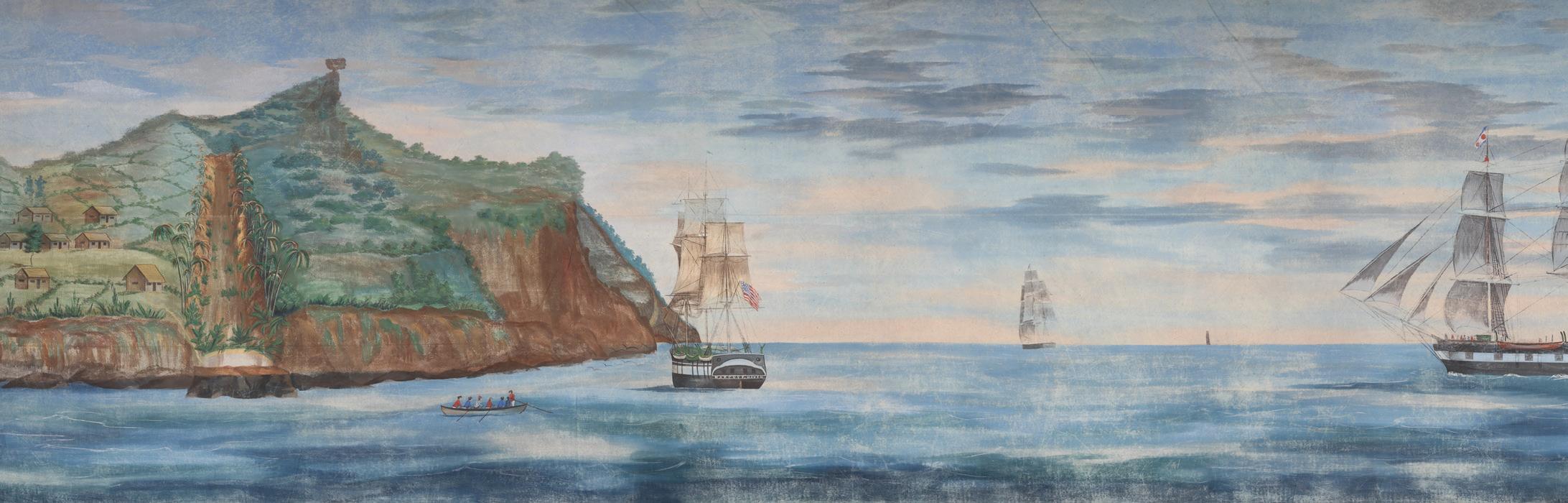
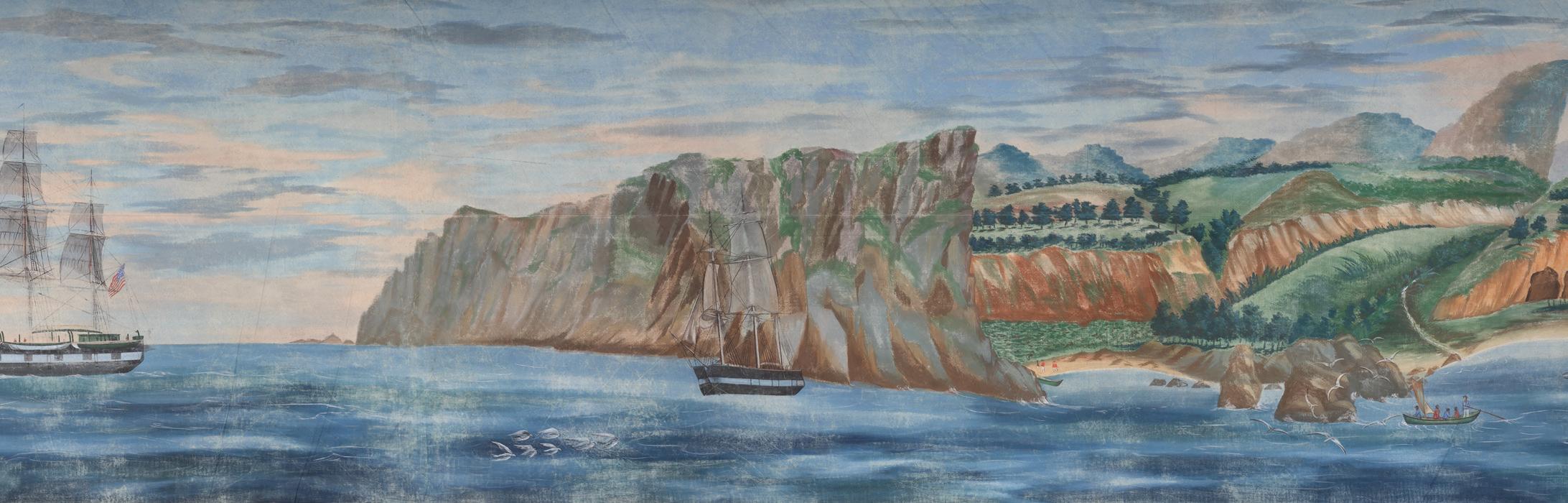
reach a broader audience. That was when The Grand Panorama of a Whaling Voyage ‘Round the World caught my attention. It was a collaboration between Caleb Purrington, a renowned sign painter from New Bedford, and Benjamin Russell, a whaler and artist from the same city. The panorama stretches nearly 1,300 feet in length and draws upon Russell’s own experience as a whaler, beginning with the departure of the Lagoda from New Bedford bound for Cape Horn. It depicts a variety of whaling scenes along the way (Figure 3).
When the Panorama was created in 1848, comics already existed: most scholars credit the Swiss artist Rodolphe Töpffer as the inventor of comics in the 1830s, but painters in New Bedford would not have been aware of his work. The goal here is not to label the Panorama as an early comic, but rather to emphasize the specificity of its format. Unlike the circular panoramas popularized by Robert Barker in the United Kingdom––large paintings displayed inside rotundas under carefully controlled lighting––The Grand Panorama of a Whaling Voyage Around the World was conceived as a moving panorama, with scrolls unrolling across a stage. In that sense, it was a kind of moving mural, a precursor to moving pictures. Each viewer advanced through the image at their own pace, much like the Bayeux Tapestry, which is often compared to comics. In this way, the Panorama occupies a hybrid position: neither cinema nor comic, it is another form of sequential art with logic that resonates with both.
Beyond questions of form, it is essential to remember that the Panorama was also a mass medium, exhibited
Figure 3. Benjamin Russell (1804-1885) and Caleb Pierce Purrington (1812-1876), panel from The Grand Panorama of a Whaling Voyage ‘Round the World, 1848. Distemper on cotton, Gift of Benjamin Cummings, 1918.27.1.
to audiences in six major US cities between 1849 and 1851. 3 As a mass medium, the Panorama also prefigures the social function of comics: both invite the viewer into a collective act of visual reading, where storytelling unfolds across images meant to be shared rather than possessed. It belonged to a larger visual constellation of whaling imagery that allowed the general public––many of whom had no direct contact with the industry––to visualize whaling for the first time.
The final group of artifacts that drew my particular interest was scrimshaw, an intricate form of sailors’ craftwork that bridges material culture and visual art. The museum owns a stunning collection of bone or ivory objects carved by whalers while on ships. The imagery engraved on them varies widely, including cultural motifs of the period, portraits of sailors and their loved ones, and whaling scenes adapted to the available surface. I found several examples of sequential art, notably on corset busks carved from sperm-whale ivory and on a panbone, a section of whale jawbone (Figure 4).
This monochrome engraving, accented with
3 Stephan Oettermann, The Panorama: History of a Mass Medium (New York: Zone Books, 1997).
color, portrays a whaling scene that follows several whaleships and boats through the successive phases of the hunt. The engraving compresses multiple moments of the hunt into a single, continuous composition, creating a visual rhythm that recalls the sequential logic of comics. Much like later illustrated narratives, such images helped construct a shared visual imagination of whaling, shaping how the pursuit of the whale was pictured and remembered long before its contemporary graphic adaptations.
Many of the visual representations I studied are themselves mediated by other images: by earlier comics, films, and documentaries that continue to shape how Moby-Dick and the whaling world are imagined. Tracking the circulation of certain recurring motifs proves useful in seeing how particular visual patterns have impacted one another, often crossing oceans to influence one another. Like nineteenthcentury whaleships, sequential artforms have travelled transnationally between contexts, languages, and media. As Ishmael says of Rokovoko, Queequeg’s island, “it is not down on any map; true places never are.” The ship, like the imaginary space of Melville’s visual afterlives, belongs to no fixed geography. It constitutes a collective space of imagination, beyond political frontiers, sustained and expanded by the constant circulation of images.
Figure 4. Maker once known, Busk depicting a whaling panorama, 1800s. Whale skeletal bone and ink, Gift of Mr. and Mrs. F. Gilbert Hinsdale, 1959.8.26.
Detail: Claire Illouz (b. 1955), The Whiteness of the Whale, 2008. Artist book, Gift of Elizabeth Schultz, 2011.92.22.
Melville’s Media Afterlives
Jeffrey G. Adams, Ph.D. Candidate in the Department of English, Syracuse
University and
2025 Walter E. Bezanson Fellow
Before I ever read Moby-Dick; or, The Whale (1851), I had encountered Herman Melville’s media afterlives. A memorable encounter was in my early teens when I discovered the band Mastodon, a sludgy progressive metal act, and their record Leviathan (2004). This album is loosely based on Moby-Dick, as the white whale on its cover hints, and its lyrics capture a similar sort of oceanic chaos as Melville’s whaling novel. “Blood and Thunder,” the most popular song from Leviathan, features the infectious chorus of “White whale, holy grail” chanted in repetition on top of bombastic guitar riffing. Some other songs from the album, such as “I Am Ahab” and “Hearts Alive,” show their Moby-Dick influence in their titles. As I continued to get into metal music throughout my adolescence, I discovered that Mastodon was not the only band that drew on Melville’s whaling novel for inspiration. The funeral doom metal band Ahab, as their name suggests, also liberally extracts from the endlessly generative labyrinth that is Moby-Dick. This is especially true in their plodding yet pummeling record Call of the Wretched Sea (2006). Both Leviathan and Call of the Wretched Sea build upon Moby-Dick’s literary mayhem with their abrasive sonic excesses. Now that I have spent as much time (if not more) with Moby-Dick as I have with these two records, I can confidently say that Mastodon and Ahab both capture something inherent to the spirit and aesthetic dimensions of Melville’s novel. I listened to these Melville-inspired albums regularly for years before I finally read Melville as an undergraduate, and these two metallic tributes to Moby-Dick left a strong impression on me. Leviathan and Call of the Wretched Sea also gave me, I believe, a proper window into the world Melville imagines in Moby-Dick before I ever saw this world first-hand.
My first proper encounter with Melville’s writing was reading “Bartleby, the Scrivener: A Story of Wall Street” (1853) as a sophomore in college. It
was not until I was a senior that I finally got around to reading Moby-Dick. In some ways I was already familiar with several of the thematic and aesthetic elements at play in Melville’s work. As my teenage preamble shows, Melville’s work has entered popular consciousness in what might seem to be unlikely media forms. I bring up Mastodon and Ahab to give just two personally significant examples of the expansive media ecosystem born out of Melville’s writings, especially Moby-Dick. This vast Melvilleinspired media ecosystem is perhaps more likely to introduce someone to Melville than his own work in the twenty-first century, as my experience shows, because of our ever-shifting media landscape. It is worthwhile, then, to explore how Melville’s many media afterlives interpret his rich textual corpus. Knowing how useful Melville-inspired media is in my classroom, I explored many striking Melvilleinspired media texts while doing research in The Melville Society Archive, housed in the New Bedford Whaling Museum, as a Walter E. Bezanson Fellow.
I teach Melville and Melville-related media whenever I can. Students are always drawn into Melville’s literary worlds, and he fortunately wrote on so many topics that it is usually quite easy to fit him into a syllabus. Whaling, slavery, Wall Street, incest, Palestine, the American Civil War, salesmen, and so much more is touched upon throughout Melville’s work. It is not what Melville wrote about that makes some of his writings at times inaccessible, but rather, in my experience, it is the dense and philosophically rich nature of his prose that can leave students baffled. It is essential then to build interpretative windows into Melville’s writings. One goal of my research fellowship at the Whaling Museum was to find Melville-related media that I was not familiar with that would make Melville and his work exciting to my students. In my course “American Literature, Beginnings to 1865,” I teach several of Melville’s shorter fictional works along with a whole class on Melville’s media afterlives,
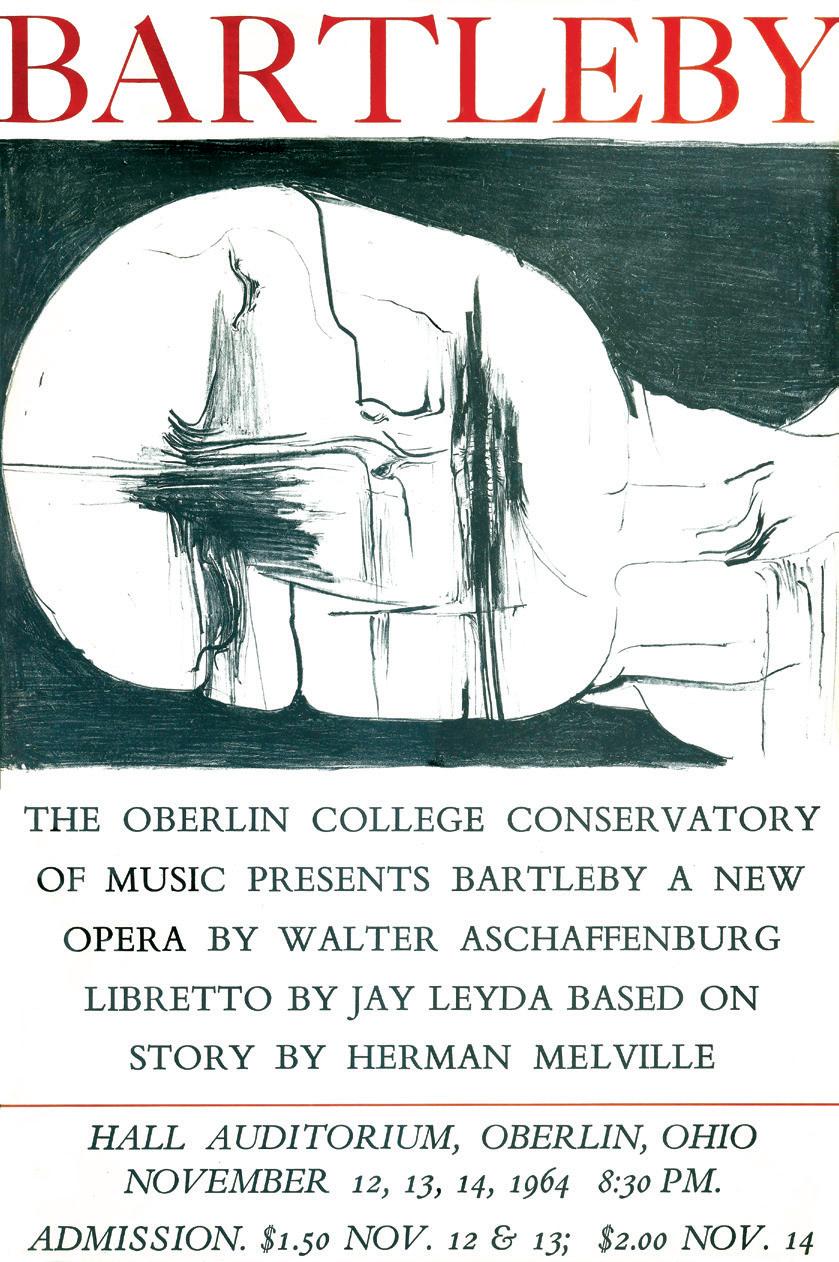
Figure 1. Leonard Baskin (1922-2000), "Bartleby, A new opera by Walter Aschaffenburg," 1964. Poster for Oberlin College, Melville Society Cultural Project Archive, donated by Harrison Hayford.
where I focus on Moby-Dick because it is the work that has proliferated the most media. During this class, I show my students Jackson Pollock’s abstract artwork Blue (Moby Dick) (1943), have them watch a clip from John Huston’s film Moby Dick (1956), look at multiple of Rockwell Kent’s famous illustrations of Moby-Dick, discuss the chain coffee shop Starbucks, and I even have my students listen to snippets from Mastodon’s Leviathan and Ahab’s Call of the Wretched Sea, which they almost never enjoy too much. Teaching Melville today should take advantage of students’ multimedia literacies to make his work more accessible and highlight Melville’s immense cultural impact. This multimedia introduction to Melville was organic for me when I first came across Leviathan, and I try to stage a similar encounter for my students.
The Melville Society Archive is a treasure trove of Melville-related media. During my fellowship, I was continuously in awe at all the different ways
that Melville’s writings were the impetus for so many media texts. One object that caught my eye near the start of my fellowship was a large framed promotional poster for a performance of an opera composed by Walter Aschaffenburg called Bartleby, which was performed in Oberlin, Ohio in 1964. The image of Bartleby on this poster is a haunting one that replicates some of the hopelessness that is present throughout “Bartleby, the Scrivener” (Figure 1). This illustration of Bartleby’s face shows the scribe sideways with a contorted, shadowed expression. The image presumably captures the final scene of “Bartleby” where the tale’s narrator, a Wall Street lawyer who was Bartleby’s former employer, visits Bartleby for a second time after the scribe’s incarceration to find “the wasted Bartleby” dead next to a prison wall.1 In Melville’s story, Bartleby kills himself by starvation, and the pain etched upon the scribe’s face in this image aptly captures the pain of his final moments. While I have yet to find an audio recording of the opera, an auditory absence that informs my reading of the image, the poster by itself provides an excellent visual interpretation of “Bartleby.”2 The illustration aptly represents the story’s tragic conclusion, using scratchlike strokes to convey pain and Bartleby’s tragic end, and it expresses the same sense of hopelessness that permeates Melville’s story.
The sonic absence that accompanies the poster for Bartleby pairs well with another such absence that I encountered in the archive. In a 1974 letter, the artist Gil Wilson wrote to then-secretary of The Melville Society Donald Yannella about the exciting potential prospect of having Dmitri Shostakovich compose a score for a drama based on Moby-Dick. Shostakovich was a twentieth-century Russian composer who captured an expansive emotional range with his epic and tonally odd music. The clear aesthetic resonances between Shostakovich and Melville’s works make the composer a desirable candidate for creating a score based on Moby-Dick What makes this request striking is that Wilson’s idea
1 Herman Melville, The Piazza Tales and Other Prose Pieces, 18391860 (Evanston and Chicago: Northwestern University Press and the Newberry Library, 1987), 44.
2 I have been unable to track down a recording of Aschaffenburg’s opera, but the score was published by Theodore Presser Company in 1967.
emerges during the height of the Cold War, a period when the United States and the Soviet Union were competing for global influence. A work based on one of the great American novels scored by perhaps the Soviet Union’s greatest composer would have been quite the Cold War cultural convergence, but unfortunately, Wilson’s drama never came to life, and Shostakovich never made this score. Despite this, I was struck by the immensity of this couldhave-been composition when I came across it in The Melville Society’s collection of letters. Wilson wrote to Yannella, “It has always seemed right that Dmitri Shostakovich would score THE WHITE WHALE.
He has expressed a desire to do a music drama on a universal theme.”3 In this letter, Wilson requests the backing of The Melville Society for his project, which he received, and even help obtaining a translator for a trip to the Soviet Union. After a short batch of correspondence from Wilson and other members of The Melville Society, discussions of Shostakovich composing anything based on Moby-Dick disappear in the archive. This disappearance makes it tough to determine definitively why this composition
3 Gil B. Wilson to Donald Yanella, March 8, 1974. The Melville Society Papers (Box 2, Folder 25), The Melville Society Archive, New Bedford Whaling Museum.
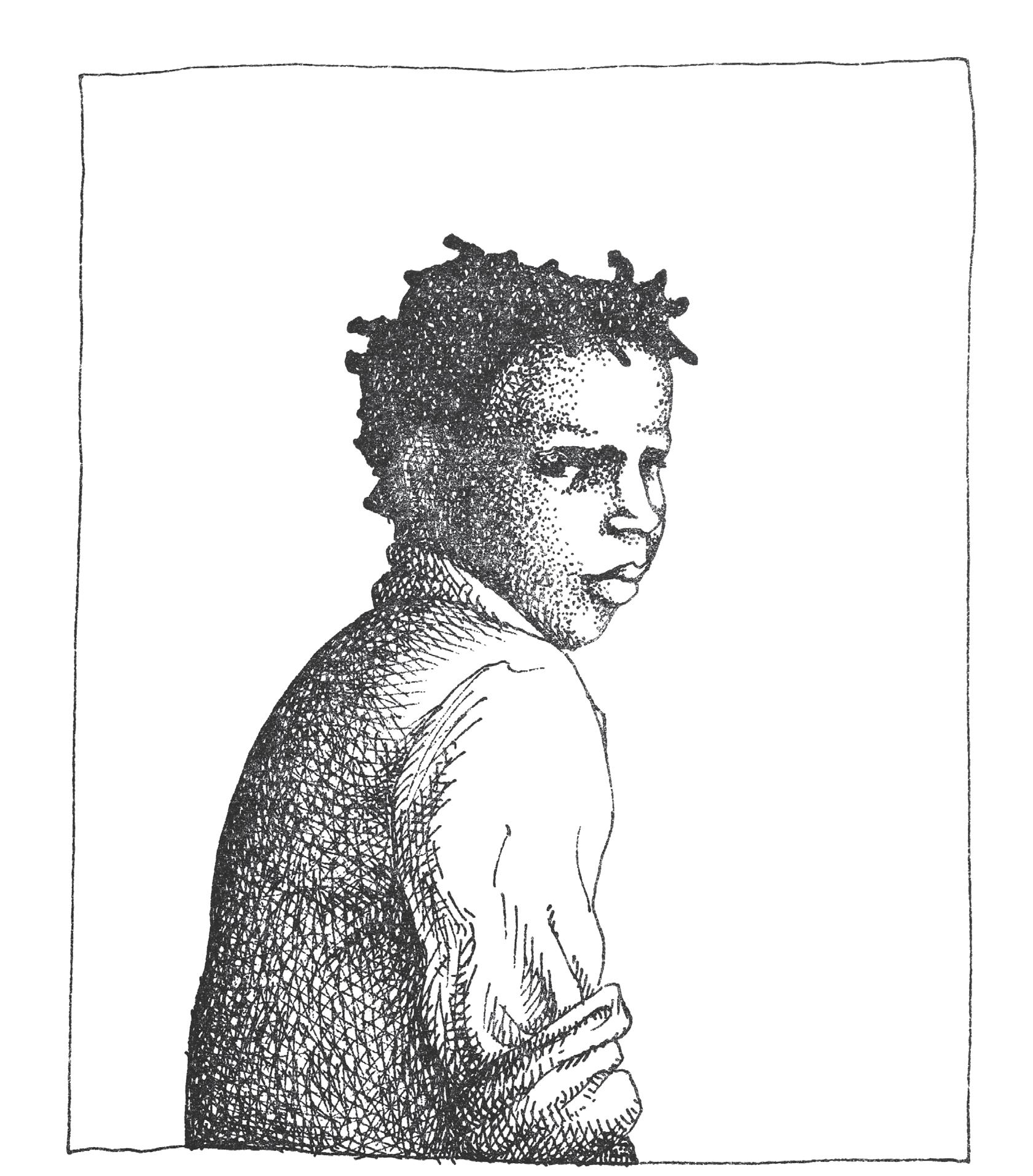
Figure 2. Catherine Kanner (b. 20th century), "Pip," from Cetus, 1996. Artist book, Gift of The Elizabeth Schultz and Melville Society Cultural Project Collection, 1996. 2011.92.24.
never came into being, but Shostakovich’s death in 1975 closed this door forever. It is tough not to be saddened at this lost Melville-inspired work despite its clear improbability from the launch.
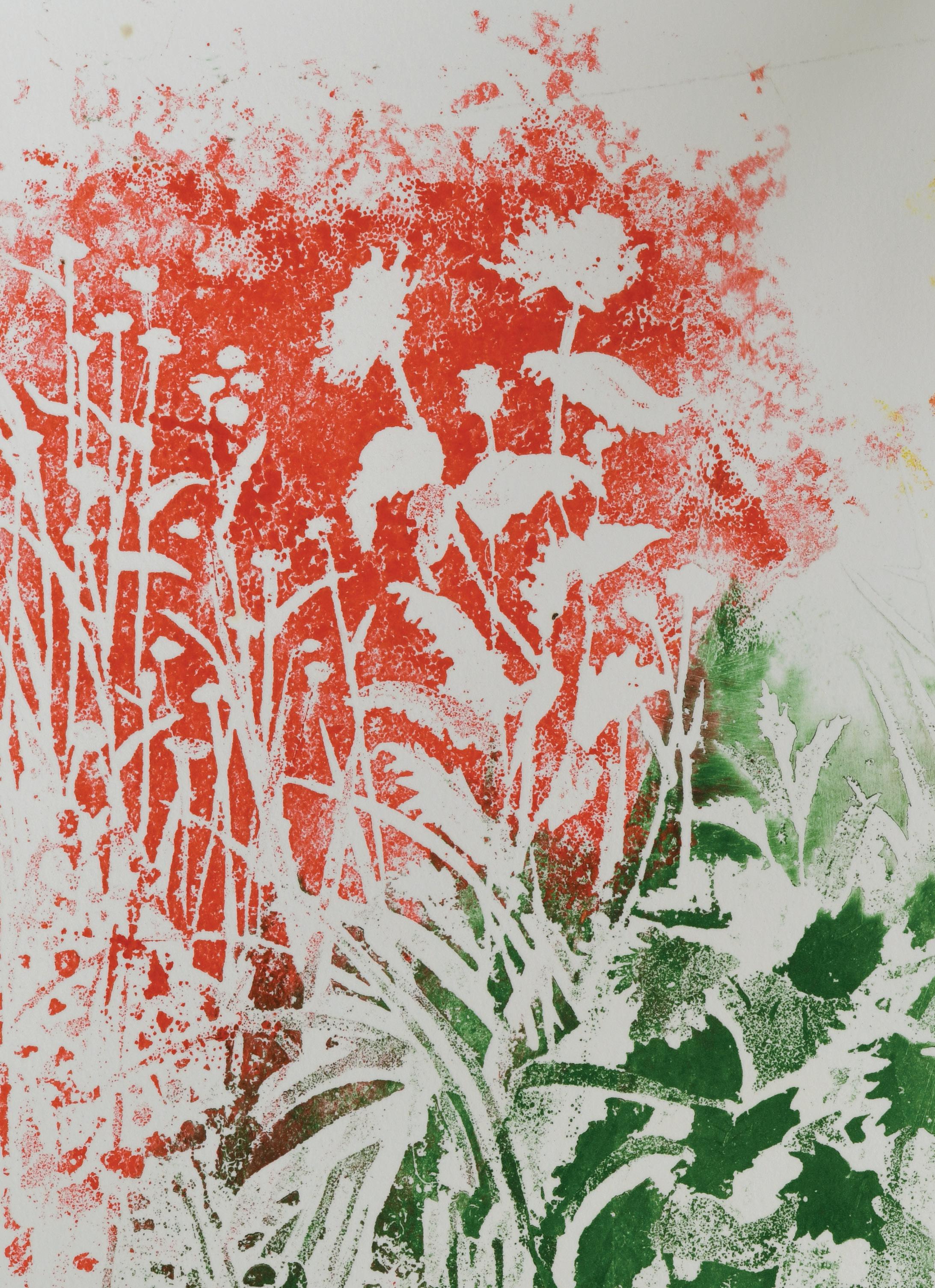
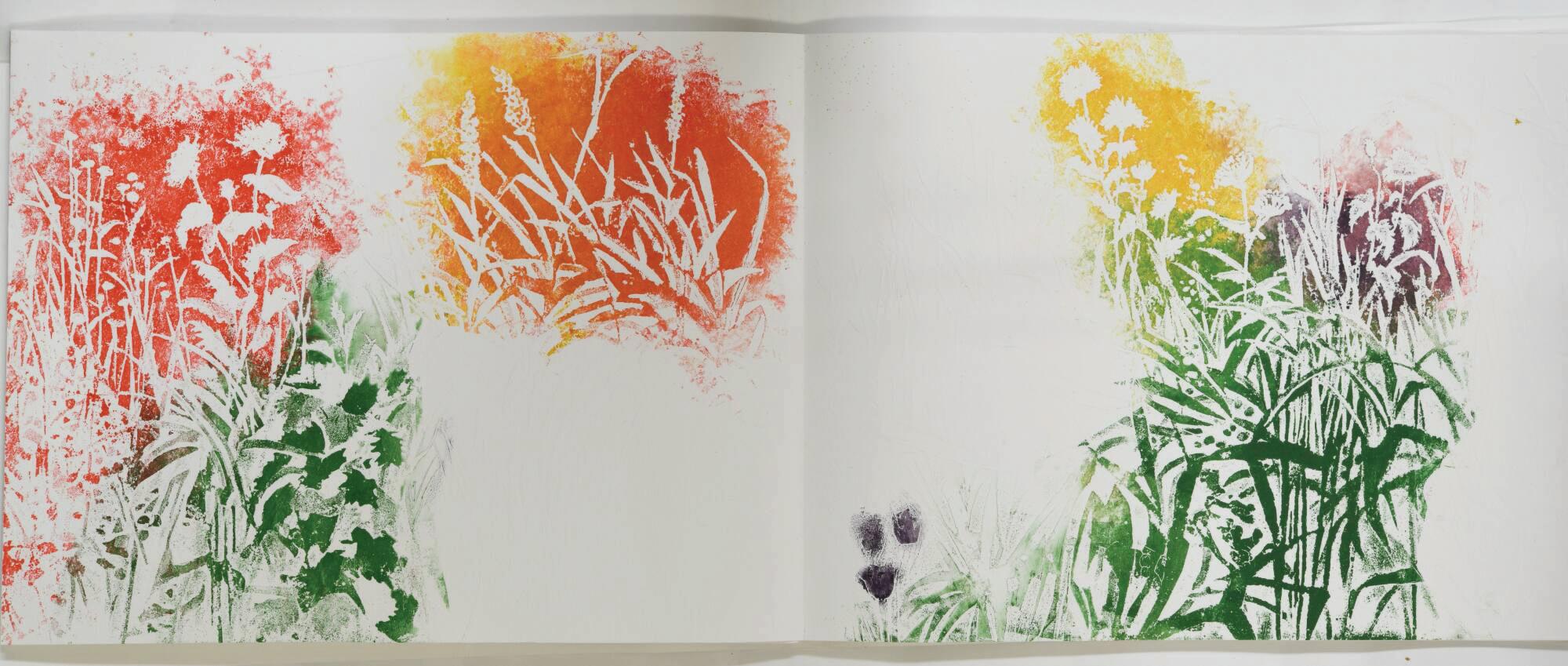
Melville’s forgotten and potential musical afterlives were of special interest to me, but another unique Melville-inspired media form that I encountered in The Melville Society Archive were art books based on Moby-Dick. Catherine Kanner’s Cetus (1996) was one such art book that used quotes from MobyDick, in addition to quotes from Paradise Lost (1667) and Shakespeare’s Sonnets (1609), to compliment illustrations of Queequeg, Elijah, Stubb, Daggoo, Flask, Tashtego, Fedallah, Pip, Starbuck, and Ahab. These illustrations highlight the faces of these characters from Moby-Dick, and I was struck by the emotional depth etched on each of their countenances. In particular, the illustration of Pip in Cetus stuck out to me because of how easily Kanner was able to capture both Pip’s youth and world-weariness in a single drawing (Fig. 2). Of course, there have been many illustrations done of Moby-Dick’s characters, but Kanner’s drawings are exceptional because they aptly humanize these figures. Claire Illouz’s The Whiteness (2008) was another art book that caught my attention. As its name may imply, The Whiteness compiles quotes from Moby-Dick’s “The Whiteness of the Whale” chapter, and these quotes appear impressed onto thick blank white pages. The only
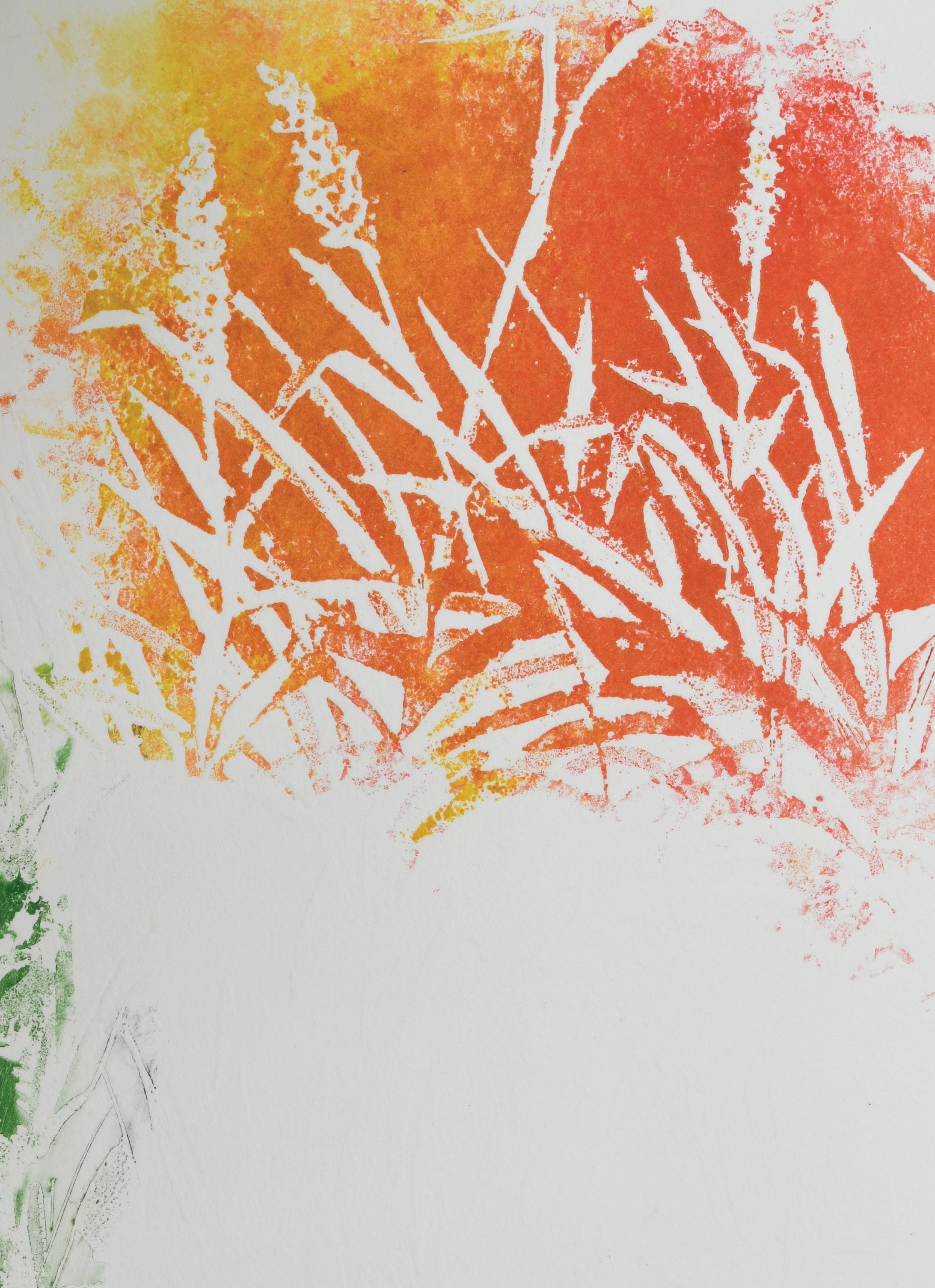
color that appears in the book are two pages with no text that have impressed outlines of flowers and other plants with splashes of red, yellow, green, and purple in the background (Fig. 3). The Whiteness serves as a stellar interpretation of one of Moby-Dick’s most discussed chapters because it shows how whiteness operates as a stand-in for both nullity and plenty within Melville’s novel. I spent a good deal of time with these art books while in the archive, and these works show how snippets from Moby-Dick can be used to create new art that offers interpretations of Melville’s novel that traditional forms of literary criticism cannot articulate.
This brief exploration of Melville’s media afterlives leaves much unsaid, and there were dozens of curious Melville-inspired media objects at the New Bedford Whaling Museum that I could have written about in this piece. I have highlighted here examples of media that I came across in the archive that surprised me or left me with unanswered questions. This access to rare and largely unavailable Melville-inspired media gave me new and exciting pedagogical tools for when I teach Melville next. Tracing how different media forms interpret Melville’s work illuminates how the act of interpretation is much more expansive and imaginative than one might expect. Melville’s many media afterlives ultimately demonstrate that interpretation is foremost a generative, not a destructive, process.
Figure 3. Claire Illouz (b. 1955), The Whiteness of the Whale, 2008. Artist book, Gift of Elizabeth Schultz, 2011.92.22.
In the Galleries
“Look pleasant, please”
Early Portrait Photography in New Bedford
New Bedford Whaling Museum, Wattles Gallery, January 16, 2026 – September 7, 2026
Look pleasant, please,” George F. Parlow (1826-1890) reportedly said to sitters when they faced the camera in his studio. “Look pleasant, please”: Early Portrait Photography in New Bedford is an exhibition that highlights the New Bedford Whaling Museum’s collection of portrait photographs made between the time of photography’s invention in 1839 and the start of a new century in 1900. The exhibition features different kinds of early photography, such as daguerreotypes, ambrotypes, tintypes, carte-de-visites, cabinet cards, gelatin silver prints, and albums, celebrates the studio photographers who moved the medium forward
in New Bedford, and examines the unique cultural landscape that unfolded around them.
New Bedford changed dramatically between 1839 and 1900. The whaling industry rose and fell, communities shifted and changed, waves of immigration brought new ideas, challenges, and tensions, and technology transformed. These changes are reflected in photography. For people of all backgrounds, the photo studio was a space where different relationships played out and where photographers and sitters represented personal identities together. The exhibit explores what
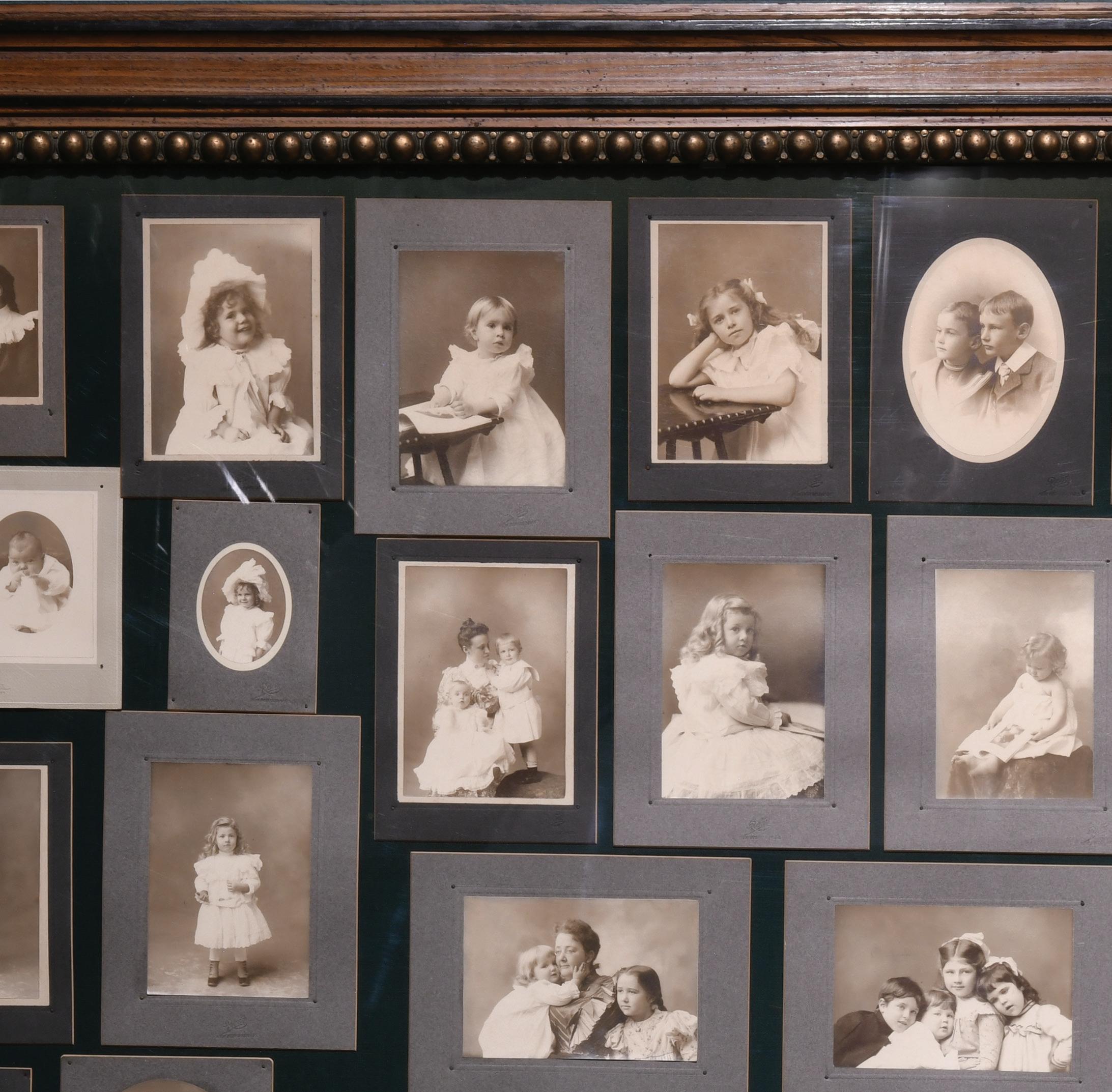
James E. Reed (1864–1939), Original studio display containing 47 portrait photographs, circa 1895. Card photographs, Estate of James E. Reed, 1996.21.4.
the studio was like, and who belonged there—as photographer or sitter.
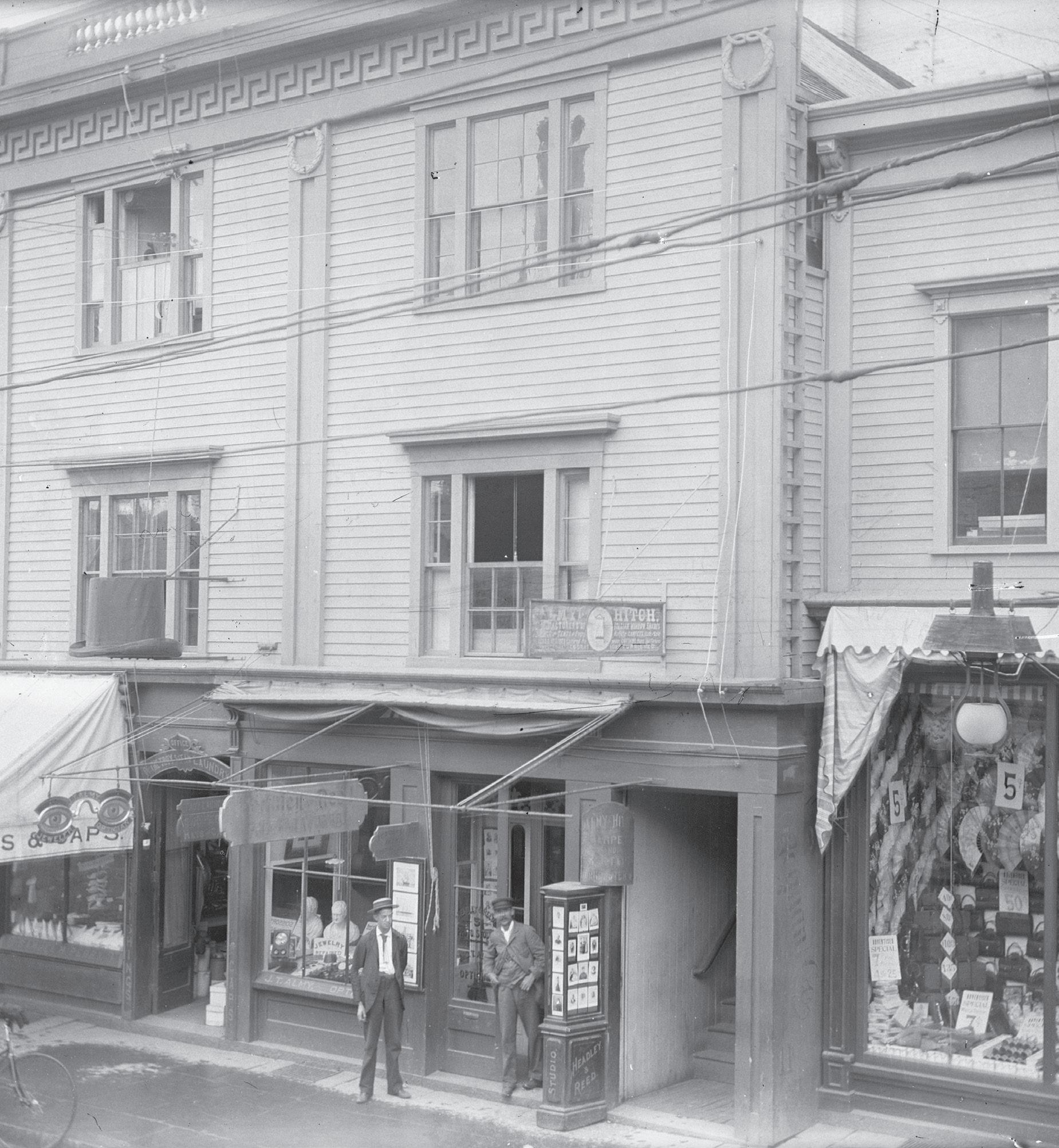
The front cover of this issue of Vistas depicts a compilation of photographs that are framed in their original studio display. Photographer James E. Reed (1864–1939) created these groupings for his studio, the location of which is visible in this view of Purchase Street in the 1890s. The compilation, not unlike the
one outside of the studio’s entrance in this image, caught the attention of potential sitters and showed them the possibilities of how they could appear in the studio. Three of these framed compilations can be seen in “Look pleasant, please” at the Museum. The exhibition invites visitors to reflect on their own experiences with photography, portraiture, and how we “look pleasant” today.
Photographer once known. Street view of Headley & Reed Studio at 5 Purchase Street, New Bedford, 1890-1895. Glass plate negative, NBWM 2000.100.1839.8
Forging Independence | Building a Nation
New Bedford Whaling Museum
Braitmayer Family Galleries
Opened December 1, 2025
In celebration of the 250th anniversary of the American Revolution, NBWM has opened a new suite of conjoined galleries that explore stories of independence, struggle, and citizenship in the region during the late colonial and early Republic period (1760-1830).
Forging Independence | Building a Nation outlines important regional historical events of the American Revolution, including the Boston Tea Party, which happened on the locally built and owned vessel the Dartmouth, and Grey’s raid, encompassing the defense of Fort Phoenix, the siege and burning of Bedford Village, and the Bombardment of Fairhaven. The installation frames these war-time events within larger state-wide and national arcs, including the Stamp Tax Crisis, the Battle of Bunker Hill, the
occupation of Boston by British troops, Massachusetts statehood, the adoption of the State Bill of Rights, and early activities tied to nation building. What did it mean to discard a system of governance and colonial allegiance and establish a new country? How did people grapple with and make sense of the revolutionary period and what came after? What ideas and tenets became pillars of that era, how are their legacies felt today, and what complications or tensions arose in that space of negotiation?
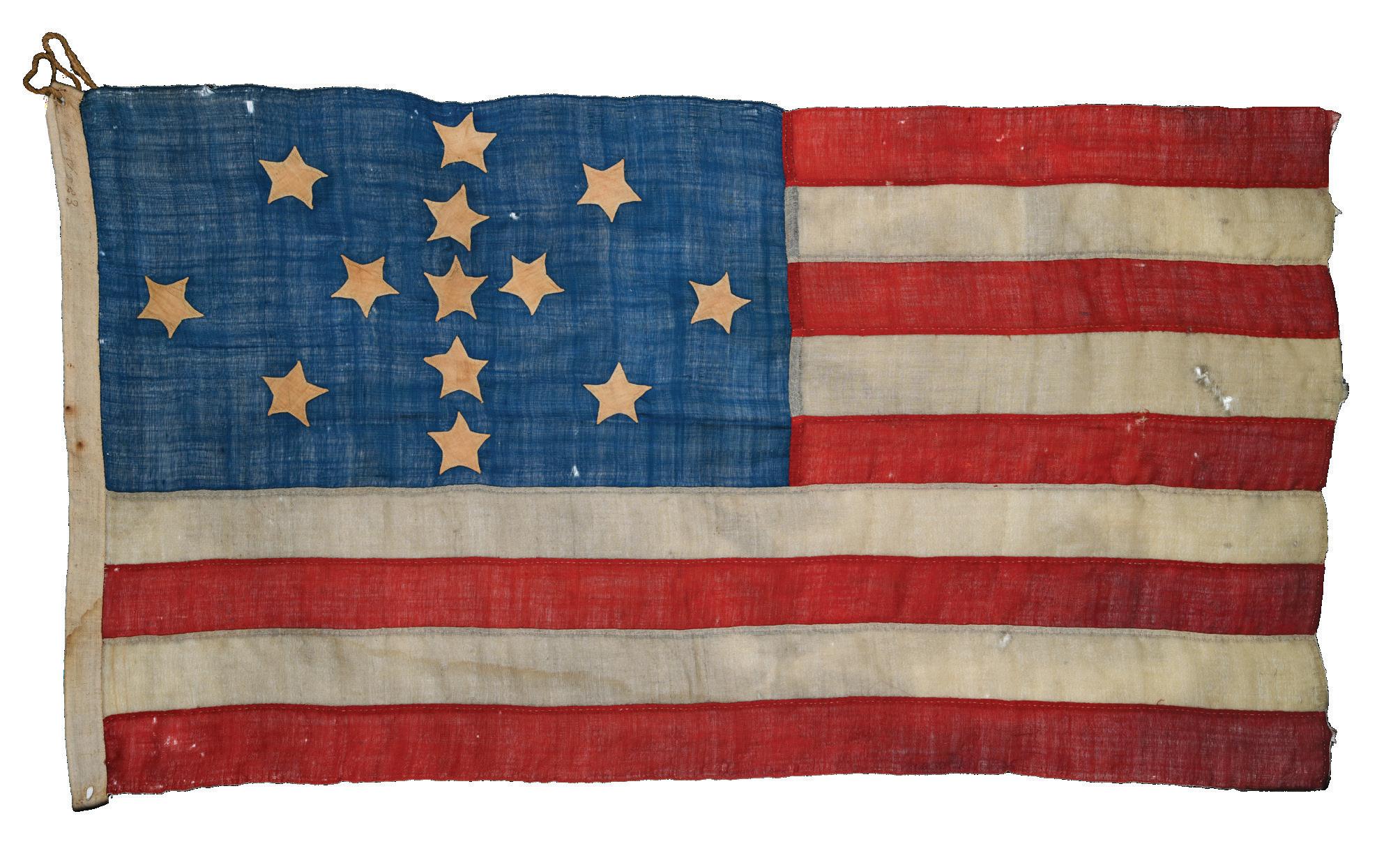
Figure 1. Maker once known, Ensign Flag, 1820. Wool and cotton, NBWM 00.110.22.
The project relies on the Museum’s expansive permanent collection to center and share diverse stories and experiences from Massachusetts, consider the promises and challenges of the American Revolution, and makes connections between past and present. The exhibition utilizes artifacts and archival sources to illuminate the stories of a broad range of individuals, from local merchants who skirted blockades and traded as privateers to the narratives of private citizens and regional residents, including men, women, and children of different classes, ages, ethnic and racial backgrounds, and status, immigrants, Indigenous people, and enslaved and free people of color. The exhibition includes the voices and stories of those who served in the American militia, were passionate Revolutionaries, outright ambivalent about independence, or avid British Loyalists.
Forging Independence | Building a Nation introduces connections between historical events and pressing issues of today, asking visitors to consider what ideas are embodied in the terms and ideas of Independence and Nationhood. Words like patriotism, freedom, taxation, citizenship, liberty, equality, justice, tolerance, and independence serve as keystones within the installation to encourage thoughtful engagement with concepts that transcend the past and directly connect with our present. Associations forged between objects, concepts, and individuals broach insightful civic-minded questions about what it means to be “American.” What did colonial citizens think America should or would be, and how do we continue to ask those questions and shape that outcome today?
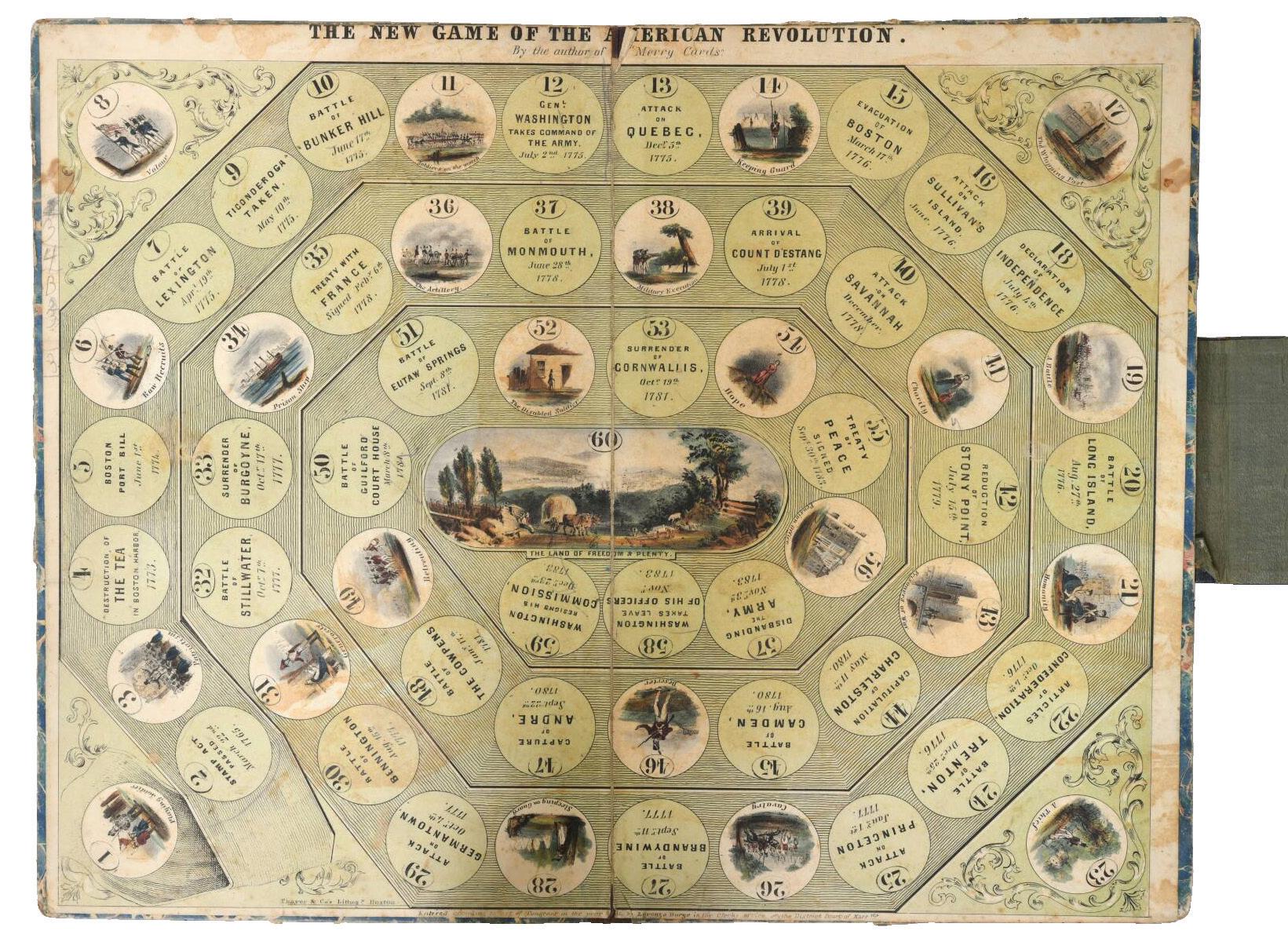
Figure 2. Thayer & Co. (Boston)/made by L. Burge (Boston), “The New Game of the American Revolution,” ca. 1894. Color lithograph paper on board, NBWM 00.53.820
Learning Through Play
Victoria Hughes, Associate Director of Museum Learning
Imagination opens the door to learning about life in different places or times. Since the Lagoda was built in 1916, visitors to the Whaling Museum have been able to climb aboard the half-scale model whaleship and imagine life at sea. The addition of a humpback skeleton in 1936 allowed visitors to envision the size and scale of a living whale. Since 2018, children––and occasionally adults––have climbed inside a full-size whale heart to understand the enormity of blue whales. Most recently, in 2025, curators and museum learning staff added new opportunities for hands-on learning throughout the galleries. Objects and specimens, like salted cod to smell and whale baleen to touch, are now available on touch-and-smell rails for all to experience. In the new exhibit Exploring Our Ecosystem: Climate Change, Whales, and Us, an interactive topographic sand table offers a captivating and colorful sensory experience as visitors alter and shape the landscape. The new “Kid’s Corner,” with a related Above and Below exhibit, and the “Sailor’s Nook” are multi-sensory spaces for active young learners. These galleries, old and new, provide
opportunities for visitors of all ages to imagine, learn, and play at the Museum.
These hands-on, minds-on spaces for children are grounded in learning theory, specifically in constructivism, as described by George Hein. Constructivism is defined by active learning where an individual constructs new knowledge based on interests, experiences, and prior knowledge. Museums can engage visitors with collections and curated exhibits designed for different experiences and learning styles, but visitors also exert choice and control as they participate in self-directed, free-choice learning. Other learning theorists, including John Dewey, Jean Piaget, and Lev Vygotsky, support the understanding of children as active learners who gain knowledge incrementally through interacting with their environment. The new exhibits are specially designed to welcome and engage children and enable them to construct their own learning through imagination and play.
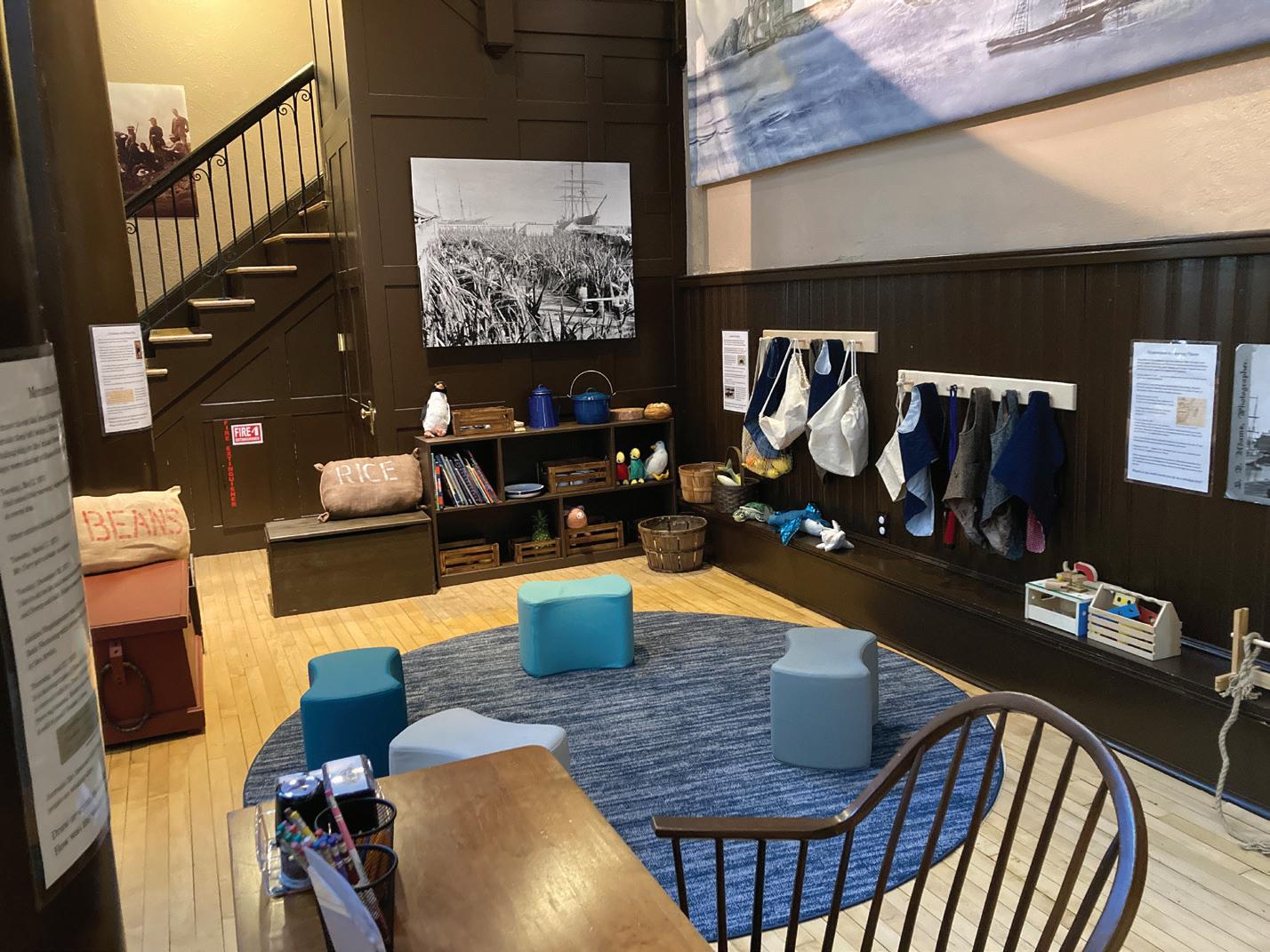
Figure 1. The Sailor’s Nook at the New Bedford Whaling Museum.
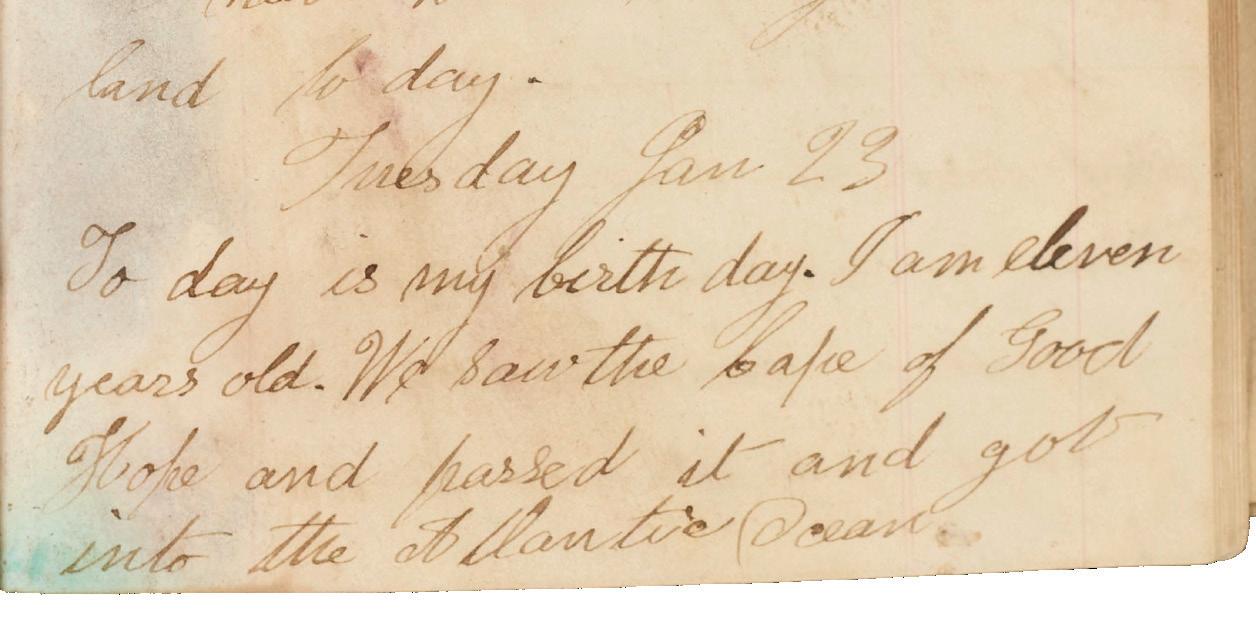
The “Sailor’s Nook” is located near the stern of the Lagoda. This space offers children opportunities to imagine living and working on a whaling ship in the 1800s as they incorporate props like dress-up clothes, imitation food, carpentry tools, and telescopes into their pretend play. At a desk, children can write journal pages and stamp them with pictures of whales and whaling ships, an activity inspired by the journals of the historical figures Helen Allen and Adeline Heppingstone. Helen was nine years old when she sailed on the Merlin in the Indian Ocean with her parents and older brother from 1868-1872. Her descriptions of birds, pigs, turtles, and sharks guided the selection of stuffed animals for the play space. Quotes from Helen and from fourteen-yearold Adeline Heppingstone enliven the exhibit labels, highlighting stories of young women, providing historical context, and giving adults relevant and interesting information to share with children.
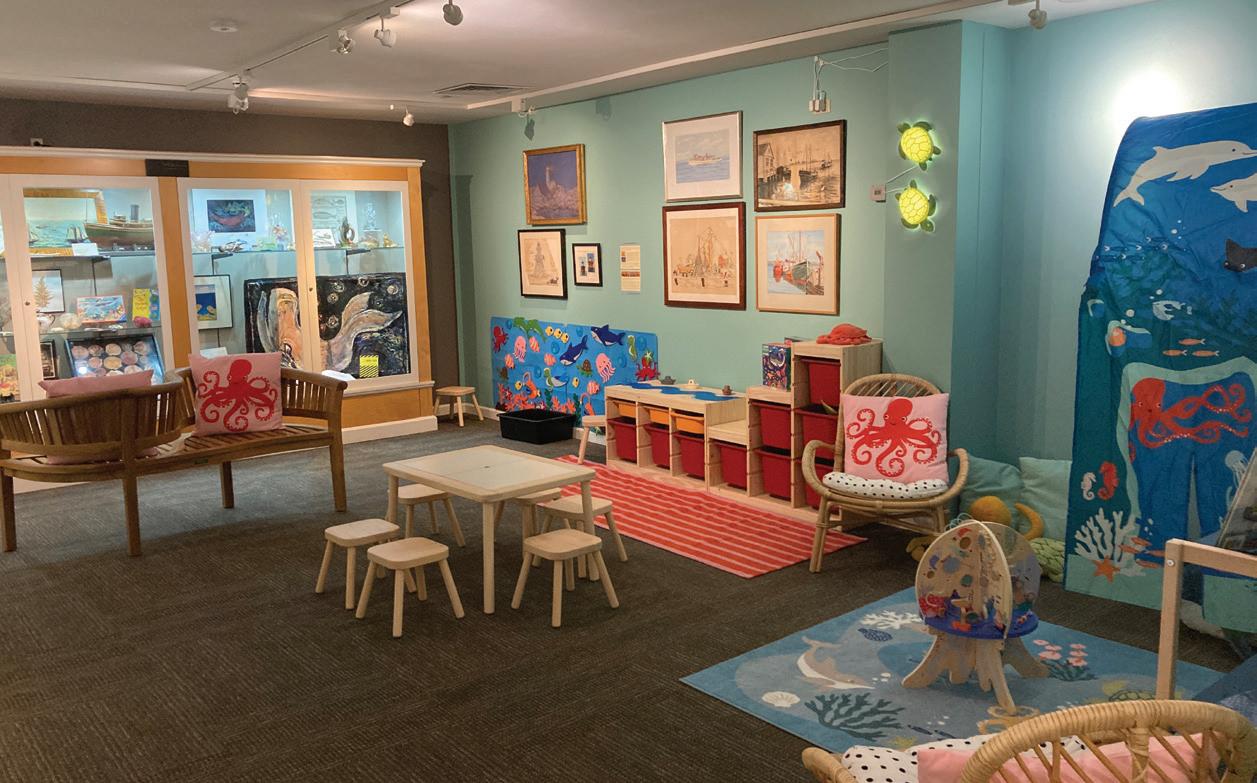
Located near the International Gallery, the “Kid’s Corner” is a calming play space, designed for young
children, with soft toys, sea-creature puppets, toy boats, blocks, puzzles, and comfortable seating for adults. Young and old can read ocean-themed books and explore the Above and Below exhibit. Labels offer suggestions for looking closely at paintings, observing images of marine animals, boats, lighthouses, and a cabinet full of fish-shaped objects and seashells. Families and school groups can spend time relaxing and recharging in this colorful and comfortable space.
In 1909, in the report of the Old Dartmouth Historical Society Education Section, Chairman Elizabeth Watson noted “the life of this society, in the years to come, depends entirely upon the children of today.” That sentiment still resonates as we add more spaces for joyful learning and create opportunities for children––and the adults that bring them––to have fun and enjoy their time at the Museum. Building engaging experiences can inspire life-long learning and a love of museums as today’s children grow and return with children and grandchildren in the future.
Figure 3. The Kid’s Corner at the New Bedford Whaling Museum.
Figure 2. Excerpt from a journal kept by Helen “Nellie” Allen. Nellie sailed with her parents Captain David and Harriet Butler Allen on the bark Merlin of New Bedford, 1868-72. Kendall Whaling Museum Collection Transfer, KWM 402.1.
Of fsite
Calder Sell, Whaling National Historical Park 2023 Artist-in-Residence
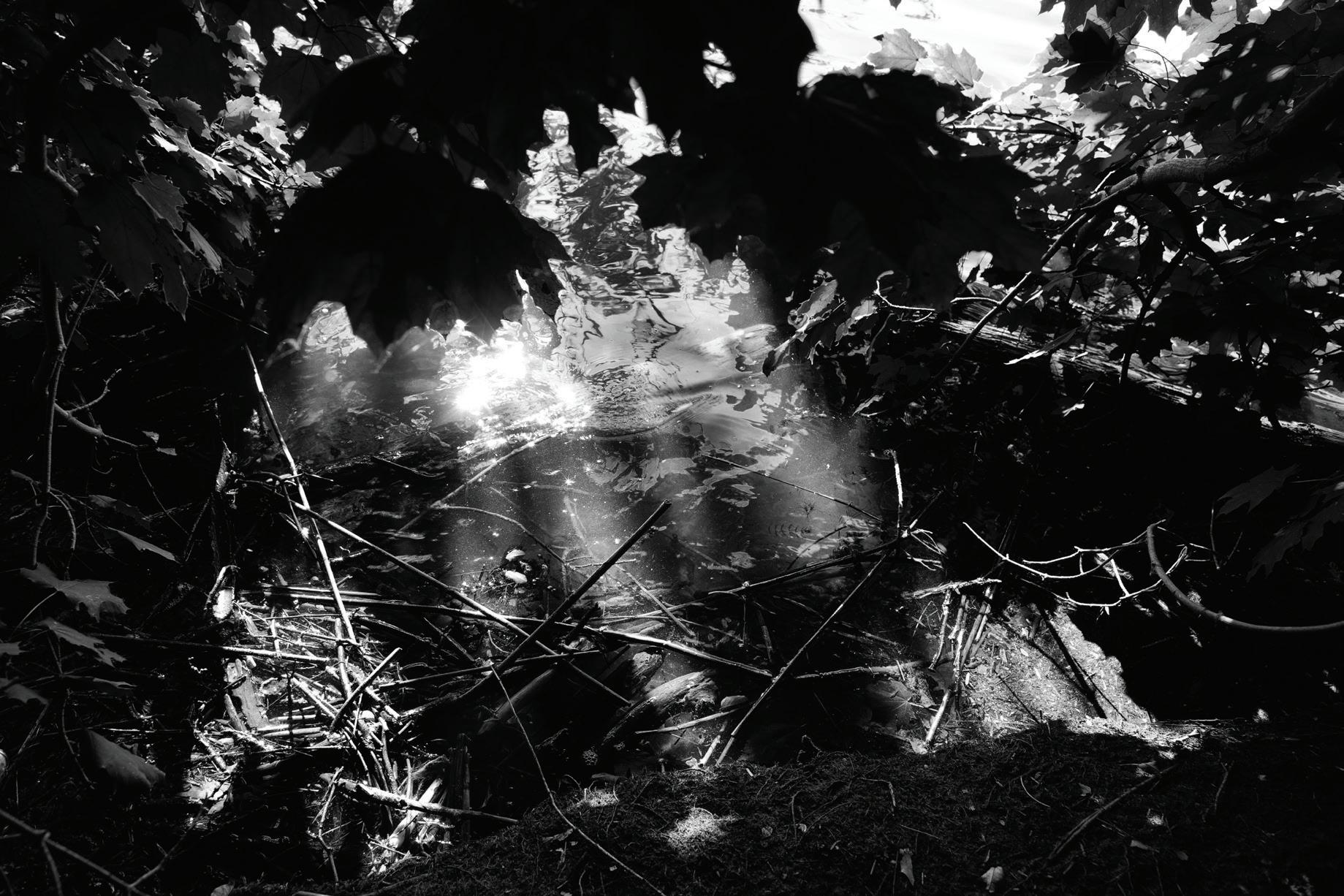
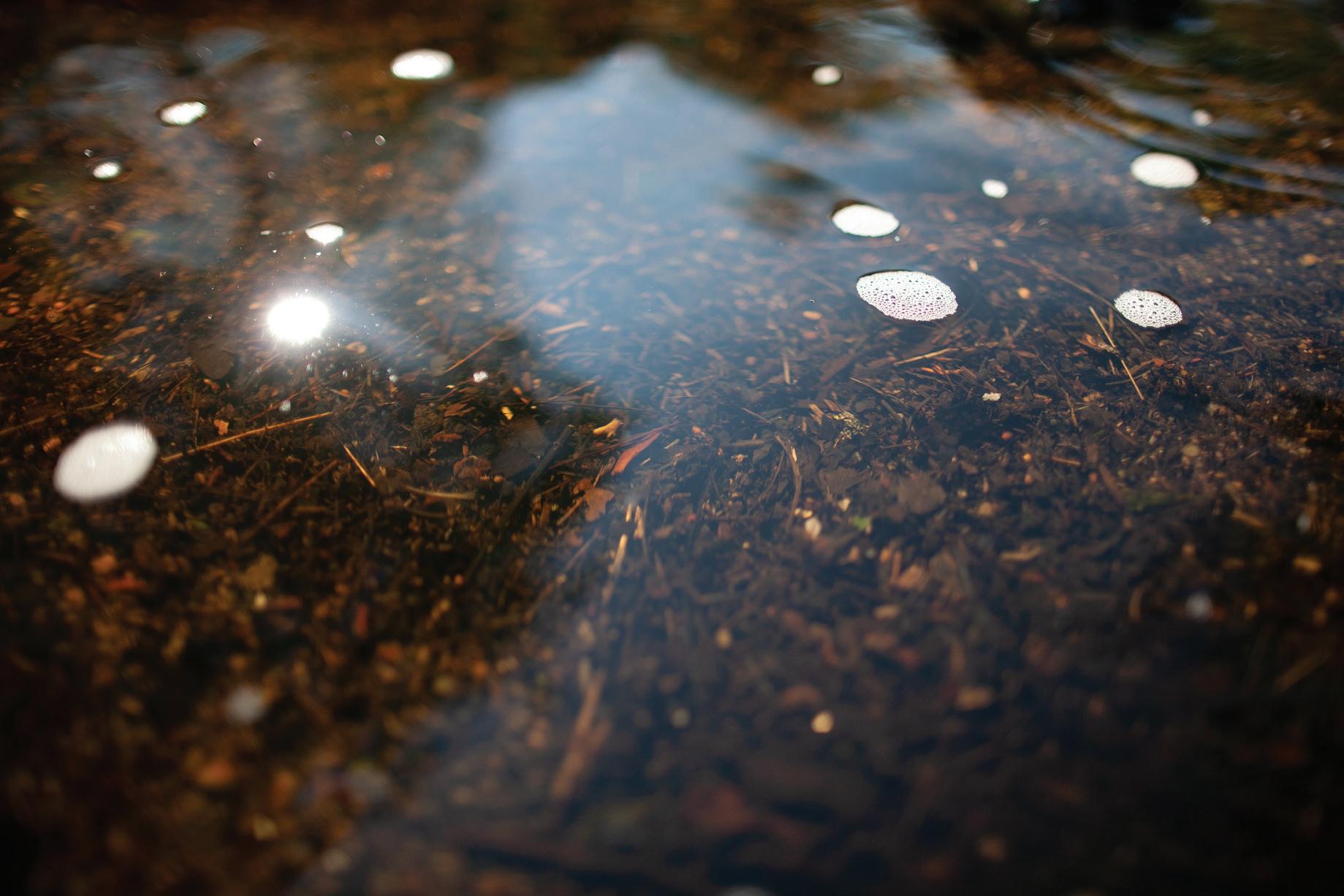
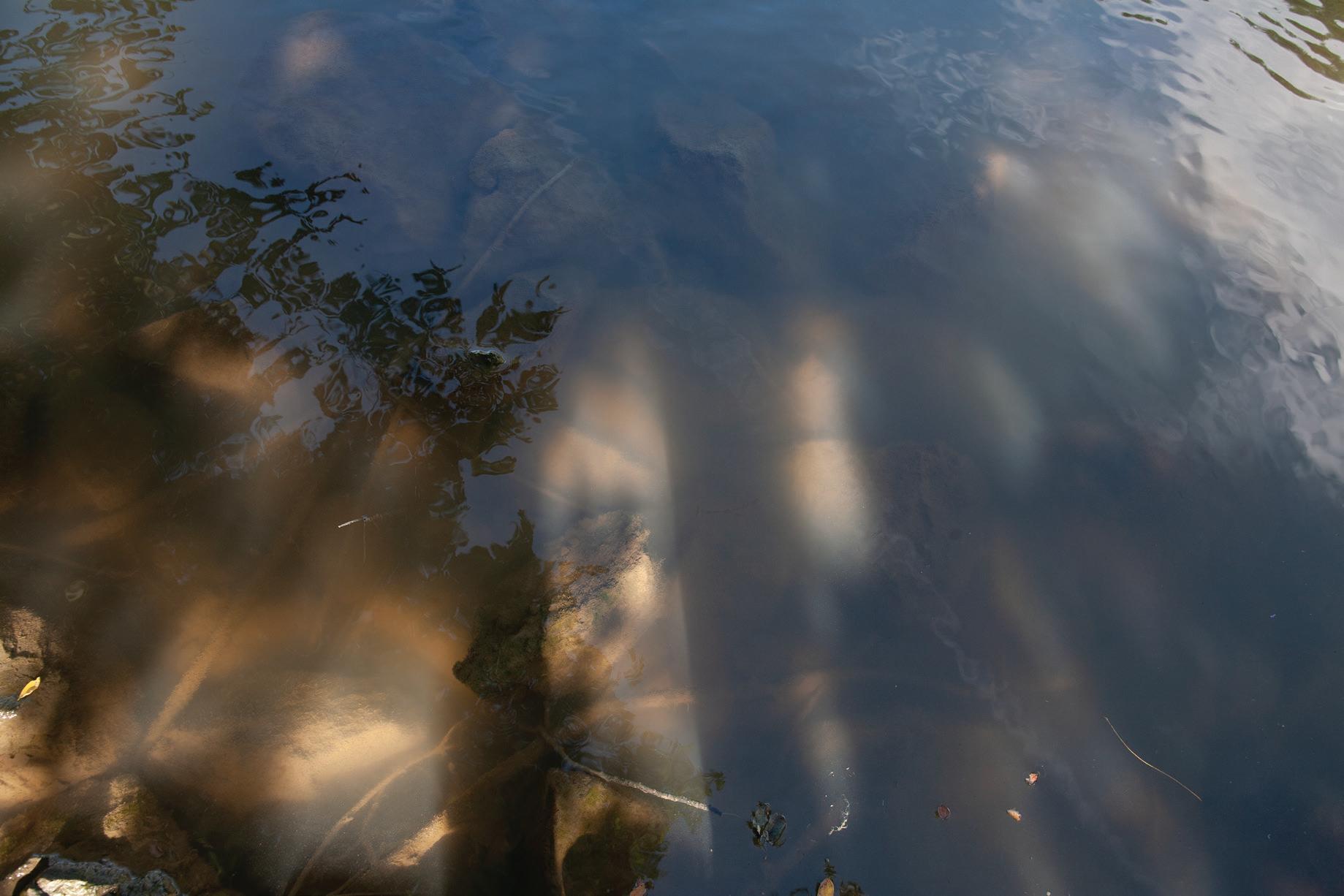
Offsite is a photographic project connecting two cities through the glistening eyes of the particulates they share.
Photographing along the Acushnet River, I quickly learned about the EPA superfund project to clean up the harbor in New Bedford, Massachusetts. Between the 1940s and the 1970s, electric device manufacturers flushed industrial waste into the river.
To clean the harbor, the soil was dredged up and filtered down into a solid piece of waste referred to as a “filter cake.” I was always curious about the last sentences of the published reports that would
describe how the “filter cake” was then sent off-site to a disposal facility in Michigan via rail or truck.
There is only one site in Michigan approved to accept these filter cakes, in a city called Belleville. As I continued to photograph along the Acushnet River, I developed a growing interest in helping these two cities properly meet.
New Bedford, Massachusetts and Belleville, Michigan. These photographs follow a path from the Acushnet River, where contaminated material was originally flushed into, to the area surrounding the facility in Belleville where that same material now sits.
Figure 1. Calder Sell (b. 20th century), Offsite in Belleville, Belleville, MI, 2023. Inkjet print, courtesy of the artist.
Figure 2. Calder Sell (b. 20th century), Foam and Sediment, New Bedford, MA, 2023. Inkjet print, courtesy of the artist.
Figure 3. Calder Sell (b. 20th century), Folded, Belleville, MI, 2023. Inkjet print, courtesy of the artist.
Maritime Signs of New England
Leeann Ream, Curator, Cahoon Museum of American Art
Signs have been used throughout history to communicate services, goods, and basic directions.1 Following the growing presence of trade signs in seventeenth-century England, they were used in New England as towns and cities grew. As far back as 1645, Salem, Massachusetts required taverns to advertise their businesses with signs, clearly indicating to travelers where they might stay on long journeys.2 Initially, the
1 Jacob Larwood and John Camden Hotten, The History of Signboards From the Earliest Times to the Present Day (London, England: Chatto & Windus, 1908).
2 Jean Lipman and Alice Winchester, The Flowering of American Folk Art 1776–1876, ed. Jean Lipman, 3rd ed. (Philadelphia, PA: Courage Books, 1997).
very same itinerant artists made signs as those who were undertaking jobs decorating homes, carriages, and painting portraits. In some cases, tradespeople made their own signs. In all cases, the signs serve both as folk art objects and crucial historic records—reflective of the economies in which they were made.
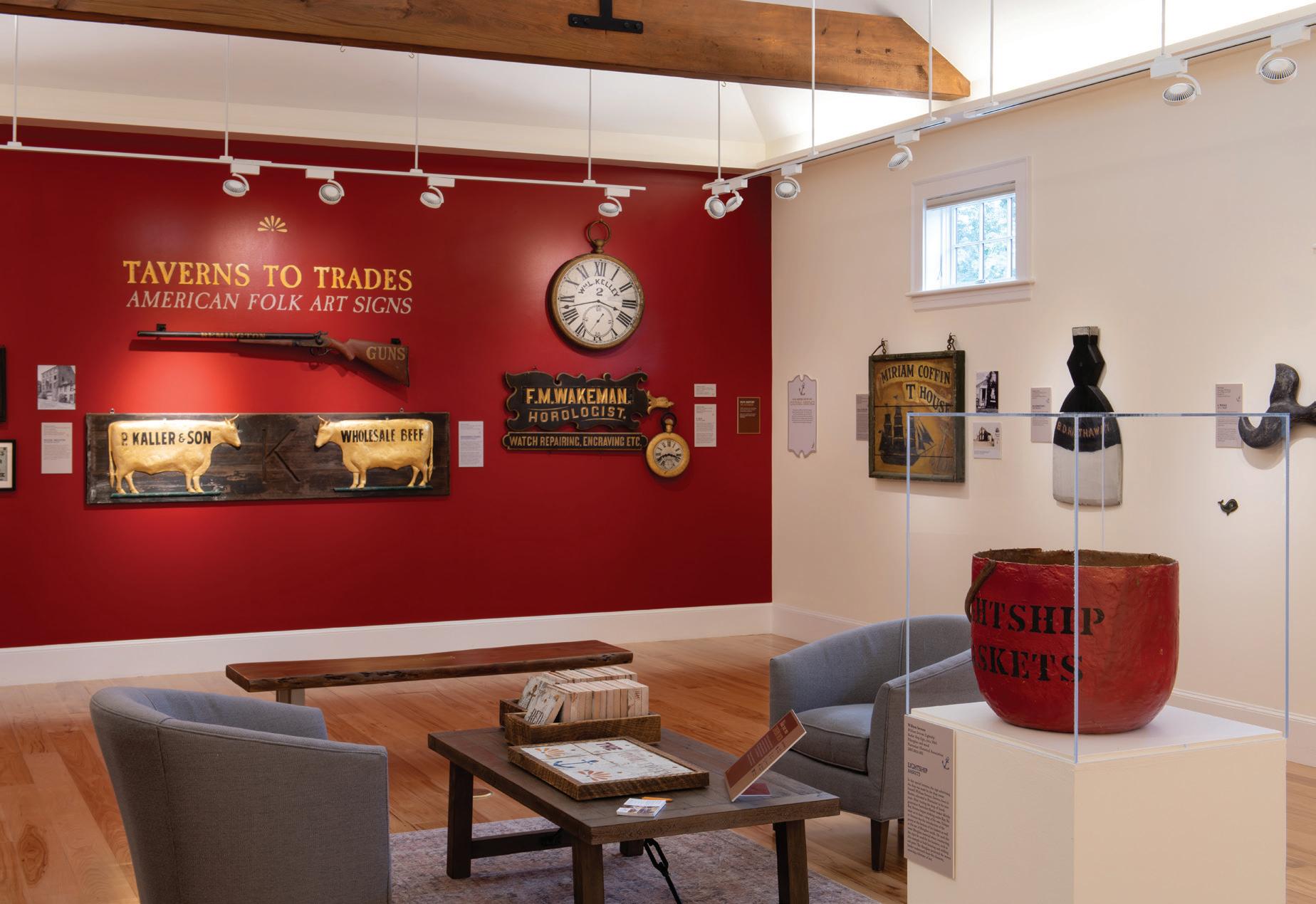
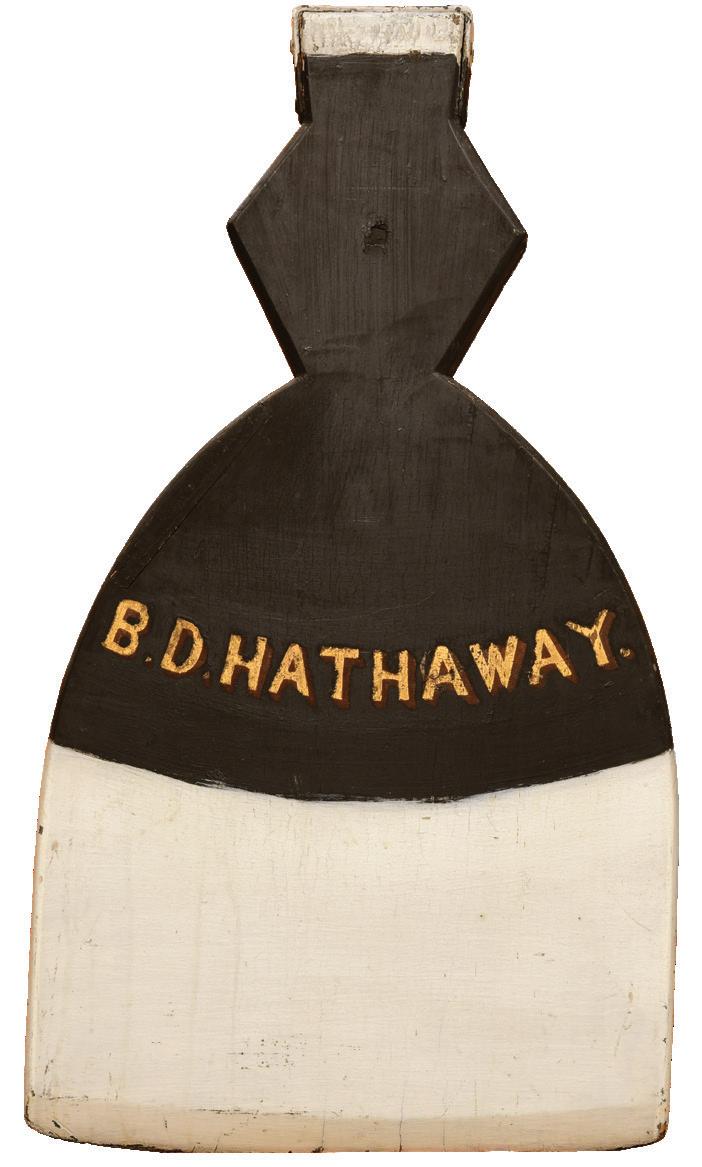
Maritime industries, specifically whaling, played a crucial role in the economic development of coastal New England. B.D. Hathaway’s sign advertised his New Bedford-based business during the biggest boom in American whaling history: 1846-1852. Hathaway’s hewing axes would have been important tools aboard whaling voyages.
Figure 1. Taverns to Trades: American Folk Art Signs at the Cahoon Museum of American Art, September 17 to December 21, 2025. Photo by Peter Julian.
The now-unknown sign maker used the form of the axe head itself to create the sign, inspired by its simple yet bold geometry.
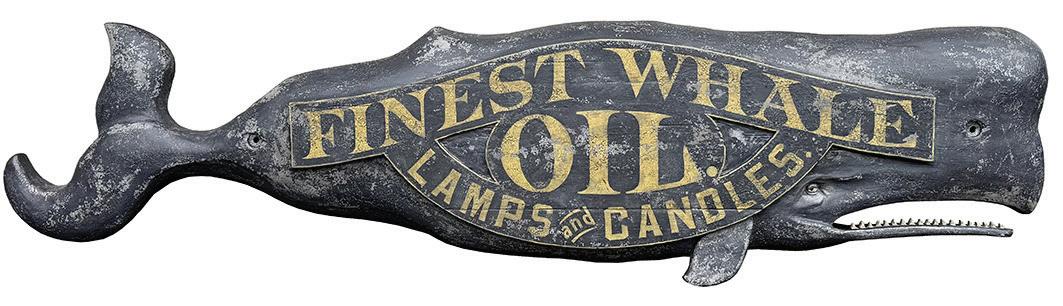
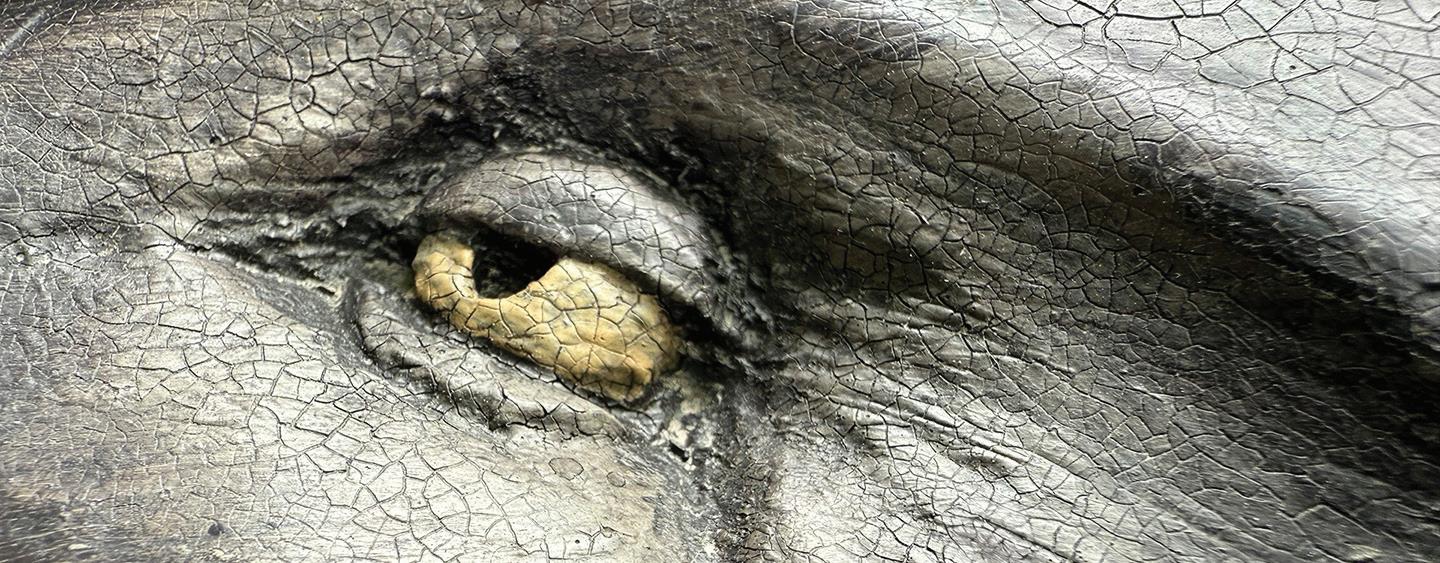
Pete Vogel, a contemporary sign maker, carries on the sign making tradition through his creation of Finest Whale Oil (2025). The piece, which Vogel says involved “some 1800s research and a bit of time-travel imagination,” harkens back to the time of B.D. Hathway’s New Bedford-based business — weathering and all.3 The continual display of trade signs—as well as the creation of signs even today—illustrate their significance as a folk-art form which arose from necessity, and inspired craftspeople, shop-goers, and general admirers for centuries to come.
Taverns to Trades: American Folk Art Signs was on view at the Cahoon Museum of American Art from September 17 to December 21, 2025.
3 Pete Vogel, “Finest Whale Oil ’ Trade Sign,” Nutmegger Workshop, July 31, 2025, https://www.nutmeggerworkshop.com/journal.
Figure 3. Pete Vogel, Nutmegger Workshop. Finest Whale Oil, 2025. Douglas fir. Courtesy of the artist.
Figure 4. Pete Vogel, Nutmegger Workshop. Finest Whale Oil (detail), 2025. Douglas fir. Courtesy of the artist.
Figure 2. Maker once known, B. D. Hathway shop sign, 1845. Wood and paint. NBWM, Gift of Captain Henry C. Hathaway, 1921.15.2.
Book Talk
Painting US Empire:
Nineteenth-Century Art and Its Legacies
by Maggie M.
Cao (Chicago: University of Chicago Press, 2025).
Reviewed by Christopher J. Slaby, PhD Candidate, William & Mary
Areckoning with reckoning is in the air. Be it the 250th anniversary of the founding of the United States, shifting intellectual trends, or a response to current-day politics, recent books show a demand for a better, more thorough understanding of the relationship of art and culture to all sorts of social concerns in the United States. The issues are many: racism, economic inequality, genderbased violence, environmental catastrophe. The list could go on and on. Any such accounting must also recognize the relevance of colonialism. The short version of that story notes that the United States, though founded on seemingly anti-colonial claims, has played its own role in empire. Since 1898, the country has claimed various overseas territories. To this day, the inhabitants of places like Puerto Rico and Guam occupy a liminal position within the U.S. Some scholars, especially those who focus on Native American history, point out that the founding of the country itself brought about a new empire, one built on the taking of Indigenous land. Then there is the
period in between these moments, after the founding and before overt overseas colonization by the United States, often known as an age of “informal empire.”
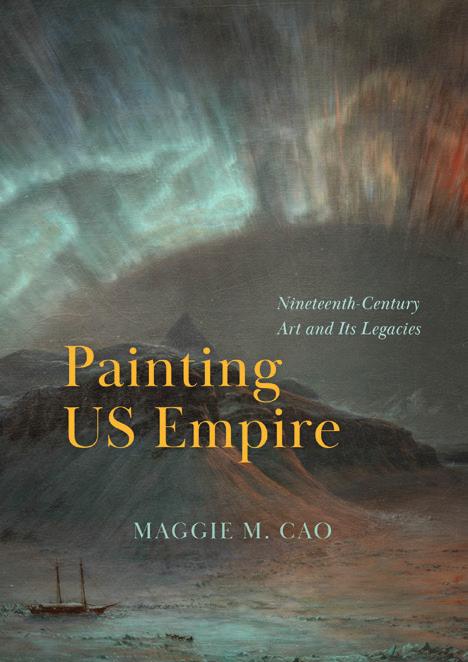
Enter into this conversation Maggie M. Cao’s Painting US Empire: Nineteenth-Century Art and Its Legacies, a timely account of the various ways that art and artists in the United States in the second half of the nineteenth century were entangled with imperialism. Much of this story focuses on what Cao describes as the “infrastructure of imperialism.” Empire made it possible for U.S. artists to travel to certain places during this time; it brought people (U.S. artists) to faraway places and it brought ideas, things, and even people from faraway places to the United States. At the same time, imperialism was itself a subject for many artists. Some were overtly in favor. Others held more ambiguous or even unknown positions. What’s clear, though, is that these figures were, in Cao’s words, “complicit with colonialism” (237). Five chapters provide case studies of specific painters from the United States and their involvement in particular forms of empire around the globe: Frederick Edwin Church (1826-1900) and Louis Rémy Mignot (1831-1870) in the tropics, Church and William Bradford (1823-1892) in the Arctic, global imperial capitalism in the tromp l’oeil paintings of De Scott Evans (1847-1898) and John Haberle (1856-1933), John La Farge (1835-1910) in the Pacific, and Winslow Homer (1836-1910) in the Caribbean. In each case, Cao has selected works that help highlight and explain the nineteenth-century relationship between art and empire.
Cao intentionally focuses on the period of informal empire, as other scholars and exhibitions have recently tackled this story after 1898. Nevertheless, it is not particularly difficult to show the enmeshments of art and people in empire during the second half of the nineteenth century, when Europe and Japan were carving up the planet and making claims on its peoples, places, and resources. John La Farge provides the most overt case, as Cao admits. She quotes from his published account of his time in the Pacific: “The Pacific should be ours, and it must be.” In his paintings of traditional Samoan dance (or siva), Cao discerns an epistemological and time-based colonialism at play, the attempt to assert a western,
scientific, apparently universal understanding of the modern world onto the Indigenous peoples of the Pacific. Travels by artists like Frederick Edwin Church, Louis Rémy Mignot, and William Bradford likewise brought artists from the United States to colonized places. Church’s paintings of Jamaican ferns suggest the unfolding events of the island (the abolition of slavery) as well as the relationship of botany and fern mania to empire. Mignot’s paintings of the landscape of Ecuador evoke the possibility of colonization. The icescapes of Church and Bradford told would-be colonizers that the world was closer to them (and thus even more for the taking) than previously known. Homer’s images of Black labor in the seas of the Bahamas demonstrated both the proximity and distance between white viewers and the lives and work of colonial subjects.1
Cao’s book contains many things to recommend it. While we need more scholarship on art by colonized peoples, there is also still more to understand about colonial art and artists such as the ones discussed here. Using these case studies, Cao presents a taste of what is out there. The result is a desire to learn more about the ways that each of these artists were entangled with colonialism, and more about the ways that many other artists were, too. Cao’s book is also provocative, with each chapter putting forth a specific argument about a given artist and theme within the context of empire. After each chapter is also a response of sorts, miniature chapters of what Cao calls “interventions,” using the work of contemporary artists to speak back to the colonial nineteenth-century art. Thus we get the Brazilianborn artist Maria Theresa Alves on plants, the Bahamian artist Tavares Strachan on ice, Nicholas Galanin (Lingít/Unangax) on taxidermy, Yuki Kihara (Samoan) on time, and the Afro-Cuban artist Carlos Martiel on the submergence of Black bodies. Taken together, then, this is a great opportunity to think more about art and empire and to look even more closely. Given how well illustrated this volume is, that’s all the more possible.
1 The quotation is from John La Farge, Reminiscences of the South Seas (New York: Doubleday, 1912), 278; cited in Painting US Empire on page 151.
Painting US Empire raises many questions. What is empire? What were the formal relationships of these U.S. artists to non-U.S. empires? What would it mean to imagine some of these artists as critics of empire? What are we to make of their possible identification with the subjects of their artworks? How did these infrastructures of empire actually work, and what were the specific ways that artists participated in and benefitted from them? How did these works of colonial art actually affect empire? Cao provides some tantalizing answers to some of these questions, but there is much more to say. Her definition of empire is perhaps overly capacious, encompassing not just formal political claims and military actions, but inequality more generally. While the book’s title and the artists under consideration make a claim for “US empire,” almost all of the examples deal with the empires of other countries. It is unclear where we are left when Cao describes the work of Evans, for example, as both “political resistance” and as falling short of “voicing true dissent.” Cao ends the discussion of Evans by noting that he once carried out a racist prank on one of his neighbors (136). Overt expressions of imperialist chauvinism and racism ought be central to any understanding of cultures of empire, not bookends. Artists traveled via routes and forms of transportation made possible by empire, but we are left with only some of the colonial stories of such infrastructures. The book is filled with a good deal of juxtaposition and supposition. The background context of empire is undeniable, but the specific connections are not always clear. At a number of points, Cao acknowledges the degree of uncertainty in what is (or even can be) known (for example, 127). At one point, Cao even claims that these white nineteenth-century artists “may well have respected subjugated individuals” (147). What does that mean? What would that have meant in practice? Is Cao simply talking about the idea of the “noble savage,” of romantic fantasies that Euro-Americans had about Indigenous peoples and colonial subjects? Whatever it might mean, it is a big claim, and one that needs both unpacking (more explanation than is provided) as well as more specific evidence to support it.
Cao ends with a very brief meditation on the goals and intentions of her study. One point in considering
the colonial art of the past, she argues, is to help us understand the continuation of such structures and forces. At the same time, the last sentence of her book stakes out a claim of “radical empathy” for the subjects of this artwork. It is a laudable goal, but one undermined in a number of ways. Cao finishes her sentence about these colonial subjects by saying that they “can only recover their voice and agency through contemporary proxies” (239). The interventions of contemporary artists supplied by Cao are among the strongest points in favor of this project, but aside from one example–the Inuk artist Aron from Kangeq, Kalaallit Nunaat (Greenland)–she forecloses the possibility of historical agency for anyone but the white American artists discussed in the book or the empires in which they are participating. There is a real conundrum here for art historians. In studying colonial art, there are often not historical works of the same kind or type that were made by Indigenous peoples or colonial subjects. That is not to say that they had no art, but, for example, there are few if any nineteenth-century watercolor seascapes by Black Bahamian artists that could directly speak to, say, Homer’s work. Hence, the invocation of contemporary art. This is not a bad move, and one becoming more common. The Chiricahua Apache scholar and curator Nancy Marie Mithlo has made the case for considering contemporary Indigenous art in the context of art history, for example.2 But the problem with the framing in Painting US Empire is that it allows neither voice nor agency for colonial subjects and Indigenous peoples from the past, and yet they most certainly had both. What remains to be seen is an art historical accounting of empire necessarily contextualized by the ideas and experiences of those on the receiving end. Cao’s book begins that journey, but does not quite get us there.
2 Nancy Marie Mithlo, “Our Indian Princess”: Subverting the Stereotype (Santa Fe, NM: School for Advanced Research Press, 2009).
Belonging: An Intimate History of Slavery and Family in Early New England
by Gloria McCahon Whiting Philadelphia:
University of Pennsylvania Press, 2024
Reviewed by Emily Whitted, PhD Candidate, University of Massachusetts, Amherst and Richard W. Burkhardt Fellow in History, Science, and Art, New Bedford Whaling Museum
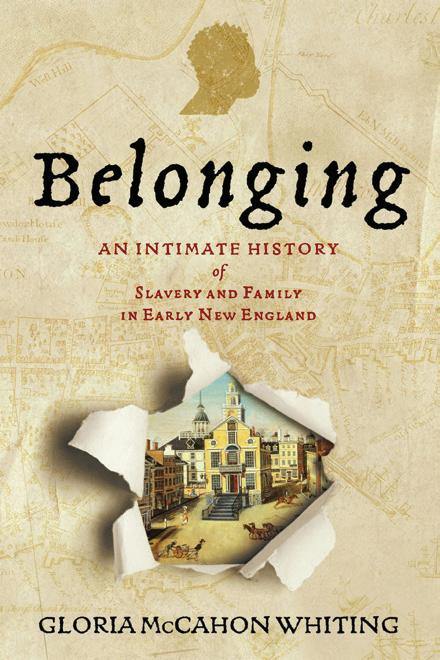
In collective memory, New England’s abolitionist heritage often eclipses its earlier histories of enslavement. But in her 2024 book Belonging: An Intimate History of Slavery and Family in Early New England, Gloria McCahon Whiting underscores that New England, perceived as the cradle of liberty, was also a cradle of slavery. With skillful storytelling and archival research, Belonging artfully reconstructs the close-textured lives of New Englanders held in bondage before the American Revolution, tracing their efforts to maintain family and kinship networks despite slavery’s many obstacles.
Indulging in what Whiting calls “the luxury of inefficiency,” the intimate narratives within Belonging are built from meticulous combing through court cases, town meeting minutes, church records, and newspaper accounts in eastern Massachusetts. Combining demographic information with tantalizing archival fragments, six case studies between 1630 and 1780 emerge in compelling and
thought-provoking detail. Dorcas, the first person of African descent received into a congregation in New England, sought her freedom through her religious community in order to legitimize and preserve her connections to her husband and children. Sebastian and Jane Lake sought a legally-recognized marriage, but were forced to negotiate between their express wishes and those of their enslavers. Sue Black, shortly after giving birth, became one of many enslaved mothers in New England whose children were sold and physically removed from their care. Thomas Bedunah, a Black man, and Lydia Crafts, an English woman, married across the color line and openly raised their children within their Massachusetts community. Mark, Phillis, and Phoebe conspired to poison their abusive enslaver, John Codman, in an attempt to preserve their family groups and escape sexual violence. And on the eve of the American Revolution, six-year-old Darby walked from the home of his enslaver to the home of his enslaved family, determined to live a life in freedom as slavery in Massachusetts began to wither on the vine of public opinion.
Together, these six case studies reveal racial slavery’s entrenchment in the legal, cultural, and religious fabric of early New England, as well as the active ways men and women held in bondage rewove that fabric through the pursuit of kinship. While Whiting builds upon a growing body of scholarship about slavery in New England, including works by Wendy Ann Warren, Erica Armstrong Dunbar, and Jared Ross Hardesty, one of her most crucial contributions argues that slavery had already begun to fall away as a practice in Massachusetts before the adoption of the state constitution in 1780. By the 1770s, many Black activists in New England wielded convincing rhetoric in antislavery arguments that emphasized the incompatibility of slavery and the preservation of families. Within slavery, bound husbands and wives could not live under the same roof. Enslaved children were separated from their parents. Whiting argues that these assertions, as well as the lived experiences of Black families, began to unravel community sentiment around slavery in Massachusetts by the beginning of the American Revolution.
Belonging is testament to the power of local history. Each of Whiting’s chapters immerses readers in the everyday worlds of the enslaved men, women, and children she discusses, centering what is known, what is likely, and what remains unknown about their lives in early eastern Massachusetts. Their journeys take readers onto the streets of early Boston on an unseasonably snowy day in October, and inside the kitchen of enslaver John Codman while a powdered poison is stirred into his hot chocolate. Whiting also utilizes a selective number of surviving early American objects in museum collections—including a communion cup, a needlework sampler depicting an enslaved child, and a silver chocolate pot—and centers their connection not around their makers, but through their use and proximity to the enslaved in New England. These narrative strategies help illustrate enslaved families’ committed efforts to belong to each other, even as they legally belonged to others. Accessibly written and deeply intimate, Belonging will linger with readers interested in New England’s earlier histories of slavery as part of a longer arc towards abolition.
Looking Back
Incarceration at Ash Street
Melanie Botvin, Associate Curator of Exhibitions and Collections
In 2023, the New Bedford Whaling Museum acquired over 6,700 photographs from the County Sheriff’s Office of individuals arrested in Bristol County, Massachusetts (Figure 1). Made between 1890 and 1960 at the historic Ash Street Jail in New Bedford, these photos are from when individuals were arrested. This archive reveals hidden histories and records of those arrested in Bristol County across seventy years, during a period of rapid population growth, increased immigration, and class, ethnic, and racial upheaval.
Booking photography, like the photos from the Ash Street Jail, was standardized by Alphonse Bertillon (1853-1914) in Paris around 1879. He combined two poses—one facing, one profile—
with a description and physical measurements of the individual. Fingerprinting supplanted mugshots as a dependable form of identification but booking photographs remain popular as a form of visual documentation. Because of their uniformity, the so-called mugshot has become a cultural shorthand for criminality. It is important to think about what these images tell us—and what they don’t. We don’t know charges, circumstances, or outcomes of the individuals without further research, and we don’t know the lives or events that preceded the moment the picture was taken.
The Ash Street Jail became the primary center for housing prisoners within Bristol County for most of the 1900s. Its history actually began in Taunton,
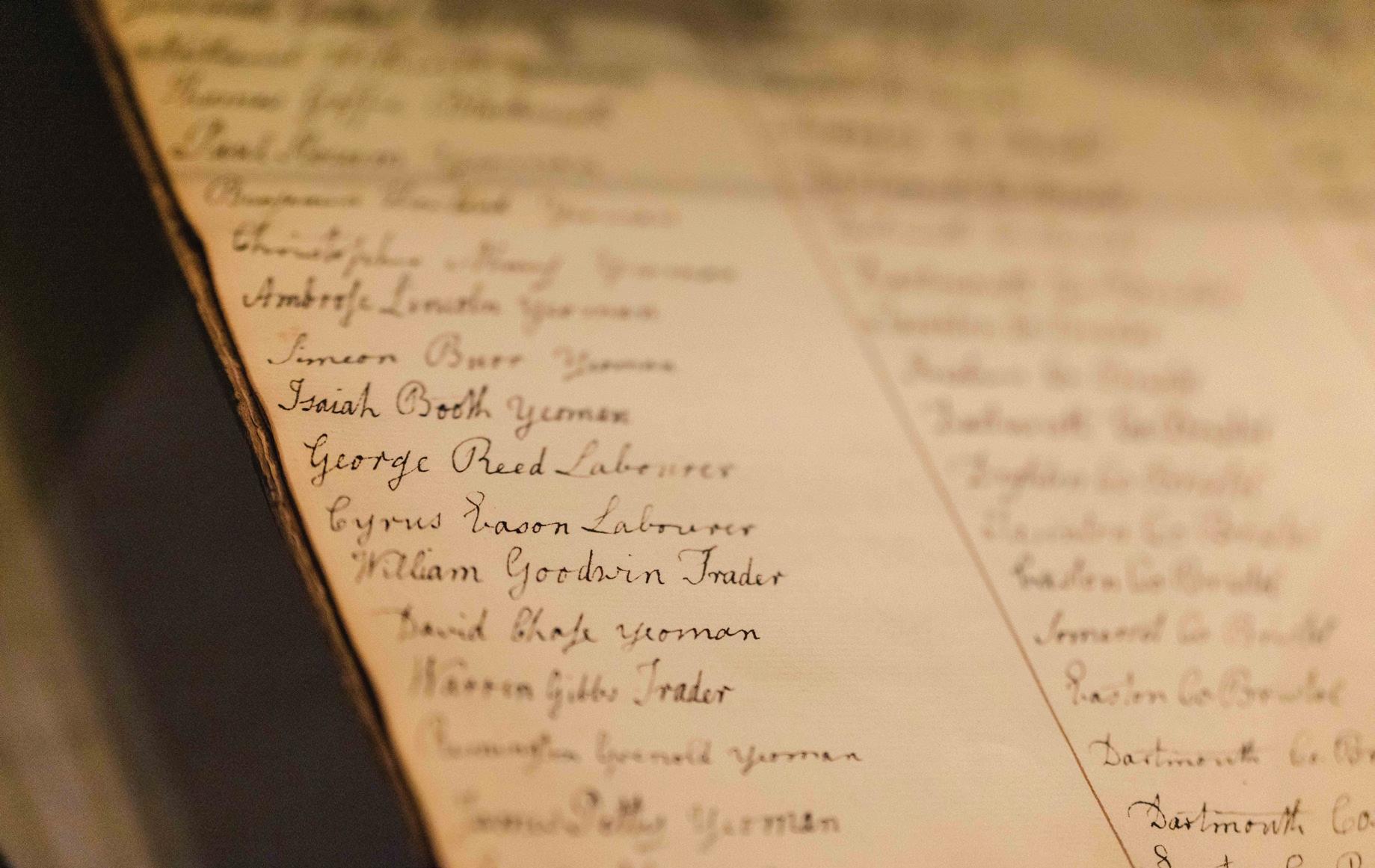
Figure 1. Taunton, County of Bristol Gaol Book, 1785-1823. Ink on paper, 18 1/4 x 13 1/2 x 1 in. Loan courtesy of Bristol County Sheriff’s Office, L2025.22.47.
the original seat of Bristol County, which held the county’s first “gaol” (jail) in 1749. After southern towns within the county complained about the distance to get to Taunton, New Bedford was granted a “half-shire” status after a brief competition with Fall River. In 1829 the New Bedford Jail on Court Street opened (currently the Civil Processing building), with the New Bedford House of Correction opening soon after. The current Ash Street Jail construction began in 1888 with 287 cells, completing a corrections complex that now fills a city block. Still operating today under the management of the Bristol County Sheriff’s Office, Ash Street Jail claims the title of the oldest continuously operating jail in the nation.
In 2025, the Bristol County Sheriff’s Office lent a considerable collection of their archival materials to the museum for preservation, access, research, and exhibition. With the combination of those two collections, we present Bristol County: Incarcerated, a special exhibition drawn from these archival materials and the collection of booking photos. Visitors will see items related to life in the Ash Street Jail, both for its residents and its employees; items related to Bristol County’s most infamous prisoner, Lizzie
Borden; and items related to Bristol County’s history of incarceration.
The U.S. has the highest incarceration rate of any independent democracy on Earth. Each individual state incarcerates more people per capita than most nations. Local jails, facilities where a majority population is awaiting trial, play a critical role as “incarceration’s front door.” The majority of people in jails cannot afford to pay the bail that would secure their release pre-trial. In addition to myriad other systemic factors, this further criminalizes people from under-resourced communities. In the United States in 2022, about 469,000 people entered prison but people went to jail more than 7 million times. At the time of writing in 2025, there are 105 detainees at the Ash Street Jail, 76 of which are pre-trial. Being in jail does not indicate guilt. Yet, incarceration has devastating impacts on a person’s financial security, employment status, housing security, and family life. The County Jail is a unique place of imprisonment: a limbo between arrest and trial, where an individual’s right to due process and a fair trial can be stretched by the timelines of bureaucracy and the mechanisms of justice.
Figure 2. Detex Patrol Clock, ca. 1930. Leather, metal, and glass. Loan courtesy of Bristol County Sheriff’s Office, L2025.22.10.