
HEALTH & PHYSICAL EDUCATION PATHWAYS
Subject Guide
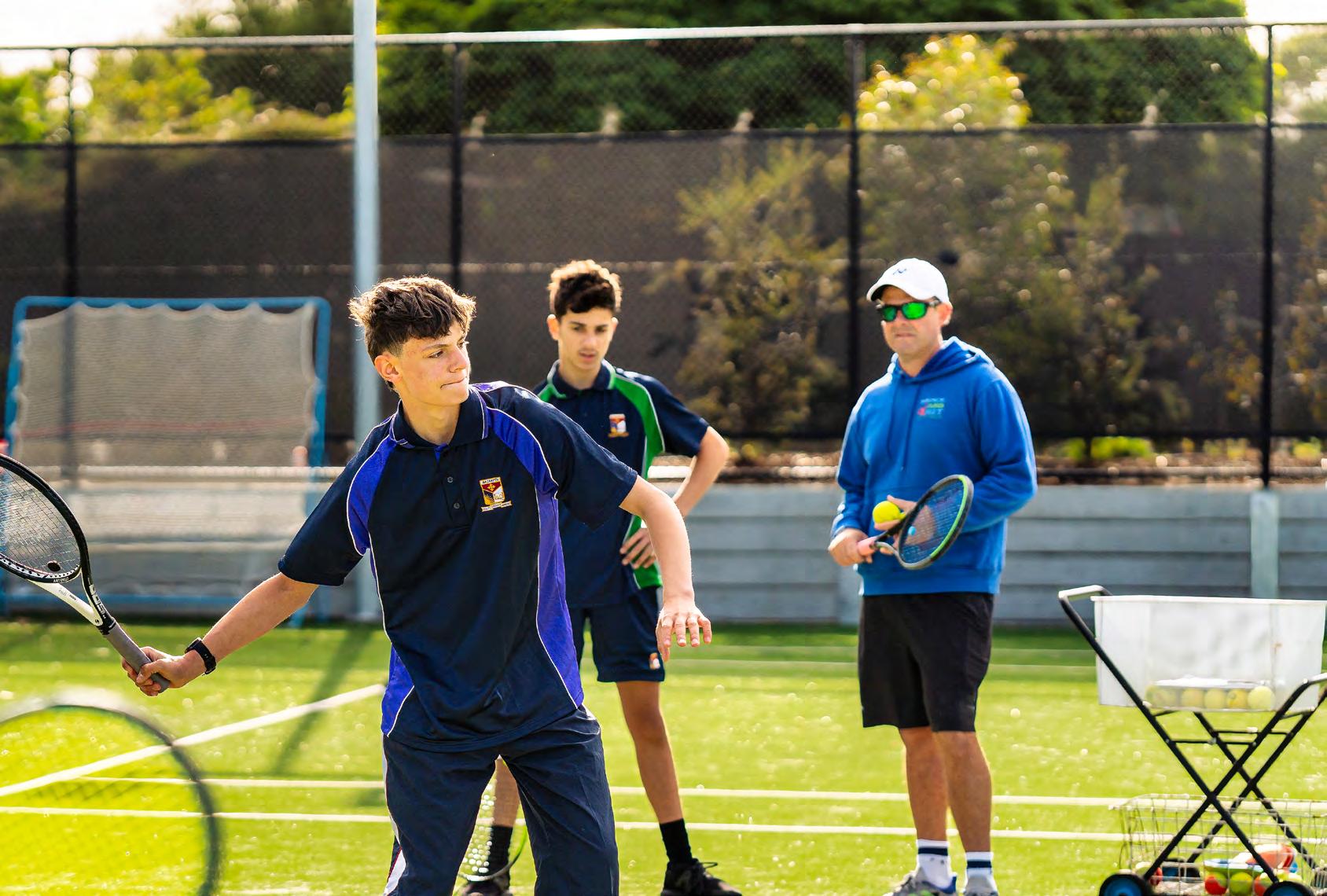
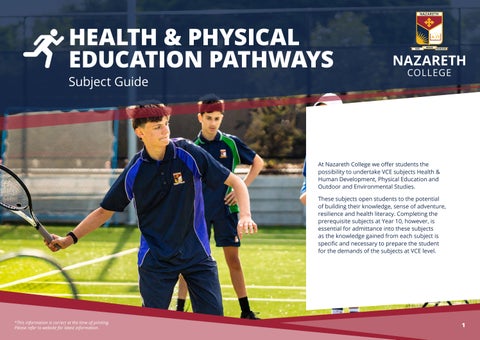
At Nazareth College we offer students the possibility to undertake VCE subjects Health & Human Development, Physical Education and Outdoor and Environmental Studies.
These subjects open students to the potential of building their knowledge, sense of adventure, resilience and health literacy. Completing the prerequisite subjects at Year 10, however, is essential for admittance into these subjects as the knowledge gained from each subject is specific and necessary to prepare the student for the demands of the subjects at VCE level.
HEALTH & PHYSICAL EDUCATION PATHWAYS
Pathways Summary


HEALTH AND HUMAN DEVELOPMENT
It is recommended that students study Health & Human Development in Year 10 before commencing Health and Human Development Units 1 & 2, enabling continuation into Units 3 & 4.
The Certificate III in Health Services Assistance course provides students with the practical skills and industry knowledge required to work in range of healthcare setting, including hospitals, aged care facilities and community health environments. Further study can include qualifications in Allied Health, Nursing, Ageing and Disability Support.

PHYSICAL EDUCATION
It is required that students study Advanced PE in Year 10 (as a prerequisite) before commencing Physical Education Units 1 & 2, enabling continuation into Units 3 & 4.
VCE VET HEALTH SERVICES ASSISTANCE
HEALTH & PHYSICAL EDUCATION PATHWAYS
Pathways Summary
VCE VET SPORT, AQUATICS & RECREATION
OUTDOOR AND ENVIRONMENTAL STUDIES
It is recommended that students study PE & Recreation in Year 10 before commencing VCE VET Sport, Aquatics & Recreation Units 1 & 2, enabling continuation into Units 3 & 4.
It is recommended that students study Outdoor & Environmental Studies in Year 10 before commencing Outdoor & Environmental Studies Units 1 & 2, enabling continuation into Units 3 & 4.
VET OUTDOOR RECREATION
This 1 year Certificate II in Outdoor Recreation is an exciting and practical course designed for students who enjoy adventure, physical activity, teamwork and the outdoors. Future study can include qualifications in Outdoor Leadership or Sport, Aquatics and Recreation.

HEALTH AND HUMAN DEVELOPMENT

VCE Health and Human Development provides students with broad understandings of health and wellbeing that reach far beyond the individual. Students learn how important health and wellbeing is to themselves and to families, communities, nations and global society. Students explore the complex interplay of biological, sociocultural and environmental factors that support and improve health and wellbeing and those that put it at risk. The study provides opportunities for students to view health and wellbeing, and development, holistically – across the lifespan and the globe, and through a lens of social equity and justice.
VCE Health and Human Development is designed to foster health literacy. As individuals and as citizens, students develop their ability to navigate information, to recognise and enact supportive behaviours, and to evaluate healthcare initiatives and interventions. Students take this capacity with them as they leave school and apply their learning in positive and resilient ways through future changes and challenges.

HEALTH AND HUMAN DEVELOPMENT
FOCUS AREAS
Unit 1: Understanding health and wellbeing
This unit looks at health and wellbeing as a concept with varied and evolving perspectives and definitions. Students enquire into factors that influence health attitudes, beliefs and practices, including among Aboriginal and Torres Strait Islanders. Through the dimensions of health and wellbeing and the indicators of used to measure and evaluate health status, students build health literacy through interpreting and using data through investigating the role of food and the extended inquiry into one youth health focus area.
Key Knowledge includes but not limited to:
• various definitions of health and wellbeing, including physical, social, emotional, mental and spiritual dimensions
• Aboriginal and Torres Strait Islander perspectives on health and wellbeing
• indicators used to measure the health status of Australians, including incidence and prevalence of health conditions, morbidity, burden of disease, mortality and life expectancy, etc.
Unit 2: Managing health and development
This unit investigates transitions in health and wellbeing, and development, from lifespan and societal perspectives. This unit promotes the application of health literacy skills through an examination of adulthood as a time of increasing independence and responsibility. Students enquire into the Australian healthcare system and extend their capacity to access and analyse health information. They investigate the challenges and opportunities presented by digital media and health technologies and consider issues surrounding the use of health data and access to quality health care.
Key Knowledge includes but not limited to:
• developmental transitions from youth to adulthood
• the intergenerational nature of health and wellbeing
• key aspects of Australia’s health system such as Medicare, the Pharmaceutical Benefits Scheme and private health insurance
HEALTH AND HUMAN DEVELOPMENT
FOCUS AREAS
Unit 3: Australia’s health in a globalised world
This unit looks at health, wellbeing and illness as multidimensional, dynamic and subject to different interpretations and contexts. Students begin to explore health and wellbeing as a global concept and to take a broader approach to inquiry. As they consider the benefits of optimal health and wellbeing and its importance as an individual and a collective resource, their thinking extends to health as a universal right.
Key Knowledge includes but not limited to:
• benefits of optimal health and wellbeing and its importance as a resource individually, nationally and globally
• prerequisites for health as determined by the WHO including peace, shelter, education, food, income, a stable eco-system, sustainable resources, social justice and equity
• initiatives introduced to bring about improvements in Indigenous health and wellbeing in Australia and how they reflect the action areas of the Ottawa Charter for Health Promotion
Unit 4: Health and human development in a global context
This unit examines health and wellbeing, and human development in a global context. Students use data to investigate health status and burden of disease in different countries, exploring factors that contribute to health inequalities between and within countries, including the physical, social and economic conditions in which people live. Students also look at global action to improve health and wellbeing and human development, focusing on the United Nations’ (UN’s) Sustainable Development Goals (SDGs) and the work of the World Health Organization (WHO).
Key Knowledge includes but not limited to:
• similarities and differences in health status and burden of disease in low- , middle- and high-income countries, including Australia
• the concept and dimensions of sustainability (environmental, social, economic) and its role in the promotion of health and wellbeing
• rationale and objectives of the UN’s SDGs
HEALTH AND HUMAN DEVELOPMENT
ASSESSMENT
Units 1 & 2 outcomes are assessed by a wide range of school based and offsite activities such as but not limited to: case studies, written tests, structured questions, data analysis, research tasks, oral presentations and an end of year Examination.
Units 3 & 4 outcomes are assessed by completing a wide range of School Assessed Coursework that can be both school based and offsite. These SAC’s combined equate to 50% of the subject mark with the end of year external Examination also equating to 50%.
VET CERTIFICATE III IN HEALTH SERVICES ASSISTANCE

The Certificate III in Health Services Assistance course provides students with the practical skills and industry knowledge required to work in a range of healthcare settings, including hospitals, aged care facilities and community health environments. Throughout the course, students develop skills
in infection control, communication, patient support, workplace safety and assisting healthcare professionals in delivering quality care.
This hands-on qualification gives students valuable real-world experience and prepares them for employment in the growing health industry, while also creating pathways into further study such as nursing, allied health and aged care qualifications. Students gain confidence working in professional healthcare environments and learn the importance of teamwork, empathy and patient-centred care.
With Australia’s healthcare sector continuing to expand, Health Services Assistance is an in-demand course that equips students with highly sought-after skills and strong employment opportunities in one of the country’s fastest-growing industries.
VET CERTIFICATE III IN HEALTH SERVICES ASSISTANCE
FOCUS AREAS
Core and Elective* Units (Year 1)
• Organise personal work priorities and development
• Participate in workplace health and safety
• Communicate and work in health or community services
• Work with diverse people
• Maintain a high standard of service*
• Respond effectively to behaviours of concern*
• Provide first aid*
• Use business software applications
• Perform general cleaning tasks in a clinical setting*
• Apply basic principles and practices of infection prevention and control
• Assist with movement*
Core and Elective* Units (Year 2)
• Engage with health professionals and the health system*
• Facilitate responsible behaviour*
• Recognise healthy body systems
• Interpret and apply medical terminology appropriately
VET CERTIFICATE III IN HEALTH SERVICES ASSISTANCE
CAREER PROGRESSION OPPORTUNITIES
• Health or Patient Services Assistant
• Allied Health Assistant
• Aged Care Worker
• Enrolled Nurse (with further study)
FURTHER STUDY
• Certificate IV in Allied Health Assistance
• Diploma of Nursing
• Bachelor of Nursing
• Certificate IV in Ageing Support
• Certificate IV in Disability Support

PHYSICAL EDUCATION
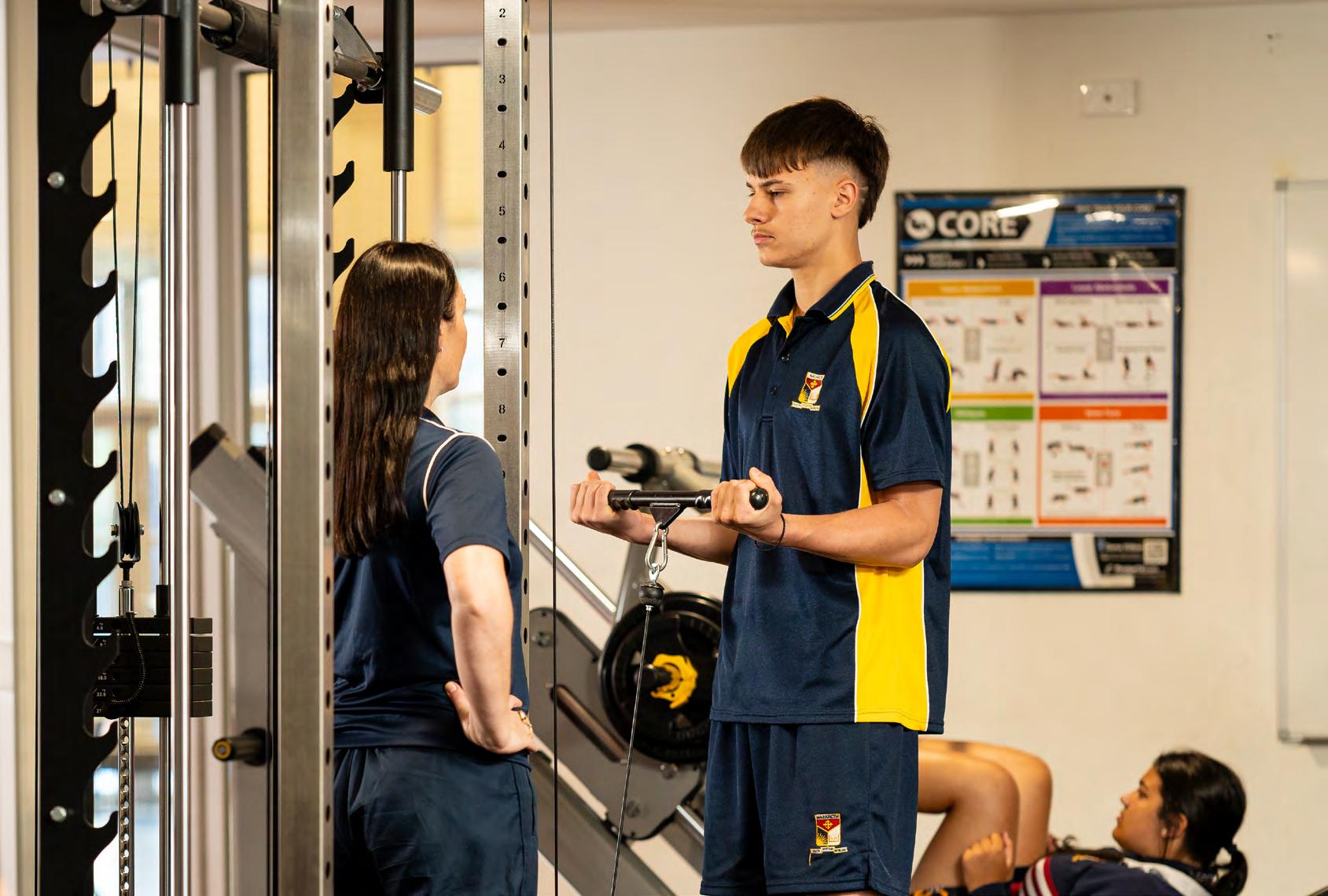
VCE Physical Education enables students to integrate a current understanding of the theoretical foundations of performance and participation in physical activity with practical application. It equips students with the appropriate knowledge and skills to plan, develop and maintain their involvement in physical activity, sport and exercise across their lifespan and to understand the physical, social, emotional and cognitive health benefits associated with being active.
The study also prepares students for employment and/ or further study at the tertiary level or in vocational education and training settings in fields such as exercise and sport science, health science, education, recreation, sport development and coaching, health promotion and related careers.

PHYSICAL EDUCATION
FOCUS AREAS
Unit 1: The human body in motion
In this unit students explore how the musculoskeletal and cardiorespiratory systems work together to produce movement and influences that affect this movement. Through practical activities students explore the relationships between the body systems and physical activity.
Key knowledge includes but is not limited to:
• the concepts of physical activity, sport and exercise
• social, cultural and environmental enablers and barriers to movement
• the structure and function of the skeletal, muscular, respiratory and cardiovascular systems
• causes of potential acute and chronic injuries and illness and strategies to prevent these
• benefits and potential harms of legal and illegal substances and methods to enhance performance
• perform, observe and analyse a variety of movements used in physical activity.
Unit 2: Physical activity, sport, exercise and society
This unit develops students’ understanding of physical activity, sport and society from a participatory perspective. Through a series of practical activities, students experience and explore different types of physical activity promoted in their own and different populations.
Key knowledge includes but is not limited to:
• forms of physical activity such as play, games, sports, transportation, chores and exercise
• influences on participation in physical activity across the lifespan
• physical, social, mental and emotional benefits of regular participation in physical activity
• define and identify forms of physical activity, physical inactivity and sedentary behaviour
• how to apply frequency, intensity, time and type to an exercise program
• create an activity plan for an individual or a specific group to increase physical activity.
PHYSICAL EDUCATION
FOCUS AREAS
Unit 3: Movement skills and energy for physical activity, sport and exercise
This unit introduces students to the biomechanical and skill acquisition principles used to analyse human movement skills and energy production from a physiological perspective. They use practical activities to demonstrate how correct application of these principles can lead to improved performance in physical activity and sport.
Key knowledge includes but is not limited to:
• the link between motor skill development and participation and performance
• biomechanical principles for analysis of human movement
• fuels (both chemical and food) required at rest and during physical activity
• characteristics of the three energy systems (ATP–CP, anaerobic glycolysis, aerobic system)
• acute physiological responses in the cardiovascular, respiratory and muscular systems
• participate in physical activities to collect and analyse data on the range of acute effects.
Unit 4: Training to improve performance
In this unit students analyse movement skills from a physiological, psychological and sociocultural perspective, and apply relevant training principles and methods to improve performance within physical activity at an individual, club and elite level. Students participate in a variety of training sessions designed to improve or maintain fitness and evaluate the effectiveness of different training methods.
Key knowledge includes but is not limited to:
• fitness components such as power, agility, anaerobic capacity, power and strength
• methods of at least two standardised, recognised fitness tests
• conduct a valid and reliable assessment of fitness using ethical protocols
• psychological strategies used to enhance performance and aid recovery
• chronic adaptations of the cardiovascular, respiratory and muscular systems
• design a training program that demonstrates the correct application of training principles.
PHYSICAL EDUCATION
ASSESSMENT
Units 1 & 2 outcomes are assessed by a wide range of school based and offsite activities such as but not limited to: case studies, written tests, structured questions, data analysis, research tasks, oral presentations and an end of year Examination.
Units 3 & 4 outcomes are assessed by completing a wide range of School Assessed Coursework that can be both school based and offsite. These SAC’s combined equate to 50% of the subject mark with the end of year external Examination also equating to 50%.
VCE VET SPORT, AQUATICS & RECREATION
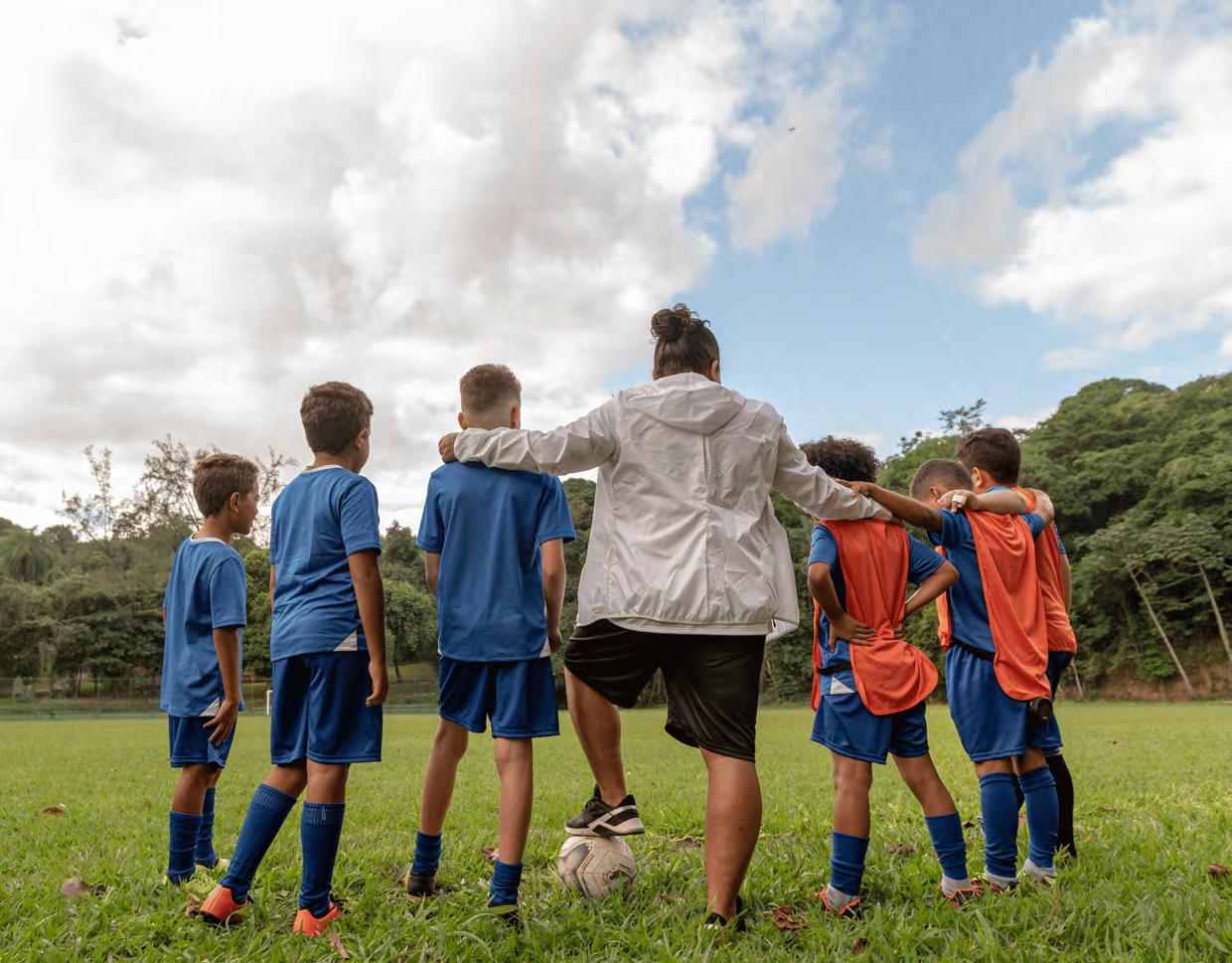
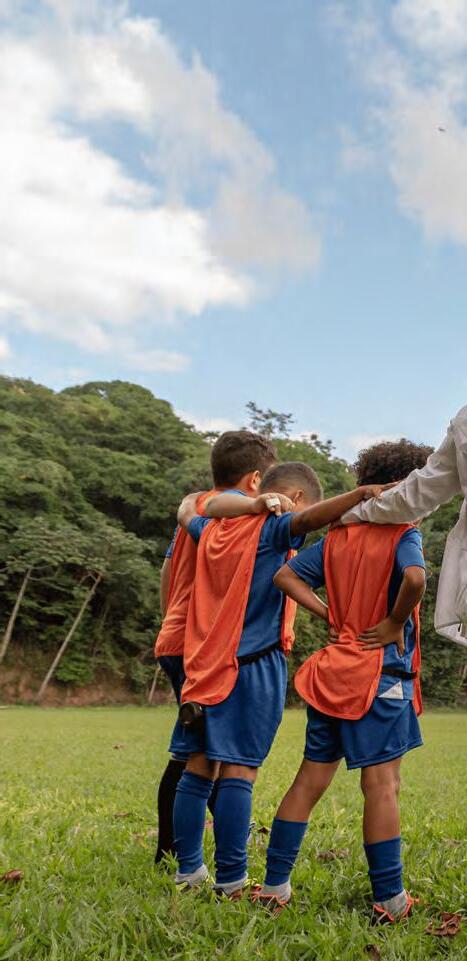
The Certificate III in Sport, Aquatics and Recreation transforms students’ passion for physical activity into meaningful career opportunities in a rapidly growing industry. This comprehensive program equips students with versatile skills and knowledge across coaching, officiating, leadership, recreation session delivery, technology, and working with diverse people.
Students develop practical expertise that is immediately applicable in the workplace, while also building essential transferrable skills such as communication, teamwork, and problem-solving. The program prepares students to work independently in the sport and recreation industry with confidence and sound judgment.
Schools offering this qualification provide a clear connection between students’ sporting interests and career outcomes, enriching the curriculum with valuable vocational pathways. The skills gained create multiple employment opportunities and a strong foundation for further study in the sector.
Students who complete Year 2 of the program have the opportunity to achieve a study score that contributes to their ATAR. The course runs for half a day each week and is well suited to senior students seeking practical, industry-relevant learning.
VCE VET SPORT, AQUATICS & RECREATION
FOCUS AREAS
Units 1 & 2
• Participate in workplace health and safety
• Respond to emergency situations
• Provide quality service
• Maintain activity equipment
• Maintain sport, fitness and recreation industry knowledge
• Provide first aid*
• Participate in conditioning for sport*
• Organise personal work priorities*
• Continuously improve officiating skills and knowledge*
• Respond to interpersonal conflict*
• Assist in conducting recreation sessions*
Units 3 & 4
• Participate in WHS hazard identification, risk assessment and risk control processes
• Facilitate groups*
• Conduct sport coaching sessions with foundation level participants*
• Deliver recreation sessions*
LEARNING AREAS
VCE VET SPORT, AQUATICS & RECREATION
Sport-specific coaching; leadership, communication and group facilitation; activity session delivery; conditioning for sport; officiating; WHS and emergency response.
CAREER PROGRESSION OPPORTUNITIES
• Recreation officer
• Activity operation officer
• Sport and recreation attendant
• Community activities officer
• Leisure services officer
• Coach
• Personal Trainer
• Sports Manager
• Sportsperson
FURTHER STUDY
• Certificate IV in Fitness
• Certificate II and IV in Outdoor Recreation
• Certificate IV in Sport and Recreation
• Various Diplomas and Advanced Diplomas
• Various University Degrees
OUTDOOR AND ENVIRONMENTAL STUDIES
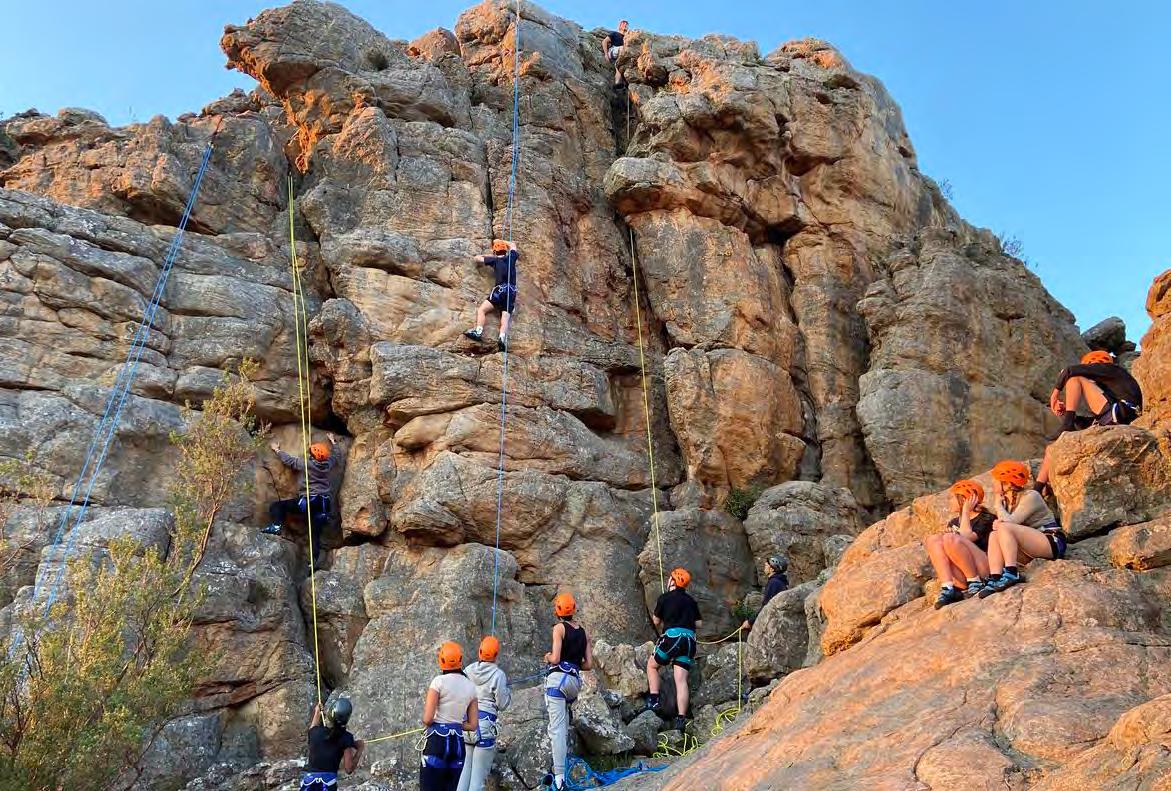
VCE Outdoor and Environmental Studies is concerned with the ways humans interact with and relate to outdoor environments. By spending extended periods of time in outdoor environments, students learn to assess the health of, and evaluate the importance of, healthy outdoor environments. Students learn to recognise the impact of increasing pressures on these places through direct human use, while observing the indirect damage created by local, national, and international practices.
Within this study, students will engage in experiences within a range of Outdoor Environments, with the emphasis on students participating in challenging adventure-based activities. Activities undertaken could include bushwalking, snow-hiking, surfing, snorkelling, rock-climbing, sea kayaking, caving, rafting, snowboarding & skiing. Due to the nature of participating in a large range of water-based environments, it is important that students have an excellent competency of swimming when deciding to elect VCE Outdoor and Environmental Studies.
This study informs students of a range of future pathways, including formal study and involvement in areas where knowledge of, and interaction with, outdoor environments is central, such as natural resource management, nature-based tourism, conservation advocacy, outdoor leading and guiding, environmental research and policy, education, and agriculture.
OUTDOOR AND ENVIRONMENTAL STUDIES
FOCUS AREAS
Unit 1: Connections with outdoor environments
This unit examines some of the ways in which Indigenous peoples and non-Indigenous peoples understand and relate to nature through experiencing outdoor environments. The focus is on individuals and their personal responses to experiencing outdoor environments. Through outdoor experiences, students develop practical skills and knowledge to help them act sustainably in outdoor environments. Students understand the links between practical experiences and theoretical investigations, gaining insight into a variety of responses to, and relationships with, nature.
Key Knowledge includes but not limited to:
• Indigenous peoples’ and non-Indigenous peoples’ ways of knowing outdoor environments
• The range of motivations for experiencing outdoor environments and responses to outdoor environments, such as fear and appreciation
• factors that affect access to experiencing outdoor environments, including socioeconomic status, cultural background, age, gender and physical ability
• the variety of personal responses to risk when experiencing outdoor environments, including the interplay between competence, perceived risk and real risk
• risk management of outdoor experiences
OUTDOOR AND ENVIRONMENTAL STUDIES
FOCUS AREAS
Unit 2: Discovering outdoor environments
This area of study introduces students to a range of understandings of outdoor environments, including those visited during practical outdoor experiences locally and afar. Students investigate different types of outdoor environments from several perspectives, and how these environments are managed. They investigate a range of vocational perspectives that inform human use of outdoor environments. Students learn to participate safely in outdoor experiences and use their experiences and observations as the basis for reflection on, and analysis of, key knowledge from this area of study.
Key Knowledge includes but not limited to:
• scientific understandings of a range of outdoor environments including:
• the interrelationships between biotic and abiotic components
• the effects of natural and human-induced changes on a range of outdoor environments, such as day to night, seasons, tides, flood, drought, fire, migration and climate change
• impacts of conservation, economic and recreational activities on a range of outdoor environments
• identification and management of threatened species and/or ecological communities in an outdoor environment
• how to plan and adapt outdoor experiences due to weather, including weather patterns and extreme weather
OUTDOOR AND ENVIRONMENTAL STUDIES
AREAS
Unit 3: Relationships with outdoor environments
The focus of this unit is the ecological, historical and social contexts of relationships between humans and outdoor environments in Australia. Students consider several factors that influence relationships with outdoor environments. They also examine the dynamic nature of relationships between humans and their environment. Students are involved in multiple experiences in outdoor environments, including in areas where there is evidence of human interaction. Through these practical experiences, students make comparisons between, and reflect upon, outdoor environments, as well as develop theoretical knowledge and skills about specific outdoor environments.
Key Knowledge includes but not limited to:
• Australian outdoor environments before humans arrived, including characteristics of biological isolation, geological stability and climatic variations
• relationships of non-indigenous peoples with specific outdoor environments as influenced by and observed in local or visited outdoor environments during historical time periods
• methods used by individuals and groups to influence decisions about two conflicts over the use of outdoor environments, and the processes followed by land managers to resolve conflicts
OUTDOOR AND ENVIRONMENTAL STUDIES
Unit 4: Sustainable outdoor environments
In this unit students explore the sustainable use and management of outdoor environments. They observe and assess the health of outdoor environments and consider the importance of this health for the future of Australian outdoor environments and the Australian population. Students examine the importance of the sustainability of human relationships with outdoor environments and the urgent need to balance human needs and the needs of outdoor environments. They investigate current acts and conventions as well as management strategies for achieving and maintaining healthy and sustainable Australian outdoor environments in contemporary Australian society. Students engage in multiple related experiences in outdoor environments, conducting an ongoing investigation into the health of, and care for, these places. Through these practical experiences, students reflect upon outdoor environments and make comparisons between them by applying theoretical knowledge developed about outdoor environments.
Key Knowledge includes but not limited to:
• Observable characteristics to assess the health of outdoor environments
• The importance of healthy outdoor environments for individual physical and emotional wellbeing, and for society now and into the future
• Indigenous and non-Indigenous peoples’ land management strategies for achieving and maintaining healthy and sustainable outdoor environments
• Acts or conventions related to the management and sustainability of a specific outdoor environment, species, or ecological community
OUTDOOR AND ENVIRONMENTAL STUDIES
ASSESSMENT
Units 1 & 2 outcomes are assessed by a wide range of school based and offsite activities such as but not limited to: case studies, written tests, structured questions, data analysis, research tasks, oral presentations and an end of year Examination.
Units 3 & 4 outcomes are assessed by completing a wide range of School Assessed Coursework that can be both school based and offsite. These SAC’s combined equate to 50% of the subject mark with the end of year external Examination also equating to 50%.
VET CERTIFICATE II IN OUTDOOR RECREATION
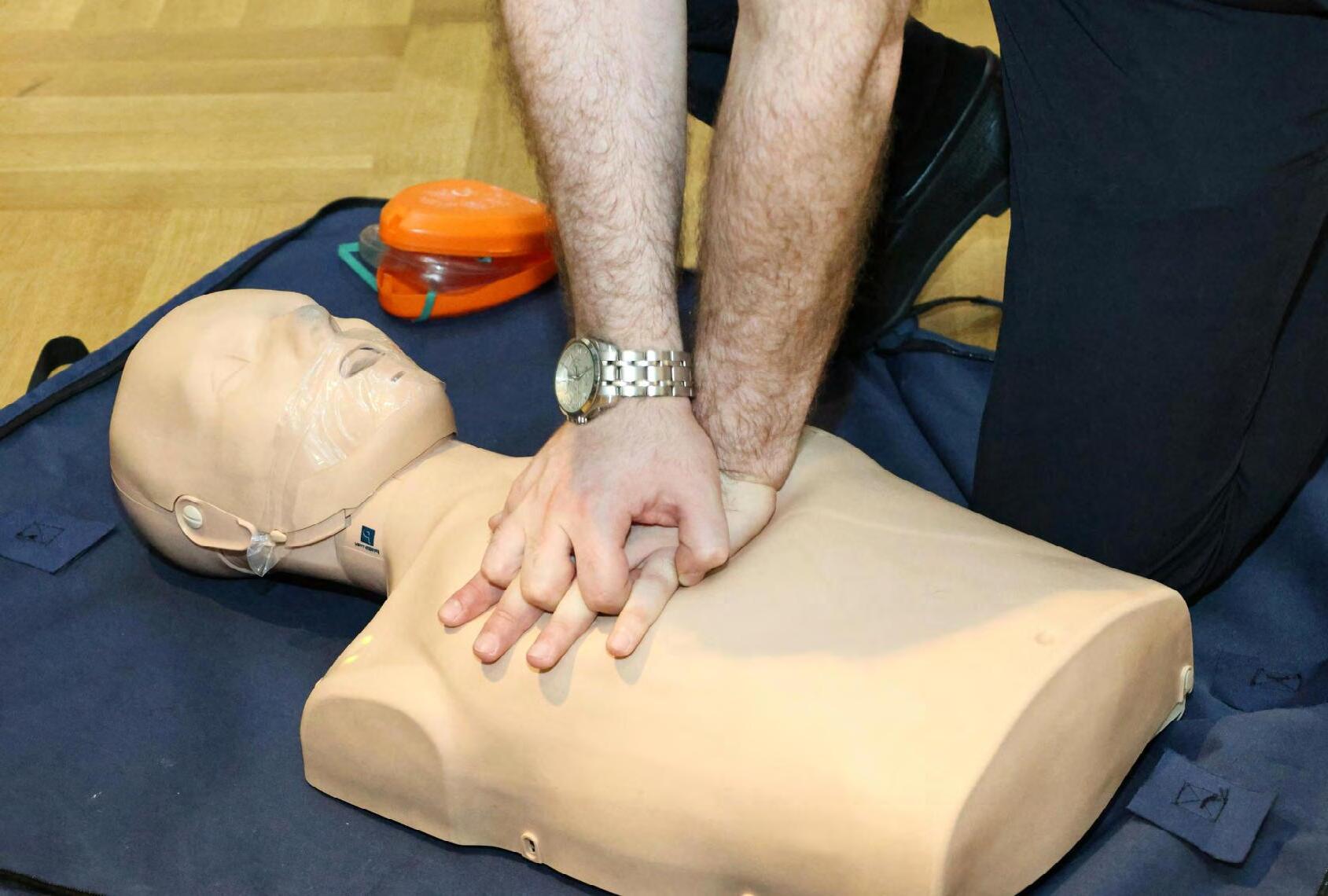
This exciting and practical course is designed for students who enjoy adventure, physical activity, teamwork and the outdoors. Students will develop practical skills and knowledge through participation in a range of outdoor and recreational activities while building confidence, leadership and communication skills.
Throughout the course, students gain experience in planning and participating in outdoor activities while learning important areas such as safety and risk management, teamwork, navigation skills, environmental awareness and leadership in outdoor settings.
This course provides students with valuable real-world experiences and can create pathways into further education and employment within the sport, recreation and outdoor industries.
Students can benefit from hands on and active learning experiences that build real world capability, alongside the development of teamwork and leadership skills that strengthen how they work with others. These opportunities help grow confidence, resilience and communication skills, while also building important knowledge of outdoor safety and risk management practices. Learners gain valuable exposure to the recreation and outdoor industry, supported by nationally recognised vocational learning that enhances future study options and employment pathways.
VET CERTIFICATE II IN OUTDOOR RECREATION
FOCUS AREAS
Core and Elective* Units
• Participate in workplace health and safety
• Assist in conducting recreation sessions
• Minimise environmental impact
• Maintain sport, fitness and recreation industry knowledge
CAREER PROGRESSION OPPORTUNITIES
• Outdoor Recreation Assistant
• Outdoor Education Assistant
• Adventure Camp Assistant
FURTHER STUDY
• Certificate III in Outdoor Leadership
• Certificate III in Sport, Aquatics and Recreation
• Certificate IV in Outdoor Leadership
• Respond to emergency situations*
• Provide first aid*
• Navigate in tracked environments*
• Bushwalk in tracked environments*
• Maintain activity equipment*
• Ride off road bicycles on easy trails*
• Leisure and Recreation Assistant
• Ski Resort or Adventure Park Assistant