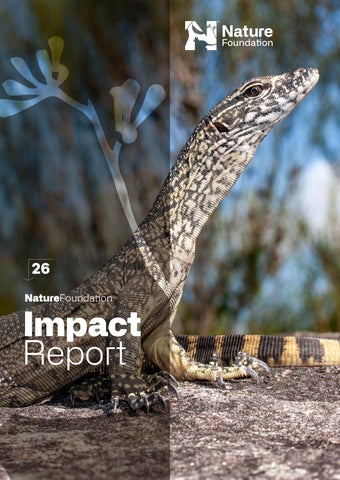
26 NatureFoundation
Impact Report
Acknowledgement of Country Nature Foundation acknowledge and respect the Traditional Custodians whose ancestral lands we live and work on, and recognise their continuing connection to land, sea and community. We pay our respects to Elders past, present and emerging. We acknowledge and respect the deep spiritual attachment and the relationship that Aboriginal people have to country.
The achievements outlined in our Impact Report align with the above five goal areas from our Strategic Plan, demonstrating the progress and outcomes of our work. You can view the Strategic Plan: Towards 2030 here (naturefoundation.org.au/strategic-plan).
Nature Foundation Impact Report 25–26
Our goals Increasing areas of habitat are conserved and enhanced for future generations. Nature Science knowledge that leads to evidence-based decision-making. Nature is better understood and valued. Engaged communities that support resilient habitats. An inspirational organisation that is financially secure and achieves operational excellence.
Our cultural qualities We are agile and adaptable, connecting communities through nature. We care about each other, what we do and why we do it; we believe in the power of nature to transform lives. We are creative and resourceful in tackling major environmental issues. We inspire and create enjoyment through nature. We strive for excellence in everything we do, holding each other accountable, and working to the highest ethical standards. We are bold and adventurous in our pursuit of conservation outcomes.
Lands on which Nature Foundation works •
Bullock Bridge – Meintangk people
•
Para Woodlands – Kaurna people
•
Geegeela – Bindjali people
•
•
Gidgealpa – Yandruwandha Yawarrawarrka people
Payinthi – Nature Foundation Office on Kaurna land
•
Pooginook West – Ngawait people
•
Hiltaba – Gawler Ranges peoples – Barngarla, Kokatha, and Wirangu countries
•
South Gap – Kokatha people
•
Tiliqua – Ngadjuri people
•
Mongolurring – Ngadjuri people
•
Watchalunga – Ngarrindjeri people
•
Murbpook – First Nations people of the River Murray Mallee (FPRMM) and Mannum Aboriginal Community Association Incorporated (MACAI)
•
Witchelina – Adnyamathanha, Kuyani and Arabana peoples.
Cover photo: Heath Goanna or Rosenberg’s Monitor (Varanus rosenbergi) Photos by Ken Griffiths, Phil Bagust, Andy Rasheed, Cecile Espigole, Bill Doyle, Kelsey Bennett, Katie Perry, Jem Shimmield, Sam Hughes, Erica Stacey, Dr Hugh McGregor, Dr Paul van Ruth, Sara Laubscher, Dr Brock Hedges, Sputnik, Jen Evison, Conor Hilton, Darren Clements, Hannah Edwards, Patrick Mentzel, Paul Drummond. Some photos also supplied for use by Ninti One and National Parks and Wildlife Service of SA.
P
1
Our Nature Reserves Nature Foundation’s nature reserves span many ecosystems and habitat types across Australia and are home to a large number of our native species including over 20 nationally threatened species. Learn more about our nature reserves at naturefoundation.org.au/reserves
Bullock Bridge 203 hectares: A haven for birds and native fauna on the Limestone Coast Location: East of Kingston, Limestone Coast, South Australia Traditional custodians: Meintangk People
Murbpook Lagoon 360 hectares: Wetland near Blanchetown which with its surrounds protects 19 threatened species including Regent Parrots
Geegeela
Location: River Murray Mallee, South Australia
Location: 20km from Frances, South Australia Traditional custodians: Bindjali people Threatened species in the area include Hooded Robin, Blue-winged Parrot, Diamond Firetail and a number of South Australian state-listed Rare flora.
Hiltaba 78,000 hectares: Adjacent to the Gawler Ranges National Park protecting Yellow-footed Rock-wallaby habitat Location: Bordering the Gawler Ranges on the Eyre Peninsula, South Australia Traditional custodians: Bungala, Kokatha, and Wirangu Countries Threatened species include Yellow-footed Rock-wallaby, Short-tailed Grasswren and Desert Greenhood Orchid.
Mongolurring 1,200 hectares: Protecting quality mallee woodland over saltbush and low shrubs east of Mount Bryan Location: East of Mount Bryan, South Australia
2
Threatened species in the area include Southern Whiteface, Diamond Firetail, White-winged Chough, Bottle Bluebush and Rohrlach’s Bluebush.
Threatened species in the area include Malleefowl, Jacky Winter, Restless Flycatcher and the Late Spider-orchid.
102 hectares: Protecting buloke, an important food source for South-eastern Red-tailed Black-cockatoos
P
Traditional custodians: Ngadjuri People
Traditional custodians: First Nations People of the River Murray Mallee (FPRMM) Threatened species include Regent Parrot, Purple Lovegrass, Five-spined Bindyi, Creeping Boobialla, Prickly Bottlebrush and Spiny Lignum.
Para Woodlands 500 hectares: Former farming land near Gawler being restored to a grassy woodland Location: 3km south-east of Gawler, South Australia Traditional custodians: Kaurna People Threatened species include Latham’s Snipe, Hooded Robin, Diamond Firetail and Silver Daisy-bush.
Pooginook West 2,396 hectares: Supporting local native species and providing a refuge for the future migration of key arid-zone species Location: Riverland, South Australia
Tiliqua 85 hectares: Protecting threatened Pygmy Bluetongue Lizard habitat near Burra Location: 10 km, north-east of Burra, South Australia Traditional custodians: Ngadjuri People Threatened species include Pygmy Bluetongue Lizard, Flinders Worm Lizard and Prickly Spear-grass.
Watchalunga 92 hectares: A wetland near Finnis protecting Mount Lofty Ranges Southern Emu-wrens and native fish Location: Fleurieu Peninsula, South Australia Traditional custodians: Ngarrindjeri People Threatened species include Mount Lofty Ranges Southern Emu-wren and Resin Wattle.
Witchelina 421,000 hectares: A diverse arid land reserve between Maree and Lake Torrens Location: Extending from Lake Torrens in the south to Marree in the north, South Australia. Traditional custodians: Kuyani Adnyamathanha Peoples Nation and the Arabana Peoples Nation. Threatened species include Thick-billed Grasswren, Sharptailed Sandpiper, Grey Falcon, Blue-winged Parrot, Common Greenshank, Plains Mouse and Slender Bell-fruit.
Traditional custodians: Ngawait people Threatened species in the area include Malleefowl, Mallee Striated Grasswren, Black-eared Miner and Red-lored Whistler.
Nature Foundation Impact Report 25–26
GIDGEALPA
LAKE EYRE
WITCHELINA NATURE RESERVE
LAKE FROME
As at October 2026
Roxby Downs
LAKE GAIRDNER
FLINDERS RANGES NP
SOUTH GAP
LAKE TORRENS
Ceduna
HILTABA NATURE RESERVE
Pt Augusta
MONGOLURRING NATURE RESERVE Pt Pirie
TILIQUA NATURE RESERVE
Burra
POOGINOOK WEST NATURE RESERVE
Renmark
PARA WOODLANDS NATURE RESERVE
RIVER MURRAY
MURBPOOK NATURE RESERVE
Pt Lincoln Adelaide Murray Bridge Kingscote
Victor Harbor
WATCHALUNGA NATURE RESERVE Bordertown
GEEGEELA NATURE RESERVE
Land managed in partnership: Gidgealpa – 20,172 hectares South Gap – 3,250 hectares
Total area protected:
BULLOCK BRIDGE NATURE RESERVE
527,360 hectares Mt Gambier
P
3
Message from the Chair Jan Ferguson OAM 2026 marks 45 years since the establishment of the National Parks Foundation of South Australia, now known as Nature Foundation. Our passionate and committed founders–Dr Mark Bonnin AM, Warren Bonython AO, David Cleland and Dr Barbara Hardy AO–identified the need for an independent organisation to help protect more land across South Australia and took the critical steps to engage people in this conservation journey. It is an honour to serve as Chair of Nature Foundation, and while this past year has not been without its challenges, I am pleased with the progress we have made against the goals outlined in our Strategic Plan: Towards 2030. Pooginook West is now our third largest nature reserve. Our team and frameworks enabled the swift establishment of baseline biodiversity monitoring so that we can measure the impact of our actions from the point of acquisition. The Nature Foundation Biodiversity Monitoring Program has rolled out across all ten nature reserves, with a network of over 120 monitoring sites and more than 200 remote cameras, giving us consistent nature science across the whole estate for the first time. We also contribute to the sector by supporting research projects and sharing our findings through presentations and research papers. This year marks ten years since the establishment of the Kids on Country™ Junior Ranger Program, which supports Aboriginal young people in connecting to culture and conservation. While recent climate impacts have made camps on remote reserves challenging, they have encouraged the team to be agile and develop innovative approaches to continue and grow the program.
Financially, the year closed with an $888,000 deficit, driven by the timing of project income and detailed later in this report. The Board plans for conditions like these: our reserves absorbed the shortfall without compromising the year’s conservation work, and our long-term position remains sound. Our focus on operational excellence continued, including safety across the reserve network and for everyone who visits and works on them. The common themes you will notice in this year’s Impact Report are the effects of, and adaptations to, weather conditions; managing landscapes and programs for sustainability and resilience; and the essential collaboration, teamwork, and partnerships that make the work and its results possible. It truly is a combined effort. Thank you to my fellow Board Directors for your contributions throughout the year, to Alex and the staff team for your ongoing efforts, and to our members, volunteers, donors, and supporters for your continued commitment to our founders’ vision and our goals for the future.
Our community of members, volunteers, donors, supporters and visitors continues to grow. This year’s Member and Supporter Survey provided useful feedback to help us continue our work and ensure we connect with our key audiences in relevant ways.
P
4
Nature Foundation Impact Report 25–26
Nature Foundation Impact Report 25–26
Message from the CEO Alex Nankivell Sixteen years ago, Nature Foundation destocked Witchelina Station and began the slow work of letting an arid landscape recover. This year, we documented that recovery in the peer-reviewed journal Wildlife Research. Habitat suitability modelling for the North Flinders Ranges Thick-billed Grasswren — research I co-authored with two of our volunteers, David Gobbett and Andrew Black — shows Witchelina’s grasswren habitat has improved markedly since we acquired it. At this year’s Conservation Conversations, I was asked which of Nature Foundation’s reserves had the most extant mammal species recorded. Without the numbers in front of me, I said Witchelina. That question stayed with me, so I recently calculated all species records on our reserves since 2000 and compared them with the total species recorded in South Australia over the same period. The results backed up what I said that night, but they also highlighted the contribution our reserves make to conserving South Australia’s biodiversity. Witchelina had the highest representation of bird species with 161 species (36.3% of SA), followed by reptiles with 65 species (23.6% of SA), mammals with 32 species (20.8% of SA) and 377 plant species (6.8% of SA). Murbpook had the highest amphibian count, with 7 species (22.6% of SA). Across the Nature Foundation reserve portfolio, a similar message is emerging: 49.3% of South Australia’s bird species are represented, 37.7% of SA’s reptiles, 36.4% of SA’s mammals, 35.5% of SA’s amphibians, and 17.8% of SA’s plant species. These statistics have been sourced from the Atlas of Living Australia (ALA) and the Biological Databases of South Australia (BDSA). They are not exhaustive, and we recognise that survey effort is often patchy across the state. This is why we have introduced the Nature Foundation Biodiversity Monitoring Program outlined in last year’s report, recognising the importance of continuing to contribute to these important biological databases. This year, we share the full rollout of the monitoring program across the reserve network, along with observations from the two seasonal surveys.
Our previous Impact Report also shared the establishment of the Integrated Reserve Management System. Over the past year, we’ve been recording all activities within the system and inputting historical records, so we can easily access and share this data, such as weed control, to show the inputs and actions that facilitate real, long-term impact. These systems and frameworks provide the foundation to manage the reserve network as it grows, monitor results, and adapt management actions as required through the cycles of change we need to contend with. Despite this planning and these resources, factors within and outside our control—such as weather—will always remain. The past year saw extreme weather affect the landscape and planned activities across teams and programs. This is our new normal. The operational systems and processes we’ve invested in help us to identify issues early, adapt, and stay on track towards our strategic goals. That includes our finances: the timing of project income led to a deficit this year, detailed later in this report, which we absorbed with the financial reserves we deliberately built for conditions like these. We’ve achieved a lot this year. I am grateful to the Chair and Board for their governance and guidance, and to the staff team for their commitment and efforts. I would also like to thank our growing team of volunteers, who provide valuable assistance in the field, office and at events–along with our increasing members, donors and supporters. I hope you enjoy this summary of Nature Foundation’s annual achievements. Your support makes this work–and our long-term positive impact for biodiversity–possible.
P
5
22
503,938 ha Ten nature reserves across South Australia comprising over 500,000 hectares protected, managed and conserved, contributing to resilient ecosystems and positive biodiversity impact.
6,398 582 +16
Habitat for 22 nationally threatened fauna species protected and actively managed.
SUPPORTERS
MEMBERS
6,398 supporters care for nature and the work we do, including 582 members — member numbers up 16% from FY24/25.
%
2,909 hrs $146,883 120 Southern Pygmy Perch (Nannoperca australis) were reintroduced to Watchalunga’s wetland, giving hope to the re-establishment of this threatened species in an improved habitat.
P
6
Nature Foundation Impact Report 25–26
139 49
+
REGISTERED VOLUNTEERS
%
120
139 registered volunteers (up 49% from FY24/25) recorded 2,909 hours of service with a value of $146,883–a valuable contribution to nature conservation.
Nature Foundation Impact Report 25–26
Since 2000, Nature Foundation has awarded $2,045,786 in research grants to post-graduate students, academics, and the community to kickstart careers in research, supporting 471 researchers.
471
21
1,125 EVENTS
RESEARCHERS
SUPPORTERS
2 ,045,786 $
21 events were held over the past year, engaging 1,125 supporters and members in nature conservation.
+ BIODIVERSITY SITES
120
More than 120 biodiversity monitoring sites have been established across the nature reserve network, including more than 200 remote cameras, helping us learn more about the species in the landscapes.
>
200 REMOTE CAMERAS
632
Since its inception in 2016, 632 Aboriginal young people have participated in the Kids on Country™ Junior Ranger Program.
140 ML
140ML of water was pumped into Murbpook’s northern lagoon, almost twice the usual 74 ML thanks to the repair of the ford crossing.
P
7
Goal 1: Increasing areas of habitat are conserved and enhanced for future generations.
Pooginook West Nature Reserve: Establishing a new nature reserve This past year, Nature Foundation took strides toward its goals of doubling impact and conserving and enhancing habitat for future generations by acquiring its third-largest nature reserve in September 2025: the 2,396-hectare Pooginook West. Located on Ngawait country in the Riverland, South Australia, this former farmland–adjacent to the Pooginook Conservation Park–offers significant opportunities for revegetation, supporting local native species and providing a refuge for the future migration of key aridzone species. The decision to purchase Pooginook West Nature Reserve was supported by a rigorous assessment that identified habitat types that could potentially support eight nationally listed bird species, 17 state-listed birds, and one threatened ecological community. Ecologically rich, the acquisition also expands Nature Foundation’s presence in the region, with Pooginook West located approximately 30km from Murbpook Nature Reserve, as the crow–or Regent Parrot–flies, with
P
8
the new reserve a potential foraging area for Murbpook’s nesting population of the Vulnerable species (Polytelis anthopeplus monarchoides). Nature Foundation secured a Native Vegetation Council (NVC) Restoration Grant to support essential conservation actions at Pooginook West for 10 years, including biodiversity monitoring, establishing a tailored conservation management plan, feral animal control activities, and revegetation efforts. This funding also supported a new native vegetation Heritage Agreement over a large portion of the reserve’s remnant vegetation, with the opportunity to include the remaining area in the future following suitable improvement in the native vegetation in response to appropriate conservation actions.
Nature Foundation Impact Report 25–26
Nature Foundation Impact Report 25–26
The investment Nature Foundation has made in establishing systems and frameworks was tried, tested, and successful in this new venture, with the reserve quickly becoming operational. Over its first year, Pooginook West has seen significant progress, laying a base for ongoing ecological recovery and positive impacts on native flora and fauna. Establishment activities have included: •
Livestock removal
•
Establishment of monitoring stations and sites through the Nature Foundation Biodiversity Monitoring Program, allowing collection of ecological data to track progress
•
Track and fenceline condition surveys and repairs
•
Identification of locations and status of artificial watering points, weed infestations and feral animal hotspots – all recorded in Nature Foundation’s Integrated Reserve Management System
•
Establishment of local partnerships, including neighbours, Murraylands and Riverland Landscape Board, Living Landscapes Alliance
•
Initiation of targeted feral and weed control programs
•
Revegetation over 20-hectares of previously cleared land in partnership with Murraylands and Riverland Landscape Board and Trees for Life
This first year’s activities have established a strong foundation for Pooginook West, and we plan to expand revegetation efforts, enhance habitat connectivity, and involve Nature Foundation volunteers and the community further to ensure long-term ecological health. You can read more about the above-mentioned activities and partnerships further in this report.
P
9
Watchalunga Nature Reserve: Reintroducing a threatened species Watchalunga Nature Reserve comprises approximately 92 hectares of lowlying wetland habitats, including areas of Fleurieu Peninsula swamp along the lower Finniss River, which is listed as a critically endangered ecological community. It is an important patch of remnant habitat containing highly significant South Australian biodiversity. The challenges facing this ecosystem have also been recognised nationally, with the River Murray downstream of the Darling River and associated aquatic and floodplain systems listed as a Critically Endangered ecological community under the EPBC Act in January 2026. This recognition acknowledges the national importance of the River Murray–Darling to Sea, which supports many connected river and wetland systems. Annual fish surveys have been undertaken at Watchalunga since 2018 as part of Nature Foundation’s extensive monitoring program. The fish surveys record data on species abundance, species diversity, and various water quality metrics, providing a comprehensive dataset that supports conservation actions and helps us identify important ecological changes. The data show that Watchalunga is home to a high proportion of native fish; however, the 2022–23 flood changed the fish community, with a dramatic increase in Redfin (Perca fluviatilis) and Common
Carp (Cyprinus carpio), a typical response to flooding events. These alien species negatively impact native fish species through predation and habitat destruction. Intensive management was undertaken to restore the balance, with electrofishing humanely removing alien species and retaining native species. Nearly 400 Common Carp were removed through electrofishing in 2023, dramatically reducing pressure on the native fish population. In the October 2025 survey, alien fish species accounted for only 13.1% of the total catch, with 86.9% native fish, showing a significant recovery from the 2023 survey—which followed the 2022–23 flood— where alien fish species accounted for 74.8% of the total catch. This improvement demonstrates positive ecosystem recovery and the importance of ongoing management efforts. Southern Pygmy Perch (Nannoperca australis) is a small (usually no more than 6.5cm long) freshwater native fish that is classed as Endangered in South Australia and is Protected. The reintroduction of around 120 Southern Pygmy Perch to Watchalunga wetlands in December 2025 is the first native species reintroduction carried out at a Nature Foundation reserve, reflecting our commitment to ecosystem recovery. We will monitor the species in 2026 to assess their progress through the annual fish survey.
TOTAL COUNT
Fish type 1400
Total alien Total native
1200 1000 800 600 400 200 0
Nature Foundation Impact Report 25–26
25 20
24 20
23 20
22 20
21 20
20 20
10
19 20
18 20
P
Nature Foundation Impact Report 25–26
Building partnerships on Country: Kokatha Aboriginal Corporation Nature Foundation’s commitment to partnerships with Aboriginal people to enhance conservation outcomes and increase cultural understanding was strengthened this past year through an innovative opportunity to deepen connections with the Kokatha Aboriginal Corporation. The Kokatha People are the Traditional Owners of a large area of land in the northern region of South Australia, estimated to extend over some 140,000 km2. Traditionally, the Kokatha people have been associated with the land north of Port Augusta, stretching from Lake Torrens in the east to the Gawler Ranges in the West. Kokatha Aboriginal Corporation’s primary responsibility is to manage the native title rights and interests of the common law holders. Kokatha Aboriginal Corporation approached Nature Foundation to design and deliver a bespoke professional development program to empower their staff and Aboriginal rangers through tailored learning opportunities, building the skills, knowledge, and confidence to develop and operate their own junior ranger programs for Aboriginal young people. The program was delivered over four days at Hiltaba Nature Reserve, where Nature Foundation staff came together with Kokatha Board members and staff to build their understanding of culture-first environmental education and gain exposure to practical conservation tools and youth mentoring strategies, all grounded in respect, deep listening, and cultural safety. The group experienced firsthand activities that occur during Kids on Country camps and discussed how they were developed, how to conduct them, and the benefits they provide to students. These activities were then complemented by bespoke sessions designed to share best
practices learned over 10 years of junior ranger program development and delivery, including youth engagement, incorporating cultural practices with conservation actions, co-design and leadership. A rewarding outcome from the activity was the attendance of Aboriginal ranger who had attended the pilot Kids on Country Junior Ranger Program as a student in 2016. Soon after participating he had shared that the experience encouraged him to explore a career as a ranger. To see him fulfil this goal is testament to the aim of the Kids on Country program to build employability skills for young Aboriginal people by improving wellbeing, teaching life skills, building confidence 'on Country' and sparking interest in conservation and land management. This opportunity demonstrates how Nature Foundation is making tangible progress in strengthening Aboriginal partnerships, investing in people, and achieving measurable conservation and community leadership outcomes, such as increased engagement with Aboriginal communities and capacity building, supporting Aboriginal young people to develop conservation knowledge and skills on Country.
P
11
Managing threatening processes: Weed management across the reserves Managing the impacts of invasive species across the reserve network is ongoing. The significant progress made over the past year on targeted weed management–despite the later challenges–is due to the planning and efforts of the Reserve Management team, with valuable support from the on-site Conservation Land Managers at Hiltaba and Witchelina Nature Reserves, and Nature Foundation Volunteers. Invasive weeds aggressively disrupt native ecosystems, reduce biodiversity and alter natural habitats. Consistent weed control helps to restore natural habitats and encourage resilience within the landscape. This past year’s weed management activities have included: •
638 African Boxthorn (Lycium ferocissimum) plants removed at Mongolurring Nature Reserve
•
1,612 Coast Wattle (Acacia longifolia ssp. sophorae) plants and 104 South African Weed Orchids (Disa bracteata) removed at Bullock Bridge Nature Reserve, along with additional control of the declared weed species Bridal Creeper (Asparagus asparagoides).
•
1.2 hectares of Phragmites australis (Common Reed) slashed at Watchalunga Nature Reserve*
•
74 hectares of Horehound (Marrubium vulgare) and 7 hectares of African Boxthorn managed at Hiltaba Nature Reserve
•
11.6km of Buffel Grass (Cenchrus ciliaris) treated by spot spraying along the creekline at Witchelina Nature Reserve.
Along with additional weeding through revegetation areas at Watchalunga and Tiliqua Nature Reserves, and several weed identification and control training sessions at Murbpook Nature Reserve, courtesy of a Friends of Parks and Nature Grant.
receive over 250mm of rain in three separate events from late February to early March, already ~100 mm more than the yearly average. Nature Foundation has been managing Buffel grass at Witchelina since 2014, and these twelve years of disciplined work have held it in check across most of the reserve. Before the major rainfall events, we were confident that 95% of all infestations were free of actively growing plants. The rains gave the remaining Buffel grass an unwanted boost. Thanks to the generosity of our donors, members, and supporters, we raised $190,000 through the 2026 Vital Work Appeal. This funding is vital for scaling up weed management efforts at Witchelina and supporting other essential infrastructure needs across the reserve network. With this funding, and the ongoing efforts of our staff and volunteer teams, we will continue the battle against weeds and other invasive species to support habitat restoration and improved biodiversity across the landscape.
* Phragmites australis clearance is being undertaken in accordance with Native Vegetation Council approval under Regulation 11, Application 2019/3145/455.
All weed incursions and management activities are logged in our Integrated Reserve Management System, allowing us to track and monitor progress. Unfortunately, this progress at Hiltaba and Witchelina was affected by the uncontrollable impacts of the significant rain events in late 2025 and early 2026, which saw Witchelina
P
12
Opposite top: Volunteers Catherine and Ian at the Mongolurring Boxthorn working bee. Opposite bottom, L–R: Witchelina, Buffel grass. Watchalunga working bee. Bullock Bridge.
Nature Foundation Impact Report 25–26
Nature Foundation Impact Report 25–26
P
13
Goal 2: Nature science knowledge that leads to evidence-based decision making. Update: Biodiversity Monitoring Program The key action of the 2025-2030 Science Strategy, the Nature Foundation Biodiversity Monitoring Program (NFBMP), plays a vital role in our collective efforts to conserve biodiversity. Throughout 2025, the Science and Knowledge team successfully established monitoring sites across all Nature Foundation reserves. With more than 120 sites and over 200 remote cameras, this progress demonstrates our commitment and capability to monitor diverse habitats effectively. Each site has two remote cameras: one forward-facing, and one downward-facing, mounted above a gridded board to help identify small species. Sites also include a series of roof tiles for monitoring reptiles and invertebrates, as well as defined vegetation monitoring transects.
•
Western Pygmy Possum (Cercartetus concinnus) at Murbpook Nature Reserve; the first known sighting of this species at this reserve!
•
Sugar Gliders and White-striped Free-tailed Bats detected at both Geegeela and Bullock Bridge Nature Reserves.
•
Heath Goanna at one of our regional reserves. Vulnerable in both South Australia and nationally, individual Heath Goannas have a very large foraging range, requiring at least 80-hectares of intact remnant native vegetation with specific characteristics.
Surveys were conducted across all sites in spring 2025 and autumn 2026. Some sites also used thermal imaging cameras to detect species during nighttime surveys.
Consistent, comprehensive biodiversity monitoring not only helps us better understand the flora and fauna communities on reserves and measure the impact of conservation actions but also enables us to identify areas of interest for future research projects and submit successful grant funding applications with evidence-based data.
The immediate impact of having a greater presence across the reserves is that we are seeing, and therefore, knowing more about what exists at each reserve. Notable species sightings from the past year include: •
P
14
Common Scaly-foot (Pygopus lepidopodus) predating a Trapdoor spider; the first predation event ever recorded and witnessed. This significant finding was documented as a short note and submitted to Herpetological Review, where it was accepted for publication.
Thanks to this valuable information, Nature Foundation has recently received a Grassroots Grant from the Limestone Coast Landscape Board to undertake research into arboreal mammals at Geegeela and Bullock Bridge Nature Reserves, and a grant through Birds SA to implement a Malleefowl monitoring program. These initiatives will help us better understand these species and support positive outcomes for them in the future.
Nature Foundation Impact Report 25–26
Nature Foundation Impact Report 25–26
Expanding regional Regent Parrot conservation Eastern Regent Parrots (Polytelis anthopeplus monarchoides) are a key focus species protected at Murbpook Nature Reserve, and the subject of multi-year, multi-partner research. The Eastern Regent Parrot is listed as Vulnerable nationally and at the South Australian state level and has declined significantly due to habitat loss (land clearance for agriculture), habitat degradation (due to altered river management), and increasing competition for hollows. Periods of below-average rainfall will also affect food availability and parents’ ability to provision chicks.
Research such as this support regional conservation outcomes and enable us to work beyond the borders of individual reserves. Our expanding presence in the Riverland region–with the addition of Pooginook West Nature Reserve–and the insights regarding Regent Parrot foraging behaviours, led to a restoration project in partnership with the Murraylands and Riverland Landscape Board and Trees for Life.
Nature Foundation has worked closely with the Regent Parrot Recovery Team and the Murraylands and Riverland Landscape Board over the past four years, undertaking annual Regent Parrot breeding surveys, contributing valuable information to regional conservation efforts. The spring 2025 survey was supported by a Murraylands and Riverland Landscape Board Grassroots Grant, which enabled the survey team to revisit known nesting areas and document how many pairs returned to the reserve that year. Excitingly, the team detected a pair of nesting Regent Parrots in a new part of the reserve, identifying a third distinct nesting area at Murbpook.
In June 2026, Nature Foundation collaborated with Trees for Life to direct seed 20-hectares of previously cleared land at Pooginook West Nature Reserve with Mallee mix seed intended to provide future foraging habitat for Regent Parrots and other species. Reserve management actions, including destocking and feral management, along with winter rains, should help the new plants thrive.
Nature Foundation is also collaborating with the Australian National University (ANU) to research nests at Murbpook Nature Reserve and across the broader region, monitoring the overall reproductive success of those nests. ANU has also been conducting landscape-scale research across South Australia, NSW and VIC. In 2025, ANU fitted trackers to 26 adults (including one on a Murbpook male) to track their flight and foraging patterns. This groundbreaking research provides valuable insights, including: •
the strong connections that exist between Regent Parrot colonies, indicated by shared flight paths, common foraging areas, and crèching of chicks,
•
confirmation of where Regent Parrots forage,
•
that Regent Parrots remain near the River Murray during non-breeding season, that the distance travelled between nest and foraging patches is directly linked to reproductive success.
The long-term impacts of these efforts provide increased support for Regent Parrots to forage and breed throughout the Riverland region, beyond the existing Murbpook colony. Its success will ultimately be measured through increased visitation at Pooginook West by Regent Parrots and detected by the spring and autumn bird surveys as part of the ongoing Biodiversity Monitoring Program.
This project is supported by the Murraylands and Riverland Landscape Board through funding from the Landscape Levies.
These research findings strengthen our regional conservation efforts and underscore the value of our ongoing partnerships with ANU and other research entities.
P
15
Investing in the next generation: 2026 Research Grants Since 2000, Nature Foundation has awarded $2,045,786 in research grants to postgraduate students, academics, and the community to kickstart research careers, supporting 471 researchers. Five student research grants were awarded in the 2026 round, along with the Mike Bull Award for Early Career Nature Scientists. 2026 saw a comprehensive review and update of the Research Grants program, including streamlining the application process with an online form. Student research grants received twice as many applications as the previous year, attributed to growing awareness of the Research Grants program and its relevance to research projects.
Jack O’Leary Grand Start Grants: Honours Bachelor of Science (Honours), Monash University Banded vegetation patterns in arid South Australia Jack’s project aims to identify whether a successional structure is present in banded vegetation under different landscape conditions. Banded vegetation is a phenomenon in arid landscapes in which vegetation and bare earth alternate in stripes. It occurs in near-flat regions where rainfall is insufficient for plants to reach full cover. In this manner, arid species can persist much further into the arid zone than otherwise. There is a lack of fine-scale field data quantifying community structure and succession of banded systems, and Australian studies thus far have focused on NSW, WA and the NT. This project aims to characterise the community structure of banded vegetation in a South Australian case study and to improve understanding of arid systems to facilitate the management, conservation, and restoration of these landscapes.
P
16
The selected recipients expand Nature Foundation’s presence, supporting student researchers from five universities across South Australia and New South Wales and addressing a diversity of topics, including Australian Sea Lion research. $53,000 in research grant funding supports cutting-edge scientific research aligned with Nature Foundation’s priorities. We are proud to invest in the next generation of young scientists committed to conserving and protecting the environment.
Peyton Hampel Nature Foundation Scientific Expedition Foundation RL & GK Willing Grant Bachelor of Science in Ecology and Environmental Science (Honours), Adelaide University Functional response of dryland vegetation to herbivore exclusion Arid ecosystems host unique and biodiverse flora and fauna adapted to harsh conditions. As well as livestock, rabbits, goats, and kangaroos add to arid-zone grazing pressure. This can lead to high levels of grazing that were not historically possible in these ecosystems, which alters their natural functioning. While overgrazing is widely recognised as detrimental to arid environments, research is unclear about which grazing intensity best supports ecosystem function, and about how to disentangle the effects of livestock, feral, and native herbivores. Peyton’s project will measure plant defence “traits” to understand the myriad ways plants in the arid zone defend themselves against herbivores and their impact not just on individual species but on the functional diversity of the ecosystem. This taxonomically agnostic approach means these findings will be relevant across arid zones across Australia and the world.
Jake Thornhill Grand Starts Grants: PhD PhD Candidate, Adelaide University Characterising subterranean biodiversity and assessing groundwater ecosystem response to anthropogenic pressures with environmental DNA Frequently overlooked in conservation management but wholly dependent on groundwater, subterranean ecosystems host exceptional biodiversity of animals and microbes. Preliminary Limestone Coast surveys for stygofauna (subterranean groundwater animals) conducted in 2016 revealed a diversity of species that rivals that of Australia’s subterranean biodiversity hotspots, such as the Pilbara. Continued groundwater use has lowered the water table over the last 50 years, placing these keystone ecosystems at risk. Improved understanding of anthropogenic impacts on groundwater ecosystems is critical to well-informed conservation management and restoration decision-making for highvalue freshwater assets, ensuring the long-term sustainability of groundwater resources for economy and environment alike. The potential research outcomes from Jake’s project are transferable in informing management of groundwaterdependent wetlands, including Nature Foundation’s Watchalunga and Murbpook Nature Reserves.
Nature Foundation Impact Report 25–26
Nature Foundation Impact Report 25–26
Charlotte Hogan Lynette Aplin ‘Knowledge in Science’ Research Grant
Caitlin La Rose Roy and Marjory Edwards Scholarship
PhD Candidate, University of NSW
PhD Candidate, The University of Sydney
Understanding the role of soil microbes in maintaining arid-zone brown food webs and biodiversity The brown food web describes the gradual transfer of energy from senescing vegetation to detritivores, such as soil microbes and invertebrates, and ultimately to vertebrate consumers. Grazing pressure from feral and overabundant native herbivores reduces green vegetation biomass across Australian drylands, presumably limiting organic matter inputs to the brown food web. However, a limited understanding of the mechanisms regulating brown energy channels hinders our ability to predict the impacts of grazing on arid ecosystems. In particular, the role of soil microbes in influencing decomposition is unclear. Additionally, although mounting evidence suggests that soil microbes can use alternative energy sources to survive in nutrient-sparse deserts, how this contributes to the brown food web remains unknown. Charlotte’s project—including field research at Witchelina Nature Reserve— aims to investigate the role of soil microbes in the brown food web, and how grazing pressure affects carbon cycling via this pathway.
Dr Pablo Recio Santiago Mike Bull Award for Early Career Nature Scientists Understanding the endocrine mechanisms driving pair bonding in animals, specifically the sleepy lizard
Investigating the Impacts of PFAS on the Health of Australian Pinniped Pups in South Australia Pollution is one of the most widespread and persistent threats to marine biodiversity. Of particular concern are per- and polyfluoroalkyl substances (PFAS), a group of contaminants described as “forever chemicals” for their persistence in the environment and global distribution. These toxicants have been detected in the blood and tissues of both live and dead Australian Sea Lions, Neophoca cinerea. Exposure to elevated PFAS concentrations has been associated with altered immune function, hormone disruption, and increased disease susceptibility in marine mammals and may amplify the effects of other anthropogenic and natural stressors acting on wildlife populations. While PFAS are being phased out in some regions, their environmental persistence and ongoing sources continue to expose marine species. Caitlin’s project will use the Endangered Australian Sea Lion as a sentinel species for ecosystem health. The results of this project will provide critical insight beyond just a single species, with implications for other vulnerable taxa occupying similar food webs and environments.
2026 Mike Bull Award recipient, Dr Pablo Recio Santiago has a PhD in Biology from the Australian National University (ANU) and is a Research Associate at the Lab of Evolutionary Genetics, Conservation and Sociality, at Flinders University. Pablo’s research focuses on understanding the endocrine mechanisms that drive pair bonding in animals. His current project aims to understand the roles of mesotocin and dopamine in shaping social preferences in Sleepy Lizards (Tiliqua rugosa) and continues Mike Bull’s legacy by extending our understanding of the remarkable long-term bonds he discovered in this species. This project will also contribute to the field of behavioural ecology by linking hormonal systems to partner preference and social decision-making, an area with broad implications for understanding monogamy across vertebrates. By focusing on a lizard species with a well-documented natural history, the project makes a meaningful contribution to herpetology, particularly regarding the physiological and behavioural underpinnings of a mating system that remains rare and poorly understood in reptiles.
We wish all our 2026 grant recipients well with their research.
P
17
Promoting research outcomes from the reserves and across the sector Nature Foundation is committed to expanding ecological knowledge that supports sustainable ecosystems and promoting research outcomes on our nature reserves and across the sector. This past year’s research outcomes included involvement in several research papers, the publication of a scientific note, and a variety of presentations. The unique observation by the Science and Knowledge and Reserve Management teams of a Common Scaly-foot (Pygopus lepidopodus) preying on a burrowing spider at Bullock Bridge Nature Reserve was the first direct observation in the wild of its kind. This significant finding was then documented as a short note and submitted to Herpetological Review, where it has been accepted for publication. Nature Foundation had a strong presence at the 2025 Ecological Society of Australia conference in Adelaide, with four team members accepted to present:
P
18
•
Alex Nankivell, Bearded dragons perch to regulate temperature and communicate, balancing risks and benefits.
•
Dr Paul van Ruth, Standardised Monitoring for Biodiversity Conservation: Lessons from Nature Foundation’s Biodiversity Monitoring Program
•
Dr Lucy Clive, Establishing a robust population monitoring method for the endangered Pygmy Bluetongue lizard
•
Dr Hugh McGregor, Changes in arid zone bird communities in response to management and climate.
Nature Foundation Impact Report 25–26
Nature Foundation Impact Report 25–26
Research Papers Habitat suitability modelling of the North Flinders Ranges thick-billed grasswren Amytornis modestus raglessi reveals dynamic shifts at the landscape scale. David L. Gobbett, Andrew B. Black and Alex J. Nankivell A collaboration between Nature Foundation CEO Alex Nankivell and volunteers David Gobbett and Andrew Black, this research revealed a notable shift in the distribution of suitable habitat for the Thick-billed Grasswren, with Witchelina Nature Reserve’s habitat improving markedly since its acquisition, demonstrating tangible conservation progress. Environmental DNA reveals temporal and spatial variability of invertebrate communities in arid-lands ephemeral water bodies. Brock A. Hedges, Perry G. Beasley-Hall, James B. Dorey, Philip Weinstein, Andrew D. Austin, Michelle T. Guzik. Brock Hedges was the recipient of the Roy and Marjory Edwards Scholarship in the 2019 research grants round. The scholarship supported his PhD research, with most fieldwork undertaken at Hiltaba Nature Reserve, where he explored the freshwater granite rock-holes in the area. Investigating the Causes of an Extinction Catastrophe: Controlling Introduced Predators Remains Essential for Conserving Australia’s Mammals. John C Z Woinarski, Sarah M Legge, Katherine Moseby, Andrew A Burbidge, Alexandra J R Carthey, Chris R Dickman, Tim S Doherty, Jason Ferris, Diana O Fisher, Matthijs Hollanders, Bronwyn A Hradsky, Chris N Johnson, Chris J Jolly, John Kanowski, Mike Letnic, Rachel T Mason, Hugh McGregor, Brett P Murphy, Reece Pedler, John L Read, Anthony R Rendall, Alyson Stobo-Wilson, Jonathan Webb, Bruce L Webber, Rebecca West, Euan G Ritchie Nature Foundation field ecologist Dr Hugh McGregor has joined other experts in the field to refute an article (Wallach and Lundgren 2025) that concluded there was no compelling evidence that two introduced predators (domestic cats and red foxes) were the primary causes of mammal losses in Australia.
These presentations and publications offer an important contribution to our industry sector by informing conservation policy and practice, demonstrating the positive impacts of our research and actions on Nature Foundation’s reserves and beyond, reinforcing our commitment to evidence-based conservation.
P
19
Goal 3: Nature is better understood and valued.
Kids on Country: Building capacity and continuity The Kids on Country™ Junior Ranger Program continues to build long-term educational, cultural and environmental outcomes for Aboriginal young people. Increasing awareness and interest in the program–particularly following 2025’s documentary–highlights the growing reputation and importance of the program, and demonstrates its value to Aboriginal young people, schools and communities. A changing climate proved the biggest challenge over the past year, with extreme wet weather and impassable roads resulting in the cancellation of three camps and rescheduling of one. Despite these challenges, four successful on-Country camps were delivered, with participants strengthening their cultural identity and developing conservation knowledge and practical land management skills, measurable through participant feedback and educational outcomes. Students undertaking SACE accreditation will gain their recognised educational outcomes at the end of the school year. High enquiries and enrolment figures demonstrate sustained community demand for the program and highlighting the need for increased capacity and flexible delivery options to meet future demand. Since its pilot in 2016, Kids on Country™ has delivered 53 camps, positively impacting 632 Aboriginal young people across South Australia.
This approach has required considerable internal collaboration between the Kids on Country, Science and Knowledge, and Reserve Management teams, supported by feedback and input from Aboriginal partners, including camp facilitators and the Aboriginal Advisory Group. We aim to have this new approach finalised and in place for next season and have confidence that this improved preparedness will reduce future disruption and allow greater flexibility in program delivery, to strengthen the long-term sustainability and resilience of the Kids on Country™ Junior Ranger Program while ensuring cultural and conservation outcomes can continue despite increasing climate variability. We recognise National Indigenous Australians Agency (NIAA), RAA, Beach Energy and Cops for Kids for their continued support of this program.
As an organisation focused on innovative solutions and building resilience in the landscape, Nature Foundation has taken the same approach to the challenges faced this season, with the development of a contingency framework for the Kids on Country™ Junior Ranger Program that allows us to strengthen risk management and maintain program continuity despite uncontrollable future climate-related disruptions.
P
20
Nature Foundation Impact Report 25–26
Nature Foundation Impact Report 25–26
Celebrating the next generation: National Junior Ranger Gathering The inaugural Junior Rangers National Gathering took place in May 2026 at Yitpi Yartapuultiku Aboriginal cultural centre in Port Adelaide, South Australia, and Nature Foundation was honoured to support planning and preparation for the gathering and to participate in the program of presentations. The Junior Rangers National Gathering was facilitated by Ninti One, who have been engaged by the National Indigenous Australians Agency (NIAA) to facilitate the Junior Rangers Capacity Building and Monitoring, Evaluation and Learning project to support the 59 provider organisations that deliver Junior Rangers onCountry learning activities across Australia. Nature Foundation is one of these providing organisations, having successfully applied for and received multiyear funding support from NIAA, which has been extended to the end of 2027, to continue to assist with the delivery of our Kids on Country™ Junior Ranger Program.
A key theme of the gathering was the importance of collaboration and partnerships for successful delivery of, and outcomes from, Junior Ranger programs. Nature Foundation team members Katie Perry and Warren Milera shared insights, challenges, and learnings from 10 years of Kids on Country™, emphasising the value of building relationships, starting with Aboriginal communities, and maintaining flexibility. A panel discussion followed the keynote, exploring what genuine collaboration looks like when Aboriginal communities, young people, schools, and partner organisations come together with shared purpose.
The two-day gathering, attended by around 109 participants including 38 Junior Ranger program providers from across Australia, exemplified strong collaboration among Rangers, Coordinators, Engagement Officers from NIAA, researchers from ANU, and Ninti One team members, marking a significant milestone in the Junior Rangers Capacity Building Program.
We are proud to be involved in this important event to celebrate the stories of success and positive impacts of junior ranger programs that extend well beyond the classroom and time spent on camp.
P
21
Conservation Conversations: Webinar series As part of Nature Foundation’s commitment to promoting research outcomes and using communication technology best suited to stakeholders’ needs, the Science and Knowledge team hosted a series of bi-monthly webinars this past year, bringing exciting research insights to wherever people chose to join from. The webinar series featured a variety of presenters involved in innovative conservation-related research that offers evidence-based insights to improve outcomes across the sector. We heard from: •
Nature Foundation student research grant recipients Jack Bilby and Rebecca Greening, who each shared summaries of their research projects and experiences
•
Professor Mike Letnic, who explained the brown food web in arid environments, based on his research at Witchelina Nature Reserve
•
2023 Mike Bull Award recipient Dr Stephen Zozaya shared his reptile research and advice for those applying for awards and grants
•
Dr Grace Hodder provided an overview of her research into Regent Parrots, including findings from the Murbpook colony
•
Dr Philippa Horton has been involved with bird surveys at Witchelina Nature Reserve for 15 years and presented a summary of findings from this wealth of data and experience
The online presentation format offers a flexible way to connect with interested people regardless of location, and the webinar recording lets them watch (or re-watch) the presentation on their own time and share it with others. Thank you to the hundreds of people who joined us over the year, and to our generous presenters for sharing their time and knowledge.
Clockwise from top: Dr Phillipa Horton, Dr Stephen Zozaya, Professor Mike Letnic, Dr Grace Hodder.
P
22
Nature Foundation Impact Report 25–26
Nature Foundation Impact Report 25–26
Partnering for conservation: Living Landscapes Alliance Nature Foundation’s expansion in the Riverland, through the acquisition of Pooginook West Nature Reserve, strengthens our regional partnerships and ability to contribute towards shared conservation goals and increased resilience across the region. We are proud to be now part of the Living Landscapes Alliance, a broad alliance of property managers, conservation groups, First Nations, and government bodies that collectively manages over 850,000 hectares of conservation land north of the South Australian Riverland. Regional-scale problems require a regional-scale management approach. A challenge facing many of those in the alliance is feral goats. Through Nature Foundation’s partnership with the Living Landscapes Alliance, we are involved in an innovative management trial at Pooginook West, featuring a feeder and trap yard with live camera feed that will allow us to track the movement of feral goats and
determine which artificial watering points are being used on neighbouring properties. This information will help guide future fencing projects and regionalscale decommissioning of artificial water points. Collaborative partnerships are essential for achieving the scale of positive impact on native habitats that we aim for. We appreciate our involvement in the alliance and look forward to further regional conservation collaborations.
P
23
Goal 4: Engaged communities that support resilient habitats. Engaging people in conservation Nature Foundation’s community of engaged conservationists continues to grow. We were pleased to deliver an expanding program of events and activities over the past year, allowing our members and supporters to get involved in a variety of ways that suit them. This year’s events included a diverse range of activities: •
•
•
P
24
Our annual Conservation Conversations where we shared an update from the team and the reserves, along with conservationists: Karleah Berris from the Kangaroo Island Landscape Board, Dan Duval from the South Australian Seed Conservation Centre and Professor Hugh Possingham from the University of Queensland. A multitude of Nature Festival events, including a KIDS+BIGKIDS nature-inspired art sessions collaboration with The Beach Studio and Birds & Bingo. We also partnered with Nature Festival to deliver the 7x7 FLOW talks, where seven speakers delivered seven interpretations of the festival’s “flow” theme in seven minutes each. The member-only Annual General Meeting included the 2025 Impact Report launch featuring highlights from the team, and a presentation from Mike Bull Award recipient Dr Kristoffer Wild about his reptile research and findings.
•
Our end-of-year Member and Supporter Thank You returned to Payneham Bowling Club for a fun evening of lawn bowls and BBQ.
•
We held several activities for our Vision for Nature society of bequestors and major gift donors, including a guided tour of Wittunga Botanic Gardens followed by a high tea under the rotunda.
•
And the Conservation Conversations series of Science and Knowledge webinars brought a variety of interesting research projects and insights to life through the screen.
We know that learning about and experiencing nature increases people’s understanding, care and desire to protect and conserve it. We are in the process of reviewing and enhancing our offerings, including further opportunities to visit the regional nature reserves. Thank you to everyone who connected with us through these events and activities, and to those who helped deliver them.
Nature Foundation Impact Report 25–26
Summary: Member and Supporter Survey In April 2026, Nature Foundation conducted its biannual Member and Supporter Survey. This process provides valuable feedback from Nature Foundation members and our broader supporter base, with insights about the organisation, its communications, activities, and offerings that help us understand our position and perceptions and make improvements where possible. The results from the survey indicated that the members and supporters who responded have high trust in Nature Foundation and the impact of its work. They described Nature Foundation as credible, science-led and effective in protecting South Australia’s environment, with Nature Foundation members being especially strong advocates. We also heard from survey respondents that their top environmental priorities are: 1. Threatened flora and fauna 2. Invasive species and threatening processes 3. Revegetation of land 4. Biodiversity 5. Increasing areas of conserved land Thank you to everyone who participated in the survey. Your valuable feedback is appreciated and will guide our future activities and communications, making you an essential part of our progress.
P
25
Nature Reserve Visitation Transition to member-based visitation Since 1981, our community of environmentally conscious and active supporters has been key to Nature Foundation’s work.
Volunteers for nature Nature Foundation’s Volunteer Program continued to grow and develop over the past year, with more registered volunteers providing valuable contributions to our work, particularly conservation activities across the nature reserves. 2,909 hours of service were logged, including the time of our dedicated volunteer Board Directors. This equates to $146,883 of donated time, which provides a valuable contribution towards achieving Nature Foundation’s actions and goals. Volunteer numbers grew strongly this year (93 to 139) while total hours were lower than last year’s 3,500 — a broader base of volunteers, many contributing through shorter ‘come and try’ activities before committing to ongoing roles. This year volunteers performed activities on the reserves including: •
Weed management and control at Bullock Bridge, Mongolurring and Watchalunga
•
Supporting Iron-grass restoration efforts at Tiliqua
•
Assisting with Regent Parrot and Pygmy Bluetongue Lizard surveys
•
Fence removal at Watchalunga and Hiltaba
•
Nature reserve and visitation support at Hiltaba and Witchelina
Volunteers also assisted the Nature Foundation team at events and in the office with administrative tasks, research, and analysis. We are exceedingly grateful for the additional capacity the volunteer team provides. With the needs of nature ever-increasing, the additional impact that volunteers provide is invaluable. Thank you to our growing volunteer group, and we look forward to achieving even more together.
*Based on the Volunteering SA&NT volunteering dollar replacement hourly rate value figure for South Australia of $50.50 per hour.
P
26
Our members show extra dedication to both our organisation and biodiversity conservation. To provide members with unique opportunities to experience the reserves and support the ongoing growth of the organisation through engaging new audiences as members, the Board decided to change how visits to Nature Foundation reserves are managed, and from the beginning of the 2026 visitation season, the opportunity to book and stay at Hiltaba and Witchelina Nature Reserves as a visitor became a benefit reserved for Nature Foundation members. We greatly appreciate our members’ support through this update, and we have since welcomed many new members, including previous visitors who were excited to continue visiting these remote reserves and increase their support for our organisation. Our biggest challenge was weather impacts, with Witchelina inaccessible early in the 2026 season due to rain-affected roads, and Hiltaba access sporadic. Despite this, visits to both reserves increased by 34% compared to FY24/25, showing resilience and growing interest.
Nature Foundation Impact Report 25–26
Increasing facilities and improving access at Hiltaba Nature Reserve Continued efforts to improve facilities for visitors at our remote reserves were boosted this year by a generous donor, enabling us to enhance the visitor experience at Hiltaba with a new ablutions block at the Shearers’ Quarters. Each year, Hiltaba welcomes many different visitors, including staff, volunteers, researchers, students and teachers from the Kids on Country™ Junior Ranger Program, as well as Nature Foundation members who come to stay, explore the walking trails, and enjoy nature drives.
The old ablutions block near the Shearers’ Quarters had served visitors and campers for many years, but it was time for an upgrade. With a generous donation through our 2025 Vital Work Appeal, we installed a new ablutions block with three extra bathroom areas, including one that is wheelchair-accessible. Work also commenced on a new outdoor dining area near the Shearers’ Quarters to make visits even more comfortable and enjoyable. Thank you to all our donors for supporting our work in so many ways.
Murbpook Nature Reserve: Ford crossing upgrade and environmental watering Murbpook Nature Reserve is a 360-hectare wetland reserve on the western side of the River Murray between Blanchetown and Morgan, in South Australia’s Riverland region. Nature Foundation commenced annual environmental watering of the Northern Lagoon in 2022, which involves pumping water directly into the lagoon from the nearby River Murray. This activity aims to mimic key parts of the wetland’s natural wetting and drying regimes, increasing the amount of habitat available for wetland species such as frogs and birds and providing water for the grand River Red Gums (Eucalyptus camaldulensis) surrounding the lagoon.
and rainfall. Salt export is the process by which accumulated salts are flushed out of a wetland ecosystem via water flows into larger bodies of water, preventing toxic soil salinisation. It is a critical mechanism for maintaining ecological balance and protecting flora and fauna. We will continue monitoring the impact of these actions through scheduled tree health surveys and surface water assessments, enabling adaptive management to optimise ecological benefits.
The Northern and Main Lagoons are linked by a narrow channel, intersected by a ford crossing along a vehicle access track. In late April, the crossing was upgraded to ensure continued access across the reserve during periods when the channel is wet or inundated. The crossing upgrade allowed us to pump 140 ML of water into the lagoon, almost twice the usual 74 ML which has been pumped in previous years, as any more would have resulted in water flowing over the vehicle track, making the eastern part of the reserve inaccessible. The crossing upgrade has also enabled us to initiate salt export trials from the wetland and floodplain as part of the environmental watering, aiming to improve ecological condition by flushing out accumulated salts and reducing soil salinisation. Wetlands naturally accumulate salts through evaporation, groundwater intrusion,
The environmental watering project is funded by the Murraylands and Riverland Landscape Board.
P
27
Goal 5: An inspirational organisation that is financially secure and achieves operational excellence. Summary: Financial Position Income, Expenses and Net Result
Financial Assets, Net Assets and Total Assets
Income Expenses Net Result
Financial Assets Net Assets Total Assets $20m
$7m $6m
$18m
$5m $16m
$4m $3m
$14m
$2m
$12m
$1m
$10m
0 $8m
-$1m -$2m
$6m
Timing of income and cost management As much of Nature Foundation’s income is projectbased, the timing of revenue can vary. FY25/26 income was affected by: •
a scheduled regulatory review that paused the issuance of carbon credits, reducing carbon income for the year;
•
grant funding confirmed in FY25/26 but received in early FY26/27; and
•
Significant Environmental Benefit income that was lower than anticipated in FY25/26 and is now expected in FY26/27.
Expenses were actively managed throughout the year through disciplined program-level cost control to help balance the delayed income. Capital expenditure was also carefully managed to minimise cash flow impacts while progressing priority works, including the donor-funded ablutions block at Hiltaba Nature Reserve and fencing at Mongolurring and Witchelina Nature Reserves. Available reserves also supported the acquisition of Pooginook West, Nature Foundation’s third-largest nature reserve.
Nature Foundation Impact Report 25–26
2026
2025
2024
2023
28
2022
P
2021
Other available reserves supported priority infrastructure projects and the acquisition of Pooginook West Nature Reserve.
2020
The Forever Nature Fund also supported the ongoing management of critical habitat across our reserves during a period of reduced operating cash flow, consistent with its purpose to purchase and manage land of high conservation value. Over the year, the Fund’s balance moved from $2,100,955 to $1,912,909, reflecting conservation management expenditure and investment returns.
2019
Nature Foundation’s financial discipline and reserves provided resilience throughout FY25/26, enabling the organisation to absorb a temporary income shortfall and the resulting $888,000 deficit while protecting its long-term financial security. Disciplined program-level cost management and careful capital investment helped minimise cash flow impacts.
2018
2026
2025
2024
2023
2022
2021
2020
2019
2018
Financial resilience
Nature Foundation Impact Report 25–26
Partnership Spotlight: RAA Partnerships play a crucial role in supporting Nature Foundation’s mission and the work that accompanies it. We are grateful to our partners, who bring a diverse set of values, priorities, resources, and competencies to the table, all connected by a shared vision and a desire to achieve genuine outcomes for nature conservation. Through partnerships with businesses and organisations, we collaborate to make a bigger contribution to the prosperity of our natural environment—more projects in more places with more people across South Australia and beyond. We value the long-term relationships with key partners like RAA, whose support since 2020 has helped create meaningful opportunities for Aboriginal young people to connect with Country, culture, and conservation. The partnership began with a Grassroots Giving Community Grant. Since then, RAA’s support has grown to contribute $60,000 towards delivery of the Kids on Country™ Junior Ranger Program. After the RAA Community Team attended the premiere of the Kids on Country documentary in 2025, they were inspired to further their support by generously funding custom-designed and produced t-shirts for program participants. This enabled Nature Foundation to engage long-term Kids on Country Aboriginal facilitator and artist, Jaylene Ware, to
create a unique piece of artwork representing the Kids on Country program to feature on the t-shirts. These t-shirts have become a valued part of the camp experience. They are presented to participants on the final day of camp, giving them a tangible item to take home that represents their participation, connection to Country, and sense of belonging within the program community. The evolution of this partnership demonstrates what can be achieved when organisations share a commitment to creating positive impact. It reflects RAA’s confidence in the value of providing Aboriginal young people with opportunities to learn on Country, strengthen cultural connections, and develop knowledge and skills that may inspire future pathways in conservation and land management.
Through our Community Impact Fund, we’re thrilled to partner with Nature Foundation to support Kids on Country. The program’s aim of empowering young Aboriginal people by building vital life skills and connecting them to Country aligns with our own focus – through our Reconciliation Action Plan – of supporting Aboriginal and Torres Strait Islander peoples in South Australia. We’re very proud to play a part in their journey.” – Emily Perry, RAA General Manager – Membership, Community and Communications
P
29
Fundraising: Donations and Appeals While Nature Foundation has diversified its income streams to ensure greater financial stability, donations remain vital for directly funding on-ground conservation efforts and creating positive impacts for biodiversity across South Australia. In addition to general and program-specific funding areas, Nature Foundation held three main fundraising appeals over the past year:
Forever Nature Fund: Pooginook West Restoration
2026 Vital Work Appeal
The Forever Nature Fund supports both increased land acquisition for conservation and essential land management activities. Contributions to the Forever Nature Fund Summer 2025 Appeal helped raise funds for future revegetation and restoration efforts across the 400-hectare cleared area of the reserve.
Wildlife Recovery Fund The Wildlife Recovery Fund – a Nature Foundation and state government initiative – was enacted in February 2026 in response to the Tooperang and Deep Creek fires on the Fleurieu Peninsula, South Australia. In January 2026, the Tooperang fire, near Mount Compass on the Fleurieu Peninsula, burnt more than 685 hectares. And in February 2026, more than 4,500 hectares – including about 40% of Deep Creek National Park and almost all of Talisker Conservation Park – were scorched in a blaze.
The 2026 Vital Work Appeal focused on funding the immediate and ongoing work required to hold the line against Buffel grass at Witchelina Nature Reserve, which experienced dramatic outbreaks following the immense rains in early 2026. The appeal exceeded its $150,000 target, raising over $190,000 — a clear signal of our donors’ deep concern and care in our fight against invasive species. We put the funds raised to immediate use on the ground, with ongoing control activities throughout the year to help keep the Buffel at bay.
Every donation, regardless of size, continues to make a tangible, positive impact on conservation and biodiversity across South Australia and beyond. We deeply appreciate your ongoing support and commitment to our vision and mission. Thank you.
Most Australian ecosystems have evolved alongside fire and can recover over time but, in fragmented landscapes, species can be at risk of disappearing locally if a single fire affects too much of their habitat and other threats are not managed. Funds raised supported several grants for management, monitoring, and research projects related to bushfire recovery in the region.
P
30
Nature Foundation Impact Report 25–26
Nature Foundation Impact Report 25–26
Gift in Will: Safewill bequest partnership A Gift in Will to Nature Foundation is a meaningful way to support the future of nature. It plays a vital role in helping achieve our goals, mission, and vision. Bequests to Nature Foundation are directed to our Forever Nature Fund, supporting the protection and management of increasing areas of land for conservation. The process of creating a Will is evolving, with many preferring to manage it online. That’s why, alongside traditional methods, we’ve partnered with Safewill to offer a simple, secure way to create and manage a Will online. Safewill is a trusted Australian online Will writing platform, supported by Sydney-based Safewill Legal. It offers a simple, reliable way to write a Will online and consider including a bequest to Nature Foundation. Our partnership with Safewill has made it easier for our members and supporters to create Wills online, including during special “free Wills weeks,” helping us connect with both existing and new supporters interested in leaving a legacy for nature. Awareness of these planned Gifts in Will allows us not only to prepare for the future but also to thank and engage those leaving a bequest, including through our Vision for Nature society. Thank you to everyone who has left, or plans to leave, a Gift in Will to Nature Foundation. Your generosity has a lasting impact on our landscape and future generations.
WHS: Our ongoing commitment to safety The safety of our people–including the staff team and volunteers, when travelling and working on reserves–remains a high priority for the organisation. This past year saw further action in this area, using technological advancements to improve efficiency and outcomes. Collaboration with our IT provider facilitated the development of a customised online hazard and incident reporting system and resolution workflow. The solution was designed to meet our specific needs and allow issues to be reported quickly and easily, including from mobile devices. Once reported, relevant parties are notified, and a workflow process commences to review and investigate the issue and implement any identified actions. This approach means we are not simply recording incidents and hazards but reducing future risk. The scope and span of our nature reserves have long had associated challenges related to keeping in contact with people when they are away from the main facilities, or in remote areas without standard connectivity. Improved communications technology has enabled us to adopt the latest tools to improve coverage and connectivity with the team, particularly across the remote reserves. Over the past year, we’ve rolled out Starlink Mini portable internet systems across the reserve vehicles, ensuring constant contact with the team. Continuous improvement actions like these are essential for the safety and wellbeing of people, our most valuable asset.
P
31
Our Partners First Nations Partners
Adnyamathanha Traditional Lands Association
Corporate Partners
P
Government Partners
NGO Partners
Conservation Research Partners
Industry Partners
32
Nature Foundation Impact Report 25–26
Be part of the change you would like to see If you would like to help make a real difference for nature across SA and beyond, there are many ways to get involved. naturefoundation.org.au/change
Printed by Print Junction, a Supply Nation Certified printer. Printed on Australian Made PEFC Certified paper.
We invite you to support us Get involved and help conserve, restore and protect our unique natural landscapes, flora and fauna to ensure their survival for future generations.
Become a member Join a passionate group of people dedicated to conserving, restoring and protecting our precious natural landscapes, floodplains and wetlands, and make a real difference for nature conservation.
Become a volunteer Whether it’s meeting like-minded people, gaining new skills, or offering your specialist skills for a great cause, volunteering for nature can be a fantastic experience. There are many ways to help and make a difference for nature.
Make a donation or bequest The generosity of donors enables us to achieve so much for nature conservation in South Australia and beyond. Donations can be large or small, individual or corporate, regular or occasional. They can be financial or in the form of land, water or goods. Every donation counts.
Partnerships We love developing enduring partnerships with our corporate supporters. If you would like to explore how your organisation can support our cause, do get in touch.
Connect with Nature Foundation Kaurna Country Level 2 Payinthi, 128 Prospect Road, PO Box 34, Prospect SA 5082 Telephone: (08) 8340 2880 Email: info@naturefoundation.org.au naturefoundation.org.au facebook.com/NatureFoundationAU instagram.com/NatureFoundationAU linkedin.com/company/nature-foundation
naturefoundation.org.au
Kaurna Country Level 2, Payinthi, 128 Prospect Road, Prospect SA 5082 Australia PO Box 34, Prospect SA 5082 Australia
T. +61 (08) 8340 2880 info@naturefoundation.org.au