Stoneleigh
is growing. reuniting with Oakwell.
is growing. reuniting with Oakwell.
Stoneleigh is growing.
Reuniting with Oakwell and gaining 10 acres.
a bird’s-eye view of conservation. Bird data inform conservation efforts.
20 SAVING OPEN SPACE recent land conservation successes.
26 CONNECTING PEOPLE TO THE OUTDOORS AND EACH OTHER together we have an impact.
28 THE BUSINESS OF FOREVER our fiscal approach.
natural lands number 168 • spring/summer 2026 editor and writer Kit Werner art director Kristen Bower senior graphic designer Brittni Hribar contributors Oliver Bass, Erin Betley, Celine Butler, Ann Hausmann, Kelly Herrenkohl, Ethan Kauffman, Deb Robbins, Claudia Winters
Natural Lands 1031 Palmers Mill Road, Media, PA 19063 t 610-353-5587 | f 610-353-0517 info@natlands.org | natlands.org
The official registration and financial information of Natural Lands may be obtained from the Pennsylvania Department of State by calling toll free, within Pennsylvania, 1-800-732-0999. Registration does not imply endorsement. Information filed with the Attorney General concerning this charitable solicitation and the percentage of contributions received by the charity during the last reporting period that were dedicated to the charitable purpose may be obtained from the Attorney General of the State of New Jersey by calling 973-504-6215 and is available on the internet at www.state.nj.us/lps/ ca/charfrm.htm. Registration with the Attorney General does not imply endorsement.
facebook.com/NatLands instagram.com/natural.lands linkedin.com/company/natural-lands youtube.com/NaturalLands #naturallands
If we’re lucky, we will occasionally come across a place that resonates deeply. We may find ourselves, years later, craving a chance to get back to that place.
In other cases, such attachments form simply by hearing or reading about a place. Generations have fallen in love with Walden Pond in Massachusetts simply by reading Thoreau’s account of his time there. This can also happen when we learn about a property that is at risk.
Over the years, we have seen thousands become passionate advocates for special places when an opportunity to preserve them emerged. It was through the support of broad communities that we were able to preserve Crebilly Farm and what is now our Bryn Coed Preserve, both of which had been slated for development.
Stoneleigh, our public garden, has a similar origin story. It is happening again with the preservation of a property known as “Oakwell” in Villanova, Montgomery County. A broad community of supporters—most of whom never stepped foot on the 13-acre property—advocated for Oakwell’s preservation when they heard that it was slated to be developed for athletic fields.
Instead, the property is about to be saved. Ten of those acres will soon be added to Stoneleigh, growing the garden by 25 percent and opening the door to an even more inspiring experience for guests.
The story of saving Oakwell spans nearly eight years and has many heroes. As shared in this issue, its preservation is being made possible by exceptionally generous donors, myriad partners, and a devoted group of individuals who imagined and advocated for a better outcome.
You are one of those heroes, too. As a friend and supporter of Natural Lands, you make it possible for us to spend the time—sometimes years—necessary to find the path toward a better outcome.
More often than not, when a property is under contract for development, it is too late for conservation. On occasion though, a field, a woodland, a historic estate, resonates deeply with many and providence moves. What once seemed impossible is made real and our lives are better for it.
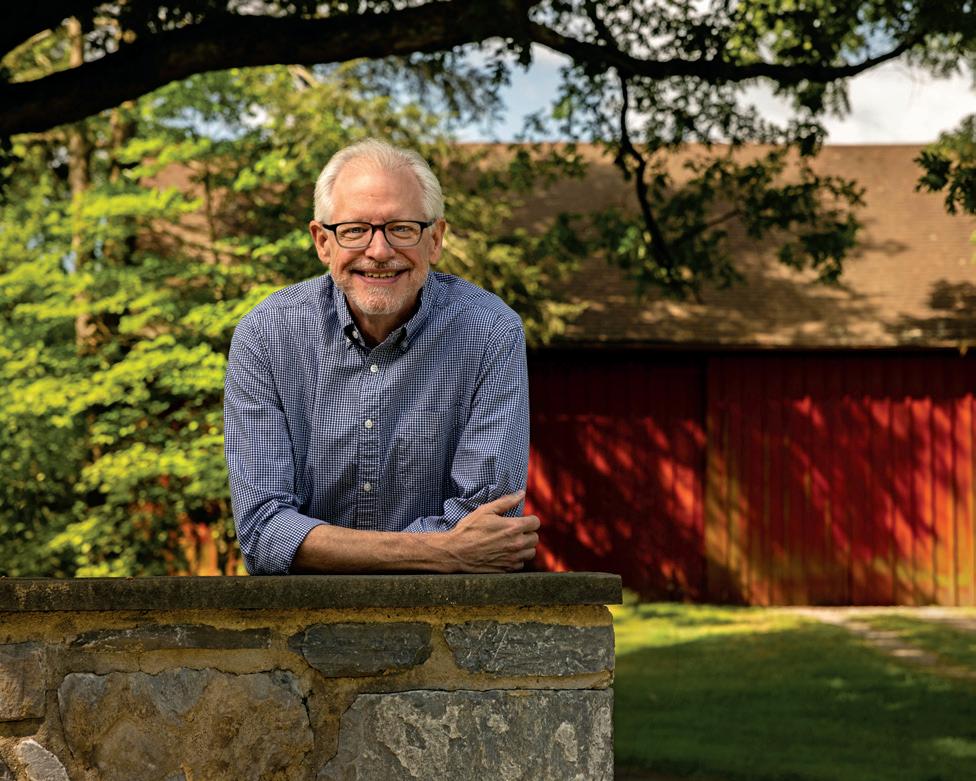
OLIVER BASS, PRESIDENT
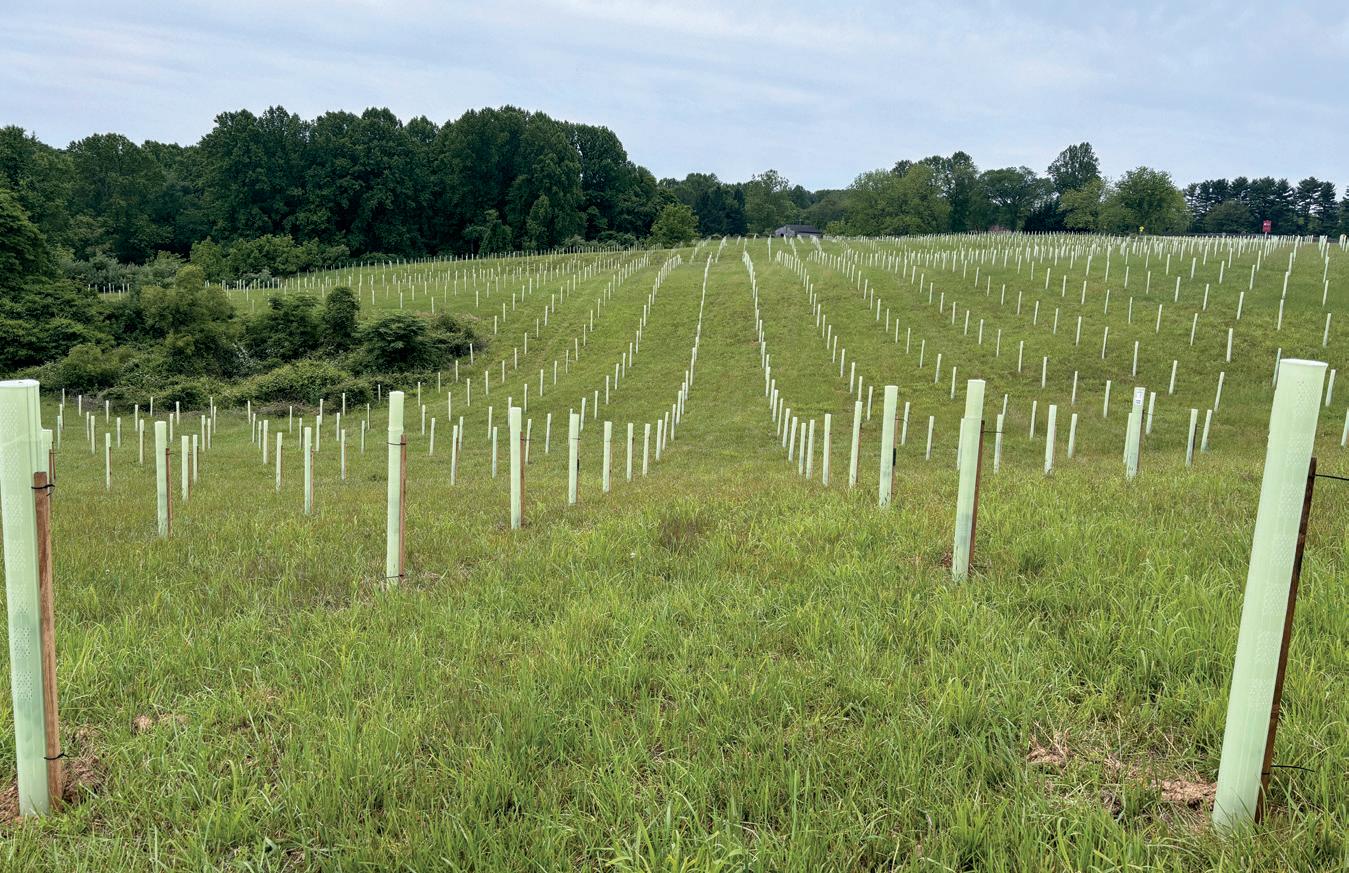
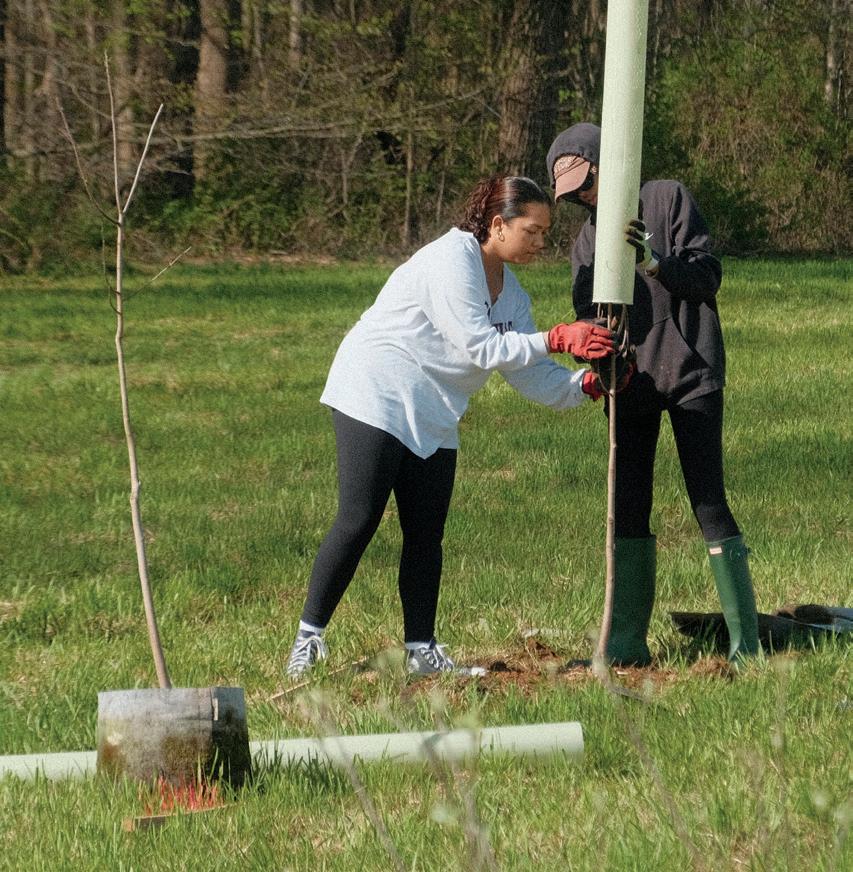
Natural Lands offers a variety of volunteer tree planting opportunities each year.
Last year, Natural Lands’ staff, volunteers, and contractors planted 22,500 trees across 75 acres at four nature preserves. As the native seedlings mature, they will help reduce erosion, filter and recharge groundwater, clean and cool the air, sequester carbon, and provide habitat for insects and wildlife.
The large-scale plantings transformed meadows, former farm fields, and stream corridors at Diabase Farm Preserve (New Hope, Bucks County), Peacedale Preserve (Landenberg, Chester County), Sadsbury Woods Preserve (Coatesville, Chester County), and Stroud Preserve (West Chester, Chester County). In addition, Natural Lands hosted several volunteer and member tree planting events where
Funding for these projects was provided by: Conservancy Grant Program, Commissioners of Chester County, Pennsylvania, E. Kneale Dockstader Foundation, Generous donors to Natural Lands’ Preserve Restoration Fund, Growing Greener Grant provided by the Pennsylvania Department of Environmental Protection, USDA Natural Resources Conservation Service (NRCS), Environmental Quality Incentives Program (EQIP)
community members planted more than 1,000 trees at ChesLen (Coatesville, Chester County) and Stroud Preserves.
The seedlings planted include red maple, silver maple, hornbeam, redbud, tuliptree, black gum, sycamore, white oak, swamp white oak, pin oak, chestnut oak, elderberry, and flowering dogwood. Planted at a density of about 300 trees per acre, the seedlings are protected from deer by five-foottall tree tubes. The trees and shrubs were planted in 12-foot rows, wide enough to allow preserve stewardship staff to mow between them. Mowing reduces competition from other vegetation until the seedlings have matured.
Natural Lands is committed to restoring habitat on our nature preserves, which cover more than 23,000 acres across Pennsylvania and New Jersey. Planting seedlings that will someday become thriving forests is part of this stewardship ethos. n

Watch a video about these tree planting efforts.
Natural Lands is using technology to help municipalities care for their parks and other green spaces. Healthy Nature, Healthy Communities is a web-based, interactive narrative designed to encourage better management of invasive plants and restoration with native plant species.
In addition to discussing the why and how of land management, the StoryMap includes
inspirational examples of how landscapes have been restored to bring beauty and vibrancy while also creating healthy habitats where people and nature thrive. n
View the StoryMap here:
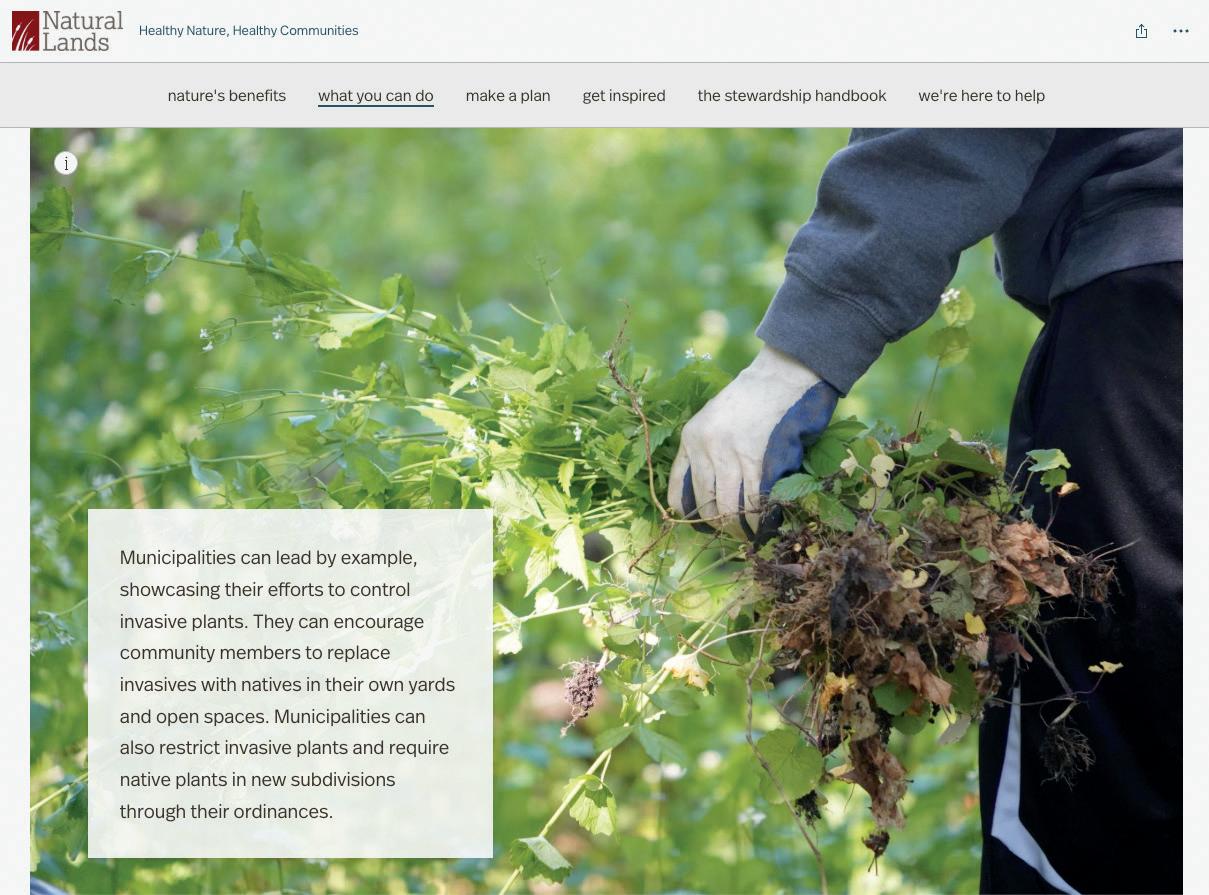
The StoryMap allows us to show and tell land management tips.
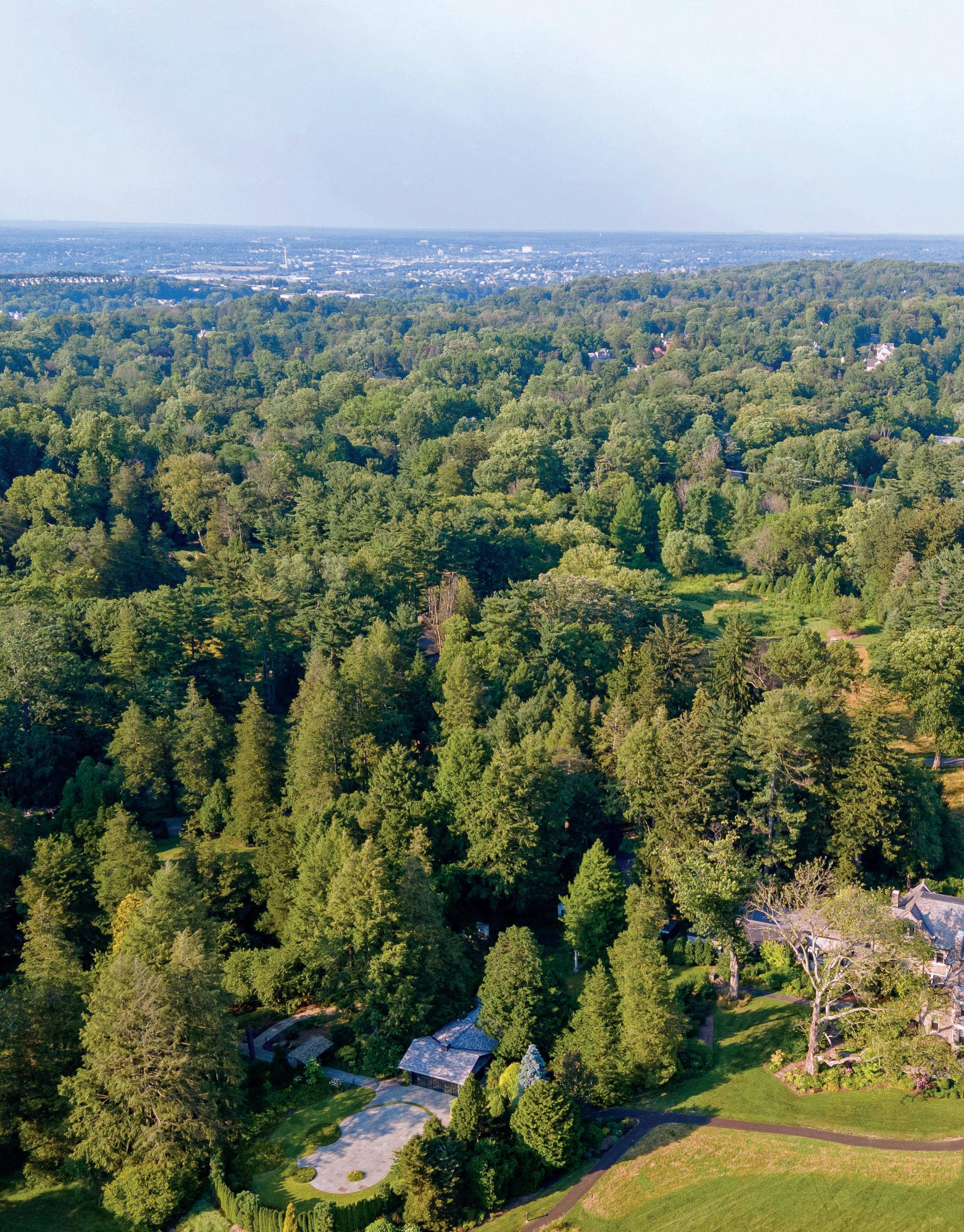
It’s rare that a botanic garden has the opportunity to expand by nearly 25 percent. It is even more rare to reunite properties that were subdivided nearly 100 years ago, but that’s exactly what will happen soon at Stoneleigh: a natural garden.
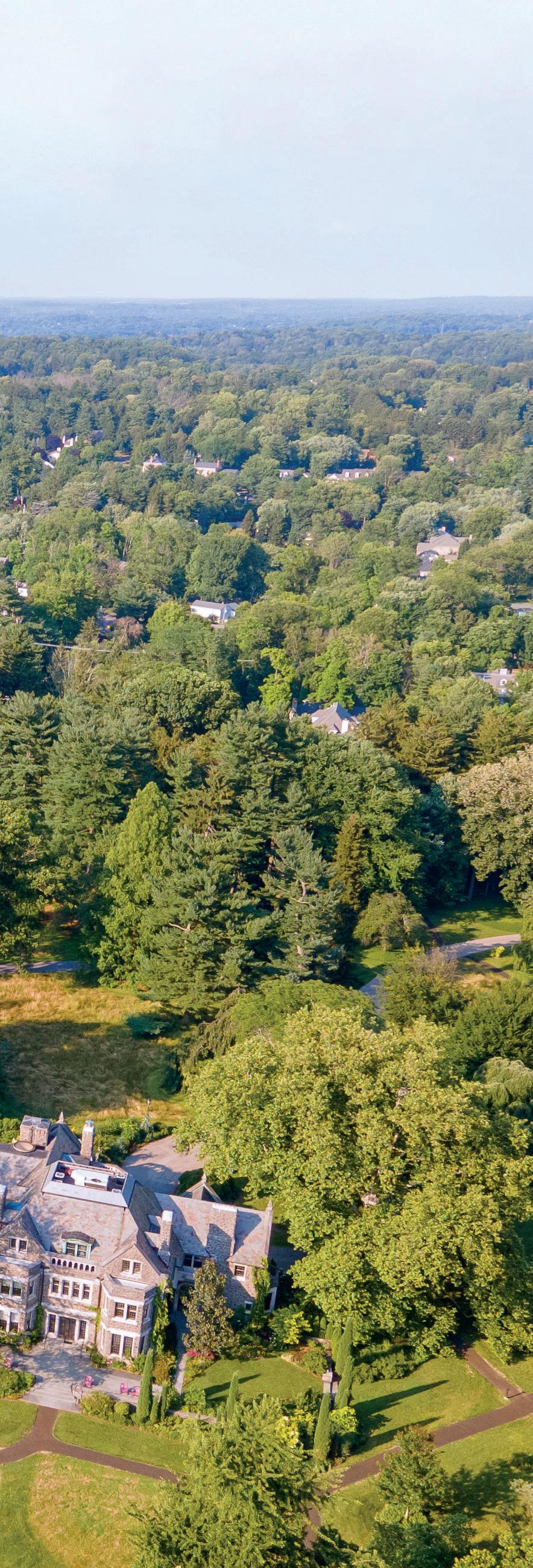
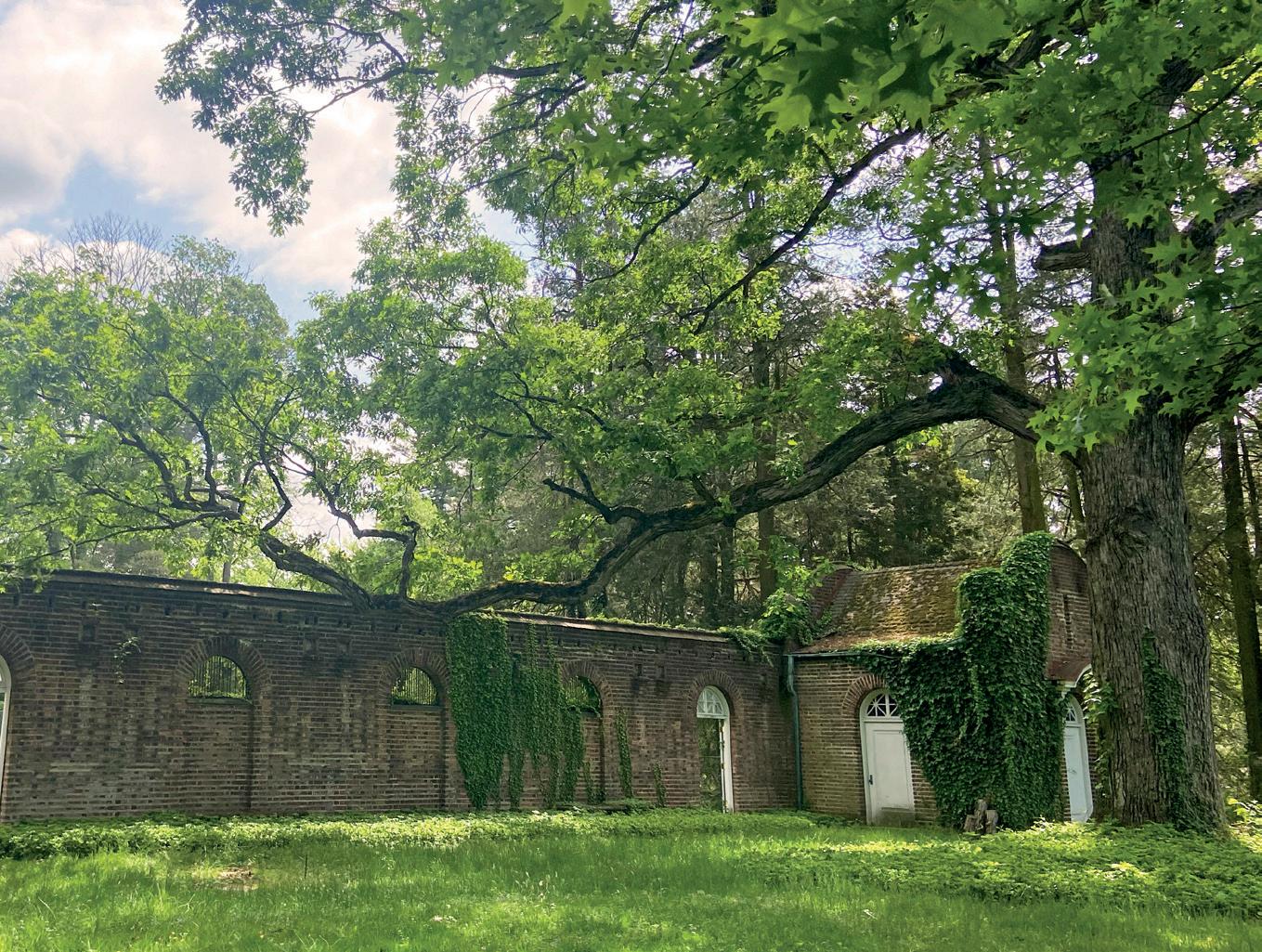
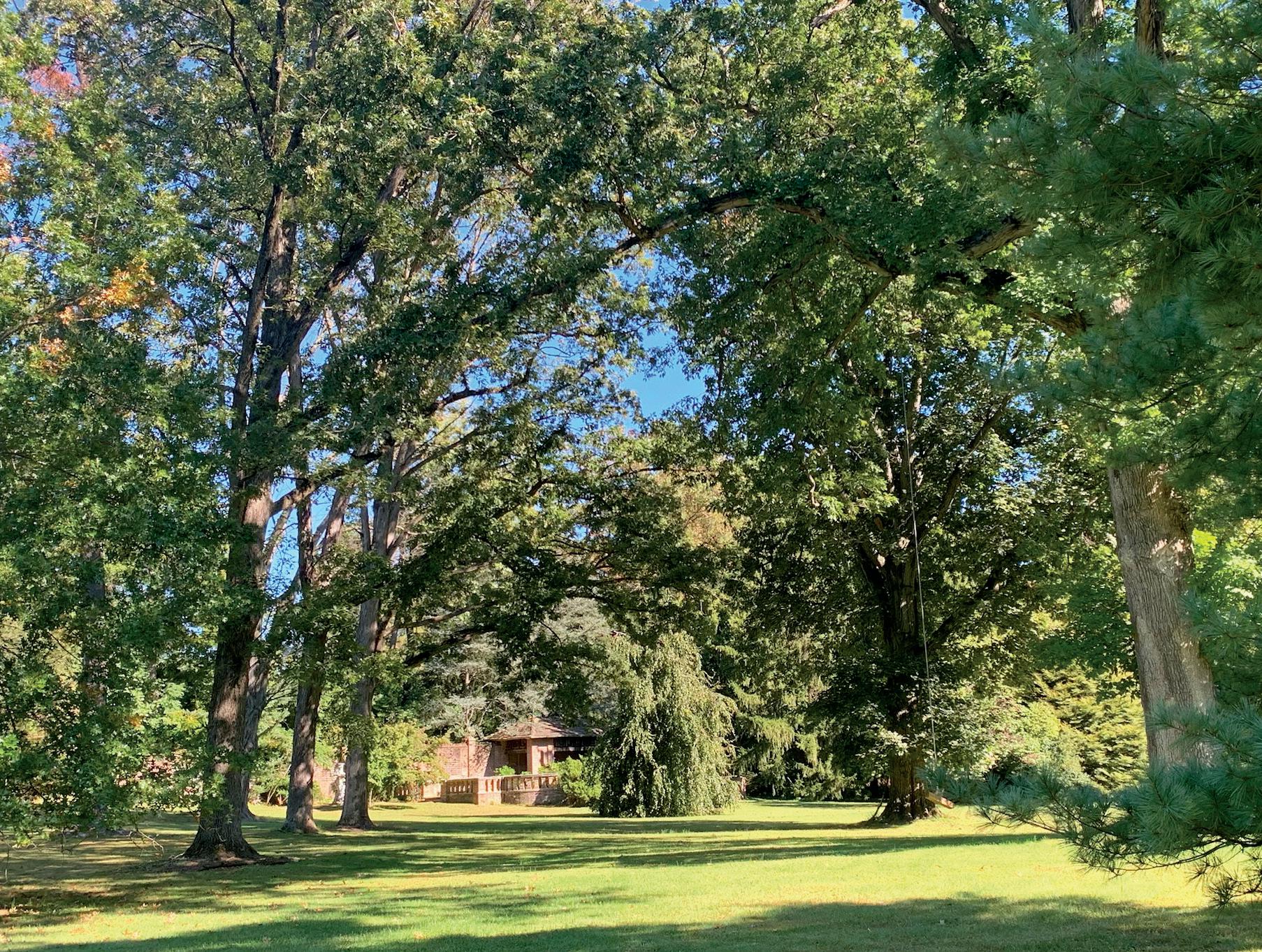
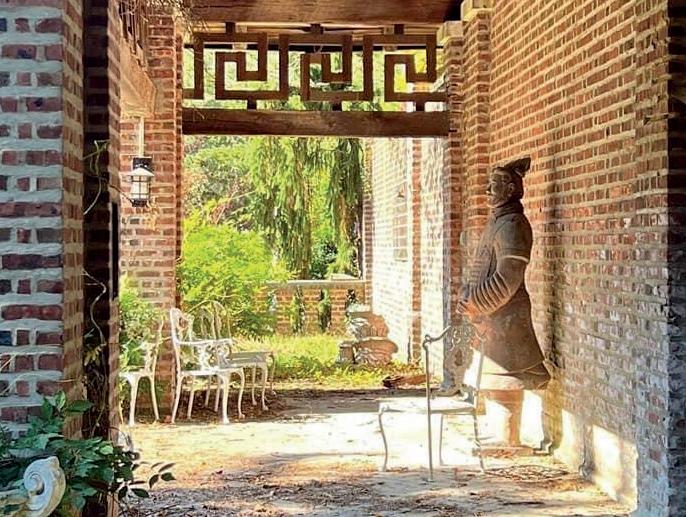
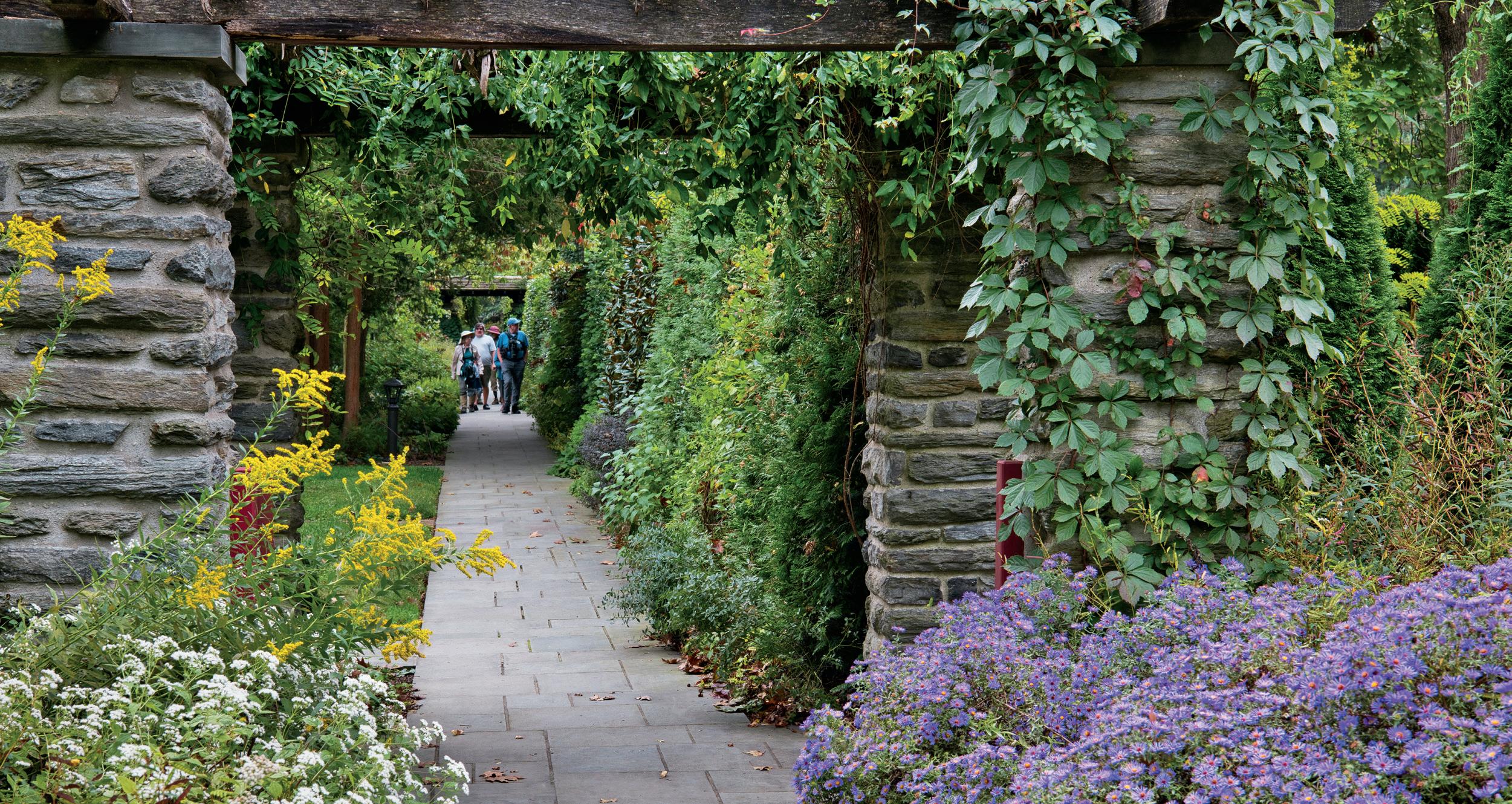
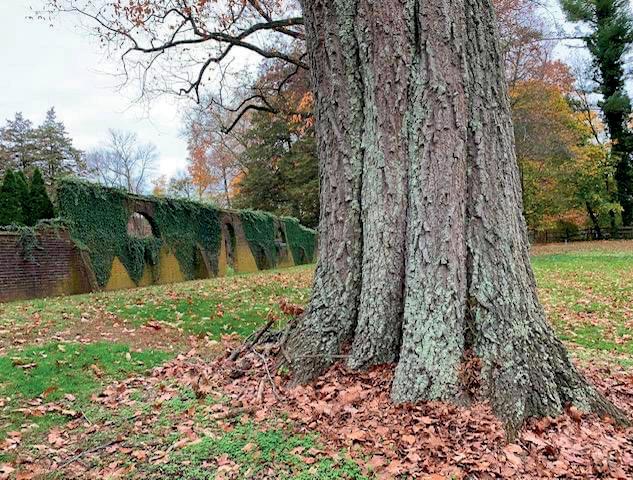
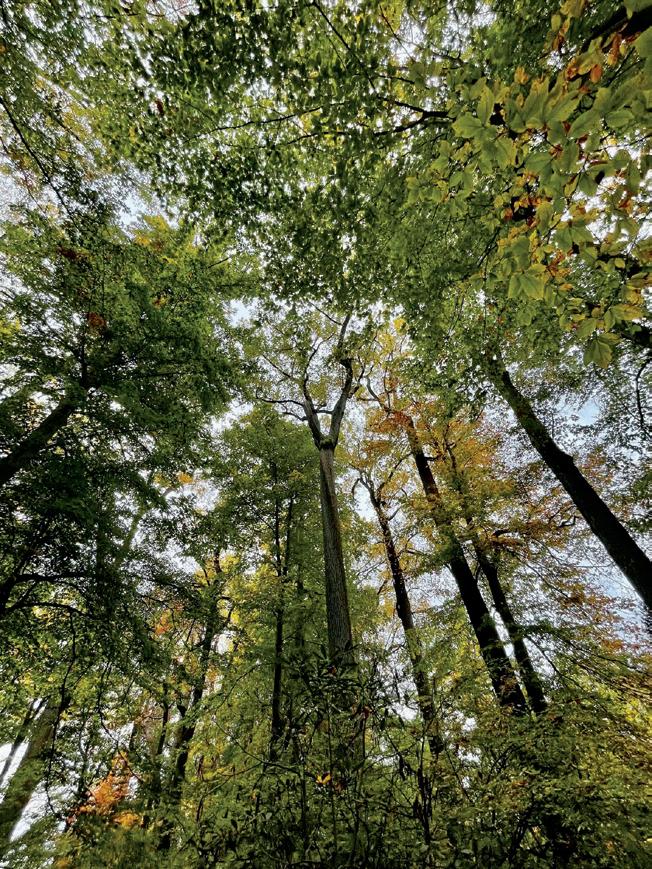
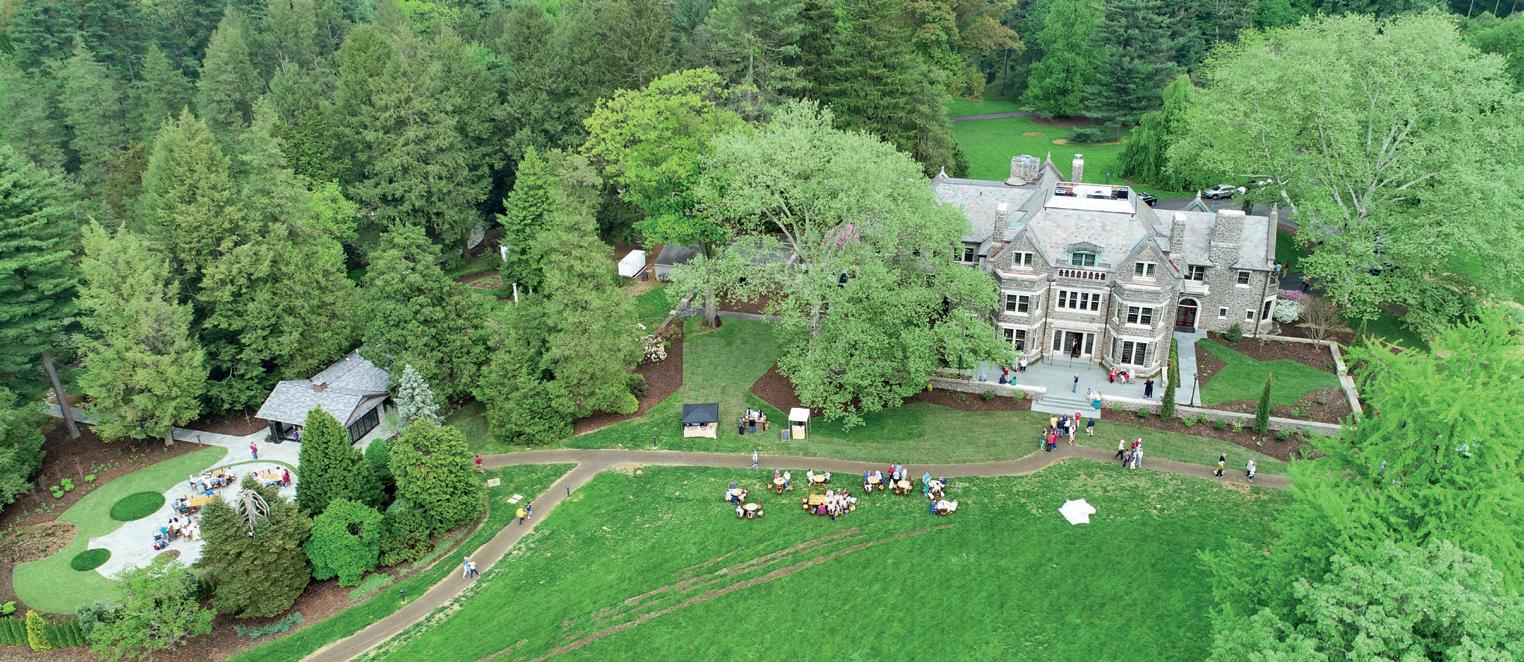
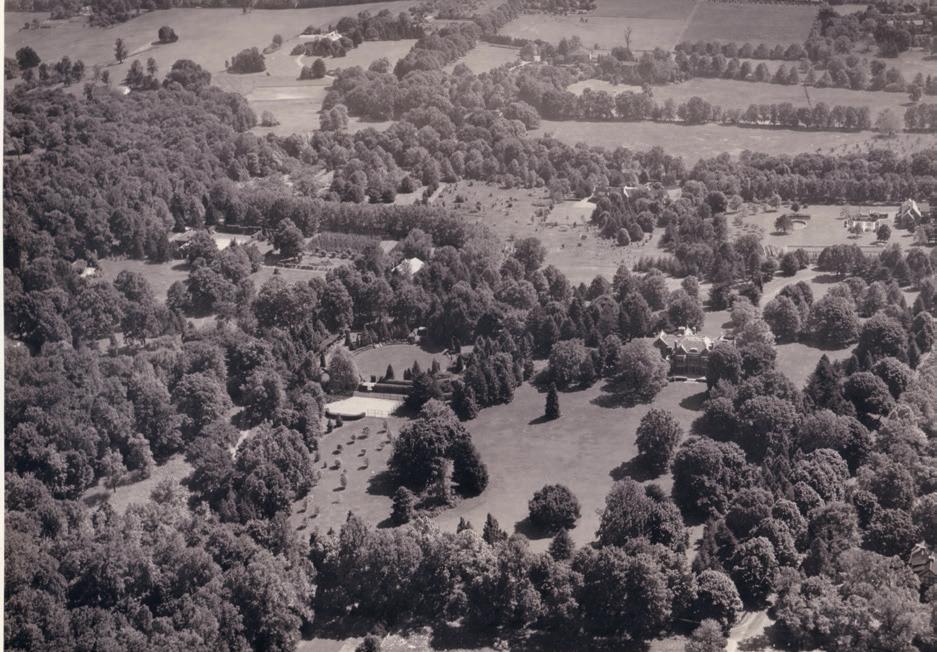
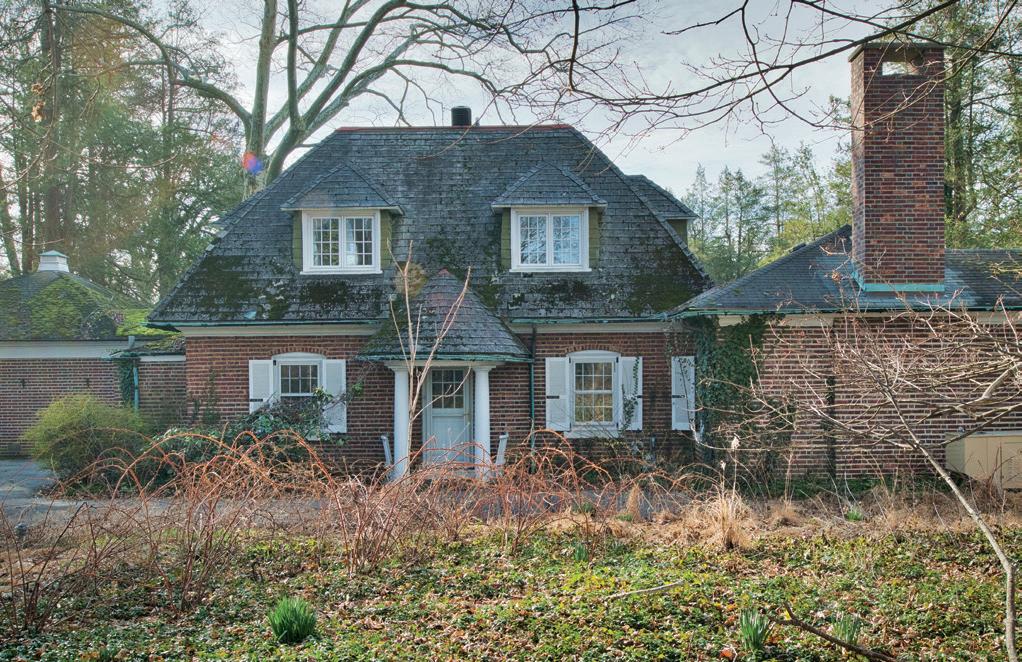
Stoneleigh’s 42-acre footprint will grow to 52, marking the reunification of two historic landscapes. The 10-acre addition represents the majority of an adjacent property known as Oakwell, which was subdivided from the Stoneleigh estate in the 1920s and 30s. The view into Oakwell from Stoneleigh’s northernmost garden path is remarkable in its similarity—towering trees, stately architecture, and remnants of significant garden designs.
What had once been a cohesive landscape has been divided by a property line and a tall fence for more than a century.
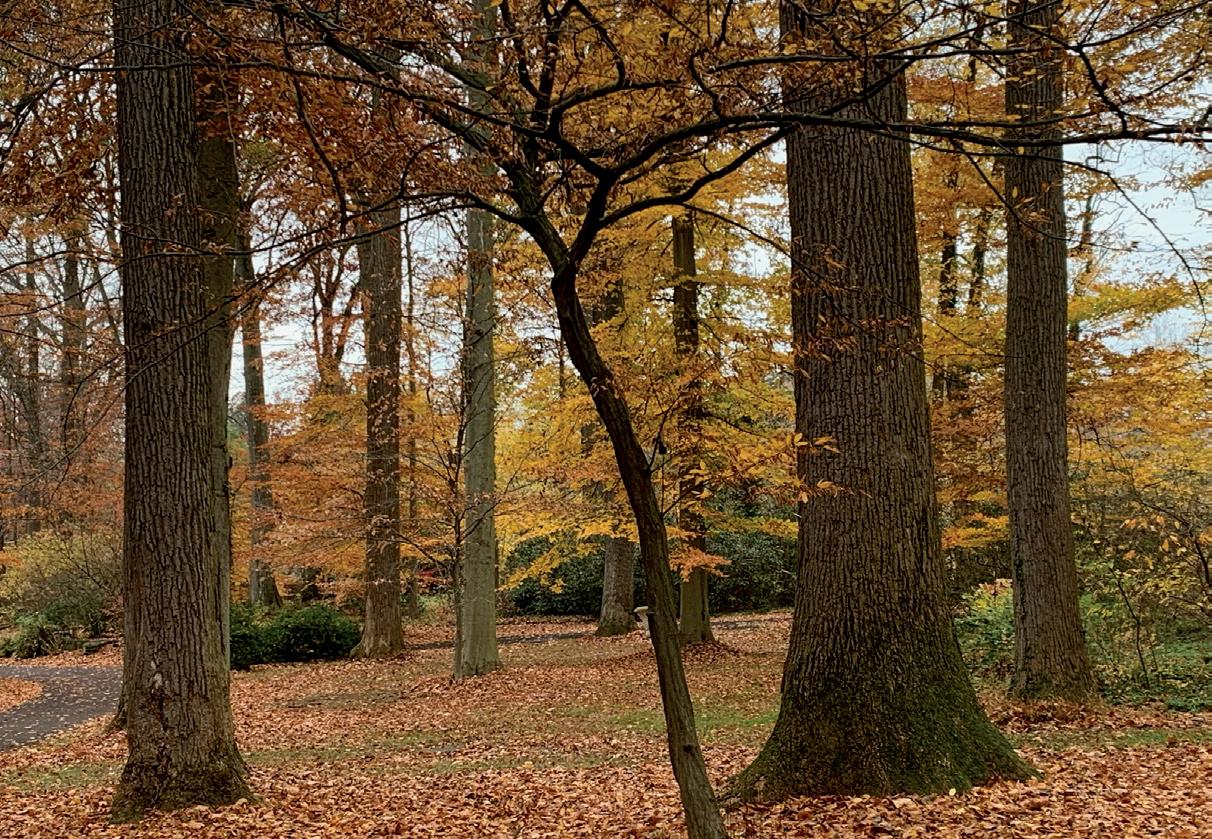
The reunion story began in an unusual way and involved an unanticipated partner. In 2018, Lower Merion School District purchased the 13-acre Oakwell property from three private homeowners to create athletic fields for a planned middle school nearby.
Five years after they acquired Oakwell, the school district’s plans changed as they faced public concern about the loss of the historic landscape and buildings. The district began conversations with Natural Lands focusing on alternatives for the property. One year later, the two parties announced they’d reached an agreement. The school district would sell 10 acres of the Oakwell property to Natural Lands to be added to Stoneleigh and the remaining three acres to the Wyncote Foundation, which will restore and preserve the Oakwell mansion.
Very shortly, those sales will be finalized. Oakwell is saved, and Stoneleigh is growing.
“We are thrilled to have the opportunity to preserve Oakwell as part of Stoneleigh. We are immensely grateful to the current leadership of the Lower Merion School District and to the community for its support,” said Oliver Bass, president of Natural Lands. “It is not an exaggeration to say that this is the culmination of years of work by our staff, our supporters, and members of the Lower Merion community. The township commissioners dedicated countless hours to public engagement and decision making to help protect this historic landscape and ensure it would be available for public use.”
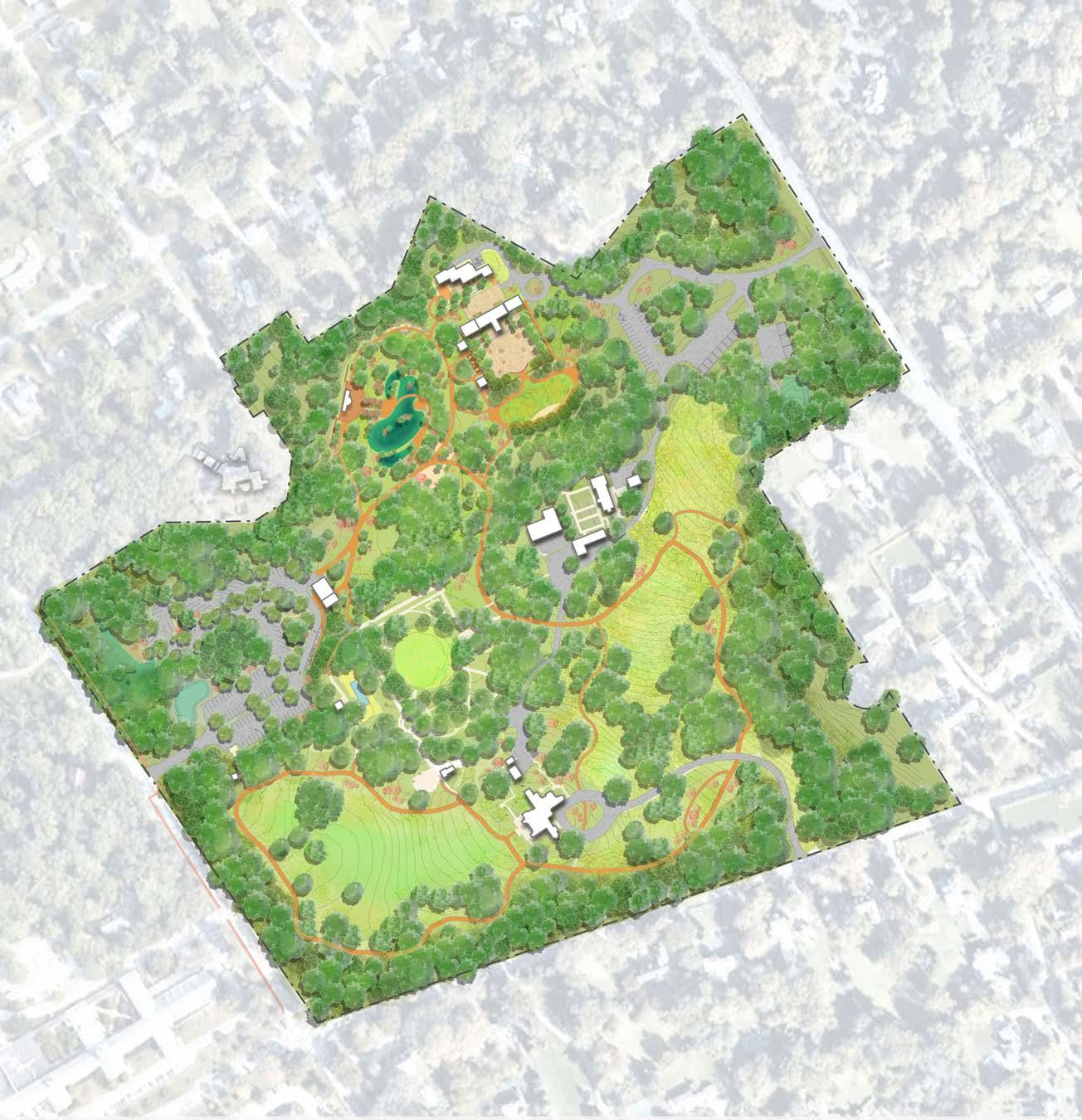
While it will be a few years before this new addition to Stoneleigh is open to the public, this expansion will further Stoneleigh’s mission: to celebrate the beauty and importance of the natural world and inspire the cultivation of native plants for the benefit of all. A new Master Plan for Stoneleigh offers a blueprint for weaving the two properties into one, adding capacity for expanded educational programs, enhancing guest amenities, and honoring the history of the landscape.
“We are honored to reunite Oakwell with Stoneleigh in a way that pays homage to their shared and distinct histories while also incorporating new garden features,” said Ethan Kauffman, director of Stoneleigh. “Oakwell is a magical place with some truly spectacular trees and beautiful buildings, and we can’t wait to share it with the community when it’s ready. Honestly, I have to pinch myself to believe this opportunity is real.”
Highlights of the Master Plan for the expanded Stoneleigh include:
• We will limit disturbance in areas with healthy, mature trees. For example, an expanded parking area will wind around mature specimens to create “parking rooms” among the trees rather than one large lot. A detailed study of significant trees informed this approach.
• We will construct a new Welcome Center to greet and orient garden guests every season of the year.
• We will create new garden spaces to inspire guests, offer new learning opportunities, and support local wildlife.
• We will remove physical barriers between Stoneleigh and Oakwell, truly reunifying the two properties. Removing some of the old, asphalt driveways will improve circulation while new pathways will reduce overlap between garden guests and operations traffic.
• We will add capacity for educational programming by creating both indoor and outdoor classrooms.
• We will develop opportunities for community connections through new gathering spaces and innovative partnerships.
• We will honor the history of the landscape, which has been shaped by some of the most influential landscape architects of the 19th and 20th centuries.
“None of this would be possible without the exceptionally generous support of the Wyncote Foundation with additional leadership support provided by the William Penn Foundation,” said Oliver Bass. “Stoneleigh is growing in so many ways. We look forward to the day we will welcome everyone to experience all the joys of Natural Lands’ now 52-acre public garden.”


Deb Robbins insists she isn’t a hero. Nor did she have any previous experience in community organizing. But that didn’t stop the Lower Merion resident from co-founding a groundswell of supporters that banded together under the banner of Save Oakwell.
“It started with just a few of us talking about how significant the loss of this place would be and it snowballed,” said Deb. “There was no hierarchy. It was just a growing group of neighbors who wanted to raise awareness in the community about this issue.”
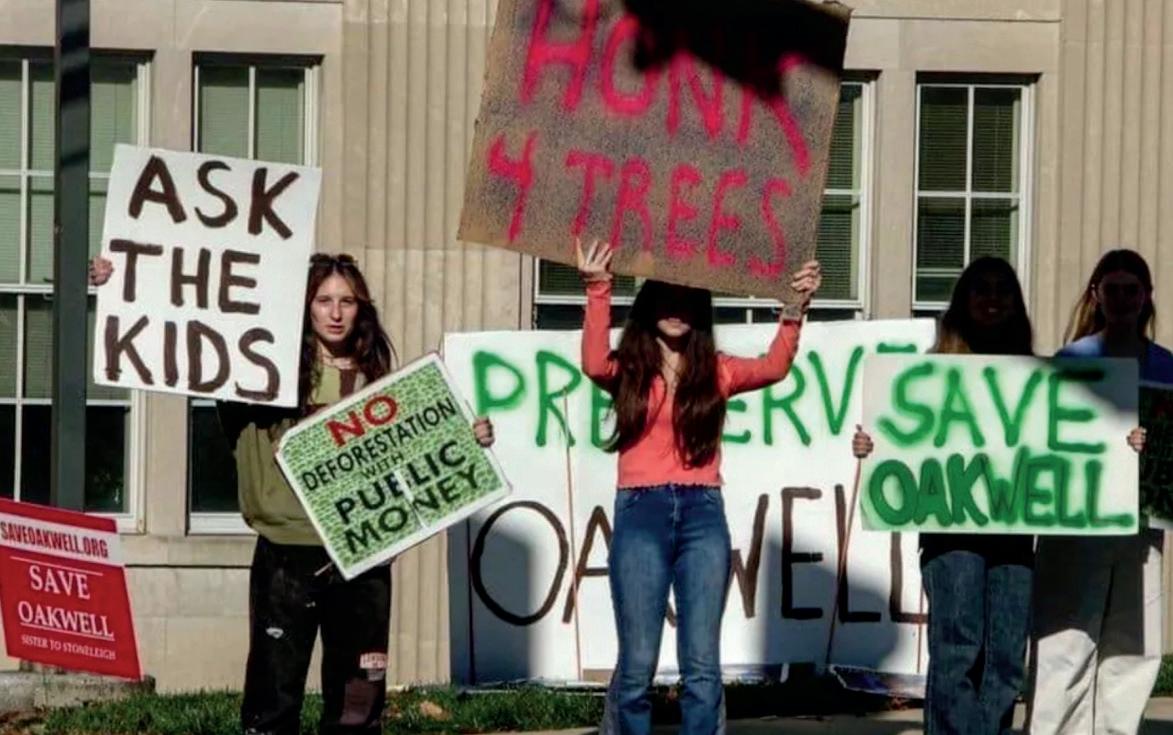
Concern about Oakwell’s future grew as plans for development received more public attention. Friends and neighbors were dismayed at the thought of the property’s towering trees, historic buildings, and horticultural legacy being lost. For two years, students, parents, and residents spoke out at school board meetings, protested in public spaces, and activated attention on social media.
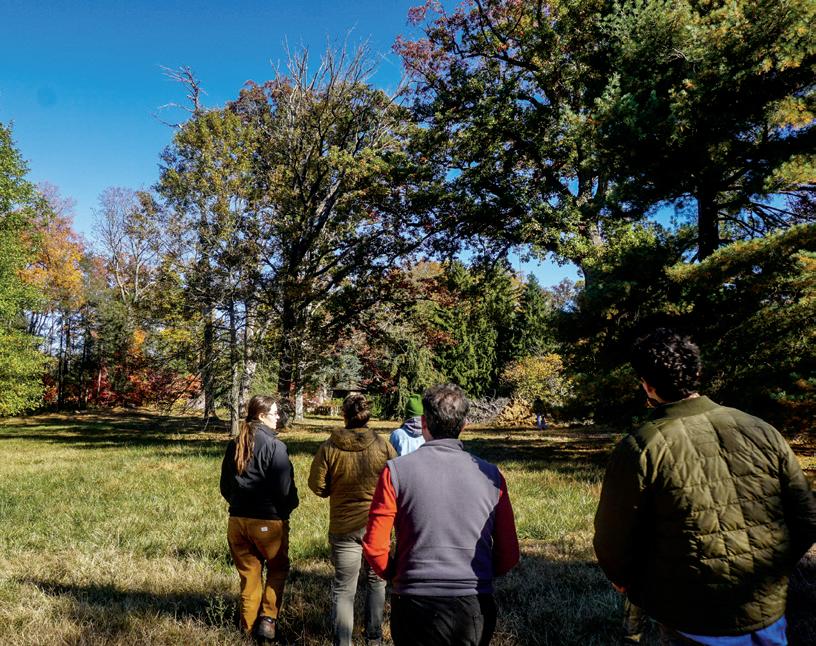
Deb recalls the fledgling Save Oakwell group gathering at Stoneleigh to peer through the fence at Oakwell’s centuries-old trees and historic buildings. The then owner invited them to tour the property and see its treasures up close, including a 150-year-old dwarf blue spruce, a 200-year-old maple, and a 250-year-old oak. With the owner’s permission, public tours led by Save Oakwell began in earnest. “We knew if more people experienced the peace, natural beauty, and specialness of Oakwell, they’d want to fight to save it, too,” said Deb.
Thousands of visitors showed up, including students from the very school district that wanted to turn Oakwell into ball fields.
“I remember my first visit to Oakwell and I was simply blown away,” said Erin Betley, a conservation biologist, Lower Merion resident, and mother of Lower Merion School District students. “The history there… so much of it had been forgotten. I became really determined to unearth these lost stories and share them with the community.”
Erin was particularly moved by the students who began to speak out against the property’s development. Together with young people, local educators, scientists, and community activists, they co-created a complementary effort called Grow Oakwell. Their website—created by fellow advocate Julia Steinberg Agnew—contained a wide range of information, including the history of Stoneleigh and Oakwell, tree species lists, community BioBlitz findings, maps, a virtual tour, media articles, a petition, and much more.
Lower Merion students packed the aisles at a November 2022 School Board meeting, all cheering on 12 student speakers ranging from 4th to 12th grade from four different schools. In coordinated presentations, they shared compiled information as well as their own original research and a proposal for an alternative, transformative vision for Oakwell’s future. Erin Betley wells up recounting this. “They’d never spoken at a formal meeting like this before. I know they were nervous, but they were so passionate, articulate, and spoke from the heart. It was so moving then and still moving to me now.”
“There was a lot of talk about what not to do with Oakwell, but very little about what to do,” said Erin. “Grow Oakwell wanted to envision what it could be for the students and the community. That was the impetus behind the proposal for the Action Center for Organizing Resilience and Natural Sustainability Education (ACORNSE).”
Spearheaded by the Lower Merion High School Environmental Club, the ACORNSE proposal envisioned Oakwell as an educational space for hands-on learning in the sciences, history, and agriculture, and as a gathering place for the broader community.
How fitting, then, that this vision is mapped out in the Master Plan for Stoneleigh. n
voices of young conservationists.
“Oakwell stands as living proof that individual action can make a difference; your imagination and voice hold a lot more power than you think. Chances are, other people care about change as much as you do, so get to know those within your community, mobilize, and speak up.”
– Noa Fohrer, Lower Merion HS class of 2023, now at College of the Atlantic
“Save Oakwell was my first foray into social movement work and it gave me the foundation I’ve used on a lot of campaigns since. Oakwell shaped the way I think about the world. It showed me that the world is mostly beautiful, people are mostly kind, and, at their core, everyone wants to do good.”
– Sam Donagi, Lower Merion HS class of 2025, now at New York University
“Oakwell is my “why” when people ask me today how I got into my field of climate education. Being a part of such a strong team of students was the most inspiring experience I’ve had.”
– Willa Godfrey, Lower Merion HS class of 2024, now at Northeastern University
“I got involved when I was in 4th grade. I went on a tour of the property and was immediately upset that it would be destroyed. I decided to speak in front of the superintendent and school board. Knowing that I, among others, could produce that amount of change really empowers me.”
– Greta Agnew, Lower Merion HS class of 2031

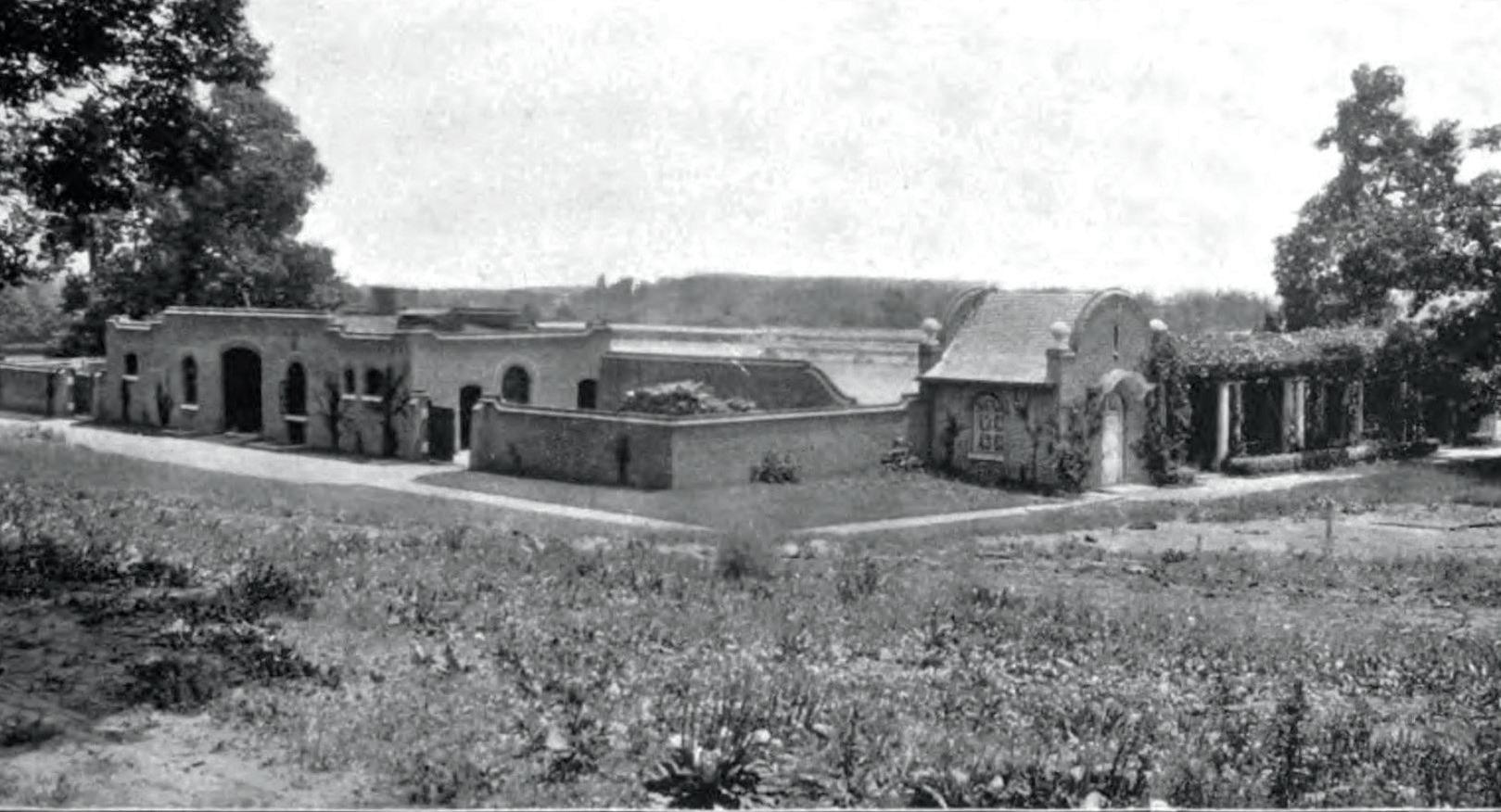
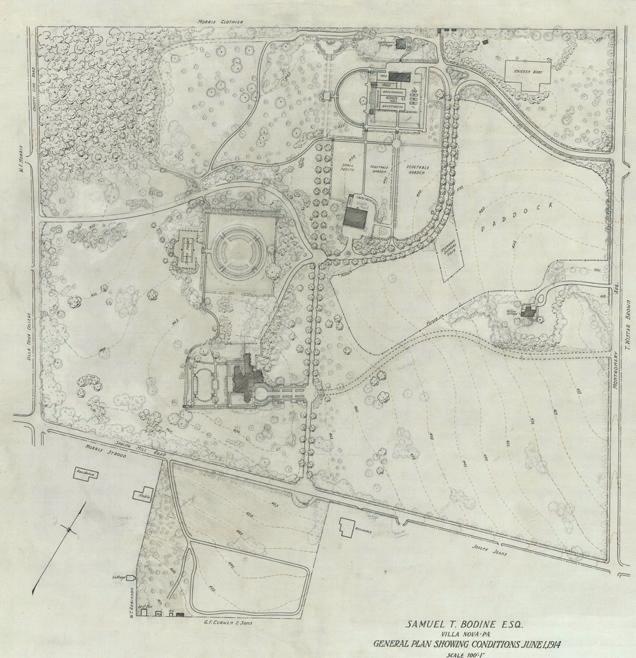
– Edmund Smith and Arabella Barnes Smith acquire 65 acres of land for a “gentleman’s farm,” complete with a c.1878 Eastlake-style residence designed by Philadelphia architect Joseph Wilson. They call their estate Stoneleigh. Other improvements include a garden, icehouse, stable, tenant house, and curvilinear carriage pathways designed by landscape gardener Charles H. Miller, who trained at Kew Gardens in England and later served as chief gardener for Fairmount Park.
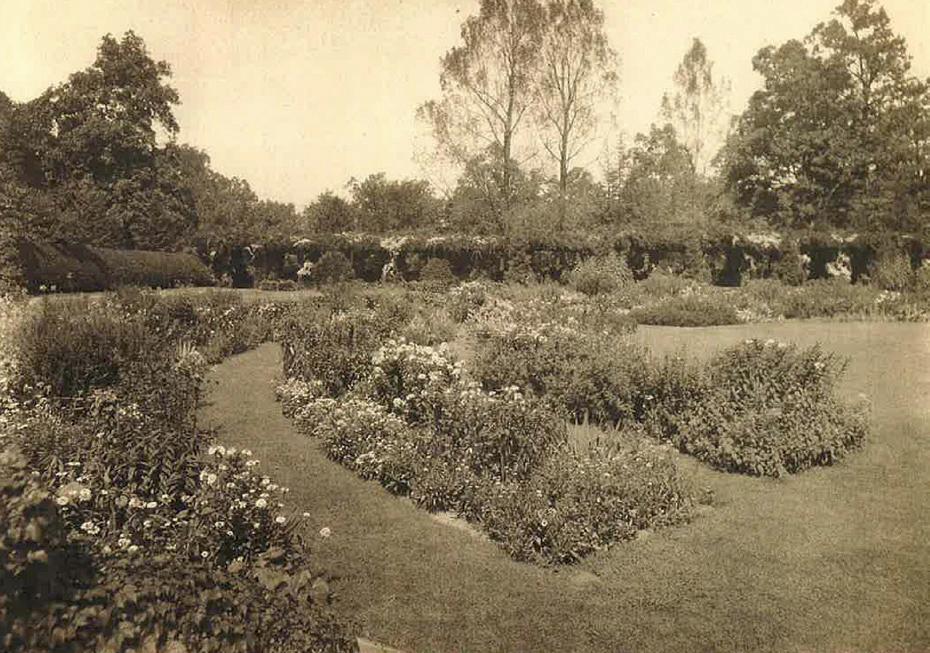
1908 – The Bodines hire the preeminent landscape architects of the early 20th century, Olmsted Brothers. They transform Stoneleigh over the next 50 years, guided by a strong commitment to preserving the property’s heritage trees.
Circa 1920 – Samuel Bodine conveys nearly seven acres to his son and daughter-in-law, William and Angela. William Bodine constructs a Tudor Revival-style mansion, designed by architect William Wayne Jr., on a portion of the property and names it “Oakwell.”
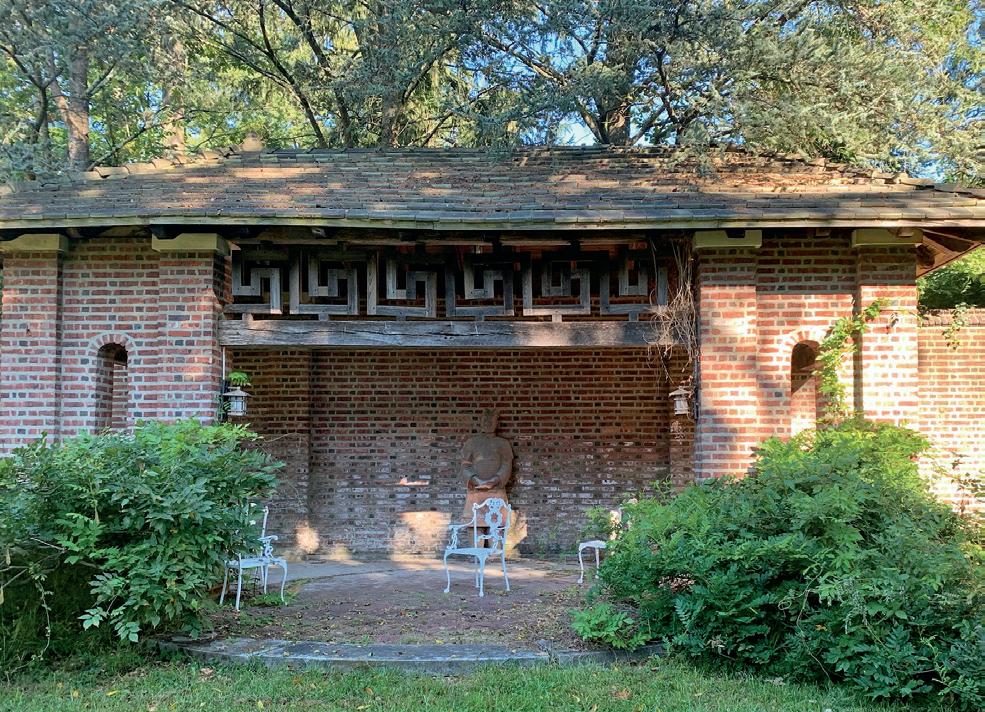
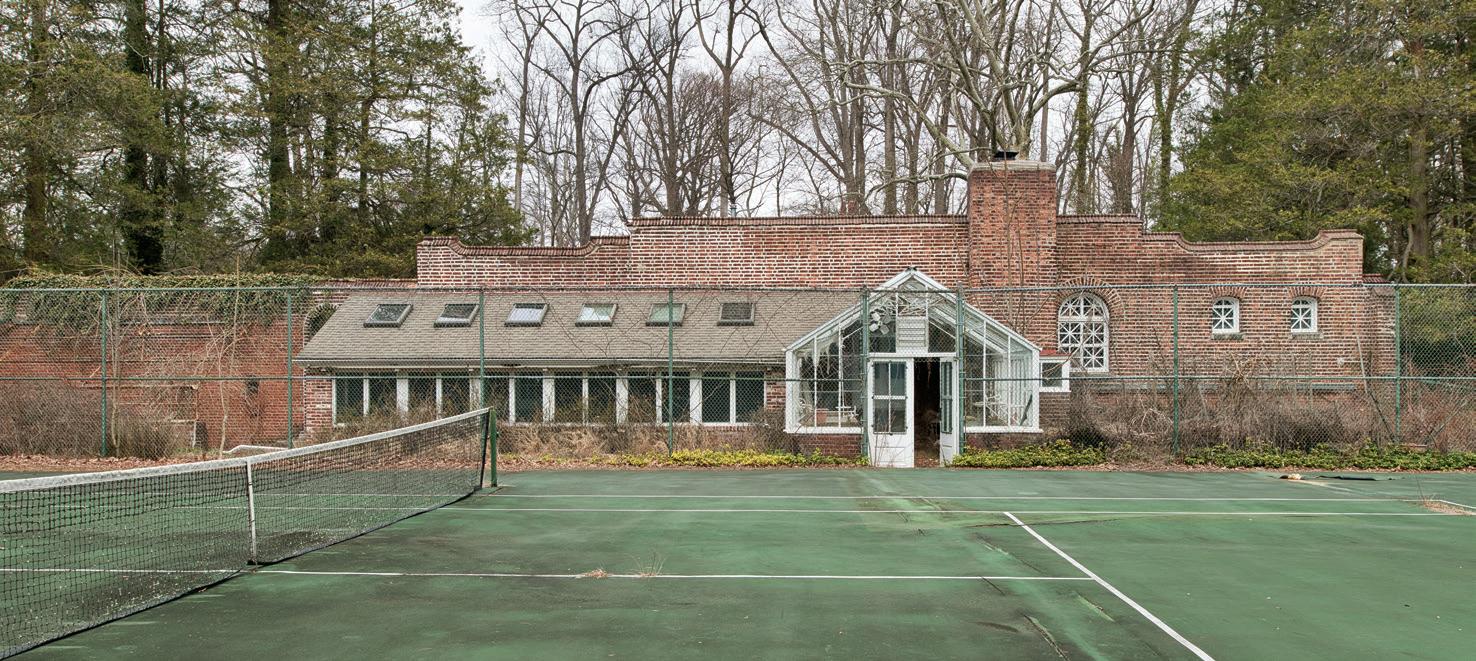
Circa 1900 – Samuel Bodine and Eleanor Gray Warden Bodine acquire Stoneleigh and steer the gardens to a more formal “Beaux Arts” style with the designs of landscape architects Pentecost & Vitale. The Bodines build the Tea House, Superintendent’s Cottage (later known as Acorn Cottage), and Greenhouse Complex, the latter two designed by Frank Miles Day and Brother. They demolish the Smith residence and build the Tudor Revival-style building that exists today as the Main House.
Circa 1916 – Eleanor Bodine creates a gardening and horticultural training program for young women. She directs the establishment of community war gardens totaling more than three acres to supply produce during WWI.
1964 – Otto and Phoebe’s son, John, and his wife, Chara, take up stewardship of Stoneleigh and live there for the next five decades, raising their family.
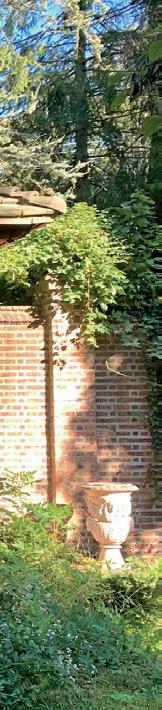
1935 – After Samuel Bodine’s death, the Stoneleigh estate is subdivided. Twenty-two acres are sold to Otto and Phoebe Waterman Haas. Approximately 12 acres revert to William Bodine, including the Greenhouse Complex, Acorn Cottage, and the Tea House. The interior greenhouses at the Greenhouse Complex are mostly removed and replaced with a tennis court, yet the exterior brick walls remain. The remaining subdivided acres change hands over the years.
1996 – John and Chara Haas place the then 42-acre Stoneleigh under conservation easement with Natural Lands.
1986 – The Bodine family sells the then 13-acre Oakwell estate.
2018 – Stoneleigh: a natural garden opens to the public, showcasing the use of native plants in a formal setting.
2016 – The Haas family gifts Stoneleigh to Natural Lands following John’s and Chara’s deaths.
2026 – Stoneleigh will grow to 52 acres when Natural Lands acquires 10 acres of Oakwell from the Lower Merion School District.
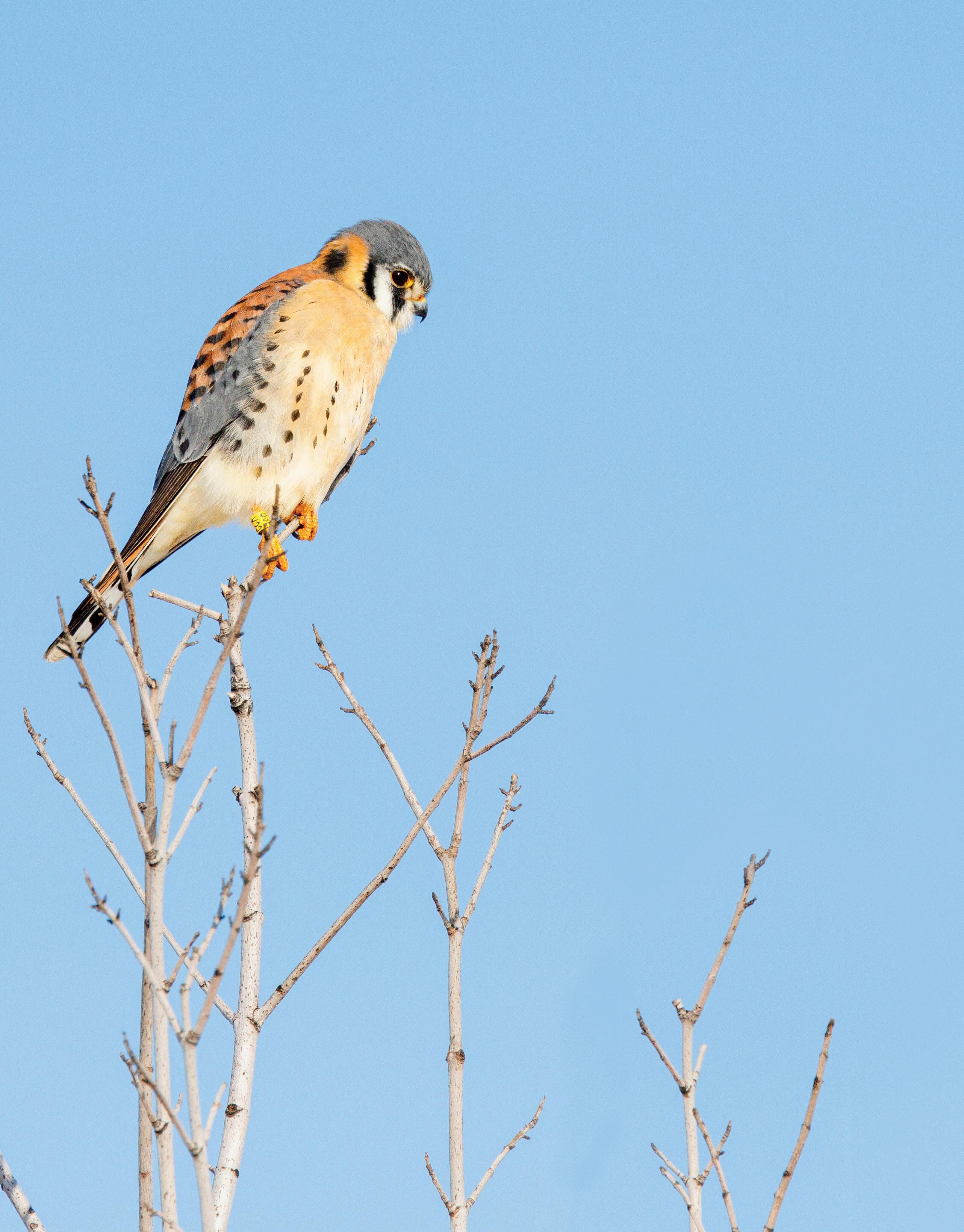
An American Kestrel tagged as number 56944 spent time resting and refueling at Natural Lands’ Gwynedd Preserve in Montgomery County, PA, on its migration journey from New England to Florida last year. Like many bird species, these tiny falcons are in decline. Their migration timing and routes are influenced by environmental cues and food availability, both of which are impacted by a changing climate. Studying their migratory patterns may provide insights to scientists.
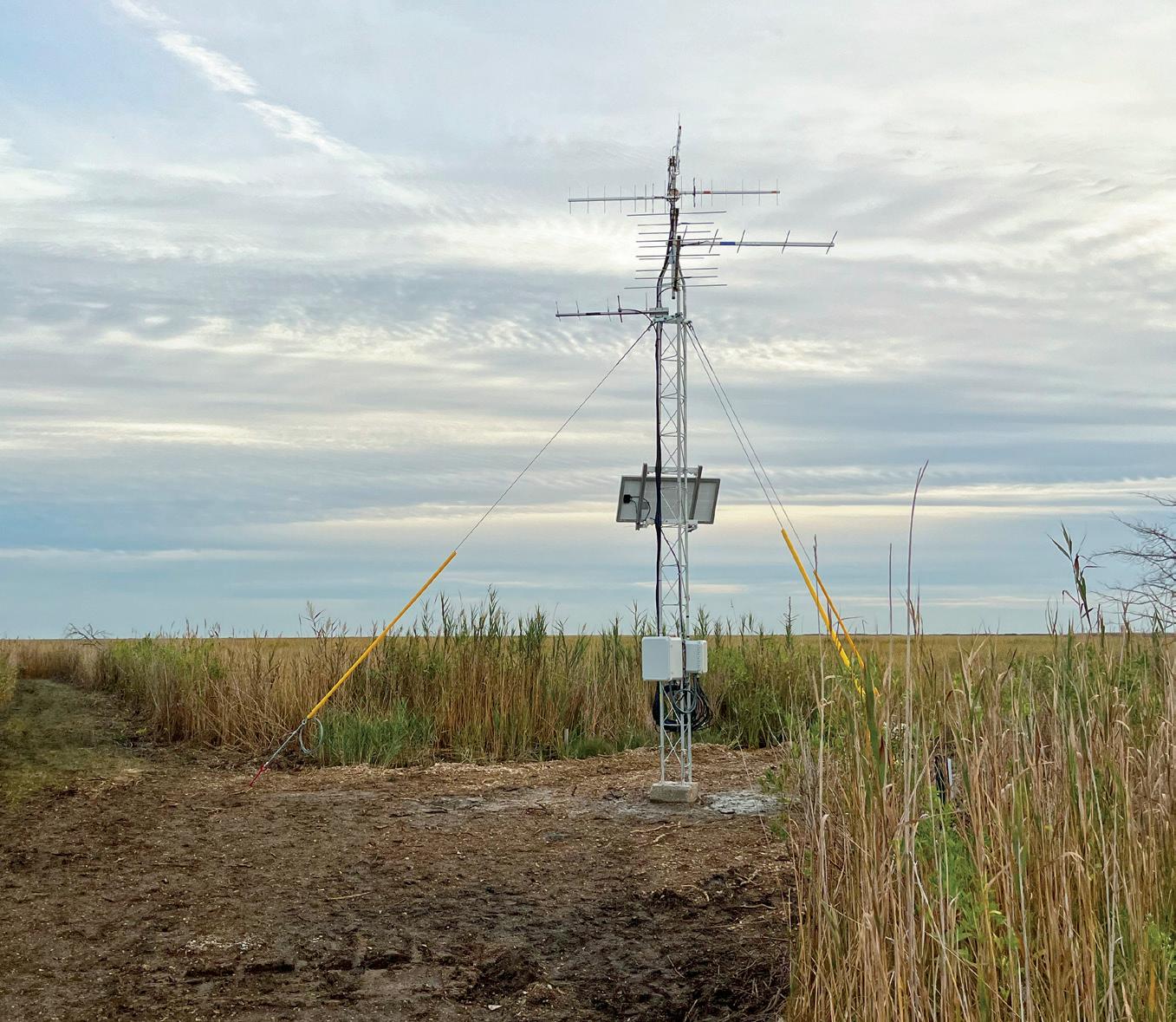
This particular kestrel’s movements were tracked through a program called Motus, which is the Latin word for “movement.” Created by the nonprofit organization Birds Canada, Motus is an international community working together to study the movement and behavior of birds, bats, and insects. These creatures

are tagged with miniaturized transmitters that give off unique radio frequencies in short bursts. The tags “ping” when in proximity to Motus stations placed across the world. These stations are like radio towers and have antennas that collect a range of frequencies. Currently, there are more than 2,300 towers in 34 different countries—including newly installed stations at Gwynedd Preserve and Glades Wildlife Refuge.
The tiny tags are appropriately sized for each type of animal and stay in place with lightweight harnesses. Wildlife safety and quality of life is paramount; tagging equipment must not amount to more than three percent of the animal’s body weight.
“Banding birds and conducting bird surveys are valuable tools for monitoring birds, but they only tell us part of the story,” said Claudia Winters, bird
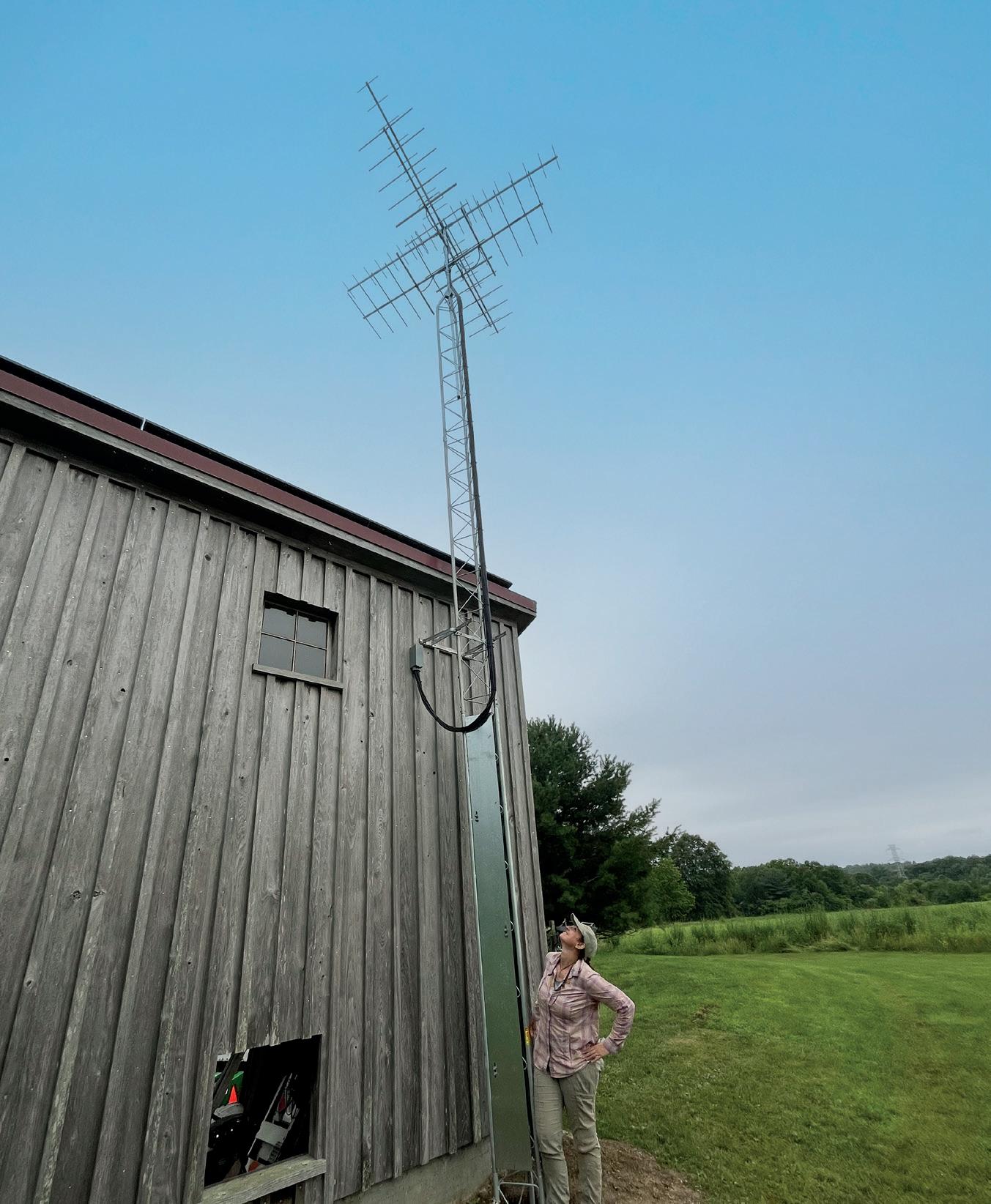
conservation program manager for Natural Lands. “A bird may never be recorded again after it’s banded, but a Motus-tagged bird will send signals to every tower it passes for as long as the tag’s battery lasts. And that information is available to everyone—scientists and laypeople alike—through the Motus website.” Claudia’s position as bird conservation program manager is a newly created one for Natural Lands, reflecting an increased focus on how birds and other wildlife can help inform our conservation priorities.
Birds are biological barometers that can reveal the health of our natural areas. Because they are sensitive to environmental shifts, their presence and diversity can signal intact, high-functioning ecosystems that might otherwise look unremarkable. What’s more, tracking bird migration patterns allows researchers to identify "climate refugia"—areas that remain stable enough to support life as other habitats degrade due to temperature changes and extreme weather events.
Simply put, bird species data are helping Natural Lands determine where to focus our land conservation efforts.
Said Todd Sampsell, vice president of conservation, “Resilient landscapes are ones that can withstand stressors—big storms, changing weather patterns, floods and drought, loss of habitat. Our work saving open space can help build resiliency against these very real and pressing issues. But we must know what to prioritize.”
“It’s certainly not the only data we are using,” Todd continued. “In fact, we layer a number of data sets into mapping software—things like development pressure, stream impairment, flooding susceptibility are included—but wildlife populations are an important data point. Sadly, birds are some of the most at-risk species and so are really telling indicators.”
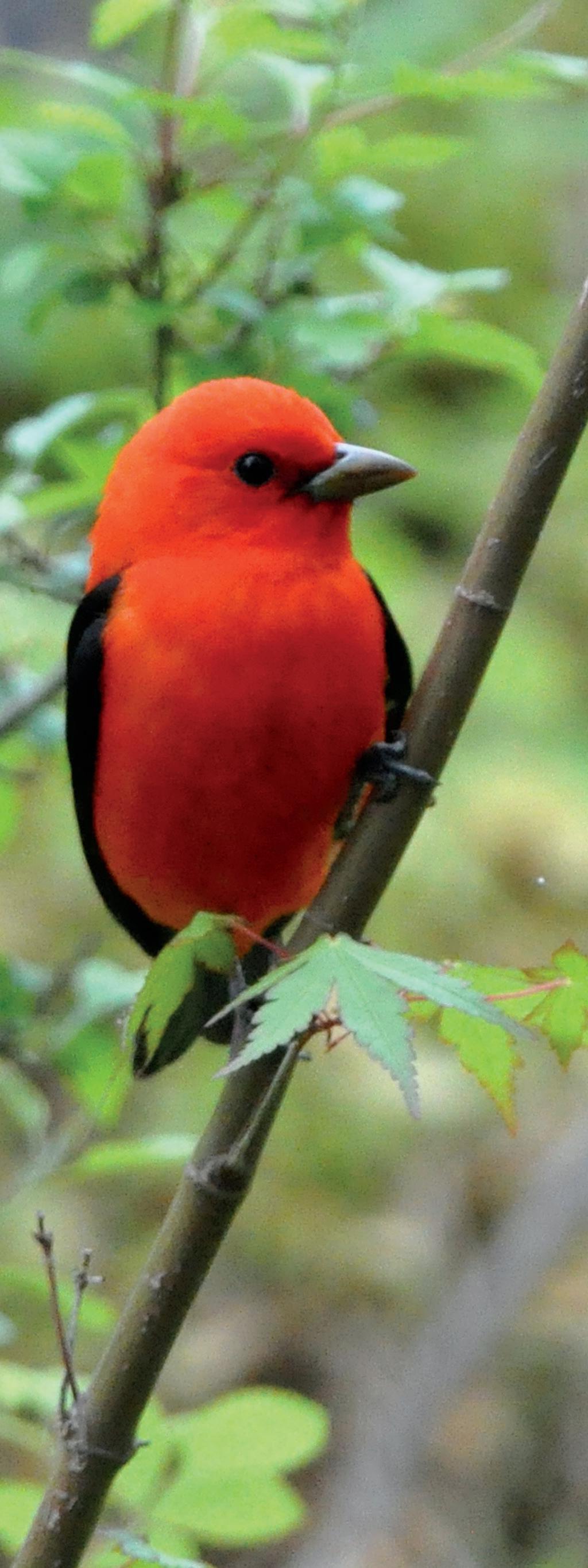
The Scarlet Tanager is a useful case study, as Pennsylvania supports 17 percent of this species’ global population. These vibrantly colored songbirds arrive to our region in late spring from South America to breed. They build their nests 50 feet high in the treetops where they then rear a clutch of three to five young.
Scarlet Tanagers need dense, unbroken forests that are not bisected by roads or power lines. These
man-made features create “edge habitat” where racoons, Blue Jays, and Brown-headed Cowbirds thrive and prey on or displace the eggs of Scarlet Tanagers. Studies have found that Scarlet Tanager nests located in deep forests have a success rate of 64 percent. This is compared to only a 22 percent success rate when the nests are in small woodlands with significant edge.
Once their vulnerable eggs have hatched, both male and female Scarlet Tanagers work tirelessly to find enough insects for their hungry brood. They make trips back to the nest every 20 minutes with caterpillars, beetles, and other large arthropods. In areas where the forest cover is broken by development, the birds are forced to fly farther and are exposed to hawks and other predators.
Of course, the Scarlet Tanager is just one vulnerable species whose numbers have declined over the last few decades. However, research shows that a healthy diversity of bird species often correlates with the presence of other, harder-to-track species like butterflies and aquatic life. Therefore, protecting habitat where birds are thriving means we can safeguard entire biological communities.
“Once we look at the connection between birds like the Scarlet Tanager and the habitats they depend on, we can use this knowledge to inform our conservation work,” said Todd. “The largest forested landscape in our region is the Kittatinny Ridge, which has become an area of increased interest for us when evaluating land protection opportunities.”
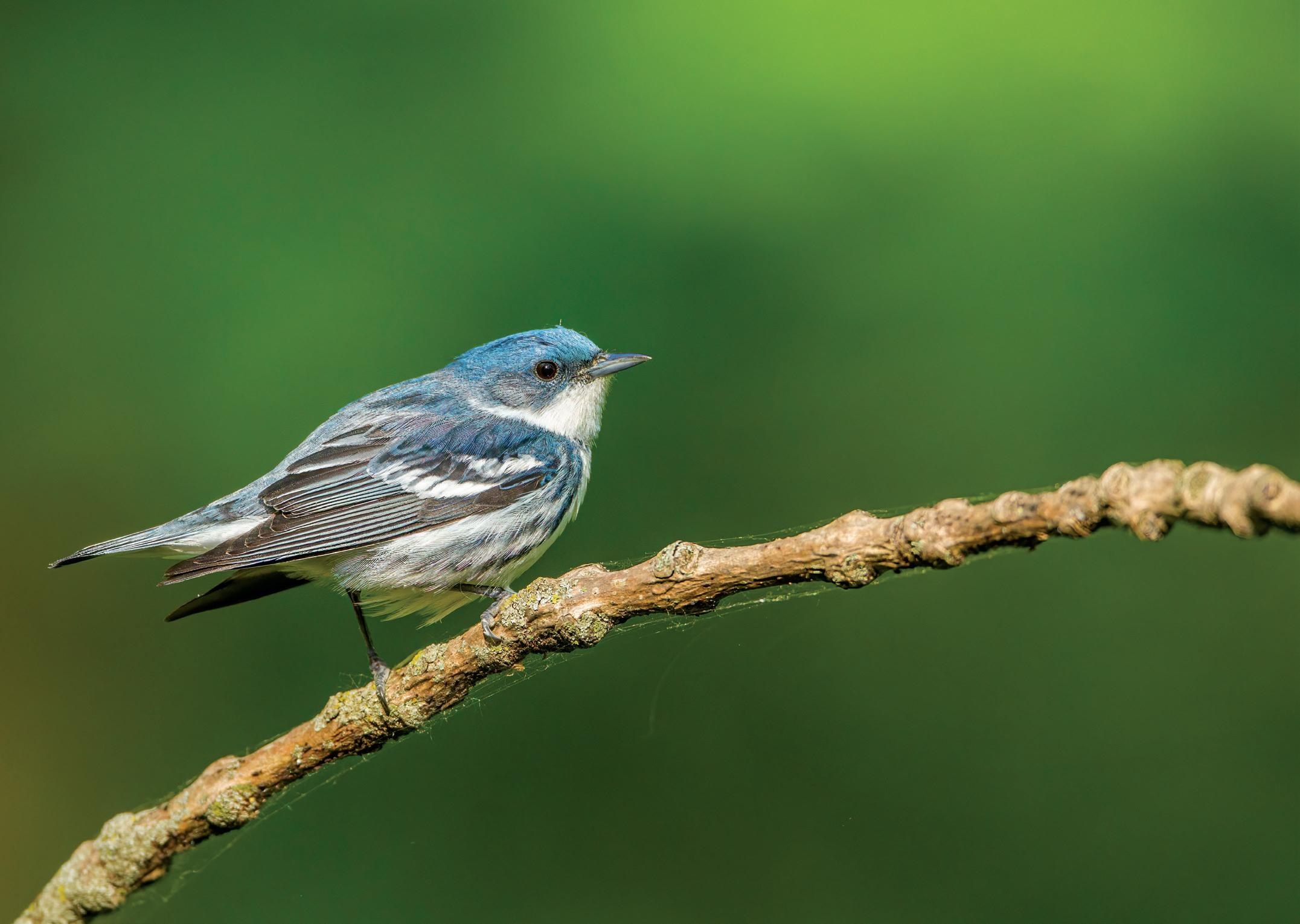
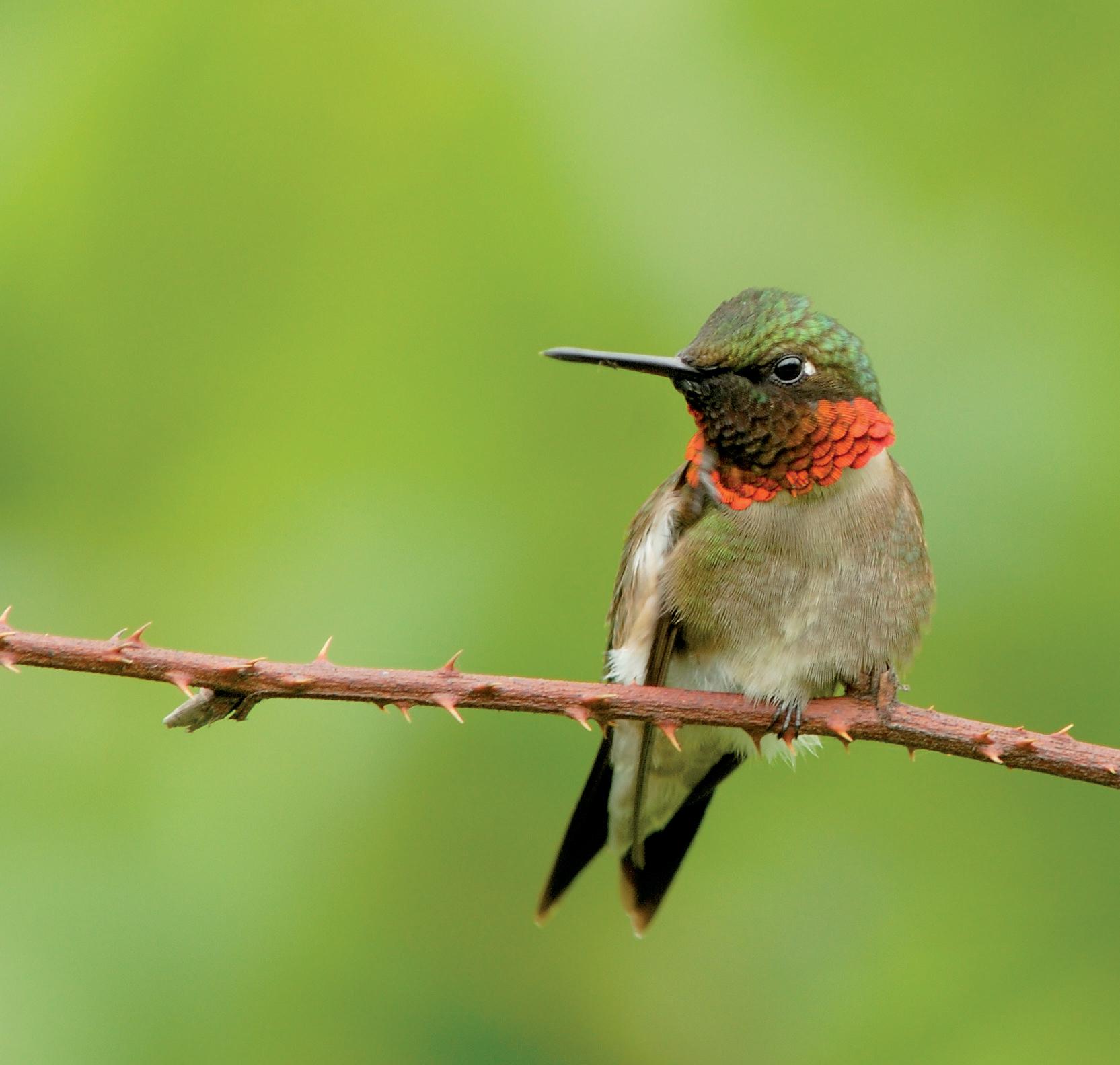
The Kittatinny Ridge, which roughly translates to “endless mountain” in Lenape, stretches for 185-miles across 12 counties from the Maryland border to the Delaware Water Gap. Its vast, forested geography serves as a migration superhighway for more than 150 different species of neotropical migrants, including the Scarlet Tanager, Cerulean Warbler, Wood Thrush, and Ruby-throated Hummingbird. Thousands of hawks, eagles, and other raptors ride the thermal winds created by the Ridge’s steep slopes. Beyond birds, the Kittatinny Ridge offers sheltered passage to Monarch Butterflies, nine different species of bats, and myriad mammals.
It was even used by American Kestrel number 56944, whose tag pinged 11 Motus stations—including the one at Gwynedd Preserve—along its migration route.
Once we look at the connection between birds like the Scarlet Tanager and the habitats they depend on, we can use this knowledge to inform our conservation work. ” ”
taking nature under our wing.
In addition to helping us determine where to protect land, studying birds can also tell us how to steward land already under Natural Lands’ care. For a good example of this, we turn from forests to fields.
“Bobolinks are really charismatic birds,” Claudia Winters said with a smile. “During spring breeding, males sing a bubbling, rambling song while acrobatically diving and hovering over the meadows. They sound like R2D2 from Star Wars.”
These migratory songbirds travel about 12,500 miles round trip each year back and forth between their wintering grounds in South America and their breeding region in the northern U.S. Quite the opposite of Scarlet Tanagers, Bobolinks build their nests in open fields and meadows, tucked between clumps of grasses on the ground.
Bobolinks and other grassland nesting birds are declining faster than any other group of birds. Their population has plummeted by more than half since 1970 due to land development and changing farming practices.
In the past, farmers mowed hay fields once or twice a summer, usually in late July. Modern agricultural technology and the demand for high-protein "green chop" for dairy cows have shifted mowing as early as May and is often repeated every 30 days.
“This essentially creates a trap. Ground-nesting birds are drawn to a lush field as a nesting site in early spring only to have their nest—along with any chicks or baby birds— destroyed when the hay is cut,” said Claudia. “Even if they manage to lay another clutch of eggs, there isn’t enough time for them to hatch and the young to fledge before a second haying.”
By delaying mowing until July 15, Natural Lands ensures the meadows and agricultural fields on our preserves are safe havens for ground-nesting species.
To help spread the word, Natural Lands is part of the Grassland Bird Collaboration, an effort spearheaded by Willistown Conservation Trust and the Cornell Land Trust Bird Conservation Initiative. The Collaboration reaches out to Chester County property owners and farmers to provide guidance on best management practices to benefit vulnerable birds. Because much of Chester County’s hay is purchased by local mushroom farmers for compost rather than to feed dairy cows, it doesn’t need to be high in protein and can be harvested late.
Other bird species are being used to evaluate and adjust land stewardship practices. Audubon Vermont uses bird data to teach foresters how to maintain a layered forest composition including standing dead trees for woodpeckers and thick shrub layers for Black-throated Blue Warblers. Middle Susquehanna Riverkeeper Association is measuring the impact of forested “buffers” along stream banks by monitoring the population of Louisiana Waterthrush, a key indicator of
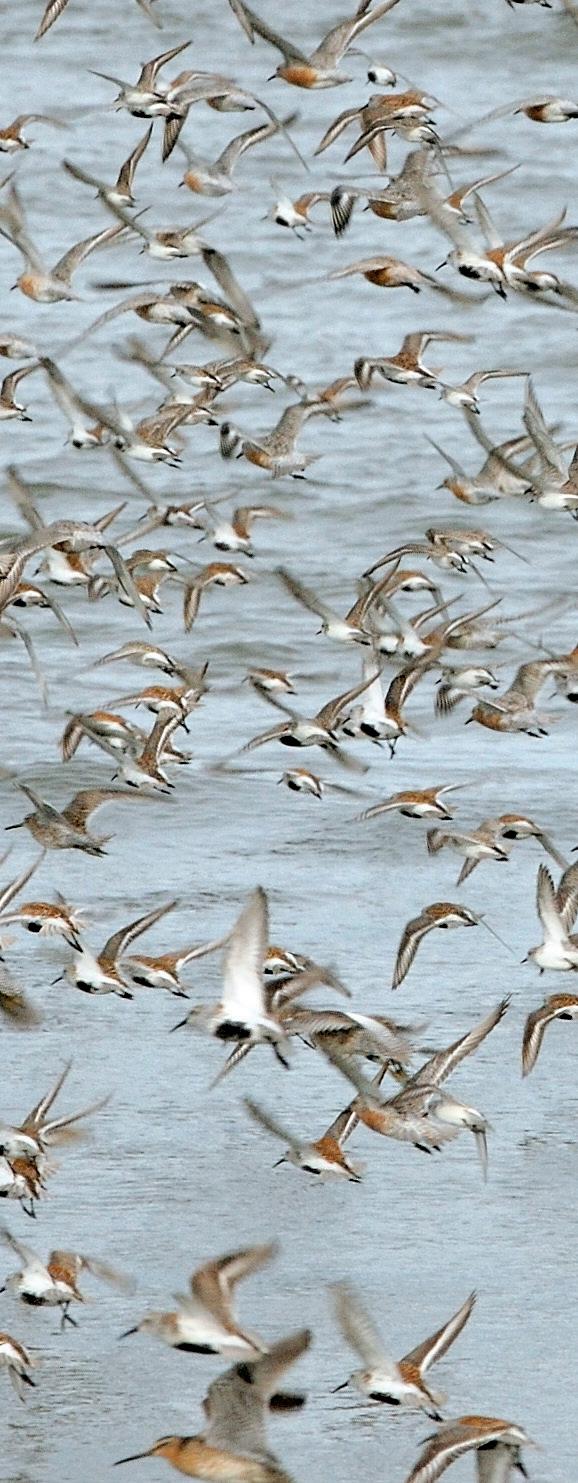
riparian health. And the Institute for Bird Populations studies the number of Ovenbirds to evaluate understory forest health, linking overpopulation of hungry whitetailed deer to declines in this species’ population.
Last summer, Claudia Winters was checking a kestrel nest box at Stroud Preserve in Chester County, PA. She’d come to band the nestlings in the box so they might someday contribute data for future conservation studies. “I found an adult female in the box with her nestlings, and she already had a band on her leg,” recounted Claudia. When she submitted the band number to the Bird Banding Laboratory at the U.S. Geological Survey, she learned the band had been put on by a Natural Lands staff member in Salem County, NJ, seven years earlier.
“The average lifespan of an American Kestrel is between two and five years, so it was fantastic to find one still successfully mating and rearing young at this age,” says Claudia. “I know it’s just one bird, but it gives me hope that Natural Lands is making a difference by saving land, stewarding it thoughtfully, and studying the wildlife that rely on it.” n
against the odds.
Last May, a group of Natural Lands donors and volunteers enjoyed an exclusive tour of Glades Wildlife Refuge in Cumberland County, NJ. A highlight of the trip was a visit to Raybin’s Beach where, every spring, thousands of Red Knots land to feast on horseshoe crab eggs. These migratory shorebirds travel an astonishing 20,000 miles annually between the Arctic and South America. Without this important refueling layover along the Delaware Bayshore, they would not survive the journey.
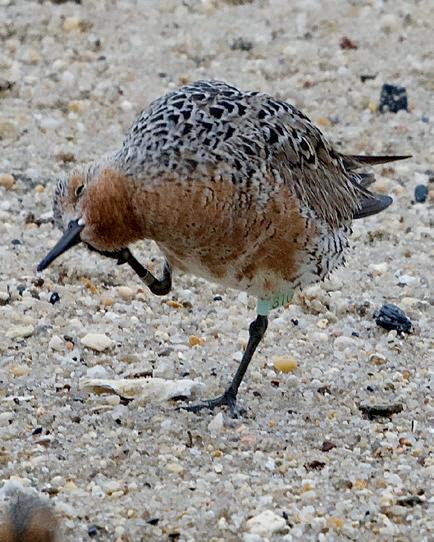
Participant Mike Niven snapped this photo (on right) of a Red Knot and, when looking at his photos later, noted the bands on both legs. Natural Lands staff submitted the band numbers to the U.S. Geological Survey and learned this bird had been banded 11 years earlier and is estimated to be 13 years old. The average lifespan of a typical Red Knot is three to five years. The math would suggest that this extraordinary bird has migrated about a quarter of a million miles in its lifetime, roughly equivalent to the distance between Earth and the Moon. By protecting the tidal shoreline it depends on, Natural Lands is ensuring that this bird and others like it can thrive.
July 1, 2025 – December 31, 2025
Natural Lands has been protecting open space since 1953. In that time, we have completed hundreds of conservation projects, each unique in its own way. Saving Open Space is the first of our three mission tenets, and we go about it in a few different ways:
we save land to keep and care for Natural Lands is unique among the region’s conservation organizations because of our large network of nature preserves. We are committed to restoring habitats and stewarding natural resources on these 23,600 acres, and to sharing these special places with everyone.
we save land to give away
Because of our expertise in buying land outright (and in securing grant money to pay for it), we help conservation-minded entities acquire open space by buying land and then “flipping” it to these partners to care for in perpetuity. Through this approach, we help add hundreds of acres to state parks, forests, and municipal open spaces every year.
we save land through conservation easements
Much of the land we protect, another 28,000 acres, is privately held by individuals who have chosen to restrict its development through a conservation easement. An easement is a legally binding agreement that permanently limits a property’s use based on landowner wishes and applies to present and future owners of the land.
COUNTY, PA
1
Reading Materials Property
60 acres
Union Township
Key Partners: Highlands Conservation Act (administered by the U.S. Fish and Wildlife Service); Pennsylvania Department of Conservation and Natural Resources (DCNR), Bureau of Forestry; Pennsylvania Department of Conservation and Natural Resources, Bureau of Recreation and Conservation – Keystone Recreation, Park and Conservation Fund
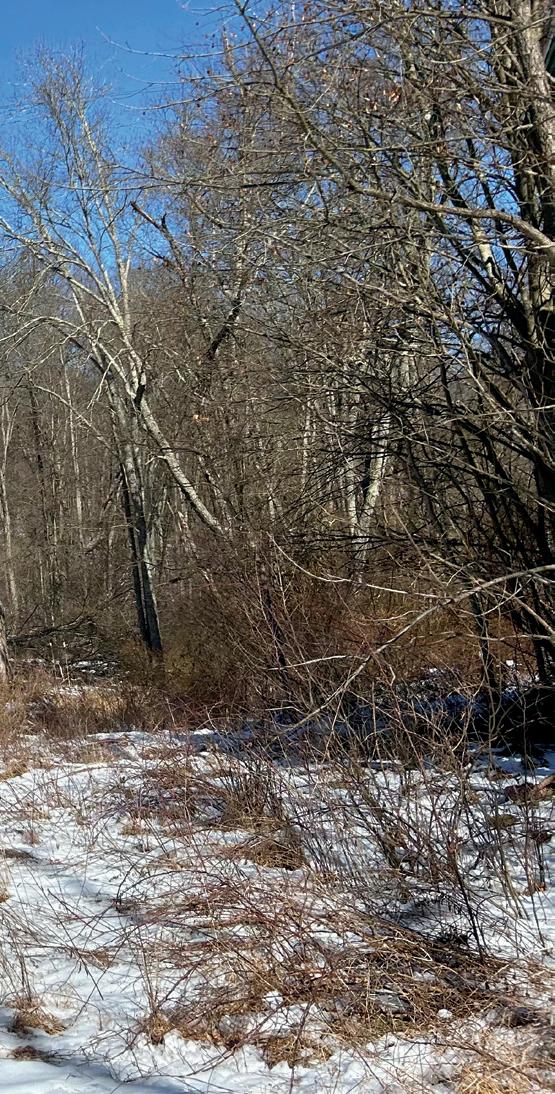
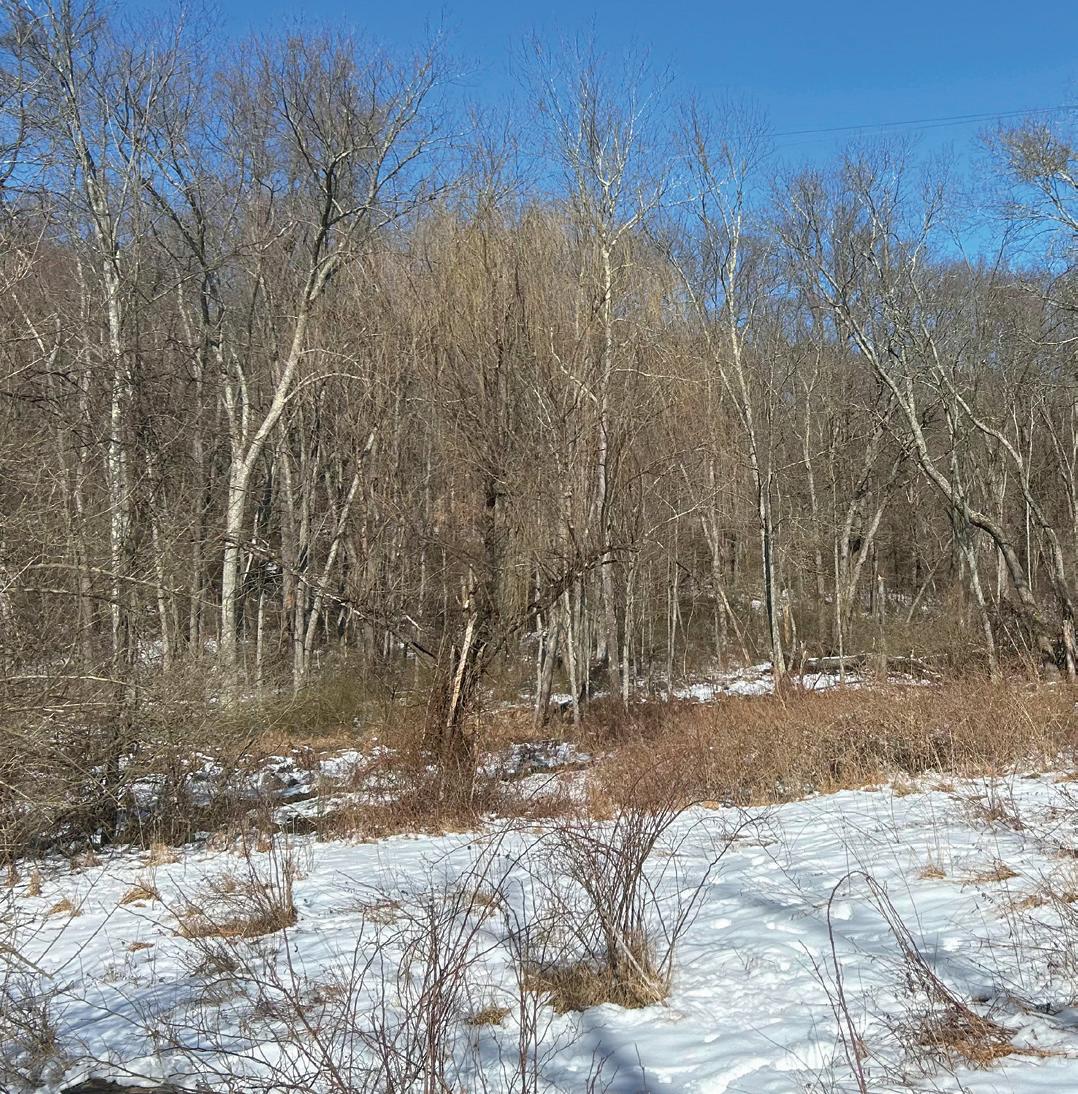
Natural Lands purchased a 59.7-acre property from Reading Materials, LLC and then transferred it to the state Bureau of Forestry to manage as part of the William Penn State Forest. To date, Natural Lands has helped to add more than 790 acres to Bureau of Forestry holdings.
The land is located within the Schuylkill Highlands Conservation Landscape, an area designated by DCNR as a priority for land and water conservation, outdoor recreation, and compatible economic development. It is also within a region known as Hopewell Big Woods, the largest contiguous forest in southeastern Pennsylvania. At about 114 square miles, Hopewell Big Woods provides essential forest habitat to birds and other wildlife.
The property will be available to the public for recreation, bird watching, hunting, and hiking.
6.3 acres
Nockamixon Township
Key Partners: Highlands Conservation Act (administered by the U.S. Fish and Wildlife Service); Pennsylvania Department of Conservation and Natural Resources, Bureau of Recreation and Conservation –Keystone Recreation, Park and Conservation Fund; Pennsylvania Game Commission
Natural Lands purchased a 6.3-acre wooded property and transferred it to the state to become part of PA State Game Lands No. 56.
8.4 acres
Haycock Township
Key Partners: Highlands Conservation Act (administered by the U.S. Fish and Wildlife Service); Pennsylvania Department of Conservation and Natural Resources, Bureau of Recreation and Conservation – Keystone Recreation, Park and Conservation Fund; Pennsylvania Game Commission
Natural Lands purchased another small parcel and transferred it to PA Game Lands as an addition to Game Lands No. 157.
Of both Grace Nockamixon and Grace Top Rock, Senior Advisor of Land Protection Jack Stefferud noted, “These parcels are rather small individually, but the conservation impact of protecting them is large. Both properties were inholdings, pockets of privately owned land within a larger landscape of state game lands. Were they to have been developed, the trees would have been felled to make way for driveways, buildings, and lawns, destroying the unbroken forest.”
Dense forest provides essential habitat to wildlife, particularly migratory songbirds such as Scarlet Tanager and Wood Thrush. In fact, these birds—along with 89 other bird species and hundreds of mammals, amphibians, fish, reptile, and invertebrates—are considered “Pennsylvania Responsibility Species.” The Commonwealth plays a key role to their survival, hosting at least 10 percent of their North American population or encompassing at least 25 percent of their North American range.
Forests that are fragmented into smaller plots by roads and developments favor predators that thrive along the edge of the woods. These predators impact the survival of songbirds and other vulnerable species.
Said Tim Haydt, PA Game Commission bureau director for habitat management, “Acquiring these tracts adds additional forested habitat to the state game lands in Bucks County. Through our partnership with Natural Lands, we are able to protect important wooded wildlife habitat for current and future generations of Pennsylvanians.”
102 acres
West Pikeland Township
Key Partner: anonymous donor
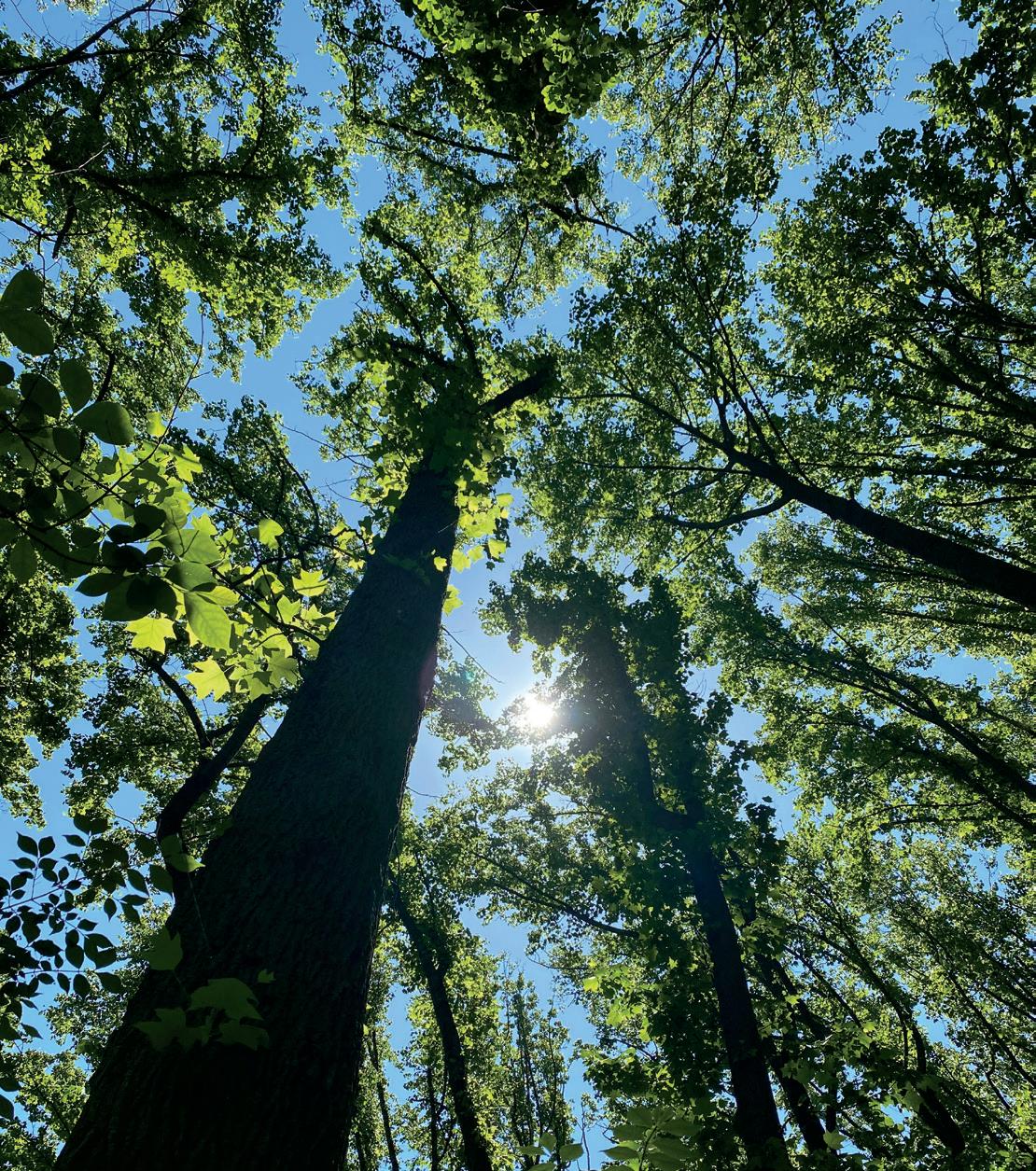
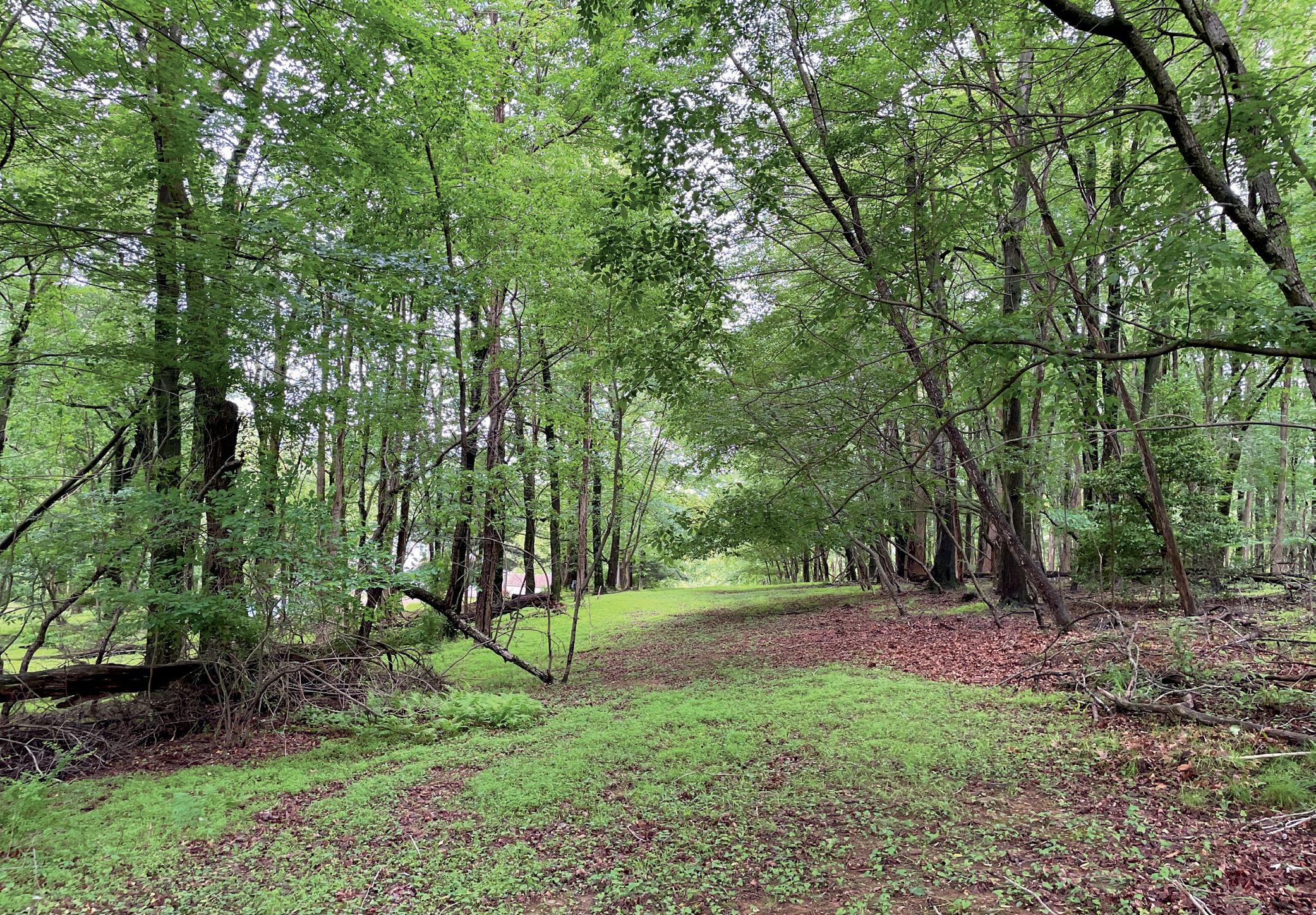
With the addition of two contiguous, undeveloped parcels, Bryn Coed Preserve has grown to just over 612 acres.
Donors who wish to remain anonymous gifted the two lots—which were already under conservation easement—to Natural Lands to increase the size of the preserve. The parcels consist of gently rolling fields, forest, and hedgerows.
Said Natural Lands President Oliver Bass, “I have such respect for Preserve Manager Darin Groff and Assistant Preserve Manager Caleb Arrowood, who have transformed Bryn Coed into a thriving nature preserve filled with native plants over the last eight years. They will steward these new parcels with the same care and passion. We’ll all reap the benefits of their work.”
“It’s very exciting to add additional acreage to the preserve,” said Darin Groff, director of land stewardship. “Over the next couple of years, we will be planting wildflower meadows for pollinator habitat and additional grasslands, and we’ll work to connect wooded areas to one another by planting additional trees.”
10.5 acres
East Brandywine Township
Key Partner: East Brandywine Township
East Brandywine Township purchased this primarily wooded, residential lot to preserve it. Prior to then selling it at a public auction, the township worked with Natural Lands to place a conservation easement on the property. This restricts development to the existing single residence and ensures the woodlands are preserved in perpetuity. While the project began with the intention of Natural Lands being the easement holder, East Brandywine Township ultimately chose to hold the easement themselves. Natural Lands staff assisted the township by completing all of the steps associated with a conservation easement acquisition.
23 acres
East Bradford Township
Key Partners: East Bradford Township, the landowners
Natural Lands placed a conservation easement on a 23.4-acre property located less than a half mile from Stroud Preserve. The easement is legally binding agreement that keeps land in private ownership while ensuring it is conserved from development. It applies to present and future owners of the land.
Natural Lands’ most recent strategic plan, entitled Thriving Nature, Thriving Communities, Thriving Organization, includes goals to protect special places that provide conservation benefit and cultural significance to the community. Natural Lands’ nature preserves are just such places. The plan calls for
preservation of land adjacent to and nearby existing nature preserves, a goal that this conservation easement meets.
“We are grateful to the landowners, who wish to remain anonymous, for their generous donation of a conservation easement on their property and to East Bradford Township for their enthusiastic support of this project,” said Sarah Turner, land protection project manager for Natural Lands. “Conservation of this beautiful property increases the acreage of protected open space in East Bradford Township, helping to ensure the area’s natural and scenic values are protected in perpetuity.”
7 Mechanicsburg Sportsmen’s
Protective Association
154 acres
Silver Spring Township
Key Partner: Silver Spring Township
A large, wooded property owned by the Mechanicsburg Sportsmen’s Protective Association (MSPA) will never be developed thanks to a conservation easement held by Natural Lands. For the past 76 years, it has been owned and managed as a sportsmen’s recreation club. The MSPA will continue to own the land, but the conservation easement restricts development and future use of the land.
The MSPA property lies about one-quarter mile south of Blue Mountain and is part of the Kittatinny Ridge complex. The Ridge is a Globally Important Bird Area and a migration corridor for tens-of-thousands of hawks, eagles, and falcons each spring and fall. Other species migrate through and use the MSPA property, including Ruby-throated Hummingbirds, Monarch butterflies, and mammals like black bear and bobcat.
“Scientists have identified the Kittatinny Ridge as one of the most resilient landscapes in the state for adapting to climate change,” said Todd Sampsell, vice president of conservation for Natural Lands. “This forested corridor is like a biodiverse superhighway that allows wildlife to move safely within and between areas to escape rising temperatures, floodwaters, or drought. It’s critical to the future of hundreds of species.”
Land preservation has become an increasing priority in Cumberland County, PA, where residential and commercial development—especially for large warehouses—is putting steady pressure on what’s left of the rural landscape. In 2013, Silver Spring Township residents voted to establish a Land Preservation Program, funded by an earned income tax. With the addition of the MSPA property, the program has preserved more than 1,000 acres of open space in the community.
8 Uradnisheck Property
15 acres
Thornbury Township
Key Partners: Thornbury Township; Jay Uradnisheck
Jay Uradnisheck purchased his 14.6-acre property in 1986 and has spent almost 40 years working to restore it to a more natural state. He has planted hundreds of trees to improve the forest cover and manages an eight-acre meadow. It is now protected under a conservation easement.
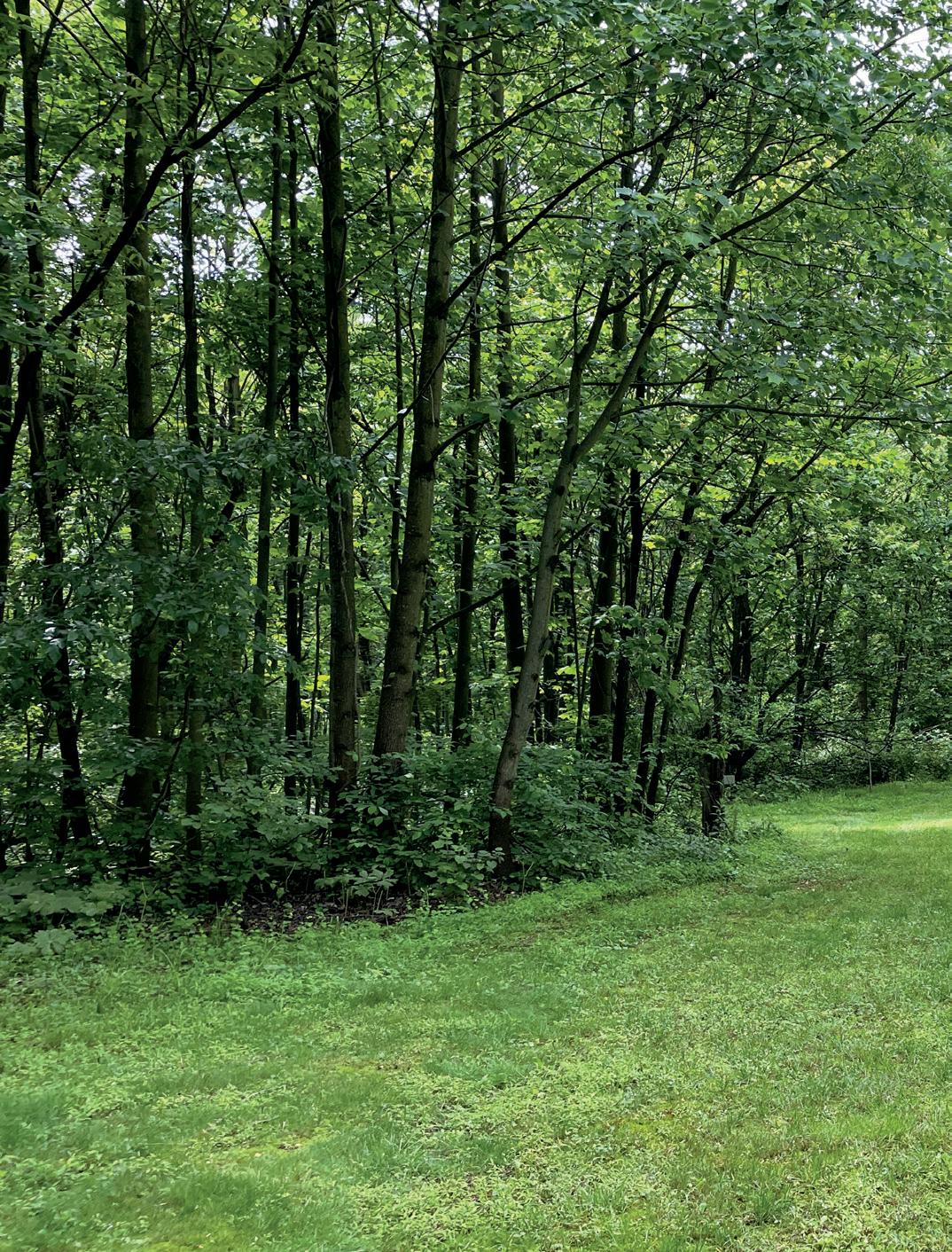
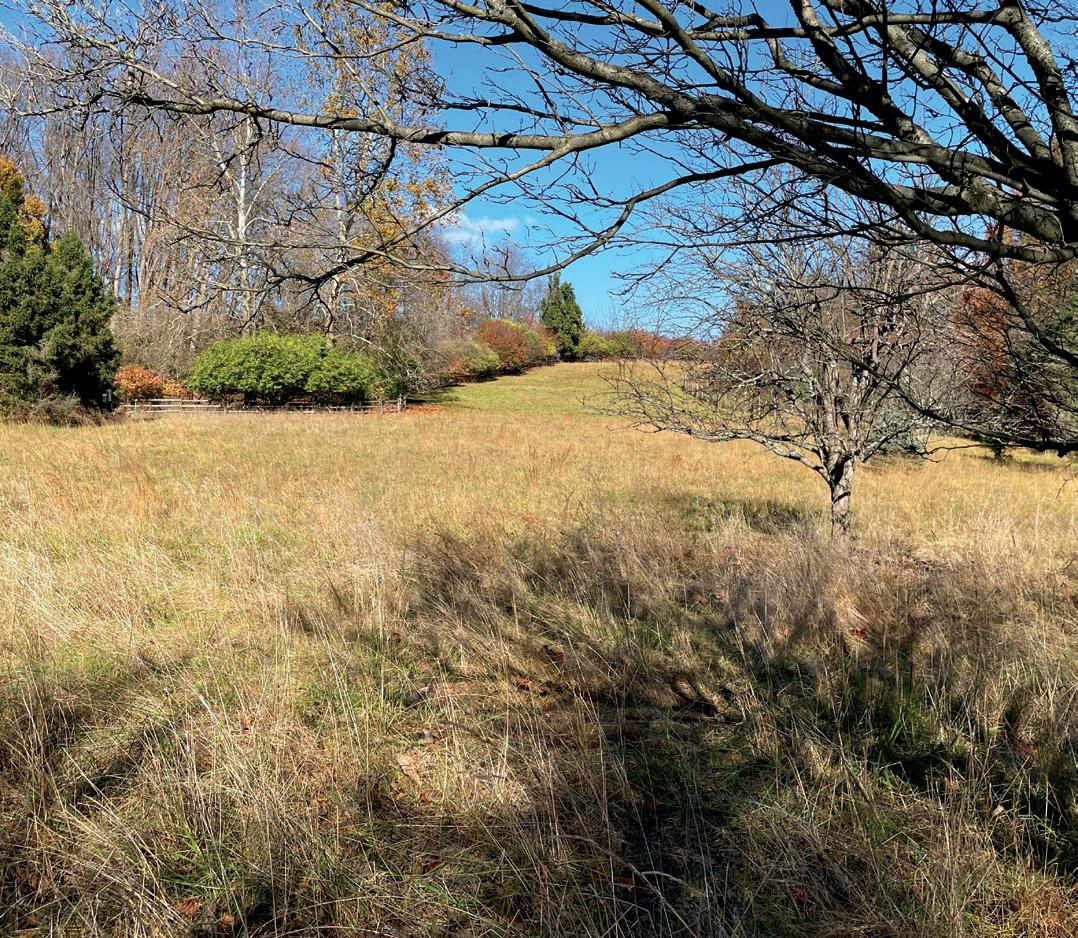
“Even after 40 years of walking my property, I still experience daily surprises and wonderment about the life in these woods and meadows. I walk slowly, making studied observations while uncovering critical relationships among species. The network of interactions is too complex to understand but, with enthusiasm, I have been reintroducing native plants to strengthen the resilience of that network of life.”
The property lies about a quarter mile north of West Branch Chester Creek, which is a tributary of the Delaware River and contributes water to the Delaware
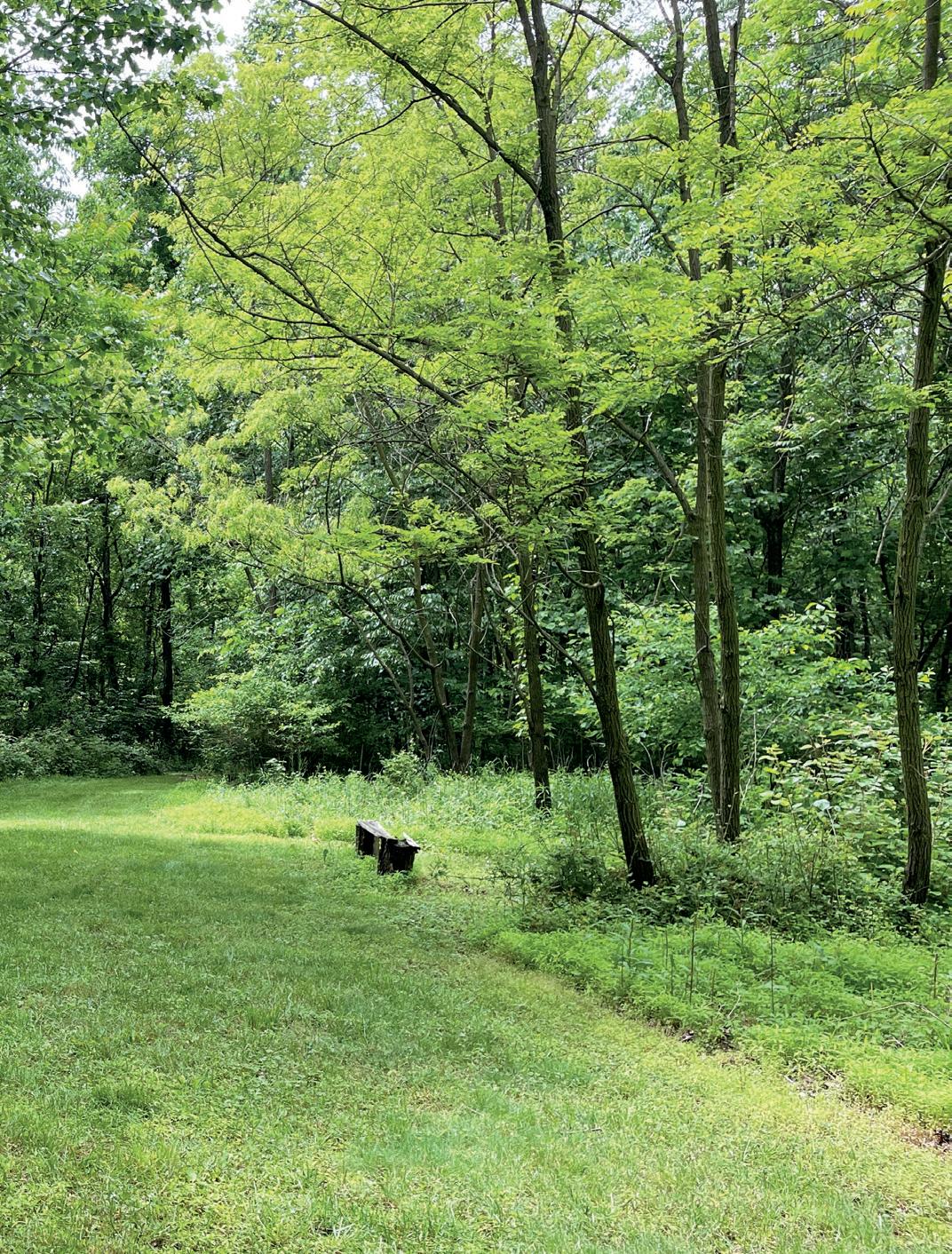
Estuary and Delaware Bay. Protecting land near streams is one of the most effective ways of protecting our water. Trees, shrubs, and other plants help filter out pollutants before they reach the waterways.
Mr. Uradnisheck—who donated the value of the conservation easement and contributed substantially to its stewardship endowment fund—will continue to own the property. He and Thornbury Township have agreed formally that his property will transfer to the township after he passes or if he no longer lives there. The conservation easement’s protections will stay in place even after a change in ownership.
9 Bear Creek Preserve Addition
53 acres
Buck Township
Key Partners: Allerton Foundation; Pennsylvania Department of Conservation and Natural Resources, Bureau of Recreation and Conservation – Keystone Recreation, Park and Conservation Fund
Bear Creek Preserve gained 53 acres with the addition of a forested property once owned by the Corgan family.
“For generations, this property has been maintained as woodlands,” said John Brislin, representing the Corgans. “Selling the property to Natural Lands to become part of Bear Creek Preserve was an easy decision. It will help preserve the Lehigh River watershed and make this land available for people to enjoy for generations to come.”
More than half of the newly acquired property falls within the “Dry Land Hill Pools,” a special designation determined by the Pennsylvania Natural Heritage Program. Large vernal pools—which appear in spring but dry up as the weather warms—are set within an oakdominated forest, an area usually quite dry.
The area is home to two “species of concern”: the fewseeded sedge (Carex oligosperma) and the Bog Copper butterfly (Lycaena epixante), the latter of which uses cranberry as its larval host plant.
Seventy percent of Pennsylvania’s forests are privately owned, which means they are vulnerable to development. As part of Bear Creek Preserve, this oncevulnerable property is protected forever. n
Together we have an impact. Now. And forever.
As we relish the joys of another season in nature, there is so much to appreciate. Friends like you top our list.
The Natural Lands community—of members, supporters, volunteers, and partners—makes it possible for us to stay the course in saving open space, caring for nature, and connecting people to the outdoors and each other. Your commitment enables our success.
We are proud to share the impacts of your giving over the last year— many of which are called for in our 2025-30 strategic plan. Buoyed by your continued support and guided by our strategic plan, Natural Lands will continue to identify the program investments that have the greatest potential to build a healthy, resilient region for everyone; innovate in ways that enhance the impact of our efforts; and act boldly to make our vision a reality.
Count us grateful every step of the way.
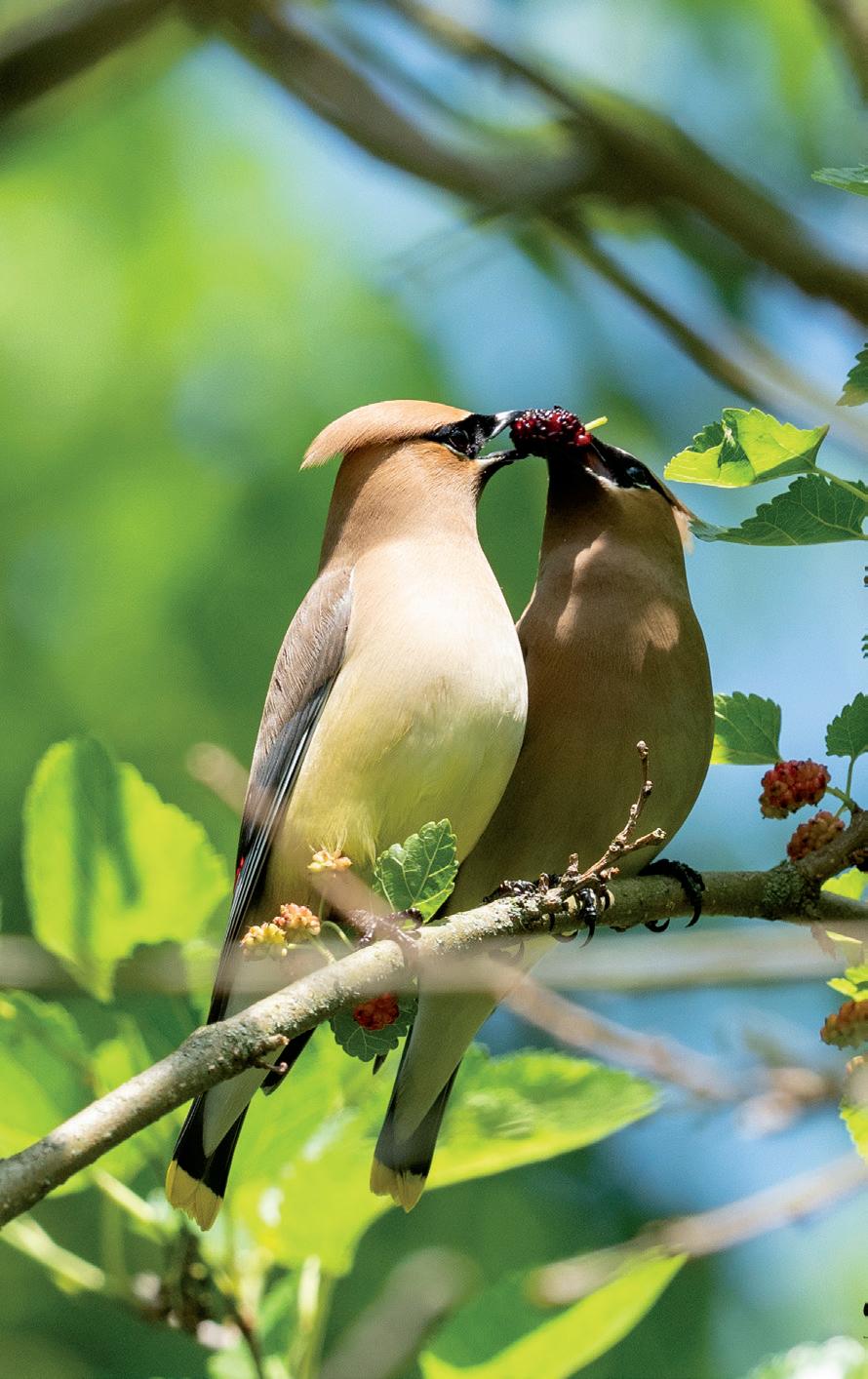
YOU HELPED US SAVE OPEN SPACE
4 additions to our properties
1,400+ acres of land saved
500+ privately owned properties monitored to ensure their conservation value
53 acres added to Bear Creek
102 acres added to Bryn Coed 10 acres soon to be added to Stoneleigh:
acres soon to be added to ChesLen
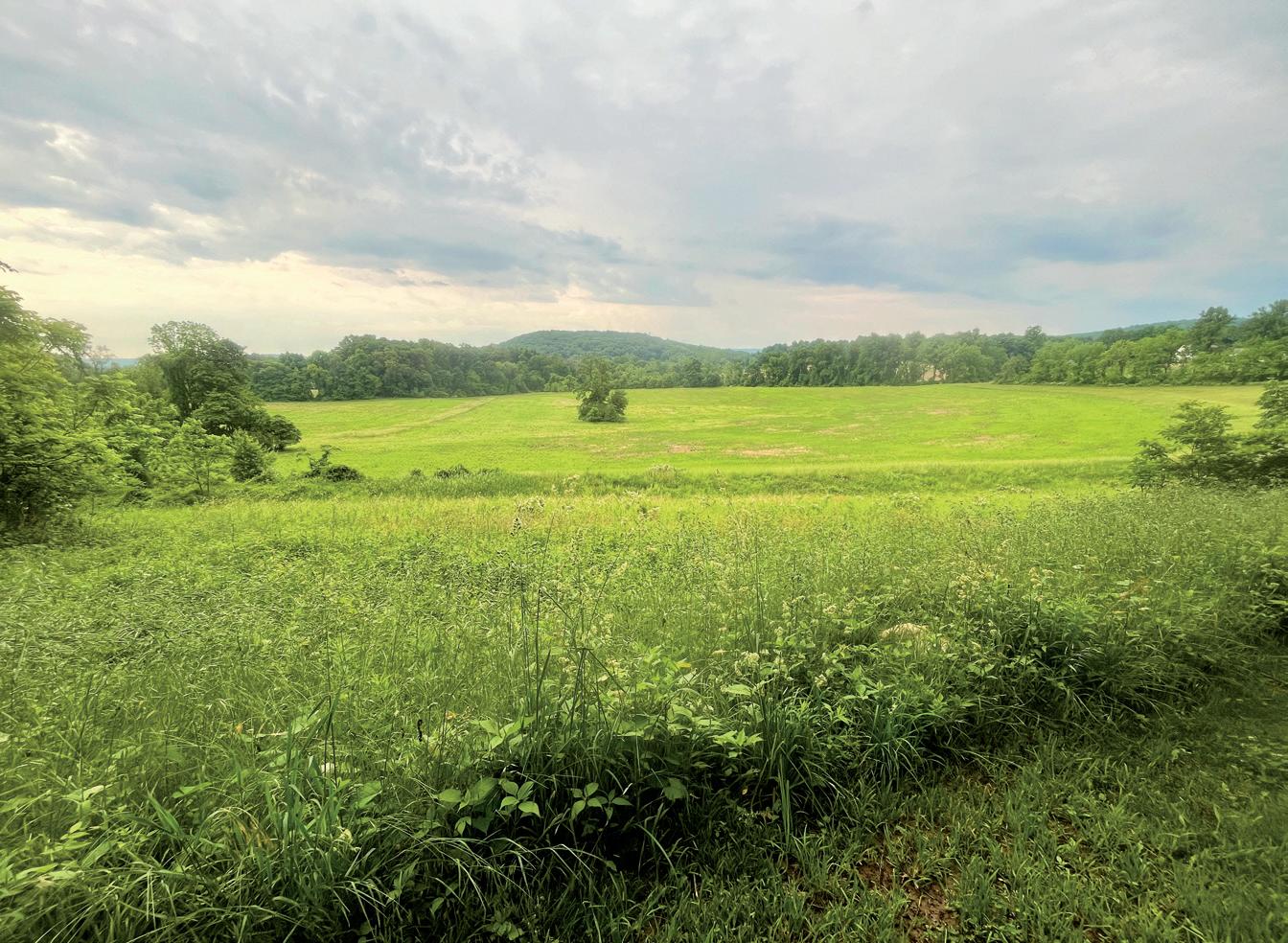
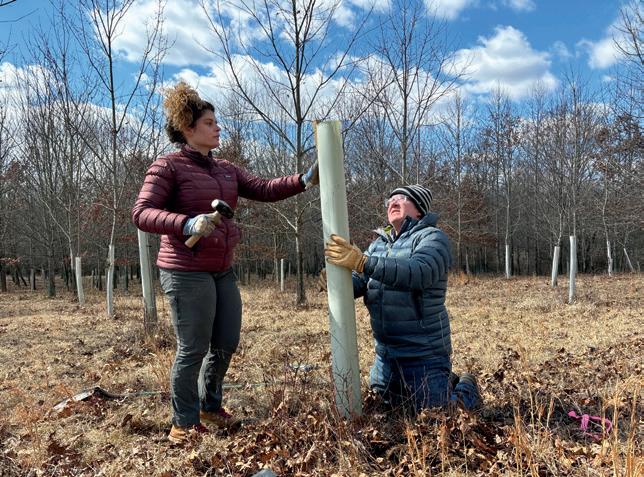
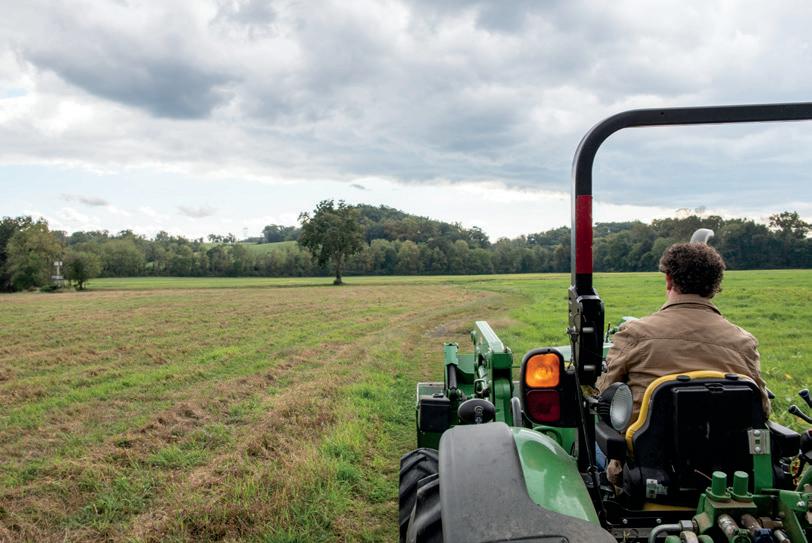
22,500 trees planted across 75 acres at 6 nature preserves
50+ full-time staff cared for our preserves and garden
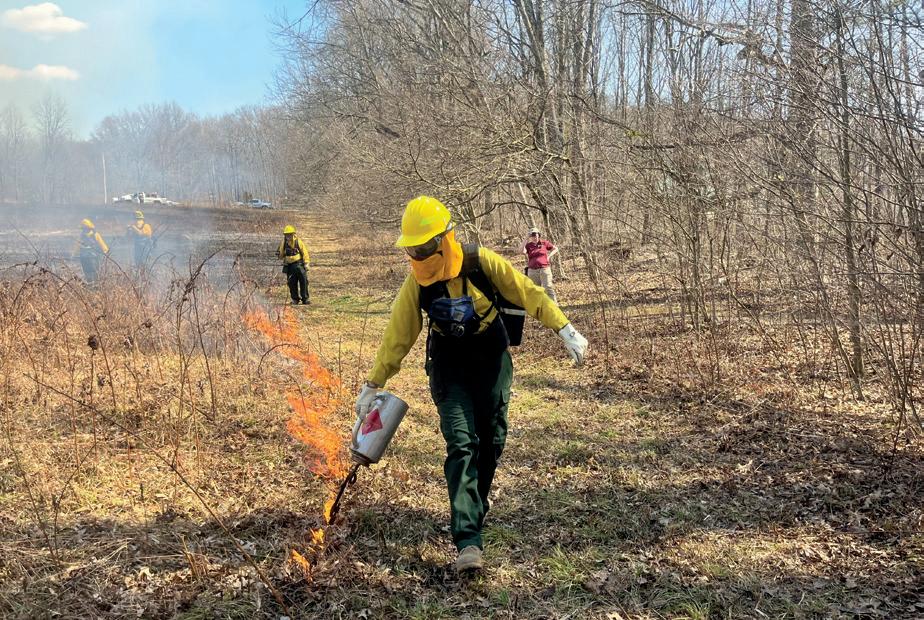
10 prescribed burns maintained special habitats, prevented invasive plants, and promoted species diversity
250,000+ people visited our preserves and garden
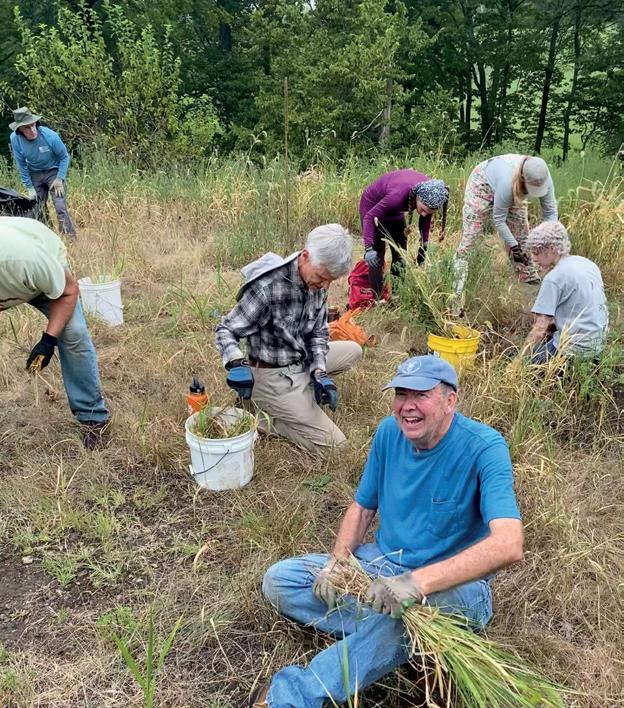
660 volunteers donated more than 12,500 hours
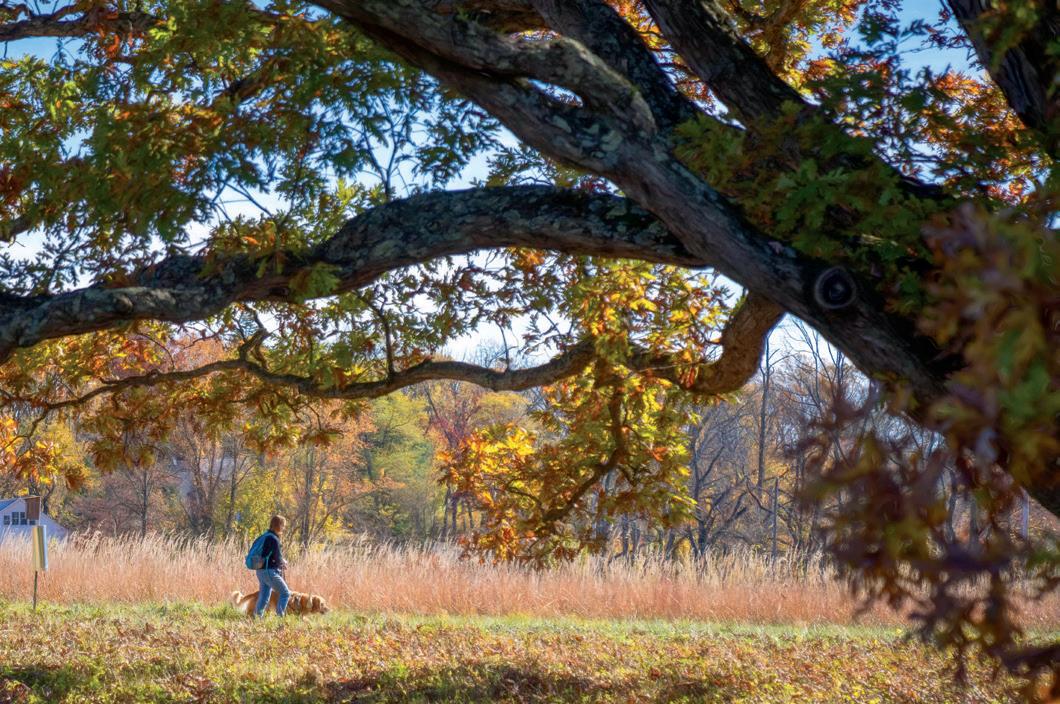
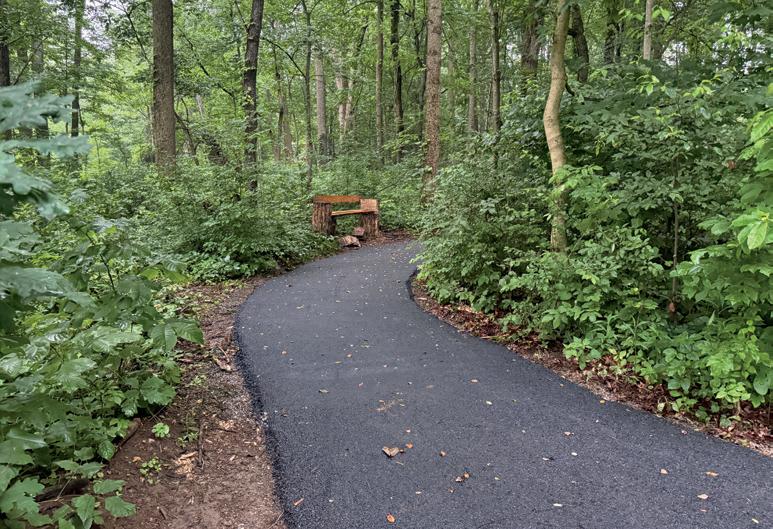
122 miles of hiking trails welcomed exploration, including 2 new accessible trails
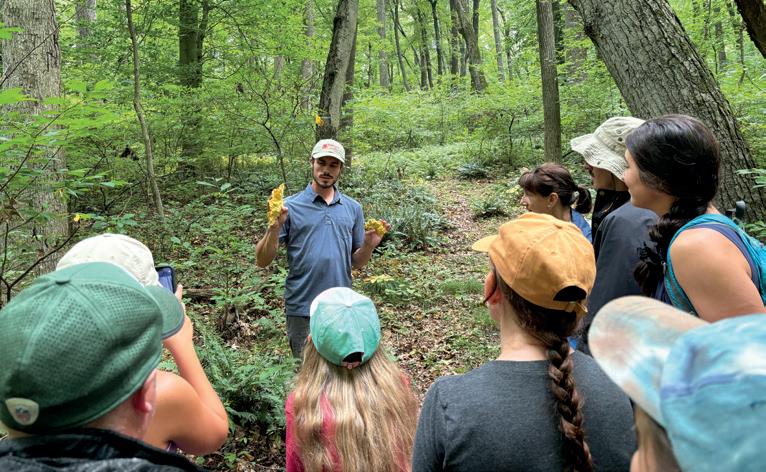
3,300 individuals engaged with the outdoors through our events
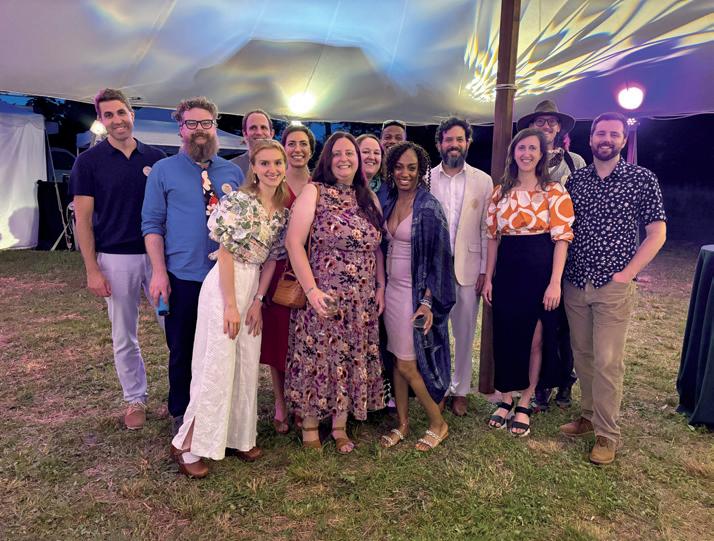
NextGen Council celebrated its four-year anniversary
For a summary of our most recent financial statement, please see page 28.
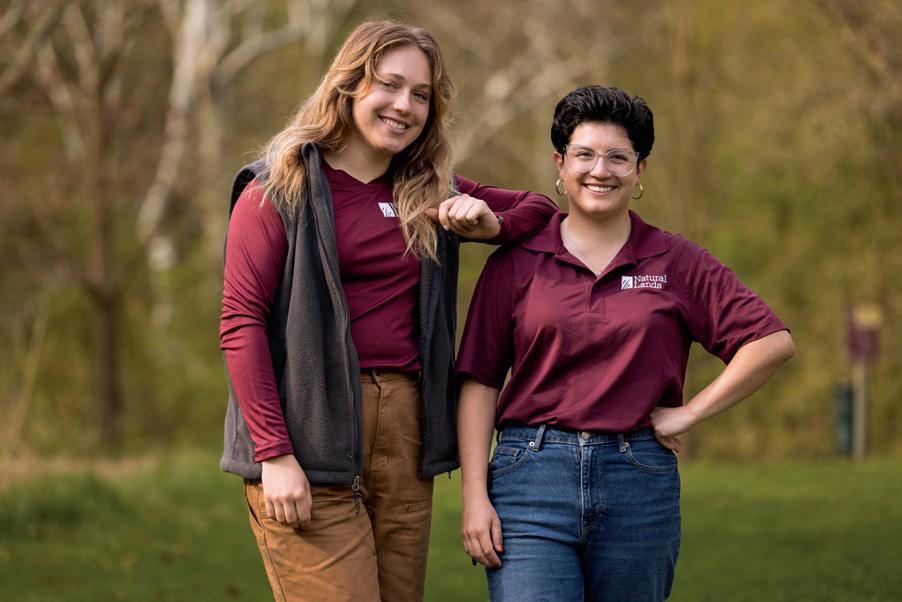
Fellows began their journey
Natural Lands deploys our financial resources in the most impactful manner possible to advance day-to-day efforts to save open space, care for nature, and connect people to the outdoors. At the same time, we must ensure that we meet our perpetual obligations to the lands we preserve and steward. Our financial management is anchored in a culture of fiscal discipline, guided by strategic planning, and complemented by thoughtful risk-taking and innovation.
JULY 1, 2024 – JUNE 30, 2025 how
contributions,
These charts represent total revenues and expenses—including for land and building capital projects along with multi-year grants and pledges. Our annual day-to-day operating expenses for FY25 were $12.4 million.
Audited financial statements are available upon request.
For more information, please see natlands.org/ourfiscalapproach
board of trustees
Susan P. Mucciarone chairperson
Jane G. Pepper
vice chairperson
Beth Albright
Barbara B. Aronson
Lloyd H. Brown
Rayenne A. Chen
Jason Duckworth
Regina A. Hairston
Gail Harrity
Jeffrey Idler
Paulina L. Jerez
Ann T. Loftus, Esq.
Victoria B. Mars
Stephan K. Pahides
Robert K. Stetson
Andrew I. VandenBrul
David Velazquez
Ardythe Williams
chairperson emeritus
Peter O. Hausmann
emeritus trustees
Henry E. Crouter
John A. Terrill, II
William G. Warden, IV
Theodore V. Wood, Jr.
president’s council
Franny and Franny Abbott
Scott Albright
Jim Averill
Timothy B. Barnard and Meredyth D. Patterson
Jessie and Richard Benjamin
Laura and Bob Berry
Paul S. Black
Clarke and Barbara Blynn
Maggie Brokaw
Michael Burg
Tyson Chamberlain
Eleanor Davis
Phoebe A. Driscoll
Patty Elkis and Brian O’Leary
Charlotte Friedman
Debra Wolf Goldstein
Lin and Ralph Hall
Catherine “Kate” Harper
Steven and Ann Hutton
Michael and Dorothea Kelly
Joyce I. Levy, Ph.D.
Yocasta Lora
Christy Martin
Amy McKenna
Leah and Jason Morganroth
J. Kenneth Nimblett
James L. Rosenthal
Missy Shaffer
Steve Shreiner
Julia H. M. Solmssen
Robin and John Spurlino
Karen Thompson
Jim B. Ward
Lee and Bill Warden
Penelope P. Watkins
Susan P. Wilmerding
Theodore V. Wood, Jr.
Minturn T. Wright, III
Sherley Young
Eliza and Peter Zimmerman
NextGen council
Jarrodd Davis chairperson
Ryan Butcher
Tanya Dapkey
Eduardo Dueñas
Jake Faber
Matt Feidler
Alicia Hamilton
Julie Kleaver
Elissa Klinger
Marion Leary
Jonathan Long
Bob McCaughern
Hunter McCorkel
Leah Morganroth
Jason Morganroth
Ryan Snyder
Latiaynna Tabb-King
Jennifer Trumbore