March invites us into a gentle but powerful transition. The earth is waking up, stretching toward the light, and reminding us that growth doesn’t happen by force—it happens through nourishment. This month’s theme, Nourish and Flourish, is both an invitation and a responsibility. So often, we associate nourishment solely with food, but true nourishment is far more expansive. It includes what we feed our minds, how we tend to our bodies, and the care we offer our spirit. When any one of these areas is neglected, we may survive—but we do not fully flourish.
To nourish the mind is to be intentional about what we consume mentally and emotionally. The conversations we engage in, the information we absorb, and the stories we tell ourselves all shape our inner landscape. Supportive community, uplifting resources and moments of stillness allow our minds to expand rather than remain in constant survival mode.
To nourish the body is to listen—really listen—to what it needs. Rest, movement, hydration, whole foods and grace are not luxuries; they are essential forms of care. Our bodies are not machines designed to push endlessly. They are living systems that respond beautifully when supported with consistency, patience and compassion.
To nourish the spirit is to reconnect with what makes us feel alive, grounded and aligned. This may look like time in nature, prayer, meditation, creative expression or simply giving ourselves permission to pause. When the spirit is nourished, clarity emerges and we begin to remember who we are beneath expectations, roles and routines.
Flourishing is the natural result of this kind of nourishment. It doesn’t mean perfection, and it doesn’t mean constant productivity. Flourishing means evolving into our most authentic selves—rooted, resilient and open to growth. It means allowing ourselves to shed what no longer serves us and embracing the support that helps us become more fully who we were created to be.
At Natural Awakenings of Columbia, our intention has always been to provide resources, partnerships and stories that support your journey of nourishment—mind, body and spirit. This magazine is a reminder that you do not have to do life alone. With the right support, growth becomes sustainable and transformation becomes possible.
As we move through March, I encourage you to ask yourself: What do I need to nourish right now so that I can truly flourish? The answer may surprise you—and it may be exactly what leads you into your next season of becoming.
Gratitude and intention,
�� Follow Our New Facebook Page!
ColumbiaNaturalAwakenings.com
Book Talk and Signing With Shannon Ivey
On Thursday, March 5, from 6 to 7:30 p.m. at All Good Books, author Shannon Ivey will present a powerful book talk and signing celebrating Welcome to the Sh*t Show, her forthcoming medical memoir about surviving latestage colorectal cancer. Blending storytelling, humor and unflinching honesty, Ivey reflects on diagnosis, treatment and what it means to reclaim agency inside a broken healthcare system.
This special event features Dr. Sidney Morrison, the surgeon who played a critical role in Ivey’s care. Together, they’ll explore the patient-provider relationship from both sides of the exam table, offering rare insight into trust, communication and the human stakes of medical decision-making.
Location: 734 Harden St., Columbia. For more information, call 803-205-4139 or visit ExperienceColumbiaSC.com/event/book-talk-and-signing-with-shannon-ivey/73408.
Birdwatching in the Gardens
On Thursday, March 12, from 8 to 9 a.m., Historic Columbia will host a free bird walk at the Hampton-Preston Gardens. Led by local birder John Tjaarda, the seasonal program invites participants to explore the gardens and learn about the many local and migratory birds that pass through the area.
With more than 100 bird species recorded at the Hampton-Preston Gardens throughout the year, attendees will learn how to identify birds by sight, sound and behavior. The program is offered during peak birding times, with a focus on fall and spring migration periods. Registration is required and the walk is capped at 25 participants.
Location: 1615 Blanding St., Columbia. For more information or to register, visit ExperienceColumbiaSC.com/event/birdwatching-in-the-gardens/73177.
Go Green at St. Pat’s in Five Points
St. Pat’s in Five Points will take place on Saturday, March 14, from 7:30 a.m. to 7 p.m.
The vibrant celebration of all things green and Gaelic welcomes the arrival of spring while supporting the businesses of the Five Points village. Recognized as the Midlands’ largest annual street festival and one of the Southeast’s largest one-day St. Patrick’s Day celebrations, it brings thousands together for a day of music, culture and community.
Location: 747 Saluda Ave., Columbia. For more information, including cost, or to purchase tickets, visit StPatsColumbia.com.
Saddle Up for the World’s Toughest Rodeo
Cinch will present the World’s Toughest Rodeo at Colonial Life Arena on Friday, March 27, and Saturday, March 28, with both shows starting at 7:30 p.m. Fans can expect two nights of action, entertainment and intense competition as top cowboys compete to be crowned Pro Rodeo’s World Champion.
Attendees will witness high-stakes rodeo events featuring the world’s toughest cowboys in a “battle to the finish,” showcasing skill, courage and determination in a thrilling live experience.
Location: 801 Lincoln St., Columbia. For more information, including cost, or to purchase tickets, visit ColonialLifeArena.com/ events/detail/wtr2026cola.
Bring the Beat to House of House
House of House South Carolina and Columbia House Music Project will host legendary Jersey DJ and producer Jihad Muhammad live on Saturday, March 14, from 6 to 11:59 p.m. at House of House South Carolina. This marks Muhammad’s first performance in South Carolina.
Attendees are encouraged to arrive early and bring instruments or noisemakers such as maracas, cowbells or tambourines—and, for fans of the Jersey house tradition, baby powder—to join fully in the immersive, high-energy experience.
Cost: $20. Location: 2500 Forest Dr., Columbia. For more information, or to purchase tickets, visit Eventbrite.com/e/ house-of-house-sc-ft-jerseys-jihad-muhammad-tickets-1981277565533?aff=oddtdtcreator.
Let Your Child Shine at Sensory Sunday
Surge Adventure Park, in Columbia, invites children with special needs to enjoy a calmer, more inclusive experience during Sensory Sunday, held on the first and third Sunday of every month from 10 a.m. to noon. During this special time, the park is closed to the general public and offers a quieter environment without loud music or flashing lights—allowing kids to play and explore at their own pace.
Cost: $7.99 per person, per hour. Location: 230 Business Park Blvd., Columbia. For more information or to purchase tickets, visit SurgeFun.com/locations/columbia/specials.
Step Inside History at the Hampton-Preston Mansion
Historic Columbia will offer tours of the Hampton-Preston Mansion on Sunday, March 15, from 1 to 4 p.m. Tours are free for Historic Columbia members and residents of Richland and Lexington counties and will be offered at 1, 2 and 3 p.m. Guests will be registered on a first-come, first-served basis, with no advance registration available. The event is made possible with support from Richland County and Councilman Jason Branham.
Built in 1818 by Columbia merchant Ainsley Hall and his wife, Sarah, the mansion was sold five years later to Wade Hampton I, one of the South’s wealthiest planters. Over the next 50 years, the estate grew to become Columbia’s grandest residence under the Hampton and Preston families and the many men, women and children they enslaved. In the century following the Civil War, the property had multiple owners, including colleges and a tourist home, before opening to the public in 1970 after extensive rehabilitation. It is now owned by Richland County and managed by Historic Columbia.
Location: 1615 Blanding St., Columbia. For more information, visit HistoricColumbia.org/ events/2026/2026-03/free-sunday-hampton-preston-mansion.
Explore the State Museum for $1 on First Sunday
The South Carolina State Museum is offering $1 general admission from noon to 5 p.m. on the first Sunday of every month through sponsorship by BlueCross BlueShield of South Carolina. Visitors can explore four floors of art, cultural history, natural history and science/technology, including the Boeing Observatory and the Robert B. Arial Collection of Historical Astronomy on the fourth floor.
For an additional fee, guests can enjoy a planetarium show or a 4D theater movie. The offer is not valid with other discounts or Museums for All.
Location: 301 Gervais St., Columbia. For more information, visit SCMuseum.org/events/ first-sunday.
Discover the Untold Story of Oz With Wicked
The Koger Center for the Arts will host performances of the musical Wicked from Wednesday, March 25, through Sunday, April 5. Audiences can experience the untold story of the Witches of Oz, centered on a young woman born with emerald-green skin whose rivalry with a popular blonde turns into an unlikely friendship.
Long before Dorothy arrives, Wicked explores what shaped these iconic characters, blending humor, heart and extraordinary talent. From the first electrifying note to the final breathtaking moment, the musical captivates audiences with its inventive story and unforgettable score.
Location: 1051 Greene St., Columbia. For more information, including times and cost, or to purchase tickets, visit KogerCenterForTheArts. com/event/wicked.
Gather for Stories at Read Freely Fest
Richland Library will host the Read Freely Fest from Friday, March 27, through Sunday, March 29, at the Richland Main Library. The free, three-day festival brings readers, writers and book lovers together for an immersive celebration of storytelling and literature.
Designed for all ages and interests—from lifelong readers and aspiring writers to families seeking engaging activities—the festival features author talks, live performances and interactive programming. The event will highlight headline authors, as well as indie creators, local voices and diverse programming designed to engage attendees all weekend.
Location: 1431 Assembly St., Columbia. For more information, visit ReadFreelyFest.com.
Let Kids Take the Lead at Sprout Style Swap
The Children’s Entrepreneur Market will take place during the Sprout Style Swap event on Saturday, March 21, from 9 a.m. to 1 p.m. in Columbia. Young entrepreneurs can showcase their business ideas by running their own mini booths, connecting with customers, and having fun doing it.
Parents can support their child’s interests while watching them manage a mini store. Sprout Style Swap is a community consignment sale that offers a supportive, kid-friendly environment where children can explore creativity, entrepreneurship and engage with local families.
Cost: Admission is free, and a booth space for participating children is $25. Location: 206 Jamil Rd., Columbia. For more information, or to purchase a booth space, visit KidsMarkets.com/event/columbia-3.
Celebrate Celtic Culture at Tartan Day South
Tartan Day South will take place Thursday, March 26, through Sunday, March 29, with the main event on Saturday, March 28, at the Historic Columbia Speedway. Daily activities run from 8:30 a.m. to 5 p.m., with both free and paid events held across West Columbia, Cayce and Lexington. The festival honors Celtic culture and heritage in South Carolina’s Midlands region and is designed for all ages.
Guests can enjoy Celtic music, drum and pipe bands, traditional dancing, Highland Games competitions, a British car show, clan displays, sheep herding demonstrations, birds of prey exhibitions and ax throwing. The event also features an array of food and a marketplace showcasing Celtic fabrics, jewelry, ironware and specialty foods.
Location: 2001 Charleston Hwy., Cayce. For more information, visit TartanDaySouth.com.
My favorite weather is bird-chirping weather. —Terri Guillemets
Celebrate Creativity at Midlands Spring Arts and Crafts Market
The South Carolina State Farmers Market, in collaboration with the Midlands Crafters Association, will host the Midlands Spring Arts and Crafts Market Saturday, March 21, and Sunday, March 22, from 9 a.m. to 4 p.m. The family-friendly event offers free admission and parking and welcomes pets.
The market will feature more than 150 vendors, crafters and local businesses from across the Midlands, providing attendees an opportunity to shop handmade goods, support local artisans and enjoy a community-focused experience.
Location: 3483 Charleston Hwy., W. Columbia. For more information, visit MidlandCrafters.wixsite.com/mca-craft-shows.
Feed the Mind at Capital Concert
The South Carolina Philharmonic will present the Capital Concert on Saturday, March 14, from 7:30 to 9:30 p.m. at the Koger Center for the Arts. The evening performance invites audiences to experience live symphonic music in a dynamic concert setting.
Designed to inspire creativity and connection, the program highlights the cognitive and emotional benefits associated with live music, including enhanced memory, reduced stress and elevated mood. Organizers note that attending performances throughout the season offers audiences an opportunity to engage more deeply with the arts while strengthening community ties.
Location: 1051 Greene St., Columbia. For more information, including cost, or to purchase tickets, visit SCPhilharmonic.com/concerts/2025-2026/ capital-concert-the-dream-of-america.
Make
Explore Columbia’s History on Main Street
Historic Columbia will host a Main Street Walking Tour on Sunday, March 22, from 1 to 2:30 p.m. The tour begins and ends at Boyd Plaza. The approximately 75-minute tour explores the architecture and history of buildings along the 1300 to 1700 blocks of Main Street.
Cost: Admission is free for youth 17 and under, $5 for Historic Columbia members and $10 for nonmembers. Location: 1515 Main St., Columbia. For more information, visit HistoricColumbia.org/events/2026/2026-03/main-street-walking-tour.
Cupping Therapy for Muscle Fatigue
High-intensity exercise causes inflammation and muscle fatigue, which can limit athletic performance, increase the risk of injury and slow the speed of recovery. In recent years, elite athletes have sought relief with cupping therapy, which uses bamboo, glass or acrylic cups to create negative pressure on the skin over an acupoint or painful region. The suction purportedly alleviates muscle pain, enhances blood flow and reduces muscle stiffness.
A 2025 study published in the Journal of Physiological Intervention investigated whether dry cupping does indeed reduce muscle fatigue and inflammation. Ten table tennis athletes completed two identical high-intensity training sessions followed by either dry cupping or no cupping, with a two-week interval between sessions. Fatigue was assessed based on the participants’ perceived exertion levels before and after each session, as well as 30 minutes after cupping. Blood samples were also collected to measure immune cells, inflammatory indicators and markers of muscle damage and metabolic stress.
Participants reported lower perceived exertion after cupping as compared to no cupping. Blood tests revealed that the therapy reduced inflammatory markers and blood urea nitrogen, a muscle damage marker. However, no significant changes were observed in two other muscle damage markers compared to no cupping. The findings suggest that dry cupping may support post-exercise recovery by reducing inflammation and perceived fatigue, rather than directly limiting muscle damage.
Getting Enough Sleep Is Key to a Longer Life
A new study published in the journal SLEEP Advances used national data from the U.S. Centers for Disease Control and Prevention, covering all counties in the country between 2019 and 2025, to analyze how sleep insufficiency relates to life expectancy. Sleep insufficiency is defined as fewer than seven hours of sleep per night. Using mixed-effects modeling that controlled for other mortality predictors such as smoking, diet, physical inactivity and social isolation, the researchers found a significant association between insufficient sleep and a shorter life expectancy. Only smoking had a stronger relationship with mortality. The study indicated that getting adequate sleep was more important to life expectancy than diet and exercise. The results were consistent across income levels, healthcare access and geographic locations.
Alarming Airline Water Safety Scores
The 2026 Airline Water Study by the Center for Food as Medicine and Longevity provided insights into the quality of onboard water served to passengers. The study encompassed 10 major and 11 regional airlines, spanning a three-year period ending in September 2025.
Water samples taken from aircraft water tanks were tested for E. coli and other bacterial species. Additionally, compliance with water safety regulations was assessed. About 2.7 percent of the more than 35,000 samples tested positive for coliform bacteria. Notably, one-third of CommuteAir’s samples exhibited positive results for coliform bacteria.
During the three-year study period, there were 32 violations for E. coli across the 21 carriers. The study authors noted that onboard water quality is influenced by the domestic or international source of the water and the equipment used to transfer it to the aircraft.
Each airline received a numerical score ranging from zero to five, accompanied by a corresponding letter grade. Four major airlines, namely Delta, Frontier, Alaska and Allegiant, received a grade of A or B. Spirit, JetBlue and American Airlines received the lowest scores, each earning a D grade. Nearly all regional airlines had poor water quality, with only GoJet earning a B grade. The remaining nine regional carriers earned C or D grades, while Mesa Airlines received an F.
The study’s authors advised passengers to never drink onboard water that is not from a sealed bottle. Additionally, they recommended avoiding onboard tea or coffee and using an alcohol-based hand sanitizer rather than washing their hands in an aircraft bathroom.
Ashley Grise/Shutterstock
Climate Tipping Points and the Urgency for Action
The 2025 Global Tipping Points Report, published by the University of Exeter and Stockholm Resilience Centre, indicates that the world has already crossed the first climate tipping point involving the widespread mortality of warm-water coral reefs on which nearly one billion people and a quarter of all marine life depend. Caused by rising ocean temperatures, acidification, overfishing and pollution, this massive damage to coral reefs is expected to continue unless global warming is reversed.
The 2025 World Meteorological Organization Global Annual to Decadal Climate Update also predicts that a 2.7° F warming threshold will be reached within the next five years, which will result in more frequent and extreme weather events, disruptions in food production, limited water access and a rise in sea levels. Compiled by 160 scientists from 23 countries, the report calls for urgent action to prevent further tipping points.
China Struggles With Declining Birthrate
Despite government efforts, China’s birthrate has plummeted for the fourth year in a row. The Chinese government announced that 7.92 million babies were born in 2025, a nearly 17 percent decline from 9.54 million in 2024. This marks the lowest birth rate per 1,000 people since records began in 1949, contributing to a shrinking population following more than 11 million deaths in 2025.
While this trend is global, China faces a more severe challenge due to a dwindling workforce to support its aging population. Despite implementing measures such as media campaigns, financial incentives, subsidized housing, menstrual cycle tracking, abortion reduction and taxes on contraceptives, the government’s efforts have yielded minimal results.
A new study led by the University of Colorado Boulder and published in Nature Geoscience details the unprecedented 2023 retreat of Antarctica’s Hektoria Glacier, comparable in size to the city of Philadelphia. Using seismic data, satellites and remote sensors, the research team surveyed the glacier, capturing its topography and retreat at different time intervals. They noted that the glacier retreated five miles in just two months, 10 times faster than any previous record. The scientists believe the glacier floated above the ice plain, exposing it to warm ocean water and tidal forces, which caused large chunks of ice to break off.
This accelerated retreat is reshaping sea-level rise predictions. The study highlights the swift destabilization of grounded glaciers, indicating that current models likely underestimate the pace of Antarctic ice loss and the resulting coastal flooding from sea level rise. This is especially concerning for larger ice sheets like Thwaites, which rivals the size of Great Britain.
andriano.cz/Shutterstock
Nancy Pauwels/Shutterstock
Homemade Natural Cleaners That Work
by Natural Awakenings staff
Spring is a time for sprucing up around the house, and toxic-free cleaners are our best allies. It’s high time to forever banish commercial products laden with bleach, ammonia and other harsh chemicals. Creating our own formulas couldn’t be easier, and best of all, they really work. Save money, reduce plastic waste and get creative with common household ingredients like baking soda, white vinegar and a few sweet-smelling essential oils.
Here are the easiest recipes. Store in clearly labeled glass jars for powders and reusable spray bottles for liquids, away from children and pets. Mix or shake well before using with soft rags or microfiber cloths.
All-purpose spray cleaner combines one part vinegar, one part warm water and 10 drops essential oil of choice. Lavender and peppermint are antimicrobial and deodorizing, while lemon and orange essential oils cut grease and air freshen.
Glass cleaner combines one cup distilled water with one cup rubbing alcohol. For
extra grease cutting, one-half teaspoon liquid castile soap may be added.
Bathroom cleaning paste combines three-quarters cup baking soda, two to three tablespoons hydrogen peroxide and two to three tablespoons liquid castile soap. Apply with a rag using circular motions, wait 10 minutes before wiping, then rinse. This works on bathtubs, showers and sinks.
Mold and mildew spray is a one-ingredient solution: distilled white vinegar. Spray onto moldy areas and let it sit for an hour before scrubbing with the bathroom cleaning paste. White vinegar effectively treats more than 80 percent of mold species, including black mold.
Grout cleaner combines baking soda and a small amount of warm water to form a thick paste. Slather onto the grout line, then spray white vinegar on top, allowing the mixture to bubble and sit for about 15 minutes. Scrub with a stiff grout brush or toothbrush and rinse with warm water. Dry the area with a clean cloth.
Oven and glass stovetop cleaner combines three-quarters cup baking soda with a few drops of water or liquid castile soap to form a paste. Initially wipe surfaces with a damp rag or sponge, then spread the paste in an even layer and allow it to sit for about 15 minutes. Gently scrub baked-on areas with a sponge or soft-bristled brush, then wipe with a clean, damp rag.
Stainless steel cleaner combines white vinegar with a few drops of olive oil. Shake well before lightly misting the appliance. Using a microfiber cloth, wipe with the grain of the steel.
Wood furniture polish combines one-half cup olive oil, one-quarter cup white vinegar, 10 drops lemon essential oil and one cup water. Lightly spray onto a soft cloth and wipe down wood surfaces.
Spot cleaner for carpets combines two cups white vinegar with two cups water, plus two tablespoons baking soda gradually stirred in to dissolve. Spray without over-saturating the carpet and use a soft brush or microfiber cloth to gently scrub the carpet fibers clean. Blot the treated area dry.
MINDFUL EATING FOR SEASONAL WELLNESS
How Fresh, Seasonal Foods Support Digestion, Immunity and Mental Well-Being
by Michaela Leung
As winter thaws and spring approaches, many people notice shifts in energy, mood and digestion. These changes often reflect the body’s natural adjustment to lighter, fresher foods, increased activity and evolving daily routines. Seasonal eating—a practice of aligning meals with what’s naturally available—can support these transitions while promoting overall wellness. By focusing on fresh produce, herbs and simple swaps, individuals can nourish their bodies without drastic diets or complicated recipes.
Embrace Seasonal Produce
Spring brings a bounty of leafy greens, tender vegetables and early fruits. Spinach, kale, Swiss chard, asparagus, radishes and peas provide vitamins, minerals and antioxidants that support immune function and cellular health. Experts note that consuming a variety of colors on the plate not only adds flavor and texture but also ensures a range of nutrients. Farmers markets and local co-ops often offer the freshest options while supporting small-scale agriculture.
Simple Herbs for Digestion and Immunity
Herbs like parsley, mint, cilantro and chives can be sprinkled on dishes for flavor and functional benefits. For example, mint and cilantro have traditional uses for easing digestion, while parsley is rich in vitamins A, C and K. Herbal teas, such as chamomile, ginger or peppermint, also provide gentle support for the digestive system and can be incorporated throughout the day.
Mindful Swaps for Everyday Meals
Small adjustments in pantry staples can make a meaningful difference. Substituting brown rice, quinoa or barley for refined grains increases fiber intake, which supports gut health. Swapping heavy sauces for olive oil and lemon enhances flavor without added sugars or processed ingredients. Nuts, seeds and legumes provide protein, minerals and healthy fats that stabilize blood sugar and help maintain energy levels. Seasonal fruits, such as berries and citrus, add antioxidants that protect against oxidative stress and support heart and brain health. Frozen or locally sourced options make it easier to include these foods year-round.
Focus on Simple, Balanced Meals
Creating meals that combine vegetables, protein, healthy fats and whole grains ensures balanced nutrition without stress. Grain bowls, salads or soups layered with seasonal produce, beans, seeds and a light vinaigrette offer satisfying, nutrient-dense options. Mindful eating also emphasizes slowing down and noticing flavors, which can enhance digestion
and promote a sense of satisfaction with smaller portions.
Local and Sustainable Sources
Locally grown or produced foods from producers committed to sustainability and simple, natural ingredients are excellent choices. Choosing seasonal, locally grown foods not only supports the environment but also encourages a connection to the natural cycles of food availability. Even small changes, like swapping imported greens for fresher, local spring produce, can support nutrient intake while benefitting ecological health.
By focusing on fresh, seasonal ingredients and simple swaps, individuals can support digestion, immunity and mental well-being as the seasons shift. Mindful eating encourages nourishing the body with intention, helping individuals feel energized, balanced and ready to embrace spring.
Michaela Leung is a multimedia storyteller, wellness writer and Pilates instructor based in Columbia. She is passionate about making holistic wellness more accessible—through movement, mindful living or sharing stories that inspire. Leung is the founder of All is Well, a wellness platform and newsletter, and she is a 2025 Columbia ambassador dedicated to supporting local businesses and healthy living. To connect with her, email MichaelaAngeliqueLeung@gmail.com or follow @michaelaleung__ on Instagram.
Fiber’s Fun Side
Delicious Ways To Boost Daily Intake
by Maya Whitman
Studies consistently show that the vast majority of Americans fail to consume enough fiber in their diet, even though it has been shown to significantly reduce the risk of heart disease, diabetes, obesity and colorectal cancer. The Academy of Nutrition and Dietetics recommends that adults aim for 14 grams of fiber per 1,000 calories consumed, which is about 25 grams for women and 38 grams for men daily. Adequate fiber is indispensable for lowering inflammation and maintaining digestive, cardiovascular and metabolic health.
Many of us believe that fiber-rich foods are unappetizing and difficult to digest, when in fact, they can be versatile and enjoyable components of a well-rounded diet. “Across cultures, some of the most comforting and
flavorful dishes are naturally high in fiber. These meals rely on legumes, vegetables and whole foods as their foundation, and have done so long before fiber became a nutrition buzzword,” says Registered Dietitian Nutritionist Nichole Dandrea-Russert, author of The Fiber Effect and co-author of Powered by Plants: Nutrient-Loaded 30-Minute Meals to Help You Thrive.
Soluble and Insoluble Fibers
According to the Mayo Clinic, soluble fiber—which dissolves in water and forms a gel-like material in the stomach—slows digestion and increases feelings of fullness, helping us to control our weight and lower cholesterol and blood sugar levels. It is found in beans, oats, apples, bananas, avocados, citrus fruits and carrots. Insoluble fiber,
which does not dissolve in water, helps to move material through the digestive system and adds bulk to stool, helping to prevent constipation and promote regularity. It is found in nuts, beans and vegetables such as cauliflower and potatoes. Most plants have a combination of soluble and insoluble fiber.
Boosting Our Daily Intake
Given all the wonderful fruits, vegetables, grains, seeds, nuts, beans and legumes available, adding fiber is easy, as well as an opportunity to play with flavors, colors and textures. For crunch, color and a refreshing taste, nothing beats a good slaw with shredded purple cabbage, carrots, green apples, turnip greens and spicy radishes. Sushi roll-ups served with wild rice, avocado and baked sweet potato is a filling, complete meal. To satisfy our sweet tooth, fiber-rich Medjool dates filled with raw pistachios, creamy nut and seed butters or tangy goat cheese hit the spot.
“Fiber comes in a few different forms, and most plant foods contain a mix of them, so you don’t need to overthink it,” explains Sandra Turnbull, a registered dietician and owner of Midlife Nutrition and Coaching, in British Columbia, Canada. “You don’t need to track fiber types. Eating a variety of plant foods naturally gives you the mix your body needs.”
Turnbull points out the variety of textures associated with fiber, including the crunch of vegetables, the creaminess of beans and the chewiness of whole grains. For fiber-rich snacking, her favorite options include popcorn, edamame pods and yogurt with berries. She also highlights the significance of
prebiotic fiber, a dietary ally that nourishes beneficial gut bacteria and is found in onions, garlic, leeks, asparagus, bananas, oats and beans.
Dandrea-Russert recommends adding at least three plant-based colors into each meal, such as blueberries, banana and chia seeds into oatmeal; arugula, tomato and red onion in a sandwich; or sprouts, greens and shredded carrots into a wrap. To start the day, her “avocado toast salad” consists of mashed avocado on whole-grain sourdough, topped with arugula, matchstick radish, red onion, shaved ginger, fresh herbs, sprouts and microgreens, all drizzled with a squeeze of lemon. She favors a handful of nuts or toasted chickpeas as a healthier alternative to chips.
With fruits, Dandrea-Russert stresses the importance of consuming the skins, particularly those of organic apples, kiwis and grapes, as they offer the benefits of insoluble fiber. In general, she prioritizes whole-food, minimally processed sources of fiber-rich foods, noting, “We’re not just consuming fiber in isolation; we’re benefiting from the full spectrum of compounds that work synergistically in the body.”
General Tips
According to Dandrea-Russert, mild bloating or gas is a normal initial response to consuming fiber and often indicates that beneficial gut bacteria are waking up and thriving. With consistency and patience, digestion typically becomes more comfortable and resilient.
Turnbull advocates for a gradual approach to increasing fiber intake, emphasizing the importance of chewing foods thoroughly and introducing one higher-fiber food at a time to allow the gut to adjust. “Fiber and fluids work best as a team,” she adds. “When people increase fiber without drinking enough, they’re more likely to run into trouble with bloating or constipation. Sip water regularly throughout the day, rather than chugging it all at once.” Incorporating foods with natural fluid content like soups, stews, smoothies or juicy fruits can also help.
Soaking dried beans for 12 to 24 hours and discarding the soaking water before cooking in fresh water can enhance digestibility. Adding a piece of kombu seaweed or spices like ginger, cumin, fennel, coriander seeds or bay leaf to the beans’ cooking water can help reduce gas-producing compounds while subtly enhancing the flavor. Drinking peppermint tea or chewing fresh rosemary leaves after meals can relax digestive muscles and alleviate discomfort.
Adding fiber to our diet is an opportunity to discover new culinary experiences and marvel at the amazing variety of nourishing options. Dandrea-Russert says, “Pausing to feel gratitude for the thousands of edible plants available to us with fiber as their foundation can shift how we relate to food.”
Maya Whitman is a frequent writer for Natural Awakenings.
NOURISH AND THRIVE IMMUNE SUPPORT SOUP
Loaded with fiber, protein, iron, selenium and magnesium, this soup harnesses the natural power of plants in a deliciously wholesome way to help support the immune system through seasonal transitions. Fiber supports the health of the gut, where 70 to 80 percent of immune cells live; selenium has been shown to lower the risk of infections; and phytonutrient-rich veggies and spices fight inflammation.
YIELD: 4 SERVINGS
¾ cup thinly sliced leeks (white and light green parts only)
2 tsp mustard seeds
2 cloves garlic, minced
1-inch piece of ginger, peeled and minced
1 small head cauliflower, leaves removed, cut into 1-inch florets
2 tsp ground turmeric
1 Tbsp ground cumin
½ tsp salt (optional)
3 cups low-sodium vegetable broth
1 cup canned light coconut milk
1½ cups home-cooked or 1 15-oz can chickpeas, drained
2 cups destemmed and chopped kale
¼ cup chopped cilantro (optional)
1-2 dashes cayenne pepper (optional)
1-2 dashes smoked
In a large stockpot over high heat, add the leeks and mustard seeds. Stir for 2 to 3 minutes, until the leeks are translucent.
Reduce the heat to medium and add the garlic, ginger, cauliflower, turmeric, cumin, salt and pepper. Sauté for 1 to 2 minutes, or until the spices are lightly toasted. Deglaze the pan with 2 to 3 tablespoons of water or vegetable broth as needed.
Add the 3 cups of vegetable broth. Raise the heat to bring the soup to a boil, then reduce the heat to a simmer. Cook until the cauliflower is tender, about 10 minutes.
Stir in the coconut milk, chickpeas and kale. Heat through until the kale is slightly wilted.
Add more salt and pepper to taste.
Divide among four bowls and serve with the cilantro, cayenne pepper and smoked paprika.
This soup can be stored in an airtight container in the refrigerator for up to five days or kept in the freezer for up to one month.
Substitutions: In place of leek, use onion or shallot. Use white beans or another legume of choice instead of chickpeas. Use a favorite leafy green in place of kale, such as spinach, mustard greens or bok choy. Instead of cilantro, use parsley or chives.
Recipe from the cookbook Powered by Plants: Nutrient-Loaded 30-Minute Meals to Help You Thrive by Food Revolution Network CEO Ocean Robbins and Nichole Dandrea-Russert, MS, RD, published by Hay House.
Angela MacNeil Photography
CREAMY SWEET POTATO AND BEAN SOUP WITH KALE
YIELD: 4 SERVINGS FOR THE SOUP:
1 Tbsp olive oil
1 medium sweet potato, diced
1 medium yellow onion, diced
1 medium bell pepper, diced
2 celery stalks, diced
3 cloves garlic, minced
1 small hot pepper, seeded and diced (optional)
2 bay leaves
2 tsp dried oregano
2 Tbsp red wine vinegar
3 15.5 oz cans of beans, drained (adzuki, black beans or cannellini)
1 14.5 oz can of diced tomatoes
4 cups vegetable broth
½ tsp salt
3 cups chopped kale leaves
FOR THE CASHEW CREAM:
1 cup raw cashews, soaked in hot water for 15 minutes and drained
½ cup water
1 Tbsp lemon juice
1 tsp apple cider vinegar ¼ tsp salt
Heat the olive oil in a large soup pot over medium heat. Add the sweet potato, onion, bell pepper and celery. Sauté for about 5 minutes, stirring often, until the vegetables begin to soften.
Stir in the garlic, hot pepper (if using), bay leaves and oregano. Cook for 1 minute, until fragrant.
Add the red wine vinegar and stir to deglaze the pot. Add the beans, tomatoes, vegetable broth and salt. Bring to a simmer, reduce heat to low and cook uncovered for 20 minutes or until the sweet potatoes are tender.
While the soup simmers, make the cashew cream by blending the soaked cashews, water, lemon juice, apple cider vinegar and salt in a high-speed blender until silky and smooth.
Prevention is Possible Wellness Seminar
Remove the bay leaves from the soup. Stir in the chopped kale and the cashew cream. Simmer for 1 to 2 minutes, until the kale softens and the soup becomes creamy.
Taste and adjust seasoning with salt, pepper or a splash of vinegar. Serve warm.
Recipe and photo courtesy of Nichole Dandrea-Russert of PurelyPlanted.com.
Courtesy of Nichole Dandrea-Russert
Diabetes Prevention
Grief and
Sylvia Grant
Financial Health Sherri Roundtree
Courtney Hunt
Using Food To Heal
A Look at Anti-Inflammatory and Elimination Diets
by Hannah Tytus
There is a growing movement to use food as a primary means for preventing and managing disease. Before reaching for pharmaceuticals or even supplements, people are seeking healing on the plate. According to a 2024 academic article in the Nature Partner Journal Science of Food, scientific advances in our understanding of nutrition at the cellular level are driving a food-first strategy. Key micronutrients have been identified to reduce inflammation and promote cellular regeneration and repair, prompting practitioners to champion dietary modifications that soothe chronic symptoms, repair gut integrity, rewire immune signaling and reach metabolic balance.
“Healing the gut is the backbone of my practice,” says Lorraine Maita, M.D., a triple board-certified internal, integrative and functional medicine specialist who helps patients harmonize their hormones and detoxify their bodies through her Restore & Rejuvenate program at The Feel Good Institute. Whether a patient needs to lose weight, have more energy, regain their focus or sleep better, Maita’s approach centers on eliminating foods that trigger inflammation and replacing them with deeply nourishing ingredients.
Dianne Moore, a functional nutrition coach, restorative health practitioner and founder of MooreBetterFood, asks her clients to keep
a food and symptom journal to diagnose the underlying causes of their health challenges. Writing down a detailed description of each meal, as well as the time and how the body responds 30 minutes after eating—including energy levels and any digestion issues or discomfort—helps make patterns more visible without requiring testing.
Anti-Inflammatory Food Protocols
Inflammation is the body’s first line of defense against dangerous pathogens, damaged cells and irritants, as well as a crucial biological process for healing and recovery from injuries and infections. However, problems arise when the immune system remains activated all the time. Chronic inflammation is linked to many health issues, including cancer, cardiovascular disorders and autoimmune conditions, according to a 2024 article in Cells
A 2023 article published by the medical education platform StatPearls notes that an anti-inflammatory diet is one of many interventions that help calm an overactive immune response. Two of the most popular such diets are the Mediterranean Diet and the Dietary Approaches to Stop Hypertension (DASH) Diet, which prioritize fruits and vegetables, whole grains, unsaturated fats and proteins sourced from legumes and lean meats. Inflammatory foods including highly processed products, high-fat dairy, refined grains and sugars, artificial sweeteners and industrial seed oils are significantly reduced or eliminated.
Staying well-hydrated and pairing carbohydrates with protein, fiber or fat help keep blood sugar steady—further reducing
inflammatory stress, according to the Joslin Diabetes Center. An anti-inflammatory food protocol is best viewed as a long-term foundation, rather than a strict diet.
Elimination Diets
According to Maita, “People that have experienced trauma, infections or general inflammation may become more sensitive to food. Some individuals may even be sensitive to healthy whole foods. Identifying which foods are contributing to common symptoms can be challenging. This is where elimination diets can be helpful.”
An elimination diet is a short-term process that removes specific foods from the diet and then slowly adds them back in while observing changes in symptoms, according to a 2024 educational article published by StatPearls. These diets are commonly used to
identify food intolerances or sensitivities and to manage conditions such as irritable bowel syndrome, migraines, allergic skin reactions and other inflammatory or digestive issues.
Most elimination diets focus on common food allergens including wheat, tree nuts, peanuts, animal milk, eggs, soy, fish and shellfish. “A functional medicine elimination diet may also include eliminating corn, all dairy and any artificial ingredients,” says Maita. The process typically begins with an elimination phase, during which these foods are fully removed. This can range from a few days to several weeks in more structured protocols. Even short eliminations can help people notice connections between what they eat and how they feel.
After the elimination period, foods are reintroduced one at a time. If symptoms return after adding a specific food back in, it may be contributing to the problem. Maita notes that the goal is not long-term restriction, but awareness—identifying which foods support health and which may need to be limited or avoided.
Elimination diets work best when they are time-limited and intentional. Staying on restrictive diets too long can lead to nutrient gaps or stress around food, which is why reintroduction and practitioner guidance are important. If symptoms do not improve, the information gained can help determine whether further testing is needed.
Sustainable Together
Denise Kappa/Shutterstock
Used thoughtfully, elimination diets are a practical and accessible tool within a food-first framework.
When To Seek Practitioner Support
According to Maita, an elimination diet can be both therapeutic and diagnostic. The response—or lack thereof—to dietary changes can help clarify whether food is playing a meaningful role in a person’s symptoms, while also informing next steps in care. Additional testing may be necessary to provide more individualized guidance. Maita points out that the interpretation of results is most effective when ordered and reviewed by a trained practitioner that can analyze the data within the context of the patient’s symptom history, diet, lifestyle and stress patterns.
Some of her patients experience a Herxheimer reaction involving a flu-like worsening of symptoms, constipation or extreme cravings. These changes are most often temporary and do not pose a serious risk to health, and she has strategies to prevent or eliminate these reactions. It is helpful to have a roadmap, along with tips for getting through the discomfort. When detox reactions hit, Maita recommends that patients slow down, rest, hydrate with lemon water and spend some time at the sauna or in an Epsom salt bath.
Healing Our Relationship to Food
A key goal of food-first approaches is maintaining a healthy relationship with food. Practitioners encourage their patients to celebrate the foods they can add to their diet, rather than
mourn what has been taken away. This includes the rainbow of delicious produce options they can have on every plate, a rotating selection of proteins and even new ingredients such as venison or bison.
For some patients, elimination diets can open doors to unexpected favorite foods. Moore shares how one patient that discovered she had a sensitivity to salmon, which she loved, found cod—a new fish to enjoy. These experiences help broaden perspectives and reduce feelings of deprivation. Keeping food enjoyable means finding creative alternatives. For example, someone that cannot tolerate garlic bulbs may be able to infuse garlic into oil to capture flavor and nutrients without any associated symptoms.
Food is at the center of all sorts of celebrations and rituals, whether shared with friends and family, or enjoyed alone as an act of self-care. Moore coaches clients that are following an elimination diet to plan ahead for social settings. This may include reviewing a menu online for an upcoming restaurant outing; bringing a diet-compliant dish to a potluck dinner to be enjoyed and shared with others; or politely letting a party host know of any dietary restrictions well in advance of the event. “Most people want to cheer you on if you’re doing something for your health,” she says.
Maita also cautions against setting unrealistic goals. “We are looking for progress, not perfection. You will never reach perfection—relax. Experiment with it,” she says, adding that she has seen patients succumb to orthorexia, a disordered obsession with healthy eating. She also notes that eating the same foods every day can induce or worsen sensitivities. Joyful variety, supportive relationships and flexibility are essential parts of healing.
Food-first approaches are ultimately about discovering what helps the body thrive. Elimination diets and anti-inflammatory protocols offer powerful tools for uncovering sensitivities, reducing inflammation and restoring balance. By focusing on small, sustainable changes, individuals can build a foundation for long-term wellness, vitality and resilience.
Hannah Tytus is an integrative health coach, former writer at the National Institutes of Health and host of the Root Shock podcast, exploring our understanding of health.
Pixel-Shot/Shutterstock
Regenerative Technology without injections
Featuring NuvoCell Biologics
NuvoCell is revolutionizing regenerative medicine by taking the same ingredients currently used in stem cell injections, stabilizing them with lipid nanoparticles, and formulating them into a topical cream with natural transdermal ingredients that act as carriers to deliver powerful regenerative relief to discs, cartilage, muscles, tendons, ligaments, and nerves. All without injections or downtime, and easily applied at home.
51% decrease in pain in just 1 month
In an 80-person pilot study utilizing a transdermal regenerative cream, the average Visual Analog Scale (VAS) pain score among patients diagnosed with chronic low back pain and osteoarthritis decreased by 51%.
TARGET AREAS
Neck
Back Shoulders
Elbows
Wrists and Hands Hips
Knees Ankles
Feet
JoAn was recommended for knee replacement surgery after suffering from debilitating knee pain for years but was determined to find alternative ways to regain her mobility and live pain-free. After just one month of using NuvoCell, she is amazed by the results she has seen in her knee and in her quality of life.
Brian, a 3x world champion rodeo rider, struggled with back pain for years from competing. After trying various treatments, he found real relief with NuvoCell. Hear his story and why he is continuing to use NuvoCell on his back and other areas.
Brad, a retired contractor, lived with severe shoulder pain for over 50 years after a car accident left him with a separated shoulder, broken collarbone, and torn rotator cuff. A recent fall made things worse, forcing him to give up golf and basketball. Recently, his wife introduced him to NuvoCell. After applying it twice daily for two months, his pain dropped by over 90%. Today, Brad is back to playing golf, shooting hoops, and enjoying life again - pain-free.
Ask your local healthcare provider about NuvoCell or scan the QR code to find a provider in your area.
Sustainable Pantry Solutions
Maximize Space, Minimize Waste
by Zak Logan
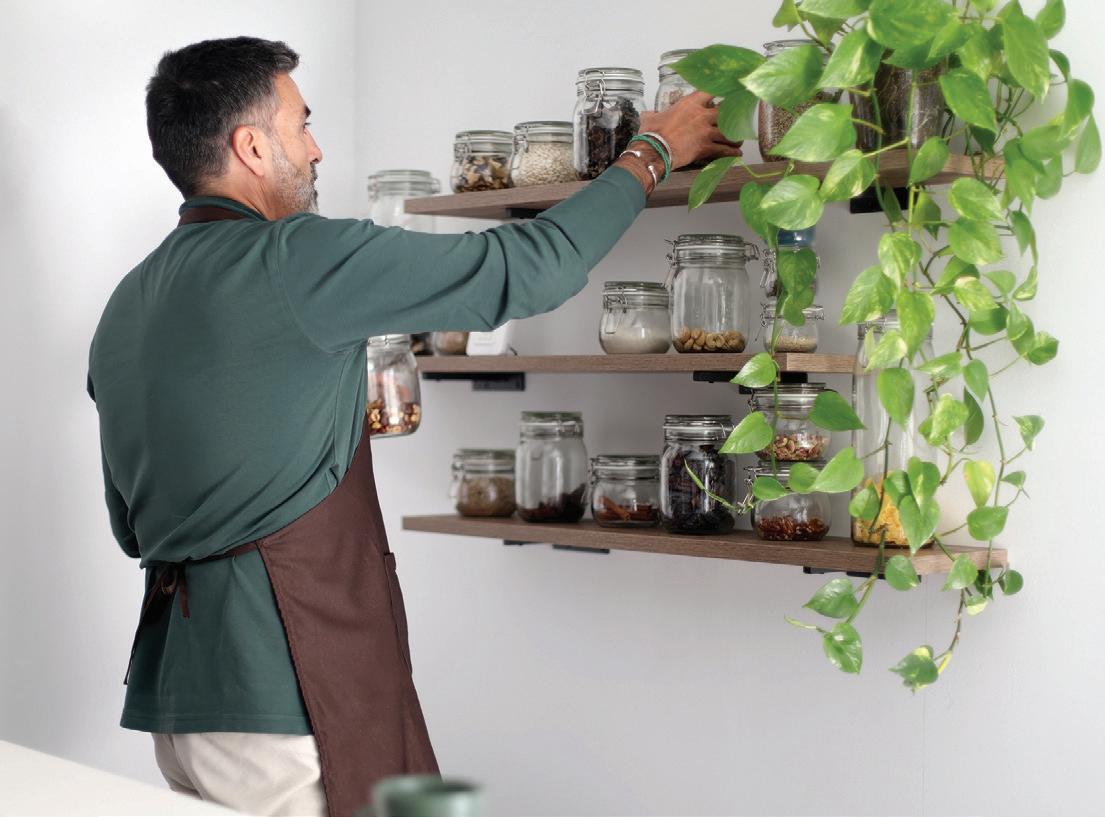
Clutter and disorganization can be a source of stress, while a tidy space promotes efficiency and mental well-being. In the kitchen, a well-ordered pantry aids meal planning, but a sustainable one goes even further, safeguarding our health and the planet. Revamping food storage can be as simple as using glass jars for grains or as innovative as adding hanging baskets and shelf risers for more space. Choosing reusable, eco-friendly containers and adopting an efficient system to prevent waste can nourish us in unexpected ways.
“A calm, well-organized pantry reduces decision fatigue and makes home cooking feel manageable rather than overwhelming,” says Nassim Secci, owner of The Happy Space Company, in Hong Kong. “When nutritious ingredients are easy to see and reach, they naturally become the default option.”
Start With the Basics
A busy schedule can make us forget what is at the back of the cupboard. Secci suggests the simplest and most impactful first step is to take everything out and inventory what is already
there. “Most pantries aren’t unsustainable because of what’s in them, but because of what’s forgotten. When items are hidden or duplicated, we overbuy, waste food and lose track of expiration dates.” Secci encourages clients to consider what they truly use and consistently waste before buying new containers or reorganizing.
Keep Items Fresh
Designate specific shelves or areas as “use first” zones to minimize food waste and overbuying, helping to ensure freshness. For Joana Fernandes, founder of Sage Home Harmony, in San Francisco, visibility is key. “Use clear jars with labels. Color coding helps. Keep items you use often on easy-tograb shelves and items you use infrequently on a higher shelf. For example, I had a client who only bakes during the holidays, so baking items were kept higher. When she was ready to bake this year, all items were in one place, and she double-checked her inventory before shopping.”
Fernandes prefers airtight metal or glass containers; for flour, sugar and rice, she uses food-grade stainless steel locking buckets, which are rodent- and pest-resistant. Classic Ball and Bormioli Rocco glass jars add a timeless touch to any pantry shelf, while silicone storage brands like Stasher and ZipTop offer versatility and color options.
Group similar items together at eye level, especially everyday grains, cereals, breakfast
items, flours and sugars. Reserve a special shelf for locally sourced products like honey and specialty items for practicality and a sense of connection.
Optimize Space
For those without a walk-in pantry, use bookcases to create pantry shelves in a dining room, kitchen or even an unused coat closet. A metal over-the-door rack or canvas organizer can hold spices, herbs, condiments, oils and small items, especially in galley kitchens. Other vertical storage ideas include lazy Susan towers, stackable containers and under-shelf drawers for canned goods and bulk items. Tiered shelving or risers prevent items from disappearing at the back.
Although storing food in glass and metal containers thwarts ants and mice, cleaning the storage area regularly with a natural solution is advisable. Secci recommends a simple vinegar and water solution
for shelf cleaning, baking soda for odors, and essential oils like peppermint or eucalyptus on cotton pads or in sachets to deter pests.
The Bigger Picture
Focus on organic whole foods and fair-trade items, and source ingredients from local businesses and farmers markets. Shifting our mindset adds abundance to our lives when we use leftovers, compost, buy in bulk and support brands with ethical, regenerative practices.
Add a personal touch by hanging dried herbs or flowers or a whimsical kitchen witch over pantry shelves. For convenience, Fernandes suggests keeping a running list of needed items using an app or pen and paper to stay organized before shopping.
Luis Rojas
Estudio/Shutterstock
Zak Logan is a freelance writer dedicated to healthier living.
Data-Driven Wellness
Functional Lab Testing To Personalize a Healthy Lifestyle
by Hannah Tytus
Functional lab testing extends beyond conventional tests to assess body systems such as gut function, hormone balance, nutrient absorption and detoxification. By analyzing a broader range of biomarkers and using wider reference ranges, practitioners can design personalized nutrition, lifestyle and supplement strategies that address the underlying drivers of health.
When applied judiciously, functional testing empowers patients with actionable insights, guiding them toward improved digestion, nutrient utilization, hormonal balance and overall well-being. Dr. Aumatma Simmons, a double board-certified naturopathic doctor and endocrinologist, underscores the importance of collaborating with a professional before undertaking functional lab testing to save time, money and confusion. Not all tests are equally reliable, and an experienced practitioner can help separate the fluff from the facts.
“I do not like to over-test because of the expense. If an elimination diet brings symptom relief, for example, then less testing and fewer supplements are needed,” states Lorraine Maita, M.D., an internal, integrative and functional medicine specialist at The Feel Good Institute.
Limits of Conventional Lab Work
“Conventional lab testing is designed based on averages, and those averages are not always what’s optimal,” explains Simmons, noting that many conventional reference ranges are broad, encompassing a diverse population without specifying what truly constitutes ideal health. From a functional perspective, she says, lab tests are interpreted with a focus on optimizing health, rather than merely adhering to the normal range.
According to Maita, another limitation of conventional lab tests is that they
solely indicate the presence of nutrients in the bloodstream without providing insight into the body’s actual absorption or utilization of those nutrients. “Just because you’re eating healthy does not mean that food is being digested, absorbed and assimilated. A lot of blocks can happen along the way,” she explains, adding that functional lab testing adds more detail to help clarify what is really going on in the body.
Common Functional Testing
Stool Test for Gut and Immune Function:
A stool test examines the presence and absence of microorganisms to gain a better understanding of the gut microbiome within the body. In addition to taking a census of the various beneficial bacteria, this test also assesses the presence or absence of specific digestive enzymes, parasites, worms, yeast or inflammation markers. In Maita’s practice, this test allows her team to provide personalized, precision medical care to address microbiome imbalances and immunological stressors.
Food Sensitivity Testing: These tests are designed to assess the immune system’s reaction to specific foods or food additives. The Mediator Release Test (MRT), used by Simmons, “looks at all of the specific white blood cells in the body and how they respond to a specific food,” she explains. Unlike allergy tests that detect immediate reactions, the MRT identifies delayed immune responses that may cause bloating, fatigue, headaches, joint pain, skin issues or other chronic symptoms. According to Simmons, the results guide personalized dietary modifications to reduce inflammation and enhance overall wellness.
Maita notes, “Food sensitivity testing is sometimes helpful for people who can’t tell what their trigger foods are by just doing an elimination diet. I like to use the Vibrant Wellness
test. It will show them if they’ve made antibodies to food, which suggests how well they might do when they remove those foods.”
Functional Nutrient Test: While conventional testing measures the presence of nutrients in the bloodstream, an intracellular blood test—also known as micronutrient testing or functional nutrient testing—measures nutrient levels within red and white blood cells, thus determining whether nutrients are being properly absorbed and utilized by the body.
“A lot of people are taking supplements, but their GI [gastrointestinal system] isn’t absorbing any of it,” Simmons points out, highlighting how functional testing can uncover hidden inefficiencies that standard blood tests and supplementation alone might miss. Citing the trending supplement CoQ10 as an example, she notes that a functional nutrient test may suggest that a patient should take a different form of the supplement for better absorption.
Dried Urine Test for Comprehensive Hormones (DUTCH): This test provides a comprehensive analysis of adrenal and sex hormone function. Unlike conventional cortisol tests, the DUTCH measures levels four times throughout the day and evaluates cortisol metabolites to explain how the body produces, converts and eliminates cortisol each day.
The DUTCH is also invaluable as a way of mapping the body’s ability to process estrogen. “This is critical because symptoms often attributed to estrogen dominance—such as breast tenderness, irritability, premenstrual syndrome and sub-fertility—are frequently caused, not by excess estrogen itself, but by metabolite buildup or impaired clearance pathways, in which case specialized diindolylmethane (DIM) supplements would be prescribed to support estrogen metabolism,” Simmons explains. “This illustrates why the professional interpretation of DUTCH testing is essential: because it shows whether a hormone imbalance is truly about excess, impaired metabolism or faulty elimination, allowing interventions to be tailored accurately, rather than relying on generalized supplement advice.”
Hannah Tytus is an integrative health coach, former writer at the National Institutes of Health and host of the Root Shock podcast, exploring our understanding of health.
MMerellinn/AdobeStock
Stress-Free Fitness
The Role of the Nervous System in Exercise Recovery
by Marlaina Donato
High-intensity interval training (HIIT) can lower the risk of cardiovascular disease and cancer, stabilize blood sugar levels, improve body composition and combat depression, but, during times of stress, it can become counterproductive. Chronic stress triggers a steady release of hormones such as cortisol and epinephrine, keeping the sympathetic nervous system in overdrive.
Hitting the gym too hard or too often when we have too much on our plate disrupts the vagus nerve’s ability to shift gears and bring the body back into balance. This is when we might notice fat storage (particularly around the belly), an increased appetite, fatigue, systemic inflammation and lack of muscle gain.
“If you are working out hard and constantly stressed, you are basically fighting against yourself,” says Stephanie Mansour, a Today Show fitness contributor who also provides daily motivation on her fitness app, Step It Up With Steph. “During this time, your cortisol levels spike and make it harder for your body to use insulin properly, which slows down fat burning and even breaks down the muscle that you have been working so hard to gain.”
Feeling wired but tired, experiencing mood swings and getting sick more often are signs that it might be time to dial things back and focus more on recovery. To initiate a parasympathetic response—the other branch of the autonomic nervous system that helps the body reset—it might be a good time to
consider alternative forms of exercise and a diet rich in nourishing foods. Stanford Lifestyle Medicine recommends moderate cardio exercises such as walking, swimming, cycling or light jogging, along with restorative practices like yoga, breathwork, tai chi and Pilates.
Move To Reset and Rest To Recharge
Cindy Brauer, the founder of Mojo Fitness, in Berwyn, Pennsylvania, advocates for a combination of rhythmic flow exercises, followed by intentional cooldowns to activate the parasympathetic system and strengthen vagal integrity.
“Different movement styles speak different languages to the nervous system,” she explains. “Our HIIT-based dance fitness techniques provide a powerful sympathetic challenge. We use creative, ever-changing movement patterns that intentionally elevate heart rate, engage the lungs and stimulate the brain, helping trigger the release of brain-derived neurotrophic factor (BDNF), a crucial protein that supports brain health, learning and adaptability.”
At the end of each class, Brauer leads participants through a series of extensive stretches, balance exercises and breathing techniques. She emphasizes the importance of consistent routines that strike a balance between predictability and flexibility, enabling the nervous system to feel secure while preserving its capacity for movement.
For nervous system regulation, Mansour recommends a combination of HIIT and yoga or stretching, acknowledging that individual needs may vary at different times. “When balanced, both types of modalities can sustain energy levels throughout the day and facilitate relaxation and unwinding at night, creating a workout system that works best for you.”
In addition to switching up routines,
complementary strategies include saunas, cold plunges for vagal tone enhancement and somatic therapies such as myofascial release. Resting without external stimuli like smartphone scrolling can have far-reaching benefits, too. “I encourage my clients to prioritize
glycogen stores, repair muscle tissue, lower inflammation and bolster the immune system. Supporting a healthy microbiome by eating prebiotic-rich foods like oats, apples and flaxseeds can enhance nutrient absorption and aid recovery, especially after exercise. Anti-inflammatory foods rich in healthy fats, including walnuts, eggs, omega-3-rich fish and avocados, will help balance the nervous system.
Brauer highlights the importance of consuming healthy carbs, which support the production of serotonin, a neurotransmitter and hormone that regulates happiness and calmness. Her other recommendations include staying hydrated, getting enough minerals (particularly magnesium and potassium) and practicing mindfulness. “Slowing down at mealtime, chewing fully and eating without constant distractions sends a powerful signal to the vagus nerve that it’s safe to rest and digest,” she adds.
The Hydration Habit
Helping Kids Thrive With Every Sip
by Christina Connors
Hydration is one of the most overlooked pillars of children’s health, even though it affects nearly every aspect of how they think, feel and function. Because kids have a higher percentage of total body water, approximately 65 to 80 percent, even slight dehydration can ripple through their day in ways both subtle and significant. The American Academy of Pediatrics recommends four cups of fluids daily for 1-to-3-year-olds, five cups for 4-to-8-year-olds and seven to eight cups for older children. Plain water is the best choice.
Hydration Hurdles
Kids face unique physiological challenges when it comes to staying hydrated. A 2025 systematic literature review in Children revealed that youngsters are frequently dehydrated. About 81 percent of the studies reported dehydration among child athletes, while 69 percent of the studies observed dehydration in non-athletic children, as well.
“In adults, a loss of 2 percent body weight in fluids has adverse effects, but in children, those negative effects are thought to occur at only a 1 percent loss,” explains Heather Mangieri, a registered dietitian nutritionist and author of Fueling Young Athletes: Essential Foods and Fluids for Game Day—and Every Day. Kids don’t always recognize when they’re thirsty. The youngest are especially susceptible to dehydration because they cannot independently communicate their thirst to caregivers or access fluids. School restrictions on bathroom breaks, limited water access and distractions all contribute to children falling behind on fluids.
Hidden Impacts on Brain and Body
“Research has shown that dehydration negatively impacts cognitive performance, particularly in the areas of attention, memory and focus,” says Mangieri. “When kids struggle to concentrate and process information, that can lead to learning challenges.”
A 2019 study published in The Journal of Nutrition involving 9-to-11-year-old participants demonstrated that four days of increased water intake led to improvements in working memory and cognitive flexibility—the mental ability to shift perspectives, adapt thinking and change strategies in response to new information or changing demands.
Yet signs of dehydration often go unnoticed. “Noticeable thirst is one sign, but other signs are vague and often missed,” explains Mangieri. “Less obvious signs are headache and lightheadedness, irritability, nausea, difficulty paying attention, weakness and fatigue.” She recommends monitoring urine color: pale yellow indicates good hydration, while dark yellow signals dehydration.
Adopting Lasting Practices
Small, consistent strategies can transform a child’s hydration status, and with it, their daily resilience. Start the day with water before breakfast. After hours of sleep, children wake naturally dehydrated. Create “sip-time” moments at predictable transitions, including when they return home from school, before homework and before bed.
“One of the best ways parents can help promote healthy drinking habits from a young age is by modeling the behavior themselves,” Mangieri counsels. “When kids see their parents filling up their water bottle, carrying it around and drinking from it, they are more likely to develop that habit, too.”
She also recommends letting kids choose and decorate their reusable water bottle. Because drinking out of a straw tends to increase
the amount of water consumed without even realizing it, choosing a water bottle with a straw can help. Other fun ideas include colorful twisty straws, ice cube trays in fun shapes and adding juice from defrosted frozen berries for natural flavoring.
Hydrating foods are integral to good hydration. This includes fruits and vegetables with high water content such as cucumbers, watermelon, celery and tomatoes. “For kids that don’t care for plain fruit, it can be added to oatmeal or yogurt, or pureed and frozen into popsicles, or blended into a smoothie,” Mangieri suggests. “Soups and stews are also great options for picky eaters.”
Added Needs for Active Kids
With sports drinks marketed aggressive ly to young athletes, many parents won der whether electrolytes are truly neces sary. Mangieri clarifies, “Children that eat a well-balanced diet and drink ade quate fluids can most often get all of the nutrients they need without the use of electrolyte-replacement beverages.”
She notes that children participating in exhaustive exercise for more than an hour, especially in hot, humid weather, may benefit from electrolyte beverages. How ever, she explains, “Even active kids that sweat a lot can replace their losses without using an electrolyte drink. Since sodium is the main electrolyte lost in sweat, eating
sodium-containing foods before and after activity, along with drinking water, can help replace what was lost in sweat.”
The Power of Small Changes
Hydration is foundational self-care supported by simple strategies: a reusable bottle, a morning routine, hydrating foods and consistent encouragement. These tools sharpen focus, stabilize mood, fuel energy and support growing bodies. Start this week with one change: a new, cool-looking water bottle, a morning hydration ritual or cucumber-and-mint-infused water in the fridge. Watch what unfolds when their bodies get what they need, sip by steady sip.
Christina Connors is a writer, keynote singer and workshop facilitator. Learn more at ChristinaConnors.com.
Pet Reactions to Food
How To Ease Their Discomfort
by Ruth Roberts, DVM, CVA, CVH, CVFT, NAN
Persistent itching, recurrent ear infections, digestive upset and dull coats are common in pets and often indicate a food reaction. Distinguishing food allergies from sensitivities can be confusing because their symptoms often overlap. However, understanding the difference is essential to arrive at an accurate diagnosis, effective dietary strategies and better long-term outcomes.
Food allergies occur when the immune system misidentifies a normally harmless food as a threat and triggers an inflammatory response. According to a 2023 article published in the Journal of the American Veterinary Medical Association, when the immune system’s tolerance to food breaks down, the response involves either antibodies or immune cells like T-cells. Common symptoms include persistent itching, recurrent skin or ear infections, vomiting, diarrhea or a combination of skin and tummy symptoms. Over time, even small amounts of the offending ingredient can provoke noticeable reactions.
Food sensitivities, also referred to as food intolerances, differ from food allergies because they do not involve antibodies or immune cells. Instead, food intolerance arises when foods overwhelm the
pet’s digestive capacity, its metabolism or its normal gastrointestinal function. Common symptoms include intermittent diarrhea, gas, vomiting, variable itching and changes in energy or behavior, with reactions often appearing hours or days after the food was eaten.
Although food allergies and food sensitivities can exhibit similar skin and gastrointestinal signs, veterinarians differentiate between them based on reaction patterns, dose sensitivity, timing and response to dietary intervention, rather than relying solely on symptoms.
Dietary Triggers and the Role of Elimination Diets
Food allergies are most often caused by specific proteins. A 2016 study published in BMC Veterinary Research indicates that the most prevalent allergens in dogs include beef, dairy, chicken, wheat and lamb; while in cats, beef, fish and chicken are most frequently implicated. Food sensitivities, on the other hand, are usually related to how the pet’s body handles certain ingredients. These reactions may occur when foods are highly processed, contain additives or are difficult for the pet to digest, rather than being caused by the immune system.
The most reliable way to identify the problematic food is through an elimination diet, followed by gradual reintroduction of ingredients. During the elimination phase, pets are fed a simplified diet with ingredients they have rarely or never eaten. All treats, flavored medications, supplements and table foods are removed during this process. This phase typically lasts eight to 12 weeks, although chronically affected pets may require a longer duration. Signs like itching, vomiting, diarrhea or ear problems are meticulously monitored. Once symptoms improve or stabilize, individual ingredients are slowly reintroduced one at a time, with several days separating each addition. If symptoms return after a specific ingredient has been reintroduced, that food is identified as the trigger.
A 1994 study published in the Australian Veterinary Journal demonstrates that an elimination diet can lead to improvements, and the recurrence of symptoms confirms food-related reactions. This method also helps veterinarians determine whether the reaction is more consistent with a genuine allergy or a non-immune sensitivity, thus guiding long-term dietary management.
Supporting Healing From the Inside Out
Dr. Peter Dobias, a conventional and integrative veterinarian, emphasizes that food sensitivities and food allergies should be viewed as expressions of deeper systemic imbalances rather than isolated dietary shortcomings. He explains that regardless of whether a pet develops a sensitivity or an allergy, the underlying contributors frequently overlap. These include genetic predisposition, toxin accumulation, nutrient deficiencies, gut dysbiosis (imbalance), chronic stress and limited dietary diversity during early development.
Dobias treats both allergies and sensitivities with foundational restoration rather than symptom suppression. His approach includes feeding species-appropriate, minimally processed whole foods; providing essential nutrients like omega-3 fatty acids, probiotics, vitamins and minerals; supporting liver detoxification; and maintaining
spinal and structural health. While allergies often appear more acutely and require immediate management, he stresses that addressing underlying imbalances benefits both conditions.
“Allergies are a signal that the body’s systems and metabolism need support, not just that a single food needs to be eliminated,” Dobias asserts. This perspective helps explain why quick dietary fixes often fail. Removing a single ingredient without addressing
digestive capacity, detoxification or inflammation may temporarily reduce symptoms, but it does not resolve the conditions that allowed reactivity to develop. Effective dietary intervention therefore requires structure, patience and a broader understanding of how food interacts with the whole system.
Ruth Roberts, an integrative veterinarian and holistic health coach for pets, is the creator of The Original CrockPet Diet. Learn more at DrRuthRoberts.com.
Gardening Our Dreams
by Marlaina Donato
Like spring seeds carried by the wind, we sometimes find ourselves in unfamiliar circumstances, unsure of how we arrived there. Whether we believe it to be chance or choice, it is up to us to seize opportunities for growth. When confronted with the unknown, uncertainty can yield to a sense of empowerment if we recall that each day presents a banquet of choices, and the small decisions we make daily are acts of self-nourishment.
Spring can be a clean slate—a fresh, thawed soil in which to sow something courageous and new. With the wisdom gained from our winters, we can travel forward, even if we don’t have a map to guide the way. In the beginning, all we need is a spark, and it is okay if no one else sees its potential to ignite.
The renowned artist and sculptor Michelangelo believed that every block of stone contains a masterpiece waiting to be discovered and set free. Seasoned gardeners meticulously plan their harvests long before the first warm days appear, stockpiling seed catalogs and mapping out goals. Inspired chefs court flavor pairings, and expectant
mothers design nurseries. Perhaps we need to remember that we are all creators in our own right and capable of trusting our own vision.
Many of our aspirations are thwarted by decision paralysis because we overanalyze and ignore intuition. A more promising path may be to combine passion with patience, allowing each small step to organically lead into another. Maintaining our focus in the present moment and keeping our eye on the path—rather than the destination—leaves room for an outcome more fruitful than we might have imagined.
This month’s to-do list:
• Trust inspiration.
• Start a journal to record ideas and build upon them.
• Cheer for someone else’s goals.
Marlaina Donato is an author, artist and composer. Connect at WildflowersAndWoodSmoke.com.
Connecting you to the leaders in natural health care and green living in our community. To find out how you can be included in the Community Resource Guide, call 839-228-1158 or email MsTracy@MidlandsNA.com.
With compassion and a deep clinical understanding of Traditional Chinese Medicine (TCM), this practice collaborates with clients to address common concerns such as chronic discomfort, muscular tension, digestive irregularities, and stress-related cranial pressure. Care is grounded in the principles of Chinese Medicine and designed to support the body’s innate self-regulating mechanisms. Rather than focusing solely on isolated symptoms, attention is given to identifying underlying patterns of imbalance—allowing for a more comprehensive approach to restoring harmony, promoting vitality, and optimizing overall function. Through a personalized and holistic framework, clients are supported in achieving balance, resilience and longterm well-being using natural, time-honored methods of care.
CHIROPRACTIC
DOWDY RUDOLPH CHIROPRACTIC LLC
Dr. Dowdy Rudolph, DC 1444 Barnwell St, Columbia 803-376-6293 • DowdyRudolphChiro.com
Dr. Gerald Rudolph, DC, focuses on finding the root cause of your problems and not just treating your pain. He utilizes digital X-rays to help diagnose problems, spinal adjustments to stimulate proper movement of spinal and extremity joints, active therapeutic movement exercises to correct movement disorders, and spinal decompression to help relieve numbness and tingling down your arms and legs. Dowdy Rudolph Chiropractic also offers a state-of-the-art full-body lounge hydromassage table that can help you feel more rejuvenated and relaxed. See ad, page 31.
Spring is far more than just a changing of seasons; it’s a rebirth of the spirit.
—Toni Sorenson
COLON HEALTH
SPRING RAIN HYDROTHERAPY
Linda Salyer
120 Kaminer Way Pkwy, Ste H, Columbia 803-361-2620 • LSalyer@ymail.com
All disease begins in the colon. Constipation; slow, sluggish bowel; gas and bloating? A colonic will help to rid you of these problems. Colonics promote good digestion, help speed metabolism, help lower cholesterol, and help relieve joint pain. Linda Salyer is IACN certified and a retired nurse. Saturday appointments available with an additional small convenience fee. See ad, page 15.
Dr. Malai Roper is a metaphysician and holistic wellness guide offering therapies that honor the body, mind and spirit. She blends indigenous traditions and metaphysical guidance into personalized experiences for women seeking balance and renewal. Her work creates a safe space for feminine healing, supporting rest, release and reconnection with inner wisdom. Through energy healing, sound medicine and soul work, Dr. Malai helps women reclaim their vitality and align with their true essence. She hosts wellness retreats and offers in-person and online certification trainings in Reiki and Sound Healing. See ad, page 29.
FOOT WELLNESS
FOOT SAVI
7001 St Andrews Rd, Ste A Certified Board Pedorthist and Brace Specialist 803-781-1230 • FootSavi.com
With more than 30-plus years in the footcare/footwear industry, Sion Owen helps with a variety of issues, including gait analysis, foot assessments, custom orthotics, bracing and compression therapy, plantar fascia pain, neuropathy and fitting for therapeutic shoes for patients with diabetes, arthritis, painful bunions, callouses and hammer toes. Call to schedule an appointment! See ad, page 6.
GRIEF AND BEREAVEMENT RESOURCE CENTER INC
Sylvia Grant, MSW, BSW, GC-C 140 Stoneridge Dr, Ste 430, Columbia 803-606-3032 (text) or 803-386-9069 (call) Info@GriefAndBereavementrc.org GriefAndBereavementrc.org
The Grief and Bereavement Resource Center, founded by Army veteran Sylvia Grant, MSW, provides compassionate support, counseling and educational resources to help individuals and families navigate loss. Rooted in community care, the center empowers people to process grief, find healing, and thrive through shared support and professional guidance. It’s time to stop hurting and start healing. You don’t have to do it alone. Call to make an appointment today.
UNITY IN HEALING
Leah Saliter, Yoga Teacher, Death Doula UnityInHealingllc@gmail.com UnityInHealingllc.com
Embark on a journey of gentle healing and soulful restoration. Unity in Healing offers compassionate, body-centered practices that support you through grief, stress, transition and growth. Through yoga, breathwork, meditation, spiritual care and grief support, we create space for you to soften, listen inward and reconnect with what brings you steadiness and peace. Our offerings are designed to meet you exactly where you are, honoring your story, your body and your pace. Whether you are navigating loss, seeking grounding in a busy world, or longing for a deeper sense of meaning and connection, Unity in Healing provides a nurturing space where rest becomes medicine, presence becomes healing and community becomes a source of strength.
HEALTH & WELLNESS
ORIGINAL ORIGINS HEALTH AND WELLNESS
Tracy R. Jacox
MsTracy@originaloriginshealth.com
OriginalOriginshw.com
Ms. Tracy has over 30 years of experience in the medical field. Original Origins can assist you with maximizing your health and wellness holistically! Our wide range of services include health coach partnering, comprehensive health evaluations, comprehensive cooking experiences, and a comprehensive kitchen evaluation. Your health is your wealth! See ad, page 33.
POSITIVE PROJECTIONS LLC
Donna Mack
803-766-4913
PositiveProjectionsllc@gmail.com
PositiveProjectionsllc.com
Donna Mack and her team bring over 30 years of combined experience in offering health and wellness classes. Our courses are designed to empower participants to live their healthiest and happiest lives as they age. We’ve seen firsthand how gaining greater understanding of health impacts and making simple changes in lifestyles can lead to real healing. We offer a signature Healthy Body Health class to provide you with an “owner’s manual” for your body, offering practical tools and a personalized plan to help you take charge of maintaining your health for a lifetime. Call to make an appointment today.
HERBS & DETOX
SPHINX PAW
3400 Two Notch Rd, Columbia 803-754-3922
SphinxPaw.com
Discover a haven for holistic well-being at Sphinx Paw. Sphinx Paw has been at the forefront of healing in the Columbia area since 2007. We offer a diverse selection of herbs, books, candles and incense to support natural detoxification, personal healing and spiritual growth. Embrace your wellness journey with our thoughtfully chosen products and expert guidance. Our distinctive resources promote holistic self-care, natural detoxification, weight loss, personal healing, and spiritual growth throughout all phases of life. Sphinx Paw has everything you need to support you in a life of health excellence and well-being.
INTEGRATIVE & HOLISTIC MEDICINE
EXPECT WELLNESS
Dr. Rachel Hall
130 Suber Rd, Columbia 803-796-1702 • DrRachelHall.com reception@drrachelhall.com
Find us on Facebook for great health tips. Integrative/Holistic medicine consults for anyone wanting to approach their health more naturally. Dr. Rachel Hall is board certified in both family medicine and integrative holistic medicine. Together we will focus on finding the root of the problem, not just treating symptoms. Call today for a consult if you are looking to achieve balance. In-house diagnostic labs and therapies. See ad, page 27.
LOCAL RETREAT
JOY LEE CONNOR
Healing Minster at Springhill AtONEment Center 803-447-6499
Joy has more than 30 years of experience in energy and bodywork. She teaches Reiki, Touch for Health, Meditation, Yoga, Ayurveda and A Course in Miracles. Joy welcomes and sees clients who are ready to shed guilt and limitations in favor of forgiveness and freedom. One hundred acres of trees surround this pristine location for healing at Springhill AtONEment Center. Nature walks and fireside gatherings available. Contact Joy at 803-447-6499.
MASSAGE THERAPY
JAN SHAW PERSONAL TRAINING & MASSAGE
(MAS1935)
806 12th St, West Columbia 803-360-7895 • JanShawHealth.com
Jan Shaw has many years of experience in exercise physiology and massage. She specializes in the John F. Barnes method of Myofascial Release Therapy; holds an M.S. in Exercise Science; has worked in rehab medicine for 10 years re-training patients with a myriad of physical injuries; and is skilled in MFR 1, 2, Unwinding, SES and Cervicothoracic. Whatever your needs, Shaw has the education and experience to help you.
SKIN THERAPY
LUVEVA AESTHETICS SPA
Eva Rigney, RN
Certified Esthetician 630-17 Promenade Pl, Ste 401, Columbia LuvevaSpa.GlossGenius.com
Eva Rigney is an Aesthetic Nurse and an Army Veteran. She has been in the medical field for more than 20 years and focuses on her lifelong passion of skin care. She incorporates updated and newest innovations in esthetics, such as permanent makeup (PMU), including 3D areola, Botox and more. She enjoys providing facial and body treatments, along with advanced techniques. She shares her knowledge on skin care, and assists with recommendations of the Luveva skin care line. “My goal is to help everyone achieve revitalized healthy skin,” she says.
SPIRITUAL CENTER
CELTIC WISDOM CENTER
Edwina@CelticWisdomCenter.com
CelticWisdomCenter.com
The Celtic Wisdom Center is an eco-spiritual nonprofit community that embraces Celtic worship, contemplative practices, and spiritual direction. Through unique offerings like wander walks and contemplative nature experiences, we invite individuals to connect with the divine through nature and engage in Earth-centered practices that foster spiritual community. At the Celtic Wisdom Center, the timeless wisdom of the Celtic spiritual heritage helps transform the ordinary into the sacred. This is a holy and safe space to explore your spiritual path, deepen your connection with the divine, care for the Earth, and find a supportive community dedicated to holistic living. All are welcome.
THERAPEUTIC SEWING
SEW AND HEAL
Jacquelyn Odom
7825 Broad River Rd, Ste 200, Irmo 828-590-1228
SewAndHeal@gmail.com
SewAndHeal.My.Canva.Site
Sew and Heal is a nonprofit organization founded by Jaqueline, inspired by her journey of using sewing as an outlet to overcome the challenges of PTSD, anxiety and depression stemming from her military trauma. The organization empowers women and children to find healing and creativity through the art of sewing, turning pain into purpose. Sew and Heal provides a safe and supportive space for healing through sewing. Their mission is to foster emotional well-being, creativity and connection.
THERMOGRAPHY
ABOUT YOUR HEALTH INC
120 Kaminer Way Pkwy, Ste J, Columbia 803-798-8687 • AboutYourHealthSC.com
The nourishment of body is food, while the nourishment of the soul is feeding others.
—Ali ibn Abi Talib
Make sure to let our advertisers know you found them in
For 20-plus years, we’ve helped people find answers and direction with health education and natural wellness services. Thermography (offered since 2009) is a comfortable, no-radiation, noninvasive scan that maps heat and circulation patterns, often showing change before symptoms. Because your body has a unique thermal pattern, shifts over time can suggest imbalances. It’s widely used to monitor breast health and for whole-body screening. We also provide personalized support through Consults, Live/Dry Blood Cell Observation, Mild Hyperbaric sessions, Ozone Therapies, AquaChi Foot Baths, Far Infrared Sauna and more. If you’ve been feeling stuck, overwhelmed or unsure where to begin, call us. We’ll help you take the next step. See ad, page 29.