THE RISE OF SCIENCE PODCASTING THE MILITARY–ACADEMIC RESEARCH COMPLEX
TRI-I EXTRACURRICULARS, NEW AND RENEWED
Editor-in-Chief
Mia Haraguchi
Senior Editor
Merima Šabanović
Associate Editors
Cecilia Cuddy
Lola Neal
Eeshaan Rehani
Copy Editors
Juan Sebastián Andrade-Martínez
Cecilia Cuddy
Sarah Foust
Marina Schernthanner
Michelle Yu
Layout Designers
Griffin Dennis
Sarah Foust
Mia Haraguchi
Merima Šabanović
Yuko Tonohira
Cover photos by Nicholas Ruiz-Huidobro Magdits
Platforms, Podcasts, and Politics
By Valerie Gallegos
Graffiti
As someone who grew up chronically online, I never would have guessed that dance videos and SpongeBob memes could be used as tools for teaching science. Yet here we are. Scientists and medical professionals are breaking down complex concepts through TikToks, tweets, and podcasts. Social media has made science approachable and accessible to individuals far outside the ivory tower. Scientists, both young and old, have carved out their niche across the many platforms available today by adding science twists to viral trends, opening up about challenges they have faced while doing research, and communicating their findings in an easily digestible manner.
However, these same platforms utilize algorithms that prioritize emotionally charged content and reinforce one’s existing beliefs. All-or-nothing statistics, half-truths, and intense personal testimonies often blur the line between fact and fiction. Misinformation can spread quickly and have serious real-world consequences.
COVID Misinformation Fueled by Politics and Algorithms
The COVID-19 pandemic brought the science community into the spotlight as people searched for information about the virus. Many scientists and public health experts appeared on popular podcasts, or started their own, to provide some clarity amid the chaos. In the U.S. alone, the number of podcast listeners grew as much as 40% from 2019 to 2022. The accessibility of podcasts made them a major source of entertainment and information. As science communicators reached new audiences, so, too, did those promoting doubt in vaccines, public health agencies, and science itself. The health freedom movement—which argued that mask mandates, required vaccinations, and lockdowns were government overreach—gained traction across conservative podcasts and social media, turning some platforms into breeding grounds for misinformation.
The Joe Rogan Experience, which has topped the podcast charts for years, quickly turned
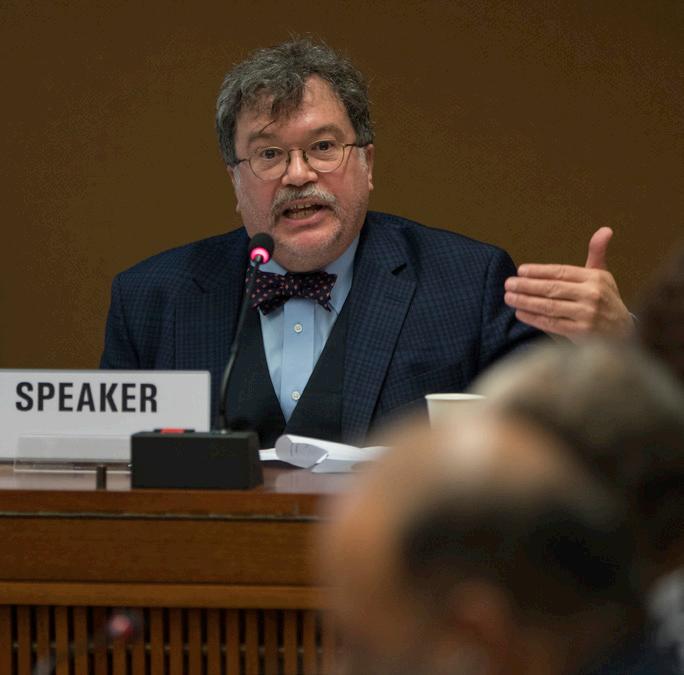
into a platform for anti-vaccine sentiments and misinformation. Early in the pandemic (April 2020), Rogan hosted Dr. Peter J. Hotez, an alumnus of the Tri-I M.D.-Ph.D. program who has experience in vaccine development and public health, to discuss the potential progression of the coronavirus pandemic. At the time, Rogan emphasized the importance of scientific research and pandemic prevention—a striking contrast to the anti-vaccine rhetoric that would emerge in later episodes, apparently in response to government vaccination mandates.
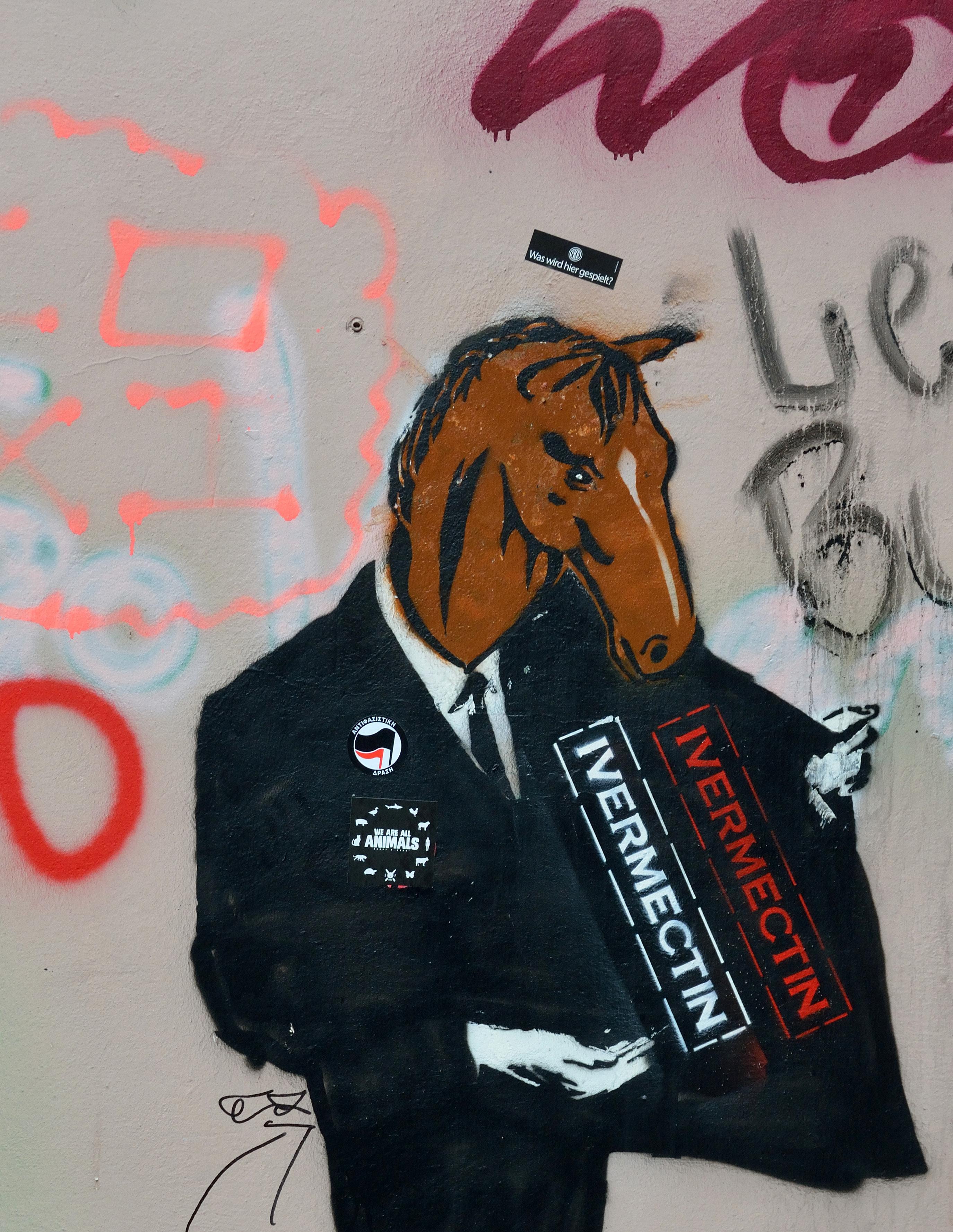
Rogan claimed that he wasn’t an anti-vaxx person and said that listeners shouldn’t take his medical advice, but he also defended hosting individuals, including medical professionals and scientists, who were known for spreading misinformation. In September 2021, Rogan announced that he had contracted COVID and was being treated with ivermectin, an anti-parasitic drug. Ivermectin surged in popularity afterward, arguably due to Rogan’s consistent promotion of the drug.
In addition to Rogan’s personal testimony, The Joe Rogan Experience featured medical professionals and scientists, including Dr. Bret Weinstein and Dr. Pierre Kory, who were staunch supporters of ivermectin. Dr. Kory, a practicing physician, prescribed ivermectin to patients despite a
“I began to use ivermectin in my practice ... and I have consistently witnessed reproducible, temporally associated improvements in at least one important symptom of COVID-19, whether it be fever, fatigue, chest tightness, cough, or sore throat.”
Dr. Pierre Kory
companies were censoring them, arguing that ivermectin was not approved by mainstream science because there was “no money to be made off of it.” Kory backed up his support for ivermectin by citing published trials and articles that discussed ivermectin’s efficacy in infected patients.
Many of these articles, however, were later found to be flawed or misleading, and some were outright retracted. On the podcast Science Vs, Kory was confronted with this evidence, but he continued to stand by his position. Kory’s refusal to acknowledge changing or discredited data highlights a larger issue: the selective use of scientific studies by scientists and medical professionals can mislead the public and catalyze further distrust, even if this was not the original intention.
This kind of misrepresentation of data can be life threatening, which unfortunately became apparent during the later stages of the pandemic. As ivermectin was touted as an alternative to vaccination, the health freedom movement was taking full form in more conservative communities, often fueled by right-leaning politicians and social media influencers. An October 2021 poll conducted by the Kaiser Family Foundation indicated that out of the 27% of respondents who were not vaccinated against COVID-19, 60% identified as Republican or Republican-leaning Other reports later identified that counties with more conservative views had higher reported COVID-19 deaths than Biden-leaning counties, which might have been prevented through vaccination.
Tactics Used to Spread Misinformation
Wlack of guidance from the Centers for Disease Control and Prevention or medical boards. While on the podcast, Weinstein and Kory claimed that the government, mainstream science, and pharmaceutical
e are now five years away from the start of the COVID-19 pandemic, but distrust in science has remained at an all-time high. The health freedom movement is still alive and well on various social media platforms and even among high-level political appointees (I’m looking at you, RFK Jr.). We are witnessing public health crises arising from anti-vaccination movements: measles, thought to be eradicated in the U.S. in
the early 2000s, has seen a resurgence, with over one thousand cases this year alone.
So how did we get here? To start, we must acknowledge that scientific and medical communities had an indirect role in paving the road for health freedom movements. Unethical experimentation, such as the Tuskegee trials, has resulted in lasting distrust in vaccinations, medical research, and public health initiatives. Additionally, researchers have not been incentivized to communicate their research to individuals outside of academic circles. Conferences and meetings typically require membership in hosting organizations, which might not be attainable for non-scientists. Some journals operate through paywalls, and even if an individual can access the articles, they are often complex and riddled with jargon. Moreover, the prestige of holding a scientific or medical title can be deployed
as proof that what someone is saying is true without explanation, alienating those who might have doubts. The health freedom movement has positioned itself as a truth-seeking alternative in response to the exclusivity of the scientific community.
As I engaged with health freedom content to get a better understanding of the framing used to discredit medical interventions and the science community, I took note of recurring tactics used across the movement. These included an emphasis on personal accounts of adverse side effects, the promotion of supplements or holistic care that lacked rigorous scientific testing, and, to my surprise, the strategic inclusion of scientists and medical professionals from reputable institutions. This last tactic lends credibility to the movement, reframing it as an alternative “citizen science” that challenges “mainstream science.”
from Manookian’s personal connections to medical professionals and scientists. Discussions center on themes of bodily autonomy and freedom in medical settings.
“Is science this domain of so-called experts who ... tell people what to do based on science, or is science a practice ... that everyone gets to do in their own life such that they get to think for themselves?”
Alan Rodrigues
Earlier this year, Manookian hosted Drs. Amy Shyer and Alan Rodrigues, who colead the Laboratory of Morphogenesis at Rockefeller University. They were introduced as pioneers in holistic science, described as “really trying to understand rather than just accepting what they were taught.” Although Leslie did not mention Rockefeller University by name, she included links to the lab’s website in the podcast description and highlighted Shyer and Rodrigues’s training at prestigious institutions, including Harvard and Cambridge.
The Conversations on Health Freedom podcast is hosted by Leslie Manookian, founder of the Health Freedom Defense Fund (a prominent legal challenger of federal COVID-era mandates), and promotes alternative perspectives on medicine and public health. Launched in 2022, the podcast hosts conversations with guests ranging
How to Spot Misinformation on Social Media
• Big claims (all or nothing) 100% of patients who took __ saw improvement!
The selective presentation of Shyer and Rodrigues’s credentials is interesting because it exemplifies the strategy of leveraging scientific titles for credibility, even as Manookian consistently discredits traditional academia. Throughout the episode, both scientists agreed with Manookian’s critiques of modern medicine and scientific research. Rodrigues said that as society becomes more knowledgeable, we must question the “so-called” experts, which
• Emphasis on individual cases, especially those that trigger an emotional reaction
My uncle had stomach issues and nothing helped. When he started taking __, he felt so much better. Everyone should try __ and see if it helps.
• “Link in bio” for product
• Overreliance on credentials as proof that claims are true Trust me, I’m a scientist at __.
• Evidence of claims is not linked
• Linked articles are not from a peer-reviewed research article or do not support the claims
Dr.
Dr. Peter Hotez speaks at a World Health Assembly event on vaccine confidence.
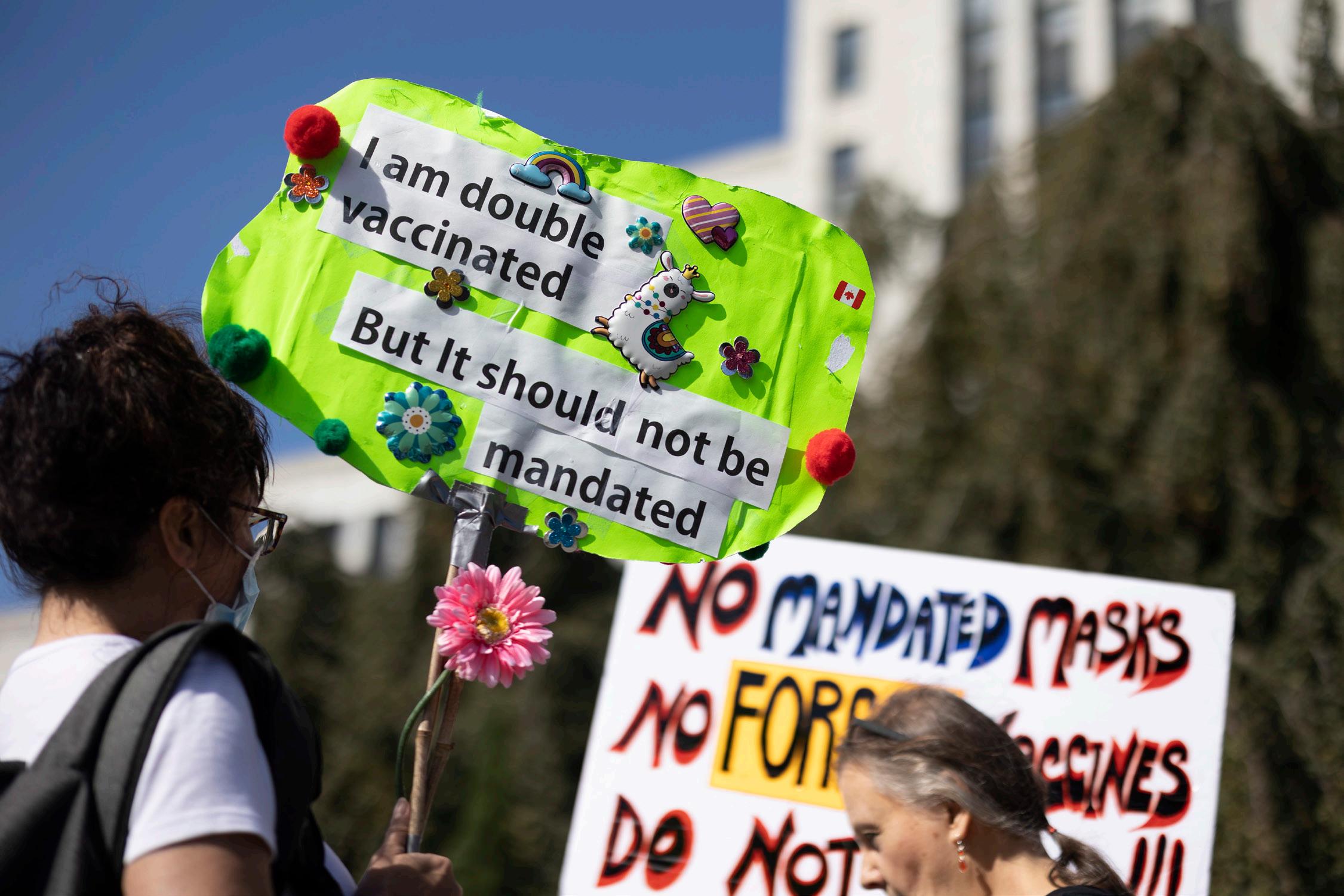
Signs at a health freedom demonstration in September 2021.
echoes common health freedom rhetoric. When contacted for comment, Rodrigues recommended this article for additional context on his and Shyer’s views.
While I agree that we as scientists should hold each other accountable and critically engage with each other’s data, I worry that these conversations support broader mistrust in academic research.
Combating Science Distrust Through Social Media
As social media continues to evolve, it is important that the scientific and medical communities evolve as well. Increased public engagement with research and health-related content makes it especially crucial that we be transparent about our data and intentional about whom we interact with. Scientists must be aware that our profession in itself is
sometimes considered to be proof that what we are saying is true, even if listeners of podcasts like The Joe Rogan Experience and Conversations on Health Freedom are encouraged to make their own decisions.
As scientists, we can no longer afford to stay silent. Staying in our ivory towers and ignoring the spread of misinformation and distrust on social media allows false information to fill the void. We must actively and intentionally participate in the conversation, not solely to combat misinformation but also to make science more transparent, reliable, and (most importantly, in my opinion) relatable.
Figures like Dr. Mike and Dr. Noc, who use their platforms to address viral health content with clarity and empathy, show how professionals can gain large, engaged audiences on social media without sacrificing scientific rigor. On a more local note, podcasts like CancerCast from Weill Cornell and outreach hubs like RockEDU are
working to share discoveries made in our community with a broader online audience. (Three RockEDU students recently launched a podcast of their own, Beyond the Lab.) By meeting individuals where they are, whether it be on social media, through a podcast, or even over drinks at a local pub, we have the opportunity to bridge gaps in their understanding before they are hardened to scientific distrust.
The future of science communication is moving away from dense, jargon-filled journals and towards meaningful conversations with people outside of the traditional academic bubble. If we want to make a difference, we must choose to show up. We must communicate in a digestible (not condescending) fashion, own up to our mistakes, be transparent and not selective with information, and try to earn back public trust without undermining the existing science community—one post at a time. ■
Weill Cornell Medicine Postdocs Fight for a Fair Contract
By Mariela Cortés López
Postdocs at Weill Cornell Medicine (WCM) are fighting to secure our first contract almost two years after voting overwhelmingly to form a union. In November 2023, postdocs voted by 99% to establish Weill Cornell Medicine Postdocs United-UAW (WCMPU-UAW) to address critical issues like salaries below NYC’s higher education standards, disadvantageous housing and childcare options, job insecurity, and lack of protection against harassment and discrimination. Postdocs are also pushing to secure additional protections for international workers, such as fair visa renewal leave. These demands highlight the Union’s commitment to addressing the daily challenges postdocs face in a high-cost city like New York.
To date, the elected bargaining committee of postdocs has been engaged in thirty-two negotiation sessions with WCM. Progress has been made in a number of areas, with the Union and WCM reaching tentative agreements on articles including salaries consistent with Mount Sinai’s, the option of four additional weeks of paid family leave matching New York State programs, enforceable and timely protections against sexual harassment, and reimbursement of up to $1500 for visa renewal costs. Additionally, after months of sustained organizing, WCM finally dropped its demand for a three-month probationary period, a win that will especially benefit international postdocs vulnerable to unfair terminations.
Despite these wins, a major roadblock is Weill Cornell’s insistence on a “Force majeure” proposal, which the Union has unequivocally rejected. WCM could trigger this article in the event of an economic emergency, which the administration has stated already exists due to federal funding uncertainty. After a minimal bargaining window, postdocs would be forced to accept unilateral changes to our salaries and benefits, undermining everything that we have fought for over the past two years.
The postdoc community is concerned about these provisions. An observer at a recent bargaining sessions shared these fears:
“I’m really worried that the university administration is preparing for major changes like restructuring leading to layoffs. What scares me most is that postdocs like myself, especially the most vulnerable ones (like those on visas), will be the first to feel that. I know academia is going through very hard times, but for most postdocs, this is about survival, and WCM’s current layoff proposal is completely unresponsive to that.
I’m afraid the university won’t think twice about sacrificing us. I do not feel protected at all, being able to be laid off at WCM’s whim with minimal notice.”
Moreover, citing current threats to research funding, WCM recently introduced a layoff provision. In an effort to bridge the gap with WCM, WCMPU-UAW has engaged with this layoff proposal—a substantial departure from the Mount Sinai contract, which prohibits layoffs. WCMPU-UAW proposed a provision that would provide a clear process, timeline, and protections for postdocs laid off by WCM, and which could only be used in response to economically exigent circumstances. By setting up reasonable guidelines for circumstances in which layoffs can be applied, postdocs demonstrated a willing-
ness to compromise and acknowledge the current issues affecting research funding.
At the time of writing, with the hope of winning a fair first contract, the Union has scheduled two additional bargaining dates before the end of July. Postdocs have shown support with visible actions like a rally outside the main campus, letters to the Dean, and participation as spectators at online and in-person sessions. If WCM continues to insist on proposals that make postdoc positions increasingly unstable, however, postdocs are prepared to escalate these actions. In
April, a supermajority of postdocs voted by 92% to authorize a strike if circumstances justify, while continuing to fight back alongside other UAW members against cuts to federal research funding. The message is clear: postdocs are allies in efforts to defend science, but we will not wait indefinitely for a fair contract that elevates our working standards and provides essential protections. ■
This article was authored by members of the organizing committee. Members of the WCMPU-UAW bargaining committee were not involved in its preparation.
—WCM Postdoctoral Associate at the Feil Family Brain and Mind Research Institute (BMRI)
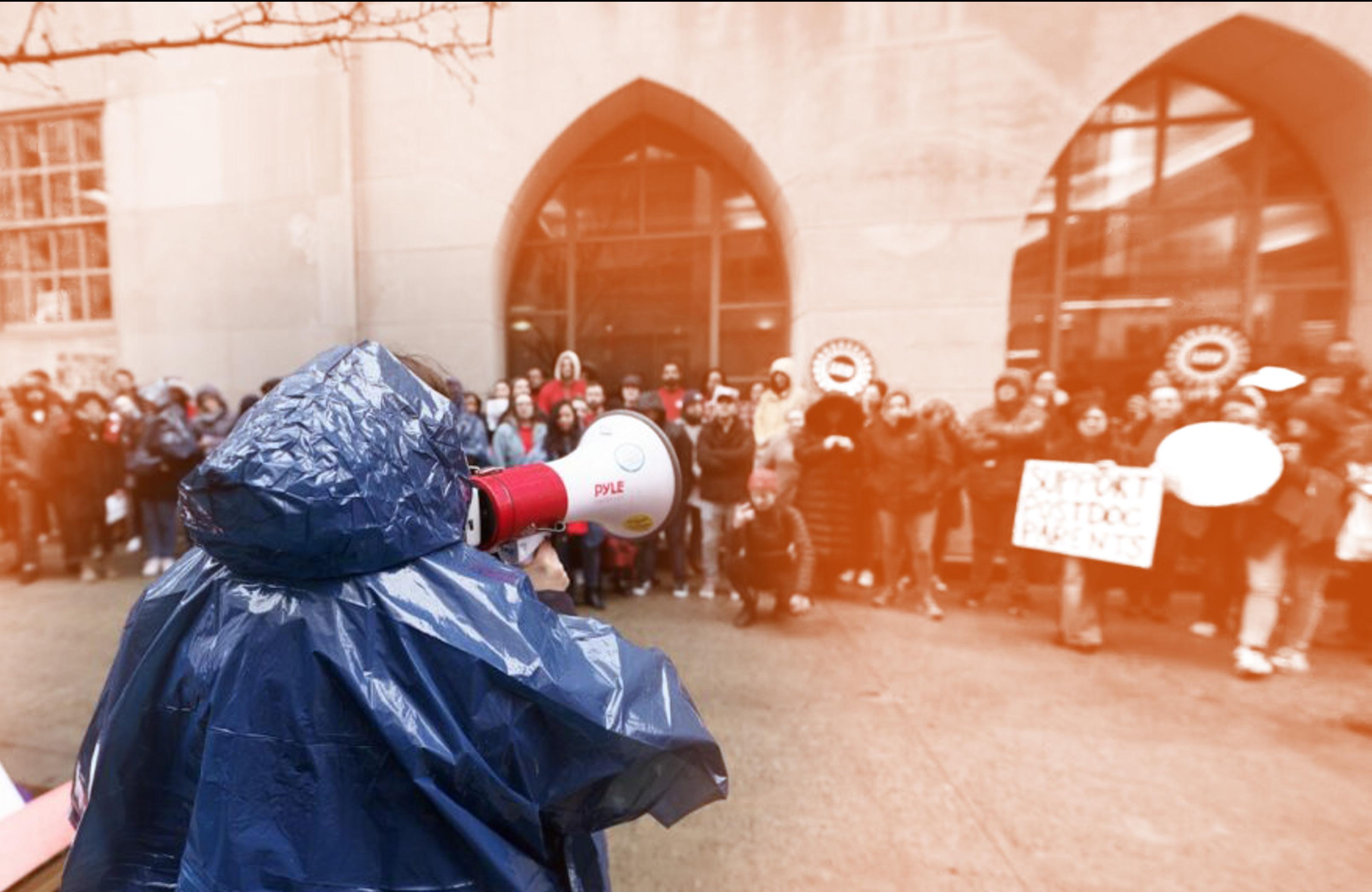
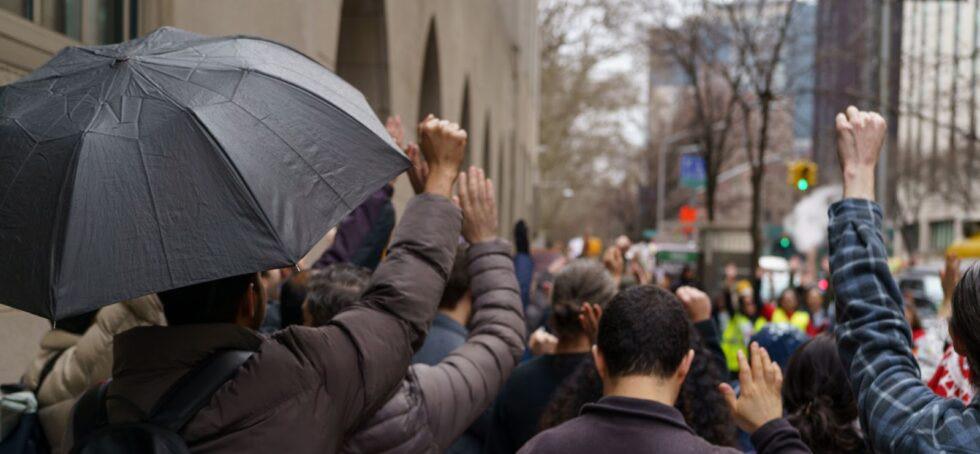
Left and above: Scenes from a WCM Postdocs United-UAW rally held on February 27 outside of 1300 York Avenue.
From Patronage to Policy
By Dhyey Gandhi and Valerie Gallegos
layout design by mia haraguchi
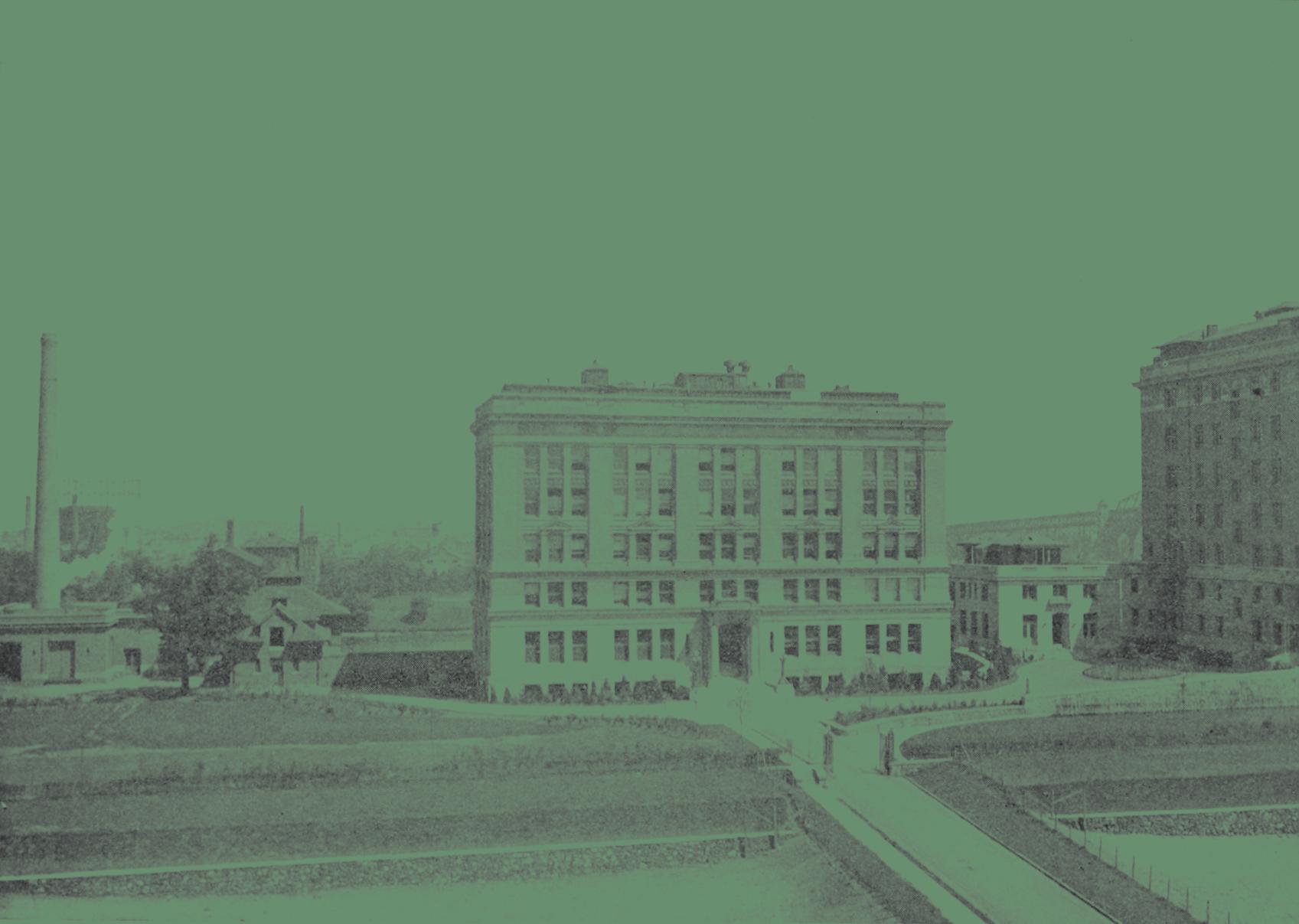
The Rockefeller Institute for Medical
Medical Research in 1912.
Scientific research is and always has been deeply entangled with politics, culture, and the broader currents of society. Like most human endeavors, doing science requires materials and manpower, both of which come with a price tag. Thus, funding becomes one of the most direct and potent forces influencing not just what kind of science gets done, but also who gets to do it, and, consequently, who reaps the rewards of the discoveries. Here, we explore some major milestones that drove the evolution of research funding in the United States— from the passions of gentleman-philosophers and philanthropic benefactors to the budget battles and policy debates echoing through the halls of Congress.
1600s–1860s: Hobby Science and Industrialization
In the early days of the American colonies, science was less a profession and more a refined pastime of wealthy philosophers, educated nobles, and civic or clergy leaders. To many of them, scientific inquiry was similar to an artistic or philosophical venture carried out for cultural prestige or civic virtue. But these early amateur scientists also viewed science as a noble intellectual pursuit, drawing inspiration from Enlightenment ideals of reason and empirical inquiry as the bedrock of civilized society and a driver of societal progress. Modeled after their European counterparts, various scientific societies like the American Philosophical Society (1743) and the American Academy of Arts and Sciences (1780) were established as venues for scientific correspondence, exchange of ideas, debate, and publication. Society memberships were highly prestigious and often limited to the social elite. Their proceedings were largely funded by the members’ dues and personal fortunes, or by the patronage of wealthy benefactors seeking fame and legacy.
While some major educational institutions, such as Harvard College and Yale College, were established during this period, their primary mission was to train religious and civic leaders. Their curricula focused on subjects like theology, lan-
guage, and morality, with little to no emphasis on scientific teaching and inquiry. Even when professors did pursue scientific inquiry—for example, Harvard professor John Winthrop’s 1761 expedition to observe the transit of Venus—they were motivated by intellectual curiosity, not by any formal responsibility to run a research program. Such undertakings were often funded partly by the personal fortunes of the researcher and partly by the university’s budget or external donors, far from the modern style of funding through research grants. Even religious organizations sometimes funded what we now call scientific inquiries, which fell under the umbrella of natural philosophy and were seen as a step towards understanding God’s creations
Many young Americans in the nineteenth century pursued higher education in Europe, where the first research universities were taking shape. Institutions like the Humboldt University of Berlin, founded in 1810, intertwined lectures with research and were funded through government support, first from Prussia and subsequently from the German Republic. This concept was emulated in American institutions such as Johns Hopkins University, founded in 1876 for the explicit purpose of “establish[ing] a hospital and affiliated training college,” and MIT, founded in 1861 as a new type of educational institution focused on science, technology, and their practical application. Eventually, institutions such as Harvard and Yale also evolved beyond their origins as theological seminaries and into their current forms as modern research universities.
As the U.S. started to shift from an agrarian to a more industrialized society during the nineteenth century, the demand for workers with technical expertise grew, leading to a push for more universities and colleges to offer relevant courses. This need was met by the U.S. government through the passing of the Morrill Act in 1862, wherein states were awarded public lands to finance existing colleges or charter new institutions with agricultural and mechanical studies. The act laid the foundation for the state college and university systems that exist to this day and made higher education more accessible to white Americans. After the American
Civil War, the Second Morrill Act of 1890 required states with segregated higher education systems to offer Black students admission to land-grant institutions or an alternative. This significantly expanded higher educational opportunities for Black students, who had previously been barred from all but a few colleges in the northern U.S., and a system of Historically Black Colleges and Universities (HBCUs) was established in Southern states to satisfy the “separate but equal” clause of the act.
1870s–1930s: Innovation and Inventions During the Gilded Age
The significance of the Second Scientific Revolution was evident in the wealthy circles of American society. The discovery of oil in Pennsylvania and subsequent refining in the 1850s spurred the Gilded Age, which was riddled with wealth inequality as a small number of industrial titans rose above the average working American. Individuals such as John D. Rockefeller, who had amassed substantial wealth through the Standard Oil Company, became important patrons for science and research. Through the Rockefeller Foundation, he donated more than $500 million (equivalent to billions in today’s dollars) and supported many prominent biomedical research institutions, including the University of Chicago and the Rockefeller Institute for Medical Research, which in 1901 became the first biomedical research center in the United States. This was instrumental for the advancement of the American biomedical enterprise, as the country now had an institution to rival European hubs of scientific discovery like the Koch and Pasteur Institutes.
Many key inventions and innovations during the Gilded Age opened new funding avenues for scientific research. Prominent inventors during this period, such as Alexander Graham Bell, Robert Wood Johnson, Henry Ford, and Thomas Edison, were either self-funded or relied on friends and family members at early stages of their careers. Later, these men reinvested profits from previous inventions to further research and development efforts at their respective companies, establishing
private labs and hiring scientists and engineers. In some instances, innovators and inventors (and their families) funded science outside of company walls by creating philanthropic foundations, many of which provide support for scientific research and academic institutions even today.
In addition to private investment, the government also commissioned various research and regulatory institutions to address the growing needs of American society. The National Institutes of Health (NIH) was originally founded in 1887 as part of the Marine Hospital Service and later evolved to become a powerhouse for biomedical research. Similarly, the U.S. Department of Agriculture (USDA), founded in 1862, played a key role in supporting agricultural science through educational programs and research initiatives. During the Great Depression, the number of roles at such institutions was increased as part of New Deal programs, which focused on providing employment opportunities amidst the economic collapse. President Franklin Roosevelt was instrumental in advocating for polio research, a public health crisis at the time, and founded the National Foundation of Infantile Research (now March of Dimes) in 1938. This foundation went on to fund Dr. Salk’s vaccine trials in 1954, leading to mass production of the polio vaccine. Overall, however, financial support for research from federal agencies was still meager compared to today’s funding structures, and many of these agencies existed mainly as support structures for the U.S. military.
1930s–60s: Wartime Support for STEM
While the advent of American research universities during the Second Industrial Revolution had begun bridging the gap between research funding and government
policy, the two became inextricably linked during and due to one of the most transformational periods in U.S. history: the Second World War (WWII). By then, scientific inquiry had gained widespread recognition as a driver of societal development but was still viewed as fuel for slow, longterm progress. Funding scientific research ranked low on the federal government’s priority list and was largely the purview of local governments or private patrons. But developments in nuclear physics in the first half of the twentieth century flipped this worldview on its head, placing science at the center stage of politics and international relations and catapulting scientific funding to a top-priority policy issue for the federal government.
When Enrico Fermi discovered in 1934 that bombarding neutrons onto uranium induced radioactivity, it marked a turning point in physics—nuclear fission was suddenly a tangible reality. Now in the midst of WWII, almost every physicist in America immediately recognized the frightening possibility of this reaction being used to make a bomb with hitherto unimagined explosive power. This was accompanied by the graver realization that the Nazis must have arrived at the same conclusion. Alarmed by the prospect of the Nazis acquiring a nuclear weapon, physicists urged the U.S. federal government to consider launching its own nuclear weapons program. The government felt it had no choice but to pour massive amounts of funding, infrastructure, and manpower into the bomb-building operation codenamed the Manhattan Project
Governments around the world quickly realized that the key advantage in WWII was the sophistication of one’s technology, even more so than the size and prowess of one’s military. To address this need, the
U.S. government established the National Defense Research Committee (NDRC), chaired by MIT engineer Vannevar Bush, which served as the government’s official conduit to research scientists and engineers. Soon, Bush convinced President Roosevelt to expand the NDRC to the even more powerful Office of Scientific Research and Development (OSRD), which oversaw the establishment of contracts worth billions of dollars between the U.S. military and various research universities across the nation. Apart from the Manhattan Project, the OSRD funded many other wartime science projects, such as the radar research division at the MIT “Rad Labs” to counter German U-boats. In this symbiotic arrangement, the government received scientific support for upgrading its military, while universities received financial resources, reinvigorating their research enterprises. It was the first time in U.S. history that scientists and engineers had worked so directly with the U.S. government, and it permanently changed the relationship between the government and the country’s scientific research enterprise.
Near the end of the war, Bush—then director of the OSRD—authored a highly influential report for President Roosevelt titled Science, the Endless Frontier. In it, building on the government’s shifting attitude toward science and technology, he crafted a landmark argument regarding the necessity of scientific progress for the nation’s health, security, and prosperity and highlighted the government’s permanent responsibility to support scientific research, even during peacetime. Bush’s vision shaped the U.S. government’s science policy for many decades to come and resulted in the establishment of the National Science Foundation (NSF) in 1950—a federal agency dedicated to funding basic, curiosity-driven research, guided by scientists and housed in universities, ostensibly free from the constraints of fulfilling immediate national interests.
As WWII gave way to the Cold War, science and technology research stayed at the top of the government’s policy priorities. In 1957, the launch of Sputnik sparked widespread alarm in the United States over a perceived loss of technological superiority. This anxiety ignited a flurry of activity
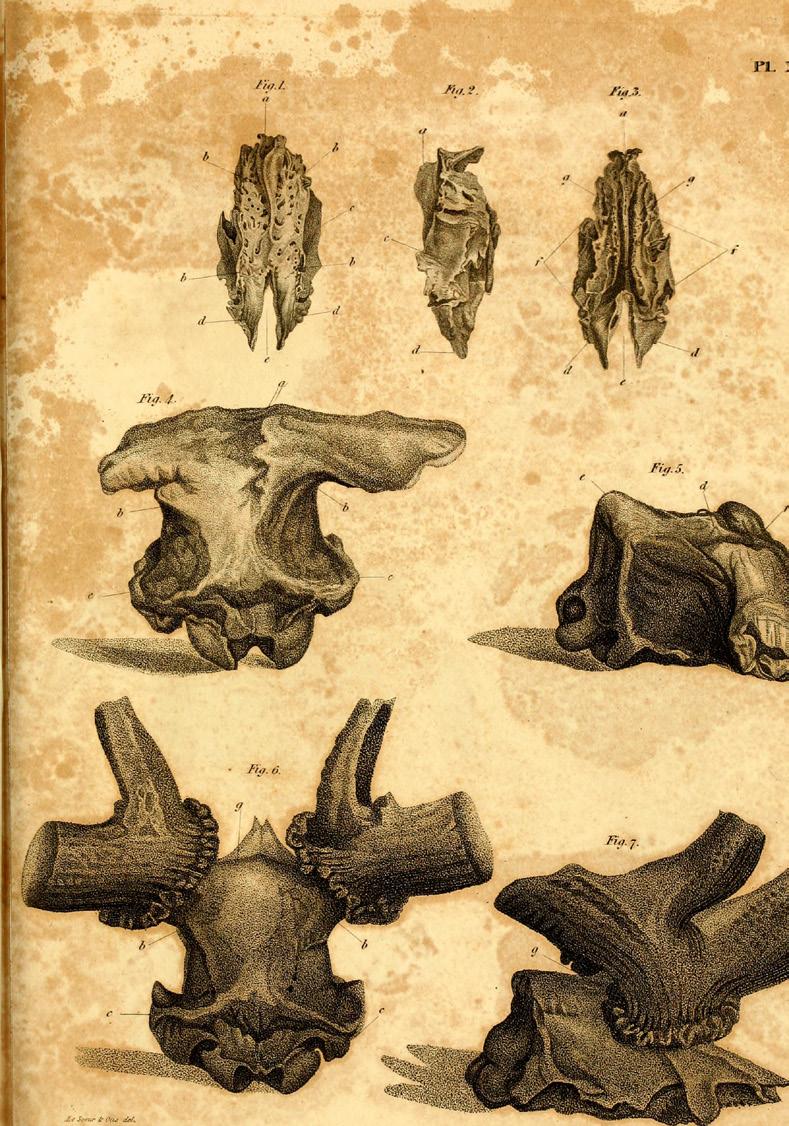
Top left: A page from Transactions of the American Philosophical Society (1771).
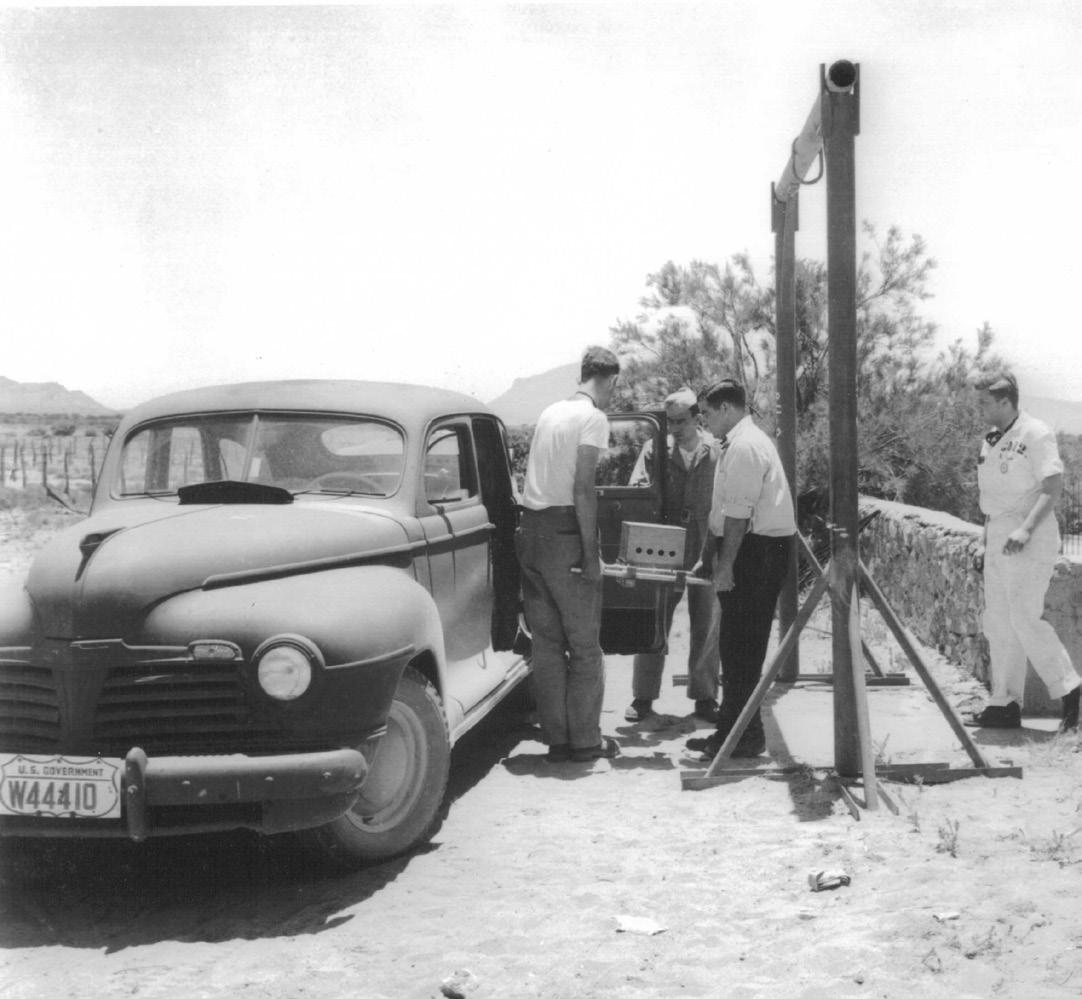
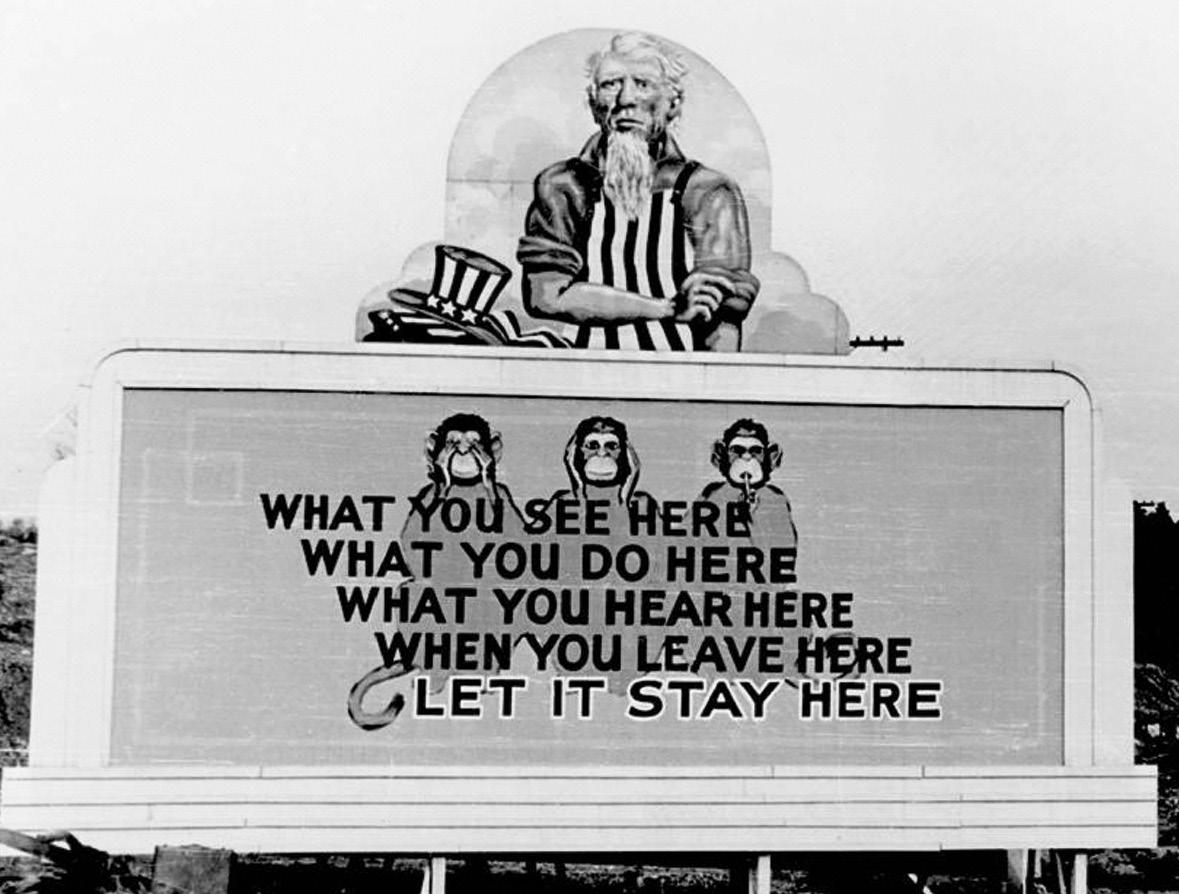
Top right & center: Scenes from the Manhattan Project’s Oak Ridge and Trinity sites, respectively.
Bottom: A 1962 publication celebrating the centennial of the Agriculture and Mechanical Arts Colleges Act.
within policy and research circles, marking the beginning of what became known as the space race. Capitalizing on this public sentiment, President Eisenhower passed several landmark legislations on science and research funding in 1958. This included establishing the research wing of the U.S. Department of Defense (DARPA), creating NASA, and passing the National Defense Education Act (NDEA), which was the first legislation apportioning federal budget to support higher education and research since the Morrill Land Grant Acts. Other policies increased enrollment of the country’s youth in higher education and research programs—for example, the G.I. Bill, which supported education for young WWII veterans. Overall, between the start of WWII and the peak of the Cold War frenzy, federal funding for scientific research increased by a dramatic twenty-five-fold, paving the way for later science-government relations.
1940s–70s: Biomedical Research in the Postwar Era
Government support for science was not limited to the physical sciences, as an increasing need for funding biomedical research was becoming
apparent. Before the 1940s, the majority of biomedical research was funded by companies or philanthropic foundations, and federal agencies, such as the Public Health Service (PHS), conducted their own research. But the demands of WWII drove federal support for extramural biomedical research. The Committee on Medical Research (CMR), housed under the OSRD, funded external research through contracts for projects that addressed the health needs of soldiers, including the development of antibiotics and injury treatments. From 1941 to 1945, the CMR approved 501 projects for funding, totaling about $400 million (adjusted for inflation). After the war, the PHS took over the remaining open contracts and laid the foundation for the NIH’s extramural research program.
The CMR was not the only wartime agency that supported external research. After WWII, the Atomic Energy Commission (AEC), which oversaw the management and development of nuclear energy, allocated funding toward external biomedical research aimed at studying the effects of radiation on humans. In 1947, the AEC announced that radioisotopes could be used without cost for cancer research and treatment. This peacetime program led to the funding of cancer research centers and projects. When Congress dissolved the
AEC in the early 1970s, the Department of Energy inherited the AEC’s cancer research initiatives, which continue to fund projects related to radiation therapies.
Though many federal funding structures for biomedical research were established in response to WWII, they remained in place once the war ended. In 1944, President Roosevelt signed the Public Health Service Act, which allowed the PHS to award grants to universities, institutions, and individual researchers. In response, the Office of Research Grants was created at the NIH in 1945. Within a year of the office’s creation, the NIH funded 264 extramural research grants, totaling over $55 million (inflation-adjusted). The funds available for NIH extramural grants increased exponentially as more institutes were added under the NIH umbrella. In the 2024 fiscal year alone, the NIH awarded over $37 billion in extramural research funding— about 79% of the agency’s total spending.
1970s–Present: Private Interest and Politicized Science Funding
The fruits of early investments in biomedical science became apparent in the twenty-first century with landmark achievements such as the Human Genome Project. Initially beginning as a collaboration between the U.S. Department of Energy and the NIH, it quickly became a global project, and the consequent boom in genomics-based research and businesses provided thousands of jobs and financial returns
The expansion of federal support for biomedical research in the postwar era also paved the way for the politicization of science. As federal funding became the backbone of research, presidents and lawmakers exerted greater influence over scientific priorities. For example, President Nixon’s “War on Cancer” poured billions of dollars of federal funding into basic science research through the expansion of the NIH and other avenues. During the AIDS epidemic of the 1980s, President Reagan publicly announced that AIDS was a “top priority” for his administration, and that same year,
As funding backbone presidents
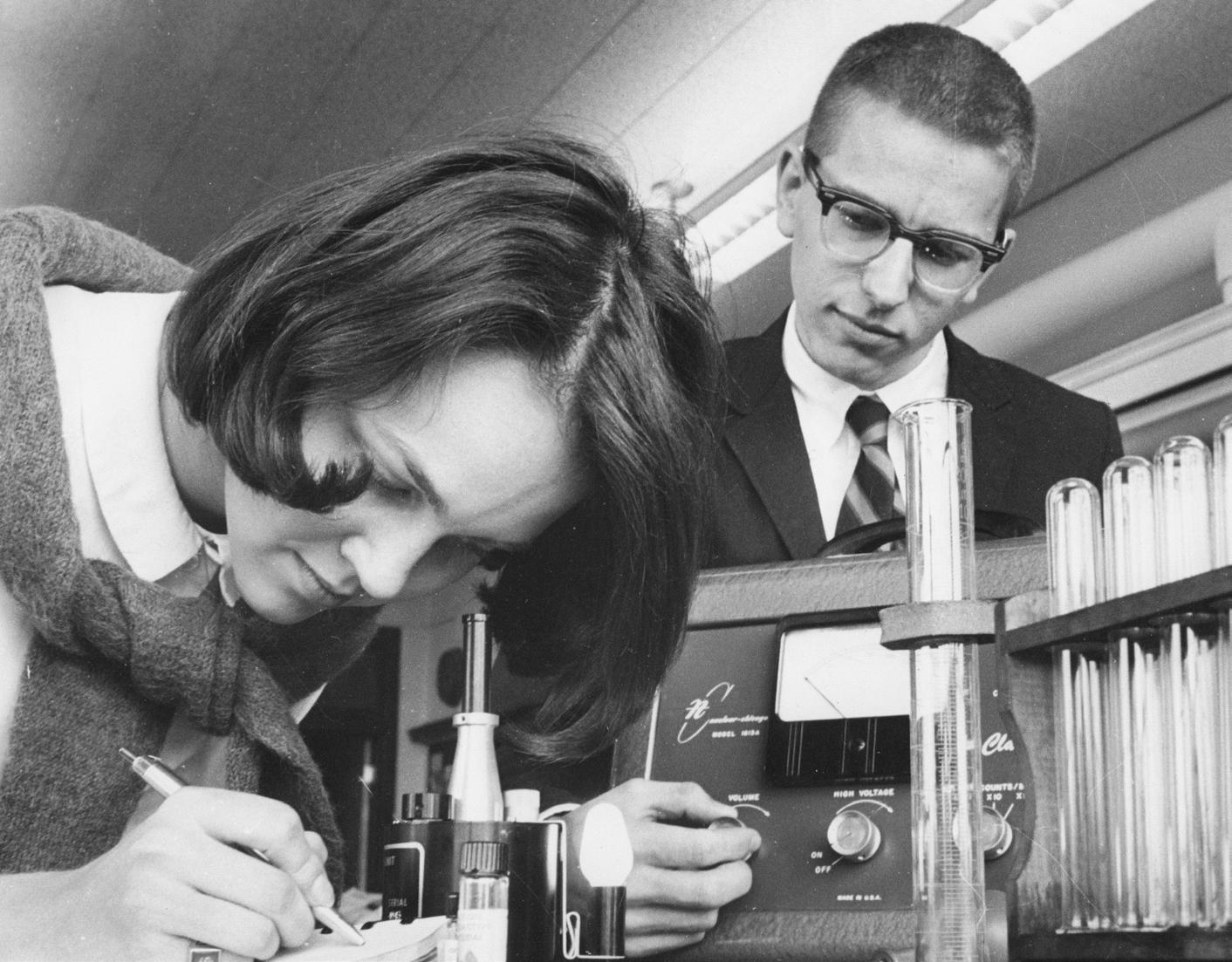
Students perform an experiment in a 1964 nuclear science course sponsored by the AEC.
exerted greater over priorities.
As federal funding became the backbone of research, presidents and lawmakers greater influence over scientific priorities.
Congress allocated $190 million for AIDS research. More recently, in response to the COVID-19 pandemic, President Trump launched Operation Warp Speed, an $11 billion federal initiative aimed at rapid vaccine testing, development, and deployment.
However, the government’s power to influence science through funding allocation cuts both ways. The Bush administration restricted federal funding for embryonic stem cell research in the early 2000s, limiting progress in a promising field and driving researchers to seek private funding for the continuation of their work. Similarly, politically motivated cuts to environmental science research—or, as seen earlier this year, NIH research—highlight the fragility of relying on federal dollars as a major source of scientific funding.
Fluctuations in federal research funding have also stimulated a resurgence of philanthropic and private investments in scientific research. As during the Gilded Age, the tech boom has ushered in a new era of uber-wealthy individuals, such as Bill Gates, Elon Musk, and Jeff Bezos, who often invest significantly in research programs. In 2000, Microsoft founder Gates established the Gates Foundation, which funds various research initiatives and academic endeavors, particularly those in public health and technology-related fields. Bezos, who found success through the massive Amazon marketplace, has reportedly funded AI and environmental engineering initiatives. Both Musk and
Bezos have renewed interest in space exploration via their companies SpaceX and Blue Origin (respectively), signaling a shift toward private funding of scientific innovation in areas that were once dominated by federal agencies. While these private efforts can accelerate innovation, they are shaped by donors’ personal interests and raise questions about transparency and public benefit.
Funding for industry research has also increased significantly, particularly in the pharmaceutical and biotech sectors. Pharmaceutical companies have enjoyed increased profits as a result of advances in mass production techniques and heightened demand for antibiotics, vaccines, and other therapeutics. This success has brought in more capital for further industry R&D, leading to increased investment in academia-industry joint projects like expensive drug trials. While this funding framework fuels rapid innovation, it has also introduced new ethical and regulatory challenges surrounding data ownership, publication bias, and conflicts of interest.
Despite the growth of alternative funding structures, federal funding remains the cornerstone of scientific research in the United States. But this support is fragile. As the current presidential administration freezes funding and slashes budgets for federal science organizations, many individuals and institutions are seeking financial relief through private sector and philanthropic funding, while others are considering leaving the U.S. entirely.
The scientific research boom we witnessed during WWII and in the decades after was largely thanks to robust federal funding. Though today’s attempts to limit the government’s investment in science are framed as a way to improve the country’s fiscal health, this logic ignores the fact that our system of federal support for research emerged from the idea that scientific innovation is critical to U.S. economic and military dominance. Can our government truly trade scientific progress for a healthier economy, or, in defunding research, will it lose both? ■
Elon Musk is recognized by Vice President Mike Pence after the launch of NASA’s SpaceX Demo-2 mission in 2020.
TRAVELOGUE
Lab Coats in Washington: Our Hurford Science Diplomacy Journey
By Lauren Anderson and Roberto Rodríguez Cartagena
On a typical Thursday, we would be at our laboratory benches at Rockefeller University, where we are fourth-year Ph.D. candidates in biomedical sciences. But on April 3, 2025, we met our colleagues in Rockefeller’s Hurford Science Diplomacy course at Moynihan Train Hall to take the Amtrak from New York to Washington, D.C. Sponsored by the Hurford Foundation, the Hurford Science Diplomacy Initiative is one of the only graduate-level science diplomacy training courses in the United States. The
course, which is organized and taught by Jesse Ausubel (Rockefeller) and Mandë Holford (Hunter College/Harvard), examines how science intersects with political, economic, and societal issues, with the goal of cultivating a new generation of scientists who can work effectively at the international level to address these challenges.
The theme of this year’s course, in its eleventh edition, was “Science amid Olympian competition,” reflecting the heightened international political tensions shaping
the global scientific landscape today. Both co-teachers run their own research laboratories and have dedicated their careers to science diplomacy. Ausubel helped organize the first UN World Climate Conference in 1979, played a leading role in the creation of international research programs like the Census of Marine Life and the Deep Carbon Observatory, and has served in advisory roles for major science policy institutions including the National Academies and the Alfred P. Sloan Foundation. Holford combines marine
natural products research with public engagement and diplomacy, and she currently serves on the National Academies’ Roundtable on Science Diplomacy. She is also a cofounder of Killer Snails, an award-winning science education company, and has been recognized globally for her efforts to connect science, innovation, and public impact. Both are Life Members of the Council on Foreign Relations.
The theme of this year’s course, in its eleventh edition, was “Science amid Olympian competition,” reflecting the internationalheightened political tensions shaping the global scientific landscape today.
As Ph.D. students training at the intersection of basic science and global impact, we were drawn to the course by a shared curiosity: how can scientists help shape the world beyond the bench? Like many Tri-I scientists, we work alongside colleagues from around the world and are accustomed to applying for research funding from agencies based in Washington, D.C. We were recent college graduates when the COVID-19 pandemic struck, so we quickly learned how interconnected the global scientific community is. When we began our graduate studies, we brought with us an interest in how the practice of academic science intersects with the real world, where it can serve as a bridge between political entities by enabling scientists to work together across borders. Through the Hurford Initiative, we have learned how science diplomacy, from individual relationships to nonprofit and corporate ventures to intergovernmental negotiation, drives scientific progress on a global scale. Stepping into a diplomatic space pushes wet-lab scientists like us to think differently—not just about research, but about who it serves and how knowledge moves across borders.
We began our visit at the National Academies of Science, Engineering and Medicine (NASEM), where we met with Director of Policy and Global Affairs Dr. Vaughn Turekian. We discussed challenges
posed to the scientific community by international conflicts, such as interference with cross-border scientific collaboration and reallocation of scientific funding to military expenditures. Dr. Turekian explained that the National Academies were established by Abraham Lincoln in response to the technological advances and challenges faced by the Union during the Civil War. Now, as we enter a new technological revolution driven by artificial intelligence, the need for expertise in policy and diplomacy continues. Expert opinion from scientists and other highly trained professionals has been culturally devalued in the current swing of the political pendulum, and proposed cuts to federal research funding have caused many early-career scientists to look abroad for the next stage of their careers. The week we visited D.C., Nature published the results of a poll indicating that 75% of respondents are exploring research opportunities outside of the United States.
This thread was picked up at our next visit to the Embassy of Finland. Here, we engaged in a captivating conversation with Finnish professor Dr. Petri Koikkalainen and Dr. Katarzyna Grant, who joined us from the Embassy of Poland. Our discussion focused on the factors that influence the mobility of scientists across borders, both within Europe and between Europe
and the United States. We examined the mechanisms that enable such mobility, including European emergency funds that allow American scientists to pursue training opportunities in Europe. We were surprised to learn that embassy careers can be quite fluid; many positions are term-limited, resulting in frequent staff rotations. This prompted us to wonder what it means to maintain continuity in science diplomacy when the field’s leaders are in constant motion. Exemplifying the dynamic nature of diplomatic scientific careers, Dr. Grant shared stories of her participation in Women in Science Diplomacy events. Roles like hers go beyond policy and extend into areas such as representation, visibility, and, importantly, building communities in spaces where scientists and diplomats may not often interact. Overall, our visit to the embassy provided a nuanced understanding of the complexities and opportunities inherent in science diplomacy careers.
Later that evening, we enjoyed dinner at the Cosmos Club with D.C.-based experts in science diplomacy, including several Rockefeller graduates of this course who now work in science policy careers. The discussion was primarily focused on science and international development. Pamela Aall, former advisor at the U.S. Institute of Peace, recently dismantled by
“As Ph.D. students training at the intersection of basic science and global impact, we were drawn to the course by a shared curiosity: how can scientists help shape the world beyond the bench?”
DOGE, gave the leading remarks. Aall’s career in international affairs and diplomacy has focused on peacebuilding and conflict resolution in places like Sudan,
Bosnia, Israel and Palestine, and Afghanistan. She spoke about her perspective on the role of civil society in conflict zones. These remarks prompted a discussion
about the uncertain future of the scientific enterprise in the United States, especially regarding funding and training. As the youngest generation of trained scientists in the U.S., we left the dinner brainstorming new models of government-academia-industry cooperation that would need to emerge to respond to the current challenges faced by the research enterprise, such as public skepticism of scientific expertise. Young scientists are uniquely positioned to address these challenges because we are trained on the cutting edge of science, share youth culture with experts in other sectors, and can react quickly by diversifying our training to extend beyond the bench. Engaging in conversations with course graduates who are now leaders in science policy across different sectors helped us to see ourselves as rising science diplomats and to clarify our own goals.
The next morning, April 4, we traveled to Capitol Hill to meet with Kevin Wheeler from the United States Senate Committee on Appropriations. Wheeler is the senior staff member on the Subcommittee on Commerce, Justice, Science, and Related Agencies. He oversees the majority’s appropriations on those topics. Wheeler gave the group an overview of the appropriation process and how it affects science funding. As an example, he showed us the appropriation from FY 2024–2025 for the National Science Foundation Graduate Research Fellowship, a fellowship that funds the
The Hurford Science
Initiative is one of the only graduate-level science diplomacy training courses in the U.S.
graduate studies of several members of the course. As with our previous meetings in Washington, we discussed the uncertainty surrounding FY 2025–2026 federal science funding and how agencies are responding to DEI cuts—for example, by adopting new language to preserve funding for activities and programs at risk of being terminated.
We next turned our sights to the stars. After our visit on Capitol Hill, we walked down the Washington Mall to the Smith-
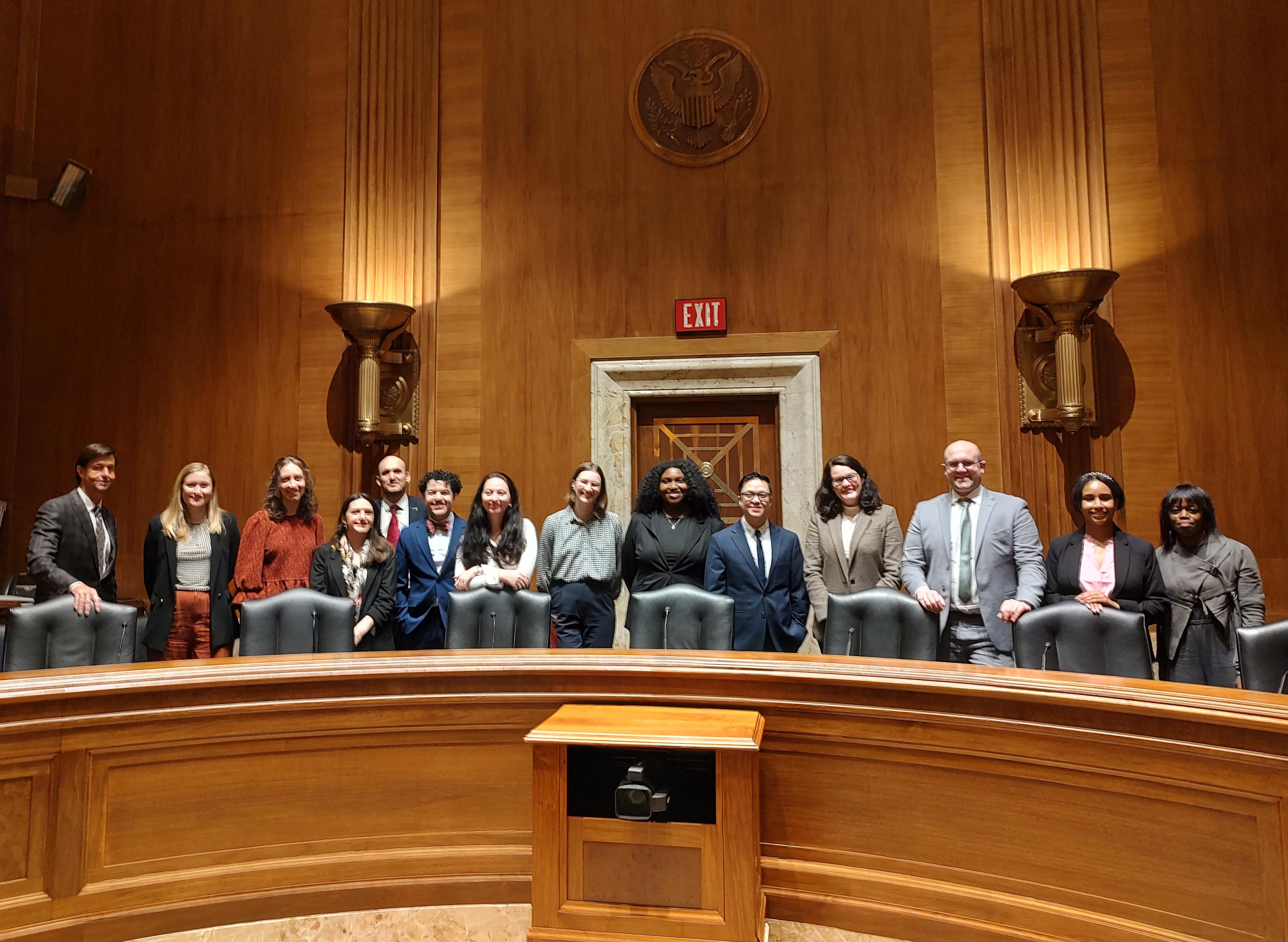
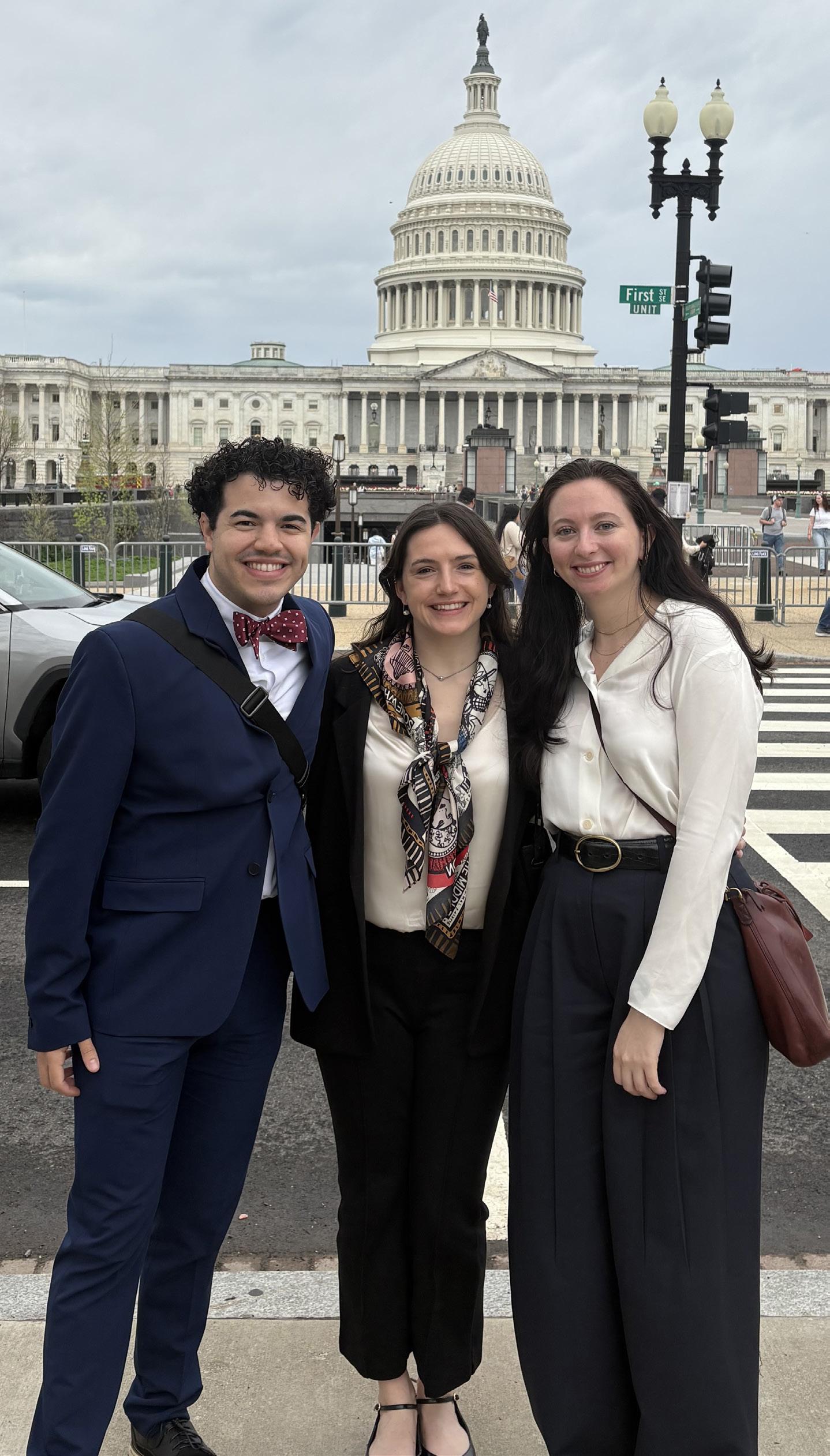
Left to right: Students Roberto Rodríguez Cartagena, Lauren Anderson, and Natalie Alexander outside of the U.S. Capitol Building during their class trip to Washington, D.C.
Diplomacy
photos provided by lauren anderson & roberto rodríguez cartagena
sonian Offices. Here, we met with Dr. Alexander MacDonald, the chief economist at NASA, who gave us an enlightening perspective on the role of human storytelling and exploration in the space enterprise. Much like biomedical sciences, the rapidly expanding space sector is driven by a desire to discover the laws of the universe and build innovative technology. International cooperation in biomedical research happens daily onboard the International Space Station, where astronauts carry out basic research in zero-gravity settings. Across the street at the Smithsonian National Air and Space Museum, we had a fantastic tour by an experienced docent. We toured the Wright Brothers and Early Space Flight exhibits, which cover events that took place over only six decades—an astounding success story in American science and technology development. The rapid evolution of airplane models and spacecraft exemplifies the level of excellence that scientists in the U.S. can achieve with dedicated support from the government. As biomedical researchers, we recognize the need to advocate for continued support for our projects, which we
believe will also lead to the development of technologies that can ultimately save lives.
Stepping into a diplomatic space pushes wet-lab scientists like us to think differently—not just about research, but about who it serves and how knowledge moves across borders.
As early-career scientists navigating a rapidly changing world, our experiences and interactions in Washington, D.C. underscored that our work at the bench is deeply entangled with policy, politics, and global collaboration. The future of science, and of scientists, is increasingly uncertain. Research funding is shifting, and international collaborations face increasing strain. Scientific expertise is both politicized and sidelined. These realities have made it clear to us that scientists can no longer afford to be passive observers of policy. We need more voices—more people trained in science—willing to step into rooms where
Lauren Anderson is a Ph.D. candidate and National Science Foundation Graduate Research Fellow at Rockefeller University in the Laboratory of Genome Architecture. Lauren is also an advocate for science funding as a 2024–2025 Howard Garrison Advocacy fellow with the Federation of American Societies of Experimental Biology. She is interested in how science diplomacy can promote the equitable adoption of emerging technologies.
Roberto Rodríguez Cartagena is a Ph.D. candidate and the Huyett Family Graduate Research Fellow at Rockefeller University in the Laboratory of Developmental Neurobiology, where he studies how brain cells grow and connect during early development. He is a 2025 Science Diplomacy Fellow with the National Science Policy Network, through which he collaborates with the Embassy of Argentina to strengthen international scientific partnerships. Roberto is passionate about bridging science, policy, and diplomacy to create more equitable and collaborative research ecosystems.
decisions are made, to advocate for evidence-based policy, and to build bridges across disciplines, sectors, and borders.
If you’re a scientist who’s ever felt curious about how your work connects to the world beyond the lab, we can’t recommend the Hurford Science Diplomacy Initiative and Washington, D.C. Delegation enough. ■
The Hurford Science Diplomacy course is offered at Rockefeller University each winter and is designed to help early-career scientists explore the global context of their work and prepare them to engage effectively at the international level. Course syllabi and registration instructions are typically emailed to the student body about one month before the first class session.
PIT in a Pit: A Guide to Rockefeller’s Most Interactive Resource Center
By Nick Belenko
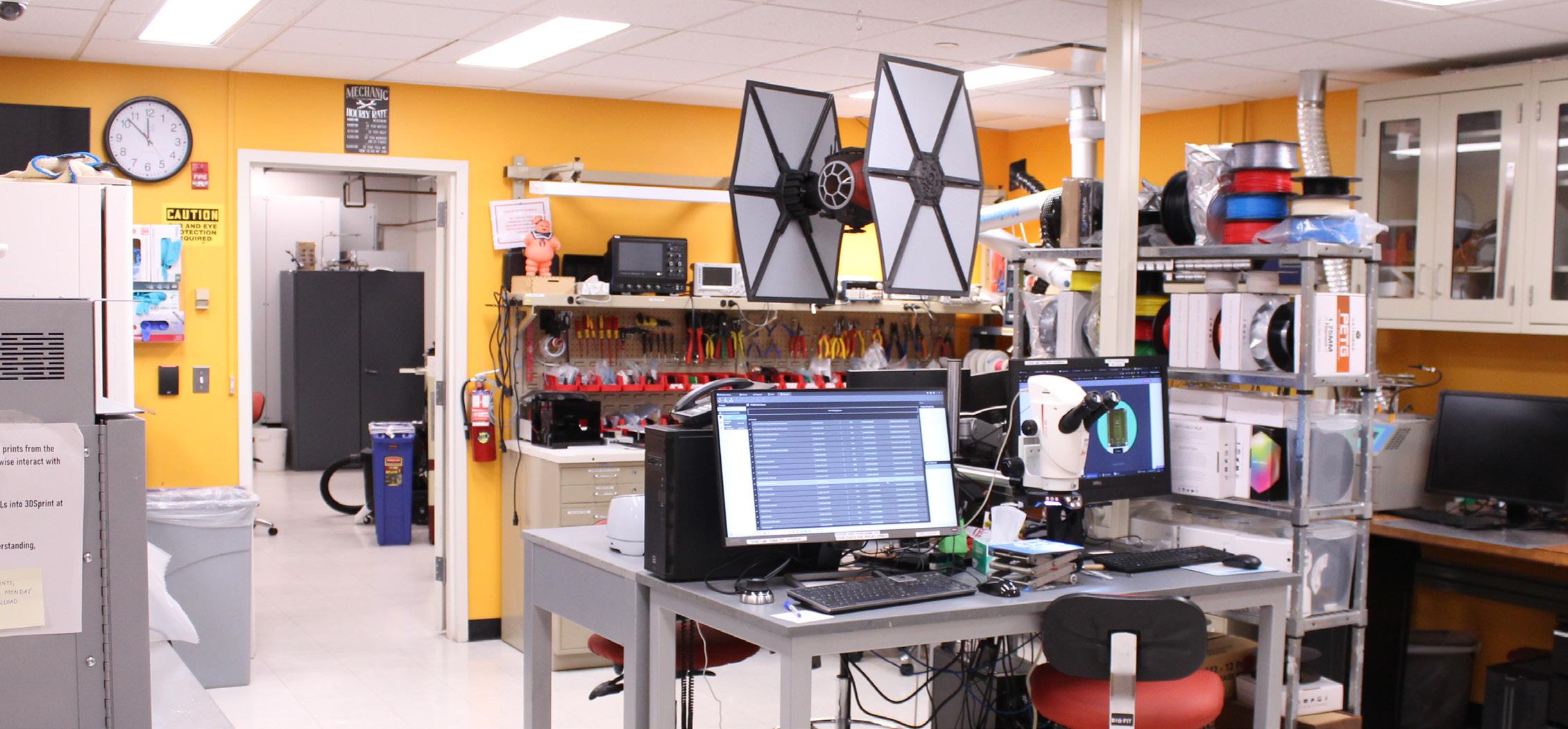
Deep in the bowels of The Rockefeller University, through a maze of underground hallways and fickle elevators, is a set of unremarkable brown double doors. A doorbell on the wall glows with a tempting light, beckoning you to press it. Doing so summons a mysterious underground creature known as an “engineer,” a term usually whispered in hushed, frightened tones. When this creature opens the doors, you are transported from a gloomy subterranean hallway into a brightly lit engineering playground. 3D printers line the space, emitting a soft, calming hum, and the faint smell of cut acrylic hangs in the air. “Welcome to the PIT,” says the creature, with a slightly evil cackle . . .
Welcome to the PIT
The Gruss Lipper Precision Instrumentation Technologies Resource Center, also known as the PIT, is Rockefeller University’s dedicated space for prototype engineering—a way to test design concepts and device performance. Almost all of a researcher’s prototyping needs can be met at the PIT. While other universities house
makerspaces and machine shops, the PIT is unique in that it is entirely staffed by a full-time, multidisciplinary team of professional engineers who work in one physical location, rather than being spread out among different resource centers. “Getting the opportunity to imagine something and create it was something I’d never been exposed to before,” says Chad Morton, a researcher in Vanessa Ruta’s lab. The Ruta lab, which studies neural circuit
physiology and behavior in fruit flies, builds many of their custom experimental setups in the PIT. Morton has been a frequent PIT user for several years.
“Typically, in the research labs I’ve been in, you just used the equipment that was available,” Morton notes. “That created a bound for how you thought about your projects. You can only do so much based on the equipment that
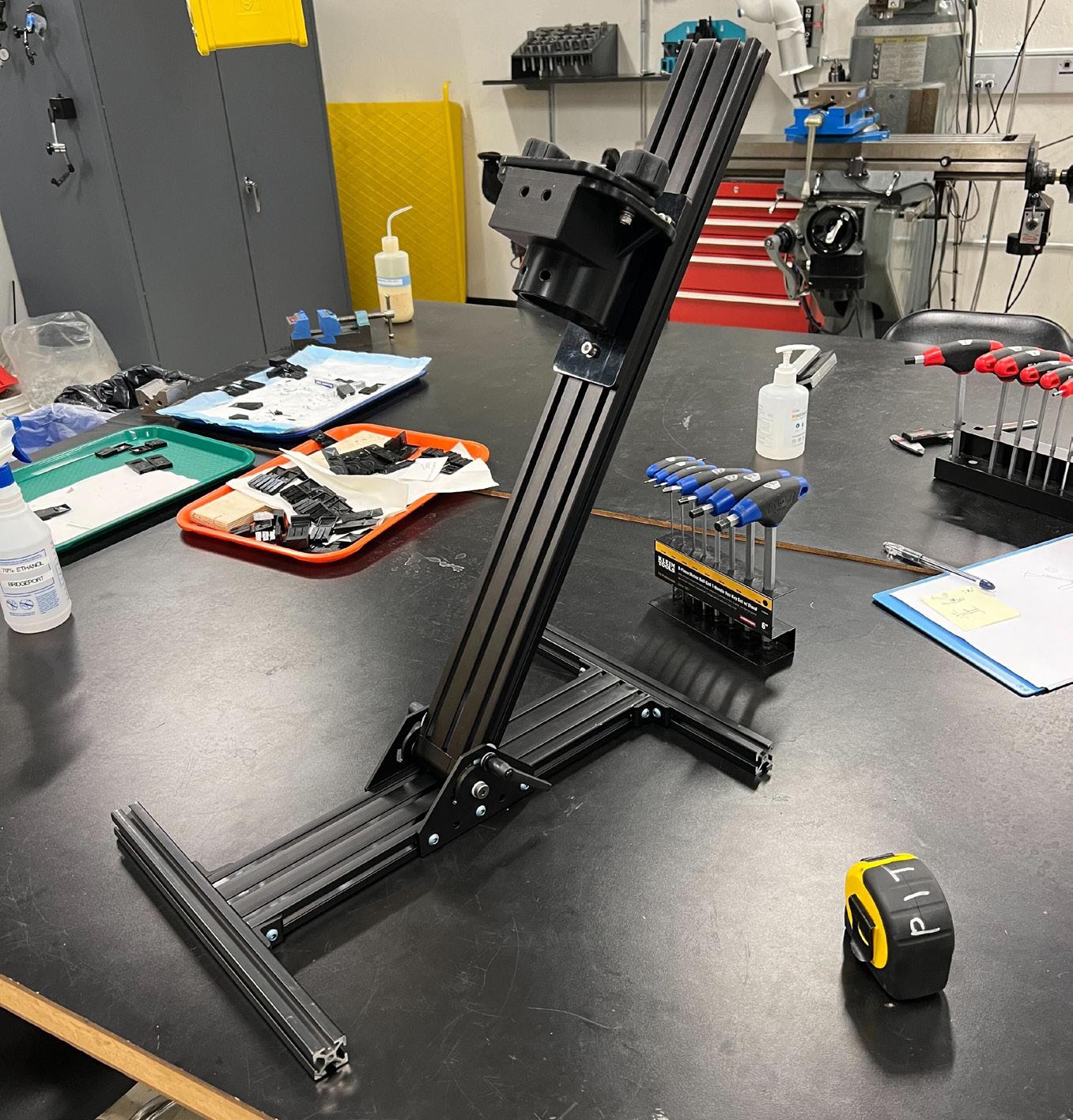
What one might see upon being led into the PIT by an “engineer.”
was there. But in the Ruta lab, that limitation didn’t exist because of the PIT.”
With access to a full engineering staff and a range of fabrication equipment, including 3D printers and a laser cutter, researchers who use the PIT have more freedom to design their experiments. “The goal, then, is to think creatively about that experimental setup . . . and what it would take to create it,” Morton says. “I remember
“
to design their own setups and use the equipment to fabricate parts. Their labs are charged a monthly rate and given 24/7 access to the PIT makerspace, allowing researchers to work on their own time. Users can also employ the services of the engineers who staff the PIT, known internally as the “PIT crew,” to help in the design process. The PIT crew can assist with anything from drilling a hole in a plate to designing complex instrumentation.
” I remember coming down to the PIT and thinking, ‘This might be impossible,’ and then having the PIT staff say, ‘Oh, this is possible.’
coming down to the PIT and thinking, ‘This might be impossible,’ and then having the PIT staff say, ‘Oh, this is possible.’”
To gain access to the PIT, researchers must schedule an initial training session that covers the basic prototyping equipment in the shop. Once trained, they are free
Jacopo Razzauti, a graduate student in Leslie Vosshall’s lab, first came down to the PIT to laser cut parts for the acrylic chambers the lab uses to study mosquitos.
“We had so many assembled acrylic chambers when I came to the lab, and one of the Ph.D. students told me, ‘Oh, you can
just make your own.’ That’s the first time I found out about the PIT,”explains Razzauti. Across the floor from Razzauti and his mosquito chambers, scientists in Daniel Kronauer’s lab study ant behavior using their own laser-cut experimental setups. “[The PIT] allows us to do whatever design we want,” says Yohann Chemtob, a postdoctoral researcher in the Kronauer lab. “And each new design allows us to answer new questions.”
If something demands a more advanced engineering solution, users can schedule a free initial consultation with the PIT crew to determine whether a project will be feasible. If it is, the project process begins, with engineers dedicating time to the design and fabrication of the device or custom parts specified in the project scope. The PIT crew charges labs for this work at a rate of $45 per hour—a quarter of the cost of some private engineering firms. Users outside of Rockefeller can also employ the PIT’s services at a higher rate of $100 per hour. Projects range from quick, one-time-use devices to more permanent setups that can be used for multiple experiments. One such example is the Vosshall lab’s “HOStel” project, which consists of automated laser-cut acrylic gates controlled by motors. It is used to study mosquito behavior without the researcher needing to be in the room. According to Razzauti, the setup is still used to this day.
A PIT of History
In the ancient year of 2015, or 5 BCE (Before Covid Era), the PIT was known as the Precision Fabrication Facility, or PFF. The PFF was a simple makerspace with a few MakerBot 3D printers, some manual machining equipment, and a Roland CNC milling machine. It was run at the time by an engineer named Jim Petrillo. Alipasha Vaziri, a Head of Laboratory (HOL) studying novel ways to image brain tissue samples, found an increasing need for custom instrumentation and parts. Faced with the high costs and long wait times associated with outsourcing engineering work to third-party vendors, Vaziri, along with several other Rocke-
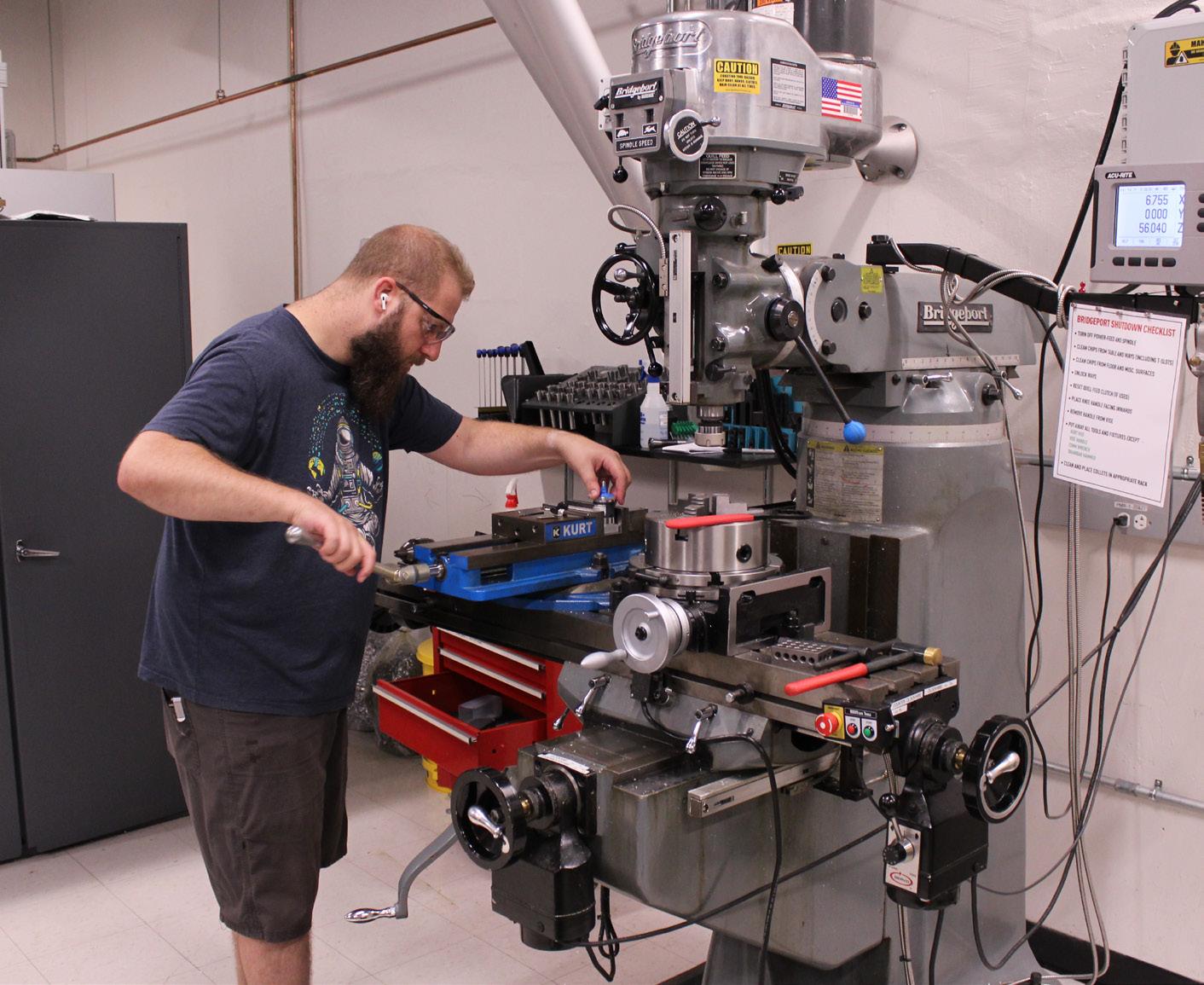
Jazz Weisman uses the PIT’s Bridgeport milling machine to make parts for behavioral observation rigs of his own design.
feller HOLs who now make up the Scientific Advisory Committee, proposed an in-house resource center that could build custom instruments for scientific purposes.
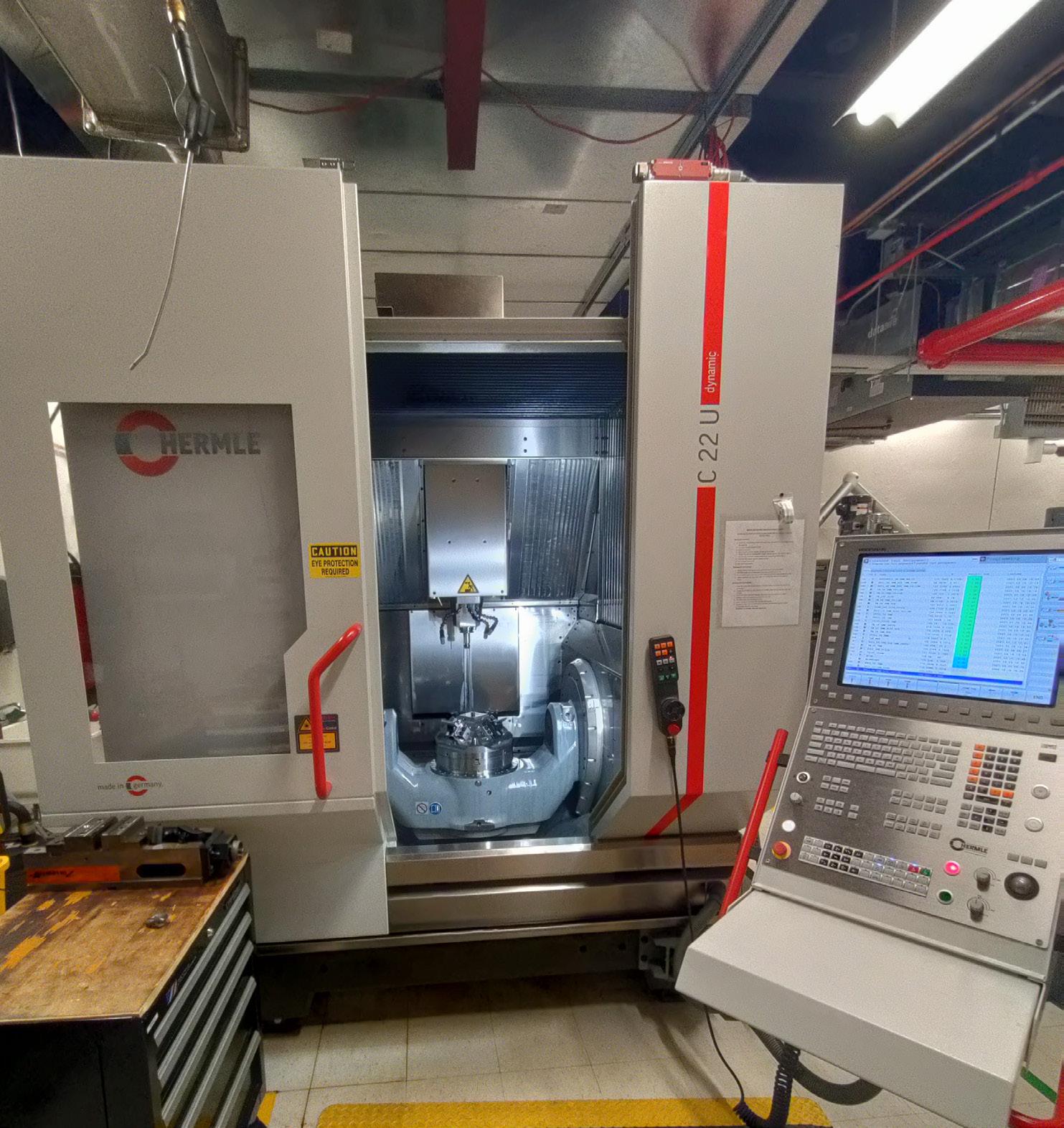
When the need for more advanced parts surpassed the capabilities of the equipment, a five-axis CNC milling machine was purchased from Hermle in 2016. CNC milling is a type of machining that uses programs to mill a piece of material down to a desired shape. The Hermle, as the machine is called, is one of the most advanced CNC machines manufactured today. This behemoth is the size of a small box truck but can carve down a piece of material to 5-micron precision. The machine can be incredibly loud and moves incredibly fast, and when it starts running a program, one could be forgiven for having an initial instinct to run under a table and hide. Since the Hermle weighs nine metric tons,
it needed to be placed on bedrock. Because of this and other space constraints, the PFF moved from level B of the Theobald Smith Building to its current home in the Plaza Building basement. The shop also needed someone to run the Hermle. Peer Strogies was hired as a Scientific Machinist to use the Hermle to make precise parts. With Strogies’ assistance, the Hermle was up and running by January of 2018. At first, the machine shop and the Hermle made up a new department called the Instrumentation Design Fabrication Facility, or IDFF. In October of 2018, the IDFF and PFF were combined and renamed Precision Instrumentation Technologies, staffed by Petrillo, Strogies, and Dan Gross. The PIT has continued the practice of keeping a full team of engineers on staff and is currently run by Strogies (as the PIT Director) and Instrumentation Engineers Griffin Dennis and me, Nick Belenko.
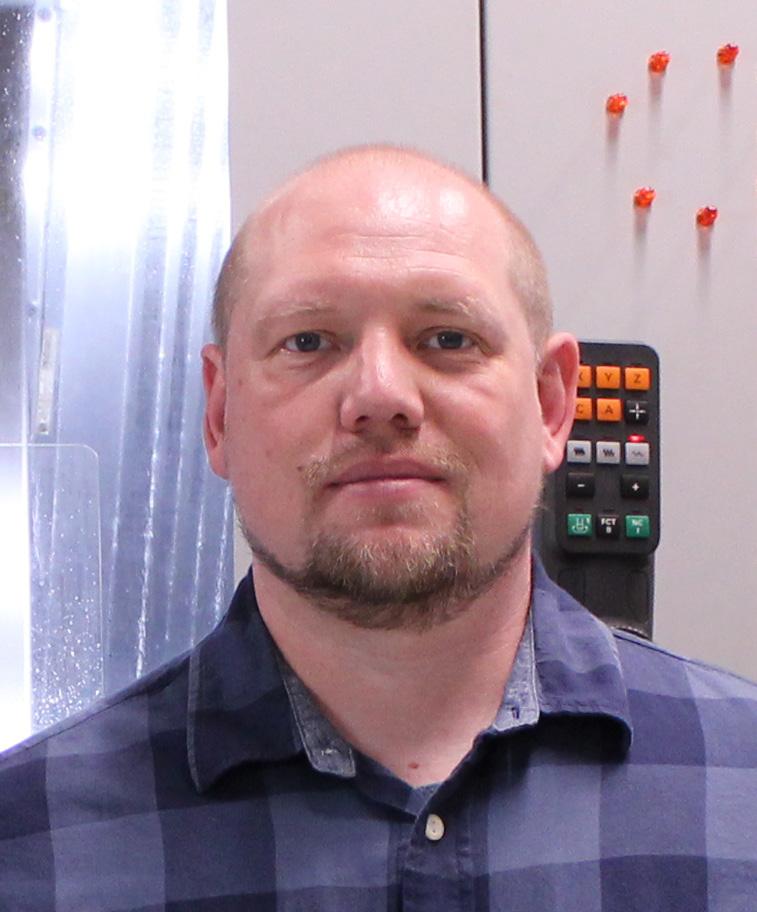
Peer Strogies PIT Director
Griffin Dennis Instrumentation Engineer
Nick Belenko Instrumentation Engineer
The PIT’s Hermle C22U 5-Axis milling machine allows the PIT engineering staff to create parts that would otherwise be impossible or prohibitively expensive to make elsewhere.
PIT
People:
The Staff of the PIT
In order to meet the needs of the research community, the PIT contains not only high-end machines, but also staff with the expertise to run them. The most advanced of these machines, and arguably the star of the show, is the Hermle 5-axis CNC milling machine, primarily operated by Peer Strogies. Strogies, a master craftsman by trade, specializes in machining small parts that require great precision and tight tolerances—for example, brain imaging windows for marmosets and macaques, primarily used by the Freiwald lab. Peer also operates manual (non-computer-controlled) machines such as the manual milling machine, lathes, and saws, to name a few.
Each member of the PIT crew, while able to use any machine in the shop, has their own specialty when it comes to engineering and fabrication. Depending on the focus and scope of a project, one or more members of the PIT crew will be involved. “It’s a close collaboration with the people at the PIT . . . and at the end of it, you end up with this experimental setup that allows you to probe all sorts of questions,” explains Morton.
If a project involves 3D-printed parts or other rapid prototyping, Griffin Dennis is the one to talk to. Dennis is a mechanical engineer who can take a rudimentary drawing or concept and transform it into a fully realized 3D part. A self-admitted “3D printing convert,” he’s an expert on the PIT’s various 3D printing technologies, which range from simple Prusa filament printers to the slow but lovable giants that are the ProJet printers. He can create a 3D model and turn it into a physical part in a matter of hours. He also works in the PIT’s machine shop, where, using the saws, mills, and lathe, he can manually create parts with remarkable precision.
If a project involves electronics, data acquisition, sensors, or any other electronic system integration, it becomes my territory. I am an electrical engineer by trade and can condense experimental setups into small packages. I
can turn messy jumper wires and breadboard setups into printed circuit boards, or PCBs, allowing seamless functionality between various pieces of equipment.
To Pit or Not To Pit: That Is the Question
Exiting the PIT through the double brown doors can produce a range of emotions: excitement, melancholy, and the urge to see sunlight. But above all is security; users know that at the end of the day, the PIT will be there to assist their research in any way it can.
Having a full shop stocked with tools and prototyping equipment leads researchers to imagine what they could create. From a heated surgery stage for mice to an N95 mask disinfector and even a sperm collection chair for marmosets, the PIT has worked on a huge variety of projects. No problem is too small, either—people can come down with
simple jobs such as drilling a hole into a metal plate or soldering wires together.
“I encourage people to explore the PIT,” Morton says. “You never know where inspiration might come from.”
Engineering skills are in increasing demand for many areas of science, but not everyone has the training or knowledge. In that case, why not utilize the PIT? You can receive training for any piece of equipment to develop your own devices, and you can always outsource advanced engineering work to us. With our engineering skills, enthusiasm, and access to high-end prototyping equipment, the PIT crew can make a scientist’s dreams a reality, truly embodying the university’s mission statement: “Science for the benefit of humanity.”
The PIT is located on The Rockefeller University’s campus in the Plaza Building room A4, one floor below the Receiving Department. Visitors are welcome.
A sperm collection chair for marmosets made in the PIT.
The Music & Medicine Orchestra: A Resounding Revival
By Yixuan Zhao
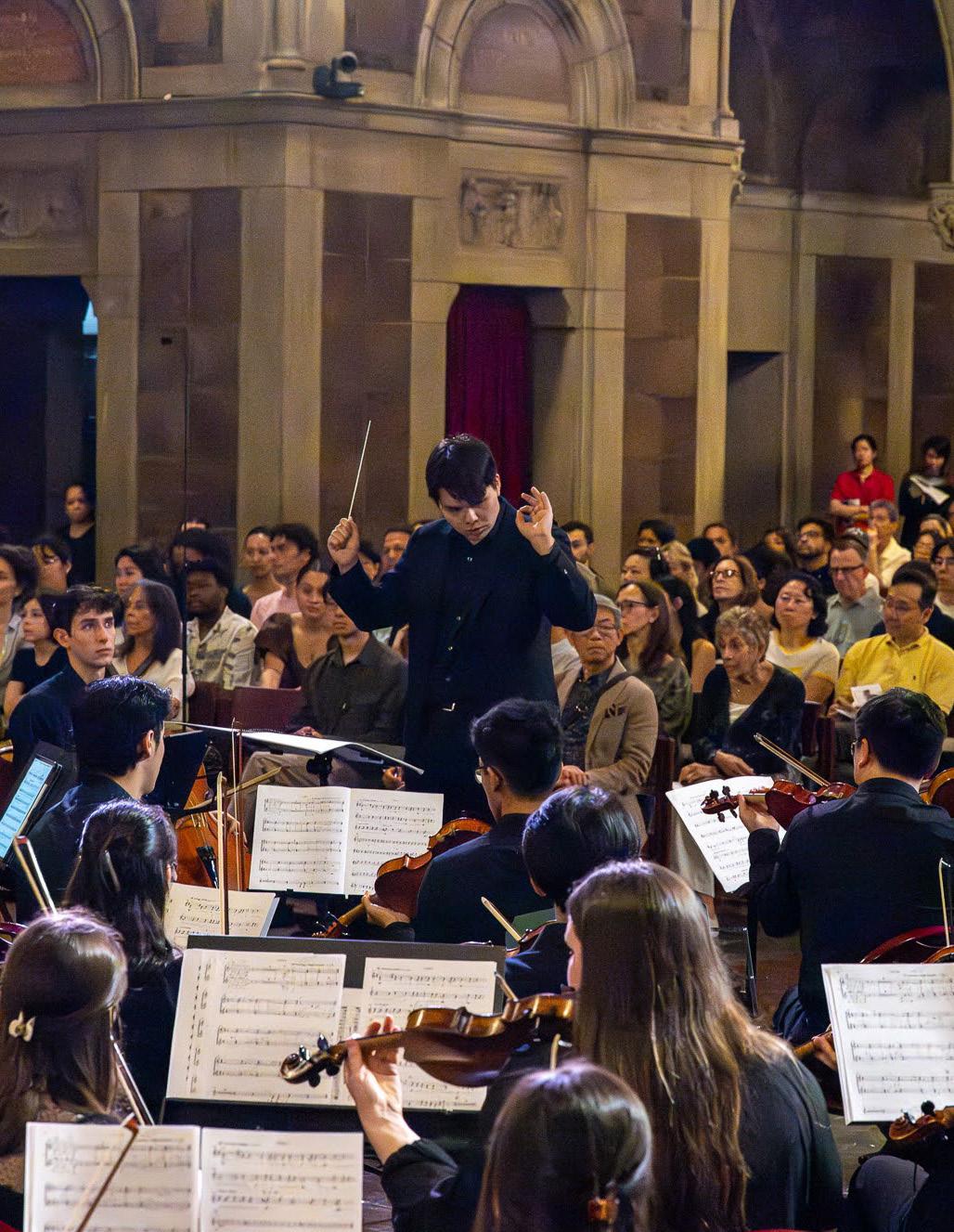
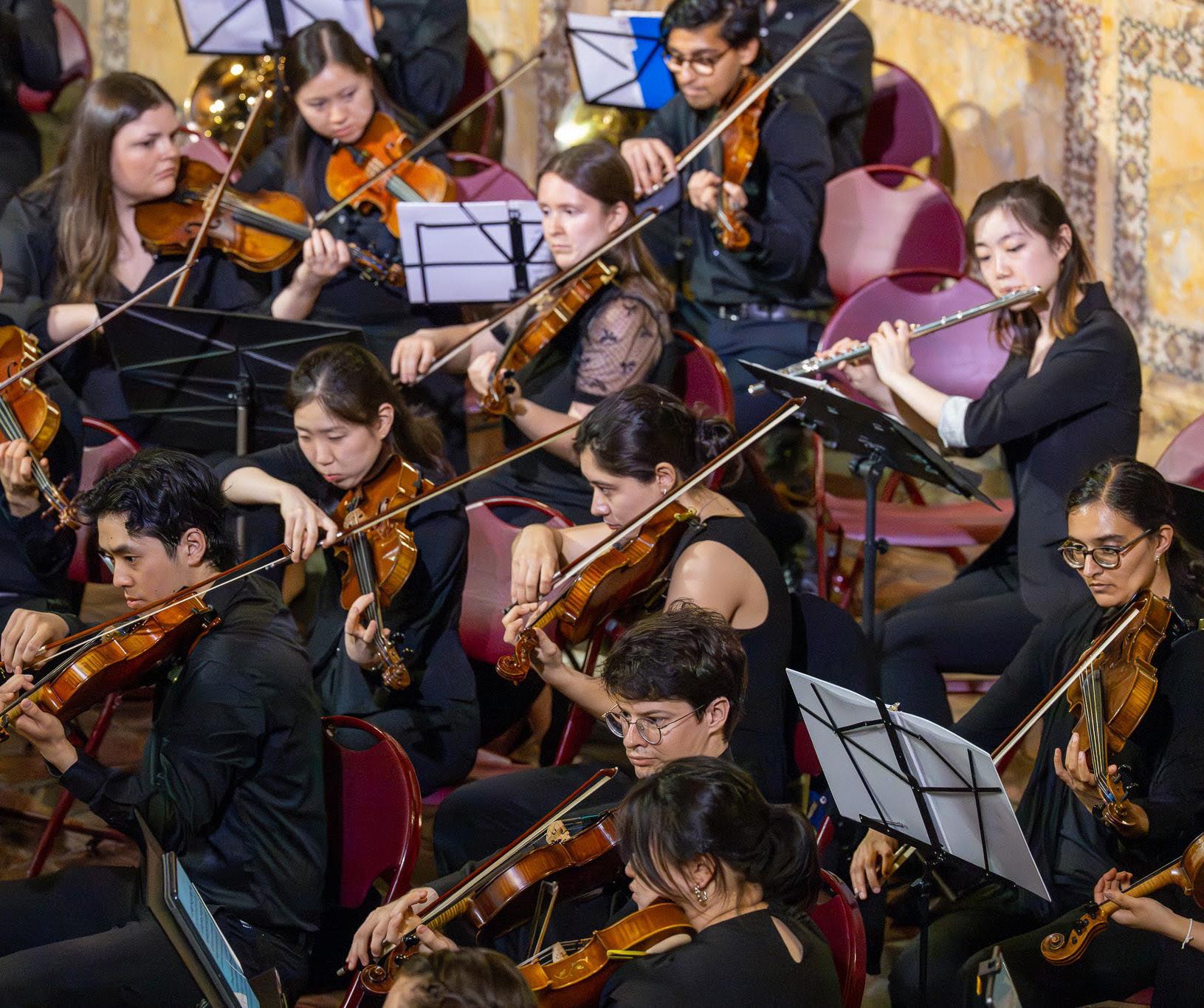
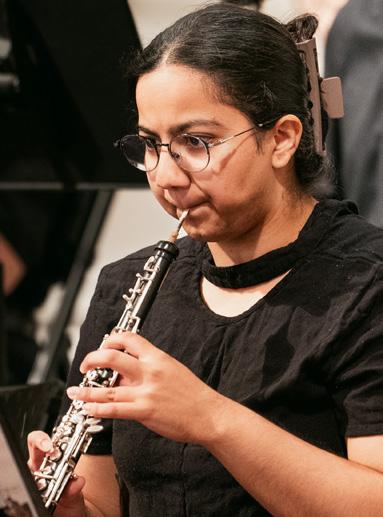
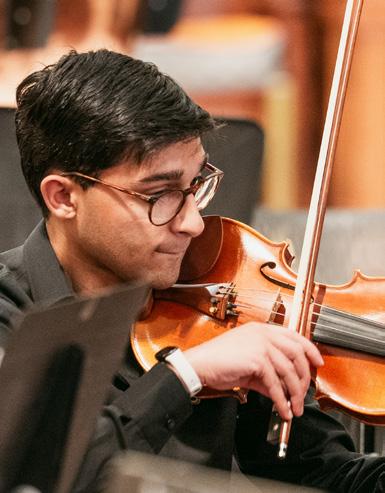
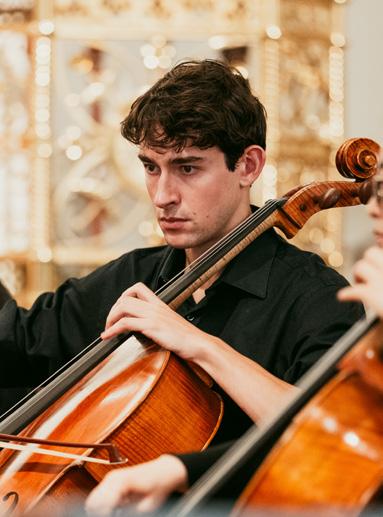
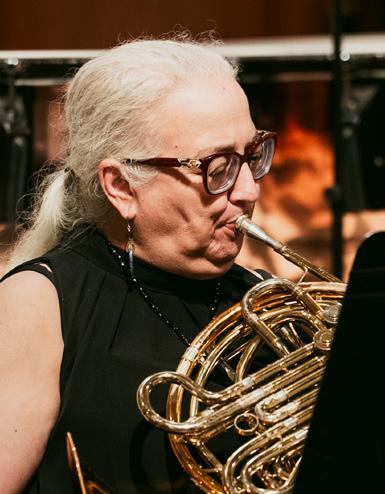
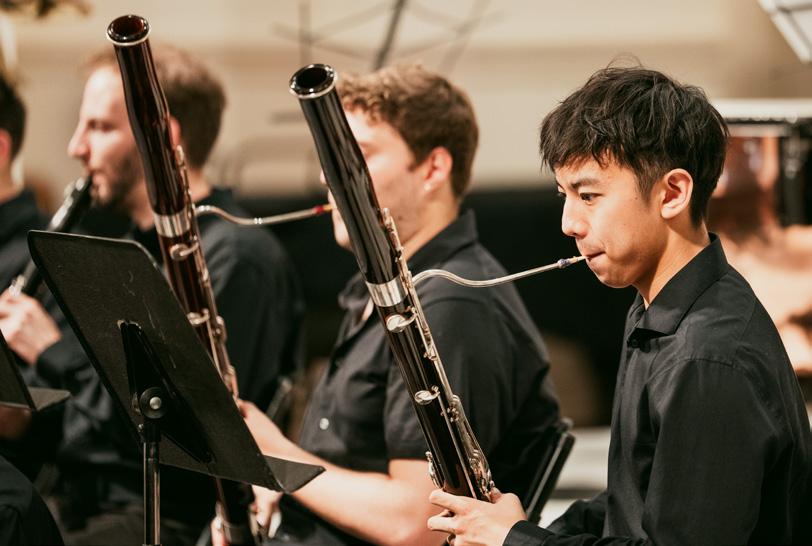
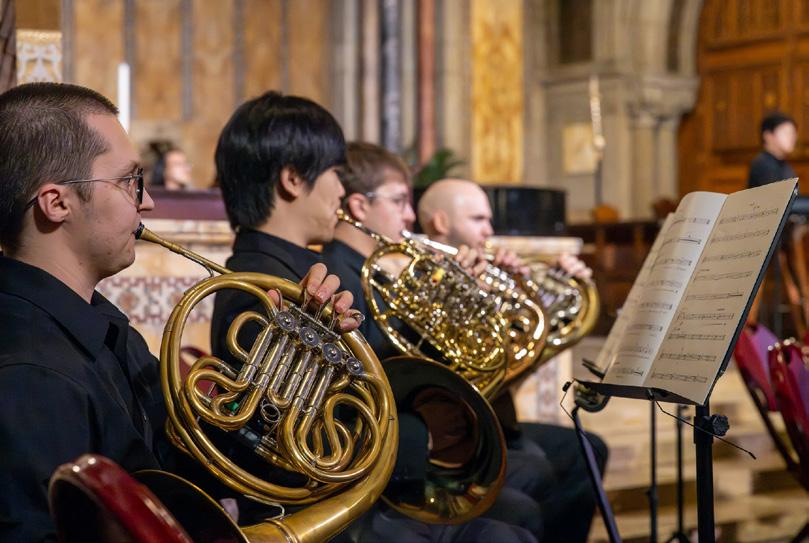
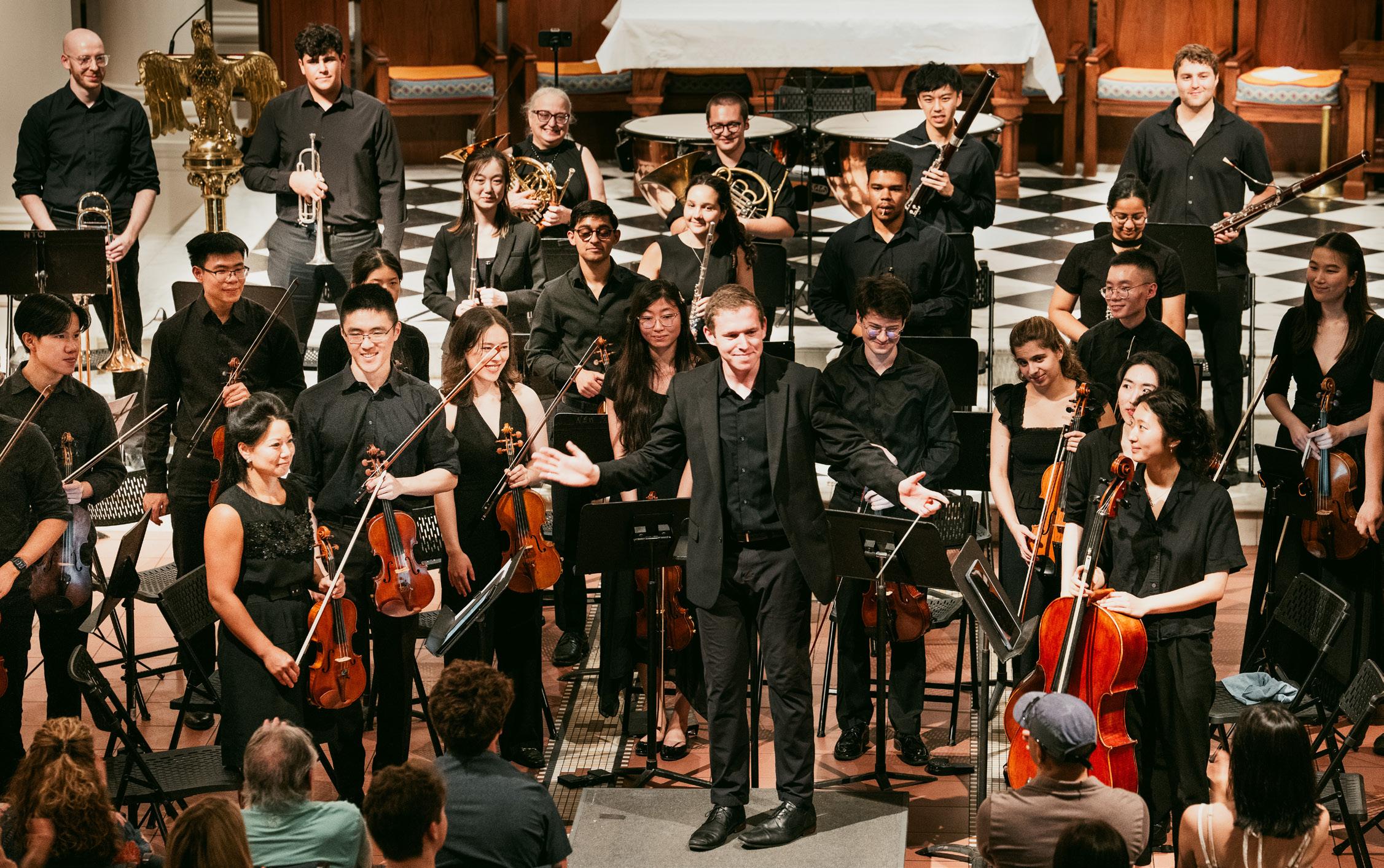
“At this time last year, this orchestra was a three-person group chat,” announced Adrian Rogers, conductor of the Music & Medicine Orchestra. It was May 2025 at St. Bartholomew’s Church, and Rogers was speaking to an audience of over 500 people. Behind his podium was a fullsized orchestra of nearly eighty musicians.
In a triumphant full-circle moment, the orchestra was poised to play Jean Sibelius’s Symphony No. 2. This same symphony was one of the last pieces the orchestra played before the COVID-19 pandemic struck.
Prior to the pandemic, the Music & Medicine Orchestra was a staple of the Tri-I community, performing two concerts per year at St. Bartholomew’s Church in the Upper East Side. However, once the orchestra was put on pause in 2020, momentum was lost, old members moved away, and the group became dormant for the next five years.
Until last summer, when Annie Wu (M2 at Weill Cornell) heard that her friend Adrian Rogers was moving to New York City to study conducting as a Master’s student at Juilliard. Together with Molly
Monge (Tri-I M.D.-Ph.D. student), Wu, Monge, and Rogers restarted the orchestra from the ground up, putting impressive hours into recruiting musicians, securing funding, scheduling rehearsals, preparing repertoire, and all the details in between.
Within weeks, they had progressed from a three-person group chat to a full-sized
orchestra. The newly revamped Music & Medicine Orchestra came together to rehearse every day for just one week before performing their first concert in five years.
In the first year since its revival, the orchestra has delivered four full-length concerts featuring iconic symphonies, with musicians from the Tri-I performing as soloists. The second concert, in August 2024, featured a clarinet concerto performed by Marton Simon (Rockefeller postdoc). Four months later, the third concert featured Dvir Avnon-Klein (Rockefeller Ph.D. student) on violin and Annie Wu on viola, performing Mozart.
In May 2025, the Music & Medicine Orchestra was finally able to return to its pre-pandemic home at St. Bartholomew’s Church, the largest church in the Upper East Side. With approximately 500 audience members in attendance, the orchestra played a unique program that included two contemporary pieces, a Haydn Cello Concerto performed by Giacomo Glotzer
(Rockefeller Ph.D. student) and Symphony No. 2 by Jean Sibelius, cementing a successful revival season. This program was especially meaningful, as Sibelius’s Symphony No. 2 was one of the last pieces performed before the orchestra’s five-year hiatus.
“The orchestra feels more important than ever as a creative outlet in a world of chaos.”
“The last piece I performed with the Music and Medicine orchestra while I was a medicine resident before SARS-COV2 threw the orchestra, Weill Cornell, and the world into chaos was the Sibelius Symphony No. 2,” says Chou Chou, a violinist and Pulmonary & Critical Care attending at Weill Cornell Medicine who played with the orchestra before its hiatus. “Without the orchestra, I, like many others, hung up my instrument. Now, exactly five years later, the orchestra comes roaring back. Triumphantly, with another performance of Sibelius Symphony No. 2. Now, as a practicing intensivist, the orchestra feels more important than ever as a creative outlet in a world of chaos.”
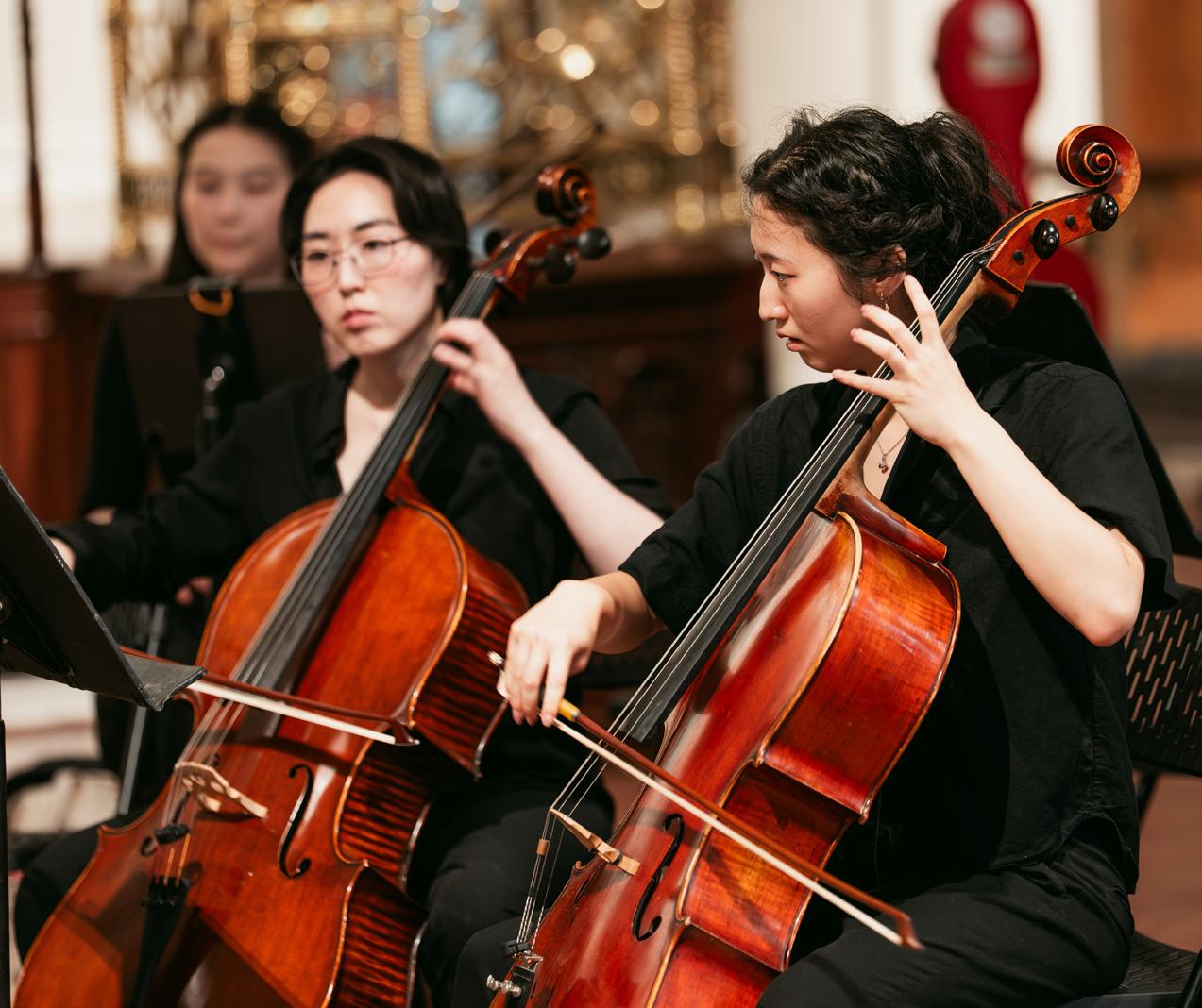
Indeed, in the past year, the Music & Medicine Orchestra has provided a key creative outlet for dozens of musicians across the Tri-I, as well as a crucial way to connect with others across different institutions. “Despite the lack of departments at Rockefeller, we are often siloed into groups based on our cohort, lab, or scientific discipline, and interaction with the rest of the Tri-I is limited,” explains Char-
lotte Bell, who has played cello with the orchestra since the very first concert. “The Music & Medicine Orchestra has become an incredible opportunity to form connections over a shared passion for music, transcending differences in career stage, interest, and institute.” Moreover, while the orchestra mainly consists of (and prioritizes) those from Tri-I institutions, it is not limited to just the Tri-I; several musicians hail from other biomedical institutions across New York City, including Mount Sinai and Columbia Medical School.
“Playing in the orchestra challenges me every concert cycle and rejuvenates me after a long day in the lab.”
The orchestra has also allowed musicians to reconnect with music after many years away from their instrument. “After losing touch with the violin for over ten years, I was very excited to have an opportunity to play in an orchestra again with the talented students, researchers, and physicians here,” says Sherry Fan, a Tri-I M.D.Ph.D. student. “Playing in the orchestra challenges me every concert cycle and rejuvenates me after a long day in the lab.”
With a resounding first season under its belt, the Music & Medicine Orchestra is now looking forward to its second season, starting with a summer concert series featuring two separate concerts in July and August. We hope to see you at our upcoming August concert, featuring works by Haydn, Tchaikovsky, and Dvořák. ■
Music & Medicine Orchestra – Summer 2025 August Concert
Saturday, August 16, 7:30pm
Church of the Holy Apostles, 296 9th Ave, New York, NY 10001
Program
Franz Joseph Haydn, Trumpet Concerto in E-Flat Major Soloist: William MacDonald, trumpet Pyotr Ilyich Tchaikovsky, Romeo and Juliet Antonín Dvořák, Symphony No. 7 in D minor
If you are a musician in the Tri-I who is interested in joining the orchestra or staying in the loop with Music & Medicine events, please reach out to any of the contacts below. In addition to the orchestra, the Music & Medicine Initiative also organizes small group/chamber ensembles and opportunities to perform for hospital patients.
Small Group Ensembles: Yixuan Zhao (yzhao02@rockefeller.edu)
REVIEWS NR
By Ramia Rahman
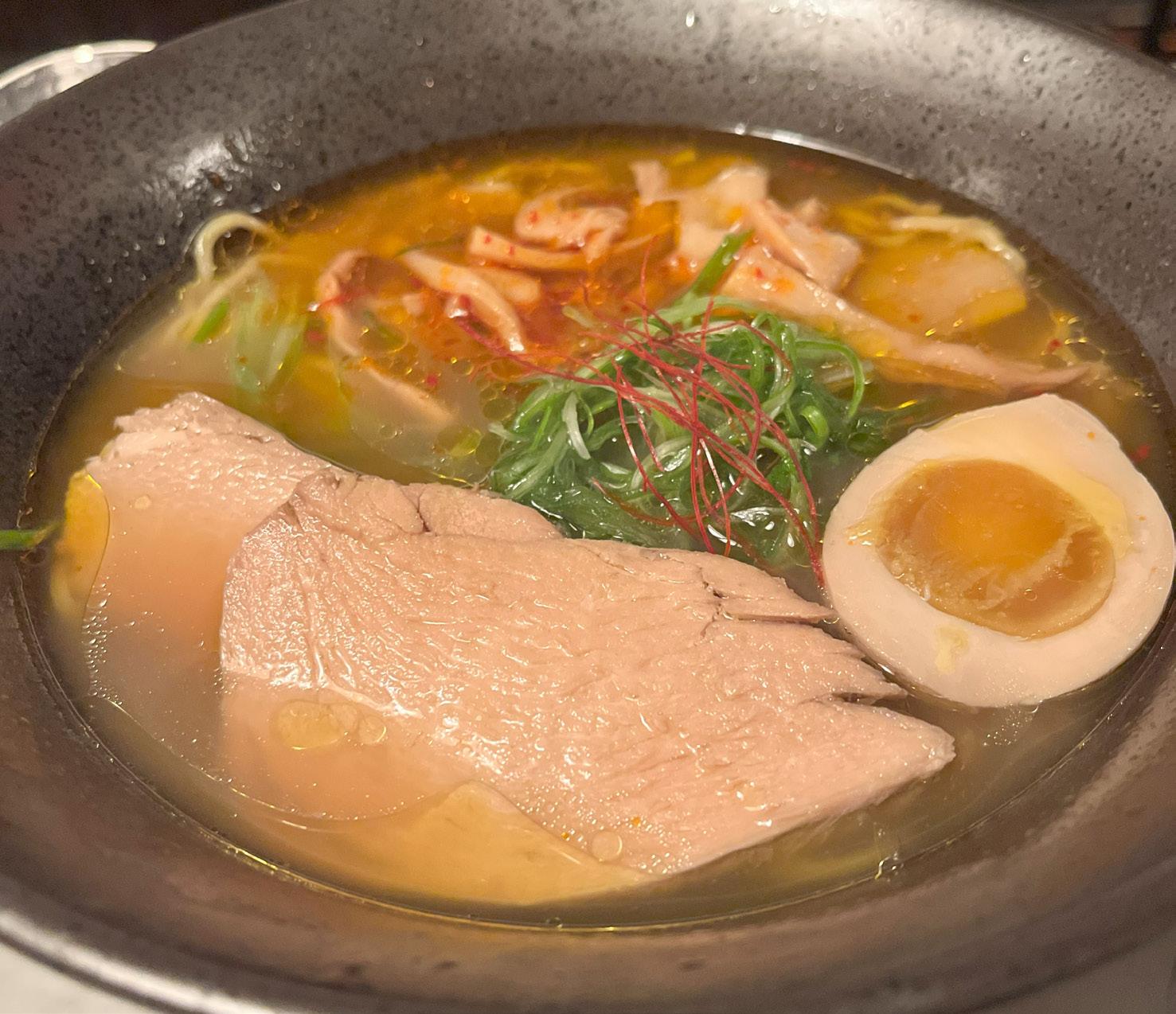
A friend and I discovered NR while seeking refuge from a blustery February day. Inside the unassuming black brick building, we found a warm, glowy interior. The vibe was elevated but cozy, with vintage lamps, golden mood lighting, and wooden furniture.
NR, or N’ Roll, is a sequel to the popular Rokc in West Harlem, which is sadly closing later this summer after ten years. Fortunately, NR is maintaining the reputation of a top-rated ramen spot in NYC with a similar specialization in creative cocktails.
We shared the “Kyoto Ramen,” which had a warm, soothing taste perfect for a rainy day. Personally, I find some ramen to be delicious for the first few sips, but eventually the taste gets monotonous and it becomes a chore to finish it. But that wasn’t the case here: the garlic oil and spiced bamboo shoots provided subtle depth throughout. NR’s ramen has an earthy yet light flavor, with perfectly cooked noodles and a melty seasoned egg. They were kind enough to replace the pork belly with braised chicken at our request and were overall wonderfully attentive and accommodating.
And yet, the “Deviled Egg + Egg + Egg” was the highlight of our meal. I had to pause for a moment to process the complexity of textures and flavors in that first bite. The sea urchin and tosa vinegar jelly both brought such unique umami tastes, while the wasabi was a pleasant kick to cut the sweetness. The caviar on top added an extra pop and made the price more reasonable for just three half eggs.
NR is well known for its cocktails. Each drink has helpful descriptive scales for sweetness, spice, woodiness, etc., with a wide range of unique ingredients such as saffron, blue cheese, and palo santo. I chose a mocktail version of the “Yuzu + Sansho,” which had a delightfully refreshing fruity flavor from the orange and yuzu. The sansho pepper, a milder cousin of Szechuan peppercorn, complemented the carbonation with the slightest tingliness. As a baseline yuzu lover, I can’t think of a better drink I have had in New York. With its creative drinks and speakeasy feel, NR is a great spot for an elevated lab happy hour or a special occasion.
Unsurprisingly, NR was a 10/10 for me on Beli, a restaurant rating app. And I’m not alone. With over 4.5 stars on Yelp, NR frequents lists of top ramen places and “NYC’s Best Bar Snacks Actually Worth Paying For.” On my next visit, I’ll have to try the popular Truffle Egg Sandwich paired with a floral cocktail like the “Chanel No. 5?” or “Botanical Garden.”
NR’s menu describes its origins: Rokc was the initial foundation, and NR represents a “commitment to keep rolling forward, evolving, and continually striving for something better.” So, roll over to NR to evolve your taste buds with a restaurant that executes the east-meetswest concept without sacrificing dynamic and authentic flavors. ■
CULTURE
Italian Futurism: Movement for Movement’s Sake
By Juan Sebastián Andrade-Martínez
“We declare that the splendor of the world has been enriched by a new beauty: the beauty of speed.”
—Filippo Tommaso Marinetti Futurist Manifesto
I have an irrational fear of Antonin Artaud. It’s not because of Artaud himself, a twentieth-century French avant-garde actor and writer. It’s because of the ideas his face evokes in my brain: the uncanny stuttering of a dying lamp, that ethical problem called the repugnant conclusion, and the first-year student stress of finding a lab that I was experiencing when I first saw his face. Maybe this vortex of emotions is what he wanted his spectators to feel in his Theatre of Cruelty, a play in which his main goal is to overwhelm the audience.
Or maybe my mind is doing a rendition of one of Filippo Marinetti’s poems, because,
funnily enough, that was the same night I first stumbled upon Italian Futurism
The human race has depicted movement since it has been able to depict things. But movement itself as an end goal—and, in particular, movement as a celebration of the industrial age—is a Futurist concept. Born in the 1910s via Filippo Marinetti’s Futurist Manifesto and a subsequent deluge of related texts, this artistic current idolizes youth, speed, dynamism, violence, and the ever-changing flow of modernity. The old must be discarded, as is self-consciously expressed by Marinetti in his manifesto: “When we are forty, let younger and stronger men than we throw us in the waste paper basket like useless manuscripts!”
The intentions of Futurists in each branch of the arts they touched can be ascertained from that aforementioned deluge of manifestos. Marinetti himself intended poetry to become less systematic, less strict, and less formulaic. A glance at one of his
To comprehend such a mosaic, it’s instrumental to refer to his 1912 Technical Manifesto of Futurist Literature, in which, during a flight over Milan, Marinetti’s plane’s propeller tells him: “One must destroy syntax and scatter one’s nouns at random, just as they are born.” He (or the propeller, who knows) goes on to disdain punctuation, adverbs, adjectives, and even simple analogies, in favor of making poetry an evocation of spontaneous images of objects, represented as nouns and vibrant analogies. A line from a later text, 1913’s Destruction of Syntax—Imagination without strings—Wordsin-Freedom, speaks to this point: “Acceleration of life to today’s swift pace. Physical,
“Our growing art can no longer be satisfied with form and colour; what we wish to reproduce on canvas will no longer be one fixed instant of universal dynamism, it will simply be the dynamic sensation itself.”
—Umberto Boccioni Manifesto of Futurist Painters
intellectual, and sentimental equilibration on the cord of speed stretched between contrary magnetisms. Multiple and simultaneous awareness in a single individual.”
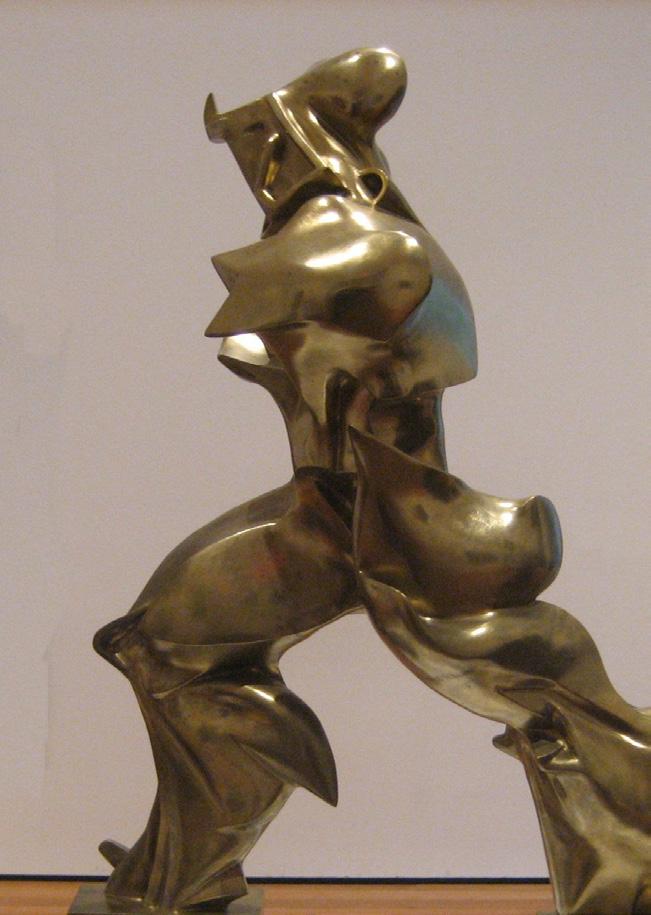
The idea of the individual and his environment flowing into one another as parts of the same entity, is, in my opinion, one of the main motifs of the most famous Italian Futurist piece: Umberto Boccioni’s Unique Forms of Continuity in Space (bottom left), created in 1913 and now part of the MoMA’s collection. In his 1912 Technical Manifesto of Futurist Sculpture, Boccioni states: “By means of the sculptor’s clay, the Futurist today can at last model the atmosphere which surrounds things.” In that regard, the human in the sculpture can be understood not so much as a body, but the shape of a body as defined by its aerodynamics—that is, the environment (in this case, air) surrounding it. It has been proposed that the figure’s struggle to move forward against clashing gusts of air is a metaphor for progress battling against tradition.
Futurist painting followed similar motifs of dynamism and simultaneity, which could sometimes be conjoined with depictions of this struggle between new and old. The City Rises (top left), painted in 1910 by Boccioni and also held by MoMA, concerns the construction of a power plant in Milan. Of particular notice is the horse
struggling forward from the right of the canvas towards the center, while three men try to control him. The whole scene is depicted with vivid colors, showing a maelstrom of movement in which progress, associated with the power plant and the horse, strives forward.
Other futurists focused on a maelstrom of noise. In The Art of Noises (1913), futurist painter Luigi Russolo states: “Ancient life was all silence. In the nineteenth century, with the invention of the machine, Noise was born. Today, Noise triumphs and reigns supreme over the sensibility of men.” His 1913 work Awakening of a City employs the intonarumori, an instrument designed by Russuolo and his brother Antonio to expand the range of sounds available to the musician. This work tries to emulate—uncannily, if I may say—the melange of noises associated with city life.
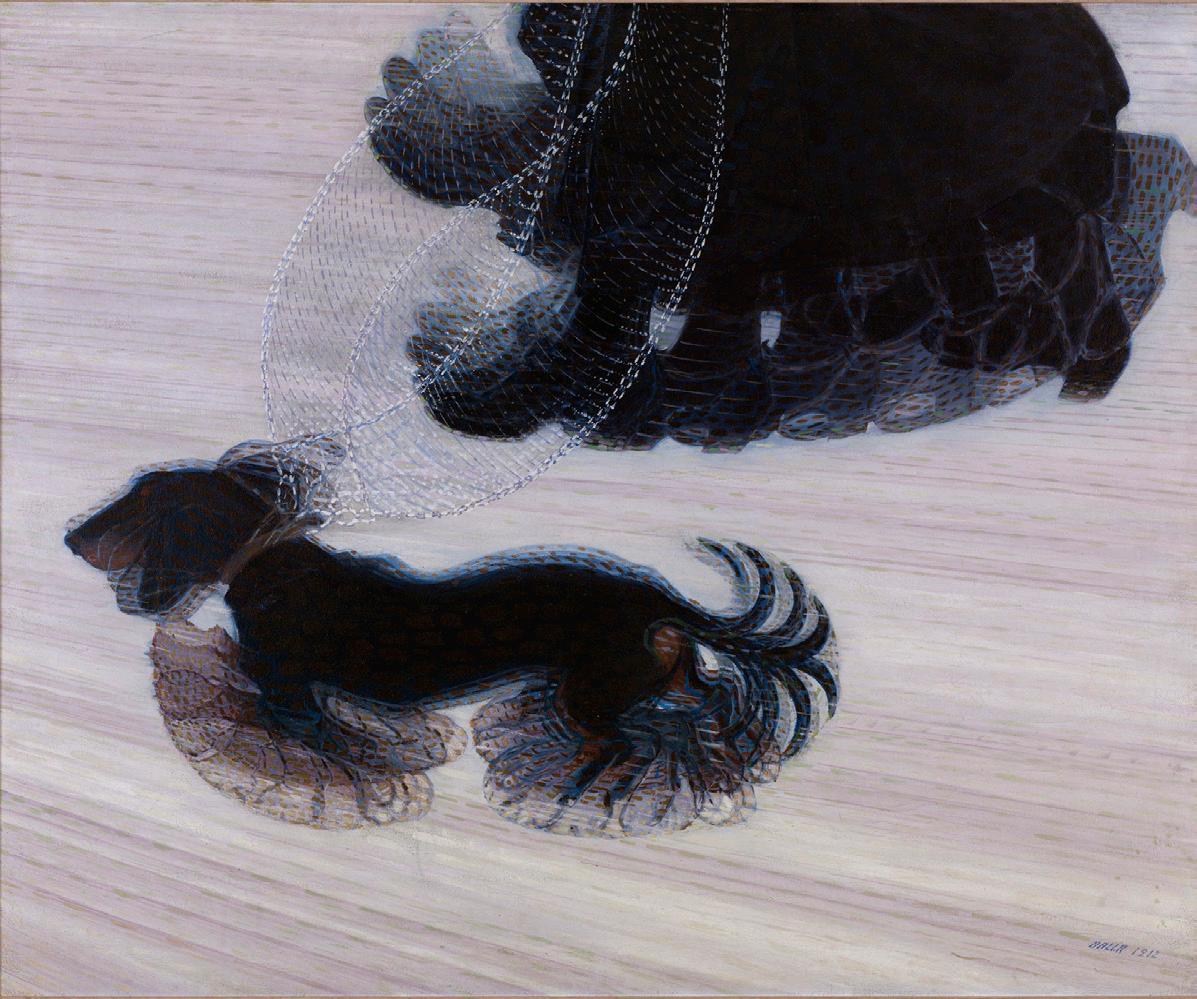
Finally, it would be obtuse not to highlight Dynamism of a Dog on a Leash (top right), painted in 1912 by Giacomo Balla. Here, the intention to render movement in the canvas is evident, with all bodies in the piece composed of a series of blurred and superimposed traces. This work can be seen upstate in Buffalo, at the Albright-Knox Art Gallery.
It would also be obtuse not to deal with the elephant in the room before closing. For
me, The Futurist Manifesto evokes grim images as well. Speed and youth are idolized, but also violence. The glorification of the Italian State and of war to further its advancement cannot be disjoined from some of the Futurists’ ideals. Boccioni and Futurist architect Antonio Sant’Elia died in 1916 while fighting in World War I, while Marinetti went on to support Mussolini’s fascist party, authoring the Fascist Manifesto. Futurism, in this light, can be called a celebration of movement, but movement and youth co-opted for nefarious purposes.
I try to see Italian Futurism more as Balla’s joy at watching a dog walk by than as Boccioni’s struggle to contain a spirited horse. At the end of the day, dynamism can be a pleasure in itself, and one we have to live with anyway in our machine age. ■
By Cecilia Cuddy
Swingers NoMad
Located on 35 West 29th Street, Swingers NoMad is truly one of the most beautiful and unique golf courses I’ve ever been to (with the bonus of being indoors when it gets hot and humid outside!).
Special family sessions for guests 5–21 years old are offered every Sunday before 6pm. At these sessions, children can enjoy multiple golf courses, delicious food and drinks on kids menus, and activity sheets. At the end of each game, there is also a giant wheel you can spin to win special prizes! Adult-only time slots are available as well, with offerings like delicious cocktails and great DJs.
One of the other amazing perks of this place are its many packages for all types of social events. For younger guests, there is a birthday party set for kids (5–12 years old) and juniors (13–20), both of which include a round of crazy golf, unlimited soft drinks, street food and dessert, an area reserved for two hours, and a Swingers medal/visor. For adult groups, there is a variety of packages for social and business events.
I highly recommend visiting Swingers NoMad if you’re looking for a unique mini golf experience right in the heart of NYC!
Family Sundays are every Sunday until 6pm, with family tickets starting at $18 for kids and $23 for adults.
Crazy golf is recommended for ages 5+. Anyone under the age of 16 must be accompanied by an adult (over 18). Under 21s must vacate the venue by 6pm.
Swingers is still open for adults on Sundays! (The family event is in a separate part of the venue.)
The Beast Speedboat
The only speedboat attraction in Manhattan, The Beast is a jet-powered boat that flies along the Hudson at 45 mph and stops at the Statue of Liberty for a photo op you can’t miss! This ~45-minute ride is adrenaline packed, with music pumping, waves crashing, and many surprises from the crew. It’s like going on a roller coaster where you will get wet (perfect when riding on a hot summer day!). The crew is excellent and makes sure that everyone is safe in their seats with seatbelts. I would recommend taking off any sunglasses or hats, as they will most certainly fly away!
As an added bonus, there’s a new cafe called BEAST’ro right next door at Pier 81, which offers great pizza, giant pretzels, hot dogs, ice cream, slushies, and so many other awesome treats!
Another great feature of The Beast is that they offer group bookings, which are perfect for both kids’ birthday parties and summer camp groups.
The Beast departs from Pier 83 on West 42nd Street and 12th Avenue, with rides every hour from 11am–7pm (closed on Mondays).
Riders must be 40” tall to ride, and kids must be able to sit in their seats without assistance.
Tickets are $29 for adults and $22 for children 3–12 years old.
INTER NYC
If you have kids who love outer space, I highly recommend checking out INTER! INTER NYC is an interactive intergalactic adventure where kids alien worlds, and discover the mysteries of the universe. With over ten immersive exhibitions and zones, it is the perfect place for kids to let loose and areas of the museum include Discover Biolumia, a luminous forest that responds to your movements, and Warp Wall, a wall that distorts. Guests can ticket!) at Milky Ways, a new on-site shop that serves soft-swirled ice cream topped with many types of cereals. Located at 415 Broadway on Canal and museum is a one-of-a-kind experience that every family should check out this summer!
Tickets start at $35 for adults, with children under 4 entering for free. Hours are variable, but time slots are often available Though INTER is for all ages, children must be 4 or older to enter the Vortex Climbing area. You can use the code lkbc2025 for 10% off
kids can climb through cosmic terrain, wander and explore the cosmos. Some of my favorite can also enjoy a free treat (included with every Canal Street, this combination of playground available 1–8pm. general admission tickets.
SPYGAMES
If you have ever dreamed about being a spy, SPYGAMES is the perfect place to fulfill that fantasy! Located on 928 8th Avenue, SPYGAMES is a museum that tests your spy capabilities through various challenges designed to uncover the type of spy you would be and how well you would do. Challenges crafted by intelligence experts test your ability to decode and encrypt messages and determine whether someone is lying. It’s not only mentally challenging—you also have to dodge lasers (way harder than it looks!). As you complete each challenge, your performance is recorded on a wristband, and at the end, you are told what kind of spy you’d be (cryptologist, hacker, etc.) and how well you performed.
In addition to this interactive component, the museum includes spy artifacts, such as the Enigma machine used by the Germans during World War II and the telepresence robot that Edward Snowden used to communicate from Russia. If you are looking for a great test and a thrilling experience, SPY GAMES is the perfect place to go!
Tickets start at $29/person for teams of 2–5. For party sizes (16–30 people), tickets are $49/person.
and over 21,000 access across the FDR. The project
While New York City is known park was built over the past four is the country’s largest urban basketball courts, a spot for picnics planted trees
East River Park
known for having many amazing parks, a relatively unknown one that just reopened after Memorial Day is the East River Park. A new section of the four years to protect Lower Manhattan from flooding and coastal storms as part of the $1.45 billion East Side Coastal Resiliency Project, which climate adaptation effort. Beyond the flood protection, the new portion of the park is an amazing recreational space. It has six tennis courts, two picnics and barbecuing (with fifteen grills!), water play sprinklers, a large lawn, and an area that allows you to explore nature, thanks to 600 newly new shrubs, grasses, and perennials. Additional areas are set to open this August, including a new Corlears Hook Park Bridge that provides more project is set to finish by 2026 or 2027, but you should definitely check it out now!
There is limited access to the park via the Delancey Street footbridge. Once construction is completed by the end of 2026, the park will be accessible from the NYC Ferry and other waterfront areas.
OUTDOORS Finding Community on the Field with Columbia
By Sarthak Tiwari
It’s easy to get caught up in the grind of grad school—endless deadlines, research setbacks, and, now, growing uncertainty around funding. It can feel isolating, even suffocating, like you’re in it alone. That’s exactly why the Graduate Student Executive Council (GSEC) at Weill Cornell has been prioritizing community-building events that bring students together.
As vice president of GSEC, I’ve been working to create opportunities that remind students they’re not navigating this journey alone. Living in NYC, we’re in a unique position to build a community that extends beyond the Tri-I. This was the motivation behind our first inter-graduate program event.
In June, Weill Cornell Graduate School and Columbia Engineering co-hosted a picnic event/softball game in Central Park. It was a beautiful day in the park, warm
but not blistering hot, and the forecasted rain held off (at least until the last five minutes). I arrived early to set up, and students slowly trickled in. By the time the games started, we had almost 100 people.
The matches were more competitive (and fun) than expected, and the skill level varied from people who had never touched a softball to people with more than a decade of experience. But the best part wasn’t the game—it was connecting with other graduate students. Most of the attendees just came to hang out and relax, enjoy the weather, and spend a day mingling with other students instead of working.
I got to meet so many people, including master’s students at Cornell who don’t often come out to events. People arrived in small groups, but it didn’t take long for those circles to blend. Even within Cornell, students who hadn’t met before were connecting—and that’s not even counting all the great conversations happening between Cornell and Columbia students.
photos by alexander walsh
We had tons of drinks and food and the overall atmosphere was extremely positive. We even got a dog visitor who kept running onto the field and pausing the game but who was too cute to stay mad at.
In the end, Cornell came out on top (maybe because we actually have a softball team), even though our own GSEC president was playing for Columbia. But more importantly, it was a truly fun day that gave students a chance to relax and connect with a larger community of graduate students. We’re already thinking about future events—not just with Columbia, but with other NYC schools as well. These won’t all be sports-related; some might be as simple as a happy hour or a casual meetup. Whatever the format, the goal is the same: creating spaces where we can connect, unwind, and support each other. I hope to see even more of you out there next time! ■
Meow and Tell with Maca
Jing: So, Maca, let’s start at the beginning. How did you end up living with Michelle?
Maca: It’s a classic tale of fate and flaky humans. I started out as one of many in a kitten litter from two very affectionate cats. Some guy bought me, but then his sister turned out to be allergic (sigh). I was passed along like a furry hot potato until Michelle came along. She was looking for a cat; I was looking for someone who’d share their fish. Win-win :)
Jing: Your name is unique—what’s the story behind “Maca”?
Maca: It’s Bosnian for “cat”—Michelle works with someone named Merima, who suggested it. I approved. Bonus points because it sounds like matzo ball. I am small, round, and culturally diverse. Also: delicious, if you ask me.
Jing: Any toys you’re obsessed with?
Maca: Yes. A feather-on-a-string toy with a bell. Been obsessed since day one. Also obsessed with wet food. And real fish. Michelle cooks it, I inspect it, she gives me a piece, I demand more. She caves. We call it “co-regulation.”
Jing: What’s your favorite way to get attention?
Maca: Meowing. Loudly. At everything. Also keyboard sabotage. She opens her laptop? I become the laptop. Simple.
Jing: How are you with guests?
Maca: Oh, I’m an extrovert. I follow guests around, sniff them, jump on counters mid-tour. One time Michelle threw a party and I hid under the TV —too many people. I prefer to host on my own terms.
Jing: Any small moments that really define life with Michelle?
Maca: We talk. She says “no” when I ask to go out in the rain. I meow. She meows back. It’s a full dialogue. Also, after I got spayed and wore the cone of shame, I became very clingy. We cuddled. It was a whole era.
Jing: If you had a social media bio, what would it say?
Maca: Something minimalist. Maybe just a quote. “Give me the food.” That says everything you need to know. ■
Lord’s
Just a block down from Dame, the trendy West Village fish and chips restaurant, is its sister restaurant Lord’s, bringing British classics to the New York dining scene. Cozy yet elegant, Lord’s is the perfect place to nestle into a booth and share a comforting meal with friends or family, like perfectly jammy curried Scotch eggs or a chicken and cabbage pie with a side of “proper” English chips. Lighter seasonal plates like the poached white asparagus and snap pea salad add a nice pop of freshness and crunch to the heartier dishes. With minor tweaks on classic cocktails, like the snap pea ‘tini (a pea leaf-infused gin martini) and the damson negroni (using sloe gin made from damson plums), the drinks menu is simple and unpretentious, if somewhat unadventurous. The best way to close out any meal is the rhubarb and apple crumble with honey ice cream—a blend of tart, sweet, and creamy that will satisfy any sweet tooth. A welcome escape from the bustle of everyday life, Lord’s delivers comfort food that is just elevated enough to feel like a special occasion.
The Rehearsal
In a world as unpredictable as ours, is it possible to rehearse a scenario over and over again to control the outcome? This is the premise of Nathan Fielder’s The Rehearsal, an absurd docu-comedy in which test subjects present their problems to Fielder, who then painstakingly reconstructs each situation and offers them the chance to rehearse it to perfection. Here’s an example: the Season 1 finale features a woman who isn’t sure if she wants kids. Fielder builds a functional replica of her house, complete with progressively older child actors who are swapped out every so often to mimic the experience of watching a child grow up. Coupled with Fielder’s signature deadpan delivery, these surreal scenarios blur the lines between parody and sincerity and between performance and reality.
The show explores something that is perhaps not unfamiliar to scientists: the desire for a world in which every variable is controlled, every scenario repeatable, and every possible outcome accounted for. As the rehearsals grow ever more intricate, the show begins to turn inward, questioning what underlies our motivations for total control and how far we are willing to go to achieve it. Awkward, funny, and surprisingly touching, The Rehearsal serves as a reminder that real life is not perfectly predictable—and what fun would it be if it were?
—Michelle Yu
Photo by Cheon Fong Liew
Photo by Michelle Yu
Show your Rockefeller, Cornell, or MSK ID for 10% off!