FIN-DE-SIÈCLE FELINES
In the late nineteenth century, the cat emerged as a distinct subject within modern visual culture. This development coincided with broader shifts in urban life, where domestic interiors, leisure, and independent habits gained new cultural value. The cat, long associated with ambiguity and reserve, offered artists a model that differed from the loyalty and utility traditionally symbolized by the dog. Its presence in art aligned with evolving notions of individuality, detachment, and interiority. This reconfiguration had an important literary precedent in the work of Charles Baudelaire. In his poem Les Chats , published in Les Fleurs du mal in 1857, Baudelaire articulated a symbolic framework that associated the cat with introspection, sensuality, and intellectual refinement, effectively establishing a cultural code of feline representation later taken up by writers and artists. This framework was extended and popularized in Les Chats by Champfleury, which brought together literary, historical, and visual material devoted to the animal.
By the end of the century, feline imagery was further reinforced by the cultural milieu of Le Chat Noir and its associated publication. Within this context, the cat functioned as both emblem and subject, circulating across posters, prints, and illustrated media. Artists such as Théophile Steinlen, Tsuguharu Foujita, and Édouard-Marcel Sandoz approached the animal through distinct formal languages. Steinlen emphasized graphic economy and mass reproducibility. Foujita explored line, surface, and controlled refinement. Sandoz translated the animal into compact sculptural form. In each case, the cat operates as a concise visual sign, exemplified by Steinlen’s poster for Le Chat Noir, where the animal is reduced to a sharply defined, immediately legible image.
Works depicting cats from this period do not rely on anecdote or overt charm. They engage with questions of line, material, and presence. The animal’s form allows for both stylization and observation, for abstraction and specificity. As such, these works offer a focused entry point into the artistic concerns of their time.
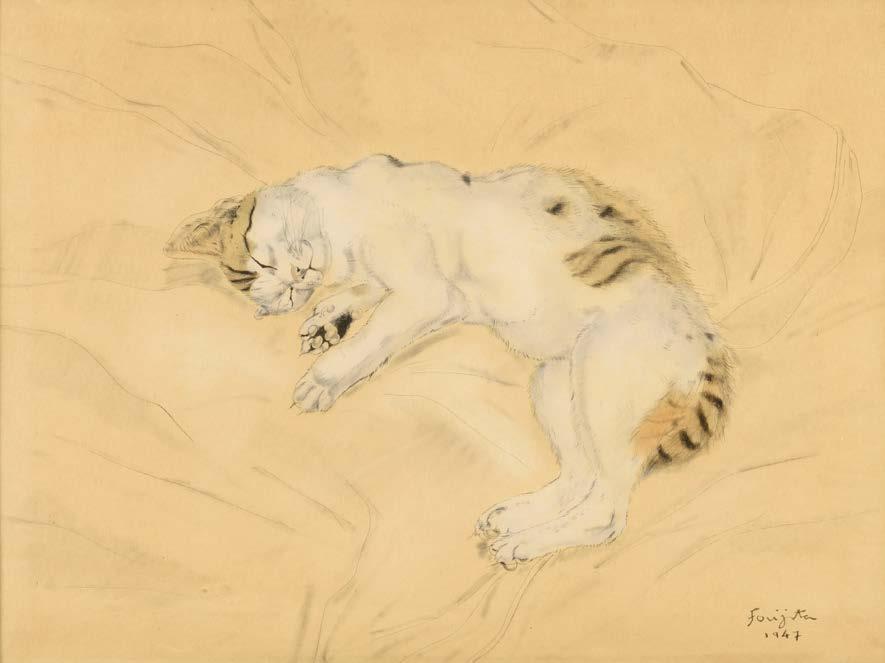
012 . Léonard Tsuguharu Foujita
(Japanese-French, 1886-1968)
Sleeping Cat - 1947
Watercolor and India ink on paper
27 x 37,5 cm (mount window)
Signed and dated lower right
Provenance:
Galerie des Modernes, Paris
Private collection, Belgium (acquired from the above in 2005)
Published:
Sylvie et Dominique Buisson, La vie et l'œuvre de Léonard-Tsuguharu Foujita, ACR Édition, Paris, 1987, cat.47.07 (ill.)
€ 25 000 - 30 000
With a certificate of authenticity by Sylvie Buisson, dated 21 January 2003.
Cats occupy a distinctive place in the work of Léonard Tsuguharu Foujita, who returned to the subject throughout his career in drawings, prints, and paintings. More than a charming motif, the animal provided the artist with an ideal subject for close observation. Foujita lived surrounded by cats for much of his life, and photographs of his studios frequently show them at ease among the objects and models of his daily environment.
In the present watercolor of 1947, the animal lies asleep on its back, belly exposed, its limbs loosely extended in a posture of complete ease. The background, suggesting a textile or cushion, forms a soft and unobtrusive setting against which the body is gently articulated. Foujita’s draughtsmanship, remarkable for its fineness and control, is particularly suited to the rendering of fur: delicate strokes evoke its softness while preserving the clarity of the contour. Precision, however, never comes at the expense of vitality.
Beyond its technical accomplishment, the drawing reflects Foujita’s attentive understanding of feline attitudes. Rather than a posed arrangement, the image captures a fleeting state: the quiet abandon of an animal asleep where it feels entirely secure. Even in a modest subject, the artist finds an occasion to unite careful observation with the refined graphic language that characterizes his work.
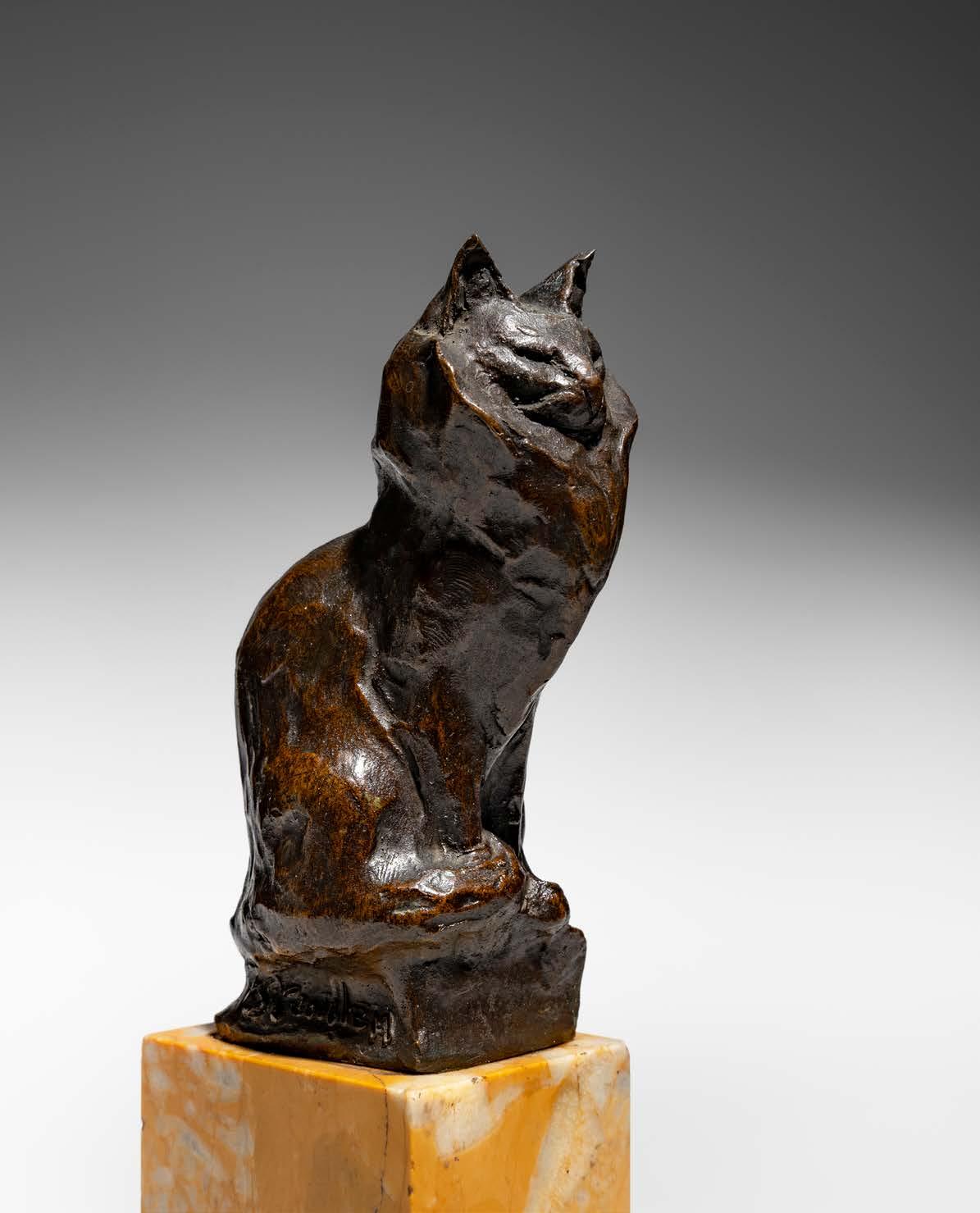
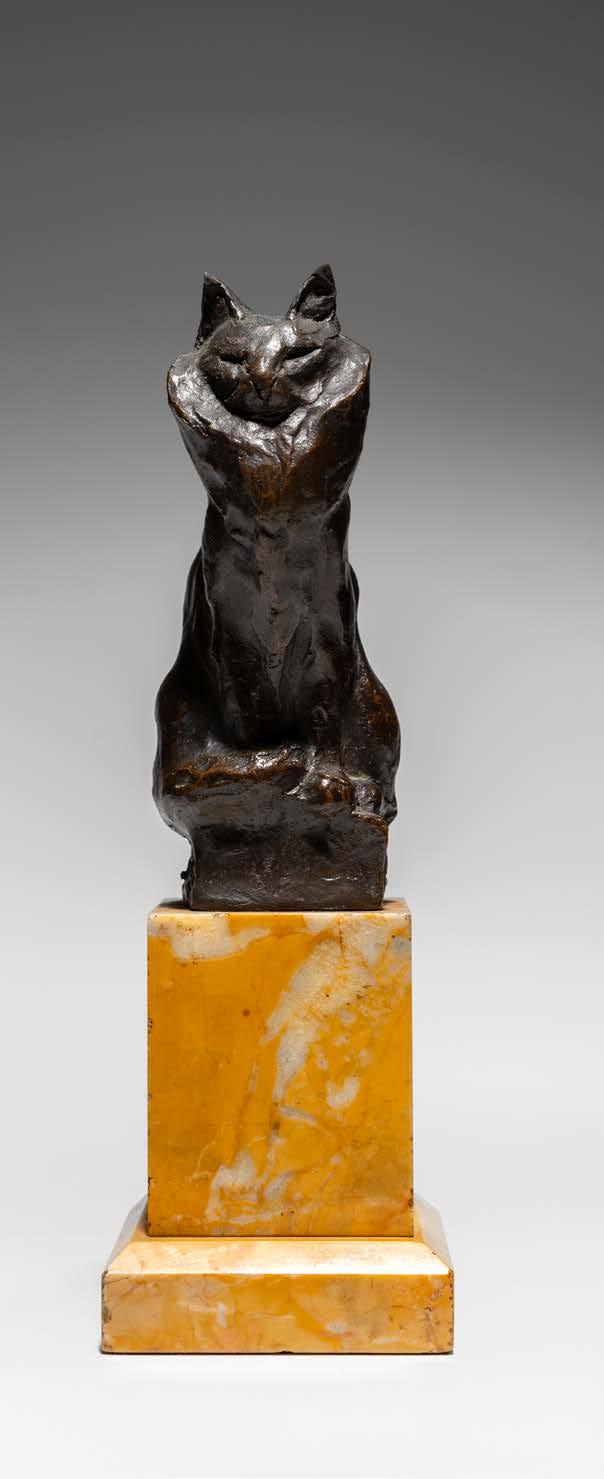
013 Théophile Alexandre Steinlen (Swiss-French, 1859-1923)
Seated Angora Cat - c.1910
Bronze, 12 cm (20,5 cm incl. base)
Signed on the left edge of the base
Foundry mark and number on the right edge of the base: A.A Hébrard Foundry, Paris, 14
Provenance: The Sladmore Gallery, London
Private collection, Belgium (acquired from the above in 1996)
Literature:
Catherine Lepdor, Steinlen, l'œil de la rue [exhibition catalog Musée Cantonal des Beaux-Arts, Lausanne, Musée communal d'Ixelles, Bruxelles], 5 Continents Editions, 2008, p.33, fig.23 (other exemplar)
€ 5000 - 7000
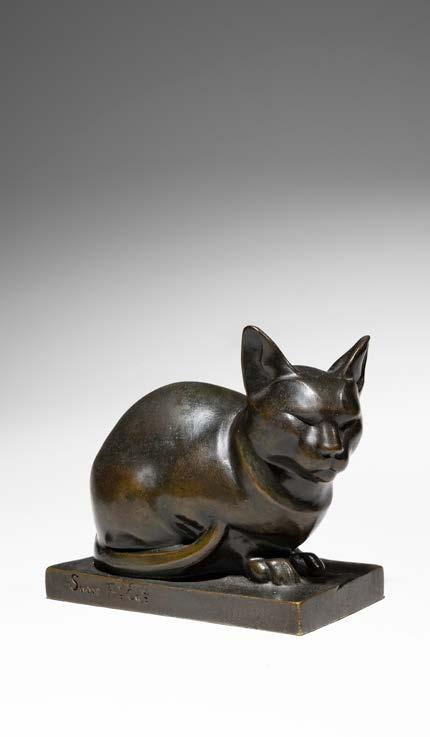
014 Edouard-Marcel Sandoz (Swiss, 1881-1971)
Crouching Cat
Bronze, 9 x 11,5 x 6 cm
Signed on the edge of the base
Foundry mark on the opposite edge of the base, Susse Frères Editions
€ 1500 - 2000
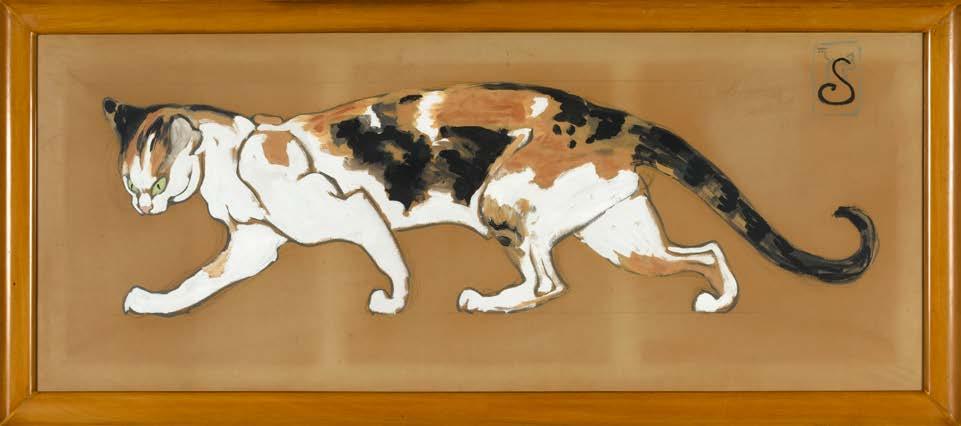
015 Théophile Alexandre Steinlen (Swiss-French, 1859-1923)
Cat
Gouache and pencil on tan paper
51 x 125 cm
Monogrammed upper right
Provenance:
Waldeck Rochet Collection, Paris
Christie's, Manson & Woods, London, Impressionist and Modern Pictures, 25 June 1991, lot 221
Private collection, Belgium
€ 4000 - 6000
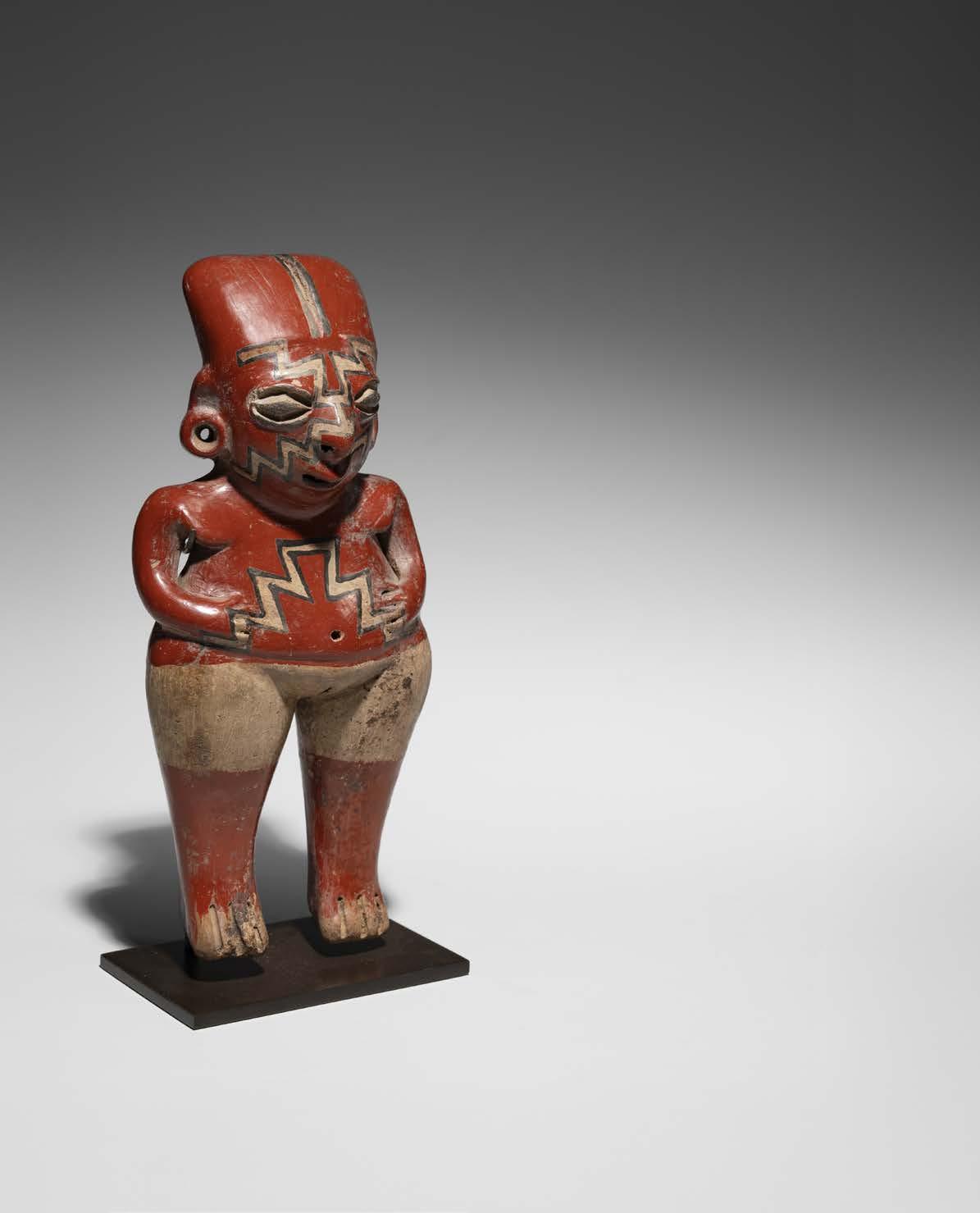
016 Chupicuaro Pre-colombian Figure
Guanajuato, Mexico, 400-100 B.C.
Terracotta, natural pigments, 24 cm
Provenance:
Susan Schroeder Collection, Los Angeles (1960’s)
Susan Schroeder Collection, 1960's, Los Angeles
Private collection, New York
Private collection, France
€ 4000
- 6000
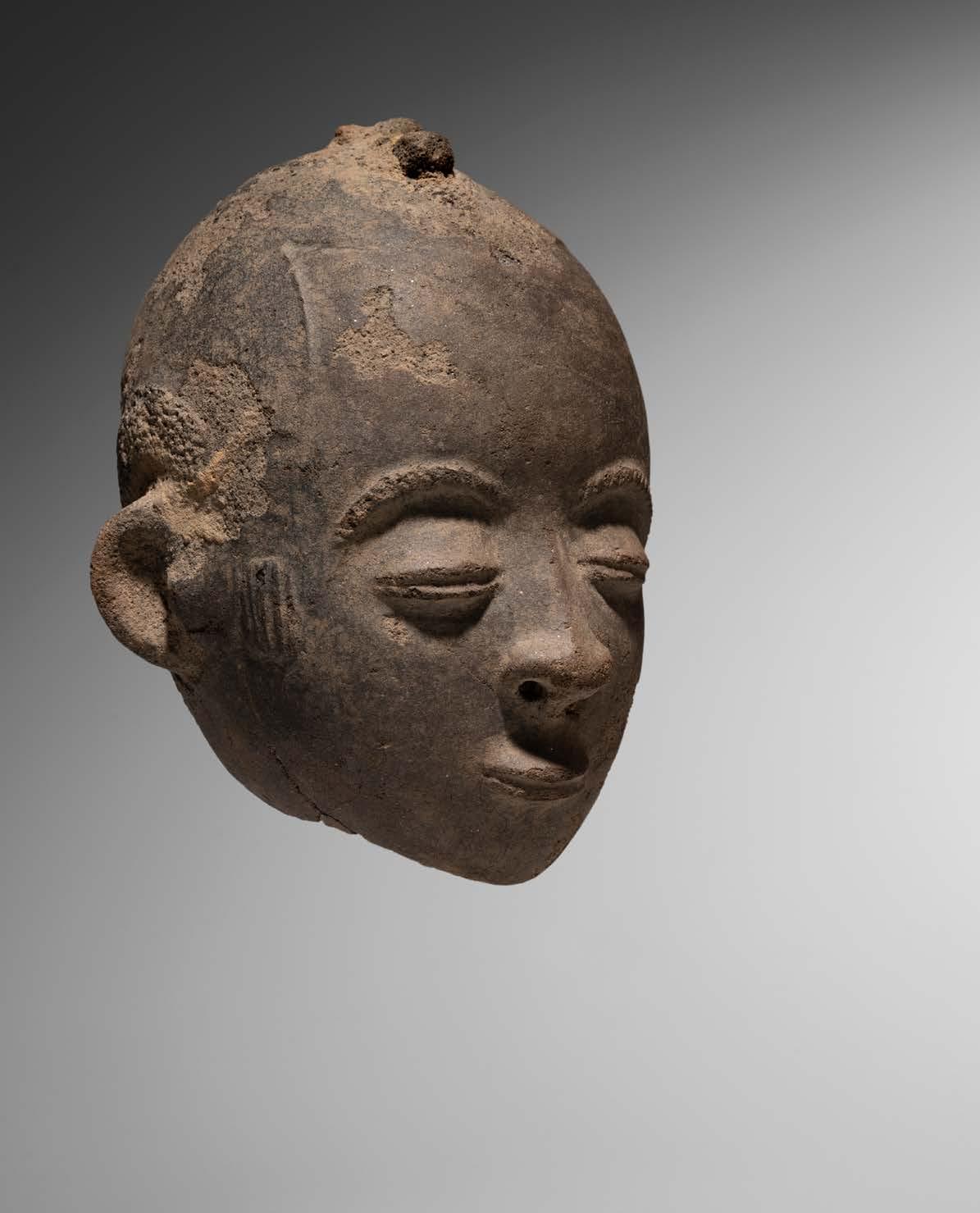
This Chupícuaro figure, formerly in the collection of Susan Schroeder (acquired circa 1960), exemplifies the distinctive figural tradition associated with the Preclassic culture of southern Guanajuato, active from approximately 400 BC to 200 AD. The style, first identified at the eponymous site prior to its submergence in 1948, is widely distributed across western and central Mexico, reflecting sustained networks of exchange linking the Lerma River basin, the Lake Cuitzeo region, and the Valley of Mexico.
Formally, the figure’s features are defined through modeling, while the surface is elaborated with slip-painted ornament. These designs, including step-fret motifs related to the quincunx, function not merely as decoration but as encoded symbolic systems. Evoking the four cardinal directions organized around a central axis, the quincunx is often integrated with facial features, positioning sight and speech as mediating points within a broader cosmological framework.
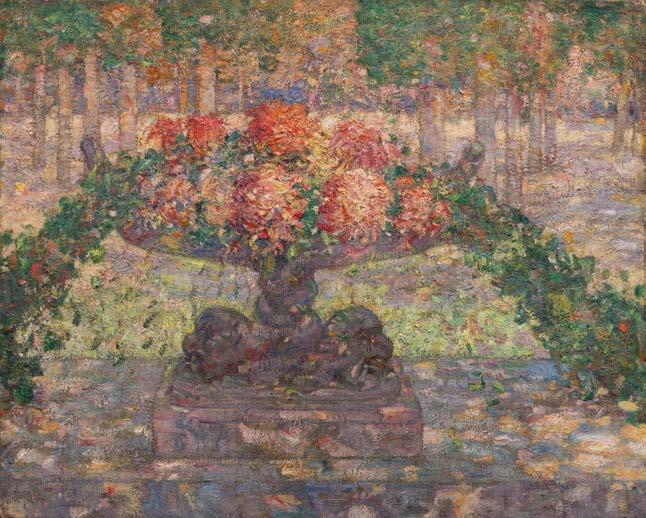
017 Anna Boch
(Belgian, 1848-1936)
Dahlias en fleurs dans le jardin de l'artiste à Lasne [Dahlias in Bloom in the Artist's Garden in Lasne] Oil on canvas, 65 x 81 cm
Provenance:
Private collection of the artist (inventory of succession of April 24th 1936)
Private collection, France
Private collection, Belgium
Published:
Thérèse Thomas, Michelle Lenglez, Pierre Duroisin, Anna Boch, catalogue raisonné, éditions Racine, Bruxelles, 2005, page 331, cat. nr 919 [Bacs de fleurs sur une balustrade en pierre]
€ 6000 - 8000
Mrs Thomas has kindly confirmed the authenticity of the painting; a certificate dated May 13th will be delivered to the buyer
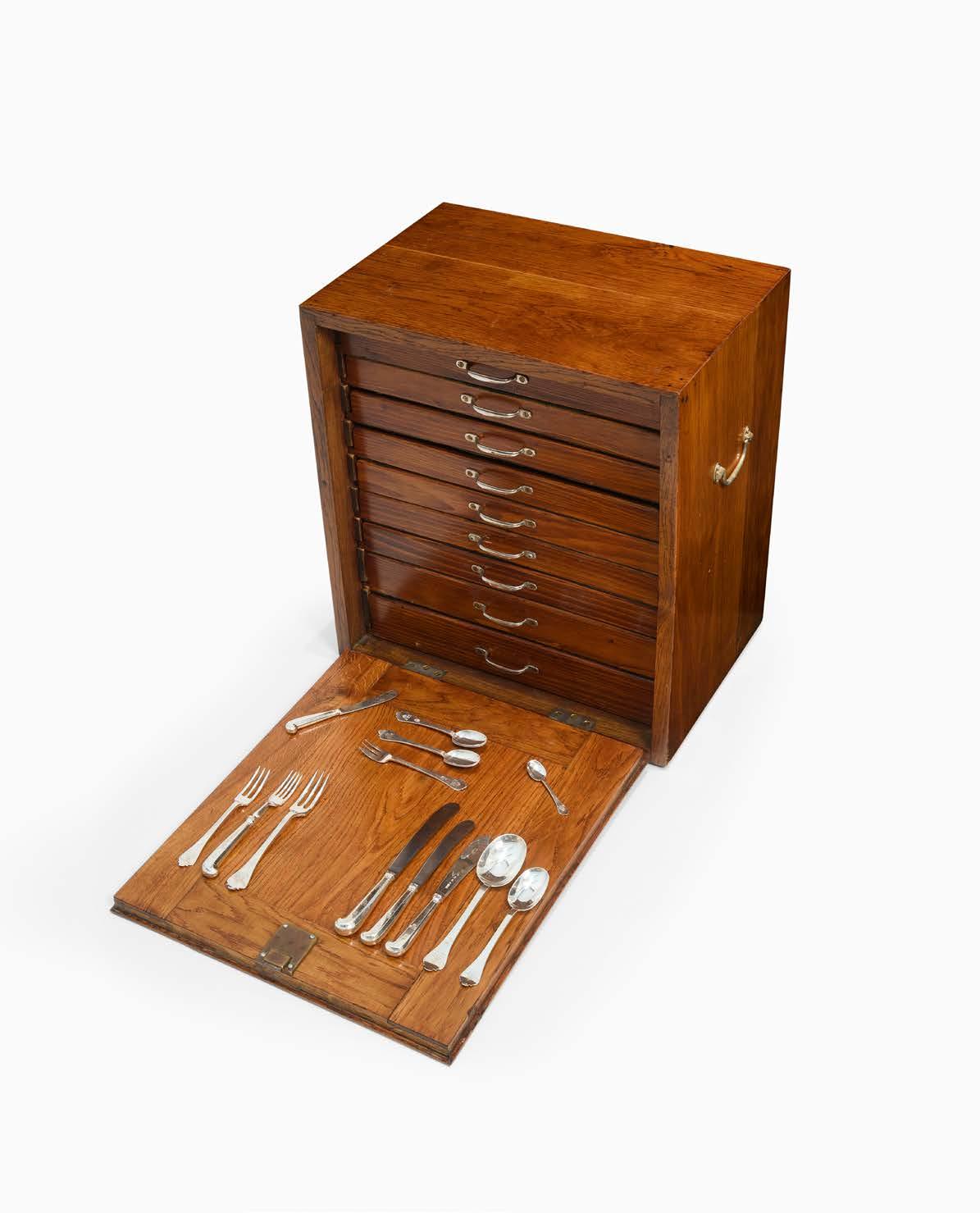
018 Lionel Alfred Crichton (London)
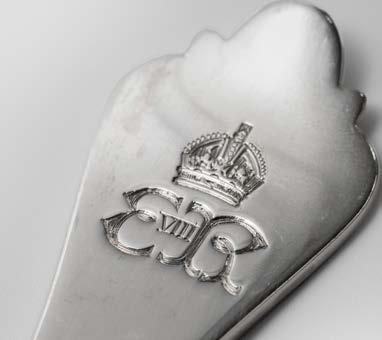
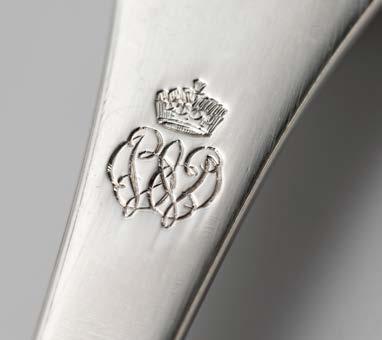
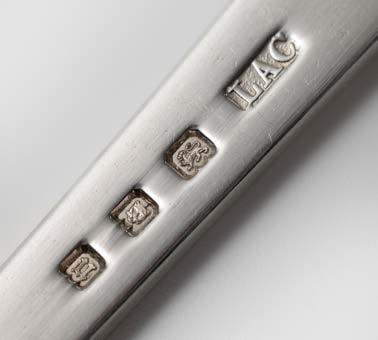
Exceptional Silver Tableware Set 1935
Sterling silver Hallmarks: LAC (Lionel Alfred Crichton)
Lion rampant (Sterling silver) "U": 1935
Leopard's Head: London's Assay Office Mark Royal monogram "EVIII R" (Edward VIII Rex)
Provenance: The Duke and Duchess of Windsor
€ 30 000 - 50 000
In its original wooden case: 53,5 x 35,5 x 49 cm
This sterling silver tableware set by Lionel Alfred Crichton features the "E VIII R" monogram, identifying it as a prestigious commission for Edward VIII. Because his reign lasted less than a year before his abdication to become the Duke of Windsor, silverware bearing his royal cipher is remarkably scarce. Housed in its original case and featuring a trilobe design, the set stands as a physical record of a brief and significant chapter in British history.
The service comprises thirty dinner knives, twenty-eight dinner forks, twenty-four soup spoons, twelve butter knives, thirty dessert spoons, twenty-nine dessert forks, twenty-two dessert knives, twelve fish knives, twelve fish forks, twenty-nine teaspoons, twelve coffee spoons, twelve cake forks: total 252 pieces, total weight 12.502 grams
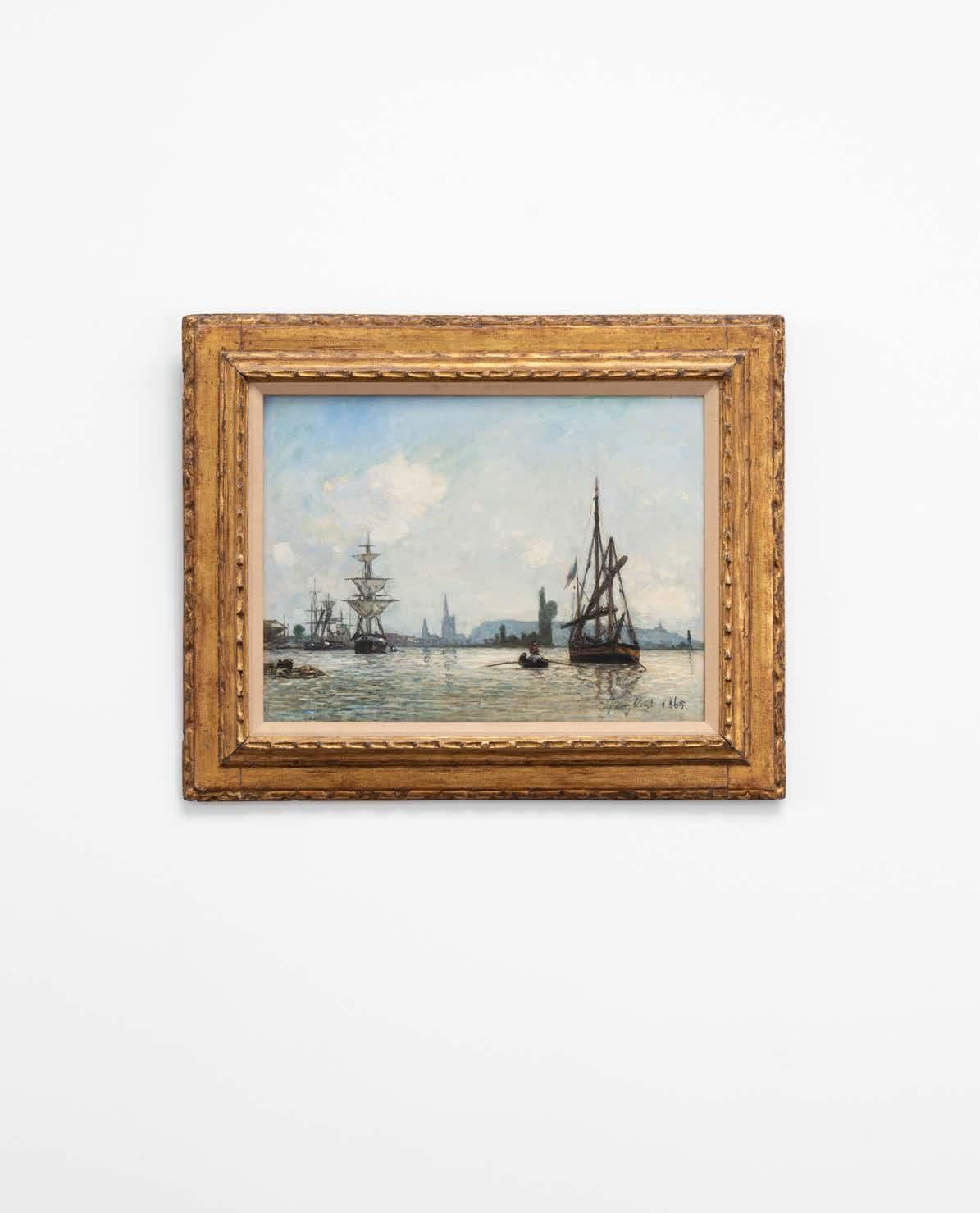
019 Johan Barthold Jongkind
(Dutch, 1819-1891)
La Seine à Rouen - 1865
[The Seine in Rouen]
Oil on canvas, 42,5 x 56,5 cm
Signed and dated lower right
Provenance:
Ferdinand Blumenthal Collection, Paris
Count Cecil Pecci-Blunt Collection, Paris
Christie’s, London, 24 June 1966, lot 34
Arthur Murray Foundation, Honolulu
Sotheby’s, London, Impressionist and Modern Paintings and Sculpture, 1 July 1970, lot 30
A. A. Ruijgrok Collection, Wassenaar
Robert Noortman, Maastricht
Private collection, London
Kunsthandel Pieter A. Scheen, The Hague
Private collection, Belgium (acquired from the above late 1980)
Published:
Victorine Hefting, Jongkind Sa Vie, Son Œuvre, Son Époque, Paris 1975, cat.336
John Sillevis, Jacques Foucart, Sylvie Patin, Götz Czymmek, Marie-Pierre Salé, Johan Bartold Jongkind, Waanders, Zwolle, 2003, p.177, pl. 150
Adolphe Stein, Sylvie Brame, François Lorenceau, Janine Sinizergues, Jongkind: Catalogue critique de l’œuvre, Peintures I, Brame & Lorenceau, Paris, 2003, p.174, pl.374
Exhibited:
Paris, Galerie Georges Petit, Vingt peintres du XIXe siècle, 1910, cat.106
Amsterdam, Rijksmuseum; The Hague, Pulchri Studio, Nederland - Frankrijk: Tentoonstelling Jongkind, March-April 1930, cat.24
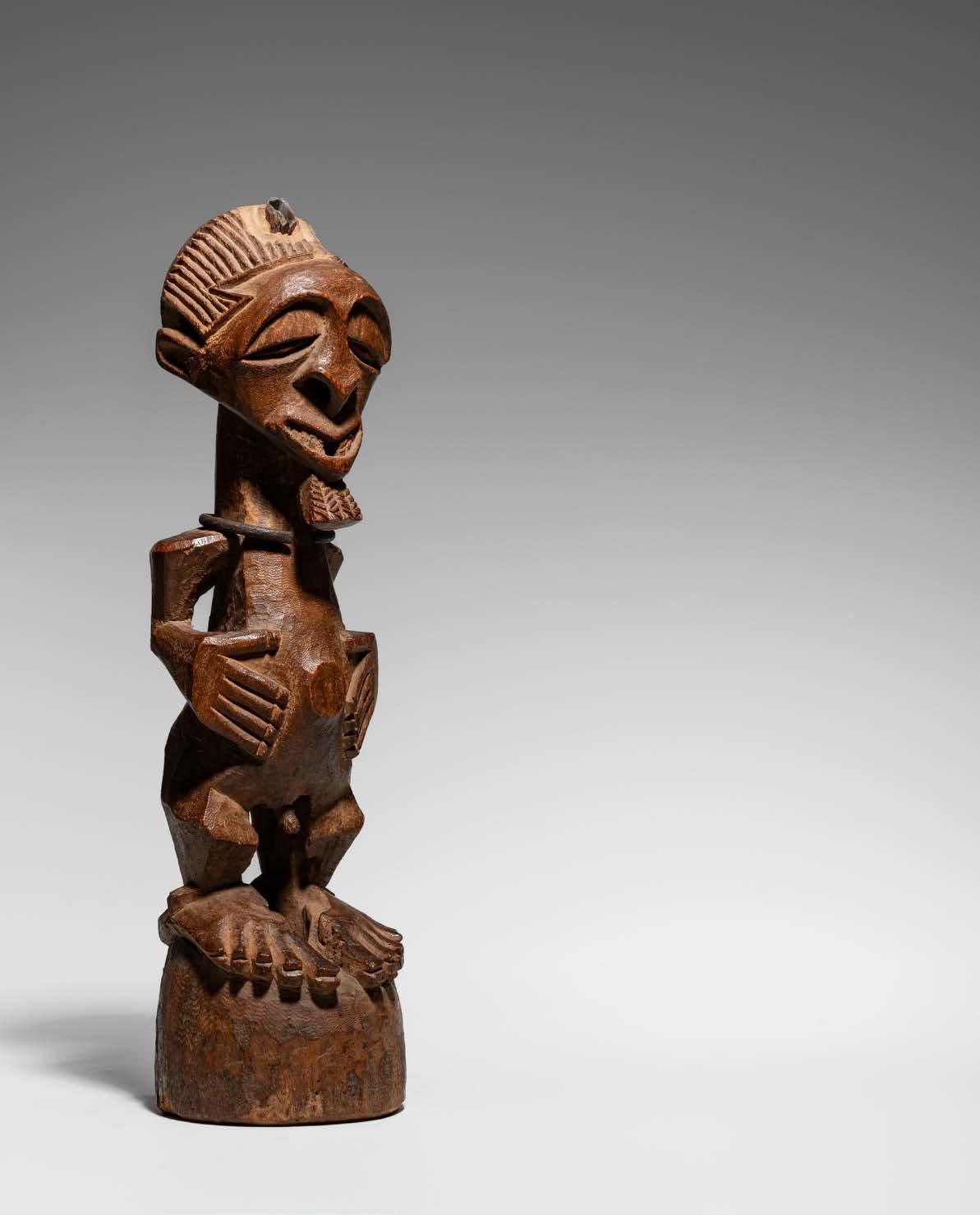
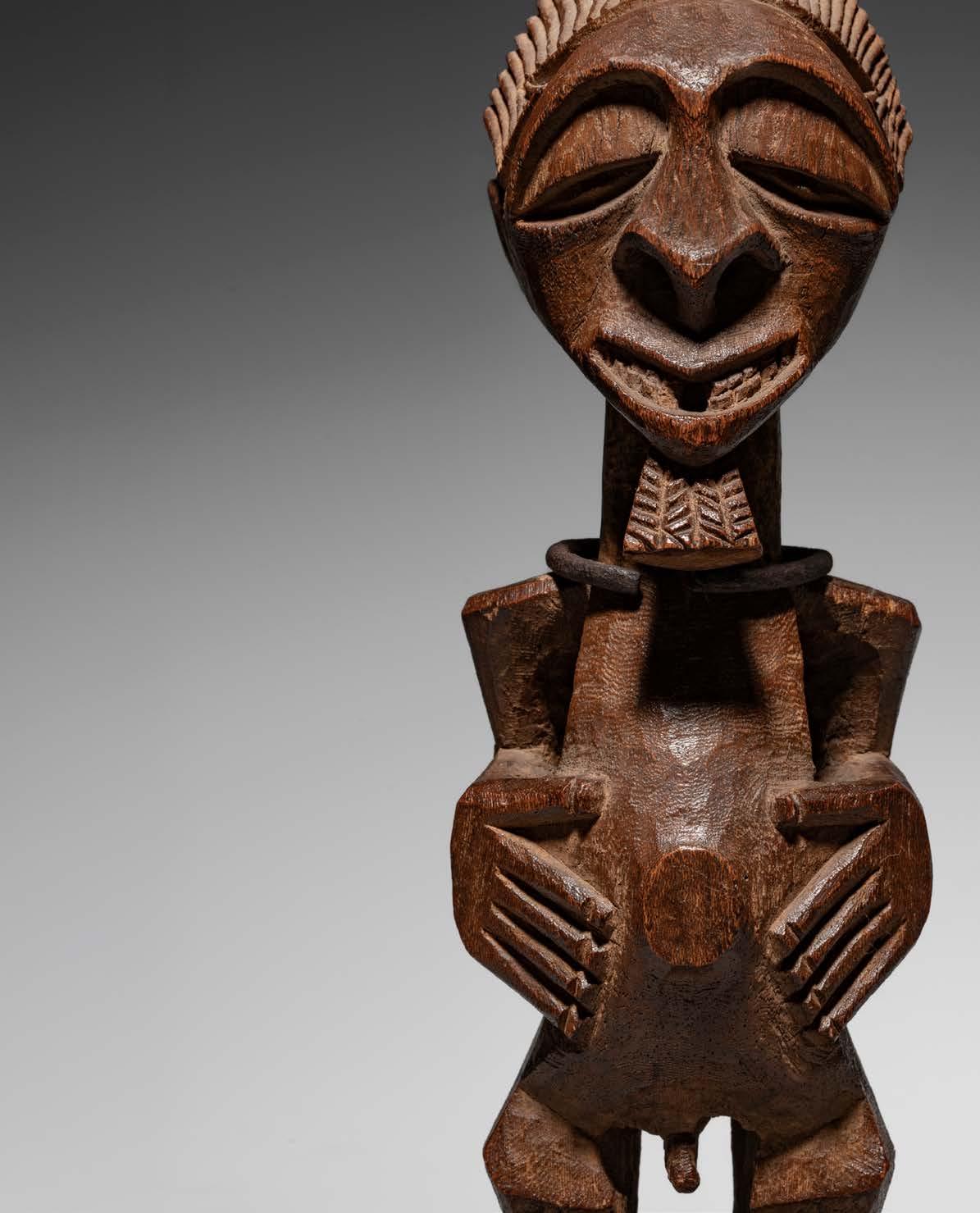
London, Arthur Tooth & Sons Ltd, Selected Pictures by J.B. Jongkind (1819-1891), 18 March – 10 April 1937, cat.27
The Hague, Kunsthandel Pieter A. Scheen, Najaarstentoonstelling, 25 November – 3 December 1977, cat.15
Dordrecht, Dordrechts Museum (11 September 1982 – 10 October 1982); Tokyo, Odakyu Grand Gallery (29 October 1982 – 10 November 1982); Nagasaki, The Nagasaki Prefectural Museum (13 November – 5 December 1982); Mie, Mie Prefectural Art Museum (8 January -13 February 1983), Johan Barthold Jongkind (1819-1891), cat.30
Zeist, Slot Zeist, Jongkind, een Hollander in Frankrijk, 10 December 1991 – 4 February 1992, cat.11
Den Haag, Gemeentemuseum (11 October 2003 – 17 January 2004); Cologne, Wallraf-Richartz Museum-Fondation Corboud (6 February – 9 May 2004), Johan Barthold Jongkind, cat.92 (ill.)
€ 80 000 - 120 000
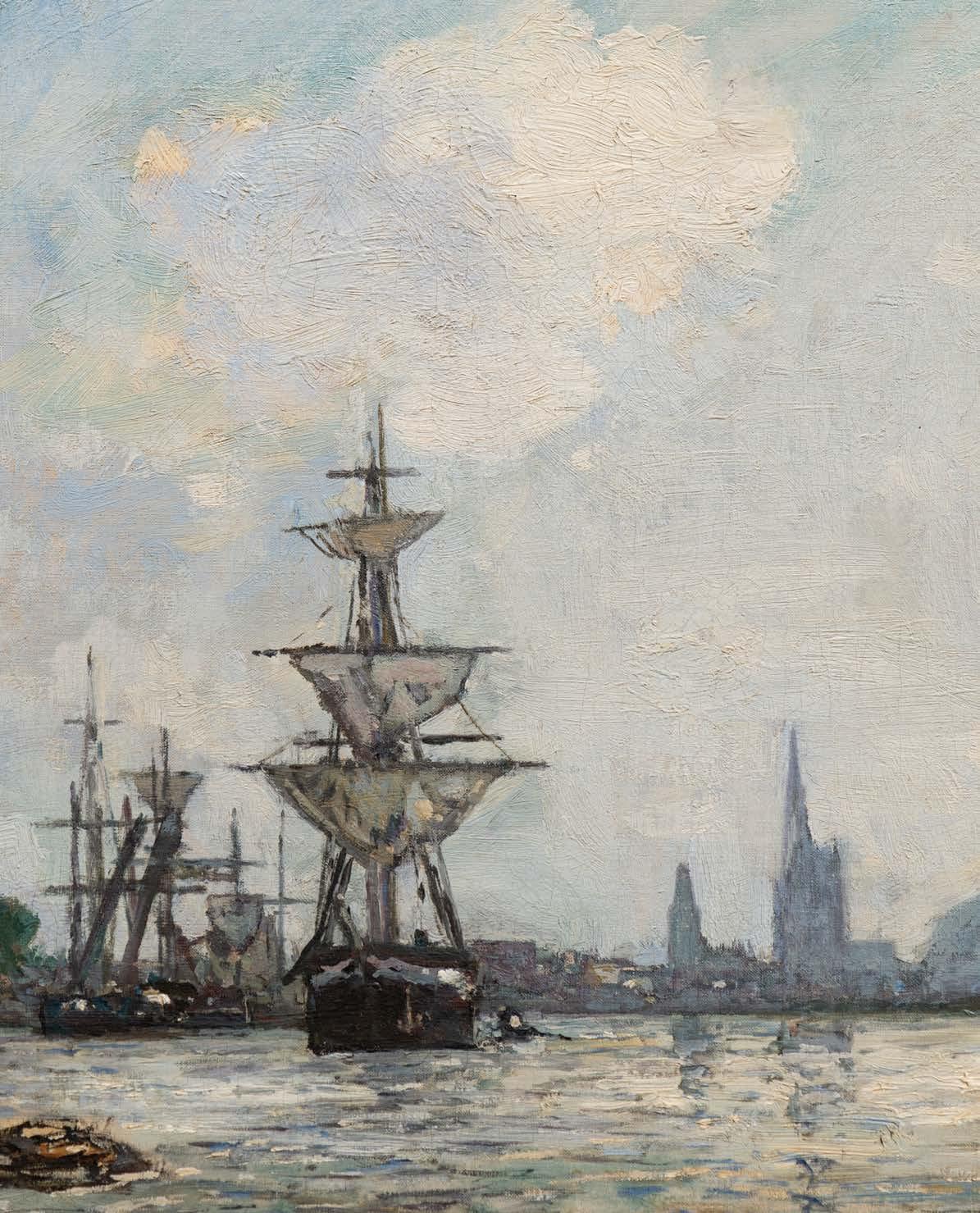
Johan Barthold Jongkind occupies a unique position in the development of nineteenth-century landscape painting, bridging the naturalistic traditions of the Dutch Golden Age and the emerging sensibility that would culminate in Impressionism. Born in the Netherlands but active for most of his career in France, he absorbed the lessons of both traditions, forging a highly personal style that evolved markedly over the decades. By the 1860s, when La Seine à Rouen was painted, Jongkind had reached a mature phase in which his handling of paint and his perception of atmosphere attained an exceptional freedom and immediacy.
Following his return to Paris in 1860 after a prolonged stay in the Netherlands, Jongkind re-engaged with the French artistic milieu at a moment of profound transformation. While he maintained close ties with artists of the Barbizon School, his attention increasingly shifted toward the direct observation of modern life and the mutable effects of light on water and sky. The Seine, in particular, became a central motif in his work, offering a setting in which reflections, weather conditions, and the rhythms of river traffic could be explored with ever greater subtlety.
The present view of Rouen, dated 1865, exemplifies this late development. Rather than constructing the composition through the carefully balanced oppositions characteristic of his earlier works, Jongkind here adopts a more fluid and spontaneous approach. The brushwork is notably freer, applied in rapid, broken strokes that suggest rather than delineate form. This technique allows the surface of the painting to vibrate with light, dissolving the solidity of the architectural elements and vessels into a network of tonal relationships. The sky and water, rendered with particular sensitivity, dominate the composition, their shifting hues capturing the fleeting atmospheric conditions of the scene.
As was his customary practice, Jongkind likely based this studio painting on sketches made in situ, often in watercolor, where he could quickly record his impressions of light and movement. These preparatory studies enabled him to retain a sense of immediacy even in finished oils, contributing to the remarkable freshness that characterizes his work of this period.
Paintings such as La Seine à Rouen reveal why Jongkind has long been regarded as a pivotal precursor to Impressionism. His emphasis on transient effects, his increasingly liberated brushwork, and his commitment to capturing the sensation of a moment place him at the forefront of modern landscape painting. His influence on younger artists was profound: he provided a crucial link between the structured naturalism of earlier landscape traditions and the radical innovations of the later nineteenth century. In this sense, the present work stands as a compelling testament to Jongkind’s role in shaping the visual language that would soon be taken up and transformed by the Impressionists.
020 Bankoni Bust Mali
Terracotta, 24 cm
Provenance:
Hélène Leloup, Paris
Private collection, Belgium
€ 2000 - 3000
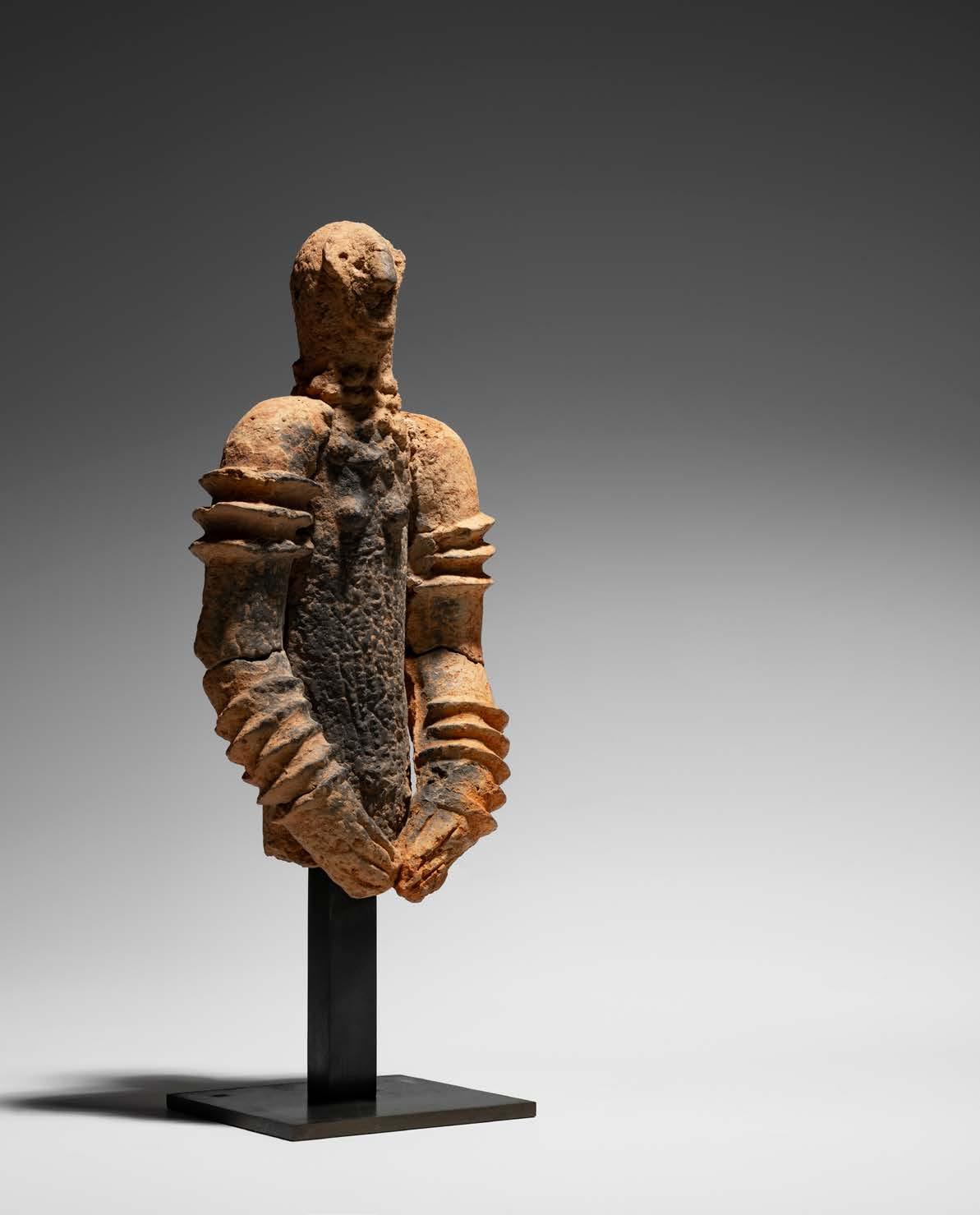
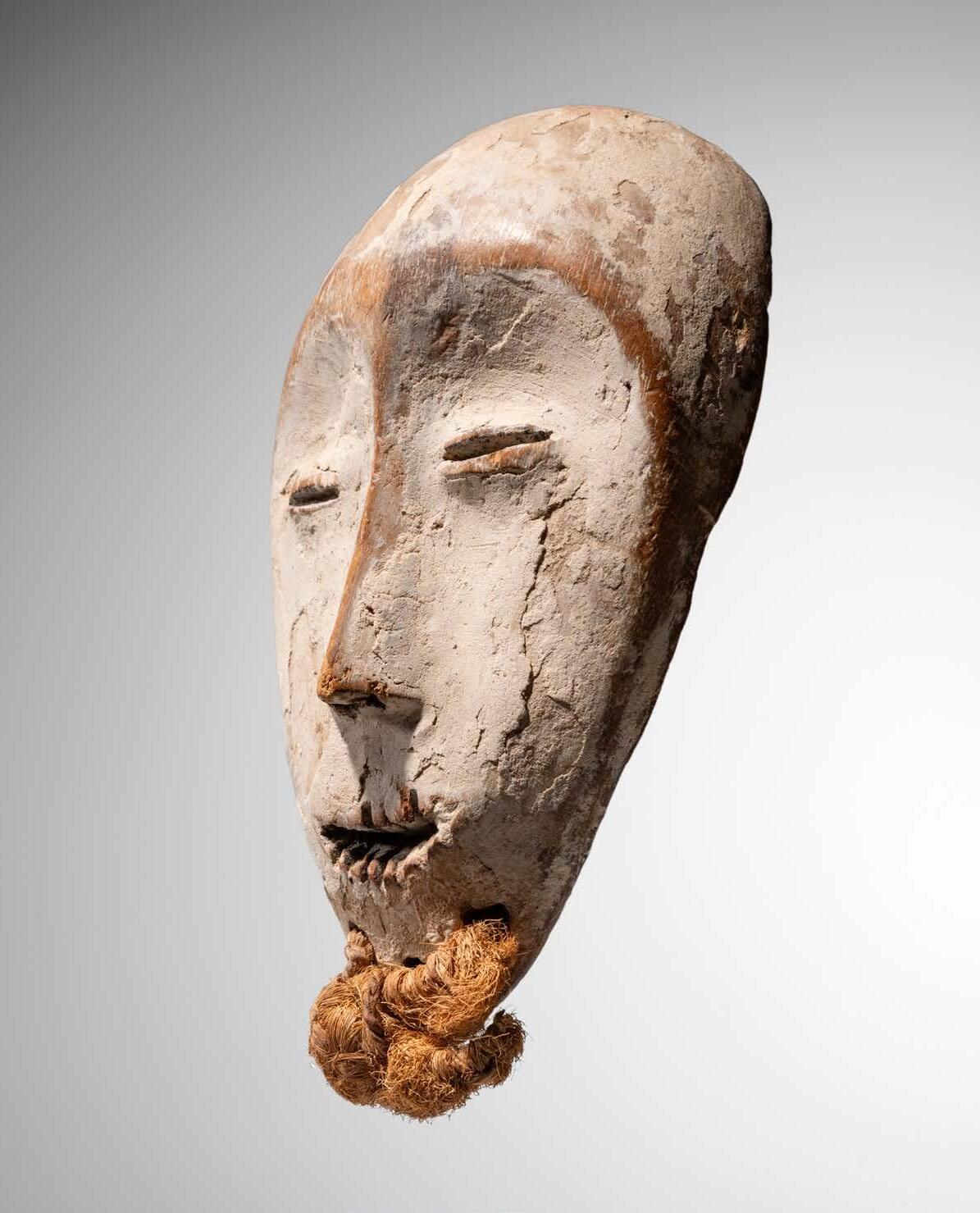
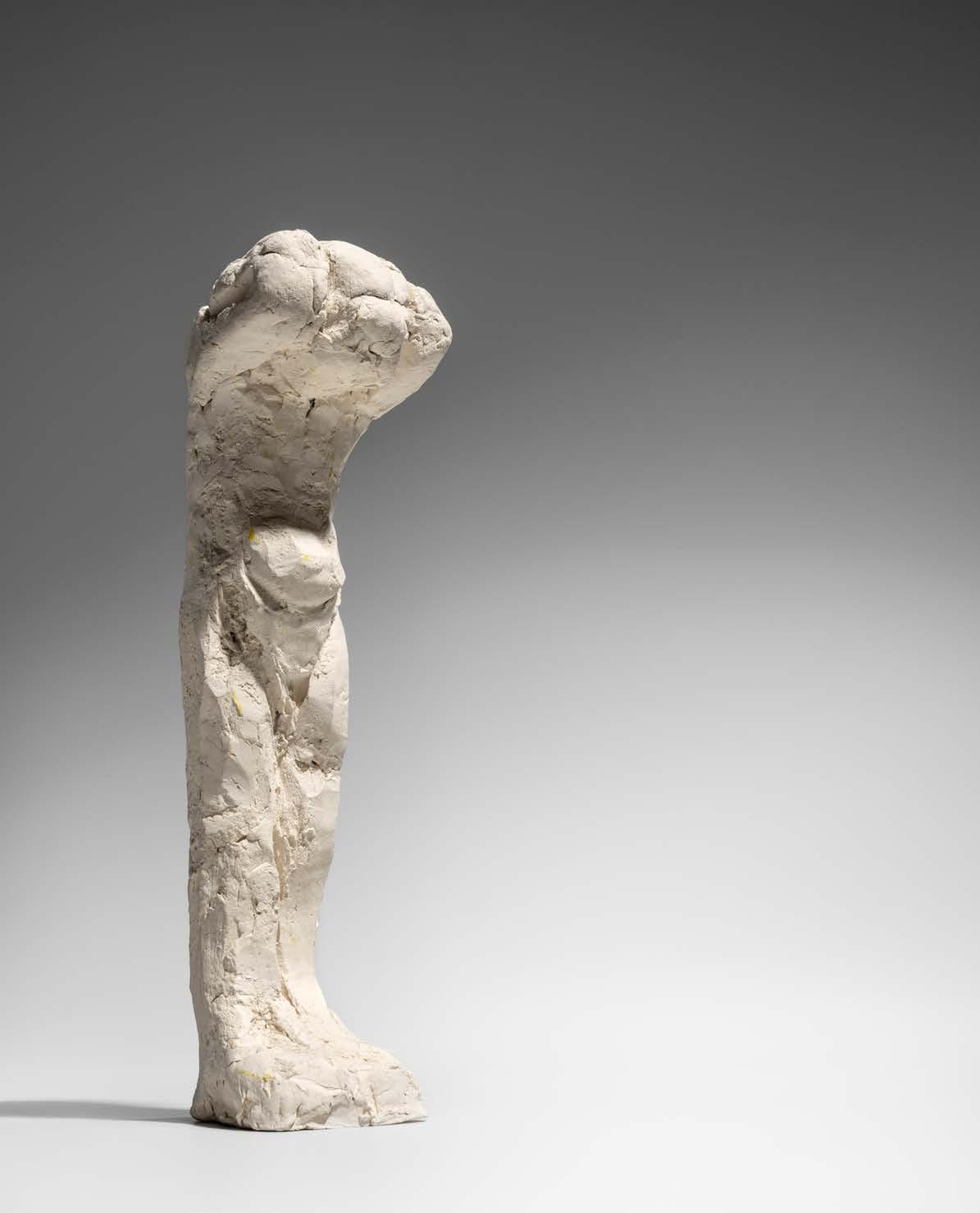
Bankoni sculptures of this type were likely produced between the 13th and 17th centuries and share a distinctive formal vocabulary: elongated, abstracted bodies, simplified volumes, and a strong emphasis on verticality. The human figure is typically reduced to essential structural elements rather than individualized features. Here, the uplifted head continues the vertical axis of the slender torso, while the arms are held close to the body in a contained, frontal composition. Horizontal relief bands around the upper and lower arms suggest ornament or body marking, introducing a measured rhythm across the surface while also articulating the figure’s anatomy. Such works are generally interpreted within ritual or commemorative contexts, although their precise function remains uncertain.
021 . Display Box with 15 Spearheads and Arrowheads
Northern Vietnam
Gò Mun culture, 1100 - 700 BC Hardstone, 4 to 14 cm
Provenance:
Tuyet Nguyet and Stephen Markbreiter Collection, Hong Kong
Private collection, Paris
Published:
Martin Doustar, Bruce W. Carpenter, Austronesia. In Pursuit of the Origins, Brussels, 2022, cat.4, pp.18-19 (ill.)
€ 7000 - 10 000
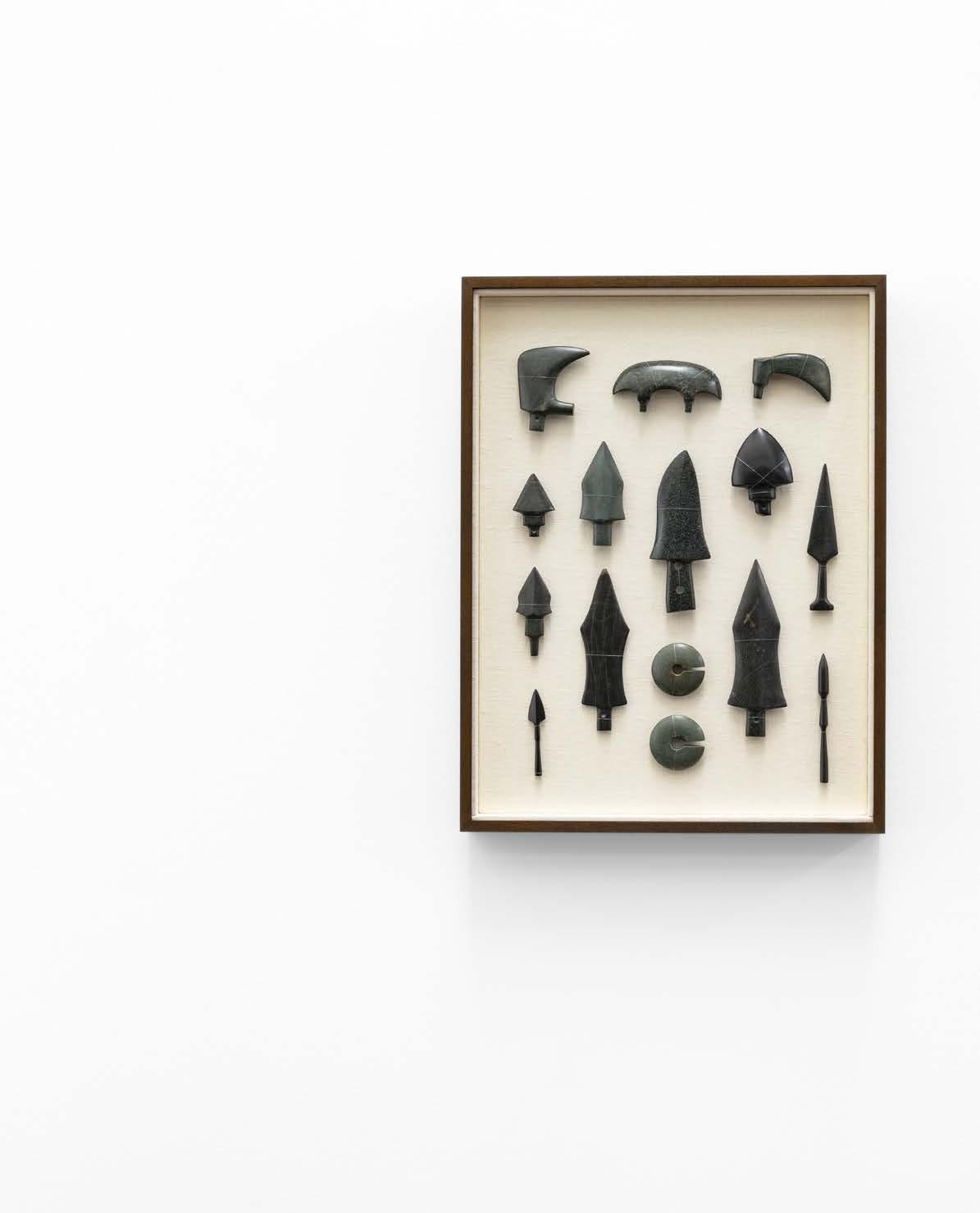
Named after the archaeological site discovered in 1961 in the province of Phú Tho in Northern Vietnam, the Gò Mun culture flourished during the third phase of the Bronze Age, preceding the Dong Son period. This culture was the continuation and development of the previous Dong Dau culture. Stone tool production decreased, while the production of bronze tools increased. The latter category accounts for over half of the total number of tools and weapons excavated, mostly arrows, spears, hooks, knives, and spearheads.
Gò Mun material culture is extremely rare. This exceptional collection of 15 stone artifacts comprising spearheads, arrowheads and a pair of slit rings comes from the collection of Tuyet Nguyet (1934-2020) and Stephen Markbreiter (1921-2014). Pioneers in the Asian art world, the couple were the founders and publishers of Arts of Asia, the leading magazine for connoisseurs and collectors of Asian art and antiques.
022 George Minne (Belgian, 1866-1941)
L'orateur [The Orator] - 1901
Marble, 41,5 x 37,6 x 55,6 cm
Signed lower left on the base
Provenance: Family of the artist, Belgium
Published: Leo Van Puyvelde, George Minne, Éditions des Cahiers de la Belgique, Brussels, 1930, cat.41 (other exemplar)
Robert Hoozee, Monique Tahon-Vanroose, e.a., George Minne en de kunst rond 1900 [exhibition catalog], Gemeentekrediet, Brussels, 1982, p. 212, cat.141 (ill.)
Exhibited:
Ghent, Museum voor Schone Kunsten, George Minne en de kunst rond 1900, 18 September - 5 December 1982, p. 212, cat.141 (ill.)
€ 18 000 - 25 000
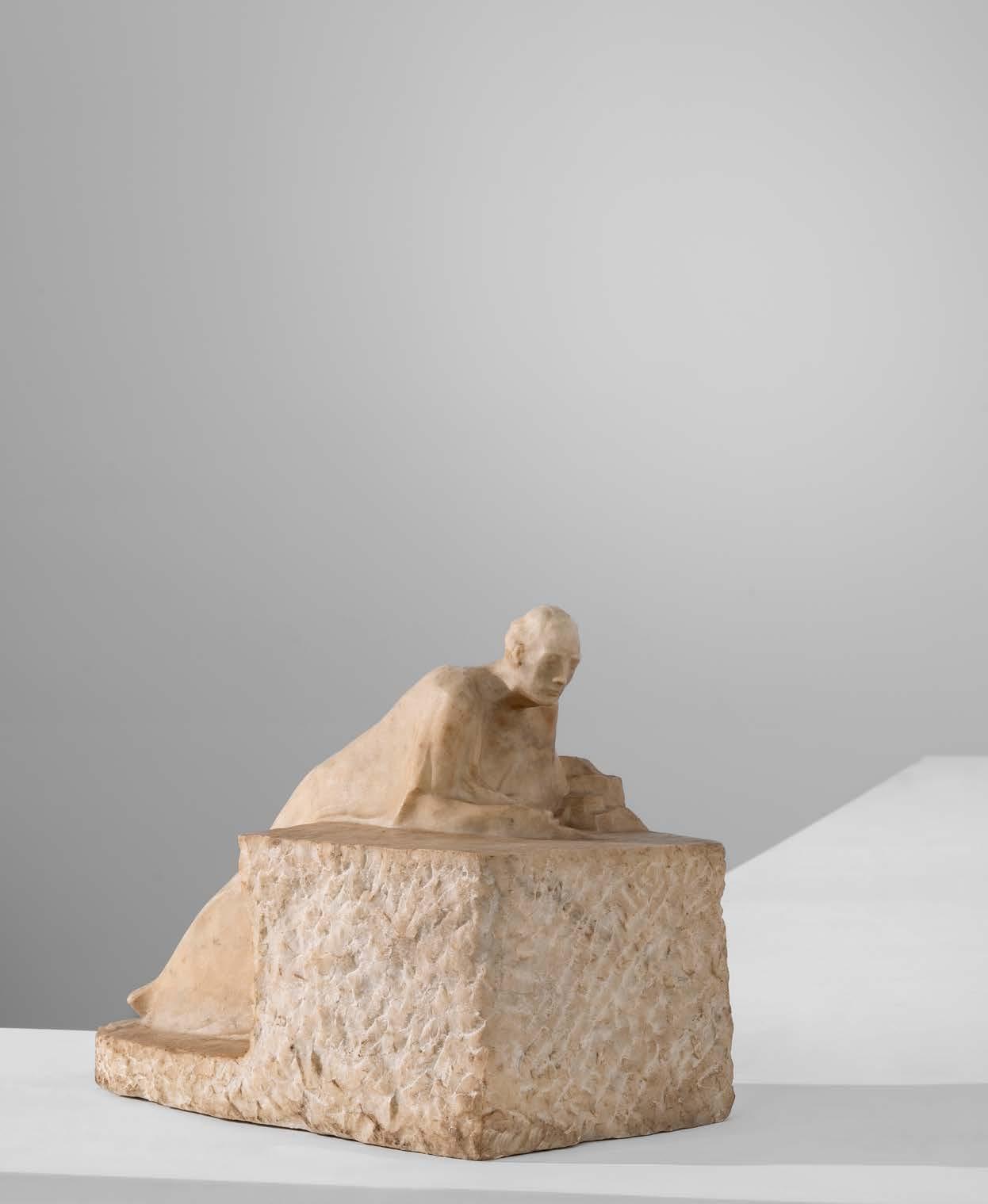
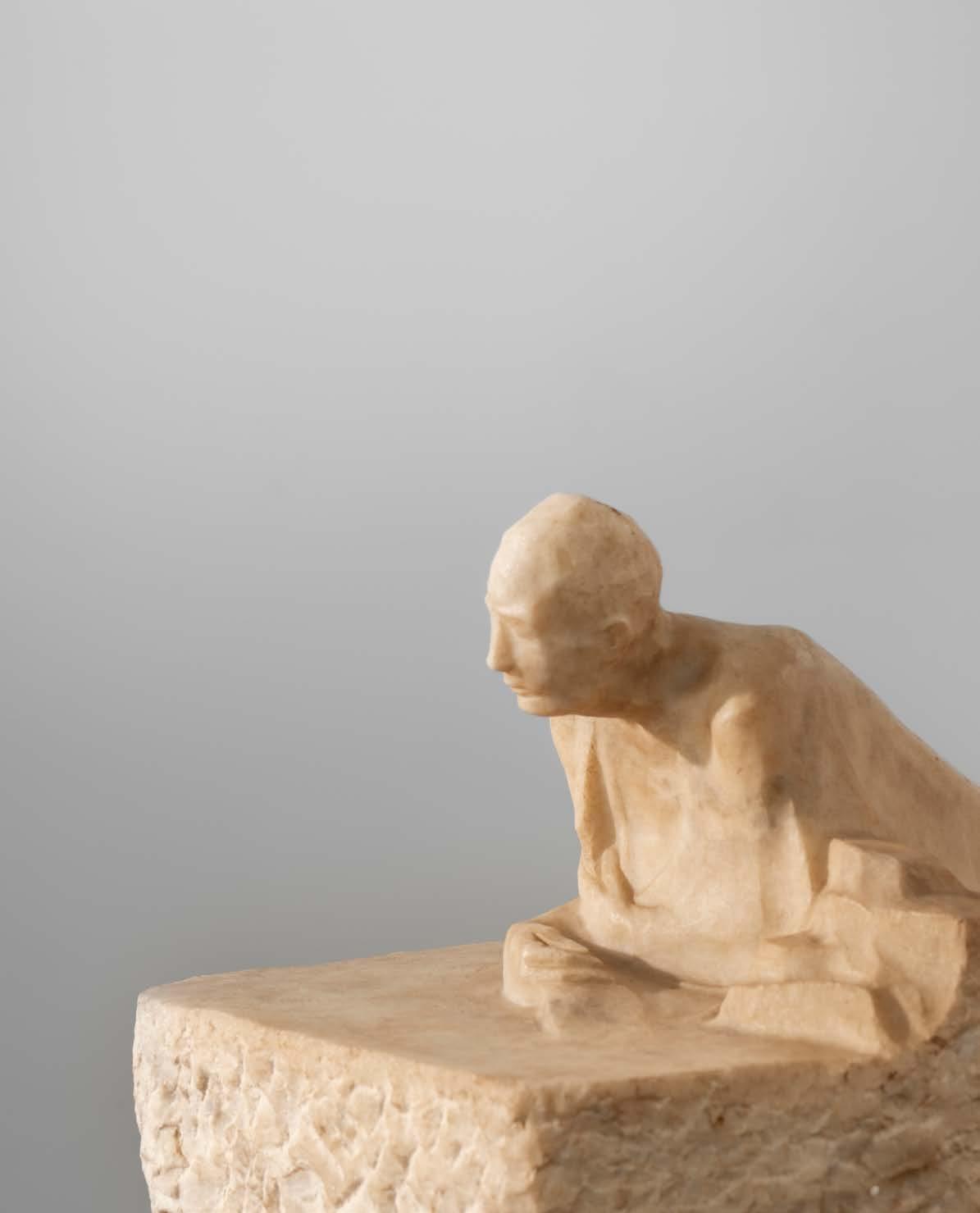
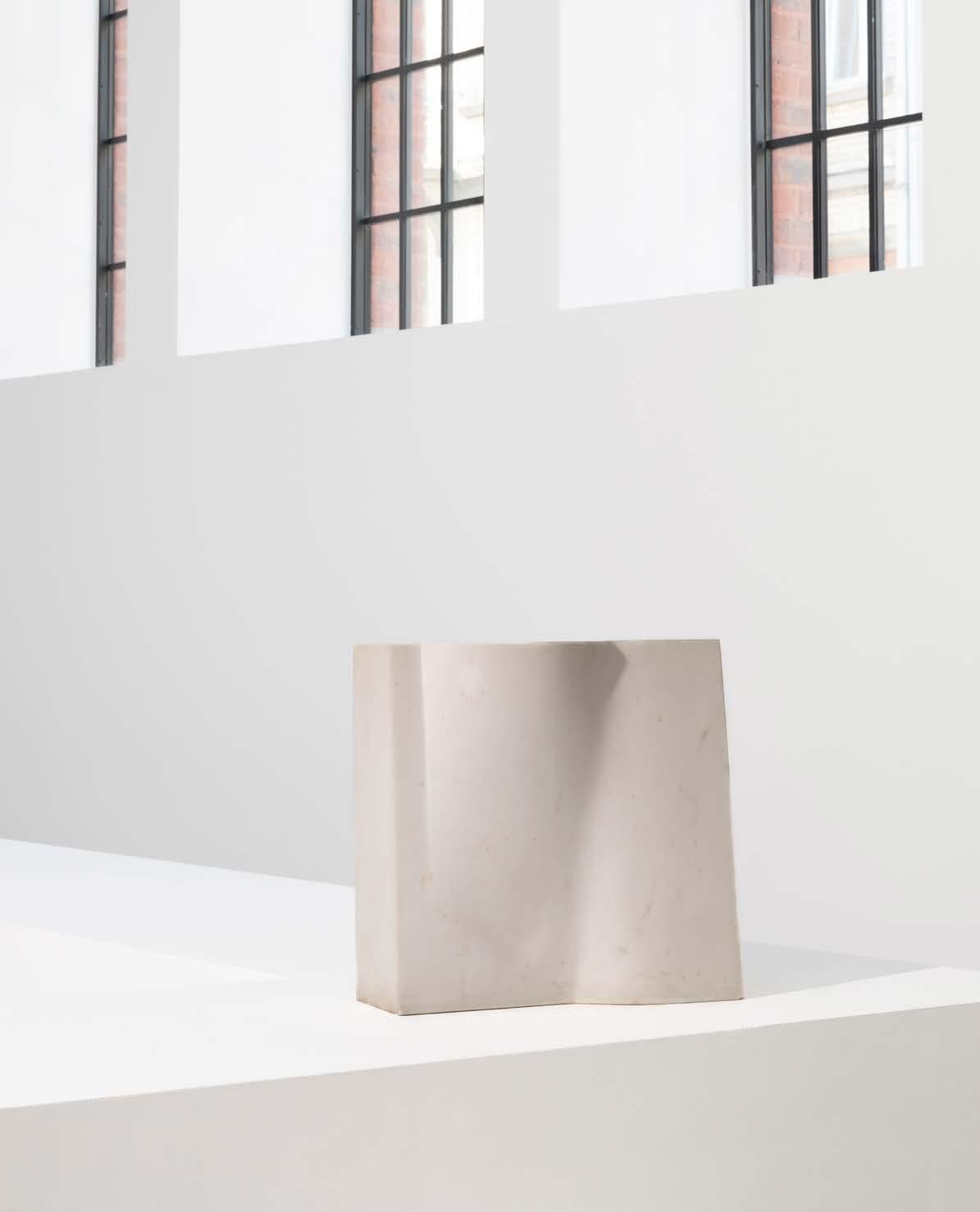
Conceived at the turn of the twentieth century, The Orator (1901) occupies a distinctive place within the work of George Minne. First exhibited in plaster at the XIV. Ausstellung der Vereinigung bildender Künstler Österreichs Secession Wien in Vienna (April–June 1902), it situates the artist within a wider European context, where Belgian art attracted growing attention and where Minne himself took part in an international avant-garde that extended well beyond the milieu of Sint-Martens-Latem. In this setting, The Orator reflects the broader climate of formal and expressive experimentation that marked the fin de siècle, shaped in no small part by the currents of Symbolism to which Minne gave a distinct sculptural voice.
As was customary in Minne’s practice, the composition was first realised in plaster and subsequently translated into bronze and marble. The Orator entered several museum collections, including the Berlin Nationalgalerie, the Dallas Museum of Art, the Museum of Fine Arts Ghent, and the Museum Folkwang, an indication of the lasting resonance the work has held.
Formally, the sculpture exemplifies Minne’s audacity. The figure appears to emerge from the block of marble against which it leans, the mass serving at once as support and as an integral part of the composition. The forward inclination of the orator extends through the elongated, sparsely defined body, wrapped in a long cloak. This continuous movement conveys the force of speech in sculptural terms, not through explicit gesture but through a sustained forward thrust. This approach, in which the pedestal seems to dissolve into the figure and participate in its expressive charge, recurs throughout Minne’s work.
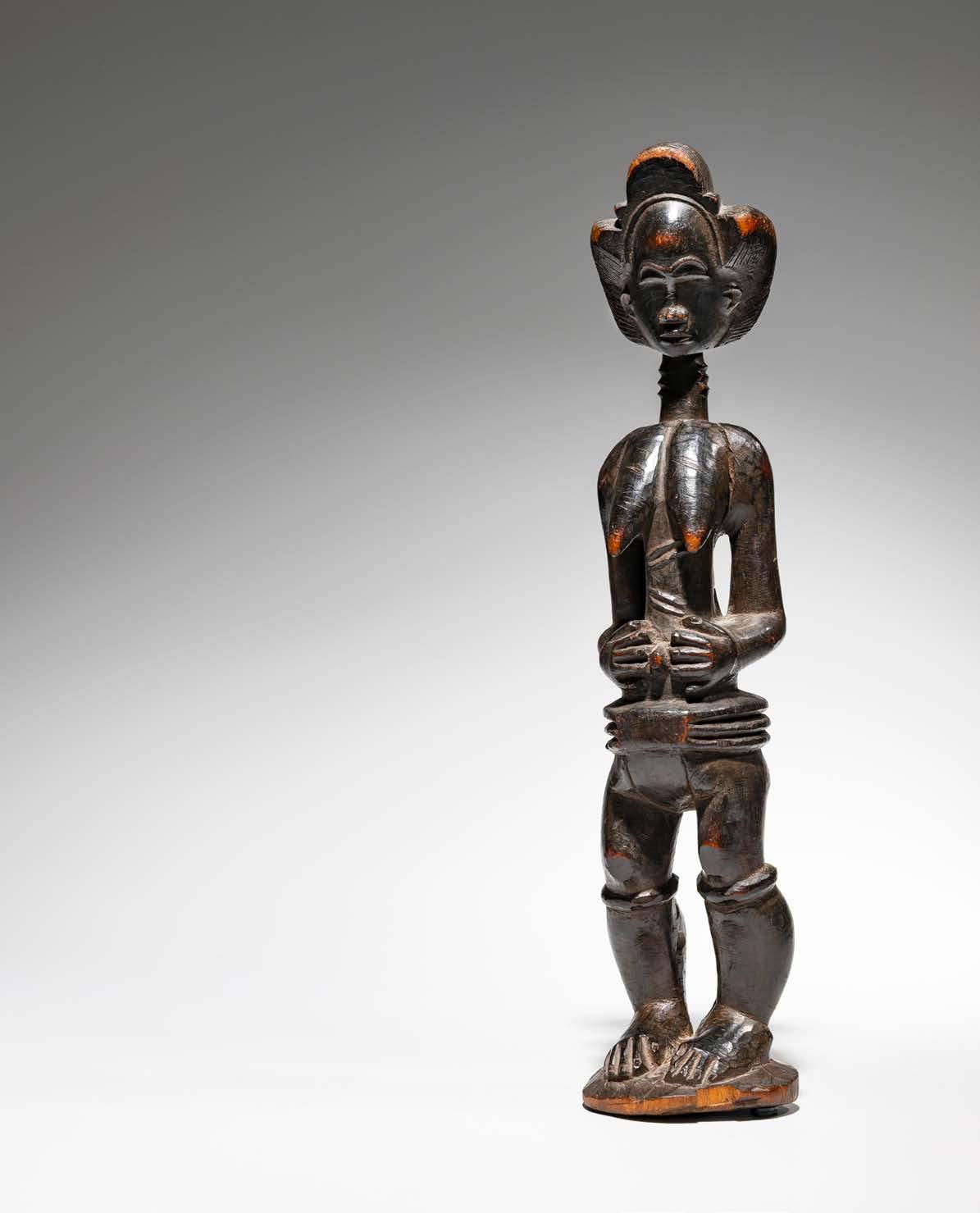
023 Baule Male Figure from the Master of Essankro or Sakassou
Ivory Coast Wood, 45,5 cm
Provenance:
Private collection, USA
Fily Konate, California
Reginald Groux, Paris, July 2001
Max Rouayroux Collection, Nice
Sotheby's Paris, 2 Decembre 2015, lot 45
Private collection, London
€ 40 000 - 60 000
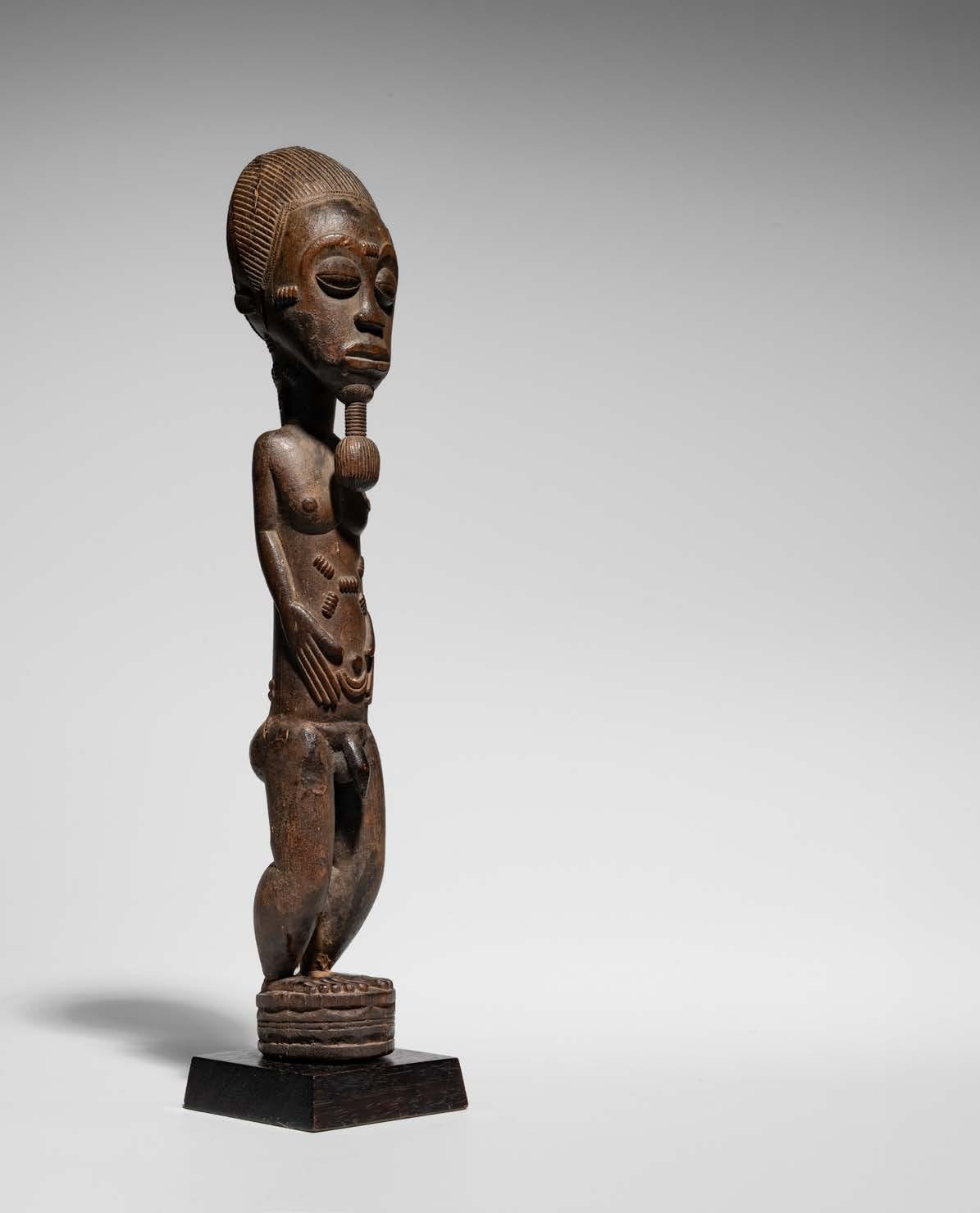
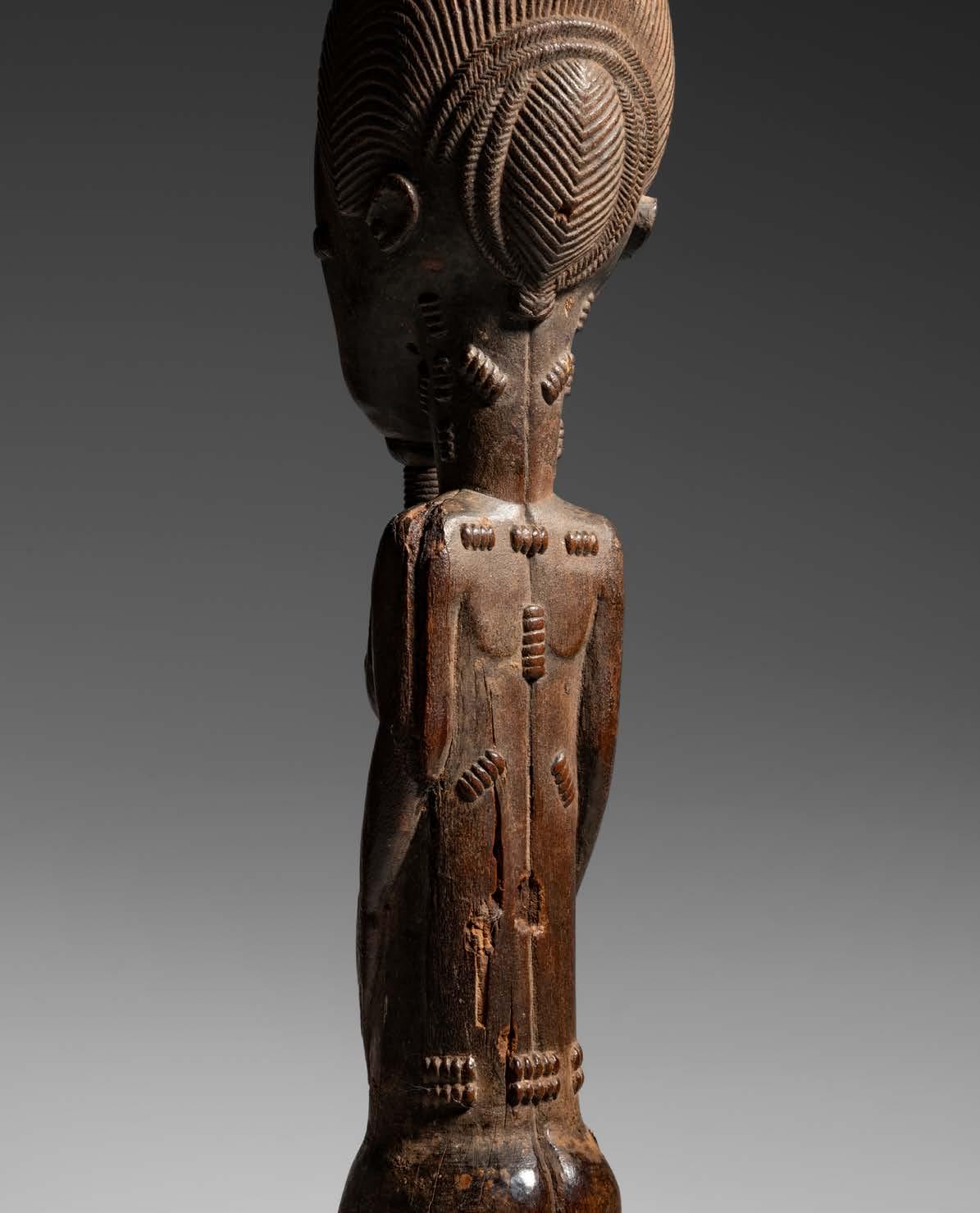
This statue belongs to a group of works whose dinstinct style was first identified in 1994 by Susan Vogel as the “Nzipi Workshop,” and later renamed in 2001 by Bernard de Grunne, for the exhibition Mains de Maîtres, as the “Workshop of the Masters of Sakassou.”
In the 18th century, Sakassou became a major political and artistic center of Baulé culture following the migration of the Akan-Baulé. The royal court there nurtured skilled sculptors whose works reinforced its authority through established religious practices, most notably the worship of ancestral spirits in sculpture. This figure exemplifies the workshop’s refined elegance, with a particularly sophisticated rendering of anatomical details, especially the hands and fingers.
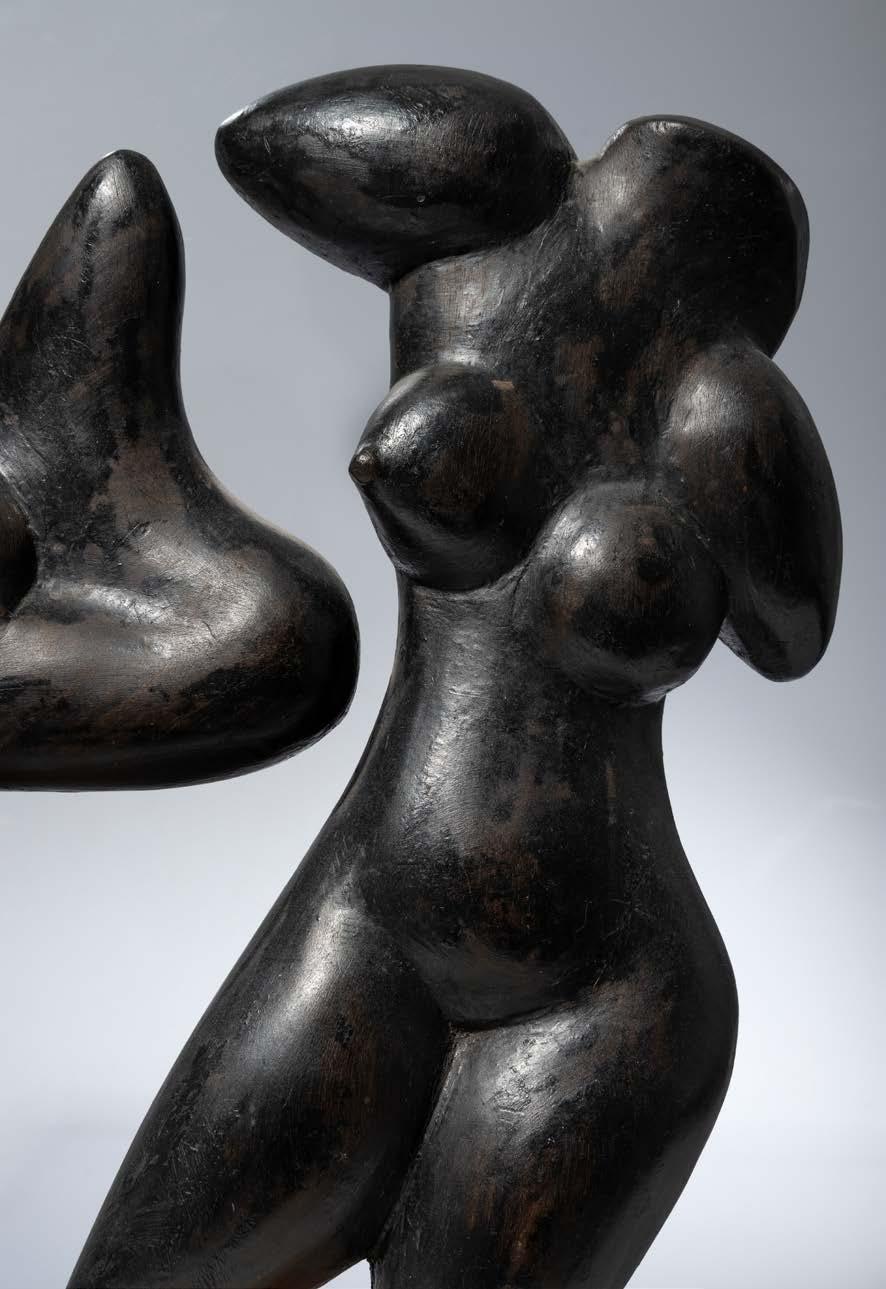
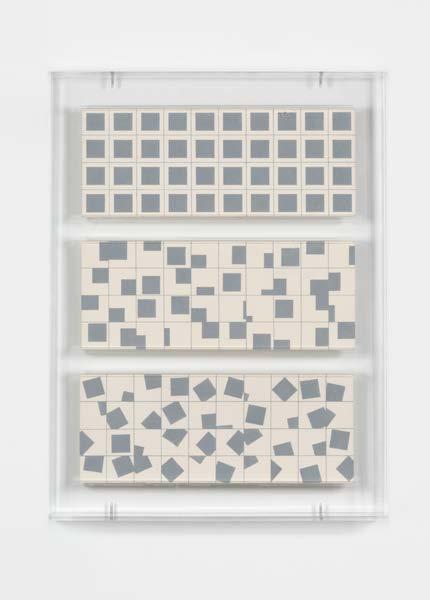
024 . Man Ray (French, 1890-1976)
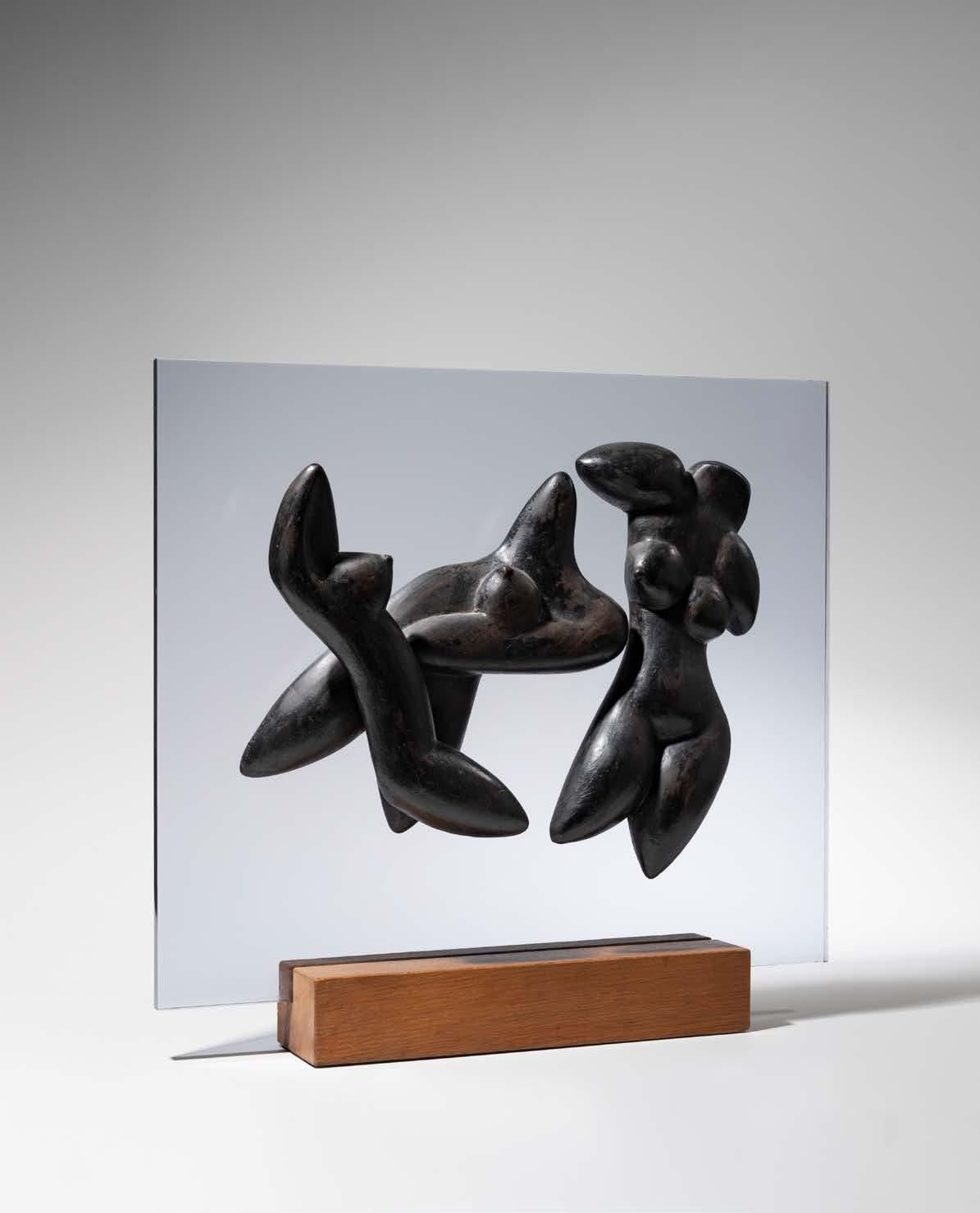
Les Trois Nus / Les Trois Grâces - 1971
Incised with the signature Man Ray and the numbering H.C. 0
Ebony mounted on acrylic glass
Acrylic glass: 54.3 x 63.2 cm
Executed in 1971 in an edition of nine examples plus artist’s proofs, published by Georges Visat, Paris.
Provenance:
Lucien Treillard, Paris
Galerie Bob Coppens, Brussels (acquired from above 12 September 2000)
Private collection, Antwerp
Literature:
Jean-Hubert Martin, Rosalind Krauss & Brigitte Hermann (eds.), Man Ray: Objets de mon affection, sculptures et objets, Catalogue raisonné, Paris, 1983, no. 179, catalogued p. 157
Exhibited:
Paris, Galerie Alexandre Iolas, Man Ray, 1974
Paris, Galerie Françoise Tournié, Man Ray, 10 tapisseries, 10 objets, 1974, n.n.
€ 40 000 - 60 000
With a certificate of authenticity by Lucien Treillard, 2000.
The authenticity of this work has been confirmed by the Man Ray Committee. It will be included in the Catalogue of Objects & Sculpture of Man Ray, currently in preparation.
Lucien Treillard was the last studio assistant and close collaborator of Man Ray, working with the artist from around 1960 until Man Ray’s death in 1976. More than a technical assistant, Treillard played a central role in organizing exhibitions, overseeing photographic printings and editions, and preserving and promoting Man Ray’s legacy in the final decades of his life. Following Man Ray’s death, he continued this work alongside Juliet Man Ray, becoming an important steward of the estate and later founding the International Association of Friends and Defenders of the Work of Man Ray.
Treillard’s close involvement in coordinating and supporting exhibitions of Man Ray’s work during the 1960s and 1970s is also reflected in a letter he wrote to the gallerist Bob Coppens, the purchaser of the present sculpture, confirming that Les Trois Grâces was exhibited in the 1974 Man Ray exhibition at the Iolas Gallery in Paris.
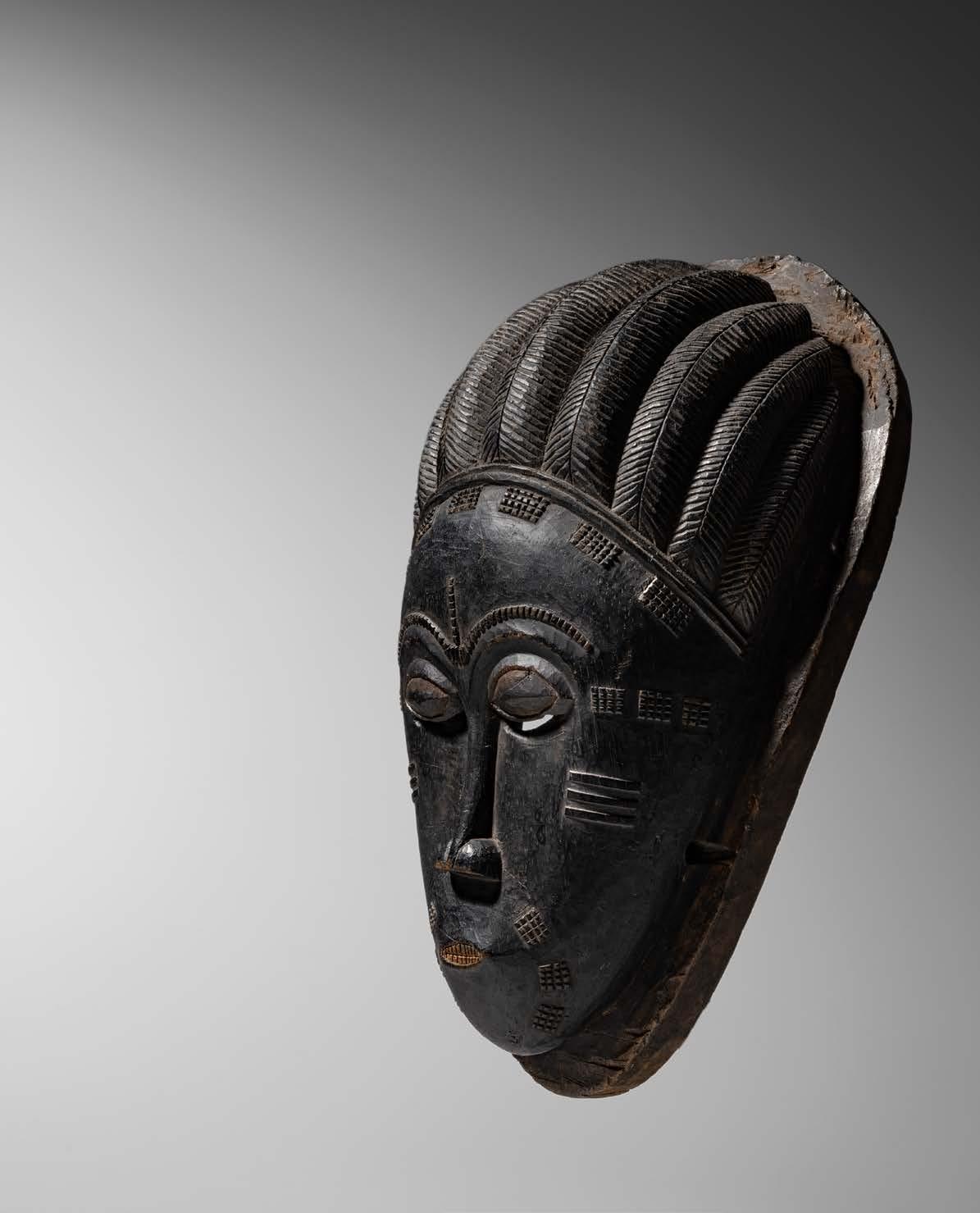
025 Baule Mask
Ivory Coast Wood, 27 cm
Provenance:
Christophe Rolley, Bagneux
Private collection, Paris
€ 4000 - 6000
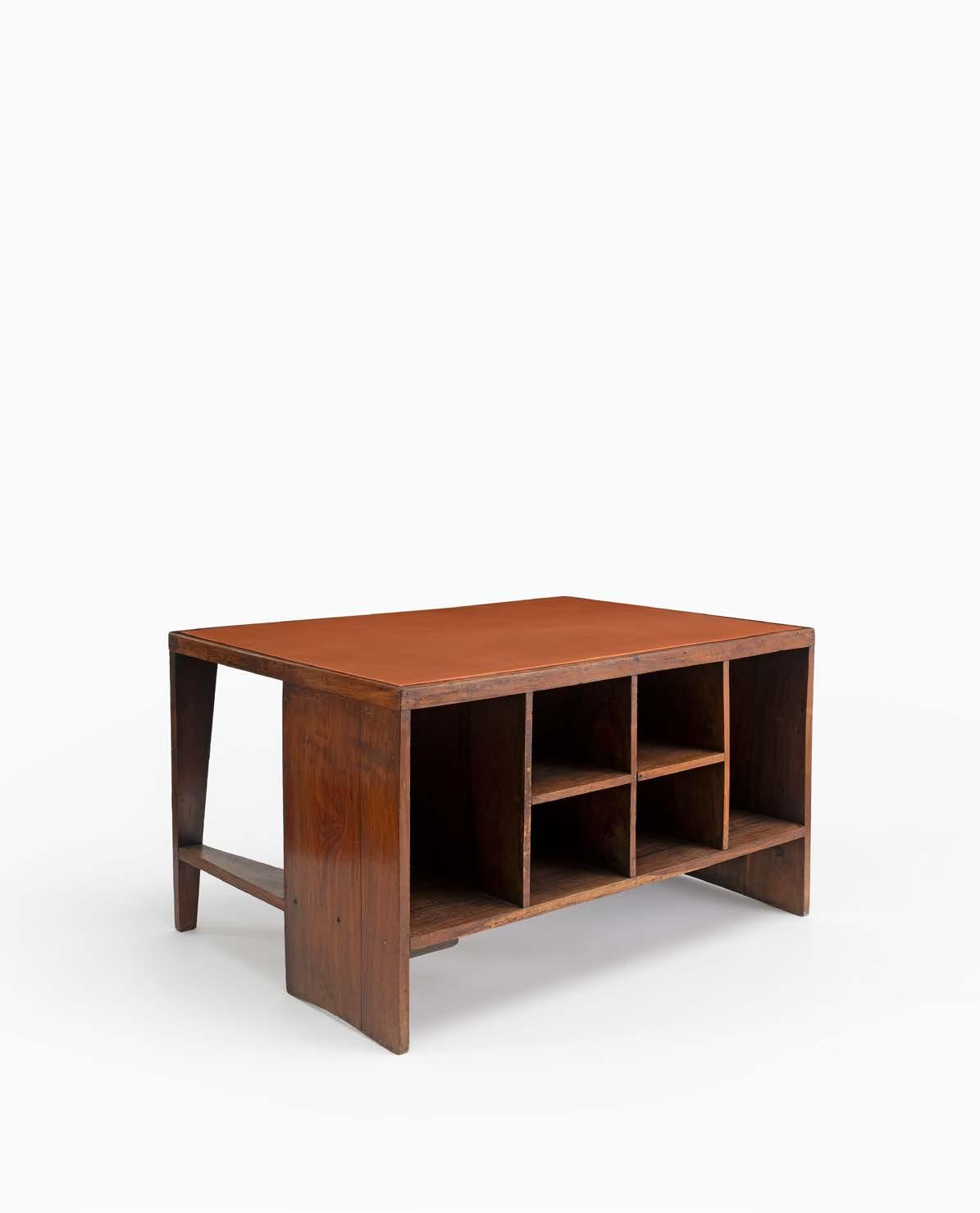
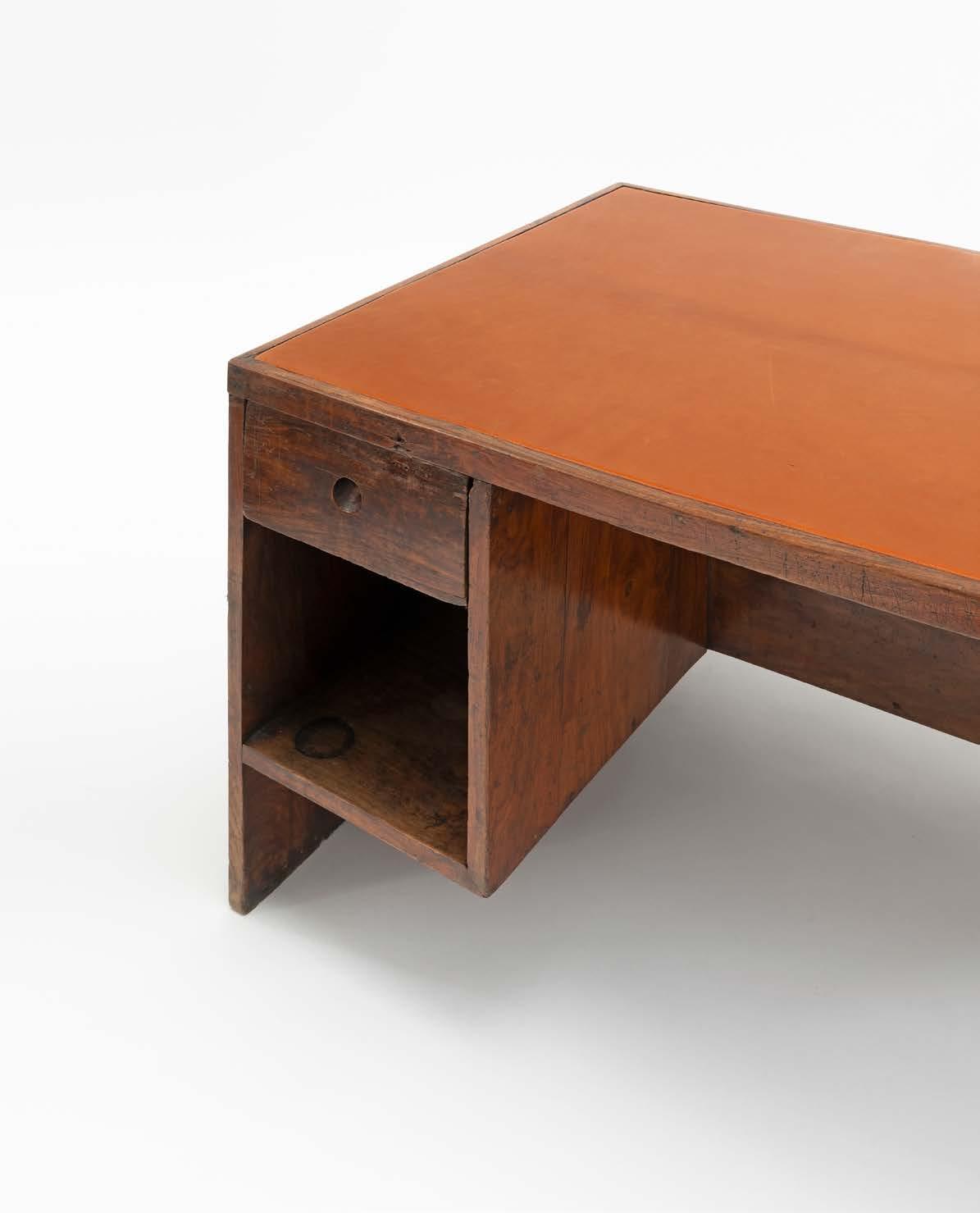
026 . Pierre Jeanneret (Swiss, 1896-1967)
Pigeonhole Desk - 1957-1958
Model PJ-BU-02-A
Rosewood and leather, 72 x 121 x 83,5 cm
Provenance:
Secretariat and administrative buildings, Chandigarh, India
Private collection, Belgium
Literature: Patrick Seguin, Le Corbusier, Pierre Jeanneret, Chandigarh, India, Galerie Patrick Seguin, Paris, 2014, p.288
€ 12 000 - 18 000
Rare rosewood version
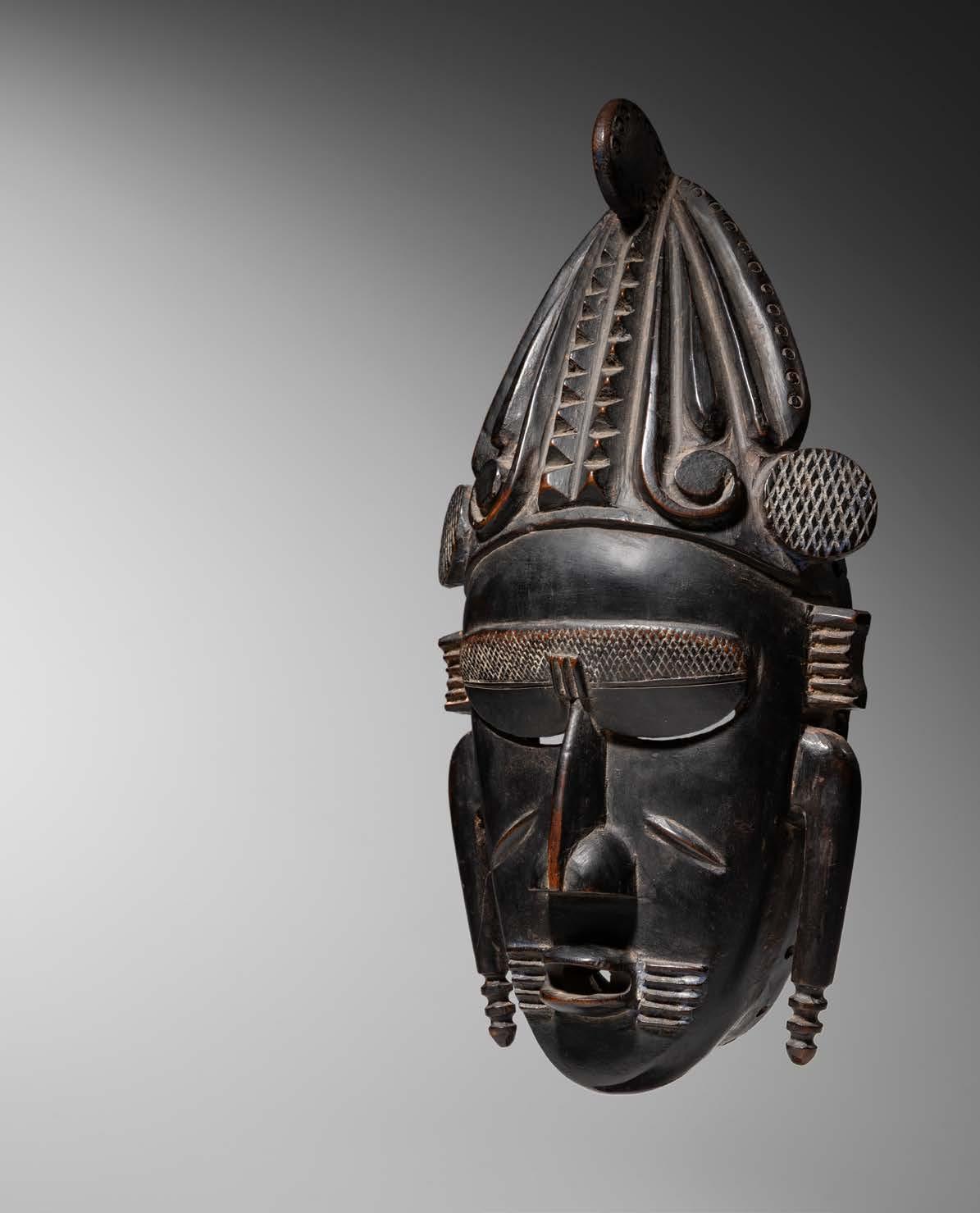
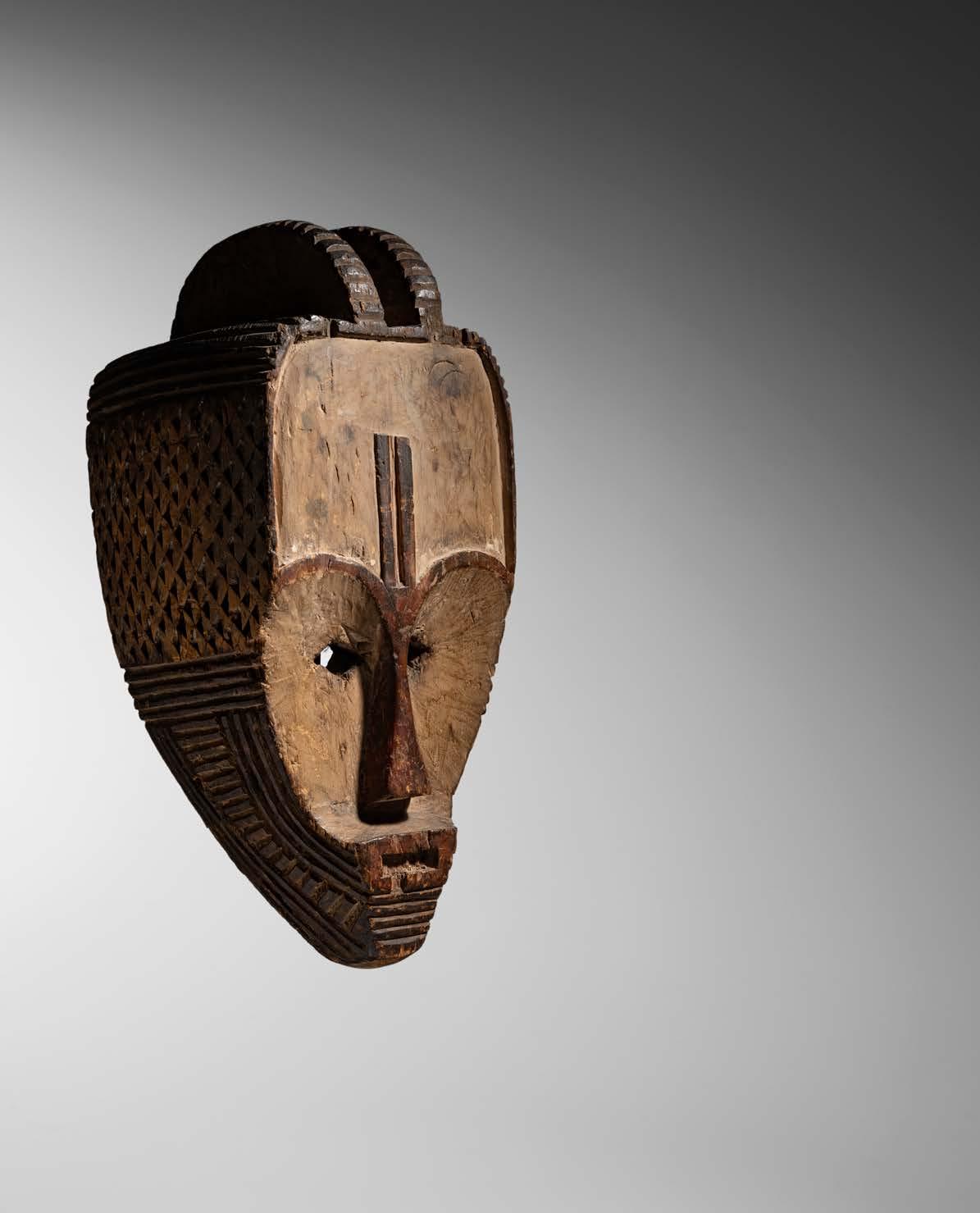
027 Bete Mask - Gnombo
Ivory Coast
Wood and metal, 28 cm
Provenance:
Serge Schoffel, Brussels
Galerie de Monbrison, Paris, 2013
Private collection, U.K.
Published:
Alain de Monbrison, Masques, Galerie de Monbrison, Paris, 2013, cat.3 (ill.)
Exhibited:
Paris, Galerie de Monbrison, Masques, September 2013, cat.3
€ 40 000 - 60 000
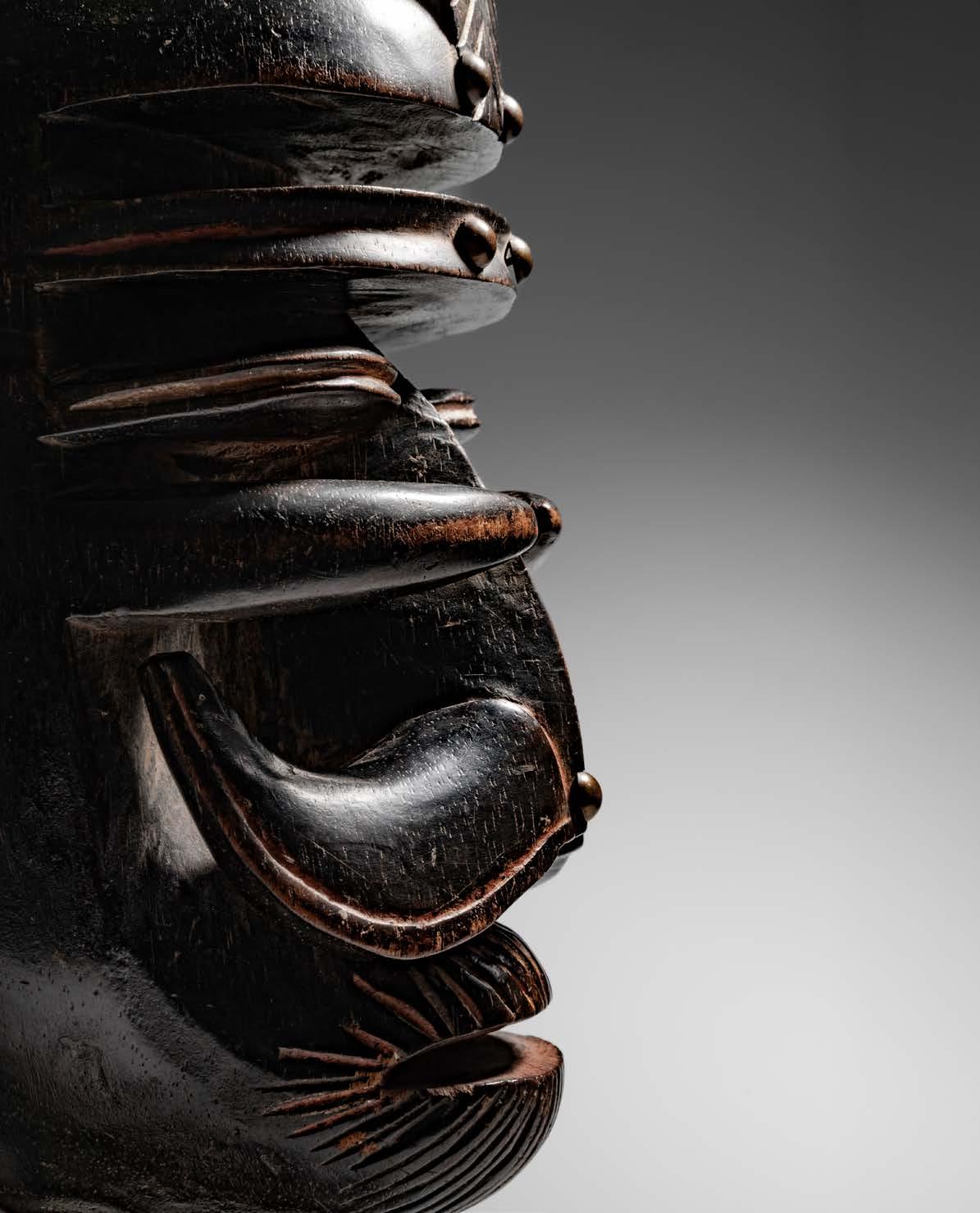
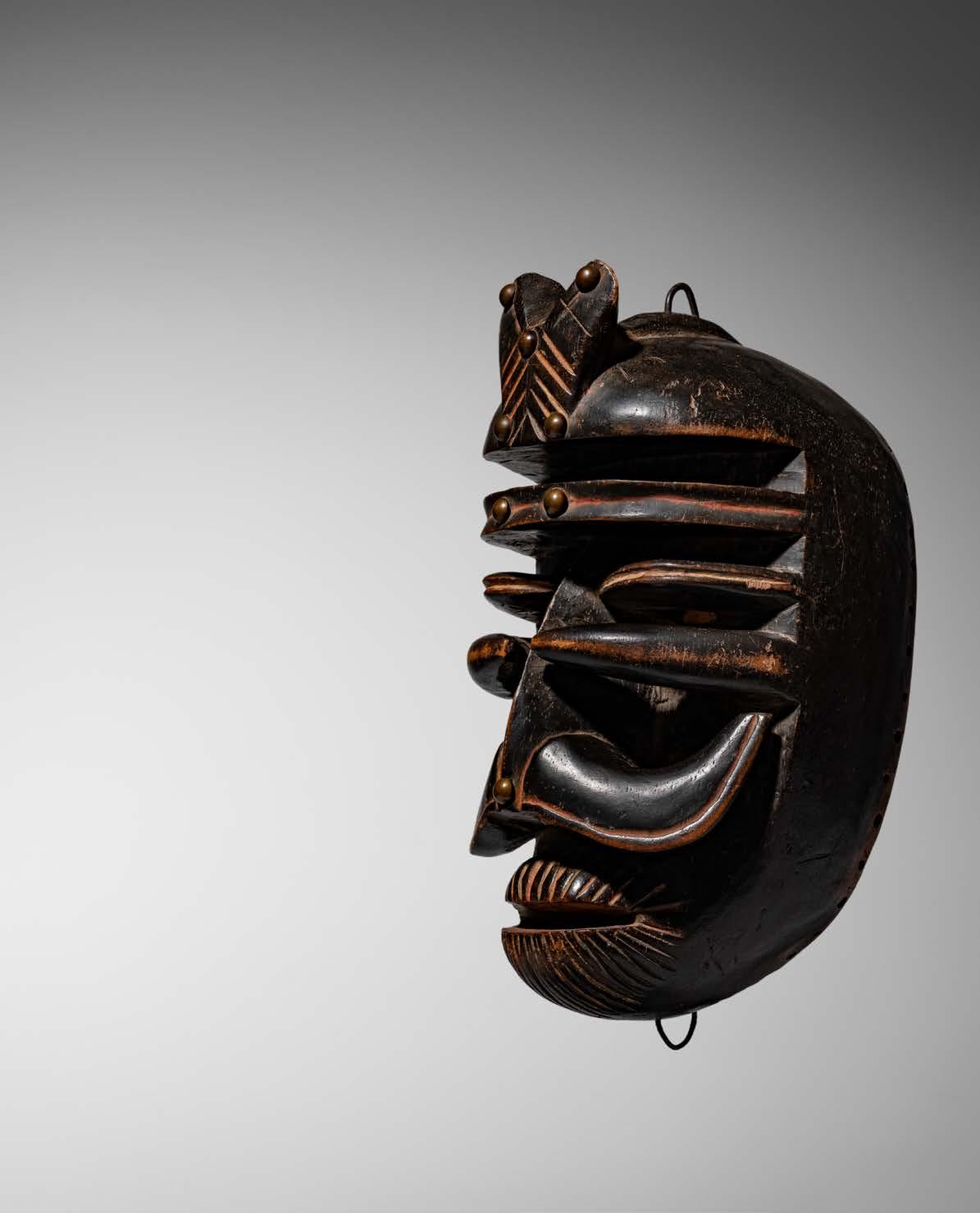
Exceptional and ancient Bété Glé mask, distinguished by its bold formal composition of projecting horizontal planes and deep, rhythmic recesses. The eyes, reduced to narrow horizontal slits between two orbital grooves, convey the “warrior” aspect of the glé spirit with striking intensity.
Traditionally, such masks prepared the wearer psychologically and commanded awe in the observer. Originating in inter-village conflict, they later became instruments of social arbitration and communal mourning during funeral rites. When performed, the mask was combined with a full-body costume of raffia and animal skins, transforming the wearer into a powerful spiritual presence.
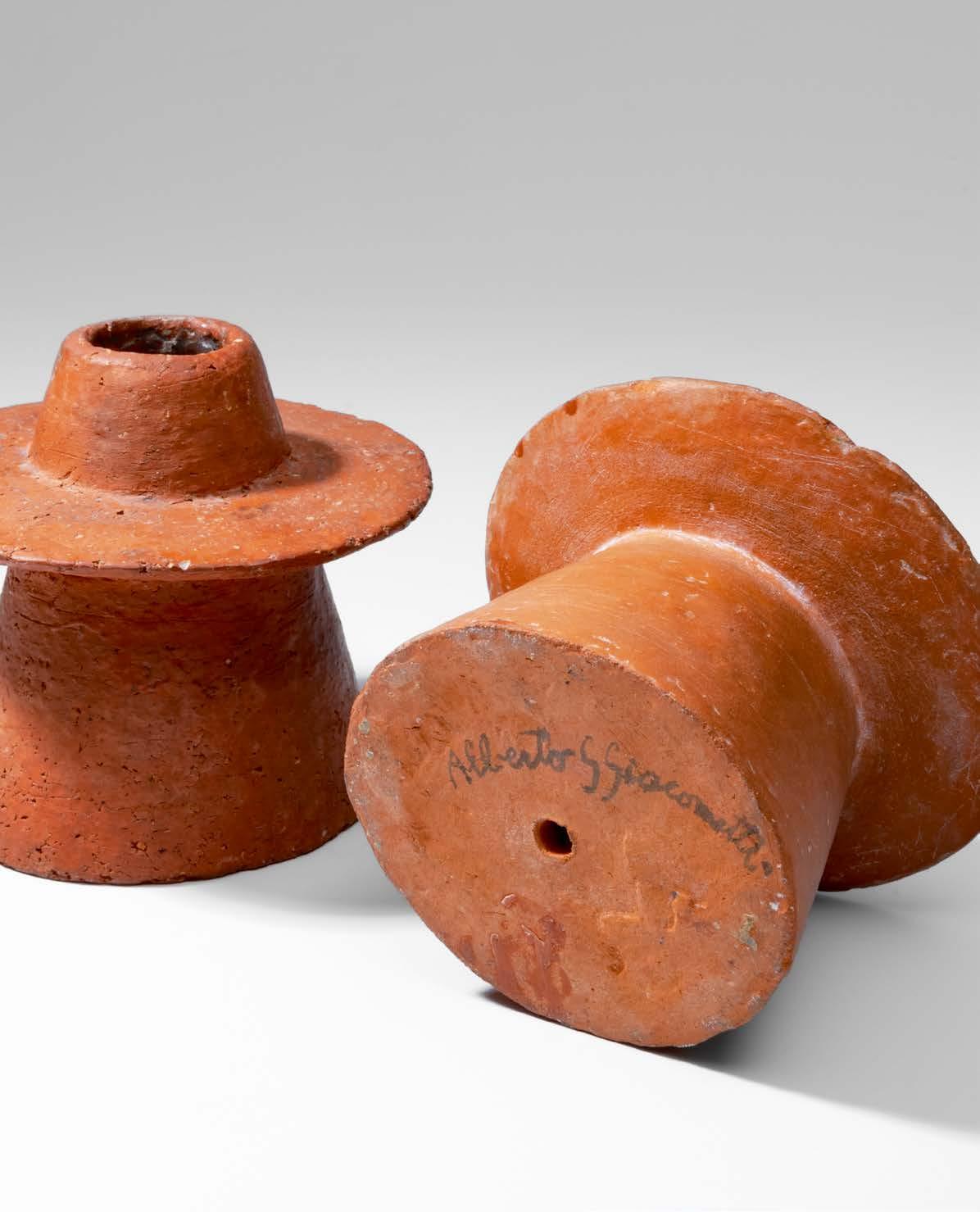
028 . Alberto Giacometti (1901-1966)
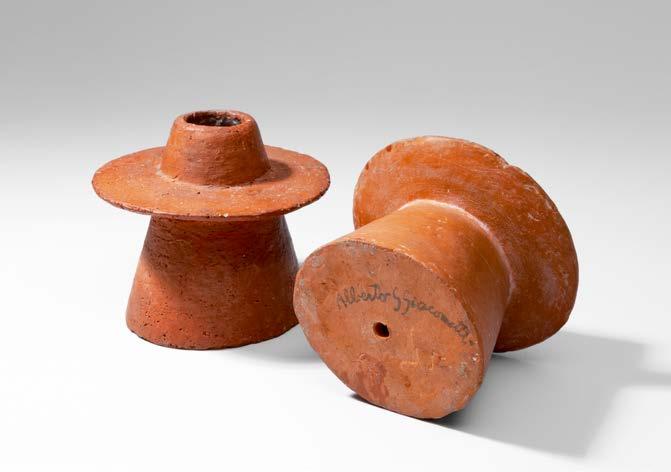
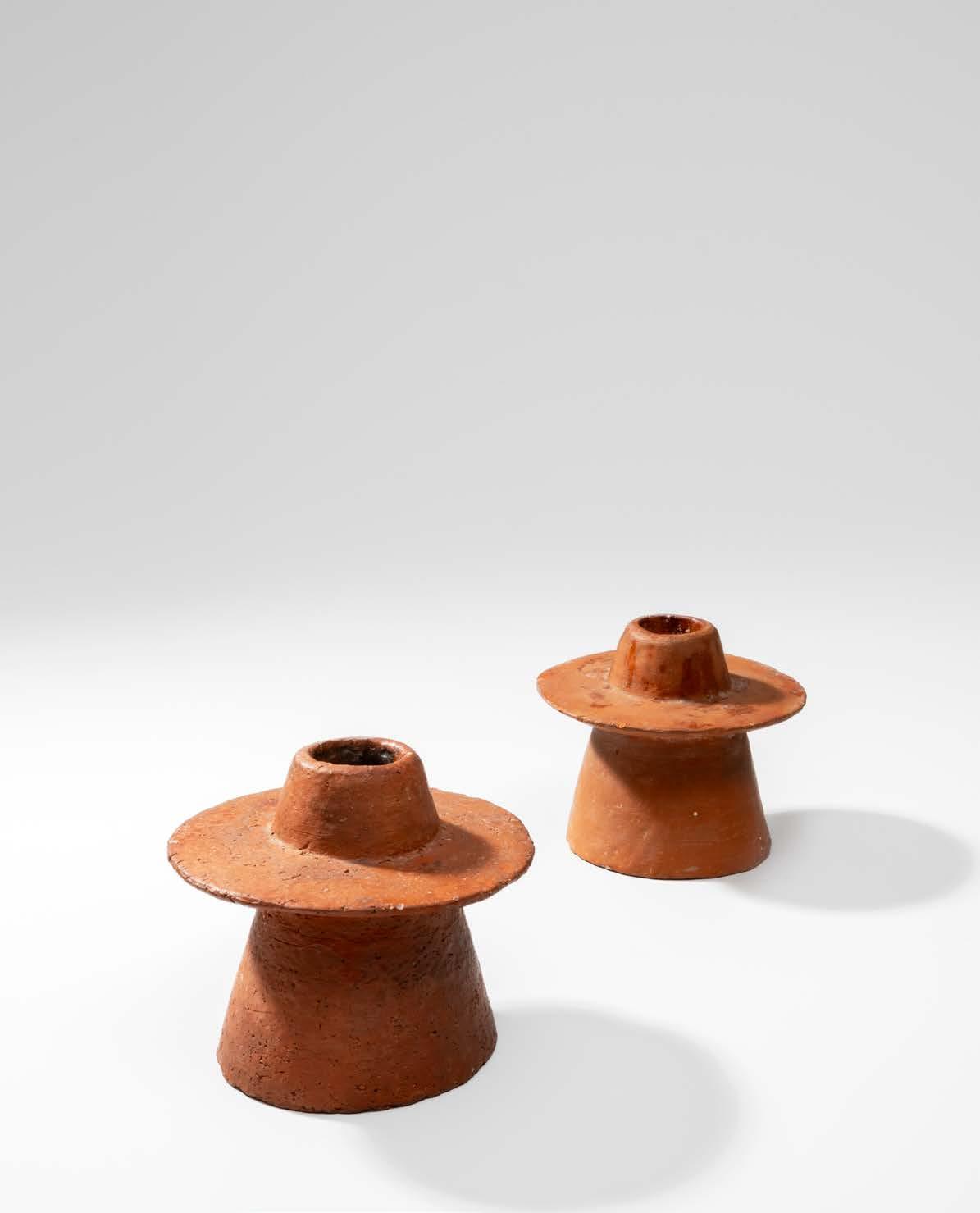
Pair of Conical Candleholders - 1930
Terracotta, 8,8 x 10 cm and 9 x 10,2 cm
One signed underneath: Alberto G. Giacometti.
Provenance:
Claude and Sylvie Berri, Paris
Private collection, Paris (wedding gift from the above, September 1996 )
Literature:
Roger Lannes, Exégèse poétique de Jean-Michel Frank, Art et Décoration, no. 1, 1939, pp. 8, 15
Léopold Diego Sanchez, Jean-Michel Frank, Paris, 1980, pp. 166, 179
Pierre-Emmanuel Martin-Vivier, Jean-Michel Frank: un décorateur dans le Paris des années 30 [exhibition catalog], Fondation Pierre BergéYves Saint Laurent, Paris, 2009, p. 78
Pierre-Emmanuel Martin-Vivier, Jean-Michel Frank: The Strange and Subtle Luxury of the Parisian Haute-Monde in the Art Deco Period, New York, 2012, pp. 68, 92, 153, 216, 251, 284
€ 20 000 - 30 000
Both candleholders come with a certificate from the Giacometti Committee. They are included in their archives under numbers AGD 4807 and AGD 4808.
This rare pair of terracotta candleholders belongs to the earliest phase of collaboration between Alberto Giacometti and Jean-Michel Frank. Modest in scale and material, they bring into focus the shared concerns that shaped their work: formal restraint, proportion, and clarity.
Frank is believed to have encountered Giacometti’s work at the 1929 Salon de Tuileries, held at the Palais de Bois. By 1930, he had initiated a working relationship with the sculptor, recognizing an affinity with his own approach to interiors. This collaboration precedes Frank’s later work with figures such as Salvador Dalí, Christian Bérard, and Emilio Terry, and marks an early engagement with sculptural form in a decorative context.
Among the first objects Giacometti designed for Frank, these candleholders follow a method grounded in historical reference yet deliberately pared back. Drawing on ancient Greek, Roman, and Egyptian sources, as well as elements of African sculpture, Giacometti reduces the object to its essential form. Ornament is absent; emphasis falls instead on contour, balance, and the relation between solid and void. The choice of terracotta underscores this restraint, its surface left plain and direct.
They also align with Frank’s broader approach to materials and composition. His interiors balanced simplicity with refinement, often placing unadorned materials alongside more costly ones without distinction. In this context, terracotta assumes a deliberate role.
Giacometti’s response is exact: the forms are spare and controlled.
The candleholders resist placement within a single stylistic lineage. Their forms recall historical precedents without direct quotation. This ambiguity is central to their character and aligns with the shared aim of both men to strip objects of overt reference while retaining a clear sense of use.
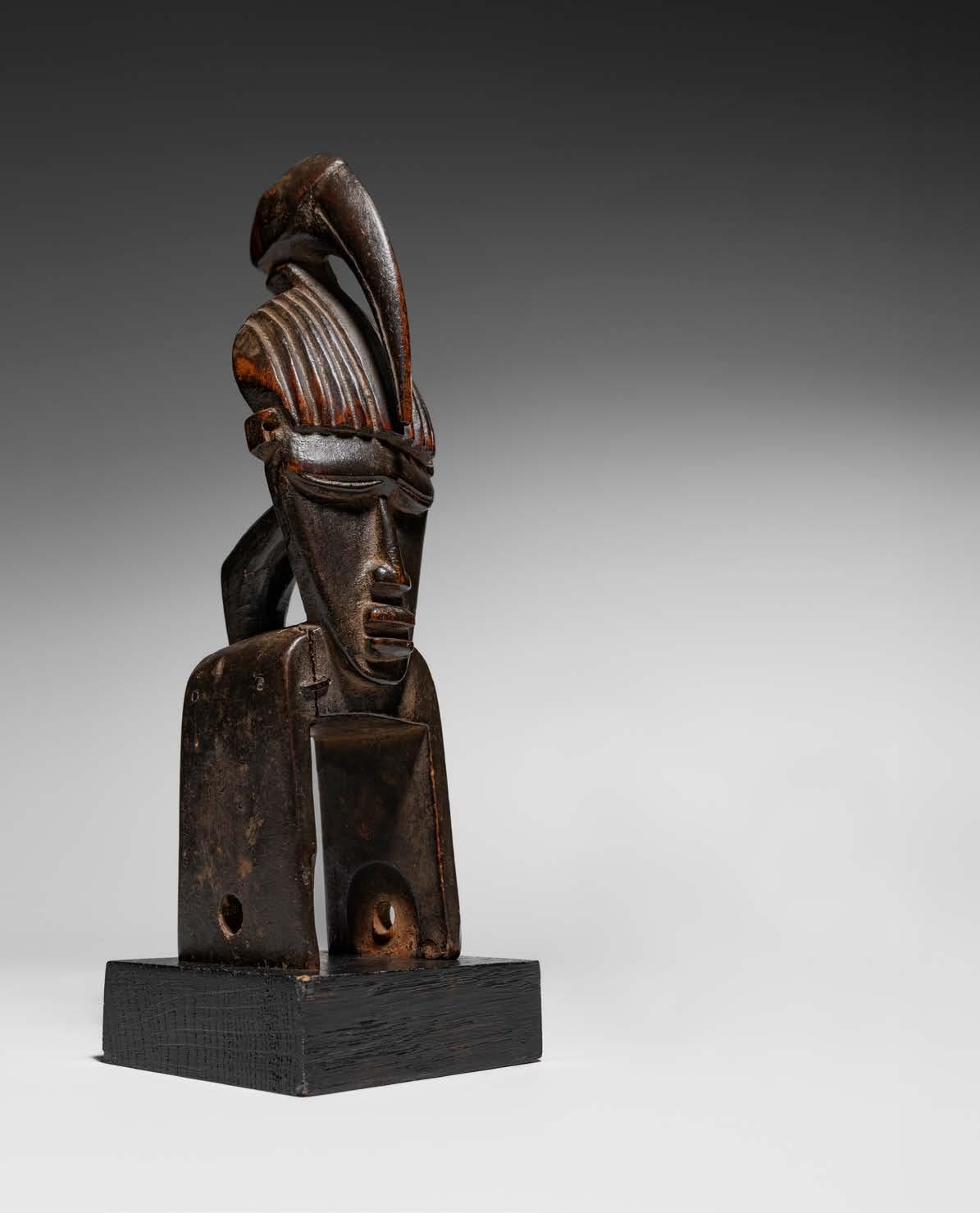
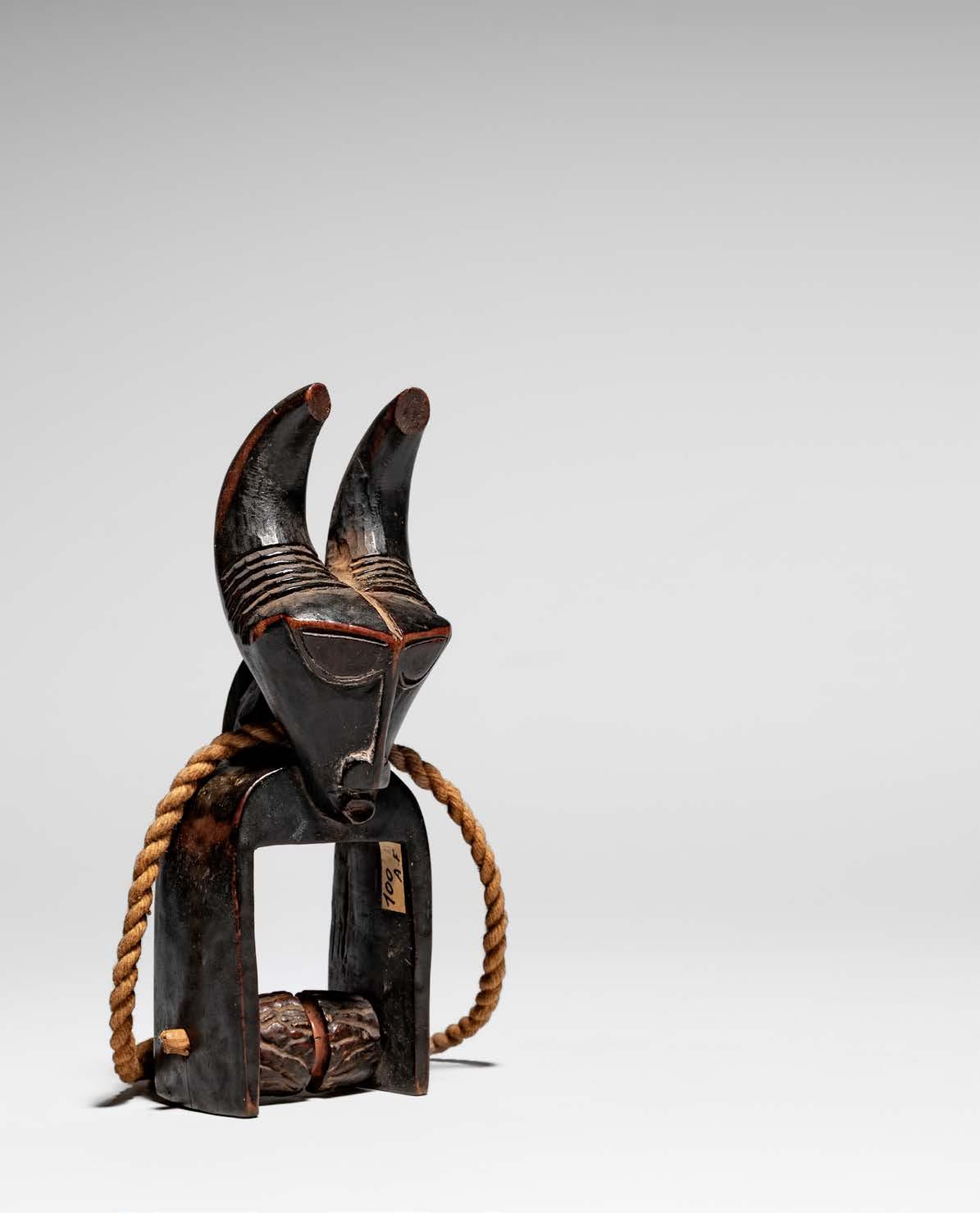
029 Northern Senufo Heddle Pulley
Ivory Coast, Jimini
Wood, 21 cm
Provenance:
Emil Storrer Collection, Zurich (inv. no. 48)
Egon Guenther Collection, Johannesburg (1971)
Sotheby's, New York, African Art from the Egon Guenther Family Collection, November 18, 2000, lot 22
Myron Kunin Collection, Minneapolis
Sotheby's, New York, In Pursuit of Beauty: The Myron Kunin Collection of African Art, 11 November 2014, lot 36
Private collection, London
€ 10 000 - 15 000
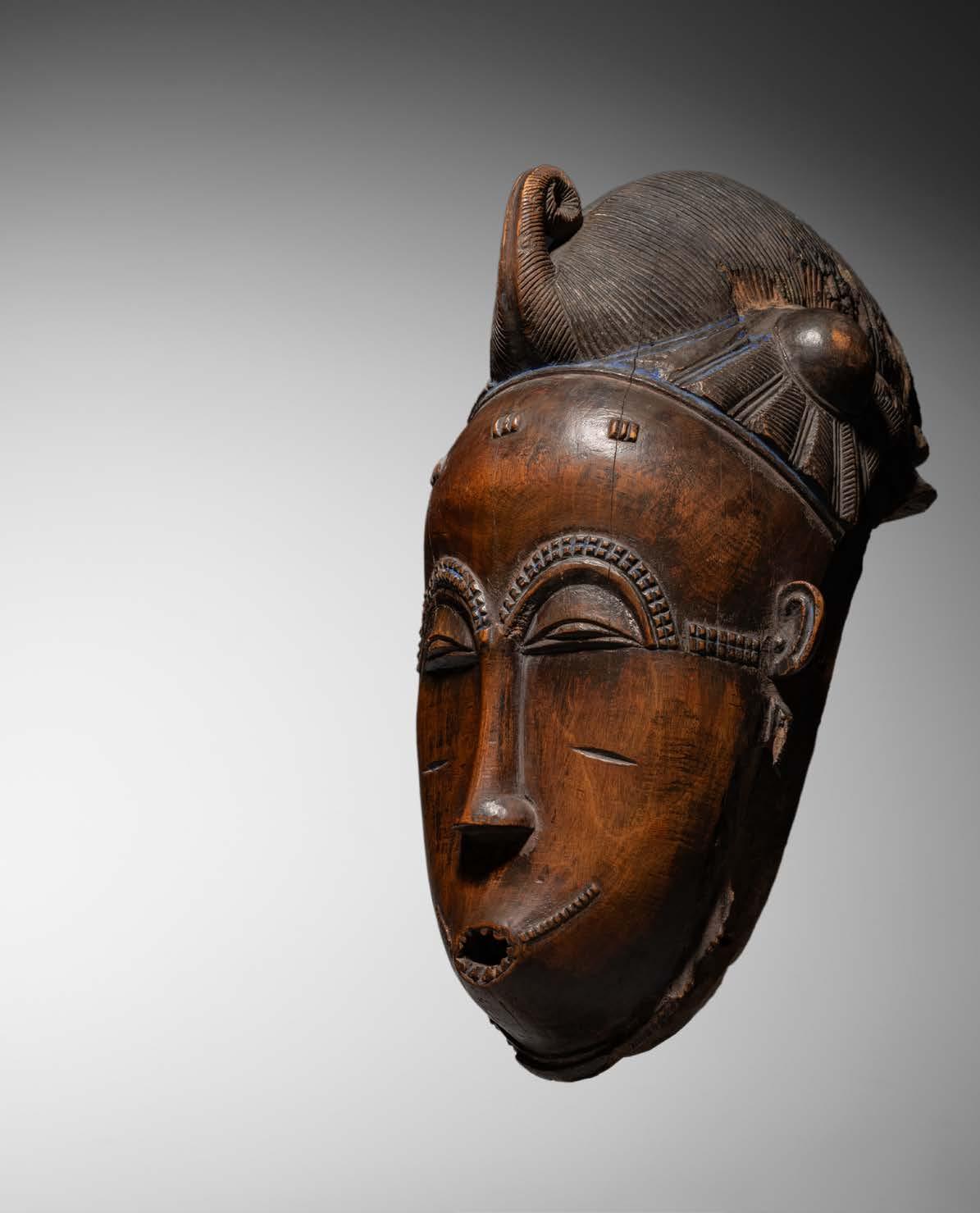
030 Baule Mask
Ivory Coast Wood, 37 cm
Provenance:
Private collection, Holland
Galerie Ratton-Hourdé, Paris
Private collection, France, acquired 1997
Galerie Lucas Ratton, Paris
Private collection, London
€ 20 000 - 30 000
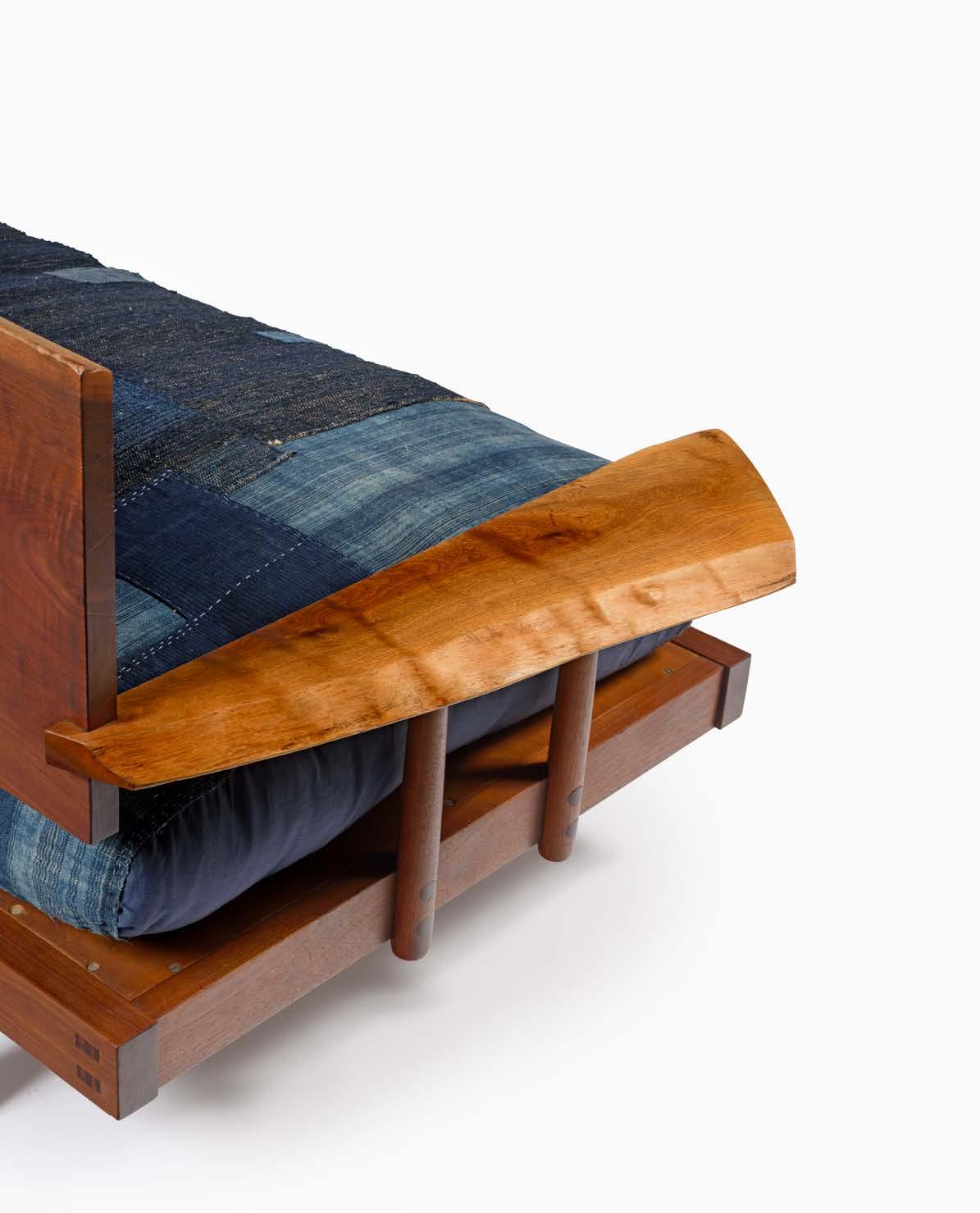
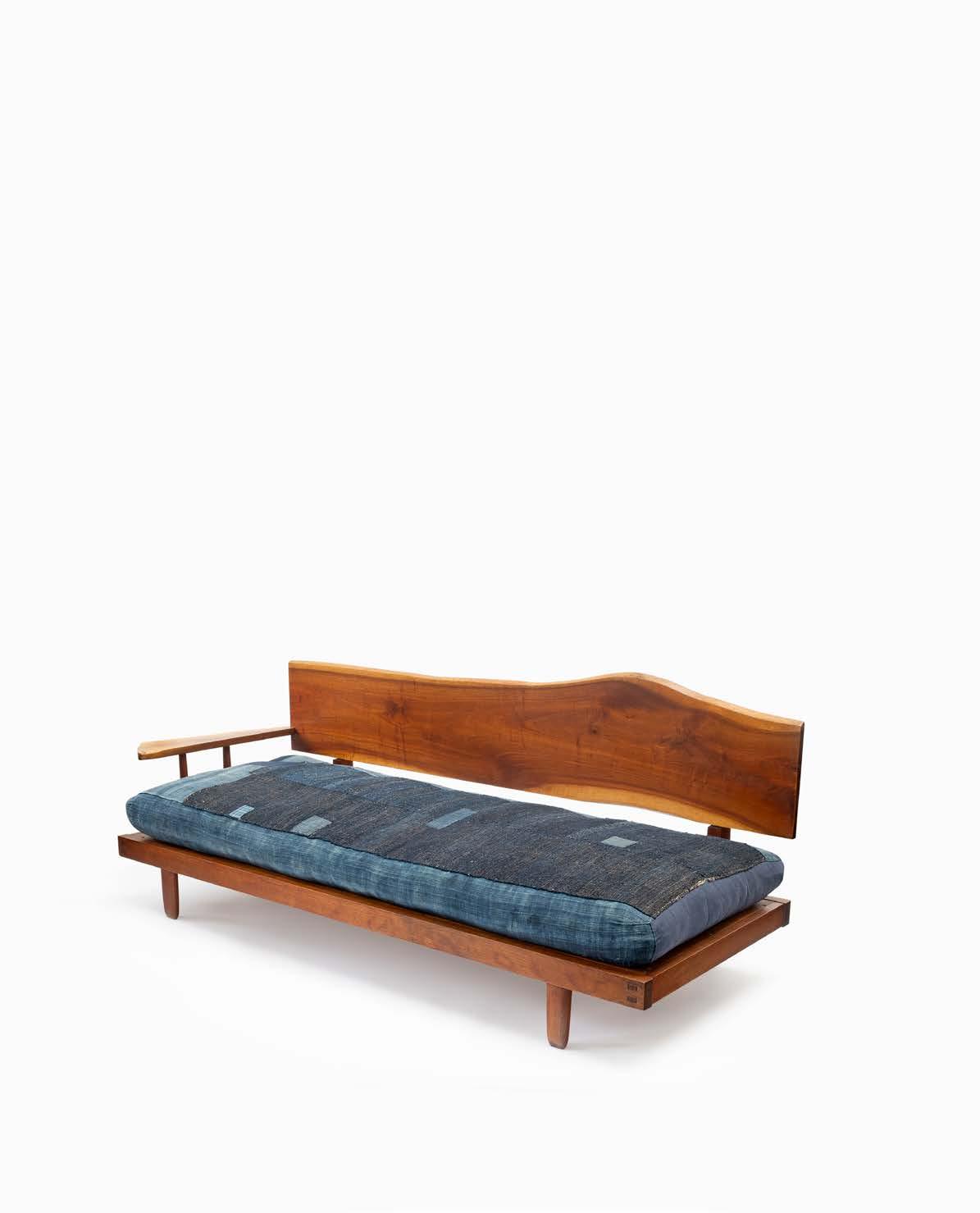
031 George Nakashima (American, 1905-1990)
Single-Arm Sofa
Walnut, 90 x 230 x 85 cm (Seat height: 45 cm)
Provenance: Private collection, Belgium
€ 18 000 - 25 000
032 . Guro Mask
Ivory Coast
Wood and brass tacks, 30 cm
Provenance:
Merton Simpson (1928-2013), New York
Private collection, New York
Lucas Ratton, Paris
Private collection, London
€ 30 000 - 50 000
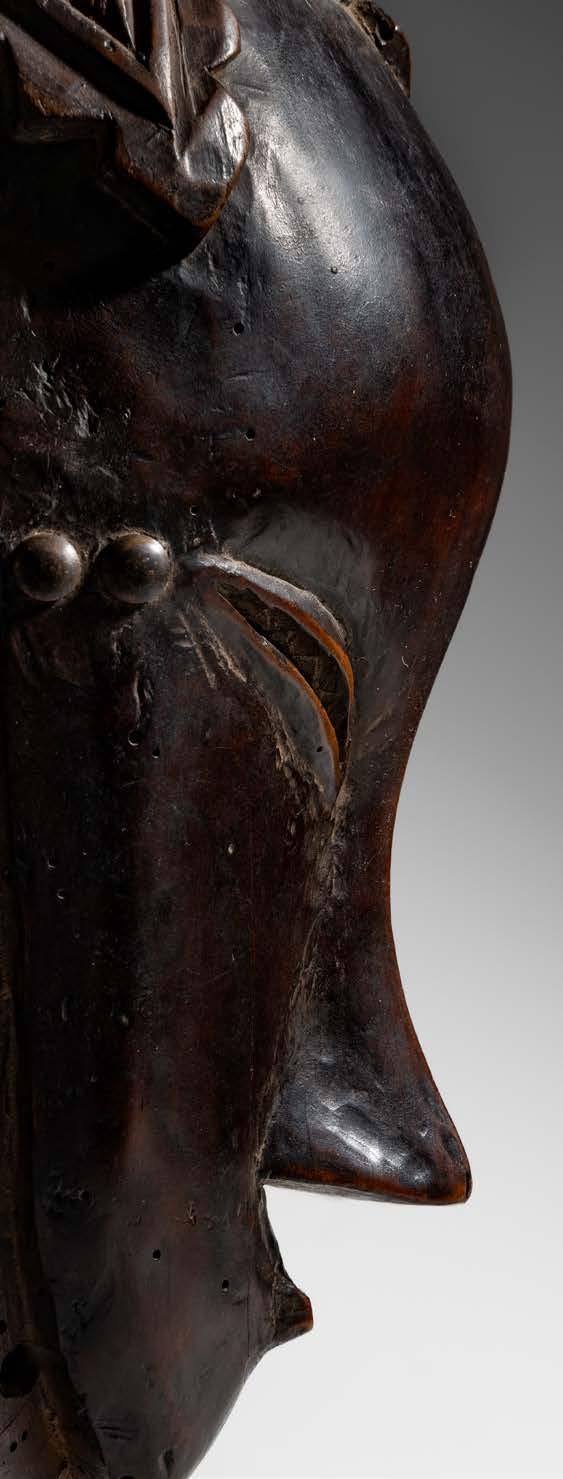
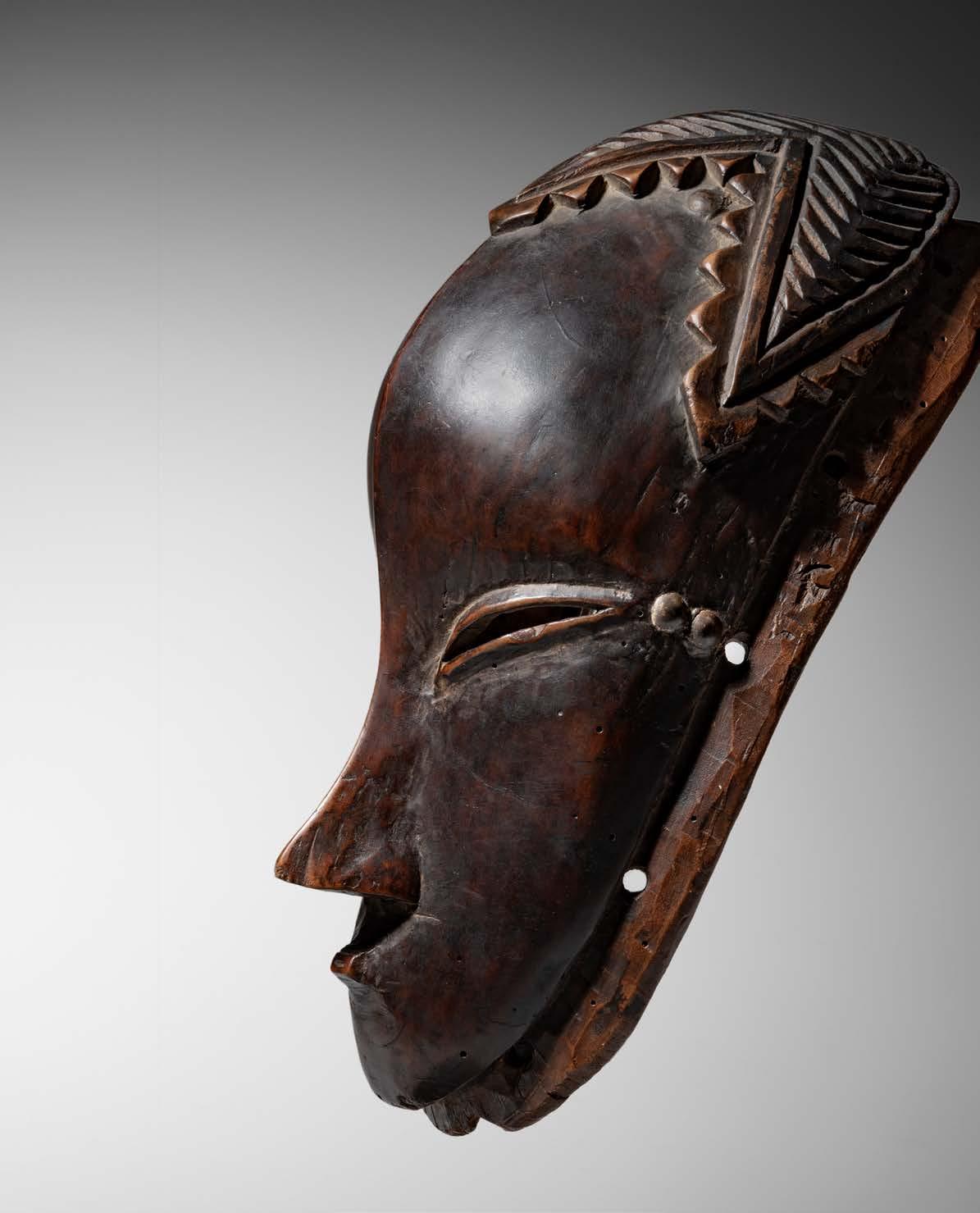
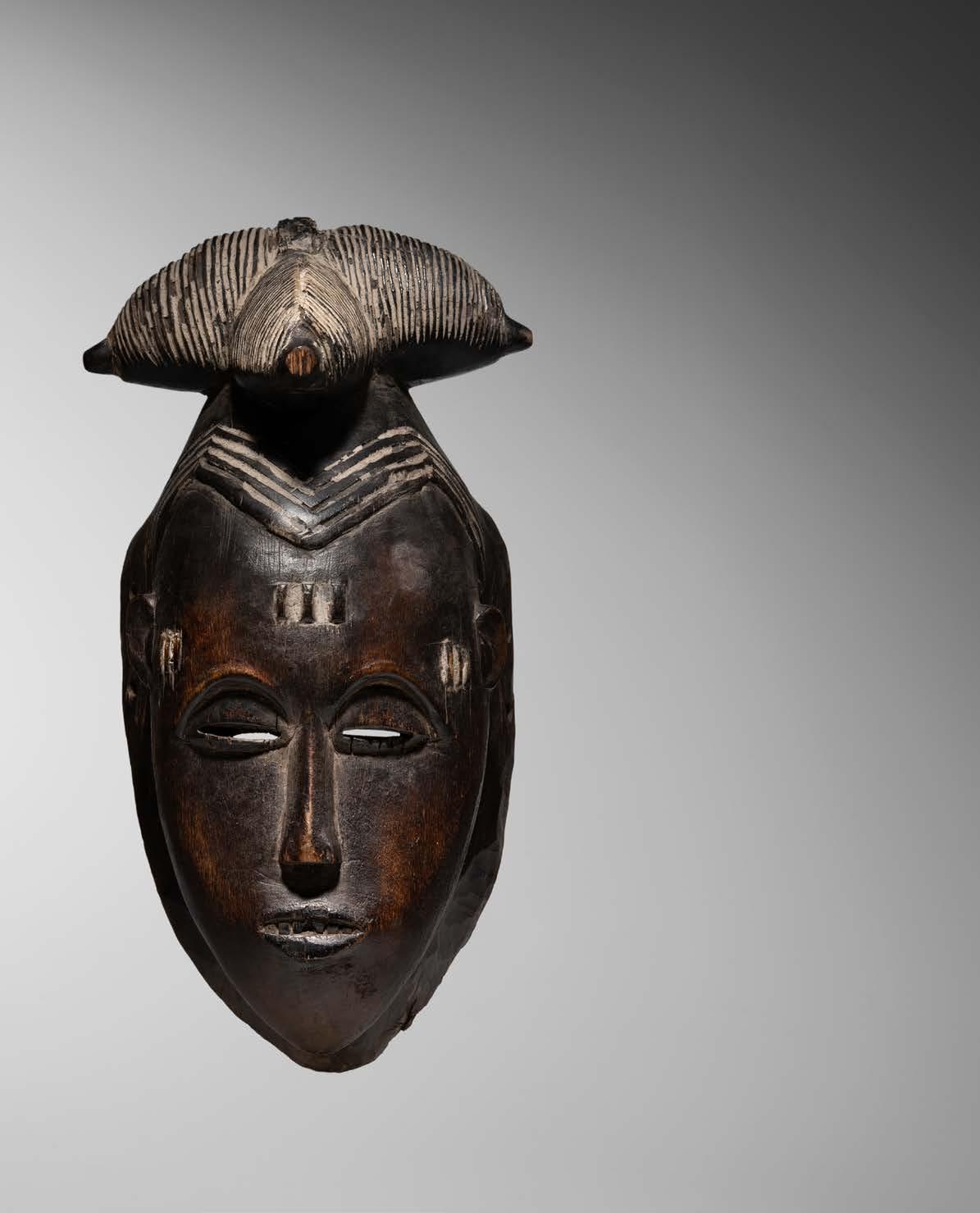
This mask is a rare example attributed to the "Master of Bouafle," a name first coined by Eberhard Fischer and Lorenz Homberger during the 1985 exhibition Die Kunst der Guro Active in Côte d’Ivoire between approximately 1880 and 1930, this anonymous artist is recognised as one of the most exceptional hands in Guro art. His work first came to international prominence in 1923, when a masterpiece by his hand was featured in the Exposition de l'Art indigène des Colonies Françaises, organized by Henri Clouzot and André Level at the Musée des Arts Décoratifs in Paris. Today, examples of the Master’s limited corpus are preserved in prestigious institutions, including the Rietberg Museum, the Barnes Foundation, and the Yale University Art Gallery. The artist’s style is defined by a pursuit of virtuosity and a refined tension of form. This mask exhibits the Master’s characteristic canon: a high, domed forehead that leads into a radical nasal plane and an incurvated nose.
The facial structure is shaped by long diagonals that define the half-closed eyes, while the puckered lips and receding chin create a sinuous, harmonious curve. These markers represent a culmination of Guro aesthetic principles, emphasising a sense of grace and youthful vitality through precise, sensitive outlines.
Specific to this mask is an elegantly carved three-pointed coiffure, which sits close to the skull and enhances the balanced proportions of the face. The craftsmanship reveals the meticulous attention to detail and formal affinity for clean lines that led scholars to draw parallels between this artist’s work and the modernism of Amedeo Modigliani, both of whom were notably championed by Paul Guillaume.
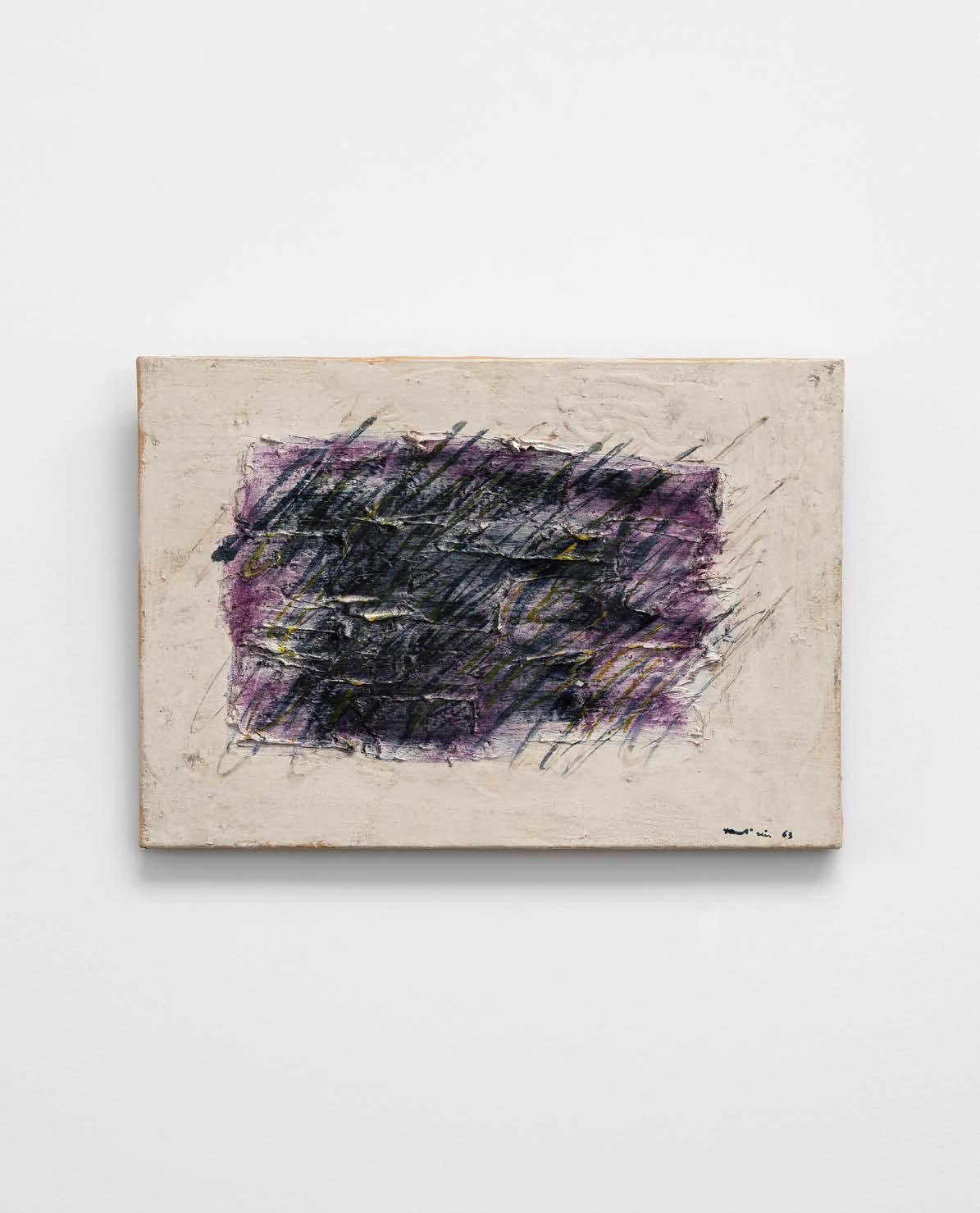
033 Jean Fautrier
(French, 1898-1964)
Untitled - 1963
Oil on paper mounted on canvas, 38 x 55 cm
Signed and dated lower right
Provenance:
Galerie Gilbert de Baene, Knokke
Private collection, Belgium
€ 100 000 - 150 000
We would like to thank Mrs. Marie-José Lefort of the Jean Fautrier Committee for confirming the authenticity of this painting.
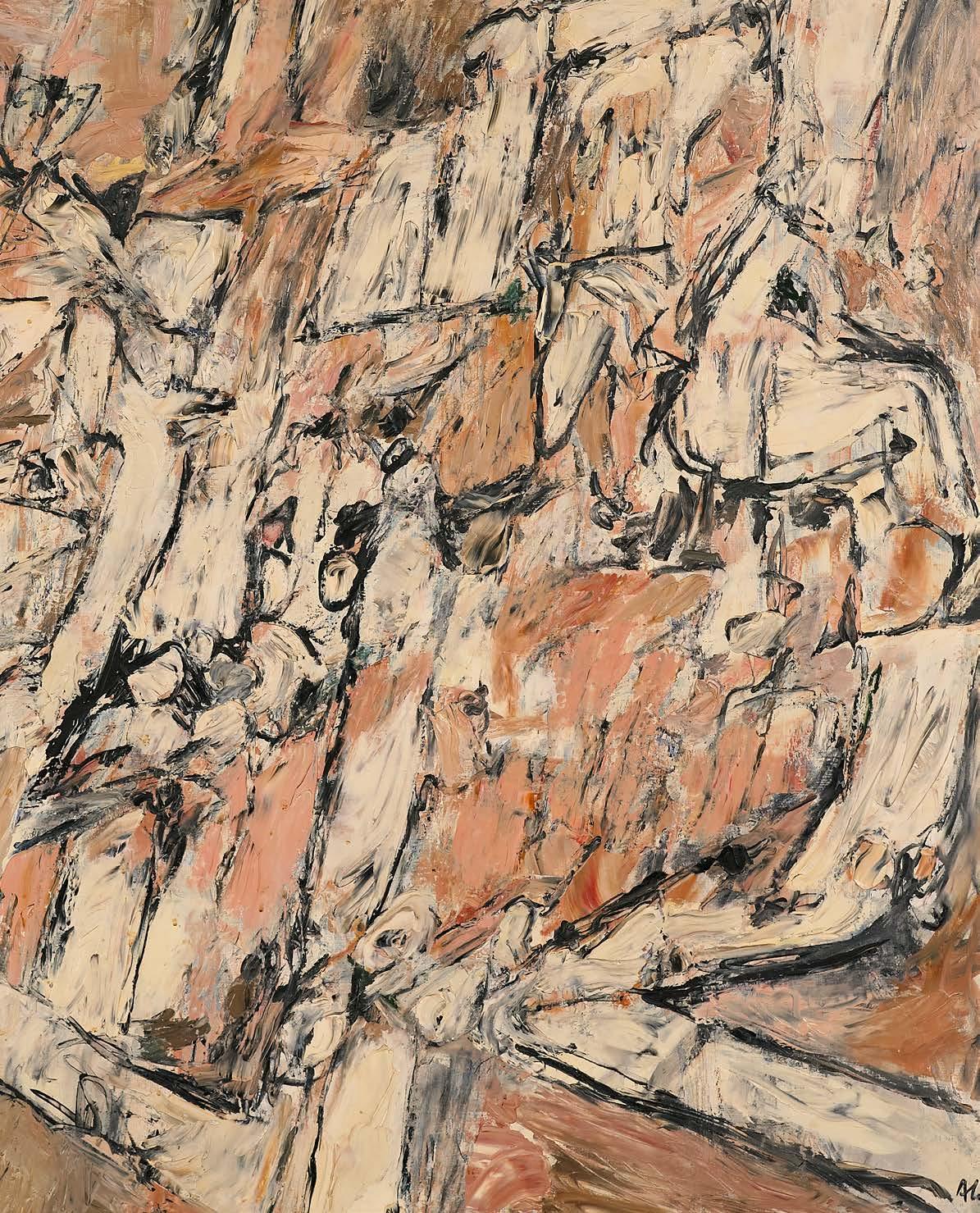
Untitled - 1963 belongs to the later phase of Jean Fautrier’s production, in which the dense materiality of the Otages period gives way to a more open, linear and calligraphic approach. While retaining a sensitivity to surface and facture, the artist progressively reduces forms, privileging gesture and spatial relationships over mass.
Within this evolution, the present painting is characteristic of Fautrier’s exploration of structure through restraint. The composition relies on the interaction between a limited chromatic range and a sparse but deliberate network of lines, resulting in a balanced yet unsettled field. The economy of means underscores the artist’s continued interest in the expressive potential of surface.
034 Senufo Heddle Pulley
Ivory Coast Wood, 17 cm
Provenance:
Pierre Vérité (1900-1993) Collection, Paris
Claude Vérité (1929-2018) Collection, Paris
Enchères Rive Gauche, Paris, La Collection
Pierre et Claude Vérité, 17-18 June 2006, lot 416
Christie's, Paris, Arts d'Afrique, d'Océanie et d'Amérique du Nord, 23 June 2015. Lot 53
Private collection, London
€ 5000 - 7000
035 Oscar Dominguez (Spanish, 1905-1957)
Toro - 1936
Bronze, 25 cm
Signed and numbered on the base: 7/8
With foundry mark: Susse Frères Paris Cast 1948-1950
With certificate of authenticity by M. Rodolfo de Sosa dated 16 November 1987
Provenance: Whitford Fine Art, London Private collection, Belgium
€ 5000 - 7000
To be included in the forthcoming second volume of the Catalogue Raisonné of Oscar Dominguez by M. Rodolfo de Sosa.
036 George Nakashima
(American, 1905-1990)
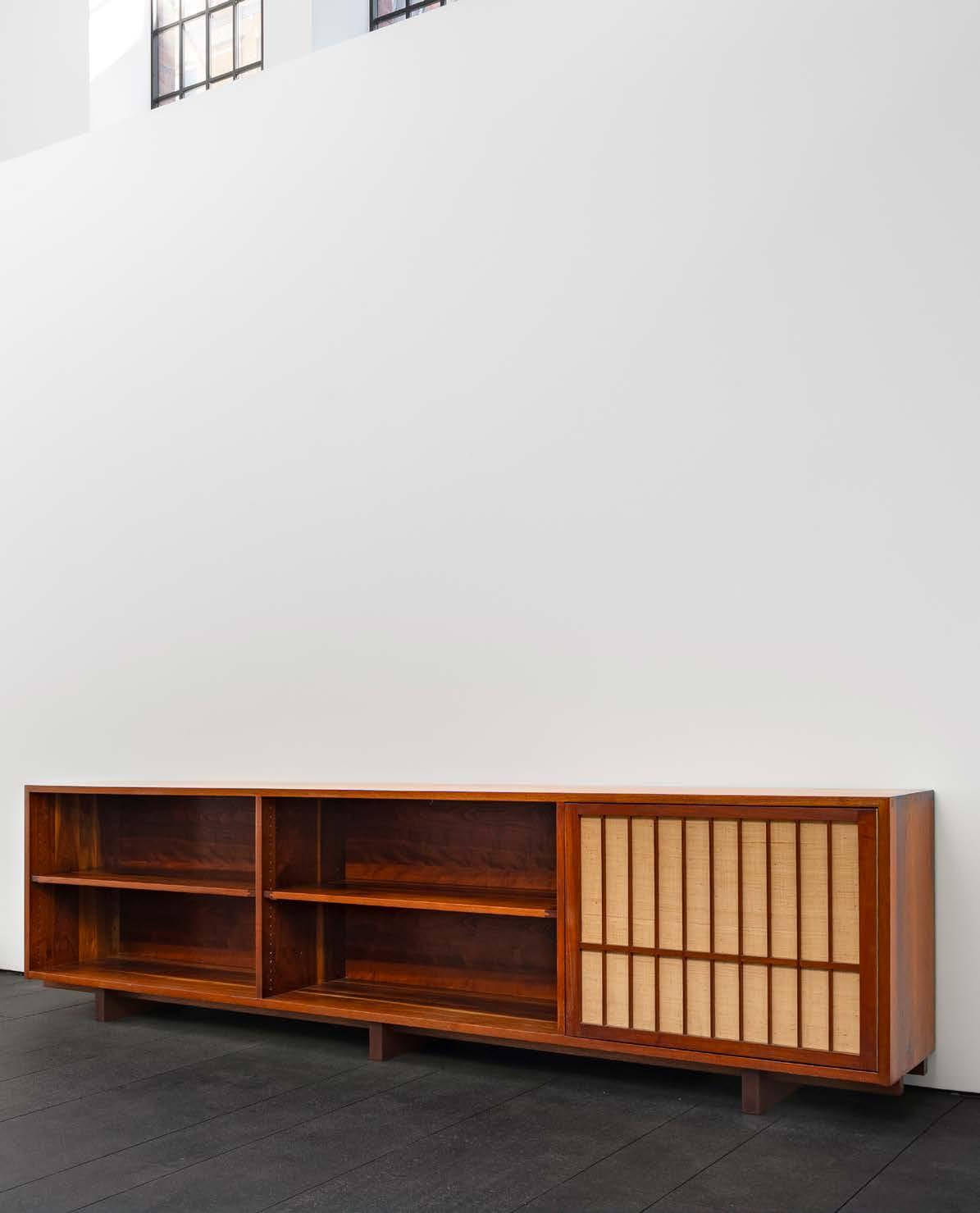
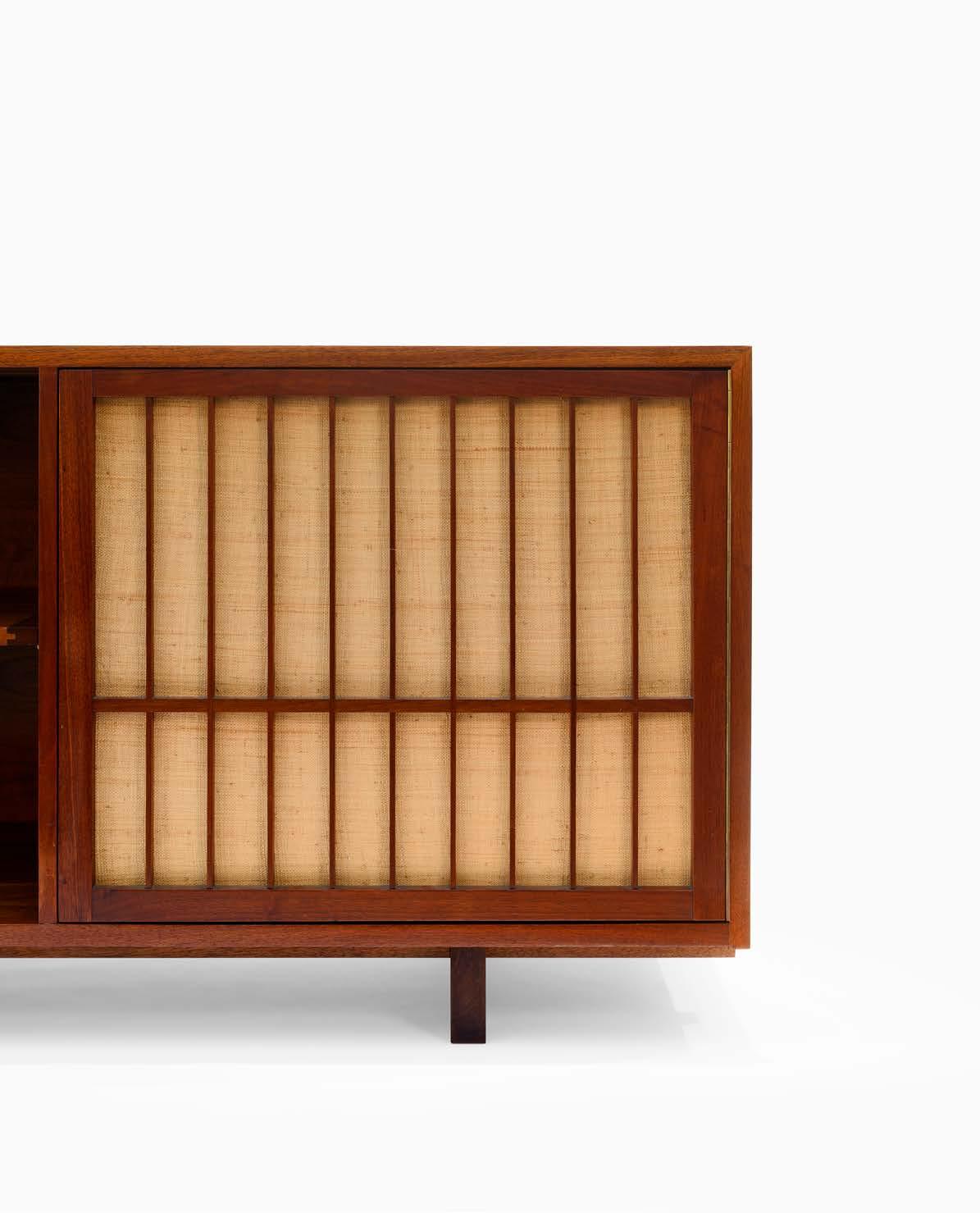
Cabinet -1958
Walnut and laurel, pandanus cloth 80 x 274 x 51 cm
Provenance:
From the estate of Dr. Seymour and Mrs.Phyllis Lifschutz, Princeton, New Jersey.
€ 20 000 - 30 000
This cabinet is a rare and exceptional work by George Nakashima, conceived as a custom order for one of his most important patrons, Dr. Lifschutz, whose name is inscribed on the back of the piece. It reflects a direct exchange between maker and client: the original receipt, dated 1958, not only specifies the wood species employed but also includes a manuscript addition referring to the grilled door.
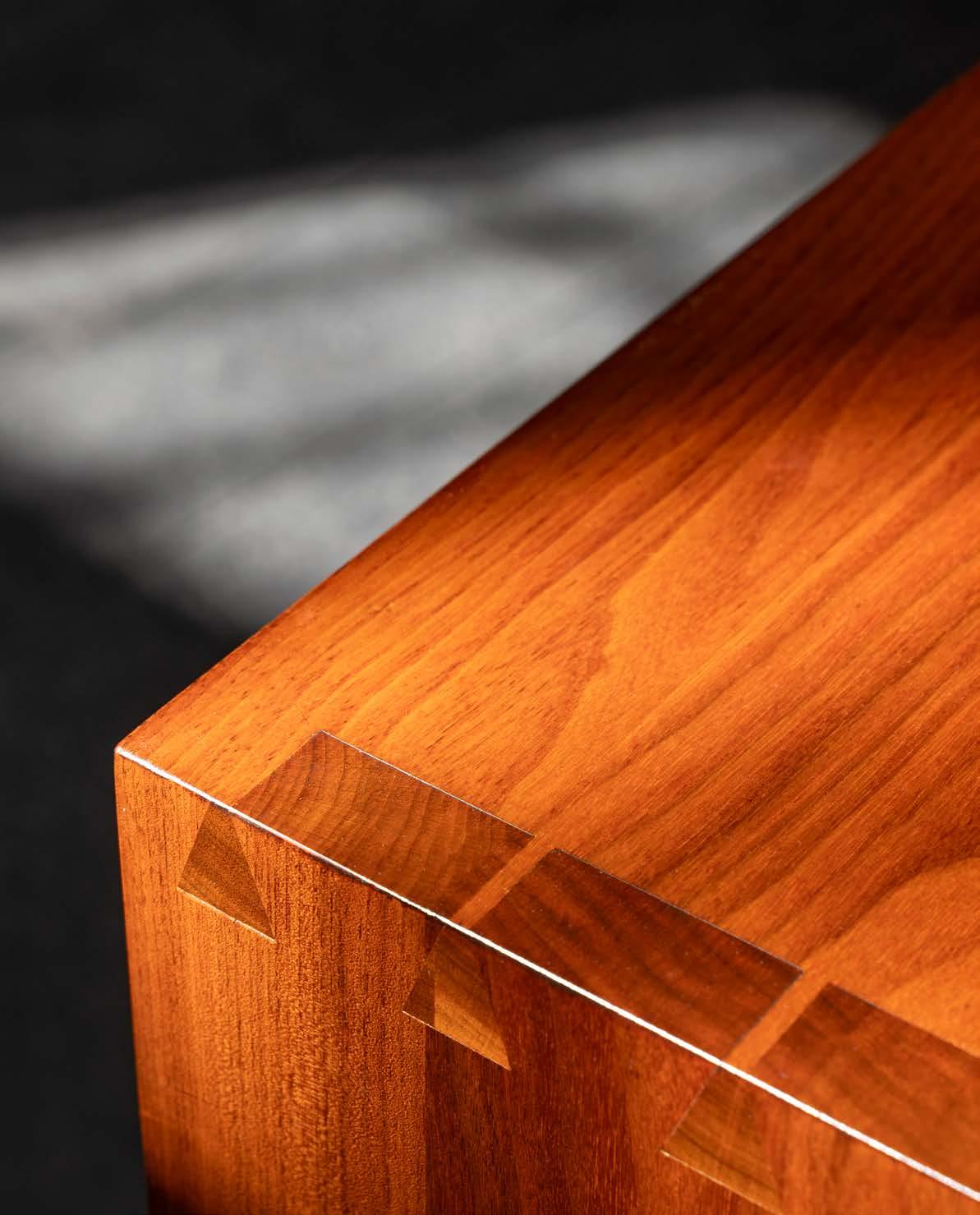
Executed in walnut with a laurel top, the cabinet demonstrates Nakashima’s sustained engagement with the inherent qualities of natural materials. Its elongated horizontal format emphasizes the linear grain of the wood, while the restrained construction reflects his consistent focus on clarity of form and balanced proportion. Subtle tonal variations across the surface highlight the organic character of the timber, an essential aspect of Nakashima’s approach, informed in part by Japanese attitudes toward nature and its aesthetic potential. The cabinet also displays visible dovetail joints at the corners, a hallmark of his work, further accentuated by the contrast in the panel tones. One third of the cabinet is defined by a hinged grilled door retaining its original textile infill of handwoven pandanus cloth, introducing a measured rhythm to the façade while maintaining a sense of lightness.
The provenance of the cabinet reflects a sustained relationship between the maker and his patrons. Beginning in 1956, the Lifschutz family assembled a significant and highly individual group of Nakashima’s work, eventually comprising more than fifty pieces. Many were custom for their home in New Brunswick, New Jersey, and later transferred to their residence in Princeton. Over time, a close relationship developed between the two families, with Dr. Lifschutz also serving as physician to the Nakashimas.
037 Dan Spoon
Ivory Coast Wood, 69 cm
Provenance:
Private collection, France
Christie's Paris, Arts d'Afrique, d'Océanie et d'Amérique du Nord, 2 3 June 2015, lot 6
Private collection, London
€ 10 000 - 15 000
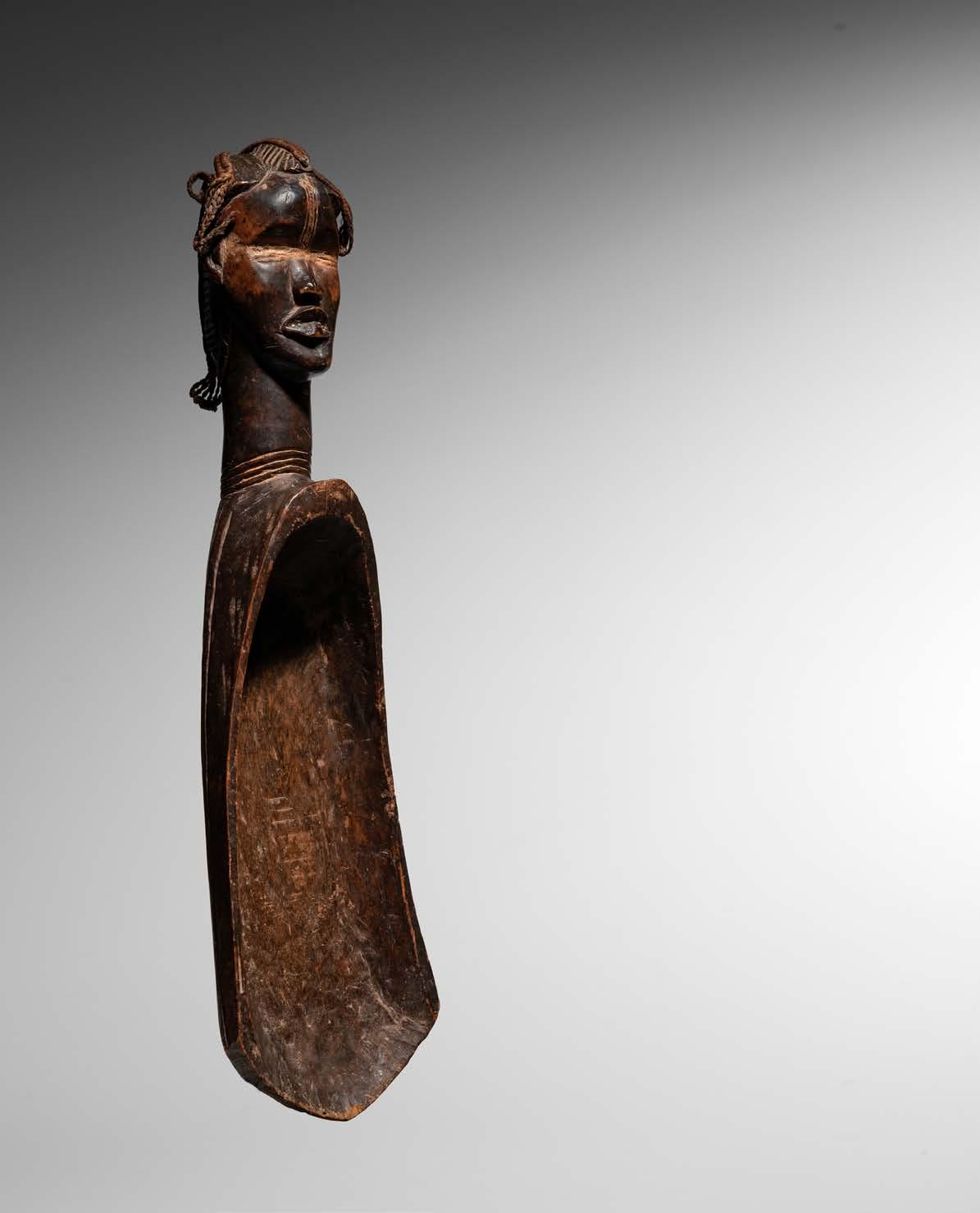
Impressive ceremonial Dan spoon, called Mèvuochlümia, meaning literally “ladle with a human face”. The female head that shapes the handle of the spoon presented here is topped with an elaborate hairdo further adorned with rattan braids. Big ceremonial spoons are generally called wake mia or wunkirmian, meaning "spoon associated with feasts”. They were given to elder women, called wa ke de, who were in charge of feasts. It was a title of high distinction given to the one who excelled in all the skills needed to cater for a big feast. More than just a status symbol, the wunkirmian also has a spiritual power, connecting the wa ke de with the spiritual world, in a way masks do for men. The ample shape of the spoon can be seen as a symbol of the womb, for womanhood in general, and as such, as a source of food and life.
038 Three-Faced Baule Pulley
Ivory Coast Wood, 23,8 cm
Provenance: Loudmer, Paris, Arts Primitifs, 24 April 1997, lot 61
Myron Kunin (1928-2013) Collection, Minneapolis
Sotheby's, New York, In Pursuit of Beauty: The Myron Kunin Collection of African Art, 11 November 2014, lot 39
Private collection, London
€ 8000 - 12 000
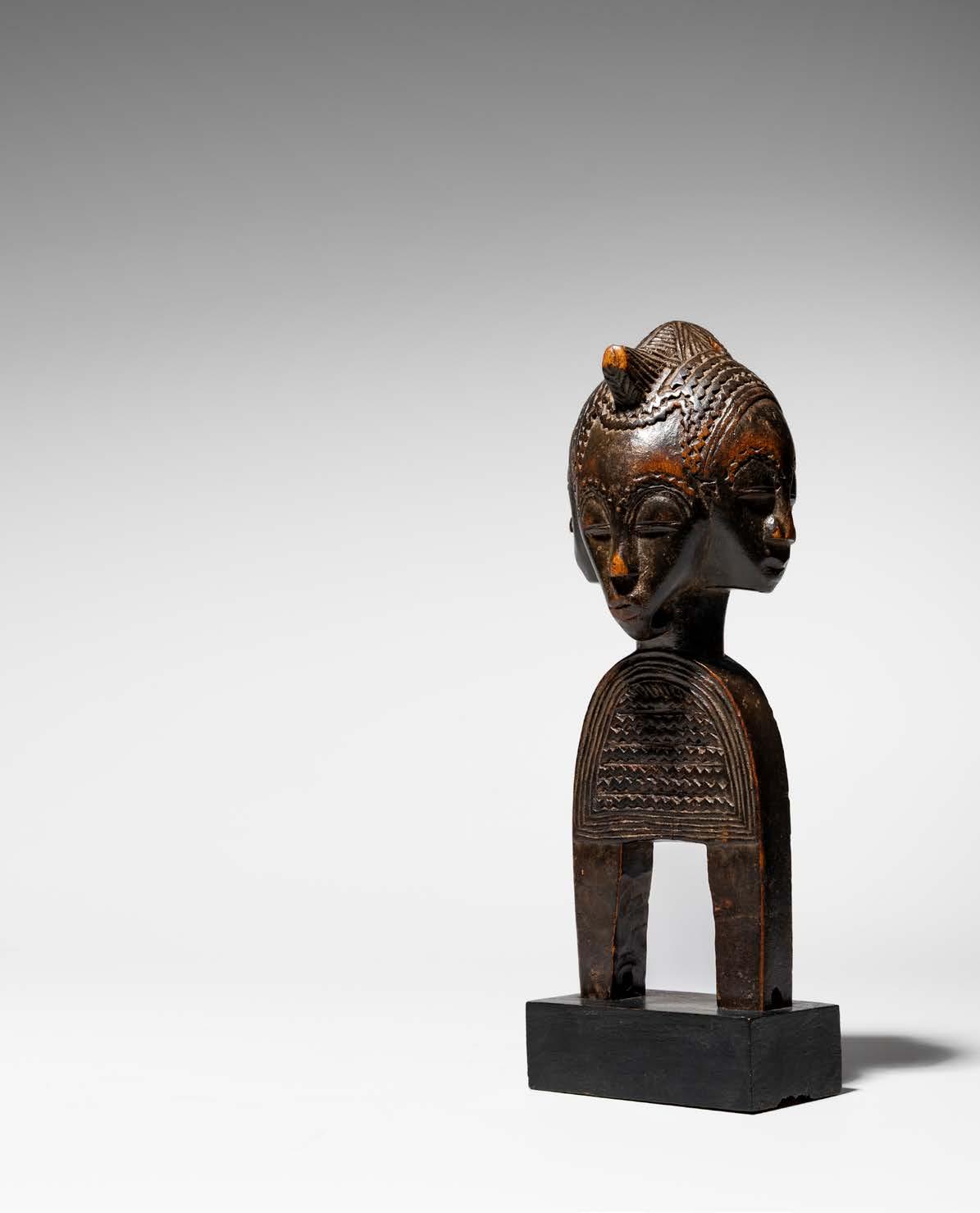
Finely carved heddle pulley with beautiful layered patina. A similar three-headed heddle pulley from the same workshop belongs to the Detroit Institute of Arts (DIA), inv. n°70.41.
039 Léonard Limosin
(French, 1505-1577)
The Last Supper - c. 1533
Polychrome enamels and gold highlights on copper, counter-enamel in fondant 17,2 x 14,2 cm
Monogrammed L.L. in a cartouche beneath the putto at the top left of the composition
Provenance:
Private collection, Lyon
Private collection, Paris
€ 8000 - 12 000
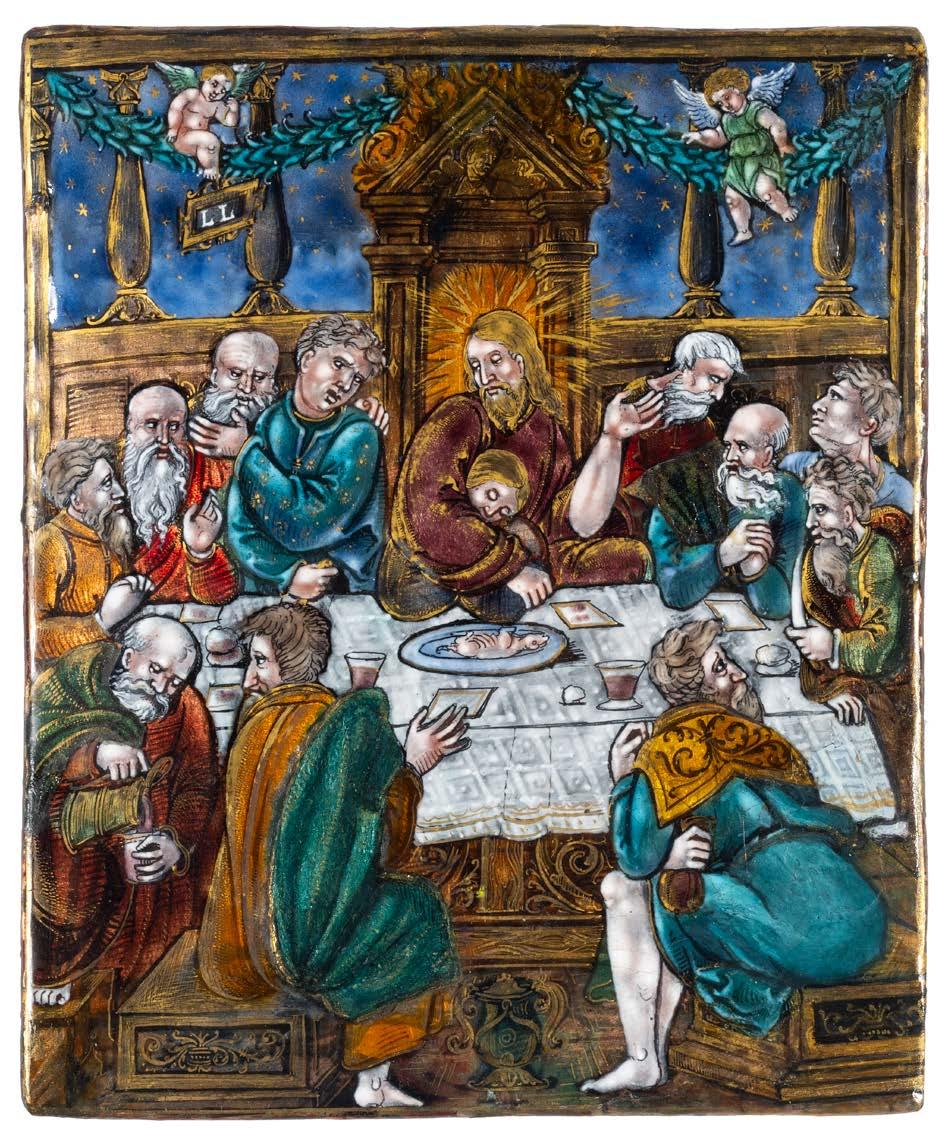
This plaque by Léonard Limosin is inspired by Albrecht Dürer's engraving of the Last Supper from The Great Passion (1510). The most famous and talented enameller of the 16th century, demonstrating his characteristic freedom in interpreting models, adds, in the foreground on the left, an apostle seen from behind, borrowed from the engraving of the Last Supper from The Small Passion by the same artist (1511). He also transformed the harshness of the background by opening it up to a starry sky and gave Christ an ornamental throne.
Our plaque was probably part of a set illustrating the Passion of Christ, a theme that Limosin explored several times during his career as an enameller. These plaques were mainly intended to adorn large altarpieces. However, Limosin only used Dürer's engravings in his early work, before moving on to Italian and then School of Fontainebleau models under the influence of the new Bishop of Limoges, Jean de Langeac, who took him under his wing. The latter may have taken him with him on his diplomatic missions to Ferrara (1533 and 1535) and also introduced him to the court of Francis I around 1535.
Other plaques by Léonard Limosin, of similar dimensions (+/- 17 x 14 cm) and inspired by Dürer's two series of engravings, are also known.
Two large panels, each comprising nine plates, some of which bear the monogram L.L. or the date 1533 belonged to the famous Debruge-Duménil collection. These plates are the oldest known dated works by the artist. However, it was probably not a homogeneous collection, but rather a combination of two or even three distinct series. Since their dispersal, one of them, The Flagellation, entered the collections of the Renaissance Museum at the Château d'Écouen in 1990.
In addition to this set, other individual panels are now preserved in various museums. These include Adam and Eve Expelled from Paradise (dated 1534), Jesus Driving the Merchants from the Temple and The Descent into Limbo , at the Musée Municipal de l'Évêché in Limoges; The Crowning with Thorns at the Guéret Museum of Art and Archaeology; The Resurrection at the Saumur Museum of Decorative Arts; Ecce Homo at the Museum für Angewandte Kunst in Frankfurt; The Crucifixion at the Boijmans Van Beuningen Museum in Rotterdam; and Christ Carrying the Cross at the Walters Art Museum in Baltimore.
The latter, studied by Philippe Verdier, who dates it to shortly before 1533, is stylistically very similar to ours, as is the one in Rotterdam.
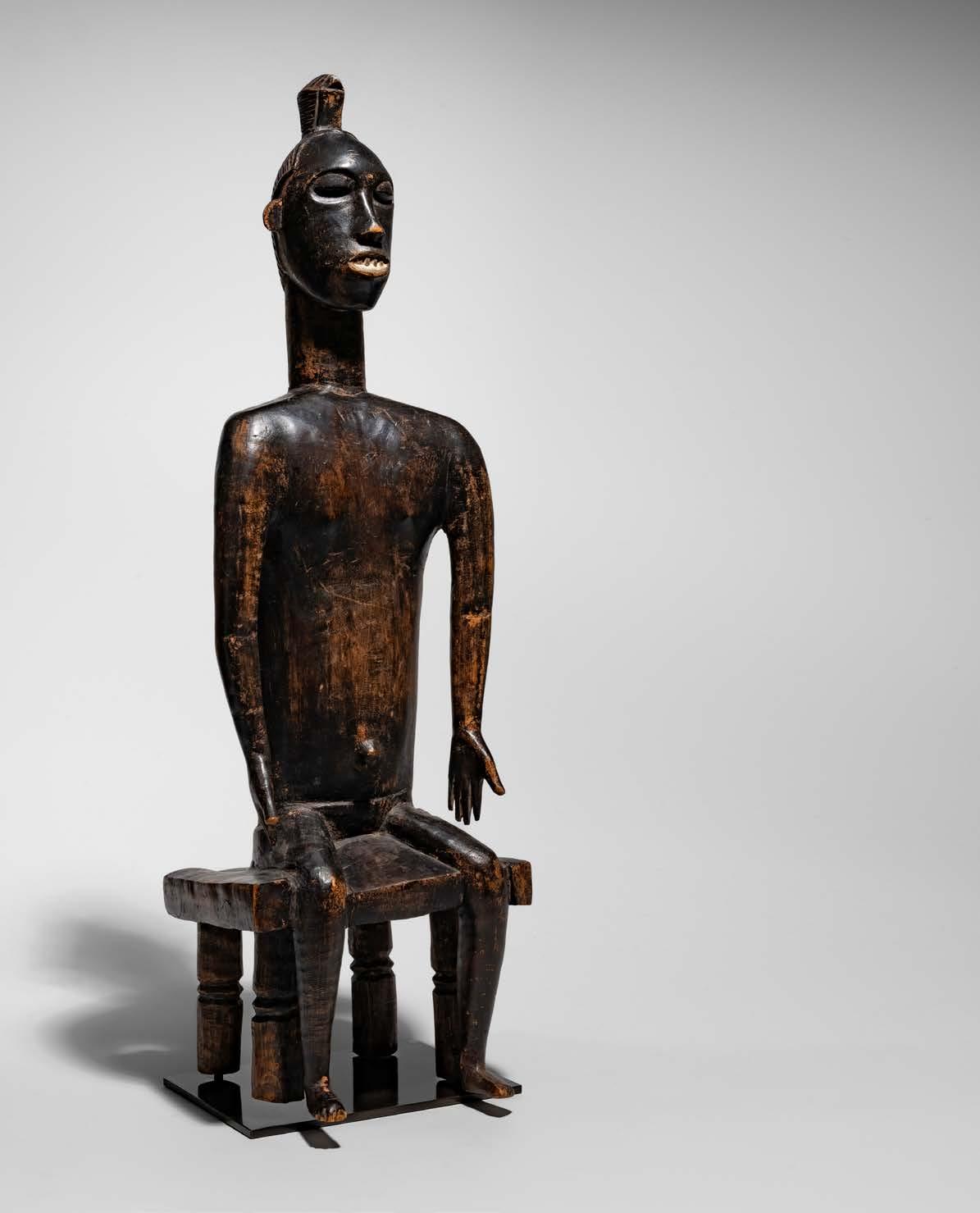
040 . Guro Seated Figure
Ivory Coast Wood, 64,5 cm
Provenance:
Gerald Dannenberg, Great Neck, NY (1925-2005)
Didier Claes, Brussels
American private collection
Galerie Lucas Ratton, Paris
Private collection, London
€ 10 000 - 15 000
Provenance: Private collection, Belgium
€ 3000 - 5000
041 Lobi Stool Burkina Faso Wood, 74 cm
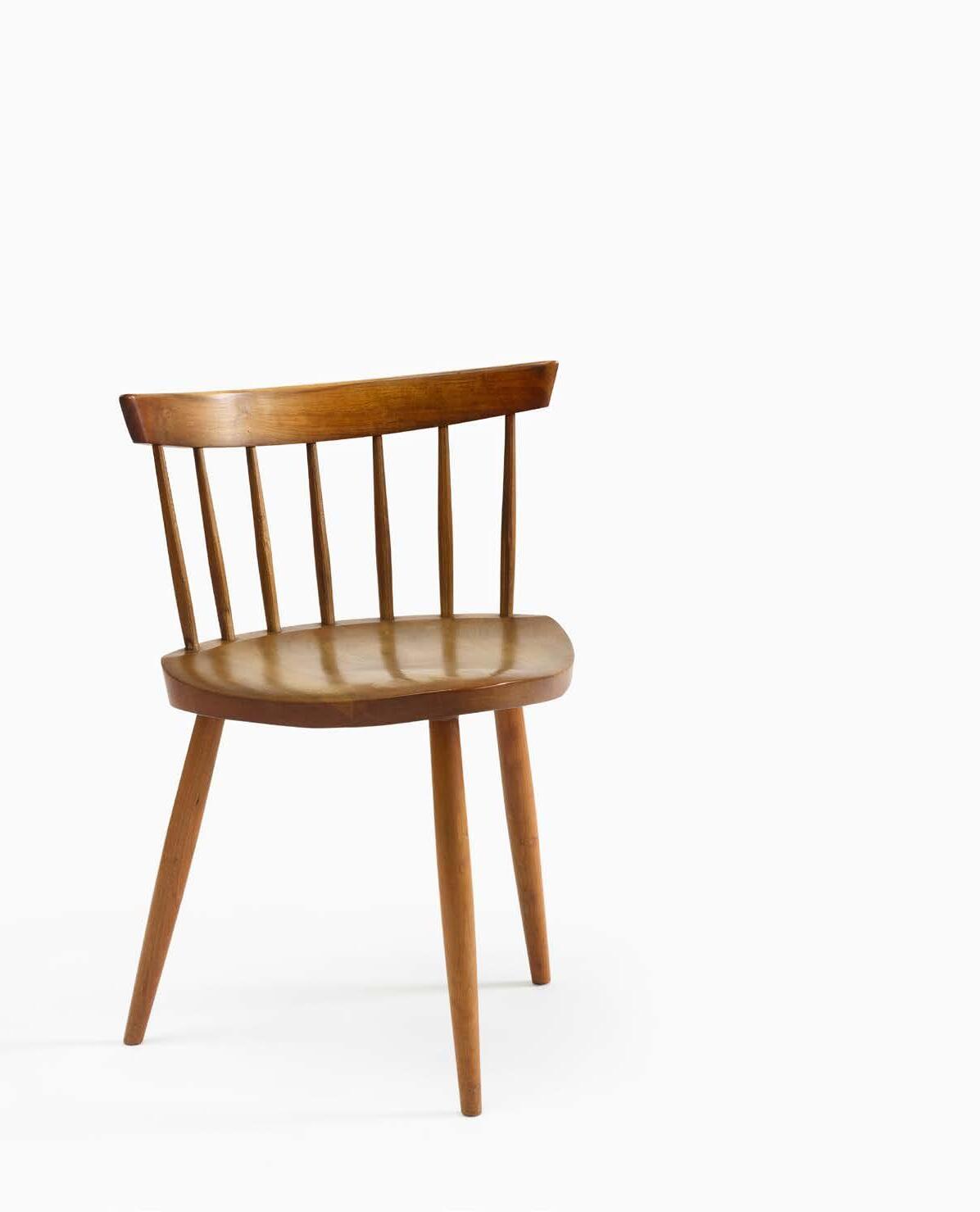
042 George Nakashima (American, 1905-1990)
Mira Chair - c.1952 (design) Wood, 67 x 43,5 x 42 cm (seat height 44 cm)
€ 1000 - 1500
043 . Guro Mask
Ivory Coast
Wood, mineral pigments, 35 cm
Provenance:
Maître Loiseau Collection, Paris
Ader-Picard-Tajan, Paris, 24 March 1981, lot 151
Tajan, Paris, 13 March 2002, lot 71
Éric Hertault, Paris (2017)
€ 4000 - 6000
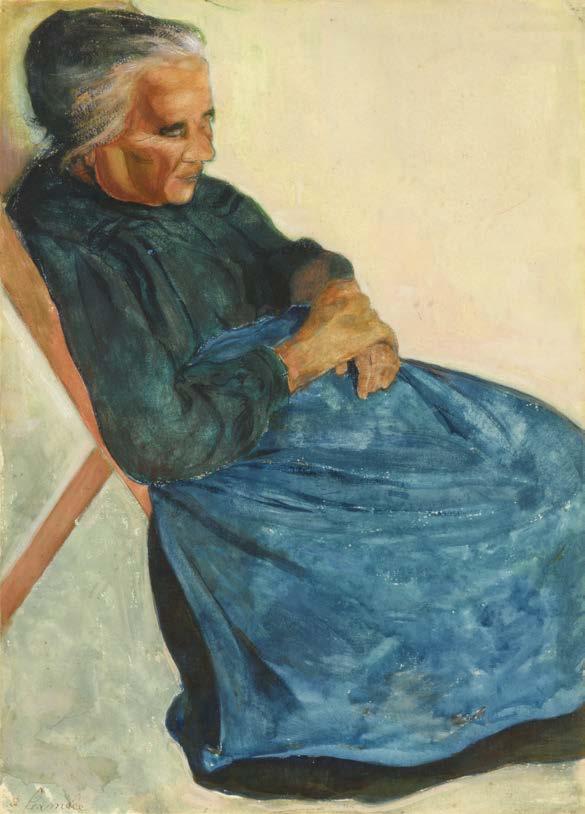
044 Constant Permeke (Belgian, 1886-1952)
The Mother of the Artist - c.1915
Watercolor on paper, 35,5 x 25,5 cm
Signed lower left
Provenance:
Odon Warland Collection, Brussels
By descent
€ 4000 - 6000
Inne Gheeraert, coordinator-curator of the Permekemuseum, identifies this watercolor as part of a significant series produced by Constant Permeke in 1915. While convalescing from war injuries in England, Permeke was limited to working with paper (approx. 35 x 25 cm) and watercolors. Restricted mobility led him to capture his immediate domestic life, resulting in this intimate portrait of his mother.
045 . Agni / Attie Figure
Ivory Coast Wood, 44,4 cm
Inscribed and numbered underneath:
Julius Carlebach
Provenance:
Julius Carlebach (1909-1964) Collection, 1958, New York
René Rasmussen (1912-1979) Collection, Paris
Maurice Ratton (1903-1973) Collection, Paris
Philippe Ratton Collection, Paris
Marc Larock Collection, Paris
Private collection, Paris
€ 8000 - 12 000
This figure is included in the archives of Maurice Ratton
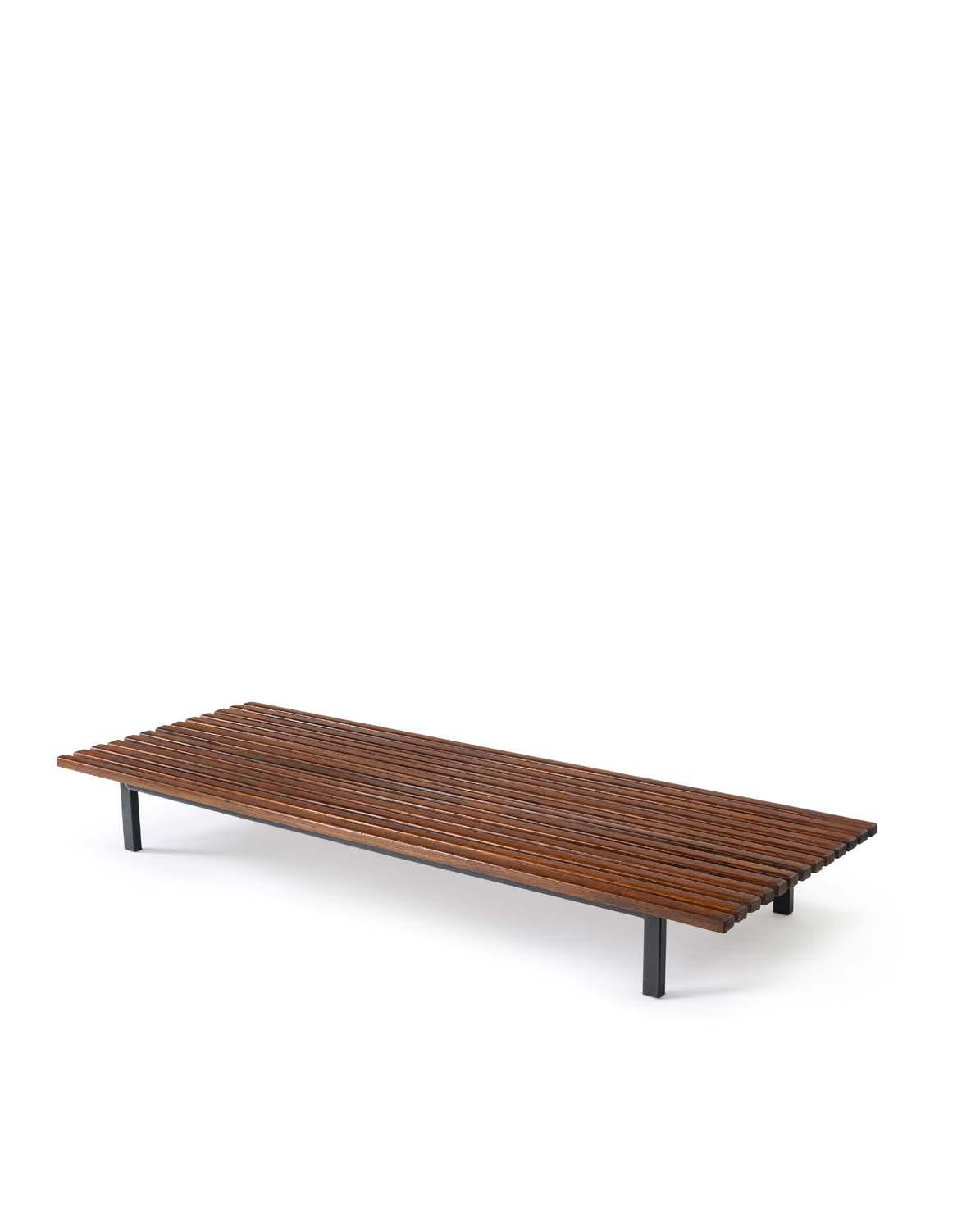
046 Charlotte Perriand (French, 1903-1999)
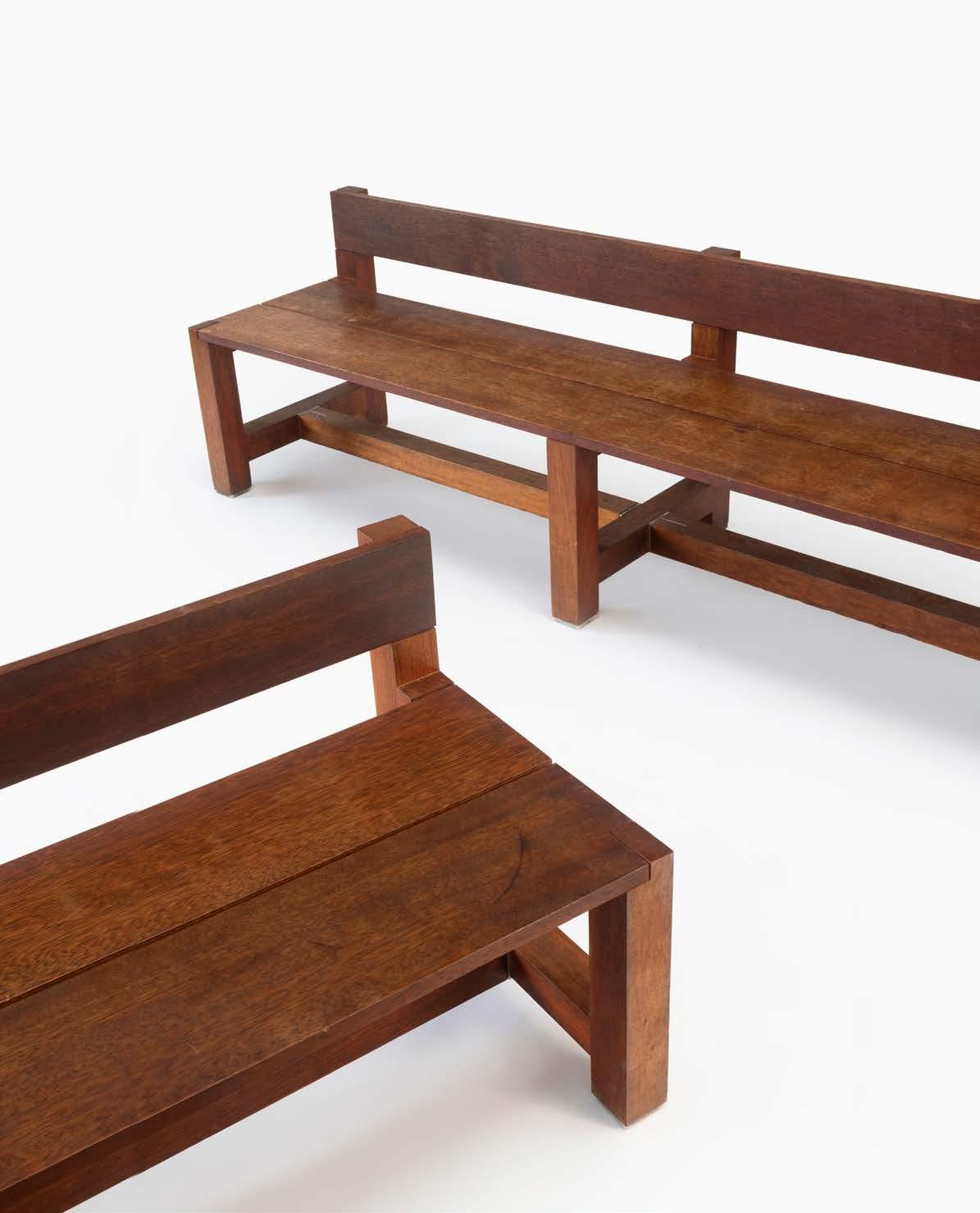
Cité Cansado Bench - 1958
Mahogany wood and black lacquered steel
23 x 190 x 70 cm
Provenance: Cité Cansado, Mauritania
Private collection, Belgium
€ 4500 - 6000
047 Ligbi Mask
Ivory Coast
Wood, natural pigments, 36 cm
Provenance:
Joseph Muller (1887-1977), Solothurn, Switzerland
Edouard Serra (1911-2002), Barcelona
David Serra, Barcelona
Private collection, Paris
€ 8000 - 10 000
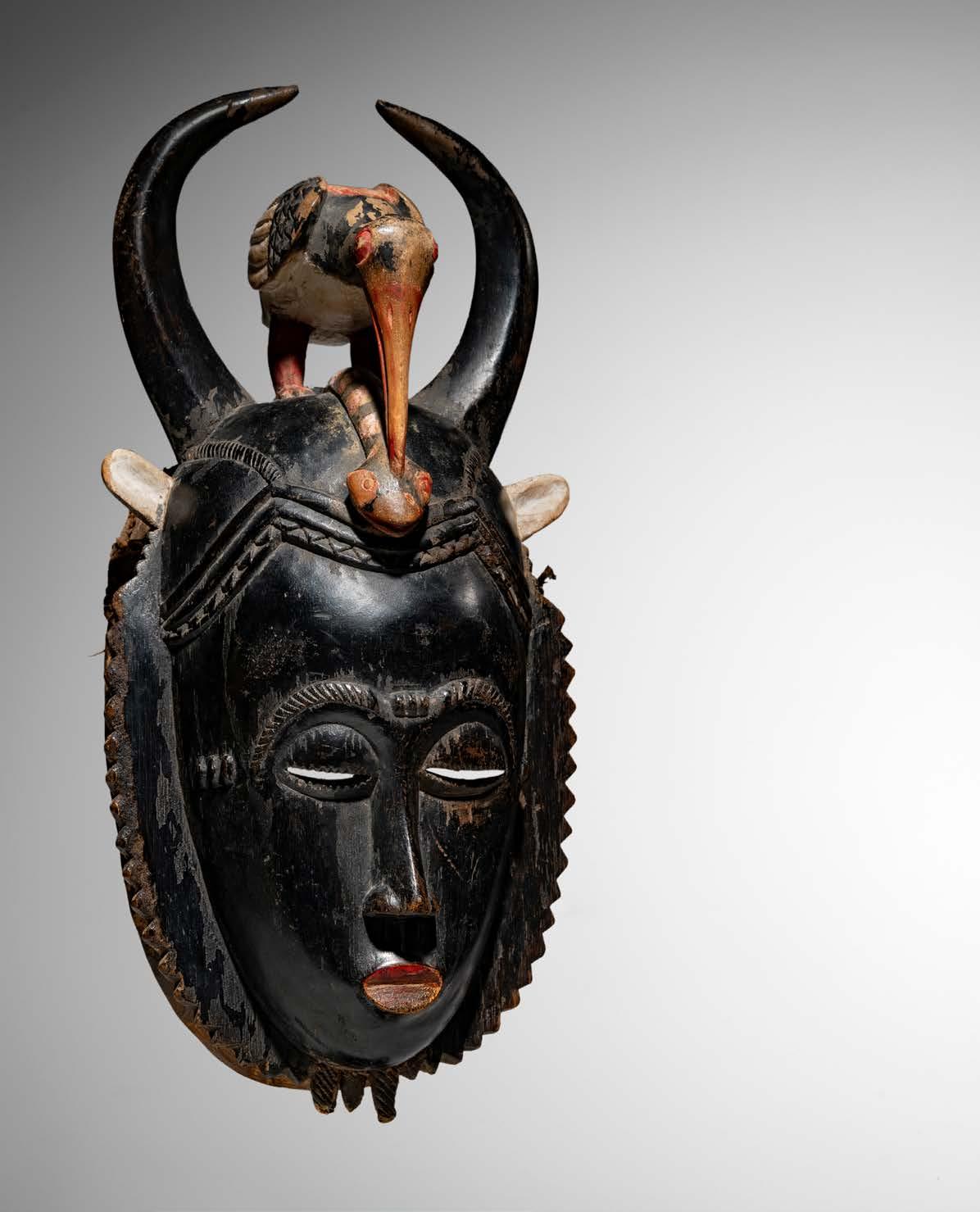
048 . Yaure Baule Mask
Ivory Coast Wood, 45 cm
Provenance: Lucas Ratton, Paris
Private collection, London
€ 6000 - 8000
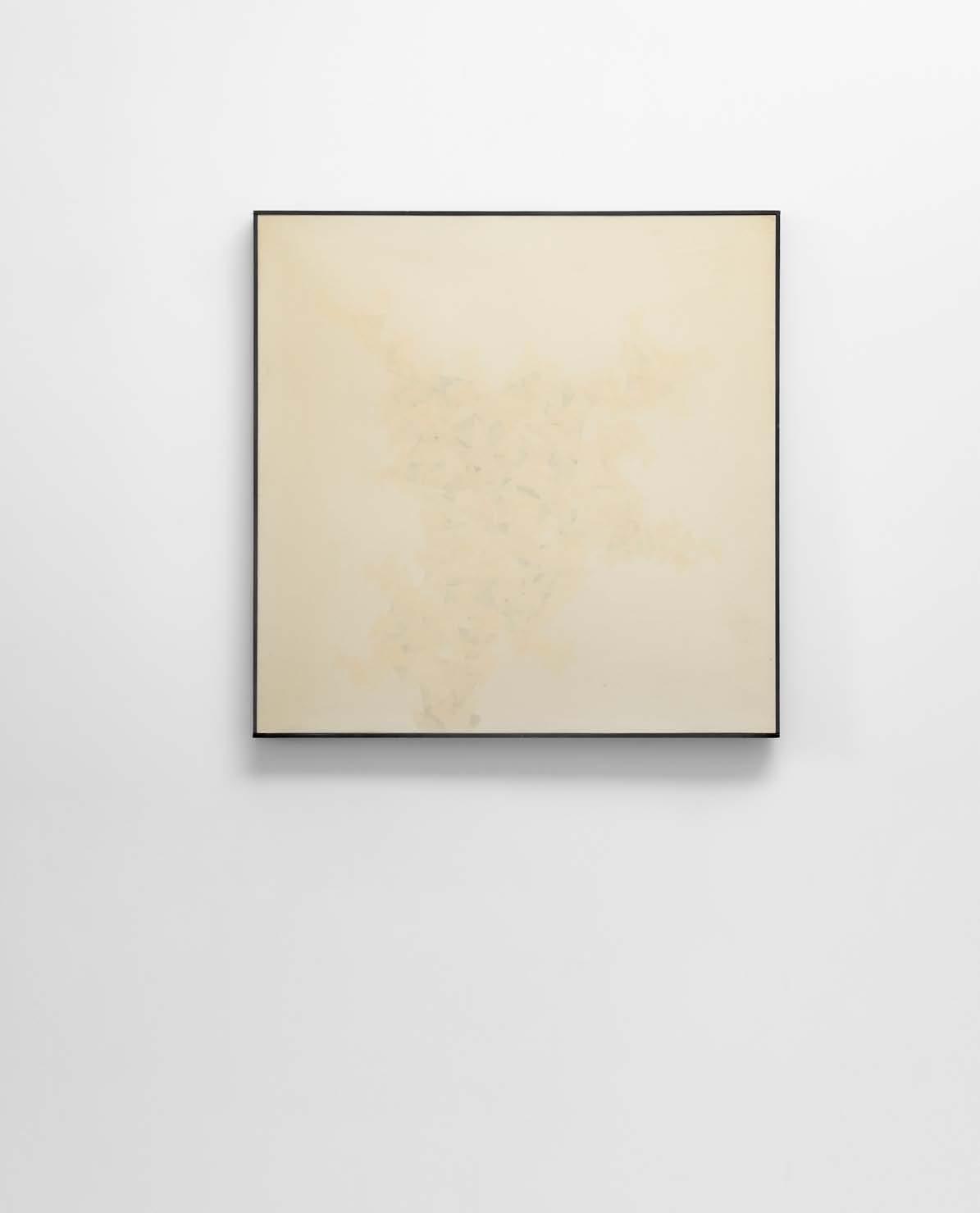
049 Paul Van Hoeydonck (Belgian, 1925-2025)
Œuvre lumière - 1960
Oil on panel, 125 x 125 cm
Titled, signed, and dated on verso
Exhibited: Brussels, Palais des Beaux-Arts, Paul Van Hoeydonck, 21 January - 1 February 1961
Published: Jan Ceuleers, Paul Van Hoeydonck, Pandora Publishers / FeliX Art Museum, Antwerp / Drogenbos, 2011, p.297. (ill., dated 1961)
€ 8000 - 12 000
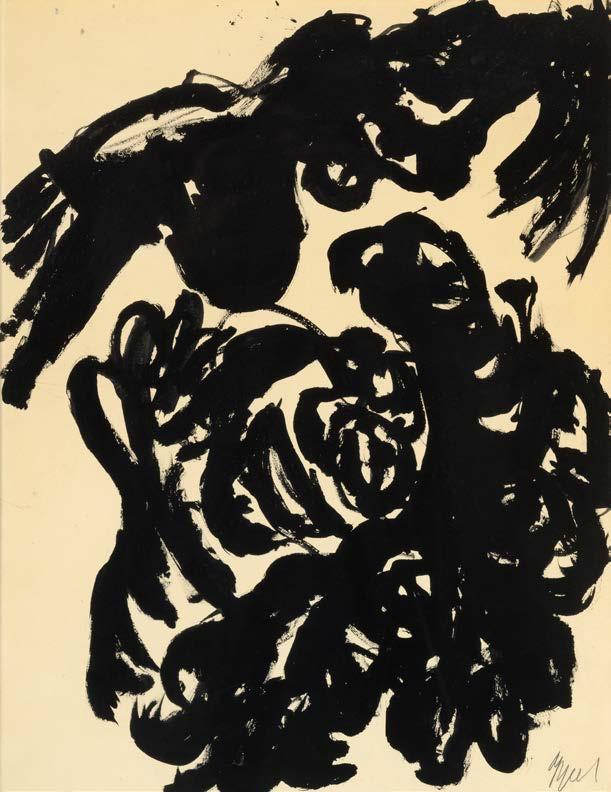
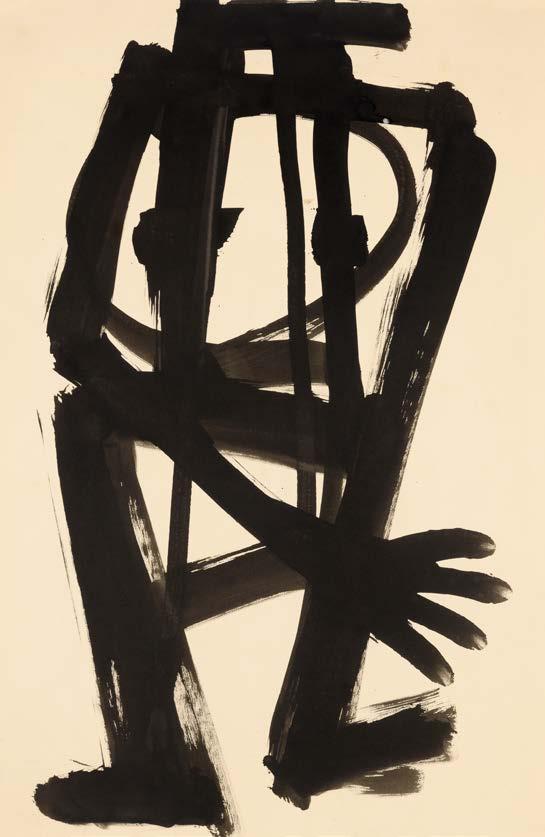
050 . Karel Appel (Dutch, 1921-2006)
Untitled - 1950s
India ink on paper, 62 x 48 cm
Signed lower right
Provenance:
Guillaume Campo, Antwerp (label on verso)
Private collection, Antwerp
€ 5000 - 7000
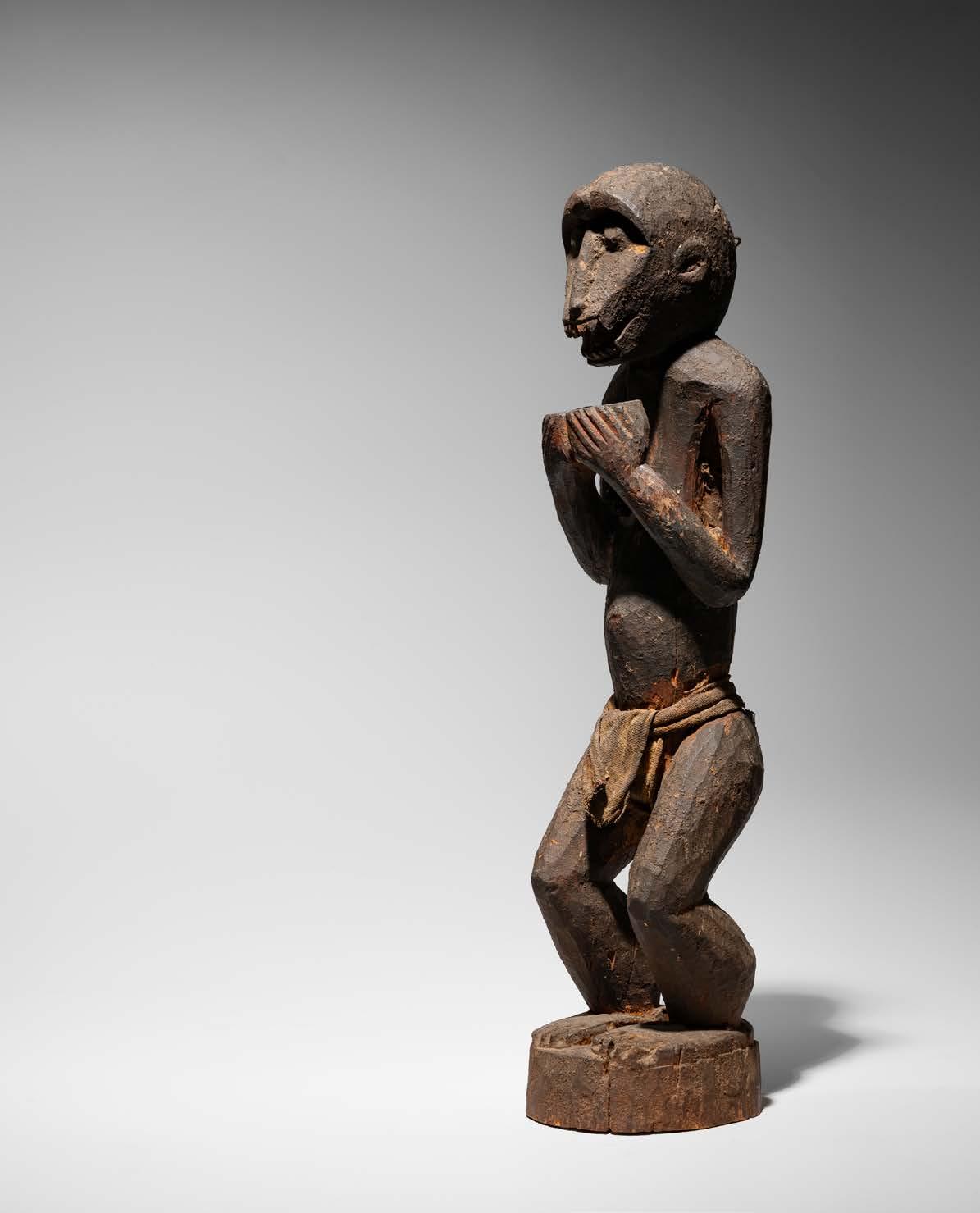
051 Baule Monkey Cupbearer
Ivory Coast Wood and vegetal fibers, 71 cm
Provenance:
Susan and Jerry Vogel (1933-2014), New York (before 1988)
Loudmer, Paris, Arts Primitifs, 30 June 1988, lot 145
Private collection, Spain
David Serra, Barcelona (2014)
Carlos Bassó (1947-2020)
Collection, Barcelona
Private collection, France
€ 7000 - 10 000
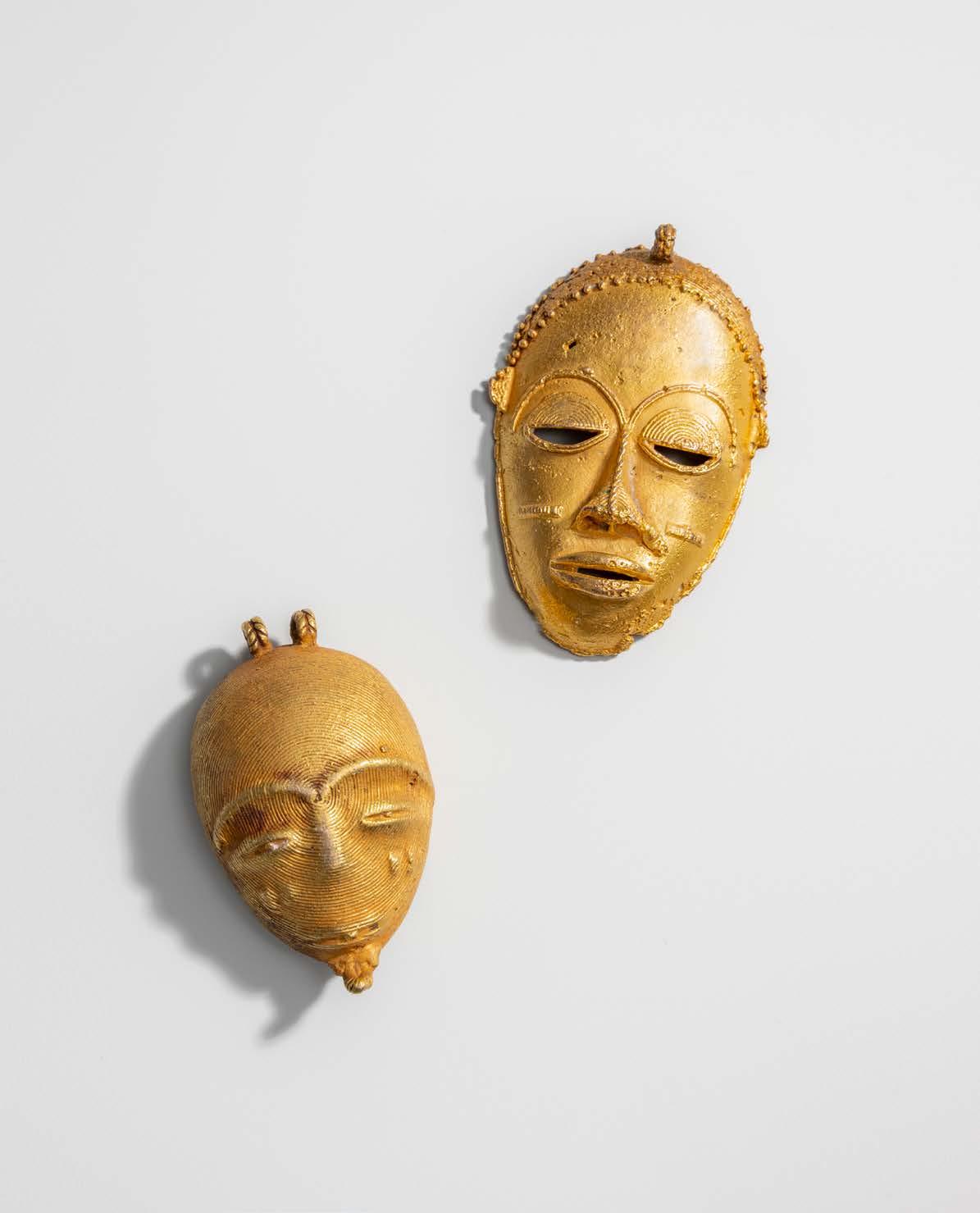
052 Akan Mask Pendant
Ghana Gold, 6,1 cm
Provenance:
Private collection, France
€ 3000 - 4000
053 . Akan Face Masquette
Ghana Gold, 5,5 cm
Provenance: Private collection, France
€ 3000 - 4000
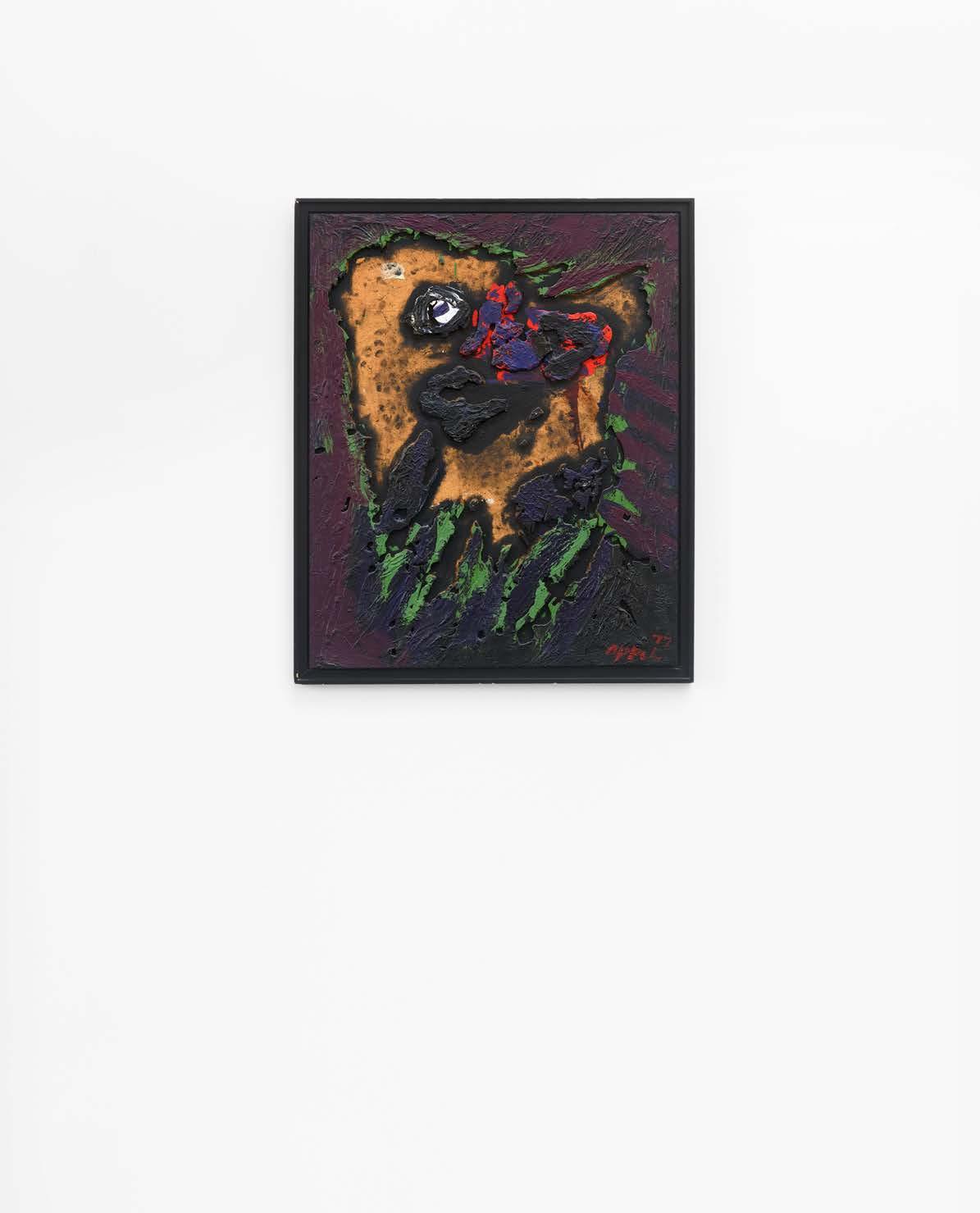
054 Karel Appel (Dutch, 1921-2006)
Untitled - 1977
Acrylic on wood relief, 73 x 90 cm
Signed and dated lower right
Provenance: Private collection, France
€ 6000 - 8000
From the early CoBrA years onward, Appel moved freely between media, using colour and gesture as primary carriers of expression rather than adherence to traditional pictorial structure. Over time, this led him toward increasingly physical works in which wood, plaster, and found materials became integral to the image itself.
In the 1960s and 1970s, this development resulted in a sustained series of reliefs and sculptural paintings. Built-up surfaces, often roughly cut and heavily painted, gave his figures a direct, almost tactile presence. The human form, frequently reduced to a head or bust, appears as an immediate construction of material and colour rather than as a refined depiction.
The present work, dated 1977, reflects this approach clearly: a carved wooden support thickly worked in oil paint, where figuration and material structure are inseparable.
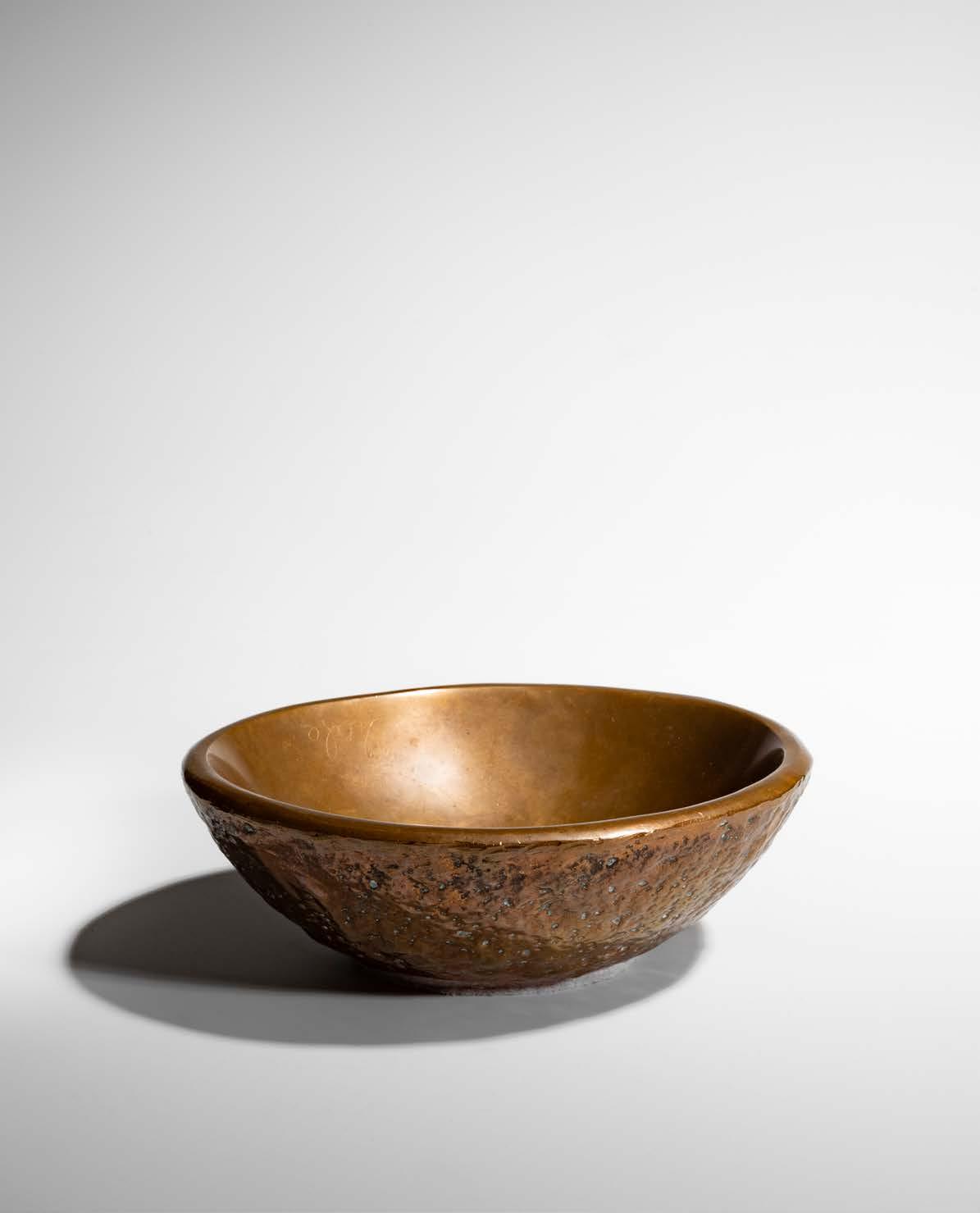
055 Ado Chale (Belgian, 1928-2025)
Bowl
Bronze, 5 x 14 x 16 cm
Signed inside the bowl
€ 400 - 600
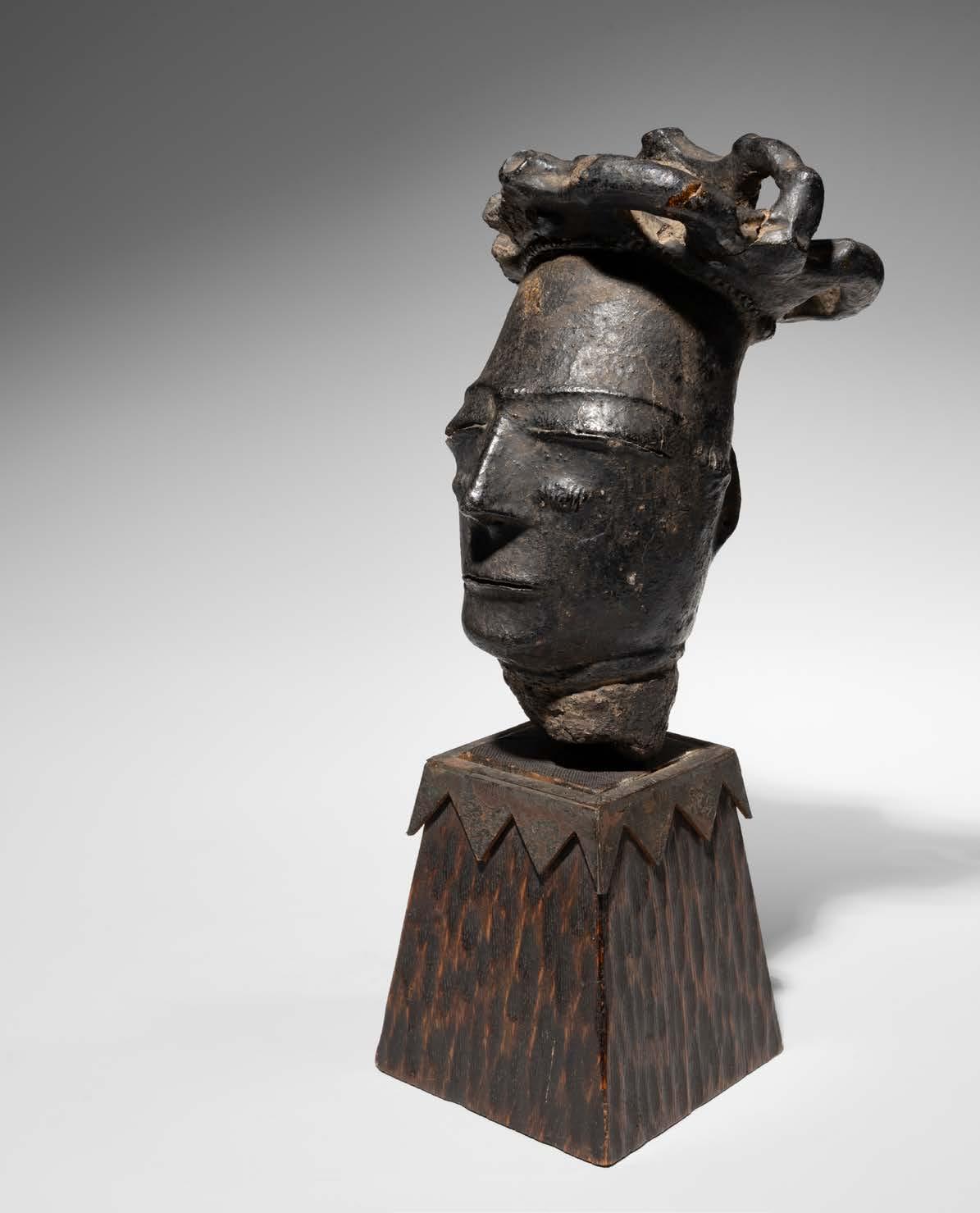
056 Krinjabo Head
Ivory Coast
Terracotta, 21 cm
Provenance: Marcel Lheureux Collection, France
By descent (niece of the above)
Hélène et Philippe Leloup Arts primitifs, Paris
Private collection, Belgium
The provenance of this piece is described in a letter by Hélène Leloup dated 10 December 1993.
€ 2000 - 3000
Ghana
Terracotta, 21 x 16 x 17 cm
Provenance: Private collection, Belgium
€ 2000 - 3000
057 Akan Head
058 . Eugène Dodeigne (Belgian, 1923-2015)
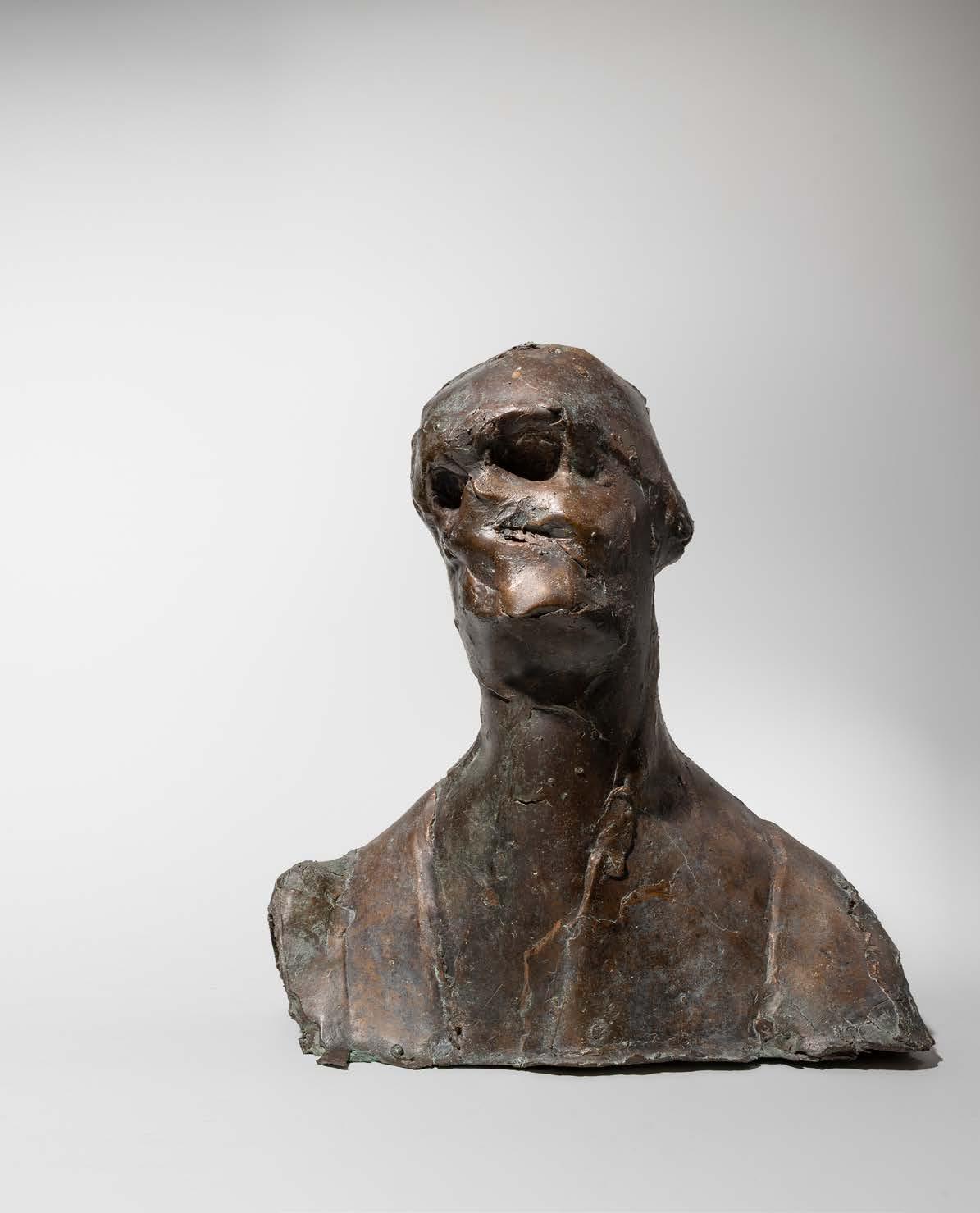
Bust Bronze, 54 cm Initialed on verso
Provenance: Private collection, Antwerp
€ 6000 - 8000
Unique piece.
059 . Guro Mask
Ivory Coast
Wood and natural pigments, 31 cm
Provenance: Adrian Schlag, Brussels
Private collection, Paris
€ 4000 - 6000
060 Salvador Dali (Spanish, 1904-1989)
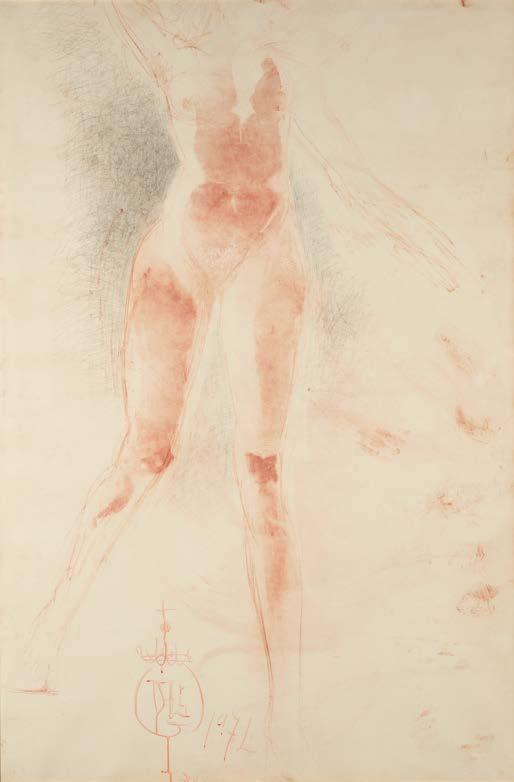
Female Nude - 1974
Watercolor, sanguine, and pencil on paper
152,5 x 101,6 cm
Signed and dated lower center and on verso
Provenance:
Gala Dali, the artist’s wife
Cecile Eluard (daughter of Gala and Paul Eluard)
Christie's, Manson & Woods, London, Impressionist and Modern Pictures, 25 June 1991, lot 268
Private collection, Belgium
Published:
Robert Descharnes and Gilles Néret, Salvador Dali 1904-1989. The Paintings, Taschen, Cologne, 1997, p.633, ill.1406
€ 15 000 - 25 000
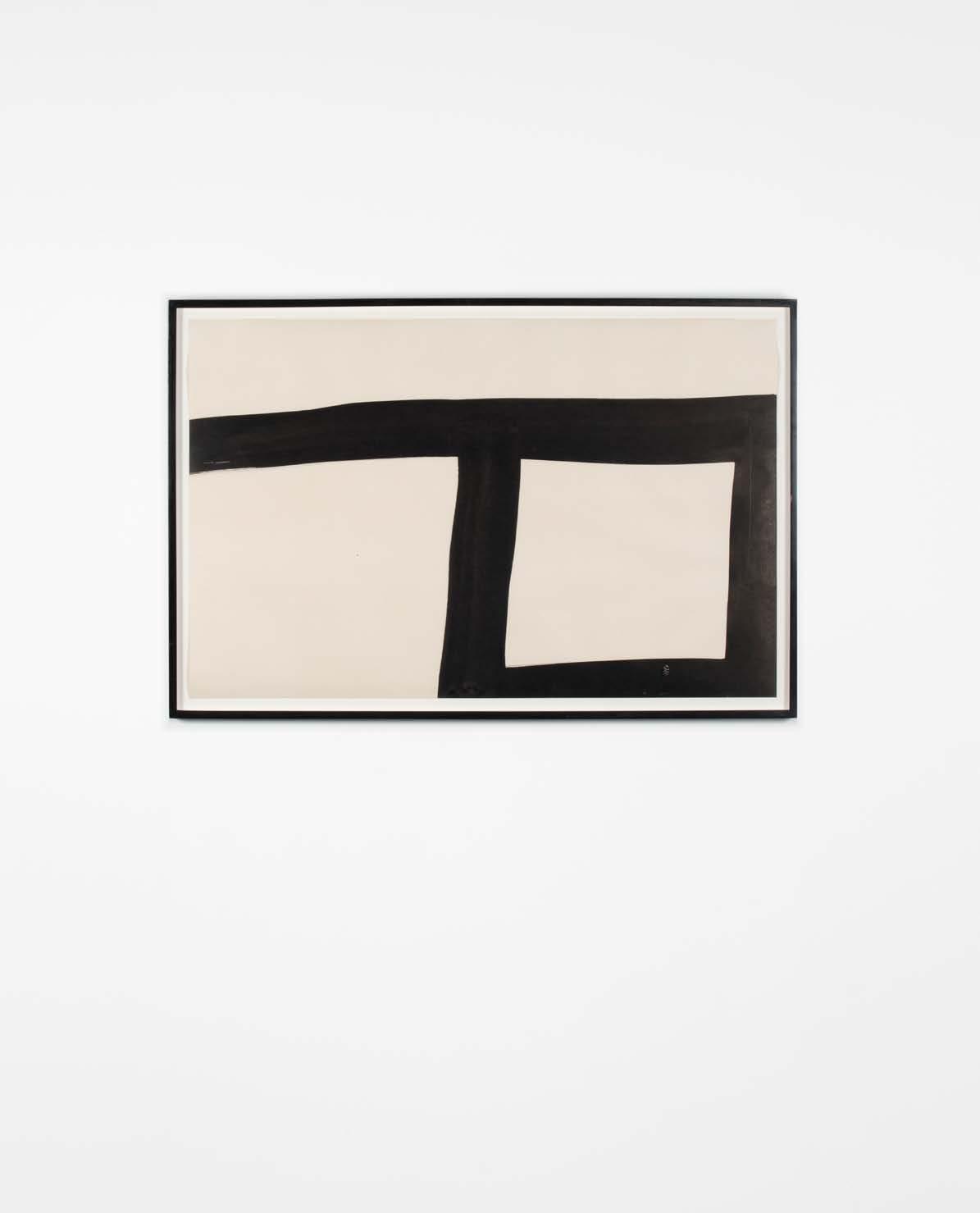
061 . Al Held (American, 1928-2005)
B Series #3 - 1967 India ink on paper, 57 x 88 cm
Provenance: Private collection, Antwerp
€ 8000 - 10 000
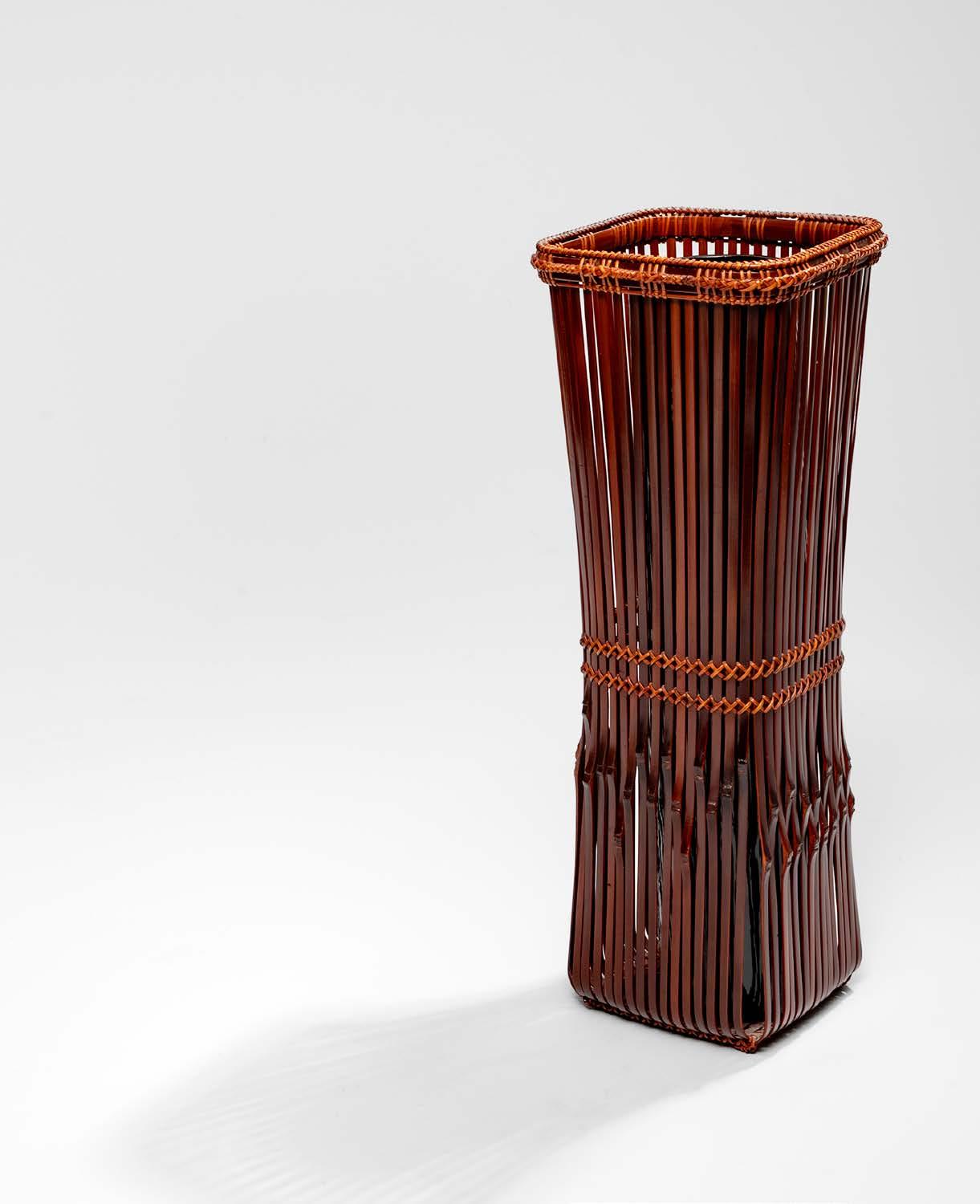
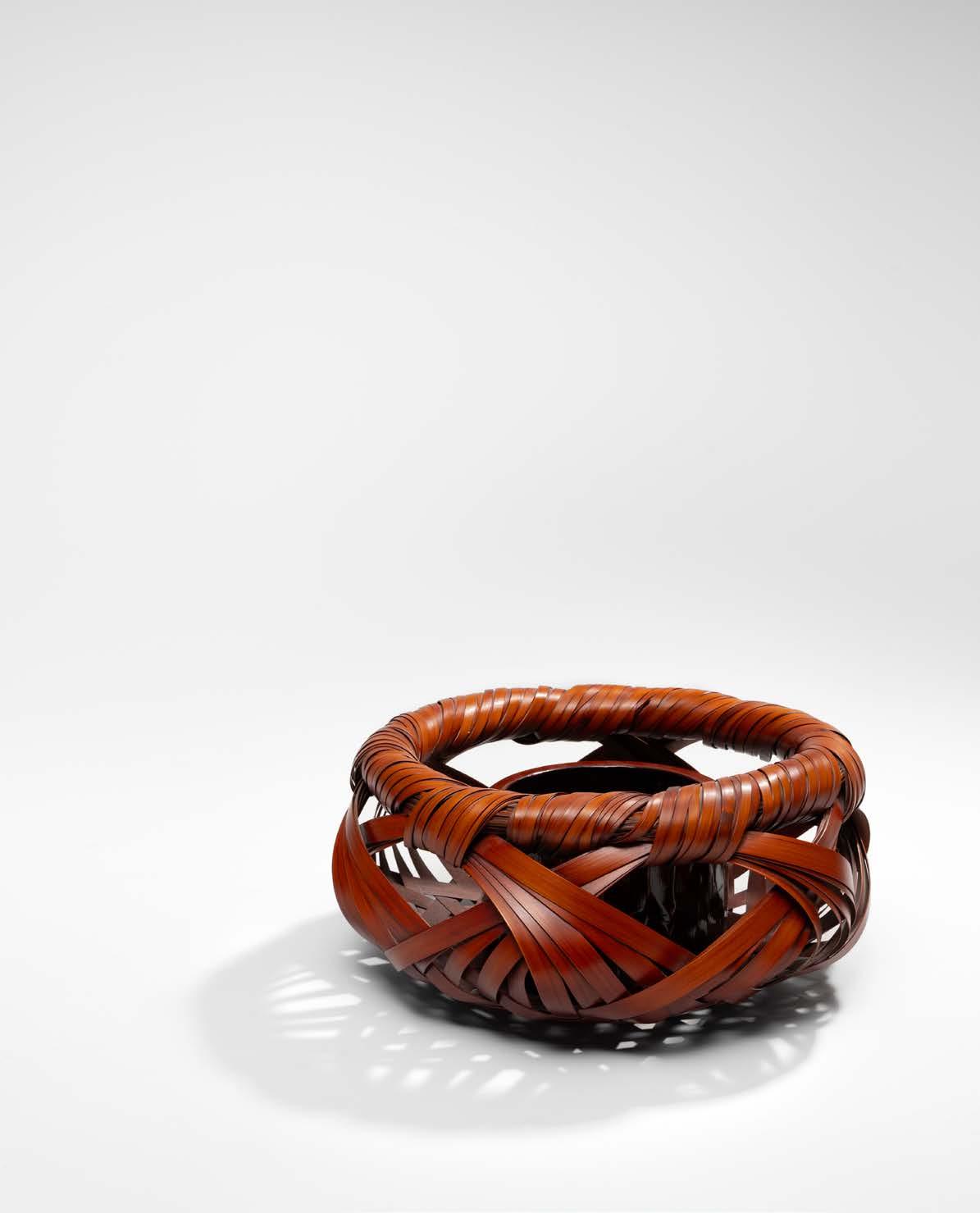
062 Iizuka Shokansai (Japanese, 1919-2004)
Hanakago titled Seion [Pure Sound]
Bamboo, 30 cm
With its tomobako and original lacquered otoshi
Provenance: Galerie Mingei, Paris
Acquired by the present owner in 2015
€ 6000 - 8000
A central figure in the 20th-century development of Japanese bamboo craft, Iizuka Shokansai was designated a Living National Treasure in 1982. The second son of the influential artist Iizuka Rokansai, Shokansai initially trained as an oil painter before committing to the family’s bamboo lineage.
This academic background in the fine arts significantly informed his aesthetic, which is characterized by a high degree of structural clarity and a focus on geometric harmony.
The hanakago titled Seion (Pure Sound) reflects Shokansai’s late-career interest in finding a balance between traditional craft and modern abstraction. In this work, the artist emphasizes the rhythmic tension and natural luster of the bamboo, utilizing precise weaving techniques to create a vessel that feels both light and architecturally sound. The title alludes to a sense of resonant, understated beauty - a hallmark of his mature style that seeks to express the spirit of the material through refined, deliberate forms.
Works by Shokansai are represented in prominent international institutions, including the Metropolitan Museum of Art, the Victoria and Albert Museum, and the National Crafts Museum, Tokyo.
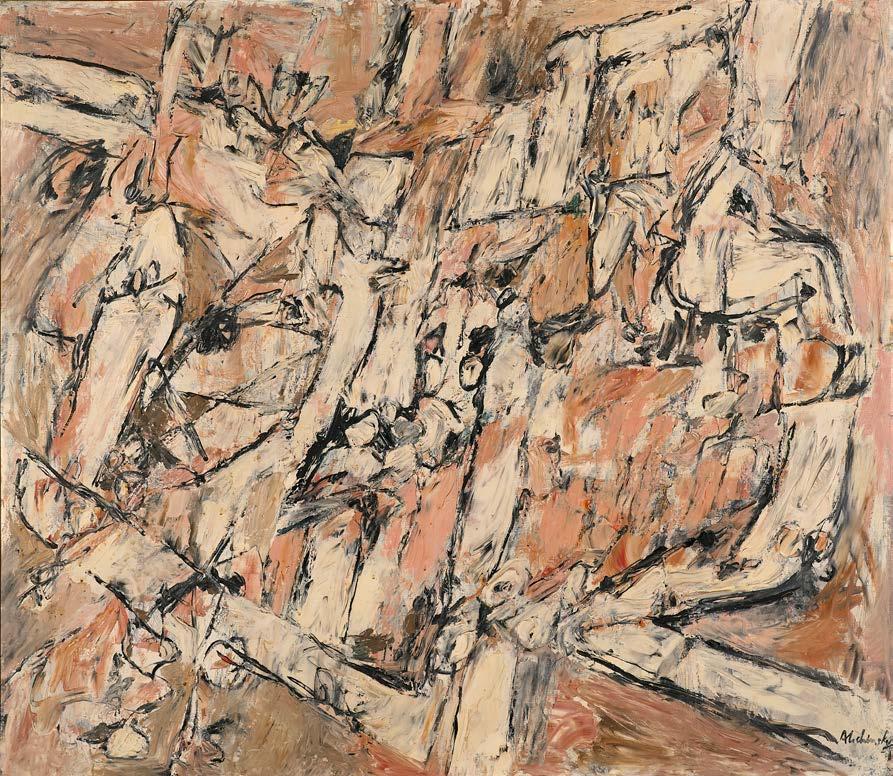
063 Pierre Alechinsky (Belgian, 1927)
Le monde flottant - 1957
[The Floating World]
Oil on canvas, 140 x 160 cm
Signed lower right
Signed, dated, and titled on verso: VIII 1957
Provenance: Private collection, Belgium
Published:
Anouck Clissen & Camille Brasseur, Connexions one, Antwerpen, Pandora Publishers, 2015, p.79
Christophe Duvivier & Camille Brasseur, Abstractions. Arts non figuratifs belges après 1945, Paris, Selena éditions, 2016, p.111
Michel Draguet, Hanna Alkema, Camille Brasseur e.a., Belgitudes. 50 ans de passion du collectionneur Maurice Verbaet [exhibition catalog], MVEditions, 2022, pp.25, 167
Exhibited:
Dunkerque, LAAC, Belgitudes. 50 ans de passion du collectionneur Maurice Verbaet, 2 April - 9 October 2022
€ 200 000 - 300 000
Painted shortly after his transformative journey to Japan, Le monde flottant from 1957 captures the fertile intersection between Western abstraction and Eastern philosophy. The work serves as a visual bridge between the raw, instinctive energy of the CoBrA movement and the disciplined fluidity of traditional calligraphy. The title itself, referencing the Ukiyo or "floating world", signals a departure from heavy European materiality toward a more rhythmic, atmospheric language, making it a vital document of the artist's evolving aesthetic identity.
The canvas is characterized by a sprawling, organic topography of line and form that anticipates the sweeping compositions of his later career. Unlike the denser impasto of his peers, Alechinsky here achieves a sense of weightless movement, where each gesture feels both spontaneous and deliberate.
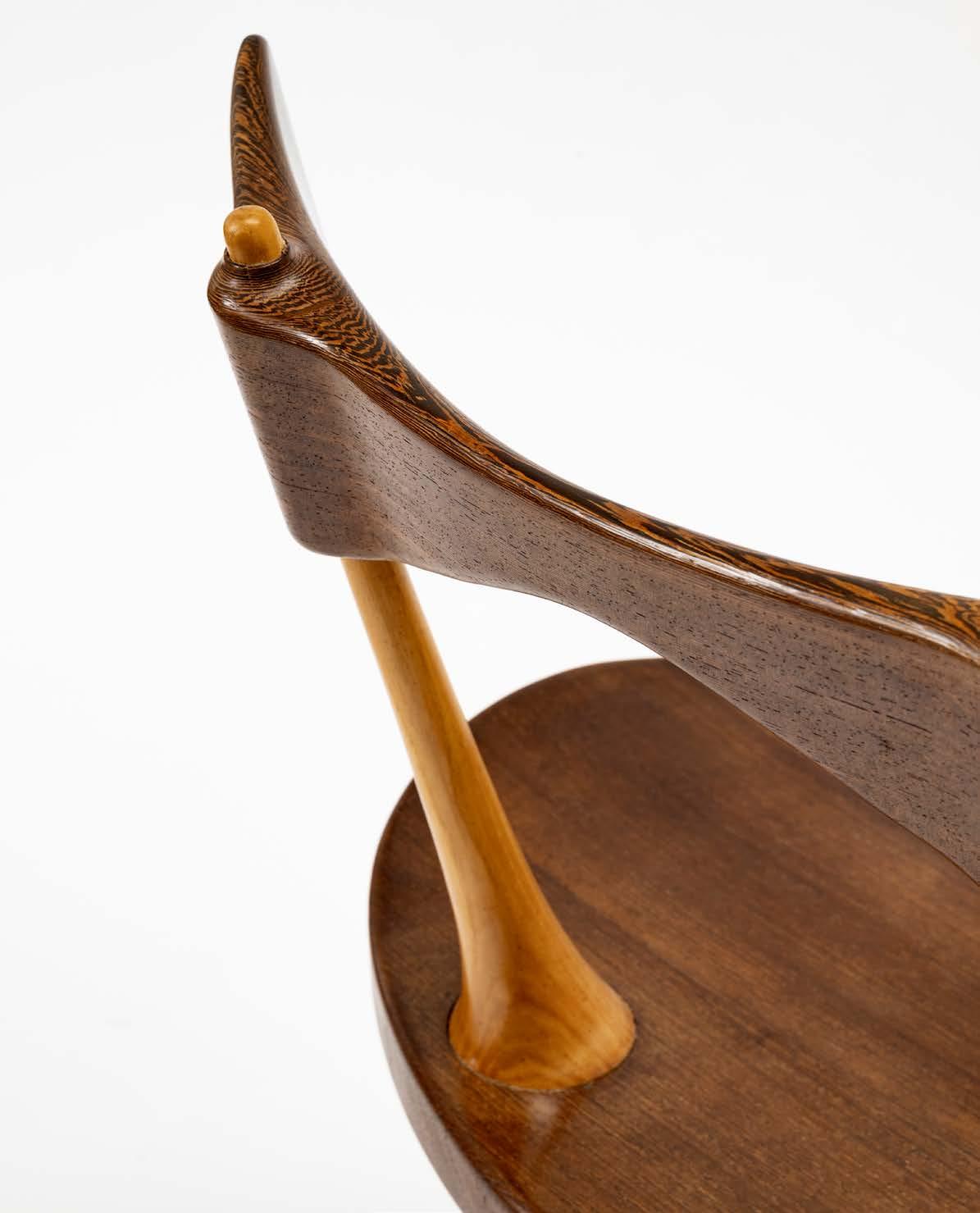
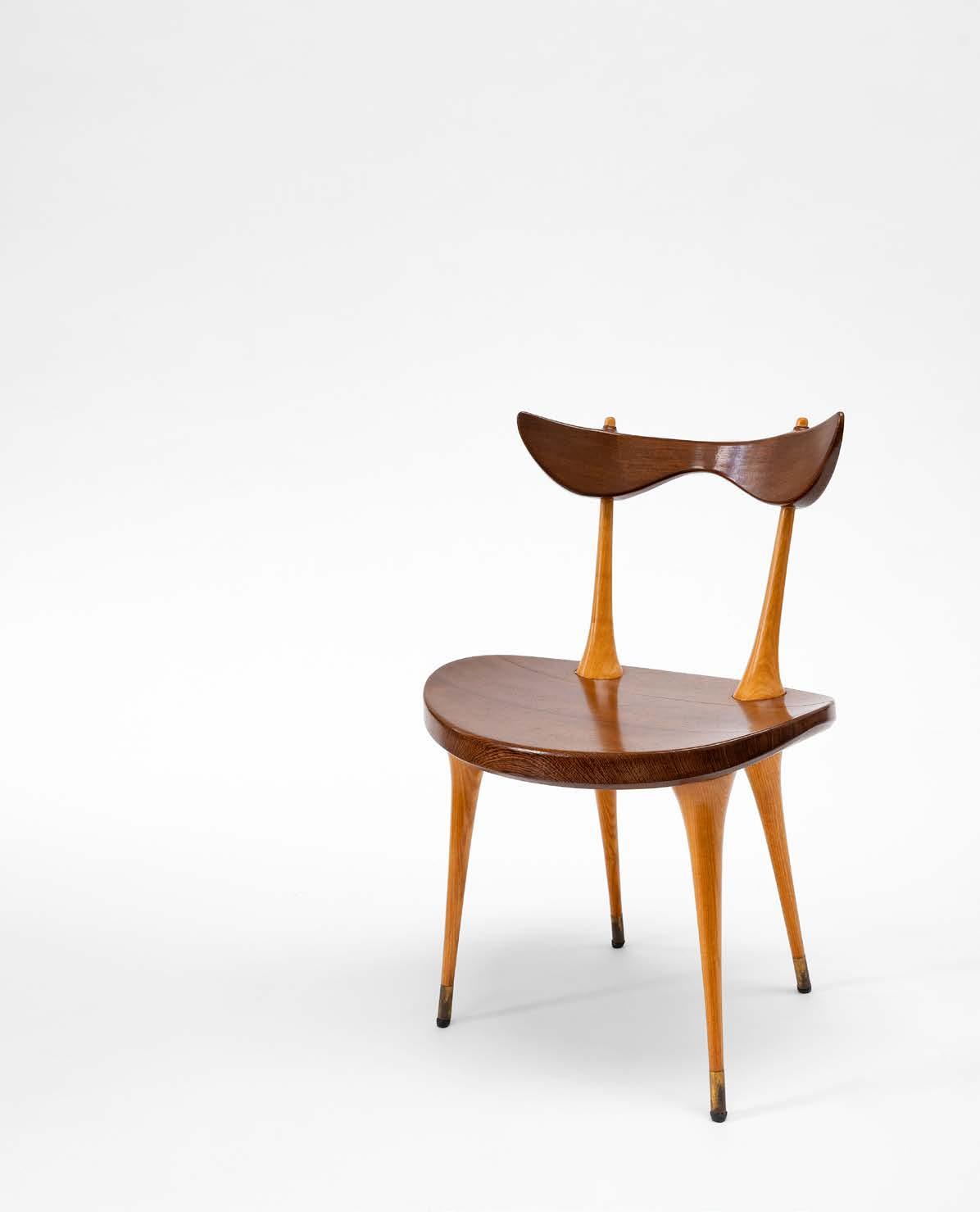
064 . Renaat Braem (Belgian, 1910-2001)
Chair - 1952
Brass, ash, and palmwood
81 x 58 x 40 cm
Literature:
Mil De Kooning, Fredie Floré, Iwan Strauven, Hedendaags Design, OKV Edition, pp.123-124-127
€ 18 000 - 25 000
One of the four chairs designed for the showroom of the Antwerp-based firm Haentjes (Plantijn-Moretuslei 60), which was specialized in tiles and stonework. This is the last chair in private hands, two belong the leather goods company Delvaux and one to Design Museum Brussels.
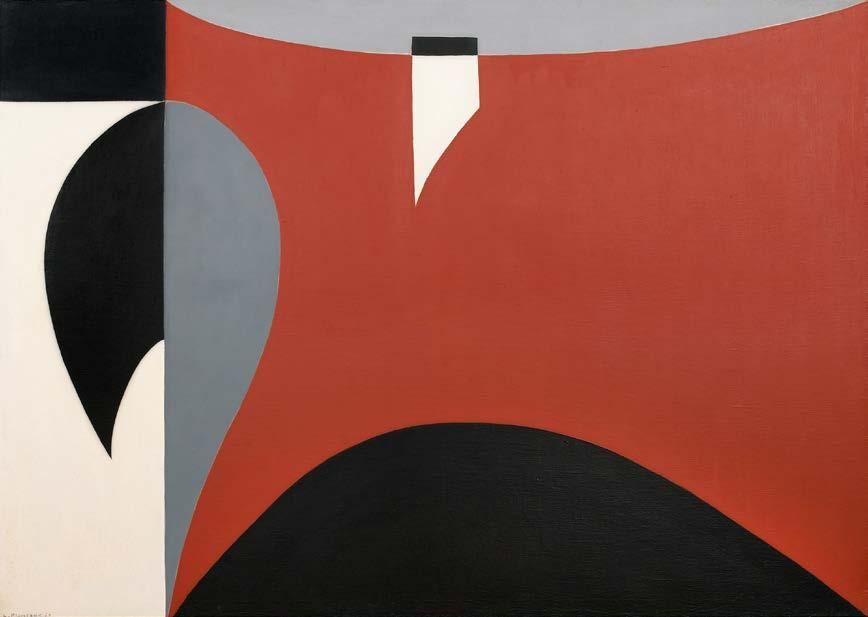
065 Léopold Plomteux (Belgian, 1920-2008)
Composition abstraite - 1954
Oil on canvas, 96 x 137 cm
Signed and dated lower left
Provenance: Private collection, Belgium
€ 15 000 - 25 000
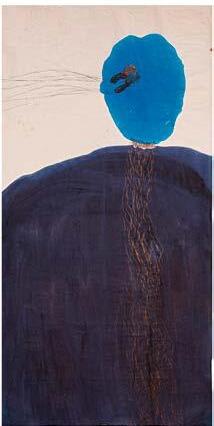
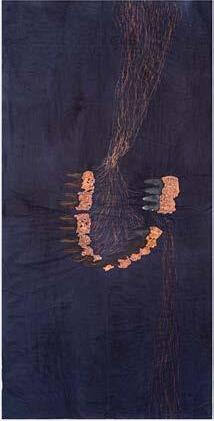
066 Tunga (Brazilian, 1952-2016)
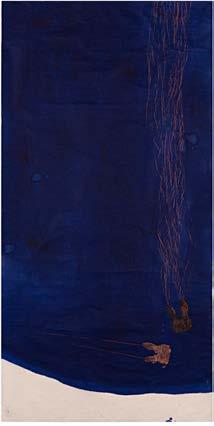
Untitled - c. 1990
Color ink and copper colored ink on Japanese paper
132 x 65,5 cm (each)
Provenance: Acquired directly from the artist
€ 6000 - 8000
We thank the Instituto Tunga for confirming the authenticity.
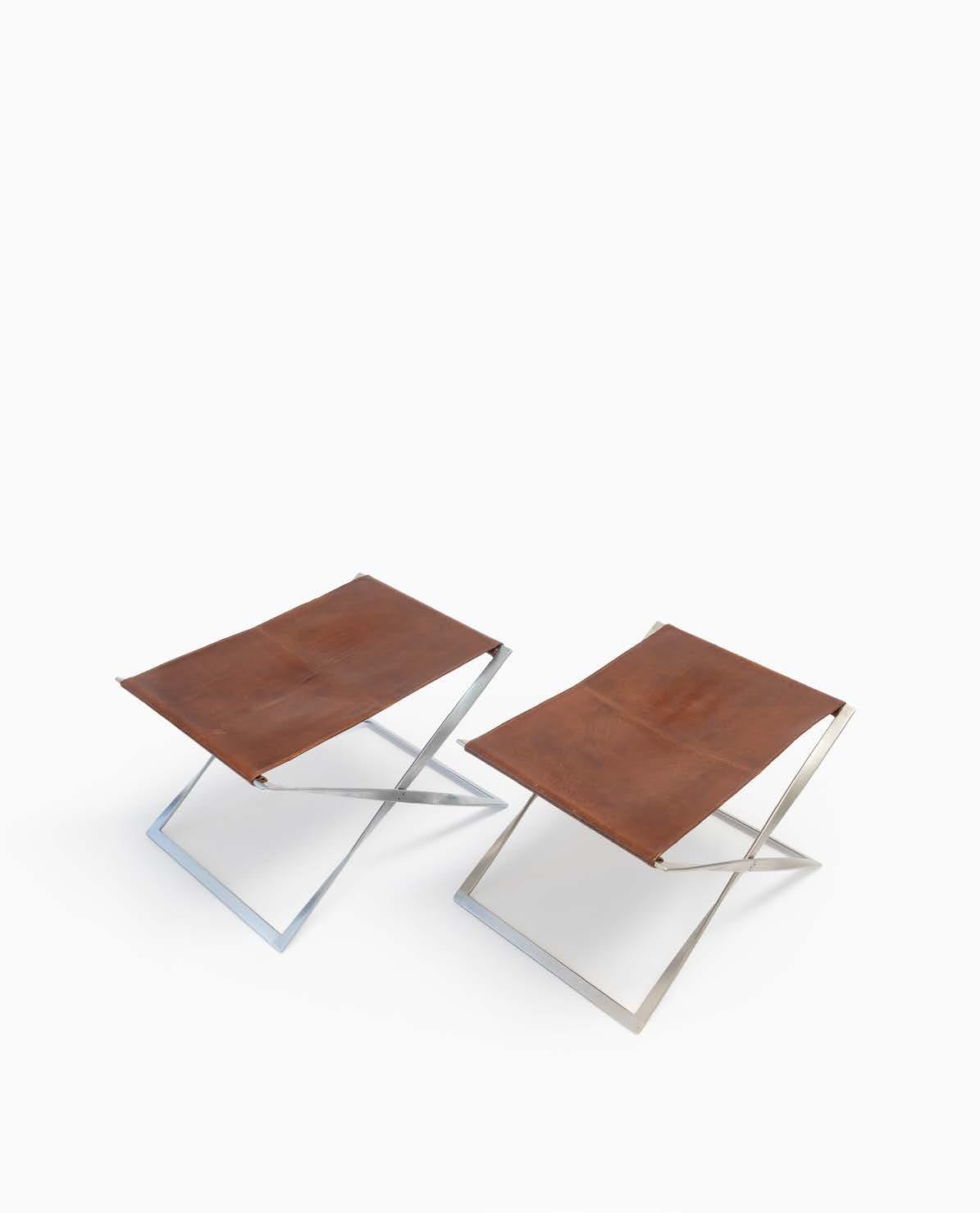
067 . Poul Kjærholm
(Danish, 1929-1980)
Two PK 91 Folding Stools - 1961 [design]
Leather and steel, opened 39 x 60 x 44,5 cm, closed 70,5 x 46 cm
Manufactured by E. Kold Christensen A/S, Copenhagen, Denmark
Literature:
Christoffer Harlang, Keld Helmer-Petersen and Krestine Kjærholm, eds., Poul Kjærholm, Arkitektens Forlag, Copenhagen, 1999, pp.25, 58-59, 106-07, 178
Michael Sheridan, The Furniture of Poul Kjærholm: Catalogue
Raisonné, Gregory R. Miller & Co., New York, 2007, pp.85, 124-27
€ 4000 - 6000
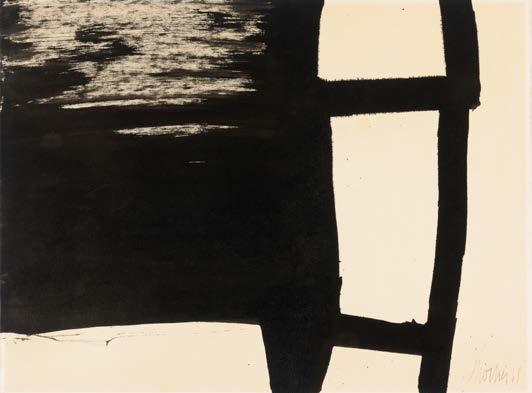
068 . Antoine Mortier (Belgian, 1908 -1999)
Untitled - 1968
India in on paper, 27 x 36 cm
Signed and dated lower right
Provenance:
Private collection, Antwerp
€ 2000 - 3000
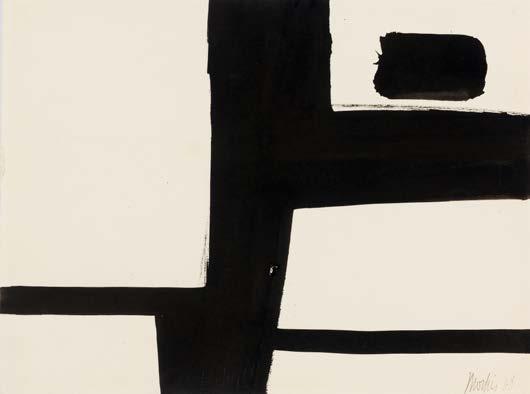
069 Antoine Mortier (Belgian, 1908 -1999)
Untitled - 1968
India ink on paper, 27 x 36 cm
Signed and dated lower right
Provenance:
Private collection, Antwerp
€ 2000 - 3000
070 Jukun Figure
Nigeria, late 19th c - early 20th c Wood and metal, 75 cm
Provenance:
Ulrich von Schroeder, Zürich (1975)
Hélène (1927-2023) & Philippe (1931-2019) Leloup, Paris (according Berns, 2011)
Toby and Barry Hecht Collection, Bethesda, Maryland (until 2025)
Michael Woerner, Würzburg / Bangkok, Thailand
Published:
Arts d'Afrique Noire, n°16, 1975, p.47 (ill., adv. Ulrich von Schroeder)
Roy Sieber & Barry Hecht, Eastern Nigerian Art from the Toby and Barry Hecht Collection, in African Arts, Vol. XXXV, no.1, Spring 2002, p.58 (ill.)
Marla C. Berns, Richard Fardon, Sidney Littlefield Kasfir (ed.), Central Nigeria Unmasked: Arts of the Benue River Valley, Fowler Museum at UCLA, Los Angeles, 2011, p.276, ill.8.57
Exhibited:
Central Nigeria Unmasked: Arts of the Benue River Valley [travelling exhibition], Fowler Museum at UCLA, Los Angeles, 13 February - 24 July 2011; National Museum of African Art, Smithsonian Institution, Washington, D.C., 14 September 2011 - 12 February 2012; Cantor Arts Center at Stanford University, Stanford, CA, 16 May - 2 September 2012; Musee du quai Branly, Paris, 12 November 2012 - 27 January 2013
€ 50 000 - 70 000
During his 1965 field study in the villages of Gwana and Pindiga, in the northeastern region of Jukun country, Arnold Rubin documented several anthropomorphic figures of the same type as the sculpture presented here. He described their style as the Jukun “nuclear style,” referring to what he considered the core of classical Jukun statuary from the northeast. This style is distinguished by its powerful stylization of the human body, whose purely geometric representation is reduced to a harmonious arrangement of concave and convex volumes. According to information obtained by Rubin, most of these figures were commemorative representations of royal ancestors.
071 Thomas Houseago (British, 1972)
Oxford Mask - 2010
Bronze, 46 x 34,5 x 6 cm
Signed, and numbered on the edge: 10/21
With foundry mark: CASTING BELGIUM
Provenance: Private collection, Belgium
Exhibited:
Oxford, Modern Art Oxford, Thomas Houseago: What Went Down, 2010-2011 (another from the edition exhibited, illustrated in colour, p.207)
€ 20 000 - 30 000
Executed in 2010, this work bears number 10 in an edition of 21 and two artist’s proofs.
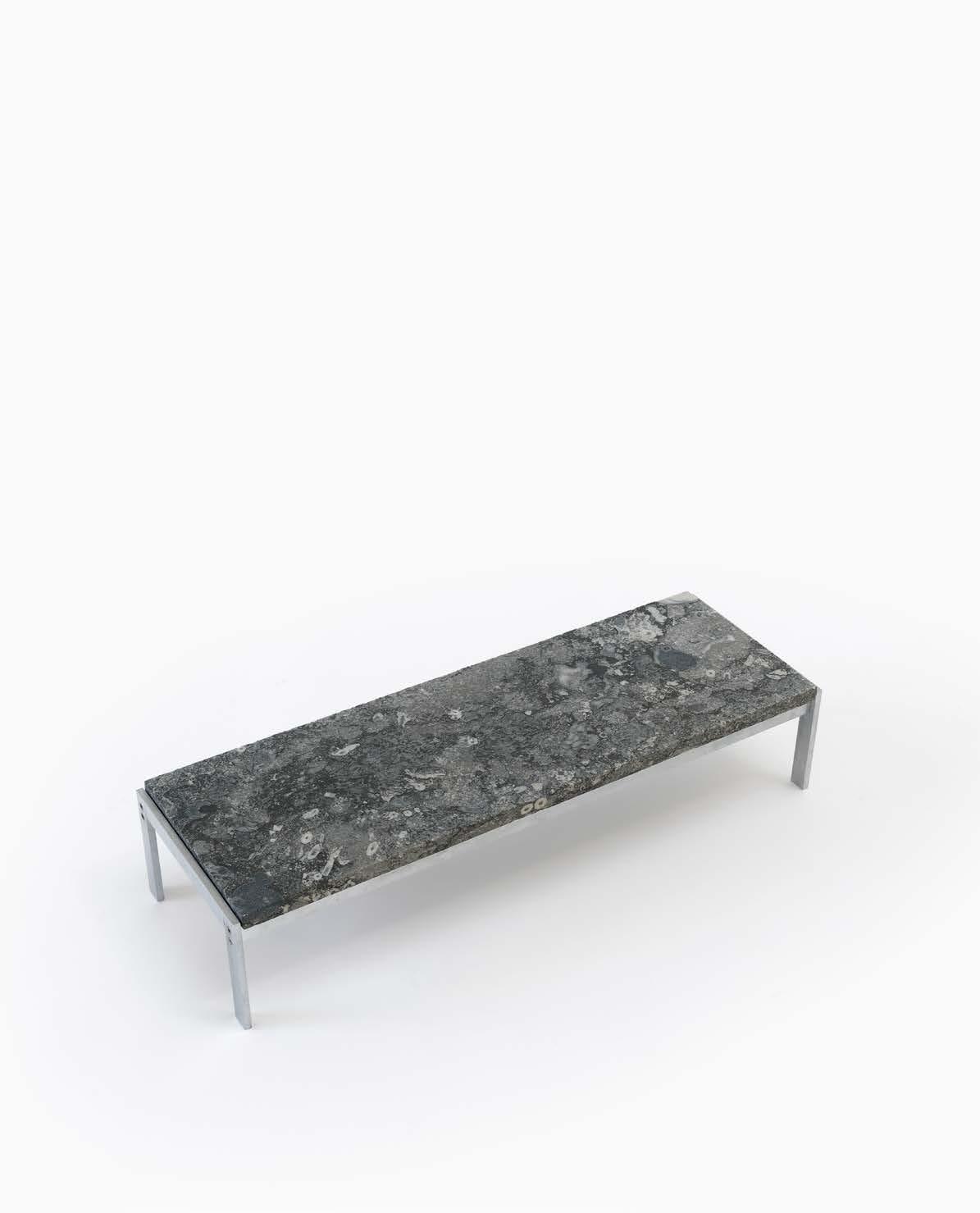
072 Poul Kjærholm
(Danish, 1929 - 1980)
Rare Side Table PK 63 - 1968 [design]
Porsgrunn marble and steel, 17 x 82,2 x 27 cm
Manufactured by E. Kold Christensen A/S, Copenhagen, Denmark
Literature:
Christoffer Harlang, Keld Helmer-Petersen and Krestine Kjærholm, eds., Poul Kjærholm, Arkitektens Forlag, Copenhagen, 1999, p.180
Michael Juul Holm and Lise Mortensen, eds., Poul Kjærholm: Møbelarkitekt, Louisiana Museum for Moderne Kunst, 2006, p.137
Michael Sheridan, The Furniture of Poul Kjærholm: Catalogue Raisonné, Gregory R. Miller & Co., New York, 2007, pp.150–51
€ 6000 - 8000
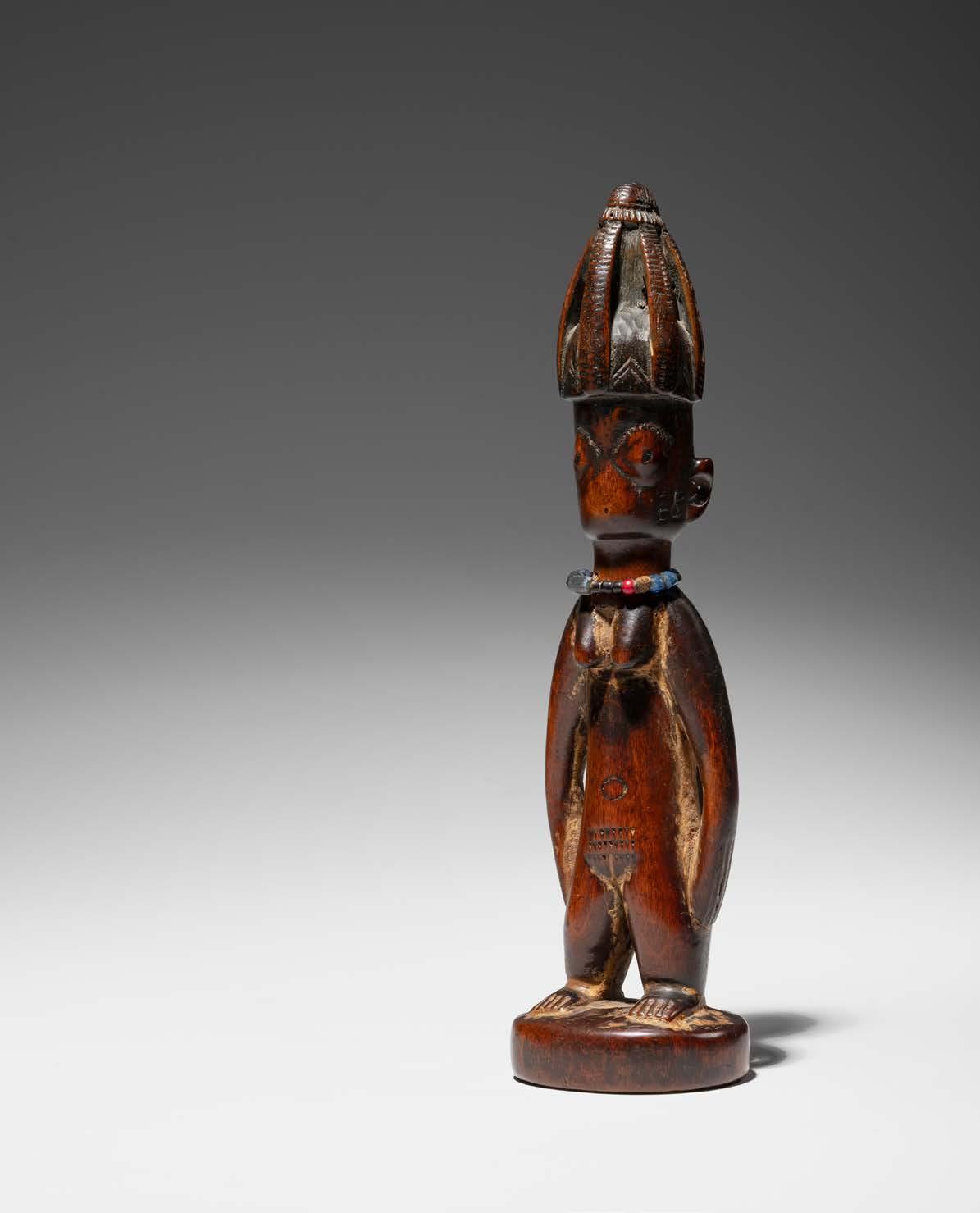
073 Ibeji Figure
Nigeria, Yoruba Wood, pigment, and beads, 26,5 cm
Provenance: Kenneth John Hewett (1919-1994) Collection, London/Bog Farm
Christie's, London, Tribal Art, 6 December 1995, lot 88
Philippe Guimiot, Brussels Private collection, Belgium
€ 2000 - 3000
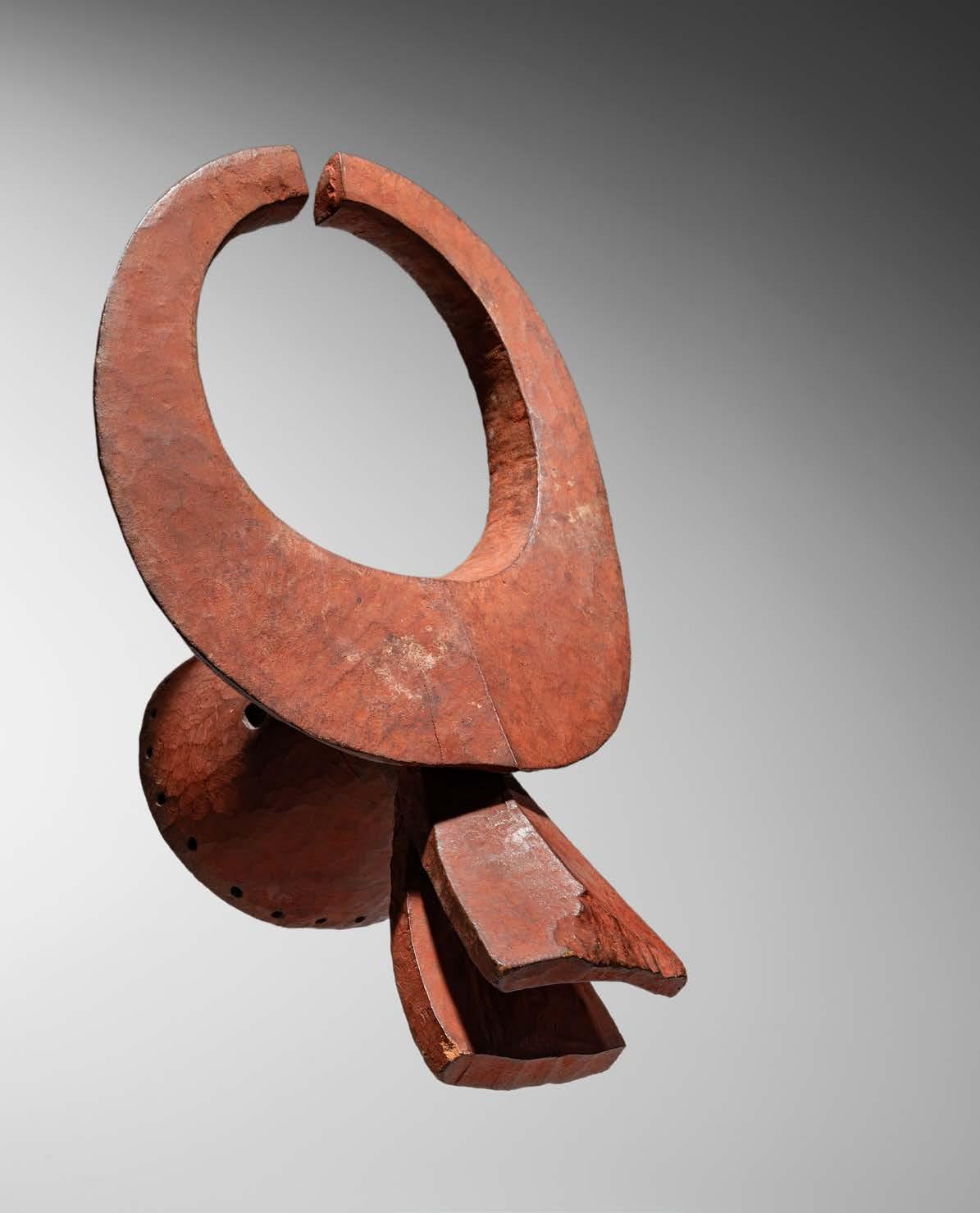
074 Kantana Mask
Nigeria
Wood and pigment, 43 cm
Provenance:
Pierre Dartevelle, Brussels (1996)
Hélène & Philippe Leloup, Paris
Udo & Wally Horstmann Collection, Zug, Switzerland (1996)
Sotheby's, New York, African and Oceanic Art, 19 November 1999, lot 102
Private collection, Belgium
Published:
X, Das Tier in der Kunst / The Animal in Art, Zug, The Huberte Goote Gallery, 1995, n.p.
Masque du Monde / African Masks. A Book of Postcards, San Francisco, The Brooklyn Museum, 1997, p.16
Exhibited:
Zug, The Huberte Goote Gallery, Das Tier in der Kunst / The Animal in Art, 2 December 1995 - 31 March 1996
€ 15 000 - 25 000
This Kantana mask, formerly in the Hélène & Philippe Leloup collection, is an early and rare example showing clear evidence of ritual use, in contrast to the many later examples produced in response to Western market demand. The surface bears a nuanced patina consistent with repeated handling. Its stark abstraction of a buffalo’s head - reduced to essential geometric volumes - aligns indeed closely with sculptural qualities appreciated in Western modernist contexts.
In the mask presented here, a subtle central ridge marks the junction of the horns. It continues across the lower plane representing the muzzle, introducing a measured elegance that offsets an otherwise rigorous formal economy.
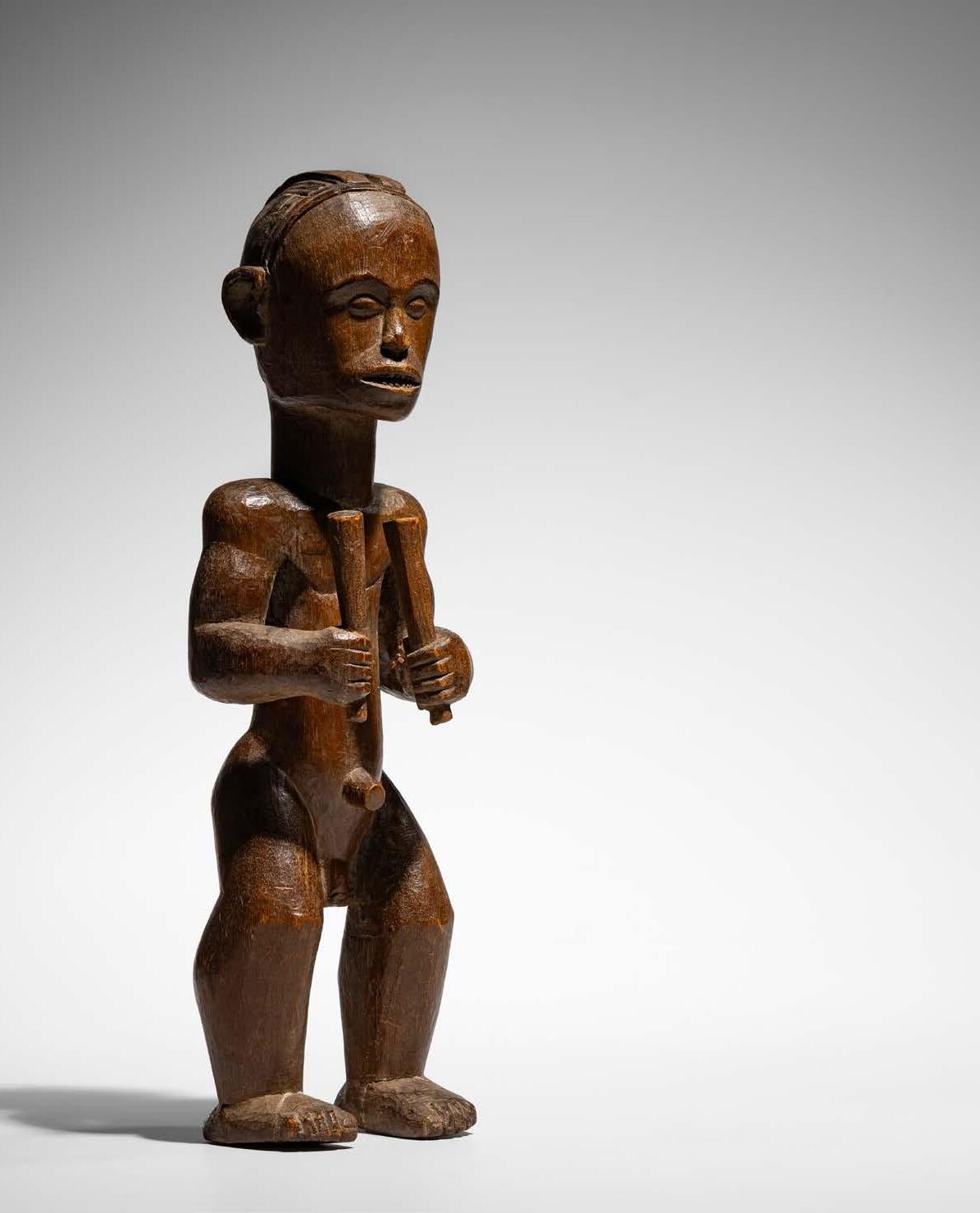
075 . Fang Mabea Figure Gabon Wood, 36,5 cm
Provenance: Private collection, Belgium
€ 3000 - 5000
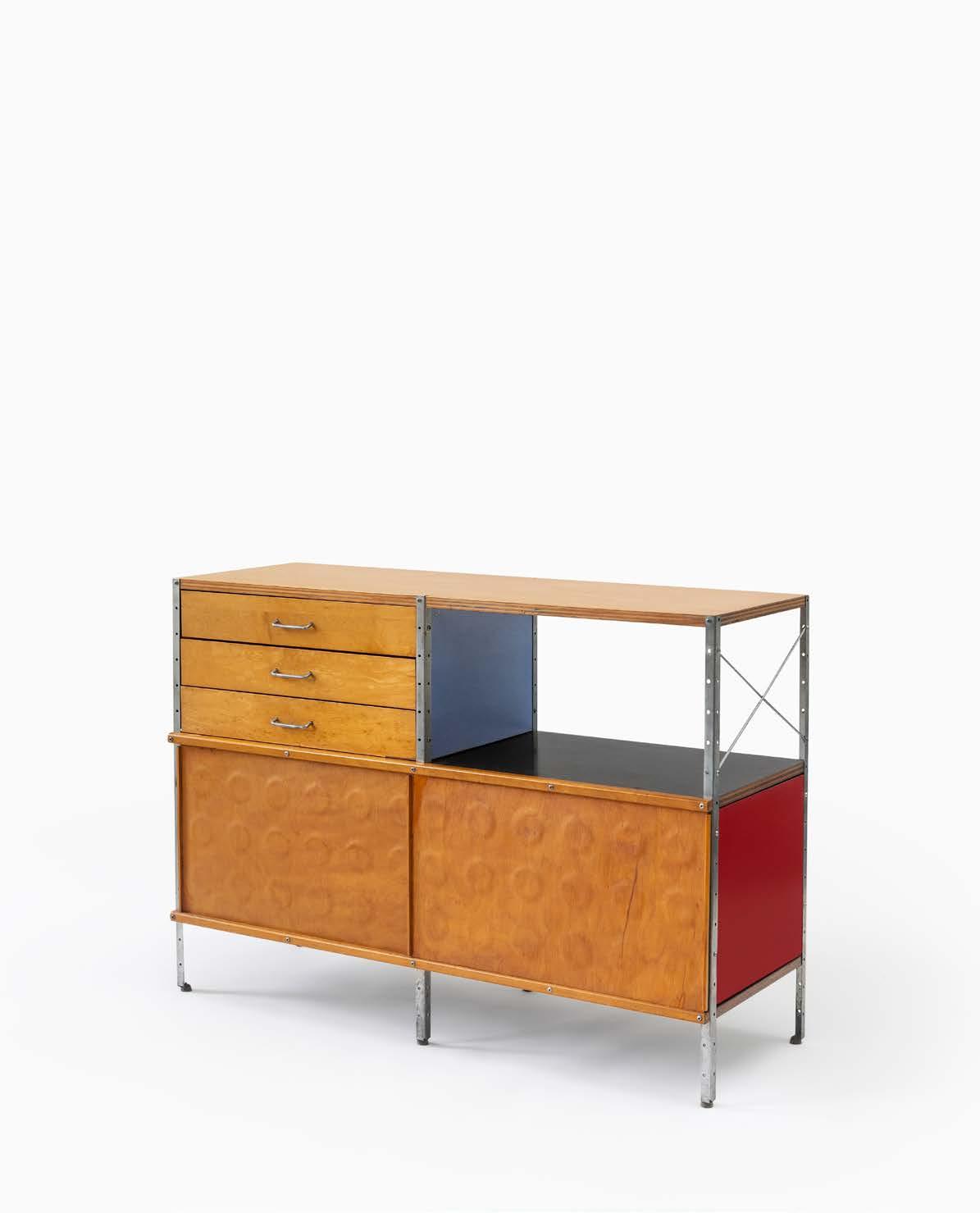
076 Charles and Ray Eames
(American, 1907-1978 and 1912-1988)
'ESU', model no. 200-C - 1950-1952
Birch, plywood, painted masonite, laminated plywood, chromium-plated steel, painted metal, steel, rubber, 83 x 119,5 x 43 cm
Edited by Herman Miller (label inside top drawer)
Published:
The Herman Miller Collection, manufacturer’s catalog, 1952, pp. 102-105
John Neuhart, Marilyn Neuhart and Ray Eames, Eames Design: The Work of the Office of Charles and Ray Eames, New York, 1989, pp. 126-129
€ 5000 - 7000
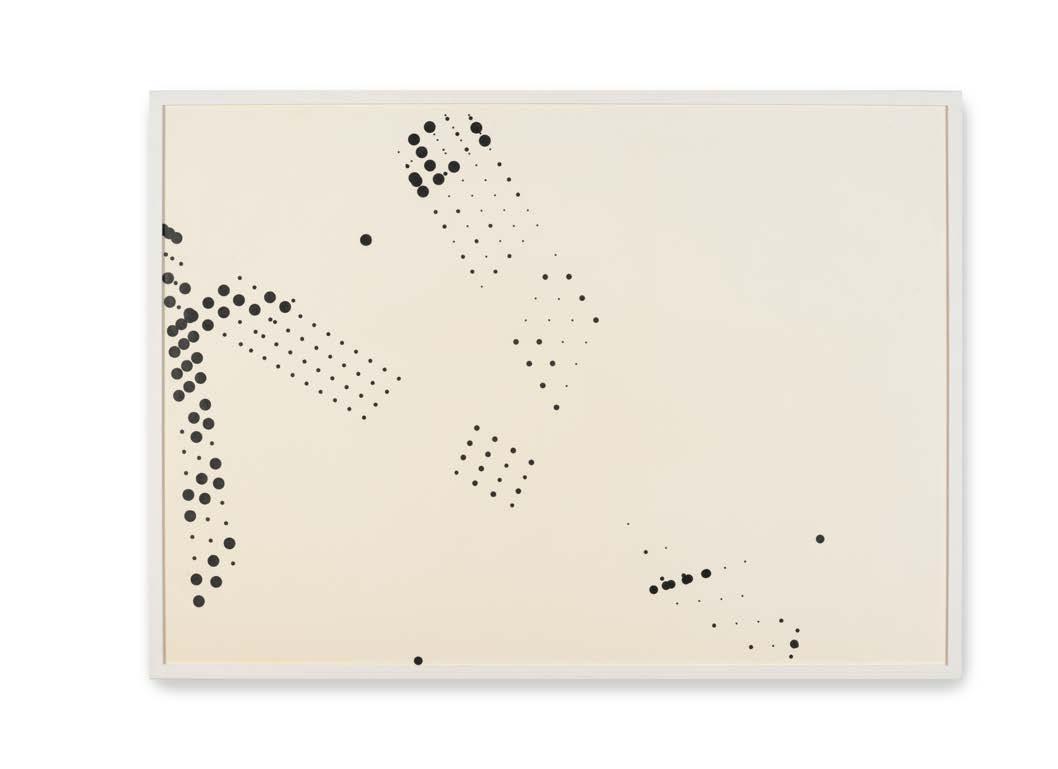
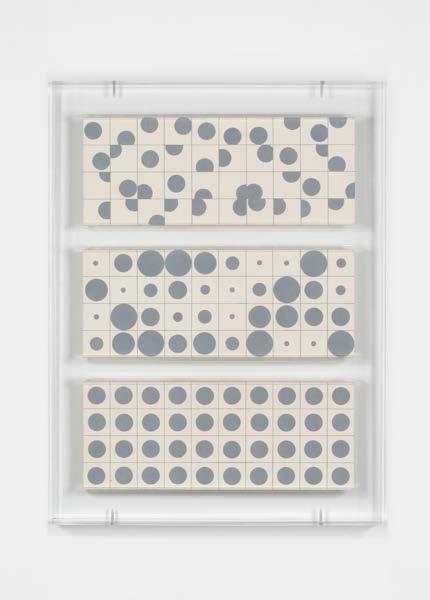
077 herman de vries
(Dutch, 1931)
v73-116 [random dots in space] - 1973
India ink on paper, 73 × 102 cm
Signed (twice), numbered, and dated on verso
Provenance: Galerie Riekje Swart, Amsterdam
Private collection, Netherlands
Venduehuis der Notarissen, The Hague, 'Post-War and Contemporary Art', 16 October 2019, lot 88
Private collection, Antwerp
Published:
herman de vries. random shapes [exhibition catalog], Amsterdam, Stedelijk Museum, 1975, cat.36
herman de vries. toevalstekeningen = random objectivations [exhibition catalog], Kröller Müller Museum, Otterlo, 2015, cat.73
Exhibited:
Amsterdam, Stedelijk Museum, herman de vries. Random Shapes, 7 February - 6 April 1975, cat.36
Otterlo, Kröller Müller Museum, herman de vries. toevalstekeningen = random objectivations, 6 June - 20 September 2015, cat.73
€ 6000 - 8000
The present work is included in the online catalogue raisonné of the artist, numbered hdv 1973.011.7
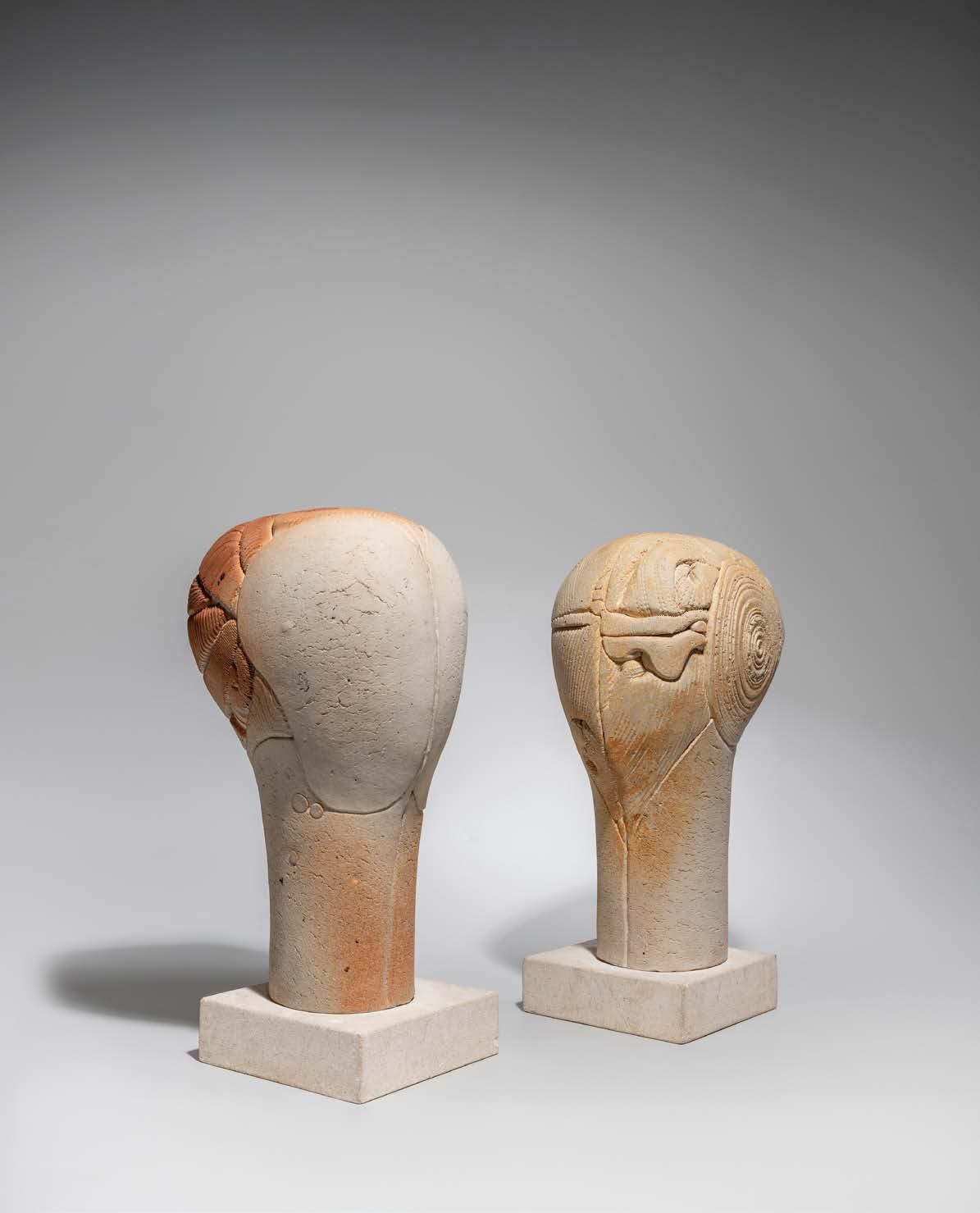
078 Antoine De Vinck (Belgian, 1924-1992)
Two Heads - 1979
Stoneware and pigment
38 cm and 39 cm (+ base 4,5 cm)
Monogrammed on verso along lower edge
Provenance:
Galerie Galuchat, Brussels
Private collection, Antwerp
Published:
Tentoonstelling Emile Veranneman [exhibition catalog], Provinciaal Museum Constant Permeke, Jabbeke, 1982 (ill.)
€ 6000 - 8000
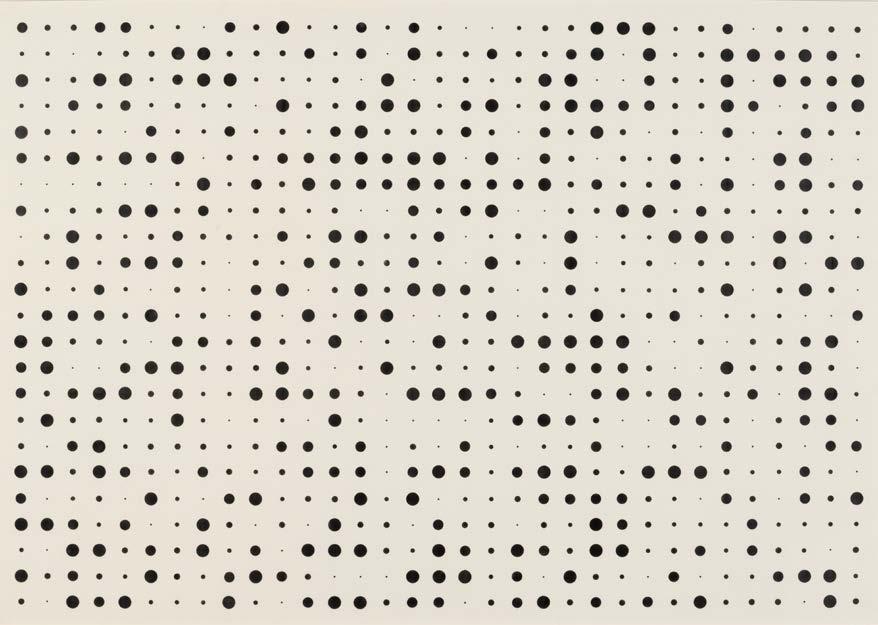
079 herman de vries
(Dutch, 1931)
V72-105, Random Dot Structure - 1972
India ink on paper, 73 × 102 cm
Titled, signed, and dated on verso
Provenance:
Galleria Milano, Milan (label on verso)
Witteveen Gallery, Amsterdam
Cees de Boer Collection, Amsterdam
Bernaerts Auctioneers, Antwerp, 29 May 2019, lot 1257
Private collection, Antwerp
Published:
Jean Leering, Programmi sistematici. Ricerca contemporanea 4, herman de vries, in Vanni Scheiwiller, Milan, 1975, p.195 (ill.)
herman de vries. random shapes [exhibition catalog], Stedelijk Museum, Amsterdam, 1975, cat.33
herman de vries. toevalstekeningen = random objectivations [exhibition catalog], Kröller Müller Museum, Otterlo, 2015, cat.72
Exhibited:
Milan, Galleria Milano, Programmi Sistematici. Ad Dekkers, Ewerdt Hilgemann, Jan Schoonhoven, Peter Struycken, herman de vries, 1972
Amsterdam, Stedelijk Museum, herman de vries. random shapes, 7 February - 6 April 1975, 1975, cat.33
Otterlo, Kröller Müller Museum, herman de vries. toevalstekeningen = random objectivations, 6 June - 20 September 2015, cat.72
€ 6000 - 8000
Created in cooperation with Susanne Jacob de Vries. The present work is included in the online catalogue raisonné of the artist, numbered hdv 1972.011.27
080 Pol Mara (Belgian, 1920-1998)
L'Automne en Vaucluse - 1961
[Autumn in the Vaucluse]
Watercolor on paper, 88 x 125 cm
Signed and dated lower left
Provenance: Private collection, Antwerp
Exhibited: Geel, Marnix Neerman Gallery, Group Exhibition, 1983 Antwerp, Patrick Declerck Gallery, Nearly New Car Center, Pol Mara, November 2004
€ 3000 - 5000
081 Fujinuma Noboru (Japanese, 1945)
Hanakago titled Shuncho [Spring Tide]
Bamboo, Ø 40 cm
Complete with its tomobako and original lacquered otoshi
Provenance: Galerie Mingei, Paris
Acquired by the present owner in 2015
€ 4000 - 6000
Fujinuma Noboru, designated a Living National Treasure in 2012, is a prominent figure in contemporary bamboo art known for his exploration of material vitality and form. This hanakago, titled Shuncho (Spring Tide), belongs to a significant and recurring series in the artist's career, inspired by the tidal energy and whirlpools of the Naruto coast.
The work is constructed from nemagaridake (dwarf bamboo) harvested in Noboru’s native Tochigi Prefecture. To capture the "ki" - the inherent spirit and life-force of the material—the artist utilizes a bold ara-ami (rough plaiting) technique. This method emphasizes the natural resilience and flexibility of the bamboo, creating a rhythmic, open structure that suggests the movement of water. His aesthetic is defined by this interplay between the rugged, organic properties of the stalks and a sophisticated, intentional sense of motion.
Works from Fujinuma’s Shuncho series are held in the permanent collections of major global institutions, including The Metropolitan Museum of Art, the British Museum, and the National Crafts Museum, Tokyo.
082 Fang Mask
Gabon - late 19th c
Wood and pigments, 39 cm
Old label on the inside: "no. 81 Masque Fang du Sud du Gabon (très rare)"
painted inventory number: "RG, 50"
Provenance: Adolphe Feder (1886-1943) Collection, Paris
Leiris, Paris (according to Galerie Ratton-Hourdé certificate)
Loudmer, Paris, Arts Primitifs, 9 December 1989, lot 250
Ratton Hourdé, Paris
Private collection, Belgium (acquired from the above in 2000)
€ 20 000 - 30 000
083 . Ryszard Winiarski (Polish, 1936-2006)
Untitled - 1980
Acrylic and pencil on cardboard 12 x 29,5 cm (3#)
Signed, dated and numbered on verso (each)
Provenance:
Private collection, Poland
Private collection, Antwerp
€ 6000 - 8000
084 Ryszard Winiarski (Polish, 1936-2006)
Untitled - 1980
Acrylic and pencil on cardboard 12 x 29,5 cm (3#)
Signed, dated and numbered on verso (each)
Provenance:
Private collection, Poland
Private collection, Antwerp
€ 6000 - 8000
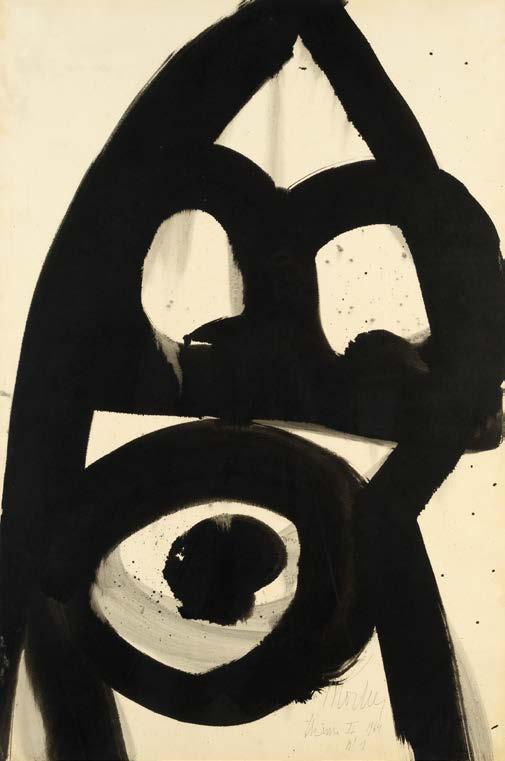
085 Antoine Mortier (Belgian, 1908-1999)
Thème II n°1 -1964
Indian ink on paper, 117 x 80 cm
Signed, titled, dated, and numbered lower right
Provenance: Private collection, Antwerp
Published: Danièle Gillemon, Carine Fol, and Frans Boenders, Antoine Mortier. Le geste incarné [exhibition catalog), Fonds Mercator, Antwerp, 2000, p.88 (ill.)
Exhibited:
Centre culturel de la Communauté WallonieBruxelles Le Botanique, Brussels, Antoine Mortier, Le geste incarné, 14 January27 February 2000, p.88 (ill.)
P.M.M.K., Ostend, Antoine Mortier: Het naakte tekenen, 8 April - 25 June 2000, p.88 (ill.)
Musée d'Art moderne et d'Art contemporain, Liège, Antoine Mortier, Le geste incarné, 27 October - 26 November 2000, p.88 (ill.)
Centre Wallonie-Bruxelles, Paris, Antoine Mortier, Le geste incarné, 8 December 200025 February 2001, p.88 (ill.)
€ 6000 - 8000
Mortier would come back to this composition in 1969 for a large-scale painting of 162 x 114 cm, titled “Apparition I” that belongs now to the Collection of the French Community in Belgium, inv.12.036.
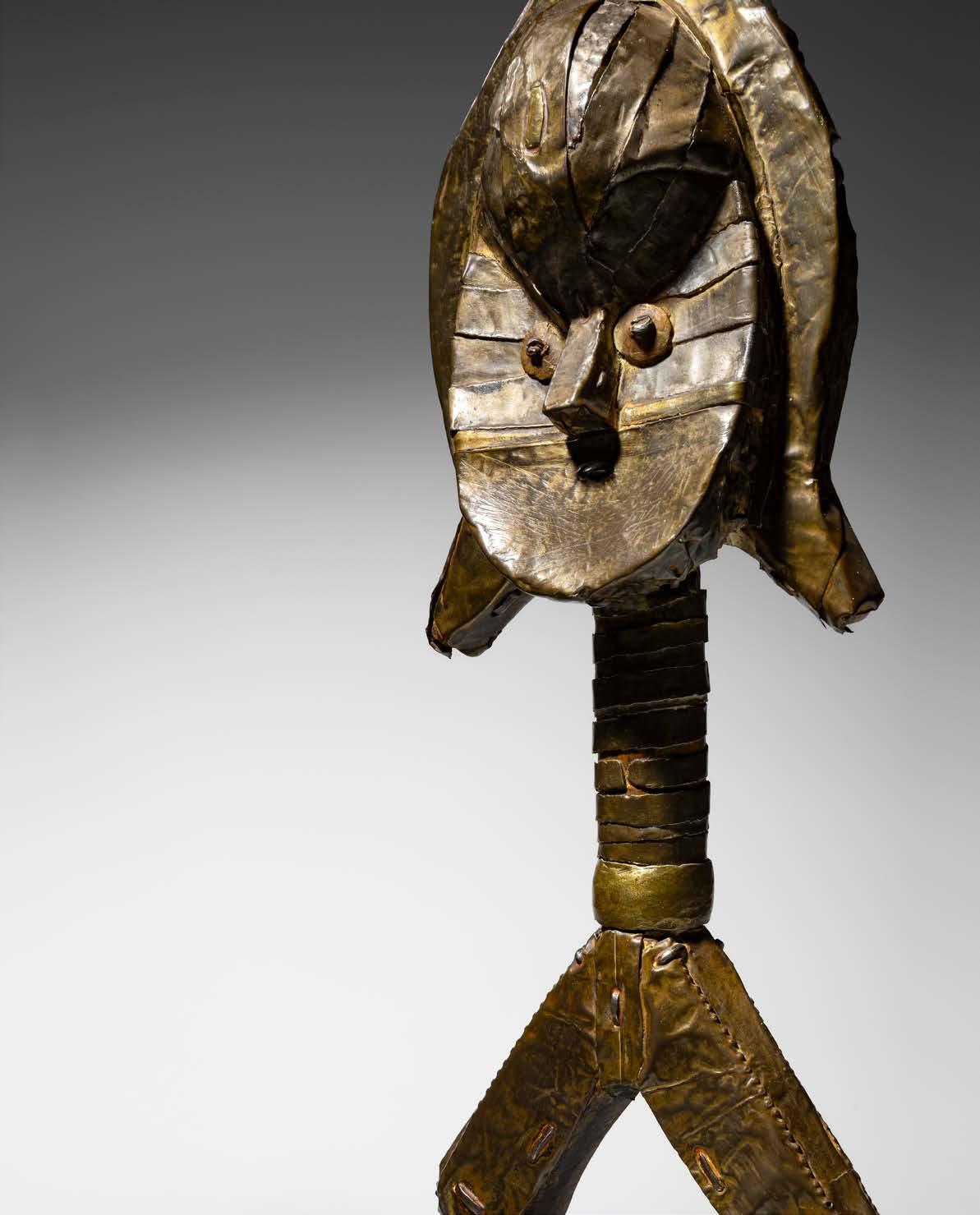
086 . Kota Reliquary Figure, Shamaye
Gabon
Wood and copper alloy, 53 cm
Provenance:
Private collection, Toulon
Private collection, Paris
€ 20 000 - 30 000
This Kota-Shamaye reliquary figure represents the rarest and most highly prized style within the broader Kota corpus. First identified by Louis Perrois as "Kota-Shamaye" or "Shaké," these figures were historically championed by major 1930s tastemakers, including Paul Guillaume, Louis Carré, and Charles Ratton. The work is defined by a svelte silhouette and a restrained simplicity of form that lends the head a unique expressiveness. A prominent, pyramid-shaped forehead dominates the composition, while the movement of the headdress is reinforced by sharp, clean edges. The visual resonance of the piece is achieved through a tight rhythm of copper strips. These bands converge toward the eyes, creating a centred focus and punctuating the overall brightness of the metalwork.
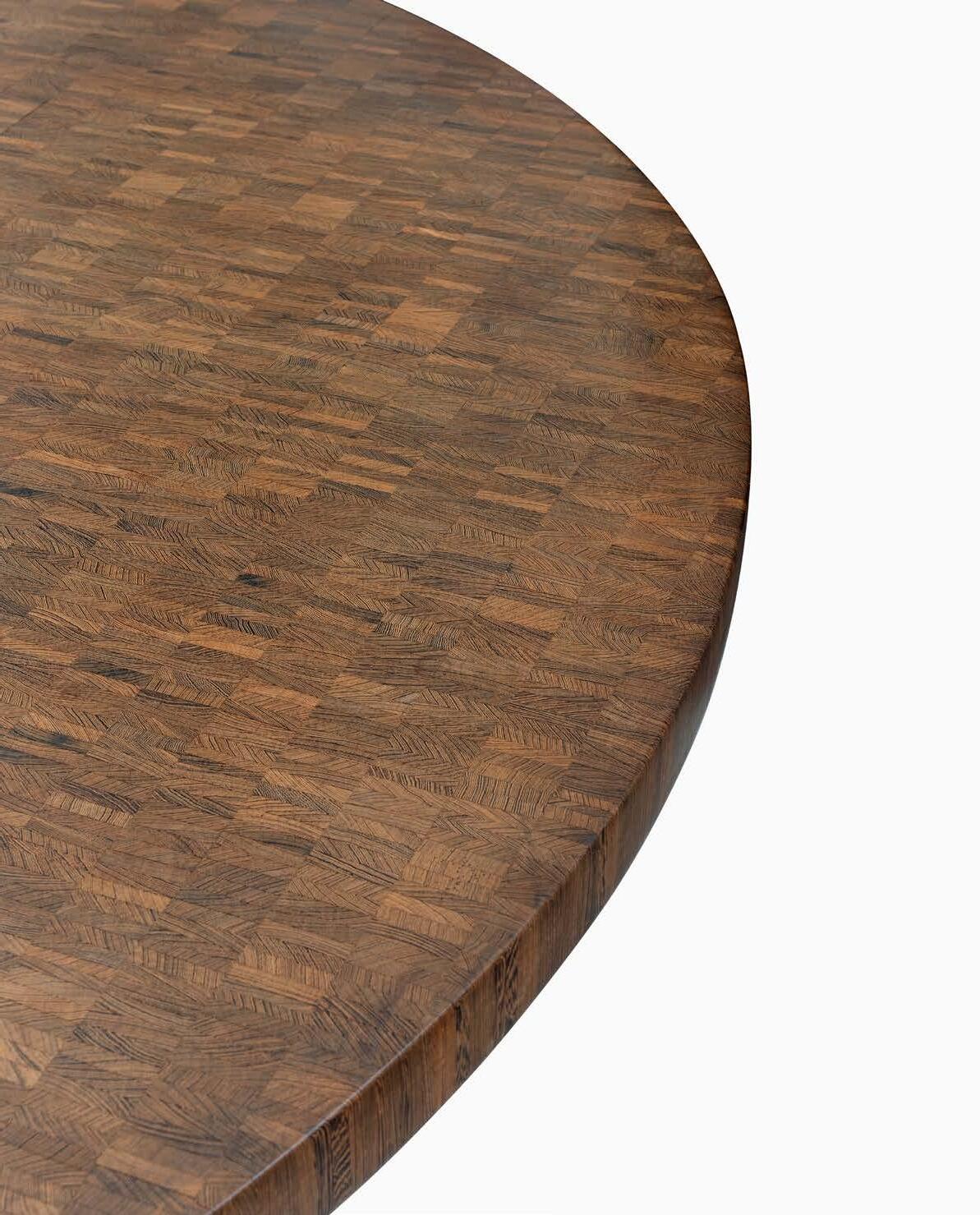
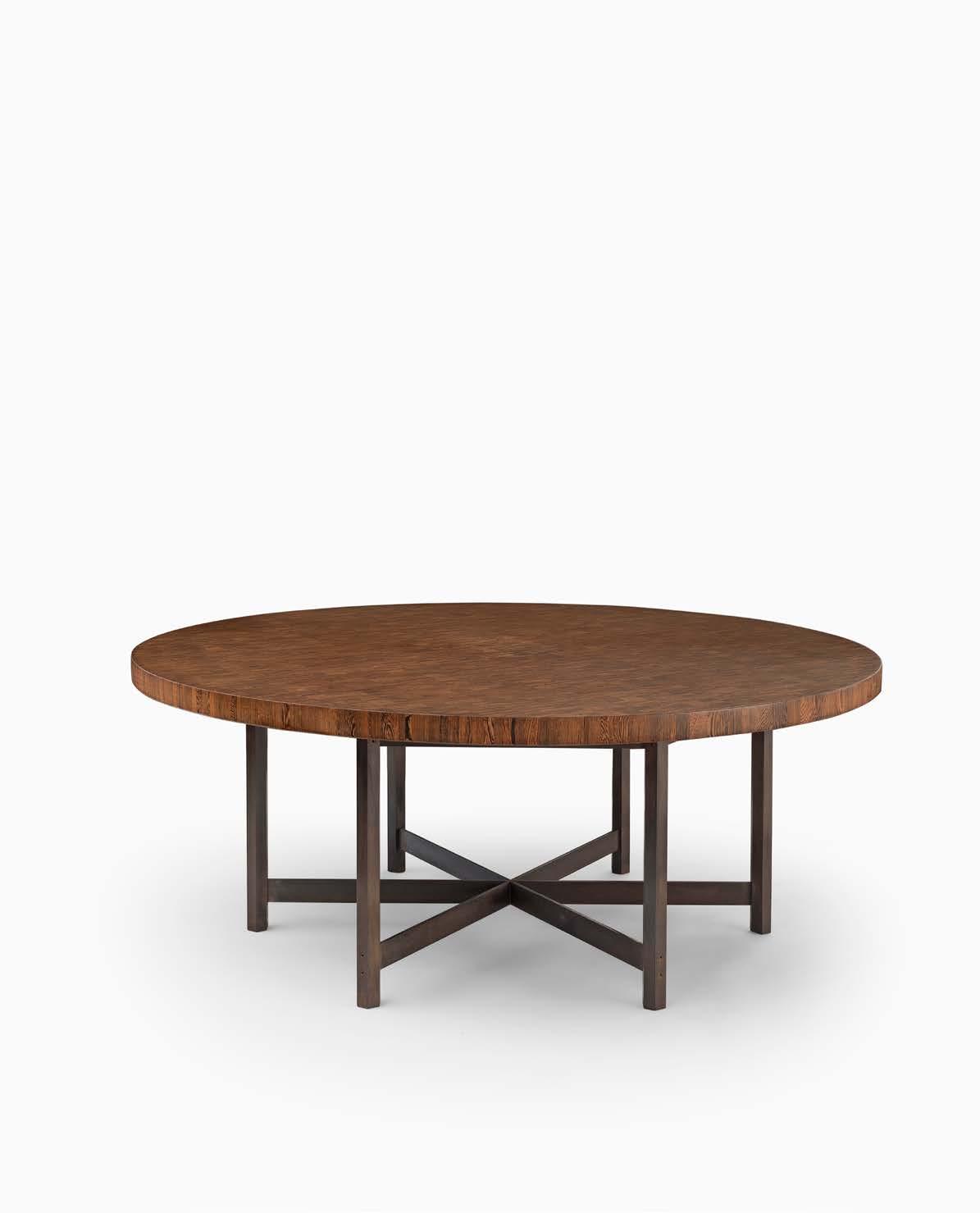
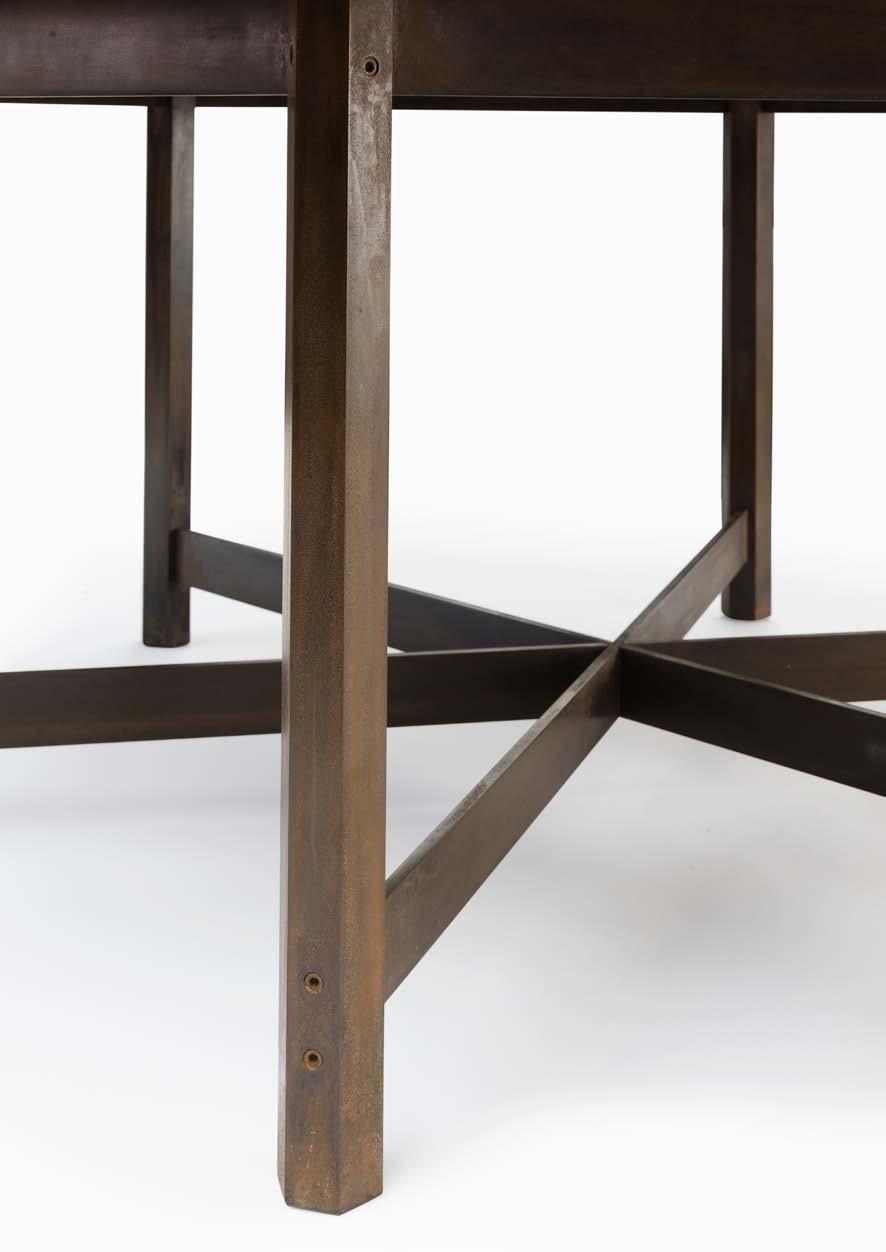
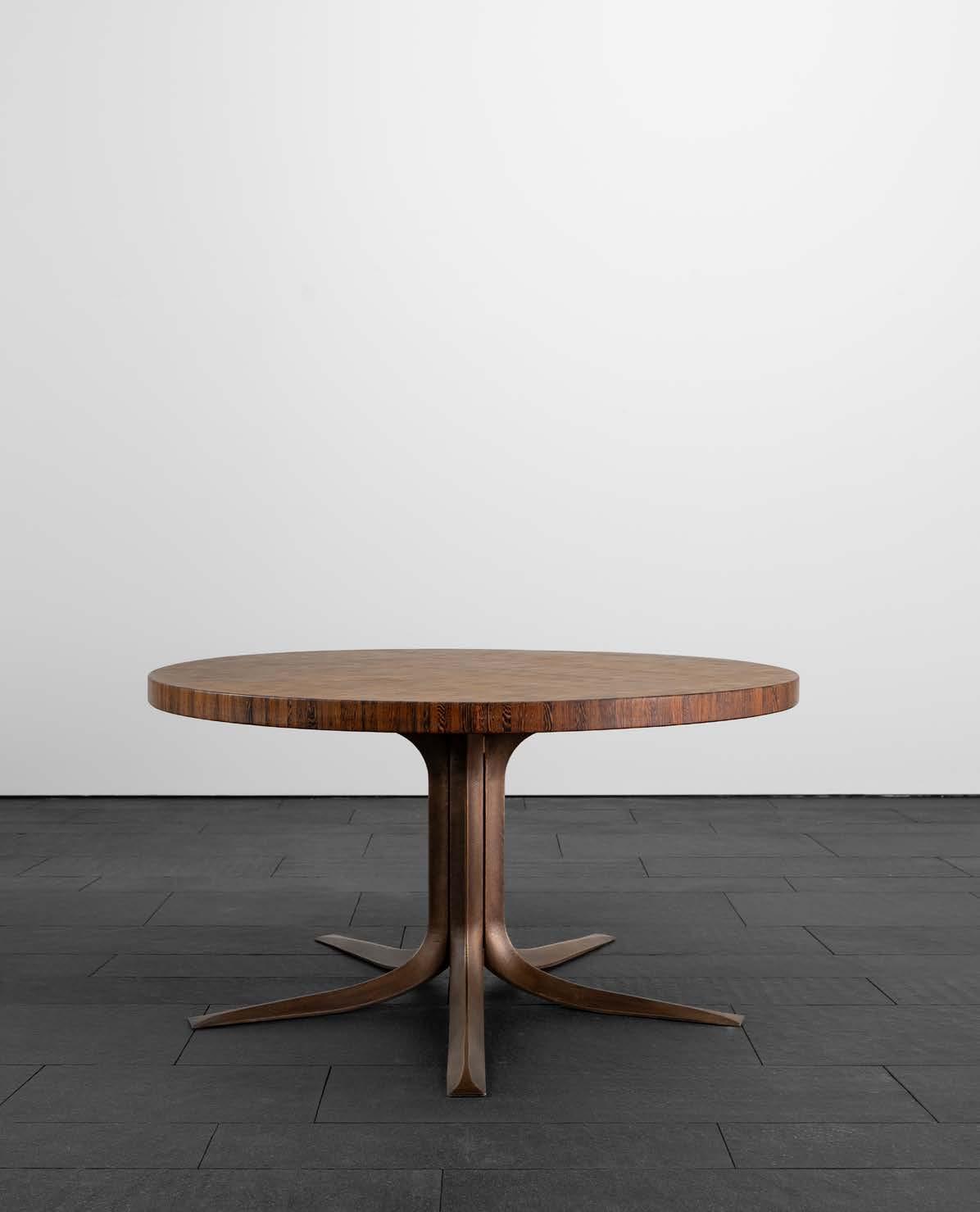
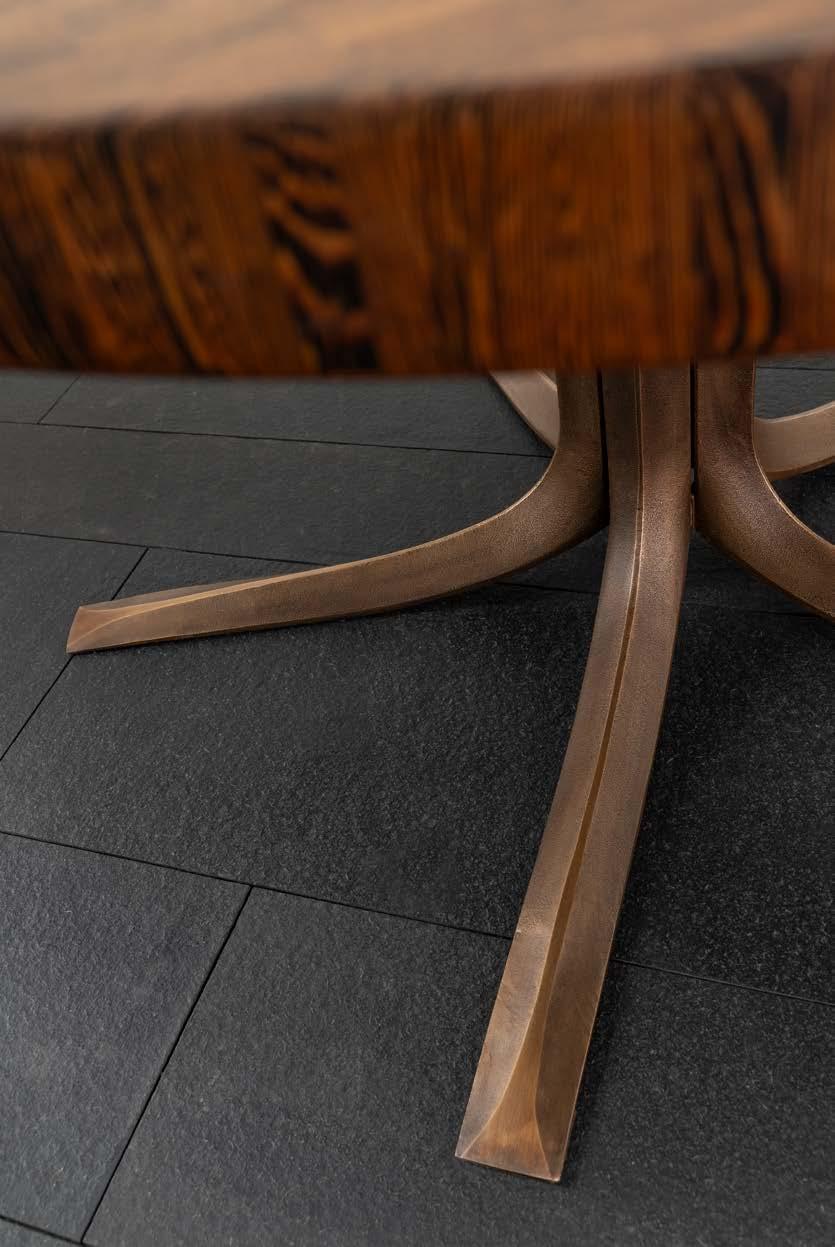
087 Jules Wabbes (Belgian, 1919-1974)
Large Dining Table
End grain wengé wood and patinated steel, Ø 184 cm
€ 25 000 - 35 000
088 Bert De Leeuw (Belgian, 1926-2007)
Untitled - 1961
Oil with iridescent inclusions on canvas, 89 x 131 cm
Signed, dimensions, and dated on verso
Provenance:
Galerie Ad Libitum, Antwerp Private collection, Antwerp
Exhibited:
Galerie Ad Libitum, Antwerp, Bert De Leeuw, 15 April - 4 May 1961 (label on verso)
€ 2000 - 3000
089 Punu Mask
Gabon
Wood, mineral pigments, kaolin
26 cm
Provenance:
Marie-Ange Ciolkowska (1898-1992)
Collection, Paris
By descent
Christie's, Paris, Living with African and Oceanic Arts, 11 March 2021, lot 82
Private collection, Paris
€ 6000 - 8000
090 . Teke Figure
D.R. Congo Wood, 33 cm
Provenance:
Private collection, France
€ 3000 - 5000
091 Jan Dries (Belgian, 1925-2014)
Naakt Leven - 1960
Marble, 44 x 44 x 20 cm
Signed, titled, and dated on verso
Provenance:
Private collection, Antwerp
€ 3000 - 5000
092 Maarten Van Severen (Belgian, 1956-2005)
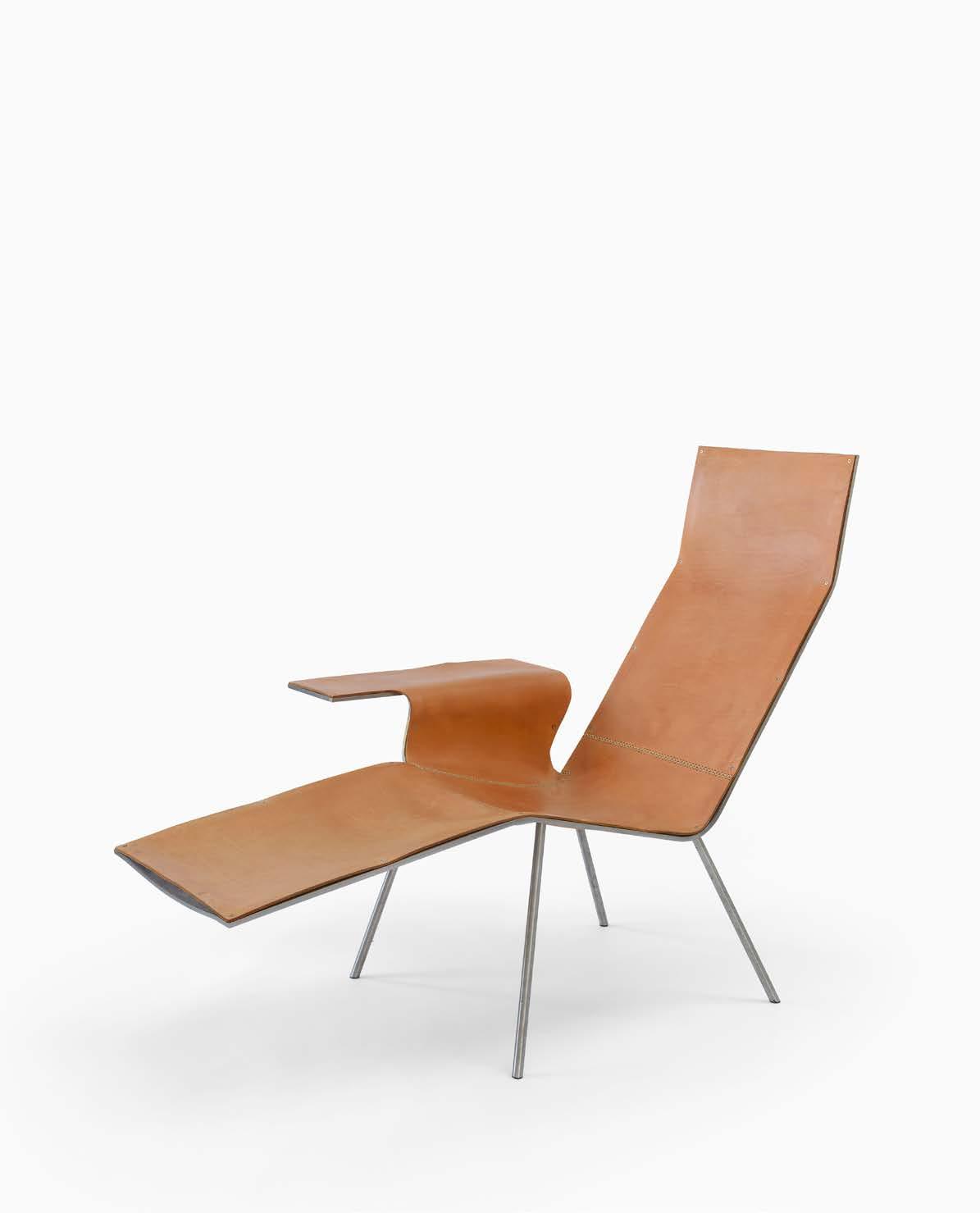
Leather Lounge Chair 04 - 2003
Leather, stainless steel 111 x 130 x 79 cm
Edited by Pastou (stamp underneath armrest), numbered n°035
Literature: Maarten Van Severen and Lieven Daenens, ed., Maarten Van Severen: Work, Stichting Kunstboek, Oostkamp, 2004, pp. 110-117, 262 (ill.)
€ 8000 - 12 000
093
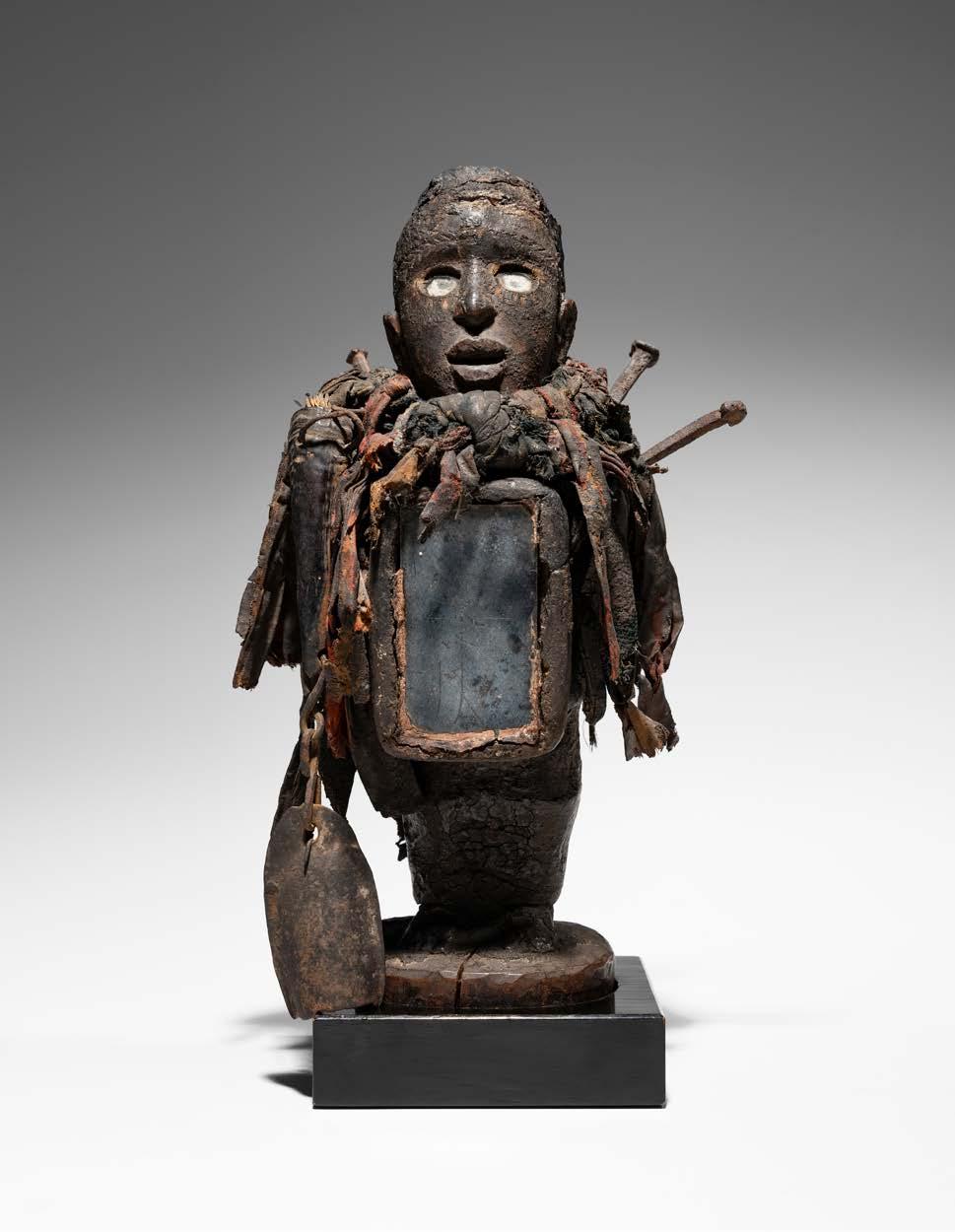
. Nkisi N’konde Kongo
D.R. Congo
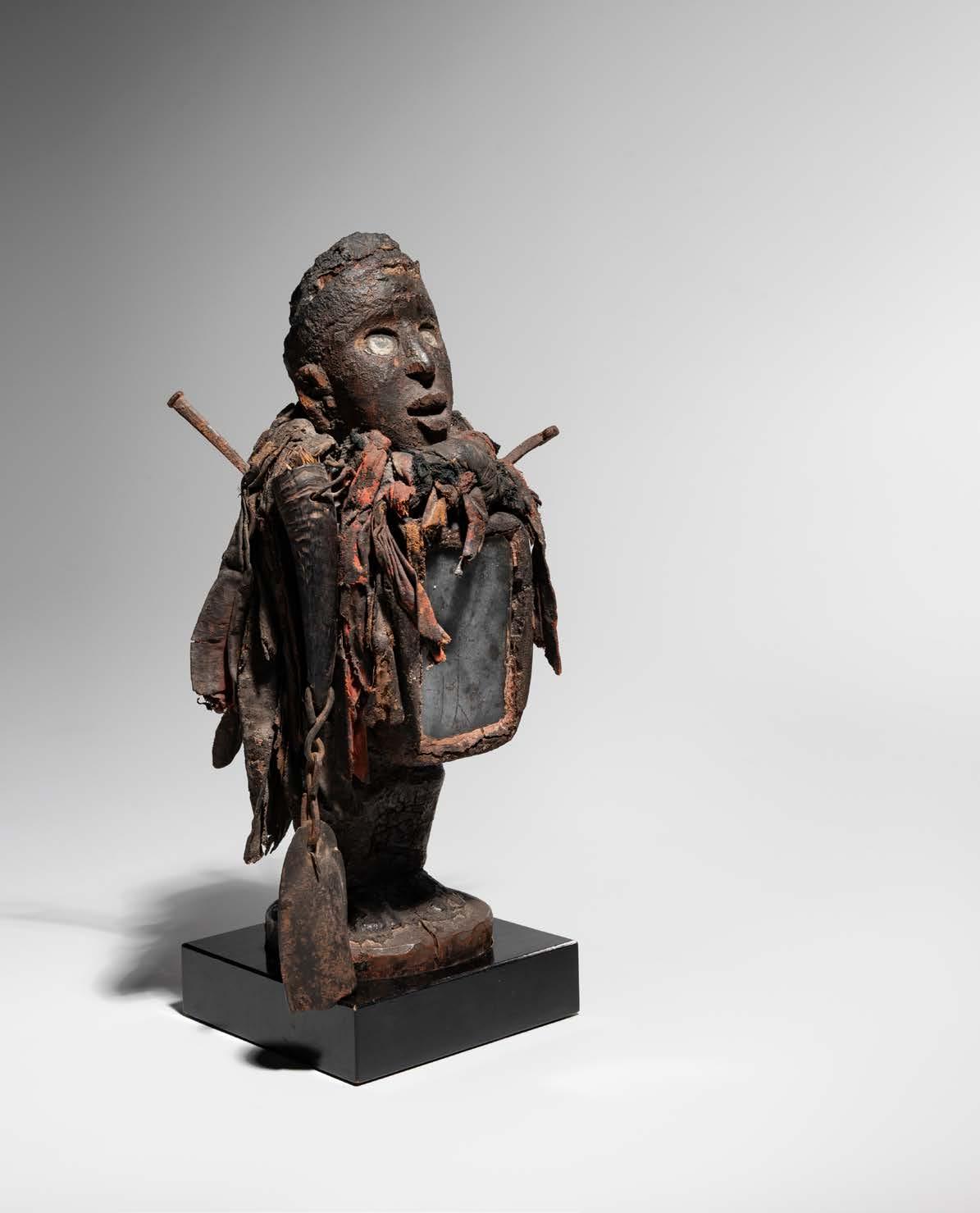
Wood, mirror, glass, horn, vegetal fibers, and metal 29,5 cm
Provenance:
Père Moris, Paris (1930s)
Delahaye Collection
Galerie Blanckaert, Knokke
Private collection, Knokke
€ 10 000 - 15 000
Kichizô Inagaki base.
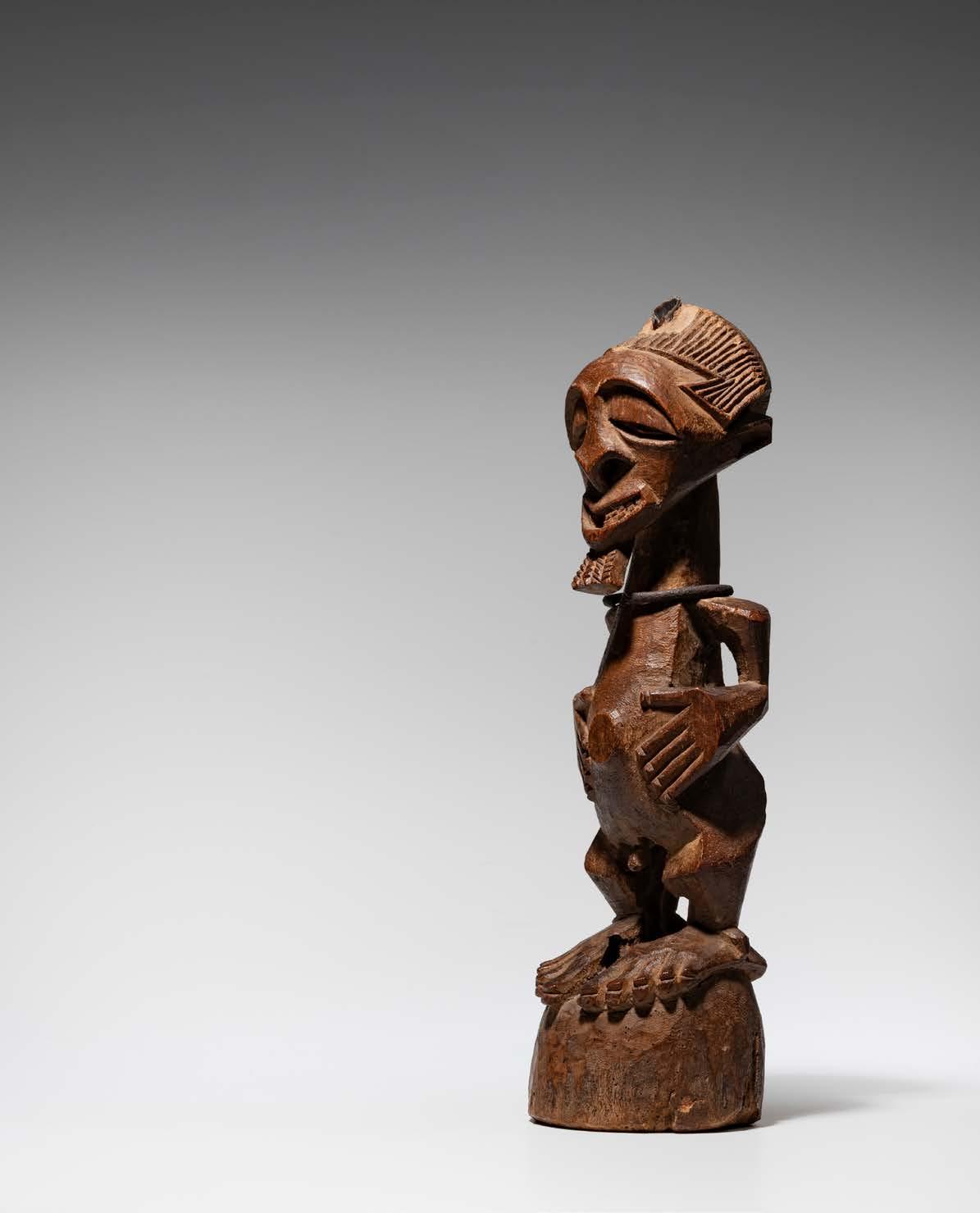
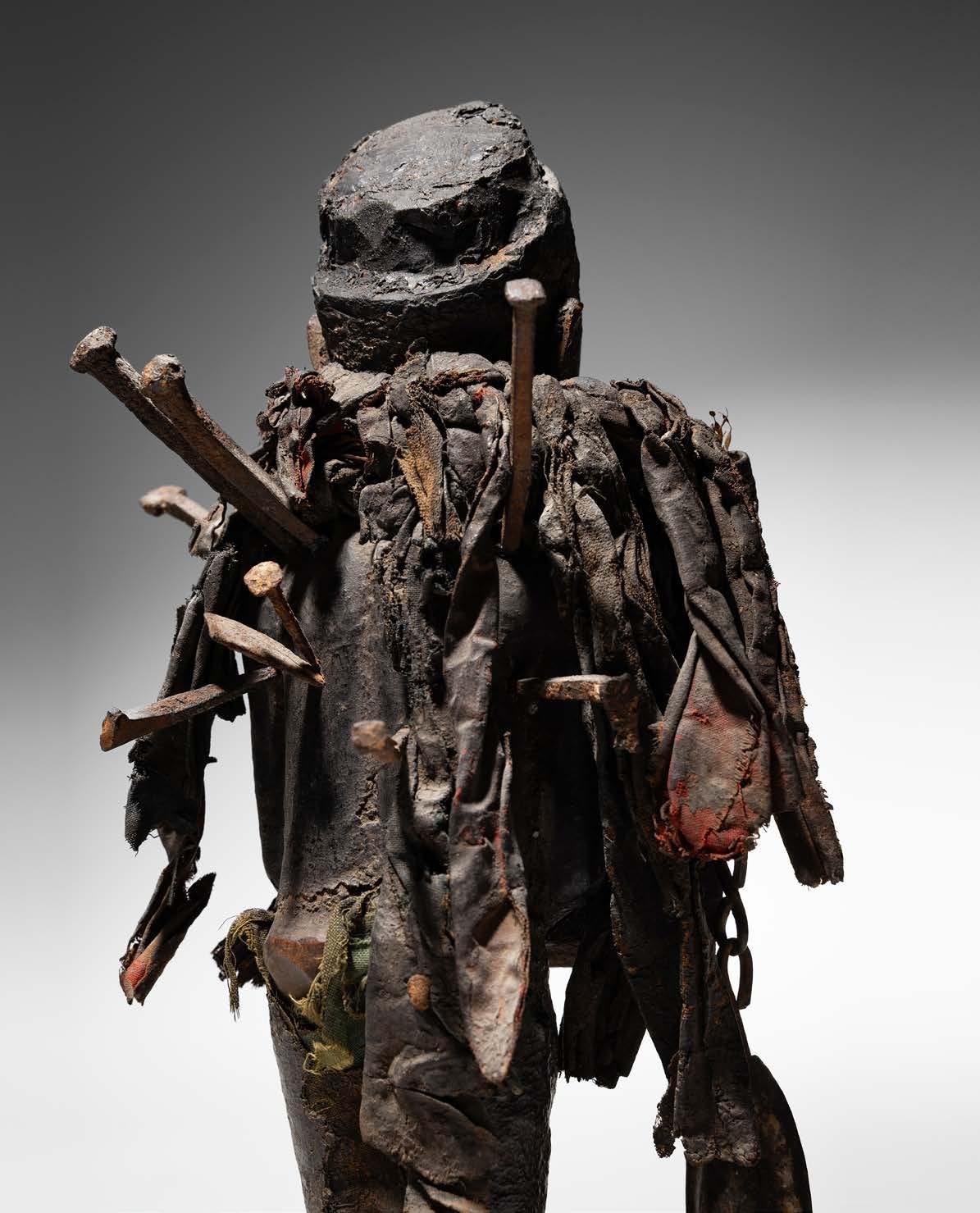
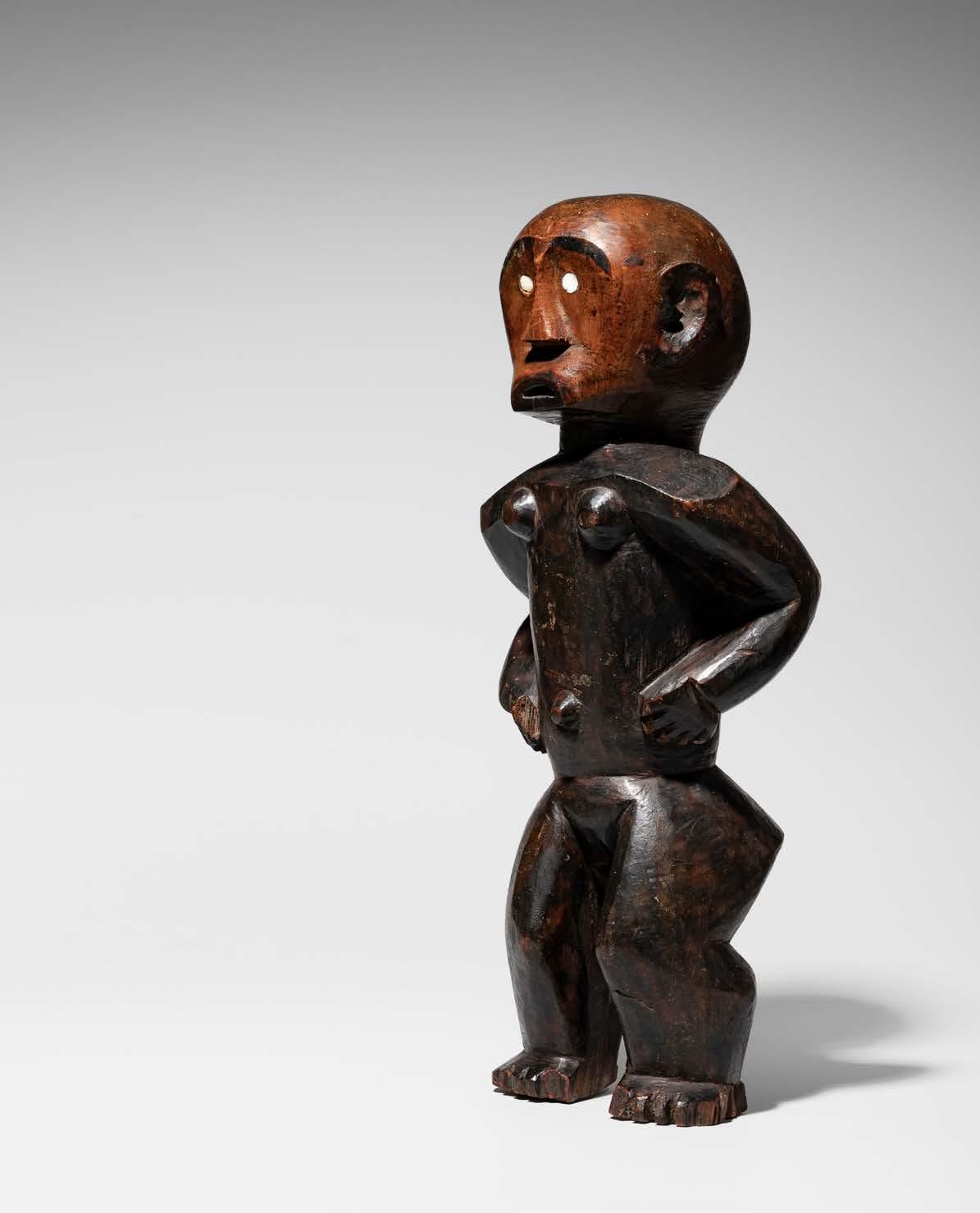
This Kongo nkisi nkondi figure, incorporating mirror, glass, horn, vegetal fibers, and metal elements, exemplifies a class of power objects central to the ritual and social life of the Kongo peoples of the Lower Congo region. Such figures were the result of a collaborative process between a sculptor and a ritual specialist (nganga), the latter activating the work through the insertion of charged substances (bilongo) and performative rites. Conceived as a receptacle for forces both medicinal and judicial, the nkisi functioned as an agent of healing, protection, and adjudication within the community.
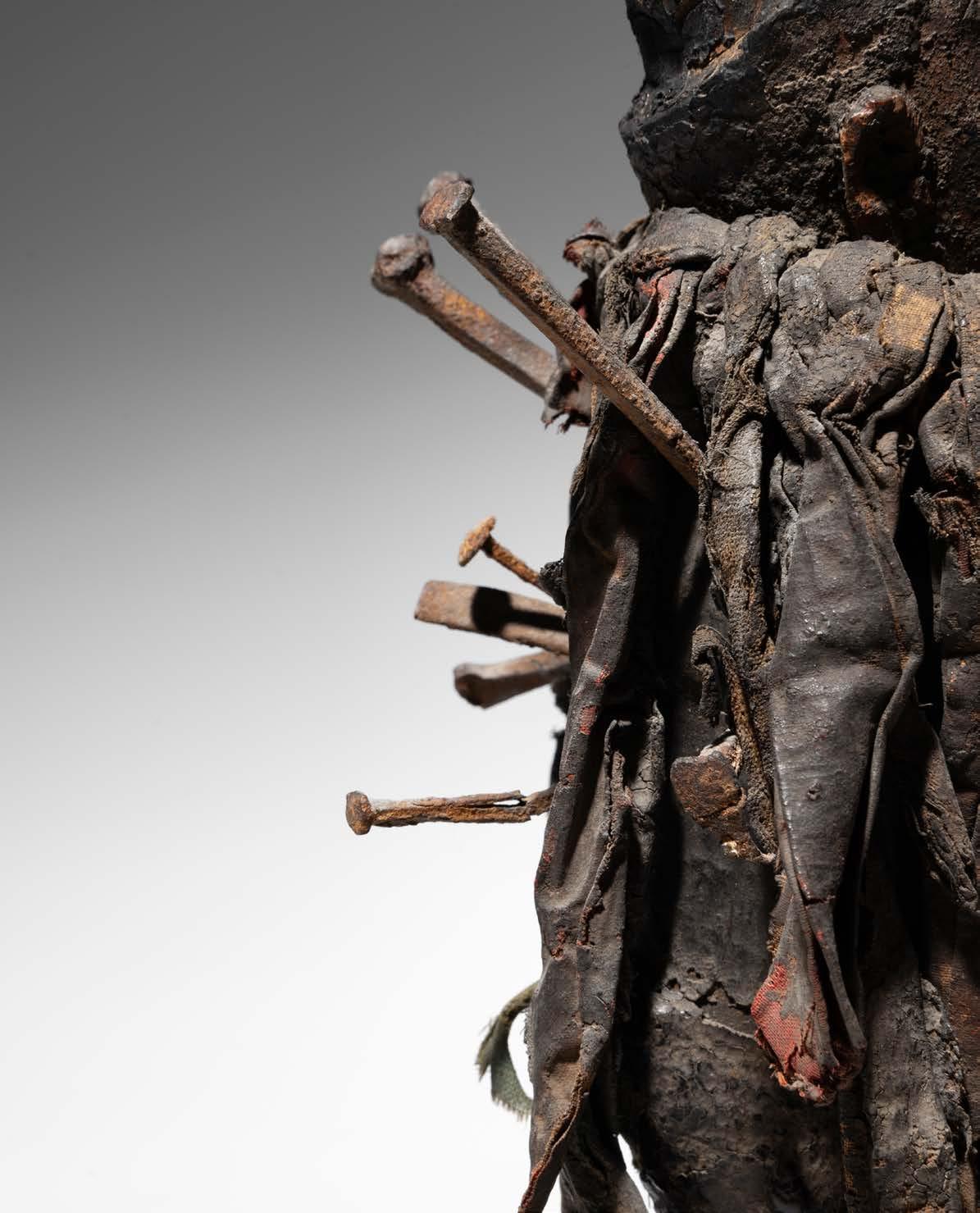
The present figure retains its principal attributes. The cavity in the abdomen, sealed with a mirror, serves as the locus of concentrated power, with the mirror signifying access to the otherworldly realm. The upward tilt of the head evokes the nganga’s visionary capacity in states of trance, while the erect stance, with hands placed firmly on the hips, conveys readiness to intervene. As articulated by Robert Farris Thompson ( Le geste kongô , Musée Dapper, Paris, 2002), such gestures condense a sequence of actions: the figure stands to initiate processes of judgment or healing, adopts an assertive posture to signal its active engagement, and directs its gaze upward to invoke forces beyond the visible world. The numerous nails and blades driven into the surface attest to repeated activation, each insertion marking an oath affirmed, a conflict addressed, or a harmful force neutralized.
The work’s provenance further situates it within the early history of the reception of African art in Europe. It was formerly in the collection of Père Moris (Antony Innocent Moris), a Paris-based dealer active in the early decades of the twentieth century, whose gallery played a formative role in the emergence of a market for African and Oceanic works. Initially an antique dealer, Moris developed an early interest in so-called “primitive” arts following encounters with collectors such as W.O. Oldman, and operated within a milieu that included figures such as Pablo Picasso and Paul Guillaume. His activity contributed to the recognition and circulation of such works among avantgarde and collecting circles in Paris.
The figure is presented on a custom pedestal by Kichizô Inagaki (1876-1951), whose refined mounts for African and Oceanic sculpture are notable for their sensitivity to form and material. Active in Paris from the early twentieth century, Inagaki developed a distinctive approach to display that enhances the sculptural presence without imposing upon it.
Combining an early and well-documented provenance, a dense and intact assemblage of ritual elements, and a considered presentation, the present nkisi constitutes a particularly coherent example of this important sculptural tradition.
094 Englebert Van Anderlecht and Jean Dypréau
(Belgian, 1918-1961 - Belgian, 1917-1986)
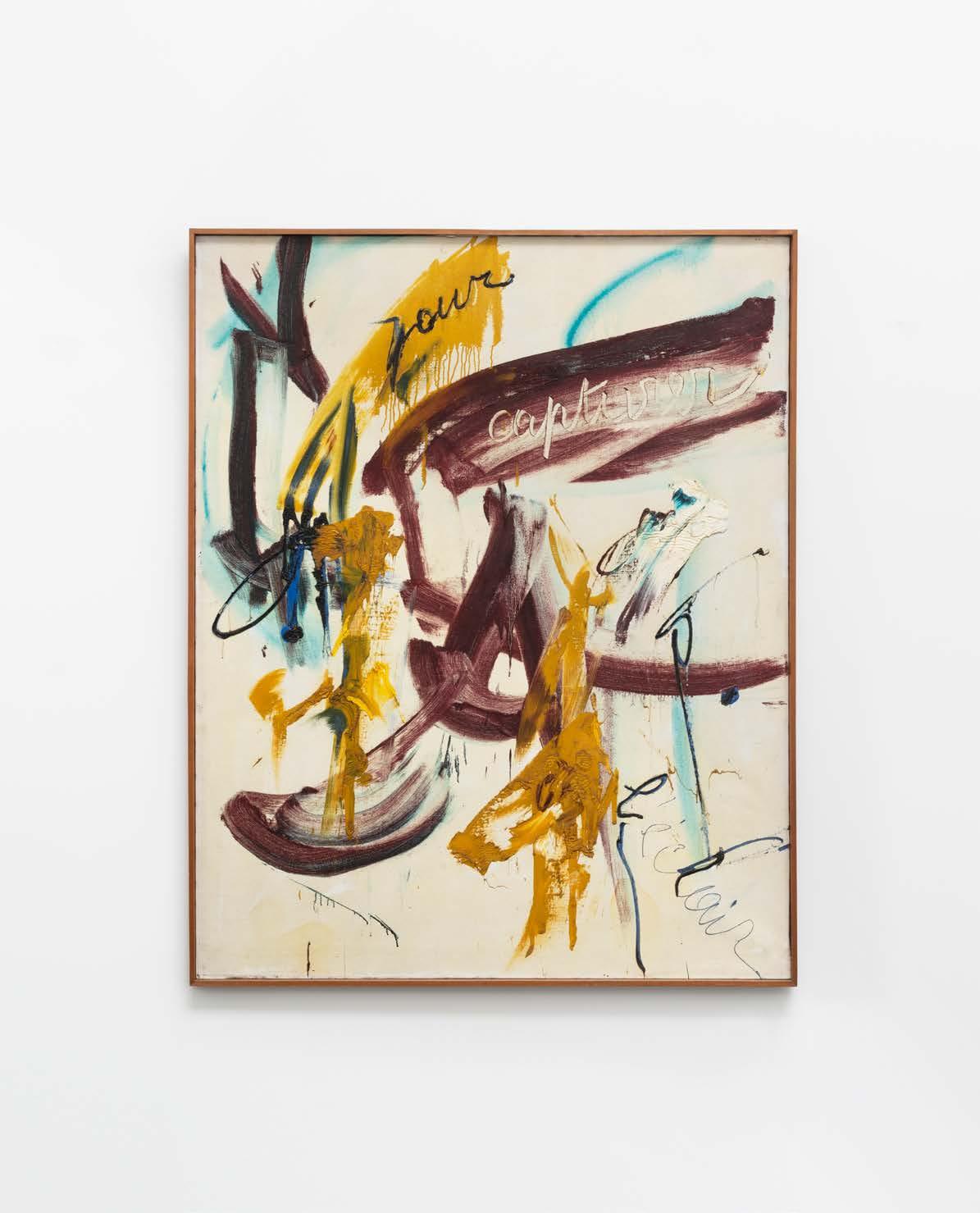
Pour capturer l’éclair - 1960
[To Capture the Lightning]
Oil on canvas, 155 x 125 cm
Signed and dated on verso
Provenance:
Galleria d’arte Pagani del Grattacielo, Milan
Private collection, Italy
€ 40 000 - 60 000
Pour capturer l’éclair, a collaboration between Englebert Van Anderlecht and the poet Jean Dypréau, belongs to the series of Peinture Partagée works initiated by the two artists in 1958. These paintings emerged from an intense dialogue between word and gesture, in which poetry neither illustrated painting nor merely accompanied it, but fused with it into a single expressive act. As contemporaries observed, the canvases born from the complicity of Dypréau and Van Anderlecht testify to the liberating and creative shock produced by the encounter of poet and painter: words and phrases sustain and reinforce the painter’s gesture, translating the intensity of language into colour and movement. Broad, at times violent yet always controlled, the brushwork conveys the immediacy and physicality central to Van Anderlecht’s practice at the turn of the 1960s.
Introduced to Switzerland and Italy by Jef Verheyen, Van Anderlecht participated in 1959 in the exhibition Nuove tendenze belgi at Galleria Pagani del Grattacielo, an important platform for postwar European abstraction and experimental art. The following year, the gallery acquired several works directly from the artist, most likely including the present painting.
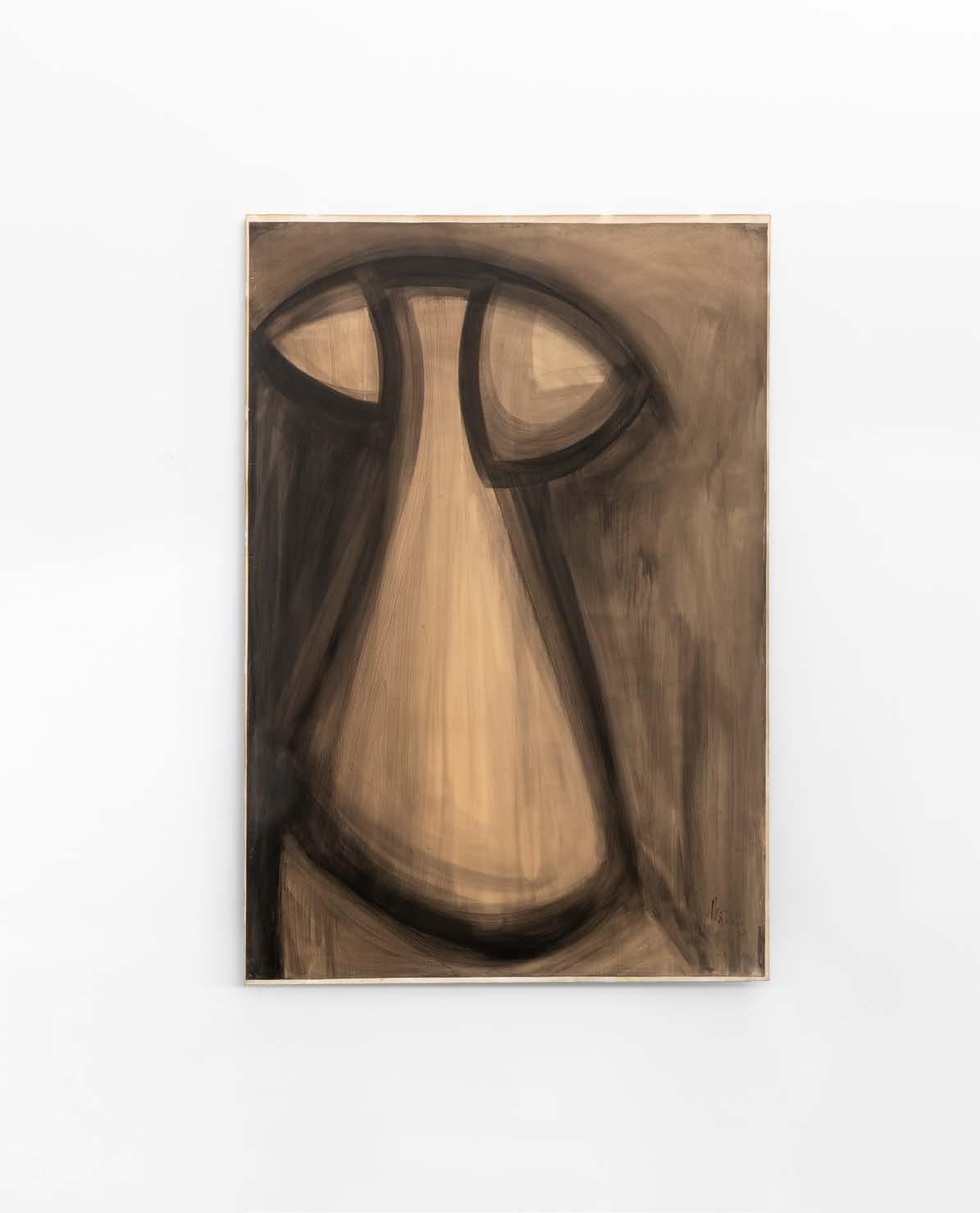
095 Antoine Mortier (Belgian, 1908-1999)
India ink on paper, 58 x 38 cm
Provenance: Private collection, Antwerp
€ 3000 - 5000
Untitled
096 . Nkisi N’konde Kongo
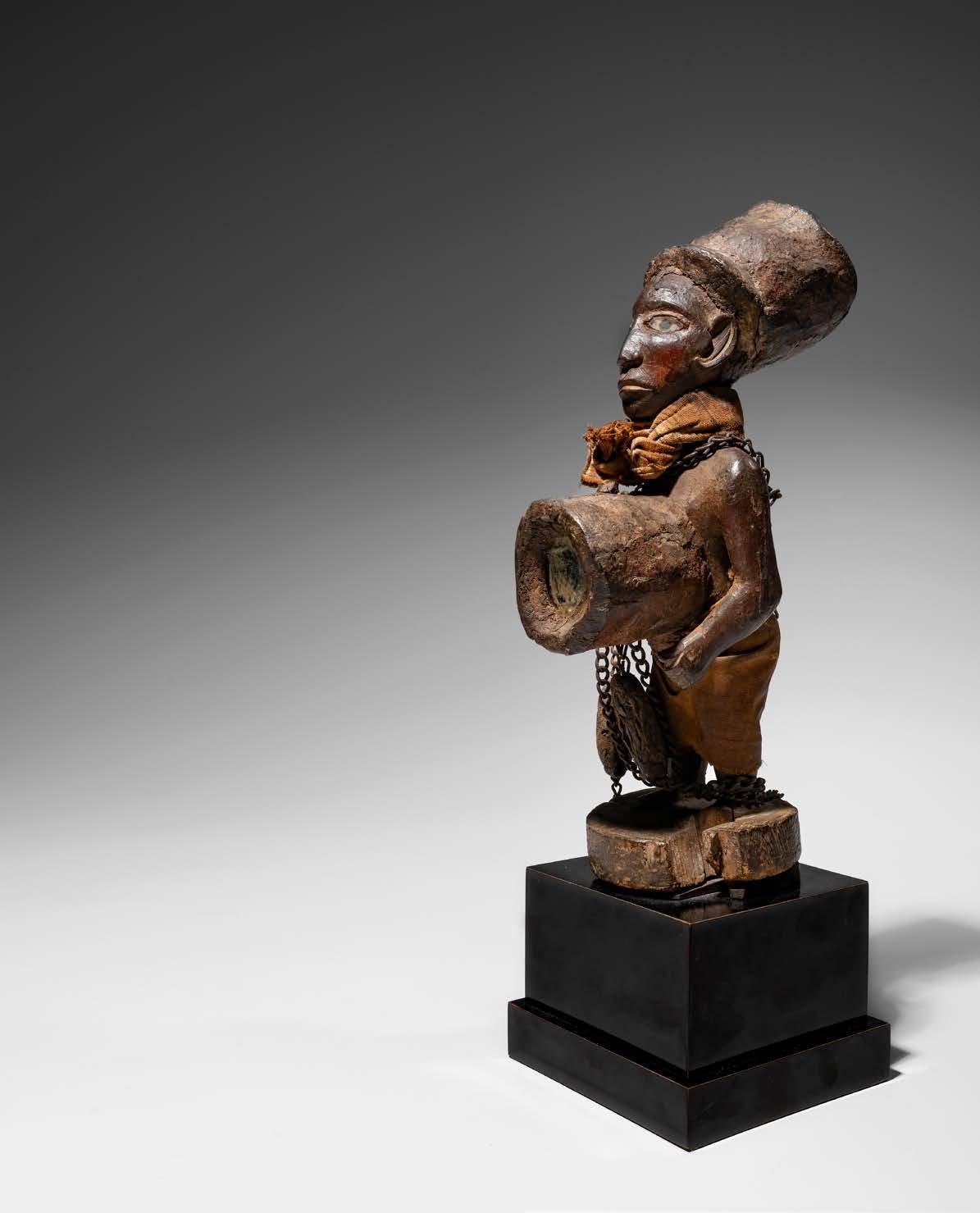
D.R. Congo Wood, mirror, vegetal fibers, and metal 22 cm
Provenance: Galerie Blanckaert, Knokke Private collection, Belgium
Published: Christiane Falgayrette, Objets interdits [exhibition catalog], Fondation Dapper, Paris, 1990, p.20 (ill.)
€ 7000 - 10 000
097 Antoine Mortier (Belgian, 1908-1999)
Untitled - 1967
India ink on paper mounted on canvas
158 x 108 cm (canvas); 151,5 x 100 cm (sheet)
Signed and dated lower left
Provenance:
Private collection, Antwerp
€ 8000 - 12 000
D.R.
Provenance:
Private collection, Belgium
€ 4000 - 6000
098 . Luba Shankadi
Congo Wood, 19,5 cm
099 César
(French, 1921-1998)
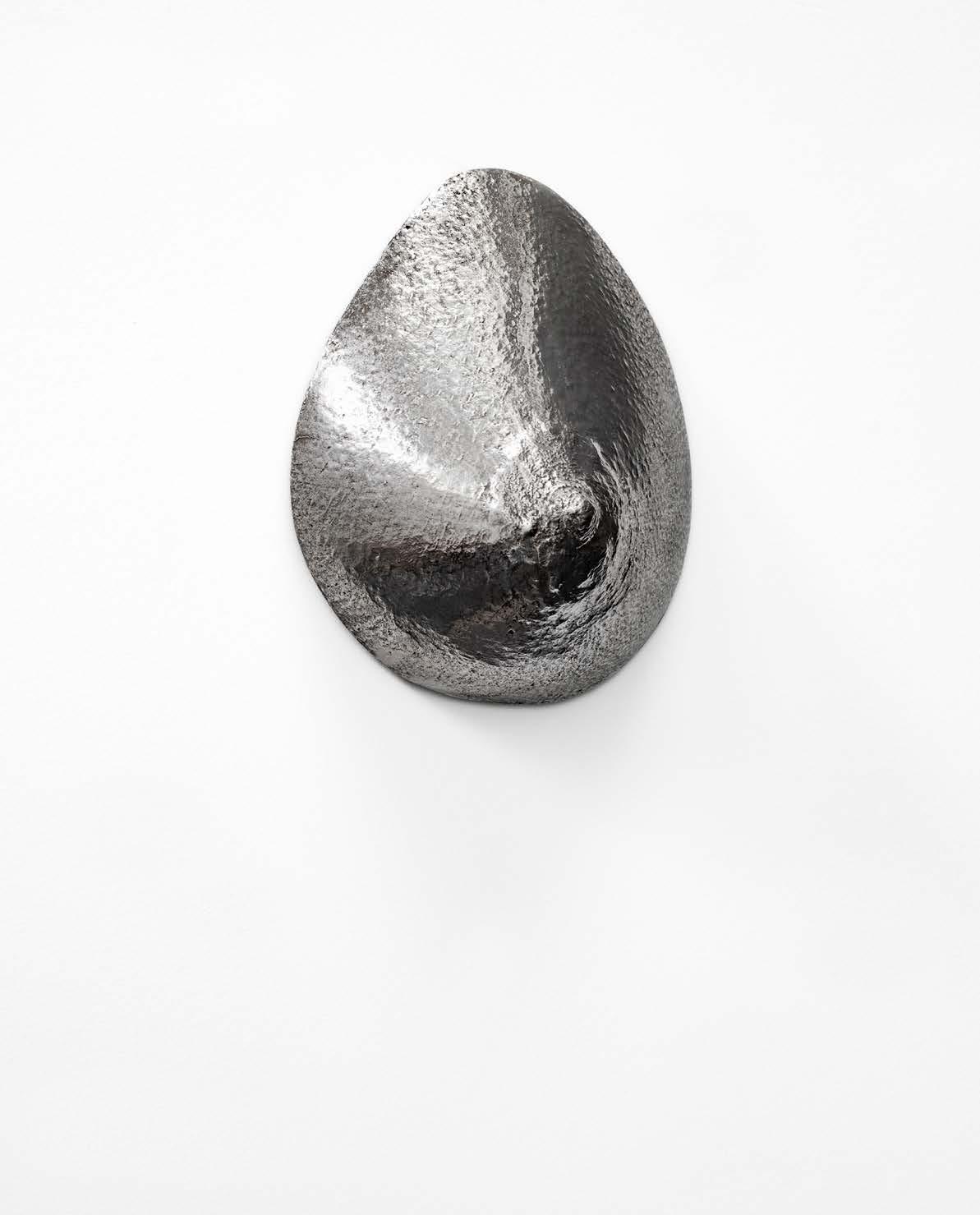
Le Sein - 1967
[The Breast]
Stainless steel, 33,5 cm
Signed alongside top edge numbered on verso: 2/6
Provenance: Private collection, Belgium
Literature:
Rainer Michael Mason, César. Rétrospective des sculptures [exhibition catalog], Geneva, 1976, cat.37, pp.48-75 (ill.) another cast
€ 3000 - 5000
This work is recorded in the archives of Madame Denyse Durand-Ruel under no. DDR610, with the approval of Madame Stéphanie Busuttil, holder of César's moral rights.
Le Sein (The Breast) is among César's most concise and enduring motifs. At once familiar and dislocated, the fragment oscillates between recognition and abstraction, its rounded volume lending both clarity and ambiguity. The subject originated in an ambitious proposal to Hélène Rochas: a five-metre-wide stainless steel breast to be installed in the pond of her factory in Poissy. Modelled on the breast of Victoria von Krupp, a dancer at the Parisian cabaret Crazy Horse, the project was realised in 1966 and initiated a series of variations across scale and material.
The present stainless steel example distils this investigation with particular clarity. Its polished surface accentuates the curvature of the form while introducing a cool, industrial reflectivity that both mirrors and dissolves the object.
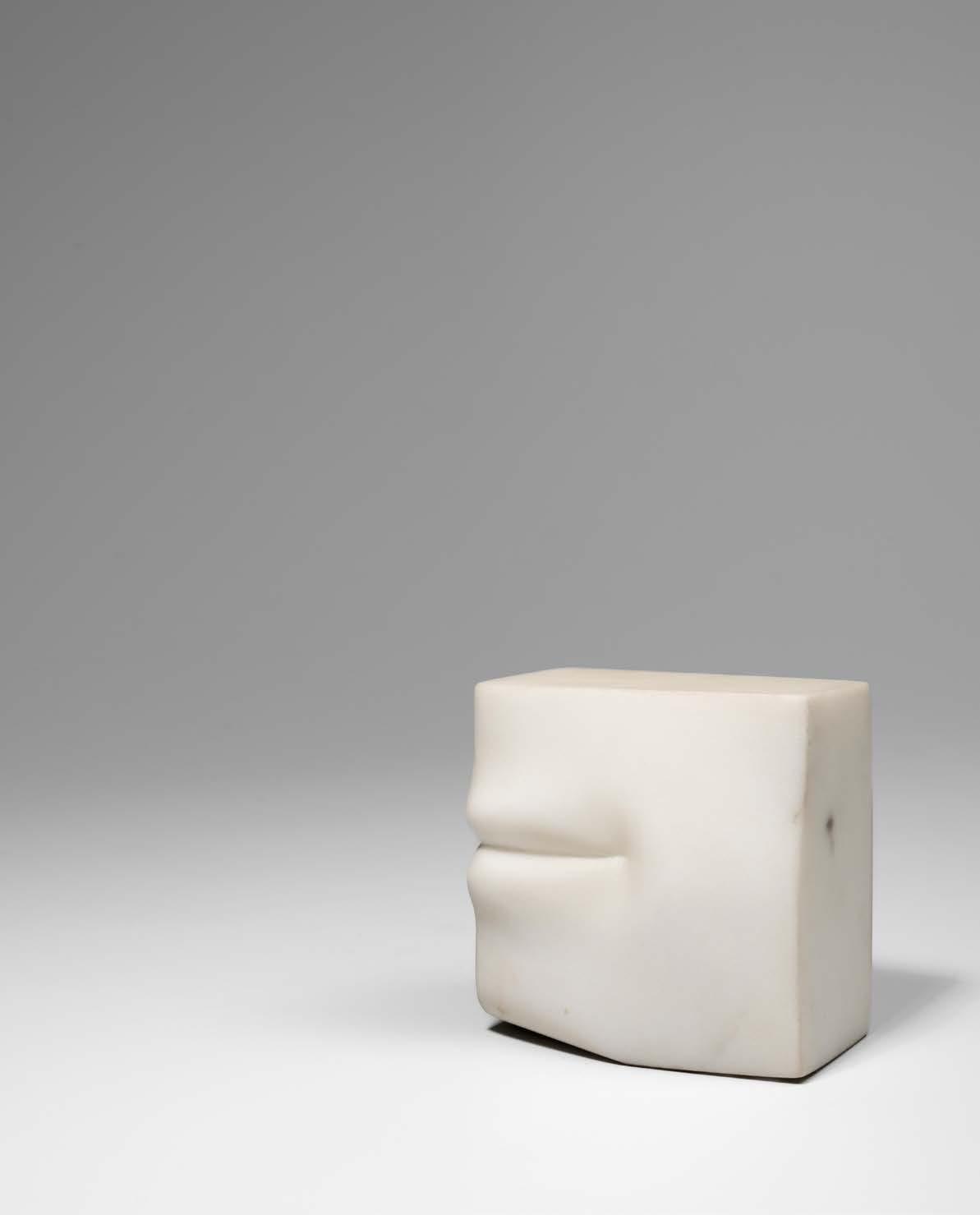
100 . Jan Dries (Belgian, 1925-2014) Glimlach - 1968 [Smile]
Marble, 8 x 8 x 4 cm
Provenance: Private collection, Antwerp
€ 3000 - 5000
Gustave Van Geluwe in his home. On his right the present sculpture.
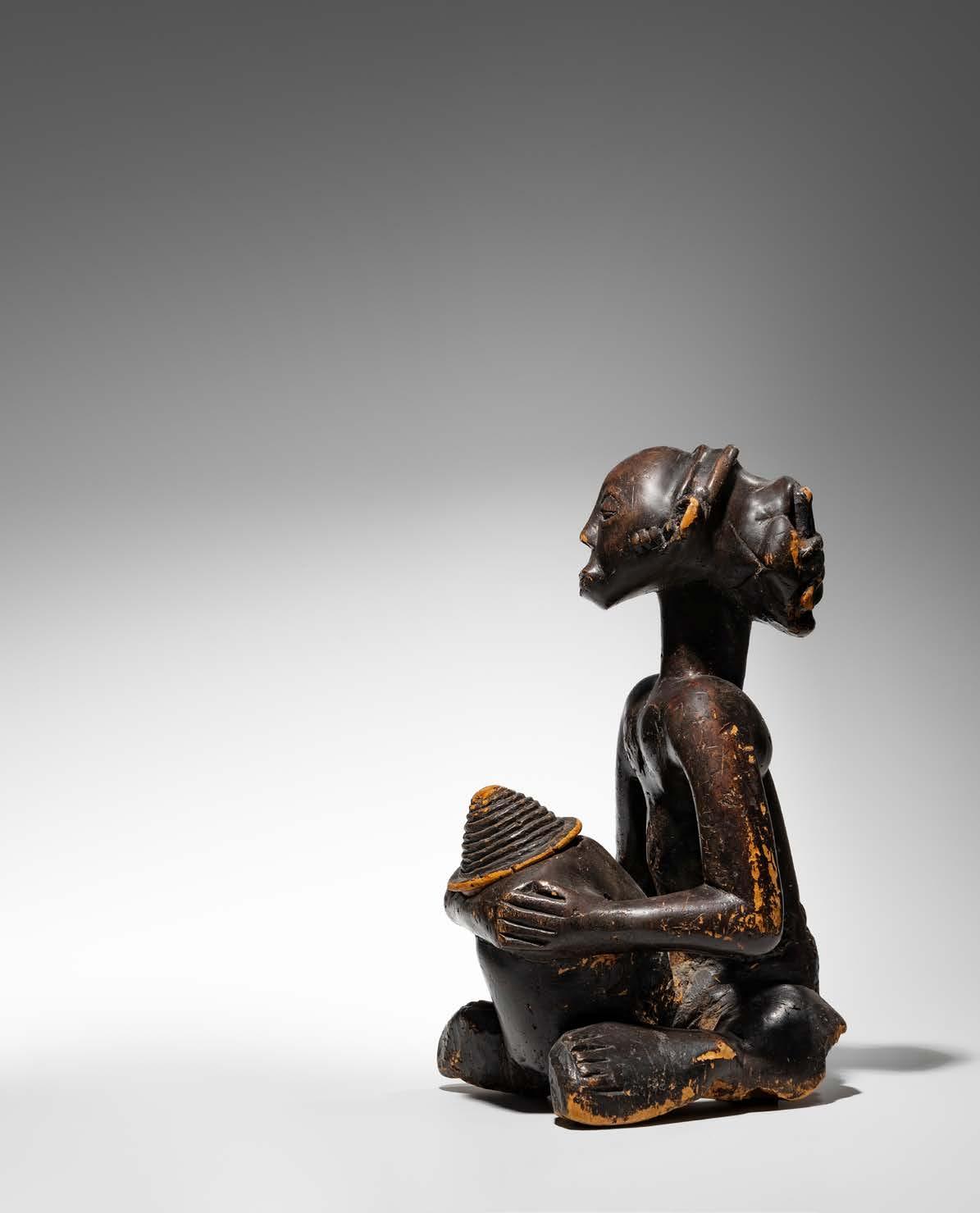
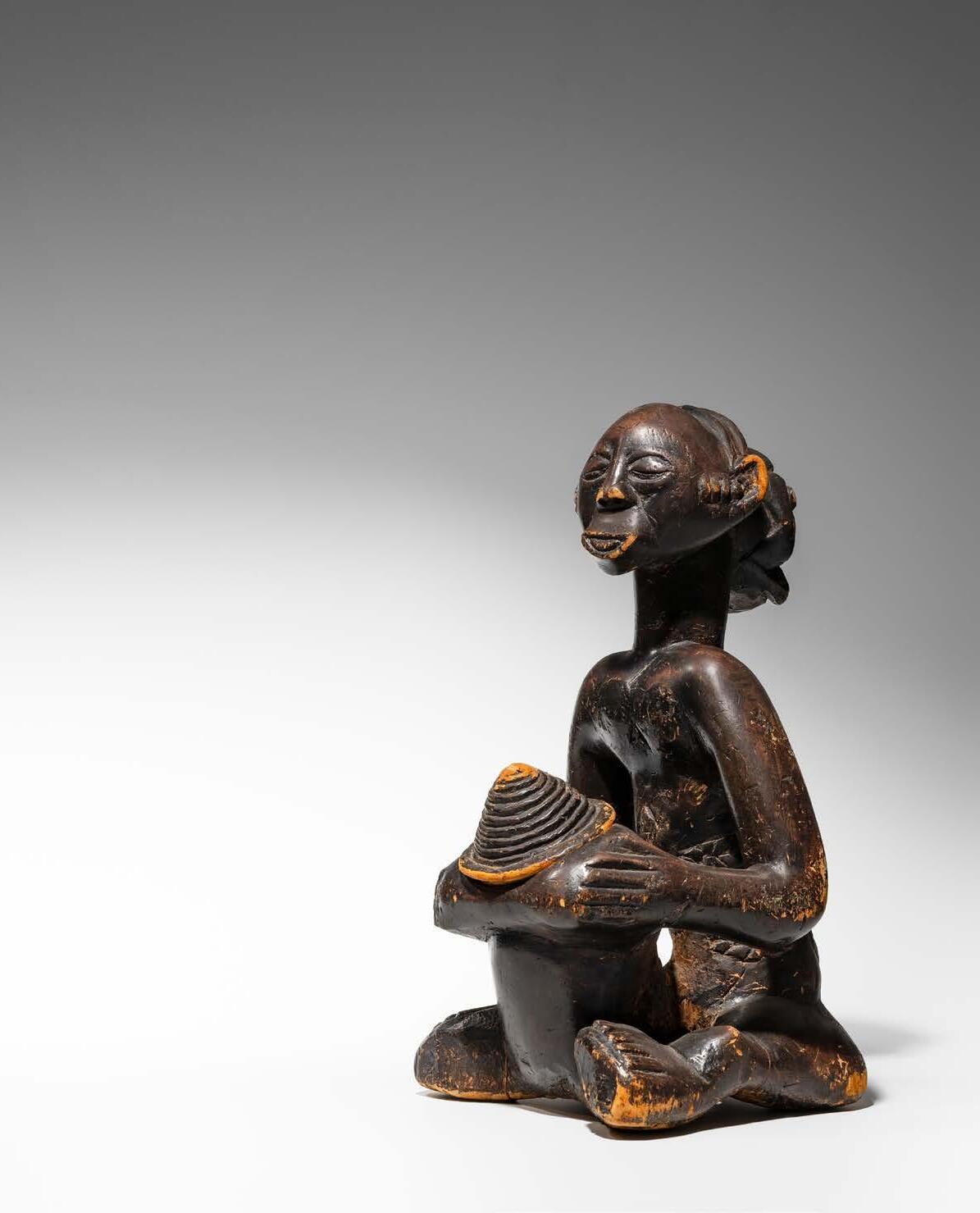
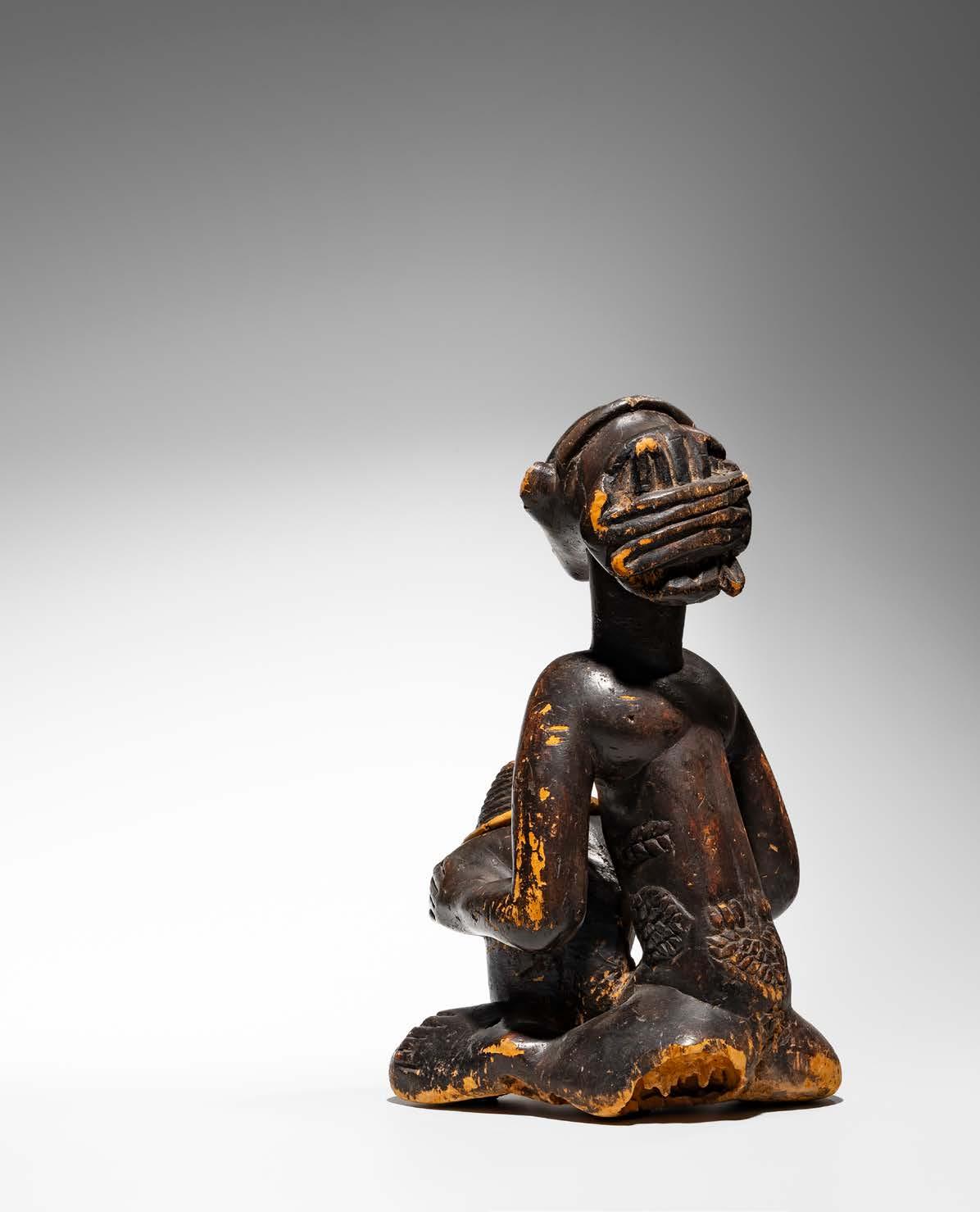
101 Luba Cupholder
D.R. Congo Wood, 44 cm
Provenance:
Carlo Van den Bossche Collection, Antwerp
Gustave Van Geluwe (1881-1962) Collection, Belgium (since 1956)
Marcel Mabille (1902-1986), Brussels
Thence by descent
Published:
Henri Kerels, "L'art nègre dans la Collection Van Geluwe", in Revue Congolaise Illustré, no.9, 28, September 1956, p.21
Tanguy Eeckhout, Steven Jacobs, Maarten Liefooghe, Maisons d'art moderne, Private collections in Belgium 1945-1980, MER. B&L, Ghent, 2020, p.104 (ill.)
Exhibited:
Verviers, Société Royale des Beaux-Arts; Düsseldorf, Kunstverein; Otterlo, Museum Kröller-Müller, Ostend, Kursaal; Royal Museum of Fine Arts, Antwerp, Verzameling
G. Van Geluwe, March - September 1956
€ 20 000 - 30 000
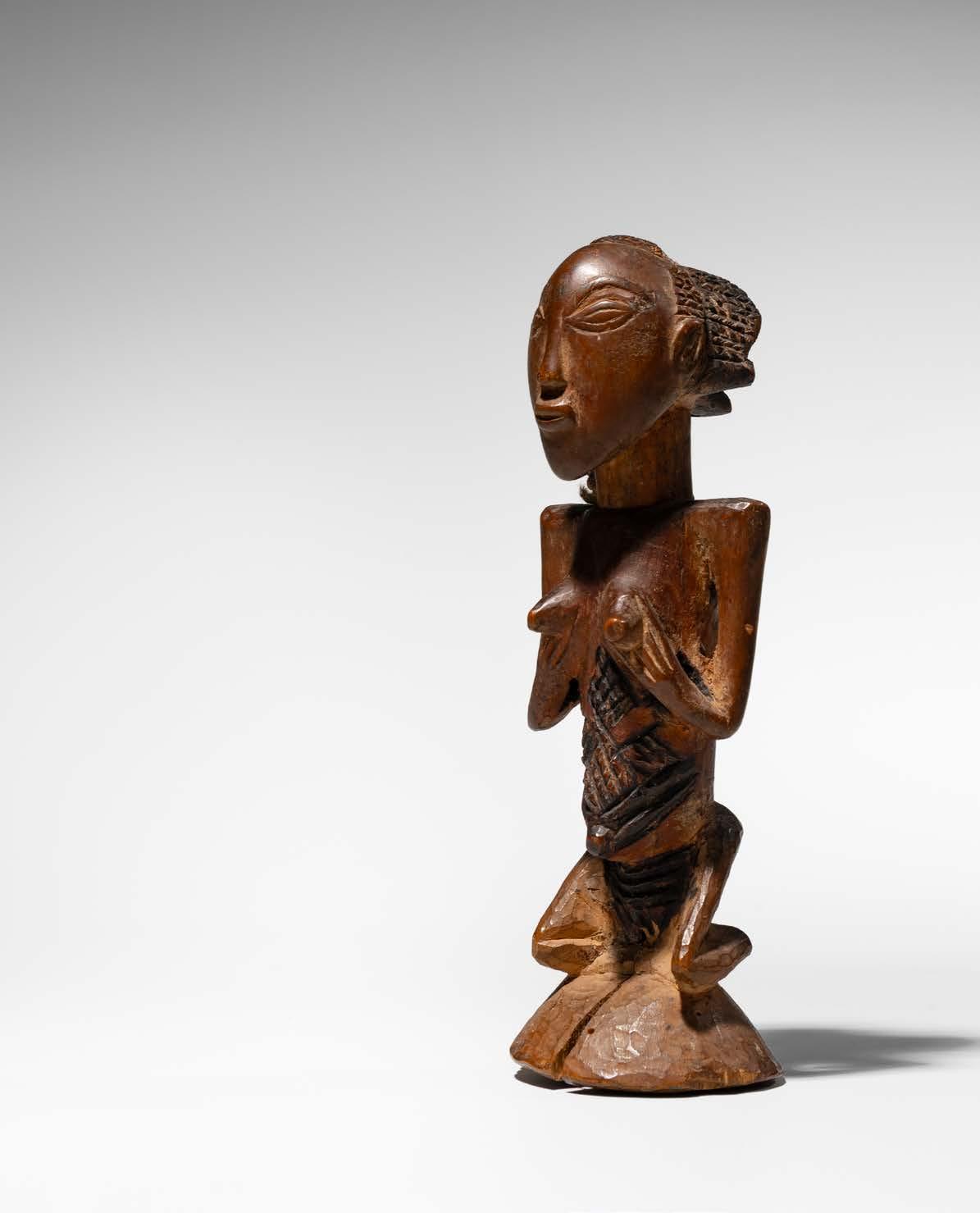
Luba cupholder of the rare mboko type, distinguished by a composition structured around a central, prominent cup. The seated female figure is conceived in close relation to this receptacle, her compact, powerful volumes reinforcing its centrality. The carving privileges bold, clearly articulated forms, with an emphasis on mass and presence. The cup is topped by a cone-shaped lid, decorated with concentric circular motifs. According to tradition, mboko figures served as sacred symbols of kingship. The receptacle would contain white kaolin, used to anoint the body and invoke the protection of ancestral spirits. These works also played a role in divination practices. Referred to as kabila ka vilye (“daughter of the spirit”), such figures were associated with fertility and protection: they could be placed before the dwelling of an expectant mother, where offerings were deposited to ensure the well-being of both mother and child. Diviners likewise displayed them outside their homes to receive gifts.
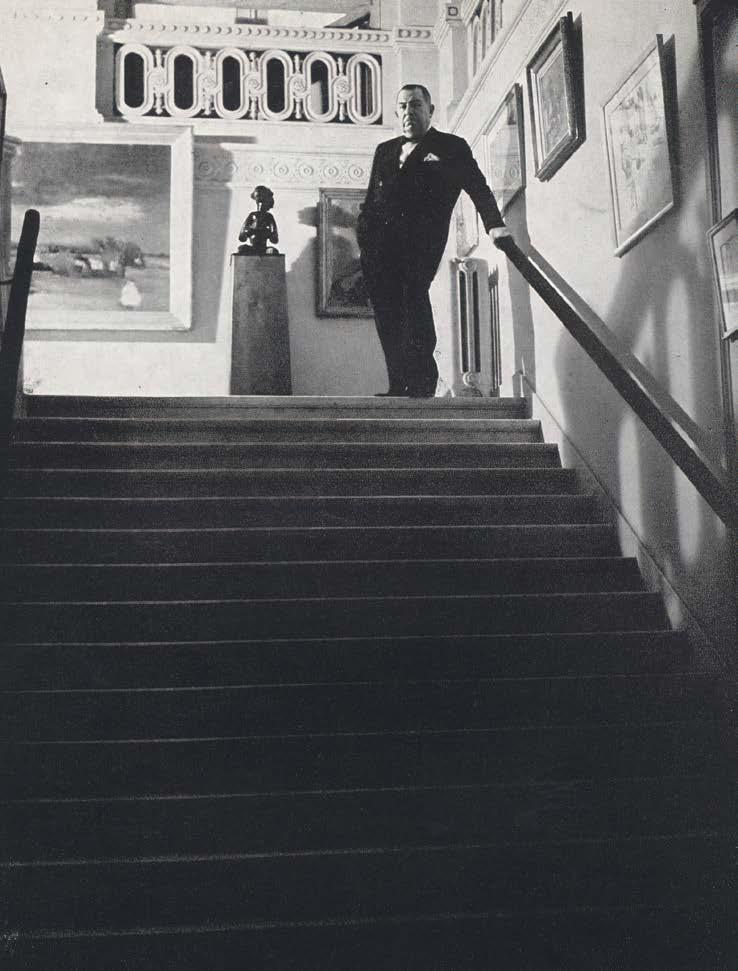
This example is distinguished by its provenance. It formed part of the collection of Gustave Van Geluwe (since 1956), a collector closely associated with Flemish Expressionism and a close friend of Constant Permeke, with whom he shared a sustained interest in African art.
A photograph documents the sculpture prominently displayed in Van Geluwe’s residence. He is known to have acquired it from the Antwerp dealer Carlo Van den Bossche.
The surface shows a developed patina and clear traces of sustained handling, attesting to prolonged use. These features, together with stylistic considerations, support a dating to the early 20th century.
102 . Antoine Mortier (Belgian, 1908-1999)
Élévation rose - 1963
Ink and wash on paper, 224 x 153 cm
Signed and dated lower right
Signed, titled, and dated on verso
Provenance:
Private collection, Antwerp
Published:
Karel Geirlandt, Jan Hoet, Francine-Claire Legrand, France Borel, Françoise Knops-Mortier, Antoine Mortier, Lannoo, Tielt, 1989, p.39, 41 (ill.)
Camille Brasseur, Antoine Mortier. La Transfiguration du réel, Prisme Éditions, Brussels, 2012, p.165 (ill.)
Exhibited:
XXXII Venice Biennale, Belgian Pavilion, 1964 (label on verso)
€ 20 000 - 30 000
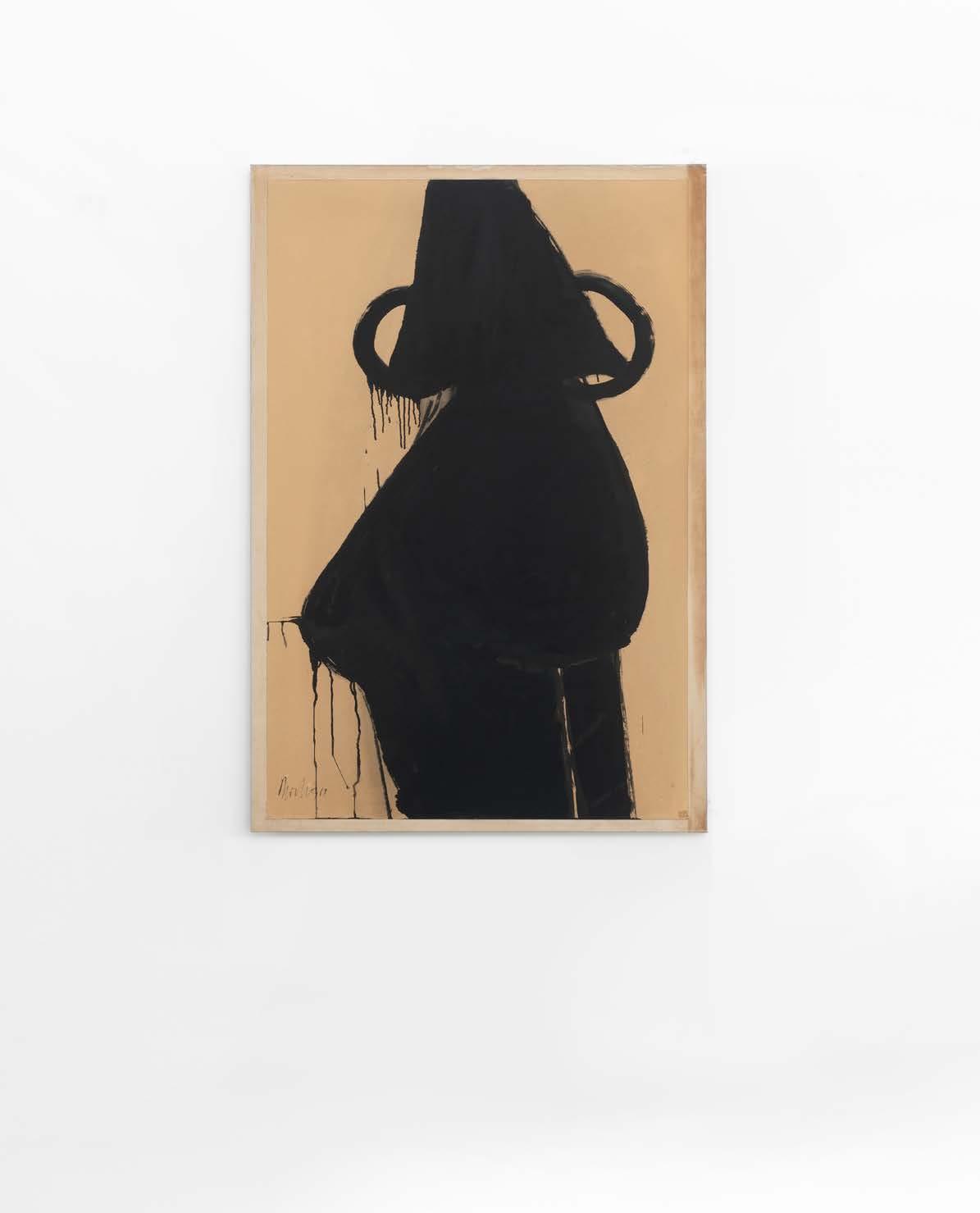
This large-scale work belongs to a mature phase of Antoine Mortier's practice, in which figuration is reduced to a set of essential signs while retaining a clear point of departure in the human body. Although fully abstract in appearance, the composition suggests the structure of a female torso. This motif recurs throughout the artist’s oeuvre as a generative source rather than a descriptive end.
Mortier’s approach is characterized by a tension between underlying figuration and its dissolution into gesture. The image is constructed through bold, black ink contours that establish a forceful armature, within which modulated ink washes create a sense of volume and internal rhythm. This interplay between line and wash produces a spatial ambiguity: forms appear at once contained and expansive, oscillating between corporeal reference and autonomous abstraction.
The work exemplifies the artist’s sustained exploration of the body as a site of transformation, where the initial motif is both present and surpassed. Its scale reinforces the physicality of the gesture, allowing the composition to unfold with a measured yet expansive energy.
103 Songye Figure
D.R. Congo
Wood, 45 cm
Provenance:
Odette (1925-2012) and René (1901-1998) Delenne Collection, Brussels
Pierre Dartevelle (1940-2022), Brussels
Luisa Muller van Isterbeek Collection, Brussels
Francis Berthier Collection, Paris
Entwistle Gallery, London/Paris
Robert M. & Lillian Montalto Bohlen, Brighton, Michigan
Pace Gallery, New York
Daniel (1929-2015) and Marian Malcolm, Tenafly, New Jersey (2007-2016)
Sotheby's, Paris, "Malcolm Volume Two, 22 June 2016, lot 11
Private collection, London
Published:
Michael Kan, Masterworks of African Art: The Congo Basin, 2003, n.p.
François Neyt, Songye. La Redoutable Statuaire Songye d'Afrique Centrale/Songye. the Formidable Statuary of Central Africa, Antwerp, Mercatorfonds, 2004, p.70, fig.31
Frank Herreman, Icons of Perfection. Figurative Sculpture from Afrika, Hamline University, Hamline University Press, 2006, p.38, fig.21
Frank Herreman, Icônes de perfection, in Tribal Arts, Spring 2006, n°12, p. 94, n°8 (ill.)
Exhibited:
Ann Arbor, University of Michigan Museum of Art, Masterworks of African Art, The Congo basin, 6 September 2003 - 2 May 2004
Saint-Paul, Hamline University Art Galleries, Icons of Perfection. Figurative sculpture from Africa, 2 December 2005 - 11 February 2006
€ 70 000 - 100 000
François Neyt attributes this Songye figure from the former Malcolm collection to the northern Milembwe, Belande, and Eki stylistic region,also commonly called Beneki. Sculptors working in this tradition gave particular emphasis to the mouth, while features such as the broken line of the temple hair, the volumetric coiffure, closed upper eyelids, and curvilinear base align it with a small corpus attributable to Eki or Kibeshi in the southwest, near Luba-Kasai (Neyt, Songye, La redoutable statuaire Songye d’Afrique Centrale , 2004, p. 313). Among the finest known examples are this figure, and probably the largest, alongside works formerly in the collections of Baudouin de Grunne and Christian Duponcheel.
The figure’s refined carving, iron collar, and once-present horn attest to the combined work of sculptor, blacksmith, and nganga (diviner), whose ritual intervention activated its spiritual force. Its frontal, symmetrical stance conveys authority and readiness, while hands placed on the abdomen signify protection of clan and lineage. Angular, architectural forms heighten its sense of vigour, balanced by half-closed eyes suggesting vigilance and composure. Subtly emphasized features - the mouth, nose, and ears - underscore its role as a conduit for communication with ancestral spirits, mediating between the living and forces that safeguard the community.
104 Antoine Mortier (Belgian, 1908-1999)
Untitled - 1961
India ink on paper mounted on canvas, 114 x 77 cm
Signed and dated lower right
Provenance: Private collection, Antwerp
€ 7000 - 10 000
105 Mangbetu Slit Drum
D.R. Congo - Late 19th c - early 20th c Wood, 35 x 75 cm
Provenance:
Private collection, Belgium
Galerie Philippe Ratton, Paris
Private collection, Belgium
€ 15 000 - 20 000
Accompanied by a certificate of authenticity by Philippe Ratton, dated 22 May 2019
Mangbetu slit drums, known as nedundu, exemplify the refinement of Mangbetu sculptural practice. Their shape is notably elegant and elongated, with balanced proportions that emphasize clarity of line and volume.
Such drums were used in court ceremonies and at gatherings of chiefs, and could also be presented by rulers to distinguished dignitaries as emblems of authority.
The present example shows clear traces of prolonged use, attesting to both its age and its significance. The patina developed over time reinforces the contours of the form, lending depth to its surfaces and underscoring the sculptural qualities of the piece.
106 Marthe Wery (Belgian, 1930-2005)
Untitled - 1976-1977
Ink on paper, 60 x 119 cm
Provenance: Rossicontemporary, Brussels Private collection, Brussels
€ 4000 - 6000
107 Songye Figure
D.R. Congo
Wood, natural pigments, kaolin, brass tacks, textile, metal
45 cm
Provenance:
Private collection, Brussels
Pierre Dartevelle (1940-2022), Brussels
Line and Hyppoliet Verbeemen Collection, Bonheiden
Christie's, Paris, Living with African and Oceanic Arts, 30 April 2024, lot 82
Private collection, Paris
Published: François Neyt, Songye. La redoutable statuaire songye d'Afrique centrale, Mercatorfonds, Brussels, 2004, p.195, n°162 (ill.)
€ 18 000 - 25 000
108 . Mangbetu Jar
D.R. Congo
Terracotta, 24 cm
Provenance:
René Withofs (1919-1997) collection, Brussels
Pierre Dartevelle (1940-2022) collection
Private collection, Belgium
€ 4000 - 6000
René Withofs inventory number on verso: RW1006
109 Marthe Wery
((Belgian, 1930-2005)
Untitled - c.1986
Green ink on paper, 44,5 x 31 cm
Provenance:
Brigitte Geerinckx Gallery, Brussels
Private collection, Brussels
€ 2000 - 3000
110 . Thomas Houseago (British, 1972)
Six Studies for sculptures - c. 2000
Pencil on paper
32 x 23,9 cm
Provenance:
Private collection, Brussels (acquired directly form the artist)
€ 2000 - 4000
111 Thomas Houseago (British, 1972)
Three Models for Sculptures - c.2000
Plaster and metallic paint
Spoon (gold): 4 x 22 cm
Spoon (white): 3,5 x 22 cm
Glass: 13 x 5,8 cm
Provenance:
Private collection, Brussels (acquired directly form the artist)
€ 3000 - 5000
112 Songye Figure
D.R. Congo
Wood, cowries, glass beads and horn
49 cm
Provenance: Private collection, Belgium Olivier Larroque, Nîmes Inti Ligabue, Italy
Private collection, Paris
€ 10 000 - 15 000
113 . Claire Bataille & Paul Ibens
(Belgian, 1940 - Belgian, 1939-2020)
Pair of Gray Benches - 1998 (design)
Wood, gray paint, steel, 65 x 135 x 55 cm
€ 1200 - 1800
Auctioned for the benefit of the Horta Museum
114 . Jules Wabbes (Belgian, 1919-1974)
Round Tulip Table
End grain wengé wood and brass Ø 150 cm
€ 12 000 - 18 000
115 . Lega Mask
D.R.Congo
Wood, kaolin, and rattan, 17 cm
With a handle on the reverse
Provenance: Private collection, Belgium
€ 30 000 - 50 000
In La sculpture des Lega*, Daniel Biebuyck describes the wooden lukwakongo maskettes as the Lega sculptures that come closest to the classical concave, heart-shaped facial style traditionally associated with Lega art. Linked to the highest levels of the Bwami society, notably the lutumbo lwa yananio grade, these small maskettes were shown during initiation rites and occupied an important place within the symbolic and performative world of Lega associations.
The present example displays the distinctive heart-shaped physiognomy and retains a vertically carved handle on the reverse, a less common variant replacing the suspension cord more frequently encountered on such maskettes. According to Biebuyck, these handles allowed the object to be carried, suspended or manipulated during ritual performances and initiations. Complemented by a fibre beard and these masks were periodically refreshed with white clay during ceremonial use. The present mask still preserves layers of white kaolin, testifying to its repeated ritual use and age.
*Ed. Hélène & Philippe Leloup, Paris/ New York 1994, p.139
116 Thomas Houseago (British, 1972)
Study for Caryatid - c.2000
Plaster, 23 x 6,5 x 6,5 cm
Provenance: Private collection, Brussels (acquired directly form the artist)
€ 2000 - 4000
117 . Claire Bataille & Paul Ibens (Belgian, 1940) (Belgian 1939-2020) Pair of Benches 1998 (design) Meranti wood and steel, 65 x 220 x 55 cm
€ 2000 - 3000
Auctioned for the benefit of the Horta Museum
118 . Venda or Pedi Female Figure
South Africa
Wood, 44,5 cm
Provenance:
Charles Ratton, Paris
Guy Ladrière, Paris
Merton D. Simpson. New York
Sotheby's, New York, 24 November 1992, lot 148 Myron Kunin Collection, Minneapolis
Sotheby's, New York, In Pursuit of Beauty: The Myron Kunin Collection of African Art, 11 November 2014, lot 157
Private collection, London
Published:
Jean-Baptiste Bacquart, The Tribal Arts of Africa, New York and London, 1998, p. 231, fig. D
Merton D. Simpson (adv.), African Arts. Vol XXV No 4, October 1992, p.1
€ 30 000 - 40 000
This finely carved female figure, formerly in the collections of Charles Ratton, Paris, and Myron Kunin, belongs to a rare northern South African sculptural tradition, known from only a handful of examples. Its thick, cubistic body, large ears, and bald head are complemented by round inlaid eyes and arched brows. The figure’s warm, time-worn patina accentuates the facial features, imbuing it with a quiet vitality and presence. Its form and surface treatment closely echo a pair of male and female figures in the Johannesburg Art Gallery, formerly in the collection of Wally and Udo Horstmann, Zug.
Although traditionally associated with Venda or Pedi origins, Alain Guisson has proposed a more northerly provenance, south of Maputo in present-day Mozambique.
119 . Niele Toroni (Swiss, 1937)
Empreintes de pinceau n° 50 - 1977
Oilcloth, 129,5 x 104,5 cm
Dated with stamp on verso: Mai 1977
Provenance :
Acquired directly from the artist by the present owners (1987)
Private collection, Brussels
Published:
Invitation card Galerie Buchmann, Basel, 10 March - 21 April 1990
€ 60 000 - 80 000
Niele Toroni is internationally recognized for his rigorous exploration of repetition and gesture, a practice he initiated in the late 1960s with his Empreintes de pinceau (Brushstroke Imprints) series. By systematically applying a 30 mm-wide brushstroke at regular intervals directly onto the support, Toroni challenged conventional notions of painterly expression, authorship, and uniqueness. His method emphasizes the physicality of the brush and the act of painting itself, transforming a simple, repeated mark into a vehicle for rhythm, visual harmony, and meditative contemplation.
Emerging within the broader currents of Conceptual Art and Minimalism, Toroni’s work engages with questions of process, standardization, and seriality that were central to contemporary art debates in Europe during the 1970s. The Empreintes de pinceau series underscore the tension between methodical repetition and subtle variation, situating Toroni among artists who sought to distill painting to its essential gestures while interrogating the boundaries between painting, performance, and conceptual investigation.
120 . Stéphane Mandelbaum (Belgian, 1961-1986)
Untitled - 1985
Biro on postcard, 14,5 x 10,5 cm
Provenance:
Private collection, Belgium
Published: Galerij Hugo Godderis, Veurne, Stéphane Mandelbaum, 1985 (set of postcards)
Bruno Jean, Stéphane Mandelbaum.
A monograph, Editions Martin de Halleux, Paris, 2022, p.349 (ill. of the postcard)
€ 2000 - 3000
Drawings for the set of postcards that served as a catalog to the exhibition held at Galerij Hugo Godderis in Veurne in 1985.
Some time before the 1985 exhibition, Godderis was concerned about the quality of the photographs that would illustrate the large-format works in the catalog. He therefore asked Stéphane Mandelbaum to create ballpoint-pen miniatures of these drawings on blank postcards. The gallery owner printed a few copies and compiled them into a folder that served as a catalog.
Of the fifteen postcards, only six original drawings were recovered by the time of publication of Stéphane Mandelbaum.
A monograph by Bruno Jean (Editions Martin de Halleux, Paris, 2022).
121 . Stéphane Mandelbaum (Belgian, 1961-1986)
Untitled - 1985 Biro on postcard, 14,5 x 10,5 cm
Provenance: Private collection, Belgium
Published: Galerij Hugo Godderis, Veurne, Stéphane Mandelbaum, 1985 (set of postcards) Bruno Jean, Stéphane Mandelbaum. A monograph, Editions Martin de Halleux, Paris, 2022, p.348 (ill. of the postcard)
€ 2000 - 3000
122 . Marcel Broodthaers (Belgian, 1924 - 1976)
Garniture symbolique - 1975
10 color photographs, 8,5 x 139,5 cm
Signed, numbered, and dated on verso: 11/12
Titled on verso: "Un coup de Dés -"
Provenance:
Private collection, Belgium
Literature:
Ceuleers & Van de Velde Booksellers, Marcel Broodthaers, The Complete Prints and Books 1964 -1975 [exhibition catalog], Antwerp, 2012, cat.24
€ 15 000 - 25 000
Executed in 1975, Garniture symbolique belongs to a sustained body of work in which Marcel Broodthaers engages with the material, visual, and semantic structures of language. Comprising ten color photographs reproducing fragments of Stéphane Mallarmé’s poem Un coup de dés jamais n’abolira le hasard, the work presents words and passages arranged in an arbitrary sequence, thereby disrupting the syntactic and spatial logic of the original text.
This treatment extends Broodthaers’ earlier interrogation of Mallarmé’s poem in his 1969 artist’s book, Un coup de dés jamais n’abolira le hasard: Image . In that work, he preserved the typographic layout of the poem while systematically obscuring each line with black bars, transforming the page into a field of abstract forms and rendering the text illegible. Language is thus displaced from its communicative function and reconstituted as a visual structure. In Garniture symbolique , this process is further developed: rather than suppressing the text entirely, Broodthaers fragments and reorders it, introducing chance, dislocation, and repetition as operative principles.
The use of photography underscores the mediated nature of the image-text relationship, distancing the viewer from the original printed page while simultaneously re-presenting it as an object of analysis. Across these works, Broodthaers consistently interrogates the conventions governing literature, display, and meaning, positioning language at the intersection of reading and viewing.
123 . Philippe Vandenberg (Belgian, 1952-2009)
Z.T. (Svastika Road V) - 2002-2003
"Cyclus exil de peintre " Oil on canvas, 50 x 40 cm Titled, signed, and dated on verso
Provenance: Richard Foncke Gallery, Ghent Private collection, Antwerp
€ 6000 - 8000
The theme of the swastika is a disturbingly recurrent one in Vandenberg’s work for the viewer who is unfamiliar with his work. In his article"Philippe Vandenberg: Œdipal resistance", Mark Wieczorek* places this theme in the broader context of the artist’s practice:
“Vandenberg's engagement with swastika imagery may seem innocently formal and innocuous, if it weren't for our Western associations, since the 1930s, with the swastika as a Nazi symbol. It is well known that the figure has ancient religious meanings, and that especially in Eastern cultures it remains a symbol of spirituality and divinity […]. Yet these meanings are difficult to hold in mind because of the stigma of associations with fascism and racism. Vandenberg's work plays to that stigma in a double move against polarised symbolisation (good/evil, etc.), an emptying out also of the symbolic order […] that some have deemed responsible for the abuses associated with fascism, which are closer to our reality than we'd like to admit. On the one hand, he shows the symbol's proximity to the crucifix […]. On the other, he doodles away on the motif, allowing drawing and painting to be his direct guide and to surprise him. Yet, so completely does he accomplish this task that he empties out virtually all the formal possibilities and permutations of the swastika, running the full gamut of conceivable artistic meanings that are neither fascist, nor religious: from droll stick figures, to decorative pattern, to high modernist abstraction.”
* In Philippe Vandenberg, Kamikaze, exhibition catalog Hamburger Kunsthalle, Hannibal Koenig Books, London, 2018
October 2026