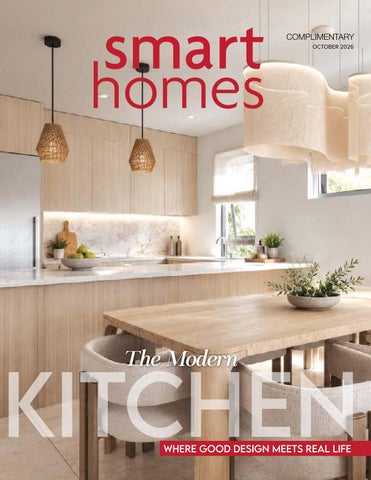
OCTOBER 2026
KiTCHEN WHERE GOOD DESiGN MEETS REAL LiFE
The Sean of Home
Beautiful living belongs to all of us
W Plaza: 417-2233 | Bridgetown: 427-2233 | Sheraton Mall: 437-2233 | www.abeds.bb |
abedsbarbados
HAVE A BETTER, BRIGHTER CHRISTMAS! * 0 0 ,0 25 $ to up Get This holiday, make your season sparkle with an AffinityPlus Loan.
Gift Generously • Refresh Your Home Take A Festive Getaway
Apply now & get a chance to win Credit Union Cash and more.* *Special Terms & Conditions Apply.
832-1232/1235 | 234-1001/1004 | 436-5600 |
loans@affinityplusbb.com
Bridgetown | Speightstown | Oistins 246-436-5600
info@affinityplusbb.com
www.affinityplusbb.com
Credits GROUP CEO Noel Wood HEAD OF ADVERTISING - NATION GROUP Paulette Jones CIRCULATION MANAGER Adrian Bowen – Tel.: (246) 430-5500 email: adrianbowen@nationnews.com ASSOCIATE EDITOR (Business) Julia S. Haynes - Tel.: (246) 467-2896 email: juliahaynes@nationnews.com WRITERS Sandy Deane, Dwayne Gibbs, Nikita Abed, Tracy Johnson PHOTOGRAPHY Cover – Shipshape Consultants • LU•MA Design Inc. • Abeds Barbados Ltd • Harris Paints Ltd • Elias Media • Ana Paolo Studio DESIGN/LAYOUT: Brian O’Neale ADVERTISING EXECUTIVES: Debbie Brathwaite – Tel.: (246) 430-5518 Email: debbiebrathwaite@nationnews.com Donna Francis – Tel.: 246 467-2868 Email: donnafrancis@nationnews.com INDEX PAGE ADVERTISING Alison Licorish – Tel.: (246) 430-5552 Email: alisonlicorish@nationnews.com Kelly Henry – Tel 430-5554 Email: kellyhenry@nationnews.com ADVERTISING COORDINATOR Wendey Delaney – Tel.: (246) 430-5517 email: wendeydelaney@nationnews.com
2
October 2026
Publisher’s Note Inside Look: The Modern Kitchen
E
very home has its own story, often revealing a little about the personalities, tastes and lifestyles of the people who live there. Whether it is the choice of furniture, the colours on the walls or the way a room is arranged, each decision adds character, discloses a little about our indulgences and makes a home uniquely ours. In this issue of Smart Homes, the kitchen takes centre stage, much as it does in so many homes today. We sat down with architect Kerry Dragon to find out just how much attention this room is commanding from homeowners. For some, it is no longer simply a place to prepare meals but the showpiece of the home! Speaking of showpieces, we trekked all the way to the Scotland District in the north of the island and discovered something quite extraordinary – a modern-day cob house! I mean, something straight out of the pages of an Enid Blyton book! Have you ever seen a structure built solely by organic materials? A place so removed from modern trappings that it feels almost lost in time, yet with a sense of tranquillity that is enough. Russell Norville welcomed us to A Peace of Life, a cosy cottage surrounded by an abundance of trees and plants. Turn to Page 6 to see for yourself. There is no single formula for getting a home right; it could be in the architecture, the location or simply how we use the space we have that makes a home so very special. A thoughtful layout can completely change the look and feel of a room, making it more functional, inviting and better suited to the way we live. Check out the article The Art of The Layout with Kimberlee Payne for some inspiration on how you can make the most of every room in your home. Sometimes, the simplest touches bring the greatest pleasure. Is there anything quite like slipping into a bed with fresh, crisp sheets pulled perfectly tight? Or walking into a bedroom that looks so inviting you almost don’t want to disturb it? A Guide to Perfect Bed Making shares a few tips for getting that bed beautifully made. With the festive season approaching, we also explore how curtains, soft furnishings, contemporary lighting and a few carefully chosen additions can give your spaces a little Glow Up. As always, we hope these pages spark a few ideas, offer some practical advice and perhaps even encourage you to try something new in your own home. Enjoy this issue!
Paulette
Smart Homes is produced by The Nation Publishing Co. Limited, a subsidiary of The Nation Corporation, which is a member of the One Caribbean Media Limited (OCM) group of companies. For general info email: smarthomes@nationnewscom. Every effort has been made to ensure that the information contained within this magazine is accurate; however, The Nation Publishing Co. Limited cannot be held responsible for any consequences that may arise from any errors or omissions. This publication cannot be copied in whole or in part without the explicit permission of the Publisher. ©2026 NATION PUBLISHING CO. LIMITED
06
10
CONTENTS Building from the Ground Up The Bajan Glow-Up Outdoor Furniture
1 6 20 14
36 30
The Art of Layout Last Minute Christmas Fixes Small Kitchens, Big Ideas Bedroom Colour Trends A Guide to Perfect Bed Making Future of Epoxy Flooring Green Christmas Cleaning
ON THE COVER
48 44
Dairy Meadows, St James, Barbados A compact open-plan kitchen designed to borrow space and light from the adjoining dining area, with a breakfast counter providing additional preparation and informal seating space. Architectural design: Shipshape Consultants Ltd.
4
October 2026
40
6
October 2026
Russell Norville
BUILDING FROM THE GROUND UP Using cob to escape to A ‘Peace’ of Life by Dwayne Gibbs
I
t’s one thing to say you built your house with your hands, but what if your feet had just as much credit for completing your masterpiece? Now that your interest has been successfully piqued, it’s time to take you to Hillaby Turner Hall, St Andrew, deep in the remote, densely forested area of the Scotland District. Russell Norville will welcome you to his space called ‘A Peace of Life’. The experience feels as if you were plucked from everyday society and dropped into an Enid Blyton novel, as your surroundings feel lost somewhere in time, unaffected by today’s modernity. Have you ever experienced what it is like to be surrounded by architecture and structures all built by organic materials? If you haven’t, A Peace of Life epitomises the word ‘escape ’, as the abundance of trees, plants, and, of course, a cosy cottage for you to seek shelter from the elements awaits. A Peace of Life is one of the stops on a Scotland District tour alongside Andromeda Gardens, Bawdens Aquaculture Park and Porey Spring, and it is highly advised to save the best for last. The story of A Peace of Life is an interesting one because Russell got inspiration from a friend after observing how he had incorporated the use of cob into his own home improvement endeavour. “My friend lives in the Scotland District, and he had started a project where he did over the front of his home out of the same cob. So that was always in my mind when I decided to build. So, when I finally decided to commence my own project, he helped me with the floor and showed me how to mix the cob. Then after that, everything else up to completion was my effort. I was glad for my friend’s initial guidance, and then I also watched a lot of helpful YouTube videos,” Russell said. Cob is a traditional natural building material made by combining clay-rich soil, sand and water with a fibrous material, most commonly straw. The proportions can be varied according to the characteristics of the local soil and the requirements of the building. The resulting mixture is worked into a thick, cohesive material and built up by hand to form solid walls, which are then allowed to dry naturally. The technique is ancient and has been used in different forms around the world, including parts of Africa, Asia, Europe and the Americas. In Britain, cob became particularly associated with the South West, especially Devon and Cornwall, where it was widely used for homes, farm buildings and other structures. Devon remains especially notable for its surviving cob houses, with thousands of historic examples still standing, some dating back centuries.
Inspiration & INNOVATION
7
Although cob construction declined with the arrival of massproduced brick and other modern building materials, the technique has experienced a revival in recent decades as interest in natural and sustainable construction has grown. Russell is a man of many trades but is primarily into farming. He and his business partner Susan Forde share the responsibility of maintaining A Peace of Life as it continues to grow in popularity. Sustainability was always the driving force behind the location, as Russell and Susan began their project by planting fruit trees, then decided to use what had grown on the land for building instead of purchasing building materials. This led to the decision to build the cob house, which is made from clay, sand and straw. It was an area of land in a forested section of Hillaby Turner Hall, St Andrew, that Russell and Susan decided to turn into their own version of Gilligan’s Island through resourcefulness and imagination. “The clay is readily available in the Scotland District, so there was no need for imports. The ratio for the mixture which created the outside walls of the house is two buckets of sand to one bucket of clay and one bucket of straw. To mix the materials for the cob, we just mashed it with our feet until it got the right consistency, and then it was applied around the foundation in layers. You just pack it on until you go around the entire structure to complete one layer, let it harden a bit, apply more water to prepare for the next layer and repeat the process. It took about 23 layers, which equates to about 400 buckets of sand and 200 buckets of clay. I did it myself so you can imagine how labour intensive it was,” Russell said. Russell added that visitors have been very impressed with the whole energy and ambience of the space as it is very comforting, serene and soothing to the senses. “We have had a lot of requests for tours from tourists and locals, and we’ve also been conducting cob-building workshops with different groups from the US, St Kitts and Great Britain in addition to school children. Workshops are held on Thursdays and Saturdays at 2 p.m., and they include cob mixing and a pottery demonstration where we teach visitors how to make red bricks,” Russell said. From the bricks that were crafted by visitors, Russell built a kiln (thermally insulated oven), which is used to fire pottery and doubles as an oven for smoking fish and baking bread. In close proximity to the kiln, there is also an entire bar made from stone and cob. At night time, the entire gully encasing A Peace of Life is illuminated through
8
October October2026 2024
the use of solar-powered lights, which switch on at dusk, providing visibility throughout the space. In terms of irrigation and general water accessibility, it is provided via a small spring in the area along with the harvesting of rainwater in small ponds. As time passes and word about the space spreads either through word of mouth or social media, requests to visit have been coming to Russell and Susan at a rapid rate. “Recently we had a group of 68 local visitors ranging from their 20s to their 70s, and they were truly mesmerised by what they experienced. Admittedly, we are not marketing the space very aggressively right now because there are some modifications we want to focus on for the time being. We are truly appreciative of the amount of recognition and even publicity that the space has gotten. It is very special to us, and we are happy that it has had such a positive impact on those who have come to experience it,” Russell said. The main point Russell wants to drive home to Barbadians especially is that one day ships could stop coming to Barbados or experience severe delays due to war or other global factors, and we need to understand how to feed and provide for ourselves. He reiterated that everything we need is essentially found in nature and added that the way we treat our surroundings determines how they treat us in the process.
Make more possible Apply for a Christmas Loan of up to
�50,000 Apply for a Christmas Line-of-Credit of up to
�10,000 Over 50,000 in prizes to be won Promotion runs October - January 25th, 2027. Terms & Conditions apply*
Apply in branch or online today! www.publicworkers.bb
THE BAJAN GLOW-UP: Creating a Home That Welcomes You In
S
ome homes look beautiful the moment you walk through the door. Others make you want to stay. There is a difference, and it often has little to do with how much was spent on the furnishings. A welcoming home is about how a space makes you feel. It might be the soft light from a lamp in the corner, the scent that greets you at the door, a comfortable chair that invites you to sit down, or family photographs on display. With our sunny climate and natural beauty, it can also be as simple as opening the windows and letting the breeze move through the room, adding indoor plants, and creating spaces that flow naturally from inside to outside. The good news is creating that feeling doesn’t require a costly renovation. It may just mean paying a little bit more attention to your home.
A lamp or wall light can create a softer welcome in the evening.
Start at the door Think about the first few seconds after you walk into your home. What do you see, smell and feel? A tidy entrance, a plant, a piece of artwork or even a simple bowl or tray for keys can make the space feel more put together. Good lighting helps too. Instead of relying entirely on one bright overhead fixture, a lamp or wall light can create a softer welcome in the evening. And there’s nothing more refreshing than a great scent. Fresh flowers, herbs, a candle or a diffuser can become part of what draws people in and makes your home feel more inviting. Make room to settle in A home can have beautiful furniture and still feel uncomfortable. Is your sofa begging you to sit, or is it just filling space in your living room? Think about where people naturally want to sit and talk. Are the chairs facing each other, or are they arranged so everyone
10
October 2026
Distributed by Blades & Williams Ltd
orders@blades.bb
426-2850 ext 293
Think about the first few seconds after you walk into your home. What do you see, smell and feel? is looking at the television? Is there somewhere to put down a drink or book?
natural light, while lamps can provide a warmer glow once the sun goes down.
Comfort matters A few cushions, a throw or a soft rug can add texture and make a room feel less formal. Natural materials such as wood, woven baskets, rattan and cotton can also bring warmth without requiring a complete change of furniture. The idea isn’t to make everything match. In fact, a room can feel more personal when it doesn’t.
Add a plant here and some texture there Plants can change the feeling of a room almost instantly. A large leafy plant in an empty corner, a few smaller pots on a shelf or fresh flowers on the dining table can bring life into a space. You don’t need to turn the house into a garden. Even one or two well-placed plants can make a difference. Natural textures can do the same. Woven pieces, timber, baskets and locally made artwork can help a home feel connected to its surroundings. And don’t leave out your verandah, patio or balcony. Try adding a couple of comfortable chairs or cushions, some greenery and decent lighting to transform your outdoor area into another place to sit, chat, read or enjoy the evening.
Let the light and breeze in In our beautiful climate, our homes have a natural advantage: light and fresh breeze. Open the windows. Let the sun shine in. Allow the breeze to move through the house when the weather permits. Light, airy curtains can soften a room without blocking out the
12
October 2026
Let your home tell your story Perhaps the easiest way to give a home a glow-up is to stop worrying so much about making it look like somebody else’s. Put out the family photographs. Display the books you read. Put your favourite piece of artwork where it can be seen. Keep the bowl of fruit on the table. Put flowers where you can enjoy them. Add a small touch of colour to change a room. A cushion, vase, artwork, rug or set of curtains may be all it takes to give a familiar space a lift. Get creative! The goal isn’t perfection, it’s about personality. A home doesn’t have to be expensive or perfectly styled to be welcoming. It just needs to feel lived in, and comfortable enough for people to take off their shoes, pull up a chair and stay awhile. That’s the sum of a Bajan glow-up.
Advertorial
MAKING THE MOST OF
OUTDOOR LIVING
Discover Abed's newly expanded collection of chic, versatile and affordable outdoor furniture. Shop every piece featured in stores and online at www.abeds.bb.
F
rom stylish seating to statement tables and colourful, weather-resistant fabrics, Abeds has everything you need to create outdoor spaces that feel warm and inviting. Just think of your gallery, patio or garden as much more than just an area outside the house. It can be your quiet spot for morning coffee, where family gathers, or where you catch a cool breeze at the end of the day. Beautiful outdoor living shouldn’t be a luxury,” says Nikita Abed-Caplan, Brand Director at Abeds. “Style and affordability should always go hand in hand.” That idea is at the heart of Abeds’ new outdoor collection. For Nikita, the key is choosing pieces that suit the space and the way people live,. “You don’t need to have a huge gallery or an enormous budget to create somewhere beautiful,” she says. “Sometimes, a standout chair, a small table and a few well-chosen accessories are enough to bring an area together.” Smart, versatile design Outdoor furniture has moved beyond the basic plastic chair. Today’s designs offer clean lines, interesting shapes and finishes that work both outside and indoors. When you’re choosing, think about how much space you have, how you’ll use it, and whether you need pieces you can move or store easily. A folding chair can be really useful where space is limited, while a chair with an extending footrest
14
October 2026
Give the space a focal point Not every piece needs to make a statement. Sometimes one distinctive item is enough to give a gallery or patio its character. A sculptural coffee table, for example, can become the focal point of a seating area, especially when paired with comfortable twoseaters and armchairs. Nikita points to the Globe Coffee Table as an example of a design that works both outdoors and indoors. The trick is to let a standout piece complement the rest of the setting rather than compete with it. Consider the proportions of the space, leave enough room to move comfortably, and choose furniture that encourages people to sit, relax, and spend time together. As Nikita put it: “A beautiful home should be lived in, not just looked at. In a world where we’re all so busy, home needs to be a place where we sit down, get comfortable, and stay a while with the people we love.”
gives you another way to relax. The material matters too. Moulded resin, aluminium and metal each offer something different for outdoor settings, while stone and glass can bring another look. In Barbados, where furniture has to stand up to sun, rain and humidity, durability and maintenance should be part of the decision. It’s worth checking the care instructions for each piece before you buy. Versatility is also worth considering. Furniture that works indoors as well as outdoors gives you more flexibility, especially when space is tight. A canvas for your style Neutral furniture can be a simple backdrop for greenery, while cushions, rugs and other accessories add colour and personality. Outdoor seat pads, throw cushions, rugs and fabrics can bring a space to life. Shades of green, pink or red, for instance, can add a bright contrast to a more understated setting. Practicality matters as well, particularly for rental properties and spaces that get a lot of use. Waterresistant fabrics and surfaces that are easy to wipe clean can make upkeep simpler. Just be sure to check the care instructions and suitability for your setting. Accessories are also an easy way to refresh an outdoor area without replacing the main furniture. A change of cushions, the addition of a rug or a few wellplaced plants can give a familiar space a completely different feel.
Wishbone Dining Chair, $299.95
1 Globe Coffee Table, $699.95
Love the look? Shop it at Abed's. All furniture featured is available in stores and online.
Acacia Club Chair, $449.95 Gourd Glass Side Table, $229.95 Solstice Side Table, $234.95
Acacia Club Coffee Table, $250.00
White Bishop Side Table, $174.95
Folding Metal Chair, $199.95
Reclining Adirondack Chair, $449.95
Shop at Abed’s stores, Bridgetown, Sheraton Mall and Welches Plaza stores, and online at www.abeds.bb.
Pictures compliments Elisa Media
THE ART OF LAYOUT Designing rooms that work for real life Kimberlee Payne, Interior Curator
S
o, you’ve moved into your dream home, the new furniture is here, and you’re ready to make the space your own. There’s just one problem: you’re not quite sure what goes where. Or maybe you simply want to freshen things up for the holidays, so you decide to move your favourite sofa and chairs around. Somehow, the room still doesn’t look or feel the way you imagined. Getting the furniture layout right can make all the difference between a room that looks good and one that actually works. According to Kimberlee Payne, Interior Curator and owner of Emerald Living Interiors, it starts with looking at the room and the furniture in a completely different way.
16
October 2026
“One of the most common mistakes is buying furniture based on how it looks rather than how it relates to the room and how people actually use the space,” she said. “A beautiful sofa can still be completely wrong if its proportions overwhelm the room or leave insufficient circulation.” Measure before you move Before deciding where anything should go, homeowners need to understand the physical space they are working with. “It is fundamental. Good furniture placement always begins with precision,” she said. That means looking beyond basic length and width. You also have to consider doors, windows, ceiling
height, architectural features, power outlets, and the natural paths people take through the room. Payne added that the furniture itself needs measuring just as carefully. “Record the overall width, depth, and height, but also consider less obvious dimensions such as the height of the arms, seat depth, and clearance required for drawers, cabinet doors, and recliners,” she said. “Ideally, I recommend creating a scaled floor plan before purchasing or moving anything. Even a simple plan can reveal whether a proposed arrangement works before someone has to physically move a 100-pound sofa across the room.” Start with the room’s purpose While it is common for homeowners to immediately push the biggest piece of furniture straight against the wall, Payne advises taking a step back first. Instead, think about what you want the room to do, how people will interact in it, and what features you want them to notice first when they enter. “Begin with the experience you want the room to create and where its strongest architectural or visual feature is,” Payne said. “Is there a spectacular view, a dramatic piece of art, a television, or an important architectural wall? These elements often tell you where the room wants to face.” That focal point doesn’t always have to be the room’s
“In an open-plan home, furniture becomes architecture,” Payne explained. She suggested repeating subtle elements, such as timber tones, metal finishes, upholstery colours, or a shared design style, to build continuity throughout the entire floor plan. “The objective is to give the space a sense of rhythm, not to divide it.”
main anchor piece, but everything should work together. “The cardinal rule I give homeowners is to design the room around its primary functions and how it will be used—not around the walls. Once the anchor is established, the remaining furniture can be arranged to support it and encourage natural conversation.” Leave room to move Good layout choices should make walking through a room feel completely natural, rather than forcing family and guests to squeeze past heavy furniture. To keep paths clear, Payne aims for roughly 36 inches (3 feet) or more for primary walking routes, and about 16 to 18 inches between a coffee table and surrounding seating. “If you have to turn sideways to pass between pieces, walk through the middle of a conversation area, repeatedly bump into furniture, or take an indirect route to reach another part of the home, the layout is working against you,” Payne noted. Stop pushing everything against the wall Pushing every piece of furniture against the perimeter might seem like a quick way to create more floor space, but it often backfires by creating a large, empty void in the middle of the room that leaves the seating feeling disconnected. Giving furniture breathing room creates a warmer, more intimate atmosphere. Floating a sofa or a pair of chairs away from the wall works especially well in open-plan homes, where the back of a couch can help define the living area without closing off the space. “The important thing is that floating furniture should be intentional,” Payne pointed out. “You don’t want random gaps between furniture and walls. The space behind the furniture should have a clear purpose, whether that means room to walk, access to windows, space for a console table, artwork, or simply enough breathing room to make the arrangement feel deliberate.” Think in zones In an open-plan home, furniture acts as a form of soft architecture. A sofa establishes the living zone, a dining table creates its own distinct area, area rugs visually frame seating, and pendant lights highlight where people gather to eat. The goal is to make these different functional zones feel distinct yet naturally connected.
18
October 2026
Sometimes less is more When a room starts to feel cluttered, buying another piece of furniture or adding extra accessories is rarely the answer. Instead, evaluate whether every item serves a clear purpose and whether the scale fits the room. Multi-functional pieces, like an ottoman that doubles as both extra seating and a coffee table, can save valuable floor space while keeping the layout flexible. Leaving empty space in a room is just as important as deciding where to put the furniture. “Never underestimate negative space,” Payne stressed. “Empty space is part of the room’s composition. It gives the eye somewhere to rest, allows architectural features to breathe, and makes the furniture that remains feel more considered.” If a layout still feels off after rearranging, take a step back and assess the largest pieces first by asking a few fundamental questions: Where does the eye go when I enter? Where do people naturally want to walk? Where do I want people to gather? “Very often, the answer isn’t adding something—it is editing. Removing just one piece can give the remaining furniture enough room to become more beautiful and more functional.” Ultimately, homeowners shouldn’t feel restricted by rigid decorating rules or forced symmetry. A sofa doesn’t have to hug the wall, and asymmetrical arrangements can bring wonderful energy and character to a home. “Ultimately, the core principles matter more than rigid formulas: proportion, scale, balance, circulation, function, and visual hierarchy,” Payne said. “Get those right, and there is still plenty of room for your own personality.”
alex@accessallbarbados.com julie@accessallbarbados.com
www.accessallbarbados.com
LAST MINUTE FIXES
It’s Begining To Look Like Christmas
C
hristmas has a way of making us look at our homes differently. The familiar living room suddenly seems a little tired; the dining table needs to accommodate more people than usual; the guest room could use some attention, and the entrance to the house deserves a little more Christmas spirit. The good news is that getting your home ready for the holidays does not necessarily require a major makeover.
With a few thoughtful design changes, even a familiar space can feel refreshed, welcoming and ready for the season. Here are some last-minute fixes that can make a noticeable difference in a Barbadian home. The Entrance The entrance sets the tone for the rest of the house, so it is a good place to start. A traditional wreath on the front door is an easy option, but there is no reason to limit yourself to one. A basket filled with tropical greenery, a simple arrangement of palms or locally sourced foliage can create a distinctly Barbadian welcome. Keep it uncluttered, the goal is to create an inviting entrance. Refresh the living room Changing cushion covers, throws and other soft furnishings can introduce Christmas colours without overwhelming the existing décor. Deep reds, greens, golds and natural tones can work particularly
20
October 2026
well, while lighter fabrics can help maintain the breezy feel that suits Barbados’ climate. Rearranging furniture can also make a surprising difference. Create a layout that encourages conversation and allows guests to move easily around the room. A wellplaced throw can awaken an old sofa. Let there be light Lighting can completely change the atmosphere of a room, particularly in the evening. String lights are an obvious Christmas choice, they can be used around a doorway, a balcony or in a table display. For indoor spaces, lamps and candles can provide softer light than overhead fixtures. For outdoor entertaining, solar-powered lights can add atmosphere without requiring additional electrical outlets. Make the dining table the star Christmas is as much about gathering around the table as it is about decorating the tree. A beautiful table setting does not require expensive dinnerware. Start with what you already have and build around it. A simple table runner, cloth napkins, candles and greenery can create an elegant setting. For a distinctly local touch, incorporate natural materials such as woven placemats, wood, shells or tropical foliage. Just make sure centrepieces are low enough that guests can see across the table. And if you are expecting a crowd, think beyond appearance. Make sure there is enough room for serving dishes, drinks and the inevitable elbows.
Turning Waste into Worth With One Bottle at A Time
Drop off your plastic bottles at designated collection points and be part of the change. B's Recycling: • Cane Garden, St. Thomas, • Carlton Plaza, Black Rock, St. Michael • Emerald City Plaza, Six Roads, St. Philip
246-438-9285
bsrecycling2010@gmail.com
Massy Supermarket Locations: • Warrens, St. Michael • Holetown, St. James • Oistins, Christ Church
bsrecycling246
OH CHRISTMAS TREE Real or faux: Which will make your holiday sparkle?
F
or many households, the Christmas tree is more than another decoration. It is the centrepiece of the season, where gifts gather, family photographs are taken, and childhood memories are created. But choosing the right tree is not always as straightforward as it seems. Should you invest in an artificial tree you can bring out year after year, or opt for a natural tree with its distinctive fragrance, texture, and unmistakable festive charm? In Barbados, the decision also comes with a tropical twist. Unlike countries where Christmas during winter, we have to consider
CREATE YOUR DREAM T EN TODAY
Invented for life
22
October 2026
warm temperatures, humidity and how quickly a natural tree can dry out indoors. There is something difficult to replicate about a natural Christmas tree. Its irregular shape, texture and fresh scent can give a home an authentic festive atmosphere that even a high-quality artificial tree may struggle to match. Natural trees also offer an environmental advantage at the end of their useful life, natural trees are biodegradable and can be chipped into mulch or composted. Artificial trees have become increasingly sophisticated. Some are so realistic that it can take a close inspection to determine whether the tree is natural or manufactured. Their biggest advantage, however, is convenience. An artificial tree does not need watering, does not shed needles throughout the season and can be assembled, decorated and stored once Christmas is over. For busy households, this can make the Christmas decorating process considerably easier. There is also a financial argument for buying artificial. While a quality tree can require a sizable initial investment, that cost is spread over multiple Christmases. The longer it is used, the more economical it can become compared with purchasing a new natural tree every year. The downside is that artificial trees require storage space. In smaller homes or apartments, finding somewhere to keep a large tree, stand, and decorations for the other 11 months of the year can be a challenge. Ultimately, the best Christmas tree may be the one that fits both your lifestyle and your home. Whether it comes in a box from the attic or through the front door with the unmistakable scent of fresh greenery, what matters most is that it brings the season to life safely and sustainably.
BUY, BUULD OR RENT… PEACE OF MMND, WELL SPENT!
Whatever staae your home is at, make sure it’s properly protected. Get CBL Home nsurance.
Tell: 434-6000 Visit: www.icbl.com
Inspiration & INNOVATION
23
DECK THE BOARD!
W
hat’s Christmas without good food, laughter and fun with friends and family? Entertaining is one of the highlights of the festive season, but it does not have to mean spending hours in the kitchen baking, roasting and barbecuing. All you need is a little creativity. Why not try a charcuterie board? This attractive platter brings together a selection of cheeses, fresh fruit, crackers, nuts, dips and even chocolates for guests to pick and enjoy. It is ideal for occasions when friends and family drop by, or when guests want to nibble
24
October 2026
while chatting and enjoying the festivities. Serve it as a starter before the main meal or as part of a relaxed evening of entertaining. There are no hard-and-fast rules when putting together your spread. Simply make it merry! Start with a selection of cheeses, choosing a mix of soft and firm varieties. Add colourful fruits such as grapes, strawberries, apple slices and melon, then tuck in some chocolates for a sweet treat. Local fruits can also bring a taste of Barbados to the table. Fill the gaps with crackers, nuts and small bowls of honey, jam or other spreads. The aim is to offer a little variety, giving guests the
freedom to mix and match sweet and savoury bites. For a festive touch, arrange the ingredients in the shape of a Christmas tree or wreath. It does not have to be perfect, so have fun with the presentation. After all, your guests are there to enjoy the goodies! Another bonus is that much of the preparation can be done ahead of time. Wash and prepare the fruit, portion the cheeses and organise the other ingredients in advance. Assemble the board closer to serving, and keep perishable items refrigerated until needed. There is no need to spend a fortune or fill every inch of the board. Work with what you have, choose ingredients that complement one another and enjoy every bite.
Bring the Breeze in, Keep the Storm out. New!
Design your home for Island Living – from sun-filled, breezy days to secure, stormready nights. Our new all-aluminium pergola system features a motorized louvred roof, giving you instant control of light, airflow, and heat.
Plus, COMPLETE HURRICANE PROTECTION with Rollshutters, Storm Panels, Bahama & Colonial Shutters, and Emergency Power Generators.
FROM CONCEPT TO COMPLETION: Cariguard brings your outdoor living plans to life — expertly supplying and installing solutions built for Barbados summers and storm season.
RESIDENTIAL COMMERCIAL INSTITUTIONAL Building 3, Unit A, Six Roads Industrial Park, St. Philip, Barbados
246-271-1245 www.cariguard.com
Kerry Dragon, Architect
A KITCHEN President of the Barbados Institute of Architects.
THAT WORKS FOR YOU by Sandy Deane
Where good design meets real life
I
t’s the spot for breakfast before school. A quick cup of coffee. Preparing dinner while someone sits nearby chatting about their day. In many homes, the kitchen has become much more than the place where meals are prepared. “The kitchen has shifted from being almost a back-of-house space to becoming one of the centrepieces of daily life,” said leading architect and Director of Shipshape Consultants Ltd, Kerry Dragon. That shift has changed what a good kitchen needs to do. It is no longer just about cooking.
26
October 2026
A compact kitchen uses a pass-over counter to connect directly with the dining area, providing additional seating and work surface without forcing an island into the space. (Architectural design: Shipshape Consultants Ltd.)
Design for the way you move It has to work as part of the wider home. “I’m looking for strong connections to living and dining spaces, breakfast-bar seating, outdoor areas where possible, and plenty of natural light. Even something as simple as a well-positioned window over the sink can completely change the everyday experience of a kitchen,” Dragon said. But before choosing colours, finishes or appliances, he believes homeowners should start with themselves. Start with how you live Dragon, who is also the president of the Barbados Institute of Architects, advises anyone planning a new kitchen: don’t start with the finishes. “Before looking at Pinterest or choosing finishes, ask yourself one fundamental question: How do we actually live?” That, he said, means considering who cooks, whether several people use the kitchen at
the same time, how often the household entertains, which appliances are genuinely used, and how much food and equipment needs to be stored. Even the way you bring groceries into the house should be mapped out from the start. Those practical questions determine everything from the overall layout and storage needs to appliance placement and finishes. “Pinterest is extremely useful for communicating what you like, but a beautiful kitchen designed around somebody else’s lifestyle may be completely wrong for yours.” Design for the way you move Good kitchen design should make everyday tasks feel almost effortless. Dragon looks at how the kitchen relates to the rest of the house before even thinking about cabinetry or finishes. “Consider the natural sequence: groceries
come into the house, they are stored, food is taken out for preparation, washed, cooked, and finally served. If those steps involve constantly crossing the room or dodging other people, the kitchen will quickly become a source of daily frustration. The problem becomes even more obvious when two or three people are trying to use the space at once. A refrigerator door shouldn’t open into a main walkway, while the dishwasher, sink, and cooktop should be positioned so that one person’s workspace doesn’t overlap another’s. “When the layout is right, you shouldn’t have to think very much about how you move through the kitchen. It should just work.” That principle applies equally to the popular open-plan kitchen. Dragon is a fan of open layouts, but only when they are properly planned. “I want the kitchen connected to the living and dining spaces rather than tucked away
Inspiration & INNOVATION
27
Apes Hill House, St James, Barbados - Kitchen render An open-plan kitchen conceived as part of the home's main social space, with generous preparation space and a strong connection to adjoining living areas. (Visualisation: Shipshape Consultants Ltd)
28
October 2026
at the end of a corridor. A breakfast bar or island can be particularly useful because it creates a transition between cooking and socialising: somebody can prepare food while family or guests sit nearby without standing directly in the working area.” Here in Barbados, that relationship naturally extends outdoors. “Where the architecture allows it, I love connecting the kitchen directly to a terrace or outdoor dining area. Pass-through counters can work beautifully as well.” With an open kitchen, however, Dragon stressed that ventilation cannot be an afterthought since cooking heat and aromas easily drift into adjoining living areas, making proper extraction essential from day one. Bigger isn’t always better One of the greatest temptations when planning a kitchen is trying to fit in every trend seen online or in other homes. Dragon cautions against overloading the space. “Islands are a good example. A huge island may look impressive, but if the clearances around it are too tight or it becomes awkward to reach across, it can actually make the kitchen less useful. Sometimes the right decision is simply not to have one. “I also see basic planning issues: hobs too close to windows, appliances opening into circulation routes, inadequate preparation space, or work areas positioned so several users constantly conflict with one another.” Similarly, he said attention must be paid to lighting and electrical outlets. “A kitchen can have plenty of light overall but still leave you preparing food in your own shadow. Likewise, power outlets need to reflect how appliances will actually be used. And I’m not a fan of that awkward little dust-catching space between the top of wall cabinetry and the ceiling. Either make the space intentional or take the cabinetry up.” Storage should make life easier For most homeowners, storage is a primary concern, and Dragon notes that pantry
space remains one of the most consistent requests he receives. “Where space allows, a dedicated pantry can take a huge amount of pressure off the main kitchen. Where it doesn’t, a well-organised bank of full-height pantry cupboards can achieve a lot within a fairly small footprint.” Dragon also recommends deep drawers that are ideal for cookware and dishware because their contents are easier to see and reach. Concealed appliance cupboards are also another option, allowing small appliances to stay plugged in and ready for use behind closed doors. The goal, however, isn’t simply to cram too many things into one space. “Good storage isn’t simply about fitting in the greatest possible volume. It should make the kitchen easier to use and visually calmer,” he said. Choose for real life The same practical logic should guide material selection. A kitchen must withstand heat, spills, constant cleaning, and years of daily family life. Countertops, flooring, cabinet finishes, hinges, drawer runners, sinks, and taps all take a heavy beating over time. “For me, practicality has to be designed into the aesthetic rather than added afterwards,” Dragon said. He advises homeowners to look past the surface beauty of a material and evaluate how it will age, how easily it can be maintained, and whether it can be repaired. “The goal isn’t to make the kitchen overly utilitarian. It’s to choose materials intelligently enough that you don’t have to be afraid of actually living in it.” That may be the true mark of a successful kitchen. It should be beautiful enough to enjoy, but practical enough that nobody feels like they have to tiptoe around it. “The best kitchen isn’t necessarily the biggest or most expensive,” Dragon said. “It’s the one that feels as though it was designed specifically around the way you live every day.”
Inspiration & INNOVATION
29
SMALL KITCHENS
BIG IDEAS Making every inch count
S
mall kitchens can work well. The key is knowing what to prioritise, what to leave out and how to make every available inch count. Following his guide to larger cooking spaces, architect and Director of Shipshape Consultants Ltd Kerry Dragon shares practical advice on designing a small kitchen, from choosing the right layout and protecting preparation space to making smart decisions about storage and spending. Q: What is the biggest mistake people make when designing a small kitchen? Trying to fit too much into it. A small kitchen doesn’t need a smaller version of every feature you might find in a large one. Forcing in an island, oversized appliances, or too much cabinetry can sacrifice the things that matter more: usable preparation space and comfortable circulation. I’m also generally against unnecessarily enclosing a very small kitchen. Where the architecture allows it, opening the kitchen to the living or dining space can make much better use of the overall floor area. The question shouldn’t be ‘How much can we fit in here?’ It should be ‘What do we actually need for this kitchen to work well?’ Q: How can a small kitchen be laid out to make the best use of the available space? There isn’t one universally best layout. The right solution depends on the shape of the room, doors and windows, circulation and the way the kitchen connects to adjoining spaces. For smaller apartments and compact homes, I often gravitate towards a well-planned single-wall or L-shaped kitchen. Both can be very efficient while leaving more floor area available for dining and circulation.
30
October 2026
IN THE TREES, a completed home renovation by LU•MA Design Inc. Used with permission of LU•MA Design Inc. (Picture by LU•MA Design Inc.)
DWELLING, a completed home renovation by LU•MA Design Inc. Used with permission of LU•MA Design Inc. (Picture by Ana Paola Studio)
In a small open-plan home, I look at the kitchen, dining and living areas together. Sometimes giving the kitchen slightly less dedicated floor area produces a much better home because the spaces can work together rather than competing with one another.
the room worse. If cabinetry starts compromising natural light, useful work surfaces, circulation or the sense of openness, I would stop. I’d rather concentrate storage intelligently in one area and allow the rest of the kitchen to breathe.
Q: How can homeowners create enough counter space without making the kitchen feel cramped?
Q: What design tricks can help a small kitchen feel connected to the dining or living area?
Counter space should be treated as valuable working space rather than whatever happens to remain after the sink, hob and appliances have been positioned. I’m a fan of a good single-bowl sink in a smaller kitchen, particularly when it can be fitted with a cover or cutting board that temporarily extends the preparation surface. Pull-out work surfaces can also provide additional space when required and disappear when they’re not being used. A breakfast bar can work twice as hard, functioning as somewhere to eat and socialise while also providing extra preparation space. Keeping small appliances off the main counter - perhaps within an appliance cupboard also protects that uninterrupted working area.
I’m a big advocate for treating a small kitchen as part of the larger living space rather than enclosing it unnecessarily. A breakfast bar or pass-through counter can be particularly effective because it becomes the transition between kitchen and living or dining. It can provide preparation space and somewhere to eat, while allowing the person in the kitchen to remain part of what is happening in the rest of the home. Visual continuity helps too. Consistent flooring, restrained material changes and open sightlines can allow the spaces to read together.
Q: What are some clever storage solutions you use when there simply isn’t enough cabinet space? In a small kitchen, almost every piece of cabinetry needs to work harder. I’ll look at taking useful cabinetry to the ceiling, using the space above the refrigerator, narrow pull-out storage, deep drawers and internal mechanisms that make the full depth of cupboards and corners genuinely accessible. Open shelves and hanging storage can also be useful when used selectively, particularly for things that are accessed every day. But there is a point where adding more storage makes
Q: What is one feature you would never sacrifice, even in a very small kitchen? Usable preparation space. You can be clever with storage, choose smaller appliances and make certain elements work twice as hard, but ultimately you need somewhere comfortable to prepare food. And by preparation space, I mean a genuinely useful, uninterrupted piece of countertop, not several small fragments left between the sink, hob and appliances. Natural light, good ventilation and extraction, appropriate storage and properly sized cooking appliances are all important too. But if every centimetre counts, I would protect the working surface.
Inspiration & INNOVATION
31
GROW YOUR OWN HERB GARDEN Let love grow, one herb at a time
Everton Hunte., Retired Chief Plant Quarantine Officer
N
ow that your kitchen is organised and working for you, it’s time to focus on the best part: preparing delicious, healthy meals. One simple way to add flavour to your cooking is with fresh herbs. Thyme, parsley, sweet marjoram, oregano, sweet basil and rosemary can all be grown at home, even when space is limited. A small outdoor space, a windowsill or a few sturdy containers on a step can be enough to get a home herb garden going. Retired Chief Plant Quarantine Officer Everton Hunte shares his advice on how to get started and keep your plants thriving. Start with seedlings While most herbs can be grown from seeds or seedlings, Hunte recommends seedlings when you’re first starting. “The process of sowing is a ticklish one because you can sometimes come down with some soil diseases. So, if you can get them as seedlings, it’s best. Make sure you have plenty of organic soil.”
32
October 2026
The same care should be given to what the plants are growing in. Hunte suggested a potting mix with plenty of organic matter rather than relying heavily on artificial fertilisers. Choose the right container Herbs can be grown in containers, making them easier to manage around the home. When selecting containers, Hunte suggested pots roughly 8 to 10 inches deep and 10 to 12 inches in diameter. “Because these herbs can grow pretty big and spread out. The more they spread out, the more the air passes through the foliage, so you get fewer disease problems.” Don’t drown them One of the most common mistakes for new gardeners is overwatering. “Most herbs do not like a lot of water,” Hunte said “They like water, but not to sit in it.” He advised watering once or twice a week, giving the plants a good soaking rather than a light daily sprinkle.
Six herbs to try Thyme: A kitchen favourite for soups, stews, roasted meats, poultry, stuffings and sauces. It likes full sun and fastdraining soil. Parsley: Flat-leaf parsley has a stronger, earthier flavour, while curly parsley is milder. Both are useful in the kitchen, including in the Barbadian ‘pickle’ used with meats or breadfruit. Sweet marjoram: Delicate, sweet and slightly floral, this herb works well with meats, fish, eggs and stews. Oregano: More pungent and robust than marjoram, oregano brings a stronger savoury flavour to tomato sauces, grilled meats and marinades. Oregano generally has darker, larger, rougher leaves, while marjoram has smaller, smoother, lightergreen leaves clustered towards the tips. Sweet basil: Aromatic and versatile, basil can be used in sauces, salads, pasta and other dishes. It enjoys sun, welldraining soil and moderate moisture. Rosemary: With its needle-like leaves and strong aroma, rosemary works well with meats, bread and potatoes and can be grown in containers in a warm, sunny spot. Three rules to remember Hunte encouraged beginners to follow three simple rules to keep their herbs thriving. “One, don’t overwater. Two, most of these plants do not like artificial fertiliser; they prefer organic matter. And three, when you are harvesting, make sure you use clean kitchen shears. Make sure they’re clean or disinfected, and don’t allow anybody to go out and cut your herbs; you cut them yourself.” Starting with a few containers, the right growing mix and a sunny spot can be enough to get your home herb garden going. You’ll not only save money, but you can also easily step outside to snip a little thyme, parsley, or rosemary for your dishes.
Inspiration & INNOVATION
33
EVERYTHING IN ITS PLACE A little more peace in every space
C
hristmas has a way of making a home feel fuller. There are decorations to unpack, gifts waiting to be wrapped, extra food making its way into the kitchen, and, before long, relatives and friends arriving with overnight bags. The house that felt perfectly spacious in November can suddenly seem as though it has run out of room. But creating more space does not always mean buying more furniture or undertaking a major 34
October 2026
renovation. Sometimes, the answer is simply finding a better place for the things you already have. Before bringing out the decorations, take a few minutes to look around each room and identify what does not need to be there. A countertop covered with appliances, paperwork and miscellaneous items will feel even more crowded once Christmas decorations are added. Put away anything that is not being used regularly and use this opportunity to
discard, donate or recycle items that have been taking up valuable space. The same applies to wardrobes, cupboards and drawers. If you have not used something in years, Christmas may be the perfect time to decide whether it still deserves a place in your home. One of the most overlooked storage areas in a home is above eye level. High shelves, the tops of wardrobes and overhead cupboards can accommodate items that are used only occasionally, such as suitcases, artificial Christmas trees, wrapping paper and seasonal decorations. Storage boxes with secure lids are particularly useful in Barbados, where humidity can be an issue. Keep seasonal items clean and dry before storing them, and avoid placing boxes directly on floors where they may be exposed to moisture. Just remember to store heavier items lower down and avoid overloading high shelves. Furniture can provide more storage than you might realise. A bed with drawers underneath can hold extra linens, towels or luggage, while baskets tucked beneath console tables can hide smaller household items. The kitchen often becomes the busiest room during Christmas, making organisation especially important. Instead of leaving rarely used appliances on the countertop, store them in cupboards until needed. Group similar items together so that serving dishes, baking equipment and entertaining pieces are easy to find. If cupboard space is limited, use stackable containers and shelf risers to take advantage of vertical space. Clear containers can also make it easier to see what you have before buying more. And do not forget
the refrigerator. Before the Christmas groceries arrive, clear out expired food and ingredients that are unlikely to be used. A little space can make a big difference when you are preparing meals for a crowd. Christmas comes with its own collection of items that need somewhere to live. Instead of throwing decorations into a single box at the end of the season, organise them before putting them away. Use separate containers for ornaments, lights, wrapping supplies and other decorations, and label each box clearly. Wrap delicate ornaments individually and wind Christmas lights around a piece of cardboard or a dedicated reel to prevent the dreaded tangle next year. The few extra minutes spent organising now can save considerable frustration when Christmas comes around again. With more people coming and going, everyday clutter can quickly accumulate around the entrance. Create a simple drop zone where keys, handbags, shoes and other frequently carried items can be placed when people arrive. A small console table, wall hooks, or baskets can help prevent these items from spreading throughout the house. For homes with limited entryway space, even a few hooks mounted on a wall can make a difference. The best storage solution is not necessarily the biggest cupboard or the most expensive piece of furniture; it is one that makes it easy to put something away and just as easy to find it again. And that may be the best Christmas gift your home can give you: a little more room to breathe.
Inspiration & INNOVATION
35
COLOUR, COMFORT AND A LITTLE PERSONALITY IN THE BEDROOM The bedroom colour combinations we’re seeing and loving in 2026 by Nikita Abed Caplen, Brand Director, Abed’s
W
hat I’m loving about bedroom colour this year is the confidence. Ocean blues, lively greens, pinks with personality and gorgeous burgundy show that a restful bedroom can still be full of colour. For me, the fun starts when a bold print, a solid colour and an interesting texture come together. Suddenly, you can picture the room. Our five swatch stories bring together Abed’s bedding, curtain fabrics and home textiles to help you explore those possibilities. Think of them as starting points for your own ideas, rather than matching sets.
Sunset Layers: pink + rust Our Pink Palette sheets have such a vibrant pattern that there is plenty of colour to play with. Brighter pink cushions, warm rust curtains and a softer pink bedspread pick up that richness beautifully. I love smooth, soft sheets beside a chunky woven cushion or rug, and we have the fabrics and soft furnishings at Abed’s to make this combination sing.
Island Balance: ocean blues + bright greens This combination feels like throwing open the windows and letting the island in. I love ocean-coloured pillows alongside our Colourful Vines sheets, with bright avocado or chartreuse curtains and turquoise cushions. A deeper blue throw and a plush rug with green details bring it together. You could even mix in a bold blue-and-green geometric, letting the colours connect the patterns.
36
October 2026
NCF Creative Services Catalogue at www.ncf.bb.
Richly Gathered: burgundy + warm gold There’s something rich, mature, and so sophisticated about our Roses Are Red sheets with wine curtains and bedding. Cream fabric with metallic gold details or a burgundy and gold cushion adds a little glamour against matte bedding. I can picture a bedroom bench reupholstered in a favourite upholstery fabric here, with warm bedside lighting completing the mood.
Tailored Comfort: deep blue + golden yellow Deep blues and yellow golds feel wonderfully Bajan to me, especially this year. Our Navy Starburst sheets bring the pattern, while golden yellow curtains and cushions add sunshine. I like adding softer blue pillows and a textured throw, rather than keeping every blue identical. The result feels polished but still comfortable enough for a lazy Sunday morning.
Our new peel-and-stick wallpapers offer another lovely way to bring colour and pattern into the bedroom. Imagine a dreamy design behind a fabric-covered headboard, with one of its colours repeated in the bedding. You’ll find the collection online and at our Welches store. A few finishing touches in wood, ceramic or glass, along with some greenery, bring balance without taking attention away from the colours. Let the trends inspire you, but choose what you love. It doesn’t all have to match; it just has to feel like you.
BUILT TO RESIST THE TROPICS
38
October 2026
Pictures compliments Harris Paints Ltd.
cosy
Rich in warmth
and character Inviting earthy hues and a dash of daring create spaces that feel luxurious, lived in and full of depth.
restful
Calm, soft and beautifully understated Tranquil tones invite relaxation, bringing balance and effortless elegance to your space.
Tracy Johnson, Product and Trade Marketing Manager, Harris Paints.
COLOURS 2027
Q. What colour trends or palletes dio we expect to see gaining popularityin 2027? Colour trends reflect the world around us. In 2027, due to our tumultuous environment, expect palettes that respond to a greater need for well-being: calming colours that help to ease anxiety, comforting hues that create a sense of security and uplifting colours that boost our spirits. Sophisticated tones that make spaces feel more refined and luxurious are never out of fashion. Q. Are we moving towards warmer, earthy colours,
40
October 2026
bolder
neutral softer neutrals, stronger shades, or a combination of these? I think it’s a combination. Soft, cool blues and greens remain popular for the sense of calm and relaxation they bring to interiors. Neutrals are growing in popularity because they’re practical and create an effortlessly expensive look. We’re seeing more warm neutrals that add a subtle glow to spaces and warm, cosy colours that bring vibrancy without being too sharp, providing a sense of comfort and repose. For homeowners who do not want to repaint an entire room, what are some simple ways to introduce a trending colour? You can introduce colour in small, unexpected ways. It’s time to take a
fresh look at your surroundings and get creative. Give old furniture a fresh look, paint inside cupboards or bookshelves for a fun surprise, or use doors and trims to make a statement. You can also define a zone within a room or create your own painted artwork. Q. What is your best advice for someone who wants to experiment with colour without making an expensive mistake? The best advice is to take your time and test before you commit. Use a mini pot or quart to paint a large swatch where you plan to use the colour. Look at it at different times of day, in different rooms and alongside your finishes and furnishings. Live with it for a while before making your final decision.
CRISP CORNERS CALM ROOMS A guide to perfect bed making
A
beautifully made bed can instantly transforms a bedroom. Whether it is your master bedroom, a guest room or a bedroom in an Airbnb property, the bed is often the centrepiece of the space. A neat, wellpresented bed does more than make a room look attractive – it communicates cleanliness, comfort and attention to detail. But while making a bed may seem like a simple household chore, there is an
art to doing it properly. From protecting the mattress to achieving those crisp, professional-looking folds, small details can make a significant difference. With more than 35 years of experience in the hospitality industry, Rose Forde knows a thing or two about creating a bed that looks inviting while also standing up to regular use. Before worrying about how the bed looks, Forde says attention should first be paid to protecting what is underneath. One of her recommendations is to use
a bed skirt, particularly where the bed frame or base is visible. “You put on a skirting, and you make sure that it’s at the base of the bed because you don’t want the bed legs showing or the bed base showing, so, you have to make sure that the skirting is on and it is fitted neatly on the bed,” Rose said The next layer should be a mattress protector. According to Rose, this is particularly important in guest accommodation, where owners may
Pictures compliments of west coast villa
Inspiration & INNOVATION
41
Making a bed beautifully is only part of caring for it. The mattress itself also needs attention if you want to maximise its lifespan. have less control over how the bed is used. She said beds must have a bed protector, like the plastic that you put over the mattress, noting that protectors can help guard against bed bugs and protect the mattress from accidents, particularly when children are staying in the room. A bed pad can provide an additional layer of protection before the sheets are added. For homeowners, this extra protection can help prolong the life of an expensive mattress. For Airbnb operators, it can be even more important, as mattresses are exposed to a constant rotation of guests. Once the mattress has been protected, it is time to make the bed. While the modern approach is generally to use a fitted sheet followed by a flat sheet, Rose prefers the more traditional method
42
October 2026
of using two flat sheets. Her reason is simply driven by presentation, which is paramount within the hospitality sector. “The purpose for the two flat sheets is that you get a mitre both on your top sheet and on your bottom sheet. A mitre, in bed-making, refers to the neat, envelope-like fold created at the corners of the sheets. It is a detail often associated with professionally made hotel beds. If you look at some beds, they have a beautiful envelope shape at four corners, and you call that a mitre,” Rose said. Using two flat sheets allows the neat fold to be created at both the top and bottom of the bed, producing what she describes as a more polished finish. “For a normal person, a fitted sheet and a flat sheet might be okay, but it’s more classy, and it gives you that fun
presentation that you’re looking for when you use two flat sheets in the bedmaking process,” she said. The technique also creates a tighter fold and smoother surface. In fact, Rose has a simple test for judging a properly made bed: “A quarter should be able to bounce off the surface of the bed in an ideal situation.” While that may be an ambitious standard for everyday bedmaking, the principle is clear: smooth, tight and wrinkle-free is the goal. Making a bed beautifully is only part of caring for it. The mattress itself also needs attention if you want to maximise its lifespan. Rose recommends rotating or flipping mattresses according to the manufacturer’s instructions. Some mattresses are designed to be used on both sides and may have labels indicating when they should be flipped.
I THE FUTURE OF
EPOXY FLOORING
Bringing Caribbean floors into a sleeker future
44
October 2026
n 2018, Shari Inniss-Grant set out to build her dream home, starting with the top floor of a two-storey wood-and-wall structure situated in the parish of St Thomas. The location boasted a breathtaking view of the southern part of the island, reaching as far as the coastline. She was very involved in every phase of construction, from selecting materials, colours, tones and textures to choosing the flooring. Convinced she would go with a concrete glaze, she was weighing her options online when she came across a flooring option that piqued her curiosity. “I was on Pinterest and I saw concrete epoxy was an option. I saw loads of tutorial videos showing Americans how to do it themselves, and although I wasn’t that ambitious, I thought surely there were professionals in Barbados who could do it,” Shari said. She had considered having a concrete floor with a glaze because the contrast between the rough concrete look and wood creates a distinctive industrial look. Furthermore, she decided to incorporate bohemian elements such as plants, textures and accompanying artwork. When Shari saw more images of the epoxy concrete floor, she knew it was what she wanted, and she chose the colour white with a grey marbled effect. Shari shared that two attempts were made to lay her epoxy concrete floor. Because the procedure was virtually new to Barbados at the time, contractors were generally unfamiliar with the process, and in Shari’s case, some grave errors were made when her epoxy flooring was laid. “We had asked them to do the entire upstairs space and it was a challenge for them because equipment had to be brought in and the flooring levels had to be tested in terms of the concrete that was laid first. This procedure is different to a typical construction because with tiling there can be small differences in the level and other inconsistencies, but when the tiles are laid everything is fine. You can’t do that with epoxy. There were different issues like flies and various insects stuck in the epoxy as it dried and pockets collecting dust, so the whole thing had to be redone,” Shari said. Still swept away by the idea of a white and grey epoxy floor, Shari opted to hire another contractor who would hopefully have better results with the procedure. “The second time was a success as you can see, but I still made some mistakes as a homeowner. Skirting was put down where the walls would meet the floor, which meant the epoxy would stop at that point and go no further. This means if the skirting was to be taken up, the epoxy would not reach the walls. So my recommendation for future builders would be to put down the epoxy first and then apply skirting. Admittedly, no one would have predicted the colour of the epoxy would have changed over time. In the last seven years it has gone from white with grey marblesque swirls to sunflower yellow,” Shari said. Paul Gibson is the Managing Director and founder of Xquisite Flooring Solutions which specialises in epoxy coatings, fast-set
polymers and renovations, and his company was responsible for providing Shari with the floor of her dreams. With 20 years in the business, he has laid floors, walling, driveways and countertops for countless clients with the assurance of customer satisfaction. “I introduced epoxy flooring to Barbados in 2010 with my first client being Bizzy Williams in a particular section of Sky Mall. If you were to look at the two walls on the eastern side of the building, you will still see my coating there. Right after that, I started doing stone designs in Barbados before undertaking a major epoxy flooring project in 2015 at Gildan, which covered over 10 000 square feet. People were seeing it overseas and inquiring about it, and it so happened I was the lone contractor installer doing it at the time. Currently, there are about seven or more companies of varying size doing epoxy flooring,” Paul said. Because it carries a seamless finish without grout lines or the risk of tiles popping, epoxy flooring has become one of the more popular choices for contemporary home builders. Polymer has also risen in popularity in the last decade. Paul provided insight into what the process of epoxy flooring entails. “When we come to make assessments during
the consultation period, we observe the state of the floor and whether it is level. It is important to have this sorted before we can start the epoxy process. If you have a really bad floor, then we have to apply a levelling agent first, then proceed with the epoxy. When putting down epoxy flooring, we have a four-coat system; this includes primers, two layers of epoxy and then our finish coats,” Paul said. Another word of caution he offered is that white epoxy floors are prone to change colour after several years if they are not kept in very cool or cold conditions. Therefore, the typical house in a tropical climate in Barbados will experience varying degrees of heat and direct sunlight, both of which can cause the epoxy to change in appearance. For Shari, the journey from discovering epoxy flooring on Pinterest to seeing her vision become reality has been one of experimentation, learning and, ultimately, acceptance of the unexpected. As epoxy flooring continues to gain popularity locally, understanding the installation process, choosing an experienced contractor and selecting colours suited to the environment can make all the difference between simply following a trend and creating a floor that stands the test of time.
SER ALL
46
October 2026
Inc.
GREEN CHRISTMAS CLEAN
T
here is something about the approach of Christmas that makes us see every corner of the house differently. The dust on the shelves suddenly seems more noticeable, the windows need attention, the kitchen gets a thorough going-over, and areas that have been overlooked for most of the year suddenly demand attention. Reaching for a different cleaning product for every job may seem like the easiest solution, but simpler alternatives can help you keep your home clean without relying so heavily on commercial cleaning agents. Many everyday household staples can be useful for basic cleaning. White vinegar, baking soda, lemon juice and mild dishwashing liquid
48
October 2026
Making spirits bright naturally can all have a place in a home's cleaning routine when used appropriately. Baking soda is one of the most versatile items to keep in the cupboard. Its mild abrasive qualities make it useful for tackling grime on surfaces such as sinks and stovetops, while a paste made with baking soda and a little water can help loosen stubborn residue. For cutting boards and some kitchen surfaces, lemon can help remove odours and leave a fresh scent. Mild dishwashing liquid diluted with water can also handle many everyday cleaning jobs without requiring a collection of specialised products. White vinegar, when diluted appropriately, can be useful for removing mineral deposits and some household grime. However, it should not be used
indiscriminately on every surface. Its acidity can damage natural stone such as marble and limestone, as well as some finishes. If your Christmas cleaning list includes windows and mirrors, you don't necessarily need a specialised glass cleaner. A diluted vinegar solution can cut through fingerprints and some grime, while a clean microfibre cloth can help prevent the streaking that often comes with paper towels or dirty rags. In Barbados, where salt-laden air can contribute to residue on windows and outdoor surfaces, regular cleaning can make an especially noticeable difference. There is, however, an important distinction between reducing your use of commercial cleaners and assuming that
everything in your kitchen cupboard is automatically safe. Vinegar is a household ingredient, but that does not make it safe to combine with every other cleaning product. The same applies to baking soda, bleach and other substances. Most importantly, never mix household cleaning products unless the label specifically indicates that they are compatible. One of the most dangerous mistakes is combining bleach with ammonia. This can produce toxic chloramine gases that can cause coughing, breathing difficulties, chest pain and irritation of the eyes, nose and throat. Bleach should also never be mixed with vinegar or other acidic products. The combination can release chlorine gas, which can cause serious respiratory irritation and, in severe exposures, require emergency medical treatment. Contrary to a popular cleaning hack, combining baking soda and vinegar is not a way to create a more powerful cleaner. The two react with one another, producing carbon dioxide and water and largely neutralising each other. Before beginning a major Christmas clean, read the label of every product you plan to use. Follow the recommended dilution, wear protective equipment when required and ensure the room is adequately ventilated. Never transfer cleaning products into unlabeled containers, particularly food or drink bottles. Keep them away from children and pets, and store incompatible products separately. If you accidentally mix products and notice strong fumes, leave the area immediately and get into fresh air. Do not attempt to “fix” the mixture by adding another product. If anyone develops difficulty breathing, severe coughing, chest pain, confusion or other serious symptoms, seek emergency medical assistance. There is also a practical benefit to simplifying your cleaning routine. Instead of having cupboards filled with products promising to clean one specific surface, a handful of appropriate household staples can handle many basic tasks. That does not mean commercial cleaning products should be abandoned. Disinfectants and specialised cleaners have important uses, particularly when used according to their instructions. The goal is simply to use what you need, use it correctly and avoid unnecessary chemical exposure. As you prepare your home for Christmas, remember that a sparkling house should never come at the expense of your family's safety. Sometimes the smartest cleaning routine is not about having more products, but knowing exactly what you are using and, just as importantly, knowing what not to mix. 50
October 2026
Email: jennydrapery@outlook.com
Tel: 427-3242 • 427-3244 • 427-2599 Fax 427-3243 • Email: info@parsonsbarbados.com
T: 246-228-2424 / 246-228-7447 I E: sales@premierworldcargo.com
DÉCOR CONCRETE INTERNATIONAL Specialist in resurfacing concrete and construction for your private or commercial space Decorative concrete and brick paving, exposed aggregate, stamp, broomed & edged concrete, color & stain, stencil patterns, Cover-Tex system sealing for driveways, walkways, pool decks, patios and more.
Try today! Tel: 246- 242-9265
www.odollsltd.com sales@odollsltd.com
decorconcreteint@yahoo.com
628-1376 / 77 / 236-7826 admin@ramsayrealestate.com www.ramsayrealestate.com
www.mintconditioned.com
52
October 2026
The Alternative to Ordinary
DISCOVER MORE
BRING THE PROFESSIONAL TOUCH HOME Think Quality, Think Platinum Imports
At Platinum Imports, we believe homeowners shouldn't have to settle for anything less than the best. We bring you the same premium, architectural-grade solutions trusted by the island's top experts; from elegant bathroom fixtures, to high-efficiency LED lighting and mirrors, to smart ceiling fans and even durable aluminum materials. Sourced globally and stocked locally, our products are built to withstand Barbados’ unique climate while meeting the highest construction standards.
Don't just build a house, create a spectacular reality with materials designed to last a lifetime.
(246)622-(BATH) or 622-2284 www.platinumimportsinc.com sales@platinumimportsinc.com
One Armstrong Place, Lower Estate St. Michael Monday to Friday 8:00AM - 4:30PM