Canada’s North is getting its fair share of forest res. Though we didn’t seem to have so many in the past, that didn't mean we didn't face danger.
I remember one re when I was young that saw the government planning to send in Hercules transport planes to evacuate residents from Moose Factory, Moosonee and CFS Moosonee.
My father, Ken Nicholls, was not one of the evacuees as he was the deputy re chief for the base. He was on the frontline ghting the re. A combination of water bombers, rain and the work by re ghters and volunteers managed to stop the re. All of my family worried about dad even as we prepared to evacuate. We were all fortunate that time and thanked the creator.
I know that it’s the same today when family and friends head out to ght forest res in Eeyou Istchee and elsewhere. I’ve fought a few myself as a volunteer re ghter in Mistissini.
Fighting a forest re is di erent than dealing with a burning building in a local community. In the community you have specialized clothing, SCBA tanks and masks, trucks, re hydrants equipment and other gear to handle most res.
In the forest, it’s more limited. You have to nd a way to access a source of water. You have chainsaws and axes
to try to make a re break. As I was in charge of the rescue squad, we were a mobile unit with a chainsaw, one re extinguisher and wearing a ve-gallon tank of water with a spray gun any kid would have loved.
We re lled our tanks using our helmets. And we all wore goggles. When we returned for lunch, everyone called us raccoons as our faces were black from the ash and white around our eyes.
While we laughed at the jokes, we knew the dangers. Winds could have easily started a re behind us, trapping us between two res. We were in an uncontrollable environment, but we did it to protect our community and the people living there.
That has not changed, and those who take on this duty, be they re ghters or volunteers, should be thanked and honoured for their service.
As for everyone, please do your best to prevent forest res. It’s said that 75% of forest res are caused by humans. The other 25% is usually lightning. Smokers who carelessly throw away their burning butts cause 16-18% of forest res. At least 23 res this year have been linked to smoking, so be extra careful.
Right now, the Eeyou Istchee coast is a hot zone with some wild res being contained. A contained re is one whose progression has been temporarily halt-
ed and is not expected to grow by more than 10% in the next 10 hours.
Inland sees Waswanipi and OujeBougomou facing problematic wild res while Mistissini is relatively untouched at this time.
Hopefully all communities are preparing for the worst. They should be widening and extending their re breaks. Perhaps part of the emergency plans could include a place to store materials in worst case scenarios.
For example, storing shelter or shelter-making materials, tools and equipment needed for the bush lifestyle (like shing net, snare wire, axes blankets), CTA bush radios, FM/AM radios with solar power and batteries for news, and whatever else people would need.
If people are worried about thieves, then store these items in a safe place. For example, in Mistissini it could be at the Osprey Fishing Camp. Other communities must have similar locations that would guarantee Eeyou Istchee residents have access to supplies they didn’t have time to attain.
There will be wild res and we need to ensure we can handle the burning issues associated with them.
Nation is published every two weeks by Beesum Communications
EDITORIAL BOARD L. Stewart, W. Nicholls, M. Siberok, Mr. N. Diamond, E. Webb
Ludwick // EDITORS Lyle Stewart, Martin Siberok
Kataquapit,
Malthouse
How can your promotional campaign not be seen by the Cree Nation with
• 7,000 copies every two weeks, free to all Crees
• Distributed to every Cree community and beyond
• 13,000 web visitors on the Nation site per month
• Found in every seat of Air Creebec flights
• Award-winning news magazine since 1993
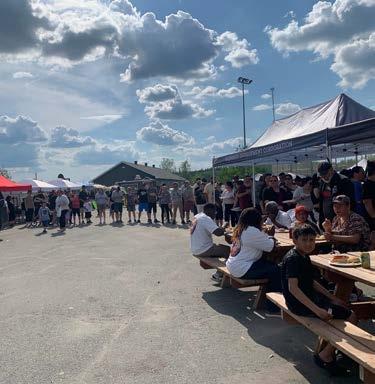
The Cree First Nation of Waswanipi celebrated its 50th anniversary with fun- lled activities for all ages June 9-12. The occasion was also an opportunity to re ect on Waswanipi’s evolution.
“Celebrating this milestone is really special for us so we tried our best to make it as big as we could,” said Valerie Neeposh of the local Social Development department. “We had about a month of planning. What really matters is we gathered as a community. It was a space of remembering how Waswanipi came together as one.”
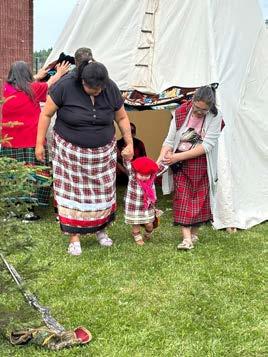
On the opening day, former Chiefs were recognized for their contributions while drum songs and a ddle dance highlighted community traditions. Walking-out ceremonies throughout the week initiated the next generation in Cree culture. Kids enjoyed exciting rides and in atables on the youth centre parking lot alongside face painting, food and prizes.
“We prioritized the youth with games and activities throughout the week,” said Neeposh. “Fiddle dancing was huge back in the day, which we’re trying to revive. It was a great outcome, a reminder we should come back to ddle dancing again.”
Several community departments and organizations contributed to the event. Brighter Futures organized children’s activities and refreshment giveaways while Mishtuk’s annual BBQ distributed 96 steaks, 250 hot dogs and 325 burgers. Cree Horizon gave away cotton candy, popcorn and slushies.
A comedy show by Deadly Uncle and a celebrity looka-like impersonation contest delivered lots of laughter on June 11. There was also a homerun derby and golf contest, ribfest and vendor booths. An open mic night and huge dance party brought people together through music.
“It has been an incredibly busy and unforgettable week,” shared primary event coordinator Lucius Gull. “Seeing the community come together and enjoy themselves made every moment worth it. The turnout was amazing, and it was great to see so many people having fun and celebrating together.”
Summer gatherings like this have always been an important part of Cree culture, a chance to catch up with old friends, connect with distant relatives and reminisce on times gone by. The community’s history re ects both the impacts of colonialism and its people’s determination to preserve its unique heritage.
While the area’s rst fur trading post was established in 1763, there weren’t more than a few nomadic family groups visiting it at the same time, even into the early 20th century. As new mines and sawmills in the territory attracted outside workers in the 1950s, Waswanipi band members scattered to surrounding communities for work.
“A favourite pastime for the Waswanipi Eenooch at the old Waswanipi post during the summer was sitting outside on a sunny day sharing stories and playing cards,” said Allan Saganash. “I learned a lot listening to their stories –
no wonder people knew each other so well and what their plans were for the next trapping season in the coming fall.”
As the community’s children had been taken away for 10 months of residential school every year since Indian agents rst arrived by oatplane in the mid-1940s, Saganash would stay close to his father every chance he had during July and August.
When the Hudson Bay Company’s post on Waswanipi Lake closed in 1965, most who remained near the Old Post soon moved away. In the 1970s, families in the area were told to leave their homes immediately or they would be ooded because Hydro-Québec was damming nearby rivers.
Band members had very di erent opinions about where to establish a village site and it wasn’t until the signing of the James Bay and Northern Quebec Agreement in 1975 that the community landed on its present site at the headwaters of Waswanipi River. Meaning “light on the water,” the name Waswanipi refers to the past practice of spearing sturgeon at night by torch light.
“You have to talk to your Elders to hear the history of Waswanipi,” Neeposh said. “We had members from outside communities like Miquelon, Desmaraisville and
Chapais who moved into the settlement and became one as a community.”
Late former Chief Peter Gull secured government funding to build a new community in 1974, with the initial 13 homes growing to about 80 houses within seven years. As there was little employment for members at the time, Gull was the rst to start talking about creating a community-owned forestry company, eventually founded as Mishtuk Corporation.
As a southern gateway into Eeyou Istchee, Waswanipi has grown into a thriving community rich in cultural heritage and natural beauty. Light on the Water Tourism focuses on cultivating harmony with Cree traditions, highlighting its cultural village and annual Old Post Fishing Derby.
“I love my community because it’s always welcomed me back home,” said Neeposh, who moved to Ottawa for high school and post-secondary studies. “I have a really big family and know I belong here. Serving my community and watching out for our youth is something I love to do.”
To mark its 50th anniversary, the Val-d’Or Native Friendship Centre is launching a documentary podcast. Odena Aki: The City is Territory is a four-episode series that tells the stories of di erent Indigenous families who have made the city their territory.
Produced by the Friendship Centre and directed by Émélie Rivard-Boudreau, the podcast recounts the stories of Indigenous people from the Anicinabe (Algonquin), Eeyou (Cree) and Wabanaki (Abenaki) Nations. The series is narrated by Eliane Kistabish and was o cially launched in Val-d'Or as part of the National Indigenous Peoples Day celebrations.
Rivard-Boudreau previously demonstrated a sensitive perspective of local history in the book Val-d'Or au féminin. The new series seeks to unearth the sometimes-forgotten aspects that are signi cant to the community. Personal accounts are shared by over a dozen people, including the Centre’s executive director Édith Cloutier and Air Creebec president Tanya Pash.
Featuring an immersive soundscape of natural sounds like birdsong and canoe movement, the podcast’s musical score comes from Emilio Wawatie’s album Nogom Nikamowin, a work produced jointly by Minwashin and Musique Nomade. The public can listen to the podcast on the Friendship Centre’s website, BaladoQuebec, Spotify and Apple Podcasts.
“In Odena Aki, the urban Indigenous community tells its own history, describing how the city has always been its territory,” stated Cloutier. “As we mark our 50th anniversary, this podcast was a good opportunity to trace the origins and history of the Indigenous urban community in the history of Val-d’Or.”
Throughout the month of June, Eeyou Istchee celebrated Pride events to show support for the local 2SLGBTQIA+ community. The Cree Health Board declared its commitment to fostering safe, inclusive spaces for all, noting “every person has a place in our circle.”
The organization highlighted that in Cree teachings, every person carries a spirit and a purpose, and emphasized that Two-Spirit people are cherished and have always belonged here. As Pride month came to an end, it asserted that “who you are makes this community better, not just when there’s a ag up, but all year long.”
“Everyone should be able to be themselves, live their lives without fear of judgment,” stated the CHB. “That’s what Pride means to us. Inclusion, dignity and belonging to all our community members.”
Ouje-Bougoumou held its Pride Day celebration on June 30 with special guest, Youth Grand Chief Jade Mukash. Following a community walk, there was a youth lunch, a presentation by Robin Gull, social games and an open mic for those who wanted to share their stories.
Chisasibi held a Pride Beach Day on June 20, with a BBQ, volleyball, music and prizes. Wemindji and Nemaska held Pride gatherings on June 17 while Whapmagoostui hosted a vehicle parade, community BBQ and games on June 25.
“Our di erences are what make our community strong-
er, and we all have a role to play in creating a place where everyone feels they belong,” stated the Mistissini Youth Council following their community Pride Walk.
Last autumn, the Two Spirit of Eeyou Istchee Association, supported by Pimuhteheu, held its first land-based retreat, bringing together community members, knowledge keepers and counsellors to strengthen connection, healing and future action.
“Every time you express hatred toward queer people, you reveal to your own kin who you are and whether you are safe for them,” shared Mistissini musician Siibii. “2-Spirit uushchiniichuuch belong here because we have always been here. I’m queer every month of the year. Not just when it’s convenient.”
such as hydro stations and power lines."
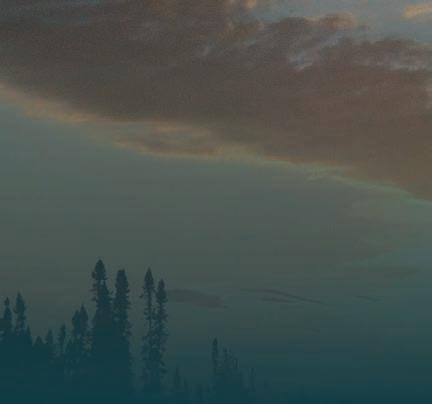
After days of closure, the access road to Chisasibi was opened at 10pm on June 30. Drivers were asked to remain alert for emergency vehicles and ongoing firefighting operations as wild re conditions can change rapidly.
An open re ban remained in e ect in the Chisasibi region, with community members forbidden from burning yard waste, having bon res or celebrating with reworks. Traditional cooking over an open re in your teepee is still permitted.
As June came to an end, over 100 wild res were raging across Quebec with an orange air quality warning issued for northern areas where smoke is a ecting several communities. On July 1, Waswanipi residents were advised to avoid opening windows and staying outside for prolonged times because of smoke.
"Right now, with the intensity of these res, it is hard to get boots on the ground on many of the incidents," said SOPFEU spokesperson Mélanie Morin. "These res have popped up either along roads that access to communities, near communities or near critical infrastructure
With SOPFEU conducting air missions to combat the flames, community members were reminded not to y drones as they could put lives at risk and ground the entire operation. Air tankers and helicopters may be hidden by smoke. According to Transport Canada, no unauthorized person may operate an aircraft within ve nautical miles of a forest re.
A fire northeast of Mistissini caused by a lightning strike was reported on June 24 but SOPFEU announced the next day that it had been contained to about seven hectares with no immediate threat to residents or infrastructure.
“When a forest burns, we don’t just lose trees,” shared Judy Washipabano. “We risk losing wildlife, medicines, traplines, family camps, gathering places, and pieces of our culture, our history and our identity. The land is not just where we live – it is who we are.”
H our the Past Present and
Future
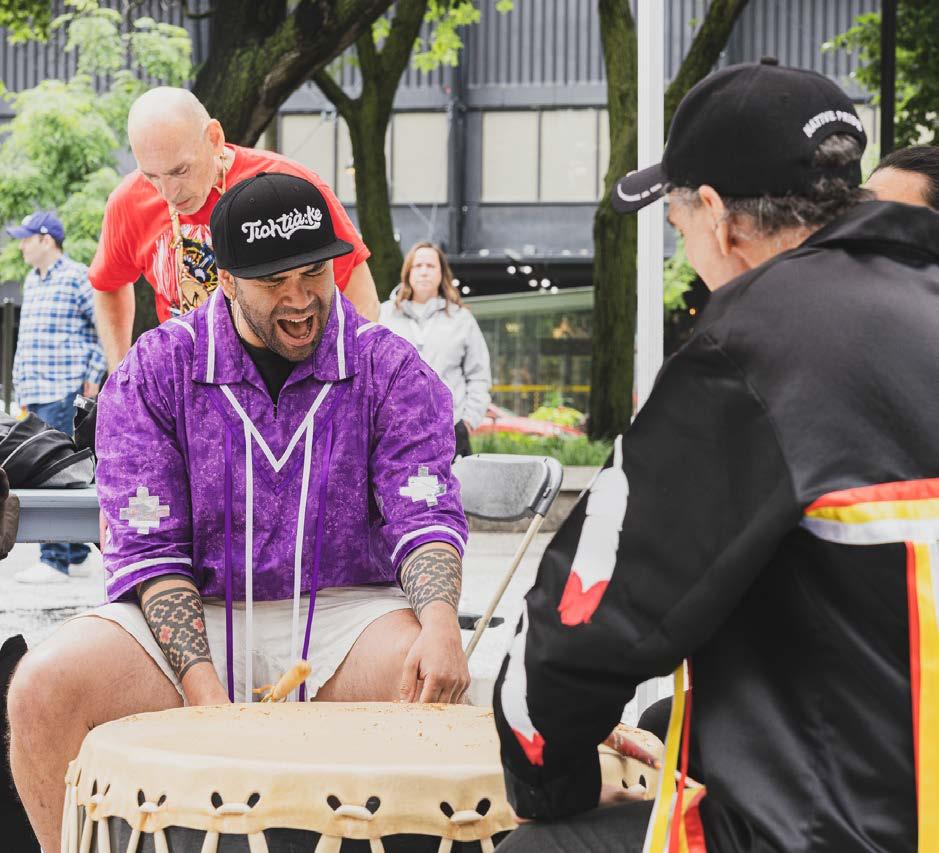
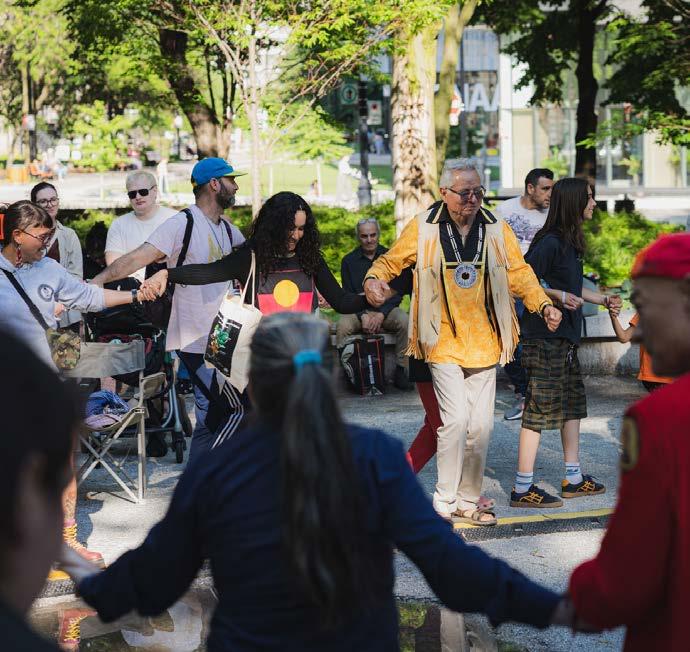
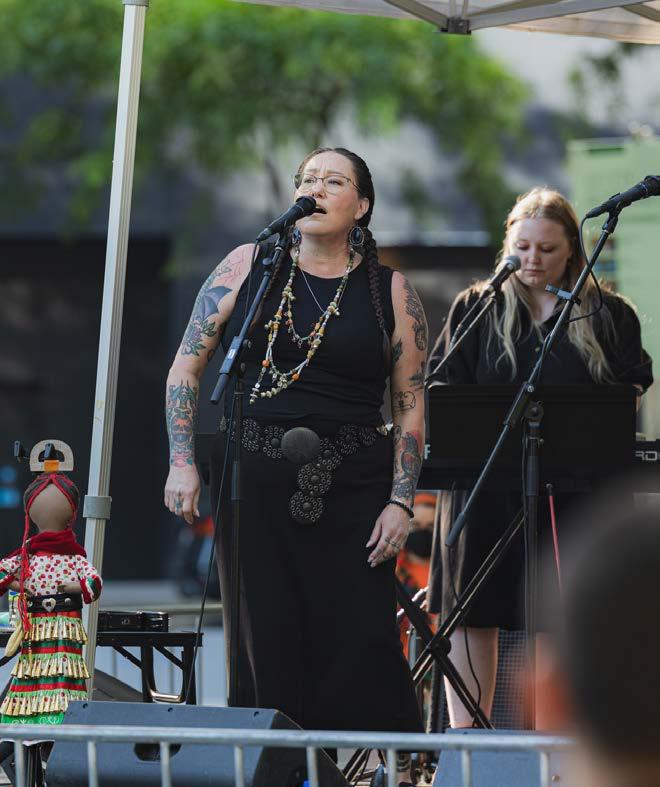
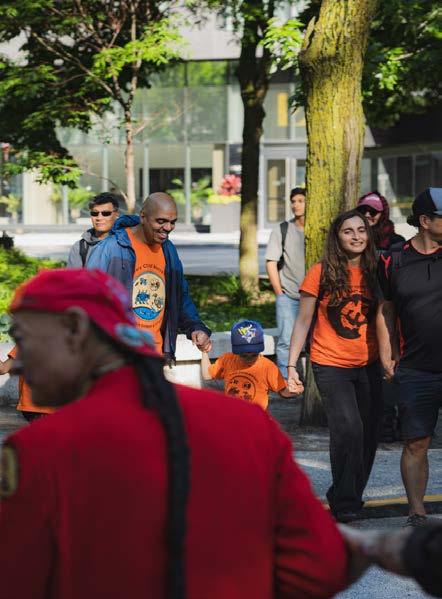
Events across the country June 21 celebrated the 30th National Indigenous Peoples Day (NIPD), honouring the culture, histories and contributions of First Nations, Inuit and Métis people.
The Cree Health Board emphasized that Cree culture was thriving long before there was a day to celebrate it, “built through interwoven layers that exist together at once. Each layer carries its own meaning, yet none exist on their own. Together they tell the story of who we are, where we come from and how we continue to carry our identity forward from generation to generation.”
At the Cree Nation’s Wachiya store in Old Montreal, Cree artist Deborah Ratt and Algonquin artist George Nottaway demonstrated traditional crafts while visitors were treated to Indigenous food tastings.
The annual solstice ceremony by the city’s riverside marked the 325th anniversary of the signing of the Great Peace of Montreal. Signed in 1701, this treaty ended decades of warfare between the Iroquois, allies of the English, and New France’s allied First Nations.
Over 1,300 delegates from 39 First Nations arrived for a week of discussions over sharing hunting territories, releasing captives and trading freely. The turning point was a convincing speech by Huron-Wendat Grand Chief Kondiaronk, who died the next day of illness.
“Montreal became the main spot for the fur trade after the signature of the treaty,” said André Dudemaine, co-founder of event organizer Land InSights. “The delegates coming from all over North America were as nervous as the population, each one with their
best regalia. The event would have certainly been something special for those who were there.”
Following o erings to the ceremonial re, traditional drumming and dances, and speeches about the day’s signi cance, the procession walked to the Pointe-à-Callière Archaeological Museum, where an original copy of the signed treaty is on display until September 20.
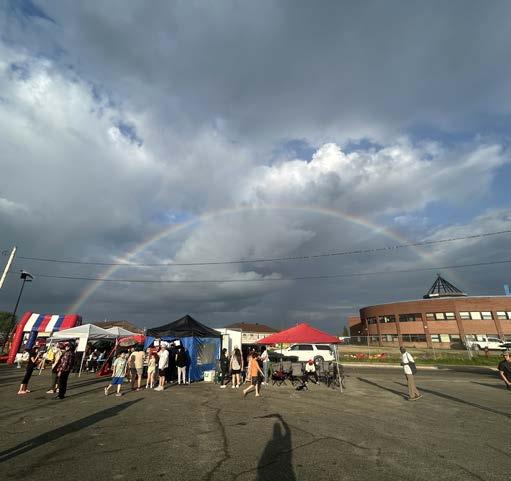
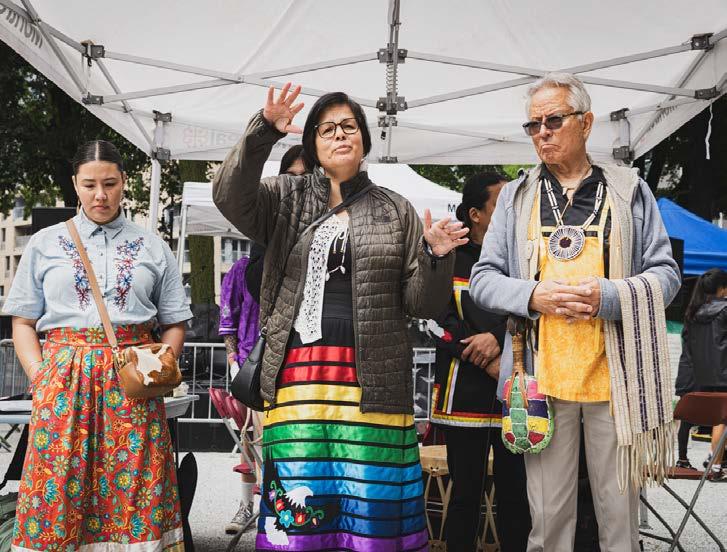
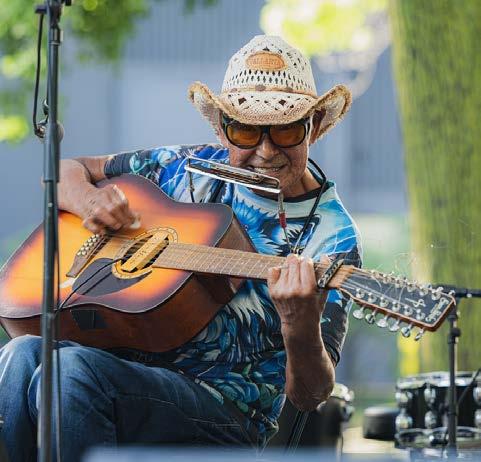
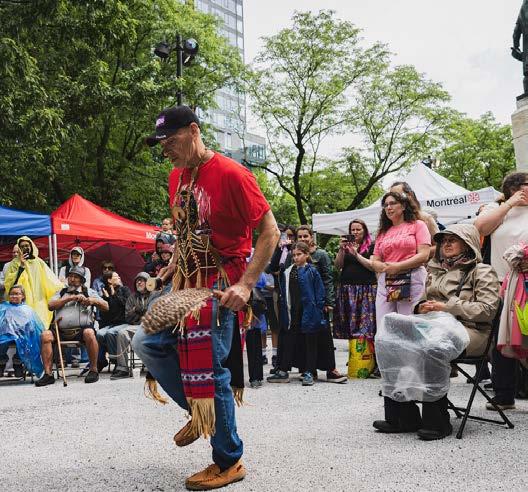
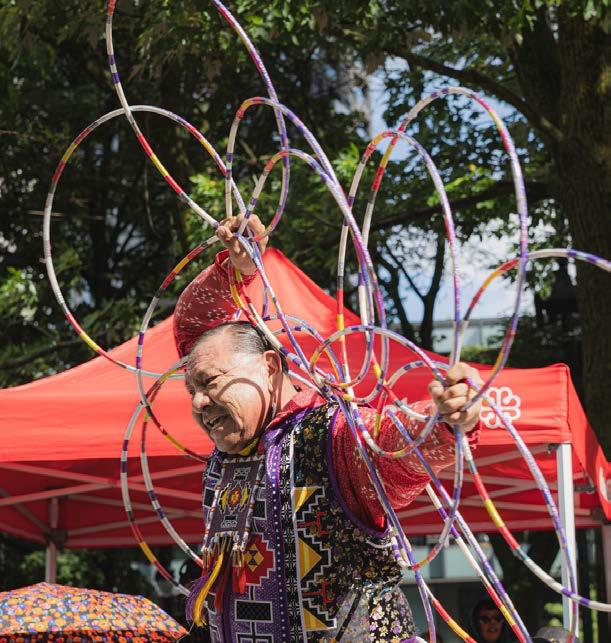
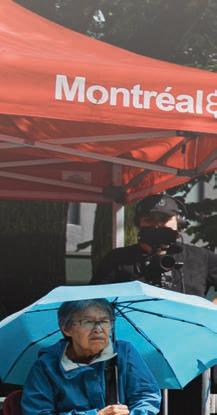
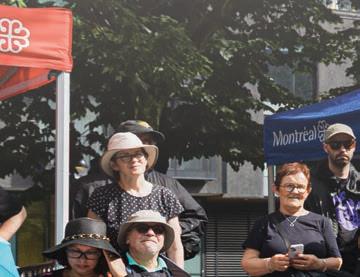
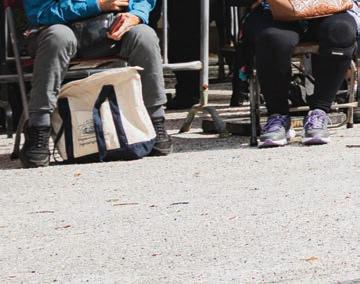
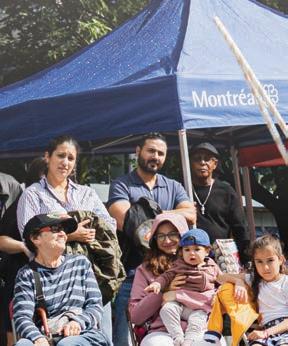
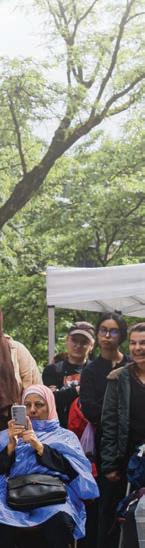
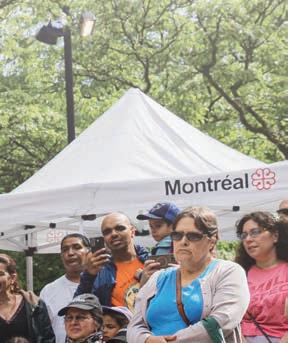
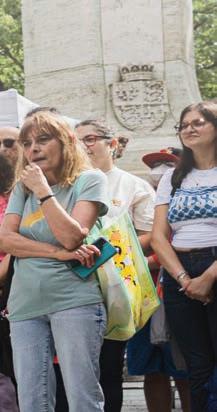
The overcast morning turned brilliantly sunny for the solstice ceremony at high noon. After honouring “Elder Brother” sun as part of the Deer Family Dancers, the rain returned as Kahnawake Elder Kan’ahsohon Kevin Deer approached downtown’s Cabot Square for the annual NIPD concerts.
the rain stopped and we received a beautiful rainbow over our event.”
Na’kuset said they waited until the last minute with ngers crossed. After a short delay, Deer addressed the soggy crowd without ampli cation, declaring the rain a gift from Mother Earth.
“The next group on were the Manitou Singers,” recalled Na’kuset. “They said we don’t need electricity for the big drum. Then Moontee Sinquah showed up and said, ‘I can dance in the rain.’ He performed and the rain stopped, so halfway through he was able to use the microphone and talk to the audience.”
Native Women’s Shelter executive director Na’kuset has organized the musical event for more than a decade. “I told Na’kuset that as we would begin the ceremonial opening the natural cosmic forces would hear our voices and the sky will clear up,” Deer shared. “Sure enough,
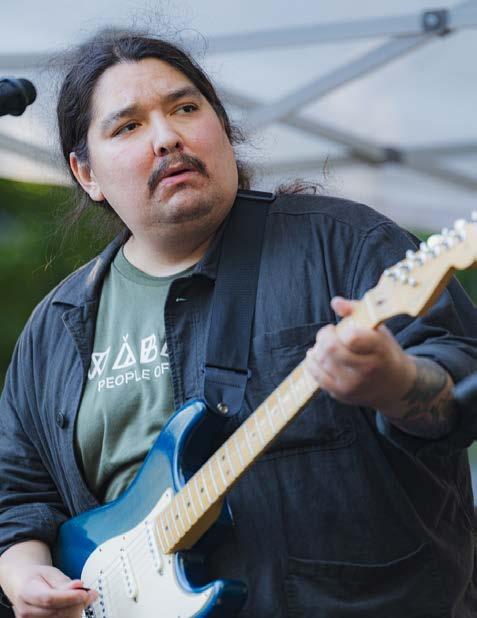
While the disruption in electricity led to Kris Kinokewin’s cancellation, the nal three acts were able to plug in. Anishinaabe singer-songwriter Leonard Sumner performed his blues-rap-country fusion ahead of Linda Saddleback and Willie Thrasher. Fredericton-based collective The Hello Crows closed the show.
of the rst Inuit rock bands and composed the enduring hit “Wolves Don’t Live by the Rules”, later covered by super-fan Elisapie. Hello Crows member Quinn Bonnell was excited to discuss Thrasher’s former collaboration with Mi’kmaq musical trailblazer Willie Dunn.
Thrasher is a legendary gure in Indigenous music, having formed one
“It was interesting to hear how their paths crossed so I was eager to hear some stories,” Bonnell told the Nation. “The advice he got from Willie Dunn was that it’s important for you to keep playing music and telling your stories. It’s such a cool thing to be told.”
The Hello Crows has been a safe space for the band’s four songwriters to share stories about their Indigenous identity since playing together on the rst National Day for Truth and Reconciliation. They realized the group’s power with early composition “Come Back to Me”, which won best song at last year’s Music New Brunswick awards.
“Music being medicine, we’re more than excited to share when we have a chance,” said Bonnell. “Our experience
at Cabot Square was awesome. It felt good to be celebrated, to connect, and see some other Indigenous folks out. We hope to be there more often.”
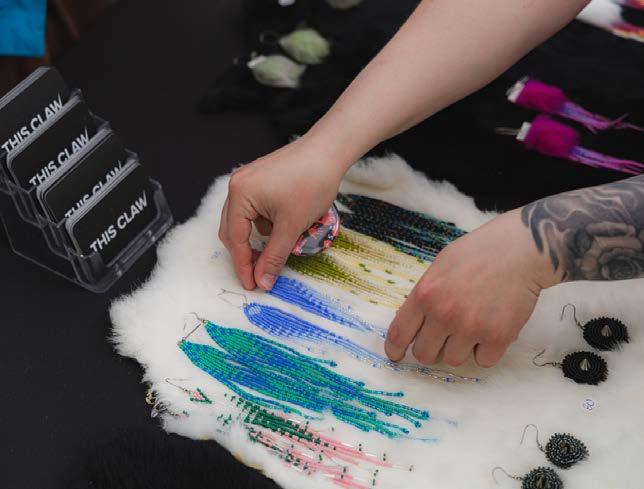
With beading and soapstone carving workshops in the background, Na’kuset and her co-hosts led the festivities in English, French and Inuktitut. Since POP Montreal began collaborating with the event six years ago, its setup and funding have gone much more smoothly.
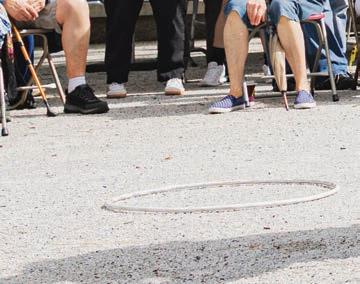
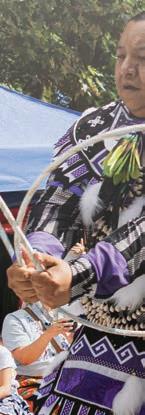
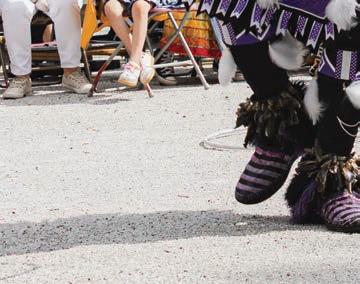
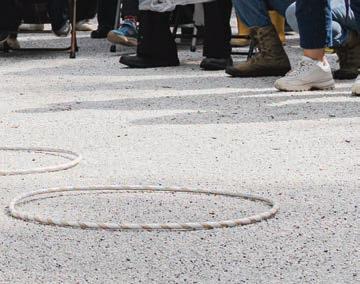
“I used to nd my own funding from the city, which didn’t give a lot of money,” Na’kuset said. “People like Leonard Sumner or the Sinquah Family [Hoop Dancers] all live very far away. The Sinquah Family comes from Arizona every year and they’re amazing.
Located close to Cabot Square, the new three-storey building was meticulously designed in collaboration with its Indigenous clientele and nearby residents to create a healing environment that meets daily needs while providing dignity and purpose.
Another reason to celebrate was the long-anticipated opening of Resilience Montreal’s “ridiculously beautiful” new home on June 17. Co-founded by Na’kuset and David Chapman in 2019, Resilience is a day shelter serving the local unhoused community, many of whom are Indigenous.
A replace-equipped healing room is designed like a longhouse while members of the Inuit community are creating a beaded chandelier and painting the sleeping room’s ceiling to resemble the northern lights.
The laundry room is a key feature, allowing residents to maintain their clothing and providing one of many return-towork opportunities, where they’re paid in cash each day.
“If you’re on the streets all night, as soon as you walk in you already feel calmer,” said Na’kuset. “There’s just something about the space that soothes people. You have a clean space to sleep and the showers are beautiful. You feel you’re in a ve-star hotel.”
Resilience proactively addressed neighbours’ concerns with community mediators and a hotline for non-emergency issues. A range of health and support services are available, including a health clinic, psychiatrist, addiction resources and even a sexual assault investigation room where victims can con dentially report to police.
Cree musician Siibii performed at the inauguration as guests marvelled at the building’s cedar bath, heated terrasse, soundproofed “screaming rooms” for processing trauma, and immense kitchen, which serves over 1,200 meals daily.
“Tell me what other shelter does that,” Na’kuset challenged. “We want other shelters to step it up. The whole idea of grubby shelters in church basements with granola bars is not working. The more people that see it, the more people will want to be part of the solution.”
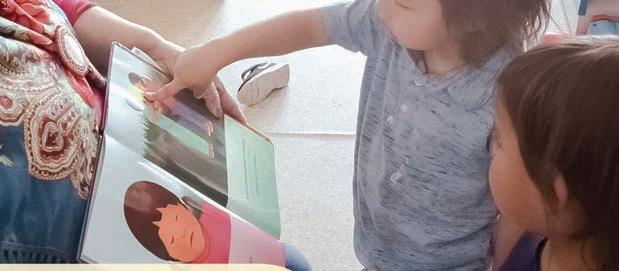
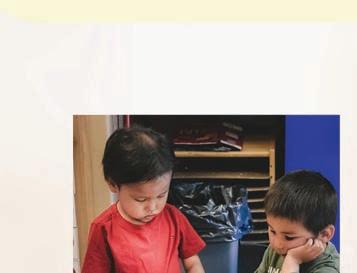
The Cree IELCC Fund is designed to fund projects/activities that foster the education, Cree culture and language, as well as health and wellbeing of children 0 to 6 and their families.
The Cree IELCC Fund is designed to fund projects/activities that foster the education, Cree culture and language, as well as health and wellbeing of children 0 to 6 and their families.
The Cree IELCC Fund is designed to fund projects/activities that foster the education, Cree culture and language, as well as health and wellbeing of children 0 to 6 and their families.
The Cree IELCC Fund is designed to fund projects/activities that foster the education, Cree culture and language, as well as health and wellbeing of children 0 to 6 and their families.
The Cree IELCC Fund is designed to fund projects/activities that foster the education, Cree culture and language, as well as health and wellbeing of children 0 to 6 and their families.
All projects and activities must also ensure that no children are left behind: activities must be accessible to all children, no matter their level of ability or special
All projects and activities must also ensure that no children are left behind: activities must be accessible to all children, no matter their level of ability or special need.
All projects and activities must also ensure that no children are left behind: activities must be accessible to all children, no matter their level of ability or special Deadline
All projects and activities must also ensure that no children are left behind: activities must be accessible to all children, no matter their level of ability or special need.
All projects and activities must also ensure that no children are left behind: activities must be accessible to all children, no matter their level of ability or special need.
to
The Circle Remains Unbroken
Chisasibi celebrates its annual traditional powwow
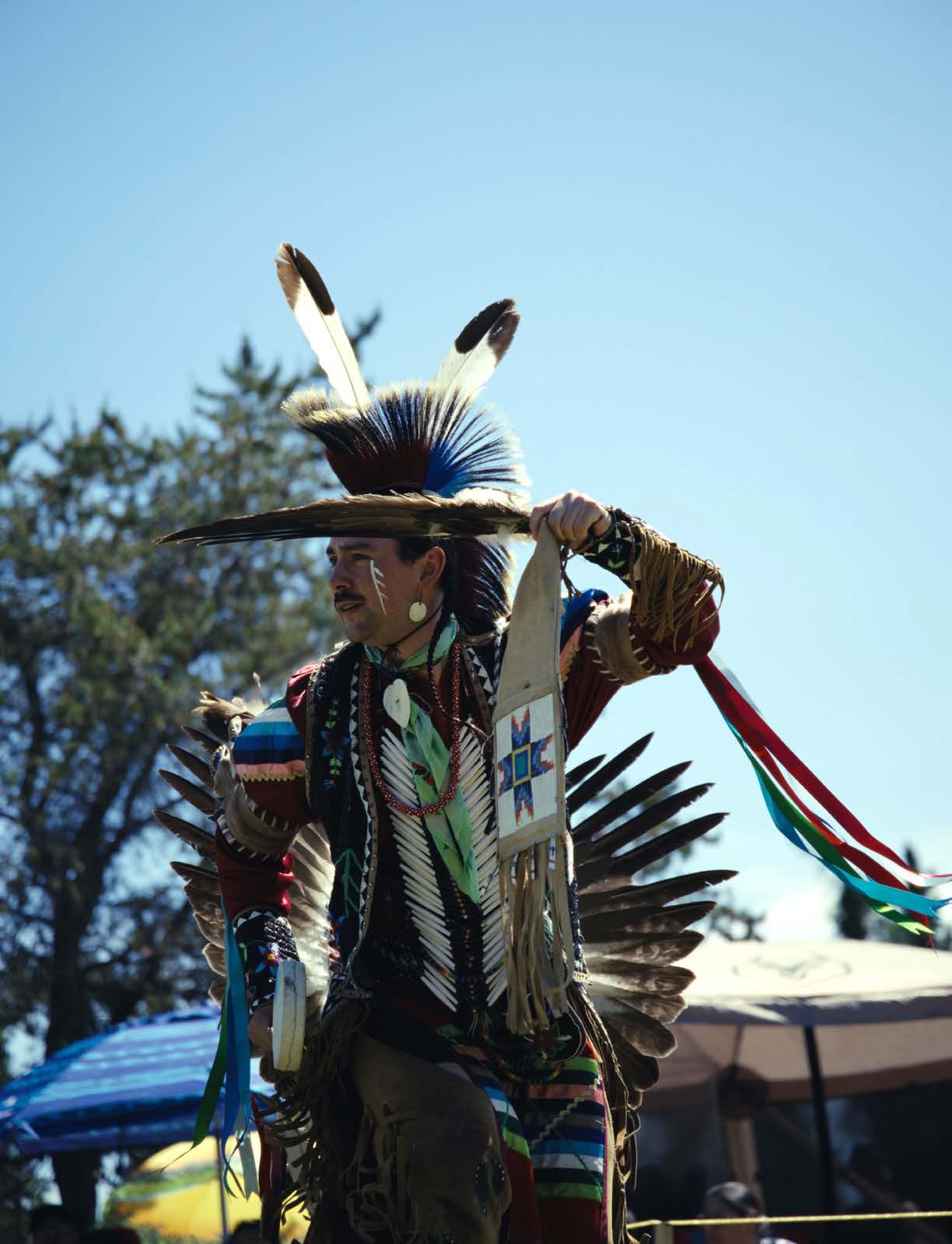
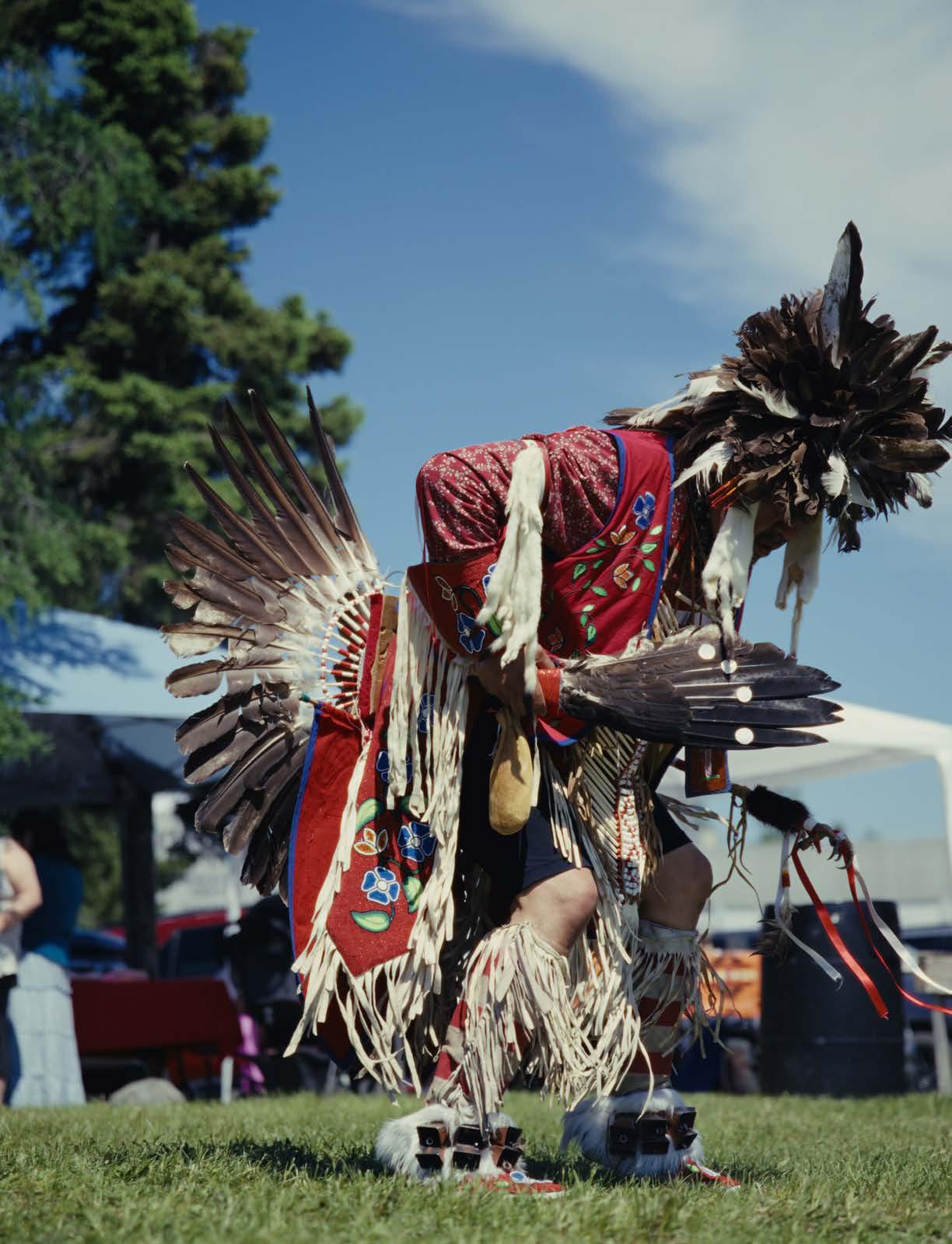
As the evening sun settled over James Bay, long rays of orange light broke through the clouds and illuminated the dancers moving in slow circles across the arbor. The beat of the drums echoed across the grounds while children, Elders, families and visitors gathered for a celebration of culture, ceremony and community.
For four days, June 26-29, Chisasibi hosted its 35th Annual Traditional Powwow, bringing together dancers, singers and families from across the country. Hosted by the Juno Awardwinning Black Bear drum group of Manawan, alongside Chisasibi’s Bedabin Singers and drum group KZ Boys of Kitigan Zibi, the gathering was lled with music, dancing, food vendors, crafts, teachings and reunions that stretched late into the northern evenings.
Yet the heart of the powwow revealed itself long before the rst Grand Entry.
Before the dancers entered the arena, children who had never danced before were welcomed into the circle for the rst time. They nervously stepped forward surrounded by parents, grandparents and community members, beginning what many hoped would become a lifelong journey. It was a quiet reminder that every experienced dancer once stood exactly where they did.
This continuity is everything for head male dancer Mackenzie Ottereyes.
“I hope the youth see what hard work looks like, because we all start from somewhere,” Ottereyes said. “We’re not going to catch the beat right away, and we’re going to be shy. I want the youth to know that it’s okay to dance. It’s okay to show your style and show your love for the dance.”
Ottereyes described powwow as far more than performance.
“Powwow means sharing culture,” he explained. “I put a lot of my hunting stories into the dance circle. when I’m tracking a moose or looking for geese, there are things I do that represent those experiences.”
Although powwow traditions originated further south on the Plains before gradually spreading north, Cree communities have embraced them and woven their own experiences, stories and identities into the dances. For many, powwows have become an important expression of Indigenous pride and cultural renewal.
That renewal carries deep historical meaning.
“There was a time we weren’t able to dance,” Ottereyes said. “Now we’re able to do this and really showcase who we are.”
Head female dancer Shania White echoed that sentiment.
“Powwow means community. It’s friendships. It’s culture,” she said. “I
want people who didn’t grow up with powwow to be moved. I want them to understand that regardless of residential schools, regardless of the Sixties Scoop, we’re able to dance freely with our friends and our families.”
White carries teachings passed to her by Elders through the medicine dress she wears, a tradition originating in White sh Bay, Treaty 3 Territory.
“I always make sure that I dance with good intentions,” she explained. “With the intention of healing myself but also healing the other people who may need it in the circle.”
Those teachings were visible everywhere.
The arena itself remained shaded beneath its circular roof while singers rotated between songs, each drum group taking their turn around their drums. Dancers of every generation answered the rhythm, from young children carefully following older siblings to experienced adults whose movements carried decades of practice.
Between songs, families gathered around food stalls serving traditional and contemporary meals while local artisans displayed beadwork, clothing and handmade crafts.
Several ceremonies remained closed to cameras, including the opening and closing protocols, and a memorial ceremony honouring a recently departed community member.
There was another moment visitors quickly learned to recognize.
During certain songs, an Elder would raise an eagle-bone whistle. The high piercing call would drift above the drum.
At that sound, cameras were lowered.
The whistle is regarded as a sacred connection with the spirit through the eagle. Sometimes it extended a song, signaling that the drum should continue and the dancers should keep moving. The moment belonged not to spectators, but to the ceremony itself.
It was one of many reminders that although visitors are warmly welcomed,
they are entering a living cultural and spiritual space rather than a performance.
As Ottereyes put it, “This is not a costume. This is our culture. This is me to the fullest.”
Late one evening, away from the arena, another invitation o ered a quieter glimpse into that spirit.
Inside a teepee, a small re burned over a bed of spruce boughs. A bowl of tobacco rested beside the ames. Visitors were invited, if they wished, to o er tobacco, make a prayer, or quietly re ect. There were no speeches, no schedule and no audience, only silence, relight and the smell of spruce.
Perhaps that balance best de nes Chisasibi’s powwow.
It is at once joyful and solemn.
It is celebration alongside remembrance.
It welcomes newcomers while protecting what is sacred.
As the weekend concluded, another reality of life in the North emerged. Lightning-caused wild res across northern Quebec intensi ed rapidly, including the La Grande-1 complex south of the Chisasibi access road. Authorities issued road restrictions and safety advisories, leaving many festivalgoers temporarily unable to leave the community as emergency crews worked to contain the res.
The timing was striking.
Only hours after families had gathered to celebrate resilience, they once again found themselves facing the challenges of life on the land. Yet, as throughout the weekend, community remained the de ning strength.
The nal image many visitors carried home was not simply of colourful regalia or powerful drumbeats, but of children entering the dance circle for the very rst time.
In that moment, the purpose of the gathering became unmistakably clear.
The songs continue. The circle remains unbroken. And another generation has stepped inside.
troilustogether.com
As Quebec aggressively scales up its wind energy infrastructure, aiming to add 10,000 megawatts of new capacity by 2035, the Cree Development Corporation (CDC) is launching consultations with land users to identify potential priority areas for future turbines.
There are currently no wind energy projects in Eeyou Istchee. Any project would require Cree leadership, community involvement and land-user participation. Through CDC’s early-engagement approach, community members are engaged before the design of any potential project.
“We’re just getting started, focusing more on the social acceptability,” explained CDC’s Clarke Shecapio. “We want to meet with land users to see if they’re open to having these wind turbines on their trapline. If they’re not, that discussion will end, but we’ll continue with those who are open.”
The CDC plans to make presentations to local leadership and collect data from the tallymen of 99 identi ed traplines over the summer and fall before releasing a nal report and project map by the end of the year. Land users will be provided information about the study as
they highlight speci c areas, document concerns and ask questions.
Areas will be assessed for technical feasibility, considering criteria such as wind speed, proximity to HydroQuébec’s substations and transmission lines, and how easily the terrain can be
built upon. A location’s long-term economic viability is also a factor. Protected areas are strictly o -limits.
“We don’t want to disrupt hunting camps, harvesting areas, wildlife areas,” said Shecapio. “Land users are masters of their area – it’s important we under-
stand what’s important to them at the same time they understand the impacts. Half of them might say I don’t want a wind turbine. It’s hard to provide a target.”
Lakes and waterways would be unsuitable, as would areas of cultural or environmental signi cance. While a wind speed of 6 metres per second is generally considered the minimum acceptable, CDC’s analysis of satellite meteorological data has broadened the acceptability range to areas over 5 m/s.
“No one would ever build a wind project solely on that satellite data,” said CDC’s Marc Dunn. “They would install meteorological towers and gather at least one full year of on-site data, then an environmental assessment before building anything. So, we tell land users we’re at least three to ve years out from anything being built on your trapline.”
The CDC’s “Eeyou Wind” website states that selected projects may generate long-term revenues for communities with local jobs created in construction, operations, maintenance, environmental monitoring and community liaison roles.
Their goal is to identify areas where wind energy could coexist with land use. As wind turbines produce noise, disturb habitats and may result in collisions with birds or bats, comprehensive study in collaboration with land users is important for excluding more sensitive sites from consideration.
While wind power has been a growing segment of Hydro-Québec since a wind farm was established in Gaspésie in 1998, the company updated its approach in 2024 to better support
the large-scale deployment of major projects. There are currently 45 active wind farms in the province, providing 4,000 MW that powers the equivalent of 721,000 households.
With strong Indigenous resistance to hydroelectric mega-projects, renewable wind energy is viewed as a natural t for Quebec’s evolving needs. Wind turbines can be installed relatively rapidly with low long-term operating costs. Strong winds and the higher density of cold air increase output during the winter.
To reach its goal of expanding wind power to meet the needs of two million households by 2035, Hydro-Québec has realized it must work closely with First Nations and other communities from the very start to ensure their full participation, aligning projects with local priorities, providing lasting bene ts and tting harmoniously into the surroundings.
In May, a nancing program worth over $5 billion was announced with banking partners to enable Indigenous communities to invest in wind energy infrastructure on their lands. HydroQuébec CEO Claudine Bouchard said the initiative responds to requests from Indigenous leaders to play a greater role in these projects.
“We’re looking at projects that would supply the grid with energy,” said Dunn. “Once it’s in the grid, it becomes a giant pool of electricity and goes in di erent directions. However, you can say this project is going to produce 200 kw/h, so therefore we want to target 200 kw/h in the community for industrial development as an o set.”
Whapmagoostui, the only o -grid Cree community, has plans to build a hybrid power plant near the mouth of the Great Whale River with two turbines providing 3 MW of wind power. The community is located at the southern tip of Nunavik, which is gradually shifting from a reliance on diesel fuel. Operating on a smaller scale, this project isn’t connected with CDC’s study.
“These projects can really be operated and owned by the communities,” said Carson Tagoona, communications director for Tarquti Energy, which is building a 3,000-kw wind turbine in the Nunavik village of Quaqtaq. “Funnily enough, the high winds that we have in the North are actually a challenge for certain turbines.”
Both Shecapio and Dunn emphasized that the current study is a preliminary step for future discussions and there are no commitments to developing any project. Rather than seeking locations to develop a predetermined amount of energy, their approach works the other way around by involving land users from the beginning and integrating their concerns into the study’s design.
“This way of working re ects an important paradigm shift in how things are assessed,” Dunn asserted. “When they feel involved in a process, they feel a kind of ownership and they’re more willing to go forward. We’re going to walk with you and take o the map right away the places you’re not interested in. We’re proponents of a process – start with the land users.”
Hot summer days have nally arrived, and we are all enjoying the warm weather. These hot days remind me of growing up in Attawapiskat in the 1980s.
There was never much to do in our home, so our activity was always about running around the neighbourhood to be with our friends and cousins. We had a TV in the house, but it only supplied CBC, TVO and a church channel that would broadcast either a live church service or non-stop reruns of Ben-Hur, Moses or The Greatest Story Ever Told.
Since there was no entertainment at home, we wandered o into the neighbourhood in search of our cousins. Our relatives were only a few houses away and our play areas were the small gravel parking lots near our homes or the muddy wet muskeg patches that dotted our neighbourhood.
When I think of it now, much of our community wasn’t the prettiest or healthiest place for children to play. Ditches lled with wastewater were everywhere and we all knew how to navigate past every outhouse near our homes.
Our great adventures always started with games we made up ourselves. Usually, we began our play at the very centre of the Kataquapit street, right in the middle of town. Four of my Kataquapit uncles, including Leo, Gabriel, Alex and George, lived on this street and their children lived next to them.
There were so many excited children and grandchildren living on this street that it often turned into a huge, chaotic organization of kids playing games. We didn’t have any toys or equipment, so our games were creative and turned into events of tag, kick the can, hide and seek, and “war” games, which would more commonly be known in the rest of Canada as “Cowboys and Indians”.
It was exciting to roam free across dusty gravel streets, run behind a relative’s house, know where to hide in the tall grass and high weeds and remember to avoid the dirtiest places in between. There were a few cut lawns in the neighbourhood, and we played on them until
we were directed to disturb the community elsewhere.
Elders and adults kept an eye on our activity, and we always knew they were not far away. Elders sat outside their homes to bask in the sunlight and adults roamed around, either doing laundry or moving clean water into their homes or wastewater out of their houses. Whenever an argument broke out in our group or someone cried because they got hurt, there was always someone older nearby to help or send us home to our parents.
During the hottest part of the day, everyone migrated towards the cooler breeze that blew in from the mighty Attawapiskat River. Elders always lined the shore to keep an eye on the tides as they rose and fell at di erent times of the day. Often, they sat huddled together around a game of checkers or chess among the tall grass overlooking the water.
We only heard and used Inineemoon, our Cree language, as children. We shouted and teased each other in creative ways and argued with one another, using insults we were careful not to utter near our parents. English was so foreign to us that anyone who tried to speak it was immediately made fun of for trying to.
As children, our parents always warned us never to venture into the water but on the hottest days, we would secretly strip down to our underwear
and wander into the cold, refreshing river. It was never a secret when we arrived home because mom and dad would immediately see our wet clothes and scold us for not listening to their warnings.
When the weather became overbearing and there seemed to be no relief from the heat, dad would organize a boat ride onto James Bay. He always maintained a 24-foot freighter canoe and it was more than enough space for all of us. Mom and the nine children would ll the boat with a day’s supply of fresh food, goose and ingredients for fresh bannock.
Mom and dad were always ready for any situation. They knew the land, the water and the weather so well that they never worried about where we were going. If the water on the bay was calm, we headed to Akamiski Island or towards a smaller set of islands in between known as Manwinan (Twin Islands). If the weather changed and James Bay was too rough, dad turned the boat and we headed up the river instead, exploring the many rapids along the way.
These days, when the weather turns hot and muggy, I head out on my BMW motorcycle and ride down the highway. The feeling of sitting in the wind as it cools me o reminds me of moving on the river with my family. It’s a feeling of freedom and peace I will always keep close to my heart.