Iwas at the hospital recently for a consultation. It’s never the most pleasant of things, but something we all have to do from time to time, though it seems to be more frequent as we age. That feeling that nothing can really harm me is disappearing as time marches on.
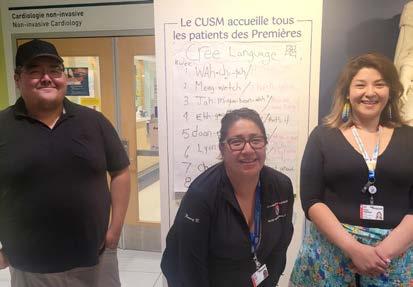
This trip involved going to the Royal Victoria Hospital, now known as the Glen, in Montreal. I wasn’t sure where I was supposed to go, but fortunately I saw Delores, a Cree Patient Services employee, who gave me directions on where to nd my appointment.
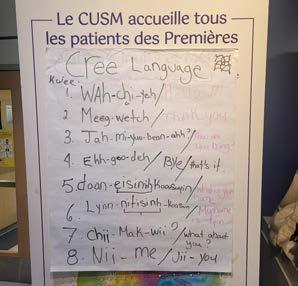
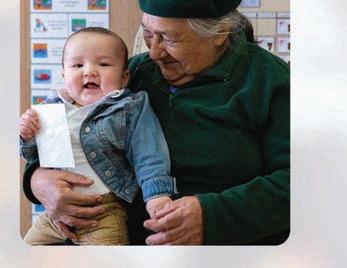
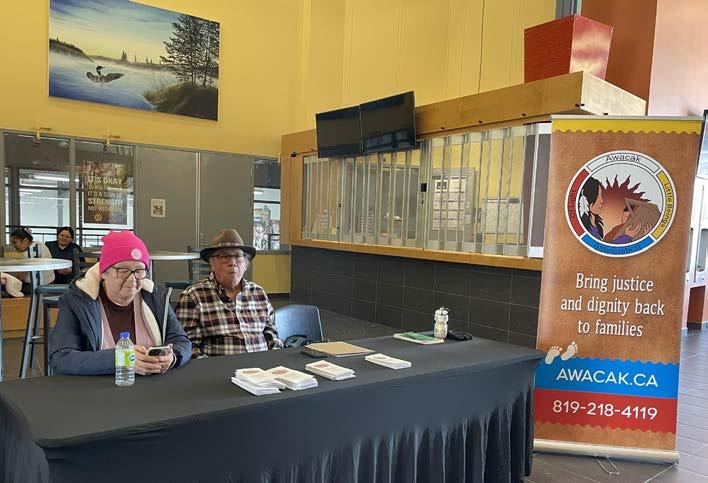
With her teammates, Delores was sta ng a table near the hospital entrance to share Cree culture with patients, visitors and sta . On display were Walking Out ceremonial garb, traditional drums and basic Cree words and phrases. I was told that many people who stopped by received instruction on how to properly pronounce the words. Doctors and nurses were the most interested, Delores added.
That reminded me of my mother in her seniors’ home in Chibougamau. She has been teaching Cree to the sta and French to Cree residents, acting as a translator for both when needed.
That type of work is needed by Cree people no matter what medical facility they nd themselves in. The di erences between cultures can lead to misunderstandings and that isn’t a good thing
to happen when you are dealing with health issues.
I remember in Moose Factory when a doctor prescribed birth control pills to a woman who’d had numerous children. But when the woman came back from the bush, she was pregnant. The doctor then found out that the husband had been taking the pills religiously. Apparently, he was confused by his breast development. A cultural misunderstanding if there ever was one.
One of the things Dolores and company wanted all Cree patients to know is that there is a McGill University Health Centre Patients Committee. You know all those signs you see saying hospital sta will not accept abusive language or behaviour? Well, it turns out that it works for patients too. Online you go to muhc.ca/patients-committee for a list
of your rights as a patient and what the committee can do.
They also o er assistance in making suggestions or complaints about how you were treated. Dolores said they hear about complaints but don’t get many. She said this is concerning as it means there are problems to be addressed, but which can’t be resolved without something de nite.
Dolores encourages patients to complain as she said the Cree Health Board does not want to see Cree patients unhappy with the way they are treated or having their needs ignored.
Instead of just crying doctor, doctor, you might want to consult Cree Patient Services wherever you might be to ensure you are getting the assistance and care you need without misunderstandings or harassment because of who you are.
the Nation is published every two weeks by Beesum Communications
EDITORIAL BOARD L. Stewart, W. Nicholls, M. Siberok, Mr. N. Diamond, E. Webb
Ludwick // EDITORS Lyle Stewart, Martin Siberok
Kataquapit,
Quinn,
Malthouse
No medical records needed. Answer questions in your own words. Claims Helpers are here to help.
Free, culturally safe support is available every step of the way.
If you were admitted to a Federal Indian Hospital while it was operated by the Government of Canada (between 1936 and 1981), and experienced psychological, verbal, physical and/or sexual abuse, you may be eligible for $10,000 to $200,000 in compensation under the Federal Indian Hospitals Settlement. You do not need medical records to submit a Claim.
The Claim Form asks you to provide contact information, a copy of your government identification and respond to specific questions about your experience. You can take your time. And you do not have to go through this alone.
Free support is available.
Claims Helpers are available across the country for free. They can:
• Answer questions and help you understand the Claims Process
• Help you complete a Claim Form
• Support you at a pace that feels right for you
• Connect you with other free resources
Claims Helpers can meet by phone, by video, and in person (in some communities). Many are Indigenous and all Claims Helpers are trained to provide support in a culturally safe and trauma-informed way.
To learn more or connect with a Claims Helper: Call 1-888-592-9101 and press 2 (Monday to Friday, 8 a.m. – 8 p.m., except for holidays) Visit www.IHSettlement.ca
Mental health and wellness support is available 24 hours a day through the Hope for Wellness Helpline at 1-855-242-3310 or www.HopeForWellness.ca.
Ces renseignements sont disponibles en français à l’adresse suivante : www.IHSettlement.ca/fr
While the Cree School Board celebrates a growing number of graduates in diverse elds, First Nations leaders remain concerned that the Quebec government’s French-language laws are creating additional systemic barriers to higher education.
As Quebec’s National Assembly closed for the summer June 12, Bill 8 aiming to expand French requirements to adult education and vocational training died on the order paper along with the CAQ’s controversial constitution bill. English-language school boards and First Nations vociferously oppose both bills.
“Quebec continues to advance a colonial approach that risks increasing barriers to graduation, access to higher education and the development of a skilled workforce in our communities,” stated Denis Gros-Louis, director general of the First Nations Education Council (FNEC).
After decades of political struggle, Indigenous communities are gradually assuming responsibility for education, a federal jurisdiction. However, when students leave for post-secondary studies, they’re now forced to take additional French-language courses and pass a French exit exam.
Although limited exemptions exist for certain on-reserve Indigenous students, directors from ve English CEGEPs have jointly declared these insu cient and inaccessible. The FNEC shared that the majority of First Nations students enrolled in English-language programs fail the French courses imposed by Law 14 (formerly Bill 96), jeopardizing their graduation.
“We refuse any assimilation policy against our learners,” Gros-Louis asserted. “We want a comprehensive exemption for First Nations learners. They’re trying to do to First Nations what they say the North American continent is doing to French.”
When language requirements push students to study out of province, their quali cations aren’t recognized in Quebec unless they pass a French exam. Kahnawake Grand Chief Cody Diabo recently called for certi cation from other provinces to be recognized in Quebec and for Indigenous people to be excluded from any French-language charter rules.
“Kahnawake First Nations people are not Quebec citizens,” said Diabo. “This constant overture of legislating over First Nations needs to stop, and there needs to be proper separations in that sense, and staying in each other’s lanes.”
Gros-Louis said Quebec’s laws are forcing Indigenous students to abandon their language and culture, while potential community leaders are moving out of province and self-determination is being compromised. Budget cuts to English education risk the closure of programs and institutions that communities rely upon for advancing skilled workers.
“With every graduate who loses this opportunity, we’re losing teachers, healthcare workers, entrepreneurs,” said Gros-Louis. “The whole province is losing if we deny fundamental inherent rights to education. I don’t understand why this government for years now has refused to sit down and discuss solutions in good faith.”
French is a third language for many Indigenous students, particularly in Cree, Inuit, Kanien’kehá:ka, Naskapi and Mi’gmaq communities. Before Law 14’s adoption, CSB chairperson Sarah Pashagumskum said, “Not only will this a ect the career plans of our youth, but it will also impact our goals of capacity development as a nation.”
When the law was implemented, Cameron Biron, a Cree student from Wemindji at John Abbott College, said, “It’s putting my education at risk – I don’t think I can do it, so I’m making the choice to leave.”
Despite these emerging obstacles, the CSB’s growing post-secondary edu-
cation programs in partnership with John Abbott College and McGill University resulted in an impressive array of graduates this year. On June 4, a ceremony at John Abbott celebrated eight graduates from the Iyeskuwiiu preparatory program and 20 from the Springboard to Nursing program.
“Our graduates this year are examples of resilience and perseverance, showing us that anything is possible when we put our mind to achieving our goals,” said Pashagumskum. “Some of them are parents on top of all the other responsibilities that they have. All of them are role models, now and for the future.”
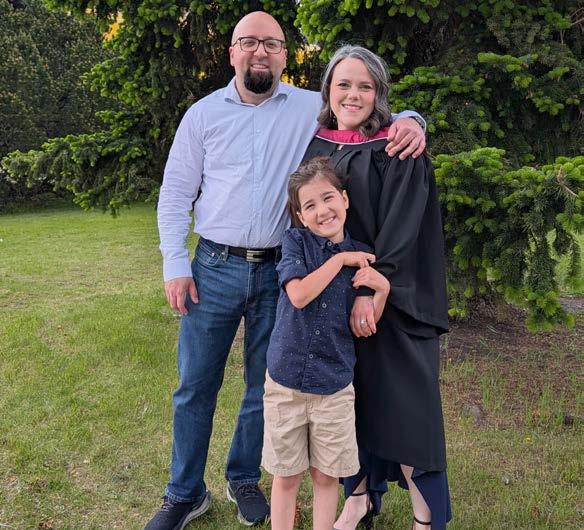
Two days earlier, 10 Cree students graduated from McGill with various education degrees and certi cates. Five earned a bachelor’s of education, four achieved certi cates in education, and Celeste Awashish attained a Master’s degree in education psychology.
“I’m intrigued by how and why people learn,” explained Awashish. “We look at cognitive exibility, adaptability, which motivations drive people. Learning more about all of that tickled part of my brain so it made it easier to learn because it’s something I’m interested in.”
Having tutored Indigenous students in French since CEGEP, Awashish backs the language’s protection but said the new laws create “more barriers in an institution that’s already hard to navigate.” She credits her support system and the CSB’s assistance for helping achieve her goal.
“My educational journey was far from linear,” Awashish emphasized. “I repeated
elementary grades, dropped out of high school, completed an adult ed that took years. Entering classrooms with people a lot younger than me, I felt like I was behind, but it’s important to celebrate the challenges you’ve overcome and not just set a timeline for yourself.”
Mistissini members Minnie Loon and Kelly MacLeod also recently obtained Master’s degrees. MacLeod has pursued nursing since high school, attaining a DEC from John Abbott in 2009 before a stint at Montreal General Hospital. After moving to Alberta, she completed her bachelor’s remotely, then took a larger role in Mistissini during the pandemic.
“I loved having more autonomy and was learning so much that I wanted to go back to school to become a nurse practitioner,” MacLeod explained. “I will be working in primary care with an Indigenous community around Edmonton. The CSB was fantastic, [helping me] focus on my studies and be there for my family.”
Admitting she didn’t apply to McGill because of Quebec’s language laws, MacLeod suggested networking through a school’s Indigenous Student Centre to overcome the challenge of leaving home.
“That was a big adjustment being away from your family and friends, learning how to ‘adult’ together,” said MacLeod. “You develop your own little community as you meet people. Be patient with yourself. Don’t give up on it – it feels good once you accomplish it.”
Aucun dossier médical requis. Répondez aux questions avec vos propres mots. Des assistants aux réclamations sont là pour vous aider.
Un soutien gratuit, respectueux des cultures et tenant compte des traumatismes est o ert à chaque étape.
Si vous avez été admis dans un hôpital fédéral indien pendant la période où il était exploité par le gouvernement du Canada (entre 1936 et 1981), et que vous avez subi des mauvais traitements psychologiques, verbaux, physiques et/ou sexuels, vous pourriez être admissible à une indemnisation entre 10 000 $ et 200 000 $ dans le cadre du Règlement des hôpitaux fédéraux indiens.
Vous n’avez pas besoin de dossiers médicaux pour soumettre une demande d’indemnisation. Le formulaire de réclamation vous demande de fournir vos coordonnées, une copie d’une pièce d’identité émise par le gouvernement et de répondre à des questions sur votre expérience. Vous pouvez prendre le temps dont vous avez besoin. Vous n’êtes pas seul(e) dans cette démarche.
Un soutien gratuit est o ert
Des assistants aux réclamations sont disponibles partout au pays, sans frais. Ils peuvent :
• répondre à vos questions et vous aider à comprendre le processus de réclamation
• vous aider à remplir le formulaire de réclamation
• vous accompagner à un rythme qui vous convient
• vous orienter vers d’autres ressources gratuites
Les assistants aux réclamations peuvent vous rencontrer par téléphone, par vidéo, et en personne dans certaines communautés. Plusieurs sont Autochtones, et tous sont formés pour offrir un soutien respectueux des cultures et tenant compte des traumatismes.
Commencez votre demande d’indemnisation. Pour en savoir plus ou parler à un assistant aux réclamations: Appelez au 1 888 592-9101 et appuyez sur le 2 du lundi au vendredi, entre 8 h et 20 h, sauf les jours fériés Visitez https://www.IHSettlement.ca/fr
Un soutien en matière de santé mentale et de mieux-être est disponible 24 heures sur 24 par l’entremise de la Ligne d’écoute d’espoir pour le mieux-être au 1 855 242-3310 ou en ligne à http://www.EspoirPourLeMieuxEtre.ca/.
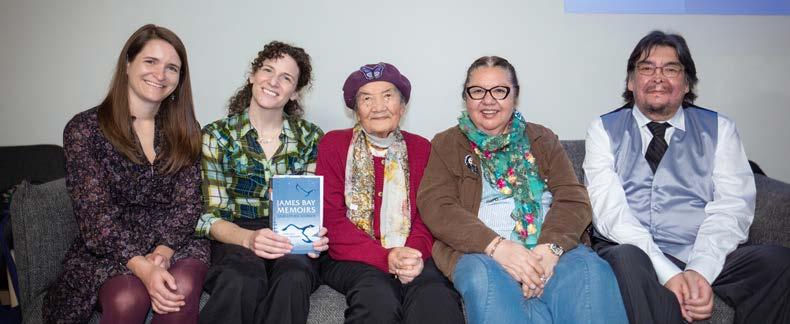
On June 7, the Centre d’art Daphne in Montreal hosted the launch of James Bay Memoirs and Other Stories by Margaret Sam-Cromarty. The 90-year-old Eeyou writer shared several poems from the 288-page compilation during the event.
“To see the audience’s reactions to her words was really powerful,” said editor Isabella Huberman, who initiated the project along with Élise Couture-Grondin. “It really felt like a celebratory event. A memorable day, great turnout.”
“We had people follow along in their books while she was reading, creating a communal read along,” said Huberman. “People bought books and wanted to get them signed by Margaret. She was very popular, sitting on this couch in the middle of the room. It felt like we were visiting somebody’s living room.”
Couture-Grondin discovered Sam-Cromarty’s books during a family trip to Chisasibi three years ago and reached the author after talking with Huberman. The editors worked with her to correct inaccuracies in three poetry books that were out of print, and included speeches and articles from the Nation published in the 1990s.
Sam-Cromarty’s book is available at the Wachiya store in Old Montreal. “From life on Fort George Island to the relocation of Chisasibi, Margaret shares experiences that continue to inspire future generations,” says the Wachiya store description. “Her writings remind us of the strength of community, the importance of the land, and the value of preserving Indigenous knowledge.”
An Eeyou Istchee book launch is planned for the second weekend of the annual
Mamoweedow Gathering on Fort George Island July 9-19.
The community’s relocation to Chisasibi during the rst phase of HydroQuébec’s James Bay project in 1980 informed much of Sam-Cromarty’s writing, documenting community life and experiences on the land before and after the move. Her poem “Trees” was selected in a nationwide search to appear in a book alongside other Indigenous poets.
“I thought I should do it for the next generation or whoever is interested in our culture,” Sam-Cromarty told the Nation last fall. “I found a lot of people are interested in our culture. That’s the most amazing part. It started in a remote place and yet it went far – I never thought it would come this far.”
a bronze medal at this year’s Canada Wide Science Fair in Edmonton for his project “Long, Long Ago in a Galaxy Far, Far Away.”
Grimstead’s project used the Galaxy Zoo online platform to classify 189 galaxy images and analyze 47 of the more interesting ones in greater detail. The platform enables participants to help scientists examine vast astronomical data sets to understand more about the universe.
“I found a disturbed spiral galaxy with more than four arms and even a possible rare polar ring galaxy!” enthused Grimstead. “I was very lucky to be the rst person ever to view some of these galaxy images and help scientists identify interesting galaxies for further study.”
ets outside our solar system using NASA transit photometry software.
The Cree School Board’s annual Regional Science Fair showcased 50 participants in Waswanipi this February. Several projects advanced to the Quebec Indigenous Science Fair held in La Tuque March 24-26.
In La Tuque, Gilbert Swallow and Junayshia Waapikun (Mistissini) won the Heritage Cultural Award of Excellence for their project comparing human and AI goose calls. Aube Jolly and Pascal Jonah (Waskaganish) received the Scientific Development Award for their project, “Le Système Solaire”.
Chisasibi Secondary 1 student Henry Grimstead won
Grimstead also explored galactic mysteries in his science project last year, when he won rst prize in the Grade 6 category at the Quebec Indigenous Science Fair. That project, “Exoplanets: The Search for New Worlds”, involved searching for plan-
Winning second in their categories were Nathaneal Brown (Whapmagoostui) for exploring the antioxidant e ects of Indigenous medicinal plants, CharlyJames Sanipass (Waswanipi) showing how kinetic energy moves a boat, and Nathania Brown (Whapmagoostui) about recycling Breakfast Club waste.
Truckers Unite
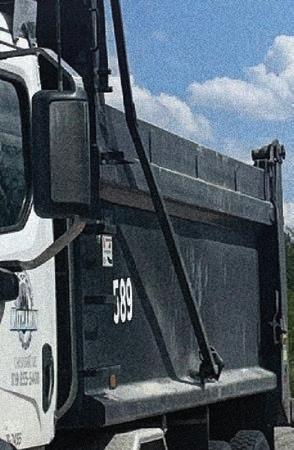
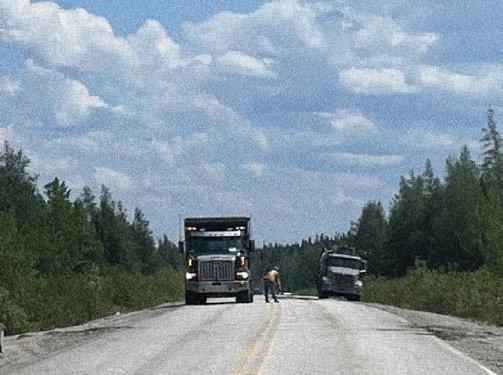
As construction projects expand throughout Eeyou Istchee, Cree truck drivers are increasingly uniting to improve their business opportunities.
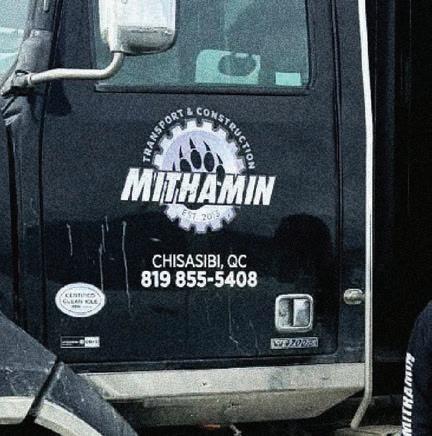
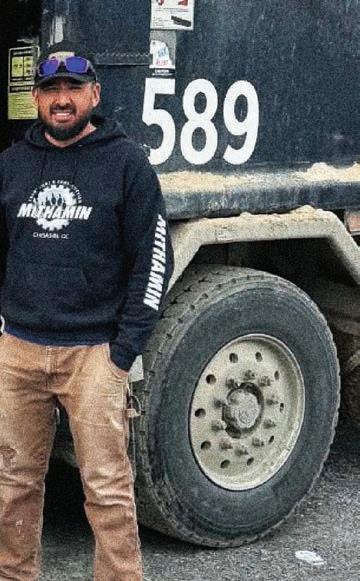
In April, Chisasibi’s Adam Gates became the rst Cree to become president of a trucking association, with which he hopes to prioritize local truck owners and drivers. A heavy equipment mechanic by trade, Gates bought an old dump truck to x up in 2012. That led him to launch Mithamin Transport and Construction the following year.
With Mithamin growing to ve 12-wheeler dump trucks alongside other vehicles, about four years ago Gates acquired majority ownership of Eenou Eeyou Construction and partnered with Hardy Construction for bigger projects like Chisasibi’s new Sabtuan Learning Centre.
Working closely with the Radisson Baie-James Substation since its establishment in 2024, Gates became a board member after securing a permit from Quebec’s Commission des transports last fall. He believes this summer could exceed last year’s milestone, when about
20 Cree truckers earned almost half of the association’s $9 million in revenue.
“Before Radisson was established, trucks were dispatched from Chibougamau and Matagami associations and Crees were left behind,” Gates said. “The goal was to prioritize local truck owners and I think we’ve really hit it out of the ballpark.”
Because the Commission long ago stopped issuing new permits, new truckers must purchase someone’s existing permit. While only three Crees in the association currently hold permits, the association is still able to dispatch a majority of Cree drivers coming from several communities as it helps more locals secure permits.
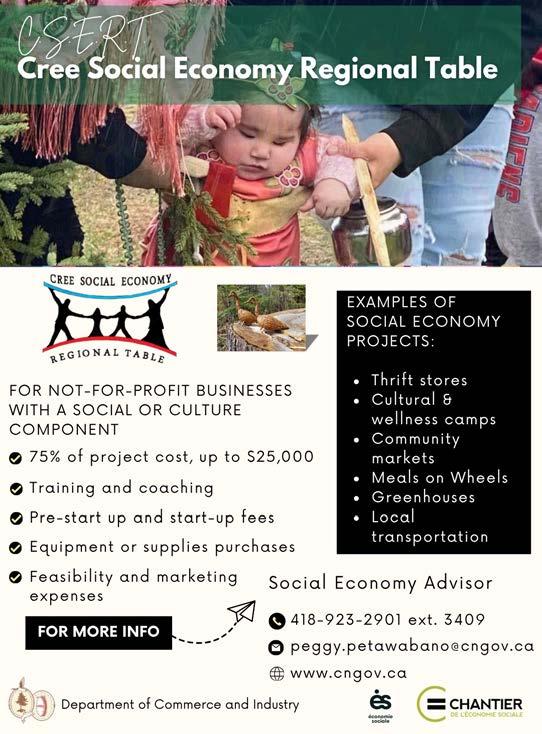
Last year, the Cree Nation Government’s Department of Commerce and Industry (DCI) hosted open forums to discuss emerging opportunities and barriers in this growing eld. With the Commission planning to open truck registration in the region to anyone in 2027, Gates consulted DCI and Grand Chief Paul John Murdoch about negotiating more favourable arrangements for Cree drivers.
“We want to put a stop to that and ask if we can have new permits issued speci cally for Crees that can’t be resold,” explained Gates. “My goal for now is to funnel all the Cree trucks through the Radisson association.”
There have long been calls for a Cree trucking association, but little progress has been made. However, Gates said the Radisson association has the advantage of being already established and legally certi ed to govern the region. Even with every Cree trucker working, the abundance of projects would require contracting non-Native drivers.
Self-employed truck driver Jamie Gunner has been trying to start an association for inland Cree communities, which he said is slowly gaining ground in Mistissini. He said he’s struggled to nd enough work in Mistissini since buying his truck in 2022 with grants from the CNG, Mistissini band and former employer Stornoway Diamonds.
“I had to leave the community because of too many trucks and I wasn’t rotated,” said Gunner. “I worked in Ouje and Waswanipi the rst year, then I went back home. They called me. It was kind
of hard being out there without your family, especially when you have little ones.”
Cree construction companies told Gunner that they go through trucking associations. So, he called the associations in Matagami, Quevillon, Chibougamau and Radisson. With Radisson the only one to respond, he went to Chisasibi last summer but was frustrated after waiting three months for payment.
Although Gunner said mining companies generally work with the francophone associations, he’s accepted a job at Waswanipi’s new Windfall mine. After 25 years, Gunner still loves driving trucks. Trucking was his father’s dream job but his training in Quebec City was abandoned when the family needed him.
“He had to quit and come back home because my mom was the only provider at that time,” shared Gunner. “I wanted to show him I could do it. When I owned my own truck, he was happy for me. He paid for my business plan to support me.”
Chisasibi-based driver Chris Sam was working at the local radio station before trading the o ce for the open road 11 years ago. After getting his Class 3 license, he was recruited to work underground at the Eleonore mine with various machinery and 55-ton trucks.
He’s currently making repairs to the Billy Diamond Highway following a winter plowing snow.
“We worked on the LG-3 dam on the Trans-Taiga highway,” said Sam. “I’d wake up early and see the sunrise – those moments are priceless. When the rst snowstorm hit in November, it was crazy. Hydro-Québec workers got stuck and I had to pull out ve of them.”
Sam loves making friends on the job and clearing his head during those long hauls. As a guitarist and singer for Cree Rising, the truck is a great place for listening to music and practicing his vocals ahead of summertime gigs. He
said truckers are a supportive community and he enjoyed helping out fellow snowplow driver Mary-Jane Rabbitskin this winter.
“We’re all like a family,” said Rabbitskin. “I feel safe and comfortable working with other drivers teaching me and looking out for me, as I’m the only woman truck driver here. It’s so nice waving when I see the other drivers. It’s like an adventure going to work sites.”
Rabbitskin got her start working for the Eleonore mine but prefers driving above ground enjoying the natural scenery and listening to music. Recalling challenges in her early days backing uphill to make a road, she’s proud of her contributions when she passes that site.
Now working her second summer with the Radisson trucking association, Rabbitskin learned how to operate the loader on the highway – co-workers say she’s a natural. She’s happy to see Cree drivers prioritized with the association and looks forward to learning the concrete truck when it’s her turn to work towards a permit.
Working alongside 18-wheelers in her community sparked an interest in pursuing her Class 1 license. Incorporated in 1987 by the Chisasibi and Wemindji communities, Kepa Transport provides freight service between Eeyou Istchee and other parts of the continent. Rabbitskin imagines driving a Kepa truck through the US, an o er rejected by one of her friends.
“Every time I see him, I give him that disappointed look and we laugh about it,” said Rabbitskin. “Seeing people on the road, they’re so proud, giving me thumbs up. I still have a lot to learn but I’m glad I have support. I can’t wait to have a woman truck driver as a co-worker one day.”
Opportunities
troilustogether.com
More than 70 Indigenous artists from across the circumpolar world are featured in Qillaniq, a major multidisciplinary showcase at the National Gallery of Canada in Ottawa that celebrates Indigenous creativity and connection across the Arctic.
Co-curator Laakkuluk Williamson, a Greenlandic Inuk based in Iqaluit, believes the exhibition represents something much larger than an art show.
“It is a moment of great pride for our artistic community as Arctic people,” she said.
The exhibition brings together artists from Greenland, Canada, Alaska, Siberia and Sápmi, regions whose Indigenous peoples remain connected despite national borders.
Respected Cree Elder
“Even though we live in di erent nations, we are still the same people,” Williamson said. “Qillaniq is a moment of unity, and it’s also a moment of great joy that we are expressing."
Beyadabnoskum Isaac Masty began his journey to the spirit world on May 28. He spent his nal days at the family’s spring camp in Whapmagoostui surrounded by love and laughter.
International Year of Astronomy, Nazon began applying the traditional beadwork techniques she learned as a child to recreate images captured by the Hubble Space Telescope.
“Before I beaded owers,” she said. “Space is very di erent, and I was intrigued by all the images that were coming forth.”
The vibrant colours and abstract beauty of astronomical images inspire Nazon’s fascination with the cosmos. “I learned a lot about all the gases in space,” she said. “So, I quit doing owers and decided to do Saturn and comets and Milky Way.”
“Our dad was a truly humble man and everything he did was done out of love,” said eldest daughter Stella Masty. “He held integrity of his work to the highest regard, always freely giving his knowledge to those who would listen and wanted to learn.”
A central theme of the exhibition is what Williamson calls “radical joy”, a concept rooted in Indigenous survival and resistance.
“He served his community during a foundational and demanding period in which Cree leaders worked to establish institutions and protections that continue to serve our Nation today,” stated the Grand Council of the Crees. “His leadership in those formative years helped lay the groundwork for the self-determination Eeyou Istchee enjoys now.”
“Every single aspect of our lives in the Arctic as Indigenous peoples is highly colonized,” she explained. “It was colonized in a way that the system wants to eradicate our existence, and yet every day we do exist, and we create all of these safe places that we are able to laugh and have great joy in.”
Apart from his time as Chief of Whapmagoostui in the 1980s, Masty worked in many elds of community service and guided numerous Cree entities over the years. He was a former regional president of the Cree Trappers’ Association and was the chairperson of the Eeyou Marine Region Impact Review Board since its creation in 2012.
year-old daughter
Nazon believes visitors’ reactions often depend on their familiarity with astronomy.
“At rst, people weren’t sure what it was,” she continued. “It was abstract art to them, but once they learned the stories behind the images, they ask questions and enjoy it.”
She said his passion for the Cree language and way of life was always prominent, emphasizing that the Cree land, culture and values couldn’t be separated.
Qillaniq (Inuktitut for “the light that shimmers on water”) was developed by six Indigenous co-curators who worked together for a year and a half with the National Gallery. Every artwork is important for Williamson “because we are responsive to our communities.”
Among the pieces on display is Spirit of the Ocean, a sculpture carved from mammoth tusk by Viktor Iadne, a New York-based bone carver from the Yamalo-Nenets region in Siberia.
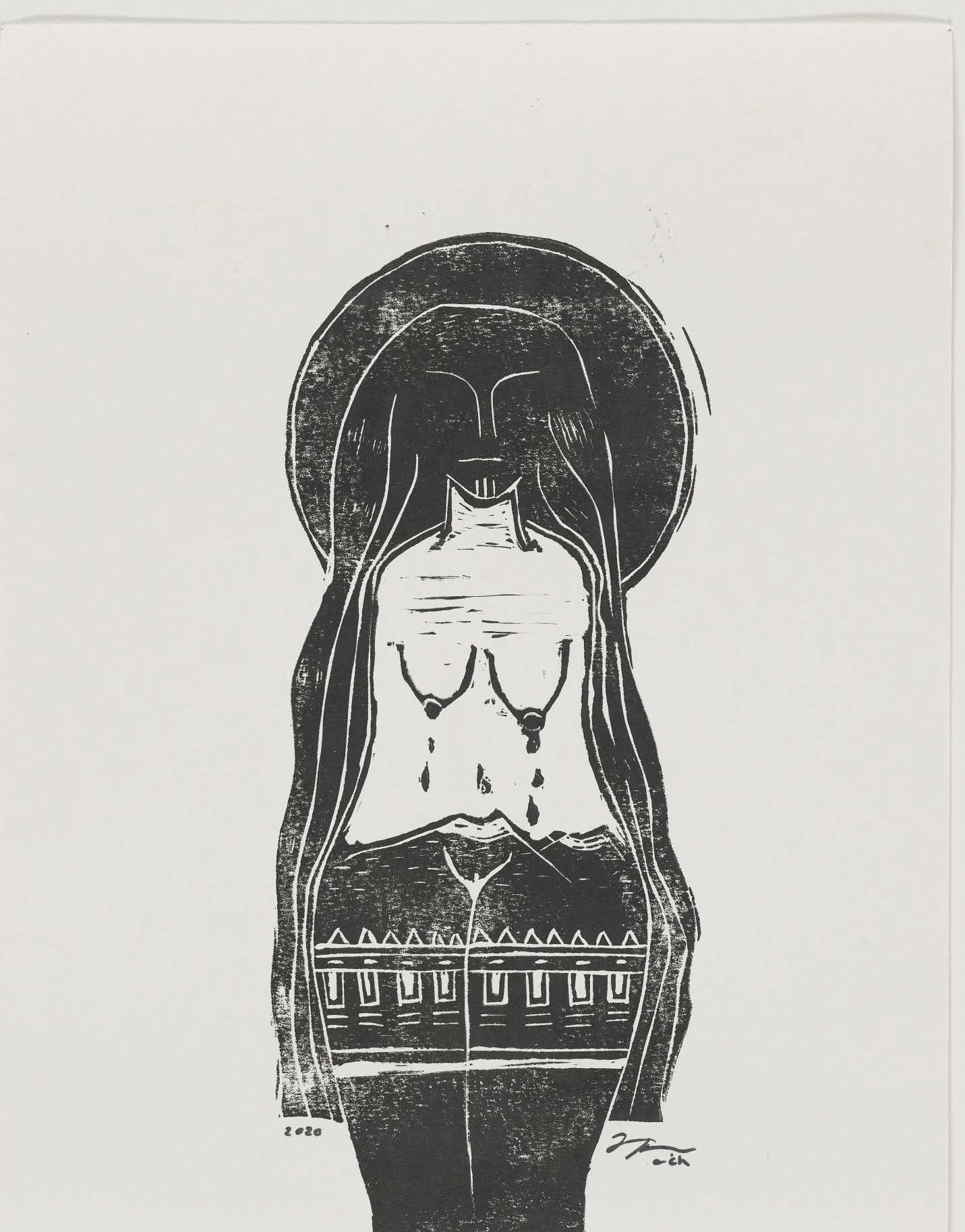
“I felt a responsibility to make sure that artists from Greenland and Nunavut are in the show,” she said, mentioning the work by Nunavut artist Natashia Allakariallak. “Her work is an exploration of her body as a breastfeeding mother.”
comimpact-
“He was a traditional pipe carrier, sun dancer, and followed both paths, with no judgment,” Stella shared. “Never allowing us to quit but to keep going no matter how hard life was, that better days were ahead. His message of com passion, empathy, perseverance and love lives through all those he impact ed.”
Quietly ghting myeloma and pros tate cancer for six years, “he did not want to talk about his illness,” Stella noted, adding that her father fought the good ght and passed away peacefully.
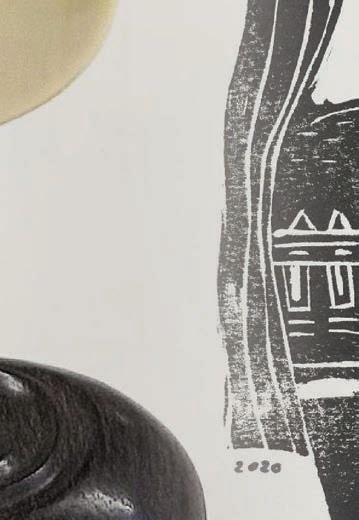
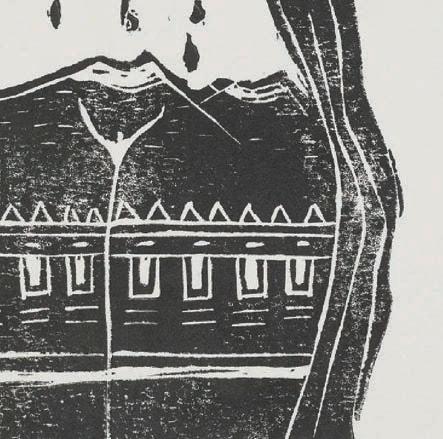
The image depicts elements of motherhood, fertility and creation, including traditional thigh tattoos made by Inuit women.
Although no Cree artists are included in Qillaniq, Williamson believes there are strong connections between Inuit and Cree people.
“Isaac was one of the greatest mentors I could have asked for,” commented EMRIRB director Païlin Chua-oon Rinfret. “I often joked with him that he had lived many lives in one lifetime. He had worked so many careers, carried so much knowledge, and could speak thoughtfully about almost anything. But more than anything, he understood people.”
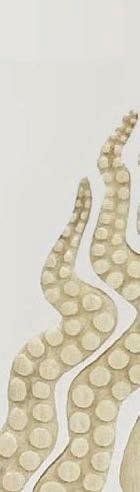
The sculpture depicts an octopus-like creature with four eyes and a mouth on a whale’s tail “as I was inspired by the mythical cosmic personage Cthulhu,” Iadne said. “The whale is a whole platform that can be developed. I delved deeper and saw the spirit of the ocean.”
“He will be missed but we accept God’s plans for him,” she shared. “We stayed till the end. We noticed that when the kids and grandkids left, his heartbeat was irregular, then when they returned, his heart and breathing regu lated. He surely loved his children.”
“There are many similarities in the colonial experience, and that’s something for all Indigenous people to be in conversation about,” she explained. “We do have parallels in our lives, and it’s important for non-Inuit to bear witness to it because there’s so much to learn.”
Born in 1952 about 80 km east of Whapmagoostui during the days of nomadic life, Masty studied locally before obtaining a Bachelor of Education. He worked as a teacher and was responsible for budget development as an education administrator, supervising about 30 employees.
Williamson hopes the exhibition o ers a deeper understanding of Arctic Indigenous relationships with the land. “People will see throughout the exhibition that there are artists who use feathers, sh skin, reindeer skulls, wood, bone, owers,” she said.
A trusted mentor to many, Masty played important roles at the Cree Nation Government, Cree Out tting and Tourism Association, the Cree Health Board’s Nishiiyuu department, and the Hunting, Fishing, Trapping Coordinating Committee.
Visitors can see the cosmos through thousands of beads, a reminder that Indigenous art can connect ancient knowledge and the wonders of the universe.
Masty is survived by his wife Stella George Masty, who he married September 11, 1972. The couple had ve children, 18 grandchildren and 19 great-grandchildren, while also fostering several young people and opening their hearts and home to many more.
Margaret Nazon, a Gwich’in artist from Tsiigehtchic in the Northwest Territories, transforms images of the space into intricate beadwork, blending Indigenous artistic traditions with astronomy. In 2009, the
Much of Iadne’s work is created from mammoth tusk, a material he believes carries memory and energy from the distant past. His art often explore Northern traditions, animals, hunters, spirits, shamans and mythology.
“Bone contains the energy of animals, created by God,” he said. “If it’s a mammoth, it ran, and that energy is memory, it’s always there. We, as Indigenous peoples, serve as a kind of bridge between the world, nature and spirits.”
Masty served on the federal day school board and income security board. His other roles included a stint as court translator in Amos and teach ing Sunday school at his local Anglican church, where his father Joseph Masty Sr. served many years as church leader.
MelanieRose. reguteach-
In February 1995, his father would die in a house re, which also claimed the lives of his sister Martha and six-
Although Indigenous peoples from Siberia and from Canada’s NWT have developed di erent artistic traditions, Iadne sees many shared experiences, such as colonial pressures and attempts to suppress their cultures.
“Indigenous art in Canada has gained growing recognition and support,” Iadne said. “Canada now recognises the values of Indigenous culture, and they have a future for it, if they develop it.”
Polar Refle i s Polar Refle i s
The Cree IELCC Fund is designed to fund projects/activities that foster the education, Cree culture and language, as well as health and wellbeing of children 0 to 6 and their families.
The Cree IELCC Fund is designed to fund projects/activities that foster the education, Cree culture and language, as well as health and wellbeing of children 0 to 6 and their families.
The Cree IELCC Fund is designed to fund projects/activities that foster the education, Cree culture and language, as well as health and wellbeing of children 0 to 6 and their families.
The Cree IELCC Fund is designed to fund projects/activities that foster the education, Cree culture and language, as well as health and wellbeing of children 0 to 6 and their families.
The Cree IELCC Fund is designed to fund projects/activities that foster the education, Cree culture and language, as well as health and wellbeing of children 0 to 6 and their families.
All projects and activities must also ensure that no children are left behind: activities must be accessible to all children, no matter their level of ability or special
All projects and activities must also ensure that no children are left behind: activities must be accessible to all children, no matter their level of ability or special need.
All projects and activities must also ensure that no children are left behind: activities must be accessible to all children, no matter their level of ability or special Deadline
All projects and activities must also ensure that no children are left behind: activities must be accessible to all children, no matter their level of ability or special need.
All projects and activities must also ensure that no children are left behind: activities must be accessible to all children, no matter their level of ability or special need.
to
Awacak is an Indigenous-led organization that helps Cree and Inuit families nd answers about their children who were hospitalized and never returned.
They work with the department of family support in Quebec’s Indigenous a airs ministry to access records under a provincial law enacted in 2021. Then known as Bill 79, the law is a response to the National Inquiry into Missing and Murdered Indigenous Women and Girls.
“When we search, we search with our hearts,” said Awacak’s Pikoganbased director Françoise Ruperthouse. “We try to nd answers because I know what it does when we search and we don’t nd them. It hurts so badly. We are always in waiting.”
Before Quebec’s law was adopted, Ruperthouse had worked for years trying to nd two siblings lost in the healthcare system. Ruperthouse eventually located her sister in a Baie-SaintPaul facility not long before she passed away in 2000, but she believes that the family could have enjoyed more time together if the law had arrived earlier.
Retired investigative journalist Anne Panasuk joined Awacak as a consultant after working with Innu families seeking their missing children and later with the government as it implemented the law. The provincial minister sought her advice in engaging with communities and to guide families requesting a search.
“I told them you have a trust problem and a transparency problem,” said Panasuk. “Bill 79 really unlocks the medical les – it’s mandatory to give out information. We can say to the families, all that has been found is going to be given back to you. Nothing is going to be hidden.”
After Panasuk produced a 20-minute segment for Radio-Canada’s Enquête program in 2015 about eight Innu
children from Pakuashipi who never returned from hospital 40 years ago, the Atikamekw contacted her with their own stories. Later joined by the Anishinaabe, the First Nations began collaborating to seek answers.
Since Awacak was established ve years ago, it’s reached Indigenous communities across the province through public gatherings, radio addresses and meetings with families. Nearly 250 searches have been launched, with 21 les now closed, including 10 in the last year.
“At the beginning it was a little difcult but now there’s a lot of cooperation,” Panasuk explained. “The problem is some documents don’t exist and hospitals were [formerly] private and reli-
gious. Those archives are sometimes in boxes under the bed of the priest.”
Sometimes there’s only a death certi cate, containing the child’s date of birth and death, cause of death and to whom the body was returned. Two hospitals unlawfully destroyed documents, leaving no way to trace the deceased child. Awacak works with physicians who answer families’ questions about whether the treatment seemed adequate.
“Families would like to know if the child was well treated,” said Panasuk. “Was there someone there when they passed away? We have no answers for that. At least if they can bring home the body or do a ceremony it allows closure.”
While these children were often buried in common or unmarked graves, Awacak’s lawyers have helped families conduct ve exhumations so far. Some cemetery managers have been so moved by these stories that they’ve o ered free gravesites and tombstone engraving.
In 2024, the body of nine-year-old Juliette Rabbitskin was moved from La Tuque after nearly 50 years to be laid to rest in Mistissini. Her cousin Emily Rabbitskin told the Nation after the reburial, “It’s like a load from my soul was lifted.”
When Awacak made a presentation at a Cree Nation Government board council meeting in 2023, former Deputy Grand Chief Norman A. Wapachee shared a story about his sister Hattie, who remained at Roberval hospital in January 1956 with pneumonia after her two older brothers were discharged. The seven-month-old child passed away that April.
“When my parents went to Roberval to see the body, they were told to wait at the cemetery,” recalled Wapachee. “They stayed there all afternoon and it never arrived. The taxi had to return and they never got to see where it was buried. I never got to meet her but it impacted my life, wondering if she was still alive.”
Driving to Montreal for meetings over the years, Wapachee would think of Hattie whenever he passed Roberval. Consulting the hospital’s archives yielded little progress until Awacak entered the picture. Working primarily with Wapachee’s wife Anouk, Awacak eventually traced Hattie’s remains to a Catholic cemetery in Mashteuiatsh, near Saguenay.
“We went over to my parents’ place that evening,” said Wapachee. “Of course, my mom cried. She was relieved and happy. I remember her words: ‘After 67 years, I’m nally going to bed knowing where my baby is.’ My mom and dad passed away shortly after that.”
Since then, a public meeting in Mistissini resulted in other families initiating searches. Following a recent presentation in Waswanipi, Awacak intends to visit all other communities in both the Cree Nation and Nunavik in the coming months. The organization hopes to hire Cree and Inuit people to ensure cultural safety throughout the process.
Several missing Cree children may have gone to Ontario hospitals, where it isn’t yet mandatory to unlock medical and religious records. Similar situations occurred across Canada, wherever parents weren’t permitted to accompany their children. Indian A airs agents could decide that it was too costly to return bodies to the communities while no information was given to families.
“It’s outrageous taking the baby like that,” Panasuk asserted. “They say, ‘We didn’t know where they were.’ I don’t accept that. People answer, ‘They knew where we were to take us for residential school.’ So we’re repairing things that shouldn’t have happened.”
With a property not far from Hattie’s unmarked grave in Mashteuiatsh, Wapachee has noticed many Cree and Inuit names in the cemetery. His family still hopes to locate Hattie’s exact location as “it would be nice to bring her home.”
“I’ll probably be there every other day in July,” said Wapachee. “Before Goose Break, we received a binder of all the research that was done – it was nice to put closure on that. I’m very happy my parents were able to nd the truth of what happened.” Include the Nation in your next
How can your promotional campaign not be seen by the Cree Nation with these stats:
• 7,000 copies every two weeks, free to all Crees
• Distributed to every Cree community and beyond
• 13,000 web visitors on the Nation site per month
• Found in every seat of Air Creebec flights
• Award-winning news magazine since 1993
Contact us to discuss options and get a quote on an ‘Annual Contract’ or a ‘Multiple ad campaign’... SAVE BIG WITH OUR BULK RATES!
We look forward to working with you to tailor all your advertising needs, in print or online.
Attawapiskat is celebrating the annual graduation of students from Kattawapiskak Elementary School and Vezina Secondary School. These are proud moments as families celebrate their children.
These moments are especially important for our First Nation communities, as education in my parents’ time was traumatic. My parents, Marius and Susan Kataquapit, both attended residential school as children and it was terrible for them and their families. Their parents were forced to give up their young ones for the entire year, and the children were separated from their families and communities.
For the government, it was a form of assimilation designed to remove Indigenous culture from a child’s life and force them to integrate into European Canadian society. That kind of education only produced fear and hopelessness. Residential schools were havens of abuse of all kinds that deeply traumatized an entire generation of Indigenous people.
To add to the hurt and anxiety that my parents must have lived with when they thought of the education system, their children were taken into the Boarding Home school system. My parents had to give up their children so that they could attend secondary school in the south.
Before 1990, Attawapiskat and the communities on the James Bay coast
had no way to provide secondary school education. The solution was to send young teenagers from their northern homes to be housed in boarding homes in cities to the south to complete their schooling.
I was 13 years old when I had to leave our community to attend secondary school in Timmins and North Bay. I had a good education and was a good student but I missed my home and my family.
It was also a culture shock because we mostly spoke Cree. English was our second language, which we used only at school. It was a deeply troubled time for all of us as we were away from our families, our culture and our language.
So I am happy that Attawapiskat’s young people now complete their schooling living at home with their families and friends. This is especially true for secondary-school grads.
During high school, they had the chance to be on the land, to hunt and sh, or to just wander into the wilderness with their families, Elders and traditional people. They learned their language and the culture, and made to feel proud of who they are and where they come from.
My nephew Landyn Kataquapit and my grandnephew Adam John Shisheesh, along with eight other local students, are part of the Vezina Secondary School graduating class of 2026. Landyn said he was happy to have completed his
schooling at home and that he was looking forward to attending post-secondary studies in Sudbury in the fall. I talked to Adam John a few months ago and he was just as excited to plan out his future after high school.
Principal Shoukat Ali has been in Attawapiskat for 18 years. He’s happy to see his students complete their schooling, and their growth over the years. Guidance counselor Monica Shah also shared her praise for these new graduates.
Miriam Wesley, who works for the Attawapiskat First Nation Education Authority, added that she is proud to see this group completing high school. I see Miriam as a cultural Elder in our community, as her family has been involved in local leadership for generations. She is uent in Cree, and holds a great deal of knowledge and wisdom passed down by her family.
My family is also celebrating Grade 8 graduates, including my grandniece Raylee Shisheesh, and Kindergarten graduates: my nieces Autumn and Susannah Kataquapit.
After generations of traumatic experiences with the education system, we now get to celebrate our young people the way we are supposed to.