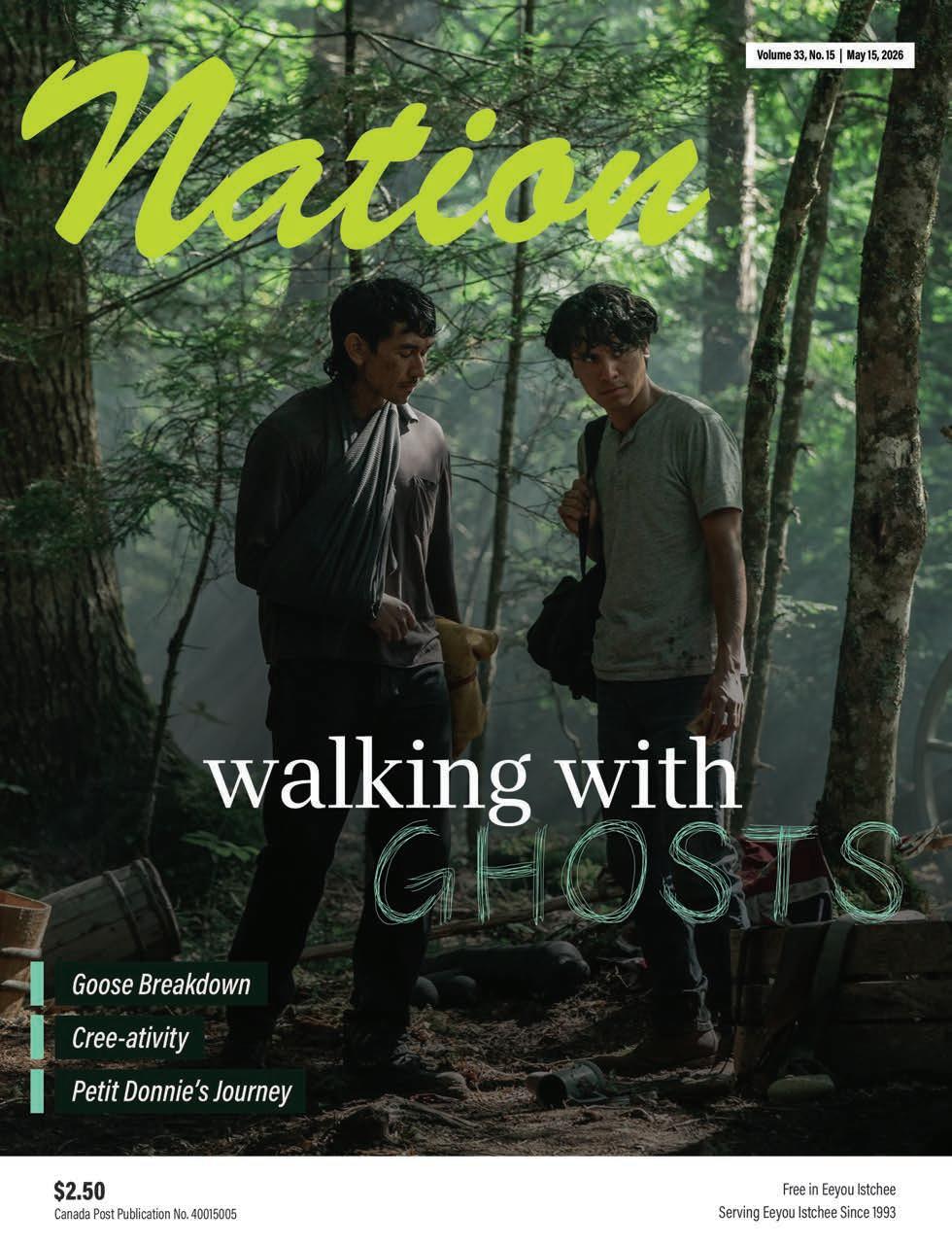
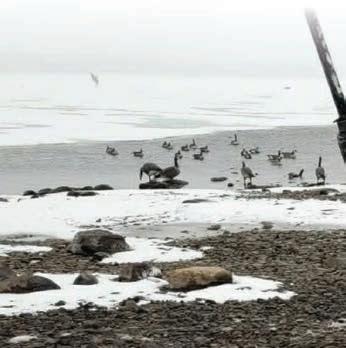
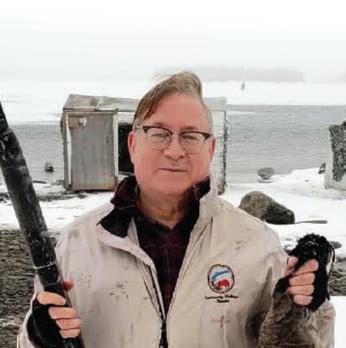
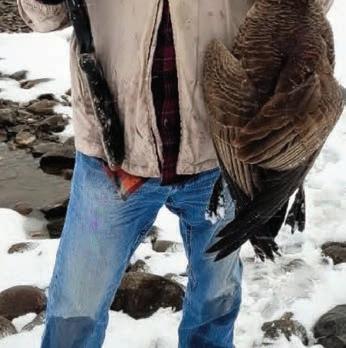
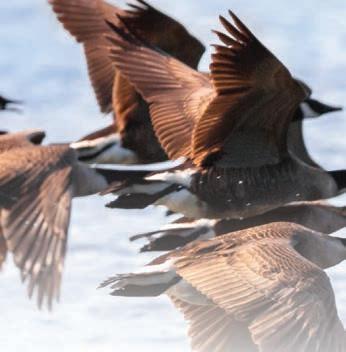
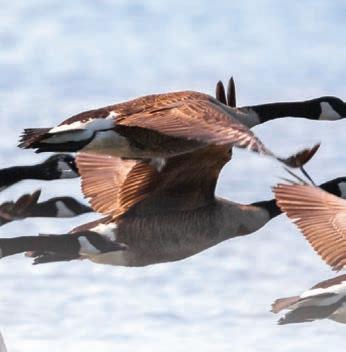
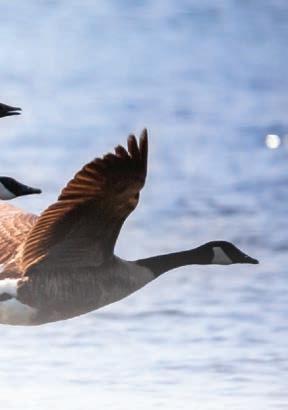
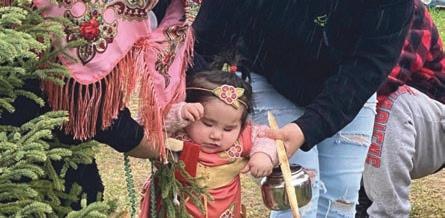
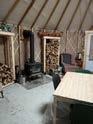
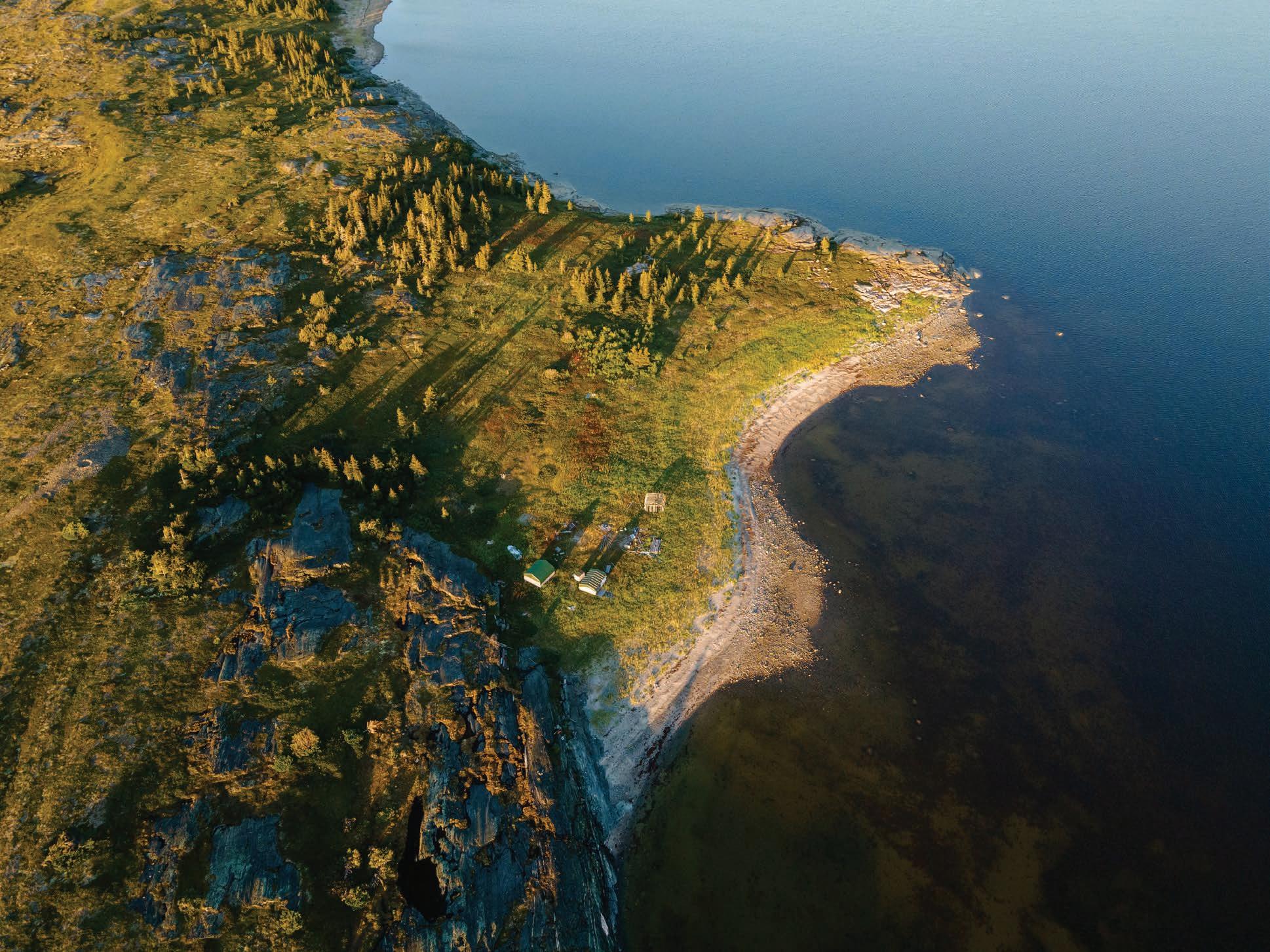
Every spring, Crees pause to harvest geese, reconnect with the land and share cultural knowledge. Goose Break is a cherished time of rest, re ection and enjoying priceless moments with family.
“Being out on the land rejuvenates us in a special way, strengthening our connection to our values and roots as Iiyiyiuuch of Iiyiyiuu Aschii,” stated the Grand Council of the Crees, encouraging everyone to share their harvests and teach children safe rearm habits.
Waswanipi’s youth department organized a Goose Break festival April 30, with food essentials given away to those in need. Most communities provide subsidy bundles for young families and coordinate “Adopt a Youth” programs to help more people get out on the land. Mistissini’s Meechum Store donated $10,000 for the local youth program.
The Cree Health Board reminded hunters to use leadfree ammunition, vaccinate dogs for rabies, keep the land clean, boil water for two minutes before drinking and cook food thoroughly. Birds shouldn’t be touched with bare hands and propane shouldn’t be used in enclosed spaces.
The season got o to a sad start when beloved Waskaganish community member Roy Weistche passed away April 17 while goose hunting in the south. A week after the funeral, friends and family gathered to place a cross at the site of the incident May 3.
With uncertain ice conditions, hunters should keep people informed of their location and avoid going out alone. A deep blanket of snow remains in many areas, with coastal Elders saying they couldn’t remember a season with so much snow.
“The migration of the songbirds is about two weeks behind schedule,” noted Angela Coxon, director of wildlife management at the Eeyou Marine Region Wildlife Board (EMRWB). “Folks in Waskaganish are saying that the geese are ying low this spring because the ground is still covered in snow so the hunting has been better than recent years.”
A Cree hunter told Coxon that with less heat rising from the ground, the geese don’t have to y as high to stay cool. Further north in Wemindji, tallyman Henry
Stewart said there were still winter conditions and few geese in the area.
The Niskamoon Corporation is funding reseearch in association with EMRWB, the Cree Trappers’ Association, Hydro Quebec and researchers from McGill University and the University of Calgary to better understand goose populations and choice of habitats.
“Elders say geese used to fatten up on the coast and move onto their migration,” said project leader Frédéric LeTourneux. “Now the geese spend most of their staging period in the south on agricultural land where they accumulate most of the fat reserves they need for migration and reproduction.”
In phase two of the Coastal Habitat Comprehensive Research Project launched last summer, Eeyouch and scientists are monitoring goose abundance, distribution and behaviour. Data will be gathered over ve years with drones, harvest measurements, cameras and sound recorders.
Harvested geese will be weighed and measured to determine fat reserves, an indicator of population health and reproductive capacity. In an CHCRP tutorial video, LeTourneux demonstrates how land users can take these measurements themselves, which will eventually be compared to body conditions in different areas and over the years.
The goal is to link this information with traditional ecological knowledge and empower independent Cree goose monitoring. LeTourneux suggested the Cree way of pinching the belly to assess bird fat might work better than their method. Adding this research to data obtained in Nunavik and the St.
Lawrence Valley can develop a fuller picture.
“Current information is that a lot of the geese breeding in the Arctic use the inland route,” said LeTourneux. “When the geese are migrating, they’re looking for open water, especially in early spring. If it’s all frozen, they’ll tend to y over or even y back a little south if they hit an intense weather front.”
In collaboration with regional polar bear research, 30 passive sampling stations have been deployed at wetland habitats along the coast, with another 15 coming this summer. Equipped with cameras and sound recorders, these stations help identify habitat characteristics preferred by geese.
Drone technology is another tool for surveying goose populations. Flying high above congregations without disturbing them, they use computer software to count geese. Returning to sites each year can determine changes over time. There are plans to test goose reaction to the drones this fall and then train locals to use them safely.
Working with McGill University, Nature Canada or FaunENord, many Cree are developing scienti c skills while securing meaningful employment. Chisasibi’s Lawrence Napash has taken researchers out on James Bay for ve years and recently joined a project taking samples of eelgrass beneath the ice, a primary food source for geese.
“Sometimes we’d take water samples from the eelgrass beds to see if they’re healthy,” Napash told the Nation. “We believe the sediment from the dams goes out north and poisons the bay so the birds cannot eat. There were no shorebirds on the north coast of
Chisasibi; on the south there were big ocks of Yellowlegs.”
Since Hydro-Québec diverted the Rupert and Eastmain rivers, Napash said La Grande River is too shallow in springtime for hunting. He nearly broke his boat motor two years ago trying.
“There was a smaller river up near LG-1 where there used to be thousands of geese feeding, but today there’s none because it’s dried up,” said Napash. “I think you can cross with hip waders now – the geese just land for a couple of minutes, then they take o . I think they’re going to try to transplant eelgrass in Chisasibi at the end of June.”
Since getting his own boat, Napash has been in high demand for projects researching berries, mushrooms, shorebirds and polar bears. He looks forward to becoming a diver for underwater research.
A meeting with EMRWB biologist Manon Sorais in March discussed hunting potential on the Twin Islands and Charlton Island in central James Bay, where it’s believed over 60% of migrating geese pass through. Researchers exploring where they’re nesting or wintering will have to contend with large numbers of polar bears on the islands.
“People are starting to hunt geese in the south because the [former] feeding grounds are no longer active,” said Napash. “Geese are starting to y in the middle of the bay. When they told us the numbers of geese ying there, we had a meeting to get safe bear-proof camps there.”
troilustogether.com
Events were held across Canada May 5 for Red Dress Day to raise awareness about missing and murdered Indigenous women, girls and Two-Spirit people (MMIWG2S+). Advocates say that the National Inquiry into MMIWG, which released 231 calls for justice in 2019, was a beginning of addressing this issue, and not the end.
“On Red Dress Day, we re ect, grieve and continue our work together towards ending this ongoing national tragedy,” shared Indigenous Services Minister Mandy GullMasty.
Prime Minister Mark Carney announced $2.6 million in funding over three years for the National Family and Survivors Circle and an additional $300,000 for a Red Dress Alert pilot project in Manitoba.
However, a group of 400 prominent advocates at a vigil at Parliament Hill released an open letter arguing that increased funding to national MMIWG2S+ organizations doesn’t meaningfully address the crisis.
“We were all shocked to nd out they were asking for more money without even addressing or talking to us, or speaking to us,” said Bridget Tolley, a founder of Families of Sisters in Spirit.
Long-time advocate Meggie Cywink said there’s no transparency about what these organizations are doing with this funding. She said some of these organizations “came out of nowhere and there was no consultation with family members across Canada.”
Mercedes Côté from Kitigan Zibi, a youth representative for the Algonquin Anishinabeg Nation Tribal Council, said she wants to see immediate action taken
when women go missing. She said, “A lot of times I feel like we’re swept under the rug, or we’re kind of like a second thought.”
In Montreal, the Native Women’s Shelter and the Iskweu Project held a memorial rally and march at Cabot Square, encouraging participants to wear red, carry red dresses and bring drums.
near Km87 and required specialized resources. After work was completed, it was reopened on May 3.
Heavy rainfall and quickly melting snow brie y closed the Billy Diamond Highway May 1 from Km6 to Km274. Floodwater owing over the temporary bridge posed a safety risk to travellers with concerns the structure wouldn’t hold.
The Grand Council of the Crees said later that day the highway had been reopened following an inspection. Although water levels remained high, the temporary bridge was not considered at risk. However, the access road on the Radisson side was signi cantly eroded.
Signage was installed to ensure safe travel across the bridge and its access roads. Erosion repair work was scheduled and daily monitoring of the bridge is in place. Drivers were asked to remain vigilant for possible ooding at Km69.
Route 19900 (formerly R1005 – Matagami–LSQ Crossing) was also closed
Many people are still seeking answers ve years after a Quebec law was adopted that allows Indigenous families to access the medical records of their loved ones who went missing or died in provincial healthcare facilities before the end of 1992.
A recent government report stated that 129 Indigenous families have started the process of searching for 221 missing children since the law came into e ect but only 21 of those les have been closed.
Quebec’s Indigenous a airs ministry’s department of family support along with an Indigenous-led organization called Awacak helps with accessing records.
“When we search, we search with our hearts,” said Françoise Ruperthouse, general manager of Awacak. “We try to nd answers because I know what it does when we search and we don’t nd them. It hurts so badly. We are always in waiting.”
Long before this law came into place, Ruperthouse helped her mother find information about two siblings lost in the healthcare system. While she eventually
reconnected with her sister in a healthcare facility in BaieSaint-Paul, the sister’s health had deteriorated and she died in 2000.
Ruperthouse believes the law should be expanded to include medical records after 1992, saying the law has brought some people hope and answers. Four families were able to bring the bodies of their lost children home and a fth was recently given permission.
Ruperthouse said accessing the medical records is just the start of a long path to healing. Some have managed to nd the cause of death and the location of the body but are left wondering if they were buried with dignity.
Norman A. Wapachee, from Ouje-Bougoumou, is working with a cemetery in Mashteuiatsh to repatriate the remains of his sister, Hattie, who died after she was hospitalized in Roberval when she was less than a year old.
Wapachee’s parents were never able to see their infant’s body, whose burial in an unmarked grave made it impossible to bring her remains home.
“I made a cross and my dad helped me varnish it, but when we went up, we didn’t know where to put it,” Wapachee said.
CREE-ATIVITYShowcasing
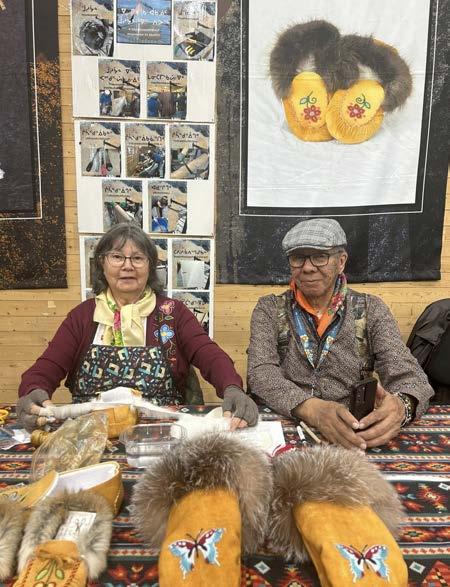
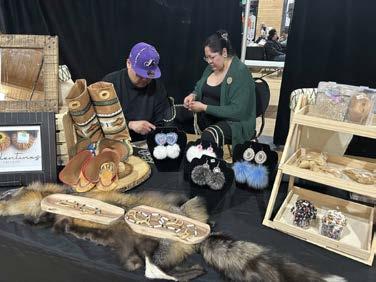
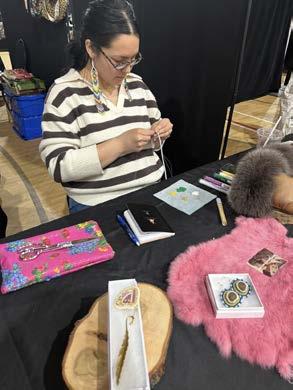
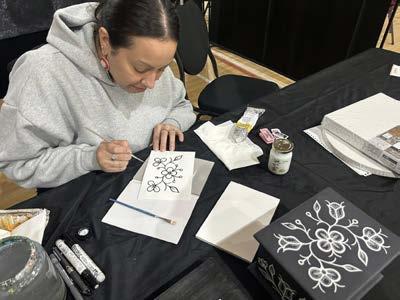
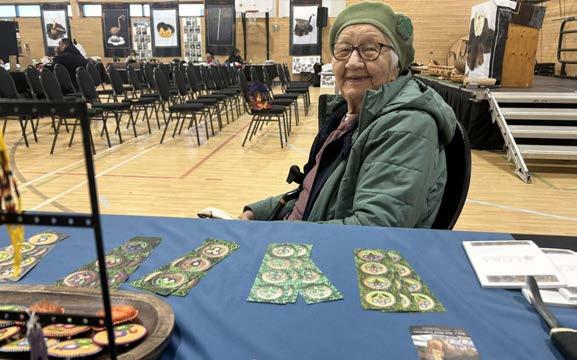
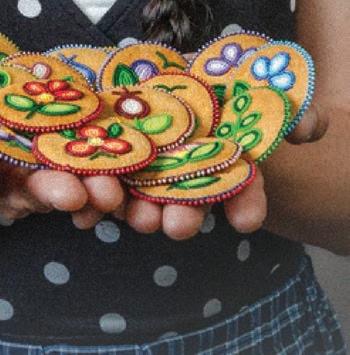
Cree artists and artisans from inland communities gathered in Ouje-Bougoumou April 17-18 to showcase their talent and creations. Attracting over 260 people, it was an impressive rst project from the recently elected local arts committee.
The gathering was partly inspired by Chisasibi’s annual Christmas bazaar, an important regional marketplace for Cree
crafts with a stage for musicians. Established artists such as Valentina Bosum, Lisa Neeposh and Alexandria Coon-Shecapio spoke about how they launched their careers.
“We want to bring attention to the need of preserving and encouraging art,” said local arts committee member Jossée Bernier. “It was fun to see artists from di erent communities
come together. We don’t really have a regional art event for all the Cree communities – perhaps this is a step towards making that happen.”
The event featured an open mic to promote musicians, food and baked goods for sale and various prizes distributed throughout the weekend. It was an occasion to appreciate Eeyou Istchee’s talents and learn
about career opportunities in arts and crafts. The gathering brought together all generations, including local high school students.
“We had a lot of Elders who showcased their work,” explained Bernier. “I enjoyed meeting artists to learn about their craft and style. It was mainly to support artists who are pursuing art to sustain themselves and an opportunity to showcase their work.”
A talented multidisciplinary visual artist, Bernier has also performed musically since age 15 with a festival appearance slated for later in May. She said the local arts committee is invigorated by its new six-person team, which held a meet-and-greet March 10 that included a discussion about what it might do next for the community.
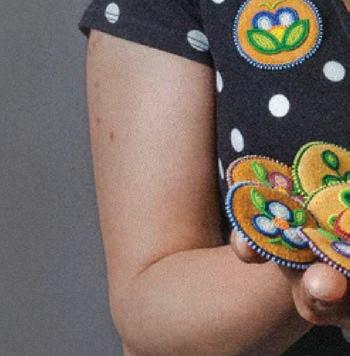
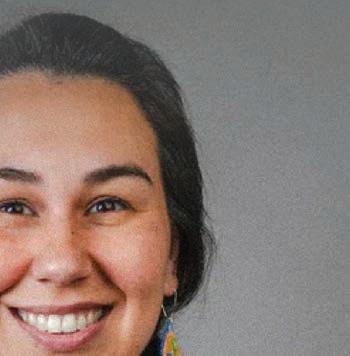
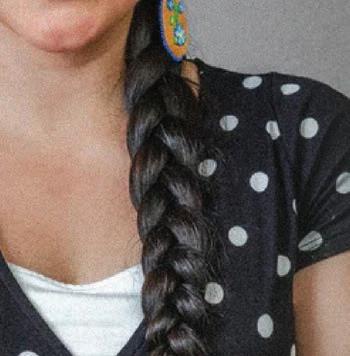
Much of the gathering’s artwork honoured the beadwork, embroidery and woodwork passed on from Cree ancestors. Coon-Shecapio said it was the legacy of her late grandparents Thomas and Josephine Coon that motivated her to keep creating her respected regalia, earrings and other crafts.
Nations in Canada and the United States. It’s pretty busy – I cannot keep up with the demand.”
Admitting that it can be scary to become a full-time artisan – “not knowing when your next income will be” –Menarick a rmed there is an increasingly lucrative market for traditional Cree crafts. While it takes a lot of time and hard work, for Menarick it’s always been a passion stemming from a fascination as a young girl watching her mother, aunts and grandmother.
“I wasn’t the best beader when I started,” shared Menarick. “You keep going and you begin to feel more con dent in your work, inspiring yourself to keep learning new crafts and keep creating.”
Menarick hopes to expand this gathering to an annual event, and organize more demonstrations of artists creating their work.
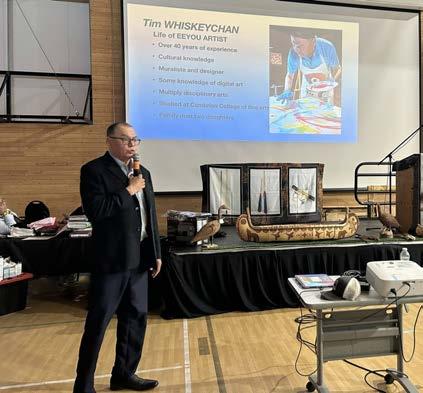
Whiskeychan recognized many at the gathering from a time when he exhibited then-underpriced artwork with his father. His presentation was an unscripted discussion about his experience as an artist and the reality of sales and promotion.
“I mentioned that if you’re always struggling for money doing art that’s not going to get you where you want to be,” said Whiskeychan. “Art comes from the heart and the desire of just doing it. Success is not measured in the money you make – money comes and goes but your art stays forever.”
“I really enjoyed listening to the speakers sharing their stories on how they became artists,” said committee member Paula Menarick. “We want to create an economy for our artists. We do want to inspire the future generation – there’s de nitely a growing interest.”
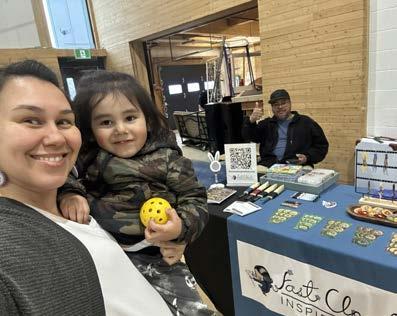
Avidly into crafting “for forever”, Menarick worked with the Cree Native Arts and Crafts Association to add members at the event. She said sales have picked up at her crafts business Fast Cloud Inspirations since CNACA opened its Wachiya store in Old Montreal in August 2024.
Special guest Tim Whiskeychan spoke about how he creates his “pop art”, which involves rubbing charcoal on paper covering a crushed pop can, challenging himself to make a piece in seconds from whatever imagery emerges.
“A lot is hidden that a hunter can interpret,” Whiskeychan asserted. “If you put a very knowledgeable hunter in the bush, he can tell you exactly where he is. You try to challenge yourself in the vagueness. In the eyes of the hunter there’s no such thing as being vague. If you’re not sure, your chances of survival will be vague.’’
Saying it’s essential to discover one’s own style, Whiskeychan encourages younger artists not to stick with just one. The Cree cultural ambassador has displayed a wide variety of painting techniques, collage, etchings, prints and cut steel panes at shows around the world. More recently, he adopted digital technology and exhibited an abstract series.
“I’ve been exploring a Cree version of abstract art with [late artist Jean-Paul] Riopelle,” said Whiskeychan. “I don’t call myself Riopelle – it’s the aesthetics of Cree knowledge combined with abstract. Some say I’m jumping around too much. I don’t limit myself.”
“It’s probably why I’m getting people from all around Canada who purchase my crafts,” said Menarick. “I have my own website and sell to people in Eeyou Istchee, Nunavik and other First
Making art for over 40 years, Whiskeychan approaches his work with the dedication of a master hunter. His lifetime habit of rising at 5am is inherited from his late father Harry, himself a skilled creator of tamarack decoys and a prized ddle player. He said Elders remember how his father’s music brought joy to community dances in the 1960s.
He hopes to visit Cree communities to share his insights about the pleasures and struggles of an artist’s life, suggesting working with others in a Cree version of the Group of Seven. There are talks of collaborating with CNACA this summer for an art performance in Montreal.
“When I think of all the artwork I’ve done over the years, I’ve surprised myself that I’ve spent so many hours,” Whiskeychan re ected. “Yet, none of them were boring. You’ll never nish learning till the day you’re gone.”
The Cree IELCC Fund is designed to fund projects/activities that foster the education, Cree culture and language, as well as health and wellbeing of children 0 to 6 and their families.
The Cree IELCC Fund is designed to fund projects/activities that foster the education, Cree culture and language, as well as health and wellbeing of children 0 to 6 and their families.
The Cree IELCC Fund is designed to fund projects/activities that foster the education, Cree culture and language, as well as health and wellbeing of children 0 to 6 and their families.
The Cree IELCC Fund is designed to fund projects/activities that foster the education, Cree culture and language, as well as health and wellbeing of children 0 to 6 and their families.
The Cree IELCC Fund is designed to fund projects/activities that foster the education, Cree culture and language, as well as health and wellbeing of children 0 to 6 and their families.
All projects and activities must also ensure that no children are left behind: activities must be accessible to all children, no matter their level of ability or special
All projects and activities must also ensure that no children are left behind: activities must be accessible to all children, no matter their level of ability or special need.
All projects and activities must also ensure that no children are left behind: activities must be accessible to all children, no matter their level of ability or special Deadline
All projects and activities must also ensure that no children are left behind: activities must be accessible to all children, no matter their level of ability or special need.
All projects and activities must also ensure that no children are left behind: activities must be accessible to all children, no matter their level of ability or special need.
75%
Training and coaching
Pre-start up and start-up fees
Equipment or supplies purchases
Feasibility and marketing expenses FOR
EXAMPLES OF SOCIAL ECONOMY PROJECTS:
Thrift stores
Cultural
Community
Meals on Wheels
Greenhouses
Local
peggy.petawabano@cngov.ca FOR
Social
418-923-2901 ext.
www.cngov.ca
PUBLIC NOTICE
Ministère
des Ressources naturelles et des Forêts
The Ministère des Ressources naturelles et des Forêts (MRNF) continues its aerial spraying program this year to control spruce budworm (SBW) in the Nord-du-Québec region.
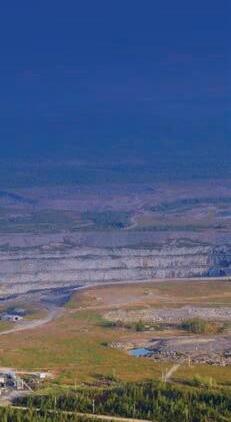
These aerial sprays, which last four to five weeks, will begin between May 27 and June 4, weather permitting. A total of approximately 14,000 hectares of vulnerable forests will be treated in both public and private forests. The targeted zone is located in the areas of Matagami, Lebel-sur-Quévillon and Chibougamau
The biological insecticide Bacillusthuringiensisvar. kurstaki(Btk)will be used in these operations to protect the needles of the affected conifers from damage caused by SBW.
The Société de protection des forêts contre les insectes et maladies (SOPFIM), mandated by the MRNF, is responsible for carrying out these aerial sprays.
It should be noted that the organic insecticide used by the SOPFIM is registered by Health Canada and has been determined to be safe for human health and the environment.
For information about SBW, contact the MRNF by email at nord-du-quebec.foret@mrnf.gouv.qc.ca or by telephone at 819-755-4838. We encourage you to favour email communications.
For information on the insecticide used and aerial spraying operations in the Norddu-Québec region, contact the SOPFIM at 1-877-224-3381 or visit the website at www.sopfim.qc.ca
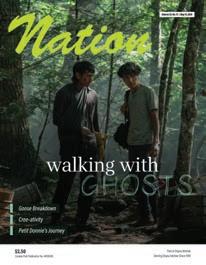
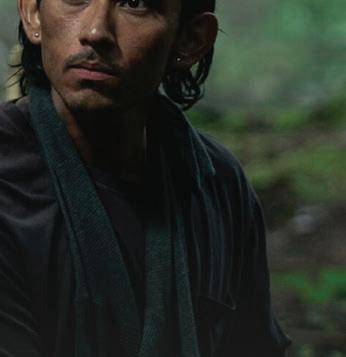
While many Indigenous cultures share a belief that ancestors walk among their descendants, the concept is taken literally in L’nu lmmaker Bretten Hannam’s feature lm Sk+te’kmujue’katik (At the Place of Ghosts), which opened across Canada on May 8.
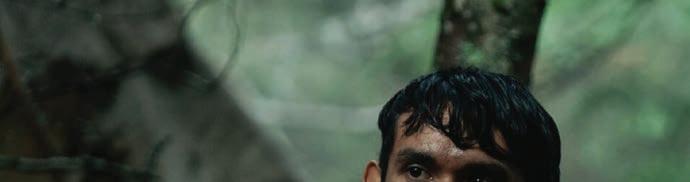
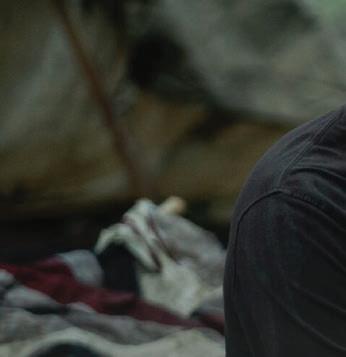
The ambitious genre-bending story follows two once-close Mi’kmaq brothers who are pulled back together when an evil spirit appears in their lives. To confront their traumatic past, they must enter Sk+te’kmujue’katik, a forest where time is uid and they encounter their past selves, ancestors, colonial enemies and even future generations.
“The sentiment with this story is how powerful it would be if there was a place you could experience all the people who came before you and who are all moving through you, guiding and supporting you,” explained Hannam.
Like Hannam’s 2021 coming-of-age lm Wildhood, which earned signi cant award and festival success, Sk+te’kmujue’katik focuses on two-spirit and Mi’kmaw identity in Kespukwitk, L’nuekati (Nova Scotia). However, the story sub-
merges identity politics in supernatural elements and an immersive forest setting.
“Filming in a real forest was a real challenge,” said Hannam. “It can change the scenes drastically depending on the weather, but sometimes light will come through the leaves in a magical awe-inspiring moment you wouldn’t be able to capture anywhere else.”
Hannam worked with Wildhood cinematographer Guy Godfree to capture the forest’s mysterious beauty and power. Spirits are rendered in ways that don’t disturb the lm’s dreamy wonder, such as a glowing gateway in the woods and insects hovering in slow motion.
“It’s not Wildhood, which had so much hand-held energy,” asserted Hannan. “This is very smooth and controlled, a little eerie at times. We’re there with the viewer in the forest and through the camera we’re hopefully imparting not only beautiful cinematography but also the strangeness.”
The cinematography is superb, convincingly weaving together elements of horror, fantasy and Indigenous folklore. Blake Alec Miranda and Forrest Goodluck carry the story
An st s WalkAmong Us
admirably as the estranged brothers while Hannam leaves space to ponder the ominous imagery amid vibrant surroundings.
Elders in supporting roles bring wisdom and warmth that contrast the chills of a malevolent spirit that vanishes in scattered leaves after leaving its grisly mark. Throughout the lm, the supernatural is made believable by its basis in Mi’kmaq spirituality. Connecting the land’s pain with colonial disruption lends a deeper dimension to the concept of disturbed spirits.
Since beginning work on the lm 11 years ago, Hannam consulted with community members, exchanging stories and rewriting lines in Mi’kmaw. Actors perfected pronunciation with language experts. Hannam said there’s an actual place called Sk+te’kmujue’katik in the territory with associated teachings related to the Milky Way.
“The dark spirit idea is very much based on the connection of the char-
acters with the land that goes back to time immemorial,” Hannam said. “The forest is in a way giving a path from this trauma. When they heal, then they can begin to heal the land.”
Wolastoqiyik musician Jeremy Dutcher’s rst lm score steadily builds tension through dissonant tones and archival recordings of Mi’kmaq voices. As the brothers accompany ancestors up a mountain, Dutcher’s serene vocals are heard for the rst time.
Among Us
“We were very fortunate to use one of Jeremy’s songs at the end of Wildhood,” recalled Hannam. “In Belgium doing the sound mixing, we’d get stu from Jeremy and make it all ow together, send him back stu to listen to and he would respond. It shows in the way the music is integrated into everything. It’s outstanding. It’s magic.”
The lm’s score relies on woodwinds and strings to convey drama and magic, re ecting Dutcher’s understanding that “the land was a prominent voice in this.”
Unique sounds emanate from Naomi McCarroll-Butler’s custom-made drone utes linked to a bass clarinet and from drummer Mili Hong striking cymbals as they are dunked in water.
A character emphasizes that “time is un xed” as the brothers’ journey proceeds toward a nal reckoning with family trauma. Actor Glen Gould, who plays the father, said, “This is a story about letting go and releasing those ghosts.”
Named one of Canada’s Top 10 at last September’s Toronto International Film Festival, the lm picked up best feature, cinematographer and original score at the Atlantic International Film Festival.
“One day you have to face these traumatic events that have been buried,” said Hannam. “It’s the right time for this to happen. We’re probably not going into the forest to face o with monsters, but maybe we are.”
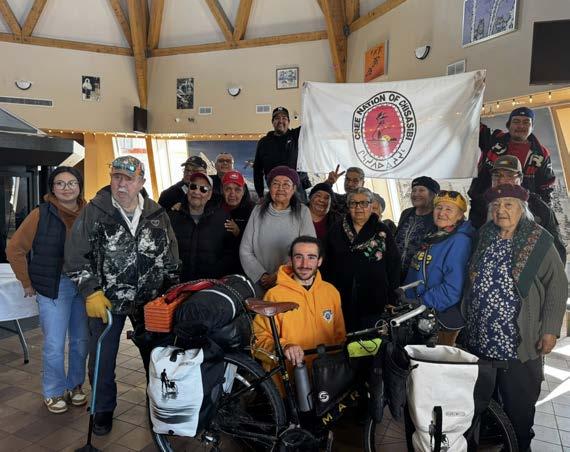
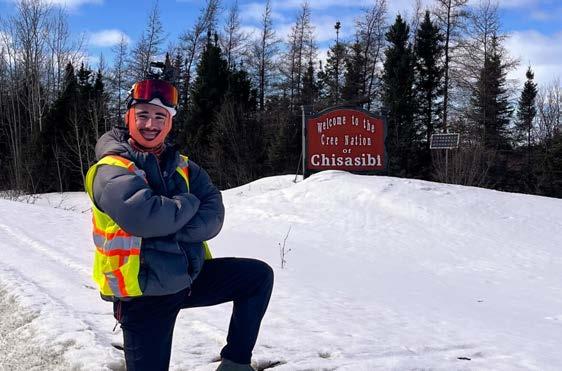
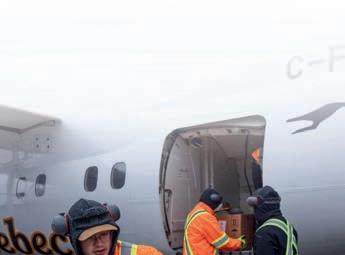
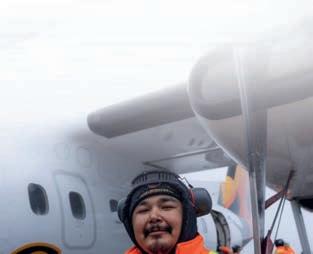
After 17 days cycling through the frozen landscapes of northern Quebec, French-born adventurer known as “Petit Donnie” arrived in Chisasibi April 25 to explore the region, its people and culture.
The long-distance cyclist, whose real name is Donnie Edery, documents his expeditions online while travelling alone with his bicycle and camping gear, surviving in what he described as “complete autonomy”.
“I wanted the challenge to be cycling in harsh winter conditions,” he explained. “My dream is to be a professional adventurer, I love expeditions.”
The journey was not only to challenge himself physically, but also to discover northern Quebec, connect with local communities and learn more about their history.
“It’s a part of Quebec that I had always seen on the map, but never been to. And I really wanted to discover the place, its people, the culture, the territory,” Edery said.
“It’s the end of the road,” he continued. “For me, it has a strong meaning to arrive at the end of the road, see the James Bay, then, you can’t go any further with your bicycle.”
Edery crossed long stretches of the Billy-Diamond Highway, enduring cold weather and physical exhaustion as “resilience became part of the journey”.
Despite the di culties, Chisasibi became an emotional highlight of his trip.
“I had a wonderful arrival,” he recalled. “I was so surprised and I felt so
grateful because the whole community gathered to welcome me, it was full of emotion. They were honking at me, and we all ate together. They organized a really nice welcome.”
Residents organized a last-minute welcoming ceremony despite not knowing exactly when Edery would arrive because of changing road and weather conditions.
After days of surviving mainly on freeze-dried meals while camping outdoors, Chisasibi prepared a traditional feast for him.
“They had cooked fresh salmon with berries,” he said. “There were also smash potatoes with goose, and it was so delicious.”
Edery spoke with students about his journey at a local school. He encouraged them to dream big and look beyond the limits of everyday life. “I talked to them about resilience, determination and motivation.”
Community members showed him the frozen shores of James Bay, a moment Edery describes as unforgettable.
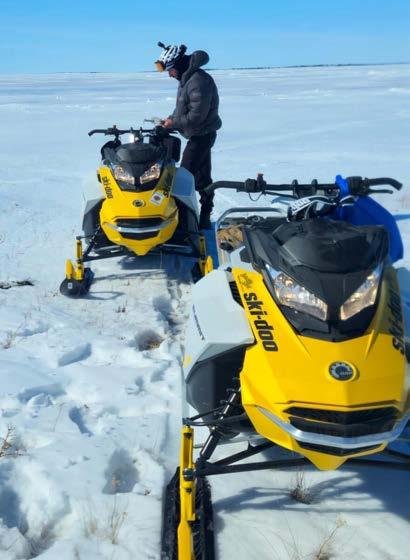
“I couldn’t have dreamed of anything better than venturing there on a snowmobile,” he recounted. “That was breathtaking. It’s all ice, there is a lot of wind, and it’s so vast. I’ve never seen anything like this, the frozen horizon stretches as far as the eye can see.”
Edery expressed appreciation to community members for their hospitality and kindness.
“They taught me so much about their history and traditions, they told me their story of forced relocation,” he said. “I was deeply touched to share those moments. That’s what I’ll remember of the Cree Nation.”
Throughout the expedition, Edery video-documented the journey for social media, where tens of thousands now follow his adventure. Since September, the 23-year-old had already ridden his bike 6,000 km across Eastern Canada before heading to Eeyou Istchee. The epic journey is his way to fundraise for Enfant Soleil, which supports pediatric care and specialized services for sick children.
“It’s a beautiful territory, the trees, the lakes, the rivers, the fresh air,” Edery enthused. “It is something that needs to be preserved.”
Re ecting on his 17-day journey, Edery said it was lled with challenges but taught him perseverance. “It wasn’t easy. You have ups and downs, but the most important is to take it one day at a time.”
Chisasibi member Christopher Herodier Snowboy said many residents were moved by the challenges that Edery overcame cycling through northern Quebec in winter conditions.
“He touched a lot of people with his will and determination,” Snowboy said. “They showed it by welcoming him openly into our community.”
After ve days in Chisasibi, Edery left April 30 for Ottawa – this time by airplane.
Aucun dossier médical requis.
Répondez aux questions avec vos propres mots. Des assistants aux réclamations sont là pour vous aider.
Un soutien gratuit, respectueux des cultures et tenant compte des traumatismes est o ert à chaque étape.
Si vous avez été admis dans un hôpital fédéral indien pendant la période où il était exploité par le gouvernement du Canada (entre 1936 et 1981), et que vous avez subi des mauvais traitements psychologiques, verbaux, physiques et/ou sexuels, vous pourriez être admissible à une indemnisation entre 10 000 $ et 200 000 $ dans le cadre du Règlement des hôpitaux fédéraux indiens.
Vous n’avez pas besoin de dossiers médicaux pour soumettre une demande d’indemnisation. Le formulaire de réclamation vous demande de fournir vos coordonnées, une copie d’une pièce d’identité émise par le gouvernement et de répondre à des questions sur votre expérience. Vous pouvez prendre le temps dont vous avez besoin. Vous n’êtes pas seul(e) dans cette démarche.
Un soutien gratuit est o ert
Des assistants aux réclamations sont disponibles partout au pays, sans frais. Ils peuvent :
• répondre à vos questions et vous aider à comprendre le processus de réclamation
• vous aider à remplir le formulaire de réclamation
• vous accompagner à un rythme qui vous convient
• vous orienter vers d’autres ressources gratuites
Les assistants aux réclamations peuvent vous rencontrer par téléphone, par vidéo, et en personne dans certaines communautés. Plusieurs sont Autochtones, et tous sont formés pour offrir un soutien respectueux des cultures et tenant compte des traumatismes.
Commencez votre demande d’indemnisation. Pour en savoir plus ou parler à un assistant aux réclamations: Appelez au 1 888 592-9101 et appuyez sur le 2 du lundi au vendredi, entre 8 h et 20 h, sauf les jours fériés Visitez https://www.IHSettlement.ca/fr
Un soutien en matière de santé mentale et de mieux-être est disponible 24 heures sur 24 par l’entremise de la Ligne d’écoute d’espoir pour le mieux-être au 1 855 242-3310 ou en ligne à http://www.EspoirPourLeMieuxEtre.ca/.
Under the Northern Sky
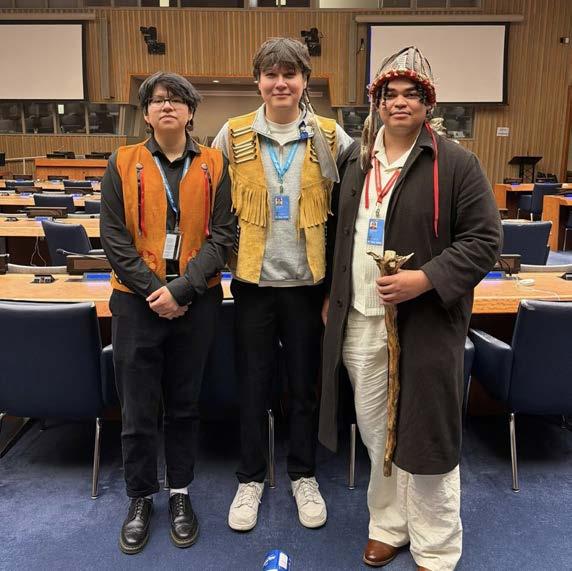
Iwas proud to see First Nation youth representing our northern Ontario homelands on the international stage last month. Jeronimo Kataquapit, Ramon Kataquapit and Kohen Mattinas participated in the United Nations Permanent Forum on Indigenous Issues April 20 to May 1 in New York City along with more than 1,000 delegates from Indigenous nations, member states and UN entities.
The forum addresses the concerns and rights of the world’s Indigenous peoples. The UN estimates there are more than 370 million Indigenous people in 70 countries, people who represent less than 6% of the global population but protect nearly 80% of the planet’s biodiversity. In many instances, industry and natural resource development occur in what is often identi ed as uninhabited or remote lands. In fact, Indigenous people have lived on or used these lands for thousands of years.
Jeronimo is a member of Attawapiskat First Nation and comes from a family of traditional hunters and gatherers. He helped found the Here We Stand – Call to Action group to emphasize his people’s connection to the Attawapiskat River when pushing back on mining development in the “Ring of Fire” region of northern Ontario.
He wanted to take direct action to protect his homeland. In the summer of 2025, he and his family documented a 400 km freighter canoe trip from the mouth of the Attawapiskat River to the areas where mines are set to be developed. They were joined by supporters from Neskantaga FN located on Attawapiskat Lake. They set up a permanent camp at this location to continue their protest against Ontario’s Bill 5 and Canada’s Bill C5, which both aim to fasttrack mining and other industrial development in Indigenous territories.
Other youth groups have joined this growing movement against less-regulated resource extraction in the North. Okiniwak is a First Nation youth movement founded by Ramon from Attawapiskat and Mattinas of Lac Seul FN. Their group has been at the forefront of rallies against government legislation that a ect the future of First Nation communities.
Jeronimo addressed forum delegates on April 29, asking, “How will Canada
keep its international climate commitments as a global climate leader in the face of the Ring of Fire development on the carbon-rich and sensitive ecosystem of the peatlands, while simultaneously honouring its commitments to First Nations people?” He added, “Where I come from, the land, the water, the earth is not given to us by our parents, it is loaned to us by our children.”
Ramon also addressed the gathering on April 23 to state that, “Youth have the power to make change.” He said they have the backing of their leadership. “Everyone knows we are here to implement United Nations Declaration on the Rights of Indigenous Peoples, even though government wants to supersede and go past what free prior and informed consent is.”
On April 28, Mattinas pointed out how Indigenous people and especially
youth are not given a voice in resource development on their homelands.
“The consequences of this are evident in many of our communities,” Mattinas said. “In the Hudson and James Bay lowlands, known to us as the breathing lands, Canada is advancing critical mineral development through legislation. These processes accelerate decision-making while bypassing First Nations governance systems and disregarding treaty relationships.”
I was honoured to see these three youth tell the world about what is happening in our homelands. It is humbling to hear our youth speaking often and loudly to protect the animals, the water and the land, not just for Indigenous people but for everyone. Kitchi-Meegwetch Jeronimo, Ramon neshta Kohen.