Take a moment to prepare yourself, your family, and the land we all share.
Take a moment to prepare yourself, your family, and the land we all share.
SAFER HUNTING
SAFER HUNTING
О Use lead-free ammunition to keep our families and meechum safe and healthy
О Use lead-free ammunition to keep our families and meechum safe and healthy
WILDLIFE PRECAUTIONS
WILDLIFE PRECAUTIONS
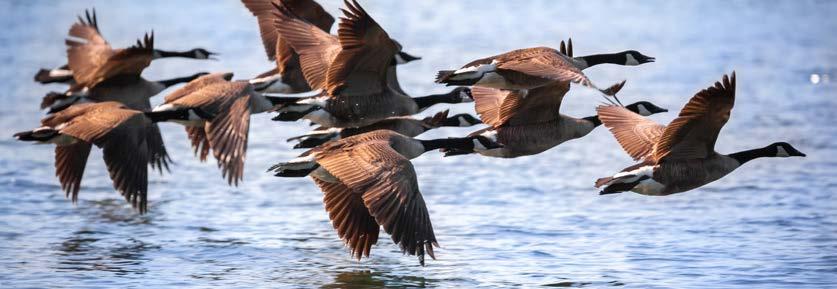
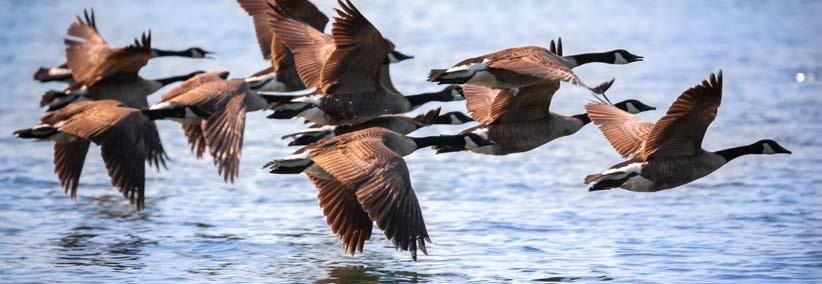
О If a bird looks sick or dead, Do NOT touch it with bare hands
О If a bird looks sick or dead, Do NOT touch it with bare hands
О Keep your distance and report unusual sightings
О Keep your distance and report unusual sightings
PROTECT THE LAND
PROTECT THE LAND
О Clean your space when you arrive and before you leave
О Clean your space when you arrive and before you leave
О Help keep Eeyou Istchee clean
О Help keep Eeyou Istchee clean
PET CARE
PET CARE
О Make sure your dogs are vaccinated (including rabies)
О Make sure your dogs are vaccinated (including rabies)
FOOD & DRINKING WATER
FOOD & DRINKING WATER
О Boil water for 2 minutes before drinking
О Boil water for 2 minutes before drinking
О Cook food thoroughly and disinfect your cutlery
О Cook food thoroughly and disinfect your cutlery
FIRE & AIR
FIRE & AIR
О Do NOT use propane in enclosed spaces
О Do NOT use propane in enclosed spaces
О Use carbon monoxide detectors at your camps: it’s silent and dangerous
О Use carbon monoxide detectors at your camps: it’s silent and dangerous Scan the QR code for more health tips from the
Board of Health.
Creehealth.org/bush-camp-safety
Scan the QR code for more health tips from the Cree Board of Health. Creehealth.org/bush-camp-safety
My brother and I have visited Eeyou Istchee for many years. Over the course of my life, I have acquired a large amount of knowledge on the subject of persistent pollutants and food supply contamination.
PCBs are persistent pollutants, so are dioxins and PBDEs. These chemicals are often referred to as persistent organic pollutants (POPs). In this usage, the word organic means carbon-based.
The James Bay Cree su er many of the diseases and disorders associated with exposure to these chemical substances: type-2 diabetes, heart disease, cancer and autism.
I would like to talk with any Cree who is interested in learning about these toxic chemicals and helping spread knowledge about the health bene ts of reducing exposure. In particular, I would like to talk with James Bay Cree about a World Health Organization report, “Persistent Organic Pollutants: Impact on Child Health”.
The Cree receive exposure to POPs by consumption of animal fats. The fat of wild caught large sh, like lake trout and sturgeon, contain these chemicals. Consumption of purchased foods high in animal fat – cheese, hamburgers, hotdogs, corned beef and Klic or Spam – are also signi cant sources of exposure.
It is not only the fat of wild caught sh that contains these chemicals. POPs are present in the animal fat foods of the general food supply in Canada and the US. To varying degrees, the food supplies of all nations are contaminated with POPs.
The WHO report named above recommends changing diet to minimize exposure, which means eating low on the food chain.
I can understand that this is a dicult message for the Cree. Your diet has traditionally contained a large proportion of animal foods.
Nevertheless, health knowledge must be made use of to build good health.
The Cree can live healthier lives if they learn about the man-made toxic chemicals in the foods that they eat and change their diet to avoid these substances.
I look forward to starting to talk with the Cree people about this. Please email or phone me at donaldhassig@gmail. com or 315-742-7533.
DONALD HASSIG IS THE DIRECTOR OF CANCER ACTION NEW YORK, AN ADVOCACY ORGANIZATION THAT FOCUSES ON ENVIRONMENTAL POLLUTION AND FOOD QUALITY.
the Nation is published every two weeks by Beesum Communications // EDITORIAL BOARD L. Stewart, W. Nicholls, M. Siberok, Mr. N. Diamond, E. Webb
EDITOR IN CHIEF Will Nicholls
DIRECTOR OF FINANCES Linda Ludwick // EDITORS Lyle Stewart, Martin Siberok // STORY COORDINATOR Patrick Quinn // CONTRIBUTING WRITERS D. Hassig, X. Kataquapit, P. Quinn, N. Fedosieieva // DESIGN Matthew Dessner
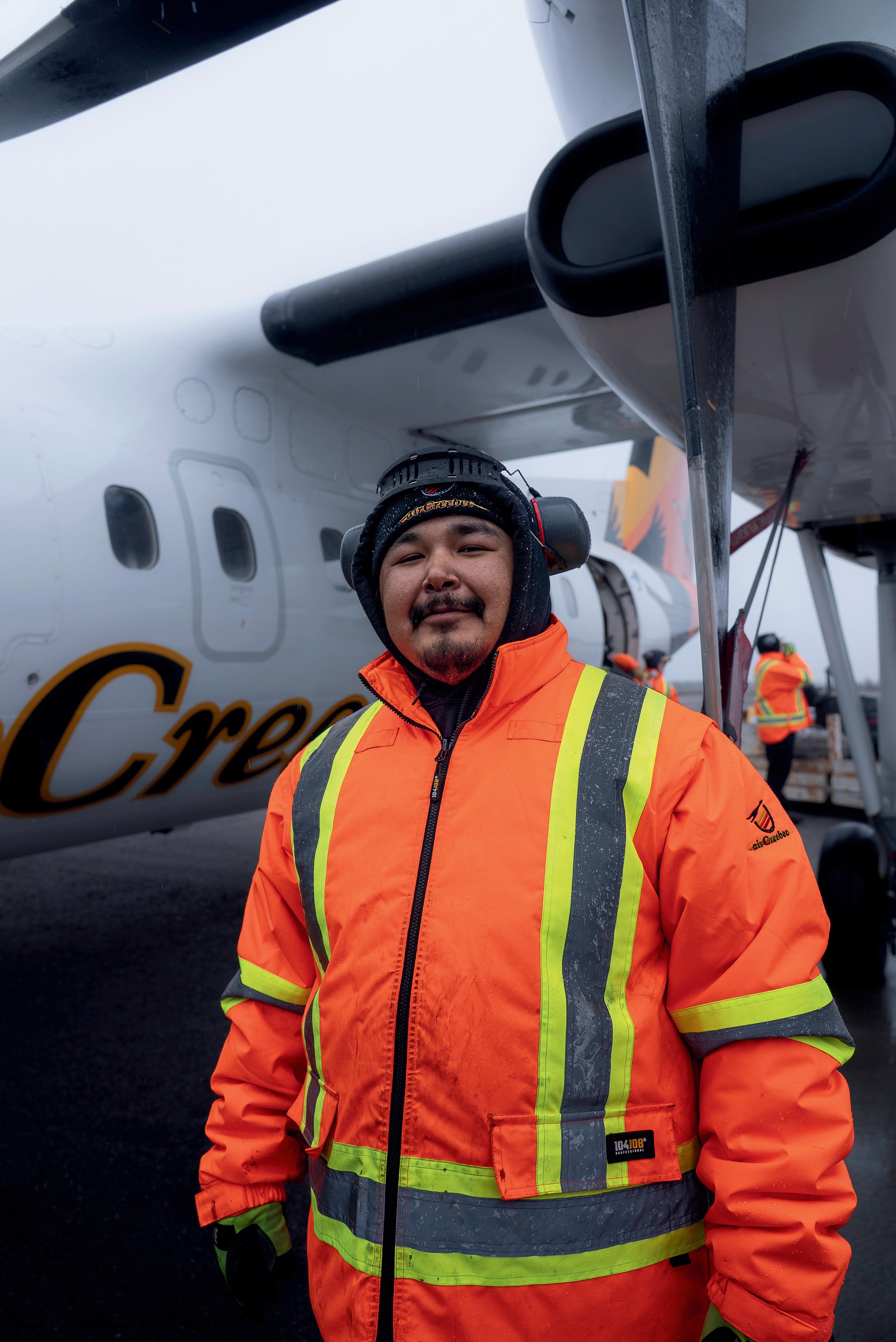
Donna Malthouse // THANKS TO: Air Creebec // CONTACT US: The
Chisasibi,
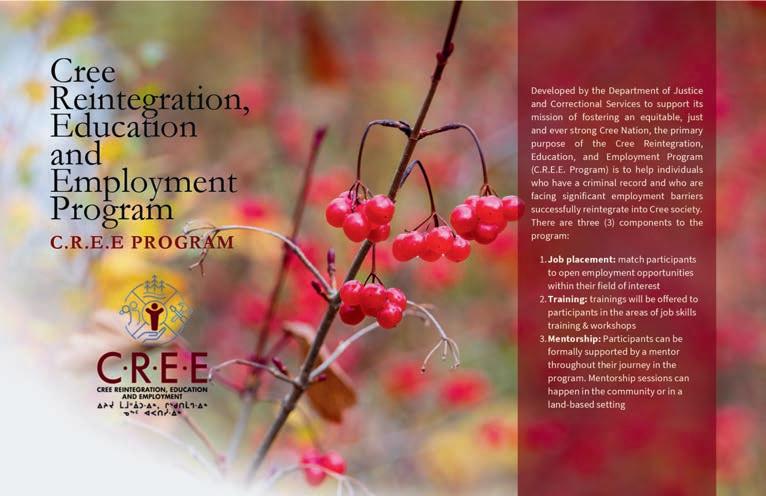
STRUGGLING WITH A CRIMINAL RECORD?
HAVE YOU COMPLETED THE REQUIREMENTS OF YOUR SENTENCE AND PROBATION?
YOU MAY BE ELIGIBLE FOR A PARDON THAT SEALS YOUR RECORD
WE CAN HELP YOU!
If you are a Cree beneficiary, the Cree Nation Government (CNG) can help you to fill out the record suspension application and if you qualify for financial assistance, the CNG may pay the costs associated with the application.
CONTACT YOUR LOCAL REINTEGRATION OFFICER ON HOW TO APPLY:
The Grand Council of the Crees released a wide-ranging Youth Protection report March 20, linking challenges in health, education and justice, and calling for urgent reforms in Cree communities.
819-855-2120
819-977-2400
418-923-2661
819-673-2400
418-745-2260
819-895-2126
819-753-2770
819-978-3300
819-929-3796
If you have any additional questions, please contact the Correctional Services Regional Office in Val d’or 819-874-2600 or contact your local Reintegration Officer
The report makes more than 70 recommendations calling for culturally rooted, collaborative reforms. Cree Youth Protection Commission leaders from education, health, policing and justice pointed to challenges from declining student well-being and rising chronic disease to the lasting impacts of intergenerational trauma.
Chisasibi psychologist Lorraine Spencer said commissioners have carried out consultations with Cree Health Board employees since April 2023.
“The purpose of the Cree Youth Protection Commission is to hear from community members,” Spencer said. “We know the challenges in Eeyou Istchee, we know what will work for us, we have the capacity that make changes, we have the nancial and human resources, we have our traditions, our culture, our language, our values.”
Spencer stressed the need to involve extended families and social workers as key links between professionals, foster parents and relatives, while calling for better training and closer follow-up to prevent abuse.
“It is our responsibility to nd solutions for well-being of our children and families,” she concluded.
Recommendations are made more urgent by the long history of discrimination against Indigenous children in Quebec and recent allegations of abuse.
Last November, Quebec Superior Court authorized a class action lawsuit over abuse and discrimination faced by First Nations, Inuit or Métis children admitted into youth protection centres in Quebec since 1950. It seeks damages from the provincial government, Santé Québec, 16 regional health authorities, the Nunavik health board, and the Cree Board of Health and Social Services of James Bay.
The lawsuit highlights systemic issues that echo concerns raised locally in Eeyou Istchee. “Unfortunately, something’s not working in our system in terms of youth protection,” acknowledged CHB chairperson Jeannie Pelletier.
Pelletier says the CHB will not create a wholly new Cree-led program but instead focus on addressing the 70-plus ndings identi ed in the commissioners’ report: “The work will continue. It’s going to be a living report, the work has already started, and we’ve addressed certain issues already.”
Following the consultations, the CHB has initiated programs such as family-group conferencing to provide greater
outreach and support for at-risk families, she said.
“We give them a voice before they embark into the system to ensure the family is given a voice, especially the child,” Pelletier continued. “This has already started through Nishiiyuu, the work is continuing and will be presented with the nal action plan.”
Jonathan Sutherland, administrative assistant at CHB’s Pimuhteheu Group, said the report focuses on what leads youth into protection services.
“They [the commissioners] really wanted to understand where the poverty and inequalities are coming from,” Sutherland explained. “They are going to ask one of the departments to explore this and generate some sort of statistics.”
Another key nding is addressing intergenerational impacts of residential schools, which disrupted traditional parenting roles and knowledge.
“They want to emphasize prevention to support family members through training or workshops on parenting,” Sutherland said. “Because of the legacy of residential schools, a lot of parents expressed that they didn’t know how
to raise their children since they weren’t raised by their own parents.”
The report recommends programs that strengthen parenting skills. Sutherland notes that reconnecting youth with Cree culture helps build their identity and prevent against future risks.
“It’s teaching kids to canoe, set up a bush tent, make res and other traditional practices that help them connect with who they are,” Sutherland observed.
The commissioners emphasized strengthening Cree language use in homes and schools, and Sutherland believes this is a key protective factor for children.
“It’s obvious that among younger people, English is more common now,” he said. “They felt it was important that there should be a strong emphasis on Cree, especially with the services.”
The Commission was originally initiated under former CHB chairperson Bertie Wapachee, who wanted to better understand why a growing number of Cree youth were entering protective care.
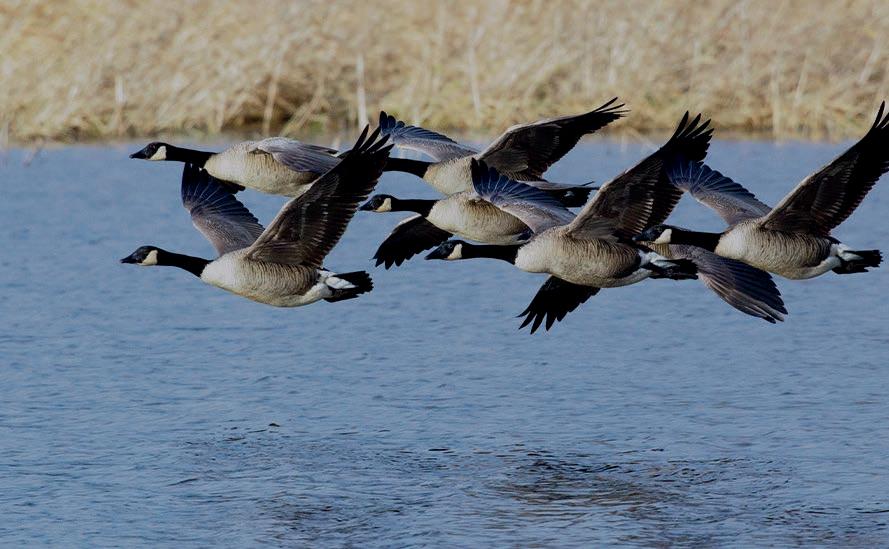
The Cree Nation is grieving the sudden loss of Waskaganish’s Roy Weistche April 17 while goose hunting in the south. His hunting group alerted police after Weistche didn’t return hours after taking his canoe to pursue a wounded goose. The Ottawa General Hospital is conducting an autopsy to determine a cause of death.
Weistche managed capital projects in Waskaganish, where he was a pioneer in comprehensive community planning. He regularly facilitated conferences and participated in events across the continent, inspiring people to chart their path to self-determination.
“Roy was a highly knowledgeable hunter and a respected land user, with a strong connection to the land and a deep understanding of Cree practices,” stated the Cree Trappers’ Association. “He will be remembered for the knowledge he carried, the time he spent on the land, and the way he shared that knowledge with others.”
The Cree Women of Eeyou Istchee Association honoured Weistche’s generosity in hosting last year’s women’s gathering at his family camp. A mentor for many, he loved sharing stories and knowledge, guided by his love of the land, family, community and culture.
Weistche and his brothers lived in boarding homes as teenagers, which had lasting impacts. Roy supported his late brother Kenneth’s trailblazing e orts for compensation and land-based healing, which recently resulted in class-action settlements.
Described as a devoted father and grandfather, Weistche is lovingly remembered by family members. Nephew Patrick Wiechold
often went hunting with him. “Roy lost his life doing something he loved doing,” Wiechold said. “It’s a major part of our culture and we take risks trying to provide.”
His community’s Chief and Council stated: “Roy’s presence and contributions were meaningful to many, and his passing is profoundly felt by his family, friends, colleagues and the entire Waskaganish community.”
charges of possession for the purpose of tra cking.
The EEPF encourages drug tra cking tips through its anonymous hotline: 1-833343-7847.
The Eeyou Eenou Police Force and the Eenou-Eeyou Community Foundation are collaborating on an Eeyou Istchee Resilience Fund to support local initiatives that address violence prevention and community safety.
The EEPF welcomed the foundation’s Karen JoynerBlom April 17 to learn more about the charitable organization that raises and distributes money to projects in health and social services, culture, education, youth, and community development.
On April 11, the EEPF announced a drug seizure following a joint investigation with provincial and Lac Simon police services. A vehicle search found 4.3 kilograms of cocaine with an estimated street value of $1 million. Alec Bobbish, 63, and Lydia Bobbish, 61, are facing
Community members from Chisasibi o ered a warm welcome to French long-distance cyclist Donnie Edery, known as Petit Donnie, upon the completion of a 15-day ride from Montreal on April 23. The adventurer was raising funds for Enfant Soleil, which supports pediatric care and specialized services for sick children.
The 23-year-old had already cycled 6,000 km across Eastern Canada since September, crossing five provinces from Ottawa to Labrador City and then back to Montreal. Documenting his travels on Facebook, he said many people along his route would invite him to spend the night and enjoy a meal.
“The landscapes I’m travelling through are magnicent,” Edery said. “The harshness of the climate, the fact that it’s inhospitable, makes it even more beautiful.”
Edery had planned to cycle through Eeyou Istchee earlier but was stopped in Matagami by a problem regarding his immigration status. He made good on his vow to overcome that set-
back, saying at the time, “I will be the one who returned from failure to nish what he started.”
CREECO (Cree Regional Economic Enterprises Company) subsidiary Gestion ADC has named John Longchap as company president. Founded in 1996, Gestion ADC is a leading player in janitorial and food services.
“I am honoured to join Gestion ADC and to contribute to the important work being carried out by the organization and the CREECO group,” said Longchap. “I look forward to working closely with the team to build on existing strengths and to support initiatives that create meaningful and lasting benets for the Cree Nation.”
Longchap takes the helm from Derrick Neeposh. Neeposh, who remains president of CREECO and the Board of Compensation, was awarded the King Charles III Coronation Medal in November.
“I am very pleased to welcome John Longchap,” said Neeposh. “His arrival aligns with our continued commitment to strengthening our enterprises and supporting sustainable economic growth for the Cree Nation.”
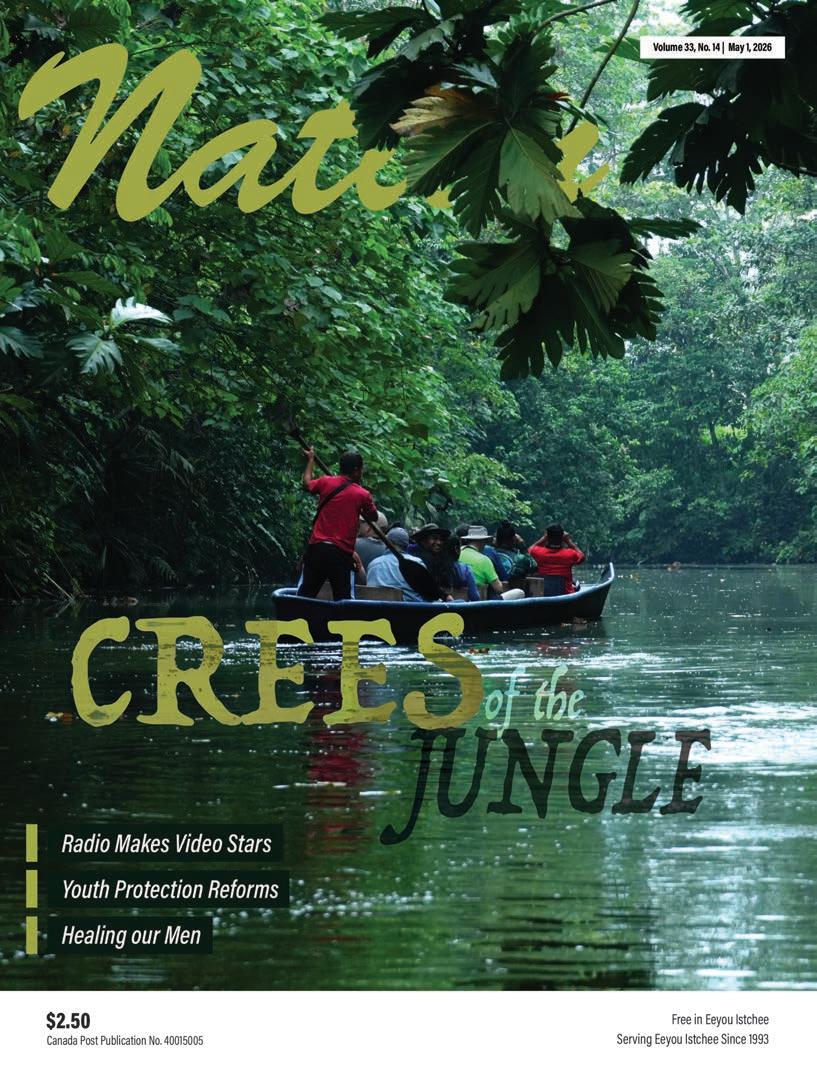
from Eeyou Istchee to the Amazon
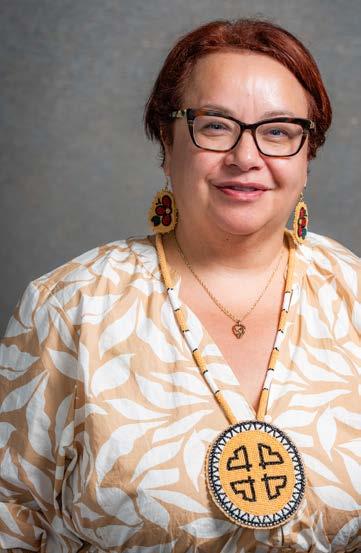
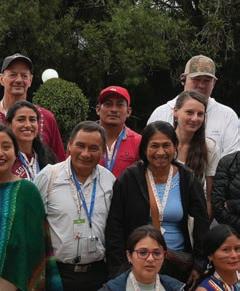
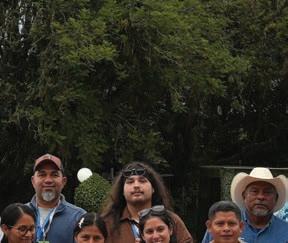
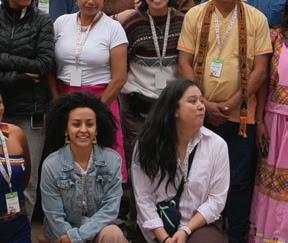
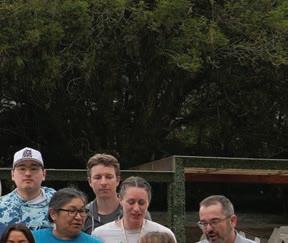
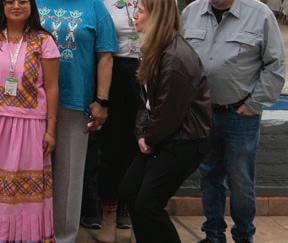
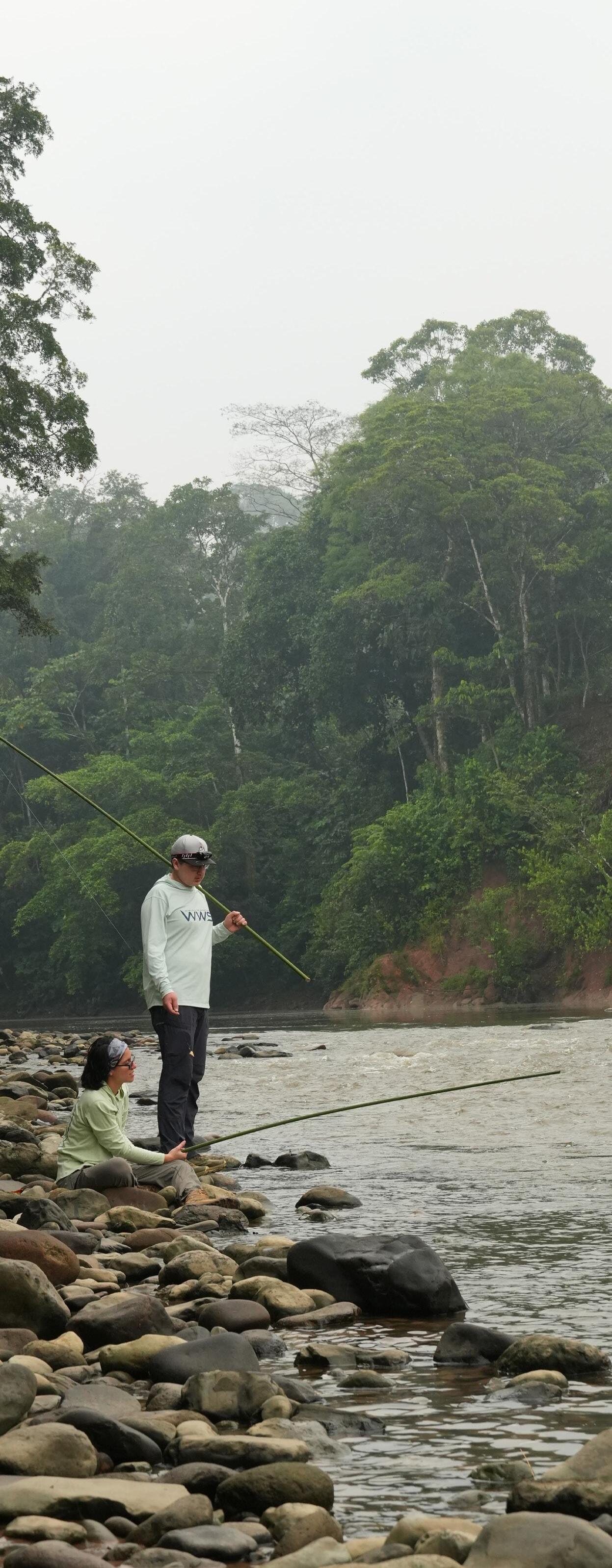
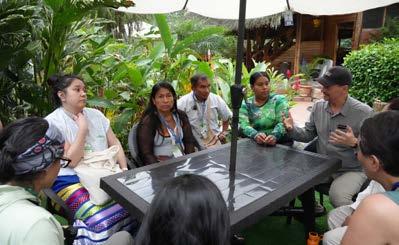
The Cree Nation was well represented in a North-South knowledge exchange that brought together 22 Indigenous peoples from eight countries to the Ecuadorian Amazon for one week in March.
The gathering was hosted by Conserva Aves (Conserve Birds), an initiative of several international conservation groups. They aim to protect
areas across Latin America where migratory bird habitats overlap with some of the world’s greatest biodiversity.
“It’s based on the idea that conservation works when we can trust communities who know their land to care for it in the way they know how,” said Fel Castañeda of Birds Canada. “So, it allows exibility in de ning what a protected area means.”
The gathering was an opportunity to discuss approaches to conservation across North and South America. The borderless nature of birds emphasized the shared responsibility of this mission.
“The Canada warbler spends most of its time in Colombia,” Castañeda pointed out. “I think these things bind us together, highlighting the importance of local action but thinking of the challenges we face on a global scale.”
This exchange funded by the Canadian government reinforced the growing recognition that traditional knowledge is critical to advancing biodiversity. Re ecting on connections between distant territories, participants shared community-based practices that sustain their local ecosystems.
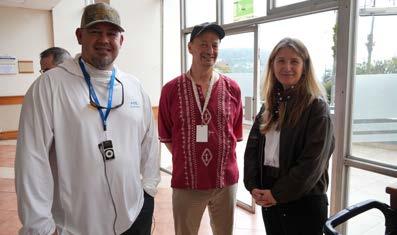
Four Cree people joined representatives from Indigenous communities in British Columbia, Ecuador, Peru, Colombia, Panamá, El Salvador, Costa Rica and México. Along with Lillian Trapper and Jocelyn Cheechoo from Moose Cree, Nature Canada invited Evander Cheezo from Eastmain and Preston Sam from Chisasibi.
“It’s di cult to explain how amazing it was,” Sam told the Nation. “It was my rst time travelling abroad. We saw waterfalls and so many mountains. The untouched land in the forest – I’d never seen trees so massive.”
As a research assistant for the Chisasibi Eeyou Resource and Research Institute (CERRI), Sam often collaborates with Nature Canada on projects such as bringing secondary students on eld trips to do activities like bird banding.
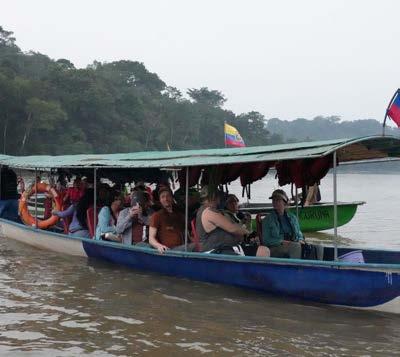
Arriving in Quito, the group left Ecuador’s capital the following day for Puerto Misahuallí on the jungle’s edge. The trip was less direct for some participants – it took about a week for the Peruvian contingent to paddle from deep in the Amazon.
“We were welcomed by children who shared cacao and did a ceremonial
dance,” said Sam. “There was a sense of joy and openness that didn’t need translation at all. They welcomed us with stories, traditions and respect. It made me realize that our identities are rooted in the same principles even if they look di erent on the surface.”
Trapper has worked with Nature Canada’s Ted Cheskey on shorebird protection since 2002, introducing him to contacts in Chisasibi and Waskaganish to monitor at-risk red knots on both sides of James Bay. Currently a board member for Nature Canada, Trapper requested a welcoming ceremony after her experience at the 2024 UN Biodiversity Conference in Colombia.
“There were no other Indigenous people, so I felt o with no welcoming to the territory,” Trapper recalled. “I said, ‘I’m a stranger here – the trees and birds don’t know me.’”
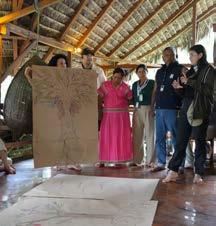
Before departing, Canadian participants met to prepare presentations about their cultures and conservation work. As water protection was a unifying theme, their story owed from pre-contact to the present day through their relation with water.
“I had Preston draw four raindrops for the four water spirits,” said Trapper. “Before contact, our way of life was ceremonial, very spiritual. We drew animals and dwellings we used to have. Then a big wooden ship of Henry Hudson coming into the Bay. It was good for us to tell our story because it’s the same story in a di erent place.”
Drawing exercises helped overcome communication barriers and encouraged storytelling. People from the north and the south worked together on a wider mural that followed the river of their people’s story to the ocean, imagining a shared vision of the future.
Participants also listened to bird sounds together, identifying whether they sounded familiar. This led to dialogue between knowledge systems,
revealing cross-cultural similarities in bird observations and relationships with natural cycles.
“The design of the activities was always open so people could de ne the priorities of what they wanted to share,” explained Castañeda. “There were touching moments with that spark of recognition of ‘That could work where I’m from’ or ‘What you’re saying makes a lot of sense.’ The participants formed very strong bonds with each other.”
Sam said they spent their days connecting with the land and their evenings sharing stories, ceremonies and knowledge around the re. He shared CERRI’s work building food sovereignty and enhancing eelgrass. Cultural teachings like doing a goose call inspired conversations about hunting, natural law and relationships with the land.
The week inspired insights for improving consultations with Indigenous communities. While Conserva Aves is organizing another exchange focused on communities in South America, there was strong interest for another NorthSouth meeting to be held in Canada.
For Sam, the unforgettable experience gave him a deeper appreciation for Cree culture and a desire to build relationships in di erent parts of the world. Gifting a Cree Nation ag to a Quijos Pachakutik member represented a gesture of connection. He plans to return to visit his new friends and take a more immersive journey.
“No matter how far we travel, we carry our communities with us,” said Sam. “Even across continents, there are people who understand that connection to land and identity in the same way. It reminded me that the work we do is connected to something much bigger.”
TRUST IN CARE DURING MENTAL HEALTH MONTH: WHY CHOOSING A REGULATED PROFESSIONAL MATTERS
TRUST IN CARE DURING MENTAL HEALTH MONTH: WHY CHOOSING A REGULATED PROFESSIONAL MATTERS
TRUST IN CARE DURING MENTAL HEALTH MONTH:
Caring for loved ones is one of life’s greatest responsibilities. In moments when support is needed the most, families want assurance that they are turning to professionals who are competent, ethical and accountable.
WHY CHOOSING A REGULATED PROFESSIONAL MATTERS
Caring for loved ones is one of life’s greatest responsibilities. In moments when support is needed the most, families want assurance that they are turning to professionals who are competent, ethical and accountable.
Caring for loved ones is one of life’s greatest responsibilities. In moments when support is needed the most, families want assurance that they are turning to professionals who are competent, ethical and accountable.
As the month of May is recognized as Mental Health Month, conversations about mental wellbeing becomes a focal point. It is also a reminder of the importance of knowing where to find trusted and professional support when it matters most. That is where registered social workers and social service workers step in.
As the month of May is recognized as Mental Health Month, conversations about mental wellbeing becomes a focal point. It is also a reminder of the importance of knowing where to find trusted and professional support when it matters most. That is where registered social workers and social service workers step in.
As the month of May is recognized as Mental Health Month, conversations about mental wellbeing becomes a focal point. It is also a reminder of the importance of knowing where to find trusted and professional support when it matters most. That is where registered social workers and social service workers step in.
We are the Ontario College of Social Workers and Social Service Workers (OCSWSSW). As the provincial regulator of the largest group of regulated mental health professionals in Ontario, we ensure all our registrants follow the Code of Ethics and Standards of Practice to protect the public and to provide ethical, e ective and community-centred care.
We are the Ontario College of Social Workers and Social Service Workers (OCSWSSW). As the provincial regulator of the largest group of regulated mental health professionals in Ontario, we ensure all our registrants follow the Code of Ethics and Standards of Practice to protect the public and to provide ethical, e ective and community-centred care.
We are the Ontario College of Social Workers and Social Service Workers (OCSWSSW). As the provincial regulator of the largest group of regulated mental health professionals in Ontario, we ensure all our registrants follow the Code of Ethics and Standards of Practice to protect the public and to provide ethical, e ective and community-centred care.
You care for your loved ones. When one of yours needs one of ours, social workers and social service workers are ready to provide trustworthy and quality care.
You care for your loved ones. When one of yours needs one of ours, social workers and social service workers are ready to provide trustworthy and quality care.
You care for your loved ones. When one of yours needs one of ours, social workers and social service workers are ready to provide trustworthy and quality care.
FINDING SUPPORT YOU CAN COUNT ON
FINDING SUPPORT YOU CAN COUNT ON
FINDING SUPPORT YOU CAN COUNT ON
When navigating life’s challenges, turning to a professional for support is a critical step. In those vulnerable moments, placing your trust in someone’s hands requires confidence in their expertise and ethical standards. Taking the time to understand a professional’s qualifications is an essential act of empowerment that helps ensure you or your loved ones receive a high standard of care.
When navigating life’s challenges, turning to a professional for support is a critical step. In those vulnerable moments, placing your trust in someone’s hands requires confidence in their expertise and ethical standards. Taking the time to understand a professional’s qualifications is an essential act of empowerment that helps ensure you or your loved ones receive a high standard of care.
When navigating life’s challenges, turning to a professional for support is a critical step. In those vulnerable moments, placing your trust in someone’s hands requires confidence in their expertise and ethical standards. Taking the time to understand a professional’s qualifications is an essential act of empowerment that helps ensure you or your loved ones receive a high standard of care.
The social work and social service work professions are regulated for a vital reason: to protect the public. The OCSWSSW sets strict requirements that applicants must meet to qualify for registration. Once registered, Ontario social workers and social service workers must follow high standards of practice and conduct and participate in ongoing learning to ensure their skills remain current throughout their careers. This framework provides crucial layers of safety and security for everyone receiving services.
The social work and social service work professions are regulated for a vital reason: to protect the public. The OCSWSSW sets strict requirements that applicants must meet to qualify for registration. Once registered, Ontario social workers and social service workers must follow high standards of practice and conduct and participate in ongoing learning to ensure their skills remain current throughout their careers. This framework provides crucial layers of safety and security for everyone receiving services.
A COMMITMENT TO ACCOUNTABILITY AND SAFETY
A COMMITMENT TO ACCOUNTABILITY AND SAFETY
As part of its public protection mandate, the OCSWSSW has rigorous complaints and discipline processes. The public can bring forward a complaint against social workers and social service workers, which the OCSWSSW investigates. We take professional misconduct extremely seriously, and disciplinary actions are used when required. This step helps provide an additional level of accountability, reinforcing that the professions are held to the highest ethical benchmarks. This commitment to accountability is fundamental to maintaining public trust and ensuring that you and yours receive safe, ethical and professional care.
As part of its public protection mandate, the OCSWSSW has rigorous complaints and discipline processes. The public can bring forward a complaint against social workers and social service workers, which the OCSWSSW investigates. We take professional misconduct extremely seriously, and disciplinary actions are used when required. This step helps provide an additional level of accountability, reinforcing that the professions are held to the highest ethical benchmarks. This commitment to accountability is fundamental to maintaining public trust and ensuring that you and yours receive safe, ethical and professional care.
As part of its public protection mandate, the OCSWSSW has rigorous complaints and discipline processes. The public can bring forward a complaint against social workers and social service workers, which the OCSWSSW investigates. We take professional misconduct extremely seriously, and disciplinary actions are used when required. This step helps provide an additional level of accountability, reinforcing that the professions are held to the highest ethical benchmarks. This commitment to accountability is fundamental to maintaining public trust and ensuring that you and yours receive safe, ethical and professional care.
GET PEACE OF MIND: AN EASY WAY TO VERIFY THAT YOUR MENTAL HEALTH PRACTITIONER IS REGULATED
GET PEACE OF MIND: AN EASY WAY TO VERIFY THAT YOUR MENTAL HEALTH PRACTITIONER IS REGULATED
GET PEACE OF MIND: AN EASY WAY TO VERIFY THAT YOUR MENTAL HEALTH PRACTITIONER IS REGULATED
The OCSWSSW provides a transparent and accessible Online Register to help you confirm the credentials of all social workers and social service workers in Ontario. Go to ocswssw.org and click on “FIND A REGISTRANT” at the top right corner. This comprehensive and up-to-date tool allows you to confirm a professional’s status in just a few clicks. It is a quick way to be assured that the professional you work with is accountable to the OCSWSSW and held to ethical and professional standards. With the Online Register, you can:
The OCSWSSW provides a transparent and accessible Online Register to help you confirm the credentials of all social workers and social service workers in Ontario. Go to ocswssw.org and click on “FIND A REGISTRANT” at the top right corner. This comprehensive and up-to-date tool allows you to confirm a professional’s status in just a few clicks. It is a quick way to be assured that the professional you work with is accountable to the OCSWSSW and held to ethical and professional standards. With the Online Register, you can:
– Confirm that an individual is registered with the OCSWSSW.
– Check their employment information.
– Check their employment information.
– Confirm that an individual is registered with the OCSWSSW.
– View any specific terms, conditions or limitations on their practice.
– View any specific terms, conditions or limitations on their practice.
– Check their employment information.
– See if they have any history of disciplinary action.
– View any specific terms, conditions or limitations on their practice.
– See if they have any history of disciplinary action.
– See if they have any history of disciplinary action.
All Ontarians deserve support on their journey to better mental wellbeing. During Mental Health Month and throughout the year, reaching out to a mental health professional who can provide safe and ethical care is an important step in protecting yourself and your loved ones. Trust one of ours with one of yours.
All Ontarians deserve support on their journey to better mental wellbeing. During Mental Health Month and throughout the year, reaching out to a mental health professional who can provide safe and ethical care is an important step in protecting yourself and your loved ones. Trust one of ours with one of yours.
Learn more at OCSWSSW.org.
Learn more at OCSWSSW.org.
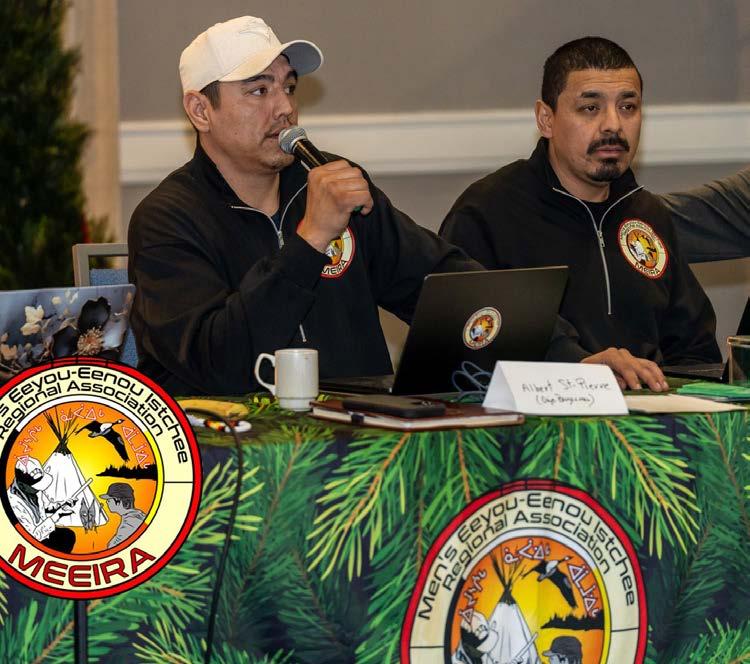
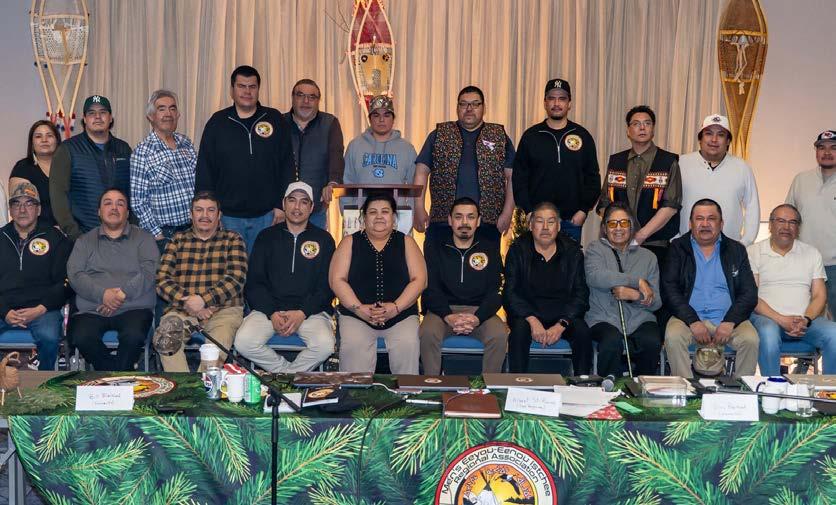
Men’s Association Rises Up
Following a rst annual general assembly March 29, Men’s Eeyou-Eenou Istchee Regional Association President Albert St-Pierre says it’s now time for men to do their part in building healthier and safer communities.
St-Pierre was surprised to see Indigenous Services Minister Mandy Gull-Masty and Grand Chief Paul John Murdoch at the AGA. “They mentioned it’s a historic moment, that men are nally taking action to help each other out,” he said.
On the heels of the MEEIRA assembly, the Rise Up Conference March 30 to April 1 drew a maximum capacity of nearly 150 participants to Ottawa for three days of learning, sharing and strengthening families. While the AGA was exclusively for MEEIRA members, the conference was open to all.
With each day themed awareness, healing or commitment, the event featured guest speaker Niigaan Sinclair and numerous community leaders. Workshops covered heavy topics such as suicide prevention, parenting while healing and addiction relapse. On the second evening, comedian Deadly Uncle lightened the mood with some “laughter as medicine.”
Presentations addressed intergenerational trauma, fostering healthy sexual relationships and understanding the link between childhood trauma and internalized shame. Issues were further explored in sharing circles, focus groups and a panel discussion on creating safe spaces in communities.
The event marked a milestone for MEEIRA as it works for an inclusive and accepting Cree
society. St-Pierre credits former Cree Women of Eeyou Istchee Association president Stella Masty with helping organize the association. The CWEIA founded the regional men’s association in 2022 and guided it toward operational independence in November.
“They’ve been tremendous support since the beginning – they’re the reason why we’re here today,” St-Pierre acknowledged. “We’ll always support them in programs they want to do for both genders.”
St-Pierre has been with the organization since its beginning, the rst two years as vice-president then as leader when Brian Wadden resigned. While Whapmagoostui had launched its local men’s group nearly a decade earlier, MEEIRA’s rst years focused on starting men’s associations in other Cree communities.
Alongside establishing MEEIRA’s administration, policies and structure, St-Pierre plans to visit each local group to solidify their growth.
“I want to speak about how important it is for a man to share his thoughts of what he’s going through and how he feels,” said St-Pierre. “How will our children know to talk to us? I have kids and I want them to tell me what their problem is, especially my boys.”
Raised to stay strong by hiding his feelings, St-Pierre said he didn’t receive the comfort and love he needed from
his parents. He went through foster homes before living on the street, struggling with alcohol and addictions. Competitive ghting helped him escape bad in uences, eventually leading to a championship belt in the Montreal Fight League.
“All my sobriety started in the cage,” St-Pierre shared. “That’s what fuelled me, the anger I had within myself. There’s not much ght in me left because I’ve been dealing with my demons. It’s a good thing.”
As a community role model now asked to speak in schools, St-Pierre tells youth that ghting belongs in the cage, not the streets. Coming full circle since being homeless, he led the establishment of a men’s shelter in OujeBougoumou that recently won approval for a new building.
Meanwhile, in a Cree-led initiative, a Quebec City symposium April 28-30 with representatives from all the province’s Indigenous Nations created the Quebec Native Men’s Association.
“There’s been a lot of people wanting to collaborate with us,” said organizer Wayne Rabbitskin. “My wife Marjolaine McKenzie is the backbone of the proposal writing and mobilizing. The vision I had was a man supported by his wife – I wanted to stop pointing ngers at each other and work for the betterment of all.”
The project is in collaboration with the Missinak women’s shelter, which
approached Rabbitskin four years ago about o ering one of his land-based retreats on their site, noting the medicine wheel isn’t complete without male healing. Hearing Indigenous men from across Quebec talk freely about the di culty of expressing their emotions inspired the idea of a provincial association.
“It’s understandable that women get frustrated because of men lacking communication skills and becoming violent,” said Rabbitskin. “The other side is that vilifying men on social media has become very normalized. I hear more and more that men are scared they’re going to be shamed or shunned. I wanted to hear both sides and work together.”
Over more than a year of consultations, Rabbitskin heard about many challenges men face, including from male domestic violence victims who would never report it to the police. The symposium will share these ndings along with speeches, workshops and discussion circles. The association’s leadership will be elected once a central o ce and all the legalities are in place.
“In the consultations, we heard that men need land-based programs to reconnect with the land and our spirituality,” said Rabbitskin. “Trauma needs to be addressed and resolved.”
PROGRAMS FOR AND BY FIRST NATIONS
REGISTER NOW FOR FIRST NATIONS
EXECUTIVE EDUCATION 2026 PROGRAMS
Why Choose FNEE?
Empowering First Nations leaders with tools, knowledge, and connections to drive change and create a lasting impact in their communities.
Visit us at:
https://fnee.ca/our-programs
Our Programs:
Governance – Grow an Agile and Innovative Leadership
Entrepreneurship – Strengthen Your Entrepreneurial Skills
Management – Boost your collaborative approach
Women Leadership – Reach your full potential
Economic Reconciliation – Co-lead a Reconciliation Project
Next Generation – Trail forward
eadership eurial Skills ach ation Project
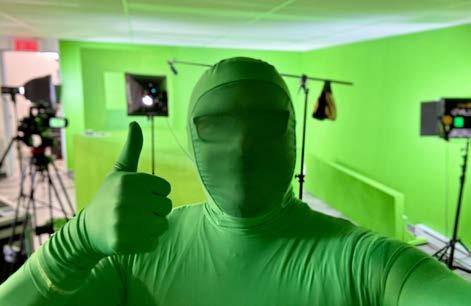
With construction recently completed on a new studio in Mistissini, the James Bay Cree Communications Society is evolving to meet the needs of a changing media environment. Initially formed as a regional radio network, the organization now produces video and multimedia work.
“Radio is still very important but as we move forward in the direction that youth are going, everything is on the phone and the iPad,” explained Patrick Forward. “Naturally, the next step is to create a nice TV studio here where we’re going to be able to record live broadcasts, messages to the Nation and create even more children’s programming.”
Founded in 1981 to provide independent daily Cree-language cultural and social programming, the non-profit JBCCS radio network rst hit the air through CBC in 1986. It o cially launched in 2001 after receiving funding to build its own network.
Executive director Scott Forward has guided the organization’s growth over the past 15 years. After his brother Patrick joined seven years ago, JBCCS has expanded to live streaming and video creation. An extensive digitization project transferred interviews, storytelling and other programming from old cassette tapes.
“We had an incredible crew of co-workers who learned some video editing and did their part to help us accomplish something special,” Patrick Forward said. “It will give us the oppor-
tunity to hopefully provide addresses from Grand Chiefs or emergency alerts live to the community. We try to come up with creative ideas to help save the language.”
Radio programming remains predominantly in the Cree language, except for advertisements. Over the years, it’s expanded to include more interviews and stories from Elders. Special events and live-streamed Cree Nation Government meetings are sometimes aired over the nine local community stations.
Video production often features more English to access a wider range of youth who are generally less uent in Cree. Last summer, students gaining work experience with JBCCS created ve episodes of a new show called Youth Cast. By request, the show continued after the summer ended to cover the Cree Nation Youth Council election and the Cree School Board symposium.
“I think we’ll nd that video is probably much more targeted to the di erent audiences,” suggested Forward. “If it’s vaccine campaigns or simple Christmas messages, [Youth Cast] has the ability to reach out to the youth because they have about 5,000 followers. It’s very easy to insert messages and reach a mass group who are following the show.”
The children’s puppet program John and Friends – described as a “Cree Sesame Street” – was a regional hit with
younger audiences after its debut a year ago. Seven more episodes will air this year along with short clips featuring the popular characters to promote messages like brushing teeth or keeping warm in winter.
“We’re starting to realize we can use these characters for more than just a show,” said Forward. “We’ve had invites from teachers to do in-class visits that have been very successful. We haven’t stopped the kids from touching the puppets because we want to see the interaction, for them to feel like these are their own.”
The puppeteers behind the characters joined the school visits. The excitement they witnessed in a special-needs class was a particular highlight, and recordings of the children’s joyous interaction may be integrated into future episodes. Forward revealed that fans will see a few new puppets in the series towards the end of the year.
The latest episode of John and Friends is streaming exclusively on the CreeTV app, which can be downloaded from the JBCCS website. Their library of content includes original series and live-streamed events across Eeyou Istchee, such as the recent CNYC youth summit and coverage of the Junos, where Cree musician Siibii was a nominee.
With studies showing younger students below the school board’s target level of Cree uency, programs like John and Friends provide a fun and engaging way to expand prociency. The JBCCS and Language Foundry, an interactive Indigenous language learning platform, are also developing Cree-language learning games.
“They will know words, how to pronounce them, especially if it’s voiceover sounds too,” said radio host Clarence D. Snowboy, who lent his voice to the project. “If you doubt yourself with sounds, then you just press ‘how does it sound?’ button. I believe this is going to help.”
The new studio will provide capacity to expand Cree broadcasting in exciting directions. While it’s not yet equipped with the necessary technology, the building features a green room, an editing and recording room, and another technical room downstairs.
“Then we have the bigger upstairs portion, which is a full, open studio,” said Forward. “That’s going to come with a stage, proper lighting, soundproo ng, and its own control room. My hope is that in the next six months we’ll have all the equipment and once that happens, we’ll do a grand opening.”
He’s relieved that the major work is completed and radio hosts no longer have to joke about all the hammering and drilling listeners could hear in the background. The CNG and Cree Nation Department of Commerce and Industry are major funders of the project, while Caisse Desjardins provided a loan to complete the job.
The creative JBCCS sta have no shortage of ideas, and Forward anticipates a steady stream of new content in coming years. Tech-savvy youth will doubtlessly push Cree content into new realms. Forward envisions a morning show giving people a daily update of anything going on around the Cree Nation.
“Sporting events should be televised so that parents and grandparents who can’t always travel can watch them,” Forward asserted. “Same with news and powwows, dance festivals, swim meets. The hope is as many youth as possible interested in making content go out to study and come back with their ideas.”
How can your promotional campaign not be seen by the Cree Nation with these stats:
• 7,000 copies every two weeks, free to all Crees
• Distributed to every Cree community and beyond
• 13,000 web visitors on the Nation site per month
• Found in every seat of Air Creebec flights
• Award-winning news magazine since 1993
Contact us to discuss options and get a quote on an ‘Annual Contract’ or a ‘Multiple ad campaign’...
We look forward to working with you to tailor all your advertising needs, in print or online.
75%
Training
Pre-start
Equipment
Feasibility
Under the Northern Sky
Irecently took a long walk during a beautiful spring day. The sun was bright but the air was brisk and cool. The sting of winter was hanging on and the music of a familiar bird this time of year con rmed that feeling.
The Chickadee was singing its familiar “tee-tee” song. My Kookoom, my grandmother, often pointed out to us children that this little bird was actually calling out the name of the season. The bird changes its tune depending on the weather. When winter still lingers with cold winds, we hear the Chickadee’s plain one-tone “tee-tee” song. As soon as it senses that warmer weather is on the way, it will change its tune to a twonote “NEE-pin, NEE-pin”. Kookoom noted that this song is the name of the season in Inineemoon, our Cree language. The bird is calling out Neepin, the Cree word for spring.
The start of spring and warm weather is a sign of hope in every culture. On the James Bay coast, it signals the start of the goose hunting season. April is known as “Niska Peesim” in our language. Niska is the Cree word for goose and Peesim is the word for month. In case you are wondering, peesim is the same word we use for the sun.
When I look at my social media feed or talk to my relatives in the North, everyone is preparing for the upcoming goose hunt. Families are riding out onto the still-frozen James Bay to their
ancestral territories. My older brother Antoine and his family are heading north to Lakitusaki, or Lake River, close to the Hudson Bay coast. That’s where our mom, Susan (Paulmartin/Rose) Kataquapit, and her family were connected.
Closer to Attawapiskat, younger brother Joseph and his family are going to the southern shore of Akamiski Island, where our father Marius Kataquapit hunted for many years. Within a few hundred kilometres of Attawapiskat, families fan out in all directions to spend a week or more for the annual goose hunt.
Although it is dangerous to head out into the wilderness, every family group is familiar with their neighbours, and everyone keeps a close watch on one another on the land. Before modern technology, people kept tabs on neighbours by taking note and passing along the news from one person to the next.
Some 30 or 40 years ago, it became common for people to pass information over bush radio. I remember listening to the static of a radio and the distant Cree broadcasts from Elders sharing news about who was travelling on the land, where they were going, how good or bad the weather was and how many birds were ying. At the same time, they would share sad news of people who had passed away or happy reports of a
person who had been rescued or assisted during a time of need.
Now I tune into my social media feed to see live videos or photos of family and friends at their camps that they shared over high-speed satellite internet connections.
As northern families move across the land, another group of young traditional people is also moving far from home to protect the land. In the state of New York, Jeronimo Kataquapit, Ramon Kataquapit and Kohen Mattinas, along with other supporters, are representing their people and their generation in the ght to protect the Hudson Bay lowlands.
They are attending the United Nations Permanent Forum on Indigenous Issues, which brings together Indigenous leaders, governments and UN agencies from April 20 to May 1 to discuss human rights, health, the environment and development.
Neepin is arriving and across the land, a new generation is working to maintain our culture as our ancestors have for thousands of years. They are doing it by taking part in the annual spring goose hunt and by heading out into the world to defend the land we call home.
I hope that our families in the North have a good, safe and prosperous hunt this year and I wish our youth in the south a safe and successful journey.
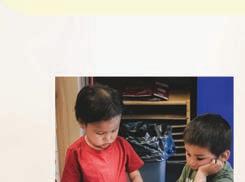
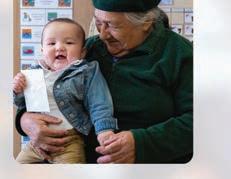
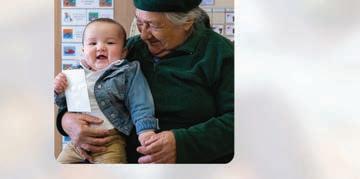
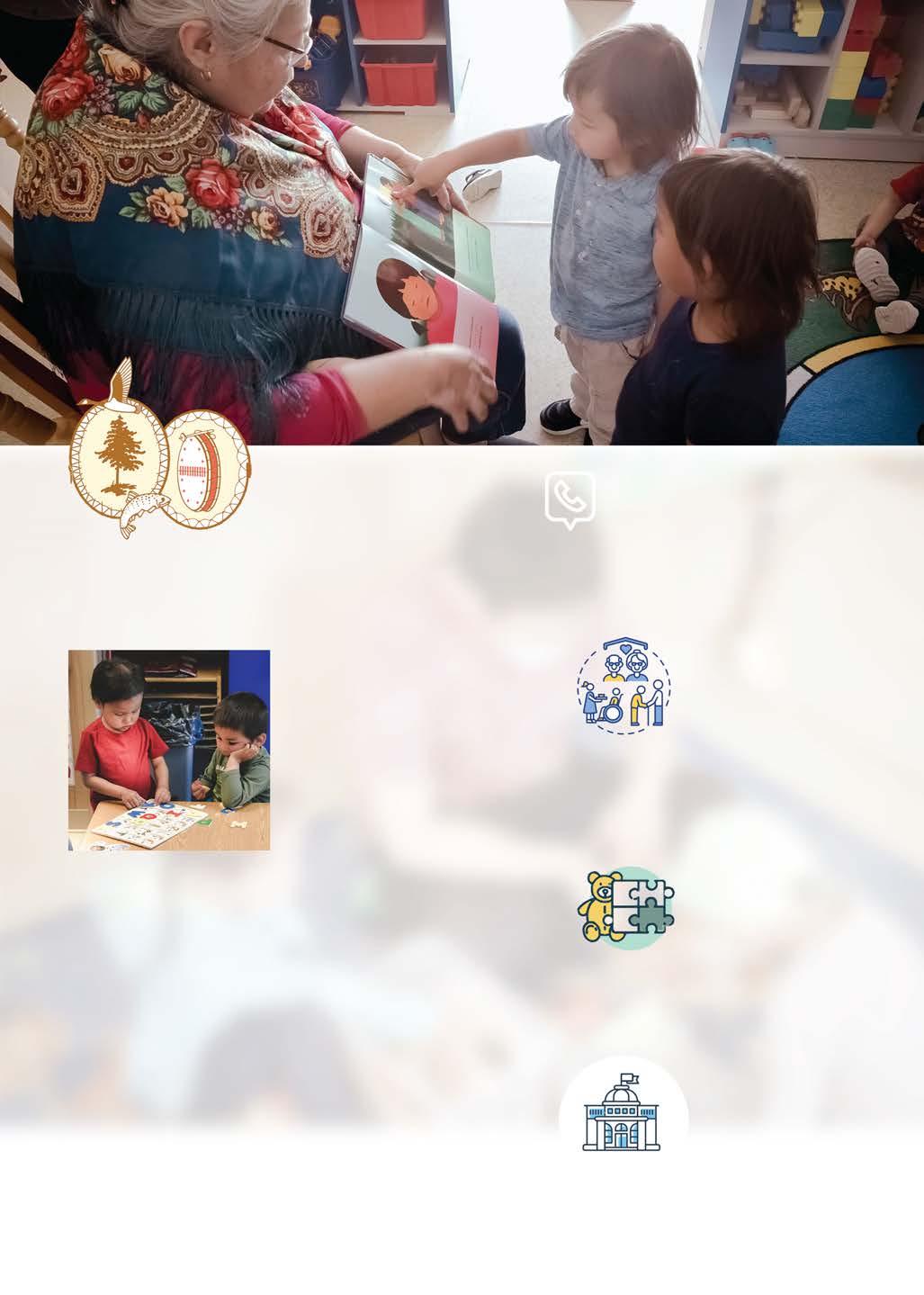
The Cree IELCC Fund is designed to fund projects/activities that foster the education, Cree culture and language, as well as health and wellbeing of children 0 to 6 and their families.
The Cree IELCC Fund is designed to fund projects/activities that foster the education, Cree culture and language, as well as health and wellbeing of children 0 to 6 and their families.
The Cree IELCC Fund is designed to fund projects/activities that foster the education, Cree culture and language, as well as health and wellbeing of children 0 to 6 and their families.
projects/activities that foster the education, Cree culture
The Cree IELCC Fund is designed to fund projects/activities that foster the education, Cree culture and language, as well as health and wellbeing of children 0 to 6 and their families.
their level of ability or special
All projects and activities must also ensure that no children are left behind: activities must be accessible to all children, no matter their level of ability or special need.
All projects and activities must also ensure that no children are left behind: activities must be accessible to all children, no matter their level of ability or special need.
activities must be accessible their level of ability or special
All projects and activities must also ensure that no children are left behind: activities must be accessible to all children, no matter their level of ability or special need.
All projects and activities must also ensure that no children are left behind: activities must be accessible to all children, no matter their level of ability or special need.