A SCH OO L FO R AN D BY A SCH NATI OO L O FO R AN D BY FI RST NS FI RST NATI O N S F i rs t N ati o n s Exe cutive Ed u cati o n (F N EE)
of fers s h oornts l eExe a d cutive ers h i p Ed p ro ra m thN atEE) F i rs t N ati ug cati o ns (F h p ehdi ps ppero cifi caml ly toat m e et ofave fersbsehen o r td leve e a dl oers g ra s th Fh iave rs t Nbati o n s n e e d s . e en d eve l o p e d s p e cifi ca l ly to m e et F i rs t N ati o n s n e e d s .
P RO G R A MS D E S I G N E D F O R CU R R E N T A N D AS P I R I N G F I RS T N ATI O N S L E A D E RS P RO G R A MS D E S I G N E D F O R CU R R E N T c teP IdR Iof fi ci l sT aNnATI d aOdNm s tra to rs NG FIa RS S iLnEi A D E RS ›A NElDeAS
p re n e u rs a n d b u s i n es s C EO s ›› Entre El e c te d of fi ci a l s a n d a d m i n i s tra to rs n a g e rs , g e n e ra l d i re c to rs a n d p ro g ra m d i re c to rs ›› Ma Entre p re n e u rs a n d b u s i n es s C EO s m e n a n d l e a d e rs h i p ›› Wo Ma n a g e rs , g e n e ra l d i re c to rs a n d p ro g ra m d i re c to rs Eco i c l e a d e rs – G ra n d Ci rcl e ( b i n o m e re g i s t ra t i o n s) ›› Wo mn oem n a n d l e a d e rs h i p › Eco n o m i c l e a d e rs – G ra n d Ci rcl e ( b i n o m e re g i s t ra t i o n s) AL SO AVAILABL E
C USTOMI Z E D PROGRAMS AL SO AVAILABL E
C USTOMI Z E D PROGRAMS
For and by First Nations
DE V E LOPE D IN-LINE W IT H T H E S PECIF IC NE E D S OF INDIGE NOUS AND NOU DE V ENON LOPE-INDIGE D IN-LINE WSIT H T H E ORGANI ZAT S PECIF IC NEIONS E D S OF INDIGE NOUS AND NON -INDIGE NOU S ORGANI ZAT IONS
FO R MO R E I N FO RMATI O N f n e e .ca
FO LLOW U S
FO R MO R E I N FO RMATI O N f n e e .ca
FO LLOW U S
Founding members
En partenariat avec : participation of With the financial
Founding members
En partenariat avec : participation of With the financial
Our partners
Partner – Entrepreneurship programs
Partner – Women and leadership programs
Our partners
Partner – Entrepreneurship programs
Partner – Women and leadership programs
SDG-31489SDG-31489
For and by First Nations
CONTENTS 10 2024 Education Guide Empowering education for Indigenous students
EDITORIAL Happy New Year
4
Caring for the caribou
5
Studying on home turf
6
NEWS
BRIEFS FEATURES
9
2024 Education Guide
10
Farewell Uncle Louie
22
A proud moment
26
PUZZLES REZ NOTES
30
Slipping into the new year 31
UTNS Politics
22
Remembering Dr. Louis Bernatchez
ᐅᕙᓂ ᐱᒋᐊᕐᐳᖅ ᓄᓇᕕᒃ ᐅᕙᓂ ᐱᒋᐊᕐᐳᖅ ᓄᓇᕕᒃ Nunavik Starts Here Nunavik Starts Here
A New Year resolution for peace
ᐅᕙᓂ ᐱᒋᐊᕐᐳᖅ ᓄᓇᕕᒃ Manon 26 Nunavik ᐅᕙᓂ Startsᓄᓇᕕᒃ Here Jeannotte ᐱᒋᐊᕐᐳᖅ Nunavik Starts Here
ᐃᓂᓕᐅᕐᓃᑦ RESERVATIONS 1 800 361-2965 ᐃᓂᓕᐅᕐᓃᑦ RESERVATIONS
ᖃᖓᑦᑕᔫᓂᒃ ᐊᑦᑕᑐᐊᖃᕐᓂᖅ CHARTERS 1 800 661-5850 ᖃᖓᑦᑕᔫᓂᒃ ᐊᑦᑕᑐᐊᖃᕐᓂᖅ CHARTERS
34
Photos by cc0 Pixabay
Editorial
Happy New Year by Will Nicholls
A
nother year is upon us. All of us at the Nation wish you the best in the coming year. Indeed, in all the years to come we hope they just get better and better. In Mistissini, as in many Cree First Nations communities, there were struggles to deal with the New Year’s parties.
The solution was to have an alcohol dry community party. Mistissini’s party ran for three days from December 31 to January 2. Three days of celebrations complete with fireworks to greet the New Year and tons of door prizes, and game prizes for different ages and couples. The prizes
were amazing and included skidoos, electric bikes and a 70-inch TV. A good time was had by many residents and people got to wish each other a Happy New Year. Enjoy the pictures and hopefully next year other communities will share their celebrations with us. All the best for 2024!
The Nation is published every two weeks by Beesum Communications EDITORIAL BOARD L. Stewart, W. Nicholls, M. Siberok, Mr. N. Diamond, E. Webb EDITOR IN CHIEF Will Nicholls DIRECTOR OF FINANCES Linda Ludwick EDITORS Lyle Stewart, Martin Siberok PRODUCTION COORDINATOR AND MANAGING EDITOR Randy Mayer CONTRIBUTING WRITERS S. Orr, X. Kataquapit, S. Hossain, J. Janke, A. Nambiar DESIGN Matthew Dessner SALES AND ADVERTISING Danielle Valade, Donna Malthouse THANKS TO: Air Creebec CONTACT US: The Nation News, 918-4200 St. Laurent, Montreal, QC., H2W 2R2 EDITORIAL & ADS: Tel.: 514-272-3077, Fax: 514-278-9914 HEAD OFFICE: P.O. Box 151, Chisasibi, QC. J0M 1E0 www.nationnews.ca EDITORIAL: will@nationnews.ca news@nationnews.ca ADS: Danielle Valade: ads@nationnews.ca; Donna Malthouse: donna@beesum.com SUBSCRIPTIONS: $60 plus taxes, US: $90, Abroad: $110, Payable to beesum communications, all rights reserved, publication mail #40015005, issn #1206-2642 The Nation is a member of: The James Bay Cree Communications Society, Circle Of Aboriginal Controlled Publishers, Magazines Canada Quebec Community Newspaper Assn. Canadian Newspapers Assn. Les Hebdos Sélect Du Québec. Funded [in part] by the Government of Canada. | www.nationnews.ca | facebook.com/NATIONnewsmagazine | Twitter: @creenation_news
4
the Nation January 12, 2024 www.nationnews.ca
CMCA AUDITED
Editorial News
Caring for the caribou I
by Joshua Janke
Fire-ravaged habitats put pressure on vulnerable wildlife populations n the vast expanse of western Nunavut, reports from the Kitikmeot and Kivalliq regions paint a bleak picture of ailing caribou in numbers higher than the norm. The Nunavut territorial government confirms concerns about the health and sustainability of the Arctic caribou. Samples gathered by hunters and sent for testing at the Canadian Wildlife Health Cooperative found a parasite that causes severe swelling of the muscular and connective tissues, ravaging the very core of the caribou’s physical well-being. While tests on caribou samples from the Kivalliq region are not yet conclusive, Nunavut Environment Minister Daniel Qavvik urged the community to collaborate in a recent legislative assembly session. “We ask hunters to bring in samples when safe to do so and continue reporting any abnormalities in caribou herds,” he implored. “Only through the unified efforts of harvesters, wildlife officers, co-man-
agement partners, and biologists can we earnestly monitor the health trajectory of these caribou herds and strive towards sustainable solutions that ensure their long-term well-being and survival.” The grim reality facing the once-flourishing species barren-ground caribou is staggering. The Committee on Status of Endangered Wildlife in Canada reports that, in just over two decades, their numbers plummeted by more than half – from two million in the 1990s to 800,000 in 2015. The barren-ground caribou, renowned for its resilience in the unforgiving Arctic terrain, now faces various threats. Changing weather patterns have led to shifts in vegetation and foraging areas have left these majestic animals vulnerable to food scarcity. Climate change amplifies the challenges for the caribou, including increased predation, proliferation of parasites, and a surge of disease. Parasites, for instance, thrive in altered environmental conditions
and inflict debilitating inflammation that cause abnormalities in harvested caribou meat. Meanwhile, forest fires scorch the land they rely on for sustenance and shelter. Industrial development further diminishes their habitat and disrupt migratory patterns. Recent incidents further highlight the gravity of this situation. Reports surfaced in September from hunters in Kugluktuk and Rankin Inlet of several ailing caribou. Samples were collected by territorial staff. The significance of these caribou transcends statistics. The fabric of Inuit culture is interwoven with the sustenance these animals provide. The Nunavut government website emphasizes that barren-ground caribou are not merely creatures traversing the landscape but symbolic custodians of traditions and sustenance across the North.
www.nationnews.ca January 12, 2024
the Nation
5
A
s more options become available in the region for the growing number of Cree students interested in post-secondary education, the Cree School Board has launched a new department dedicated to higher learning. The department will manage the post-secondary programs currently offered in Eeyou Istchee and those yet to come. So far it includes the Cree Teacher Training Program and the Iyeskuwiiu CEGEP-level springboard program. “We’re in the midst of negotiations to form my department, which will determine our plans for programs we want to develop in the next five years,” said director Darlene Cheechoo. “All the programs we are developing will emphasize Cree culture and language as much as possible – that’s a real high priority for the CSB and our department.” The land-based component of the Iyeskuwiiu program supports student success by strengthening Cree identity and confidence. The current cohort recently completed assignments at Anna and David Bosum’s traditional camp near Ouje-Bougoumou. These programs attract more applicants each year – at least 80 people expressed interest for the latest teacher training program. Offered in collaboration with McGill University’s Office of First Nations and Inuit Education, the CSB presently has a four-year Bachelor of Education and shorter certificate programs that qualify Crees to teach in Eeyou Istchee schools. “We do a lot of research of potential partners for programs we’re trying to develop and who will be a good match in terms of our values and the services that can be provided,” explained Cheechoo. “John Abbott (College) has been a great partnership (for Iyeskuwiiu). They make a lot of efforts to work with us to make sure the cultural support is there for students.” The new department also works with Cree entities to align educational offerings with regional priorities and in-de-
6
the Nation January 12, 2024 www.nationnews.ca
Studying on home turf Cree School Board launches Department of Higher Learning by Patrick Quinn
A Dialogue for Life conference was about ways to promote life mand career paths. One partnership is with Eeyou Ituun, a 900-hour-long program from the Cree Trappers’ Association, Niskamoon Corporation and Cégep de St-Félicien that involves Cree Elders to transfer traditional bush skills for land stewardship. In 2019, the CSB surveyed every community and multiple stakeholders for an Adult Learning Needs Assessment to guide its program development. CSB chairperson Sarah Pash said it showed “many people wish to pursue post-secondary education but are unable to leave their communities for a variety of reasons.” With most interested in nursing and teaching programs, followed by vocational work like mining and construction, the CSB partnered with the Cree Health Board to align the local workforce with the region’s expanding needs. A springboard program will launch in August to help students obtain the necessary training to apply for healthcare studies. “There’s going to be a brand-new hospital and new health centres but there are needs right now for Cree physicians, lab techs and all areas of the health sector,” Cheechoo said. “They just need to get their foot in the door through these pathway or springboard programs. We have plans for other programs that haven’t been approved yet.” Cheechoo said they’re also trying to create a Bachelor of Social Work pro-
gram and other offerings that upgrade the skills of frontline healthcare workers. Cheechoo’s department hopes to develop resources to raise the success rates of Cree student applications. Cheechoo added that there’s a need for secondary teachers in math, science and specialty courses as well ways for Crees with a bachelor’s degree in education to become principals and fill other leadership roles. The Higher Learning Department aims to complement Sabtuan Adult Education Services (SAES), Post-Secondary Student Services (PSSS) and other CSB departments to provide more options for students to pursue their education journey within the territory. To support the transition toward urban studies, PSSS is transforming its offices in Gatineau and Montreal into more of a “home away from home.” Meanwhile, PSSS is changing its name to Niimuutaan, which is the traditional satchel carried during hunting expeditions, to symbolize the “transformative journeys” undertaken by students. The student lounge, library and study areas will be renovated to become more inviting for classwork, relaxation and social interaction. Plans include expanding their library to include more books about Indigenous issues, self-growth and titles that encourage reading for pleasure. They also intend to make the space more family-friend-
ly, offering more Cree-language learning activities for all ages, in order to stimulate connections made during recent open houses, orientations and study-tip sessions. Winter festivals will be held in the coming months in Montreal and OttawaGatineau, with popular family activities, prizes, networking opportunities and “epic food.” The Niimuutaan PSSS department regularly collaborates with colleges and universities to enhance their Indigenous relations and aid the transition to higher education – along with financial assistance, academic support and guidance counselling. While the new Higher Learning Department develops strategic programs, it continues to prepare for the major goal to establish a post-secondary institution in Eeyou Istchee. “Ultimately part of our plan is for a Cree CEGEP in our territory, all depending on the dominoes to fall into place,” said Cheechoo. “There will be multiple people involved in it. We’ve already started some groundwork that we need to update with current data for feasibility. We’re in a sensitive period of our growth.”
www.nationnews.ca January 12, 2024
the Nation
7
Study at Canadore College Canadore offers culture-based programs with a focus on history and tradition Indigenous Pre-Health Sciences Indigenous Preparatory Studies Indigenous Wellness and Addictions Prevention
15%
Indigenous students make up of Canadore’s Student Population.
Our students like it here! We have one of the HIGHEST Indigenous student retention rates in Canada.
canadorecollege.ca/FPC
North Bay, Ontario
Are you interested in working on our endeavours of Ancestral Cultural heritage? We offer stimulating career opportunities in this field with a unique work environment! creeculturalinstitute.ca
In Brief Responsible hunting and trapping methods In early January, the Cree Trappers’ Association hosted two training events in Val-d’Or and across nine Cree communities to foster cultural practices and ensure responsible firearm safety and trapping in Eeyou Istchee. The CTA launched an upgraded version of the Canadian Firearm Safety Course (CFSC) Training Program during their December 3-6 event in Vald’Or. This free initiative updated the training of both seasoned instructors and individuals who want to hunt responsibly and safely. The training included practical tests, discussions on instructor responsibilities, and lesson presentations. Participants immersed themselves in basic firearms safety practices, ammunition types and storage, operating firearm actions, and safe handling and carry procedures. Head instructors compiled performance reports for each participant, leading to the recognition of the new CFSC instructors by Sécurité nature. This recognition validated their commitment to fostering a safe and responsible approach to firearms. By upgrading the CFSC Training Program, the CTA addresses the evolving needs of the community and ensures that cultural practices are passed down responsibly from one generation to the next. In collaboration with the tallymen of Eeyou Istchee, the CTA also orchestrated an extensive trapping training program across nine Cree communities January 5-19. The course seeks to enhance ethical furbearer harvesting and trapping techniques.
The free program featured a 30-hour theoretical and practical curriculum, striking a balance between classroom learning and fieldwork. Fifteen students from each community studied various trapping gears, the biology of different species, diseases and parasites, and the proper handling and preparation of fur. Upon completion of the course, participants were awarded their trapping card, which grants them the right to trap anywhere in Quebec. They also took a crucial step toward becoming trapping instructors. This opportunity offers individuals the chance to help preserve trapping traditions and promote ethical trapping practices. The training sessions exemplified the CTA’s commitment to empower individuals with the skills and knowledge necessary for sustainable and ethical trapping practices. By incorporating both theoretical and practical components, the program ensured a comprehensive understanding of trapping techniques and fostered a deep connection with Cree traditions. These two transformative events underscored the CTA’s dedication to cultural preservation, responsibility and community engagement. The deployment of Bush Kits marks an improvement in emergency preparedness and healthcare in remote Canadian regions. They are a testament to the collaboration between
healthcare providers, local communities and Indigenous groups as they empower individuals and communities to take primary responsibility for their health and safety in the wilderness.
Bush Kits provide a lifeline In remote wilderness areas of Canada that are often vulnerable to wildfires, the importance of being prepared cannot be overstated. Last year’s wildfires have prompted a re-evaluation of emergency preparedness. A key tool is the Bush Kit, which is designed not only for survival but to foster traditional practices. A Bush Kit is a meticulously assembled collection of essentials tailored to meet the needs of individuals in remote areas. It includes water, non-perishable food items, a manual can opener, a wind-up or battery-powered flashlight and radio, and first aid essentials. There are also extra keys for cars and houses, cash, travellers’ cheques, important family documents, and a detailed emergency plan. The kit suggests additional supplies like candles, matches, clothing, footwear, sleeping bags, personal hygiene items, sanitation supplies, a prepaid phone card and a mobile phone charger. For families, items like pet food, infant formula, baby supplies
and activities for children are included. The kit also comprises prescription medications, utensils, plates, cups, basic tools, a small fuel-operated stove, a whistle and duct tape. Thomas Chakapash of the Cree Health Board said the bush-kit training program is not just about providing physical tools, it is about equipping people with the knowledge and skills to use them effectively. The Bush Kit program aims to help Cree land users to manage emergency healthcare in the bush. A partnership with the Cree Trappers’ Association facilitates communication between community members, land users and medical centres, and aiding in medical evacuations when necessary. A Bush Kit representative is trained to communicate with nurses at Community Miyupimaatisiiun Centres, administer medication and first aid, and to recognize common and emergency health problems while implementing preventive strategies. The deployment of Bush Kits marks an improvement in emergency preparedness and healthcare in remote Canadian regions. They are a testament to the collaboration between healthcare providers, local communities and Indigenous groups as they empower individuals and communities to take primary responsibility for their health and safety in the wilderness.
www.nationnews.ca January 12, 2024
In Brief
the Nation
9
Features
the Nation’s
2 0 2 4 Education Guide by Sakib Hossain
I
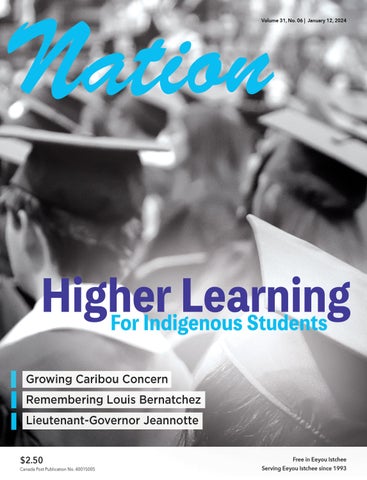
n this year’s guide, we explore a selection of institutions that stand out for their commitment to providing culturally sensitive and empowering education for Indigenous students, particularly those from the Cree communities. Each of these institutions offers a range of options for Indigenous students to find their path in higher education, blending academic excellence with a respect for and integration of Indigenous culture and values.
At the Centre d’études collégiales de Chibougamau (CECC), the unique “Springboard to a DCS: First Nations” (SFN) pathway is revolutionizing the journey to higher education for Indigenous students. Tailored to ease the transition from secondary to collegiate studies, this program can span one to three semesters, opening doors to a wide range of CEGEP programs across Quebec. Central to the SFN pathway is a curriculum encompassing general education courses such as English, French as a second language, humanities, physical education and complementary courses. These are mandatory in all Quebec CEGEPs, giving students a head start in their chosen programs by having completed key required courses. This structuring leads to a lighter schedule, enhancing student success. Furthermore, the pathway allows students to complete prerequisites for specific programs. For instance, the secondary level math course is a prerequisite for the Accounting and Management Technology program, and the Science and Technology of the Environment course is needed for Natural Environment Technology. This flexibility ensures that students can seamlessly enter their desired programs. The SFN pathway integrates Indigenous history, culture and knowledge into course content. For example, English literature courses feature works by Indigenous authors, and humanities courses address decolonization issues. The physical education courses include activities like canoe camping
10
the Nation
and snowshoeing. The course schedule is designed to accommodate long weekends, enabling students to maintain strong ties with their communities. CECC’s commitment to cultural security extends beyond academics. Indigenous art is prominently displayed, and the Mîchiwâhp student lounge offers a welcoming space for Indigenous students. The Indigenous Student Services at CECC provides personalized support, bridging students with various college services like individual pedagogical assistance, orientation, IT services and documentation centres. The team also connects students with local services like health centres and employment agencies and assists with housing and financial aid applications. A highlight of the CECC experience is the weekly three-hour Maamuitaau gathering. Co-hosted by Cree Elders Caroline Longchap and Solomon Awashish, along with a member of the Indigenous Student Services team, these gatherings are rich in cultural activities, such as traditional events in the Shaputuan at Mistissini, participation in regional government meetings, and powwows. The Maamuitaau is more than just a cultural event, it’s a space for sharing, exchanging and fostering student involvement, belonging and academic perseverance. Through its innovative SFN pathway, CEEC offers a culturally sensitive and supportive environment. It ensures that every Indigenous student has the tools and support needed for success in their academic and future professional endeavours.
education guide 2024
Centre d’études collégiales de Chibougamau (CECC)
education guide 2024
The Nation 2024 Education Guide by Sakib Hossain In this year’s guide, we explore a selection of institutions that stand out for their commitment to providing culturally sensitive and empowering education for Indigenous students, particularly those from the Cree communities. Each of these institutions offers a range of options for Indigenous students to find their path in higher education, blending academic excellence with a respect for and integration of Indigenous culture and values.
Cégep de Saint-Félicien Known for its commitment to environmental stewardship and community education, Cégep de Saint-Félicien is introducing pioneering programs designed to meet the evolving needs of the Cree community and the broader region. Slated to start in fall 2024, the Wildlife Protection program is a comprehensive 1305-hour course, partly available in Chibougamou. Offered in English, this program emphasizes the importance of wildlife conservation and protection within Eeyou Istchee. It integrates cultural components, reflecting the deep connection between the Cree and their natural environment. The program aims to equip students with the expertise needed to manage and protect wildlife, ensuring ecological balance and respecting Indigenous practices. The AEC in Geology of Mineral Resources, launched in Chibougamou in fall 2023, spans 1290 hours and includes a practical co-op component. This program is designed for those interested in the region’s rich mineralogical landscape. It offers
hands-on experience and in-depth knowledge in geology, catering to the growing demand in the mineral resources sector. Responding to the community’s need for skilled professionals in Early Childhood Education, this program trains educators to work with young children. It addresses the specific needs of the community, preparing educators to contribute to the local workforce. As of today, the program boasts 12 students. Cégep de Saint-Félicien will conduct tours from January to March to promote the upcoming Wildlife Protection program, reflecting the college’s dedication to community involvement. Cégep de Saint-Félicien’s innovative and community-focused programs reflect a deep commitment to environmental stewardship, cultural sensitivity and educational excellence. These programs prepare students for meaningful careers that contribute to the sustainability and well-being of their communities. www.nationnews.ca January 12, 2024
the Nation
11
UQAT’s School of Indigenous Studies is the only university department in the province wholly focused on Indigenous studies. This multidisciplinary approach underlines UQAT’s commitment to integrating Indigenous perspectives and knowledge into higher education. Primarily a French-language institution, UQAT offers courses in English for Indigenous students. This commitment to inclusivity is reflected in the university’s practice of forming small cohorts and signing agreements with Indigenous communities and organizations, including various Cree groups. This collaborative approach has led to the development of advanced Indigenous studies programs, including a master’s program set to launch in 2024, adding to the existing graduate offerings for Indigenous students. At UQAT, the First Peoples Service supports students’ academic and psycho-social needs. This service provides tools for effective time management and assists with housing, personal relationships and other non-academic concerns. The intimate scale of UQAT allows for close relationships between faculty and students, fostering a personalized and supportive educational environment. The university offers a range of teaching methods, including on-site community classes, remote learning, hybrid formats, and both intensive and conventional courses. This flexibility ensures that education is tailored to the diverse needs of students, particularly those from Indigenous communities. UQAT extends its reach beyond the campus, organizing events that facilitate networking between students and potential employers, thereby supporting students’ transition from education to employment. UQAT’s initiatives and research projects are developed in close collaboration with Indigenous partners. The university’s dialogue with Indigenous people, including former and prospective students, ensures that its programs and research respond to the concrete needs of Indigenous communities.
12
the Nation January 12, 2024 www.nationnews.ca
education guide 2024
Université du Québec en Abitibi-Témiscamingue (UQAT)
education guide 2024
First Nations Executive Education (FNEE) / HEC Montréal As the First Nations Executive Education (FNEE) celebrates its second anniversary, it marks not just a milestone for HEC Montréal but a significant achievement in Indigenous and non-Indigenous collaboration in higher education. The FNEE has rapidly become a beacon of hope and progress, blending traditional knowledge with modern executive training. The FNEE’s second anniversary event, held November 16-17, attracted over 250 Indigenous and non-Indigenous guests from academia, business and politics to celebrate this remarkable journey. Participants from six cohorts received university attestations and certifications at the event. The FNEE has trained 341 First Nations members through its innovative programs, taught by 46
Indigenous and 39 HEC Montréal facilitators under the guidance of eight Elders. A highlight of the FNEE’s achievements is the upcoming launch of a program focused on economic reconciliation. Developed with the First Nations of Quebec Economic Development Commission, this initiative seeks to foster large-scale economic projects between Indigenous and non-Indigenous partners. Starting in winter 2024, this program aims to bridge gaps and create collaborative opportunities for economic growth and mutual prosperity. The collaboration between HEC Montréal and the FNEE illustrates a commitment to inclusive, culturally sensitive education. The partnership demonstrates how academic institutions can play a crucial role in supporting Indigenous leadership.
www.nationnews.ca January 12, 2024
the Nation
13
Concordia University students to university life and the locations of their classes. Every week, students meet with advisors who monitor their academic progress and personal well-being. A weekly seminar addresses academic, cultural and personal issues, while connecting students to on- and off-campus resources. The seminar covers financial literacy, self-advocacy, work-life balance, and health and wellness strategies. Additionally, tutoring and financial aid are available to support students in their academic journey. Students will have opportunities to engage in land-based learning and participate in events at the Otsenhákta Student Centre, like budgeting workshops or volunteering at the powwow. Guest speakers, including Elders and Indigenous alumni, will be invited to share their experiences and guidance. Alongside the seminar, the program includes University Skills courses focusing on study skills, time management, and goal setting. These courses are intended to equip students with essential skills for academic success and beyond.
education guide 2024
Concordia University is set to enhance its support for Indigenous students with the innovative Kaié:ri Nikawerà:ke Indigenous Bridging Program. This initiative is a significant step in making higher education more accessible to Indigenous students. The university plans to extend the bridging program to encompass all undergraduate programs offered at Concordia. Recognizing the diverse circumstances of prospective students, there’s also a move to develop a part-time option. The Office of Indigenous Directions involves Indigenous staff and faculty in the program’s development. Extensive consultations with local Indigenous communities, university directors, and educational organizations have been instrumental in shaping the program. For instance, focus groups with Indigenous alumni from the John Molson School of Business have provided invaluable insights into the program’s structure. The program’s cohort model is designed to foster a sense of community and ease the transition into university life. Students in the cohort attend a structured class schedule together. A Welcome Orientation, including a campus tour, introduces
14
the Nation January 12, 2024 www.nationnews.ca
education guide 2024
Dawson College Dawson College’s Journeys program stands as a transformative pathway for Indigenous students as they transition from high school to CEGEP. This program, along with the support from the First Peoples’ Centre, creates an enriching and supportive educational environment that celebrates and nurtures Indigenous cultures and identities. Central to the Journeys program is its commitment to community unity. With about half of its Indigenous students being Cree, the program has created a nurturing community where cultural bonds and mutual support are paramount. This communal spirit is enhanced by the recently renovated First Peoples’ Centre, now twice its original size, offering a dedicated space for academic and cultural support. The Journeys program fosters student mentorship and camaraderie. This was illustrated in a fish leather-making class where a student quickly mastered the skill and then transitioned into a mentor role. Such instances showcase the program’s ability to empower students to share knowledge and support each other.
Educators closely follow and support students throughout the year. This continuity in teacher-student relationships strengthens connections and provides ongoing academic assistance. The First Peoples’ Centre also organizes cultural events, sharing circles, feasts and traditional art workshops. The Centre also places a high priority on health and wellness support, providing access to healthcare professionals, mental health support and traditional healers. A focus on Elder engagement enriches the student’s educational journey with wisdom and cultural insights. Additionally, the Centre offers numerous student leadership opportunities through various events and workshops, encouraging students to develop skills that contribute to the Dawson community. Alongside the seminar, the program includes University Skills courses focusing on study skills, time management, and goal setting. These courses are intended to equip students with essential skills for academic success and beyond. www.nationnews.ca January 12, 2024
the Nation
15
Algonquin College is the largest polytechnic institute in eastern Ontario, with campuses in Ottawa, Perth, Pembroke and AC Online. It offers more than 300 programs including diplomas, degrees and graduate certificates in areas including health studies, advanced technology and trades. Algonquin is committed to advocating, embracing and supporting Indigenous students. They celebrate Indigenous culture in a way that is respectful, mindful and collaborative. They also offer a range of support for Indigenous students. The college’s goal is to provide a full spectrum of support to ensure that students succeed and thrive. They offer academic, career and personal support to students, ranging from information on more than 50 Indigenous bursaries, scholarships, awards and other funding, to workshops and individual support with study skills, time management, tutors and employment assistance. Other offerings include referrals to career, academic or personal counselling with an Indigenous counsellor. The Mamidosewin Centre has served to empower and support Indigenous students for more than 20 years. “Mamidosewin” is Algonquin/ Ojibwe for “meeting place” or “walking together.” The Centre strives to build a vibrant community that embodies this sentiment. Mamidosewin provides a variety of cultural programs and services to Indigenous learners. It
16
the Nation January 12, 2024 www.nationnews.ca
includes a student lounge, solarium, kitchen and outdoor space. Various feasts, celebrations, drum circles and social activities take place during the year, including smudging ceremonies and guest speakers. Local Indigenous services, confidential counselling and access to food banks, job boards and other health and wellness services are also available. The Centre also provides access to traditional medicines and offers a place for daily smudging ceremonies. Events are open to all. The aim is to create a welcoming space for Indigenous learners on campus while offering an opportunity for the greater college community to learn more about Indigenous traditions. The college’s Pembroke campus is home to Campus Kokum, Campus Elder and Drumkeeper. They are the curators of sacred stories, songs, language, culture and traditions. They are the go-to people on campus for all things Indigenous. They provide a critical role in the continued commitment to support Indigenous perspectives, knowledge and approaches to wellness in an educational setting. For students who wish to participate in post-secondary studies but want to stay close to their community, AC Online is the Algonquin College virtual campus. It offers online education, more than 80 programs and over 800 courses.
education guide 2024
Algonquin College
education guide 2024
Canadore College With its significant Indigenous student population, Canadore College is a hub for cultural diversity and educational excellence. Its commitment to Indigenous education and support is evident across its campuses and in its specialized programs. With campuses in North Bay and Parry Sound, Ontario, Canadore has around 750 Indigenous students, making up about 15% of the total student population. This diverse student group includes Ojibway, Oji-Cree, Cree, Algonquin, Métis, Mohawk and Inuit, highlighting the college’s role as a melting pot of Indigenous cultures. The First Peoples’ Centre at Canadore is more than just an academic facility, it’s a vital cultural and support hub for Indigenous students. It offers a range of services, from comprehensive academic support to cultural programs. The Centre also engages in recruitment,
promotion and community outreach projects, extending its impact beyond the college walls. Canadore offers various learning paths. Last year, over half of the Indigenous learners attended on-campus programs, while others studied at Indigenous partner campuses or in their home communities. Many chose part-time learning, indicating the college’s flexibility and commitment to accessible education. A standout initiative at Canadore is the Kikandaaswiwin Mookiisin (KM) Indigenous STEAM Program. Developed in partnership with Actua, this program helps Indigenous youth enter high-skill fields like Science, Technology, Engineering, Arts and Mathematics (STEAM). KM emphasizes the importance of Indigenous identity and perspectives in these fields, offering students not only academic growth but also a renewed confidence in their cultural heritage.
www.nationnews.ca January 12, 2024
the Nation
17
18
the Nation January 12, 2024 www.nationnews.ca
www.nationnews.ca January 12, 2024
the Nation
19
Need $$ for School? Indspire can help! A postsecondary destination as unique as you are.
Biindigen
Indigenous Student Affairs Affaires étudiantes autochtones Enji-Naadmaagaazwad Eknoomaagzidjig
20
the Nation January 12, 2024 www.nationnews.ca
Apply by February 1st, 2024 at indspire.ca/apply-now
info@cscree.qc.ca www.eeyoueducation.ca info@cscree.qc.ca
info@cscree.qc.ca www.eeyoueducation.ca info@cscree.qc.ca www.eeyoueducation.ca www.eeyoueducation.ca
ᒑ ᒌ ᐅᐦᑎᓂᒧᐧᐋᑭᓂᐅᒡ ᑳᒋᒡ ᒑ ᒌ ᑭᓂᐧᐋᔨᐦᑎᐦᒡ ᐊᓂᔮᔨᐤ ᐋ ᐃᔑ ᒋᔅᑯᑎᒧᐧᐋᑭᓂᐧᐃᒡ ᐊᔪᐦ ᒫᒃ ᐋ ᐊᐃᑎᓂᐦᒡ ᒑ ᒌ ᐅᐦᑎᓂᒧᐧᐋᑭᓂᐅᒡ ᑳᒋᒡ ᒑ ᐊᐧᐃᒑᐱᑎᓯᒫᒡ ᒌ ᑭᓂᐧᐋᔨᐦᑎᐦᒡᑯᑎᐦᒃ ᐊᓂᔮᔨᐤ ᐋ ᐃᔑᒑ ᒋᔅᑯᑎᒧᐧᐋᑭᓂᐧᐃᒡ ᐊᔪᐦ ᒫᒃ ᐋ ᐊᐃᑎᓂᐦᒡᒑ ᒌ ᐊᓂᔮᔨᐤ ᐄᔨᔨᐤ ᐋ ᐃᑎᔅᑳᓈᓯᒡ ᐄᐦᑖᐧᐃᓐᐦ ᒌ ᒥᔮᑭᓂᐧᐃᒡ ᐊᓂᒌ ᒋᔅᑯᑎᒧᐧᐋᑭᓂᒡ ᒑ ᒑᐊᓂᔮᔨᐤ ᒌ ᒌᐅᐦᑎᓂᒧᐧᐋᑭᓂᐅᒡ ᑳᒋᒡ ᒑ ᒑᐊᐧᐃᒑᐱᑎᓯᒫᒡ ᒌᒌ ᑭᓂᐧᐋᔨᐦᑎᐦᒡ ᐊᓂᔮᔨᐤ ᐋ ᐋᐃᔑ ᒋᔅᑯᑎᒧᐧᐋᑭᓂᐧᐃᒡ ᐊᔪᐦ ᒫᒃᒫᒃᐋ ᐋ ᐊᐃᑎᓂᐦᒡ ᐄᔨᔨᐤ ᐋ ᐃᑎᔅᑳᓈᓯᒡ ᑯᑎᐦᒃ ᐄᐦᑖᐧᐃᓐᐦ ᒑ ᒌ ᒥᔮᑭᓂᐧᐃᒡ ᐊᓂᒌ ᒋᔅᑯᑎᒧᐧᐋᑭᓂᒡ ᒑ ᐄᔨᔨᐤ ᒌ ᐅᐦᑎᓂᒧᐧᐋᑭᓂᐅᒡ ᑳᒋᒡᑭᔮᐦ ᑭᓂᐧᐋᔨᐦᑎᐦᒡ ᐊᓂᔮᔨᐤ ᐃᔑ ᐊᔪᐦ ᐊᐃᑎᓂᐦᒡ ᐃᔮᒡᐊᓂᔮᔨᐤ ᑭᔅᒋᐦᐅᐧᐃᓂᔨᐤ ᒫᒃ ᒑ ᒌ ᑐᑎᐦᒡ ᑭᔮᐦ ᐧᐄᔨᐧᐋᐤ ᒑ ᒋᔅᑯᑎᒧᐧᐋᑭᓂᐧᐃᒡ ᒌ ᐧᐃᒋᐦᐄᐧᐋᐱᐦᑖᒡ ᐅᑎᐦ ᐅᔮᔨᐤ ᐋ ᐊᓂᔮᔨᐤ ᐄᔨᔨᐤ ᐋ ᐃᑎᔅᑳᓈᓯᒡ ᐊᐧᐃᒑᐱᑎᓯᒫᒡ ᑯᑎᐦᒃ ᐄᐦᑖᐧᐃᓐᐦ ᒑ ᒌ ᒥᔮᑭᓂᐧᐃᒡ ᐊᓂᒌ ᒋᔅᑯᑎᒧᐧᐋᑭᓂᒡ ᒑ ᒌ ᐃᔮᒡ ᐊᓂᔮᔨᐤ ᑭᔅᒋᐦᐅᐧᐃᓂᔨᐤ ᑭᔮᐦ ᒫᒃ ᒑ ᒌ ᑐᑎᐦᒡ ᑭᔮᐦ ᐧᐄᔨᐧᐋᐤ ᒑ ᒌ ᐧᐃᒋᐦᐄᐧᐋᐱᐦᑖᒡ ᐅᑎᐦ ᐅᔮᔨᐤ ᐄᔨᔨᐤ ᐋ ᐊᓂᔮᔨᐤ ᐄᔨᔨᐤ ᐋ ᐃᑎᔅᑳᓈᓯᒡ ᐊᐧᐃᒑᐱᑎᓯᒫᒡ ᑯᑎᐦᒃ ᐄᐦᑖᐧᐃᓐᐦ ᒥᔮᑭᓂᐧᐃᒡ ᐊᓂᒌ ᒋᔅᑯᑎᒧᐧᐋᑭᓂᒡ ᒑ ᒌ ᐃᑎᔅᑳᓈᓯᓈᓂᐧᐃᒡ᙮ ᐃᔮᒡ ᐃᑎᔅᑳᓈᓯᓈᓂᐧᐃᒡ᙮ ᐃᔮᒡᐊᓂᔮᔨᐤ ᐊᓂᔮᔨᐤᑭᔅᒋᐦᐅᐧᐃᓂᔨᐤ ᑭᔅᒋᐦᐅᐧᐃᓂᔨᐤᑭᔮᐦ ᑭᔮᐦᒫᒃᒫᒃᒑ ᒑᒌ ᒌᑐᑎᐦᒡ ᑐᑎᐦᒡᑭᔮᐦ ᑭᔮᐦᐧᐄᔨᐧᐋᐤ ᐧᐄᔨᐧᐋᐤᒑ ᒑᒌ ᒌᐧᐃᒋᐦᐄᐧᐋᐱᐦᑖᒡ ᐧᐃᒋᐦᐄᐧᐋᐱᐦᑖᒡᐅᑎᐦ ᐅᑎᐦᐅᔮᔨᐤ ᐅᔮᔨᐤᐄᔨᔨᐤ ᐄᔨᔨᐤᐋ ᐋ
To ᐃᑎᔅᑳᓈᓯᓈᓂᐧᐃᒡ᙮ provide for life-long learning while instilling the Cree identity in partnership with our communities to Toᐃᑎᔅᑳᓈᓯᓈᓂᐧᐃᒡ᙮ provide for life-long learning while instilling the Cree identity in partnership with our communities to allow each student to attain the qualifications and competencies to become with a successful contributor to ToTo provide forfor life-long learning instilling the Cree identity into partnership our communities allow each student to attain the while qualifications and competencies become a successful contributorto toto provide life-long learning while instilling the Cree identity in partnership with our communities theallow Creeeach Nation and society large. student to attainatthe qualifications and competencies to become a successful contributor to the Creeeach Nation and society atthe large. allow student to attain qualifications and competencies to become a successful contributor to the Cree Nation and society at large. the Cree Nation and society at large.
ᐄᔨᔨᐤ CreeSchool SchoolBoard Board ᐄᔨᔨᐤ ᒋᔅᑯᑎᒫᒑᐧᐃᓐ ᒋᔅᑯᑎᒫᒑᐧᐃᓐ ||Cree
ᐄᔨᔨᐤ | Cree School Board ᐄᔨᔨᐤᒋᔅᑯᑎᒫᒑᐧᐃᓐ ᒋᔅᑯᑎᒫᒑᐧᐃᓐ | Cree School Board
HEAD OFFICE HEAD OFFICE HEAD OFFICE 203203 Main Street, P.O.P.O. 1630, Mistissini, Main Street, 1630, Mistissini,QC QCG0W G0W1C0 1C0 HEAD OFFICE 203 Main Street, P.O. 1630, Mistissini, QC G0W 1C01C0 203 Main Street, 1630, Mistissini, QC G0W T: 418-923-2764 F: P.O. 418-923-2072 T: 418-923-2764 | F:| 418-923-2072 T: 418-923-2764 | F:| 418-923-2072 Toll-free: 1-866-999-2764 Toll-free: 1-866-999-2764 T: 418-923-2764 F: 418-923-2072 Toll-free: 1-866-999-2764 Toll-free: 1-866-999-2764
CHISASIBI OFFICE CHISASIBI OFFICE CHISASIBI OFFICE 11 Maamuu Street, Chisasibi, QC J0M 11 Maamuu Street, Chisasibi, QC J0M 1E0 1E0 CHISASIBI OFFICE 11 Maamuu Street, Chisasibi, QC J0M 1E01E0 11 Maamuu Street, Chisasibi, QC J0M T: 819-855-2230 | F: 819-855-2534 T: 819-855-2230 | F: 819-855-2534 T: 819-855-2230 | 1-866-996-2230 F:| 819-855-2534 Toll-free: Toll-free: T: 819-855-2230 F:1-866-996-2230 819-855-2534 Toll-free: 1-866-996-2230 Toll-free: 1-866-996-2230
ᐃᔥᐹᔨᒡᒋᔅᑯᑕᒫᒉᐎᓐ ᒋᔅᑯᑕᒫᒉᐎᓐ ᐊᑐᔅᒉᐧᐃᓐᐦ ᐊᑐᔅᒉᐧᐃᓐᐦ ᐁ ᐁ ᓇᓈᑲᒋᔥᑖᑣᐤ Student Services ᑳ ᑳᐃᔥᐹᔨᒡ ᓇᓈᑲᒋᔥᑖᑣᐤ| Post-Secondary | Post-Secondary Student Services ᑳ ᑳᐃᔥᐹᔨᒡ | Post-Secondary Student Services ᐃᔥᐹᔨᒡᒋᔅᑯᑕᒫᒉᐎᓐ ᒋᔅᑯᑕᒫᒉᐎᓐᐊᑐᔅᒉᐧᐃᓐᐦ ᐊᑐᔅᒉᐧᐃᓐᐦᐁ ᐁᓇᓈᑲᒋᔥᑖᑣᐤ ᓇᓈᑲᒋᔥᑖᑣᐤ | Post-Secondary Student Services
MONTREAL OFFICE
MONTREAL OFFICE MONTREAL OFFICE 1440 Ste-Catherine St. West, Suite 400, Montreal, QC H3G 1R8 MONTREAL OFFICE 14401440 Ste-Catherine St. West, Suite 400, Montreal, QC H3G 1R8 Ste-Catherine St. West, Suite 400, Montreal, QCQC H3G 1R81R8 1440 Ste-Catherine St. West, Suite 400, Montreal, H3G F: 514-846-1266 F: 514-846-1266 F: 514-846-1266 Toll-free: 1-800-463-7402 F: 514-846-1266 Toll-free: 1-800-463-7402 Toll-free: 1-800-463-7402 Toll-free: 1-800-463-7402 psss@cscree.qc.ca | www.eeyoueducation.ca/ps psss@cscree.qc.ca | www.eeyoueducation.ca/ps psss@cscree.qc.ca | www.eeyoueducation.ca/ps psss@cscree.qc.ca | www.eeyoueducation.ca/ps PSSS Application Deadlines
PSSS Application Deadlines Fall term: March Deadlines 1, 2024 PSSS Application PSSS Application Deadlines Fall term: March 1, 2024 Winter term: October 1, 2024 Fall term: March 1, 2024 Fall term: March 1, 2024 Winter term: October 1, 2024 Three (3) Months in advance to any other Winter October 1, 2024 Winter term:term: October 1, 2024 Three (3) Months in advance any other (3) Months in advance to any other ThreeThree (3) Months in advance totoany other
GATINEAU OFFICE GATINEAU OFFICE 200 Montcalm St., Suite R9,GATINEAU Gatineau, QCOFFICE J8Y 3B5 GATINEAU OFFICE 200 Montcalm St., Suite R9, Gatineau, QC J8Y 3B5 200 Montcalm St., Suite R9, Gatineau, QC J8Y 3B5 200 Montcalm T:St., Suite R9, Gatineau, QC J8Y 3B5 819-776-1685 | F: 819-776-6108 T: 819-776-1685 | F: 819-776-6108 T: 819-776-1685 F:| 819-776-6108 Toll-free:| 1-800-567-9667 T: 819-776-1685 F: 819-776-6108 Toll-free: 1-800-567-9667 Toll-free: 1-800-567-9667 Toll-free: 1-800-567-9667 psss@cscree.qc.ca | www.eeyoueducation.ca/ps psss@cscree.qc.ca www.eeyoueducation.ca/ps psss@cscree.qc.ca | www.eeyoueducation.ca/ps psss@cscree.qc.ca ||www.eeyoueducation.ca/ps Apply today: Apply today: https://eeyoueducation.ca/ps/apply-now Apply today: Apply today: https://eeyoueducation.ca/ps/apply-now https://eeyoueducation.ca/ps/apply-now https://eeyoueducation.ca/ps/apply-now
T: 418-923-2764 | F: 418-923-2072 T: 418-923-2764 Toll-free:| F: 1-866-999-2764 T: | 418-923-2072 F: T: 418-923-2764 418-923-2764 | F:418-923-2072 418-923-2072 Toll-free: 1-866-999-2764 Toll-free: 1-866-999-2764 sabtuanadulted@cscree.qc.ca | www.eeyoueducation.ca/adult Toll-free: 1-866-999-2764 sabtuanadulted@cscree.qc.ca | www.eeyoueducation.ca/adult sabtuanadulted@cscree.qc.ca | www.eeyoueducation.ca/adult 203 Main Street, P.O. 1630, Mistissini, QC G0W 1C0 sabtuanadulted@cscree.qc.ca | www.eeyoueducation.ca/adult 203 Main Street, P.O. 1630, Mistissini, QCQC G0W 1C01C0 203 Main Street, P.O. 1630, Mistissini, G0W
203 Main Street, P.O. 1630, Mistissini, QC G0W 1C0
T: 819-753-4040 | F: 819-753-2640 T: 819-753-4040 Toll-free:| F: 1-844-753-4040 T: 819-753-4040 | 819-753-2640 F: 819-753-2640 Toll-free: 1-844-753-4040 T: 819-753-4040 |1-844-753-4040 F: 819-753-2640 Toll-free: SRVTC@cscree.qc.ca | www.srvtc.ca Toll-free: 1-844-753-4040 SRVTC@cscree.qc.ca | www.srvtc.ca 1 Elder David Neeposh Street, Waswanipi, J0Y 3C0 SRVTC@cscree.qc.ca | QC www.srvtc.ca 1 Elder David Neeposh Street, Waswanipi, QC J0Y 3C0 SRVTC@cscree.qc.ca | www.srvtc.ca 1 Elder David Neeposh Street, Waswanipi, QC J0Y 3C0
1 Elder David Neeposh Street, Waswanipi, QC J0Y 3C0
www.nationnews.ca January 12, 2024
the Nation
21
Cree families and entities remember Dr. Louis Bernatchez
T
o the international biology community, Dr. Louis Bernatchez was a foundational leader in molecular ecology. To the Cheezo family in Eastmain, he was just “Uncle Louie”. The Cheezos and representatives of Cree entities were among the many who paid tribute to Bernatchez after he passed away following a long illness on September 28. “He was like a great uncle to us,” remembered Adrian Cheezo. “My late dad used to go out on the river a lot with him the first years he was here back in the 1980s. He had many friends here in Eastmain.” Born in 1960 and raised in the tiny town of Lac‐Frontière near the Maine border, Bernatchez first came to Eastmain for a summer job during his studies at the Université Laval in Quebec City. He cherished his 11 months monitoring fish populations nearly 40 years ago and returned to Eeyou Istchee for collaborative research projects over the remainder of his career. Bernatchez’s early work focused on genetic differences within whitefish populations impacted by hydroelectric development. He studied groups that were separated geographically during the last Ice Age and subsequently reunited, demonstrating differences between each population and using DNA analysis to study genetic change. Bernatchez frequently went on fishing expeditions with the late George Cheezo and Alfred Gilpin on Eastmain’s rivers and on James Bay. Adrian Cheezo recalls Bernatchez’s curiosity about traditional knowledge and the Cree way of life as they tagged fish and explored the surroundings. “One day we dropped him off on a big island maybe 50 km out in the bay,” said Cheezo. “He wanted to see the nature with his own eyes. He came from the other side two or three hours later. It was exciting when he would return to Eastmain – he would always bring me and my twin brother [Alvin] something.” Back then, everyone knew everyone in the small community of 450 and Bernatchez would regularly participate in baseball games or other events. He stayed connected with the twins and their four sisters over the years. Charlotte Cheezo shared that
22
the Nation
Farewelll Uncle Louie by Patrick Quinn
she’ll miss their family group chats that opened with “Good morning, my Cheezo family.” Becoming a specialist in fish biology and photography, Bernatchez contributed substantially to the birth of the molecular ecology field in the 1990s. His influence on the emerging fields of phylogeography, evolutionary genomics, DNA barcoding, and environmental DNA were immense, earning him numerous prestigious awards. “Louis was at the forefront of a rapid development of tools associated with being able to sequence the DNA of species in general,” said his colleague Dr. Dylan Fraser, a biology professor at Concordia University. “If we were to look at a very long list of Louie’s scientific research publications, the vast majority was on fish species.” Bernatchez’s research around the globe included organisms from birds to moose, leading to a better understanding of species distribution, distinct ecologies and how divergence within a species can ultimately lead to new species. He published almost 600 articles in prestigious journals while mentoring hundreds of graduate students and research assistants. After becoming a Université Laval professor in 1995, Bernatchez returned for additional research projects within Eeyou Istchee on freshwater fish such as sturgeon. His work expanded to inland communities, initiating a collaboration with Mistissini in 2000 to study various fish species important to the community as it assumed greater stewardship of its waters. “It shows the connection that Louis had with Cree communities,” Fraser told the Nation. “They welcomed him to be a part of the territory, contributing his expertise to local challenges associated with fish. He really made an effort to have a connection with community members, providing scientific training and helping capacity building.” Fraser began his career 25 years ago as a graduate student of Bernatchez in Mistissini and described him as an import-
ant mentor and good friend. Their work identified valuable distinctions within certain fish species and important areas for sustaining local food security. In Lake Mistassini, Quebec’s largest lake, they discovered that brook trout and speckled trout are moving throughout the waters extensively but not completely mixing genetically. One river feeding the lake was found to produce half of the entire lake’s speckled trout, making it “a lifeline for that entire region.” Bernatchez worked to establish new bloodlines and breeding techniques for endangered fish species, providing crucial genetic information to fishery managers. As founder of the journals Evolutionary Applications and Environmental DNA, he led innovative research in biodiversity conservation.
oping projects with communities, paying the way forward to foster Indigenous-led decision-making.” The FISHES project brings together 16 partners from Inuit, Cree and Dené communities along with other partners from various government agencies and universities. Recognizing that historical biases have often limited the resources and scientific attention provided for Indigenous fisheries, the initiative assesses fish vulnerability to climate and industrial factors to quantify their contribution to local harvests, among many other outcomes. In early November, FISHES worked with Elders in Mistissini to better understand changes to local fish characteristics and habitat. The project has worked extensively with the Eeyou Marine Region Wildlife Board, Cree Trappers’ Association, Niskamoon Corporation and other Cree entities. Fraser remained close to Bernatchez “Out on the land we over the years, including with the FISHES project, remembering him as passionate would be sharing our and people oriented. Despite being “a knowledge together – research rock star celebrity,” he also was very approachable, taking the time to chat it was fun to see him with anyone as he pushed them to reach sharing his knowltheir full potential. “He had a good sense of humour and edge about looking I think that’s why he got along so well with the Cree,” said Fraser. “I remember for fish. I’m glad fishing with him on a number of occasions Louie lived and whatever guide we had in the boat there was always joking around about up here.” fish.” Adrian and Alvin Cheezo married dif- Adrian Cheezo ferent Gilpins on the same day in 1996, each eventually fathering seven children. In 2019, Bernatchez originated FISHES They remember Bernatchez returning to (Fostering Indigenous Small-scale the community years later with white hair. Fisheries for Health, Economy and Food Now the tallymen of their late father’s Security), which aims to integrate fishery trapline, those formative memories of science with Indigenous knowledge to when Bernatchez was an Eastmain reguaddress socioeconomic challenges and lar represent a simpler time. opportunities in Northern communities. “He wanted to be friends with every“Louis started in Eastmain, and he told one,” Cheezo recalled. “He was a good me he wanted to finish his career in Eeyou guy to hang around with. Out on the Istchee with the Cree,” explained Fraser. land we would be sharing our knowledge “This was an opportunity to bring the together – it was fun to see him sharing latest cutting-edge tools to better under- his knowledge about looking for fish. I’m n a tco-develi o n n e wglad s . Louie c a lived up here.” stand fish sustainability and
Serving Eeyou Istchee since 1993
www.nationnews.ca January 12, 2024
the Nation
23
Sometimes a smile isn’t a smile. Sometimes it’s a shield that hides the struggle.
uncle louie
For some who have served in the Canadian Armed Forces or RCMP, mental health challenges can take on many faces. If you’re struggling, there is support for you and your family.
Veterans.gc.ca/MentalHealth 1-866-522-2122
VAC_VMH_ Print_Ad_ENG_17.indd 1
2023-11-30 11:24 AM
300+ Programs From our Mamidosewin Centre to our Indigenous counselling services, join a community that is dedicated to supporting you and your education. Explore our Ottawa, Pembroke, Perth and AC Online campuses.
algonquincollege.com/explore
24
the Nation January 12, 2024 www.nationnews.ca
PUBLIC NOTICE Ministère des Ressources naturelles et des Forêts PUBLIC CONSULTATION – FOREST MANAGEMENT ACTIVITIES IN THE NORD-DU-QUÉBEC REGION From January 22 to February 15, 2024
The ministère des Ressources naturelles et des Forêts (MRNF) invites the public to participate in a public consultation on the 2023-2028 Integrated Forest Management Plans - Operational (PAFIOs) of the Nord-du-Québec region. Forestry work such as timber harvesting, land preparation, reforestation, thinning, construction and rehabilitation of multi-purpose roads are potentially planned in some areas of the public forest for management units 026-61, 026-62, 026-63, 026-64, 026-65, 026-66, 085-51, 086-52, 086-63, 086-64, 086-65, 086-66, 087-51, 087-62, 087-63 and 087-64.
TO CONSULT THE PLANS AND SUBMIT YOUR COMMENTS: QUÉBEC.CA/CONSULTATIONS-FORET-NORD-DU-QUÉBEC You have until February 15, 2024, at 11:59 pm, to provide your comments.
INFORMATION ACTIVITIES Departmental experts will hold information sessions to specify the areas for potential intervention for public consultation, the way to provide online comments, and the follow-up that will be done regarding addressed concerns. A question-and-answer period with participants will conclude the activity. Management units 026-61, 026-62, 026-63, 026-64, 026-65 and 026-66: Thursday, February 8, 2024, starting from 6:30 p.m. - Chibougamau: City Hall Council Room (650, 3e Rue) Management unit 085-51: Thursday, January 25, 2024, starting from 6:30 p.m. - Beaucanton: Municipal Building Room A (2709, boulevard du Curé-McDuff)
Management units 086-52, 086-63, 086-64, 086-65 and 086-66 : Tuesday, February 6, 2024, starting from 6:30 p.m. - Matagami: EIJBRG Headquarters – Large room (2, rue des Rapides) Management units 087-51, 087-62, 087-63 and 087-64 : Wednesday, February 7, 2024, starting from 6:30 p.m. - Lebel-sur-Quévillon: City Hall Room number 6 (500, place Quévillon) FOR MORE INFORMATION Specialists are also available from Monday to Friday from 8:30 a.m. to 12:00 p.m. and from 1:00 p.m. to 4:30 p.m. using the following contact information: By email: nord-du-quebec.foret@mrnf.gouv.qc.ca Unité de gestion de Chibougamau 624, 3e Rue Chibougamau (Québec) G8P 1P1 Telephone: 418-748-2647
Unité de gestion de Quévillon 121, boulevard Industriel, C. P. 159 Lebel-sur-Quévillon (Québec) J0Y 1X0 Telephone: 819-755-4838
Unité de gestion de Mont-Plamondon 645, 1re Rue Est La Sarre (Québec) J9Z 3P3 Telephone: 819-339-7623
Note: This consultation does not allow for the review of the use of public land, or the rights granted to it.
THE NATION
Unité de gestion de l’Harricana-Nord 1122, route 111 Est Amos (Québec) J9T 1N1 Telephone: 819-444-5238
Politics
A proud moment
Manon Jeannotte becomes Quebec’s first Indigenous Lieutenant-Governor by Patrick Quinn
F
irst Nations groups across Quebec applauded the nomination of Manon Jeannotte as the province’s first Indigenous lieutenant-governor on December 7, despite the unanimous vote in Quebec’s National Assembly only one day later to abolish the position. “Prime Minister Trudeau gave me his confidence with this position so it’s an honour,” Jeannotte told the Nation. “I was afraid that my new position would not be accepted by First Nations but it’s the contrary. Everybody is proud of this nomination and see I can change relations with the provincial government.” In his nomination, Trudeau noted, “Jeannotte has dedicated her career to advancing Indigenous Peoples’ well-being and making a real difference in the life of our communities.” Originally from the First Nation of Gespeg, a Mi’kmaq community on the Gaspé Peninsula, Jeannotte has over two decades of management experience, most recently as director of First Nations Executive Education (FNEE) at HEC Montréal. However, while expressing “full respect” for the person occupying the role, a motion tabled the following day by Québec solidaire called for the position to be replaced by a democratic institution. There was no debate as all 100 MNAs present in the legislature voted in favour of the motion.
26
“The function of lieutenant-governor has no democratic legitimacy,” stated the motion tabled by QS MNA Sol Zanetti. “Its origins remind us of a colonial period in our history which no longer has any anchor in modern Quebec.” While the motion sparked confusion, Jeannotte clarified that to abolish the position Quebec would have to instigate the long-term process of changing the Canadian constitution. Nothing has changed for her as she prepares to assume the role at the end of January. “It’s a political decision,” Jeannotte said of the National Assembly vote. “I know I will represent the King, but I see that as reconciliation. Maybe I can be a change-maker – this position is significant to Indigenize the system.” Lieutenant-governors are the highest-ranking officers of their province, representing the monarchy. They give Royal Assent to provincial bills and open legislative assembly sessions. They also act as the province’s official host in various engagements while promoting
the Nation January 12, 2024 www.nationnews.ca
a sense of identity, supporting social causes and recognizing outstanding citizens. Prior to joining HEC, Jeannotte served for 12 years in leadership roles in the Gespeg community, first as a councillor and then as Chief. The Gespeg Council called her an “exemplary ambassador” and stated, “the entire Gespeg community is proud to see a person as committed and competent as Manon Jeannotte occupy this important position.” Two years ago, Jeannotte launched FNEE with Ken Rock, a fellow graduate of the Executive MBA program offered by McGill University and HEC Montréal, which co-developed the unique school. With six programs delivered by 46 First Nations instructors, FNEE has trained 448 people so far. “The base of FNEE is two-eyed seeing to find different solutions,” explained Jeannotte. “From the First Nations view, we are supposed to protect Mother Earth so of course we need self-deter-
mination. It’s opened my mind to see the possibility of how we can work together to have a better society.” FNEE’s first cohort featured Indigenous leaders such as CREECO president Derrick Neeposh and Innu Chief Mike McKenzie, expanding their skills in subjects including collaborating with local governments to bring change and exercising leadership with integrity. Jeannotte became the school’s director in February 2022, guiding its development with awareness training for non-Indigenous decision-makers. “As a co-initiator of the FNEE, Manon Jeannotte has stood out for her political acumen, her knowledge of the field and her leadership,” said Serge Lafrance, HEC Montréal’s director of Executive Education. “We thank her for lifting this wonderful reconciliation project with us and wish her the best of success in her new responsibilities. We look forward to her continued commitment to ensuring the FNEE’s visibility and evolution through her precious advice and recommendations.” Jeannotte’s focus on policy, governance and advocacy earned her recognition from the Quebec Council of Senior Federal Officials and a fellowship from the Office of the United Nations High Commissioner for Human Rights. “Madam Lieutenant-Governor, you have never been afraid of a challenge,” declared Chief Ghislain Picard on behalf of the Assembly of First Nations Quebec-Labrador. “There is no doubt that you bring your determination, your sense of responsibility, and your pride as a Mi’kmaq woman to this new position, and that you will turn it into an important opportunity to bring people together.” On behalf of the AFNQL Council of Elected Women, Councillor Nadia Robertson lauded Jeannotte’s “constant and remarkable contribution to the advancement of women in politics.” Robertson stated, “You are one of us, a leader, a Chief, an elected woman, and you have contributed to giving women the tools of governance they need.” Quebec Native Women President Marjolaine Étienne described the appointment as “a strong signal, more than symbolic, of the place of Indigenous women in society.” Jeannotte understands that expectations as an Indigenous lieutenant-governor include advancing the cause of reconciliation. She said she looks forward to opportunities to discuss Indigenous issues with Quebec politicians. “The position is apolitical, but I can bring my vision and talk with them,” said Jeannotte. “I hope they will be open. I have a focus on community, which for me is not only First Nations but all Quebecers and Canadians. I want to be inclusive.” www.nationnews.ca January 12, 2024
the Nation
27
For, by and with Indigenous peoples By affirming a representative and forward-looking Principle of Territorial Recognition, UQAT has reiterated its commitment to shaping the future jointly with First Peoples, and is proposing concrete action through education and research: Recognize Indigenous knowledge and promote Indigenous perspectives and languages throughout its academic programs
Prioritize research and program development related to the needs of Indigenous nations
L‘UQAT, a reference on indigenous issues
Promote the hiring of Indigenous people
Train and sensitize UQAT staff to Indigenous issues and realities
Recognize the impact of colonialism
FIND OUT MORE:
uqat.ca/indigenous
A NEW BRIDGE TO A UNIVERSITY EDUCATION
Interested in studying business, engineering, or psychology but don't have the courses to get in? Check out the Kaié:ri Nikawerà:ke Indigenous Bridging Program! Students will complete the prerequisite courses needed while developing skills for long-term success in a supportive community. Learn more at the info-sessions this Winter: concordia.ca/indigenousbridging 28
the Nation January 12, 2024 www.nationnews.ca
For women and children of Eeyou Istchee suffering from domestic violence
CRISIS LINE
HEL
P
Toll Free | Open 24/7
1 855 753-2094 creehealth.org/services/womens-shelters-robins-net
Pîpîchâu Uchishtûn | Robin’s Nest | Women’s Shelter
If you are an Indigenous woman of Eeyou Istchee and you are seeking safety and support, we are here to help you!
If you need emotional support or to learn about all the services available to you, please contact us:
ᐐᒋᐦᐄᐙᐅᐎᓐ WÎCHIHÎWÂUWIN HELPLINE 1 833 632-HELP (4357)
creehealth.org www.nationnews.ca January 12, 2024
the Nation
29
Puzzles
Crossword
by Margie E. Burke
9 10 11 12 13 ACROSS 1 Souvlaki meat 14 15 16 5 Cornfield cries 19 17 18 9 Stationed 14 Malarial fever 21 22 20 15 Mishmash 16 Eat away 23 24 25 17 Rack and pinion, 26 27 28 29 30 31 e.g. 19 Theater platform 32 33 34 35 20 "No questions 36 37 38 39 40 ___" 21 Fonda played 43 44 45 41 42 one in "Ulee's 48 49 46 47 Gold" 23 Diameter halves 50 51 25 Seating section 55 56 57 58 26 Rolling in dough 52 53 54 28 Defenseless 60 61 59 32 Type 33 Blue jeans' 63 64 62 material 66 67 65 35 Sheik's bevy 36 Trim to fit, Copyright 2023 by The Puzzle Syndicate maybe 38 Hole-boring tool 64 Pot starter 10 Kind of highway 37 Ignore a "Keep 40 Tennis score 65 Have a hunch 11 Bath cake Out" sign 41 Romance, e.g. 66 Overdue 12 Leg up 39 Half of R & R 43 Exodus leader 67 Spotted 13 Forest forager 42 Diplomatic 45 Harmless cyst 18 Stated further agreement 46 Give rise to DOWN 22 Family member 44 Back of a boat 48 High as a kite 1 Tibetan priest 24 Notion 47 June honoree 50 Celestial body 2 Mellows 26 Belgian city on 49 Met productions 51 Arthur Murray 3 Exposing the Meuse 51 Silvery fish moves scandal 27 Like days gone 52 Milk dispensers? 52 Enjoy the mo4 Use the guilloby 53 Advil target ment! (Latin) tine on 28 Partner of vim 54 Tack room item 56 Back in style 5 Arroz ___ pollo 29 NYC dwelling 55 Singer Fitzgerald 59 Atlantic, for one 6 Form of defense 30 River embank57 Learning style 60 Chip-making site 7 "Early to bed..." ment 58 Doomsayer's 62 Trick-taking quote ending 31 Fix text sign game 8 Now and then 34 Data-sorting 61 Sailor's 63 Wartime partner 9 Beg method affirmative 1
PREVIOUS SOLUTION:
Solution to Crossword: M A L E V O D K A B O A T I K O N A U R A L A N N A D I S C O N T E N T S T O P S T O C K A D E I N S I D E R E S T S L E P E R A C D C O U T S E T P H I L O S O P H E R G M O R E G A L I A S E V E R A L E R E G R E G O R Y P E C K M A I D E N P E A S N E P A L O F T E N D R E S S A G E E N A B L E D U R A N D U R A N O A R S D R A I N S A N D R I S E S L E D S U L L Y E Y E S
3 3 2 1 9 5 1 3 7 6 5 7 2 9 6 5 9 3
No. 679
Previous solution - Easy
7 8 6 5 8 9 6 8 7 6 7 3 8 5 6 4 5 3 3 2 4 2 1 3 2 1
2
You can find more help, tips and hints at www.str8ts.com
30
SUDOKU
Medium
© 2023 Syndicated Puzzles
STR8TS
No. 679
3
7 6 9 3 4 5 8
2 4 5 7 6 9 8
2 4 5 5 3 4 7 8 6 9 1 3 6 9 7
3 4
9 8 7 6
4
5
6
7
Very Hard
Previous solution - Tough
8 7 6 5 2 1 3 4 9
9 4 4
5 2 1 9 8 1 3 2 4 1 7 3 8 6 1 4 9 5 8 7
How to beat Str8ts – Like Sudoku, no single number can repeat in any row or column. But... rows and columns are divided by black squares into compartments. These need to be filled in with numbers that complete a ‘straight’. A straight is a set of numbers with no gaps but can be in any order, eg [4,2,3,5]. Clues in black cells remove that number as an option in that row and column, and are not part of any straight. Glance at the solution to The solutions will be published here in the next issue. see how ‘straights’ are formed.
the Nation January 12, 2024 www.nationnews.ca
8
© 2023 Syndicated Puzzles
H
ere’s another edition of the Nation’s puzzle page. Try your hand at Sudoku or Str8ts or our Crossword, or better yet, solve all three and send us a photo!* As always, the answers from last issue are here for you to check your work. Happy hunting.
2
9 4 2 3 8 7 5 6 1
5 1 3 9 6 4 8 2 7
1 3 7 8 5 2 4 9 6
2 8 9 1 4 6 7 5 3
6 5 4 7 9 3 2 1 8
7 6 1 2 3 5 9 8 4
3 9 5 4 1 8 6 7 2
4 2 8 6 7 9 1 3 5
To complete Sudoku, fill the board by entering numbers 1 to 9 such that each row, column and 3x3 box contains every number uniquely. For many strategies, hints and tips, visit www.sudokuwiki.org If you like Str8ts check out our books, iPhone/iPad Apps and much more on our store.
T&B
Slipping into the new year
Rez Notes
by Sonny Orr
W
ow, talk about being relaxed during the holidays, even when I didn’t want to be. I felt that I was in relaxation mode in overtime at a bad, low-scoring hockey game that that cost me plenty of moolah. On a higher note, it was the holidays for remembering, reminiscing and renewing old acquaintance and making new friends. At times, bad weather was welcomed as it allowed for indoor activities. Yep, the days are getting longer and colder. Gone are those wet rainy days as winter settles back in again. Well, the new year made it cold enough for two pairs of long johns – which is the way I usually measure the temperature these days. If I were a political person, I would just recycle all my hot air and melt the winter blues away. I would make calls to action to ban animal cruelty activities such as Groundhog Day, when the poor little critter has to produce or be tossed back into a hole in the ground. Perhaps a good sprinkling of old campaign promises that might lead to a fully equipped house and a few geese in the freezer, to melt everyone’s heart at the same time. Nah, that would truly tip global warming in favour of palm trees instead of pine trees in the next century’s backyard. Okay, it seems that Santa made it home via the Siberian route, as there wasn’t enough snow in Canada. Our radar information is usually reliable, except when comes to shooting UFOs out of the sky and having to admit that we didn’t
Bundle up and enjoy the longest year until 2028! know what we brought down. But Santa made it without a scratch on his red-andwhite uniform. I hear rumours that the gang at Marvel Studios are planning to produce a series of 300 shows detailing Santa’s daily life. Training new elves isn’t as fun as it looks, as they are part of a perpetual clause that states their very existence is based on the endless production of toys and gifts. No holidays for them. For us lucky ones who live in the cold zone where snow is welcomed, and the winter wonderland is wide open for snowmobile travel. Yes, it’s brap time again, where the iron ski meets the Arctic tundra, not to mention ice and slush. Another hazard is the willow-fattened ptarmigan that claims the front grille of many vehicles, including mine, much to this old geezer’s chagrin. I wonder if an extended net in the front of my valued, plastic-garbed SUV might help us understand that modern grilles are not tough enough for bird strikes. Speaking of bird strikes, the little Northern dove likes to frequent runways and airports. Some have met their demise
banging into an airframe or two. As for me, my roadkill totalled two birds and one grille. At the shooting range during the holiday outdoor game competition, I managed to miss all my shots at one event. I got outgunned in another target shoot. Yet somehow, I nearly aced a skeet shoot. I didn’t participate in the shoot-’em-up that welcomed the New Year, however. Nonetheless, I did witness a powerful light show of fireworks from a safe distance. Then an endless car parade meandered through town, ending up with some drivers getting lost – which is nearly impossible as practically anything with wheels, skis and enough gas was out there. As for me, I stayed indoors at the quiet community hall, where just a few toddlers and grannies were left to hug and kiss. I managed to get my midnight smack on the lips in the comfort of an indoor seat this year with my life partner. It was nice and welcomed. Now bundle up and enjoy the longest year until 2028!
LET’S DRIVE!!! LEARN HOW TO DRIVE WITH US
| S TA R T T R A I N I N G I M M E D I AT E LY
Don’t be a backseat driver anymore! Experience the freedom of the road and we’ll make it happen in no time at all. Contact Voyageur Driving School at 418-770-3699 or check out our Facebook page. Still on foot? Then just come and see us at 203 Mistissini Blvd. The course is available for everyone in Mistissini. SO DON’T DELAY! Come and sign up to expand your horizons
www.nationnews.ca January 12, 2024
the Nation
31
Community consultations ᐙᔅᐙᓂᐲ WASWANIPI January 15-19, 2024
The Commissioners Bella M. Petawabano and Lorraine Spencer are looking forward to seeing you!
WELCOMES YOU ᓯᒌᔮᓯᐅᒡ ᐋᐦᑎᑯᓯᓂᐧᐋᒄᐦ
ᒫᒦᓄᐱᑎᐦᑖᐤ maamiinupitihtaau
The Commission is a unique opportunity for Eeyou Istchee to come together, share ideas and make a positive difference on: Youth Protection Law and Youth Criminal Justice matters; Delivery of services; Collaboration with local and regional partners; Foster care for children, Group Homes and Youth Healing Services; and Cree ways of healing for children, youth and families. Let’s connect, bring insightful discussions and work together to create a brighter future for us all.
Our future is determined by how we protect, provide, care for and nurture our children.
PLEASE JOIN US!
With over 45 fields of study, Dawson has the right program for you! • Cinema-Communications • Nursing • Mechanical Engineering • Community Recreation Leadership Training …and more! Dawson also offers Journeys, a one-year transition program designed for First Nations, Inuit and Métis students. Be part of a supportive, holistic and culturally relevant learning community.
“Being in Journeys is like being part of a family. The teachers and other students are there to support us no matter what the situation.“ — Journeys student
For more information, visit:
creeyouthprotectioncommission.ca or contact us at:
18TCR.CreeYPCommission@ssss.gouv.qc.ca A project proudly led by:
REGISTRATION DEADLINE: MARCH 1
In collaboration with:
Dawsoncollege.qc.ca 32
the Nation January 12, 2024 www.nationnews.ca
www.nationnews.ca January 12, 2024
the Nation
33
UTNS
www.underthenorthernsky.com
Under the Northern Sky A New Year resolution for peace by Xavier Kataquapit
I
recall being at home as a boy in our small three-bedroom house in Attawapiskat in the 1980s. We were a huge family of nine children and two parents and at one point we lived with our Mooshoom James Kataquapit. We lived a relatively quiet life in the North and every evening dad would turn on the television to watch the nightly news. We seldom understood what was happening in the world because we felt we were far removed from everyone and everything in our small remote community in the wilderness. Mom and dad were always so amazed and confused as to how and why parts of the world still fought and killed one another in major wars and conflicts. It confused us all that one group of people could be brought to the point of wanting to kill many others they disliked or disagreed with. Over the years I have gained some knowledge about war and much of it from reading history but also from those who fought in war. My grandfather James Kataquapit was a First World War veteran, and he excited our family with stories of cities to the south, travelling over great oceans, seeing faraway lands and witnessing the destruction of the Great War. At least my Mooshoom James came back. My great-grandfather John Chookomolin also left for this war, but he was less fortunate as he succumbed to the Spanish flu in England where he died in 1917. His loss left his wife Maggie and daugh-
34
ter Louise (my grandmother) alone in the wilderness. Maggie died soon after which left my grandmother orphaned during a time and place in the North when it meant life or death for a young child. John’s death changed the course of my family’s history. Twenty other young Indigenous men left for this war from Attawapiskat and the histories of their families were severely altered because of a world conflict they did not understand on the other side of planet. My partner Mike’s family was affected by the Second World War, and he lost his uncle, and his father was injured. It is sad to think that even after so many years, news stories of war still look the same to me as they did when I was a child. None of it really makes sense. One thing I have learned is that modern war is promoted in a way that doesn’t really tell the truth. Academics like the renowned Noam Chomsky have pointed out we conveniently ignore the fact that our world spends trillions of dollars on military answers to conflicts while we spend only a fraction of that amount on peace and negotiation. War is all about money and the people who get rich from it. It is up to all of us to find the courage and strength to demand from our leaders that peaceful means are found to negotiate problems. Thousands of people are being killed now in Gaza and hundreds of thousands have lost their lives in the UkraineRussian war. What is wrong
the Nation January 12, 2024 www.nationnews.ca
with us? Can’t we find the source of the problems that lead to these wars and negotiate a solution that benefits everyone. The wealthy who benefit financially from war rarely experience the pain of war, but young men and women are pushed into conflicts where they are terrorized, maimed and killed. We fund the governments that go to war so we have the right to tell them they cannot use these funds to kill. When I turn on my modern digital video news feed it amazes me that I am still confused, and I feel helpless in the same way I did when I was a boy in the Northern wilderness. The only thing that gives me hope is that people have
started to protest in the streets to form anti-war movements. I hope that in 2024, we can find a new way forward and that peace will become a mantra for our future. I feel so much sadness and pain when I see the devastation of war in the media, and I believe that has to do with my personal experience in losing my great-grandfather and witnessing the effects of war on my grandfather. Maybe, just maybe we can all rise up through organizing protests in the streets, running a letter-writing campaign to our members of Parliament and urging our media to provide deep coverage of war. This would be a New Year’s resolution I could support.
ouwahstore@gmail.com (514) 588-3162 www.ouwahstore.com 18 Fort-George Road
30 25
of service in Eeyou Istchee
of promo items experience with certified PPPC suppliers
We offer a wide range of services that can assist you in the growth of your business 514- 272-3077 | info@beesum.com
We offer discounted rates and seat sales. For information, reservations, or charters
call: 1-800-567-6567or visit: www.aircreebec.ca
Your Northern Airline of Choice