Each vaccination Each vaccination Each vaccination brings us closer to this moment. brings us us closer to brings to this thismoment. moment.
Follow the vaccination sequence Follow the for vaccination sequence planned your area, and book planned for your area, andonline book at Followan theappointment vaccination sequence an appointment online planned for your area, and at book
an appointment online at Québec.ca/COVIDvaccine Québec.ca/COVIDvaccine
Québec.ca/COVIDvaccine
CONTENTS 10 Cree pioneers of the skies A new Nation series of historical firsts from within the Cree community.
18
A new song & video to fight Line 3
Community
EDITORIAL Echaquan’s inquest
NEWS Hot shots
5
Deadly highway
6
IN BRIEF
9
FEATURES Paul Petawabano
10
Pipeline protest
18
Tongue twister
21
Safety tips
23
PUZZLES REZ NOTES
24
Spring blizzards
Politics
21
New legislation harms Indigenous languages
Iskweu Project’s toll-free number
25
UTNS The magic of a story
23
4
Photo provided by Maggie Petawabano
26
Editorial
Echaquan’s inquest by Will Nicholls
J
oyce Echaqaun died September 28, 2020, in a Joliette hospital. Before dying she recorded and shared a video on social media of the treatment (or lack of it) she was receiving from the hospital staff. The video outraged people around the world as they watched and heard staff calling her stupid, a drain on the system and better off dead. As horrible as this was at the coroner’s inquest examining the circumstances of her death, we’ve learned that this was just the tip of the iceberg. Annie Desroches, who was Echaquan’s hospital roommate, testified that Echaquan was treated inhumanely for hours before she died. Desroches said staff ignored cries for help, scolded her for crying out in pain and mocked her throughout the morning. “The people who were supposed to help her and comfort her that day let her die instead,” Desroches said. The next day she wrote 10 pages of what she had witnessed and shared it with police investigators. No charges were laid, however. Desroches said one nurse told Echaquan that they “would shoot her
up so she can sleep like a normal person.” When Echaquan continued to move because of the pain and fell to the floor, she was accused of falling on purpose. Echaquan asked to be restrained so she wouldn’t fall out of bed, but the staff refused. Nurses laughed at her and said she was acting like a baby. “It went on for an eternity,” Desroches testified. “It was not normal. She was crying out, ‘You are letting me die.’” Even a request for some juice to settle her stomach was refused. When Echaquan was brought to the resuscitation unit there were some problems that led to an 11-minute delay before trying to revive her. She died 45 minutes later. Josiane Ulrich, another patient, told investigators she heard one of the hospital staff say, “Good, finally we’ll have some peace, she’s dead.” Echaquan’s primary nurse was in fact a nursing candidate who should have had a full-time supervisor to oversee her as outlined in the Quebec Nurses Act. A nurse testifying said that with staffing
ANYONE WITH INFORMATION ABOUT
CAN CALL
1-855-547-5938
A MURDERED OR MISSING INDIGENOUS WOMAN, TRANS PERSON OR TWO-SPIRIT PERSON
shortages nursing candidates are routinely assigned the same tasks that are by law required to be carried out by qualified nursing staff. As a result, candidates don’t have professionals to rely on for advice. Some nurses have denied making statements that were overheard by other patients and visitors. Quebec Coroner Gehne Kamel said her job is to find out what happened and to ensure that it doesn’t happen again. She said trying to achieve that was difficult given the “evasive and opaque answers” received from certain witnesses. One of the nurses in the video apologized to Echaquan’s family for her comments and said it was a result of being overworked, thinking about the paperwork she would have to do and that “no one cares that we can never even have a break.” Kamel stopped her and said being overworked was not an excuse, especially when this type of situation was happening in front of them. “There is a woman dying in front of you – because that is what is happening,” Kamel replied. “And you’re telling me you’re thinking about your break and your incident report?” Carol Dubé, Echaquan’s husband, is frustrated at the lack of accountability and said listening to the testimony has been grueling for him. Still, he hopes the inquest will improve Quebec’s health system. The family’s lawyer said Echaquan’s video by itself shows the issues of racism and prejudice present at the Joliette Hospital and that is something that we can all agree upon. It only remains to be seen what the result will be of the inquest. Sadly, if the past is anything we have learned from, it won’t be much.
the Nation is published every two weeks by Beesum Communications EDITORIAL BOARD L. Stewart, W. Nicholls, M. Siberok, Mr. N. Diamond, E. Webb EDITOR IN CHIEF Will Nicholls DIRECTOR OF FINANCES Linda Ludwick EDITORS Lyle Stewart, Martin Siberok PRODUCTION COORDINATOR AND MANAGING EDITOR Randy Mayer CONTRIBUTING WRITERS X. Kataquapit, S. Orr, P. Quinn, B. Powless DESIGN Matthew Dessner SALES AND ADVERTISING Danielle Valade, Donna Malthouse THANKS TO: Air Creebec CONTACT US: The Nation, 4529 CLARK, #403, Montreal, QC., H2T 2T3 EDITORIAL & ADS: Tel.: 514-272-3077, Fax: 514-278-9914 HEAD OFFICE: P.O. Box 151, Chisasibi, QC. J0M 1E0 www. nationnews.ca EDITORIAL: will@nationnews.ca news@nationnews.ca ADS: Danielle Valade: ads@nationnews.ca; Donna Malthouse: donna@beesum.com SUBSCRIPTIONS: $60 plus taxes, US: $90, Abroad: $110, Payable to beesum communications, all rights reserved, publication mail #40015005, issn #1206-2642 The Nation is a member of: The James Bay Cree Communications Society, Circle Of Aboriginal Controlled Publishers, Magazines Canada Quebec Community Newspaper Assn. Canadian Newspapers Assn. Les Hebdos Sélect Du Québec. Funded [in part] by the Government of Canada. | www.nationnews.ca | facebook.com/NATIONnewsmagazine | Twitter: @creenation_news
4 the Nation June 4, 2021 www.nationnews.ca
CMCA AUDITED
C O V I D - 1 9 U P D AT E
by Ben Powless
Hot shots
With more than half of adults vaccinated in Canada, campaigns move to teens and children
C
anada passed a landmark in vaccination distribution, as over half of all eligible adults received their first vaccination, with 4.5% of the population being fully vaccinated. The news comes as Canada’s National Advisory Council on Immunization is now recommending the Pfizer-BioNTech be used to vaccinate anyone age 12-15, after it was already approved for anyone 16 and older. Health Canada approved the vaccine in early May for youth between 12 and 15, after a clinical trial showed it was safe and was 100% effective against Covid-19 in that age group. In the United States, Moderna announced the completion of a clinical trial that involved 3,700 children aged 12 to 17 and is applying for approval to distribute to this cohort. The vaccine may also become available in Canada for youth in that age range. Pfizer and Moderna are both testing vaccines in even younger children, from six months up to 11 years. Results from those clinical trials are expected by the fall, which, if successful, could see vaccines reaching virtually the entire population. However, there were still ongoing delays with Moderna vaccine shipments from the US. Canadian officials announced that they expected to receive a total of 40 million doses by the end of June – about 10 million fewer than planned. In Quebec, Premier François Legault announced that many of the strictest restrictions in the province are starting to be lifted, as health officials pointed to lowered case counts. Average daily case counts have fallen to less than 500 in the province. The government lifted the curfew across Quebec on May 28. Meanwhile, Quebec City, Montérégie, Lanaudière, Outaouais, and the Laurentians moved from Red to Orange. Only Montreal, Laval, Montmagny, the Eastern Townships and Lower Saint-Lawrence remained in the Red zone.
However, Legault said he expected all of Quebec to be out of the highest pandemic alert level by June 7. That means that restaurants, dining rooms, gyms and other facilities will be able to reopen, and in-school instruction for high school students in Grades 9-11 will resume. As of May 21, Quebec announced that teens aged 12-17 are eligible for vaccination. The campaign will begin with family drive-through sites in Montreal, and clinic appointments starting June 4. The province will also work with schools to organize a vaccine campaign June 7-18, when public health teams will visit schools to administer vaccinations or have shuttle buses taking students to nearby vaccination centres. Students under 14 require parental consent to get the vaccine. The 12-to-17 cohort represents about 530,000 children, or 6% of Quebec’s population. Quebec has managed thus far to inoculate 61% of the population, moving faster than the rest of the country. In Eeyou Istchee, 10,917 people had been vaccinated with at least one dose, while 8,199 had received two doses of the vaccine.
Cree health officials said that vaccination appointments were now available through Clic-Santé’s website, where those who received a vaccination would receive Quebec’s vaccination proof with a QR code. Vaccine recipients could also request a proof of vaccination through other means, including an official printed certificate. There were no new reported cases and no active cases reported in Eeyou Istchee and Abitibi-Témiscamingue. Saguenay–Lac-Saint-Jean reported 11 new cases, for a total of 164 active cases. There were no new cases reported in Nord-du-Québec, but there are still seven active cases. Across Canada, only 1,705 new cases were reported May 24, the lowest new case count since October. However, it wasn’t initially clear if that represented delays in reporting due to the long weekend. Overall, new cases declined nationally 31% since mid-May, with deaths down 5%. In total, 1.36 million cases had been reported in Canada, and 25,264 deaths.
www.nationnews.ca June 4, 2021
the Nation 5
Department of Justice and Correctional Services
≠::ᒡ CAVAC ≠ ::::≠:≠≠≠≠≠ (:≠≠≠≠ ≠≠≠≠≠≠≠≠≠ ≠≠≠≠≠ ≠ ≠≠≠ ≠≠≠≠≠≠≠≠≠≠≠
ᑳ ᐧᐃᓂᐦᑑᑎᐧᐋᑭᓂᐧᐃᒡ ᐊᐧᐋᓂᒌ ᐋ ᐅᐦᒋ ᐧᐄᒋᐦᐋᑭᓂᐧᐃᒡ ᒌ ᐅᔑᐦᑖᑭᓂᐧᐃᐤ ᒑᒌ ᐧᐄᒋᐦᐋᑭᓂᐧᐃᒡ ᐊᓂᒌ ᐊᐧᐋᓂᒌ ᐋᒌ ᐧᐃᓂᑑᐧᑖᑭᓂᐧᐃᒡ ᐅᔮᐧᐋᐦᒡ, ᐅᒥᑐᓈᔨᒋᑭᓂᐧᐋᐦᒡ ᑭᔮ ᐅᐱᒫᑎᓯᐧᐃᓂᐧᐋᐦᒡ ᐊᓂᔨᐤ ᐅᐦᒋ ᐋᒌ ᐲᑯᓂᑭᓂᐧᐃᔨᒡ ᐧᐃᔨᔑᐧᐋᐧᐃᓂᔨᐤ ᑭᔮ ᒫᒃ ᐋ ᐊᔨᒦᔥᑎᐧᒫᑭᓂᐧᐃᒡ ᐋ ᐧᐄᒋᐦᐋᑭᓂᐧᐃᒡ ᒑᒌ ᐱᑯᐦᑖᒡ ᒑᐧᑳᔨᐤ ᐅᐦᒋ ᐋᒌ ᐋᐦᑯᐦᐋᑭᓂᐧᐃᒡx ᑳ ᐧᐃᓂᑑᑖᑯᔨᓈ ᓈᔥᑦ ᐋᒌ ᐧᐋᐱᐦᑎᒥᓐ ᐋ ᐲᑯᓂᑭᓂᐧᐃᒡ ᐧᐃᔨᔑᐧᐋᐧᐃᓐ, ᓃᔑᓐᐦ ᐃᔨᔨᐤ CAVAC ᐋ ᐅᐦᒋ ᐋᐱᑎᓰᔥᑎᐧᐋᑭᓂᐧᐃᒡ ᐃᔨᔨᐧᐃᒡ ᐊᓂᑖ ᐃᔨᔨᐤ ᐊᔅᒌᐦᒡx ᓂᓈᐦᑭᐤ ᐃᔑ ᐧᐄᒋᐦᐋᐧᐃᒡ ᐊᐧᐋᔨᐤᐦ ᐊᓂᒌ CAVAC ᐋᐱᑎᓰᓯᐧᐃ, ᒋᒡ: ≠≠≠:≠ ≠≠ ≠:::: ≠≠≠: ≠≠: :≠ ≠: ::::≠≠≠: ≠≠≠≠≠::≠≠: ᐋ ᓂᑎᐧᐃᒋᔅᒑᔨᒫᑭᓂᐧᐃᒡ ᐋ ᐃᔑ ᓂᑎᐧᐋᔑᐦᑎᐦᒡ ᑳ ᐧᐃᓂᑑᐧᑖᑭᓂᐧᐃᒡ ≠ ≠: :≠≠:≠≠≠≠≠≠≠≠ ≠ ≠ ≠:≠ ≠:≠≠ ≠≠:≠ : ≠≠ ≠≠:≠≠≠≠≠ ≠: :: ≠ ≠ ≠≠≠≠≠≠≠≠≠≠≠≠ ᐋᐧᐃᒄ ᑭᔮ ᐅᔥᑭᒡ ᐋ ᐊᑎ ᐱᒥᐱᔨᒡ ᐋ ᑎᐹᔅᑯᓂᒑᓂᐧᐃᒡ ≠:≠≠ᒡ ≠≠≠≠≠≠≠≠≠: ᒑᒌ ᐧᐄᒋᐦᐋᑭᓂᐧᐃᒡ ᑳ ᐧᐃᓂᑑᐧᑖᑭᓂᐧᐃᒡ ᒑᒌ ᐃᐦᑑᑎᐦᒃ ᐋ ᐃᔑ ᓂᑎᐧᐋᔨᐦᑖᑭᓂᐧᐃᔨᒡ ᒥᓯᓂᐄᑭᓐᐦ ≠ ≠≠≠≠ᐦ≠≠≠≠≠≠≠ : ≠≠≠≠≠:≠≠≠≠≠ :≠: ≠ ≠≠≠≠≠≠≠≠≠≠ ᐱᑯᓂᒑ ᑯᔨᔅᒃ ᒑᒌ ᐧᐄᒋᐦᐋᑭᓂᐧᐃᒡ ᑳ ᐧᐃᓂᑑᐧᑖᑭᓂᐧᐃᒡ ᐊᓂᑖ ᐧᐃᔮᑯᓂᒑᐧᐃᓂᐦᒡ ᓂᑐᐦᑯᔨᓐ ᐋᐱᑎᓰᐧᐃᓂᐦᒡ ᐱᒫᑎᓰᐤᐧᐄᒋᐦᐄᑯᓯᐧᐃᓂᐦᒡ ᑭᔮᐦ ᐋ ᐃᐦᑎᑯᓂᔨᒡ ᒑᐧᑳᔨᐤ ᒑ ᐧᐄᒋᐦᐄᑯᑦ ᐊᓂᑖ ᐃᐦᑖᐧᐃᓂᐦᒡ ᒫᐧᑳᒡ ᐋ ᐃᔑ ᓂᒋᔥᑭᐦᒃ ᒑᐧᑳᔨᐤ ᐧᐋᔥᑖᐱᔨᐦᐄᑯᑦ ≠ ≠≠ ≠≠≠≠≠≠: : ≠≠≠≠≠:≠≠≠≠≠ ᒫᐧᑳᒡ ᐋ ᓂᒋᔥᑭᐦᒡ ᓂᑐᐦᑯᔨᓐ ᐋᐱᑎᓰᐧᐃᓂᔨᐤ ᑭᔮ ᐋ ᐃᐦᑎᑯᓂᔨᒡ ᒑᐧᑳᔨᐤ ᒑ ᐧᐄᒋᐦᐄᑯᑦ ᐊᓂᑖ ᐃᐦᑖᐧᐃᓂᐦᒡ ᑭᔮ ᒑ ᔒᑐᔥᑯᐧᐋᑭᓂᐧᐃᒡ ᒫᐧᑳᒡ ᐋ ᐱᒥᐱᔨᔨᒡ ᐋ ᑎᐹᔅᑯᓂᒑᓂᐧᐃᔨᒡ ᐃᔥᑯᑎᒃ ᐋ ᒋᐦᒋᐱᔨᔨᒡ ≠ᐦ: ≠:≠≠ ≠≠≠ᒡ ≠: ::≠≠ ≠:: ≠≠ :::ᒡ ≠≠≠≠:≠:≠≠≠≠ᒡ :: ≠ ≠≠≠≠≠:::ᒡ ≠::ᒡ ::≠ᒫ≠:≠≠ CAVAC ≠: ≠:≠≠≠≠≠≠≠ ≠ ≠:::≠≠≠≠ : 1 (855≠ 603-6137 M st ss , Oujé-B u um u, W sw p ::≠:ᓃ, ≠≠ᐳ≠ᒨ, ≠≠≠ᓵ≠ᐲ
≠ ≠≠≠:≠≠≠ᓅ≠ ≠ :≠:ᒫ::ᒫ≠ᓅ: ≠≠≠: 819-342-5296
≠::ᒡ ::≠≠ CAVAC ≠: ≠:≠≠≠≠≠≠≠ ≠ ≠:::≠≠≠≠ : 1 (855≠ 603-6168 W sk sh, Nem sk , E stm ≠≠::≠≠≠≠ᔥ, ≠ᒫ::ᒡ, ≠:ᒫ:
≠::ᒡ ≠≠ᒫ::ᒽ ≠: ≠:≠≠≠≠≠≠≠ ≠ ≠:::≠≠≠≠ : 1 (855≠ 603-6136 Wh pm stu , Ch s s b , Wem dj ≠≠:ᒫ:ᔥ:≠, ≠ᓵᓰᐲ, ≠≠:≠≠
ᐋᔥᑎᒥᒄ, ᐸᒋ ᒧᐧᐃᑎᓯᐧᐋᒄ ᐅᑎᐦ ᑎᐹᔅᑯᓂᒑᐅᑭᒥᒄ ᐧᐋᔅᑳᐦᐄᑲᓂᐦᒡ᙮ ᐊᑎᑎᐤ ᒫᒃ ᐧᐃᓂᑐᒋᔅᒑᔨᐦᑎᒥᓈ ᒑᐧᑳᓐ CAVAC ᐅᐦᒋ ᐊᓐ ᒑ ᐊᔨᒥᔨᓐ ᐊᓂᑎᐦ:
CREE CAVAC SERVICES (Crime Victims Assistance Centre) CAVAC or crime victims assistance centre, has been created to help victims overcome the physical, psychological and social consequences of a crime, and to advocate on their behalf to help them obtain compensation for the harm suffered. If you are a victim or witness to a crime, then there are three Cree CAVAC offices that have been established to serve you in the Cree Nation. POST-TRAUMA AND PSYCHOLOGICAL INTERVENTION, to assess the needs of victims of crime INFORMATION ON THE RIGHTS CRIME VICTIMS HAVE AND THE REMEDIES INFORM AVAILABLE TO THEM, which encompasses the main stages of judicial process TECHNICAL SERVICES, to assist crime victims in filling out required forms REFERRING VICTIMS TO SPECIALIZED SERVICES, such as appropriate legal, medical, social and community resources capable of assisting victims as they attempt to deal with problems they face ACCOMPANYING CRIME VICTIMS, through their dealings with medical and community resources, and providing sustained support throughout je judicial process as the case proceeds Sexual Violence Prevention Our front-line services are free of charge 819-342-5296 and strictly confidential with you. Cree N rther CAVAC T ll Free: 1 (855≠ 603-6136 Wh pm stu , Ch s s b , Wem dj
Cree Ce tr l CAVAC T ll Free: 1 (855≠ 603-6168 W sk sh, Nem sk , E stm
Cree S uther CAVAC T ll Free: 1 (855≠ 603-6137 M st ss , Oujé-B u um u, W sw p
Come and visit us at your local justice facility. For any CAVAC requests please contact: cavacinfo@cngov.ca
www.creejustice.ca
by Patrick Quinn
Deadly highway A
fter another community member’s life was taken by a collision on Route 109 near Amos, the Abitibiwinni First Nation organized a protest May 17 to demand immediate improvement to the highway’s safety. About 100 people marched from the community of Pikogan towards the office of Quebec MNA Suzanne Blais in Amos. Antoine Diamond, a man in his 40s, had been crossing the highway when he was struck by a transport truck in the afternoon of April 23. Like many in the community, Diamond was a Cree from the nearby Washaw Sibi Nation who had grown up on the Pikogan reserve as a band member. “We wanted to make sure Mr. Diamond would be the last victim and we could make a difference so this doesn’t happen to anybody else,” said Abitibiwinni Chief Monik Kistabish. “The people were asking for change and to organize a demonstration. A community member and her husband organized the walk.” Kistabish told the Nation that at least a dozen people have lost their lives on this stretch of Route 109 over the years. While other councils have attempted to lower the 90 kilometres/hour speed limit in previous years with no response, this time the community was determined to get the attention of Quebec Transport Minister François Bonnardel. “Other band councils asked for reductions, but the MTQ never acknowledged our demands or tried to talk with us,” explained Kistabish. “I went to the media to ask publicly but there was no response. We waited a little to give some time to the family and see if the ministry would do something, but nothing happened so we decided to proceed with the peaceful demonstration.” Following a welcoming speech by Kistabish, demonstrators transported a coffin bearing the names of 12 of the highway’s victims along with a large banner urging
News
Photo provided by Amy Kistabish-Jerome
Abitibiwinni Nation mobilizes following fatal collision on Route 109 drivers to reduce their speed to 70 km/h. Traffic was stopped during the emotional moment when Diamond’s mother placed flowers on a roadside cross erected in honour of her son. “It was a time to think about the family and there were family members of other the victims,” said Kistabish. “When a community member passes away, usually all the community comes together. We had a funeral for Antoine Diamond, but because of Covid, we couldn’t gather. It was the first time we could all be together, and, of course, we followed the distancing measures.” The protest had three simple demands for the MTQ: a speed limit reduction from 90 to 70 km/h near the community; to erect a sign warning drivers to decrease their speed; and install yellow warning lights to alert drivers to slow down near the community’s entrance. Following the demonstration, the MTQ’s office responded that it is “wholeheartedly with the Council of the Abitibiwinni First Nation.” “My thoughts are with the loved ones of the victim as well as the entire community which has been in shock since this deplorable event,” Minister Bonnardel told the Nation. “Even if we do not know yet if a coroner’s inquest will take place, I still made sure that our teams immediately work on solutions, as requested by the Council as well as [AFNQL] Chief Ghislain Picard. The MTQ team will meet with the Council very soon to inform them of the
progress and the possible solutions that can be put forward.” The highway was already set to undergo major repairs this summer, with 2.6 km of asphalt to be laid around Pikogan, including new paving of the road’s shoulders to improve safety for cyclists. Kistabish added that they would like to see bicycle lanes improved to fully connect the communities. “There are many things we would like to change,” Kistabish asserted. “The government is always talking about reconciliation but when it’s time to walk, their talk is really slow. It’s a dangerous section – there have been many accidents there. We have a gas station and when you come out it goes right to the 109.” Abitibiwinni Chief and Council were pleased to be joined in support by Amos mayor Sébastien D’Astous and Washaw Sibi Chief Annie Mapachee-Salt, who was accompanied by her councillors Andriana Trapper and Gloria Polson. Beyond expressing community solidarity, Mapachee-Salt also had personal reasons for attending the march. “We joined together because Native lives do matter,” Mapachee-Salt told the Nation. “I’ve lived here since I was two years old – this is where I grew up. I had a friend who was also run over on that highway. She was only 11 years old. I feel for everyone who has been affected by each tragic accident – we know them all and feel for them.”
Mapachee-Salt was accompanied by her 14-year-old daughter, whose close friend was the niece of the late Mr. Diamond. These interconnected relationships demonstrate the strong link between the region’s Cree and Algonquin communities, despite a complicated past. Scattered Crees in this area were historically forced onto the Algonquin Pikogan reserve or chose to live there to access healthcare and other services. While living under another First Nation’s jurisdiction sometimes resulted in negative impacts, relations have reportedly improved since Washaw Sibi was recognized as the 10th official Cree community by the Grand Council of the Crees in 2003. Before the Crees voted to establish their own community, there had even been talks of merging with Pikogan. While the pandemic has slowed Washaw Sibi’s development process, Mapachee-Salt plans to meet with the Algonquin Nation’s newly elected Grand Chief to negotiate details. “Standing with the Chief of Pikogan and their councillors was important for us to show we support them all the way,” said Mapachee-Salt. “They supported us and we’re supporting them. I would request Cree people who come North to reduce their speed before they enter the area of Pikogan to show support.”
www.nationnews.ca June 4, 2021
the Nation 7
URGENT NEED
OPEN YOUR
HEART HOME OPEN YOUR
Foster Parents receive training, orientation and financial support.
OPEN YOUR HOME TO A CHILD, AN ADULT OR AN ELDER IN NEED Helping children/adults/elders stay in our communities, where they can continue speaking their language and continue practicing their culture. If you are interested in becoming a foster parent, please contact the Foster Home Worker at your local Community Miyupimaatisiiun Centre (CMC). Cree Foster Care Resources urgently needs responsible and caring adults to provide long-term, short-term and emergency foster homes in our Cree communities.
BEING A FOSTER PARENT TODAY MEANS HELPING TO CREATE A STRONG EEYOU ISTCHEE OF TOMORROW For more information on becoming a foster parent, scan this code or call your local CMC
CREEHEALTH.ORG
8 the Nation June 4, 2021 www.nationnews.ca
Chisasibi-Wemindji-Whapmagoostui: (873) 365-0184 Waskaganish-Eastmain-Nemaska: (819) 895-4834 Mistissini-Oujé Bougoumou-Waswanipi: (418) 770-8673
In Brief Observing Opinagow’s decade This year, Wemindji will celebrate the 10-year anniversary of the Opinagow Collaboration Agreement it signed with mine developer Goldcorp to facilitate the opening of the Eleonore mine, 190 kilometres east of the community. Newmont, the world’s largest gold company, acquired Goldcorp in 2019 and is joining in the festivities. The agreement is hailed as a successful example of an Indigenous community’s partnership with a mining company for mutually beneficial sustainable development. “The Crees were able to predetermine their needs without having prior expertise in mining and turned them into opportunities incorporated into the agreement,” said Wemindji Chief Christina Gilpin. “There are social and cultural components that have ensured our culture remains vital. There is Cree priority for contracts and jobs. Through this, Cree individuals and companies have been able to build their capacity.” The Opinagow Agreement integrates on-site cultural elements, including a teepee for employees to practice traditional activities. It’s a relationship founded on open communication, overseen by committees comprised equally of Cree Nation and Newmont members that focus on employment and training, business opportunities and the environment. The company works with the Cree School Board and Cree Human Resources Development to develop vocational training related to
mining, such as diamond drilling, mineral processing and mechanic services. A variety of language courses, mentoring opportunities and other internal training is available to Newmont employees. “We provide a lot of on-the-job training,” said Newmont general manager Marc Lauzier. “Some employees have been internally promoted every 18 months as they learn new skills. We like to promote diversity and inclusion. I’d like to see more Cree become supervisors.” The agreement has stimulated the creation of several Cree-owned businesses while enabling existing enterprises like Tawich Development and Air Creebec to significantly expand operations. Newmont boasts that it has spent over $1 billion to date supporting Cree companies.
Testimony at Echaquan inquest The coroner’s inquiry into the death of Joyce Echaquan at a Joliette hospital last September granted her family’s request that the video Echaquan made from her hospital bed be replayed for the nurses who were revealed to be mocking her. The nurse filmed moments before the death wept as she asked for Echaquan’s husband’s forgiveness, stating she uncharacteristically lost patience from being overworked. Testimony has highlighted severe understaffing that day, with an unsupervised nursing candidate left to oversee several serious cases. Coroner Géhane Kamel responded, “There is a woman dying in front of you – because that’s what is happening – and
you’re telling me you’re thinking about your break and your incident report?” Several witnesses reported hearing racist comments directed at Echaquan. A former nurse testified she regularly heard disparaging comments about Indigenous people and patients from immigrant families. Barbara Flamand, an Atikamekw liaison officer at the hospital, testified her role was never taken seriously and she was often ignored or unused as a resource. Flamand was called by Echaquan’s mother the day of her daughter’s death, but she said she was barred access despite having hospital identification. A doctor who treated Echaquan the night before her death suspected her stomach pains were due to withdrawal symptoms from opioids and had scheduled her for a colonoscopy. He added the treatment she was subjected to was reprehensible. “I still don’t understand what happened, and it’s something that saddens me, that we don’t have answers for everyone who knew her,” said gastroenterologist Dr. JeanPhillippe Blais. “It should never happen in a hospital.”
Calls for release of imprisoned sisters The Congress of Aboriginal Peoples (CAP) and other advocates are calling for the release of two Keeseekoose
sisters who were sentenced to life sentences in a case many say resulted in wrongful convictions. Odelia and Nerissa Quewezance were found guilty of second-degree murder in 1994 for the killing of 70-year-old farmer Anthony Joseph Dolff near Kamsack, Saskatchewan. After a night of drinking, Dolff had propositioned the women, aged 22 and 19 at the time. Their cousin, Jason Keshane, who was present and 14 at the time, has confessed multiple times to the killing. As a young offender, he was sentenced to four years. “We were treated unfairly from the beginning as young Indigenous women living in Saskatchewan,” stated Odelia Quewezance. “Someone else has confessed to this horrific murder and still the justice system fails us. My three girls miss their mother, and I should be home with them.” Her sister Nerissa, currently wanted on a cross-Canada warrant after skipping parole last year, also maintains her innocence. The sisters haven’t seen each other since their father’s funeral 18 years ago. The legal organization Innocence Canada supports the sisters’ struggle, calling into question statements used in their conviction. The women are also supported by David Milgaard, who served more than 30 years in prison after being wrongfully convicted for a 1969 murder, and Senator Kim Pate.
In Brief
www.nationnews.ca June 4, 2021
the Nation 9
Features
the Nation remembers
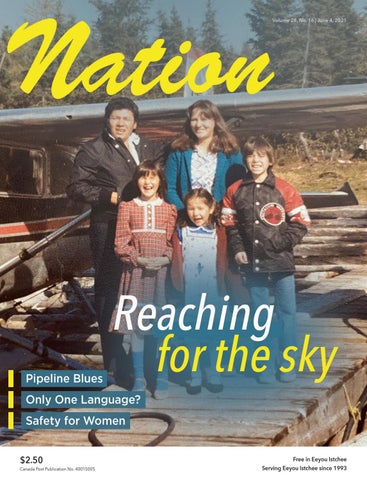
Cree Pioneers of the Skies the first in a series
10 the Nation June 4, 2021 www.nationnews.ca
Paul Petawabano by Ben Powless
M
Photos provided by Maggie Petawab ano
aggie Petawabano wasn’t exactly sure when her late husband Paul first got the urge to fly. She thinks it was when, as a boy, he became curious about all the planes flying in and out of Mistissini, carrying curious new goods, then disappearing again into the sky. Maybe it was seeing the condensation trails from a jet flying tens of thousands of feet overhead, and wondering who was on board, where were they from and where were they headed? Either way, once Paul got into the skies, he just continued to soar. As the first Cree pilot in Mistissini, and possibly in Eeyou Istchee, Paul became known in the community as the best bush pilot around, and for his acts of kindness. He was born January 18, 1943, according to his mother, though the government at the time mixed up the dates and registered his birthdate as December 21, 1942. “He kept insisting he had two birthdays,” Maggie recalled with a laugh. Growing up, Paul attended residential school, and studied in Moose Factory and later completed high school in Sault Ste. Marie. He had applied to become an engineer while in high school but returned home before he received his acceptance. Out of the ordinary for the time, an Indian Affairs agent helped Paul enrol in a flight school outside Montreal and got Indian Affairs to pay for it. He was able to get his private and then his commercial license. Don MacLeod, a friend of Paul’s since they were teenagers, said that as Paul got older, he talked about wanting to become a pilot. “The only person against it was his mother. She didn’t think it was safe, but he was determined and worked at it.” It was around this time in 1965 that he met Maggie, and they were married two years later, in 1967. “He didn’t get any work at first, he had to build up flying hours, but it’s hard to do without work or being a co-pilot,” Maggie explained. He got work at Hudson’s Bay, but discovered an airline industry that was unwelcoming towards Indigenous people. “Nobody was hiring Native people, saying they weren’t dependable,” Maggie added. Things would change when a young missionary arrived, who had a pilot license and his own plane. Larry Linton says he first arrived in Mistissini in 1965 on a survey trip to the community to see who was living there, how big the village was, and to investigate becoming a minister there. “He was a long-haired, short, wide kid like me, always quick to adapt. We just took to each other,” Linton said of meeting Paul. “At the time I didn’t know he was flying.” Linton says he heard that Paul had been told at the time by another pilot that he wasn’t welcome to sit up front as the co-pilot, and that “Indians and Blacks were in the back seat,” which didn’t sit right with him. www.nationnews.ca June 4, 2021
the Nation 11
Happy Indigenous Peoples Day!
The Best affordable fishing gear around! Cannot come visit us? Call or Email your requests. We ship to Eeyou Istchee, even C.O.D.
If you need more information or have additional questions, contact our office in Val-d”Or. By phone: 819-874-2600 By email: justicevaldor@cngov.ca
More than anything, Paul is remembered for the kindness and care he showed to others
Since Paul knew the land so well, Linton offered to let him fly an aircraft he owned. This is how Paul was able to build up his flying hours and get his float endorsement to fly seaplanes that were more common in bush flights. Eventually, Paul was hired as a pilot with Direct Air, where he started out flying a small Cessna, before moving to the DHC-2 Beaver, and eventually to the larger DHC-3 Otter. But Paul wasn’t happy with the company, noting that they were overcharging Native people. That’s when Paul began working with former Grand Chief Matthew Coon Come, who helped him establish Waasheshkun Airways in 1980, which still exists to this day, after he sold it to Mistissini. In 1984, Waasheshkun Airways acquired an Otter, followed by a Beaver in 1985, and a second Otter in 1988. Maggie recalls those early years as being filled with work. “It was only him and Matthew at the beginning. He was the only pilot, looking after the books, the bookings, pretty much the only employee at the beginning. Eventually he hired someone to do the office work.” Then she added, “He worked long hours. He would be gone by sunrise, and come home at 10 at night, then he had to do paperwork and logbooks.” During those years of hard work, Paul gradually earned his reputation as one of the best bush pilots in the area, if not the country, as stories of his feats grew. MacLeod said that flying with Paul, “You were never worried about getting stuck in the bush. If you did get stuck, he could put up shelters and take care of you.” One of his most famous stories involves taking off one winter morning with a group of school children who were related to him. Linton says he was on the dock, and noticed something was wrong, as the plane hit a huge snow drift and lost a ski. Linton remembers contacting Paul on the bush radio. “I said, you’re in trouble Paul. He said, I know that, but I’m not telling the kids that.” Paul carried out the flight as if nothing happened, until it came time to land. Using the one remaining ski, he was able to slide on the snow and spin the plane around until it could touch down safely, with nobody hurt. Linton recalls another incident, where Paul’s Beaver fell through the top ice and got stuck, where it froze overnight. He had to enlist his mother and aunt to sit on a pole to pry the plane out of the ice as he tried to take off, which ended with them upside down in the snow and with their skirts caught up in the wind. But more than anything, Paul is remembered for the kindness and care he showed to others. When Linton’s eldest son passed away, Paul wanted to give him pilot wings, but the local jeweller didn’t have any. Paul had some specially made so that Linton’s son could be buried with them. Another time, Maggie found out that a local man couldn’t afford to get to his trapline, so Paul arranged to take him up at no cost. “He just loved staying at their camps overnight if the weather wasn’t good.” An avid outdoorsman, Maggie laughed when recalling that Paul’s idea of vacation wasn’t to head south, but to fly north. He taught his children to hunt, including his daughters, and he loved to fish as well. He liked to fly trappers and fisherman up to their camps. “As he got older, as his kids had their own families, the grandkids learned to hunt from grandpa. That’s how the grandkids remember him, hunting and fishing, and his great sense of humour,” Maggie recalled. Paul’s career as a pilot ended due to flight requirements after he was diagnosed with diabetes around 1990. Then later, he was diagnosed with cancer. Paul passed away in August 2007, leaving behind his wife Maggie, five children (two children had predeceased him), and 13 grandchildren.
Ed note: The Nation would like to do more of these type of stories. Historical stories of Cree firsts. The type that don’t necessarily end up in the history books but are still an important milestone. If you have an idea for a future issue email: will@nationnews.ca and include “Cree Proud” in the subject heading.
www.nationnews.ca June 4, 2021
the Nation 13
Even once vaccinated, Evenyou once vaccinated, still need you stillyourself. need to protect to protect yourself.
Let’s work together to keep respecting health measures so we can protect each other. Let’s work together to keep respecting health measures so we can protect each other.
For WOMEN who are 50-69 years old
ᐋᒋᔦᐦ ᓃᒋᓴᓂᔅᐧᑫᒻ Wachiyeh Niichisaniskwem!
ᓵᔅ ᐧᐄᐸᒡ ᒋᑲ ᐹᐸᔫ ᑲᓓᕌ ᑑᐲᔥ ᒋᑎᐦᑖᐧᐃᓂᐦᒡ ᒉᒌ ᓂᑑ ᒋᔅᒉᔨᒫᑲᓄᔨᐧᑖᐤᐦ ᐃᔅᐧᑫᐅᒡ ᐅᒎᒎᔑᒧᐧᐋᐤᐦ ᐁ ᐃᑕᑯᓂᔨᐧᑫ ᑳ ᒧᐧᐁᔨᒡ ᐋᐦᑯᓱᐧᐃᓂᔫ ᐊᓂᑌᐦ Sâs wîpach chika pâpayû Clara tûpîsh chitihtâwinihch chechî nitû chischeyimâkanuyitwâuh iskweuch uchûchûshimuwâuh e itakuniyikwe kâ muweyich âhkusuwiniyû aniteh
will be coming soon to offer breast cancer screening in Mistissini, Waswanipi and Oujé-Bougoumou You will receive a letter from the Public Health Department
ᒋᔭ ᐁ ᐯᔭᑯᓯᔨᓐ ᒋᑲ ᐧᐃᔦᔨᐦᑌᓐ ᒉᒌ ᓂᑑᒋᔅᒉᔨᒥᑯᔨᓐ ᐁ ᐃᐦᑕᑯᓂᐧᑫ ᑳ ᒧᐧᐁᒡ ᐋᐦᑯᓲᓐ ᒋᒎᔑᒥᐦᒡ Chiya e peyakusiyin chika wiyeyihten chechî nitûchischeyimikuyin e ihtakunikwe kâ muwech âhkusûn chichûshimihch
GETTING SCREENED FOR BREAST CANCER IS YOUR CHOICE! For women aged 35-49 years old:
If you have a biological family history of breast or ovarian cancer, check with your doctor for more information about the best time to get screened
Tour Dates Nemaska: September 8-10 + Waskaganish: September 12-20
MISTISSINI
WASWANIPI
OUJÉ-BOUGOUMOU
Tuesday, June 1 to Friday, June 11
Monday June 14 to Friday, June 18
Monday, June 21 to Wednesday, June 23
(418) 923-3376 Hattie Coonishish, Ext. 42706
(819) 753-2511 Rita Trapper, Ext. 44023 Diane Ottereyes, Ext. 44024 Candia Saganash, Ext. 44085
Miranda Coonishish, (418) 745-2208 Ext. 43021 Jennifer Pepabano, (418) 745-3901 Ext. 253
To learn more : creehealth.org/services/breast-cancer-screening Facebook: Cree Health - Breast Cancer Screening
16 the Nation June 4, 2021 www.nationnews.ca
By CBHSSJB Public Health Chishaayiyuu Department
Should I be screened for breast cancer? Clara Bus, which brings a mobile mammogram machine to Eeyou Istchee, will be coming in June to visit Mistissini, Waswanipi, and Oujé-Bougoumou to offer breast cancer screening. Every 2 years, women aged 50 – 69 receive a letter from the Public Health Department of Cree Health Board, inviting them to be screened for breast cancer. Some of you ladies may be wondering:
What is breast cancer screening and why might it be important for me? Breast cancer screening is a test that checks for hidden signs of breast cancer before any symptoms – like a lump in the breast - appear. A mammogram machine takes X-ray images of different angles of your breast. A radiologist will look at these images and determine if you need follow up testing.
will need follow up testing that is not necessary. These false alarms can lead to unnecessary travel, tests, stress and anxiety. This happened to Nancy Voyageur, from Mistissini, who needed to take sick leave from work due to stress while waiting for her results. On the other hand, Georgina McLeod from Mistissini was able to detect breast cancer early, before she had any signs or symptoms, by getting screened. Her cancer was then treated successfully. When looking at both pros and cons, experts agree that breast cancer screening is a good choice for women between 50-69 years old. The Public Health Department of the Cree Health Board recommends that all women between ages 50-69 be screened. If you are between the ages of 35 and 49 and have a family history of breast cancer or ovarian cancer, ask your doctor about the best screening options for you.
If the doctor decides that follow up is needed, you will be sent to Val-D’Or Hospital for a few days for more testing. These tests may include another mammogram, an ultrasound, or an invasive biopsy (sample of tissue) to determine if cancer is really there.
If you would like to be screened but will be out of town or unable to make your appointment with Clara Bus or Sophie Air, please inform your local Chishaayiyuu CHR to make other arrangements.
Deciding to participate in breast cancer screening is a personal choice and it’s important to have all the information you need to make the right decision for you.
For more information, contact your Chishaayiyuu CHR, follow us on Facebook, or check out creehealth.org. On our breast cancer screening webpage, you can watch video testimonials from Nancy and Georgina to learn more about their experiences.
Screening can reduce your chances of dying from breast cancer since it allows you to start treatment as soon as possible. It does this by catching breast cancer early enough before it has a chance to get worse. There are also cons to breast cancer screening that are important for you to know. The mammogram images are not 100% conclusive, meaning that a false alarm is possible. 1 in 4 women who have regular mammograms
Please be assured that we will follow all precautionary measures for COVID-19 to keep you and ourselves safe!
www.nationnews.ca June 4, 2021
the Nation 17
Pipeline protest
18 the Nation
P Artists and activists release a song and video to fight Line 3 pipeline by Ben Powless
olice arresting Elders. Native women drumming outside in the cold Minnesota winter. The long, winding Mississippi River. Forests being chopped down as a pipeline is installed. These are scenes familiar on nightly news broadcasts, but they become even more poignant and powerful as the setting for a new music video. “No More Pipeline Blues (On This Land Where We Belong)” has been released to support the efforts of Indigenous communities trying to prevent the construction of Line 3, Enbridge’s oil pipeline stretching from Alberta’s tar sands through Saskatchewan, Manitoba and Minnesota, and across 200 bodies of water, including the Mississippi River. Overlaying these powerful visuals are songs and spoken-word pleas from Bonnie Raitt, the Indigo Girls, Winona LaDuke, the Day Sisters, Mumu Fresh, Pura Fe, Soni Mareno, Jennifer Kreisberg, and Joy Harjo, the United States’ first Native poet laureate. Participants released the song on Earth Day, April 22, to raise public awareness and urge US President Joe Biden to stop construction on the controversial pipeline, which received a permit in November after six years of regulatory battles. “‘No More Pipeline Blues’ beautifully illustrates in music, singing, spoken word and images the threats of a totally unnecessary tar-sands pipeline at the end of the age of Big Oil,” said LaDuke in a statement. LaDuke is a prominent Indigenous activist in the US, who previously ran for vice-president, and who has been a central figure in trying to stop Line 3. “But it also illuminates the sacredness of our environment, and yet more destructive, historical impacts to Indigenous culture.” Keri Pickett, who directed the music video, said the intent is to depict a resistance led by Indigenous women. Pickett called it a “sacred, creative and non-violent way” to oppose the destruction that is a result of the pipeline’s construction. “To me it’s not a music video, it’s a documentary video with a song,” she observed. Initially Pickett was approached by Larry Long, who wrote and composed the song about the struggle but hadn’t been able to visit the frontline. Pickett said she wanted to use footage from the Line 3 protest and then decided with LaDuke to add spoken-word pieces. Eventually, the two got the Indigo Girls on board, and reached out to Harjo, who added her poem. Picket then combined footage from three different sources to make the song and accompanying video a reality. Pickett says she hopes that if people are moved by the song and the issue, they will contact President Biden to ask for a stay and full environmental review, which would stop pipeline construction until the court cases are completed. The footage features protests and arrests in a harsh winter landscape. “If 250 people have been arrested under brutal winter conditions, you know what’s going to happen in the summer,” Pickett hinted. www.nationnews.ca June 4, 2021 the Nation 19
Elder Mistreatment Awareness
Name it.
“ So
h
n I do t o h a c e at
Check it.
1-833-632-4357 (24/7 Wîchihîwâuwin Helpline) creehealth.org/emergency • 1-866-923-2624 for more info: creehealth.org | @creehealth
l
p? ”
.”
See it.
ou
ig
r ie d a b o u t r o w y
“W
g is not r
” ht .
m
in et h
“I’m
Together we can prevent elder abuse
Politics
Tongue twister Critics say Quebec legislation to defend French could harm Indigenous languages by Ben Powless
T
he Quebec government’s recently tabled Bill 96 represents the largest expansion of French-language rights isince the passing of Bill 101, the Charter of the French Language, in 1977. It is also raising concerns from Indigenous language advocates. The 100-page bill would modify provincial and federal laws, and even amend the Canadian constitution to recognize the “fundamental characteristics of Quebec.” It asserts that Quebecers form their own nation with French as their “only” official language and as the “common language of the French nation.” Bill 96 would make French the only language needed to work in the province, which could affect everything from the education system, immigration, the courts to government services. Judges, for instance, would not be required to be bilingual. The legislation would create an enhanced complaint system, establish a French Language Ministry and appoint a French Language Commissioner. Businesses with 25-49 employees would need to register with the Office québécois de la langue française and obtain French certification. English-language CEGEPs face quotas: their enrolment
could not exceed 17.5% of Quebec’s total CEGEP population, while growth in English CEGEPs would be capped at 8.7% of the total growth in student numbers. Students with neither English or French as their first language would need to pass mandatory French-language exams even if studying at English CEGEPs. French courses would also be provided to anglophones to improve their French. The legislation comes after recent studies claimed that French is on the decline, especially in Montreal. Simon Jolin-Barrette, the minister responsible for the French Language. JolinBarrette did not respond to a request for comment. But newly appointed Cree Language Commissioner Jamie Moses said the legislation would deeply affect the Cree. “It impacts the Cree Nation because a high percentage of our second language is English as opposed to French, and at least two communities don’t even offer French at their schools anymore – in Eastmain for about 10 years,
Simon Jolin-Barrette, minister responsible for the French Language
and in Wemindji for nearly 20 years,” Moses told the Nation. Moses says the Cree have traditionally opposed Quebec’s enforcement of French requirements in education and the workplace, as well as in government services like license applications and the courts. He pointed out that even Cree who have studied French are more comfortable in English as they have fewer opportunities to use French and thus become less fluent over time. Moses will consult with other First Nations language commissioners, as well as First Nations that may not have a language commissioner but are working to preserve their languages. He will be starting with the Crees’ closest neighbours – the Innu, Algonquin, Atikamekw and Inuit. One challenge in preserving the Cree language when younger people spend so much time online is that the province doesn’t recognize that First Nations languages also need protection, Moses observed. Moses is also concerned about the decreasing number
of places at English-language CEGEPs, saying that very few Cree youth attend Frenchlanguage CEGEPs. He said other criteria already make it harder for Cree youth to be accepted in English CEGEPs, pushing more of them to seek college programs outside the province. But with different job and language requirements in Quebec, Moses notes, students who did career programs in Ontario may find themselves ineligible for many positions when they return, such as law or mechanics. “Many who further their education have a desire to return and work from their home community, to raise their families in their respective community and be able to acquire their dream jobs,” said Moses. “It’s important that we make an effort to preserve and practice all First Nation languages and encourage young people to learn them. But it’s a hard balance maintaining traditional activity and language while acquiring an education for a good future.”
www.nationnews.ca June 4, 2021
the Nation 21
We can all help bring families together again. Get vaccinated. Canada.ca/covid-vaccine 1-833-784-4397
Community
Safety tips Montreal’s Iskweu Project launches toll-free number to help find missing women and girls by Patrick Quinn
A
toll-free tip line in Montreal is now available to help resolve cases involving missing and murdered Indigenous women and girls (MMIWG). The Iskweu Project, an initiative of the Native Women’s Shelter of Montreal (NWSM), is promoting the number – 1-855547-5938 – with ads on billboards and bus shelters around the city. “The relationship between the police and Indigenous peoples is fractured,” stated Nakuset, NWSM executive director. “This campaign will give community members the opportunity to more freely bring forward crucial information about cases of MMIWG2ST+ which Iskweu will use to collaborate with police towards solutions.” Established in 2017, Iskweu helps the vulnerable access social supports and receive adequate responses from institutions that have historically discriminated against Indigenous peoples. As those who are often targeted by the police are reluctant to contact law enforcement, the tip line provides a confidential way to share information. The service was partly motivated by the case of Donna Paré, a homeless Inuk woman from Iqaluit who was 32 when she went missing in December 2018. Her disappearance wasn’t reported to police for almost three months. Iskweu coordinators believe that if tip line had been available at the time, it may have led to a better outcome for Paré. “I would use my work cellphone number as a tip line, to get the public and people living on the street to give me information,” said Iskweu Project Coordinator Jessica Quijano. “We got a lot of tips, and I would forward that information to the police. Then I did it for other missing cases and I was able to locate people. I thought, this is effective because people aren’t hesitating to call.”
Callers with any information or who need assistance about a MMIWG case can either anonymously leave a message or leave their name and number for a call back so Iskweu can follow up at a later time. It’s hoped the tip line will lead to timely responses to disappearances while unearthing clues about Indigenous women, transgender and two-spirit persons who have been missing for years. “It’s just worth it because there are many cases out there that have never been resolved so we’re hoping one of them will be,” Quijano said. “It’s a good way to start to establish more trust. A lot of times when you support them, they will talk to police. We have a protocol with Iskweu – I can make missing persons’ reports.” Quijano explained that some people avoid contacting the police because of outstanding warrants or because they have difficulty communicating in French. This initiative advocates for those who don’t feel fear police officers or that they are taken seriously by them. “By experience, it’s reassuring to know someone else is accompanying them through the process,” said Iskweu research coordinator Janis QavavauqBibeau, who monitors the phone line. “Once we get tips, I’m the bridge between the person and the police. I’ve already done a three-way call. Sometimes I can translate or communicate what they’re trying to say.” Iskweu recently opened a downtown drop-in centre designed for Indigenous women who have been assaulted, where they can make police reports, obtain harm-reduction supplies like condoms and clean syringes or get help to access services they may need. Having a safe space to talk privately often helps homeless women overcome their own emotional defenses.
“It’s so hard for a woman who was assaulted to let themselves be vulnerable and cry and tell another person how they felt,” asserted Qavavauq-Bibeau. “Once we’re done, they have to go back to the jungle, the craziness outside. Recently, we did an accompaniment for a woman at our new office, and I saw a huge difference – they felt more supported and less afraid.” Iskweu also helps clients find a hotel room or return to their community. Of the 47 cases the organization has addressed so far, all but one were successfully resolved. They’re also seeking answers about five suspicious deaths that were ruled suicides. “When we hear about a missing case, if it’s dealt with quickly, usually we can locate the person,” Quijano explained. “I’ve located people using my social media and Snapchat – the police don’t go to that level. It just shows how much more effective it is investing in solutions within the community rather than investing in the police.” Although Quijano says she has a good relationship with Montreal’s Aboriginal liaison officer, she finds she too often must push police to take her reports. With 8,000 officers regularly switching stations in the city, officers working downtown may have little experience with the Indigenous homeless population. “We need people who actually care and want to resolve these cases,” Quijano argued. “The NWS is part of the coalition to defund the police. We want to invest in housing, health and mental health services, detox centres – things that will prevent Indigenous women from going missing and being murdered.” IF
YOU HAVE ANY INFORMATION ABOUT A MISSING AND/OR
MONTREAL AREA, YOU 547-5938 TO LEAVE AN ANONYMOUS VOICEMAIL.
MURDERED WOMAN IN THE
www.nationnews.ca June 4, 2021
CAN CALL
1-855-
the Nation 23
Puzzles Crossword
1 2 3 4 5 6 7 8 9 10 11 12 13 ACROSS 1 Fare with chips 14 15 16 5 Eighty-six 18 19 9 Tiresome ones 17 14 Storybook start 22 20 21 15 Vicinity 23 24 25 16 Cooking smell 17 Way off 28 29 26 27 18 Burro, for one 20 Mail from a 30 31 32 33 34 35 36 sweetheart 39 40 41 37 38 22 Horse's stride 23 Musical 44 45 46 42 43 composition 47 48 49 50 24 For the most part 26 Pay no heed to 51 52 53 54 28 Place to wash 55 56 57 58 59 60 up 30 Word with bang 61 63 62 or band 65 66 31 Striking success 64 33 Harder to find 68 69 67 37 In a dead heat 39 Food on a stick Copyright 2021 by The Puzzle Syndicate 41 Etna output 42 Make a copy 68 Peppy 12 Modern 45 Nicholas II, for 44 Send money 69 Office furnishing message one 46 Con's confines 13 Like French fries 48 Paper purchase 47 Hitchcock clasDOWN 19 Weapons 50 Warned, sic, with "The" 1 Farm young 21 Artificial bait cat-style 49 Hanes product 2 Part of FYI, 25 Cause of 51 Street talk 51 Put on hold briefly inflation? 52 Kind of roll 54 Restrained 3 Type of hunt 26 Alpine goat 53 Fluid 55 Valuable deposit 4 Regarding this 27 Hand over accumulation 56 Holds oneself point 28 "___ in Toyland" 54 Use choice accountable 5 CD player's 29 Molecular bit words 61 Weather station ancestor 32 Cooking fat 57 Famed loch gadget 6 Speak from a 34 Like some 58 Escalator part 63 Place soapbox questions 59 Redding on the 64 Bedouin, for one 7 Religious faction 35 At any point radio 65 Airtight closure 8 Japanese wine 36 Carry on 60 Stink to high 66 Buffalo's lake 9 Put an end to 38 Duke or Earl heaven 67 Word before 10 One of a kind 40 With resentment 62 Eccentric slam or piano 11 Ancient numerals 43 Half of XXVIII
H
ere’s another edition of the Nation’s puzzle page. Try your hand at Sudoku or Str8ts or our Crossword, or better yet, solve all three and send us a photo!* As always, the answers from last issue are here for you to check your work. Happy hunting.
PREVIOUS SOLUTION: L O N E
A I M S
G N A W
I N F E R E N C E
C A P R I
A D I O S
N A T A L
D E E P E N H A N D M A D E
E R R
S C R P I A L M D A M I R I N E S R A T T L E S A P S A E P R A
L O A N S T R A Y P R I G
A C M E
P A A N P A A P P C O H A Y S O H T R E A D A M B A A T H S T E E L E R I U N C S I E E A
W A L L E
O T T E R
L O O S E
A B S O L U T E S
S L I M
H E R E
F I V E
F E E L
STR8TS
SUDOKU
No. 278
Medium
Previous solution - Easy
3 4 2 9 8
1 4 2 2 3 3 8 6 7 9 7 8 9 3 5 7 8 6 6 5 4 7 6 5
7
5
6 9 6
1
9 7
3 9 7
5
4 9
You can find more help, tips and hints at www.str8ts.com
© 2021 Syndicated Puzzles
5 6
7 3 1
9 7 8 5 6 3 4
8 7 6 1 3 5 4 2
9 7 8 6 5 5 4 5 4 3 6 4 1 2 3 2 1 1 2 3
No. 278
Very Hard
6
9 1 6 8 3 5 2 4 7
9 7 5
7 5 8
2 2
9 3 2
4
How to beat Str8ts – Like Sudoku, no single number can repeat in any row or column. But... rows and columns are divided by black squares into compartments. These need to be filled in with numbers that complete a ‘straight’. A straight is a set of numbers with no gaps but can be in any order, eg [4,2,3,5]. Clues in black cells remove that number as an option in that row and column, and are not part of any straight. Glance at the solution to The solutions will be published here in the next issue. see how ‘straights’ are formed.
24 the Nation June 4, 2021 www.nationnews.ca
Previous solution - Tough
9 6 6 1 3 8
1 5 8
4
1
© 2021 Syndicated Puzzles
S L I P
by Margie E. Burke
3 2 5 9 4 7 1 6 8
4 7 8 2 6 1 9 5 3
6 8 4 7 2 3 5 1 9
7 5 2 1 8 9 4 3 6
1 9 3 4 5 6 7 8 2
5 4 9 6 7 8 3 2 1
8 3 1 5 9 2 6 7 4
2 6 7 3 1 4 8 9 5
To complete Sudoku, fill the board by entering numbers 1 to 9 such that each row, column and 3x3 box contains every number uniquely. For many strategies, hints and tips, visit www.sudokuwiki.org If you like Str8ts check out our books, iPhone/iPad Apps and much more on our store.
Rez Notes
Spring blizzards
by Sonny Orr
W
e thought spring was here, but as I write these notes, there is a blizzard blowing to remind us that winter is a tough beast to kill. The winds howl incessantly, and visibility is so bad that June seems to be a distant promise of the possibility to venture outdoors sans long johns and big fur mittens. I thought I heard a snowmobile whirring away, but it was just the kitchen fan humming from the wind. Now that spring and summer seem so close, the next few days should be mosquito-free and an ideal time for a picnic. As the saying goes, best to be in the right place doing the right thing for the right reason. Except if you are a goose roasting over an open fire, then it’s better to be somewhere else. Another thing that seems to be going our way is the opening-up of the territory so we can travel and mingle in larger groups without masks! Finally, a reason to get a tan and provide proof that the great outdoors is good again! Yay!
Soon restaurants will be back to serve us, but sadly, many of the workers have fled to greener pastures in hopes of finding some income. We were all prepared for that eventuality by getting certified to serve good food last year, but we were just catching up to the rest of the world with hygienic cooking habits and safe food preparation. At least we can still eat. As far as the upcoming national holidays, I hope we have something to celebrate. I know that the music industry took a beating because of the restrictions on live entertainment, so the internet became our saviour when we needed to reach out and stay alive socially. If it weren’t for social media and other forms of communication, we probably would have had a very hard time keeping ourselves alive and well, not to mention completely informed. I found that social media kept me informed as well as misinformed. It was just a lot of international gossip-mongering and general
ᐅᕙᓂ ᐱᒋᐊᕐᐳᖅ ᓄᓇᕕᒃ Nunavik Starts Here
silliness that kept things interesting. Who to trust with the right information? All in all, we survived quite well, with very small, containable outbreaks and fewer people not caring for others. To date, people have only complained about a recent stomach flu outbreak – the only medical drama not associated with the pandemic. At least a bit of variety helped. Isolation helped too – it increased our appreciation for the freedoms we took for granted. Now every outing is a breath of fresh air. As the pandemic winds down, we might finally achieve
ᐃᓂᓕᐅᕐᓃᑦ RESERVATIONS 1 800 361-2965
herd immunity, which means that you won’t get mad cow disease or anything else for a while. But maintain that constant state of cleanliness for a bit longer, before you safely touch other people or give them a peck on the cheek. It’s these small gestures of kindness and love that we haven’t been able to enjoy for too long now. I predict more closeness in families and for those who wish to start a new family. Life continues as it should, with a lot more insight into an experience we hope we don’t have to relive.
ᖃᖓᑦᑕᔫᓂᒃ ᐊᑦᑕᑐᐊᖃᕐᓂᖅ CHARTERS 1 800 661-5850
www.nationnews.ca June 4, 2021
the Nation 25
www.underthenorthernsky.com
UTNS
Under the Northern Sky
The magic of a story by Xavier Kataquapit
I
n our Weenabaykoo Ininew Peemahteeseewin, our James Bay Cree way of life, Elders play a pivotal role in the lives of everyone in a community. Our language, stories and history are all passed down in an oral tradition. We learn by listening to the stories our parents share with us and the teachings we hear from our Elders. It was important for us to spend time with Elders. People from my parents’ age group were the last generation of Cree people to be born and raised on the land. Over the past decade many of them have passed in quick succession and it is terribly sad. We lose history, knowledge and the teachers of our language. Recently, my Aunt Theresa Hookimaw passed away suddenly in my home community of Attawapiskat at the age of 86. Her passing was especially sad as she had a significant connection to the local Catholic Church, which was recently destroyed in a fire. Aunt Theresa was the church organist for many years and led the community in countless services. She played mainly on Sundays, major feast days and at every wedding and funeral in the community. Although closely identified with the church, Teh-nes (the Cree pronunciation of her name that we all used for her) had a very strong connection to traditional life on the land. She had a great knowledge of stories and histories that she learned from her mother Louise and father Xavier Paulmartin. Teh-nes was born on the Nawashi River, north of Attawapiskat on the James Bay coast. The Paulmartin
family was a tight-knit group of siblings, aunts, uncles and grandparents that lived in the wilderness. My mother Susan is Teh-nes’ younger sister. She often recounted how her family passed the winters in cabins the men built on the Nawashi River. There were eight siblings altogether, including Theresa, Eli, John, Mary, my mother Susan, Gabriel, Josephine and Cecile. They had difficult lives surviving in the remote North. Adding to that hardship, they were forced
I like to think that their loving energy is still around in all of their children and grandchildren
to attend residential school as children. It terrorized them to be taken away from their parents and the lives they knew in the wilderness. In my early years, mom and her sisters were a prominent part of my life. Teh-nes was married to Michel Hookimaw, who we knew as Meeshen. They lived nearby and we saw them often because their family had decided that they would raise their grandson Bruce Hookimaw as their son. Bruce was the same age as me and
together with my two younger brothers Joseph and Paul and all our cousins, we roamed the neighbourhood in play. There were many spring goose hunts when our two families came together. Teh-nes and Meeshen set up a beautiful meegwam or teepee on their front yard every spring and mom was more than happy to spend time with her sister as we all prepared smoked goose and roasted birds for two weeks or more. It was very comforting to be in that meegwam with our families. Teh-nes was a serious and knowledgeable woman, but she loved to laugh and she had a quick wit that poked fun at everything. Teh-nes and Meeshen were a great couple. Although they seemed rather conservative, in reality they were all about caring about others and making people laugh. We were always welcome, and in quiet moments around the smouldering fire of her meegwam, we listened to her and mom recount their lives on Nawashi River. Every summer they left the river for the shores of the Attawapiskat River. I recall their vivid tales of paddling canoes out on the waters of James Bay. Often, they would set makeshift sails to capture the strong winds on the bay. The last time they made that trip as a group was in 1967. Meeshen had left us before Teh-nes’ recent passing. Happily, however, many of their stories live on through their children John, George, Raymond, Irene and Pauline. I like to think that their loving energy is still around in all of their children and grandchildren. Kee-sah-kee-ehtee-nan Teh-nes neshta Meeshen.
We have been present since 1939. All members of the large Deshaies' family are by your side today and will also be for the better days to come.
26 the Nation June 4, 2021 www.nationnews.ca
Your Northern Airline of Choice
Air Creebec is operating by respecting and exceeding the rules with extensive cleaning and disinfecting of the aircraft, social distancing on board and at all service counters. We encourage everyone to respect the rules and to stay safe.
For the latest Air Creebec updates, please visit aircreebec.ca/covid19
Where can you Where can Where canyou you pick up a fresh pick up a pick up afresh fresh copy of your copy copyof ofyour your Nation every Nation Nationevery every two weeks? two twoweeks? weeks? – – – – – – – –
Let’s cheer these amazing Let’s cheer amazing Let’s cheer these these businesses listed amazing below… businesses listed below… businesses listed below…
Nation is available there! Nation there! Nation is is available available there!
Chisasibi Coop | T: 819-855-2828 Coop | | T:T:819-855-2828 –Chisasibi Chisasibi Retro DazeCoop Café | T: 819-855-2828 819-855-1847 Daze Café | | T:T:819-855-1847 –Retro Retro Daze Café Miichiwaap Restaurant 819-855-1847 | T : 819-855-2430 Restaurant | | TT: 819-855-2430 –Miichiwaap Miichiwaap Restaurant : 819-855-2430 The Yummy Cook Out | T: 819-855-2241 Yummy Cook –The The Yummy CookOut Out | | T:T:819-855-2241 819-855-2241
– Whale Mart –– Whale Whale Mart Mart
in Whapmagoostui ininWhapmagoostui Whapmagoostui – ––
in Chisasibi Chisasibi ininChisasibi – Eastmain Grocery Store Eastmain Grocery Store – –Eastmain Grocery Store T: 819-977-0283 819-977-0283 T: T: 819-977-0283
ininWemindji Wemindji in Wemindji
– Nemaska Grocery Nemaska Grocery Grocery –– Nemaska T: 819-673-2525 T: 819-673-2525 819-673-2525 T:
ininEastmain Eastmain in Eastmain ininWaskaganish Waskaganish in Waskaganish
ininNemaska Nemaska in Nemaska
– –Smokey Hill Grocery Smokey Hill Grocery – Smokey Hill Grocery T: T: 819-895-2727 819-895-2727 T: 819-895-2727
Wemindji Community Store Wemindji Community Store Wemindji Store T: 819-978-3656 T: 819-978-3656 819-978-3656 T:
– Reg’ – Meechum Meechum Reg’ – Meechum Reg’ T: 418-923-3217 T: 418-923-3217 T: 418-923-3217
in in Mistissini Mistissini in Mistissini ininWaswanipi Waswanipi in Waswanipi
– –Waswanipi Grocery Waswanipi Grocery – Waswanipi Grocery T: T: 819-753-2514 819-753-2514 T: 819-753-2514
Alwaysavailable availablefor fordownload downloadat: at: Always Always available for download at:
in inOujé-Bougoumou Oujé-Bougoumou in Oujé-Bougoumou –– Casey’s and Gaz Gaz Casey’s Depanneur and – Casey’s Depanneur and Gaz T: T: 418-745-3211 T: 418-745-3211
nationnews.ca nationnews.ca nationnews.ca