Executive Summary
Foot and mouth disease (FMD) is a highly contagious disease of cloven-hoofed livestock that
poses no food safety or public health risk but would have severe consequences for the U.S. dairy
industry. Because FMD virus is shed in milk one to four days before clinical signs appear, testing
bulk tank milk (BTM) using a real-time reverse transcriptase polymerase chain reaction (rRT-PCR)
assay offers a valuable early-detection strategy. USDA has a validated rRT-PCR FMD assay,
though milk is not yet an approved sample type — an approval expected within 48–72 hours of any
confirmed U.S. outbreak. This white paper, prepared for the National Milk Producers Federation
(NMPF) through a USDA APHIS cooperative agreement, synthesizes research since USDA's 2017
publication on FMD BTM testing and incorporates lessons from the 2024–2026 HPAI H5N1
outbreak in U.S. dairy cattle.
Purpose and Scope
BTM testing for FMD is intended as a herd-level surveillance tool for animal health officials
managing an outbreak response — not an on-farm rapid test or food safety assay. Its primary uses
include early detection in Control Area dairy herds without clinical signs, informing premises
classification (at-risk, monitored, contact), guiding livestock movement decisions, and monitoring
spread into the Surveillance Zone. A positive BTM result would trigger a herd investigation,
additional testing, and possible quarantine— not immediate herd depopulation.
Closing Previous Knowledge Gaps
Three of six information gaps identified in USDA's 2017 paper have been sufficiently addressed.
Test sensitivity is estimated at 49.3% against clinical case detection, though pre-clinical and
subclinical shedding are not captured in that estimate. Updated reagents used in the current
NVSL/NAHLN rRT-PCR assay are validated and ready for rapid approval of milk as a sample type.
Research on large Holstein Friesian herds indicates milk fat composition does not significantly
impact test performance. Remaining pathogenesis gaps — including variability in viral shedding
timing — do not preclude effective implementation of BTM surveillance.
Lessons Learned from HPAI H5N1
The H5N1 outbreak in dairy cattle provided critical logistical insights directly applicable to FMD.
Input from 108 stakeholders — including dairy farmers, cooperatives, milk haulers, veterinarians,
NAHLN labs, and state and federal animal health officials — highlighted that sample collection and
transport are far more challenging than the laboratory testing itself. Key issues included
inconsistent sample labeling, the unsuitability of standard 2-ounce flip-top vials for NAHLN lab
processing, difficulties linking milk samples to Premises Identification Numbers (PINs),
jurisdictional friction between dairy regulatory and animal health agencies, laboratory surge
capacity strain, and inefficiencies in result reporting to State Animal Health Officials (SAHOs). FMD
is expected to present higher stakes than H5N1 in terms of testing given lower viral loads in milk
(higher Ct values), making silo-level testing unreliable and requiring individual farm BTM samples.
Key Recommendations
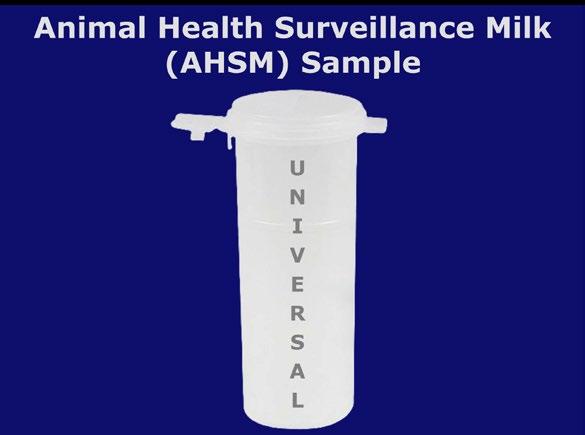
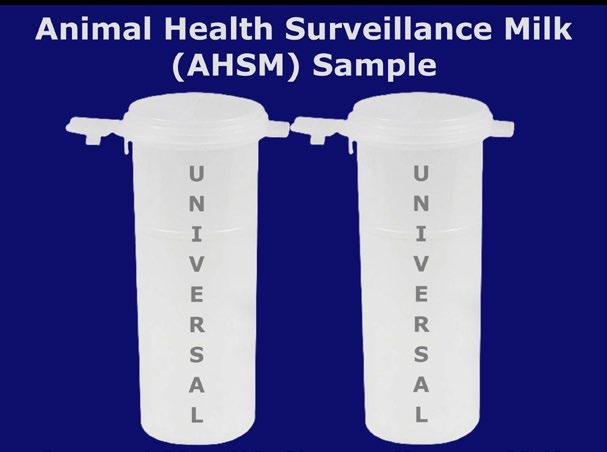
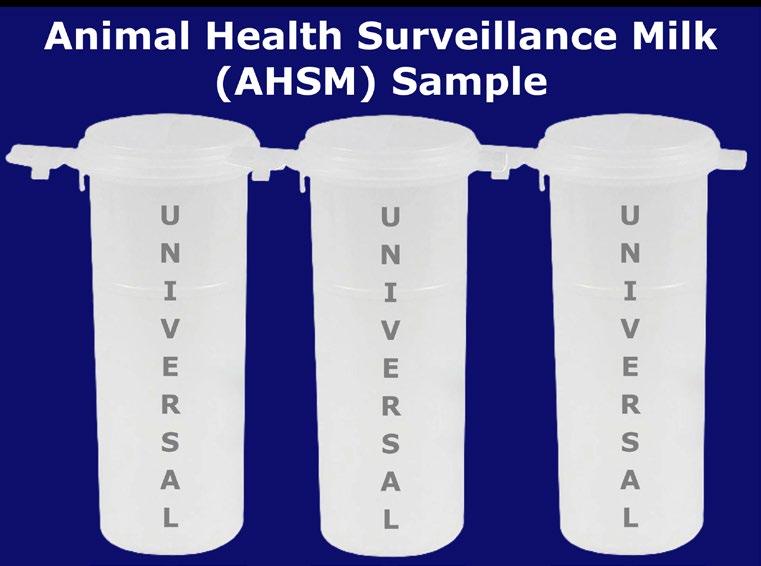
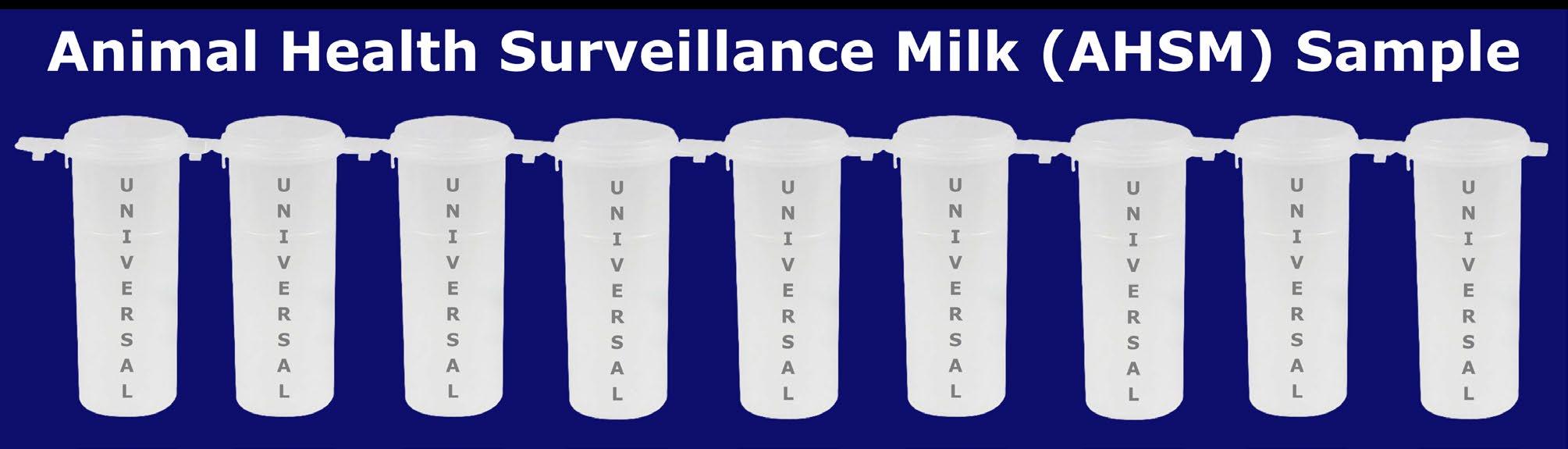
Stakeholders proposed defining an "Animal Health Surveillance Milk" (AHSM) sample as one or
more milk samples that represent saleable milk from at least one milking taken from the on-farm
storage vessel(s) on one premises* for one day (24-hour period). An AHSM sample will only be
collected and used to test for contagious regulatory diseases during an animal health outbreak. An
AHSM sample may be the “Universal” milk sample or Appendix N milk sample or collected at the
same time to represent a single dairy business operation/ premises identification number (PIN). *All
dairy business operations represented by a single (1) PIN.
The NCIMS should consider incorporating this term in the next PMO update (2027). In Control
Areas, an AHSM sample(s) should be collected daily and couriered on the same day to NAHLN
labs; couriers must be trained in FMD biosecurity. In Surveillance Zones, AHSM sample collection
should align with routine milk pickup frequency and be tested twice weekly at a minimum.
Aliquoting from "Universal" milk samples is discouraged for FMD testing due to cross-
contamination risk. Pre-printed sample labels should use standardized identifiers such as a dairy
identifier, PIN, bar/QR codes with key details, date and time of collection. NAHLN labs and SAHOs
should develop FMD result reporting protocols, electronic submission standards, and surge
capacity plans during peacetime. State and USDA decision makers should develop a policy for
FMD surveillance that clearly describes regulatory response actions on BTM test results. State
animal health and dairy regulatory agencies should establish memoranda of understanding to
enable rapid sample access from milk quality labs without jurisdictional delay. Dairy farms should
designate a Veterinarian of Record for streamlined result communication.
Conclusion
BTM testing for FMD is a practical, cost-effective surveillance tool that can detect infection before
clinical signs appear. Realizing its potential requires advance preparation: standardized sampling
protocols, infrastructure updates, cross-agency coordination, and exercised communication plans.
The investments recommended here — made during peacetime — would strengthen U.S.
diagnostic readiness and protect the dairy industry's ability to respond swiftly and decisively to an
FMD outbreak.
Animal Health Surveillance Milk (AHSM) Sample: One or more milk samples that represent
saleable milk from at least one milking taken from the on-farm storage vessel(s) on one premises*
for one day (24-hour period). An AHSM sample will only be collected and used to test for
contagious regulatory diseases during an animal health outbreak. An AHSM sample may be the
“Universal” milk sample or Appendix N milk sample or collected at the same time to represent a
single dairy business operation/ premises identification number (PIN). *All dairy business
operations represented by a single (1) PIN (Source: Authors and Stakeholders, 2026)
Appendix N milk sample: A raw milk sample taken from a bulk milk pickup tanker after the last
collection on a route. It is tested for antibiotic residues before commingling with other milk at a
transfer station or processing plant. Samples shall be collected by an Industry Plant Sampler, Dairy
Plant Sampler, or a Bulk Milk Hauler/Sampler. It is collected and tested as required in the PMO
Appendix N to ensure food safety. It may not represent all lactating cows on a single dairy farm.
(Source: Authors, 2026)
At-Risk Premises: A premises located in the Control Area with susceptible animals, but none
have clinical signs compatible with the FMD; premises objectively demonstrates that it is not an
Infected Premises, Contact Premises, or Suspect Premises. At-Risk Premises seeks to move
susceptible animals or products within the Control Area by permit. Only At-Risk Premises are
eligible to become Monitored Premises. (Source: USDA FMD Response Plan, 2020)
Bulk tank milk sample: An aggregate of raw milk from a licensed/permitted dairy collected from a
bulk tank or other milk storage vessel(s) on dairy farms. (Source: Authors, 2026)
Licensed sampler: A dairy plant sampler, a bulk milk hauler/sampler, or an industry plant sampler
who received initial training, passed an exam, and whose proficiency is evaluated at least once
every twenty-four months, as detailed in the PMO. (Source: FDA PMO, 2023)
Contact Premises: A premises with susceptible animals that may have been exposed to FMD,
either directly or indirectly, including but not limited to exposure to animals, animal products,
fomites, or people from Infected Premises. This is meant to be a short-term designation. (Source:
USDA FMD Response Plan, 2020)
Control Area: An area whose perimeter is at least 10 km (~6.21 miles) beyond the perimeter of
the closest Infected Premises. This area may be redefined as the outbreak continues. Premises in
this area are under active surveillance, and movement restrictions are in place. (Source: USDA
FMD Response Plan, 2020)
Ct values: Cycle threshold; the unit used to report results from polymerase chain reaction (PCR)
testing. In the case of bulk tank milk testing via rRT-PCR for FMD, the lower the Ct number, the
more viral particles are in the milk.
Infected Premises: A premises where (a) presumptive positive case(s) or confirmed positive
case(s) exists based on laboratory results, compatible clinical signs, FMD case definition, and
international standards. (Source: USDA FMD Response Plan, 2020)
Just-in-time training: Targeted content to learn and apply new skills when there is a need. It may
be available online or as printed job aids. (Source: Authors, 2026)
Line of Separation (LOS): A clearly identified boundary around, or within, the dairy site to
separate off-farm from on-farm movements of vehicles, items, people and animals. The purpose of
the LOS is to limit movement of FMD or a similar contagious disease into areas where susceptible
animals can be directly (animal contact) and indirectly exposed (contaminated vehicles, footwear,
equipment, runoff). (Source: SMS Information Manual for Biosecurity: Dairy, 2026)
Monitored Premises: A premises located in the Control Area that objectively demonstrates it is
not an Infected Premises, Contact Premises, or Suspect Premises. Only At-Risk Premises are
eligible to become Monitored Premises. A Monitored Premises meets a set of defined criteria in
seeking to move susceptible animals or products out of the Control Area by permit. (Source: USDA
FMD Response Plan, 2020)
Non-negative (a.k.a., presumptive positive): A result from an FMD test on any sample that
shows presence of FMD virus or antibodies from a laboratory other than the USDA’s National
Veterinary Services Laboratories (NVSL) and requires confirmation testing by the NVSL This
result triggers an immediate response to prevent the spread of disease. (Source: Modified from the
USDA APHIS Case Definition FMD, 2023)
Pooled Milk: A term with multiple definitions. It may represent milk from all four quarters of a cow,
milk from multiple cows in a bulk tank, multiple farms in a milk tanker, or silos at processing plants
containing milk from multiple farms. International publications also referred to “pooled” milk
samples which could be at a collection point with milk from multiple farms or on a farm with milk
pooled from multiple cows. These definitions are different than the regulatory definition in the
USDA Federal Milk Marketing Order (FMMO) Provisions: “A producer qualifies to participate in a
Federal order pool by delivering milk to a pool plant.”
Surveillance Zone: A 10km or wider area surrounding the Control Area. Depending on the
number of premises in the Zone, all or a subset may be under active surveillance. No movement
restrictions are imposed in the Surveillance Zone. (Source: USDA FMD Response Plan, 2020)
Suspect Premises: A premises under investigation due to the presence of susceptible animals
reported to have clinical signs compatible with FMD. This is intended to be a short-term premises
designation. (Source: USDA FMD Response Plan, 2020)
Temperature Control (TC) Sample: A sample used to confirm the milk samples that are taken by
the bulk milk hauler/sampler are stored and delivered at the proper temperature for testing Must
be taken at the first stop of each load and labeled with collection time, date, temperature, and
producer and bulk milk hauler/sampler identification. (Source: FDA PMO, 2023)
“Universal” milk sample: A milk sample representing the vessel of milk to be loaded onto a truck
and transported to processing. A “Universal” sample is collected every time raw milk is picked up at
the dairy farm. Sample shall be collected by a Licensed Bulk Milk Hauler/Sampler or an Industry
Plant Sampler. (Source: FDA PMO, 2023)
USDA Cooperative Agreements: APHIS supports a non-federal entity with funds or items of
value and has substantial involvement in the project being funded. The Agency is substantially
involved when it acts as a partner with the cooperator. Funding typically lasts one year. (Source:
USDA APHIS Agreements Frequently Asked Questions, 2025)
USDA eAuthentication: The system used by USDA agencies to enable individual customers and
150
employees to obtain accounts that will allow them to view or conduct official business with multiple
USDA online resources, programs and benefits. This includes submitting forms electronically and
checking the status of USDA accounts. (Source: USDA eAuth, 2026)
Introduction
A foot and mouth disease (FMD) outbreak will have significant impact on the U.S. dairy industry.
FMD is a highly contagious disease of cloven-hoofed livestock. It is not a food safety or public
health risk. In 2012-2013, USDA and DHS collaborated with the National Animal Health Laboratory
Network (NAHLN) on the validation of a real-time reverse transcriptase (rRT) polymerase chain
reaction (PCR) assay for foot and mouth disease (FMD) in bulk tank milk (BTM) to find infected but
clinically undetected cattle. The results of that initial work contributed to a 2017 USDA publication,
“Potential uses of a rRT-PCR Assay for FMD in Bulk-Tank Milk in the United States”.
As of June 2026, USDA has a validated rRT-PCR FMD assay using current extraction kits and
internal controls (C. Loiacono, personal communication, 2025). However, milk from individual cows
or as aggregated samples is not approved as a sample type for FMD testing. The ability to test
BTM for FMD would fill a critical need for the dairy industry and animal health officials managing a
disease response. Surveillance testing using this assay will provide decision makers with critical
information on a herd’s status. Testing BTM for FMD is NOT intended to be an immediate (seconds
to minutes on farm) test, nor a food safety assay. The intended use is as a herd-level surveillance
tool critical for animal health officials managing an outbreak response.
This white paper synthesizes research on FMD testing of BTM since the 2017 USDA publication. It
includes expert input to close previously identified gaps in knowledge. Testing milk relies on getting
the sample(s) from the farm to a NAHLN laboratory. Lessons learned from the highly pathogenic
avian influenza (HPAI) outbreak in U.S. dairy cattle are described based on stakeholder interviews,
surveys, and in person forums. Their knowledge provided important information about the logistics
to collect, transport, test, and report results using BTM as the sample type for a different virus shed
in milk. Recommendations are provided for industry and decision makers to efficiently implement
FMD testing of BTM as a cost-effective and informative outbreak surveillance and response tool.
Background: FMD and Milk Surveillance
FMD is a highly contagious disease of cattle and other cloven-hoofed animals (WOAH 2025). It is
not a public health or food safety threat. Animals with FMD experience a viremic phase where the
virus disseminates throughout the body, including the mammary glands (Arzt et al., 2011). The
viremic phase usually precedes fever and other clinical signs by one to four days and the virus can
replicate in the mammary gland and be detected in milk prior to the onset of clinical signs. This
makes testing milk, from an individual cow or from multiple cows, for FMD a valuable strategy
because individual animals or herds can be detected earlier than when using clinical signs alone.
Proposed Uses of the rRT-PCR Assay in BTM
Multiple uses of BTM testing were proposed in the “Potential Uses of a rRT-PCR Assay for FMD in
Bulk-Tank Milk in the United States” (USDA, 2017) and are listed below Each use applies
following initial detection and confirmation of FMD, for active surveillance in dairy herds without
clinical signs Other studies referenced in this white paper have demonstrated that milk and BTM
represent a valuable sample type for active FMD surveillance (Armson et al., 2019; Kompas et al.,
2017).
When FMD is not known to be present, or at first detection in the United States
1. Targeted and risk-based surveillance of dairy premises at first detection in the United
States or if other North American countries were infected
During an FMD outbreak
1. Testing of dairy premises not declared as infected within a control area
2. Confirmation of an infected, unvaccinated dairy premises in a control area
3. Informing the classification of premises (e.g., at-risk or monitored premises) in a control
area during an outbreak
4. Testing milk to be fed back to susceptible animals on premises in the control area
5. Surveillance of dairy premises within the surveillance zones
6. Screening of infected dairy premises after the post-infection period prior to performing
individual animal serology testing for quarantine release/disease freedom.
The focus of this document is on the potential use of testing BTM for active surveillance in the U.S.
in dairy herds without clinical signs in FMD Control Areas and Surveillance Zones. A question
needing answered is, how frequent should testing be conducted to detect FMD as early as
possible in a herd? A modeling study by Kompas et al. (2020) reported an optimal testing interval
of 2 days when trade is considered and 5 days when trade is not considered. This is described in
more detail in the Recommendations and Resources Needed for FMD Testing of BTM section.
Two studies reported on the advantage of using BTM testing, as opposed to the traditional
serology testing, post FMD outbreak to prove disease freedom (Kompas et al., 2017, 2020). Garner
et al., 2021 concluded that alternative approaches, such as BTM testing using rRT-PCR tests
substantiating FMD freedom could be done quicker and less expensively than serological surveys.
This topic is not addressed in this white paper.
The USDA paper identified information gaps that the authors felt needed to be addressed to better
understand how and when to implement testing. This white paper addresses these gaps based on
more recent research on FMD pathogenesis and testing of BTM.
o Unknown reasons for variations in clinical presentation
o Difficult to predict timing of viral shedding in milk
o The carrier state in cattle is not completely understood
o Lack of information on the sensitivity of the test in BTM
o Reagents have changed since initial validation on BTM
o Most of the studies were not conducted on Holstein cow milk which might impact
performance of the test
The USDA “Potential Uses” paper refers to multiple information gaps about pathogenesis from the
Arzt et al., 2011 paper, but those gaps are beyond the scope of this white paper. Although knowing
some of those gaps may help to better understand the disease and more about implementing BTM
testing, the pathogenesis gaps do not preclude the effective use of BTM for FMD surveillance
The most important factor in implementing a BTM test is that multiple studies have shown that
cattle, and other livestock, shed the virus two to five days prior to the onset of clinical signs, and
this shedding does result in disease transmission (Ranjan et al., 2016, Stenfeldt et al., 2016, Orsel
et al., 2009, Mansley et al., 2001). The incubation period, where preclinical shedding occurs, is
variable and likely influenced by the livestock species exposed, strain and dose of the virus,
exposure route, and the health and management of the livestock (Alexandersen et al., 2003).
The interaction of all these factors influences whether the herd or animal develops clinical disease,
subclinical disease, or no infection. During a disease outbreak, not all these factors, such as
preclinical shedding, will be known. It would be impossible to tailor testing strategies to individual
farms.
FMD Testing
Lack of information on the sensitivity of the test in BTM 243
The sensitivity of the rRT-PCR assay in BTM was unknown in 2017. Cattle with FMD usually have
oral lesions, reduced feed intake and subsequently decreased milk production. Test sensitivity
could be lowered because of the dilution effect of commingled milk from healthy cows Additionally,
if cattle with any clinical signs, such as abnormal milk, possibly due to early signs not recognized
as FMD, are removed from the saleable milk string, their milk would not be included in the sample
249
tested.
Testing of BTM (although reported as pooled milk samples) in Armson et al. (2018) using a high
throughput rRT-PCR could detect one acutely infected cow within a herd of 100-1,000, with virus
detection possible when infected milk was diluted up to 10-7 in negative milk In another paper
Armson et al. (2020b) reported a sensitivity of 49.3% and a specificity of 92.5% compared against
detection of new clinical cases In a study from Kenya (Armson et al., 2020), a positive rRT-PCR
result was positively associated with the number of farms contributing milk to the facility where
testing was conducted. The authors suggest BTM testing for FMD can address limitations of
traditional surveillance through observation of clinical signs and may detect disease at lower
incidence levels or when disease was subclinical and not observed by dairy farmers.
Reagents have changed since initial validation on BTM
The reagents for the rRT-PCR FMD test changed since the initial validation work on BTM was
completed in 2012 USDA’s National Veterinary Services Laboratories (NVSL) and the NALHN
laboratories have a validated rRT-PCR FMD assay using current extraction kits and internal
controls (C. Loiacono, personal communication, 2025). The gap that remains is BTM milk is not
approved as a sample type for this test in the U.S. (as of June 2026). USDA estimates it would
likely be approved within 48-72 hours of detection of FMD in the U.S.
Most of the studies were not conducted on Holstein cow milk and it might impact
performance of the test
The last information gap was whether differences in milk composition would impact the test.
Most of the studies evaluating milk as a sample type for FMD surveillance have used Jersey milk,
which has a higher fat content than milk from Holstein cows. The U.S. dairy population is
composed primarily of the Holstein breed, and it was unclear if the test would perform differently
based on a lower fat and protein content of Holstein milk compared to Jersey milk.
A study by Reid et al. (2006) revealed an apparent concentration of the virus in the cream[fat]
component compared to other milk components. Milk fat has also been shown to protect FMD virus
(FMDV) from complete inactivation from high temperature, short time pasteurization (HTST)
(Tomasula et al., 2007). Within the past few years, the fat content of Holstein milk has increased to
levels closer to Jersey cows (Norman et al., 2022). The study by Armson et al., (2020) involved a
herd of 4,000 Holstein Friesian cows on a large-scale dairy farm located in central Saudi Arabia.
The study used an in-line milk sampler system for groups of up to 240 lactating cows. FMD was
detected in the pooled milk sample when no clinical cases were observed. This study was
conducted in a vaccinated herd which might have impacted the results.
Closing the Gaps in “Potential Uses” Publication
Three of the six major information gaps identified in the USDA 2017 publication pertaining to
implementation of an FMD BTM testing approach have been sufficiently answered.
• The sensitivity of the test is estimated at 49.3% (Armson et al., 2020b) using clinical cases
as reference, and did not account for shedding in pre-clinical, convalescent, or subclinically
infected animals on a single dairy farm. BTM testing coupled with farmer reporting of clinical
signs was the most sensitive based on modeling in Australia (Garner et al., 2016).
• The U.S. FMD rRT-PCR test is validated for a few sample types (e.g., vesicular tissue, swab
of a vesicular lesion) (USDA, 2026b). Although the reagents for the test changed around
2016 before the USDA paper was published, USDA’s NVSL is proficient at re-validation.
BTM would need to be approved as a sample type and that would occur quickly when FMD
is detected in the U.S.
• The performance of the BTM rRT-PCR test does not appear to be affected by milk
components, such as fat, based on the study by Armson et al., (2020), although this study
was conducted in a vaccinated herd of Holstein Friesian cows.
Expert Opinion on Using BTM Samples for FMD Surveillance
The authors interviewed internationally recognized FMD experts to uncover gaps in the
implementation of a rRT-PCR BTM test for FMD surveillance in the U.S. Below is a summary of
some key points for consideration.
• The U.S. is not unique in trying to find more information about BTM and its role in FMD
detection. Other countries are making similar efforts.
• Researchers at The Pirbright Institute in the United Kingdom tested milk from individual
cows with and without clinical signs of FMD and found quantifiable FMDV in both groups.
The length of shedding in milk is variable and unpredictable.
• FMD-infected animals have decreased milk production which amplifies the dilution issue
seen in BTM, or exhibit clinical mastitis, which would likely result in their milk being excluded
from the BTM sample. Additionally, index animals on a farm may not be lactating (e.g.,
heifers) and BTM would be negative leading to a false sense of security that a farm is not
infected. This supports the work from Australia that farmer monitoring for clinical signs in all
classes of cattle on the farm is important for earliest detection.
• BTM testing is an important diagnostic tool that can be Control Area-focused. One testing
strategy would be to test more frequently close to the Infected Zone or in high-risk areas and
less frequently further away from the Infected Zone or in low-risk areas. One expert stated
that daily testing of BTM would be the ideal frequency to detect FMD in a high-risk herd
before clinical disease is observed.
Lessons Learned from HPAI H5N1 BTM Testing
The outbreak of highly pathogenic avian influenza (HPAI) A H5N1 that infected U.S. dairy cattle beginning in March 2024 was diagnosed through rRT-PCR testing of milk and exploratory sequencing of respiratory samples. This began as samples from individual cows and progressed to the testing of BTM testing from farms and silos at milk processing plants. As with FMD, viral shedding of H5N1 in milk occurs prior to the onset of clinical signs, thereby allowing for early detection of infection. The H5N1 outbreak provided lessons learned and contributed important information about the logistics needed to implement FMD testing on BTM.
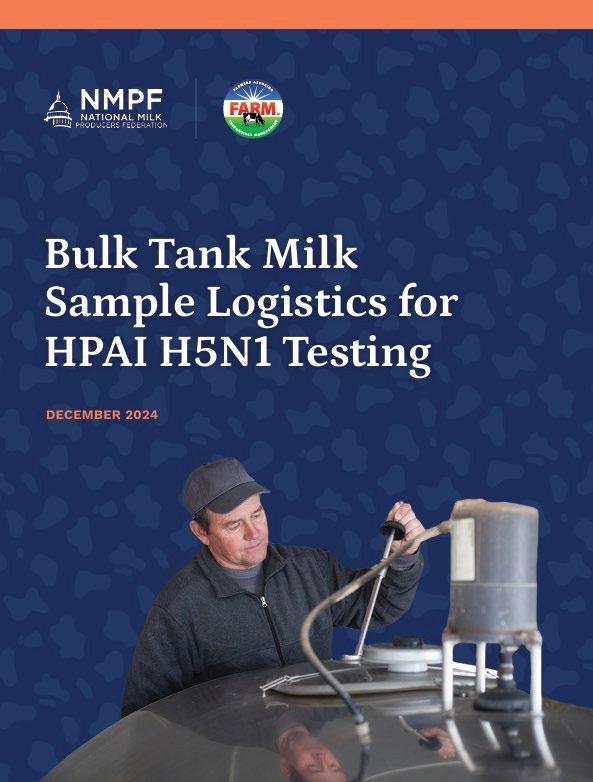
National Milk Producers Federation (NMPF) published “Bulk Tank Milk Sample Logistics for HPAI H5N1 Testing” (Figure 1) in December 2024 to describe considerations and resources needed to use Grade “A” BTM samples for H5N1 testing. It served as a guide for industry, NAHLN labs, and State Animal Health Officials (SAHOs) to determine a process for collecting, labeling, transporting, and reporting results that worked for their infrastructure. The NMPF publication recommended gathering input from farmers, cooperatives, processors, NAHLN labs, dairy regulatory, and SAHOs to develop plans.
Stakeholder input about the logistics of getting milk from farms to the NAHLN lab for H5N1 testing was captured through virtual interviews, online surveys, and in-person forums from August to October 2025. Figure 2 shows the industry representation of the 108 stakeholders who contributed to this white paper.
The virtual interviews were conducted with six stakeholder groups consisting of NAHLN laboratory 342 directors and staff as well as the USDA Animal and Plant Health Inspection Service (APHIS) Veterinary Services (VS) Ruminant Health Center staff. All were asked 14 questions about their experience regarding BTM sample collection, transport, results reporting, and test frequency.
A link to three different online surveys with seven questions each about H5N1 were emailed to a
convenience sample of specific stakeholders using Alchemer software. The industry survey had 38 347 responses (63.3% response rate). The SAHO survey was sent to the top dairy cattle inventory and 348 milk production states and received 13 responses (72.2% response rate) representing both H5N1 349 affected (six) and unaffected (seven) states. The dairy veterinarian survey had 15 responses 350 (37.5% response rate) and two-thirds (10) worked with H5N1 affected dairies. 351
Two in-person stakeholder forums were held in 2025 to better understand industry questions and 352 concerns about FMD, discuss capabilities of milk sample collection for animal disease testing, 353 getting samples from the farm to the lab (including chain of custody), frequency of testing, milk 354 quality and NAHLN lab capabilities, surge capacity, test result interpretation and reporting. Most 355 had experience with sample collection and testing for H5N1 to apply to FMD. The first meeting was 356 held in Arlington, Virginia in September and the second was held in Seattle, Washington in 357 October. A total of 31 dairy farmers, processor and cooperative representatives, milk haulers, dairy 358 veterinarians, state animal health officials, academic researchers, and representatives from 359 NAHLN and private milk quality laboratories, National Association of Dairy Regulatory Officials 360 (NADRO), National Conference on Interstate Milk Shipments (NCIMS), and USDA APHIS VS 361 participated in the two forums. 362
HPAI H5N1 BTM Testing Programs
363 BTM testing and/or milk silo testing for HPAI H5N1 is used for surveillance at the herd and state
level. The USDA National Milk Testing Strategy (NMTS) includes a combination of dairy processing
plant silo monitoring and State-specific surveillance of BTM on farms to determine a state’s
infection status (USDA, 2024b; USDA, 2026c). The goal of the NMTS is to demonstrate elimination
of the H5N1 virus in U.S. dairy cattle State participation in NMTS is coordinated through a state
dairy regulatory program or by the SAHOs in conjunction with dairy regulatory authorities. State
dairy regulatory programs may be located within the department of agriculture along with the
SAHO or they may be located within the department of health, public health, or food safety. As
such, there are several ways that states are collecting BTM to participate in the NMTS.
Both farm- and silo-level testing is possible with influenza because H5N1-infected animals
frequently shed a high viral load (low Ct value), which allows detection of virus from farm bulk tanks
and aggregated milk samples from multiple farms, such as milk processor silo samples. (Burrough
2024) In contrast to H5N1, FMD typically results in low viral shedding in the milk and Ct values are
higher. Therefore, milk samples tested from a silo at a processing plant, even if they contain
FMDV, may be too diluted to detect and testing may yield a false negative result. Individual farm
bulk tank samples from FMD-affected farms would be less likely to have a false negative result
compared with much larger volume milk processor silo samples.
Every load of Grade “A” milk offered for sale must have a representative sample collected and
tested for regulatory purposes following the guidance in the Food and Drug Administration (FDA)
Pasteurized Milk Ordinance (PMO). The milk samples are tested for the presence of antibiotic
residues (food safety), quality (somatic cell count), and components (e.g., fat, protein, total solids)
which are the basis of payment for the dairy. The PMO defines these food safety samples as
“Universal” milk samples or Appendix N milk samples Each sample represents the storage vessel
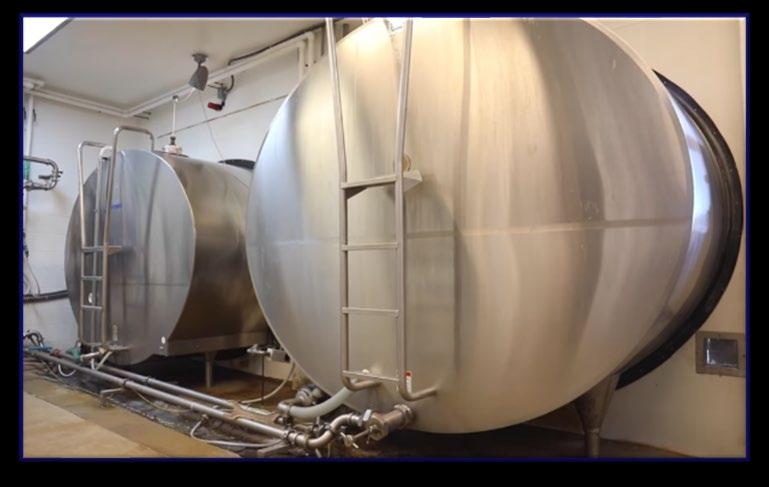
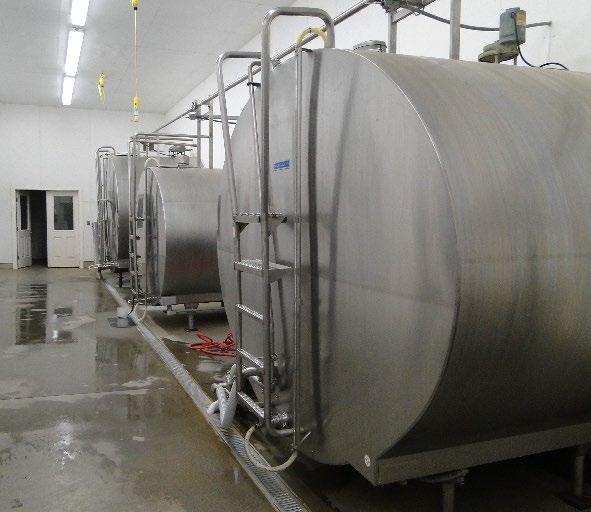
containing milk offered for sale. For smaller farms, a single sample may represent all lactating
cows. For larger farms, a sample may only represent a portion of the lactating herd.
“Universal” milk samples or Appendix N milk samples must be collected by a licensed sampler –
dairy plant sampler, a bulk milk hauler/sampler, or an industry plant sampler. These licensed
samplers receive initial training, pass an exam, and are evaluated at least once every twenty-four
months as detailed in the PMO Training includes the importance of bulk milk collection and the
techniques of sampling, emphasizing why and how, in the proper procedures of picking up milk
and the collection of samples. Training also frequently takes the form of classroom sessions in
which the trainer describes pickup practices, demonstrates sampling and care of samples and
affords the candidate the opportunity for guided practice in these techniques.
Basic considerations of sanitation and personal cleanliness, which are important
to the protection of milk quality, are discussed. Some farms have their own
licensed samplers.
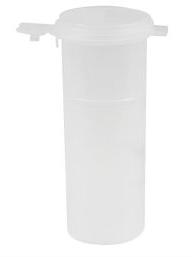
“Universal” milk samples or Appendix N milk samples are commonly collected
into a sterile flip-top 2-ounce milk vial, as shown in Figure 3 The flip-top is
integrally hinged to the container to allow the user to open and close the lid with
one hand; an important step to minimize contamination risk for milk quality
testing
Infrastructure exists in the dairy industry around this vial including:
• Automated milk analyzers for composition and quality,
• Racks in ice chest coolers carried by the bulk milk hauler/sampler are sized specifically to
hold the vials, and
• Milk collection tools (e.g., dippers) closely match the dimensions of the vial, making
scooping and transferring a milk sample from a bulk tank on farm or at a plant easy to
accomplish.
Milk Collection for H5N1 Testing
A variety of approaches were used to collect samples for H5N1 testing. Some states asked the
bulk milk haulers/samplers to collect an additional “Universal” milk sample for farm-level
surveillance for the NMTS. Some cooperatives and processors opted to “sacrifice” a “Universal”
milk sample, repurposing it for NMTS testing. Stakeholders reported that sacrificing a single
sample would not have significant impact on a producer’s payment; sacrificing multiple samples in
a month would. Another option included aliquoting a portion of the “Universal” milk sample into a
new vial for NMTS testing This needs to happen prior to performing any regulatory or payment
testing on the sample to prevent cross-contamination Aliquoting preserved a portion of the sample
for its original regulatory or payment testing purpose.
In some situations, there was pushback to the bulk milk hauler/sampler approach and/or some
jurisdictional concerns. Questions arose about the oversight of the milk sample collected under the
direction of the FDA PMO, guided by industry input (NCIMS), being tested for an animal disease by
a different federal entity (USDA APHIS) in an animal diagnostic laboratory system (NAHLN and
NVSL).
Some states used their dairy regulatory officials, either from the state department of agriculture, or
health, or public health, or food safety divisions to collect samples on farms, at plants, and
receiving/transfer stations. Some states provided sample collection kits to dairy farms that collected
BTM for the NMTS. In Colorado, the temperature control (TC) sample was used for testing dairies
that ship single-source tanker loads of milk. Some dairy farms relied on their USDA Category II
Figure 3: Flip-top 2-ounce milk vial
Accredited Veterinarian to collect samples. 433 Lastly, some animal health regulatory staff 434 collected samples.
Stakeholder feedback revealed that some dairy 436 farmers preferred that the NMTS samples were 437 collected at the cooperative/processor level. A 438 frequent stakeholder comment was that “testing 439 the milk sample is the easy part; sample
collection and transport is the difficult part. ”
The Role of IMS Approved Milk Quality
Interstate Milk Shippers (IMS) Approved Milk
Quality Laboratories may be an integrated
Figure 4: NAHLN Labs Approved for FMD Testing, February 2026
facility within a dairy processing plant or may exist offsite These laboratories may be owned and/or
managed by the dairy processing company or cooperative or may act as independent, third-party
contractors. These facilities specialize in handling milk in 2-ounce vials (or larger for some
cooperatives) for milk quality and component testing for dairy farm payment These laboratories 449 may test milk for regulatory purposes, perform microbiology for diagnostic purposes, and provide
component testing for individual cow samples Milk quality laboratories may be licensed by their
state dairy regulatory authorities if they test milk for payment testing. They may be certified by the
FDA and the NCIMS if the laboratory is performing regulatory testing of milk moving across state 453 lines These laboratories may also hold other licenses and certifications, such as International 454 Organization for Standardization (ISO). 455
The Role of NAHLN Laboratories 456
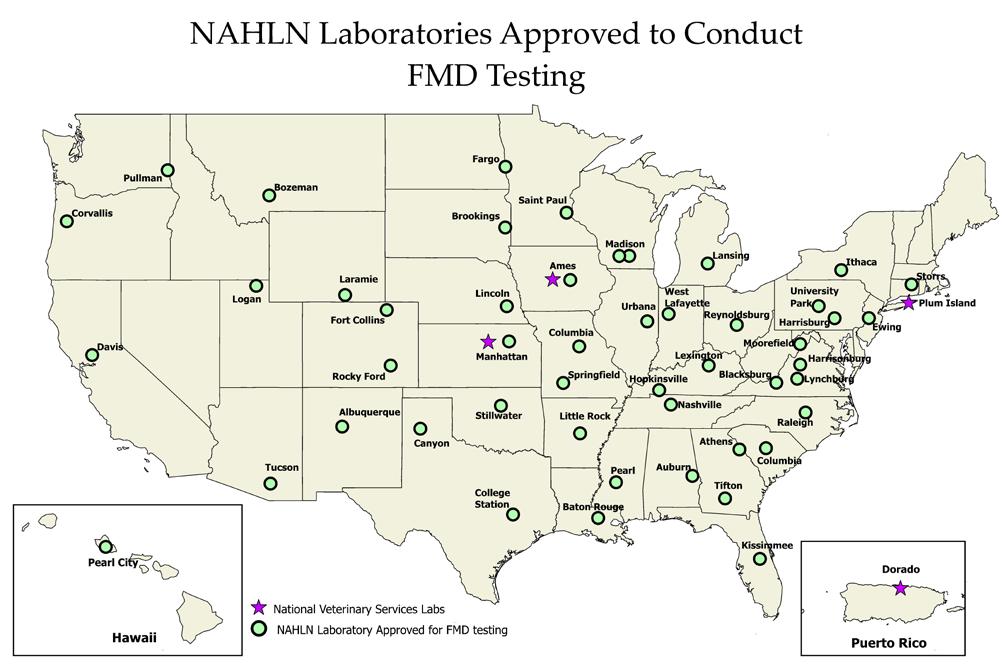
The NAHLN is a partnership of Federal, State, university-associated animal health laboratories 457 overseen by the USDA NVSL. This nationwide network of labs is distributed across the U.S. and 458 can test large numbers of samples for specific animal disease agents. As of February 2026, there 459 were 49 NAHLN laboratories that are approved to conduct FMD testing as shown in Figure 4 460 (USDA, 2026). NAHLN laboratory personnel are trained to follow standardized testing protocols 461 and must pass a proficiency test. NAHLN is a critical national asset that enhances early detection 462 for animal health emergencies, communicates test results to decision makers, and focuses on 463 rapid response with high quality testing These laboratories are accredited by the American 464 Association of Veterinary Laboratory Diagnosticians (AAVLD) or accredited under ISO 17025. This
process ensures confidence in the test results provided for high consequence diseases, like FMD 466
Given the high stakes of regulatory surveillance and FMD testing, animal health samples must 467 follow chain of custody procedures which include testing in a robust laboratory system like the 468 NAHLN. Testing for some of the diseases that are under NAHLN scope may be commercially 469 available; any laboratory can offer them and test for the target disease. However, the results must 470 come from a NAHLN laboratory to be official and actionable because the results are trusted and 471 codified policy was followed. 472
If a test result of a milk sample at a NAHLN lab indicates the potential for presence of the virus in that 473 milk sample, reported as non-negative, then the sample must be submitted to the NVSL for 474 confirmatory testing. Continued confirmatory testing at NVSL or the Foreign Animal Disease
Diagnostic Laboratory (FADDL)/National Bio and Agro-Defense Facility (NBAF) is disease and situation dependent and is outlined in disease-specific response guidance. Samples to be tested for:
• H5N1 (influenza) samples are sent to the NVSL in Ames, Iowa.
• FMD samples are sent to the NVSL FADDL in Plum Island, New York.
o Note: FADDL is transitioning operations to the NBAF in Manhattan, Kansas
The standard 2-ounce (or larger for some processors) milk vial used in the dairy industry is not the ideal sample container for submission to a NAHLN laboratory. When shipped for H5N1 testing, some popped open and leaked. If they didn’t leak in transit, some samples became pressurized and aerosolization occurred when opened at the NAHLN lab. This led to cross contamination between samples and laboratory work areas. Some NAHLN labs spend a considerable amount of time on sample preparation to aseptically transfer milk into vials that fit their machines used for high-throughput testing. NAHLN stakeholders shared that, “Uniformity is the top logistical priority for high throughput surveillance.”
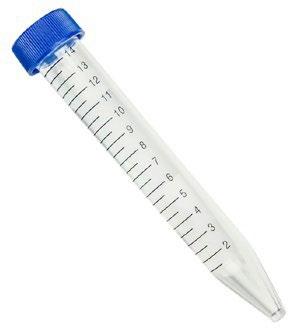
All milk silo samples for NMTS testing are sent to NVSL which requires milk to be packaged in a 15 mL screw top vial, see Figure 5. Some in-plant and state dairy regulatory health officials were able to collect the milk sample directly into a 15mL vial. Asking a bulk milk hauler/sampler to collect a milk sample into a vial they are not accustomed to handling may be burdensome and problematic. Some States participating in NMTS paid milk quality laboratories to transfer milk into 15 mL vials.
Funding for H5N1 testing at NAHLN labs is provided by the USDA. This would be the case in FMD
testing as well. The USDA also pays each H5N1 affected premises $50 per shipment for up to two shipments per month to get the samples to NAHLN for testing. Dairy farmers can also receive $100 towards the purchase and installation of an in-line sampler for their milk system.
USDA Cooperative Agreements are being used to provide financial assistance to states and NAHLN labs for milk collection for the NMTS, aliquoting, packaging and shipping to NAHLN and NVSL. Funding for NMTS is on a per sample basis and is only available for overtime pay or hiring temporary employees. Many States are unable to hire additional temporary employees or have limitations on employees working overtime due to departmental policies or labor union restrictions.
Concern was raised that continuous overtime work is not a sustainable solution due to employee burnout. State resources will be a limiting factor in an FMD outbreak. The H5N1 outbreak and NMTS provided a glimpse of this for some state dairy regulatory authorities and NAHLN laboratory personnel.
A variety of differences exist in how “Universal” milk samples are labeled and what information is included. These differences are driven by the infrastructure of the milk quality laboratory that ultimately tests the milk samples and the cooperative/processor who uses the data to issue payment to the dairy farmers. Typical information on a “Universal” milk sample may include a dairy identifier (dairy name, grade A permit number, patron number, or farmer/producer number), bulk tank unit (BTU), initials of the licensed sampler, date and time of collection and the temperature of
the milk at the time of collection Cooperatives/processors shared that they require the bulk milk 519 hauler/sampler to provide driver information, load number, and BTU for each farm that is delivered 520 into their facility. This information could also be used for tracing disease outbreaks. 521
Labels vary from being handwritten on a sticker that is then applied to a vial, to preprinted labels 522 that are applied to a vial after collection, to pre-labeled vials provided to the farm The preprinted 523 options often use QR or bar codes for the milk cooperative/processor to align test results to the 524 correct dairy of origin Labels do not always contain the same information needed by a NAHLN 525 laboratory to identify, track, and report results in their laboratory system. For instance, a Premises 526 Identification Number (PIN) is required by NAHLN laboratories for regulatory testing but is not 527 routinely included on “Universal” milk samples 528
Handwritten vial labels and submission forms slow down the NAHLN receiving and documenting 529 process and lead to data entry errors. Handwriting was often illegible, incorrect, smudged, or 530 missing Much time was spent trying to decipher handwriting on sample labels or contacting the 531 sample submitter to clarify and verify illegible, incorrect, or missing information. NAHLN labs that 532 incorporate QR or bar-coding technology can streamline submission, testing, and reporting. 533
Premises Identification Number (PIN) 534
A PIN is a nationally unique alphanumeric code that is permanently assigned to a single physical 535 location. A PIN is used for traceability purposes during an animal health emergency The office of 536 the SAHO issues PINs free of charge to dairy farms, milk quality labs, milk processing plants, and 537 other physical locations. The PIN is associated with the farm/lab/plant name, contact information, 538 business type (dairy, lab, plant) at a specific location (911 address or latitude and longitude), and 539 the type (not number) of livestock on farms (FARM SMS 2022). 540
The requirement for providing a PIN in the sample submission process to a NAHLN laboratory is 541 “to ensure accurate and efficient testing and reporting of animal health samples.” The PIN is used 542 to identify specific premises or the location where the samples are collected, which is crucial for 543 proper tracking and result reporting. When a NAHLN laboratory reports results in the APHIS 544 Laboratory Portal, the PIN is a mandatory data field Accurate information associated with the PIN 545 is critical for efficient result reporting and disease management. 546
During H5N1, additional coordination was needed by milk quality laboratories and/or state 547 agencies to match “Universal” milk sample identifiers to PINs when reporting sample results. In 548 many States, only the animal health agency or department of agriculture is privy to the confidential 549 information registered to a PIN with limitations on sharing. State dairy regulatory programs may not 550 be located within the department of agriculture along with the SAHO and PIN data sharing is an 551 obstacle. Some lack of transparency regarding sharing PIN data was intentional to protect the farm 552 identity from the Freedom of Information Act (FOIA) inquiries, depending on state laws. 553
Ensuring accuracy (validation) of PINs created a bottleneck for some SAHO offices and NAHLN 554 laboratories during the H5N1 outbreak For states that have never experienced a large dairy 555 disease outbreak like H5N1, or do not audit and maintain their PIN database, data accuracy issues 556 will arise. Some common issues that were seen with PINs included: 557
• Dairies having multiple PINs 558
o Each bulk tank of milk 559
o Different owners of groups of cattle that exist on one facility 560
• Duplicate PINs assigned for the same premises 561
o New ownership obtains a new PIN for an existing dairy rather than updating the 562 information for the previously assigned PIN 563
• Outdated information associated with a PIN due to an ownership change 564
565
Sample Transport
The PMO describes the process in which the bulk milk hauler/sampler transports the “Universal” 566 milk sample in an ice chest cooler, holding the temperature of milk samples between 0ºC - 4.5°C 567 (32°F- 40°F) from the farm to the cooperative/processor. Alternatively, the sample may remain on 568 the farm in a designated, refrigerated storage location for a courier to pick up and transport to a 569 milk quality laboratory. 570
Many milk quality laboratories offer a courier service for milk sample pickup from farms or 571 cooperatives/processors Some couriers have multi-state routes covering hundreds of miles each 572 day. These couriers may receive annual training and may be licensed by the State Temperature 573 records and chain of custody paperwork may be included with these courier services. 574
The use of commercial shippers is more common for the movement of samples from the milk 575 quality labs to the NAHLN laboratories and from the NAHLN laboratories to NVSL Veterinary 576 diagnostic samples must comply with requirements for Category B biological substances 577
578
Confirmation Testing
NAHLN laboratories are required to send presumptive positive [non-negative] H5N1 and FMD milk 579 samples to NVSL. The USDA FMD Red Book, 2020 provides the following information in 4.4.1.2 580 Diagnostics After FMD Detection: 581
“NVSL-FADDL will confirm detections of FMD on any premises not currently in an FMD CA 582 (Control Area). After NVSL confirmation of FMD on a premises (index case), subsequent 583 swab samples for rRT-PCR may be sent to USDA-approved laboratories that are part of the 584 NAHLN network… 585
IC (Incident Command) will provide specific instructions regarding the direction and 586 collection of samples, which is likely to change as the outbreak evolves. In all cases, 1) 587 NVSL will confirm the index case, 2) presumptive positive [non-negative] samples (on a 588 rRT-PCR) from outside an established CA will be tested and confirmed by NVSL, and 3) 589 NVSL will receive samples routinely from inside the CA to monitor for changes in the 590 FMDV. All presumptive positive [non-negative] samples from NAHLN laboratories will be 591 forwarded to NVSL for confirmation and subtyping.” 592
593
Recommendations and Resources Needed for FMD Testing of BTM
The milk sample collection, transport, testing, and result reporting process for FMD was described 594 by stakeholders as having much higher stakes than with H5N1. Positive BTM test results can 595 indicate early infection with FMD. The SAHO and USDA officials emphasized that an FMD-positive 596 milk sample will NOT immediately result in herd depopulation. It will not be considered a 597 confirmatory test. Instead, it would lead to a herd investigation (record analysis, onsite visit by an 598 animal health official, etc.), hold orders or quarantine for livestock on the dairy, and additional 599 testing. This cascade of events relies on a process that ensures test result accuracy. This requires 600 proper sample collection and handling, adherence to protocols, and maintaining the chain of 601 custody. The recommendations that follow should stimulate further discussion between the dairy 602
603
604
industry and regulatory officials.
Assumptions
The following assumptions were used in the creation of these 605 recommendations: 606
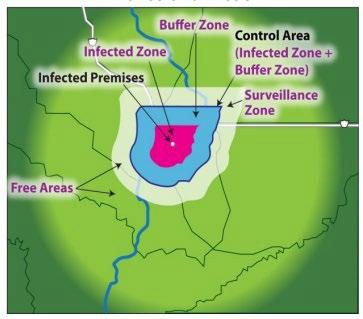
607 1. FMD was diagnosed in the U.S. resulting in establishment 608 of Control Areas (see Figure 6) around one or more 609 Infected Premises (USDA FMD Response Plan, 2020).
610 2. Raw milk produced in the Control Area under a valid 611 license or permit with samples collected by a Bulk Milk 612 Hauler/Sampler meeting PMO standards is allowed to 613 move to pasteurization/commerce
Figure 6: FMD Control Area and Zones
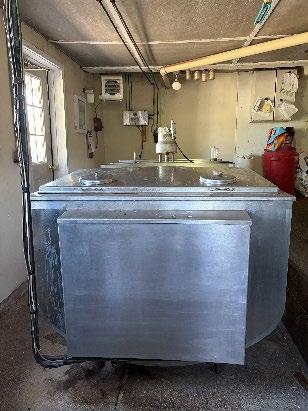
614 3. The “Universal” milk sample or Appendix N milk sample 615 represent the storage vessel containing milk offered for 616 sale. This may not represent the entire lactating herd 617 since some milk produced is non-salable and not all storage vessels are large enough to 618 hold milk from the entire herd
619 4. NAHLN laboratories approved to conduct FMD testing have a validated rRT-PCR assay to 620 test raw milk, and milk has been approved as a sample type for FMD testing
621 5. The rRT-PCR assay on milk will be used in the FMD Control Area on premises that are not 622 classified as Infected, Suspect, or Contact. It will also be used in the Surveillance Zone. 623 6. The primary use case is early detection of FMD in lactating cows at a herd-level. 624 7. FMD positive results on a milk sample will lead to a herd investigation, movement 625 restrictions, additional testing, and not immediate herd depopulation.
Testing Milk from all Lactating Cows on a Premises for FMD
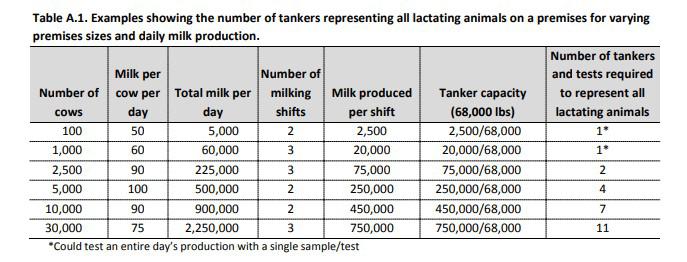
Data from Appendix A in the “Potential Uses of a rRT-PCR Assay for FMD in Bulk-Tank Milk in the 627 United States”, presented in Table 1, shows the number of tankers that need to be tested across 628 various dairy farms sizes to represent all lactating animals. Dairies with 1,000 cows that produce 629 an average of 60 pounds of milk per day will need to test one tanker to represent all lactating 630 animals. (USDA, 2017) As the number of cows and/or milk production increases, the number of 631 tankers to test also increases. 632
Table 1: Numbers of Tankers Representing all Lactating Animals Across Dairy Size and Production
Determining the Frequency of Testing BTM for FMD
The USDA “Potential Uses” paper suggested that the number of tests per premises to achieve 0.95
probability of detection when the prevalence among the milking animals is one percent is to test all 636 bulk milk tanks on a farm for three consecutive days. The paper also suggested that daily herd 637 testing using the rRT-PCR assay would improve the probability of detection of infected herds. The 638 FMD Response Plan (USDA, 2020) recommends testing each premises every five days. This 639 would require sampling BTM for three consecutive days and then skipping two days. The USDA 640 APHIS Center for Epidemiology and Animal Health (CEAH) determines testing frequency based on 641 surveillance goal(s) for regulatory diseases. The frequency of testing BTM for FMD depends on 642 multiple factors including: 643
• The desired probability of detection at specific herd-level prevalence, 644
• The number of operations to be tested, and 645
• The logistics of getting the samples from the farm to laboratory. 646
Stakeholder Recommendations 647
Stakeholders were divided into two groups at each forum to discuss options to collect and test milk 648 samples for FMD that represent the lactating dairy herd. To do so, an “Animal Health 649
Surveillance Milk (AHSM) sample” is needed. They defined this as: 650
• One or more milk samples that represent saleable milk from at least one milking taken from 651 the on-farm storage vessel(s) on one premises* for one day (24-hour period). 652
o *All dairy business operations represented by a single (1) PIN 653
• An AHSM sample will only be collected and used to test for contagious regulatory diseases 654 during an animal health outbreak.
• An AHSM sample may be the “Universal” milk sample or Appendix N milk sample or 656 collected at the same time to represent a single dairy business operation/PIN.
See Appendix A, What is an “Animal Health Surveillance Milk” (AHSM) Sample? for a graphic
representation of “Universal” and AHSM samples on different sized dairy operations.
R ECOMMENDATION : The NCIMS should consider including the term and a definition for “Animal
Health Surveillance Milk” sample in the next PMO update (2027) to set a standard for an regulatory
animal disease testing sample apart from the “Universal” milk sample
FMD Control Area Surveillance
Half of the in-person stakeholders focused on targeted high-risk surveillance of dairy farms in an
FMD Control Area The “AHSM” sample could be used for:
• Early detection of FMD in lactating cows at a herd-level.
• Classification of At-risk or Monitored Premises
• Changing the classification of a Contact Premises to a Suspect Premises if confirmed
positive or to an At-Risk Premises if negative.
• Guiding movement decisions and risk of feeding raw saleable milk or waste milk within or
out of the Control Area to susceptible animals (calves or swine).
Sample Collection, Transportation to the Lab, and Testing Frequency
The stakeholders described sample collection criteria, noting it will be resource dependent. Sample
collector details are provided in Appendix B, Table: Benefits, Drawbacks, Resources Needed for
Sample Collectors during an FMD Outbreak Stakeholders also discussed ways to get the
sample(s) from the farm to the NAHLN lab given the urgency needed to determine the herd status
in an FMD Control Area.
R ECOMMEND ATIONS : 678
• The AHSM sample should be collected and tested at the same frequency as a “Universal” 679 milk sample to streamline logistics for collectors and meet the FMD Control Area use case. 680
• The AHSM sample should remain on farm in the FMD Control Area, kept chilled, for same- 681 day pick-up by a courier trained in proper handling to ship, or directly deliver to the NAHLN 682 lab for FMD testing.
683
• Couriers moving from farm to farm in FMD Control Areas will need to be trained to follow 684 enhanced biosecurity practices. 685
FMD Surveillance Zone Monitoring 686
The other half of the stakeholders discussed surveillance of dairy farms in the FMD Surveillance 687 Zone. The “AHSM sample” could be used to: 688
• Determine if disease is spreading outside the Control Area. 689
690
Sample Collection Criteria, Transportation to the Lab, and Testing Frequency
Since there are no extra control measures in place in the Surveillance Zone, the sample(s) could be 691 collected by a Bulk Milk Hauler/Sampler or anyone listed in Appendix B, Table: Benefits, 692 Drawbacks, Resources Needed for Sample Collectors during an FMD Outbreak depending on
694
available resources.
As above, CEAH would determine the testing frequency based on the surveillance goal(s). The
USDA FMD Response Plan (2020) recommends testing no less than every 21 days in the
Surveillance Zone This variability could pose logistical challenges to ensure the “AHSM sample”
are collected when needed. Stakeholders also discussed ways to get the sample from the farm to
the NAHLN lab. The urgency is not as high as in the Control Area.
S :
• The AHSM sample should be collected at the same frequency as a “Universal” milk sample
in an FMD Surveillance Zone to streamline logistics for collectors (avoid variability) and
tested a minimum of twice a week to meet use case.
• The AHSM sample could remain on farm in the FMD Surveillance Zone, kept chilled, for
pick-up by a courier trained in proper handling to ship, or directly deliver to the NAHLN lab
for FMD testing.
o Alternatively, the AHSM sample or duplicate “Universal” milk samples could be
transported as normal, with the bulk milk hauler/sampler or left on farm to be picked up
by a courier.
o The SAHO would notify the “Universal” milk sample destination (processor or milk quality
laboratory) as to which samples need to be forwarded to NAHLN lab.
More details on the sampling definitions and use in Control Areas and Surveillance Zones can be
found in Appendix B: Raw Milk Sample for FMD rRT-PCR Assay: Proposed Definitions, Use
Ensuring proper milk sample collection, labeling, and chain of custody from farm to the NAHLN lab
is the goal for reliable FMD test results. Plans to collect the sample should be based on
performance standards with flexibility to address variations between dairies, states, and regions.
Stakeholders recognized that one size does not fit all and provided more detail in Appendix B,
721
Table: Benefits, Drawbacks, Resources Needed for Sample Collectors during an FMD Outbreak
R ECOMMENDATIONS FOR R ESOURCES N EEDED FOR BTM SAMPLE COLLECTORS : 722
Sample storage on farms in the Control Area: Milk samples for FMD testing are not as 723 temperature sensitive as those used for quality testing. However, the sample should be kept cool 724 and secure for chain of custody purposes. If the bulk milk hauler/sampler does not prepare the 725 sample for pickup, someone on the farm would need to be trained in these steps (covered under 726 sample collection kit below). To limit people entering the dairy, the sample storage should be 727 outside the Line of Separation if it can be secured. 728
Collection equipment that remains on farm in Control Area: Single use disposable or plastic 729 dippers, or dairy-dedicated dippers should be used for samples that need to be collected from the 730 top of a bulk tank This biosecurity step aims to prevent cross-contamination between farms and 731 samples. 732
Training in FMD biosecurity: The Secure Milk Supply (SMS) Plan Biosecurity Performance 733 Standards (BPS) for Raw Milk Collection and Transport (SMS 2017) provides biosecurity guidance 734 for anyone collecting milk samples and traveling between sites. Enhanced biosecurity will require 735 extra time, effort, supplies (boots, gloves), and training. Training in biosecurity could also be added 736 to just-in-time training. 737
Just-in-time, readily accessible PMO sample collection training with verification: Training 738 should include all the steps applicable to sample collection, labeling, and handling that is offered 739 for initial training for certified samplers. Topics such as the proper techniques of sampling, 740 emphasizing why and how, protecting milk quality and food safety through sanitation and personal 741 cleanliness. In lieu of classroom sessions, the just-in-time training could include videos 742 demonstrating sampling practices and handling Additional steps specific to sampling for FMD 743 testing should be included. Verification may take the form of the State Dairy Regulatory Official 744 visiting the farm (as resources and biosecurity allow) or watching a live or pre-recorded video of the 745 trainee performing the collection steps. Develop a flexible training plan if the use of online training 746 or technology is not available or feasible. 747
Sample collection kits: Including clearly written, easy to understand directions, with diagrams, 748 photos and QR codes with links to training videos targeted at personnel who collect the samples in 749 languages they will understand. Include other items such as gloves, a submission form, lab specific 750 label with PIN, lab specific vials, disposable pipettes, plastic sealable bags, prepaid shipping 751 labels, and a box with packaging materials, if needed. Shipping materials provide flexibility to allow 752 the sample to ship directly from the farm or by a courier who could pick up the package and mail or 753 deliver it to the lab. Training should be provided for shipping samples to NAHLN or NVSL to ensure 754 that all the regulatory specifications are met. See “Bulk Tank Milk Sample Logistics for HPAI H5N1 755 Testing” (NMPF 2024) for packaging details. TC samples are not necessary because the window 756 of sample holding temperatures is less critical than with milk quality samples. Packages should be 757 tracked to ensure prompt delivery or for early notification if the package is lost and samples must 758 be resubmitted. Delays and lost shipments were reported during the H5N1 outbreak. 759
Funding for collectors’ or additional staff time: State dairy regulatory officials, state sanitarians, 760 and state animal health officials may need funding to pay existing staff for additional duties and 761 hours or hire additional staff to cover duties. Additional staffing for state dairy regulatory officials 762
767
may be needed to conduct the verification associated with the just-in-time sample collection
training. Some states may use the PMO emergency exemption for dairy farm inspections so states
can reassign staff during an outbreak Funding would also be needed for USDA Category II
Accredited Veterinarian or their designees to complete the training for sample collection.
Samples from Milk Quality Labs
Some states coordinated with milk quality labs to gather and package “Universal” milk samples for
submission to a NAHLN laboratory for H5N1 NMTS testing. Milk quality laboratories may have one
to two days of milk samples in storage pending testing, with an additional one to two days of milk
samples in transit to the milk quality laboratory. These samples could also be used for FMD testing
as they do not have a specific timeline for sample suitability as with quality testing. These historical
samples could also be used to better pinpoint when a farm became FMD positive. For Surveillance
Zone testing, this collection point does not pose the same biosecurity concerns encountered by
entering the farm.
Most of these laboratories have the equipment, personnel, and knowledge to perform this service.
Some milk quality laboratories have software that can be used for test scheduling on specified
samples or to “flag” samples. This would enable technicians to identify certain samples during the
receiving process and then handle those samples accordingly. While this sounds simple, the
laboratory will need guidance on which samples to flag, personnel with knowledge to change
settings in the software, as well as protocols for handling the samples.
R ECOMMENDATIONS :
• The milk quality laboratories could sacrifice specified “Universal” milk samples prior to
quality testing for submission to the NAHLN laboratory for FMD testing.
• Resources would be needed to support staff training in the process, PIN information to
correlate with dairy farmer data, sample labels, a funding source to pay for the additional
labor and supplies, a chain of custody protocol for the laboratory to implement, and a courier
plan to transport samples to the NAHLN laboratory.
Some milk quality labs provided aliquots of “Universal” milk samples for H5N1 testing. This process
was labor intensive and time consuming. It requires additional resources like vials, pipettes, labels,
and may require additional staffing. Milk quality labs do not need to use sterile pipettes for their
testing purposes. Cross-contamination is the major drawback to this option. Technicians that
aliquot or transfer samples must be trained and proficient in sterile techniques to prevent cross-
contamination of the sample or any part of the laboratory. In an FMD outbreak, rRT-PCR-positive
samples must be accounted for, properly disposed of, as well as anything that contacts that milk.
The risks of spread due to aliquoting milk for FMD testing are high. The stakeholders stated there
are more than adequate numbers of “Universal” milk samples collected, quality parameters in dairy
herds are relatively stable, and there are quality control measures in place to account for missing 798 or outlying quality and component data. 799
R ECOMMENDATION : The use of aliquots from “Universal” milk samples should not be used for
FMD testing.
On-farm Testing for FMD 802 Testing for FMD in the U.S. would initially be conducted at National Animal Health Laboratory 803 Network (NAHLN) laboratories, but field-ready PCR testing may become an option, following
extensive scientific review, assessment of deployment options, and clear policy formulation. More 805
information about on-farm testing for FMD including benefits and drawbacks can be found in 806 Appendix C. 807
808
Sample Labeling
The NAHLN laboratory stakeholders provided guidance for milk sample labeling to streamline the 809 receiving, preparing, and FMD test results reporting process while minimizing errors. 810
R ECOMMENDATION : Only preprinted labels with the minimum amount of information needed to 811 identify the sample should be used. This would include: 812
• A dairy identifier (dairy name, grade “A” permit number, patron number, or farmer/producer 813 number), 814
• BTU, 815
• Date and time of collection 816
• Ideally: PIN, bar or QR code to eliminate or reduce data entry upon sample receipt 817 818
The labeling system could be a regional project so there would be information standardization 819 among milk quality and NAHLN laboratories. It may not be economical or feasible to have 820 standardization beyond establishing minimum critical elements for labeling on a regional level. 821
R E COMMEND ATION : Discuss the critical details needed on milk sample labels for daily use and in 822 an outbreak with the cooperatives/processors, milk quality and NAHLN laboratories. This would 823 allow for adjustments to infrastructure during peacetime. 824
The use of PINs needs more attention. There are unanswered questions in the dairy industry about 825 protecting the privacy of the farmers if PIN information is shared across agencies. Infrastructure 826 updates may be needed to prepare for the widespread use of PINs in milk sample identification. 827
The addition of a PIN as a mandatory field for all sample submissions is considered a means to 828 incorporate PIN usage into daily practices. This would also support PIN validation during 829 “peacetime” to prevent the obstacles encountered during H5N1 testing and result reporting. 830
R ECOMMENDATION : The NCIMS sets the requirements in the PMO biennially and could require a
PIN to be routinely included on all milk sample labels.
Accredited Veterinarians can obtain USDA eAuthentication for online services related to health
certificates. They must undergo required APHIS Approved Supplemental Training (AAST) to 834 maintain their accreditation status. Specifics on the PIN validation process could be included in 835 existing or a topic-specific training. Veterinarians with dairy clientele may have the knowledge to 836 help identify outdated information such as dairies that may be out of business, have had ownership 837 changes, or have added bulk tanks or silos on farms. 838
R ECOMMENDATION : USDA Category II Accredited Veterinarians (Accredited Veterinarians) could 839 play a role in PIN data validation for their clients. 840
Laboratory Capacity and Data Management 841 Laboratory capacity is closely tied to process and workflow efficiency. Multiple NAHLN laboratories 842 reported that it took double the number of staff for data entry as compared to testing the sample for 843 H5N1. Laboratories equipped with electronic submissions reported improved efficiency and a 844 reduction in errors. One laboratory shared that they used financial incentives when they 845 transitioned to requiring an electronic submission process. Early adopters were given discounts or 846
had submission fees waived to help grow the acceptability of the technology. An electronic 847 submission process could eliminate most, if not all, data entry at the laboratory level. 848
R ECOMMENDATION : Develop a regional “sample submission standard” that captures standardized 849 details on a submission form and incorporates the labeling and packaging standards already 850 discussed. It may not be economical or feasible to have standardization at a national level. 851
852
Surge Capacity Testing
Surge capacity testing was activated during H5N1 when NAHLN laboratories neared their 853 maximum capacity in the regions with a heavy disease presence The coordination took time and a 854 lot of communication upfront to make the process efficient for all involved. The laboratories 855 involved reported overall positive experiences once the submission and receiving processes were 856 established It is anticipated that an FMD outbreak would involve NAHLN labs using their network 857 to support testing given the multiple species that could be impacted. 858
R ECOMMENDATION : NAHLN labs proactively working together during peacetime to develop
859 submission standards such as standard electronic submission forms, vials and labels, as 860 previously discussed, will help improve readiness for the next disease outbreak Removing 861 the nuances of laboratory submissions that exist to prepare and submit samples would improve 862 efficiency 863
864
Laboratory Data Management
NAHLN laboratories are not required to use a specific software system The laboratory 865 accreditation entities have standards for the control of data According to the AAVLD Requirements 866 for an Accredited Veterinary Medical Diagnostic Laboratory document, this includes validation prior 867 to implementation, establishment of procedures to protect the security, integrity, and retrievability 868 of data, and maintenance of computers and automated equipment Commercial software used 869 within its designated application range is considered validated. When samples are transferred from 870 one laboratory to another, the laboratory data management process is repeated to some degree in 871 part to different software used by the laboratories. 872
Laboratories can incorporate time-saving technology through interfacing software systems 873 Commercial software companies can provide this service for a fee, or the laboratory may have a 874 technical support team that includes programmers to accomplish the interfacing needs Examples 875 that were used during H5N1 include uploading spreadsheets from cooperatives/processors to 876 automate the sample submission process, adding bar or QR code labels and scanners to automate 877 the sample submission and reporting process, and electronic data transfer between laboratories 878
Interfacing takes time, resources, and money Laboratories may not have the resources or excess 879 budget to make modifications on demand during an outbreak. 880
R E COMMENDATION : NAHLN labs should consider technology updates such as interfacing 881 software systems, scanners for bar or QR code label reading, and electronic data transfer options 882 when contingency planning and budgeting. 883
Submission to NVSL
884 During the NAHLN interviews, another area that was identified as time consuming was the 885 preparation, packaging, and shipping of samples to NVSL Submission standards at NVSL are very 886 specific, but also redundant and inefficient NVSL requires that the Specimen Submission Form 887
(VS Form 10-4) be completed This form contains 21 required fields and only allows for up to 10 888 samples to be entered per form. Form 10-4A is a continuation form that allows 48 additional 889 samples to be entered Form 10-4 is meant to be filled out by hand or using Adobe Acrobat PDF 890 forms and is sent with samples NVSL scans the Form 10-4 to automatically upload the submission 891 information into their Laboratory Information Messaging System (LIMS), so no submission form 892 variations are allowed NAHLN laboratories reported that they also were asked by NVSL to send 893 an email, in a specific format, to them for pre-notification of submissions. NAHLN laboratories 894 dedicated at least one full time employee, sometimes more, to ship non-negative H5N1 samples to 895 NVSL They used laminated benchtop aids to ensure all steps were properly followed and trained 896 multiple employees for contingency purposes. 897
R ECOMMENDATION : NVSL and NAHLN should explore options and exercise electronic 898 submission form use during peacetime to improve readiness and efficiency in FMD confirmation 899 testing, given the large volume of AHSM samples that may be tested in certain parts of the country. 900
NAHLN Result Reporting 901
There are specific protocols NAHLN labs must follow when reporting FMD results. Non-negative 902 results are reported to the SAHO for the state in which the premises is located. The AVIC is also 903 notified. While this process can be automated, it is common that communication is expedited or 904 supplemented by email, text, or phone notification to ensure that immediate action is taken. The
SAHO or USDA official for the state in which the dairy is located will be the one to notify the farmer
of the confirmed positive result. They may or may not include notifying the veterinarian associated
with the dairy. All test results are confidential.
Laboratories that handled surge capacity testing of milk for H5N1 did not feel it was their place to
report test results directly to the owners or veterinarians who resided in a different state; rather the
information should come from the farmer’s SAHO.
When supporting NAHLN labs sent H5N1 test results back to the referring NAHLN laboratory,
additional steps were needed to receive and input them into their software for reporting. This can
lead to delays and data entry errors.
R ECOMMENDATION : NAHLN labs and SAHOs should proactively establish FMD test result
communication plans and reporting protocols in peacetime, especially for surge testing. Explore
creating a reporting dashboard with standard data fields each lab can populate automatically.
In the SAHO survey, 41.7% (5 responses) highlighted issues with H5N1 result reporting to SAHOs
and commented that lab reporting to the SAHO was inconsistent. Reporting results needs to be
streamlined, consistent from lab to SAHO and NVSL to SAHO.
Providing supplemental notification through email, text, or phone calls is workable when the
outbreak is small but quickly becomes problematic with large numbers of non-negative samples.
SAHOs needed rapid access to updated H5N1 diagnostic information and often asked NAHLN
laboratories to send daily notifications or summaries of information in a specified email format to
support their regulatory reporting requirements to the USDA. These emails often had a revolving list
of recipients, adding further to the complexity and time commitment of reporting. If a NAHLN
laboratory tested samples for an out-of-state SAHO, it was almost certain that their reporting
preferences would vary from that of the in-state SAHO.
There is a standard for result data sent from each NAHLN LIMS to USDA APHIS VS. Once 930 samples are tested, the NAHLN laboratory transmits the results through LIMS to integrate into the 931 appropriate USDA database for analysis and reporting purposes. 932
NAHLN disease reporting to a SAHO is a duplicative process with an FAD sample. NVSL requires 933 that all FAD samples be logged into the Emergency Management Response System (EMRS) and 934 report the test results though EMRS. With the large volume of samples during H5N1, some SAHOs 935 relied on the NAHLN laboratories to help compile and summarize test results, rather than login to 936 EMRS to view results. As the H5N1 outbreak progressed, some NAHLN laboratories modified 937 reporting to SAHOs to only report the test-positive samples directly and to include the test-negative 938 results in weekly or monthly summary reports. Stakeholders shared that reporting through EMRS 939 often lagged behind NAHLN reporting and was not user-friendly for the SAHOs because it was 940 inconvenient. A survey comment was that the NAHLN dashboard is much more efficient compared 941 to emailed results (Animal Health Event Repository (AHER)s/Veterinary Services Data Integration 942 Services (DIS)). As heard from the veterinarian survey group, the NAHLN survey groups reiterated 943 that focus should be on efficient and streamlined reporting. 944
Reporting to Veterinarians 945
It is not uncommon for a dairy farm to have multiple veterinarians providing different specialized 946 services in the areas of calf health, herd health, milk quality, nutrition, reproduction, and regulatory 947 testing NAHLN laboratories reported that they were often unsure which veterinarian should 948 receive test results for H5N1 testing and that multiple milk samples were submitted by different 949 veterinarians for the same dairy In the event of FMD, the herd veterinarian might only be informed 950 after the owner, pending state or USDA resource availability to notify them. 951
The Farmers Assuring Responsible Management (FARM) Program created by the NMPF in 952 partnership with Dairy Management, Inc. uses the term Veterinarian of Record (VOR). The FARM 953 Animal Care Reference Manual, Version 5 defines VOR as “the specific veterinarian responsible 954 for making recommendations with respect to animal health on the operation.” Beginning with 955 Version 3.0 released January 1, 2017, the requirement was that farmers and their VOR sign a 956 Veterinary Client Patient Relationship (VCPR) form at least annually 957
R ECOMMENDATION : Dairy farms should designate a veterinarian of record (VOR) and list them on 958 the sample submission form to streamline result reporting regardless of “who” submits the sample 959 This veterinarian would be a point of contact for animal health, diagnostic, and regulatory 960 communication on the farm and between all veterinarians employed by the farm. 961
Reporting to the Cooperative/Processor/Hauler 962
FMD is not a public health or food safety issue and is not regulated under the PMO. Cooperatives 963 and processors that purchase raw milk for commerce are not in the reporting chain for animal 964 disease test results. Dairy farmers can choose to inform them, as well as their haulers. However, 965 customers of the cooperative/processor may inquire about the FMD status of the source dairies in 966 response to consumer questions. 967
Stakeholders were asked their preference to know the preliminary FMD results (non-confirmatory) 968 of their source farms. Having no knowledge of the FMD disease status allows the 969 cooperative/processor to provide honest answers of their uninformed status (plausible deniability) 970 If informed of a non-negative test result, cooperatives/processors could assist: 971
• Farmers in Control Areas by providing information, education, and emotional support as 972 needed, 973
• Farmers on the same route as infected dairies by altering the milk pick up route, and 974
• Haulers and plant personnel by educating them about FMD biosecurity steps to prevent 975 spread via their clothing, footwear, trucks, etc. 976 977
Consideration is needed to determine how to include the cooperative/processor/hauler in 978 preliminary test reporting if a dairy gives consent to do so It should be noted that the USDA FMD 979 Response Plan (USDA 2020) would not allow milk movement off a confirmed FMD-infected dairy. 980 In that situation, the cooperative/processor/hauler would need to be informed to cease milk pickup. 981
R ECOMMENDATION : Conduct a tabletop exercise with dairy farmers, cooperative/processors, 982 practicing dairy veterinarians, NAHLN labs, SAHOs, USDA, and other stakeholders to develop and 983 practice using a diagnostic test result permission agreement template. Dairy farmers would specify 984 who can be included in result reporting and share it with the NAHLN laboratory. NAHLN could 985 explore how to incorporate that into their SAHO and USDA reporting protocols while minimizing 986 complexity. Further, communicating confirmatory positive results to dairy farmers and other dairy 987 business stakeholders could be exercised. 988 Regulatory Actions
989 Guidance does not yet exist that describes the regulatory response to a non-negative FMD result 990 on BTM. The test alone is not confirmatory; follow up investigations and testing are needed.
However, states and the dairy industry would benefit from consistent regulatory responses to non-
negative rRT-PCR AHSM sample results and guidance on the test’s abilities and limitations.
R ECOMMENDATION : State and USDA decision makers should develop a policy for FMD 994 surveillance that clearly describes regulatory response actions based on viral thresholds in Animal
Health Surveillance Milk Samples with consideration to test sensitivity, specificity, and probability of 996 presence of the virus 997
Work is also needed to develop the processes and protocols to use BTM for assurance of absence
of infection through not detected test results. The FMD BTM testing strategy should be evaluated
for use in a single Control Area and Surveillance Zone and in an extensive or longer-term outbreak
as continuous testing over months could pose logistical and financial challenges.
R ECOMMENDATION : State animal health and state dairy regulatory agencies should have a
"memorandum of understanding" in place so that if FMD is detected in the U.S., “Universal” or
Appendix N samples could be obtained from milk quality labs for immediate testing for FMD by
NAHLN or NVSL without jurisdictional delay.
Communicating with Stakeholders
Stakeholders emphasized the importance of transparency and timely communication to help them
understand what to expect during an FMD outbreak.
R ECOMMENDATION for FMD communication include:
• SAHOs quickly establishing a website and call center for farmers to get answers about
quarantine measures and movement restrictions.
• Public messaging that promotes the safety of milk and milk products, assuages fear and
keeps milk moving into commerce.
• Calls between NAHLN laboratories and USDA (daily initially progressing to less frequent as
outbreak progresses).
• Calls that include state dairy regulatory officials, NCIMS, SAHOs, and USDA to ensure
consistency in information sharing since there is no one group that represents all dairy
regulatory personnel.
• Describing the role of agencies during FMD and including NADRO, NCIMS, and FDA.
• Stakeholder webinars to inform industry on the details of milk testing for FMD.
• Stakeholder webinars to increase awareness of existing resources that will be used in an
FMD outbreak, including but not limited to the USDA FMD Red Book (2020), SMS Plan, and
the USDA APHIS Foreign Animal Disease Preparedness and Response (FAD PReP)
guidance.
Conclusion 1025
The USDA identified information gaps in the 2017 paper, “Proposed Uses of a rRT-PCR Assay for 1026 FMD in Bulk-Tank Milk in the United States”, that need to be addressed to better understand how 1027 and when to implement FMD testing. Three of the six major information gaps were addressed and 1028 further clarified including: 1) the sensitivity of the BTM test, 2) validation of the test with changing
reagents, and 3) the performance of the test with different cattle breeds and variable milk
components. The use of BTM for FMD testing has value for outbreak response and disease control
recognizing information gaps still exist regarding the pathogenesis of FMD.
Stakeholders provided thoughtful considerations for milk sample collection, labeling, transport, 1033 confirmation testing, reporting results, and resources needed based on experience with HPAI 1034 H5N1 testing. FMD will have much higher stakes than H5N1 in terms of testing. Positive BTM test 1035 results can indicate early infection with FMD. The SAHO and USDA officials emphasized that a 1036 positive milk sample is not confirmatory and would NOT immediately result in herd depopulation. 1037 Instead, it would lead to a herd investigation, hold orders or quarantine for livestock on the farm, 1038 and additional testing. This cascade of events relies on a process that ensures test result accuracy 1039 and requires proper sample collection and handling, adherence to protocols, and maintaining the 1040 chain of custody. 1041
The following recommendations aim to stimulate further discussion between the dairy industry, 1042 NAHLN labs, and regulatory officials with the goal of implementing FMD testing of BTM as an 1043 outbreak response tool: 1044
• The NCIMS should consider including the term and definition for “Animal Health Surveillance 1045 Milk Sample” in the next PMO update (2027) to set a standard for an animal disease testing 1046 sample apart from the “Universal” milk sample. 1047
• The AHSM sample should be collected and tested daily to streamline logistics for collectors 1048 and meet the FMD Control Area use case. 1049
• The AHSM sample should remain on farm in the FMD Control Area, kept chilled, for same- 1050 day pick-up by a courier trained in proper handling to ship, or directly deliver to the NAHLN 1051 lab for FMD testing. 1052
• Couriers moving from farm to farm in FMD Control Areas will need to be trained to follow 1053 enhanced biosecurity practices. 1054
• The AHSM sample should be collected daily in an FMD Surveillance Zone to streamline 1055 logistics for collectors and tested a minimum of twice a week to meet use case. 1056
o Alternatively, duplicate or routine “Universal” milk samples in an FMD Surveillance Zone 1057 could be collected as normal. 1058
• The AHSM sample could remain on farm in the FMD Surveillance Zone, kept chilled, for 1059 pick-up by a courier trained in proper handling to ship, or directly deliver to the NAHLN lab 1060 for FMD testing. 1061
o Alternatively, the “Universal” milk samples could be transported as normal, with the bulk 1062 milk hauler/sampler or left on farm to be picked up by a courier. 1063
o The SAHO would notify the “Universal” milk sample destination (processor or milk quality 1064 laboratory) as to which samples need to be forwarded to NAHLN lab. 1065
• Recommendations for resources needed for BTM sample collectors include 1066
o Sample storage on farms in the Control Area, 1067
o Collection equipment that remains on farm in Control Area, 1068
o Training in FMD biosecurity, 1069
o Just-in-time, readily accessible PMO sample collection training with verification, 1070
o Sample collection kits, and 1071
o Funding for collectors’ or additional staff time. 1072
• The milk quality laboratories could sacrifice specified “Universal” milk samples prior to quality 1073 testing for submission to the NAHLN laboratory for FMD testing. 1074
o Resources would be needed to support staff training in the process, PIN information to 1075 correlate with dairy farmer data, sample labels, a funding source to pay for the additional 1076 labor and supplies, a chain of custody protocol for the laboratory to implement, and a 1077 courier plan to transport samples to the NAHLN laboratory. 1078
• Aliquots from “Universal” milk samples should not be used for FMD testing. 1079
• Only preprinted labels with the minimum amount of information needed to identify the 1080 sample should be used (a dairy identifier: dairy name, grade “A” permit number, patron 1081 number, or farmer/producer number, BTU, date and time of collection, PIN, bar or QR code)
to eliminate or reduce data entry upon sample receipt.
• Discuss the critical details needed on milk sample labels for daily use and in an outbreak with
the cooperatives/processors and milk quality laboratories.
• The NCIMS has the potential to be a hub of information collection across response
agencies, can help streamline the milk sample labeling details, and could be a leader in PIN
requirements for milk samples.
• USDA Category II Accredited Veterinarians (Accredited Veterinarians) could play a role in
PIN data validation for their clients.
• Streamlining sample submission forms and processes:
o Develop a regional “sample submission standard” that captures standardized details on
a submission form and incorporates the labeling and packaging standards already
discussed.
o NAHLN labs proactively working together during peacetime to develop submission
standards such as standard electronic submission forms, vials and labels will help
improve readiness for the next disease outbreak.
o NAHLN labs should consider technology updates such as interfacing software systems,
scanners for bar or QR code label reading, and electronic data transfer options when
contingency planning and budgeting.
o NVSL and NAHLN should explore options and exercise electronic submission form use
during peacetime to improve readiness and efficiency in FMD confirmation testing, given
the large volume of Animal Health Surveillance Milk Samples that may be tested in
certain parts of the country.
• Reporting results efficiently:
o NAHLN labs and SAHOs should proactively establish FMD test result communication
plans and reporting protocols in peacetime, especially for surge testing. Explore creating
a reporting dashboard with standard data fields each lab can populate automatically.
o Dairy farms should designate a veterinarian of record (VOR) and list them on the sample 1109 submission form to streamline result reporting. This veterinarian would be a point of 1110 contact for animal health, diagnostic, and regulatory communication on the farm and 1111 between all veterinarians employed by the farm. 1112
o Result reporting needs to include result interpretation. Actionable test results should be 1113 explained and guides developed for better explanation and transparency of the test’s 1114 abilities and limitations. 1115
o Conduct a tabletop exercise with dairy farmers, cooperative/processors, practicing dairy 1116 veterinarians, NAHLN labs, SAHOs, USDA, and other stakeholders to develop and 1117 practice using a diagnostic test result permission agreement template. Dairy farmers 1118 would specify who can be included in result reporting and share it with the NAHLN 1119 laboratory. NAHLN could explore how to incorporate that into their reporting protocols 1120 while minimizing complexity. Further, communicating confirmatory positive results to 1121 dairy farmers and other dairy business stakeholders could be exercised. 1122
• State and USDA decision makers should develop a policy for FMD surveillance that clearly 1123 describes regulatory response actions based on viral thresholds in Animal Health 1124
Surveillance Milk Samples with consideration to test sensitivity, specificity, and probability of 1125 presence of the virus in a sample 1126
• State animal health and state dairy regulatory agencies should have a "memorandum of 1127 understanding" in place so that if FMD is detected in the U.S., “Universal” or Appendix N 1128 samples could be obtained from milk quality labs for immediate testing for FMD by NAHLN 1129 or NVSL without jurisdictional delay 1130
• Recommendations for FMD communication include: 1131
o SAHOs quickly establishing a website and call center for farmers to get answers about 1132 quarantine measures and movement restrictions. 1133
o Public messaging that promotes the safety of milk and milk products, assuages fear and 1134 keeps milk moving into commerce. 1135
o Calls between NAHLN laboratories and USDA (daily initially progressing to less frequent 1136 as outbreak progresses). 1137
o Calls that include state dairy regulatory officials, NCIMS, SAHOs, and USDA to ensure 1138 consistency in information sharing since there is no one group that represents all dairy 1139 regulatory personnel. 1140
o Describing the role of agencies during FMD and including NADRO, NCIMS, and FDA. 1141
o Stakeholder webinars to inform industry on the details of milk testing for FMD, an animal 1142 disease. 1143
o Stakeholder webinars to increase awareness of existing resources that will be used in an 1144 FMD outbreak, including but not limited to the USDA FMD Red Book, SMS Plan, and the 1145 USDA Foreign Animal Disease Preparedness and Response (FAD PReP). 1146
Developing guidance documents, conducting tabletop exercises, creating communication plans, 1147 and bringing together stakeholders to address the specific needs described in this white paper 1148 prior to an outbreak would demonstrate the U.S. diagnostic testing capabilities for the dairy 1149 industry. 1150
Acknowledgements
This resource was created, in part, through a cooperative agreement (AP24VSSP0000C119) from the USDA APHIS National Animal Disease Preparedness and Response Program (NADPRP) to the NMPF. It was reviewed by the stakeholders consisting of dairy farmers, processors and cooperative representatives, milk haulers, dairy veterinarians, state animal health officials, academic researchers, and representatives from NAHLN and private milk quality laboratories,
NADRO, NCIMS, and USDA APHIS Veterinary Services. It may not express APHIS’ views.
Selected list of reviewers
All attendees at the in-person forums were invited to review this document. These reviewers agreed to be listed:
• Samantha Beaty, DVM, SAHO Representative
• Francois Elvinger, Dr.med.vet., PhD, DACVPM & DECVPH, NAHLN representative
• Jessica Gerspacher, Milk Quality Lab Representative
• Meggan Hain, DVM, NMPF
• Briannah Halm, Dairy Regulatory Representative
• Karen Jordan, DVM, Veterinarian, Dairy Farmer Representative
• Kate Lott, DVM, Cooperative Representative
• Mel Marsh, Cooperative Representative
• Cal Mast, Dairy Farmer
• Antone Mickelson, Cooperative Representative
• Keith Poulsen, DVM PhD, DACVIM, NAHLN Representative
• Alyssa Snyder, Cooperative Representative
• Kate Stollen, DVM, Veterinarian, Dairy Farmer Representative
• Rachel J. Turgasen, Cooperative Representative
• Donna Walker, Cooperative Representative
• Nora Wineland, DVM, MS, DACVPM, SAHO Representative
Acronyms
AAVLD: American Association of Veterinary Laboratory Diagnosticians
AHER: Animal Health Event Repository
AHSM: Animal Health Surveillance Milk
APHIS: Animal and Plant Health Inspection Service
AVIC: Area Veterinarian-in-Charge (USDA)
BPS: Biosecurity Performance Standards
BTM: Bulk tank milk
BTU: Bulk tank unit
CA: Control Area
DIS: Data Integration Services (Veterinary Services)
HPAI: Highly Pathogenic Avian Influenza
HTST: High Temperature, Short Time Pasteurization
LIMS: Laboratory Information Messaging System
NADPRP: National Animal Disease Preparedness and Response Program (USDA)
NADRO: National Association of Dairy Regulatory Officials
NAHLN: National Animal Health Laboratory Network
NBAF: National Bio and Agro-Defense Facility
NCIMS: National Conference on Interstate Milk Shipments
NMPF: National Milk Producers Federation
NMTS: National Milk Testing Strategy
EMRS: Emergency Management Response System (USDA)
FAD PReP: Foreign Animal Disease Preparedness and Response (USDA)
FAD: Foreign animal disease
FADDL: Foreign Animal Disease Diagnostic Laboratory
FARM: Farmers Assuring Responsible Management, National Dairy Program
FDA: Food and Drug Administration
FMD: Foot and Mouth Disease
FMDV: Foot and Mouth Disease Virus
FOIA: Freedom of Information Act
ISO: International Organization for Standardization
References
NVSL: National Veterinary Service Laboratories
PIN: Premises Identification Number
PMO: Pasteurized Milk Ordinance (FDA)
rRT-PCR: Real-time Reverse Transcriptase Polymerase Chain Reaction
SAHO: State Animal Health Official
SMS: Secure Milk Supply
USDA: United States Department of Agriculture
VCPR: Veterinary Client Patient Relationship
VOR: Veterinarian of Record (FARM)
VS: Veterinary Services
Alexandersen S, Zhang Z, Donaldson AI, Garland AJ. (2003) The pathogenesis and diagnosis of foot-and-mouth disease. J Comp Pathol. Jul;129(1):1-36. https://doi.org/10.1016/S00219975(03)00041-0. PMID: 12859905.
Armson, B., Di Nardo, A., Nyaguthii, D. M., Sanz-Bernardo, B., Kitala, P. M., Chepkwony, E., Mioulet, V., King, D. P., & Lyons, N. A. (2020). Utilizing milk from pooling facilities as a novel approach for foot-and-mouth disease surveillance. Transboundary and emerging diseases, 67(4), 1532–1542. https://doi.org/10.1111/tbed.13487
Armson, B., Gubbins, S., Mioulet, V., Qasim, I. A., King, D. P., & Lyons, N. A. (2020b). Foot-andMouth Disease Surveillance Using Pooled Milk on a Large-Scale Dairy Farm in an Endemic Setting. Frontiers in veterinary science, 7, 264. https://doi.org/10.3389/fvets.2020.00264
Armson, B., Mioulet, V., Doel, C., Madi, M., Parida, S., Lemire, K. A., Holder, D. J., Das, A., McIntosh, M. T., & King, D. P. (2018). Detection of foot-and-mouth disease virus in milk samples by real-time reverse transcription polymerase chain reaction: Optimisation and evaluation of a highthroughput screening method with potential for disease surveillance. Veterinary microbiology, 223, 189–194. https://doi.org/10.1016/j.vetmic.2018.07.024
Armson, B., Wadsworth, J., Kibona, T., Mshanga, D., Fowler, V. L., Knowles, N. J., Mioulet, V., Reeve, R., King, D. P., Bachanek-Bankowska, K., & Lembo, T. (2019). Opportunities for enhanced surveillance of foot-and-mouth disease in endemic settings using milk samples. Transboundary and emerging diseases, 66(3), 1405–1410. https://doi.org/10.1111/tbed.13146
Arzt, J., Juleff, N., Zhang, Z. and Rodriguez, LL. (2011). The pathogenesis of foot-and-mouth disease I: viral pathways in cattle. Transboundary and Emerging Diseases, 58: 291–304. https://doi.org/10.1111/j.1865-1682.2011.01204.x
Burrough, E. R., Magstadt, D. R., Petersen, B., Timmermans, S. J., Gauger, P. C., Zhang, J.,
Siepker, C., Mainenti, M., Li, G., Thompson, A.C., Gorden, P.J., Plummer, P.J., Main, R. (2024). Highly Pathogenic Avian Influenza A(H5N1) Clade 2.3.4.4b Virus Infection in Domestic Dairy Cattle and Cats, United States. Emerging Infectious Diseases, 30(7), 1335-1343. https://doi.org/10.3201/eid3007.240508
FARM SMS (2022). Dairy Premises Identification – What is Needed and How is it Used? Accessed January 29, 2026 at https://nationaldairyfarm.com/wp-content/uploads/2023/03/Prem-ID-FactSheet_v2.pdf
Garner, M. G., East, I. J., Kompas, T., Ha, P. V., Roche, S. E., & Nguyen, H. T. (2016). Comparison of alternatives to passive surveillance to detect foot and mouth disease incursions in Victoria, Australia. Preventive veterinary medicine, 128, 78–86. https://doi.org/10.1016/j.prevetmed.2016.04009
Garner, G., Vosloo, W., Tapsuwan, S., Bradhurst, R., Seitzinger, A. H., Breed, A. C., & Capon, T. (2021). Comparing surveillance approaches to support regaining free status after a foot-and-mouth disease outbreak. Preventive veterinary medicine, 194, 105441. https://doi.org/10.1016/j.prevetmed.2021.105441
Howson, E. L. A., Armson, B., Lyons, N. A., Chepkwony, E., Kasanga, C. J., Kandusi, S., Ndusilo, N., Yamazaki, W., Gizaw, D., Cleaveland, S., Lembo, T., Rauh, R., Nelson, W. M., Wood, B. A., Mioulet, V., King, D. P., & Fowler, V. L. (2018). Direct detection and characterization of footand-mouth disease virus in East Africa using a field-ready real-time PCR platform. Transboundary and emerging diseases, 65(1), 221–231. https://doi.org/10.1111/tbed.12684
Kompas, T., Ha, P. V., Nguyen, H. T. M., East, I., Roche, S., & Garner, G. (2017). Optimal surveillance against foot-and-mouth disease: the case of bulk milk testing in Australia. Australian Journal of Agricultural and Resource Economics, 61(4), 515-538. https://doi.org/10.1111/14678489.12224
Kompas, T., Ha, P. V., Nguyen, H. T., Garner, G., Roche, S., & East, I. (2020). Optimal surveillance against foot-and-mouth disease: A sample average approximation approach. PloS one, 15(7), e0235969. https://doi.org/10.1371/journal.pone.0235969
Mansley LM, Dunlop PJ, Whiteside SM, Smith RG (2003). Early dissemination of foot-and-mouth disease virus through sheep marketing in February 2001. Vet Rec 153:43–50. https://bvajournals.onlinelibrary.wiley.com/doi/10.1136/vr.153.2.43
National Milk Producers Federation. (2024) Bulk Tank Milk Sample Logistics for HPAI H5N1 Testing, accessed January 29, 2026 at https://www.nmpf.org/wpcontent/uploads/2025/01/NMPF_BTM-Sample-Logistics-for-H5N1-2.pdf
Norman H.D., Guinan F.L. Megonigal Jr J.H., and Dürr J. (2022) State and national standardized lactation averages by breed for cows calving in 2020 Council on Dairy Cattle Breeding, accessed January 29, 2026 at https://queries.uscdcb.com/publish/dhi/current/lax.html
Orsel K, Bouma A, Dekker A, Stegeman JA, de Jong MC (2009). Foot and mouth disease virus transmission during the incubation period of the disease in piglets, lambs, calves, and dairy cows. Prev Vet Med 88:158–163. https://www.sciencedirect.com/science/article /pii/S016758770800189X?via%3Dihub
Ranjan, R., Biswal, J. K., Sharma, G. K., Sharma, A. K., Singh, K. P., Misri, J., & Pattnaik, B. (2016). Use of nucleic acid recognition methods (m-PCR and RT-LAMP) for the detection of footand-mouth disease virus excreted in cow milk. The Indian Journal of Animal Sciences, 86(8), 865–868. https://doi.org/10.56093/ijans.v86i8.60750
Reid SM, Parida S, King DP, Hutchings GH, Shaw AE, Ferris NP, Zhang Z, Hillerton JE, Paton DJ. (2006) Utility of automated real-time RT-PCR for the detection of foot-and-mouth disease virus excreted in milk. Vet Res. Jan-Feb;37(1):121-32. https://doi:10.1051/vetres:2005040
Scharzenberger, S., Humphreys, J. M., Rigney, C., Freifeld, A., Stenfeldt, C., & Arzt, J. (2025). Epidemiologic consequences of preclinical transmission of foot-and-mouth disease virus in cattle. Frontiers in veterinary science, 12, 1651091. https://doi.org/10.3389/fvets.2025.1651091
Secure Milk Supply (SMS) Plan (2017) Biosecurity Performance Standards (BPS) for Raw Milk Collection and Transport accessed January 29, 2026 at https://securemilksupply.org/Assets/SMSBPS-Raw-Milk-Collection-Transport-Factors_FINAL.pdf
Stenfeldt C, Pacheco J, Brito B, Moreno-Torres K, Branan M, Delgado A, Rodriguez L, Arzt J (2016). Transmission of foot-and-mouth disease virus during the incubation period in pigs. Front Vet Sci 3:105. https://www.frontiersin.org/journals/veterinary-science/articles/10.3389/fvets. 2016.00105/full
Tomasula PM, Kozempel MF, Konstance RP, Gregg D, Boettcher S, Baxt B, Rodriguez LL. (2007) Thermal inactivation of foot-and-mouth disease virus in milk using high-temperature, short-time pasteurization. J Dairy Sci. Jul;90(7):3202-11. https://doi:10.3168/jds.2006-525. PMID: 17582103.
USDA (2017). Potential Uses of a rRT-PCR Assay for FMD in Bulk-Tank Milk in the United States. https://www.aphis.usda.gov/sites/default/files/CEAH-BTM-Evaluation-FMD_9292017.pdf
USDA (2020). FMD Response Plan: The Red Book, accessed February 2, 2026 at https://www.aphis.usda.gov/sites/default/files/fmd_responseplan.pdf
USDA (2024) Federal Order Requiring Testing for and Reporting of Highly Pathogenic Avian Influenza (HPAI) in Livestock, April 2024, accessed January 29, 2026 at https://www.aphis.usda.gov/sites/default/files/dairy-federal-order-eng-sp.pdf
USDA (2024b) Federal Order Requiring Additional Testing for and Reporting of Highly Pathogenic Avian Influenza (HPAI) in Livestock and Milk, December 2024, accessed January 29, 2026 at https://www.aphis.usda.gov/sites/default/files/20241205-federal-order-final.pdf
USDA (2026) Foot-and-Mouth Disease (FMD) Laboratories, February 2026, accessed April 29, 2026 at https://www.aphis.usda.gov/labs/nahln/approved-labs/fmd
USDA (2026b) NAHLN Sample Chart for Regulatory Submitters, January 2026, accessed April 7, 2026 at https://www.aphis.usda.gov/sites/default/files/nahln-sample-chart-regulatory-submitters.pdf
USDA (2026c) National Milk Testing Strategy, accessed January 29, 2026 at https://www.aphis.usda.gov/livestock-poultry-disease/avian/avian-influenza/hpaidetections/livestock/nmts
WOAH (2025). World Organisation for Animal Health, Technical Disease Card: Foot and mouth disease. https://www.woah.org/app/uploads/2021/09/202501-fmd-diseasecard.pdf
Appendix A: What is an “Animal Health Surveillance Milk” (AHSM) Sample? 1157
One or more milk samples that represent saleable milk from at least one milking taken from the on- 1158 farm storage vessel(s) on one premises* for one day (24-hour period). An AHSM sample will only 1159 be collected and used to test for contagious regulatory diseases during an animal health outbreak. 1160 An AHSM sample may be the “Universal” milk sample or Appendix N milk sample or collected at 1161 the same time to represent a single dairy business operation/premises identification number (PIN). 1162 *All dairy business operations represented by a single (1) PIN 1163
Example 1: AHSM Sample is 1 Duplicate “Universal” Sample 1164 1165
Single Premises: 60 lactating cows, milk twice/day
Producing 75 1 pounds/cow/day = 4500 pounds
One bulk tank: 6,450 pounds
Milk picked up every day
One (1) “Universal” sample from the on-farm bulk tank represents two milkings from all lactating cows on farm for one day.
The AHSM sample from this farm could be a duplicate “Universal” sample from the tank to ensure all lactating cows are represented.
Example 2: AHSM Sample is 2 Duplicate “Universal” Samples 1178
1186
Single Premises: 400 lactating cows, milk twice/day
Producing 75 pounds/cow/day = 30,000 pounds
Two bulk tanks: 52,000 pounds, 35,000 pounds
Milk picked up every other day
One (1) “Universal” sample from each on-farm bulk tank represents four milkings from all lactating cows on farm for two days.
The AHSM sample from this farm could be duplicate 1187 “Universal” samples from each of the 2 tanks to ensure all 1188 lactating cows are represented. 1189
175 pounds was chosen for illustrative purposes across all examples because it is near the 2025 average daily production per cow in the U.S. based on the February 20, 2026, National Agricultural Statistics Service (NASS), Agricultural Statistics Board, United States Department of Agriculture (USDA) Milk Production report.
Example 3: AHSM Sample is 3 Duplicate “Universal” Samples
Single Premises: 1,200 lactating cows, milk twice/day
Producing 75 pounds/cow/day = 90,000 pounds
Three bulk tanks: 25,000 pounds, 2 @ 40,000 pounds
Milk picked up every day
One (1) “Universal” sample from each on-farm bulk tank represents two milkings from all lactating cows on farm for one day.
The AHSM sample from this farm could be duplicate
“Universal” samples from each of the 3 tanks to ensure
all lactating cows are represented.
Example 4: AHSM Sample is 8-9 Duplicate “Universal” Samples or Duplicate
Single Premises: 11,000 lactating cows, milk twice/day
Producing 75i pounds/cow/day = 825,000 pounds
Direct load tankers: 8 or 9 hauling 96,000 pounds each
Milk picked up every day
One (1) “Universal” sample from each tanker represents a portion of the lactating cows on farm for one day.
The AHSM sample from this farm could be duplicate “Universal” or Appendix N samples from each of the 8 or 9 direct load tankers to ensure all lactating cows are represented.
Appendix B: Raw Milk Sample for FMD rRT-PCR Assay: Proposed Definitions, 1217 Use Cases
1218
1219
Population tested for FMD
• All lactating cows with saleable raw milk from at least one milking on one premises* for one 1220 day (24-hour period) 1221
*All dairy business operations represented by a single (1) Premises Identification Number (PIN) 1222
Animal Health Surveillance Milk (AHSM) Sample 1223
• One or more milk samples that represent saleable milk from at least one milking taken from 1224 the on-farm storage vessel(s) on one premises* for one day (24-hour period). 1225
• An AHSM sample will only be collected and used to test for contagious regulatory diseases 1226 during an animal health outbreak. 1227
• An AHSM sample may be the “Universal” milk sample or Appendix N milk sample or 1228 collected at the same time to represent a single dairy business operation/PIN. 1229
1230
FMD Control Area Testing of Milk
Purpose: Targeted FMD surveillance on high-risk dairy farms in a Control Area. 1231
Assumptions: 1232
• Premises is not classified as Infected or Suspect 1233
• Premises is under quarantine (or equivalent stop movement order), movement permits are 1234 required 1235
• Raw milk produced under a valid license or permit with samples collected by a Bulk Milk 1236 Hauler/Sampler is allowed to move into commerce 1237
• FMD emergency use vaccination is not yet a response strategy 1238
Use case(s) for testing milk 1239
• Early detection of FMD in lactating cows at a herd-level. 1240
• Classification of At-risk or Monitored Premises. 1241
• Changing the classification of a Contact Premises to a Suspect Premises if confirmed 1242 positive or to an At-Risk Premises if negative. 1243
• Guiding movement decisions and risk of feeding raw saleable milk or waste milk within or out 1244 of the Control Area to susceptible animals (e.g., calves or swine). 1245
Sample Collection, Transportation, and Testing Frequency 1246
• Resource dependent 1247
• Recommend collection of AHSM sample at the same frequency as a “Universal” milk sample 1248 in an FMD Control Area 1249
• The AHSM sample should remain on farm in the FMD Control Area, kept chilled, for same- 1250 day pick-up by a courier trained in proper handling to ship, or directly deliver to the NAHLN 1251 lab for FMD testing. 1252
• Couriers moving from farm to farm in FMD Control Areas will need to be trained to follow 1253 enhanced biosecurity practices. 1254
• Sample testing frequency to be determined by Center for Epidemiology and Animal Health 1255 (CEAH) based on surveillance goal(s) 1256
o Recommend daily testing from each herd to meet use case 1257 1258
1259
FMD Surveillance Zone Testing of Milk
Purpose: Determine if disease is spreading outside the Control Area. 1260
1261
Assumptions:
• Dairies are NOT under quarantine, no permit needed to move live animals off the premises 1262
• Raw milk produced under a valid license or permit with samples collected by a Bulk Milk 1263 Hauler/Sampler is allowed to move into commerce 1264
1265
Use case(s) for testing milk
• Determine if disease is spreading outside the Control Area. 1266
Sample Collection, Transportation, and Testing Frequency 1267
• Resource dependent. 1268
• Recommend collection of AHSM sample at the same frequency as a “Universal” milk sample 1269 in an FMD Surveillance Zone to streamline logistics for collectors (avoid variability). 1270
• The AHSM sample could remain on farm in the FMD Surveillance Zone, kept chilled, for 1271 pick-up by a courier trained in proper handling to ship, or directly deliver to the NAHLN lab 1272 for FMD testing. 1273
o Alternatively, the AHSM sample or duplicate “Universal” milk samples could be 1274 transported as normal, with the bulk milk hauler/sampler or left on farm to be picked up 1275 by a courier. 1276
o The SAHO would notify the “Universal” milk sample destination (processor or milk quality 1277 laboratory) as to which samples need to be forwarded to NAHLN lab. 1278
• Sample testing frequency to be determined by USDA CEAH based on surveillance goal(s) 1279
o USDA FMD Response Plan recommends testing no less than every 21 days
o Recommend minimum twice a week from each herd to meet use case.
Licensed Milk Haulers/Samplers
• Trained and certified in PMO collection standards
• Have supplies to collect into a 2oz vial
• No additional expense as part of the normal infrastructure
• Has a full tank of milk to sample
• Routine exists as they visit farms every other day to multiple times per day
• Not all farms have a refrigerator to properly store the sample for later pickup (Control Area)
• Collect into a 2 oz vial, not lab preference
• Different haulers on different days/loads; less consistency
• May not know they are in a Control Area
• Going farm-to-farm is a disease spread risk
• Will not know how many samples are needed to be representative of
• lactating herd
• Sample storage if hauler does not transport sample
• Routine collection equipment (e.g., dippers) that stays on farm in a Control Area
• Single use disposable/plastic dippers or other
• acceptable sampling method for farms in a Control Area
• Training in FMD biosecurity
Who Benefits Drawbacks Resources Needed
Licensed Sampler on Farm
Dairy Farmer/ Farm Personnel
• Trained and certified in PMO collection standards
• Inexpensive solution, already on the dairy
• Knows how many samples are needed to be representative of lactating herd
• No people coming to farm to collect, less biosecurity risk
• Will know they are in a Control Area
• Could collect or transfer into labspecific vial if provided
• Could collect additional samples (hospital pen, etc.) if needed
• Same as above
• Minority of farms have this now
• Potential conflict of interest
• Sample storage if they do not transport samples to NAHLN lab
• Sample collection kits
• Having a secondary licensed sampler trained as a backup
• Not trained and certified in PMO collection standards
• Potential conflict of interest
• Just-in-time readily accessible PMO sample collection training with verification
• Sample storage if they do not transport samples to NAHLN lab
• Sample collection kits
Who Benefits Drawbacks Resources Needed
State Dairy Regulatory Official / State Sanitarians
State or Federal Animal Health Officials
• Trained and certified in PMO collection standards
• Could collect or transfer into labspecific vial if provided
• Farms may be familiar with them being on farm
• Responsive: able to collect samples when needed
• Could be designated to the Control Area
• Chain of Custody in place
• No conflict of interest
• Possible fastest delivery to the NAHLN lab
• Could collect or transfer into labspecific vial if provided
• Could be designated to the Control Area
• Chain of Custody in place
• No conflict of interest
• Possible fast delivery to the NAHLN lab
• Not all states will have the staffing capacity to keep up or funding to support
• Not able to do their “regular” job – ensure food safety
• May be a trust issue for some farms, extra scrutiny
• Labor or union restrictions on work hours in some states (specific work hours)
• May not be at the dairy when milk tank is full
• May need to be at the dairy several times per day to ensure all lactating cows represented
• Training in FMD biosecurity
• Routine collection equipment (e.g., dippers) that stays on farm in a Control Area
• Single use disposable/plastic dippers or other acceptable sampling method for farms in a Control Area
• Funding to hire additional collectors or pay staff overtime
• Use the PMO emergency exemption
• for dairy farm inspections – so states can reassign staff during an outbreak
• Not trained and certified in PMO collection standards
• Not all states will have the staffing capacity to keep up or funding to support
• Going to be very busy managing the outbreak response for their state
• May not be at the dairy when milk tank is full
• May need to be at the dairy several times per day to ensure all lactating cows represented
• Just-in-time readily accessible PMO sample collection training with verification
• Routine collection equipment (e.g., dippers) that stays on farm in a Control Area
• Single use disposable/plastic dippers or other acceptable sampling method for farms in a Control Area
• Funding to hire additional staff or pay overtime
Who Benefits Drawbacks Resources Needed
Accredited Veterinarian or Their Designees
• Could collect or transfer into labspecific vial if provided
• Farms familiar with them being on farm
• Familiar with sample submission process to NAHLN labs
• May be in a Control Area
• If on submission form, would get notified of negative results
• Not trained and certified in PMO collection standards
• Limited numbers in some parts of country
• Have other clients to attend to
• May not be at the dairy when milk tank is full
• May need to be at the dairy several times per day to ensure all lactating cows represented
• Just-in-time readily accessible PMO sample collection training with verification
• Training in FMD biosecurity
• Sample collection kits
• Funding to compensate for training and sample collection logistics time
• Funding to hire additional staff or pay
• overtime