FARM Animal Care Version 4.0 Data Highlights
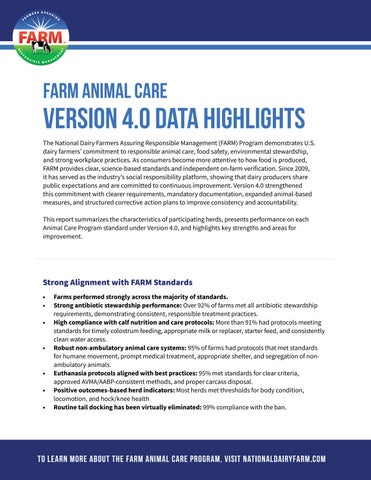
The National Dairy Farmers Assuring Responsible Management (FARM) Program demonstrates U.S. dairy farmers’ commitment to responsible animal care, food safety, environmental stewardship, and strong workplace practices. As consumers become more attentive to how food is produced, FARM provides clear, science-based standards and independent on-farm verification. Since 2009, it has served as the industry’s social responsibility platform, showing that dairy producers share public expectations and are committed to continuous improvement. Version 4.0 strengthened this commitment with clearer requirements, mandatory documentation, expanded animal-based measures, and structured corrective action plans to improve consistency and accountability.
This report summarizes the characteristics of participating herds, presents performance on each Animal Care Program standard under Version 4.0, and highlights key strengths and areas for improvement.
Strong Alignment with FARM Standards
• Farms performed strongly across the majority of standards.
• Strong antibiotic stewardship performance: Over 92% of farms met all antibiotic stewardship requirements, demonstrating consistent, responsible treatment practices.
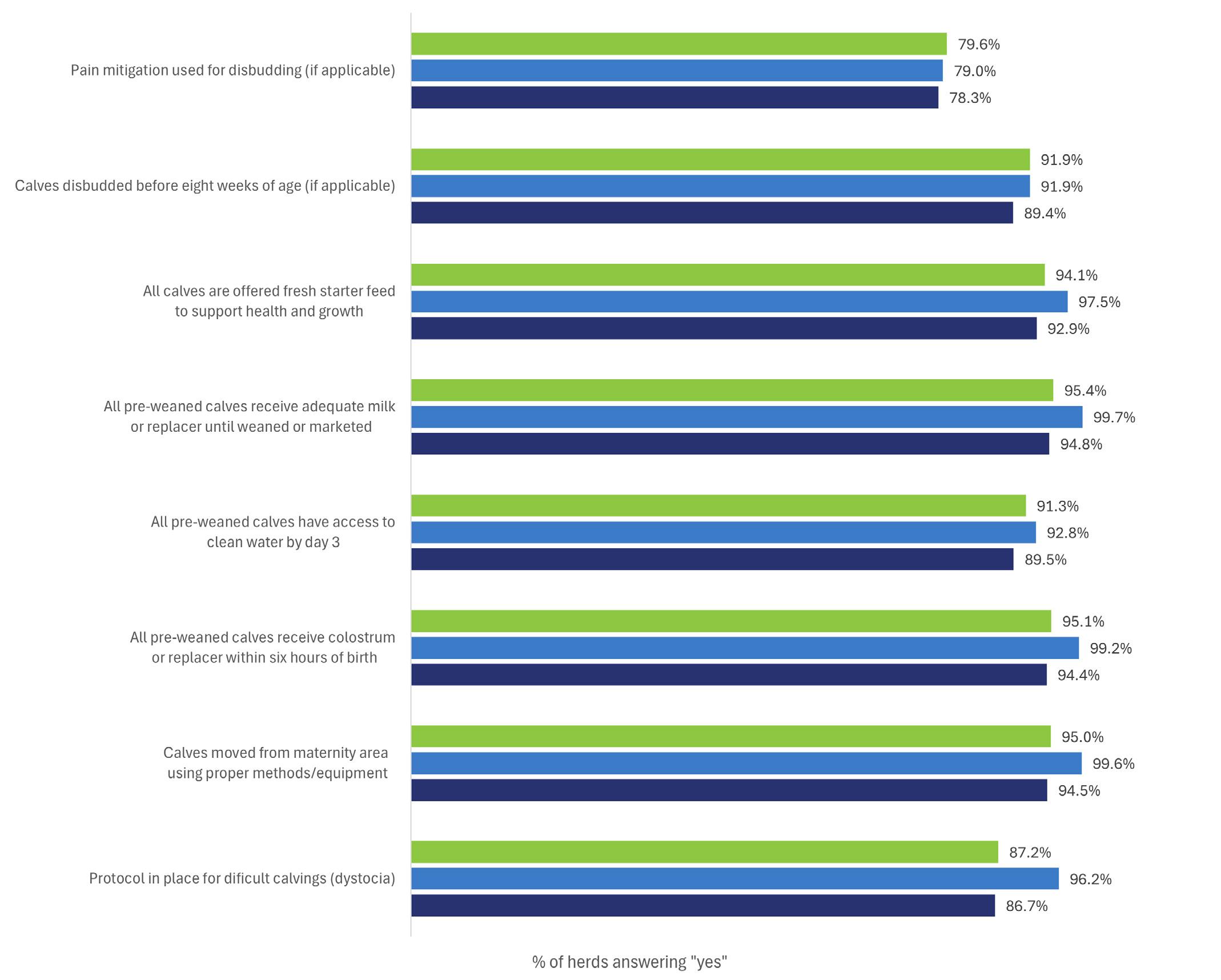
• High compliance with calf nutrition and care protocols: More than 91% had protocols meeting standards for timely colostrum feeding, appropriate milk or replacer, starter feed, and consistently clean water access.
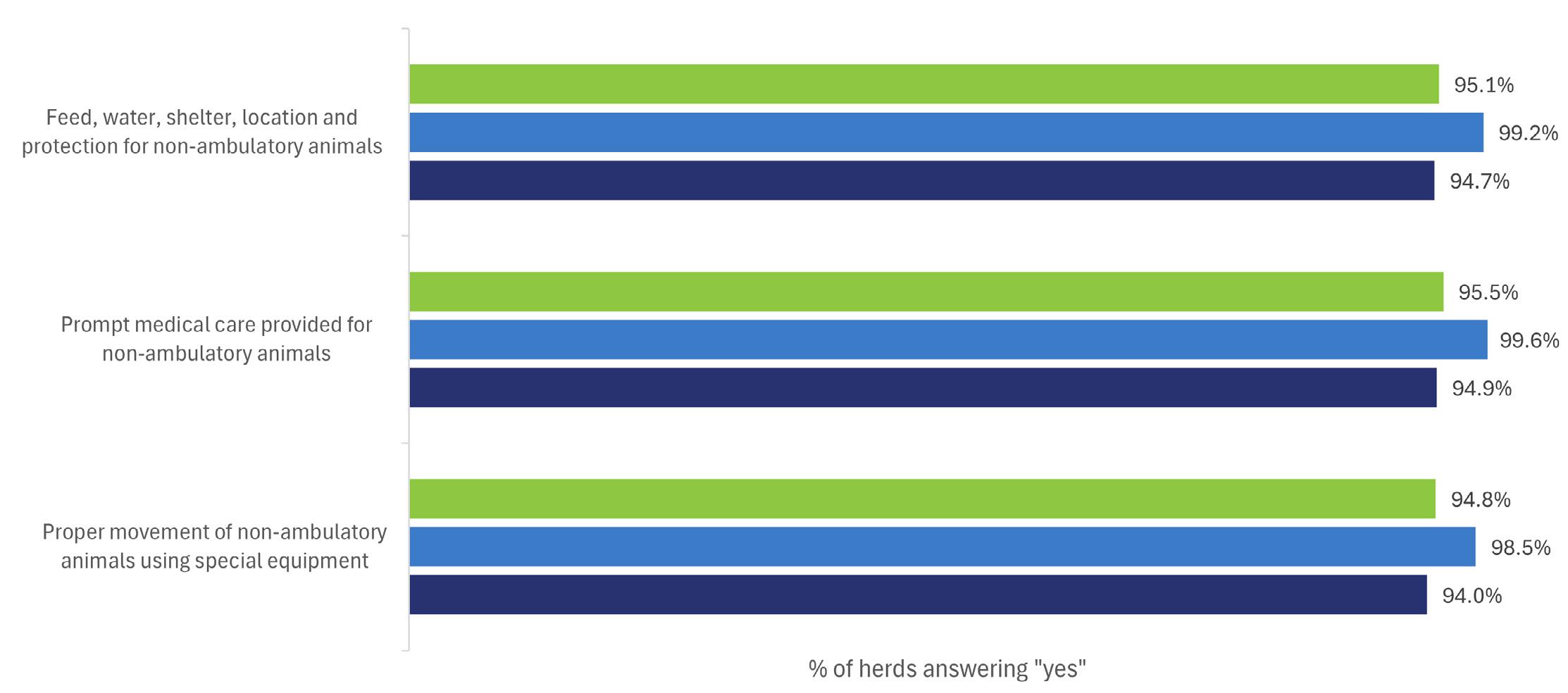
• Robust non-ambulatory animal care systems: 95% of farms had protocols that met standards for humane movement, prompt medical treatment, appropriate shelter, and segregation of nonambulatory animals.
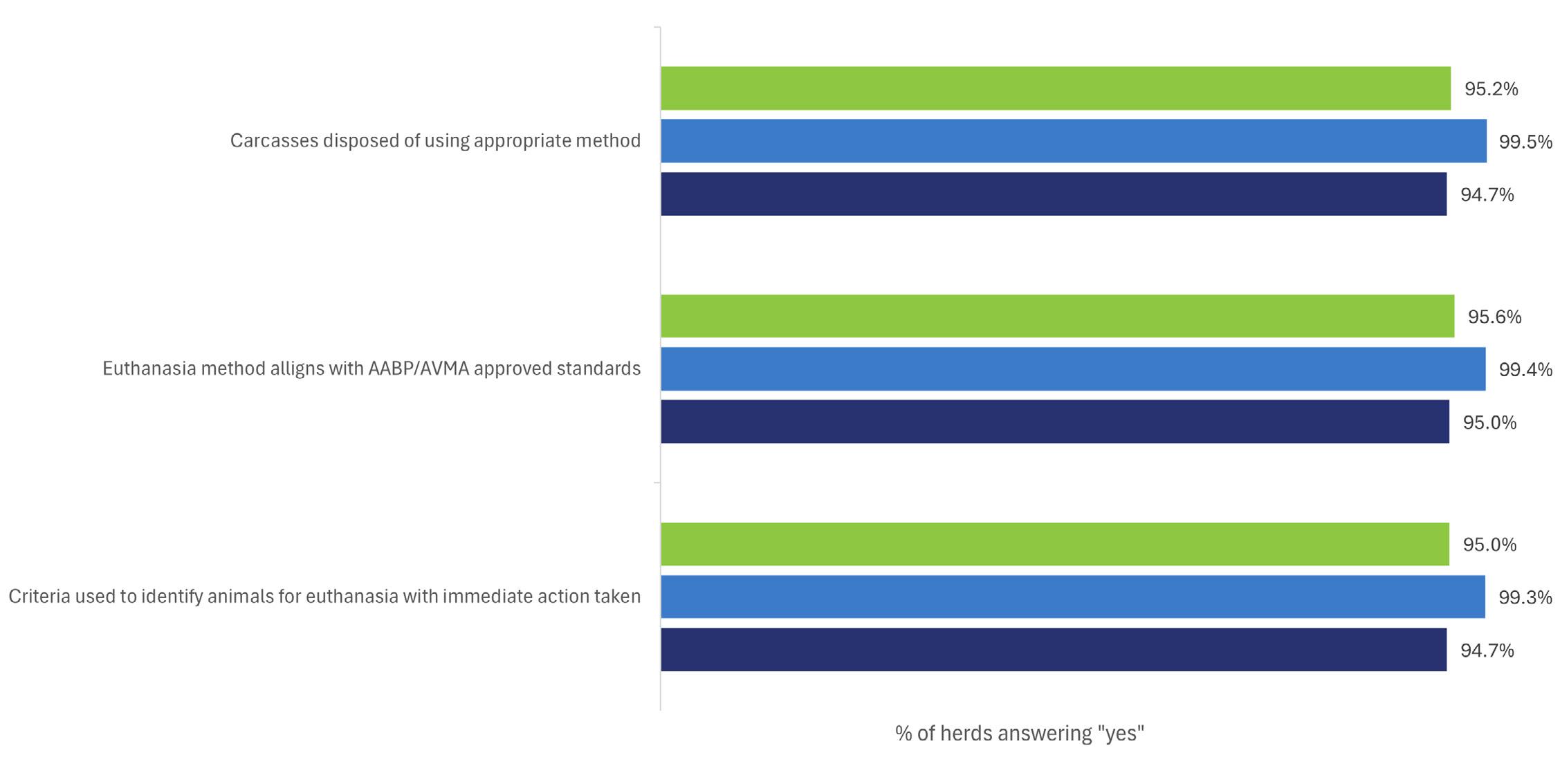
• Euthanasia protocols aligned with best practices: 95% met standards for clear criteria, approved AVMA/AABP-consistent methods, and proper carcass disposal.
• Positive outcomes-based herd indicators: Most herds met thresholds for body condition, locomotion, and hock/knee health
• Routine tail docking has been virtually eliminated: 99% compliance with the ban.
The U.S. Dairy Herd
A total of 25,101 second-party evaluations were conducted between January 2020 and June 2024 across the country, representing 7,839,305 lactating cows.
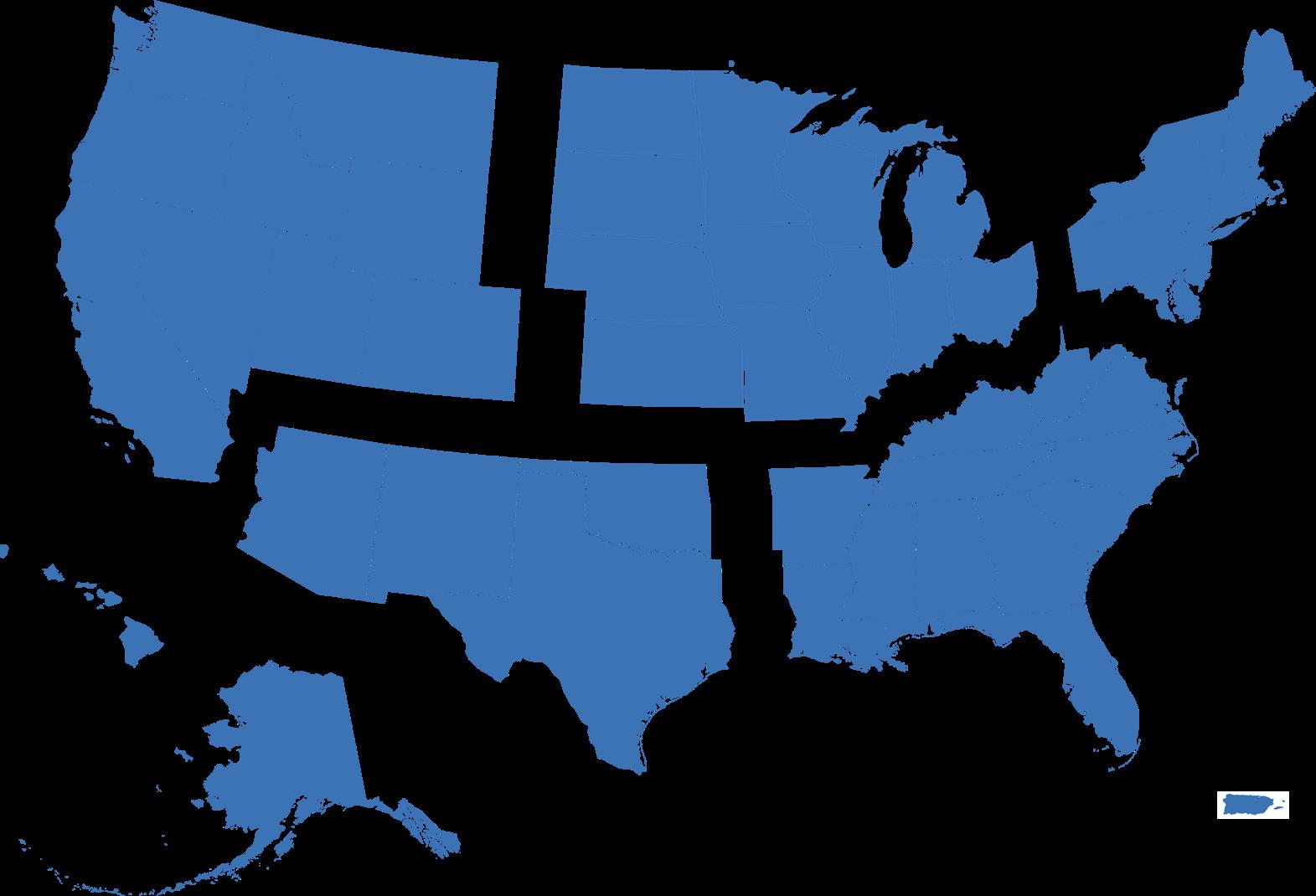
Most herds were located in the Midwest, followed by the Northeast, West, Southeast, Southwest, and Puerto Rico. MIDWEST
average herd size 313 lactating cows
median herd size
cows (range: 1 to 32,764)
HousingTypes
FARM
of farms use free-stall housing for lactating cows (11,507 farms)
(7,229 farms)
bedded or compost pack (1,617 farms)
pasture-only (2,722 farms)
systems (78 farms) 3% stanchion (775 farms) 5% open lot (1,173 farms)
of lactating cows’ primary housing is free-stall (5,226,106 cows)
tie-stall (340,788 cows)
(185,865 cows)
SOUTHEAST
5% of herds (1,268 herds) 4% of lactating cows (287,966 cows)
open lot (1,569,465 cows)
bedded or compost pack (147,178 cows)
other/mixed systems (333,142 cows)
stanchion (36,761 cows)
median number of employees 2
family employees (range: 0 to 75) 0
non-family employees (range: 0 to 356)
PERFORMANCE BY STANDARD
The following figures present how the 25,101 herds receiving second-party evaluation performed for each standard in the program.
Continuing Education Antibiotic Stewardship
94.5%
of facilities reported all meat tissues negative for violative residues in past 3 years
92.2%
of facilities reported official milk samples negative for antibiotic residues in past 3 years
Veterinarian review
73%
of facilities had permanent treatment records maintained and available for the Veterinarian of Record
66.1%
of herds had herd health plans reviewed by the Veterinarian of Record in the past year
69.5%
of facilities had a VeterinarianClient-Patient Relationship (VCPR) form signed in the past year
Facility Observations
Proper ventilation in housing facilities (99.3%)
Adequate feed available to all age classes (99.3%)
Housing allows normal movement and postures (99.2%)
Facilities prevent electrical hazards (99.0%)
Adequate lighting for observation and safety (98.6%)
Protection from heat and cold provided (97.8%)
Clean, dry and safe resting areas provided (97.2%)
Clean water available to all age classes (95.3%)
Daily exercise provided (weather permitting) (90.1%)
Emergency contacts posted and accessible (76.0%)
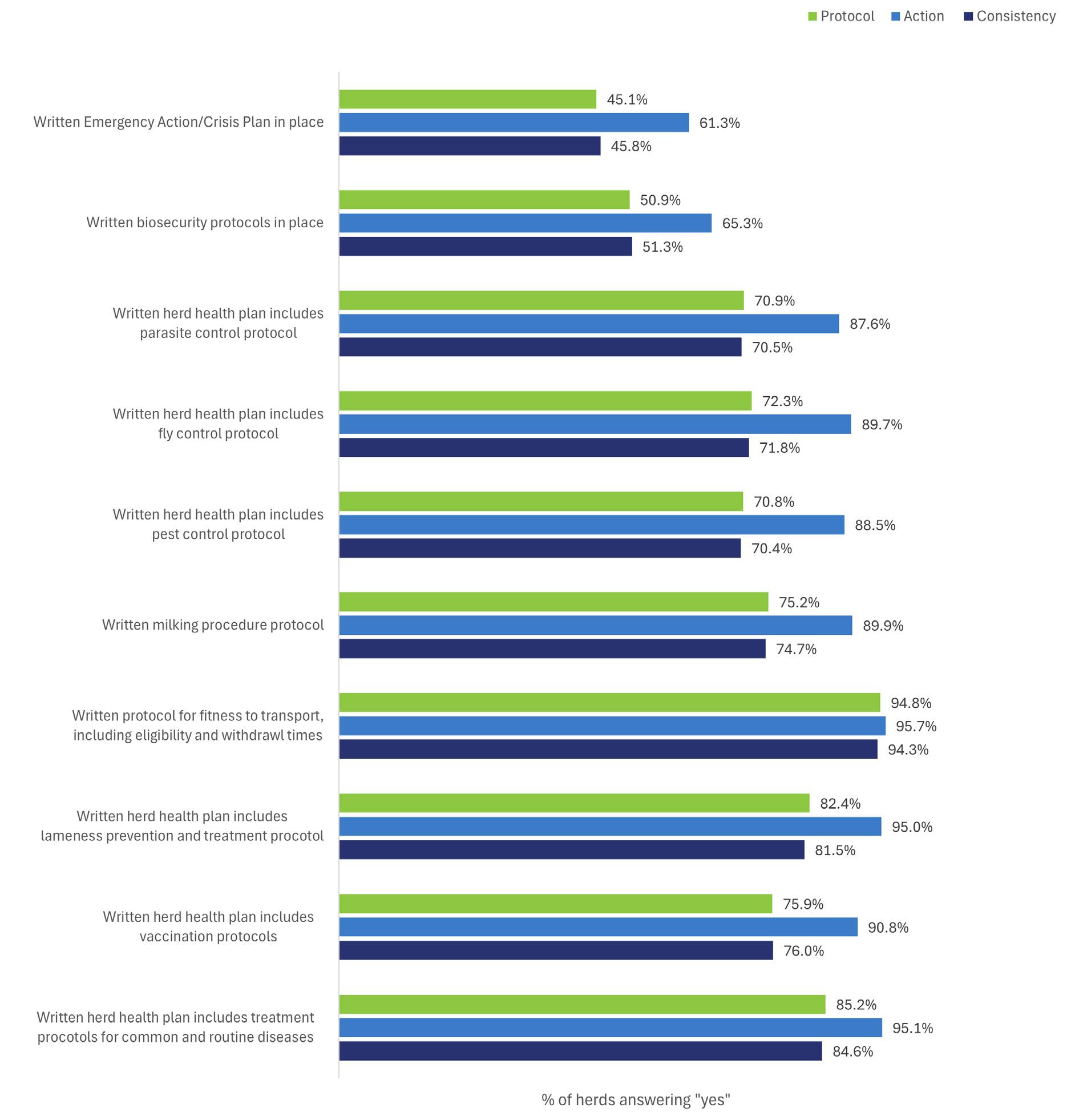
Meeting FARM Standards: Protocol, Action and Consitency
Protocol: Does the facility have a written protocol that includes details on the farm’s practices that meets the FARM Version 4.0 standard?
Action: Do the practices implemented on the farm meet the FARM Version 4.0 standard?
Consistency: Does the farm’s actions align with what is written in their protocol?
animal and facility management
PRE-Weaned Calves
Non-Abulatory Animals
98.3% of facilities had a separate location for segregating weak, sick or injured animals
Euthanasia
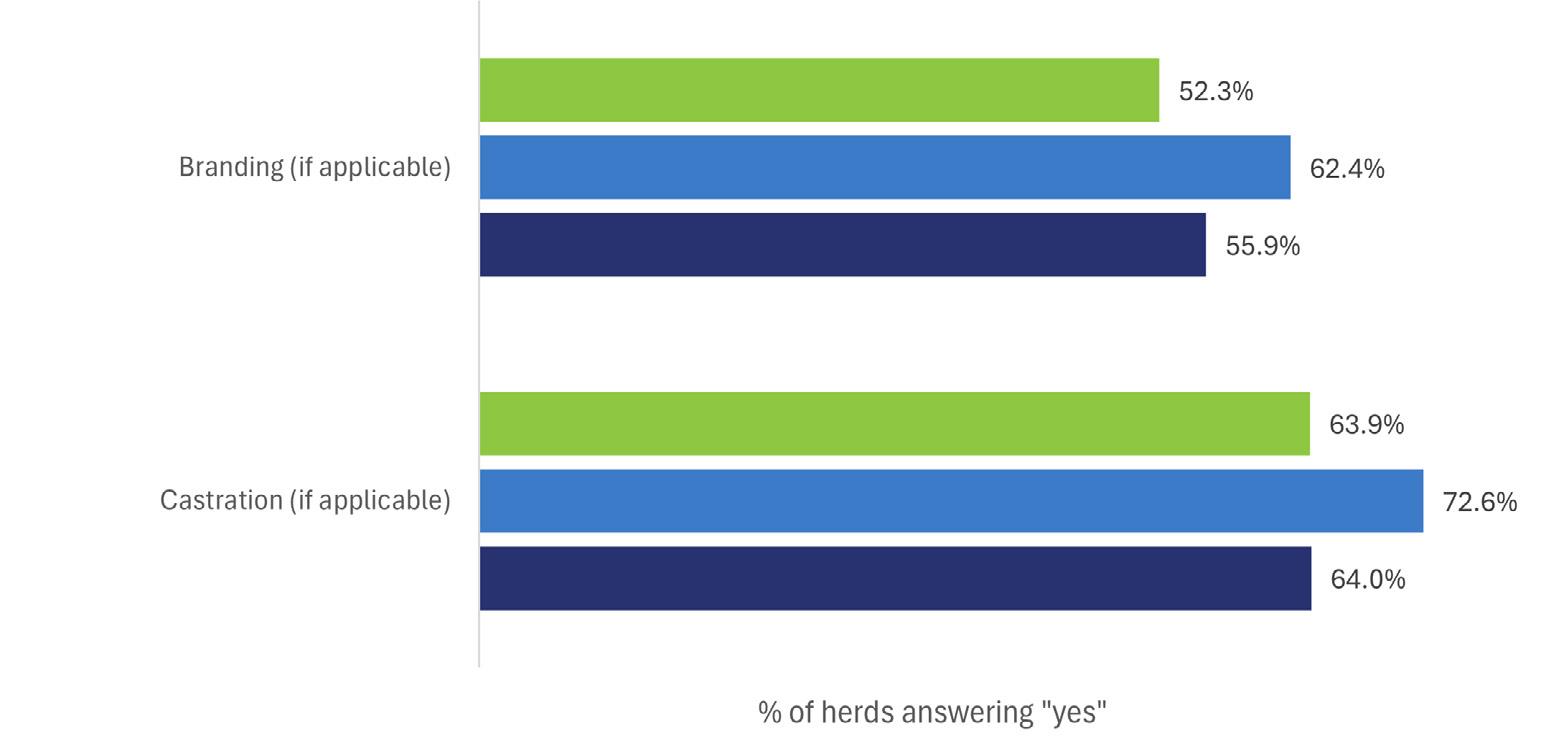
Animal Management
of those facilities reported providing pain mitigation for branding
of those facilities reported providing pain mitigation for castration
Note:
93.2% of herds had all animals permanently identified with tamper-resistent ID
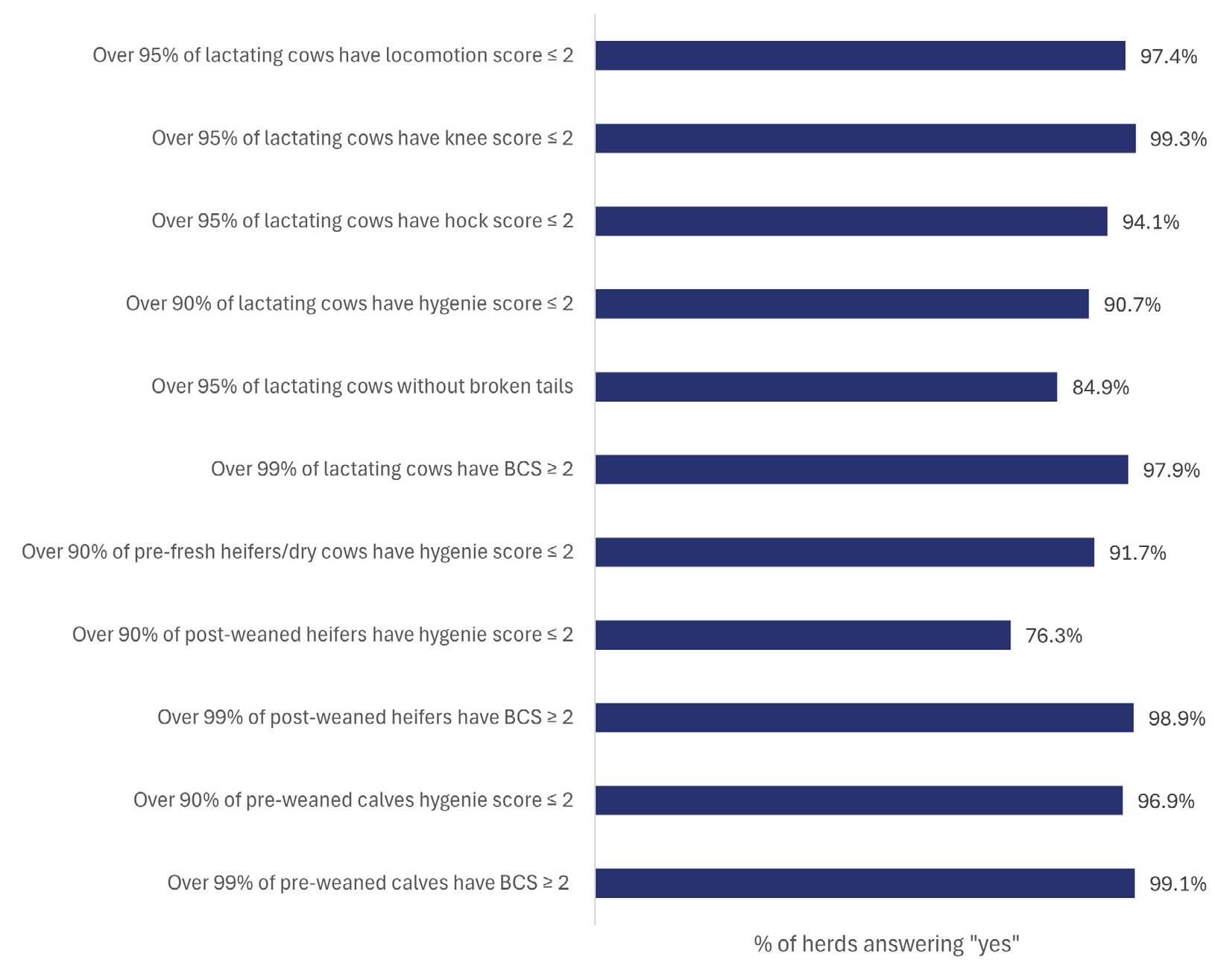
Outcomes-Based Animal Observations
99.5% of facilities comply with the ban on routine tail docking
Taking Corrective Action
Failing to meet certain FARM Animal Care Program Version 4.0 standards triggers corrective action the farm. Mandatory Corrective Action Plans must be resolved within 9 months, Continuous Improvement Plans must be resolved within 3 years, and Immediate Action Plans require resolution within 48 hours.
Top 5 Mandatory Corrective Action Plans (MCAP)
The median (range) number of MCAPs per farm was 0 (range: 0 to 34). Over half of herds (52%) had no MCAPs, 7% had 1 MCAP, and 20% had two MCAPs. The proportion of herds with higher numbers of MCAPs declined steadily, with fewer than 1% of herds having more than 15.
The top 5 most commonly issued MCAPs, which require resolution within 9 months, are:
1. Signed written herd health plan: 16% of all MCAPs issued
2. Signed VCPR form: 14% of all MCAPs issued
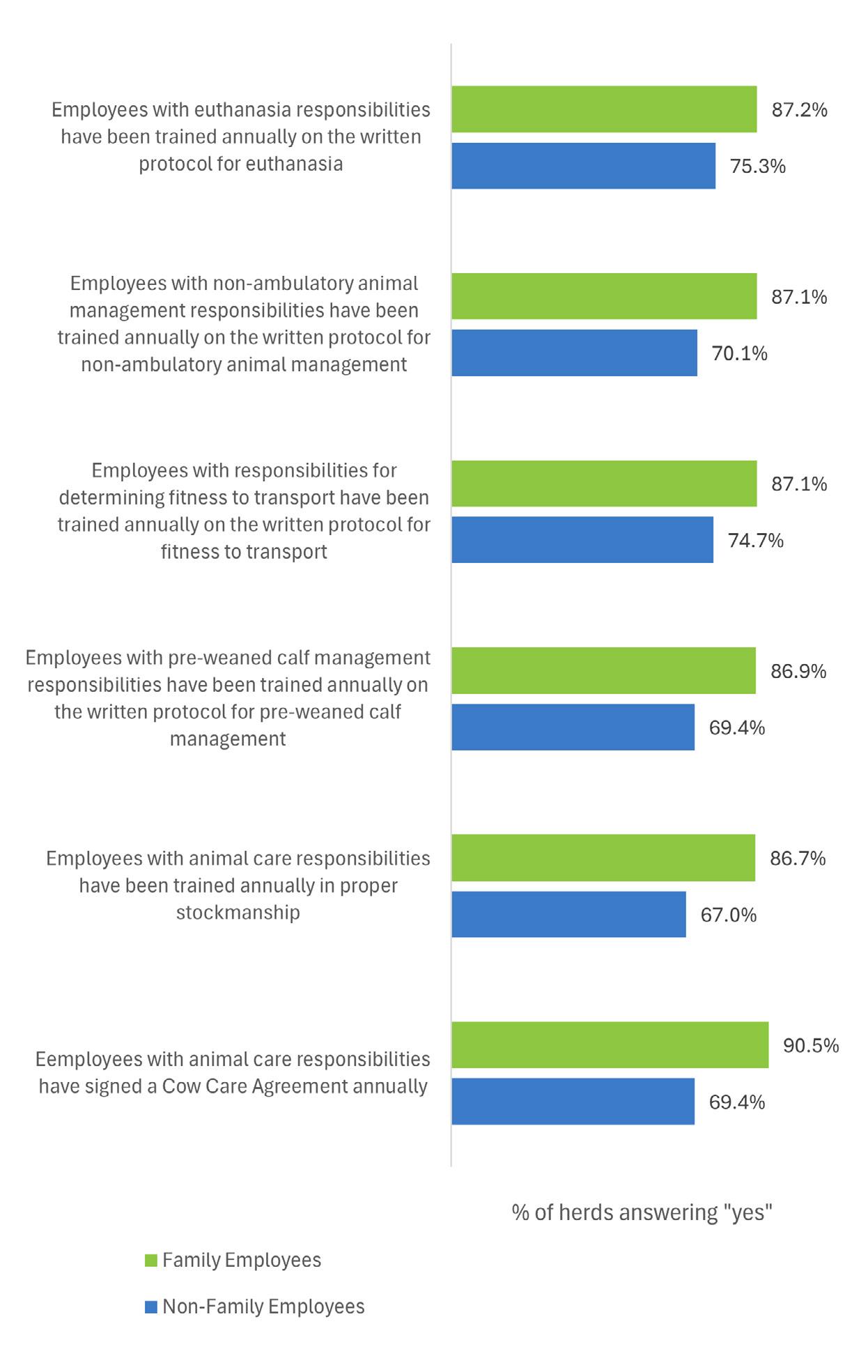
3. Documentation of stockmanship training for all non-family employees: 6% of all MCAPs issued
4. Signed cow care agreements for all non-family employees: 6% of all MCAPs issued
5. Documentation of pre-weaned calf management training for all non-family employees: 5% of all MCAPs issued
Top 5 CONTINUOUS IMPROVEMENT Plans (CIP)
The median (range) number of CIPs per farm was 1 (range: 0 to 14). Half of all herds had no CIPs, while 20% had one CIP and 11% had two. The proportion of herds with higher numbers of CIPs declined steadily, with fewer than 1% of herds having more than nine.
The top 5 most commonly issued CIPs, which require resolution within 3 years, are:
1. Permanent treatment records: 16% of all CIPs issued
2. Exceeding 5% broken tails in lactating cows: 12% of all CIPs issued
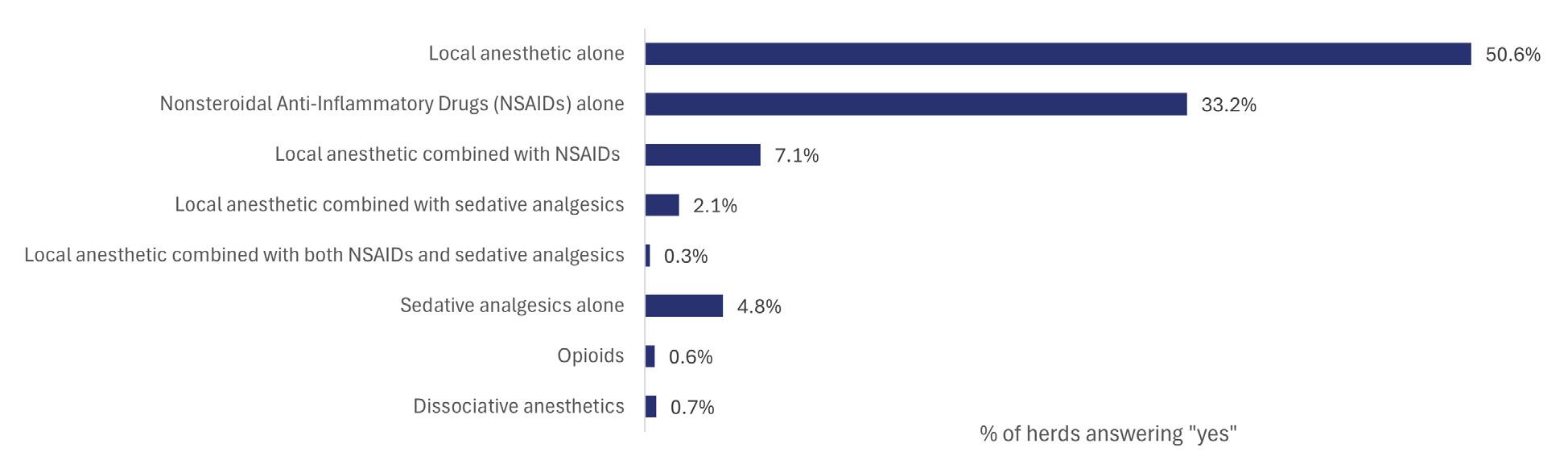
3. Providing pain mitigation to calves when disbudding: 10% of all CIPs issued
4. Having a written protocol for pain mitigation for disbudding: 9% of all CIPs issued
5. Documentation of stockmanship training for all family employees: 8% of all CIPs issued
Immediate Action PlanS (IAP)
Less than 1% (0.5%; 126/25,101) resulted in an IAP for routine tail docking.