Component-adjusted milk production grew 3.1% in May on account of a larger milking herd and a rebound in component tests. More milk means more dairy products, and healthy domestic demand combined with exceptional export volumes have prevented cheese and butter volumes from becoming burdensome at the CME even as prices are towards the lower end of their historic range. Conversely, exceptional domestic demand for proteins, both in the form of nonfat dry milk and whey protein concentrates, has reduced export availability for those products. Beyond the United States, global milk supply may be slowing for the first time in months as heatwaves impact milk production, particularly in the European Union, potentially setting the stage for improved global prices.
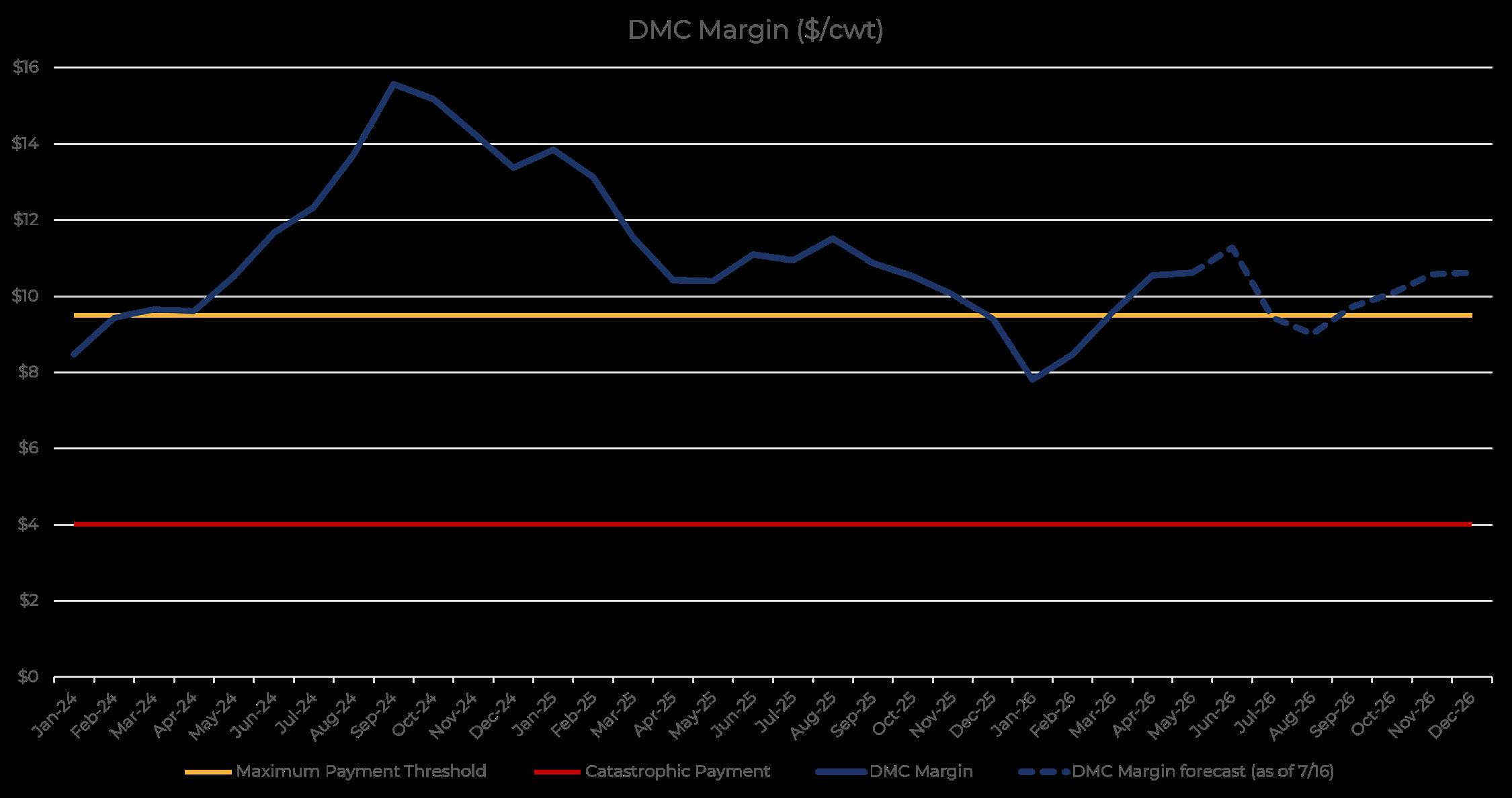
Turning toward the farm, the Dairy Margin Coverage margin edged up to $10.62/cwt, up $0.08/cwt from the month before. However, feed costs are expected to increase as heat waves and renewed purchases from China elevate CBOT Corn and Soybean Meal futures, potentially setting the stage for DMC payouts in July and August.
GRAPH OF THE MONTH
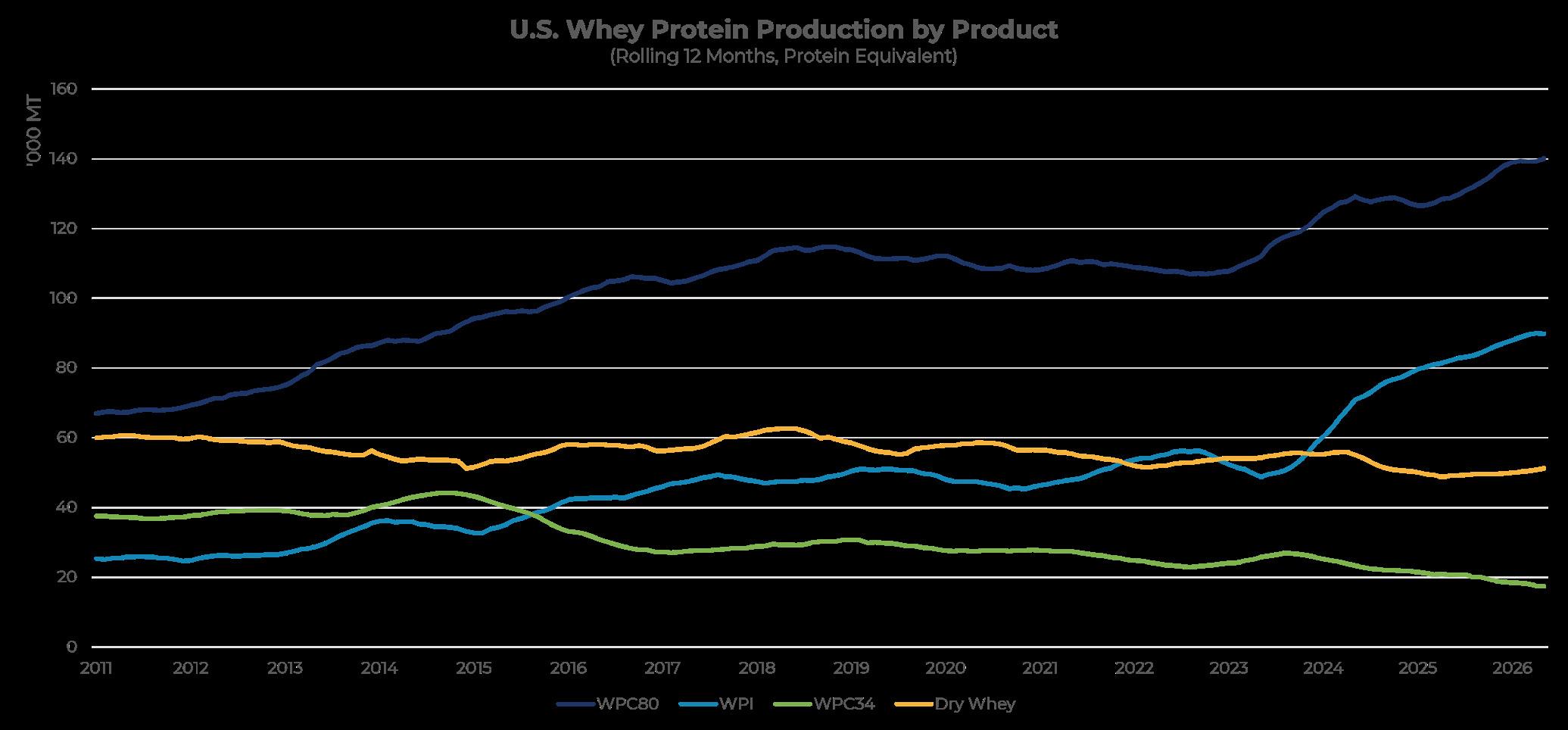
While not as direct as changes to the cheese and butter price, the boom in whey protein is helping support dairy farmer milk checks. As shown on the chart below, whey solids are increasingly being pulled into higher concentrations as prices soar. In fact, WPC80 and WPI now account for 77% of all whey protein processed domestically. While some of the increase has come from additional cheese capacity, the United States has also been reducing dry whey production, which has helped keep dry whey prices – which feed directly into Class III – supported.
PRICES
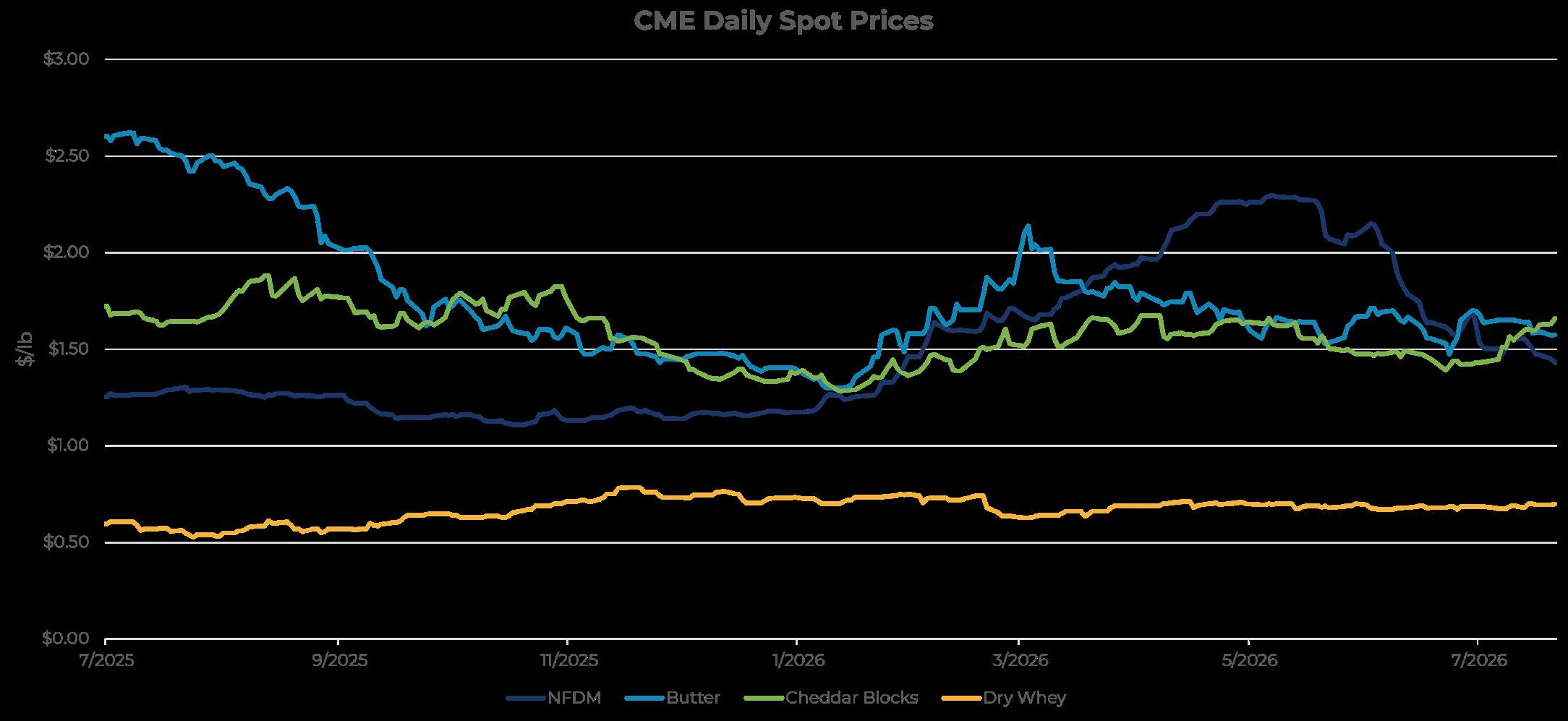
Since our last report, NFDM prices have continued their descent from the record highs achieved in the spring. At the time of writing, prices have found support as skim solids supplies remain tight and U.S. prices near global levels. Boosted by exports and ample domestic use, butter prices have once again overtaken NFDM. Cheese has largely been rangebound as strong production is balanced by record exports. Dry whey prices have remained at their elevated level as more whey protein heads to WPC80+.
MARKET COMMENTARY
CHEESE
Ample milk supplies and demand for whey continue to send more milk to cheese plants though shifting demand conditions are influencing the cheese types produced. For instance, American-type cheese production fell 2.6% in May, while other varieties (predominantly Italian-type) increased production by 6.5%.
On the demand front, Placer.ai reported quick service restaurant foot traffic fell by 4.4% year-over-year in May, signaling that food service softness persists. However, aggregate U.S. domestic sales are stable overall thanks to solid retail, and when combined with surging exports, prices have been relatively stable despite abundant supply. Looking ahead, global cheese prices could improve over the summer if heat waves in Europe continue to dent milk supplies and thus cheese production.
WHEY
As shown in the graph of the month, whey solids continue to be pulled out of dry whey and redirected to higher protein concentrations. Dry whey exports have surged beyond expectations, though unit values suggest whey permeate rather than sweet whey has driven much of the growth. Still, by virtue of weaker production, sweet whey supplies remain tight.
On the high protein side, buyers may actually be balking at these prices. U.S. WPC80+ exports fell 27% in May, like a result of prices being 156% higher than one year earlier. USDA and industry contacts report that almost all WPC and WPI production is presold through the end of the year, and while more production capacity is on the horizon, both domestic and export availability is expected to remain limited.
BUTTER
May’s boost in milkfat tests provided further accelerated butter production. With growing supplies in the U.S. and still limited international presence, U.S. butter prices remain well below European and Oceania levels. Still, U.S. and global demand is picking up. Undeterred by conflict, importers in the Middle East and North Africa purchased 640% more butter from the U.S. in May than a year ago. Canada and Australia, established dairy producing regions, also increased their U.S. purchases. Domestic demand also improved sharply. So far this year, butter sales are 3.4% above 2025 levels at retail according to Circana, and OpenTable reported a 13% yearover-year increase in restaurant reservations in May, indicating full-service restaurant traffic – which is a major user of butter – remains resilient even as quick service (which tends to over index on cheese usage) continues to struggle.
Overall, strong exports and rising domestic demand are not quite compensating for abundant supply. However, with heat waves impacting milk production, some bullishness may return to butter markets as we near the seasonal peak in demand.
NONFAT DRY MILK/SKIM MILK POWDER
U.S. milk powder manufacturers increased production of nonfat dry milk 10% in May following this spring’s price rally. While competition with Class II products for skim solids contributed to the increase in prices, the additional NFDM production in May largely came from manufacturers moving away from skim milk powder rather than pulling additional milk into the dryer. The additional production of NFDM was quickly used – domestic use rose 10% and stocks fell slightly in absolute terms, showing healthy domestic appetite for NFDM. Still, exports fell by 20% in May as U.S. NFDM/SMP remains priced well above the rest of the world.
Note: Data tables are available in the Appendix on Page 9
FLUID MILK
After two months of increasing fluid milk sales, volumes fell in May. Lower fat milks showed the largest reductions in sales while whole milk sales ticked up. Organic sales contracted slightly, but at a slower pace than the overall category. Flavored whole milk sales have stood out this year, increasing 14.6% year to date.
CULTURED AND SOFT PRODUCTS
Yogurt and cottage cheese production increased 5% and 12% above prior year levels, consistent with prior months. Circana data shows that, similar to trends in fluid milk sales, consumers are often choosing higher-fat varieties of cottage cheese, boosting milkfat and protein use. As consumers look to increase protein consumption and address affordability concerns, sales of yogurt tubs have increased 15% year to date while individual yogurt cup sales have slipped 0.1%.
MILK PRODUCTION
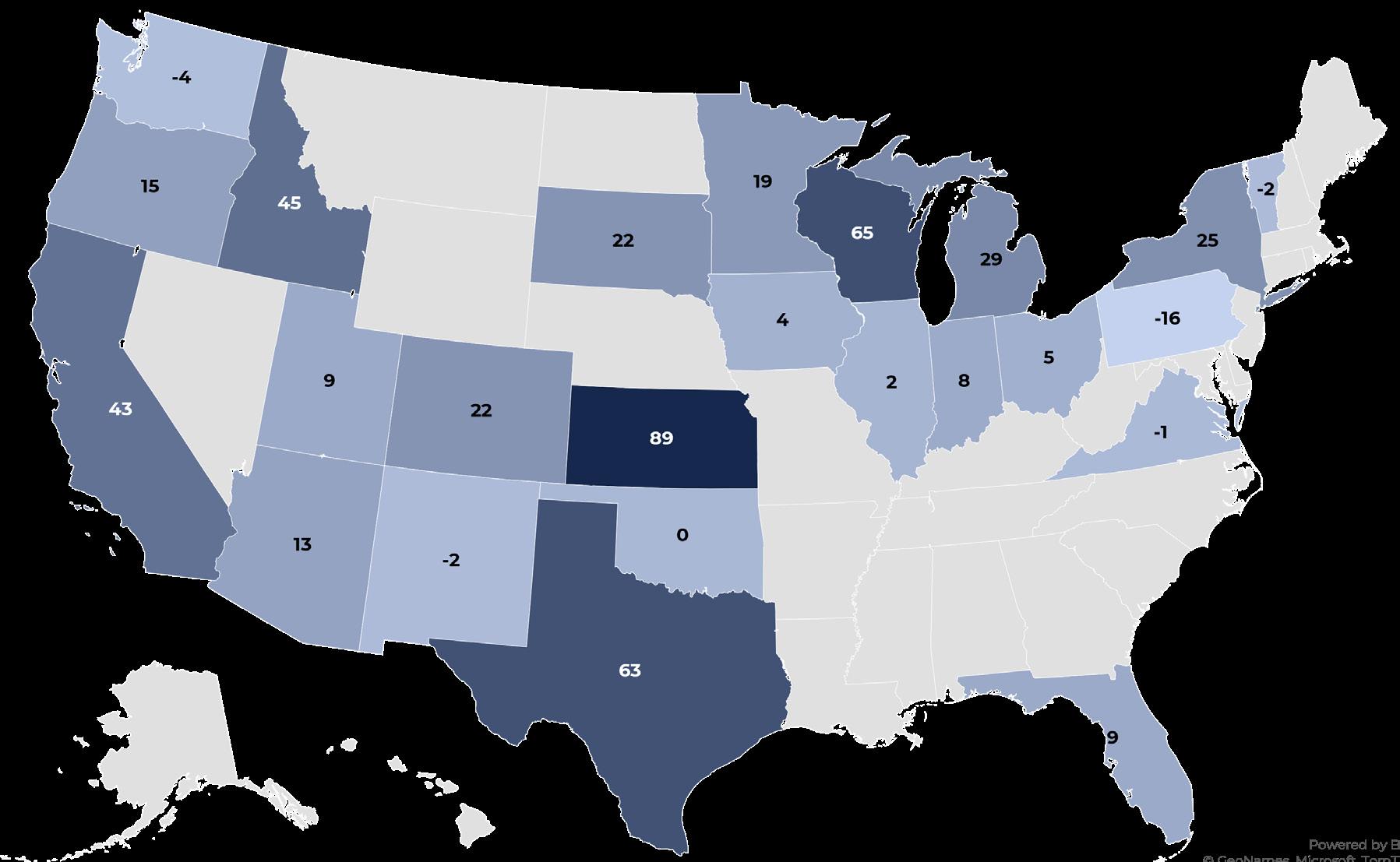
Liquid milk production grew 2.3% in May, a deceleration from previous months. With dairy proteins in high demand and Class IV prices supported by NFDM, producers may have seen incentives to once again push for component growth. Milkfat tests rose 0.07% and FMMO protein tests increased 0.05%, marking the strongest milkfat component growth since last October and the largest gain in protein tests since December. Milk production adjusted for components grew 3.1%, an increase from April’s 2.9% component-adjusted growth.
YEAR OVER YEAR
(million pounds)
CHANGE IN MILK PRODUCTION — MAY 2026
ADJACENT MARKETS
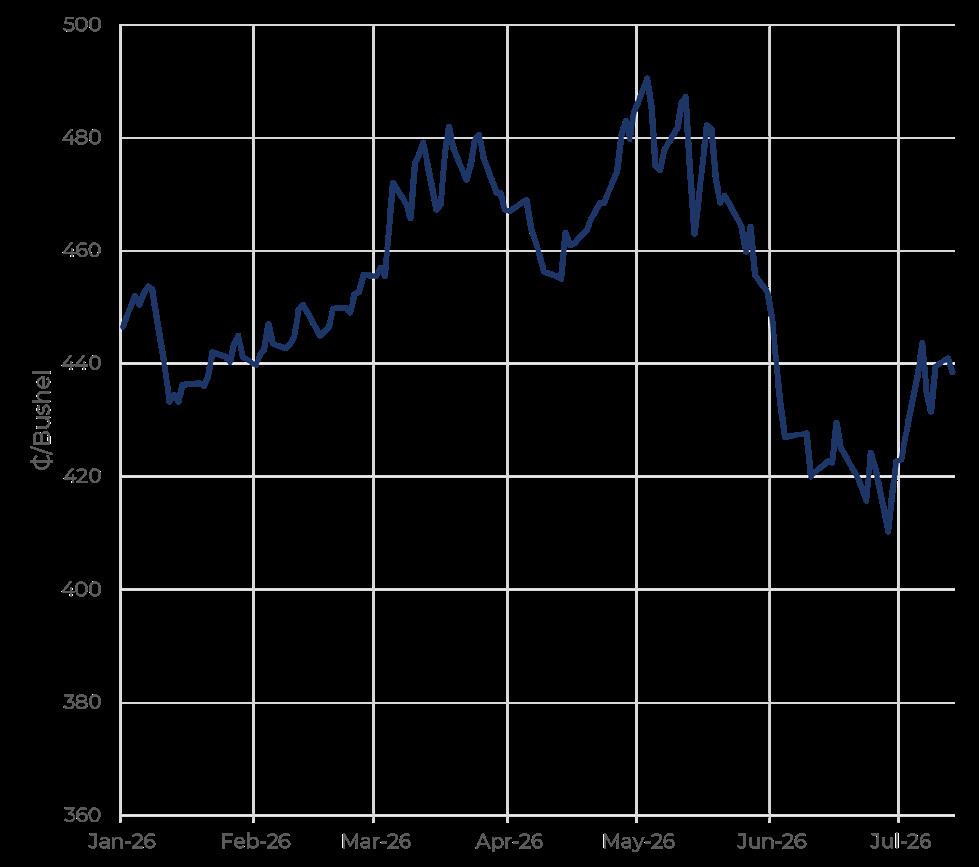
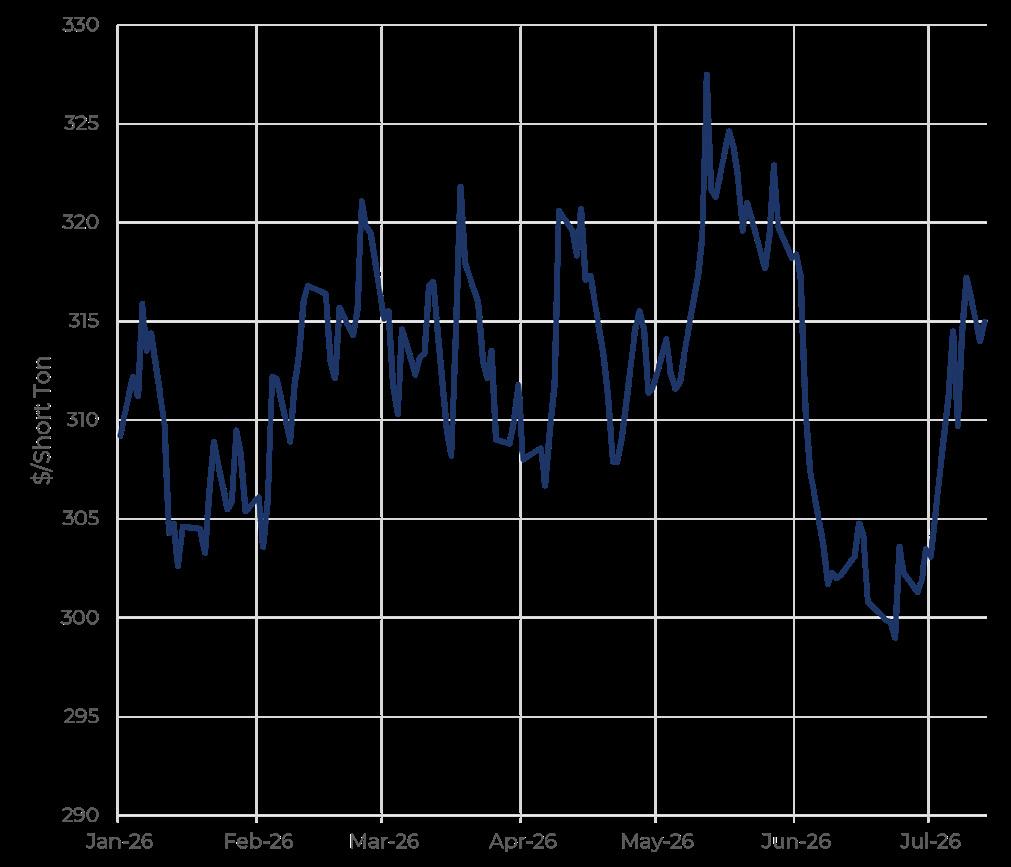
• CBOT Corn and Soybean Meal futures rose as corn stocks were reported to be below expected levels, drought may limit yields during the current growing season, and China increased soybean purchases.
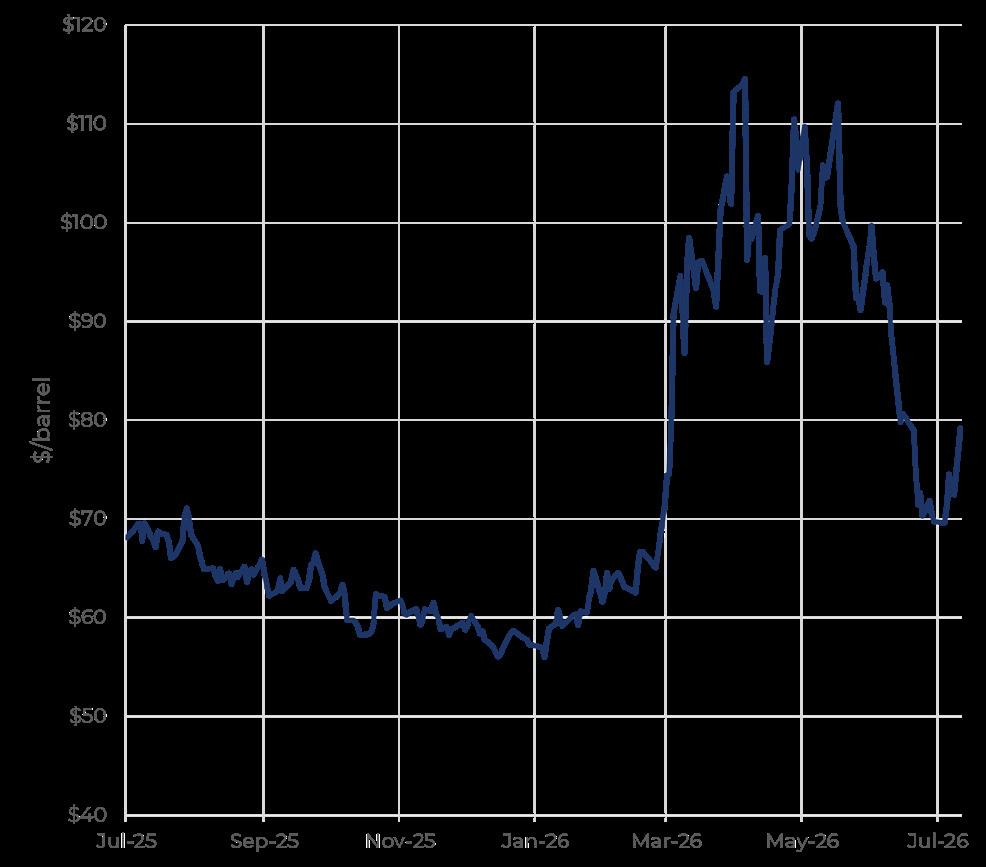
• WTI Crude Oil prices ticked up as conflict in the Middle East appeared likely to continue.
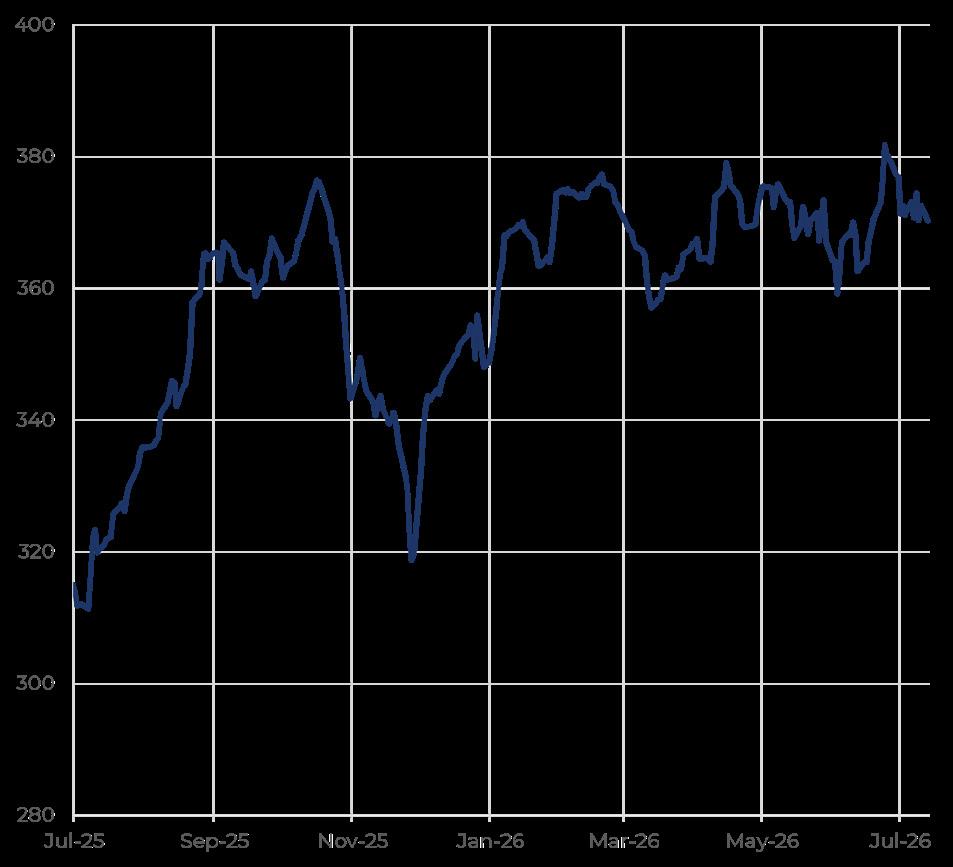
• The CME Feeder Cattle Index pulled back slightly in late June due to increased feed costs but remains elevated amid tight cattle supplies.
SEPT. 2026 CBOT
CORN FUTURES
CME FEEDER CATTLE INDEX
SEPT. 2026 CBOT SOYBEAN MEAL FUTURES
WEST TEXAS INTERMEDIATE CRUDE OIL SPOT PRICE
Sources: CBOT, CME, EIA
DAIRY MARGIN COVERAGE
DMC margins were $10.62/cwt in May, an increase of $0.08/cwt from April as gains in the All-Milk Price slightly outpaced rising feed costs. While the DMC margin for June is anticipated to exceed $11/cwt, a lower anticipated All-Milk Price and higher feed costs may push margins below the $9.50/cwt maximum payout threshold in July and August.
CONSUMER DEMAND INDICATORS
Consumer sentiment improved in June as conflict in the Middle East ebbed, unemployment ticked down, and inflation moderated slightly. However, this improvement comes after record-low consumer sentiment as real income growth turned negative for the first time since 2023 in May (see June GOTM). Heightened pressure on consumers, particularly middle- and lower-income, pressured quick service restaurant foot traffic in May, but casual and formal dining appeared resilient as OpenTable reported a 13% year-over-year increase in reservations and the Restaurant Performance Index showed stability.
LOOKING AHEAD
The impact of summer heat is beginning to be felt domestically and abroad. Milk production in France fell almost 11% due to heat stress, and U.S. feed prices are rising as heat and drought threaten yields. While increasing feed prices will place economic pressure on producers, declining global production may support international prices, which in turn will enable U.S. cheese and butter prices to move upward without comprising export sales. Unfortunately, the resurgent conflict in the Middle East does threaten to stymie the recent improvement in economic conditions. Even so, dairy purchase resilience at retail and full-service dining demonstrates that even in a challenging economic environment, demand for dairy remains firm, even if it varies by product.
Dairy Management Inc.™ and state, regional, and international organizations work together to drive demand for dairy products on behalf of America’s dairy farmers, through the programs of the American Dairy Association®, the National Dairy Council ® , and the U.S. Dairy Export Council ®
Katriel Marks-Yant, National Milk Producers Federation kmarksyant@nmpf.org www.nmpf.org
The National Milk Producers Federation (NMPF) develops and carries out policies that advance dairy producers and the cooperatives they own. NMPF’s member cooperatives produce more than two-thirds of U.S. milk, making NMPF dairy’s voice on Capitol Hill and with government agencies.