National Trust NSW Magazine – February to May 2026
NEW SOUTH WALES
We were delighted to unveil a revitalised Saumarez Homestead late last year, including brand new accommodation and the adaptive reuse of the Thomas House and the restored Jackson and Saumarez Centres. The $2.7 million project funded by the NSW Government in partnership with Armidale Regional Council and the National Trust (NSW) has transformed this special place into a premier regional destination. Turn to page 6 to read all about the work that was done, then book your stay to experience Saumarez Homestead for yourself.
Also in this issue, you’ll find details for the 2026 Australian Heritage Festival, the month-long celebration of heritage that takes place across the state. We look forward to seeing you there!
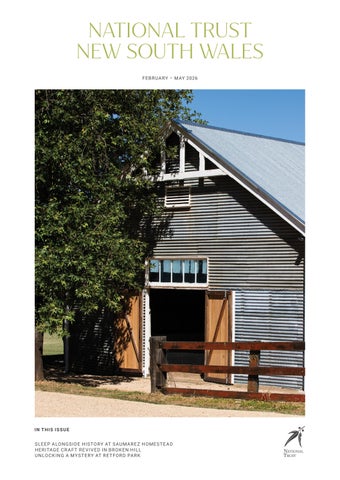
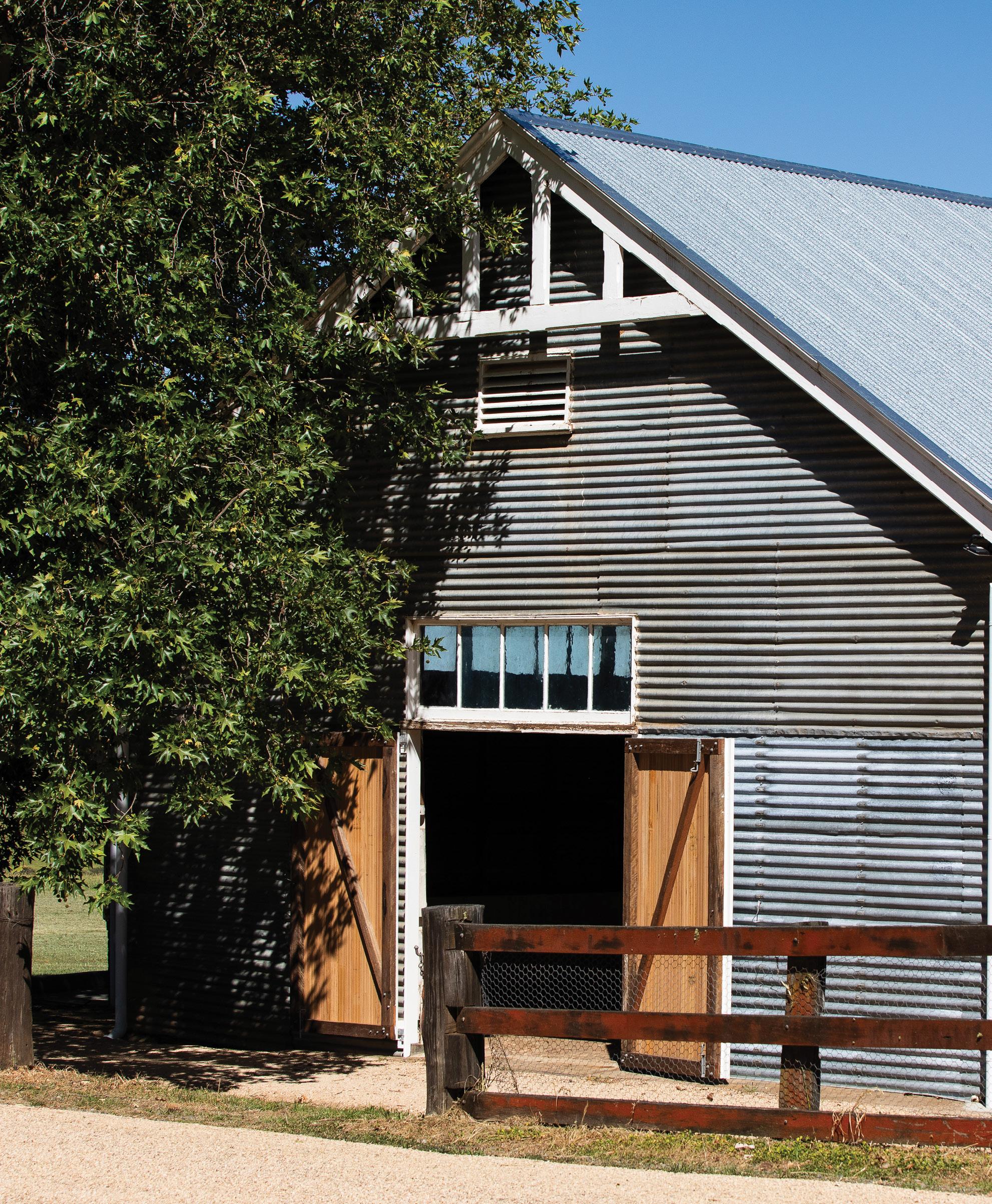
On the cover: With new accommodation and revitalised events venues, including the Jackson Centre (pictured), Saumarez Homestead is now a premier destination in the New England region. Read more about the recent work done at this special place on page 6 (photography by Simon Scott).
ACKNOWLEDGEMENT OF COUNTRY
The National Trust acknowledges the Traditional Custodians of the land on which we work, celebrate and share the stories of heritage. We pay our respects to Elders past and present and we support the Uluru Statement.
National Trust (NSW) Observatory Hill, Millers Point, Sydney 2000 GPO Box 518, Sydney 2001 Telephone: (02) 9258 0123 nationaltrust.org.au/nsw
President: Bruce Pettman
CEO: Debbie Mills
Editor: Michelle Bateman
Designer: Lauren Sutherland
Editorial Committee: David Burdon, Nick Corbett, Alison McCann, Debbie Mills, Leah Tasker, Jane Watters, Anne Weinman, Amanda Woodward-Brown.
The National Trust New South Wales magazine is published by the National Trust of Australia (New South Wales). Published articles reflect the opinions of the authors and are not necessarily reflective of the views of the National Trust. This magazine is printed by Bright Print Group, on paper that is independently certified by the Forest Stewardship Council (FSC), carbon neutral and made with 100% recycled post-consumer waste in a chlorine-free environment.
Building a Lasting Future
BY DEBBIE MILLS AND BRUCE PETTMAN
Dear Members,
It was a pleasure to welcome so many of you to the Annual General Meeting (AGM) late last year. The meeting was a valuable opportunity to share the year’s achievements, including the significant conservation projects made possible by our wonderful donors, supporters and volunteers, and present an update on the 2025 – 2029 Strategic Plan. We also recognised the significant contribution of well-deserving National Trust Honours Awards recipients.
We announced and welcomed this year’s National Trust (NSW) Board. Congratulations to both the newly appointed and continuing directors; we look forward to working with all board directors throughout the year. As the newly appointed President and continuing CEO we are also looking forward to working together. A special mention and thank you to our recently retired directors, Kathryn Pitkin AM, David Collingridge LVO and Alison Page, for their dedication and contribution. A particular thank you to Kathryn Pitkin for her outstanding leadership as the National Trust’s President for the past three years. You can read more about our board directors and see a full list of this year’s National Trust Honours Awards recipients on our website.
As we welcome in the new year, we’re pleased to share our progress in implementing the first stage of the 2025 – 2029 Strategic Plan. Our focus has been on sustainability. In particular, the continual improvement in operations of our special places, including expanded visitor experiences and commercial activations. The newly opened accommodation at Saumarez Homestead is an example of this work and will help us to remain at the forefront of historic property, conservation, management and interpretation.
We’ve also enhanced the profit of our dedicated Bushland Management Services, caring for more than 200 native restoration sites. We’ll continue to build on this work, increasing resilience and securing the future of our vulnerable bushland, historic places and treasured collections and archives for generations to come.
Thank you for your support and enjoy this edition of the magazine.
Debbie Mills, CEO
Bruce Pettman, President
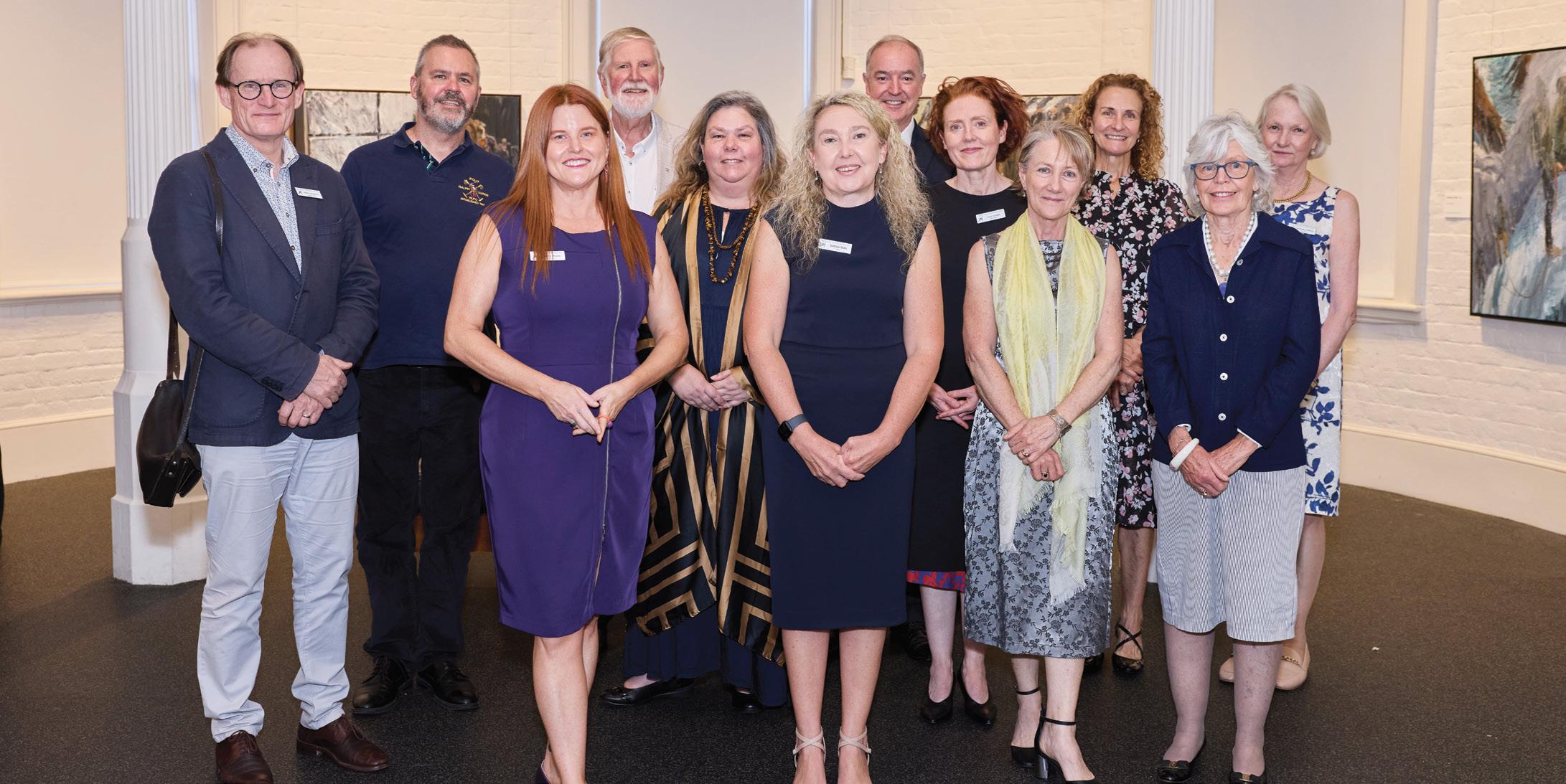
We welcome our 2026 Board of Directors, from left: Hector Abrahams (continuing), Luton White (continuing), Suzette Meade (appointed), Bruce Pettman, President (continuing), Barrina South (appointed), Debbie Mills, CEO (appointed), David Pratt, Treasurer (appointed), Lucy Creagh (continuing), Caroline Mackaness (appointed), Deirdre Hall (appointed), Bimbi Turner (appointed), Dr Kimberley Webber, Deputy (continuing), Paul van Ratingen (not pictured, continuing) (photography by Yianni Aspradakis).
National Trust News
Our collections continue to shed light on the past – learn about the items we’ve recently restored and discover the meaning behind a rare manuscript. Also, stay up to date on positive news for the state’s built and environmental heritage.
GENERAL NEWS
Restoring rare rainforest
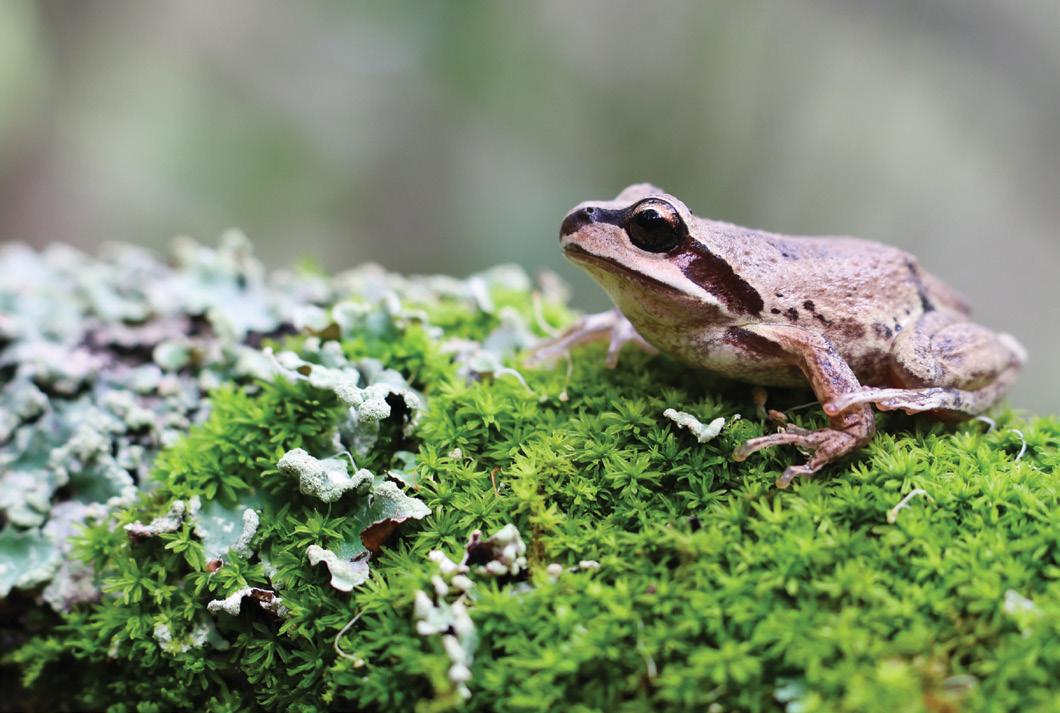
Bushland Management Services (BMS) has partnered with Local Land Services on a significant three-year project to restore remnant Western Sydney Dry Rainforest and Wet Sclerophyll Forest. This endangered ecological community in Razorback is accessible only by foot. “Working on Razorback is a huge privilege that will hopefully translate into decades of quality bush regeneration,” says newly appointed Regional Manager for Sydney’s Northern Suburbs, Jack Holdsworth, who was the previous project supervisor.
Preserving irreplaceable history
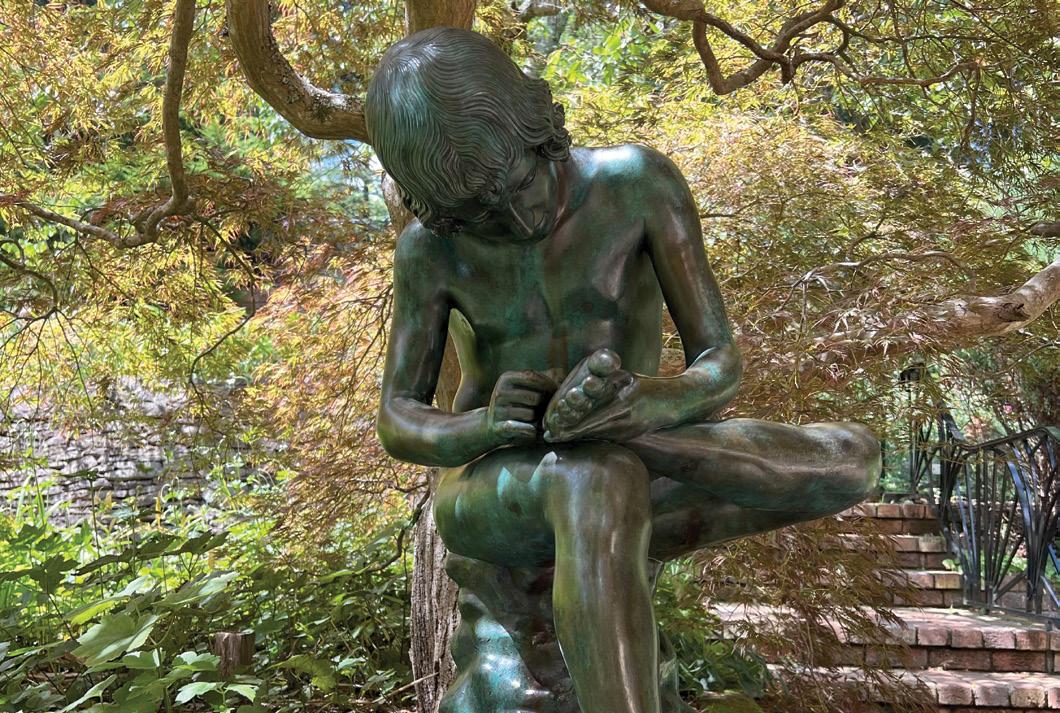
Thanks to the exceptional generosity of donors and supporters, funds raised in the 2024 Collections Appeal have allowed important repairs and restoration work to be carried out on many of the unique treasures under the care of the National Trust. Conservation work has commenced or been completed on items such as an ornate 1840s Mott harp, a rare 17th-century Mortlake wall tapestry, fragile books and numerous sculptures, including the bronze Spinario at Everglades House & Gardens.
A remarkable find at Riversdale
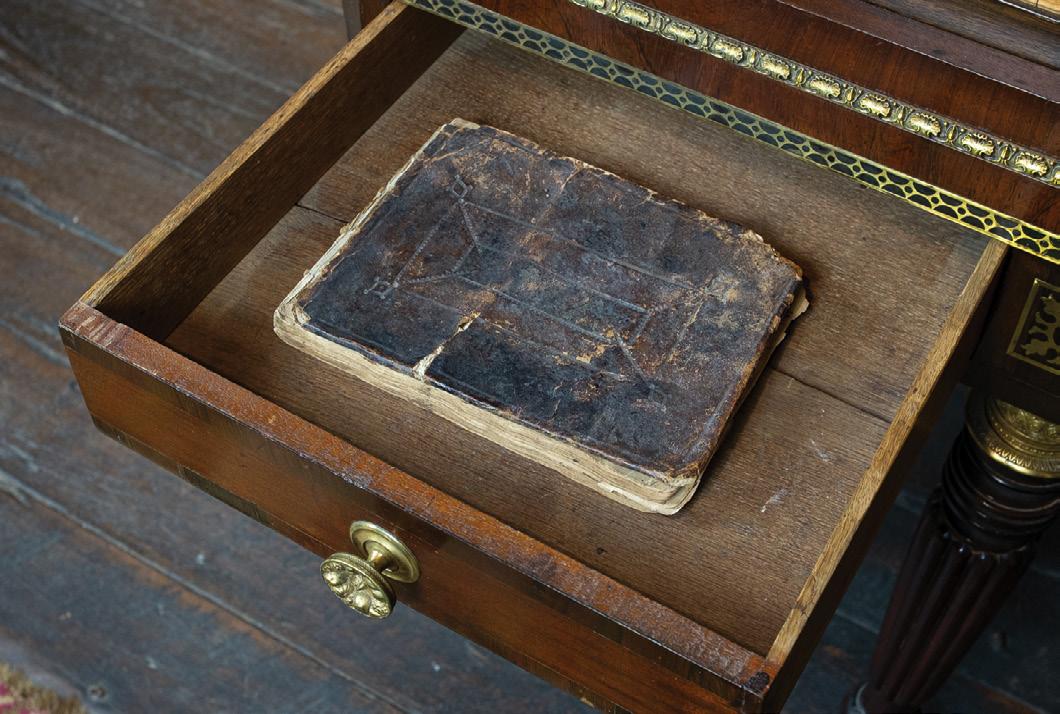
The previously unknown history of a rare 1734 Scottish baroque music manuscript from the collection at Riversdale has been uncovered. After years of research, Australian violinist and musicologist Dr Shane Lestideau has identified Margrat Arthour and Helen Wight as the authors of the small practice book. Both women were discovered to be associated with Scotland’s earliest musical society, while the book – which is filled with songs and instrumental tunes – was written at a time when published music and public concerts were still a novelty.
Gosford Library protected
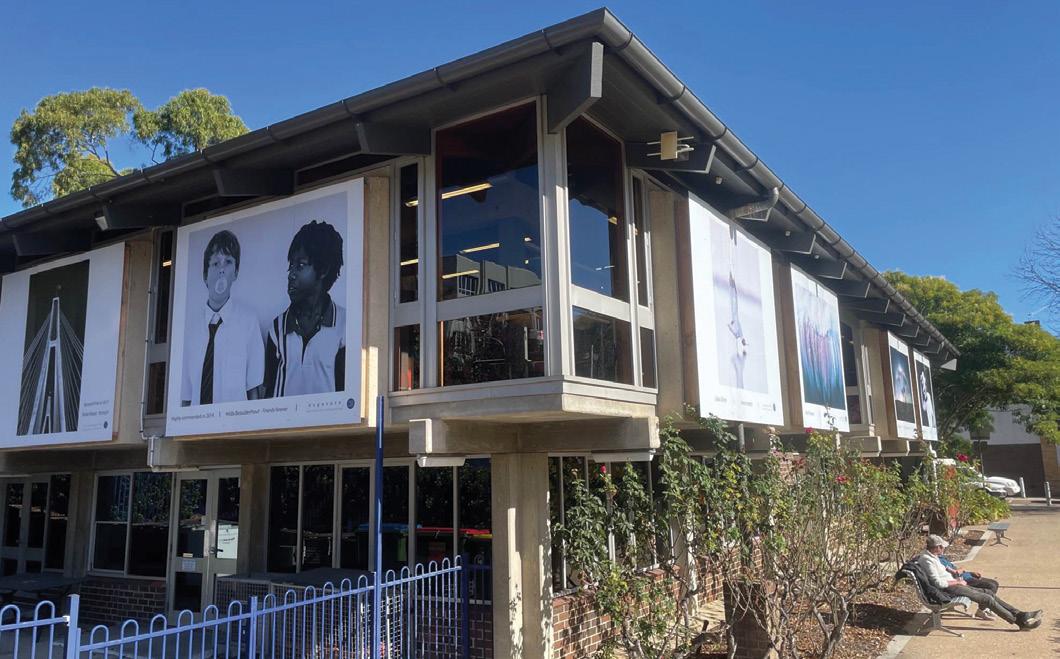
After a long, community-driven campaign, the modernist Gosford Library building has been saved from demolition. The building was listed on the National Trust Register for its architectural, aesthetic, creative and technical qualities. The Gosford Library is also significant in the history of civic architecture in the Central Coast region and continues to be of high social value to the local community. The National Trust will monitor future proposals for adaptive reuse of the site.
New listings on the register
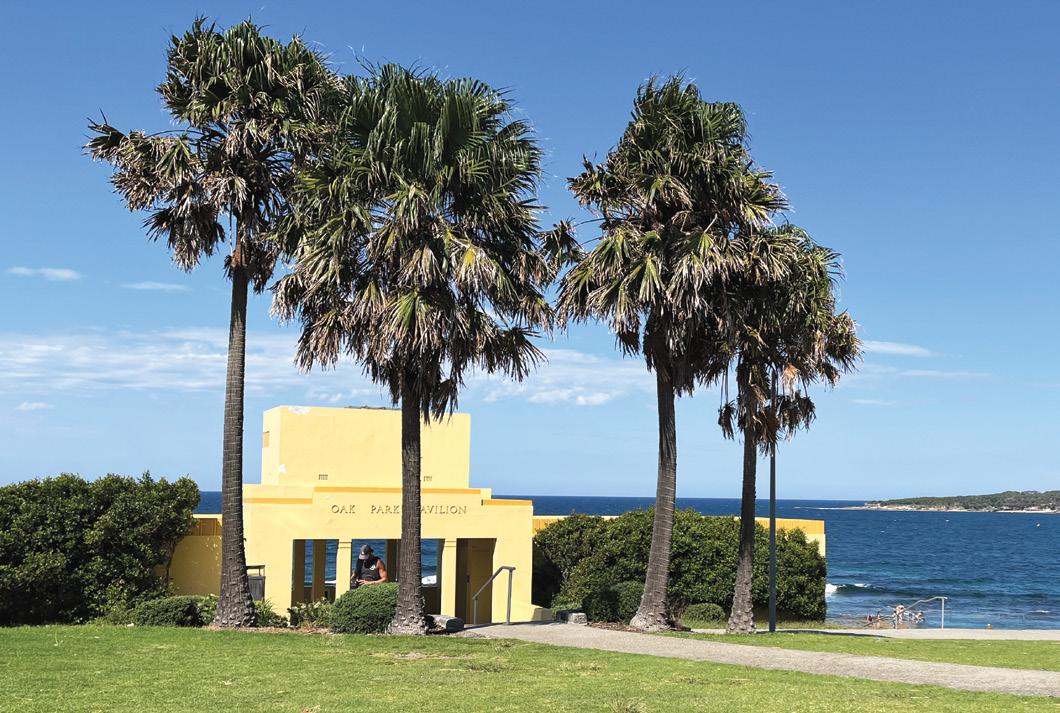
The National Trust Register continues to expand, with a range of places from across NSW being listed. Recent additions include the century-old Cowra Soldiers Memorial Avenue, planted in commemoration of local men who served in World War I, and the Irrawang Pottery in the Hunter Region, home to one of the country’s earliest potteries. In recognition of 20th-century architectural design, the Art Deco Cronulla Beach Pavilion, the Brutalist Warringah Civic Centre and modernist Dee Why Library have also been recognised.
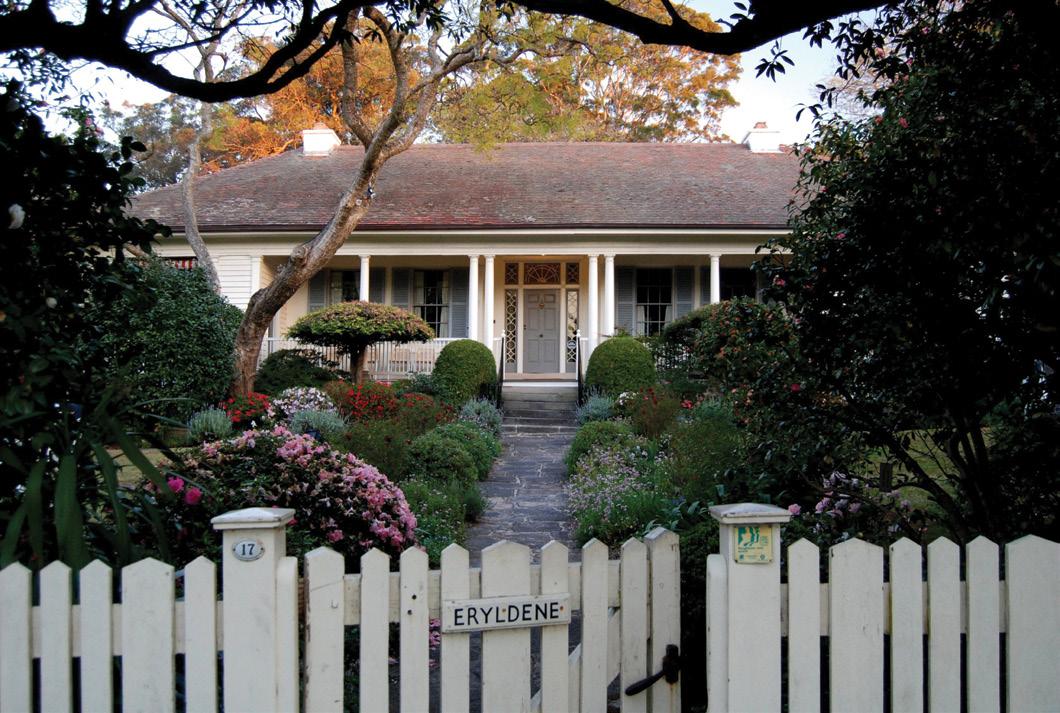
Eryldene under threat
The National Trust has submitted an objection to an eightstorey development proposal close to the historic Eryldene Historic House & Garden on Sydney’s North Shore. We are concerned the proposal will significantly affect the character of both Eryldene and the surrounding Heritage Conservation Areas, impacting the streetscape, views, privacy, solar access and ecological values of the area. The National Trust does not accept that a development of this size is an appropriate or sensitive response in this heritage context.
Stay up to date
From top
Sign up to our newsletter at nationaltrust.org.au/enews-nsw and follow us on Facebook @nationaltrustau and Instagram @nationaltrustnsw. Don’t forget to share photos from your visit on social media using the hashtag #NationalTrustNSW
Opposite, from top Wildlife at Razorback (photography by Christina Senn); The bronze Spinario at Everglades House & Gardens (image supplied); A rare 18th-century manuscript was discovered at Riversdale (photography by Nick Nicholson).
The modernist Gosford Library building (image supplied); The Cronulla Beach Pavilion is now listed on the National Trust Register (image supplied); Eryldene Historic House & Garden (image supplied).
Sleep Alongside History at Saumarez Homestead
BY MICHELLE BATEMAN, EDITOR, THE NATIONAL TRUST MAGAZINE
New accommodation, a restored Thomas House and revived event spaces are extending the life of this much-loved New England property, with adaptive reuse at its heart.
Saumarez Homestead has seen its share of parties. During the White family’s long tenure from 1874 to 1984, the 30-room Edwardian mansion on Anaiwan Country in Armidale became one of New England’s most lively social addresses. Mrs Maggie White was particularly known for bringing people together –summer afternoons saw neighbours and visitors gather for her weekly tennis matches, and weekends were filled with picnics and riding parties. Local and travelling figures – including politicians, civic leaders and in 1935, the entire NSW state cricket team –often found themselves drawn into the fold, and the Homestead developed a reputation as a place where good company and country hospitality were never in short supply.
By 1906, the steady stream of houseguests prompted long-time owner F.J. White to commission a second storey, doubling the size of the home. Gas was piped in for lighting and a hot water system was added – all the better to provide comfort for residents and visitors alike.
That generous spirit is set to continue into the 21st century with new on-site accommodation. With three brand new self-contained cabins, the beautifully restored historic Thomas House and designated spaces for Recreational Vehicles (RVs), Saumarez is extending its reputation for hospitality, offering guests the chance to stay within the landscape that once hosted so many gatherings. The $2.7 million revitalisation project – funded by the NSW Government in partnership with Armidale Regional Council and the National Trust (NSW) – includes upgrades to the Jackson Centre and Saumarez Centre, which are available for venue hire.
This new chapter also comes with a deeper commitment to telling the multi-layered story of Saumarez Homestead. An interpretation program, guided by Anaiwan man Dave Widders, acknowledges the Anaiwan people as the Traditional Custodians of the land and honours their ongoing relationship with Country. It ensures that visitors experience Saumarez not only through its house, gardens and accommodation, but through the enduring story of the people who walked this landscape long before pastoral fences were laid.
A new chapter in hospitality
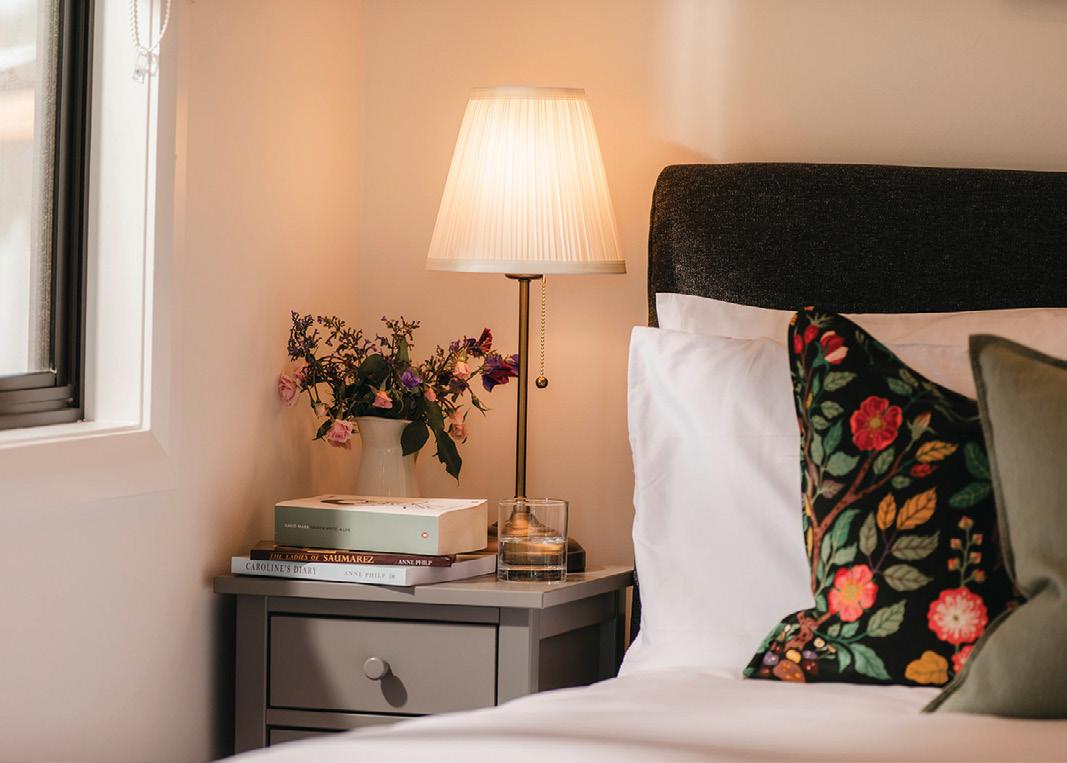
Decorated in a modern-country style, the accommodation reflects the interior aesthetic of the main Homestead, explains SallyAnne Prado, Saumarez Homestead Visitor Experience Manager.
“It was vital to tap into its essence and reflect this through the finishes,” says Sally-Anne of the soft neutral tones offset with pops of colour that create such a warm and welcoming effect.
When planning the three purpose-built cabins surrounded by rolling green hills, it was decided to pay tribute to three of the White sisters, Mary, Doris and Elsie, who lived at the property
Opposite
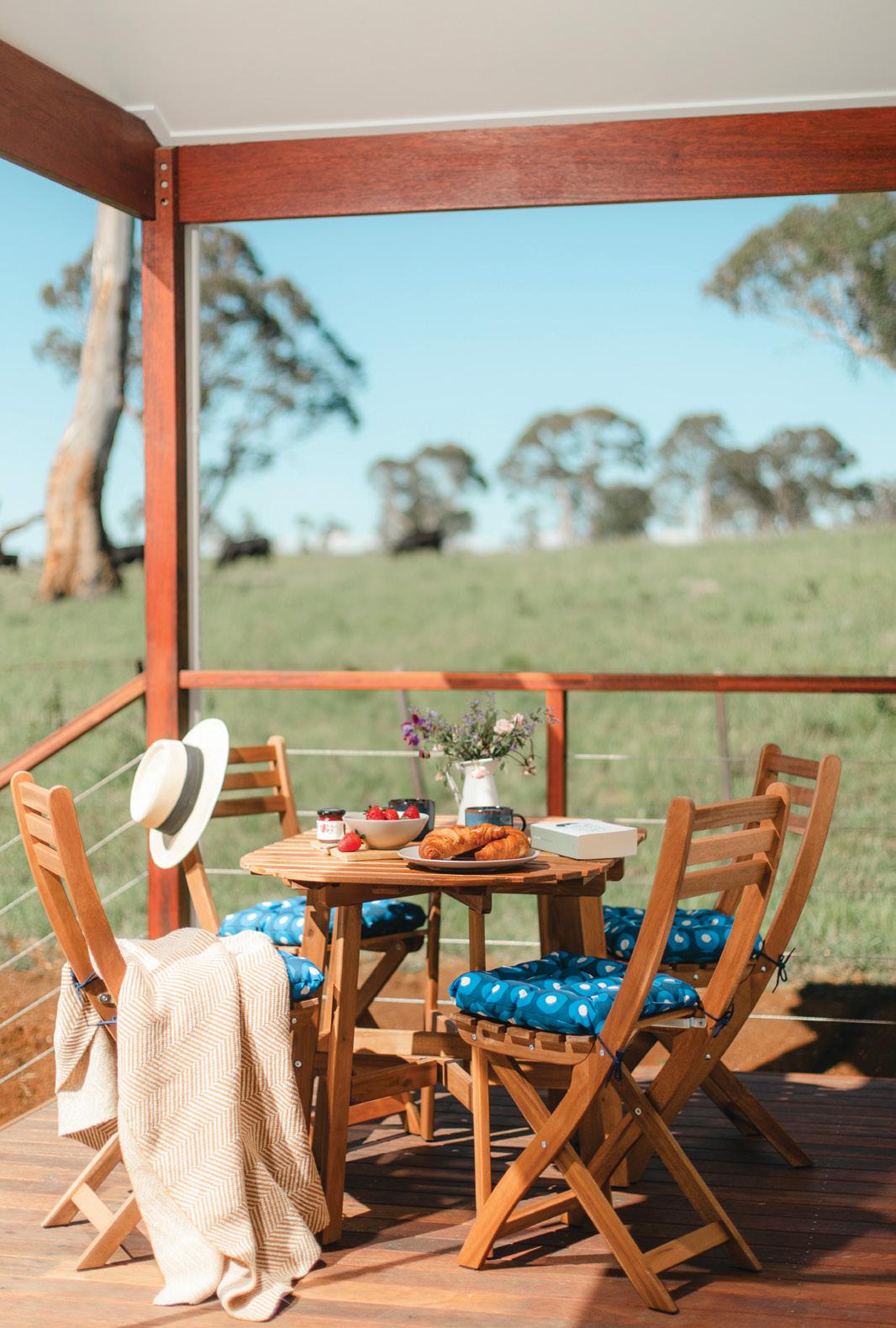
The accommodation has stunning views across the New England countryside (photography by Mike Terry).
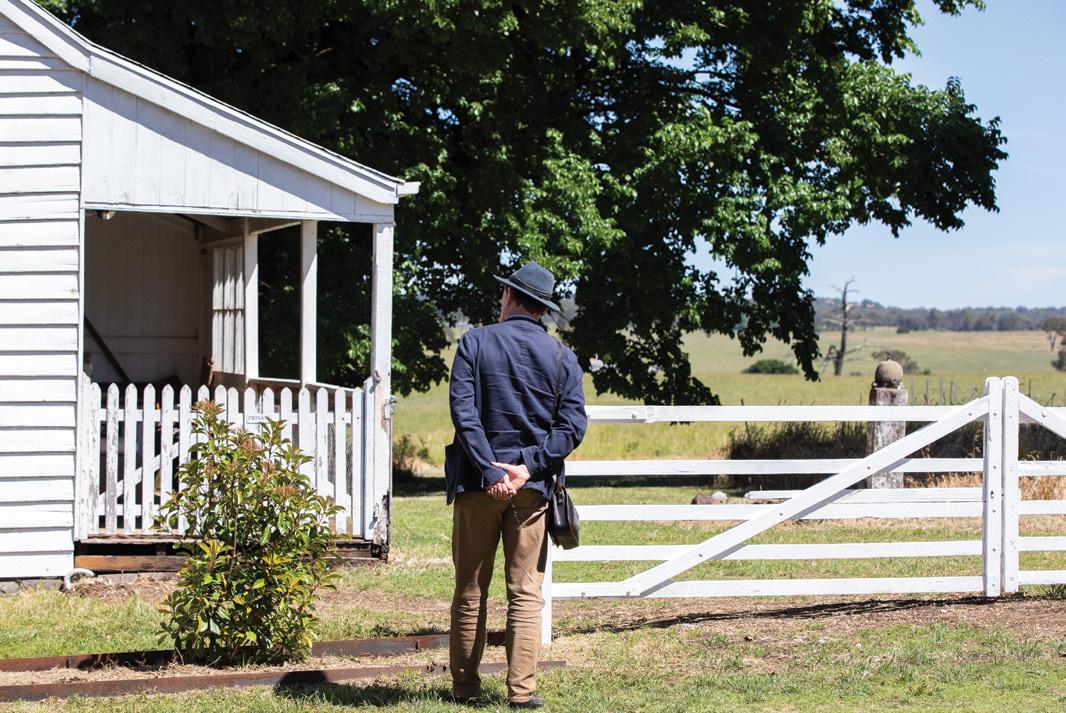
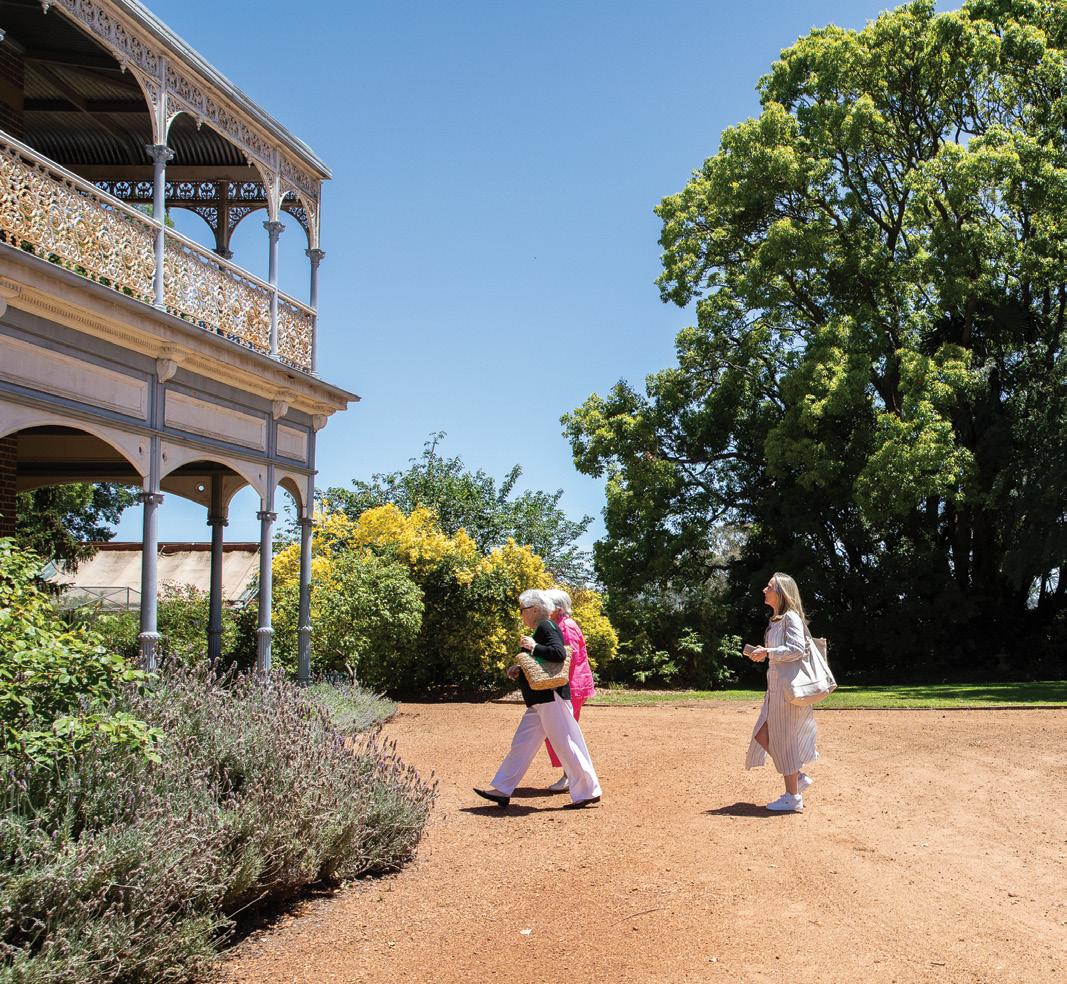
Clockwise from top left Cabins are named after three of the White sisters (photography by Mike Terry); Visitors stroll around Saumarez Homestead (photography by Simon Scott); The peaceful countryside is ideal for overnight stays (photography by Simon Scott).
for their entire lives. Elsie’s reputation as an outdoors woman and equestrienne is reflected in the earthy autumnal colour palette and stunning portraits of horses hanging on the walls of the cabin that bears her name. “Elsie helped her father on the farm from an early age, she took a great interest in farming practices and also bred horses,” Sally-Anne explains. “She supported the equestrian endeavours of the New England Girls’ School, where she also funded the building of the White House boarding facility, which is still in use today.”
The soft colours and gentle details of cabin 2 pay tribute to Doris Fletcher White, a much-loved local children’s nurse.
The watercolour painting by noted Australian artist and botanical illustrator Ellis Rowan in this cabin is a reproduction of an original that hangs in the main Homestead. The third cabin, named Mary for the Whites’ eldest child, is fresh and friendly, with a vibrant blue-and-white colour scheme that takes its inspiration from the ceramic collection in Mary’s room inside the Homestead.
‘This new chapter also comes with a deeper commitment to telling the full story of Saumarez Homestead.’
Mary was a keen world traveller who used her personal fortune to better the lives of rural women, establishing the Country Women’s Association in Armidale and leading the delegation to the Country Women of the World Conference just before the start of WWII. She was instrumental in helping to establish the University of New England and also financially supported the New England Girls’ School. In 1936, Mary was awarded the King’s Jubilee Medal for Services to Women.
Adaptive reuse in action
Originally used as stabling for the property, the Jackson Centre is now ideal to hire for wedding receptions and other functions, while the restored Saumarez Centre is well-suited for venue hire for conferences and team-building days.
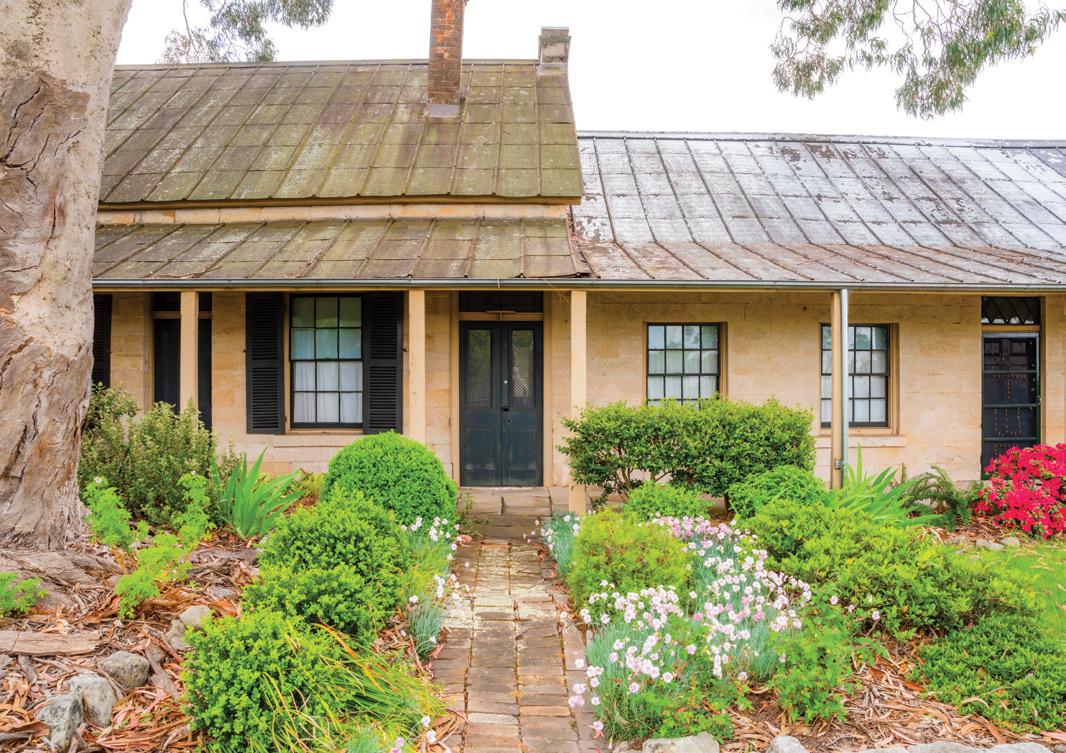
The Thomas House, said to have been built in 1860 by J.F. Hilly as part of an earlier Homestead, has been given a welcome upgrade and is now ready to host guests once again. The old corrugated iron roof has been retained, itself covering the original timber shingles that remain underneath. Internal cedar joinery has also been retained and cleaned as part of the restoration work.
This adaptive reuse of existing structures and materials has been critical in integrating the accommodation and events venues into the heritage landscape. With modern facilities and a charming country setting, Saumarez Homestead is ready to host once again.
Plan your visit
Extend your stay at Saumarez Homestead with a night or two in the Thomas House or one of the new self-contained cottages. To learn more about the new accommodation and venue-hire options visit nationaltrust.org.au/places/saumarez-homestead
Country charm
EXPLORE THE CURATED COLLECTION
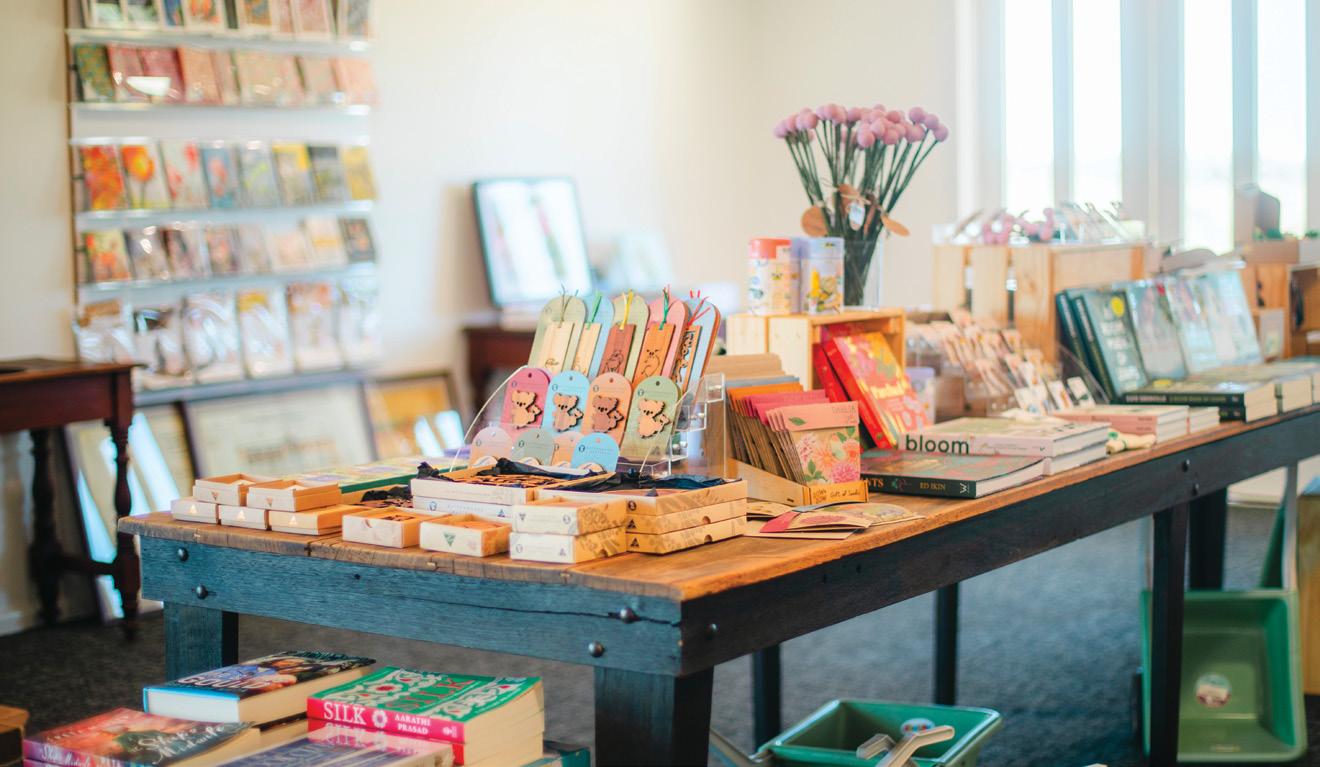
Take home a piece of history with inspiring gifts from the National Trust shop at Saumarez Homestead. Can’t make it to New England? Discover our selection online.
GIFTS FROM $15
FOR HISTORIC HEROINES
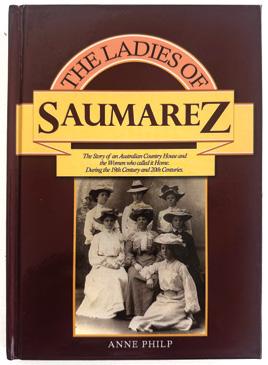
Be reminded of the Ladies of Saumarez with this book, $15, and trio of fridge magnets featuring scenes from the property, including House in Winter, Garden in Spring and Mary on the Chimney, $19.
FOR GARDEN GURUS
This unique wearable pruner offers outstanding comfort, grip and controllability, $38.99.
FOR LITERATURE LOVERS
Keep track of books you've enjoyed with this hardcover reading journal, $59.99.
Right
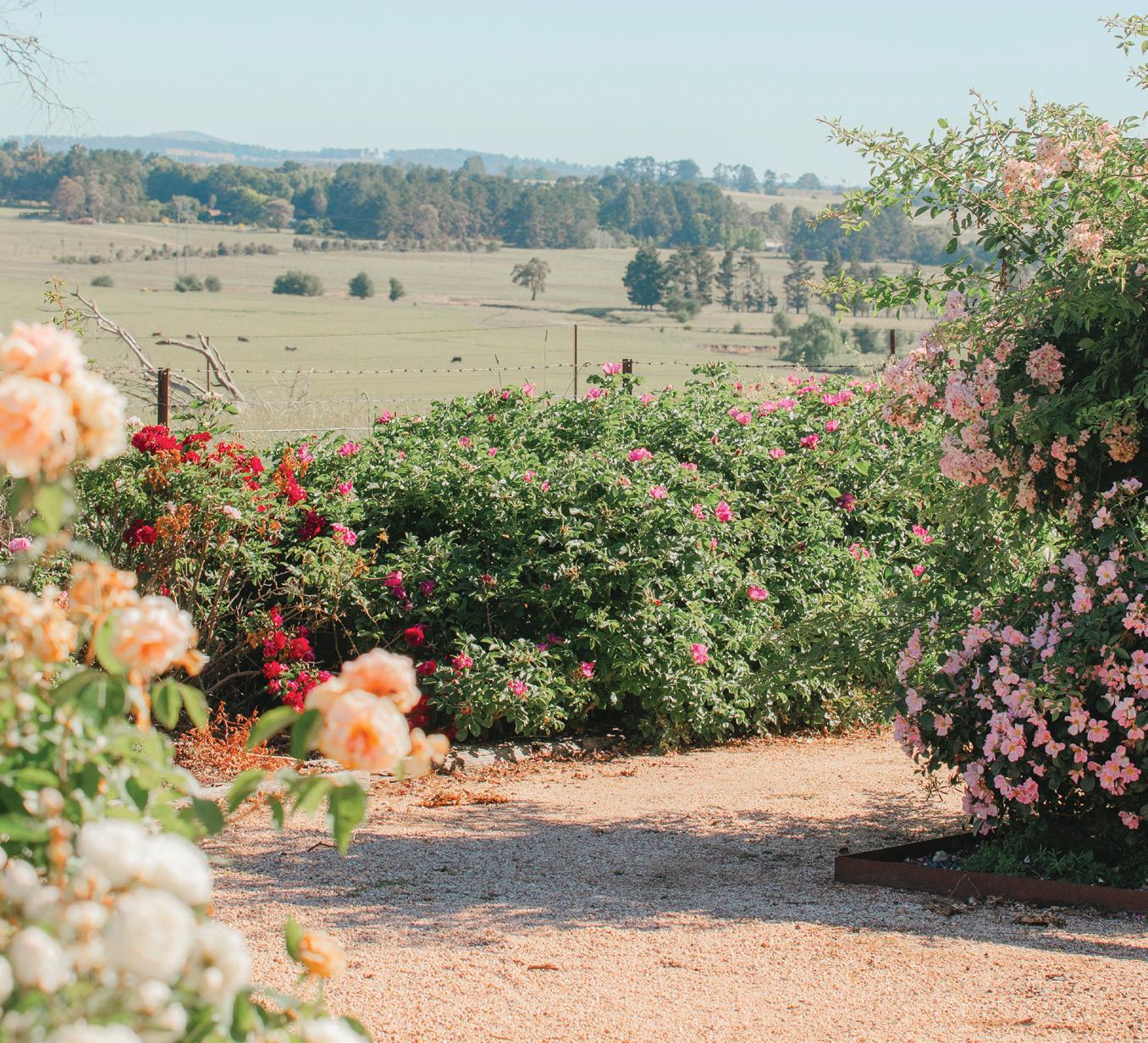
The famous rose garden is an ideal spot to read or reflect (photography by Mike Terry).
National Trust (NSW)
Reviving Heritage Conservation Skills in the Outback
BY ELIZABETH VINES OAM, CONSERVATION AND HERITAGE CONSULTANT, MCDOUGALL & VINES
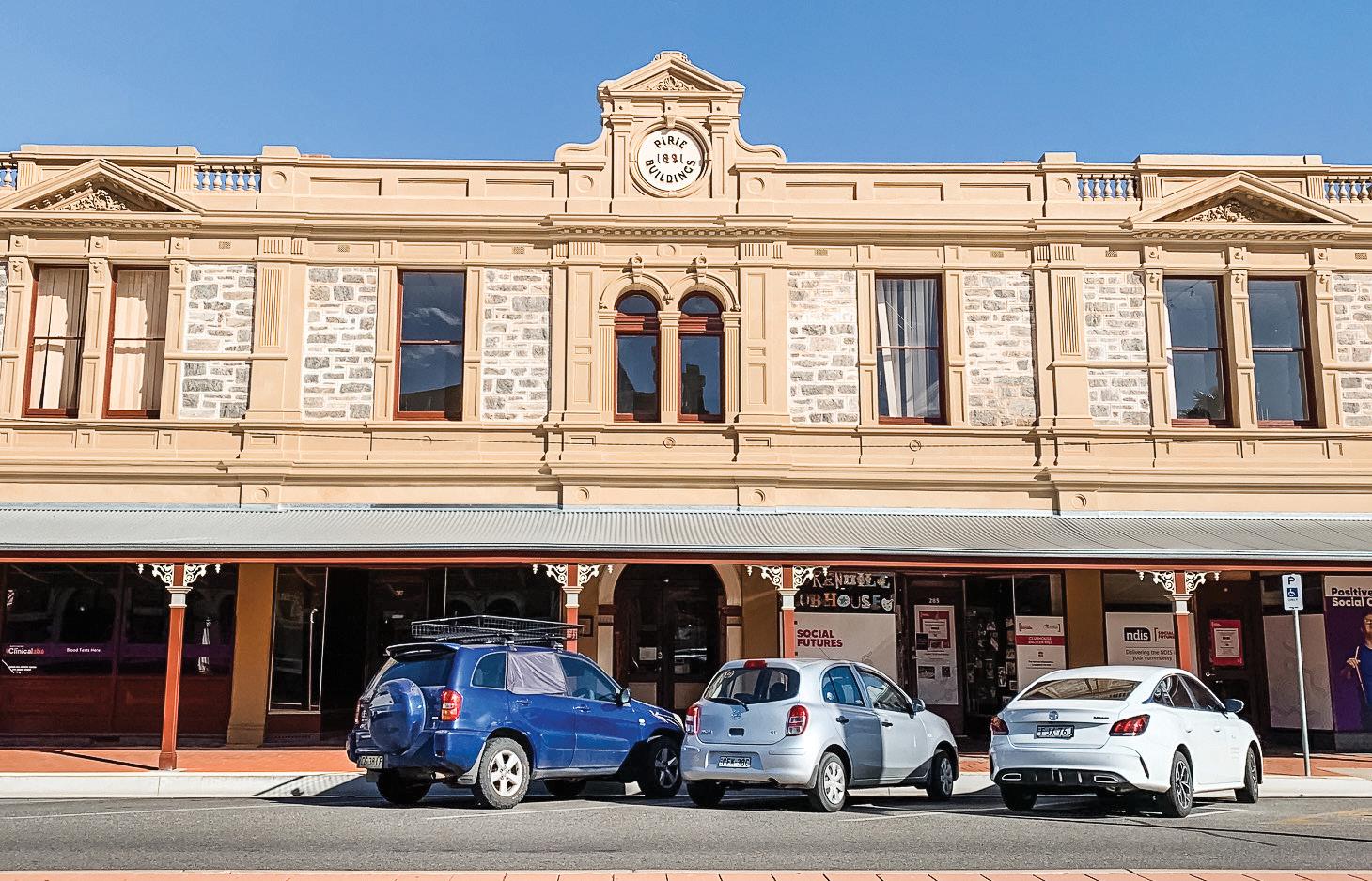
Under the wide blue sky of Broken Hill, on the traditional lands of the Wilyakali people, the sandstone façade and graceful verandah of Pirie Chambers have been restored to their proud former glory. For conservation architect Elizabeth Vines OAM, this project was as much about people as it was about stone.
In the outback mining city of Broken Hill, an innovative building conservation project has restored the dignified façade of the Pirie Chambers building while also teaching valuable heritage building skills to a team of locals. As the Broken Hill Heritage Advisor, I have provided guidance for several conservation initiatives along Argent Street, the town’s commercial and historic spine, and the transformation of Pirie Chambers has been in my sights for many years.
Built in 1891 to the design of Adelaide architects Withall and Wells, Pirie Chambers had retained much of its original façade detailing, but the verandah was removed in the 1960s and replaced with a modern cantilevered awning that detracted from the building’s character. The upper façade had also become run-down, with broken windows and deteriorated stone and render. An application was made to the Australian Heritage Grants program, however, it was initially unsuccessful.
An innovative approach
It took about eight years to finally secure the funding needed to implement the project,
requiring plenty of commitment, persistence and collaboration along the way. Considerable research was undertaken before we began, and a conservation plan was prepared to identify early photographs and establish the heritage significance of the building.
Below
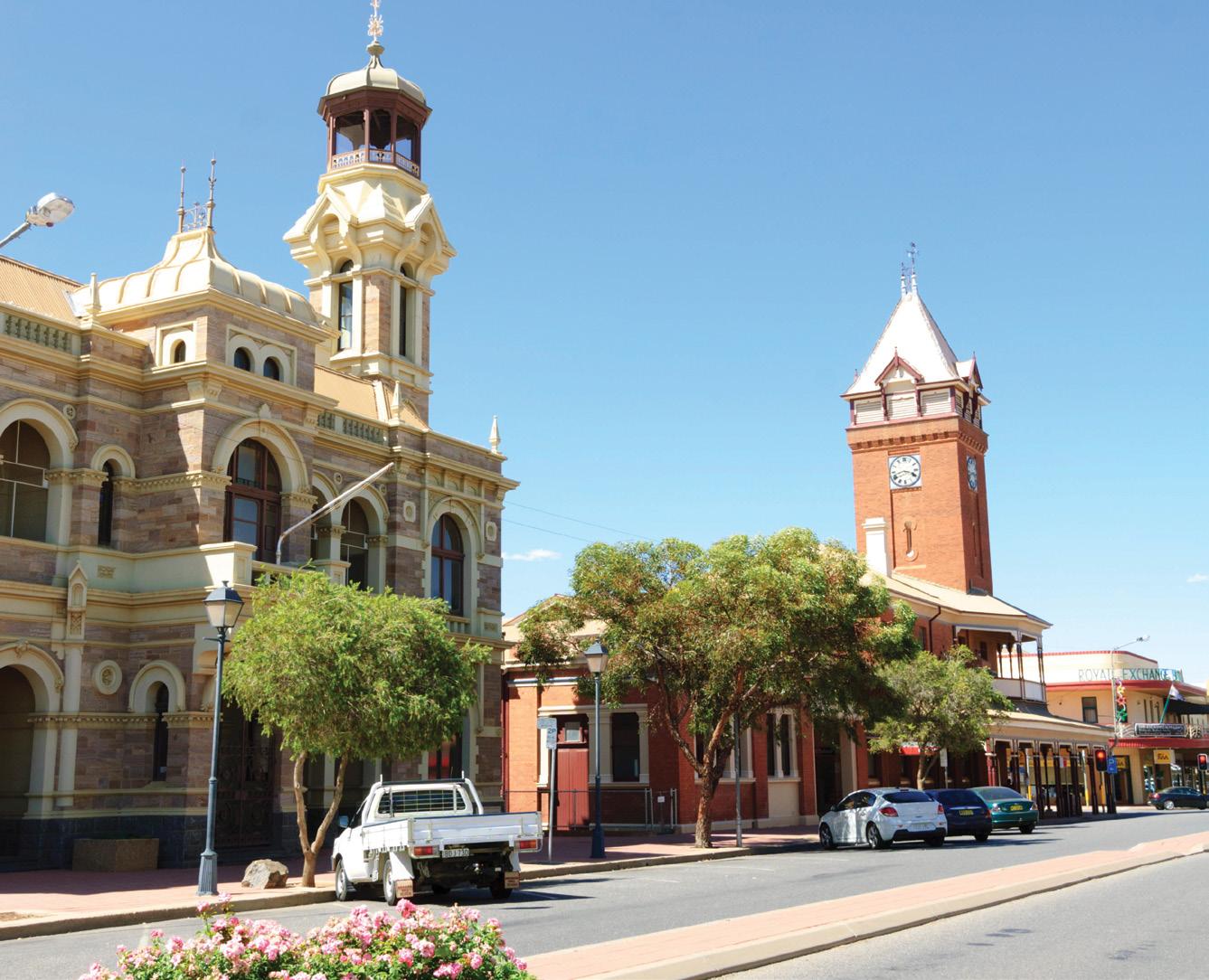
The historic Argent Street precinct in Broken Hill (image supplied).
Two of the main challenges we faced were an absence of skilled conservation tradespeople in the outback, and the high cost of heritage building projects in regional and rural Australia. Our solution was unusual but integral to the project’s success: by working with training labour, we were able to achieve a major conservation project on a significant heritage building at just over one-third of the cost of a conventional construction program. If approached in the conventional way, the restoration of Pirie Chambers would have been unaffordable – the investment would have exceeded the value of the building.
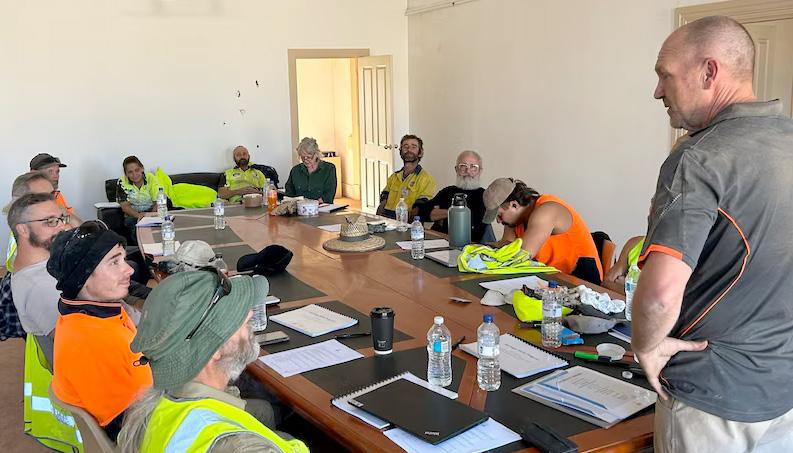
Among the trainee participants were tradesmen, construction workers and heritage professionals from Broken Hill, nearby Wilcannia and elsewhere in New South Wales, all of whom had the opportunity to upskill in heritage trades. Under the direction of stonemason trainer Keith McAllister, we approached the ambitious stone and render conservation in two stages, completed in May and September 2024. Participants learnt specialist skills and traditional conservation techniques such as repointing stone, repairing render, painting and carpentry. No cement was used in the render repairs, and the stone repointing was carefully matched to the original mortars
To our surprise, leadlight work was also a feature. We were delighted to discover that the 1960s awning had concealed the building’s original leadlight panels. A local leadlight expert joined the project, and the repaired panels are now a standout of the shopfront, restored using traditional techniques.
Renewal in the heart of the city
Unveiling the façade after removing the cantilevered awning that had hidden so much detail was an incredibly rewarding moment. Seeing the verandah rebuilt and completed was equally satisfying – verandahs are essential in outback towns, offering shelter from the beating summer sun and the occasional heavy downpour in winter or spring.
The restored façade has created genuine excitement in the Broken Hill community, where heritage is highly valued but conservation can be challenging due to limited financial resources. The project also complements the new Broken Hill library and community hub opposite, which is nearing completion, and it contributes to an Argent Street block that contains a remarkable group of public buildings, including the iconic post office, courthouse, police station and technical college.
‘The restored façade has created genuine excitement in the Broken Hill community, where heritage is highly valued but conservation can be challenging.’
Above
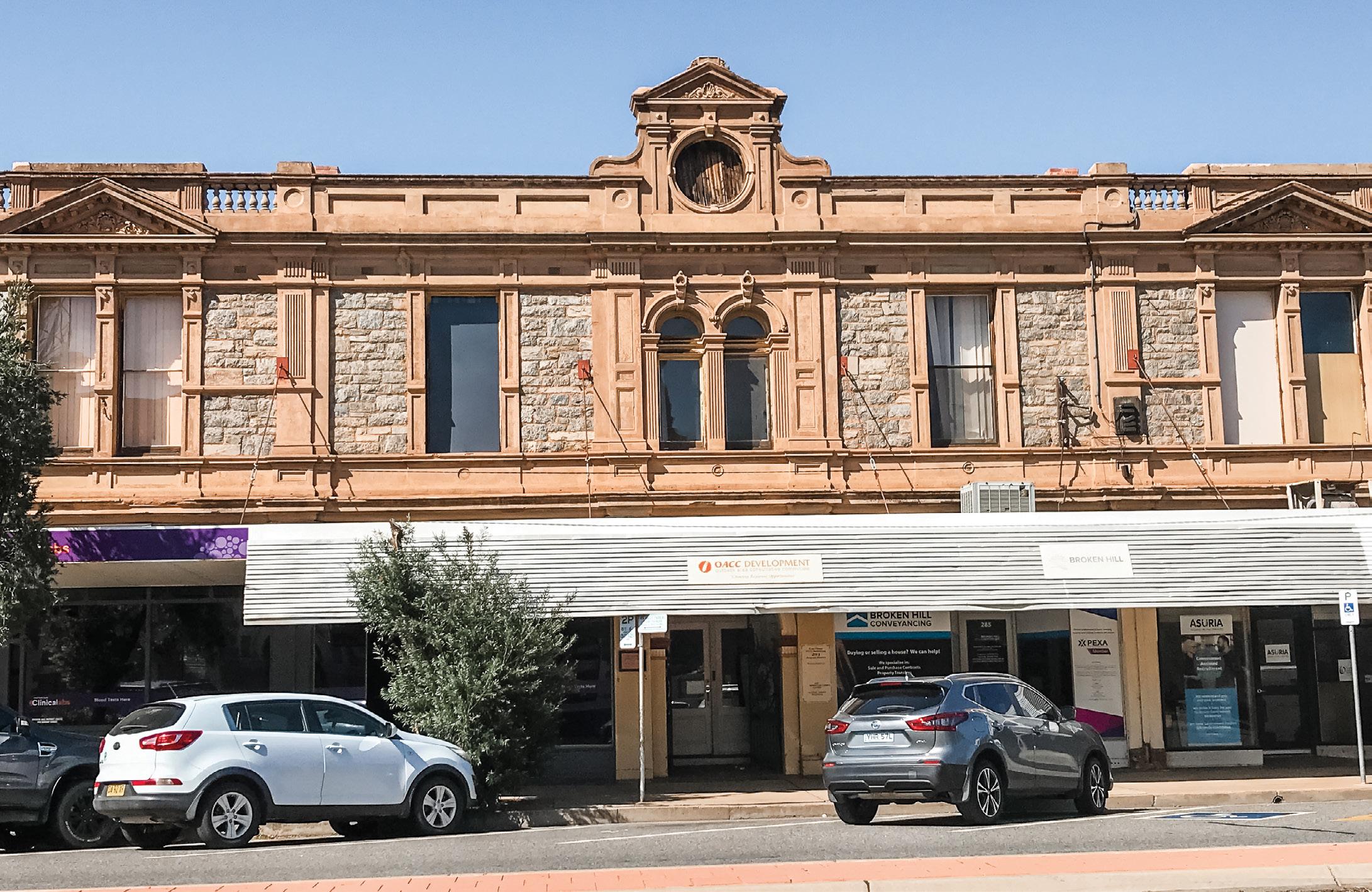
Prior to restoration, the verandah of the Pirie Chambers building had been replaced with an incongruous cantilevered awning (photography by Elizabeth Vines).
Opposite, from top
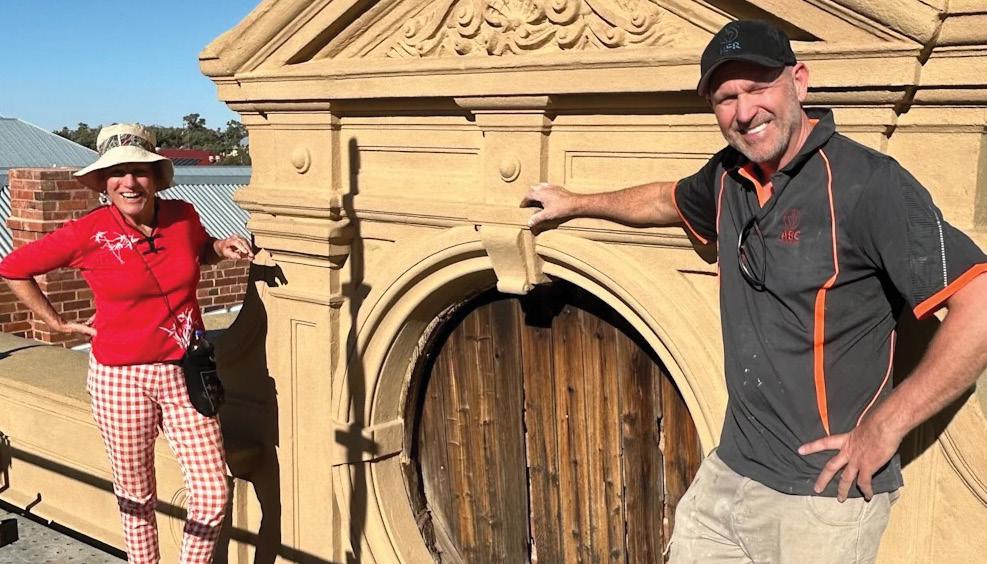
The building's dignified façade and verandah shine once more; Stonemason trainer Keith McAllister instructs the participants in heritage conservation skills (photography by Elizabeth Vines); Broken Hill Heritage Advisor Elizabeth Vines and Keith McAllister with the newly restored Pirie Chambers (photography by HSR (Aust) Group).
As a training program for heritage trades, the project has also been highly significant. Participants gained both theoretical and practical experience in stone conservation, heritage painting, lime mortar technology, repointing techniques and more. Upon completion of both courses, participants received a Certificate in Heritage Trade Skills to support their career advancement in the construction industry.
The enthusiastic personal commitment shown by everyone involved was beyond what we anticipated. Friendships were formed that continue today, and new employment opportunities have resulted for several participants. Following the success of Pirie Chambers, it would be wonderful to see a similar model adopted elsewhere in New South Wales – and indeed across Australia – to ensure that traditional building skills and the heritage they protect continue to thrive in regional communities.
The Pirie Chambers Heritage Trades Training Program and Conservation project was the winner of the 2025 National Trust Heritage Award for Education and Interpretation and was presented as a significant case study at the annual NSW Heritage Forum in Sydney in August 2025.
Lost and Found at Retford Park
BY AMANDA WOODWARD-BROWN, CONTENT MANAGER, THE NATIONAL TRUST
Hidden for years beneath a stairwell, two important textiles have been painstakingly repaired by volunteers, returning colour, texture and lived history to the green room.
Early last year, an unexpected discovery was made at Retford Park. Stashed away in a garbage bag and hidden under the stairs in the belvedere were two torn floral chintz quilts, found by National Trust staff. The discovery of the quilts solved a mystery that had existed since James Fairfax AC gifted his grand Victorian Italianate homestead in Bowral to the National Trust 10 years ago: what happened to the original bed covers in the green room?
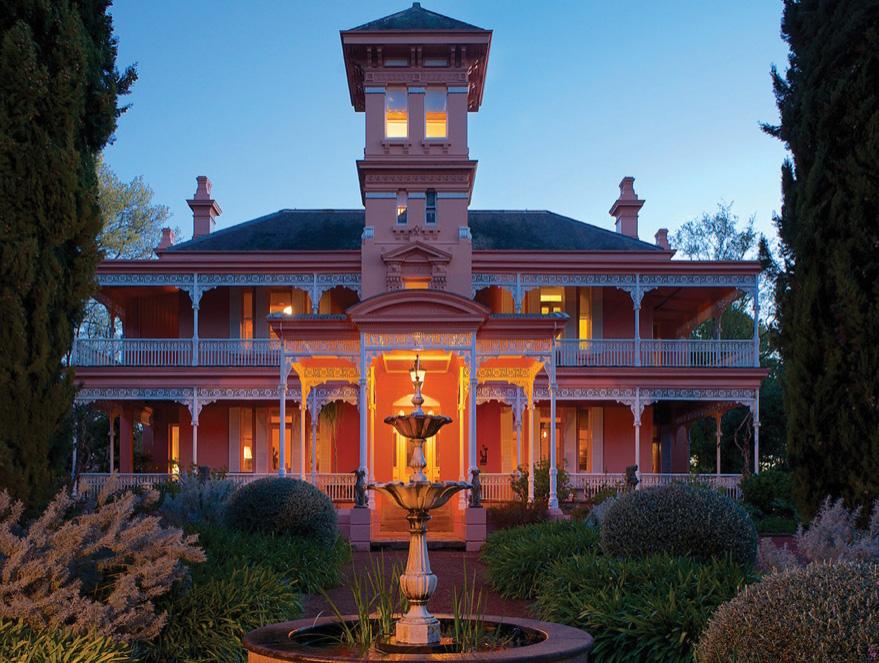
Decorated by Leslie Walford AM – one of Australia’s most renowned interior designers and a close friend of James –the elegantly eclectic interiors of Retford Park are testament to the designer’s reputation as a master of detail. Located on the
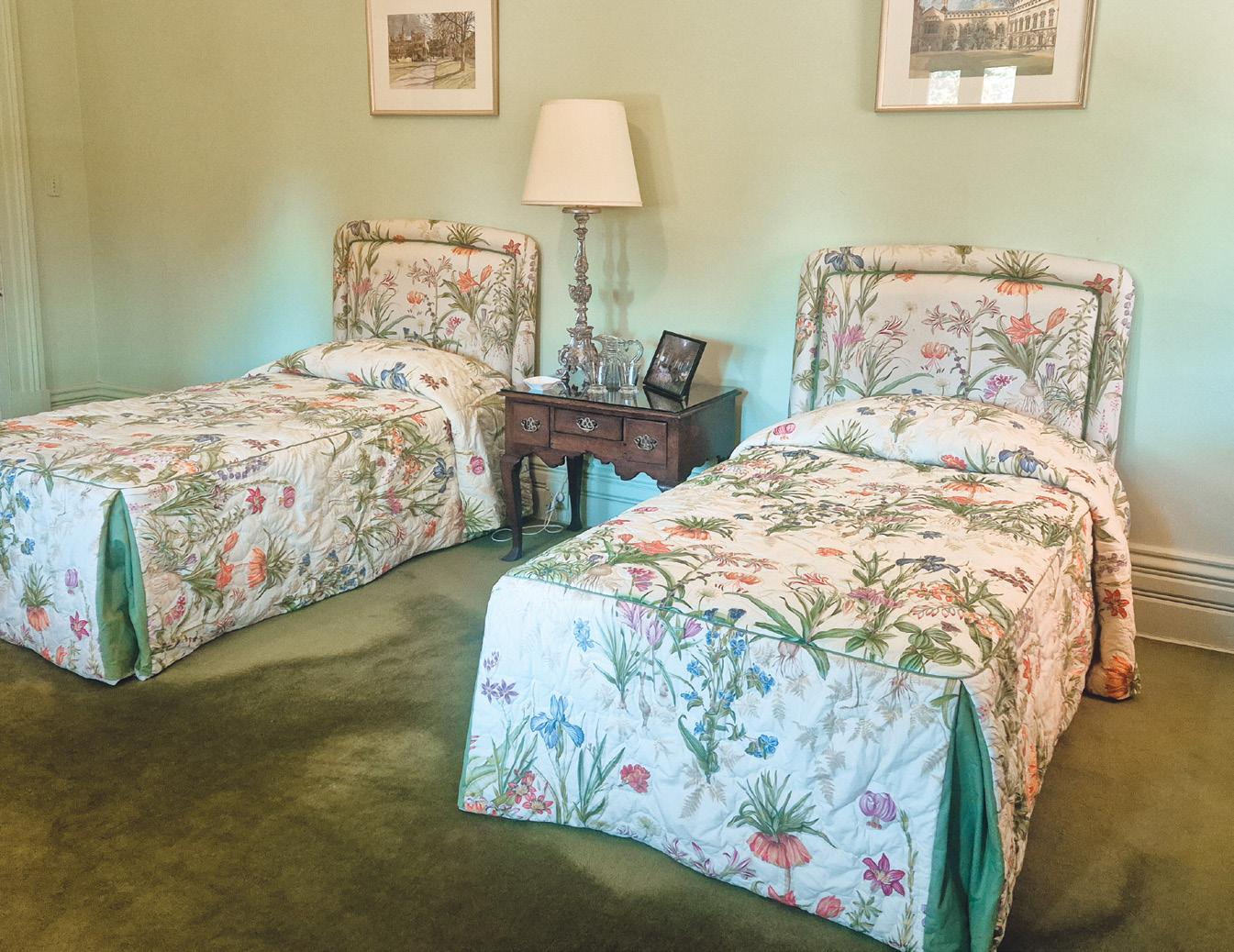
upper floor of the house, the green room is a sumptuous mix of plush green carpet, polished antique furniture upholstered in verdant tones and an airy botanical-print chintz fashioned into sweeping curtains, cushions and bedheads. In contrast to this richly decorative scene, when the house came under the care of the National Trust, each of the twin beds was covered by a simple white throw. This hadn’t always been the case – it was known that the beds had once featured quilts in the same floral fabric as the rest of the room.
A vital clue
The key to eventually locating the original quilts lay with Sharon Mulholland, who together with her husband, John, managed the household affairs at Retford Park from 1986 to 2017. She recalls the disastrous event that led to the quilts’ demise.
“James was upstairs in his snug and I was about to serve dinner when I heard something in the room. I opened the door and came across James’s two Rhodesian Ridgebacks, Selene and Iris, who had found their way in and had the time of their lives. There was so much mess, with pillows and feathers everywhere.
Then I saw the quilt covers and my heart sank. They had been chewed, and the down and stuffing was spilling out of them.”
Impishly unrepentant for their antics, the dogs made a quick getaway. “I think they knew they had to get out of there, so they quickly scarpered past me down the stairs,” she says with a laugh. With guests due to arrive the next day, Sharon hurriedly tidied the room, stored the damaged quilts and purchased two white cotton bedspreads from a local homewares store.
A stitch in time
The discovery of the quilts in 2024 was only the first step in returning them to their rightful place, as National Trust Senior Curator Craig McPherson began a global hunt to find the original fabric in the hope of repairing them. Named Le Jardin du Bonheur, the glazed cotton chintz was designed and printed almost 30 years ago and takes its vibrant pattern from original works by Pierre-Joseph Redouté (1759 – 1840), one of the great botanical illustrators and a court artist of Marie Antoinette.
After much searching, the fabric was eventually tracked down in the United States and the remaining bolts were acquired – just enough to repair the quilts. The skilled members of the National Trust Soft Furnishings Group were enlisted to make the repairs. Based at Old Government House for more than 22 years, this volunteer group has left its mark on countless National Trust projects, from intricate handcrafted tassels to oversized tapestry rugs. “The Soft Furnishings Group is a vital part of
how the National Trust cares for and presents our properties and has incredible expertise on historic materials and techniques,” says Craig.
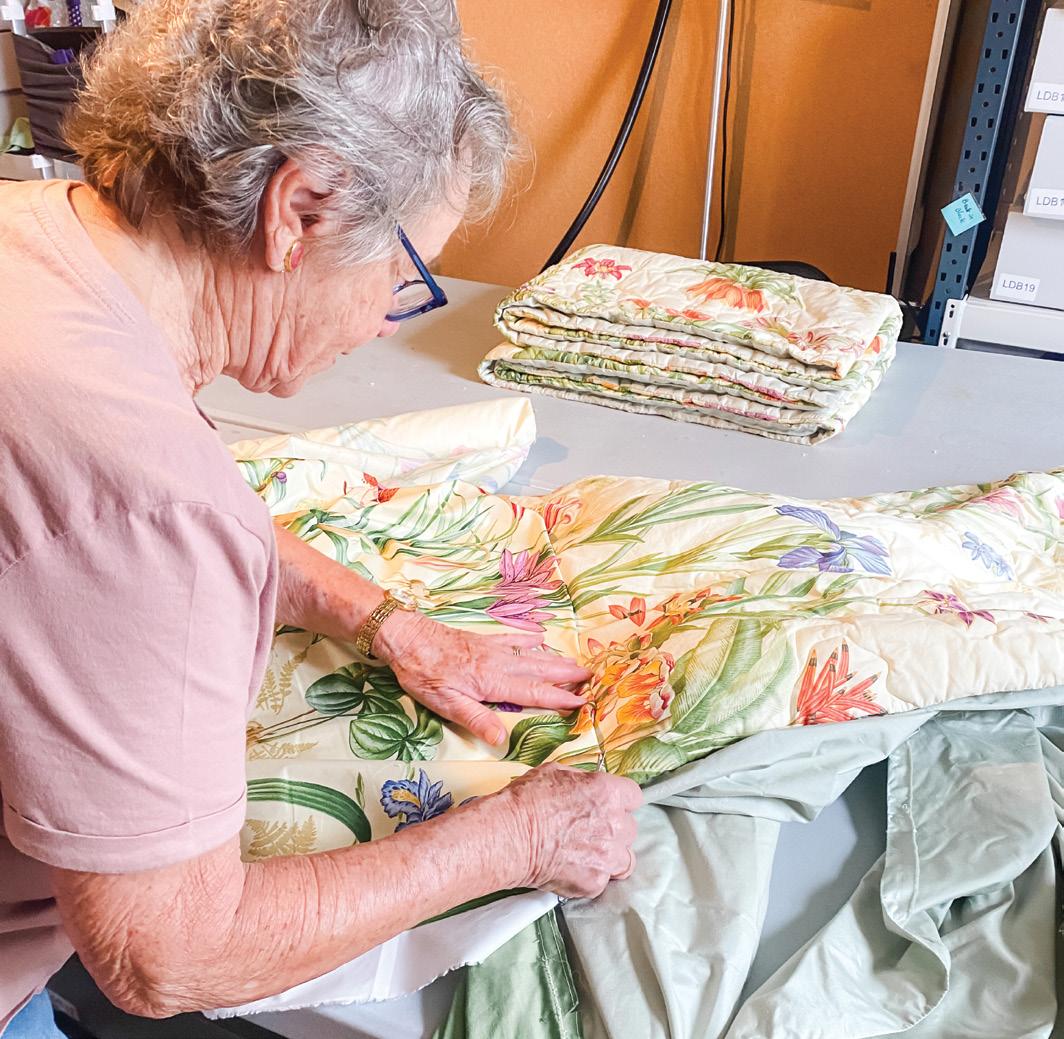
Group members Thelma Scanes and Marjorie Bennett quickly realised the Retford Park quilts wouldn’t be an easy repair, but through a combination of specialist quilting machinery and hand-stitching, the quilts were meticulously restored to their original beauty.
Now reinstalled at Retford Park, it’s hard to believe they were once missing. “Their return has transformed the room, reintroducing colour, texture and a strong sense of the home’s lived history,” says Craig. “Leslie Walford described it as one of the most beautiful fabrics he had seen, and as such the conservation project has brought back his original intent for the house.”
For Sharon, the quilts’ reinstatement reflects the reason Retford Park was passed to the National Trust. “Working at Retford Park, we were surrounded by beauty everywhere we looked. James always spoke very fondly of the National Trust and his relief that Retford Park would be cared for and looked after for future generations. I’m so happy the quilts are back home.”
Visit Retford Park
Plan your visit to Retford Park and see the stunning quilts in the Leslie Walford-designed green room. Visit nationaltrust.org.au/ places/retford-park for times and details.
‘Their return has transformed the room, reintroducing colour, texture and a strong sense of the home’s lived history.’
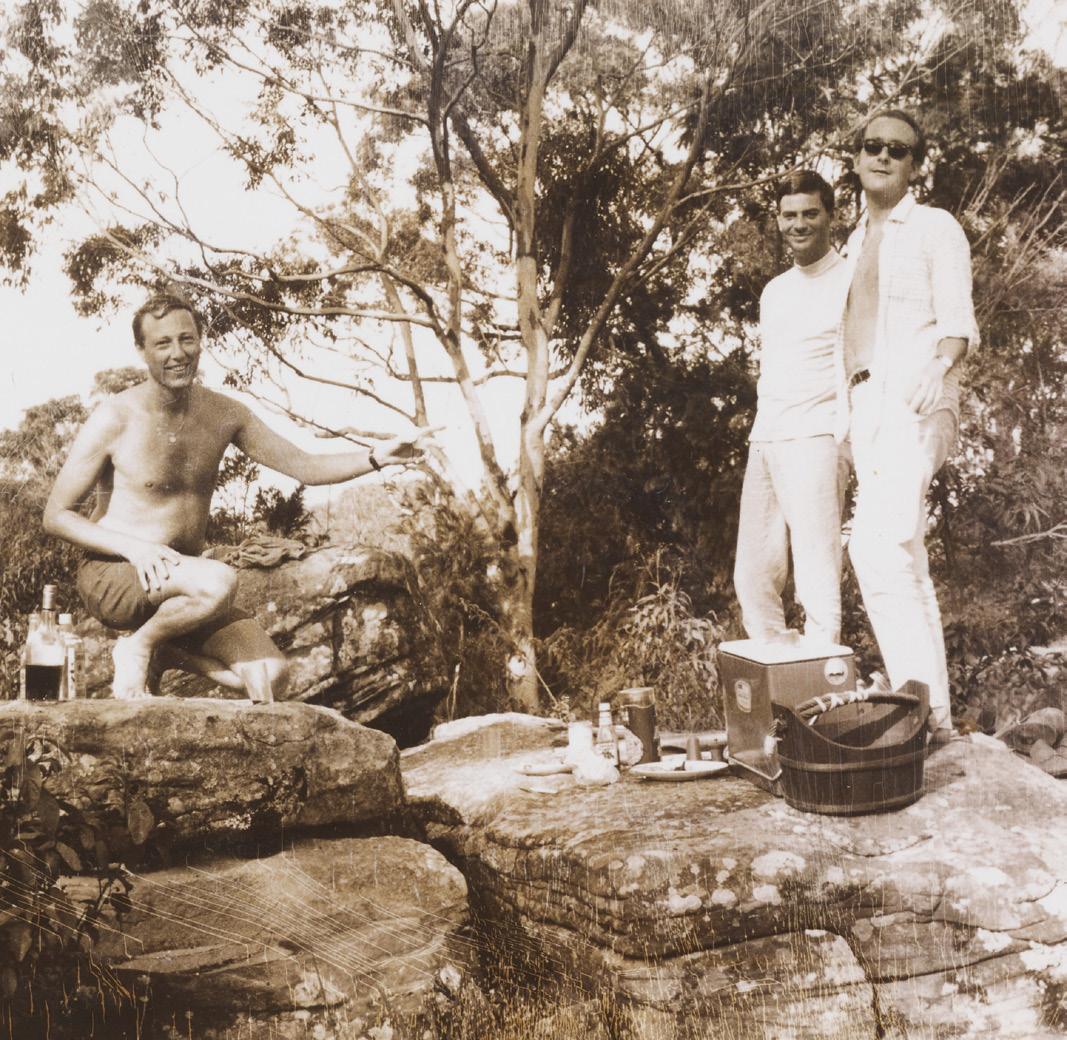
Opposite, from left Leslie Walford with his partner at the time, Dick Keep, and James Fairfax holidaying together, c.1965 (Caroline Simpson Library & Research Collection, MHNSW); Making repairs to the original floral quilts.
Below from left
Thelma Scanes and Marjorie Bennett from the Soft Furnishings Group; The quilts have been reinstated in the green room, decorated by Leslie Walford (all other images supplied).
Heritage in the Bottle
BY ANDREW CAILLARD MW
From a fledgling cottage industry in the 1820s to the thriving production of today, the story of winemaking in New South Wales follows a fascinating path. Andrew Caillard MW takes us on a tour of the Hunter Valley, the state’s oldest wine region, to reveal its vinous heritage in a bottle.
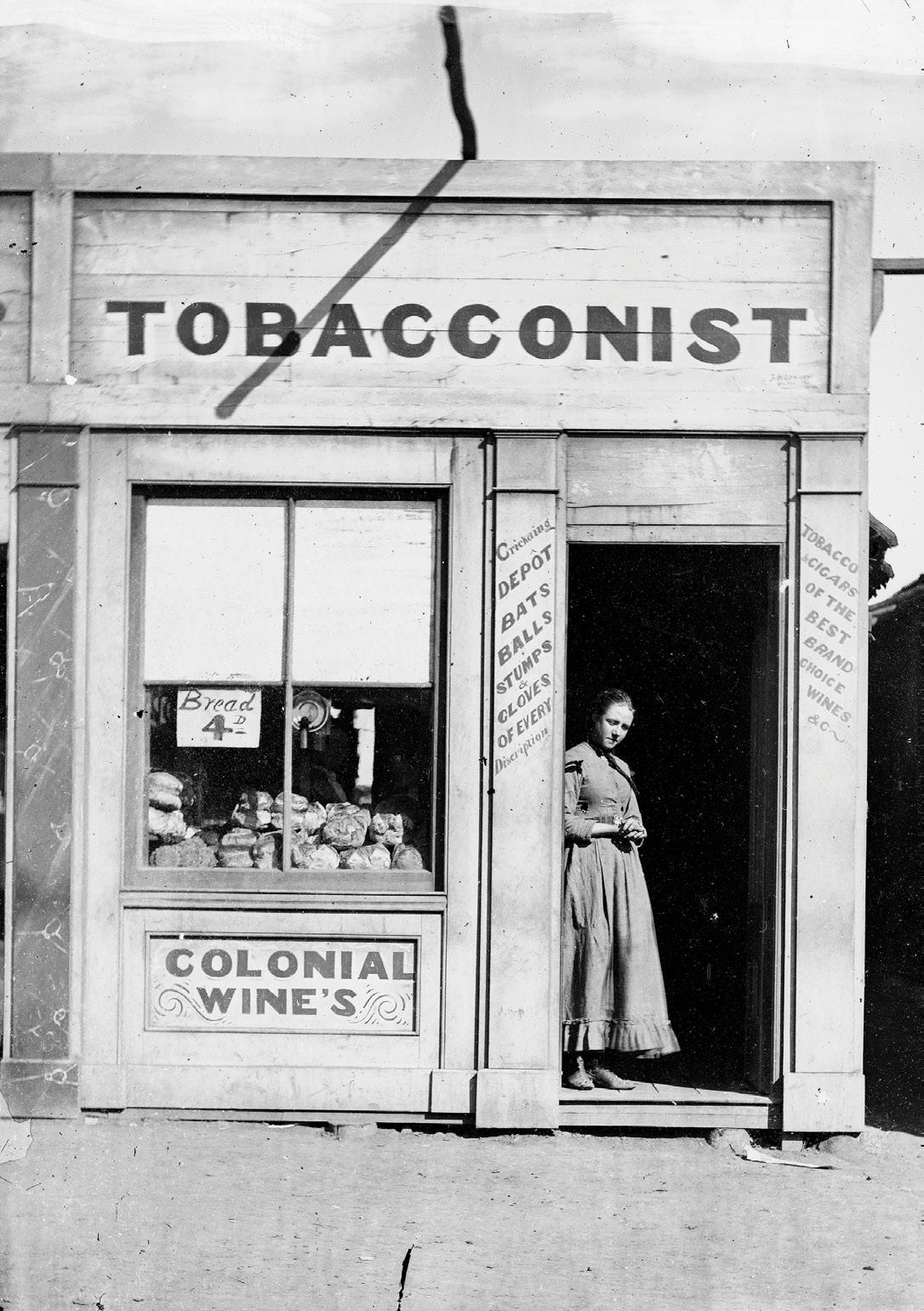
Hunter Valley wine offers the evocative taste and romance of living history, because its grapevine heritage can be traced back to the earliest days of settlement. While winemaking was attempted in New South Wales as early as 1792, a true cottage industry wasn’t established until the 1820s, with many small vineyards planted around early Sydney town and beyond.
While South Australia boasts the largest plantings of surviving 19th-century vines dating back to around 1847, New South Wales can also claim some very old vineyards. Phylloxera destroyed many vineyards around Sydney during the late 19th century – notably the Macarthur Family’s Camden Park Vineyard and Nursery – but it has never been detected in the Hunter Valley, the state’s oldest wine region where surviving vineyards date back to 1867. In addition, there are many vineyards that have been planted throughout the 20th century with ungrafted heirloom vinestock – grapevine cuttings that possess the same genetics as the original mothervine brought in during the early 1900s.
A taste of history
The exquisite Tyrrell’s Vat 1 Semillon is based primarily on a 1908-planted vineyard and is renowned as one of the finest ageing white wines in the world. The genetic material is directly related to a particularly juicy and richly flavoured grape that was discovered in front
of a primitive dwelling in Pyrmont in the late 1820s by nurseryman Thomas Shepherd. Original cuttings were shipped up to James King at Irrawang and to Shepherd’s Kinross Vineyard in the early 1830s. Until recently this selection – which is particularly suited to the warm humid conditions of the Hunter Valley – was called Shepherd’s Riesling or Hunter River Riesling.
Mount Pleasant’s historic Mothervine Block, planted in 1921 with pinot noir cuttings from the now-defunct Kirkton Vineyard (pulled up
Below
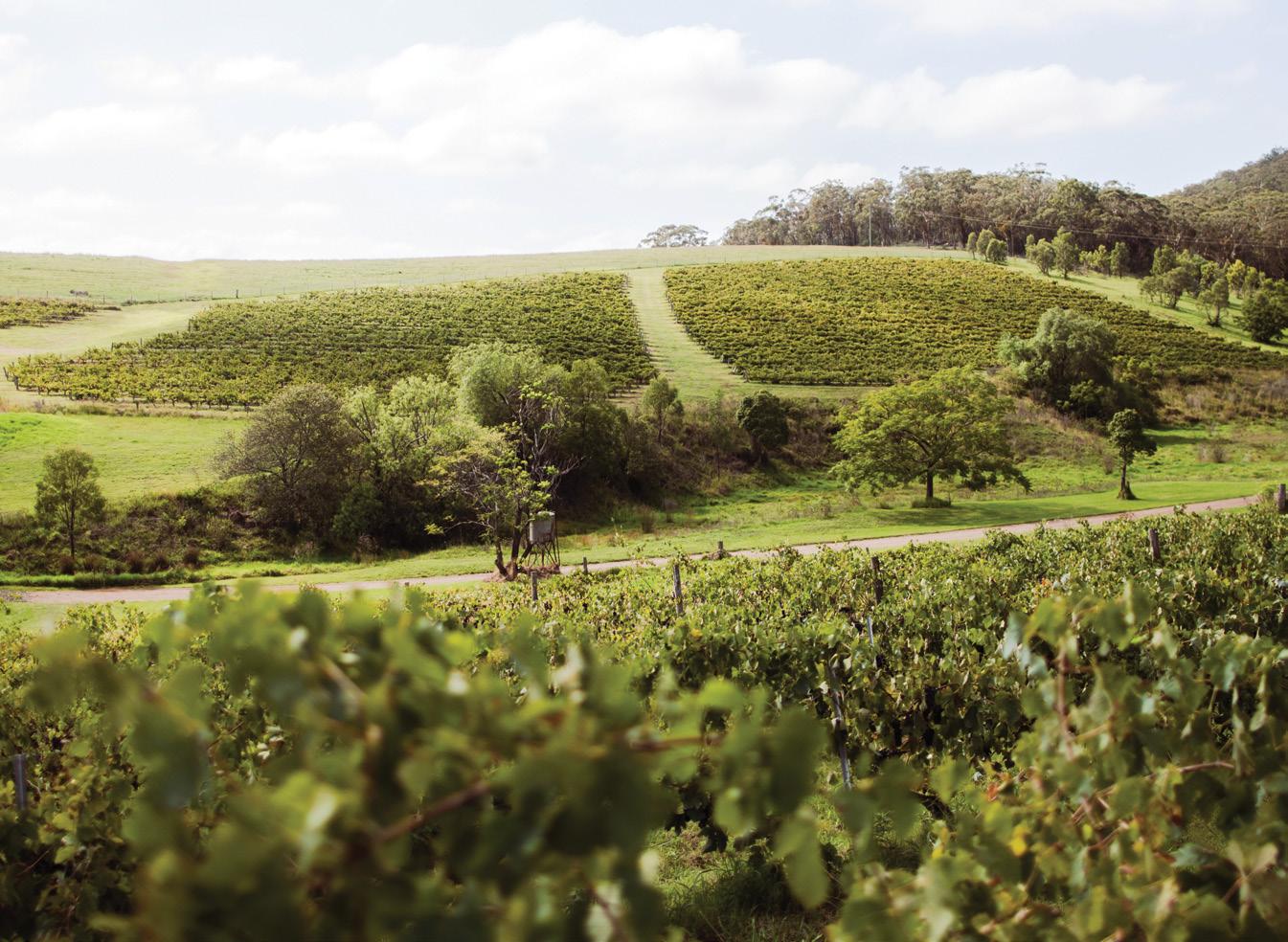
Tyrrell's Old Hillside Vineyard in Pokolbin (image supplied).
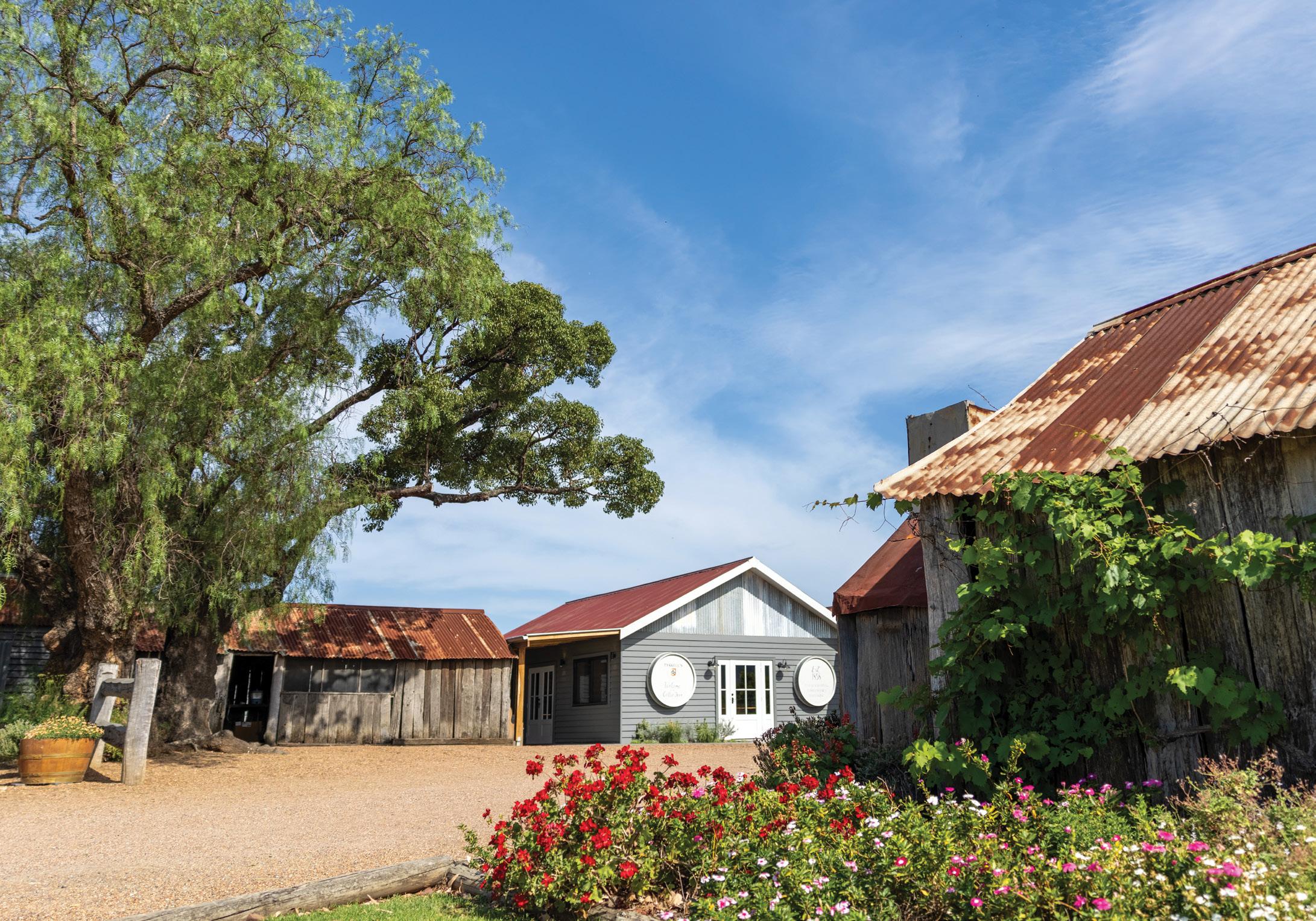
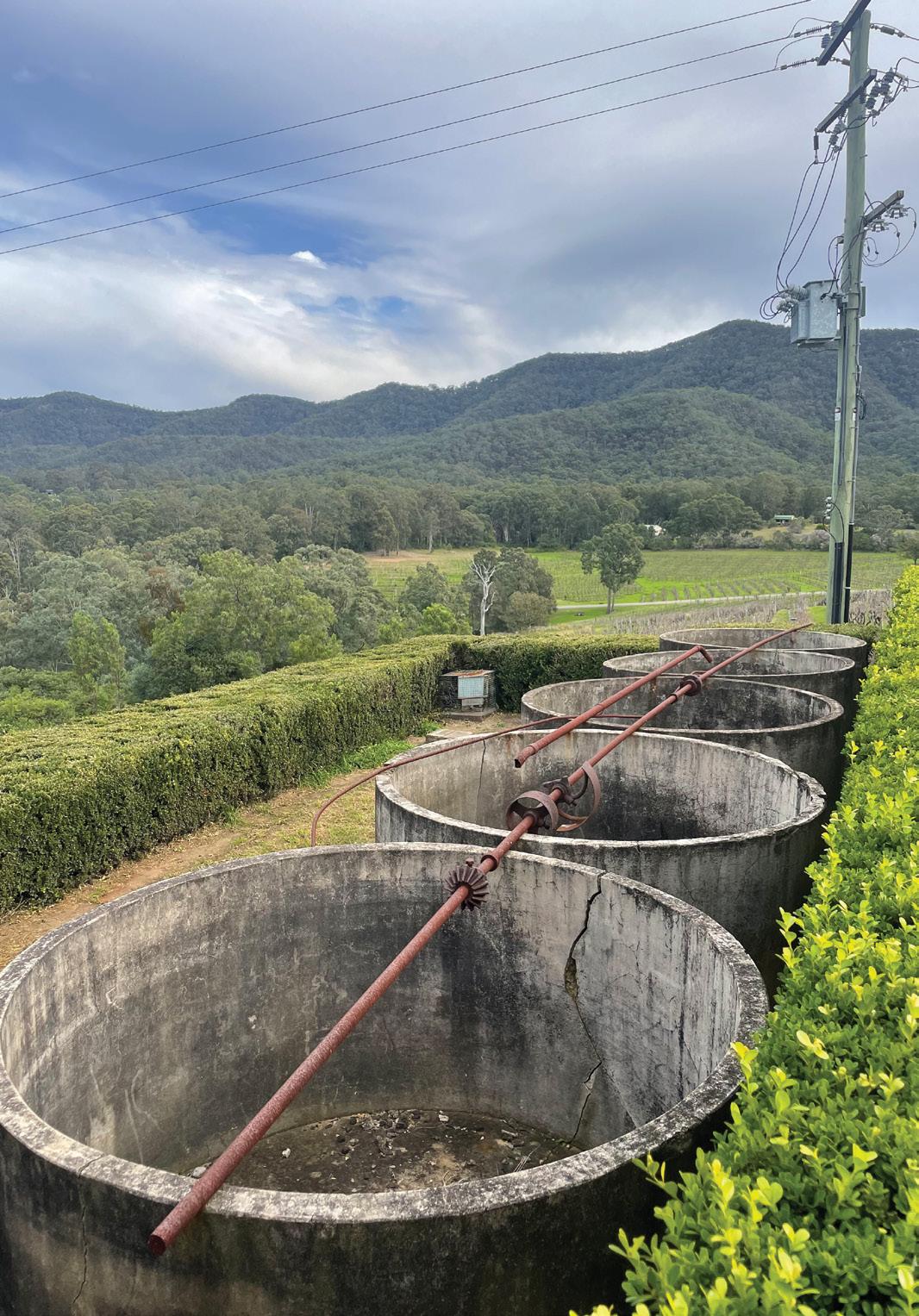
Opposite, clockwise from top Tyrrell’s Cellar Door (image supplied); 19th century fermenters in the Hunter Valley (photography by Andrew Caillard MW); Gulgong wine shop with colonial wine sign (image from the State Library of NSW).
Following page
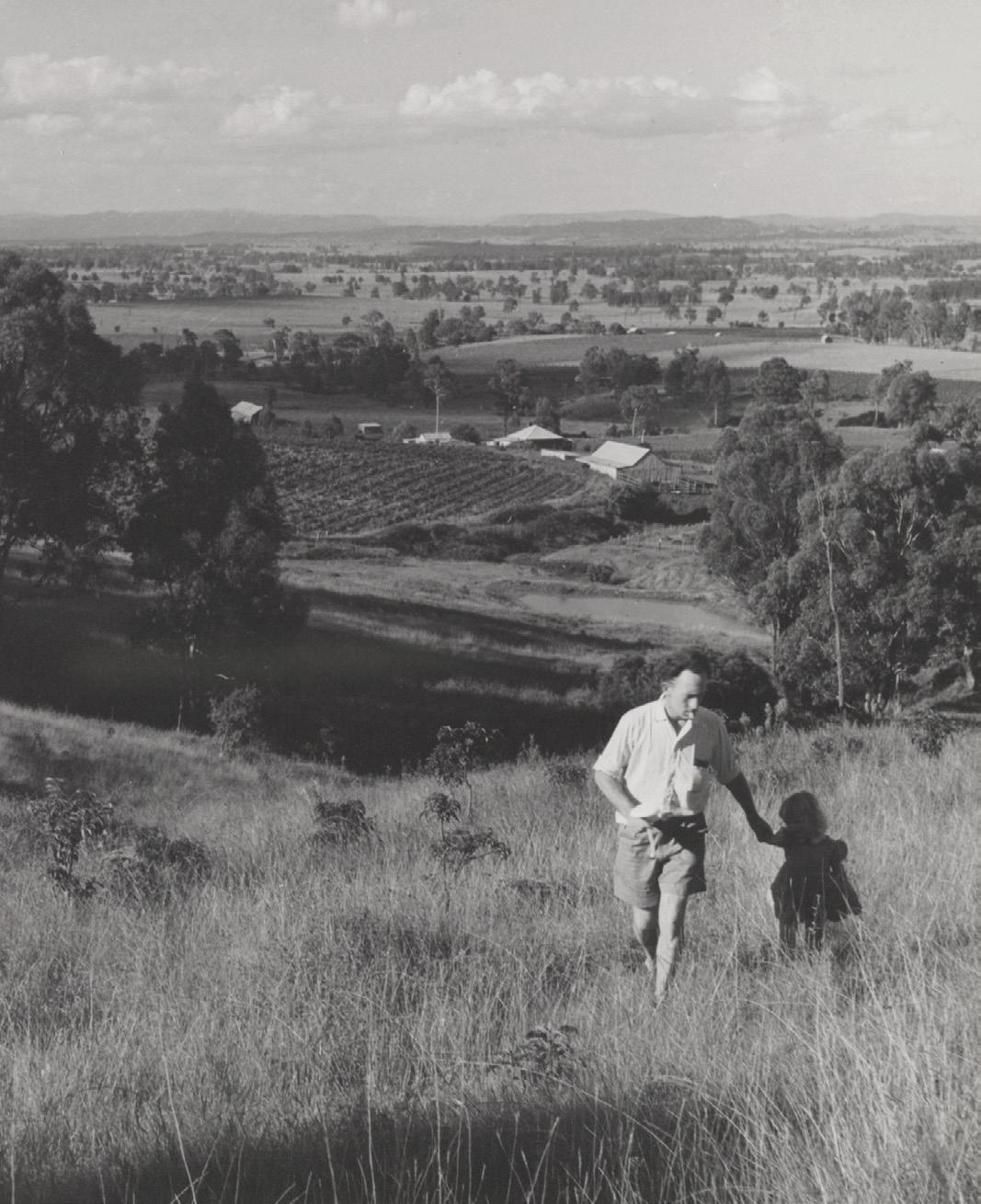
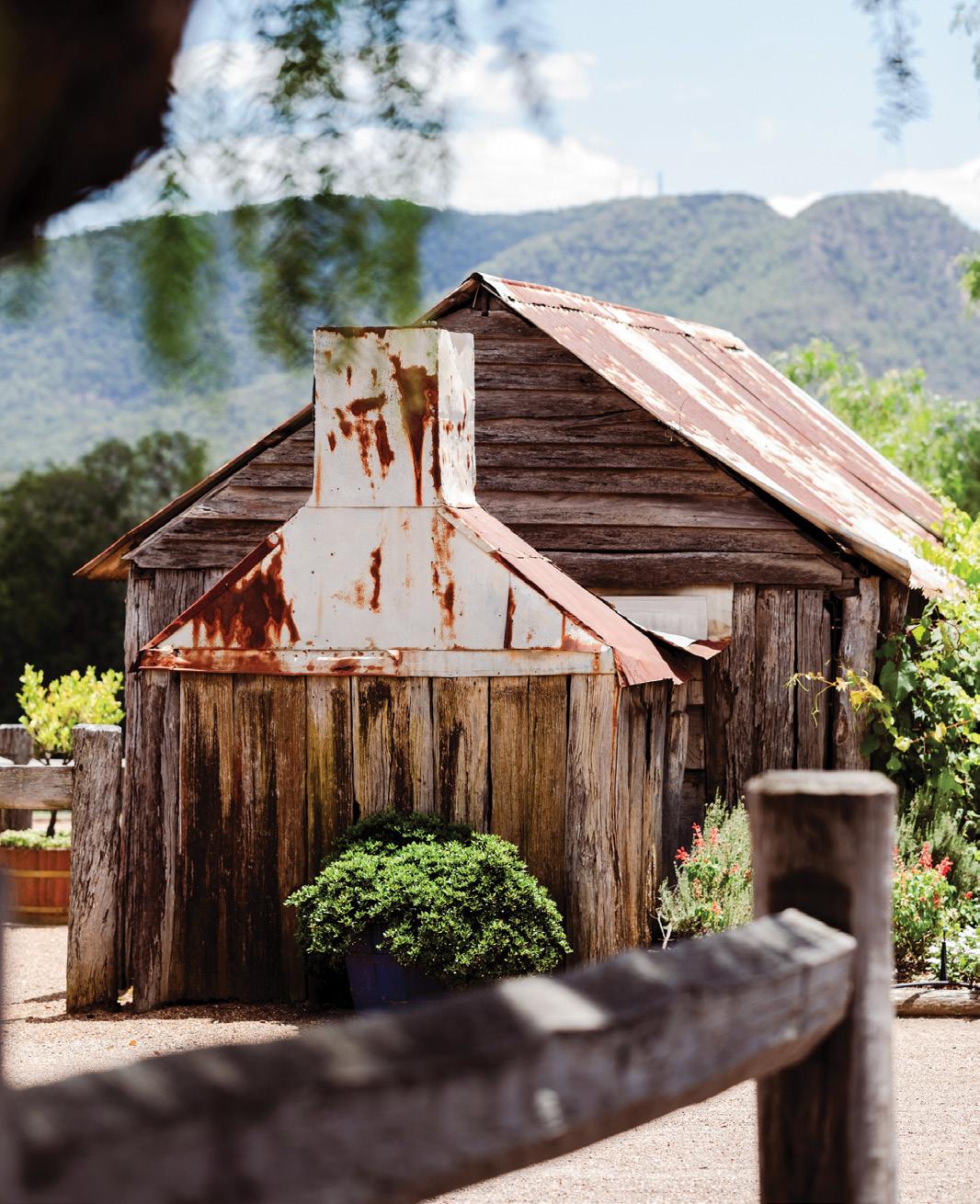
Mount Pleasant O'Shea MP Collection (photography by Max Dupain from the State Library of NSW); the Old Hut at Tyrrell’s, built in 1858 (image supplied).
in 1925), comprises material originally brought out by James Busby in 1832 and collected from the renowned Clos de Vougeot, a walled vineyard in Burgundy, France. During the 1970s, cuttings were taken by the CSIRO for heat treatment, clonal selection and propagation, and the widely planted MV6 Pinot Noir selection has been a massive success story on account of its intense colours, fruit definition and flavours. Its heritage value alone is extraordinary – there are only two degrees of separation between Mount Pleasant’s Mothervine Pinot Noir and the Clos de Vougeot, when it had a single owner in 1831.
The timeless, gorgeously concentrated Tyrrell’s Vat 47 Chardonnay (1968 plantings) and HVD Chardonnay (1908 plantings; the oldest surviving chardonnay vines in the world) are derived from material likely also brought out by James Busby in 1832. Murray Tyrrell’s 1971 Tyrrell’s Vat 47 kickstarted Australia’s love affair with chardonnay and remains a reference for the variety.
A bottle of 1930 Dalwood Hunter Valley Cabernet inspired Dr Max Lake to plant cabernet sauvignon in 1963. It’s thought that the singular claret-like Lakes Folly Cabernet Sauvignon comprises material that can be traced back to 1837, when William Macarthur first imported cabernet sauvignon cuttings from Bordeaux merchant Barton & Guestier. Since 2000, winemaker Rodney Kempe has refined and improved the style to produce the region’s most consistent ultra-fine cabernet. Brokenwood’s classic Graveyard Vineyard Shiraz, a style imagined by winemaker Iain Riggs AM, represents the values of modern-day Australian winemaking where collaboration, 19th century genetic material and contemporary techniques combine to make a wine of great substance, complexity and beauty.
Stories in the landscape
A drive through the Hunter Valley reveals many old vineyards with fascinating back stories. Tangible fragments of 19th century winemaking – including open concrete fermenters and original slab dwellings – are dotted through the landscape. One can imagine the Wilkinson family’s Cote d’Or, Mangerton, Oakdale, Maluna and Coolalta vineyards, which formed a band of vineyards over a corrugation of foothills during the 1880s and 1890s.
But time never stays still. The Hunter Valley has weathered both boom and bust but the wines have never been better, with a combination of heritage vineyards, heirloom vinestock and exceptional winemaking ideals. Tyrrell’s, Brokenwood, Mount Pleasant and Lake’s Folly are cornerstone producers but others like Audrey Wilkinson, Draytons, Thomas Wines, De Iuliis, Scarborough, Keith Tulloch, Riggs & Wiggs and Margan each contribute to the region’s vinous heritage.
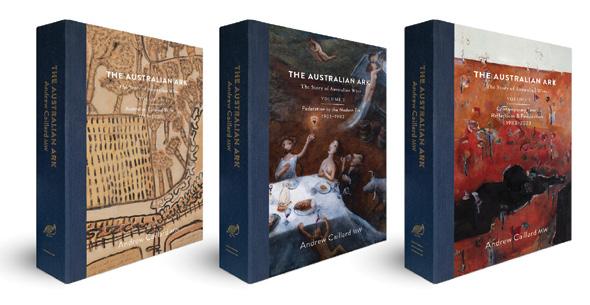
Andrew Caillard MW is the author of The Australian Ark: The Story of Australian Wine, 1788–2023, which won the 2025 National Trust Heritage Award for Publications.
Pay us a visit
Planning a trip to the Hunter Valley? Pay a visit to our special places in the region: Grossmann House in Maitland and Miss Porter’s House in Newcastle West. For details visit nationaltrust.org.au/places
Australia’s largest celebration of heritage is back
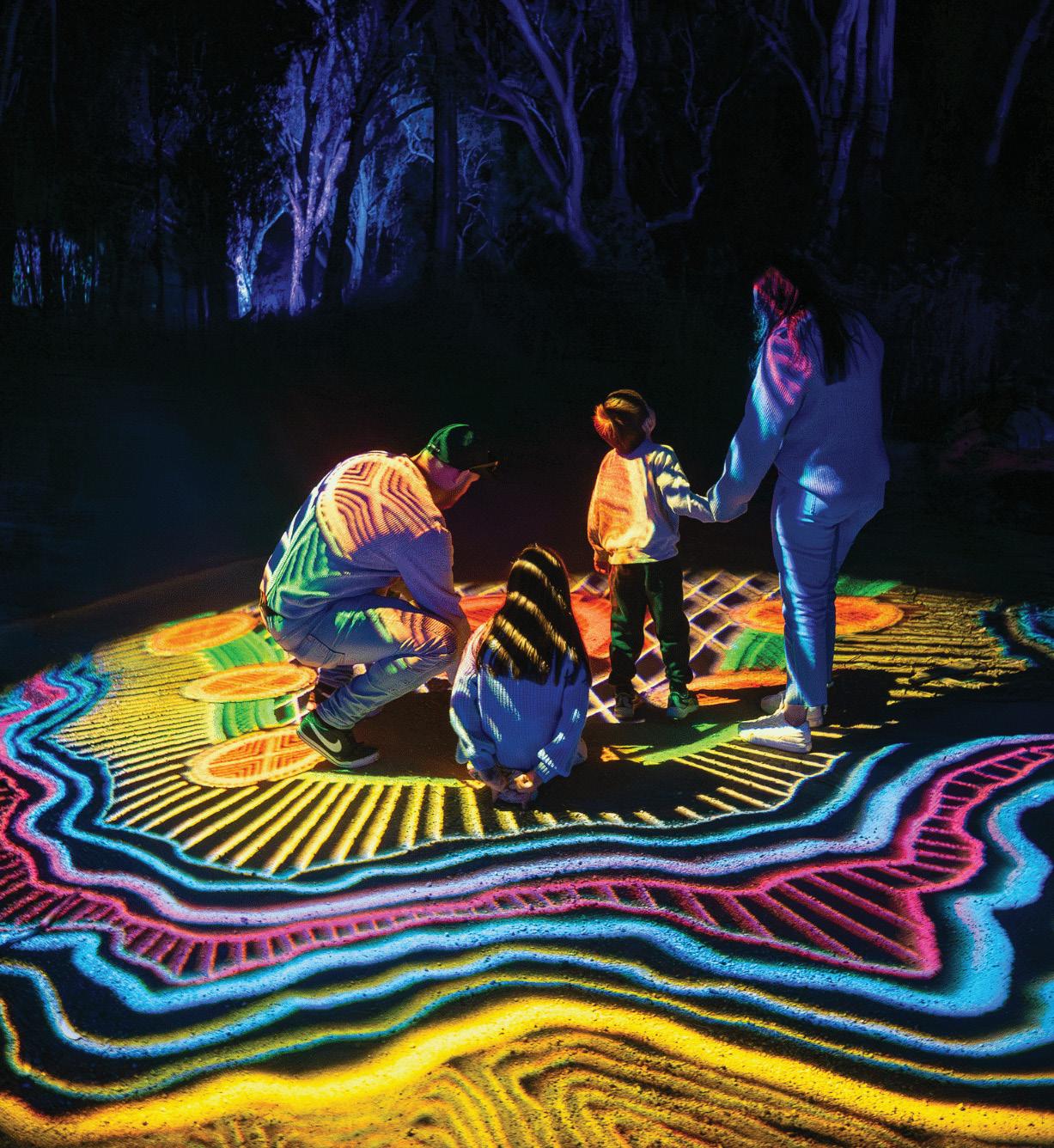
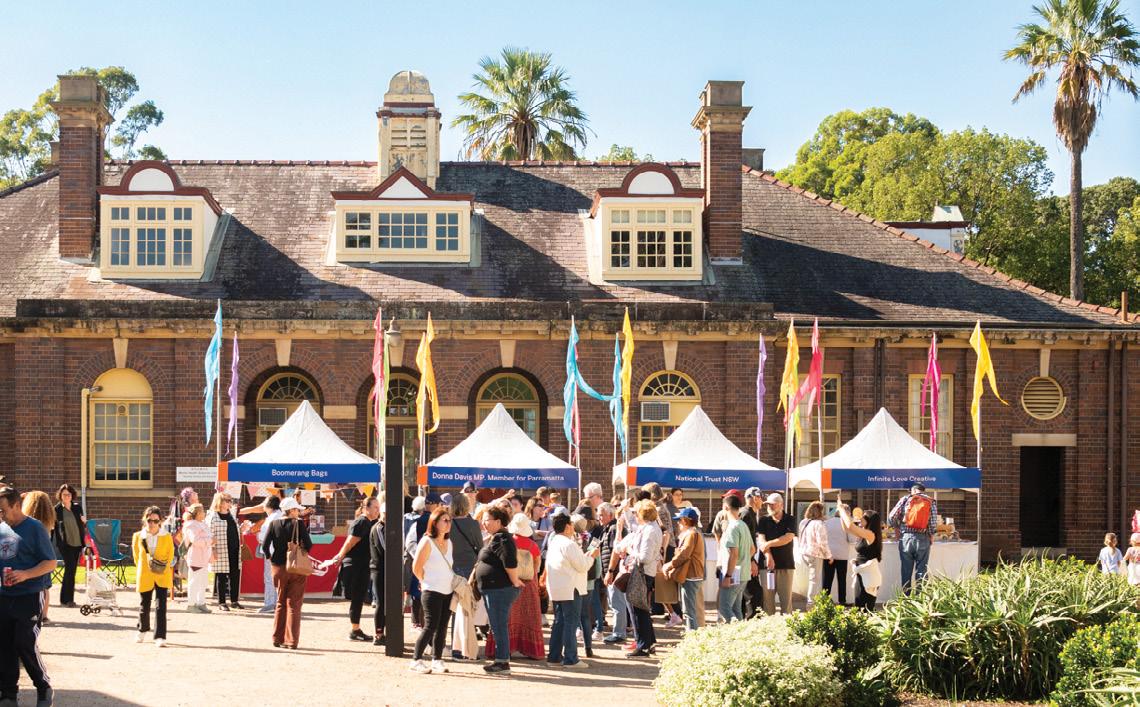
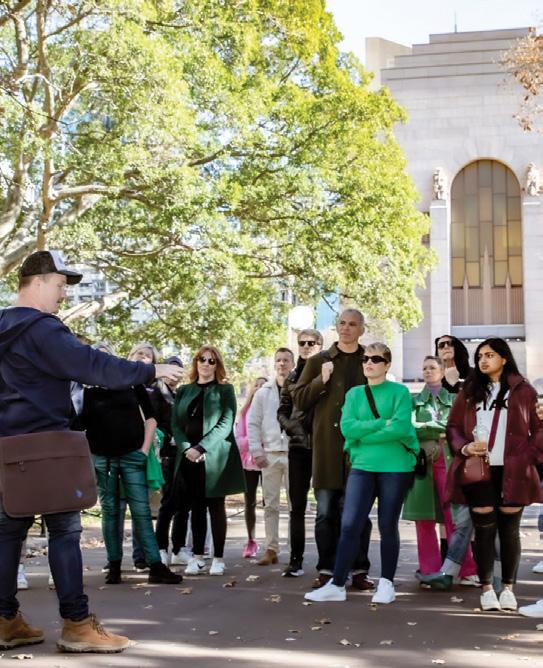
The Australian Heritage Festival returns 18 April – 18 May, offering unmatched access to hundreds of unique experiences and inspiring events to suit curious minds of all ages. From talks and tours to workshops, performances and more, join us for a month-long celebration of heritage.
INTERESTED IN HOSTING AN EVENT?
Be part of the festivities and reach thousands of heritage enthusiasts across the state. Free event registration closes 31 March.
To view the festival program or register your event, scan the QR code or visit australianheritagefestival.org.au
What’s On
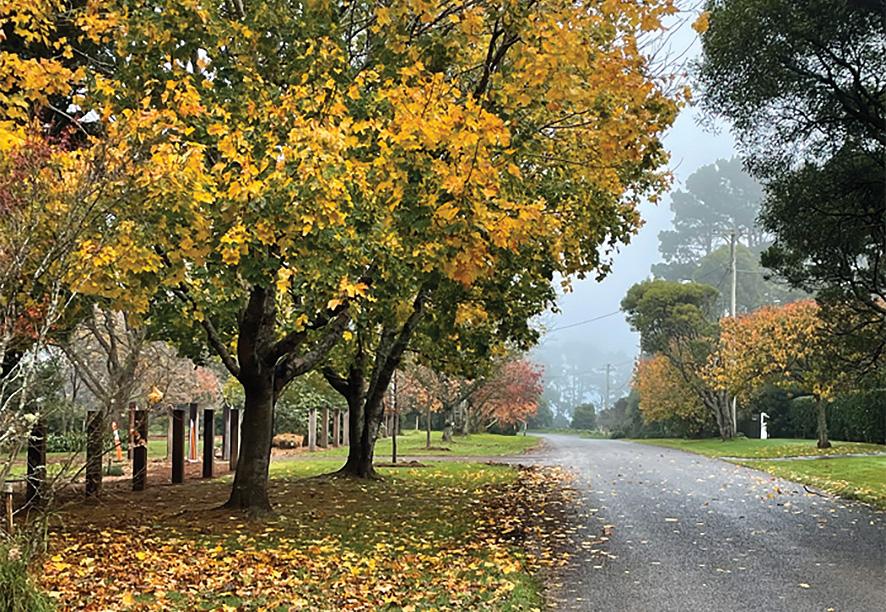
As the days grow shorter and autumn’s rich colours emerge, our special places offer a season full of discovery. Enjoy open days, guided tours, talks and exhibitions that showcase the best of heritage and culture. Then, from 18 April to 18 May, the much-loved Australian Heritage Festival returns, offering hundreds of free and ticketed events across the country.
MARY TONKIN: AMONG THE TREES
S.H. ERVIN GALLERY, OBSERVATORY HILL
UNTIL 1 MARCH, TUESDAY – SUNDAY, 11AM – 5PM
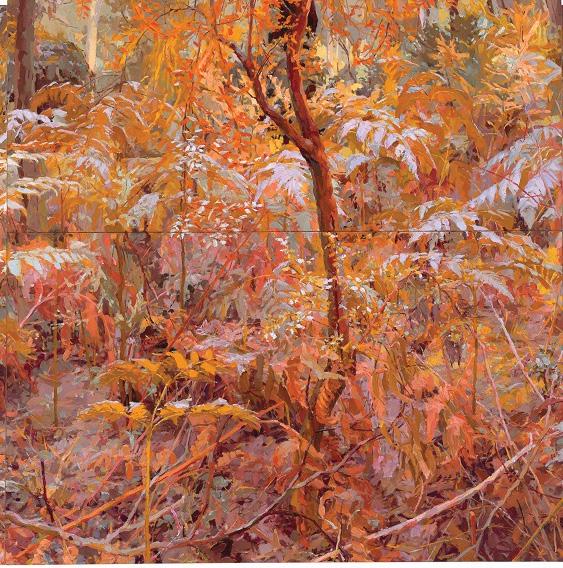
View Sydney's first major exhibition of large-scale and immersive works by Mary Tonkin, one of Australia's leading en plein air landscape painters. (Pictured: Coprosma Madonna, Kalorama (detail) by Mary Tonkin).
Tickets: Members free, adults $15, concession $12, family $42, children under five free
Event details are correct at the time of printing. To purchase tickets and check for updates, visit nationaltrust.org.au/whats-on-nsw Booking fees may apply.
RAYNER HOFF
NORMAN LINDSAY GALLERY, FAULCONBRIDGE
UNTIL 16 MARCH, THURSDAY – MONDAY, 10AM – 3PM
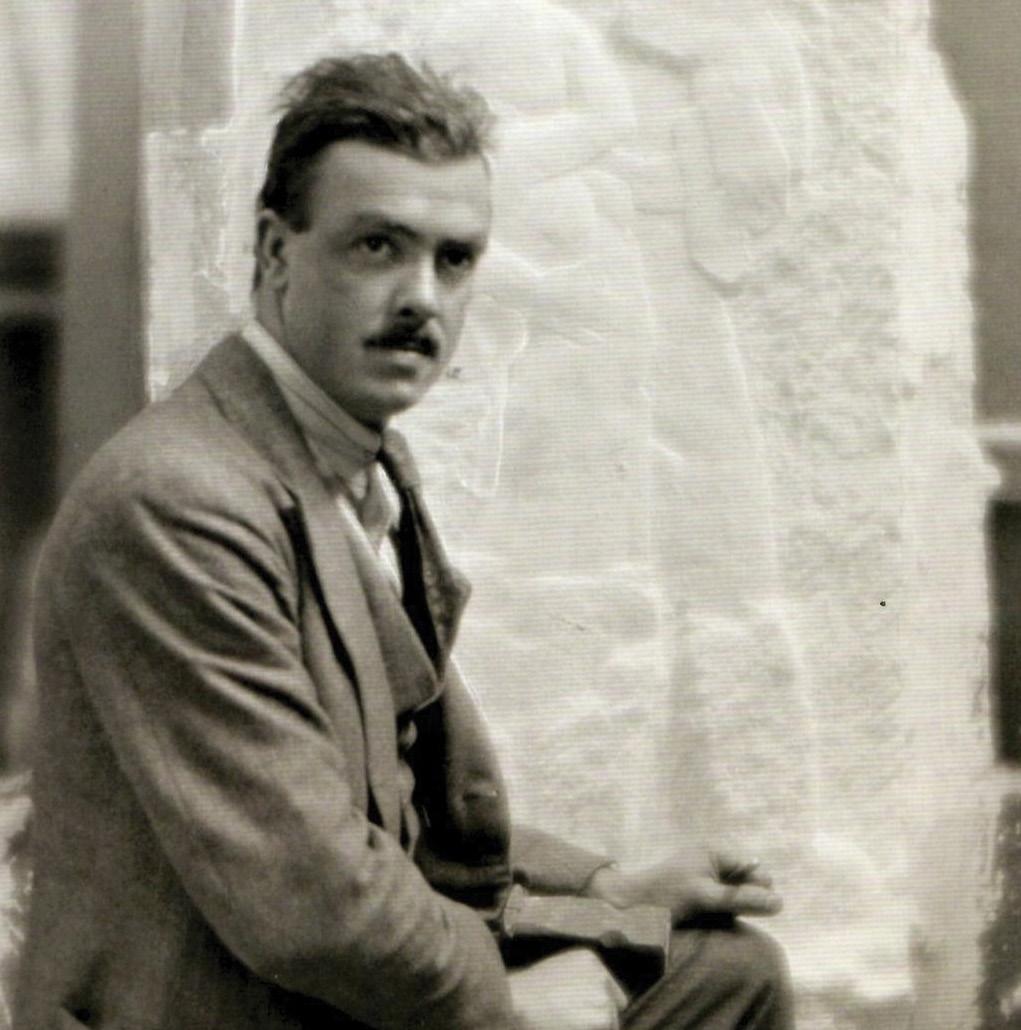
Discover a striking new exhibition on Rayner Hoff, friend of Norman Lindsay and the most gifted – and controversial – public sculptor in 1920s and 30s Australia.
Tickets: Members free, adults $17, concession $15, family $49, children under five free
TRAVELS WITH MARY: 100-YEAR ANNIVERSARY
SAUMAREZ HOMESTEAD, ARMIDALE
1 FEBRUARY – 31 MAY,
WEDNESDAY, FRIDAY & SUNDAY, 10AM – 4PM
In celebration of a centenary of the Armidale Country Women’s Association, this display showcases former president and long-time Saumarez Homestead resident Mary White’s remarkable 1939 journey to London, and her collection of Art Deco travel posters and maps.
Tickets: Members free, adults $12, concession $10, family $34, children under five free
PSYCHIC SATURDAY AT OLD GOVERNMENT HOUSE
OLD GOVERNMENT HOUSE, PARRAMATTA
7 FEBRUARY, 11AM – 4PM
Step into an extraordinary world of wonder, spiritual connection and intrigue with psychic readings, mystical market stalls, handcrafted treasures, ghost tours, demonstrations and more.
Tickets: Free
CONTEMPORARY AUSTRALIAN LANDSCAPE PAINTINGS
WHITE COTTAGE GALLERY, RETFORD PARK, BOWRAL
7 FEBRUARY – 6 APRIL, WEDNESDAY – SUNDAY, 10AM – 4PM
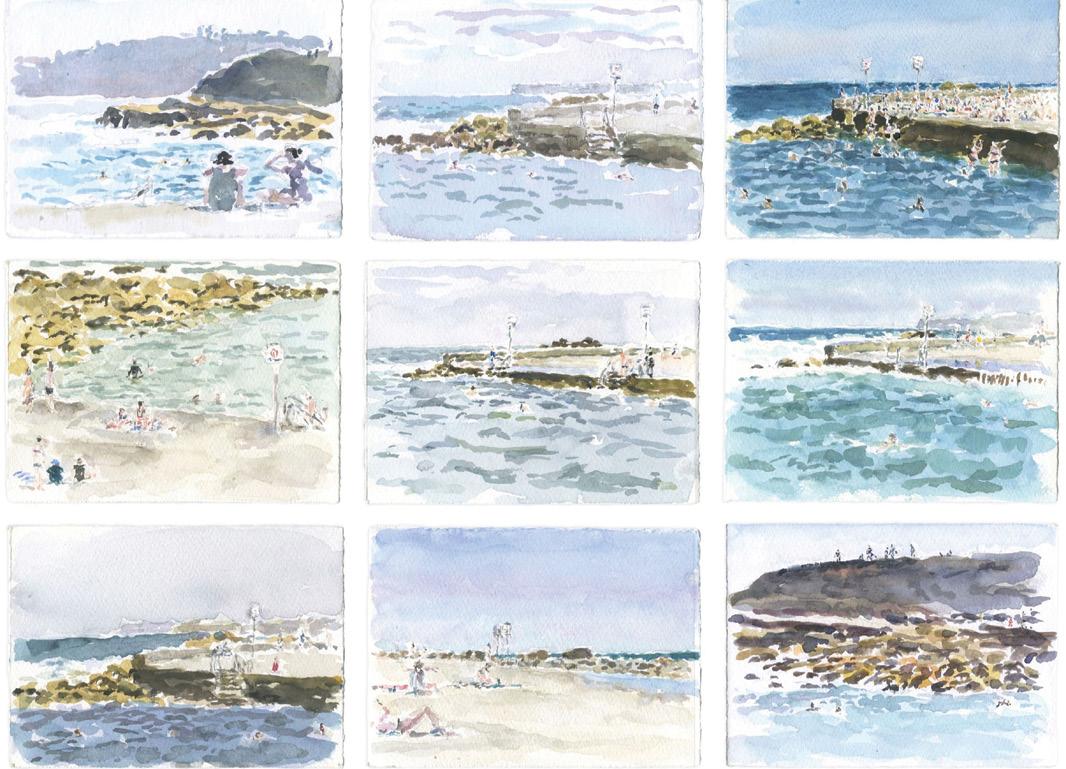
View a curated selection of works from the Salon des Refusés Wynne Prize, in conjunction with the travelling Wynne Prize exhibition on show next door at Ngununggula Southern Highlands Regional Gallery. (Pictured: Clovelly by Tom Carment).
Tickets: $10
OPEN DAYS AT MISS PORTER’S HOUSE
MISS PORTER’S HOUSE, NEWCASTLE WEST
8 FEBRUARY, 8 MARCH, 12 APRIL & 10 MAY, 1PM – 4PM
Hear immersive audio stories and browse monthly displays, including curious objects, historic clothing, textiles, documents and rare pictures. In May, there is a celebration of remarkable women for Mother’s Day. Free “clever detective” activities will delight inquisitive children.
Tickets: Members free, adults $12, concession $10, family $34, children under five free
FROM SOIL TO BLOOM: HEAD GARDENER TALK
EVERGLADES HOUSE & GARDENS, LEURA
13 FEBRUARY, 11AM – 12PM
Join Simon Cooper, head gardener at Everglades House & Gardens, for an expert talk and Q&A session on how to prepare your autumn and winter garden for the spring season ahead.
Tickets: $25
RIVERSDALE TWILIGHT TOURS
RIVERSDALE, GOULBURN
13 FEBRUARY, 13 MARCH & 17 APRIL, 7PM – 8:30PM
As night falls, enjoy refreshments and travel back in time to explore hidden treasures and rare artworks safely tucked away within the walls of Riversdale.
Tickets: $30
WOODFORD ACADEMY OPEN DAYS
WOODFORD ACADEMY, WOODFORD
21 FEBRUARY, 21 MARCH, 18 APRIL & 16 MAY, 10AM – 4PM
In February, meet Artist in Residence Anke Stäcker. In March, celebrate International Women’s Day with a talk on pioneering conservationist Isobel Bowden. Visit in May for International Museum Day.
Tickets: Members free, adults $12, concession $10, family $34, children under five free
LINDESAY AFTER DARK
LINDESAY, DARLING POINT
24 FEBRUARY, 31 MARCH, 28 APRIL & 26 MAY, 6PM – 8PM
Uncover stories from the past at an intriguing after-dark tour of historic Lindesay. Enjoy wine and canapés in the garden before exploring this spectacular 1830s property as night falls.
Based on sacred geometry, mandala is a Sanskrit word meaning circle. This colourful exhibition represents the artist’s 20-year exploration of this universal symbol. (Pictured: As Above So Below by Marion van den Driesschen).
Tickets: Members free, adults $17, concession $15, family $49, children under five free
ENTRIES NOW OPEN
4 MARCH: SUBMISSION DEADLINE
If you’ve been involved with a project or campaign that has promoted, protected or preserved heritage in NSW since April 2025, or you know of an inspiring individual deserving of recognition, we encourage you to enter the National Trust (NSW) Heritage Awards.
Visit nationaltrust.org.au/heritage-awards-nsw for details.
AUTUMN HIGH TEA
COOMA COTTAGE, YASS
4 MARCH, 11AM – 1PM
Gather your loved ones and enjoy live acoustic music, a delicious high tea and guided tours of the historic house and picturesque autumn gardens.
Tickets: $75
HOLDING GROUND
S.H. ERVIN GALLERY, OBSERVATORY HILL
7 MARCH – 3 MAY, TUESDAY – SUNDAY, 11AM – 5PM
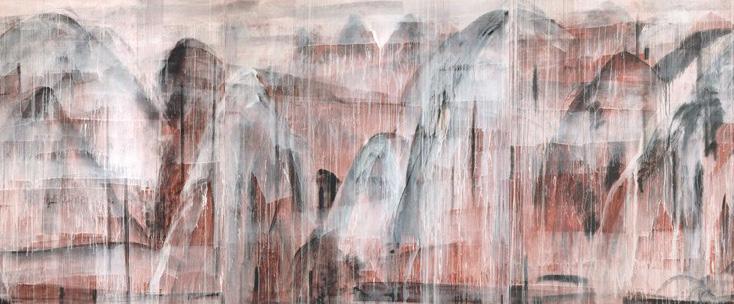
A timely exhibition confronting the realities of climate change. View paintings, ceramics, sculpture, photography and film that explore the shifting landscapes of New South Wales.
(Pictured: The Language of Mountains is Rain by Angus Nivison).
Tickets: Members free, adults $15, concession $12, family $42, children under five free
NORMAN LINDSAY AND THE NATURAL WORLD
NORMAN LINDSAY GALLERY, FAULCONBRIDGE
19 MARCH – 13 JULY, THURSDAY – MONDAY, 10AM – 4PM
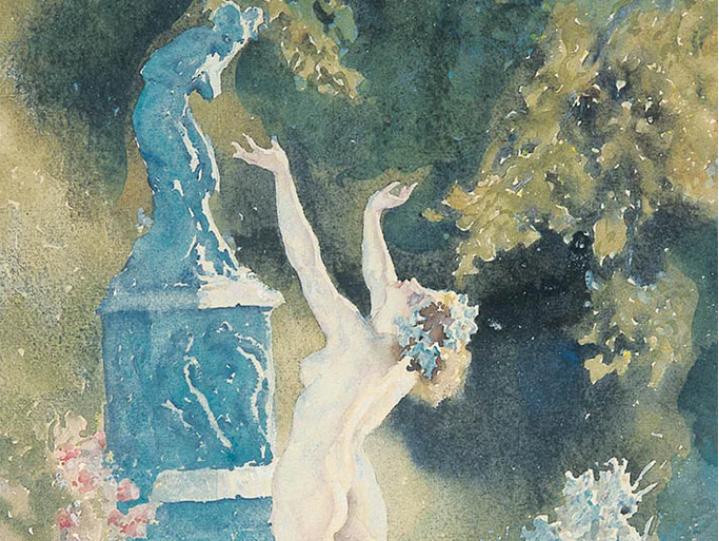
Browse a captivating exhibition of paintings and watercolours examining Lindsay's lifelong fascination with nature.
Tickets: Members free, adults $17, concession $15, family $49, children under five free
Book your tickets or find out more at
JAZZ & WINE IN THE GARDEN
NORMAN LINDSAY GALLERY, FAULCONBRIDGE
28 MARCH, 11AM – 4PM
Listen to fantastic jazz musicians, discover local wineries and watch lively dance performances set against the scenic backdrop of the Norman Lindsay Gallery in the Blue Mountains.
Tickets: Members $40, adults $45, concession $42, under 18s $20, children under five free
Australian Heritage Festival
18 APRIL – 18 MAY
Start planning your festivities at the Australian Heritage Festival, the country’s largest community-driven celebration of natural, cultural and built heritage. This year’s theme is Change and the colourful program spans more than 200 events across NSW.
Visit australianheritagefestival.org.au for more details.
INAUGURAL AUTUMN LUNCHEON
DUNDULLIMAL HOMESTEAD, DUBBO
19 APRIL, 12PM – 3PM
Enjoy a 3-course lunch served alfresco style in the autumn gardens, set against the backdrop of Dundullimal’s historic homestead, sandstone stables and charming timber church.
Tickets: $150
AUTUMN HOUSE & GARDEN INSPECTIONS
SOUTHERN HIGHLANDS
21 APRIL, 10:30AM – 3:45PM
Admire the bold beauty of autumn in the Southern Highlands as you inspect a selection of privately owned houses and their glorious gardens. Includes morning tea.
Tickets: Members $70, adults $80, concession $75
Looking at Architecture Country Weekend
LOWER BLUE MOUNTAINS, 1 – 3 MAY
Women’s Committee Inspections and Events
Join an autumn tour of historic homes and gardens in the Blue Mountains, including Glenbrook, Springwood and Woodford. Register your interest at lindesay@nationaltrust.com.au
COOMA COTTAGE OPEN DAY WITH HISTORIC DANCE DELIGHTS
COOMA COTTAGE, YASS
2 MAY, 10AM – 12PM
Enjoy a special open day offering lively period dance performances, guided house tours and Devonshire Tea.
Tickets: Members $35, adults $45, concession $40, family $100
SUNSET EVENINGS AT RETFORD PARK
RETFORD PARK, BOWRAL
9 & 10 MAY, 5PM – 7PM
Experience the magic of sunset at Retford Park, when the gardens start to glow and the house comes to life by lamplight. Includes drinks, canapés and a guided tour.
Tickets: Members $35, adults $55, concession $45
SALON DES REFUSÉS
S.H. ERVIN GALLERY, OBSERVATORY HILL
9 MAY – 26 JULY, TUESDAY – SUNDAY, 11AM – 5PM
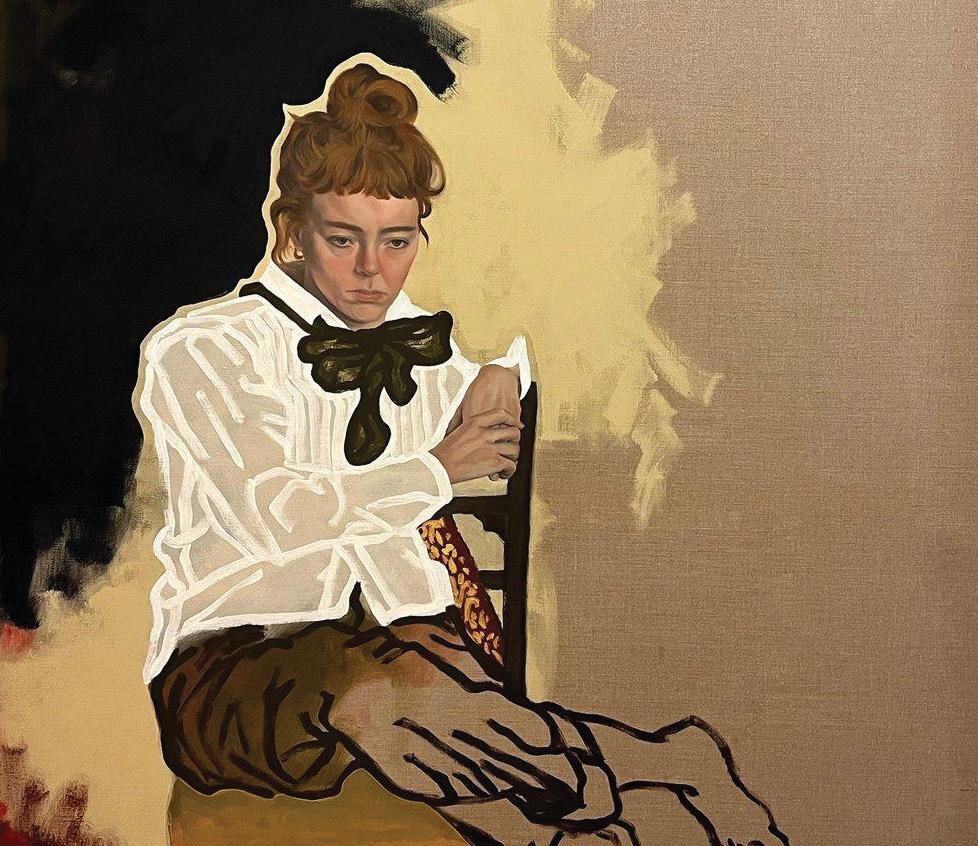
The Salon des Refusés is a much-anticipated feature of the art scene, showcasing an alternative selection of equally brilliant works not chosen for display in the official Archibald and Wynne Prizes. (Pictured: A Room of One’s Own by Phoebe Bell).
Tickets: Members free, adults $15, concession $12, family $42, children under five free
MOTHER’S DAY DELIGHTS
GROSSMANN & BROUGH HOUSES, MAITLAND
10 MAY, 10:30AM – 3PM
Join an intriguing tour of historic Grossmann House and enjoy appetisers and refreshments served in the Brough House garden. A glass of sparkling wine will be waiting for you on arrival.
Tickets: Members $40, adults $55, concession $45, children under 12 $30
NATIONAL TRUST (NSW) HERITAGE AWARDS
DOLTONE HOUSE, JONES BAY WHARF, PYRMONT
15 MAY, 11:30AM – 2:30PM
Join the celebrations and see the inspiring projects and people preserving built, natural and cultural heritage across the state at this year’s National Trust (NSW) Heritage Awards.
Visit nationaltrust.org.au/heritage-awards-nsw for details and tickets.
Tickets: From $170
NORMAN LINDSAY VINTAGE FAIR
NORMAN LINDSAY GALLERY, FAULCONBRIDGE
16 MAY, 11AM – 4PM
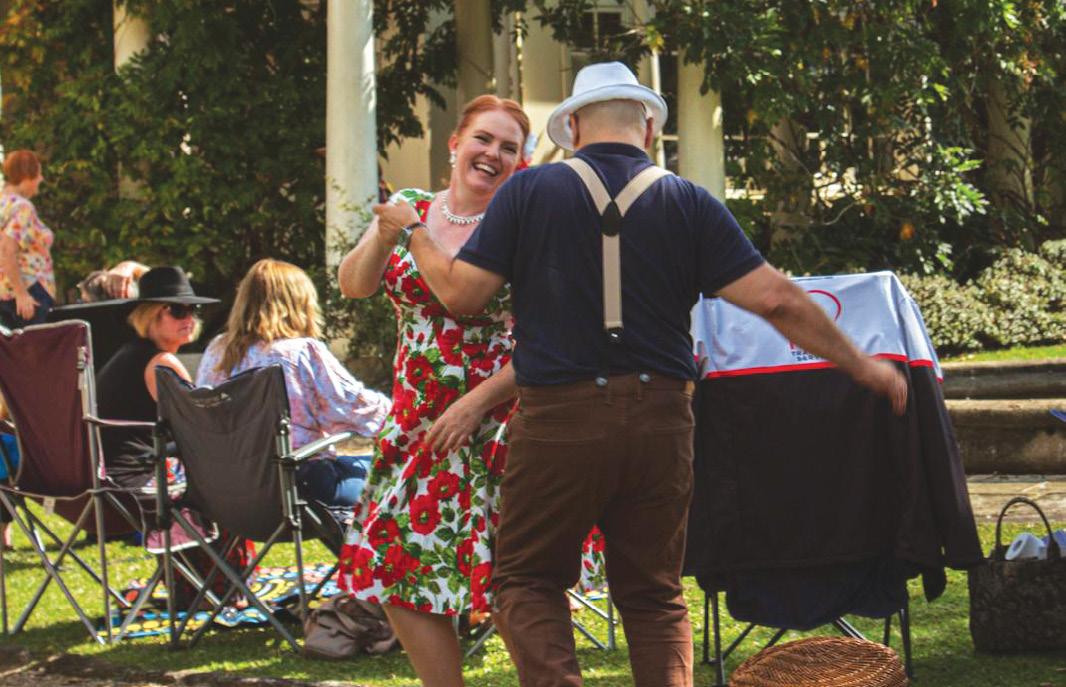
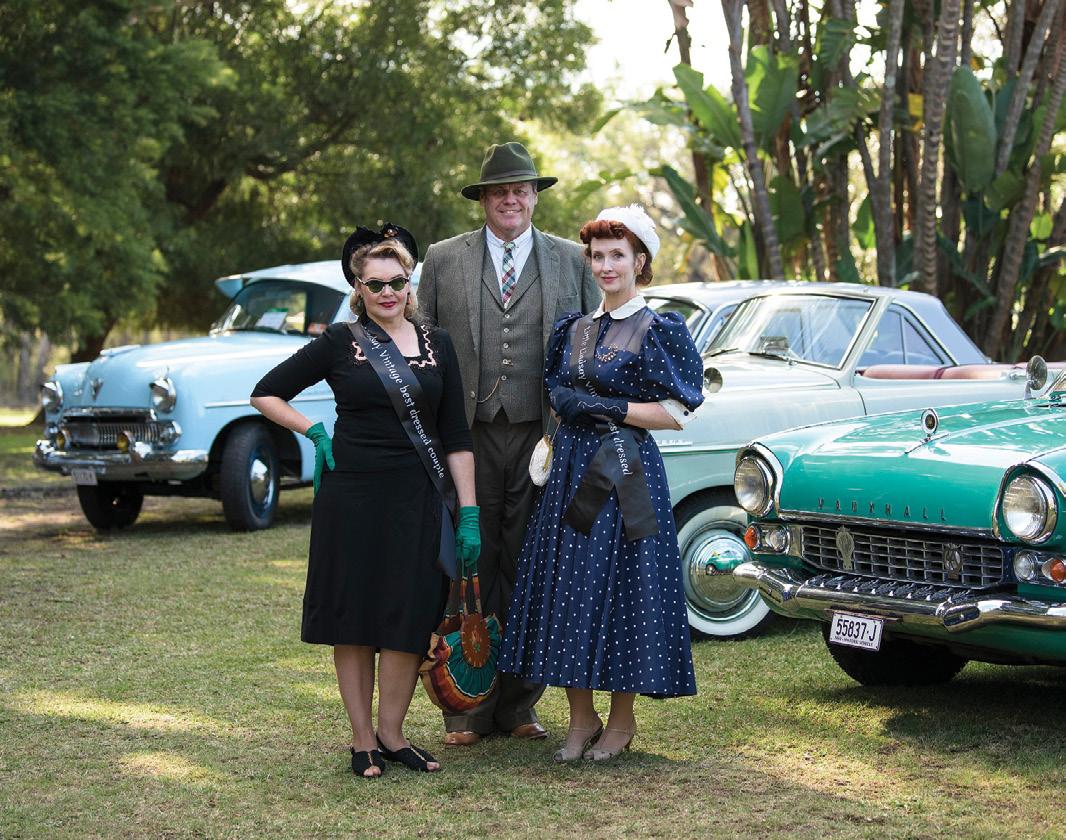
Celebrate the vibrant heritage of the Norman Lindsay Gallery with vintage fashion, cars, market stalls, object valuations, live music by the Flat Cap Jazz Cats and more.
Tickets: Members free, adults and concession $5, family $20, children under five free
ART ADVENTURES
From sculptural gardens to exciting exhibitions, Everglades House & Gardens, Retford Park, Norman Lindsay Gallery and the S.H. Ervin Gallery are brimming with must-see art experiences. View the latest exhibition programs at nationaltrust.org.au/whats-on-nsw
Finding Purpose in the Past
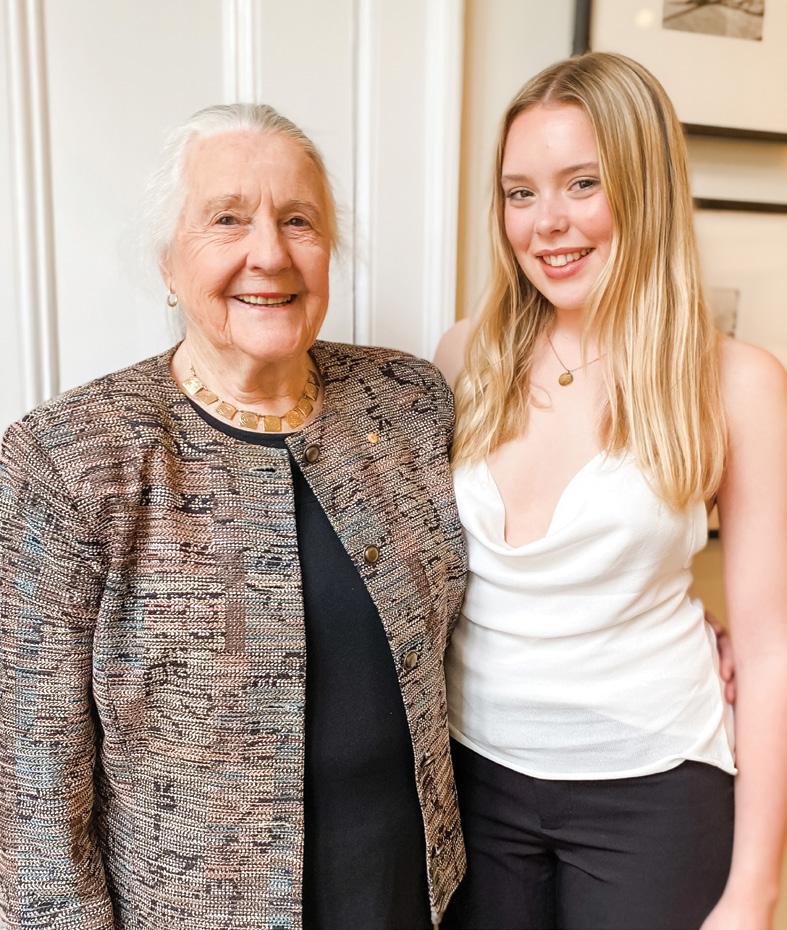
In the spirit of International Women’s Day in March, we share the story of Lois Rasmussen OAM, one of the National Trust’s longest serving volunteers, and her granddaughter Clara, whose legacy of service and shared passion for heritage spans generations.
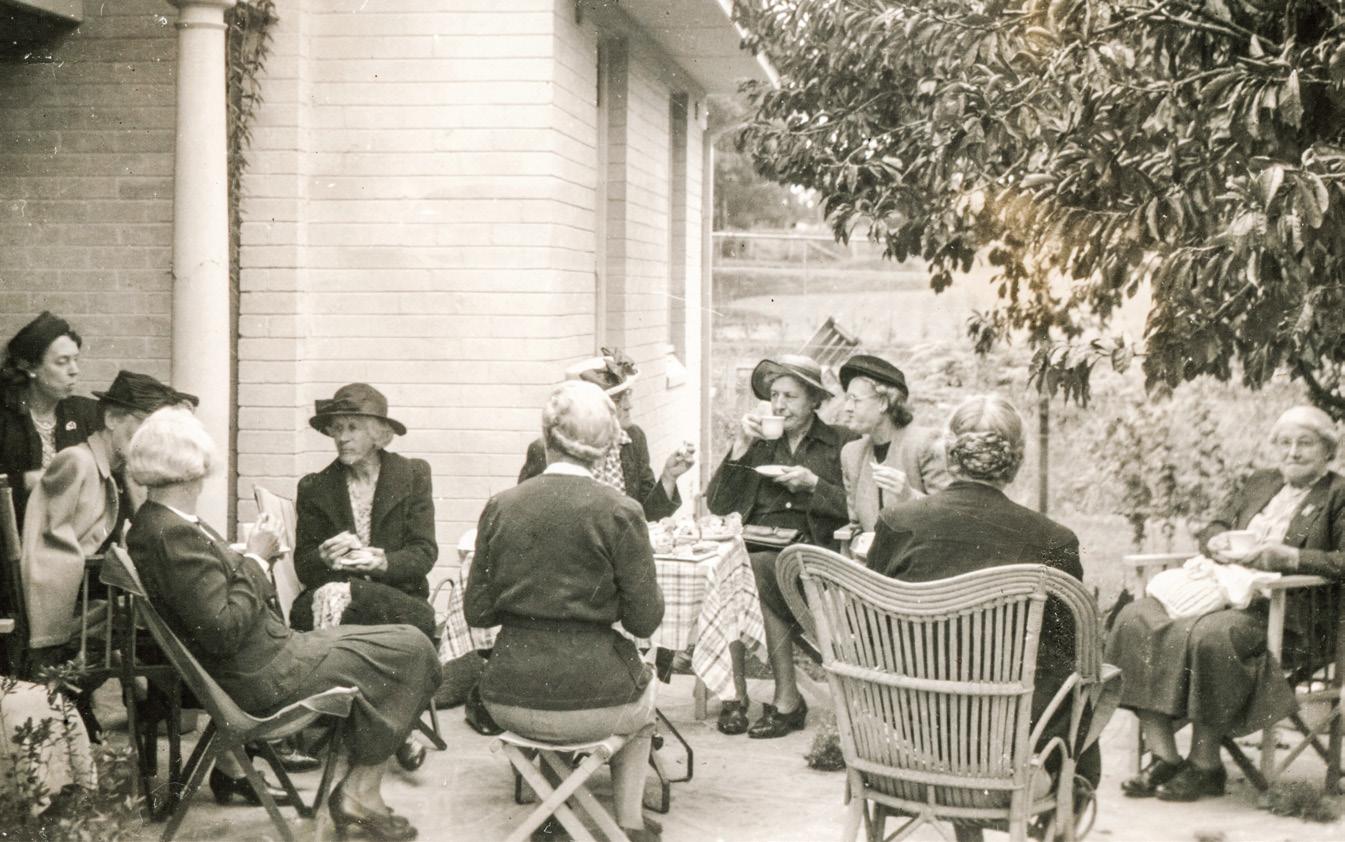
The National Trust is an organisation shaped by formidable women and Lois Rasmussen is no exception. One of the National Trust’s long-term supporters, Lois has advocated for the importance of heritage since the 1970s. It’s an association that was almost inevitable – her mother-in-law, Clara Elizabeth Rasmussen, was one of the original members of the Ku-ring-gai Tree Lovers' Civic League, the organisation that became the National Trust in 1945; Lois’s late husband Philip was its first junior member.
Growing up in country NSW, Lois’s family instilled the belief that volunteering is a duty. Her grandmother was a bush nurse in Molong and Wellington who would ride side-saddle for long distances to visit patients. “She was very high-spirited,” Lois recalls. The can-do attitude of her grandmother and mother-in-law continues to inspire her.
Reflecting on why she’s chosen to give her time to the National Trust, she says: “Preserving the best of the past for the benefit of future generations is enormously important. You have to have a past to have a future.”
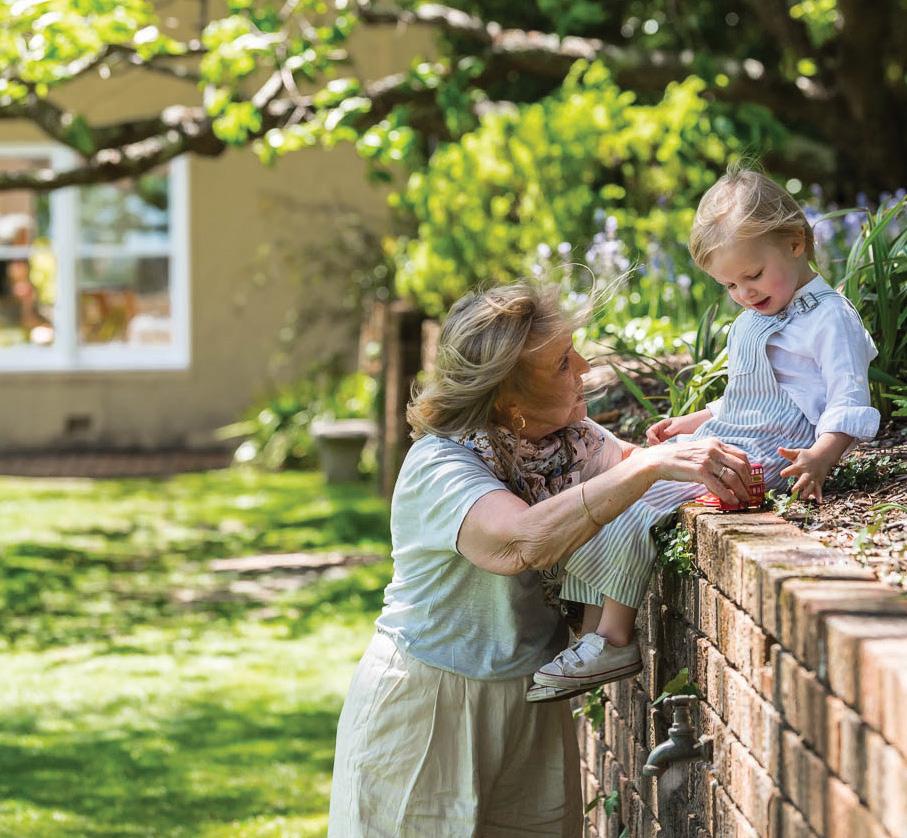
Lois shares a close bond with her teenage granddaughter, Clara, who admires the determination of her grandmother and greatgrandmother. “When they think of something they really do it! Not a lot of people actually act upon what they want to do. I take inspiration from that,” says Clara. Currently studying for the HSC, Clara says her family’s history and involvement with the National Trust have given her a strong appreciation for the importance of heritage and giving back.
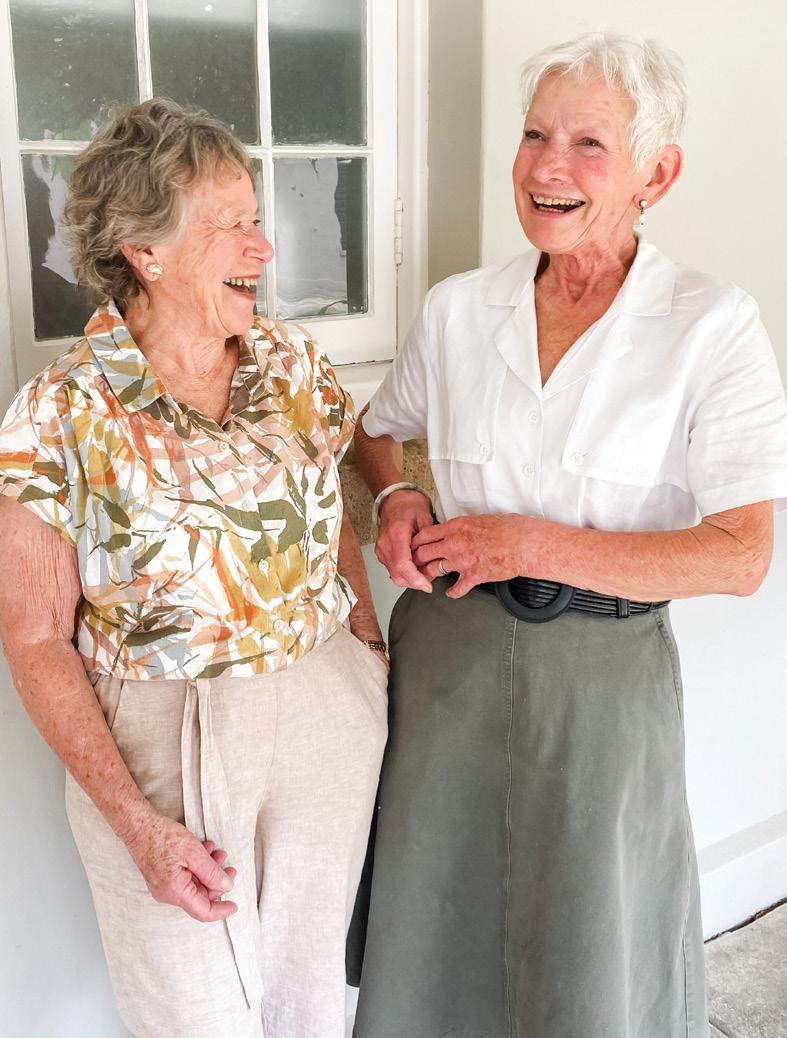
“I would love to think that Clara could carry the torch on,” says Lois, looking fondly at her granddaughter. It’s a wish Clara shares. “I want to live up to her vision of me in the future.”
‘Preserving the best of the past for the benefit of future generations is enormously important.’
Do you have a story of heritage to share?
Email us at marketing@nationaltrust.com.au and it may be featured in the next issue of the magazine.
From top Lois Rasmussen with her granddaughter Clara (image supplied); the Ku-ring-gai Tree Lovers' Civic League (image from the National Trust Archive).
Thank you to our Patrons, Supporters and Corporate Partners
Platinum Patrons
J Berry
J Burnswoods
J Church
C & B Hindmarsh
C Wilkinson OAM
Gold Patrons
G Arnott
J & L Calluaud
P & R Flick
P & S Harper
H Hewitt
Kimalo Foundation
Lambert Bridge Foundation
N & J Margerrison
Pratten Foundation
T Strachan
C Sutherland
S Thomas
A & P White
Silver Patrons
R Butler AM
Prof D Carment AM
N & R Charley AO
J Giles
G & T Graham
T Heazlewood OAM
P Homel & L Taggart
C Nadai & R Burge
P Slade
J Woodward
Bronze Patrons
P & H Andrews
J & L Benaud
A Cassidy & D Taranto
L Cox AO
B Edwards
B & J Hambrett
E Heard
A Johnson
R & J Lister
L Marcroft & G Brunner
R McCallum
D Paisley
S & J Parfitt
H Ralston OAM
K & J Roberts
A Scott
A Smith
V Vargassoff
G & The Hon W Windeyer AM
Dr J Yu AC
Major Donors
H Berry
J Burnswoods
J Curtis AM
David Sheedy Foundation
Denbigh Foundation
S Devenish-Meares
Dick & Pip Smith Foundation
J Grimsdale
J Permsew Foundation
I Kaiser
Prof M & S Lawrence
Maple-Brown Family Foundation
Perpetual Foundation
S Pickles
Dr S Rothwell AM
T Strachan
P & R Wade
S White OAM
Corporate Members
Biosis Pty Ltd
Design 5 – Architects
GML Heritage
Hector Abrahams Architects
Long Blackledge Architects
Lucas, Stapleton, Johnson & Partners
Metropolitan Memorial Parks
Slate Roofing Australia
Sydney Metro
Wollongong City Council
Corporate Partners
Art Gallery of NSW
International Conservation Services
S.H. Ervin Gallery Supporters
Allen & Unwin
Art Gallery of NSW
Holding Redlich
Margaret Olley Art Trust
Perpetual
For 80 years, the National Trust has protected the places, stories, and landscapes that define our shared heritage. From historic homes and timeless treasures to gardens and bushland, we care for our unique culture. Every bequest, large or small, helps bring heritage to life now and into the future.