National Trust NSW Magazine - June to September 2026
NEW SOUTH WALES
JUNE – SEPTEMBER 2026
This issue, we hear from some remarkable people whose lives and work show that heritage continues to shape the present as much as it illuminates the past. On page 6, we pay tribute to the winners of the 2026 National Trust (NSW) Heritage Awards – their care and craftsmanship inspires us all.
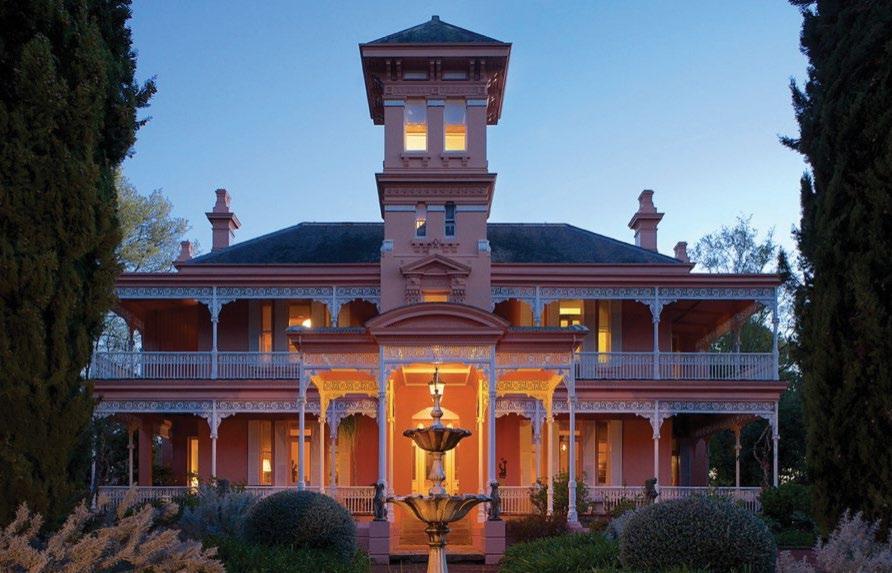
What captivates one person may differ from what moves another. For some, it’s the beauty of a house such as Lindesay and the responsibility of securing its future –turn to page 10 to lend your support. For others, it’s the satisfaction of encouraging a new generation to discover a vintage pastime (page 23). Whatever your relationship with heritage, we hope you’ll find food for thought in this edition.
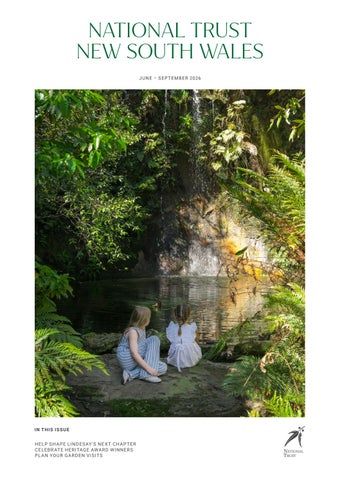
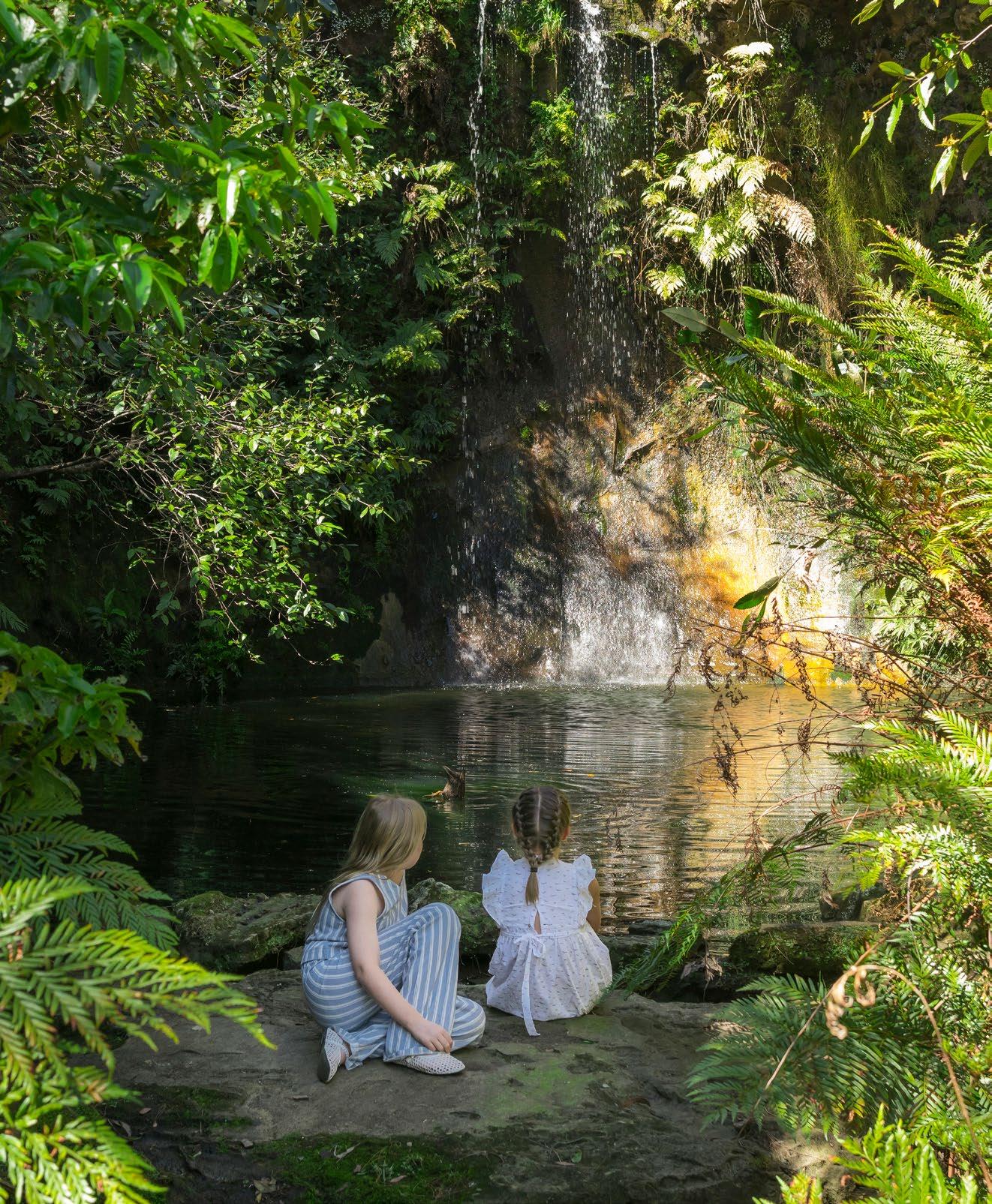
On the cover:
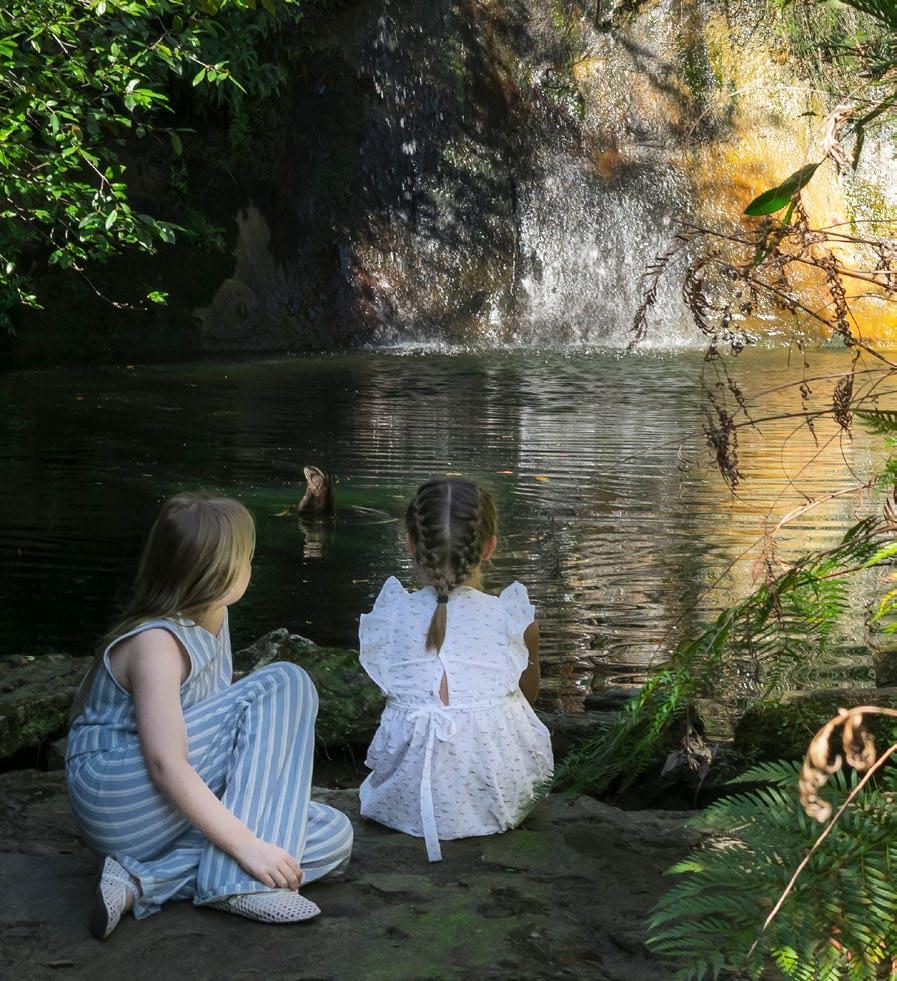
The Grotto pool and waterfall at Everglades House & Gardens offers a glimpse of the drama and tranquillity found in National Trust gardens. Turn to page 14 to explore when to see these special places at their best, with a seasonal guide to garden visits across NSW (photography by Joe Wigdahl).
ACKNOWLEDGEMENT OF COUNTRY
The National Trust acknowledges the Traditional Custodians of the land on which we work, celebrate and share the stories of heritage. We pay our respects to Elders past and present and we support the Uluru Statement.
National Trust (NSW)
Observatory Hill, Millers Point, Sydney 2000
GPO Box 518, Sydney 2001 Telephone: (02) 9258 0123 nationaltrust.org.au/nsw
President: Bruce Pettman
CEO: Debbie Mills
Editor: Michelle Bateman
Designer: Lauren Sutherland
Editorial Committee: David Burdon, Nick Corbett, Alison McCann, Debbie Mills, Leah Tasker, Jane Watters, Anne Weinman, Amanda Woodward-Brown.
The National Trust New South Wales magazine is published by the National Trust of Australia (New South Wales). Published articles reflect the opinions of the authors and are not necessarily reflective of the views of the National Trust. This magazine is printed by Bright Print Group, on paper that is independently certified by the Forest Stewardship Council (FSC), carbon neutral and made with 100% recycled post-consumer waste in a chlorine-free environment.
Building a Lasting Future
BY BRUCE PETTMAN AND DEBBIE MILLS
Dear Members,
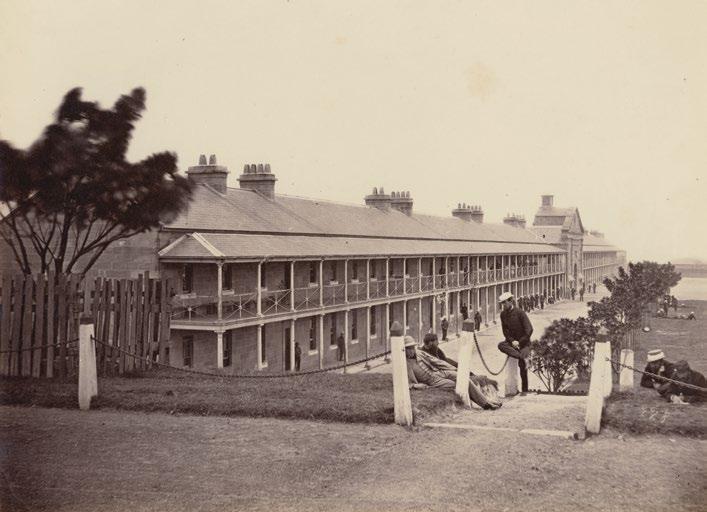
The National Trust is concerned about the announcement that several historic defence sites are to be sold. We’re advocating for the conservation of Australia’s historic defence sites and are particularly concerned that Victoria Barracks is among those suggested for disposal. You can read more on our website as this issue develops.
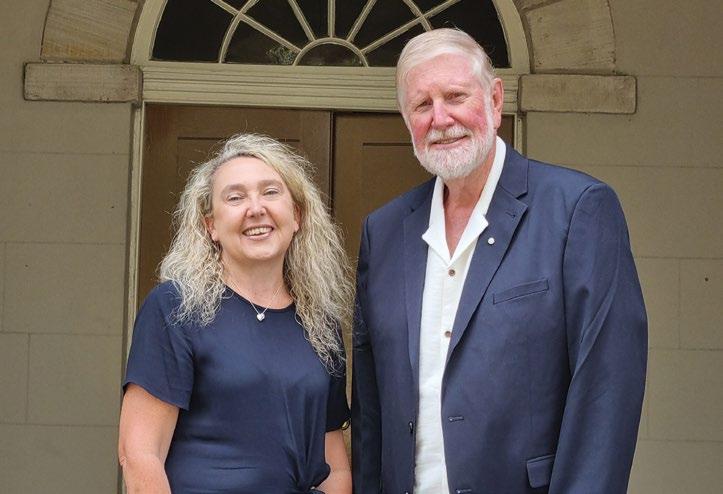
We'd like to acknowledge and thank David Pratt, former Treasurer, who has recently retired from the National Trust (NSW) Board and the Finance, Audit, Risk and Management Committee (FARM). David leaves a strong legacy and has been instrumental in the improvement in the National Trust's governance and financial sustainability. He was appointed in 2020, and we are grateful for his invaluable expertise and stewardship.
We're delighted to welcome Craig McIlveen, who recently joined the National Trust (NSW) Board and has been appointed Treasurer. Craig has a 40-year career, practising as a Registered Company Auditor and Tax Agent. Craig has in-depth knowledge of the issues central to the not-for-profit sector – including governance, strategy, performance, stakeholder relations, tax and risk management – and has consulted extensively on business issues for a diverse portfolio of clients.
Lastly, in May we had great pleasure presenting this year's National Trust (NSW) Heritage Awards. Thank you to all the entrants – it was pleasing to see such an exceptionally high standard of projects. Congratulations to all the winners, whose projects are featured in this edition of the magazine.
Bruce Pettman, President Debbie Mills, CEO
SAVE THE DATE
National Trust of Australia (NSW) Annual General Meeting (AGM)
Saturday 28 November 2026, 3:30PM – 5PM
S.H. Ervin Gallery, Observatory Hill, Millers Point, Sydney
Please join us for the Annual Report, Board of Directors election results and the announcement of the National Trust Honours Awards, with drinks and canapés to follow in the S.H. Ervin Gallery.
ANNUAL BOARD OF DIRECTORS' ELECTION
Nominations are invited for election to the National Trust of Australia (NSW) Board of Directors. Candidates must be members, eligible to serve as a director, meet the legal obligations and be nominated by two members. The role involves providing sound governance and upholding the organisation's vision, mission and sustainability. For an information pack please email Soma Somavarman at ssomavarman@nationaltrust.com.au or phone (02) 9258 0152.
Nominations must be made in writing to the National Trust (NSW), GPO Box 518, Sydney NSW 2001 by 5PM, Friday 14 August 2026.
AGM: MOTIONS FOR CONSIDERATION
Members who wish to put forward a proposed resolution to be considered at the Annual General Meeting must forward the exact words of the proposed resolution, in writing, to the National Trust (NSW), GPO Box 518, Sydney NSW 2001 by Monday 31 August 2026. The notice must be signed by at least 20 members, including their full name and membership number. Other business for discussion must be in writing, signed by the member submitting and received by the National Trust (NSW), GPO Box 518, Sydney NSW 2001 by Thursday 19 November 2026.
For more information please email Soma Somavarman at ssomavarman@nationaltrust.com.au or phone (02) 9258 0152.
NATIONAL TRUST HONOURS
Members and staff are invited to submit nominations for the 2026 Awards to the National Trust Honours Committee by Friday 14 August 2026. Find more details online at nationaltrust.org.au/honours-nomination-nsw
Update National Trust News
Discover vibrant new artworks gifted to the collection, celebrate the dedication of our volunteers, hear fresh voices in the oral history project and catch up on heritage news from Bourke, Maitland and the future of Sydney.
Sharp’s artworks join the collection
As one of Australia’s foremost pop artists, Martin Sharp’s exuberant, psychedelic works epitomised the bohemian spirit of the 1960s. The co-founder and art director of the iconic underground magazine Oz is also remembered for his campaign to save Luna Park and his redesign of the amusement park’s iconic clown-face entrance. Several vibrant works by the artist were recently gifted to the National Trust by the Martin Sharp Trust, helping preserve his colourful legacy for future generations.
Thank you to our volunteers
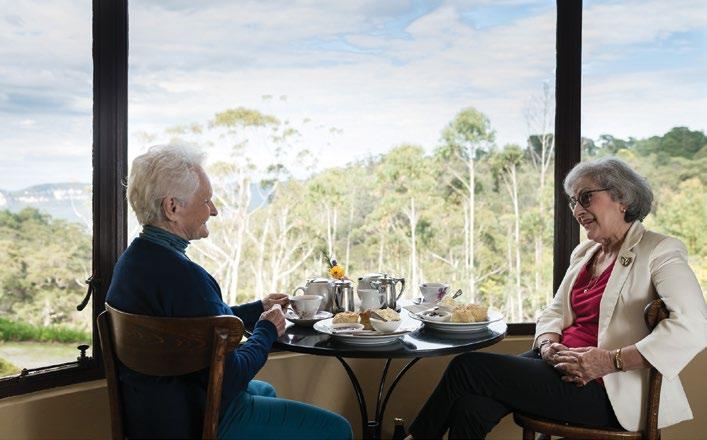
Volunteers Janice Light and Josephine Lamb have given an extraordinary 17 and 22 years of service respectively at the Everglades House & Gardens tearooms. Last year alone, they baked more than 5,400 scones for visitors to enjoy! As we mark National Volunteer Week from 18 – 24 May 2026, we offer warm thanks not only to Janice and Josephine, but to the more than 1,000 volunteers whose generosity and care help sustain the work of the National Trust.
Notable voices, preserved
The National Trust oral history project aims to capture the stories of notable Australians who have contributed to the rich heritage of our state. Thanks to your support of the 2025 Archives Appeal, this important project continues to preserve significant histories. Recent interviews have been conducted with architect Michael Dysart and historian, conservationist and author Dr James Broadbent AM – listen to their fascinating recollections, including pivotal moments and controversies in their careers, at nationaltrust.org.au/ collections/the-national-trust-oral-history-project.
New cemetery listings on the register
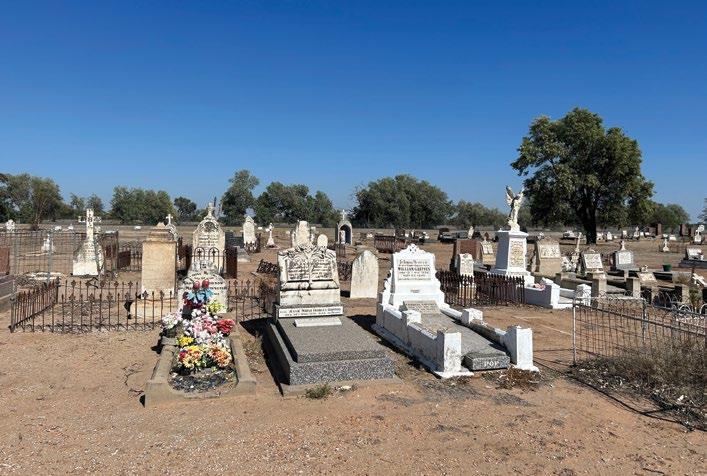
The National Trust Register has been updated with details of two cemeteries in the state’s far west. Originally listed in 1986, Bourke Historic Cemetery has had new mapping, photographs and details of the burial of humanitarian ophthalmologist Fred Hollows AC added. Gongolgon Cemetery has also been listed for its historic significance; it holds some of the oldest graves in the region and is a marker of tangible evidence of past settlements in Far West NSW.
Protecting the old Maitland Hospital
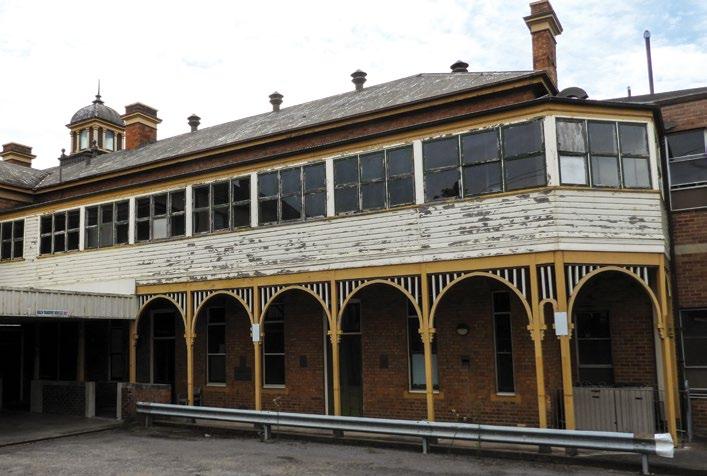
The former Maitland Hospital site on Wonnarua land in the Hunter Valley has been under consideration for its future use, after the hospital was relocated in 2022, having served the local community for more than 170 years. The complex is listed on the Maitland Local Environmental Plan and we recommend an investigation into the heritage significance of the site, and the retention of any identified significant buildings for appropriate adaptive re-use. We’ll keep you updated on new developments as they come to hand.
Historic defence sites under threat
The National Trust is advocating for the conservation of Australia’s historic defence sites, following the Federal Government's announcement of plans to sell Department of Defence sites across the country. We are particularly concerned that one of the most significant and untarnished examples of colonial architecture in Australia, Victoria Barracks in Paddington, is among those suggested for disposal. We are calling for Victoria Barracks to continue in Defence ownership and will continue to keep members and the community updated as this issue develops.
Opposite, from top
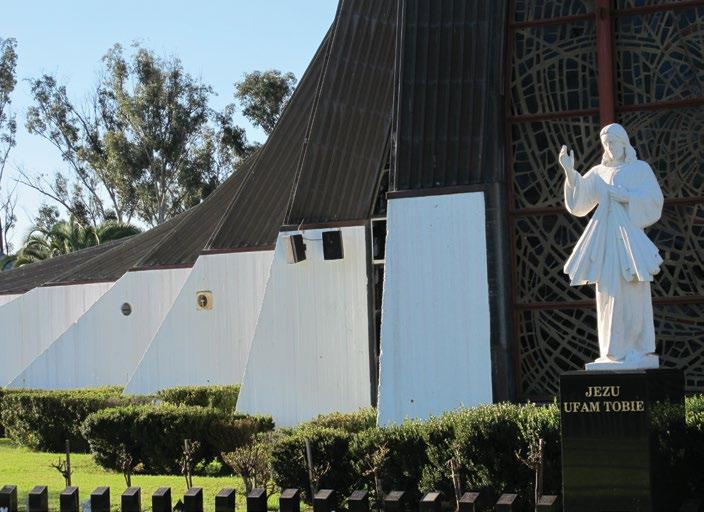
Luna Park: National Trust (1979) by Martin Sharp, screenprint, printed in colour, from multiple stencils 96.0 x 64.8 cm (printed image); volunteers Janice Light and Josephine Lamb (photography by Joe Wigdahl); Michael Dysart's Polish War Memorial Chapel, Our Lady of Czestochowa Queen of Poland Catholic Church at Marayong (image supplied).
From top
Bourke Historic Cemetery; the former Maitland Hospital site; Victoria Barracks, Paddington, when occupied by 50th Regiment, December 1870, photography attributed to Charles Pickering (collections of the State Library of New South Wales).
Stay up to date
Sign up to our newsletter at nationaltrust.org.au/enews-nsw and follow us on Facebook @nationaltrustau and Instagram @nationaltrustnsw. Don’t forget to share photos from your visit on social media using the hashtag #NationalTrustNSW
Leading by Example
What does good heritage work look like now? As these 2026
National Trust Heritage Award-winning projects show, it involves careful conservation, close collaboration, adaptive thinking and a commitment to public access and cultural depth.
ARCHITECTURE
From public buildings in the heart of Sydney’s CBD to natural and cultural heritage projects in regional areas, these projects are setting a new standard for heritage conservation across the state. They also point to a broader understanding of what heritage work can involve today, and offer innovative ways for it to connect with broad audiences of all ages.
Read on to learn more about the 20 winners, and find out what the judges had to say about what made them stand out.
ABORIGINAL HERITAGE
Cultural Knowledge Standards
Aboriginal Affairs NSW – Aboriginal Cultural Heritage and Land Strategy Team
Developed with communities, the new Cultural Knowledge Standards establish a crucial framework for respectful engagement and stronger protection of Aboriginal Cultural Intellectual Property. They provide clear guidance for researchers, consultants, industry and government working in Aboriginal Cultural Heritage.
“An important community-driven project that will have significant outcomes as it seeks to set the benchmark for how Aboriginal cultural knowledge is recognised, protected and managed in New South Wales.”
ADVOCACY
Save Gosford Library
Merril Jackson OAM
When demolition plans were announced in 2023, a grassroots campaign rallied to defend Gosford Library, a significant modern brutalist building. Designed and built by notable figures including Alan Williams, Ove Arup and Rinaldo Fabbro, the building inspired strong public support for retention and adaptive re-use.
“Community-led, grassroots advocacy at its best. A fantastic example of how an extensive, research-led campaign can identify heritage significance and retain a useful community asset.”
The Lands by Capella
Hassell in collaboration with Purcell Architecture
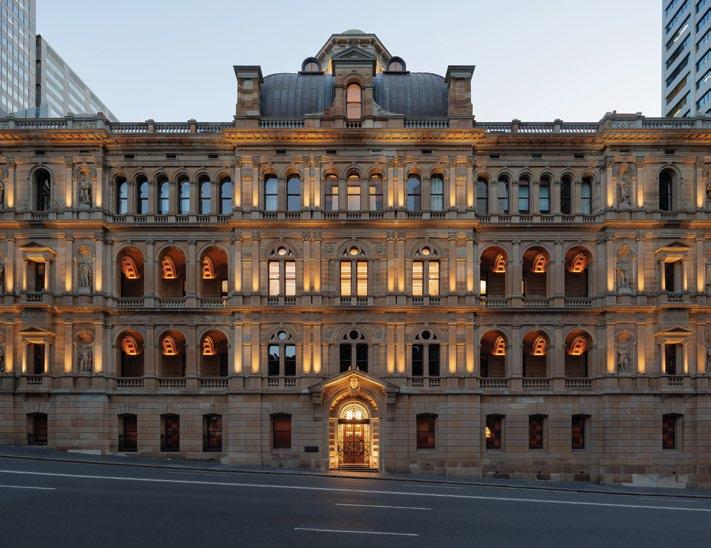
The former Lands Department Building in Sydney's Bridge Street has been revived as a gracious new hospitality destination in the heart of the CBD. Its grand sandstone exterior and richly detailed interiors have been carefully conserved, with contemporary interventions showing how adaptive re-use can return a landmark to public life.
“This ambitious project skilfully navigated considerable complexity to successfully re-energise this significant Sydney building.”
BUILT CONSERVATION
Small Project
GSDA Dwelling No.1 Recovery
Hector Abrahams Architects
After a devastating 2024 fire, the first demonstration house for the Greater Sydney Development Association at Castlecrag was painstakingly restored with great care for its surviving original fabric. Designed by Walter Burley Griffin and Marion Mahoney, this important 1920s house now stands renewed through a skilful blend of traditional trades and modern recovery techniques.
“An inspiring recovery project where incredible attention to detail has completely revived this significant Walter Burley Griffin building.”
Large Project
Town Hall House Remediation
Urbis and City of Sydney
A landmark of Sydney Brutalism, Town Hall House has undergone a major conservation-led remediation to secure its future. Completed in 1977 to Ken Woolley’s design, the precast concrete tower benefited from careful repairs, façade cleaning and protective treatments that will preserve its exterior features for years to come.
“An exciting and meticulously executed project, where the sheer scale of the conservation works is hard to comprehend. A prime example of how our modern high-rise heritage can be repaired, rather than re-built.”
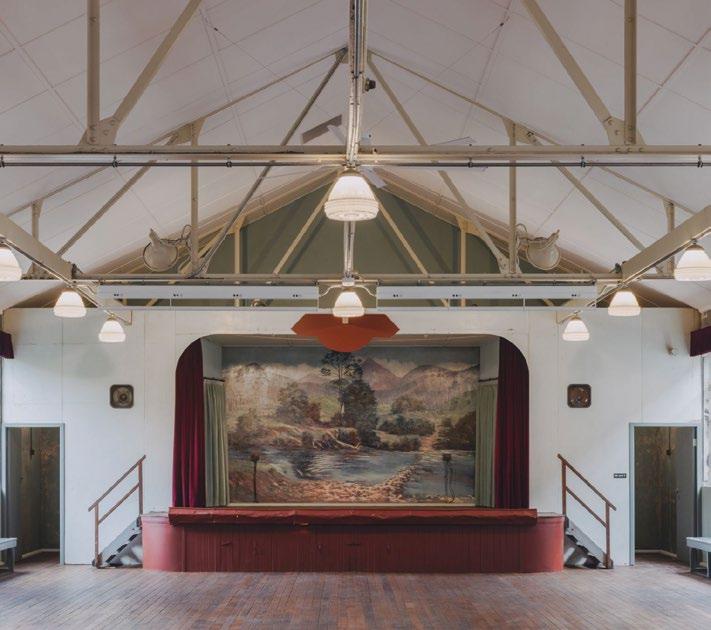
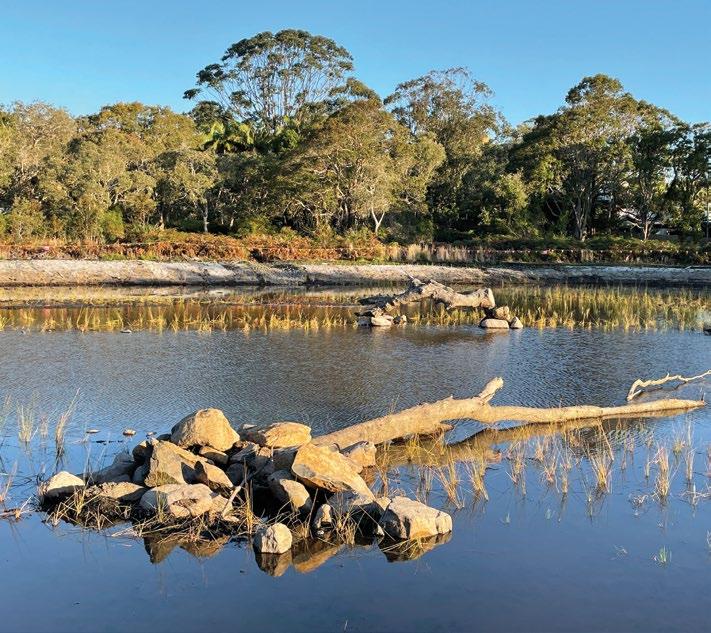
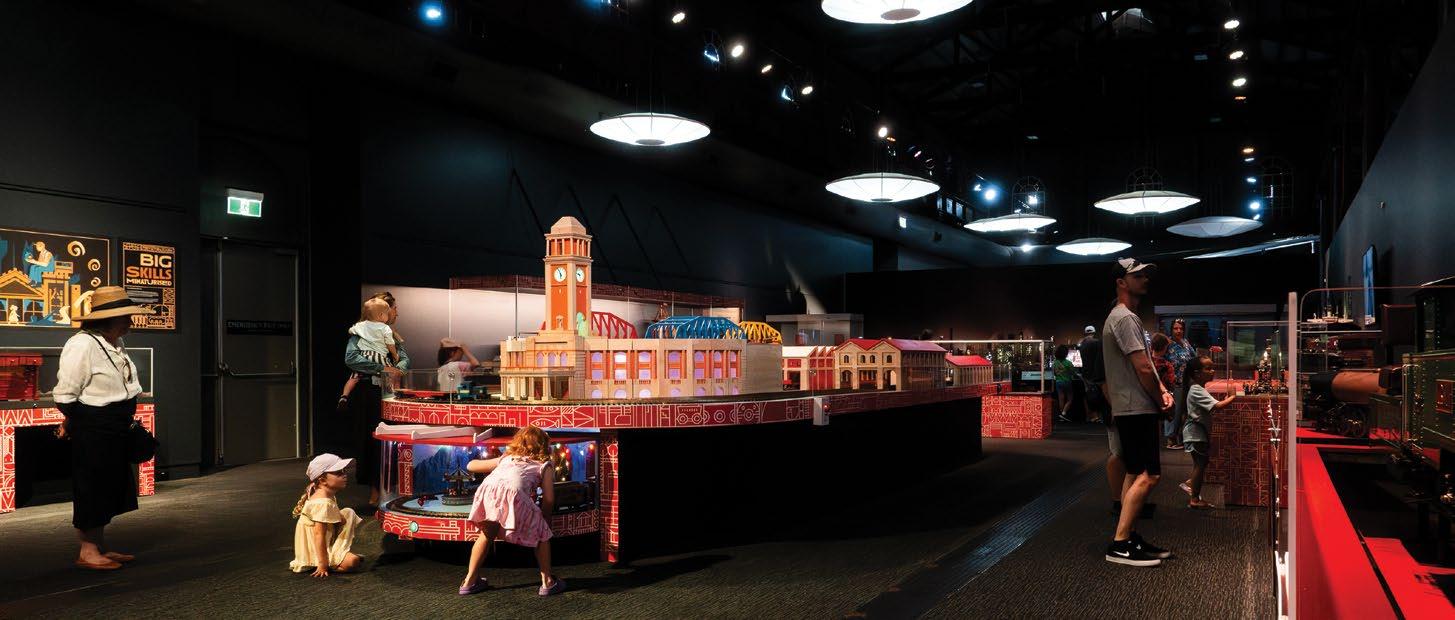
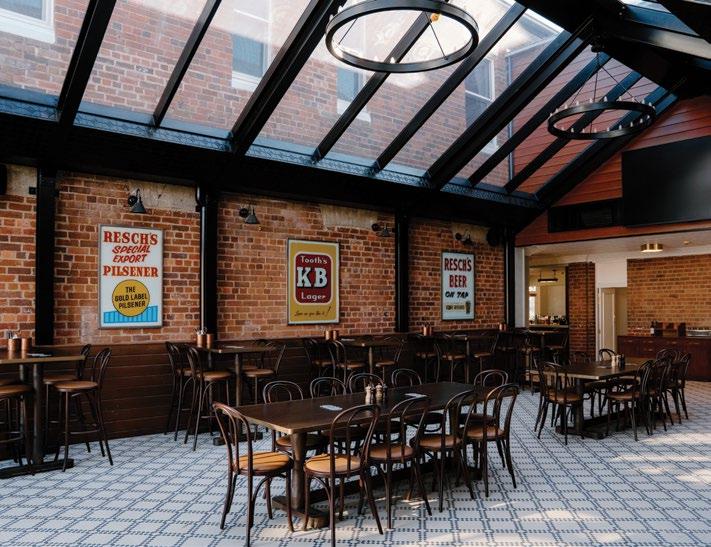
Clockwise from top Interiors winner: Entertainment Hall White Bay, DunnHillam Architecture + Urban Design with Placemaking NSW; Landscape winner: Restoration of the Sandhills Wetlands, Byron Shire Council; Exhibitions winner: Model Newcastle: Big Stories, Little Things, Newcastle Museum (photography by Paul Dear); President’s Prize winner: Coolamon Hotel Redevelopment, GPG Architecture (photography by Stephanie Hunter Studio); Architecture winner: The Lands by Capella, Hassell in collaboration with Purcell Architecture (photography by Nicole England).
EDUCATION AND INTERPRETATION
Education
The Water We Share: Past Present Future Museums of History NSW
Blending live discussion, pre-recorded video and interactive games, this virtual program brought history vividly into classrooms across the state, connecting more than 7,500 primary students with First Nations knowledge, heritage waterways and hands-on learning.
“A small project, quickly executed, with big reach and impact. An important and completely accessible interactive resource that defies the geographic constraints of typical educational excursions.”
Interpretation
Munjip Trail
Eurobodalla Shire Council
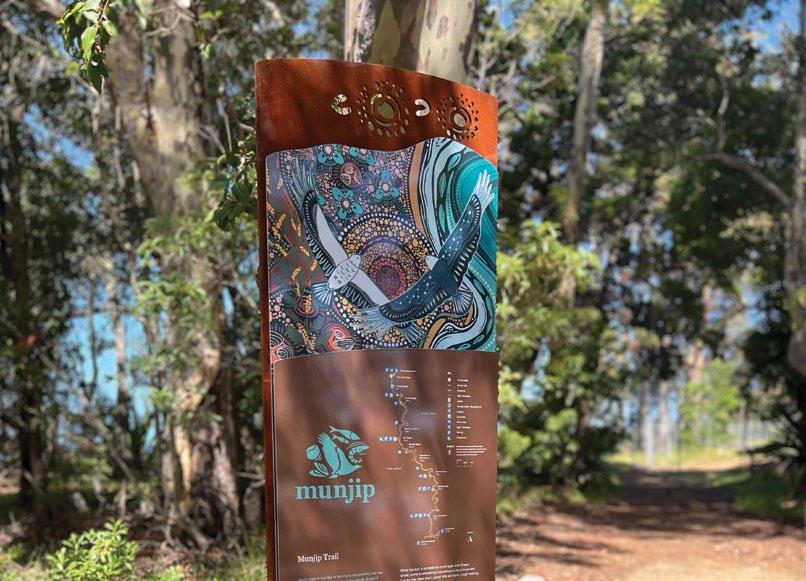
This 18-kilometre cultural walk shares stories of Walbunja Yuin Country through layered interpretation. Signage, public art, Dhurga language and digital content come together to create a rich, place-based experience of culture, history and connection.
“An engaging and thoughtful project that benefited from significant community input to share the story of a unique landscape.”
EVENTS, EXHIBITIONS AND TOURS
Events
NSW Aboriginal Archaeology Future Forum
Australian Association of Consulting Archaeologists Inc.
Held in Wollongong on Dharawal Country, this annual forum brought together Aboriginal community members, archaeologists, heritage practitioners and researchers for a day of exchange grounded in community and Country. The 2025 event included discussion on local community-based heritage projects; heritage management at federal, state and local levels; repatriation; consultation; work health and safety; and archaeological research techniques.
“An engaging event bringing archaeological research to the fore. Well-received by professionals, and with the ability to influence future public outcomes.”
Exhibitions
Model Newcastle: Big Stories, Little Things
Newcastle Museum
Almost 80,000 visitors attended this ambitious social history exhibition, which engaged families with objects and stories shaped by local identity. By activating the museum’s cultural collections and presenting new research, it deepened public connection to Newcastle’s history in fresh and rewarding ways.
“An ambitious and completely unique presentation of Newcastle's rich history. The imaginative and creative approach has been underlined by equally impressive results.”
INTERIORS
AND OBJECTS
Interiors
Entertainment Hall White Bay
DunnHillam Architecture + Urban Design with Placemaking NSW
At White Bay Power Station, the careful conservation of the Entertainment Hall and Switch House shows how minimal intervention can unlock new public use within a remarkable industrial setting. Restored murals, subtle new additions and a greatly expanded event capacity have transformed these spaces into a distinctive new venue for Sydney’s cultural life, inaugurated by the 2026 Biennale of Sydney.
“A carefully considered project demonstrating both clear conservation outcomes alongside strategic insertions. The workmanship and approach are a lesson in restraint while providing for future opportunity.”
Objects
Q Station Inscriptions Conservation
Q Station Manly and International Conservation Services
At Q Station – the former quarantine station at North Head, Manly – the conservation of 32 sandstone inscriptions has preserved a remarkable record of quarantine life and revealed fresh insights into the experiences of early migrants. Among the most significant discoveries were 1898 inscriptions in Arabic, alongside engravings in Chinese, Greek and English, adding new depth to this extraordinary multilingual archive.
“A fascinating project of small-scale interventions in a large landscape. Superbly executed, with a significant public outcome to share Q Station's diverse social history.”
Left
Interpretation winner: Munjip Trail, Eurobodalla Shire Council (photography by Leanne Brook).
Opposite
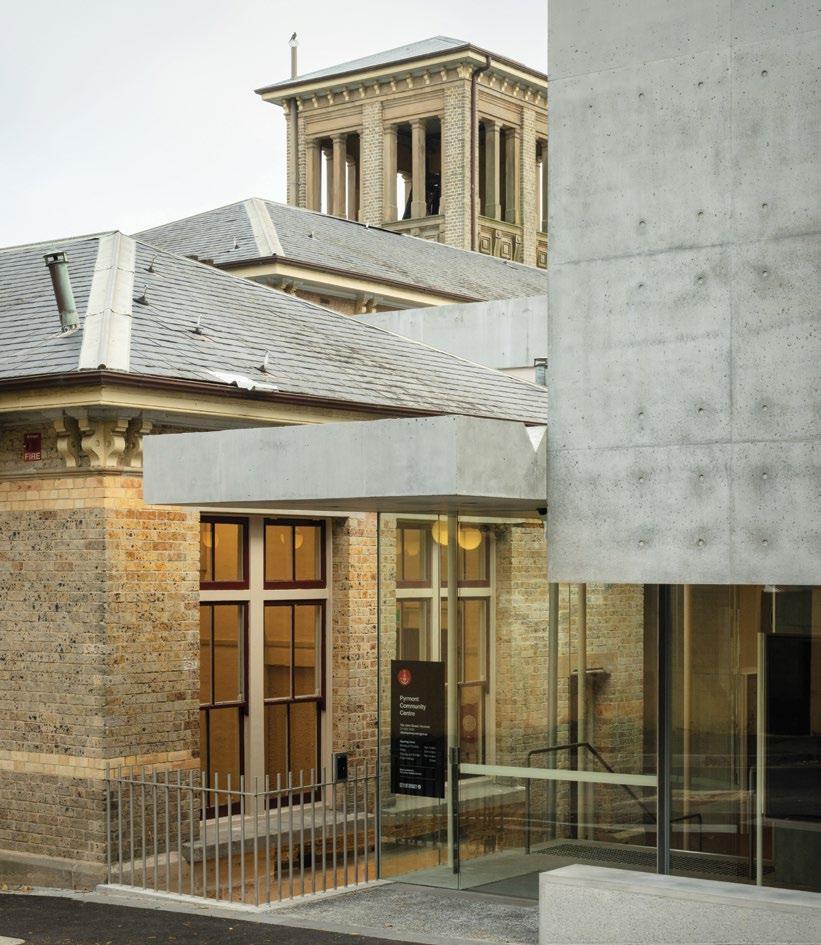
Judges’ Choice winner: Pyrmont Community Centre, Welsh + Major in association with City of Sydney (photography by Clinton Weaver).
LANDSCAPE
Restoration of the Sandhills Wetlands
Byron Shire Council
Through close collaboration with Traditional Owners, the Arakwal people, the restoration of the Sandhills Wetlands has returned a damaged site to its original wetland form. Once degraded by sandmining and neglect, the landscape now offers renewed cultural, ecological and community value for generations to come.
“An important ecological victory transforming a former sandmine into wetlands, demonstrating that even the most heavily altered landscapes and new infrastructure can respond to nature.”
RESOURCES AND PUBLICATIONS
Adapt! Designing New Lives for Old Buildings
Uro Books, Hannah Lewi (University of Melbourne) and Cameron Logan (University of Sydney)
Drawing on deep research and firsthand insights from architects and heritage practitioners, this publication offers a thoughtful examination of adaptive re-use in Australia since the 1970s. Through thematic essays and illustrated case studies, the authors – Professor Hannah Lewi and Associate Professor Cameron Logan – explore how older buildings can be imaginatively renewed while responding to changing patterns of living, working and sustainability.
“An extensive and beautifully produced resource brimming with case studies at a time when the case for sensitive adaptive re-use in our built environment has never been more relevant.”
JUDGES’ CHOICE
Pyrmont Community Centre
Welsh + Major in association with City of Sydney
“An impressive project. Judges commended the care and sensitivity attached to the architectural strategy where the unique qualities of the William Kemp-designed heritage building have been celebrated, alongside bold new additions to increase accessibility and useability, ensuring its enduring relevance to the Pyrmont community.”
PRESIDENT’S PRIZE
Coolamon Hotel Redevelopment
GPG Architecture
“An impressive five-year conservation project that invested not only in a prominent building but also in a local community. The rebirth of the Coolamon Hotel is a testament to the rich history of country pubs in Australia and their impact on people, economies and cultural heritage. Cheers!"
LIFETIME ACHIEVEMENT AWARD
Dr Roy Lumby, Heritage Specialist
YOUNG ACHIEVER AWARD
Erica Wright, 2025 Vera Deacon History Intern with the University of Newcastle Library’s Special Collections
HERITAGE SKILLS AWARD
Gary Cooper, Heritage Plasterer
CATHY DONNELLY MEMORIAL AWARD
Mary Casey, Heritage Consultant
PEOPLE'S CHOICE AWARD
Grand Dining Room Renovation
The Carrington Hotel
WITH THANKS TO OUR JUDGES
The National Trust thanks the judges of this year’s awards: Matthew Devine, Chair of the National Trust Heritage Awards Jury, joined by Barrina South, David Burdon, Ingrid Mather, Julie Baird, Stirling Smith, Tamsin McIntosh and the 2025 Young Achiever recipient, Steven Barry.
Find out more about the finalists
Discover the full shortlist of projects and more information about the winners at nationaltrust.org.au/national-trust-heritage-awards- nsw
The National Trust Heritage Awards is a signature event of the Australian Heritage Festival in New South Wales and is proudly supported by the NSW Government through Heritage NSW.
The Future of a Harbourside Landmark
BY MICHELLE BATEMAN, EDITOR, THE NATIONAL TRUST MAGAZINE
Lindesay was more than an early harbourside villa. With its Gothic design, elegant interiors and commanding outlook, it helped define Darling Point as a place of refinement, beauty and colonial ambition.
From the very beginning, Lindesay was a house intended to be seen. Perched above Sydney Harbour on Gadigal land, its Gothic silhouette, elegant proportions and cultivated grounds announced a new kind of colonial ambition. This was not a house that retreated from view, but one composed for effect – picturesque, commanding and unmistakably designed to leave an impression. For many decades, it offered new arrivals by sea one of their first glimpses of Australia.
Built between 1834 and 1836 for Colonial Treasurer Campbell Drummond Riddell, Lindesay was the first substantial house built at Darling Point after the peninsula was subdivided. Part of a new pattern of harbourside living for the middle classes, “the buildings erected had to be of no less value than one thousand pounds”, notes Emeritus Professor Lesley Johnson in her 2013 essay on the formation of Darling Point. Early residents believed there were “few finer [villas] in the world” and early visitors commented on
the suburb’s beautiful appearance, with “plenty of gentlemen’s seats peeping out”.
Architecturally, Lindesay was equally deliberate. Its Gothic Revival character gave the house an air of romance and refinement, distinguishing it from the more restrained Georgian mode that had shaped so much of early colonial building. While not an exact facsimile of any one British example, the design of the house was intended to suggest taste, cultivation and a familiarity with fashionable British ideas.
“As such, it is a primary witness of that dominant colonial ambition to create a particular type of ‘New Britannia’ in the antipodes,” commented historian Dr James Broadbent AM, in a 1984 publication to commemorate the property’s sesquicentenary.
Inside, that sensibility continued in a home that was designed as much for sociability as for comfort. The reception rooms were considered to be among the finest in Australia, with views over the garden and the harbour beyond.
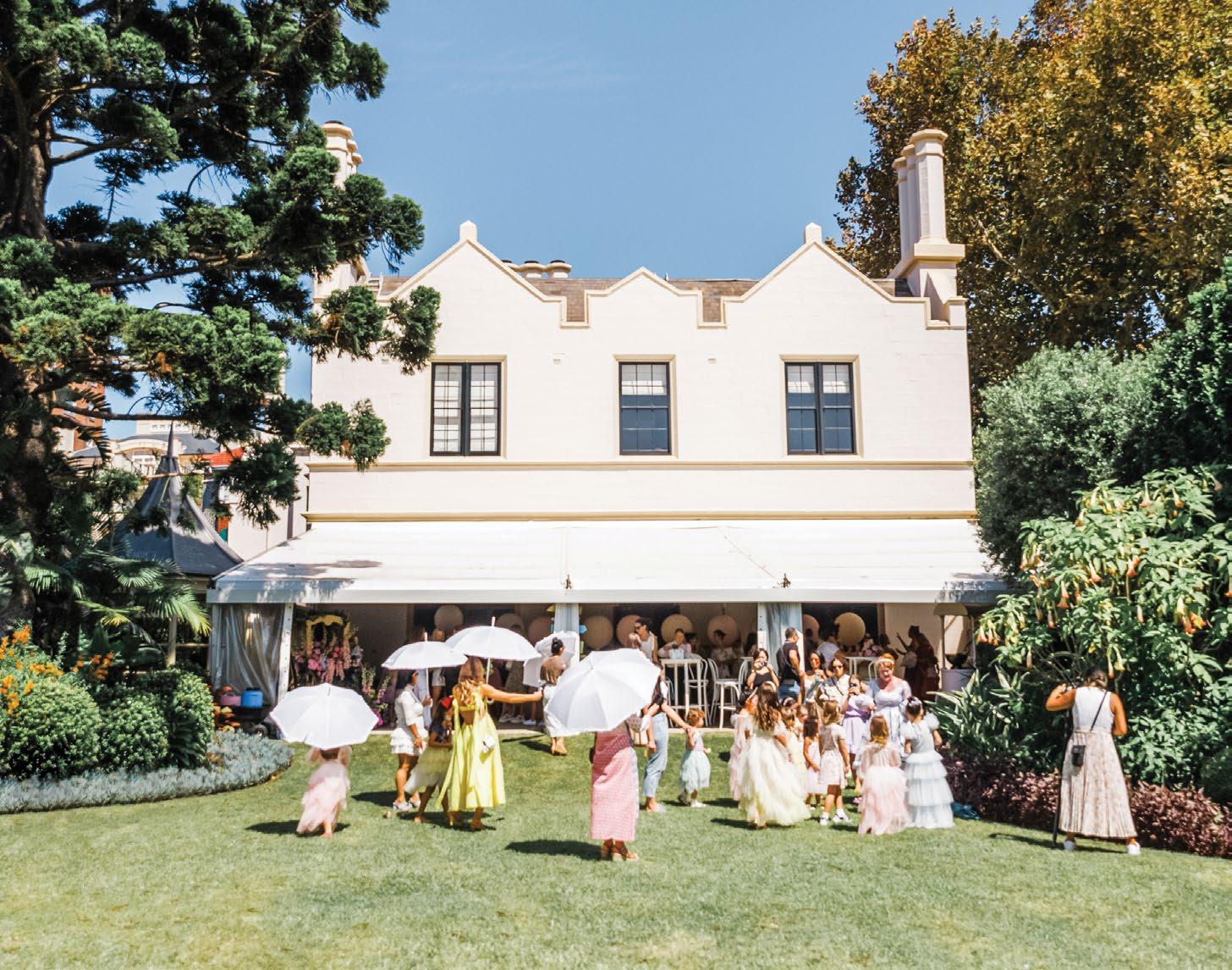
Opposite Lindesay has hosted countless weddings, parties and functions over the past 190 years (photography by Tutu du Monde). Below
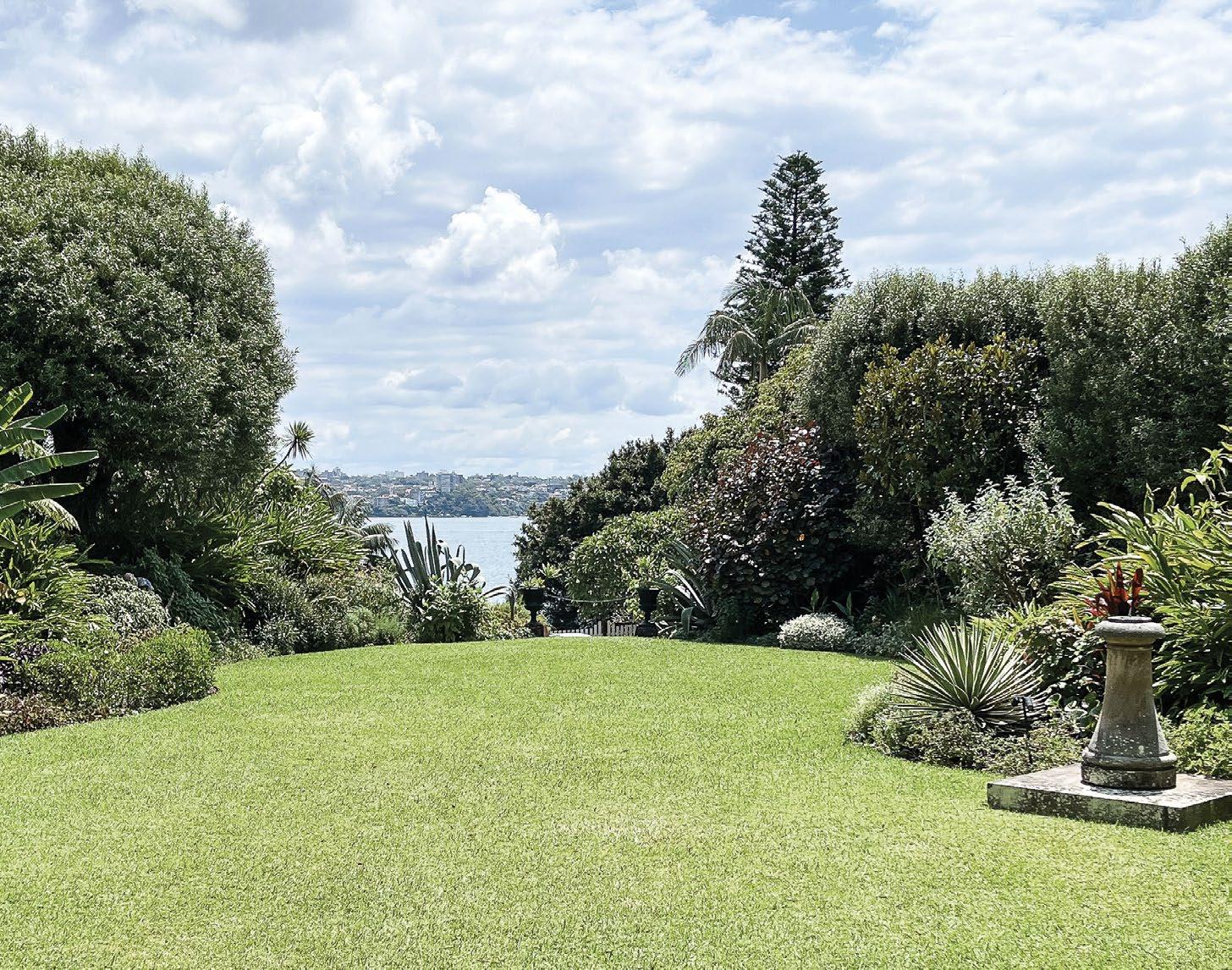
The garden features stunning views across Sydney Harbour (image supplied).
‘This was not a house that retreated from view, but one composed for effect – picturesque, commanding and unmistakably designed to leave an impression.’
A house of taste and standing
When Riddell listed the “Lindesay Mansion & Estate” for sale in 1841, the advertisement praised its “architectural science and professional ingenuity” and listed nine bedrooms, a drawing room, dining room, library, spacious kitchen, superior cellars and outdoor offices. It also highlighted the “subterranean reservoir, or stone tank” that served the house and remains functional today. The notice sold not just a house, but an idealised lifestyle, from “beautiful prospects”, “elegant shrubberies and ornamental gardening” to a neighbourhood of people “of property and consideration”.
After Riddell’s tenure came to an end, later owners included the Surveyor-General and explorer Sir Thomas Mitchell and physician Sir Charles Nicholson, the co-founder of the University of Sydney. By the time ironmonger John Macintosh had acquired the property for his growing family in 1870, the grand Gothic villa had had several additions and provided a comfortable home for his seven children. For four decades, the Macintosh family revelled in their waterfront home, spending weekends sailing, strolling along the foreshore and playing cricket on the lawns.
A new life in public hands
When Lindesay came into the care of the National Trust in 1963, then-owner Walter Pye did more than pass on a family home. He placed in its care one of Sydney’s most evocative colonial villas
at a moment when such harbourside survivors were becoming increasingly rare, ensuring that this picturesque private home would begin a new life in the National Trust’s hands.
Over the intervening six decades, Lindesay has been shaped by a series of careful decisions about how the house should live again. An early direction was set by architect Guy Lovell, who aimed to evoke the house of a 19th-century gentleman of standing in colonial society, and later direction was provided by Clive Lucas, Stapleton & Partners.
The first works, begun in 1964, were both practical and symbolic. The staircase was reinstated from the ground floor to the first floor, a later bathroom was removed to restore the library, windows were repaired, doors and shutters put in order, and the floors of the dining room and library were renewed after white ant damage. Considerable attention was also given to the interiors. For the drawing room, library and dining room, advice was sought from the Victoria and Albert Museum in London, and 19th-century wallpapers were specially printed from period designs held by Sandersons. The Garden Committee reworked the grounds, though the 1840 sundial remains near its original position halfway down the lawn.
Together, those efforts ensured that Lindesay was not simply preserved, but restored to public life as one of Australia’s most evocative historic houses.
From house to headquarters
The history of Lindesay is inextricably tied to the Women’s Committee of the National Trust. Indeed, one of the committee’s foundation members, Mary Allen, together with Walter Pye, was instrumental in bringing Lindesay into the care of the National Trust. Founded in 1961 to raise funds, encourage membership and organise public events, the Women’s Committee soon made Lindesay its headquarters, using its rooms as a base for exhibitions, fairs, house inspections and other fundraising activities. Over the decades, these events helped sustain the property and the National Trust’s wider conservation efforts. It’s a relationship that continues today, with the Women’s Committee, and volunteers, still closely associated with the house and its ongoing care.
We need your help
Since it came into the care of the National Trust, careful conservation and the dedication of volunteers have ensured Lindesay’s enduring presence. But heritage of this quality brings ongoing responsibility. To preserve Lindesay’s beauty and prepare for its next chapter, renewed investment in specialist conservation is now needed.
Please donate to the National Trust’s Lindesay Appeal today at nationaltrust. org.au/donate-appeal-nsw
Opposite
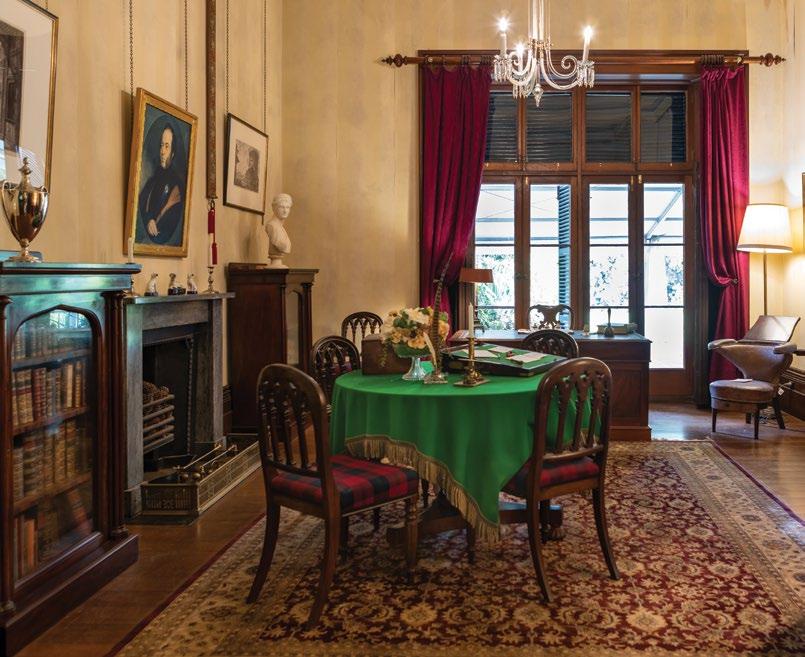
The reception rooms were considered to be among the finest in Australia (photography by Rick Stevens).
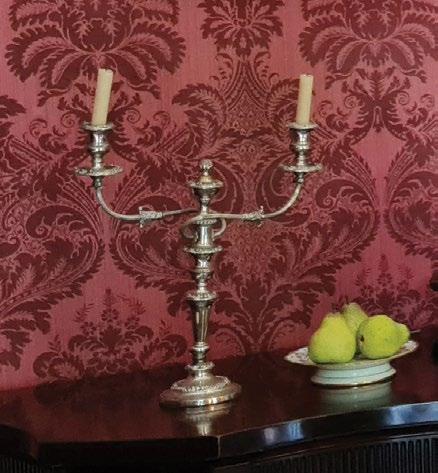
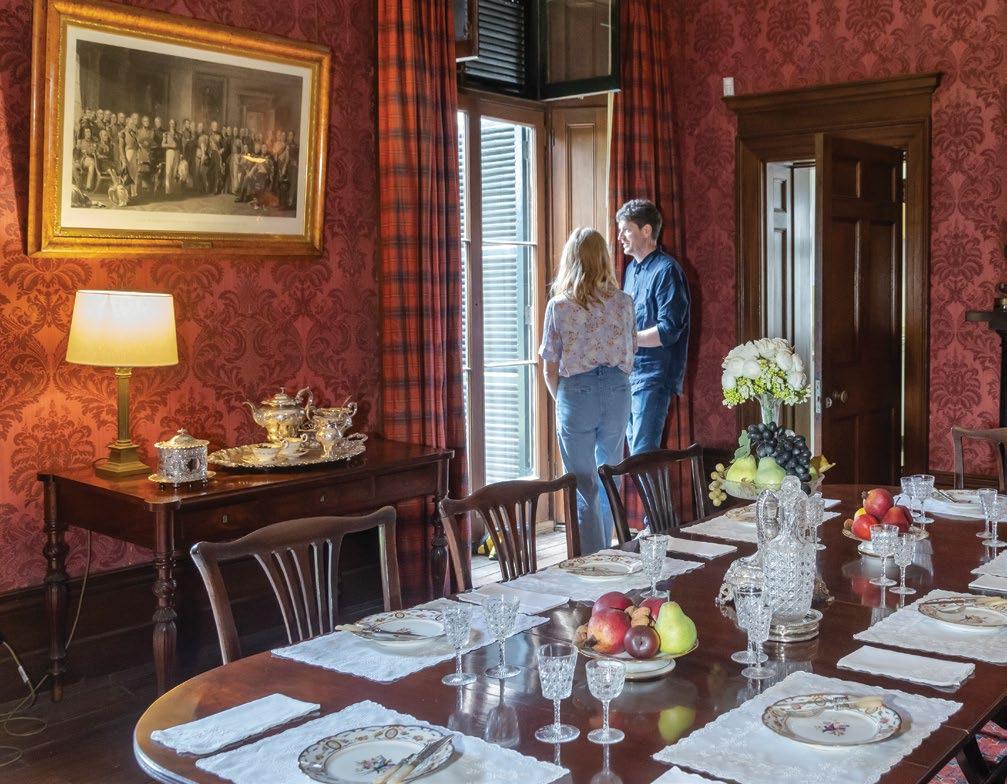
From top Spaces like this elegant dining room continue to be popular for functions today (photography by Rick Stevens); the gardens are highly sought after for weddings (photography by Rick Stevens).
A Year in Bloom
From autumn colour and winter perfume to springtime roses, the gardens in our care offer pleasures in every season. Here, the people who know them best share the unexpected delights and hidden details they treasure most.
WINTER
In the Southern Highlands, the winter walk at Retford Park beckons with the rich scent of daphne and wintersweet, complemented by snowdrops, witch hazel and bergenia. For a moment of reflection, Retford Park Property Manager Ann Frederick recommends the covered bench known as the Romanian Bus Shelter, between the camellia walk and the pool pavilion. “The shelter frames a beautiful rural view across paddocks towards gentle hills and it gives you a sense of space and peace.”
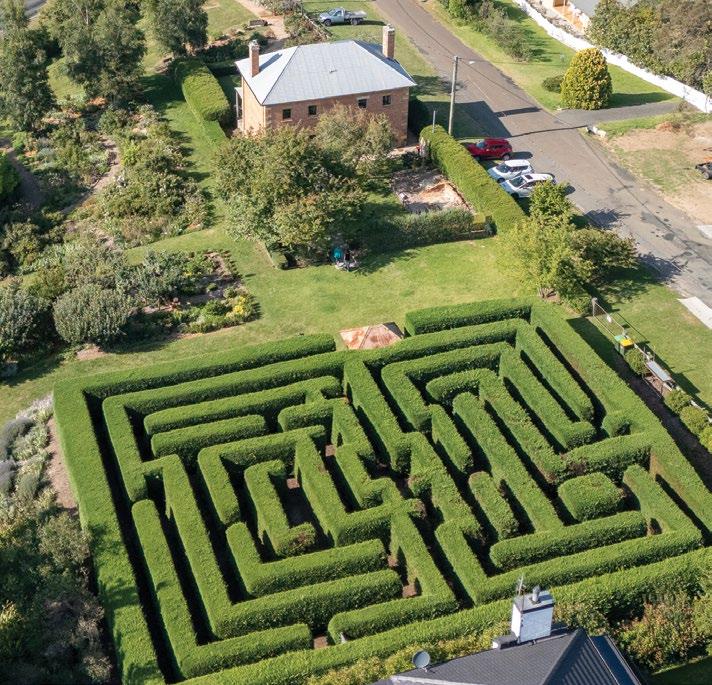
In the nearby town of Berrima, the famous maze at Harper’s Mansion provides great amusement all year round and the generous kitchen garden reveals traces of the original 1850s garden design. Pay a visit in early winter to catch the last of its heritage camellias, reflecting cultivars once grown at Berrima Bridge Nursery by Claude Crowe and landscape gardener Paul Sorensen, renowned for his work at Everglades House & Gardens.
East of the city, chase the winter sun at Lindesay. “The majestic views of the harbour across the foreshore park are a reminder of the days when Lindesay was the only residence on Darling Point,” says Nick Corbett, General Manager Properties, South.
SPRING
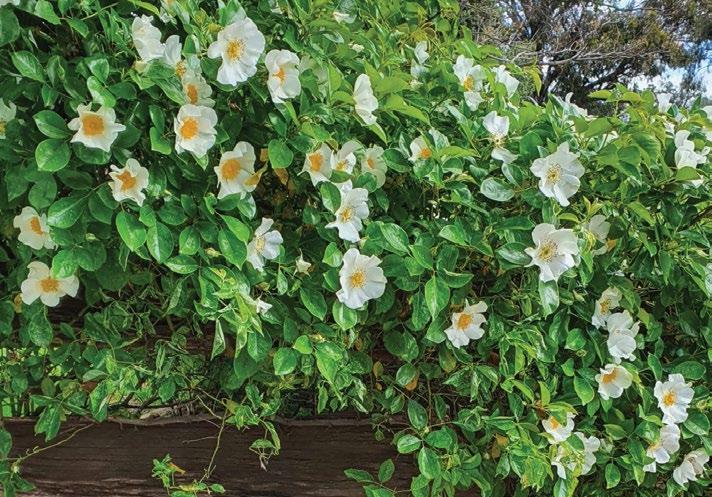
When Miss Ida Traill moved into her Bathurst property in 1932, the grounds were already well-established, with trees, shrubs and a formal front garden. Some of the plants remain at Miss Traill's House today, including a pergola swathed in Souvenir de Mme Léonie Viennot tea roses. It and many of the other heritage roses typically bloom in November, says volunteer Alexa Barr, though this may vary from year to year. The memorial garden is a must-visit, she adds. “It contains predominantly white roses of various ages with a magnificent specimen of the creamy yellow Mermaid as its centrepiece.” Roses are also a highlight at Saumarez Homestead and Grossmann House
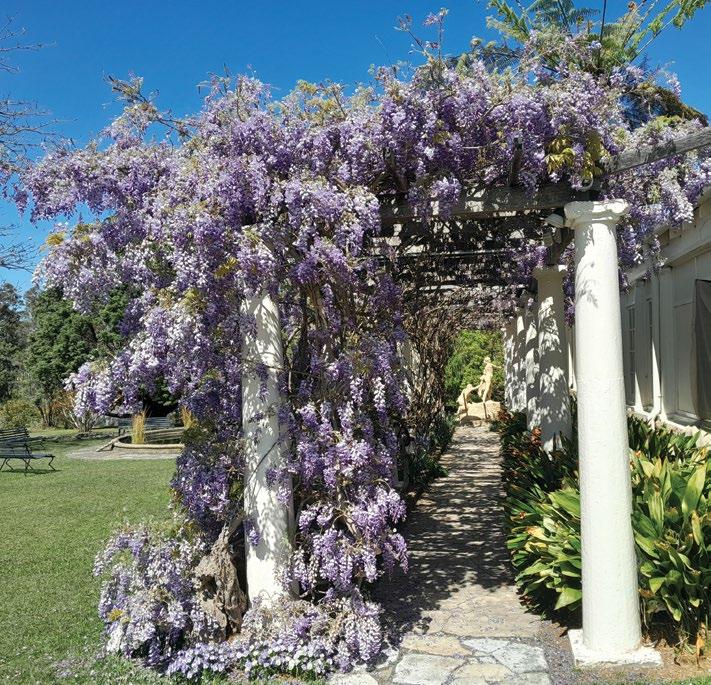
The Ornamental Garden at Dundullimal Homestead is another joyful space filled with heritage roses, iris, geranium, lilac and Norfolk hibiscus, and the arbour is draped in thick wisteria. This lush purple flower is a feature at the Norman Lindsay Gallery, where a colonnade planted by the artist still blooms to this day. In the Southern Highlands, enjoy the blossoming fruit trees at Harper’s Mansion, where the garden’s broad meadow of shrubs and perennials remains in harmony with the surrounding landscape.
SUMMER
When Danish landscape designer Paul Sorensen established the grounds at Everglades House & Gardens in the mid-1930s, his vision combined European Romanticism, 1930s Modernism and native Australian bushland, embodying his belief that “your garden should show something unexpected at every turn”. Among the surprises is the modernist-style Studio Terrace opening onto views of the Jamison Valley. The Glades area – with its man-made stream and waterfall leading to the Grotto pool below – offers respite on a summer’s day and is a favourite of Property Manager Rachel Steele-Smith.
At Miss Traill’s House, elms, oaks, ash, maples, alders, beeches and conifers cast deep shade, giving the grounds a sense of country hospitality and making them ideal for picnics, while Saumarez Homestead’s Picking Garden comes into flower with dahlias, salvia and ornamental artichokes. At Retford Park , hydrangeas are at their showiest, and the enormous, old oak trees provide a shady canopy. “Most of the oaks were planted by the Hordern family, whose family crest was an oak tree with the motto, ‘While I live, I’ll grow’,” says Frederick.
AUTUMN
The grounds surrounding the Norman Lindsay Gallery were designed by the artist himself, with more than 20 hectares of meandering stone paths, sandstone terraces and sweeping lawns, punctuated by Lindsay’s sculptures of nymphs, fauns and satyrs. “It feels less like a formal estate garden and more like a living artwork shaped by imagination and time,” says Operations and Events Manager Zoe Jerrat. “I love the walk down to the pool, where the landscape slowly reveals Roman and Greek statues and a reservoir dotted with urns, all framed by towering bloodwoods and the backdrop of the Australian bush.”
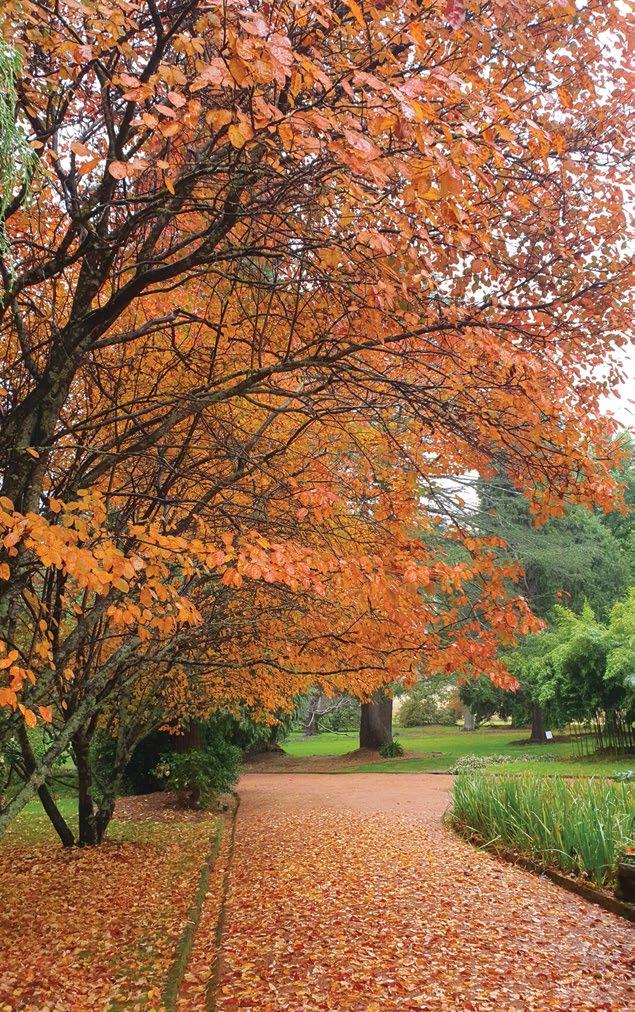
In Goulburn, the grounds at Riversdale are reflective of Australian cottage gardens in the early 20th century, with more than 20 species of historic roses, some dating to 1845. Pause beneath the history-steeped trees, including the five crown apple trees planted by Edward Twynam in 1919 to mark the safe return of his daughter Alice Joan and son Ned from WWI. While in the Southern Highlands, pay a visit to Retford Park to see the maples ablaze in glorious shades of red and orange.
Opposite, from left
From top
Diary dates
Follow the seasons beyond these pages with our new wall calendar, featuring a different garden in bloom each month. Scan the QR code to purchase your copy and enjoy these much-loved places all year round.
The hedge maze at Harper's Mansion is one of the largest in Australia (image supplied); decades-old wisteria vines at Norman Lindsay Gallery (image supplied).
The Grotto pool at Everglades House & Gardens (photography by Joe Wigdahl); autumn maples at Retford Park (image supplied).
Heritage in an Age of Activism
BY JULIAN BICKERSTETH AO, CEO OF ICS
What is a conservator’s role when an artwork is damaged during public protest? Julian Bickersteth, CEO of International Conservation Services (ICS) and Chair of the National Trust (NSW) Collections Committee, reflects on the balance between preservation and public protest.
Bring a group of conservators together in a room and you will generally find an environmentally and socially aware group. But in the aftermath of an attack on an artwork, they are usually the people tasked with restoring or preserving what remains and – regardless of whether they have sympathy for the cause – they tend to grit their teeth and pick up the pieces. They will put aside personal views to ensure that the artwork survives for any potential future interpretation.
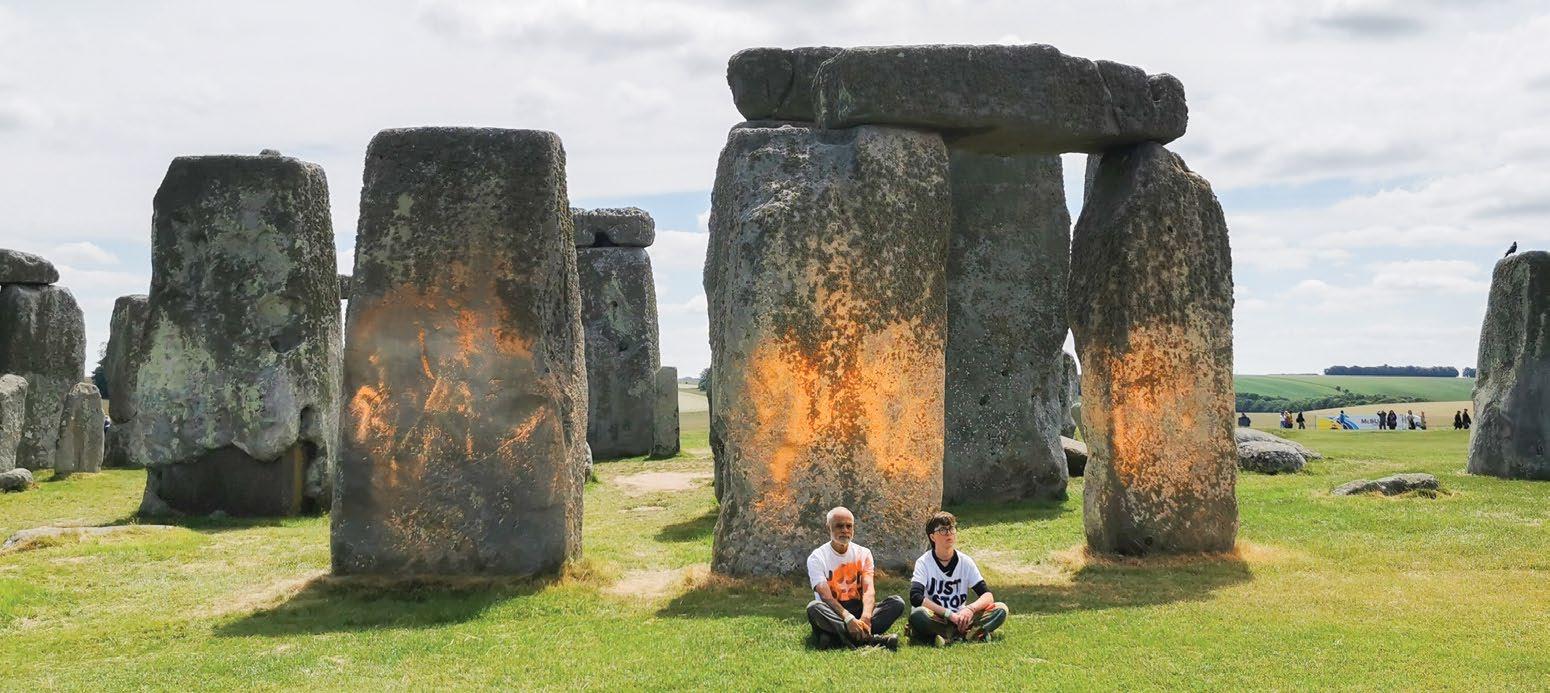
Over the past few years we have seen activists spray paint on Warhol’s Campbell's Soup I at the National Gallery of Australia in Canberra; throw soup at Van Gogh’s Sunflowers at London’s National Gallery; daub Stonehenge with orange cornflour; pull down colonial statues and circulate emotive images of protesters being beaten up.
The causes cited by activists have varied. They include frustration at perceived inaction on climate change; opposition to cultural institutions accepting sponsorship from fossil fuel companies; outrage over the ongoing display of statues of colonial figures and advocacy for Indigenous rights.
The motives behind the attacks are not always clear beyond drawing media attention to the respective cause. A young Canadian climate protester who threw paint at a Picasso at the Montreal Museum of Fine Arts in 2025 provided some insight when he said: “A lot more resources have been put in place to secure and protect this artwork than protect living, breathing people. Art only flourishes when people live, not when they survive.”
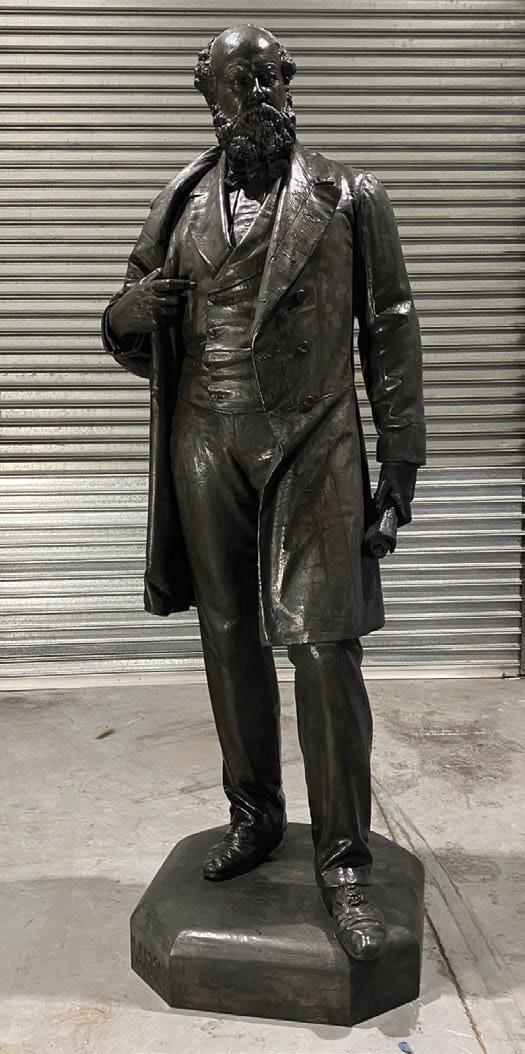
Instigators have felt so strongly that they've been prepared to go to jail for the damage they have caused. Luckily, in most instances, targeted artworks have been framed and glazed, giving protection to the artwork. Not so, however, with the statue of 17th-century slave trader and public benefactor Edward Colston in Bristol, England, which was pulled off its plinth and unceremoniously dumped in the harbour during a Black Lives Matter protest. Closer to home, the bronze statue of William Crowther, a former premier of Tasmania known to be involved in the discredited pseudoscience of phrenology (including collecting and trading human skulls), was sawn off at the ankles.
How do conservators respond to these various actions? I would suggest that, like doctors who take a Hippocratic Oath, conservators feel duty-bound to ensure damaged artworks are at the very least stabilised and optimally returned to their pre-damaged condition.
In Bristol, Colston’s bronze was hauled out of the harbour, partly cleaned and placed on display at the Bristol Museum’s M Shed, still covered in graffiti and bearing the scars of being dragged along the streets. The damage itself has become part of the object’s story. Stonehenge recovered from its dousing in cornflour due to the application of a strong air blower and luck that there had been no recent rain. Conservators are still evaluating, in collaboration with environmentalists, the long-term impact of cornflour on the rare lichen that populates the sarsen stones.
And in Hobart, the statue of William Crowther was restored with the ankles rewelded to the main body. The statue itself, however, remains in storage with no plans to reinstate it on its plinth. An active art program entitled Crowther Reinterpreted is now underway.
So, in answer to the question, I believe conservators take a balanced approach when it comes to preservation and acknowledging public sentiment. Despite potential sympathies with protest causes, their job is to preserve cultural heritage by restoring targeted artworks to their pre-damaged condition. Ultimately, history will be the judge.
‘They will put aside personal views to ensure that the artwork survives for any potential future interpretation ... Ultimately, history will be the judge.’
Left
In June 2024 climate activists from the group Just Stop Oil sprayed orange cornflour on Stonehenge (image via Just Stop Oil).
From top Black Lives Matter protesters at the site of the Edward Colston statue in Bristol (image supplied); in Tasmania, this statue of William Crowther was restored after vandalism and remains in storage (photography by Keir Bayley).
What’s On
As winter settles in, our special places come alive with a vibrant program of open days, tours, talks, exhibitions and unforgettable experiences. Rug up and enjoy the season’s crisp weather and quiet beauty, then look ahead to new spring adventures.
NORMAN LINDSAY AND THE NATURAL WORLD
NORMAN LINDSAY GALLERY, FAULCONBRIDGE
UNTIL 13 JULY, THURSDAY – MONDAY, 10AM – 4PM
Browse a captivating exhibition of paintings and watercolours examining Lindsay's lifelong fascination with nature.
Tickets: Members free, adults $17, concession $15, family $49, children under five free
SALON DES REFUSÉS
S.H. ERVIN GALLERY, OBSERVATORY HILL
UNTIL 26 JULY, TUESDAY – SUNDAY, 11AM – 5PM
The Salon des Refusés is a much-anticipated feature of the art scene, showcasing an alternative selection of equally brilliant works not chosen for display in the official Archibald and Wynne Prizes.
(Pictured: Keeping Count by Kathrin Longhurst).
Tickets: Members free, adults $15, concession $12, family $42, children under five free
Event details are correct at the time of printing. To purchase tickets and check for updates, visit nationaltrust.org.au/whats-on-nsw. Booking fees may apply.
A PHOTOGRAPHIC KALEIDOSCOPE
WHITE COTTAGE GALLERY, RETFORD PARK, BOWRAL
6 JUNE – 5 JULY, WEDNESDAY – SUNDAY, 10AM – 4PM
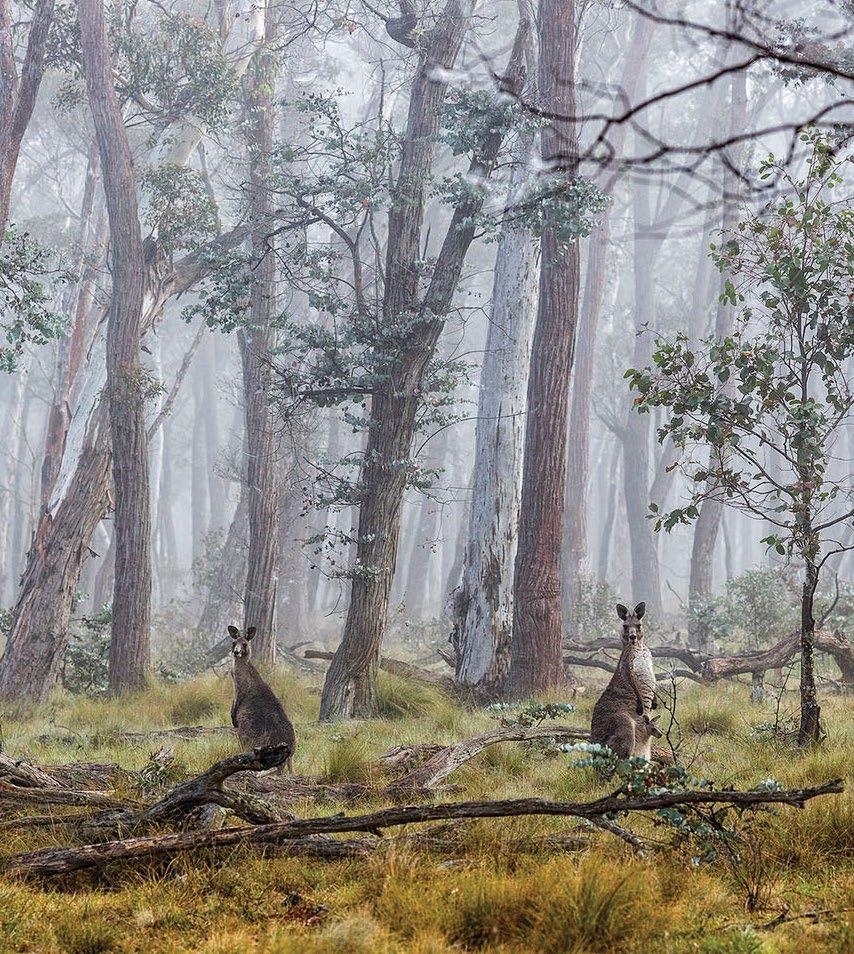
Featuring works by more than 20 talented members of the Southern Highlands Photographic Society, this exhibition captures the beauty and history of the towns, villages and landscapes of the Southern Highlands.
(Pictured: Roo Family by Phil Belbin).
Tickets: Free entry to exhibition
BEHIND THE SCENES AT PIER 4/5 –HOME OF THE SYDNEY THEATRE COMPANY
WALSH BAY
9 & 16 JUNE, 10:30AM – 12:30PM
Explore historic Pier 4/5, now home to the Sydney Theatre Company (STC). This exclusive behind-the-scenes experience includes insights into its transformation over time, delivered by the STC archivist and production team. Includes morning tea overlooking Sydney Harbour.
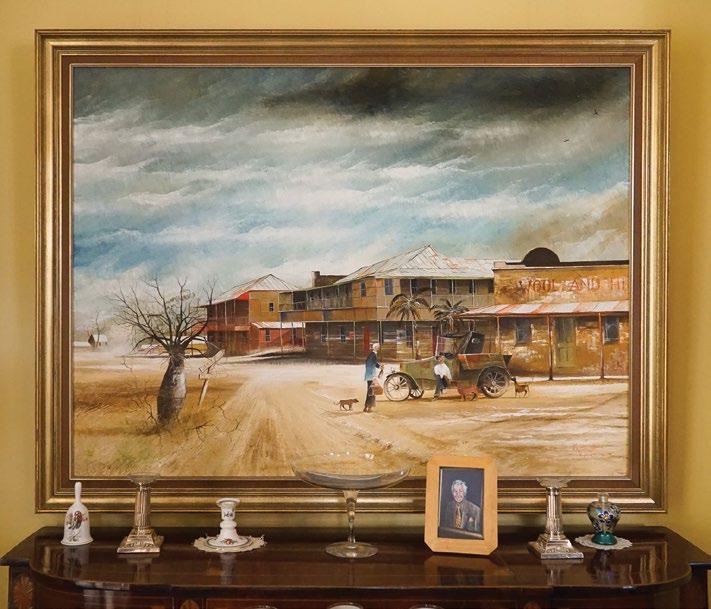
Explore a century of fashion through homemade clothing, accessories and historic photos. View rarely seen UNESCO-listed documents and family treasures, hear the Porter family stories, and celebrate spring in the colourful Edwardian town garden.
Tickets: Members free, adults $12, concession $10, family $34, children under five free
ART AND ASTRONOMY
NORMAN LINDSAY GALLERY, FAULCONBRIDGE
19 JUNE & 17 JULY, 6PM – 8PM
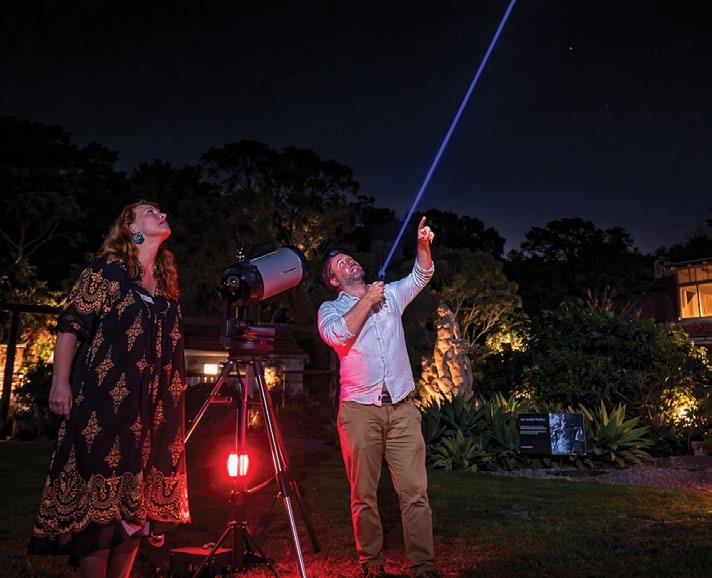
After exploring Norman Lindsay’s works and the illuminated heritage gardens, settle in beneath the Blue Mountains’ dark skies for an enchanting astronomer-led stargazing experience, discovering distant planets, stars and galaxies. Wine and nibbles included.
As darkness falls, discover the history of Old Government House and its atmospheric spaces through chilling storytelling and ghostly hands-on investigations.
In June, meet Artist in Residence Sue Murray. In July, learn more about Aboriginal heritage in the Blue Mountains. Sue shares her final works in August, before a new Artist in Residence, Peta Hinton, is welcomed in September.
Tickets: Members free, adults $12, concession $10, family $34, children under five free
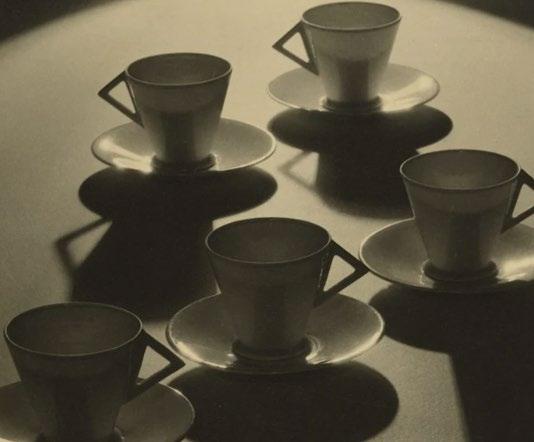
For the first time, this exhibition brings together renowned Australian photographer Olive Cotton’s photographs, presented alongside the work of peers, some of the most celebrated figures in international photography.
(Pictured: Teacup Ballet by Olive Cotton).
Tickets: Members free, adults $15, concession $12, family $42, children under five free
STITCHED BROOCH WORKSHOP WITH PIPPITA BENNETT
NORMAN LINDSAY GALLERY, FAULCONBRIDGE
4 JULY & 1 AUGUST, 10AM AND 1PM SESSIONS
Learn how to make your own bespoke stitched landscape brooch using hand-dyed fabric in this workshop led by local artist Pippita Bennett. Includes tea and coffee and access to the gallery.
From sculptural works to finely thrown pots, the exhibition showcases diverse styles, colours and glazing techniques by 15 local ceramicists.
Tickets: Free entry to exhibition
CHRISTMAS IN JULY
GROSSMANN AND BROUGH HOUSES, MAITLAND
12 JULY, 10:30AM – 2:30PM
Don your best Christmas jumper as you explore Maitland’s historic twin houses, adorned with festive decorations. Enjoy homemade treats, a glass of wine and a garden stroll.
Tickets: Members $40, adults $55, concession $45
THE ART OF GOLDEN VALE
GOLDEN VALE HOMESTEAD, SUTTON FOREST
12, 19 & 26 JULY, 10:30AM AND 3:30PM SESSIONS
Discover Golden Vale’s eclectic art collection. Spanning the early colonial period to contemporary times, it includes works by Pro Hart, Fred Williams, William Gould, John Perceval, Ray Crooke and many others. Refreshments included.
Tickets: Members $35, adults $40, concession $20
2026 LINDESAY GARDEN SEMINAR
LINDESAY, DARLING POINT
23 JULY, 9:30AM – 3PM
Landscape designer Sandy Pratten discusses the stunning gardens of southern France; Dan Cook reveals the secrets of world-class golf courses; and David Thurston shares his design principles for sensory landscapes. Includes morning tea and lunch.
Tickets: Members $85, adults $90
CAPELLA SYDNEY TOUR
4 AUGUST, VARIOUS TIMES
Enjoy a very special visit to the beautiful Capella Sydney hotel, located in the heritage-listed sandstone building that formerly housed the Department of Education.
Tickets: Members $45, adults $50
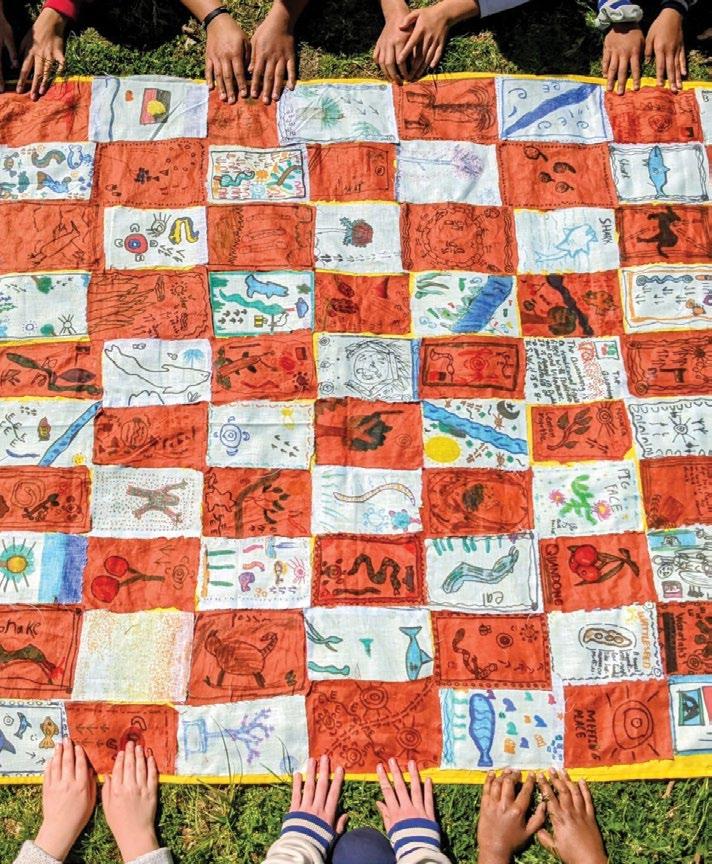
NSW SCHOOLS RECONCILIATION CHALLENGE EXHIBITION
BROUGH HOUSE, MAITLAND
7 – 30 AUGUST, WEEKENDS, 10:30AM – 3PM
Be inspired by a colourful collection of student art exploring reconciliation and reflecting upon Country and its stories.
(Pictured: Welcome to Our Dinner Table by Plunkett Street Public School).
Tickets: Entry via gold coin donation
BANKSIARA
WHITE COTTAGE GALLERY, RETFORD PARK, BOWRAL
8 – 30 AUGUST, WEDNESDAY – SUNDAY, 10AM – 4PM
Immerse yourself in the wild, dramatic beauty of the Australian bush as you browse Tilly Myers’ vivid large-scale botanical artworks.
Tickets: Free entry to exhibition
ANNUAL HERITAGE LECTURE AND MUSICAL PROGRAM
ALL SAINTS’ CHURCH, HUNTERS HILL
16 AUGUST, 2PM – 4PM
Writer and academic Theodore Ell presents Les Murray and the Heritage of Speech, based on his new authorised biography of the Australian poet. Afterwards, enjoy refreshments and listen to a delightful recital on the historic Bevington organ.
Tickets: $25
PAPERHANGINGS OF THE PAST: A HISTORY OF WALLPAPER IN AUSTRALIA LECTURE
BROUGH HOUSE, MAITLAND
22 AUGUST, 2PM – 4PM
Step back in time and learn about the colour and design trends in wallpaper in Australian homes over the past 200 years in this illustrated presentation. Includes a glass of wine and refreshments.
Tickets: Members and concession $25, adults $28
LINDESAY AFTER DARK
LINDESAY, DARLING POINT
25 AUGUST, 29 SEPTEMBER & 27 OCTOBER, 6PM – 8PM
Discover the secrets of historic Lindesay on a captivating after-dark tour. Begin with wine and canapés in the garden, then explore this stunning 1830s property as evening descends.
Tickets: $45
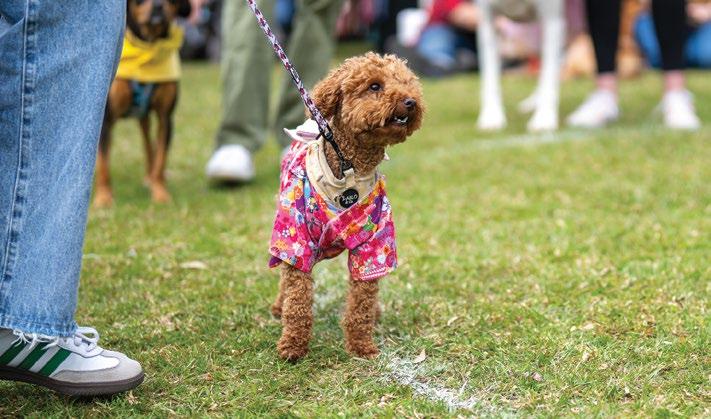
Celebrate International Dog Day
Plan a tail-wagging day out for you and your four-legged friends.
RETFORD PARK, BOWRAL
23 AUGUST, 10AM – 4PM
Celebrate your beloved pooch as you spend a day in Retford Park’s beautiful historic gardens. Join a guided garden tour with fellow pups, capture a pet paw-trait, browse pup-approved stalls, try the agility course and more.
Tickets: Members free, adults $17, concession $15, family $49, children under five free
NORMAN LINDSAY GALLERY, FAULCONBRIDGE
29 AUGUST, 10AM – 4PM
Look forward to talks by Dr Rob Zammit – one of Australia’s leading veterinary surgeons and host of The Doggy Pod podcast – as well as paw painting, fashion parades, agility displays, competitions, food stalls and a photographer on-site to capture the fun.
Tickets: Event entry via gold coin donation, gallery entry $10
Renowned sky and landscape artist Corinne Loxton blends harmony with chaos, order with unpredictability, and beauty with challenge. Watch her creations come to life as she paints live in the gallery.
(Pictured: What the West Wind Saw, after Debussy by Corinne Loxton).
Tickets: Members free, adults $17, concession $15, family $49, children under five free
ENCHANTED GARDEN
WHITE COTTAGE GALLERY, RETFORD PARK, BOWRAL 5 – 27 SEPTEMBER, WEDNESDAY – SUNDAY, 10AM – 4PM
View a bold solo exhibition by Australian artist Paul Thirkell, who combines old and new printing techniques and styles to create images that conjure up imaginary places.
Tickets: Free entry to exhibition
SUNSET EVENINGS AT RETFORD PARK
RETFORD PARK, BOWRAL
11, 12, 18, 19, 25 & 26 SEPTEMBER, 5PM – 7PM
Experience the magic of sunset at Retford Park, when the gardens start to glow and the house comes to life by lamplight. Includes drinks, canapés and a guided tour.
Tickets: Members $35, adults $55, concession $45
PORTIA GEACH MEMORIAL AWARD
S.H. ERVIN GALLERY, OBSERVATORY HILL
18 SEPTEMBER – 1 NOVEMBER
TUESDAY – SUNDAY, 11AM – 5PM
The Portia Geach Memorial Award is Australia’s most prestigious art prize for portraiture by women artists. View finalists’ works from across the country in this exceptional annual display.
(Pictured: Ali Yeldham by Nicole Kelly).
Tickets: Members free, adults $15, concession $12, family $42, children under five free
REGENCY PROMENADE AND FAIR
OLD GOVERNMENT HOUSE, PARRAMATTA
20 SEPTEMBER, 11AM – 4PM
Step out in your finest Regency attire and immerse yourself in expert talks, lively dance demonstrations, vintage and artisan stalls and traditional lawn games. Tour Old Government House, pack your own picnic or visit one of the food trucks to re-energise.
Tickets: Free access, $15 guided tours
House entry only: Members free, adults $15, concession $12, family $42, children under five free
SPRING HIGH TEA
COOMA COTTAGE, YASS
30 SEPTEMBER, 11AM – 1PM
Gather your loved ones and enjoy live acoustic music, a delicious high tea and guided tours of the historic house and picturesque spring gardens.
Tickets: $75
COMING SOON
Spring Tours
LOOKING AT ARCHITECTURE COUNTRY WEEKEND AWAY
25 – 27 SEPTEMBER
Women’s Committee Inspections and Events
Access an exclusive selection of historic homes and spectacular spring gardens in the lower Blue Mountains.
Tickets: Members $165, adults $195
Afternoon tea $45, drinks $50, lunch $25
SPRING HOUSE & GARDEN INSPECTIONS
20 OCTOBER
Inspect a variety of charming Southern Highlands properties brimming with history and bursting with spring blooms. Includes morning tea.
Register your interest: events@nationaltrust.com.au
SAVE THE DATE
Lindesay Christmas Gift Fair
LINDSAY AVENUE, DARLING POINT
19 – 21 NOVEMBER, 10AM – 4PM
Women’s Committee Inspections and Events
Set in stunning heritage surroundings with views over Sydney Harbour, the Lindesay Christmas Gift Fair is your destination for unique jewellery, clothing, gourmet foods and artisanal gifts. Enjoy lunch, morning or afternoon tea at the café, try your luck in the raffle, and snap a family shot with Santa on Saturday.
Tickets: $5 at entrance. Free shuttle bus available from Edgecliff Station. Enquiries: lindesay@nationaltrust.com.au
Book your tickets or find out more at nationaltrust.org.au/whats-on-nsw
Keeping Vintage Skills Alive
The Vintage Sports Car Club of Australia (NSW) is nurturing a new generation of enthusiasts. With support from the Paul Butler Bequest, the club is passing on the skills and confidence needed to keep motoring heritage alive.
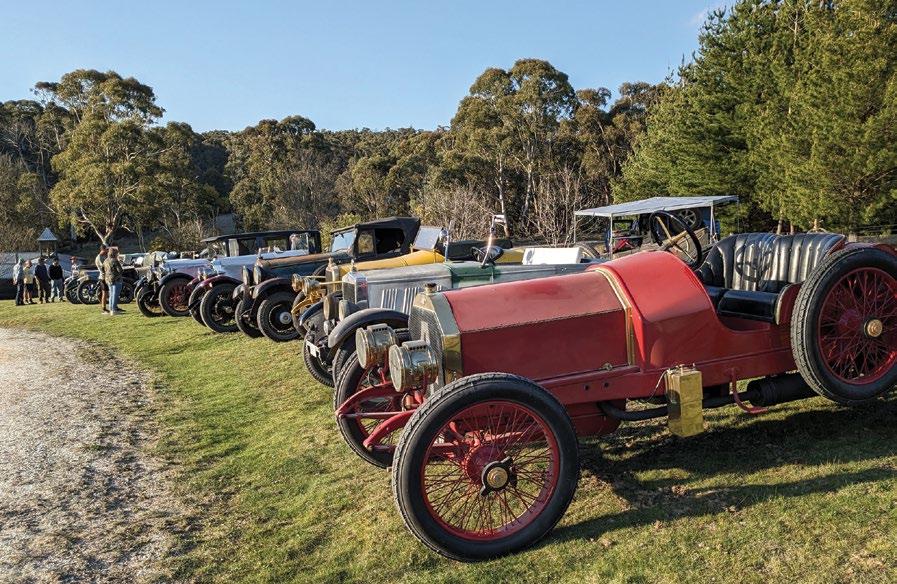
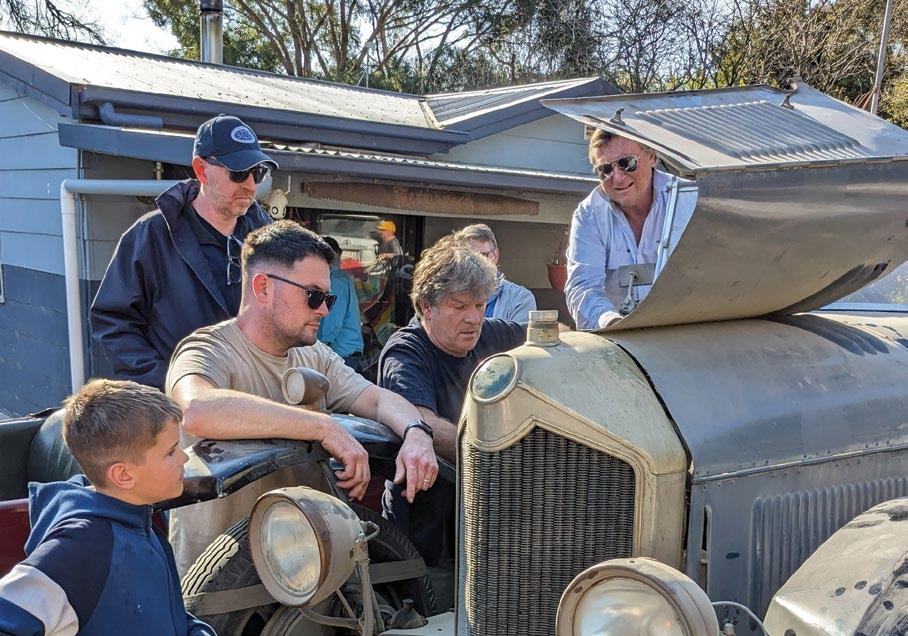
A few years ago, the committee of the Vintage Sports Car Club of Australia (VSCCA) recognised an uncomfortable truth. “The average age of our members is pretty old,” says member Phil Guilfoyle. “And so if we were going to not only preserve our own club, but also assist in nurturing an appreciation of motoring heritage, then we had to start recruiting some younger members.”
Rallies and events once held during the week were moved to weekends and school holidays, often paired with fishing or camping trips. Young enthusiasts were encouraged to get behind the wheel of cars older than their grandparents, while informal workshops created space for older members to share their hard-won technical knowledge.
Slowly, the effort has been paying off: the junior cohort now makes up almost 10 per cent of the VSCCA (NSW)’s 280 members.
Fostering practical skills has been essential. In January, the club partnered with automotive restoration and training company Motor Retro to deliver a three-day metal fabrication course for young members, supported by a grant from the Paul Butler Bequest, administered by the National Trust (NSW).
“What struck me was the agility of their young minds and their hunger for soaking up new information,” Guilfoyle says. “This kind of vocational training is not taught as widely as it used to be, and these young people have now seen an example of people doing cool, exciting things in a job that’s also rewarding financially.”
Just as significantly, their presence has energised long-standing members. “The feedback from older members on bringing in the younger generation has been fantastic.”
Make a lasting impact and leave a bequest of your own. For more details, visit nationaltrust.org.au/bequests-nsw
Applications now open
Grant applications are now open for the Paul Butler Bequest, for the purpose of promoting vintage and veteran cars. For more details, visit nationaltrust.org. au/services/national-trust-of-australiansw-butler-bequest-grants
From top VSCCA members’ prized cars at a rally; teaching automotive repair skills to the next generation (photography by Phil Guilfoyle).
Thank you to our Patrons, Supporters and Corporate Partners
Major Donors
H Berry
J Burnswoods
David Sheedy Foundation
Denbigh Foundation
S Devenish-Meares
Dick & Pip Smith Foundation
J Grimsdale
C & B Hindmarsh
J Permsew Foundation
I Kaiser
Prof M & S Lawrence
Maple-Brown Family Foundation
Perpetual Foundation
S Pickles
Dr S Rothwell AM
T Strachan
S White OAM
C Wilkinson OAM
Platinum Patrons
J Berry
J Burnswoods
J Church
C & B Hindmarsh
C Wilkinson OAM
Gold Patrons
G Arnott
J & L Calluaud
P & R Flick
P & S Harper
H Hewitt
P Homel & L Taggart
Kimalo Foundation
Lambert Bridge Foundation
N & J Margerrison
Pratten Foundation
T Strachan
C Sutherland
S Thomas A White
Silver Patrons
R Burge & C Nadai
R Butler AM
Prof D Carment AM
N & R Charley AO
G & T Graham
T Heazlewood OAM
P Homel & L Taggart
Nell & Hermon Slade Trust
J Woodward
Winter Warmers
Bronze Patrons
P & H Andrews
J & L Benaud
S Black & J Osborn-Black
A Cassidy
L Cox AO
B Edwards
J Giles
B & J Hambrett
R Hanson
E Heard
A Johnson
R & J Lister
L Marcroft & G Brunner
R McCallum
D Paisley
S Parfitt
J & K Roberts AM
A Scott
A Smith
V Vargassoff
G Windeyer & Hon W AM
Dr J Yu AC
Corporate Members
Biosis Pty Ltd
Design 5 – Architects
GML Heritage
Hector Abrahams Architects
Long Blackledge Architects
Lucas, Stapleton, Johnson & Partners
Metropolitan Memorial Parks
Slate Roofing Australia
Sydney Metro
Wollongong City Council
Corporate Partners
Art Gallery of NSW
International Conservation Services
S.H. Ervin Gallery Supporters
Allen & Unwin
Art Gallery of NSW
Holding Redlich
Margaret Olley Art Trust Perpetual
Cosy up for cooler days ahead with chic knitted accessories, perfect presents for Christmas in July and puzzles to solve by the fireside. GIFTS FROM $25
Fingerless or full gloves crafted from a merino-possum blend $30; loop scarf in a stylish ribbed knit $109; one-sizefits-all unisex ribbed beanie $49.99.
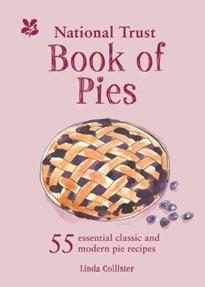
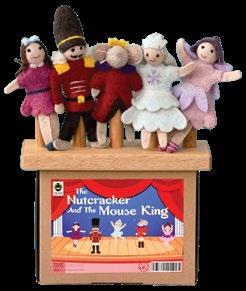
The National Trust Book of Pies, featuring 55 sweet and savoury recipes, plus expert tips $25; The Nutcracker and the Mouse King felt finger puppet set $45.
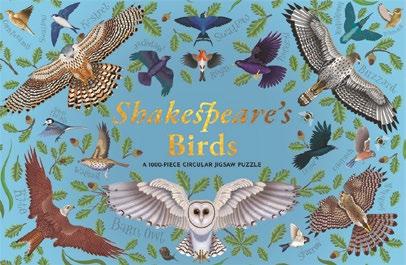
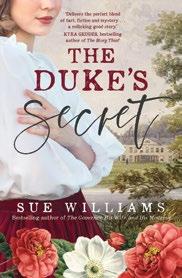
Shakespeare’s Birds 1,000-piece circular jigsaw puzzle $40; The Duke's Secret by Sue Williams $35.