KIDNEY AUTUMN 2026 ISSUE
The magazine of the National Kidney Federation
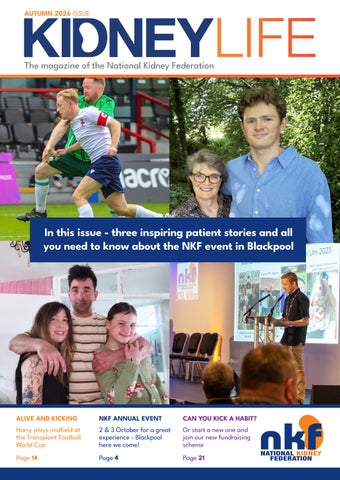
In this issue - three inspiring patient stories and all you need to know about the NKF event in Blackpool
ALIVE AND KICKING
NKF ANNUAL EVENT
CAN YOU KICK A HABIT?
Harry plays midfield at the Transplant Football World Cup
2 & 3 October for a great experience - Blackpool here we come!
Or start a new one and join our new fundraising scheme
Page 14
Page 4
Page 21
EDITOR’S WELCOME
Hello, having waited a long time for summer to arrive it’s well and truly here now, with comparisons to 1976 and hosepipe bans imminent. The World Cup will be over by the time we go to print with this issue but we have news of the Transplant Football World Cup taking place in September in Germany with an article on one of the players – Harry Lockley, midfielder in the team. We wish him every success and he’s promised to let us know how it goes. Despite the heat some of us here at the NKF are already thinking about Christmas! The cards and gifts brochure is included in this issue as well as tickets for the prize draw which all help with fundraising. We are pleased to welcome Suzanne Rutter to the NKF team as fundraiser. I can’t wait to hear her ideas for bringing in much needed funds to ensure we can continue to provide vital services for kidney patients. A new fundraising initiative is Kick a Habit for Kidney Disease – find out more on page 21. We have three personal stories in this issue – get in touch if you’d like to have your story in print. We all learn so much from sharing our experiences and creating your story is easier than you might think. Don’t forget to reserve your place at the Annual Event in Blackpool in October. I hope to see many of you there and it would be great to have a chat about Kidney Life and hear your views. Finally, going back to the heat, I chose a cool dessert for this issue’s recipe – cooking is not on my radar at the moment – enjoy!
YOUR STORIES 8
Johanna Bridges - My Story
14
From Dialysis to the World Stage: Harry Lockley’s Inspiring Football Journey
18
More Than Life-Changing Jamie’s journey and the charity helping families find hope
NEWS 3
The NKF recognised in new publication / Welcome Suzanne Rutter to the NKF Team
4
NKF Annual Event 2026
6
Understanding High Sensitisation and Kidney Transplantation
10
Incremental Dialysis
12
Let’s Talk about Sustainable Kidney Care with Professor Alberto Ortiz
15
The NKF is Here to Support You Through the NKF Peer Support Service
16
Policy and Public Affairs Update
22
Could you help us to reach more patients as an NKF Community Ambassador
FUNDRAISING 20
Christmas Draw / Spring Draw Winners
21
Christmas Brochure / 2027 Calendar on Sale Now! / Kick a Bad Habit or Kickstart a Positive One for Kidney Disease
NUTRITION AND PUZZLE 23
Very Berry Smoothie / Spot the Difference
I’ll see you in the autumn. NKF TEAM Andrea Brown Chief Executive Pete Revell - Head of Marketing & Fundraising
With best wishes,
Lisa Parkin - Office Manager
Annie Taylor Editor kidneylife@kidney.org.uk
Registered Office: The Point, Coach Road, Shireoaks, Worksop, Nottinghamshire S81 8BW T: 01909 544999 E: nkf@kidney.org.uk
2 | Autumn 2026 | www.kidney.org.uk | HELPLINE 0800 169 0936
Lucy Vasiliou - Policy & Public Affairs Manager Chris Talbot - Membership Development Lead Fiona Cadney Helpline Advisor
Sharney Warren Communications & Marketing Officer
Stephen Emmerson Helpline Advisor & Peer Support Coordinator
Fiona Broomhead - Senior Office Administrator
Suzanne Rutter - Fundraiser NKF OFFICERS
Chloe Ainsworth Social Media & Website Coordinator
Caryl Bryant - NKF Chair
Donna Blizard - Senior Accounts Administrator
Geoff Downes - Vice Chair Mike Sinfield - Treasurer Ros Aird - Secretary
Autumn 2026
Welcome Suzanne to the NKF Team The Book
The National Kidney Federation’s contribution
Andrea Brown and Pete Revell attending Westminster Abbey for the launch
The NKF Takes Its Place in New Publication Marking 100 Years of Royal and Parliamentary Leadership
We’re proud to announce the NKF has been chosen to appear in ‘Monarchy and Democracy: A History of Leadership’, a major new publication marking 100 years of royal and parliamentary leadership. Produced by the History of Parliament in partnership with leading publisher St James’s House (SJH Group), the book was officially launched on June 9th in the grounds of Westminster Abbey, London. Harking back to the origins and impact of one of the most significant pieces of legislation in British history, the Act of Settlement 1701, the book explores and documents the shifts in power past and present, culminating in the transformative political and social changes of the past 100 years. It was written by prominent academics and award winning authors, including royal experts Robert Jobson, Russell Myers and Katie Nicholl. NKF’s Chief Executive, Andrea Brown attended the event with Pete Revell, Head of Marketing and Fundraising. Andrea told us “Being invited to contribute to Monarchy and Democracy: A History of Leadership is a real honour for the National Kidney Federation. It recognises not only the importance of strong leadership, but also the vital role charities play in supporting communities, influencing policy and improving lives. We are proud to represent the voices of kidney patients across the UK within such a significant and historic publication.” The event was attended by leaders from across the media, charitable organisations and public life. Available in print and e-book formats, Monarchy and Democracy: A History of Leadership is available to key political, institutional and educational audiences in the UK, Europe and the Commonwealth. You can access the e-book edition of Monarchy and Democracy: A History of Leadership by visiting www.hoptmedia.com/e-book/
The National Kidney Federation (NKF) is delighted to welcome Suzanne Rutter as our new full-time Fundraiser, joining the charity in May 2026 and expanding our fundraising team. Suzanne brings a wealth of experience to the role, having spent the last eight years working for an NHS charity, alongside a successful career in journalism, media, communications and public relations across Yorkshire. Her varied career has given her the opportunity to work with a wide range of organisations, including the NHS, police, local authorities and media outlets. In her new position, Suzanne will support all aspects of fundraising, from developing corporate partnerships and community fundraising opportunities to working with Kidney Patient Associations (KPAs) and supporting seasonal campaigns and appeals. A passionate fundraiser, Suzanne enjoys helping people take on memorable challenges and supporting them throughout their fundraising journey. She is particularly motivated by the difference charities can make to individuals and families facing serious health conditions. Speaking about her new role, Suzanne said: “We’re a small but mighty team here at the NKF and it’s an exciting time to join the charity. I know from my experience working in communications and fundraising roles for the NHS the impact a serious health condition like CKD can have on people’s physical and mental health, and how charities like the NKF can feel like a lifeline for patients and their families.” She added: “I’m really looking forward to supporting fundraisers from across the country to take on some incredible and meaningful challenges. If you’ve been thinking about signing up to a bucket-list challenge, this is your sign to get in touch with me now! I’ll be with you every step of the way.” Outside of work, Suzanne lives in Sheffield with her partner Andy. She enjoys live music, films, books, podcasts, cooking, visiting coffee shops and keeping active at the gym. We are delighted to have Suzanne join the NKF team and look forward to the experience, energy and enthusiasm she will bring as we continue supporting kidney patients and their families across the UK. HELPLINE 0800 169 0936 | www.kidney.org.uk | Autumn 2026 | 3
NEWS
NKF Annual Event 2026: A Weekend of Inspiration, Knowledge and Connection The National Kidney Federation (NKF) Annual Event returns to Blackpool this autumn, bringing together patients, families, carers, living donors, healthcare professionals and supporters for a memorable weekend dedicated to the kidney community. Taking place on Friday 2nd and Saturday 3rd October 2026 at the Grand Hotel on Blackpool’s seafront, the event promises a powerful combination of expert knowledge, lived experience, friendship and support.
Following the success of last year’s event, we are delighted to return to the Grand Hotel for another weekend filled with learning, discussion and connection. Whether you’re newly diagnosed, supporting someone with kidney disease or have been part of the kidney community for many years, there’s something for everyone.
Fellow patient speaker Nicholas Pape will share Grateful Living: My Kidney Journey. Diagnosed around 20 years ago shortly after becoming a father, Nicholas reflects on the highs and lows of kidney failure, dialysis, transplantation and life four years after receiving a transplant. His story celebrates the importance of community, purpose and finding a “new normal” following major health challenges.
A Warm Welcome
These personal journeys are a reminder that while kidney disease affects every individual differently, shared experiences can inspire, support and encourage others facing similar challenges.
The weekend begins on Friday evening with an informal welcome social from 7pm. It provides the perfect opportunity to meet new people, reconnect with familiar faces and start the weekend in a relaxed, friendly atmosphere with others who understand the realities of living with kidney disease.
A Packed Conference Programme Saturday’s conference opens from 9am, with a full day of presentations, networking opportunities and an exhibition hall showcasing organisations, services, support groups and innovations from across the renal community. Delegates will hear from an impressive line-up of speakers, combining clinical expertise with powerful personal stories. The day begins with a welcome from NKF Chair Caryl Bryant, whose long association with kidney care began when her son was diagnosed with Goodpasture’s disease. Through decades of supporting her family, volunteering and advocacy, she has become a respected voice within the renal community.
Stories of Resilience and Hope Among this year’s patient speakers is Harsh Sinha, who has lived with chronic kidney disease for around 25 years and has spent the last four years on the transplant waiting list. In his talk, The Day “Kidneys” Became the Most Important Word in My Vocabulary, he challenges the idea that “nothing can be done” and explores how everyday decisions can influence health and wellbeing. Drawing on his own experiences of balancing work, independence and long-term kidney disease, Harsh offers a message of empowerment and hope.
4 | Autumn 2026 | www.kidney.org.uk | HELPLINE 0800 169 0936
Living Well with Kidney Disease Exercise and rehabilitation are increasingly recognised as important aspects of kidney care, and this year’s programme includes an interactive session from Siobhán Freeman, Team Lead Physiotherapist for the Renal Rehabilitation and Exercise Team at King’s College Hospital London. In Moving with Kidney Disease: Why Exercise Matters, Siobhán will explore the benefits of physical activity for people with kidney disease and demonstrate practical chair-based exercises that participants can use in everyday life. Her session aims to show that movement, no matter how small, can contribute to improved wellbeing and quality of life.
Looking to the Future of Transplantation Advances in transplantation remain one of the most exciting areas of kidney care. Delegates will hear from consultant transplant surgeon Mr Dominic Summers, who specialises in kidney and pancreas transplantation and is the transplant lead for the East of England Renal Network. His presentation, Making Transplantation the First Choice Treatment in End-Stage Kidney Disease, will explore the progress being made in the field and the opportunities to improve access to life-changing transplant treatment.
Autumn 2026
The Importance of Emotional and Social Support Living with kidney disease affects far more than physical health. Emotional wellbeing, family life, education, employment and social relationships can all be impacted. In a thought-provoking session led by renal social worker Andrew Barnett, delegates will hear from kidney patients Chris Simpson and Faye Connolly, who will share their experiences of growing up and living with kidney disease. Together, they will examine the vital role psychosocial support can play in helping people navigate the challenges that accompany long-term illness. Their stories highlight resilience in the face of significant obstacles and demonstrate how support services can make a meaningful difference throughout the kidney journey.
Join Us in Blackpool The NKF Annual Event continues to be one of the UK’s leading gatherings for the kidney community, bringing together expertise, lived experience and mutual support under one roof. Whether you’re seeking practical information, inspiration for your own journey, or simply the reassurance of meeting others who understand, this year’s event promises to deliver. To find out more or book your place, contact the NKF office on 01909 544999, use the booking form on the back page of Kidney Life or visit the NKF website. www.kidney.org.uk/event/nkf-annual-event-2026 We look forward to welcoming you to Blackpool this October.
Making Every Dialysis Session Count For people receiving haemodialysis, treatment can take up hundreds of hours every year. This year, Karen Nagalingam and Emma Taylor will discuss how that time might be used more effectively to improve patients’ experiences and quality of life.
Andrew Barnett
Caryl Bryant NKF Chair
Chris Simpson
Dominic Summers
Emma Taylor
Faye Connolly
Harsh Sinha
Karen Nagalingham
Nicholas Pape
Siobhan Freeman
Their session, Making the Most of Your Dialysis, examines what currently happens during dialysis sessions and explores opportunities for education, exercise, health reviews and other activities that could make treatment time more meaningful and beneficial. Drawing on their extensive experience in renal nursing and dietetics, Karen and Emma are helping to shape conversations about improving care for people receiving dialysis across the UK.
More Than a Conference Beyond the speaker programme, one of the greatest strengths of the NKF Annual Event is the opportunity to connect with others who understand the realities of kidney disease. The exhibition hall offers delegates the chance to discover new resources, services and support organisations, while breaks throughout the day provide valuable opportunities for networking and conversation. Patients, carers, healthcare professionals and volunteers come together to share experiences, learn from one another and strengthen the sense of community that makes the event so special.
Ending on a High After a busy day of learning and discussion, delegates can unwind on Saturday evening with a hot buffet and the ever-popular NKF quiz, hosted by Pete Revell. It’s a fun and relaxed way to round off a weekend filled with knowledge, inspiration and friendship.
HELPLINE 0800 169 0936 | www.kidney.org.uk | Autumn 2026 | 5
NEWS
Understanding High Sensitisation and Kidney Transplantation A recent addition to the NKF’s library of patient information leaflets explains the challenge of high sensitisation and how new treatments are helping more people access kidney transplantation. For many people with end-stage kidney disease, a kidney transplant offers the best chance of a longer, healthier and more independent life. However, for some patients, finding a suitable donor can be far more difficult. These individuals are known as highly sensitised patients – people whose immune systems have developed strong responses to foreign human leukocyte antigens (HLAs), making compatibility with donor kidneys harder to achieve.
The Role of HLAs HLAs are proteins found on the surface of most cells in the body. They help the immune system distinguish between the body’s own cells and foreign cells. When a donor kidney is transplanted, its HLA profile is compared with that of the recipient to assess compatibility. A useful way to think about HLAs is as a security system. The immune system recognises the body’s own HLAs as authorised. Anything unfamiliar may be treated as an intruder. If a donor kidney carries HLAs that the recipient’s immune system identifies as foreign, the immune system may attack the transplanted organ. Generally, the closer the match between donor and recipient HLA profiles, the lower the risk of rejection.
How Does Sensitisation Happen? Sensitisation occurs when the immune system is exposed to HLAs from another person. Common causes include blood transfusions, previous transplants and pregnancy. When exposed to unfamiliar HLAs, the immune system produces anti-HLA antibodies designed to attack them. It also remembers these antigens, allowing it to respond rapidly if it encounters them again. Over time, repeated exposures can lead to the development of antibodies against a wide range of HLAs.
6 | Autumn 2026 | www.kidney.org.uk | HELPLINE 0800 169 0936
Highly sensitised patients have accumulated large numbers of anti-HLA antibodies, making them incompatible with many potential donors. It is estimated that around 10–15% of people waiting for a kidney transplant fall into this category.
Why Finding a Donor Is More Challenging Most transplant candidates need a donor who is compatible in terms of blood type and other key factors. For highly sensitised patients, the challenge is greater because their immune systems may react to many more donor HLAs. As a result, a large proportion of available donor kidneys may be unsuitable. Even when a kidney becomes available, there can be a significant risk that existing antibodies would attack it. This means highly sensitised patients often spend longer on transplant waiting lists, while the pool of compatible organs is much smaller. The extended wait can be both frustrating and emotionally difficult, particularly as patients continue dialysis while hoping for a suitable donor match.
The Promise of Desensitisation Advances in transplant medicine are creating new opportunities for highly sensitised patients. One important development is desensitisation treatment, which temporarily reduces the level of anti-HLA antibodies in the body. By lowering antibody levels, desensitisation may allow patients to receive a kidney that would otherwise be considered incompatible. If antibody levels are sufficiently reduced at the time of transplantation, the risk of an immediate immune attack on the donor kidney can be lowered, increasing the possibility of a successful transplant. Several desensitisation approaches are available, using different methods and timescales. Treatment periods can range from as little as 24 hours to several months. Because the effects are temporary, timing is crucial and treatment must be carefully coordinated with the availability of a suitable donor organ.
Life After Transplantation Desensitisation is only one part of the process. Following transplantation, recipients must continue taking antirejection medications to suppress the immune response and help protect the transplanted kidney.
Autumn 2026
Changing Lives in Leicestershire Mr Atul Bagul, Head of Transplantation Services at University Hospitals of Leicester NHS Trust explained the difference the new drug is making and how the multidisciplinary team manages the major co-ordination required. Successful transplantation in highly sensitised patients depends on a combination of factors, including careful donor selection, antibody management, expert clinical supervision and long-term adherence to prescribed medication.
Expanding Access to Transplantation The NKF leaflet also highlights anti-HLA antibody delisting as another approach that may increase transplant opportunities for some patients. This reflects ongoing efforts within the transplant community to improve compatibility assessments and broaden access to donor kidneys. Research in transplant immunology continues to advance, offering new hope for people who previously faced significant barriers to transplantation.
Looking Ahead Being highly sensitised can make the path to transplantation more challenging, but it does not make transplantation impossible. Improvements in HLA testing, compatibility assessment and desensitisation therapies are helping create new opportunities for patients who may once have had very limited options. For people waiting for a kidney transplant, these developments represent significant progress. As matching techniques and treatment options continue to improve, more highly sensitised patients may be able to receive the life-changing gift of a functioning kidney and the improved quality of life that can follow.
What being highly sensitised means for people with endstage kidney disease: transplantation can be an option
“Before the new drug imlifidase was available, desensitisation generally relied on treatments such as plasma exchange, intravenous immunoglobulin, rituximab, and other antibodylowering therapies. These approaches often required treatment over a period of time which might be a few days to several months making it difficult to coordinate with the availability of a donor kidney. After we have determined the suitability of the patient for the treatment with imlifidase, we give them lots of information and send them away to think about it. These patients have often been on the waiting list for a kidney for over 10 years. When a kidney becomes available we speak with the retrieval team that is retrieving the deceased donor kidney, we look at photographs, information they provide and at the same time we do the cross matching. When we are happy the kidney is suitable we then give the drug to the patient as the kidney makes its way to our unit. Imlifidase works very quickly and after four hours we recheck the antibody levels to ensure we have a safe window to transplant the kidney.
Mr Atul Bagul
Following transplantation the patient stays in hospital for a couple more weeks than you would expect. This is to make sure the kidney is functioning well and to give the drug treatments that prevent antibodies from attacking the new kidney aiming to reduce risk of rejection. This is labour intensive work as the multidisciplinary team works closely to bring all elements of the transplantation surgery and aftercare together. In Leicester we started with a trial and we are sharing our experience of using the drug and protocol with other units across the country. We have completed three successful transplants with recipients waiting for more than 15 years. Outcome data from a recent five year trial has shown an 85% success rate. There is no doubt that transplant after many years of waiting on the list is life changing.” This article was developed independently by NKF. Hansa Biopharma, a corporate sponsor, suggested the topic and provided financial support for the development of the new NKF booklet on ‘What being highly sensitised means for people with end stage kidney disease’, but had no input into or influence on the content of this article or the booklet.
Educational booklet developed with the support of Hansa Biopharma
HELPLINE 0800 169 0936 | www.kidney.org.uk | Autumn 2026 | 7
YOUR STORIES
Johanna Bridges My Story
As a child, I knew I was a little different from my peers, but I was still able to run around and play, attend school, and enjoy a happy childhood. I received extra support with my education to make sure I kept up, and I was never held back academically or socially. As I entered my pre-teen years, however, I became more aware of some of the physical side effects of the immunosuppressant medications I was taking. At the time, these changes affected my confidence and self-image, although many of the side effects improved over time, some naturally and others with surgery. My first transplant, in 1995, came from a deceased donor. During the early 1990s, I appeared in the Daily Record several times as part of its organ donation campaign, helping to encourage more people to sign up as donors.
In this heartfelt story Johanna describes her life with kidney disease in her own words – from her early childhood to her life now as a busy mum and professional, and the challenges she has faced and continues to live with.
In 2008, I was fortunate enough to receive a kidney from my mum. We knew my first transplant was beginning to fail and started preparing for a second transplant in the hope of avoiding a return to dialysis. All the tests suggested everything would go smoothly. Unfortunately, I became very unwell on the evening of the operation. The following morning, an ultrasound revealed that there was no blood flow to the transplanted kidney. I was rushed straight back to theatre and, when I woke up, I learned that the kidney had to be removed.
Johanna today
It was a devastating experience for all of us, particularly my mum. A week later I was back on dialysis, and despite extensive investigations, no clear reason was ever found for the transplant failure. Returning to dialysis was difficult. Up until then, I had been focused on transplantation, with family members willing to donate and my mum’s transplant already underway, so dialysis felt like an unexpected step backwards. My dad began the donor assessment process and we were given a transplant date, but just a week before surgery I developed antibodies against him and the operation had to be cancelled.
Graduating
At that stage, I found it hard to process everything that was happening. Life felt uncertain and I struggled to see what the future might look like. My world became much smaller, and there were times when I lost confidence in myself and in what I might still be able to achieve.
Then my younger brother, aged just 22, offered to be tested. I didn’t expect him to be a match, but as the testing progressed it became increasingly clear that he was. By December 2012, we had a surgery date: 28 December.
Johanna aged 6 at Yorkhill
Given that my antibody levels were around 93%, the team
Children’s Hospital
Autumn 2026 described him as an exceptionally good match. Before surgery, I attended my final dialysis session. I remember seeing someone I had known since childhood who was also on dialysis and telling her I was going to have a transplant and would be leaving the unit. I felt incredibly fortunate for the opportunity I had been given but upset for her and guilty in a way. I am aware that she has since passed away. That transplant changed my life in so many ways. It gave me the chance to move forward and make plans again. I went on to college and then Stirling University, where I earned my nursing degree. I became a mum to my daughter, Ramona, and I eventually met my husband, Mark. Those 12 years with my third transplant allowed me to build the life I had always hoped for. Today, I find myself back on dialysis after that transplant came to an end. I know that another kidney transplant may be challenging because my antibody levels are now around 99%. While there are uncertainties ahead, I remain focused on making the most of every opportunity and continuing to build memories with my family.
Johanna on dialysis
I was initially diagnosed with glomerulonephritis and believed this was my diagnosis for many years until 2023 when one of my nephrologists suggested genetic testing as he felt my presentation in childhood was more in keeping with a genetic condition. I was then found to have the genetic mutations in PLCE1 gene and was then diagnosed with NPHS3. I am currently working on a part time basis as a psychiatric nurse which is incredibly important to me. Having purpose, structure and connection help me avoid retreating into the isolation I experienced in my twenties. My vascular access has become increasingly complex after years of dialysis and central lines. Because of damage and blockages in my upper body veins, I now dialyse through a fistula in my left leg. Creating it required a major operation and left a large scar along my thigh. It has been another significant adjustment, but it allows me to continue receiving the treatment I need. There is still so much I look forward to. Watching my daughter grow and thrive is my greatest joy. I take things one day at a time, making small plans and finding reasons to look ahead. One of my goals is to enjoy a well-earned family holiday abroad once I find a dialysis centre that can support me while I’m away. I also hope that ongoing research will help prevent kidney diseases like mine from progressing to kidney failure and stop them from recurring in transplanted kidneys. I need a transplant that will last for many years, and although I do not currently have a direct living donor, a friend and I are part of the kidney sharing scheme. We remain hopeful that it will lead to a successful match. Living with kidney disease affects much more than physical health. Like many patients, I have faced significant emotional challenges throughout my journey. Looking back, I would have benefited from greater psychological support alongside my medical care. I would love to see biopsychosocial care become a routine part of renal services, recognising and supporting the whole person, not just the condition. There are still difficult days, and dialysis can feel relentless at times. But there is always something that helps me refocus—a conversation, a family moment, a plan for the future, or simply the next small step forward. Those moments remind me that even in the face of ongoing challenges, there is still plenty worth hoping for. Johanna, Mark and Ramona HELPLINE 0800 169 0936 | www.kidney.org.uk | Autumn 2026 | 9
NEWS
You may have heard of Incremental Dialysis but what is it and who is it for? Here Dr Roger Greenwood, Consultant Nephrologist, Lister Hospital and Prof. Ken Farrington, Consultant Nephrologist, Lister Hospital and University of Hertfordshire explain what it means and how it came about.
Incremental Dialysis A conventional dialysis story Jon has had kidney problems for about 5 years and has been seen regularly in clinic. A year ago he was told he’d need dialysis soon and two months ago he had a fistula formed in his left arm. He started feeling under the weather a few weeks ago and yesterday had his first hemodialysis. He was dialysed for four hours and was told that he’d need the same treatment three times every week, come what may. But why four hours three times weekly? When we first encountered dialysis in the late ‘70s the ‘dialysis prescription’ was for eight hour sessions carried out three times weekly. This schedule had been arrived at by “trial and error” since dialysis had become established as a life-saving therapy around 15 years earlier. But this was not the end of “trial and error”. Technical advances and ever-increasing numbers of people needing treatment kept a relentless downward pressure to reduce session time. It was only the invention of a practical method of reducing the error in “trial and error” that led to general agreement that four hours three times weekly provided “adequate” dialysis for most people. That method was to define a minimum target for the removal of accumulated toxins by dialysis and the introduction of a simple means of measuring this using blood tests taken before and after dialysis sessions, usually every month. The toxin chosen was urea and the method became known as ‘urea kinetic modelling’ (UKM). Now, some 40 years later, this method still plays a major role in assuring the quality of delivered dialysis.
An incremental dialysis story Tom, like Jon, has also had kidney problems for some time. Also like Jon he had a fistula created a couple of months ago and started haemodialysis yesterday. But unlike Jon, Tom will only dialyse twice weekly for 3.5 hours. This is incremental haemodialysis. What does this mean and why the difference?
What is incremental haemodialysis? And what it is not Dr Roger Greenwood
Prof. Ken Farrington
10 | Autumn 2026 | www.kidney.org.uk | HELPLINE 0800 169 0936
Incremental haemodialysis combines the toxin (urea) removal by the patient’s own residual kidney function with the toxin removal by the dialysis machine to aim for a total ‘target’ achievement. This means that less time can be spent on dialysis provided the kidneys are still making a significant contribution. When people start on dialysis they normally have around 6-10% of kidney function remaining (residual kidney function). This usually declines slowly during the first few years on dialysis but can be taken advantage of during that time to allow a more gentle start to dialysis. The time spent on dialysis will, of course, need to be increased to maintain target dose as kidney function declines over the ensuing months and years (Figure 1). It is also important to stress what incremental haemodialysis is not. In resource-limited countries twice-weekly, or even once-weekly treatments, are often employed. Occasionally this can also occur in more wealthy countries. In such settings, factors other than residual kidney function determine the dialysis prescription, and treatment
Autumn 2026 time and frequency are not routinely adjusted as residual kidney function falls. Reduced treatment intensity in such situations should not be considered as incremental HD. Treatment intensity may also be reduced in people, such as those nearing end-of-life, in whom the main goal is to manage the burdens of treatment and symptoms rather than prolonging life. Dialysis is essentially palliative and again should not be considered as incremental.
Benefits of incremental dialysis Experience has been accumulating with incremental haemodialysis for over two decades. Initially the treatment was practiced in relatively few centres but, as evidence for the safety and for potential benefits is gathering, interest is broadening. Most of the published studies are observational but higher-level evidence from randomised trials and systematic reviews is now becoming available. The upshot is that many clinical practice guidelines including those of the Renal Association (now the UK Kidney Association) currently recognise a role for the treatment in people with sufficient residual kidney function. Current evidence indicates that incremental haemodialysis is safe. Survival seems to be at least as good as in comparable people dialysed three-times weekly (conventional) treatments. Similarly, current studies would suggest that the rate of admission to hospital is the same or even less than in those on conventional treatment. There has been much interest in the finding, from many studies, of a reduced rate of loss of residual kidney function in those on incremental treatments. This is important since residual kidney function has many benefits including improved survival, and in this setting the potential to maintain the incremental mode for longer. Vascular access problems may be reduced and some aspects of quality of life improved. Nutrition and volume control seem well-maintained. The costs of incremental haemodialysis provision are less as is environmental impact.
What incremental haemodialysis entails 1 Patient selection. Adequate residual kidney function is essential. In practice this usually means having more than around 5% of residual function, equivalent to a urea clearance of roughly 3 ml/min or greater. 2 Patient counselling. Patients should be advised that regular urine collection will be required, and that dialysis frequency and/or session length will likely need to be increased over time as residual kidney function declines. 3 Ongoing monitoring. Clinical status, dialysis efficiency (typically assessed by urea removal) and residual kidney function (usually by urea clearance) should be monitored on a regular basis. 4 Combined clearance calculation. Dialysis and residual clearances are added together to give a total urea clearance — most commonly expressed as a weekly standard Kt/V, though several other validated methods are available. 5 Target checking and adjustment. This total clearance is checked against an accepted target, and the frequency and/or duration of dialysis is adjusted accordingly to ensure adequacy is maintained. 6 Transition to conventional dialysis. Depending on monitoring results, most patients will eventually need to revert to a conventional schedule — typically after a period of months to years, averaging perhaps 1 to 2 years.
Summary Incremental haemodialysis is an individualised way of starting treatment that uses a patient’s remaining kidney function to “top up” the dialysis they receive. It can offer a smoother, less intensive start — but it requires careful selection, honest conversations about what to expect, and regular urine collections and check-ups to make sure the total treatment received stays adequate.
Incremental Haemodialysis — in a nutshell • Allows reduced dialysis frequency and/or time for selected patients with adequate residual kidney function Figure 1: This shows reducing contribution of residual ‘natural’ kidney function to the total delivered dosage (Kt/V), with compensatory increase in dialysis dose, over time
It is important to highlight some caveats to provide perspective. Firstly, the benefits referred to above occur in carefully selected patients with adequate residual kidney function which has been closely monitored as time on dialysis progresses and reacted to with adjustment of dialysis intensity as appropriate. These features are necessary to prevent problems due to underdialysis. Secondly much of the evidence is observational which can be difficult to interpret. More robust evidence is accumulating and further randomised trials are in progress.
• Offers a gentler start to dialysis • Needs regular monitoring of residual function by urine collection every 1–3 months • Frequency and/or time must increase as residual function falls • Current evidence supports its safety • Potential benefits: slower loss of kidney function, better preserved vascular access, fewer hospital admissions, better quality of life HELPLINE 0800 169 0936 | www.kidney.org.uk | Autumn 2026 | 11
NEWS
Let’s Talk about Sustainable Kidney Care with Professor Alberto Ortiz: Gloria Munoz-Figueroa
The Updated Global Burden of Chronic Kidney Disease: one death every 20 seconds By Gloria Munoz-Figueroa, Lead Nurse Advanced Kidney Care Imperial College Healthcare NHS Trust, Lead Nurse London Kidney Network, Co-Chair UKKA Sustainable Kidney Care Committee. Prevention is the most powerful principle of sustainable kidney care. It has a low environmental impact (carbon footprint) because health is promoted and kidney disease is prevented. It could not be more imperative given the recent statistics from the updated Global Burden of Disease published in February 2026. I had the honour to speak about sustainable kidney care at the World Kidney Day Live webinar in March this year. This impactful event is organised by the International Society of Nephrology, and I used the opportunity to call for a consensus to routinely screen or check for proteinuria (uACR testing) in children in primary care. The earlier CKD is identified the better. This is a call for agency and urgency. We aim to empower patients to ask their loved ones; relatives, friends, carers and communities, to ask their GPs to screen or check their kidney function and urine Albumin Creatinine Ratio (uACR). Chronic Kidney Disease (CKD) is a major global health crisis affecting 850 million people worldwide. Recent data from the Updated Global Burden of Disease highlights that CKD causes one death every 20 seconds, millions of people are living with kidney damage without knowing it. And many cases are diagnosed too late, when significant kidney function is already lost.
For patients living with CKD this means, kidney disease can develop without symptoms (silent). Early testing can prevent dialysis and heart complications, and patients have a powerful role in asking for the right tests. For kidney specialists this means, there is a shift toward earlier diagnosis and prevention, not just treating advanced kidney disease. New pharmacological intervention can slow down CKD progression if started early. For general practitioners this means the focus is moving to proactive screening. A urine test can identify kidney disease years earlier. As part of my effort to raise awareness, I invited Dr Alberto Ortiz to speak to West London Kidney Patient Association and Kidney Life readers, to share his perspective, expertise, and with his five year lens on how he sees this field evolving. Dr Alberto Ortiz, MD, PhD is a clinical Nephrologist and physician-scientist from Madrid, Spain. He is currently Head of the Nephrology and Hypertension Department of Fundacion Jimenez Diaz University Hospital, Professor of Medicine at Universidad Autonoma de Madrid and Renal Science Chair of the European Renal Association. I have been privileged to meet him through our sustainable kidney care network, work and collaboration. We share the passion and mission to drive global prevention of chronic kidney disease.
The message is clear; we can no longer wait for symptoms or late-stage kidney disease. The “one death every 20 seconds” statistic is changing how patients engage with their health. Patients are becoming more informed and proactive. There is growing awareness that early detection saves lives. Patients need to start asking for kidney checks, just like they ask for cholesterol or blood pressure checks. And advise their loved ones to ask their GPs for the right tests too, particularly for an uACR test.
Your report highlights the rising death toll for chronic kidney disease. Many people are unaware that kidney damage can be detected early through a simple urine ACR test. Why is uACR testing still underused, and how could wider screening change outcomes?
uACR test (urine Albumin-to-creatinine ratio) is a simple urine test checking for albumin. This is a blood protein that should not leak into the urine. If found in the urine, it can be an early sign of kidney damage. This can happen even when kidney function is still normal.
For me, it is a still a mystery why urine ACR is not tested more frequently. It could be for historical reasons. When the test was first introduced in the 1990s, it was more expensive, and so it was reserved for specific groups, such as people with diabetes. Many clinicians trained with this mindset and practice. Today, this has changed because
12 | Autumn 2026 | www.kidney.org.uk | HELPLINE 0800 169 0936
Autumn 2026
Professor Alberto Ortiz
• uACR test is simple, non-invasive, and inexpensive. • It allows us to detect chronic kidney disease early. • Most importantly, CKD is now treatable. If we detect kidney disease early: • We can delay or prevent dialysis. • We can reduce heart disease risk. • We can help people live longer and healthier lives. In fact, by the time we diagnose CKD using kidney function tests, patients may have already lost about half of their kidney function - equivalent to losing one whole kidney. This damage is irreversible. Before this happens, the body gives us a warning sign: Albumin appears in the urine. This means: • Kidney damage has started. • But kidney function may still be completely normal. People can have chronic kidney disease even with “normal” kidney function.
What difference does early treatment make? The difference is enormous. Clinical trials show: • If treatment starts early (when only albuminuria is present), dialysis may be delayed by decades (up to 30 years) or avoided entirely. • If treatment starts late (when kidney function is already low), dialysis may only be delayed by a few years. • Early detection changes everything.
You’ve also described a new “anti-ageing” role of the kidneys. What does that mean? We used to think kidneys mainly removed toxins. Now we know they also produce substances that help protect the body from ageing - such as a protein called Klotho. When kidneys are damaged these protective substances are reduced. This contributes to faster biological ageing and heart disease. Importantly, albumin in the urine is a sign this protective function is already being lost.
For patients with diabetes, high blood pressure, or cardiovascular risk—how important is asking for an ACR test?
But kidney health should be treated the same way. The European Renal Association recommends a simple framework; the ABCDE approach to health, based on European Society of Cardiology guidelines on prevention: • A – albumin (urine test) • B – blood pressure • C – cholesterol • D – diabetes (blood sugar) • E – eGFR (kidney function) These five checks work together to protect both heart and kidney health.
How can we encourage more patients to ask for ACR testing—including children and young people? We need awareness—and simple messaging. One idea is using visual tools like the “ABCDE hand”: each finger represents one health check. It’s simple, memorable, and actionable. We should use social media, infographics, patient education campaigns But only healthcare systems can provide urine albumin testing, blood tests, kidney function checks.
What needs to change in primary care to make ACR testing routine within the next 5 years? We need both awareness and practical incentives. One approach could be encouraging or incentivising GPs to test patients at risk. Over time urine ACR testing should become as routine as checking blood pressure, measuring cholesterol, testing blood sugar. It should be standard care and not optional.
What is your final message for patients? Kidney disease is common, serious, and often silent. A simple urine test (uACR) can detect it early even when kidney function is normal. Early detection can prevent dialysis and protect your heart. Next time you or your loved ones have a check-up with a general practitioner, encourage them to ask, “Can I have a urine ACR test to check my kidneys?” Because when it comes to kidney health—earlier really is better.
It is very important—and patients should absolutely be proactive. We are all used to asking about blood pressure, cholesterol and blood sugar checks.
HELPLINE 0800 169 0936 | www.kidney.org.uk | Autumn 2026 | 13
YOUR STORIES
From Dialysis to the World Stage: Harry Lockley’s Inspiring Football Journey At just 24 years old, Harry Lockley from Towyn, North Wales, has already faced challenges that many people never experience in a lifetime. Living with a rare genetic kidney condition, undergoing dialysis and receiving a kidney transplant could easily have ended his sporting ambitions. Instead, Harry has used his experience to inspire others and earn a place in the England Transplant Football Team. His story highlights the lifechanging power of organ donation. Harry was diagnosed with Alport syndrome when he was five years old after blood was discovered in his urine. Alport syndrome is a rare inherited condition that damages the kidneys and can also affect hearing and eyesight. Despite the diagnosis, he enjoyed a relatively normal childhood and teenage life, pursuing his love of football and building a future for himself. Everything changed when he was 21. After not being seen during the COVID-19 pandemic, Harry attended a routine check-up and learned that his kidney function was declining rapidly. Soon afterwards, he started peritoneal dialysis in 2023. The impact on his life was significant. At the time, Harry was playing semi-professional football, but dialysis forced him to step away from the game. Kidney failure also brought constant fatigue, dietary restrictions and uncertainty about how he would feel from day to day. “I felt very alone and didn’t see how things could get better,” Harry recalls. As a young adult, he struggled to find people his own age who understood what he was going through. He believed, like many people do, that kidney disease mainly affects older adults. Being tied to overnight dialysis also meant his life felt as though it had been put on hold. Harry winning aged 12
Throughout those difficult months, Harry relied heavily on the support of his family and girlfriend, who remained by his side and helped him stay positive. In October 2023, Harry received a kidney transplant at Liverpool Royal Hospital. The kidney came from a deceased donor who had selflessly joined the organ donation register. Although Harry does not know who his donor was, he remains profoundly grateful. “It’s a gift I will always be thankful for as it has truly saved and changed my life for the better,” he says. The transplant transformed his life. Apart from a small setback during his first week after leaving hospital, his recovery progressed well. Within three to four months, and after receiving advice from a transplant sports doctor, Harry returned to football training. His return to sport led to an unexpected opportunity. Unsure whether he could safely resume semiprofessional football, Harry’s girlfriend contacted the transplant sport office for advice. This led to contact from the England Transplant Football Team manager, who invited Harry to train with the squad ahead of the 2024 Transplant Football World Cup.
Harry playing recently in the Four Nations tournament
Joining the team proved to be about far more than football. Harry found himself surrounded by people who understood the challenges of organ failure, dialysis and transplantation. The friendships he developed helped him turn a difficult chapter of his life into something positive. “The team is like no other I have ever been involved in,” he says. “It has given me more than I ever imagined, not just the enjoyment of playing football again but a group of friends for life who all share similar experiences to me.” Now playing in midfield, Harry is preparing for the Transplant Football World Cup in Frankfurt, Germany. The tournament will bring together 16 nations and showcase the power of organ donation through sport. England will travel with confidence after recent success in European and Four Nations competitions. For Harry, simply being able to compete is a remarkable achievement. He continues to train regularly and play for his semi-professional club in North Wales, something that once seemed impossible during his time on dialysis. Most importantly, he hopes his story will encourage others living with kidney disease. His message is that while the journey can be difficult, there is hope and life beyond illness. From a young man facing kidney failure to representing England on the international stage, Harry Lockley’s journey is a powerful reminder of resilience, determination and the extraordinary gift of organ donation. Harry has agreed to report on the competition in the next issue of Kidney Life.
Harry at Ross County football ground holding the Four Nations cup
Go Harry!
14 | Autumn 2026 | www.kidney.org.uk | HELPLINE 0800 169 0936
Autumn 2026
The NKF is here to support you through the Peer Support Service Do you know you can access the NKF Peer Support Service in three different ways? You can 1. Request a peer supporter online - you can visit our website to fill in a referral form www.kidney.org.uk/peer-support 2. Call our Freephone Helpline (quickest option) - 0800 169 09 36 3. Email us - helpline@kidney.org.uk We can match you to a trained peer supporter who understands kidney disease and can talk to you one on one, confidentially and no waiting list. Most peer support matches are arranged within 48 hours or less. All of our peer supporters are fully trained and DBS checked, aged 20-80 and have lived experience of kidney disease in some way, whether that be as a patient, carer or live donor.
Who can use this service? This service is available to: • People living with kidney disease • Family members, partners and carers Healthcare professionals - we provide a referral system and printed information cards to help promote the service. You can: • Refer patients with their consent via our online referral form • Request printed contact information cards by calling 0800 169 09 36 or email helpline@kidney.org.uk
You can speak to a peer supporter about anything related to kidney disease including: • • • • •
Chronic Kidney Disease (CKD) Dialysis (all types) Transplantation and donation Living with diabetes and CKD Caring for someone with kidney disease Our services are open Monday - Thursday 08:30 - 5:00pm and Fridays 08:30am - 12:30pm. For more information visit: www.kidney.org.uk/peer-support
How We Know the Peer Support Service is working Our peer support service has grown substantially over the years, and we have been delighted by its increasing reach, rapid response times, and the positive outcomes achieved for the people we support. Diana Allen, an independent statistician, has conducted an independent analysis of the service covering the period from 2021 to 2026. The analysis report explores how the service has developed over time and highlights the evidence behind its impact.
The analysis report demonstrates • Referrals of the service have increased significantly, with 2025 being the busiest year since the service began. • The service is delivered by a trained network of 29 volunteers from across the UK, the service provides emotional support, practical advice and reassurance to patients, carers and families. • Volunteers bring a wide range of lived experiences, helping people at every stage of their kidney journey, from diagnosis and dialysis to transplantation and beyond. • The service responds quickly, with a median set-up time of just one day, and 87% of referrals resulted in positive completed support. Users consistently praised the knowledge, empathy and reassurance provided by peer supporters, with many saying the service helped reduce anxiety and increased their confidence in making treatment decisions. The findings reinforce the value of peer support as an important part of kidney care, helping ensure that no one has to face kidney disease alone. To read the full analysis visit the NKF Peer Support Service page: www.kidney.org.uk/peer-support HELPLINE 0800 169 0936 | www.kidney.org.uk | Autumn 2026 | 15
NEWS
Policy and Public Affairs Update
Home Dialysis: How the All-Party Parliamentary Kidney Group is helping improve patient choice by Lucy Vasiliou, Policy and Public Affairs Manager for NKF For many people living with kidney disease, dialysis is much more than a medical treatment, it shapes daily life, work, family commitments and independence. That’s why the National Kidney Federation (NKF) continues to champion greater access to home dialysis, striving to ensure that every patient has the opportunity to choose the treatment that best suits their life. This was the focus of the latest meeting of the AllParty Parliamentary Kidney Group (APPKG), where parliamentarians, NHS England Clinical Directors, clinicians, Regional Kidney Networks and kidney charities came together with people living with kidney disease to review progress made since the publication of A Manifesto for Increasing Home Dialysis in England for the Benefit of Patients and the NHS. https://www.kidney.org.uk/homedialysis-campaign-manifesto
Progress across England The meeting highlighted that home dialysis is becoming an increasingly important priority across England, sharing numerous examples where colleagues are working together to give patients the opportunity to choose if home dialysis is right for them.
APPKG meeting discussing the importance of home dialysis
National updates from NHS England also highlighted the significant variation that still exists between kidney centres. Research has shown that some of the biggest differences are not simply due to resources, but also to culture, confidence and the way home therapies are discussed with patients. Creating a culture where home dialysis is routinely considered, supported by dedicated staff and high-quality patient education, was identified as a key factor in increasing uptake.
The DAYLife programme is helping renal teams increase home dialysis through quality improvement, mentoring and shared learning. Experienced centres are working alongside those looking to increase their home dialysis programmes, sharing practical advice, developing staff confidence and helping tackle barriers that can prevent more patients from dialysing at home. Feedback from participating units has shown growing confidence among clinical teams and encouraging increases in home haemodialysis uptake.
Updated data
The APPKG also heard from the London Kidney Network, which supports services across seven renal units serving more than 10 million people. The Network has developed ambitious plans to expand dialysis at home through earlier patient education, stronger shared decision-making, workforce development and better planning for future demand. Renal units have been asked to develop local improvement plans, recognising that while many of the challenges are shared, solutions often need to be tailored to local populations.
Whilst this presents progress, the overall increase remains small and 53 centres are not yet achieving the 20% target, compared to 52 in 2023. Further analysis of patients on home dialysis by ethnicity continues to show significant disparities with Asian dialysis patients less than half as likely to be on home haemodialysis than White patients but there was a smaller difference in peritoneal dialysis rates. You can see more detailed data on our website https://www.kidney.org.uk/home-dialysis-campaign
16 | Autumn 2026 | www.kidney.org.uk | HELPLINE 0800 169 0936
The Getting It Right First Time (GIRFT) programme set a national target of 20% of dialysis patients receiving their treatment via home therapies. The latest data from the UK Renal Registry shows that in 2024, in the UK, 16.4% of kidney replacement therapy patients were on home therapies compared to 16.0% in 2023 and 14 centres achieving over 20% compared to 12 in 2023.
Autumn 2026
Speakers Dr Richard Corbett, Dr Suzanne Forbes, Fiona Cadney, Kirit Modi MBE, Lord Watts, Dr Udaya Udayaraj, Professor Mark Lambie, John Roberts
Putting patients first Throughout the meeting, one message came through clearly: increasing home dialysis is not about meeting targets, it is about giving people genuine choice. Patients need access to clear information, education and support from the moment dialysis is discussed. They also need the confidence that comes from speaking to others who have first-hand experience of home dialysis. As kidney patient Fiona Cadney explains:
“To me, home dialysis was about having treatment that supported my life—not one that defines it. It gave me the freedom and flexibility to enjoy a better quality of life.” For many people, home dialysis can make it easier to continue working, spend time with family, travel and maintain greater independence while receiving life-saving treatment. John Roberts explains that for him ‘being on home dialysis allowed me to choose on what days and at what time I dialysed, I could continue with my hobbies, which required travel from home, I could also accept invitations, without getting permission from the Dialysis Centre. I also enjoyed going on holiday when I wanted to go on Holiday. What’s more, home dialysis is much gentler than in centre, I never felt ill after dialysis, I once finished dialysis and straight after replaced a garden fence.’
Looking ahead The APPKG welcomed the progress already being made but recognised that increasing access to home dialysis will require continued collaboration across the NHS, Government, clinicians and the kidney community. The discussions highlighted the importance of building on the momentum already underway through stronger workforce development and training, continued sharing of best practice between renal units, better use of data to understand variation, and ensuring patients are consistently offered high-quality education and support to make informed choices about their treatment.
The National Kidney Federation will continue to work with parliamentarians, NHS England, clinicians and partners across the kidney community to help ensure every person living with kidney disease has the information, support and opportunity to choose the treatment that is right for them. We will continue to play a leading role in ensuring the patient voice remains central to these conversations through its National Peer Support Service, Kidney Patient Associations (KPAs) and close collaboration with clinicians and policymakers. We’re hosting a KPA Home Therapies Workshop to bring together Kidney Patient Associations from across the UK to share ideas, experiences and best practice on supporting home therapies. The workshop will focus on how KPAs can work in partnership with their local renal units to raise awareness, encourage patient engagement, and help increase the uptake of home therapies by learning from what has worked successfully in other areas. If you want more information about home dialysis or our Peer Support Service, you can contact our free Helpline on 0800 169 09 36.
7 Million Lives at Risk – What’s the Plan? Campaign update The NKF is continuing to work with other kidney charities to call on the Government to introduce a Kidney Disease Modern Service Framework – a national kidney strategy that will improve care and support for everyone affected by kidney disease. You can support the campaign by writing to your MP, meeting them at a constituency surgery or sharing your experience of kidney disease. Resources are available on our website, or you can contact Lucy@kidney.org.uk for more information. We’re also working with people across the kidney community to help shape what a national kidney strategy should include. Your experiences are invaluable, and over the coming months we’ll be launching a survey and hosting further listening events to capture the lived experience. Keep an eye on our website and social media to find out how you can get involved and help influence the future of kidney care.
Discussions also highlighted the importance of the forthcoming renal service specification, which the NKF were able to input into, and ensuring kidney services have the funding and resources needed to make home dialysis a realistic option for more patients. While there is no single solution, there is growing recognition that home dialysis should become a routine part of high-quality kidney care rather than an option that varies depending on where someone lives. John Roberts dialysing from his balcony whilst on holiday in Spain HELPLINE 0800 169 0936 | www.kidney.org.uk | Autumn 2026 | 17
YOUR STORIES
More Than Life-Changing Jamie’s Alport journey and the charity helping families find hope
For most teenagers, turning 19 is a milestone marked by celebrations and new beginnings. For Jamie Walker, it was the day his kidneys failed. Born with Alport syndrome, a genetic condition that can affect the kidneys, hearing and eyes, Jamie had spent his childhood and teen years managing the disease. But in 2023, after a chest infection caused his health to deteriorate, he entered a new and more challenging chapter. What followed was nearly two years on dialysis and an anxious wait for a kidney transplant. “I was always waiting, with a bag packed at the side of my bed and my phone ringer on, waiting for the call they’d found a kidney,” Jamie recalls. Dialysis quickly became the centre of his life. The treatment left him exhausted and restricted his independence at a time when most young people are beginning to explore it. “My energy levels were at an all-time low. I couldn’t play sport, and I was limited to a litre of fluid a day, so I was constantly dehydrated,” he says. “My whole life revolved around getting a transplant and I was constantly on edge.” The uncertainty was often the hardest part. Jamie felt unable to make plans, knowing he might have to drop everything at a moment’s notice if a suitable kidney became available.
What is Alport syndrome? Alport syndrome is an inherited genetic condition that primarily affects the kidneys, although it can also cause hearing loss and eye problems. It is caused by changes in genes responsible for making type IV collagen, a protein that forms an important part of the basement membranes in the kidneys. In healthy kidneys, these membranes act as filters, removing waste products from the blood while keeping essential proteins and blood cells in the body. In people with Alport syndrome, the faulty collagen makes these filters weaker and less effective. Over time, this can lead to blood in the urine, protein leakage, high blood pressure and progressive scarring of the kidneys. The condition varies widely in severity. Some people experience only mild symptoms throughout their lives, while others develop chronic kidney disease and eventually kidney failure requiring dialysis or transplantation. Because Alport syndrome runs in families, identifying affected relatives early is important so they can access specialist monitoring and treatments that may help protect kidney function. 18 | Autumn 2026 | www.kidney.org.uk | HELPLINE 0800 169 0936
Yet the solution eventually came from someone who had been alongside him throughout his journey: his mum, Susie Gear. Like Jamie, Susie also has Alport syndrome, although her symptoms have remained mild for more than 40 years. Initially, the family were told that donation would never be an option because of her diagnosis. Refusing to accept that the answer was simply “no”, Susie worked with a panel of European specialists to develop European guidelines for the diagnosis and management of Alport. One of the questions asked was ‘could people with milder disease also be living donors?’. They concluded that individuals with Alport syndrome should be assessed on a case-by-case basis, and ultimately she was cleared to donate one of her kidneys to Jamie. For Jamie, the news was overwhelming. He describes learning that his mother could donate as “so emotional and completely lifechanging”. For Susie, the decision carried deep personal significance. As a parent, the opportunity to help was particularly powerful. “For a mum with a genetic variant which passes on to your children, it can be so complicated emotionally, so to be able to do something to help is fantastic”. Their story represents more than a successful transplant. It helped challenge long-held assumptions about kidney donation in families affected by Alport syndrome. According to Susie, the European guidance created by the Alport experts in discussion with patients was invaluable so that people with mild forms of Alport can now be considered as donors on an individual basis rather than being automatically excluded. Another mother has already been able to donate to her daughter after learning about the European guidelines and the family’s experience. Today, two years after the transplant, both Jamie and Susie are doing well. The transplant is expected to last up to 15 years. For Jamie, the impact has been transformative.
Autumn 2026 “People say ‘life-changing’, but it’s more than that,” he says. “It’s like getting your life back.” The activities that many people take for granted—going on holiday, spending time with friends, enjoying university life—have once again become possible. “My social life has completely turned around. At university, I was finally able to do normal things – go to the pub, go on holiday with friends.” But as Susie points out, transplantation is not a cure. “Kidney disease is a really hard thing to live with,” she says. “Many people think that once you’ve had a transplant, you’re fixed. But that’s not the reality.” For families living with Alport syndrome, the journey often spans generations and decades. Jamie and his brother may require further transplants in the future, and ongoing medical monitoring remains essential. This lifelong reality was one of the reasons Susie founded the charity Alport UK 12 years ago from her kitchen table with the Skelding family, also living with Alport. After seeing first-hand the challenges faced by families affected by the condition, they wanted to create a source of information, support and community for people who often felt isolated. The charity’s work is becoming increasingly important as researchers learn more about the prevalence of Alport syndrome. Recent findings suggest that Alport-related genetic variants may be much more common than previously thought – 1 in 100 in any population - meaning that many people and their family members remain undiagnosed. The question for all those on dialysis or have a transplant should ask is ‘what caused their kidney failure?’ Early diagnosis matters more than ever because treatments are now available that may help protect kidney function and slow progression of kidney disease. Yet many families are still unaware that kidney problems affecting several relatives could be linked by a genetic condition that can pass down through the family. Alport UK regularly hears from people who discover the diagnosis only after years of kidney disease, dialysis or transplantation. The charity believes that increasing awareness can help identify family members earlier, allowing them to access specialist care and treatment before significant kidney damage occurs. Jamie’s story demonstrates the power of awareness. By speaking publicly about his experience, he and his family have already helped others explore donation options and encouraged people to seek advice about genetic testing and diagnosis. For you, our Kidney Life readers, the message is clear: if kidney disease runs in your family, it may be worth asking whether there could be a genetic cause. Connecting with specialist organisations can provide information, support and access to the latest developments in care. As Jamie’s experience shows, the right diagnosis, the right treatment and the right support can make an extraordinary difference. Anyone living with Alport syndrome, or who has family members who may be affected, can contact Alport UK to learn more about diagnosis, treatment developments and support services via www.alportuk.org, by emailing info@alportuk.org or through social media @alportuk.
Jamie with mum, Susie HELPLINE 0800 169 0936 | www.kidney.org.uk | Autumn 2026 | 19
FUNDRAISING
Kick a Bad Habit or Kickstart a Positive One for Kidney Disease We’re inviting you to take part in Kick a Habit for Kidney Disease - our new fundraising appeal for October 2026. People living with Chronic Kidney Disease (CKD) give up so much - their favourite foods, drinks, the opportunity to travel, careers, hobbies and experiences with family and friends. They lose their time, independence and freedom to make everyday choices. We want you to take on our 31-day challenge and help bring hope to thousands of kidney patients and their families across the UK. Whether you decide to give up chocolate, online shopping, coffee, fizzy drinks, takeaway meals or something of your choice, or choose to start something positive like practising mindfulness, getting more sleep, trying something new such as a creative activity, learn a new skill or language or increase your reading, every challenge can help change lives and raise awareness of CKD. We’d love you to ask your friends, family and colleagues to sponsor you and the easiest way to inspire donations is by setting up a JustGiving page. Alternatively, could you donate what you would have spent on your ‘habit’ in October to the NKF to help support us in funding our vital services? Taking on a challenge is a great way to improve your own wellbeing while supporting others. You could save money, build healthier habits, boost your mental and physical health, or finally make that positive change you’ve been putting off - all while raising essential funds for a cause that matters. The money you raise will help fund the NKF’s Patient Helpline and Information Service, providing trusted advice, practical information and emotional peer support to thousands of kidney patients and their families every year. Together, we can make sure more people have somewhere to turn for support, reassurance and hope. Getting involved is simple: • Choose one habit to kick or one positive habit to kickstart • Sign up to take part: www.kidney.org.uk/kick-a-habit • Create your fundraising page via JustGiving: https://www.justgiving.com/campaign/kickahabit • Share your challenge with friends, family and colleagues and inspire others to get involved • Complete your 31-day challenge in October Are you ready to take on the challenge? Sign up today! www.kidney.org.uk/kick-a-habit Don’t forget to sign up and share your challenge with us – we’d love to see your photos. For more information, fundraising tips and advice, contact our fundraiser Suzanne Rutter on 01909 544999 or email Suzanne@kidney.org.uk
20 | Autumn 2026 | www.kidney.org.uk | HELPLINE 0800 169 0936
Autumn 2026
Spring Draw Winners A huge thank you to everyone who supported our Spring Draw. Your generosity helps us continue providing our Helpline, Peer Support Service, patient information and campaigning work. Congratulations to our winners: 1st Prize (£1,000): 2nd Prize (£500): 3rd Prize (£250): 4th Prize (£50): 5th Prize (£50): 6th Prize (£50): 7th Prize (£50):
Mustak Akubat Chris Roome Louis Toussaint Racquel Anne Veloso Ann Martin Linda Agnew Alan Burgess
Congratulations to all our winners, and thank you once again to everyone who took part.
Christmas Draw It’s that time of year again – the NKF Christmas Draw is here! This year, you could be one of four lucky cash prize winners, with our top prize of £1,500 just in time for Christmas. Imagine how you could spend it – buying presents for loved ones, enjoying a festive treat, or simply giving yourself a little extra financial peace of mind. Inside this edition of Kidney Life, you’ll find three books of draw tickets and a pre-paid return envelope, making it easy to take part. If you’d prefer to go green and help us reduce printing and postage costs, you can take part online by visiting: www.kidney.org.uk/nkf-draw, just £1 per entry Every entry you buy helps the National Kidney Federation continue providing vital support to kidney patients and their families across the UK. Good luck, and thank you for your continued support.
Christmas Brochure Also inside this edition of Kidney Life you’ll find the 2026 NKF Christmas Brochure, packed with festive favourites to help you prepare for the festive season. Our beautiful range of Christmas cards remains remails great value for money, and you’ll also find gift wrap, money wallets, reindeer food, grow-your-own Christmas trees, and much more. You can place your order using the enclosed brochure and pre-paid envelope or, to help the NKF save on postage and administration costs, shop online at: https://www.kidney.org.uk/shop Every purchase helps raise vital funds so we can continue supporting kidney patients and their families throughout the year.
2027 CALENDAR ON SALE NOW! It’s never too early to get organised – our 2027 NKF Calendar is available now for just £5! Perfect for noting down important appointments, birthdays, and special occasions, each month features a beautiful, seasonal photo that’s sure to brighten your wall all year round. Order yours today while stocks last! Online: www.kidney.org.uk/shop or phone: 01909 544999 Start the year ahead with NKF – practical, inspiring, and supporting a great cause. Thanks to industry partners and KPAs for sponsoring each month in the calendar and keeping the purchase price to just £5.
2027 CALENDAR
HELPLINE 0800 169 0936 | www.kidney.org.uk | Autumn 2026 | 21
NUTRITION
Could you help us reach more kidney patients as an NKF Community Ambassador? We’re looking for passionate volunteers to become NKF Community Ambassadors whose role will be to help raise awareness of the NKF’s patient support services in your local community by making sure our leaflets and posters are visible in places where patients and their families need them most. We want a strong and visible presence within all renal units, dialysis units, outpatient clinics, hospital waiting areas, GP surgeries and primary care settings (where possible). This is so patients and families are aware of the NKF’s vital support services, such as our Freephone Helpline, Peer Support Service, information library and patient campaigns. You’ll help share our message and raise awareness of the services we provide. Every leaflet displayed, every poster refreshed, and every conversation you have could help a patient or family member discover the support that’s available to them. The NKF Community Ambassador role includes: • Visiting healthcare settings • Placing or replenishing NKF Helpline leaflets and posters. • Raising awareness of the NKF and the range of support services we offer • Building positive relationships with healthcare staff and reception teams • Acting as a friendly and positive representative of the charity within your local community.
Our Support The NKF will support you as you develop your volunteer role as an NKF Community Ambassador. You will maintain a connection with the NKF Helpline, enabling you to update the Helpline on the outcome of your visits, request additional materials when needed, share feedback, identify opportunities, and discuss any issues that arise. Community Ambassadors will be encouraged to establish a regular visiting schedule within your local area or their availability. This will help ensure that materials remain well stocked, visible, and accessible within your local area. To learn more or to register your interest in becoming a Community Ambassador visit www.kidney.org.uk/community-ambassador
22 | Autumn 2026 | www.kidney.org.uk | HELPLINE 0800 169 0936
Autumn 2026
Very Berry Smoothie Whether or not you’ve been enjoying the hot weather we’ve been having this summer I thought it would be good to feature a cool dessert. This smoothie is quick to make and tastes great and you can use frozen berries if you don’t have fresh ones. I made mine without the honey and it was just fine because the fruit was sweet. And, because it includes tofu for protein, it’s a great for breakfast. It makes two large servings.
Instructions 1
Add all ingredients to a blender.
2
Blend until smooth.
3
Serve immediately, or chill for 30 minutes for a thicker, colder dessert.
Ingredients • 450g fresh strawberries, hulled • 2 cups blueberries • 255g silken extra-firm tofu • ½ tsp ground ginger • 1 tbsp honey • 1 tsb lemon juice • ½ cup ice
Spot the 8 differences
HELPLINE 0800 169 0936 | www.kidney.org.uk | Autumn 2026 | 23
ANNUAL EVENT 2nd & 3rd OCT 2026
Grand Hotel Blackpool, North Promenade Sea Front, Blackpool, FY1 2JQ
BOOKING FORM PRICE
NUMBER OF DELEGATES
COST £
Saturday Day Delegate £55.00 Friday Single £75.00 Bed and Breakfast
Double / Twin*
£90.00
Saturday Single £75.00 Bed and Breakfast
Double / Twin*
Saturday Evening
Free to the first 150 bookings,
Buffet and Quiz
then £20 per person
£90.00 £20.00
My donation towards the work of NKF Please tick if you are eligible to gift aid your donation TOTAL 1st DELEGATE DETAILS Title
First Name
Last Name
Address Postcode Contact Phone Number Email Address I am a member of KPA Special Dietary Requirements / Mobility Requirements 2nd DELEGATE DETAILS Title
First Name
Last Name
Address Postcode Contact Phone Number Email Address I am a member of KPA Special Dietary Requirements / Mobility Requirements
Please be advised that photographs may be taken at the event for promotional and documentation purposes. If you do not wish to have your photo taken, please inform a member of the staff or the photographer present. Please send the booking form with a cheque made payable to NKF and return to: NKF, Unit 10, The Point, Coach Road, Shireoaks, Worksop, Notts, S81 8BW. Alternatively, you can book online at www.kidney.org.uk or by calling 01909 544999. Cancellation: Any event cancellation must be confirmed in writing. The NKF is unable to offer refunds on bookings cancelled after 22nd August 2026 and recommends cancellation insurance is purchased. Please note* By signing up for an NKF event or purchasing a product, you will automatically be subscribed to receive our email communications. If you wish to unsubscribe at any time, simply email nkf@kidney.org.uk with your name and the word “unsubscribe”.