







P26: MASCULINITY
Looking at the role barbers play socially and mentally


P26: MASCULINITY
Looking at the role barbers play socially and mentally
P30: SPECIALISING
How creating signature services could boost your profits

P33: FRANCHISING








Could this be a potential business option for you?

P36: RECOGNITION
The campaign to highlight longstanding Members continues














5
6
Consultation results, the NHBF’s Top 50 Hair and Beauty Influencers, and new








22
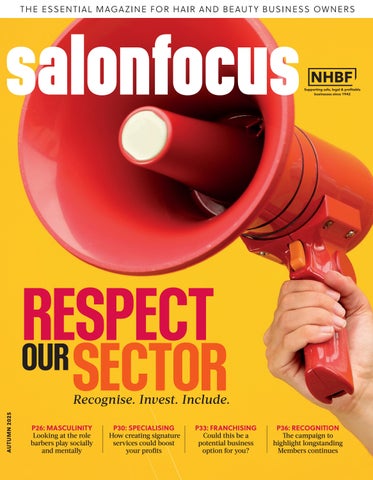
The latest campaign from the NHBF is calling on the government to give the hair and beauty sector the respect it deserves
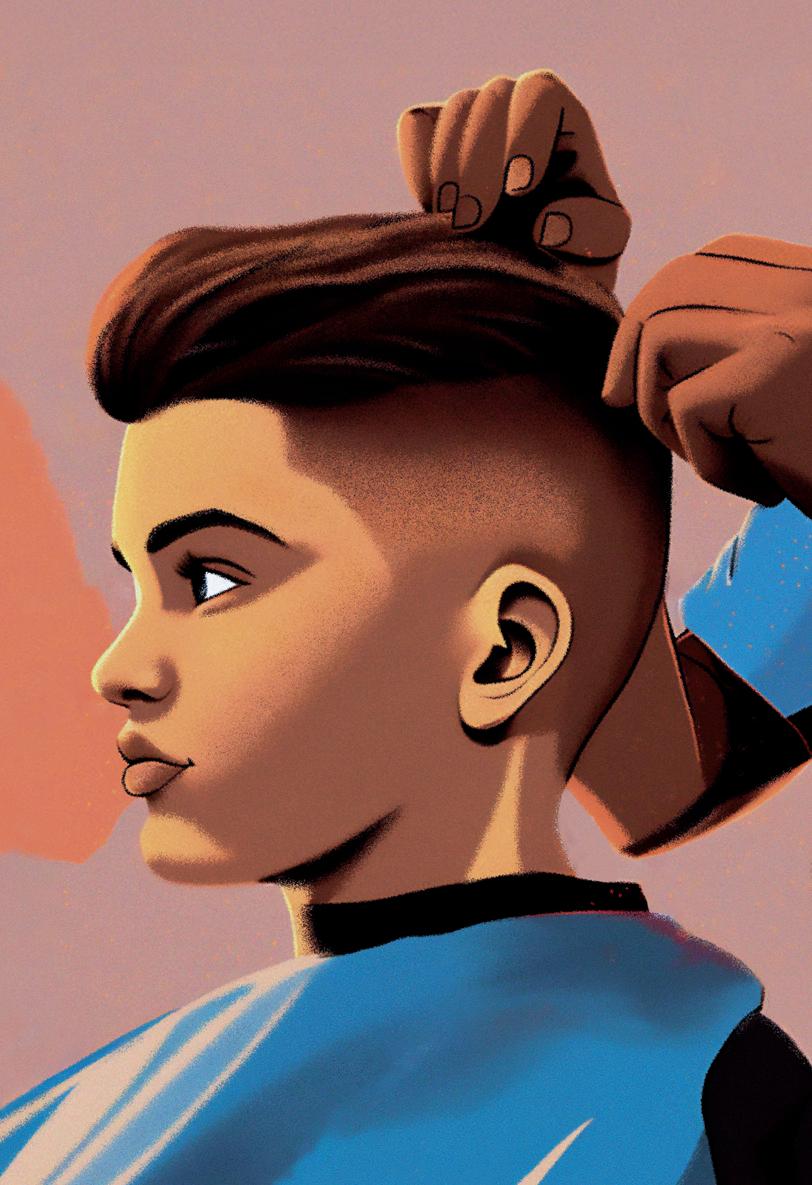
Considering the social pressures young males are under, how influential can barbers be to their clients?
Could signature services boost your revenues and make you stand out?
Exploring what a franchise is and how it might
48 Mood board
Check out the latest posts of Members’ work that caught our eye!
50 60 seconds with... The GelBottle Inc founder Daisy Kalnina


























The magazine of the National Hair & Beauty Federation
THE NHBF
One Abbey Court
Fraser Road
Priory Business Park
Bedford MK44 3WH 01234 831965
nhbf.co.uk
sfenquiries@salonfocus.co.uk
CHIEF EXECUTIVE
Caroline Larissey
HEAD OF SALES AND MARKETING OPERATIONS
Farooq Ali
EDITORIAL
Editor Hollie Ewers
hollie@salonfocusmagazine.co.uk
Content sub-editors James Hundleby, Kate Bennett
DESIGN
Art Editor Tom Shone
Picture researcher Jessica Marsh
ADVERTISING advertising@salonfocusmagazine.co.uk 020 7880 6230
PRODUCTION
Production director Jane Easterman
Account director Joanna Marsh joanna.marsh@redactive.co.uk
PRINTER
Manson Group, St Albans
COVER ILLUSTRATION
Shutterstock
© The NHBF 2025 ISSN 1756-6347
All views expressed in salonfocus are not necessarily those of the NHBF. All efforts have been taken to ensure the accuracy of the information published in salonfocus However, the publisher accepts no responsibility for any inaccuracies or errors and omissions in the information produced in this publication. No information contained in this publication may be used or reproduced without the prior permission of the NHBF.
Recycle your magazine’s plastic wrap. Check your local LDPE facilities to find out how.

Welcome to your Autumn transformation issue of salonfocus
We hope you’ve had a busy and successful summer, and that you’ve also managed some time for a well-deserved break. As we step into autumn, it’s the perfect season to refresh your business vision and get excited about elevating your hair or beauty business to new heights.
Our cover feature on page 22 introduces our Respect Our Sector campaign, showcasing why hair and beauty professionals deserve recognition as the economic drivers, national assets, and wellbeing providers we truly are. Supporting more than 49,000 local businesses and creating trusted community spaces, we’re the cornerstone of the high street – yet we’re being held back by outdated policies, unfair VAT rules, and lack of government inclusion. This powerful movement is about getting the recognition, respect and fair treatment our sector deserves, with ways for every business owner to get involved through petition signing, MP contact and sharing campaign resources. At its heart, this movement showcases the artistry,


skill and expertise that make our sector shine, while giving you the tools and confidence to build an even more successful business.
Also in this issue, we explore the role barbers play in supporting men’s mental health and wellbeing (page 26). We feature inspiring success stories from hair and beauty entrepreneurs who have created signature services and innovative treatments that are boosting their profits (page 30). Plus, we dive into franchising opportunities that could transform your business dreams into reality (page 33) and we continue with our Member Recognition Campaign (page 36), where we celebrate the achievements and creativity of our talented NHBF community across the UK.
This issue is packed with fresh inspiration, expert insights and game-changing strategies to help you make the most of the busy season ahead!









































NHBF chief executive Caroline Larissey said: ‘The NHBF actively contributed to this consultation, providing a comprehensive position statement that reflected the views and concerns of our Members and the wider beauty industry.
‘These findings represent a significant step forward in bringing clarity to the regulation of the aesthetic industry and protects both practitioners and the public.
The
government has finally released the long-awaited results of the consultation on licensing for aesthetic (non-surgical cosmetic) practitioners.
The consultation, which took place in 2023, gave beauty and aesthetic professionals the opportunity to share their views on licensing and provide evidence to help shape a comprehensive approach to improving safety standards across the cosmetic industry.
The new regulations will be based on a tiered approach that considers the level of risk associated with procedures. Here are the main points:


‘We particularly welcome the tiered approach that recognises different risk levels across procedures, ensuring that legitimate, qualified practitioners can continue to operate while addressing the serious safety concerns posed by unqualified operators.
‘The NHBF will continue to work closely with government and industry partners to ensure the implementation supports professional practitioners while maintaining the highest safety standards.’



Non-surgical Brazilian Butt Lifts and similar high-risk procedures will be restricted to qualified healthcare professionals. Such procedures must be performed by specialists working in Care Quality Commission (CQC) registered providers. Practitioners who break rules will face CQC enforcement and financial penalties.
Botox, lip fillers and facial dermal fillers will come under local authority licensing. Practitioners
must meet rigorous safety, training and insurance standards. A new licensing system will ensure only qualified practitioners can legally operate, and it will be operated and enforced by local authorities (more information is yet to be released about this).
Age restrictions are planned to prevent under-18s from having high-risk cosmetic procedures. Treatments will only be permitted when authorised by healthcare professionals. Further measures will also be designed to protect young people from dangerous social media beauty trends.
Priority will be given to introducing regulations for highest-risk procedures first. A public consultation is due to be published early next year, and further consultations are planned to develop a comprehensive licensing regime.
A survey of 2000 UK women by skincare retailer Face the Future revealed:
believe celebrities and influencers promote unrealistic expectations for ‘ageing naturally’.
feel pressured to look young at social gatherings or events.
feel less confident about their appearance now than when they were younger. of women feel they look younger than their age.
have never used or no longer use anti-ageing skincare products.
Brush manufacturer Denman, in partnership with Plastic Bank, has prevented more than 8.5 million plastic bottles and 170,000kg of plastic from reaching the world’s waterways and oceans. The partnership with Plastic Bank – which offers credits for education, groceries and healthcare to collect plastic that is ultimately recycled back into the supply chain – is now in its third year
According to survey findings from the Skin Investment Clinic and teen app Luna...


Almost 70% of young people say acne affects their daily lives either all or some of the time.
71% of teenagers are experiencing acne now, or have done recently, with 40% reporting low self-esteem as a direct result.
Almost a third of respondents (32%) say their skin concerns make them less likely to go to school.
Recent estimates from the British Beauty Council’s Value of beauty report highlight:
➤ In 2024, the beauty and personal care industry made a direct contribution to the UK’s gross domestic product (GDP) of £15.9bn.
➤ It supported a further £14.5bn of UK GDP through its supply chain and employee spending, for a total contribution of £30.4bn.
➤ The personal care industry directly employed 496,000 workers in 2024, while the beauty services sub-sector employed 266,000 workers.
➤ The personal care sector is forecast to support a total of 681,000 jobs in 2025.


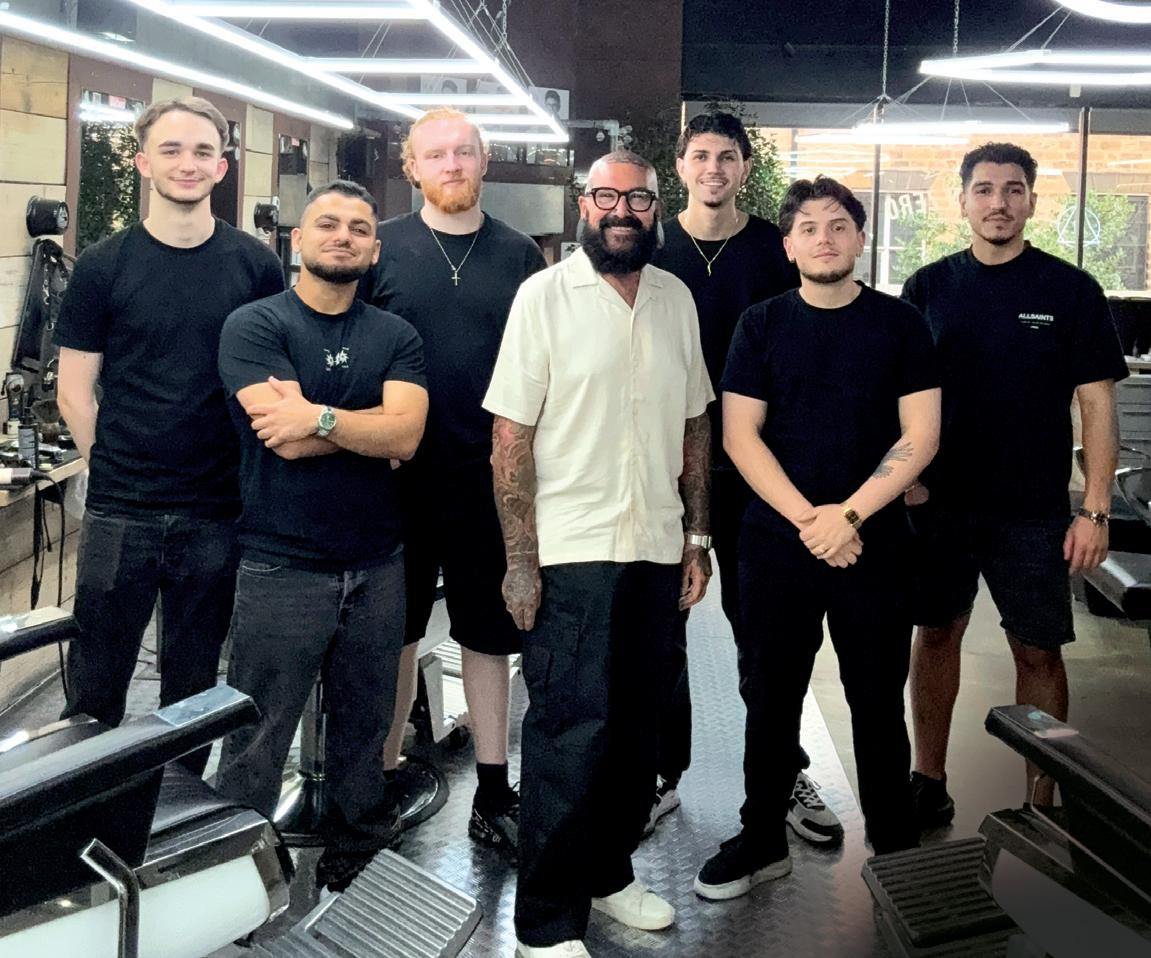
Businesses of all sizes including NHBF Members have been recognised by the government for their outstanding commitment to apprenticeships.
The Top 100 Apprenticeship Employers and Top 50 SME Apprenticeship Employers tables for 2025 showcase the very best apprenticeship programmes over the past 12 months.
The Department for Education and RateMyApprenticeship partnered up to deliver the rankings, which recognise and celebrate England’s leading apprenticeship employers for their overall commitment to employing apprentices. The diversity of their apprentices, whether their apprentices achieve and – for the first time in 2025 – the apprentices’ own feedback on their employer’s programme were also considered.
NHBF Members who have been recognised in the Top 50 SME list include:
Less Than Zero Barbers: #9
Collinge & Co: #19
George’s Hairdressing: #27
Exceed Training Company: #46
Celebrating a fourth consecutive year appearing on
the list, Less Than Zero Barbers (pictured above) came ninth, having been recognised for its exceptional contribution to apprenticeship training and youth employment.
‘We believe apprenticeships are far more than qualifications – they are life-changing springboards for meaningful careers,’ said Martin WallisKeyworth, founder and CEO of Less Than Zero Barbers. ‘To be recognised for a fourth year running demonstrates the impact of investing in people and our commitment to driving standards ever higher.’
NHBF chief executive Caroline Larissey said: ‘Less Than Zero Barbers exemplifies the transformative power of apprenticeships in our sector. At the NHBF, we champion employers who invest in quality training and create genuine career pathways for young people. Their commitment to combining government-funded apprenticeships with their own accredited programmes shows how innovative approaches can drive standards higher while strengthening our high streets and local communities.’
As part of the NHBF’s five-year strategic plan, the creation of four new advisory boards was agreed, with a clear focus on Member priorities. One of these was the establishment of a Marketing, Sales and PR Advisory Board to help shape and guide future activity in this area. Selected individuals with expertise across the sectors have formed the group before opening up wider Member involvement.
Chaired by NHBF vice president Jamie Mettyear, the group includes:
● Richard Marshall – for the barber sector
● Brooke Evans – representing hair
● Leslie Wilks – for beauty and aesthetics
● Farooq Ali – NHBF sales and marketing
● Sharon Brigden – PR
● Rob Boud – NHBF digital marketing
● Jackie Holian – NHBF director of commercial and marketing.
The aim of the advisory board is to bring business knowledge and sector insight into shaping the NHBF’s marketing strategy.
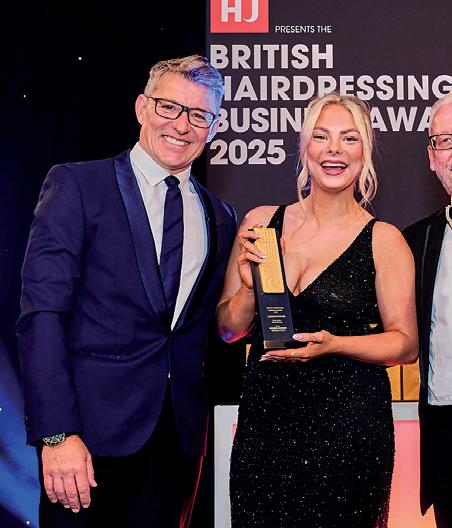
Firstly, well done to those who were nominated and won British Hairdressing Business Awards 2025 back in July (see more on page 20).
As this issue went to press, we were cheering on our Members in the Pro Hair Awards 2025 on 15 September at STEREO in London. And congratulations to everyone shortlisted for the British Hairdressing Awards 2025, taking place on 24 November in London.
Your hard work and creativity continue to raise the bar for the sector.
Trusted suppliers with exclusive offers just for you
When it comes to choosing suppliers for your salon, barbershop, beauty business, or aesthetic clinic, trust matters. That’s why the NHBF Assured Trade Members scheme exists to give you peace of mind that you’re working with credible, reputable businesses that understand the unique needs of the hair, beauty and aesthetics sector.
Our Assured Trade Members have signed up to the NHBF Code of Conduct and passed our due diligence checks. That means you can buy with
confidence, knowing you’re partnering with businesses that meet high standards and share our commitment to professionalism.
More than just trust – exclusive NHBF Member-only deals
As a valued NHBF Member, you also get access to a range of exclusive offers and discounts from Assured Trade Members. These deals are designed to support your business’s bottom line – helping you save money while sourcing top-quality products and services.





















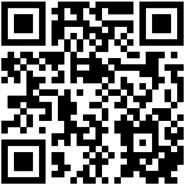
To find an Assured Trade Member and view their exclusive offers, simply scan the QR code or head to the NHBF website and visit our dedicated page: nhbf.co.uk/trade-membership
You’re already a NHBF Member, so make sure you’re getting the most out of it! Explore the page, connect with trusted suppliers, and start saving now.
The NHBF is pleased to welcome a new member to its Board – Kirsty Watson – a skin specialist from Huddersfield who brings expertise in advanced skin treatments and aesthetics. Kirsty has built a reputation for delivering personalised, resultsdriven skincare and helping clients understand and manage their skin concerns with confidence.
Commenting on the appointment, NHBF chief executive Caroline Larissey said: ‘We’re delighted to welcome Kirsty to the Board. She is passionate about the sector and bring strong business acumen and hands-on insight from the salon floor. Her voice will help shape our work in a way that truly reflects our Members’ needs. I look forward to working with her as we continue supporting the hair and beauty sector.’
The NHBF also welcomes Sam Silver to the team as the new head of policy and public affairs. An experienced professional who has driven change for more than a decade across the public, emergency service and charity sectors,
Public Affairs Advisory Board to develop and implement advocacy strategies on behalf of NHBF Members – placing their views and experience at the heart of our national policy process.
While the NHBF says farewell to current president Amanda Lodge-Stewart, who has completed her term, the Federation is also awarding her with its first presidential honorary membership in recognition of her exceptional tenure as president. The Board of Directors unanimously approved the historic award following Amanda’s conclusion of her presidential term at the Annual General Meeting in July 2025.
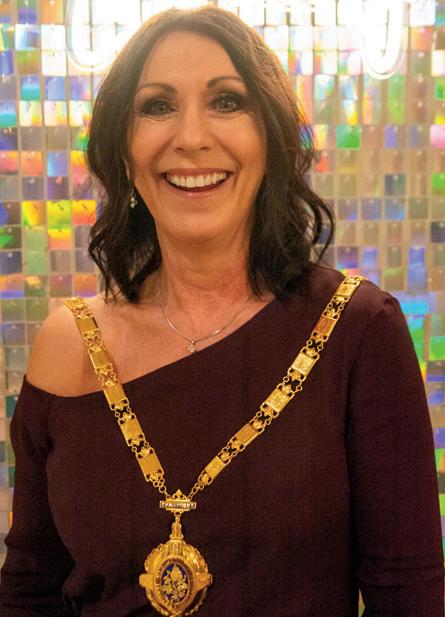
‘Amanda has been a passionate “hands on” president and a support behind the NHBF’s evolution,’ said Caroline. ‘Her commitment to the sector and to our Members has been unwavering. On behalf of the Board and all our Members, I want to thank her for her outstanding contribution.’
As Amanda steps down from the presidency, her honorary membership ensures her continued connection to the NHBF. A formal recognition will take place at our RESPECT LIVE event in March 2026.
Find out more about the NHBF leadership team and Board at nhbf.co.uk/about-the-nhbf
The honorary membership award represents the first time the NHBF has recognised a departing president with this distinction, establishing a new precedent for recognising presidential
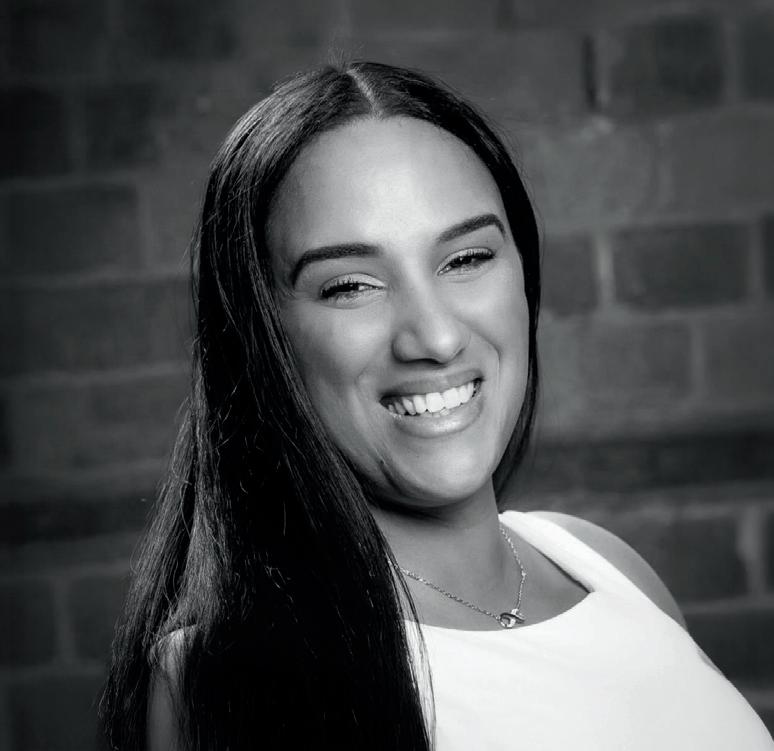
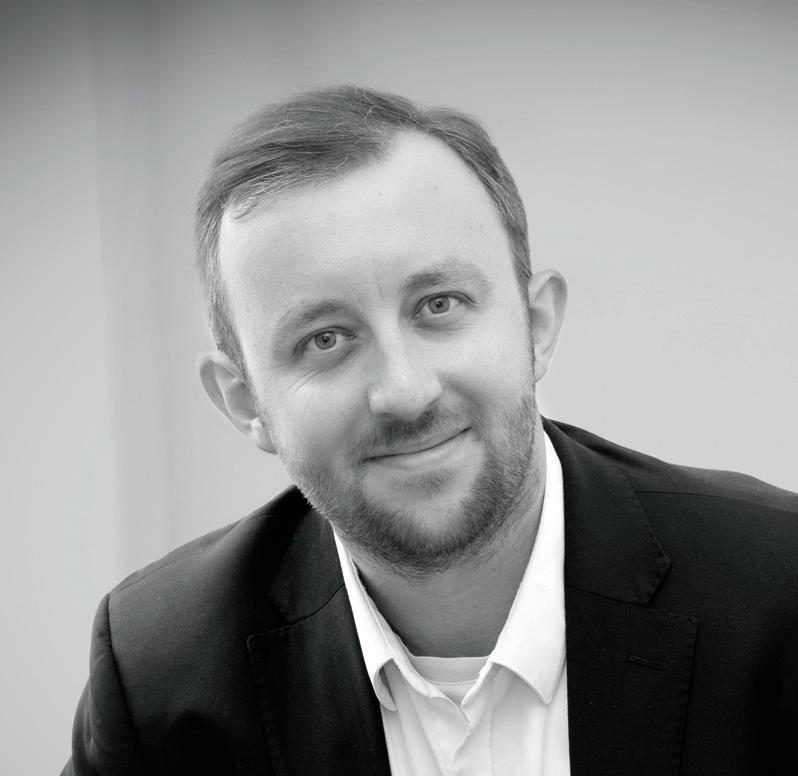

This year’s Top 100 Influencer Index Awards marked a significant evolution in how we celebrate influence across the hair and beauty sector. For the first time, the awards were divided into separate categories: the Top 50 Hair Influencers, revealed at HairCon, and the Top 50 Beauty Influencers, unveiled at Tones of Beauty.
The decision to divide the index came in response to demand from both nominees and the wider sector. With influence taking shape in such distinct ways across hair and beauty, this change provided the chance to spotlight each industry in a more tailored and meaningful way.
Final rankings were determined through an independent review of social media presence, with a third-party assessment considering key metrics such as reach, impressions and engagement rates. This ensured the Top 50 lists reflected genuine, sustained influence – not just follower counts.
Held at the O2 Victoria Warehouse in Manchester, HairCon 2025 delivered a high-energy, highattendance day that brought stylists, barbers and hair enthusiasts together for a packed programme of panels, demos, networking and, of course, the NHBF’s Hair Influencer Awards.
The Top 50 hair event was led by Cal Newsome, 2024’s Top 100 winner, who returned to spotlight the next generation of talent and present the 2025 awards with NHBF chief executive Caroline Larissey. At the top of the list was Efi Davies, whose creative direction and platform presence saw her named this year’s number one.
Efi’s win reflects not only her creative leadership at Toni & Guy but also the consistent way she continues to inspire and innovate across the sector. Read more from Efi on page 14.
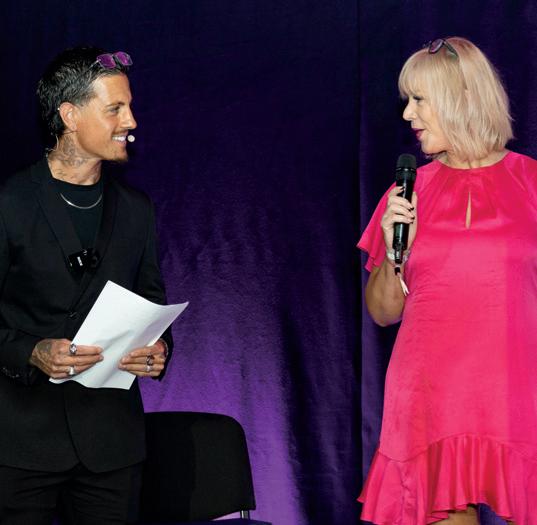





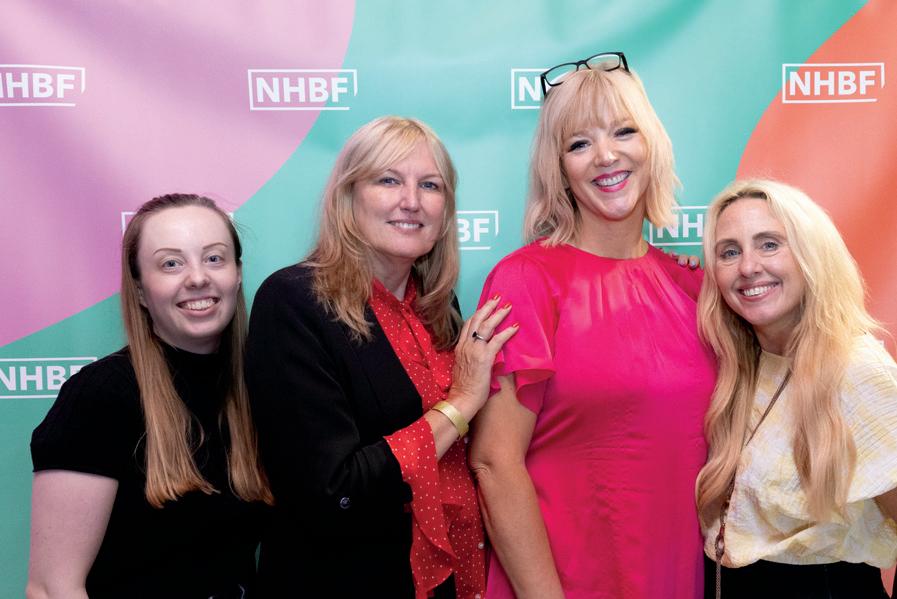





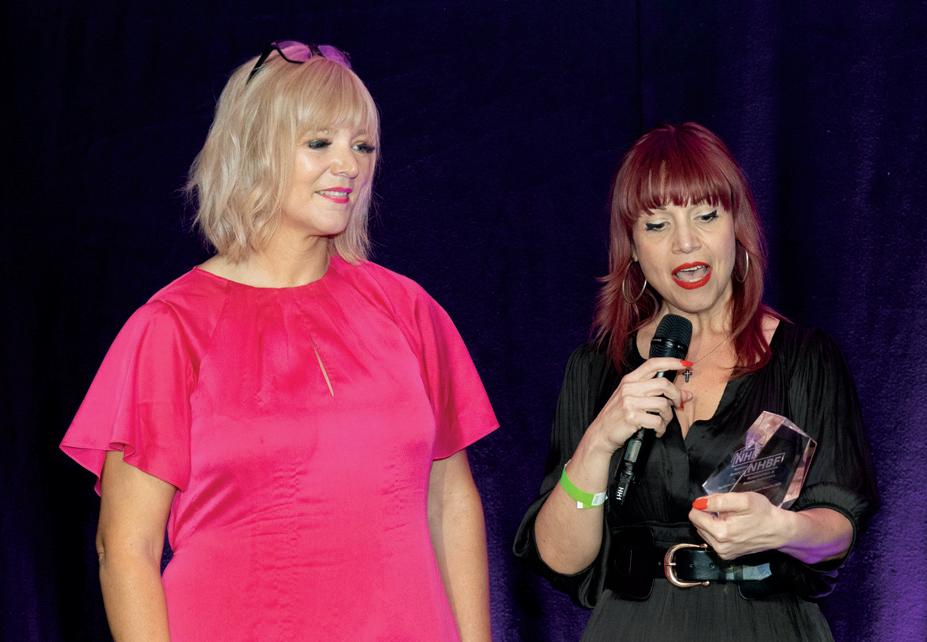
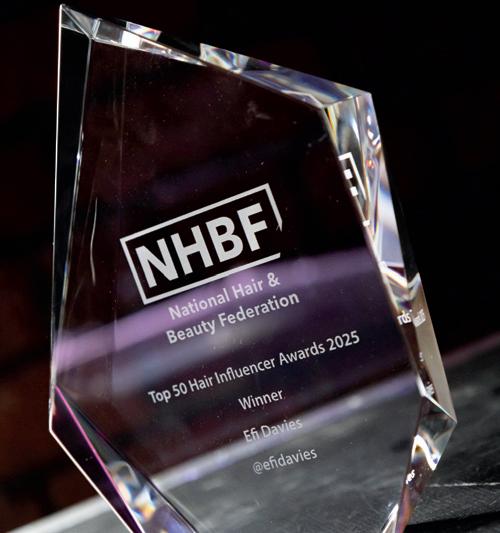






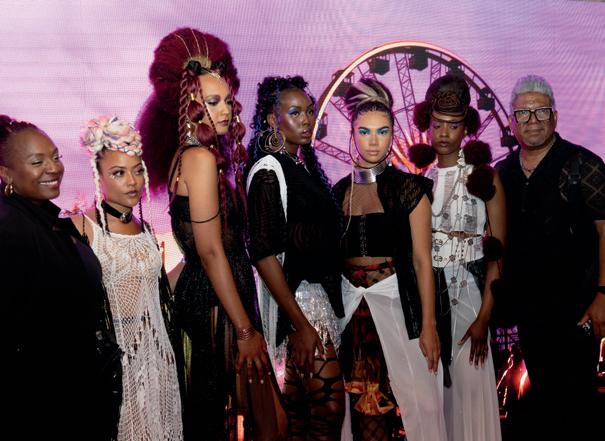


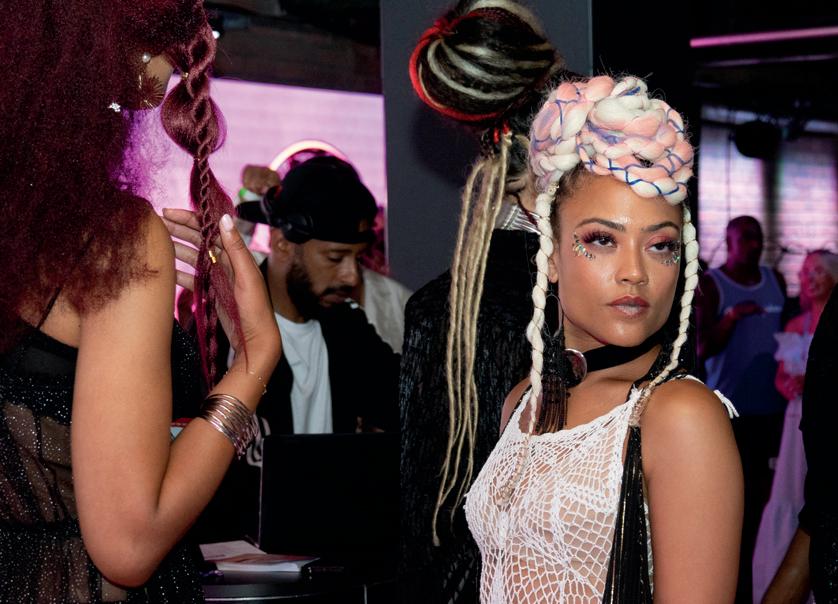




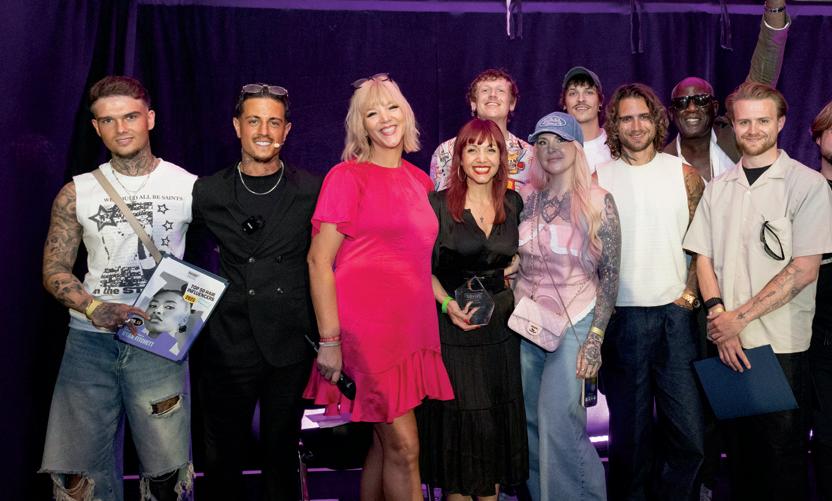
The NHBF’s Top 100 Hair and Beauty Influencers for 2025 were recognised at top industry events this summer.








































Showcasing inclusive excellence
aesthetics and her role in shaping the future of beauty.
Make-up artist and Glow Up star James Mac came eighth – read more from him on page 15.






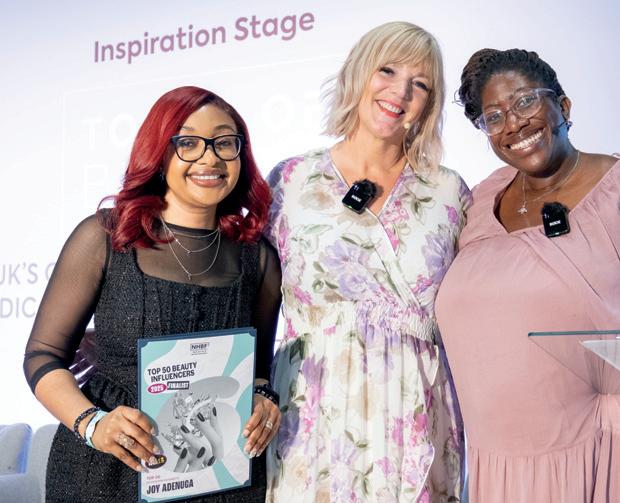
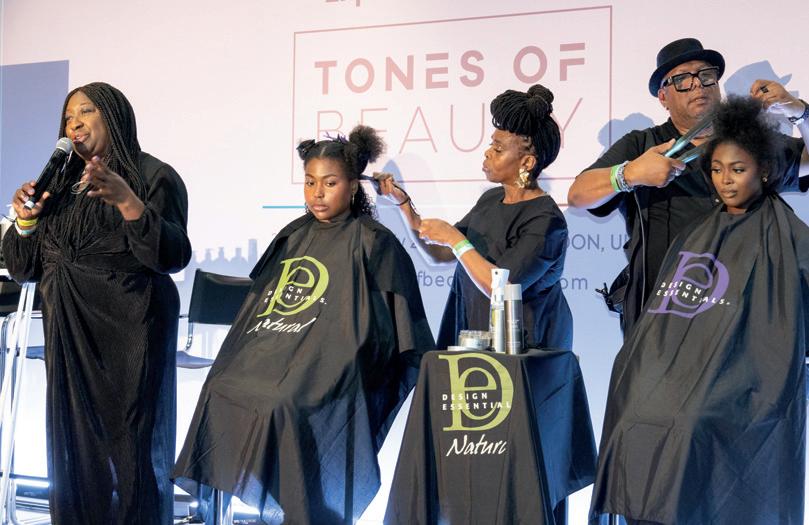
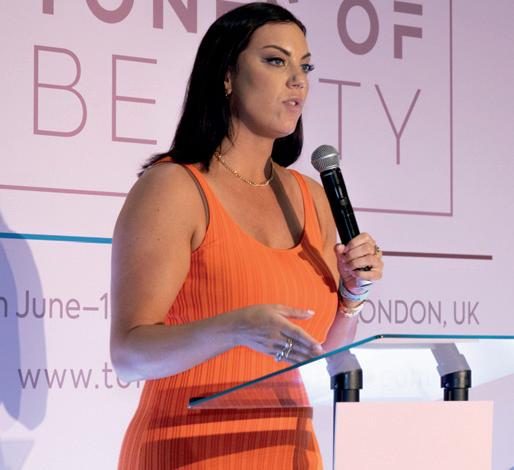
Just a week later, attention shifted to London for Tones of Beauty – the UK’s first and only multicultural beauty show. Intimate in scale but full of energy, the event provided a powerful platform for creativity, inclusion and representation.
More than a ranking
What emerged from both events was a clear sense that influence is multidimensional in 2025. It’s about more than trends or followers – it’s about shaping conversations, setting standards and using platforms to empower and connect.
1. Dr Aamna Adel 2. Bryony Howell
3. Dr Ahmed El Muntasar 4. Kirsty Meakin 5. Penelope Gwen 6. Melis Olgac 7. Dr Raj Arora 8. James Mac 9. Pavan AhluwaliaDhanjal 10. Brydie Leishman
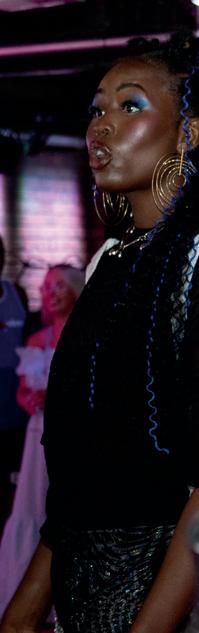



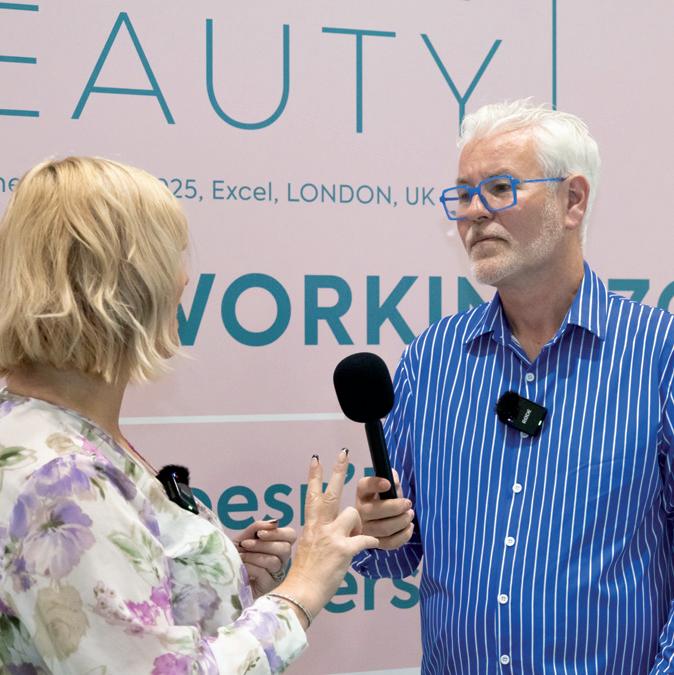
In the spotlight on day one were the NHBF’s Top 50 Beauty Influencers, led by respected beauty journalist Ateh Jewel and Caroline Larissey. Their presentation brought warmth and sincerity to a moment that championed visibility, individuality and the people redefining beauty on their own terms.











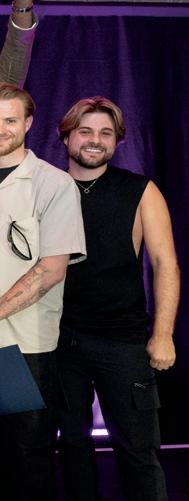

Dr Aamna Adel took the top spot for this year’s Top 50 Beauty Influencers, acknowledged for her exceptional contributions to

Distinctive and dynamic, the NHBF’s Influencer Awards are more than a moment in the calendar. They represent a growing movement – one that celebrates creativity, champions progress and connects hair and beauty in new and meaningful ways.
Want to see more?
Go to nhbf.co.uk/ top-100 to explore the full lists of this year’s top 100 finalists.
































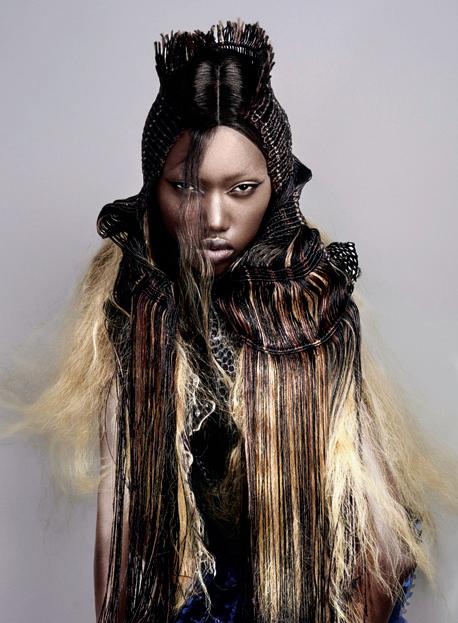
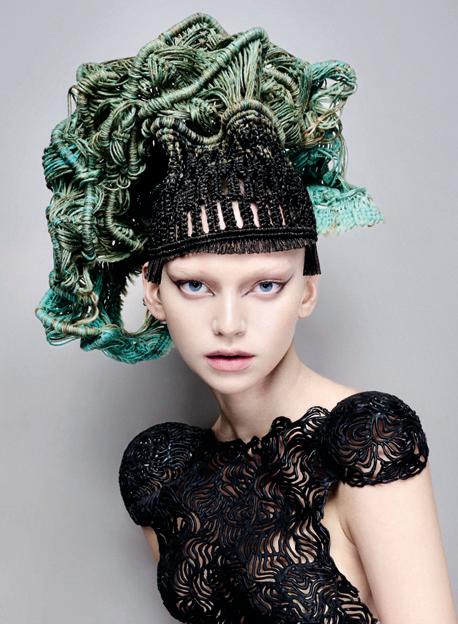
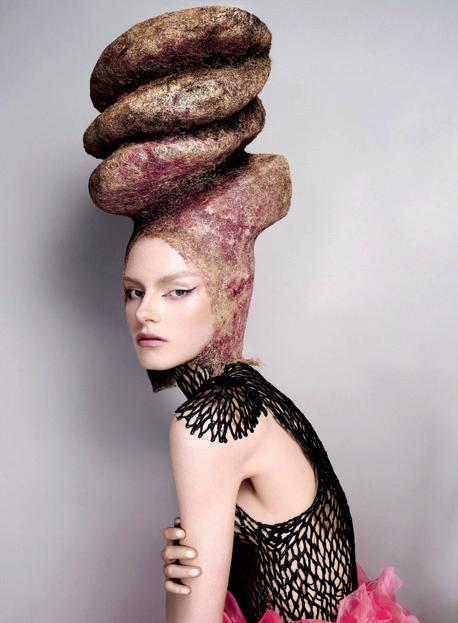
International artistic director at Toni & Guy and multi-award-winning hairdresser Efi has taken the top spot in the NHBF’s Top 50 Hair Influencers 2025.
WHAT DOES IT MEAN TO RANK NUMBER ONE?
I was incredibly humbled when my name was announced – I didn’t expect it at all, as there are so many people doing great work to inspire hairdressers. I’m proud to be named as one of them.
DO YOU SEE YOURSELF AS AN INFLUENCER?
I hope I am someone who inspires other hairdressers to push their skills and knowledge and try something different. If that’s the case, I think I am.
WHO INFLUENCES YOU?
There are so many amazing creatives in the hair and beauty sector who I am inspired by, as well as fashion pages in magazines. We are spoilt for inspiration because social media has opened the platform to amazing people worldwide who are giving us access to their world.
WHAT INSPIRES YOU AND YOUR WORK?
Inspiration is everywhere! I seek it in my surroundings, my colleagues, my travels – it’s everywhere. From ageing walls to architecture to nature and fashion, I am constantly inspired and excited.

HOW DID YOUR CAREER IN HAIR BEGIN?
I entered hairdressing by sheer luck. I moved to London and fell in love with the city. I was looking for a job and started as a shampooist at Toni & Guy at 18. I worked at the Mayfair salon, where I met co-founder Toni Mascolo, who ignited my passion for all things hair. Being a hairdresser in the 1990s in a Toni & Guy salon was an amazing time. I got a job as an assistant to Toni and his brother Anthony and got the best of both worlds. I would assist Anthony on photo shoots, filming and on stage,
STATS
Socials: @efidavies
IG followers: 62.9k
Awards won in the last 12 months:
Australian Hair Fashion Awards
– Global Hairdresser of the Year
British Hairdressing Awards – Avant Garde Hairdresser of the Year
International Hairdressing Awards
– International Avant Garde
Hairdresser of the Year
and with Toni I would see how he was with his team and with clients in the salon. Now it’s gone full circle, and I teach the next generation.
WHAT’S THE BEST THING ABOUT YOUR JOB?
Making people feel amazing, and the relationships we make. I love teaching and passing what’s in my head to the next generation, elevating them. They’re the future of our industry and we need to support them.
WHAT DO YOU ENJOY ABOUT THE AVANT GARDE SIDE OF HAIRDRESSING?
Being creative, having an idea and working on techniques and concepts to bring it to life. Experimenting with textures and playing with hair until I create something unique. When it doesn’t work, I’ve learnt from it, but when it works it’s a great moment.
IS THERE ONE PIECE OF WORK YOU HAVE DONE THAT STANDS OUT FOR YOU?
One technique that really challenged and pushed me was when I was using resin, creating moulds and trapping hair within it – that was totally outside my comfort zone. Another one is from about 12 years ago when I created the F8 technique, the figure-of-eight infinity plait on the scalp that became a classic. It is one of my biggest achievements, creating a technique on the scalp that people now teach around the world.
WHAT’S NEXT FOR YOU AND YOUR CAREER?
It’s been a busy year and it’s easy to chase the next thing, but I want to be grateful for what I’ve got. I’m blessed to do what I love, and I never take it for granted, but I want the next thing to be a surprise!
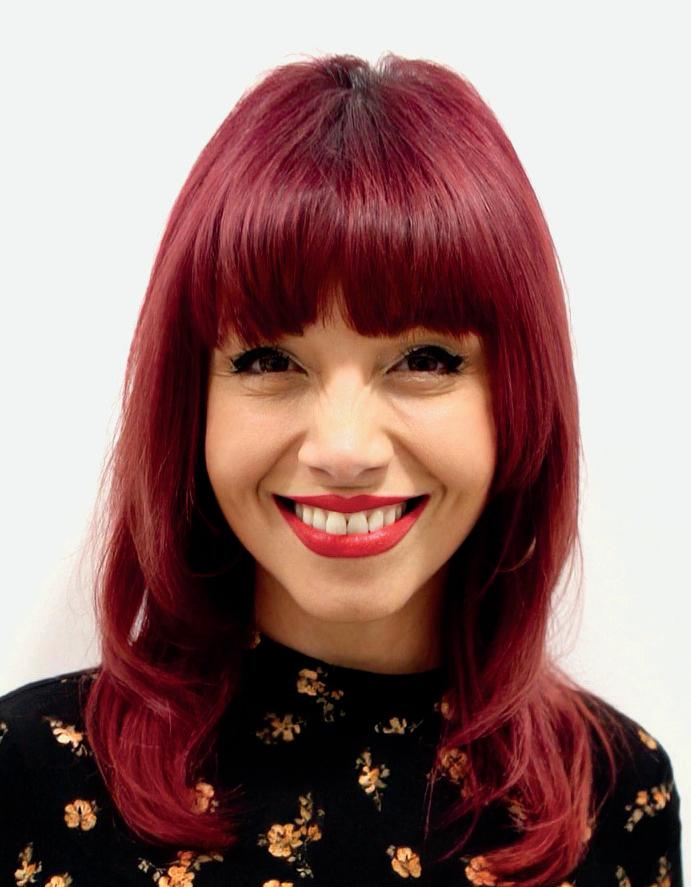
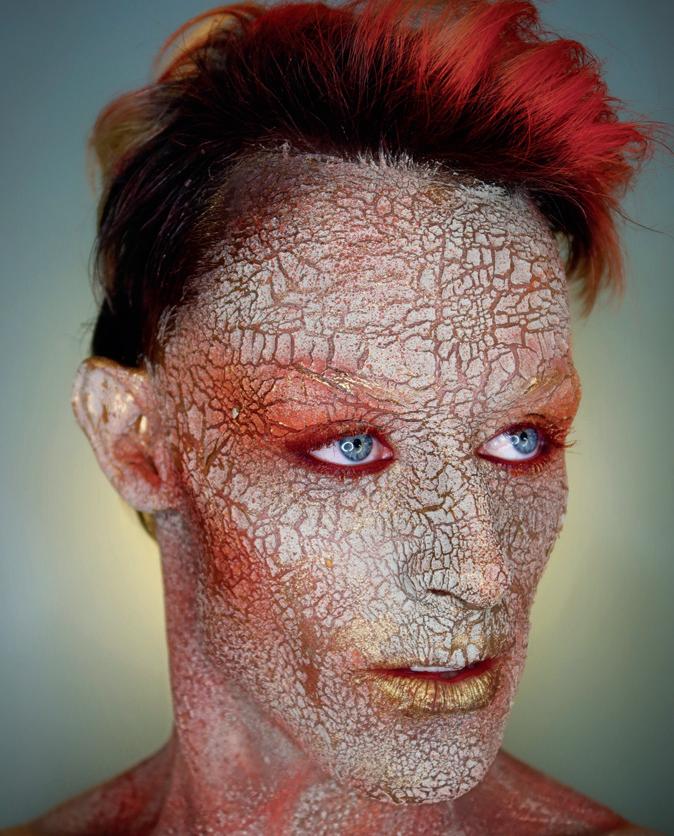
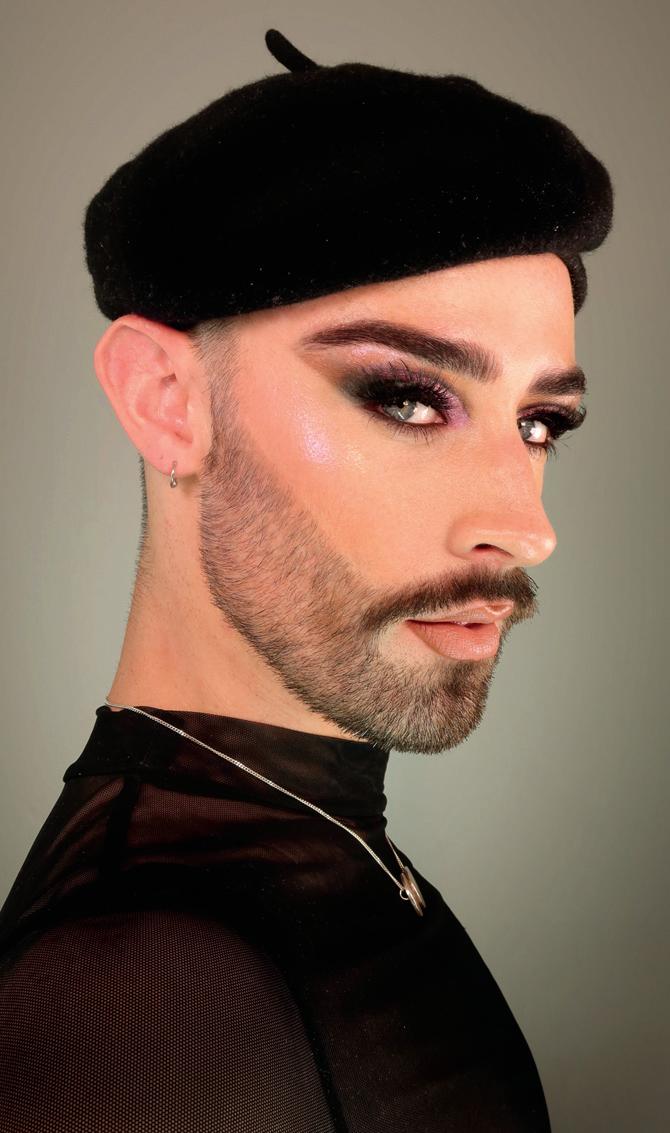
Make-up artist, educator and Glow Up star James came eighth in the NHBF’s Top 50 Beauty Influencers 2025.
WHAT’S YOUR REACTION TO COMING EIGHTH?
I’m delighted. Having this kind of industry recognition is probably as important, if not more special, to me than when I did something like Glow Up – to have people recognising my place and my efforts to be part of the industry. I feel very honoured to be part of it and amazingly appreciated.
DO YOU SEE YOURSELF AS AN INFLUENCER?
I would say, yes, but I would like to say that what I influence people with is my work – I am a make-up artist (MUA) foremost. And then subsequently, I’m also creating content as someone neurodivergent living with Tourette’s. I like to advocate for that side of my identity as well.
WHO DO YOU FOLLOW? WHO INSPIRES YOU?
My work is very art, TV and film orientated, so I follow a lot of actors, TV and film producers, artists, as well as activists within the LGBTQ+ community. I’ve been inspired recently by a British make-up artist called Alex Box [@thealexbox]. She’s been in the industry for years and has created virtual cosmetics software company V-Metics. So, I’m very inspired by her pushing the boundaries of the industry and using advanced technology. I’m also inspired and influenced by my travels, and my life before becoming an MUA.
WHOSE MAKE-UP WOULD YOU LOVE TO DO?
Daphne Guinness – she’s an amazing stylist and I love her aesthetic. I’d also love to work on someone like Chappell Roan, who is a canvas for letting the artists really explore their brand and identity.
HOW DID YOU GET INTO THE INDUSTRY?
I always loved art as a child and was very artistic – working with textiles, pottery, mosaic, sketching and designing and eventually getting the Irish equivalent of A levels majoring in art. I then got into photography and did quite a lot bridal and commercial shoots and became interested in the beauty part of that, which inspired me to do make-up on myself, with a drag focus. I then took up a make-up course and got into TV make-up, working on Horrible Histories and other projects until I decided to take part in Glow Up season two, which I came second in. From there, I built up my social media and make-up combined – and here I am!
STATS
Socials: @jmac_mua
IG followers: 248k
Glow Up: Second place in season 2

WHAT’S BEEN YOUR PROUDEST MOMENT?
Last year, I took my gallery exhibition ‘Makeup X Art’ to Ireland and I did a live masterclass show to 250 people in my local art-centre auditorium. Because I’ve never been established in Ireland, it felt like a full-circle moment to bring my work home. It was such a rewarding feeling because I had my family there and I’d brought the full version of me, showing up authentically as myself. That was a really proud moment.
WHAT’S BEEN YOUR BIGGEST CHALLENGE?
The biggest challenge is trying to stay inspired and reinventing yourself when you are a creative artist. Also, living with Tourette’s syndrome and navigating such a competitive and fast-paced industry and environments has presented its own challenges.
HOW IMPORTANT IS IT FOR YOU TO HIGHLIGHT TOURETTE’S SYNDROME?
It’s very important, because I know it’d be easier to book someone without Tourette’s for a job, because it could be seen as a hindrance, but for me, it’s a superpower and I want to spread that message.





Do you have some expert advice for your fellow hair and beauty business owners that you’d love to share? Or maybe you would like to be interviewed for the magazine?







We’re looking to add even more NHBF Member experience and expertise to the articles in the magazine. We would love you to come forward if you think you’ve got something to say from a barber, hair, beauty or aesthetics perspective – we want to hear from you all. You would be adding invaluable depth and insight and shaping the magazine’s content direction. Could you help?

If so, please email the editor Hollie Ewers at hollie@ salonfocusmagazine.co.uk with your suggestions or for further information.

Some of the Top 100 Hair and Beauty Influencers for 2025 share their tips for all things content creating, sharing and influencing.


1 SHOW THE JOURNEY
#2 HAIR INFLUENCER:
Joseph I’Anson @josephianson
Whether it’s a full tutorial or a quick step-by-step, take your audience from start to finish with intention. Every post should teach, inspire or serve a vibe – don’t just post for the sake of it. And make it saveable – think about what your followers need – quick tips, holiday hair inspo, or glam made simple – and create it for them.




2 USE GOOD LIGHTING #4 HAIR INFLUENCER:
Rob Wood @novocabelohair
Natural light is always key for showing off your content. For example, if your content is more educational, you’ll want the hair professionals to clearly see what you are teaching. Ring lights and mood lighting are great, but you can’t beat natural lighting – especially for showing off your amazing colour work. For low-cost lighting, look for phone-mounted lights.

3 ENGAGE WITH YOUR AUDIENCE #44 HAIR
INFLUENCER: Kerry-Ann Buckell @kbhairextensions
Social media is a two-way street, so reply to comments, answer DMs and actively engage with other creators and clients. Building a community is more valuable than just growing followers. Remember, influencing is about building trust and providing value. Keep showing up, keep it real and let your passion for hair shine through every post!

4 BE YOURSELF. HONESTLY. #6 HAIR
INFLUENCER: Holly Fairley @_riohair_ You might think you’ve got nothing to offer, but you watch content yourself, so you know there’s something out there for everyone. If you copy what everyone else is doing, you’ll blend in. It might work short-term, but it won’t last. People connect with real, not perfect. Instead of overthinking it, just start. What’s the worst that could happen? You stay the same? Or… your business actually grows?
Social media is a free tool for your business. You don’t have to go viral. You just have to be you. Because what if people actually relate?


5 PLAY WITH LIGHTING #8 BEAUTY
INFLUENCER: James Mac @jmac_mua
Before even picking up a make-up brush, you need to play with lighting – it plays a key role with how make-up artists can understand their canvas. Lighting is also the best way to understand more about how your make-up looks in different lighting and what type of make-up you can execute. It also prepares you for the unprepared, for example, if you’re backstage and you have shadow cast lighting, overhead lighting, good, bad, ugly, beautiful lighting – it’s important to be comfortable with the uncomfortable. So, play with lighting, get creative, get fun.
MEMBER FOCUS
Could joining up businesses be a new way forward for the sector? Two NHBF Members reveal the success so far of their new shared venture.
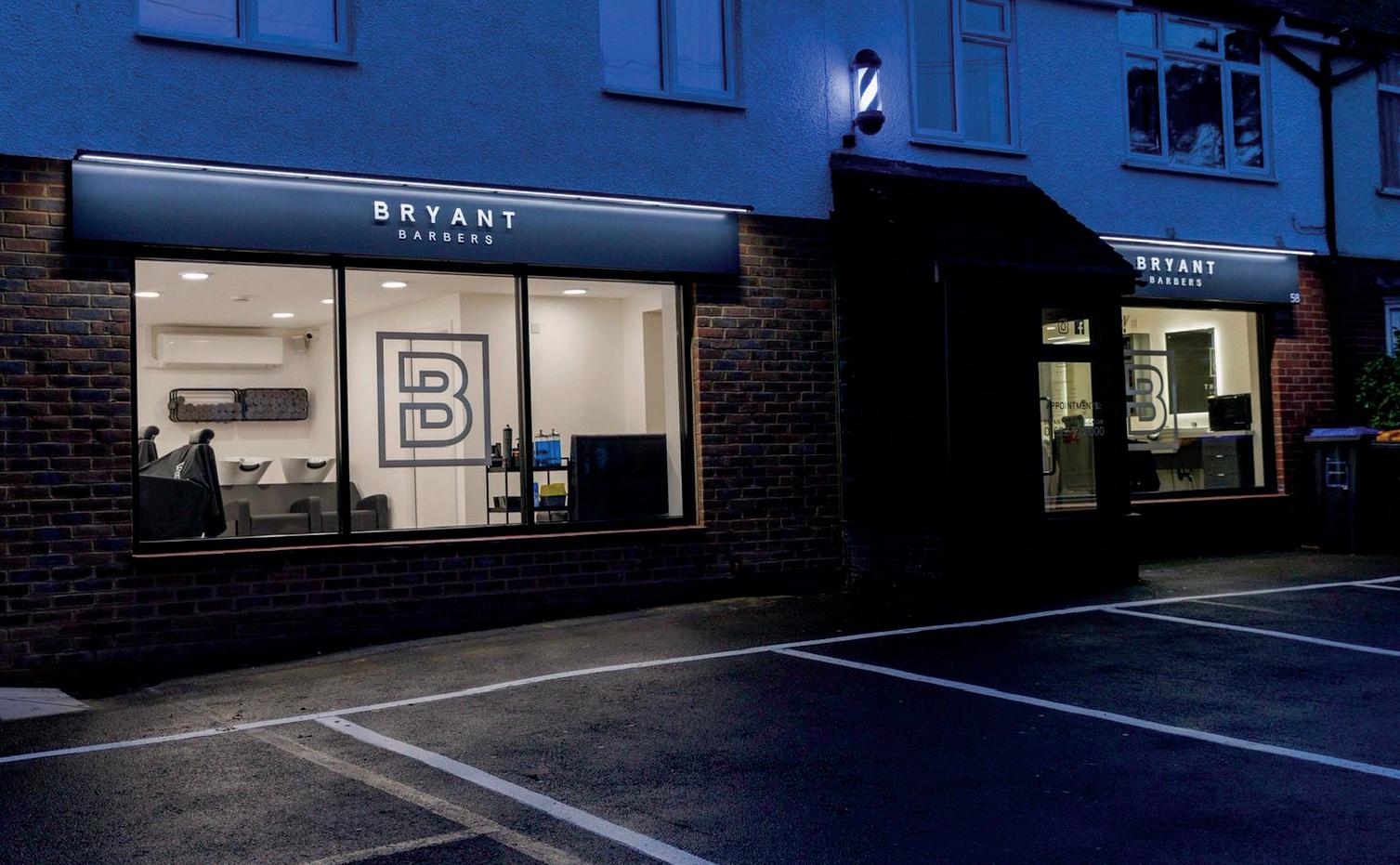
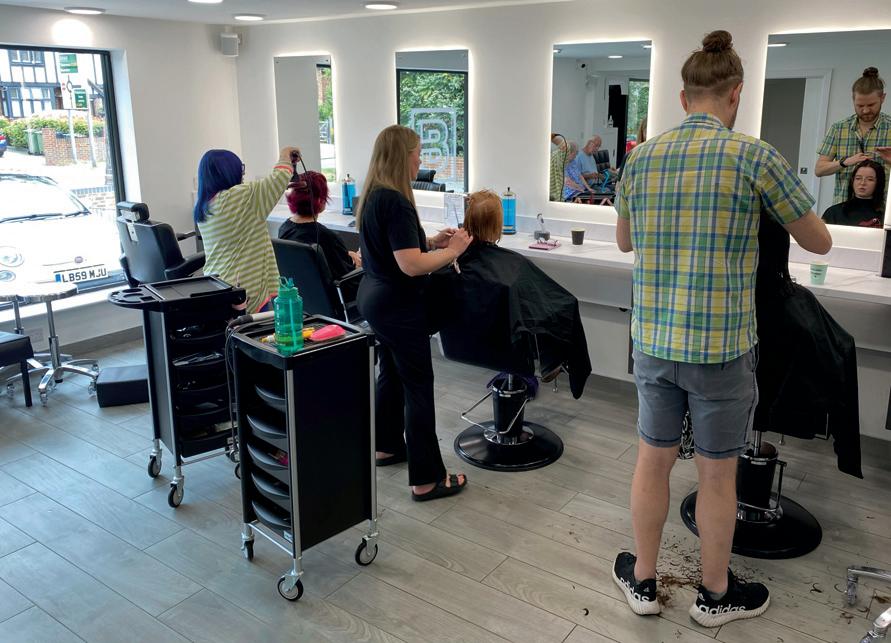
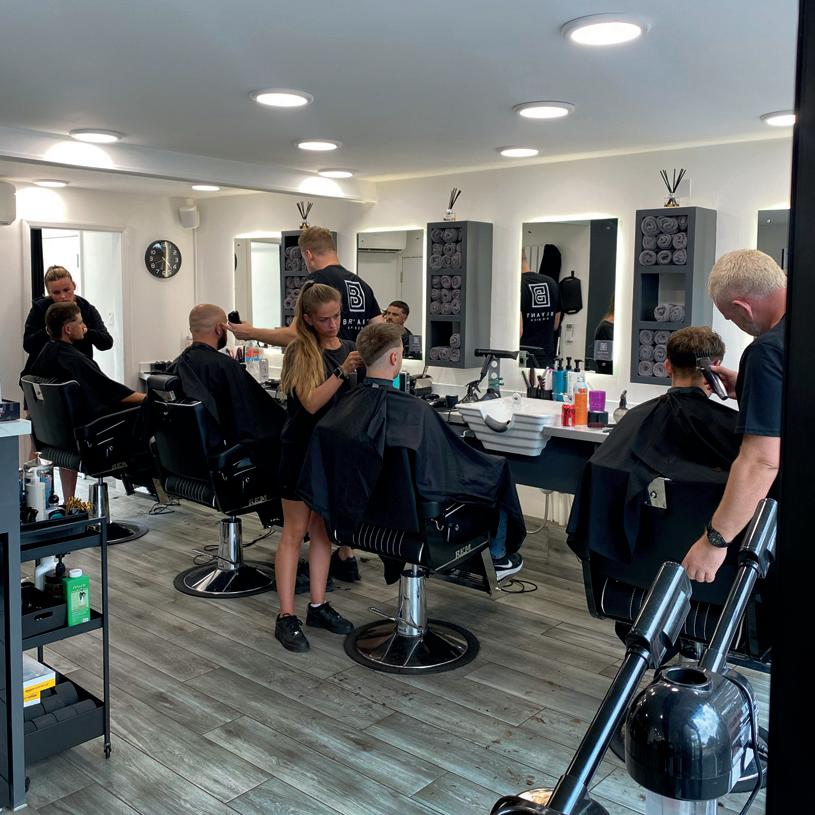
With many in the sector feeling strained, professionals are looking at new ways to adapt and endure. NHBF Member businesses Hair Professional and Bryant Barbers, both based in Maidstone, have done just that – joining forces to not just survive, but thrive.
After 45 years at its previous location on King Street in Maidstone, Hair Professional salon owners Anthea Mitchell and Philip Powell made the bold decision to partner with Megan Sherwood and Chris Bryant, co-owners of male grooming emporium Bryant Barbers, which has been serving clients for seven years. The two businesses now work side by side in the same premises in Maidstone but have retained their individual identities.
‘The building is a horseshoe shape. Bryant Barbers work on one side, then there’s a reception desk in the middle, and we work on the other side,’ explains Anthea. ‘We’re not in exactly the same space, which provides an element of separateness and means customers know where they are going.’
Name: Bryant Barbers
Membership no: 4020650
Established: 2018
Web: bryantbarbers.co.uk
IG: @bryantbarbers
Name: Hair Professional
Membership no: 3009665
Established: 1979
Web: hair-professional.co.uk
IG: @hairpromaidstone
Anthea’s idea to relocate came after the pandemic, when staff recruitment and retention had become a major challenge. ‘While demand for our services increased, staffing became a big issue,’ she says. ‘Had we been able to recruit more staff, we may very well have stayed in our four-storey building.’ But with the salon space becoming financially unviable, and wanting to work closer to home, she began considering other options.
Around the same time, Chris and Megan decided to extend their premises because they were at capacity and wanted to accommodate more clients. However, they found that high demand was only half the story – they needed to recruit barbers to carry out the services, which proved extremely difficult. When Anthea emailed to ask if they had space
to rent, it seemed like a good solution for everybody. After lots of meetings, the two businesses agreed to co-work.
‘We had many meetings over a number of months to make absolutely sure that we were going to gel, that we had the same work ethic and we

worked similarly,’ says Anthea. In July 2025, at their six-month review, both teams confirmed that they were very happy with the new set-up.
‘It’s gone better than we thought it would,’ admits Anthea. ‘The two businesses run along side by side perfectly. It helps that we do very different work, so there’s no element of competition there, which is great because it has helped us both – and we’re better off economically than we were separately.’
The co-location model has restored the joy and buzz of a busy, vibrant salon and barbershop, which both the owners and the stylists had missed since the pandemic. ‘There’s a constant hum of conversation, laughter and shared music, and a strong sense of mutual support,’ says Anthea. ‘We’ve found we can share the highs and the lows. And clients love the lively atmosphere – it feels like a community again.’
CLIENTS LOVE THE LIVELY ATMOSPHERE – IT FEELS LIKE A COMMUNITY AGAIN
● Get to know one another well first. Spend time together, visit each other’s premises, check out their social media, online presence and Companies House information, and talk to other people who may know them.
● Set very clear ground rules and make sure that there is a good legal framework for the arrangement.
● Go in with a positive mindset. Seek the best for one another and do whatever you can to support and uphold one another, both professionally and personally. Understand that this sort of collaboration is a sign of strength, not weakness, and is designed to be mutually beneficial.
The benefits haven’t just been emotional. By combining their premises, both businesses have been able to reduce overheads through shared bills and rent, simplify logistics, and adapt more quickly to changing market pressures. Could this be the future for other struggling salons? Anthea thinks so. ‘What began as a practical solution has turned out to be something much richer – a model of cooperation, resilience and shared vision, the kind of creative thinking that will keep the sector alive as it continues to evolve.’
A longstanding NHBF Member, Anthea says it was good to know that Bryant Barbers was too.
‘We know we both have the same business ethics and protection, but on a practical level we all use the NHBF contracts, and we’ve actually used one to create our licence agreement, so it’s reassuring to know that we are both held to account by that same body as well.’
Men are increasingly considering dermal fillers, according to research by injectable brand Teoxane. It says the treatment is sought by 5.2 million UK men, and the majority want it to make them look healthier.








The power of social platforms endures, as it’s revealed TikTok Shop is the UK’s fourth-largest beauty retailer. More than half of users say they make purchases after seeing products on TikTok, highlighting the platform’s huge direct influence.

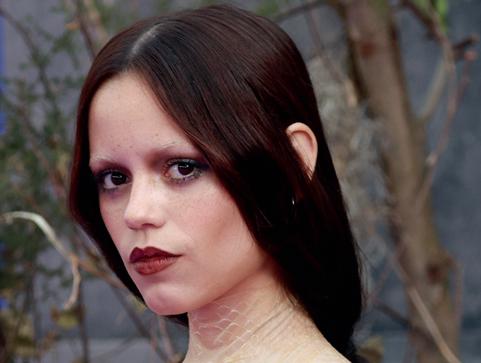
Looking as tired as you feel? You’re in luck – it’s the latest cool aesthetic, thanks to Jenna Ortega as Wednesday Addams. The goth-inspired ‘tired girl’ trend features smudgy eyes, pale skin and greycontoured cheekbones.
Online toxicity is being shunned by many men, according to a report by Pinterest. It cites findings from YouGov that more than 75% of young men are worried about the impact of social media on their health.
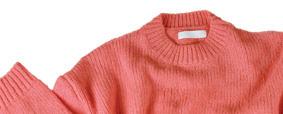

Farewell to the clean girl aesthetic as we make room for ‘messy beauty’. The overcurated approach is giving way to a more authentic collection of fewer and well-loved products and garments.
Premature greying came top of Brits’ hair concerns. Of those reporting any hair concerns, more than two-thirds hadn’t tried anything yet – and the majority would allocate up to £100 to treat it. Food for thought for salon owners…

Take a look at what members of the NHBF team have been up to since the last issue.
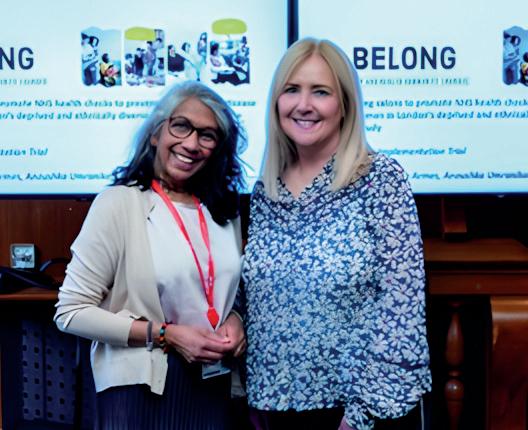
NHBF director of quality and standards Cathy Weston (pictured, right, with Professor Seeromanie Harding of King's College London) attended the launch of the BELONG study, which will work with hair and beauty salons and GP practices to promote heart health among women in deprived and ethnically diverse neighbourhoods in London. The event brought together hair and beauty professionals, trainers, GP teams, community workers and researchers to discuss how to work together to promote health in salons and GP practices.
NHBF chief executive Caroline Larissey attended a House of Commons Business and Trade Select Committee inquiry in July, focusing on the government’s small business strategy. She shared statistics from the NHBF’s State of the Industry surveys to highlight the important issues faced by the sector.
NHBF Member Charlotte Golby (pictured, right) joined the Business and Trade Select Committee’s roundtable to represent the hair and beauty sector and share her insights. With MPs such as Liam Byrne and Alison Griffiths leading the way, Charlotte’s voice helped push for change that reflects real business life.
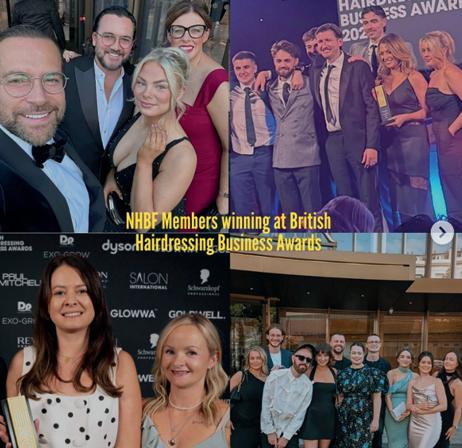
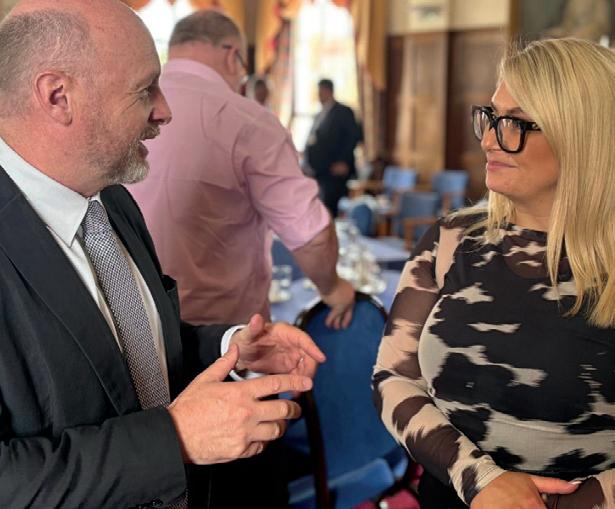
We attended and were left buzzing by the British Hairdressing Business Awards in July. Huge congratulations to all the winners, but especially to NHBF Members Hooker & Young, Melissa Timperley Salons, Crate Cheshire and Piper Violet Hair, who all took home gold. What a night to remember!
In June, Caroline Larissey joined the All-Party Parliamentary Group on Apprenticeships to push for stronger recognition of hair and beauty apprenticeships in national skills planning. Chaired by MP Toby Perkins, the session brought together important voices, including Skills England, to discuss how England’s industrial strategy aligns with future skills.
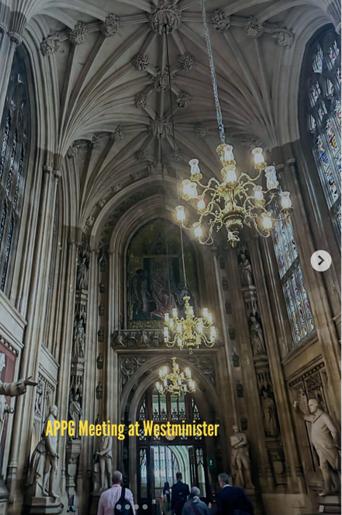
Caroline (pictured with Sam Silver) spoke to the Low Pay Commission (LPC) in July, to call for practical support, business rates relief, apprenticeship funding and levy access to keep high streets thriving. The LPC will submit its recommendations by the end of October and any changes will take place from April 2026.
Caroline also attended the Treasury (pictured, right) and had a one-to-one meeting with James Murray, chief secretary to the Treasury.
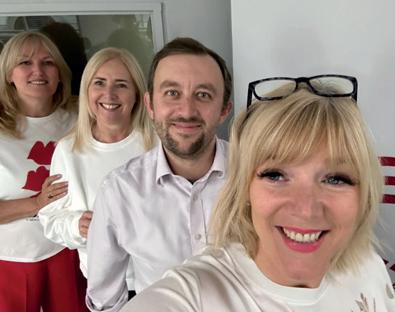
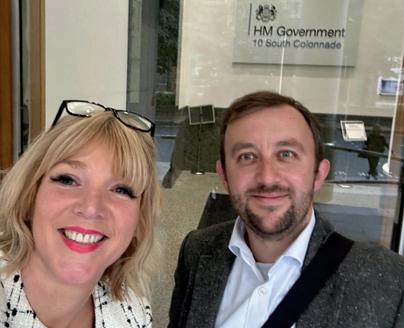
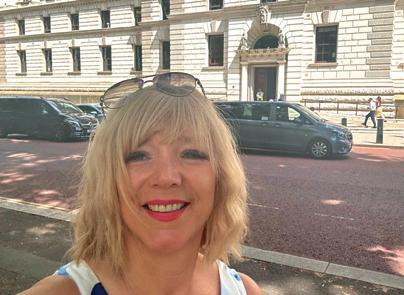
The NHBF senior leadership team (pictured, top) met with Wella Studios in Manchester for a strategy meeting, focusing on closer collaboration to strengthen support and create greater benefits for the industry.
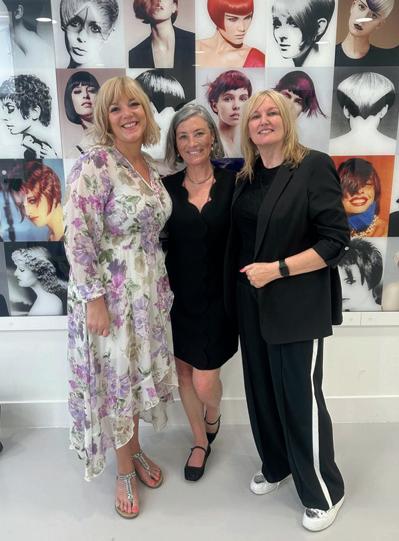
Caroline and Jackie Holian (right) also visited Vidal Sassoon’s head office in London with Tina Robinson to discuss working more closely with them.
Empowering people, strengthening the sector – the latest from the NHBF initiative.
From cost pressures to ever-changing expectations, hair and beauty professionals continue to navigate intense challenges. But through it all, one thing has remained constant: the unwavering fortitude of business owners and teams across the UK – and the growing recognition that resilience and respect go hand in hand. Building resilience in the workplace isn’t about quick fixes – it’s about fostering environments in which people feel valued, prepared and supported to adapt. It’s about business owners reshaping their models, rethinking what support looks like, and protecting their own wellbeing in the process.

This powerful theme took centre stage at HairCon 2025, with a panel discussion hosted by NHBF chief executive Caroline Larissey. In Meltdowns and mayhem: resilience when you’re ready to snap, NHBF Members Steven Smart, Colin McAndrew, Meg Piper and Errol Douglas offered a real-world look at what strength in business truly means.


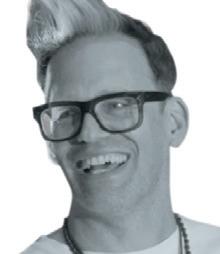
‘Hairdressing is like confidence,’ said Steven ‘It’s sticking together, learning from each other and doing what we can with ideas from the team – not just from me. New people coming into the industry are the future, and I can learn from them.’


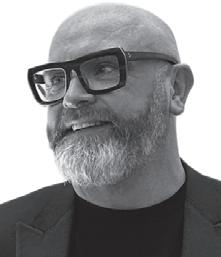
For Colin, that includes meeting people where they are and supporting the whole person: ‘Any team member who’s going through the menopause or IVF, we have extra support in place. And there’s a benefit to me because the team appreciates it and stays longer.’ That investment in people is why he has a really low turnover of team members: ‘We work really hard to make sure that they have the best opportunities,’ he added.
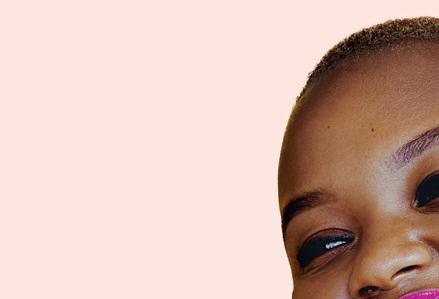
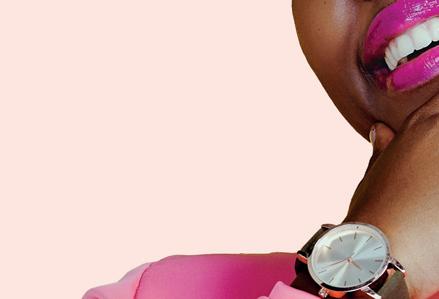

Meg echoed the power of purposeful culture, describing how her own business evolved into a neurodivergent-friendly salon through listening, learning and embracing change. ‘The world is in survival mode,’ she said. ‘So having a site where people can feel welcomed and just valued is profoundly important.’

As Errol put it: ‘We’re reinventing ourselves every single day,’ emphasising that it’s all about ‘a survival mechanism in making sure you’re solvent’ and helping to ‘retain the high street’.
The discussion was both a reminder of how tough it can be, and a testament to how powerfully people respond – with true resilience driving respect for the sector. By showing up, leading the way and not being afraid to pilot new opportunities, business owners, solo professionals and teams not only build their own futures but also that of hair and beauty as a whole.

With ongoing support and tailored resources available, the NHBF remains committed to helping Members cultivate lasting strength, not just short-term stability. Scan the QR code to discover more or visit nhbf.co.uk/ survive-and-thrive



air and beauty businesses are more than just places to get a haircut, treatment or makeover – they are spaces where communities connect, careers begin and confidence is restored. They are also a critical part of the UK’s economy, employing more than 275,000 people, generating £5.8bn each year and offering one of the more accessible career routes for many women and young people.




NHBF chief executive Caroline Larissey shares why the organisation’s latest campaign ‘Respect Our Sector’ matters and what they are fighting for.
Respect Our Sector, a major campaign to secure the recognition, investment and inclusion that it deserves.


Yet despite all this, our sector is consistently undervalued in government policy, overlooked in economic planning and misunderstood by the wider public. That’s why the NHBF is launching

This campaign is built to tell the real story of hair and beauty – not just to policymakers and politicians, but to the wider world, too. We are creating a unified voice for a fragmented sector, backed by evidence, real stories and the full strength of our membership.

The hair and beauty sector is unique. We are people-first, community-rooted and highly skilled. Our services boost wellbeing, improve mental health and offer a space for social connection that cannot be replicated online. But behind the picture we show our clients, the financial and regulatory pressure is mounting.












The campaign will run over the next 12 months, and we want every Member to feel proud, empowered and represented by the work we’re doing. Whether you run a high-street salon, manage a mobile business or support apprentices, this campaign gives you the opportunity to show your clients, community and politicians how important your business is.

Rising employment costs, VAT rules that put a cap on growth, and a lack of strategic recognition from government are squeezing margins and pushing many businesses to cut staff, reduce training opportunities or even exit the sector entirely. Recent research commissioned by the NHBF found that changes to the National Minimum Wage, employer National Insurance






















WE ARE CALLING FOR HAIR AND BEAUTY TO BE TREATED AS THE PROFESSIONAL, SKILLED AND SOCIALLY VALUABLE SECTOR IT IS



















contributions and business rates could increase costs across the sector by £139m in a single year. Many businesses are already being forced to increase prices, reduce hours or take on fewer apprentices. These pressures come at a time when the sector should be growing. With demand for services strong, skills in high demand and new talent entering the profession, there’s every reason for the hair and beauty sector to be seen as a pillar of economic growth and community wellbeing. We need policymakers to stop treating us as an afterthought and start recognising us as the crucial sector we are.





development and protect the wellbeing of our clients and professionals.
We’ll do this in a number of ways:
● Government and parliamentary engagement – using updated research, economic analysis and powerful messaging to make our case in Westminster and the devolved administrations.

apprenticeships and VAT policy. But we know these wins are only possible when we speak with one voice and show government that we are a united, engaged and essential part of the UK’s business community.
That’s why Respect Our Sector is as much about visibility as it is about policy. We want to show what our members already know: that hair and beauty professionals are skilled, trusted and important to everyday life. Whether it’s a teenager gaining confidence from their first haircut, a bride preparing for her big day or a lonely client finding comfort in a regular visit, the work you do matters deeply.



24


essential role we play But its also a chance to future of hair and for reforms


At its heart, the Respect Our Sector campaign is designed to secure greater political and public recognition for the essential role we play. But it’s also a chance to shape the long-term future of hair and beauty by calling for reforms that unlock growth, support skills


● Launching a new NHBF Manifesto – covering our key policy asks on issues such as VAT reform, apprenticeships, sustainability and the future of the high street.





– sure the wider hears the real story behind the sector’s and contributions
– ensuring our message is seen and both online and in communities.
● Media coverage and public messaging – making sure the wider public hears the real story behind the sector’s challenges and contributions. Campaign branding and visibility – ensuring our message is seen and recognised, both online and in local communities.




The ‘Respect Our sums up our central aim. We are a seat at the table in government discussions. We are for fairer tax rules support businesses.
e campaign slogan, Our Sector: Recognise. Invest. Include’ aim. We are demanding a seat at the table in government discussions. We are asking for fairer funding and tax rules that support small, people-focused businesses.

This is also a campaign about pride. Too often, we hear that people outside the sector see it as “low value” or “non-essential”. We know that that’s not true, and this is our chance to change their perception for good.


The NHBF is calling for hair and to be treated as the skilled and sector it is.
hair and beauty to be treated as the professional, skilled and socially valuable sector it is.





comes nex

e has offi [as of 3 w coverage, eng new tools fo We’ll be you to suppo businesses and share

Building on achievements is campaign builds on a long track record of successful NHBF advocacy. During the pandemic, we secured nancial support and sectorc guidance. More recently, we’ve been instrumental in calling for changes to business rates,
is campaign builds on a track record of successful NHBF advocacy we secured urgent financial support and sectorspecific More we’ve been instrumental in for to business rates,





e campaign has officially launched of 3 September] with media coverage, political engagement and new branding tools for Members. We’ll be asking you to spread the message, show support in your businesses and share your stories.











Our Sector is coll the hair and s control of how seen, valued and supp about sure ou it counts.



Respect Our Sector is more than a campaign – it’s a collective stand by the hair and beauty sector. It’s about taking control of how our sector is seen, valued and supported. And it’s about making sure our voices are heard where it counts.

Whether you’re a s owner or campaign matter every step of the voice, ex fighting for the recog deserves. Together, w the press and what hair and th our sector is no longe Let’s it respecte














Whether you’re a seasoned business owner or just starting out, your role in this campaign matters. We’ll be here every step of the way, amplifying your voice, sharing your experiences and ghting for the recognition the sector deserves. Together, we can show the public, the press and the politicians what hair and beauty really means to the UK. Let’s make this the moment our sector is no longer overlooked. Let’s make it respected.



















As we launch the Respect Our Sector campaign, one thing is clear: change will not happen unless we make our voices heard together.





This campaign is about fighting for recognition. We want policymakers, parliament and the public to understand the crucial role played by the hair and beauty sector, not just in economic terms but also as a force for wellbeing, skills and community. We cannot do it alone –to make a real impact, we need you to be visible, vocal and proud.
You can help us drive this message home in multiple ways: by using the campaign branding in your business and by reaching out to your local MP. Each piece of outreach helps to spread the message, showing government that the sector is united both within our communities and in Westminster.
Share the branding: show that you are part of a movement

We have developed a strong visual identity for Respect Our Sector, with slogans, posters, window stickers and digital assets that reflect our sector’s pride and professionalism. By




NHBF head of policy and public affairs Sam Silver shares how Members can get involved in the campaign and lead the change.

displaying the campaign logo in your business, adding messaging to your social media or including it in your email signature, you amplify our voice and bring visibility to our cause. It might feel like a small gesture, but branding builds momentum. The more people see the message on shopfronts, online or in the local press, the more they will understand that this is a sector worth respecting. We will be providing Members with a toolkit including printable posters, digital content and guidance on how to integrate the branding into your business communications.
Speak to your MP: let them hear directly from you
While we are engaging with ministers and senior officials, local voices carry immense power. Your MP is elected to represent your interests – and hearing directly from constituents, especially those running small businesses, can make a real difference.
We will make it easy for you, providing a customisable email template that you can send to your MP, explaining the campaign and why their support matters. You can also invite them to visit your business, meet your team and see the work you do first-hand. If your




































MP is already aware of our sector’s challenges, this is a great time to remind them that action is needed, not just words.



























ha bac





m b




Some MPs may go on to raise questions in parliament, speak in debates or lobby government departments on your behalf. Th are small but meaningful steps that can lead to long-term change for the hair and beauty sector.









We’ve got your back Everything we do in this campaign, from policy briefings to media coverage, is designed to strengthen your position as business owners and professionals – but the most powerful advocates for this sector are those who live and work in it every day.
So let us show what we are made of. Let us be seen. Let us be heard. And let us earn the respect that our sector deserves.
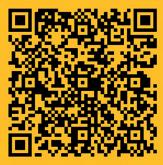






● Access further campaign information, resources and the toolkit at nhbf.co.uk/ respect-our-sector





Barbershops are an important place for men and boys, both socially and mentally. But how influential can barbers be in dealing with mental health and harmful narratives around masculinity?
WORDS ANNA SCOTT
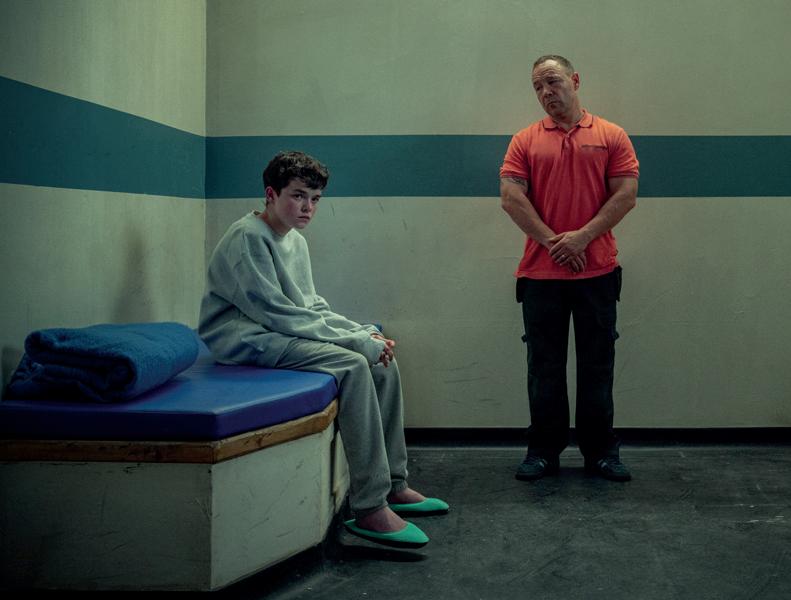
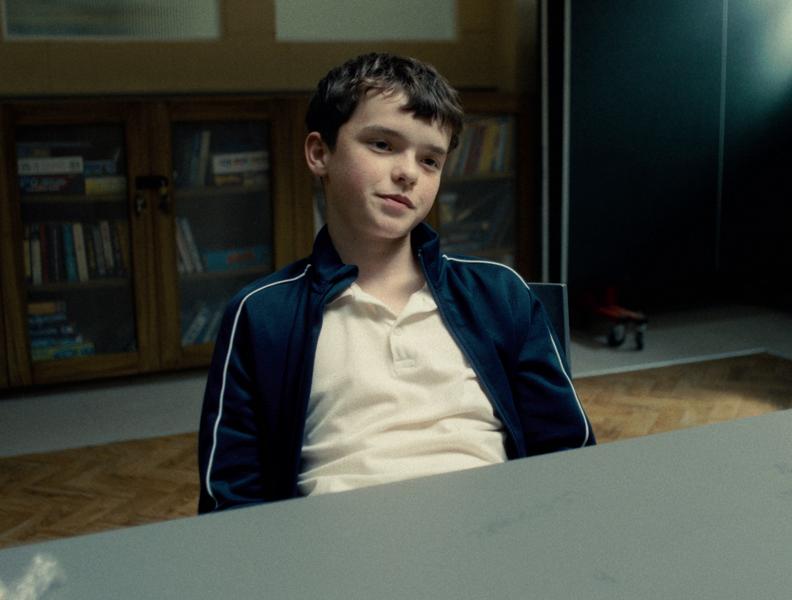
Critically acclaimed Netflix drama Adolescence won plaudits not just for its powerful story and script, compelling actors and single-take filming, but also for the discussions it has sparked around the world.
Schools, parliament, the media, even popular soap EastEnders, are all discussing the impact of online harm on children and teenagers, the ‘incel’ subculture, misogyny and harmful narratives around masculinity – and what can be done about them. But one group of people can, and already does, play a role in tackling some of the harmful narratives that surround and affect the mental health of young men and boys: barbers.
‘We hear it all’
‘I’ve heard everything, from people talking about how they’ve been stabbed, shot or gone to jail, or the other side, where people talk about how they’ve stabbed, shot or even taken someone’s life, or had their friend’s life taken,’ says Mark Maciver, founder of SliderCuts in London. ‘We hear it all.’
He says that barbers are in a fortunate position. ‘In our smaller communities, the barbers are well respected by all walks of life – from young people to working professionals to people who are involved in the wrong paths, they still respect the barber. We get an insight into their world, and they talk to us.’
Clients discuss all kinds of things with their barbers: new babies, relationship breakdowns, the ups and downs of life, negative role models. ‘I’ve noticed that

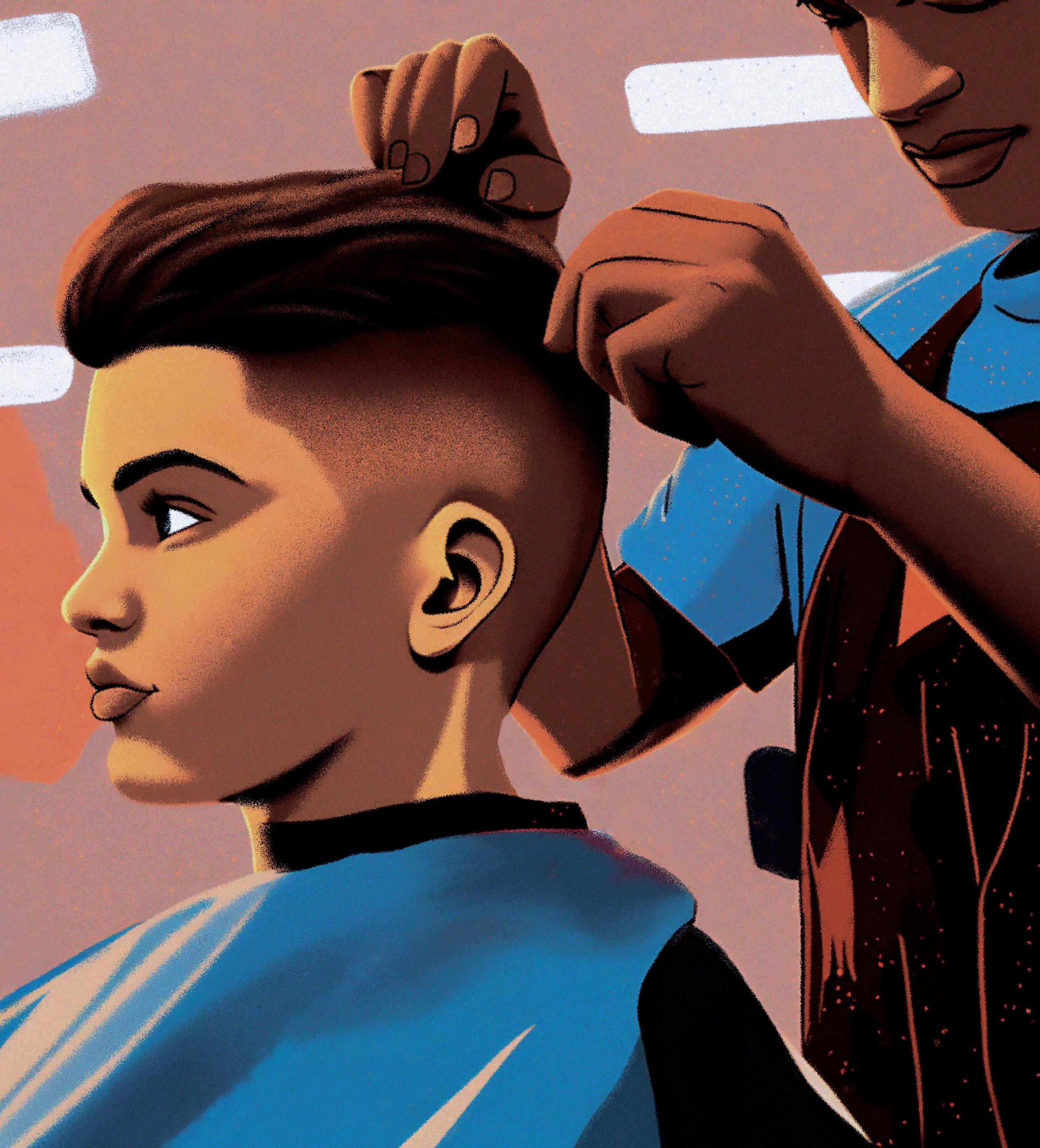
CLIENTS OFTEN TALK ABOUT THINGS THEY WOULD NEVER SAY TO ANYONE ELSE
since the Covid-19 lockdowns, many young men and adolescents have been struggling with social skills – things like maintaining eye contact or keeping a conversation going have become more difficult,’ says Danny Turner, barber and founder of Beyond the Clippers (see Resources).
As a psychologist specialising in men’s mental health, John Barry has three useful things for barbers to know:
1
Aggression and substance abuse are two often overlooked and misunderstood symptoms of depression in men.
2
Many of the men and boys who identify as ‘incels’ – an online community of young men who consider themselves unable to attract women sexually, and are often perceived as hostile towards women – are at increased risk of depression.
3
Social isolation is common in incels and is a common risk factor in men’s mental health problems.
‘Men and women tend to communicate in slightly different ways,’ John adds. ‘For men especially, banter – which is often found in male spaces like barbershops – can be a way of talking about issues and feelings without being too intimate or vulnerable.
‘Banter could be a client’s only way of opening up, even if it seems politically incorrect or offensive. Research shows men who think masculinity is bad tend to have lower wellbeing, so barbers should be careful not to talk in a negative way about masculinity.’
While some barbershops may be considered stereotypically ‘macho’ places, they can have a big effect on clients’ lives. They’re not just hubs or cultural spaces, but therapeutic environments, and spaces where people can build confidence and connect with others.
‘In local communities, barbers play an important role,’ says Richard Marshall, NHBF Board member and founder and CEO of Pall Mall Barbers in London. ‘Clients often talk about things they would never say to anyone else, and an important part of mental health is sharing one’s emotions and opening up to someone outside your circle of friends.’
The unique service offered by barbers helps. ‘I think it comes naturally when you get two humans together connecting for, say, 30 minutes a month to catch up, you build a deep trust and relationship,’ Richard adds. ‘Lots of men are very loyal to their barbers, and going there is more than just a haircut or beard trim – it is a deep connection built over time.’
With mental health now being discussed more
openly, barbershops are becoming safe environments where men and boys of all ages feel comfortable opening up and having real conversations, Danny says. ‘A haircut is not just about appearance – it’s about helping clients feel confident and good about themselves.
‘Offering a listening ear and emotional support can go a long way in making someone feel seen and valued. Encouraging
OFFERING A LISTENING EAR AND EMOTIONAL SUPPORT CAN GO A LONG WAY IN MAKING SOMEONE FEEL SEEN AND VALUED
10 October: World Mental Health Day
November: Men’s Mental Health Awareness Month
1-7 November: Befriending Week
5 November: National Stress Awareness Day
13 November: World Kindness Day
younger clients to choose their own hairstyles also helps them build confidence and decision-making skills.’
Dr John Barry, a chartered psychologist specialising in men’s mental health and co-founder of the Centre for Male Psychology, has researched the social and wellbeing aspects of visiting the barbershop. ‘The key issue is that men are talking in context where some basic conditions are met: they feel respected, not judged, not forced to talk, and there is some sense of confidentiality,’ he says.
‘At risk’
Barbers may find themselves supporting young men who are ‘at risk’. A client of Mark’s once came into the shop with bruises and said he’d been attacked because he was from a certain area. ‘He wasn’t involved in any gang, but he was known to be from that postcode,’ says Mark. ‘And because he wasn’t about that life, he was seen as an easy target. They could attack him and say they caught someone from that area.
‘You hear stories like this and it’s hard to know what to say. People might say “call the police”, but if the police don’t do anything, he’s at more risk. What I usually say to young people is “occupy your time”. The more your time is filled with work or school, the less likely you are to be just sitting around and become a target.’
Mark’s barbershop has a runners scheme, paying young people to sweep up, take out the bins and get food. ‘They learn basic life skills, they meet people and, importantly, they become the boy from the barbershop instead of the boy from that area,’ he says. ‘That changes how people see them.’
‘We give them money, time,
● Assure them of confidentiality: ‘What is said in the barbers’ chair, stays in the barbers’ chair,’ says Richard. ‘It’s the barber code.’
● Be mindful of language and the way you interact: ‘Boys and men of all ages can express mental health challenges in very different ways,’ notes Danny. ‘Younger males, in particular, may be more impressionable and lack positive role
models in their lives.’
● Learn to listen deeply: ‘Let the client get it out,’ says Richard. ‘Most of the time, men just need to download what they have in their mind. Listening is a powerful skill and it can help people massively to know they’ve been heard in full.’
● Take your ego out of it: ‘Barbers need to understand that what they can say can have a big impact and do harm if it’s not thoughtful,’
experience, mentorship and positive role models, and keep them out of danger. That’s how barbers can support at-risk youth, by doing small things with consistency and care.’
Young men and boys are under pressure from harmful narratives around masculinity and Mark thinks barbers could do more, perhaps not realising their position of influence.
‘What I think would be helpful is some kind of barber council or network that helps barbers understand what’s happening in communities and how they can play a role,’ he says.
This includes things like his runners scheme, partnering with charities that help at-risk youth, as Danny does, or signposting clients to places where they can get professional support.
John says barbers should remember
adds Mark. ‘So I think barbers need to be vulnerable and honest. Talk with humility, not like you’ve got all the answers or you’re perfect.’
● Use your network to connect them with opportunities: ‘If a young person says they’re interested in becoming an electrician or plumber, we probably cut someone who works in that field,’ Mark says. ‘We can say, “Let me hook you up with someone to talk to”.’
that younger clients’ ideas about the world are based on limited experience and that ‘this is not the final version of this person, because they can learn and grow’ – highlighting the important role and work that barbers and barbershop communities do.
● NHBF blog – Spotting health issues: nhbf.co.uk/spottinghealth-issues
● NHBF blog – A healthy cut: nhbf.co.uk/a-healthy-cut
● Beyond the Clippers – a support platform for barbers struggling with their own mental health and those trying to help clients: instagram.com/beyond.the. clippers and facebook.com/ groups/beyondtheclippers
● HereToTalk training – Courses to help barbers recognise when a client needs help, listen with empathy and signpost to relevant resources: heretotalktraining.com


















































Working in hair and beauty, you can be a ‘jack of all trades’ or a ‘master of one’.
Some sector business owners have whittled down their service menus to offer more specialised treatments, helping them to stand out.
‘A specialist is somebody who is passionate about a specific area and puts their time and effort into building that one specific area of their business,’ says NHBF Member Rachael Lomax, a copper and red colour specialist and educator, and owner of The Copper Queen salon and Copper Queen Education in Thetford, Norfolk. ‘Being a specialist sets you apart from mainstream salons because it enables you to build a core client base in that specific area,’ she adds.
Why specialise?
Sector professionals may want to specialise to differentiate themselves from competitors, says Steve Hilliard, owner of Steve Hilliard Coaching and Steve Hilliard Hairdressing, with salons based in Luton and Ampthill, Bedfordshire. To stand out, his salons offer clients a ‘4 Point Guarantee’ – to listen, give time, advise and educate them on how to look after their hair.
Providing a more unique service can also increase client loyalty, he says, making clients feel that ‘they are getting something no one else is offering’.
Kirsty Watson is an NHBF Board member and owner of Qualia Skin Specialists and Aesthetics Academy in Huddersfield, which specialises in skin health and advanced skin treatments. For her, specialisation is about ‘experience, expertise, authoritativeness and trustworthiness’. She uses this ‘E-E-A-T’ framework – deployed by Google to assess the quality of website content – throughout her
business strategy and operations. ‘When you specialise, you are showing you’re the expert and the trusted place to go.’
Rachael had owned her salon for 17 years when, taking social media classes during the pandemic, she found a ‘huge gap in the market’ for education in copper and red colouring – and realised these colours were her niche. Coming out of lockdown, she worked with a designer to develop her branding, promoted her services – including through social media – and set up as a freelancer in her own co-working salon space. In addition to establishing her salon as a copper and reds specialist, she began offering online and in-person courses.
NHBF Members Billy Evans and Jack Kenneally co-own Haus of Blonde salon in Buckhurst Hill, Essex, which specialises in blonde colours and extensions. For hairdressing couple Billy and Jack, specialisation happened organically. They worked together in a salon, each renting a chair, and their clientele grew. In February 2024, they teamed up to establish Haus of Blonde, with Billy focusing on blonde and Jack on extensions. The business has both employed and self-employed staff, allowing it to offer a broad range of other services, and has built a strong social media presence and a reputation for personalised transformations, Billy says.
Kirsty’s move from general beauty to skin specialisation took place in 2012. It was shaped by her own experience with acne, which caused her to look at her social groups: she noticed a ‘range of skin conditions’ among people from Caribbean backgrounds like herself, as well as other ethnic groups. Qualia was established as a limited company in 2014, and the academy has developed alongside it, initially delivering courses in traditional beauty but now specialising in marketing and management apprenticeships.
z
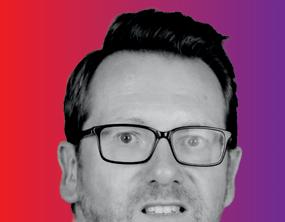

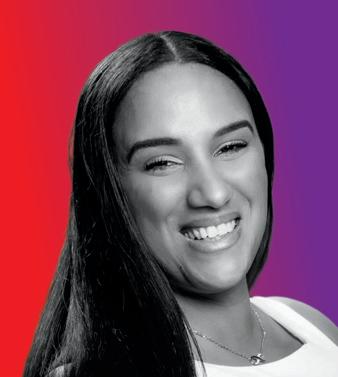
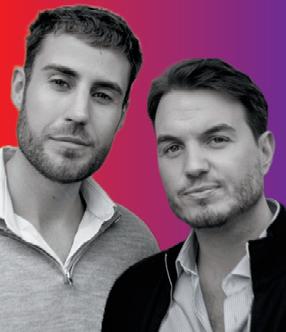















There are many benefits to specialisation. Clients will be willing to pay more for your knowledge and expertise, says Rachael, and ‘will want to come to you because you know more about a specific area. You will be seen as exclusive and you can customise your packages’.
Specialising can bring loyalty, as well as a new client base, and enable you to grow in your local area if people see you as their ‘expert go to’ salon, she adds. Since becoming the Copper Queen, Rachael has won multiple awards for her work in colour and education.
For Kirsty, specialism demonstrates ‘extensive knowledge and skills in your specialist area’, meaning clients will trust you to ‘know a plethora of ways to either improve or enhance their skin, or whichever speciality that you offer – allowing you to stand out’.
Working at a specialist salon can also boost team members’ confidence, says Steve, allowing them to upskill and show their ability. ‘Plus, you can increase your value to the client and charge more. We know clients will pay more if they see the value.’ Specialising can also boost retail sales, allowing teams to, for example, recommend shampoos and conditioners to maintain a particular hair colour.
You should base your specialism on what you are passionate about, says Billy, noting that this will enable you to thrive. Steve agrees: ‘You need to have an affinity with your specialised service – to be drawn to it. You can’t just choose something and fall in love with it.’
‘Be strategic when choosing your niche – it’s that thing you want to get up every day to do,’ says Rachael. ‘Do your research around it. And make sure you educate yourself to the highest level you can within that area.’
● Be strategic when choosing your niche – look for a gap in the market
● Do your research
● Educate yourself to the highest level you can
● Consider revamping your website
● Promote your specialism on social media
● Send out an email shot to clients introducing your specialism
● Have a marketing strategy.
Being a specialist can have its drawbacks. ‘Clients could think you only do one thing,’ warns Rachael. If your niche is too small and you can’t vary what you’re doing, you could struggle, she says.
Steve notes that clients may be resistant to paying more, so you need to get them to understand the value you are providing – while Kirsty advises that specialising can be like starting a new business, so it may take time to get results.
Spreading the word ‘Have a marketing strategy,’ says Steve. ‘If your strategy works, repeat it, if it doesn’t, tweak it.’
When Kirsty began focusing on skin, she revamped her website, as well as ‘visiting exhibitions and being present in the communities’, she says.
















Rachael suggests doing ‘live to camera’ talks on Facebook to explain the benefits of your offer and why it’s different. Sending out email shots introducing your specialism also works. You could even build different packages, each with their own name, branding and price – or offer it through a membership.
Your specialised service doesn’t need to have a one-off launch, says Billy – you can raise awareness and share information on your website and through regular postings on social media.
Those who specialise can look forward to being in a different market space and increasing their profit margins, says Steve. ‘And you’re going to be happier because you’re doing the stuff you love, which makes the day more enjoyable. These specialised services can give you the “feelgood factor”.’
Specialism is very much an individual choice – but for those who decide to become a ‘master of one’, there are many rewards. Rachael has ‘loved every minute’ of her journey. ‘Ever since I found my niche, the opportunities I’ve had and things I’ve done have been amazing.’
● NHBF Business finances, prices, wages and profits guide: nhbf.co.uk/businessfinances-guide
● NHBF Business coaching: nhbf.co.uk/businesscoaching











Hundreds of hair and beauty businesses across the UK are part of a successful franchise. We explore why it could be the model for you.









Laura Procter, winner of Franchisee of the Year at the 2025 British Hairdressing Business Awards, says that being part of the Westrow Salon franchise has given her the freedom and support to run a successful business: ‘It’s like having an extended family.’
She opened the West Park salon in Leeds in 2006 and hasn’t looked back. ‘I know I can go to our directors with ideas and they will take them on board. That’s why it’s important to find a franchise that has the same values as you.
‘While we have parameters that we’re expected to work within, after that we have free rein to run our own business, as well as access to the Westrow training programme. It’s a beautiful way to work.’


Debbie Digby, NHBF Board member and founder of Feathers Salon Group in Essex, explains: ‘Building a brand takes time and money, so by becoming a franchisee, you immediately benefit by being part of an established and trusted brand.
‘For franchisors, you get to replicate what you know works with people who are prepared to invest time, money and emotion into your brand.’
To become a franchisor, you need:

A franchise is a business model where one company (the franchisor) allows other people (franchisees) to run a business using its trading name, branding and logo. The franchisee pays fees to the franchisor and must stick to the franchisor’s way of doing business, including the services they offer, marketing activities and administrative systems.
● A successful and profitable business
● Enough money to set up and develop a franchise network
● Business and management skills to support your franchisees.
To become a franchisee, you need:
● A realistic and detailed business plan
● Access to finance to invest in the business
● A contract agreement setting the terms of the franchise (always take legal advice).






Haley Carr opened The Guinot Salon in Gosforth, Newcastle upon Tyne, at the height of the pandemic. Despite a challenging start due to the restrictions on personal services, being part of a supportive network has allowed her to grow her business.
‘It was a new salon in a new town centre opening in August 2020, so the whole business plan flipped,’ she says. ‘Because we weren’t allowed to do facials, Guinot developed a foot peel treatment, which helped to navigate us through the pandemic. They also did weekly online training so we could refresh our team’s skills and knowledge.

‘I chose Guinot because I’m passionate about the brand and believe it works. I have that reassurance that when I recommend a product or treatment to a client, I know that if they use it correctly, it will make a difference. They’re also well established, with a good reputation and high standards that align with the way I like to run my business.
‘Having their continued training, support and development has been great, because you’re not alone. Being part of a network of franchises, you can share best practice and get reassurance to help you navigate the business and any industry changes.’
TOP TIP: ‘Always look at the model – has it been tried and tested? You’ve got to believe in the brand. And check what training and support they provide – that’s been key for us.’























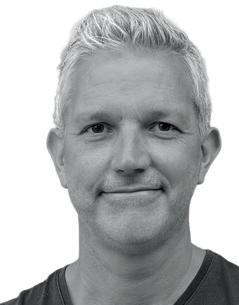
Karl Foster opened his first barbershop in Saffron Walden, Essex 30 years ago and launched the Mr Barbers brand in 2014. He now runs a franchise of 15 shops across East Anglia and North London.
‘I like helping people, and running a franchise allows me to do that while earning a living,’ says Karl. ‘I still enjoy cutting hair, but I don’t have to stand behind a chair all day every day. I’ve got five children, and while most of them are grown up now, I have the flexibility to choose my own hours – so I can drop my youngest at football camp and then jump on a call with someone who needs some business advice.’
PROS
● Well-established business model: A fast, cost-effective way to expand your business
● Positive attitude: Franchisees are often highly motivated and committed CONS
● Financial investment: You’ll need significant investment to set it up and will be expected to provide a package of ongoing support
● Finding the right fit: Finding suitable franchisees can be difficult and time-consuming.



PROS
● Brand recognition: Benefit from being part of a recognised and successful brand
● Ongoing support: You’ll be part of a wider community, with access to mentoring, training and expert business guidance CONS
● Financial commitment: You’ll need to pay start-up costs, ongoing fees and a share of profit to the franchisor
● Limited flexibility: Many business decisions are predetermined, including the look and feel of the salon, products and services, opening hours and prices.
It’s not been plain sailing. When the pandemic hit, Karl and his business partner Paul changed their whole business model, moving from a licence arrangement with 30 shops to a percentage agreement with 15.
‘We were trying to do too much, and it wasn’t working,’ says Karl. ‘By changing our model, we could sort the business out and get to a place where we could start growing again. For our franchisees, they get their own shop and the assistance of our brand, giving them peace of mind that everything’s set up ready to go.’
TOP TIP: ‘Don’t try to grow too quickly. Make sure you invest the time and money into doing it properly – and if it’s not working, don’t be afraid to shake things up.’


It’s crucial for anyone considering opening a franchise to think carefully about what will work for you, says Debbie: ‘The franchise you choose must reflect your values, beliefs and identity, because you’re going to be living it every day.
‘And don’t skip over the legal side. It’s easy to get excited about your dream coming true, but before you sign any agreement, seek professional and legal advice and always think about how you can come out of an agreement if it doesn’t work out.’
● NHBF blog – Is franchising for you?: nhbf.co.uk/is-franchisingfor-you
● NHBF guide – Franchising your business: nhbf.co.uk/ franchising-your-business





























Running for a second year, the NHBF’s Recognition Campaign celebrates longstanding Members in the sector. WORDS KELLIE SMITH
This year, the NHBF travelled to Nottinghamshire, Scotland and South Shields to meet some of its longstanding Members. Four of them have been recognised in the NHBF Recognition Campaign in 2025 for their loyalty and contribution to the sector.
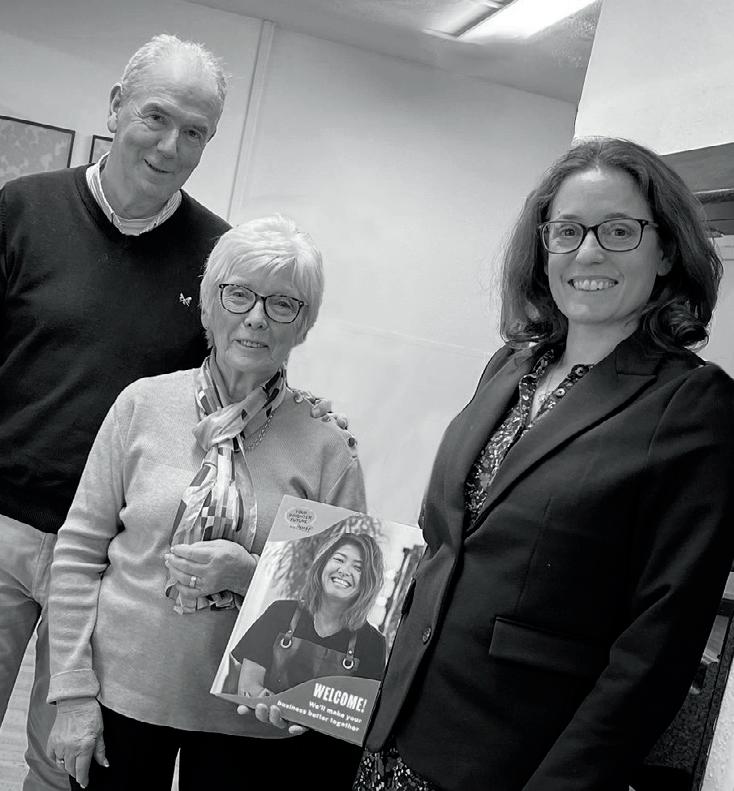
NHBF chief executive Caroline Larissey, who visited the Members to thank them,
said: ‘Our Recognition Campaign is about celebrating the commitment, skill and passion of our Members who have dedicated decades to this sector. Meeting Anne, Easton, Margaret and Alan was a real privilege – their loyalty to the NHBF and the positive impact they’ve had on their communities is inspiring. They set the standard for professionalism and care that keeps our sector thriving.’












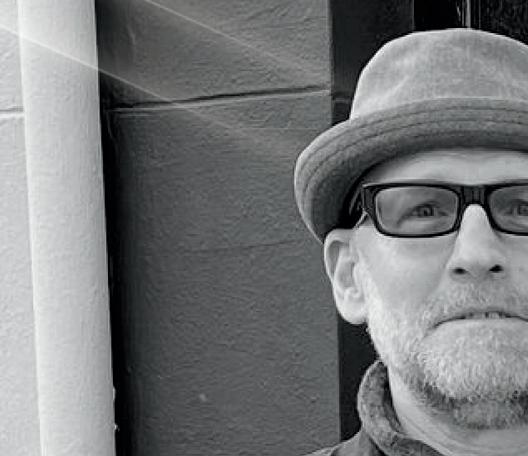
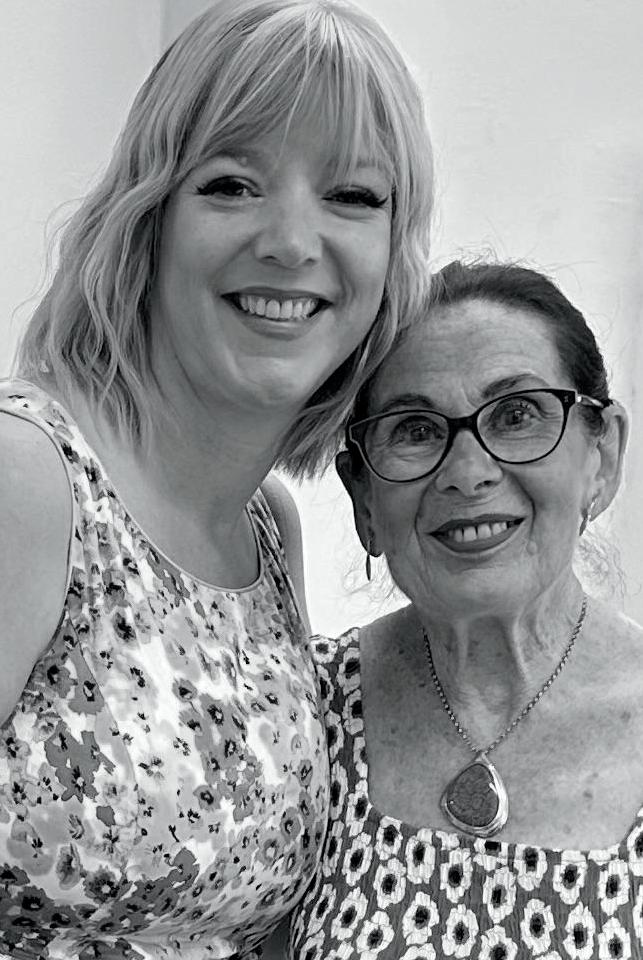
Anne is the owner of Anne Ledger Hair Stylist in Worksop, Nottinghamshire. She is 80 years old and has worked in the sector for 65 years. Anne has owned her business since the age of 23 and been an NHBF Member for 57 years.
Hair in 0 Anne 23



Longstanding staff: There are currently three of us working in the salon, including a hairdresser who has worked with me for about 50 years. My sister also worked with me for 16 years before leaving to go into the shoe trade.


three of dresser rs. n ng
Wonderful atmosphere: It’s lovely working in the salon. I get a lot of satisfaction from making people feel special.

Creative flair: I’m artistic and have always been fascinated by hairdressing. I started when I was 15 and trained with the salon owner before taking over when she retired.


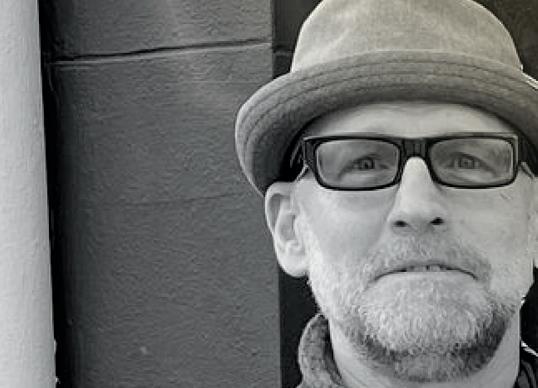

Complying with legislation: I’ve had a lot of support from the NHBF with the health and safety side of running the business.
f and eeling be



Proud to be recognised: It’s a great feeling to be a part of the recognition campaign. I get such a buzz out of doing my job.






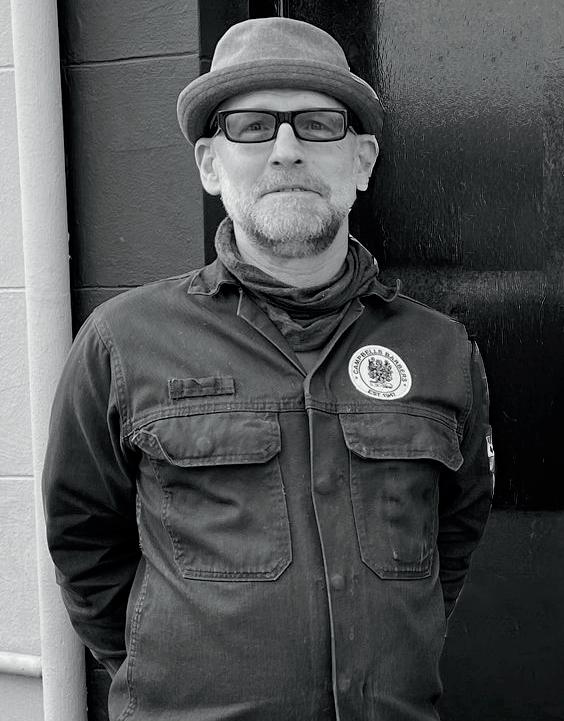





C Easton ow
Easton owns Campbells Barbers in Hamilton, Scotland, and has worked in the sector for 35 years, taking over the family business in 1990. His father joined the NHBF in 1980 and Easton continued the membership. Family footsteps: My grandfather set up the business in 1947 and then my father took over in 1972.
I’m the third generation of barbers. My grandfather’s first apprentice became the president of the NHBF and told my father about membership.
Spreading the word: Within a five-minute walk of the business, there are around
15 other barbers. There’s also not much footfall on the street, but we’re booked all the time. I think this is down to word of mouth and Google reviews.
Different customers: I love the job because of the variety of customers I meet. You have people from all walks of life coming through the door.
Getting advice: I’ve had support from the NHBF about different employment contracts, including taking on selfemployed hairdressers.
Thrilled to be recognised: I’m proud of how long the business has been running. My grandfather would have been delighted.







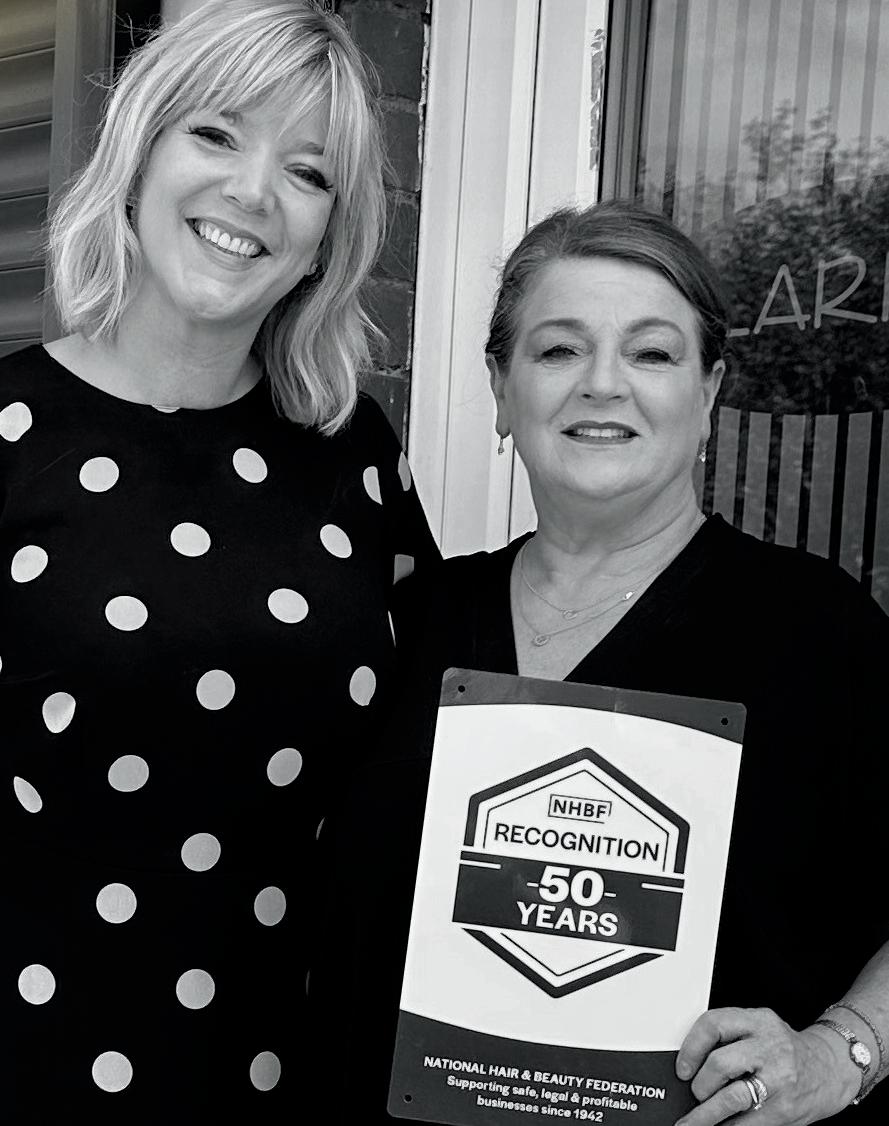

Margaret is the owner of Clarity’s Hair Studio in South Shields. She has worked in the sector for 47 years and been an NHBF Member for 36 years. Welcoming clients: We listen to what our clients would like and provide a professional and personal service.
Passion for hairdressing: I’m passionate about incorporating ever-evolving creative hair designs, techniques and products into the business. These combined allow me to keep moving forward in the salon, bringing clients with me and providing new experiences. Making clients feel special: Clients need to feel special and








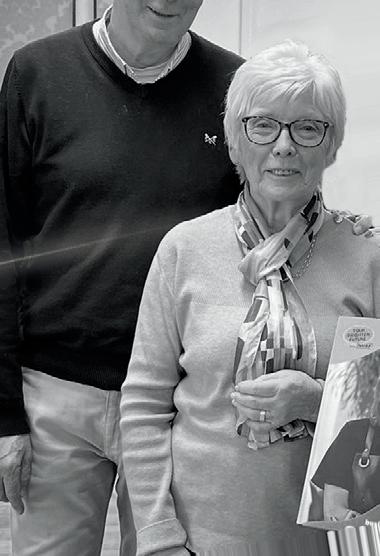



s are valued. riendly
that their opinions are valued. The aim is to provide a friendly and relaxed environment and to make sure they leave with a smile.
Someone to turn to: Membership has been a valuable source of information and support in all areas of my business. The NHBF help during the pandemic was invaluable, keeping me abreast of an ever-changing situation. Feeling touched: When you run your own business, you’re not always recognised unless you enter competitions. Being presented with this certificate of recognition is overwhelming and an unexpected delight.

Alan K





Alan is a co-owner of Kennedy Hairstylists in Airdrie, Scotland. He has worked in the sector for 58 years and his family have been Members of the NHBF for almost 70 years.


Alan is a Airdrie 58 ye NH Fa



Family business: We are the oldest hairdressing business in Lanarkshire and people recognise our name. My parents set up the business in 1947 and we now have two salons. I own the business with my older sister, who is close to retirement. Her daughter is now an assistant manager.



Longstanding staff: One of the team has been working with us for 40 years. Another has been with us since she left school and is now nearly 40. Chatting to people: A lot of the job involves being with different people and hearing their stories. I always remember things about clients and ask them about their families and holidays.



b nam we now sis sta f with us since she le people thi them about their famili is Th understand the question humbled: It’ make

Membership is helpful: The NHBF has helped me to understand the legalities of running a business and answered my questions on staff wages and illness. Feeling humbled: It’s great the NHBF is running the campaign. It makes me feel appreciated.

ANNE SAYS: ‘Pay attention to clients. Ask people what sort of hairstyle they want and really listen to them.’
EASTON SAYS: ‘Bring your own juniors through and train them. This will give you continuity in the business and the skills you’re looking for.’
MARGARET SAYS: ‘A salon needs a manager who is central to the business and supports staff. This will help to make sure that the work ethic, values and skills of the staff are visible to clients.’
ALAN SAYS: ‘Treat your clients the way you would want to be treated. They are number one and pay the wages.’

























































The letters HMRC can strike fear into the heart of any hair and beauty professional.
Creatives aren’t always naturals at staying on top of the numbers – and next year will see ‘the biggest transformation since self assessment launched in 1997’ for freelancers, sole traders and landlords, says Craig Ogilvie, HMRC director of Making Tax Digital (MTD).
From April 2026, if your turnover is above £50,000 from selfemployment, property or both combined, you’ll need to use MTD-compatible software to keep digital records to send HMRC quarterly updates and your annual
What can you do to prepare for MTD?
Haroon Rafique of Meer & Co. Accountants says:
● Keep records up to date – log income and expenses regularly, ideally weekly, using accounting software
● Reconcile bank statements – match transactions to receipts to avoid gaps or guesswork later
● Organise receipts and invoices – scan them in as you go and upload them
● Check allowable expenses – claim industry-specific costs such as training, professional tools and uniforms
● Put tax money aside – set aside a percentage of every sale in a separate account
● File early – don’t wait until January. Filing earlier spreads payments and avoids last-minute problems.
tax return. People with turnover above £30,000 will follow from April 2027, and those with turnover above £20,000 from April 2028. (Digital filing already applies to VAT-registered businesses.)
Quarterly updates are simple, unadjusted summaries of income and expenditure generated automatically by your software.
‘Instead of cramming everything into January for the self assessment deadline, you’re spreading the load across the year,’ explains Craig. ‘If you make any errors in a quarterly update, don’t worry – you can make corrections in the next update.’








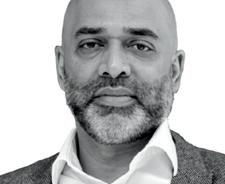












You’ll still submit a traditional

IT CAN GET CONFUSING AND STRESSFUL TRYING TO KEEP TRACK OF IT ALL, ESPECIALLY WHEN YOUR MAIN FOCUS IS LOOKING AFTER CLIENTS



self assessment for the previous tax year during your first year on MTD, but after that, everything can be handled through your software. Freelancers and sole traders will still only pay once a year, by 31 January. If you use an accountant, there may be the extra expense of submitting records to them more often. ‘If you use an accountant just to submit and review your accounts, most will want around a month to check and prepare everything,’ says Melanie Beech, owner of The Salon Expert Accountants. ‘That can leave you with very little time to pull your information together if you leave it too late.’
Keep track of your finances
Staying on top of the numbers is important for everyone – freelance and business owners alike. ‘Keeping up to date means your accounts and VAT returns will be more accurate, which means you won’t pay too much tax,’ says Melanie. ‘Your returns won’t be late, so you’ll avoid fines. And you won’t be scrabbling around at the last minute, trying to get everything together before the deadline.

‘You can’t run a successful business without knowing your numbers. It helps you make good decisions. Can you afford to invest in marketing, training or a new service?’


Abul Nurujjaman of Taj Accountants advises:


● If your turnover exceeds £90,000 in 12 months, you must register

● Hair and beauty businesses may benefit from the Flat Rate Scheme to simplify VAT reporting

● Voluntary registration is sometimes worth it if you have high VAT-inclusive expenses. You can claim back the VAT you’ve paid on goods and services.


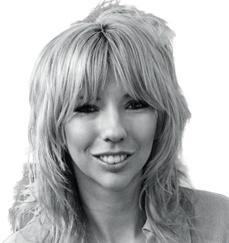
Katie Knox, co-founder of Butchers, with salons in East London and Chester and a franchise in Leicester.


Melanie adds: ‘It’s a massive deal for salons because 20% of what they take they suddenly have to pay to the government. When you’re dealing directly with the public, you can’t always pass the charge onto your clients – so you have to put up your prices by 20% or take a pay cut.’ Once you register for VAT, ‘you need to get your takings to £120,000 as soon as possible to make up for the VAT you’ll pay’, she says.
Melanie also recommends updating your records regularly. ‘Monthly bookkeeping will really help with cashflow management. It helps you to make sure you have enough cash in the bank before you have to pay everybody, and to know the right amount of money set aside for self assessment, VAT and corporation tax every month.’
It also helps you monitor your growth. ‘Without regular reports, you aren’t going to know whether you are running at a profit or a loss,’ she adds. ‘Can you invest in more staff ? New equipment? Regular bookkeeping allows you to make better and stronger decisions.’

‘One of the challenges running a salon business is that you don’t only have fixed costs like rent and utilities – you have variable costs that change from month to month. That might mean fluctuating product costs, seasonal dips or spikes in bookings, and unexpected expenses.
‘It can get confusing and stressful trying to keep track of it all, especially when your main focus is looking after clients. This is where having both an accountant and a bookkeeper becomes invaluable. They can help you see the bigger picture, trends in your income and spending, and forecast more accurately so you’re never caught off guard. It turns the financial fog into a clear map for making smart business decisions.’
Katie’s accountant was also crucial when she closed one location earlier this year. ‘They guided us through final payroll and supplier settlements, helped with the lease exit paperwork and advised us how to restructure costs. It meant that we could focus on supporting the team and clients through the change, knowing the financial side was handled properly.
‘Think of your accountant as part of your team, not just someone who files your tax return.’
● HMRC Making Tax Digital guidance: b.link/MTD-guidance
● HMRC software finder: b.link/MTD-software-finder
● VAT flat rate scheme: gov.uk/vat-flat-rate-scheme

● Find an accountant at the Chartered Institute of Accountants in England and Wales: b.link/icaew-accountants or an accounting technician at the Association of Accounting Technicians: aat.org.uk
41






As major apprenticeship changes hit the hair and beauty sector, what are the benefits and the drawbacks for employers?
WORDS CATHY WESTON, NHBF DIRECTOR OF QUALITY AND STANDARDS

May’s announcement of sweeping changes to apprenticeship funding rules sent ripples through the hair and beauty sector, with employers grappling with reduced off-the-job (OTJ) training hours, new assessment processes and evolving qualification requirements. For a sector already struggling under economic pressures, the changes present both opportunities and challenges. Immediate transitional measures have been in place since August and the sector is facing a significant shift in apprenticeship delivery, creating uncertainty for hair and beauty business owners and employers.

The NHBF’s concerns about these rapid changes run deeper than just their administrative complexity. ‘It takes time to build the necessary skills to work in the hair and beauty sector – there isn’t any shortcut if we want to uphold the quality and standards of training and education,’ says chief executive Caroline Larissey. ‘We support flexibility but it should not compromise on standards. The government seems to have forgotten to consult with employers and training providers working at the grassroots before making this decision. In particular, standards in the assessment plans are there for a reason – to protect the learner, industry standards and, ultimately, the client, who is the consumer paying for the service.’

Wendy Cummins, chair of the Hair Professional Apprenticeship Steering


Group, echoes these concerns: ‘These changes have come completely out of the blue, with no meaningful consultation with those of us working directly with apprentices and employers in the hair sector. We’ve spent years developing these standards and training frameworks and suddenly we’re expected to adapt overnight, without any input into the decision-making process. It feels like the government has made these decisions in isolation, without understanding the real-world impact on training quality and apprentice outcomes.’
Slashed training hours: The government will temporarily slash minimum OTJ training hours for 39 apprenticeship standards by up to


WE SUPPORT FLEXIBILITY BUT IT SHOULD NOT COMPROMISE ON STANDARDS




half, after concerns emerged that the time available to implement new rules was ‘too short’. The level 2 hairdressing professional apprenticeship is among those affected, with OTJ hours cut by more than 40% during the transitional period from August to December 2025.
Previously, apprentices had to dedicate a minimum of 20% of their working hours to OTJ training. Now, each apprenticeship will have its own fixed number of OTJ hours listed in the official guidance, which only apply to apprentices without relevant experience. Apprenticeships must include at least 187 hours of OTJ training to qualify for funding.

Administrative complexity: The transitional period creates uncertainty for hair and beauty business owners who are trying to plan apprenticeship programmes. The Association of Employment and Learning Providers deputy chief executive Simon Ashworth said it had received feedback from providers that there was not enough time to talk to employers about the change, nor to tweak their specific delivery models and curriculums. Financial pressures: The changes come at a challenging time. The sector, which contributes £5.8bn to the UK economy and employs 220,000 people



unprecedented challenges that threaten to undermine the progress made in
g g , whhich h contri r bu b tes to o econonomy y annd em e ployys 220,,000 peeople ac a ro r ss s 50,0000 busiiness s es, face c s unnprec e edented d chhal a le l nges s that t thhreaten to undermine e the h pro r gr gresss maade in n addr d essing the h ski k llls s shortages idenntified d three e years agoo.
Traiiniing inffraststruct c ur u e risk s : to t figures in n the NHHBF B ’s s Sttraightenning












out thhe e costs reporrt (ssee Resources), businesses willl not t take e on fewer e ap a pr p entiice c s bu b t al a so reduce e staff or ap a prentiice hours ( 47%), the numbe b r of staff th t ey employ y ( 47%) and busin i ess investme m nt 41%%) in ressponse
businesses will not only take on fewer apprentice hours ( 47%), the number of investment ( 41%) in response to economic pressures from the Autumn 2024 Budget.
Shorter programme duration: From August 2025, apprenticeships can last just eight months (down from 12 months) if training requirements are still met. This could mean faster workforce development and lower training costs for employers.


Flexibility for adult learners: Since February 2025, businesses have been able to decide for themselves whether learners over the age of 19 need to complete level 2 English and maths qualifications in order to pass their apprenticeship. This removes a barrier that, historically, has prevented talented practitioners from completing apprenticeships.
Recognition of prior learning: If an apprentice already has experience, the course can be shorter and cheaper. This could significantly reduce training costs in the hair and beauty sector, where many workers have informal or international experience.

Caroline attended d th t e Al A l-Party y Parliamentary y Gr G ou oup p (APPPG) on s sesssi s on in June ti t tled e

Apprenticeships’ session in June, titled ‘Skills England and the Industrial Strategy Advisory Council: mapping and meeting future skills needs’. The session, chaired by MP Toby Perkins, featured Phil Smith CBE – the new Skills England chair and Industrial Strategy Advisory Council (ISAC) member.



End-point assessment (EPA) changes: The changes go beyond training hours, also taking in fundamental shifts in how apprentices are assessed. Since April 2025 the assessment process has been more streamlined, with:
● More proportionate assessment methods that eliminate duplication
● Potential for on-programme assessment, where appropriate
● More flexibility for training providers to deliver certain assessment elements.
This streamlining could reduce the administrative burden on employers while maintaining quality standards.
The discussion focused on the role of Skills England in mapping and meeting the UK’s future skills needs, particularly in the context of the ISAC, which was established in December 2024. The ISAC, which includes business leaders from across the UK, gives independent advice to government on developing a modern industrial strategy that aligns with its growth mission.
This engagement shows the hair and beauty sector’s proactive approach to staying informed about policy developments and ensuring that sector interests are represented in high-level strategic discussions about skills and economic policy.
Short-term considerations
1 Review current apprenticeship programmes: With transitional arrangements in place until December 2025, employers should work closely with training providers to understand how changes affect existing apprentices.
2 Budget planning: The combination of shorter programmes and reduced minimum hours could lower training costs, but employers must factor in potential EPA retake costs, ongoing apprenticeship minimum wage
The NHBF has created a Quality, Standards and Education Advisory Board to guide standards, education, apprenticeships and recruitment across the hair and beauty sector. Members share expertise, promote best practice and advise on improving business and training. Members include: Caroline Larissey, Kirsty Watson, Cathy Weston, Sarah Brockbank, Jo Lancaster, Beverley Bates, Amy Green, Mikaila Martin, Helen Rutherford and Emma Curd.








For the hair and beauty sector, which has traditionally relied on apprenticeships to address skills shortages, the success of these reforms will depend on whether they’re accompanied by adequate financial support for employers. The combination of rising wages, higher National Insurance contributions and lower business rates relief is pushing many hair and beauty business owners towards selfemployed models, potentially ending decades of apprenticeship training – the lifeblood of the sector. The coming months will be crucial as the sector navigates these changes


while maintaining its commitment to training the next generation. Employers who proactively engage with the new system and adapt their training strategies accordingly are likely to emerge stronger and more competitive.


The key to success lies in taking advantage of the new flexibility while maintaining the high standards that consumers expect, which have made British hair and beauty professionals renowned worldwide.
For more information and support on apprenticeship changes, visit nhbf.co.uk or speak to your training provider.
Immediate actions for employers:
1

Engage with training providers: Discuss how the transitional arrangements affect your current apprentices and future plans.
2 Review assessment plans: Understand the new EPA requirements and how they might affect apprentice completion rates.
3 Consider adult learners: Evaluate whether the removal of mandatory English and maths requirements opens new opportunities.

increases, and broader economic pressures from National Insurance and minimum wage changes.
3
Recruitment strategy: The removal of mandatory English and maths requirements for adult learners opens opportunities to tap into previously excluded talent pools, which is crucial when traditional employment models are under pressure.
1
Faster workforce development: Eight-month programmes could enable a faster response to skill shortages and fluctuations in seasonal demand.
2


Enhanced retention: Many talented people who excel in practical skills but struggle with formal qualifications will now be able to pursue their passion.
3
Competitive advantage: Early adopters of the new flexible apprenticeship models may gain access to talent that competitors have overlooked.
Despite these reassurances, hair and beauty sector leaders remain concerned about the practical implications of these decisions, as well as the consultation process that led to them. They’re also concerned about the economic viability of apprenticeships. Caroline says: ‘While these reforms are welcome, we must address the significant challenge posed by increasing apprentice minimum wages alongside the need for more robust employer incentives.’

The NHBF has called for urgent government intervention, including:
● Enhanced apprenticeship support: £3000+ apprenticeship incentives per employee to cover training costs
● Flexible completion options: For apprentices who have completed 12 months of training
● Portable apprenticeships: Development of ‘portable’ flexi-job apprenticeships for those aged 19 and over.

4 Financial planning: Factor in the changing cost structure of apprenticeships, including how potential savings from shorter programmes will balance against ongoing wage increases.
These apprenticeship changes reflect a broader shift towards making apprenticeships more flexible and employer-responsive, but they’re happening against a backdrop of unprecedented economic pressure.
The NHBF’s Straightening out the costs report shows that measures from the Autumn 2024 Budget will have a negative effect on not just business profits and employee incomes, but also consumers and the public purse.





● NHBF Education Hub: nhbf.co.uk/education-hub



● NHBF the costs straightening-outthe-costs















Amy Green, founder of The Brow Job and NHBF Board member
With client spending intentions remaining high during the party season, we look at ways in which hair and beauty businesses can capitalise.
WORDS HELEN BIRD


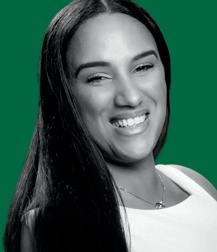











Melissa Timperley, owner, director and stylist at Melissa Salons
Kirsty Watson, owner of Qualia Skin Specialists and NHBF Board member Colin McAndrew, co-founder of Medusa Hairdressing
Charles Rose, owner and barber at Crate Cheshire
MELISSA: Our rotas are done at least a year in advance, as the festive period is one of our busiest times. We’re usually fully booked for Christmas by the time August comes around!
We encourage clients to book their December appointments well in advance to avoid disappointment. This also allows us to make rota-based decisions on what worked well and what needed changing as soon as possible.

JO AND BECKY: As soon as the new year begins! While the glitter is still settling, we reflect on what worked and what we’d love to improve for the next season. This means we’re making strategic decisions for the year ahead with December already in mind – whether that’s scheduling, client gifting or team incentives.
COLIN: We start planning in May. It gives us time to sort staff rotas, look at gifting ideas and plan incentives such as free gifts with purchase for our top-spending clients. Early planning helps us keep the quality high when things get hectic — and makes sure we’re prepped for the next big push.




Jo Herald and Becky Jennings, cofounders and directors, Piper Violet Hair

































COLIN: Over the years, we’ve shifted from heavy discounts to a focus on value – curated gift sets and thoughtful touches that make clients feel seen and appreciated.
JO AND BECKY: We’ve moved away from the traditional Christmas party and instead gift our team a rejuvenating spa day – it’s a calmer, more meaningful way to say thank you for the year’s efforts.
MELISSA: Over the years, we’ve definitely adapted — we’re more focused now on social media campaigns, online gift card sales and festive bundles that combine hair services with retail products.
AMY: Our clients don’t just pop in for brows, they come for the atmosphere and sense of celebration – we go all out in the festive season. We’ve really embraced that more as we’ve grown.
KIRSTY: Those wishing to increase their client base may benefit from increasing social media presence, giving out discounted treatments to nano influencers on video platforms for honest reviews, or even using a 12-day countdown towards the 25th, offering a prize on the final day. This could be something with a small overhead but maximum impact, to encourage engagement.
AMY: We tailor our services to suit the season. Spray tans, lash extensions and nail art become extra-popular, especially for clients who want to feel polished throughout the party season without spending hours on make-up. We offer festive nails, brow make-up tutorials and limited-edition products like our MasterBrow kits for gifting.
KIRSTY: We focus on some of the specialist and seasonal treatments such as peels, mesotherapy and skinrejuvenating treatments. This is one of the best times for sun exposure-averse treatments, so we tend to increase our

JO AND BECKY: We close between Christmas and New Year to give everyone a well-earned rest. It’s made a huge difference to morale and motivation. To balance this, we extend opening hours and add an extra working day in the run-up to Christmas so clients still get their festive glow-ups.
CHARLES: One thing I don’t do is expect the team to work extra hours at Christmas. I believe they should work the hours they want. If they’d like to do more, they can, but if not, that’s absolutely fine. It’s their Christmas too.
marketing content to capitalise on this. This is done via information on our website and social media posts, along with more in-depth conversations at the time of treatment, and adapted printed literature to take home.
CHARLES: My view is that if it’s a great service, it should be available all year round. We already sell gift vouchers and product boxes, but we also create a few extra Christmassy gift boxes, promote vouchers a little more, and generally embrace the festive atmosphere.



Building on the momentum of the festive season helps to avoid a New Year lull in business.
‘We use the period to drive rebooking, especially for our famous February colour sale,’ says Colin. ‘Clients are in a good mood, spending money and thinking ahead – it’s the perfect time to get them locked in for their next visit.’
‘We love thanking our clients with a Christmas card and a surprise gift with purchase – a complimentary treatment to enjoy in January, encouraging a little self-care after the holiday buzz,’ add Jo and Becky.
Charles says: ‘It’s important to make sure clients are booking their next appointment when they come in at Christmas. January is actually quite a busy month for us, while February tends to be quieter. So, after every appointment, we encourage clients to book the next one.’



































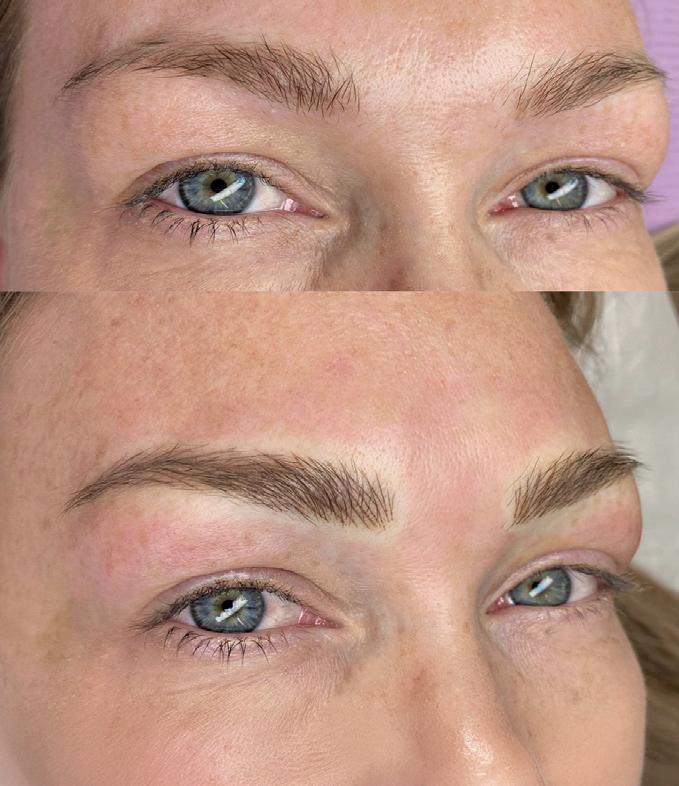

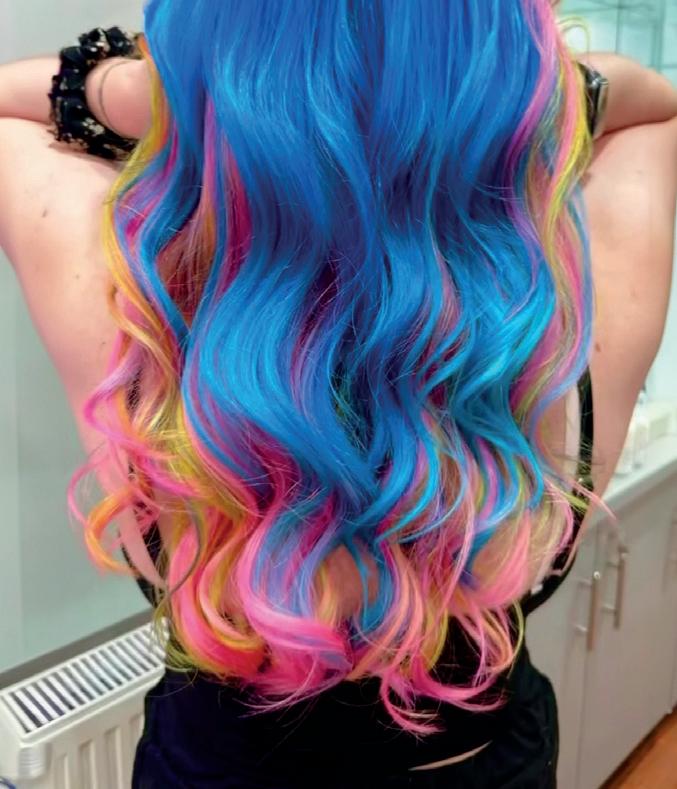

@kellyshairoxford
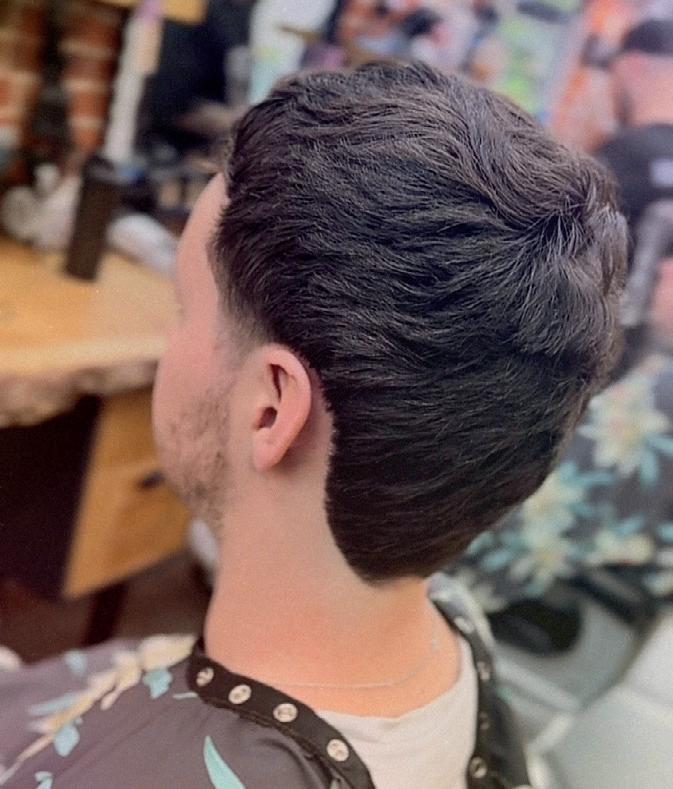

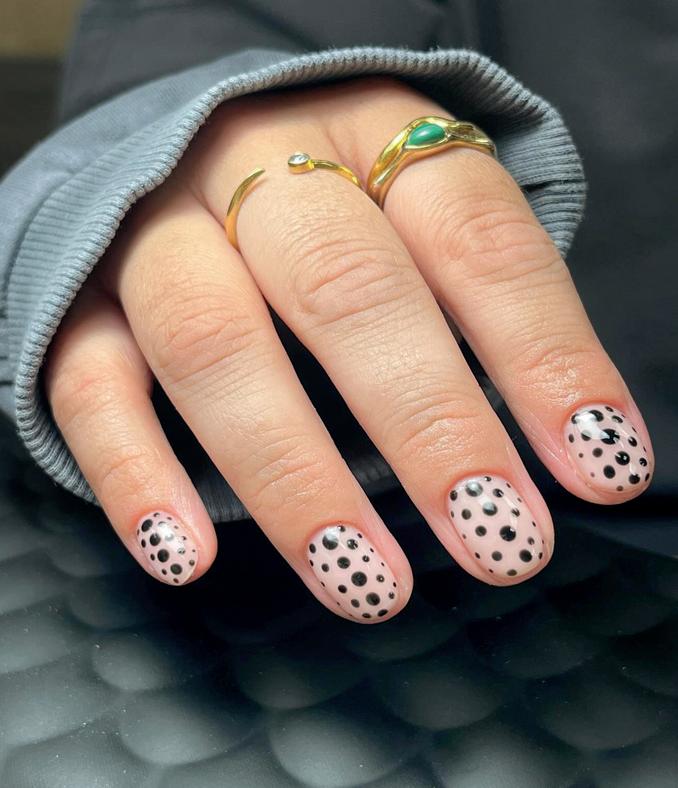

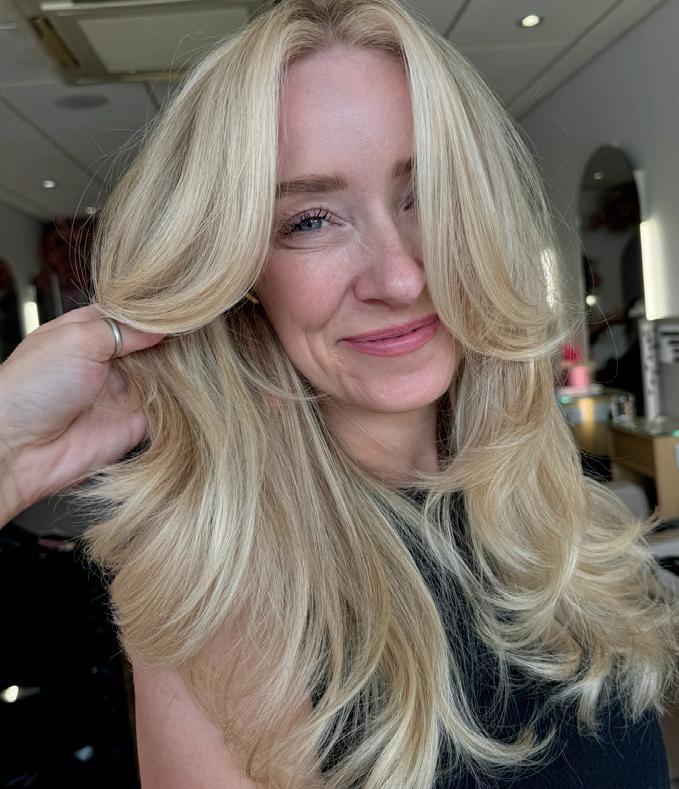

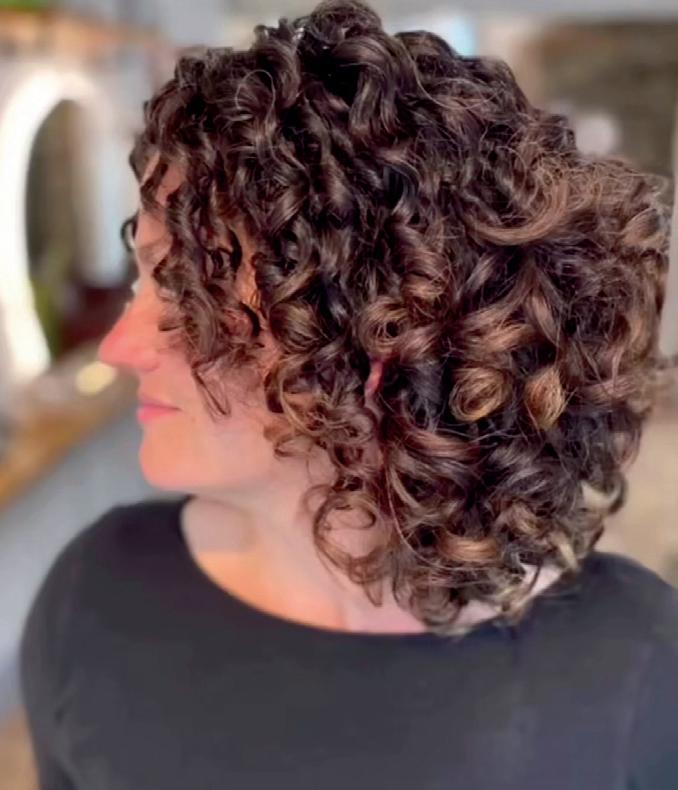

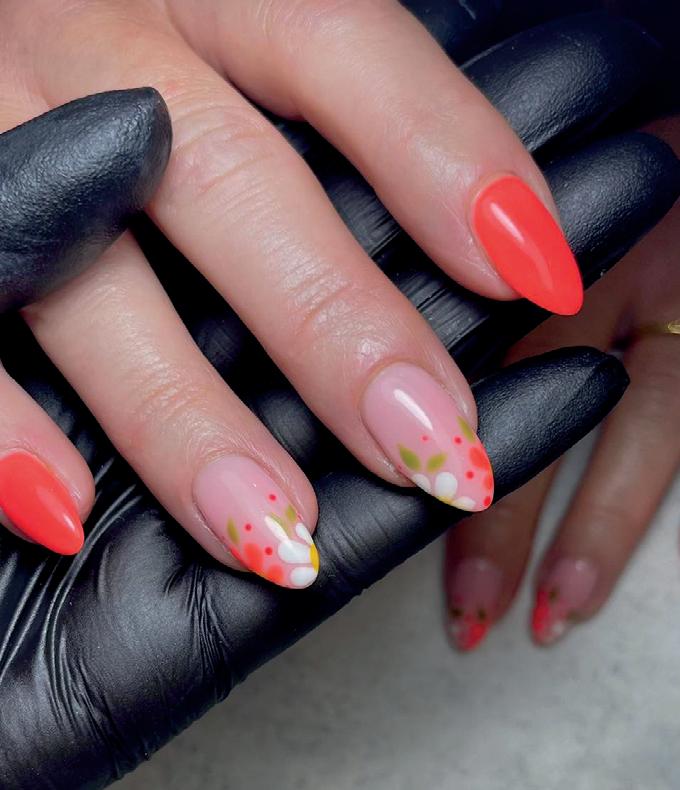

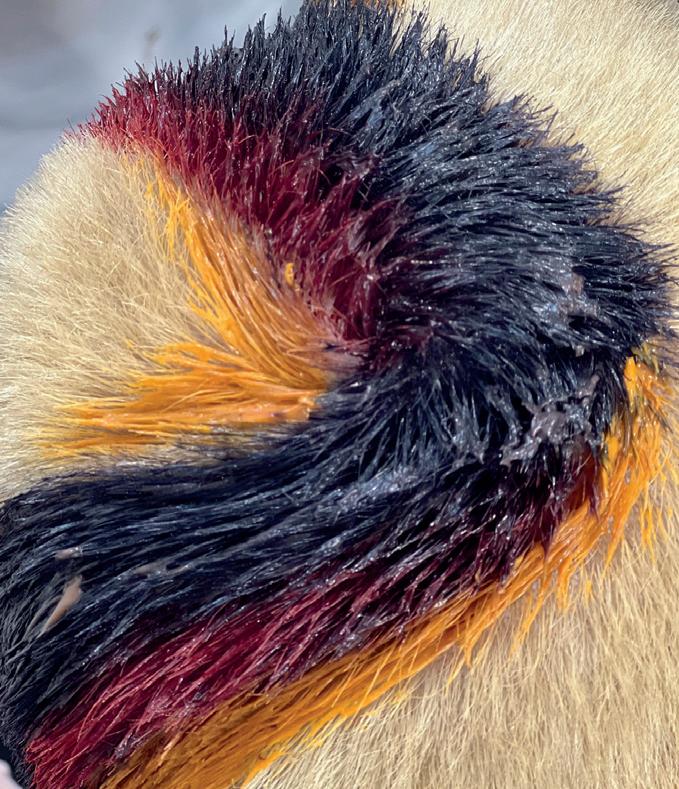



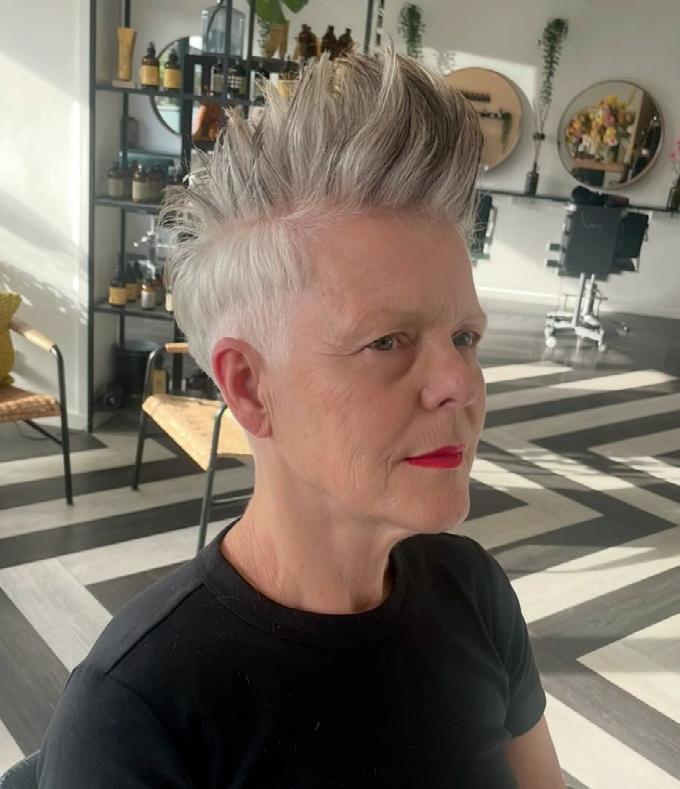







Have you created a style that you’re particularly proud of and want to shout about? Then post a picture to Instagram with the hashtag #salonfocus or tag @nhbfsocial and your shot could be included on these pages.
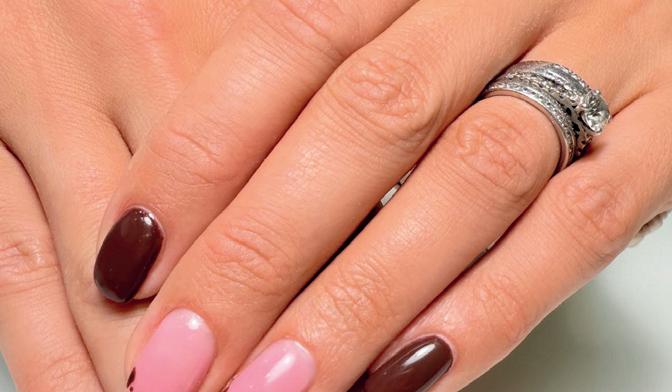
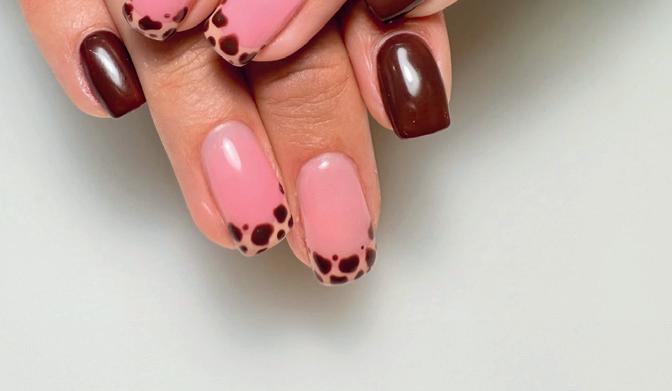




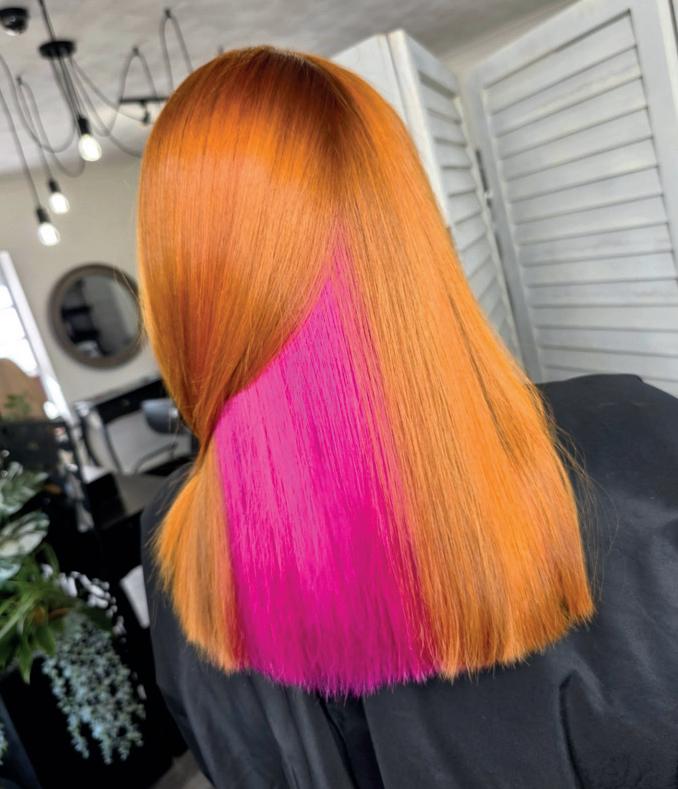

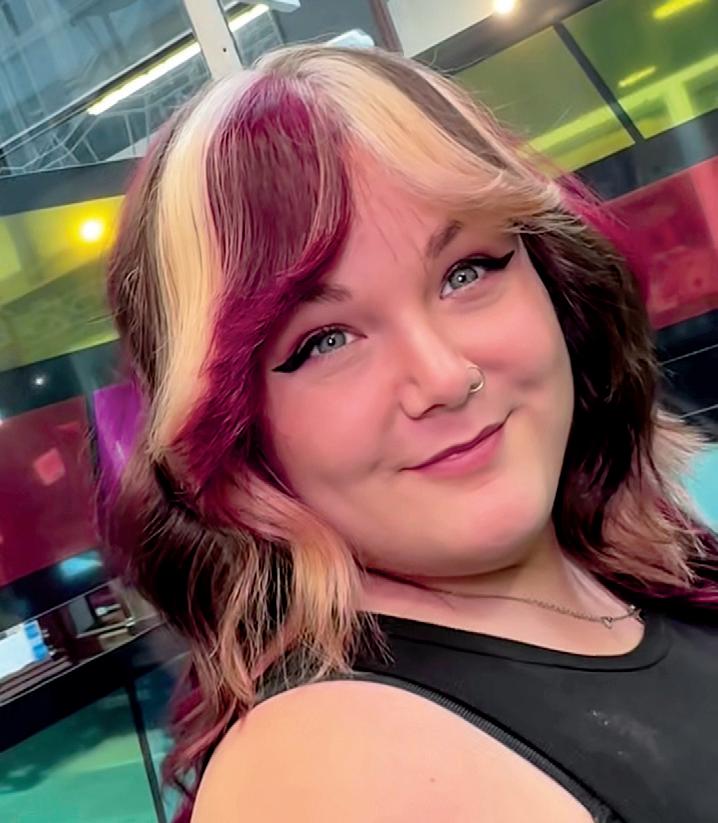

The spa owner and CEO-founder of The GelBottle Inc and Academy shares her journey to success, and reaching number 10 on The Sunday Times Beauty Rich List 2025.
I’ve always been a creative person… so when I came to the UK 15 years ago, I wanted a fresh start and took a leap into a creative business. I started small and built my experience. I opened my first nail salon with three stations, and it grew from there. Soon afterwards I opened a second, larger salon, sometimes doing 50 treatments a day. I loved running my own business and saw the potential to scale it. From there, The GelBottle Inc (TGB) was born.
It was a real evolution and chain of events… that led me to launch my own brand. I was getting feedback and insights from customers every day in my salons, so I knew what people wanted and what was missing. I started off developing a colour line just for our own salon use. It proved so successful compared to anything I’d used before that it sparked the idea to launch it into the market – I just went for it!
When I broke a nail on holiday… it got me thinking that there was an opportunity to formulate a totally new product. I collaborated with expert chemists to create exactly what I wanted – something that

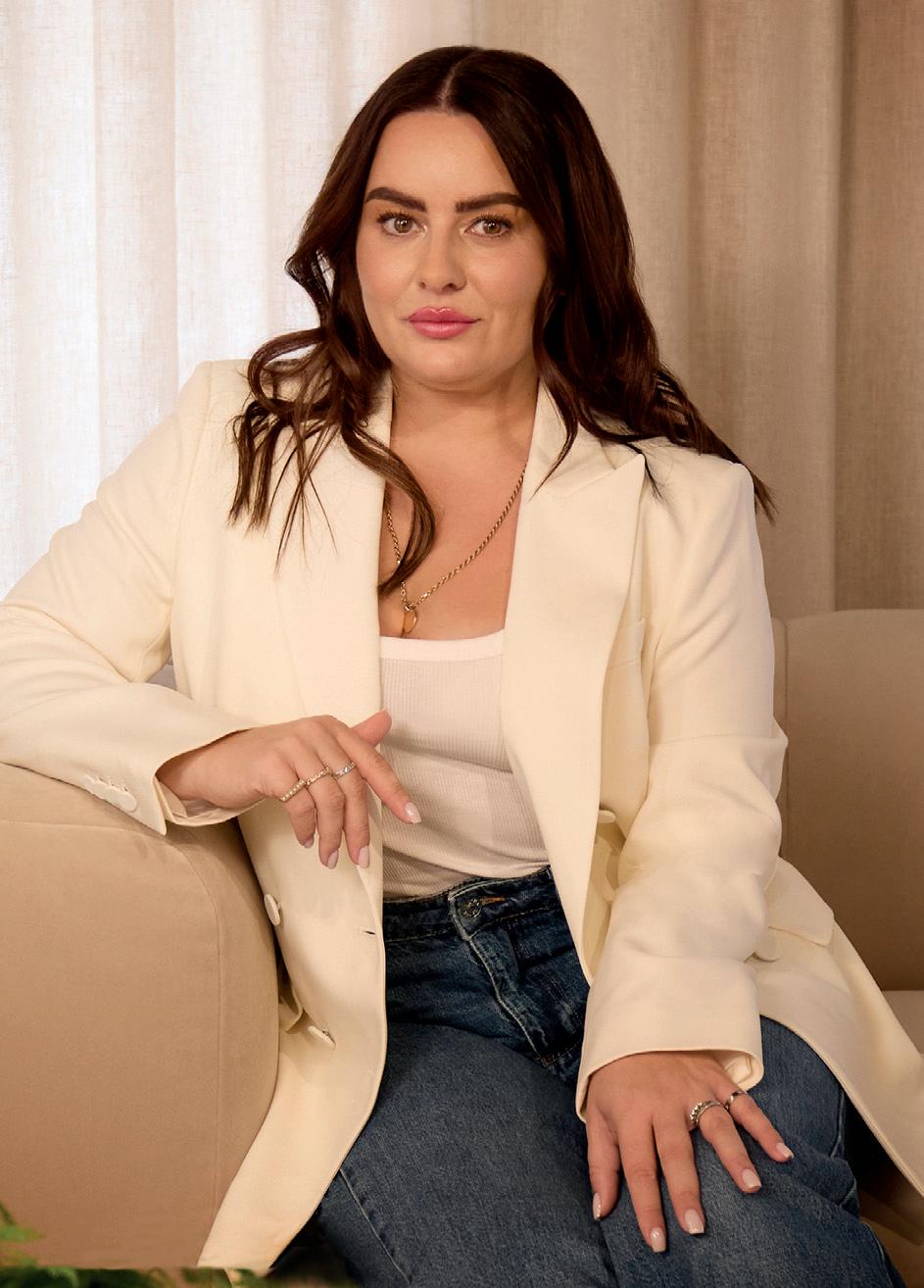
could be used to fix a nail but also provide unparallelled strength via a mess-free brush application. TGB’s Builder in a Bottle (BIABTM) range was born. I’m proud to say that it has become iconic, with the trademark catching on worldwide.

Being a founder, creative and CEO is extremely challenging… but this is what I love to do. Every day is different, and the diversity of my role motivates me and keeps me inspired – from boardroom business strategies to the creative process to playing with the products.
Sometimes you need to… make brave, difficult decisions for the company’s health, and that’s the hardest part of being a CEO. You need to be able to identify when something isn’t working and act on it.
TGB STATS
130+ staff members
600+ colours
1 million+ followers across social platforms
2 billion+ TGB nails have been painted worldwide
On top of my businesses, I am… paying attention to creating three other successful, happy lives. Balancing motherhood with being the CEO of multiple global brands is probably the hardest part of all.
I’m most proud of… the fact that millions of people use and appreciate my products and services. I receive so many messages from people thanking me for inventing BIABTM and helping their businesses boom. I thrive on feedback like this.
This year I was number 10… on The Sunday Times Beauty Rich List. Achieving this recognition 10 years into TGB, as a female founder, is huge.
I want to constantly grow and evolve... I’m in the process of launching a beauty manufacturing business in the UK that will supply to not only TGB, but also third-party businesses. I also want to support entrepreneurs and inventors to create, manage and market their own successful product lines.

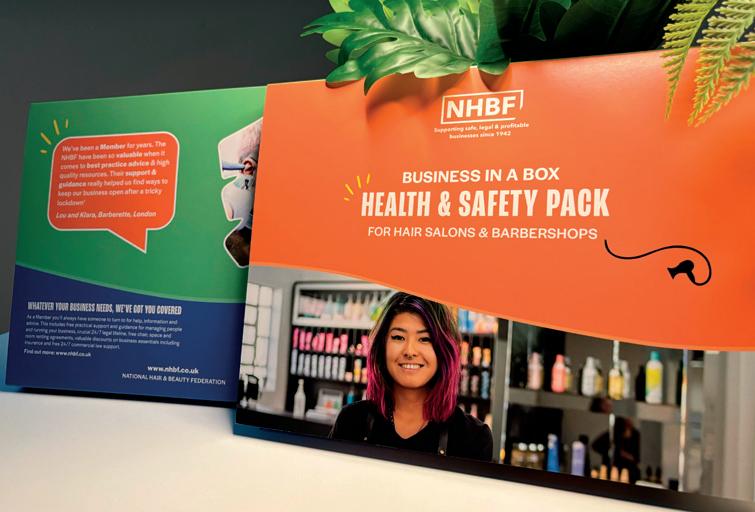
Our Business in a Box health and safety packs are the solution you need to make sure you’re prioritising a safe and efficient workplace. Created for both hair and beauty businesses, the full packs can be downloaded and are FREE to Members. Printed versions are also available to purchase.
Scan the QR code, visit nhbf.co.uk/bib or call our team on 01234 831 965 to find out more.
Become a Supporter for just £5 a month. Your money will go towards helping those who need it most to escape domestic abuse, mobility assistance, children’s uniforms, and much more. in the Cotswolds, and many more. Closing date is our posts can help us reach others who can support us with donations,
Become a Charity Supporter for just £5 per month SUPPORT,