
Whether you’re turning the lights on in your home or keeping your livestock warm, electricity is vital to our way of life. It powers our communities and keeps us safe. We use many different fuel sources to keep electricity affordable for the cooperative family because investing in you is why we exist!
STORY BY GAYLE M. IRWIN
From

The 68th legislature wrapped up its budget session a few weeks ago, and boy it was a doozie! From budget fights to “check gate,” the short 20-day session seemed a lot longer than that. I won’t go into all the politics of the session but rather touch on a few key issues and trends.
There were 335 bills and Joint Resolutions that were listed at the beginning of the session, and because the focus is supposed to be on the budget there is a two-thirds threshold for bills to be introduced and begin moving through the process. Thankfully many of those bills didn’t make the cut, some that concerned the rural electric cooperatives. There were also a number of bills relating to the energy/electric industries that made it over the two-thirds hurdle that kept us busy.
One shinning light was the passage of Senate File 99 “Prescriptive Easements for Electricity Delivery.” This will make it easier for our crews to access easements that were made with a handshake decades ago between ranchers, farmers and neighbors so that rural Wyoming could enjoy the same benefits of electricity that the more populated areas of the state had been enjoying for years. This was a two-year effort working with landowner organizations, such as The Wyoming Stock Growers Association and the Wyoming Farm Bureau Federation. We met regularly and compromises were made on all sides to come up with a consensus bill, which was passed overwhelmingly by a combined vote of 76-16-1.
At the end of the session committees met to discuss topics/issues that they are going to study over the coming year, and just as in years past, electricity, large loads (i.e., data centers) and third-party generation were at the top of some of the committees’ lists.
You’ll probably get tired of me writing about these issues in the coming months but if some people get their way there could be big changes coming, or at least proposed, to the utility industry that could have significant impacts to the rural electric cooperatives. We will continue to work with elected officials and stakeholders just as we have in the past, as with wildfire liability legislation last year and the easement bill this year, because the one thing I’ve learned when working on both these issues over the past two years is that if people and industries just work together, we can get more accomplished on behalf of all of our respective constituents than if we work against one another.
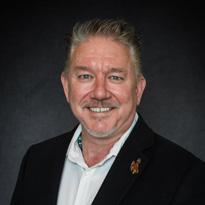
SHAWN TAYLOR EXECUTIVE DIRECTOR
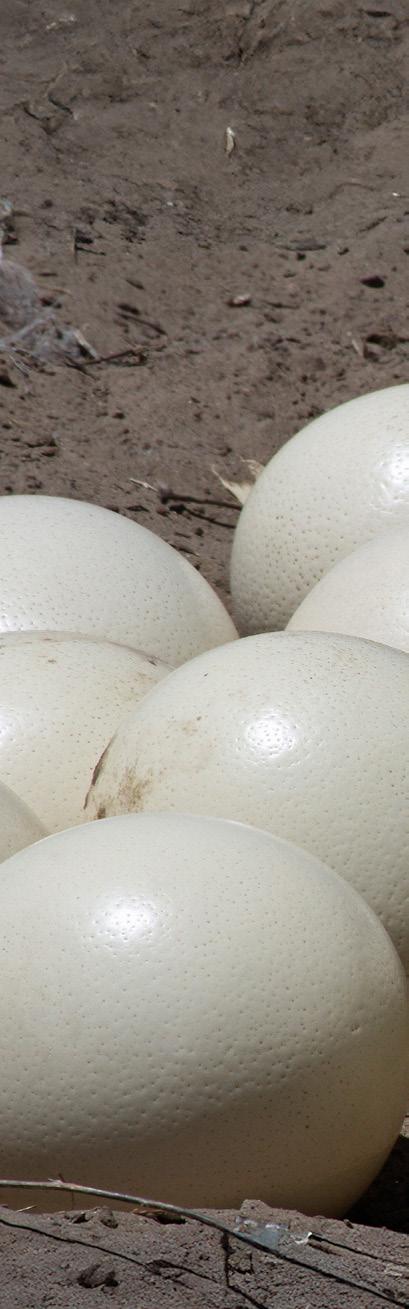
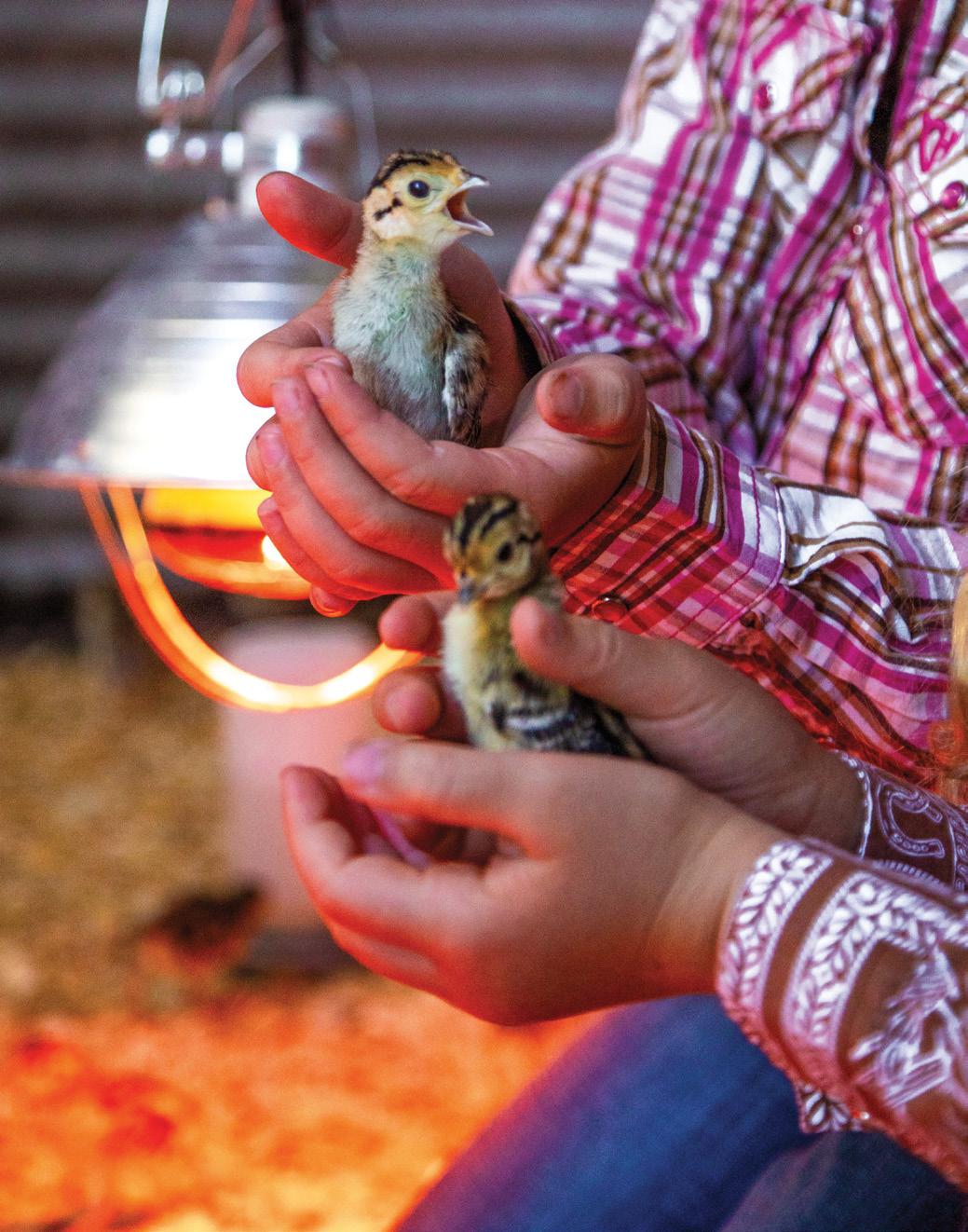
OSTRICH EGGS BEING WARMED BY THE SUN
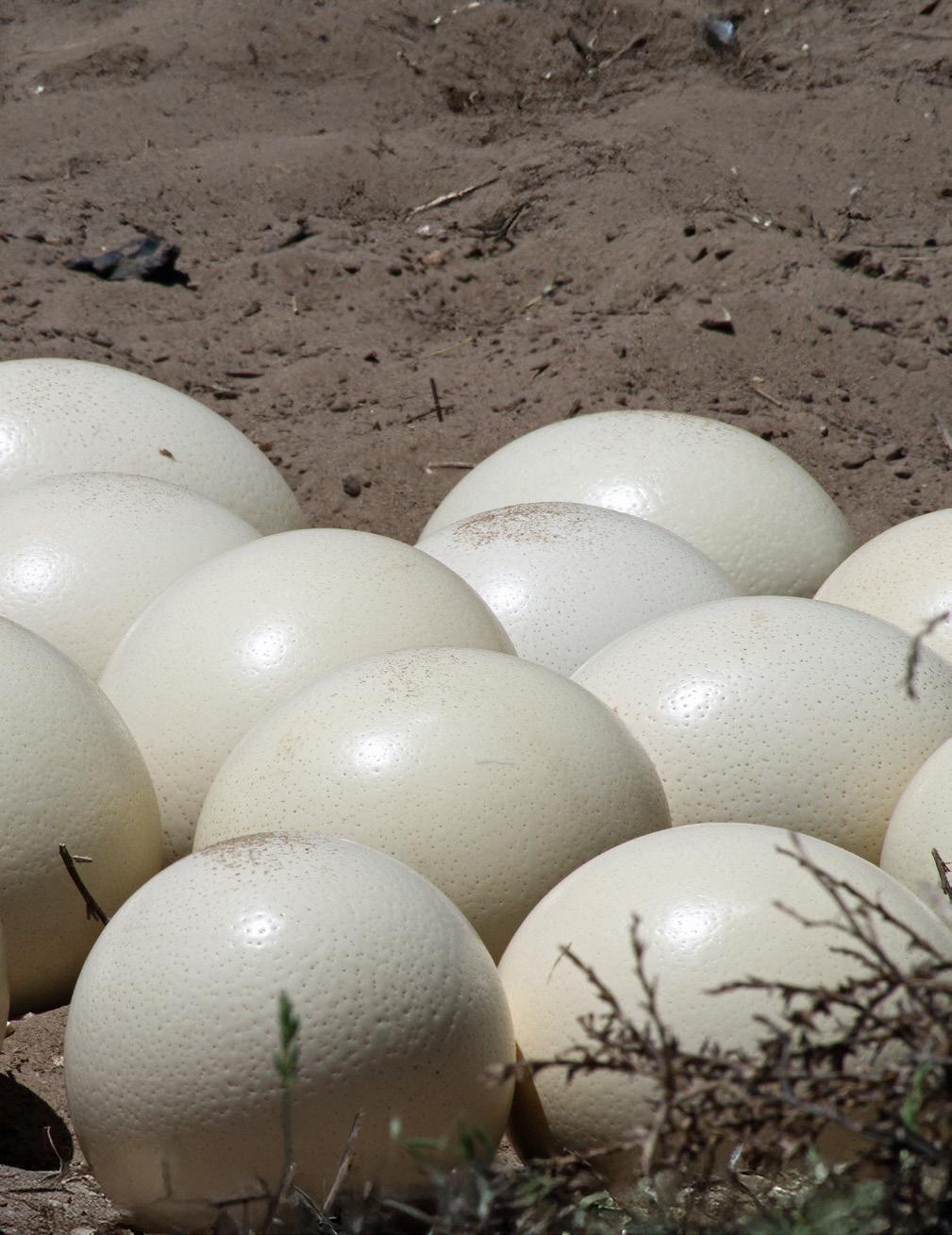
This year we are featuring our favorite "Just Picture It" submissions here, at the front of the magazine! Submit your best photos each month for a chance to be featured in this space.


With its innovative design, modern comforts, and guest-focused philosophy, American Encore is not just a riverboat, it’s the finest expression of American river cruising ever built. Designed to host just 180 guests, American Encore features more square feet per guest than any other small cruise ship with the largest staterooms globally.
Ship








In the early 20th century, small-scale hydroelectric plants played a modest but important role in rural electrification. Many small, remote communities relied on small-scale hydroelectric or coal-fired plants because national grid connections were not yet available. One example is Star Valley Power & Light, established in 1907, which harnessed local stream water power to supply electricity to Afton, Wyoming, and a limited number of nearby farms, contributing to the region’s early development.
Hydroelectric power generates electricity by using flowing water—often from dammed rivers—to spin turbines that drive generators. As a renewable, low-carbon, reliable energy source, it is estimated that hydropower supplies about 15% of the world’s electricity.
Hydropower plants are built near water sources, where energy output depends on the volume of water flow and the change in elevation. Water moves through a penstock, turning turbine blades connected to a generator. This process is used in most conventional systems, including run-of-the-river and pumped storage facilities.
After giving up its energy, the flow of water drains downstream through a spillway.
The turbine shaft is attached to the electricity generator, which converts rotational energy into electricity.
Seminoe Dam, the first dam and reservoir on the North Platte River as it flows from Colorado into Wyoming, was built by the Bureau of Reclamation in the early 1930s in a remote canyon of the Seminoe Mountains about 75 miles southwest of Casper. Named after trader and trapper Charles Lajeunesse, whose nickname “Simono” was given to local landmarks, the dam was part of the federally funded Kendrick Project authorized in 1933 under the National Industrial Recovery Act to expand irrigation and generate hydropower during the Great Depression. Construction began in 1934 but was slowed by flooding, isolation and dangerous working conditions that led to two fatal accidents. The 295-foot concrete arch dam was completed in December 1938, began storing water in April 1939 and generated its first electricity in August 1939; today, Seminoe Reservoir holds about 985,608 acre-feet of water, and the power plant produces roughly 150 million kilowatthours of energy annually.
Kortes Dam, located in the Black Canyon of the North Platte about two miles below Seminoe Dam, was originally considered for the Kendrick Project but was instead authorized in 1946 as the first unit of the Pick-Sloan Missouri River Basin Project, a joint effort of the Bureau of Reclamation and the U.S. Army Corps of Engineers focused on irrigation and hydropower development in the West. Built primarily for power generation, construction began in 1946 under hazardous canyon conditions, resulting in delays, added costs, 117 worker injuries and two fatalities.
Due to a regional power shortage, electricity generation began in June 1950—more than a year before completion. The dam was dedicated by Harry S. Truman in May 1950, with final completion in November 1951. The 244-foot concrete dam creates a relatively small reservoir of about 4,700 acre-feet and has a generating capacity of 36,000 kilowatts. While it draws few visitors, it supports the nearby Miracle Mile trout fishery through controlled water releases.
Together, Kortes and Seminoe have provided hydropower for decades, with added benefits of water storage and flood control.
Source: wyohistory.org
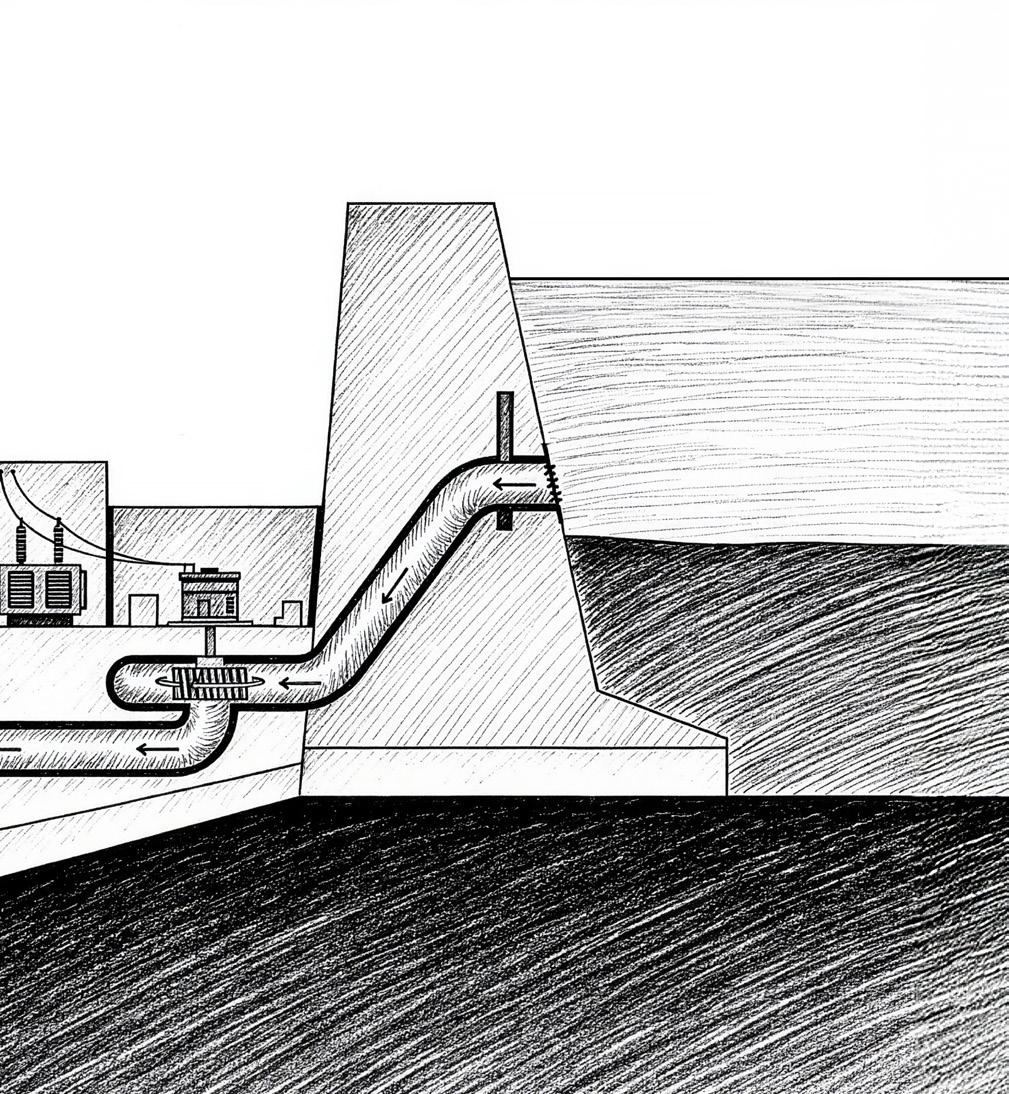
When it reaches the machine room, the water causes the turbine blades to spin, transforming kinetic energy into mechanical rotation.
Water behind the dam flows through an opening and down a pipe called a penstock. Potential energy is transformed into kinetic energy as the water flows through the pipes.
The dam across the natural river course holds back the water to form a reservoir. The potential energy of the flowing water is then converted into electrical output.





BY GAYLE M. IRWIN

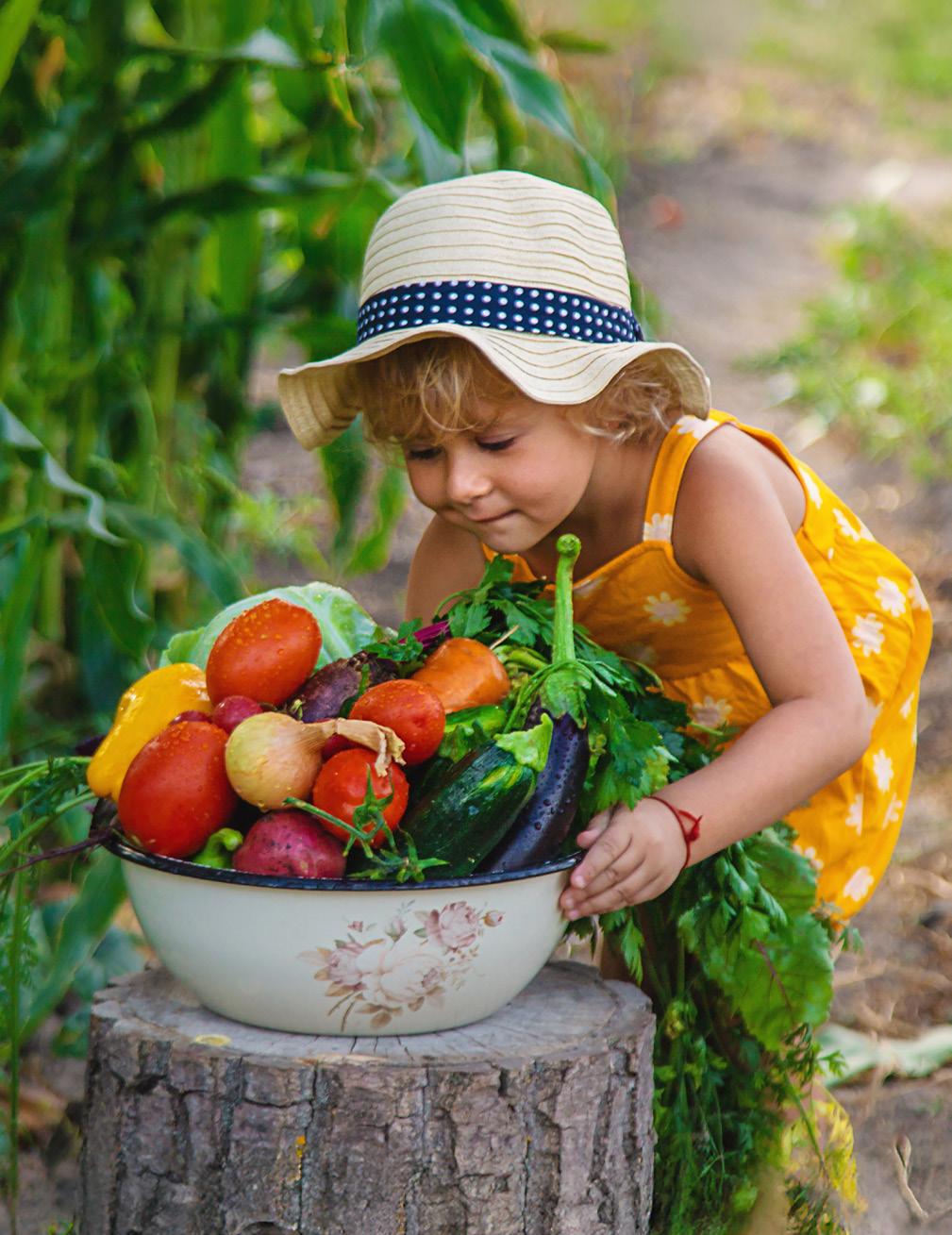
Gardening dates back centuries. Whether one owns acreage or plants in containers, gardening has and always will nurture individuals, families and communities.


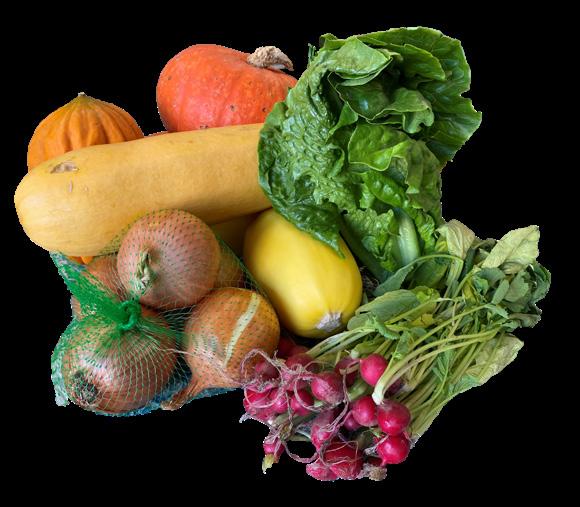
Wyoming. “Here we have limited access to good, local food, produce that hasn’t traveled thousands of miles in a truck.”
Her organization serves as an online farmer’s market, a bridge between food growers and consumers. Eat Wyoming distributes items produced in Wyoming to communities around the state.
Miller works primarily with producers in


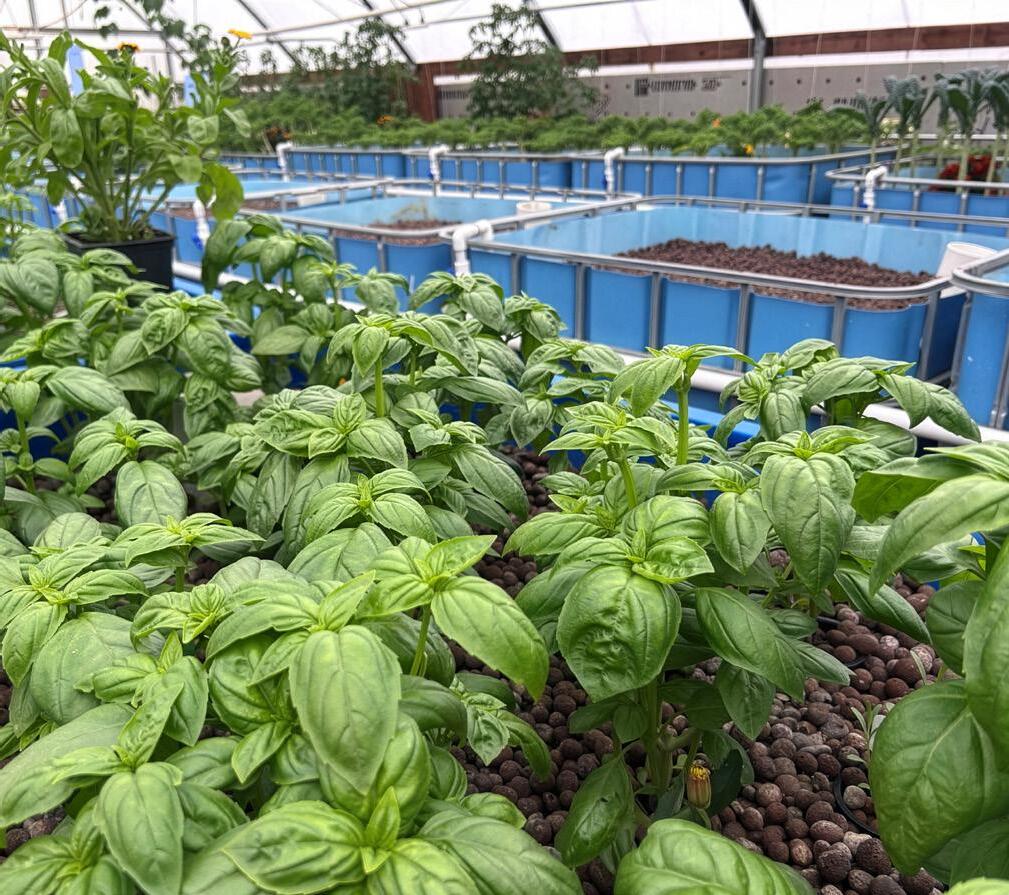
“We are a specialty-crop producer, and we have three greenhouses that we operate year-round,” he said. “We’ve made improvements that increased our winter production of lettuce, and LeAnn’s been an excellent buffer opportunity for us the past several months because many of our other customers are slower during the winter.”
The company uses hydroponics, a technique for growing plants using a water-based nutrient solution instead of soil.
In addition to providing produce for Eat Wyoming food bags, Papa Joe’s supplies restaurants and sells directly to consumers. What began as a hobby for Bunker’s father-in-law (the Joe of Papa Joe’s) quickly flourished into a business that employs up to seven people and provides food around the state.
Local vegetable and livestock producers increasingly contribute to Wyoming’s economy. A February 2025 publication from the University of Wyoming Extension Service written by Anders Van Sandt, Ph.D., highlights that economic benefit. In “Growing Resilience and Independence through Wyoming’s Local Food System,” Dr. Van Sandt stated that Wyoming’s local food sector contributes $24.4 million to the state’s economy. That number could grow.
“If Wyomingites spent just 5% of their food-at-home budget on local foods, we could expect the local food system to contribute an additional $36.3 million to Wyoming’s state GDP,” he wrote.

Not all Wyomingites can easily access or eat healthy vegetables and other foods. According to the Food Bank of Wyoming website, one in seven Wyoming citizens (about 15.5%) and one in five Wyoming children experiences food insecurity. Most of those households (59%) are ineligible for federal benefits like SNAP, according to a 2023 report from Feeding America.
To address this critical issue, First Lady Jennie Gordon started the Wyoming Hunger Initiative in October 2019. One of the programs within the Initiative is known as Grow a Little Extra (GALE), which encourages gardeners to grow additional produce to share with others in their communities.
“Any extra produce a person grows can be dropped off at an UW Extension Office in the county or it can be picked up, and that produce will be donated to [local] food pantries,” said Greta Spencer, central Wyoming regional director.
“We say, ‘you can nourish your garden while nourishing your community,’” Spencer stated. “A lot of people who use food pantries don’t have access to fresh produce … it’s a win-win situation.

People are growing these wonderful fruits and vegetables, and we distribute that out.”
The University of Wyoming Extension is also a great place to get advice on growing your own produce.
Through the University of Wyoming Extension Service’s Cent$ible Nutrition program, people can learn how to fix meals with the vegetables they receive, Spencer added.
Other programs that are part of the Wyoming Hunger Initiative include Food from the Field which streamlines donations of game meat to food pantries in the state, and Food from the Farm + Ranch that keeps locally grown protein and produce connected with communities. Additionally, a youth project called Fair to Fork purchases hogs from every county not sold at junior livestock sales through a lottery selection. The youngster whose hog is chosen then chooses a nonprofit in their county to receive the meat, Spencer said. For example, a young man in Douglas selected a new food pantry in his community, and another in Natrona County chose the Wyoming Rescue Mission.
“This program teaches the young person about giving back at a young age,” Spencer said.
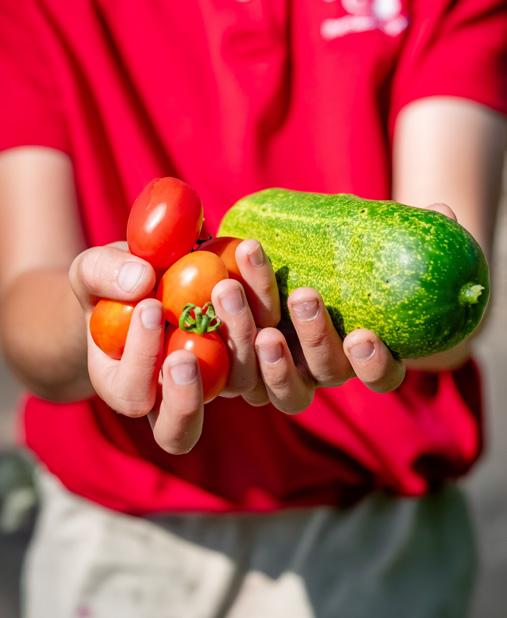
Many Wyoming schools are adding gardening to their grounds or growing food in greenhouses. Organizations like the Wyoming Hunger Initiative and Rooted in Wyoming partner with schools to either create programs and teach students about gardening or reap the results of young people growing the crops.
“We help grow about 100 pounds of lettuce in the Sheridan County School District #2 Greenhouses every week, and that’s put into the district’s school meal program,” said David Johnson, executive director of Rooted in Wyoming.
Staff also teach students about soil and gardening.
The organization has helped start nearly 20 gardens in the Sheridan area, Johnson added. These include two community gardens, a garden at the Sheridan VA Medical Center and gardens at schools such as Highland Park Elementary and Holy Name School.
Rooted also partners with the Powder River Basin Resource Council to offer free garden seeds to residents through a Seed Catalog located at the Sheridan County Fulmer Library as well as at the Rooted office, he added.
The organization also partners with the Wyoming Hunger Initiative’s GALE program, encouraging gardeners to grow more and donate to their neighbors.
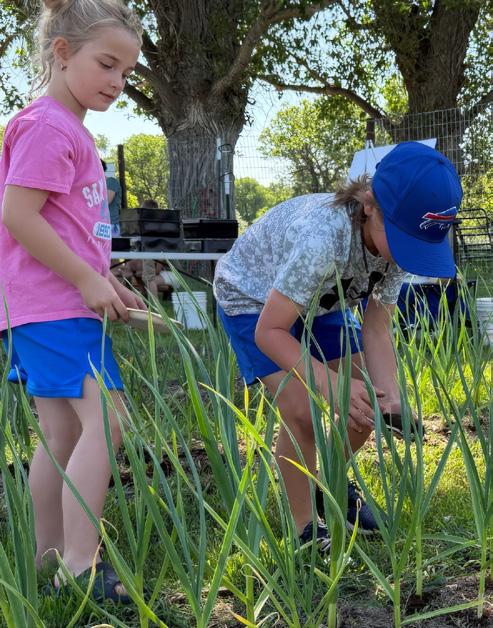

On the east side of Casper, surrounded by medical buildings and car dealerships, six acres offer people the opportunity to grow their own food and come together to put food on their tables and those of family, friends and strangers. The urban garden space, known as Grow Casper Urban Farm, is a community focused and volunteer driven educational growing space developed by Casper Community Greenhouse Project. Jennifer Gillihan is the farm manager.
“People can come and have a community garden space for themselves or garden with friends and family and share in the harvest,” she said. “There is a strong sense of community when people grow together.”
People can also volunteer at the garden and receive some of the harvest at the end of the season.
“We are also doing some vocational training,” Gillihan said.
Long-term plans call for adding greenhouses to the one currently erected and developing an event space, increasing that community vibe.
In addition to Casper and Sheridan, community garden spaces can be found in Gillette, Cheyenne, Jackson, Lander and other towns.


Although many Wyoming people enjoy gardening, wind, weather, poor soils and short growing seasons are a few of the challenges they face, said Donna Hoffman, State Master Gardener Coordinator, based in Natrona County. Elevation “really impacts the length of our growing season,” she said.
Paula Jamison has gardened in Riverton for more than 30 years. She uses raised beds
“Tomatoes and green peppers have done well for me,” she said. “I’ve tried kale and
“we

eggplants without much success. I think we just don’t have a long enough summer.”
She doesn’t use pesticides or insecticides, and though she has experienced good crops of peppers and broccoli in past years, that has changed during more recent seasons.
“This year, I’m going to start over with my raised beds, and I’ll be amending the soil as well as creating new beds,” Jamison said.
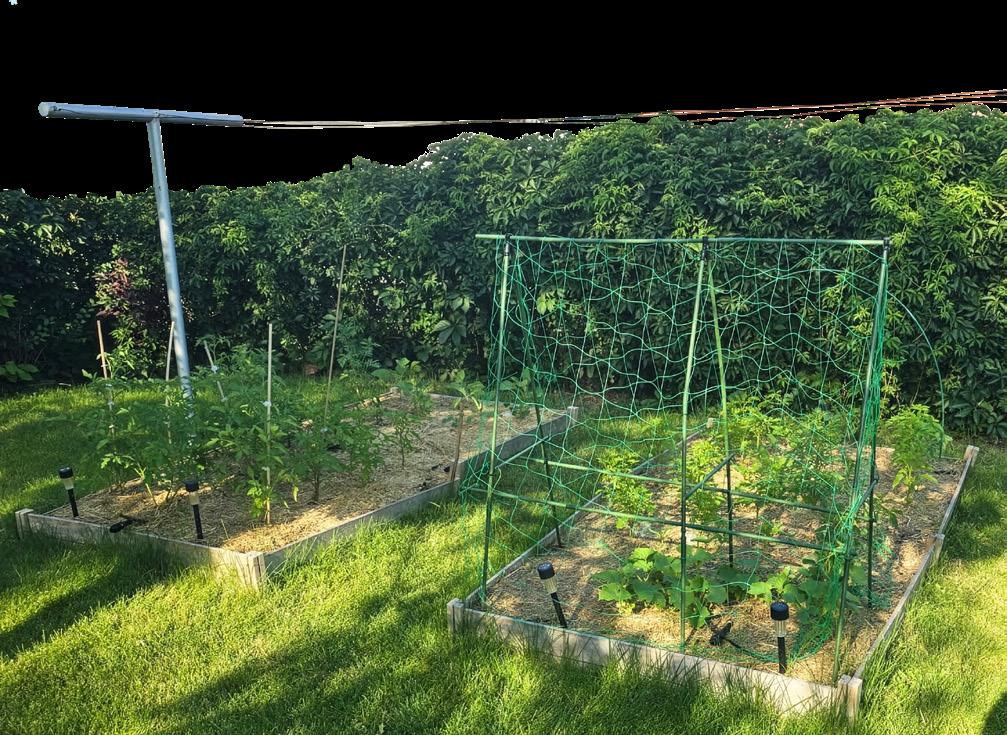
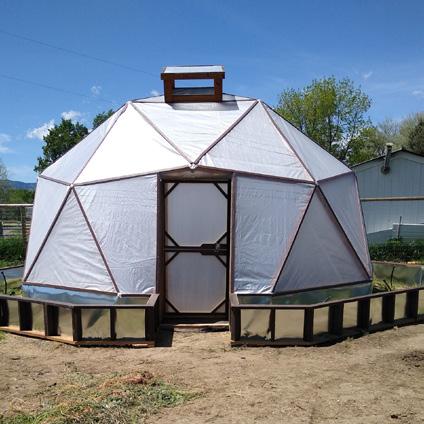
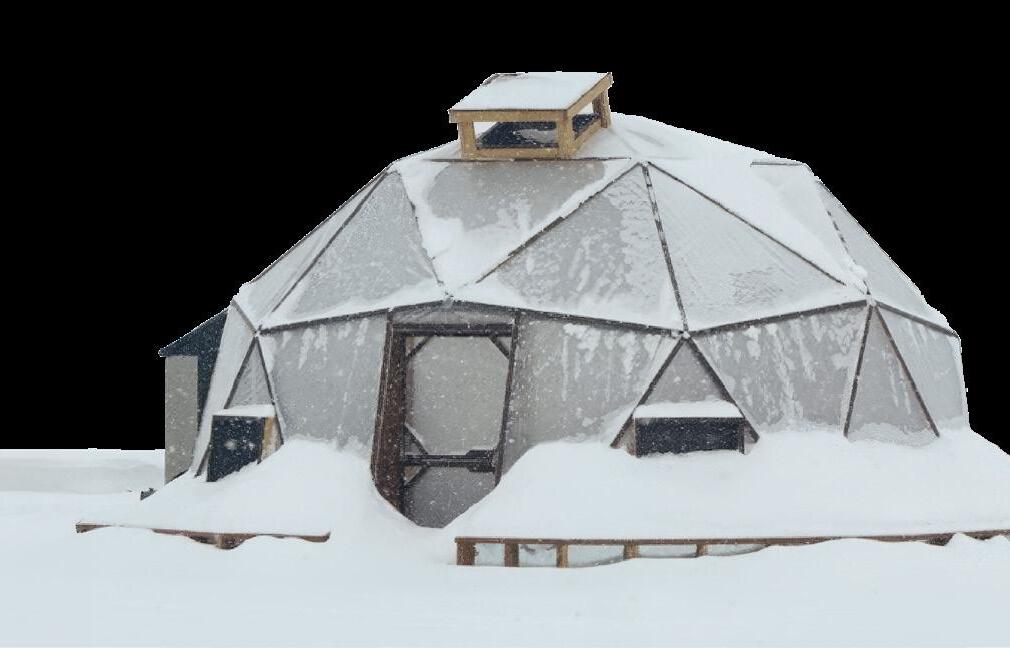
To help alleviate the challenge of a short growing season, many producers and individuals use greenhouses. Jeff Edwards of the University of Wyoming Extension office crafted a geodome project more than 10 years ago, using specialized plastic that withstands Wyoming’s winds and snow. He’s constructed the structures throughout the state, in such places as Afton, Buffalo, Cody and Riverton.

He’s updated the concept and the written manual included in the dome kits.
“In 2024 I expanded the dome manual to include raised beds inside and outside and an irrigation system,” he said. “If you include all of this as well as the lumber and plastic, it costs about $5,000 to build a dome in Wyoming.”
The domes are generally 22 feet in diameter.
“It optimizes the lumber,” he said.
Darrah Goggles, a founding member of Grow Our Own 307, attended a workshop Edwards conducted and brought the idea of geodome construction to the Wind River Reservation. She and her team constructed nine structures on the
reservation, and she is constructing a tenth geodome this spring.
“The domes don’t allow you to grow all year, but they extend the growing season,” Goggles said. “We’re able to plant earlier … and the season will last a bit longer.”
She was also involved with helping community residents plant gardens. Much of the push to establish gardens on the reservation came during the COVID-19 pandemic, Goggles said.
“We helped people start growing their own food and helped them learn they could develop that self-sustaining skill so they wouldn’t be so worried and stressed about where their food would come from,” she said.

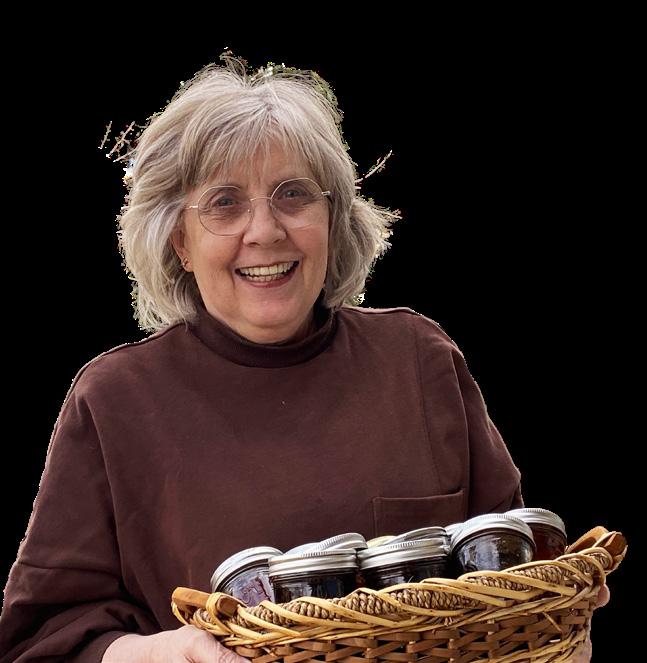
backyard, and grape vines become laden with fruit each summer. Jams and jellies line shelves in their house and are taken to farmer’s markets and other vendor events throughout the year.
The Bowers grow green, purple and champagne-colored grapes.
“I make a lot of grape juice, I give a lot of grapes away and I make a lot of grape jelly,” Bower said.
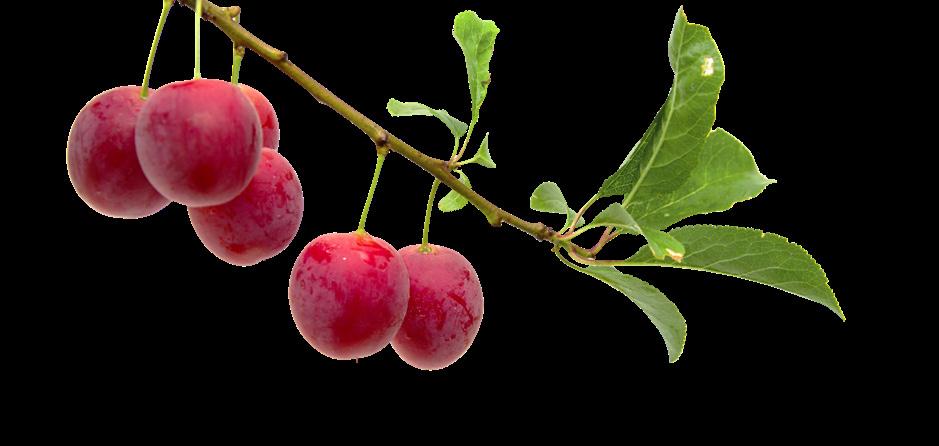
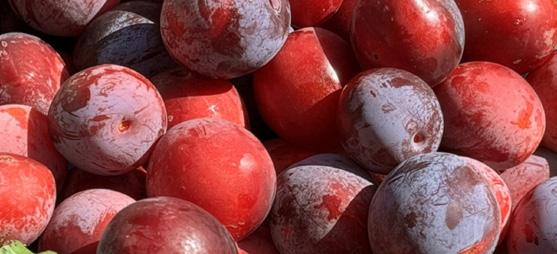
Plums also readily grow.
“I’ve literally walked around the farmer’s market asking people if they want plums,” Bower said.
Berries, herbs and flowers are other components of their garden areas, including raspberries, oregano, lemon balm, coneflowers and springtime bulbs.
The Bowers recently added two bee hives to their backyard. Pollinators like bees are critical to growing food and they, along with butterfly species, are declining (see sidebar story). The Bowers also plant currents, gooseberries and other plants to feed birds.
“I enjoy seeing the different colors [in the yard] and the bees and butterflies so happy,” Bower said. “It makes me happy.”
“Gardening is a very sacred act,” stated Goggles, who is the project manager for Native Memories. “It’s different for each person. They each have a different connection and communication with the land.” W

Whether gardening to feed the family, beautify the space where one lives or both, a person can easily garden for wildlife simultaneously. Using native plants is key, experts say.
“The most common plants native pollinators are looking for are native flowers,” said Donna Hoffman, State Master Gardener Coordinator with the University of Wyoming Extension Service.
Many species are decreasing in number, including monarch butterflies and honey and bumble bees. The primary reasons are habitat loss and pesticide poisoning, according to multiple resources such as U.S. Fish and Wildlife Service and the Xerces Society for Invertebrate Conservation, which notes that pollinators “are necessary for the reproduction of over 85% of the world’s flowering plants, are responsible for as much as one third of the food and drinks that we consume, and contribute to the production of our clothes.”
The organization also states that almost 30% of bumble bees in North America have experienced “significant declines” and that America’s monarch butterfly population has decreased 74 -80% across the U.S.
No matter the size of a yard, people can help pollinators by planting native flowers, trees and shrubs as well as vegetables that are pollinator-friendly. Container gardening is also helpful.
When Heather Johnson and her husband moved to Laramie about four years ago, they chose a space that needed attention.
They planted a variety of vegetation that attracts birds, bees and butterflies.
“I have a lot of bee balm – the hummingbirds and butterflies absolutely love bee balm,” she said. “I have a whole row of native sunflowers and also Mexican hat, which does great, as does es echinacea. I also have native grasses in the yard.”
Fruit trees, cottonwoods, aspens, rabbit brush, penstemons, hyssop, bee balm and sunflowers are plants that not only do well in Wyoming but attract, feed and shelter pollinators, said Johnson, Laramie Audubon chapter member and Habitat Hero committee member for the organization.
“The more native you can go, the better off pollinators are,” she said.
Plum and cherry trees, blue spruce and aspen adorn her yard, offering food and shelter for birds and pollinators. Some herbs, like dill and basil, can be left to flower after gardeners use what they need and provide food sources for pollinators. Flowers of squash plants can also be a good resource for them, Johnson added.

The Audubon Rockies and National Wildlife Federation (NWF) offer programs to motivate and help people garden for wildlife. Learn more about the Audubon’s Habitat Hero program at this website: audubon.org/rockies/projects/ habitat-hero, and learn more about the NWF’s Certified Habitat Program, at this website: content.gardenforwildlife.com/certifiedwildlife-habitats.


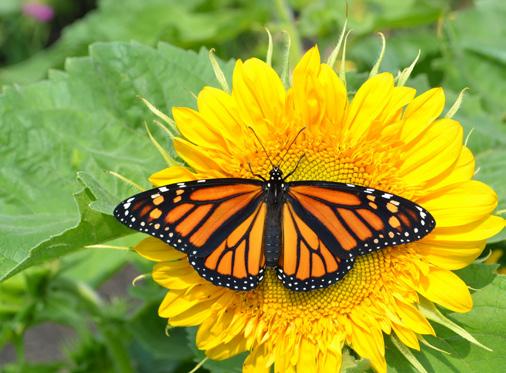
Monarch butterfly population has decreased
74-80%
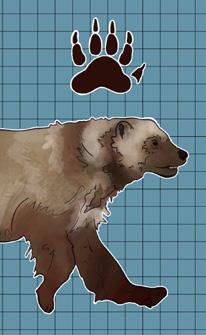
You might think a wolverine is a superhero. While they do not have the kind of powers you might be thinking of, wolverines do have some super adaptations, or special body features, to help them live happily in the cold, snowy mountains!

wyobiodiversity.org
Although they look like a small bear, a wolverine is a mustelid (muss-tuh-lid). This means that they are related to ferrets, otters and weasels. Wolverines are the biggest land mustelid, and weigh about the same as a medium-sized dog (13-40 pounds).
Wolverines live in the mountains in Wyoming. They are very rare. Biologists have used pictures and fur samples to guess that there are only 10-15 in the whole state of Wyoming! If you are lucky you might see one in the Teton, Wind River, Absaroka or Wyoming mountain ranges.
Sharp teeth help them eat frozen meat and bones from elk, deer, rabbits, eggs and berries. They will eat almost anything they can!
Thick fur helps them stay warm and dry.
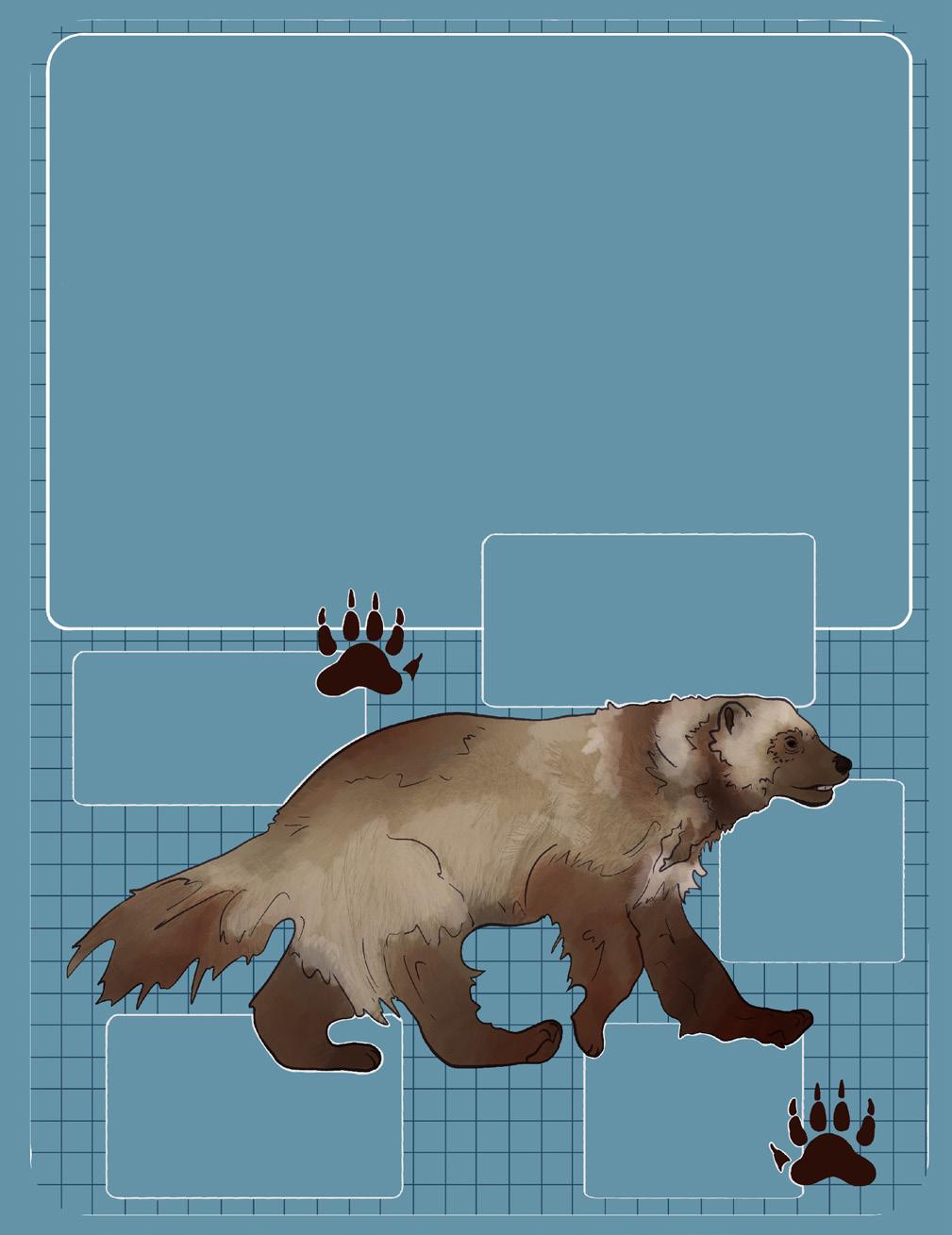
Strong sense of smell to be able to find food – even with 10-20 feet under the snow!
Fast, strong legs help them travel long distances –sometimes 40 miles in one day!
Big furry feet work like snowshoes to help them travel through their snowy homes.

In times of economic uncertainty—when inflation rises, markets fluctuate, and long-term financial stability feels less predictable—many investors turn to gold as a dependable store of value. By holding a portion of your wealth in gold, you can help safeguard your portfolio and preserve longterm financial security, even when broader economic conditions are unclear.
Since 2015, gold has surged over 400% — outpacing both the S&P 500 and the Dow during the same period.
American Gold Reserve is releasing government-issued $5 Gold American Eagles completely free of dealer markup for only $529 each. These beautiful $5 Gold American Eagles are a perfect way to enter the gold market. Set for immediate public release, availability is limited and supplies are expected to sell out quickly.


• Free of dealer markup.
• Gold provides protection against inflation and deflation.
• Gold offers financial cover during geopolitical and macroeconomic uncertainty.
• A strong portfolio diversifier.
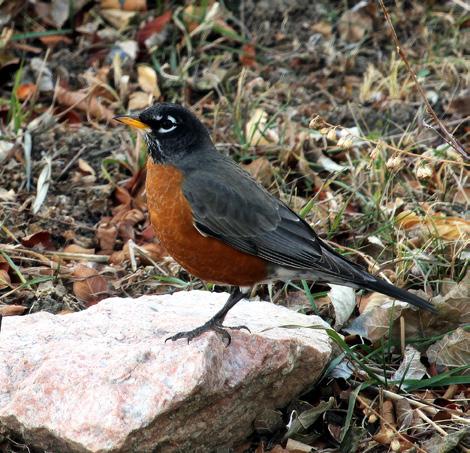
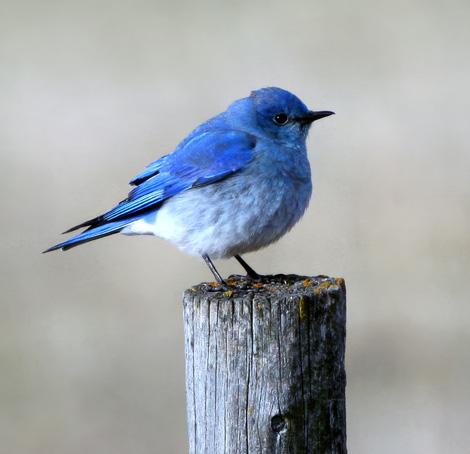
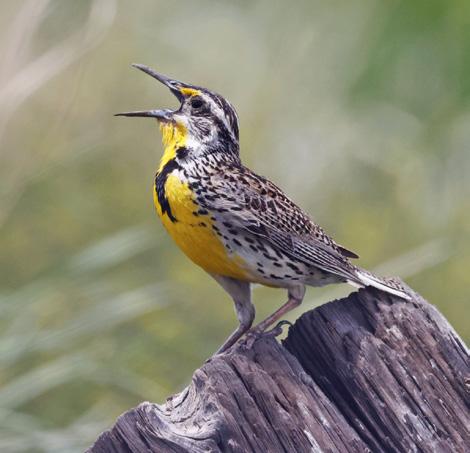
They hop around our yards and flit and fly in our gardens. Several eat seeds from feeders we put out and drink from dishes we fill with water. Some claim nest boxes placed along wooden fences while others trill from posts and wires. They are colorful, soulful and often plentiful, especially in spring and summer.
Robins, goldfinches, mountain bluebirds and western meadowlarks are four vibrant songbirds that signal spring in Wyoming, and the sights and sounds of them lift our spirits.
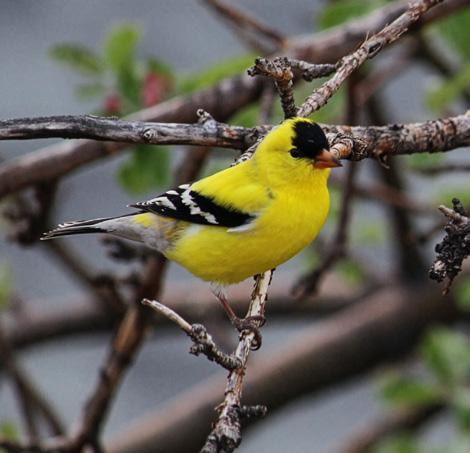
The American goldfinch can be found throughout the United States. About the size of a sparrow, the male’s bright yellow and black coloring captures attention.
Goldfinches primarily eat seeds and insects. According to the National Audubon Society, these birds live in habitats of thistles and weeds as well as open woods, using trees and bushes for shelter.
These striking birds eat from sunflower and thistle feeders I set out. They often use my backyard apple tree, flitting from feeder to branch, using the limbs to crack the sunflower shells to reach the seed within. I also often observe these birds at the water dish that rests on the top rail of our back deck. These beautiful birds are one of the reasons I enjoy spring.
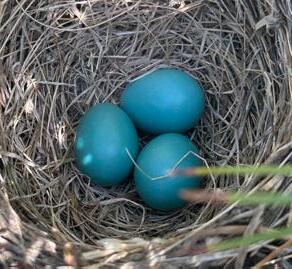
Another plentiful and familiar springtime songbird is the American robin. Larger than the goldfinch, this species resides in urban areas as well as farmlands and forests. Few people have not watched these orange-breasted birds claim worms after a rain. Robins also eat insects, snails, spiders and other invertebrates. In winter, they seek berries to consume, both wild and cultivated fruit. A robin’s nest is cup-shaped, crafted from grasses, twigs and debris that are worked into a solid foundation of mud and then lined with fine grasses and plant fibers. The National Audubon Society notes that robins can raise two broods of young each year; some pairs raise three.
Living on an Iowa farm during childhood, I often observed robins. Rain falls more readily there than in Wyoming, but I
still see robins in my Casper yard and throughout town. For years, my family has noted on a calendar when we see the first robin, which, to us, proclaims, “Spring is here!”
From mountain foothills to parts of the prairie, wooden boxes with drilled round holes can be seen along highways. During spring and summer, flashes of powder blue, sometimes gray, are observed gliding near those boxes. The mountain bluebird is another signal of spring in Wyoming after wintering in southwestern states.
Despite their name, mountain bluebirds prefer habitats of lowland prairies and sagebrush. They feed primarily on insects, like grasshoppers, crickets, ants and beetles. When not nesting in boxes crafted by humans, these birds select tree holes made by woodpeckers or those in buildings, crevices in cliffs, or among rocks.
An interesting concept known as bluebird trails has popped up in several states, including Wyoming. Such “trails” consist of a series of bluebird nest boxes, encouraging these robin-sized songbirds to take up residence for nesting and raising young. One such Wyoming trail is found at the National Elk Refuge near Jackson. The U.S. Fish and Wildlife Service partners with the Jackson Hole Wildlife Foundation to establish more than 100 bluebird boxes along the refuge’s western border. Another bluebird trail is located outside of Cody along, what else? Bluebird Lane! Views of nearby mountains, including Heart Mountain and the McCullough Peaks, can be seen from this area.
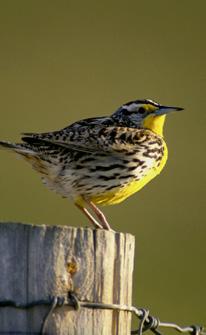
The western meadowlark is the state bird for six western states, including Wyoming. The bird’s golden chest with
a black “V” is unmistakable, although its cousin, the eastern meadowlark, looks similar. At times, the ranges of both species overlap.
For many people, including me, hearing the trill of a western meadowlark announces that spring has arrived in Wyoming … or is at least close at hand. These incredible singers are among the first songbirds to arrive in the state for springtime. Another “snow-bird,” this species winters in Texas, southern Arizona and Mexico.
According to the National Audubon Society, spring habitat for western meadowlarks includes grasslands, cultivated fields, pastures, meadows and prairies. They consume insects and seeds. Ground nesters, the female generally lays five eggs. Both parents tend the young, which leave the nest after about 12 days, even before they are able to fly. The parents continue to care for their young for another two weeks. Parents can raise two broods a year.
Seeing and hearing western meadowlarks while driving Wyoming’s highways and byways and those of neighboring states brings a smile to my face. There is just something special about this species that conducts a springtime symphony.
Our calendars document March as the beginning of spring. We’ll soon begin encountering these four songbird species, if we haven’t already. Wyoming is blessed to host hundreds of bird species, whether here for a season or year-round. Experiencing the wide variety, including the aforementioned four colorful and melodious songbirds, delights and soothes the soul. Enjoy them and happy spring! W
Gayle M. Irwin is a freelance writer based in Casper.


LESLIE COLBURN


Written by award-winning author Leslie Colburn, “Twinkle, the Littlest Star” tells a heartwarming story. Created tiny among the bright stars, Twinkle doesn't fit in and dances across the night sky to find her place. The biggest star tells her she's too dim and small, and the little stars tell her she's too young. Twinkle feels alone and doesn't know her purpose. When an angel appears and tells her that her time has come to shine, Twinkle finally knows why she was created. Shining brighter than any star in the sky, Twinkle lights the way to a very special birth.
Through poetic storytelling and breathtaking illustrations, “Twinkle, the Littlest Star” captures the wonder of the Christmas story and the truth that each of us has a special place. This tender, hopefilled book is the perfect reminder for children (and adults!) that your light was meant to shine.

Colburn is also the author of “Our Goodnight Prayer,” “I Want You to Know…” and “YOU: A Reason to Celebrate.”

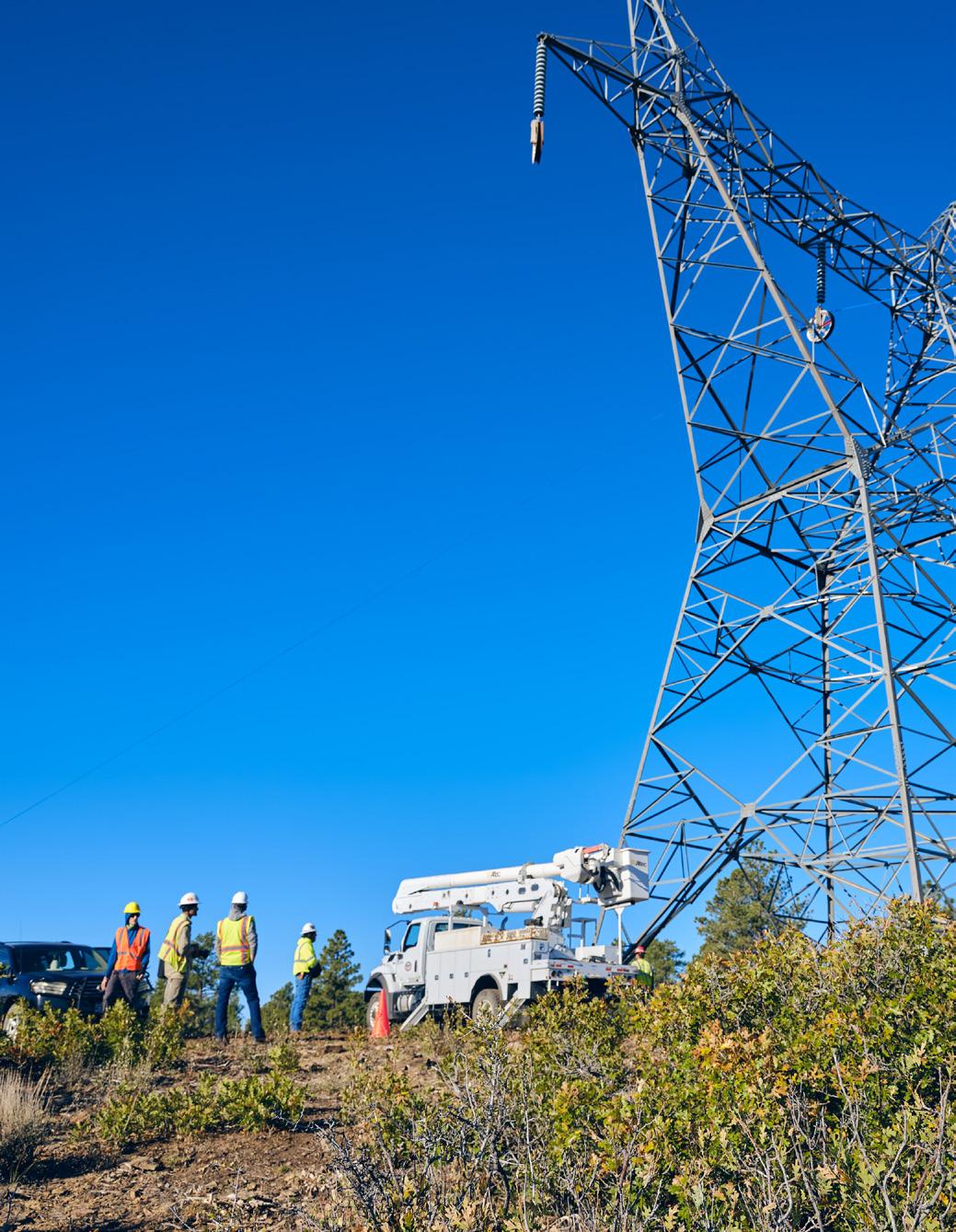
Tri-State, together with your local electric cooperatives, is proud to power Wyoming’s homes, farms, and businesses.
We welcome responsible growth that supports our communities. We’re not just keeping up with change—we’re planning for it, with a commitment to reliability and affordability.
So that the grid we’re building today is strong enough for tomorrow’s ideas. When Wyoming grows, we all grow.
WHATEVER THE FUTURE HOLDS, WE’LL POWER IT.®
Scan to learn more or visit www.tristate.coop/powering-future

2 LB STEW MEAT, CUT INTO BITE-SIZE PIECES
1 PKG DRY ONION SOUP MIX (BEEFY ONION PREFERRED)
1 CAN GINGER ALE
1 CAN CREAM OF MUSHROOM SOUP
1 CAN MUSHROOMS, DRAINED (4 OR 8 OZ, OPTIONAL)
Combine all ingredients in an ovencompatible pot with a tight-fitting lid, stirring well. Cover and cook at 350° for 3 hours. Remember, “No Peekie!” Serve with mashed potatoes, cooked rice or cooked egg noodles.
KAYE WILSON LYMAN
2 LB ROUND STEAK, CUBED
1 CUP WATER
1 1/2 TSP SALT
1/4 TSP PEPPER
2 CANS TOMATO SAUCE
1 CELERY, CHOPPED
2 LARGE RED POTATOES, CUBED
1 CARROT, CHOPPED 1 ONION, CHOPPED 1 CAN OF MIXED VEGETABLES
1 SLICE OF BREAD, CUBED
Brown the meat, then transfer it to a dish. Add the rest of the ingredients and mix well. Cover and bake at 250° for 5 hours. Stir occasionally.
1 LB STEW MEAT, CUT INTO BITE-SIZE PIECES
2 ONIONS, CUT TO DESIRED SIZE
2 RIBS CELERY, CUT TO DESIRED SIZE
2 LARGE POTATOES, CUT TO DESIRED SIZE (NOT TOO BIG)
6 CARROTS, CUT TO DESIRED SIZE
OPTIONAL: GREEN PEPPER, GREEN PEAS OR OTHER DESIRED VEGETABLES
Sauce Mixture:
2 CUPS TOMATO JUICE
2 TSP SALT 1/4 TSP PEPPER
1 TSP SUGAR (OPTIONAL)
2 TBS PARSLEY LEAVES
3 TBS MINUTE TAPIOCA (DRY PEARLS) 1-2 WHOLE BAY LEAVES
Pour tomato mixture over meat and vegetables. Stir well. Cover tightly with lid (can also use foil if needed). Bake at 275° for 4 hours or 325° for 3 hours. Remove bay leaves before serving.
KAYE WILSON LYMAN
2 LB CHICKEN BREASTS, CUT INTO 1 1/2-INCH PIECES
2 TBS RICE WINE VINEGAR
1/4 TSP CAYENNE PEPPER
1/2 TSP GINGER POWDER
2 LARGE CARROTS, PEELED AND CUT INTO 1-INCH PIECES
2 MEDIUM ONIONS, CUT INTO 1-INCH PIECES
2/3 CUP SOY SAUCE
3 LARGE POTATOES, PEELED AND CUT INTO 1-INCH PIECES
3 CLOVES GARLIC, FINELY CHOPPED
2 TBS BROWN SUGAR
1/3 CUP WATER
3 TBS KOREAN HOT PEPPER PASTE (GOCHUJANG)
1 TSP RED PEPPER FLAKES
In a large bowl, whisk together rice wine vinegar, 1/2 tsp red pepper flakes and 1/2 tsp ginger powder. Then, add the chicken and marinate for 30 minutes. In a large pot over medium-high heat, combine carrots, onions and potatoes with 2 1/2 cups water. Bring to a boil and simmer for 15 minutes until the potatoes are half done, then drain and reserve the liquid. In a separate bowl, mix garlic, soy sauce, brown sugar, water, hot pepper paste and remaining ½ tsp red pepper flakes. Add the chicken to the pot, pour the sauce mixture over the chicken and vegetables, add back 1 1/2-2 cups of the reserved liquid and bring to a boil. Reduce heat to low and simmer for 20 minutes until potatoes and chicken are cooked through. Serve with cooked rice.
BETSY JENSEN POWELL
BY DIXIE LIRA
D I F F E R E N C E S
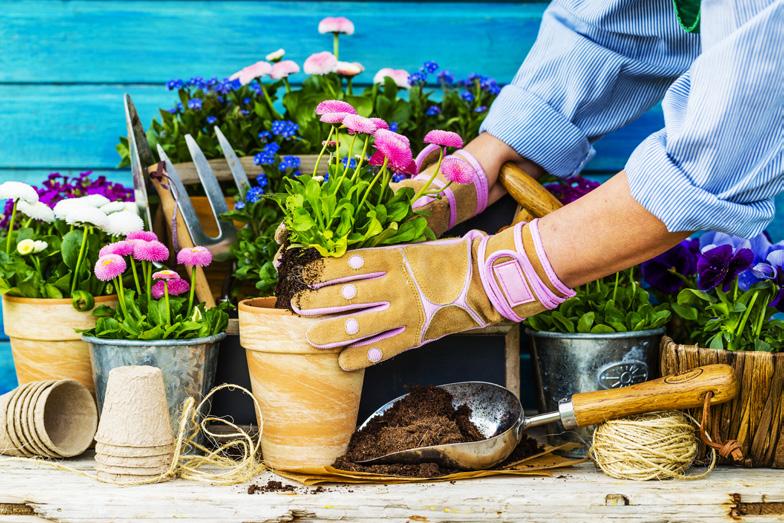
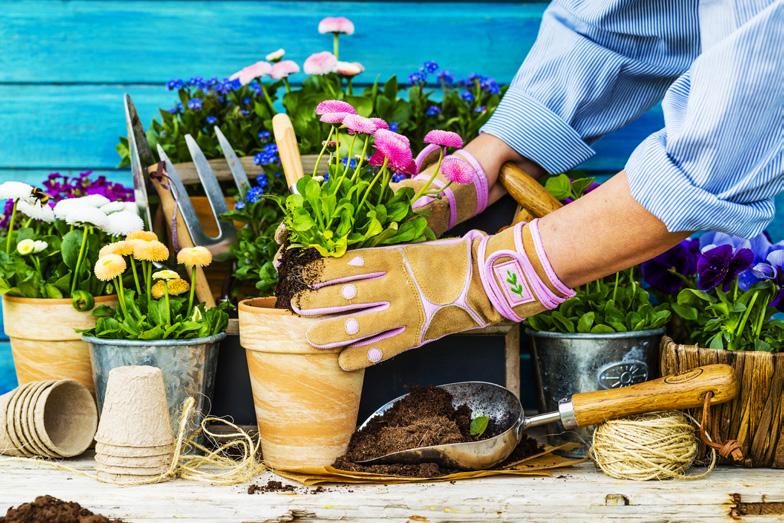
Gardening in Wyoming takes patience, creativity and a sharp
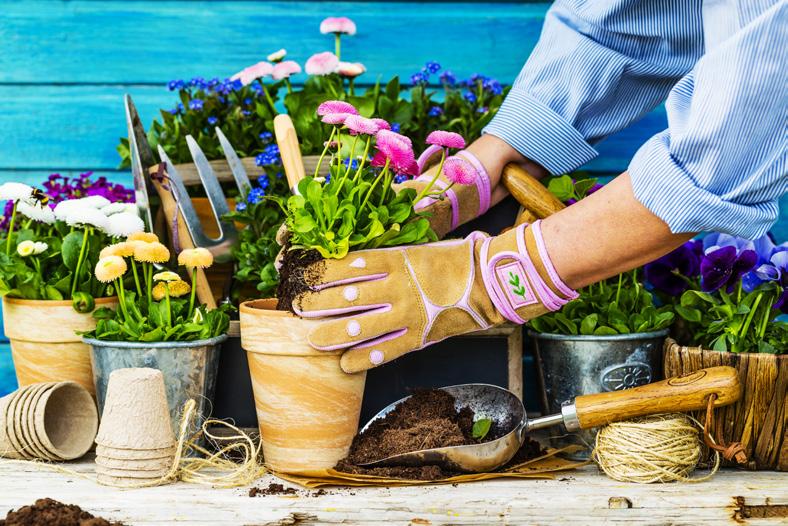
Put your garden skills to the test and take a close look to see if you can uncover the 12 differences hiding among the pots, tools and blooms.
BY COURTNEY SHOSH
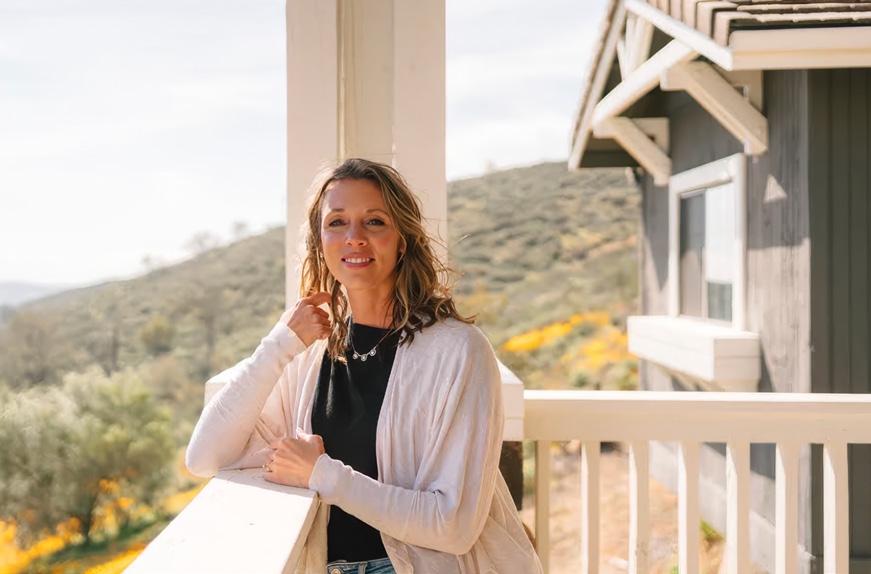
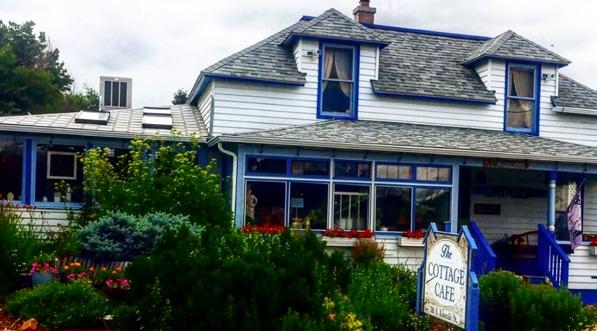
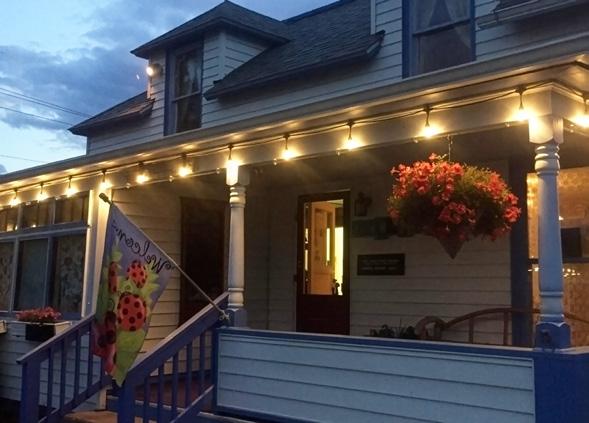
Leslie Colburn is the friendly face you see when you first enter The Cottage Café, a restaurant serving homemade food in a Victorian-style house in Casper. Leslie runs the service-oriented side of the business, while her husband, Tom Colburn, does all the cooking and baking. Leslie said their partnership works well because they both get to do what they enjoy. “I love being around all of the guests who come in and visiting with them,” she said. Originally from Denver, Tom started the restaurant in 1993 before the two met.
Leslie grew up in Casper and studied education at a college in Nebraska. After graduating, she returned to Casper and taught at the elementary school where she’d been a student. She enjoyed getting to know some of the same teachers as colleagues. “Mr. Mack, my sixth grade teacher, was one of the most inspirational adults in my life as a child, so getting to teach with him and have him as a mentor was so cool,” she said.
Tom and Leslie married in 2002, and Leslie gained two stepdaughters. She took a break from teaching during the period her younger two daughters were born. However, when
her youngest started school, Leslie returned to education as a kindergarten teacher. “I went to kindergarten with her,” she laughed. Four years later Leslie left teaching again, this time to focus on their growing restaurant in addition to raising her family.
“To be a business owner, that’s something I never thought that I’d experience, but I’ve enjoyed it so much,” Leslie said. “We had a couple ladies in yesterday who had known each other as little girls but hadn’t seen each other for many years. One lived out of the country. They sat for two hours catching up about all the things that had gone on in their lives. That’s my favorite part. I love to see people sharing life together over a good meal.”
Leslie said they’ve even had customers who grew up in the house, which was built in 1906, and customers whose grandparents lived there. “I’ve had somebody say ‘this is where my grandpa’s chair used to sit.’ They’re grateful the cottage is a place that holds so many memories for them but also that we’re continuing to create memories for other families and our community here.”
Although her family doesn’t live in the house, it’s their home, according to Leslie. She and Tom held their wedding reception at the café and have celebrated reunions, birthdays and one daughter’s graduation there. Leslie loves working with her husband at the restaurant, and “all our girls have worked there at some point over the years.” Even customers are considered family.
When she’s not creating community at the restaurant, Leslie gives back to her larger community in many ways. One is volunteering at Ropes and Roses Therapy Services, where she cares for horses used in equine therapy. She said she hopes to volunteer with the organization’s grief camp for children in the future, having lost both her parents while in her 20s.
Leslie also volunteers with the Wyoming State Literacy Association’s Young Authors program. She’s participated in the program’s annual kick off and state awards ceremony, as well as worked with student authors to help them strengthen
their writing. As an award-winning Christian children’s book author, it’s a full-circle experience for her. “I started writing in the third grade. I entered the Young Authors Contest with the help of my teacher.”

At Christmas time, with the help of local businesses, Leslie donated 120 copies of her newest book, “Twinkle, the Littlest Star,” to Orr’s Hope Foundation, Seton House and Make-A-Wish Wyoming to offer hope to children and families going through difficult times. She mentors others who want to turn their words into books, too. “You just never know who your story is going to affect or how it’s going to affect them,” she said. “I want to encourage people to tell their stories.”
Her advice to anyone pursuing a dream or starting a new venture is to take one small step at a time. “I think when you invite God into those big goals, it’s easier to move in those directions,” she said. “But sometimes looking at the whole big picture is too overwhelming. Just take that next step to where you want to go. None of us are experts right away. There will be challenges. That makes you stronger and better. We’ve had the restaurant for over 30 years. Not
every day is easy, not every day is great, but we get back up and do it again the next day.”
For anyone considering how to give back to their community, she suggested, “Start with what brings you joy, looking at your gifts and talents … You also can look at things in your life that have challenged you and see if there’s a place for you to give back to people who are experiencing those same heartaches.”
Leslie’s heroes are her daughters and her mother, who was a “Wyoming gal” and teacher. Leslie looked up to her for many reasons, including her strength. She taught Leslie, “In life we’re going to fall down, and we can either laugh or cry. But we’re going to get back up.” It’s a lesson Leslie shares with others. W
Courtney Shosh is a Wyoming-based freelance writer and author.
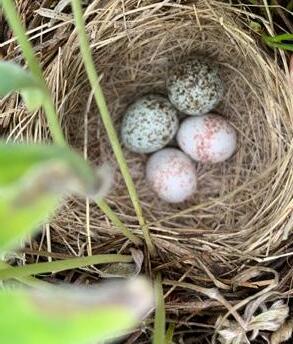
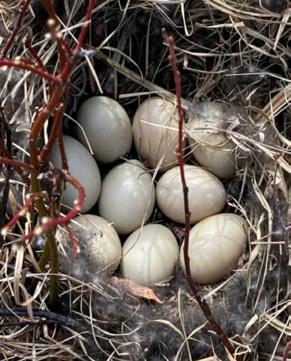
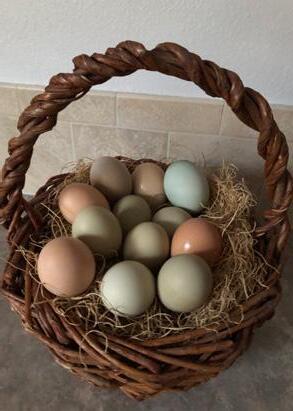
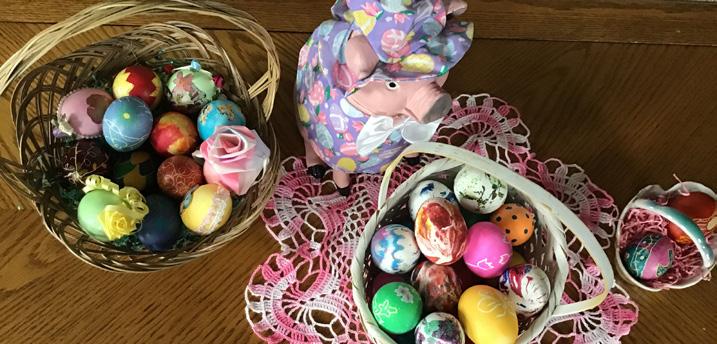
Eggs
Rebecca Syler, Sheridan
Holly Easter Pig’s Easter Egg Collection
Jean Harm, Sheridan
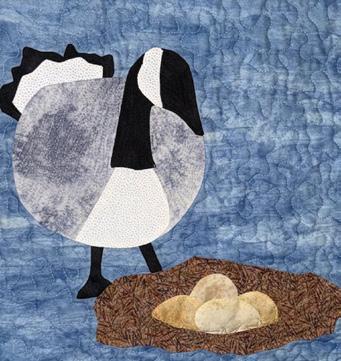
Duck Eggs in the Willows Aiyana Miller, Laramie
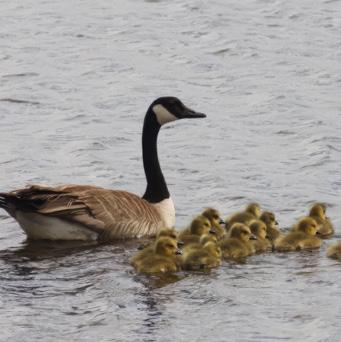
Mama Goose and Her Eggs
Melody Posey-Harris, Saratoga
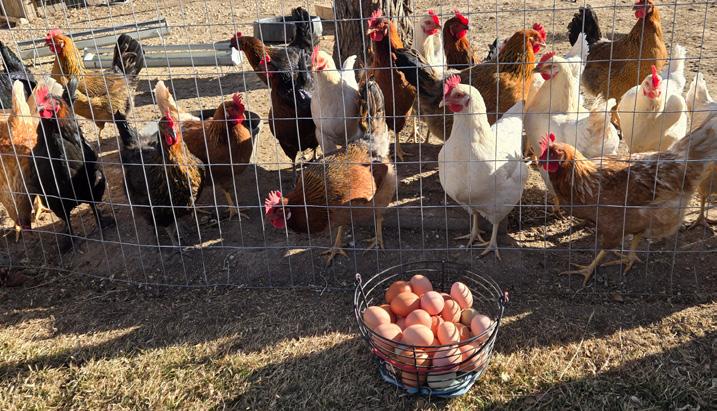
Easter Eggs. Fresh from the Coop, No Artificial Dyes
Bonnie Ten Broek, Newcastle
The Ladies Admiring their Work at the End of the Day
Mike Dollison, Buffalo

Carrie Miller, Laramie
Easter Egg Baby
Aiyana Miller, Laramie
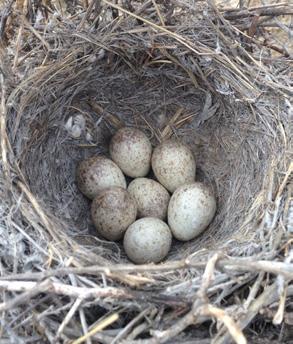
Nest of Eggs
Robin Riesland, Newcastle
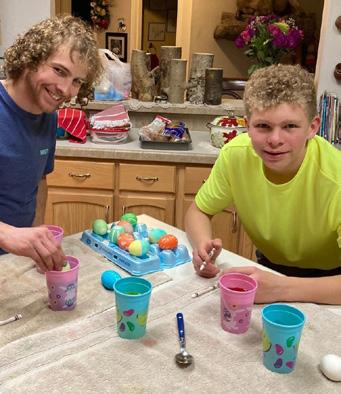
Eggs and Brothers
Valerie Mason, Saratoga
Chicken, Goose and Ostrich Hand-dyed
Ukrainian Easter Eggs
Elizabeth Spiering, Powell
Eggs-tra-special 1,000 Piece Jigsaw Puzzle
Dolores Marshall, Laramie
Eggs
Toby Sheets, Powell




THURSDAY-MONDAY
Nici Self Historical Museum: 12-4pm. Explore museum grounds and exhibits. Free. Info: niciselfmuseum.com.
THURSDAYS
THURSDAY, APRIL 30 – FRIDAY, MAY 1
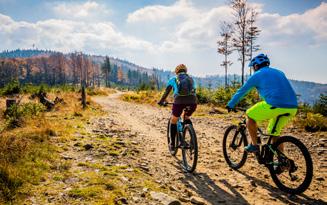
The Wyoming Outdoor Recreation Summit (WORS) is the state’s signature annual gathering for leaders across outdoor recreation, tourism and hospitality. Co-hosted by the Wyoming Office of Outdoor Recreation and the Jay Kemmerer WORTH Institute, the Summit brings together industry partners, educators, policymakers, students and community members to strengthen Wyoming’s outdoor economy through collaboration, research and workforce development.
Location: Platte Valley Community Center
Information: uwyo.edu/worth/events/wors.html
Register here: bit.ly/WYSummitRegistration Fran – frances.schaetz1@wyo.gov Taylor – tkruger@uwyo.edu
Acoustic Jam Session and 4-Piece Chicken Dinners: 5:30pm. Stampede Saloon & Eatery, 417 1st St. Thursday night pickin’ and grinnin’ and fried chicken...while it lasts. Call to reserve your chicken so you don’t miss out! Music venue open for jam sessions. Info: 307-422-3200, stampedefun@aol.com.
ENCAMPMENT
TUESDAYS-SATURDAYS
Grand Encampment Museum: 10am-4pm. Main Gallery and GEM store open. Info: 307-327-5308.
APRIL 17
Craft Fair: 12-7pm. 403 M St., La Grange War Memorial Building and 100 D St., La Grange Elementary Gym. Info: Lynette Bye, 307-575-9317, lagrangehomemakers@yahoo.com; Peggy Oedekoven, 307-871-6504, peggyoedekoven@gmail.com.
APRIL 18
Craft Fair: 9am-4pm. 403 M St., La Grange War Memorial Building and 100 D St., La Grange Elementary Gym. Info: Lynette Bye, 307-575-9317, lagrangehomemakers@yahoo.com; Peggy Oedekoven, 307-871-6504, peggyoedekoven@gmail.com.
ONGOING
Museum and Gift Shop: 8:30am-4:30pm. 405 Lincoln Highway. Info: 307-379-2383.
APRIL 25
Spring Fling Craft and Vendor Show: 10am-4pm. The Complex, 2100 E Cedar St. Get ready for an awesome day filled with fun, friends and fantastic vibes. Come hang out, enjoy great activities, and soak up the springtime energy with us. Don’t miss out on the excitement and good times waiting for you! Free. Info: Mystical Wonders, 307-321-6502, mystical.wonders82301@gmail.com.
APRIL 1-19
Sage Grouse & Wildlife Tours: Time varies. Brush Creek Ranch, 66 Brush Creek Ranch Rd. Venture into our wild expanse to experience the courtship display of the Greater sage-grouse. Arrive bright and early at sunrise with a pair of binoculars and an expert guide for the best chance to witness this mating ritual, as well as spotting other flora and fauna to gain a better understanding of the Great American West. Cost varies. Info: Mark Osborne 307-710-1447, andyclothusa@gmail.com.
APRIL 2-5
Wyoming Open Pool Tournament: All day. Platte Valley Community Center, 210 W Elm Ave. Rack ‘em up, pool enthusiasts! The Wyoming Open Pool Tournament is back, and it’s time to break for glory! Join the Saratoga Lions Club for a cue-clashing extravaganza. Whether you’re a seasoned pro or a casual player, this tournament is for you. Bring your A-game and compete for the title in a thrilling atmosphere of camaraderie and competition. Cost varies. Info: 307-269-7543.
APRIL 9-12
Spring Renewal Wellness Retreat: Time varies. Brush Creek Ranch, 66 Brush Creek Ranch Rd. Embrace the serene beauty of early spring as the world begins to awaken, while a soft blanket of snow still covers the ground. Surrounded by crisp mountain air and breathtaking views, you’ll enjoy restorative activities designed to nurture both body and mind. Experience gentle yoga, sound healing sessions, and outdoor adventures that inspire renewal and growth as nature transitions from winter’s stillness to spring’s promise. Cozy up by the fire with nourishing meals and take time for yourself in a tranquil environment that blends the quiet calm of snow with the fresh energy of the season ahead. Cost varies. Info: 307-269-7543.
BUFFALO
THURSDAYS
Bluegrass Jam Session: 6:30pm. Occidental Saloon. Free. Info: 307-684-0451.
GILLETTE
APRIL 25
WCHF Exhibit Grand Opening: 5:30-7:30pm. Rockpile Museum, 901 W 2nd Street. A new display will celebrate its grand opening, providing the Wyoming Cowboy Hall of Fame with a permanent home. Since 2014, ranchers and their families have flocked to induction ceremonies, but until now, there hasn’t been a permanent exhibit in place. Info: 307-682-5723.
ONCE A MONTH
Open Mic Nite: 5-10pm. Frontier Auto Museum, 205 S Ross Ave. Once a month, we host live music under the neon light. Bring your instrument, family and friends. No early sign ups. To perform you must show up to get on the list. Free to anyone who would like to perform or listen. We provide the stage, mic and PA system. Commodore Cafe will be serving food and drinks. Upcoming dates will be posted on Frontier Auto Museum's Facebook page. Info: 307-686-5667.
TUESDAYS
Children’s Storytime: 10:30-11:30am. Hulett Library. Info: 307-467-5676.
MONDAY-THURSDAY
5 Mile Walking Exercise Class: 4:45-6pm. Hulett Library. Info: 307-467-5676.
WEDNESDAYS
Moorcroft Branch Library Activities: 10am storytime, 4pm afterschool craft, 7pm AA meetings. Please use the downstairs entrance. Info: 307-756-3232.
THIRD THURSDAY OF MONTH
Adult Book Club: 1pm. Moorcroft Branch Library. New book each month. Stop by the library for your copy. Info: 307-756-3232.
THIRD SATURDAYS
Weston County Democrats: 2pm. Weston County Library. Info: 307-941-1822, weston.wyodems.net.
FRIDAYS
Bingo: 7:30pm. VFW Hall. Free.
SECOND AND FOURTH
WEDNESDAYS
Gigi’s Closet: 9am-1:30pm. First United Methodist Church. Gently loved clothing available for babies to adults. Info: 307-746-4119.
APRIL 4
Student Juried Art Exhibition: 4-6pm. Sheridan College, Whitney Center for the Arts, 1 Whitney Way. Join us for the reception and awards ceremony for the student juried art exhibition in the Edward A. Whitney Gallery. Free. Info: sheridan.edu/ event/student-juried-exhibition.
APRIL 9
Cat’s Glasses Concert: 7pm. WYO Theater, 42 N Main St. An electrifying mix of Americana, folk and soul, With rich harmonies, infectious rhythms and a sound that's both timeless and fresh, this rising band has been winning hearts across the region. Their live show is full of warmth, connection and pure musical joy; an evening you won’t want to miss. $22 for adults; $18 for seniors/military; $14 for students. Info: wyotheater. com/event/cats-glasses.
APRIL 10
Sheridan College Dance Ensemble Performance: 7pm. Whitney Center for the Arts, 1 Whitney Way. Join us for a free performance by their Sheridan College Dance Ensemble in Kinnison Hall. Free. Info: sheridan.edu/event/ sheridan-college-dance-ensemble-2.
APRIL 12
Sheridan College Symphony Orchestra Concert: 4pm. Whitney Center for the Arts, 1 Whitney Way. Join us for a free performance by the Sheridan College Symphony Orchestra directed by Ryan Walker. Free. Info: sheridan.edu/event/ sheridan-college-symphony-orchestra.
APRIL 16
Prism 26 Concert Featuring M.E.A.T.: 7pm. Whitney Center for the Arts, 1 Whitney Way. Join us in Kinnison Hall for their annual PRISM concert featuring their Music Ensemble of Audio Technology (M.E.A.T.) directed by Dr. Chris Erickson. Free. Info: sheridan. edu/event/prism-26-featuring-m-e-a-t.
APRIL 17
Resilience Artist Talk and Gallery Reception: Artist talk at 11am; Gallery reception at 6pm. Artist talk at Whitney Center for the Arts, 1 Whitney Way in Sheridan; Gallery reception at Ucross Art Gallery, 30 Big Red Lane in Clearmont. Join the Ucross Art Gallery to celebrate their latest exhibition "Resilience," exploring the resilience of indigenous artists across generations. Free. Info: ucrossfoundation.org/ ucross-gallery.html
APRIL 17-18
Sheridan College Theater Production: 7pm on April 17; 2pm on April 18. WYO Theater, 42 N Main St. Join Sheridan College for the spring production by the Sheridan College Theater program. More details TBA. Info: sheridan. edu/event/sheridan-college-theaterproduction-at-the-wyo-theater.

APRIL 18
Behind the Picket Fence Market: 9am-4pm. Sheridan County Fairgrounds, 1753 Victoria St. Enjoy a fun filled day of shopping with amazing local crafters, vendors and artists! Free. Info: bit.ly/Picket-Fence-Market-26
APRIL 19
Sheridan College Chamber Concert: 4pm. Whitney Center for the Arts, 1 Whitney Way. Join us for a free chamber music performance by their Choir, Early Music Ensemble and Piano Quartet in Kinnison Hall. Free. Info: sheridan.edu/arts.
APRIL 26
Disciple Concert: 7pm. Whitney Center for the Arts, 1 Whitney Way. Join us for their spring choirs concert in Kinnison Hall directed by Dr. Robert Psurny. Free. Info: bit.ly/Disciple-Sheridan-26.
APRIL 29
Sheridan College Choirs Concert: 7pm. Bethesda Worship Center, 851 S Thurmond St. Christian rock band Disciple returns to Sheridan for a free concert! Free. Info: sheridan.edu/arts.
SATURDAYS
Landon’s Farmer’s Market: 10am. Landon’s Greenhouse, 505 College Meadows Dr. Info: 307-672-8340.
SUNDANCE
APRIL 24
The Legacy of Wyoming: 6:30pm. Crook County Library. “The Legacy of Wyoming” celebrates Wyoming’s role in America’s 250-year story through live music and multimedia. The presentation features songs about cowboys, the Oregon Trail, the Transcontinental Railroad and Lewis and Clark, along with Native American Sign Language storytelling, cowboy poetry and world-class yodeling. Historical images and paintings bring Wyoming’s rich western heritage to life. Free. Info: Carrie Riley, 307-283-1008.
FOURTH THURSDAY OF THE MONTH
Lunch Brunch Book Club: 11:30am. Crook County Library. Join us for an adult book discussion. Free. Info: Shannon, 307-283-1008.
SECOND TUESDAYS
Veteran Breakfast: 8am. Upton Senior Center. Free. Info: Gary Barnes, 307-468-9251.
MONDAY-SATURDAY
Cody Country Art League Gallery: 9am-5pm. 836 Sheridan Ave. Info: 307-587-3597.
THURSDAYS
Farmer's Market: 4-6pm. Headwaters. Info: Twila Blakeman, 307-851-0785.
FRIDAYS
Family Story Time: 11:30am. Dubois Branch Library. Free. Songs, stories and crafts for ages birth to 5 years. Older siblings are welcome to join the fun. Stay and play in the Children’s Library after story time. Info: 307-455-2992.
THIRD WEDNESDAYS
Wyoming Health Fairs Monthly
Wellness Screen/Blood Draw: 7:30-10am. Dubois Medical Clinic. Appointments encouraged. Info: 307-455-2516, whf.as.me/dubois.
SECOND SATURDAYS
Greybull Ladies Coffee: Greybull Library. Info: 307-765-2100.
APRIL 3
Wyoming's History Through the Camera Lens: 6-7pm. Fremont County Pioneer Museum. We will be hosting a traveling exhibit by Wyoming Public Media for the month of April. Randy Wise will give a talk on the history of photography of Fremont County to open the exhibit. This Wyoming Community Bank Discovery Speakers Series program is free and open to the public. Info: 307-332-3373.
WEDNESDAYS
Acoustic Music Jam: 6:30-8:30pm. Holiday Inn Convention Center. Free. Join in or listen as musicians and dancers perform. Info: 307-856-8100.
THURSDAYS
LEGO Club: 4-5pm LEGO Club. Riverton Branch Library. Grades 2-5. Free. Info: 307-856-3556.
MEETEETSE
MONDAYS AND WEDNESDAYS
Yoga: 10:30am. Meeteetse Recreation District. Info: 307-899-2698, meetrec.org.
MONDAYS
Toddler Storytime: After school. Meeteetse Library. All kids grades 1+ not in school. Legos, board games, crafts, stories, songs and more. Info: 307-868-2248.
TUESDAY-FRIDAY
Homesteader Museum Winter Hours: 10am-4pm. Private tours available by appointment. Info: 307-754-9481, homesteader@parkcounty-wy.gov.
APRIL 12
State Park Women's Hike: 10am. Smoking Waters Shelter in the State Park. Ladies, join Ranger Katie for a hike on the Spirit Trail! Expect a hike of approximately 2 miles. Info: info@thermopolischamber.org, 307-864-3192.
SUBMIT AN EVENT
Send events occurring in June by APRIL 15!
Be sure to include the date, title, description, time, cost, location, address and contact information for each event.
Photos are always welcome.
Learn more about the WREA community at wyomingrea.org/community.
ADDRESS UPDATE!
QUESTIONS & SUBMISSIONS:
wren@ wyomingrea.org
[307] 286-8140
2312 Carey Avenue Cheyenne, WY 82001-3627 wyomingrea.org/ wren-submissions
APRIL 14
National Civics Bee: 6pm. William H. Malloy Auditorium, 331 Park St. Info: info@thermopolischamber.org, 307-864-3192.
APRIL 17-19
Quilt Retreat: HSC Senior Citizen Center. Info: 307-864-2151.
SECOND SATURDAYS
Great Until 8!: 4-8pm. This event showcases the businesses who are staying open until 8pm or later in town. Shop after 5pm and enter in for a chance to win $100 gift certificates valid at the business with the winning receipt. Info: 917-589-7852, mainstreetthermopolis@gmail.com.
THURSDAYS
Storytime: 11am. Lyman Branch Library. All ages welcome. Free. Info: 307-787-6556, uintalibrary.org.
MOUNTAIN VIEW
MONDAYS
Cub Scout Pack 7798 Meeting: 3:45pm. Presbyterian Church on 3rd Street. We are always accepting new boys who are in grades 1-5. Info: MarNae, 307-677-2566.
THIRD WEDNESDAYS
Food Assistance Program: 8:30-10am. 325 West St. Free food assistance for local individuals and families. All are welcomeno questions asked. Info: facebook.com/ BridgerValleyFoodAssistance.
We Pay Cash For Mineral & Oil/Gas Interests producing & nonproducing. 800-733-8122.
WANTED CJ or Wrangler reasonably priced. Any condition but rusted. 800-316-5337.
Frontier Auto Museum Looking For Oil Company Gas Pumps, Globes And Signs, and general antiques for our antique shop. Located in Gillette, Wyoming, our passion is to preserve Wyoming history and the nostalgia of the past, especially Parco, Sinclair, Frontier, Husky and any car dealership along with all brands. We are also always looking for neon motel or store signs, WY license plates, WY highway signs and State Park signs. frontierautomuseum.com. Please call Jeff Wandler 307-680-8647, wandlerfrontier@gmail.com, or relics@frontierauto.net.



BY ACACIA MCLEAN
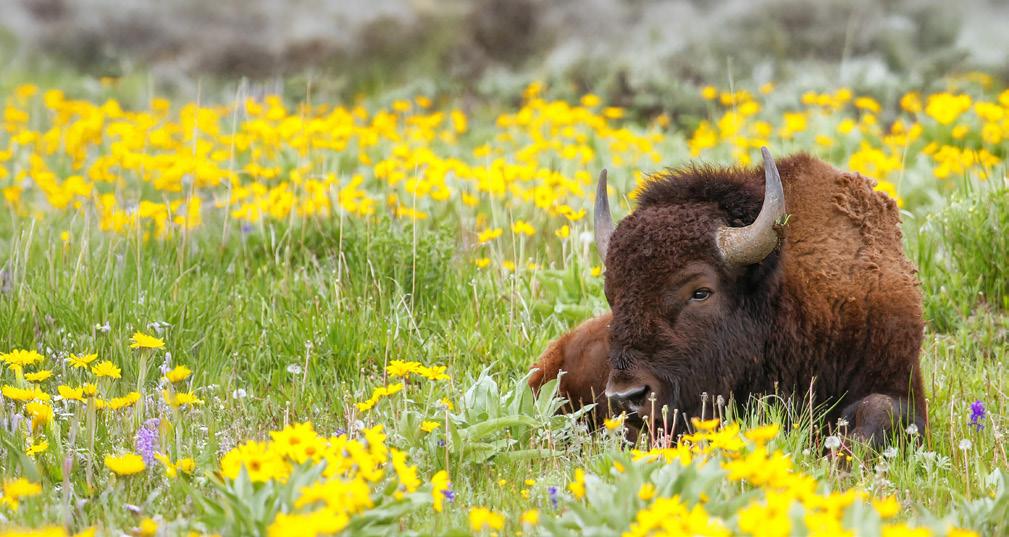
Flower farming in the wild west can be a bit of a rodeo. With harsh winter temperatures well below freezing. Abundance of wildlife attempting to graze on your crops. Springs that feel more like winters. Wind storms, hail, droughts, wildfires and tornado risks. Dry desert landscapes with soil lacking of nutrients. These are just to name a few of the challenges of being a farmer in Wyoming.
Two years ago my family and I uprooted our life in our home state of Oregon to move across the United States and plant our roots in Wyoming. We bought land and the house we dreamed about having for years, embarking on a journey that would change our lives. We set out to build the business we had dreamed of since our wedding. McLean to Inspire LLC was born.
We started with what felt like nothing. An empty piece of land, nothing but prairie grass and sagebrush; a blank slate. For the first time in our adult lives we were living in a home that required much less upkeep to maintain a livable state. We were starting a new life in a new place, without the distractions of toxic people and endless home repairs. This allowed us to focus on our dreams. To work towards what we had been called to for so long.
September of 2023 we began planting fall bulbs and creating a website that would host a variety of services and products. Our website started out as a platform for us to sell our photography prints and art with the goal to continue to add each part of the business as we grew. The Flower Farm would come the next spring.
The work that goes into flower farming in Wyoming is a lot different than that in other more common farming areas. This last winter we spent hours shoveling snow off the ground in the fields in cold temperatures, winter sowing seeds.
Taking advantage of our unique cold temperatures and hardy early blooming crops that need cold stratification in order to germinate. To bridge the gaps of our already short growing season. Although I am sure our neighbors got a good laugh at us wondering why we were shoveling snow in our entire field, it seems to be paying off. As the daffodils started to bloom almost a week into May we saw seedlings of those winter sown crops sprouting and growing every day in the fields.
Our short growing season and cold spring temperatures hinder our ability to start a lot of our summer annuals in the greenhouse the same way many others would. The last two years our family has gone to the extremes of holding thousands of plants in our own home under grow lights for months before they could be moved into the greenhouse and then hardened off to be transplanted outside. Challenges of how to water thousands of plants in your home without causing water damage can be extremely time consuming. These are
“Farming faith isn’t easy, but it sure is worth it.”
some of the most popular varieties and the importance of bringing our locals high quality, super fresh, locally grown flowers makes it worth the time and hard work we put into them.
If you talk to local florists that do not grow their own flowers you'll find most of them order from wholesalers in neighboring states. Those wholesalers get their flowers delivered from all over the world, then they ship those flowers again, across state lines to the Wyoming florists. With Wyoming's low population and remoteness, our state usually is not the first stop on the shipping route. Flowers that Wyoming florists get often lack freshness and quality compared to those in most other states. This is not the florists' fault, it's just the chain of using wholesaler flowers in a low populated state. The cost of transporting flowers into Wyoming is also higher and these flowers usually are not organic or sustainably grown.
Locally grown flowers are going to be the freshest, highest quality you can get. Our farm goes even further to use organic and sustainable practices. Our flowers possess strong, long lasting natural fragrance you won't find from imported blooms and have a much longer vase life. Each of our bouquets is handpicked and arranged into bespoke bouquets. Unique, colorful, wild, lush and natural bouquets resemble the artistic natural qualities of Wyoming’s beauty. Each bouquet is a piece of art, a custom creation hand designed by us, here on the farm.
Using only local seasonally available flowers changes the way you design. You're limited to what is blooming at that time or what you've dried for use later. Once you embrace this approach it actually can be so rewarding. You may not know what a bouquet is going to look like until you're creating it but that is what makes each one so unique and special. These bouquets hold an artistic quality and sentimental value, each created for the specific recipient using the natural inspirations of the flowers and the moment while designing every individual bouquet.
Although flower farming in the wild west has its unique challenges, our family is dedicated to continuing to grow our business. This year we sowed well over 10 times the seeds we did last year, in addition to adding hundreds of perennial plants to our land. We are investing time and resources into learning how to restore and add to our lands and soil with the goal of giving back to the land more than we take. Researching how to increase our sustainability and positive impact on the environment is a continuous effort. This year we learned about the importance of restoration agriculture and are investing time and resources in learning how to transition our way of farming into this.
Farming takes a lot of faith, hard work and long days. Most days in the peak of the season we are working sunrise to well after sunset. Last growing season I worked on the farm all day while my husband went to work at his day job,
to then come home and work with me on the farm. Our first year was not very profitable but we accomplished things we were told were impossible.
With farming you're never going to know what you're up against. No matter how long you have been at it or how much planning you do you're never going to be able to know what nature or God will throw at you next. The thing about farming is you can't just stop. If you stop everything ends. You have to be resilient to be a farmer. You have to have faith. You have to keep trying, keep re-evaluating your plans, get creative, think of new ideas when things don’t work. Most importantly you can't give up. Take a break, step back, rest, rejuvenate, recover and take it head on one more time, every time. Every time you get back at it you let that little seed of faith plant itself into the ground and you wait. You will never know what’s going to happen.
Farming faith isn’t easy, but it sure is worth it.
Although farming flowers is not typical for Wyoming agriculture, we believe this unique crop has a special purpose here, inspiring the community that you can grow things and yourself even in the face of most difficult and unusual circumstances. Working hard achieving your dreams is possible even in the wild west. W
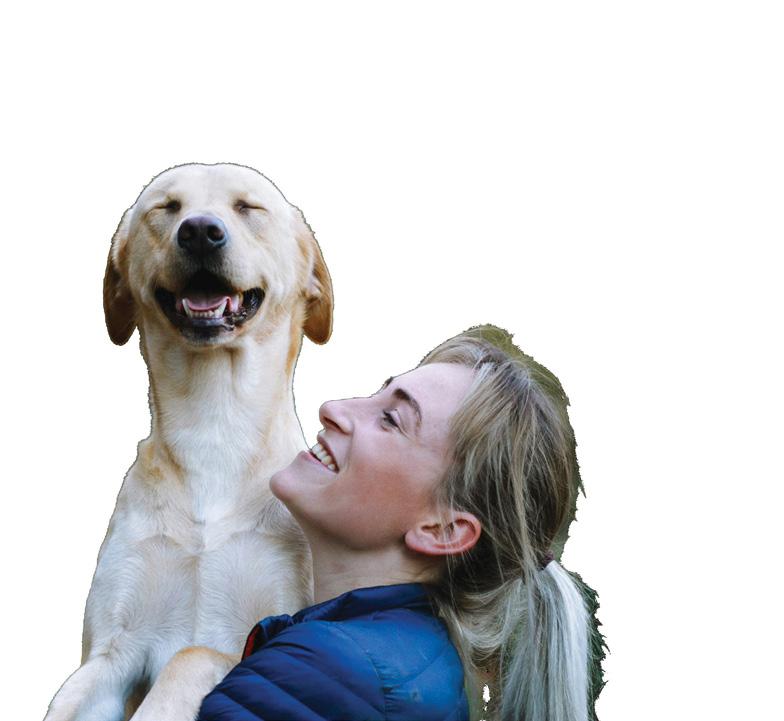
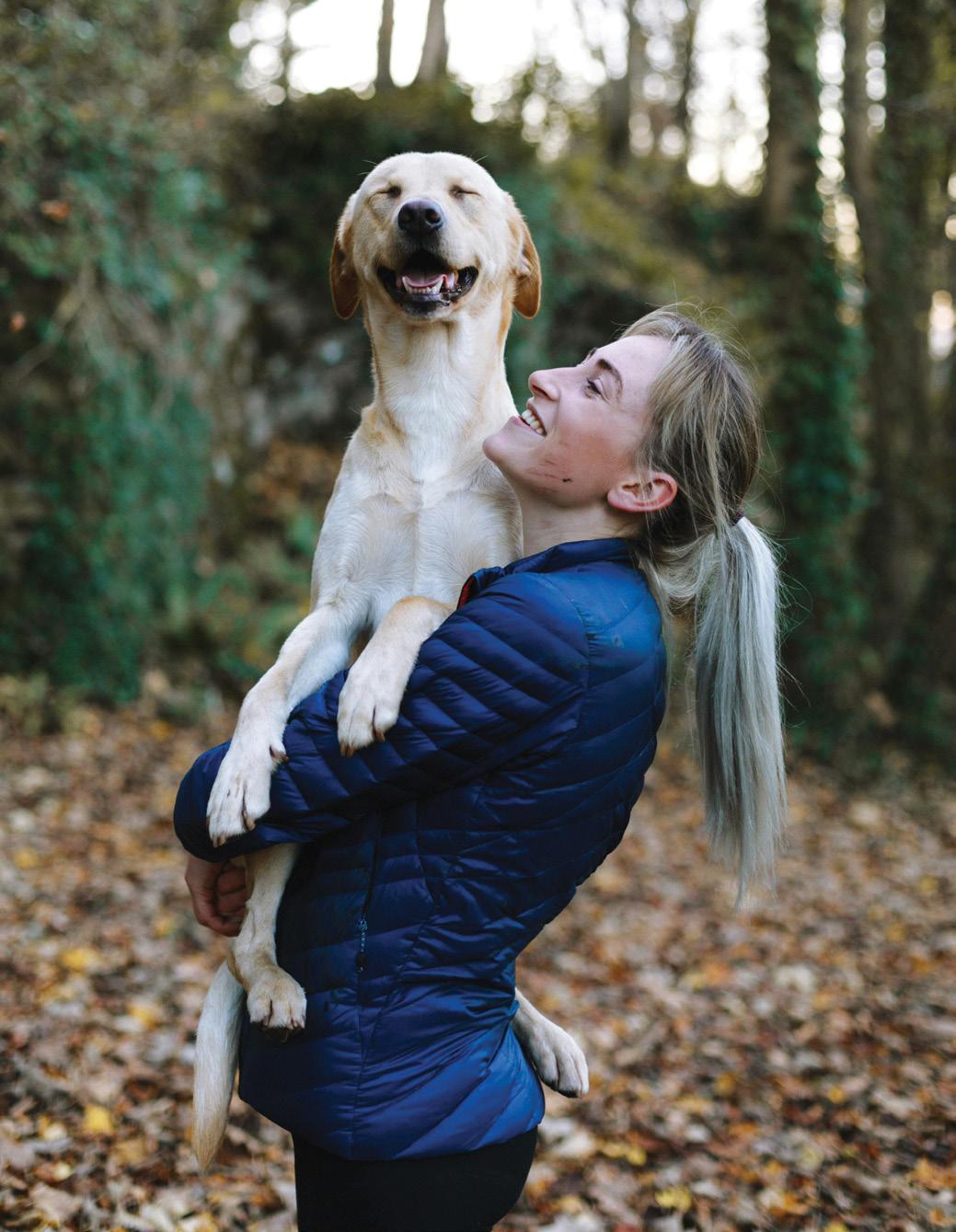
It’s true. Just try to say “puppy” without smiling … Told you.
Supporting your local animal shelter not only provides food, medicine, vaccinations, microchipping and so much more for the animals, it also boosts your own mental, physical, and social health and well-being.
So how can you help?
Monetary donations are always appreciated, but there are many other ways to help care for animals in your community while they wait for their forever homes.
Get the word out
Foster or adopt
If you are able, opening your heart and your home to a pet will be fulfilling for you both!
Hang up fliers for upcoming adoption events or adoptable animals in places where potential adopters will find their perfect companion.
Walk dogs, pet cats
Animals need socialization. So do humans. Play time and cuddle time have huge psychological and physical benefits for waiting animals.
Be social
Use your social media platforms to share the profiles of adoptable animals.
Go for a ride
Some shelters have a hard time arranging to get animals to vet appointments or from shelters to rescue facilities. Helping with rides will ensure animals get the care they need.
Do a supply run
Donate wish list items such as food, toys, bedding, litter, crates or cleaning supplies.
Use your talents
Craft toys and bedding from upcycled materials; use building skills to help improve shelters; put design, photography or writing skills to work to improve marketing materials.