Wisconsin Energy Cooperative News July 2026 Eau Claire
July 2026
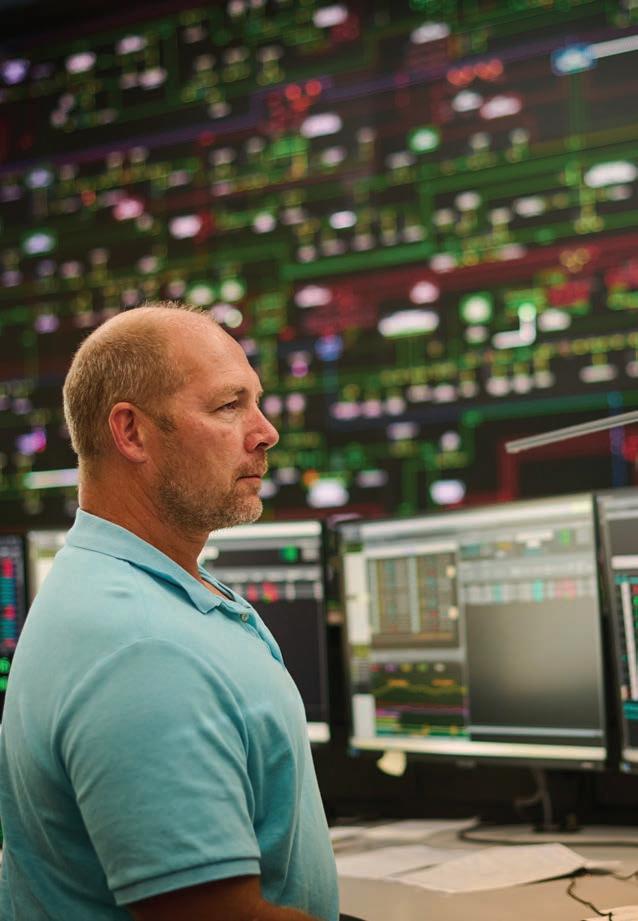
FOREFRONT OF
HOW TO HELP DURING PEAK DEMAND
READER RECIPE CONTEST
MEMBER SPOTLIGHT: TRINITY EQUESTRIAN CENTER
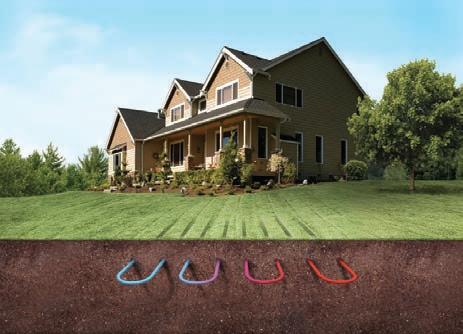
Your neighbor has a dirty little secret.
What exactly is your neighbor keeping underground?
It may look like an ordinary home, but underneath lies a WaterFurnace geothermal system that delivers safe, renewable energy. WaterFurnace systems use the dirt beneath your home to heat and cool naturally—by transferring energy between the ground and the house, it keeps them warm in the winter and cool in the summer. All for a fraction of what you’re paying.
It’s clean, e cient, and nearly invisible. They’re twice as e cient as traditional HVAC systems, and last 40% longer—providing comfort and hot water. All without anyone even noticing it’s there.
Maybe it’s time you got in on the biggest secret in HVAC with a WaterFurnace geothermal system of your own. Discover more today at waterfurnace.com. Don’t worry, we’ll keep it quiet.
Contact Your Local WaterFurnace Dealer
Adams/Mauston
Deans Refig. & Htg (608) 372-6928
Arcadia/Mondovi Water Source Htg & Clg (715) 833-9001
Ashland/Iron River Elza Htg Co. (715) 209-7628
Beaver Dam/Green Lake Air Care, Inc. (920) 356-8860
Black River Falls/ Stevens Point Northern Indoor Comfort (715) 937-2676
Winona/Lake City Earth Energy Htg & Clg (507) 421-3156
The Wisconsin Energy Cooperative News (Formerly Wisconsin R.E.C. News) has been published monthly and distributed since July 1940 to members of Wisconsin’s non-pro t, consumer-owned rural electric cooperatives. It is available to non-members for $13 per year or $35 for three years. Members pay $6.93 per year.
Published by the Wisconsin Electric Cooperative Association, 6405 Century Avenue, Suite 102 Middleton, WI 53562-2200. Rob Richard, president & CEO.
USPS number: 688-480.
Postmaster: please send address changes to Wisconsin Energy Cooperative News, 6405 Century Avenue, Suite 102 Middleton, WI 53562-2200.
Periodicals postage paid at Sun Prairie, Wis.
Send correspondence to Wisconsin Energy Cooperative News, 6405 Century Avenue, Suite 102, Middleton, WI 53562-2200. Phone (608) 467-4650.
Website: www.wecnmagazine.com.
Co-op Members: Please send address changes to your local electric co-op. Contact information can be found on page 18.
Rob Richard WECA president & CEO
Dana Kelroy editor
Beth Alesch associate editor
Julie Lund contributing writer
Ann Bailey graphic designer
Geri Miller advertising consultant
Jennifer Taylor editorial assistant
For advertising opportunities please email geri@weca.coop. The appearance of advertising or events does not constitute an endorsement of the products or services advertised. We reserve the right to refuse advertisers.
Wisconsin is a leader in this
How you can help put less stress on the
Humble beans make hearty meals.
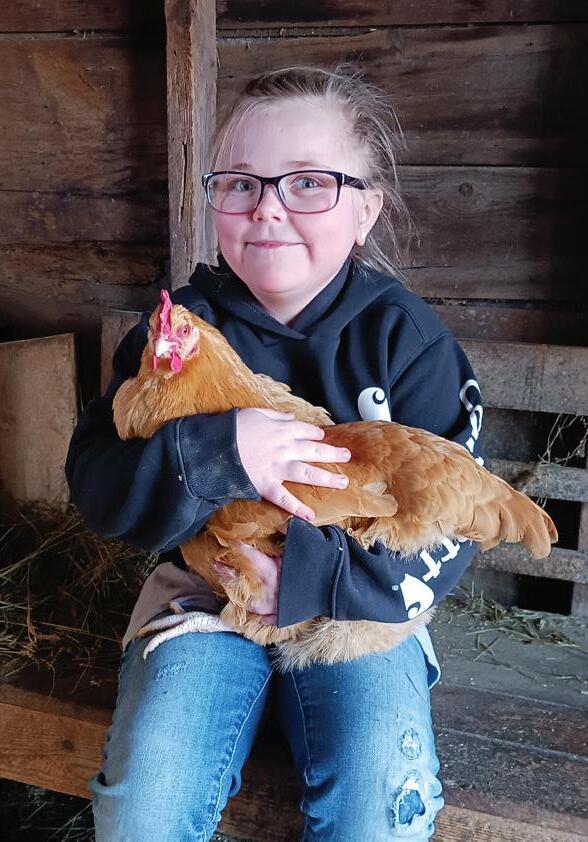
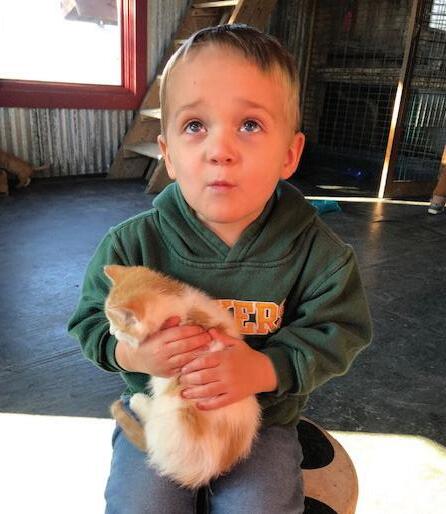
Cute co-op kids get cozy with their critters.
SYMBOL SEARCH
HIDDEN OBJECT GAME
Winning our June search was Dennis Rolo , a member of Vernon Electric Cooperative, who said, “The cheese is on page 6, over the left shoulder of Federated Youth Executive big cheese Rob Richard. It’s hidden pretty gouda on the shelf behind him.”
This month, we challenge you to nd this American Flag to celebrate America’s 250th birthday. Remember that the symbol can be anywhere and any size. One randomly selected winner will receive a Wisconsin Energy Cooperative News kitchen kit. One entry per household, please, and provide your permanent home or mailing address with your entry. Entries are due July 15.
Enter via the “Symbol Search” link on the homepage of wecnmagazine.com.
You can also enter by mail (don’t forget to include the name of your cooperative):
SYMBOL SEARCH WECA 6405 Century Avenue, Suite 102 Middleton, WI 53562-2200
WCALLING ALL COOKS
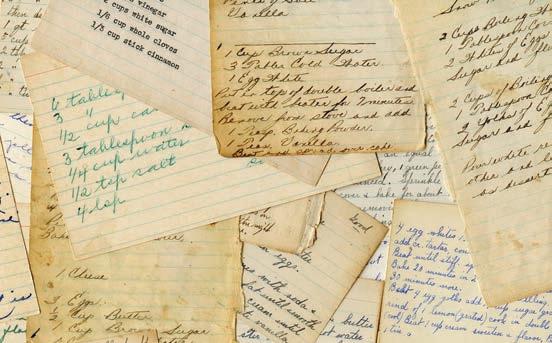
e love a good contest, and we’re kicking o our latest on page 23. The 2026 Reader Recipe Contest is o cially open, and it’s the perfect excuse to dig into your recipe box and share the dishes you love most. Whether it’s a family favorite, a clever weeknight shortcut, or a modern twist on something nostalgic, your best recipes could earn you a spot on our reader recipes page and a chance at $500 in kitchen-appliance giveaways.
Entries are being accepted now through September 10, and you can submit in any of the three award categories: 5-Ingredient Meals, One-Pot/Slow Cooker/Instant Pot Meals, or Then & Now, which highlights updated versions of older recipes. It’s a fun chance to show o your creativity and maybe inspire fellow readers along the way.
Submitting is easy—you can upload your recipe at wecnmagazine.com, email it to jennifer@weca.coop, or mail it to the WECN o ce in Middleton. Just be sure to include your name, co-op, and mailing address.
If you’ve ever thought, “This recipe is too good not to share,” this is your moment. Entering is simple, the prizes are great, and your recipe just might be the one everyone’s talking about in the coming months.
Editor’s Note: The Cream Float recipe on page 22 of our June issue was misdated. It originated in a 1949 cookbook, not 1994. We regret the error.
Dana Kelroy Editor
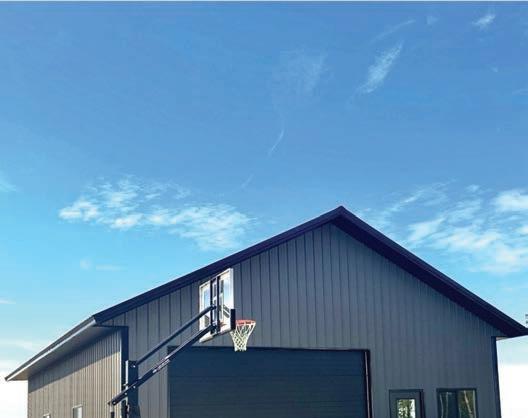
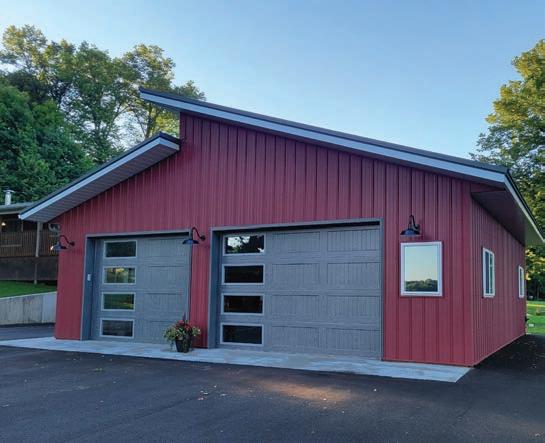
Hixwood Steel Panels are manufactured in Stanley, WI
DPC Hosts 85th Annual Meeting
Dairyland Power Cooperative held its 85th Annual Meeting with the theme, “Building the Bridge: Past to Present to Future.” More than 400 people were in attendance at the La Crosse Center on Tuesday, June 2, including members, guests, and Dairyland employees.
Board Chairman Mark Kingland of Iowa’s Heartland Power Cooperative presided over the meeting. President and CEO Brent Ridge thanked the board for its commitment and vision to “grow, innovate, and deliver value.”
Ridge talked about investments in new generation and transmission to help ensure reliability and lower rates.
NERC: Reliability Risks Are Growing
Camilo Serna, North American Electric Reliability Corporation (NERC) senior vice president of strategy and external engagement, was the featured speaker at Dairyland’s annual meeting. He said the North American electric grid is facing mounting reliability challenges as demand surges, generation resources retire, and infrastructure development struggles to keep pace.
“If you take just one thing away from my presentation, it is that reliability risks are increasing in North America,” Serna said.
Serna praised Dairyland Power Cooperative’s efforts to expand generation resources and transmission infrastructure, saying those investments reflect the type of action needed across North America to meet future reliability needs.
MISO Survey Shows Improved Outlook
New data from the Midcontinent Independent System Operator (MISO) suggests there is progress in adding the resources needed to meet growing demand.
According to the latest Organization of MISO States-MISO survey, the region is expected to maintain growing
NEWS BRIEFS
capacity surpluses over the next five years as utilities continue to bring new generation online.
The survey found MISO members are now expected to add an average of 15 gigawatts of accredited summer capacity annually through 2031, nearly double the level projected just one year ago.
Trump Announces
$700 Million to Boost “Big, Beautiful Coal”
President Donald Trump announced a nearly $700 million federal initiative aimed at supporting the nation’s coal industry, including funding for coal-fired power plants, coal exports, and related infrastructure projects.
The administration said the funding will help preserve existing coal generation, support upgrades at coal facilities and advance coal-related infrastructure projects.
The White House said the initiative is expected to support or create more than 14,000 jobs in coal mining, construction, rail transportation, and maritime industries.
Farm Bill Making Progress
Congress is moving closer to passing a long-delayed new Farm Bill. While much of the political debate surrounding the Farm Bill has focused on nutrition assistance and ethanol, electric cooperatives are closely watching funding tied to the USDA Rural Utilities Service, or RUS—the federal agency that provides low-interest loans and grants to electric co-ops.
The “Farm, Food, and National Security Act of 2026,” passed the House on April 30 by a vote of 224–200. The Senate Agriculture Committee is now working on its version of the bill. The current Farm Bill expires in September.
Sun Badger Solar Owners Face Criminal Charges
The former owners of Wisconsinbased solar installer Sun Badger Solar are now facing felony theft charges after prosecutors say customers paid thousands of dollars for projects that
were never completed.
Dane County prosecutors charged Sun Badger Solar founders Trevor Sumner and Kristopher Sipe with multiple felony counts of theft by contractor involving losses between $10,000 and $100,000. The charges stem from complaints by customers who said they paid deposits for solar equipment and installations that were never delivered or finished. If convicted, the two men could face up to 20 years in prison and fines of up to $50,000.
Wisconsin-Based SHINE Hits Major Milestones in 2026
SHINE Technologies, an advanced nuclear technology company in the race to achieve commercialized fusion technology, has hit some major milestones in the first half of the year. Since the start of the year, Janesvillebased SHINE closed a $240 million Series E (venture capital financing) led by Dr. Patrick Soon-Shiong, acquired the Lantheus (leading radiopharmaceuticalfocused company) isotope distribution business, and secured a $263 million conditional loan commitment from the U.S. Department of Energy (DOE).
SHINE is one of several Wisconsinbased fusion research companies borne out of UW-Madison’s nuclear engineering program.
EIA: Expect Record-Breaking Power Use in 2026 and 2027
The Energy Information Administration (EIA) released its Short-Term Energy Outlook Tuesday and is now predicting U.S. power consumption, which hit its second straight annual record high in 2025, will break records again in 2026 and 2027.
The EIA projects power demand will rise from a record 4,195 billion kilowatthours (kWh) in 2025 to 4,248 billion kWh in 2026 and 4,379 billion kWh in 2027. The increased demand is due in large part to data centers dedicated to artificial intelligence and cryptocurrency, and also because homes and businesses use more electricity and less fossil fuels for heat and transportation.
THE FUTURE OF FUSION ENERGY
Wisconsin has long been a state that turns ideas into something real.
From farms and factories to research labs and manufacturing floors, our state has built its reputation on practical innovation. That is why UWMadison’s recent Great Lakes Fusion Energy Summit matters. Held May 5 in Madison, the summit drew fusion experts, industry leaders, investors, policymakers, researchers, and utilities not only from Wisconsin and neighboring states, but from across the country and around the world. Wisconsin is not simply part of the nuclear energy conversation—it is helping convene it.
Fusion may sound distant from everyday life in rural Wisconsin. It can seem like science fiction or a technology reserved for laboratories. But behind the science lies a very practical question: where will reliable, affordable energy come from in the years ahead?
That question matters when a farmer starts equipment before sunrise. It matters when a family heats a home in January. It matters when a school, hospital, or local business depends on electricity every hour of every day.
Fusion will not power those homes, farms, and businesses tomorrow. Commercial development will take time. But the conversation around fusion is moving quickly, and Wisconsin is among the states on the forefront.
Fusion is different from traditional nuclear fission. Instead of splitting atoms, fusion seeks to replicate the process that powers the sun by combining atoms to release energy. If commercialized, fusion could provide reliable carbon-free power with a different waste and safety profile than conventional nuclear generation.
That potential is exciting. Still, potential alone does not power communities. A promising technology becomes meaningful only when it can be planned, permitted, financed, built, connected to the grid, and operated reliably. That requires supply chains, transmission planning, workforce
development, regulatory certainty, public acceptance, and a business model that works.
Those are the kinds of practical issues utilities must consider.
History shows that major energy changes do not happen all at once. The Industrial Revolution was not simply about the steam engine. It was about technology, investment, workforce, infrastructure, and policy moving together. Energy was central to that transformation.
Fusion may be at a much earlier stage, but the lesson still applies. When technology, investment, and public policy begin moving in the same direction, utilities need to pay attention.
Wisconsin has already taken steps in that direction. Bipartisan legislation signed into law in 2025 created a Nuclear Power Summit Board and established a nuclear power siting study. The Public Service Commission has also partnered with UWMadison to study nuclear energy opportunities, including traditional nuclear power, small modular reactors, and fusion.
The state has also moved to support fusion investment through a sales and use tax exemption tied to fusion technology projects. At the federal level, Congress has supported advanced nuclear development through the ADVANCE Act.
These policy discussions matter because Wisconsin has real assets in this space. UW-Madison has long been recognized for nuclear engineering expertise. Wisconsin is also home to companies including SHINE Technologies, Realta Fusion, and Type One Energy. This is not just a national conversation happening somewhere else. It is happening here.
For WECA, the focus remains the same: reliability, affordability, safety, local impact, and the needs of the people our cooperatives serve. Fusion may not be ready tomorrow, and it may not answer every energy challenge. But Wisconsin should not sit on the sidelines while the next major energy conversation takes shape.
We all have the responsibility to stay engaged, ask hard questions, and make sure the people we serve remain at the center of the discussion.
Rob Richard WECA President and CEO
FOREFRONT OF FUSION
HOW WISCONSIN IS LEADING THE WAY
More than 350 researchers, business leaders, manufacturers, investors and policymakers gathered at the University of Wisconsin-Madison in May for the third annual Great Lakes Fusion Energy Summit, highlighting growing momentum behind fusion energy and Wisconsin’s efforts to position itself as a leader in the emerging industry.
Attendance at this year’s event grew by more than 90% from 2025, prompting organizers to move into a larger venue, and reflecting the global synergy surrounding the fusion movement. Unlike fission, the process that fuels traditional nuclear energy plants, fusion energy is clean, safe, and creates almost no waste. The race is on, across the country and around the world, to achieve nuclear fusion energy in a way that is economical for a commercial plant. It’s a lofty goal that is decades in the making, but once achieved, it will change the way we power the world, and Wisconsin is at the forefront of the movement.
The Great Lakes Fusion Energy
Summit, hosted by the 5 Lakes Institute and the UW-Madison College of Engineering, is a major annual event that showcases Wisconsin, and the Midwest, as a powerhouse in nuclear fusion and fission technology. UW-Madison has a premier nuclear engineering program that has led to the creation of several Wisconsin nuclear fusion startups.
At the summit, more than 100 companies registered to attend, reflecting increasing interest from manufacturers looking to participate in what has quickly evolved into a multi-billion-dollar industry, as the nation seeks groundbreaking solutions to the growing demand for electricity.
“This was our biggest summit yet,” said Kathleen Gallagher, organizer of the event and president of 5 Lakes Institute. “We saw tremendous interest from companies wanting to understand the materials, components, and systems that will be needed as fusion moves toward commercialization.”
Several speakers at the summit
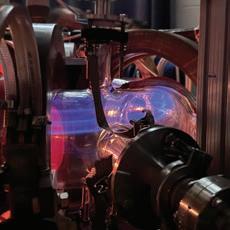
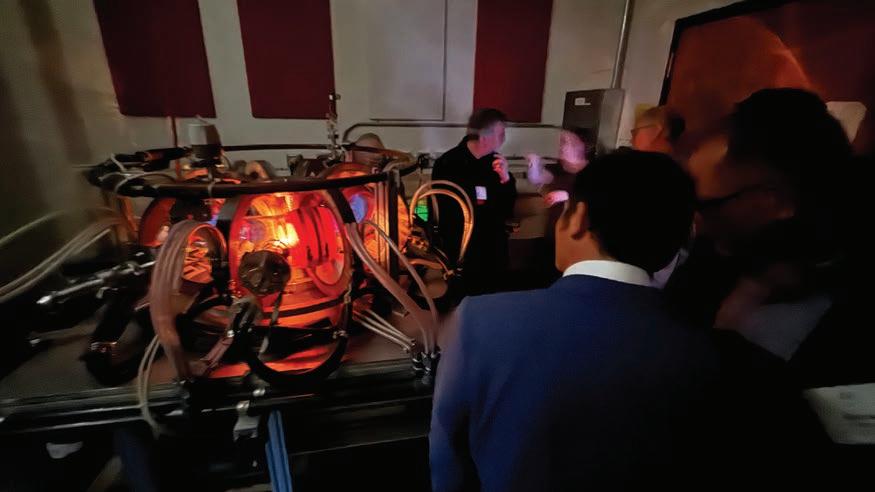
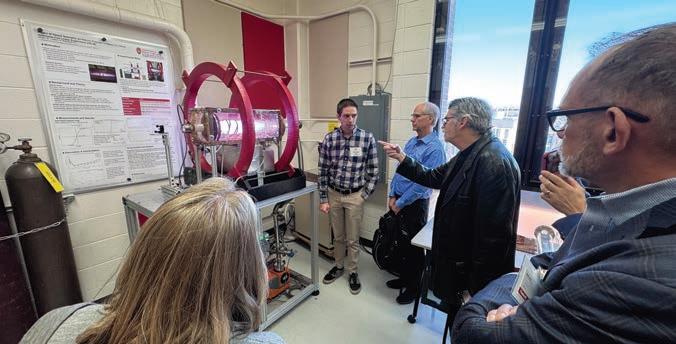
Attendees of the Great Lakes Fusion Energy Summit view an experimental nuclear fusion device on display at the University of Wisconsin-Madison. UW-Madison is home to a world-class plasma science and research program through the Department of Nuclear Engineering and Engineering Physics which houses several full-scale nuclear research experiments.
FEATURE
noted the challenge to nuclear fusion is not just in the science and technology, but in the manufacturing. A new supply chain track, funded through a Wisconsin Economic Development Corp. Ignite Wisconsin grant, drew strong participation from manufacturers exploring opportunities to serve the fusion industry. Gallagher said one of the summit’s biggest successes was connecting researchers and companies that may not have previously realized how their expertise could fit into the fusion ecosystem.
She recalled one conversation that took place in an elevator during the event, when a researcher described a needed component to the president of a manufacturing company.
“After listening to the description, the manufacturer said, ‘We could make that,’” Gallagher said. “Those are exactly the kinds of connections we’re trying to create.”
Wisconsin stakes its claim Fusion energy, which seeks to replicate the same process that powers the sun, has attracted growing attention as utilities, technology companies, and policymakers search for
carbon-free energy sources capable of meeting rapidly increasing electricity demand.
Much of that demand is being driven by data centers and artificial intelligence computing facilities, a recurring theme throughout the summit.
Governor Tony Evers told attendees that fusion technology aligns with Wisconsin’s clean energy goals while offering significant economic development opportunities.
“We’re getting closer every day to making fusion power not just a reality, but a commercially viable source of energy,” Evers said. “This work is innovative, sustainable, clean and carbon-free.”
The governor highlighted recent bipartisan legislation creating a sales and use tax exemption for equipment used in nuclear fusion projects and noted state investments intended to support fusion research and commercialization. He also pointed to Wisconsin’s strong academic foundation, including UW-Madison’s nationally recognized nuclear engineering program and several fusion companies that have emerged from university research.
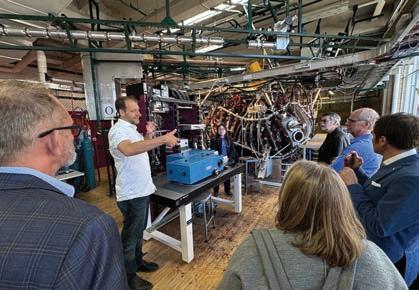
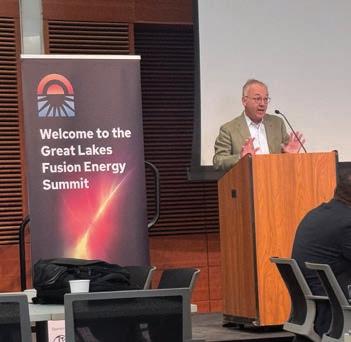
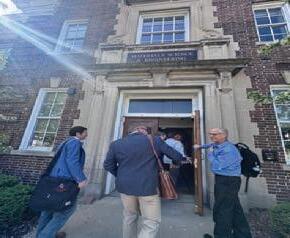
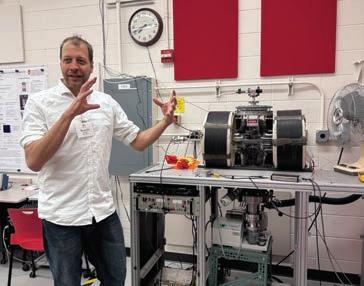
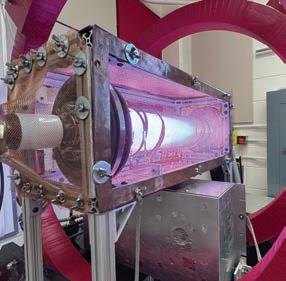
Summit attendees tour the HSX (Helically Symmetric eXperiment) lab and learn about the HSX stellerator, a world-renowned fusion research device. Tours included a walk through the teaching lab in the Materials, Science & Engineering building. Benedikt Geiger, Associate Professor in the Department of Nuclear Engineering and Engineering Physics, explains the fusion process in the teaching lab. Cary Forest, Prager Professor of Experimental Physics, UW-Madison presents at the summit. Michael Zepp, graduate researcher, demonstrates the Helicon Cell Linear Experiment (HELM) which helps students study the properties of plasma on a smaller scale.
Among those companies are Realta Fusion, SHINE Technologies, Xantho Technologies, and Type One Energy, all spun off of UWMadison’s nuclear engineering program.
M anufacturing opportunity
While much public attention focuses on the race to build the first commercial fusion power plant, many summit participants emphasized that the larger economic opportunity may lie in manufacturing.
Michael Morgan, Associate Dean for Research in the College of Letters and Science at the University of Wisconsin-Madison, who introduced the supply chain track, cited industry estimates showing fusion developers spent more than $500 million on supply chain purchases in 2022. Industry spending could exceed $7 billion annually once first-generation commercial plants begin deployment, with long-term market potential measured in the trillions of dollars.
Speakers repeatedly pointed to Wisconsin’s manufacturing base as a competitive advantage.
Realta Fusion CEO Kieran Furlong described fusion as an industry that will require everything from advanced superconducting magnets and specialized materials to construction, machining and plant operations.
“If we successfully demonstrate our technology, we’ll be rapidly building fusion plants,” Furlong said. “That means opportunities throughout the supply chain.”
University researchers noted that many of the components used in experimental fusion devices are already being fabricated by Midwest machine shops and manufacturers.
Several speakers touted Wisconsin’s concentration of skilled trades, engineers, and industrial expertise who could help the state capture a significant share of future fusion-related manufacturing.
Global competition
intensi es Despite the optimism surrounding fusion’s potential, speakers acknowledged growing international competition, particularly from China.
Gallagher said Wisconsin is not necessarily leading the global race but is “solidly in the mix” thanks to strengths in research, entrepreneurship and manufacturing. She pointed to UW-Madison, Realta Fusion, SHINE Technologies, and other regional assets as key building blocks for future growth.
Several panelists warned that China is investing heavily in fusion technologies and related manufacturing capabilities. Some suggested the United States may need substantially greater public and private investment to maintain competitiveness.
At the federal level, Department of Energy officials outlined efforts to accelerate commercialization through a new Fusion Science and Technology Roadmap and the creation of a standalone Office of Fusion focused specifically on helping move fusion technologies toward commercial deployment.
Looking ahead
The summit concluded with a strong sense that fusion remains a long-term technology, but one whose supply
chain and workforce are being built today.
According to Wisconsin Electric Cooperative Association (WECA) Director of Government Relations Joe Mesec who was in attendance, “What stood out to me most was the seriousness of the conversation. Fusion is often talked about as something that is always years down the road, but the summit showed there is real momentum behind the technology. The level of private investment, research activity, and policy attention makes clear this is something the electric sector should be watching now, not years from now, and Wisconsin is a driving force in the effort.”
Gallagher said organizers plan to expand next year’s event and launch quarterly webinars aimed at connecting researchers, manufacturers and entrepreneurs throughout the Great Lakes region. The tentative date for the summit is May or June 2027.
For Wisconsin, supporters say the opportunity extends beyond energy production itself.
“If fusion succeeds,” Gallagher said, “it could create thousands of high-quality manufacturing jobs while helping establish the Great Lakes region as a global center for fusion energy innovation.”
—Julie Lund
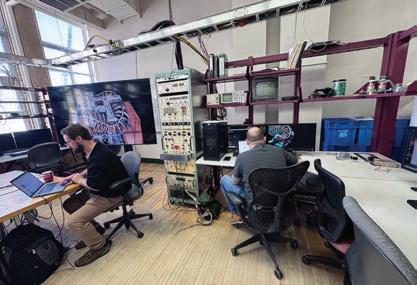
Researchers work in the main control room and diagnostic area of the HSX. The HELM helps students study the properties of plasma on a smaller scale.
FEATURE
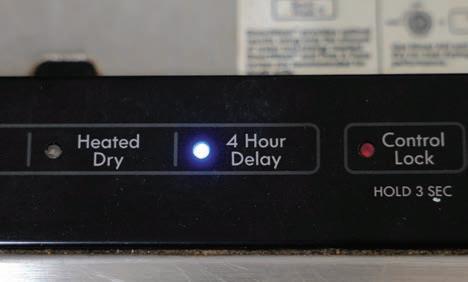
To lower your energy demand, spread electricity use throughout the day and avoid peak times as much as possible. Apply your dishwasher’s delay-start feature to use electricity during o -peak hours.
HOW YOU CAN HELP DURING PEAK DEMAND
Your electric cooperative works hard to ensure safe, reliable power to homes and businesses 24/7. To make sure everyone has the power they need, generation must match consumption and have the capacity to adjust to changing demands for energy.
Peak demand is the period in a given range of time— day, month, or year—when electricity use is highest. It’s caused by many people using energy-consuming equipment at the same time. It differs based on geography, weather, and time of year. For example, demand is typically highest on hot summer afternoons and cold winter mornings. Most utilities also experience daily peaks when people are getting ready in the mornings and returning home in the evenings.
When everyone uses more energy at the same time, it puts more stress on the electric grid and requires more expensive electricity to meet the need. Electricity pricing is based on supply and demand. The price of electricity is higher when the demand is higher, which costs the utility more.
To lower energy use and strain on the grid during peak times, there are habits we can adopt in our homes.
Let’s look at two examples.
Joe and John arrive home from work at 5:30 p.m. They both turn on the oven to make dinner.
While John waits for the oven to preheat, he throws in a load of laundry. He finishes dinner, cleans up and starts the dishwasher. Then, he moves the clothes to the dryer.
Joe finishes dinner, loads the dishwasher, and sets it to start at 10 p.m. He puts a load of laundry in the washing machine and later that evening switches it over to the dryer.
Although they use the same appliances and amount of energy, John uses it all at once, running multiple applianc-
es during peak hours, creating higher demand and more strain on the electric grid while using more expensive energy.
To lower your demand, spread electricity use throughout the day and avoid peak times as much as possible. This will reduce the utility’s cost of supplying electricity to your home. Another benefit of shifting your use to midday is integrating renewable energy, such as solar, which produces energy when the sun is shining.
Large appliances—including washers, dryers, ovens, water heaters, and air conditioners—have the biggest impact. Using them during off-peak hours or one at a time can help.
Automate as much as possible. Most electric vehicle chargers can be set to charge during scheduled hours with built-in timers or apps. Most modern dishwashers have delay-start features. If you have a pool, set the pool pump to run in the middle of the day, particularly if you are in a region with strong solar production.
You can also automate air conditioning. Some utilities offer programs that precool homes during off-peak hours to reduce demand during peak times. Simple, free adjustments, such as closing your curtains on hot afternoons and evenings, can help, too.
Keep in mind that extreme weather, such as freezing temperatures in Alabama or a heat wave in Minnesota, puts extra stress on the grid. Taking it easy on your energy use during extreme weather events can help prevent outages.
Spreading out your energy use helps your utility keep costs down and benefits your local energy grid.
Miranda Boutelle writes on energy efficiency topics for the National Rural Electric Cooperative Association, the national trade association representing nearly 900 electric co-ops.
ALOBBY REMODEL COMING IN AUGUST
By Monica Obrycki, President and CEO
t ECEC, safety has always been a top priority. Whether it’s protecting our employees in the field, maintaining a reliable electric system, or safeguarding member information, we are continually looking for ways to improve. One of the key goals identified in our most recent strategic plan is taking our safety culture from good to great. That commitment extends beyond hard hats and power lines.
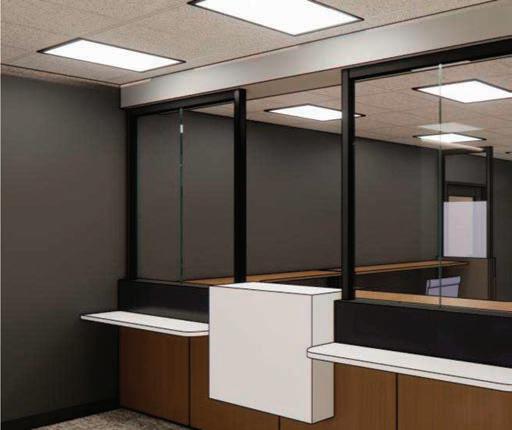
In August, we will begin a remodel of our cooperative lobby designed to improve the security and functionality of our office for both members and employees.
To complete the remodel safely, our lobby will be closed August 3–7
The updated layout will help strengthen physical security within the building, provide additional protection for sensitive files and records, and reduce the risk of unauthorized access to computers and internal systems. In today’s world, physical security and cybersecurity go hand in hand, and these improvements are another step in protecting the cooperative and our members’ information.
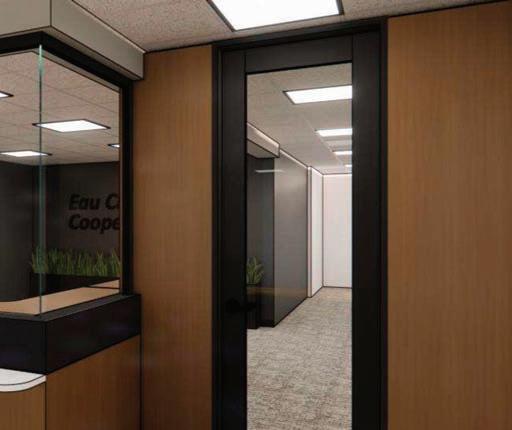
In addition to enhanced security, the remodel will create a more welcoming and efficient space for members visiting our office. We are excited to share a rendering of the updated lobby and look forward to the finished project.
To complete the remodel safely, our lobby will be closed
August 3–7. During that week, members will not be able to make payments inside the lobby. However, all other cooperative operations will continue as normal, including phone service and field operations.
Members will still have several convenient options available to make payments during the closure:
Use SmartHub online or through the mobile app (https:// www.ecec.com/my_account/smarthub)
Mail payments to the cooperative office (PO Box 368, Fall Creek, WI 54742)
Pay through our automated phone payment system (855938-3485 or 715-832-1603)
Use our secure 24/7 drop box (8214 US Hwy 12, Fall Creek, WI 54742)
If members need assistance with matters other than payments, appointments can be arranged by contacting our office at 715-8321603.
We appreciate your patience and understanding during this temporary disruption. These updates are an investment in the future of your cooperative and part of our ongoing commitment to keeping Eau Claire Energy Cooperative safe, secure, and memberfocused for years to come.
TRINITY EQUESTRIAN CENTER:
Building trust, healing, and hope
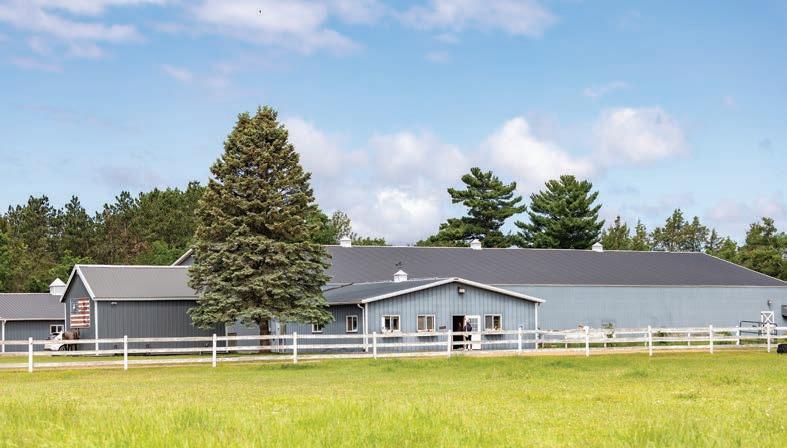
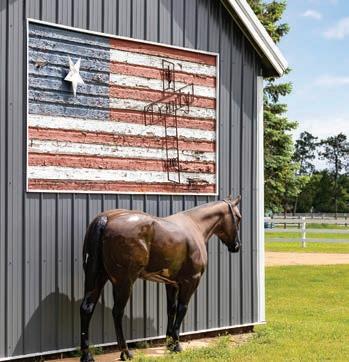
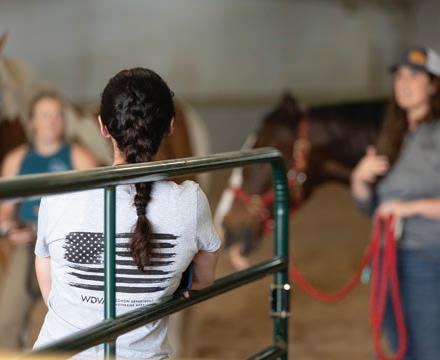
For nearly 25 years, Trinity Equestrian Center has served as a nonprofit organization focused on helping people navigate life’s challenges, trauma, stress, and personal growth. Located on 67 acres in rural Wisconsin and on Eau Claire Energy Cooperative lines, the family-run organization works with veterans, active military members, first responders, youth, families, and individuals of varying abilities through programs centered on connection, trust, and personal growth.
Toni Mattson, her husband Bill, an Air Force veteran, and her sister Jan founded Trinity Equestrian Center in 2002. Long before Trinity existed, they shared a love of horses, a desire to help people, and a belief that connection has the power to change lives. When the opportunity arose to purchase the former Pinewood Stables, they saw the potential to create something special—a place where horses and people could come together in ways that foster connection, growth, hope, healing, and purpose
programs over the years. Today, Trinity serves participants ranging from school-aged children to seniors through mounted and unmounted therapies, youth development programs, family and group sessions, adaptive riding services for people of varying abilities, and individualized experiences tailored to each person’s needs and comfort level. Youth development and veteran wellness continue to be two of Trinity’s longest-running areas of service and remain at the heart of the organization’s work today.
Located 67 areas
From the beginning, Trinity was a family endeavor. Toni and Bill’s sons, Ian and Taylor, were 16 and 14 when the family purchased the property. Together, the family helped build what Trinity would become. What started as a shared vision grew through years of commitment, hard work, and more than a few moments when the family wondered how they would keep moving forward. Looking back over nearly 25 years, they point to God’s faithfulness as the reason Trinity is still serving today.
The family’s understanding of trauma was shaped in part by Toni’s father, a World War II veteran. One late-night incident after Toni accidentally startled him gave the family a firsthand glimpse into what trauma can look like and how deeply it can affect not only the individual, but also the people who love them. That experience stayed with them and would later influence Trinity’s commitment to serving veterans, military families, first responders, and others facing life’s challenges.
While Trinity’s early work centered on both youth development and supporting veterans, the organization has expanded its
The organization is now guided by the family’s third generation. Toni and Bill’s son, Ian, serves as President and Chief Executive Officer of Trinity Equestrian Center. After spending much of his life helping shape the organization, he now leads its day-to-day operations and future growth. His background in law enforcement helped expand the organization’s outreach and programming for first responders and law enforcement personnel, an area of service Trinity continues to lean into as demand for wellness and resilience resources grows. These groups often face many of the same emotional and mental health challenges experienced by military members and veterans.
Many participants come to Trinity after trying other types of therapies or approaches that were not successful in helping
them. Some arrive dealing with trauma, grief, anxiety, stress, or difficulties connecting with others. Trinity’s programs are designed to create a safe place where participants can build trust and confidence at their own pace rather than feeling pressure to immediately open up emotionally.
Much of the work at Trinity begins with simple interaction and observation. Participants spend time around the horses, learning to slow down, build trust, and become comfortable at Trinity. As sessions progress, those experiences can help strengthen communication, patience, consistency, and confidence. Because horses respond honestly and instinctively, they can help participants better recognize their own emotions, behaviors, and patterns.
Those same principles are especially impactful in Trinity’s youth development programs, where children and teens build confidence, communication skills, responsibility, and healthy relationships through hands-on experiences with horses. Trinity serves more than 150 youth each month through a variety of youthfocused programs designed to help young people discover their strengths and navigate life’s challenges.
As participants progress through sessions, activities may include herd walks, hands-on exercises, communication activities, and goal-setting exercises designed to help process experiences and strengthen relationships. Programs are individualized because each participant brings a different background and set of experiences.
That personalized approach is so important to Trinity. Rather than following a rigid process, they focus on meeting people where they are and helping them move forward in ways that fit their individual needs.
In addition to therapy services, Trinity also hosts programs and events focused on strengthening support systems within the broader community. One of those efforts is the Strength in Service Summit, which brings together veterans, military members, first responders, and community supporters for speakers, networking opportunities, and conversations focused on wellness, resilience, and support.
The summit continues to grow as more people seek opportunities to connect with others who understand the unique challenges that often come with careers in military service, law
enforcement, and emergency response. Community members can support the event by volunteering, sponsoring, attending, or helping spread awareness.
Volunteers are a vital part of Trinity’s day-to-day operations throughout the year. Their time, talents, and dedication help make many of Trinity’s programs possible. From assisting during sessions to supporting events and caring for the facility, volunteers help extend the organization’s impact in countless ways. No horse experience is required, making volunteer opportunities available to a wide range of community members.
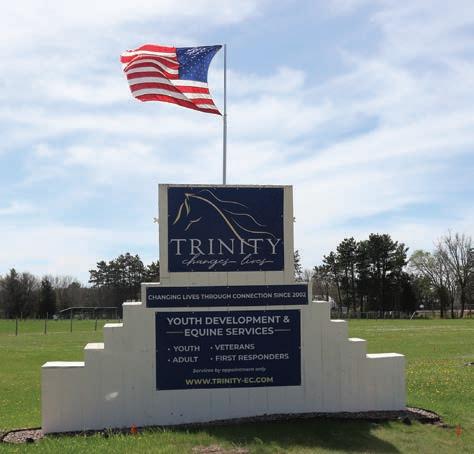
Over the years, Trinity Equestrian Center has continued to grow and evolve while remaining committed to serving others. Although the organization has expanded and evolved, its mission has remained consistent: Changing Lives Through Connection.
That mission aligns closely with the cooperative principle of concern for community. By supporting neighbors, investing in our community, and helping others through challenges, Trinity Equestrian Center continues to make an impact on the individuals and families it serves throughout the region.
For those hearing about Trinity for the first time, the organization hopes people understand that healing and support can look different for everyone. A major part of Trinity’s mission is helping reduce the stigma that can still exist around mental health, particularly among veterans, military members, and first responders, where seeking help is sometimes felt to be more difficult or less talked about.
The team at Trinity encourages people not to give up if one approach to healing does not work for them. As Toni shared, “Don’t stop until you find what fits.” Whether that support comes through traditional counseling, equine-assisted therapy, community connection, or another outlet entirely, Trinity believes the important thing is to continue seeking the right kind of help. Nearly 25 years after opening, Trinity Equestrian Center remains committed to helping people find hope, connection, and a path forward.
Electrical Safetyaround Water
shocks around pools, hot tubs and spas before they happen.
• Use a quali ed electrician for any new pool, hot tub or spa wiring.
• Use covered outdoor outlets.
• Make sure outlets are GFCI-protected and tested monthly.
• Keep cords away from water. Don’t use extension cords for pool equipment.
• Choose battery-operated and waterproof TVs, radios and speakers.
• Don’t handle phones, tablets, laptops or charging cords when you’re wet, and keep them away from pools, spas and sinks.
• Check power line clearance with an electrician or your utility when installing pools, spas and structures like diving boards; and have utilities marked before digging.
• Schedule periodic electrical inspections and upgrades for your equipment.
Know the risks: Wet skin + wet surfaces = increased risk when electricity is present.
Warning signs of shock in the water:
• Tingling sensation.
• Muscle cramps.
• Restricted movement.
If you suspect electrical shock:
• Turn o all power immediately.
• Do NOT enter the water to rescue anyone.
• Use a non-conductive rescue tool (such as berglass).
• Call 911.
If you feel a shock in the water, move away from the source and get out.
• Have an electrician show you how to shut o all power in an emergency and make sure the shut-o switch is labeled. Learn more
www.ecec.com
8214 Hwy 12, P.O. Box 368, Fall Creek, WI 54742-0368 www.ecec.com
Taylor Skibba, Marketing and Communications Coordinator
Emergencies & outages: Toll FREE 800-927-5090
24 hours a day, 7 days a week
Diggers Hotline: 811 or 1-800-242-8511
Call 3 working days before you dig.
ECEC’s lobby will be closed August 3–7 for lobby renovations.
HUMBLE BEANS HEARTY MEALS
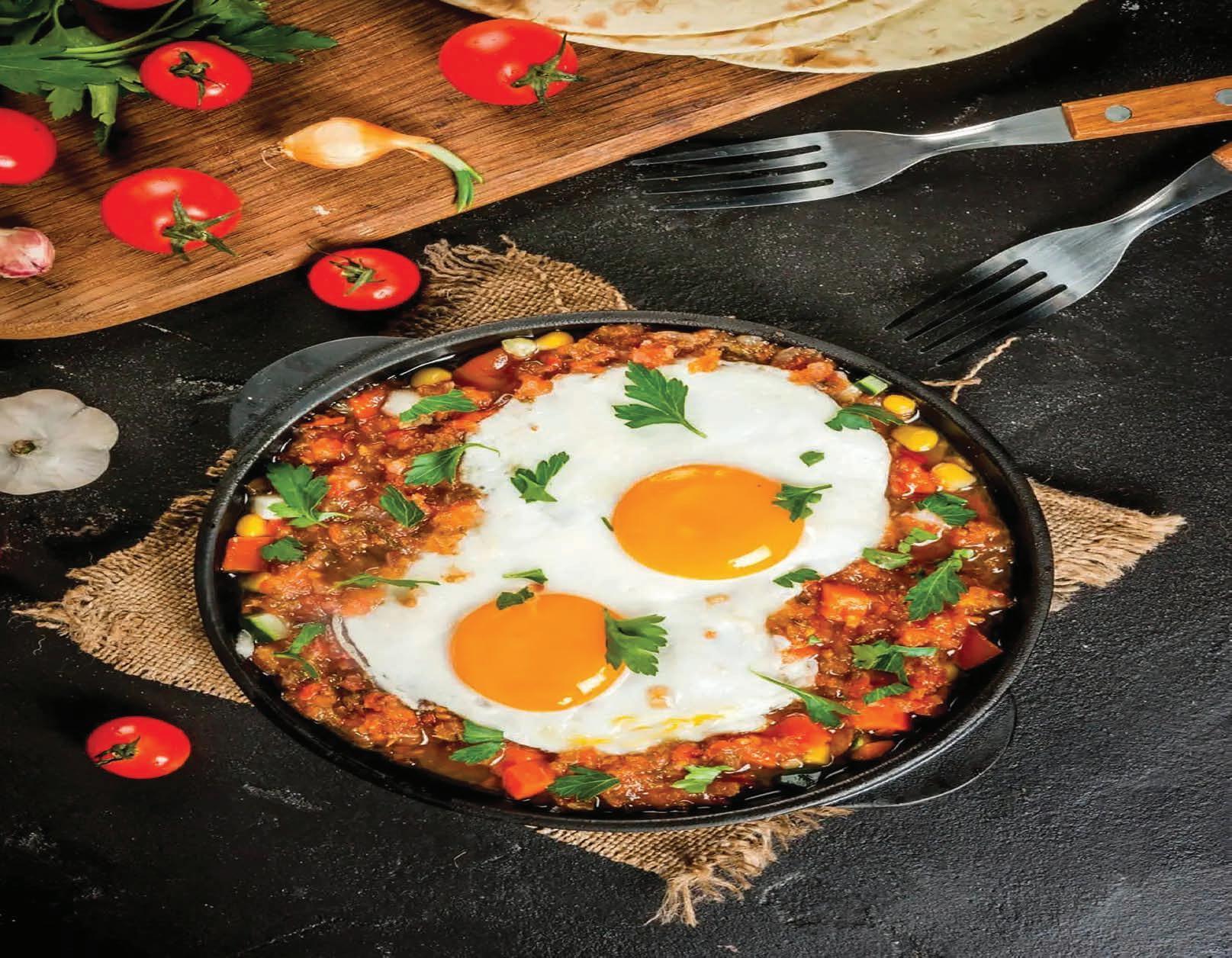
Huevos Rancheros
This dish is easy to make and packed full of avor. Pinto beans and eggs add nutrients while green chiles, cilantro, and lime juice add spice and fresh zest!
Recipe and photo courtesy of the U.S. Dry Bean Council.
1 (10 oz) can diced tomatoes and green chiles, undrained
1 (10 oz) can red enchilada sauce
1/3 cup chopped fresh cilantro
1 Tbsp fresh lime juice
2 Tbsp water
1 (15 oz) can, rinsed and drained, or 1-3/4 cups cooked, dry-packaged pinto beans
Cooking spray
4 large eggs
4 (8-inch) fat-free our tortillas
1 cup crumbled queso fresco cheese
In a medium saucepan, combine the tomatoes and enchilada sauce; bring to a boil. Reduce heat and simmer for 5 minutes or until slightly thick. Remove from heat; stir in cilantro and lime juice. Set aside.
Place water and beans in a microwavesafe bowl and partially mash with a fork. Cover and microwave on HIGH for 2 minutes or until hot.
Heat a large, nonstick skillet coated with cooking spray over medium heat. Add eggs; cook 1 minute on each side or until done to desired degree.
Warm tortillas according to package directions. Spread approx. 1/3 cup beans over each tortilla; top with an egg. Spoon 1/2 cup sauce around the egg; sprinkle each serving with 1/4 cup cheese. Makes 4 servings.
Chicken and Cheese
Quesadillas with Edamame Salad Topping
Transform an ordinary quesadilla into an extraordinary meal when you top it with this salsa-like topping. And by all means, make a double batch of the topping to have on hand: stir it into salads, top grilled salmon, or eat as a side dish just as it is.
Recipe and photo courtesy of The Soyfoods Council.
EDAMAME SALAD
2 cups frozen shelled edamame, divided
1 pint cherry tomatoes, quartered
1/4 cup finely chopped red onion
1 Tbsp fresh lime juice
2 Tbsp chopped fresh cilantro, optional 1/2 tsp salt
Bring 2 quarts of lightly salted water to a boil in a medium saucepan over high heat. Add the edamame, return to a boil and cook until tender, approx. 6–7 minutes; drain and rinse under cold water, then drain again. Transfer 1-1/2 cups of the edamame (reserving 1/2 cup to add to chicken and cheese mixture) to a bowl and stir in the tomatoes, onion, lime juice, cilantro, and salt; mix well and refrigerate until ready to serve.
QUESADILLAS
2 Tbsp vegetable oil
1 cup chopped onion
2 garlic cloves, minced
1 (8.75 oz) can corn kernels, drained
2 cups shredded cooked chicken, such as rotisserie chicken
1-1/2 cups shredded Mexican four cheese blend
1/4 tsp salt
6 (7- to 8-inch) flour tortillas
Heat the oil in a large nonstick skillet over mediumhigh heat. Add the onion and garlic; cook, stirring occasionally, until starting to soften, approx. 2–3 minutes. Add the corn and reserved 1/2 cup edamame, cook 2 minutes longer. Transfer to a bowl and stir in the chicken, cheese, and salt; mix well. Put one tortilla on a work surface and spread the lower half of it with 1/2 cup of the chicken mixture. Fold the top half of the tortilla over the filling to form a semi-circle. Repeat with the remaining tortillas and chicken mixture. Wipe out the skillet with a paper towel and return to the stove over medium heat. Add the quesadillas two at a time and cook approx. 3–4 minutes per side or until lightly golden and hot. Divide among 6 plates and top each with 1/2 cup of the edamame salad. Makes 6 servings.
2 tsp olive oil
1-1/2 tsp dried rosemary
1/4 tsp salt
1/4 tsp black pepper
8 skinless and boneless chicken thighs (approx. 1 lb)
One Dish Rosemary Chicken and White Beans
This rosemary chicken and white bean meal is quick and includes minimal ingredients that are likely already in your pantry! Rosemary, tomatoes, and kalamata olives spice up this quick and traditional, French Provencal dish.
Recipe and photo courtesy of the U.S. Dry Bean Council.
1 (14.5 oz) can stewed tomatoes, undrained
1 (15 oz) can, rinsed and drained or 1-3/4 cups cooked, dry-packaged navy beans
1/4 cup pitted kalamata olives, chopped
Heat olive oil in a large skillet over medium-high heat. Combine rosemary, salt, and pepper; sprinkle over one side of chicken. Place chicken in pan with seasoned side down, cook 3 minutes. Reduce heat to medium and turn chicken. Add tomatoes and beans; cover and simmer 10 minutes or until chicken is done. Stir in olives. Makes 4 servings.
1 Tbsp olive oil
1 lb crimini mushrooms or white button mushrooms, cleaned and sliced
1 chipotle in adobo sauce, chopped, plus 1 Tbsp adobo sauce
1/2 tsp garlic powder
Kosher salt and freshly ground black pepper, to taste
Chipotle Mushroom Tostada with Refried Beans
A crispy tostada layered with creamy refried beans, meaty mushrooms, and spicy jalapeños.
Recipe and photo courtesy of The Mushroom Council.
1 cup canned refried beans or 1 cup canned black beans, kept hot 4 corn tostadas
1 avocado, halved, pitted, peeled, and sliced
1/2 small red onion, thinly sliced 1 small jalapeño, thinly sliced into rounds
Chopped fresh cilantro, for garnish, optional
Heat oil in a large skillet over medium-high heat. Add mushrooms and cook, stirring occasionally, until light golden-brown, approx. 6–8 minutes. Stir in chipotle, adobo sauce, and garlic powder; cook, stirring frequently, until coated, approx. 1 minute. Season with salt and pepper, to taste.* Spread refried beans evenly over each tostada and top with mushroom mixture. Garnish with avocado, red onion, jalapeño, and cilantro. Makes 4 servings.
*NOTE: For an optional meat version: Once mushrooms are cooked in step 1, add shrimp, and cook until fully cooked and pink, approx. 2–3 minutes. Stir in chipotle, adobo sauce, and garlic powder, and cook, stirring frequently, until coated, approx. 1 minute. Season with salt and pepper, to taste.
READER RECIPES
APPLE PUDDING CAKE
RECIPE COURTESY OF SANDY DRESCHER, NEILLSVILLE
CRUST
REQUESTS FROM OUR READERS
An anonymous reader is looking for cherry recipes.
SEND TO: WECN, Reader Recipes, 6405 Century Avenue, Suite 102 Middleton, WI 53562-2200 or jennifer@weca.coop
2 cups our 2 Tbsp sugar 1 cup butter
Mix crust ingredients well and pat into a 9-x13-inch cake pan.
APPLE TOPPING
8 apples, sliced (may use more if needed) 1/3 cup sugar
1 Tbsp cinnamon
Mix well and place over the crust. Bake for 45 minutes at 375 degrees.
Prepare pudding mix as directed on the package using milk. Pour pudding over the cake while it is still hot from the oven. Serve hot or cold with whipped or ice cream.
EASY APPLE DESSERT
RECIPE COURTESY OF SANDY DRESCHER, NEILLSVILLE
CAKE BASE
1 (13.25 oz) pkg yellow cake mix 1/2 cup butter 1/3 cup shredded coconut
Mix together base ingredients and pat into a 9-x13-inch pan and bake for 10 minutes at 350 degrees.
TOPPING
4 medium apples, sliced 1/2 cup sugar
1 tsp cinnamon 1 egg
1 cup sour cream
Arrange sliced apples over warm cake base. Mix together sugar and cinnamon and sprinkle over apples. Beat egg with a fork and blend with the sour cream. Drizzle over the cinnamon-sugar covered apples and bake for 25 minutes at 350 degrees.
PAST RECIPES CAN BE FOUND ON OUR WEBSITE AT WECNMAGAZINE.COM/RECIPES. CLICK “SEARCH RECIPE ARCHIVES.”
Submit your favorite recipes to be featured on our reader recipe page. Email to jennifer@weca.coop or submit directly at http://wecnmagazine.com/submit-a-recipe/.
PLEASE NOTE: Recipes submitted must include quantities for all ingredients. If no measurements are used, your recipe will not be printed. Due to food safety issues, we cannot accept canning recipes.
HAM CASSEROLE
RECIPE COURTESY OF TODD CURTI, GENOA
1 (10 oz) pkg egg noodles
1 (10.5 oz) cream of celery soup
1 (10.5 oz) cream of chicken soup
1 (8 oz) box processed cheese (such as Velveeta)
1/2 cup milk
2–3 cups cubed, cooked ham
1 tsp grated onion Pepper, to taste
2 cups crushed butter crackers (such as Ritz)
Cook noodles as directed and drain. In a large pot, mix together soups, processed cheese, and milk; cook until melted and creamy.* Add ham, onion, pepper, and cooked noodles; mix all ingredients together. Pour into a buttered 9-x13-inch casserole dish and top with crushed crackers. Bake covered at 350 degrees for 30 minutes. Let cool for 10 minutes. Serves 12.
*NOTE: Do not add water to the soups.
SWEET POTATO PUFFS
RECIPE COURTESY OF KAREN PERINGTON, MERRILLAN
This recipe comes from The Joy of Cooking: 1931–1963
2 cups cooked, riced sweet potatoes
1 large ripe banana, mashed 1-1/2 Tbsp melted butter
1 egg, separated
1-1/2 tsp salt
1/4 cup hot milk or cream
Preheat oven to 500 degrees. Mix together sweet potatoes and mashed banana; set aside. In a separate bowl, combine the butter, egg yolk, salt, and hot milk or cream until well blended. In a separate bowl, beat the egg white until sti and add to butter mixture; then fold into potato mixture. Drop batter by the teaspoonful onto a greased cookie sheet and bake for approx. 12 minutes.
BEEF STEW
RECIPE COURTESY OF JAN THOMPSON, ELLSWORTH
You usually have everything in your pantry to make this. It smells wonderful while cooking and tastes even better. I would make this stew for my spouse when he worked for the Minneapolis Fire Dept. The guys at the re station loved it.
1 (10.5 oz) can cream of mushroom soup
1 (10.5 oz) can tomato soup
5.25 oz water ( ll/use 1/2 of soup can)
1-1/2 tsp seasoned salt
1-1/2 lbs lean stew meat, cut into bite-sized pieces (do not pre-brown)
4–5 carrots, sliced (or 1/2 lb of baby carrots)
4–5 potatoes, cubed
1 large onion, chopped
2 stalks of celery, sliced
Combine both cans of soup, water, and seasoned salt into a Dutch oven; stir. Add meat and vegetables; mix well. Bake covered at 250 degrees for 6 hours.
EAGLES SOAR
AS AMERICA MARKS 250 YEARS
FROM FERRY RIDES TO LIVE CAMS, EAGLE WATCHING HAS BECOME A STATEWIDE PASTIME.
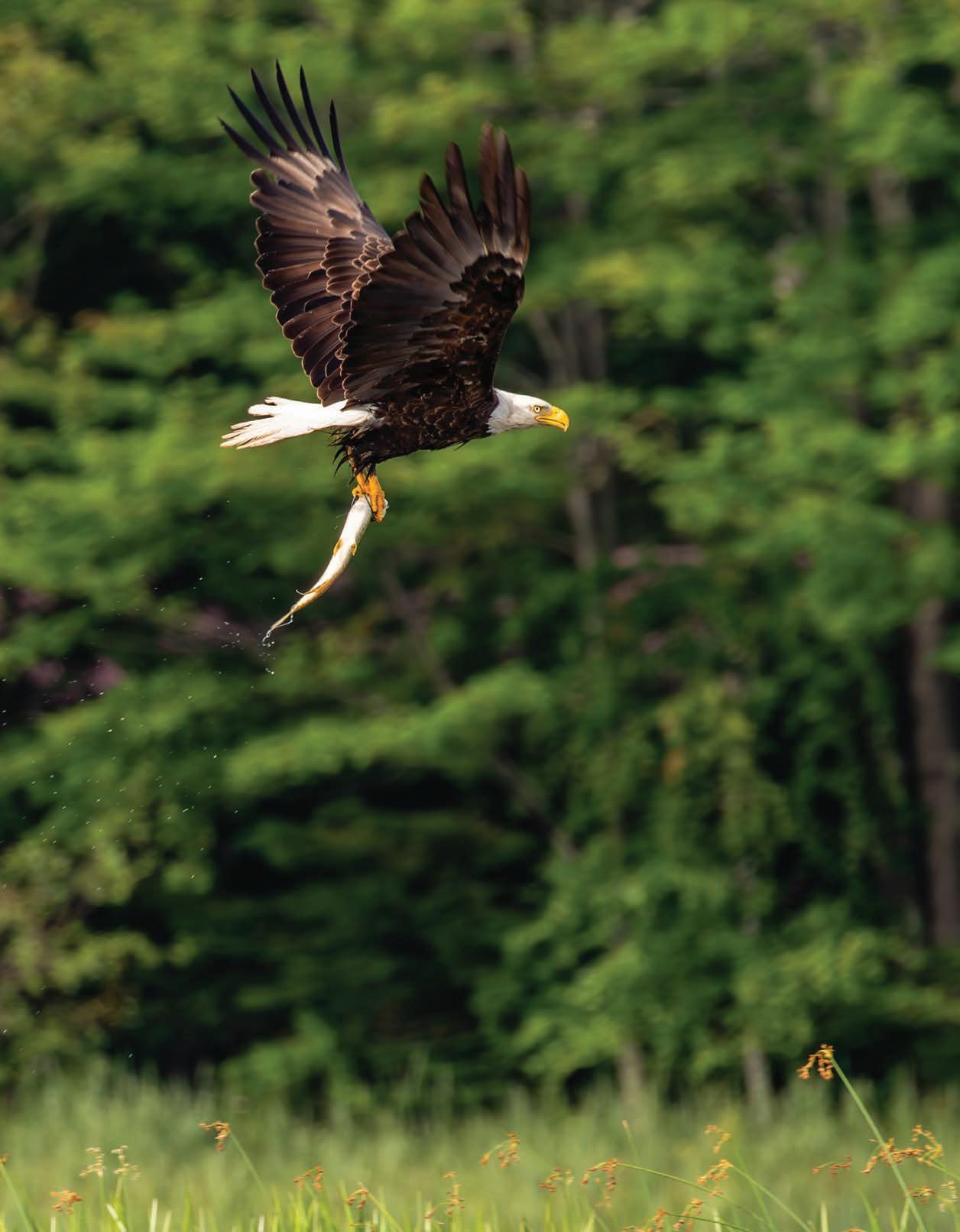
As we pause this July to celebrate America’s 250th birthday, we take a closer look at a recognizable symbol of our country—the bald eagle. As the nation reaches this historic milestone, the bald eagle serves as a reminder of both our country’s resilience and the natural heritage we share.
Shortly after the signing of the Declaration of Independence, the Continental Congress appointed Benjamin Franklin, Thomas Je erson, and John Adams to create an o cial seal for our new country. Six years and three committees later, they nally
mage
courtesy of Getty Images
settled on a design. In 1782, the design featuring a bald eagle at the center, gripping a bundle of arrows and an olive branch in its talons, was adopted. The founders chose the eagle not only for its strength and longevity, but also for its commanding presence, which they felt reflected the character of the new nation. (As the story also goes, Ben Franklin famously disagreed with featuring the eagle as he said it was “of bad moral character” and “too lazy to fish for himself” and would steal food from other birds. He joked that the turkey, also native to America, would be a more respectable alternative.
Regardless, the eagle was ultimately chosen.)
Ironically, although the bald eagle was chosen by our founding fathers to represent our country, it wasn’t officially adopted until 2024. No American president or Congress had officially codified it as the national bird until two years ago.
Despite being a symbol of our country, the bald eagle has faced declining numbers due to habitat loss and hunting. In 1940, Congress passed the Bald Eagle Protection Act, making it illegal to possess, kill, or sell them. After World War II, the eagles’ numbers decreased further due to eating prey contaminated with DDT. In the 1960s, only approximately 400 breeding pairs remained in the continental U.S. (100 of those were in Wisconsin), and by 1978, the bald eagle was listed as endangered.
Federal protections were put in place, and in 1995, the bald eagle was moved from the endangered list to the threatened species list. The eagle population recovered enough that, by 2007, it was removed completely from the list.
Abundant
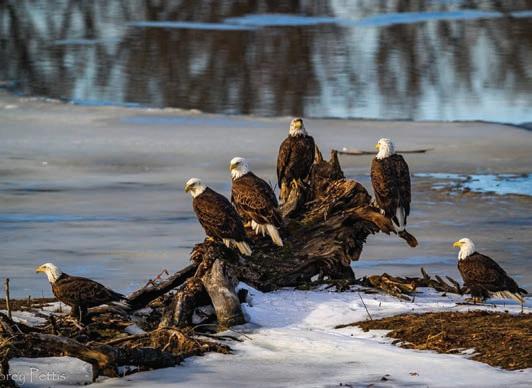
Eagles in Wisconsin Today, all Wisconsin counties have documented active eagle nests, monitored by Bald Eagle Nest Watch, a program of the Southern Wisconsin Bird Alliance. The program relies heavily on citizen scientists, whose observations help researchers understand nesting success, habitat needs, and emerging threats. According to a 2024 count, the state was home to more than 220 bald eagle nests.
When observing eagles, it’s important to keep a respectful distance and avoid disturbing active nests, as human interference can disrupt feeding and nesting activity.
There are many places across the state known for prime bald eagle viewing. Here are a few of our favorites:
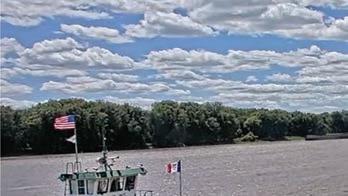
Cassville Car Ferry Ashley Eng, operations assistant at Scenic Rivers Energy Cooperative, suggests watching for bald eagle nests along the Mississippi River while on the Cassville Car Ferry. Crossing the river to Iowa since 1833, the scenic ferry ride also offers a memorable journey. Dairyland Power Cooperative is a corporate sponsor of the ferry.
The Cassville Car Ferry is located at 100 Prime St, Cassville, WI 53806, situated in Riverside Park right along the Mississippi River. For up-to-date schedule information, seasonal hours, or current rates, you can call them at 608-7255180.
Cassville Car Ferry Image courtesy of explorecassville.com
The seal of the United States as it appears on a one-dollar bill.
Images courtesy of WI DNR
Trempealeau Web Cam
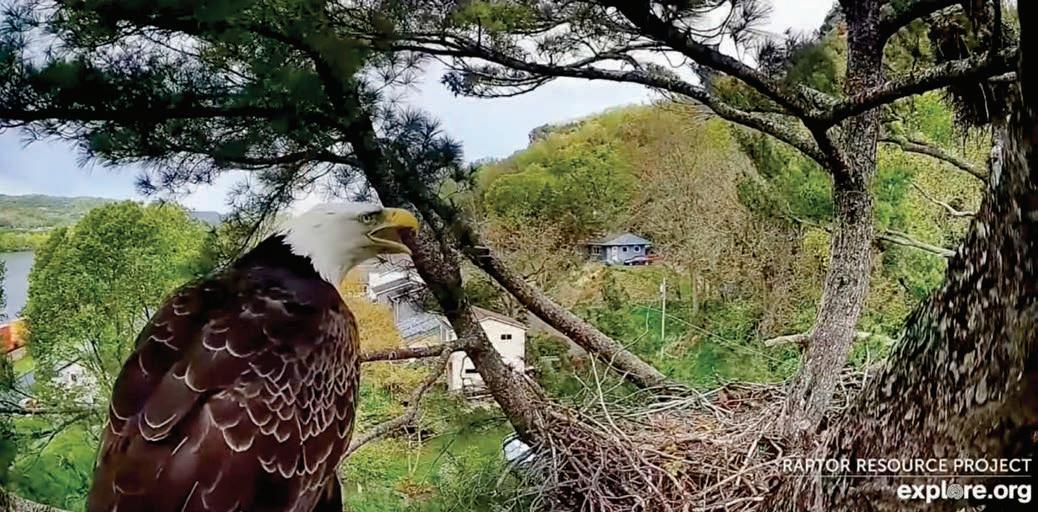
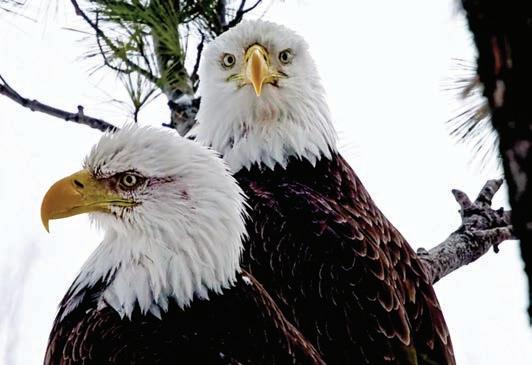
Brandi Shramek, member relations supervisor at Jackson Electric Cooperative, suggests checking out the live web cam footage of the Trempealeau Eagles. A pair of bald eagles, known as Mr. T and Mrs. T, have 24/7 live coverage of their nest in a white pine tree overlooking the Mississippi River, on private property, in the city of Trempealeau. True to reality TV drama, Mr. T has a second “wife” in a nest four tenths of a mile away on MN Island and splits his time between the two nests. The Trempealeau Eagles live stream can be viewed at https:// www.raptorresource.org/trempealeau-eagles/
La Crosse Eagle Watch Wayside
Located just south of Exit 3 on Interstate 90 near La Crosse, this stop is more than just a chance for weary travelers to stretch their legs. People are invited to pull off on the wayside and use one of the viewing scopes to get a close-up look at all types of river wildlife, including bald eagles.
As America marks its 250th birthday, let’s also honor the remarkable return of the bird chosen to represent our national spirit. From river bluffs to ferry decks to quiet nest cams, bald eagles are once again part of Wisconsin’s everyday landscape. Grab your binoculars and look up—our national symbol is soaring.—Dana Kelroy
Do you know of a prime location to spot bald eagles? Share your favorites by sending an email to dana@weca.coop.
Mrs. T and Mr. T are the stars of the Trempealeau Eagles web cam. Photos courtesy of the Raptor Resource Project
Photo courtesy of Corey Pettis
MAKE THE MOST OF YOUR ROOM AIR CONDITIONER
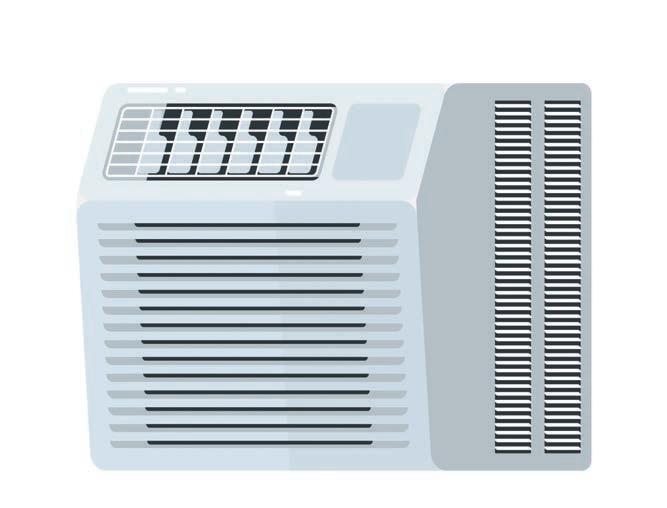
For homes without a central air-conditioning system, a room or window air conditioner is a great option for keeping a house comfortable through summer’s heat. These units are meant to cool rooms rather then entire homes, so they’re less expensive to operate than a central system. Follow these tips to get the most e cient use of your room air conditioner:
Size it Right!
Use the proper size air conditioner for the room. An oversized unit will perform less e ciently and e ectively by cooling the room to the temperature set-point before proper dehumidi cation occurs, making the air feel clammy. An air conditioner generally needs 20 Btu for each square foot of space.
Can You Take it Higher?
Set your air conditioner’s thermostat as high as is comfortable. The smaller the di erence between the indoor and outdoor temperatures, the lower your overall cooling costs will be.
On the Level
When you install your room air conditioner, make sure the unit is level so the inside drainage system and other mechanisms work properly. Follow manufacturer’s directions carefully during installation.
Lower Fan for Lower Humidity
Set the fan speed on high unless the weather is very humid. On high-humidity days, set the fan speed on low. The slower air movement through the cooling equipment will remove more moisture from the air.
Keep it Clear
Keep your air conditioner’s thermostat clear of any heatproducing items such as lamps or televisions. The thermostat senses heat from these appliances, which could cause the air conditioner to run longer than necessary.
Fan Power
Room air conditioners are not designed to cool entire homes. Running multiple window units at once is less e cient and more expensive than running a central AC system. Using a fan along with your room unit can help spread the cooled air farther without greatly increasing your electricity use.
Source: energy.gov
CLASSIFIEDS
WANTED: PAYING CASH FOR WWII FLAGS, DAGGERS, SWORDS, GUNS, ETC. Also buying guns and collections. 715-340-1974.
WANTED: DEER TAGS, BACK TAGS. Trapping, bear, hunting licenses. Otter, fisher, bobcat tags, party permits, old traps. 715-2559284 David Schober, W4234 Rock Creek Rd., Loyal, WI 54446.
BEAR TRAPS WANTED. 715-563-6658.
GEOTHERMAL We service & install all models and brands. Contact us today. Niesen@ charter.net.
CHAINSAWS WANTED DEAD OR ALIVE.
Buying 1 or 100 McCulloch, Pioneer, Jonsereds, Echo, STIHL, Homelite, Remington, Mall. Buying all brands and sizes. Non-running, running, seized, parts. Let me know what you have - will travel. Call Chainsaw Mike at 715-828-9414.
THROW YOUR HOME MOVIES IN THE TRASH! Or pro transfer 8mm, VHS, slides, audio, and all formats to DVD or ash drive. Gene DVD Productions 715-827-2302.
WANTED TO BUY: Model 1895 Winchester ri e, 30-06 caliber. Please call 715-765-4670.
WANTED: COLLECTOR LOOKING FOR OLD WOOD AND METAL SIGNS. Any condition. Also, old motorcycle items and bell helmets. Call Jerry 920-373-3515.
WANTED: COLLECTOR LOOKING FOR VINTAGE SPORTS CARDS 1986 or older. Also, looking for comic books, 1970’s or older. 608-343-3503.
HYDRAULIC BC TREESPADE Seldom-used, like-new, 32-inch tree spade (3-pt hookup), WI manufactured, moves trees ≤ 3-inch DBH. Call Mark 608-787-1191.
FOR SALE: POLKA BAND EQUIPMENT. Star Concertina and Iorio-Accorgan accordions. Both in good condition. Southern Wisconsin area. Call 608-558-2698. Leave message, I will return your call.
WANT TO BUY low mileage 2013-2018 GM pickup. If found, will sell my 2001 Dodge Cumins Dually w/59,000 mi. 608-582-2263.
MAILBOX DOOR NOT STAYING CLOSED? Strong add-on magnet. No tools required. Rural style mailboxes. www.MAILNUT.com. 715-967-2448.
“STUNNING” AKC REGISTERED LAB PUPPIES AVAILABLE. Raised in-home with our family, these pups are well-socialized and con dent. Puppies will go home with rst vaccinations, and a puppy pack. Call Brenda 507-330-3144.
SELLING: TWO HONDA GOLDWINGS 1500 ASPENCADE. Seller bought a trike. Both have reverse, air suspension, and helmets w/intercom. Good running condition. Reasonably priced. 920-372-8013.
WANTED: BOBCAT SKID STEER (by private party). Good condition, low hours, medium to small machine, available to travel. Call Mark. Home 715-835-1305 / cell 715-577-7249.
FOR RENT: 2 BR CABIN on Big Round Lake in Hayward, WI. Excellent sand beach. Low elevation to lake. May–Sept. Call for rates. Janet. 715-558-5803.
FOR ELECTRIC HEAT USERS: Two Ste es electric thermal storage heaters. Model 312S. Has ceramic brick cores. Free. Call Gerry 608-487-6632.
OLDER 940 MUSTANG SKID STEER, one owner, very good condition, 6700 hours. 608-554-0468.
2010 CHEVY SILVERADO EXTENDED CAB. Body excellent, new transmission, everything works. Fair box. 195,000 mi. 4x4, $6,500 cash. 262-989-7384 (Viola).
BEAUTIFUL SETTING, 7 acres, prairie home, 3 garages, workshops, 39,000 ft warehouse full of antique telephones, 60 yrs accumulation, 40 vehicles 19362001, contiuning business, zoned, nearest neighbor 1/8 mi, sparse, Mississippi River Trempeleau 3 mi. All $975,000 or $850,000. Vacated. www.phonecoinc.com 608-5822263 noon-8 pm.
Real Estate
THUNDERBIRD VILLAGE. ONE, FIVE, AND TEN BEDROOM, FULLY FURNISHED LODGING. Located 10 miles NE of Black River Falls with direct access to snowmobile, UTV, and Lake Arbutus. Great shing and boating. Seasonal campsites available. www.thunderbirdvillage.net 608-989-2275.
15 ACRES LAND FOR SALE BY OWNER, Jackson County, 20 minutes west of BRF. 6 acres open, 9 acres wooded. Borders creek. Easy access. Potential country living. $135,000. Please text 715-896-6617.
WISCONSIN EVENTS July 2026
1–31 Bloomin’ Greenhouse Tour—Clark County. Various locations, 8 a.m.–5 p.m. Shop Clark County’s many greenhouses and garden centers for annuals, perennials, vegetables, herbs, grasses, trees, fairy garden supplies, garden art, home décor, and more. 715-255-9100.
8, 15, 22, 29 Concert Band—La Crosse. Riverside Park, 7–8:30 p.m. Free summer outdoor music. July 8: “Happy Birthday, America” conducted by Tammy Fisher; July 15: “Magic on the Mississippi” conducted by Paula Neuzil; July 22: “Nightscapes” conducted by Mark Lakmann; and July 29: “Oh, For the Love of Music” conducted by Liz Bahr. 608784-7555.
3 Family Fun Day—Millston. Ball Park, 3–10 p.m. Chicken que at 3 p.m., dedication to our country at 5 p.m., corn hole tournament at 6 p.m., live music at 7 p.m., and fireworks at 9:30 p.m. over Lake Lee.
4 July 4th Celebration—Phillips. Elk Lake Park, 8:30 a.m. –10:30 p.m. Spirit of America 5K Walk/Run starts and ends by the VFW at 8:30 a.m. Parade downtown at 2 p.m., then head down to Elk Lake Park for food and beverage vendors and entertainment until fireworks at 9:45 p.m.
4 Art & More on the Lakeshore—Phillips. Elk Lake Park, 9 a.m.–3 p.m. Entertainment and arts, crafts, and food vendors, and a 4th of July celebration after 3 p.m.
4 July 4th Celebration—Jump River. Community Park, 11 a.m.–10 p.m. Parade at 11 a.m., tractor/truck pull, horseshoes, kids pedal pull, food and refreshments all day, fireworks at 10 p.m. 715-290-0061.
4 Block Party—Tigerton. 215 Cedar St. (in front of the 1905 Village Hall), 12–4 p.m. Live music, food, fun, bucket raffle, and spectacular fireworks show at dusk.
4 Boomfest—Medford. City Park, 1–11 p.m. Kid’s activities including free swim, bounce house, magic show, and games, at 1 p.m. Adult activities include Cynor’s Classics Polka Band at 2 p.m. Color guard and tribute to America’s 250th birthday at 6 p.m., followed by Smoke Wagon Band until the fireworks at dusk. Food and refreshments available.
8 Brat Fry—Iola. Sentry grocery store, 9 a.m.–6 p.m. Proceeds go to the Hatch Lake Association for Lake Preservation.
18 Stroll Through Arts in the Park Craft & Vendor Fair—Edgerton. Albion Park, 9 a.m.–2 p.m. Handmade arts, crafts, and business vendors selling knitted sweaters, wood craft and decor, rosemaling, and businesses like Scentsy and Tastefully Simple, and a bike repair station. Fresh harvest vendors, local music, bake sale, caramel corn, local food at Cafe Albion, and a pie and ice cream social. Free family fun for all!
22 Pie & Ice Cream Social—Eau Claire. Chapel Heights United Methodist Church, 4–6:30 p.m. Chicken salad sandwich plate is $10, hot dog plate is $8, pie and ice cream (with beverage) is $5. Call-in and take-out orders available. 715-832-2333.
24–26 NHRA National Open—Eau Claire. Rock Falls Raceway, 9 a.m.–5 p.m. Experience the best of the best as racers compete for the NHRA National Open Event Championship. Fri. and Sat. will also feature exhibition passes from flamethrowing jet dragsters! Adults: $25/day, military/senior (60 & older): $20/ day, kids 12 & under are free, camping: $25/ night. 715-875-4233.
24 Thunder on Main—Lena. Main Street, 5–8 p.m. A street party with hundreds of racers and fans coming together for an unforgettable experience of autographs, photos, food trucks, live music, and more.
24 Rodeo—Eau Claire. County Expo Center, 7–10 p.m. Rodeo bulls, barrels, and mutton bustin’. Held in conjunction with the Eau Claire County Fair. Gates open at 5 p.m. Cost is $25 per person. Children 5 and under are free.
25, 26 Dirt City O -Road National Race—Lena. Dirt City Motorplex, 8:30 a.m.–5:30 p.m. The AMSOIL Championship Off-Road Tour is bringing an adrenalinefilled weekend of high-speed off-road racing! Explore the pits or just enjoy a day packed with excitement and good company. Visit www.dirtcitylmc.com.
25 The Best “DAM” Day in Alma—Alma. Downtown area, 9 a.m.–5 p.m. Featuring free tours of the of Lock and Dam #4 from 10 a.m.–2 p.m. Free trolley rides touring the historic city, children’s activities, and live entertainment in the City Square Tent. Food and beverage options available throughout town. For more info, 715-598-4975.
26 Sweet Rides and Sweet Pies Ice Cream Social / Car Show and Swap Meet—Westby. Area Historical Society, 10 a.m.–3 p.m. Entry fee to show a vehicle is $5. More than 70 awards plus raffles for children and adults. Special guest Dennis Gage, from the TV show “My Classic Car.” For info, email westbywihistory@gmail.com.
26 Car Show and Swap Meet—Pierce County Fairgrounds, 7 a.m.–5 p.m. More than 600 vehicles! Adults $5, 12 and under are free. Participation in the farm toy show, swap spots, and car corral all cost $15 plus admission. Gates open at 7 a.m., breakfast and lunch available, and music from 11 a.m.–3 p.m. Car show trophies at 2:30 p.m. 715-273-5552.
31–Aug. 2 Antique Engine Show—Westby. Coulee Antique Engine Club, all day. Featuring Allis-Chalmers and vintage power sports, plus gas engines and power units, flea market, threshing, plowing, and sawmill demonstrations, kids’ activities, food, antique tractor pull, an anvil shoot. Car show on Sun. morning. Food available at the Hit & Miss Café, plus pie, ice cream, and sweet corn. Cost is $7/day, $10/weekend. 608-606-0103.
Upload events directly to the wecnmagazine.com through the “Events” tab.
Wisconsin Events is a public service for our readers. Due to space limits, we may need to eliminate details, so be sure to include a phone number (with area code) where callers may obtain more info. If we receive more listings than space allows us to print, we reserve the right to select those we believe will be of interest to the greatest number of readers. Please no virtual events. Events can also be mailed to: WECN, Events, 6405 Century Avenue, Suite 102, Middleton, WI 53562-2200.
DEADLINE: 1st of the month prior to the month in which the event is to appear.
Upload events to wecnmagazine.com
1. Taleigha helps her Aunt Kort feed the animals. Photo submitted by Kortney Belongia, a member of Central Wisconsin Electric.
2. Alyssa knows that hens like hugs, too.
Photo submitted by Lisa Slattery, a member of Taylor Electric.
3. Louie says, “But Mom, pleeeeeease!”
Photo submitted by Grandpa Dean Ginther, a member of Jackson Electric.
Upload photos directly to wecnmagazine.com through the “Submit a photo” tab.
Send photos of kids with animals, along with a brief description, to WECN Magazine, 6405 Century Avenue, Suite 102, Middleton, WI 53562-2200. Please include the name of your electric co-op. Photos will be returned. If in good-resolution, electronic format, photos may also be uploaded via wecnmagazine.com through the “Submit a photo” tab. By submitting, sender implies that he/she has rights to and owns the image, and grants WECN permission to use the image. By submitting, the parent or legal guardian also authorizes us the right to publish the image.
Fireworks Safety Tips
1. The best way to stay safe is to never use fireworks at home. Instead, attend a public _______________ and leave fireworks to the pros.
2. Watch fireworks from a _______________ of 500 feet away from where they are launched.
3. Never touch or pick up pieces of fireworks or duds as they may still be _______________ or could explode at any time.
4. Remember, are not toys and can reach 2,000 degrees F. Use glow sticks instead.
5. Think about _______________ when fireworks are nearby. It’s best to leave them indoors to reduce the risk of them running away or being injured.
Holidays like the Fourth of July and other celebrations can be fun times with great memories. But everyone should practice safety near fireworks. Read the safety tips below, then fill in the blanks with the correct answer in the word bank.
Energy Efficiency That Works as Hard as You Do.
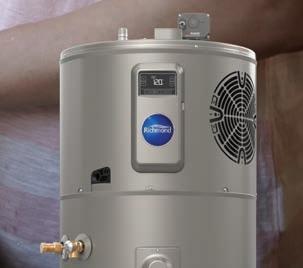
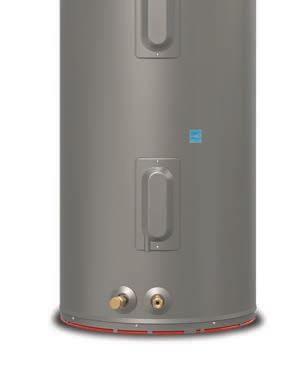
As a member of your local electric co-op, you know the value of smart energy choices. A Heat Pump Water Heater uses far less energy than a traditional water heater — meaning dependable hot water with lower monthly bills. Efficient for your home. Good for your wallet. Better for your community.