The comfort of radiant meets the e ciency of geothermal
Geothermal heat pumps circulate water underground to provide the best in energy-e cient heating and air conditioning. Radiant systems circulate water throughout your floors to provide the ultimate in luxurious comfort. WaterFurnace’s 5 Series OptiHeat unit is simply the easiest way to combine the two worlds. You’ll love your warm, toasty floors—and you’ll adore your utility bill.
Adams/Mauston Deans Refig. & Htg (608) 372-6928
Arcadia/Mondovi Water Source Htg & Clg (715) 833-9001
Ashland/Iron River Elza Htg Co. (715) 209-7628
Beaver Dam/Green Lake Air Care, Inc. (920) 356-8860
Black River Falls/ Stevens Point Northern Indoor Comfort (715) 937-2676
The Wisconsin Energy Cooperative News (Formerly Wisconsin R.E.C. News) has been published monthly and distributed since July 1940 to members of Wisconsin’s non-pro t, consumer-owned rural electric cooperatives. It is available to non-members for $13 per year or $35 for three years. Members pay $6.93 per year.
Published by the Wisconsin Electric Cooperative Association, 6405 Century Avenue, Suite 102 Middleton, WI 53562-2200
Rob Richard, president & CEO.
USPS number: 688-480.
Postmaster: please send address changes to Wisconsin Energy Cooperative News, 6405 Century Avenue, Suite 102 Middleton, WI 53562-2200.
Periodicals postage paid at Sun Prairie, Wis.
Send correspondence to Wisconsin Energy Cooperative News, 6405 Century Avenue, Suite 102, Middleton, WI 53562-2200. Phone (608) 467-4650.
Website: www.wecnmagazine.com.
Co-op Members: Please send address changes to your local electric co-op. Contact information can be found on page 18.
Rob Richard WECA president & CEO
Dana Kelroy editor
Beth Alesch associate editor
Julie Lund contributing writer
Ann Bailey graphic designer
Geri Miller advertising consultant
Jennifer Taylor editorial assistant
For advertising opportunities please email geri@weca.coop. The appearance of advertising or events does not constitute an endorsement of the products or services advertised. We reserve the right to refuse advertisers.
rst 765-kV transmission line means for members.
FEMA reversed course on previously reported disaster coverage.
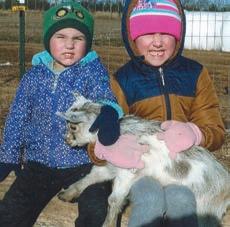
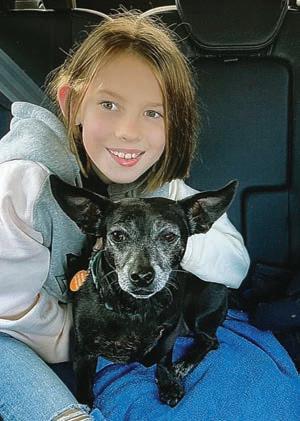
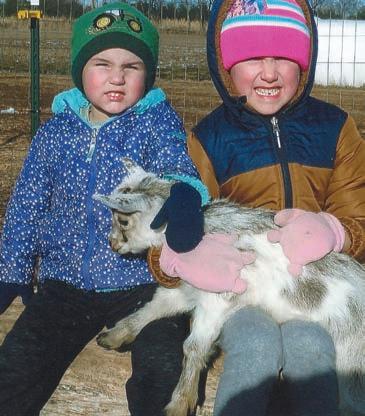
Cute co-op kids get cozy with their critters.
From generation to transmission, and nally to distribution, understand how power arrives to your home on page 9.
courtesy of Jolene Fisher, Dunn Energy Cooperative
Please recycle
Photo
SYMBOL SEARCH
HIDDEN OBJECT GAME
Winning our April search was Janet Curin, a member of Central Wisconsin Electric Cooperative, who said the carrot was on the cover, “in the lower left corner of the truck bucket—orange part. I would like to say a BIG thank you to all the courageous lineworkers during this past ice storm. We appreciate you!”
This month, we challenge you to nd this capitol dome to encourage you to read about the electric co-op legislative conference in Washington, D.C. Remember that the symbol can be anywhere and any size. One randomly selected winner will receive a Wisconsin Energy Cooperative News kitchen kit. One entry per household, please, and provide your permanent home or mailing address with your entry. Entries are due May 13.
Enter via the “Symbol Search” link on the homepage of wecnmagazine.com.
You can also enter by mail (don’t forget to include the name of your cooperative):
SYMBOL SEARCH WECA
6405 Century Avenue, Suite 102 Middleton, WI 53562-2200
ATEAMWORK OF THE GRID
s a mom to a high school track athlete, I’ll admit it—I love track meets. My favorite events are always the relays, where each runner gives their all before handing the baton to the next, everyone working together toward a shared goal.
In this month’s magazine, the power grid takes center stage, and in many ways, it functions like a relay team. On page 9, we introduce the key players in what’s often called the world’s largest interconnected machine. The grid’s basic components— generation, transmission, and your local distribution co op—each “run their leg,” passing the baton from one to the next until power reaches your home. You can see how the whole system depends on every part doing its job.
On page 10, we take a closer look at Wisconsin’s rst 765-kV transmission line, the MariBell Transmission Project, including clearing up some myths about the plan.
Then on page 14, we follow up on an article from our February magazine where we shared the story of two Michigan electric co-ops that su ered catastrophic damage to their local grid from a March 2025 ice storm. In a reversal of a previous decision, the Federal Emergency Management Administration (FEMA) approved the co-op’s requests for funding.
Finally, on page 8, WECA President and CEO Rob Richard outlines key issues that Wisconsin electric co-op leaders took to our elected o cials in Washington, D.C., all to keep power owing.
Power doesn’t reach your home on its own—it depends on a coordinated e ort between your local co-op, its generation and transmission partners, and the larger electric grid. That teamwork is what keeps energy reliable and a ordable. By working together, co-ops are planning ahead to meet future demands, ensuring you have safe, dependable power.
Dana Kelroy Editor
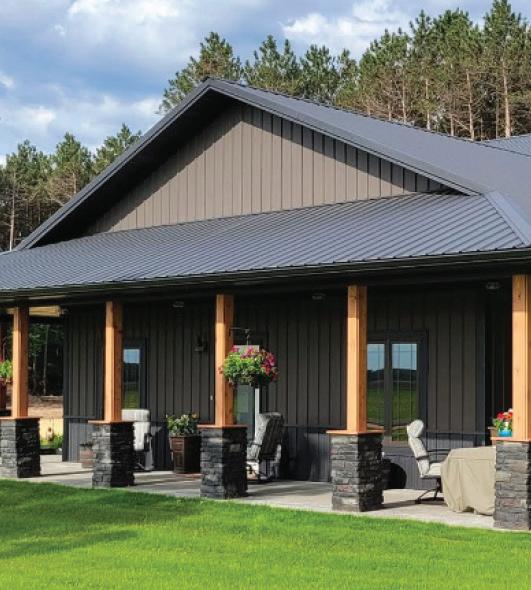
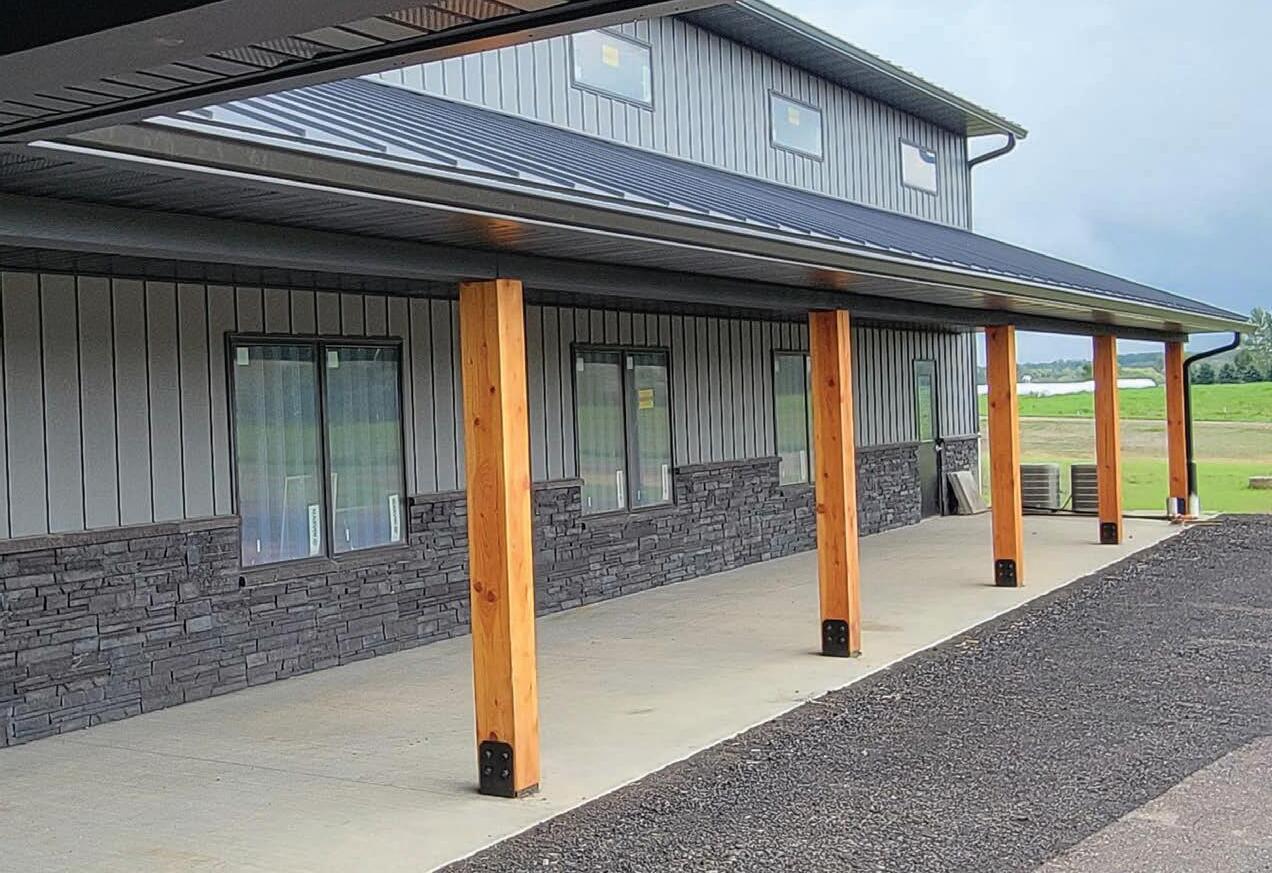
For Complete Building Packages, Metal Roofing & Siding, Professional Grade Building Materials, and Expertise... Quality Starts with HIXWOOD.
METAL ROOFING & SIDING
50+ Options! 40-Year Warranty
Ask Your Contractor for Hixwood.
Hixwood Steel Panels are manufactured in Stanley, WI
Knapp Named CEO of Scenic Rivers
Scenic Rivers Energy Cooperative (SREC) has announced Jason Knapp will serve as chief executive officer effective May 1, 2026. Knapp succeeds Steve Lucas who is retiring after 16 years of dedicated service to the cooperative.
According to the co-op board, Knapp has been an integral part of SREC for 20 years, most recently serving as the director of operations.
“We are pleased to have Jason step into the role of CEO,” said Sandra Davidson, chairperson of the board of directors. “His deep understanding of our operations and unwavering dedication to our cooperative values make him the ideal leader to guide Scenic Rivers Energy Cooperative moving forward.”
Henke Joins WECA as Compliance Specialist
Christina Henke of Eau Claire has joined the Wisconsin Electric Cooperative Association (WECA) to fill the position of compliance specialist. Henke will work with Ben Bella who serves as director of compliance services.
A lifelong Wisconsin resident, Henke brings more than two decades of experience in compliance, safety, and technical education to the WECA team. With an extensive background in fire and emergency services, combined with field experience in the power and gas industry, she has built a career centered on keeping people safe and helping organizations navigate compliance through education and collaboration.
Henke’s first day was April 13.
Ice Storm Causes Multi-Day Outages
Back-to-back ice storms hit the Central Wisconsin Electric Cooperative territory hard in early April, leaving thousands of members without power for days. The constant crushing falls of trees, limbs, and poles meant crews had to repair the same lines repeatedly.
NEWS BRIEFS
The co-op had help restoring power from Barron, Clark, Chippewa Valley, Price, and Taylor Electric Cooperatives. Once Adams-Columbia Electric Cooperative had power restored to their members from the storm, they also sent crews to assist Central Wisconsin. The crews worked through the Easter holiday.
General Manager and CEO Lila Shower called it “the craziest and worst outage CWEC has had in the last 25 years.”
MISO Partially Reverses Transmission Line Awards
In an unprecedented move, the Midcontinent Independent Systems Operator (MISO) reversed course and awarded American Transmission Company (ATC) the substation portion of the WISE (Wisconsin Southeast) transmission project, a 125-mile 345kW line. MISO had originally awarded the project to Chicago-based Viridon, a newly formed developer financed by Blackstone Energy Partners.
In the competitive bidding process, Viridon’s $350 million bid was just over half what MISO estimated the cost of the project would be.
In March, MISO reversed course and awarded the building of the substations in the WISE project to ATC, citing concerns that Viridon’s timeline was “unachievable.”
Mazo to Serve as DPC’s Chief Risk Officer
Dairyland Power Cooperative announced in April that Gary Mazo will join the team to serve as vice president and chief risk officer.
Mazo has nearly 30 years of utility industry experience in commodity risk management, financial hedging strategy, and enterprise governance. In his role as chief risk officer, Mazo will lead Dairyland’s enterprise risk management program to ensure risks are identified and managed across power supply, transmission, cybersecurity, safety, finance, and compliance operations.
Mazo comes to Dairyland from the Tennessee Valley Authority (TVA)
where he served in positions including vice president-fuels.
Mazo holds a bachelor’s degree in business administration from the University of North Carolina, Chapel Hill and an MBA from Emory University.
Energy Program
Accepting Applications
The Public Service Commission of Wisconsin has announced it is now accepting applications for the Energy Innovation Grant Program, which supports energy projects related to energy efficiency, renewable energy, energy storage, energy planning, and more. Round 6 of the EIGP opened on April 1, 2026, with a total budget of $10 million.
Electric cooperatives are eligible to apply, along with municipalities, universities, schools, hospitals, tribes, municipal utilities, and nonprofits.
The deadline to apply is June 30, 2026.
PSC Approves CPCN for Transmission Project
The Public Service Commission of Wisconsin (PSC) has unanimously approved the Certificate of Public Convenience and Necessity (CPCN) for Dairyland’s 345 kV Alma-Blair Transmission Project.
Dairyland proposed two route options, and the PSC selected the southern route for the project, spanning approximately 33 miles between the Alma Substation near the Mississippi River and the Tremval Substation near Blair. The 345-kV transmission line will follow an existing transmission line corridor.
DPC wins CIO 100 Award
Dairyland Power Cooperative has again been recognized as a national leader in IT innovation and enterprise excellence. Foundry’s CIO has named DPC a 2026 CIO 100 Award Winner. Dairyland Vice President & Chief Information Officer Nate Melby will accept the award on Dairyland’s behalf in August at the CIO 100 Symposium & Awards.
Use code WWC4G3 to get items 30-44963-1154, 30-06853-1154 for $16.99 and get free shipping on your order. Free shipping applies to standard shipping only, not including any additional shipping surcharges. Shipping upgrades additional. Does not apply to clearance. Discount is priced as marked in checkout. Not applicable to gift cards or prior purchases. May not be redeemed for cash or combined with other offers. Returns credited at discounted price. Only applies to in-stock merchandise. Expires 6/26/2026. Order by mail: Woman Within, 500 S. Mesa Hills Drive, El Paso, TX 79912
The TRUSTED EXPERTS in SIZES 12W TO 44W
COOPERATIVE LEADERS MAKE THEIR CASE IN WASHINGTON
It’s a spring ritual. And no, I’m not talking about a multi-million-dollar Wisconsin supreme court race—though after the last few years, I understand why your mind might go there. Each spring, the National Rural Electric Cooperative Association (NRECA), the national trade group for electric cooperatives throughout the country, welcomes nearly 2,000 members to gather at its legislative conference. Board directors, CEOs and managers, and senior cooperative staff come together for what is essentially our largest, most coordinated advocacy effort of the year. It’s our chance to sit down face-to-face with our House and Senate delegation and walk them through the issues that matter most to electric cooperatives back home.
This year, close to 30 individuals from Wisconsin’s electric cooperatives made the trip to Capitol Hill, carrying a unified message on several key priorities: modernizing the Federal Emergency Management Agency (FEMA), increasing Rural Utility Services (RUS) Electric Loan Program Funding, seeking permitting reform that will unlock domestic energy investment, and urging Senate passage of the Fix Our Forests Act to help mitigate wildfire risk. With the 2026 election fast approaching, time is short, and your cooperative leaders made it clear that Congress must act before the clock runs out on this legislative session.
Recent late-winter storms across Wisconsin and the upper Midwest—most recently in March and April—made FEMA reform especially urgent. In my February column, I wrote about the March 2025 storm that pummeled Washington Island Electric Cooperative and several Michigan cooperatives, leaving behind severe ice damage. Washington Island restored power in six days, but Great Lakes Energy and Presque Isle Electric & Gas in Michigan faced outages lasting up to 20 days and damages in the hundreds of millions. FEMA’s initial denial of Category F Public Assistance was a major blow. After sustained advocacy by NRECA and Michigan cooperatives, and at the direction of President Trump,
FEMA reversed course and approved funding for permanent infrastructure repairs.
Stories like these are what our cooperative leaders brought to Capitol Hill. They serve as powerful reminders that FEMA is the primary source of disaster-recovery funding for electric cooperatives. That’s why we urged Congress to pass the bipartisan FEMA Act of 2025, HR 4669. The bill would streamline the federal disaster declaration process, speed up reimbursements, and invest in more resilient systems before the next major storm hits. For cooperatives that must restore power quickly and responsibly, these reforms aren’t abstract policy; they’re essential tools.
Electricity demand continues to rise, and it won’t slow down anytime soon. That growth requires more grid capacity, more transmission, and stronger reliability. It’s why permitting reform was another major focus of our meetings. The federal permitting process can affect how your electric cooperative deals with wildfire mitigation, vegetation management, power plant and power line construction and maintenance, and a whole host of other activities.
Your cooperative’s employees and board members live, play, and work in the same communities as you do. They care about the same things you care about. Environmental reviews and public input are essential, but endless litigation drives up costs and threatens the reliability and affordability that consumer-members depend on. That’s why cooperative leaders are asking Congress for a permitting system that is transparent, predictable, and timely—without compromising safety.
I’m continually impressed by the Wisconsin cooperative leaders who travel to Washington to advocate on your behalf. They are informed, experienced, and deeply committed to the communities they serve. The relationships they build with our congressional delegation matter, and their advocacy plays a meaningful role in ensuring that your electricity remains safe, affordable, and reliable. Their work is a reminder that cooperative values don’t stop at the end of your cooperative’s service territory; they extend all the way to the nation’s capital.
Rob Richard WECA President and CEO
POWER PLAYERS OF THE GRID
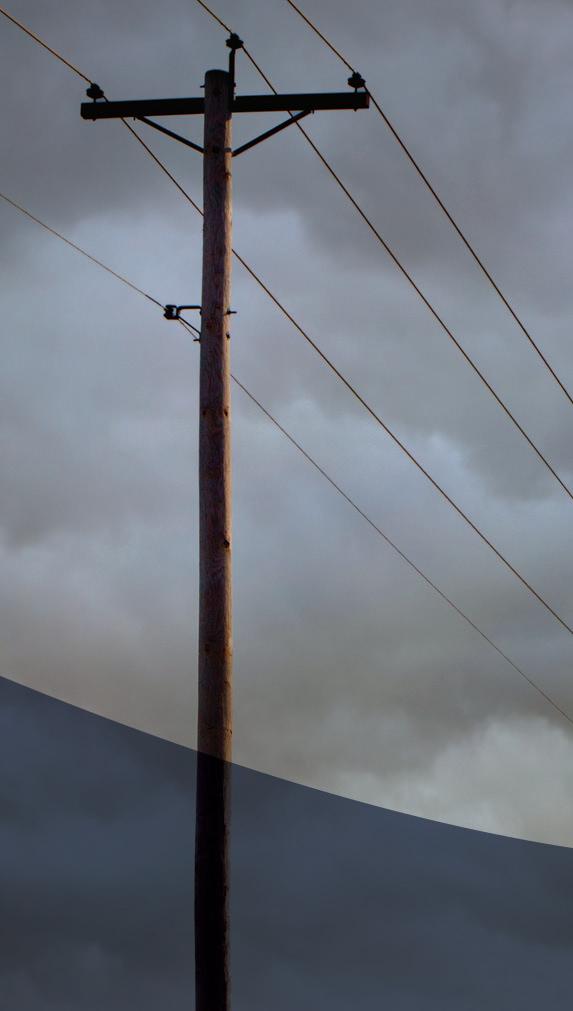
Every time you flip a switch, you’re connecting to one of the most complex systems ever built, also known as the North American electric grid. Often called the largest interconnected machine in the world, this network spans the United States, Canada, and parts of Mexico. It includes thousands of generators, hundreds of thousands of miles of transmission lines, and millions of miles of distribution power lines all working together to keep the lights on day and night.
But how does electricity actually get from a power plant to your home? And where do electric cooperatives fit in?
The U.S. electric grid has three major components: generators, transmission, and distribution. Each plays a role in delivering electricity where and when it is needed.
Generators: Making the Power
In the U.S., most power plants produce electricity by burning fossil fuels or by harnessing renewable resources like solar, wind, and water. To ensure that enough electricity is generated to keep the lights on at an affordable price, two main structures exist.
The first is a “vertically integrated” model, where in some regions, a single utility owns everything from power plants to power lines and delivers electricity directly to consumers.
In other areas, a second model is used. Instead of one company making and delivering power, many companies sell electricity in a competitive market. Utilities buy electricity from these generators and deliver it to consumers like you. In this model, a group called a regional transmission operator
(RTO) or independent system operator (ISO) helps keep everything running smoothly. They make sure enough power is available every second of the day. This system is called a wholesale market, and it lets utilities buy extra power when they need it.
The complex electric grid includes thousands of generators, hundreds of thousands of miles of transmission lines, and millions of miles of distribution power lines all working together to keep the lights on day and night.
Most electric cooperatives don’t own large power plants. Instead, they purchase power through long-term contracts, wholesale markets, or from their generation and transmission cooperative (G&T), a memberowned utility that serves multiple co-ops in a designated region. G&T cooperatives are owned by distribution co-ops like yours. There are 64 G&T cooperatives across the U.S., and they often own power plants and transmission lines. G&Ts also plan for the future by investing in new generation sources, building infrastructure, and integrating renewables, all while staying true to the cooperative model: memberfocused, not profit-driven.
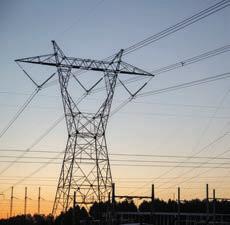
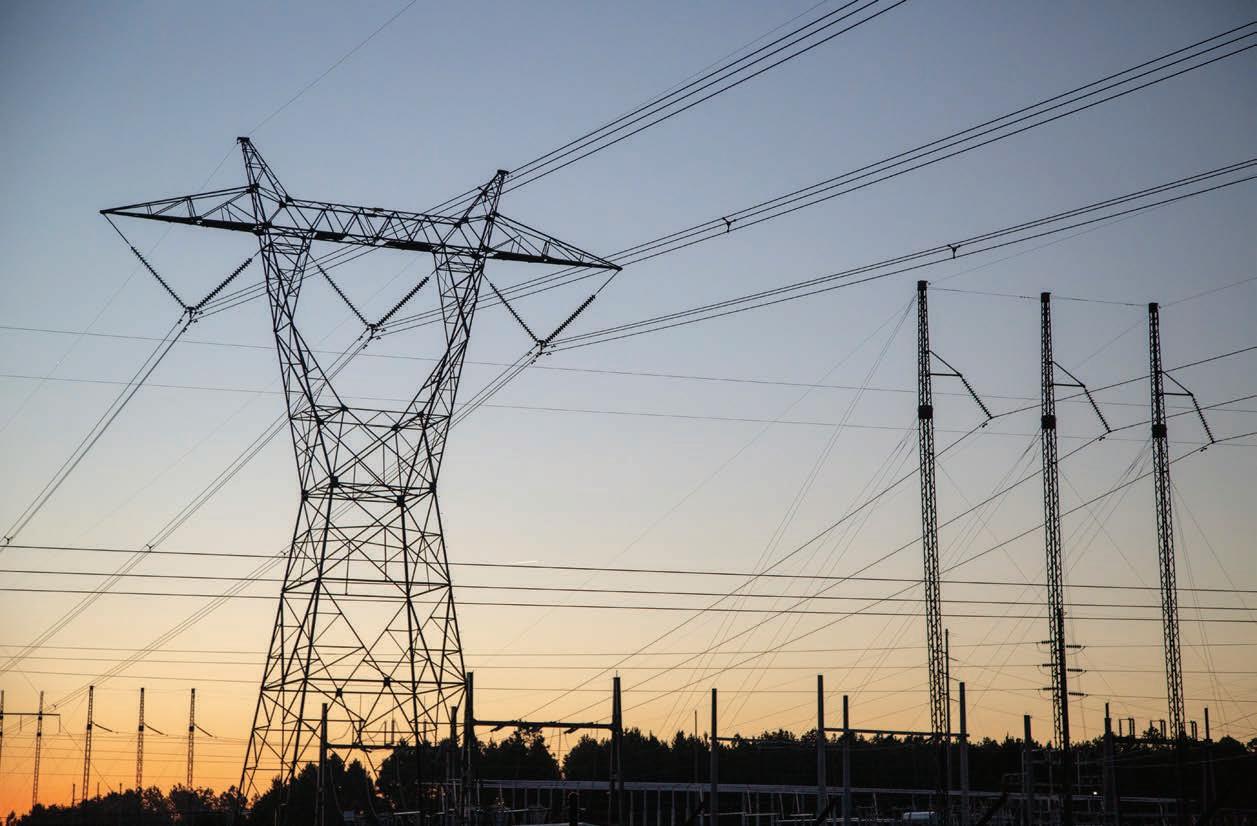
Once electricity is generated, it doesn’t stay at the power plant. It begins a long journey to reach homes, farms, and businesses. Power must travel across regions to where it’s needed most, and that’s where the transmission system comes in. These high-voltage lines act like energy superhighways, moving electricity efficiently over hundreds of miles before it’s stepped down for local distribution and, ultimately, for the devices you use every day.
Transmission: The Energy
Super highway Transmission lines move enormous amounts of electricity efficiently across regions.
Most distribution co-ops don’t own these transmission lines, but they rely on their G&T cooperative to handle this part of the journey. G&Ts make sure power gets from the plant to your local co-op.
However, the electricity carried by transmission lines cannot be used as is because the voltage levels are too high. That’s the job of the distribution network, which is the final step that brings power to your lights, appliances, and devices.
Distribution: The Last Mile
The distribution network is the “last mile” segment of the electric grid and delivers generated energy from the transmission network to consumers. The highvoltage power from transmission lines is converted to lower voltages that appliances, electric vehicles, and personal devices can use. This is where your electric cooperative comes in to keep local lines maintained and power flowing to members 24/7/365.
Understanding how power moves from generation to your home helps explain why reliability and affordability depend on teamwork and collaboration between your local co-op, its G&T partners, and the broader grid. Together, co-ops are preparing for tomorrow’s challenges, so you can count on safe, reliable power for years to come.
Anthony Buckley writes on consumer and cooperative affairs for the National Rural Electric Cooperative Association.
HMARIBELL MATTERS
WHAT WISCONSIN’S FIRST 765 KV TRANSMISSION LINE MEANS FOR MEMBERS
ere in Wisconsin, we’ve been lucky. Growing demand for electricity, older power plants closing and new generation coming online has further complicated an already complex electrical grid system, on fast-forward. The result is an escalated risk to reliability, and we’re closer to the sun than you may think, so to speak.
When Winter Storm Fern hit the nation in late January, it brought snow, sleet, freezing rain, and frigid temperatures, and didn’t let up for days. The historic and deadly storm stretched from Texas to Maryland. The Upper Midwest was spared the worst of it, except for the bitter cold, but we’re used to this kind of thing.
But that doesn’t mean our electricity reliability was stable—it wasn’t. The Midcontinent Independent System Operator (MISO), which manages the flow of electricity across 15 states including Wisconsin and part of Canada, was sending out critical calls to action that were passed on by Dairyland Power Cooperative and local electric cooperatives. The directive: Safely reduce your power usage or risk rolling blackouts—in the middle of the deep freeze.
Authorities say Fern caused the deaths of 174 people, mostly down south, including some who died of exposure inside their homes. More than one million people experienced power outages that lasted as long as two weeks, but the outages were mainly caused by the ice. Unlike Winter Storm Elliott (2022) and Winter Storm Uri (2021), grid operators avoided rolling blackouts, which are a controlled way to stabilize the grid when demand for power threatens to exceed the supply.
While the brunt of the big storm hit south, the threat of rolling blackouts was bearing down on Wisconsin. We are a power importer, meaning we use more power than we generate. And, during Fern, we had a problem—the calm during the storm.
“Wind was down to 5, maybe 10% of installed capacity,” explained Ben Porath, Dairyland Power Cooperative executive vice president and chief operating officer. Dairyland is a generation and transmission cooperative that provides wholesale power to most of Wisconsin’s electric co-ops.
The storm’s main wrath came over the weekend, when commercial and industrial operations are typically dark or running at lower levels, so electricity demand is down. By Monday, the storm hung on, but the wind picked up, which helped fuel the factories when we needed it the most.
“If Fern had hit on a weekday, and we had no wind, it may have been a whole different story,” said Porath.
Here in Wisconsin, we’ve been lucky.
Building the Transmission Backbone
Avoiding potentially rolling blackouts is as much about transmission as it is about generation. The grid operators, including MISO, are like the “air traffic controllers” for the grid, ensuring electricity gets to where it’s needed, when it’s needed. Even before the rapidfire expansion of AI and data centers, MISO was rolling out ambitious plans for bigger, better, and more transmission infrastructure to accommodate the historic expansion of new
energy resources over the past decade, as well as growth in electrification. Electricity now powers more of how we live—from electric vehicles to lawnmowers, heat pumps to bikes—all adding to our dependence on a strong grid and expansive transmission infrastructure.
To keep up, MISO has two packages of infrastructure projects underway that it has determined are necessary to protect reliability now and decades into the future. Tranche 1, approved in 2022, includes 18 major transmission projects for the MISO region at a cost of $10.3 billion. In December 2024, MISO approved the historic Tranche 2.1 portfolio, a massive $21.8 billion plan that includes a 3,631-mile, 765 kilovolt (kV) and 345 kV transmission “backbone” to run across the Midwest.
Next, MISO allocated the projects to select builder-owners. Because these projects are deemed necessary for the greater good of the region, the cost of building each project is spread out among all ratepayers in the multi-state area. The long-term return on investment goes to the applicant awarded the project.
And Dairyland Power—a not-forprofit electric cooperative owned by the member cooperatives it serves—made the cut.
In Wisconsin, we’ve been lucky.
MariBell Transmission
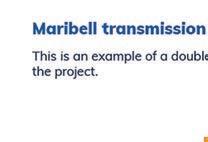
Project Dairyland Power, along with project partner GridLiance Heartland, LLC, were assigned a 140-mile section of the 765 kV “backbone.” “MariBell” will run from Marion, Minn., to Bell Center, Wis., crossing through Vernon and Crawford counties in the Badger State. Relatively speaking, it’s a small piece of the much larger project, but still a very big deal to the local communities that could be impacted the most.
Knowing this, Dairyland and the MariBell team got to work almost immediately, voluntarily hosting open house events in Minnesota and Wisconsin to engage the public, seek input, and share information. The discussions covered everything from proximity to purpose, and even in this early stage, misconceptions and myths about MariBell surfaced that could use some clearing up.
#1: We have to pay for it, but it won’t bene t us.
“Absolutely not true,” said Porath, reacting to claims the line uses the Wisconsin wilderness, only to pass through.
“Think of it like the Interstate highway system. Just because I-90 doesn’t run through your local community, doesn’t mean it’s not beneficial,” Porath said. “MariBell will help all of the underlying transmission lines free up space so they can transport power to local areas with reduced congestion. Because there will be more capacity, there will be more opportunity to lower overall costs by moving the most efficient source of energy at any given time. This transmission line will redefine the energy outlook in the state in a remarkable way, for future generations.”
#2: It’s too big.
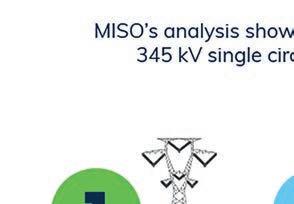
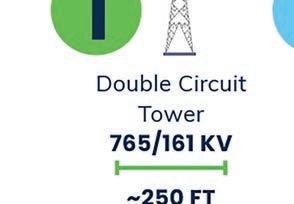
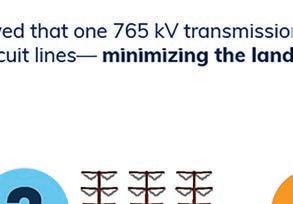
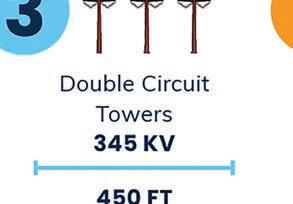
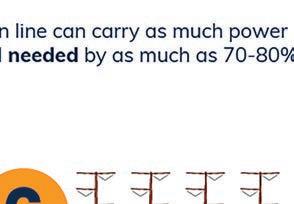
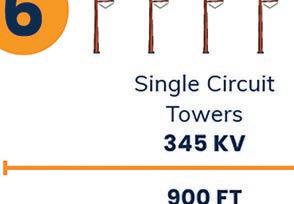
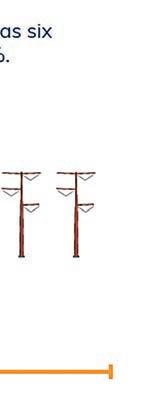
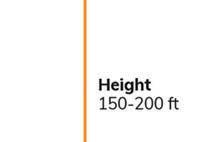
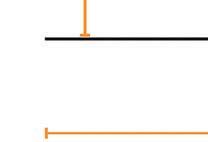
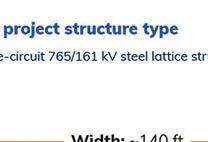
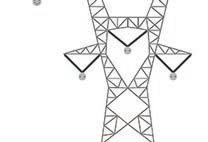
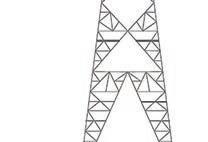
It is big, that’s true. The lattice-type structures will be 150-200 feet tall, and the cleared right-of-way areas between 200-250 feet wide. But the 765/161 kV tower will be able to carry as much power as approximately six, 345 kV lines, which means less land is impacted, overall. In addition to that, the structures will be spaced 1,200 to 1,500 feet apart, so there will be fewer of them, which means less disruption on the ground and less maintenance. One 765-kV line carries as much electrical capability as approximately six 345-kV lines, minimizing the land needed by as much as 70% to 80%. #3: It is new, untested technology that could be detrimental to farms.
While this is the first 765 kV line in Wisconsin, there is already an existing 765 kV network in the United States.
“It runs from Illinois to the East Coast, through the Ohio River Valley and into New York. It’s been operating safely since the 70s and 80s,” Porath said. “And planning for 30 to 50 years into the future, we know it is much more efficient to have one, 765 kV line than it is to have four to six 345 kV lines” #4: It will be harmful to the Driftless Region.
“The Driftless Region is precious, it really is,” Porath said. “We live here, too, and we know this. It is amazing. What we
The Reality of ROFR
Withthe rollout of $30 billion in planned transmission projects in the MISO region in recent years, many states, including Michigan and Minnesota, passed “Right of First Refusal” legislation, also known as ROFR. ROFR gives incumbent utilities priority in awarding major transmission projects in their state.
Wisconsin’s legislature failed to pass a ROFR bill. Without it, MISO’s competitive bidding process opens up access to any outside entity. In pushing for passage of ROFR in Wisconsin last year, Dairyland Power Cooperative, the Wisconsin Electric Cooperative Association, American Transmission Company (ATC), and others argued transmission projects are subject to competitive bidding and staunch oversight at every level and, without it, Wisconsin ratepayers may be required to help pay for Wisconsin projects without ever getting a dollar back in return. And that’s exactly what happened.
MISO’s Tranche 2.1 includes two Wisconsin-based projects—BECI (Bell Center-Columbia-Sugar Creek), a 200-mile, 765 kV line, and WISE (Wisconsin Southeast), a 125-mile, 345 kW line. Dairyland Power Cooperative submitted bids for both projects, but without the law granting preference to state incumbent utilities, MISO awarded BECI to Transource Energy, a partnership between Ohio-based American Electric Power and Kansas City-based Evergy, and awarded WISE to Chicago-based Viridon Midcontinent LLC, owned by New York-based Blackstone Energy Transition Partners.
Viridon’s $350 million bid was a low-ball, coming in at just over half of MISO’s estimate for the WISE project. In March, MISO reversed course and awarded the building of the substations in the WISE project to ATC, citing concerns that Viridon’s timeline was “unachievable.” Viridon retains the build rights for transmission lines and one substation.
Wisconsin lawmakers could still pass ROFR, but as Porath says, “It’s too late.” It has been more than 50 years since the last major transmission buildout and all of the projects in MISO’s Tranche 2.1 have already been awarded.
need to work out is how best to get the infrastructure built, while still protecting the environment. The practical reality is that the Driftless goes all the way from northern Wisconsin along the St. Croix River down to the Mississippi River and extends for many miles. So, to get power into Wisconsin, we have to cross the Driftless, but we have to do it in the most environmentally sensitive way. To us, that means using the existing utility infrastructure corridor instead of cutting a new path. We will have to expand the right-ofway, but we are working with our project team on construction vegetation management practices to protect environmentally sensitive areas. There is a way to do it right,
which could include a pollinator habitat.”
#5: Dairyland is the sole decision-maker.
Dairyland Power essentially serves as the general contractor of the project. MISO designates what projects are needed in the region to best serve the grid. Dairyland and Gridliance Heartland, who will build, own, and operate the line, will establish the need for the project and offer options for the specific route and the Public Service Commission of Wisconsin (PSCW) will decide if the project is approved and select which route the MariBell Transmission Line will take.
“This line will be built with or without Dairyland,” Porath said.
“But it was really important to us to do this project because we are invested in the area. We are seeking ways to be the least impactful to local communities. We will follow existing rights-of-way as much as possible, as opposed to cutting wide swaths to previously undisturbed lands, as is sometimes the approach. The process and the people matter, and we will continue to be transparent and accessible as we work through this project together.”
#6: It will increase electric bills.
Ratepayers across the multistate area are responsible for funding the 765 kV line, but because Dairyland was selected to build and operate the MariBell section, the income generated will pay a rate of return that will benefit Dairyland members for as long as the line is in service.
“We’re going to reduce what our members have to pay, because of the margins we’re getting for this investment,” Porath said, adding that as a not-for-profit cooperative, Dairyland’s focus is keeping costs down, not maximizing profit.
Had MISO awarded the project to an outside entity, Dairyland’s members, as part of the MISO region, would still help fund the cost of construction, but would not benefit financially via downward pressure on rates from the investment.
What’s Next
The next step in the permitting process is for the MariBell team to apply for a Certificate of Public Convenience and Necessity (CPCN) with the PSCW. During that phase, there will be additional open house events and opportunities for the public to offer feedback as part of the formal PSCW process.
The MariBell Transmission Line is planned to be in service by 2034.—Julie Lund
FEMA FOLLOW-UP
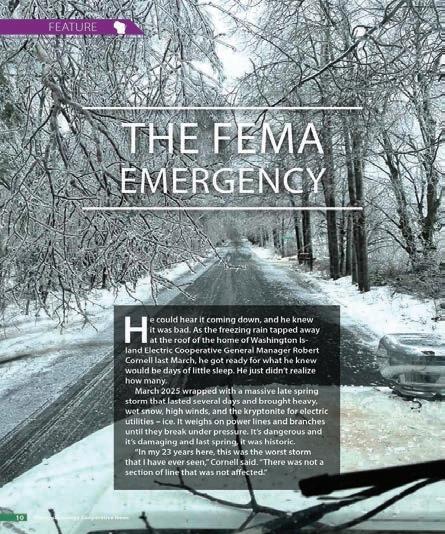
The February edition of Wisconsin Energy Cooperative News included a story called “The FEMA Emergency,” which covered cases in which the Federal Emergency Management Administration (FEMA) had declined to cover certain categories of major disaster funding. A catastrophic ice storm in March 2025 left two Michigan electric cooperatives with such widespread damage that it took nearly three weeks for all power to be restored. The unprecedented storm cost Great Lakes Energy (GLE) and Presque Isle Electric & Gas (PIE&G) more than $150 million each.
Despite state and federal disaster declarations, FEMA denied reimbursement for Category F funding, leaving the Michigan co-ops and their members responsible for much of the cost. Subsequent appeals for federal aid were denied. Members of the co-ops were faced with paying the enormous bill.
UPDATE: At the direction of President Donald Trump on March 13, FEMA reversed course and approved the co-ops’ request for Category F funding to cover permanent repairs to utility infrastructure from the historic storm. The utilities are now able to seek reimbursement for up to 75% of qualifying expenses.
damage done to critical electric infrastructure and the very real financial burden these member-owned systems have been carrying ever since.
This progress did not happen by accident. It reflects strong coordination among Michigan’s electric cooperatives, MECA, NRECA, elected officials, and co-op consumer-members who spoke up and helped keep attention on the need in northern Michigan. That partnership mattered.
While there is still more to learn about what funding will ultimately be approved and how long the reimbursement process will take, this decision is a meaningful step toward reducing the long-term financial impact of the storm on the cooperatives and the members they serve.
Environmental,
WECA Vice President of Operations, Environmental, and Regulatory Services
Tim
In a statement to the Wisconsin Electric Cooperative Association (WECA), the Michigan Electric Cooperative Association (MECA) said:
FEMA’s March 13 decision to extend Category F Public Assistance funding to Michigan is an important step for the electric cooperatives and communities still recovering from the devastating 2025 ice storm. It acknowledges the extraordinary
Tim Clay said, “This is a clear example of why our relationships with lawmakers and administrators at the state and federal government are so important. As notfor-profit entities, electric cooperatives don’t have shareholders or profit margins to lean into in the case of a catastrophic event. Last month, Central Wisconsin Electric Cooperative had a crippling ice storm that caused recurring outages, and restoration took nearly a week. Although not on the scale of last year’s storm, the cost will be significant. The support of FEMA and Wisconsin Emergency Management are critical to the electric cooperative model, and the ability to provide safe, affordable, and reliable energy to members.”—Julie Lund
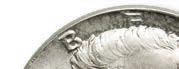
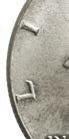
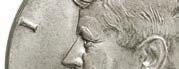
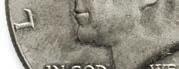
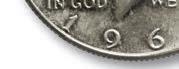
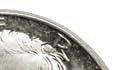
Collectors LOVE “firsts” as no collection is complete without the very first coin. First-year coins are almost always the most coveted coins and the 1964 First Year Silver Kennedy Half Dollar is no exception, especially when you consider the coin has been struck for over 60 years! But there’s something else that makes the First-Year 1964 Kennedy Half Dollar hoarded by all…
THE ONLY SILVER KENNEDY STRUCK IN 90% SILVER
What makes the 1964 Silver Kennedy Half Dollar stand out is its silver composition. While Silver Kennedy Half Dollars were issued from 1964-1970, the 1964 Silver Half is the ONLY YEAR made in 90% silver!
PUBLIC RELEASE - ONLY 1,193 COINS AVAILABLE
Rarcoa, America’s Oldest Coin Company, is announcing the public release of 1,193 of the very first year and only 90% silver year, 1964 Silver Kennedy Half Dollars. What may be even more impressive is that each coin is in Brilliant Uncirculated condition, pristine as the day they were released.
SOLD NATIONALLY FOR AS MUCH AS $103
This same 1964 Silver Kennedy Half Dollar sells nationally for as much as $103. But thanks to Rarcoa’s buying power and deep numismatic expertise, you won’t have to pay $103. You won’t have
to pay $90. You won’t even have to pay $70. If you call now you can secure your first-year, only 90% silver, 1964 Silver Kennedy Half Dollar for as low as $54.95 per coin!
Built Stronger. Lasts Longer. Looks Better.
OF BEEF THE BEST
Beef Breakfast Sausage and Goat Cheese Egg Bake
This egg and goat cheese bake is like a smooth and savory cheesecake.
BASIC COUNTRY BEEF BREAKFAST SAUSAGE
1 lb ground beef (93% lean or leaner)
2 tsp chopped fresh sage or 1/2 tsp rubbed sage
1 tsp garlic powder
1 tsp onion powder
1/2 tsp salt
1/4 to 1/2 tsp crushed red pepper
Combine ground beef and seasonings in a large bowl, mixing lightly but thoroughly. To make patties, lightly shape sausage mixture into four 1/2-inch-thick patties. Heat large non-stick skillet over medium heat until hot. Add patties; cook 10–12 minutes or until instant-read thermometer inserted horizontally into center registers 160 degrees, turning occasionally.* To prepare crumbles, heat large nonstick skillet over medium heat until hot. Add sausage mixture; cook 8–10 minutes, breaking into 1/2-inch crumbles and stirring occasionally.
EGG BAKE
1 lb frozen hash brown potatoes, thawed
8 eggs
1 tsp salt, divided
1/2 tsp pepper, divided
1-1/2 cups reduced-fat dairy sour cream
1/2 cup 2% reduced-fat milk
4 oz crumbled goat cheese
1/2 cup thinly sliced green onions
1 recipe Basic Country Beef Breakfast Sausage
Preheat oven to 425 degrees. Spray a 9-inch springform pan with cooking spray. Squeeze excess moisture from potatoes. Combine potatoes, 1 egg, 1/2 tsp salt, and 1/4 tsp pepper in medium bowl, tossing gently to coat. Press potato mixture onto the bottom and up the sides of the prepared pan. Do not place springform pan on a baking sheet. Bake in a 425-degree oven for 20–30 minutes until potatoes are crispy and brown. Reduce oven temperature to 375 degrees. Whisk together remaining 7 eggs, remaining 1/2 tsp salt, and 1/4 tsp pepper, sour cream, and milk in a large bowl. Stir in cheese, green onions, and sausage; pour mixture into hashbrown crust. Bake in a 375-degree oven for 40–50 minutes or until eggs are set; cool 10–15 minutes. Remove from pan; cut into wedges. Makes 10 servings.
*COOK’S TIP: Cooking times are for fresh or thoroughly thawed ground beef. Ground beef should be cooked to an internal temperature of 160 degrees. Color is not a reliable indicator of ground beef doneness. Two to 2-1/2 cups fully cooked sausage crumbles can be frozen for 3–4 months. To use, heat a large non-stick skillet over medium heat until hot. Add frozen crumbles and cook 6–9 minutes or until crumbles reach 165 degrees, stirring occasionally.
Shredded Beef and Blue Cheese Quesadillas
Use convenient fully-cooked pot roast in this quesadilla topped with tomatillos and roasted tomatoes.
1/2 cup shredded Chihuahua or Monterey Jack cheese
1/2 cup crumbled blue cheese
1 pkg (approx. 17 oz) fully-cooked boneless beef pot roast in gravy or au jus, shredded
Preheat oven to 400 degrees. Place tomatoes and tomatillos on a rimmed baking sheet sprayed with nonstick cooking spray. Drizzle with oil and sprinkle with salt. Roast in the oven 25–30 minutes or until juices have evaporated and skins are blistered; set aside. Meanwhile, cut 32 rounds from tortillas with 2-1/2-inch diameter cookie cutter; set aside. Combine cheeses in a small bowl; set aside. Heat pot roast in a microwave oven according to package directions; cool slightly. Remove from gravy; discard gravy or reserve for another use. Shred pot roast with two forks; set aside. Place 16 tortillas rounds on rimmed baking sheet sprayed with nonstick cooking spray. Top each evenly with cheese mixture and shredded beef. Cover with remaining tortilla rounds. Spray tortilla tops with nonstick cooking spray. Bake approx. 10 minutes or until cheese is melted and tortillas are lightly browned, turning halfway through cooking time. Top each quesadilla with one tomatillo slice, one yellow tomato slice, and a cherry tomato half. Serve immediately. Makes 16 servings. COOK’S TIP: Tomatillo salsa may be substituted for fresh tomatillos. Spoon small amount of salsa over quesadillas when topping with roasted tomatoes.
Add more avor to your favorite beef broth in this delicious ginger beef & noodle bowl. This recipe is ready in under 30 minutes. Perfect for lunch or dinner.
Cut steaks crosswise into 1/4-inch-thick strips; cut strips in half. Heat 1/2 tablespoon sesame oil in a large nonstick skillet over medium-high heat until hot. Add ginger and garlic; cook 1 minute. Add half of the beef; stir-fry for 2 minutes or until outside surface of beef is no longer pink. Remove from skillet. Repeat with remaining oil and beef. Season with salt and pepper, as desired; keep warm. Add broth, green onions, and mirin to the skillet; bring to a boil. Reduce heat to low; simmer 8–10 minutes. Meanwhile, divide noodles and beef evenly among 4 large soup bowls. Bring broth mixture to a boil over high heat; ladle boiling mixture evenly over beef and noodles. Garnish with shredded carrots. Makes 4 servings.
KNISHES
12 frozen dinner rolls
1 Tbsp butter
2 cups sliced leeks
1/2 tsp salt
1/2 tsp pepper
2 cups pre-cooked beef such as shredded beef or beef sausage
1 cup mashed potatoes, such as Yukon Gold
Beef and Caramelized Onion Knishes
Got a craving for a hearty snack? Try this knish recipe with avorful beef, onions, and mashed potatoes baked in dough.
4 oz reduced-fat cream cheese
Additional salt and pepper, to taste 1 egg, beaten
TOPPINGS
1 tsp sesame seeds
1 tsp poppy seeds
1 tsp dried onions
Thaw and rise dinner rolls according to package directions. Melt butter in a large, nonstick skillet over medium heat until hot. Add leeks, salt, and pepper; adjust heat to low. Cook 5–7 minutes or until the vegetables are soft and begin to brown. Set aside to cool. In large bowl, combine beef, leeks, mashed potatoes, and cream cheese, mixing gently but thoroughly. Season with salt and pepper, as desired. Preheat oven to 350 degrees. In a small bowl, combine toppings ingredients. Using a rolling pin, roll out one dinner roll to a 4-inch circle. Place 1/4 cup beef mixture in the center of the roll. Pull the edges of the dough over beef mixture, pinch the dough closed. With your thumb, create a dent in middle of knish. Place knish on parchment-lined shallow-rimmed baking sheet. Repeat with remaining rolls. Brush each knish with egg; sprinkle topping mixture on each knish. Bake in 350-degree oven for 30–35 minutes or until the knish is golden brown. Let the knish rest for 10 minutes before serving. Makes 12 servings.
READER RECIPES
LIGHT & FLUFFY BREAKFAST BAKE
RECIPE COURTESY OF PAT ROMANOWSKI
This recipe was given to us by an innkeeper in 2013 while on vacation to Duluth, MN. Enjoy!
REQUESTS FROM OUR READERS
A reader is looking for asparagus recipes.
SEND TO: WECN, Reader Recipes, 6405 Century Avenue, Suite 102 Middleton, WI 53562-2200 or jennifer@weca.coop
8 eggs, beaten slightly 1 cup biscuit mix, such as Bisquick 1/8 to 1/4 cup cinnamon sugar
Preheat oven to 350 degrees. Lightly grease a 9-x13-inch glass pan. Combine all ingredients, pour into pan, sprinkle with cinnamon sugar (just to slightly cover the top), and bake for 45 minutes until rm. Cool for 5 minutes.
BEET CAKE
RECIPE COURTESY OF MARY RYAN, CADOTT
CAKE
1-1/2 cups sugar
1-3/4 cups our 1-1/2 tsp baking soda
1/4 tsp salt
3 eggs
1 cup oil
1-1/2 cups grated beets
2 squares melted chocolate*
1 tsp vanilla
Preheat oven to 350 degrees. Mix together sugar, our, baking soda, and salt. In a separate bowl whisk eggs, then mix in oil, grated beets, melted chocolate, and vanilla. Add wet mixture to dry mixture and blend well. Pour into a greased and oured 9-x13-inch pan and bake for 25–30 minutes or until toothpick comes out clean; cool.
FROSTING
3 cups powdered sugar
1/2 stick margarine or butter
8 oz cream cheese
4 tsp milk
1-1/2 tsp vanilla
Blend all frosting ingredients together until smooth. Spread onto a cooled cake and serve.
*NOTE: May use 2 tablespoons of melted butter and 6 tablespoons cocoa instead of 2 squares of melted chocolate.
Submit your favorite recipes to be featured on our reader recipe page. Email to jennifer@weca.coop or submit directly at http://wecnmagazine.com/submit-a-recipe/.
PLEASE NOTE: Recipes submitted must include quantities for all ingredients. If no measurements are used, your recipe will not be printed. Due to food safety issues, we cannot accept canning recipes.
PIZZA HOT DISH
RECIPE COURTESY OF SANDRA LANG, WITTENBERG
2 cups wide egg noodles, uncooked 1/2 tsp salt
1 lb ground beef
1/3 cup onion, chopped 1/2 tsp garlic salt
1 tsp oregano
1 (10.5 oz) can tomato soup 1/3 cup water
1/2 to 1 cup Parmesan cheese
2 cups mozzarella cheese, shredded and divided
Cook noodles in water with 1/2 teaspoon of salt as directed; drain. Brown meat with onion, garlic salt, and oregano and add tomato soup and 1/3 cup of water. Add cooked noodles to meat mixture and mix thoroughly. Butter a 2-quart baking dish and cover the bottom of the dish with some of the meat-noodle mixture. Sprinkle 1/4 to 1/2 cup Parmesan cheese over the mixture and top with 1 cup mozzarella cheese. Repeat layers ending with cheese on top and bake uncovered at 350 degrees for 30 minutes.
HAMBURGER CASSEROLE
RECIPE COURTESY OF ANNABELLE GOSZ, PRENTICE
1 (14 oz) bag tri-color cole slaw
1-1/2 lbs ground beef
1 small onion, diced
1 (8 oz) pkg white mushrooms, sliced
1 (26 oz) jar spaghetti sauce
3 cups shredded mozzarella cheese
Grease the bottom of a 9-x-13-inch cake pan and layer cole slaw on the bottom. In a large frying pan, brown the ground beef and onion; drain fat and add mushrooms. Cook and stir until heated; add spaghetti sauce and stir until well mixed. Pour hot mixture over the slaw; add shredded mozzarella on top. Bake at 350 degrees for 30 minutes or until top has started to brown. This casserole freezes beautifully and reheats well in the microwave.
Divide the spinach and strawberries into 4 small bowls. Sprinkle 1 tablespoon of brickle bits over each bowl and add salad dressing, to taste. Top each salad with chopped pecans, if desired.
PAST RECIPES CAN BE FOUND ON OUR WEBSITE AT WECNMAGAZINE.COM/RECIPES. CLICK “SEARCH RECIPE ARCHIVES.”
Our Bone-ified Best Blade
My friend Sergio is a mixed martial arts fighter. His shoulders are broad. His muscles have muscles. He’s not the kind of person you want to be on the wrong side of.
This manly man has a saying about being tough: You should either know how to fight or look like you do.
The message is simple enough. People spoiling for a fight usually don’t pick the biggest guy in the bar. If you look like someone who shouldn’t be messed with, you likely won’t be. With our Blue Bone Bowie Knife on your hip, that’s exactly the message you’ll send.
As beautiful as it is functional, this knife is 10" overall and features a high-quality 420 surgical stainless steel blade with a serrated spine. The handle is constructed of genuine natural bone with redwood spacers. On the handle you’ll find design work that’s carved by hand, a testament to its craftsmanship.
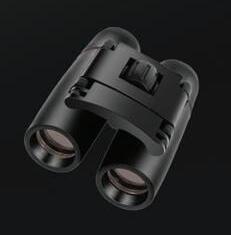
This knife is stick tang, meaning it won’t wimp out when you need it. This knife also features brass hand guards and brass spacers with file work, so you won’t lose your grip. For easy carrying, it comes with a genuine tooled leather sheath. CALL NOW! If you’re one of the rst 700 587 callers for this ad, we’ll throw in a pair of Stauer Pocket Binoculars — a $99 value
— ABSOLUTELY FREE!
“It’s a beautiful knife with a great blade and a sure grip”
— William B. Wilmington, NC
Walk around with the Blue Bone Bowie Knife and you’ll feel a lot safer. I know I do.
Knife Speci cations:
• 10" overall length
•420 surgical stainless steel and stick tang construction
• Genuine natural bone and redwood hand-carved handle
• Genuine leather sheath included
Blue Bone Bowie Knife
$299 $79*+ S&P
Stauer Pocket Binoculars a $99 value with your purchase of the Blue Bone Bowie Knife
Save $220
*Special price only for customers using the offer code.
Your Insider Offer Code: BBK186-02
100-MILE GARAGE SALE
BARGAINS BETWEEN THE BLUFFS ALONG THE GREAT RIVER ROAD
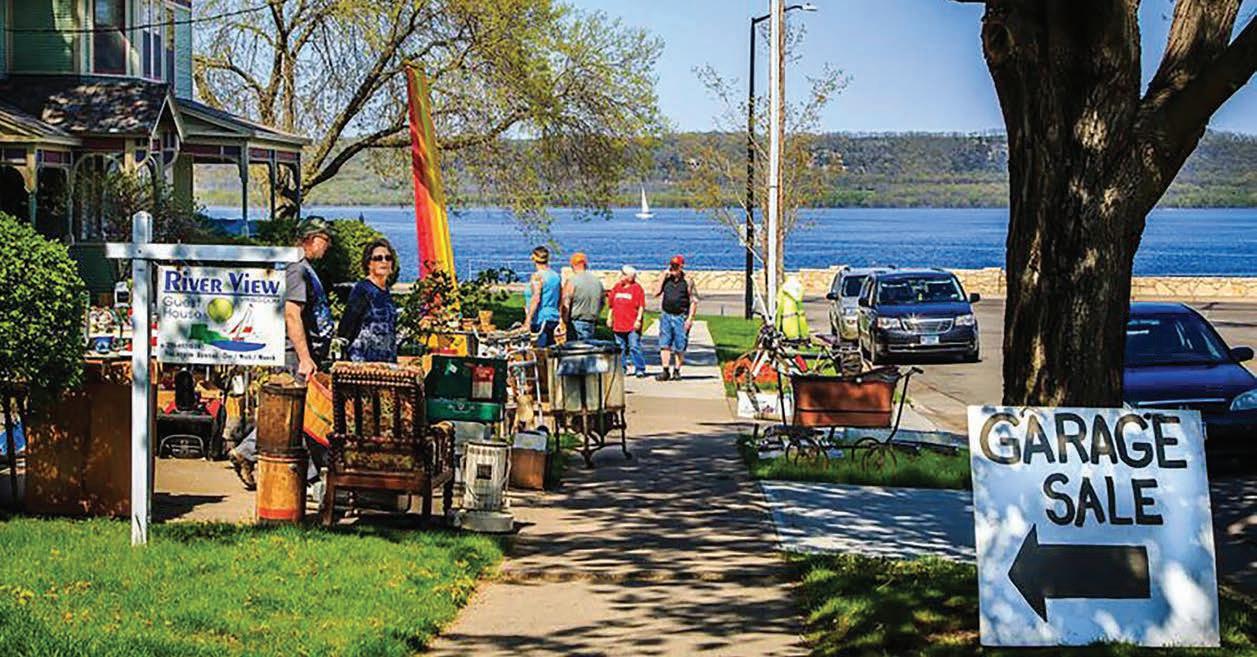
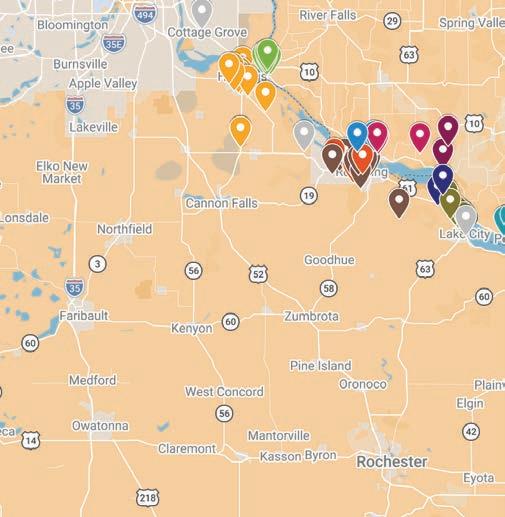
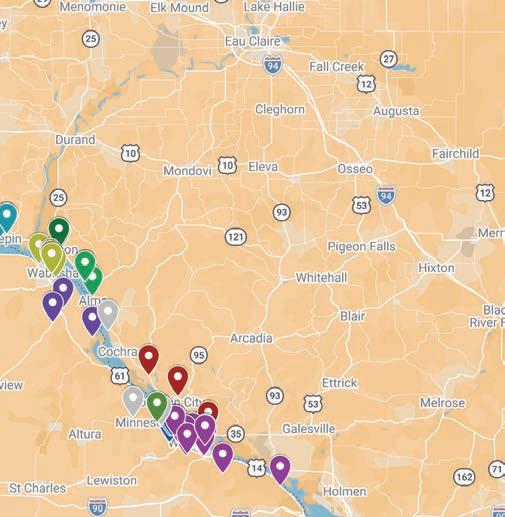
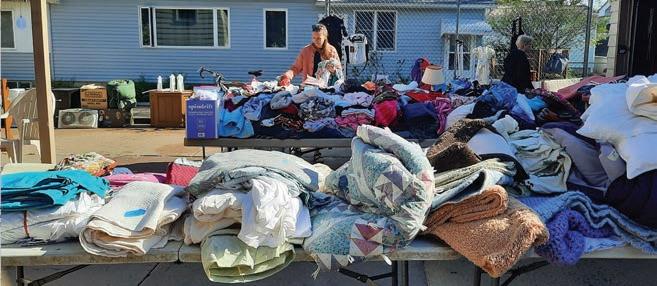
Take one of Wisconsin’s most scenic drives and combine it with deals galore, and you get the 100-Mile Garage Sale. Hosted each year in early May, the route extends from Fountain City to Prescott on the Wisconsin side of the Mississippi River, with more sales on the Minnesota side.
The event doesn’t have an official host, rather it’s supported by thousands of participating community members on both sides of the Mighty Mississippi, including members of Riverland Energy Cooperative.
On the Minnesota side, the sale is promoted by Visit Winona. Executive Director Kate Carlson said that some vendors have been involved for more than 18 years, and there is no official count of sales but she estimates that they number into the
thousands, hosted by residents, businesses, and entire neighborhoods.
Carlson said the 100-Mile Garage Sale achieves three things. It celebrates spring, encourages people to clean out their homes and repurpose goods, and draws visitors to the scenic Mississippi River towns.
“At its core, it’s about turning a traditional garage sale into a shared, multi-town experience that highlights the charm of river communities,” said Carlson.
She notes a definite boost to local communities, through an increase in tourism; increased business for local shops, restaurants, and lodging; and community engagement through neighbors collaborating and promoting their sales.
More than just the sales
Over the years, the 100-Mile Garage Sale has grown from a small cluster of sales into a highly anticipated tradition. Many communities along the route now treat the weekend as a mini festival, with food trucks, church bake sales, and local organizations hosting fundraisers to take advantage of the influx of visitors. Some towns even coordinate special events or extended business hours to welcome bargain hunters.
For many residents of these river towns, the sale is more than a chance to declutter—it’s a way
to showcase their communities. Visitors discover the historic main streets, scenic overlooks, and hidden gems that make the area special. The Mississippi River Valley’s natural beauty becomes part of the experience, turning a day of shopping into so much more.
The Fun is in the Hunt
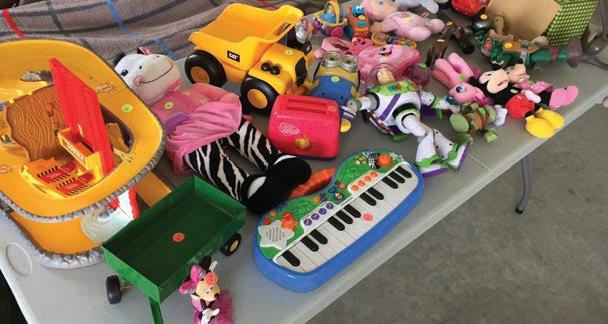
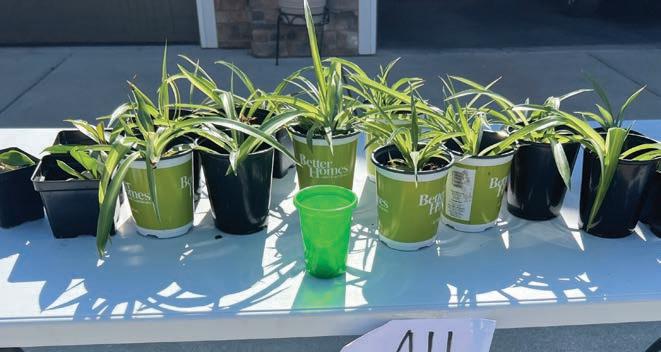
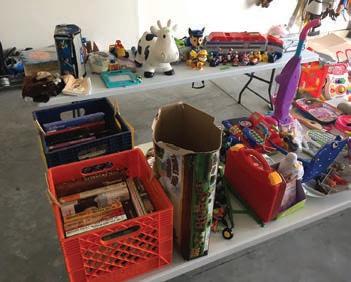
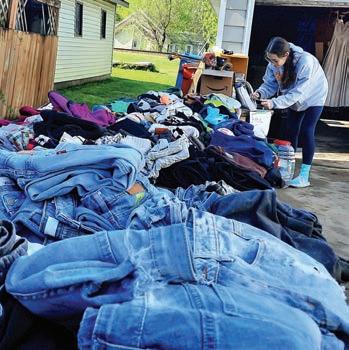
Carlson said that you can find almost anything, and that that is part of the fun. Treasures can include antiques, quirky collectibles, and entire collections of tools or decades-old décor.
“You truly get a treasure-hunt atmosphere where anything can show up,” she said.
And it’s not just about what you find, but who you hunt with.
“Groups of friends and families travel from multiple states to reunite annually during the sale—like a group of sisters from five different states who meet each year with a mission to find the most unusual items,” said Carlson. “It’s not just shopping; it’s a tradition, reunion, and shared adventure rolled into one.”
Tips for First-Timers Carlson offers a few tried-and-true tips for first time event attendees. First, she suggests starting early for the best selection on Thursday or Friday. Next, remember to bring cash, as most sellers don’t take cards. Also, be flexible with route planning as not all sellers are on the Google map. Finally, allow more time than you think you’ll need. “You won’t make all 100 miles.”
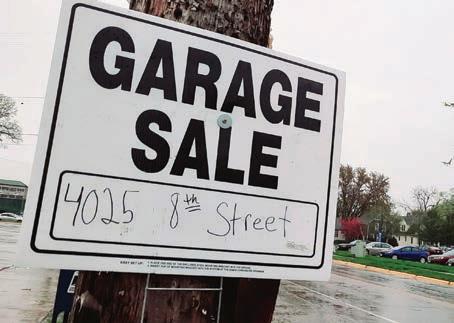
Carlson also said to bring a friend and plenty of trunk space. Take the drive and look for signs, balloons, or ribbons, indicating your next treasure trove of a sale.
Whether you come for the bargains, the scenery, or a little adventure, the 100-Mile Garage Sale offers a little something for everyone. It’s a celebration of community and the magic of the Mississippi in spring.—Dana Kelroy, photos courtesy of the 100Mile Garage Sale
The 100-Mile Garage Sale runs from May 7-10, 2026, with a route running along the Mississippi River from Hastings, Minn., to Winona, Minn., and Prescott, Wis., to Fountain City, Wis. More info is available on Facebook @Official100MileGarageSale. Most sales run from 8 a.m. to 5 p.m.
SCAN THIS CODE WITH YOUR SMARTPHONE FOR A PARTIAL LIST OF GARAGE SALE PARTICIPANTS.
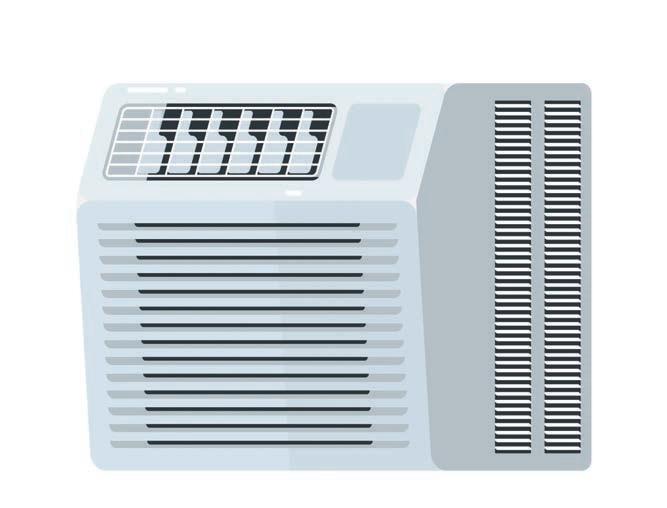
MAKE THE MOST OF YOUR ROOM AIR CONDITIONER
For homes without a central air-conditioning system, a room or window air conditioner is a great option for keeping a house comfortable through summer’s heat. These units are meant to cool rooms rather then entire homes, so they’re less expensive to operate than a central system. Follow these tips to get the most e cient use of your room air conditioner:
Size it Right!
Use the proper size air conditioner for the room. An oversized unit will perform less e ciently and e ectively by cooling the room to the temperature set-point before proper dehumidi cation occurs, making the air feel clammy. An air conditioner generally needs 20 Btu for each square foot of space.
Can You Take it Higher?
Set your air conditioner’s thermostat as high as is comfortable. The smaller the di erence between the indoor and outdoor temperatures, the lower your overall cooling costs will be.
On the Level
When you install your room air conditioner, make sure the unit is level so the inside drainage system and other mechanisms work properly. Follow manufacturer’s directions carefully during installation.
Lower Fan for Lower Humidity
Set the fan speed on high unless the weather is very humid. On high-humidity days, set the fan speed on low. The slower air movement through the cooling equipment will remove more moisture from the air.
Keep it Clear
Keep your air conditioner’s thermostat clear of any heatproducing items such as lamps or televisions. The thermostat senses heat from these appliances, which could cause the air conditioner to run longer than necessary.
Fan Power
Room air conditioners are not designed to cool entire homes. Running multiple window units at once is less e cient and more expensive than running a central AC system. Using a fan along with your room unit can help spread the cooled air farther without greatly increasing your electricity use.
Source: energy.gov
WANTED: PAYING CASH FOR WWII FLAGS, DAGGERS, SWORDS, GUNS, ETC. Also buying guns and collections. 715-340-1974.
WANTED: DEER TAGS, BACK TAGS. Trapping, bear, hunting licenses. Otter, fisher, bobcat tags, party permits, old traps. 715-2559284 David Schober, W4234 Rock Creek Rd., Loyal, WI 54446.
BEAR TRAPS WANTED. 715-563-6658.
GEOTHERMAL We service & install all models and brands. Contact us today. Niesen@ charter.net.
CHAINSAWS WANTED DEAD OR ALIVE.
Buying 1 or 100 McCulloch, Pioneer, Jonsereds, Echo, STIHL, Homelite, Remington, Mall. Buying all brands and sizes. Non-running, running, seized, parts. Let me know what you have - will travel. Call Chainsaw Mike at 715-828-9414.
THROW YOUR HOME MOVIES IN THE TRASH! Or pro transfer 8mm, VHS, slides, audio, and all formats to DVD or ash drive. Gene DVD Productions 715-827-2302.
E-BIKES FOR SALE Let me get you on the right E-bike/E-trike. E-Cycle Bike Shop Mobile, Boyceville, WI. Call or text Bicycle Larry 715-702-1452.
NEW PACKER CHEESEHEADS ITEMS! Check out www.cheeseknits.com for some great knit accessories. Perfect gifts for any Packer or Cheesehead fan!
WANTED TO BUY: Model 1895 Winchester ri e, 30-06 caliber. Please call 715-765-4670.
WANTED: COLLECTOR LOOKING FOR OLD WOOD AND METAL SIGNS. Any condition. Also, old motorcycle items and bell helmets. Call Jerry 920-373-3515.
WANTED: COLLECTOR LOOKING FOR VINTAGE SPORTS CARDS 1986 or older. Also, looking for comic books, 1970’s or older. 608-343-3503.
AKC REGISTERED CHOCOLATE LAB. Trained to find deer sheds. Call Dean 606-269-8920.
FOR SALE: POLKA BAND EQUIPMENT. Star Concertina and Iorio-Accorgan accordions. Both in good condition. Southern Wisconsin area. Call 608-558-2698. Leave message, I will return your call.
WANTED: KIDS PEDAL CARS, pedal tractors, pedal airplanes, pedal boats, etc. The older the better, any condition. Leave message. 608-482-4783.
MAILBOX DOOR NOT STAYING CLOSED? Strong add-on magnet. No tools required. Rural style mailboxes. www.MAILNUT.com. 715-967-2448.
“STUNNING” AKC REGISTERED LAB PUPPIES AVAILABLE. Raised in-home with our family, these pups are well-socialized and con dent. Puppies will go home with rst vaccinations, and a puppy pack. Call Brenda 507-330-3144.
HYDRAULIC BC TREESPADE Seldom-used, like-new, 32-inch tree spade (3-pt hookup), WI manufactured, moves trees ≤ 3-inch DBH. Call Mark 608-787-1191.
FOR SALE: TRAPPING SUPPLIES, TRAPS, LURES, BAITS. Call Ron at 715-474-2218. Leave message, number.
FOR SALE: 2022 WOLF PUP 16 FT CAMPER. Like new with solar panels. $15,000. Dakota, MN. Call Arden at 507-643-6696.
WANT TO BUY LOW MILEAGE 2012-2018 GM PICKUP. If found, will sell my 2001 Dodge Cumins Dually w/59,000 mi. 608-582-2263.
SELLING: TWO HONDA GOLDWINGS 1500 ASPENCADE. Seller bought a trike. Both have reverse, air suspension, and helmets w/intercom. Good running condition. Reasonably priced. 920-372-8013.
MCKAY NURSERY COMPANY - WISCONSIN GROWN SINCE 1897. Provider of quality shade & ornamental trees, fruit & owering trees, evergreens, shrubs, perennials, ground cover, and vines. Design services & delivery available. Contact Eric at ezlandscapewi@ gmail.com or call 608-387-4287. “Your McKay Independent Sales & Service Provider.”
THUNDERBIRD VILLAGE. ONE, FIVE, AND TEN BEDROOM, FULLY FURNISHED LODGING. Located 10 miles NE of Black River Falls with direct access to snowmobile, UTV, and Lake Arbutus. Great shing and boating. Seasonal campsites available. www.thunderbirdvillage.net 608-989-2275.
BEAUTIFUL SETTING, 7-acres, prairie home, 3 garages, workshops, 39,000 ft warehouse full of antique telephones, 60 yrs accumulation, 40 vehicles 1936-2001, contiuning business, zoned, nearest neighbor 1/8 mi, sparse, Mississippi River Trempeleau 3 mi. All $995,000. www.phonecoinc.com 608-5822263 noon-8 pm.
WISCONSIN EVENTS May 2026
1–30 Bloomin’ Greenhouse Tour—Clark County. Various locations, 8 a.m.–5 p.m. Begins in April and runs through the Fall. Visit greenhouses and garden centers for annuals, perennials, vegetables, herbs, grasses, trees, fairy garden supplies, garden art, home décor, and more. Call 715-255-9100.
1 Smelt and Fish Fry—Jump River. Community Center, 4–7:30 p.m. Deepfried fish, BBQ, and more. Raffles. Adults $15; ages 6–12 $7; and 5 and under are free.
2 Fishers/Community Breakfast—Montfort. Castle Rock Lutheran Parish Hall, 7–10:30 a.m. Enjoy made-from-scratch pancakes, scrambled eggs, and more.
2 Birding Adventure by Mini Train—Durand. Tiffany Bottoms, 7:30 a.m.–5 p.m. Train, bird guides, hot brat lunch, and speakers. Birding by mini-train: 7:30 a.m.–noon, $50 per rider. Afternoon ride is for train enthusiasts from 1–5 pm. Cost is $25 per rider. For more info or to register, call 608-685-3303.
2 Springtime at the Mill—Opening Day!— Beloit. Beckman Mill Rock County Park, 12–4 p.m. Corn grinding, blacksmith, and flower arrangement demos and more. Chili, corn muffins, desserts, and beverages for sale. Free admission, donations accepted. 608-751-1551.
2 Tom Wopat Concert and Classic Car Show— Tomah. Recreation Park–Gold Building, 12–9 p.m. Car show 12–3 p.m., and Tom Wopat of The Dukes of Hazzard fame, along with the General Lee car, Hazzard Squad car, and others, will be doing a meet-and-greet from 1–4 p.m. Concert opener at 6 p.m. and Tom Wopat performs at 7 p.m. Advance concert tickets are $25; $30 after May 1. Cash or checks only. 608-372-1880.
3 Charcoal Chicken Dinner—Greenwood. Our Savior’s Lutheran Church, 11 a.m.–2 p.m. Half-chicken meals at $12 each. Drive-thru only in lower parking lot.
5 Taco Night—Tigerton/Shawano. Community Center, 4–7 p.m. All you can eat tacos! Adults $10; kids 5–11 are $5; and under 4 are free. Carry-outs available.
7–10 100-Mile Garage Sale—Alma. Downtown area, 8 a.m.–5 p.m. Find Treasures while exploring downtown Alma and its quaint shops on the picturesque Mississippi River.
8–10; 29–31 Barn Sale—Ellsworth. The Real McCoy Antiques, 10 a.m.–5 p.m. Antiques, uniques, and handmade décor.
9 Birding Tour—Babcock. Sandhill Wildlife Area, 7:30–10:30 a.m. Car caravanstyle birding tour with 2-way radio use. Sponsored by Friends of Sandhill and led by an experienced birder. Pre-registration and $10 payment required by May 7. For more info, 715-652-3131.
9 “Honor the Fallen” Motorcycle Ride— Ladysmith. Drop Zone Bar and Grill, 8 a.m.–7 p.m. You don’t have to ride to participate. Public is welcome and there will be a free bus for non-riders that will follow the bikes. Breakfast buffet, ride registration suggested donation of $15 each or $25/couple, 95-mile ride including 2 stops with raffles, chicken dinner, and prizes. 715-415-4580.
9 Amazing Plant Sale—Richland Center. Krouskop Park, 8 a.m.–2 p.m. Many plants (including locally grown) at reasonable prices, locally made garden art pieces, garden tools, and the Animal House food truck will serve Chicagostyle hot dogs. For more info, call 608647-6453 between 6–8 p.m.
9 Grant County Master Gardener Plant Sale— Lancaster. Schreiner Memorial Library, 9–11 a.m. Locally grown perennials, shrubs, fruits, annuals, vegetables, and a garden garage sale area.
9 Open House—Babcock. Sandhill Wildlife Area, 10 a.m.–3 p.m. The theme is American buffalo/bison. Activities, Oneida speaker, tours, nature store, demos, and refreshments. Free admission.
9 Parkinson’s Walk and Awareness Event—La Crosse. Myrick Park, 11 a.m.–2 p.m. Registration online or DOE at 10 a.m. The walk is free, but donations encouraged. Resource booths, live music, food truck, kids’ activities, exercise demos, and more. 608-7976295.
12 Red Cross Blood Drive—Owen. Clark County Rehabilitation and Living Center, 11 a.m.–5 p.m. For an appointment or more info, call 715-229-4320.
14–16 Thrift Sales—Thorp area. All day.
15, 16 Grace Bible Church and Bowler Area Yard Sales—Bowler. Fri., 8 a.m.–5 p.m.; Sat. 8 a.m.–2 p.m. Maps available at JPP’s and Kropf’s. 715-881-0148.
15, 16 Rummage-O-Rama—Tigerton area. 8 a.m.–4 p.m. Village-wide rummage sales. Food and a rummage sale participant list will be available at the Old Village Hall.
16, 17 Mayhem at the Motorplex—Lena. Dirt City Motorplex, 9:30 a.m.–3 p.m. Offroad racing action! Sportsman racing featuring trucks, buggies, SxS, and youth classes. For tickets, call 920-710-1909.
23 Garage and Brat Sale—Phillips. St. Therese Church, 8 a.m.–3 p.m.
23 Flea & Craft Market—Coloma. Community Park, 9 a.m.–2 p.m. Food available. 715-340-1232.
30 Bat Talks and Hikes—Cornell. Camp Nawakwa, 7:30–9:30 p.m. Guided bat monitoring hike around the lake Bring a headlamp or flashlight. Register at 715239-6775.
Upload events directly to the wecnmagazine.com through the “Events” tab.
Wisconsin Events is a public service for our readers. Due to space limits, we may need to eliminate details, so be sure to include a phone number (with area code) where callers may obtain more info. If we receive more listings than space allows us to print, we reserve the right to select those we believe will be of interest to the greatest number of readers. Please no virtual events. Events can also be mailed to: WECN, Events, 6405 Century Avenue, Suite 102, Middleton, WI 53562-2200.
DEADLINE: 1st of the month prior to the month in which the event is to appear.
Upload events to wecnmagazine.com
1. Paisley found a fawn on the edge of the garden, with the mother close by. Photo submitted by Grandma Liz Georgi, a member of Central Wisconsin Electric.
2. Rowan brings her new rescue dog, Gracie, home. Photo submitted by Sherry Hersant, a member of Central Wisconsin Electric.
3. Liam and Lidia hold their three-week-old goat, Princess. Photo submitted by Grandma Jean Toltzman, a member of Clark Electric.
Upload photos directly to wecnmagazine.com through the “Submit a photo” tab.
Send photos of kids with animals, along with a brief description, to WECN Magazine, 6405 Century Avenue, Suite 102, Middleton, WI 53562-2200. Please include the name of your electric co-op. Photos will be returned. If in good-resolution, electronic format, photos may also be uploaded via wecnmagazine.com through the “Submit a photo” tab. By submitting, sender implies that he/she has rights to and owns the image, and grants WECN permission to use the image. By submitting, the parent or legal guardian also authorizes us the right to publish the image.
SOLAR ENERGY POP QUIZ
Solar energy is amazing because it allows us to use electricity generated from natural sunlight. Complete the quiz below by matching the solar energy terms in the word bank to the correct description.
1. _______________ A star at the center of our solar system that provides light and heat.
2. _______________ Flat devices often placed on rooftops that collect energy from the Sun and help power homes and businesses.
3. _______________ Tiny particles of energy that travel through space and reach Earth in about eight minutes.
4. _______________ The basic building block inside rooftop equipment that converts sunlight into usable power.
5. _______________ The type of energy that runs appliances, lights and electronics in your home.
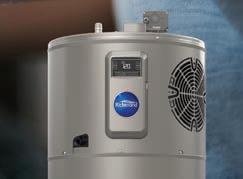
Your Water Heater Uses More Energy Than You Think.
A Heat Pump Water Heater Helps You Use Less Energy.
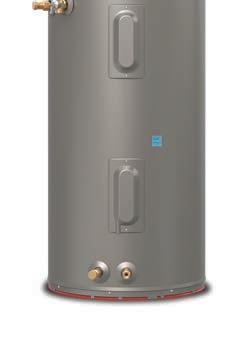
Running showers, laundry, and dishes adds up — fast. Your water heater is your home’s second largest energy user. That’s a big impact on your electric bill. With a Heat Pump Water Heater, you get the same comfort as your existing water heater using only a fraction of the energy, helping you save month after month.
To learn more about Heat Pump Water Heaters stop into Menards. Select stores will have the Richmond Mobile Showroom on site! Stop in from 9:00am to 3:30pm and talk with a Richmond Representative.