






















A clearly labeled electrical panel makes repairs to your home move along much quicker and safer.
This is a two-person project. One individual will need to walk through the home and let you know which lights go out while you flip the breakers and label them. It may take a few minutes, but you’ll be thankful the next time you need to flip a breaker or make a repair in your home.
You might want to make a game of it and let you kids run through the house, letting you know which lights go out when you flip the breaker. Electrical safety can be fun!
a message om your local elec ic cooperative
The last three times I’ve flown Delta Airlines out of the Jackson airport I’ve been recognized by employees. And if you think that sounds fancy, just know it mostly means somebody hollering at me while I’m trying to find my gate.
“Hey, you’re my magazine man!!!” No, ma’am — I’m an attorney. I don’t deliver magazines.
“OMG, you are the electric man!!!” That’s right — Electric Man — able to leap a padmounted transformer in a single bound. (Well, not these days.) This was a flight attendant who told me she enjoyed reading my articles. Then she handed me the whole can of Coke. Not a cup — the can. That’s not just customer service —that’s encouragement.
“Callahan. Michael Callahan. You’re the writer guy!!” This was the gate agent when my ticket scanned, and the little machine made that happy beep. I’ve never been called “a writer” in real life, and I liked it. Later he told me how much he enjoys reading my columns.
People are always surprised when they see me out in public — like I’m supposed to stay in the magazine and only come out once a month. Some folks look downright shocked, like they just spotted Bigfoot. I’m not sure why, because I DO live in Mississippi (Madison, to be exact). A lot of folks will say, “I loved this month’s article.” Thank you — but I write these ahead of time. “This month’s article” might’ve been written back in January, so help me out and tell me which one you mean.
Truth is, I love talking to people — but I’m cautious at first because I can’t tell which way it’s about to go. Am I fixing to get chewed out (I’ll never write about Christmas lights again), or am I about to hear something kind like,


“That piece about your father made me think about my dad”? Once I know you’re friendly, though, I’m all in.
Two things get mentioned more than anything else. First: “Wow, you are much taller than your picture!” That always cracks me up, since my photo is a headshot — there’s no scale unless you’re measuring my ears. For the record, I’m 6-foot 6-inches tall and a slim 242 pounds. (Yes, the COVID weightloss journey worked. I didn’t want my widow spending my retirement in the Caribbean. Spite is an excellent personal trainer.)
Second: “You look much different in person than your picture.” This is usually said by a woman who’s smiling, so I choose to translate it as, “You look better in person.” The camera and I have never gotten along, which is one reason I gave up politics and went to work for the co-ops. So yes — if you see me in person, you’re getting the upgraded model.
If you happen to see a tall, goodlooking writer roaming around Mississippi, don’t be shy — come on and speak. I’d love to meet you. Finally, a big shoutout to the Central Electric and Southern Pine Electric folks who work for Delta. Y’all do a wonderful job, and I hope I run into you again soon.

by Michael Callahan
Vice President/CEO




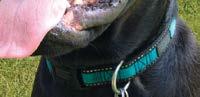


Send us a photo of your dog. The photos must be high-resolution JPG files of at least 1 MB in size. Please send the photo as an attachment to an email and send it to news@ecm.coop.
Each entry must be accompanied by photographer or sender’s name, address, and co-op.
SUBMISSION DEADLINE: May 22. Select photos will appear in the July 2026 issue.





Carnivore plants are the insect trappers
You don’t need gas with paddle boats
Thomas Harris conjured up Hannibal Lecter in Coahoma County
The Official Publication of the Electric Cooperatives of Mississippi
Vol. 79 No. 5
OFFICERS
Brian Long - President
Shawn Edmondson - First Vice President
Brian Clark - Second Vice President
Je Bowman - Secretary/Treasurer
Michael Callahan - Executive Vice President/CEO
EDITORIAL STAFF
Lydia Walters - VP, Communications
Steven Ward - Editor
Chad Calcote - Creative Director
Kevin Wood - Graphic Designer
Alan Burnitt - Graphic Designer
Jill Sowell - Graphic Designer
Whitley Daughtry - Graphic Designer
Chris Alexander - Member Services Coordinator
Andy Tuccio - Media Solutions Director
Steve Temple - Social Media Director
Julienne Sones - Communication Assistant
EDITORIAL OFFICE & ADVERTISING – 601-605-8600
For delivery questions or issues, call your local co-op.
Eudora Welty’s book of Depression-era photos, “One Time One Place,” has been re-released
USM’s Brian Dozier makes it to the majors
Kicking o a sweet summer with sheet cake
Dockery Farms and the birthplace of the blues
Acceptance of advertising by Today in Mississippi does not imply endorsement of the advertised product or services by the publisher or Mississippi’s electric power associations. Product satisfaction and delivery responsibility lie solely with the advertiser.
• National advertising representative: American MainStreet Publications, 800-626-1181
Circulation of this issue: 486,365 Non-member subscription price: $9.50 per year.
Today in Mississippi (ISSN 1052-2433) is published 12 times a year by Electric Cooperatives of Mississippi Inc., P.O. Box 3300, Ridgeland, MS 39158-3300, or 665 Highland Colony Parkway, Ridgeland, MS 39157. Phone 601-605-8600. Periodical postage paid at Ridgeland, MS, and additional o ce. The publisher (and/or its agent) reserves the right to refuse or edit all advertising. The magazine is published for members of subscribing co-ops. The magazine is a bene t of membership.
POSTMASTER: Send all UAA to CFS. (See DMM 507.1.5.2) NON-POSTAL AND MILITARY FACILITIES: Electronic address returns requested.

www.facebook.com/TodayinMississippi
www.todayinmississippi.com

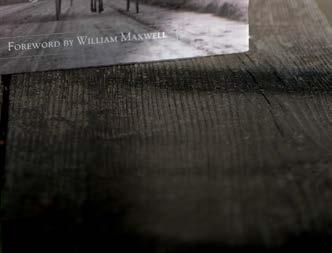
A copy of the re-released version of Eudora Welty’s “One Time One Place” photo book shot at the Eudora Welty House and Garden in Jackson. Photo by Whitley Daughtry

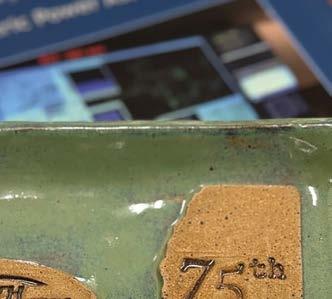
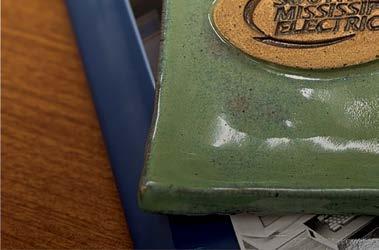
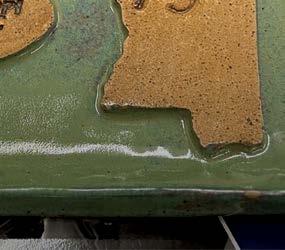
Power supply was a big problem for distribution co-ops in 1930s and 1940s. The investor-owned utilities either wouldn’t sell power to the unwanted newcomers in market, or jacked up the price of it unfairly when and where a public utilities commission would let them get away with it.
Co-op managers and directors were always getting together to discuss ways to break free. That’s what was going on at the now-historic Forrest Hotel in Hattiesburg on April 4, 1941. In attendance were representatives of Coast Electric, Jones County Electric (now Dixie Electric), East Mississippi Electric, Singing River Electric, and Southern Pine Electric.
Before they adjourned, the distribution systems organized South Mississippi Electric (now Cooperative Energy), a generation and transmission system, and four days later received a charter of incorporation from the Secretary of State.
That October, the federal Rural Electrification Administration (REA) approved a $2.1 million loan for SME to build a power plant on the banks of the Pearl River in Columbia. It would burn pine wood chips, an obvious fuel choice in a region known as the Piney Woods.
Less than two months later, the world was on fire — Japan bombed Pearl Harbor on Dec. 7, and the next day United States entered World War II. All industrial construction not essential to the war e ort halted.
Four painful years passed before Mississippi’s boys came home from overseas, and co-ops got back to electrifying the state’s rural areas. Then in 1947, Southwest Electric joined SME as its sixth member.
The G&T idled for the next 11 years before hiring a part-time general manager in 1958. The dream of co-op control of power supply began to solidify two years later when SME applied for its first permit) to build a power plant in Jones County. This time the fuel of choice is natural gas.

The Mississippi Public Service Commission issued the certificate in March 1963, and a few days later Mississippi Power Company and Mississippi Power & Light filed a lawsuit to try to stop the G&T from breaking ground.
The five-year court battle that ensued went all the way to the U.S. Supreme Court, which in 1968 refused the two IOUs’ request to either rehear or reverse the Mississippi appeals court’s decision.
By this time, REA had approved funds for SME to build the Jones County plant, in the unincorporated community of Moselle. The funds were released to the G&T on August 29, 1967. Less than a month later SME opened its first headquarters in the Humble Oil Building, a landmark in Hattiesburg. SME now had a full-time general manager and a small sta .
Construction of Plant Moselle, a baseload plant with three 59-megawatt natural gas units, proceeded without interruption until August 1, 1970, the day the plant went into commercial operation — a little over 29 years since those managers and directors from five distribution co-ops had met in Hattiesburg to find a way to get control of their power supply destiny.
Today, South Mississippi Electric is called Cooperative Energy and serves 456,000 homes and businesses through 11-member distribution systems. The G&T ships power through 1,912 miles of transmission lines and reaches into 55 of the state’s 82 counties — more than half the land mass.
This month marks the 85th anniversary of Cooperative Energy.
In 2003, Plant Moselle was renamed The J.T. Dudley, Sr. Generation Plant Complex after the part-time general manager the G&T hired in 1958. It is one of seven generating plants in the Cooperative Energy’s power portfolio.
NRECA
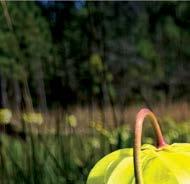



















When you think of carnivores, lions, bears and similar large animal species may come to mind. Many people may not know that the botanical world has its own set of plants that eat insects and small animals.
Mississippi is home to pitcher plants, sundews, bladderworts and butterworts, all of which capture and eat insects to supplement their nutritional needs. These plants eat by trapping insects using modified leaves such as snap traps or pitchers. They secrete enzymes and acids to decompose the captured prey, absorbing essential nutrients directly through their leaves.







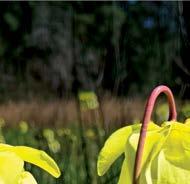
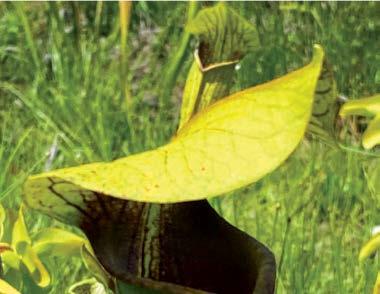
Pitcher plants are in full bloom in the spring and seeing them blooming is truly special. The Arboretum’s open bogs glow with soft chartreuse and buttery yellow flowers that rise above the grasses, creating a scene that feels both delicate and wild.
Many people may not know that the botanical world has its own set of plants that eat insects and small animals.
These native plants are primarily found in boggy, acidic wetlands, typically within pine savannas of the southern part of the state. Mississippi State University’s Crosby Arboretum in Picayune is a good place to see some of these plants.
Pitcher plant flowers are held high on slender stems where they nod gently above the ground, almost floating in the spring breeze. Up close, their translucent petals catch the sunlight, giving the bog a warm, golden cast.
The blooms appear in loose drifts spread across the landscape. These plants thrive in open, sunny and wet areas.
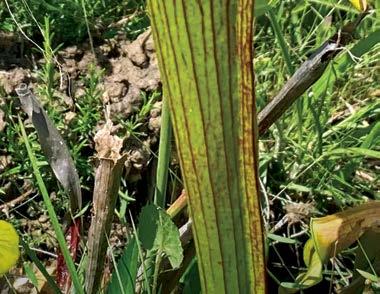
As striking as the flowers are, the pitchers themselves quickly steal the show. Emerging alongside the blooms, the upright tubes stand tall and elegant, etched with deep red veining against green and yellow backgrounds. When grown in mass plantings, the pitchers create strong vertical lines and bold texture.

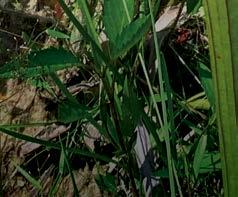
Another plant I enjoy seeing in the bog are sundews.

These native carnivores grow low to the ground, forming small rosettes with leaves covered in glistening, dew-like droplets. In the sunlight, those sticky droplets sparkle, giving the plants a jewel-like appearance.
It is easy to walk past sundews at first, but once you notice them, they add an entirely new layer of interest to the bog landscape.
Like pitcher plants, sundews thrive in wet, sunny conditions, and nutrient-poor soils.

Their presence at The Crosby Arboretum highlights the incredible diversity found in Southern bogs and shows that even the smallest plants can be just as captivating as the tallest ones.


Pitcher plants and sundews are excellent choices for Southern landscapes that have consistently moist, sunny conditions. If you have a low area that stays wet and receives plenty of sun, these native plants can turn a problem spot into a standout feature. Once established, they require very little maintenance.
Seeing pitcher plants and sundews thriving at The Arboretum is a reminder that some of our most intriguing plants are natives perfectly suited to the landscapes we already have.
Finding carnivorous plants for sale can be di cult, but The Arboretum occasionally o ers pitcher plants and sundews at plant sales held throughout the year. These native plant sales are a wonderful opportunity for gardeners to take home a piece of this remarkable landscape for their own gardens.
When bogs come alive with blooms and fresh growth, it’s easy to see why these plants continue to capture the attention of gardeners and nature lovers across the South.


by

Southern Gardening columnist Dr. Eddie Smith, a gardening specialist and Pearl River County coordinator with the Mississippi State University Extension Service, is an internationally certified arborist, Produce Safety Alliance certified trainer, and one of the developers of the Mississippi Smart Landscapes program that encourages the use of native plants in the landscape.



















shoot


With gasoline prices soaring, people might look for more economical ways to enjoy the outdoors. With paddle-powered craft, sportsmen can fish, observe wildlife, shoot photos, and explore nature all day without spending a penny on fuel, except getting to the launch site and back.

Some “dugout” boats made from hollowed out logs, date back more than 10,000 years. Native Americans made canoes from tree bark. In the Arctic, indigenous peoples stretched seal skins over bone or ivory frames. The word “kayak” comes from the native word “qajaq,” meaning “surface top.”
Today, people can buy sturdy canoes or kayaks made of modern materials for less than $300. Paddlers would also need at least two paddles, one to use and a spare if a paddle gets away from the boat or breaks. They also need personal floatation devices for each person who might go in the boat.














If the boat doesn’t come with one, invest in a dry box, preferably one that floats, to store food, water, and other supplies. Also buy a floating waterproof bag to hold wallets, cameras, phones, keys, and other valuables.




Not confined to concrete ramps, paddlers can drop light kayaks or canoes practically anywhere the boat floats and get into many places large powerboats would never attempt to enter. Paddlers find unlimited places to explore and fish or just observe nature across the Magnolia State. Some companies sell kayaks specifically designed for fishing. They come with rod holders. Put the rods in holders, drag baits behind the boat while paddling to catch fish. Some fishing kayaks come with comfortable seats, bait wells, enclosed storage compartments, and other features.



Often, the biggest fish live in the smallest, most inaccessible waters. Anglers in small boats could visit ponds, sloughs, creeks, and other places. Many nature preserves, wildlife management areas, and national wildlife refuges o er excellent paddling opportunities.
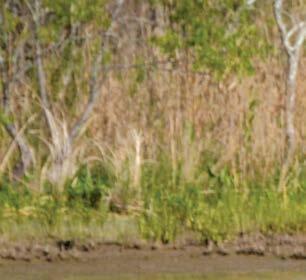
Even on the biggest lakes and reservoirs, like Ross Barnett, paddlers can explore protected coves and backwaters. Sometimes, tiny ditches too narrow or shallow for larger boats to traverse lead to seldom seen “lost” lakes where monster fish rarely see lures.
Across Mississippi, numerous rivers and smaller streams provide outstanding paddling experiences. Small boat enthusiasts can even fish or explore salty coastal waters. The state established several artificial reefs within easy paddling distance from the coastline.
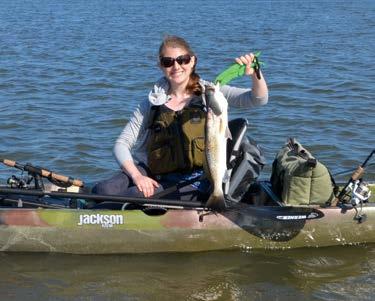
On bigger rivers, consider planning a drift adventure. First, prep a vehicle downstream at a take-out point. Then, drive a second vehicle upstream to launch the boat. Along the way, people could possibly catch enough fish for a delicious shore lunch.






Some outfitters rent canoes or kayaks and arrange paddling excursions. They pick their customers up at the designated take-out spot. Then, the outfitter recovers the boats and takes the paddlers back to their vehicles. Some even provide guides to take paddlers on the water.
Adventurers interested in serious paddling might considering joining a canoeing club. Such clubs usually arrange outings to visit di erent waters throughout the year. Do an internet search for clubs near home.


by John N. Felsher
John N. Felsher is a professional freelance writer, broadcaster, photographer, and editor who lives in Alabama. An avid sportsman, he’s written more than 3,300 articles for more than 170 di erent magazines on a wide variety of outdoors topics. Contact him at j.felsher@hotmail.com.











by Steven Ward
You read that right.





Hannibal Lecter was born in Rich, Mississippi.
Lecter, the infamous cannibal serial killer, created by novelist Thomas Harris, and immortalized in cinema history by actor Anthony Hopkins in the 1991 film, “The Silence of the Lambs,” has roots in the Mississippi Delta.
The man who conjured him up, Harris, was raised in Coahoma County where his father worked as a farmer and his mother, Polly, taught at the Lula-Rich Consolidated School.








In September 1979, Harris — who at the time was living in Sag Harbor, New York — relocated to his childhood home to help his father, W.T. Harris, when he was sick. Harris was also reportedly having trouble concentrating on his latest novel in Sag Harbor.
According to a new book by Brian Raftery, “Hannibal Lecter: A Life” (Simon & Shuster), Harris spent his days with his father and his nights “in a neighbor’s shotgun shack in the middle of a large cotton field. That was where Harris worked on what would become ‘Red Dragon.’”
“Red Dragon,” released in 1981, was Harris’s second novel and the first to introduce Lecter to an unsuspecting audience who devoured thrillers like “fava beans and a nice Chianti.”
Raftery’s book is unique in that it is a biography of a fictional character. The book explores Lecter’s place and impact in pop culture history through Harris’s novels, the films that were based on those books, and a hit TV series.
Raftery said he tried to interview Harris, who is alive and well, but to no avail since Harris is a well-known recluse when it comes to publicity and interviews. Because of that, Raftery relied on extensive research from the few interviews Harris gave in the past and interviews with others.
Following two years of research, Raftery’s book currently stands as the definitive biography of not only one of the world’s most famous fictional villains but of Lecter’s Mississippi-reared creator.

Raftery’s obsession with Lecter started when he was a kid after seeing the Academy Award-winning “The Silence of the Lambs.”
“I loved ‘The Silence of the Lambs.’ It was the first time I saw a real, sort of grown -up horror film. Then I read the books. And what’s interesting is that Lecter in the first book was more of a supporting character,” Raftery said.
In “Red Dragon,” the book’s plot revolved around ex-FBI profiler Will Graham and his search for a serial killer nicknamed, “The Tooth Fairy.”
When Graham decides he needs some assistance, he goes to a mental hospital for the criminally insane where Dr. Hannibal Lecter, aka “Hannibal the Cannibal” was banished to after Graham caught him. Graham wants Lecter to provide some insight to The Tooth Fairy’s methods in hopes that information will help Graham catch The Tooth Fairy.
The early part of Raftery’s book is filled with moments of Harris’s time in Mississippi.

According to Raftery’s book, Linton Weeks was working at the now closed Volume One bookstore in Clarksdale in 1979 when Harris walked in one day.
Harris asked Weeks if he could help him track down a hard-to-find 1873 cooking guidebook — “Grand dictionnaire de cuisine.”
Weeks and his wife, Jan, became friendly with Harris and the three of them spent time at the couple’s cabin on nearby Moon Lake.
While enjoying cocktails and staring at the water, Harris was quoted as saying, “The Mississippi Delta has the most beautiful sunsets of anywhere on earth,” Raftery wrote.
In 1978, Harris was enrolled in a Monday night art class at Delta State University in Cleveland. An instructor told Harris he was such a good artist that he could “illustrate your next book.”
While Harris wrote “Red Dragon” at night in the cotton field shack, “he could hear wild dogs panting as they roamed outside in the dark, their voices howling in unison during a full moon,” Raftery wrote.
According to Weeks, Harris’ Mississippi home “began to morph into a small library, dotted with overflowing ashtrays and stocked with research materials: gun magazines, a Bible, star charts, and an Italian cookbook.”
Harris was still writing “Red Dragon” in May 1980, the month his father died at 66.
The book was finished and sent o to his agent in November of that year.
Although Harris didn’t live in Mississippi full-time after “Red Dragon” was released, Raftery said his hometown and state had an important impact on the writer.
Harris experienced some bullying in school and took refuge in reading and the library.
“He wanted to get out of Rich. In Rich, there wasn’t a lot of space to move. He enjoyed parts of his small-town childhood, but books were his escape,” Raftery said.
For more information about Raftery and his book, visit brianraftery.com.













Although Harris didn’t live in Mississippi full-time after “Red Dragon” was released, Raftery said his hometown and state had an important impact on the writer.


Everything I know about being a lineman, I learned from Jimmy. He’s taught me to take a step back, look at the whole picture before making an important decision.




































Download a free, interactive legislative app for Mississippi

The Electric Cooperatives of Mississippi o ers an easy-to-use mobile app, which provides information on Mississippi’s state and federal elected o cials. Look for “ECM Legislative Roster” in the Apple App Store. An Android version is also available through the Google Play Store.

















•





•
•
•


































































Looking back at the various “theme months” electric cooperatives have, I find it no coincidence that Lineman Appreciation Month (April) and National Electric Safety Month (May) are placed next to each other. Northcentral’s linemen work in one of the top 10 most dangerous occupations in the U.S. Whether it’s heights, trenches, or proximity to high voltage, line workers of today must continuously train to keep themselves, their coworkers, and the community safe. The stress of this work extends beyond the job, reaching families, friends, and the community who count on their loved ones to return home safely.
While appreciating our linemen, I’m reminded of the numerous risks they and all our employees face. Our society has become increasingly volatile. At Northcentral, we continue to provide the necessary training and resources to keep everyone out of harm’s way. Threats are always taken seriously, and providing a safe environment for our employees and community is a priority.

by Kevin Doddridge General Manager/CEO


Whether it’s storm restoration, routine maintenance, or greeting members in our o ce, a culture of safety and precaution will always be the number one priority at Northcentral. This culture will continue to include appreciation for all employees as well as our community. In the field. In the o ce. In the community. 100% of the time. Stay safe.

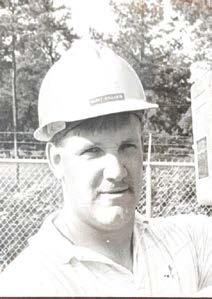

After 40 years of dedicated service, Barry Williams is retiring from Northcentral Electric Cooperative, leaving behind a legacy of hard work, reliability, and commitment to the members we serve.
Barry served as substation supervisor, playing a vital role in maintaining the infrastructure that powers our community. Over four decades, he witnessed first-hand the tremendous growth of the cooperative. When he began his career in 1987, Northcentral operated five substations. Today, that number has grown to 11, reflecting the continued expansion across our service area. “Northcentral has always been a special place for me,” Barry said. “My grandfather was a founding board member, and my father served on the board for many years as well.”
Throughout his career, Barry built strong relationships with coworkers and valued the sense of support and shared purpose. He also took pride in mentoring younger employees, just as others had done for him along the way. “Always believe in yourself and take advantage of opportunities to invest in yourself,” he said. “It will pay o in the long run.”
As he begins retirement, Barry looks forward to spending time with his family, especially his first grandson, and enjoying hunting and fishing.
Thank you, Barry, for 40 years of service!



a timely reminder to take a closer look at how we use electricity in our homes. While
Northcentral Electric Cooperative recognizes this observance each year, safety is something we prioritize every day – for our employees, our members, and the communities we serve.
Electricity powers nearly every part of modern life, from appliances and devices to heating and cooling systems. But when used improperly, it can pose serious risks, including electrical fires, injuries, and property damage. According to the Electrical Safety Foundation International, thousands of people in the United States are injured or electrocuted each year due to electrical incidents in the home – many of which are preventable.
This month serves as a great opportunity to refresh your awareness and make sure your home is as safe as possible.
Your home’s electrical system often provides early warning signs when something isn’t right. Flickering lights, frequently tripped breakers, buzzing sounds, or outlets that feel warm to the touch can all signal potential issues.
Frayed or damaged cords are another common hazard. Over time, cords can wear down due to age, heavy use, or excessive current flow. If you notice any exposed wiring or damage, replace the cord immediately. Addressing small issues early can help prevent larger, more dangerous problems down the road.
Every circuit in your home is designed to handle a limited amount of electricity. Overloading happens when too many devices or high-energy appliances are plugged into the same circuit, increasing the risk of overheating and fire.
Be especially mindful in areas where multiple devices are used at once, such as kitchens, home o ces, and entertainment spaces. If your home is older or you’re adding large appliances, consider having a qualified electrician evaluate your system to ensure it can safely meet your needs.
Power strips and extension cords are convenient, but they should be used properly. Never “daisy chain” extension cords together or plug one power strip into another, as this can quickly lead to overheating.
Always check the wattage rating before plugging in multiple devices, and remember that extension cords are intended for temporary use. If you find yourself relying on them regularly, it may be time to install additional outlets.
It may seem obvious, but it’s worth repeating: water and electricity do not mix. Keep electrical devices away from sinks, bathtubs, and outdoor moisture, and never handle electronics with wet hands.
Ground Fault Circuit Interrupters (GFCIs), commonly installed in kitchens, bathrooms, and outdoor areas, provide an added layer of protection by shutting o power when a fault is detected. If your home does not have GFCIs in these areas, consider having them installed.
Electrical safety starts with awareness. Take time to talk with your family – especially children – about the importance of using electricity safely. Remind them not to play with outlets or appliances and to stay clear of overhead power lines when playing outside.
Planning a project in your yard? Whether you’re planting a tree, installing a fence, or tackling a landscaping project, it’s important to know what’s below the surface before you start digging.
Underground utility lines (including electric, fiber, gas, and water) may be buried just inches below the ground. Hitting one of these lines can cause serious injury, service outages, and costly repairs.
Before you dig, call 811 to have underground utilities located and marked. This free service helps protect you, your property, and essential services in your community.






























Purvis, MS - If you experience numbness or tingling in your hands, arms, legs, or feet or if you experience shooting or burning pain, this is important.
Please read this carefully.
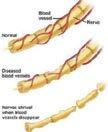
Peripheral Neuropathy is when small blood vessels in the hands, arms, feet or legs become diseased and tiny nerves that keep the cells and muscles working properly shrivel up and die.
Early-warning symptoms include tingling and numbness, mild loss of feeling in your hands, arms, legs or feet, inability to feel your feet, which increases your risk of foot-injury and falling.
More Advanced Symptoms Include...
Loss of coordination & dexterity, which puts you at increased risk of accidents.
Inability to feel clothing like socks and gloves.
High risk of falling, which makes walking dangerous, and makes you more dependent on others.
Burning sensations in your arms, legs, hands or feet that may start mild, but as nerves and muscles die, may feel like you're being burned by a blow torch.
Ignore the early warning signals long enough and you risk progressive nerve damage leading to muscle wasting, severe pain, loss of balance and a lot of staying at home wishing you didn't hurt.
When every step is like walking on hot coals, sitting still may be the only thing you feel like doing. But there's little joy in sitting still all day long.

Now here's the scary part....
Nerve damage CAUSES cell damage. Cell damage SPEEDS UP nerve degeneration
Without treatment this can become a DOWN-WARD SPIRAL that accelerates.
The damage can get worse fast. Mild symptoms intensify. Slight tingling, numbness or lack of feeling can turn into burning pain.
Before you know it, damage can become so bad you hurt all the time.
Unless this downward spiral is stopped and nerves return to proper function - the damage to nerves and cells in the affected area can get so bad your muscles begin to die right along with the nerves and cells. And that sets the stage for weakness, loss of mobility, disability, and dependence on others.
If you have early warning signs of peripheral neuropathy, (tingling &/or numbness, loss of feeling or pain) it's CRITICAL you get proper treatment. It's critical, because with proper treatment you can improve your symptoms. Without it, you are playing Russian Roulette with your health. Once your nerve loss reaches 85%, odds are there's nothing any doctor can do to help.
The most common method your doctor may recommend to treat neuropathy is prescription drugs

Drugs like Gabapentin, Lyrica, Cymbalta, & Neurontin are often prescribed to manage the pain. But, damaged nerves and dying cells do not heal on their own.
Pain pills do not restore healthy nerve function. They just mask the pain as the nerves continue to degenerate and cells and muscle continue to die.
Taking endless drugs and suffering terrible side effects that may damage your liver & kidney and create even more problems, is not a reasonable path. You deserve better. Three things must be determined to effectively treat neuropathy. 1) What is the underlying cause? 2) How much nerve damage has been sustained? 3) How much treatment your condition will require?
With proper treatment, shriveled blood vessels grow back & nerves can return to proper function. How much treatment you may need depends on your condition.
At Purvis Chiropractic we do a complete neuropathy sensitivity exam to determine the extent of your nerve damage. The exam includes a detailed sensory evaluation, extensive peripheral vascular testing, & a detailed analysis of the findings.
Dr. Rob Acord, D.C. will be offering this complete neuropathy sensitivity exam for $47. This special offer goes away at the end of this month as we have a limited number of exam appointments available.
by Steven Ward
“The mystery of how little we know of other people is no greater than the mystery of how much.”
— from “The Optimist’s Daughter” by Eudora Welty
Cinematographer Autumn Durald Arkapaw was the first woman to win an Academy Award for her work shooting the 2025 film, “Sinners.”
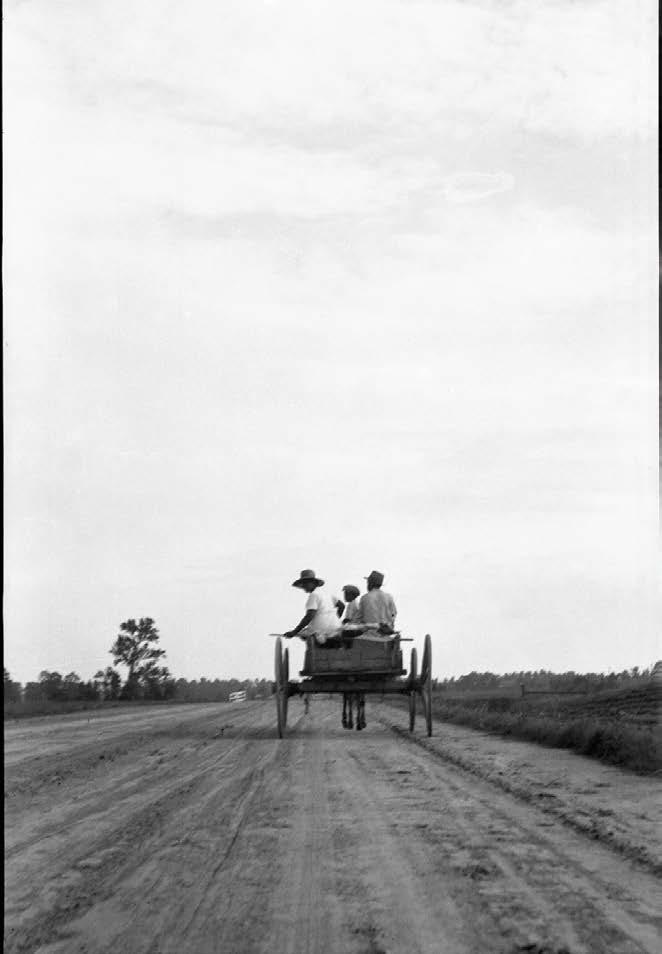
The horror film, set in 1932 Clarksdale, was written and directed by Ryan Coogler. Before shooting began, Coogler gave Durald Arkapaw a copy of author Eudora Welty’s book of Mississippi Great Depression-era photos, “One Time One Place,” for inspiration. Durald Arkapaw told the New York Times in a March 3, 2026 article that she was “guided by Welty’s 1930’s photos.”
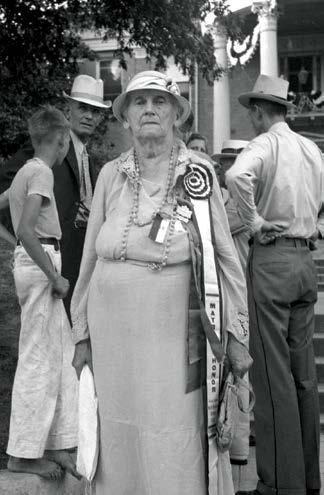
As Welty’s enormous influence on both American letters and pop culture continues today, University Press of Mississippi has rereleased 1971’s “One Time One Place.” The 100 photos in the book have been digitally scanned to maximize the contrast and beauty of Welty’s vision, according to the publisher.
The photos in the book were shot before the Jackson author became a world-renowned short story writer and novelist.
After Welty attended Columbia University as a graduate student in New York City during the Great Depression, she returned to Mississippi in 1931 because her father was ill. Following his death, she remained in Jackson, unable to find a job in New York City during that time.
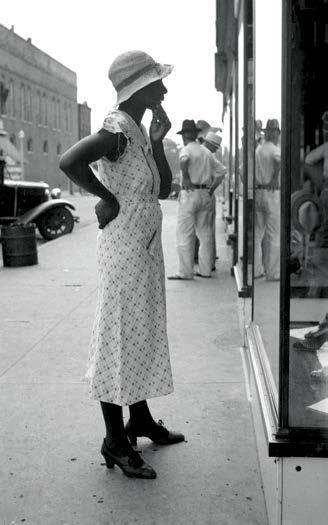
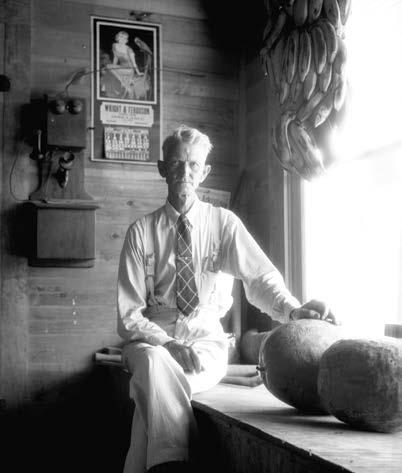
After working at WJDX radio and at assorted part-time jobs, in 1936, Welty began work as a junior publicity agent for the federal government’s Works Progress Administration (WPA). Her job was to travel around the state’s 82 counties to write about di erent WPA projects underway. During her travels, Welty carried her camera and took snapshots of the places and people she met throughout the state.
Welty’s niece, Mary Alice Welty White, said her aunt’s photos captured the everyday humanity of the state’s residents.





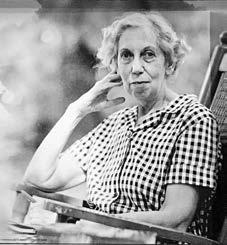










“The photos were compassionate. The people in them are so proud. It really captures the common, day in the life of people during that time,” White said.
White also said Welty did not ask people to pose for her photos.
“She just captured a moment. Caught them as they were. I just think she had a good eye,” White said.
In the book’s original preface, Welty wrote that any “merit the pictures do have has nothing to do with how they were made: their merit lies entirely in the subject matter.”
Suzanne Marrs, author of 2005’s “Eudora Welty: A Biography” and a Welty historian, disagreed with her subject’s assessment.
“No. I don’t agree with that. Of course I don’t. She was being very modest. She was able to capture what she did because she recognized moments and people in ways others would not have. Her photos are magnificent,” Marrs said.
Novelist and Welty friend William Maxwell also disagreed with the author.
In Maxwell’s 1995 forward to the book, he wrote, “I am inclined to take exception, however, to her statement that the merit of these photographs lies entirely in the subject matter. Other people could have focused a camera on the same scenes and human situations, and they would have not caught what she caught.”
Welty’s job traveling around the state and shooting her photos had a profound impact on her literary pursuits.



Welty went on to write award-winning stories such as “Why I Live at the P.O.,” “A Worn Path,” and “Petrified Man.” She also penned the novels, “Delta Wedding” and the Pulitzer Prize-winning 1972 book, “The Optimist’s Daughter.”
Writer W. Ralph Eubanks, author of “A Place like Mississippi: A Journey Through a Real and Imagined Literary Landscape,” described the impact this way.
“Eudora Welty’s photographs of Depression-era Mississippi reveal how the place she loved opened a door in her mind, allowing her to see the entire expanse of the Magnolia State as her literary canvas. These images are as much a part of Welty’s literary legacy as her books and stories.”
Marrs said Welty was able to visit parts of the state she might not have seen otherwise as part of her WPA job.
“Observation of place definitely informs what you do as a writer,” Marrs said.
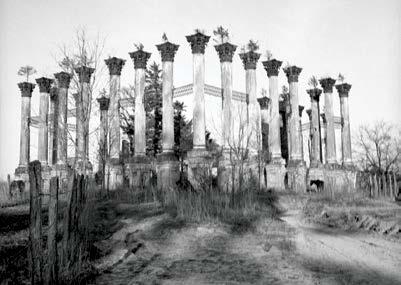
As an example, Marrs said Welty did not consult her photographs when writing about place but often drew on memories of places she had photographed. Seeing the ruins of Windsor near Port Gibson and bottle trees in Simpson County led to photos while recalling the sight of them led to the stories “Asphodel” and “Livvie.”



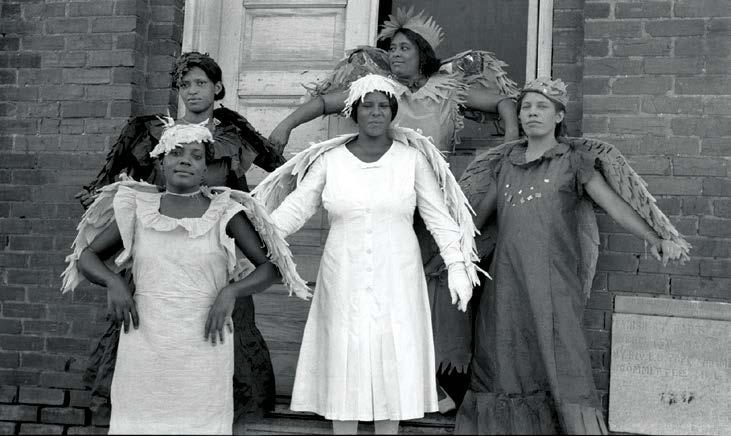
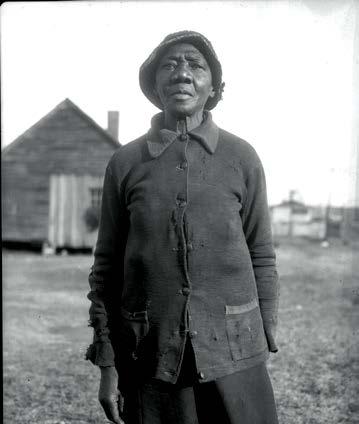
White said Welty’s WPA job opened her aunt’s eyes to all of Mississippi. White said she remembered Welty once commenting on the first photo in the book. The photo is a portrait of a black woman that is on the left page facing the book’s title page.
“I remember she said, ‘Look how proud she is.’ She’s standing there in that tattered and torn sweater,” White said.
In the preface of the book, Welty wrote of the first photo, “When a heroic face like that of the woman in the buttoned sweater — who I think must come first in this book — looks back at me from her picture, what I respond to now, just as I did the first time, is not the Depression, not the Black, not the South, not even the perennially sorry state of the whole world, but the story of her life in her face.”
Welty was able to tell stories with her pen and her camera.
Despite the poverty of Mississippi as well as the Great Depression backdrop of the photos, no one appears to look miserable in Welty’s photographs.
“These photos reveal the humanity, the vulnerability, and the resilience of the people Welty met and introduces to us on the pages of “One Time, One Place,”’ Marrs said.
Going back to the photo of the woman in the sweater that opens the book, Welty wrote in the preface, “Her face to me is full of meaning more truthful and more terrible and, I think, more noble than any generalization about people could have prepared me for or could describe for me now. I learned from my own picture, one by one, and had to; for I think we are the breakers of our own hearts.”
For more information about the book, visit upress.state.ms.us/Books/O/One-Time-One-Place








by Bonnie Coblentz, MSU Extension Service
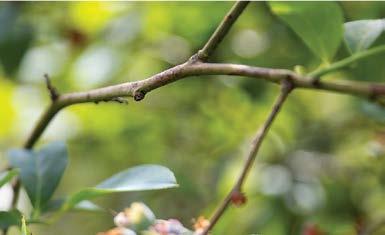
Already struggling with fewer acres in the state, the blueberry industry absorbed a smaller setback with an untimely freeze in mid-March.
Jeremy Edwards, a blueberry grower and owner of Great Southern Farms in Richton, said his 160 acres of blueberries in Perry County lost maybe as much as 20% of the fruit on his Southern highbush shrubs.
“All the rabbiteyes were fine, but now we have to worry about botrytis and spray for that fungus,” Edwards said. “When new leaves get bit by the cold, that’s a weak point for the plant, and it allows the fungus to enter.”
This winter’s cold weather that hit single digits in many places had no e ect on dormant blueberry bushes.
Edwards expects to have an average production year, with blueberry harvest beginning in late April and finishing around the Fourth of July. Edwards sells all his fruit — about a million pounds — to the fresh market, and packs and sells for a few other smaller-scale growers.
Elizabeth Canales Medina, an agricultural economist with the Mississippi State University Extension Service, said although more people have started growing blueberries in Mississippi, overall blueberry acres and production are down.
According to the Census of Agriculture, there were 493 blueberry farms in the state in 2022, but total acreage declined from 1,924 acres in 2017 to 1,188 acres in 2022.
“While there would seem to be slightly more farms growing blueberries, the data would indicate that commercial-scale production has declined significantly,” Canales said. “The majority are not producing at large commercial scale, and they are likely operating in local direct-to-consumer markets.”


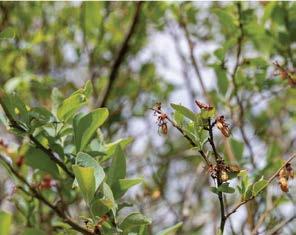
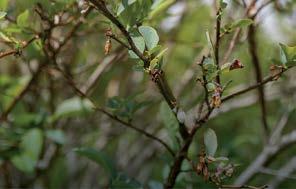




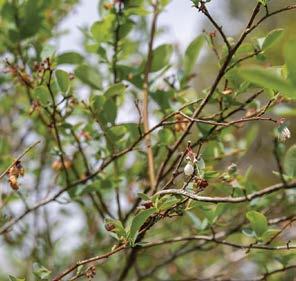




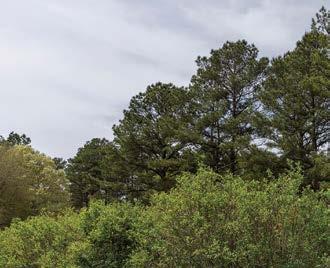




Joeann Foster owns Foster Family Farm in Winston County with her husband, Stephen. It is a family hobby farm that sells in June at the Starkville Community Market, through local online groups and as a U-pick operation. The Fosters have 90 bushes in three di erent varieties that they planted in 2013.
The family watered the bushes when they were first established, but now they grow without irrigation. Disease and insect pressure have so far been light, but the March freeze seems to have hurt their crop.
“Our bushes were buzzing with bees on the white, open blooms, but then the freeze came,” Foster said. “It was beautiful then, but I don’t have any blooms on them now.”
A late freeze a few years ago damaged the crop, too. Foster said the family pivoted that year and only sold what they picked themselves at the local farmers market, not opening the farm to consumers to pick their own fruit.
“This year, we’re just waiting to see. I know it didn’t kill all of them, but I know we won’t have the crop we did last year,” she said.
It is di cult to enter the commercial blueberry industry because of the expense of establishing a blueberry field, food safety regulations that must be met for commercial sale, and the high cost of labor and harvesting equipment. Due to these costs, Mississippi blueberry operations remain small except for a few large operations.
Canales said many commercial blueberry operations are trying to mechanize harvest, but quality for the fresh market could be an issue.
“If the fruit is grown for the frozen market, this is less of an issue, but damage from mechanical harvesting can be more consequential for the fresh market,” Canales said. “Many commercial operations in Mississippi produce for the frozen market.
“The industry continues to work on developing cultivars suitable for mechanical harvesting, but I am not sure there is a solution where mechanical harvest works really well for the fresh market without some loss or impact on quality and shelf life,” she said.
Blueberry prices fluctuate based on when the fruit enters the market, with the first fresh blueberries available nationally demanding a premium price. Canales said she expects prices to be considerably higher than in previous years, especially early in the season.
“I would expect the freeze to have at least a short-term impact on supply this year, resulting in higher prices for consumers and benefiting producers who are able to supply early in the season before production from other regions enters the market,” she said.
Eric Stafne, Extension fruit specialist, said Mississippi blueberry growers are moving toward the fresh market because prices are better.
“The labor required for fresh market is inhibitory for small growers, so scale is reduced,” Stafne said. “Some fruit is being mechanically harvested for fresh markets despite the potential for lower quality, which depends on cultivar.”
by MSU Extension Service/Michaela Parker





















Brian Dozier’s baseball story is a tale of one golf swing fulfilling a dream from youth.
“When I was in the second grade, I filled out a questionnaire about what I wanted to do when I grew up,” Dozier said. He answered that he wanted to be the Atlanta Braves’ shortstop.
Dozier grew up in the small community of Fulton with his parents Mike and Jan, brother Clay, and sister Leigh Anne. Dozier played all the high school sports but was drawn to baseball and was a four-year starter for Coach Brian Long at Itawamba Agricultural High School.
Dozier was a two-time All-State shortstop who wanted to play college baseball, but neither Ole Miss nor Mississippi State showed much interest.
The summer before Dozier’s senior year, the Clarion Ledger Dandy Dozen selection was playing for a Mississippi team coached by Stacy Hester.
“We were playing in Oklahoma, and I really made some spectacular defensive plays at short. USM coaches were in attendance and invited me to visit Hattiesburg. We visited and fell in love with the school and the area,” said the former high school quarterback.
Dozier signed with The University of Southern Mississippi, and his career was an overwhelming success. He started all but two games in his first three seasons at USM, but a broken collarbone late in his senior season ended a 131-game starting streak. Despite the disappointment, Dozier still inspired the Golden Eagles to their first and only College World Series. Dozier was a College Freshman All-American and was named to three All-Regional teams. Former USM coach Corky Palmer stated after Dozier’s career, “He is the best defensive player I have ever coached.”
The Minnesota Twins drafted Dozier in the eighth round of the 2009 MLB draft. Dozier learned the mental part of the game and did the right things on and o the field to move up to the Twins’ major league club. He learned to speak Spanish as well as to play the guitar and piano along his baseball journey.
Dozier was never considered a home run threat in college or in the minor leagues. But before his MLB career was over, he had hit 192 homers.

















“I was playing golf one day and my minor league hitting coach, Tom Brunansky, was playing in the group behind me. I drove the ball 300 yards, and he came running up to me and said to meet him at the ball field after golf. Brunansky suggested I needed to translate my golf drive to the baseball field, and that’s what eventually changed things for me. He got a fungo bat and a bucket of balls and tossed them up, just to see how far I could hit to create bat whip. The home runs did not come immediately, but from that point on, I could see that I might have a little power,” the former Twins Minor League Player of the Year said.
Beginning with the Twins in 2012, Dozier hit 6, 18, 23, 28, 42, 34, and 15 home runs in consecutive seasons.
Dozier won a World Series ring with the Washington Nationals in 2019 and appeared in the World Series with the Los Angeles Dodgers in 2018. He was a participant in the Home Run Derby in 2014, set an American League home run record for second basemen with 42 in 2016 and won the Gold Glove Award 2017. Dozier achieved a rare combination to become the first MLB player to hit a home run in his first plate appearance in an All-Star game in 2015 and in a postseason game in 2017.
Dozier hung up the cleats in 2020, so he could spend time with his daughter, Reese, and sons, Rip and Jesse, ages 6, 5, and 4.
“Brian always found a way to perfectly balance being a fierce competitor and being able to keep things light and fun on the field for his teammates. As a pitcher, I loved him because he pumped confidence in me with his words, actions and the way he played the game.”
— Golden Eagle teammate Wade Weathers
“I think what made him so special was the fact that he would do whatever he could to find a way to help his team win. He never cared about individual stats. He inspired his teammates with his play, and that was the same trait that made him so successful in the big leagues.”
— Voice of the Golden Eagles John Cox
“When we were recruiting Brian, his baseball skills, and IQ for the game were exceptional. He’s one of the best to ever play at USM. The success he had on the Major League level was no surprise to me. He’s an All-Star both on and o the field, and we are very proud of him.”
— Former USM head baseball coach Scott Berry
“At a 2006 NCAA Tournament press conference, Coach Corky Palmer picked three players to meet with the media. Freshman Brian Dozier was one of the players Palmer selected. For ‘old school’ Palmer to let a freshman represent his team in such an important public setting told me that Dozier was extremely well respected, and not just for his bat and glove.”
— Former Hattiesburg American sports editor Allan Hinton
“I knew I wanted to spend more time with my family, and I thought it
“I knew I wanted to spend more time with my family, and I thought it was the right time to retire,” he said.
Today, he and his wife, Renee, own a real estate business in Hattiesburg.

“Brian was an incredible player and a tremendous leader during his time as a Golden Eagle. He was injured his final season, but that did not stop him from contributing everything he could for his team that went on a historic run to reach the 2009 World Series.”
— USM Sports Information Director Jack Duggan



“Brian is athletic, and he has a strong arm. He pays attention to the game, he knows whose pitching, he has all the intangibles to be a good shortstop.”
— Minnesota Twins interim manager Scott Ullger before Dozier’s first game in the majors. From the “Baseball Almanac.”

by Dale McKee
Dale McKee is a Waynesboro native who has been writing about sports in Mississippi since 1973. He is a member of Dixie Electric. Contact him at ddmckee18@yahoo.com.

































Is your calendar full for the summer yet? Mine is. If you are like me, you began back in December planning for camps and vacations and spent January and February planning for gardens and flower beds, then prayed through early spring that the all-over-the-map Mississippi weather wouldn’t be quite as all-over-the-map as it usually is. But May…. May is that anticipation time, that “we’re almost there” time when all the plans begin to come together. It’s the kicko time to sandals and shorts, salads and ice cream, and all those glorious long summer days to come. Kick o this month by planning for those backyard gatherings and potlucks with a crowd-pleasing dessert.
Sheet cakes are easy peasy. And who in the south doesn’t have a casserole taker to haul one around? Of course, 9x13 is the favored size, although the Chocolate Fudge Sheet Cake works best in a ½ sheet pan (a jelly roll pan — about 12x17). I did mine in a 9x13 to show you it can be done. The frosting will be a little di erent as will the cake, but the flavor will still be what. I just recently heard my Pineapple Pecan Cake, also called a “Preacher Cake” because it’s perfect for making in a hurry for an emergency. Isn’t that charming? The Basic Two-Egg Cake has been in my bag of tricks for decades. The cake came out of a 1960’s vintage cookbook that belonged to my mom and trust me; everybody needs a simple cake. Enjoy!


by Vicki Leach
Vicki Leach is a full-time chef/culinary instructor at Mississippi State University in the Department of Food Science, Nutrition, and Health Promotion. She teaches Science of Food Preparation, Foodservice Organization, and Quantity Food Production. She lives in a 130-year-old farmhouse that speaks to her old soul.

Serves 12 to 24, depending on how you bake it
2 cups sugar
2 cups all-purpose flour
1 stick butter
½ cup shortening
4 tablespoons cocoa powder
1 cup water
1 teaspoon soda
½ cup buttermilk
2 eggs
1 teaspoon vanilla
Mix together flour and sugar in a large mixing bowl. In a saucepan, mix butter, shortening, cocoa powder, and water together. Bring to a boil and pour over flour/sugar mixture. Stir in buttermilk, soda, eggs, and vanilla. Pour onto a sprayed baking sheet (or a 9 x 13 baking pan). Bake at 350 degrees for 30 minutes (check after 25 minutes).
INGREDIENTS
2 cups all-purpose flour
2 cups sugar
2 teaspoons baking soda
2 eggs 20 ounce can crushed pineapple, undrained 1 cup chopped pecans (can use walnuts)
Combine dry ingredients in a mixing bowl. Beat eggs and pineapple in a separate bowl, then stir into dry ingredients, mixing well. Pour into a greased and floured (or sprayed) 9x13 baking dish. Bake at 350 degrees for 25 to 30 minutes. Remove from oven and cool completely before frosting.


INGREDIENTS

2 sticks butter, room temperature
½ cup cocoa powder
5 cups powdered sugar

¼ teaspoon salt
1 teaspoons vanilla
6 tablespoons heavy whipping cream (more as necessary)



Make sure butter is very soft. Place in a large mixer bowl fitted with a whisk attachment. Whisk butter, cocoa powder, and half the sugar until combined; add cream and salt and whisk again to combine well. Add the rest of the sugar and whisk, increasing speed to make the frosting light and fluffy. Add vanilla. Frost cake as desired. You’ll use about half the frosting to top a sheet cake. Refrigerate leftovers.
INGREDIENTS
1 stick butter
3 tablespoons cocoa powder
6 tablespoons buttermilk
1 pound powdered sugar
1 teaspoon vanilla
1 cup chopped nuts (optional)
Mix all ingredients in a saucepan and bring to a boil when cake is almost done. When cake comes out of the oven, immediately pour frosting over it and spread with a spatula to the edges. Do this quickly, as frosting sets quickly.
When cake is completely cool, spread with frosting made of:
INGREDIENTS
8 ounces cream cheese, room temperature
1 stick butter, room temperature
3-4 cups confectioners’ sugar (a scant pound)
1 teaspoon vanilla extract
Beat all together until fluffy. Spread on cooled cake. Store cake in refrigerator.


INGREDIENTS
1 stick butter, room temperature
1 cup sugar
2 eggs
½ cup whole milk
Makes 2 9-inch layers or 1 9x13 sheet cake
1 ½ cups plus 1 tablespoon all-purpose flour
3 teaspoons baking powder
½ teaspoon salt
1 teaspoon vanilla
Sift flour, measure, then sift again with baking powder and salt. Set aside. In a mixing bowl whisk butter with sugar until light and fluffy. Add eggs and beat well. Add milk alternately with flour, beating on low after each addition to combine. Add vanilla. Portion into 2 greased and floured (or sprayed) cake pans, or cupcake papers, or a 9x13 baking dish. Bake at 350 degrees for 25 minutes. Frost as desired.
Daylilies: A Garden Party. May 16. Hattiesburg. The free event, hosted by the Hattiesburg Area Daylily Society, will be held from 1 p.m. to 4 p.m. at the Hattiesburg Train Depot. A design division is included in the show. The plant sale begins at noon. Details: 601-466-3826 or visit hattiesburgdaylily.com.
Harrison County Gem and Mineral Society Show. May 16 and 17. Biloxi. The event will be held at the Joppa Shriners Center, 13280 Shriners Blvd., on Saturday from 9 a.m. to 5 p.m. and on Sunday from 9 a.m. to 4 p.m. There will be demonstrations, hourly door prizes, more than 20 vendors, club exhibits, displays, rounds of Stump the Geologist, and a children’s area. Details: Call 228-596-7964, 205-296-3779, or 601-947-7245.
58th Annual Gospel Singing Jubilee. May 30. Pearl. The concert begins at 6:30 p.m. at the Pearl Community Center. The concert will feature The Perrys, Revelations, Tim Frith & the Gospel Echoes, and Danny Bishop. Details: 601-9060677 or 601-720-8870.
35th Annual Sawmill Festival. June 19 and 20. Bruce. The hours on June 19 are from 6 a.m. to 9 p.m. and on June 20 from 9 a.m. to 9:30 a.m. in the Town Square. Car show registration starts at 8 a.m. on June 20. Food vendors will start setting up on the evening of June 18 after 5 p.m. The arts and craft booths will set up on June 19. Admission and parking are free. Details: 662-983-2222.

























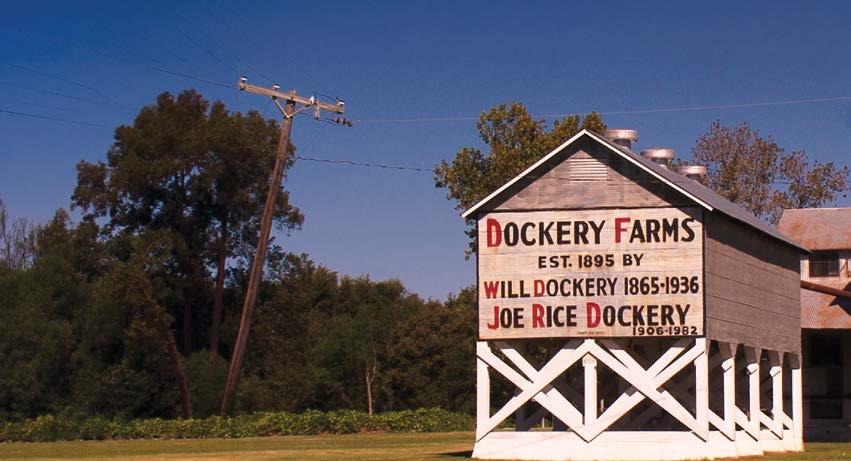






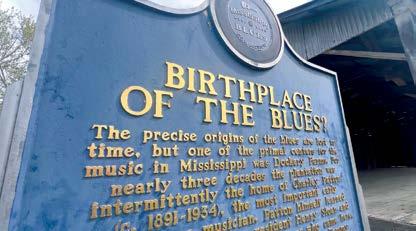
If Mississippi is the “Birthplace of America’s Music,” then Dockery Plantation is the delivery room. Dockery is between Cleveland and Ruleville on Highway 8 and according to its historical marker, Dockery is where the blues was born. The farm was a meeting place for many of the people who became the founders of Delta blues — Charley Patton, Robert Johnson, Son House, “Howlin’ Wolf,” Pops Staples and a bunch more. Plantation owners Will Dockery, and later, Joe Rice›s part in all of this was to not interfere with the farm workers’ Saturday night gatherings where music was played and playing styles were swapped. They also allowed a lot of freedom for people to come and go to and from the farm, thereby allowing lots of exposure to the music that was created there.
Now, to get a better picture of how blues music became the foundation from which all other original American music types grew, travel eight miles west of Dockery to the campus of Delta State University in Cleveland and stop at the first building you come to: GRAMMY Museum Mississippi. There is a whole section of the museum dedicated to the Mississippians who took the blues and modified it with string band styles to create country music, as Jimmie
Rodgers of Meridian did. After adding a “back beat” to country and blues, rock and roll was brought about by Elvis Presley from Tupelo. Delta State University is also home of the Delta Music Institute. It’s a school where budding musicians can not only find instruction on how to play, sing, write, produce, and perform music, but also learn the business of the entertainment industry. I visited with Delta bluesman “Son” Thomas one afternoon, and he told me that back in the day, he had heard of record companies paying off performers of hit records with a new car instead of a fair share of a song’s profits.
I asked one of my guides who was showing me around the Delta Music Institute’s numerous recording studios if part of the attraction for students coming to that school was the proximity to where blues was born. The school is not far from seminal blues events, like being near the crossroads where Robert Johnson was supposed to have sold his soul to the devil so he could play guitar. Surprisingly, my guide told me he didn’t think most of the students were even aware of the significance of the area to the birth of America’s music. Someone needs to tell them.
My friend and Greenville musician Steve Azar put the influence of Mississippi to music like this. He said there is no “six” degrees of separation. You hear songs on the radio, and you are most likely just “one” degree of separation from a Mississippian who wrote it, performed it, or produced it.
And the hits just keep on coming!

by Walt Grayson
Walt Grayson is the host of “Mississippi Roads” on Mississippi Public Broadcasting television and the author of two “Looking Around Mississippi” books and “Oh! That Reminds Me: More Mississippi Homegrown Stories.” Walt is also a reporter and 4 p.m. news anchor at WJTV in Jackson. He lives in Brandon and is a Central Electric member. Contact him at walt@waltgrayson.com.