

























Power supply was a big problem for distribution co-ops in 1930s and 1940s. The investor-owned utilities either wouldn’t sell power to the unwanted newcomers in market, or jacked up the price of it unfairly when and where a public utilities commission would let them get away with it.
Co-op managers and directors were always getting together to discuss ways to break free. That’s what was going on at the now-historic Forrest Hotel in Hattiesburg on April 4, 1941. In attendance were representatives of Coast Electric, Jones County Electric (now Dixie Electric), East Mississippi Electric, Singing River Electric, and Southern Pine Electric.
Before they adjourned, the distribution systems organized South Mississippi Electric (now Cooperative Energy), a generation and transmission system, and four days later received a charter of incorporation from the Secretary of State.
That October, the federal Rural Electrification Administration (REA) approved a $2.1 million loan for SME to build a power plant on the banks of the Pearl River in Columbia. It would burn pine wood chips, an obvious fuel choice in a region known as the Piney Woods.
Less than two months later, the world was on fire — Japan bombed Pearl Harbor on Dec. 7, and the next day United States entered World War II. All industrial construction not essential to the war e ort halted.
Four painful years passed before Mississippi’s boys came home from overseas, and co-ops got back to electrifying the state’s rural areas. Then in 1947, Southwest Electric joined SME as its sixth member.
The G&T idled for the next 11 years before hiring a part-time general manager in 1958. The dream of co-op control of power supply began to solidify two years later when SME applied for its first permit) to build a power plant in Jones County. This time the fuel of choice is natural gas.

The Mississippi Public Service Commission issued the certificate in March 1963, and a few days later Mississippi Power Company and Mississippi Power & Light filed a lawsuit to try to stop the G&T from breaking ground.
The five-year court battle that ensued went all the way to the U.S. Supreme Court, which in 1968 refused the two IOUs’ request to either rehear or reverse the Mississippi appeals court’s decision.
By this time, REA had approved funds for SME to build the Jones County plant, in the unincorporated community of Moselle. The funds were released to the G&T on August 29, 1967. Less than a month later SME opened its first headquarters in the Humble Oil Building, a landmark in Hattiesburg. SME now had a full-time general manager and a small sta .
Construction of Plant Moselle, a baseload plant with three 59-megawatt natural gas units, proceeded without interruption until August 1, 1970, the day the plant went into commercial operation — a little over 29 years since those managers and directors from five distribution co-ops had met in Hattiesburg to find a way to get control of their power supply destiny.
Today, South Mississippi Electric is called Cooperative Energy and serves 456,000 homes and businesses through 11-member distribution systems. The G&T ships power through 1,912 miles of transmission lines and reaches into 55 of the state’s 82 counties — more than half the land mass.
This month marks the 85th anniversary of Cooperative Energy.
In 2003, Plant Moselle was renamed The J.T. Dudley, Sr. Generation Plant Complex after the part-time general manager the G&T hired in 1958. It is one of seven generating plants in the Cooperative Energy’s power portfolio.
NRECA



“Improving the quality of life for all those we touch.”
Temps are rising. School is almost out. Summer vacations are being planned. And your 4-County team is prepping for the usual June through September storms.
With those storms comes the risk of power outages. If that unfortunate scenario occurs, you can count on 4-County/FASTnet to be ready to respond.
We actually prepare for power outages throughout the year. The major cause of most power outages comes from damage to power lines due to falling trees and branches. We work year-round, thanks to an intensive right of way clearing program, to ensure power lines in our service territory stand less risk of being damaged by trees, branches, or other types of vegetation. Our linemen, dispatchers, engineering team, and our “War Room” team (coordinating the restoration e ort) are trained and prepared.
Despite our best e orts, during major storms, damage can occur to transmission stations, substations and power lines. When this happens, our first priority is to safely restore power to as many members as possible in the shortest amount of time.
We will do our best to avoid power outages, but sometimes Mother Nature has other plans. Be sure to check 4-County’s facebook page on your smartphone for the latest updates during a power outage. Call us at 1-800-431-1544 to report a power outage.
On another topic, as we approach June, please make plans to attend the 4-County Annual Meeting. Set for Thursday, June 4, at the East Mississippi Community College’s Golden Triangle campus, the event features a meeting, the election of two Association directors, lunch, and door prizes (including the grand prize of a retired 4-County vehicle). It’s a great event. We hope to see you there. (See more details on page 18).
Recently, we celebrated 4-County/FASTnet employee years of service and accomplishments. What does that mean? Fifteen employees, with a combined 315 years of service, were honored. Combine those years of service with 21 employees recognized for professional achievements and you have a recipe for success. Your 4-County team is going strong! (See more details on page 16).
Last, but not least, please let us know if you have questions or concerns. We’re here for you.

by Brian Clark
CEO/General Manager





by Brad Barr

Several employees were highlighted for achieving special milestones and honors in 2025. Years of service pins were awarded to employees and topped o the honors during the dinner.
Four employees and one Association director completed five years of service this past year: Dillon Beard, Justin Davis, Tanner Owen, Brandon Worrell, and Director Bru Sanders.
Two employees and one Association director reached their 15th anniversaries: Dawn Peay, Jason Sellers, and Director Marty Crowder.
Two employees earned 20-year pins: Tim Adkins and Brian Clark.
Two employees reached the 25-year service mark: Brent Lochala and Barry Morgan.
One employee reached the 30-year service mark: Je Welford.
Two employees celebrated 40 years at the co-op: Dolly Fulgham and Gary Johnson.
And, in a monumental achievement, one employee celebrated 50 years of service to 4-County: Albert Jethrow.
Eight employees completed professional education requirements: Luke Cooper (Juniper Networks Certification), Jonathan Tuggle (Mid-South Electric Meter School), Barry Morgan (ECM Supervisor and Management Training Program), Drew Swan (ECM Supervisor and Management Training Program), Stephen Quinn (ECM Supervisor and Management Training Program), Zach Boykin (ECM Supervisor and Management Training Program), Drew Swan (High Line Comprehensive Staking Certification), and Caitlin Baker (bachelor’s degree in university studies from Mississippi State University).
Four employees received their journeyman lineman certificates: Brandon Worrell, Justin Davis, Tanner Owen, and Cole Morgan.
Marilyn Hairston received the Outstanding Service Award. The award is given to employees who go above and beyond, working hard each day with little recognition, remaining positive and encouraging fellow employees in all circumstances.
Other awards included: Best Attitude, Brandon Worrell and Madonna Williams; Most Dependable, Glen Ledbetter and Luke Cooper; Cooperative Spirit, Dylan Wilson and Jima Branning; and Rookie Linemen of the Year, Josh McMullen and Triston Stevens.


























by Brad Barr

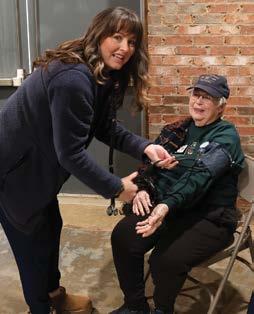
The Good Samaritan Medical Clinic of Lowndes County, a nonprofit organization in Columbus, received a helping hand of its own with a recent grant from the 4-County Foundation.
Kathy Tentoni, manager of the clinic since its inception in 1999, said the $4,319 grant was used to purchase two blood pressure machines, a Automated External Defibrillator (AED) with a housing unit, and an otoscope (device used to view the ear). “We’re very grateful and humbled by the support that the 4-County Foundation has given us. Without this grant, we would not have been able to purchase this new equipment,” Tentoni explained.
The clinic o ers free primary health care, including full physical examinations by licensed physicians and healthcare providers, to about 100 patients annually. Other services are the ongoing management of chronic conditions such as diabetes, hypertension, asthma, and more. The clinic o ers a ordable access to medications, free limited laboratory work and diagnostics, and access to many preventive screenings. Clinicians and o ce personnel are volunteers.



Jenia Vest is a nursing volunteer. Equipment purchased through the grant, she stressed, enables volunteer clinicians to better take care of their patients. In some cases, Vest said, it can mean the di erence between life and death. “We’ve never had an AED machine before. That device can certainly help with life-saving measures. We’re so happy to have one,” she added.
The clinic operates on a “neighbor helping neighbor” approach. “We’re doing what we can to be the hands and feet of Jesus,” Tentoni said.
4-County believes in helping the communities it serves. That’s why the cooperative launched the 4-County Foundation, a community service program. Since February 2015, participating 4-County members’ utility bills have been rounded up to the nearest dollar; a $125.78 bill, for example, becomes $126. Now, that’s an average of only 49 cents per member, per month. That may not seem like much. But when you multiply those contributions by the thousands of member participants, that’s a lot of pennies!
For more information on the 4-County Foundation, call 1-800-431-1544.









❏ JUNE 4, 2026
❏ Registration • 9 a.m.
❏ Lunch • 10:15 a.m.
❏ Business Meeting • Noon
❏ Door Prizes • 9 a.m. to 1 p.m.
(Grand Prize is a retired 4-County vehicle! You must be present to win.)


COMMUNITY
GOLDEN TRIANGLE LYCEUM 8731 S. FRONTAGE ROAD IN MAYHEW

Nominating committee reports were posted March 18 at both 4-County o ces and online. The deadline for additional nominations for directors, by petition of at least 50 consumer-members, was April 6, no later than noon. This year, no petitions for nomination from membership were received.
Ballot/proxies will be mailed by May 5 to all 4-County members.
The deadline for returning ballot/proxies is May 29 by noon, six days prior to the annual membership meeting June 4.
Mike Banks (District 4, Noxubee County) and Bill Bell (District 7, At-Large) – both current board members – were placed in nomination by the association’s nominating committee at the March 18 meeting.
Members of the nominating committee are: Paul Crowley, Mrs. Willie Davis, James Gillespie, Benny Graves, Doran Henry, Frank Howell, Henri Sue Kennard, Donald Land, Grey Land III, Charles McMinn, John Partridge, Brian D. Power, Angela Robertson, Odie L. Shaw, Ann Shelton, Belk Weems, and Sammie Williams.



• Macon Resident
• Owner, Trailboss Trailers, INC, Wagon Wheel restaurant
• Veteran, U.S. Army National Guard

• Noxubee County Businessman of the Year 1987, 1998
• Commercial Dispatch Hometown Hero, 2022
• Member, First United Methodist Church, Macon



• Attended East Mississippi Community College and Mississippi State University
BILL BELL | District 7, At-Large
• Noxubee County Resident
• Retired pharmacist
• Part Owner of City Drug Store, Macon
• Graduate, Central Academy, University of Mississippi
• Earned all three levels of cooperative director certification
• Wife, Terri, four daughters, six grandchildren
• Member/Elder, Macon Presbyterian Church
• Completed NRECA Director Education Program, Director Gold Certification
• Wife, Betty, three children, six grandchildren
Remember to register. To be eligible for door prizes and the grand prize — a retired 4-County fleet vehicle — you must have your name listed on an account. If unsure, contact 4-County before the annual meeting.






































CARTHAGE: 601-267-5671 | PHILADELPHIA: 601-656-2601 | RANKIN: 601-829-1201 | SEBASTOPOL: 601-625-7422 A tradition of dependable, hometown service since



by Cathy Cash
The electric grid needs our help. Be it from new industrial complexes, data centers, more gaming and electrification at home from smart appliances to electric vehicles, today’s intense energy demand requires more power 24/7 than ever before.
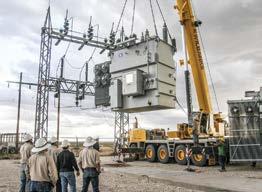

To keep up, new transmission equipment must be built, and existing transmission lines must be upgraded with the latest technology to move larger amounts of electricity, improve reliability, and withstand Mother Nature. Transmission equipment and lines are essential in moving large amounts of electricity from where power is produced to electrical substations, where it is then sent across communities to consumers.
The public and owners of property where power lines will be hoisted to serve consumers also have a big say when it comes to siting transmission and allowing projects to go forward.
That’s where electric co-ops’ member relations really shine.
It’s not unusual for co-ops to go well beyond the prescribed number of public hearings on a proposed transmission project and to meet concerned members literally where they are.
Electric co-ops exist to serve their members with safe, a ordable, reliable electricity. Their ability to build strong ties with the communities within their service territory can go a long way when the need arises for critical infrastructure like transmission.
With their members in mind, co-ops seek out the most e cient ways to build transmission. For example, they upgrade lines in existing property rights-of-way and use the most durable technologies and equipment to keep costs in check and sustain reliability well into the future.
Each year, thousands of power lines and poles are destroyed by more extreme weather hitting outside of typical “storm season” timeframes and locales. Historic winter storms like Uri and Fern seem to be making themselves at home in the South.
The good news is that electric co-ops are completing transmission builds and breaking ground on new ones.
Increased power line capacity will reduce costs associated with transmission congestion, which makes moving energy across the grid particularly expensive. This in turn will help keep your monthly bill lower.
When co-ops are able to beef up power lines, economic benefits can be felt in the community, too.
Rural areas with modern, high-voltage transmission are attractive to large job-creating businesses. Local employment and small business also experience upticks.
Generation and transmission co-ops that deliver wholesale power to your local electric co-op are doing their part to reinforce regional transmission backbones with stronger poles and power lines.
But building new transmission takes a lot of time. Many years in fact. And that’s not because of the construction itself but the painstaking process for gaining approvals from state and federal agencies.


Yet, said Mary Ann Ralls, NRECA’s senior director and regulatory counsel, “Electric co-ops are successfully demonstrating that their proposed facilities are necessary to relieve regional congestion and enhance system reliability.”




“Electric cooperatives have a long history of serving their members, and that same commitment is driving their work to develop new transmission capacity to meet the nation’s rising electricity demand,” said Patti Metro, NRECA’s senior grid operations and reliability director.
Cathy Cash writes on consumer and cooperative a airs for the National Rural Electric Cooperative Association.










Over 300 people attended the 89th Annual Meeting of the Membership of Central Electric Power Association on March 17 at the coliseum in Carthage.
The crowd was entertained by Second Mile, a southern gospel quartet based out of Neshoba County. Members enjoyed the traditional convention-style singing.
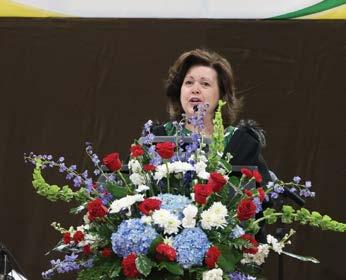
General Manager Brian Long began the meeting, followed by an invocation from Phillip Crosby, a member of the board of directors. Carthage Mayor Laurie Henderson welcomed everyone and commended Manager Long and the board of directors for the excellent work they do for the community.
Derek McGill, Tennessee Valley Authority (TVA) director of customer relations, provided TVA updates to the members. TVA values its partnership with Central Electric Power Association and the hard work accomplished over the years. Lydia Walters, vice president of Communications at Electric Cooperatives of Mississippi, was a guest at the meeting.
Long reported that by the end of 2025, the association had 39,184 members in central Mississippi and 4,353 miles of underground and overhead distribution and transmission lines. Long also praised his sta for working hard, being safe, and keeping the lights on.
To conclude the meeting, a ra e took place. Dozens of prizes, including a smoker, were given away to lucky members.

$1,500 ELECTRICITY CREDIT



The special prize winners were $500 ELECTRICITY CREDIT
Kent Sistrunk Leake County
JD Pigg Leake County
Roman Bryant Leake County
James Bufkin Leake County
The elected board of directors is:






A crowd of more than 300 people attended the 2026 ANNUAL MEETING




































by Miranda Boutelle
Let’s start by defining what “smart” means. Smart appliances — such as refrigerators, washers, ovens, thermostats, and water heaters — connect to the internet. Typically, through Wi-Fi or Bluetooth, these appliances can be controlled using your smartphone, tablet, or voice-assistant device. They are designed to optimize energy use and add convenience. Some smart devices can even learn your habits over time.
Are smart appliances right for your home? The answer depends on your preferences and types of appliances you already have. The better question might be: Are smart appliances right for you? Do you like the newest tech and typically keep your phone within arm’s reach? Do you enjoy the convenience of calling out commands to Alexa? Or do you prefer less technology or something in between? Personally, I’m somewhere in the middle.
Many smart appliances allow you to see how much energy each device consumes. That information can be helpful to better understand your energy habits and identify where energy may be going to waste.
Smart thermostats are a popular choice for managing energy use and reducing energy waste. Heating and cooling systems are typically a home’s biggest sources of energy consumption. According to ENERGY STAR®, you can save an average of 8% cost savings on heating and cooling with a smart thermostat. Savings depend on your climate, the type of system you have, and how you currently use it.
Most energy savings from a smart thermostat come from automating temperature adjustments while you are sleeping or away from home. If you are already good at manually adjusting your thermostat, you likely won’t see big savings, but you might prefer the convenience of a programmable device you can control on an app.
Smart thermostats make it much easier to program your heating and cooling schedule. Some have geofencing features that automatically adjust settings based on how far your phone is from home.
Coming in with the second-highest energy user in most homes is the water heater. I like the smart controls on my heat pump water heater. Also called a hybrid water heater, it uses heat pump technology to move heat instead of using energy to create heat. That makes it two to three times more e cient than a conventional electric resistance water heater. You can save even more energy with smart heat pump water heaters.





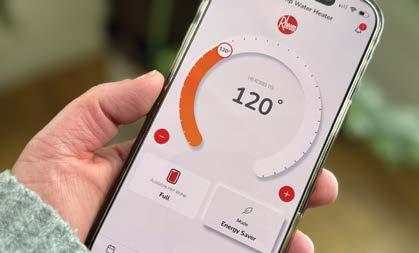
I can monitor energy use, change settings if we need more hot water, and check how much hot water is available before I jump in the shower after my kids have used it. The app notifies me when it’s time to clean the air filter on top of the unit. I can access that information without having to go down to the basement. I can even set it to vacation mode after I’ve left the house for a trip. Not all heat pump water heaters have smart technology, so be sure to check before buying.
My refrigerator is a di erent story. I like the ability to monitor energy use, but it can be annoying to have my phone notify me the door is open when I’m 3,000 miles away at a work conference. There are certain features that can only be controlled through the app, which I find frustrating. The next thing I know, my husband texts me to make more ice while he’s standing right next to it, and I’m on the other side of the country.
Monitoring energy use and making it easier to control your household devices are benefits of smart appliances. Before upgrading, do your research to understand how the features work and whether they benefit your lifestyle. Smart technology can help lower your energy use. But, in some cases, you’re better o improving your energy habits with the appliances already in your home.
Miranda Boutelle is the chief operating o cer at E ciency Services Group in Oregon, a cooperatively owned energy e ciency company.



















by Qua’Shara Monix
May is a month full of milestones and momentum. Across our communities, students are preparing for final exams, families are celebrating graduations, and the long-anticipated days of summer break are just around the corner. It’s a season of accomplishment, transition, and excitement as children wrap up another school year and look ahead to a well-earned break.
With more time spent at home during the summer months, energy use naturally begins to rise. From keeping the house cool during warmer days to powering electronics, appliances, and outdoor activities, households often see an increase in electricity consumption. That’s why May is the perfect time to start thinking about energy-saving habits that can make a meaningful di erence.
Simple steps like adjusting your thermostat a few degrees higher when away, using ceiling fans to circulate air, sealing doors and windows, and running major appliances during cooler parts of the day can help keep energy costs manageable. Encouraging kids to be mindful of turning o lights, TVs, and devices when not in use can also build lifelong habits that benefit both your household and your wallet.
As we shift into the summer season, we also want to remind our agricultural community of an important update regarding utility tax exemptions.
Power your fields with confidence. Call today and let’s plan your irrigation the smart way.
All farmers must have an updated A davit for Utility Exemption in Mississippi from the Mississippi Department of Revenue. This documentation certifies eligibility for state sales tax exemptions on electricity, water, and natural gas, primarily for churches or industrial/ agricultural producers. It also authorizes utilities to remove the 7% sales tax from bills for qualified, non-commercial activities.
Farmers can also apply for a Commercial Farmer Permit for other exempt purchases, such as machinery and fuel, through the Taxpayer Access Point (TAP) website, which is renewed every four years.
Forms are available at our headquarters o ce at 3355 RudyardJonestown Rd. in Coahoma. If you have questions or need assistance, please contact the Sales and Use Tax Bureau at 601-923-7015 or email sales@dor.ms.gov.
As irrigation needs increase in the coming months, we encourage our farming members to plan ahead and communicate with us early to ensure reliable service and e cient energy use.
Taking the time now to ensure your paperwork is in order can help prevent delays in getting your meters set. Please contact our o ce today!
Coahoma Electric will be closed on Monday, May 25, for Memorial Day. We will resume normal business hours on Tuesday, May 26.
For immediate assistance on Monday, please call the after-hour phone line at 662-624-8321.





















by Miranda Boutelle






Let’s start by defining what “smart” means. Smart appliances — such as refrigerators, washers, ovens, thermostats, and water heaters — connect to the internet. Typically, through Wi-Fi or Bluetooth, these appliances can be controlled using your smartphone, tablet, or voice-assistant device. They are designed to optimize energy use and add convenience. Some smart devices can even learn your habits over time.
Are smart appliances right for your home? The answer depends on your preferences and types of appliances you already have. The better question might be: Are smart appliances right for you? Do you like the newest tech and typically keep your phone within arm’s reach? Do you enjoy the convenience of calling out commands to Alexa? Or do you prefer less technology or something in between? Personally, I’m somewhere in the middle.
Many smart appliances allow you to see how much energy each device consumes. That information can be helpful to better understand your energy habits and identify where energy may be going to waste.
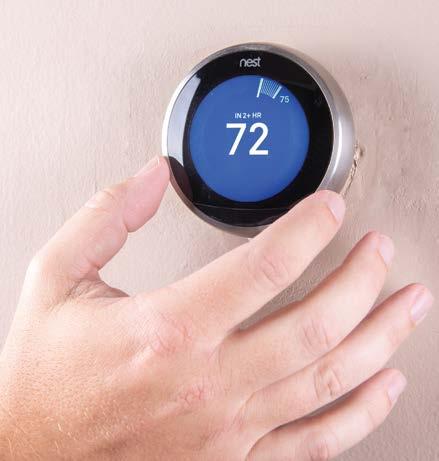
Smart thermostats are a popular choice for managing energy use and reducing energy waste. Heating and cooling systems are typically a home’s biggest sources of energy consumption. According to ENERGY STAR®, you can save an average of 8% cost savings on heating and cooling with a smart thermostat. Savings depend on your climate, the type of system you have, and how you currently use it.
Most energy savings from a smart thermostat come from automating temperature adjustments while you are sleeping or away from home. If you are already good at manually adjusting your thermostat, you likely won’t see big savings, but you might prefer the convenience of a programmable device you can control on an app.
Smart thermostats make it much easier to program your heating and cooling schedule. Some have geofencing features that automatically adjust settings based on how far your phone is from home.
Coming in with the second-highest energy user in most homes is the water heater. I like the smart controls on my heat pump water heater. Also called a hybrid water heater, it uses heat pump technology to move heat instead of using energy to create heat. That makes it two to three times more e cient than a conventional electric resistance water heater. You can save even more energy with smart heat pump water heaters.




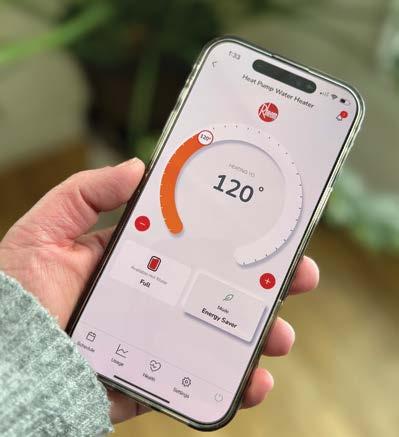
I can monitor energy use, change settings if we need more hot water, and check how much hot water is available before I jump in the shower after my kids have used it. The app notifies me when it’s time to clean the air filter on top of the unit. I can access that information without having to go down to the basement. I can even set it to vacation mode after I’ve left the house for a trip. Not all heat pump water heaters have smart technology, so be sure to check before buying.
My refrigerator is a di erent story. I like the ability to monitor energy use, but it can be annoying to have my phone notify me the door is open when I’m 3,000 miles away at a work conference. There are certain features that can only be controlled through the app, which I find frustrating. The next thing I know, my husband texts me to make more ice while he’s standing right next to it, and I’m on the other side of the country. Monitoring energy use and making it easier to control your household devices are benefits of smart appliances. Before upgrading, do your research to understand how the features work and whether they benefit your lifestyle. Smart technology can help lower your energy use. But, in some cases, you’re better o improving your energy habits with the appliances already in your home.
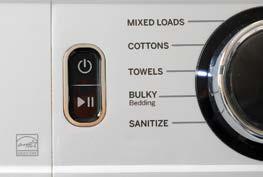
Before buying new appliances, such as a smart dryer, research how the features work to understand whether they are beneficial to your lifestyle and help lower energy use.
Miranda Boutelle is the chief operating o cer at E ciency Services Group in Oregon, a cooperatively owned energy e ciency company.











by Miranda Boutelle
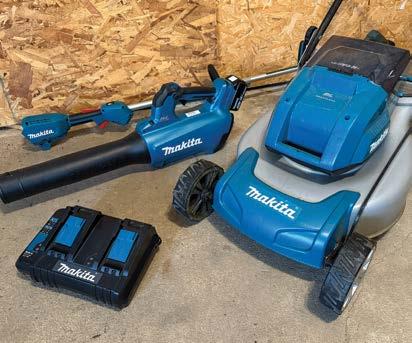
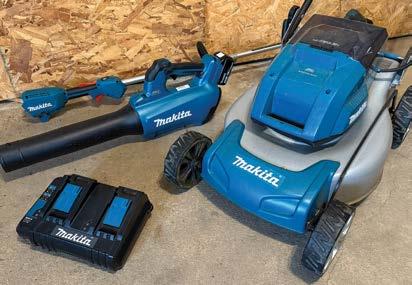
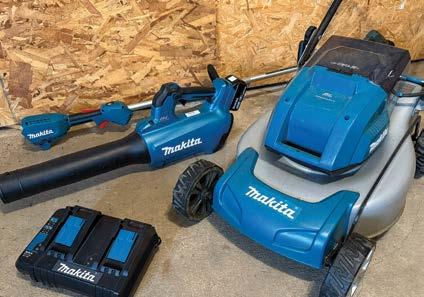
Electric lawn equipment has seen drastic improvements in cost, motor e ciency, and battery power in recent years. From hedge and string trimmers to leaf blowers, chainsaws, and push and riding mowers, there are lots of options for electric lawn equipment.
Electric equipment is quieter than its gas-powered counterparts and typically needs less maintenance. There’s no more mixing fuel, changing spark plugs, or worrying about gas going bad over the winter. Advances in rechargeable battery technology eliminate having to lug around a heavy extension cord to get your work done. Just pop in a battery and go.
Most popular lawn equipment brands o er battery-powered options, along with newer brands that specialize in electric tools. If you need multiple tools, buying the same brand with the same battery type allows you to swap batteries between di erent pieces of equipment. That also means fewer battery chargers to store or keep on your workbench.
Opt for equipment with brushless motors. They are more e cient, more powerful, and have a longer lifespan than traditional brushed motors. A brushless motor typically costs more but is worth the improved e ciency. A brushed motor transfers electricity using physical brushes, which can wear down over time. The friction caused by the brushes makes equipment run hotter and noisier. A brushless motor uses electronic commutation with less friction, which makes it more powerful, extends the lifespan, and allows you to get more done on a single charge.








Just as gas-powered lawnmowers require safe storage and handling of gas and oil, battery-powered equipment requires proper care for maintenance, charging, and disposal. Always use the manufacturer’s original charging equipment, charge batteries on hard surfaces away from anything flammable, and store chargers in a cool, dry place.
Most manufacturers recommend charging batteries only until they reach full capacity instead of leaving them on the charger until you are ready to use them. This helps prevent damage to the battery from overcharging and heat buildup and reduces potential fire hazards. Unplug chargers when not in use to avoid energy waste.
Similar to gas and oil, old or damaged batteries should not end up in household garbage and landfills, where they can ignite fires and leak toxic chemicals into soil and groundwater. Instead, recycle them at a big-box store or at a county or city waste management site.
If you’re looking for a quieter, more e cient, lower maintenance lawn care routine, rethink your equipment options and consider electric models.
Miranda Boutelle is the chief operating o cer at E ciency Services Group in Oregon, a cooperatively owned energy e ciency company.














As we welcome the month of May, we’re proud to join electric cooperatives across the country in recognizing Electrical Safety Month — a time to pause, reflect and commit to keeping our families and communities safe around electricity.
At Coast Electric, safety isn’t just a priority — it’s a core value that guides everything we do. While our crews work year-round to maintain a safe and reliable system, we also want to empower you with simple reminders that can make a big di erence at home.
• Keep ladders, kites and drones far away from power lines
• Never touch or approach a downed power line — always assume it’s energized
• Use extension cords properly and avoid overloading outlets
• Make sure outdoor outlets are weatherproof and in good condition
• Always call 811 before you dig to avoid underground power lines
Small precautions like these help prevent accidents and protect what matters most.






As we look ahead to summer, we know that rising temperatures can lead to higher energy use. Our online tools and our energy experts are here to help. Visit coastelectric.coop and find our interactive tools under My Home/Ways to Save. There are guides that will give tips on how to make your home more e cient and an interactive online energy audit. If you need help after you complete your online audit, give us a call and one of our energy experts can help make your home e cient, so you can better manage your costs. At Coast Electric, we’re committed to powering your life safely and reliably — no matter the season. As summer approaches, I encourage you to take a few moments to review your home’s safety practices and energy habits. Together, we can ensure a safe, e cient and comfortable season for all.

by Chris Rhodes
President and CEO
Coast Electric and CoastConnect business o ces will be closed Monday, May 25, for the Memorial Day holiday. We hope everyone takes time over the holiday weekend to remember those who made the ultimate sacrifice for our country. If you experience an outage, dispatchers will be on duty, and crews will be on call throughout the holiday weekend.
To contact Coast Electric:


You can report outages by:
You can pay a bill by:



• Texting “Outage” to 228-338-4644 if you have a mobile number associated with your account


• Using the CE on the Go mobile app Reporting it online: outages.coastelectric.coop/


• Texting us at 228-338-4644 if you have a mobile number associated with your account
• Using the CE on the Go mobile app
• Visiting a kiosk located at each of our o ces
• We CANNOT take outage reports on our social media accounts. Trying to report your outage on social media does not put your outage into our system or report it to dispatchers or crews.
• Reporting it online: outages.coastelectric.coop/ system or report it to dispatchers or crews.

To contact CoastConnect:


• Calling 877-769-2372 to use our automated payment system
Coast Electric wants you to reduce your energy use and see savings on your energy costs. Each month, you will have an opportunity to register to win a prize that will help you reduce energy consumption in your home. Visit coastelectric.coop or scan the QR code to enter. It only takes a few seconds, and you could win a prize that helps you save!
Congratulations to our March Reduce Your Use winner, Jennifer Dupre



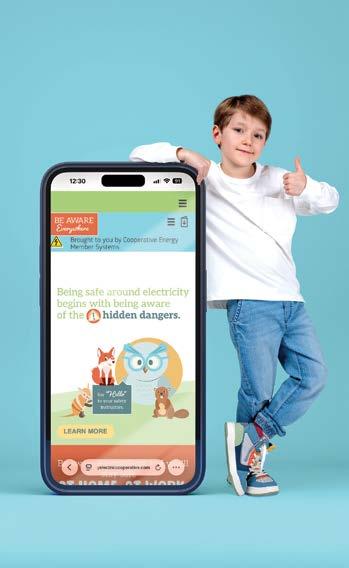
May is Electrical Safety Month, and we want to make sure adults and kids alike know how to stay safe around electricity. Our Be Aware Everywhere website has information and activities designed to educate kids about electricity, cooperatives and safety. Here are a few things your child can learn:
What electric cooperatives do: Show your child how co-ops like Coast Electric work — and why co-ops were designed to help our communities thrive.
Electricity basics: Build a strong foundation in electricity basics with simple, age-appropriate explanations.
Always play it safe: Reinforce everyday electrical safety with your child using clear, memorable rules to help protect your home and family.
The power process: Help your child understand where electricity comes from and how it gets from the power plant to your home with fun activities.
Educational resources: Download coloring sheets, activity books and word games. These activities are easy add-ons for after-school learning, family time or classroom enrichment.
Visit beawareeverywhere.com to get started today!








by Miranda Boutelle
Electric lawn equipment has seen drastic improvements in cost, motor e ciency, and battery power in recent years. From hedge and string trimmers to leaf blowers, chainsaws, and push and riding mowers, there are lots of options for electric lawn equipment.
Electric equipment is quieter than its gas-powered counterparts and typically needs less maintenance. There’s no more mixing fuel, changing spark plugs, or worrying about gas going bad over the winter. Advances in rechargeable battery technology eliminate having to lug around a heavy extension cord to get your work done. Just pop in a battery and go.
Most popular lawn equipment brands o er battery-powered options, along with newer brands that specialize in electric tools. If you need multiple tools, buying the same brand with the same battery type allows you to swap batteries between di erent pieces of equipment. That also means fewer battery chargers to store or keep on your workbench.
Opt for equipment with brushless motors. They are more e cient, more powerful, and have a longer lifespan than traditional brushed motors. A brushless motor typically costs more but is worth the improved e ciency. A brushed motor transfers electricity using physical brushes, which can wear down over time. The friction caused by the brushes makes equipment run hotter and noisier. A brushless motor uses electronic commutation with less friction, which makes it more powerful, extends the lifespan, and allows you to get more done on a single charge.
Just as gas-powered lawnmowers require safe storage and handling of gas and oil, battery-powered equipment requires proper care for
maintenance, charging, and disposal. Always use the manufacturer’s original charging equipment, charge batteries on hard surfaces away from anything flammable, and store chargers in a cool, dry place.
Most manufacturers recommend charging batteries only until they reach full capacity instead of leaving them on the charger until you are ready to use them. This helps prevent damage to the battery from overcharging and heat buildup and reduces potential fire hazards. Unplug chargers when not in use to avoid energy waste.
Similar to gas and oil, old or damaged batteries should not end up in household garbage and landfills, where they can ignite fires and leak toxic chemicals into soil and groundwater. Instead, recycle them at a big-box store or at a county or city waste management site.
If you’re looking for a quieter, more e cient, lower-maintenance lawn care routine, rethink your equipment options and consider electric models.
Miranda Boutelle is the chief operating o cer at E ciency Services Group in Oregon, a cooperatively owned energy e ciency company.



Memorial Day weekend is the o cial kick-o to summer, and we want you to be ready to entertain all the way through Labor Day. Summer months mean more daylight to enjoy outdoor activities. But enjoying the outdoors doesn’t have to mean disconnection though. With CoastConnect’s outdoor WiFi extenders, you can enjoy your favorite playlist, use smart home products, host an outdoor movie night, and use smart home devices such as lighting, motion sensors and even smart barbecue grills!


CoastConnect techs will take care of installation to ensure optimization and maintenance of your outdoor WiFi system, so all you have to do is relax and enjoy!


To learn more about our outdoor WiFi extenders, visit coastconnect.com/wifi-extenders/.







26,000
Congratulations to CoastConnect subscriber Natalie Wilkinson, who won our drawing to celebrate CoastConnect’s 26,000 subscribers! She received the a gift card to a local Pearl River County restaurant, Atchafalaya Seafood Co. Thanks to everyone who allows us to keep you connected. We know milestones like these wouldn’t happen without your loyalty and trust.
because loyalty deserves more than a thank you



We are grateful for our loyal subscribers! You’ve been with us from the beginning, helping us grow and build a better community. That kind of loyalty deserves to be celebrated. Each quarter, we will randomly select winners who are celebrating milestones with CoastConnect to win a prize! You don’t have to do anything to enter – just being a subscriber means you are entered to win. It’s our way of saying thanks for trusting us to keep you connected.




We want to make our subscribers aware of a growing security concern involving a streaming device commonly marketed as “Superbox.” These devices are often advertised as o ering “unlimited free TV.” While that may sound appealing, the reality is — nothing truly free comes without risk.


What you need to know:




• Low security standards: Superbox devices are built with weak or outdated security settings, making them highly vulnerable.

• Easy target for hackers: These devices can be compromised quickly, giving attackers a pathway into your home network.




Why this matters:



Even if you’re just trying to watch TV, a compromised device can:


• Slow down your internet connection
• Disrupt your service



• Personal data at risk: Once inside your network, bad actors may gain access to sensitive information such as passwords, financial data and connected smart devices.




• Put your household’s privacy and security at serious risk
CoastConnect recommended actions:

• Used in cyber attacks: We have identified multiple cases in the past month where these devices were hijacked and used in DDoS (Distributed Denial of Service) attacks targeting others on the internet.




• Immediately remove the device from your network by powering it o and disconnecting it


• Do NOT use Superbox or similar “free TV” devices


• Only use trusted, name-brand streaming platforms (Roku, Apple TV, Fire Stick, etc.)


• Keep all devices on your network updated with the latest software


• Contact us if you suspect unusual activity on your connection








If you have questions or need help securing your home network, our team is here for you. Contact CoastConnect anytime for assistance at 877-969-3884.


























by Cathy Cash
The electric grid needs our help. Be it from new industrial complexes, data centers, more gaming and electrification at home from smart appliances to electric vehicles, today’s intense energy demand requires more power 24/7 than ever before.


To keep up, new transmission equipment must be built, and existing transmission lines must be upgraded with the latest technology to move larger amounts of electricity, improve reliability, and withstand Mother Nature. Transmission equipment and lines are essential in moving large amounts of electricity from where power is produced to electrical substations, where it is then sent across communities to consumers.
The public and owners of property where power lines will be hoisted to serve consumers also have a big say when it comes to siting transmission and allowing projects to go forward.
That’s where electric co-ops’ member relations really shine.
It’s not unusual for co-ops to go well beyond the prescribed number of public hearings on a proposed transmission project and to meet concerned members literally where they are.
Electric co-ops exist to serve their members with safe, a ordable, reliable electricity. Their ability to build strong ties with the communities within their service territory can go a long way when the need arises for critical infrastructure like transmission.
With their members in mind, co-ops seek out the most e cient ways to build transmission. For example, they upgrade lines in existing property rights-of-way and use the most durable technologies and equipment to keep costs in check and sustain reliability well into the future.
Each year, thousands of power lines and poles are destroyed by more extreme weather hitting outside of typical “storm season” timeframes and locales. Historic winter storms like Uri and Fern seem to be making themselves at home in the South.
The good news is that electric co-ops are completing transmission builds and breaking ground on new ones.
Increased power line capacity will reduce costs associated with transmission congestion, which makes moving energy across the grid particularly expensive. This in turn will help keep your monthly bill lower.
When co-ops are able to beef up power lines, economic benefits can be felt in the community, too.
Rural areas with modern, high-voltage transmission are attractive to large job-creating businesses. Local employment and small business also experience upticks.
Generation and transmission co-ops that deliver wholesale power to your local electric co-op are doing their part to reinforce regional transmission backbones with stronger poles and power lines.
But building new transmission takes a lot of time. Many years in fact. And that’s not because of the construction itself but the painstaking process for gaining approvals from state and federal agencies.


Yet, said Mary Ann Ralls, NRECA’s senior director and regulatory counsel, “Electric co-ops are successfully demonstrating that their proposed facilities are necessary to relieve regional congestion and enhance system reliability.”




“Electric cooperatives have a long history of serving their members, and that same commitment is driving their work to develop new transmission capacity to meet the nation’s rising electricity demand,” said Patti Metro, NRECA’s senior grid operations and reliability director.
Cathy Cash writes on consumer and cooperative a airs for the National Rural Electric Cooperative Association.



















by Miranda Boutelle
Let’s start by defining what “smart” means. Smart appliances — such as refrigerators, washers, ovens, thermostats, and water heaters — connect to the internet. Typically, through Wi-Fi or Bluetooth, these appliances can be controlled using your smartphone, tablet, or voice-assistant device. They are designed to optimize energy use and add convenience. Some smart devices can even learn your habits over time.
Are smart appliances right for your home? The answer depends on your preferences and types of appliances you already have. The better question might be: Are smart appliances right for you? Do you like the newest tech and typically keep your phone within arm’s reach? Do you enjoy the convenience of calling out commands to Alexa? Or do you prefer less technology or something in between? Personally, I’m somewhere in the middle.
Many smart appliances allow you to see how much energy each device consumes. That information can be helpful to better understand your energy habits and identify where energy may be going to waste.
Smart thermostats are a popular choice for managing energy use and reducing energy waste. Heating and cooling systems are typically a home’s biggest sources of energy consumption. According to ENERGY STAR®, you can save an average of 8% cost savings on heating and cooling with a smart thermostat. Savings depend on your climate, the type of system you have, and how you currently use it.
Most energy savings from a smart thermostat come from automating temperature adjustments while you are sleeping or away from home. If you are already good at manually adjusting your thermostat, you likely won’t see big savings, but you might prefer the convenience of a programmable device you can control on an app.
Smart thermostats make it much easier to program your heating and cooling schedule. Some have geofencing features that automatically adjust settings based on how far your phone is from home.
Coming in with the second-highest energy user in most homes is the water heater. I like the smart controls on my heat pump water heater. Also called a hybrid water heater, it uses heat pump technology to move heat instead of using energy to create heat. That makes it two to three times more e cient than a conventional electric resistance water heater. You can save even more energy with smart heat pump water heaters.
I can monitor energy use, change settings if we need more hot water, and check how much hot water is available before I jump in the shower after my kids have used it. The app notifies me when it’s time to clean the air filter on top of the unit. I can access that information without having to go down to the basement. I can even set it to vacation mode after I’ve left the house for a trip. Not all heat pump water heaters have smart technology, so be sure to check before buying.
My refrigerator is a di erent story. I like the ability to monitor energy use, but it can be annoying to have my phone notify me the door is open when I’m 3,000 miles away at a work conference. There are certain features that can only be controlled through the app, which I find frustrating. The next thing I know, my husband texts me to make more ice while he’s standing right next to it, and I’m on the other side of the country. Monitoring energy use and making it easier to control your household devices are benefits of smart appliances. Before upgrading, do your research to understand how the features work and whether they benefit your lifestyle. Smart technology can help lower your energy use. But, in some cases, you’re better o improving your energy habits with the appliances already in your home.
Before buying new appliances, such as a smart dryer, research how the features work to understand whether they are beneficial to your lifestyle and help lower energy use.
Miranda Boutelle is the chief operating o cer at E ciency Services Group in Oregon, a cooperatively owned energy e ciency company.





by Miranda Boutelle
Electric lawn equipment has seen drastic improvements in cost, motor e ciency, and battery power in recent years. From hedge and string trimmers to leaf blowers, chainsaws, and push and riding mowers, there are lots of options for electric lawn equipment.
Electric equipment is quieter than its gas-powered counterparts and typically needs less maintenance. There’s no more mixing fuel, changing spark plugs, or worrying about gas going bad over the winter. Advances in rechargeable battery technology eliminate having to lug around a heavy extension cord to get your work done. Just pop in a battery and go.
Most popular lawn equipment brands o er battery-powered options, along with newer brands that specialize in electric tools. If you need multiple tools, buying the same brand with the same battery type allows you to swap batteries between di erent pieces of equipment. That also means fewer battery chargers to store or keep on your workbench.
Opt for equipment with brushless motors. They are more e cient, more powerful, and have a longer lifespan than traditional brushed motors. A brushless motor typically costs more but is worth the improved e ciency. A brushed motor transfers electricity using physical brushes, which can wear down over time. The friction caused by the brushes makes equipment run hotter and noisier. A brushless motor uses electronic commutation with less friction, which makes it more powerful, extends the lifespan, and allows you to get more done on a single charge.













Just as gas-powered lawnmowers require safe storage and handling of gas and oil, battery-powered equipment requires proper care for maintenance, charging, and disposal. Always use the manufacturer’s original charging equipment, charge batteries on hard surfaces away from anything flammable, and store chargers in a cool, dry place.
Most manufacturers recommend charging batteries only until they reach full capacity instead of leaving them on the charger until you are ready to use them. This helps prevent damage to the battery from overcharging and heat buildup and reduces potential fire hazards. Unplug chargers when not in use to avoid energy waste.
Similar to gas and oil, old or damaged batteries should not end up in household garbage and landfills, where they can ignite fires and leak toxic chemicals into soil and groundwater. Instead, recycle them at a big-box store or at a county or city waste management site.
If you’re looking for a quieter, more e cient, lower maintenance lawn care routine, rethink your equipment options and consider electric models.
Miranda Boutelle is the chief operating o cer at E ciency Services Group in Oregon, a cooperatively owned energy e ciency company.





































As an electric cooperative, we often say we’re di erent. That di erence shows up in how we’re structured, who we serve, and in the way we care for our communities.



At Dixie Electric, it has never been just about the services we o er; it’s about people.
Over the past year, our Dixie Electric family has experienced something no organization ever wants to face. We have said goodbye to three of our own, individuals who each left a lasting mark on this cooperative and the people within it.
Working at a cooperative means your coworkers become more than colleagues. They become part of your daily life, people you rely on, laugh with, learn from, and lean on when things get tough. We do not always see eye to eye. No family does. What we share is a bond that is real and built over time through long days, storm restoration, shared challenges, and a common purpose. That bond makes moments like these especially di cult.
Even in loss, I am reminded of what makes this cooperative so special. I see it in the way our employees show up for one another. I see it in the support o ered to families. I see it in the strength and dedication our team continues to bring to their work each day.
















This is the cooperative di erence.






That same care extends beyond our o ces and into the communities we serve. Our members are more than names on an account. They are our neighbors, our friends, and our family.

It is not just about delivering reliable power. It is about serving people with compassion, commitment, and heart through both the good days and the hard ones.
The work continues, as it must, but we carry with us the memories of those we have lost and the values they helped shape within this organization.
At the end of the day, our work is about more than electricity. It’s about the people, and the connections that hold us together.


by Randy Smith General Manager
Candidates seeking election to represent Districts 2 and 7 on the board of directors for Dixie Electric must visit Dixie Electric’s headquarters o ce at 127 Flynt Road in Laurel, and obtain a Director Qualification Packet during normal business hours between June 1 and July 31. Please contact Mitzi Walley at 601-425-2535 or dixieelectric@dixieepa.com to set up a time. The forms and petitions in the packet must be completed and returned by close of business on Friday , July 31, 2026.









by Amanda Mills
Under clear skies and perfect spring weather, Dixie Electric hosted another successful charity golf tournament at Laurel Country Club. With two full flights of golfers made up of vendors, community partners, and employees, the day was a celebration of both community and purpose.
This year’s tournament continued its mission of supporting local organizations that provide “secret meals” to elementary students facing food insecurity at home on nights and weekends. Each beneficiary hosts a program within their community designed to discreetly provide food to children who may otherwise go without.
This year’s beneficiaries include Junior Auxiliary of Laurel, Junior Auxiliary of Wayne County, Calvary Baptist Church in Petal, Richton Methodist Church, and First Baptist Church of Runnelstown.
Thanks to the generosity of participants and sponsors, the tournament raised record-breaking $19,500. Those funds will be distributed among participating organizations based on the size and reach of their programs, ensuring the greatest possible impact for the children they serve.
The success of the tournament would not be possible without strong community support. More than 70 hole sponsorships were purchased by vendors, local businesses, and community partners, demonstrating a shared commitment to making a di erence.
A special thank you is extended to B-Line, Dixie Electric’s right-of-way contractor, for sponsoring lunch for all golfers and sta . Their contribution helps o set a significant portion of tournament expenses, allowing more funds to go directly to the benefiting organizations.
Events like this serve as a reminder that when a community comes together, meaningful change can happen. Concern for Community drives our mission, and there’s no better way to show it than by helping feed children and families in the communities we serve.














































































by Amanda Mills
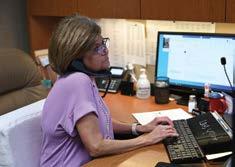
For nearly four decades, Andrea Adkins was a familiar and trusted presence at Dixie Electric. Her career reflected not only longevity, but a deep commitment to serving the cooperative and its members.





Andrea’s connection to Dixie Electric began early. She first worked with the cooperative as a co-op student from August 1984 to August 1985. She returned in July 1988 as a part-time consumer accounts clerk before transitioning to a full-time role in January 1989. From there, Andrea’s career grew alongside the cooperative, taking on a variety of roles that gave her a unique and well-rounded understanding of the organization.
Throughout the years, she served as a switchboard operator, cashier, service order clerk, and administrative assistant to the o ce manager. She later became a senior member service representative before stepping into the role of member services supervisor in December 2016, a position she held until her passing.
Andrea’s journey through so many roles was a testament to her work ethic. It also made her a valuable resource for both employees and members. Her knowledge, built over decades of experience, was something many relied on daily.
“It was truly a pleasure to work alongside Andrea for the past 23 years,” said Aaron Zumwalt, administrative and finance manager. “Her dedication never wavered, and her commitment to her work was evident in everything she did. I believe she genuinely loved her job, and that passion made a lasting impression on those of us who worked with her.”
While Andrea’s professional contributions were significant, those who knew her best will remember her for much more than her work. She loved to laugh and had a gift for storytelling. Above all, she loved her family. She and her husband, Bill, along with their children, Cortney and Morgan, shared a close-knit bond, and it was clear to anyone who knew her that they were her greatest joy.
Andrea’s impact on Dixie Electric will be felt for years to come. She will be deeply missed by her coworkers, friends, and all who had the opportunity to know her.
“Andrea was very much an asset in her role as MSR Supervisor,” said General Manager Randy Smith. “She was knowledgeable, friendly, and willing to help members as much as possible. She didn’t meet a stranger and seemed to know everyone who came through the doors and who they were related to. Her passing is a loss for the Dixie Electric family.”





















May is one of those months that naturally makes us look ahead. Across our communities, you can feel the shift of the school year ending, families planning vacations and the promise of longer, slower summer days just around the corner.
It’s a season many of us look forward to all year.
But here in Mississippi, we also know that summer brings more than sunshine. It brings the potential for strong thunderstorms, heavy winds and as the season progresses, the threat of hurricanes. That’s simply part of life in our region, and it’s something we take seriously at East Mississippi Electric Power Association.
For us, May is also an important reminder. It’s Electrical Safety Month, and safety is not just a focus for a few weeks, it’s a commitment we carry with us every single day.
When severe weather moves through our service area, our crews are ready. I’ve seen firsthand the dedication of our employees who are highly trained and willing to work long hours, often in tough and dangerous conditions, to restore power for our members. It’s work that requires skill, determination and a deep sense of responsibility. We understand how important electricity is to your daily life, especially during the heat of the Mississippi summer. Restoring power quickly is always a top priority.
But I want to be clear, doing that work safely will always come first.
The nature of line work is hazardous. Whether it’s repairing storm damage, working around downed lines or navigating di cult terrain,







every task carries risk. That’s why we emphasize training, preparation and constant awareness. At the end of the day, our goal is not only to restore power but to ensure every one of our employees returns home safely to their families.
Safety is something we all share responsibility for and stress every day. During storm season, I encourage you to stay alert as well. Never approach downed power lines, report dangers as soon as possible and give our crews the space they need to work safely and e ciently. Those simple actions can make a big di erence.
As we head into the “dog days” of summer, I want you to know that EMEPA is here for you. We are committed to providing reliable service, responding when you need us most and doing our work the right way, safely and professionally.
It is a privilege to serve you, and we don’t take that lightly.
So, as you enjoy time with family, take that vacation, or simply relax a little more this summer, know that your local electric cooperative is prepared. No matter what the season brings, we will be here, ready to respond, ready to serve and always focused on safety.





by Randy Carroll


EMEPA o ces will be closed Monday, May 25, in observance of Memorial Day.





Dispatchers and crews will remain on call and ready to respond to any outage or emergency. Account information and outage reporting is available 24/7 on our app or at EMEPA.com.







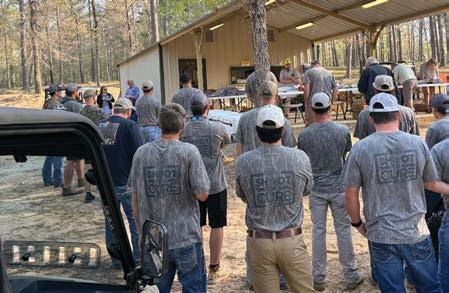
For the 13th year, East Mississippi Electric Power Association employees, partners and supporters gathered at Camp Binachi in Lauderdale County with one shared goal: making a di erence in the fight against cancer. What started as a simple idea has grown into a meaningful tradition, bringing people together each spring to support those facing one of life’s toughest battles.
The annual Shoot For a Cure clay shooting event continues to generate critical funding for both local and national impact. This year’s event raised a record-breaking $41,000. Proceeds benefit Baptist-Anderson Cancer Center’s Cancer Patient Benevolence Fund, which provides direct assistance to patients in our region, as well as St. Jude Children’s Research Hospital, a leader in groundbreaking pediatric cancer research and care.
Each year, this event remINds us oF tHE power of community.







“Each year, this event reminds us of the power of community,” said Margaret Brewer, EMEPA executive assistant and event coordinator. “It’s about more than fundraising. It’s about standing alongside those a ected by cancer and o ering hope, support and encouragement.”
EMEPA extends its sincere appreciation to the sponsors, shooters and volunteers who make Shoot For A Cure possible year after year. Their continued support ensures this event not only honors its legacy but also strengthens its impact for the future.



















by Miranda Boutelle
Electric lawn equipment has seen drastic improvements in cost, motor e ciency, and battery power in recent years. From hedge and string trimmers to leaf blowers, chainsaws, and push and riding mowers, there are lots of options for electric lawn equipment.
Electric equipment is quieter than its gas-powered counterparts and typically needs less maintenance. There’s no more mixing fuel, changing spark plugs, or worrying about gas going bad over the winter. Advances in rechargeable battery technology eliminate having to lug around a heavy extension cord to get your work done. Just pop in a battery and go.
Most popular lawn equipment brands o er battery-powered options, along with newer brands that specialize in electric tools. If you need multiple tools, buying the same brand with the same battery type allows you to swap batteries between di erent pieces of equipment. That also means fewer battery chargers to store or keep on your workbench.
Opt for equipment with brushless motors. They are more e cient, more powerful, and have a longer lifespan than traditional brushed motors. A brushless motor typically costs more but is worth the improved e ciency. A brushed motor transfers electricity using physical brushes, which can wear down over time. The friction caused by the brushes makes equipment run hotter and noisier. A brushless motor uses electronic commutation with less friction, which makes it more powerful, extends the lifespan, and allows you to get more done on a single charge.

Just as gas-powered lawnmowers require safe storage and handling of gas and oil, battery-powered equipment requires proper care for maintenance, charging, and disposal. Always use the manufacturer’s original charging equipment, charge batteries on hard surfaces away from anything flammable, and store chargers in a cool, dry place.
Most manufacturers recommend charging batteries only until they reach full capacity instead of leaving them on the charger until you are ready to use them. This helps prevent damage to the battery from overcharging and heat buildup and reduces potential fire hazards. Unplug chargers when not in use to avoid energy waste.
Similar to gas and oil, old or damaged batteries should not end up in household garbage and landfills, where they can ignite fires and leak toxic chemicals into soil and groundwater. Instead, recycle them at a big-box store or at a county or city waste management site.
If you’re looking for a quieter, more e cient, lower maintenance lawn care routine, rethink your equipment options and consider electric models.
Miranda Boutelle is the chief operating o cer at E ciency Services Group in Oregon, a cooperatively owned energy e ciency company.

In small towns across East Mississippi, connection means more than internet access. It means opportunity, stability and the ability for communities to grow and thrive in a rapidly changing world.
Reliable broadband has become essential infrastructure—just as important as electricity or water. For families, students, businesses and local organizations, high-speed fiber internet plays a critical role in keeping communities connected year-round.

For students, access to reliable internet is no longer optional. Homework, research, virtual classrooms and college applications all depend on strong, consistent connectivity. Without it, students can fall behind. With fiber broadband, households gain the ability to support learning without interruptions—whether it’s streaming lessons, submitting assignments or collaborating online.

For local businesses, broadband opens the door to growth. Small businesses in East Mississippi rely on fast, dependable internet to process transactions, manage inventory, communicate with customers and expand their reach beyond their immediate area. Reliable fiber connectivity helps level the playing field, allowing rural businesses to compete and succeed in a digital economy.
allow residents to consult with providers without the need for long-distance travel, saving time while improving access to care. For many families, this connectivity provides convenience and peace of mind.
Agriculture, a cornerstone of Mississippi’s economy, is also increasingly connected. Farmers rely on broadband for precision agriculture tools, equipment monitoring, weather data and market access. Fiber infrastructure supports these advancements, helping producers operate more efficiently and make informed decisions.

At the community level, reliable internet strengthens the foundation of daily life. Schools, libraries, local governments and emergency services all depend on connectivity to serve residents effectively. Broadband enables communication, coordination and access to critical resources—especially during times of need.
East MS Connect is proud to play a role in building these connected communities. As a local provider, the focus is not just on delivering fast speeds, but on providing dependable service that meets the real-world needs of East Mississippi residents. Fiber infrastructure is built for long-term reliability, ensuring communities are prepared not only for today’s demands, but for future growth.
Families benefit in ways both large and small. From streaming entertainment and video calls with loved ones to managing smart home devices, broadband supports everyday life.
Health care access is another area where broadband is transforming rural communities. Telehealth services
Strong communities are built on strong connections. By investing in reliable broadband, East Mississippi is investing in its people, its businesses and its future.
For more information about East MS Connect fiber services, visit eastmsconnect.com.


























During the business meeting, Dennis Wilson, Scott Smith, and Cindy Ginn were re-elected to three-year terms on the board of directors. This election was directed by board attorney, Reggie Jones.
The 2026 Annual Meeting proxies, which were returned to White and Associates LLP, an independent Certified Public Accounting (CPA) firm, were counted and certified by the firm before being turned over to the MEP Elections and Credential Committee.
The Elections and Credential Committee, comprised of one appointed MEP member for the six districts not up for election, met on Monday, March 23, 2026, and validated the proxies for the board elections.

As part of the business meeting, auditor Mark Biggs informed those in attendance that MEP remains in sound financial condition.
MEP General Manager Darrell Smith gave the Annual Meeting report. At the conclusion of his report, Smith announced that the meeting would be his last. He introduced Daniel Evans, who was recently named Magnolia Electric Power's new general manager.
President Dennis Wilson and Secretary Scott Smith also conducted a portion of the business meeting.
Before the meeting ended, winners’ names for door prizes were drawn for those in attendance.
The winners included Larry Hughes, who received $500 in a credit for electricity. Those receiving a $50 credit on their electric bill were Rachel Freeman, Ruth Brock, Brenda Williams, Tony Martin, and Allen Bass.
Prior to the meeting, winners from those who sent in proxies were drawn. The proxy winners, who have been notified by mail, include Star Hill Church, for a $500 power credit. Those receiving a $50 credit on their electric bill were Glen C. Bardwell, Larjannie Jones, Robert M. Naeger, Bonnie Skinner, and Michael Strawn.
MEP is an electric cooperative and holds an Annual Meeting for its members. Members participate by either returning their proxy or attending the meeting.






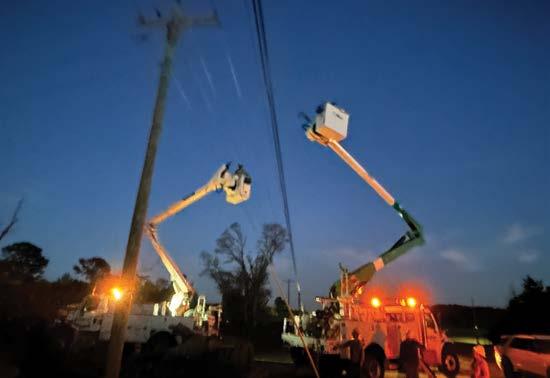
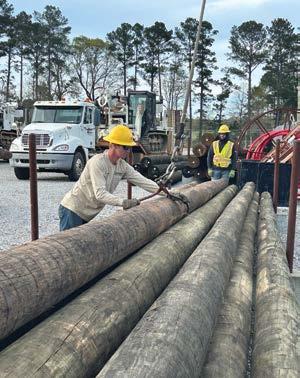




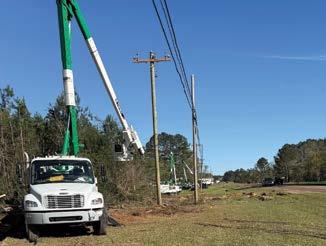
A March 11, 2026, storm spawned tornadoes in the Magnolia Electric Power service area leading to more than 16,300 outages — almost half of the meters MEP serves.
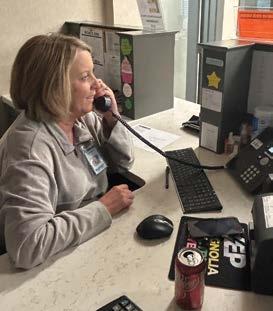
Our storm leaders were quick to access the damage and began calling in reinforcements the night the storm hit, while our dedicated lineman began working on power outages.
However, by 8 a.m. on March 12, MEP was reporting over 16,300 meters without power. MEP serves 33,273 meters across our six counties.
Reports to MEP’s storm center indicated the hardest hit areas were Smithdale, Pisgah, Summit into the Bogue Chitto area, Arlington, and the Jayess area.
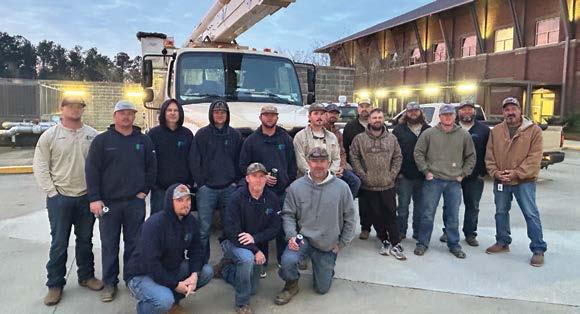
Before the storm’s power restoration e orts were over, there were 180 linemen and right-of-way (ROW) contractors working in the field helping to get our members’ power restored.
Linemen from Magnolia Electric Power crews, 4-County Electric from Columbus, Singing River Electric from Lucedale, and Pearl River Valley Electric Power Association from Columbia helped restore power. Several contractor linemen from Pike, Kinco, and MDR also assisted.
ROW crews from Barnes ROW, Scott Johnson Specialty Services, and Magnolia Utility Services helped get trees cleared from power lines.
There were 163 broken power poles as a result of the storm.
All power was restored to the meters that could take power around 3:30 p.m. on March 18.




TORNADO NO. 1
According to a National Weather Service report out of the New Orleans area, a strong EF-1 tornado touched down south of Highway 570 near Moak Road in Pike County. It also crossed Kodiak Lane and Magnolia Pisgah Road. The track included crossing Highway 570 to Dye Lane. Maximum sustained winds were estimated near 110 mph.
TORNADO NO. 2
The National Weather Service reported a second EF-1 tornado, with estimated winds near 105 mph, touching down near Johnston Chapel Road and continuing across the Old Brookhaven Road and Interstate 55 to Highway 51, Rollingwood Drive, and Johnston Station Road. The tornado continued to Southwest Community College and North Pike High School, and then to Barrett Drive and Jaguar Trail, according to reports.
TORNADO NO. 3
The National Weather Service report indicated that a third EF-1 tornado developed along Highway 570, northwest of McComb. The estimated peak winds were reported to be 90 mph.
TORNADO NO. 4
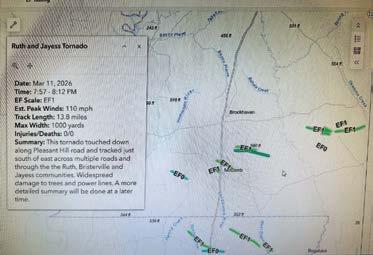
A separate National Weather Service report showed that an EF-1 tornado touched down along Pleasant Hill Road and tracked through Ruth, Bristerville, and Jayess. The estimated peak winds were 110 mph.

TORNADO NO. 5
In the same National Weather Service report, an EF-1 tornado touched down along Glade Lane and crossed Fox Road also in the Ruth and Bristerville communities. The estimated peak winds were 105 mph.
TORNADO NO. 6
Also in the second National Weather Service report, an EF-0 tornado was identified to have hit rural Amite County, north of Liberty. The tornado, with maximum sustained winds near 85 mph, was reported to have struck Pecan Road and Freeman Road, before reaching Newman Road.
EF-0 • 65 to 85 mph
EF-1 • 86 to 110 mph
EF Scale: The Enhanced Fujita Scale classifies tornadoes into the following categories: Magnolia Electric Power’s Service Area falls into two separate National Weather Service (NWS) areas. The southern portion of the MEP system receives weather reports from the New Orleans, LA, NWS, while the northern half of the system receives weather reports from the Jackson, MS, NWS.
EF-2 • 111 to 135 mph
EF-3 • 136 to 165 mph
EF-4 • 166 to 200 mph
EF-5 • >200 mph
































by Miranda Boutelle
Let’s start by defining what “smart” means. Smart appliances — such as refrigerators, washers, ovens, thermostats, and water heaters — connect to the internet. Typically, through Wi-Fi or Bluetooth, these appliances can be controlled using your smartphone, tablet, or voiceassistant device. They are designed to optimize energy use and add convenience. Some smart devices can even learn your habits over time. Are smart appliances right for your home? The answer depends on your preferences and types of appliances you already have. The better question might be: Are smart appliances right for you? Do you like the newest tech and typically keep your phone within arm’s reach? Do you enjoy the convenience of calling out commands to Alexa? Or do you prefer less technology or something in between? Personally, I’m somewhere in the middle.
Many smart appliances allow you to see how much energy each device consumes. That information can be helpful to better understand your energy habits and identify where energy may be going to waste.
Smart thermostats are a popular choice for managing energy use and reducing energy waste. Heating and cooling systems are typically a home’s biggest sources of energy consumption. According to ENERGY STAR®, you can save an average of 8% cost savings on heating and cooling with a smart thermostat. Savings depend on your climate, the type of system you have, and how you currently use it.
Most energy savings from a smart thermostat come from automating temperature adjustments while you are sleeping or away from home. If you are already good at manually adjusting your thermostat, you likely won’t see big savings, but you might prefer the convenience of a programmable device you can control on an app.
Smart thermostats make it much easier to program your heating and cooling schedule. Some have geofencing features that automatically adjust settings based on how far your phone is from home. Coming in with the second-highest energy user in most homes is the water heater. I like the smart controls on my heat pump water heater. Also called a hybrid water heater, it uses heat pump technology to move heat instead of using energy to create heat. That makes it two to three times more e cient than a conventional electric resistance water heater. You can save even more energy with smart heat pump water heaters.





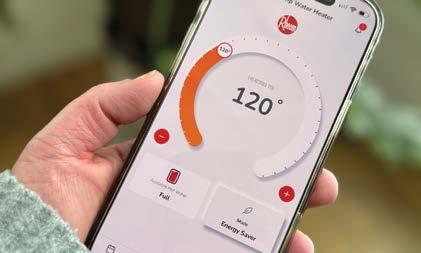
I can monitor energy use, change settings if we need more hot water, and check how much hot water is available before I jump in the shower after my kids have used it. The app notifies me when it’s time to clean the air filter on top of the unit. I can access that information without having to go down to the basement. I can even set it to vacation mode after I’ve left the house for a trip. Not all heat pump water heaters have smart technology, so be sure to check before buying.
My refrigerator is a di erent story. I like the ability to monitor energy use, but it can be annoying to have my phone notify me the door is open when I’m 3,000 miles away at a work conference. There are certain features that can only be controlled through the app, which I find frustrating. The next thing I know, my husband texts me to make more ice while he’s standing right next to it, and I’m on the other side of the country.
Monitoring energy use and making it easier to control your household devices are benefits of smart appliances. Before upgrading, do your research to understand how the features work and whether they benefit your lifestyle. Smart technology can help lower your energy use. But, in some cases, you’re better o improving your energy habits with the appliances already in your home.
Miranda Boutelle is the chief operating o cer at E ciency Services Group in Oregon, a cooperatively owned energy e ciency company.




















by Cathy Cash
The electric grid needs our help. Be it from new industrial complexes, data centers, more gaming and electrification at home from smart appliances to electric vehicles, today’s intense energy demand requires more power 24/7 than ever before.
To keep up, new transmission equipment must be built, and existing transmission lines must be upgraded with the latest technology to move larger amounts of electricity, improve reliability, and withstand Mother Nature. Transmission equipment and lines are essential in moving large amounts of electricity from where power is produced to electrical substations, where it is then sent across communities to consumers.
The public and owners of property where power lines will be hoisted to serve consumers also have a big say when it comes to siting transmission and allowing projects to go forward.
That’s where electric co-ops’ member relations really shine.
It’s not unusual for co-ops to go well beyond the prescribed number of public hearings on a proposed transmission project and to meet concerned members literally where they are.
Electric co-ops exist to serve their members with safe, a ordable, reliable electricity. Their ability to build strong ties with the communities within their service territory can go a long way when the need arises for critical infrastructure like transmission.

Each year, thousands of power lines and poles are destroyed by more extreme weather hitting outside of typical “storm season” timeframes and locales. Historic winter storms like Uri and Fern seem to be making themselves at home in the South.
The good news is that electric co-ops are completing transmission builds and breaking ground on new ones.
Generation and transmission co-ops that deliver wholesale power to your local electric co-op are doing their part to reinforce regional transmission backbones with stronger poles and power lines.
But building new transmission takes a lot of time. Many years in fact. And that’s not because of the construction itself but the painstaking process for gaining approvals from state and federal agencies.
Yet, said Mary Ann Ralls, NRECA’s senior director and regulatory counsel, “Electric co-ops are successfully demonstrating that their proposed facilities are necessary to relieve regional congestion and enhance system reliability.”
With their members in mind, co-ops seek out the most e cient ways to build transmission. For example, they upgrade lines in existing property rights-of-way and use the most durable technologies and equipment to keep costs in check and sustain reliability well into the future.
Increased power line capacity will reduce costs associated with transmission congestion, which makes moving energy across the grid particularly expensive. This in turn will help keep your monthly bill lower.
When co-ops are able to beef up power lines, economic benefits can be felt in the community, too.
Rural areas with modern, high-voltage transmission are attractive to large job-creating businesses. Local employment and small business also experience upticks.
“Electric cooperatives have a long history of serving their members, and that same commitment is driving their work to develop new transmission capacity to meet the nation’s rising electricity demand,” said Patti Metro, NRECA’s senior grid operations and reliability director.
Cathy Cash writes on consumer and cooperative a airs for the National Rural Electric Cooperative Association.








by Miranda Boutelle
Let’s start by defining what “smart” means. Smart appliances — such as refrigerators, washers, ovens, thermostats, and water heaters — connect to the internet. Typically, through Wi-Fi or Bluetooth, these appliances can be controlled using your smartphone, tablet, or voice-assistant device. They are designed to optimize energy use and add convenience. Some smart devices can even learn your habits over time.
Are smart appliances right for your home? The answer depends on your preferences and types of appliances you already have. The better question might be: Are smart appliances right for you? Do you like the newest tech and typically keep your phone within arm’s reach? Do you enjoy the convenience of calling out commands to Alexa? Or do you prefer less technology or something in between? Personally, I’m somewhere in the middle.
Many smart appliances allow you to see how much energy each device consumes. That information can be helpful to better understand your energy habits and identify where energy may be going to waste.
Smart thermostats are a popular choice for managing energy use and reducing energy waste. Heating and cooling systems are typically a home’s biggest sources of energy consumption. According to ENERGY STAR®, you can save an average of 8% cost savings on heating and cooling with a smart thermostat. Savings depend on your climate, the type of system you have, and how you currently use it.
Most energy savings from a smart thermostat come from automating temperature adjustments while you are sleeping or away from home. If you are already good at manually adjusting your thermostat, you likely won’t see big savings, but you might prefer the convenience of a programmable device you can control on an app.
Smart thermostats make it much easier to program your heating and cooling schedule. Some have geofencing features that automatically adjust settings based on how far your phone is from home.
Coming in with the second-highest energy user in most homes is the water heater. I like the smart controls on my heat pump water heater. Also called a hybrid water heater, it uses heat pump technology to move heat instead of using energy to create heat. That makes it two to three times more e cient than a conventional electric resistance water heater. You can save even more energy with smart heat pump water heaters.
I can monitor energy use, change settings if we need more hot water, and check how much hot water is available before I jump in the shower after my kids have used it. The app notifies me when it’s time to clean the air filter on top of the unit. I can access that information without having to go down to the basement. I can even set it to vacation mode after I’ve left the house for a trip. Not all heat pump water heaters have smart technology, so be sure to check before buying.
My refrigerator is a di erent story. I like the ability to monitor energy use, but it can be annoying to have my phone notify me the door is open when I’m 3,000 miles away at a work conference. There are certain features that can only be controlled through the app, which I find frustrating. The next thing I know, my husband texts me to make more ice while he’s standing right next to it, and I’m on the other side of the country. Monitoring energy use and making it easier to control your household devices are benefits of smart appliances. Before upgrading, do your research to understand how the features work and whether they benefit your lifestyle. Smart technology can help lower your energy use. But, in some cases, you’re better o improving your energy habits with the appliances already in your home.
Before buying new appliances, such as a smart dryer, research how the features work to understand whether they are beneficial to your lifestyle and help lower energy use.
Miranda Boutelle is the chief operating o cer at E ciency Services Group in Oregon, a cooperatively owned energy e ciency company.
by Miranda Boutelle
Electric lawn equipment has seen drastic improvements in cost, motor e ciency, and battery power in recent years. From hedge and string trimmers to leaf blowers, chainsaws, and push and riding mowers, there are lots of options for electric lawn equipment.
Electric equipment is quieter than its gas-powered counterparts and typically needs less maintenance. There’s no more mixing fuel, changing spark plugs, or worrying about gas going bad over the winter. Advances in rechargeable battery technology eliminate having to lug around a heavy extension cord to get your work done. Just pop in a battery and go.
Most popular lawn equipment brands o er battery-powered options, along with newer brands that specialize in electric tools. If you need multiple tools, buying the same brand with the same battery type allows you to swap batteries between di erent pieces of equipment. That also means fewer battery chargers to store or keep on your workbench.
Opt for equipment with brushless motors. They are more e cient, more powerful, and have a longer lifespan than traditional brushed motors. A brushless motor typically costs more but is worth the improved e ciency. A brushed motor transfers electricity using physical brushes, which can wear down over time. The friction caused by the brushes makes equipment run hotter and noisier. A brushless motor uses electronic commutation with less friction, which makes it more powerful, extends the lifespan, and allows you to get more done on a single charge.
Just as gas-powered lawnmowers require safe storage and handling of gas and oil, battery-powered equipment requires proper care for maintenance, charging, and disposal. Always use the manufacturer’s original charging equipment, charge batteries on hard surfaces away from anything flammable, and store chargers in a cool, dry place.
Most manufacturers recommend charging batteries only until they reach full capacity instead of leaving them on the charger until you are ready to use them. This helps prevent damage to the battery from overcharging and heat buildup and reduces potential fire hazards. Unplug chargers when not in use to avoid energy waste.
Similar to gas and oil, old or damaged batteries should not end up in household garbage and landfills, where they can ignite fires and leak toxic chemicals into soil and groundwater. Instead, recycle them at a big-box store or at a county or city waste management site.
If you’re looking for a quieter, more e cient, lower maintenance lawn care routine, rethink your equipment options and consider electric models.
Miranda Boutelle is the chief operating o cer at E ciency Services Group in Oregon, a cooperatively owned energy e ciency company.

































North East Mississippi Electric Power Association is excited to invite members to our second annual Member Appreciation Day on Thursday, May 14, from 4 to 6 p.m. The event will be held in the North East Power parking lot and is a small way for the cooperative to say “thank you” to the members we proudly serve.



This family-friendly event will feature food, Sno-Cones, bounce houses for the kids, and North East Power swag. It’s




















a great opportunity for members to come by, enjoy some refreshments, and spend time with the team that works every day to keep their power on.



Stop by on your way home from work and enjoy some fun and fellowship. North East Power looks forward to connecting with the community and showing appreciation for our members.







Our o ces will be closed Monday, May 25, for Memorial Day. You can access your North East Power account online at nemepa.org or use the kiosk in our drive-through. You can access your NE SPARC account online at nesparc.com or call the help desk at 1-833-NESPARC. We will be open Tuesday, May 26, at 7:30 a.m.


A group of 83 high school juniors from all over the state gathered in Jackson from Feb. 25 to Feb. 27 for the 39th Electric Cooperatives of Mississippi Cooperative Leaders Workshop. The program instills leadership skills, inspires creative thinking, encourages community service, and introduces students to legislative elected officials from their communities.
The conference was held at The Westin in downtown Jackson. The delegates earned the trip to the workshop following a competitive selection process sponsored by their local electric cooperative.
They will travel to Washington, D.C. in June for a sevenday youth leadership tour.
North East Mississippi delegates Ellie Bumgardner, Ruby Chavis, Leah Cooper, Maddie East, Nora Quong, David Swain, and Hudson Yarbrough spent the three days in Jackson with other delegates from around the state.
They met with their state lawmakers, toured the state capitol, participated in problem solving activities, and attended speeches by motivational speakers — including one by political cartoonist Marshall Ramsey — who urged them to serve their communities.
Secretary of State Michael Watson spoke to the delegates during the workshop.
WE’RE NOT DONE YET!
This summer, the Cooperative Youth Leadership will be traveling to Washington, D.C. Follow us on social media this June to see highlights from ECM’s 39th annual Youth Tour.



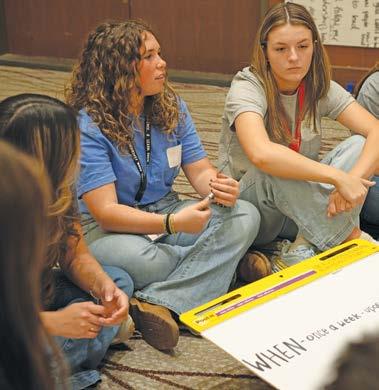
Front row (L–R): Sen. Neil Whaley, Rep. Steve Massengill, Rep. Kevin Horan, Sen. Nicole Akins Boyd. Back row (L-R): Rep. Clay Deweese, David Swain, Nora Quong, Maddie East, Hudson Yarbrough, Leah Cooper, Ellie Bumgardner, Ruby Chavis, and Rep. Josh Hawkins.
The workshop taught me to be confident in my life choices and to not give up when things get hard in life because you never truly know how close you are to achieving your goals.
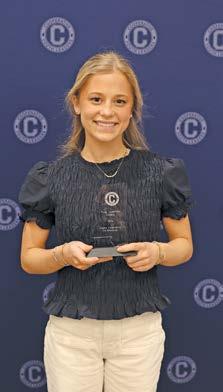
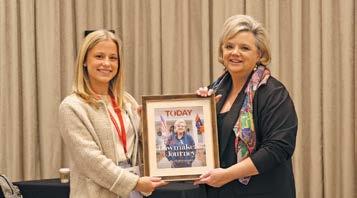


Severe weather events like Winter Storm Fern are a powerful reminder of how quickly conditions can impact our electric system. From heavy ice and freezing temperatures to strong winds and seasonal storms, weather-related damage can happen at any time of year.
At North East Mississippi Electric Power Association, we work year-round to maintain a safe and reliable electric system. While we are always prepared to respond when outages occur, it’s also important for homeowners to understand which parts of the electrical system are our responsibility, and which parts belong to you. Knowing the difference can help speed up repairs and ensure everyone stays safe when severe weather strikes.
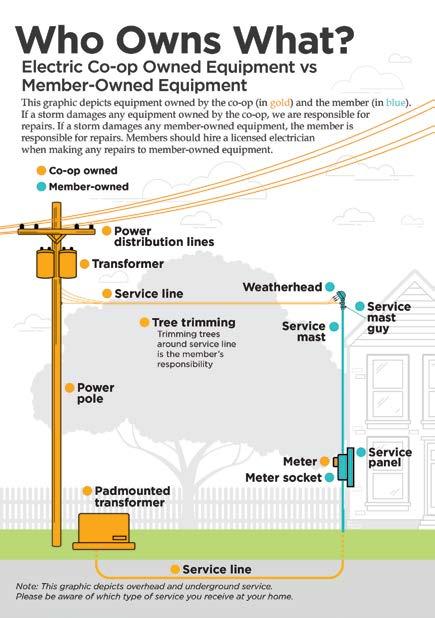
North East Power is responsible for maintaining and repairing
• Utility poles
• Distribution power lines
• Electric meters
• Service lines running from the pole to the meter
Members are responsible for
• Equipment located between the electric meter and your home or business
• The service panel
• Any underground lines running from the meter into the structure
• Vegetation and tree limbs around privately owned service lines
If equipment that you, as the homeowner, are responsible for becomes damaged, North East Power will come and disconnect the service line so repairs can be made. Then, you should contact a licensed electrician to assess and complete the necessary repairs.
When severe weather causes damage, repairs to homeowner-owned equipment must be completed before we can safely restore power. Taking care of these repairs promptly helps ensure the restoration process moves as smoothly and quickly as possible. Once those repairs are finished, please contact North East Power, so we can promptly and safely reconnect your service.
We’re proud of the beautiful trees and landscaping across our service territory, but regular trimming and hazard tree removal are essential to maintaining reliable electric service and minimizing storm damage. North East Power performs routine right-of-way maintenance throughout the year. If you notice a tree limb near a power line, please give us a call so we can evaluate the situation. However, trimming around privately owned service lines is the member’s responsibility, and a professional tree service should be contacted for assistance.
By working together and understanding our shared responsibilities, we can help make storm response and power restoration safer and more efficient for everyone. If you have questions about your electrical equipment or service, we’re here to help. Please contact North East Power at 662-234-6331.





















Looking back at the various “theme months” electric cooperatives have, I find it no coincidence that Lineman Appreciation Month (April) and National Electric Safety Month (May) are placed next to each other. Northcentral’s linemen work in one of the top 10 most dangerous occupations in the U.S. Whether it’s heights, trenches, or proximity to high voltage, line workers of today must continuously train to keep themselves, their coworkers, and the community safe. The stress of this work extends beyond the job, reaching families, friends, and the community who count on their loved ones to return home safely.
While appreciating our linemen, I’m reminded of the numerous risks they and all our employees face. Our society has become increasingly volatile. At Northcentral, we continue to provide the necessary training and resources to keep everyone out of harm’s way. Threats are always taken seriously, and providing a safe environment for our employees and community is a priority.

by Kevin Doddridge General Manager/CEO


Whether it’s storm restoration, routine maintenance, or greeting members in our o ce, a culture of safety and precaution will always be the number one priority at Northcentral. This culture will continue to include appreciation for all employees as well as our community. In the field. In the o ce. In the community. 100% of the time. Stay safe.

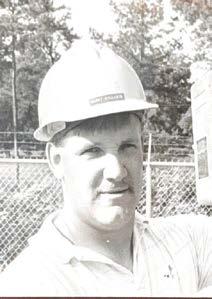

After 40 years of dedicated service, Barry Williams is retiring from Northcentral Electric Cooperative, leaving behind a legacy of hard work, reliability, and commitment to the members we serve.
Barry served as substation supervisor, playing a vital role in maintaining the infrastructure that powers our community. Over four decades, he witnessed first-hand the tremendous growth of the cooperative. When he began his career in 1987, Northcentral operated five substations. Today, that number has grown to 11, reflecting the continued expansion across our service area. “Northcentral has always been a special place for me,” Barry said. “My grandfather was a founding board member, and my father served on the board for many years as well.”
Throughout his career, Barry built strong relationships with coworkers and valued the sense of support and shared purpose. He also took pride in mentoring younger employees, just as others had done for him along the way. “Always believe in yourself and take advantage of opportunities to invest in yourself,” he said. “It will pay o in the long run.”
As he begins retirement, Barry looks forward to spending time with his family, especially his first grandson, and enjoying hunting and fishing.
Thank you, Barry, for 40 years of service!




a timely reminder to take a closer look at how we use electricity in our homes. While
Northcentral Electric Cooperative recognizes this observance each year, safety is something we prioritize every day – for our employees, our members, and the communities we serve.
Electricity powers nearly every part of modern life, from appliances and devices to heating and cooling systems. But when used improperly, it can pose serious risks, including electrical fires, injuries, and property damage. According to the Electrical Safety Foundation International, thousands of people in the United States are injured or electrocuted each year due to electrical incidents in the home – many of which are preventable.
This month serves as a great opportunity to refresh your awareness and make sure your home is as safe as possible.
Your home’s electrical system often provides early warning signs when something isn’t right. Flickering lights, frequently tripped breakers, buzzing sounds, or outlets that feel warm to the touch can all signal potential issues.
Frayed or damaged cords are another common hazard. Over time, cords can wear down due to age, heavy use, or excessive current flow. If you notice any exposed wiring or damage, replace the cord immediately. Addressing small issues early can help prevent larger, more dangerous problems down the road.
Every circuit in your home is designed to handle a limited amount of electricity. Overloading happens when too many devices or high-energy appliances are plugged into the same circuit, increasing the risk of overheating and fire.
Be especially mindful in areas where multiple devices are used at once, such as kitchens, home o ces, and entertainment spaces. If your home is older or you’re adding large appliances, consider having a qualified electrician evaluate your system to ensure it can safely meet your needs.
Power strips and extension cords are convenient, but they should be used properly. Never “daisy chain” extension cords together or plug one power strip into another, as this can quickly lead to overheating.
Always check the wattage rating before plugging in multiple devices, and remember that extension cords are intended for temporary use. If you find yourself relying on them regularly, it may be time to install additional outlets.
It may seem obvious, but it’s worth repeating: water and electricity do not mix. Keep electrical devices away from sinks, bathtubs, and outdoor moisture, and never handle electronics with wet hands.
Ground Fault Circuit Interrupters (GFCIs), commonly installed in kitchens, bathrooms, and outdoor areas, provide an added layer of protection by shutting o power when a fault is detected. If your home does not have GFCIs in these areas, consider having them installed.
Electrical safety starts with awareness. Take time to talk with your family – especially children – about the importance of using electricity safely. Remind them not to play with outlets or appliances and to stay clear of overhead power lines when playing outside.
Planning a project in your yard? Whether you’re planting a tree, installing a fence, or tackling a landscaping project, it’s important to know what’s below the surface before you start digging.
Underground utility lines (including electric, fiber, gas, and water) may be buried just inches below the ground. Hitting one of these lines can cause serious injury, service outages, and costly repairs.
Before you dig, call 811 to have underground utilities located and marked. This free service helps protect you, your property, and essential services in your community.




















































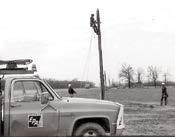


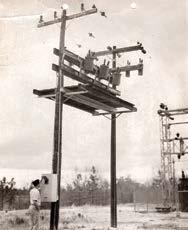






PAY BILLS or REPORT OUTAGES: 855-2PRVEPA (855-277-8372)

COLUMBIA: 601-736-2666 | HATTIESBURG: 601-264-2458 | PURVIS: 601-794-8051 | WIGGINS: 601-928-7277
Member owned. Locally operated. That’s the cooperative di erence. • Visit us online at www.PRVEPA.com.



On May 17, Pearl River Valley Electric proudly celebrates 88 years of service. A lot has changed over the decades, but our history remains the same. Our story began at a time when much of rural Mississippi was simply left behind.
In the 1930s, electricity was rapidly transforming cities and towns across America. Businesses were growing; homes were benefiting from modern amenities, and new opportunities were emerging. But in rural areas, that progress stopped short. At the time, power companies had little interest in building miles of line to serve a handful of homes. The return on investment wasn’t there, and as a result, rural families were left in the dark.
Without electricity, daily life was demanding. Families cooked on wood stoves, washed clothes by hand, and relied on kerosene lamps for light. Rural areas were living like previous generations.
That’s where electric cooperatives stepped up and changed everything.
With the support of the Rural Electrification Act of 1935, neighbors came together — not for profit but for progress. They formed cooperatives with a simple but powerful mission: to bring electricity to every home.
In the spring of 1938, residents from Marion, Lamar, and Je erson Davis counties gathered in Columbia with that very goal. On May 17, 1938, Pearl River Valley Electric Power Association was o cially formed. Five directors were appointed; bylaws were established, and the work began.
It wasn’t easy. Building an electric system across thousands of rural acres required determination, sacrifice, and long hours. But these founding members believed their communities deserved the same opportunities as anyone else, and they were willing to build it themselves.
Their e orts paid o quickly. Within weeks, 228 members were receiving electric service. Membership cost $5 (and still does).
Over the decades, that same commitment has carried PRVEPA forward. What started as a bold idea grew into a vital system serving more than 54,000 meters across over 6,000 miles of line.
But the heart of our story hasn’t changed.
Electric cooperatives were built on the belief that no community should be overlooked. That principle still guides us today. Just as we once brought electricity to rural areas, PearlComm Fiber, our internet subsidiary, is working to deliver high-speed fiber internet across our territory, continuing the mission of connecting our communities to opportunity.
For 88 years, we have remained committed to the same purpose: serving our members, investing in our communities, and going where others won’t.

Spring in our region often brings unpredictable and severe weather, and March proved no exception. Powerful storms with straight-line winds moved through PRVEPA’s service territory, leaving significant damage in their wake. At the height of the outages, nearly 8,000 members were without power, and 34 poles had to be replaced across the system.
Our crews responded immediately, working long hours, for two days to safely restore service to affected members. Once power was restored at home, their commitment didn’t stop there. PRVEPA crews then traveled to assist Magnolia Electric Power, demonstrating the cooperative principle of “Cooperation Among Cooperatives.”
Photos on this page show a few highlights from the restoration effort and the dedication shown by our team.
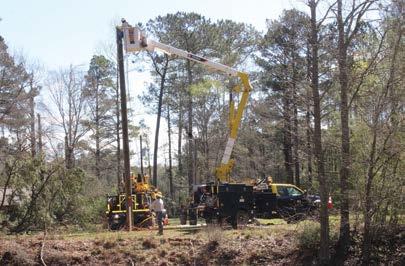
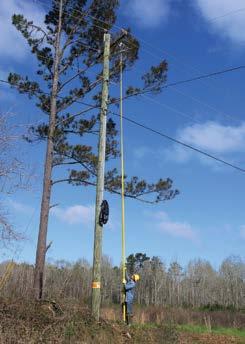
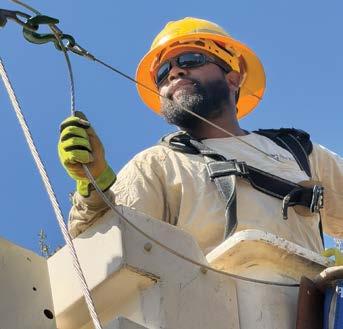
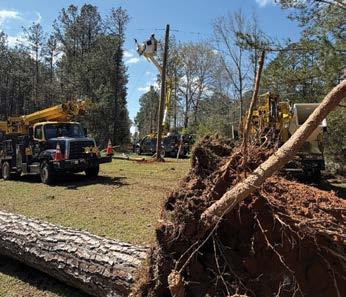

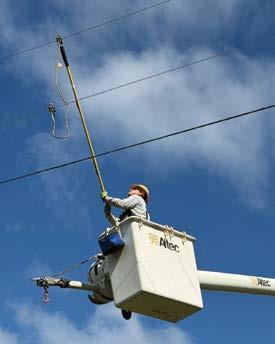

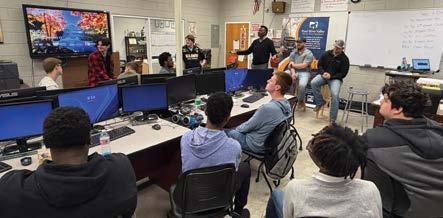
PRVEPA employees recently met with students at the Pearl River Community College 2026 Career Fair in Poplarville. Many of the students are enrolled in PRCC’s Lineman Program, where they gain hands-on experience in pole climbing, line construction, and safety procedures, including pole-top and bucket rescues.
As a proud partner of the program, PRVEPA values the opportunity to connect with these students early in their careers.
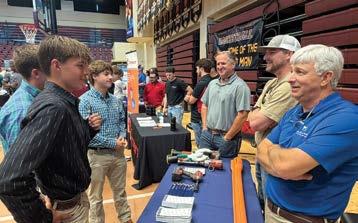
During Engineering Week in February, PRVEPA had the opportunity to visit students at the Lamar County Center for Technical Education and introduce them to careers in engineering. Our team shared not only the technical aspects of their work, but also personal stories about the paths that led them into the field.
By connecting real-world experience with classroom learning, we hope to inspire the next generation to pursue careers that help power and strengthen our communities.
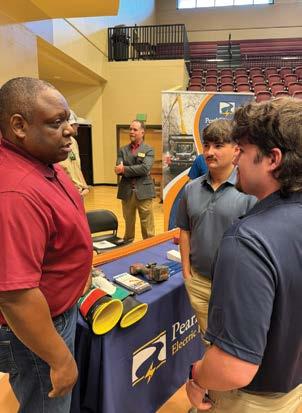
















MONDAY, MAY 25



Pearl River Valley Electric honors those who courageously gave their lives.
All Pearl River Valley Electric o ces will be closed in observance of Memorial Day.
Dispatchers will be available. Report outages by calling 855-2PRVEPA.



• Applications are available at PRVEPA o ces and at prvepa.com.
• Completed applications must be postmarked or emailed by Aug. 14.
• Scholarship recipients must be a PRVEPA member, spouse, or child of a member participating in the Round Up program.
Pearl River Valley Electric is on social media.
Keep up to date with PRVEPA news and receive information on outages.
Simply search for @MyPRVEPA on Facebook and X to follow us.






• Recipients must be full time (12 hours or more per semester) freshmen students enrolled in academic or career-technical programs. APPLICATIONS DUE AUG. 14, 2026









• Scholarship funds will be credited to each student’s college account — no checks will be issued to individuals.







More information is available at prvepa.com. Funded by members who are rounding up their monthly bills, these scholarships are intended to assist students who will attend a Mississippi community college as a freshman this fall.


• Scholarships should be awarded by the end of September. Students must be enrolled in good standing at the time funds are released to the colleges.




























Keep your home protected with these three essential tips:
• Inspect cords regularly for fraying or damage and replace them immediately –never use damaged electrical cords!
• Keep electrical appliances away from water sources like sinks and bathtubs – water and electricity are a dangerous combination!












• Don't overload outlets with too many devices or extension cords – this can cause overheating and fire hazards!





Did you know a water heater is the second biggest energy expense in a home? Water heating accounts for around 18% of the energy consumed in your home. Here are some ways you could bring costs down to save energy and money. It’s a win-win!
• Shorter showers — If you cut your shower time by just two minutes, it could save you hundreds of gallons each month.
• Cold water for laundry — Use cold water for laundry when you can. Pro tip: many laundry detergents are now made for cold water use.

















• Fix leaks as soon as you can — That little drip could add up to more than 1,600 gallons of hot water per year.
• Be smart with dishwasher cycles — Run the dishwasher only when it’s full, and remember to use the cold water cycles.

Our o ces and construction warehouses will be closed Monday, May 25, in observance of Memorial Day.


Congratulations to our 2026 PEPA Scholarship Winners
Leah Clark – Bruce High School
Tanyiah Golden – North Pontotoc High School
Jayda Hall – Pontotoc High School
Caroline Kyle – Pontotoc High School
John Wilson Ligon – Home School
Ally Moore – Pontotoc High School
Adalyn Vandiver – South Pontotoc High School

Rachel Weeden – Ingomar High School
Carol Anne Wise – North Pontotoc High School
Jaycee Wray – North Pontotoc High School
A group of 83 high school juniors from all over the state gathered in Jackson from Feb. 25 to Feb. 27 for the 39th Electric Cooperatives of Mississippi Cooperative Leaders Workshop. The program instills leadership skills, inspires creative thinking, encourages community service, and introduces students to legislative elected officials from their communities. The conference was held at The Westin in downtown Jackson.
The delegates earned the trip to the workshop following a competitive selection process sponsored by their local electric cooperative. They will travel to Washington, D.C. in June for a seven-day youth leadership tour.
Pontotoc Electric delegates Leah Fields and Mary Alex Kakales spent the three days in Jackson with other delegates from around the state.
They met with their state lawmakers, toured the state capitol, participated in problem solving activities, and attended speeches by motivational speakers — including one by political cartoonist Marshall Ramsey — who urged them to serve their communities.
Secretary of State Michael Watson spoke to the delegates during the workshop.
This summer, the Cooperative Youth Leadership will be traveling to Washington, D.C. Follow us on social media this June to see highlights from ECM’s 39th annual Youth Tour.



The workshop revealed to me the importance of being an effective, strong, and respectful leader. I was able to learn just how important showing up for others, having confidence in myself, and being resilient in difficult circumstances is.
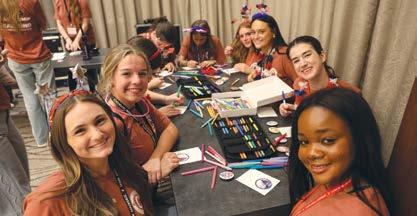

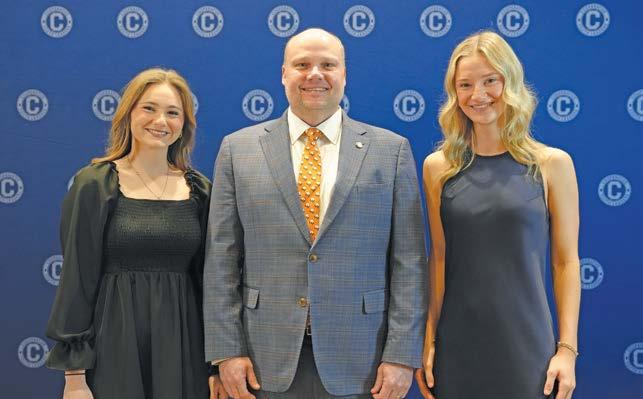










In Memory of Brenda Barton (PEPA Retiree)
1¾ cup flour 2 sticks oleo, softened
1 cup chopped pecans ½ cup sugar
8 ounces cream cheese 8 oz. Cool Whip
1 can blueberry pie filling
Mix flour, oleo, and pecans and press into oblong baking dish. Bake at 325 degrees until lightly browned. Let cool. Combine sugar, cream cheese, and cool whip and spread over cooled crust. Top with pie filling. Store in refrigerator. Note: Other varieties of pie filling may also be used.
Karen Laprade (Plant Accounting Clerk)
1 box lemon cake mix 1 egg, slightly beaten
2 tbsp fresh lemon juice ½ cup vegetable oil
COOKIES:
Mix ingredients and roll dough into balls about the size of a walnut. Place on cookie sheet. Bake at 350 degrees for 10 minutes for a soft, chewy cookie or a little longer for a crispy cookie.
GLAZE:
1½ cups powdered sugar
Fresh lemon juice
Mix ingredients and spread on top of cooled cookies. Makes 2 dozen large cookies.
We have some great options for cool, fruity desserts that are perfect for enjoying this Spring season. Get your tastebuds ready!



Jennifer Johnson (HR Manager)
½ cup key lime juice 1 can sweetened, condensed milk
3 eggs, separated 2 tablespoons sugar
1 tablespoon lemon juice
Beat egg yolks. Add sweetened, condensed milk and juices. Beat egg whites and add sugar. Fold white mixture into yellow mixture. Pour into graham cracker crust and bake 15 – 20 minutes at 325 degrees. Allow to cool, then top with Cool Whip. (Best to refrigerate about 6 hours before serving.)
Blanche’s Pineapple Cake
Curtis (PEPA Retiree) and Seretha Gregory
CAKE:
4 eggs 1 box yellow cake mix
½ cup oil 1 cup milk
Add all ingredients. Stir. Cook until done at 350 degrees.
ICING:
2 cups sugar
1 stick oleo
1 can crushed pineapple
3 egg whites
2 tablespoons flour

Add all ingredients and cook on top of stove. Stir until oleo and sugar are melted. Once done, pour on top of cake.















In this fast-paced world we live in, it doesn’t take much to get distracted and lose focus while performing our normal daily routines. We sometimes take shortcuts on tasks, not realizing the possible unintended risks to our safety and the safety of those around us.
Linemen cannot a ord to take shortcuts. They must always stay focused, keeping their minds on the task at hand and the necessary steps to complete it because their lives and the lives of their coworkers depend on it. Linemen perform job briefings before beginning work each day as they must understand the objective and outcome of their work. They must keep track of where their coworkers are located and what they are doing during the process. They use personal protective equipment like rubber gloves and line coverup. For all these reasons, there is nothing more important to our cooperative than safety education and training.
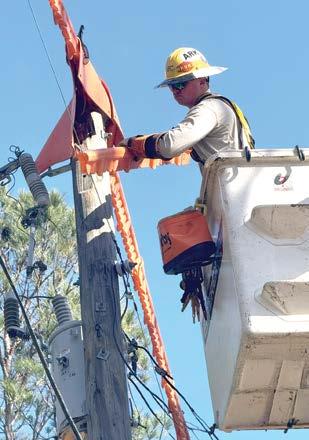

Singing River Electric employees participate in monthly safety meetings to review and discuss a variety of subjects and how our safety rules apply. Our employees serve on our safety committee and teach electrical safety to students using our Safety City display. Our threeperson safety department is made up of former linemen. Our thorough safety manual is kept up to date and given to all employees.
May is National Electrical Safety Month. Safety is a concern for all, and I encourage you to discuss electrical safety with your family and consider all hazards around your home or business. Take advantage of resources on our website at singingriver.com/electric-safety and the Electrical Safety Foundation International’s website at esfi.org.


by Brian Hughey
General Manager and CEO













Gabe Robbins Energy Services Representative robbins@singingriver.com



As temperatures start to rise in south Mississippi, your air conditioner will begin working harder to keep your home cool and comfortable. To use less energy and lower your bill, set your thermostat to 78° or as high as comfortably possible when you’re home and increase it a few degrees when you’re away. If the temperature is mild, open windows in the evening to cool your house e ciently and consider turning your unit o while you are away.
Remember to replace your HVAC air filter monthly. A clean filter helps your system run more e ciently and keeps your indoor air fresh.

If you have a swimming pool, now is a great time to reduce energy use by running your pool pump 8–10 hours per day. Keeping filters clean and performing proper maintenance/cleaning will help reduce energy consumption. I’ve spoken with several of our members, and they find it best to run the pump for 7-8 hours a day to lower energy use even more.
Small changes now can lead to big savings as we head into the hotter summer months!
Singing River Electric’s Lucedale o ce - 11187 Old 63 South
Registration begins at 5 p.m.
Meeting begins at 6 p.m. and will include the cooperative’s financial, management, and board reports, as well as the board of directors election.

Singing River Electric bylaws require a 10 percent quorum of the membership to conduct business at the annual meeting. The quorum is determined by adding the number of members present at the meeting, the number of valid online votes, and the number of valid proxies received. Your participation is crucial to our success, and with it you will be eligible to win prizes up to $500 in cash.
On May 11, annual meeting notices will be mailed to Singing River Electric members, and online voting emails will be sent to valid addresses on file from noreply@directvote.net.
THERE ARE THREE WAYS TO PARTICIPATE:
VOTE IN PERSON at the membership meeting on Thursday, June 25, 2026, at 6 p.m. at Singing River Electric's Lucedale o ce.
VOTE ONLINE from Monday, May 11, through Tuesday, June 16. Access the online ballot through the online voting email or click the "Vote Here" icon on the SmartHub app or at singingriver.com. Enter your membership ID and zip code and cast your vote.
VOTE BY PROXY by assigning your vote to either the board of directors or another Singing River Electric member. Mail the completed proxy in the enclosed postagepaid envelope; it must be received by Tuesday, June 16. You may still attend the meeting; your presence will rescind the proxy and allow you to vote in person.
Singing River Electric has a 10-person board of directors elected from the membership in three geographic districts. For 2026, three Post 2 directors will be elected and hold the o ce for a period of three years. This election will also select one Post 3, District 2 board member for a period of one year to fill an unexpired term.
The following Singing River Electric members were nominated by our membership for election and certified by the Credentials and Election Committee to run for the board position. For qualification requirements, view our bylaws at singingriver. com/my-membership. View candidate biographies on the online voting site starting May 11.
DISTRICT 1, POST 2: James Robert Steele
To represent Greene, Perry, and Wayne counties in Miss., and Washington County in Ala.
DISTRICT 2, POST 2: Roy C. Grafe Jr.
To represent George and Stone counties in Miss., and Mobile County in Ala.
DISTRICT 2, POST 3: Amy Delcambre, Phillip Eubanks, Stephen M. Tipton
To represent George and Stone counties in Miss., and Mobile County in Ala.
DISTRICT 3, POST 2: Kristal K. Sisson
To represent Jackson and Harrison counties in Miss.
Why must I vote for a candidate in each geographic district, not just my own?
All 10 members of Singing River Electric’s board of directors make decisions on behalf of the entire membership. Because of this, members vote for candidates in all geographic districts, not just the one who represents your county.
Why do I need to vote if a board candidate is running unopposed?
Each January and February, Singing River Electric members have the opportunity to qualify to run for a board seat. In years when there is only one candidate in each geographic district, that means only one member sought qualification for candidacy. The membership must still elect that candidate, and our bylaws state that business at the annual meeting can only take place if 10% of Singing River Electric’s membership participates in the election. Your vote is important and counts toward the needed 10% quorum.
Vote online or return your proxy by the June 16 deadline for the CHANCE TO WIN ONE OF: $500 CASH PRIZES $250 cash prizes TWO or SIX
Singing River Electric’s crew of 15 linemen left in the early morning hours of March 13 traveling to assist Magnolia Electric Power, based in Summit, Miss, with power restoration. Severe weather tore through the area, breaking poles and bringing down power lines and trees. We appreciate our linemen for living out Cooperative Principle #6 – Cooperation Among Cooperatives.
May is dedicated to raising awareness about reducing electrically related fires and injuries. Keep these safety tips in mind.
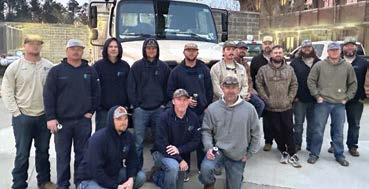


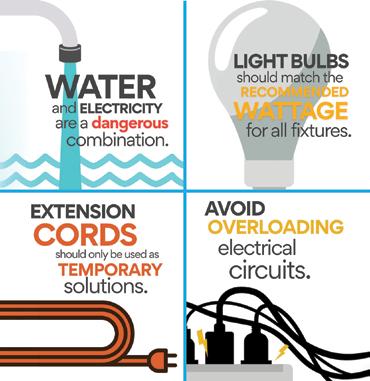








The George County School District is reintroducing its elementary music education program, and certified music educator Hope Steiner is traveling to six schools to teach pitch making, rhythm reading, and music expression to approximately 2,000 students in grades pre-K through sixth. A $2,500 Neighbors Helping Neighbors Community Grant from Singing River Electric funded pitched percussion instruments including glockenspiels and resonator bells.
Hope Squad is a peer-to-peer suicide prevention and mental health support program in which trusted students are taught to recognize the warning signs of suicide. The project has been successful in reaching more than 2,000 students in the Ocean Springs School District thanks to a $1,857.69 Singing River Electric Neighbors Helping Neighbors Community Grant used to purchase audio-visual equipment to amplify student-led events.

Visit singingriver.com/my-community to view Singing River Electric’s Neighbors Helping Neighbors Community Grant program application requirements. Grants for up to $2,500 are awarded to non-profits in our local service area three times a year in January, May, and September.


"Our internet went out, and after everything was fixed, our router wouldn’t boot. SRC sent Ronnie (fiber technician) out to fix the problem. He identified the issue and resolved it quickly! He was courteous and very knowledgeable. I hope I don’t need his help again, but if I do, I will welcome his expertise anytime! In these crazy times, customer service is nonexistent, but Ronnie and SRC provide customer service in spades!!! I am enjoying SRC!"
Step 3: Fiber construction Running fiber lines overhead & underground
• Fountainbleau/Gautier/Singing River Mall
Step 4: Splicing Connecting fiber lines to the network All other Singing River Electric areas are open for fi ber internet sign-ups!
• Monaco Lake – Highway 90 East
Step 5 – Service drops/drop splicing & Step 6 – Installation Connecting homes & businesses to fiber internet
• Monaco Lake – Old Mobile Highway
• Bayou Casotte – Martin Road North/ Lanier Street, Chicot Street North, Chicot Street South, Martin Road South
• If your apartment complex is interested in service, call 877-272-6611.
• Fiber internet was not run in neighborhoods with two existing fi ber internet providers. Please call if your home association is interested in service.












A mother’s love is not something you have to explain. It is something you live, something you carry with you, and something you never outgrow. Most of us have been blessed to experience it.
May is a time when we pause and honor the women who shaped us into who we are today. And if you are like me, you have always just called her Mama. That word carries tremendous weight. It carries memories of front porches, kitchen tables, early mornings, and long nights. It carries the sound of encouragement when we needed it most and correction when we needed it just as much.
Most of us can look back and remember the lessons our Mamas taught us. Not always in big speeches, but in the way they lived. They showed us how to work hard, how to treat people right, and how to keep going when things did not come easy. And if someone ever messed with their child, they could turn into something fierce in a hurry. At the same time, they were our biggest cheerleaders, lifting us up when life knocked us down and believing in us even when we struggled to believe in ourselves.
As we get older, something else becomes clear. Our Mamas were doing the very best they could with what they had. Many did not have much. Some worked long hours for little pay. Some carried

burdens we never fully saw. But somehow, they made sure we had what we needed. They carried more than their share, so we would not have to carry it alone.
At Southern Pine, we are proud to serve communities built on those same values Mamas teach every day. Hard work, sacrifice, love, and looking out for one another. This month, we celebrate all Mamas across our service area. Every background, every story, every sacrifice matters. Whether by birth or by heart, the women who step in to raise, guide, and love children leave a mark that lasts a lifetime. Bringing the power is what we do. But the kind of strength, love, and steady presence a Mama provides is a di erent kind of power altogether. And truth be told, it is the kind that keeps everything else going.

by Drummonds McAlpin
President/CEO Southern Pine Electric

Most of the time, when a member calls Southern Pine, the first voice they hear belongs to one of our call center team members. The call center team carries a big responsibility Day in and day out, these member service representatives are on the front lines, answering questions, solving problems, sharing information, and helping members navigate everything from billing and payments to service needs and outages.
Every call is di erent, and every member’s situation matters. Whether someone is calling with a simple question or facing a more stressful situation, our call center team meets them with patience, professionalism, kindness, and a genuine desire to help. They understand that behind every account number is a person, a family, or a business depending on us.
It takes more than knowledge to do this job well. It takes heart. Our representatives listen closely, communicate clearly, and work hard to make sure every member feels heard and taken care of. They do not pass problems along. They take ownership and see things through.

They may not always be seen, but their impact is felt in every conversation and every member they serve. Through every call, they are bringing the power of service to our members.
Representative


Southern Pine Electric spent an evening in Scott County in late March, gathering with members at Foothills Diner in Forest. More than 45 members attended the Member Circle meeting, sharing a meal and taking time to connect with their cooperative.
Member Circle meetings are designed to keep that connection strong. They o er members a chance to hear directly from cooperative leadership while also giving Southern Pine the opportunity to listen and learn from the communities it serves. During the Scott County meeting, members heard updates from President and CEO Drummonds McAlpin, along with District Managers Wes Lee and Andrew Hu , who shared insights on local operations and ongoing e orts to provide safe, reliable, and a ordable electric service.


Jan Collins, Senior Vice President of Communications and Member Relations, provided an update on the Members Helping Members program, a reflection of neighbors helping neighbors across the service area. She also shared practical conservation tips to help members manage their energy use and prepare for the warmer months ahead.
What stood out most during the evening was the conversation. Sitting down together, visiting across the table, and hearing directly from members continues to shape how Southern Pine serves Scott County and beyond. Those moments of connection help ensure decisions are grounded in the real needs of the people who depend on the cooperative every day.










There was a time when checking your electric bill meant waiting on the mail and hoping everything lined up just right. These days, you have a better option. With Southern Pine Electric’s MyPower app, you can take control of your account anytime, anywhere. The MyPower app puts the tools you need right in your hand. You can view and pay your bill in just a few taps, without worrying about whether your statement made it to your mailbox or whether your payment will arrive on time. Mail delays happen, and they are no fault of anyone doing their job, but they can still lead to late fees if your bill or payment does not arrive when expected. The app removes that uncertainty.

It also gives you a clearer picture of how you use energy. Instead of waiting until the end of the month to see your total, you can monitor your usage throughout the billing cycle. That means fewer surprises and more opportunity to make small changes that can help manage your bill, especially during the high-use summer months.





Beyond payments and use, the MyPower app allows you to update your account information, report outages, and stay connected with your cooperative. It is designed to make things simpler, faster, and more reliable for you and your family.

At Southern Pine Electric, we believe in giving our members the tools they need to stay informed and in control. The MyPower app does just that. It takes the guesswork out of your monthly bill and replaces it with confidence.




Download



















the MyPower app today and put the power in your hands.




1. Scan the QR code or visit southernpine.coop/mobileapp
Open your internet browser and go to southernpine.coop/mobileapp to find direct links to download the app.
2. Choose your device
Select the link for either the App Store (iPhone) or Google Play (Android).
3. Tap Download / Install
Tap Get or Install and allow the app to download to your device.
4. Open and log in
Once downloaded, open the app and sign in using your Southern Pine account information.












by Carly Gibson, Southern Pine Student Ambassador
Memorial Day is a national holiday celebrated on the last Monday in May to honor the men and women who lost their lives while fighting for their country. It is a time of remembrance and reflection. For some, Memorial Day is the start of summer vacation, but for others, they mourn the loss of their brothers and sisters in arms.




Memorial Day, originally known as “Decoration Day," dates back to after the Civil War when communities began placing flowers on the fallen soldiers’ graves to honor them. After World War I, the observance changed from only honoring the Civil War dead to honoring the fallen service members of the U.S. military who died in any war. In 1971, it o cially became known as Memorial Day.

Memorial Day is important because many people do not think about the men and women who have sacrificed their lives while fighting for freedom for our country, but Memorial Day is a day where we are reminded across the country to pause and honor these brave men and women. It teaches younger generations to learn about and understand the value of service and patriotism. Visiting cemeteries, attending parades, lowering flags to half-





sta , and observing moments of silence are all traditions that serve as reminders of the purpose behind the holiday.




We celebrate Memorial Day to honor the sacrifice made by fallen service members who gave their lives to protect the freedoms we enjoy today. Their bravery reminds us that independence is not free; it comes at a cost. Americans show respect not only to these courageous individuals but also to the family and friends they left behind.


Today, it can be very easy to disregard the true meaning of Memorial Day. However, taking even the slightest amount of time to remember these men and women can make a di erence. Supporting military families and pausing for silence at 3 p.m. for the National Moment of Remembrance are small acts of awareness that help protect the importance of Memorial Day.
At the end of the day, Memorial Day is more than just a day o from school or work, it is a reminder of sacrifice, a celebration of bravery and life, and an opportunity to honor those who gave everything for their country. By remembering their sacrifice, we ensure their legacy is never forgotten.

































































keep electrical devices away from water to prevent electric shock.



DON’T place flammable items, like potholders, napkins or dish towels near the stove while cooking.




May is National Electrical Safety Month, but electrical safety is something we all need to practice in our homes daily. Follow these simple steps to help prevent electrical accidents and fires. According to the Electrical Safety Foundation International, an estimated 35,000 home fires, over 1,130 injuries, 500 deaths and $1.4 billion in property damage occurs each year because of electrical malfunctions.
























































overload electrical outlets with more devices than the circuit can handle.























DO ensure you’re using the correct wattage in all light fixtures.



















Following these suggestions, you and your family will find it easy to avoid electrical fires, fatalities, injuries and damage. Contact Southwest Electric for additional safety tips at 800-287-8564 or visit our website at southwestelectric.coop.






Our o ce will be closed Monday, May 25, in observance of Memorial Day.


Dispatchers will remain on duty and crews will be on call throughout the holiday.





If you experience an outage, report it on the SmartHub app, text ‘OUT’ to 844-975-2728 or call either 800-287-8564 or 601-437-3611. Celebrating May 10







Southwest Electric congratulates the class of 2026!













To ensure that every Mississippian is prepared for any type of disaster, whether natural or man-made, we must be prepared. Preparedness begins with individuals and families, but a key component is for communities to come together and help one another prepare.
Every family should have a fully-stocked disaster supply kit and a home evacuation plan. If disaster strikes in your area, where would you go? What would you do? Who would you contact to let everyone know that you and your family are safe?
Stock your disaster kit with:
Flashlights with extra batteries


The National Weather Service issues alerts for severe weather like a tornado, thunderstorm or hurricane. Do you know the di erence between a watch and a warning? You can compare a tornado to a hamburger. Think of a watch as all the ingredients to make a burger ready for use in the kitchen and a warning as the burger that has been plated and is on its way to the table.

Portable radio with extra batteries
NOAA Weather Radio
Non-perishable food for at least 3 days
Bottled water — 1 gallon per person per day
First aid kit with prescription medications
Bedding and clothing for each family member
Blankets and towels
Plastic dishes and utensils
Rain jackets
Sunscreen, sunglasses and mosquito repellent
Baby supplies (food, diapers, medication)
Pet supplies (food, leash, carrier, vaccination records)
Sanitary supplies
Toothbrush, toothpaste, soap, shampoo, cleanser, bleach, towelettes, toilet paper, trash bags and feminine hygiene products
Copies of important documents such as: driver’s license, SS card, proof of residence, insurance policies, wills, deeds, birth and marriage certificates, tax records, medical records, etc.
Cash
Emergency generator
Develop a home evacuation plan. If a disaster happens near your home, know where you and your family would go, what you and your family would do, and how you and your family would do it. If your home is damaged, know where everyone would go. Every family member should know the plan and how to execute the plan. Also, have a contact person outside of the area of your home to let them know everyone is safe.
Practice. Set time aside to practice the plan with everyone in the home. Everyone should know what to do and where to go in the event of an emergency. It can also be helpful to plan for disasters with your neighbors, family and friends. Sharing your emergency plan with neighbors, family and friends can help everyone know your specific plan and assist with recovery from the disaster.










Pole inspections in the area indicated on the map will begin shortly. EXO will inspect over 8,000 poles in Copiah, Lincoln and east Franklin counties. If you live in this area, you may see EXO personnel digging around and treating our poles. The inspections will take up to six weeks to complete. Inspecting and replacing poles is a vital part of our e ort to maintain reliable electric service to our Members. Utility poles are out in the elements and need to be inspected to ensure they are strong enough to remain on our distribution system. In the event a pole does not pass inspection, crews will return to the area and replace that pole.







Your attic is more than just a storage space. It plays a key role in your home’s energy e ciency and can a ect your heating and cooling bills if not properly ventilated. Ridge vents and turbines are the most common types of exhausts that provide e ective ventilation by moving hot air out, lowering humidity, and helping attics maintain healthy airflow.





Know the di erence: Ridge vents stretch across the entire ridge line of your roof and blend into roofing with the help of a matching cap. They allow hot, moist air to move up and out of the roof via passive airflow. Turbines are very distinctive dome-shaped vents equipped with spinning blades that harness the power of the wind to actively draw hot air out of an attic. When comparing ventilation systems both ridge vents and turbines require little upkeep and can last as long as your roof does.










Annual Maintenance: Ridge vents do not need regular maintenance, but they will benefit from occasional inspection as they can become clogged with leaves and debris and could crack, break or leak. Turbines need regular inspection for dirt and debris that could stop the spinning parts. The moving parts may also require lubrication, so they continue to move freely without squeaking. Inspect both annually to prevent damage to your home and remember, every little bit helps save energy!


























SERVING MORE THAN 12,600 ELECTRIC METERS IN SEVEN DELTA COUNTIES

Twin County Electric Power Association is proud to recognize Mike Manor for an incredible 40 years of service as a lineman and crew foreman. For four decades, he has been a steady, dependable presence—answering the call through storms, long nights, and the everyday work that keeps our system strong.
Mike is known for his deep knowledge of our lines, his commitment to safety, and the mentorship he has provided to countless apprentices over the years. His dedication reflects the very best of cooperative service.
Please join us in congratulating Mike Manor on this remarkable milestone and thanking him for his outstanding contributions to Twin County and the members we serve.
“Congratulations, Mike, on your 40th work anniversary! Thank you for the integrity you bring to your work, your dedication, and your steady leadership,” stated Leslie Holloway, general manager.





Hollandale - 662-827-2262 | Belzoni - 662-247-1909 | Greenville - 662-334-9543 | Rolling Fork - 662-873-4233 | REPORT OUTAGES 866-897-7250 @twincoepa twincoepa.com


Would you like your bill and/or payment reminder via e-mail? Contact your branch o ce and provide us with your e-mail address. There is no charge for this service







MAY 8 AND 9
Mississippi Wildlife Heritage Festival • Leland




MAY 13
Spring Blood Drive
Hollandale

Thank you to Mississippi Blood Services for partnering with Twin County Electric to provide a critical need for our residents.



The festival is a combination of the Mockingbird Music Festival, Leland Crawfish Festival, and Frog Fest.
Twin County is proud to be a festival sponsor in e orts to preserve history, heritage, and the state’s outdoor traditions to educate the public on its vast natural resources.
MAY 29 TO 31





Dolly Parton’s Imagination Library
Twin County EPA is proud to participate in Dolly Parton’s long-running book gifting program that works to inspire youth for a love of reading. For the past 31 years, Imagination Library has provided free, high-quality books to children from birth to five years of age.
Future Tour Junior Golf Championship • Greenville



Twin County is proud to be included as a sponsor.
This year is the 31st anniversary of the tournament. The purpose is to grow the game with juniors and get kids interested in golf. Past participants have gone on to play collegiate golf, including winners on the LPGA and PGA tours. For more information, email Futuretourgolf@yahoo.com.






by Miranda Boutelle
Let’s start by defining what “smart” means. Smart appliances — such as refrigerators, washers, ovens, thermostats, and water heaters — connect to the internet. Typically, through Wi-Fi or Bluetooth, these appliances can be controlled using your smartphone, tablet, or voice-assistant device. They are designed to optimize energy use and add convenience. Some smart devices can even learn your habits over time.
Are smart appliances right for your home? The answer depends on your preferences and types of appliances you already have. The better question might be: Are smart appliances right for you? Do you like the newest tech and typically keep your phone within arm’s reach? Do you enjoy the convenience of calling out commands to Alexa? Or do you prefer less technology or something in between? Personally, I’m somewhere in the middle.
Many smart appliances allow you to see how much energy each device consumes. That information can be helpful to better understand your energy habits and identify where energy may be going to waste.
Smart thermostats are a popular choice for managing energy use and reducing energy waste. Heating and cooling systems are typically a home’s biggest sources of energy consumption. According to ENERGY STAR®, you can save an average of 8% cost savings on heating and cooling with a smart thermostat. Savings depend on your climate, the type of system you have, and how you currently use it.
Most energy savings from a smart thermostat come from automating temperature adjustments while you are sleeping or away from home. If you are already good at manually adjusting your thermostat, you likely won’t see big savings, but you might prefer the convenience of a programmable device you can control on an app.
Smart thermostats make it much easier to program your heating and cooling schedule. Some have geofencing features that automatically adjust settings based on how far your phone is from home.
Coming in with the second-highest energy user in most homes is the water heater. I like the smart controls on my heat pump water heater. Also called a hybrid water heater, it uses heat pump technology to move heat instead of using energy to create heat. That makes it two to three times more e cient than a conventional electric resistance water heater. You can save even more energy with smart heat pump water heaters.
I can monitor energy use, change settings if we need more hot water, and check how much hot water is available before I jump in the shower after my kids have used it. The app notifies me when it’s time to clean the air filter on top of the unit. I can access that information without having to go down to the basement. I can even set it to vacation mode after I’ve left the house for a trip. Not all heat pump water heaters have smart technology, so be sure to check before buying.
My refrigerator is a di erent story. I like the ability to monitor energy use, but it can be annoying to have my phone notify me the door is open when I’m 3,000 miles away at a work conference. There are certain features that can only be controlled through the app, which I find frustrating. The next thing I know, my husband texts me to make more ice while he’s standing right next to it, and I’m on the other side of the country. Monitoring energy use and making it easier to control your household devices are benefits of smart appliances. Before upgrading, do your research to understand how the features work and whether they benefit your lifestyle. Smart technology can help lower your energy use. But, in some cases, you’re better o improving your energy habits with the appliances already in your home.
Before buying new appliances, such as a smart dryer, research how the features work to understand whether they are beneficial to your lifestyle and help lower energy use.
Miranda Boutelle is the chief operating o cer at E ciency Services Group in Oregon, a cooperatively owned energy e ciency company.
by Miranda Boutelle
Electric lawn equipment has seen drastic improvements in cost, motor e ciency, and battery power in recent years. From hedge and string trimmers to leaf blowers, chainsaws, and push and riding mowers, there are lots of options for electric lawn equipment.
Electric equipment is quieter than its gas-powered counterparts and typically needs less maintenance. There’s no more mixing fuel, changing spark plugs, or worrying about gas going bad over the winter. Advances in rechargeable battery technology eliminate having to lug around a heavy extension cord to get your work done. Just pop in a battery and go.
Most popular lawn equipment brands o er battery-powered options, along with newer brands that specialize in electric tools. If you need multiple tools, buying the same brand with the same battery type allows you to swap batteries between di erent pieces of equipment. That also means fewer battery chargers to store or keep on your workbench.
Opt for equipment with brushless motors. They are more e cient, more powerful, and have a longer lifespan than traditional brushed motors. A brushless motor typically costs more but is worth the improved e ciency. A brushed motor transfers electricity using physical brushes, which can wear down over time. The friction caused by the brushes makes equipment run hotter and noisier. A brushless motor uses electronic commutation with less friction, which makes it more powerful, extends the lifespan, and allows you to get more done on a single charge.
Just as gas-powered lawnmowers require safe storage and handling of gas and oil, battery-powered equipment requires proper care for maintenance, charging, and disposal. Always use the manufacturer’s original charging equipment, charge batteries on hard surfaces away from anything flammable, and store chargers in a cool, dry place.
Most manufacturers recommend charging batteries only until they reach full capacity instead of leaving them on the charger until you are ready to use them. This helps prevent damage to the battery from overcharging and heat buildup and reduces potential fire hazards. Unplug chargers when not in use to avoid energy waste.
Similar to gas and oil, old or damaged batteries should not end up in household garbage and landfills, where they can ignite fires and leak toxic chemicals into soil and groundwater. Instead, recycle them at a big-box store or at a county or city waste management site.
If you’re looking for a quieter, more e cient, lower maintenance lawn care routine, rethink your equipment options and consider electric models.
Miranda Boutelle is the chief operating o cer at E ciency Services Group in Oregon, a cooperatively owned energy e ciency company.








































Yazoo Valley Electric Power Association recently retired capital credits. That means many members will either receive a check or a bill credit.
Active accounts with capital credit retirements of $200 or less will see their return in the form of a bill credit. This helps keep rates low while saving members time and money.
Many members have questions about capital credits and how they work. Below are five important things to know about capital credits.
What are capital credit retirements?
Yazoo Valley is a member-owned electric cooperative owned by the individuals and businesses receiving electric service from YVEPA.
Electric cooperatives are not-for-profit companies that abide by the seven cooperative principles. One of these principles is members’ economic participation, which means members contribute equitably to and democratically control the capital of the cooperative.
Each member earns capital credits from the margin created when revenues exceed the total operating costs and expenses for the year. This margin is allocated to each member’s capital credit account based on the member’s patronage for that year. Capital credit retirements are a return of those allocations to the members.
How does Yazoo Valley calculate my retired credits?
Annually, the board reviews the cooperative’s financial strength and can declare a capital credit retirement that results in a check or credit to an account to each eligible active member or inactive member.
Yazoo Valley utilizes a hybrid retirement method that allows a portion of the retirement to be paid to the members with capital credit balances in the most recently completed year and a portion to the members with capital credit balances in the oldest year or years still having balances.
For instance, for 2026, a portion of 2025 capital credits will be retired along with a portion of 2003. This hybrid method allows















2025 members to participate in the retirement, as well as members from 2003. Operating capital credits retired in 2026 amount to $523,836.10.
Also, Cooperative Energy, the cooperative’s power provider, retired capital credits in the amount of $315,185.94 in 2025. This amount will be retired to the Yazoo Valley members and is included in the 2026 capital credit retirement. This provides for a total capital credit retirement of $839,022.04.
When does Yazoo Valley retire capital credits?
Yazoo Valley’s Board of Directors annually reviews the cooperative’s financial position and can declare a capital credit retirement.
Inactive members remain eligible for capital credit retirements after leaving the cooperative if they have a capital credit account balance. YVEPA will need to have a current address on file.
What does Yazoo Valley do with my capital credit allocation?
Yazoo Valley utilizes the non-retired capital credits in the ongoing operations of the cooperative. Capital credits are a significant source of equity for the cooperative. Equity is used to help finance assets of the cooperative, such as investments in poles, wire, transformers, and substations.
Capital credits help keep rates at an a ordable level by reducing the amount of funds that must be borrowed to grow and maintain Yazoo Valley’s electric system.
What is Yazoo Valley’s history on returning capital credits?
Since beginning capital credit retirements in 1993, Yazoo Valley has retired more than $36.2 million in capital credits. Yazoo Valley has made consistent annual retirements over the 34-year period, fully retiring operating margins for 1955-2002.





























The first thing you notice when you step inside Paul Buxton’s o ce at Yazoo Valley Electric Power Association is photos of his family.
He beams with pride when he talks about his wife and daughter, and there’s a good chance you’re going to be laughing along with him when he shares the latest story about his two grandsons.
That’s why he’s the perfect person to be in charge of making sure that everyone makes it home safely to their families at the end of every day.
As Yazoo Valley’s safety coordinator, that is Buxton’s primary concern. Working around electricity can be a dangerous job, and most accidents that happen could have been avoided if every safety rule was followed. Shortcuts can have serious consequences, and Buxton makes sure that


every employee at Yazoo Valley understands that saving a little time is not worth the risk of serious injury or even losing a life.
“We have a very strong focus on safety,” Buxton said. “We are very e cient, but we are also always focused on doing our work safely.”
Every week at Yazoo Valley begins with an early morning safety meeting focused on di erent safety-related topics. Employees also talk about any incidents or “near misses” that happened during the previous week and then discuss how to avoid having anything like that happen again in the future.
Buxton speaks from experience when discussing many of those topics. He’s learned a lot over the last 36 years at Yazoo Valley.
Looking back on his career, Buxton says the same things that attracted him to the job as a young man still appeal to him today.
“I’ve always loved working outside and working with my hands, but the most important thing about this job to me is that it gives me the opportunity to serve others,” Buxton said. “I get a lot of satisfaction out of that.”
Buxton has worn a lot of hats over the last 36 years. He began working on the right-of-way crew at Yazoo Valley. He later joined the line crew as an apprentice before working his way up to journeyman lineman. He then became a crew foreman.
He later moved to field engineer, which had him overseeing the staking department, and he helped manage right-of-way contracts during the period when Yazoo Valley used contractors for right-of-way maintenance.
Buxton has been in his role as safety coordinator for the last nine years. In addition to safety training, he is responsible for making sure Yazoo Valley stays in compliance with OSHA and other regulations, and he works with the company’s property and liability insurance.
Yazoo Valley has a reputation for being strong on safety. When other electric cooperatives or contractors come in to help, like during the recent recovery following Winter Storm Fern, those employees are expected to follow the same standards as Yazoo Valley employees. When other cooperatives need assistance during storm recovery, they’ve been known to ask for Yazoo Valley because they know Yazoo Valley does quality work without losing focus on safety.
Outside of work Buxton loves hunting, fishing and woodworking. He especially enjoys doing those things with his family.
“My two six-year-old grandsons keep us hopping,” he said. “We’re fixing to start coach pitch baseball soon. They both like to hunt and fish, and they seem to like to do whatever I like to do.”











I’ve always loved working outside and working with my hands, but the most important thing about this job to me is that it gives me the opportunity to serve others.





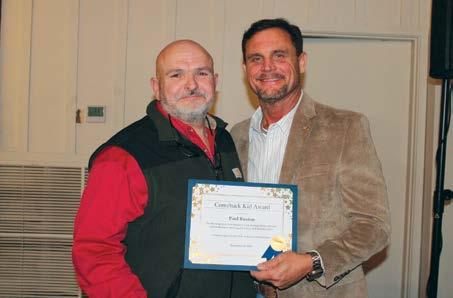



















Yazoo Valley Electric recently hosted seniors Cullen McCain, Dalton
Brett Pierce, Cooper Freeman and Drake Carpenter and Yazoo County High School seniors Ja’Rohn
and James Patterson for job shadowing.


These students spent the day learning about the kind of work electric linemen do each day. Paul Buxton, Eric Woods and Wade O’Briant spent the day with the students and also took them to visit crews working.

Students experienced what it’s like to work from a bucket 50 feet in the air.


The last three times I’ve flown Delta Airlines out of the Jackson airport I’ve been recognized by employees. And if you think that sounds fancy, just know it mostly means somebody hollering at me while I’m trying to find my gate.
“Hey, you’re my magazine man!!!” No, ma’am — I’m an attorney. I don’t deliver magazines.
“OMG, you are the electric man!!!” That’s right — Electric Man — able to leap a padmounted transformer in a single bound. (Well, not these days.) This was a flight attendant who told me she enjoyed reading my articles. Then she handed me the whole can of Coke. Not a cup — the can. That’s not just customer service —that’s encouragement.
“Callahan. Michael Callahan. You’re the writer guy!!” This was the gate agent when my ticket scanned, and the little machine made that happy beep. I’ve never been called “a writer” in real life, and I liked it. Later he told me how much he enjoys reading my columns.
People are always surprised when they see me out in public — like I’m supposed to stay in the magazine and only come out once a month. Some folks look downright shocked, like they just spotted Bigfoot. I’m not sure why, because I DO live in Mississippi (Madison, to be exact). A lot of folks will say, “I loved this month’s article.” Thank you — but I write these ahead of time. “This month’s article” might’ve been written back in January, so help me out and tell me which one you mean.
Truth is, I love talking to people — but I’m cautious at first because I can’t tell which way it’s about to go. Am I fixing to get chewed out (I’ll never write about Christmas lights again), or am I about to hear something kind like,


“That piece about your father made me think about my dad”? Once I know you’re friendly, though, I’m all in.
Two things get mentioned more than anything else. First: “Wow, you are much taller than your picture!” That always cracks me up, since my photo is a headshot — there’s no scale unless you’re measuring my ears. For the record, I’m 6-foot 6-inches tall and a slim 242 pounds. (Yes, the COVID weightloss journey worked. I didn’t want my widow spending my retirement in the Caribbean. Spite is an excellent personal trainer.)
Second: “You look much different in person than your picture.” This is usually said by a woman who’s smiling, so I choose to translate it as, “You look better in person.” The camera and I have never gotten along, which is one reason I gave up politics and went to work for the co-ops. So yes — if you see me in person, you’re getting the upgraded model.
If you happen to see a tall, goodlooking writer roaming around Mississippi, don’t be shy — come on and speak. I’d love to meet you. Finally, a big shoutout to the Central Electric and Southern Pine Electric folks who work for Delta. Y’all do a wonderful job, and I hope I run into you again soon.

by Michael Callahan
Vice President/CEO







Send us a photo of your dog. The photos must be high-resolution JPG files of at least 1 MB in size. Please send the photo as an attachment to an email and send it to news@ecm.coop.
Each entry must be accompanied by photographer or sender’s name, address, and co-op.
SUBMISSION DEADLINE: May 22. Select photos will appear in the July 2026 issue.