



















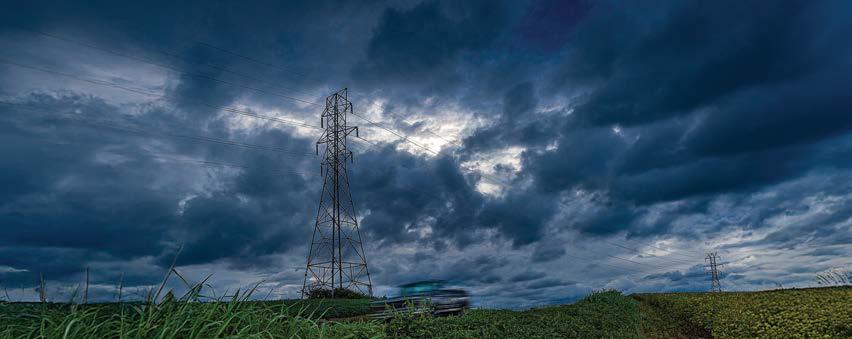
The U.S. grid reliability outlook is “worsening” amid projections for more power plant retirements and surging demand from data centers and other large loads in the next decade, the North American Electric Reliability Corp. said recently.
NERC’s latest Long-Term Reliability Assessment reinforces the need for smart energy policies that support reliable, affordable generation for electric cooperatives, National Rural Electric Cooperative Association (NRECA) CEO Jim Matheson said.
“Today’s report is yet another stark warning about the intensifying reliability risks facing America’s electric grid,” Matheson said. “This report clearly highlights the need for smart, swift actions and serious conversations about how we will meet tomorrow’s energy needs as a country.”
Over half the areas that NERC analyzed in its latest long-term assessment are expected to face resource adequacy challenges in the coming decade.
At the same time, aggregated peak demand is expected to soar by more than 224 GW for summer and 245 GW for winter over the 10-year period, up by 69% and 65% from last year’s 10-year growth projections, respectively.
Power demand from data centers and other large industrial and commercial loads is driving much of that increase, particularly in Texas and the West.
Grid operations are also becoming more complex due to rising deployment of inverter-based, weather-dependent resources such as battery storage and solar energy, NERC said.
Today’s report is yet another stark warning about the intensifying reliability risks facing America’s electric grid. This report clearly highlights the need for smart, swift actions and serious conversations about how we will meet tomorrow’s energy needs as a country.
In the next five years, areas at high risk of energy supply shortfalls include Texas and parts of the Midwest, Mid-Atlantic, and Northwest. Regions at elevated risk of shortfalls — meaning demand could exceed supply during extreme conditions such as above-normal temperatures or fuel supply disruptions — include New England, New York, and parts of the Southeast and Southwest Power Pool.
The loss of always-available generation is one key risk. Although expected plant retirements have shrunk from last year’s long-term assessment, NERC said closures could total over 105 gigawatts of peak seasonal capacity in the next 10 years — enough energy to power up to 100 million homes.
“The overall resource adequacy outlook for the North American [bulk power system] is worsening,” the new report said. “Projections for resource and transmission growth lag what is needed to support new data centers and other large loads that drive escalating demand forecasts.”
NERC called on industry, regulators, and policymakers to speed the addition of new energy resources, manage the reliability risks of large load growth, improve coordination between electric and natural gas systems, and streamline siting and permitting of energy and transmission resources, among other recommendations.
NRECA has advocated for such policy reforms. The association has backed legislation in Congress to ease the federal permitting process for energy projects and urged key agencies to remove regulatory threats to power generation.
“Reliable and affordable electricity is the cornerstone of America’s national security and our economy,” Matheson said. “As electricity demand skyrockets, we urge policymakers to continue working with electric cooperatives to prioritize grid reliability and pursue smart energy policies that help set our nation on a more stable path.”
NRECA



Thank you!
You’ve thanked us with your e-mails and letters, your Facebook posts, in person, and through your prayers. Now, we’d like to THANK YOU – our members – for the support and patience you showed 4-County Electric Power Association as we worked to restore power through our service territory following Winter Storm Fern in late January (see the article and related photos on pages 16 and 17).
The handshakes, pats on the back, as well as the pizzas, dinners, fish, and plates of cookies meant the world to our linemen. The hospitality shown by our members during power restoration e orts was a true lesson in encouragement.
And the perseverance shown by our members in the face of this adversity is truly admirable. Within hours of the storm, families and businesses were clearing limbs and trees and beginning the rebuilding process. Individuals and emergency response organizations were quick to respond to the call for help.
I’d definitely be remiss if I didn’t thank our 4-County employees. During power restoration e orts, they woke up early, drank quick cups of co ee, kissed their families goodbye, and began the process of restoring power to our members. The day began early and ended late. It’s what we do in times like this. Everyone — including inside and outside employees — embraced their roles in the restoration process.
Neighbor helping neighbor. That’s the approach we take as a cooperative and as residents in this part of the country. At 4-County Electric Power Association, we’re proud to be your
neighbor. And we’re proud to help our neighboring co-ops. We also helped restore power to members of Tippah Electric Power Association and Prentiss Electric Power Association. That’s the cooperative way. Many lost much during Winter Storm Fern. Ice storms are bad. Our thoughts and prayers remain with those who lost so much because of this devastating ice storm.
Speaking of 4-County and its members, our co-op team wants to remind you that our Annual Meeting is set for June 4 at the East Mississippi Community College Golden Triangle campus in Columbus. As a member, you have a voice when it comes to the way we do business. Each June, you have the option to vote for your board of directors. These directors play a key role in making important decisions for our co-op, which is why members’ voices must be heard. We’re here for you. Our mission is to improve the quality of life for all those we touch through our member service programs, the 4-County Foundation and the many other endeavors we embrace as your co-op, friends and neighbors. And rest assured, we’ll continue to work for our members, day and night, to keep the lights on! We ask for your continued prayers for safety.

by Brian Clark
CEO/General Manager






by Brad Barr
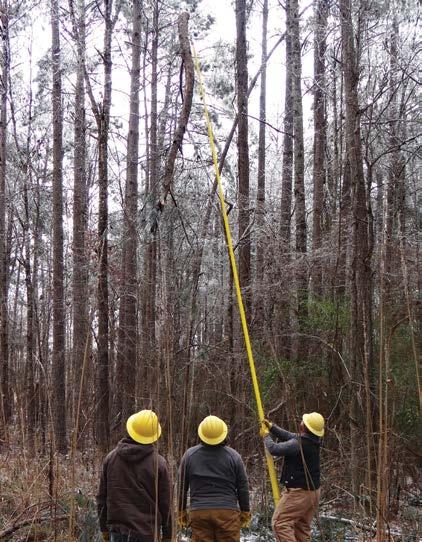
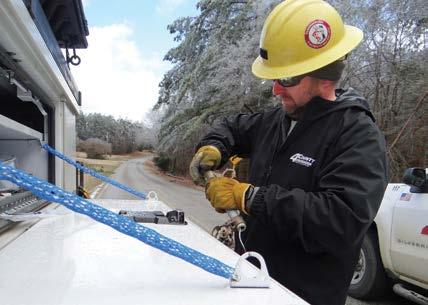
A cup of co ee here, a sandwich and a handshake there. The hospitality shown by co-op members during Winter Storm Fern power restoration e orts was a lesson in encouragement, according to o cials at 4-County Electric Power Association.
“It’s di cult to explain how much these gestures of appreciation mean to our crews,” said 4-County CEO Brian Clark. “It was cold for our guys. And we know it was cold for our members. Together, we tackled this storm head on. With conditions like these, it takes all of us coming together to weather the storm.”

Broken poles, downed power lines, challenging terrain, and icy weather conditions. Crews from 4-County battled them all following a winter storm system that mostly a ected the western portions of 4-County’s service area Jan. 24-27.
Crews worked day and night from Jan. 24-27 to get power restored. Systemwide, there were about 20 broken poles and large spans of downed power line throughout the area.
Together, we tackled this storm head on. With conditions like these, it takes all of us coming together to weather the storm.
Winter Storm Fern began blasting parts of the 4-County service area Jan. 24 with heavy rain. Temperatures plummeted. Ice accumulated on trees, causing limbs to break and fall on power lines. Widespread outages followed. It was a recipe for disaster. Most of the damage occurred in the western portions of 4-County’s service area. But, 4-County crews (who had begun preparations for the event days in advance), met the challenge, accordingly. At the height of the storm, about 7,300 members were without power.
“We’re thankful to our members for the support they provided us during Winter Storm Fern. Our linemen and support team responded as they always do, rolling up their sleeves and getting the job done under some di cult weather conditions,” Clark said.


And, fresh o the heels of restoring power in its service area, 4-County and FASTnet sent crews to assist Tippah Electric Power Association, based in Ripley, Prentiss County Electric Power Association, based in Booneville, and Tallahatchie Valley Electric Power Association, based in Batesville, with their winter storm power and fiber restoration e orts. Crews rotated in and out of these areas for multiple weeks.
4-County and other cooperatives around the nation operate under a reciprocal agreement to provide help to each other in times of crisis. Rural electric cooperatives across Mississippi are responding to the call for help. “It’s what we do,” Clark said.
“We’re proud to assist our sister cooperatives in times of need. They would do the same for us. That’s the cooperative way.”












































by Brad Barr




“The more that you read, the more things you will know. The more that you learn, the more places you’ll go.”

Dr. Seuss may sometimes speak in riddles, but this time that message rings loud and clear, according to West Lowndes Elementary students. The K-2 children there recently received 790 books (many of them based on the earth and its resources) thanks to a $3,555 4-County Foundation grant and assistance from My
“Reading is a foundation of learning,” according to 4-County Foundation President Columbus Jones. “We’re glad to assist West Lowndes Elementary students with this fundamental building block of education,” Jones said.
4-County employees recently read and distributed the books at West Lowndes Elementary. Co-op employees Jonathan Howell,


Brad Barr, Dolly Fulgham, and Tre Robinson participated in the fun-filled and educational event.
4-County believes in helping the communities it serves. That’s why the cooperative launched the 4-County Foundation, a community service program. Since February 2015, participating 4-County members’ utility bills have been rounded up to the






























































Central Electric Power Association will hold its 89th Annual Meeting of the Membership on March 17 at the Carthage Coliseum on Highway 16 East in Carthage. Registration will open at 9 a.m. and will close at 10 a.m.
At the meeting, three directors will be elected for three-year terms. Members will elect two directors from Leake County and one director from Attala County. There also will be reports given on the operation of the association for the past year, and other matters of business will be conducted.
The Nominating Committee for 2026 consists of Joe Crawford from Leake County, Kip Wilcher from Leake County, and Gerald Barton from Attala County.
Candidates nominated by the Nominating Committee for election to the board are Danny Thornton (4239 Ebenezer Road, Carthage, MS 39051) from Leake County; Mike Brooks (3377 Freeny Road, Carthage, MS 39051) from Leake County; and Earl Browning (4873 Attala Road 3024, Kosciusko, MS 39090) from Attala County.
Central Electric, with the cooperation of AccentCare in Carthage, will provide a health fair at the annual meeting. Nurses will o er free blood pressure screenings. Services provided at the health fair will begin at 9 a.m. and continue until 10:20 a.m., when the business meeting begins. Second Mile will provide the musical entertainment before the meeting.
Each Central Electric member who registers at the annual meeting will receive a free light bulb and will be eligible to win one of the following prizes: slow cooker, co ee maker, clock/radio, electric



skillet, toaster, co ee percolator, iron, or air fryer. The grand prize for members who are present at the meeting will be an electric smoker.
Central Electric will give away electricity bill credits for any member who registers in person at the meeting or who sends in his or her proxy or ballot. You do not have to be present at the meeting to win. Four lucky winners will win one of four electricity bill credit prizes: three winners will receive a $500 credit each and one lucky winner will receive a $1,500 credit.
Remember, mail in your proxy or ballot for this year’s meeting. You do not have to be present to win. If your name is drawn at the annual meeting, we will notify you.
Central Electric is a not-for-profit, member-owned cooperative based in Carthage with branch o ces in Philadelphia, Sebastopol, and Rankin County. The co-op maintains more than 4,000 miles of distribution line and serves more than 38,000 member-owners in central Mississippi. Central Electric’s service area includes parts of Leake, Neshoba, Attala, Scott, Newton, Rankin and Kemper counties.
The bylaws of the association provide that any person, fi rm or corporation may become a member of Central Electric by making written application, paying the membership fee, purchasing electricity from the co-op and abiding by the rules and regulations as prescribed by the board of directors.
Central Electric’s annual meeting is for you, the member-owner. So mark your calendar for March 17, and we’ll see you at the annual meeting!
MAIL-IN YOUR BALLOT OR PROXY TO BE ELIGIBLE TO WIN ONE OF THE FOLLOWING PRIZES:
SPECIAL PRIZE: electricity bill credits
Four lucky winners will win one of four special electricity bill credit prizes:
• THREE WINNERS will receive a $500 CREDIT each and • ONE LUCKY WINNER will receive a $1,500 CREDIT.
GRAND PRIZE: electric smoker OTHER PRIZES: slow cooker, co ee maker, clock/radio, electric skillet, toaster, co ee percolator, iron, or air fryer.
You do not have to be present to win, so please remember to mail your ballot or proxy.
In accordance with Federal civil rights law and U.S. Department of Agriculture (USDA) civil rights regulations and policies, the USDA, its Agencies, offices, and employees, and institutions participating in or administering USDA programs are prohibited from discriminating based on race, color, national origin, religion, sex, disability, age, marital status, family/parental status, income derived from a public assistance program, political beliefs, or reprisal or retaliation for prior civil rights activity, in any program or activity conducted or funded by USDA (not all bases apply to all programs). Remedies and complaint filing deadlines vary by program or incident.
Persons with disabilities who require alternative means of communication for program information (e.g., Braille, large print, audiotape, American Sign Language, etc.) should contact the State or local Agency that administers the program or contact USDA through the Telecommunications Relay Service at 711 (voice an TTY). Additionally, program information may be made available in languages other than English.
To file a program discrimination complaint, complete the USDA Program Discrimination Complaint Form, AD-3027, found online at How to File a Program Discrimination Complaint and at any USDA office or write a letter addressed to USDA and provide in the letter all of the information requested in the form. To request a copy of the complaint form, call 866-632-9992. Submit your completed form or letter to USDA by: (1) mail: U.S. Department of Agriculture, Office of the Assistant Secretary for Civil Rights, 1400 Independence Avenue, SW, Mail Stop 9410, Washington, D.C. 20250-9410; (2) fax: 202-690-7442; or (3) email: program.intake@usda.gov.
USDA is an equal opportunity provider, employer, and lender.
9 a.m.
Registration Opens
Entertainment by Second Mile
Registration Closes
Call to Order, Brian Long, General Manager; Invocation; Welcome, Mayor Laurie Henderson; Report of Manager, Brian Long; Engineering and Operations Report; Awarding of Door Prizes; Transaction of Business; Election of Directors; Awarding of Door Prizes
Pursuant to Article III, Sections 3.01 and 3.03, of the association bylaws, notice is hereby given that the annual meeting of members of Central Electric Power Association will be held in the Carthage Coliseum, Highway 16 East, on Tuesday, March 17, 2026. Registration will open at 9 a.m. and will close at 10 a.m.
In accordance with the laws of Mississippi and the bylaws of the association, members will elect three directors for three-year terms: two directors from Leake County and one director from Attala County. Reports will be given on the operation of the association for the past year, and other matters of business will be conducted.
If you cannot attend, fill out the ballot or proxy and mail immediately in the postage-paid envelope.
Valuable door prizes will be given away by drawing names from those registered. Please try to attend.
This year, six names will be drawn from the mail-in votes and prizes will be awarded to them.
Adjournment EQUITIES & LIABILITIES 2025 2024























































by Miranda Boutelle
One of the most common questions I get about energy e ciency rebate programs is, “Why would the company that sells me energy want me to use less of their product?” It’s a good question.
Rebates provide financial incentives for people to use less energy in their homes by reducing the costs of e ciency upgrades, such as insulation, new HVAC systems, water heaters, or other appliances. This helps your electric cooperative save money by eliminating or delaying the need to buy additional power or build new power generation facilities. Using less energy also helps lighten the load on existing generation and transmission infrastructure that delivers power to your home through your electric cooperative.
Your cooperative and other local organizations may o er e ciency programs with special incentives for home upgrades, such as rebates paid after a project is completed. State and federal tax credits may also allow you to reduce the amount of taxes you owe for completing eligible home purchases or upgrades. Federal energy e ciency tax credits ended Dec. 31, 2025. If you completed any upgrades before that date, you can apply for credits on your 2025 federal filings.
Energy e ciency programs are funded through a variety of sources, including surcharges on customer utility bills, grants, and state and federal funding.
If you are planning to purchase new appliances, equipment, or complete an e ciency upgrade, do your research first. I recommend starting with your electric cooperative to see if they o er energy e ciency programs. Also check with your state energy o ce, which might have additional programs to help. The Inflation Reduction Act allocated federal funds to state-administered programs, including home e ciency rebates and home electrification and appliance rebates, to help residents with retrofits such as windows, insulation, air sealing, HVAC equipment, and appliance upgrades.
There are also income-eligible programs available for energy assistance and weatherization, such as the U.S. Department of Energy Weatherization Assistance Program, typically administered by a local community action agency.
Once you identify a rebate, tax credit, or financing option you’re interested in, review the criteria carefully. Criteria can vary by


program, so make sure you know the eligibility requirements before making a purchase to avoid missing out on energysaving opportunities.
Some programs require preapproval before you begin a project. Proof of existing equipment or conditions may be required, such as insulation levels or window types. You may also need to schedule an energy audit conducted by a program representative or photo documentation.
Once you know your project meets the requirements of any available programs, you can proceed with installation. You will likely need to fill out an application and submit a final invoice to prove the project is complete. You may also need to submit pictures or have an inspection from a program representative.
Once approved, your rebate will typically be issued as a bill credit or check, depending on the source.
Miranda Boutelle is the chief operating o cer at E ciency Services Group in Oregon.






by Anthony Buckley







Every time you flip a switch, you’re connecting to one of the most complex systems ever built, also known as the North American electric grid. Often called the largest interconnected machine in the world, this network spans the United States, Canada, and parts of Mexico. It includes thousands of generators, hundreds of thousands of miles of transmission lines, and millions of miles of distribution power lines all working together to keep the lights on day and night.
But how does electricity actually get from a power plant to your home? And where do electric cooperatives fit in? Let’s break it down.
The U.S. electric grid has three major components: generators, transmission, and distribution. Each plays a critical role in delivering electricity where and when it is needed.
In the U.S., most power plants produce electricity by burning fossil fuels or by harnessing renewable resources like solar, wind, and water. To ensure that enough electricity is generated to keep the lights on at an a ordable price, two main structures exist.
The first is a “vertically integrated” model, where in some regions, a single utility owns everything from power plants to power lines and delivers electricity directly to consumers.
In other areas, a second model is used. Instead of one company making and delivering power, many companies sell electricity in a competitive market. Utilities buy electricity from these generators and deliver it to consumers like you. In this model, a group called a regional transmission operator (RTO) or independent system operator (ISO) helps keep everything running smoothly. They make sure enough power is available every second of the day. This system is called a wholesale market, and it lets utilities buy extra power when they need it.
Most electric cooperatives don’t own large power plants. Instead, they purchase power through long-term contracts, wholesale markets, or from their generation and transmission cooperative
(G&T), a member-owned utility that serves multiple co-ops in a designated region. G&T cooperatives are owned by distribution co-ops like yours. There are 64 G&T cooperatives across the U.S., and they often own power plants and transmission lines. G&Ts also plan for the future by investing in new generation sources, building infrastructure, and integrating renewables, all while staying true to the cooperative model: member-focused, not profit-driven.
In Mississippi, there are two G&T’s – Cooperative Energy, which supplies power to 11 co-ops in the south and western parts of the state, and the Tennessee Valley Authority (TVA) which powers co-ops in the northern part of the state.
Once electricity is generated, it doesn’t stay at the power plant. It begins a long journey to reach homes, farms, and businesses. Power must travel across regions to where it’s needed most, and that’s where the transmission system comes in. These high-voltage lines act like energy superhighways, moving electricity e ciently over hundreds of miles before it’s stepped down for local distribution and, ultimately, for the devices you use every day.
Transmission lines move enormous amounts of electricity e ciently across regions. Most distribution co-ops don’t own these transmission lines, but they rely on their G&T cooperative to handle this part of the journey. G&Ts make sure power gets from the plant to your local co-op. However, the electricity carried by transmission lines cannot be used as is because the voltage levels are too high. That’s the job of the distribution network, which is the final step that brings power to your lights, appliances, and devices.
The distribution network is the “last mile” segment of the electric grid and delivers generated energy from the transmission network to consumers. The high-voltage power from transmission lines is converted to lower voltages that home appliances, electric vehicles, and personal devices can use. This is where your electric cooperative comes in to keep local lines maintained and power flowing to members 24/7/365.
Understanding how power moves from generation to your home helps explain why reliability and a ordability depend on teamwork and collaboration between your local co-op, its G&T partners, and the broader grid. Together, co-ops are preparing for tomorrow’s challenges, so you can count on safe, reliable power for years to come.
Anthony Buckley writes on consumer and cooperative a airs for the National Rural Electric Cooperative Association.

The
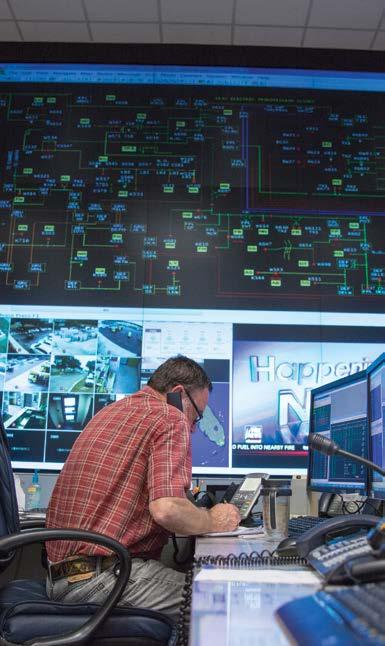
electric grid includes thousands of generators, hundreds of thousands of miles of transmission lines and millions of miles of distribution power lines all working together to keep the lights on day and night.









by Cathy Cash
Kinks in the supply chain caused by the COVID pandemic — remember the run on toilet paper? — may be in the rearview for regular consumers, but new bottlenecks in the flow of goods and services are challenging Mississippi’s electric cooperatives to deliver a ordable and reliable service. And the circumstances squeezing the supply chains for electric co-ops are unlikely to ease in the foreseeable future.
Basically, we’re talking about a higher demand for electricity, but supply of equipment needed to maintain or build more power plants has not kept up. Then there’s a skilled labor shortage to get the job done and tari s on imported materials. All these things add up to delayed energy projects at increased costs.
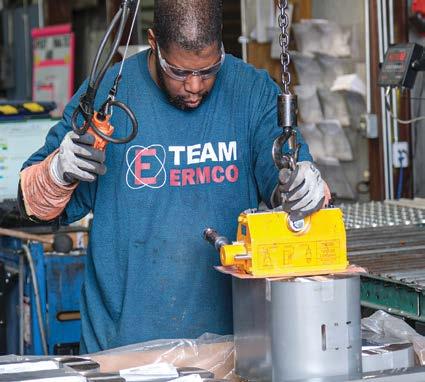
After the pandemic forced manufacturing to shutter for months in 2020, a lot of experienced employees retired or never even went back to their jobs making transformers and other equipment essential to distributing electricity to consumers. The supply of some transformers has never been fully replenished, and the lack of a competent workforce today makes that a constant game of catch-up.
U.S.-based engineering, procurement, and construction firms are scrambling to meet work orders for new power projects as there is more demand today than they can keep up with, says Stephanie Crawford, regulatory a airs director at the National Rural Electric Cooperative Association.
Electric co-ops are “finding that these firms cannot respond to requests, they’re charging price premiums or that planning for projects four years out is already ‘too late,’” she says.
As a result, equipment crucial for electricity projects — from new substations to power plant maintenance and outage repairs after storms hit — are on delay and coming in at much higher prices.
Co-ops are seeing lag times of up to four years between an order for a transformer and its ultimate delivery. Prices are up 70% to 100% compared to 2020. Lead times for new gas turbines for a power plant can range from three to six years and cost 25% more than just three years ago.
According to one industry insider, an electric co-op that spent $10 million on materials and equipment for electricity projects and maintenance in 2020 had to spend over $15.5 million in 2025 to keep up.
So, what is your electric co-op doing to maintain reliable and a ordable service?
Collaboration, which is baked into every co-op’s DNA, is key. Co-ops are finding themselves working with equipment suppliers and contractors closer than ever and planning their orders at least a year in advance of construction to work out the snags of the current supply chain.
Knowing their exact inventory and the physical storage space also helps co-ops keep necessary equipment on hand, materials flowing, and projects as near to schedule as possible.
By working as a team, electric co-ops, manufacturers, and their industry partners will be able to improve forecasting their equipment needs, stay ahead of potential demand changes, and experience a smoother supply chain.
Cathy Cash writes on consumer and cooperative a airs for the National Rural Electric Cooperative Association.
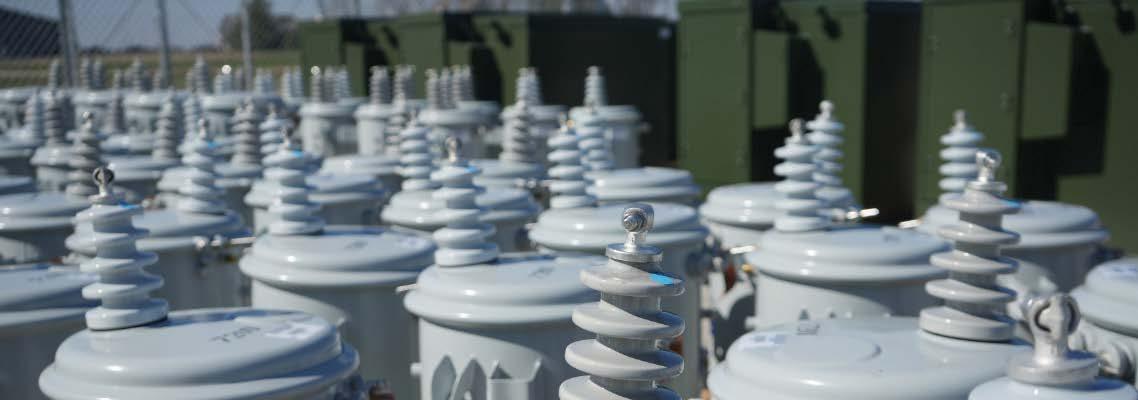
After the pandemic, many skilled workers retired from manufacturing jobs making distribution transformers and other essential energy equipment. The shrunken labor force is challenging the supply for new power plant construction, maintenance or outage recovery. Photo Credit: ERMCO



































After freezing temperatures this winter, I think it’s safe to say we are all ready for more moderate spring weather. Myself, I’m ready to skip straight to summer. Although we didn’t receive the ice that devastated areas of north Mississippi, extreme temperatures have had an impact on our members’ energy use, and that means bills have been higher. When it’s freezing outside, your heater must work much harder to keep your home warm. Even when trying to manage your energy use, that heating system working harder will still greatly increase your energy use and cause your electricity bill to be higher. No one wants to see higher bills and we understand the impact this can have so we o er programs that can help if a high bill causes financial strain. Our Share Your Blessings fund, which is part of our Operation Round Up program, is available for members who need













by Chris Rhodes
President and CEO
Coast Electric wants you to reduce your energy use and see savings on your energy costs. Each month, you will have an opportunity to register to win a prize that will help you reduce the energy consumption in your home. Visit www.coastelectric.coop and fill out our entry form. It only takes a few seconds, and you could win a prize that helps you save!
Congratulations to Claudette Luther, the winner of our January Reduce Your Use prize!










assistance paying their bills. Share Your Blessings funds are available through Catholic Charities. If you need help and want to see if you are eligible for assistance, contact Catholic Charities at 855-847-0555. I also encourage you to contact our team, so we can o er advice and solutions. We are always here to work with you.




Congratulations to Coast Electric and CoastConnect CEO Chris Rhodes for being selected to join the Gulf Coast Community Foundation Board of Directors. The community foundation helps attract, manage and distribute charitable funds to enrich the lives of south Mississippi residents.
“I’m honored to join the Board of Directors of the Gulf Coast Community Foundation and to support its mission of strengthening our communities,” Chris said. “I look forward to working alongside fellow board members and community leaders to help create lasting opportunities and a strong future along the Gulf Coast for generations to come.”
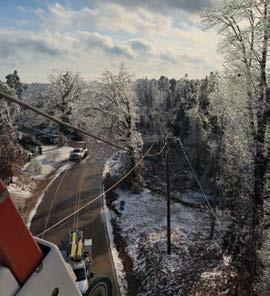
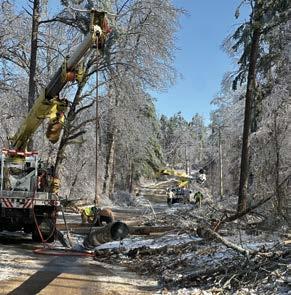
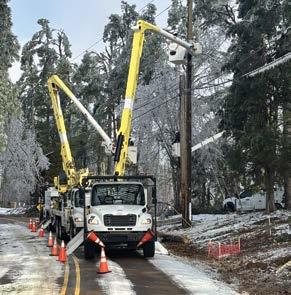
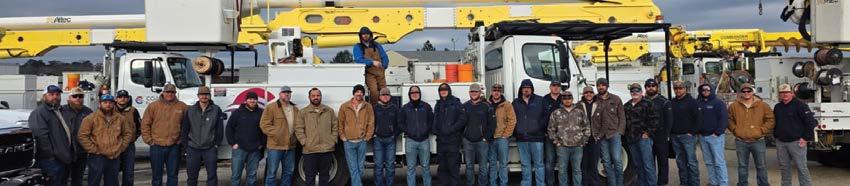
After ice storms severely damaged North East Mississippi Electric’s infrastructure and NE SPARC’s high-speed internet system, Coast Electric and CoastConnect crews traveled north to help restore service for consumers. Crews made two trips, with 31 employees assisting the first time and an additional 30 employees relieving those crews on a second trip.
One of the principles that guide operations for cooperatives like Coast Electric, North East Mississippi Electric, and their subsidiaries, is helping other co-ops in times of need. Just as cooperatives from across the country have come to the aid of Coast Electric over the years, Coast Electric will answer the call from sister cooperatives. This marks the first time CoastConnect crews have traveled to assist with restoration e orts.
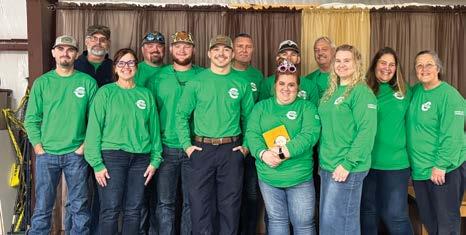
Service is at the heart of Dr. Martin Luther King’s message, and at Coast Electric and CoastConnect, we believe service to our communities is important. In honor of Martin Luther King Jr. and the National Day of Service named for him, our employees spent time volunteering at the Humane Society of South Mississippi in Harrison County, the Hancock County Animal Shelter and Manna Ministries in Pearl River County. Whether it’s volunteering at local charities like our employees did, checking in on a neighbor or lending a helping hand where it’s needed most — every act of service matters. Together, we can power positive change, one kind act at a time.














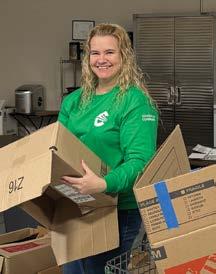





Anthony Armstrong has been named vice president of CoastConnect, Coast Electric’s high-speed fiber internet service provider. Armstrong is an accomplished leader in the telecommunications industry with more than 33 years of experience in the field.
In his new role, Armstrong directs a dedicated team that delivers high-performance broadband services to the communities in Hancock, Harrison and Pearl River counties. His leadership ensures that rural residents and businesses remain connected while improving the quality of life for residents in our community.
Armstrong previously held positions in sales and engineering at Calix, one of CoastConnect’s partners in bringing high-speed internet services to south Mississippi. His career has given him opportunities to provide technical consulting, network design and project management services, develop marketing strategies, and serve in leadership roles.
He has a Bachelor of Science in accounting from Livingston University.
“Having someone with Anthony’s level of knowledge and expertise in the telecommunications industry is an advantage for our CoastConnect team and our subscribers,” said Coast Electric and CoastConnect President and CEO Chris Rhodes. “Not only do we have a team of local employees who understand the needs of our community, we also have an industry expert with a reputation for leadership guiding the team. I know Anthony will oversee CoastConnect’s growth while keeping our commitment to subscribers to provide excellent, reliable high-speed internet service.”

Our Time of Use (TOU) rate spring/summer peak hours begin April 1. If you are a member who is taking advantage of this energy and money-saving rate plan, be sure to change the settings on your water heater timers, pool pump timers and programmable thermostats to reflect the summer peak hours – 3 p.m. - 6 p.m. Monday through Friday.
If you have not taken advantage of our TOU rate plan, what are you waiting for? The plan comes with a sixmonth guarantee, so if you don’t save, you haven’t lost a penny. That’s a great deal! Visit coastelectric.coop or give us a call at 877-769-2372 to learn more about how you can save with TOU.





In accordance with Federal civil rights law and U. S. Department of Agriculture (USDA) civil rights regulations and policies, the USDA, its Agencies, o ces and employees, and institutions participating in or administering USDA programs are prohibited from discriminating based on race, color, national origin, religion, sex, gender identity (including gender expression), sexual orientation, disability, age, marital status, family/parental status, income derived from a public assistance program, political beliefs, or reprisal or retaliation for prior civil rights activity, in any program or activity conducted or funded by USDA (not all bases apply to all programs). Remedies and compliant filing deadlines vary by program or incident.
Persons with disabilities who require alternative means of communication for program information (e.g., Braille, large print, audiotape, American Sign Language, etc.) should contact the responsible agency or USDA’s TARGET Center at 202-720-2600 (voice and TTY) or contact USDA through the Federal Relay Service





Don’t forget to spring forward! Daylight Saving Time begins at 2 a.m. on March 8. If you are on our TOU rate and your timers don’t automatically reset, remember to change them to ensure savings.


at 800-877-8339. Additionally, program information may be made available in languages other than English.
To file a program discrimination complaint, complete the USDA Program Discrimination Complaint Form, AD-3027, found online at http://www.ascr.usda.gov/complaint_filing_cust.html and at any USDA o ce or write a letter addressed to USDA and provide in the letter all of the information requested in the form. To request a copy of the complaint form, call (866) 632-9992. Submit your completed form or letter to USDA by:
Mail: S. Department of Agriculture
O ce of the Assistant Secretary for Civil Rights 1400 Independence Avenue, SW| Washington, D.C. 20250-9410; Fax: (202) 690-7442; or Email: intake@usda.gov
USDA is an equal opportunity provider, employer, and lender.



























TUESDAY, APRIL 14, 2026 • 10 A.M.
Greenwood Elks Lodge 1010 Sgt. John Pittman Drive Greenwood, MS
All members of Delta Electric Power Association are urged to attend the Annual Meeting of Members on Tuesday, April 14, 2026. Registration will begin at 9:30 a.m. with the meeting to follow at 10 a.m., at the Greenwood Elks Lodge on 1010 Sgt. John Pittman Drive, Greenwood.
Participation of Delta EPA members in the annual meeting is important to elect directors, receive and pass on reports covering the operation of the association, and to transact other business that may come before the meeting.
With a few exceptions provided by the bylaws, only members will be admitted to the meeting. Seating, however, will be available for members’ families who wish to attend.











It is important to the successful operation of the association that its members either attend this meeting in person or sign, date and send in the original proxy form that was mailed Jan. 14 to each member. The proxy must be executed and mailed in or delivered in person to the secretary of the association at the association’s o ce at 1700 Highway 82 West in Greenwood.
The proxy must be received by the secretary of the association no later than April 9, 2026, to be valid.
Members must vote on the original printed forms; copies will not be accepted. Any member who has misplaced the original proxy may request another by calling the nearest Delta Electric Power Association o ce.
Under the bylaws of the association, each member is entitled to one vote.



























by Anthony Buckley
Every time you flip a switch, you’re connecting to one of the most complex systems ever built, also known as the North American electric grid. Often called the largest interconnected machine in the world, this network spans the United States, Canada, and parts of Mexico. It includes thousands of generators, hundreds of thousands of miles of transmission lines, and millions of miles of distribution power lines all working together to keep the lights on day and night.
But how does electricity actually get from a power plant to your home? And where do electric cooperatives fit in? Let’s break it down.
The U.S. electric grid has three major components: generators, transmission, and distribution. Each plays a critical role in delivering electricity where and when it is needed.
In the U.S., most power plants produce electricity by burning fossil fuels or by harnessing renewable resources like solar, wind, and water. To ensure that enough electricity is generated to keep the lights on at an a ordable price, two main structures exist.
The first is a “vertically integrated” model, where in some regions, a single utility owns everything from power plants to power lines and delivers electricity directly to consumers.
In other areas, a second model is used. Instead of one company making and delivering power, many companies sell electricity in a competitive market. Utilities buy electricity from these generators and deliver it to consumers like you. In this model, a group called a regional transmission operator (RTO) or independent system operator (ISO) helps keep everything running smoothly. They make sure enough power is available every second of the day. This system is called a wholesale market, and it lets utilities buy extra power when they need it.
Most electric cooperatives don’t own large power plants. Instead, they purchase power through long-term contracts, wholesale markets, or from their generation and transmission cooperative
(G&T), a member-owned utility that serves multiple co-ops in a designated region. G&T cooperatives are owned by distribution co-ops like yours. There are 64 G&T cooperatives across the U.S., and they often own power plants and transmission lines. G&Ts also plan for the future by investing in new generation sources, building infrastructure, and integrating renewables, all while staying true to the cooperative model: member-focused, not profit-driven.
In Mississippi, there are two G&T’s – Cooperative Energy, which supplies power to 11 co-ops in the south and western parts of the state, and the Tennessee Valley Authority (TVA) which powers co-ops in the northern part of the state.
Once electricity is generated, it doesn’t stay at the power plant. It begins a long journey to reach homes, farms, and businesses. Power must travel across regions to where it’s needed most, and that’s where the transmission system comes in. These high-voltage lines act like energy superhighways, moving electricity e ciently over hundreds of miles before it’s stepped down for local distribution and, ultimately, for the devices you use every day.
Transmission lines move enormous amounts of electricity e ciently across regions. Most distribution co-ops don’t own these transmission lines, but they rely on their G&T cooperative to handle this part of the journey. G&Ts make sure power gets from the plant to your local co-op. However, the electricity carried by transmission lines cannot be used as is because the voltage levels are too high. That’s the job of the distribution network, which is the final step that brings power to your lights, appliances, and devices.
The distribution network is the “last mile” segment of the electric grid and delivers generated energy from the transmission network to consumers. The high-voltage power from transmission lines is converted to lower voltages that home appliances, electric vehicles, and personal devices can use. This is where your electric cooperative comes in to keep local lines maintained and power flowing to members 24/7/365.
Understanding how power moves from generation to your home helps explain why reliability and a ordability depend on teamwork and collaboration between your local co-op, its G&T partners, and the broader grid. Together, co-ops are preparing for tomorrow’s challenges, so you can count on safe, reliable power for years to come.
Anthony Buckley writes on consumer and cooperative a airs for the National Rural Electric Cooperative Association.
The
electric grid includes thousands of generators, hundreds of thousands of miles of transmission lines and millions of miles of distribution power lines all working together to keep the lights on day and night.









by Abby Berry







Lighting is something most of us don’t think much about — until it’s wrong. Maybe the living room feels too dim for reading, or the kitchen lights cast an odd yellow glow. We often grab whatever bulb or fixture looks good without considering how it will actually perform in the space. But with a little planning, you can make your home brighter, cozier, and more energy e cient.
When you’re shopping for lightbulbs, it’s easy to focus on watts, but watts only measure how much energy a bulb uses. When it comes to brightness, what really matters is the lumen count. Lumens measure the actual light output. For example, an 800-lumen bulb gives o about the same amount of light as an old-fashioned 60-watt incandescent bulb. (You’ve likely replaced all incandescent bulbs with long-lasting, energy e cient LED.)
A helpful rule of thumb: higher lumens mean brighter light, while lower watts mean less energy consumed.
Light bulbs also vary in color temperature, which ranges from warm yellow to cool white or even bluish tones. This detail often gets overlooked — until you replace one bulb and notice the new light doesn’t quite match the others. If mismatched tones drive you crazy, consider buying and installing bulbs of the same brand and wattage in a room at the same time
Installing dimmers instead of standard on/o switches can be a game changer. Dimmers give you more control over brightness, help save energy and create a more comfortable atmosphere. While you’re thinking about switches, consider whether you have enough of them — and in the right places. A light you can only turn o from one end of a hallway quickly becomes annoying.
Bulbs are only part of the equation — fixtures matter too. Each type serves a purpose. Ambient lighting, like sconces or glasscovered ceiling fixtures, provides general illumination. Task lighting, like pendants, desk lamps, or track lighting, focuses light where you need it most.
When choosing a fixture, think beyond looks. Ask yourself: does this light provide the right amount of brightness for the space?
Smart lighting adds another layer of control for illuminating your home. But the real magic is convenience. With smart bulbs, you can adjust brightness, set schedules, or even change colors — all from your phone or a voice assistant like Alexa or Google Assistant.
Smart lighting also lets you personalize your space. You can go classic with warm white tones or experiment with colors to set the mood — anything from a soft glow for winding down to vibrant hues for a party. Remember, smart bulbs still rely on power from your wall switch, which needs to stay in the “on” position for remote controls to work. If you prefer using a physical switch, consider pairing smart bulbs with a smart light switch.
Good lighting doesn’t just make your home look better — it makes it feel better too. With a little planning, you can create spaces that are welcoming, functional, and energy e cient.















































This time of year, many of our members are beginning to spend more time outdoors — working in their yards, planting trees, and preparing for the warmer months ahead. At Dixie Electric, spring is also an important time to talk about something that may not always be top of mind but plays a major role in keeping your power on: tree trimming and right-of-way clearing. Together, these are commonly referred to as vegetation management.
By keeping vegetation properly cleared away from our rights-of-way and power lines, we can significantly reduce the number of outages, speed up restoration when outages do occur, and lower safety risks for our members, our crews, and the public.
Trees and other vegetation are the leading causes of power outages across our system. High winds, heavy rain, ice, and even normal growth can bring branches into contact with power lines. When that happens, outages are more likely to occur.
That’s why proactive vegetation management is a critical part of maintaining a safe and reliable electric system. By keeping vegetation properly cleared away from our rights-of-way and power lines, we can significantly reduce the number of outages, speed up restoration when outages do occur, and lower safety risks for our members, our crews, and the public.

While our contract crews work year-round to manage vegetation along our rights-of-way, we also ask for our members’ help, especially this time of year when planting is top of mind. Planting trees in the right place today can prevent problems for years to come.
On page 18, you’ll see a helpful tree-planting graphic that shows recommended distances for planting near power lines. As a general rule, small trees should be planted at least 30–35 feet away from power lines, while large trees should be planted 40–45 feet away. These are general guidelines since the type or species of tree also plays a role in determining how far to plant trees from power lines. Small trees like fruit trees, dogwoods, or similar fall into the fi rst group. Trees like pine trees that may grow fairly tall, whose limbs don’t extend very far out, may also fit into this group. Contrast those with hardwood trees like live oaks that may have limbs extending further out than they are tall. Those may need to be planted more than 50 feet from power lines. Choosing the right tree and the right location helps protect your investment, prevents future outages, and reduces the need for trimming down the road.
Another important reminder for spring projects: always call 811 before you dig. Whether you’re planting a tree, installing a fence, or starting a landscaping project, calling 811 ensures that underground utility lines are properly marked before digging begins. This simple, free step helps prevent costly damage and keeps everyone safe.
Vegetation management and thoughtful planting are shared responsibilities. When we work together, we all benefit from a safer, more reliable electric service.


by Randy Smith General Manager

by Amanda Mills
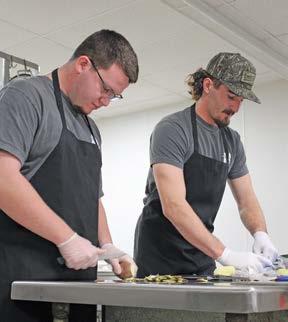
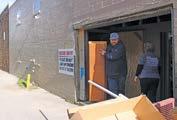
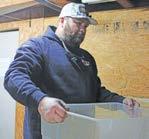
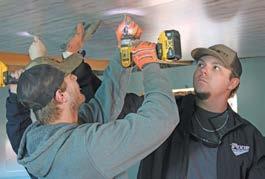
Each year, we honor the legacy of The Rev. Martin Luther King Jr. by giving back to our communities through the MLK Cooperative Day of Service. Once again, our employees stepped away from their daily responsibilities to serve others and make a meaningful impact across our service area.
In Waynesboro, volunteers spent the day at Samaritan’s Closet and Pantry tackling a muchneeded cleanup project. Our team helped clear out an upper storage room, sorting through years’ worth of accumulated items and determining what could be kept and what needed to be discarded. The project required significant heavy lifting and organization, providing relief to the staff and helping them reclaim valuable storage space for future use.
In Petal, volunteers returned to Worthy Stables, a nonprofit that provides equine-assisted services to individuals with disabilities, special needs, trauma survivors, children in foster care, and military veterans. This year, our team assisted in installing a ceiling in a newly constructed classroom, helping create a safer and more functional space for the important programs they provide.
In Laurel, employees volunteered at Christian Food Mission, where they helped prepare and cook the daily meal that is delivered to individuals and families in need, including those who are homebound in our community.
King once said, “Life’s most persistent and urgent question is, ‘What are you doing for others?’” We are proud to answer that call by serving our communities and continuing our commitment to making a difference where it matters most.
















by Amanda Mills
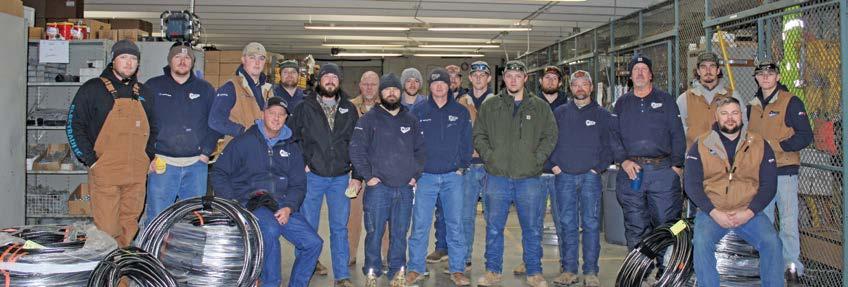
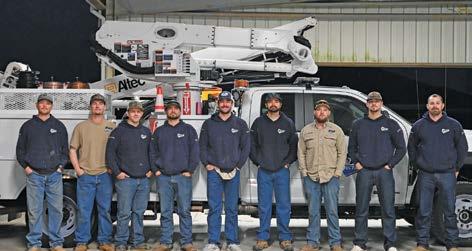
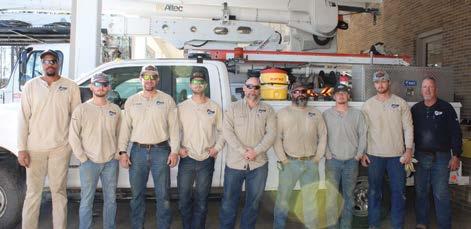
Following Winter Storm Fern, which caused widespread power outages across north Mississippi and beyond, Dixie Electric Power Association crews answered the call for help, first in Pontotoc and later in several other hard-hit communities across the state.
At the height of the storm, electric cooperatives across Mississippi reported nearly 163,000 members without power. The ice storm caused catastrophic damage, including widespread fallen trees, broken poles, and downed power lines, creating dangerous and difficult working conditions for crews statewide. Restoration efforts were further challenged by freezing temperatures and continued falling limbs, requiring careful, methodical work to restore service safely.
In the early morning hours of Jan. 26, Dixie Electric sent 19 employees, including linemen, servicemen, and a mechanic helper, to assist with power restoration efforts. Those crews remained on assignment for nearly two weeks before returning home on February 5. Once they returned, Dixie Electric was able to continue supporting other cooperatives still facing significant outages.
On Feb. 7, a Dixie Electric crew was deployed to Tallahatchie Valley Electric Power Association in Batesville, where thousands of members remained without power. In addition, four DE Fastlink fiber technicians were sent to assist with restoring internet service, a detailed and timeintensive process that requires fiber splicing. On Feb. 9, a final crew from Dixie Electric’s Petal office was sent to North East Mississippi Electric Power Association in Oxford to support ongoing restoration efforts.
Dixie Electric is proud of its employees who step forward to help, often working long hours away from home, as well as those who remain behind to continue serving members locally. Their dedication reflects the cooperative spirit and what it truly means to answer the call when it matters most.



















TUESDAY, MARCH 31


WEDNESDAY, APRIL 1
Dixie Electric's Waynesboro o ce
Dixie Electric's Petal o ce
THURSDAY, APRIL 2

Dixie Electric's Laurel o ce



Photos available 2 p.m. – 6 p.m. First child: $10 • Each additional child: $5

PROCEEDS BENEFIT
















Available to 7-12th grade students who reside with a parent/guardian who is
• The student’s name, school/homeschool, and artwork title should be written or attached to the back of the submission.
• Submit artwork at any Dixie Electric o ce by Friday, March 20. You will be required to fill out an art submission form upon arrival.
• Winners will be announced in April. Third place will receive $100. Second place will receive $200. The overall winner will receive $350!
The top three winners will be displayed in Dixie Electric lobbies for a year. Winning artwork will be recognized in the Today in Mississippi magazine.
• Power of Community
• Energy for the Future
• Safety First
Contact Amanda Mills at
• Life Powered by Electricity
• Lineman – The Unsung Hero
Trees beautify our neighborhoods, and when planted in the right spot, can even help lower energy bills. But the wrong tree in the wrong place can be a hazard — especially to power lines.

Red Maple, Spruce, Lacebark Elm, White Oak, Hemlock, and Shagbark Hickory
Bradford Pear, Carolina Silverbel, Golden Raintree, Ornamental Cherry, Saucer Magnolia, Serviceberry, Sourwood, Fraser Fir, Winter King Hawthorne, Redbud, Flowering Dogwood, Kousa, Japanese Lilac, Ornamental Crabapple, Dogwood, and Stewartia
Avoid































DeKalb 601-743-2641 • Louisville 662-773-5741 • Quitman 601-776-6271 • Meridian / After-Hours Outages 601-581-8600
MEMBER OWNED. LOCALLY OPERATED. THAT’S THE COOPERATIVE DIFFERENCE.
























In recent weeks, many neighboring communities faced the challenges of a severe ice storm — downed lines, damaged infrastructure and extended power outages. Here at EMEPA, we were fortunate. While we experienced cold temperatures and di cult conditions, our system was spared the worst of the storm’s impact.
That is a blessing we do not take lightly.
Because our community was protected, EMEPA was able to do what electric cooperatives have always done: step up to help others. More than 50 EMEPA employees traveled to assist sister cooperatives with power restoration e orts, working long hours in harsh conditions to help bring electricity back to homes and businesses impacted by the storm. At the time of this writing, the initial crews have returned home safely, and an additional rotation of East MS Connect fiber crews are providing assistance in north Mississippi.



This is what cooperation truly looks like.

The experience also reflects the value of preparation. EMEPA invests year-round in system maintenance, training and emergency planning so that when severe weather strikes — whether here or elsewhere — we are ready. That preparation allowed us to assist other cooperatives without compromising service to our own members.
Reliable power restoration requires skill and experience, but it is sustained by trust, compassion and people willing to look out for one another.
But this e ort did not belong to EMEPA employees alone.
While crews were away, neighbors here at home stepped up in quiet, meaningful ways. They checked in on families, fed livestock, helped when a car wouldn’t start on a cold morning and simply listened when someone needed reassurance. These acts of kindness — often unseen and unspoken — made it possible for our employees to focus on the work at hand, knowing their families were cared for.
Most of all, this moment highlights the strength of our community. It shows what happens when dedicated employees, supportive neighbors and a shared sense of responsibility come together. Reliable power restoration requires skill and experience, but it is sustained by trust, compassion and people willing to look out for one another.
We are grateful our community was spared, proud to have helped our neighbors in their time of need and thankful for both the employees who traveled and the community members who stood behind them. This is the cooperative di erence — neighbors helping neighbors, near and far.

by Randy Carroll
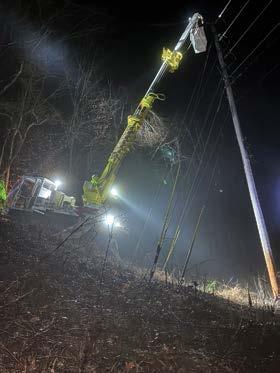

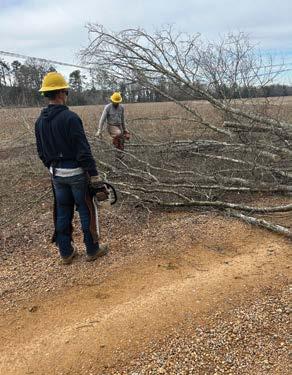
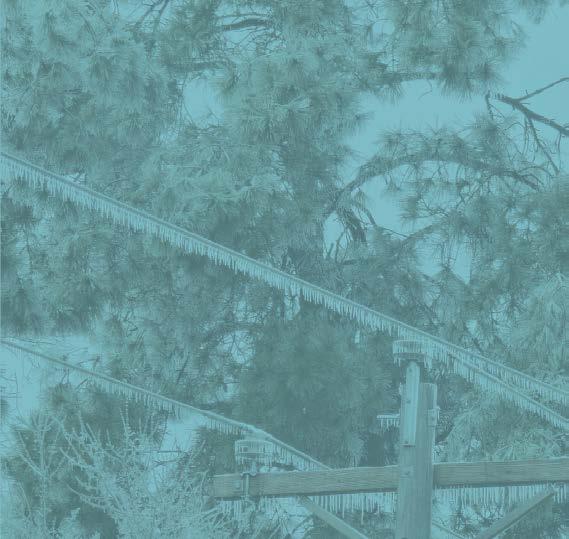

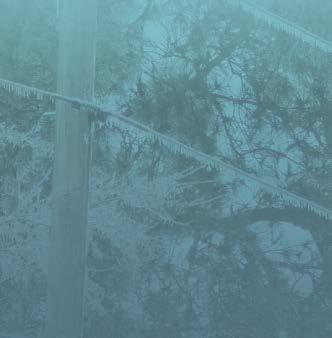
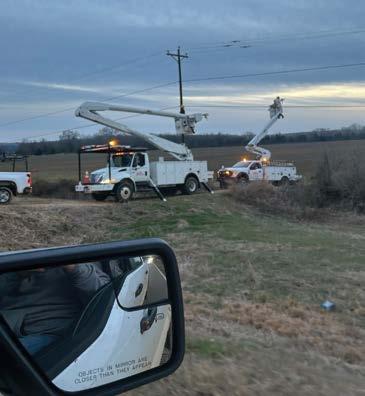
East Mississippi Electric Power Association (EMEPA) recently sent crews to assist Natchez Trace Electric Power Association (NTEPA), headquartered in Houston, Mississippi, following Winter Storm Fern, which left much of north Mississippi blanked in layers of ice and caused widespread outages. EMEPA linemen, right-of-way crews, servicemen and engineering teams, as well as East Mississippi Connect fiber crews, worked alongside NTEPA crews for more than a week to help restore power safely and e ciently to a ected members.
After completing the initial restoration e orts, the first round of EMEPA crews returned home safely. A second group of EMEPA employees then departed to provide restoration assistance to Alcorn County Electric (ACE), headquartered in Corinth and an East MS Connect fiber crew traveled to DElight Speed headquartered in Greenwood, as winter weather impacts continued across the region.
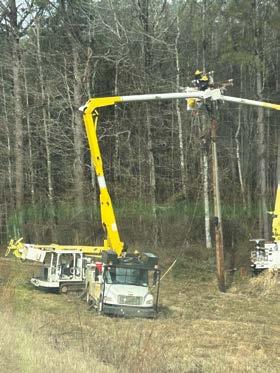
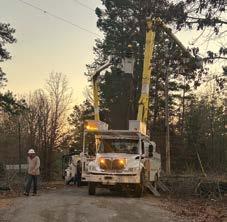

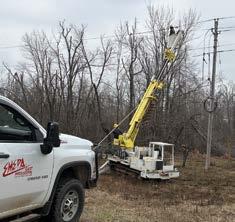
“Mutual aid is a cornerstone of the cooperative network,” said EMEPA CEO Randy Carroll. “We are proud of our crews who step up when fellow cooperatives need help, while ensuring we continue to meet the needs of our members back home. Their commitment, professionalism and dedication truly represent the cooperative spirit.”



















One of EMEPA’s most anticipated community traditions is back. Shoot For a Cure returns March 26–27 at Camp Binachi Shooting Sports in Lauderdale County, once again bringing businesses, shooters and supporters together for a cause that truly matters.
What started as a small Relay for Life fundraiser has grown into a regional event with a lasting impact. Funds raised support St. Jude Children’s Research Hospital and the Baptist-Anderson Cancer Center Patient Benevolence Fund, helping local families manage the financial strain that often comes with cancer treatment.
“Each year, this event reminds us just how generous our community is,” said event coordinator Margaret Brewer. “When we deliver these funds and see the relief they provide, it reinforces why Shoot For a Cure continues to be so important.”




This year’s goal is to raise $40,000 with 130 teams taking part. Team registration is $260; sponsorships are available for $250, or participants can choose a $420 premium package that includes both a team entry and stand sponsorship.
In addition to friendly competition, ra e tickets can be purchased for chances to win a Glock 43X 9mm from Thomas Gun and Pawn, a Winchester 12-gauge SXP Defender from Rock House Gun and Pawn or a Yeti 45 Special Edition Patriotic Cooler from Red Hot Power Sports. Ra e tickets are $1 each and available at all EMEPA o ces.
Whether you’re taking the course or supporting from the sidelines, your involvement helps make a meaningful di erence for families in our community.
For registration or sponsorship information, contact Margaret Brewer at 601-581-8602 or mbrewer@emepa.com.
This policy is in conformance with the requirement of the Age Discrimination Employment Act, the Vietnam Era Veterans Readjustment Act, the Rehabilitation Act, the Americans with Disabilities Act, Equal Pay Act, Genetic Information Nondiscrimination Act, Title VII of the Civil Rights Act, and all other civil rights related to laws and regulations that have or may be enacted, as amended.
It is the policy of East MS EPA not to discriminate against any employee or applicant for employment because of race, color, religion, sex, pregnancy, sexual orientation, gender identity, national origin, age, marital status, genetic information, disability or because he or she is a protected veteran. It is also the policy of East MS EPA to take a rmative action to employ and to advance in employment persons regardless of disability or protected veteran status, and to base all employment decisions only on valid job requirements. This policy shall apply to all employment actions, including but not limited to recruitment, hiring, upgrading, promotion, transfer, demotion, layo , recall, termination, rates of pay, retaliation or other forms of compensation and selection for training, including apprenticeship, at all levels of employment.
Employees and applicants of East MS EPA will not be subject to harassment on the basis of race, color, religion, sex, pregnancy, sexual orientation, gender identity, national origin, age, marital status, genetic information, disability or because he or she is a protected veteran. Additionally, retaliation, including intimidation, threats, or coercion, because an employee or applicant has objected to discrimination,
engaged, or may engage in filing a complaint, assisted in a review, investigation, or hearing or have otherwise sought to obtain their legal rights under any Federal, State, or local EEO law is prohibited.
As Chief Executive O cer of East MS EPA, I am committed to the principles of A rmative Action and Equal Employment Opportunity. In order to ensure dissemination and implementation of Equal Employment Opportunity and a rmative action throughout all levels of the company, I have selected Sherry Wallace, Director of Human Resources, as the Equal Employment Opportunity (EEO) Manager for East MS EPA. One of the EEO Manager’s duties will be to establish and maintain internal audit and reporting systems to allow for e ective measurement of East MS EPA’s programs.
In furtherance of East MS EPA’s policy regarding A rmative Action and Equal Employment Opportunity, East MS EPA has developed a written A rmative Action Program which sets forth the policies, practices, and procedures that East MS EP is committed to in order to ensure that its policy of nondiscrimination and a rmative action is accomplished. This A rmative Action Program is available in the Human Resources o ce for inspection by any employee or applicant for employment upon request, during normal business hours. Interested persons should contact Sherry Wallace for assistance. We request the support of all employees in accomplishing Equal Employment Opportunity.
Not long ago, internet access was considered a convenience—something nice to have when the performance was fast enough. Today, it is as essential as electricity. From how we work and learn to how we manage our health and grow our food, modern life depends on a connection that can truly keep up.
That is where East Mississippi Connect comes in. Built on high-speed fiber technology, East MS Connect is not just about faster downloads. It is about supporting real life across East Mississippi today, while preparing communities for what comes next.
Across the region, families stream multiple shows at once, students attend virtual classes and employees log into video meetings from home o ces. Telehealth appointments connect residents with doctors and specialists without long drives. Smart home technology provides added security and peace of mind. On local farms, connected tools help monitor crops, manage irrigation and track equipment in real time.
technologies that slow down during peak usage times, fiber provides the capacity needed for video calls, online learning platforms, large file uploads and emerging smart technologies—without interruptions or frustration.
The real value of high-speed fiber goes beyond performance. It creates opportunity. Reliable connectivity allows students to learn without limits, small businesses to reach customers far beyond their storefronts and healthcare providers to extend care outside clinic walls. It supports economic growth, attracts new investment and helps rural communities remain competitive in an increasingly digital world.

All of these everyday activities require something yesterday’s internet was never designed to deliver: reliable speed that works just as well uploading as it does downloading. Fiber internet delivers consistent performance even when demand is high. Unlike older
What truly sets East MS Connect apart is its local foundation. Built by the electric cooperatives that already serve the region, the network is locally owned and locally driven. We make decisions with members in mind, service is personal and investments stay right here at home.
As technology continues to evolve, the demands on our networks will only grow. East MS Connect was built to meet that future head-on; scalable, resilient and ready for what is next.
Because today, being connected is not about being fast on paper. It is about being fast enough for real life.
















by Lucy Shell













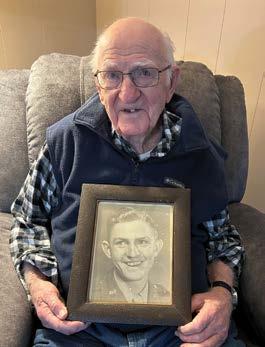
Ollie Johnson of the Ruth community did something most people will never do.
He celebrated his 100th birthday on Jan. 23, 2026.
He was born in 1926 in Purvis, the second child of his parents. With a sister five years older than him, the siblings may have had their disputes, but they were close.
Johnson’s father owned a restaurant in Purvis before he caught a ride on the Southern Railroad to Hattiesburg, where ultimately, he got a job with Standard Oil. The elder Johnson eventually moved his family to Hattiesburg, where Johnson grew up. In fact, he lived in Hattiesburg until he came home from the military.
Johnson enlisted in the U.S. Army Air Force before his 1943 graduation from high school.
He served in World War II as a cartographer, which is someone who encoded/decoded messages for the Air Force. He was stationed in the Pacific, and as he described, he was one island behind the forces. Johnson was an essential part of the war e orts in working on decoding the meaning of messages purposefully sent in a secret code.
After returning to Hattiesburg, he entered Mississippi Southern (now known as The University of Southern Mississippi) for one year before transferring to Mississippi State University to obtain a degree in geology. He continued his education at MSU and earned a master’s degree in geology.
He then went to work for Gulf Oil — a company that would send Johnson and his family all over the country.
In December 1948, he married LaVerne Ervin. Johnson and his wife would have four children, Nathan, Robin, Steve, and Julie.




Amid starting the family, the Johnsons would live in Laurel; Ferriday, Louisiana; Shreveport, Louisiana; New Orleans; Covington, Louisiana; Lafayette, Louisiana; Denver, Colorado; Casper, Wyoming; back to New Orleans, and then Houston, Texas. According to Johnson, he “averaged” two and half to three years in each location. He lived in Lafayette for 12 years and in Shreveport for four.
After retiring from Gulf Oil, he and his wife moved to Natchez in the 1980s. He also began working for Graham Resources and moved to New Orleans and then Covington in the same state. His wife, LaVerne, passed away during that time. When he eventually retired for good, he moved to the Dixie community, just south of Hattiesburg, and lived there for 21 years.
He eventually moved to Lincoln County, to be closer to family, and has been living here for a year and a half. His son Nathan Johnson is one of his neighbors.
In this time, his family has grown and in addition to his four children, he has nine grandchildren.
None of the moves slowed Johnson down.
At the age of 78, he married an old classmate, Bobbie. They were married for 12 years before she passed away.
While they were married, the 80-year-old couple drove to Key West, Florida, returned home from that vacation, and then decided to drive to Alaska. The story goes that they camped along the side of the road on the Alaskan trip.
Even though Johnson has seen and done amazing things over his 100 years, he said he has lived an ordinary life.

Magnolia Electric Power’s 2026 Annual Meeting will be held March 26, 2026, in the auditorium at the o ce building, which is located at 3027 Highway 98 West, Summit.
Registration will start at 5:30 p.m. and end at 6:30 p.m. The business portion of the meeting will begin at 6:30 p.m. Prizes and a business session highlight the meeting.
Franklin County Line, based out of Franklin County, will be this year’s entertainer. The group will be singing and playing gospel music at 6 p.m., prior to the meeting’s start.
The business meeting includes an election of three of the Magnolia Electric Power Association’s directors.
Running unopposed for their districts
• Dennis Wilson, District 1
• Scott Smith, District 4
• Cindy Ginn, District 9
Wilson is a lifelong resident of Gillsburg. He is a deacon at the Gillsburg Baptist Church and retired manager of Amite County Co-op. He currently serves as a NRECA credentialed cooperative director on Magnolia Electric’s Board of Directors.
Smith, a resident of the Heucks Retreat community in Lincoln County, is a beef cattle farmer, chicken farmer, and vice-president of Smith Lake Farms, a beef producer. He serves as a deacon and Sunday School teacher at Easthaven Baptist Church. He is a current Magnolia Electric board member.
Ginn lives in the Midway community of Walthall County. She retired from the Walthall County Board of Supervisors after 28 years as comptroller and payroll clerk. She is married to Roger A. Ginn. They are members of Centerville Baptist Church, where he serves as the adult Sunday School teacher, and she serves as church treasurer. They have five children and 13 grandchildren. She currently serves as a director on Magnolia Electric’s Board of Directors.

Rooted deep in the sandy red clay soil of Southwest Mississippi, Franklin County Line is a bluegrass ensemble that carries forward the timeless sounds of America’s rural South. The music of Franklin County Line is shaped by gospel harmonies, driving rhythms, and the lived experiences of musicians who have devoted their lives to the craft. Each member brings a story that stretches across decades of performance, from legendary bluegrass stages to small-town churches, from south Louisiana honky-tonks to family gatherings on the front porch.

Magnolia Electric members can participate in the Annual Meeting by signing and returning a proxy or by attending in person. Separate prizes are awarded to both those who attend the meeting and those who participate by returning their proxy. (Annual meeting notices, which include proxies, were dropped in the mail on Jan. 28.)
A grand prize of $500 in electricity is awarded by random drawing to a lucky member who attends the meeting and a separate $500 in electricity will go to a member who participates by sending in the proxy. A member cannot win in both drawings.
An additional five names will be drawn from those sending in their proxy, and five names will be drawn from those attending, and each will receive $50 each in electricity.
To be eligible, the signed proxy must be received at White and Associates, LLC by March 19 to be used at the annual meeting and be included in the drawing.
A proxy is valid only for members who do not attend the meeting. You can be eligible for only one drawing.
Other business includes a financial report, and reports from the o cers and general manager.

At the heart of the group’s identity is their shared reverence for tradition. The members of Franklin County Line have been called sons of tradition; the moniker reflects both their musical lineage and their mission to honor the roots of bluegrass and gospel music while keeping the songs alive for new generations.

No bluegrass band would be complete without the banjo and Franklin County Line is blessed with Larry Wallace, a picker whose career reaches back to one of the genre’s most iconic names. The Franklin County Line banjo player once toured and recorded with the King of Bluegrass, Jimmy Martin and the Sunny Mountain Boys, of Nashville, Tennessee. He brings with him not only technical mastery but also a first-hand connection to the golden age of bluegrass. Wallace’s driving three-finger rolls and razor-sharp timing carry the unmistakable stamp of Martin’s high-energy style, making every tune a living tribute to the masters who came before.


By sending in your proxy, you are still participating in Magnolia Electric Power’s Annual Meeting. As a member of an electric cooperative, that is one of many things that make us di erent from other electric companies. If you do not think you will be able to attend the Annual Meeting, then please take the time to fill out the proxy and mail it in.

Leave blank if you want the board to serve as your proxy.
Here is a checklist to help you understand the proxy:
Three candidates have been nominated from their respective districts by a nominating committee from that area. For anyone who wants to know more about the candidates, please see the brochure that is enclosed in the proxy envelope for additional information or read more about them in our Annual Meeting story.
If you leave the representative’s name line blank, then the Board of Directors will serve as your proxy. They will cast your vote for you. If you wish to direct the Board to vote for a certain nominee, then you would need to check that name. Don’t forget to sign the proxy before you drop it in the mail. There is an envelope provided to mail it to an accounting firm who will oversee all the proxies.

Group’s guitarist Danny Bankston grew up playing in entertainment establishments across Louisiana, Mississippi, and beyond, sharpening his skills in pubs, clubs, and dance halls where the audience demanded both precision and soul. That experience taught Bankston how to captivate a crowd — whether with a hard-driving rhythm that keeps feet tapping or with a melodic break that brings a hush over the room. Bankston’s versatile picking anchors the band’s sound, balancing tradition with the spontaneity of a seasoned entertainer.
On the low end, Franklin County Line relies on bass player Adam Brister who has walked an equally remarkable road. Having played both as a solo act and with gospel programs, Brister brings to the band a steady hand and a deep appreciation for music’s spiritual dimension. Brister’s bass lines are more than just rhythm — they are the heartbeat of the ensemble, tying together the band’s wide-ranging influences into a single cohesive sound. With his grounding presence, the group can soar confidently through fiery instrumentals or settle into the reverent tones of a hymn.

If you would like to designate a representative to serve as proxy, put their name here. Sign your name.
If you wish to name someone who is attending the meeting to be your proxy then you need to put their name on the representative’s name line. Then sign the proxy and drop it in the envelope that was provided and mail it to the accounting firm. You can also direct your proxy to vote for a certain nominee, too, by checking the box by their name.
Above all matters, regardless of if you let the board serve as your proxy or you designate a proxy, you MUST SIGN your proxy before dropping it in the envelope provided or it will be invalid.
Your valid proxy, or attendance, at the Annual Meeting includes you in a drawing for prizes.

Rounding out the quartet is mandolin player Lane Reed whose voice and playing are steeped in gospel tradition. Having spent years singing in churches and gospel gatherings, his style is earnest and heartfelt, adding both harmonic richness and rhythmic punch. Reed’s mandolin strums drive the band forward, while his vocals lift the music to spiritual heights.
When fans call Franklin County Line the sons of tradition, it is spoken directly from Reed’s vision — a recognition that the Franklin County Line sound is as much a testimony as it is entertainment.
Together, these four musicians embody the essence of Mississippi bluegrass: hard work, heartfelt singing, and a commitment to community. Franklin County Line performances are not only musical events, but gatherings where stories, faith, and fellowship are shared. From high lonesome ballads to hand-clapping gospel numbers, Franklin County Line keeps alive the songs that shaped their lives — and continues to pass them down like a treasured heirloom.

Whether on festival stages, in churches, or under the open sky at a summer picking party, Franklin County Line represents a bridge between past and present. They are more than a band; they are living proof that tradition is not something frozen in time, but a river that flows on, carrying with it the voices of those who came before.










by Anthony Buckley
Every time you flip a switch, you’re connecting to one of the most complex systems ever built, also known as the North American electric grid. Often called the largest interconnected machine in the world, this network spans the United States, Canada, and parts of Mexico. It includes thousands of generators, hundreds of thousands of miles of transmission lines, and millions of miles of distribution power lines all working together to keep the lights on day and night.
But how does electricity actually get from a power plant to your home? And where do electric cooperatives fit in? Let’s break it down.
The U.S. electric grid has three major components: generators, transmission, and distribution. Each plays a critical role in delivering electricity where and when it is needed.
In the U.S., most power plants produce electricity by burning fossil fuels or by harnessing renewable resources like solar, wind, and water. To ensure that enough electricity is generated to keep the lights on at an a ordable price, two main structures exist.
The first is a “vertically integrated” model, where in some regions, a single utility owns everything from power plants to power lines and delivers electricity directly to consumers.
In other areas, a second model is used. Instead of one company making and delivering power, many companies sell electricity in a competitive market. Utilities buy electricity from these generators and deliver it to consumers like you. In this model, a group called a regional transmission operator (RTO) or independent system operator (ISO) helps keep everything running smoothly. They make sure enough power is available every second of the day. This system is called a wholesale market, and it lets utilities buy extra power when they need it.
Most electric cooperatives don’t own large power plants. Instead, they purchase power through long-term contracts, wholesale markets, or from their generation and transmission cooperative (G&T), a member-owned utility that serves multiple co-ops in a designated region. G&T cooperatives are owned by distribution co-ops like yours. There are 64 G&T cooperatives across the U.S., and they often own power plants and transmission lines. G&Ts also plan for the future by investing in new generation sources, building infrastructure, and integrating renewables, all while staying true to the cooperative model: member-focused, not profit-driven. In Mississippi, there are two G&T’s – Cooperative Energy, which supplies power to 11 co-ops in the south and western parts of the state, and the Tennessee Valley Authority (TVA) which powers co-ops in the northern part of the state.
Once electricity is generated, it doesn’t stay at the power plant. It begins a long journey to reach homes, farms, and businesses. Power must travel across regions to where it’s needed most, and that’s where the transmission system comes in. These high-voltage lines
act like energy superhighways, moving electricity e ciently over hundreds of miles before it’s stepped down for local distribution and, ultimately, for the devices you use every day.
Transmission lines move enormous amounts of electricity e ciently across regions. Most distribution co-ops don’t own these transmission lines, but they rely on their G&T cooperative to handle this part of the journey. G&Ts make sure power gets from the plant to your local co-op.
However, the electricity carried by transmission lines cannot be used as is because the voltage levels are too high. That’s the job of the distribution network, which is the final step that brings power to your lights, appliances, and devices.
The distribution network is the “last mile” segment of the electric grid and delivers generated energy from the transmission network to consumers. The high-voltage power from transmission lines is converted to lower voltages that home appliances, electric vehicles, and personal devices can use. This is where your electric cooperative comes in to keep local lines maintained and power flowing to members 24/7/365.
Understanding how power moves from generation to your home helps explain why reliability and a ordability depend on teamwork and collaboration between your local co-op, its G&T partners, and the broader grid. Together, co-ops are preparing for tomorrow’s challenges, so you can count on safe, reliable power for years to come.
Anthony Buckley writes on consumer and cooperative a airs for the National Rural Electric Cooperative Association.






















by Miranda Boutelle
One of the most common questions I get about energy e ciency rebate programs is, “Why would the company that sells me energy want me to use less of their product?” It’s a good question.
Rebates provide financial incentives for people to use less energy in their homes by reducing the costs of e ciency upgrades, such as insulation, new HVAC systems, water heaters, or other appliances. This helps your electric cooperative save money by eliminating or delaying the need to buy additional power or build new power generation facilities. Using less energy also helps lighten the load on existing generation and transmission infrastructure that delivers power to your home through your electric cooperative.
Your cooperative and other local organizations may o er e ciency programs with special incentives for home upgrades, such as rebates paid after a project is completed. State and federal tax credits may also allow you to reduce the amount of taxes you owe for completing eligible home purchases or upgrades. Federal energy e ciency tax credits ended Dec. 31, 2025. If you completed any upgrades before that date, you can apply for credits on your 2025 federal filings.
Energy e ciency programs are funded through a variety of sources, including surcharges on customer utility bills, grants, and state and federal funding.
If you are planning to purchase new appliances, equipment, or complete an e ciency upgrade, do your research first. I recommend starting with your electric cooperative to see if they o er energy e ciency programs. Also check with your state energy o ce, which might have additional programs to help. The Inflation Reduction Act allocated federal funds to state-administered programs, including home e ciency rebates and home electrification and appliance rebates, to help residents with retrofits such as windows, insulation, air sealing, HVAC equipment, and appliance upgrades.
There are also income-eligible programs available for energy assistance and weatherization, such as the U.S. Department of Energy Weatherization Assistance Program, typically administered by a local community action agency.
Once you identify a rebate, tax credit, or financing option you’re interested in, review the criteria carefully. Criteria can vary by
program, so make sure you know the eligibility requirements before making a purchase to avoid missing out on energysaving opportunities.
Some programs require preapproval before you begin a project. Proof of existing equipment or conditions may be required, such as insulation levels or window types. You may also need to schedule an energy audit conducted by a program representative or photo documentation.
Once you know your project meets the requirements of any available programs, you can proceed with installation. You will likely need to fill out an application and submit a final invoice to prove the project is complete. You may also need to submit pictures or have an inspection from a program representative.
Once approved, your rebate will typically be issued as a bill credit or check, depending on the source.
Miranda Boutelle is the chief operating o cer at E ciency Services Group in Oregon.
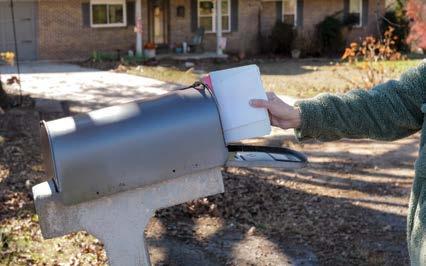
by Anthony Buckley
Every time you flip a switch, you’re connecting to one of the most complex systems ever built, also known as the North American electric grid. Often called the largest interconnected machine in the world, this network spans the United States, Canada, and parts of Mexico. It includes thousands of generators, hundreds of thousands of miles of transmission lines, and millions of miles of distribution power lines all working together to keep the lights on day and night.
But how does electricity actually get from a power plant to your home? And where do electric cooperatives fit in? Let’s break it down.
The U.S. electric grid has three major components: generators, transmission, and distribution. Each plays a critical role in delivering electricity where and when it is needed.
In the U.S., most power plants produce electricity by burning fossil fuels or by harnessing renewable resources like solar, wind, and water. To ensure that enough electricity is generated to keep the lights on at an a ordable price, two main structures exist.
The first is a “vertically integrated” model, where in some regions, a single utility owns everything from power plants to power lines and delivers electricity directly to consumers.
In other areas, a second model is used. Instead of one company making and delivering power, many companies sell electricity in a competitive market. Utilities buy electricity from these generators and deliver it to consumers like you. In this model, a group called a regional transmission operator (RTO) or independent system operator (ISO) helps keep everything running smoothly. They make sure enough power is available every second of the day. This system is called a wholesale market, and it lets utilities buy extra power when they need it.
Most electric cooperatives don’t own large power plants. Instead, they purchase power through long-term contracts, wholesale markets, or from their generation and transmission cooperative
(G&T), a member-owned utility that serves multiple co-ops in a designated region. G&T cooperatives are owned by distribution co-ops like yours. There are 64 G&T cooperatives across the U.S., and they often own power plants and transmission lines. G&Ts also plan for the future by investing in new generation sources, building infrastructure, and integrating renewables, all while staying true to the cooperative model: member-focused, not profit-driven.
In Mississippi, there are two G&T’s – Cooperative Energy, which supplies power to 11 co-ops in the south and western parts of the state, and the Tennessee Valley Authority (TVA) which powers co-ops in the northern part of the state.
Once electricity is generated, it doesn’t stay at the power plant. It begins a long journey to reach homes, farms, and businesses. Power must travel across regions to where it’s needed most, and that’s where the transmission system comes in. These high-voltage lines act like energy superhighways, moving electricity e ciently over hundreds of miles before it’s stepped down for local distribution and, ultimately, for the devices you use every day.
Transmission lines move enormous amounts of electricity e ciently across regions. Most distribution co-ops don’t own these transmission lines, but they rely on their G&T cooperative to handle this part of the journey. G&Ts make sure power gets from the plant to your local co-op.
However, the electricity carried by transmission lines cannot be used as is because the voltage levels are too high. That’s the job of the distribution network, which is the final step that brings power to your lights, appliances, and devices.
The distribution network is the “last mile” segment of the electric grid and delivers generated energy from the transmission network to consumers. The high-voltage power from transmission lines is converted to lower voltages that home appliances, electric vehicles, and personal devices can use. This is where your electric cooperative comes in to keep local lines maintained and power flowing to members 24/7/365.
Understanding how power moves from generation to your home helps explain why reliability and a ordability depend on teamwork and collaboration between your local co-op, its G&T partners, and the broader grid. Together, co-ops are preparing for tomorrow’s challenges, so you can count on safe, reliable power for years to come.
Anthony Buckley writes on consumer and cooperative a airs for the National Rural Electric Cooperative Association.






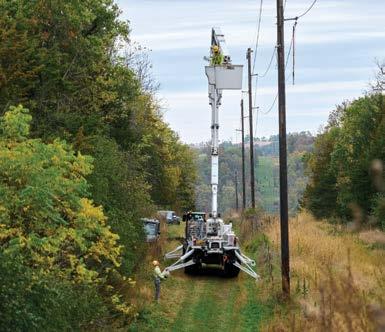


by Cathy Cash
Kinks in the supply chain caused by the COVID pandemic — remember the run on toilet paper? — may be in the rearview for regular consumers, but new bottlenecks in the flow of goods and services are challenging Mississippi’s electric cooperatives to deliver a ordable and reliable service. And the circumstances squeezing the supply chains for electric co-ops are unlikely to ease in the foreseeable future.
Basically, we’re talking about a higher demand for electricity, but supply of equipment needed to maintain or build more power plants has not kept up. Then there’s a skilled labor shortage to get the job done and tari s on imported materials. All these things add up to delayed energy projects at increased costs.
After the pandemic forced manufacturing to shutter for months in 2020, a lot of experienced employees retired or never even went back to their jobs making transformers and other equipment essential to distributing electricity to consumers. The supply of some transformers has never been fully replenished, and the lack of a competent workforce today makes that a constant game of catch-up.
U.S.-based engineering, procurement, and construction firms are scrambling to meet work orders for new power projects as there is more demand today than they can keep up with, says Stephanie Crawford, regulatory a airs director at the National Rural Electric Cooperative Association.
Electric co-ops are “finding that these firms cannot respond to requests, they’re charging price premiums or that planning for projects four years out is already ‘too late,’” she says.
As a result, equipment crucial for electricity projects — from new substations to power plant maintenance and outage repairs after storms hit — are on delay and coming in at much higher prices.
Co-ops are seeing lag times of up to four years between an order for a transformer and its ultimate delivery. Prices are up 70% to 100% compared to 2020. Lead times for new gas turbines for a power plant can range from three to six years and cost 25% more than just three years ago.
According to one industry insider, an electric co-op that spent $10 million on materials and equipment for electricity projects and maintenance in 2020 had to spend over $15.5 million in 2025 to keep up.
So, what is your electric co-op doing to maintain reliable and a ordable service?
Collaboration, which is baked into every co-op’s DNA, is key. Co-ops are finding themselves working with equipment suppliers and contractors closer than ever and planning their orders at least a year in advance of construction to work out the snags of the current supply chain.
Knowing their exact inventory and the physical storage space also helps co-ops keep necessary equipment on hand, materials flowing, and projects as near to schedule as possible.
By working as a team, electric co-ops, manufacturers, and their industry partners will be able to improve forecasting their equipment needs, stay ahead of potential demand changes, and experience a smoother supply chain.
Cathy Cash writes on consumer and cooperative a airs for the National Rural Electric Cooperative Association.
After the pandemic, many skilled workers retired from manufacturing jobs making distribution transformers and other essential energy equipment. The shrunken labor force is challenging the supply for new power plant construction, maintenance or outage recovery.












For more information about Today in Mississippi, contact Sarah





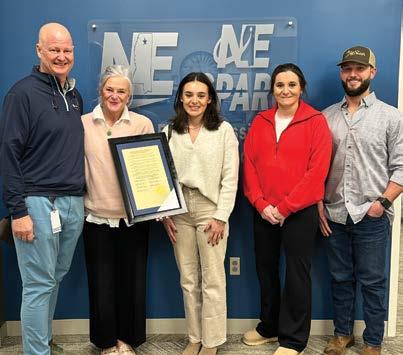











Spring is the perfect time to tackle outdoor projects like planting flowers, installing a mailbox, or repairing a fence. Before you pick up a shovel, there’s one important step that should always come first: call 811.
Calling 811 alerts your local utility companies to mark the location of underground lines on your property. These markings help identify buried power, fiber, and other utility lines that could be damaged during digging.


Striking an underground line can be dangerous and costly. Contact with electric lines can cause serious injury or outages, while damage to buried fiber lines can interrupt internet and communication services for your home — and your neighbors. Repairs can also result in unexpected expenses and project delays.
Calling 811 is free, easy, and required by law. Simply make the call or submit a request online prior to starting your project. Utility crews will mark the area with colored flags or paint so you can dig safely around them.










The North East Mississippi Electric Power Association Board of Directors honored the late John Briscoe with a proclamation during its January board meeting. Briscoe, who served District 8, passed away in 2025. He is remembered for his concise, thoughtful approach to leadership, his fiscal conservatism, and his deep devotion to the members of the cooperative.
“The farming community lost one of their best with the tragic passing of John Briscoe,” said North East Power CEO and General Manager Keith Hayward. “Aside from his service on the North East Power Board, I had the privilege of serving with John on other farming community association boards. As with all farmers, he did not mind spending a dollar as long as it was discussed, researched, and proven to be worth it. His soft-spoken but witty personality will be missed.”




No matter how small the project may seem, calling 811 before you dig helps keep you, your family, and your community safe.










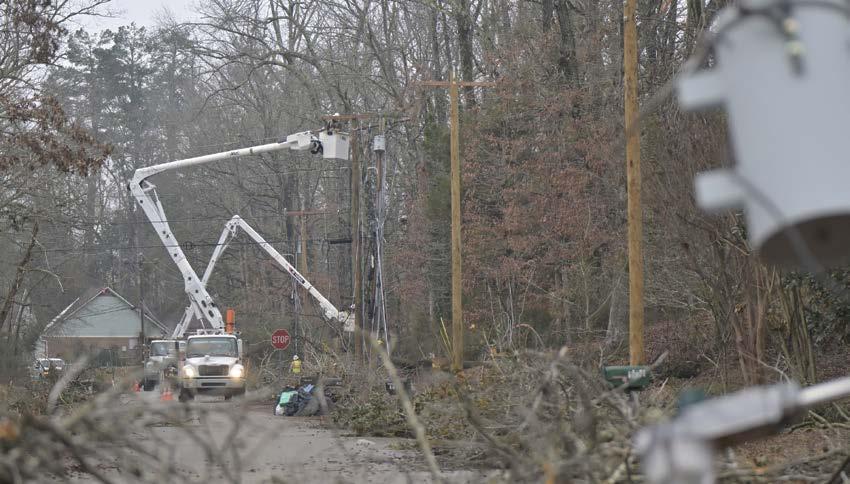
Winter Storm Fern will be remembered as one of the most challenging weather events North East Mississippi Electric Power Association has ever faced, not only for the severity of the storm itself, but for the scale and duration of the restoration e ort that followed.
We recognize that Winter Storm Fern caused prolonged hardship for many of our members. Being without power for an extended period, especially during winter conditions, is incredibly challenging. We understand the frustration, concern, and fatigue that came with this outage, and we are grateful for the patience shown throughout the restoration process.
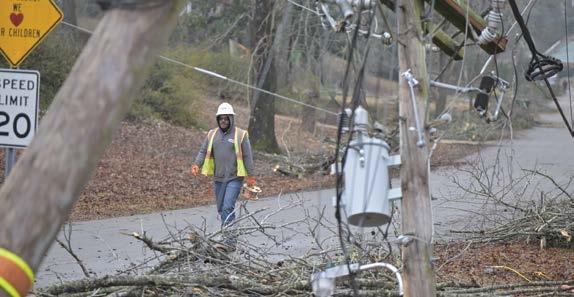

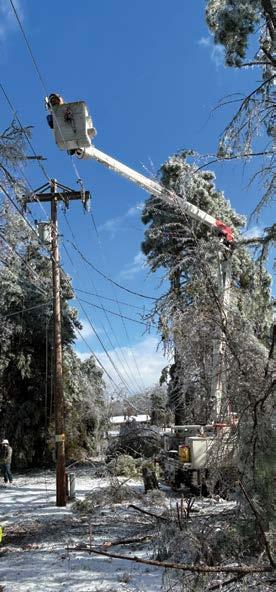

When Winter Storm Fern moved across the southeast, it brought a combination of freezing rain, ice accumulation, and bitterly cold temperatures that weighed heavily on trees, power lines, and utility infrastructure. As ice built up, tree limbs snapped, and lines came down across our system. In some areas, damage stretched for miles at a time, with multiple poles down along the same line.
“So, 1.2 inches of ice is more than we have ever experienced,” said North East Power CEO/General Manager, Keith Hayward.
At the peak of the storm’s impact, over 28,000 of North East Power’s 30,000 meters were without electricity. For many members, outages lasted days, and in some cases, weeks, making this an especially di cult and frustrating experience. Roads were blocked by fallen trees, and crews often had to clear paths just to reach a problem before restoration work could even begin.
From the moment it was safe to do so, North East Power crews began working long hours to restore service. As the scale of the damage became clear, we activated mutual aid agreements and called for help from other electric cooperatives and contractors.
There were over 600 additional linemen, right-of-way crews, and support personnel who traveled from across the region to assist with restoration e orts at one time, significantly expanding the workforce needed to address the unprecedented damage. These crews worked long shifts, often in freezing conditions, rebuilding lines, replacing poles, and clearing trees.
“It was a long process. The di erence between this storm and other major ice storms, like those in 1994, 1996, 1998, and the early 2000s, is the amount of technology and system knowledge we have today. The way we monitor our system and share information with our members is much better now, and that helps speed up restoration. We also know how to better build our workforce. Within the first two to three days, as the restoration e ort ramped up, we grew from 350 to 400, then 450, and ultimately to nearly 600 people working on this storm,” Hayward said.
Behind the scenes, North East Power employees from every department stepped in to support the e ort. O ce sta helped coordinate logistics, answer phones, feed crews, wash laundry, and keep operations running smoothly during this all-hands-on-deck response.
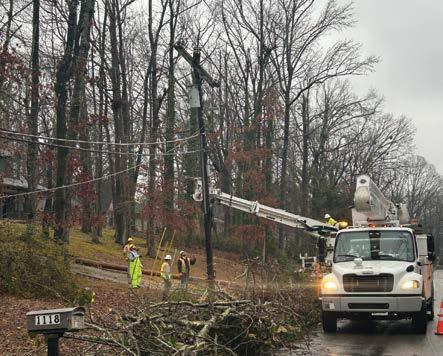
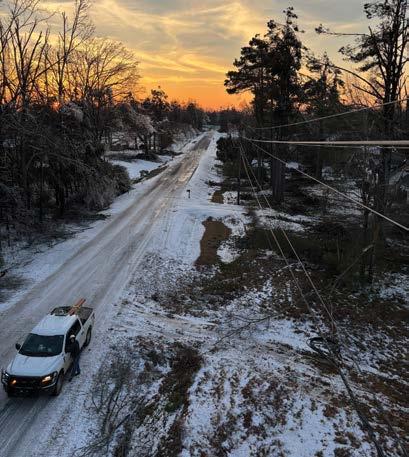

Power restoration after a storm like Fern is a stepby-step process, and the nature of the damage made it especially time-consuming. Before individual homes could be restored, crews had to restore substations, and rebuild mainline infrastructure, called 3-phase lines. Only after those major repairs were completed could crews move on to smaller taps for or neighborhoods homes and individual service issues.
“The damage this ice storm caused to trees is unbelievable. It is as bad as some I’ve seen from hurricanes,” Hayward remarked.
Throughout the restoration process, North East Power also experienced support from members and local organizations who provided meals and encouragement to crews and sta . These gestures were appreciated by employees working long hours in di cult conditions, and we want to thank everyone who remembered us during this process.
“We sincerely appreciate the many community organizations, businesses, and churches that provided hot meals, snacks, and drinks to our crews working in the field. Those gestures of support helped sustain our linemen and support sta during long days and nights in di cult conditions, and they did not go unnoticed. We are grateful to everyone who took the time to support the people working to restore power,” Hayward said.
Winter Storm Fern tested the resilience of our electric system and our organization. The lessons learned from this storm will continue to inform how we prepare for and respond to future severe weather events. Above all, we remain committed to serving our members and working to strengthen the system they depend on every day.
North East Mississippi Electric Power Association is proud to recognize four exceptional employees whose careers helped shape our cooperative and strengthen the communities we serve. Their combined years of service reflected a deep commitment to our members. While we miss them greatly, we are grateful for the lasting impact each made.
• RETIRED JAN. 30
MANAGER OF SYSTEM OPERATIONS AND LOSS CONTROL



Margaret Callahan retired after 17 years of dedicated service to North East Power. As manager of accounting, Margaret played a vital role in overseeing the cooperative’s financial operations and ensuring accuracy and sound financial practices. Her leadership and attention to detail were invaluable to the cooperative. Margaret’s thoughtful approach and commitment to excellence will leave a lasting mark on the accounting department and beyond.
“Margaret is the life of the o ce. She is always in a cheerful mood and eager to help with whatever is needed. And her laugh can be heard over the entire o ce! She is an extremely hard worker who keeps the messiest desk, but she always knows exactly where everything is. Her cheerfulness and especially her laugh will be missed by all of us,” said Keith Hayward, CEO/general manager.
• RETIRED FEB. 27


With 35 years of service, Lindy Liggins’ career was a true testament to dedication and heart for our members. As member services supervisor, Lindy was a trusted leader and advocate, always focused on delivering exceptional service and support. Her institutional knowledge, compassion, and mentorship influenced countless employees and members alike. Lindy’s legacy is one of professionalism, kindness, and unwavering commitment to the cooperative.
“Lindy has grown tremendously both professionally and personally over her 35 years working for North East Power. Once she was promoted to a management position she excelled. The job she has done to change the personality and perception of the front o ce is impressive. The satisfaction ratings we are receiving from our members have never been higher. Lindy runs a tight ship, but she is fair and honest. Her coworkers love her, and she will definitely be missed,” Hayward said.
• RETIRED FEB. 27



Jim McClure retired after 32 years of service marked by leadership, integrity, and a strong focus on safety and e ciency. As manager of system operations and loss control, Jim was instrumental in overseeing daily operations, improving system performance, and promoting a culture of safety. His experience and steady presence were relied upon for decades, and his contributions helped ensure safe, reliable service for our members.
“Jim has always been willing to do whatever is asked of him over his 30-year career. He hates to have unfinished business. If he thinks there is an issue, he wants to sit down immediately and work it out. This trait has served him well while working with coworkers and dealing with customers. He is the best I have ever seen working out problems. The work he has done to mend relationships across the organization has allowed us to grow and excel as a company. I will truly miss his advice and calm demeanor, but I plan to carry on our friendship,” Hayward said.
• RETIRED FEB. 27


Litittia Robertson concluded her 30-year career at North East Power, having served as a welcoming and knowledgeable voice for our members. As a customer service representative, Litittia consistently went above and beyond to assist members with care, diligence, and professionalism. Her genuine concern for those she helped exemplified the cooperative spirit.
“Litittia has come to know every one of our property owners. She is the only one in the o ce who knows the names of every subdivision and apartment complex. Over the years, I have received numerous compliments from members on her caring nature and willingness to help others. It will take some time before people stop calling the o ce asking, ‘May I speak with Litittia,’”said Hayward.
North East Power extends its sincere appreciation to Margaret, Linda, Jim, and Litittia for their years of service and dedication to the cooperative, its members, and the community. Their contributions helped build a stronger cooperative, and their presence is deeply missed. We wish each of them happiness, health, and fulfillment in their well-earned retirement.



















As I pen this message, electric cooperatives throughout north Mississippi are digging out from the most significant ice storm our region has experienced since 1994. While Northcentral received mostly sleet across the northern part of our system, the southernmost areas near Sardis experienced outages that lasted several days. We are grateful for our preparation e orts and, admittedly, a bit of weather luck.
Many of our neighboring electric cooperatives had very di erent experiences. Freezing rain accumulating on power lines and trees resulted in more than 163,000 outages statewide. In response, over 1,000 utility personnel from across the country came to assist with restoration e orts. This response is a true example of the strength of the cooperative and public power model.
As restoration draws to a close, the financial impact begins to take shape. For some cooperatives, restoration costs will exceed $1 million per day. The burden these costs place on their memberships can be significant.
During events like these, FEMA public assistance is essential to recovery. Electric cooperatives serving rural areas have fewer











consumers per mile of line, meaning members often bear a larger share of storm recovery costs than those in more densely populated areas. While FEMA has faced criticism in recent years, its mission remains the same. Electric cooperatives across the United States support the bipartisan Fixing Emergency Management for Americans Act, which aims to provide faster and fairer recovery for our communities.
I look forward to putting winter weather behind us and warmer days ahead. This time of year, always has me ready for baseball season.
Play ball. Stay safe.

by Kevin Doddridge General Manager/CEO


lines. If planting is unavoidable, only plant shrubs and small trees that reach a mature height of 15 ft. or less.



MEDIUM TREE ZONE
Plant medium trees (under 40 ft. when mature) at least 25 ft. away from power lines.

when mature) at least 50 ft. away from power lines.
















































Winter Storm Fern served as a strong reminder of how quickly severe weather can impact our electric system. From winter ice to strong winds and seasonal storms, weatherrelated damage can occur at any time of year.
Northcentral Electric Cooperative is always prepared to respond swiftly to outages and restore power safely, but it is also important for homeowners to understand which parts of the electric system are their responsibility and which are maintained by us at the co-op. Understanding these key di erences can help speed up repairs and ensure everyone stays safe when the weather turns rough.
Northcentral is responsible for maintaining and repairing the equipment and lines that run to your home, including utility poles, distribution power lines, electric meters and padmounted transformers.
Northcentral members are responsible for the equipment located between the electric meter and your home or business, including any underground service lines that lead into the structure and the service panel. Members are also responsible for the weatherhead and service mast located outside the home.
If any equipment that you (the homeowner) are responsible for is damaged, please call a licensed electrician to conduct the repairs. A professional has the experience and know-how to assess and manage these types of repairs.
When severe weather damages electrical equipment, it’s important to note that any necessary repairs to the homeowner’s equipment must be conducted before we can restore power to your home or business. By understanding
the equipment you are responsible for, the repair and restoration process will be smoother and faster.
Our community takes great pride in the beautiful trees and landscaping that contribute to the natural beauty where we live, however, regular trimming is essential to ensure reliable electric service and minimize damage from severe weather. Northcentral regularly trims trees throughout our service territory to improve service reliability. If you spot a tree limb that is obstructing a distribution power line outside your home, please call us so we can take a look and see if it needs attention.
Any overgrown limbs or vegetation around the service line is the homeowner’s responsibility, and in these cases, please call a professional tree trimming service to assist.
By working together to understand the essential equipment that powers daily life, we can all be better prepared to start the repair and restoration process if severe weather impacts our community.
If you have any questions about your electrical equipment, we’re here to help. Please call us at 662.895.2151.
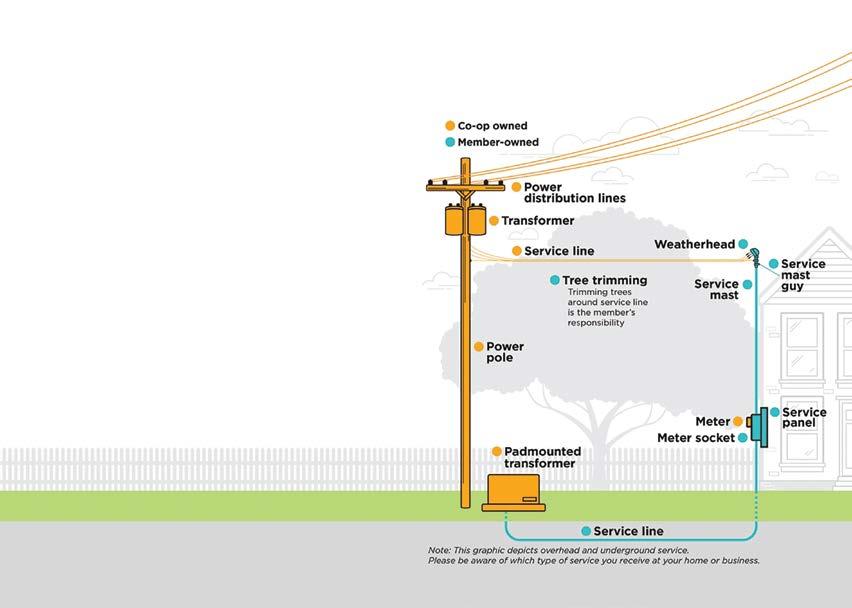
This graphic depicts equipment owned by the co-op (in gold) and the member (in blue). If a storm damages any equipment owned by the co-op, we are responsible for repairs. If a storm damages any member-owned equipment, the member is responsible for repairs. Members should hire a licensed electrician when making any repairs to member-owned equipment.








by Anthony Buckley
Every time you flip a switch, you’re connecting to one of the most complex systems ever built, also known as the North American electric grid. Often called the largest interconnected machine in the world, this network spans the United States, Canada, and parts of Mexico. It includes thousands of generators, hundreds of thousands of miles of transmission lines, and millions of miles of distribution power lines all working together to keep the lights on day and night.
But how does electricity actually get from a power plant to your home? And where do electric cooperatives fit in? Let’s break it down.
The U.S. electric grid has three major components: generators, transmission, and distribution. Each plays a critical role in delivering electricity where and when it is needed.
In the U.S., most power plants produce electricity by burning fossil fuels or by harnessing renewable resources like solar, wind, and water. To ensure that enough electricity is generated to keep the lights on at an a ordable price, two main structures exist.
The first is a “vertically integrated” model, where in some regions, a single utility owns everything from power plants to power lines and delivers electricity directly to consumers.
In other areas, a second model is used. Instead of one company making and delivering power, many companies sell electricity in a competitive market. Utilities buy electricity from these generators and deliver it to consumers like you. In this model, a group called a regional transmission operator (RTO) or independent system operator (ISO) helps keep everything running smoothly. They make sure enough power is available every second of the day. This system is called a wholesale market, and it lets utilities buy extra power when they need it.
Most electric cooperatives don’t own large power plants. Instead, they purchase power through long-term contracts, wholesale markets, or from their generation and transmission cooperative (G&T), a member-owned utility that serves multiple co-ops in a designated region. G&T cooperatives are owned by distribution co-ops like yours. There are 64 G&T cooperatives across the U.S., and they often own power plants and transmission lines. G&Ts also plan for the future by investing in new generation sources, building infrastructure, and integrating renewables, all while staying true to the cooperative model: member-focused, not profit-driven. In Mississippi, there are two G&T’s – Cooperative Energy, which supplies power to 11 co-ops in the south and western parts of the state, and the Tennessee Valley Authority (TVA) which powers co-ops in the northern part of the state.
Once electricity is generated, it doesn’t stay at the power plant. It begins a long journey to reach homes, farms, and businesses. Power must travel across regions to where it’s needed most, and that’s where the transmission system comes in. These high-voltage lines
act like energy superhighways, moving electricity e ciently over hundreds of miles before it’s stepped down for local distribution and, ultimately, for the devices you use every day.
Transmission lines move enormous amounts of electricity e ciently across regions. Most distribution co-ops don’t own these transmission lines, but they rely on their G&T cooperative to handle this part of the journey. G&Ts make sure power gets from the plant to your local co-op.
However, the electricity carried by transmission lines cannot be used as is because the voltage levels are too high. That’s the job of the distribution network, which is the final step that brings power to your lights, appliances, and devices.
The distribution network is the “last mile” segment of the electric grid and delivers generated energy from the transmission network to consumers. The high-voltage power from transmission lines is converted to lower voltages that home appliances, electric vehicles, and personal devices can use. This is where Northcentral comes in to keep local lines maintained and power flowing to our members 24/7/365.
Understanding how power moves from generation to your home helps explain why reliability and a ordability depend on teamwork and collaboration between your local co-op, its G&T partners, and the broader grid. Together, co-ops are preparing for tomorrow’s challenges, so you can count on safe, reliable power for years to come.
Anthony Buckley writes on consumer and cooperative a airs for the National Rural Electric Cooperative Association.














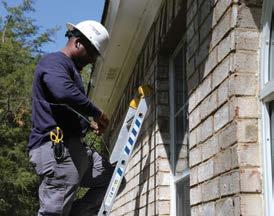



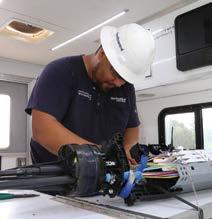




When







































PAY BILLS or REPORT OUTAGES: 855-2PRVEPA (855-277-8372)
COLUMBIA: 601-736-2666 | HATTIESBURG: 601-264-2458 | PURVIS: 601-794-8051 | WIGGINS: 601-928-7277
Member owned. Locally operated. That’s the cooperative di erence. • Visit us online at www.PRVEPA.com.



Pearl River Valley Electric and our fiber subsidiary, PearlComm Fiber, have made significant strides toward bringing reliable, high-speed internet to our service area. Since launching in 2021, PearlComm Fiber has worked to meet a growing need for dependable broadband, in rural areas where access has historically been limited.
Over the past five years, PRVEPA has worked diligently to expand fiber infrastructure across our service territory. To date, your cooperative has built just under 4,000 miles of fiber lines, and PearlComm Fiber has connected nearly 19,000 customers, helping bridge the digital divide for homes and businesses alike. We are proud of the progress made and the positive impact this service continues to have on education, healthcare, economic development, and everyday connectivity.
As part of this milestone, PearlComm Fiber has announced a new internet option, designed to meet the needs of today’s connected households. The new 300 Mbps package, PearlComm Lightspeed 300,
is available for $59.95 per month, and delivers fast, reliable speeds ideal for streaming, remote work, online learning, and smart home technology — at a competitive price point. You can experience three times the speed as our PearlComm Lightspeed 100 package for only $5 more per month. Please visit pearlcommfiber.net for more information.
PearlComm remains actively focused on looking at extending service to remaining areas within the PRVEPA footprint that still need access to high-quality internet. At the same time, PearlComm Fiber is evaluating future service o erings and enhancements to ensure they continue improving customer satisfaction and keeping pace with evolving technology.
PearlComm’s mission remains clear: to provide dependable, high-speed internet that supports the people and communities we serve. As we look ahead, we remain committed to innovation, expansion, and delivering the connectivity our members can count on, today and into the future.
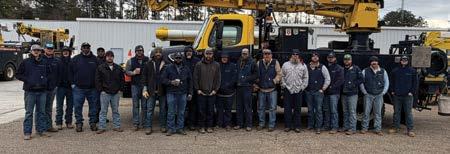
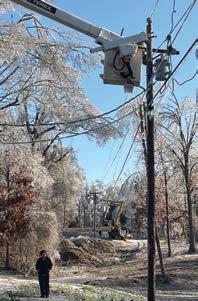


When a major storm strikes, one of the clearest ways our cooperative lives out its values is by stepping in to help a sister cooperative in need. By sending crews, equipment, and support beyond our own service area, we are putting the cooperative principle of Cooperation Among Cooperatives into action. Back in January and February, Pearl River Valley Electric linemen assisted sister cooperatives Yazoo Valley Electric Power Association and Tallahatchie Valley Electric Power Association after Winter Storm Fern. Both cooperatives su ered extensive damage. In total, we sent 36 linemen to the two cooperatives. In addition, PRVEPA also sent a warehouse assistant to aid North East Mississippi Electric Power Association.
When our state has major storms, these mutual aid e orts speed up restoration, strengthen relationships and remind us that we are part of something bigger than any single electric cooperative.




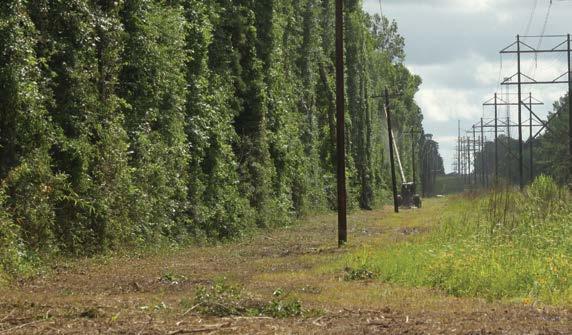
In almost 88 years, Pearl River Valley Electric’s distribution system has grown to meet the demand of over 43,000 members. The system now includes more than 6,000 miles of power lines throughout a 12-county service area. To maintain the integrity of the system and to ensure public safety, PRVEPA runs an extensive right-of-way program.
We want members to understand that maintaining right-ofway (ROW) is not an inconvenience, it’s a necessity. Controlling vegetation within our ROW assures safe access for employees when they are troubleshooting outages and repairing downed power lines.
Clearing brush and other low-growing vegetation is accomplished by a combination of trimming and cutting trees, bush-hogging,


and herbicide application. We use o -the-shelf, non-restrictive herbicides because they are e ective, economical, and environmentally-friendly. They are not harmful to humans, pets, or livestock. Managing vegetation in this way also allows native grasses and wild-flowers to grow, thereby improving the aesthetics and wildlife habitat along the ROW.
The map below shows where contract crews will be clearing trees, removing underbrush and mowing ROW in the upcoming months. Please visit the technical services category in our help center on our website, prvepa.com for a more detailed map.


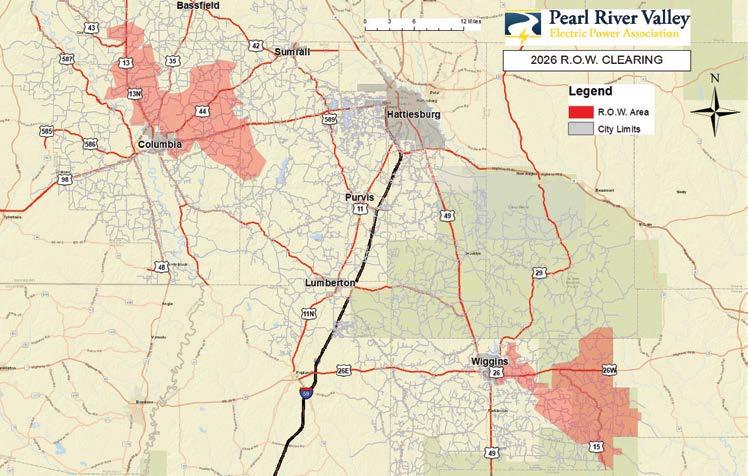









Planting your landscaping properly can ensure that it does not adversely impact Pearl River Valley Electric’s infrastructure. PRVEPA’s system has right-of-way (ROW) widths ranging from 30 feet (for most single-phase lines) to 50 feet (for three-phase lines).
When landscaping nears power lines, choose shrubs or small trees and keep them spaced outside of the right-of-way. See chart below for spacing.
There are also restrictions about what can be planted around pad-mounted transformers and other underground facilities. Be sure to allow the required clearance shown on the transformer to provide adequate access to equipment.
To be specific, do not plant anything closer than 10 feet from the transformer’s lock side and no closer than 4 feet on the remaining sides. If vegetation is planted within these areas, PRVEPA crews may have to clear enough space to create a safe working environment to perform maintenance operations.
Remember, before doing any landscaping in the vicinity of your transformer, you must call 811 (the Mississippi one-call number) at least two working days before breaking ground. By then, all underground utilities can be marked with flags or paint. If you have any questions regarding ROW clearances, maintenance, and proper landscaping, please contact your local PRVEPA o ce.
20-30 FEET FROM LINE
Flowering Dogwood, Japanese Lilac, Kousa, Dogwood, Ornamental Crabapple, Redbud, Stewartia
30-35 FEET FROM LINE
Bradford Pear, Carolina Silverbell, Golden Raintree, Ornamental Cherry Saucer Magnolia, Serviceberry, Sourwood, Winter King Hawthorne
40-45 FEET FROM LINE
Red Maple, Shagbark Hickory, Lacebark Elm, White Oak, Hemlock, Spruce
Working on an outdoor project? Careless digging poses a threat to people, pipelines, and underground facilities. Always call 8-1-1 first. Here are five easy steps for safe digging:
Source: call811.com
1. NOTIFY
Call 8-1-1 or make a request online two to three days before your work begins. The operator will notify the utilities a ected by your project.
2. WAIT
Wait two to three days for a ected utilities to respond to your request. They will send a locator to mark any underground utility lines.
3. CONFIRM

2-3
Confirm that all a ected utilities have responded to your request by comparing the marks to the list of utilities the 8-1-1 call center notified.
4. RESPECT
Respect the markers provided by the a ected utilities. The markers are your guide for the duration of your project.





• Applications are available at PRVEPA o ces and at prvepa.com.
• Completed applications must be postmarked or emailed by Aug. 14.
• Scholarship recipients must be a PRVEPA member, spouse, or child of a member participating in the Round Up program.
• Recipients must be full time (12 hours or more per semester) freshmen students enrolled in academic or career-technical programs.







5. DIG CAREFULLY
If you can’t avoid digging near the markers (within 18-24 inches on all sides, depending on state laws), consider moving your project location.





• Scholarship funds will be credited to each student’s college account — no checks will be issued to individuals.

• Scholarships should be awarded by the end of September. Students must be enrolled in good standing at the time funds are released to the colleges.
More information is available at prvepa.com.






Funded by members who are rounding up their monthly bills, these scholarships are intended to assist students who will attend a Mississippi community college as a freshman this fall.


























by Jennifer Johnson
















They’re armed with skills to operate heavy machinery or safely work with 14,400 volts of electricity, a hard hat, and more grit and determination than most people you’ll encounter. Crew workers at PEPA prove every day why that statement is correct, but Winter Storm Fern made it all the truer.
We’ve experienced days that are physically, mentally, and emotionally exhausting. Through it all, we’ve continued to count on our most valuable asset: our people.
Rolling out with bucket trucks and heavy equipment on Jan. 25 and working through the night, followed by 15-16 hour (or more) days since, our crews have worked tirelessly to restore power to our customers.
O ce employees have fielded constant phone calls and met with many customers in the o ce, taking care of business as best they can in a time when nothing is “business as usual.”
At the time this article was written, PEPA outages were down from around 18,000 to fewer than 400, thanks in part to sister cooperatives



Dixie Electric Power Association and Singing River Electric, as well as five cooperatives from the state of Missouri.
We’ve experienced days that are physically, mentally, and emotionally exhausting. Through it all, we’ve continued to count on our most valuable asset: our people.
Cooperatives operate by seven basic principles, including Cooperation Among Cooperatives. Folks in the co-op world know working together benefits all. That principle played out in real time in January 2026 when ice hung from every tree and power line, and calls were made to find additional hands to more quickly restore power in our service area.



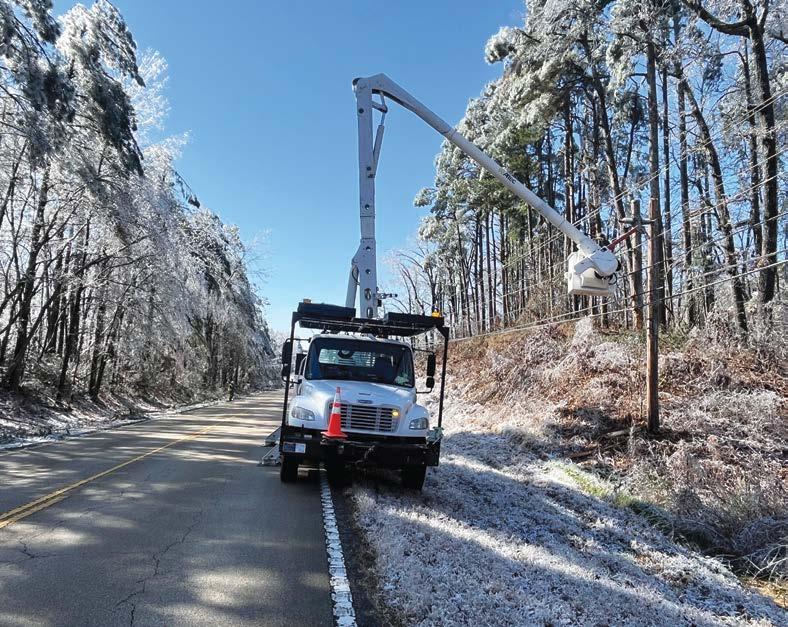







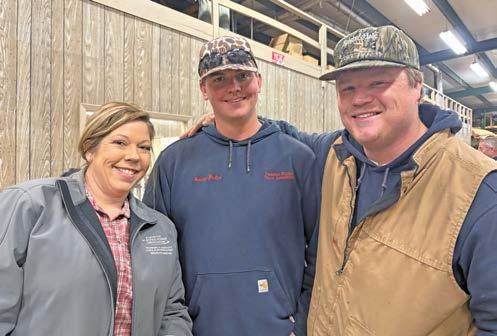
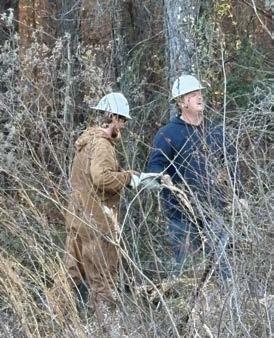




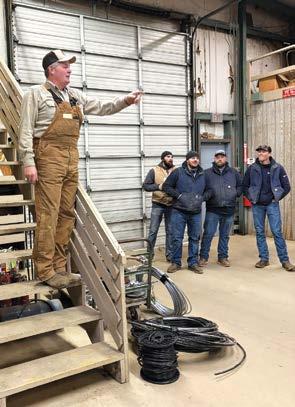





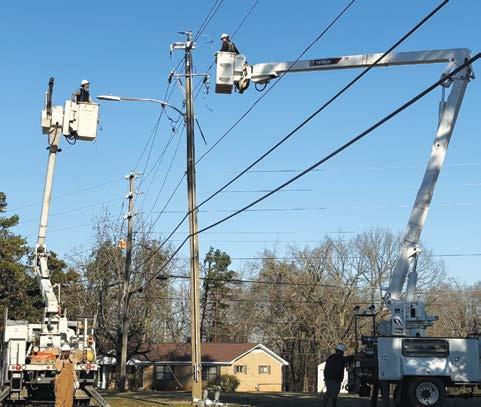











e ice storm in late January through early February brought out the best in so many people in our communities. We are thankful for those who brought meals, snacks, or hand warmers, prayed for the safety of our crews, or were kind to us through this di cult season.




Take one open heart, fresh and true, Add a cup of patience in all you do.
Fold in a handful of gentle words, Sprinkle with laughter that soars like birds.
Mix with understanding, slow and deep, Stir in forgiveness you promise to keep. Season with hope and a dash of cheer.
Serve it with love to all who are near.
And here’s the secret — the more you give, The richer and brighter your days will live.
-Author Unknown














Our members count on us every day for the electricity they need. While our rates have remained unchanged over the last two years, inflation has not. Beginning March 6, 2026, residential and small commercial members receiving single-phase service will see a $5 increase in their monthly customer charge. Costs for materials and equipment have continued to rise, forcing this change.
The customer charge helps cover Singing River Electric’s cost to deliver power to our 82,182 meters before any power is used and includes meters, poles, transformers, wires, and service-related operating costs. As stated in last month’s publication, our members deserve reliable electricity, which doesn’t happen by accident. Reliability requires ongoing investment in our local grid to allow us to operate smarter and more e ciently. Over the years, we’ve worked hard to maintain the quality, reliable service you expect while keeping our rates as stable as possible.
Like any rate change, this was not done lightly nor without recognizing that many in our community are facing challenging times, and no one wants to see rising energy costs. Singing River Electric continues to have one of the lowest electric rates in our state and region; this will continue to be a goal of your local cooperative and its leadership.
As a reminder, your power bill is comprised of di erent variables which are explained on our website at singingriver.com/my-home.


Because we want our members to understand what contributes to their bill, the site also o ers a user-friendly bill calculator that breaks down your monthly bill in full detail. We brought these same details to our member bills in May 2023 to be transparent with the bill components instead of showing a general total. We value our members and will continue placing strong emphasis on keeping bills as low as possible, being careful not to sacrifice electric grid reliability.
The cost of making power available — shared by all cooperative members:
by Brian Hughey
General Manager and CEO












Gabe Robbins Energy Services Representative robbins@singingriver.com



Spring temperatures in South Mississippi make March a great time to use less energy before the summer heat arrives. On mild days, turn o the AC and open windows to enjoy fresh air. Ceiling fans can help keep you comfortable but remember to turn them o when you leave the room since they cool people, not spaces. Take advantage of longer days by using natural sunlight instead of turning on extra lights when possible.
March is also the ideal time to prepare your home for warmer weather. Get in the habit of replacing HVAC filters monthly, check weatherstripping around doors and windows, and install a programmable or smart thermostat to easily set the temperature and control your unit when you’re away.
If you have a pool, check your pool timer and adjust it for longer daylight hours so the pump runs e ciently without wasting energy.
singingriver.com/ways-to-save

Singing River Electric employees volunteer their time each January to honor Dr. Martin Luther King Jr.’s legacy during Cooperative Days of Service. Three events, held in George, Greene, and Jackson counties, highlight our commitment to the communities we serve and allow us to live out the 7th Cooperative Principle – Concern for Community.
Sand Hill o ce employees replaced a sink, removed a broken chest freezer, and deep-cleaned the teachers' lounge, kitchen, and restrooms at Sand Hill Attendance Center. Lucedale linemen pressure washed the exterior walls and refreshed the flower beds at Agricola Elementary. Gautier o ce employees removed invasive plants from the Pascagoula River Audubon Center’s grounds that prevent local species from thriving, led by Singing River Electric board member Dr. Mark LaSalle.
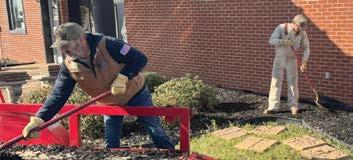
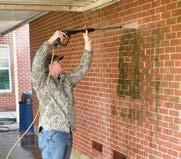

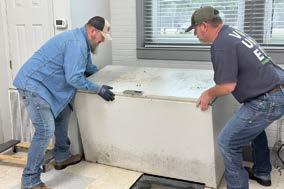
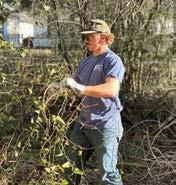
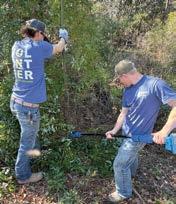


























Restoring power after an outage THANK YOU FOR GIVING US HIGH MARKS!
Singing River Electric conducted a member satisfaction survey in November 2025 to find out what we are doing well and where we can improve. Our cooperative received an American Customer Satisfaction Index (ACSI®) score of 89, on a 100-point scale. Thank you to our members who completed the survey!
Highly trained, professional employees








70% of respondents gave Singing River Electric the top satisfaction rating of 10 VERY SATISFIED ALL 15 PERFORMANCE ATTRIBUTES scored above the 4.0 “Good” threshold with 10 attributes rating above 4.5 “Excellent”
Providing reliable service













investor-owned utility score of 74, as well as 14 points higher than the municipal utilities score of 75, per the industry ratings. For more information, please visit https://theacsi.org/industries/energy-utilities/.












Singing River Electric Cooperative completed its annual member satisfaction survey, where over 6,880 members were asked to participate. The member responses were sent to the American Customer Satisfaction Index (ACSI®), a company that measures customer satisfaction across multiple industries throughout the entire United States. For 2025, Singing River Electric Cooperative received an ACSI score of 89, on a 100-point scale. Singing River Electric Cooperative’s score is higher when compared to cooperative utility scores reported in the syndicated 2025 ACSI Energy Utility Study and places Singing River Electric Cooperative 15 points higher than the average
Compared to publicly measured energy utilities in the ACSI® survey of customers rating their own energy utility. Results based on data provided by Singing River Electric Cooperative, collected between November 17-30, 2025. ACSI did not regulate the survey administration or sample size. ACSI and its logo are registered trademarks of the American Customer Satisfaction Index LLC. For more about the ACSI, visit www.theacsi.org.
Date: Thursday, June 25, 2026
Time: Registration – 5 p.m. • Meeting – 6 p.m.
Location: Singing River Electric’s Lucedale o ce
Eighteen Singing River Electric linemen traveled north on Jan. 26 to help Pontotoc Electric Power Association with power restoration after Winter Storm Fern. Of Pontotoc Electric’s more than 20,000 meters in North Mississippi, nearly 15,000 meters were without power the day our linemen arrived.
Besides the bitter cold being a challenge to work in, Safety Supervisor and Crew Leader Ryan Evans said melting ice made it di cult to drive trucks anywhere other than on roads because the ground became soft and slushy. Our linemen removed many treetops that froze and fell on the lines and utilized track machines to access numerous broken poles.


Cooperation Among Cooperatives
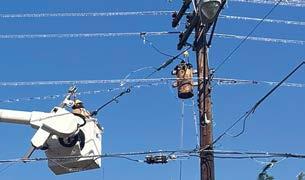
The meeting will include cooperative business and director elections.
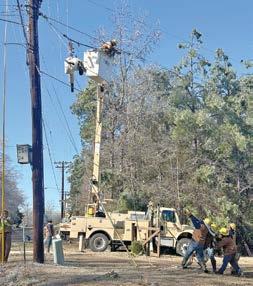
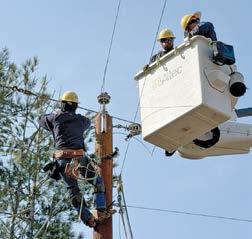
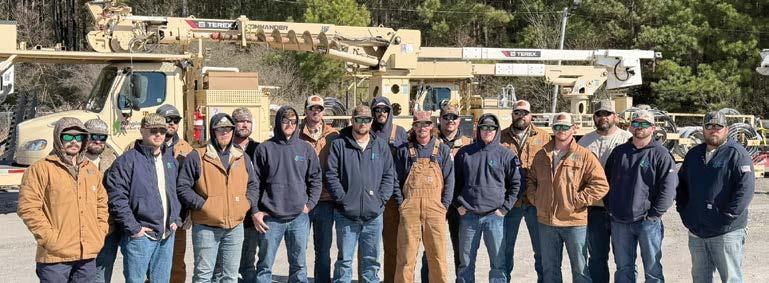












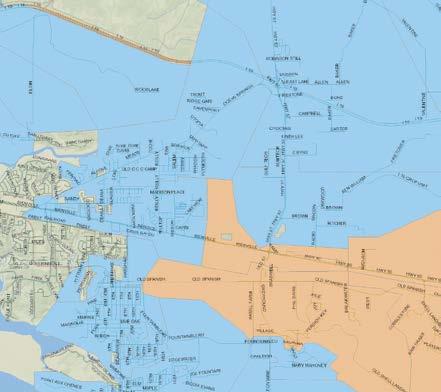













March 20 marks the fi rst day of spring, a season many of us welcome with open arms. Spring brings longer days, greener pastures, and new life across the countryside we’re proud to serve. It’s a time of renewal and fresh starts, and it also reminds us at Southern Pine Electric of an important responsibility we carry year-round: keeping our rights-of-way clean, clear, and safe.
As everything starts growing again, so do the trees, brush, and vegetation near our power lines. While that growth may look harmless, it can quickly become one of the biggest threats to electric reliability. Limbs touching lines, overgrown rights-of-way, and fallen trees during storms are among the leading causes of power outages. That’s why vegetation management isn’t a seasonal task for us. It’s a year-round commitment.
Maintaining clear rights-of-way allows our crews to do their jobs safely and e ciently. When lines are accessible, linemen can respond faster during outages, perform routine maintenance more safely, and restore power more quickly when storms roll through. Clean rights-of-way also reduce the risk of damage to equipment and help prevent fi res, especially during dry or windy conditions.
I know it’s not always easy to see crews trimming trees or clearing brush near your property. Trees hold meaning for families. They provide shade, beauty, and memories. We never take lightly the impact this work can have, and we work hard to be respectful







and intentional in how it’s done. Our goal is not to clear more than necessary, but to do what’s required to protect the reliability of your electric service and the safety of our team and members.
Spring is a good time to remind all of us that reliability doesn’t by accident. It’s the result of planning, investment, and steady work long before a storm ever shows up in the forecast. Keeping rights-ofway clear is one of the most important investments we make on your behalf, and it pays dividends all year long.
As you enjoy the signs of spring in your yard and across our communities, I ask for your understanding and support as we continue this important work. Together, by staying proactive and focused on safety, we can ensure Southern Pine is ready for whatever the seasons bring.
Thank you for your trust, your patience, and your membership. We’re proud to serve you and remain committed to bringing the power, today and in every season ahead.

by Drummonds McAlpin
President/CEO Southern Pine Electric


Maintaining clear rights-of-way allows our crews to do their jobs safely and e ciently. When lines are accessible, linemen can respond faster during outages, perform routine maintenance more safely, and restore power more quickly when storms roll through.
















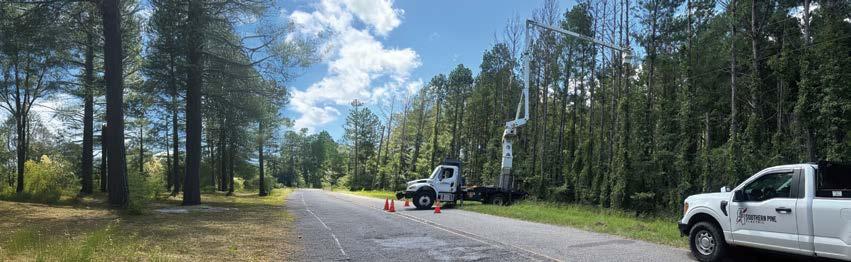














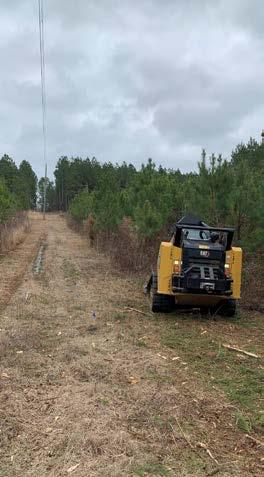
by Nolan Thorne Manager of Right-of-Way
Right-of-way work isn’t something that happens once and then checks a box. It’s ongoing, year in and year out, and it’s a critical part of keeping the lights on for our members. I’m proud of the progress our crews made in 2025 and confident in the plan we have in place for 2026.
In 2025, our team trimmed and cleared nearly 2,000 miles of line, specifically 1,940 miles across the system. That work helps reduce outages, improves reliability, and gives our linemen safer access when storms do hit. At the same time, we continued to tackle the lasting e ects of the severe drought from a couple of years ago, which left behind a massive number of dead pine trees. Those dead trees don’t recover, and over time they become a serious risk to power lines.
To address that risk, we added additional dead-tree takedown crews beginning in October 2024. Since that e ort started, approximately 240,000 dead trees have been removed, with 140,000 of those taken down since Jan. 1, 2025, alone. This work is ongoing and remains a top priority for our department.
Looking ahead to 2026, we already have plans in place to trim and clear 1,975 miles of line across eight di erent substations throughout our system. This work is part of our preventative maintenance cycle, where every line is trimmed and cleared on a four-year rotation. Staying on that schedule helps us stay ahead of problems instead of reacting after outages occur.
Right-of-way clearing is a continuous process, and it plays a major role in the reliability our members expect and deserve. I appreciate the hard work of our team, contract crews, and the patience of our members as we continue this important work, today and into the year ahead.

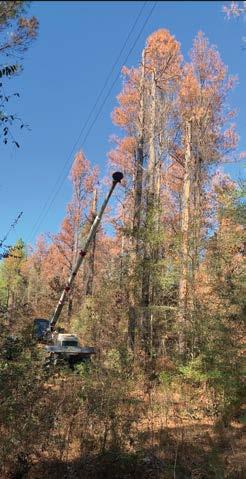
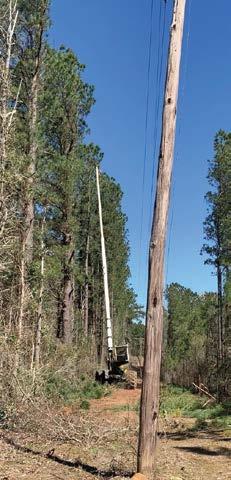




















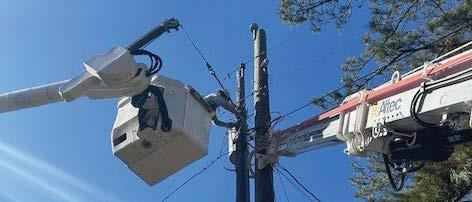









































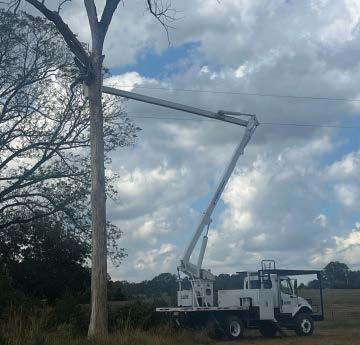
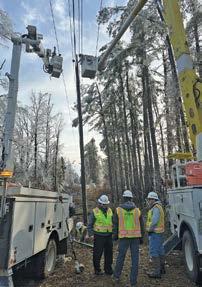




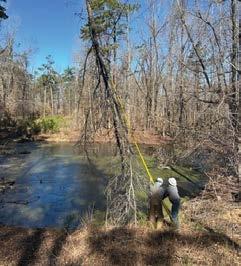

























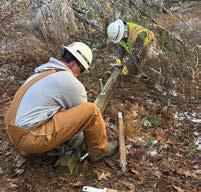

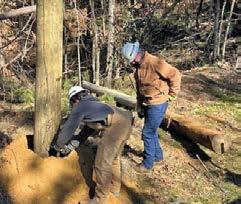


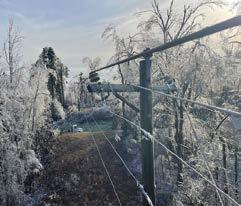




Southern Pine Electric was proud to help when Winter Storm Fern caused widespread damage across northern Mississippi. While our system was fortunate to be spared the worst of the storm, many co-ops were not.
Sixty-eight Southern Pine team members assisted with outage restoration e orts at Delta Electric Power Association, which sustained significant damage from the storm, causing thousands of outages across their system. Thirty-four men went initially, and after 10 days they headed home and the next group headed to Delta Electric to continue work restoring members.
Crews worked in extremely cold, muddy, and hazardous conditions, where safety remained the top priority. Behind every team member in the field were families at home—spouses, children,
and loved ones supporting them while they were away helping others. That support is an essential part of mutual aid and one that often goes unseen.
“Mutual aid is one of the clearest examples of the cooperative di erence,” said Drummonds McAlpin, President and CEO of Southern Pine Electric. “When one co-op is hurting, others step up without hesitation. Our team members and their families understand that serving others is part of who we are, and I’m incredibly proud of the way they answered the call.”
Southern Pine is here when our sister cooperatives need us, just as they are when help is needed for our members. It’s the cooperative way.
Principal Ti any James leads a dedicated faculty and sta at New Hebron Elementary School with one clear purpose: helping students learn and succeed. She oversees a team of 50 teachers and sta members who work tirelessly each day to support the 246 children who walk through the school’s doors.
New Hebron Elementary, a small, rural K-8 school, has been selected as Southern Pine’s Adopt-a-School partner for 2026. Through this partnership, Southern Pine is committed to supporting the school’s mission and helping create opportunities for every student to reach their full potential. Together, we can make a meaningful di erence in the lives of these children and their families.
“Schools like New Hebron Elementary are the heart of their communities,” said Drummonds McAlpin, president and CEO of Southern Pine Electric. “When we invest in our schools, we’re investing in our future. We’re proud to partner with educators who pour their hearts into preparing the next generation.”



James said she welcomes the partnership and believes collaboration will strengthen student success. “I believe our community can make a di erence,” she said. “Whatever Southern Pine can do, we can work together, hand in hand, to create a true partnership for the children we serve.”
When we invest in our schools, we’re investing in our future. We’re proud to partner with educators who pour their hearts into preparing the next generation.
Each year, Southern Pine adopts a school in a di erent county across our service area, focusing on building strong relationships and making the greatest impact possible in the communities we are proud to call home.
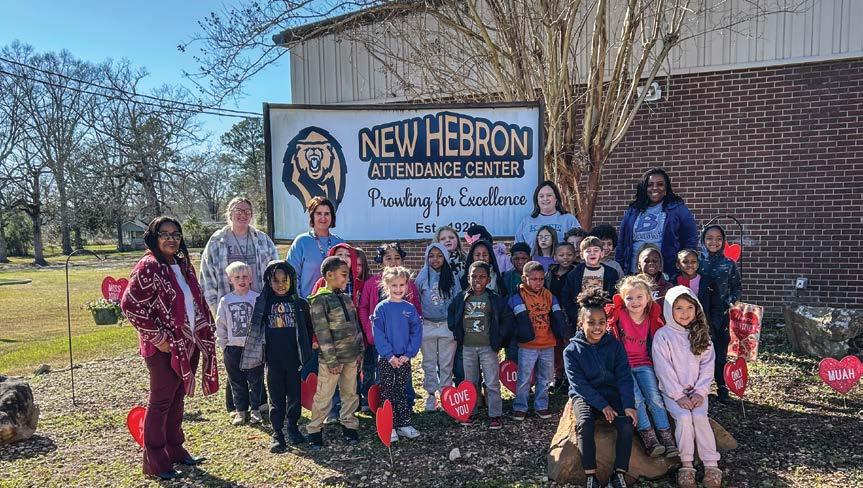






















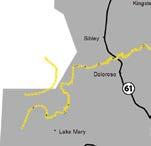
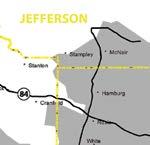
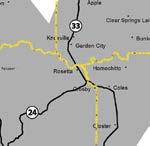
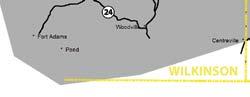








Maintaining the rights-of-way around our power lines is a priority for Southwest Electric. Doing so helps keep the tree branches next to and above the power lines from falling and causing outages, and it helps personnel quickly assess damage and reach areas in the event of outages. Our nine-county service area is trimmed on a five-year rotation, and vegetation from the ground is managed every three years. Contractors are used throughout the year to help our employees.
Over the past few years, Southwest Electric has increased our right-of-way budget to battle the large dead trees due to drought and pine beetle infestation. This year, our right-of-way budget is $5.4 million. Good Hope Recovery will work for us again this year trimming around power lines in the green section of the first map, which includes 770 miles covering four substation areas.
ChemPro will manage the ground vegetation under 1,150 miles of power lines in the gray section of the second map. This work prevents trees and other woody vegetation from growing under the power lines.
In addition to the work in these planned rotation areas, Southern Tree Company and Good Hope Recovery will continue to cut down dead danger trees and cut other areas we call ‘hot spots’ endangering the power lines. This work will be done with skid steers and bucket trucks.
In 2025, our employees and contractors cut down 30,718 danger trees, trimmed trees away from 653 miles and managed the area under 1,209 miles of power lines.





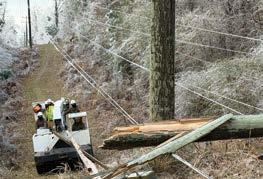




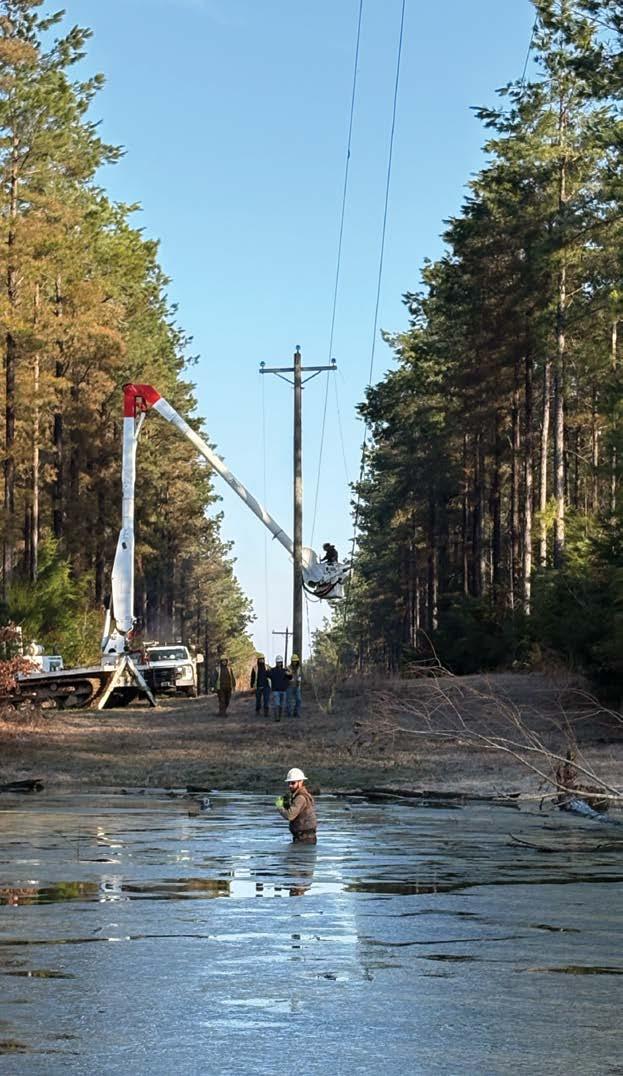

Each year, Cooperative Energy encourages its Member cooperatives to honor Martin Luther King, Jr. with a day of service. This year, Southwest Electric was able to give back to the community with two projects. Our linemen were able to step up and assist the Loyd Star Attendance Center PTA revitalize their playgrounds, and trash was collected alongside Highway 61.




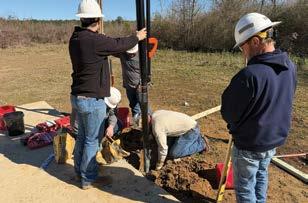
Wash outdoor coils whenever they appear dirty


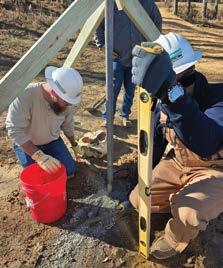

Clean or change air filters at least once a month Keep shrubs at least 18 inches away from unit
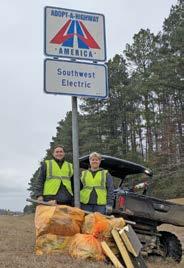





Southwest Electric installs meter-mounted transfer switches for our Members. A meter-mounted transfer switch will allow you to connect a portable generator to the meter base located on the side of your home. We consider this a safety device because it will eliminate the danger of potentially sending electricity back down our power lines, also called backfeeding. Southwest Electric does not sell meter-mounted transfer switches, but, as a service to our Members, we will install them on your home at no charge.
Step 1:
Purchase the meter-mounted transfer switch from an authorized dealer or directly from the manufacturer.
Step 2:
Call to submit a service order to initiate the installation process.
Step 3:
Download the agreement from our website.
Step 4:
Southwest Electric will send a serviceman to install the meter-mounted transfer switch.
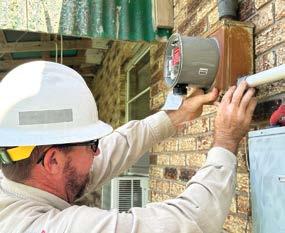

If a power outage occurs, you can plug the power supply cable directly from the generator to the switch. The switch enables electricity from the generator to power your home. When an outage is restored, you must turn the generator o and unplug it. It’s as simple as that!







•

• Mail the form back with a voided
• After processing time, your payment will be drafted on the due date.





































Hollandale - 662-827-2262 | Belzoni - 662-247-1909 | Greenville - 662-334-9543 | Rolling Fork - 662-873-4233 | REPORT OUTAGES 866-897-7250 @twincoepa twincoepa.com


Due to magazine deadlines and the long hours of work required to restore power to our members, we are unable to include a Winter Storm Fern feature in this issue. Our team has been working tirelessly to rebuild and restore service, and we plan to publish an article highlighting our storm response and recovery e orts in the April issue.

Once again, Twin County EPA was proud to be a sponsoring partner of this Greenville marathon in February. The event was created by residents to help support healthy lifestyles throughout the Delta. In addition, the marathon was set up to help all children receive an excellent education by donating the money raised to the Washington County and Southeast Arkansas Community Foundations.



APRIL 11
49th World Catfish Festival
Downtown Belzoni
The festival boasts many food vendors and more than 100 arts and crafts vendors. Visitors can count on enjoying live music and the crowning of Miss Catfish. Twin County proudly sponsors the Catfish Festival and the Miss Catfish scholarship program.
Rotary Clubs throughout our service area meet on a weekly basis including Rotary of Hollandale, Rolling Fork, Leland, Belzoni, and Greenville.
If you are interested in attending as a guest, member and/or speaker, please contact Chris Hamilton at chamilton@twincoepa.com for additional information.

by Anthony Buckley
Every time you flip a switch, you’re connecting to one of the most complex systems ever built, also known as the North American electric grid. Often called the largest interconnected machine in the world, this network spans the United States, Canada, and parts of Mexico. It includes thousands of generators, hundreds of thousands of miles of transmission lines, and millions of miles of distribution power lines all working together to keep the lights on day and night.
But how does electricity actually get from a power plant to your home? And where do electric cooperatives fit in? Let’s break it down.
The U.S. electric grid has three major components: generators, transmission, and distribution. Each plays a critical role in delivering electricity where and when it is needed.
In the U.S., most power plants produce electricity by burning fossil fuels or by harnessing renewable resources like solar, wind, and water. To ensure that enough electricity is generated to keep the lights on at an a ordable price, two main structures exist.
The first is a “vertically integrated” model, where in some regions, a single utility owns everything from power plants to power lines and delivers electricity directly to consumers.
In other areas, a second model is used. Instead of one company making and delivering power, many companies sell electricity in a competitive market. Utilities buy electricity from these generators and deliver it to consumers like you. In this model, a group called a regional transmission operator (RTO) or independent system operator (ISO) helps keep everything running smoothly. They make sure enough power is available every second of the day. This system is called a wholesale market, and it lets utilities buy extra power when they need it.
Most electric cooperatives don’t own large power plants. Instead, they purchase power through long-term contracts, wholesale markets, or from their generation and transmission cooperative
(G&T), a member-owned utility that serves multiple co-ops in a designated region. G&T cooperatives are owned by distribution co-ops like yours. There are 64 G&T cooperatives across the U.S., and they often own power plants and transmission lines. G&Ts also plan for the future by investing in new generation sources, building infrastructure, and integrating renewables, all while staying true to the cooperative model: member-focused, not profit-driven.
In Mississippi, there are two G&T’s – Cooperative Energy, which supplies power to 11 co-ops in the south and western parts of the state, and the Tennessee Valley Authority (TVA) which powers co-ops in the northern part of the state.
Once electricity is generated, it doesn’t stay at the power plant. It begins a long journey to reach homes, farms, and businesses. Power must travel across regions to where it’s needed most, and that’s where the transmission system comes in. These high-voltage lines act like energy superhighways, moving electricity e ciently over hundreds of miles before it’s stepped down for local distribution and, ultimately, for the devices you use every day.
Transmission lines move enormous amounts of electricity e ciently across regions. Most distribution co-ops don’t own these transmission lines, but they rely on their G&T cooperative to handle this part of the journey. G&Ts make sure power gets from the plant to your local co-op. However, the electricity carried by transmission lines cannot be used as is because the voltage levels are too high. That’s the job of the distribution network, which is the final step that brings power to your lights, appliances, and devices.
The distribution network is the “last mile” segment of the electric grid and delivers generated energy from the transmission network to consumers. The high-voltage power from transmission lines is converted to lower voltages that home appliances, electric vehicles, and personal devices can use. This is where your electric cooperative comes in to keep local lines maintained and power flowing to members 24/7/365.
Understanding how power moves from generation to your home helps explain why reliability and a ordability depend on teamwork and collaboration between your local co-op, its G&T partners, and the broader grid. Together, co-ops are preparing for tomorrow’s challenges, so you can count on safe, reliable power for years to come.
Anthony Buckley writes on consumer and cooperative a airs for the National Rural Electric Cooperative Association.
The
electric grid includes thousands of generators, hundreds of thousands of miles of transmission lines and millions of miles of distribution power lines all working together to keep the lights on day and night.
by Cathy Cash
Kinks in the supply chain caused by the COVID pandemic — remember the run on toilet paper? — may be in the rearview for regular consumers, but new bottlenecks in the flow of goods and services are challenging Mississippi’s electric cooperatives to deliver a ordable and reliable service. And the circumstances squeezing the supply chains for electric co-ops are unlikely to ease in the foreseeable future.
Basically, we’re talking about a higher demand for electricity, but supply of equipment needed to maintain or build more power plants has not kept up. Then there’s a skilled labor shortage to get the job done and tari s on imported materials. All these things add up to delayed energy projects at increased costs.
After the pandemic forced manufacturing to shutter for months in 2020, a lot of experienced employees retired or never even went back to their jobs making transformers and other equipment essential to distributing electricity to consumers. The supply of some transformers has never been fully replenished, and the lack of a competent workforce today makes that a constant game of catch-up.
U.S.-based engineering, procurement, and construction firms are scrambling to meet work orders for new power projects as there is more demand today than they can keep up with, says Stephanie Crawford, regulatory a airs director at the National Rural Electric Cooperative Association.
Electric co-ops are “finding that these firms cannot respond to requests, they’re charging price premiums or that planning for projects four years out is already ‘too late,’” she says.
As a result, equipment crucial for electricity projects — from new substations to power plant maintenance and outage repairs after storms hit — are on delay and coming in at much higher prices.
Co-ops are seeing lag times of up to four years between an order for a transformer and its ultimate delivery. Prices are up 70% to 100% compared to 2020. Lead times for new gas turbines for a power plant can range from three to six years and cost 25% more than just three years ago.
According to one industry insider, an electric co-op that spent $10 million on materials and equipment for electricity projects and maintenance in 2020 had to spend over $15.5 million in 2025 to keep up.
So, what is your electric co-op doing to maintain reliable and a ordable service?
Collaboration, which is baked into every co-op’s DNA, is key. Co-ops are finding themselves working with equipment suppliers and contractors closer than ever and planning their orders at least a year in advance of construction to work out the snags of the current supply chain.
Knowing their exact inventory and the physical storage space also helps co-ops keep necessary equipment on hand, materials flowing, and projects as near to schedule as possible.
By working as a team, electric co-ops, manufacturers, and their industry partners will be able to improve forecasting their equipment needs, stay ahead of potential demand changes, and experience a smoother supply chain.
Cathy Cash writes on consumer and cooperative a airs for the National Rural Electric Cooperative Association.
After the pandemic, many skilled workers retired from manufacturing jobs making distribution transformers and other essential energy equipment. The shrunken labor force is challenging the supply for new power plant construction, maintenance or outage recovery. Photo Credit: ERMCO






















When it’s all said and done, Winter Storm Fern will be one for the record books. The storm caused substantial damage to electrical infrastructure across Mississippi, impacting electric cooperatives, municipal systems, and investor-owned utilities alike. Similar destruction was felt across other parts of the country as well.
Extended cold, loss of electricity, and disrupted water service are di cult reminders of just how dependent modern life is on reliable infrastructure. That reality places an important responsibility on electric utilities to do everything possible to provide safe, dependable service, especially when conditions are at their worst.
At Yazoo Valley, preparedness does not begin a few days before a storm arrives. Storm readiness is built into the very foundation of how we operate.
It starts with how we design and build power lines. Today, our first consideration when constructing a new line is accessibility — placing lines along roadways when possible, avoiding heavily wooded areas, and building routes that allow crews to respond more quickly when repairs are needed.
Our construction standards are also based on long-established engineering requirements for our region, ensuring materials and designs are suited for environmental stressors, such as ice and wind. We also install storm guying on major three-phase lines to reduce the risk of widespread damage when severe weather strikes.
Preparedness also depends on year-round maintenance. Yazoo Valley makes significant annual investments in vegetation management, including mechanical tree trimming and targeted right-of-way clearing, because we know vegetation is one of the leading causes of outages during storms.
In addition, we perform routine pole testing each year to identify rot or deterioration before failures occur. We also have a dedicated line inspector who systematically patrols every mile of our system over a five-year cycle, looking for anything that could a ect reliability.
This is what we mean when we say storm preparedness is built into the fiber of our business. Not every electric utility does this, but we do, and I think it paid o in this storm.
When a storm is expected to create problems, we heighten our readiness days in advance. We plan; we stage, and when the storm arrives, we respond quickly and with purpose.
The scale of Winter Storm Fern stretched federal, state, and local resources, along with every utility involved. There will be lessons learned once restoration is complete, and as we do after every major event, Yazoo Valley will evaluate our response and make improvements wherever needed.
As we reflect on our response to Winter Storm Fern, it is important to pause and say thank you.
First and foremost, thank you to the members of Yazoo Valley. Being without power for an extended period, especially in bitter cold, is more than an inconvenience. When that loss is compounded by no water, internet, or phone service, it creates real concern for personal safety and well-being. We understood that reality, and we felt it alongside you. Your

patience, cooperation, and trust allowed our crews to focus on restoring power as safely and e ciently as possible. Thank you for believing in your cooperative and standing with us during a di cult time.
To the employees of Yazoo Valley, you answered the call when our members needed you most. I saw the exhaustion, emotion, and determination in your faces at the end of long days. You trusted a plan that was built long before this storm arrived, and you executed it without hesitation. Your professionalism, grit, and commitment reflect the very best of this organization. Thank you for your service, your sacrifice, and your pride in the work you do.
Thank you to the Yazoo Valley Board of Directors for your steady guidance and unwavering support throughout this response. Your leadership matters, especially during moments like these.
We are also deeply grateful to the mutual aid line crews from electric cooperatives across the country, along with our contractor crews and vendors. Your willingness to step in, work long hours, and help rebuild our system made a tremendous di erence. Thank you to Electric Cooperatives of Mississippi for coordinating these e orts and helping ensure crews and resources were where they were needed most. What was accomplished in a short period of time is truly impressive, and I am sincerely thankful.
Lastly, thank you to the many individuals and businesses who helped lighten the load. From o ering free or discounted services, to providing meals, laundry help, and other acts of kindness, your generosity mattered. Thank you to employee spouses, family members, friends, and neighbors who stepped in to handle the small but important things that kept our crews going. Those e orts did not go unnoticed.
We also appreciate the overwhelming positive support shown on social media. Our crews see those messages, and they matter more than you may realize. Constructive feedback is welcomed when it comes from a place of care and understanding, and I am always willing to sit down with anyone who has questions or concerns about our response or communication. At the same time, misinformation and false accusations can create unnecessary tension and can even put people at risk. I thank those who chose to use their voices to support this e ort in a positive and responsible way.
This storm tested all of us, but it also showed the strength of this cooperative, our employees, and our community. Thank you for standing with Yazoo Valley.

by Michael Neely CEO and General Manager





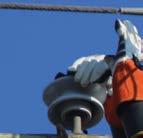
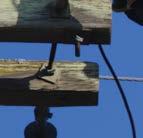
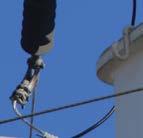

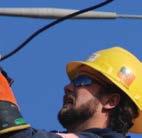

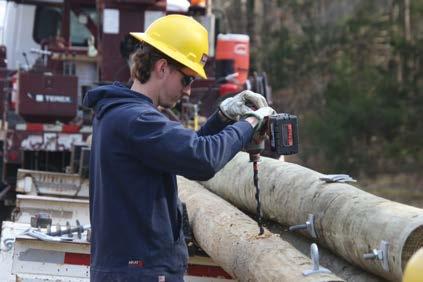













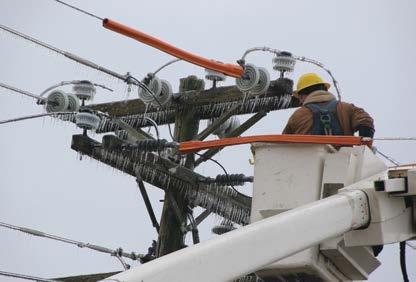

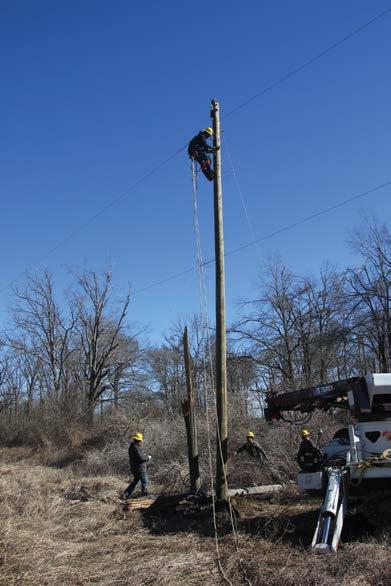
B.
drills a hole to prepare a pole for service along Ebenezer
Road in Holmes County. Breaking trees and ice broke numerous poles along this road. C. Justin
works on ice-covered lines while restoring power near the Four Points intersection in Yazoo City. D. Veteran Yazoo Valley lineman Jay Milner led a crew from Excelsior Electric out of Georgia during the recovery. E. Coby McCrory, Josh Nordquist, Mario Saldana, and Chase Pearson repair broken lines in Warren County.
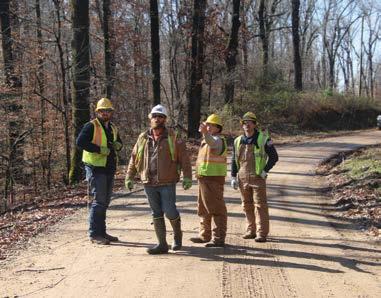
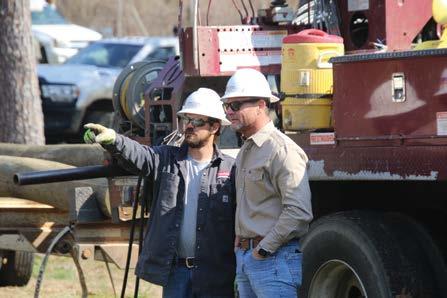

F. Dylan
a pole while Jose
wire as the
in
damaged power lines along
describes the work taking place to General Manager Michael Neely while his crew is restoring lines along Highway 433 in the Bentonia area. H. Tanner Evilsizor directs the loading of poles as a crew prepares to head out for a restoration job. Around 300 of Yazoo Valley’s poles were broken during the storm, which delayed restoration times.
Yazoo Valley was pleased to have the opportunity to help Yazoo County Middle School make additional improvements to the school garden. Yazoo Valley helped remove old beds and crossties to make room for tables that will allow students to enjoy the garden setting. Yazoo Valley is always glad to support our local schools.

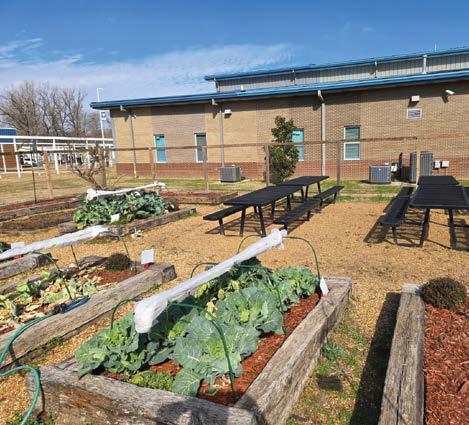
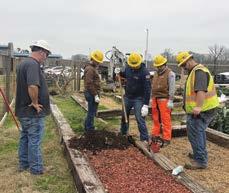
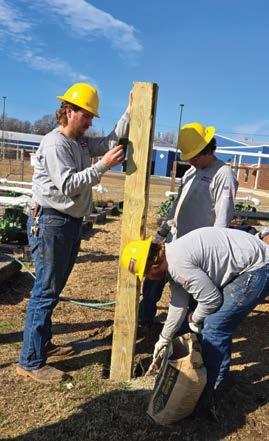

As I write this column — on Feb. 8 — we are beginning day 14 of storm restoration from Winter Storm Fern. As of this morning, 92% of outages have been restored. For the 8% of our members who were still without power, I know that’s not much comfort, but we are working as hard and as quickly as we can.
Fern left a corridor of ice — 25 miles wide and 1 ½ inches thick — starting just north of Vicksburg and running to the northeast corner of the state. The damage within this corridor was unlike anything we have seen before. I’ve heard lineman refer to it as a “frozen hurricane” because the trees were bent in a swirling motion but covered in a coating of ice.
The storm lasted an entire weekend with two rounds, the worst beginning on a Saturday night and lasting until Sunday afternoon. In the aftermath, Mother Nature did not let up. The temperature didn’t get above freezing in most places until Wednesday, and the next weekend another severe cold front moved into the state dropping the lows to single digits. This made for brutal working conditions for our line crews. I’ve been at the Electric Cooperatives of Mississippi (ECM) for 20 years, and this is the most injuries a ecting our personnel I can recall us ever having during power restoration.
The storm damage to our electrical systems was catastrophic.
I’d like to thank our cooperative employees across the state for their hard work. Many have worked for 20 plus days straight (they worked the week before the storm hit) and these have been long, 16-hour days, and they, like the members they serve, came home to dark, cold homes.
I’d also like to thank our members for your patience and understanding. Someone must be first to get their lights on, and unfortunately, someone must be last. Trust me, your co-op’s employees are working as hard and as fast as they can to restore your power. And thank you to the members who stepped up to aid in restoration e orts. Many churches and local restaurants helped feed the linemen, and many volunteers, including cooperative employees’ families, helped with laundry and other tasks. In some places, restoration truly became a community e ort, and that is what makes the cooperative family special.
By the time you read this, every one of our members should (barring some other emergency) have power.
Fern was di erent folks. Unfortunately, that made power restoration tricky and di cult. (Check out our story about the storm on page 26.)
Thanks again for your support and patience.

by Michael Callahan
Executive Vice President/CEO Electric Cooperatives of Mississippi

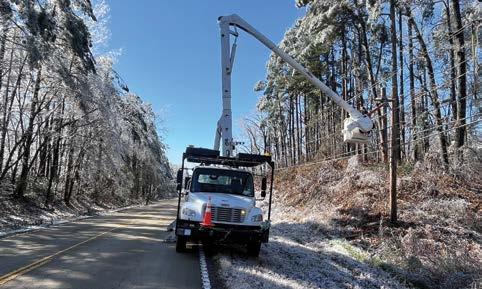


Mississippi, You Were There
Mississippi, you were there on the day of my birth, the first arms to hold me my first day on earth. You were there to witness the first breath that I took, the first one to meet me and have the first look. You taught me to laugh, cry, and to walk. You were there to witness my first day of school, to teach me God’s love and the Golden Rule. Everything I learned, I learned from you. From my first day in kindergarten, and all the way through.
But sometimes young people have it all figured out. They leave home to see what this world’s all about.
And so, my life took me over land and sea, to cultures and languages new to me. Oh, how I missed your sweet arms around me, like the prodigal child, you were there waiting for me.

With tears blurring my vision as I glanced at the sky, your flags waved at me wildly as I passed by. Mississippi, you were there.
by Patsy Collins Rodgers, a resident of Laurel and a member of Dixie Electric
What’s Mississippi to you?
What do you treasure most about life in our state? Send your brief thoughts to Today in Mississippi, news@ecm.coop or mail to P.O. Box 3300, Ridgeland, MS 39158.
Submit your beautiful digital photo of life in Mississippi to Today in Mississippi, news@ecm.coop