













ON THE

















NRECA and electric cooperative leaders joined o cials recently from the U.S. Department of Agriculture to celebrate the 90th anniversary of the Rural Electrification Act (REA), the law that helped deliver power across rural America.
The REA was a new Deal Era e ort to provide low-cost federal loans for building electric distribution systems in rural areas, part of e orts to revive America’s economy in the wake of the Great Depression.
The law drove the creation of electric cooperatives throughout the U.S. and laid the foundation for the USDA’s Rural Utilities Service (RUS), which provides financing for co-op infrastructure to this day. That support is crucial as co-ops gear up to meet growing demand while maintaining reliable, a ordable service for households and businesses.
The work of co-ops together with RUS “is the best of us, and that is what will keep America strong and the American dream available for all moving forward,” U.S. Agriculture Brooke Rollins said.
That partnership “is more important today than it’s ever been. These investments in rural America still matter greatly,” NRECA CEO Jim Matheson said. “They’re critical to promoting reliability, a ordability, economic opportunity, and quality of life in rural America.”
The REA, which was signed into law on May 20, 1936, was one of the most impactful pieces of President Franklin D. Roosevelt’s New Deal reforms.
When the REA was enacted, only 10% of U.S. farms and rural homes had electricity. Today, about 99% of the nation’s farms have electric service.
The law helped transform the Rural Electrification Administration — the forerunner to the modern-day RUS — from a relief agency to a lasting program to provide loans for rural electrification, supporting the creation and growth of co-ops.
The REA “allowed us to truly stitch our country together,” Agriculture Deputy Secretary Stephen Vaden said.
“It was our quick adoption of electric power throughout rural America that helped to create the innovation and the great economic growth that our country experienced throughout the 20th century.”
Today, over 900 electric co-ops are operating across the country and modernizing their systems to improve cost and reliability for the 42 million Americans they serve. About 200 electric co-ops are also building or operating broadband networks to deliver high-speed internet access to rural America.
In 1994, Congress reorganized the Rural Electrification Administration into RUS, which delivers on the REA’s original mission through three core programs to support electric, telecommunications, and water infrastructure.
“Investment in rural utility infrastructure is as important to rural life and the national economy today as it ever was,” said Chris McLean, assistant administrator for the RUS Electric Loan Program. “I dare say that few federal programs have been as successful as the Rural Electrification Act.”
Some co-ops have been RUS borrowers since the 1930s, but the agency is also serving first-time borrowers, including some of the newest co-ops in the country, McLean said.
“Today we not only celebrate our history; we also celebrate our bright and shining future,” he said.
Even with the strides co-ops have made to power rural America, the partnership between RUS and co-ops remains essential, attendees said at the USDA event.
The RUS electric loan program ensures co-ops can build and upgrade the infrastructure needed to power a changing rural America while keeping rates a ordable. The program is also a good deal for the federal government, with co-ops repaying the loans with interest.
“Let’s celebrate the past 90 years, but let’s also celebrate the fact that this partnership between electric co-ops and RUS is incredibly well positioned to continue this meaningful work for the future,” Matheson said. – NRECA


“Improving the quality of life for all those we touch.”
Each July, we take time to reflect on our country’s history and remember how the actions of a brave few helped shape the way we live today. For 250 years, our country has thrived as the United States of America. At 4-County Electric Power Association, we celebrate Independence Day and our rights to pursue life, liberty, and the pursuit of happiness. And we can’t help but see somewhat of a correlation between those determined colonists and a small group of dedicated individuals who paved the way to bring electricity to our area. Those rural electric pioneers were able to improve their quality of life and the quality of life for all those who would come after them.
Every day, 4-County Electric Power Association members and employees pay homage to the legacy of our cooperative founders. And, because we are a part of an electric cooperative, we know we have the power to impact our present and shape the future, just like those who came before us.
Providing reliable and a ordable electricity provides a true catalyst for positive change in our communities. It’s what we do. For example, we work together, partnering with other local, state and federal organizations to achieve community development goals. Creating better opportunities and increasing the quality of life for our families and communities – just as our founding co-op members did.
We understand that the decisions we make today could greatly a ect how future generations live, so we invest in energy e ciency programs that protect our future generations while still providing high-quality, a ordable electric power. You can learn more about 4-County’s energy e cient programs by visiting 4county.org.
Cooperatives are helping to build the next generation of leadership through our Cooperative Youth Tour programs; sending high school students to Washington, D.C. to meet with lawmakers and get an
up-close view of how our government functions. This year’s group of student delegates, Emma Williams, Ginger Ford, Reagan Kilgore, and Katelyn Hammett, took their resume-building trip in June. Our delegates always leave our nation’s capital feeling energized. It inspires them to make a di erence in their communities and gives them a new perspective. The Cooperative Youth Tour program provides young people from our communities with an opportunity they may otherwise have never known.
All of these things, plus so much more, are what make-up the cooperative di erence. This Fourth of July, as we think about the future of electric cooperatives and how we will continue to shape our country and our society, 4-County remembers what it took to bring power to our communities and let the determination of those who came before us.
In a separate note, thanks to all who participated in the 4-County’s Annual Meeting June 4 at East Mississippi Community College’s Mayhew campus. It was a record turnout, with nearly 700 people attending this important annual event. And congratulations to Annie Cunningham of Prairie who won the grand prize, a retired 4-County fleet truck.
Thank you for your support. We value you as members of this wonderful cooperative organization each and every day!
“Blessed is the nation whose God is the Lord, the people He has chosen for His own inheritance.” — Psalms 33:12

by Brian Clark
CEO/General Manager
by Brad Barr
The 4-County Foundation met recently and made over $45,000 in awards to six area nonprofit organizations. Since its inception, the 4-County Foundation has made over $2.5 million in awards to area non-profit organizations. Those receiving the recent round of awards include Fellowship of Christian Athletes ($10,000 for funds to send 30 children to a leadership camp); Friends of the Noxubee County Library ($10,000 to purchase materials for an interactive children’s area); Make A Wish Foundation of Mississippi ($6,500 for a child’s wish trip); Oktibbeha County Sheri ’s O ce ($9,775 for SWAT/Critical Response Team equipment); Starkville Kiwanis Club ($6,000 for non-perishable food items for the United We Feed Food Drive); and the Webster County Public Library ($3,500 for mobile classroom equipment). Applications to receive Foundation assistance for individuals and organizations are available in 4-County o ces and on the 4-County website, 4county.org. You can also call 1-800-431-1544 for more information. Ninety-three percent of 4-County members participate.









by Brad Barr

Nearly 700 people attended 4-County Electric Power Association’s annual membership meeting June 4 at East Mississippi Community College’s Golden Triangle campus in Mayhew.
Co-op members began gathering about 9 a.m. for registration and door prizes. They later had a fried catfish lunch with all the fixings, elected two directors (Mike Banks, District 4, Noxubee County) and Bill Bell (District 7, At-Large), and heard financial and business reports from 4-County o cials. At the meeting, Bell was honored for 10 years of service to the co-op. Directors Johnny Johnson and Russell Dodds were recognized for achieving Director Gold status (for continuing education) from the National Rural Electric Association. Those at the meeting also heard from 4-County youth leadership delegates Emma Williams, Ginger Ford, and Reagan Kilgore.


Members returning proxy/ballots for the director election, as well as those who attended the meeting, qualified to win valuable prizes.

Annie Cunningham of Prairie won the grand prize, a retired 4-County fleet Chevrolet truck.














































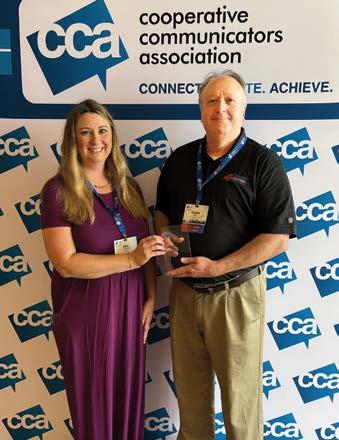



4-County Electric Power Association Senior Communications Coordinator Brad Barr recently received four national awards in the Cooperative Communicators Association’s (CCA) 2026 Communications Contest.
Awards were announced in June at the national organization’s Annual CCA Institute, held this year in Chattanooga, Tennessee.
Barr received first place honors in the writing category for a personality profile feature on 4-County’s Albert Jethrow and his 50 years of service to the cooperative. Barr wrote the article that appeared in Today in Mississippi, the co-op’s magazine for members. The senior communications coordinator also received a second-place award in the photography category for a portrait photograph he took of a 4-County lineman. The photo, titled Red, White & Blue Lineman, appeared in a variety of co-op publications and promotional e orts. Barr received third place in the photography category for his cover photo/illustration/design, Let Freedom Ring, in PowerSource, the co-op’s employee publication. And he also received third place honors in the photography category for his co-op member photo feature, Firefighting Fury, which appeared in Today in Mississippi.
The CCA brings together communication and marketing professionals from cooperatives (including national food brands, rural electric cooperatives, and other cooperative organizations) across the nation to share ideas and learn from each other. The contest allows communicators to demonstrate knowledge, expertise, and skills in a variety of categories. Professionals critique the entries and select winners in a blind judging contest.
CCA exists to improve the e ectiveness of all cooperative communicators; advance professional standards; and exchange facts, research, techniques, and opinions among cooperative communicators.
Abby Barr, a graduating senior at Heritage Academy, has recently been selected as one of only 35 recipients of the Tennessee Valley Authority’s (TVA) Power Play Scholarship.



Barr, daughter of Brad and Melinda Barr, received the $5,000 college scholarship awarded by the TVA Power Play Scholarship Association and 4-County Electric Power Association after being chosen by an eight-member selection team of educators from colleges and universities in the seven states of the Tennessee Valley.
Some criteria evaluated in the selection process include academic achievement, standardized test scores, leadership qualities, letters of recommendation, and written essays.




Barr graduated in May from Heritage and plans to attend Mississippi Christian University this coming fall, to study kinesiology with a physical therapy tract.
Made up of 16 power company managers representing the Valley region’s 154 Local Power Companies (LPCs) and TVA representatives, the Power Play Scholarship Association has awarded over 700 scholarships totaling more than $3 million to children of LPC employees since its inception in 1995.
Funds are raised through association membership fees, contributions from TVA, vendors, and the annual Power Play Golf Tournament events.







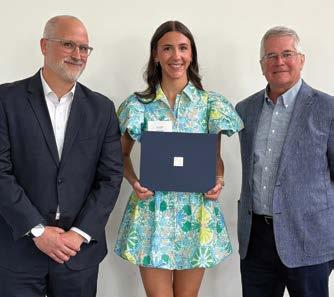













































The Electric Cooperatives of Mississippi Foundation was established by the Electric Cooperatives of Mississippi in 2005. To give back to the communities they serve, the foundation provides scholarships for postsecondary and vocational education at accredited institutions to qualifying high school seniors. For Fall 2026, the foundation awarded scholarships to dependents of employees of participating electric cooperatives. Three children of Central Electric employees who are entering college this fall received ECM Foundation Scholarships. Central Electric congratulates each recipient on receiving this scholarship.




Judd Ogletree is the son of Neal and Kristin Ogletree. He graduated with honors from Leake Academy. Judd enjoys hunting and competing in rodeos as a team-roping header. He plans to further his education through the carpentry program at East Central Community College.






Noah Clark is the son of Scott and Kim Clark. He graduated from Kemper Academy, where he was a member of the archery team and drumline. Noah plans to attend Mississippi State University to pursue a degree in electrical engineering.

JohnDavid Gill is the son of Doug and Candi Daly and David Gill. He graduated from Leake Academy. JohnDavid enjoys playing sports and spending time with friends. He plans to attend East Central Community College before continuing his education toward a degree in kinesiology.














Your electric utility works hard to ensure safe, reliable power to homes and businesses 24/7. To make sure everyone has the power they need, generation must match consumption and have the capacity to adjust to changing demands for energy.
Peak demand is the period in a given range of time — day, month, or year — when electricity use is highest. It’s caused by many people using energy-consuming equipment at the same time. It di ers based on geography, weather, and time of year. For example, demand is typically highest on hot summer afternoons and cold winter mornings. Most utilities also experience daily peaks when people are getting ready in the mornings and returning home in the evenings.
When everyone uses more energy at the same time, it puts more stress on the electric grid and requires more expensive electricity to meet the need.
Electricity pricing is based on supply and demand. The price of electricity is higher when the demand is higher, which costs the utility more.
To lower energy use and strain on the grid during peak times, there are habits we can adopt in our homes.
Let’s look at two examples.
Joe and John arrive home from work at 5:30 p.m. They both turn on the oven to make dinner.
While John waits for the oven to preheat, he throws in a load of laundry. He finishes dinner, cleans up and starts the dishwasher. Then, he moves the clothes to the dryer.
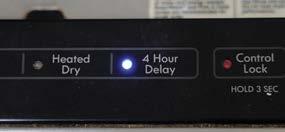

Joe finishes dinner, loads the dishwasher and sets it to start at 10 p.m. He puts a load of laundry in the washing machine and later that evening switches it over to the dryer.
Although they use the same appliances and amount of energy, John uses it all at once, running multiple appliances during peak hours, creating higher demand and more strain on the electric grid while using more expensive energy.

To lower your demand, spread electricity use throughout the day and avoid peak times as much as possible. This will reduce the utility’s cost of supplying electricity to your home. Another benefit of shifting your use to midday is integrating renewable energy, such as solar, which produces energy when the sun is shining.
Large appliances — including washers, dryers, ovens, water heaters and air conditioners — have the biggest impact. Using them during o -peak hours or one at a time can help.


Automate as much as possible. Most electric vehicle chargers can be set to charge during scheduled hours with built-in timers or apps. Most modern dishwashers have delay-start features. If you have a pool, set the pool pump to run in the middle of the day, particularly if you are in a region with strong solar production.
You can also automate air conditioning. Simple, free adjustments, such as closing your curtains on hot afternoons and evenings, can help, too.
Keep in mind that extreme weather, such as freezing temperatures in Alabama or a heat wave in Minnesota, puts extra stress on the grid. Taking it easy on your energy use during extreme weather events can help prevent outages.
Spreading out your energy use helps your utility keep costs down and benefits your local energy grid.























































by Qua'Shara Monix









July is a month filled with patriotic pride, family gatherings, backyard barbecues, and dazzling fireworks displays. As we celebrate Independence Day, Coahoma Electric encourages members to make safety a top priority, especially when it comes to electricity.
This year’s celebration carries even greater significance. In 2026, America commemorates its 250th anniversary, marking two and a half centuries since our nation’s founding. At the same time, electric cooperatives across the country are celebrating the 90th anniversary of the Rural Electrification Act, landmark legislation that transformed life in rural America.
Before the Rural Electrification Act was signed in 1936, most rural communities lived without electricity. Families relied on kerosene lamps for light, hand pumps for water, and wood-burning stoves for cooking and heating. The creation of rural electric cooperatives brought power to areas that investor-owned utilities deemed too costly to serve, forever changing the quality of life for millions of Americans.
For 90 years, electric cooperatives have embodied the same spirit of independence, innovation, and community service that helped shape our nation. As we celebrate America’s 250th birthday, we can also take pride in the generations of cooperative members, employees, and leaders who helped bring reliable electricity to rural homes, farms, schools, and businesses.
While fireworks are often the highlight of Fourth of July festivities, they can also pose serious risks when used near power lines and electrical equipment. Always keep fireworks far away from overhead power lines, transformers, substations, and utility poles. Even a small spark can cause power outages, equipment damage, or serious injuries.









If you’re decorating for a holiday gathering, take a few moments to inspect outdoor extension cords and lighting Use products rated for outdoor use and never overload outlets or power strips. Replace any damaged cords that show signs of wear, fraying, or exposed wires.
Summer also brings increased outdoor activity. Whether you’re setting up tents, raising flags, flying kites, or enjoying recreational activities, always be aware of nearby power lines. Maintain a safe distance and never attempt to retrieve items that become tangled in electrical equipment. Instead, contact your local electric cooperative for assistance.
As temperatures continue to rise, July is also a great time to practice energy-saving habits. Keep blinds and curtains closed during the hottest part of the day, use ceiling fans to help circulate cool air, and set your thermostat at an e cient temperature. These simple steps can help manage energy use while keeping your home comfortable.
Most importantly, leave the fireworks to the professionals whenever possible. Attending a community fireworks display is often the safest way to enjoy the excitement and beauty of Independence Day.
As we honor 250 years of American independence and 90 years of rural electrification, Coahoma Electric remains committed to the cooperative principles that have guided us from the beginning: service, reliability, and concern for our community.
From all of us at Coahoma Electric, we wish you and your family a safe, happy, and memorable Fourth of July. Thank you for allowing us to power your homes, businesses, and celebrations today and for generations to come.
Happy Independence Day!











































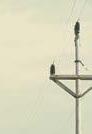








by Cathy Cash







and why does it matter to electric co-ops?












over five





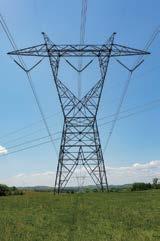
The Federal Energy Regulatory Commission (FERC) is an independent agency in Washington, D.C., with authority over the transmission and wholesale of electricity in interstate commerce.
Electric cooperatives were formed to serve members with a ordable, reliable, and safe power. But what role, if any, does the federal government play in ensuring that happens?
The commission also regulates the interstate commerce of natural gas and oil and the siting of natural gas and hydropower facilities. Basically, FERC oversees how energy moves across the country by high-voltage powerlines or large pipelines.
So, FERC doesn’t regulate your local distribution co-op. But it does exert authority over five generation and transmission co-ops and all the wholesale electricity markets where co-ops buy their power supply. By setting the markets’ transmission rates that electric power companies and utilities, including co-ops, must pay, the federal agency can ultimately influence retail prices.
Mary Ann Ralls, NRECA senior director, regulatory counsel, notes that while state utility commissions have more immediate control over co-op operations and building powerlines, the federal agency’s influence fills in the gaps.














FERC does have a role in how co-ops can best serve their members by upholding grid reliability and safety and in keeping costs a ordable.




The commission’s regulations aim at maintaining fair prices within the wholesale electricity markets run by six regional transmission organizations (RTOs) and independent system operators (ISOs). These FERC-regulated RTOs and ISOs manage parts of the national electric grid.
FERC also monitors these markets for energy supply manipulation that can hike prices. When things go wrong, the commission can investigate and levy penalties.
Overall, FERC sides with conserving energy and encourages utilities to find ways to reduce demand, which eventually can place downward pressure on monthly bills.
The commission largely lacks authority over electric transmission in terms of siting and construction. That falls under state and local authorities.
Regarding natural gas, FERC has the final say in construction and operation of liquefied natural gas terminals, pipelines, and storage facilities. It reviews gas projects in terms of their impact on the environment, land use, geology, and the economy.
And, being a public agency, keep in mind all FERC’s final decisions can be challenged in court.
When it comes to grid reliability, the buck stops with FERC. The commission directs the national grid watchdog — North American Electric Reliability Corporation (NERC) — and enforces its mandatory reliability rules and requirements on grid operators and owners of the U.S. bulk power system, including utilities and energy producers.
The commission tasked NERC as the electric reliability organization for the continental United States after Congress called for a single point of contact following the historic blackout of Aug. 14, 2003, which left more than 50 million people in the Northeast and parts of the Midwest without electricity for several hours to several days.
FERC can require NERC to set new reliability standards or update current rules as needed to protect the grid’s ability serve today’s increased demand.






So, who is FERC?

The body is made up of five commissioners appointed by the president and confirmed by the U.S. Senate for five-year terms. The chair presides over open, public meetings on the third Thursday of the month, where the commission votes on orders to act on or approve projects or set precedents. You can even watch these meetings at home from the live link on the FERC website.
While its regulatory influence may not have a hand directly in co-op operations to serve consumers, FERC does have a role in how co-ops can best serve their members by upholding grid reliability and safety and in keeping costs a ordable.
“Irrespective of the level of regulation FERC has over a co-op, it is incumbent upon NRECA, working with its members, to impress on the commission that ultimately the co-op’s obligation is that the consumermember at the end of the line has a ordable, reliable, and safe electric service,” says Ralls.
Cathy Cash writes on consumer and cooperative a airs for the National Rural Electric Cooperative Association.





Your electric utility works hard to ensure safe, reliable power to homes and businesses 24/7. To make sure everyone has the power they need, generation must match consumption and have the capacity to adjust to changing demands for energy.
Peak demand is the period in a given range of time — day, month, or year — when electricity use is highest. It’s caused by many people using energy-consuming equipment at the same time. It di ers based on geography, weather, and time of year. For example, demand is typically highest on hot summer afternoons and cold winter mornings. Most utilities also experience daily peaks when people are getting ready in the mornings and returning home in the evenings.
When everyone uses more energy at the same time, it puts more stress on the electric grid and requires more expensive electricity to meet the need.
Electricity pricing is based on supply and demand. The price of electricity is higher when the demand is higher, which costs the utility more.
To lower energy use and strain on the grid during peak times, there are habits we can adopt in our homes.
Let’s look at two examples.
Joe and John arrive home from work at 5:30 p.m. They both turn on the oven to make dinner.
While John waits for the oven to preheat, he throws in a load of laundry. He finishes dinner, cleans up and starts the dishwasher. Then, he moves the clothes to the dryer.

Joe finishes dinner, loads the dishwasher and sets it to start at 10 p.m. He puts a load of laundry in the washing machine and later that evening switches it over to the dryer.
Although they use the same appliances and amount of energy, John uses it all at once, running multiple appliances during peak hours, creating higher demand and more strain on the electric grid while using more expensive energy.
To lower your demand, spread electricity use throughout the day and avoid peak times as much as possible. This will reduce the utility’s cost of supplying electricity to your home. Another benefit of shifting your use to midday is integrating renewable energy, such as solar, which produces energy when the sun is shining.
Large appliances — including washers, dryers, ovens, water heaters and air conditioners — have the biggest impact. Using them during o -peak hours or one at a time can help.

Automate as much as possible. Most electric vehicle chargers can be set to charge during scheduled hours with built-in timers or apps. Most modern dishwashers have delay-start features. If you have a pool, set the pool pump to run in the middle of the day, particularly if you are in a region with strong solar production.
You can also automate air conditioning. Simple, free adjustments, such as closing your curtains on hot afternoons and evenings, can help, too.
Keep in mind that extreme weather, such as freezing temperatures in Alabama or a heat wave in Minnesota, puts extra stress on the grid. Taking it easy on your energy use during extreme weather events can help prevent outages.
Spreading out your energy use helps your utility keep costs down and benefits your local energy grid.



Communicators: April Lollar, Merilee Sands and Sarah Belk



Coast Electric and CoastConnect exist to power and connect lives. Our commitment to our communities and the people we serve is the foundation of all we do. Our mission is to safely provide reliable electricity, but it’s also about making life better for the people we serve. In the six months that I’ve been CEO, I’ve gotten to know the people who work at both companies pretty well, and I can tell you that our employees take this mission seriously.
From family dinners to helping local businesses operate successfully and supporting essential services, for nearly 90 years, Coast Electric has powered the moments that matter most. And through CoastConnect, we’re connecting our communities to opportunities that once seemed out of reach. Reliable high-speed internet access enables remote work, online learning, business growth and much more.
Together, Coast Electric and CoastConnect are building a stronger future for South Mississippi. We’re investing in infrastructure, embracing innovation and finding new ways to serve our members


and subscribers while staying true to the cooperative values that have guided us from the beginning.
As we look forward to our 2026 Annual Meeting, I encourage you to take part in the cooperative governance process by attending or registering for the meeting. As a co-op member, you have a voice in shaping the future of your co-op and meeting participation is one of the most important ways you can participate in this process. Be on the lookout for our registration mailer or visit our website to register. Registration for the meeting begins online and via mail on July 29. We are proud to power and connect your lives. I hope to see you all at our meeting in the fall. Until then, have a safe and happy summer.

by Chris Rhodes
President and CEO






































Twice each year, Coast Electric’s Community Trust Committee and our partners at the Gulf Coast Community Foundation review and select grant recipients from a pool of applicants to receive funds for projects that improve the quality of life in the communities where we live. The Operation Round Up (ORU) program is funded by Coast Electric members who round up their bills each month. Their generous contributions reflect the co-op spirit — working together to improve our communities.




“We appreciate Coast Electric members so much. They help us fund our community resource guides. It wouldn’t be possible without people like you to help us.”
Janie O’Keefe
Recently, 19 grants totaling $144,000 were awarded to the following local charities. These grants benefit organizations and schools served by Coast Electric or within our service area.
Feeding the Gulf Coast
Weekend meals for students
Junior Auxiliary of Gulfport
Project NOW and Backpack Blessings
CASA of South Mississippi
Volunteer training and retention
Extra Table FEEDS
Supporting Brothers Keepers Food Pantry
Bethel Free Clinic
Chronic Care support program
Christ Church
Backpack Buddies
Crossroads Food Pantry
Food
FABLAB Jackson County
Mobile STEAM for Harrison and Hancock County Schools
Gateway United Methodist Church
ML Tootle Food Pantry — Food
Hancock County Food Pantry
Food
Harvest Barn Food Bank Food
Kiwanis Club of Picayune
Kiwanis Olympiad and special needs programs
Manna Ministries Inc.
Manna Medical Clinic lab work
MS Gulf Coast Buddy Sports
Recreation and leisure activities for special needs individuals and their families
Nugent United Methodist Church Food pantry — Food
Pearlington Impact Association

eliminates barriers and fosters cooperation and understanding for people with disabilities. A resource guide is one of Disability Connection’s successful projects. The purpose of the guide is to educate the community, especially those who are unemployed, about the resources that exist in our community to help our neighbors in need. Operation Round Up funds go toward the cost of creating the guides.
Disability Connection Executive Director Janie O’Keefe said, “We appreciate Coast Electric members so much. They help us fund our community resource guides. We appreciate Coast Electric. It wouldn’t be possible without people like you to help us.”
Lighthouse Academy for Dyslexia
Backpack with school supplies; back to school expo
Rotary Club of Picayune
Christmas Food Baskets
The Forgotten Initiative
Necessities for foster children
Triumph Church of Gulfport
Backpack and school supplies
Operation Round Up Spotlights
We are proud to highlight grant recipients, so our members understand what their spare change is doing to help our communities thrive. It may not seem like much, but when we all do a little, it makes a big di erence! Together, we are doing great things.
Disability Connection
When Coast Electric members round up their bills each month, they may not always realize the impact their spare change is making in our community. Because of those who donate each month, Coast Electric’s Operation Round Up program can fund grants for organizations like Disability Connection. Disability Connection’s mission is to create a connected community that provides support,
Many coast residents don’t realize the rare opportunity children with dyslexia in our community have. The Lighthouse Academy for Dyslexia is an accredited special-purpose school that serves students with dyslexia. The school o ers an immersive learning environment where students receive training tailored to fit their needs. Teachers and sta at the school are all licensed dyslexia therapists as well as licensed educators in Mississippi. Having experts in dyslexia, a small student-to-teacher ratio and a specialized curriculum helps children thrive and realize their potential.
“We’re much more than a school,” Lighthouse Academy Executive Director Traci Barrientos said. “We’re a community resource across six coastal counties and have been able to have a huge impact in Harrison, Hancock and Pearl River counties because of Operation Round Up.”
In 2025, the school received a grant that allowed them to share stories of hope and resilience for those who have struggled with literacy through a podcast. The podcast reached over 3,000 people and is helping not only spread the word about Lighthouse Academy but also to give hope to those who have dyslexia and other learning challenges.
We share our gratitude with the members who choose to round up to support their communities. Your spare change is doing big things in our community.

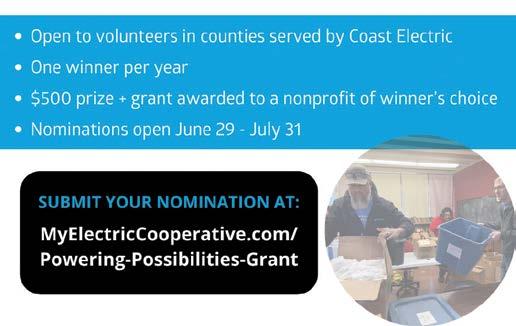
Coast Electric wants you to reduce your energy use and see savings on your energy costs. Each month, you will have an opportunity to register to win a prize that will help you reduce the energy consumption in your home. Visit www.coastelectric.coop or scan the QR code to enter. It only takes a few seconds, and you could win a prize that helps you save!
Congratulations to our May Reduce Your Use winner, Andy Moran!

























by Je rey Groenewold
Summer is in full swing, and many of us are enjoying the sunshine and warmer weather — it’s also a very busy season for Mississippi’s electric cooperatives.
Our irrigation members are in the middle of watering, many construction and capital improvement projects are underway, annual meetings are taking place, and homes and businesses are using more electricity to keep cool.
It takes a lot of electricity to meet all this demand, and utilities must ensure there is power available around the clock. So, have you ever wondered how your electric co-op forecasts electricity on the grid?
Electric load forecasting is an important activity that many co-ops perform every day. When you hear things like “peak demand” or “prices are spiking,” it can sound complex and daunting. At the center of these challenges is forecasting. Electric co-op use a variety of analytics to predict factors like weather, sunshine, wind, cloud coverage, rain, power generation, and yes, even the future use of electricity, including how much and when it will be used. All of this information helps co-ops plan and prepare for the next day, week, or month to ensure the grid runs smoothly — so we can all enjoy the summer with our family and friends. This practice is called “load forecasting.”
With the changing electric grid — from more renewable energy sources showing up on the system to growing communities that need more electricity — load forecasting is crucial for managing the health of the power grid. Accurate forecasting is essential for grid operators to allocate necessary resources to keep the grid running successfully and allocating power generation e ectively based on predictions. Proper forecasting aids in scheduling power plants and managing fuel supplies. This leads to reduced operational costs and minimized waste in electricity production, transmission, and distribution.
Maintaining stability is a primary concern for electric co-ops because the grid must constantly balance electricity supply with demand. Load forecasting enables co-ops to anticipate electric peaks and supply disturbances, and helps prevent the grid from failing, which can lead to blackouts.
The integration of renewable energy sources like wind and solar adds complexity to load forecasting. Accurate forecasts help optimize the use of variable renewable energy. Combining load forecasts with renewable generation forecasts helps optimize the grid with tremendous economic benefits.







Forecasting electricity load helps co-ops plan and prepare to ensure the grid runs smoothly and you have reliable power whenever you need it.
Short-term forecasts (daily or weekly) give grid operators the necessary data to make informed decisions on what type of power generation to schedule, what electric market purchases or sales need to be made, and mitigate risks of supply shortages or surpluses, so that you can get the most a ordable electricity to your home or business. Additionally, load forecasting informs future planning for infrastructure development, grid expansion, upgrades, and interconnections. With the growing demand for electricity, ensuring the grid can handle future increased use is essential and helps maintain reliability over time.
Forecasting electricity demand allows for adaptability to changing power generation sources and demand patterns. It’s an important piece of the puzzle for maintaining a reliable, e cient, and cost-e ective grid.
Je rey Groenewold writes on consumer and cooperative a airs for the National Rural Electric Cooperative Association.














by Cathy Cash
and why does it matter to electric co-ops?
over five
The Federal Energy Regulatory Commission (FERC) is an independent agency in Washington, D.C., with authority over the transmission and wholesale of electricity in interstate commerce.
Electric cooperatives were formed to serve members with a ordable, reliable, and safe power. But what role, if any, does the federal government play in ensuring that happens?
The commission also regulates the interstate commerce of natural gas and oil and the siting of natural gas and hydropower facilities. Basically, FERC oversees how energy moves across the country by high-voltage powerlines or large pipelines.
So, FERC doesn’t regulate your local distribution co-op. But it does exert authority over five generation and transmission co-ops and all the wholesale electricity markets where co-ops buy their power supply. By setting the markets’ transmission rates that electric power companies and utilities, including co-ops, must pay, the federal agency can ultimately influence retail prices.
Mary Ann Ralls, NRECA senior director, regulatory counsel, notes that while state utility commissions have more immediate control over co-op operations and building powerlines, the federal agency’s influence fills in the gaps.
FERC does have a role in how co-ops can best serve their members by upholding grid reliability and safety and in keeping costs a ordable.
The commission’s regulations aim at maintaining fair prices within the wholesale electricity markets run by six regional transmission organizations (RTOs) and independent system operators (ISOs). These FERC-regulated RTOs and ISOs manage parts of the national electric grid.
FERC also monitors these markets for energy supply manipulation that can hike prices. When things go wrong, the commission can investigate and levy penalties.
Overall, FERC sides with conserving energy and encourages utilities to find ways to reduce demand, which eventually can place downward pressure on monthly bills.
The commission largely lacks authority over electric transmission in terms of siting and construction. That falls under state and local authorities.
Regarding natural gas, FERC has the final say in construction and operation of liquefied natural gas terminals, pipelines, and storage facilities. It reviews gas projects in terms of their impact on the environment, land use, geology, and the economy.
And, being a public agency, keep in mind all FERC’s final decisions can be challenged in court.
When it comes to grid reliability, the buck stops with FERC. The commission directs the national grid watchdog — North American Electric Reliability Corporation (NERC) — and enforces its mandatory reliability rules and requirements on grid operators and owners of the U.S. bulk power system, including utilities and energy producers.
The commission tasked NERC as the electric reliability organization for the continental United States after Congress called for a single point of contact following the historic blackout of Aug. 14, 2003, which left more than 50 million people in the Northeast and parts of the Midwest without electricity for several hours to several days.
FERC can require NERC to set new reliability standards or update current rules as needed to protect the grid’s ability serve today’s increased demand.
So, who is FERC?
The body is made up of five commissioners appointed by the president and confirmed by the U.S. Senate for five-year terms. The chair presides over open, public meetings on the third Thursday of the month, where the commission votes on orders to act on or approve projects or set precedents. You can even watch these meetings at home from the live link on the FERC website.
While its regulatory influence may not have a hand directly in co-op operations to serve consumers, FERC does have a role in how co-ops can best serve their members by upholding grid reliability and safety and in keeping costs a ordable.
“Irrespective of the level of regulation FERC has over a co-op, it is incumbent upon NRECA, working with its members, to impress on the commission that ultimately the co-op’s obligation is that the consumermember at the end of the line has a ordable, reliable, and safe electric service,” says Ralls.
Cathy Cash writes on consumer and cooperative a airs for the National Rural Electric Cooperative Association.



Your electric utility works hard to ensure safe, reliable power to homes and businesses 24/7. To make sure everyone has the power they need, generation must match consumption and have the capacity to adjust to changing demands for energy.
Peak demand is the period in a given range of time — day, month, or year — when electricity use is highest. It’s caused by many people using energy-consuming equipment at the same time. It di ers based on geography, weather, and time of year. For example, demand is typically highest on hot summer afternoons and cold winter mornings. Most utilities also experience daily peaks when people are getting ready in the mornings and returning home in the evenings.
When everyone uses more energy at the same time, it puts more stress on the electric grid and requires more expensive electricity to meet the need. Electricity pricing is based on supply and demand. The price of electricity is higher when the demand is higher, which costs the utility more.
To lower energy use and strain on the grid during peak times, there are habits we can adopt in our homes.
Let’s look at two examples.
Joe and John arrive home from work at 5:30 p.m. They both turn on the oven to make dinner.
While John waits for the oven to preheat, he throws in a load of laundry. He finishes dinner, cleans up and starts the dishwasher. Then, he moves the clothes to the dryer.

Joe finishes dinner, loads the dishwasher and sets it to start at 10 p.m. He puts a load of laundry in the washing machine and later that evening switches it over to the dryer.
Although they use the same appliances and amount of energy, John uses it all at once, running multiple appliances during peak hours, creating higher demand and more strain on the electric grid while using more expensive energy.






To lower your demand, spread electricity use throughout the day and avoid peak times as much as possible. This will reduce the utility’s cost of supplying electricity to your home. Another benefit of shifting your use to midday is integrating renewable energy, such as solar, which produces energy when the sun is shining.
Large appliances — including washers, dryers, ovens, water heaters and air conditioners — have the biggest impact. Using them during o -peak hours or one at a time can help.


Automate as much as possible. Most electric vehicle chargers can be set to charge during scheduled hours with built-in timers or apps. Most modern dishwashers have delay-start features. If you have a pool, set the pool pump to run in the middle of the day, particularly if you are in a region with strong solar production.
You can also automate air conditioning. Simple, free adjustments, such as closing your curtains on hot afternoons and evenings, can help, too.
Keep in mind that extreme weather, such as freezing temperatures in Alabama or a heat wave in Minnesota, puts extra stress on the grid. Taking it easy on your energy use during extreme weather events can help prevent outages.
Spreading out your energy use helps your utility keep costs down and benefits your local energy grid.



















































Each year, as we gather with family and friends to celebrate the Fourth of July, we are reminded of the meaning of independence. It’s a time to reflect on the freedoms we enjoy, the resilience of our nation, and the communities that continue to shape who we are today.
That same spirit of independence also helped shape electric cooperatives.


Decades ago, much of rural America was left in the dark because bringing electricity to sparsely populated areas simply wasn’t profitable for large power companies. Rather than waiting and hoping someone else would solve the problem, neighbors came together to create their own solution. Communities banded together, invested in themselves, and built electric cooperatives to serve the people who called these areas home.
That determination and local spirit remain at the heart of cooperatives today.
One of the seven cooperative principles is “Autonomy and Independence.” In simple terms, that means cooperatives are locally governed and focused on serving their members rather than outside investors. At Dixie Electric, decisions are made by people who live right here in the communities we serve. Your elected board members are your neighbors, and every decision is made with our members in mind.
That local independence allows us to focus on what matters most: providing reliable service, maintaining and improving our system, supporting our schools and communities, and investing









in the future of our area. It’s what allows us to continue growing and evolving while staying true to the values that have guided cooperatives for generations.
There is something powerful about communities working together for the benefit of everyone. In many ways, that is the true meaning behind the cooperative model. While independence is often thought of as standing alone, cooperatives prove that independence can also come from people coming together with a shared purpose.
As we celebrate this Fourth of July, I hope you take time to enjoy the people and moments that matter most. From backyard cookouts and fi reworks to time spent with family and friends, summer traditions remind us how fortunate we are to live and work in communities that care for one another.
From all of us at Dixie Electric, thank you for allowing us to serve you. We are proud to continue building a stronger future together while honoring the spirit of independence that helped cooperatives begin.


by Randy Smith General Manager











We’ll















by Amanda Mills




When DE Fastlink launched, our mission was simple: provide the fast, reliable fiber internet service our communities deserved. At the time, most homes throughout our service area simply didn’t have access to true fi ber high-speed internet. We knew we could deliver the speed and reliability families needed, but we also knew internet service was about more than just speed. As technology continued to evolve, so did the needs of families who used it every day.
One request we heard time and time again from subscribers was the need for better control over their home Wi-Fi network, especially when it came to managing devices, monitoring use, and helping parents create healthy online habits for their children.
You asked, and we listened.
Today, DE Fastlink subscribers have access to the free My DE Fastlink app, giving users greater visibility and control over their home network right from their smartphone or tablet.

Through the app, subscribers can:
• Assign devices to personalized profi les
• Create people profi les for family members
• Share guest Wi-Fi networks with visitors
• Run speed tests
• Change their Wi-Fi password
• Manage connected devices throughout the home
The My DE Fastlink app also includes ProtectIQ at no additional cost for subscribers with compatible equipment. ProtectIQ helps provide an added layer of network security and peace of mind by monitoring and protecting devices connected to your home network.



For families looking for even more control, DE Fastlink also o ers ExperienceIQ with Parental Controls for just $5 per month.

ExperienceIQ allows parents and guardians to:
• Set screen time limits
• Pause internet access
• Filter content
• Manage online activity by user profi le
• Customize internet access for each member of the household
Whether it’s limiting distractions during homework time, creating healthier screen time habits, or helping protect younger users online, ExperienceIQ puts control directly into the hands of parents.
Because DE Fastlink has a variety of routers deployed throughout the system, some subscribers may require updated equipment in order to access these features. The good news is our team can quickly check your equipment compatibility and help determine if an upgrade is needed, free of charge.
Subscribers interested in adding ExperienceIQ or learning more about the My DE Fastlink app can call DE Fastlink at 833-521-3278 for assistance.
Technology continues to evolve, and so do the needs of the families we serve. At DE Fastlink, we remain committed to listening to our subscribers and providing solutions that help make life easier, safer, and more connected.
You set the rules. We’ll help you enforce them.

Dixie Electric and CoBank recently partnered through the Sharing Success program to donate a combined $20,000 to local emergency response organizations across the cooperative’s service area.
Through the annual matching grant program, volunteer fi re departments and sheri ’s departments in Jones, Wayne, Forrest, and Perry counties each received $2,500 to help support critical needs such as training, safety equipment, educational materials, and emergency response tools.
“For organizations like volunteer fi re departments and sheri ’s departments, every dollar matters,” said Randy Smith, general manager of Dixie Electric. “These men and women willingly step into di cult situations to protect our communities, often with limited resources. We’re honored to support the work they do every single day and grateful for the sacrifice and service they provide across our area.”
Now in its fi fth year participating in the Sharing Success initiative, Dixie Electric continues to use the program as a way to invest back into the communities it serves. The program allows cooperatives and other organizations to partner with CoBank to provide matching funds for local nonprofits and public service organizations that make a di erence in rural communities.
One of the things that makes cooperatives unique is our commitment to the communities we serve. Programs like Sharing Success allow us to turn that commitment into action. We know the impact volunteer fi re departments and sheri ’s departments have on rural communities, and we’re thankful for the opportunity to help support the important work they do.
Electric cooperatives are deeply rooted in the communities they serve and remain committed to improving the quality of life throughout rural Mississippi. Through partnerships like Sharing Success, Dixie Electric continues to support the organizations that help keep its communities safe, prepared, and connected.















TUESDAY, OCT. 20, 2026





17

4

Held at Dixie Electric’s office, 1863 Highway 184, Laurel, MS 39443.
Online voting begins. Make sure Dixie Electric has your valid email address, so you can vote online or use the SmartHub app.


Registration and voting 2:30 – 3:30 p.m. The meeting begins at 4 p.m.



Electronic and mail voting ends.
Official notice, absentee ballot, and proxy are mailed to members. Return your ballot or proxy in the postage-paid envelope.

Join us for the annual meeting and vote in person.
























DeKalb 601-743-2641 • Louisville 662-773-5741 • Quitman 601-776-6271 • Meridian / After-Hours Outages 601-581-8600


MEMBER OWNED. LOCALLY OPERATED. THAT’S THE COOPERATIVE DIFFERENCE.












As we move into another summer season, we are reminded of the many blessings we enjoy as Americans. This year is especially meaningful as our nation celebrates 250 years of freedom and independence. It is an incredible milestone that gives us the opportunity to reflect on our history, appreciate our freedoms and look with hope toward the future.

It is hard for me to believe that it was 50 years ago when I graduated from high school during America’s Bicentennial celebration in 1976. What a special time that was. Everywhere you looked there were red, white and blue decorations, patriotic songs, parades and communities coming together to celebrate our nation’s history and heritage. There was a strong sense of pride and gratitude for the freedoms we share as Americans. It seemed like every town and every family found a way to celebrate our country and the opportunities we are blessed to have.
America truly is a country “of the people, by the people and for the people.” Those words still carry great meaning today. While our country has faced challenges throughout its history, the values of freedom, faith, hard work and service to others continue to unite us. As we celebrate this historic anniversary, let us also remember the generations of men and women who sacrificed to preserve the freedoms we enjoy today. Their courage, dedication and love for this nation helped build the America we know and cherish.
Summer is also about family. School is out; schedules slow down a little, and families have the opportunity to spend more time together. For many, summer means loading up the car and heading












out on vacation. Some families enjoy relaxing on the beach, while others prefer the cool air and beautiful scenery of the mountains. Others may visit historical landmarks, national parks, amusement parks or one of the many wonderful vacation spots across this great nation. No matter the destination, the time spent together is often what matters most.
Those family trips and summer gatherings create memories that last a lifetime. Children grow up quickly, and the moments we share with them become treasures we carry for years to come. Whether it is sitting around a campfire, grilling hamburgers with neighbors, attending a community celebration or simply enjoying a quiet evening at home, summer gives us the chance to reconnect with family and friends and appreciate the blessings around us.
As you enjoy the summer months and celebrate America’s 250th birthday, I encourage you to take time to appreciate both our nation and the people closest to you. We have much to be thankful for. I hope each of you has a safe, happy and enjoyable summer season. Thank you, as always, for allowing us to serve you and your family.

by Randy Carroll
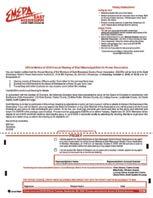
East Mississippi Electric Power Association will host its 88th Annual Meeting of the Membership on Saturday, Oct. 3, 2026, at the EMEPA Meridian Auditorium.
Annual Meeting notices and proxy letters were mailed to all EMEPA members on July 1. If you are unable to attend the meeting, you may appoint the Board of Directors or another member as your proxy.
Submit your completed proxy by 5 p.m. on Tuesday, Sept. 29, for a chance to win a $500 electricity credit.
Option 1: Complete your proxy online
Visit directvote.net/EMEPA and enter the Member Number and Election Passcode printed on your proxy letter. Follow the prompts to complete and submit your proxy. For online assistance, email support@directvote.net.
Option 2: Return your proxy by mail
Sign and date your proxy letter, place it in the enclosed postage-paid envelope, and mail it. Mailed proxies must be received by Tuesday, Sept. 29.
The Electric Cooperatives of Mississippi Foundation awards scholarships each year to help the children of Mississippi electric cooperative employees pursue higher education. Scholarships are available to qualifying high school seniors as well as students transferring from a community college or vocational school to a university.
We congratulate these students and wish them continued success in their educational pursuits.
Prize drawings


OCT. 3, 2026
One member from each EMEPA district who submits a completed proxy will be selected at random to receive a $500 electricity credit.
Members who attend the Annual Meeting and register in person will also be eligible to win one of three electricity credits of up to $500.
For questions, email ContactUs@EMEPA.com.

Congratulations to the following 2026 scholarship recipients:
Electric Cooperatives of Mississippi Foundation Scholarship Recipients
• Katelyn Brown, daughter of Tree Trimmer Foreman Kendrick Brown
• Katelyn Hodgins, daughter of Accounting Supervisor Amy Hodgins
• Kalie Miller, daughter of System Maintenance Engineer Dave Miller
• Jake Whittington, son of Design Technician III Michael Whittington
Electric Cooperatives of Mississippi Foundation Transfer Scholarship Recipient
• Neanna Drake, daughter of Member Service Representative Hynesia Cole-Drake

































































As we settle into the heat of July, our homes naturally use more electricity. Air conditioners run longer, refrigerators work harder and daily routines often overlap during the warmest parts of the day. That’s also when the demand for electricity across our community is at its highest.

At EMEPA, our top priority is delivering safe, reliable and a ordable power whenever you need it. But during peak energy hours, in the late afternoon and early evening, there’s added pressure on the grid as homes and businesses require larger amounts of electricity, all at the same time. On the hottest days, that strain can be significant.
The good news is that small changes at home can make a meaningful di erence.











Here are a few simple steps you can take to lower energy use during peak hours.



Think of our electric grid like a highway system. During rush hour, tra c is heavy, congestion builds and everything slows down. But when drivers adjust their schedules, even slightly, it helps ease the bottleneck. The same principle applies to energy use.

Smart technology can be a valuable partner in saving energy. A programmable or smart thermostat can automatically adjust your home’s temperature when demand is highest, helping you stay comfortable while using energy more e ciently. Even a small adjustment of a few degrees during peak hours can make a di erence.
In the kitchen, simple swaps can help, too. Using a slow cooker, air fryer or outdoor grill instead of the oven keeps your home more comfortable and reduces the need for additional cooling during the warmer parts of the day. And when it comes to laundry, airdrying clothes or spacing out loads can cut down on both energy use and indoor heat.
By shifting some of your high-energy activities to o -peak hours — like doing laundry later in the evening, running the dishwasher before you go to bed or cooking meals earlier in the day — you’re helping spread out demand. That reduces pressure on the grid during those critical peak hours.
EMEPA’s Time-of-Use (TOU) electric rate plan o ers a money-saving option for using your electric service during o -peak hours. If you use electricity when the total used by all EMEPA members is low (opeak), your rate will be lower than the standard rate. On-peak hours, or electricity used during periods of high demand, will cost more than the standard rate. For members in EMEPA’s North System (Winston and Kemper districts), summer on-peak hours are 3 p.m. to 6 p.m. Monday through Friday. For members in the South System (Lauderdale and Clarke districts), on-peak hours are 2 p.m. to 5 p.m. Monday through Friday. All remaining hours, weekends and major holidays are o -peak.
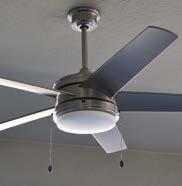
Don’t overlook the power of ceiling fans, either. They can help you feel several degrees cooler, allowing you to raise your thermostat setting without sacrificing comfort.
These actions may seem small on their own, but together, they add up. When many members make mindful choices about when and how they use electricity, it helps reduce peak demand, eases strain on the grid and supports more stable energy costs for our local communities.

That’s the cooperative di erence. As a member, you’re not just a customer — you’re part of a community working together to power our future. Every e ort you make contributes to a stronger, more resilient system.
This summer, I encourage you to take a closer look at your daily routines. A few simple shifts can go a long way in keeping your home comfortable, your energy use e cient and our grid running smoothly—no matter how high the temperatures climb. both when and how they use electricity, it helps grid

East Mississippi Connect Digital Voice combines reliability of traditional phones with fiber-powered technology
While technology continues to evolve, one thing remains important for many families and businesses—having a dependable phone service they can count on. East Mississippi Connect’s Digital Voice service delivers the clarity, reliability and convenience customers need, all powered by our advanced fiber network.
Unlike traditional phone lines, Digital Voice uses East Mississippi Connect’s fiber internet connection to provide high-quality phone service with modern features designed for today’s lifestyles. Whether you’re staying in touch with family, managing a business or simply wanting a reliable way to communicate, Digital Voice o ers a dependable solution.

Clear communication matters. Digital Voice provides exceptional call quality. Conversations sound crisp and natural. Whether you’re calling across town or across the country, fiber-powered voice technology helps eliminate many of the issues commonly associated with older phone systems.
Businesses can also benefit from Digital Voice. Reliable phone service remains a critical part of daily operations, customer service and team communication. Fiber-based voice technology supports productivity with dependable performance and versatile features designed to meet the needs of modern organizations.
Security is another advantage. Digital Voice service utilizes encrypted technology that helps protect communications while delivering dependable performance. Combined with the reliability of East Mississippi Connect’s fiber network, customers can feel confident their phone service is built for both today and tomorrow.

For busy households, Digital Voice o ers added flexibility. Many customers appreciate having a dedicated home phone number that everyone in the family can access. It also provides peace of mind during important situations when a reliable phone connection is needed. Features such as call management tools and advanced voice services help make communication easier and more convenient.
East Mississippi Connect o ers residential Digital Voice service for customers with EMC internet service starting at $29.95 per month, with business options also available. Customers who want phone service without internet can choose a voice-only option as well.
As communication needs continue to change, East Mississippi Connect remains committed to providing services that keep our communities connected. Digital Voice combines trusted phone service with the power of fiber technology, delivering a modern solution that is reliable, cost-e ective and easy to use.
Whether you’re catching up with loved ones, running a business or simply looking for a dependable home phone service, Digital Voice from East Mississippi Connect is ready to help you stay connected. Visit eastmsconnect.com to learn more about Digital Voice and find the plan that’s right for you.
















This past spring brought a very busy tornado season for Magnolia Electric Power members, with multiple tornadoes confirmed across many of the counties we serve. Over the last several years in southwest Mississippi, it seems tornado activity has become more common. While we certainly wish our communities did not have to experience these devastating storms, we must continue to adapt and ensure we have plans in place to respond e ectively.
At Magnolia Electric Power, we are constantly preparing and refining our storm response plans. Tornadoes require a very di erent response than hurricanes because we rarely know exactly where or when a tornado will strike. Many times, our crews are already in the field restoring power when tornado watches and warnings begin to develop.
With hurricanes, we often have the advantage of time. If forecasts show our area in the direct path of a storm, we can bring in additional crews ahead of time and prepare supplies, meals, and equipment before the storm arrives. Tornados,
however, force us to quickly develop plans and strategies based on rapidly changing conditions and damage assessments.
We are fortunate to have a great team at Magnolia Electric Power that is continually evaluating our procedures to ensure they are as e cient and e ective as possible. Restoring power quickly after severe weather truly takes everyone working together. It requires not only the dedication of our employees but also the support of the communities we serve.
Thank you for your continued support of Magnolia Electric Power and for the resilience our communities continue to demonstrate during challenging times.



CEO/ General Manager by Daniel Evans

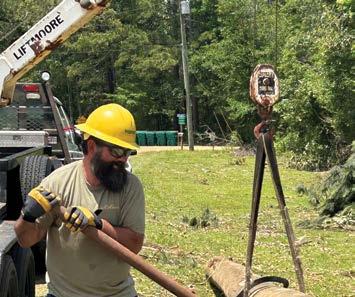
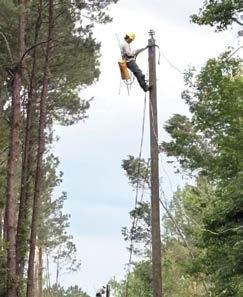
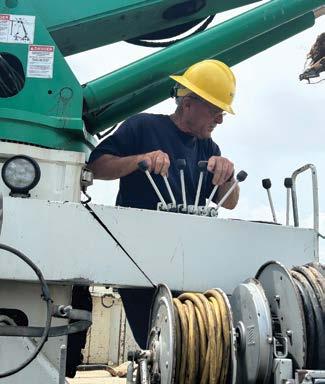
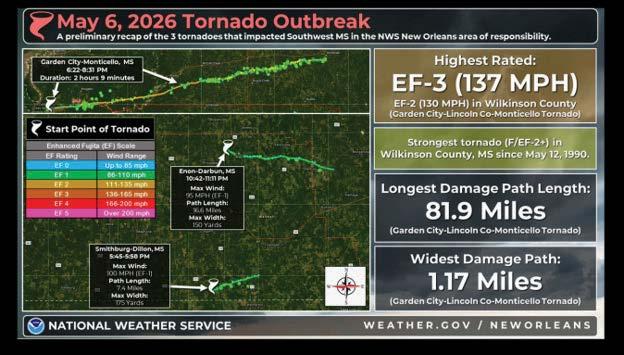
On the evening of May 6, three di erent tornadoes struck Magnolia Electric’s service territory.
The twisters — an EF3 in Lincoln County and two EF1 tornadoes in Pike and Walthall Counties — caused power outages to 8,200 Magnolia Electric meters.


With assistance from seven Mississippi electric co-ops and counting 254 men in the field, power was restored to members by May 14. We want to thank our members for their patience, our communities and fellow co-ops for their help and assistance, and our sta for their hard work in the aftermath of the tornadoes.










ELECTRIC COOPERATIVES:
• 4-County Electric Power Association
• Dixie Electric Power Association
• North East Mississippi Electric Power Association
• Pearl River Valley Electric Power Association
For your help after the recent tornadoes a ected our service area both in March and May 2026.
ELECTRICAL CONTRACTORS:
• Pike

• Kinco
• MDR
• V-Tech

• Singing River Electric Cooperative
• Twin County Electric Power Association
• Yazoo Valley Electric Power Association

RIGHT OF WAY CREWS:
• Barnes ROW
• Scott Johnson Specialty Services
• Magnolia Utility Service
• Mac’s Tree Service
THANK YOU TO THOSE FROM OUR COMMUNITIES WHO GAVE A HELPING HAND:
• Bogue Chitto Baptist Church
• Broma’s Deli
• Calvary Baptist Church
• Chick-fil-A
• Clean Laundry LLC
• Cli ord Galey
• Coca-Cola
• Crossroads Quickstop
• Cypress Landing
• East Lincoln Volunteer Fire Department
• Golden Corral
• 76 Chevron (Hood Petroleum)
• Jayess General Store
• Johnson Grove Church of Christ
• Lincoln County Sheri ’s Department
• Lincoln County Supervisors
• Little Town Grocery
• Longbranch Café
• Mark and Michelle Porter
• Market Max
• May’s Café
• McAlister’s Deli
• Miss Kay’s
• Mississippi Department of Transportation

• Mississippi Highway Patrol
• Mr. Whisker’s
• Mitchell’s
• Nona Lynn’s Kitchen
• Old Koke Plant
• Papa John’s
• Paradise Ranch
• Percy Quin State Park
• Pike County Sheri ’s Department
• Ramah Baptist Church
• Ruth General Store
• Summit Donut Shop
• Sweet Briar
• The Burger Basket
• Will Fortenberry






















by Je rey Groenewold
Summer is in full swing, and many of us are enjoying the sunshine and warmer weather — it’s also a very busy season for Mississippi’s electric cooperatives.
Our irrigation members are in the middle of watering, many construction and capital improvement projects are underway, annual meetings are taking place, and homes and businesses are using more electricity to keep cool.
It takes a lot of electricity to meet all this demand, and utilities must ensure there is power available around the clock. So, have you ever wondered how your electric co-op forecasts electricity on the grid?
Electric load forecasting is an important activity that many co-ops perform every day. When you hear things like “peak demand” or “prices are spiking,” it can sound complex and daunting. At the center of these challenges is forecasting. Electric co-op use a variety of analytics to predict factors like weather, sunshine, wind, cloud coverage, rain, power generation, and yes, even the future use of electricity, including how much and when it will be used. All of this information helps co-ops plan and prepare for the next day, week, or month to ensure the grid runs smoothly — so we can all enjoy the summer with our family and friends. This practice is called “load forecasting.”
With the changing electric grid — from more renewable energy sources showing up on the system to growing communities that need more electricity — load forecasting is crucial for managing the health of the power grid. Accurate forecasting is essential for grid operators to allocate necessary resources to keep the grid running successfully and allocating power generation e ectively based on predictions. Proper forecasting aids in scheduling power plants and managing fuel supplies. This leads to reduced operational costs and minimized waste in electricity production, transmission, and distribution.
Maintaining stability is a primary concern for electric co-ops because the grid must constantly balance electricity supply with demand. Load forecasting enables co-ops to anticipate electric peaks and supply disturbances, and helps prevent the grid from failing, which can lead to blackouts.
The integration of renewable energy sources like wind and solar adds complexity to load forecasting. Accurate forecasts help optimize the use of variable renewable energy. Combining load forecasts with renewable generation forecasts helps optimize the grid with tremendous economic benefits.








Short-term forecasts (daily or weekly) give grid operators the necessary data to make informed decisions on what type of power generation to schedule, what electric market purchases or sales need to be made, and mitigate risks of supply shortages or surpluses, so that you can get the most a ordable electricity to your home or business. Additionally, load forecasting informs future planning for infrastructure development, grid expansion, upgrades, and interconnections. With the growing demand for electricity, ensuring the grid can handle future increased use is essential and helps maintain reliability over time. Forecasting electricity demand allows for adaptability to changing power generation sources and demand patterns. It’s an important piece of the puzzle for maintaining a reliable, e cient, and cost-e ective grid.
Je rey Groenewold writes on consumer and cooperative a airs for the National Rural Electric Cooperative Association.




by Cathy Cash
and why does it matter to electric co-ops?
over five
The Federal Energy Regulatory Commission (FERC) is an independent agency in Washington, D.C., with authority over the transmission and wholesale of electricity in interstate commerce.
Electric cooperatives were formed to serve members with a ordable, reliable, and safe power. But what role, if any, does the federal government play in ensuring that happens?
The commission also regulates the interstate commerce of natural gas and oil and the siting of natural gas and hydropower facilities. Basically, FERC oversees how energy moves across the country by high-voltage powerlines or large pipelines.
So, FERC doesn’t regulate your local distribution co-op. But it does exert authority over five generation and transmission co-ops and all the wholesale electricity markets where co-ops buy their power supply. By setting the markets’ transmission rates that electric power companies and utilities, including co-ops, must pay, the federal agency can ultimately influence retail prices.
Mary Ann Ralls, NRECA senior director, regulatory counsel, notes that while state utility commissions have more immediate control over co-op operations and building powerlines, the federal agency’s influence fills in the gaps.
FERC does have a role in how co-ops can best serve their members by upholding grid reliability and safety and in keeping costs a ordable.
The commission’s regulations aim at maintaining fair prices within the wholesale electricity markets run by six regional transmission organizations (RTOs) and independent system operators (ISOs). These FERC-regulated RTOs and ISOs manage parts of the national electric grid.
FERC also monitors these markets for energy supply manipulation that can hike prices. When things go wrong, the commission can investigate and levy penalties.
Overall, FERC sides with conserving energy and encourages utilities to find ways to reduce demand, which eventually can place downward pressure on monthly bills.
The commission largely lacks authority over electric transmission in terms of siting and construction. That falls under state and local authorities.
Regarding natural gas, FERC has the final say in construction and operation of liquefied natural gas terminals, pipelines, and storage facilities. It reviews gas projects in terms of their impact on the environment, land use, geology, and the economy.
And, being a public agency, keep in mind all FERC’s final decisions can be challenged in court.
When it comes to grid reliability, the buck stops with FERC. The commission directs the national grid watchdog — North American Electric Reliability Corporation (NERC) — and enforces its mandatory reliability rules and requirements on grid operators and owners of the U.S. bulk power system, including utilities and energy producers.
The commission tasked NERC as the electric reliability organization for the continental United States after Congress called for a single point of contact following the historic blackout of Aug. 14, 2003, which left more than 50 million people in the Northeast and parts of the Midwest without electricity for several hours to several days.
FERC can require NERC to set new reliability standards or update current rules as needed to protect the grid’s ability serve today’s increased demand.
So, who is FERC?
The body is made up of five commissioners appointed by the president and confirmed by the U.S. Senate for five-year terms. The chair presides over open, public meetings on the third Thursday of the month, where the commission votes on orders to act on or approve projects or set precedents. You can even watch these meetings at home from the live link on the FERC website.
While its regulatory influence may not have a hand directly in co-op operations to serve consumers, FERC does have a role in how co-ops can best serve their members by upholding grid reliability and safety and in keeping costs a ordable.
“Irrespective of the level of regulation FERC has over a co-op, it is incumbent upon NRECA, working with its members, to impress on the commission that ultimately the co-op’s obligation is that the consumermember at the end of the line has a ordable, reliable, and safe electric service,” says Ralls.
Cathy Cash writes on consumer and cooperative a airs for the National Rural Electric Cooperative Association.



Your electric utility works hard to ensure safe, reliable power to homes and businesses 24/7. To make sure everyone has the power they need, generation must match consumption and have the capacity to adjust to changing demands for energy.
Peak demand is the period in a given range of time — day, month, or year — when electricity use is highest. It’s caused by many people using energy-consuming equipment at the same time. It di ers based on geography, weather, and time of year. For example, demand is typically highest on hot summer afternoons and cold winter mornings. Most utilities also experience daily peaks when people are getting ready in the mornings and returning home in the evenings.
When everyone uses more energy at the same time, it puts more stress on the electric grid and requires more expensive electricity to meet the need.
Electricity pricing is based on supply and demand. The price of electricity is higher when the demand is higher, which costs the utility more.
To lower energy use and strain on the grid during peak times, there are habits we can adopt in our homes.
Let’s look at two examples.
Joe and John arrive home from work at 5:30 p.m. They both turn on the oven to make dinner.
While John waits for the oven to preheat, he throws in a load of laundry. He finishes dinner, cleans up and starts the dishwasher. Then, he moves the clothes to the dryer.
Joe finishes dinner, loads the dishwasher and sets it to start at 10 p.m. He puts a load of laundry in the washing machine and later that evening switches it over to the dryer.
Although they use the same appliances and amount of energy, John uses it all at once, running multiple appliances during peak hours, creating higher demand and more strain on the electric grid while using more expensive energy.
To lower your demand, spread electricity use throughout the day and avoid peak times as much as possible. This will reduce the utility’s cost of supplying electricity to your home. Another benefit of shifting your use to midday is integrating renewable energy, such as solar, which produces energy when the sun is shining.
Large appliances — including washers, dryers, ovens, water heaters and air conditioners — have the biggest impact. Using them during o -peak hours or one at a time can help.
Automate as much as possible. Most electric vehicle chargers can be set to charge during scheduled hours with built-in timers or apps. Most modern dishwashers have delay-start features. If you have a pool, set the pool pump to run in the middle of the day, particularly if you are in a region with strong solar production.
You can also automate air conditioning. Simple, free adjustments, such as closing your curtains on hot afternoons and evenings, can help, too.
Keep in mind that extreme weather, such as freezing temperatures in Alabama or a heat wave in Minnesota, puts extra stress on the grid. Taking it easy on your energy use during extreme weather events can help prevent outages.
Spreading out your energy use helps your utility keep costs down and benefits your local energy grid.















I’ve always enjoyed reading about history. As the United States celebrates its 250th birthday, I’m reminded of the book “1776” by David McCollough. The book discusses the various roles our Founding Fathers took on during the birth of our nation. These roles were personified by selfless leadership, not personal gain.
Another example of selfless leadership occurred 90 years ago when leaders in Congress established the Rural Electrification Act. This law established a loan fund that extended electric service into some of the most rural parts of the United States. People from rural communities gathered and formed electric cooperatives to accomplish this mission. The mission was to provide electric service to farms and homes. Processes could be automated, homes lit, food and medicine refrigerated. Of the thousands of people leading these e orts, you’ll see very few individual names, and less mention of financial gain.
The same held true over 75 years ago in rural North Mississippi, where Northcentral Electric Cooperative was formed by people in the community to light the area we now call home. Northcentral






Connect was formed 70 years later to satisfy the growing demand for high-speed internet.


As we pause to honor the great selfless leaders who formed our great nation, let’s continue to honor the continued selfless, humble, leadership that advances us. During this period of celebration and extreme heat, I’m reminded of the quote by Yogi Berra, “It’s not the heat, but the humility.”
Enjoy your holiday.
Stay safe.

by Kevin Doddridge General Manager/CEO

Northcentral Electric Cooperative is pleased to announce that Ashleigh Lack and Ashley Sanderlin completed the 35th annual Leadership DeSoto program. Both were recognized along with 30 other leaders in a graduation ceremony held at Whispering Woods Conference Center on May 7.
Leadership DeSoto is a program coordinated by the DeSoto County Economic Development Council to inform future leaders of the needs and challenges facing DeSoto County and inspire them to utilize the resources available to them to make a di erence. The program has helped leaders become involved in community service and improving the quality of life in DeSoto County.
Candidates are nominated by organizations, employers, or individuals and must complete a lengthy application process. A selection committee then chooses participants based on the candidate’s community involvement, leadership capabilities, and potential in their respective fields.
Leadership DeSoto is a seven-month program that gives participants insight into the resources of the community by o ering sessions in leadership, economic development, education, local government (city, county, state), and community service.
Participants also engage in a group project to address issues and needs facing our communities. This opportunity allows participants a hands-on experience in making a di erence. Each group then presents a summary of their project to their sponsoring employers and attendees of the graduation ceremony.
Ashleigh Lack serves as Northcentral’s communications manager and joined the cooperative in 2025. Ashley Sanderlin just celebrated her 15th year with Northcentral and serves as our customer service manager.
If you would like more information on Leadership DeSoto, please visit desotocounty.com.
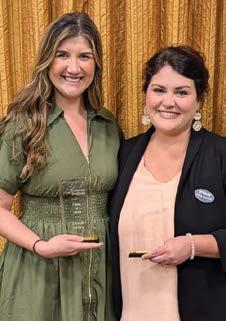












The Northcentral Electric Cooperative Annual Meeting of the members will be held at 2 p.m. on Wed., Oct. 28, 2026, in the Northcentral Electric auditorium at 4600 Northcentral Way in Olive Branch.
Besides reporting on the financial condition of the cooperative and highlighting current and future projects, the major business task at the Annual Meeting is the election of three members of the Board of Directors.
This year, board members are to be elected to serve a term of 3 years from District 1, District 4, and District 8 of our service area. More detailed descriptions of each district can be found in Section 4.02 of the bylaws. Northcentral’s bylaws can be viewed under the “Cooperative” section of the website at northcentralelectric.com or provided upon request at Northcentral’s o ce.
Current board members representing these districts are Pat Woods of District 1, Tony Taylor of District 4, and Ricky Jones of District 8.
Nominations to the Board of Directors, whether incumbent or new candidate, will be made by the membership. Any twenty-five (25) or more members from the district of which a director is to be elected shall make a nomination by signing a nomination form with the nominee’s name and district stated on the form. Nomination forms can be picked up from the reception desk in the Northcentral Administrative Building. A list of the valid nominations will be posted at the Northcentral o ce.

The deadline for submission of nomination forms, as well as the schedule of meetings and deadlines for the Elections and Credentials Committee can be found under the “2026 Annual Meeting” link on the home page at northcentralelectric.com.
Members can vote either by proxy prior to the Annual Meeting or in person at the Annual Meeting. Proxies will be mailed to the membership on Thurs., Oct. 1, 2026, and must be received in the Northcentral o ce no later than 2 p.m. on Mon., Oct. 26, 2026. Members with email addresses on file will also receive an email to submit their proxy electronically. The Elections and Credentials Committee will review the proxies for validation beginning at 2 p.m. on Mon., Oct. 26, 2026.
For more details on the Board of Directors elections, the Annual Meeting, bylaws, or the nomination process, visit the “2026 Annual Meeting” link on the home page at northcentralelectric.com.


















DISTRICT















Northcentral Connect continues to expand its ber network across north Mississippi. More than 340 homes in the Asbury Place and Asbury Gardens communities of Olive Branch West are now eligible for service, bringing fast, reliable ber internet and local customer support to even more families. Northcentral Connect has now passed more than 35,000 homes throughout its service area, with construction continuing in Olive Branch West and Byhalia to serve additional homes in the months ahead. World-class ber from the FOLKS YOU KNOW is expanding to OLIVE BRANCH!








ready to connect to local ber internet
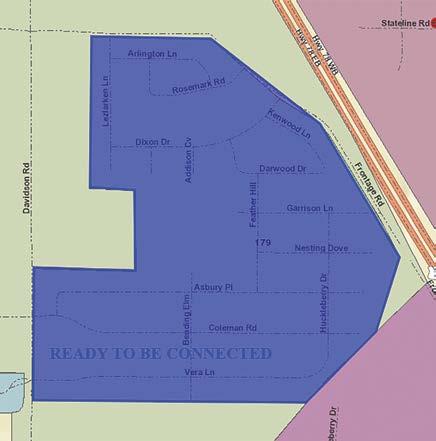























As our nation prepares to celebrate America’s 250th anniversary, we are reminded not only of our country’s rich history, but also of the values that continue to define us today — independence, resilience, and community. Those same principles are deeply rooted in the cooperative way of life at Pearl River Valley Electric.
For nearly a century, electric cooperatives like PRVEPA have played an important role in helping rural America grow and prosper. Long before many areas had access to reliable electricity, cooperatives stepped forward to bring power to communities that others overlooked. It was this independent spirit that brought local people together with a shared purpose of making life better for everyone in South Mississippi.
As a member-owned cooperative, PRVEPA is governed locally by a board of directors made up of members from the communities we serve. Decisions are made here at home with the best interests of our






members in mind, not by distant shareholders or outside corporations. This autonomy allows us to focus on reliability, a ordability, and longterm investments that benefit our cooperative for generations to come.
As we reflect on America’s 250 years of progress, one particular value that stands out is our resilience. Throughout our nation’s history, Americans have faced hardships, uncertainty, and challenges, yet communities have continued to move forward through determination and hard work. We see that same resilience every day across our service territory.
At PRVEPA, resilience means being prepared before challenges arise and responding quickly when they do. Severe weather, hurricanes, winter storms, and extreme temperatures have become a reality for electric utilities across the country, but our commitment to our members never changes. Our linemen work around the clock during outages and dangerous conditions to restore service safely and as quickly as possible. Behind the scenes, employees across every department work together to support restoration e orts and keep members informed.
One of the greatest strengths of America is the power of community. At Pearl River Valley Electric, community is more than a service territory, it is the foundation of who we are. Because we are a cooperative, our focus extends beyond just delivering electricity. We are committed to improving the quality of life for the people and communities we serve. Every investment we make is centered on supporting local families, businesses, schools, and future generations.
That commitment can be seen in many ways across our cooperative. Whether supporting local schools and youth programs, providing scholarships and leadership opportunities, investing in economic development, or expanding broadband access through our sister company, PearlComm Fiber, we are working to help our communities grow and succeed. Strong communities do not happen by accident; they are built through long-term investment and people willing to work together for the common good.
America’s 250th anniversary is an opportunity to celebrate not only our nation’s history, but also the local communities that continue to keep that spirit alive. Rural communities have always been resilient, hardworking, and connected by a strong sense of service to one another. At PRVEPA, we are proud to be part of that tradition and proud to help build stronger communities for the next generation.

by Matthew Ware
CEO/General Manager






























Here are the complete requirements for the Comfort Advantage Program:


Comfort Advantage Home (Basic) — Requirements for New Construction

1. Heating and cooling — Heat pump(s) rated at 14.3 SEER2 or 15 SEER or higher or a qualified geothermal heat pump(s). Flex duct work will be limited to runs of 8 feet or less. Ducts must be sealed with mastic and wrapped with R-6 or higher insulation.
2. Water heating — Electric tank water heater(s) with a .90 energy factor or higher. Include heat traps and insulate pipes. Outdoor gas tankless water heaters also qualify. Electric instantaneous water heaters do not qualify.
3. Wall insulation — Install insulation R-value of 13 or greater.
4. Attic insulation — Install insulation R-value of 38 or greater. (Exception: R-20 foam-encapsulated, semi-conditioned attic.)
One of our goals at Pearl River Valley Electric is to provide members with information about using energy wisely. When building or remodeling a home, energy e ciency should be a high priority. For more than 20 years our Comfort Advantage new home program has helped members save money on their monthly bills and increase the resale values of their homes.
Comfort Advantage energy-e ciency standards are based on years of experience, and they are continually being updated. The program now o ers the following incentives for new homes:
• Basic Comfort Advantage homes with a 14.3 SEER2 or a 15 SEER heat pump qualify for up to 150 feet of free underground service.
• Comfort Advantage Plus new homes with a 15.2 SEER2 or a 16 SEER heat pump qualify for up to 150 feet of free underground service and a rebate of $500.
• Geothermal heat pump installations qualify for an additional $500 rebate.
For existing homes, upgrading from older central electric heating/cooling systems or older ine cient heat pumps to a 14.3 SEER2 or 15 SEER or higher heat pump qualifies for a $400 rebate.
5. Floor insulation — Install insulation R-value of 19 or greater in floors over unconditioned areas or crawlspaces.
6. Windows — Double pane windows with a U-value of .60 or less and a solar heat gain coe cient (SHGC) of .60 or less.
7. Air sealing — Air sealing must be applied to all penetrations through exterior walls and to holes into attics or crawlspaces. Apply sill insulation between the slab and bottom plate. Properly install housewrap or building paper to cover exterior sheathing in wood framed homes. Inside the home, apply appropriate caulk or gaskets to electrical boxes, and seal around plumbing penetrations.
Comfort Advantage Plus-New Home (Additional Upgrades for greater e ciency)
1. Heating and cooling equipment — Heat pump(s) rated at 15.2 SEER2 or 16 SEER or higher; or a qualified geothermal heat pump. Upgrade to a programmable thermostat.
2. Windows — Double pane windows with a U-value of .40 or less, and a SHGC rating of .35 or less.
For more information, please contact us at 601-736-2666.

Recently, our Hattiesburg and Columbia o ces upgraded their drive-throughs with self-pay kiosks. The new payment terminals are available 24/7 and accept credit/debit cards and cash payments. When making a payment, simply have your account number or bill ready for a quick and easy experience.
These new self-service machines are safe, secure, and o er a convenient way to make payments on your schedule.

Save time and money with easy bill pay options

Pearl River Valley Electric o ers additional payment options that don’t even require you to come to an o ce.
Whether you prefer to handle your bills with a few clicks on your phone or desire something more traditional, we’ve made paying your electric bill simple, fast, and flexible.
• Bank draft – Our most hands-o option. Your bill is automatically drafted from your bank account each month, on time, every time. No stamps, no worries, no late fees.
• Online bill pay – Log in through our website’s member portal EmPowered at prvepa.com to pay your bill securely anytime, day or night. You can also view your energy use history.
• Mobile app – Our PRVEPA app puts the power in your hands. Pay your bill, report an outage, or monitor your use — all from your phone.
• Pay by text – Once you’re enrolled, paying your bill is as easy as replying to a text. It’s fast, secure, and always at your fingertips. (see below for details)
• Pay by phone – Call our secure payment line 24/7 to pay over the phone. It’s a helpful option for those who prefer speaking to a system directly or don’t have internet access.
Each of these options is designed to help you save time, and in many cases, money. Automated options like bank draft reduce the risk of late fees and help avoid unnecessary trips to a payment o ce. Online and mobile payments let you manage your account when it’s convenient for you, not just during business hours.
As always, our local o ces are open if you ever need assistance or prefer to pay in person.
Thank you for being a valued member of Pearl River Valley Electric. We’re committed to making your service dependable, a ordable, and convenient.
You can pay your Pearl River Valley Electric bill by text anytime, from anywhere with your smartphone (or your old flip phone).
• Step 1 — If you aren’t already enrolled in text alerts, simply text “JOIN” to #352667.
• Step 2 — When you receive your welcome text, choose “START”.
• Step 3 — If you haven’t done so, set up a payment profile in our member portal through our website PRVEPA.com or through our app.
Once you are enrolled in text alerts you can receive account and payment information with easy-to-use commands.
• Text “BAL” to receive your account balance. You will then be asked to choose your account or accounts.
• Text “PAY” to make a payment. You will then be asked to choose your account or accounts.
• Text “CALL” to make a call to our o ce.
• Other options available include “HELP”, “MENU”, “RESET” and “STOP”, which opts you out of text alerts.





PRVEPA helped out with Oak Grove Elementary’s Science Day at the end of their school year. Trey Ware, energy services advisor, showed students the dangers of electricity, while sharing how electricity is produced and brought to their homes. End - of - the - year




• Applications are available at PRVEPA o ces and at prvepa.com.
• Completed applications must be postmarked or emailed by Aug. 14.
• Scholarship recipients must be a PRVEPA member, spouse, or child of a member participating in the Round Up program.
• Recipients must be full time (12 hours or more per semester) freshmen students enrolled in academic or career-technical programs.


DUE AUG. 14, 2026









• Scholarship funds will be credited to each student’s college account — no checks will be issued to individuals.







Funded by members who are rounding up their monthly bills, these scholarships are intended to assist students who will attend a Mississippi community college as a freshman this fall.
More information is available at prvepa.com.



• Scholarships should be awarded by the end of September. Students must be enrolled in good standing at the time funds are released to the colleges.







































by Jennifer Johnson



It’s summertime, and the Mississippi heat is upon us. Outdoor water activities o er the opportunity to refresh and have some fun in the process. But water and electricity can be a dangerous combination. PEPA wants to help you play it safe while having a great time. Let’s dive into these tips.
• If you are putting in a new pool or hot tub, make sure the wiring is performed by an electrician who is experienced in those types of installations. Special safety requirements are involved.
• Make sure the electrician shows you how to turn o all the power in the event of an emergency.
• Build pools and decks at least five feet away from all underground electrical lines and at least 25 feet away from overhead electrical lines.
• Any electric outlets within 20 feet of a pool should have groundfault circuit interrupters (GFCIs). These are designed to protect against electrical shock and electrocution.
• Handle pool skimmers and other long-handled tools as close to the ground as possible.
• Do not put electric appliances within 10 feet of a swimming pool. When possible, use battery-operated appliances and equipment.

• Unplug a device that has fallen into the water before retrieving it.
• Ensure hands and feet are dry while using electrical devices.
• Never touch electrical appliances until you are dry. Never touch electrical appliances when you are wet or standing in water.

If you plan to be around a larger body of water, like a lake, keep these tips in mind.
• Check for the location of power lines before fishing. You want to make sure you are casting your line far away from power lines.
• If your boat contacts a power line, never jump out of the boat into the water. The water could be energized.
• Never swim near boats plugged into shore power or docks with electrical service.
Water is a perfect conductor of electricity. Water reduces the skin’s resistance to electricity, making it easier to pass through and damage deep to the internal organs. Don’t take a chance. Be safe as you cool down during your summer fun!
Pontotoc Electric Power Association employee Walker Westmoreland has completed the skills training, book work, and on-the-job training necessary to earn the rank of Journeyman Lineman. The process takes up to around seven years to complete. PEPA is proud to recognize Walker’s hard work and dedication.










































































8 cups mini marshmallows
6 tablespoons butter, cubed
12 cups crispy rice cereal
12 wooden pop sticks
1 cup white baking chips
½ teaspoon shortening Red, white, and blue sprinkles



Celebrating is always better with great food. Check out these patriotic treats to make your party one to remember!



32 ounces white Gatorade or other sports drink
32 ounces red Gatorade or other sports drink
32 ounces blue Gatorade or other sports drink
2 liters lemon-lime soda
8 maraschino cherries
In Dutch oven, heat marshmallows and butter until melted. Remove from heat, stir in cereal and mix well. Press into a greased
15 x 10 x 1-in. baking pan. Cut with a three-inch star cookie cutter. Inset wooden pop stick into side of each star. Place on waxed paper.
In a microwave, melt white chips and shortening and stir until smooth. Spread over stars. Decorate with sprinkles.
2/3 cup extra virgin olive oil ½ cup julienned fresh basil
2 minced garlic cloves
1 teaspoon sea salt
1 teaspoon pepper
8 cups fresh arugula
2 medium peaches, sliced
Additional mint leaves
2 teaspoon Dijon mustard
1 teaspoon sugar
2 cups cherry tomatoes



Take three ice cube trays and fill one with white sports drink, one with red sports drink, and one with blue sports drink. Allow to freeze until completely hard, or at least four hours.
To serve, add red, white, and blue ice cubes to glass or plastic cups. Fill with lemon-lime soda and top with a maraschino cherry. Add a decorative straw if desired.
1/3 cup white balsamic vinegar ¼ cup julienned fresh mint leaves
8 ounces fresh mozzarella cheese pearls, drained
6 ounces thinly sliced prosciutto, julienned

In a bowl, mix the extra-virgin olive oil, basil, balsamic vinegar, mint, garlic, Dijon mustard, sea salt, sugar, and pepper. Add tomatoes. Let mixture stand while preparing salad.
In another bowl, combine arugula, mozzarella, peaches, blueberries, and prosciutto. Pour tomato mixture over top. Toss to coat. Garnish with additional mint leaves. Serve immediately.
















First, I want to thank our members for participating in last month’s Annual Membership Meeting. One of the topics covered was Singing River Electric’s continued focus on becoming more e cient through technology and careful planning. In a time of rising costs associated with power generation, transmission, and distribution, it is imperative that your cooperative try to o set some of the increased costs by becoming even more e cient.
An important technological enhancement made in past years is our SmartHub app, which allows Singing River Electric members to check their energy use, review current and past billing history, pay their bill, and report power outages. Today, more than 82% of our members use this application. Another use of technology to advance e ciency came with implementing our Outage Management System (OMS). This system groups individual outage reports and predicts larger outages based on the number of calls received in a certain area. The outage is immediately displayed on our operations center map and is assigned to our service department for restoration.
Over the past year, Singing River Electric continued finding ways to improve e ciency while providing the high level of electric service our members expect. The fiberoptic backbone connecting our 45 substations and three o ces has enhanced this e ort in many ways. The ongoing installation and implementation



of the cooperative’s SCADA (supervisory control and data acquisition) system is helping us improve outage response times. Once an outage is reported and the OMS displays it on the computerized map, the operator on duty uses SCADA software, via our fiberoptic backbone, to retrieve substation information and predict the fault location. Many times, the operator can determine the fault location while the serviceman is enroute to the outage.
Communicating through fiber internet has proven to be more e ective and is enabling us to respond to outages more e ciently than ever. We can now easily transmit meter information from our substations to our o ces. We’ve also upgraded software for monitoring meter voltages, which allows our engineering team to identify issues and proactively respond. Singing River Electric and its employees will continue finding ways to improve e ciency and provide even better member service in the coming years.
by Brian Hughey
General Manager and CEO









Field Services Representative robbins@singingriver.com



Your HVAC system uses nearly half of your home's energy! To lower your electricity bills, set your thermostat to 78 degrees – every degree lower raises your bill by 3-5%. Run ceiling fans counterclockwise to cool occupied rooms, turning them o when you leave, and replace your air filter every 30 days to prevent your system from working too hard.
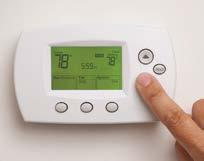
Block outside heat by closing window coverings on the south and west sides of your house during the day. Keeping humid air out is easier if you update the weather stripping around your doors and windows to seal air leaks.
Change appliance habits to eliminate wasted electricity. Unplug standby electronics using smart power strips to save up to 10% on energy use and set your water heater to 120 degrees to reduce standby heat loss. Avoid afternoon oven cooking by using outdoor grills, slow cookers, or air fryers instead.
singingriver.com/ways-to-save

Singing River Electric linemen and operators/dispatchers are always prepared and standing by to respond in case severe weather and major storms cause power outages, with safety as a priority.
Our members are also encouraged to practice safety and preparedness to protect your family during storms and outages. The Federal Emergency Management Agency recommends the items below as a starting point for storm and disaster preparedness; visit ready.gov for additional resources.
• Stock your pantry with a three-day supply (72 hours) of non-perishable food, including canned goods, energy bars, peanut butter, powdered milk, instant co ee, water, and other essentials like toiletries and diapers.
• Confirm you have adequate sanitation and hygiene supplies including towelettes, soap, and hand sanitizer.
• Ensure your First Aid kit is stocked with pain relievers, bandages and other medical essentials, and make sure your prescriptions are current.
• Set aside basic household items you will need, including flashlights, batteries, a manual can opener, and a portable, battery-powered radio or TV.
In the event of a prolonged power outage, turn o major appliances, TVs, computers, and other sensitive electronics. Doing this will help avert damage from potential power surges and will also help prevent overloading circuits during power restoration. Leave one light on so you will know when power is restored.
Advance planning for severe storms can reduce stress and anxiety caused by the weather event and lessen the impact of the storm’s e ects. Make a plan today — because storm preparedness is always our best defense.
Step 1 – Cooperative Energy, our wholesale power provider, checks their generating facilities, high-voltage transmission towers, and transmission lines that feed Singing River Electric’s distribution substations.
Step 2 – Singing River Electric’s substations are next. A repair here can bring power to a large number of homes and businesses.
Step 3 – Distribution three-phase lines are then checked. They carry electricity to towns, communities, and subdivisions.
Step 4 – We then check single-phase lines which carry electricity to utility poles and underground transformers outside homes and other buildings. Critical services such as hospitals take priority here, followed by restoration to the greatest number of members.
Step 5 – Finally, the service line between your home and transformer on a nearby pole may be damaged. This may keep you in the dark while your neighbors have power.
Singing River Electric’s contractors are or will soon begin clearing trees, limbs, and underbrush around and below the power lines on these streets and surrounding areas to help decrease the number of power outages and reduce the risk of coming in contact with the lines.
Kittrell Substation — Highway 42, Woulard Bend Road, Greene County-Chicora Road, and surrounding areas. State Line Substation — Highway 45, Highway 63/57, Highway 42, and surrounding areas.





QHow do I improve the

e
ciency of my older home while keeping its charm?


AI love old homes. The details and craftsmanship have always drawn me to them. The features of older homes can make them less e cient than modern construction, but it doesn’t have to be that way. You can keep the charm and make your home more e cient.


by Miranda Boutelle
Start by prioritizing the invisible upgrades that make your home more comfortable and e cient. When we were kids, I don’t think any of us thought, “When I grow up, I want to spend my hard-earned money on insulation.” It’s not as exciting as new countertops or a remodeled bathroom, but air sealing and insulation can save you money every month. Then you can apply the savings to aesthetic improvements.
Many older homes are not properly insulated. Insulation has several benefits beyond sealing your home and keeping outdoor air from seeping in. It reduces outdoor noise, makes your home quieter and improves your overall comfort.
Always properly air seal before you insulate. Older homes with pocket doors, coved ceilings, dumbwaiters, doors to attic spaces, and laundry chutes allow indoor air to escape through the cavities, gaps and cracks around these classic features. Sealing o open cavities around those features often requires plywood, rigid foam, or drywall fastened into place and then caulked around the edges.
Keep an eye out for framing features that cause drafts. Balloon framing is a type of construction where wall studs run all the way from the foundation to the roof, allowing air to flow freely through those spaces. Second floors with knee wall attics on both sides are notorious for air leakage. Open cavities allow air to flow horizontally between the attic spaces, making the home uncomfortable and ine cient. Seal o the open cavities in the floor framing and insulate attic spaces.
Dense-packed cellulose or closed cell foam insulation can be sprayed into exterior walls. Skilled contractors can remove pieces of siding and drill holes to fill the wall cavities from the outside of the home. For brick or stone homes, holes can be drilled from the inside and then patched and painted. Insulating walls from the inside of the home requires more time and e ort in preparation and cleanup, but having well-insulated walls is worth it.
Knob and tube wiring — commonly used from the early 1880s to the 1930s with no grounding wire — should be replaced prior to insulating walls and attics for safety purposes. Contact between
insulation and knob and tube wiring can create a fire hazard. People often think new windows are the best way to improve a home’s e ciency. Considering the cost of replacing windows, I recommend investing in air sealing and insulation first. Then consider storm windows to keep the charm of the original windows, such as leaded glass and stained-glass windows in good condition. Choose from interior or exterior options that are operable and inoperable.
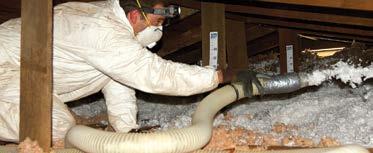
Once you’ve addressed the envelope of your home, consider appliance improvements. Replace your old electric water heater with a heat pump water heater. This upgrade can save a family of four an estimated $550 per year and more than $5,600 over the lifetime of the water heater, according to ENERGY STAR®.
Invest in high-e ciency heating and cooling equipment.
A mini-split heat pump, also known as a ductless heat pump, is a more e cient option than electric baseboard heating and provides the benefit of air conditioning.
Older homes don’t have to be ine cient. Show your home some love and invest in energy e cient upgrades.
Miranda Boutelle is the chief operating o cer at E ciency Services Group in Oregon, a cooperatively owned energy e ciency company.
Rocky Creek Elementary students are beating the heat with new triangular sunshades covering play areas throughout the campus. A $2,500 Singing River Electric Neighbors Helping Neighbors Community Grant funded seven sunshades, reducing UV exposure and lowering temperatures. “In addition to the health concerns for our students, the shades will help reduce the deterioration and fading of our playground equipment,” said Danya Ardis, third-grade teacher and PTO president.
The next grant application deadline is Friday, Sept. 11. Visit singingriver.com/my-community to view application requirements.
















The fiber network is now fully connected. Our contractors completed the intricate process of splicing individual glass fibers at every line intersection, linking each section together — precise and tedious work!
Singing River Connect is one step closer to completing our build-out and providing fast, reliable fiber internet to more Singing River Electric members!

Gautier’s Fountainbleau substation area now open for ber internet sign-ups
Singing River Electric members in Gautier’s Fountainbleau substation area now have access to high-speed fiber internet from Singing River Connect! This area includes Highway 90, Ladnier Road, De La Pointe Drive, Old Spanish Trail, Dolphin Drive, Audubon Lane, Graveline Road, and all side roads. The Shell Landing subdivision is not currently included as we are awaiting a railroad crossing permit.
877-272-6611 • singingriverconnect.com/signup
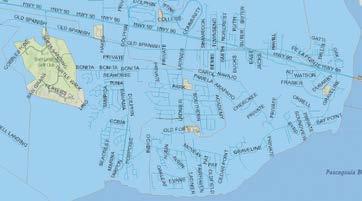
• Fountainbleau - Highway 90, Old Spanish Trail/Greyhound Way, South Gautier
• Monaco Lake - Highway 90 East and Old Mobile Highway
• Bayou Casotte - Martin Road North/ Lanier Street, Chicot Street North, Chicot Street South, Martin Road South
other Singing River Electric areas are open for fi ber internet sign-ups!
• If your apartment complex is interested in service, call 877-272-6611.
• Fiber internet was not run in neighborhoods with two existing fi ber internet providers. Please call if your home association is interested in service.









This Fourth of July feels a little di erent.
Across our country, Americans will gather to celebrate 250 years since the birth of the United States of America. Two hundred and fifty years ago, a group of determined people made the bold decision to stand together and build something of their own. They believed in freedom, sacrifice, hard work, and the idea that ordinary people could shape the future of a nation.
That spirit still matters today.
Here in Mississippi, we may celebrate in simple ways. Backyard cookouts. Fireworks over a pond. Folding chairs lined up along small-town streets for a parade. Families gathered for homemade ice cream while children swim and play in the summer heat. But underneath all those traditions is something deeper. It is pride in where we come from and gratitude for the people who built this country before us.
America did not become strong overnight. It was built one generation at a time by people willing to work, serve, sacrifice, and leave things better than they found them. Farmers, teachers, veterans, linemen, first responders, factory workers, and so many others all doing their part each day to build a better future for the next generation.
That same spirit is what built electric cooperatives.
In the 1930s, much of rural America was left behind when it came to electricity. Big companies saw little value in running power lines down long dirt roads to reach small communities. But neighbors came together, worked together, and built





something for themselves. That is the cooperative story, and it’s rooted in the same independent spirit that helped shape this nation 250 years ago.
At Southern Pine, we are proud to continue that work today. Every mile of line we maintain, every outage we restore, and every investment we make is about serving the people who call this place home. Our team members live here, raise families here, worship here, and care deeply about these communities because they are our communities too.
As we celebrate America’s 250th birthday, it is worth remembering that the strength of this country has never come from buildings in Washington alone. It comes from towns and communities just like ours. It comes from people willing to work hard, care for their neighbors, and stand together when challenges come.
That is the kind of power that built this nation.
And it is the kind of power that still keeps it strong today.
From all of us at Southern Pine Electric, we wish you and your family a safe and happy Fourth of July as we celebrate 250 years of the United States of America.

by Drummonds McAlpin
President/CEO Southern Pine Electric











As we celebrate the birth of our nation, we’re reminded that new beginnings bring new opportunities. Thank you for the trust you place in us to power your lives — yesterday, today, and tomorrow.

Section 3.01. Annual Meeting. For the purposes of electing directors, hearing and passing upon reports covering the previous fiscal year, and transacting such other business as may properly come before the meeting, the annual meeting of the members shall be held on the second Thursday of the month of November of each year, at such place in one of the counties of Mississippi within which the Cooperative serves, and beginning at such hour, as the Board of Directors shall from year to year fix; PROVIDED, that, for cause su cient, the Board of Directors may fix a di erent date for such annual meeting not more than thirty (30) days prior or subsequent to the day otherwise established for such meeting in this Section. Failure to hold the annual meeting at the designated time and place shall not work a forfeiture or dissolution of the Cooperative. It shall be the responsibility of the Board of Directors to make adequate plans and preparation for the annual meeting, and to encourage attendance by the membership at these meetings.
Section 4.03. Tenure and Qualifications. (a) At each annual meeting of the members, directors shall be elected by ballot, by and from the membership of the Cooperative, one director to be elected from each of the counties of Copiah, Covington, Newton, Scott, Simpson, Forrest, Jasper, Je erson Davis, Smith, Lawrence and Rankin Counties, Mississippi, each director to be elected for a term of three (3) years, in accordance with the following formula, to-wit:
(1) At the annual meeting of November 1984, and every three (3) years thereafter, one director shall be elected from each of the counties of Copiah, Covington and Newton
Counties, Mississippi, each of whom shall serve for a term of three (3) years from the date of election as provided by law.
(2) At the annual meeting of November 1985, and every three (3) years thereafter, one director shall be elected from each of the counties of Scott, Simpson, Forrest and Jasper Counties, Mississippi, each of whom shall serve for a term of three (3) years from date of election as provided by law.
(3) At the annual meeting of November 1986, and every three (3) years thereafter, one director shall be elected from each of the counties of Je erson Davis, Smith, Lawrence and Rankin Counties, Mississippi, each of whom shall serve for a term of three (3) years from the date of election as provided by law.
If the election of directors shall not be held at the annual meeting or if such annual meeting is not held, each director shall hold o ce until their successors shall have been elected and qualified.
(b) At any meeting, the Credentials and Election Committee shall determine the manner in which votes are to be cast and counted.
At any meeting, ballots shall not be necessary in the event the number of persons nominated for directors does not exceed the number of directors to be elected, but in such case if there be no objections, the directors may be elected in any other proper manner. Drawing by lot shall resolve, where necessary, any tie votes. If an election of directors shall not be held on the day designated for the annual meeting, a special meeting of the members may be held for the purpose of electing directors within a reasonable time thereafter.
(c) No person or non-natural person as described in subsection (e) of this section shall be eligible to become or remain a director or to hold any position of trust in the Cooperative

who is not an active member in good standing of the Cooperative, has not been a bona fide resident of the county from which they are to be elected for six months immediately preceding the nomination to directorship, or who is in any way employed by or financially interested in a competing enterprise.
(d) No person shall be eligible to become or remain a director who has been finally convicted of a felony or misdemeanor involving moral turpitude.
(e) In order to be eligible to become or remain a director of the Cooperative, a person must be a member of the Cooperative and receiving service therefrom, and not be a close relative as defined in Section 4.08 of an incumbent director, or the director being replaced. However, the operating or chief executive o cer of any member which is not a natural person, such as a corporation, church, etc., or its designee, shall, notwithstanding that they do not receive service from the Cooperative, be eligible to become a director, from the county in which such member is located, if they be so designated.
(1) Is in substantial permanent occupancy, direction or use of the premises served by the Cooperative, and
(2) Is a permanent resident within the county where such member is served by the Cooperative; provided further, that no more than one (1) such person may serve on the Board of Directors at the same time.
(f) No person shall be eligible to become or remain a director of, or to hold any other position of trust in the Cooperative, unless such person has the legal capacity to enter into a binding contract.
(g) No employee of the Cooperative shall be eligible to become or remain a director of the Cooperative.
(h) Upon establishment of the fact that a nominee for director lacks eligibility under this Section
or as may be provided elsewhere in these bylaws, it shall be the duty of the chair presiding at the meeting at which such nominee would be otherwise voted upon to disqualify such nominee. Upon the establishment of the fact that any person being considered for, or already holding, a directorship or other position of trust in the Cooperative lacks’ eligibility under this Section, it shall be the duty of the Board of Directors to withhold such position from such person, or to cause them to be removed therefrom.
(i) Nothing in this section contained shall, or shall be construed to, a ect in any manner whatsoever, the validity of any action taken at any meeting of the Board of Directors, unless such action is taken with respect to a matter which is a ected by the provisions of this section and in which one or more of the directors have an intent adverse to that of the Cooperative.
Section 4.04. Committee on Nominations; Credentials and Elections. (a) Committee on Nominations. It shall be the duty of the Board of Directors to appoint, at its regular August meeting of each year, a committee on nominations consisting of not less than five (5) nor more than eleven (11) members who shall be selected so as to ensure equitable geographic representation. No existing Cooperative employee, agent, o cer, director, or unknown candidate for director, may serve on such committee.
The committee shall receive and consider nominees submitted by the members of the Cooperative. The submission should include the member’s name, address, account number and contact information and be mailed to the Committee on Nominations, P. O. Box 60, Taylorsville, MS, 39168. Nominations must be received by September 10, 2026. The committee shall meet at a time and place set by the Board of Directors. The committee shall prepare and post at the principal o ce of the Cooperative within fifteen (15) days after the date of their
appointment a list of nominations for directors. The Secretary shall mail with the notice of the membership meeting a statement of the number of directors to be elected and showing separately those candidates nominated by the Committee on
Nominations and those candidates nominated by petitions, which have been received on, or prior to the second Thursday of September of the year of such meeting. Any fifty (50) members acting together may make nominations by petition
and the Secretary shall post such nominations at the same place where the list of nominations by the committee is posted. Any petition or nomination shall be submitted on a form designated and provided by the Cooperative. Each member signing
such petition shall place thereon the date of signing, address, and account number of the member. At the membership meeting, the Chairman shall call for additional nominations from the floor. No member may nominate more than one candidate.







THURSDAY NOVEMBER 14, 2026


THURSDAY NOVEMBER 14, 2026
THURSDAY NOVEMBER 14, 2026
THURSDAY NOVEMBER 14, 2026
THURSDAY NOVEMBER 14, 2026
DOORS
DOORS OPEN AT 9:30 A.M. MEETING AT 11 A.M. SOUTHERN PINE ELECTRIC HEADQUARTERS TAYLORSVILLE, MS
DOORS OPEN AT 9:30 A.M. MEETING AT 11

SOUTHERN PINE ELECTRIC HEADQUARTERS
DOORS OPEN AT 9:30 A.M. MEETING AT 11 A.M. SOUTHERN PINE ELECTRIC HEADQUARTERS TAYLORSVILLE, MS
THURSDAY NOVEMBER 14, 2026
DOORS OPEN AT 9:30 A.M. MEETING AT 11 A.M.
PINE ELECTRIC HEADQUARTERS TAYLORSVILLE, MS

TAYLORSVILLE, MS
SOUTHERN PINE ELECTRIC HEADQUARTERS TAYLORSVILLE, MS

FOOD, FRIENDS, MEMBER SPOTLIGHT BOOTHS & MORE! ALL ARE WELCOME.
FOOD, MEMBER SPOTLIGHT BOOTHS & ALL ARE WELCOME.
FRIENDS, MEMBER SPOTLIGHT BOOTHS & MORE! ALL ARE WELCOME.
MEMBER SPOTLIGHT BOOTHS & MORE! ALL ARE WELCOME.
FRIENDS, MEMBER SPOTLIGHT BOOTHS & MORE! ALL ARE WELCOME.
FRIENDS, MEMBER SPOTLIGHT BOOTHS & MORE! ALL ARE WELCOME.

What starts as a few cents rounded up on a monthly electric bill is making a real di erence across Southern Pine’s service area.
This spring, Southern Pine Electric awarded $140,775 through its Members Helping Members program to organizations serving communities throughout the cooperative’s 11-county service area. The grants will support projects focused on public safety, education, recreation, food assistance, and community improvement.
Southern Pine President and CEO Drummonds McAlpin said, “We are grateful for each of these organizations and the work they do every day to strengthen our communities. This program reflects the generosity of our members and demonstrates how small contributions can come together to make a meaningful di erence.”


The grants will help volunteer fire departments purchase emergency equipment, schools improve recreation spaces, and community groups provide meals, support services, and park improvements for local families and communities.
Now in its second year, the Members Helping Members program has awarded more than $340,000 to 53 organizations and groups. Funding comes from Southern Pine members who voluntarily round up their monthly electric bills to the nearest dollar.
Programs like Members Helping Members show the power of neighbors helping neighbors and the impact small acts of generosity can have across local communities.



















• Amite • Claiborne • Copiah • Franklin Hinds • Je erson • Lincoln • Wilkinson




SmartHub
Through the mobile app or online at southwestelectric.coop
Pay Centers
• Lorman — Southwest Electric o ce
• Port Gibson — River Hills Bank


Credit/Debit Card Draft
Enroll through SmartHub online or the mobile app for monthly auto pay or one-time payment
Bank Draft
One-time eCheck payment through SmartHub or call us to enroll in auto monthly bank draft
Pay by Phone 24/7
Call 844-975-2728 and pay with credit/ debit cards or by eCheck
Regular Billing
DirectPay
• Barcode in SmartHub or back of bill
• $1.50 fee
• Find nearest location in SmartHub
MoneyGram


• Available at Walmart and CVS stores
• $1.50 fee
• Receive code 16381
U.S. Mail
Mail your bill stub and check or money order to P.O. Box 5, Lorman, MS 39096
• Barcode in SmartHub or back of bill order to P.O. Box 5, Lorman, MS 39096
Standard billing is familiar to our Members. Pay for use as metered on a monthly basis.
Alternate Payment Dates
Choose to have payments due on the 15th or 27th of each month, allowing for flexibility with your budget and schedule.
EZ-Pay
Only requires $105 to start service – $55 is a credit towards electricity use — and no deposit. Pay for use as you go. Available for new and existing Members.
Variable Monthly Payment
Calculates and averages the last 11 months of use plus the current month’s use, providing a levelized current bill. Makes monthly budgeting easier.
Paperless Billing
No more paper bills in your mailbox. Receive notification of your bill by text or email.
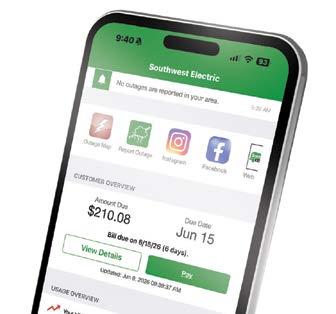




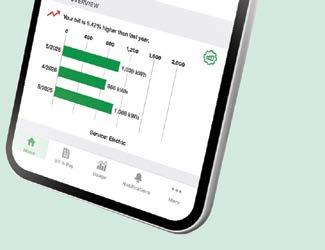



Members attending will be eligible for EXCITING DOOR PRIZES. Can’t attend? Return the bottom portion of your Annual Meeting notice for a chance to win one of five $100 BILL CREDITS.
DEADLINE: AUG. 7 AT 4:30 P.M.
WEDNESDAY, AUG. 12, AT 10 A.M. LORMAN OFFICE • 18671 HIGHWAY 61
Southwest Electric’s bylaws can be found by scanning the QR code or by visiting southwestelectric.coop/what-is-a-cooperative.

The Nondiscrimination Statement can be found by scanning the QR code or by visiting southwestelectric.coop/nondiscrimination-statement.
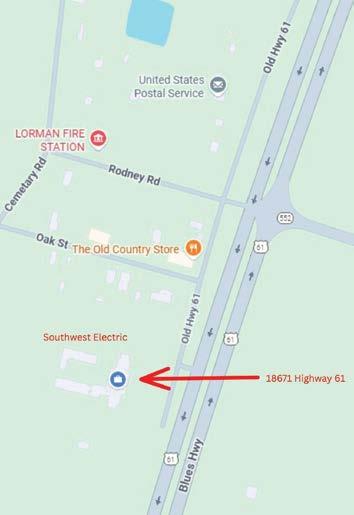




On Thursday, May 6, a powerful spring storm system damaged our service area. The storm spawned a massive EF3 tornado that started in Adams County, tore through north Wilkinson County, spanned all of Franklin and Lincoln counties and continued on to Lawrence County. After almost two hours on the ground, the tornado left over 70 broken poles and over 30 stripped cross-arms in its wake.
In the days that followed, Southwest Electric crews, contractors, and support personnel worked tirelessly in di cult and dangerous conditions to restore power safely and as quickly as possible. Communities came together; neighbors helped neighbors, and every e ort was focused on restoring service to Members impacted by the storm.
Thanks to the dedication, teamwork, and commitment of everyone involved, power was fully restored to all a ected Members. During times like these, we are reminded that heroes truly do wear hard hats.

“THANK YOU” TO ASSISTING CREWS: Good Hope Recovery
Killen Contractors
MDR Powerline Construction
R.W. Delaney Construction
Southern Tree Services
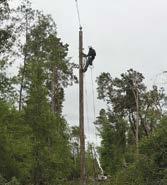

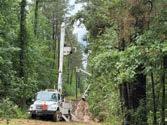

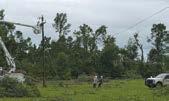













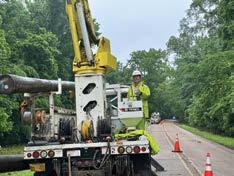





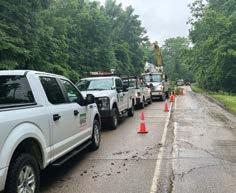
Linemen, right-of-way crews, and other personnel with Southwest Electric work every day along busy roads and highways to keep the lights on and restore power safely for our communities. Our personnel often work just a few feet from passing tra c in dangerous conditions, especially during storms and outages. A moment of distraction or excessive speed can change lives forever.
We ask everyone to please move over and slow down when approaching utility crews, construction workers, and emergency responders on the roadside. Giving crews extra space and reducing your speed helps protect the people working hard to serve our Members and communities. Your patience and caution can make all the di erence in helping everyone return home safely at the end of the day.

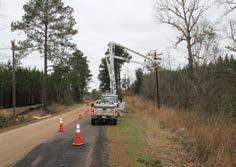
Now is the time to switch your ceiling fans so they are turning counterclockwise for the summer. You want the air circulating downward to create a chilling e ect on your skin making you feel cooler. Remember, fans cool people, not the air in the room. It’s also important to remember to turn your ceiling fans OFF when you are not in the room to save energy. Every little bit helps.
Turn your ceiling fans OFF when you are not in the room.
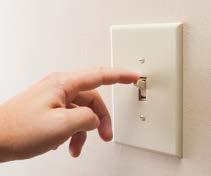
























by Je rey Groenewold
Summer is in full swing, and many of us are enjoying the sunshine and warmer weather — it’s also a very busy season for Mississippi’s electric cooperatives.
Our irrigation members are in the middle of watering, many construction and capital improvement projects are underway, annual meetings are taking place, and homes and businesses are using more electricity to keep cool.
It takes a lot of electricity to meet all this demand, and utilities must ensure there is power available around the clock. So, have you ever wondered how your electric co-op forecasts electricity on the grid?
Electric load forecasting is an important activity that many co-ops perform every day. When you hear things like “peak demand” or “prices are spiking,” it can sound complex and daunting. At the center of these challenges is forecasting. Electric co-op use a variety of analytics to predict factors like weather, sunshine, wind, cloud coverage, rain, power generation, and yes, even the future use of electricity, including how much and when it will be used. All of this information helps co-ops plan and prepare for the next day, week, or month to ensure the grid runs smoothly — so we can all enjoy the summer with our family and friends. This practice is called “load forecasting.”
With the changing electric grid — from more renewable energy sources showing up on the system to growing communities that need more electricity — load forecasting is crucial for managing the health of the power grid. Accurate forecasting is essential for grid operators to allocate necessary resources to keep the grid running successfully and allocating power generation e ectively based on predictions. Proper forecasting aids in scheduling power plants and managing fuel supplies. This leads to reduced operational costs and minimized waste in electricity production, transmission, and distribution.
Maintaining stability is a primary concern for electric co-ops because the grid must constantly balance electricity supply with demand. Load forecasting enables co-ops to anticipate electric peaks and supply disturbances, and helps prevent the grid from failing, which can lead to blackouts.
The integration of renewable energy sources like wind and solar adds complexity to load forecasting. Accurate forecasts help optimize the use of variable renewable energy. Combining load forecasts with renewable generation forecasts helps optimize the grid with tremendous economic benefits.


Short-term forecasts (daily or weekly) give grid operators the necessary data to make informed decisions on what type of power generation to schedule, what electric market purchases or sales need to be made, and mitigate risks of supply shortages or surpluses, so that you can get the most a ordable electricity to your home or business. Additionally, load forecasting informs future planning for infrastructure development, grid expansion, upgrades, and interconnections. With the growing demand for electricity, ensuring the grid can handle future increased use is essential and helps maintain reliability over time. Forecasting electricity demand allows for adaptability to changing power generation sources and demand patterns. It’s an important piece of the puzzle for maintaining a reliable, e cient, and cost-e ective grid.
Je rey Groenewold writes on consumer and cooperative a airs for the National Rural Electric Cooperative Association.





Twin County Electric Power Association is proud to announce the retirement of $1,444,825.00 in capital credits to its member owners. This year’s retirement reflects margins allocated from 1995,1996, 2009, and 2025, returning value directly to the members who received electric service from Twin County during those years.
Capital credits are one of the most meaningful benefits of being a member owner of Twin County Electric Power Association. Because Twin County operates as a nonprofit utility, any margins remaining after operating expenses are allocated back to members based on the amount they paid for electricity. When the cooperative’s financial position allows, those allocated credits are retired and returned to our members
• JULY 28, 2026 • “Record Date” for determining members in good standing for Twin County Electric Power Association’s 2026 Annual Meeting.
• JULY 29, 2026 • Petition for Nomination of Director available at the Hollandale o ce. Candidates must be a member in good standing. A member from one of the following service areas will be eligible to file a Petition for Nomination of Director:
(1) Greenville
(1) Hollandale
(1) Rolling Fork






— demonstrating the value of cooperative ownership and your role in our shared success.

General Manager Leslie Holloway emphasized the importance of this process, noting that capital credit retirements demonstrate both the cooperative’s strength and its commitment to a ordability. “Returning margins to our membership exemplifies the financial stability of our cooperative,” Holloway said. “We are committed to providing a ordable, reliable electric service to our members.”
Capital credit checks were mailed in June. If you were a member during any of the listed years and did not receive a check, please contact the Hollandale o ce for assistance.
• AUG. 10, 2026 • Petition for Nomination of Director must be hand-delivered or received at the Hollandale o ce by 5 p.m.
• AUG. 20, 2026 • Annual Meeting notices, annual reports, and proxies will be mailed to members in good standing as of the Record Date.
• SEPT. 16, 2026 • Proxies must be received at a Twin County o ce by 5 p.m. They may be hand-delivered or mailed to a Twin County o ce.
• SEPT. 22, 2026 • 1:30 P.M. • Annual Meeting of Members, Twin County Electric Power Association Conference Center, 900 E Avenue N, Hollandale.













































Visit twincoepa.com today and see what’s new!






Twin County EPA is pleased to announce the launch of its newly redesigned website!




Our new website o ers a more user-friendly experience with improved navigation, expanded information and enhanced tools to help you quickly access the information and services you need. Whether you’re looking to review and pay your bill, report an outage, access energy saving tips, or learn more about Twin County EPA, the information you need is now easier to find.
The redesign reflects Twin County’s ongoing commitment to enhancing communication and delivering valuable tools that improve the overall member experience.


We invite you to explore the new site and discover the enhanced tools and resources available at your fingertips.


Additional features and updated content provide members with greater access to information while staying connected with your cooperative.






• Turn your thermostat up 3-5 degrees when you are away and gradually lower the thermostat setting when you return home. Avoid turning your thermostat o and on during the day.
• Install a programmable or a smart thermostat.
• Install window coverings to limit heat gain during the day.







• Use a ceiling fan to circulate the air. During the summer months, ceiling fans should be set counterclockwise to create a cooling breeze.
• Change air conditioning filters monthly.
• Cover and seal air leakage, such as caulking window frames or installing foam insulation around pipes.
Hey, Power Pals! The Cooperative Gang is here with powerful and fun resources just for you. You’ll find coloring sheets, puzzles, crossword games, exciting experiments, and more to make learning about electricity extra fun. Let’s explore all the cool activities waiting for you and keep the adventure going wherever you are!
Scan here to visit our website and find resources to keep you learning all summer long!





Your electric utility works hard to ensure safe, reliable power to homes and businesses 24/7. To make sure everyone has the power they need, generation must match consumption and have the capacity to adjust to changing demands for energy.
Peak demand is the period in a given range of time — day, month, or year — when electricity use is highest. It’s caused by many people using energy-consuming equipment at the same time. It di ers based on geography, weather, and time of year. For example, demand is typically highest on hot summer afternoons and cold winter mornings. Most utilities also experience daily peaks when people are getting ready in the mornings and returning home in the evenings.
When everyone uses more energy at the same time, it puts more stress on the electric grid and requires more expensive electricity to meet the need.
Electricity pricing is based on supply and demand. The price of electricity is higher when the demand is higher, which costs the utility more.
To lower energy use and strain on the grid during peak times, there are habits we can adopt in our homes.
Let’s look at two examples.
Joe and John arrive home from work at 5:30 p.m. They both turn on the oven to make dinner.
While John waits for the oven to preheat, he throws in a load of laundry. He finishes dinner, cleans up and starts the dishwasher. Then, he moves the clothes to the dryer.

Joe finishes dinner, loads the dishwasher and sets it to start at 10 p.m. He puts a load of laundry in the washing machine and later that evening switches it over to the dryer.
Although they use the same appliances and amount of energy, John uses it all at once, running multiple appliances during peak hours, creating higher demand and more strain on the electric grid while using more expensive energy.
To lower your demand, spread electricity use throughout the day and avoid peak times as much as possible. This will reduce the utility’s cost of supplying electricity to your home. Another benefit of shifting your use to midday is integrating renewable energy, such as solar, which produces energy when the sun is shining.
Large appliances — including washers, dryers, ovens, water heaters and air conditioners — have the biggest impact. Using them during o -peak hours or one at a time can help.
Automate as much as possible. Most electric vehicle chargers can be set to charge during scheduled hours with built-in timers or apps. Most modern dishwashers have delay-start features. If you have a pool, set the pool pump to run in the middle of the day, particularly if you are in a region with strong solar production.
You can also automate air conditioning. Simple, free adjustments, such as closing your curtains on hot afternoons and evenings, can help, too.
Keep in mind that extreme weather, such as freezing temperatures in Alabama or a heat wave in Minnesota, puts extra stress on the grid. Taking it easy on your energy use during extreme weather events can help prevent outages.
Spreading out your energy use helps your utility keep costs down and benefits your local energy grid.






















by Je rey Groenewold
Summer is in full swing, and many of us are enjoying the sunshine and warmer weather — it’s also a very busy season for Mississippi’s electric cooperatives.
Our irrigation members are in the middle of watering, many construction and capital improvement projects are underway, annual meetings are taking place, and homes and businesses are using more electricity to keep cool.
It takes a lot of electricity to meet all this demand, and utilities must ensure there is power available around the clock. So, have you ever wondered how your electric co-op forecasts electricity on the grid?
Electric load forecasting is an important activity that many co-ops perform every day. When you hear things like “peak demand” or “prices are spiking,” it can sound complex and daunting. At the center of these challenges is forecasting. Electric co-op use a variety of analytics to predict factors like weather, sunshine, wind, cloud coverage, rain, power generation, and yes, even the future use of electricity, including how much and when it will be used. All of this information helps co-ops plan and prepare for the next day, week, or month to ensure the grid runs smoothly — so we can all enjoy the summer with our family and friends. This practice is called “load forecasting.”
With the changing electric grid — from more renewable energy sources showing up on the system to growing communities that need more electricity — load forecasting is crucial for managing the health of the power grid. Accurate forecasting is essential for grid operators to allocate necessary resources to keep the grid running successfully and allocating power generation e ectively based on predictions. Proper forecasting aids in scheduling power plants and managing fuel supplies. This leads to reduced operational costs and minimized waste in electricity production, transmission, and distribution.
Maintaining stability is a primary concern for electric co-ops because the grid must constantly balance electricity supply with demand. Load forecasting enables co-ops to anticipate electric peaks and supply disturbances, and helps prevent the grid from failing, which can lead to blackouts.
The integration of renewable energy sources like wind and solar adds complexity to load forecasting. Accurate forecasts help optimize the use of variable renewable energy. Combining load forecasts with renewable generation forecasts helps optimize the grid with tremendous economic benefits.
Short-term forecasts (daily or weekly) give grid operators the necessary data to make informed decisions on what type of power generation to schedule, what electric market purchases or sales need to be made, and mitigate risks of supply shortages or surpluses, so that you can get the most a ordable electricity to your home or business. Additionally, load forecasting informs future planning for infrastructure development, grid expansion, upgrades, and interconnections. With the growing demand for electricity, ensuring the grid can handle future increased use is essential and helps maintain reliability over time. Forecasting electricity demand allows for adaptability to changing power generation sources and demand patterns. It’s an important piece of the puzzle for maintaining a reliable, e cient, and cost-e ective grid.
Je rey Groenewold writes on consumer and cooperative a airs for the National Rural Electric Cooperative Association.


by Cathy Cash
and why does it matter to electric co-ops?
over
The Federal Energy Regulatory Commission (FERC) is an independent agency in Washington, D.C., with authority over the transmission and wholesale of electricity in interstate commerce.
Electric cooperatives were formed to serve members with a ordable, reliable, and safe power. But what role, if any, does the federal government play in ensuring that happens?
The commission also regulates the interstate commerce of natural gas and oil and the siting of natural gas and hydropower facilities. Basically, FERC oversees how energy moves across the country by high-voltage powerlines or large pipelines.
So, FERC doesn’t regulate your local distribution co-op. But it does exert authority over five generation and transmission co-ops and all the wholesale electricity markets where co-ops buy their power supply. By setting the markets’ transmission rates that electric power companies and utilities, including co-ops, must pay, the federal agency can ultimately influence retail prices.
Mary Ann Ralls, NRECA senior director, regulatory counsel, notes that while state utility commissions have more immediate control over co-op operations and building powerlines, the federal agency’s influence fills in the gaps.



FERC does have a role in how co-ops can best serve their members by upholding grid reliability and safety and in keeping costs a ordable.
The commission’s regulations aim at maintaining fair prices within the wholesale electricity markets run by six regional transmission organizations (RTOs) and independent system operators (ISOs). These FERC-regulated RTOs and ISOs manage parts of the national electric grid.
FERC also monitors these markets for energy supply manipulation that can hike prices. When things go wrong, the commission can investigate and levy penalties.
Overall, FERC sides with conserving energy and encourages utilities to find ways to reduce demand, which eventually can place downward pressure on monthly bills.
The commission largely lacks authority over electric transmission in terms of siting and construction. That falls under state and local authorities.
Regarding natural gas, FERC has the final say in construction and operation of liquefied natural gas terminals, pipelines, and storage facilities. It reviews gas projects in terms of their impact on the environment, land use, geology, and the economy.
And, being a public agency, keep in mind all FERC’s final decisions can be challenged in court.
When it comes to grid reliability, the buck stops with FERC. The commission directs the national grid watchdog — North American Electric Reliability Corporation (NERC) — and enforces its mandatory reliability rules and requirements on grid operators and owners of the U.S. bulk power system, including utilities and energy producers.
The commission tasked NERC as the electric reliability organization for the continental United States after Congress called for a single point of contact following the historic blackout of Aug. 14, 2003, which left more than 50 million people in the Northeast and parts of the Midwest without electricity for several hours to several days.
FERC can require NERC to set new reliability standards or update current rules as needed to protect the grid’s ability serve today’s increased demand.

So, who is FERC?
The body is made up of five commissioners appointed by the president and confirmed by the U.S. Senate for five-year terms. The chair presides over open, public meetings on the third Thursday of the month, where the commission votes on orders to act on or approve projects or set precedents. You can even watch these meetings at home from the live link on the FERC website.
While its regulatory influence may not have a hand directly in co-op operations to serve consumers, FERC does have a role in how co-ops can best serve their members by upholding grid reliability and safety and in keeping costs a ordable.
“Irrespective of the level of regulation FERC has over a co-op, it is incumbent upon NRECA, working with its members, to impress on the commission that ultimately the co-op’s obligation is that the consumermember at the end of the line has a ordable, reliable, and safe electric service,” says Ralls.
Cathy Cash writes on consumer and cooperative a airs for the National Rural Electric Cooperative Association.














Yazoo Valley recently heard from Scott Simmons with the Mississippi Emergency Management Agency about what MEMA learned from Winter Storm Fern and ways to improve communication with electric cooperatives in future storms.


Winter Storm Fern was the most significant ice storm Mississippi has experienced in decades and caused numerous power outages across the state. Yazoo Valley’s system suffered tremendous damage from the storm, and over 100 workers from other cooperatives and contractors were brought in to assist with the recovery.
MEMA is the state’s coordinating agency for natural disasters. Following an event like Winter Storm Fern, MEMA works with other agencies, nonprofit organizations, county EMA directors, and FEMA to coordinate recovery efforts.
Simmons and communications representatives from Mississippi’s electric cooperatives discussed ways to improve communications during future natural disasters.
Prior to joining MEMA as director of external affairs in 2025, Simmons was a longtime anchor and reporter for WAPT.


Happy birthday, United States of America! The big 250! That’s right — two and a half centuries old, and still somehow younger than half the furniture in Europe.
I remember the 200th birthday celebration. I was in second grade, and we all got to dress up for the bicentennial. I went as Davy Crockett, complete with buckskin coat, coonskin hat, and wooden musket. Yes, you could bring toy guns to school in those days, and nobody called a press conference. I did get aggravated, though, because people kept calling me Daniel Boone. There I was, eight years old, already learning one of life’s great lessons: history is important, but apparently hats are confusing. I remember the 225th, too. I was married with two kids and in the second year of my first term as a public service commissioner. Chances are I will not be around for 275, unless medical science gets a lot better or somebody figures out how to preserve me in sweet tea.
Now, the folks in Europe may scoff at this accomplishment and say, “We have buildings twice as old as that.” Well, good for them. We have gas stations with better bathrooms. But don’t listen to them. Two hundred and fifty years ago, you were something totally different and earth changing. In a world full of kings, queens, and hereditary monarchs, no one thought that a government of the people, by the people, and for the people would ever last. I’m sure the betting lines in London had the over-under on your demise sometime before 1800. But look at you now — from humble beginnings to the greatest country in the world, with 50 states, one Constitution, and approximately 900 different opinions on how to cook barbecue.
Now, I’m not saying you are the greatest because you are the wealthiest nation or because you have the mightiest military the world has ever seen. And yes, you do have some

problems. You’ve had some rough patches, made some mistakes, and occasionally acted like a family reunion where everybody got into politics after the second helping of banana pudding. But you are still the greatest because you are the land of opportunity — the country where a person can change his or her stars. That is why people from all over the world risk life and limb to come to your shores. As Lee Greenwood once sang, “If I had to start again with just my children and my wife, I’d thank my lucky stars to be living here today, ‘cause the flag still stands for freedom, and they can’t take that away.”
So show off. Make a big production of the big 250. Shoot the fireworks, wave the flags, fire up the grill, and eat something that your doctor would probably prefer not to know about. And if the Europeans roll their eyes and remind us how old their castles are, just smile politely, mention World War II, and say, “You’re welcome.”
Happy 250th birthday, America. You may be loud, messy, stubborn, opinionated and occasionally impossible to get along with—but you are ours. And for all your flaws, you are still the place where freedom has a home, where hope still packs a suitcase, and where a second-grade Davy Crockett can grow up believing that anything is possible. So here’s to you, old girl. Happy Birthday and may God Bless the USA!!!!


by Michael Callahan
Executive Vice President/CEO Electric Cooperatives of Mississippi