




I have always loved college football. Around here, that does not make me unique. Fall Saturdays in the South have a way of getting into your blood. But for me, it became personal on Feb. 1, 1986, when I signed a grant-in-aid to play football at The University of Southern Mississippi. I did not know it then, but that one signature changed the direction of my life. It opened doors I never could have imagined and helped put me on a path that led me to where I am today.
There was a time when college football seemed full of those stories. A young man would show up on campus with a duffel bag, cleats, and maybe a mama praying he would keep his head on straight. He would learn discipline, grow up, get knocked down, get back up and become part of something bigger than himself. These days, the game is starting to look less like college athletics and more like professional sports with marching bands. Name, image, and likeness — NIL — was supposed to let college athletes benefit from their own success. And honestly, I do not have a problem with that. If Dr. Pepper wants to invite you to Fansville, or Nissan wants you in the Heisman House, good for you. A young athlete who works hard ought to enjoy some reward. But somewhere along the way, what started as compensation for name, image, and likeness began to look an awful lot like plain old pay-for-play.
It has changed the feel of one of America’s greatest traditions. In the name of television ratings and bigger checks, we are swapping Saturday night kickoffs for 11 a.m. television windows.
It’s also harder than ever to keep up with your favorite players. You finally learn a fellow’s number, buy into his story, and start pulling for him, and before you know it, he is off trying his hand at free agency with another school that made a better offer. In today’s world, Reggie Collier, Sammy Winder, and Brett Favre might not have become Southern Miss legends. They might have just been passing through Hattiesburg on the way to greener pastures.
College sports used to be about helping young men and women become better people through education, discipline, and hard life


lessons. I find it interesting that whenever folks talk about “compensation,” the value of a free education often gets left sitting over in the corner by itself. Ask any parent who has sent a child to college, and they will tell you tuition, room, and board are not exactly pocket change.
Now, do not hear me wrong. College football had its problems. Scholarships are one-year deals, not four-year guarantees. I was at Southern Miss during a coaching change, and I had a front-row seat while some of my friends were shown the door. We could not just pack up and leave, but the school could send us packing. So yes, things needed changing. I just fear the pendulum has swung so far the other way it may have knocked a hole in the wall.
I am not sure where all this is headed. Everybody keeps saying something must be done but not much seems to slow down the money race. I can imagine a day when fans simply grow tired of it — especially fans of schools outside the biggest conferences, where the passion is still real, but the checkbook may never be big enough.
As for me, I hope college athletics figures this out before it is too late. There are still plenty of young people out there who need that scholarship, that coach, that team, and that belief that they can become more than they ever thought possible. There are many more Michael Callahans who need a chance to live a dream, earn an education, and be shaped by the game in ways that last long after the final whistle.
That, to me, is what made college football special. And if we are not careful, we may look up one day and realize we sold the best part to the highest bidder.


by Michael Callahan Executive Vice President/CEO Electric Cooperatives of Mississippi









Send us a photo of your cats.


The photos must be high-resolution JPG files of at least 1 MB in size. Please send the photo as an attachment to an email and send it to news@ecm.coop.

Each entry must be accompanied by photographer or sender’s name, address, and co-op.
SUBMISSION DEADLINE: Aug. 28. Select photos will appear in the October 2026 issue.




Catching
Rick
The Official Publication of the Electric Cooperatives of Mississippi
Vol. 79 No. 8
OFFICERS
Brian Long - President
Shawn Edmondson - First Vice President
Brian Clark - Second Vice President
Je Bowman - Secretary/Treasurer
Michael Callahan - Executive Vice President/CEO
EDITORIAL STAFF
Lydia Walters - VP, Communications
Steven Ward - Editor
Alan Burnitt - Creative Director
Jill Sowell - Sr. Graphic Designer
Whitley Daughtry - Sr. Graphic Designer/Photographer
Steve Temple - Social Media Director
Kevin Wood - Videographer/Photographer
Julienne Sones - Graphic & Animation Specialist
Chris Alexander - AVP, Member & Youth Engagement
Andy Tuccio - AVP, Media & Creative Solutions
EDITORIAL OFFICE & ADVERTISING – 601-605-8600
For delivery questions or issues, call your local co-op.
Acceptance of advertising by Today in Mississippi does not imply endorsement of the advertised product or services by the publisher or Mississippi’s electric power associations. Product satisfaction and delivery responsibility lie solely with the advertiser.
• National advertising representative: American MainStreet Publications, 800-626-1181
Circulation of this issue: 445,805 Non-member subscription price: $9.50 per year.
Today in Mississippi (ISSN 1052-2433) is published 12 times a year by Electric Cooperatives of Mississippi Inc., P.O. Box 3300, Ridgeland, MS 39158-3300, or 665 Highland Colony Parkway, Ridgeland, MS 39157. Phone 601-605-8600. Periodical postage paid at Ridgeland, MS, and additional o ce. The publisher (and/or its agent) reserves the right to refuse or edit all advertising. The magazine is published for members of subscribing co-ops. The magazine is a bene t of membership.

POSTMASTER: Send all UAA to CFS. (See DMM 507.1.5.2) NON-POSTAL AND MILITARY FACILITIES: Electronic address returns requested. www.facebook.com/TodayinMississippi www.todayinmississippi.com

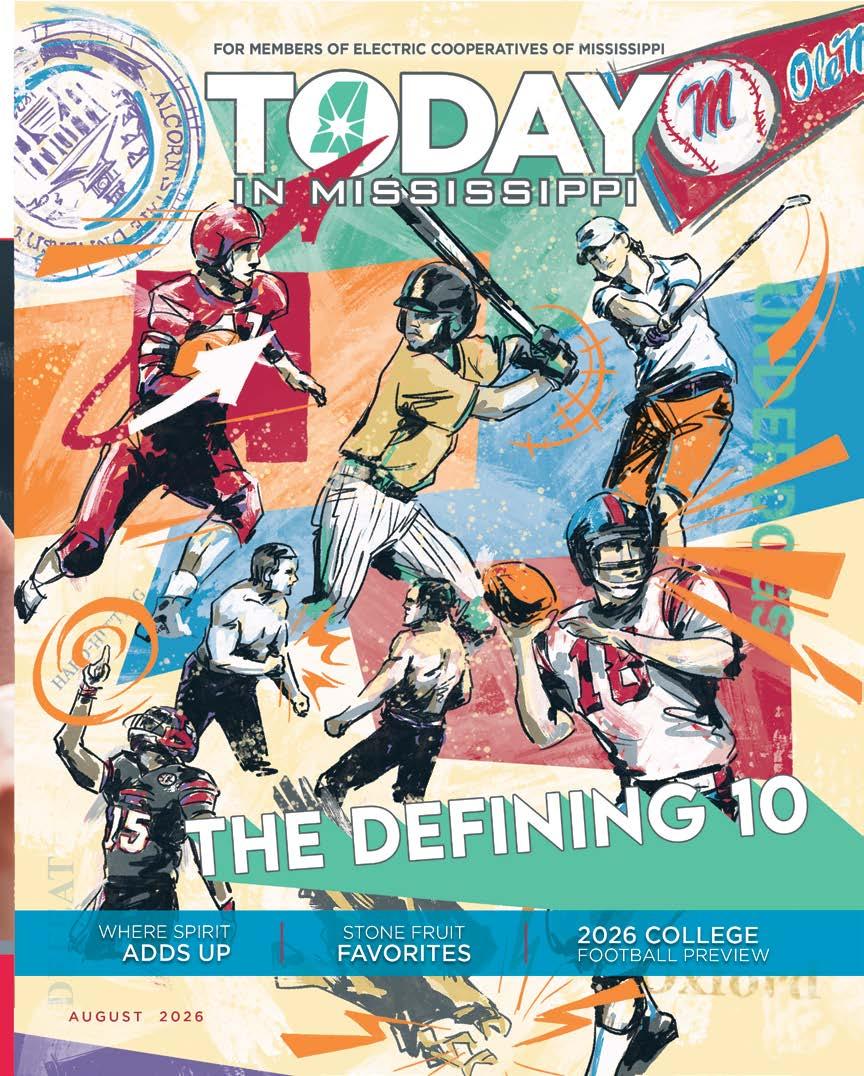
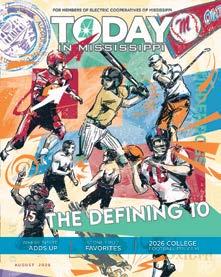
Mississippi sports illustration created by Jill Sowell.
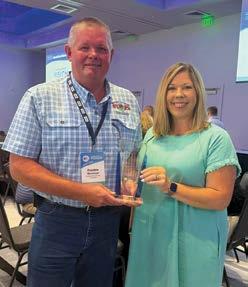

Pontotoc Electric Power Association General Manager Frankie Moorman was recently named the first recipient of the Russell Hustle Award.
Moorman accepted the award at the Tupelo-based Central Service Association User Education Conference in early July.
The award was presented to Moorman for his leadership during Winter Storm Fern.
During the storm, just under 89% of Pontotoc’s system experienced outages. Moorman went on Facebook daily to give members video updates on power restoration e orts.
The award was named in honor of the late Danny Russell, a retired general manager at the Central Service Association and a board member for North East Mississippi Electric Power Association.
The Central Service Association was formed in 1937 to assist electric utilities with billing and finances.
“Nuclear energy” often conjures images from TV and movies, such as towering cooling structures, glowing green substances, and frantic control rooms. In reality, modern nuclear power plants are far removed from these portrayals.
Today’s nuclear facilities operate more like high-tech industrial campuses that are clean, continuously monitored, extremely secure, and designed with multiple, overlapping layers of safety.
In the United States, nuclear plants are among the most heavily regulated facilities of any kind, with a dense framework of state and federal oversight governing reactor licensing, fuel handling, plant maintenance, material disposal and emergency preparedness to ensure that nuclear plants operate safely and responsibly.
Electric cooperatives are tracking nuclear plant developments in their long-term planning. For co-ops and their consumer-members, nuclear energy can provide reliable, coste ective, carbon-free electricity. Nationwide, generation and transmission (G&T) cooperatives, the wholesale power suppliers that provide electricity to your electric co-op, already partially own or contract for output from 16 operating nuclear reactors.

and on rare but high-consequence emergency scenarios. As nuclear facilities modernize, operators are also trained using advanced digital systems that are replacing older, analog equipment. These upgrades improve automation, diagnostics, and situational awareness.
Safety extends far beyond the control room. Organization and discipline define how nuclear plants are designed and run. Facilities have clearly established security perimeters, controlled access points, and rigorous maintenance programs to ensure reliability while protecting workers and surrounding communities. Critical components are housed in reinforced concrete and steel structures and are accessible only to essential personnel.






Reactor technology has also become safer as decades of experience have driven innovation.

Hattiesburg-based Cooperative Energy, which provides power to 11 of Mississippi’s distribution co-ops, owns 10% of the Grand Gulf Nuclear Station plant in Claiborne County. Grand Gulf has been in operation for 41 years.
Safe operation of a nuclear plant begins in the control room. Plant operators must pass demanding written and operational examinations administered by the U.S. Nuclear Regulatory Commission before they are allowed to work –– and training doesn’t stop once operators are licensed. Personnel are regularly tested on routine plant operations
One of the most significant advances is the increased use of “passive safety” systems, built-in safety features that work automatically. Earlier reactors relied heavily on pumps, motors and operator intervention to perform critical functions like circulating cooling water. While modern designs still include active systems, they also integrate passive features that do not require external power or immediate human action. Instead, natural forces such as gravity, pressure, and convection keep the reactor stable and cooled if disruptions occur. Passive safety increases resilience during grid outages and extreme weather events.
In a time of rapid electric demand growth, nuclear power o ers zero-carbon baseload power, a potentially valuable attribute as fossil fuel plants retire and intermittent renewable resources expand. As the energy landscape shifts, nuclear energy may play an important role for cooperatives seeking dependable, long-term generation options. – NRECA





















There’s something about roses in a Southern garden that brings timeless beauty, incredible fragrance, and a touch of romance.
On a warm afternoon, it’s easy to understand why generations of gardeners have treasured roses as their scent drifts through the air and blooms glow in the sunlight. Few plants can match the elegance that roses bring to the landscape.
This month, I’m highlighting three exceptional varieties from Tyler, Texas-based David Austin Roses that truly shine in Southern gardens. David Austin roses are a type of rose bred to combine the romantic, cupped shapes and intense fragrance of historic roses with the repeat-blooming habits, hardiness, and wide color palette of modern roses. Munstead Wood is a rose that will stop you in your tracks.
The blooms are a deep, velvety crimson — almost the color of a fine red wine. Each flower is packed with layers of rich petals that create that classic, old-world rose form gardeners love so much. The color alone makes a dramatic statement, especially when planted against green foliage or paired with lighter flowering plants.
But the beauty of Munstead Wood goes beyond appearance.
The fragrance is absolutely incredible. Like many David Austin roses, it carries a rich, fruity scent that can easily perfume an entire section of the garden. In the South where outdoor living spaces are an important part of the landscape, planting a fragrant rose near a patio, walkway or porch allows you to enjoy that perfume throughout the season.
In our warm, humid climate, Munstead Wood performs best with plenty of sunlight and good air circulation.
Giving roses room to breathe helps reduce disease pressure and keeps the foliage healthier through the long growing season. A good layer of mulch around the base helps conserve moisture and regulates soil temperature during the heat of summer.



Another beautiful variety worth growing is Gabriel Oak.
This rose brings a slightly brighter, glowing deep-pink tone to the garden. The flowers are full, rounded and incredibly elegant, almost looking handcrafted when fully open.
One of the things I appreciate most about Gabriel Oak is its repeatblooming habit. It continues producing flushes of flowers throughout the growing season, giving gardeners months of color and fragrance.
If you’re looking to brighten the garden with cheerful color, The Poet’s Wife is one of the standout yellow roses from David Austin.
The blooms open in a beautifully cupped shape and are a rich, luminous yellow. The flowers have an elegant softness to them that adds warmth wherever they are planted.
Yellow roses can sometimes fade in intense summer heat, but The Poet’s Wife holds its color remarkably well. Its blooms strikingly contrast against dark green foliage, making it a wonderful addition to cottage-style gardens, mixed beds or formal rose plantings.
Like the other David Austin roses, it o ers lovely fragrance along with exceptional beauty.
One reason these David Austin roses are so popular is that they combine the romance and fragrance of old garden roses with the repeat-blooming qualities modern gardeners want. In Southern landscapes, they bring season-long color while adding a sense of timeless tradition.
If you’re ready to add color, fragrance and classic beauty to your landscape, these roses are a wonderful place to start. Each o ers something special that can transform an ordinary garden into an unforgettable one.

by Dr. Eddie Smith

Southern Gardening columnist Dr. Eddie Smith, a gardening specialist and Pearl River County coordinator with the Mississippi State University Extension Service, is an internationally certified arborist, Produce Safety Alliance certified trainer, and one of the developers of the Mississippi Smart Landscapes program that encourages the use of native plants in the landscape.






Anglers can beat the crowds at this very scenic lake

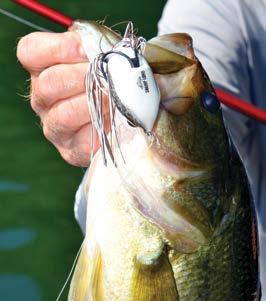
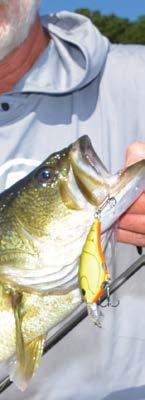









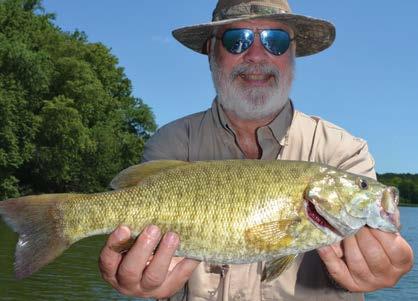





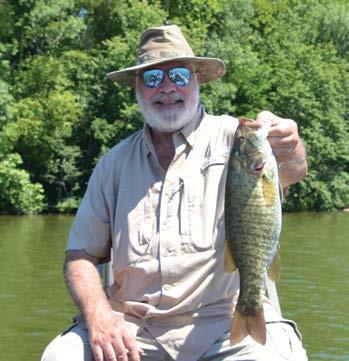







Mississippi anglers don’t need to leave the state to catch big smallmouth bass. A world-class trophy smallmouth lake, Pickwick Lake on the Tennessee River runs through parts of Mississippi, Tennessee, and Alabama.
However, Magnolia State sportsmen can fish another lake for giant smallmouth, largemouth and huge spotted bass with considerably less pressure. The northernmost lake on the Tennessee-Tombigbee Waterway, Bay Springs, covers about 6,700 acres near Tishomingo and connects to Pickwick.
The only lake entirely within Mississippi containing smallmouth bass, Bay Springs averages about 30 feet deep. The deep and clear highland reservoir drops to nearly 100 feet in places.
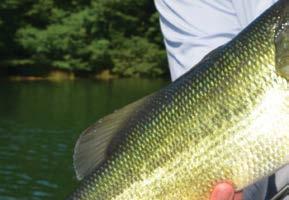
Although Bay Springs Lake holds some smallmouth bass, including giant ones, it doesn’t produce nearly as many as Pickwick. The lake can deliver some 5- to 7-pound smallmouth, but most people catch smallmouth while fishing for largemouth or spotted bass. The lake holds some massive largemouth and spotted bass.
“Bay Springs is known for its huge spotted bass,” said Roger Stegall, a professional bass angler, guide, and Mississippi Outdoor Hall of Famer (662-423-3869, Fishpickwick.com) from Iuka. “Bay Springs is a good numbers lake for largemouth when people catch it at the right time. It does produce some largemouth in the 8- to 9-pound range every year.”
Many coves dot Bay Springs Lake. Look for abundant submerged standing timber or other structure that provides excellent cover for fish. Shallow stumpy flats make outstanding places to look for largemouth but be careful boating through such areas. Several small finger creeks also flow into the system. Fish the mouths of creeks and coves for all three bass species.

Many red clay points, banks and sheer blu s dominate the largely undeveloped wooded shoreline. Wind and water erosion cause clay chunks, wood and other debris to drop into the lake. When clay pieces, logs, brush, and other objects fall into the water, they create cover that attracts fish.
Spotted bass, largemouth, and possibly smallmouth hunt for prey around these submerged objects. Use electronics to look for fish around such underwater objects. Fish Texas-rigged worms or Carolina rigs or jigs around such sunken structures.
“Bay Springs has many red clay banks, blu s, and grass,” Stegall said. “Most of the red banks will be good places to look for bass, but I like the ones closest to deep water. That gives fish access to deep or shallow water. The bass come out of the deep water to feed in the shallows. Around those red clay banks, I throw jigs and crawfish-colored crankbaits to imitate crawfish.”
People also fish deeper points and drop-o edges. Tempt bass with various baits, such as crankbaits, spinnerbaits, or topwater temptations. Thick weed beds grow in some of the coves. Over the vegetation, run softplastic frogs.
Bay Springs Lake will never compete with Pickwick for giant smallmouth, but this beautiful lake in a very scenic setting o ers an alternative place to fish in northeast Mississippi. It can produce some outstanding action from a variety of fish in the right spot at the right time.

by John N. Felsher
John N. Felsher is a professional freelance writer, broadcaster, photographer, and editor who lives in Alabama. An avid sportsman, he’s written more than 3,300 articles for more than 170 di erent magazines on a wide variety of outdoors topics. Contact him at j.felsher@hotmail.com.



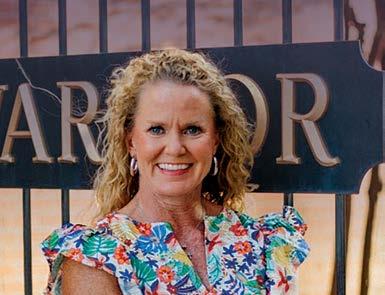


by Steven Ward
Ashley Burdine has high expectations for her math students and her cheerleaders.
“My classroom students and my athletes all know I mean business. When it’s time to work, they know I take it all seriously. I want both my math students and my cheerleaders to leave with more knowledge than they came with. I also want my students to have a passion for math and understand why it is important to have critical thinking skills,” Burdine recently told Today in Mississippi.
Burdine, an Algebra 2 teacher and the head cheerleading coach at Oak Grove High School in Hattiesburg, has been boosting team spirit on the sidelines since she was in the fifth grade.
At 47, Burdine has been involved in Mississippi cheerleading since the time she made the Long Beach Pee Wee Bearcat cheer team.
From then on, Burdine said she was hooked on the sport.
“I cheered at Long Beach Middle School and Long Beach High School. I then went on to cheer at Mississippi State University and at Mississippi College,” Burdine said.
As a freshman in high school, Burdine got a new coach who also happened to be the girls basketball coach at the time, David Mackay.
“He took us on, not knowing much about the sport, but he knew we should become competitive. That is the first year Long Beach attended the National Cheerleaders Association (NCA) nationals in Dallas. I fell in love with competition. I was a communication/public relations major at Mississippi State and worked in marketing for a few years. I was asked to judge a local cheer tryout and realized my heart wanted to be back in the sport. At that point, I began working on the alternate route to teaching,” Burdine said.
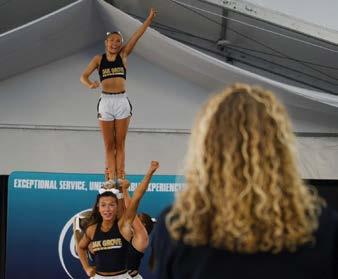

Burdine’s coaching career began at Northwest Rankin High
Burdine’s coaching career began at Northwest Rankin High School in 2002, where she coached for five years. Her husband’s job had the family relocate to Waco, Texas in 2007. Three years later, Burdine’s family moved back to Mississippi. They settled in Hattiesburg where Burdine was the coach at Oak Grove Middle School from 2011 to 2013. She also coached at The University of Southern Mississippi for one season in 2012. Burdine became the head coach at Oak Grove High School in 2013.
Growing up both swimming and dancing, Burdine said she was drawn to cheerleading because she loved being active.
“In high school, I spent hours in the gym and taught cheer technique classes. I love being on the sidelines at football games, and I also thrive on competition,” Burdine said.



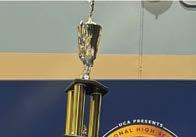


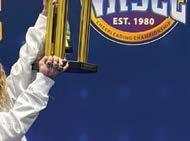



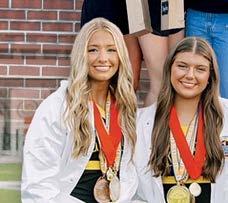




Burdine’s hard work, discipline, and team building has paid o with various state and national championship cheer titles.
Just a few of those titles include winning the 2013, 2015, 2017, 2019, 2020, 2023 Mississippi High School State Championships and the 2022, 2024, 2025, and 2026, UCA Division I Varsity Game Day National Championships.
Burdine, who was named the MHSAA Spirit Coach of the Year for the 2023-24 season, said the hardest part of her job has been the end of a season.
“We always have such incredible experiences at UCA (Universal Cheerleaders Association) nationals, and then it’s over so quickly. I often describe it like a breakup. The team spends so much time together, and becomes so close, then it’s just over. The bus ride home from Orlando is such a time of reflection over what the team was able to accomplish and overcome each season,” Burdine said.
The cheer coach also said some people don’t realize that her cheerleaders are true athletes.
“They work 12 months out of the year for so many years, perfecting their skills and rising to the new challenges that come each season.”
Her favorite part of the job? Competing.
“We work all year at putting the best possible routine on the mat, both at the state championship and the national championship.
Seeing the hard work pay o is the highlight of the season. For that two and a half minutes, nothing else in the world matters while I get to watch my girls pour their hearts out on the mat,” Burdine said.
She also said the bonds she makes with her team have meant the world to her.
“Those relationships are so special to me. I’m able to attend weddings, watch them build families, and start their careers. I am always thankful to have been a part of their journey,” Burdine said.
Some of Burdine’s students have gone on to cheer in college at Ole Miss, Mississippi State, Southern Miss, the University of Oklahoma, the University of Alabama, the University of Memphis, Texas Tech, Oklahoma State, and Baylor. Some of those cheerleaders have become collegiate national champions, while others have taught cheerleading at high schools around Mississippi.
Burdine said the best advice she has for future cheerleaders is concentrating on the team.
“There will be sacrifices that need to be made during the season to be the best you can be. This is a team sport, and it takes full commitment to be a good teammate. Putting together a competitive routine is a puzzle, and everyone must understand their role. Each team member provides value and makes a di erence,” she said.
FastHelp is the only Medical Alert device that won’t break the bank. That’s because it comes with no contracts, no deposits and no monthly bills ever – which makes FastHelp a great choice for seniors, students and professionals because it connects to one of the largest nationwide networks everywhere cell service is available for free. You don’t need a cell phone or a land line.
And here’s the best part. All those who already have an old style monitored medical alert button can immediately eliminate those monthly bills, which is why Universal Physicians is widely advertising this announcement nationwide.
So if you’ve ever felt a medical alert device was too complicated or expensive, you’ll want to get FastHelp, the
sleek new medical alert device with no monthly bills.
The medical alert device slugfest was dominated by two main combatants who both offer old style monitored help buttons that come with a hefty bill every month. But now Universal Physicians, the U.S. based heavyweight, just delivered a knockout blow sending the top rated contenders to the mat with the unveiling of FastHelp. It’s the sleek new cellular embedded medical alert device that cuts out the middleman by instantly connecting you directly to highly trained 911 operators all across the U.S. There’s absolutely nothing to hook-up or install. You don’t need a land line and you don’t need a cell phone. Everything is done for you. ■

The phone lines are ringing off the hook. That’s because for seniors born before 1964, it’s a deal too good to pass up.
Starting at precisely 8:30am today the PreStore Release begins for the sleek new medical alert device that comes with the exclusive FastHelp™ One-Touch 911 Button that instantly connects you to unlimited nationwide help everywhere with no contracts, no deposits and no monthly bills ever.
“It’s not like old style help buttons that make you talk to a call center, only work when you’re at home and come with hefty bills every month. FastHelp comes with state-of-the-art cellular embedded technology. That means it works at home or anywhere and everywhere cell service is available whether you’re out watering the garden, driving in a car, at church or even hundreds of miles away on a tour or at a casino. You are never alone. With just a single push of the One-Touch E Button you instantly get connected to free unlimited help nationwide with no monthly bills ever,” said Jack Lawrence, Executive Director of Product Development for U.S. based Universal Physicians.
“We’ve never seen anything like it. Con
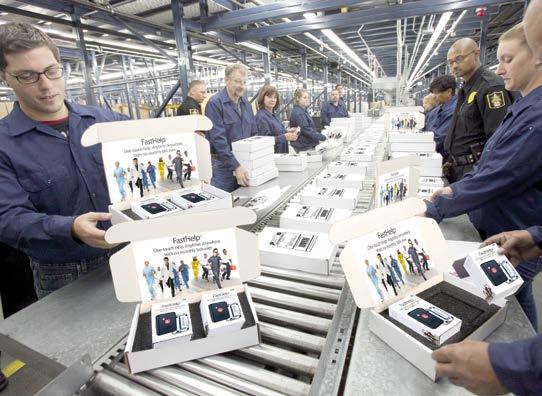
sumers absolutely love the sleek new modern design and most of all, today’s instant rebate practically pays for it and no monthly bills ever,” Lawrence said. FastHelp is the sleek new medical alert device with the best of combinations: a quality, high-tech engineered device that’s also an extremely great value because there are no monthly bills ever. ■
The only device that makes you look important, not old
The problem with medical alert devices is, nobody wants to wear them because it makes them look old. Well, that’s not the case with FastHelp. That’s because it’s the first state of the art medical alert device designed to make you look important, not old. Old style monitored help buttons you wear around your neck, or require expensive base station equipment or a landline are the equivalent of a horse and buggy, it’s just outdated.
Millions of seniors fall every year and spend hours lying on the floor helpless and all alone with no help.
But seniors who fall and get immediate help are much more likely to avoid getting sent to a nursing home and get to STAY living in their own home independently.
Yet millions of seniors are still risking their safety by not having a medical alert device. That’s because seniors just can’t afford to pay the monthly bills that come with old style medical alert devices.
That’s why seniors born before 1964 are rushing to cash in the whopping $150 instant rebate before the 21 day deadline ends.
So there’s no need to wait for FastHelp to hit store shelves later this year because seniors born before 1964 can get it now just by using the $150 instant rebate coupon printed in today’s publication before the 21 day deadline ends. If lines are busy keep trying, all calls will be answered. ■
BORN BEFORE 1964:
Use the rebate coupon to the right and call this Toll-Free Hotline: 1-800-221-2809 EXT. FSTH209
BORN AFTER 1964:
You cannot use the rebate coupon to the right and must pay $299
Call: 1-800-221-9773
EXT. ADFH0826
Instantly connects you to free unlimited nationwide help with no contracts, no deposits and no monthly bills ever
Seniors snap up new medical alert device that comes with no monthly bills
People don’t always do what their doctor says, but when seasoned veteran emergency room physician, Dr. Philip B. Howren says every senior should have a medical alert device, you better listen up.
“Seniors are just one fall away from being put in a nursing home,” Dr. Howren said. “With a medical alert device, seniors are never alone. So it keeps them living independently in their own home. That’s why seniors and their fam ily
Comes with new cellular embedded technology that works at home or anywhere you go so you are never alone
members are snap ping up a sleek new medical alert device that comes with no monthly bills ever,” he said.
Many seniors refuse to wear old style help buttons because they make them look old. But even worse, those medical alert systems come with monthly bills.
To solve these problems Universal Physicians, a U.S. company, went to work to develop a new, modern, state-of-the-art medical alert device. It’s called “FastHelp™” and it instantly connects you to free unlimited nationwide help everywhere cell service is available with no contracts, no deposits and
All seniors born before 1964 are getting a $150 rebate and cover just $149 making this deal too good to pass up
Nothing to hook up. You don’t need a land line or cell phone. It’s ready to use right out of the box

BOTTOM LINE:
Hurricane Help
“We had two hurricanes recently. I had no electricity for 6 days. I fell, so I pushed the button, and they came right out and picked me up off the floor. I tell many of my friends they need to get FastHelp!” - Virginia, FL

no monthly bills ever.
“This slick new little device is designed to look incognito to slip in your pocket. Seniors love them, because it actually makes them look im portant, not
Five Star Customer Reviews
LIFESAVER
“When I got my FastHelp I never thought I’d have to use it, but when I fell and broke my hip it saved my life.” - Harold, OH
Very appreciative of having FastHelp “I did have an emergency. Help RESPONDED quickly and came in a few minutes.”Irving, PA


old,” Dr. Howren said. FastHelp is expected to hit store shelves later this year. But special promotional giveaways are slated for seniors in select publications. ■
WE LOVE THE PRODUCT
“We bought it outright with no bills ever.” - Rosemary, NY
Safe anywhere
“This little FastHelp device is my guardian angel. I’m so glad my daughterin-law got it for me.” - Pete, FL
A+ Rating: These are unsolicited consumer feedback from satisfied customers as reported to Universal Physicians.
You don’t need to shop around. We’ve done all the leg work, this deal is too good to pass up. With the instant FastHelp rebate, it is a real steal at just $149 and shipping. There are no monthly bills ever.
PROS: It’s the sleek new medical alert device that comes with the exclusive FastHelp One-Touch 911 Button that instantly connects you to free unlimited nationwide help with no contracts or deposits. It connects you to the vast available network of cellular towers for free and saves seniors a ton of money because there are no monthly bills ever making this deal a must have. Plus it’s the only medical alert device that makes seniors look important, not old.
CONS: Consumers can’t get FastHelp in stores until later this year. That’s why it’s so important for seniors born before 1964 to call the National Rebate Center Hotline within the next 21 days. For those who miss that deadline, the sleek little medical alert device will set you back over $300 bucks.























































One of the most important responsibilities we have as your electric cooperative is preparing for tomorrow, not just responding to today.
When people think about utility infrastructure, they often do so only when something goes wrong. A power outage, a broken pole, or an aging piece of equipment can quickly remind us how much we depend on the systems that serve our homes and businesses every day. At Dixie Electric, our goal is to stay ahead of those challenges by reinvesting before potential issues become real problems.
That means replacing poles before they reach the end of their useful life, instead of waiting until they fail. It means upgrading substations before growth creates capacity issues. It means maintaining rights-of-way before vegetation becomes overgrown and impacts reliability. It also means continuously evaluating our system to identify opportunities for improvement long before they become necessities.
Taking this proactive approach requires planning and fi nancial discipline. As a member-owned cooperative, we focus on what will best serve our members for years and even decades to come. Most of the improvements we make are expected to last for 30, 40, or even 50 years or more. This approach isn’t inexpensive, but waiting until something fails or goes wrong is even more costly. Every investment we make is evaluated through that lens.

The same philosophy guided our decision to build a fi ber network through DE Fastlink. We recognized that reliable, high-speed internet was becoming just as essential as electricity for many homes and businesses. Rather than waiting for someone else to solve the problem, we invested in infrastructure that would support our communities well into the future.

Many of the improvements we make happen quietly. Members may never notice a new piece of equipment, an upgraded line, or a rebuilt section of the system, but those investments matter. They help improve reliability, support economic growth, and ensure we are prepared to meet the changing needs of our communities.
At Dixie Electric, we believe good stewardship means looking ahead. By investing before we have to, we can continue providing the reliable service our members expect while building a stronger future for the communities we serve.


by Randy Smith General Manager
Pamela Shores
Eddie Tisdale
James Adams
Rachel Barnes
James Bender
Linda Jordan
Silas Cooley












learn. grow. experience.
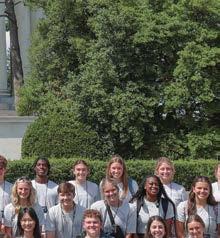
A group of 83 rising high school seniors from across Mississippi traveled to Washington, D.C. in June to attend the 2026 NRECA’s Electric Cooperative Youth Tour. The trip was the culmination of the delegates’ participation in the Electric Cooperatives of Mississippi’s Cooperative Youth Leaders program.

The program instills leadership skills in the delegates, informs them about the electric cooperative form of business, and teaches them about the democratic form of government at both the state and federal levels.
During a February workshop in Jackson, the delegates had the opportunity to meet and hear from state legislators.
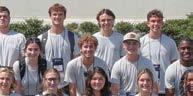

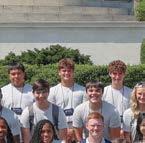
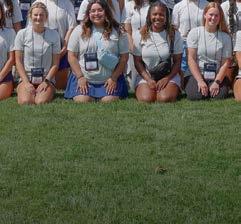
The delegates met with U.S. Sen. Cindy Hyde-Smith of Mississippi and took photos with her. The Senator shared with the students about her experiences in the U.S. Congress and her path to get there.

While in Washington, D.C., the delegates and adult advisors visited historic sites, monuments, museums, and had an opportunity to learn about the impact electric cooperatives have on their communities.
The delegates also had an opportunity to tour Capitol Hill with former U.S. Congressman Gregg Harper of Mississippi. The highlight of the tour was a visit to the chamber of the U.S. House of Representatives.

The delegates attended a Washington Nationals pro baseball game and experienced an evening cruise on the Potomac River.
The delegates were chosen by their local electric cooperative.
The Cooperative Youth Leaders program is fully funded — including the trip to D.C. — by the local electric co-ops as a commitment to molding future leaders for Mississippi, so they can impact the state and local communities.











FORD BIGLER
WEST JONES HIGH SCHOOL


BRANTLEE CRAGER
NORTHEAST JONES HIGH SCHOOL
COLIN WINDHAM

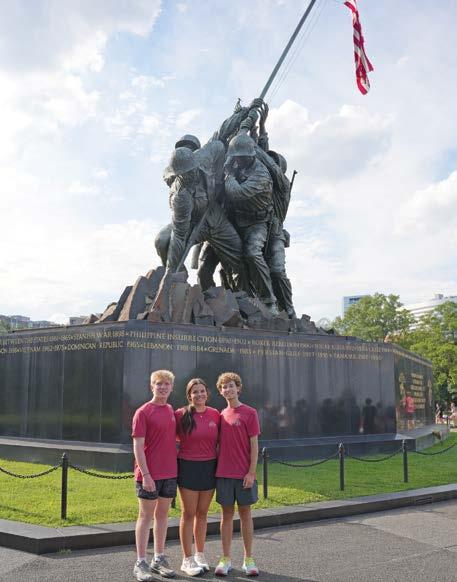

NORTHEAST JONES HIGH SCHOOL





national cathedral




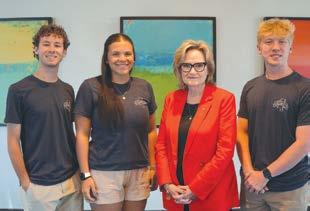


senator cindy hyde-smith
"This was a once in a lifetime experience, and I am forever thankful for the skills I learned and the relationships I formed.”
Brantlee Crager






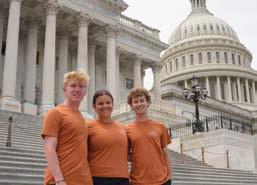
capitol steps












































by Amanda Mills
Every August, my social media feed fi lls with fi rst-day-of-school pictures. New backpacks. Fresh sneakers. Big smiles. A few nervous faces. Parents standing on front porches trying to capture a moment that somehow feels both exciting and bittersweet.
Last year was the fi rst August that I didn't have a child to photograph before school. After years of scrambling to get everyone out the door, remembering lunches, checking homework one last time, and insisting on "just one more picture," that chapter quietly came to an end. My son is grown now. While there's a part of me that's grateful to have survived those days, I'll admit there's also a little tug at my heart when I see everyone else's photos.
Those years go by much faster than we ever imagined. Maybe that's why supporting our local schools means even more to me today.
At Dixie Electric and DE Fastlink, you'll see our names on scoreboards, athletic programs, banners, yearbooks, and event sponsorships. Those are certainly advertisements, but to me, they represent something much bigger. They're an investment.
An investment in the students who will one day become our teachers, nurses, linemen, accountants, business owners, welders, or community leaders.
When you see our logo at a football game or on a gym wall, I hope you'll know there are employees sitting in those same stands cheering alongside you. We're parents, grandparents, aunts, uncles, and neighbors who care deeply about the success of the communities we serve.
Our support doesn't stop with writing a check. Throughout the school year, our employees visit classrooms to read to preschoolers, teach electrical safety, introduce students to career opportunities in the utility industry, and help young people learn how to make smart, informed decisions in today's digital world. Whether we're speaking to elementary students about staying safe around power lines or helping older students explore careers they may have never considered, we're investing in people just as much as programs.
As a mom, it makes me proud to be part of an organization that understands supporting education isn't just good community relations, it's part of building stronger communities for generations to come.
So, as another school year begins, I hope every student has a year fi lled with growth, every teacher knows how appreciated they are, and every parent takes the picture — even if your child rolls their eyes. One day, you'll be scrolling through those memories with a grateful heart, wondering how the years passed so quickly.
My hope is that the next time you're choosing an internet provider, a bank, an insurance company, or another local service, take a moment to notice who is investing in your child's school and your community.
My hope is that the next time you're choosing an internet provider, a bank, an insurance company, or another local service, take a moment to notice who is investing in your child's school and your community. The businesses you see supporting your local teams, classrooms, and school events are making a conscious decision to give back. Those investments say a great deal about a company's commitment to the community it serves.
At Dixie Electric and DE Fastlink, we're proud to invest in the students who will one day shape the future of the communities we all call home. Here's to a safe, successful, and memorable school year for everyone.
If you're tired of having knee pain and want to talk to a doctor that can virtually give you your life back if knee pain is an issue, call Dr. Rob Acord... as he's the only doctor in the area... who has this newly discovered knee pain reduction technology.
If you have knee pain, can't walk because of an old injury, or you just think it's part of getting old, you might want to read this article.
Knee pain is something that disables a lot of people every single year, but most people don't know what to do about it.
Some people immediately opt in for surgery, then some people watch TV and end up buying something they wrap their knee with-hoping it will help, and others just follow orders and take medications which simply block the pain signals while the underlying condition often progresses.
All I'm saying is this. There are a lot of ways to TREAT your knee pain, but which one will really work?
If you've done your research, you know that there are not a lot of things that really work when it comes to actually helping align the knee, taking nerve pressure off the knee, and reducing the pain and swelling.
What if there was a "real solution" that worked from DAY ONE?
Hi, I'm Dr. Rob Acord and I'm here to tell you about a new device called the K.P.R.
I stumbled onto this one-of-a-kind machine at a recent medical conference and tried it myself. THE RESULTS: My knees have never felt so good, and that was after.... just one treatment.
It virtually reduced my knee stiffness by 95%, so I am positive it'll help your knee pain, help you walk better as soon as you get your first treatment, plus help you do some things you used to do without the help of a walker, cane, or someone else helping you.

Now, don't get me wrong. I'm not guaranteeing a miracle if you haven't walked in many years.... but this just may be the answer you've been looking for.
Better late than never for sure. You should entertain this option... no matter what's happened to you in the past!
Let me be very clear; I'm here to possibly help you:
Get out of pain
Walk better
Move better
Get up and down better
Get out of chairs easier
AND...
Finally you will be able to move without relying on someone or something else
"What if my knee(s) are BONE ON BONE?"
Here's all I can tell you. If you’re bone on bone, and surgery is not an option for you, or surgery didn’t work, this may be the exact treatment you’ve been needing.
You'll find out that K.P.R. is an amazing machine when teamed up with our Class IV laser therapy.
Great questions and here's the answer: We have a reputation for getting great results, but if you're like most of our patients you know that the knee problem isn't going to just go away on its own. We're also known for our personalized care. We don't promise the world, but we will do everything humanly possible to get the results you want.
"I've NEVER done this before!" I'm going to offer you a consultation, knee examination, X-Rays, and TRIAL VISIT for only
$47 $47
We'll know almost IMMEDIATELY if we can help and most importantly, YOU WILL TOO.
As you know, it's human nature to procrastinate; this is not the time to do that... WHY?
My Trial Offer goes away at the end of this month. It's available as a hard deadline because I have a limited number of trial spots and we are already an extremely busy office. Pick up the phone and call the office now. This one call could change the way you walk, feel, and move. CALL TODAY!
Dr. Rob Acord, D.C.






























That’s
Next month, on Sept. 19, the center of the college football universe will be Vaught-Hemingway Stadium in Oxford. That’s when and where Lane Ki n, Oxford’s public enemy No. 1, will make his return to Ole Miss, bringing his LSU Tigers (and some former Ole Miss players and coaches), with him.
Hitler might have received a warmer welcome in Poland.



Any LSU-Ole Miss football game is huge, but this one is assuredly the biggest since at least 1959 and that game wasn’t played in Mississippi. Both teams will be nationally ranked and are considered national championship contenders. ABC will telecast the game around the world. ESPN’s College Game Day will be camped out in The Grove. And then there’s the incest involved. Eight of 11 LSU
coaches, including Ki n, coached at Ole Miss last year. Four LSU players, including two of the Rebels’ biggest, brightest defensive stars, played for Ole Miss last season. Little wonder, the game has long since been sold out. Not to worry, you can get two tickets on the secondary market for just over two grand.
Some pundits already have called the upcoming LSU-Ole Miss game the biggest, most anticipated sporting event ever played on Mississippi soil. It might be, but history tells us it has a lot of competition. Biggest in history? You decide.
What follows are 10 sports events that happened in Mississippi that surely would challenge next month’s showdown at Oxford. This list appears in the order the events occurred.








July 8, 889





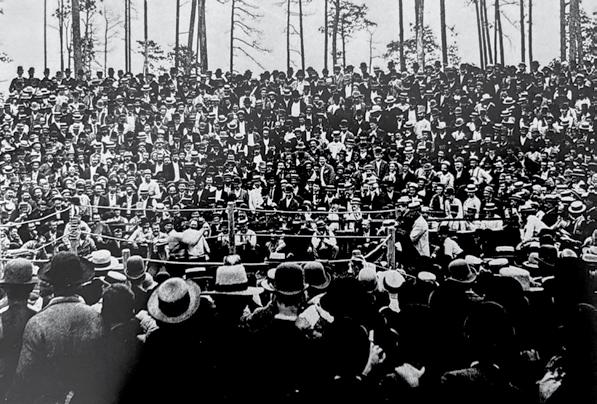












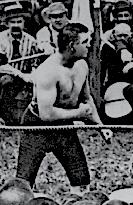
From an international perspective, this has to be the biggest. On this date, in the tiny Mississippi community of Richburg, just south of Hattiesburg, world heavyweight champion John L. Sullivan and challenger Jake Kilrain squared o in the final world championship bare-knuckle boxing match in history. It was deemed “The Rumble in Richburg.” It was a doozy.
Why Richburg? Glad you asked. The fight was supposed to have taken place in New Orleans, but bare-knuckle fighting had been outlawed in all 38 states at the time. Lamar County lumberman Charles Rich o ered his land 100 miles away as a possible site and since there was a railroad that went directly from New Orleans to near Rich’s property, that’s what happened. More than 2,000, including Sullivan, Kilrain, and international reporters, boarded chartered trains on the morning of the fight. Mississippi Gov. Robert Lowry opposed the fight and dispatched state troopers to the Louisiana-Mississippi border. The trains barreled on through.









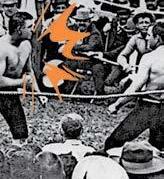

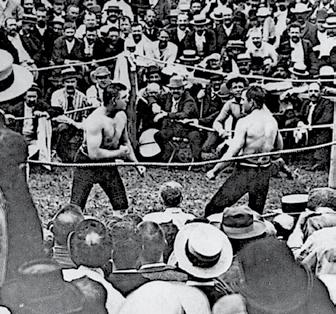



Once the fight party reached Richburg, the Lamar County sheri formally protested but was badly outnumbered. He watched the fight from ringside. The ring and bleachers had been hastily constructed from freshly cut pine, and temperatures soared to over 100 degrees that afternoon. Resin seeped from the just-cut pine, causing several spectators to lose the backside of their britches. Kilrain su ered a much worse fate. He was battered, bruised, and bloodied for 75 rounds by Sullivan — “The Boston Strongboy” and the son of Irish immigrant parents. Back then, a round lasted until one of the combatants was floored. On that brutally hot day, the shortest round lasted three seconds, the longest more than 15 minutes.










Sullivan, the bigger, stronger man, consumed a quart of whiskey, mixed with tea, during the fight. Not surprisingly, he lost his breakfast and much of the brandy an hour into the fight, causing Kilrain to propose a draw. Sullivan answered by knocking Kilrain down for the umpteenth time. In the 68th round, Sullivan sent Kilrain flying across the ring with a vicious uppercut. The end was near.
After 75 rounds, a doctor told Kilrain’s handlers their fighter might die if the fight continued. With Kilrain bloodied and barely conscious but standing and ready to continue, his corner threw in a bloody towel and conceded.



The fight was the lead story in newspapers around the world, including the New York Times, which began its report thusly: “Never, during even a Presidential election, has there been so much excitement as there is now, even when the brutal exhibition is over and it is known that John L. Sullivan was successful and that 75 rounds were necessary to knock out Jake Kilrain.”





Ole Miss and Mississippi State’s football teams have battled 119 times in a series dating back to 1901. Many years, the Egg Bowl, as it is now called, is the single biggest sporting event in the state. Only once, 85 years ago, have the two teams met with the championship of the Southeastern Conference on the line. The game was played at Oxford. Mississippi State won 6-0.
Covering the game for the Ole Miss school newspaper was none other than the late William Winter, who would become the state’s 58th governor. “Ole Miss was heavily favored that day,” Winter once told this writer. “I was devastated by the result.”




“State scored in the second quarter on a misdirection play,” Winter remembered. “Jennings Moates took a direct snap and turned around to hide the ball. Meanwhile, State faked a run to the right side. When Ole Miss pursued in that direction, Moates took o through the left side for 40 yards and a touchdown.”
As is usually the case when State and Ole Miss play, controversy ensued. Ole Miss had a long touchdown run called back when an o cial ruled Ray Terrell had stepped out of bounds.
There was no SEC championship game back then and no Sugar Bowl bid for the winner. Eight days later, Japan bombed Pearl Harbor. The U.S. was at war, and many Bulldogs and Rebels would fight and die.








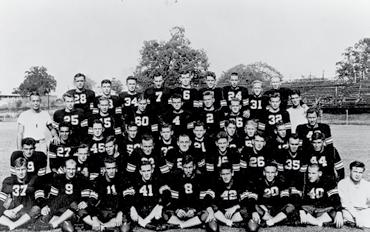




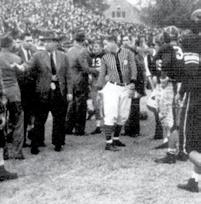





Ole Miss was undefeated, coming o wins over Alabama and Georgia, and Archie Manning was the leading candidate for the Heisman Trophy. Southern Miss had been hammered 41-14 by San Diego State the week before. Ole Miss had torched USM 69-7 the season before. Ole Miss was a 50-point favorite, but Southern Miss won the game 30-14 behind Ray Guy’s punting and Willie Heidelberg’s two touchdown runs. Heidelberg, all 143 pounds of him, was the only African American player on the field.












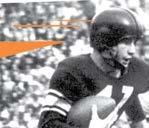







Nobody present will forget this one, and they may still be sweating. Ole Miss, a 21-point underdog, defeated eventual national champion Notre Dame 20-13 at Veterans Memorial Stadium in Jackson. Quarterback Tim Ellis came o the bench in the fourth quarter to lead a furious Ole Miss comeback that was aided by stifling heat and humidity, which sapped the bigger, stronger Fighting Irish. Unlike Ellis, the great Joe Montana never got o the bench that day but then led the Irish to victories in 10 straight games, including a rout of previously No. 1 ranked Texas in the Cotton Bowl.





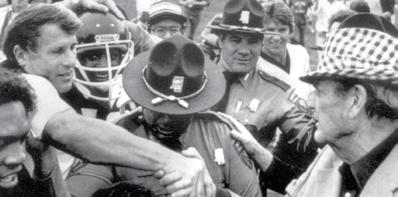










As the doomsday headline in the next day’s Clarion Ledger proclaimed, “State 6, Bama 3.” No 1 ranked Alabama, coached by Bear Bryant, had defeated Mississippi State 22 straight times. The Crimson Tide had won 28 straight games, 26 straight SEC games, and were 20-point favorites. But State head coach Emory Bellard’s defense ruled the day at Veterans Memorial Stadium and afterwards Bryant called the threepoint State victory “decisive.” Bryant told all who would listen: “It was a spirited, hard-hitting game and most of the hard hitting was done by them.” Bryant, as classy as ever, stood on a metal folding chair in the State locker room to congratulate the Bulldogs.









Nov. 4, 984 June 3-6, 999
On a Sunday afternoon, the public address announcer at Mississippi Veterans Memorial Stadium said it all: “Welcome to the game of the week, the game of the month, the game of the year, the game of the decade, the game of the century!” It wasn’t Ole Miss-Mississippi State. No, it was Mississippi Valley State vs. Alcorn State, as the two HBCUs, both with undefeated seasons on the line, took center stage. The game was supposed to have been played the day before at Itta Bena. It was moved to Jackson and played on a Sunday by popular demand. A standing room only crowd of nearly 64,000 attended. Alcorn, coached by the venerable Marino Casem, defeated Valley, which featured Willie Totten throwing to Jerry Rice, 42-28. It was televised in Mississippi and doubled NFL games in ratings that day.

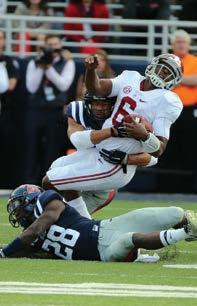


They said he couldn’t do it, but West Point businessman George Bryan did. He brought the U.S. Women’s Open golf tournament to rural Clay County and Old Waverly, the course he envisioned and then built. More than 125,000 braved Mississippi heat and humidity to watch in person and millions more watched on TV around the globe. Juli Inkster won the 54th U.S. Women’s Open by five shots to claim the winner’s share of $350,000.







Oct. , 20 4

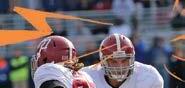
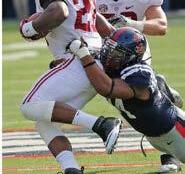







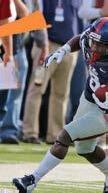








With Dak Prescott leading the way before a stadium record crowd of nearly 63,000, Mississippi State soundly defeated No. 2 ranked Auburn 38-23 to ascend to a No. 1 ranking for the first time in school history. The Bulldogs would remain No. 1 for six weeks.





June - 2, 2022


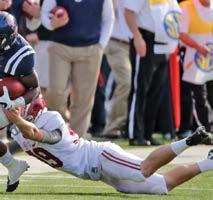





In a much-anticipated NCAA Super Regional, Mike Bianco’s Ole Miss baseball team, given up for dead a month earlier, defeated host Southern Miss 10-0 and 5-0 before sweltering, sellout crowds. The two victories served as a springboard to the Rebels’ first national baseball championship.




Oct. 4, 20 4















Nick Saban’s Alabama Crimson Tide was ranked No. 1 and led Ole Miss 14-3 at halftime. But the Rebels fired back behind Bo Wallace’s three second half touchdown passes to defeat Bama 23-17, sparking a memorable scene that included the goal posts being paraded to – and then around – the Oxford Square.



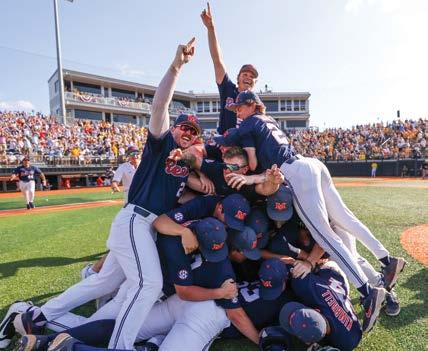












































Rival football coaches and the national media just can’t stop talking about the Ole Miss Rebels. From last fall until the present the Rebels keep making headlines.


The Rebels won a school record 13 games and came within one game of playing for the National Championship in 2025. Ole Miss has seen much success over the last six seasons, going 47-17. Their success has not gone unnoticed by the other SEC teams. “I think our players understand we are no longer the hunters. We are now the hunted,” said Rebels head coach Pete Golding.
Ole Miss has two potential Heisman candidates returning in quarterback Trinidad Chambliss and running back Kewan Lacy. Golding will also have an NFL first rounder in defensive lineman William Echoles returning.


Depth at quarterback is the strongest since the Johnny Vaught era. Chambliss, Deuce Knight (George County), AJ Maddox (Oak Grove), and Walker Howard make up the strongest quarterback foursome in college football. “I think quarterback more than any other position is that one position you hope that does not make more plays against you than they do for you,” Golding said.

up the strongest quarterback foursome in college football. “I think quarterback more
Lacy returns, and the Rebels bring in three running back transfers to help take the load o Lacy.
The Rebels loaded up by adding five big time transfer receivers and will be

The Rebels loaded up by adding five big time transfer receivers and will be counting on Deuce Alexander and Choctaw County’s Caleb Cunningham to play a big role. The o ensive line returns Brycen Sanders, Delano Townsend, and Patrick Kutas.
Florida’s Sharif Denson. The linebackers will be led by the veteran Suntarine Perkins
Ole Miss had to rebuild the defensive secondary as they added seven players, led by Florida’s Sharif Denson. The linebackers will be led by the veteran Suntarine Perkins (Raleigh) who will be joined by a couple of experienced veterans. The defensive line has a Mississippi flavor led by Will Echoles (Houston), Kam Franklin (Lake Cormorant), Andrew Maddox (Oak Grove), and transfer Jehiem Oatis (Columbia).

The Rebels also have the best kicking game in the country.

“We need to make good decisions so that we don’t lose games,” Golding said.
“We need to make good decisions so that we don’t lose games,” Golding said.
The cupboard is not bare as far as talent in Oxford, so a repeat to the College Football Playo s is not out of the question.







Dale McKee
Dale McKee is a Waynesboro native who has been writing about sports in Mississippi since 1973. He is a member of Dixie Electric. Contact him at ddmckee18@yahoo.com. by

























This is a crucial year for the Mississippi State Bulldogs who are standing at the crossroads in the SEC. Last season, the Bulldogs made some headway with five wins after winning only two games in Je Lebby’s first season in Starkville.
One reason for hope in Starkville this fall is the Bulldogs will enter the season with the quarterback position in good hands. Sophomore quarterback Kamario Taylor (Noxubee County) returns to lead the o ense. Taylor started in two of the 11 games in 2025 as he threw five touchdowns and rushed for eight more.
Lebby really likes where Taylor is in his growth and development. “He is a very gifted athlete. Kamario is getting better and works hard daily to improve his skills,” Lebby said.

Running backs Flu Bothwell and Xavier Gayten (Brookhaven) return, and with the addition of two high school signees in J.J. Hill (Tupelo) and Cooper Crosby (Gulfport), the Bulldogs’ ground attack should improve. “We have had flashes of being a very explosive o ensive unit, but we must find a way to run the football successfully,” Lebby said. Anthony Evans III returns as one of the top receivers while Sanfrisco Magee (McComb) and Missouri transfer Marquis Johnson will be Taylor’s long ball threats.




The Bulldogs will depend on Jahkeem Shumpert Perkins (Shannon) to lead the o ensive line. The Bulldogs added size as LSU transfer and Laurel native Tyler Miller (6-6, 335 pounds) joined six other transfers to form the biggest o ensive line in college football. “I really feel good about that unit because they are more physical than the past teams,” Lebby said.
“We are excited to have Zac Arnett back. He is one of the top defensive minds in (Fulton) Bulldogs’ priority was rebuilding the defense, and they brought in six
“We are excited to have Zac Arnett back. He is one of the top defensive minds in college football. I know he will elevate our defense. He will bring toughness and discipline to our defense,” Lebby said. Issac Smith (Fulton) returns at safety/ linebacker, Kelly Jones (Clarksdale) is back at corner and linebackers Tyler Lockhart (Forest) and Zakari Tillman (Florence) also return. The Bulldogs’ priority was rebuilding the defense, and they brought in six transfers to fill those needs.
The Bulldogs’ SEC win total relies on players staying healthy with a brutal SEC schedule ahead. the his the Bulldogs’ ground attack should improve. “We have had flashes of being a very o ensive line. The Bulldogs added size as LSU transfer and Laurel native Tyler Miller


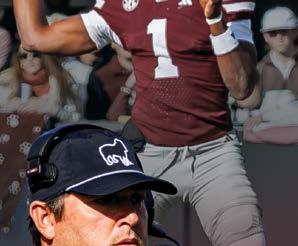
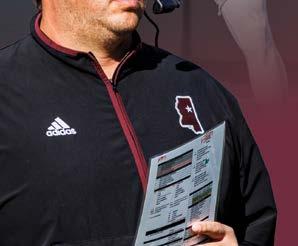
The University of Southern Mississippi head football coach Blake Anderson may enter the 2026 football season feeling like a contractor that builds houses. Anderson is in the process of going through the di erent stages of building a football program from scratch. Anderson will have to roll up his sleeves and go through the whole house building process from breaking ground to the final walk through.
“We’re 138 out of 138 football teams in terms of returning production. I have never been in a position of basically starting from scratch. We must figure it out — and quickly,” Anderson said at the start of spring football.
Anderson and his new sta worked double overtime during the spring.
“We were having to evaluate players daily but also teach the guys,” Anderson, last year’s Golden Eagles o ensive coordinator, said.
Anderson will have last year’s backup quarterbacks Landry Lyddy and John White (MRA) returning to go with Illinois transfer Ethan Hampton. The three will be competing to succeed last year’s starter Braylon Braxton. Robert Briggs will be asked to step up at running back while Davis Dalton (MRA) and A.J. Little (Noxubee) will be counted on at receiver along with transfer Grant Page. The line will feature Luke Rogers (Brandon), Larry Edwards (Humphrey Co.), Joe Rounds (Grenada), and transfers Jahmir Davis and Broderick Roman.
The defense will be led by linebackers Avery Sledge (MSU/Forrest County AHS) and freshman Caleb Triplett (D’Iberville). The line will feature freshman K.J. Washington (D’Iberville), along with transfers Je ery Rush (Ole Miss/Pascagoula), Nasim Cario, and Kamero Cypien. Champ Lewis, Jyaire Brown, and Landon Sylvie will lead the secondary.
“We will have to prepare to play harder than our opponents. We have a talent deficit, so we will have to out work folks, be in better shape and not let that be an issue,” Anderson said.





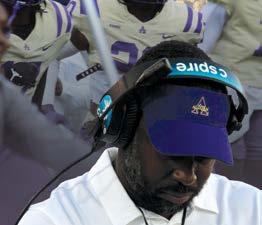
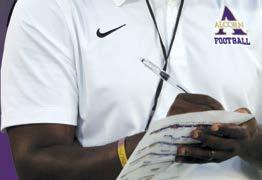









There is lots of excitement on the Reservation as Alcorn State enters the 2026 football campaign. The excitement extends from the Braves’ strong finish in 2025 as Alcorn won four of their final five games after starting 1-6.
Alcorn head coach Cedric Thomas enters his third year and feels with the experience returning on both sides of the ball, the Braves are in good shape. “We certainly didn’t get o to a good start last year. I had to make some changes on the o ensive side of the ball. We moved to more of an up-tempo style, and that seemed to fit our personnel better. I really like the wide open and fast-paced o ense, and our players do too. We feel like we are in a good place with last year’s quarterback Jaylon Tolbert, along with several o ensive linemen returning,” Thomas said.
Tolbert passed for over 2,000 yards and threw for 16 touchdowns, and with Jaden Bryant, Cameran Rogers, and Abe Diallo back in the trenches, the o ense should be improved. Mario Blakes (Shaw) is back at receiver while redshirt freshman running back Carl McDonald (Natchez) has the daunting job of trying to replace leading rushers Reggie Davis and Jacorian Sewell from last year’s team.
The strength of the defense should be the secondary and the line. Returning on defense are three special players in safety Tim Jasper and defensive linemen Eric Thomas (Columbus) and Kenneth Andrews (Clinton). “The defense was the story of our spring. They flew to the ball, and they were physical,” Thomas said.
After the season home opener against Miles College on Aug. 29, the Braves will play at Southern Miss on Sept. 5. “I am excited for our players to play at Southern Miss. The in-state atmosphere and competition, with the bands and fans, should be exciting. I would love to play Southern Miss, Ole Miss, and Mississippi State on rotating years. Our players would be seen by NFL teams because the pro scouts would be able to evaluate our players against good competition,” Thomas said.
“I really think this could be a special season if we get everything to gel accordingly. I really like our chances every Saturday.”














For the fourth time in five seasons, the Jackson State Tigers made it to the SWAC Championship game. That is the expectation of Jackson State every season, and last year’s bitter taste of losing to Prairie View A&M in the championship game still lingers on Lynch Street.
Quarterback JaCobian Morgan is gone, but that position is in solid hands. Sophomore Jared Lockhart, a 6-foot-5 gunslinger, was 5-0 filling in for Morgan last year. He was CoSWAC Freshman of the Year as he threw for over 1,200 yards and eight touchdowns. “He is a leader that works hard on and o the field,” JSU head football coach T.C. Taylor said.
Nate Blount (Brandon) had an excellent o season and will be one of the key returners in the backfield. The strong-arm Lockhart will have a talented group to throw to as Amarion Brown (Yazoo City) and Jabari Jones return as deep threats. The o ensive line has been rebuilt led by the huge Quaveon Davis (Louisville), Melvin Collins, (Terry) and transfer Jaekwon Bouldin (Canton/MSU). “O-Line coach Manny Ramirez makes them nasty and physical. That’s the way we like them,” Taylor said.
The defensive secondary was a priority in the spring. Defensive back returners will be K.J. Chisholm, Kam Sallis (Pickens), and Mike Smith as they will team up with transfers Jalen Foster (ULM), Swipe Marshall (WKU), and Khamuri Rogers (Holmes County/ MSU) to anchor the caboose of the defense. The linebacker position is the heart of the defense with Kam Evans (Crawford), Keith Bass, and Micah Gay (Tenn. St.) taking turns punishing the opposing o ense. The defensive line has talent with Stanley Cook returning along with transfers Terrance Hibbler (Holmes Co./MSU), Keshawn Hudson (UCF), and Eastern Michigan transfer Duke Clayton.

“I am excited about the season. The players are a joy to be around and come to the facility ready to work,” Taylor said.
If another SWAC East title is in the cards, wins at Grambling and Alabama State are a must for the Tigers.
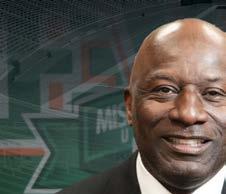
Some are born to only play the game of football while others are born to only coach. Terrell Buckley decided he wanted to do both.
After a 14-year NFL career, he began his college coaching journey as an assistant with stops at Florida State, Akron, Louisville, Mississippi State, and Ole Miss. Buckley has earned his head coaching stripes as he begins his second season as head coach of Mississippi Valley State University.
“I am from Mississippi, and I have always wanted to be a college head coach,” Buckley said.
Buckley knows that coaching is teaching, and he has first-hand experience learning from several of the greatest coaches in the history of the game. He played under one of the winningest college coaches in Bobby Bowden at Florida State. The Pascagoula native also learned when he played in the NFL for another winner in Bill Belichick.
Buckley is looking forward to his second year at Mississippi Valley. He has several talented players to lean on this upcoming season. The talented Josh Brown returns at quarterback while Norman Taylor, one of the best running backs in the SWAC, returns. Talented defensive backs Joey Davis and Jamari Stokes also return.
Buckley needs more players of this caliber to get Valley back to the Jerry Rice, Willie Totten, and Archie Cooley winning ways of the 1980s. “Mississippi has plenty of talented football players, and we will start and end our recruiting here,” Buckley said.
“Winning starts with attitude, accountability, and a high standard.” Make no mistake, Buckley understands that both on the field and economically, he and Valley have challenges to overcome. “I love a good challenge, and I think I am ready for this,” Buckley said.









































































































Peaches, plums, and nectarines are Mississippi summer staples. Summer stone fruits are great fresh from a local farm, but have you tried cooking with them? Thanks to their natural sugar content, juicy textures, and balanced acidity, stone fruits are versatile in both sweet and savory recipes. Peak season is between June and September.
Understanding how ripe the fruit is or how it behaves structurally will help you dictate how to use it. If the fruit’s flesh “clings” to the pit, it will be softer, juicier, and more ideal for cobblers or purees. Varieties that pull away from the pit easily, known as “freestone,” hold their shape better and are good for slicing, grilling, or salads. Nectarines and plums have smooth skin and do not need to be peeled. To remove the peach’s fuzzy texture, quickly blanch them in boiling water for 30 seconds, and the skin slides right o .
Stone fruits can elevate savory summer meals. Diced fresh nectarines or plums with red onion, lime juice, and cilantro creates a vibrant Pico de Gallo that pairs perfectly with grilled chicken, fish, seafood, or pork. Under-ripe or firm peaches are delicious, sliced and scattered over a bed of arugula with creamy burrata or fresh mozzarella, topped with torn











fresh basil, and drizzled with balsamic vinaigrette. Brush peach halves with olive oil and grill them cut-side down for 2 to 3 minutes. Grilled peaches pair well with barbecued meats.
Try easy-to-make sweet treats. When stone fruits cook down, their juices thicken into a rich, flavorful syrup that can be drizzled over pancakes, wa es, and oatmeal, or over desserts such as ice cream, cheesecake, and yogurt. This syrup can also elevate savory dishes like roasted pork tenderloin or grilled chicken. In a cast-iron skillet, place halved stone fruit, with the pits removed, cut-side up. Add a small pat of butter to each center, sprinkle with brown sugar or cinnamon, and bake at 350 degrees until soft and bubbling. Or, in a bowl, add freshly sliced peaches with a touch of sugar and fresh mint. Let it sit for 15 minutes to draw out the juices and spoon over ice cream, panna cotta, or Greek yogurt.
Don’t forget to support Mississippi farms, farmers’ markets, or roadside stands for the freshest produce. And don’t forget to ask how they enjoy cooking it. Farmers who grow it are guaranteed to have a family recipe to share, too.





























1 cup Roma tomatoes, diced
½ cup white onion, diced


INGREDIENTS

3-4 peaches, fresh, ripe peaches (or nectarines)
3 tablespoons butter (plus 2 extra tablespoons for the glaze)
¼ cup brown sugar
Wash, pit, and slice the peaches into halves.
Melt 3 tablespoons of butter in a large skillet over low heat.
In a separate bowl, combine the brown sugar, cinnamon, nutmeg, and salt. Dip the peach

and spice mix and cover well.
½ cup peach, diced
½ cup red plum, diced
2 jalapeño peppers, seeded, diced
1 tablespoon. fresh lime juice
¼ teaspoon. salt
Fresh cilantro
Corn tortilla chips









1 teaspoon cinnamon, a pinch of nutmeg, and a pinch of salt
A squeeze of fresh lemon juice (optional)
½ cup pecan pieces (optional)
Splash of bourbon (optional)
Add the peaches to the skillet and let them cook for 5 to 7 minutes, gently flip them until they are heated through, caramelized, and tender.
Remove the peaches to a plate.

4 cups of peaches ½ stick butter

1 cup self-rising flour






Combine tomatoes, onion, peach, plum, and jalapeños in a medium bowl. Add lime juice and salt; toss to combine. Cover and chill for 30 minutes.







When you’re ready to serve, garnish with cilantro. Serve with tortilla chips.


















Optional, toss the remaining butter, brown sugar, the pecans, and bourbon into the hot skillet. Stir for about 2 minutes until it forms a sticky sauce, then pour it over the peaches.





1 cup sugar
1 cup whole milk
Place peaches in a saucepan with ½ cup water and a couple of tablespoons of sugar and cook stirring constantly until peaches are tender (takes 2-3 minutes)
Preheat oven to 350 degrees. Melt butter in 8x8 glass baking dish in oven.










Mix flour, sugar, and milk and pour in baking dish. Pour peaches evenly over flour mixture.
Bake 50-60 minutes until golden brown.





by Rebecca Turner



Rebecca Turner is an author, registered dietitian, radio host, television presenter, and board-certified in Lifestyle Medicine. She is a lifelong Mississippian and a member of the Central Electric Co-op in Brandon. Find her on social media @RebeccaTurnerTalks or online at RebeccaTurnerNutrition.com.
Calhoun County Sacred Harp Singing Convention. Aug. 8. Vardaman.Shape note singing from the 1991 Sacred Harp Book, and also the 1911 edition. Hosted at Mt. Herman Primitive Baptist Church 132-154 Hollis Switch Rd (CR247), approximately two miles north of Highway 8. Singing will begin at 10 a.m. with potluck in the fellowship hall at noon. Singing will continue in the afternoon. Details: Text 662-507-9434.
Friends of Crosby Memorial Library Annual Book Sale. Aug 10 to Aug 15. Picayune. The book sale is the library biggest fundraiser of the year. From 9 a.m. to 6 p.m. each day. 900 Goodyear Blvd. Details: 601-798-5081 or 601-590-1595.
59th Gospel Singing Jubilee. Aug. 22. Magee. The concert begins at 6:30 p.m. at the Magee High School auditorium, 501 Choctaw St. The show will feature The Hinson Family, Terry Joe Terrell, Tim Frith & the Gospel Echoes, Revelations, and Gil Magee. Details: 601-906-0677 or 720-8870.
Mississippi Sacred Harp State Singing Convention. Aug 22 and 23. Forest. Hosted at Antioch Primitive Baptist Church, 6931 Miss Hwy 21, north of Forest. Singing will begin at 10 a.m. each day with lunch in the fellowship hall at noon. Singing will continue each day after lunch. Songbooks used are the 1991 Sacred Harp, BF White Sacred Harp (Cooper revision), 2010 Christian Harmony, and the 1911 Sacred Harp. Loaner books will be available. Details: email marksdavis19@gmail.com.
Harrisville Day. Sept. 26. Harrisville. From 9 a.m. to 3 p.m. at Harrisville Community Park, 1767 Hwy 469. The event will have activities for children, food vendors, live music, ball tournaments, games, and a car show. Details: 601-927-0445 or 601-942-1480.
The 34th Annual Clarke Fest: A 250th American Celebration. Sept. 26. Quitman. Enjoy competition for the best jams, jellies, pickles, and honey. Demonstrations and shows of quilts, crafts, and horse shoeing. Food and craft vendors, a kid’s area, a car show, and live music at 6 p.m. $5.00 per car at the gate. Tickets for the concert are $25. Details: 601-776-5701.
Magnolia State Gem, Mineral, And Jewlery Show. Sept. 26 and 27. Ocean Springs. From 10 a.m. to 6 p.m. on Saturday and 10 a.m. to 5 p.m. on Sunday. Ocean Springs Civic Center, 3730 Bienville Blvd. (Hwy 90). Adult admission is $5 and children 12 and under are free with a paying adult. Door prizes and more than 20 vendors. There will be fossils, gemstones, jewelry, minerals, beads and more to purchase. Details: 601-947-7245 or 228-238-9900 or visit mgcgms.org/facebook.
Holy Land Tour. Nov. 28 to Dec. 7. Israel. Join Ronnie and Beverly Cottingham on a 10-day life changing tour of the Holy Land. Details: 601-770-1447 or email rbcottingham@bellsouth.net.




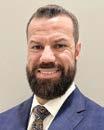



































We’ve had a wet summer this year — especially in the south half of Mississippi. The rains have been so hard, it seemed like one morning we got an inch and a half while I was pouring my coffee. But then it turned sunny for a few days; so out came the garden hoses. The only thing predictable about the weather is you can’t predict what it’s going to do over the long haul. So, always keep up with your umbrella — and hose.
You’d think with a less-than-dry summer we’d have some good-looking gardens. We probably do in many cases. But my agricultural skills so far continue to prove the wisdom of my choice of vocation — anything but a farmer.
I saw a cartoon on Facebook of a man standing in a withered vegetable patch, saying how much his family needed this garden in case of a national emergency. That way, they could survive off the one tomato and three peppers he’d managed to grow.
Back when I was a kid, we had some spectacular gardens. Grandaddy Grayson was the prime gardener. But all of us youngsters were the prime weeders. My older brother Dave said he could never get his hoe to make the same sound that grandaddy’s made chopping weeds. I could never get mine to chop weeds like grandaddy could. Depends on the technique, I guess. And dedication. My friend, chair maker Greg Harkins told me that his business was always best to him when he was best to his business. That probably works with gardens, too. I bet it works with everything else as well.
I have told this story before, but it’s been a few years. After dad retired, he and mom bought the house right across the road from the house where mom grew up in Fulton. My oldest aunt and uncle still lived there. Another aunt and uncle had built a home right
down the road. In between them — in an open area — the three couples always maintained an impressive summer garden.
There was a year with a drought of biblical proportions. (Not uncommon for north Mississippi.) That’s when the oldest aunt began to admonish the others. “There’s sin in the camp.” Now, no doubt it was dry as a bone over all of northeast Mississippi and northwest Alabama and adjoining parts of Tennessee. But for her, the reason it was so dry was that one of the six of them (well, five because it wasn’t her) had done some back-sliding, and God was punishing them by taking it out on their garden.
Then, one weekend my aunt and uncle went to Birmingham, and it rained three inches while they were out of town. There was never another word about “sin in the camp” again.
God might smite, but he also has a sense of humor.
Good luck with your garden. Work it with diligence. Keep a hose handy and keep prayed up, just in case.
by Walt Grayson