


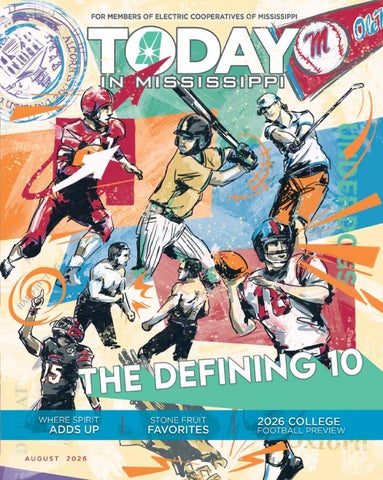
I have always loved college football. Around here, that does not make me unique. Fall Saturdays in the South have a way of getting into your blood. But for me, it became personal on Feb. 1, 1986, when I signed a grant-in-aid to play football at The University of Southern Mississippi. I did not know it then, but that one signature changed the direction of my life. It opened doors I never could have imagined and helped put me on a path that led me to where I am today.
There was a time when college football seemed full of those stories. A young man would show up on campus with a duffel bag, cleats, and maybe a mama praying he would keep his head on straight. He would learn discipline, grow up, get knocked down, get back up and become part of something bigger than himself. These days, the game is starting to look less like college athletics and more like professional sports with marching bands. Name, image, and likeness — NIL — was supposed to let college athletes benefit from their own success. And honestly, I do not have a problem with that. If Dr. Pepper wants to invite you to Fansville, or Nissan wants you in the Heisman House, good for you. A young athlete who works hard ought to enjoy some reward. But somewhere along the way, what started as compensation for name, image, and likeness began to look an awful lot like plain old pay-for-play.
It has changed the feel of one of America’s greatest traditions. In the name of television ratings and bigger checks, we are swapping Saturday night kickoffs for 11 a.m. television windows.
It’s also harder than ever to keep up with your favorite players. You finally learn a fellow’s number, buy into his story, and start pulling for him, and before you know it, he is off trying his hand at free agency with another school that made a better offer. In today’s world, Reggie Collier, Sammy Winder, and Brett Favre might not have become Southern Miss legends. They might have just been passing through Hattiesburg on the way to greener pastures.
College sports used to be about helping young men and women become better people through education, discipline, and hard life


lessons. I find it interesting that whenever folks talk about “compensation,” the value of a free education often gets left sitting over in the corner by itself. Ask any parent who has sent a child to college, and they will tell you tuition, room, and board are not exactly pocket change.
Now, do not hear me wrong. College football had its problems. Scholarships are one-year deals, not four-year guarantees. I was at Southern Miss during a coaching change, and I had a front-row seat while some of my friends were shown the door. We could not just pack up and leave, but the school could send us packing. So yes, things needed changing. I just fear the pendulum has swung so far the other way it may have knocked a hole in the wall.
I am not sure where all this is headed. Everybody keeps saying something must be done but not much seems to slow down the money race. I can imagine a day when fans simply grow tired of it — especially fans of schools outside the biggest conferences, where the passion is still real, but the checkbook may never be big enough.
As for me, I hope college athletics figures this out before it is too late. There are still plenty of young people out there who need that scholarship, that coach, that team, and that belief that they can become more than they ever thought possible. There are many more Michael Callahans who need a chance to live a dream, earn an education, and be shaped by the game in ways that last long after the final whistle.
That, to me, is what made college football special. And if we are not careful, we may look up one day and realize we sold the best part to the highest bidder.


by Michael Callahan Executive Vice President/CEO Electric Cooperatives of Mississippi


Send us a photo of your cats.


The photos must be high-resolution JPG files of at least 1 MB in size. Please send the photo as an attachment to an email and send it to news@ecm.coop.

Each entry must be accompanied by photographer or sender’s name, address, and co-op.
SUBMISSION DEADLINE: Aug. 28. Select photos will appear in the October 2026 issue.


Pontotoc Electric Power Association General Manager Frankie Moorman was recently named the first recipient of the Russell Hustle Award.
Moorman accepted the award at the Tupelo-based Central Service Association User Education Conference in early July.
The award was presented to Moorman for his leadership during Winter Storm Fern.
During the storm, just under 89% of Pontotoc’s system experienced outages. Moorman went on Facebook daily to give members video updates on power restoration e orts.
The award was named in honor of the late Danny Russell, a retired general manager at the Central Service Association and a board member for North East Mississippi Electric Power Association.
The Central Service Association was formed in 1937 to assist electric utilities with billing and finances.
“Nuclear energy” often conjures images from TV and movies, such as towering cooling structures, glowing green substances, and frantic control rooms. In reality, modern nuclear power plants are far removed from these portrayals.
Today’s nuclear facilities operate more like high-tech industrial campuses that are clean, continuously monitored, extremely secure, and designed with multiple, overlapping layers of safety.
In the United States, nuclear plants are among the most heavily regulated facilities of any kind, with a dense framework of state and federal oversight governing reactor licensing, fuel handling, plant maintenance, material disposal and emergency preparedness to ensure that nuclear plants operate safely and responsibly.
Electric cooperatives are tracking nuclear plant developments in their long-term planning. For co-ops and their consumer-members, nuclear energy can provide reliable, coste ective, carbon-free electricity. Nationwide, generation and transmission (G&T) cooperatives, the wholesale power suppliers that provide electricity to your electric co-op, already partially own or contract for output from 16 operating nuclear reactors.

and on rare but high-consequence emergency scenarios. As nuclear facilities modernize, operators are also trained using advanced digital systems that are replacing older, analog equipment. These upgrades improve automation, diagnostics, and situational awareness.
Safety extends far beyond the control room. Organization and discipline define how nuclear plants are designed and run. Facilities have clearly established security perimeters, controlled access points, and rigorous maintenance programs to ensure reliability while protecting workers and surrounding communities. Critical components are housed in reinforced concrete and steel structures and are accessible only to essential personnel.


Reactor technology has also become safer as decades of experience have driven innovation.

Hattiesburg-based Cooperative Energy, which provides power to 11 of Mississippi’s distribution co-ops, owns 10% of the Grand Gulf Nuclear Station plant in Claiborne County. Grand Gulf has been in operation for 41 years.
Safe operation of a nuclear plant begins in the control room. Plant operators must pass demanding written and operational examinations administered by the U.S. Nuclear Regulatory Commission before they are allowed to work –– and training doesn’t stop once operators are licensed. Personnel are regularly tested on routine plant operations
One of the most significant advances is the increased use of “passive safety” systems, built-in safety features that work automatically. Earlier reactors relied heavily on pumps, motors and operator intervention to perform critical functions like circulating cooling water. While modern designs still include active systems, they also integrate passive features that do not require external power or immediate human action. Instead, natural forces such as gravity, pressure, and convection keep the reactor stable and cooled if disruptions occur. Passive safety increases resilience during grid outages and extreme weather events.
In a time of rapid electric demand growth, nuclear power o ers zero-carbon baseload power, a potentially valuable attribute as fossil fuel plants retire and intermittent renewable resources expand. As the energy landscape shifts, nuclear energy may play an important role for cooperatives seeking dependable, long-term generation options. – NRECA


There’s something about roses in a Southern garden that brings timeless beauty, incredible fragrance, and a touch of romance.
On a warm afternoon, it’s easy to understand why generations of gardeners have treasured roses as their scent drifts through the air and blooms glow in the sunlight. Few plants can match the elegance that roses bring to the landscape.
This month, I’m highlighting three exceptional varieties from Tyler, Texas-based David Austin Roses that truly shine in Southern gardens. David Austin roses are a type of rose bred to combine the romantic, cupped shapes and intense fragrance of historic roses with the repeat-blooming habits, hardiness, and wide color palette of modern roses. Munstead Wood is a rose that will stop you in your tracks.
The blooms are a deep, velvety crimson — almost the color of a fine red wine. Each flower is packed with layers of rich petals that create that classic, old-world rose form gardeners love so much. The color alone makes a dramatic statement, especially when planted against green foliage or paired with lighter flowering plants.
But the beauty of Munstead Wood goes beyond appearance.
The fragrance is absolutely incredible. Like many David Austin roses, it carries a rich, fruity scent that can easily perfume an entire section of the garden. In the South where outdoor living spaces are an important part of the landscape, planting a fragrant rose near a patio, walkway or porch allows you to enjoy that perfume throughout the season.
In our warm, humid climate, Munstead Wood performs best with plenty of sunlight and good air circulation.
Giving roses room to breathe helps reduce disease pressure and keeps the foliage healthier through the long growing season. A good layer of mulch around the base helps conserve moisture and regulates soil temperature during the heat of summer.


Another beautiful variety worth growing is Gabriel Oak.
This rose brings a slightly brighter, glowing deep-pink tone to the garden. The flowers are full, rounded and incredibly elegant, almost looking handcrafted when fully open.
One of the things I appreciate most about Gabriel Oak is its repeatblooming habit. It continues producing flushes of flowers throughout the growing season, giving gardeners months of color and fragrance.
If you’re looking to brighten the garden with cheerful color, The Poet’s Wife is one of the standout yellow roses from David Austin.
The blooms open in a beautifully cupped shape and are a rich, luminous yellow. The flowers have an elegant softness to them that adds warmth wherever they are planted.
Yellow roses can sometimes fade in intense summer heat, but The Poet’s Wife holds its color remarkably well. Its blooms strikingly contrast against dark green foliage, making it a wonderful addition to cottage-style gardens, mixed beds or formal rose plantings.
Like the other David Austin roses, it o ers lovely fragrance along with exceptional beauty.
One reason these David Austin roses are so popular is that they combine the romance and fragrance of old garden roses with the repeat-blooming qualities modern gardeners want. In Southern landscapes, they bring season-long color while adding a sense of timeless tradition.
If you’re ready to add color, fragrance and classic beauty to your landscape, these roses are a wonderful place to start. Each o ers something special that can transform an ordinary garden into an unforgettable one.

by Dr. Eddie Smith

Southern Gardening columnist Dr. Eddie Smith, a gardening specialist and Pearl River County coordinator with the Mississippi State University Extension Service, is an internationally certified arborist, Produce Safety Alliance certified trainer, and one of the developers of the Mississippi Smart Landscapes program that encourages the use of native plants in the landscape.


Anglers can beat the crowds at this very scenic lake


Mississippi anglers don’t need to leave the state to catch big smallmouth bass. A world-class trophy smallmouth lake, Pickwick Lake on the Tennessee River runs through parts of Mississippi, Tennessee, and Alabama.
However, Magnolia State sportsmen can fish another lake for giant smallmouth, largemouth and huge spotted bass with considerably less pressure. The northernmost lake on the Tennessee-Tombigbee Waterway, Bay Springs, covers about 6,700 acres near Tishomingo and connects to Pickwick.
The only lake entirely within Mississippi containing smallmouth bass, Bay Springs averages about 30 feet deep. The deep and clear highland reservoir drops to nearly 100 feet in places.
Although Bay Springs Lake holds some smallmouth bass, including giant ones, it doesn’t produce nearly as many as Pickwick. The lake can deliver some 5- to 7-pound smallmouth, but most people catch smallmouth while fishing for largemouth or spotted bass. The lake holds some massive largemouth and spotted bass.
“Bay Springs is known for its huge spotted bass,” said Roger Stegall, a professional bass angler, guide, and Mississippi Outdoor Hall of Famer (662-423-3869, Fishpickwick.com) from Iuka. “Bay Springs is a good numbers lake for largemouth when people catch it at the right time. It does produce some largemouth in the 8- to 9-pound range every year.”
Many coves dot Bay Springs Lake. Look for abundant submerged standing timber or other structure that provides excellent cover for fish. Shallow stumpy flats make outstanding places to look for largemouth but be careful boating through such areas. Several small finger creeks also flow into the system. Fish the mouths of creeks and coves for all three bass species.

Many red clay points, banks and sheer blu s dominate the largely undeveloped wooded shoreline. Wind and water erosion cause clay chunks, wood and other debris to drop into the lake. When clay pieces, logs, brush, and other objects fall into the water, they create cover that attracts fish.
Spotted bass, largemouth, and possibly smallmouth hunt for prey around these submerged objects. Use electronics to look for fish around such underwater objects. Fish Texas-rigged worms or Carolina rigs or jigs around such sunken structures.
“Bay Springs has many red clay banks, blu s, and grass,” Stegall said. “Most of the red banks will be good places to look for bass, but I like the ones closest to deep water. That gives fish access to deep or shallow water. The bass come out of the deep water to feed in the shallows. Around those red clay banks, I throw jigs and crawfish-colored crankbaits to imitate crawfish.”
People also fish deeper points and drop-o edges. Tempt bass with various baits, such as crankbaits, spinnerbaits, or topwater temptations. Thick weed beds grow in some of the coves. Over the vegetation, run softplastic frogs.
Bay Springs Lake will never compete with Pickwick for giant smallmouth, but this beautiful lake in a very scenic setting o ers an alternative place to fish in northeast Mississippi. It can produce some outstanding action from a variety of fish in the right spot at the right time.

by John N. Felsher
John N. Felsher is a professional freelance writer, broadcaster, photographer, and editor who lives in Alabama. An avid sportsman, he’s written more than 3,300 articles for more than 170 di erent magazines on a wide variety of outdoors topics. Contact him at j.felsher@hotmail.com.


by Steven Ward
Ashley Burdine has high expectations for her math students and her cheerleaders.
“My classroom students and my athletes all know I mean business. When it’s time to work, they know I take it all seriously. I want both my math students and my cheerleaders to leave with more knowledge than they came with. I also want my students to have a passion for math and understand why it is important to have critical thinking skills,” Burdine recently told Today in Mississippi.
Burdine, an Algebra 2 teacher and the head cheerleading coach at Oak Grove High School in Hattiesburg, has been boosting team spirit on the sidelines since she was in the fifth grade.
At 47, Burdine has been involved in Mississippi cheerleading since the time she made the Long Beach Pee Wee Bearcat cheer team.
From then on, Burdine said she was hooked on the sport.
“I cheered at Long Beach Middle School and Long Beach High School. I then went on to cheer at Mississippi State University and at Mississippi College,” Burdine said.
As a freshman in high school, Burdine got a new coach who also happened to be the girls basketball coach at the time, David Mackay.
“He took us on, not knowing much about the sport, but he knew we should become competitive. That is the first year Long Beach attended the National Cheerleaders Association (NCA) nationals in Dallas. I fell in love with competition. I was a communication/public relations major at Mississippi State and worked in marketing for a few years. I was asked to judge a local cheer tryout and realized my heart wanted to be back in the sport. At that point, I began working on the alternate route to teaching,” Burdine said.


Burdine’s coaching career began at Northwest Rankin High
Burdine’s coaching career began at Northwest Rankin High School in 2002, where she coached for five years. Her husband’s job had the family relocate to Waco, Texas in 2007. Three years later, Burdine’s family moved back to Mississippi. They settled in Hattiesburg where Burdine was the coach at Oak Grove Middle School from 2011 to 2013. She also coached at The University of Southern Mississippi for one season in 2012. Burdine became the head coach at Oak Grove High School in 2013.
Growing up both swimming and dancing, Burdine said she was drawn to cheerleading because she loved being active.
“In high school, I spent hours in the gym and taught cheer technique classes. I love being on the sidelines at football games, and I also thrive on competition,” Burdine said.


Burdine’s hard work, discipline, and team building has paid o with various state and national championship cheer titles.
Just a few of those titles include winning the 2013, 2015, 2017, 2019, 2020, 2023 Mississippi High School State Championships and the 2022, 2024, 2025, and 2026, UCA Division I Varsity Game Day National Championships.
Burdine, who was named the MHSAA Spirit Coach of the Year for the 2023-24 season, said the hardest part of her job has been the end of a season.
“We always have such incredible experiences at UCA (Universal Cheerleaders Association) nationals, and then it’s over so quickly. I often describe it like a breakup. The team spends so much time together, and becomes so close, then it’s just over. The bus ride home from Orlando is such a time of reflection over what the team was able to accomplish and overcome each season,” Burdine said.
The cheer coach also said some people don’t realize that her cheerleaders are true athletes.
“They work 12 months out of the year for so many years, perfecting their skills and rising to the new challenges that come each season.”
Her favorite part of the job? Competing.
“We work all year at putting the best possible routine on the mat, both at the state championship and the national championship.
Seeing the hard work pay o is the highlight of the season. For that two and a half minutes, nothing else in the world matters while I get to watch my girls pour their hearts out on the mat,” Burdine said.
She also said the bonds she makes with her team have meant the world to her.
“Those relationships are so special to me. I’m able to attend weddings, watch them build families, and start their careers. I am always thankful to have been a part of their journey,” Burdine said.
Some of Burdine’s students have gone on to cheer in college at Ole Miss, Mississippi State, Southern Miss, the University of Oklahoma, the University of Alabama, the University of Memphis, Texas Tech, Oklahoma State, and Baylor. Some of those cheerleaders have become collegiate national champions, while others have taught cheerleading at high schools around Mississippi.
Burdine said the best advice she has for future cheerleaders is concentrating on the team.
“There will be sacrifices that need to be made during the season to be the best you can be. This is a team sport, and it takes full commitment to be a good teammate. Putting together a competitive routine is a puzzle, and everyone must understand their role. Each team member provides value and makes a di erence,” she said.
FastHelp is the only Medical Alert device that won’t break the bank. That’s because it comes with no contracts, no deposits and no monthly bills ever – which makes FastHelp a great choice for seniors, students and professionals because it connects to one of the largest nationwide networks everywhere cell service is available for free. You don’t need a cell phone or a land line.
And here’s the best part. All those who already have an old style monitored medical alert button can immediately eliminate those monthly bills, which is why Universal Physicians is widely advertising this announcement nationwide.
So if you’ve ever felt a medical alert device was too complicated or expensive, you’ll want to get FastHelp, the
sleek new medical alert device with no monthly bills.
The medical alert device slugfest was dominated by two main combatants who both offer old style monitored help buttons that come with a hefty bill every month. But now Universal Physicians, the U.S. based heavyweight, just delivered a knockout blow sending the top rated contenders to the mat with the unveiling of FastHelp. It’s the sleek new cellular embedded medical alert device that cuts out the middleman by instantly connecting you directly to highly trained 911 operators all across the U.S. There’s absolutely nothing to hook-up or install. You don’t need a land line and you don’t need a cell phone. Everything is done for you. ■

The phone lines are ringing off the hook. That’s because for seniors born before 1964, it’s a deal too good to pass up.
Starting at precisely 8:30am today the PreStore Release begins for the sleek new medical alert device that comes with the exclusive FastHelp™ One-Touch 911 Button that instantly connects you to unlimited nationwide help everywhere with no contracts, no deposits and no monthly bills ever.
“It’s not like old style help buttons that make you talk to a call center, only work when you’re at home and come with hefty bills every month. FastHelp comes with state-of-the-art cellular embedded technology. That means it works at home or anywhere and everywhere cell service is available whether you’re out watering the garden, driving in a car, at church or even hundreds of miles away on a tour or at a casino. You are never alone. With just a single push of the One-Touch E Button you instantly get connected to free unlimited help nationwide with no monthly bills ever,” said Jack Lawrence, Executive Director of Product Development for U.S. based Universal Physicians.
“We’ve never seen anything like it. Con

sumers absolutely love the sleek new modern design and most of all, today’s instant rebate practically pays for it and no monthly bills ever,” Lawrence said. FastHelp is the sleek new medical alert device with the best of combinations: a quality, high-tech engineered device that’s also an extremely great value because there are no monthly bills ever. ■
The only device that makes you look important, not old
The problem with medical alert devices is, nobody wants to wear them because it makes them look old. Well, that’s not the case with FastHelp. That’s because it’s the first state of the art medical alert device designed to make you look important, not old. Old style monitored help buttons you wear around your neck, or require expensive base station equipment or a landline are the equivalent of a horse and buggy, it’s just outdated.
Millions of seniors fall every year and spend hours lying on the floor helpless and all alone with no help.
But seniors who fall and get immediate help are much more likely to avoid getting sent to a nursing home and get to STAY living in their own home independently.
Yet millions of seniors are still risking their safety by not having a medical alert device. That’s because seniors just can’t afford to pay the monthly bills that come with old style medical alert devices.
That’s why seniors born before 1964 are rushing to cash in the whopping $150 instant rebate before the 21 day deadline ends.
So there’s no need to wait for FastHelp to hit store shelves later this year because seniors born before 1964 can get it now just by using the $150 instant rebate coupon printed in today’s publication before the 21 day deadline ends. If lines are busy keep trying, all calls will be answered. ■
BORN BEFORE 1964:
Use the rebate coupon to the right and call this Toll-Free Hotline: 1-800-221-2809 EXT. FSTH209
BORN AFTER 1964:
You cannot use the rebate coupon to the right and must pay $299
Call: 1-800-221-9773
EXT. ADFH0826
Instantly connects you to free unlimited nationwide help with no contracts, no deposits and no monthly bills ever
Seniors snap up new medical alert device that comes with no monthly bills
People don’t always do what their doctor says, but when seasoned veteran emergency room physician, Dr. Philip B. Howren says every senior should have a medical alert device, you better listen up.
“Seniors are just one fall away from being put in a nursing home,” Dr. Howren said. “With a medical alert device, seniors are never alone. So it keeps them living independently in their own home. That’s why seniors and their fam ily
Comes with new cellular embedded technology that works at home or anywhere you go so you are never alone
members are snap ping up a sleek new medical alert device that comes with no monthly bills ever,” he said.
Many seniors refuse to wear old style help buttons because they make them look old. But even worse, those medical alert systems come with monthly bills.
To solve these problems Universal Physicians, a U.S. company, went to work to develop a new, modern, state-of-the-art medical alert device. It’s called “FastHelp™” and it instantly connects you to free unlimited nationwide help everywhere cell service is available with no contracts, no deposits and
All seniors born before 1964 are getting a $150 rebate and cover just $149 making this deal too good to pass up
Nothing to hook up. You don’t need a land line or cell phone. It’s ready to use right out of the box

BOTTOM LINE:
Hurricane Help
“We had two hurricanes recently. I had no electricity for 6 days. I fell, so I pushed the button, and they came right out and picked me up off the floor. I tell many of my friends they need to get FastHelp!” - Virginia, FL

no monthly bills ever.
“This slick new little device is designed to look incognito to slip in your pocket. Seniors love them, because it actually makes them look im portant, not
Five Star Customer Reviews
LIFESAVER
“When I got my FastHelp I never thought I’d have to use it, but when I fell and broke my hip it saved my life.” - Harold, OH
Very appreciative of having FastHelp “I did have an emergency. Help RESPONDED quickly and came in a few minutes.”Irving, PA


old,” Dr. Howren said. FastHelp is expected to hit store shelves later this year. But special promotional giveaways are slated for seniors in select publications. ■
WE LOVE THE PRODUCT
“We bought it outright with no bills ever.” - Rosemary, NY
Safe anywhere
“This little FastHelp device is my guardian angel. I’m so glad my daughterin-law got it for me.” - Pete, FL
A+ Rating: These are unsolicited consumer feedback from satisfied customers as reported to Universal Physicians.
You don’t need to shop around. We’ve done all the leg work, this deal is too good to pass up. With the instant FastHelp rebate, it is a real steal at just $149 and shipping. There are no monthly bills ever.
PROS: It’s the sleek new medical alert device that comes with the exclusive FastHelp One-Touch 911 Button that instantly connects you to free unlimited nationwide help with no contracts or deposits. It connects you to the vast available network of cellular towers for free and saves seniors a ton of money because there are no monthly bills ever making this deal a must have. Plus it’s the only medical alert device that makes seniors look important, not old.
CONS: Consumers can’t get FastHelp in stores until later this year. That’s why it’s so important for seniors born before 1964 to call the National Rebate Center Hotline within the next 21 days. For those who miss that deadline, the sleek little medical alert device will set you back over $300 bucks.


August is typically one of the warmest months of the year, and that means air conditioners across our community are working overtime to keep homes comfortable. During periods of extreme heat, many members may see an increase in their electric bill and wonder what factors contribute to the cost of electricity.
Your local electric cooperative believes understanding your electric bill is an important part of being an informed member. While the total amount due may seem like a single number, it actually reflects several different costs associated with delivering reliable electricity to your home or business.
The largest factor is often the amount of energy you use. Electricity is measured in kilowatt-hours (kWh), and the more energy your household consumes, the higher your bill will be.
During the summer, air conditioning is typically the largest driver of increased energy use. When temperatures climb into the 90s or higher, our cooling systems run longer and more frequently, consuming significantly more electricity than they do during milder weather.
Another major factor is the cost of generating or purchasing electricity. Your electric cooperative purchases power from a generation and transmission cooperative. The cost of producing electricity fluctuates based on fuel prices, including natural gas, coal, and other energy resources used to generate power. Changes in wholesale power costs influence the price of electricity delivered to members.
Transmission costs also play a role. Before electricity reaches your home, it must travel across a network of high-voltage transmission lines that connect power plants to local distribution systems. Transmission equipment requires ongoing maintenance and upgrades to ensure reliability, especially as electricity demand continues to grow.
Your electric cooperative maintains the local electric distribution system — utility poles, power lines, transformers, substations, and other essential equipment that safely delivers power to members. Maintaining this equipment is covered through a monthly service charge. This is a flat monthly fee all members pay, regardless of how much electricity they use. This fixed fee ensures all members pay a fair share of the basic, operational costs required to keep the power grid reliable and ready to serve your home or business. Whether a member uses a little electricity or a lot, your cooperative must maintain infrastructure and have crews, equipment, and resources available to provide electricity around the clock.
Summer temperatures can also influence costs in less obvious ways. When the demand for electricity is high across a region, wholesale power prices can increase. Utilities and grid operators must ensure enough generation is available to meet peak demand, and those costs can be reflected throughout the electric system.

The good news is that simple steps to lower energy use can make a meaningful difference. Setting your thermostat a few degrees higher when you’re away, replacing dirty HVAC filters, using ceiling fans, sealing air leaks, and avoiding the use of major appliances during the hottest parts of the day can help reduce energy consumption, lower your bill, and reduce strain on the local grid during peak demand.
The mission of an electric cooperative is to provide safe, reliable, and affordable electricity while being transparent about the factors that impact energy costs. They understand every dollar matters and are committed to making smart investments that keep the lights on and support the communities they serve.