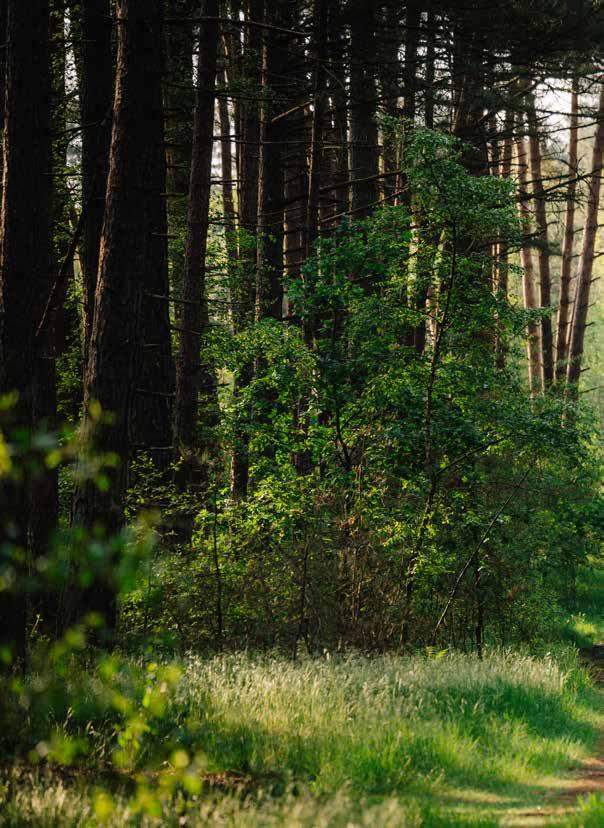
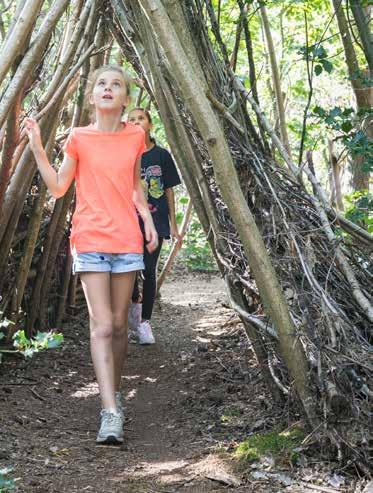
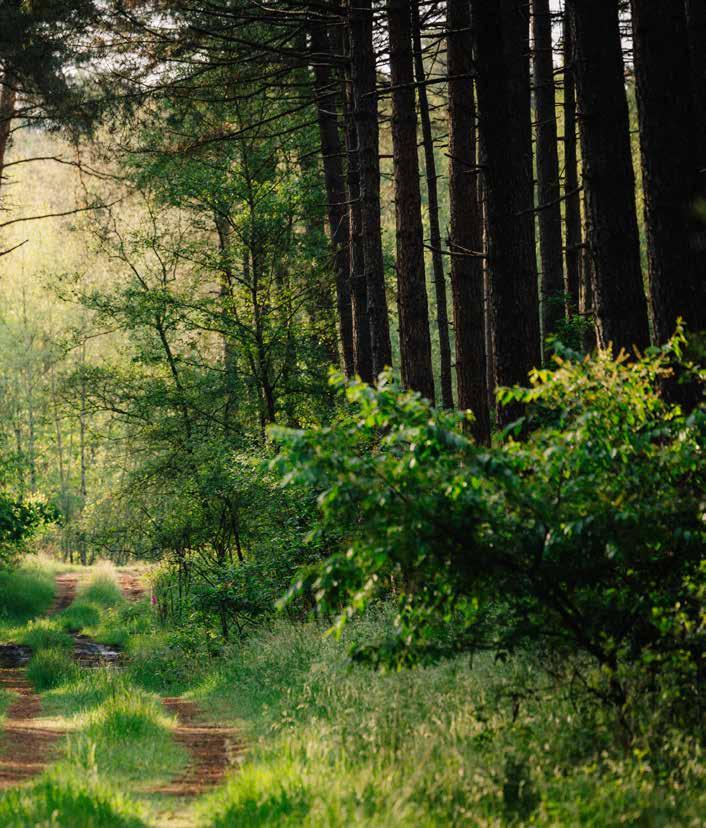
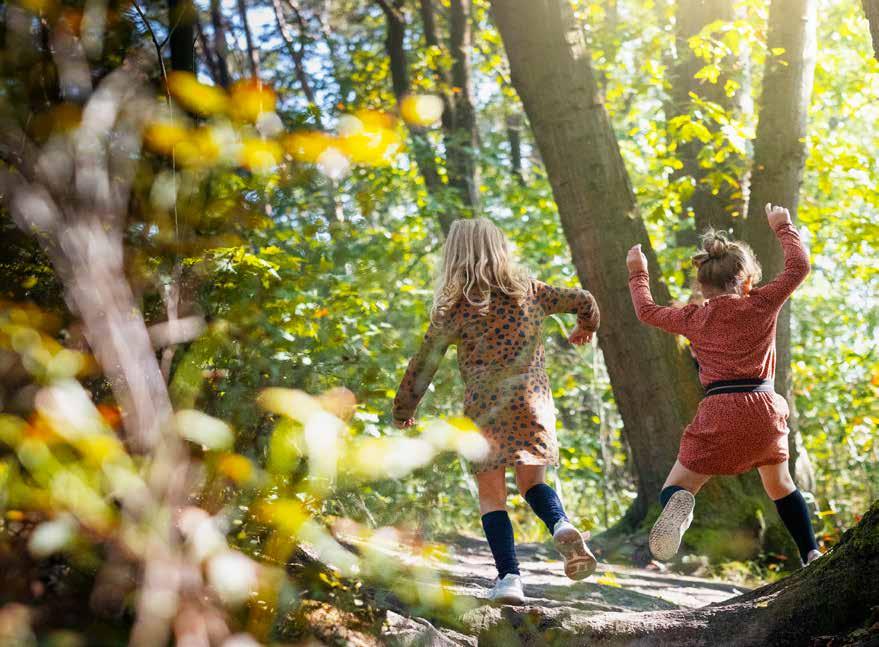
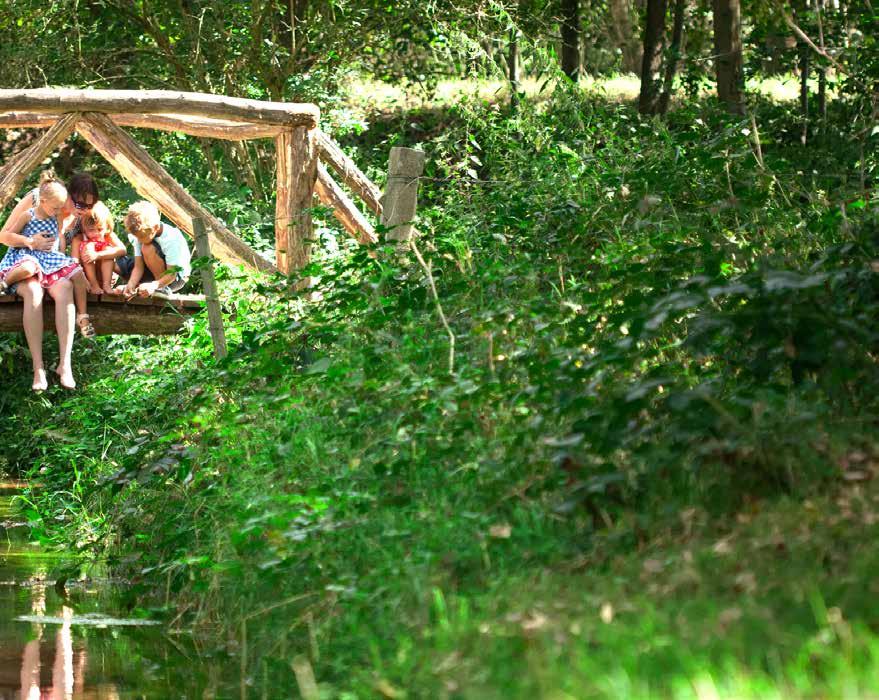
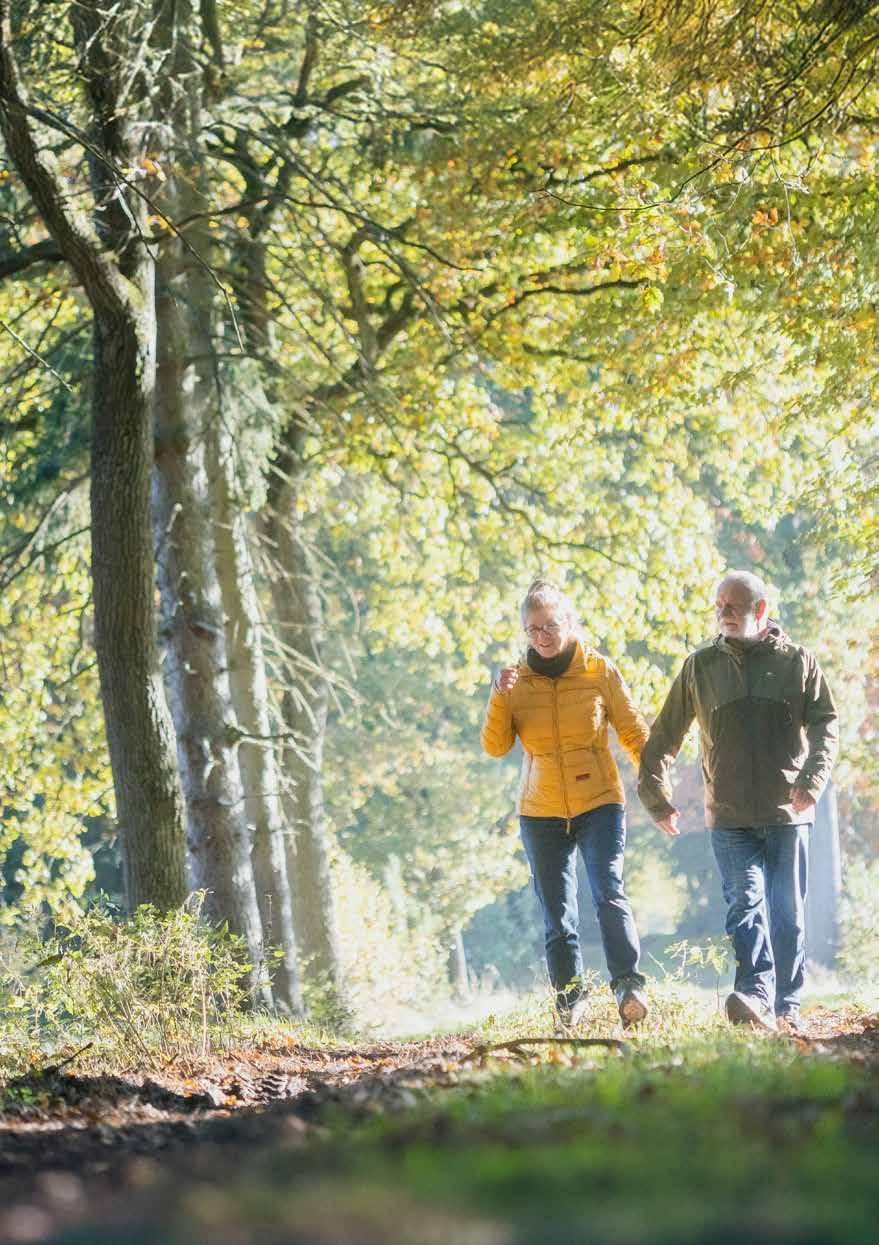
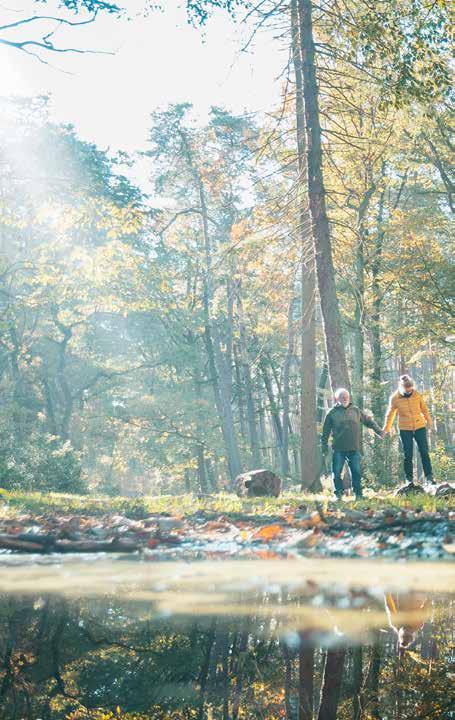
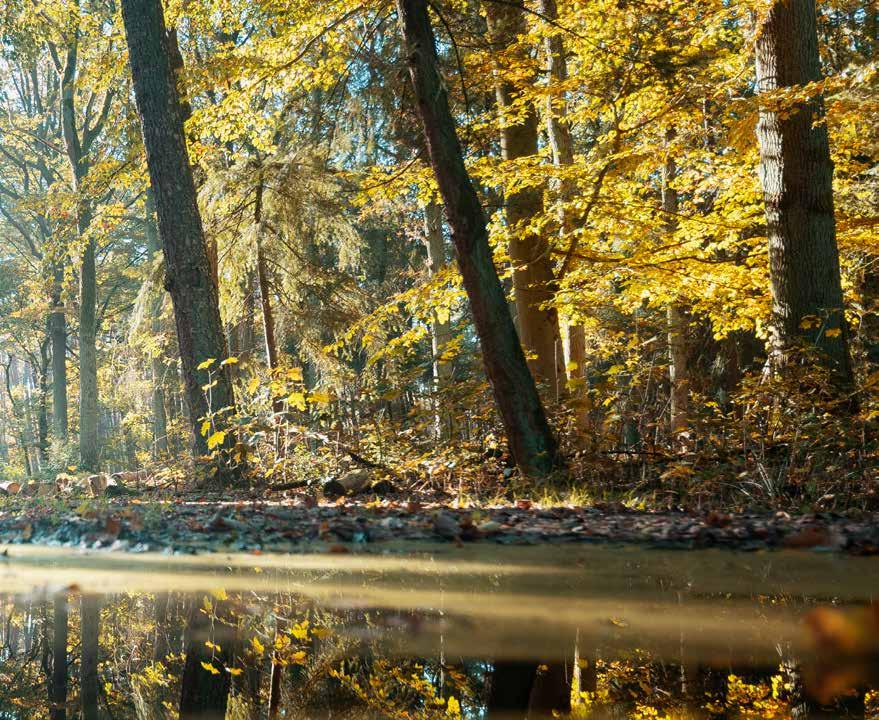
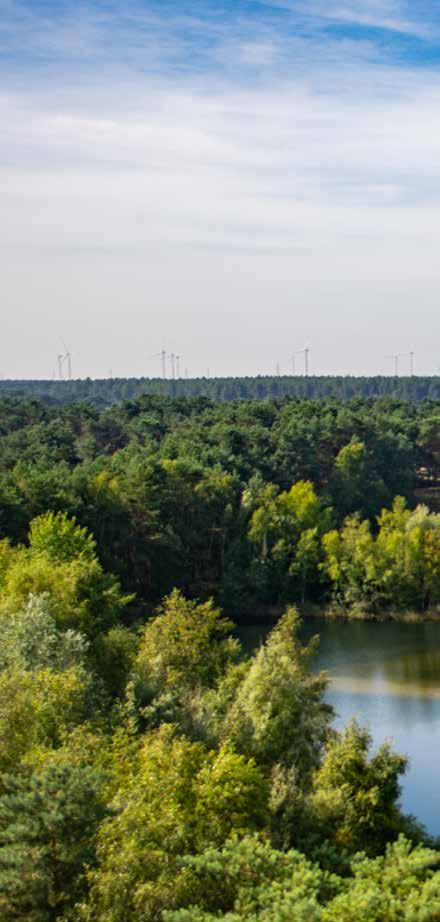
It is with great pride that we welcome you to the new Bosland National Park, an exceptional stretch of nature in Flanders. Bosland National Park symbolises the strength and beauty of our natural environment. With its official national park status, we’ve taken an important step toward protecting and enhancing this unique region. Here, people of all ages can experience the rich biodiversity of our region – a place where recreation, relaxation, and adventure go hand in hand. This visitor’s guide introduces you to breathtaking landscapes and offers practical tips to make your visit unforgettable.
More than just a nature reserve, Bosland National Park is a source of inspiration, a refuge for rare species, and a place where visitors can reconnect with the natural world. Whether you’re here for a leisurely bike ride, an adventurous hike, or simply to soak in nature’s splendour, this national park is the perfect escape from the rush of everyday life.
We invite you to discover the treasures Bosland National Park has to offer and to join us in cherishing and protecting this extraordinary heritage for generations to come.
Welcome!
in the 5,000 hectares of unspoilt nature across three municipalities: Hechtel-Eksel, , largest continuous stretch of nature in all of National Park will expand to cover more than 10,000 hectares
*Bosland and Bosland National Park are registered trademarks.
A promising future!
After becoming an official ‘Flemish National Park’ in 2024, a bold new vision was set in motion: to transform the park into an ecological, attractive, and internationally recognised model region where current and future generations can live life to the fullest.
Wilderness fact – A European example
Bosland National Park shows how nature restoration and responsible management can go hand in hand with local decision-making and sustainable development. The park has become a shining example within Selina, the European project that helps policymakers and organisations manage natural resources sustainably. We couldn’t be prouder of this achievement!
Bosland National Park is more than just a green space. It’s a true wilderness, complete with its own Big Five. All of the links in the food chain are represented here – unique in Flanders! Nowhere else in the region will you find such a vast, interconnected landscape, restored and managed in all its diversity – from open to closed habitats, from soaking wet to bone dry on both the micro and macro scale. The goal? To create a resilient and untamed landscape full of discovery and adventure and rich in stories told by the wilderness itself. Ready to explore
Ten must-sees
There is so much to see and do in Bosland National Park that narrowing it down was no easy task. But here are our top ten can’t-miss experiences:
Time travelling in the Hobos Cycling through the Trees
Family outing at the Lommelse Sahara
Forest walk in the Pijnven
House of Nature and climbing course
Nerdland Safari in the Pijnven
Bosland National Park cycling route The largest sandbox in Flanders
Witteren walk with insights into ancient farming traditions
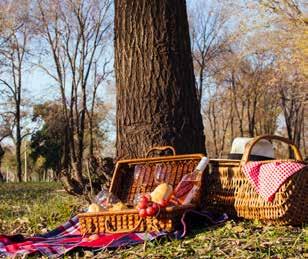
Cosy forest picnic
Nature
Breathtaking landscapes
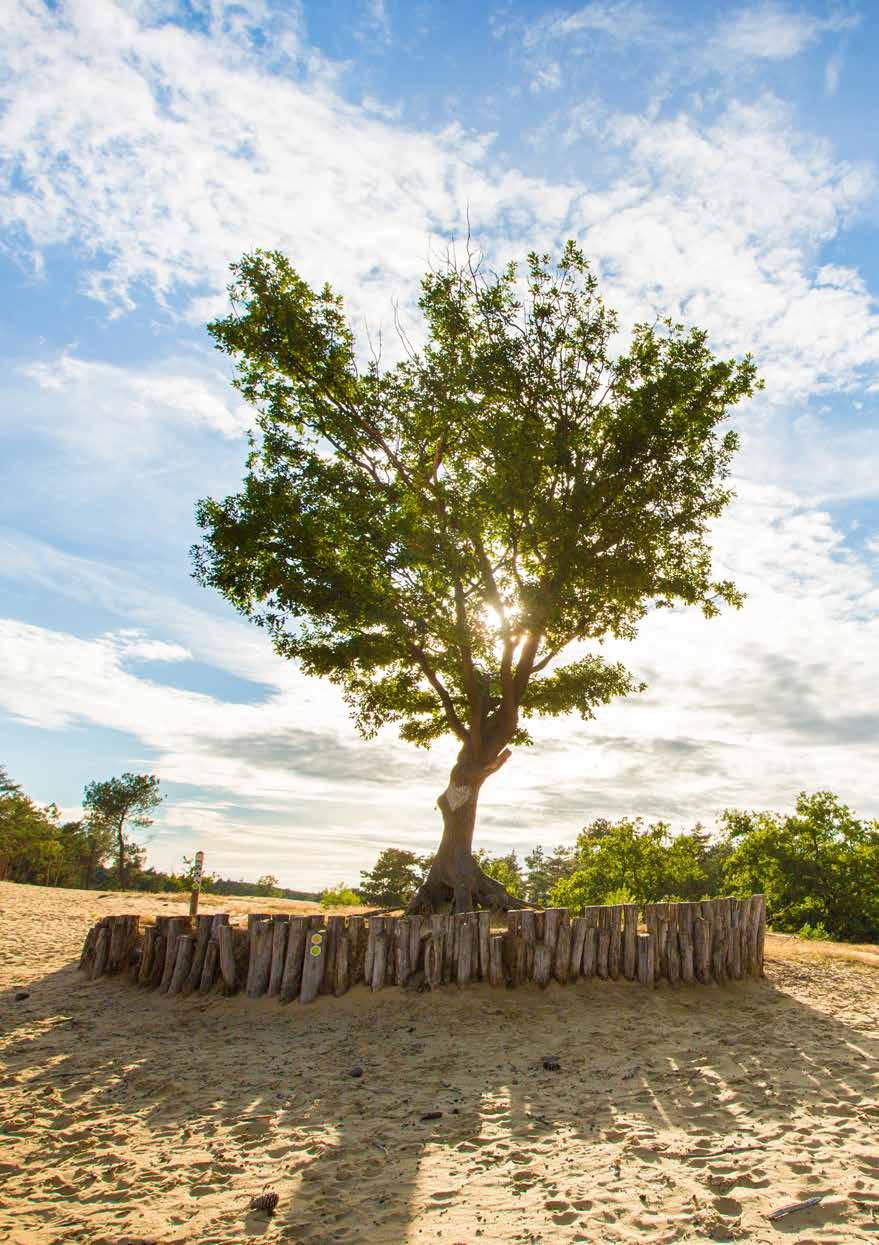
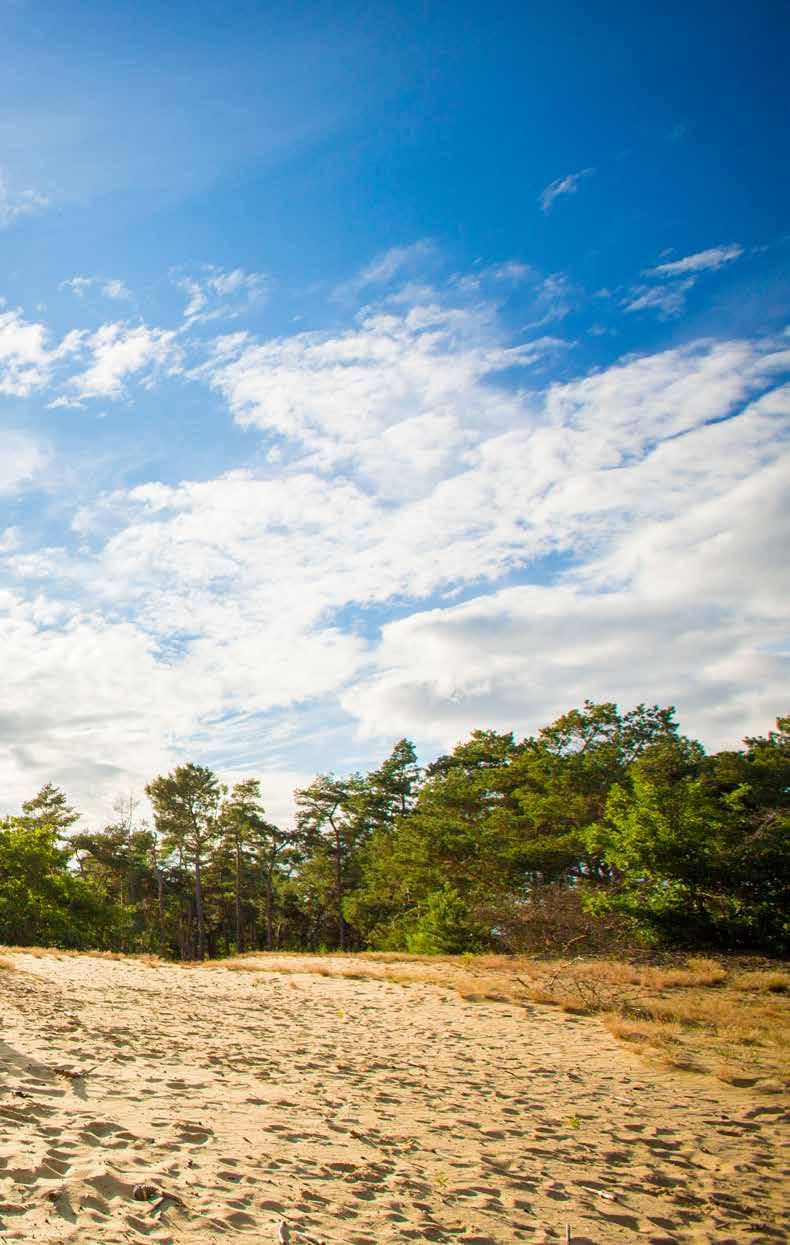
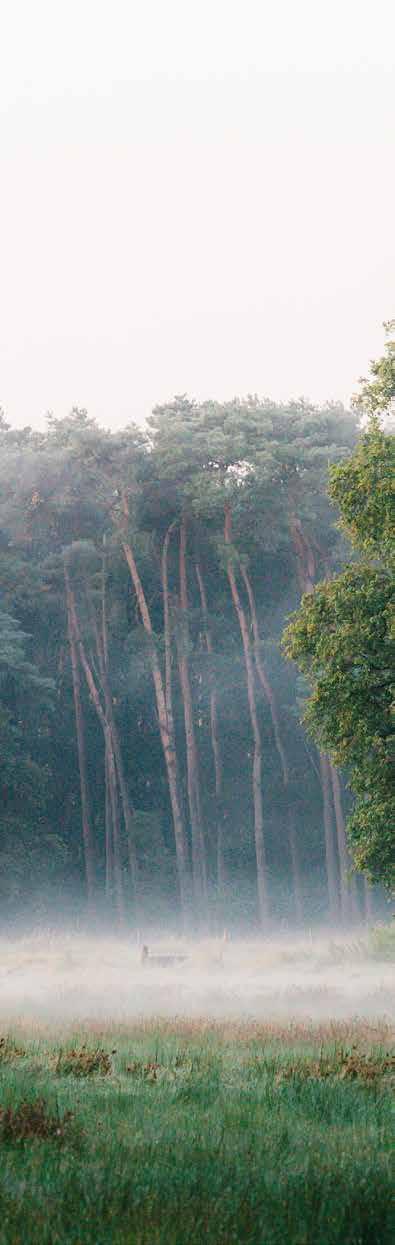
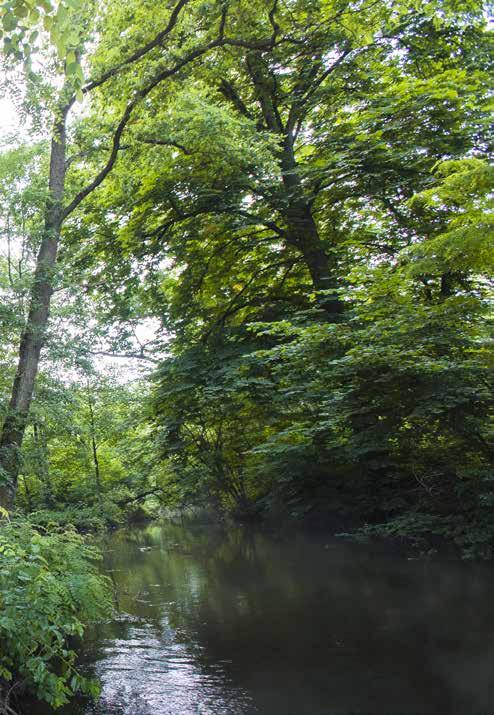
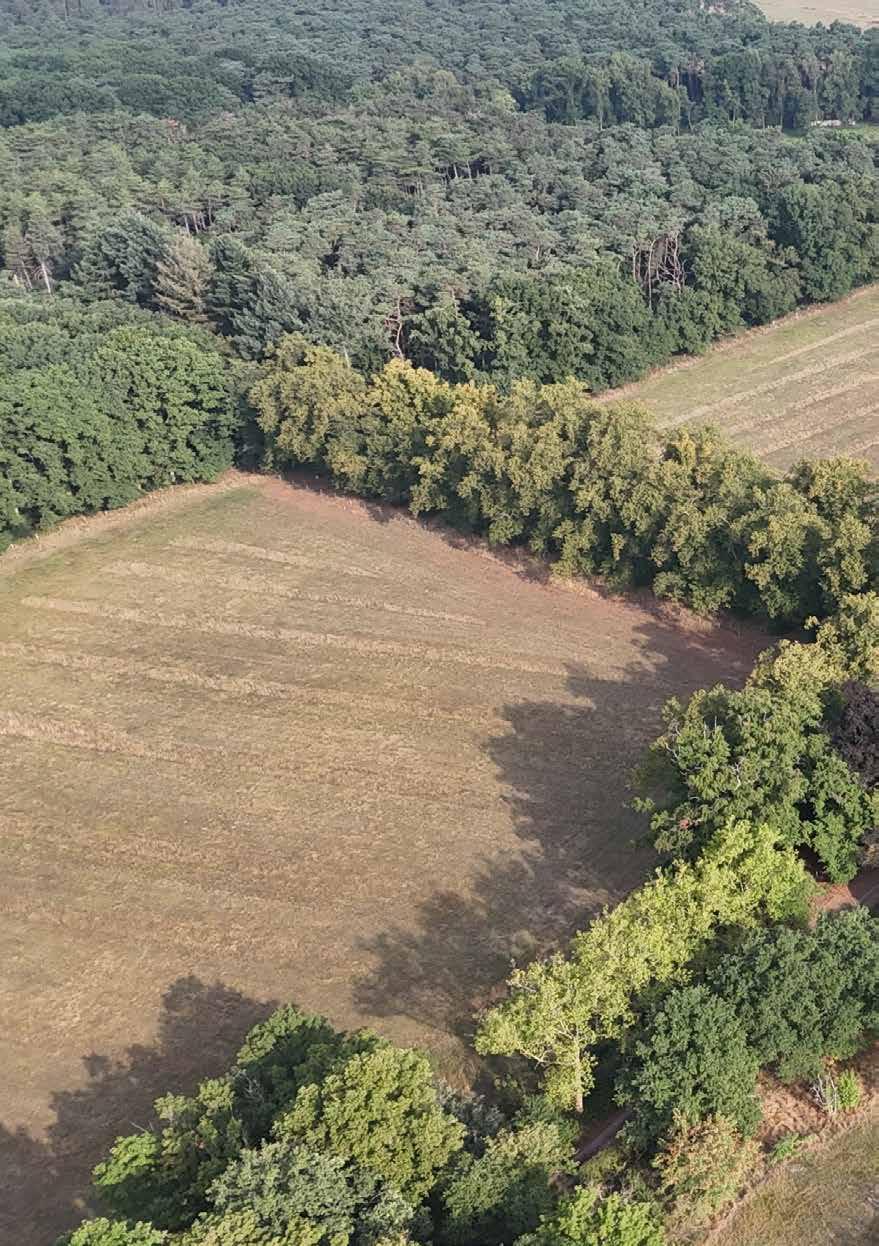
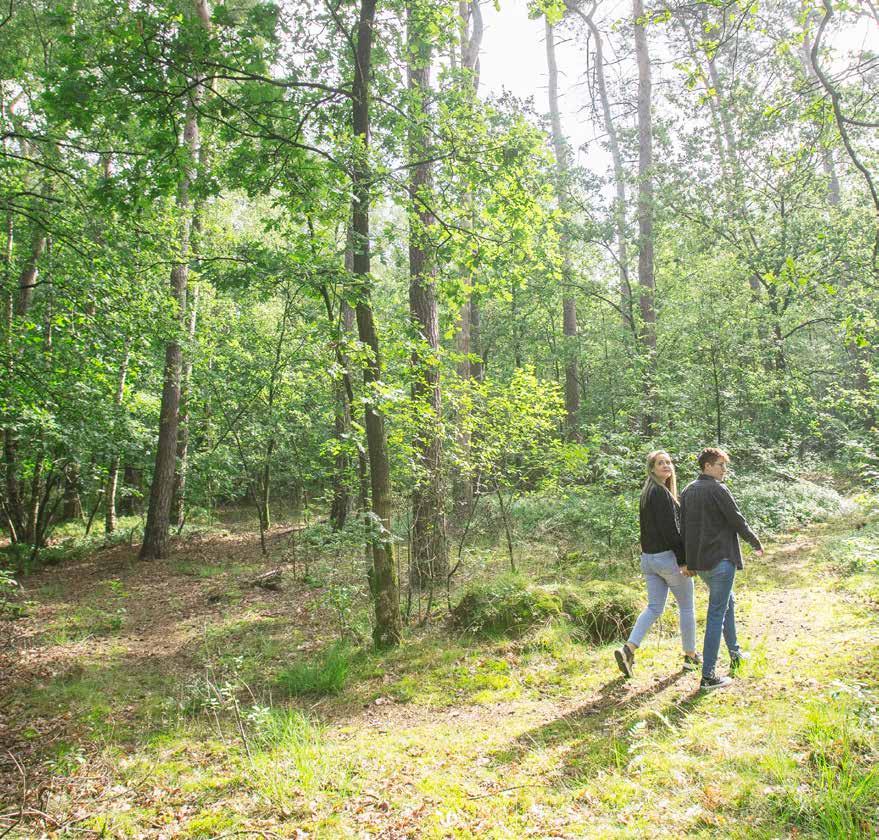
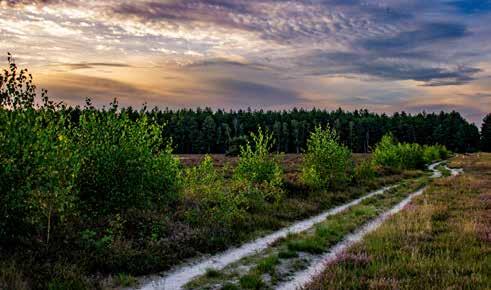
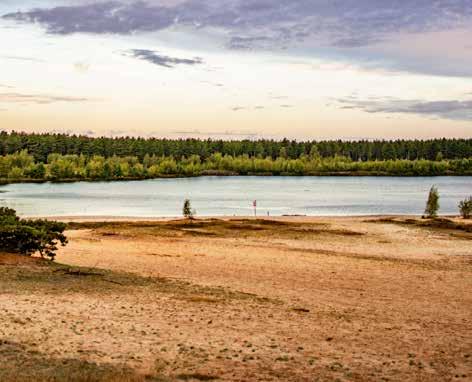
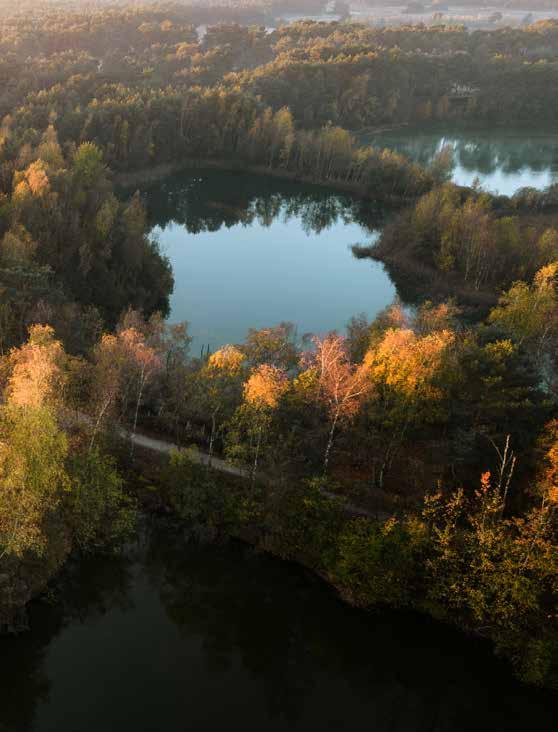
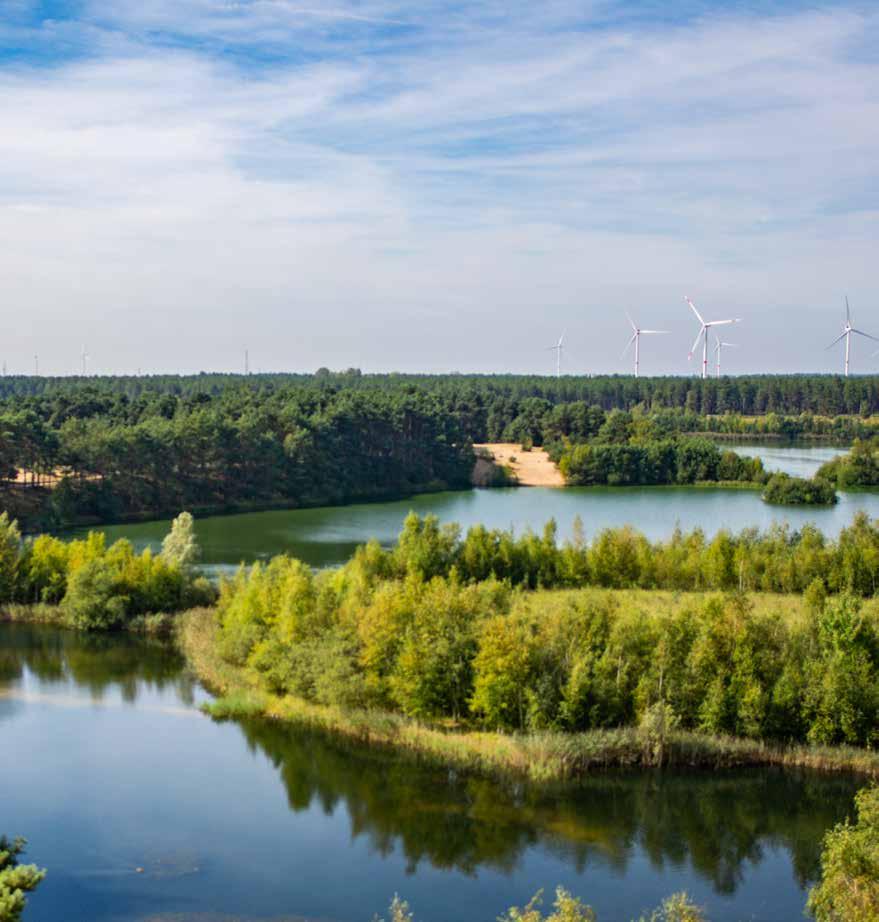
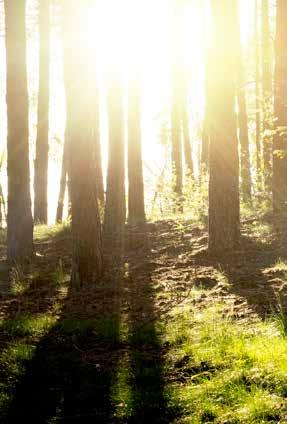
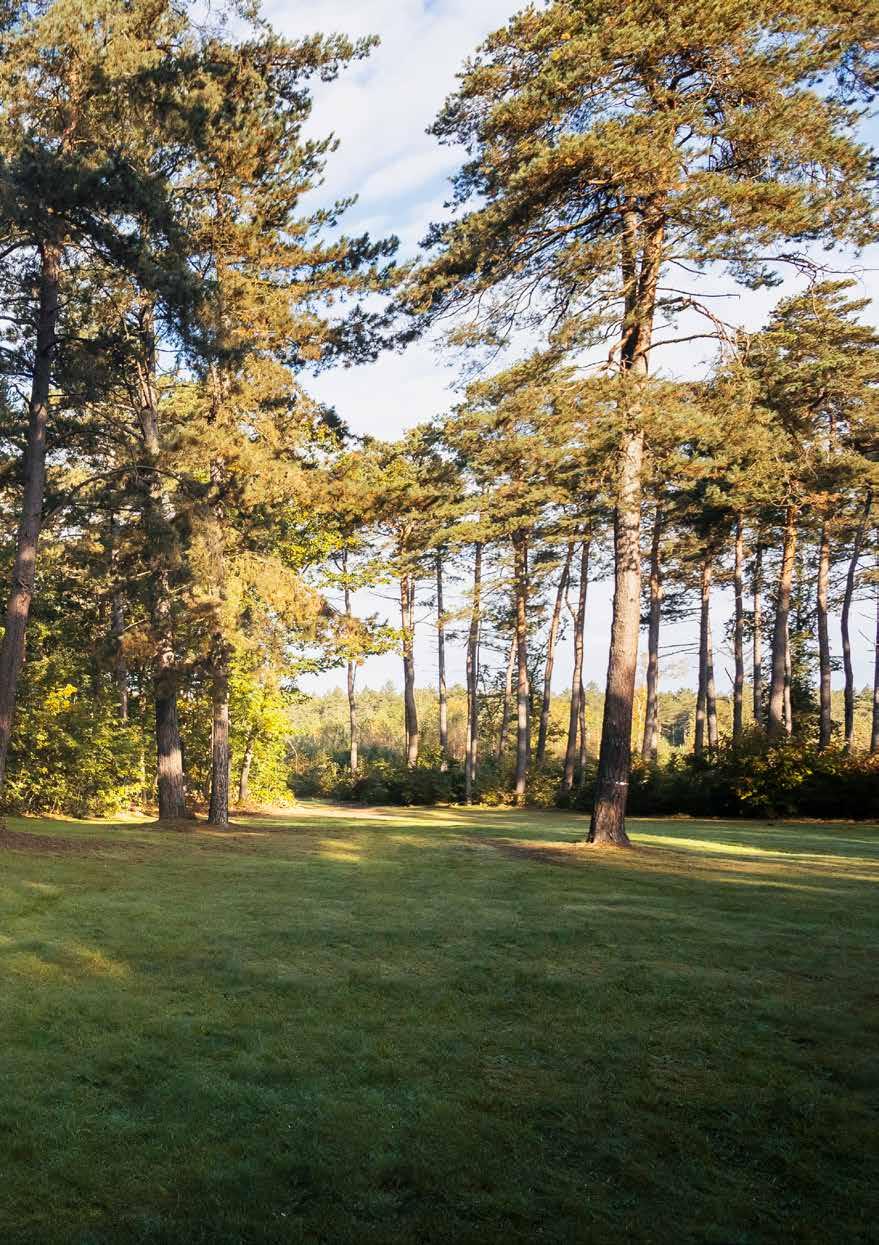
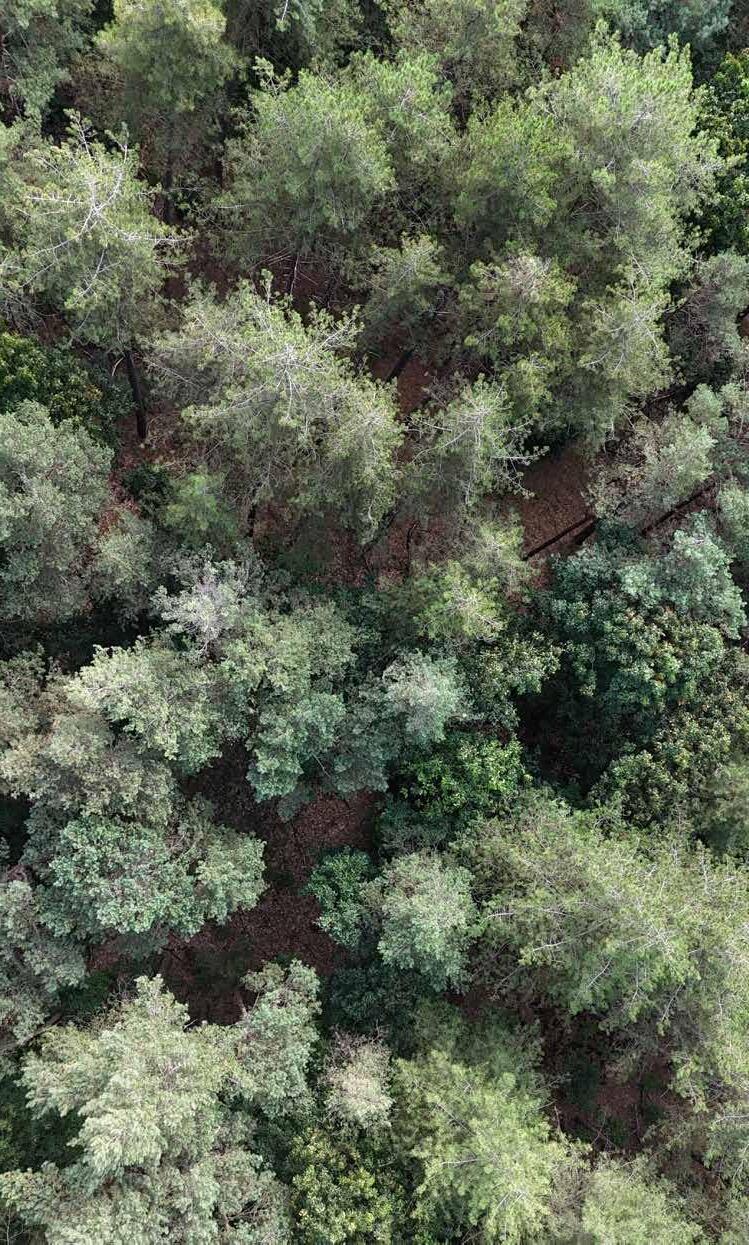
Bosland National Park boasts a mosaic of diverse landscapes that together form a unique natural environment. Vast stretches of pine and deciduous forests alternate with heathlands, rich in bell heather and common heather. Between them lie sweeping sand dunes, where shifting sands and new vegetation create ever-changing scenery.
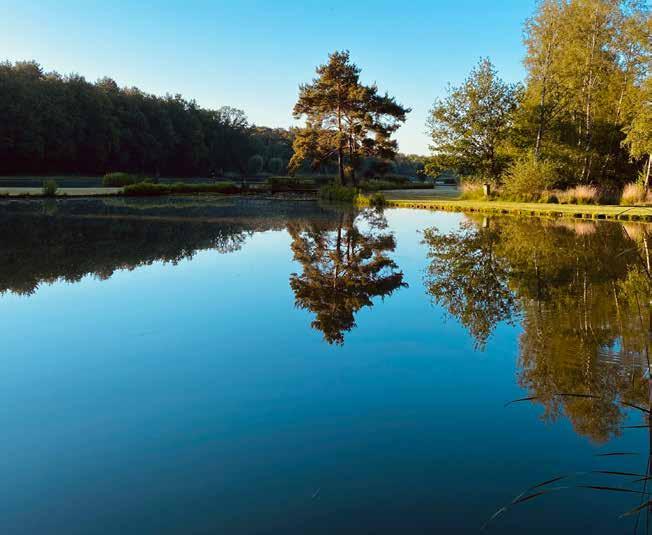
Ponds, marshes, and stream valleys form wet habitats that attract specific plants and animals. This extraordinary diversity of landscapes makes Bosland National Park both exceptional and invaluable.
Nature tip – Become a tree doctor
CiTree is a citizen science project that lets local residents monitor the health of trees in their area. Using dendrometers (tools that measure tree circumference) and smartphones, participants actively contribute to understanding the ecology around them. Bosland National Park has three trees that are tracked using this system. Have a look at www.citree.net.
TreeWatch is a scientific project in Bosland National Park that measures and monitors the physiological processes (such as sap flow, trunk diameter, and temperature) of trees. Sensors continuously collect data, helping researchers study how trees and forests respond to climate change and extreme weather.
These insights help us understand how trees grow and use water, which is crucial for tailoring the management of both forests and urban areas. Want to get involved? Follow the real-time growth of a Scots pine in the Pijnven at www.treewatch.net.
A paradise for plants and animals
Thanks to its rich variety of landscapes, Bosland National Park is home to thousands of plant and animal species. Here, nature thrives and flourishes.
Wildlife fact – 8000 natural wonders
Counting every plant and animal in Bosland National Park might sound impossible, but we gave it a try. Over the years, staff and volunteers have recorded 3,050 plant species and 4,885 unique animal species. That’s nearly 8,000 natural wonders in one extraordinary park!
Want to take part yourself? You can do so via the National Park Bosland portal on waarnemingen.be.
Play tip – Forest theatre
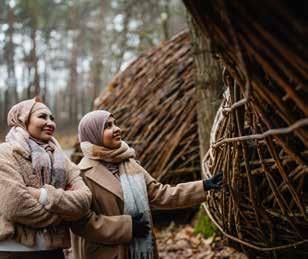
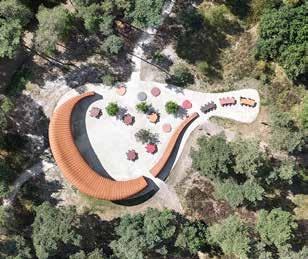
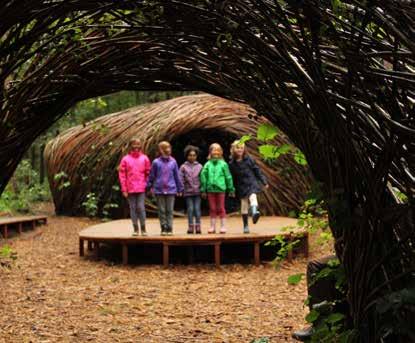
From forest to stage? In Bosland National Park, anything is possible. A winding path near the Eksel sport zone leads to a natural open-air theatre. Using willow and timber sourced from our very own forests, landscape artist Will Beckers created an impressive woodland stage for the stars of the national park. The theatre can accommodate up to 100 people. What story will you share with your fellow visitors and forest-dwellers?
A lush, living mosaic!
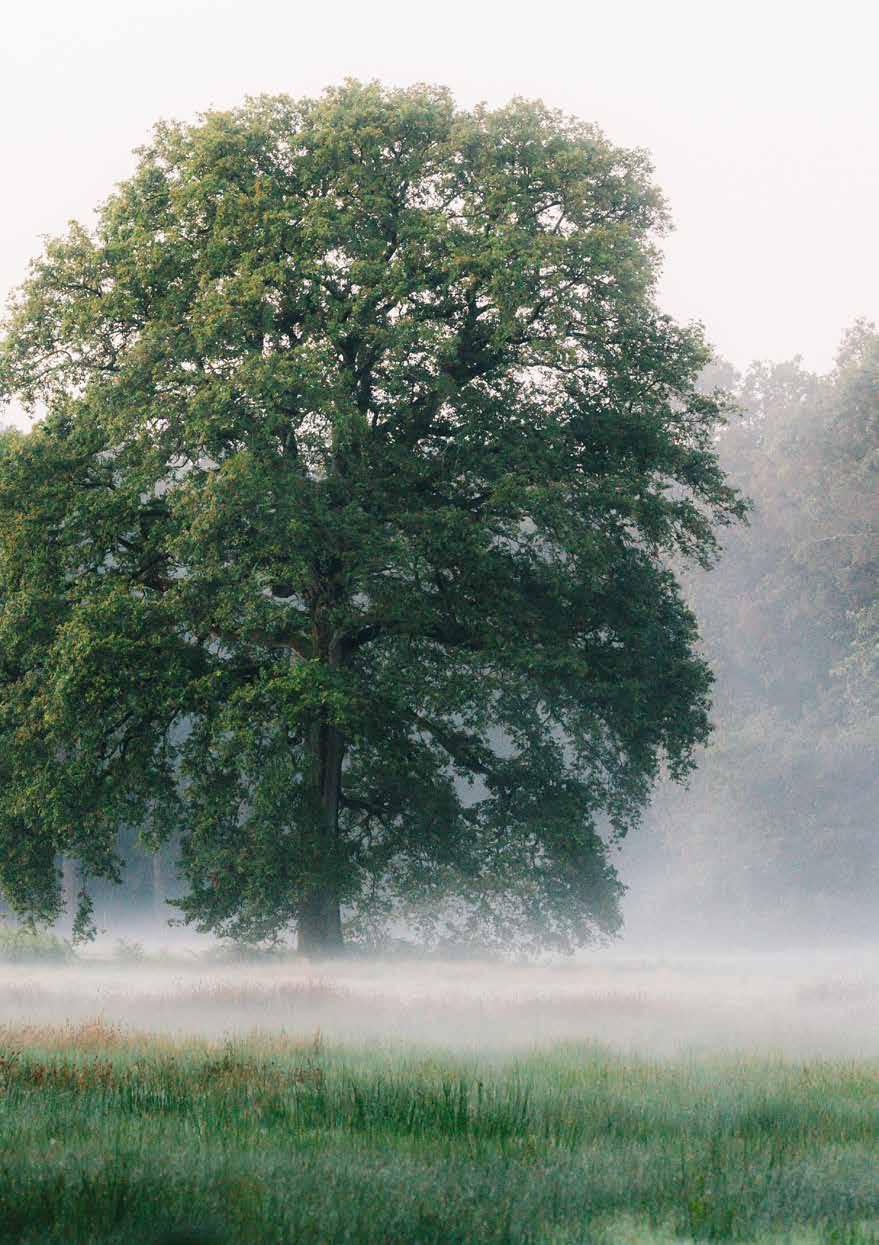
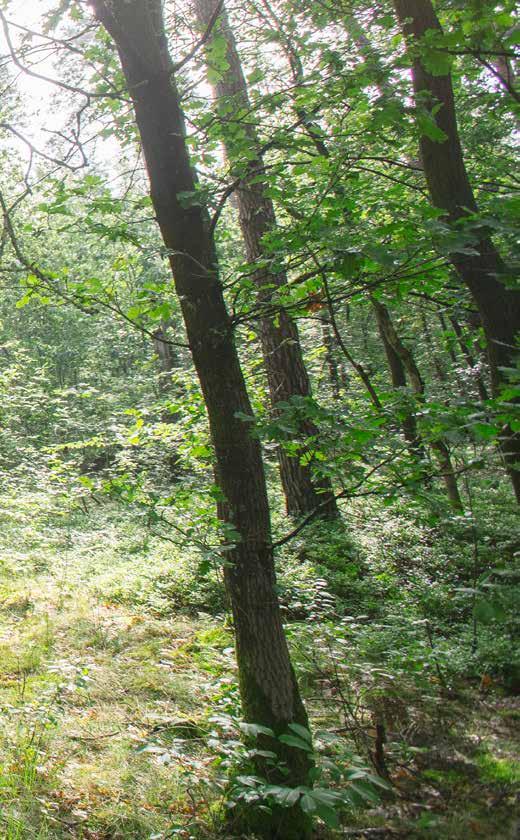
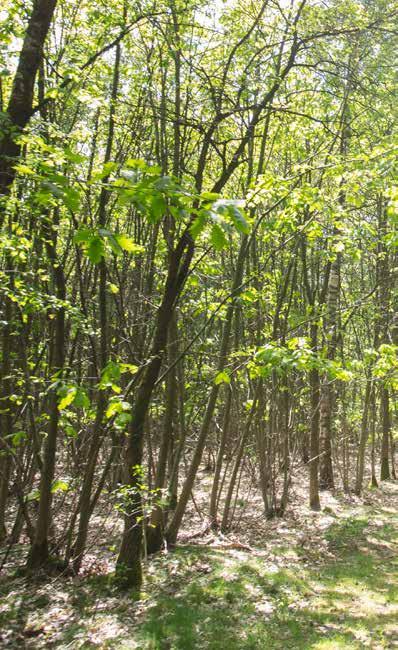
Where to begin? The sheer variety of plant life in Bosland is astonishing. In the forested areas, pines dominate – mostly Scots pine, remnants of reforestation programmes from decades past –alongside oak, birch, and beech woodlands.
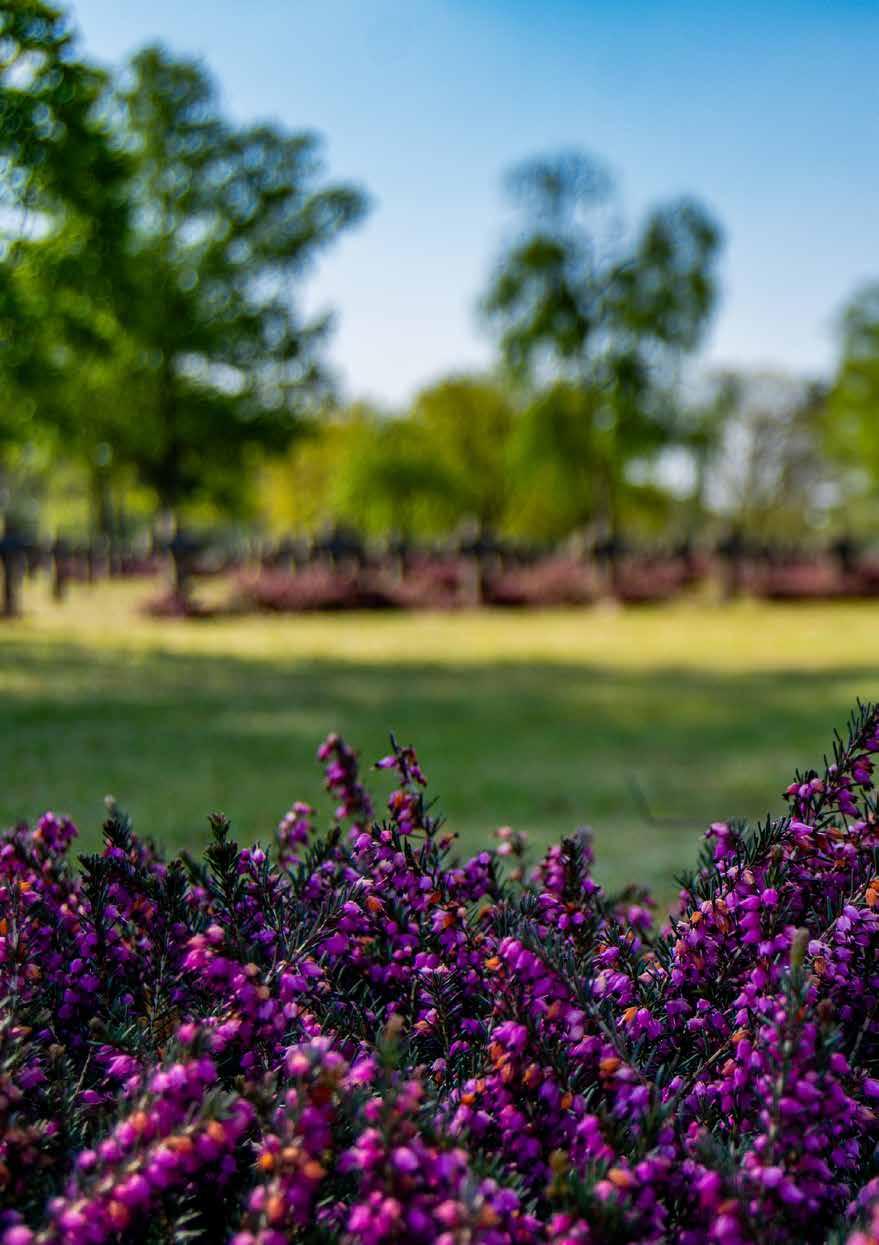
The heathlands are rich in common and crossleaved heather, which thrive in the dry, sandy soils. In the wetter heaths and fens, you’ll find species like marsh clubmoss and sphagnum moss.
Welcome to the wilderness
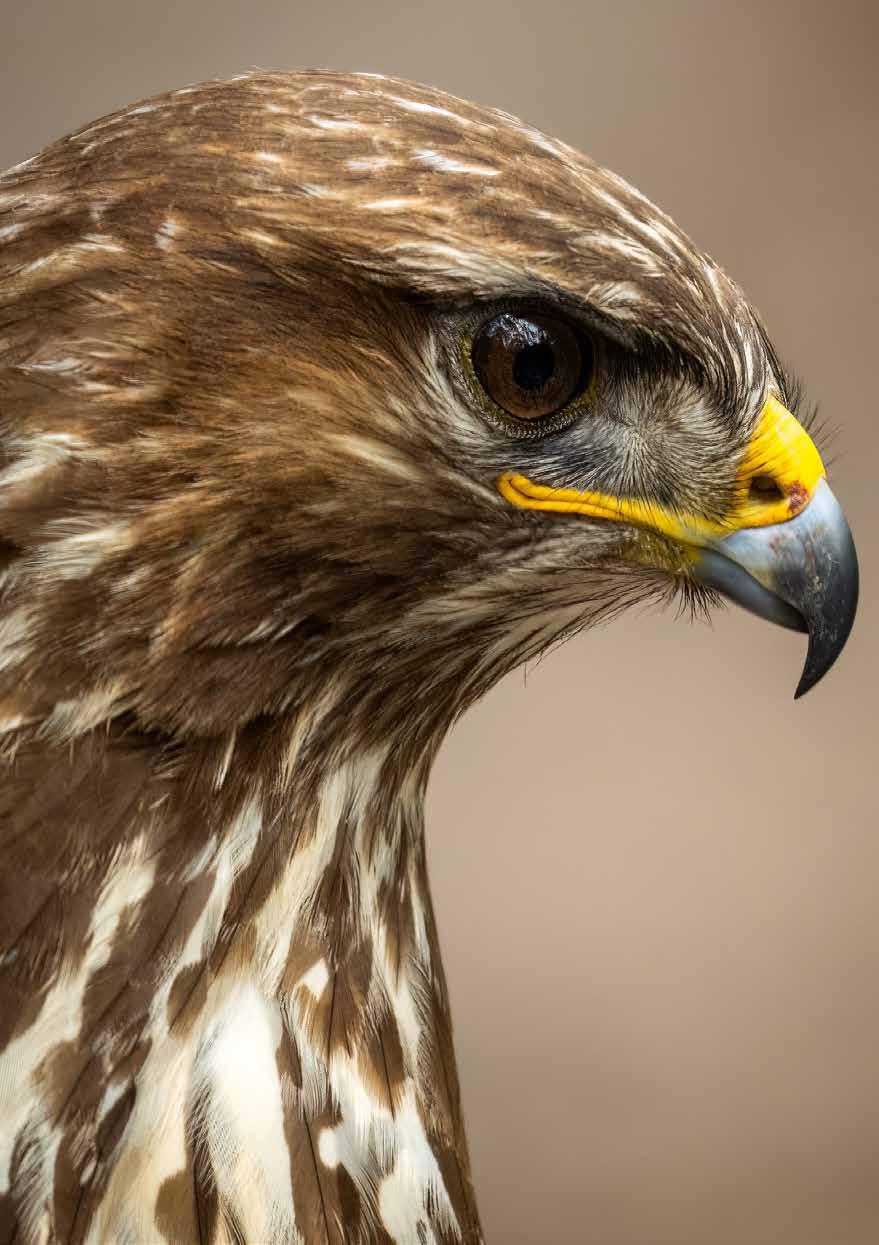
Bosland National Park is an important wildlife sanctuary. It is teeming with mammals such as roe deer, foxes, martens, and wild boars, as well as squirrels, hares, and countless smaller species. But they all keep an eye out for birds of prey. Buzzards circle high above, sparrowhawks streak across the sky, and at night you might hear the haunting call of the long-eared owl. The nightjar and great grey shrike are also among the park’s high-flyers.
With a bit of luck, you might spot amphibians and reptiles as well. Frogs, toads, viviparous lizards, slow worms, and smooth snakes all weave their way through this wilderness. Welcome to the wilds of Flanders! We even have our own Big Five and Magnificent Seven. Want to meet all twelve? Turn to page 16.
Forest fact – Forest in motion
The SpaceTwin project conducts research on microclimates and forest structures. Permanent sensors record daily changes in the forest, while annual surveys map its structure down to the millimetre.
These findings help to validate satellite imagery and reveal how temperate ecosystems are transforming – and how these changes are affecting microclimate, temperature, and humidity. Want to learn more? Visit spacetwin.ugent.be. These findings help to validate satellite imagery and reveal how temperate ecosystems are transforming – and how these changes are affecting microclimate, temperature, and humidity. Want to learn more?
Visit spacetwin.ugent.be.
Averbode Bos en Heide Demervallei
Kempenland-West (Ravels-De Utrecht)
Postel –Bergeijkse Bossen & Cartierheide
De Maat
Bosland National Park
Natuurgrenspark De Groote Heide
Nationaal Park De Groote Peel
Demerdelta Landschapspark de Merode
De mostScheps
Grenspark Kempenbroek
Kolisbos
Dommelvallei
Militair Domein Kamp van Beverlo Schietterrein HouthalenHelchteren
Vallei van de Zwarte Beek
De Wijers
Map of Bosland National Park and surrounding nature areas in the Euregion
European hotspot for biodiversity
Rivierpark Maasvallei
Nationaal Park Hoge Kempen
Thanks to its rich biodiversity, Bosland National Park is a haven for both common and endangered plant and animal species. It also serves as a vital ecological corridor, linking numerous national and international nature reserves. Protecting its rich flora and fauna is essential to preserving and strengthening the park’s ecological value.
The Big Five
Lion, leopard, rhino, elephant, and buffalo – everyone’s heard of the Big Five. But did you know that Bosland National Park has its own Big Five? Not the same as the African five but every bit as thrilling to spot.
So grab your binoculars and see how many you can find!
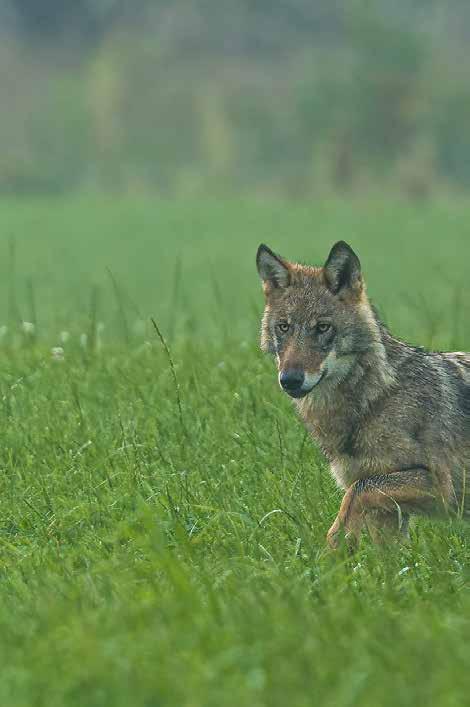
Wolf
Almost a decade after its return to Flanders, the wolf has firmly reestablished itself in Bosland National Park, confirming our status as the wilderness of Flanders. But your chance of spotting one is rare. Wolves are famously shy and elusive. If you do happen to see one, stay calm, keep a distance of at least 50 metres, and savour the moment.
Their diet consists mainly of wild prey like deer and boar, but they’ll also hunt birds and rodents – and occasionally unprotected livestock when wild game is scarce.
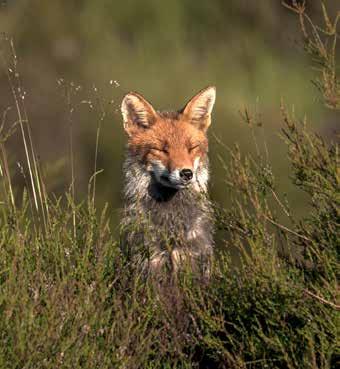
Fox
The fox is a fast, relentless hunter – and not a picky eater. From blackberries and beetles to rabbits and hares, it devours just about anything it can catch. Most of its hunting happens at dusk or under cover of night.
Where does its cunning reputation come from? The fox is a true master of adaptation. From city to forest to countryside, the sly fox always finds a way to survive.
Wolf fact – Tracking the pack
The wolf’s return to Belgium has sparked a new wave of research. Using camera traps and DNA analyses of tracks and scat, scientists are learning more about the lives of wolves and how they can coexist with humans.
Intrigued? Go to www.inbo.be or visit the travelling wolf exhibition Wij Wolven! Check natuurenbos.be/dossiers/ de-wolf-in-vlaanderen for more info.
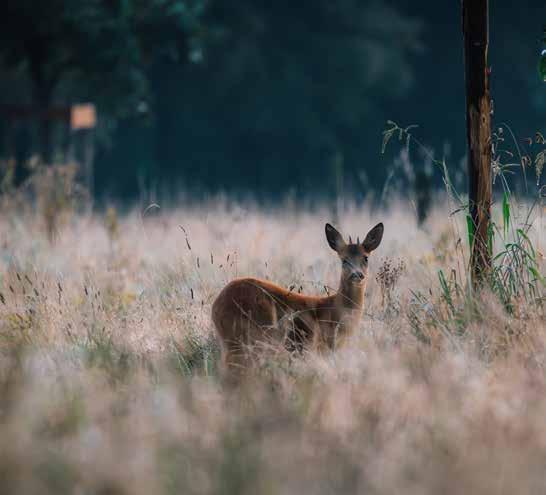
Roe deer
This small deer is perhaps the most popular and frequently spotted resident of Bosland National Park. It’s also quite skittish. Once they see you, they leap away with graceful bounds – sometimes up to two metres high and six metres far – that would put even the finest ballerina to shame. Did you know that a fawn spends its first two weeks lying almost completely still, perfectly camouflaged, while its watchful mother stays close by?
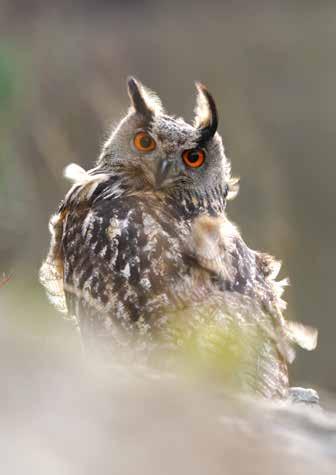
Eagle-owl
Even Europe’s largest owl feels perfectly at home in Bosland National Park. Make no mistake: the eagle-owl is a true predator. Hedgehogs, rabbits, young foxes, and even buzzards, hawks, and other owls are all fair game. Humans, fortunately, are not. Want to spot one? Point your binoculars up and look for old birds’ nests.
Don’t be fooled by its name in Dutch –an oehoe might sound cute and cuddly but with a wingspan of up to 180 centimetres, the eagle-owl is the second largest owl species in the world.
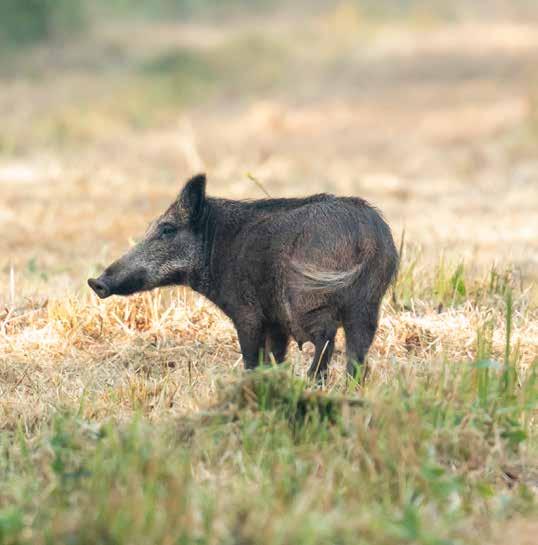
Wild boar
Obelix would be thrilled: Bosland National Park is home to a thriving population of wild boar. Despite their reputation, they’re rarely aggressive. Only when separated from their young will they stand their ground. Our tip: stay calm, step back slowly, and give them space to reunite. Don’t worry, attacks on humans are very rare.
While they may not look athletic, wild boar are surprisingly fast, reaching speeds of up to 50 kilometres per hour. Better start running, Obelix!
Spot one of the Big Five? Don’t panic!
All those creatures may sound a little scary, but don’t worry, Bosland National Park is completely safe. If you do come face-to-face with one of the Big Five, stay calm, avoid confrontation, and back away slowly. Most animals will retreat on their own.
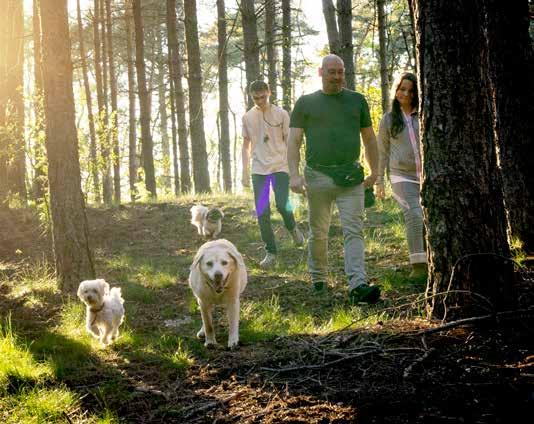
Planning to bring your dog? Then make sure to keep it leashed. If you happen to encounter wildlife in one of the off-leash dog areas (see page 71), leash your dog immediately.
The Magnificent Seven
In addition to the Big Five, we’d like to introduce you to seven other remarkable residents of Bosland National Park. From the mysterious nightjar, active only after sunset, to the brightly coloured kingfisher, which darts like a flash of blue across the water. They may be smaller and rarer than the Big Five, but they’re equally impressive.
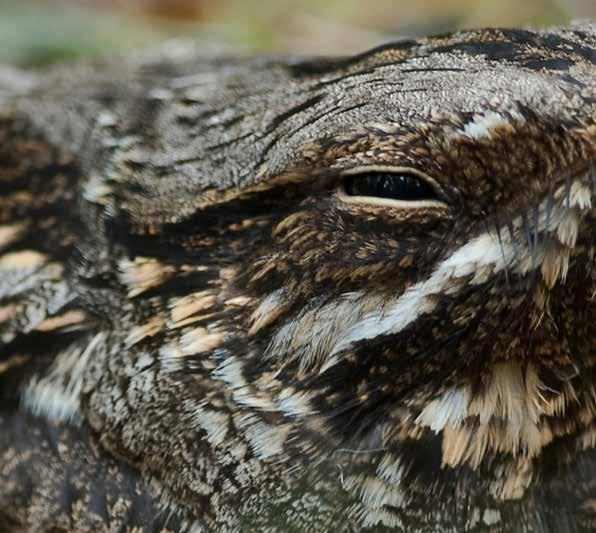
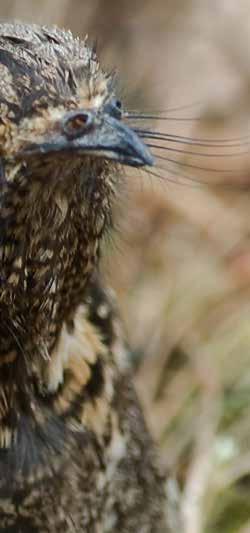
Nightjar
As the name suggests, the nightjar is active after dark. Its exceptional camouflage makes it almost invisible in the landscape, and its discreet habits mean it’s rarely seen. How to spot one? Listen for its trembling song on a summer’s night.
In earlier times, people believed the nightjar stole milk from goats at night, earning it the nickname ‘goat milker’. A myth, yes, but its presence near farms and herds only strengthened the legend.
During the day, the nightjar relies entirely on its camouflage to go undetected – and with success. This bird is a master of disguise!
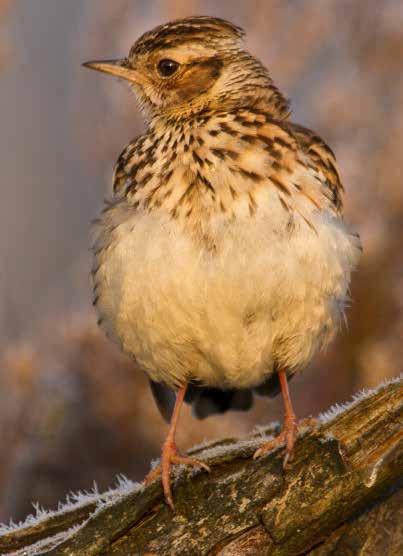
Woodlark
The woodlark is a small songbird known for its melodious singing. Unlike the skylark, it prefers sheltered, semi-open landscapes: forest edges, heathlands, and young pine woods. During spring and autumn, it can be seen across much of Europe.
Woodlarks are true songbirds. In a long, spiralling flight, they serenade their audience with a melancholy tune, easily recognised by their distinctive lu-lu-lu call.
Bird fact – Tracking the nightjar
The nightjar is a nearly invisible summer guest that has been nesting in Bosland National Park for years. It also frequents the valleys in the Grote Nete. In winter, it migrates to Africa.
How do we know all this? Thanks to research by Ruben Evens from tracingnature.com/en/ and Eddy Ulenaers, a forest ranger with the Flemish Agency for Nature and Forests. They’ve been studying the nightjar since 2009 using GPS trackers and data loggers. This has given us valuable insights into its habitat, migration patterns, and the impact of light pollution –crucial information for conserving this extraordinary bird.
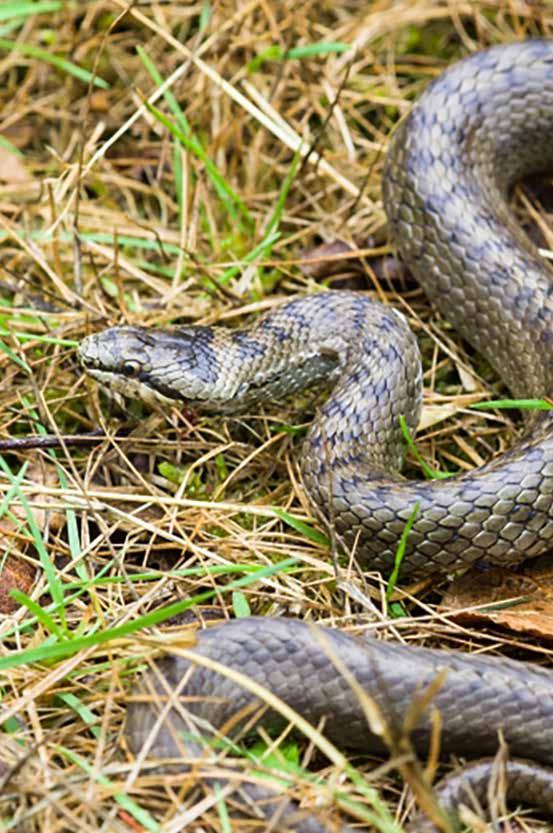
Smooth snake
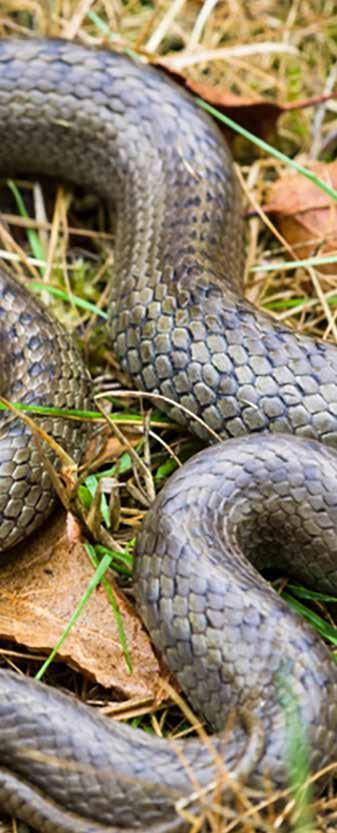
The smooth snake is native to Europe. Why did it choose Bosland National Park? Because it can move freely between heathlands, forests, and sunny open spaces. It is easily recognised by its smooth, brown-grey skin with dark spots.
Don’t worry: this snake is non-venomous. It does, however, have something in common with boas and pythons: it constricts its prey
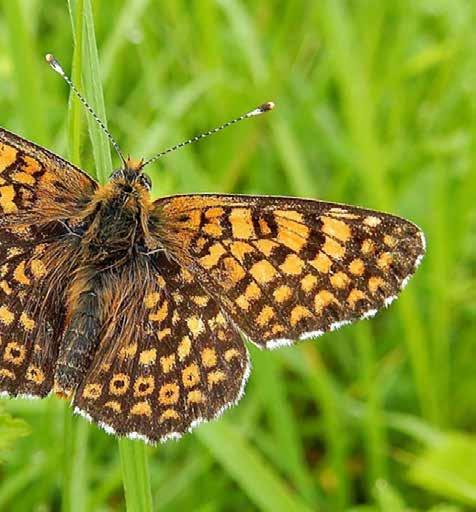
Glanville fritillary
The Glanville fritillary is a beautiful day-flying butterfly with bright orange wings. It flutters across Europe, mainly in grasslands and heathlands, gathering nectar from wildflowers to fuel its flights and reproduction.
You may not have seen this rare beauty before, but we guarantee it’s a feast for the eyes when you do, with its pearlyedged wings patterned in orange and black.
Fiery fact – Volunteers
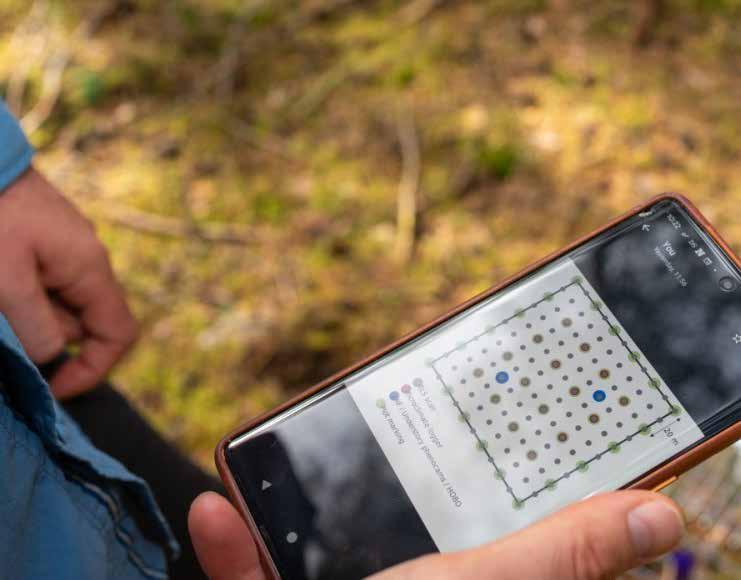
To better understand and protect this endangered species, the population is closely monitored using measurement grids. The Lommel-based Eresus working group contributes by collecting data, protecting its habitat, and raising awareness about this fascinating resident.
Ladybird spider
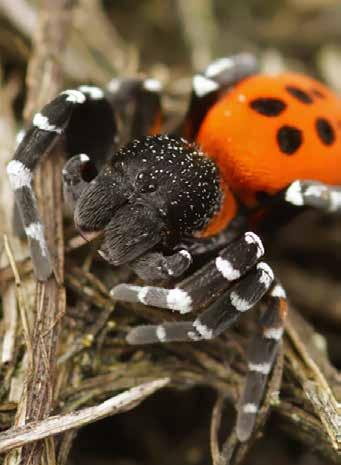
Another elusive resident of Bosland National Park is the ladybird spider. The males stand out with their bright red backs dotted with black spots – a bit like ladybirds! Locals sometimes call it the Bosland panda because this spider is just as threatened as the famous black-andwhite bear.
In our park, ladybird spiders prefer dry, sandy soils and heathlands and spend most of their time underground. On a warm spring day, you might spot a male above ground. Bosland National Park is proud to host the largest colony of ladybird spiders in the world!
Tadpole shrimp
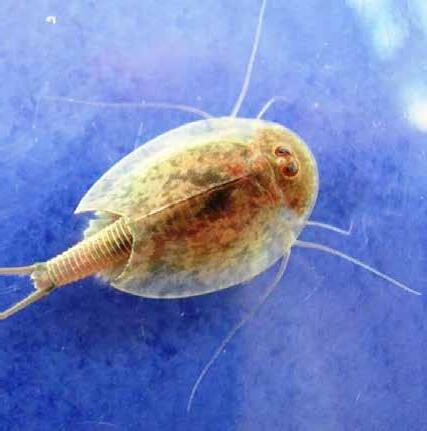
Small but fearless, the tadpole shrimp is a primitive crustacean. It thrives in temporary pools and puddles, surviving dry spells by keeping its eggs dormant until rain refills the ponds. After more than 100 years of absence, it was rediscovered in Bosland National Park in 2019.
A true living fossil, its appearance has remained virtually unchanged for 200 million years. Even a dinosaur would recognise it!
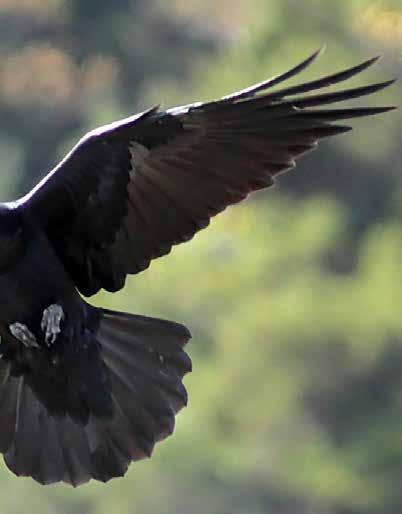
Raven
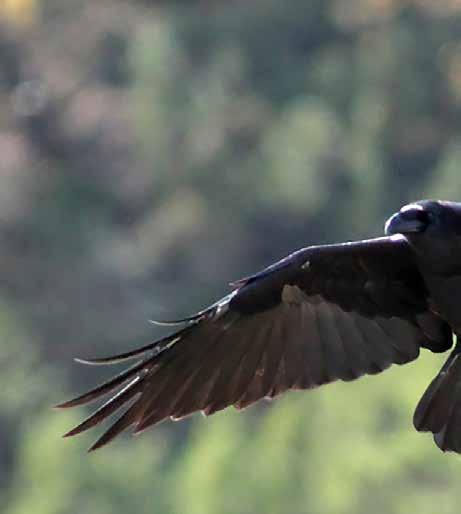
The raven has also returned to Bosland National Park. This striking all-black bird is the largest of the crow family and more than just an impressive sight. Ravens are curious, can solve complex problems, and communicate cleverly with one another.
Tip – Experience BosLAB
Want to learn more about the ongoing research at Bosland National Park? Visit boslab.be to learn about the nightjar study, the effects of climate change on local wildlife, and much more.
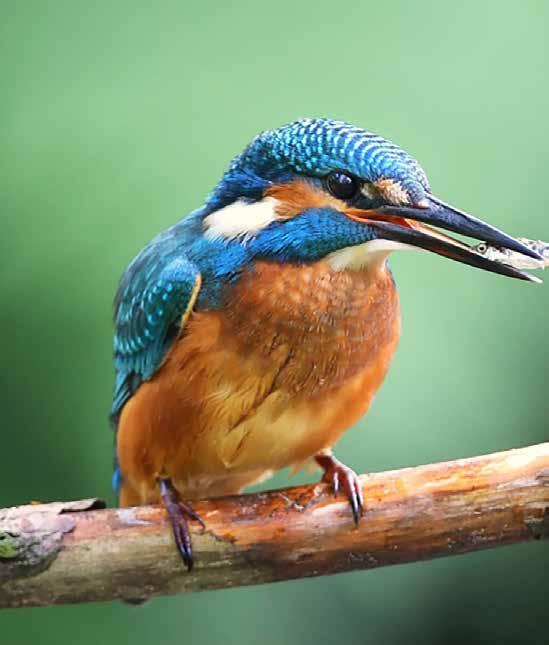
Kingfisher
With its brilliant blue back and orange breast, the kingfisher is one of the most colourful residents of Bosland National Park. Its long, sharp beak allows it to snatch fish from rivers, lakes, and streams, so your chance of spotting one along the water is high.
Zoom! In a split second, it dives beakfirst into the water to snatch a fish. Impressive? Absolutely!
“‘The return of the raven to our national park is a powerful example of nature restoration in action,’ says researcher Ruben Evens. ‘For years, the raven had disappeared from this region. Thanks to targeted conservation efforts, increased biodiversity, and the restoration of old woodland structures, this iconic bird is now slowly coming back. It’s a beautiful sign our wilderness is coming back to life – exactly what we as conservationists strive for.’
Nature reserves
Ten landscapes, ten unique adventures. Bosland National Park is constantly defying expectations. Where you’d expect to see a desert, you might find a sparkling blue pool instead. A quiet forest walk might unexpectedly lead to a delightful landmark. From Flanders’ largest sandbox to science labs hidden among the trees, each area has its own secrets and surprises. Which will you explore first?
of BNP with its 10 nature reserves
Niet toegankelijk
Map
Blauwe KeiDe Maat
Ancient stones
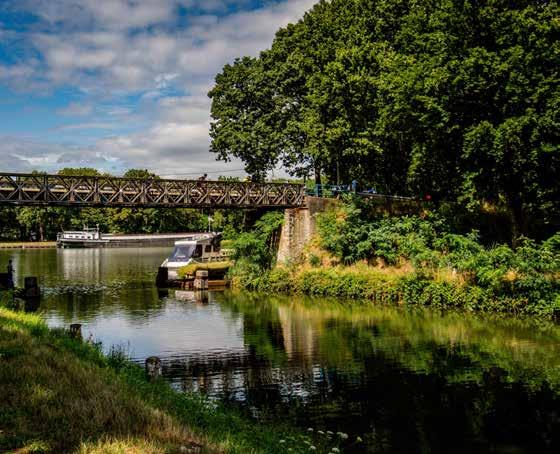
The Blauwe Kei is named after the large blue slate stone that was carried here by the Meuse River during the Ice Age. Though the stone gradually disappeared from the landscape, its name lives on in three nature areas. Blauwe Kei-De Maat is made up of three unique zones, each with its own distinct character. Meadows, deciduous forests, heathlands, ponds, shallow pools, and marshes alternate in this waterrich landscape that straddles the border between Lommel and Mol.
Bird tip – An osprey expedition
In spring and autumn, an impressive visitor can be seen soaring above Bosland National Park: the osprey. With a wingspan of 160 centimetres, it commands awe and admiration. The best time to spot one is in April and September. Head to the large water bodies of Blauwe Kei-De Maat and try your luck!
Walking trails: Green 4.9 km - Yellow 8.8 km Red 10.9 km - Orange 8.3 km - Blue 11.1 km
Starting points: Blauwe Kei car park (at Lock 1), Blauwe Kei 40, 3920 Lommel (Green, Yellow, Red)
Note: Border region: Belgium-Netherlands, Limburg
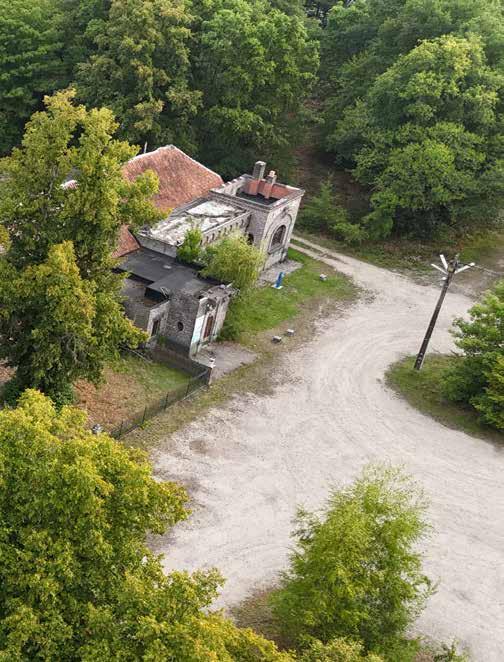
Grote HofHobos
Talking walls
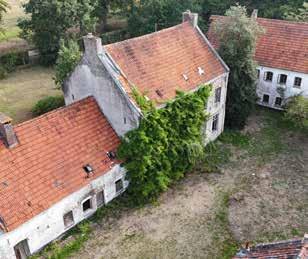
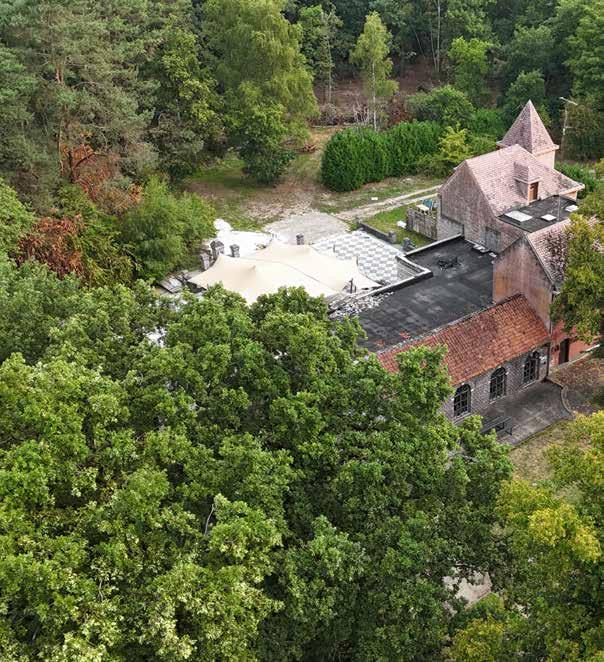
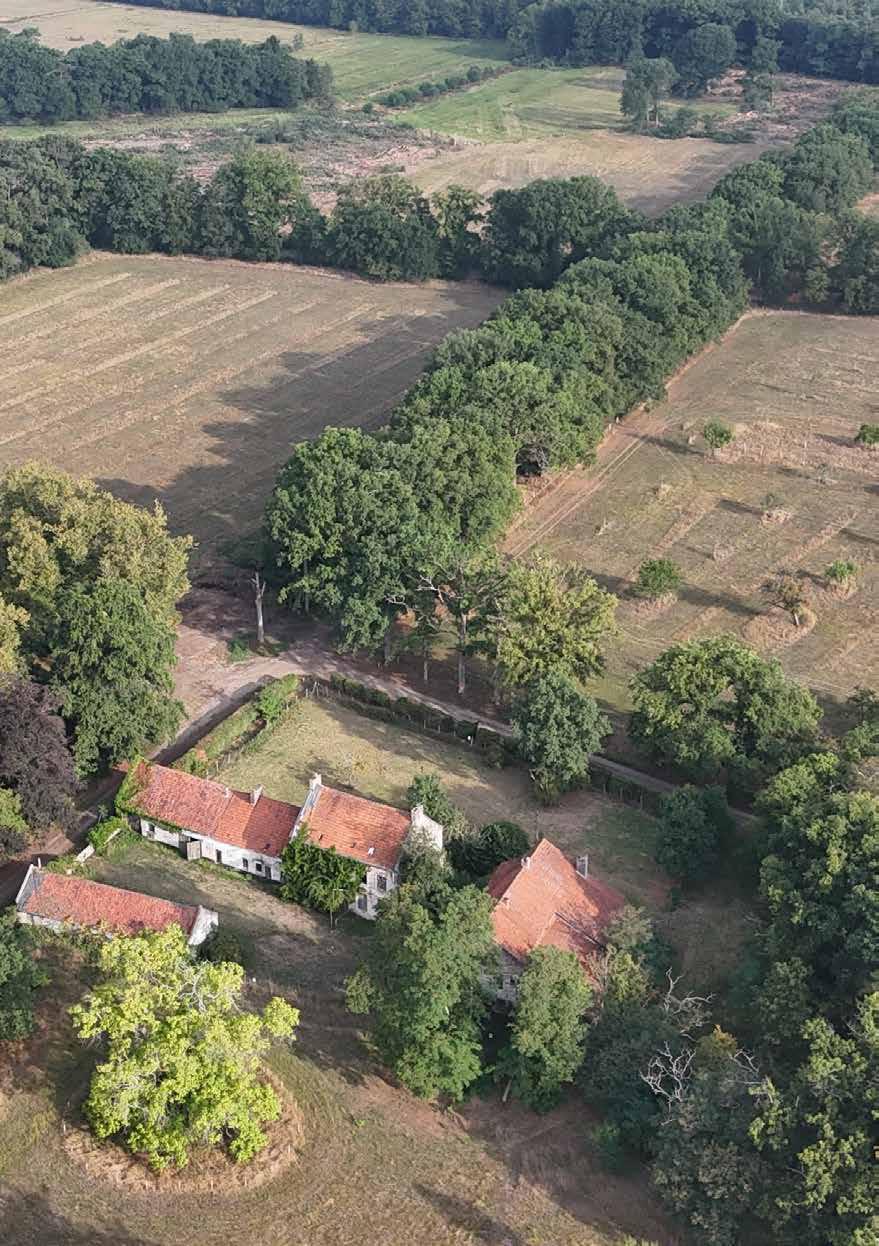
De Grote Hof-Hobos trail guides you through a stunning landscape. The name refers to two historic sites in the area. The story of the Grote Hof dates back to the twelfth century, when the Norbertine Abbey of Floreffe acquired a vast estate in Eksel and Pelt.
The Hobos farm, dating from 1524, also left its mark. Centrally located in extensive woodland, it served as the ideal hunting and farming grounds for various noble owners. In the eighteenth century, it even housed a jenever distillery.
Heritage fact –From dance hall to party venue
Little did the monks know that 800 years later the site would briefly serve as a dance hall and party venue. De Grote Hof is a historic farmstead by origin, with deep roots in local history. Surrounded by farmland and outbuildings, the estate offers a tangible glimpse into the region’s agrarian past.
Despite numerous renovations, the central residentialstable house is a well-preserved example of traditional Kempen architecture. Even the original entrance drive has remained more or less intact. The historical significance of De Grote Hof contributes strongly to the local identity.
Little has changed in the past century. The rich history is still visible in the old farm buildings and landscape, making the protected area beloved by both heritage and nature enthusiasts alike.
At a glance
Landscapes: Forests, fields, orchards
Highlights: De Grote Hof and the Hobos nature reserve
Walking trails: Green 2.5 km - Red 9.9 km Blue 7.7 km
Starting point: De Grote Hof car park: Witherendreef 1, Pelt (Green, Red, Blue)
Note: The fascinating history of the estate
Fun fact – Home
of the Bokkenrijders
The Hobos nature reserve connects the region’s rich cultural history with its natural heritage. The last real resident was Marie-Anne Wilsens, a direct descendant of Jan Clerx, the magistrate who tracked down and finally ended the notorious Bokkenrijders gang.
Heuvelse Heide
Hidden heathland gem
From the tranquil Meerpaal marina, you can set off on a scenic route through pine forests and the expansive heathland of the Heuvelse Heide. The sand-extraction lake and the canal add extra charm to your walk.
Discover the area’s rich history, including the Lommel-Kolonie region and the flood meadows of De Watering nature reserve.
Walking fact – Kaleidoscope of colours
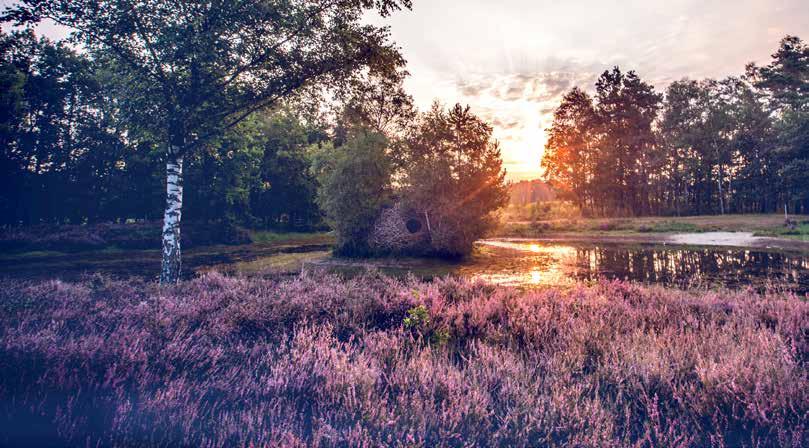
Red, orange, purple – the annual explosion of colours in the Heuvelse Heide is breathtaking. Better hurry, though: this spectacle can only be seen in August and September. Mark your calendar!
Red 9 km - Blue 6.2 km (Bert Jansen witteren heritage walk, a UNESCO cultural heritage site with informative QR codes along the way)
Starting points:
• De Meerpaal Marina car park, Boskantstraat 60, Lommel (Green, Orange, Red)
• Kolken car park (at the Fossé), Kolken, Lommel (Blue)
Note: The large lake was formed by sand extraction
Holven’t Plat
Something for everyone
The walking trails through Holven lead you through dry pine forests on former drift dunes. Prepare for some spectacular height differences!
Prefer a flatter route? The trail through ’t Plat takes you past marshy wetlands, where dry and wet heathland alternate with rough pastures and wet woodlands. Keep an eye out for the sheep grazing on fragrant bog myrtle and heath.
Wilderness fact –Rattling on about snakes
The smooth snake is harmless to humans but no less fascinating. Since 2022, scientists have been studying the local population in our nature reserves.
Signs at 25 different locations explain more about how the snakes coexist, including details about their habitat, sex and age, the air temperature, and the surrounding vegetation. All efforts to ensure that the smooth snake thrives in Bosland National Park.
Orange 6.2 km - Blue 1.8 km (Walking with Wheels - wheelchair-friendly trail)
Starting points:
• Café Holheide car park, Heikapper 25, Pelt (Green, Orange)
• Palisstraat car park, Palisstraat11, Pelt (Yellow)
• MS-Centrum car park, Kleine Boemerangstraat z/n, Pelt (Blue)
Note: The orange trail crosses Napoleonweg twice. The road was built under Napoleon Bonaparte, though it originally dates back to Roman times.
‘The ‘t Plat region is one of the most enchanting places I know,’ says Luc Winters, site manager at Natuurpunt. ‘The mix of heathland, wet woodland, and marshland creates a rare tranquillity and richness of life. More than 45 bird species and 17 colourful dragonfly species flit around you. Be sure to wear boots, as the trail takes you through marshes and across boardwalks and open fields. For those looking to reflect and recharge, the orange trail is a peaceful haven that’s perfect for quieting the mind.’
In den Brand
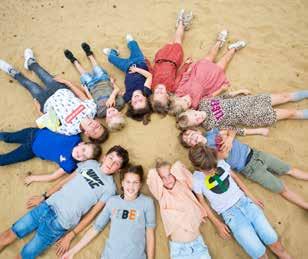
The largest sandbox in Flanders
Want to explore a varied landscape of high dunes, deciduous forests, and pine woods? Venture into the vast drifting inland dunes of In den Brand. The Hechtel dunes stretch almost to the Dutch border — unique in Flanders and rare in Europe. The surrounding birch and oak forests are well worth a visit as well.
Fun fact –From firewood to inland dunes
Was this area named after a big fire? Not quite. The name actually comes from an old custom: locals from HechtelEksel used to come here to collect firewood. In 2017, the area was restored to its original glory. Thanks to this project, you can now walk over and through dramatic sand dunes, some up to 40 metres high
““The nature restoration project uncovered historically valuable sand dunes,’ says Joke Roeben, nature restoration coordinator at Regionaal Landschap Lage Kempen. ‘Across 8.5 hectares, rare plants such as lichens, heather, and sandy dune flora have been given a second chance to thrive. The open landscape is once again home to the nightjar, woodlark, and smooth snake This historic patch of nature is thriving again.”
Note: the walking trails are only accessible for sturdy prams. Feel free to bring a bucket and a spade so your children can play in the sand.
Starting point:
• In den Brand car park, Sint Lambertusstraat 55, Hechtel-Eksel (Green, Red, Blue)
Note: The area borders Kamp Beverlo, the largest military domain in Flanders, which is not open to the public. You may hear occasional military activity.
Kattenbos
More than meets the eye
Don’t let the name fool you! Kattenbos (Dutch for ‘cat forest’) was named after the Katrijk valley and its namesake stream and simply means ‘flowing water’. The Kattenbos is a natural gem with breathtaking heathland landscapes. It also has a rich history. Archaeological finds from the Ice Age reveal that this area dates back 14,000 years, making the Leyssensmolen mill appear relatively young by comparison. This grain mill, built in 1797, moved three times before finding a permanent home in Lommel in 1964 – a testament to its eventful history.
Buzz-worthy fact
No Bosland study would be complete without the European dark bee. To protect this important but vulnerable pollinator, scientists are studying a large local population managed by ZwarteBij.org. This research also provides valuable insights into interactions with the varroa mite, a parasite that threatens honeybees. Have a look at zwartebij.org
““As a forest ranger, I see every day how vital nature connections are for both wildlife and people,’ says Jelle Vuylsteke, a ranger with the Agency for Nature and Forests.
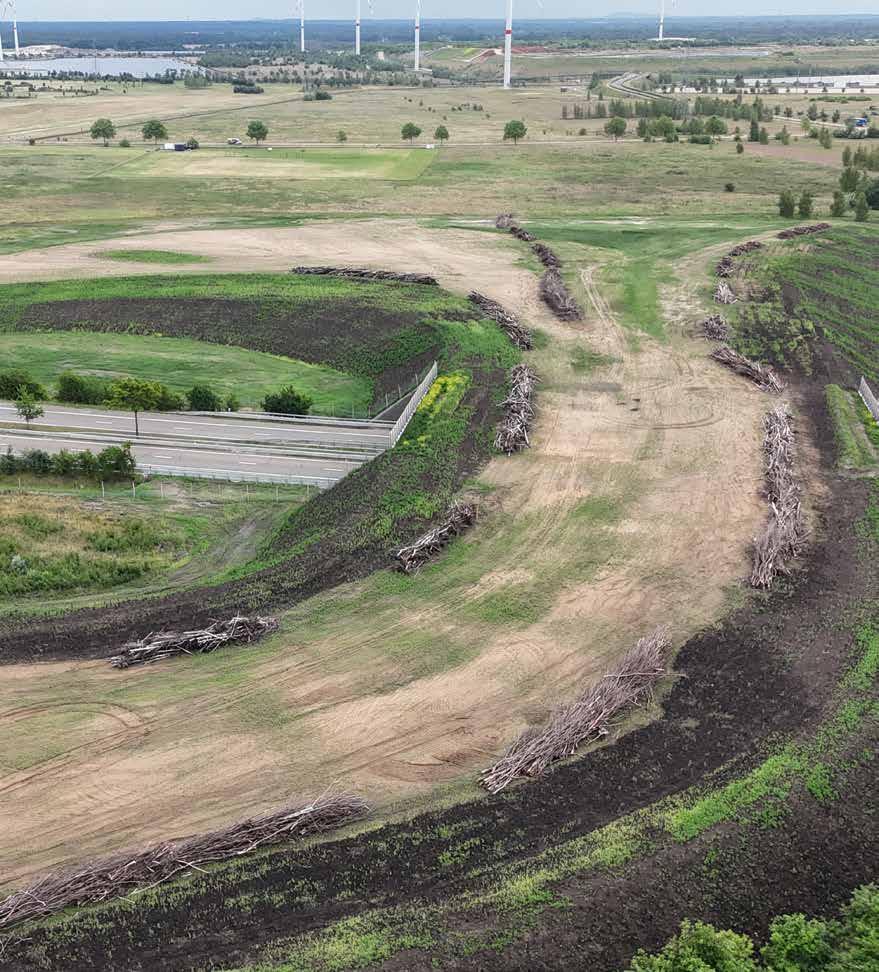
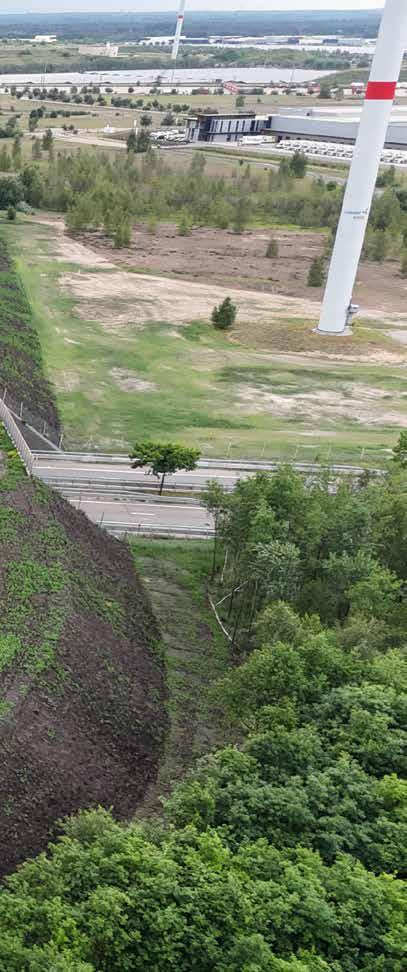
‘The opening of the Ecoduct Waaltjesbos in 2025 was a crucial step: it connects the Pijnven-Kattenbos and Sahara-Blekerheide, allowing wild boar, deer, and even wolves to move safely. This wildlife corridor is more than a bridge – it’s a lifeline for biodiversity in Bosland National Park. It’s also proof that targeted investments can turn fragmented nature into a connected whole. We’ve even spotted an otter, a new species for the park.”
At a glance
Landscapes: Forest, heathland, grassland, industrial areas
Highlights: Leyssensmolen mill and Butterfly Walk (Vlinderwandeling) with various art installations
Walking trails: Green 2.2 km (Butterfly Walk (Vlinderwandeling), wheelchair-friendly)Orange 7.6 km - Red 9.4 km
Starting point:
• Kattenbos car park, Zandstraat 40, Lommel (Green, Red, Orange)
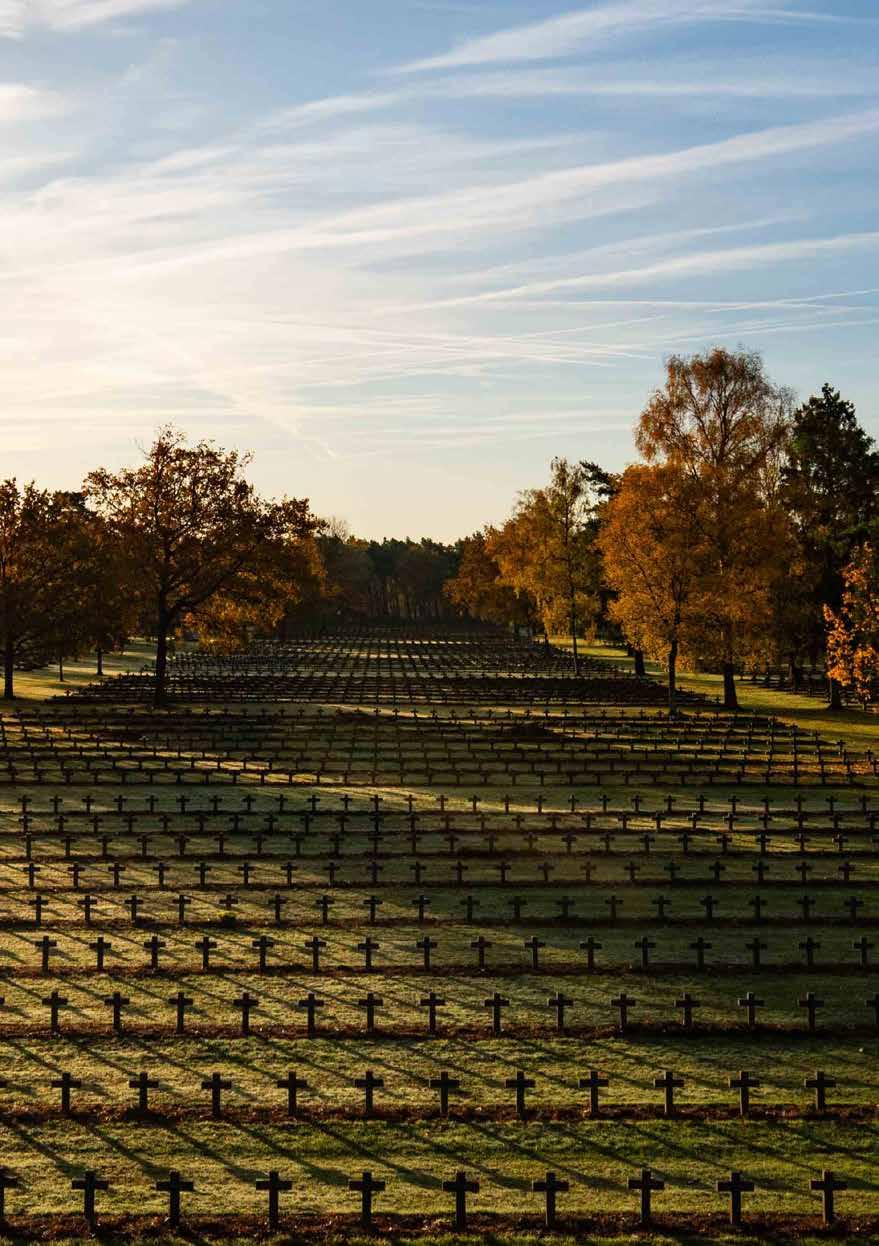
Note: Near the red trail, you’ll find the German War Cemetery. The walking area is close to the Lommel train station, so you may hear a train passing in the distance.
Art fact – From caterpillar to butterfly
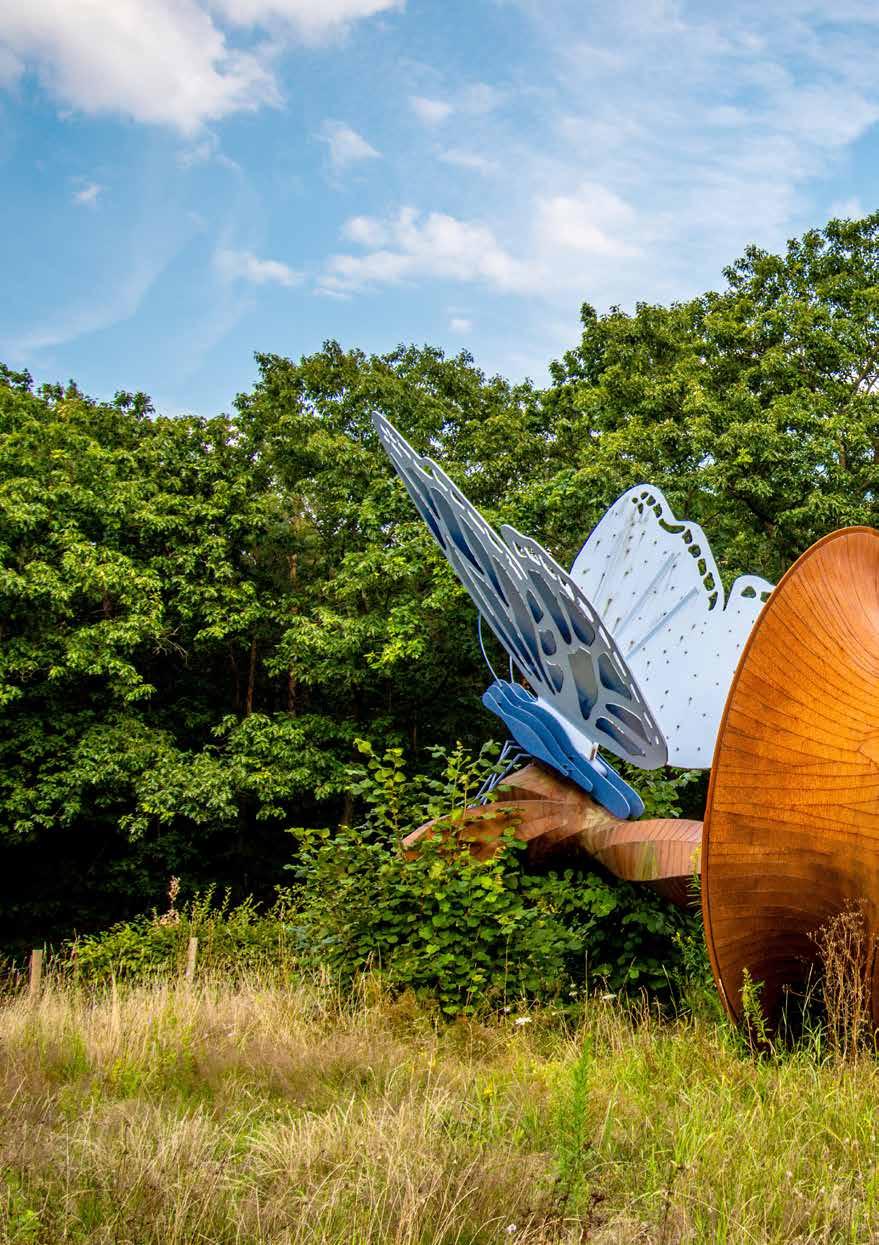
Where the Leyssensmolen mill once stood, a striking butterfly sculpture now takes pride of place. Created by landscape artist Will Beckers, who also designed the Butterfly Walk (Vlinderwandeling) along the paved trail, the sculpture represents the final stage of a butterfly’s life: emerging from the cocoon into a fully formed butterfly. This metamorphosis is symbolised by an imprint – a final stamp of the butterfly’s wings left in the cocoon.
Pijnven Science and recreation hotspot
Looking for nature with a side of adventure? Head to Pijnven, home to 2,000 hectares of forest. Here, pristine nature meets eye-catching attractions like Cycling Through the Trees, The Treehouse, and the Forest Museum. Coming with kids? They’ll love the four adventure areas in the giant play forest.
New – Ten must-sees on the Nerdland Safari
Join the Nerdland Safari, an interactive trail packed with nature fun! TV host and scientist Lieven Scheire and insect expert Peter Berx guide you through ten enchanting locations in the Pijnven. Scan the QR codes along the way to watch short videos about local flora and fauna – perfect for families and curious explorers age 12 and up. Learn more at nationaalparkbosland.be!
Tip – Valley of the butterflies
In summer, the Vlindervallei is teeming with colourful butterflies – an absolute must-see! Follow your gut (and the red trail) in the Pijnven.
Who said walking was boring? On the Bosbewonersroute, children can learn about themselves and the inhabitants of Pijnven in a playful way. And the fun doesn’t stop there. The adventure continues on the climbing frames and play structures in the various play areas.
At a glance
Landscapes: Forests, wooded lanes, heathlands
Highlights: Cycling Through the Trees, The Treehouse, the Forest Museum
Walking trails: Red 10.7 km - Orange 6.9 kmBlue 2,8 km (Bosbewonersroute)
Starting point:
• Pijnven car park, Kiefhoekstraat 16, Hechtel-Eksel (Red, Orange, Blue)
Note: There are several playgrounds with play structures
Toilet: There is a public toilet at the starting point, open daily
Super tip – From treetop to world stage
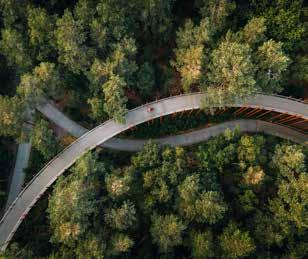
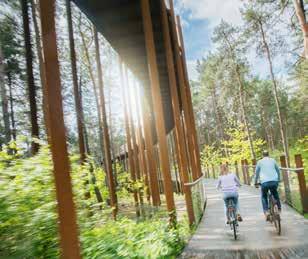
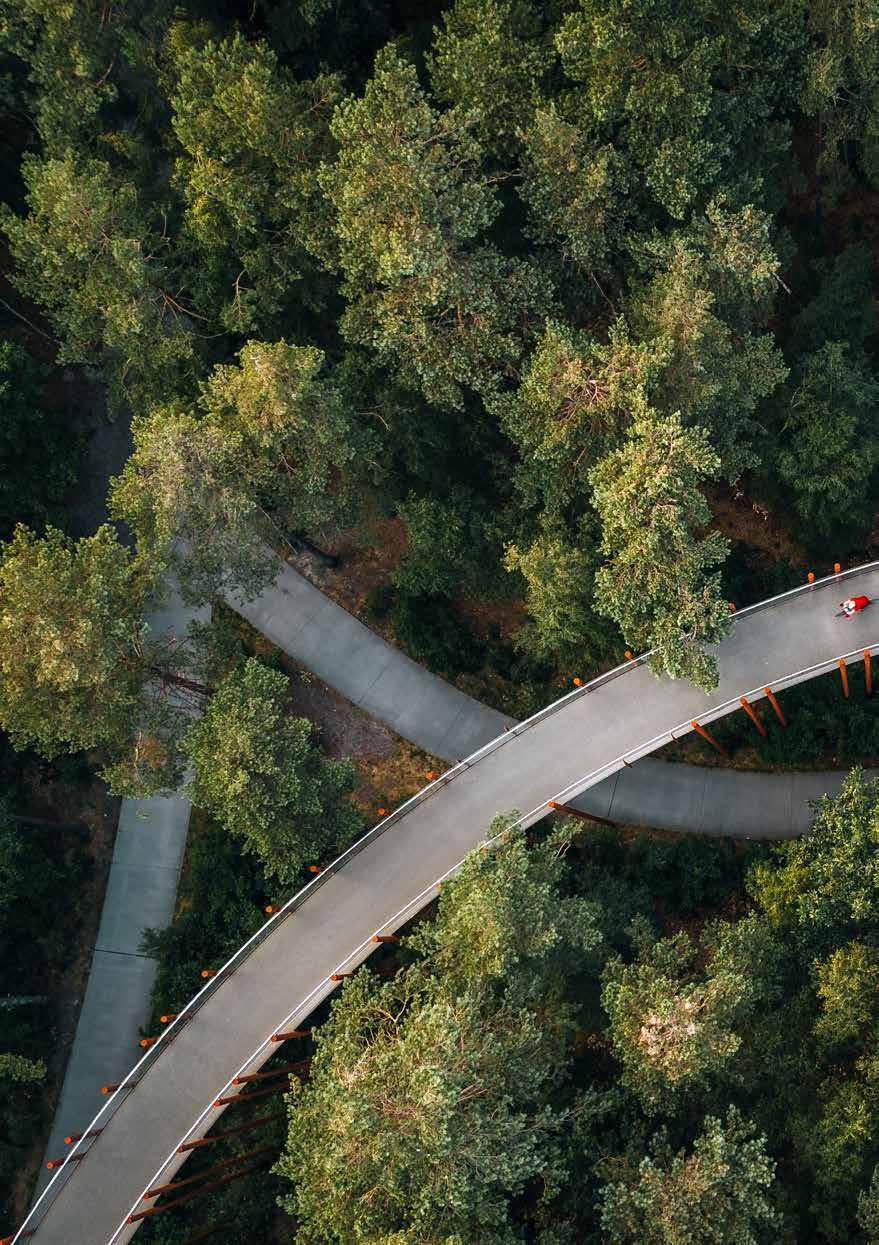
You’ve probably heard of Cycling Through the Trees. Even internationally, this unique cycling experience is making waves. The award-winning elevated cycle path guides you in a circular route through the treetops, rising slowly over 700 metres to a height of 10 metres. Before you know it, you’re pedalling in the canopy!
The project has won several international art prizes, putting Bosland National Park firmly on the world international map.
Science fact –Biodiversity in the branches
Pijnven is home to one of three Belgian Forbio research sites, where scientists study how more than 20,000 trees across different locations affect biodiversity. Part of the global TreeDivNet network, the long-term study helps scientists understand how tree species work together to create healthy, resilient forests for the future.
Resterheide
Paradise for all ages
Up for a family adventure? Ready, set, go! Resterheide offers three child-friendly trails for all ages on the border of Hechtel-Eksel and Peer. Along the way, you’ll find educational and play elements, including a challenging obstacle course. The Ladybird Trail (Lieveheersbeestjespad) is suitable for prams and wheelchairs.
Forget Nessie: say hello to the Loch Rest Monster! One of the ponds is home to Wazdeddo, a mysterious creature that’s been hiding from humans for centuries. Put on your detective hat and explore!
Tip – Toad trek
In February, thousands of toads migrate to the fish ponds – a sight to behold! Check the website for timings if you want to help them cross safely.
At a glance
Landscapes: Forests, fish ponds, streams, meadows, springs
Highlights: Fish ponds, a lookout tower, and an adventurous obstacle course
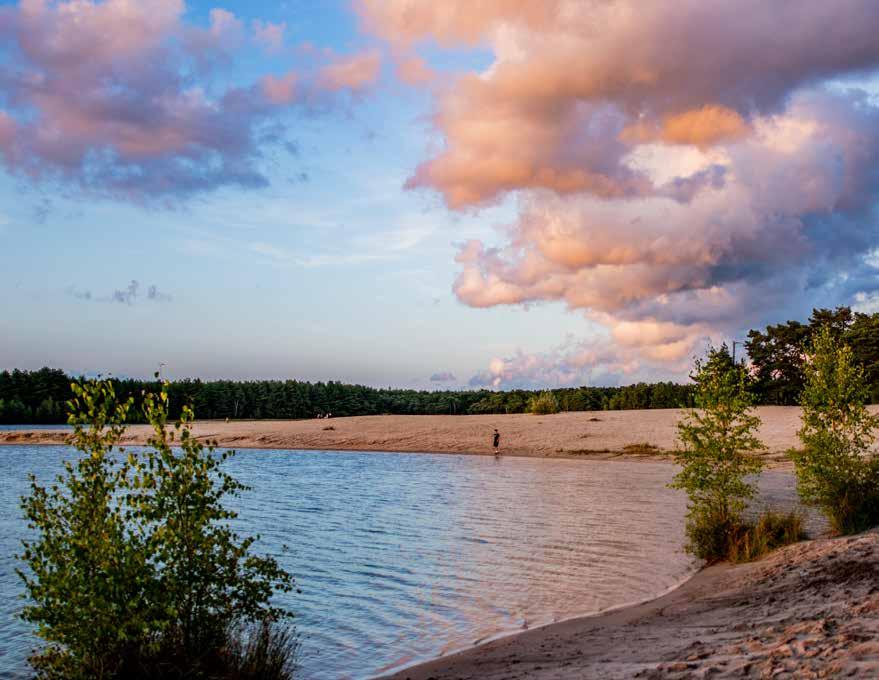
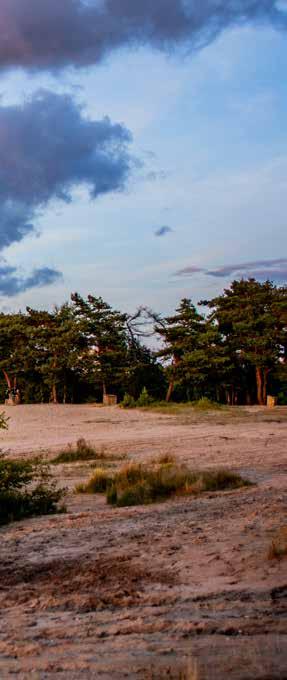
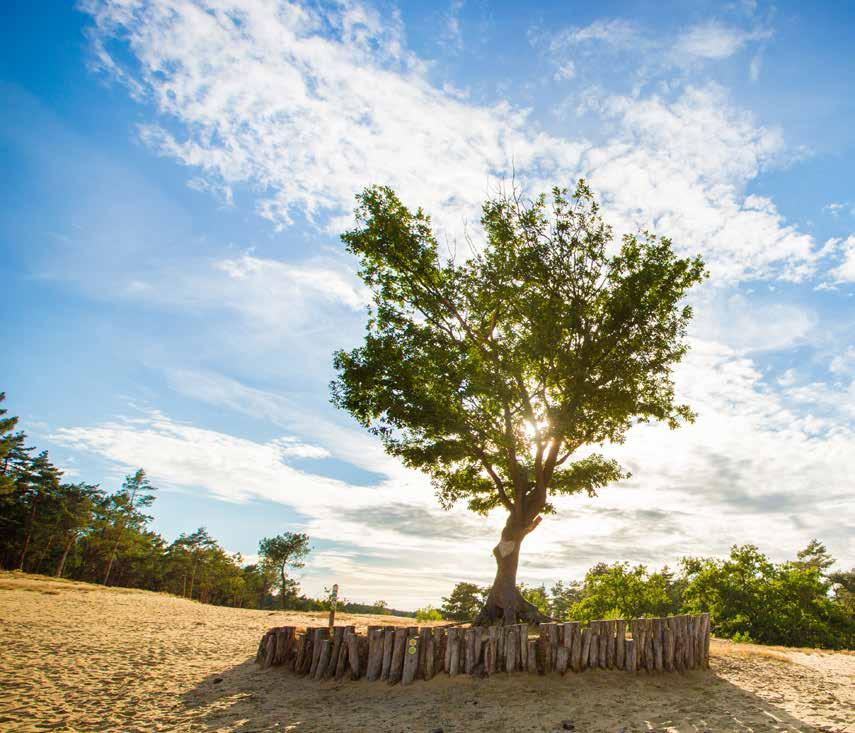
What’s in a name? The Lommelse Sahara is a true mini desert. Or is it? Beyond the vast sandy expanse, you’ll find crystal-clear ponds, stretches of heathland, and fragrant pine and deciduous forests. Birds flit across the water and the ever-changing, picturesque landscape makes your walk a one-of-a-kind experience
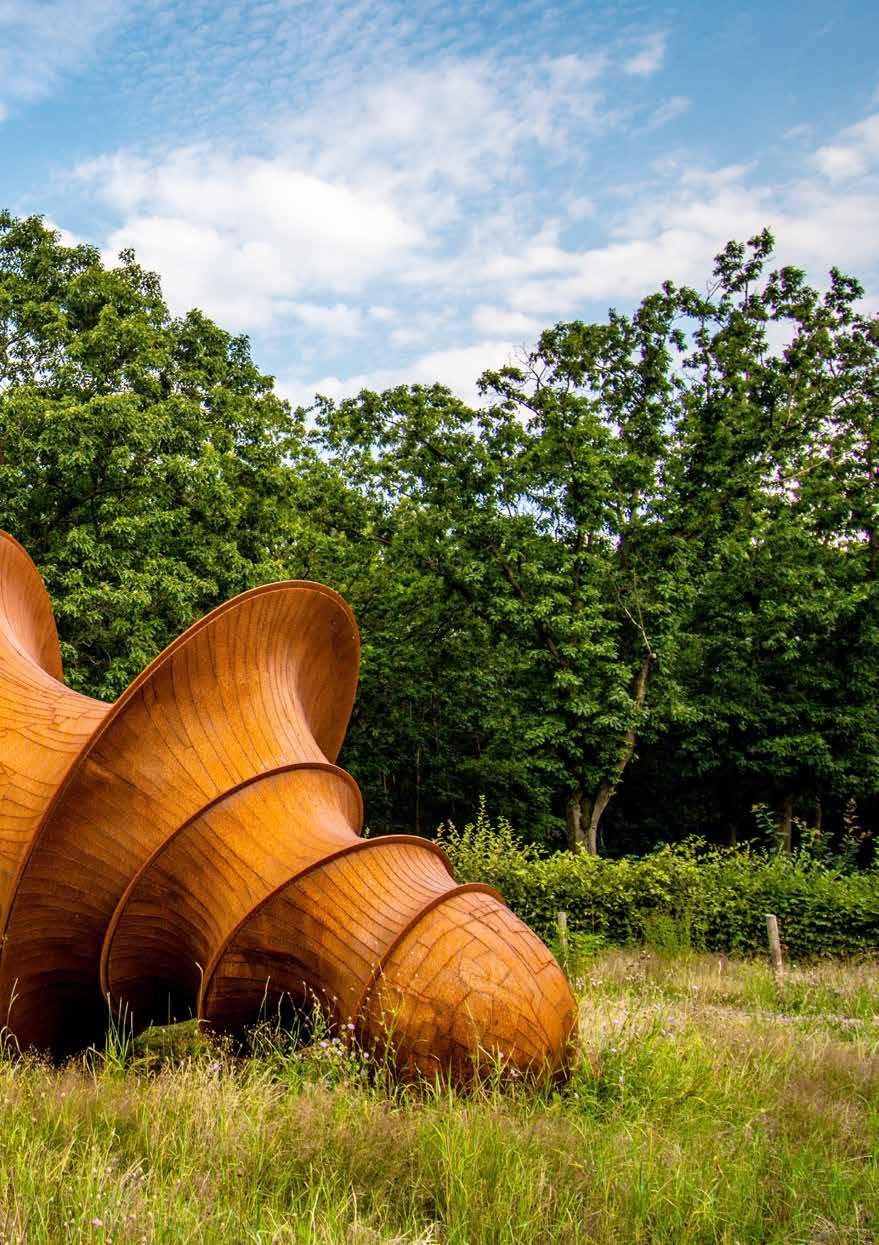
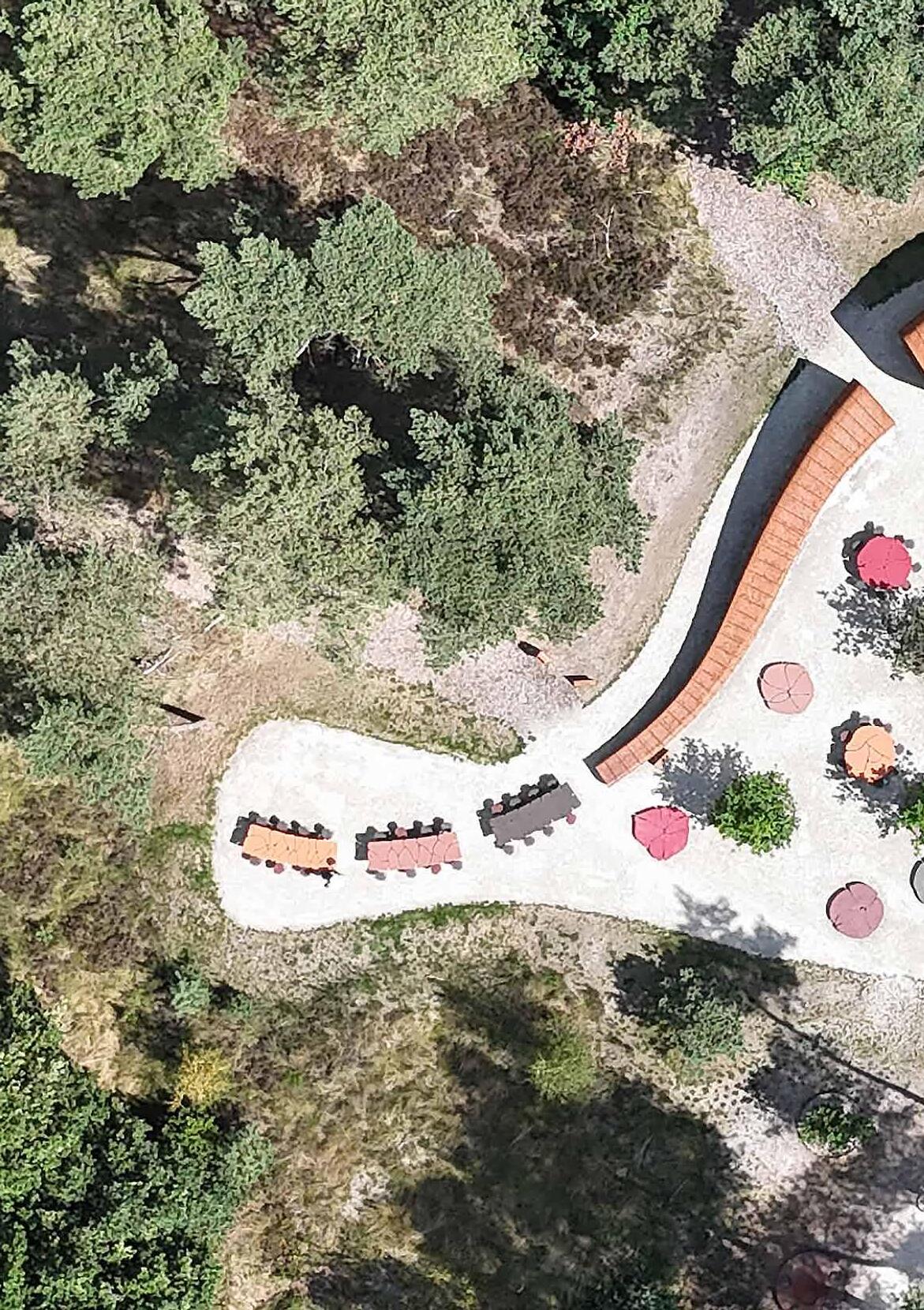
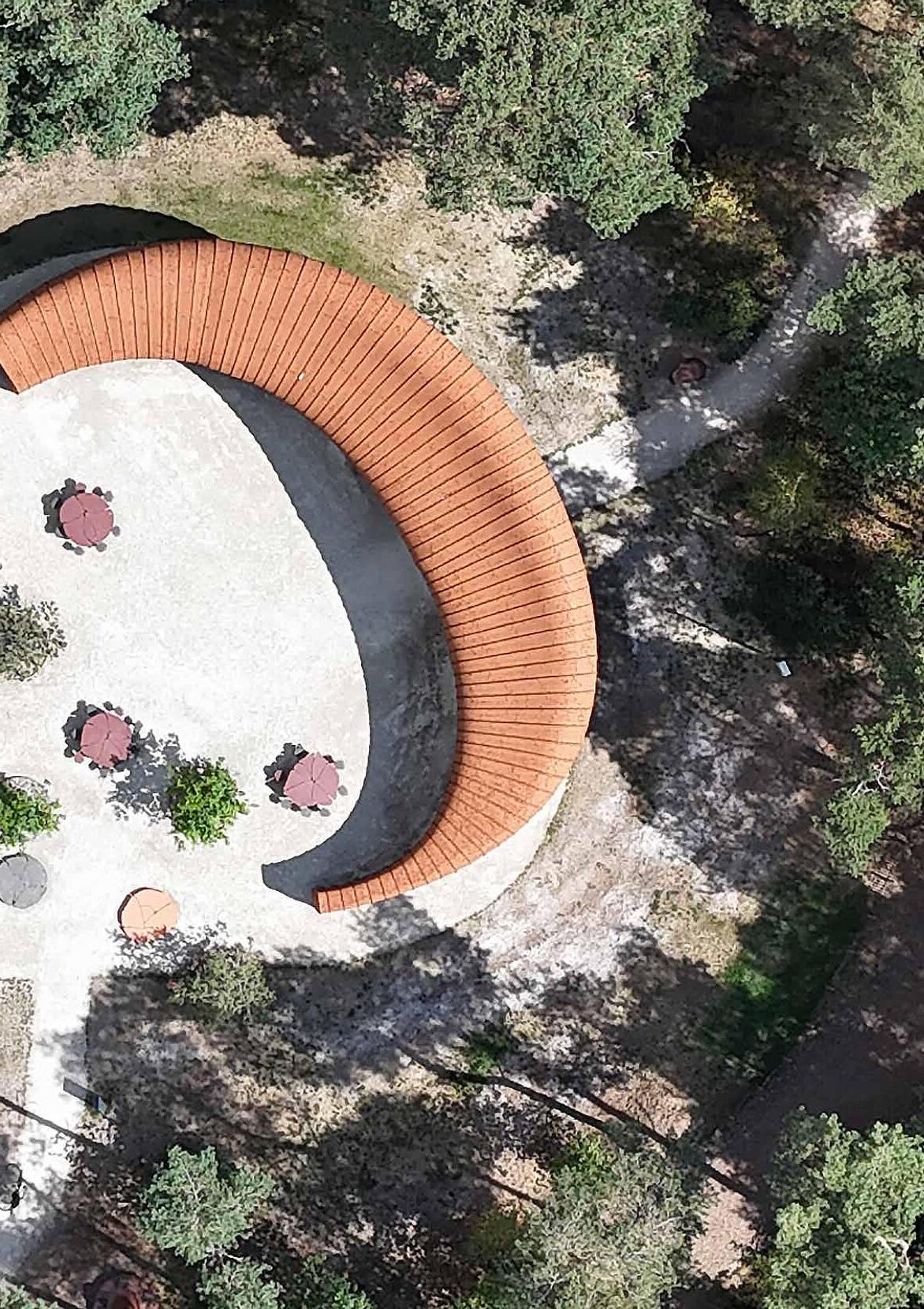
Your Sahara adventure starts at the House of Nature, an immense sculpture by landscape artist Will Beckers. The structure is 50 metres long and 7.5 metres high. The site also has a meeting spot, an experience trail, a climbing course, picnic areas, and a heritage walk.
Desert tip – Bring a water bottle!
No camels here, but on a hot summer day, you’ll feel like you’re in the African desert. So make sure to bring plenty of water with you!
At a glance
Landscapes: Forests, sand plains, dunes, ponds (note: not safe for swimming)
Highlights: House of Nature, the ‘Reus van Bosland’ observation tower, land-art playground
• House of Nature car park, Speelpleinstraat z/n, Lommel (Red, Orange, Blue)
• Playground, Sportveldenstraat 24, Lommel
• Extra car parks (short walk to House of Nature): - Soeverein, Speelpleinstraat 77, Lommel
- De Lossing, Lossingsweg 21, Lommel
Note: The red trail was voted the most beautiful walking trail in Belgium in 2018 by readers of VAB Magazine
House of Nature: Strong start
This architectural landmark is made up of thousands of steel plates and two million weld points! It celebrates the natural beauty and biodiversity of the Lommelse Sahara. The land dune, featuring a pawprint of August the wolf, is the starting point for your exploration of this striking part of Bosland National Park. Young or old, playing or learning: everything is possible and everyone is welcome here!
De grote Watering
Ingenious irrigation
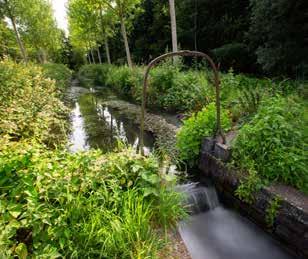
In the nineteenth century, the Belgian government aimed to transform the economically disadvantaged Kempen region’s fallow ‘wastelands’ into irrigated flood meadows known as vloeiweides.
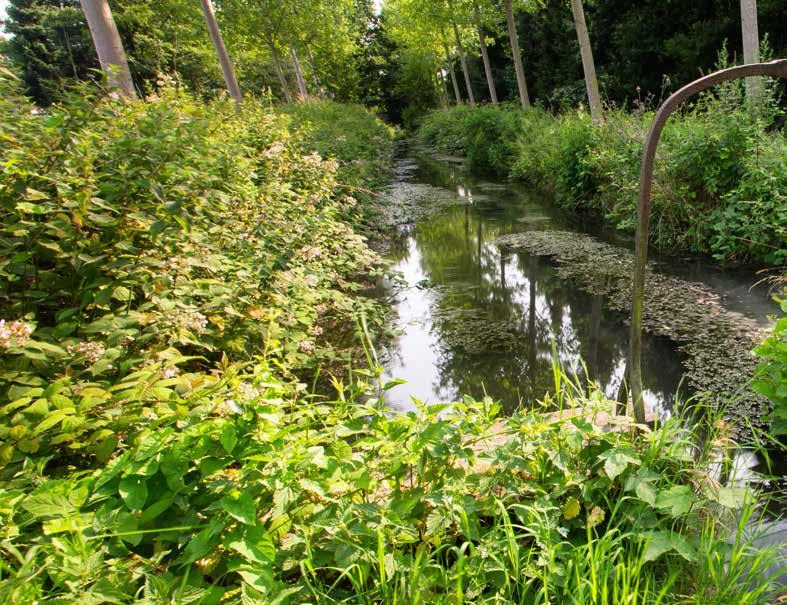
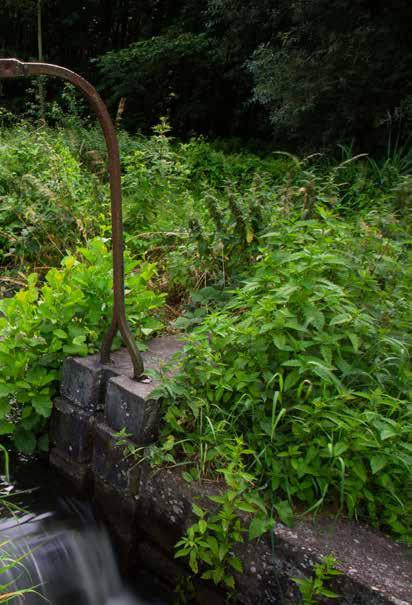
Water was carried from the Meuse through an extensive network of canals, with the Bocholt-Herentals canal as the main artery. It was an ingenious system. Thanks to the calcium-rich water, an extraordinary wealth of flowers and plants soon flourished, attracting insects, invertebrates, birds, and mammals.
The traditional flooding technique, known as witteren, has been carefully preserved for decades by Natuurpunt volunteers. In 2023, UNESCO recognised this effort, granting it the title of Intangible Cultural Heritage of Humanity, ensuring the knowledge and the story are never lost.
““As a Natuurpunt volunteer, it’s a privilege to work in De Grote Watering,’ says Albert Mertens. ‘The nature here is unique, home to rare plants and animals. What makes it extra special is that the centuries-old witteren technique has been recognised by UNESCO. Knowing we contribute to preserving a landscape of global significance gives our work even more meaning.”
At a glance
Landscapes: Grasslands, canals, streams
Highlights: The centuries-old witteren irrigation technique
Routes: Walking
Walking trails: Basic: 2 km, Blue 6.2 km (Bert Jansen witteren heritage walk, a UNESCO cultural heritage site with information via QR codes along the way)
Starting point:
• Wateringhuis car park, Wateringstraat 80, Lommel (park at the junction of Wateringstraat-Oude Maai, Lommel) (2 km)
• Kolken car park (at the Fossé), Kolken, Lommel (Blue)
Note: Intangible cultural heritage site
Local nature
The natural beauty doesn’t stop at the borders of Bosland National Park – there’s plenty to do and see nearby as well! Two areas to add to your must-see list:
NEAR THE PARK
HoksentMolhem
Hoksent-Molhem is a fascinating area on the border of Hechtel-Eksel and Peer. Discover the spectacular Dommelvallei with its rich wildlife and charming landscapes.
In the shade of the centuries-old linden trees lies the sixteenth-century Hoksent Chapel. Originally dedicated to Our Lady of the Seven Sorrows, it later became a popular pilgrimage site for Saint Anthony. Farmers from far and wide made pilgrimages here to protect their livestock. Even today, celebrations are held around 17 January each year.
Walking trails: Red 16.8 km - Orange 8.3 km Purple 11.9 km
Starting point:
• Hoksent Chapel, Sint Antoniusstraat 5, Hechtel-Eksel
Heesakkerheide
For a full day of adventure, the Heesakkerheide play park has it all: balance beams, branches for carrying, water for splashing, and mud for getting messy!
Discover the beautiful Sevensmolen mill along the winding Dommel River and the colourful patchwork of fields, meadows, and woodlands. The mysterious land art installation by Will Beckers adds a touch of wonder.
NEAR THE PARK
Sound fact – To the rhythm of nature
Klankenbos in Pelt is a truly unique open-air museum. Scattered throughout the forest are installations that invite you to actively listen to both nature and art. From subtle tones to impressive sound sculptures – ready for a full sensory experience?
Klankenbos is part of Provinciaal domein Dommelhof and free to visit. Read more at musica.be/nl/klankenbos
At a glance
Landscapes: Forests, river valleys, play park
Highlights: Mill museum, Heesakkerpark play area, land art by Will Beckers
Routes: Walking, cycling
Walking trails: Blue 2 km - Orange 4.8 km Red 7 km
Starting point:
• Sevensmolen, Breugelweg 196, Pelt
Note: Dommelvallei, historic mills in the landscape
NEAR THE PARK
Traces of the Second World War
Even the most peaceful of places can have grim pasts. Throughout history, Bosland National Park has been the stage for bloody battles, including the Second World War. The horrors of the past still leave their mark today.
War cemetery
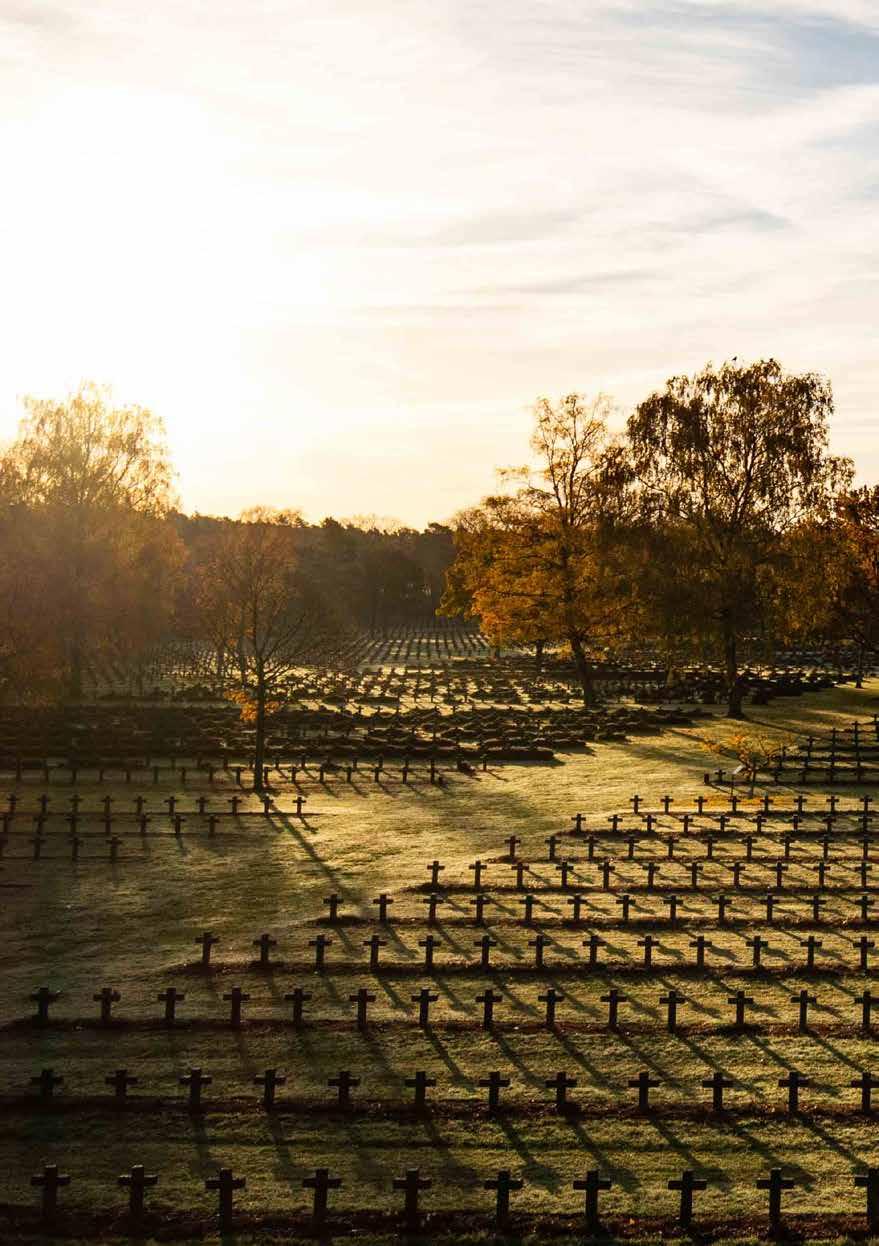
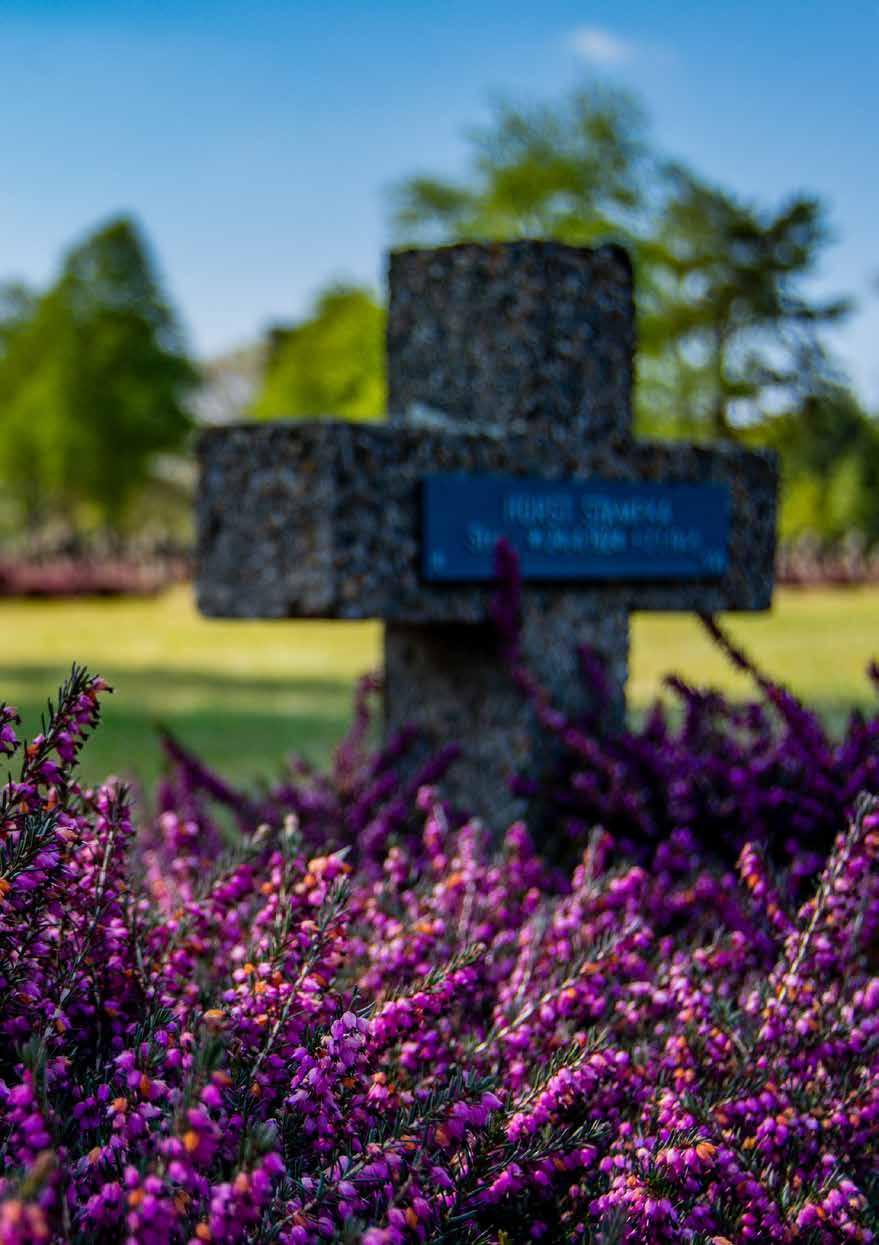
The German War Cemetery in Lommel is the largest German military cemetery in Western Europe. Established in the 1950s, it is the final resting place of more than 39,000 soldiers killed during WWII. The serene site, with simple headstones and crosses, reminds visitors of the relentless clash of arms and offers a space for reflection and remembrance.
Operation Market Garden
On 17 September 1944, Lommel and Hechtel-Eksel became battlefields for Operation Market Garden, the large-scale Allied operation that aimed to capture key bridges in the Netherlands and accelerate the advance into Germany.
Near what is now Bosland National Park, British and American troops were met with fierce German resistance, especially in Hechtel-Eksel. The Allies ultimately succeeded in driving out the occupiers and advancing toward the Netherlands.
Bullets in the Korhaan
During the Battle of Hechtel, the Korhaan distillery was the site of intense fighting. The bullet holes are still visible in its walls today.
This small distillery, dating back to 1833, specialised in high-quality spirits, producing jenever, liqueurs, and fruit distillates using traditional methods and local ingredients. The story of this artisanal family business continues in an interactive museum, which is well worth a visit. Visit korhaan.be.
Line of sight
Several WWII bunkers can still be found along the Bocholt-Herentals canal. These small, reinforced concrete structures were part of the German defensive lines. They were strategically placed to guard the canal, a key transport route during the war.
Walking
In Flanders’ largest contiguous nature area experience the wilderness of tomorrow, today. The easiest way is on foot. The national park has of walking routes, from short loops to longer trails. There’s even a network connecting the entire region –no wonder visitors call it a walker’s paradise adventure?
You decide!
Before you set off, decide whether you want to follow a trail or plan your own route. Either way, we’ll happily point you in the right direction.
Marked trails
Bosland National Park has a series of interlinked walking areas, each with one or more marked routes. Pick your scenery, choose a distance, follow the colour-coded symbols, and finish where you started. Intrigued? Check the ‘Nature areas’ section on page 26 to see all available loops. Happy hiking!
Digital guide
The trail signage is excellent but if you prefer a digital backup or a detailed overview, visit wandeleninlimburg.be/en . You can download your route to your phone and follow the looping trails to navigate effortlessly through the park.
Not sure where to start?
Follow one of our suggested routes at nationaalparkbosland.be!
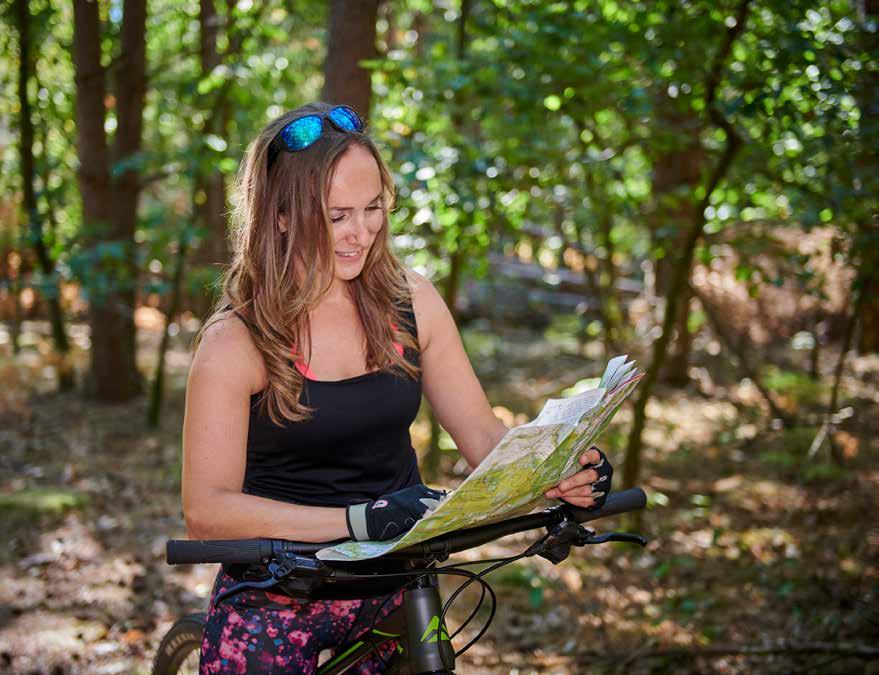
Paper map
Prefer exploring with a paper map? No problem! Check the ‘Maps’ section on page 96 to find all the information you need.
Tip – Take a break in the GlazenHuis
You can’t miss it: the ultra-modern GlazenHuis (Glass House) in Lommel that houses the Flemish Centre for Contemporary Glass Art. Outside, the transparent pavilion celebrates the art of glassblowing; inside, visitors can admire permanent collections and rotating exhibitions. Want to give it a try? Sign up for a demo or workshop to learn the delicate craft firsthand.
Note: Due to renovations, the site will only reopen in spring 2027. But even a stroll around the outside is worth it.
Plot your own route
The Bosland National Park walking network connects every corner of the park and beyond. Want to choose your own distance and scenery? Plot your own route and walk from junction to junction. Whether you fancy a long trek through different landscapes or a short loop through your favourite area, with more than 400 kilometres of trails to choose from, you’re sure to find something. Did you know that more than 70% of the trails are on sandy paths?
There’s an app for that
Linking trail junctions couldn’t be easier with the route marker app (Wandelknooppunt-app). You can download it from the App Store or Google Play Store and load the walking network right onto your smartphone. Couldn’t be easier!
Trail tip – Belgium’s most beautiful walk is in Lommel
The red trail through the Lommelse Sahara was voted the most beautiful walk in Belgium by VAB Magazine readers. Our advice? Try them all and pick your favourite! After all, Lommel was crowned the Walking Municipality of the Year in 2023.
Walks on wheels
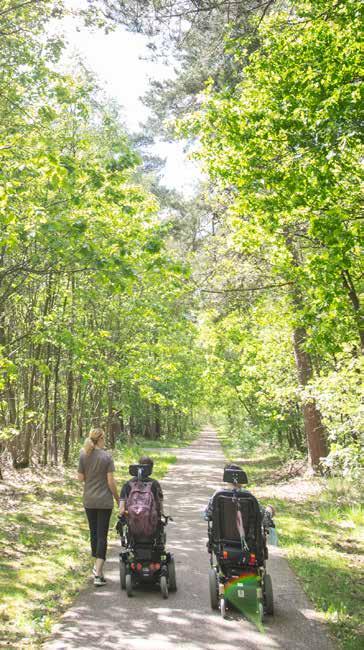
Wheelchair and pram-friendly routes
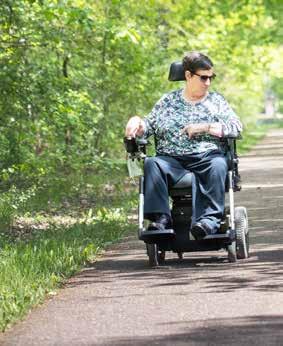
Nature is for everyone. At Bosland National Park, we understand that better than anyone. Our park has several scenic trails designed especially for walkers with four-wheel drive.
Butterfly Walk (Vlinderwandeling)
Starting point: Kattenbos, Zandstraat z/n, Lommel Distance: 2.2 km
Walks on Wheels (Wandelen met Wielen)
Starting point: Holven-’t Plat, Revalidatie en MS-centrum, Kleine Boemerangstraat, Pelt Distance: 1.8 km
Looking for a spot where your furry friend can run free? Head to one of the spacious off-leash zones. Your dog will love it (and so will you)!
In den Brand
Starting point: Kamertstraat z/n, Hechtel-Eksel
Kattenbos
Starting point: Zandstraat z/n, Lommel Sahara
Starting point: House of Nature car park, Speelpleinstraat 77, Lommel
Molsekiezel-Ruwe Heuvelweg
Starting point: Start of Ruwe Heuvelweg z/n, park outside the barrier
Parkoever
Starting point: Parkoever z/n (at the end of the dead-end street), Pelt
Kolonie
Starting point: Sint-Bernardusstraat z/n, Lommel
NEAR THE PARK
Cycling
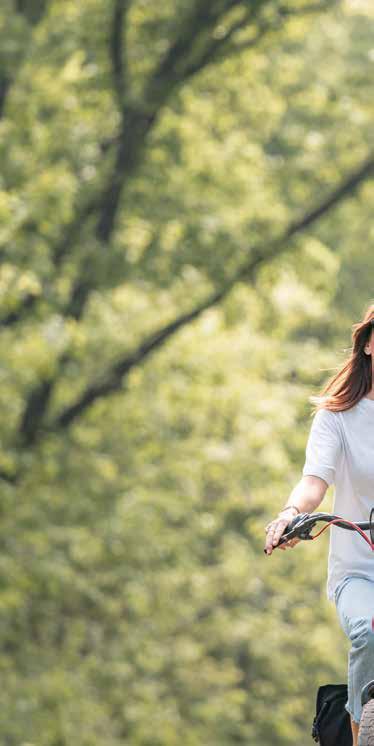
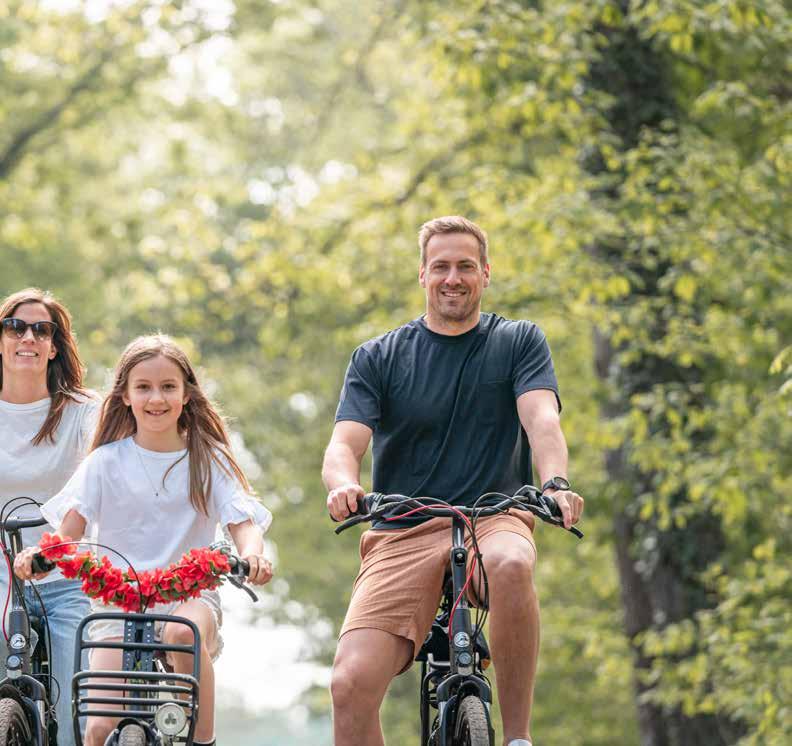
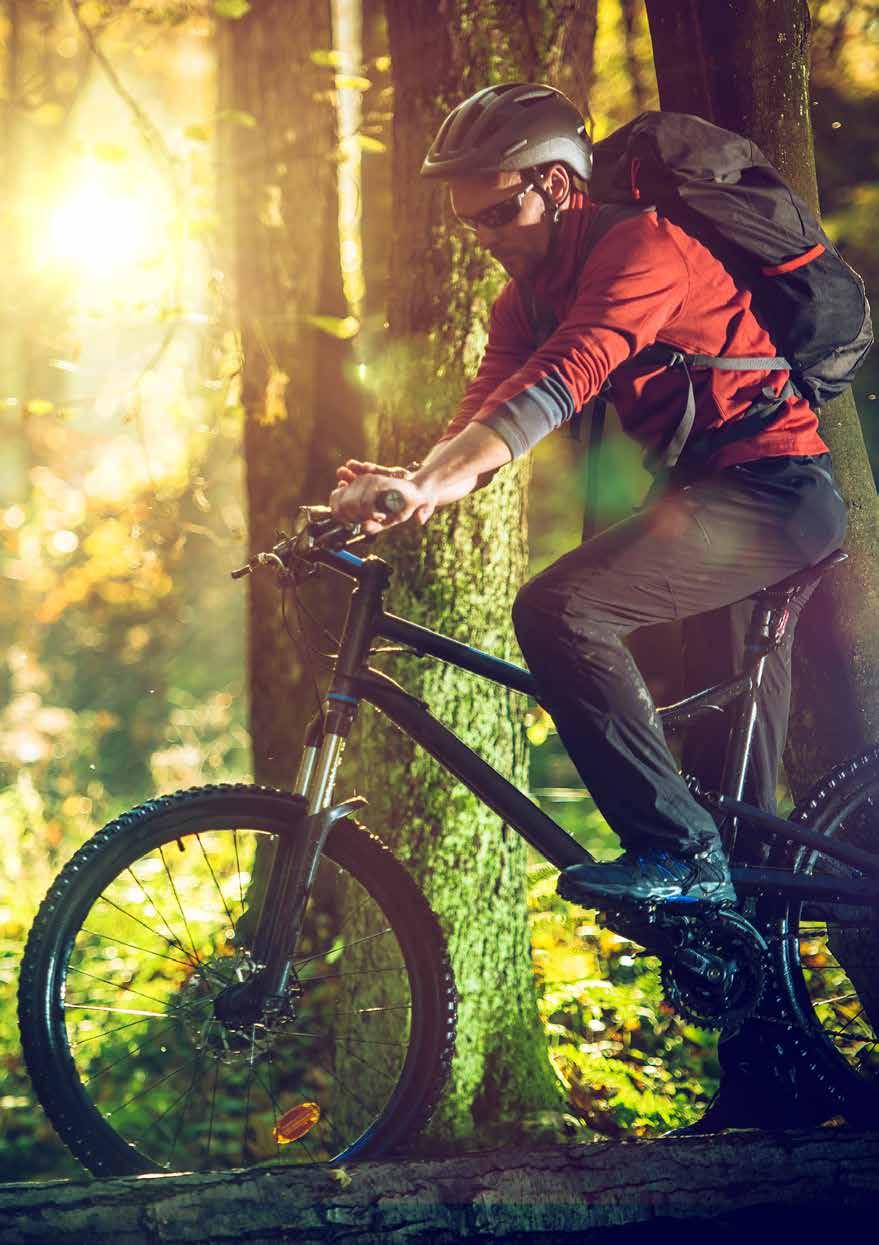
Shady forests, winding canals, sunny fields, vast meadows, protected nature reserves, and attractions: Bosland National Park has everything for the ride of a lifetime partner, or in a peloton of friends, every turn brings a new surprise. Hop on the saddle, feel the wind in your hair, and get ready for pure freedom.
Cycling tip – The prettiest ride
Attractions, you say? While it may not be a theme park, Bosland National Park definitely takes you to new heights. With Cycling Through the Trees, you’ll find yourself pedalling in the forest canopy. If you’re getting butterflies just thinking about it, just wait until you’re up there!
Fun fact –Trading tales of the teuten
From the seventeenth to the nineteenth centuries, travelling merchants and craftsmen called teuten were active in the border region of Belgium, the Netherlands, and Germany – including in HechtelEksel, Pelt, and Lommel.
These North Limburg entrepreneurs traded in copperware, textiles, and horses. From this region, they set off to major cities to sell their wares. They brought prosperity to the region and contributed to the exchange of knowledge and culture. The historic teuten houses still stand as silent witnesses to their influence.
Curious about Eksel’s fascinating teuten past? Join a guided walk through the village and discover the story of these clever merchants and the legacy they left behind. For more information and to book a tour, contact toerisme@hechtel-eksel.be.
Plot your own route
The Limburg Cycling Network is world-famous. Its secret? The ability to cycle from junction to junction. Interested? Grab your Limburg Cycling Map and plan your route based on the sights you want to see. Once on the road, simply follow your notes.
Quiet and car-free paths lead you from one hidden gem to another, some well-known, others recently unearthed. Pedal through picturesque villages, enjoy a local beer or a regional delicacy at one of the park’s many host venues, or spread out a picnic blanket in the grass. Relaxation has never felt so good.
Plan, print, pedal
Prefer to plan your route online? Use the Visit Limburg route planner to create your itinerary in no time. Plot your route at visitlimburg.be/en/cycle-route-planner, print out your junction numbers, tape them to your bike frame, and off you go!
Need some inspiration?
Check out our suggested cycling routes at nationaalparkbosland.be.
Bicycle rental
No bike? No problem! You can rent one from one of our trusted partners:
• Hechtel-Eksel: Fietsboetiek, Eetcafé De Lage Kempen, Landal Eksel
• Lommel: Center Parcs De Vossemeren, Park De Soeverein (via fietsparadijslimburg.be)
NEAR THE PARK
Mountain biking
Muddy trails, sandy climbs, and steep descents: Bosland National Park is pure paradise for mountain bikers. Make a weekend of it, because the North Limburg mountain bike network whopping 270 kilometres, winding over peaceful, unpaved trails through the breathtaking Sahara and the tranquil Pijnven forest. Want to push your limits even further? From Lommel, Bocholt, or Hamont-Achel you can cross the border into the — all the way through South and Central Limburg into North Brabant. That’s 1,160 kilometres of MTB heaven. Take your time –there’s plenty to see along the way.
Marked trails
Get your bike (and calves) ready, because there are plenty of paths to choose from! Bosland National Park stretches across three municipalities, all of which have multiple routes. View and download them all at nationaalparkbosland.be of sport.vlaanderen/mountainbikeroutes.
Don’t want to take the mud home with you? Rent a mountain bike at fietsboetiek.com.
Horseback riding
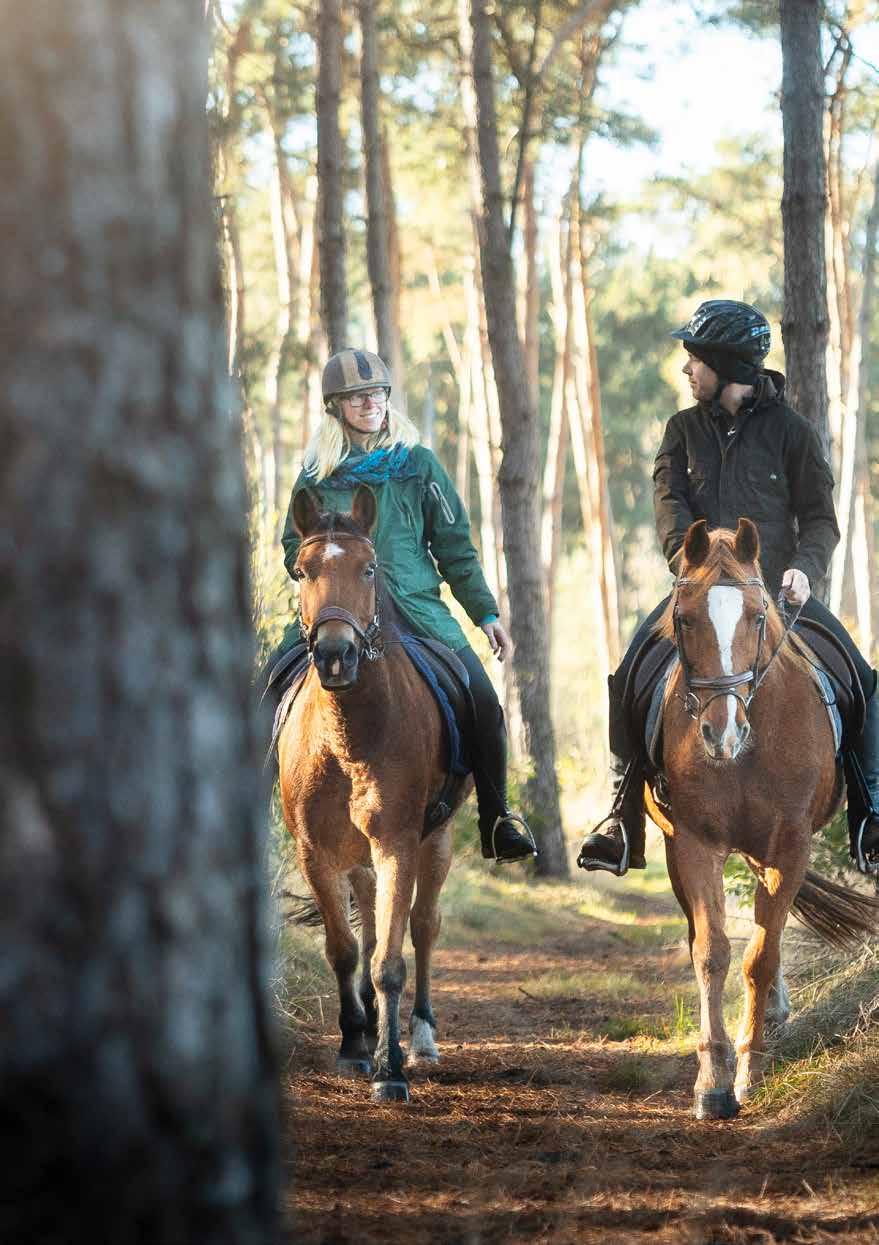
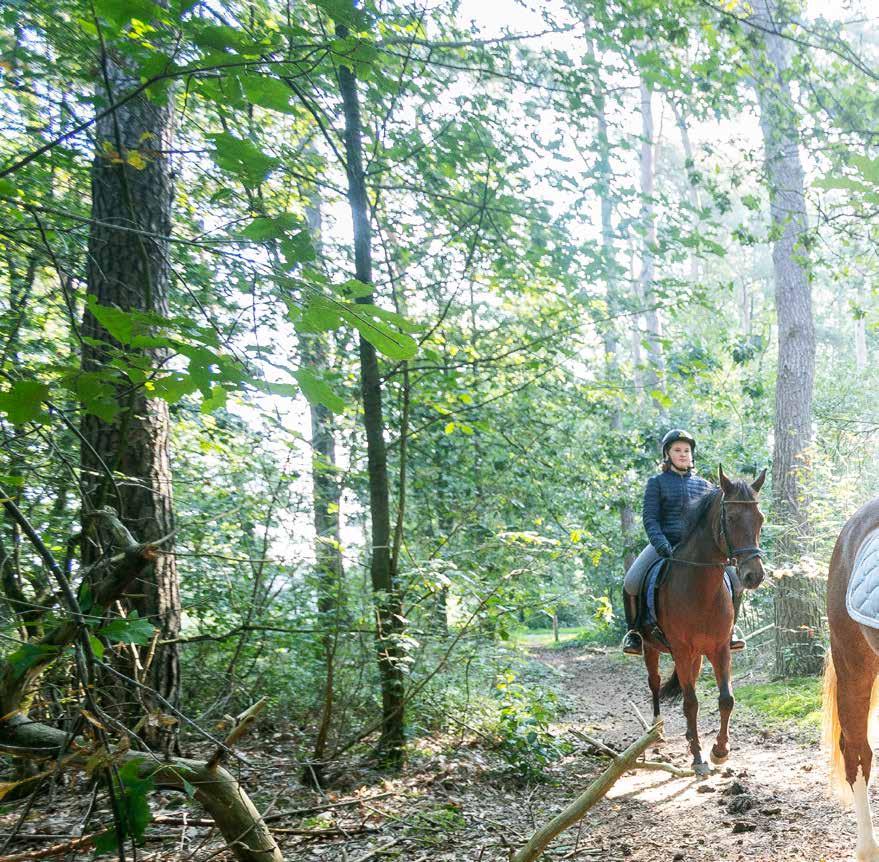
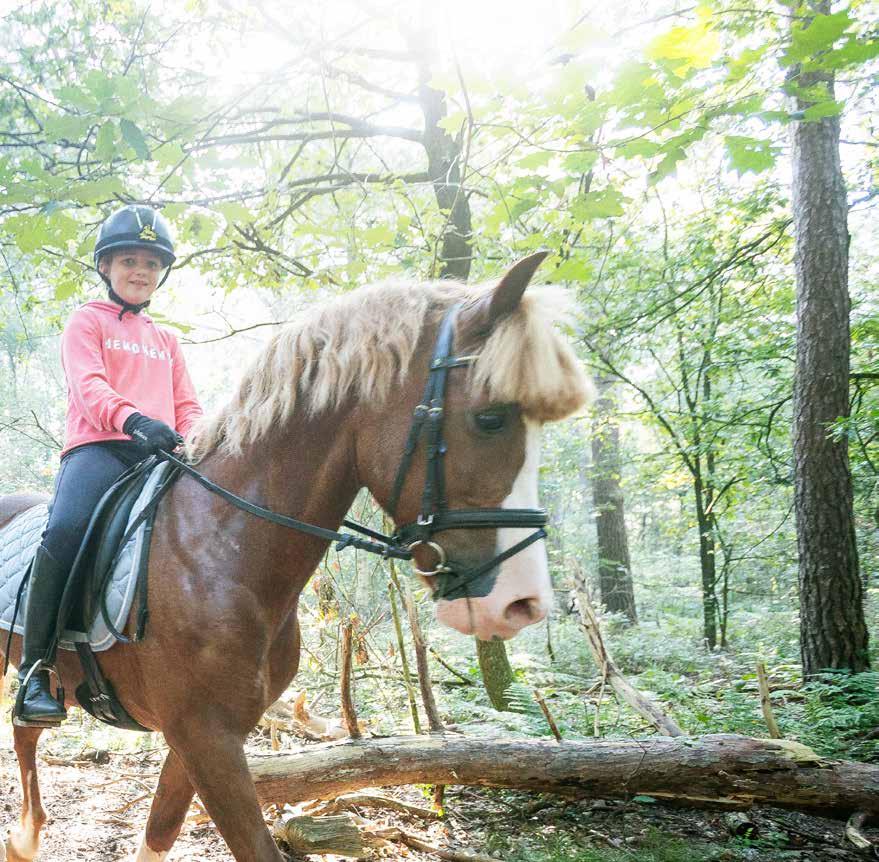
Yeehaw! At Bosland National Park, roam. The best part: you hold the reins! Trot, canter, or gallop from one riding junction to the next and create your very own loop.
Need a horse-friendly place to pause or spend the night? You’ll find plenty of cafes, restaurants, and hotels that cater to you and your four-legged friend. Let’s ride!
Plot your own route
Can’t wait to saddle up? We don’t blame you!
Bosland National Park has some of the most beautiful bridleways and carriage paths in Flanders. Use the junctions in the Limburg Equestrian Network to create a stunning route along sandy trails and unpaved paths. It has more than 650 kilometres of pure riding bliss!
Tip – Ready-made routes
Feeling overwhelmed by all the options? We’ve got you covered with some suggested routes. Trot over to nationaalparkbosland.be!
History fact – Marvelous mills
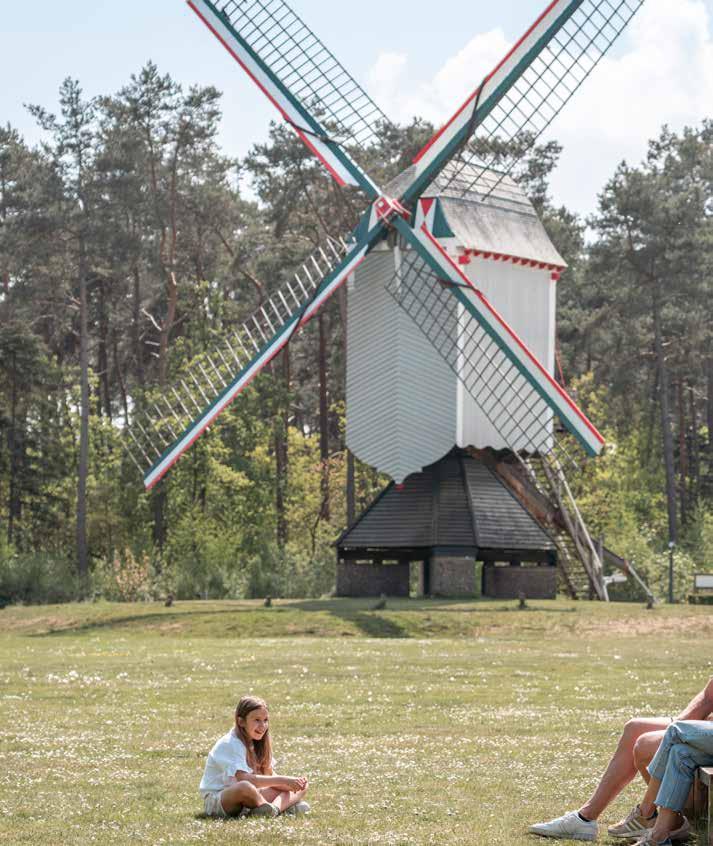
Don Quixote may have famously jousted with windmills, but in Bosland, riders can admire them safely from the saddle. These majestic mills tower above the landscape and many have been spinning for centuries – like the ones along the Dommel. Some even date back to the eighth century. Want to see them in action? These are definitely worth a detour:
• Pelt: Sevensmolen (Heesakkerheide), Wedelse Molen, Bemvoortse Molen, Slagmolen, Molen van Leyssen, Lilse Molen, Kleinmolen, and the Molenmuseum (windmill museum)
• Lommel: Leyssensmolen (Kattenbos)
• Hechtel-Eksel: Stermolen (Eksel centrum)
The star of the mills
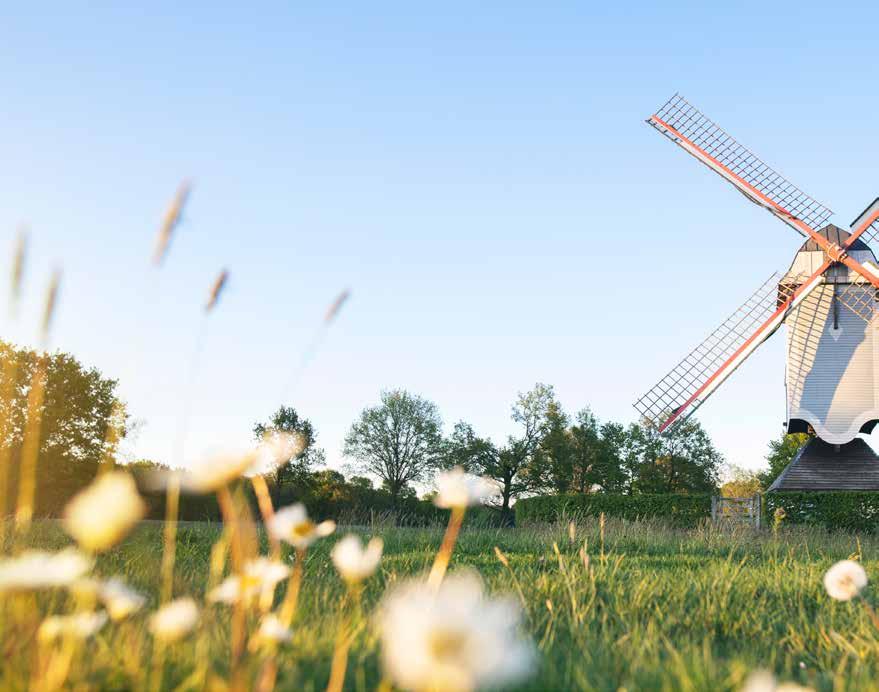
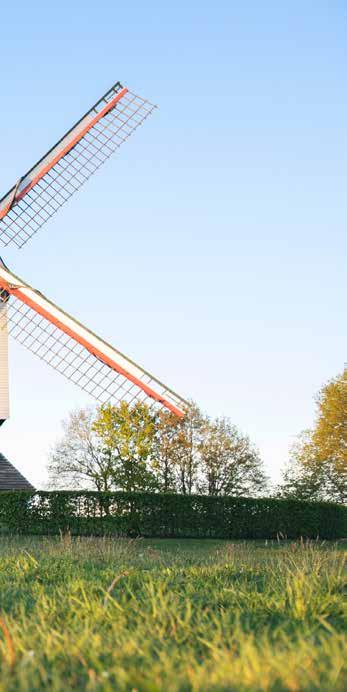
The Stermolen in Hechtel-Eksel truly stands out above the rest. It was named after the large compass star on its side. Every second and fourth Saturday of the month, the wooden grain mill from 1803 opens its doors to visitors from 1 PM to 5 PM. Feel free to stop by, no reservations needed. Next door, the mill house hosts an interactive, child-friendly exhibition about the history and workings of the mill.
Visiting with a group? Book your trip in advance. A passionate miller will give you a tour of the mill and the mill house. Book your visit at vrijetijd@hechtel-eksel.be
NEAR THE PARK
Horse rental
If you love to ride but don’t own a horse, you can still explore the equestrian trails in Bosland National Park. There are two locations that offer horse rentals. Contact them directly to arrange your ride.
• Franciscushof, Fierkens-Heikant 53, Pelt
• Heithoeve, Kooiveldstraat 8, Pelt
adventurers
Looking for an exciting adventure for young explorers? Discover the wide range of child-friendly activities in Bosland National Park: from treasure hunts like The Pharaoh’s Golden Garden, The Lion King’s Treasure, and other interactive walks, to animal expeditions and playful adventures in nature. Love bugs, science, and Lieven Scheire? Don’t miss the brand-new Nerdland Safari in the Pijnven – perfect for curious minds of all ages!
Go to nationaalparkbosland.be for an overview of all child-friendly activities and outings.
Drifting down the Dommel
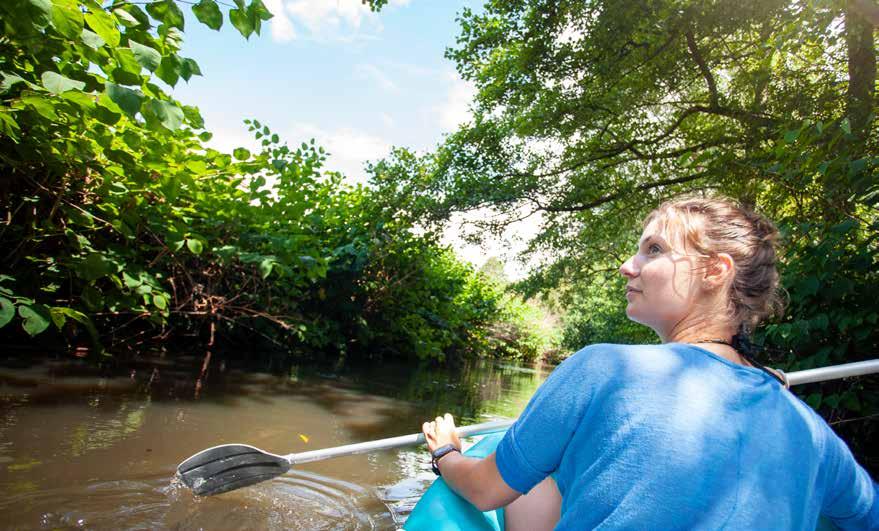
Few things are as relaxing as floating down the Dommel. At certain times of the year, you can explore a stretch of the river by canoe or kayak. The full route from Neerpelt to the old watermill in Valkenswaard is about 15 kilometres and takes roughly 4 hours. The short route is 9.5 kilometres and takes about 2.5 hours. After a short briefing by the guide, you’ll paddle your way through two majestic nature reserves.
• Start: Tussenstraat 2, Pelt
• Availability: All year except 15 March to 15 July (breeding season)
• Reservation nwc.be/verhuur
The Treehouse: A unique meeting spot
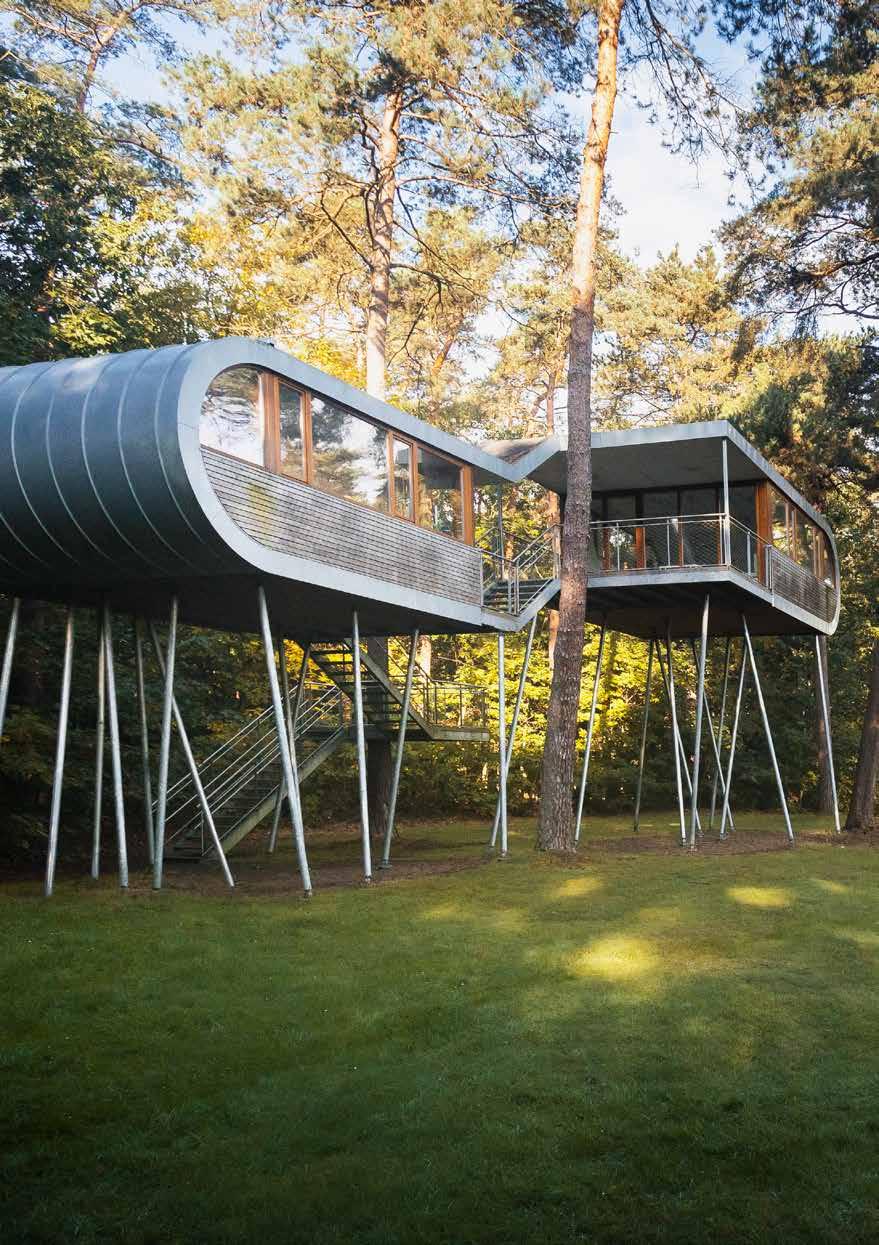
For business meetings and team-building sessions with a twist, The Treehouse is an incredible meeting venue in the heart of Bosland National Park. This ultra-modern treehouse can host fifteen people and is fully equipped for meetings, brainstorming sessions, team-building activities, and small events.
Combine work with nature and business with pleasure. Enjoy a relaxing walk among the trees, a round of disc golf, or a bike ride on the nearby Cycling Through the Trees route. At The Treehouse, anything is possible.
Curious about the story behind The Treehouse? Looking for practical information about pricing and availability? Head to the-treehouse.be
Rainy day? Dive in!
Even when the sun doesn’t shine, Bosland National Park is the perfect place for a fun-filled day! Swap your umbrella for your swimsuit and discover the incredible swimming spots in and around the park. Rain or shine, fun guaranteed!
Lago Pelt Dommelslag
From waterslides and whitewater rides to a wave pool and a wellness zone: families and relaxation-seekers alike can enjoy tropical vibes year-round. Let the rain fall!
Center Parcs De Vossemeren
Step into the exotic world of Aqua Mundo. Snorkel with tropical fish in the coral pool, brave the whitewater ride, or relax in a warm bubble bath. A full day of fun under one roof.S
Sportcentrum Optisport De Soeverein
Modern and family-friendly, De Soeverein offers both recreational and fitness swimming. While the kids splash around int he children’s pool or race down the waterslide, the more active swimmers can do laps in the main pool.
Love Bosland National Park?
Support the park your way
There are several ways you can contribute to the preservation, management, and further development of Bosland National Park.
• As a volunteer caretaker: you can help maintain the heathlands, remove invasive species, and clean up litter.
• As a partner: you can lend a hand with green projects or events.
• As a donor: you can make a voluntary donation.
• As an ambassador: you can organise initiatives to promote or sell local and sustainable products from the park.
Interested or have ideas? Contact nationaalparkbosland.be.
Meet our hosts
We refer to the local tourism operators who welcome and guide visitors through our park as hosts. You can get to know them at nationaalparkbosland.be
Want to meet them in person? Visit the hosts (and hostesses!) and enjoy the best that local hospitality has to offer. These dedicated hosts will make your park experience extra special. Enjoy!
Practical info
Public transport
By train
There are three train stations on the northeast side of Bosland National Park:
• Lommel – facilities: ticket machine, buses, Blue Bike rentals
• Overpelt – facilities: ticket machine
• Neerpelt – facilities: ticket machine, buses, Blue Bike rentals
Hoppin points
A Hoppin point is a coordinated hub where different modes of transport come together. You can start your journey here or switch from one mode of transport to another.
Each Hoppin point has a car park and bicycle storage, and some have parcel lockers, luggage, storage, or a bicycle repair station. See all Hoppin points in Bosland National Park at hoppin.be
NEAR THE PARK
Warm welcome
Your first stop at Bosland National Park should be one of our tourist information offices. Our friendly staff would be happy to help you and answer all your questions. This is also the place to find walking and cycling maps.
Visit Lommel
Kerkstraat 54, 3920 Lommel
+32 (0) 11 39 96 00
Info and opening hours: visitlommel.be (open on weekends)
Info and opening hours: hechtel-eksel.be/vrijetijdsloket
Is Bosland National Park always open?
Do I have to pay to get in?
Bosland National Park is open to visitors from sunrise to sunset. Entrance is free, with the exception of certain activities. Please note that some areas are strictly ‘animals only’ to avoid disturbing wildlife, nests, eggs, and/or shelters. Always stay on the designated paths.
Who can use the marked routes?
Whether you walk, cycle, ride, run, or mountain bike, there are routes designed for everyone. Just make sure to stay on the path meant for your activity. This helps keep Bosland National Park safe and enjoyable for everyone.
Are dogs allowed in the park?
Absolutely! Just make sure you keep your dog leashed while you walk and stick to the marked paths. Dogs are only allowed off-leash in the designated off-leash zones.
What do I throw away my waste?
There are a limited number of waste bins in the park. Our motto is leave no trace, meaning take everything with you when you leave. This includes trash but also a day full of memories! We also discourage visitors from picking flowers, fruits, and mushrooms – they belong in nature!
What can I do to prevent wildfires?
Great question! During warm, dry periods, be extra careful in highrisk areas such as pine forests and heathlands. Rest assured, the higher the risk, the more preventive measures we take, including closing certain areas. Making fires and smoking is always prohibited. Plan ahead and check the risk level before you leave at natuurenbos.be
Is geocaching allowed?
Of course! There are many treasures to be found in Bosland National Park. Want to hide a cache of your own? Ask the landowner or manager for permission and hide your cache within three metres of the marked path.
Can I organise an activity in Bosland National Park?
Yes, but only under strict conditions and with the approval of the landowner or manager. Have an idea in mind? Check natuurenbos.be for the terms and contact them at least two months in advance.
Can I swim in the lakes and ponds?
The ponds at Sahara, Heuvelse Heide, Blauwe Kei-De Maat, and Resterheide are peaceful havens for wildlife and plants. To keep it this way – and to reduce the risk of drowning and blue-green algae – swimming is not permitted. If you fancy a swim, head to one of the recreation areas or swimming pools in the area (e.g. Vossemeren, Optisport, or Lago Pelt).
Are hunters active in the area?
Hunting is allowed for those who have a permit, so it’s possible to see hunters at certain times of the year. Don’t worry, there are strict safety rules in place to keep visitors safe.
Can I camp in the park?
Camping is not permitted in Bosland National Park, but there are plenty of campgrounds nearby where you can pitch your tent. Check nationaalparkbosland.be for details.
Do the same accessibility rules apply throughout the park?
No. Some areas of the park have specific rules, such as nature zones, (temporary) grazing zones, and designated playing, walking, and off-leash dog zones. Check the interactive map at natuurenbos.be/onze-belevingskaart.
Where can I park?
There are several parking areas in and around the national park. They are all listed in this visitor’s guide, in the practical information section for each zone. Please do not use the parking areas for advertising – Bosland National Park is a place for leisure, not publicity. Motorised vehicles are not permitted, including those for recreational use.
Maps and guides
When it comes to nature, preparation is key! Bosland National Park has a wide range of walking, cycling, and riding maps to choose from:
• Regional map with the complete hiking routes of Bosland National Park: € 8
• Cycling Map of Limburg with junctions and visitor tips: €9.50
• Riding Map of Limburg with 650 km of horse trails: free
The maps are available at tourist offices, park hosts, and online at wandeleninlimburg.be/en . The mountain bike routes can be downloaded for free at sport.vlaanderen.
In case of emergency
If you have an urgent problem or an emergency in Bosland National Park, stay calm and call 112. Explain your situation to the operator and describe your location as accurately as possible. Download the 112 app for faster and easier reporting.
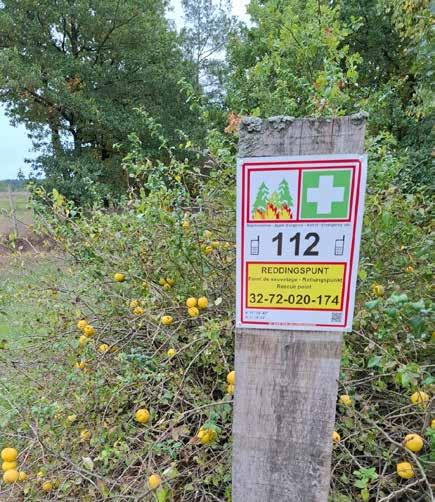
Rescue points
If you’re not sure exactly where you are, there are rescue posts located throughout the park. Find the nearest one in an emergency. They contain detailed information about your location
Report problems
We do everything we can to make your visit to Bosland National Park as safe and enjoyable as possible. If you encounter a problem, please let us know. Missing or damaged signs? A fallen tree blocking a path? Illegal dumping? Report it using the form at nationaalparkbosland.be.
Animals in distress
At Bosland National Park, we want to maintain a healthy balance between people and animals and help those in need. If you come across an injured or trapped animal, contact the Wildlife Rescue Centre in Oudsbergen on +32 (0) 89 85 49 06 or the Bosland National Park Organisation at nationaalparkbosland.be. Thank you!
Colophon
The Bosland National Park Visitor’s Guide is published by Nationaal Park Bosland vzw. V.U. Raf Truyens, Chair of Bosland National Park
Editing
Nationaal Park Bosland
Final editing and translation
ZINNIG
Design Kingarthur.be
Printing Moderna
Photography
Angelica Van Genechten, Ben Philipsen, Bjorn Snelders, Center Parcs, Christof Daens, David Peters, David Peters, Freepik, Istockphoto, Jan Thomas, Jelle Canipel, Jens Veraa, Jente Kasprowski, Jeroen Clerix, Katrien Grevendonck, Kobe Van Looveren, Kristof Claes, Kurt Vandeweerdt, Lieven Geuns, Maxiem Merckx, Monique Abrahams, Nationaal Park Bosland, Paul Smeets, Peter Waelbers, Pieter Cox, RLLK, Sylvie Stijven, Tasja Van Rymenant, Visit Limburg, Visit Vlaanderen, Wikimedia, Yente De Maesschalck
Part of a bigger whole
Flemish Parks consists of four national parks and five landscape parks, each with its own unique nature, landscapes, and heritage. Discover them all at vlaamseparken.be!
Seven partners: Stronger together!
Maintaining and developing Bosland National Park takes teamwork. These seven partners from the Bosland National Park Coalition combine their efforts to preserve and care for the park:
Working with nature
Park managers like the Flemish Agency for Nature and Forests and Natuurpunt work year-round to improve the natural environment.
Activities include cutting trees selectively to create new heathland and young forests, restoring wet areas to support amphibians, and installing safe pathways to protect fragile soil and to guide visitors. Deadwood is also left to provide food, shelter and breeding sites for insects, birds, and fungi. Over time, natural grazers will help maintain open spaces as well.
We are restoring the area through measures both large and small. Each action may look different, but the mission remains the same: to create a healthy, resilient, and natural landscape brimming with life.