




MARKETING STRATEGY REPORT
10864005
Nathan Faulkner




“The creative soul of the is shows culture create an
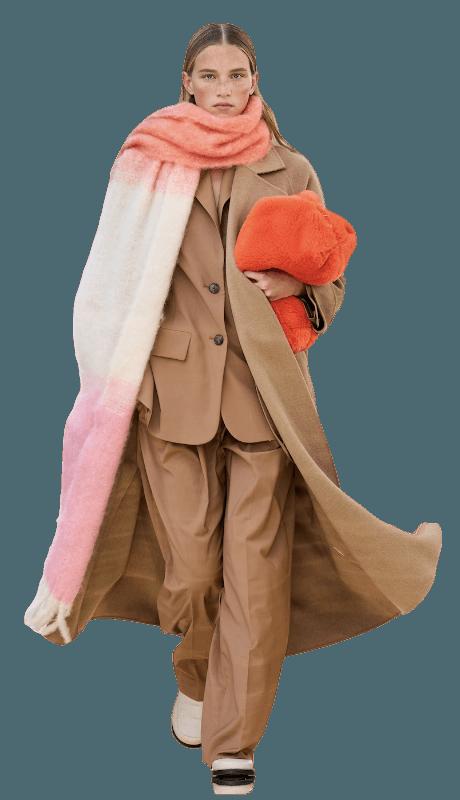
“The creative soul of the brand is visualised through original storytelling, seasonal runway shows and contemporary culture to create an experience beyond the expected.”
“The creative soul of the brand is visualised through original shows and contemporary culture to create an experience beyond
(2023)
COS is under fast-fashion giant H&M, but operate independently. Their aim is to create “timeless, understated collections”, resulting in “pieces that are made to last beyond the season” (H&M, 2018). To accomplish this, their designs are often minimal, with special attention paid to sustainable production and quality to result in a longer product life. They have a self-proclaimed “bespoke” and innovative approach to both design and material choice, where sustainability and social responsibility is at the heart of their decisions.
The following tripartite report details the continuation of COS’ global expansion plan as the brand prepares to venture into unexplored territory by opening stores in a new continent, South America. Said three sections consist of strategic analysis, strategic creation and strategy implementation, as devised in the Traditional Strategic Management Process (Johnson & Scholes, 1993).

Planet - committed to reducing emissions by 56% by 2030, and the use of sustainable resources.

People - strong relationships with suppliers who also value the same qualities of “quality, sustainability and innovation”.

Product - dedication to the production of clothing that retains longevity. Priority of circular fashion.

(COS, 2023) (COS, 2023)
(COS, 2023)
 COS
COS
COS are present in 47 countries, and possesses 259 stores, which generated $982M global sales in 2020 (Kent, 2020), the last time the H&M group publicly released their turnover - 0.06% of the global marketshare. This is the second largest of any brand in the H&M group, only behind H&M themselves. Despite their origins in Sweden, the UK retains the most physical stores, with 19 nationwide. Global expansion would help COS increase their global marketshare and consolidate their presence in the global market, alongside larger competitors such as Zara.
According to Marr (2022), the global business landscape has undergone rapid change over the last five years due to the pandemic, and political uncertainty due to global conflict. This has resulted in wide-spread inflation and economic uncertainty, as well as a new awareness of global issues. This has quickened digital progression and has created the new conscious consumer (Hackenberg, 2022),where sustainability and immersive omnichannel shopping experiences are valued.
High threat of substitutes due to the simplicity of COS’ designs and the concept of elevated essentials being a crowded market niche.

Threat of substitutes
High threat of new entrants, with high ease of entry - the industry is attractive to enter to new competitors. Fast fashion is crowded, and COS is considered higher-end.

Threat of new entrants
Many suppliers are available for fastfashion brands like COS, meaning the company is not dependent on a sole supplier. However, COS likes to retain suppliers for long periods oftime, giving the supplier some power. Bargaining power of suppliers

Due to a range of substitutes and alternatives, the customer has high bargaining power.


COS has a high level of competitive rivalry, with brands such as Zara and Mango offering similar minimalist pieces for similar prices.


COS have been successful in domestic markets such as the UK, being present in 19 locations nationwide. It has previously been hailed the “High-street Celine” (Kent, 2020) and has been the largest contributor of the H&M group, besides H&M themselves, to their enormous profit of $22.25B in 2022 (Statista, 2023). However, with the closure of several stores in the past year, the expansion to a new market will help to establish a stronger global presence to compete with the likes of Zara and Mango (see section 1.5) and introduce the brand to a new consumer base. These align with the SMART targets featured in section 2.1.
Increased market potential Tapping into new markets will allow COS to widen their consumer base, and increase profits, increasing global marketshare.
Reduce gap between COS and competitors
Access to international culture and talent
Spread brand values and play a part in reducing climate issues
An increase in marketshare reduces that of competitors’. The adaptation of strategies to cultural differences also separates COS from the companies only able to penetrate a singular marketplace (Parakar, 2023).
Expanding to a region that is considered culturally-rich can help breathe new life into the brand. This can be completed through the adaptation of products and place.
Widening the consumer base will also positively impact the environment. The creation of environmentally-friendly spaces and clothing in a new market will inspire customers to shop responsibly, and reduce the number of buyers of fast fashion competition, such as Zara.
Worldwide economic and political uncertainty can lead to risks when attempting to expand internationally. This goes hand-in-hand with the COVID pandemic, which has affected global supply chains and changes in consumer spending on non-essentials. This risk can be mitigated by selecting a country with both minimal economic and political disruption, and strong pre-existing links to countries where COS suppliers are already present.

Strong brand vision and mission: deliver quality and timeless goods for mid-market prices. Commitment to circular fashion and emphasis on sustainability (COS, 2023) - COS resale platform for pre-loved pieces, and recycling through ‘COS Full Circle’. Effective brand marketing and advertising - runway shows, advertisements, campaigns. Scored 71-80% in the Fashion Transparency Index (Good On You, 2023).

SWCOS ranked not adequate by Good On You (2023), despite sustainability initiatives, due to its supply chain.
Other competitors, e.g., Zara, has a stronger global presence (Loeb, 2023).
Amount of stores has decreased by 32 since 2020 (Kent, 2020).
Brand identity has faded - elevated basics are no longer a rarity (Salamone, 2020).
Post-pandemic, consumers are craving an omnichannel shopping experience - a blend of the digital and physical. In-person sales are also up 14% from pre-COVID (Drenik, 2022) Global inflation making the consumer pay more for longer-lasting products (Deloitte, 2023) The potential of a recession has made the economic landscape uncertain, so not many are expanding right now - perfect time to launch into a new market (Chadha, 2023).


OTReduced disposable income due to inflation makes consumers less likely to purchase expensive fast fashion, such as COS.
Political instability impacts global supply chains, e.g., Israel-Hamas conflict (KU, 2018). Crowded fast-fashion sector, and a not-so-unique USP.







The typical COS consumer is aged between 25-34, with a strong skew toward a female demographic - their website attracts 72% female and 28% male (Similar Web, 2023). Due to COS’ high market price, with the median product price being £25 more than that of lead competitor Zara (EDITED, 2023), the typical consumer will be high-earning/middleclass with a fair amount of expendable income.
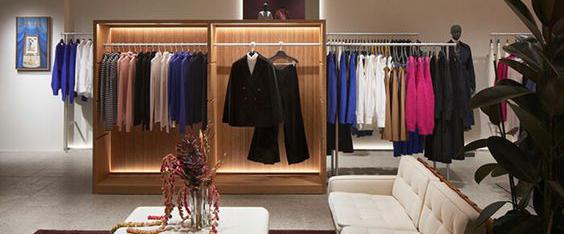
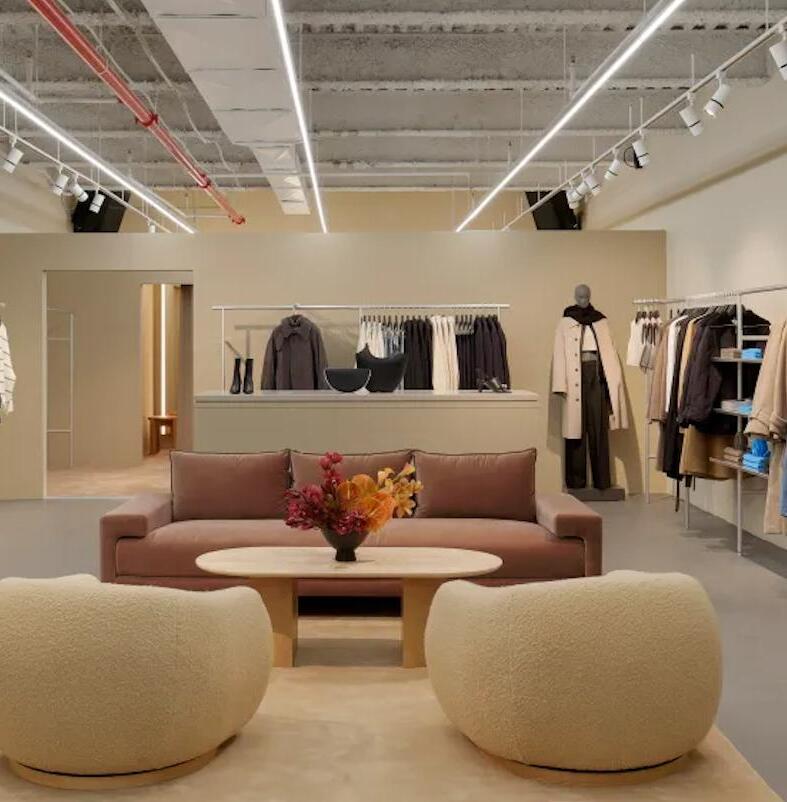
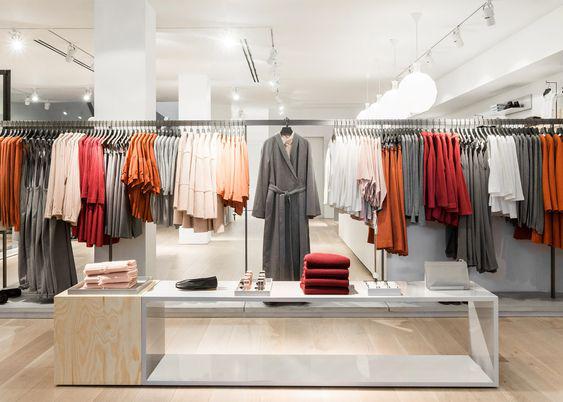
COS’ stores are often featured in cities with high footfall, which reflects the psychographic mindset of their targeted consumer. This is seen in London, with the COS flagship store on Regent Street. COS stores are in 5 of the 6 habitable continents, with a stated 259 stores globally - all of which retain the same aesthetic interior to capture attention and provide a calm shopping experience.


COS consumers enjoy minimalism, modern aesthetics, and sophistication. They prioritise longevity and timelessness, and so, sustainability, over the current overconsumption epidemic. This aligns with their lifestyle and friends, who are also cosmopolitan and have high-paying jobs. Similarly, they also dress chic via elevated basics.


Despite attracting this type of consumer, it is not targeted...
“We think our customers are not defined demographically by age or location, but mindset and through their cultural attitudes... hopefully they connect with the collections and appreciate the quality fabrics, store design, art collaborations and functional designs.”
Analysis of competition allows for a better comprehension of the market landscape. The comparison between competitors as seen on the right identifies the three brands’ similarities and differences. The identification of competitors’ successes in markets where COS has not yet expanded provides evidence that expansion will be successful, and more so, is necessary to increase global marketshare and international presence.



$982M (Kent, 2020) $25.4B (Smith, 2023) $2.96B (Weston, 2023)
47 (COS, 2023)
96 (Forbes, 2023) 110 (Forbes, 2023)
259 (COS, 2023)
Typical Consumer Age Which Continents?
Europe, North America, Asia, Oceania, Africa.
Nearly 3000 (Forbes, 2023) 2566 (Mango, 2023)
Europe, North America, Asia, Oceania, Africa, South America.
Europe, North America, Asia, Oceania, Africa, South America.
25-34 (Similar Web, 2023) 21-30 (Allon, 2023) 25-34 (Similar Web, 2023)



(EDITED, 2023)
(EDITED, 2023)
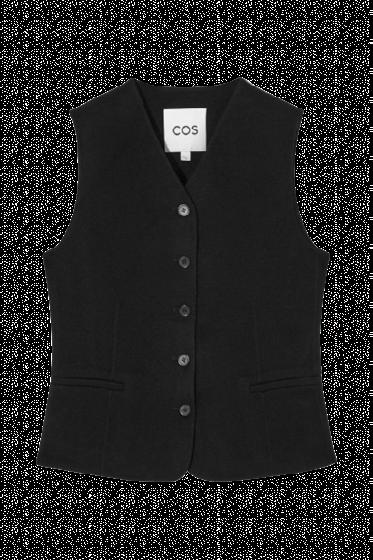
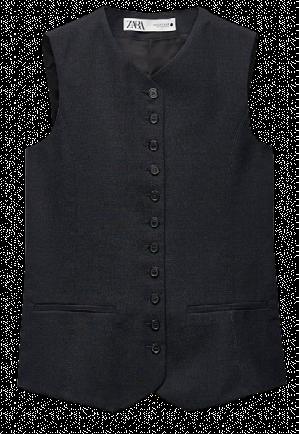
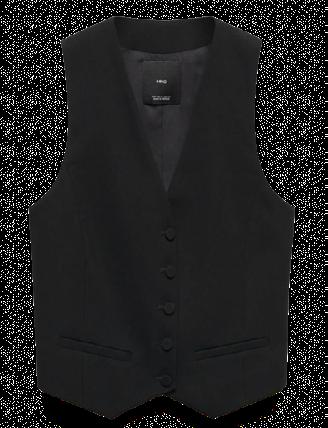



The production of SMART targets gives COS the greatest chance of being able to achieve their business objectives. An understanding of these is also significant when considering which country would be best to expand to.
Objective 1
Establish a stronger global presence.
Objective 2
Acquire a new, wider consumer base in international markets.
Objective 3
Create global circular store experiences with physical spaces that reflect culture.
Open at least one (flagship) store in a new region, boosting international consumers by 10%.
A R TDesignate a set budget for market research when expanding to a new region.
Increasing global presence is necessary to stay in competition with bigger brands such as Zara and Mango.
Achieve a 15% boost in global website visits.
Achievable through effective marketing campaigns and utilisation of local talent to reduce financial risk (Evans, 2015)
Open a store that produces 50% less CO2 emissions with 70% more recycled materials.
Aligns with the overall goal to broaden the customer base to boost sales.
Achieve this goal in the next 12 months.
The number of customers reached and sales should increase when stores are opened, so within 6 months.
Reward consumers for recycling and prioritise energy efficiency.
Build with recycled materials.
Compatible with company mission to promote sustainability and dedication to providing immersive experiences
Store design should take around 6 months, with the flagship store opening within the year.
Based on COS’ SMART objectives and the previous sections, South America is the best opportunity to expand their global presence. This country represents untapped market potential for COS, with no current stores in the continent, and the prioritisation of sustainability aligns with the country’s environmental and social attitudes. Brazil has an emerging non-luxury apparel market, with 99% of sales being so (Statista, 2023).
Emerging fashion market This coincides with an emergence of the middle-class, who offer potential for market growth/revenue (Global Expansion, 2023) and demonstrate economic growth. Fashion industry is worth 10% of the global market with a revenue of $160B (Gardetti et al., 2021).
Untapped market potential With a population of over 440 million, South America is culturally rich, and to not explore this would be a waste of potential, revenue and creative possibilities.
Compatability in values Over 80 policies licies nationwide that promote a circular economy, e.g., zero waste in Panama and Clean Production Agreement in Chile (Araya, 2021). This commitment aligns with COS’ brand values.
Less saturated marketplace South American marketplace is more focussed on locality and “mom-and-pop” stores, which make up 60% of sales (McKinsey, 2023).
Despite a recent exponential growth in technology adoption in South America, for example 85% of Latin Americans using social media, nationwide, the continent faces mass e-commerce issues (Global Expansion, 2023). This makes it difficult for online businesses and services. Due to this, an emphasis on physical marketing techniques and less reliance on digital commerce should be implemented.

When expanding to a new region, it is important to focus on one country to be able to tailor the brand’s marketing tactics to the new audience (Simon, 2023). This adaptation, to be fully explored in section 2.7, will help create trust and build strong relationships, allowing for easier cultural assimilation into a new marketplace (Simon, 2023). With 21 countries in Latin America, the following three were considered, based on their contributions to the regional fashion market (Meneses, 2023):
Country Reasons to Develop

Columbia maintains low barriers to entry - 71% of adults viewing entrepreneurship (including brand expansion) favourably (GEM, 2022).
One of the largest economies of 50M, mainly young, fuelling continuous growth (Colombia.co, 2023)
Limitations and Risks Summary/Review Chosen?
Lessened importance of environmental impact (International Trade Administration, 2023b).
Faces issues with open competition, unequal pay and a widening gap between the rich & poor (Romain, 2020) - the most unequal in L.A (CCC, 2023)
Political unrest due to war - Colombian conflict (HRW, 2023).

Largest spending on apparel in Latin America, with revenue of $30.99B (Statista, 2022).
10th largest global GDP, 8th largest purchasing power (TMF, 2023).
Commitment to sustainability, aligning with COS’ brand mission - aim to be climate neutral by 2050, and reduce emissions by 48% by 2025 (HRW, 2023).
Brazilian domestic market is largely controlled by local players (Blum, 2020).
Infrastructure is poor - some areas are underdeveloped and not in line with growing economy (Coleman, 2021).



Initial promise is shown via low barriers to entry, but is unappealing due to its economic and political issues which could affect the supply chain and purchase power.
Brazil poses the best option for COS with high spending on apparel and a compatability of values. However, COS should enter the marketplace and immerse themselves in culture to seem familiar.

Commitment to “connecting with the global economy” - demonstrating its dedication to international trade and low barriers to entry (HSBC, 2023).
A booming technology industry, as the third most active population on social media in Latin America (Bianchi, 2023).
“Macroeconomic instabillity, high inflation and a currency crisis” has led to consumers reducing spending on non-essentials (International Trade Administration, 2023).
Strict labour laws are expensive and lead to political unrest (HSBC, 2023).
Argentina is a sensible option for future Latin American expansion with low barriers to entry. This could be explored by COS in the future, once instability has subsided.
Lower incomes and high discrimination for ethnic minorities (The Economist, 2022).
Brazil has the highest spending on apparel in Latin America with revenue at $30.99B (Statista, 2022).
80% of Brazilians are Christians with nearly 60% being Roman Catholic (Statista, 2023).
The majority of the population is female, 51% (Statista, 2023).
Fairly low per capita income, at $151.40 per person (Statista, 2023).
High cultural diversity, with 305 differ ent ethnic groups and 274 languages (Minority Rights.org, 2023).
99% of sales by 2024 to be considered non-luxury (Statista, 2023).
High public debts - 72.87% of GDP (Banco Central do Brasil.gov, 2023).
High inflation rates - 4.73% (Statista, 2023).
Strengthening relations between China and Brazil (McKinsey, 2023).
Politics described as unstable, uncertain and as high political risk (Zovatto, 2023).
National political unrest due to election of President Lula (London Financial, 2023).
High tax rates (ECLAC, 2023).


90% of Brazilians use the internet (Government of Brazil, 2022).
80% of Brazilians use social media, with 171.2M active users (OOSGA, 2023).
AI expected to be 3-5x less impactful than in North America & China (McKinsey, 2023).
Facebook is the most popular social media, then Instagram (Bianchi, 2023).

ENV
60% of electricity is from renewable resources (McKinsey, 2023).
Brazilians increasingly choosing sustainably-made and eco-friendly clothing, proving the need for ethical fashion brands (Statista, 2022).

Brazil has its own Eco Fashion Week, involving runways and talks about ethnic diversity and transparency (Brasil Eco Fashion Week, 2023).


Marketing legislation aims to protect consumer rights, e.g., Brazil states sponsored posts must be identifiable (CONAR, 2021). Lacking labour laws, leading to worker protests (OECD, 2023).
PSummary (see 2.4)
Latin America is battling political instability with the election of their President. This is paired with high tax rates.
Uncertainty can affect consumer confidence and reduce spending on non-essentials (Weston, 2022). Consumers are less leninent with purchase decisions, so COS needs to provide initiatives to.
Growing economic climate - strengthening Chinese relations, the largest fashion industry in LA. But, have high public debts and low income per capita.
The majority of the population is Christian, and the country has high discrimination for ethnic minorities despite being culturally diverse.
Regularly uses social media with Facebook as the most popular, then Instagram. Modern tactics like AI are not effective.
High public debt can increase factors that decrease consumer spending, such as interest rates, inflation and taxation (Smith, 2023).
Social factors can impact consumers’ likelihood to buy. It is important to act with high cultural awareness and understand the average consumer of a new region to capture sales. However, it is also important to stay true to the brand’s values.
Recognising the level of technological adoption helps COS to select the correct marketing techniques and understand how best to target the new consumer.
Develop an understanding of local environments to acheive greater cultural awareness.
Participate in local socially responsible initiatives to display commitment to the community and increase consumer trust. Operating in various regions will lessen the reliance on the political stability of a certain area.
Conduct market research to establish consumers’ likelihood of purchase.
A phased approach will reduce financial risk and help with Brazil’s economic unpredictability (Gerlach, 2023).
Utilise COS’ pre-existing suppliers in China and Asia.
Actively work against the discrimination of minorities in lign with COS’ brand values - create a non-discriminative working environment to aid employment rates, use ethnic minorities during advertising.
The prioritisation of social media marketing and the utilisation of Facebook and Instagram.
Collaborate with local influencers who share the same brand values and reach COS’ target demographic.
Beginning to care more about the environment and sustainably-made clothing. The promotion of a circular economy.
A company that aligns with local views on social responsibility will receive greater brand loyalty and will be better perceived (Nguyen, 2022).
Marketing legislation aims to protect consumers. Lacking labour laws create uncertainty through protests.
Failure to comply to local laws and legislation can result in legal fines - crucial to avoid for a “new” brand, as it helps to build consumer trust. Uncertainty can reduce consumer spending.
This aligns with COS’ pre-existing brand values, and promotional campaigns should include messages about the environment.
Participate in local green events such as Eco FW. Create “circular stores” constructed using renewable resources and energy, and sustainable packaging.
Prior to market entry, understand regional marketing legislation through research.
A phased approach will give COS time to explore legislation fully before opening stores in locations. Promote happy working environments and stand up for social issues that align with COS’ brand values.
High PDI - Brazil is hierarchical, where people accept social order and inequality. They tend to avoid risk (Wang et al., 2021), so will avoid new brands, and utilise “status brands” to increase social status (Kim, 2014).
Low INV - Brazil is collectivistic, with commitment to community and family where there is collective responsibility (TCFG, 2023), meaning consumers are more likely to remain loyal to brands that are socially responsible.
Low MAS - Brazil is skewed slightly ‘feminine’, which values a greater focus on quality of life and collaboration (Wale, 2020). Here, advertising involving liberation and empowerment marginally drives sales.
High UAI - Brazil prefers to avoid uncertainty, with rigid codes of behaviour, and tends to avoid risk. This can make it difficult for new brands to enter the marketplace, but, once successful, receive high brand loyalty.
Low LTO - Brazil is a short-term orientation/ normative culture, which values tradition, stability and a focus on instant results (TCFG, 2023). This means consumers are likely to prefer brands they are familiar with.
High IND - Brazil has high indulgence levels, meaning it has free gratification and focuses more on happiness and having fun. Consumers are more likely to impulse purchase despite not having the money.
The creation of a TOWS Matrix develops SWOT, section 1.3, further. It provides strategies for COS to explore when attempting to increase brand presence in Brazil through the consideration of both internal and external factors which affect expansion.
1. Omnichannel shopping experience
2. In-person sales booming
3. Consumers paying for more for reliability
4. Launch into a new market
1. Strong brand vision and mission
2. Prioritisation of sustainability and circular fashion
3. Effective marketing and advertising
S1+O1: launch both digitally and physically
S2+O3: advertise products as reliable and sustainable, translate current position to new market
S3+O1: collaborate with influencer to promote new physical store
S3+O4: officially launch brand with a fashion show
S3+O4: creative advertising techniques pre-launch
1. Inflation - reduced disposable income
2. Political instability
3. Crowded fast-fashion sector
Weaknesses
1. Supply chain issues - diversity, living wage
2. Competitors’ stronger global presence
3. Closure of physical stores
4. Fading brand identity
W1+O4: launch with a transparent supply chain
W1+O3: re-emphasise position on inequality
W2+O4: create a phased approach allowing for local communities to adapt to presence
S1+T3: emphasise brand vision in marketing to differentiate from competitors
S2+T1: educate consumers about the benefits of buying circular fashion
S3+T2: campaign for political change in the local community to prioritise sustainability
W3+O2: increase physical presence
W4+O4: mark brand launch with a collaboration with a local artist
W1+T2: prioritise cultural awareness and responsibility when operating physical stores
W3+T3: increase physical presence
W4+T3: collaborate with local artists to differentiate from competitors
An examination of both maxi-maxi and maxi-mini strategies (Weirich, 1993), using the SAF framework devised by Johnson and Scholes (2008) which is optimal for decision-making.
Option
1. S1+O1: launch both digitally and physically
2. S2+O3: advertise products as sustainable, translate current position
3. S3+O1: collaborate with influencer to promote new physical store
4. S3+O4: officially launch brand with a fashion show
5. W3+O4: creative marketing techniques
e.g., guerilla
6. W1+O4: launch with a transparent supply chain
7. W1+O3: re-emphasise position on inequality
8. W2+O4: a phased approach so local communities can adapt to presence
9. W3+O2: increase physical presence
10. W4+O4: mark brand launch with a collaboration with a local designer
High initial set-up costs Tough competition
Simultaneously or phased?
Luxury middle-market price point challenging for a “new” brand
Limited age reach
Dependent on influencer- possible negative publicity/connotations
No guaranteed ROI
Dependent on other factors such as marketing.
Assumes guerilla ad will be understood and generate more positive buzz than confusion.
Supply chain complexity can prevent full transparency
Difficult to monitor entire process
Can put brand on wrong side of law enforcement/government
Longer time period to voice opposition to the opening, although can be a good thing if used to adapt
Initially expensive
High risk and no guarantee of ROI
Physical market oversaturation
Can incur costs
May not have market appeal

Choice

Strategy chosen but with less emphasis on digital advertising
Strategy incorporated in store and product design
Strategy not chosen
Strategy chosen as a way to advertise


Strategy chosen as a way to advertise

Strategy not chosen due to complexity
Strategy not chosen but COS will continue to speak out against them
Strategy chosen

through

Strategy chosen to solidify presence
The opening of a flagship store will be great for COS, who is looking to build their brand image in Brazil. Flagships help to enhance core brand values (De La Garza, 2022), so highlight COS’ commitment to circularity, and cater for the omnichannel needs of the consumer. It helps to attract new customers, and for a new brand, makes an “immediate statement” in a crowded marketplace (Somma, 2014).
Runway shows are a great avenue for COS to explore. Already participating in two per year, a debut in a Brazilian fashion show will generate positive buzz around the brand and showcase the latest collections (Mabelle, 2023). Associations between the brand and celebrities at fashion week will also give the brand essentially-“free” marketing.
Social media is significant when attempting expansion as it helps to humanise the brand and build authenticity and trust. It drives connections with the consumer and so, increases likelihood of purchase (Ku, 2023).
This helps COS’ target of acquiring a wider audience. A stronger social media presence will also reduce the gap between COS and their competition (Pec, 2022).





The advantages of collaborating with local brands is two-fold. Firstly, it allows for greater exposure in a new marketplace, and access to a new target audience (Sharma, 2023). This fulfils COS’ target of widening consumer group. This consumer group would also deem COS as trustworthy by association. Secondly, it could help rejuvinate COS’ fading brand image and aesthetic (see SWOT, section 1.3).

When expanding to a new area, a website is crucial for consumers to gather information about the brand. According to Kaplan (2020), it improves credibility, establishes brand identity, differentiates from competitors and offers strong ROI. A website is crucial for COS who is trying to generate more revenue and increase brand awareness in a new region. It is also a useful point of reference for consumers when advertising.
Guerilla marketing offers a company a cost-effective way to achieve a great deal of brand exposure - guerilla methods are said to reduce cost of marketing by 90% (Ferriman, 2023). This is the most effective form of marketing when aiming to generate buzz (Plummer, 2022), as it heavily increases word-of-mouth both physically and digitally.
COS will utilise a wholly-owned market strategy devised into three of the following phases: activation, launch and solidification. Activation is focussed around building brand buzz for a successful future launch and solidification is centred around the consolidation of the brand’s market position in Brazil, post-launch. Using the GE-McKinsey matrix, the brand will build selectively (see right), where COS will increase their market position to counter competition and invest in strongest segments, This will be completed through the following marketing activities:
Phase 1: Brand Activation
Brasil Eco Fashion Week
Develop website
São Paolo Design Week
Store announcement
Launch socials
Launch website
Guerilla & media advertising
Phase 2: Brand Launch
Flagship store opening
Phase 3: Brand Solidification
Digital advertising
Begin collaboration with Maraschin
São Paolo Fashion Week debut
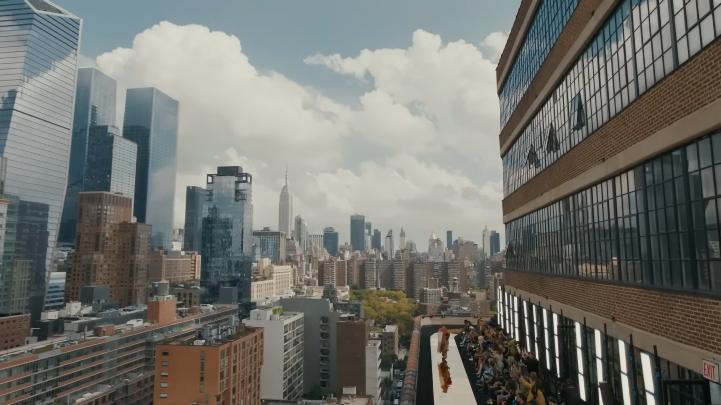
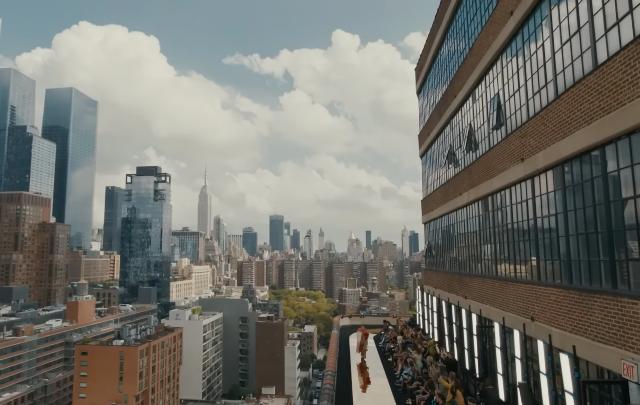
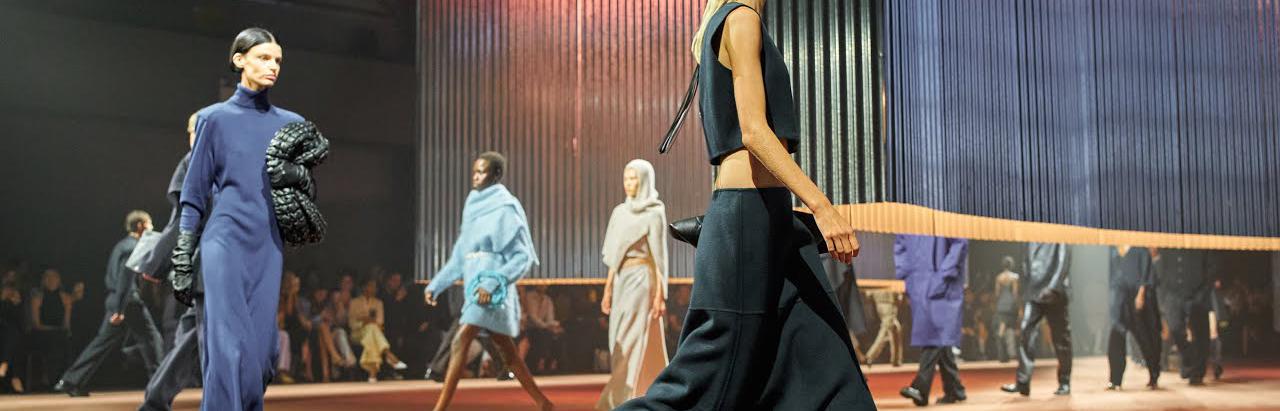
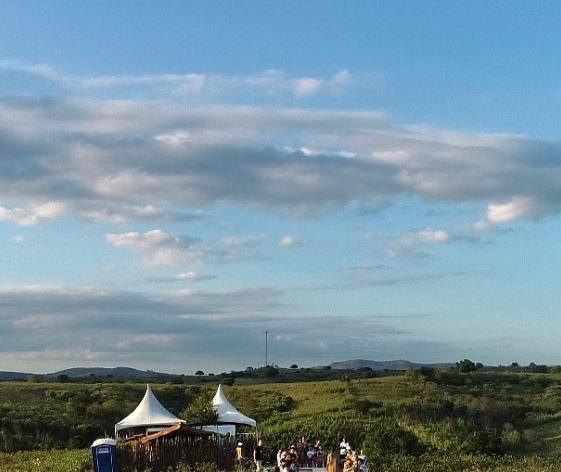
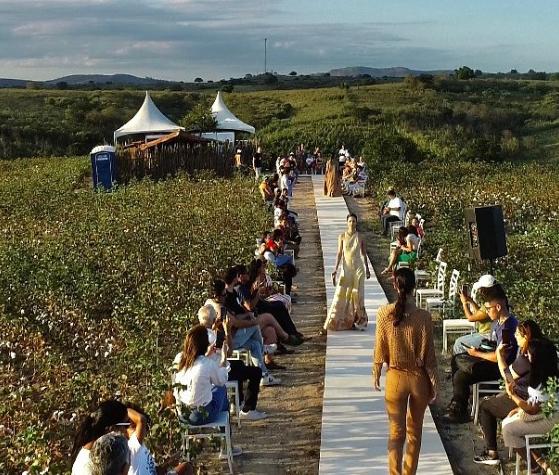
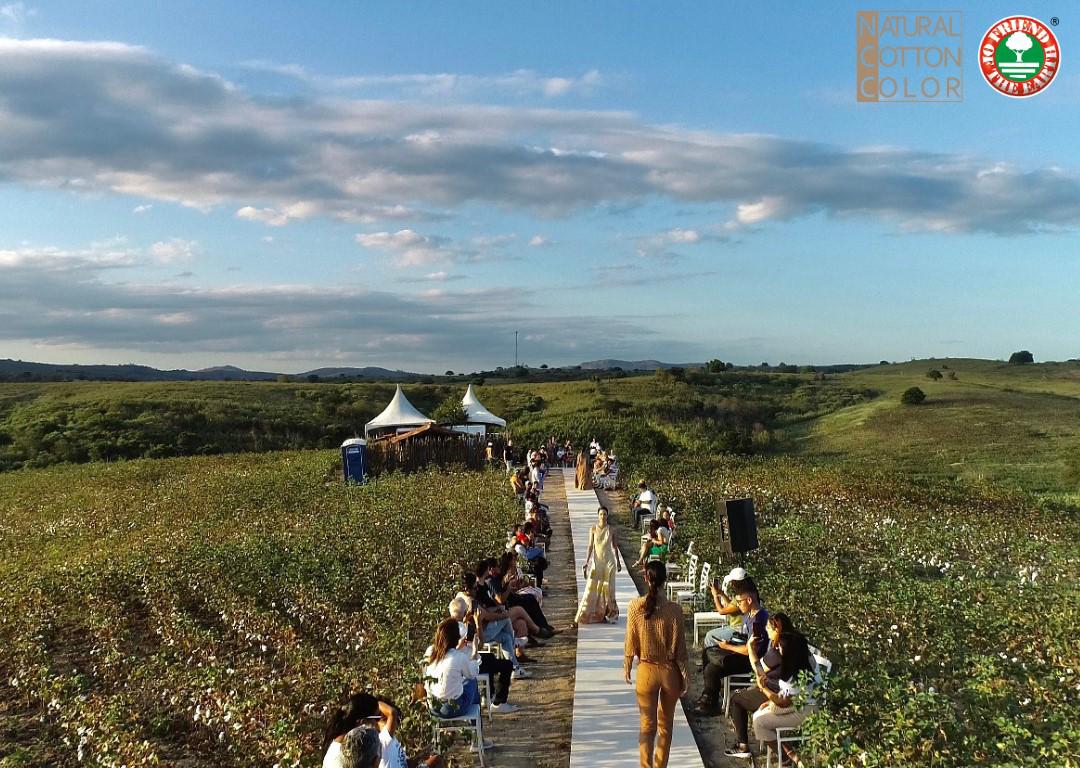
COS will make its Latin American debut in December, aligning with São Paulo’s Eco Fashion Week, taking place from the 7th. It will incorporate COS’ Autumn/ Winter line. The runway will finish with a sign unravelling stating Brazilian phrase “De grão em grão, a galinha enche o papo.”, meaning “From grain to grain, the hen fills her belly.” or, large achievements can only be done one step at a time. This is a nod to future planned Brazilian expansion.
Despite its relatively-small attendance with only 9000 most recently (BEFW, 2023), the association between COS and a non-profit environmentally-focussed event will provide the brand with authenticity amongst the São Paulo community, and effectively display COS’ brand values. This will differentiate COS from the big corporate conglomerates Brazil is used to seeing (Feld, 2022). These factors will lead to greater social acceptance when the flagship store is launched in June (section 2.8).
(Vakratas et al., 1999).
Awareness is created through their presence. It will be noticed by both attendees and local press at the event, with the publication of COS’ presence creates positive brand associations.
Interest will stem from COS’ attendance at all, considering there are no stores in Latin America. This will be exacerbated with the lasting message displayed at the end of the runway (see above).
Desire is generated through seeing the collection on ordinary people and the fact it is not available builds anticipation and a sense of exclusivity for onlookers.
Lack of action at this stage boosts anticipation, which will be beneficial when the flagship opens - proving to boost sales and loyalty; anticipation of positive events evokes positive emotions (Brown, 2023).
“The most sustainable fashion attraction in Latin America.” “The most sustainable fashion attraction in Latin America.”





COS’ social media and website will be both announced and launched at the São Paulo Design Week (section 2.7.3). However, the website will have been in production since December, and their social media set up in the week prior. These will both provide a direct link to communicate with and update the consumer regarding factors such as store developments (section 2.8.1), and advertisements (section 2.7.4). This will humanise the brand, setting them apart from competitors while increasing brand loyalty and authenticity (Shanahan et al., 2019). It is also beneficial during periods of decreased interest to be socially active and attempt to re-capture consumer attention via campaigns. The creation of a webite/social media alongside the opening of the flagship store in June caters for the multi-channel needs of the consumer.
Nov 2024 insights:



200k follows 250k follows 50k follows

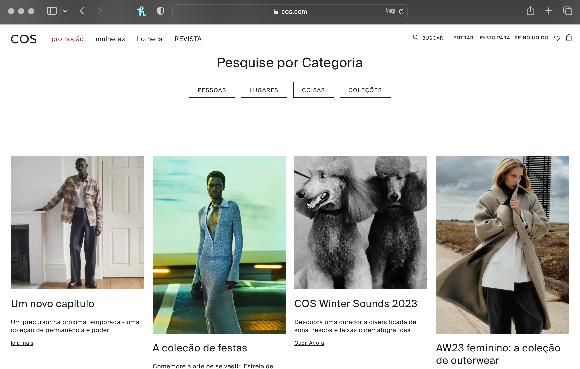

“Multi-channel and online-only retailers...had a growth-rate of 57% and 11.4% respectively.” “Multi-channel and retailers...had growth-rate of 57% and (Jahshan, 2021)
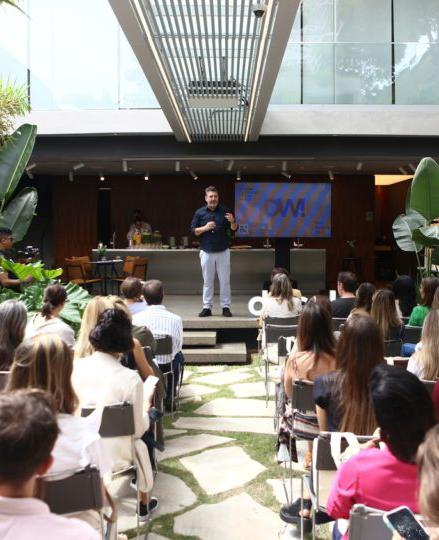
From the March 14th-24th, São Paulo Design Week takes place - a festival designated to the celebration of culture, architecture and sustainability (SPDW, 2023). COS will hold a seminar to audience members filled with both industry professionals and São Paulo residents, who will have a guided tour through the new store (seen in section 2.8) and all the environmentally sustainable features present. At the end, the lead architect will reveal an opening date and announce that both the social media and website are now live.
Garnering over 50,000 visitors, but reaching many more through local press, the festival presents a prime opportunity to unveil COS’ new flagship store which is compatible with the festival’s aforementioned values. This will generate excitement, word-of-mouth marketing, and media publicity of the upcoming opening. The unveiling is intentionally at an event that promotes environmental-consciousness to re-emphasise that COS is not simply another fast-fashion brand and cares about the environment and community. Caring about the environment is crucial for Brazilian expansion considering they occupy 26% of Earth’s biodiversity (Guzzini, 2023).
Awareness is created through the talk with COS’ lead design architect who details the process of creating the flagship store, informing the audience.
Interest will stem from the store’s innovative techniques that demonstrate COS’ commitment to the environment. Using the festival as an unveiling geneates consumer interest.
Unveiling a product or store has been proven to boost brand value and so, desire (Patrick et al., 2017). The store being given a opening date at the end of the presentation builds hype.
The audience will leave the talk eager to find out more about the brand, and check out the company’s new social media and webpage. (Vakratas et al., 1999).
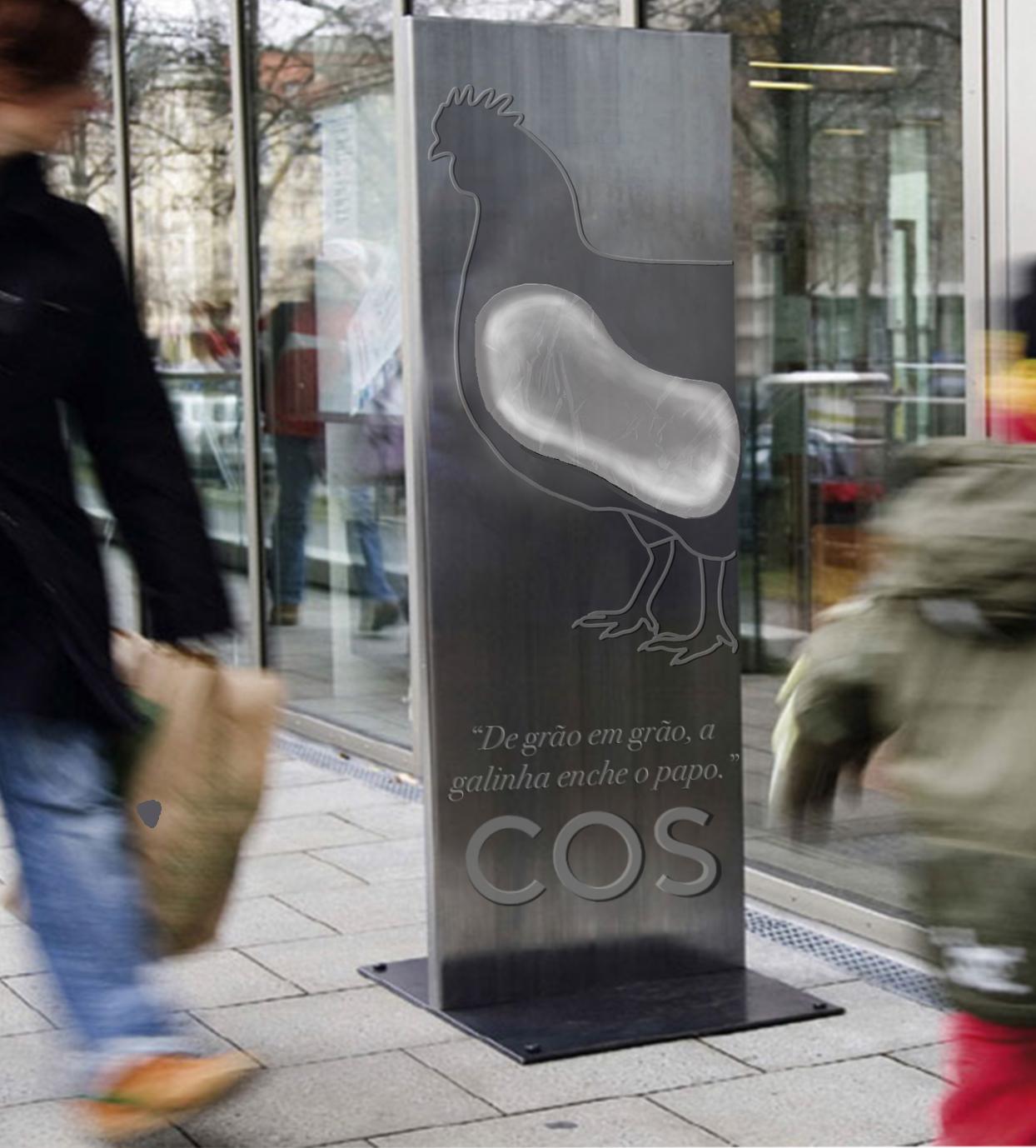

Alongside traditional marketing techniques involving the use of websites and social media (see section 2.7.2), guerilla marketing will be used to surround the brand with hype prior to the flagship store’s launch in June (section 2.8). According to Hayes (2023), it is defined as the use of “unconventional methods... to boost sales or attract interest,” which is significant for a new brand in a new region. From this, COS will gain a lot of social media attention due to its lack of current presence in Latin America. This attention can be amplified by COS participating on socials (section 2.7.2) themselves, with hashtags such as #COSgalinha. They will be dotted around São Paulo, where Rua Oscar Freire, the flagship store’s street is located (section 2.8.1).
Featured on the left: the public will (unknowingly) witness a countdown until the flagship store’s opening, underneath an outline of a hen that is getting its glass stomach filled with grain until it is full (the store opening date). This echoes the famous Brazilian phrase featured at the end of COS’ Brasil Eco FW runway (analysed in section 2.7.1) and in their social media bios (section 2.7.2). . Its resemblance to a sand-timer is an important artistic reference, reflecting how time is also running out for the world through climate change.
AIDA MODEL (Vakratas et al., 1999).
Brand awareness is created through its unconventional presence. Its location also increases this, with many people seeing it frequently over the two-month period.
Interest stems from the ambiguity of this piece - the lack of clear association between the brand COS and a hen will stimulate interest and generate buzz.
The hype built around the launch builds desire for COS’ products and a visit to the flagship store when it opens.
The lack of clear association between the brand COS and a hen will lead people to research, spiking social media and website insights and prompting brand awareness.
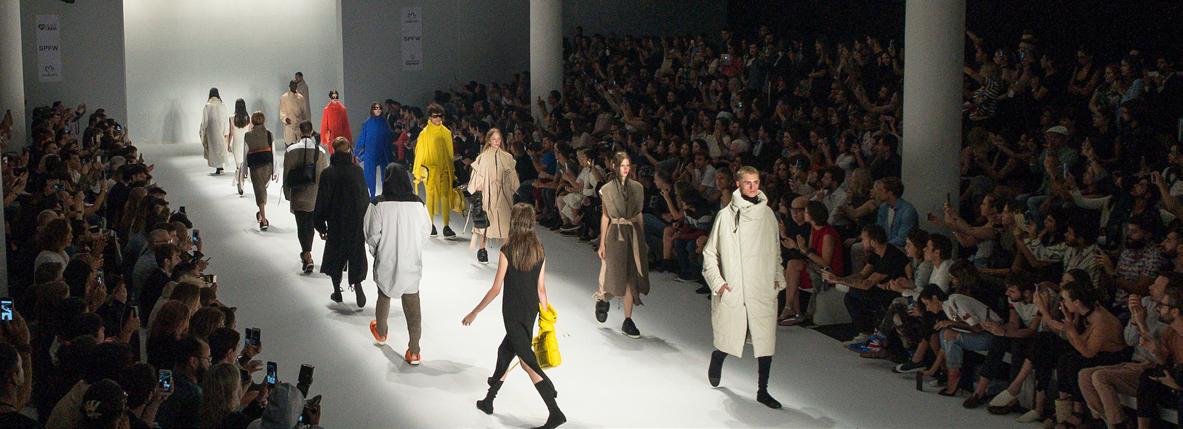

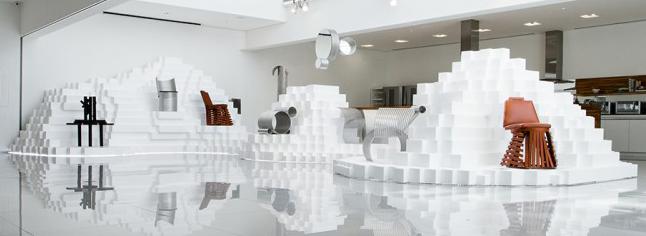
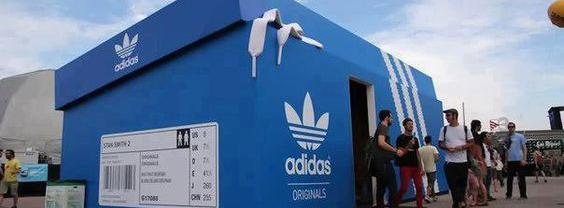
Currently: two seasonal runways per year, typically at NYFW. The way COS will use runways will slightly adapt. In its debut year, it will participate in two Brazilian runways, one pre-opening and one after. Whereas the runways in NYFW is focussed on translating the brand into design-led rather than high street (Adegeest, 2021), runways will be used in Brazil to largely promote brand values and aid adoption into Brazil’s high uncertainty avoidant cultutre (section 2.4).
Currently: social media is impersonal and generic; website is standard, broadcasts values. COS’ social media will be used to communicate with the consumer and personalise the brand, to differentiate from competitors. It will play an important part in sharing the store development process and humanising the brand, speaking out on key social issues, e.g., sexism, and, appealing to Brazil’s cultural femininity (section 2.4). The website will largely be standardised, as the current COS site does a great job of reporting brand values, but of course will be adapted to Portuguese products and prices (section 2.9.3).
Currently: announcement of stores is impersonal via a press release. The store announcement at Design Week is different to the standard COS store announcement. This, and the aforementioned tactics, is to embed the brand in Brazilian culture so it is seen as less of a threat to local communities and give a reason for consumers to stray from their strong loyalty to pre-existing brands (section 2.4).
Currently: traditional marketing techniques. Marketing techniques have been adapted so the brand can reveive maximum exposure in the new area. This is to cater for Brazilian culture’s high long-term orientation (section 2.4). The buzz guerilla marketing receives, which would not be achieved through traditional techniques, will help Brazilian consumers become familiar with the brand, aiding the brand objective to adopt a wider consumer base (section 2.1).
2.7.1
EFW is non-profit, and without any financial gain, and so COS has no way to cover costs of models and clothing without making a loss.
Models could be volunteers from the streets of São Paulo and clothing could be from previous collections, with the runway acting more as a brand showcase.
2.7.2
Eco Fashion Week
2.7.3
Social media/ website
Rigid process of application, involving a brand analysis by a decision-making board/curatorship.
Compose a thorough presentation detailing the future plans for the company and its prioritisation of circularity.
2.7.4
São Paulo Design Week
Ethical issues regarding the internet and gathering data on consumers as a possible breach of trust.
Brazil is the second most vulnerable country to receive cyberattacks, increasing the risk of data breaches (Mari, 2023).
Risk of a possible overemphasis on eco-consciousness and being perceived as disingenuous, using sustainability as a marketing tactic.
Relies on the assumption of positive publicity with a disregard of backlash risk, e.g., for greenwashing or opposition to European brands.
Risk of confusing consumers over lack of clear association to brand.
Gain consumer trust by informing them how their data will be used, gaining their consent, and allowing consumers to opt out.
Sensitive data to be encrypted and backed up regularly, following the 3-2-1 strategy - 3 copies of data stored, 2 on different media and another offshore (Sukianto, 2022).
Through socials and the Brazilian website, clearly signpost COS’ contributions to a greener future with statistics and case studies.
During presentation emphasise brand values and positive aspects of expanding to Brazil e.g., cultural appreciation. This can be backed up by future plans such as section 2.9.1.
Guerilla marketing
Ensure the slogan “De grão em grão, a galinha enche o papo.” is used throughout the expansion plan, so it is associated with the brand and the connection is clear.
The installation being over two months could result in habituation, where consumers no longer notice it (Cherry, 2023).
Utilise social media and the website to keep the brand trending, e.g.,. Use marketing on said platforms to keep the buzz high.
Flagship stores are common for brands when forming a “permanent presence in influential cities around the world” (Quillin, 2023), and so provides the logical first step in COS’ expansion to Brazil. COS will utilise a flagship store to not only generate sales, but to enhance brand image by providing a showcase for the product and their values (De La Garza, 2022). Said values, primarily sustainability, will be communicated through the building’s overall aesthetic and material choice.
(section 2.1).
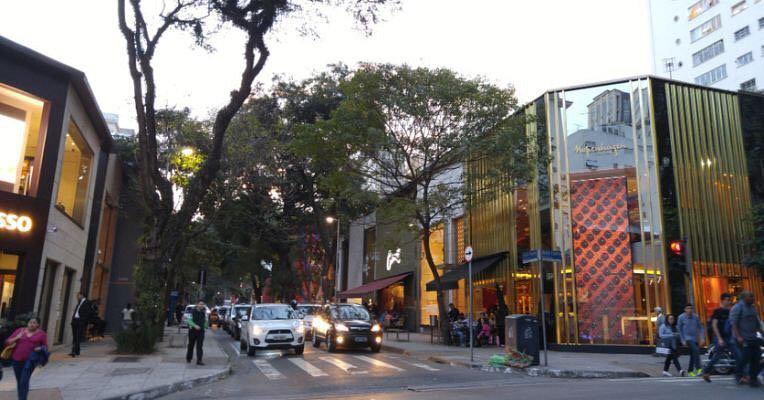
The opening of a new store in a new geographic region fulfils the objective of establishing a stronger global presence. It is a way for brands to mark their presence to a new market, which emphasises the significance of location (below). The communication of COS’ brand meaning to foreign audiences will allow for successful future expansion (section 2.10).
The personalised brand experiences that can be offered with a store opening will help to acquire a wider consumer base (Jahshan, 2021). Flagships have also been credited with enabling a consumer to have stronger emotional attachment to the brand (Dolbec, 2014), driving customer loyalty.
Sustainability and circularity will be fulfiled through store design, seen in section 2.8.2 and 2.8.3. This is compatible with the store location, seen below and aligns with COS’ values.
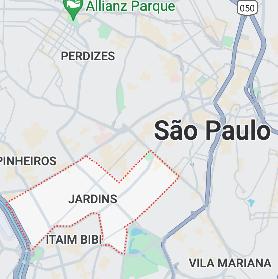
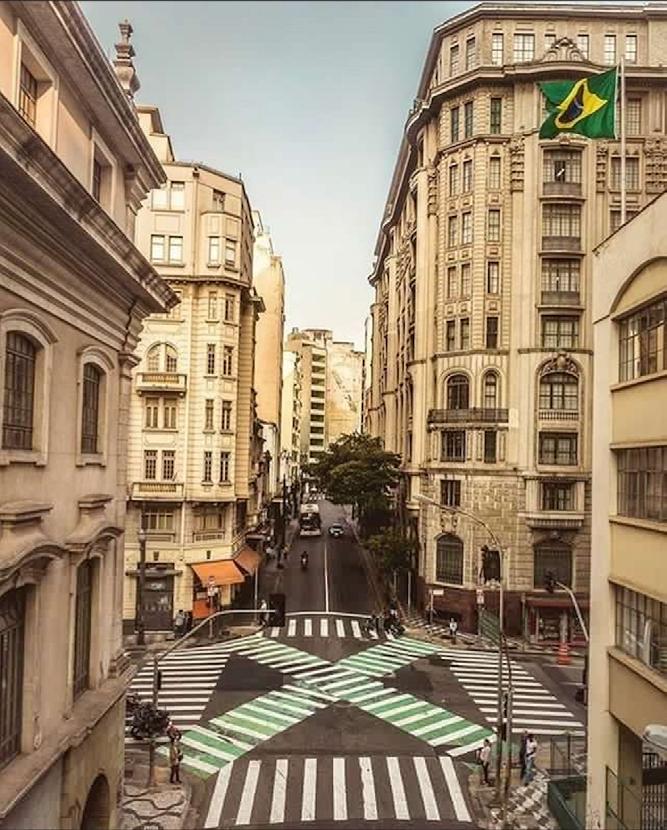
The flagship store will open in Rua Oscar Freire, a a high-end, prestigious area of São Paulo - a city with a population of over 12.3M, the highest in Brazil. This strategy is common for flagship stores (Shopworks, 2017), as high-end regions tend to draw high footfall and tourism, and so, Rua Oscar Freire poses a great opportunity. It is located in the Jardins district, described as “a green oasis in the heart of a concrete jungle” (Gill, 2014), perfectly compatible with COS’ brand aesthetic, and is known for being a cultural hotspot for fashion-lovers. It is the 8th most luxurious street in the world (GM Group, 2021), and attracts

“Brazil’s Rodeo Drive” “Brazil’s Rodeo Drive”




Stimulus Response Organism (Mehrabian & Russell, 1974)


Avoid
The S-O-R model maintains that stimuli alters the internal state of an organism, which can then result in an approach or avoidance response (Vieira, 2013). Stimuli can be devised into three categories, visual, aural and tactile. Donovan and Rossiter (1982) stated type of response is based on three factors: desire to explore the environment, desire to interact with people in said environment, and satisfaction with surroundings, involving aesthetic.
Currently (UK) - in-store aeshetic: minimalist; key colour: beige; lighting: fluorescent overhead. This store will be used to provide an escape from the busy São Paulo metropolis, so will remain minimalist but with a greater emphasis on eco-consciousness through the use of natural materials. Colours will also be natural, but focus on earthy browns, reds and beiges (section 2.8.3). This is a juxtoposition to its location, a concrete jungle, to which it will act as a calm retreat for consumers, which can increase purchase likelihood (Danziger, 2020). Lighting will remain bright as it is proven to result in a greater level of product handling (Areni et al., 1994).
Currently (Spotify, 2023) - tempo: mid-fast; genre: jazz, soul, European pop; volume: medium. According to Milliman (1982), music tempo has an effect on consumer’s pace - with faster music leading to quicker checkouts. And so, a flagship store such as the planned São Paulo, would benefit from slower music/mid-slow tempo allowing customers to browse and admire the clothing and store experience. A change in genre to Latin American jazz, soul and pop is beneficial, conisdering the impact it has on the consumer when recognised - resulting in 41% of consumers staying longer (SYB, 2022).
COS currently (UK) - feeling of luxuriousness: medium. Due to the type of consumers it is going to attract on Rua Oscar Freire, feeling of luxuriousness will be high in both item fabric and interior texture, to justify the price point and satisfy the desired consumer. Touch is important due to its advantage over online shopping - 50% of consumers prefer in-person due to this sense (Danziger, 2019). It can also increase likelihood of purchase due to the “endowment effect”, which states touching an object creates a feeling of ownership, compelling said purchase (Gregory, 2009).



Bamboo fittings as they are highly sustainable - fast re-growth and great carbon absorption


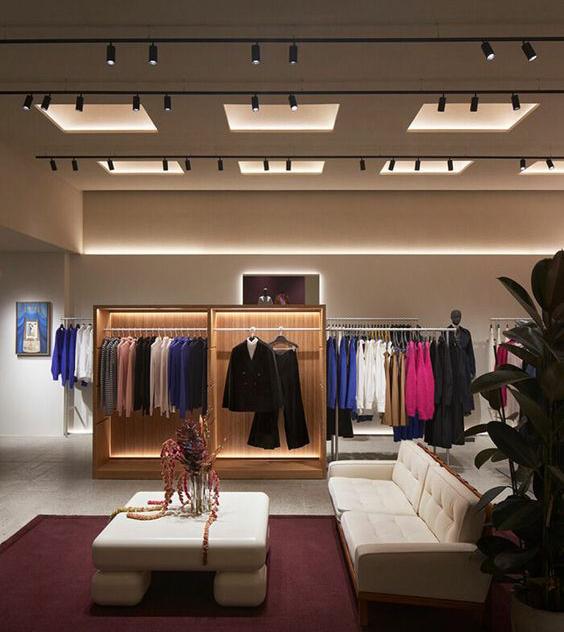
Incorporation of naturally occurring minerals


Brazil’s interior aesthetic is described as mid-century modern, similar to Europe and Central America (Waldek, 2021). This aligns with the usual COS style - classic, minimalist and aesthetically pleasing - and so preserves COS’ brand image. However, due to Brazil’s trending colour palette (Herder, 2021), there will be a greater emphasis on bolder colours such as burnt reds and dark greens.



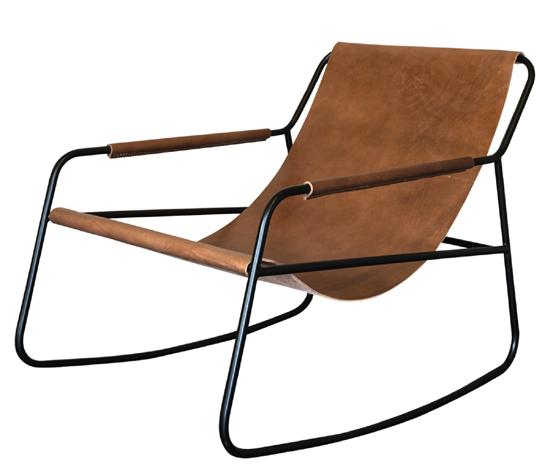


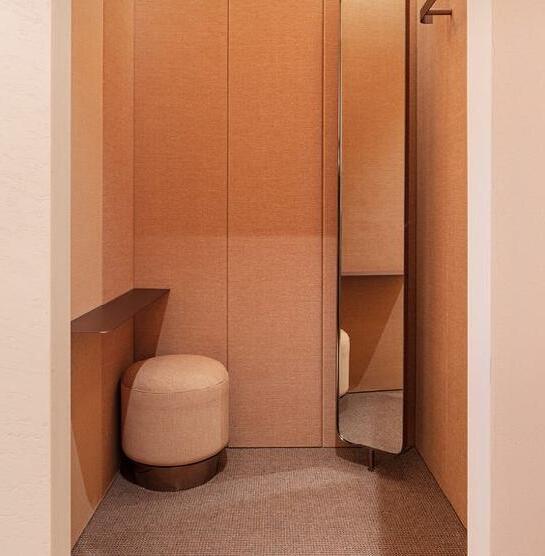

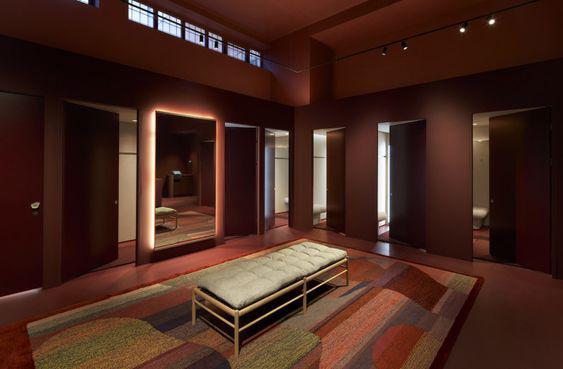






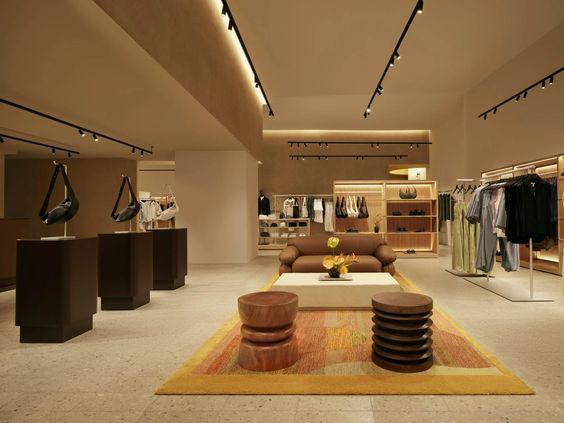

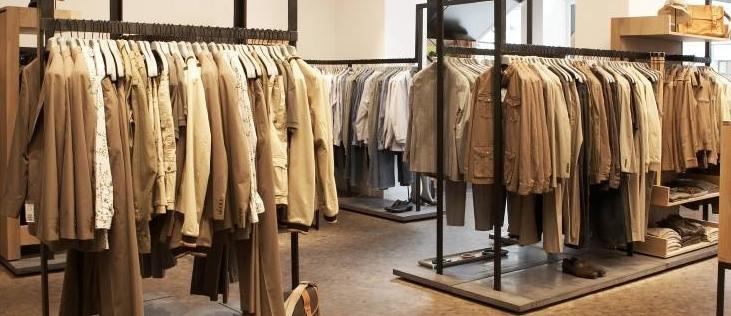
Currently - aeshetic: minimalist; key colour: beige; silhouettes: simple. Compatible with the store design concept, products will slightly adapt, but not too far from the classic COS aesthetic. Products will be slightly less minimal, to adapt to the culture it is in, and align with its core competence of elevated essentials, but will incorporate more colour, such as muted reds, greens and yellows, and patterns to match its loation. A focus on sustainable materials such as organic cotton and lyocell will also be implemented. This improves the product’s quality, and so increases price (see below).
Currently - middle-market price point, considered expensive for fast fashion. As previously mentioned, an increase in standard material quality due to increased sustainable materials will lead to a higher price. This is known as a premium pricing strategy (see below), as part of the overall differentiation focus strategy to be implemented by COS. This will help with the objective to separate themselves from fast fashion retailers already present in South America and Brazil, such as Zara and Mango. A premium pricing strategy is also logical when considering the location of the flagship store on Rua Oscar Freire (section 2.8.1).
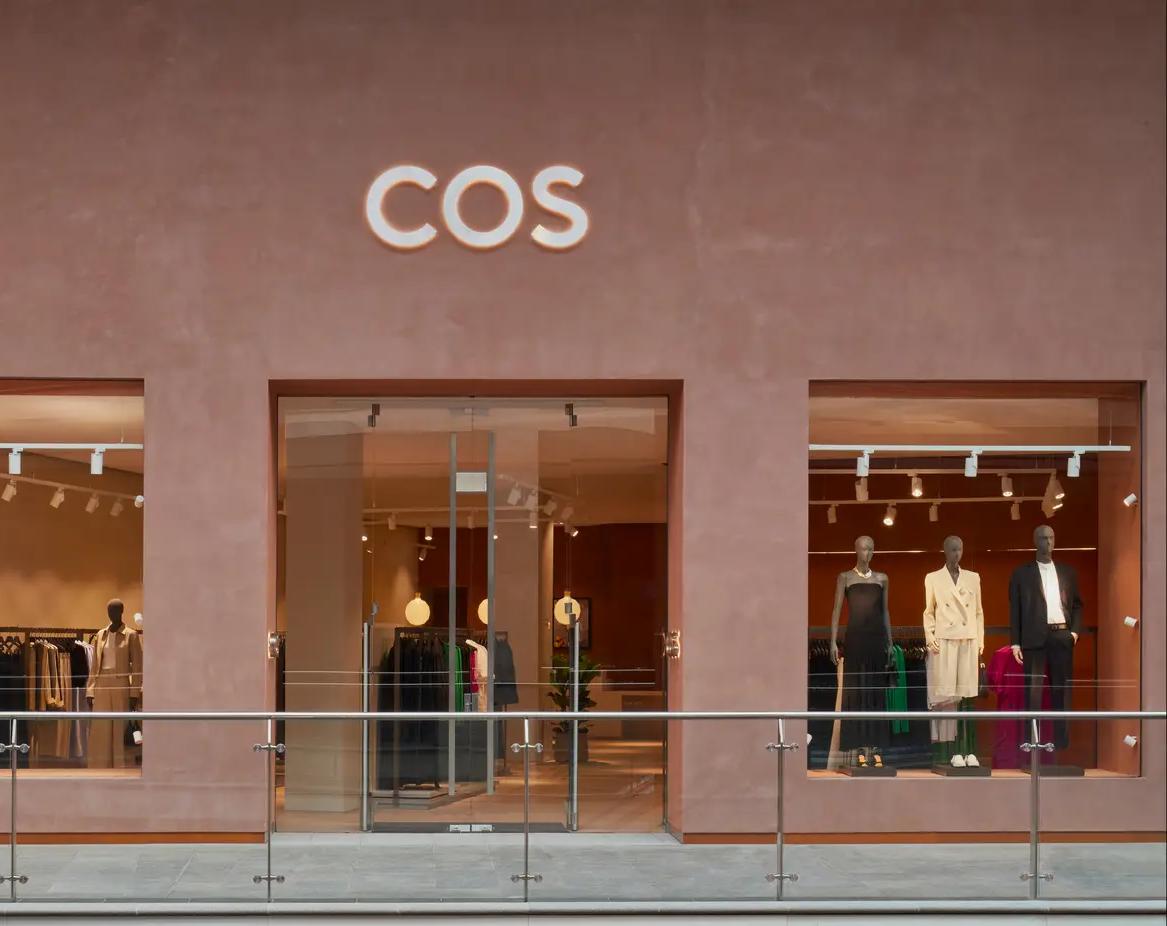
The pictures to the right feature international COS buildings. As seen, the buildings all feature seamless integration into their surroundings. The store exterior will take influence from the local architecture, as COS buildings frequently do. On Rue Oscar Freire, the buildings can be described as sleek and modern in architectural style, which is common in São Paulo (Itzkowitz, 2019). COS will follow suit, as seen to the right - the Chicago store is very similar to how it will look.
Paper-based packaging, with an in-store recycling programme allowing for the reuse of boxes, hangers and bags.
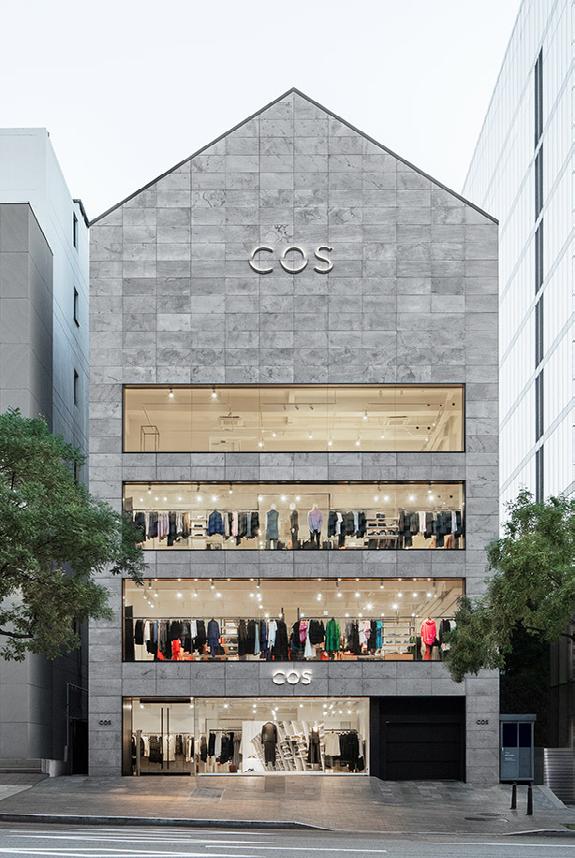
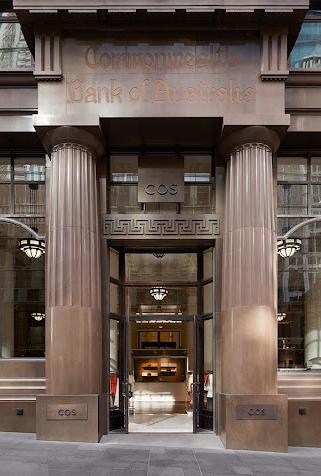
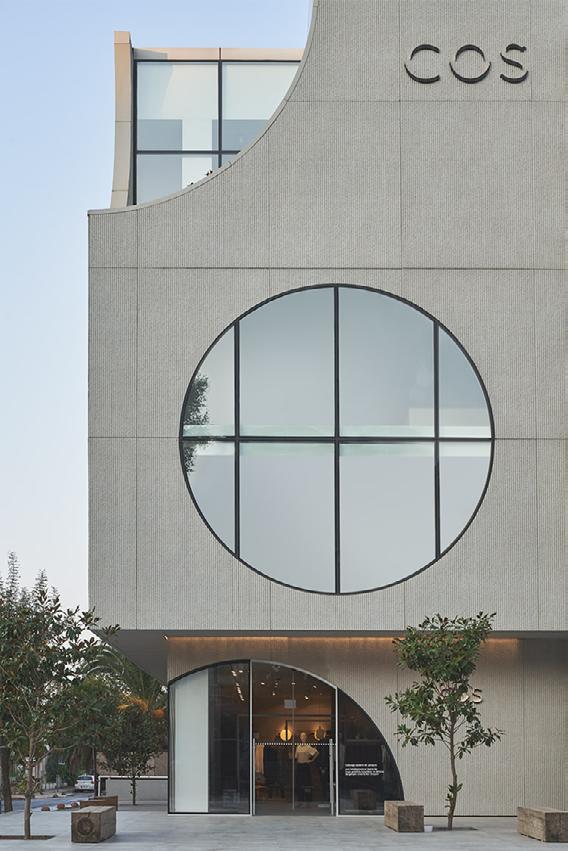
Energy-efficient store design - 85% of roof to be covered in solar panels, while completely glass front-of-store (right) reduces the use of artifical lighting.
Mannequins used to be 100% biodegradable.
95% of materials used should be sustainable and/or renewable - use of eco-friendly bamboo for in-store fixtures, recycling supplier off-cuts into rugs, etc. (section 2.8.3).
Donation of unwanted clothing can build loyalty points for consumers - one piece of clothing represents 10 points, where 100 points can get a consumer £5 off.
Consumers may not be aware of the store’s sustainable aspects and circularity.
Lacking digital touchpoints within the store and limited interactivity for the omnichannel consumer.
Educate customers that go into the flagship by utilising posters, and designate a page for store design and concept on the Brazil website with QR codes available in-store.
Consider the addition of digital touchpoints in store in the future, e.g., the aforementioned QR codes, and when opening new stores in the future (section 2.10).

Chicago’s store visually represents the overall architectural direction of the planned flagship on Rue Oscar Freire.

2.9.1 x


Debuting in 2020, Brazilian designer Joao Maraschin focuses on both “community and craftmanship” above all else in his collections (LFW, 2023). Mention of his “craftmanship” stems from his niche being in hand-made “embroidery, crochet and macraemé” (LVMH, 2023), which will all be prominent features of the collaboration (see section 2.9.2). The aforementioned “community” is referring to his successful fusion of Brazilian and European culture in his collections (LFW, 2023), as well as the strong brand emphasis on social responsibility (UAL, 2023). This extends to both diversity, withMaraschin using only women older than 45 in campaigns to challenge the system(UAL, 2023), and sustainability, by working with recycled materials, and the reduction of waste. These values demonstrate Joao Maraschin and COS’ compatibility.
The main purpose of the collaboration is to infuse COS with greater Latin American influences through an external Brazilian designer, to which Maraschin offers a fantastic opportunity to do so. By this slight adaptation to the product based on Brazilian culture, it demonstrates a level of cultural sensitivity which is appealing to potential consumers. It can develop deeper and more meaningful relationships (Kantar, 2018), helping to establish a stronger global presence through the acquisition of a wider consumer base, fulfilling SMART objectives 1 and 2 respectively.
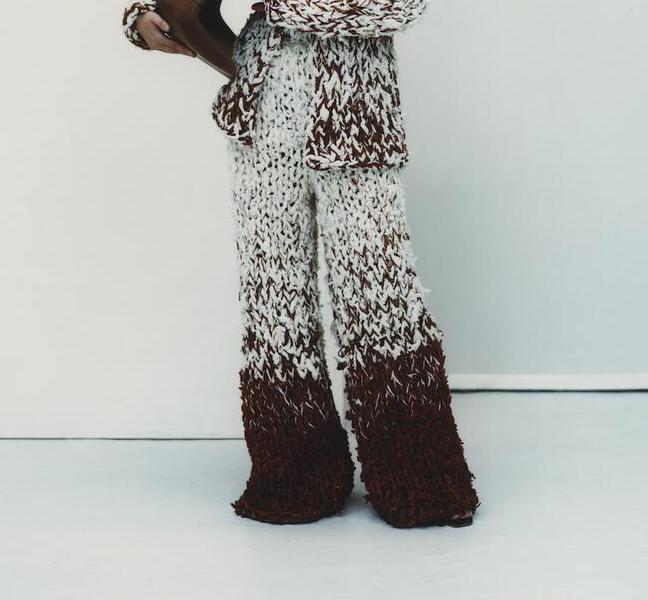
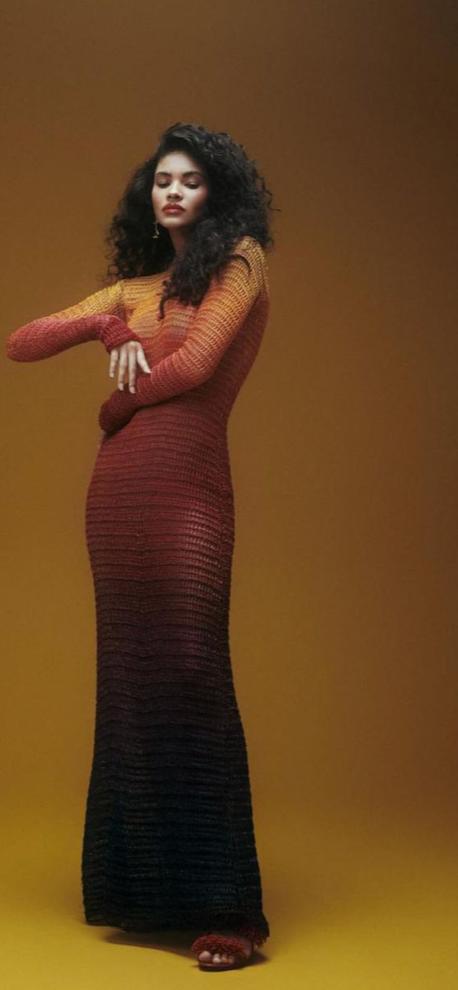
This collection is an ode to and appreciation of Brazilian culture, with slightly bolder colours and patterns acting as a nod to the culture-rich region (Lewis, 2021). This will be explored largely through vibrant reds and textures. Though, nothing too trendy will be featured, to align with COS’ firm ethos of timeless fashion - there will be a focus on elevated essentials but with a Brazilian flair. Sustainability will be heavily incorporated, too, explored using earth tones and recycled materials, aligning with eco-consciouness being at the heart of São Paulo’s fashion industry (WGSN, 2023). See right for inspiration.

The development process will last from July to early November, in alignment with São Paulo Fashion Week. A debut at SPFW will give publicity to the collection, allowing both parties to gain maximum exposure (Gillet, 2023). For COS, this will lead to higher customer awareness of the brand’s presence in São Paulo and their aesthetic, as well as the creation of positive brand associations.
Potential Limitations Solutions
Maintaining brand coherence and authenticity between both brands can be difficult with a risk of conflicting ideas.
Maraschin may benefit more from this collaboration as COS have a higher following.
Incorporation of COS pieces that align closer with the brand identity, incorporating at least one traditionally “COS” feature, such as silhouette or colour.
COS still benefits in the long-run, seeming more appreciative of Brazilian culture which will garner positive associations of the brand and increase brand authenticity. This will drive sales.


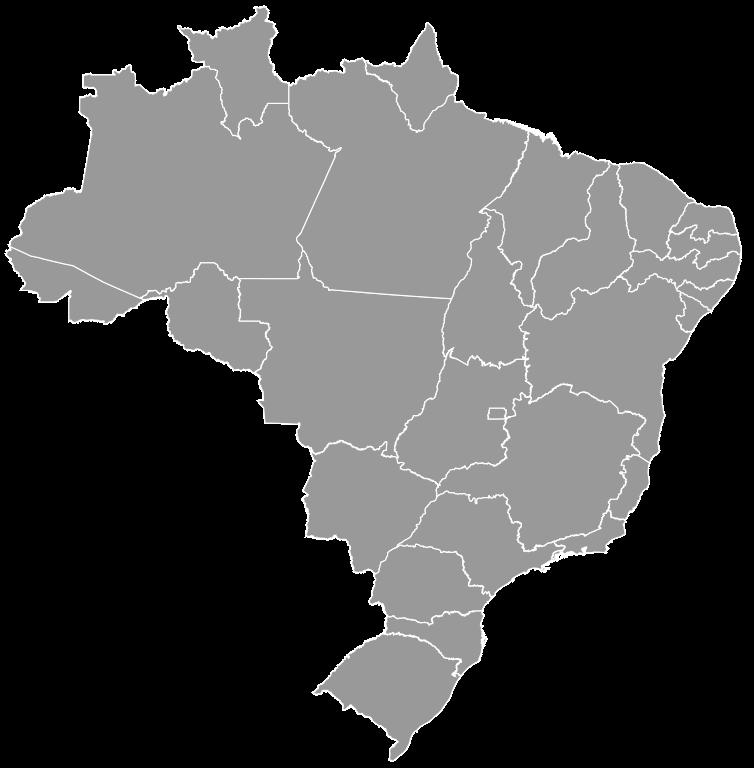
Within a year of the flagship store opening in São Paulo, two additional stores will be opened on the Brazilian east coast. Firstly, the brand will expand to Rio de Janeiro, the country capital. This is the logical next step after establishing a flagship store, with the location to be in Barra shopping mall - the largest in Brazil, with over 700 stores and 1.2km of shopping space (Barra Shopping, 2023). Similarly, it will also expand to Salvador, to the third biggest mall in Brazil, Salvador Shopping (Statista Research, 2022).





The monitoring of a strategic plan is significant for implementation due to its ability evaluate progress and highlight issues that may have been missed during planning. It is designed to help organisations recognise said issues early on, with the provision of interventions that can act as contingency plans when something goes wrong (Soken-Huberty, 2023). It is also crucial when ensuring plans stay on track and align with the objectives set out in section 2.1.
Marketing Activity
Eco Fashion Week
KPIs
Attendance in audience.
SM: impressions
Social media/ website
- likes, follows, audience growth.
Website: visits, bounce rate, avg. duration.
Attendance will be monitored through a count of empty seats manually and through a wristband system. Wristbands will also offer a good opportunity to leave Brazilian consumers with information such as branding.
Instagram Insights will provide invaluable data on audience, like and follower fluctuations.
Google Analytics will be useful to measure website traffic after a Brazilian site is set up.
São Paulo
Design Week
Post-event visibility including media coverage in local news outlets and social metrics.
Sentiment analysis by the market research team will help to detect the overall media perception of the store concept and Brazililan attitudes.
Guerilla marketing
Brand exposure i.e., website metrics and social media hashtag usage.
Social media metrics such as hashtag usage and if it is trending will help gauge if the guerilla marketing tactics are effective.
Audience at least 90% filled to capacity
200k follows (IG), 15% reach Over 250k visits in first month Sentiment analysis should result in 80% positive reactions. Upon release, #1 trending hashtag on X.
A high audience will ensure more publicity and greater word-ofmouth.
Generate buzz surrounding COS and increase brand awareness.
If the target is not met, COS can learn from this for their future São Paulo Fashion Week debut. This will involve greater social media promotion.
Objective is to gauge opinions and hear the general public’s reactions.
Insight apps also generate consumer analytics. Gathering information on the consumer can help tailor marketing and advertising tactics to target them directly and increase likelihood of purchase.
If the store concept is met with criticism, it is crucial to listen to opinions and adapt based on said critiques. Listening to Brazilian natives is key when attempting to assimilate into the culture.
Increase brand awareness, build hype for store launch.
If the guerilla techniques do not meet marketing expectations, a transition back to more traditional marketing techniques should be considered.
Marketing Activity KPIs
Flagship Store
Opening
Store footfall, store revenue and customer satisfaction.
Monitoring Process
Purpose Solutions if Targets Aren’t Met Targets
Designer Collaboration
Brand exposure through media attention and social media.
Store popularity can be measured through both queue length monitoring and people-counting technology.
20% more footfall than competitors’ stores in first three months.
Knowledge of store popularity in a new region is key when considering future expansion plans (section 2.10).
If footfall goals are not being reached, especially in the first three months of opening when the store should be busiest, customer feedback can be useful to understand why. Enhancing consumer shopping experiences through digital innovation seen in COS stores could also increase this.
Both brands featured should experience an immediate exponential growth on followers and likes after the collaboration. For COS, this will be Brazilian followers who keep up with Joao Maraschin, which will in turn increase footfall in stores.
#COSxMaraschin to gain 10k tweets.
Higher brand exposure generates sales, increasing COS’ global presence.
Failure to gain attention on the collaboration could be counteracted with a press release, such as an interview with Vogue Brasil which will gain positive media attention, especially when mentioning the collection’s dedication to culture and sustainability.
The feedback loop enables marketers to evaluate their strategic plan, notably against KPIs, company capabilities and core competencies. It is significant when considering that the brand can learn from the successes and possible failures of the plan. This will be beneficial for future plans by COS. Core competencies were leveraged such as a unique brand aesthetic that was extended to Brazil. This, in combination with cultural adaptation has allowed for a successful flagship store opening and cultural assimilation into the marketplace, increasing competitive advantage and narrowing the gap between themselves and competitors.

Adegeest, D.-A. (2021). Why Cos is showing on the London Fashion Week stage. [online] FashionUnited. Available at: https://fashionunited.in/news/fashion/why-cos-is-showing-onthe-london-fashion-week-stage/2021092130629 [Accessed 12 Jan. 2024].
Allon (2022). Who is Zara’s Target Market? Zara Brand Analysis – Customer Segmentation, Marketing Strategy & Competitors. [online] Start.io . Available at: https://www.start.io/ blog/who-is-zaras-target-market-zara-brand-analysis-customer-segmentation-marketing-strategy-competitors/. Araya, J. (2021). Navigating Sustainability in Latin America. [online] Euromonitor. Available at: https://www.euromonitor.com/article/navigating-sustainability-in-latin-america. Areni, C.S. and Kim, D. (1994). The influence of in-store lighting on consumers’ examination of merchandise in a wine store. International Journal of Research in Marketing, 11(2), pp.117–125. doi:https://doi.org/10.1016/0167-8116(94)90023-x.
Banco Central do Brasil (2023). Banco Central do Brasil. [online] www.bcb.gov.br. Available at: https://www.bcb.gov.br. Barra Shopping (2023). The Barra Shopping Complex . [online] BarraShopping. Available at: https://www.barrashopping.com.br/o-complexo [Accessed 16 Jan. 2024].
BEFW, Brasil Eco Fashion Week (2023). Estrutura do evento: conteúdos, desfiles e negócios em moda sustentável. [online] Brasil Eco Fashion. Available at: https://brasilecofashion.com.br/sobre/#sobre [Accessed 7 Jan. 2024].
Bianchi, T. (2023). Social media sites market share South America 2023. [online] Statista. Available at: https://www.statista.com/statistics/1173886/south-america-social-media-market/.
Blum, R. (2020). Emerging Markets: Opportunities and Challenges of Entering Brazil’s Market. [online] IFAB. Available at: https://www.fashionadvisors.co/blog/2020/3/16/emerging-markets-opportunities-and-challenges-of-entering-brazils-market.
Brasil Eco Fashion Week (2023). Week. [online] Brasil Eco Fashion. Available at: https://brasilecofashion.com.br. Brown, D. (2023). The Power of Anticipation Psychology for Ecommerce Marketing. [online] Queue-it. Available at: https://queue-it.com/blog/anticipation-psychology-ecommerce/. CCC, Children Change Colombia (2023). WHY COLOMBIA? [online] Children Change Colombia. Available at: https://childrenchangecolombia.org/why-colombia/#. Chadha, P. (2023). Why Global Expansion is The Best Thing For Your Business. [online] Entrepreneur. Available at: https://www.entrepreneur.com/growing-a-business/why-globalexpansion-is-the-best-thing-for-your-business/443142.
Cherry, K. (2023). What Habituation Means in Psychology. [online] Verywell Mind. Available at: https://www.verywellmind.com/what-is-habituation-2795233#:~:text=A%20simple%20 definition%20of%20habituation [Accessed 12 Jan. 2024].
Coleman, T. (2021). 5 Common Challenges of Doing Business in Brazil. [online] Colibri Content. Available at: https://www.colibricontent.com/5-most-common-challenges-when-doing-business-in-brazil/.
Colombia.co (2023). 5 opportunities to do business in Colombia, the country of beauty. [online] Colombia Country Brand. Available at: https://www.colombia.co/en/trade-with-colombia/5-reasons-to-do-business-in-colombia-the-country-of-beauty/.
CONAR (2021). DIGITAL INFLUENCER ADVERTISING GUIDELINES 2 0 2 1. [online] Available at: http://conar.org.br/pdf/CONAR_Digital-Influencer-Advertising-Guidelines_2021-03-11.pdf [Accessed 4 Jan. 2024].
Danziger, P.N. (2020). Consumer Psychology Is The Only Constant In A Changing Retail Market. [online] Forbes. Available at: https://www.forbes.com/sites/pamdanziger/2020/08/23/ consumer-psychology-is-the-only-constant-in-a-changing-retail-market/?sh=20aacd347003 [Accessed 11 Jan. 2024].
De La Garza, F. (2022). Why Having a Flagship Store Can Help Your Brand Positioning and Reputation | ELLE Education. [online] Elle Education. Available at: https://elle.education/ en/business/why-having-a-flagship-store-can-help-your-brand-positioning-and-reputation/#:~:text=The%20flagship%20store%20can%20enhance,ones%20hooked%20to%20the%20 brand..
Deloitte (2023). The Sustainable Consumer 2023. [online] Deloitte. Available at: https://www2.deloitte.com/uk/en/pages/consumer-business/articles/sustainable-consumer.html. Dolbec, P.-Y. and Chebat, J.-C. (2014). The Impact of a Flagship vs. a Brand Store on Brand Attitude, Brand Attachment and Brand Equity. Journal of Retailing, 89(4), pp.460–466. Donovan, R.J. and Rossiter , J.R. (1982). Store atmosphere: An environmental psychology approach. Journal of Retailing, 58(1), pp.34–57. Drenik, G. (2022). What In-Store Experiences Look Like In A Post-Pandemic World. [online] Forbes. Available at: https://www.forbes.com/sites/garydrenik/2022/10/05/what-in-storeexperiences-look-like-in-a-post-pandemic-world/?sh=60460da7693b [Accessed 5 Jan. 2024].
ECLAC (2023). Fiscal Panorama of Latin America and the Caribbean 2023: fiscal policy for growth, redistribution and productive transformation. [online] United Nations. Available at: https://repositorio.cepal.org/items/13ed0427-7957-43ed-bbb9-423114da1ef0. EDITED (2023). Log In | EDITED Accounts. [online] accounts.edited.com. Available at: https://app.edited.com/#market/dashboard/456327/new?analysis_view=statistics&brands=zara&in_stock=true&is_second_hand=false&order_by=found_desc&vertical=apparel&view=analysis. EFB, Ethical Fashion Brazil (2023). Brasil Eco Fashion Week to go on in December 2023. [online] Ethical Fashion Brazil. Available at: https://ethicalfashionbrazil.com/brasil-eco-fashion-week-to-go-on-in-december-2023/ [Accessed 7 Jan. 2024]. Evans, M. (2015). 10 Key Steps To Expanding Your Business Globally. [online] Forbes. Available at: https://www.forbes.com/sites/allbusiness/2015/03/04/10-key-steps-to-expanding-your-business-globally/?sh=15a6017c3803 [Accessed 2 Jan. 2024].
Feld, K.M. (2022). 5 Ways Aligning With Charities Can Strengthen Your Brand. [online] Rolling Stone. Available at: https://www.rollingstone.com/culture-council/articles/5-ways-aligning-with-charities-strengthen-your-brand-1234636158/. Financial, C. to T.L. (2023). Brazil’s Political Instability Leads To Investment Fears | The London Financial. [online] The London Financial. Available at: https://thelondonfinancial.com/ politics/brazils-political-instability-leads-to-investment-fears. Forbes (2023). Zara | Company Overview & News. [online] Forbes. Available at: https://www.forbes.com/companies/zara/?sh=42a982817487 [Accessed 29 Dec. 2023]. Gardetti, M. and Patricia Larios-Francia, R. (2021). Sustainable fashion and textiles in Latin America. Singapore: Springer. GEM, Global Entrepreneurship Monitor (2022). Entrepreneurship in Colombia. [online] GEM Global Entrepreneurship Monitor. Available at: https://www.gemconsortium.org/economy-profiles/colombia-2.
Gerlach, C. (2023). Council Post: The Benefits Of A Phased-Growth Strategy In Unpredictable Industries. [online] Forbes. Available at: https://www.forbes.com/sites/forbesbusinesscouncil/2023/07/19/the-benefits-of-a-phased-growth-strategy-in-unpredictable-industries/?sh=37053ee5a05f [Accessed 4 Jan. 2024].
Gillet, S. (2023). The Fashion Week Effect: Achieving Optimal Brand Performance. [online] Launchmetrics. Available at: https://www.launchmetrics.com/resources/blog/the-fashion-effect-achieving-optimal-brand-performance.
Global Expansion (2023). Why Business Expansion in Latin America is a Wise Move. [online] www.globalexpansion.com. Available at: https://www.globalexpansion.com/why-expanding-your-business-into-latin-america-is-a-wise-move.
GM Group (2021). Tourism in São Paulo: The best attractions. [online] GM Group Travel - Travel Experts of South America. Available at: https://www.gmgroup.travel/tourism-in-saopaulo-the-best-attractions/ [Accessed 10 Jan. 2024].
Good On You (2023). COS - Sustainability Rating - Good On You. [online] directory.goodonyou.eco. Available at: https://directory.goodonyou.eco/brand/cos# [Accessed 22 Dec. 2023].
Gould, W. (2023). 9 Fashion Trends That Are Going to Be Everywhere in 2024, According to Stylists. [online] Real Simple. Available at: https://www.realsimple.com/2024-fashiontrends-8419531 [Accessed 22 Dec. 2023].
Government of Brazil (2022). The number of households with internet access in Brazil has increased. [online] Serviços e Informações do Brasil. Available at: https://www.gov.br/en/ government-of-brazil/latest-news/the-number-of-households-with-internet-access-in-brazil-has-increased. Gregory, S. (2009). Want to Save Some Money? Shop Without Touching. [online] TIME Magazine. Available at: https://content.time.com/time/business/article/0,8599,1889081,00. html.
H&G, House & Garden (2022). 6 Ways to get the mid-century inspired São Paulo style. [online] www.houseandgarden.co.za. Available at: https://www.houseandgarden.co.za/design/ trends/6-ways-to-get-the-mid-century-inspired-sao-paulo-style-90479707-a1fa-4101-ac58-4930bde15bee [Accessed 9 Jan. 2024].
H&M Group (2018). Our brands. [online] H&M. Available at: https://about.hm.com/content/dam/hmgroup/groupsite/documents/en/Digital%20Annual%20Report/2017/Annual%20Report%202017%20Our%20brands.pdf.
H&M Group (2022). H&M Group Annual and Sustainability Report 2022 . [online] Available at: https://hmgroup.com/wp-content/uploads/2023/03/HM-Group-Annual-and-Sustainability-Report-2022.pdf.
Hackenberg, J. (2022). Brands, You Need To Listen To The Conscious Consumer Of The Future. [online] Forbes. Available at: https://www.forbes.com/sites/jonquilhackenberg/2021/04/29/brands-you-need-to-listen-to-the-conscious-consumer-of-the-future/?sh=370f24471d46 [Accessed 27 Dec. 2023].
Hayes, A. (2023). Guerrilla Marketing. [online] Investopedia. Available at: https://www.investopedia.com/terms/g/guerrilla-marketing.asp#:~:text=Guerrilla%20marketing%20is%20 the%20creating.
Herder, G. (2021). 3 Color Trends 2021 from Brazil. [online] Eclectic Trends. Available at: https://www.eclectictrends.com/3-color-trends-2021-from-brazil/. HRW, Human Rights Watch (2023a). Colombia: Events of 2022. [online] Human Rights Watch. Available at: https://www.hrw.org/world-report/2023/country-chapters/colombia. HRW, Human Rights Watch (2023b). The Missing Piece in Brazil’s Climate Pledges | Human Rights Watch. [online] Human Rights Watch. Available at: https://www.hrw.org/ news/2023/12/14/missing-piece-brazils-climate-pledges#:~:text=His%20government%20has%20successfully%20decelerated [Accessed 16 Jan. 2024].
HSBC (2023). HSBC International Business Guide: Argentina. [online] www.business.hsbc.com. Available at: https://www.business.hsbc.com/business-guides/argentina. IiC, Investment in Colombia (2023). Foreign direct investment: a goal of the Colombian economy. [online] Invest in Colombia. Available at: https://investincolombia.com.co/en/resources/foreign-direct-investment-a-goal-of-the-colombian-economy [Accessed 16 Jan. 2024].
International Trade Administration (2023). Argentina - Market Challenges. [online] www.trade.gov. Available at: https://www.trade.gov/country-commercial-guides/argentina-market-challenges.
Johnson, G., Scholes, K. and Whittington, R. (2008). Exploring corporate strategy. 8th ed. Harlow: Prentice Hall. Kane, J. (2020). Trade: tariffs. [online] Institute for Government. Available at: https://www.instituteforgovernment.org.uk/explainer/trade-tariffs#:~:text=do%20they%20exist%3F-. Kantar (2018). Why playing a greater role in culture is key to growth. [online] www.kantar.com. Available at: https://www.kantar.com/inspiration/brands/why-playing-a-greater-role-inculture-is-key-to-growth [Accessed 11 Jan. 2024].
Kaplan, K. (2020). Council Post: Why Every Business Needs A Website. [online] Forbes. Available at: https://www.forbes.com/sites/theyec/2020/02/03/why-every-business-needs-awebsite/?sh=56ae05f66e75 [Accessed 6 Jan. 2024].
Kent, S. (2020). COS: From ‘High Street Céline’ to Stagnation. [online] The Business of Fashion. Available at: https://www.businessoffashion.com/articles/retail/cos-hm-sales-diversity/.
Kim, Y. and Zhang, Y. (2014). The Impact of Power-Distance Belief on Consumers’ Preference for Status Brands. Journal of Global Marketing, [online] 27(1), pp.13–29. doi:https://doi. org/10.1080/08911762.2013.844290.
KU, Kettering University (2018). The Impact of Political Instability on Global Sourcing. [online] online.kettering.edu. Available at: https://online.kettering.edu/news/impact-political-instability-global-supply-chain#:~:text=Political%20instability%20can%20affect%20global.
Ku, D. (2023). The Importance of Social Media Marketing in 2023. [online] PostBeyond. Available at: https://www.postbeyond.com/blog/social-media-marketing-importance/. Lewis, R. (2021). Brazilian Street Fashion: How Not to Look Like a Tourist. [online] The Pimsleur Language Blog. Available at: https://blog.pimsleur.com/2021/01/25/what-to-wear-brazil/.
LFW, London Fashion Week (2023). London Fashion Week - Joao Maraschin. [online] London Fashion Week. Available at: https://londonfashionweek.co.uk/designers/joao-maraschin [Accessed 10 Jan. 2024].
Linares, F. (2023). Unveiling the Transformative Retail Landscape of the Latin…. [online] Euromonitor. Available at: https://www.euromonitor.com/article/unveiling-the-transformative-retail-landscape-of-the-latin-american-fashion-industry.
Loeb, W. (2023). Zara’s 30% Expansion And 2022 Outstanding Results. [online] Forbes. Available at: https://www.forbes.com/sites/walterloeb/2023/03/22/zaras-30-expansion-and2022-outstanding-results/.
Lonely Planet (2023). Rua Oscar Freire | São Paulo, Brazil | Attractions. [online] Lonely Planet. Available at: https://www.lonelyplanet.com/brazil/sao-paulo/avenida-paulista-jardins-around/attractions/rua-oscar-freire/a/poi-sig/1598189/1342424 [Accessed 9 Jan. 2024].
LVMH Prize (2023). joao maraschin. [online] LVMH PRIZE. Available at: https://www.lvmhprize.com/designer/joao-maraschin/ [Accessed 10 Jan. 2024].
Mabelle, M. (2023). How Do Runway Shows Benefit a Designer’s Brand? - Morgan ma Belle. [online] Morgan Mabelle. Available at: https://www.morganmabelle.com/fashion/runway-shows-benefit-a-designer/.
Mari, A. (2023). Brazil Is The World’s Second Most Vulnerable Country To Cyberattacks. [online] Forbes. Available at: https://www.forbes.com/sites/angelicamarideoliveira/2023/09/27/ brazil-is-the-worlds-second-most-vulnerable-country-to-cyberattacks/?sh=2f40f61627a4 [Accessed 14 Jan. 2024].
Marr, B. (2022). The 5 Biggest Business Trends In 2023 Everyone Must Get Ready For Now. [online] Forbes. Available at: https://www.forbes.com/sites/bernardmarr/2022/10/03/the5-biggest-business-trends-for-2023/?sh=61ef39c94217 [Accessed 27 Dec. 2023]. McKinsey (2023). What could a new era mean for Latin America? | McKinsey. [online] www.mckinsey.com. Available at: https://www.mckinsey.com/mgi/our-research/what-could-anew-era-mean-for-latin-america.
Mehrabian, A. and Russell, J.A. (1974). An approach to environmental psychology. Cambridge: M.I.T. Press. Meneses, V. (2023). Fashion Industry Logistics Data Latin America. [online] Americas Market Intelligence. Available at: https://americasmi.com/insights/surviving-the-2023-economicslowdown-in-latam-a-roadmap-for-the-lifestyle-and-fashion-logistics-sector/. Milliman, R.E. (1982). Using Background Music to Affect the Behavior of Supermarket Shoppers. Journal of Marketing, 46(3), pp.86–91. doi:https://doi.org/10.2307/1251706. Minority Rights.org (2023). Brazil - World Directory of Minorities & Indigenous Peoples. [online] Minority Rights Group. Available at: https://minorityrights.org/country/brazil/#:~:text=Indigenous%20peoples%20live%20in%20every.
Newman, L. (2023). South America: A hard road to unity. [online] www.aljazeera.com. Available at: https://www.aljazeera.com/news/2023/6/3/south-america-a-hard-road-to-unity.
O’Neill, A. (2023). Global inflation rate 2012-2022 | Statista. [online] Statista. Available at: https://www.statista.com/statistics/256598/global-inflation-rate-compared-to-previous-year/. OECD Watch (2023). WORKERS’ RIGHTS AND SOCIAL PROTECTION IN BRAZIL Legal and policy gaps. [online] Available at: https://www.oecdwatch.org/wp-content/uploads/ sites/8/2022/03/Bridging-Brazilian-governance-gaps-Workers-rights.pdf.
OOSGA (2023). Social Media in Brazil - 2023 Stats & Platform Trends - OOSGA. [online] oosga.com. Available at: https://oosga.com/social-media/bra/#:~:text=Social%20Media%27s%20User%20Demographics%20in [Accessed 5 Jan. 2024]. Parakar (2023). Discover the Top 5 Advantages of International Expansion - Parakar. [online] parakar.eu. Available at: https://parakar.eu/knowledge/eu/discover-the-top-5-advantages-of-international-expansion/.
Patrick, V.M., Atefi, Y. and Hagtvedt, H. (2017). The allure of the hidden: How product unveiling confers value. International Journal of Research in Marketing, 34(2), pp.430–441. doi:https://doi.org/10.1016/j.ijresmar.2016.08.009.
Pec, T. (2022). Council Post: Why Businesses And Brands Need To Be Taking Advantage Of Social Media. [online] Forbes. Available at: https://www.forbes.com/sites/forbesagencycouncil/2022/09/06/why-businesses-and-brands-need-to-be-taking-advantage-of-social-media/?sh=34eea14216cc [Accessed 6 Jan. 2024].
Plummer, M. (2022). Council Post: Guerilla Marketing For Dummies: What Works And What Doesn’t. [online] Forbes. Available at: https://www.forbes.com/sites/forbestechcouncil/2022/09/13/guerilla-marketing-for-dummies-what-works-and-what-doesnt/?sh=6ded7bd02280 [Accessed 7 Jan. 2024]. Quillin, J. (2023). The Strategy of a Luxury Flagship Store. [online] www.fashionstrategyweekly.com. Available at: https://www.fashionstrategyweekly.com/p/the-strategy-of-a-luxury-flagship.
Romain, D. (2020). DOING BUSINESS IN COLOMBIA – 6 THINGS TO KNOW. [online] www.linkedin.com. Available at: https://www.linkedin.com/pulse/doing-business-colombia-6things-know-romain-dumont/ [Accessed 16 Jan. 2024]. SERNAC (2022). New SERNAC Interpretative Circular on native advertising and influencers. [online] Carey Abogados. Available at: https://www.carey.cl/en/new-sernac-interpretative-circular-on-native-advertising-and-influencers/ [Accessed 4 Jan. 2024].
Shanahan, T., Tran, T.P. and Taylor, E.C. (2019). Getting to know you: Social media personalization as a means of enhancing brand loyalty and perceived quality. Journal of Retailing and Consumer Services, 47(1), pp.57–65. doi:https://doi.org/10.1016/j.jretconser.2018.10.007. Sharma, R.N. (2023). What are the benefits of partnering with other local businesses for marketing purposes? [online] Medium. Available at: https://medium.com/@rajendro/ what-are-the-benefits-of-partnering-with-other-local-businesses-for-marketing-purposes-c2d492bca720. Shih, W.C. (2020). Global Supply Chains in a Post-Pandemic World. [online] Harvard Business Review. Available at: https://hbr.org/2020/09/global-supply-chains-in-a-post-pandemicworld.
Shopworks (2017). What makes a successful flagship store - Shopworks. [online] https://shopworks.co.uk/. Available at: https://shopworks.co.uk/what-makes-a-flagship-store/#:~:text=For%20example%2C%20for%20a%20top [Accessed 10 Jan. 2024].
Shriber, S. (2023). Key Social Media Insights Among U.S. Hispanic Adults. [online] CivicScience. Available at: https://civicscience.com/key-social-media-insights-among-u-s-hispanicadults/#:~:text=As%20of%20July%202023%2C%2085.
Similar Web (2023). COS Website Traffic. [online] Similar Web. Available at: https://www.similarweb.com/website/cos.com/#interests. Smith, L. (2023a). 5 Ways Governments Reduce National Debt. [online] Investopedia. Available at: https://www.investopedia.com/articles/economics/11/successful-ways-government-reduces-debt.asp#:~:text=Tax%20hikes%20alone%20are%20rarely.
Smith, P. (2023b). H&M Group: number of stores 2022. [online] Statista. Available at: https://www.statista.com/statistics/683262/number-of-stores-worldwide-of-the-handm-group-bybrand/#:~:text=This%20statistic%20shows%20the%20number.
Smith, P. (2023c). Inditex: net sales worldwide by format 2021. [online] Statista. Available at: https://www.statista.com/statistics/456505/sales-inditex-group-worldwide-by-format/#:~:text=Zara%2C%20which%20includes%20the%20Zara.
Soken-Huberty, E. (2023). 10 Reasons Why Monitoring and Evaluation is Important. [online] tools4dev. Available at: https://tools4dev.org/blog/why-monitoring-and-evaluation-is-im-
Somma, M.D. (2014). Retail Brand Strategy: Role Of The Flagship Store. [online] Branding Strategy Insider. Available at: https://brandingstrategyinsider.com/retail-brand-strategy-roleof-the-flagship-store/.
Spotify (2023). COS Sounds. [online] Spotify. Available at: https://open.spotify.com/playlist/03xISbDqJQ1DYgqtR9cjmN.
Statista (2022). Apparel - Brazil | Statista Market Forecast. [online] Statista. Available at: https://www.statista.com/outlook/cmo/apparel/brazil.
Statista (2023a). Religion affiliations in Latin America 2020. [online] Statista. Available at: https://www.statista.com/statistics/996386/latin-america-religion-affiliation-share-type/.
Statista (2023b). Total population in Brazil by gender | Statista. [online] Statista. Available at: https://www.statista.com/statistics/788353/population-total-gender-brazil/. Statista (2023c). Total population in Latin America by gender 2022. [online] Statista. Available at: https://www.statista.com/statistics/788405/population-total-gender-latin-america/#:~:text=A%20total%20of%20around%20659.31.
Statista Research (2022). Shibboleth Authentication Request. [online] login.manchester.idm.oclc.org. Available at: https://www-statista-com.manchester.idm.oclc.org/statistics/890474/ south-america-shopping-mall-size/ [Accessed 16 Jan. 2024]. Sukianto, A. (2022). 10 Ways to Reduce Cybersecurity Risk for Your Organization | UpGuard. [online] Upguard. Available at: https://www.upguard.com/blog/reduce-cybersecurity-risk. SYB, Soundtrack Your Brand (2022). Music in retail stores guide. [online] Soundtrack Your Brand. Available at: https://www.soundtrackyourbrand.com/guides/music-in-retail-stores/. TCFG, The Culture Factor Group (2023). Country comparison tool. [online] www.hofstede-insights.com. Available at: https://www.hofstede-insights.com/country-comparison-tool?countries=brazil%2Cunited+kingdom.
The Economist (2022). Latin American society is modernising, mostly for the better. The Economist. [online] 16 Jun. Available at: https://www.economist.com/special-report/2022/06/16/latin-american-society-is-modernising-mostly-for-the-better [Accessed 20 Jun. 2022]. TMF Group (2023). Doing business in Brazil. [online] Tmf-group.com. Available at: https://www.tmf-group.com/en/news-insights/doing-business-in/brazil/.
UK Trade Policy Observatory (2023). UK businesses facing increased costs and supply chain issues in post-Brexit system – new from UKTPO. [online] The University of Sussex. Available at: https://www.sussex.ac.uk/broadcast/read/60376#:~:text=New%20analysis%20released%20today%20(Wednesday. Vakratsas, D. and Ambler, T. (1999). How Advertising Works: What Do We Really Know? Journal of Marketing, 63(1), p.26. doi:https://doi.org/10.2307/1251999. Vieira, V.A. (2013). Stimuli–organism-response framework: A meta-analytic review in the store environment. Journal of Business Research, 66(9), pp.1420–1426. doi:https://doi. org/10.1016/j.jbusres.2012.05.009.
Wale, H. (2020). Hofstede’s Cultural Dimensions Theory. [online] Corporate Finance Institute. Available at: https://corporatefinanceinstitute.com/resources/management/hofstedes-cultural-dimensions-theory/.
Wang, J.J., Lalwani, A.K. and DelVecchio, D. (2021). The Impact of Power Distance Belief on Consumers’ Brand Preferences: A Multimethod Investigation. International Journal of Research in Marketing, 39(3). doi:https://doi.org/10.1016/j.ijresmar.2021.11.004.
Weihrich, H. (1993). THE TOWS MATRIX. European Business Review, 93(1). doi:https://doi.org/10.1108/eum0000000001906.
Weston, S. (2022). Footfall falls in October amid political uncertainty. [online] Drapers. Available at: https://www.drapersonline.com/news/footfall-falls-by-2-2-amid-political-uncertainty. Weston, S. (2023). Mango reports record year in sales. [online] Drapers. Available at: https://www.drapersonline.com/news/mango-reports-record-year-in-sales#:~:text=The%20 full%2Dyear%20turnover%20will [Accessed 29 Dec. 2023].
WGSN (2023). Discover São Paulo’s bustling creative scene | WGSN. [online] www.wgsn.com. Available at: https://www.wgsn.com/en/blogs/discover-sao-paulos-bustling-creative-scene [Accessed 11 Jan. 2024].
World Bank Group (2020). Doing Business 2020 - Region Profile Latin America & Caribbean. [online] Doing Business. Available at: https://archive.doingbusiness.org/content/dam/doingBusiness/media/Profiles/Regional/DB2020/LAC.pdf.
Zaga, D. (2023). Latin America economic outlook, January 2023. [online] Deloitte Insights. Available at: https://www2.deloitte.com/uk/en/insights/economy/americas/latin-america-economic-outlook.html.
Zovatto, D. (2023). Latin America Political and Electoral Outlook 2023. [online] www.idea.int. Available at: https://www.idea.int/news/latin-america-political-and-electoral-outlook-2023.