Fashion psychology, as a branch of applied psychology, applies psychological theories and principles to understand and explain the relationship between fashion and human behavior, including how fashion affects emotions, self-esteem, and identity. It also examines how fashion choices are influenced by factors such as culture, social norms, personal values, and individual differences. Fashion psychologists may use their knowledge and skills to advise individuals, organizations, or the fashion industry on a variety of issues, including consumer behavior, marketing strategies, design, and sustainability.
More Than Garments
Clothing serves as an extension of identity and provides a tangible reflection of a person’s perceptions, dissatisfactions, and desires.The terms “clothing” and “dress” typically denote a type of body covering that can be worn, which is commonly made of textile material but may also utilize other mate- rials or substances to be fashioned and secured in place. Clothing primarily served the pur- pose of providing warmth and protection against the elements. However, clothing now serves multiple functions beyond just protection, including identification, modesty, status, and adornment. Clothing is used to identify group membership, cover the body appropriately, indicate rank or position within a group, and facilitate self-expression and creativity. The clothing a person chooses to wear is significant in terms of their image and reputation, as it sends out messages to both familiar and unfamiliar people, showcasing the person’s image. When an object is worn on the body, it takes on the social significance in relation to the person wearing it.
“To me, clothing is a form of self expression. There are hints about who you are in what you wear.” - Marc Jacobs
Clothes have evolved from being a means of survival to becoming a social marker. The phrase “You Are What You Wear” implies that people can be judged based on their clothing choices. The garments we choose to wear serve as a representation of our current thoughts and emotions. Choosing clothing that provides comfort, joy and a positive self-image can genuinely enhance one’s quality of life, leading to new experiences, self-discovery, and cherished moments.
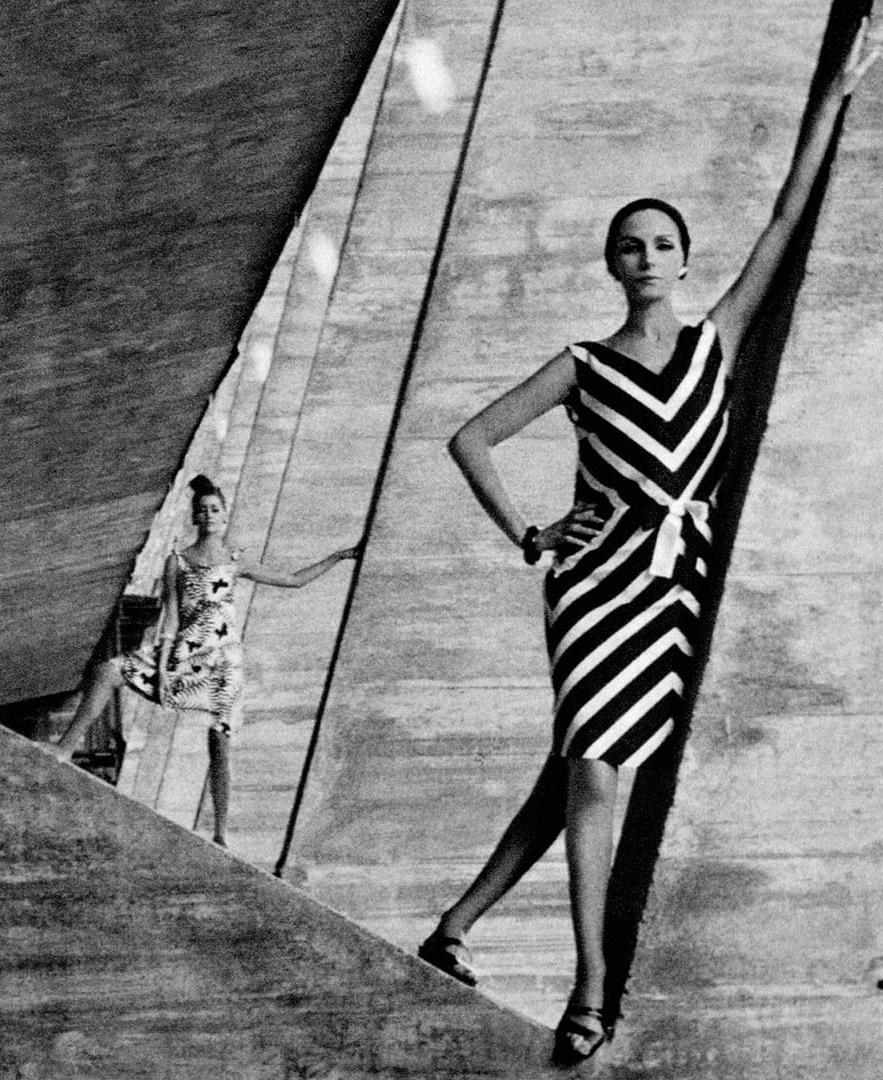
Stark lines and bold patterns create an edge of self-expression without words.
Photo source unknown via creative commons license.
The Evolution of
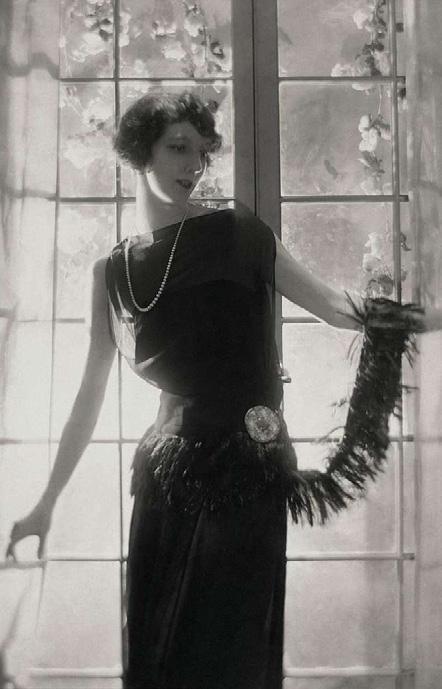
Golden Age; rebellion, liberation and selfdefinition
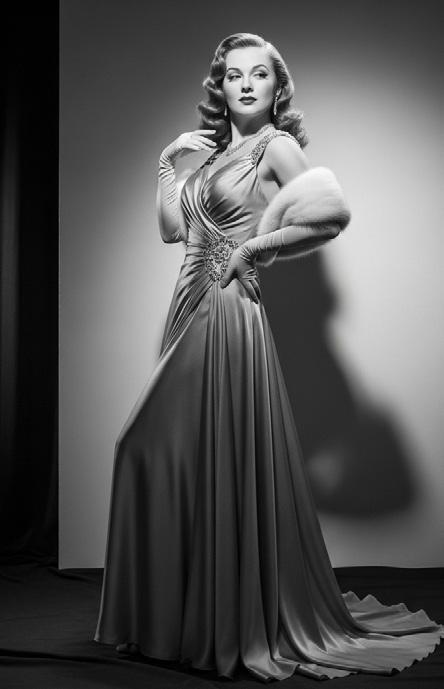
Post depression; polished, poised and glamourous; looking for steadiness
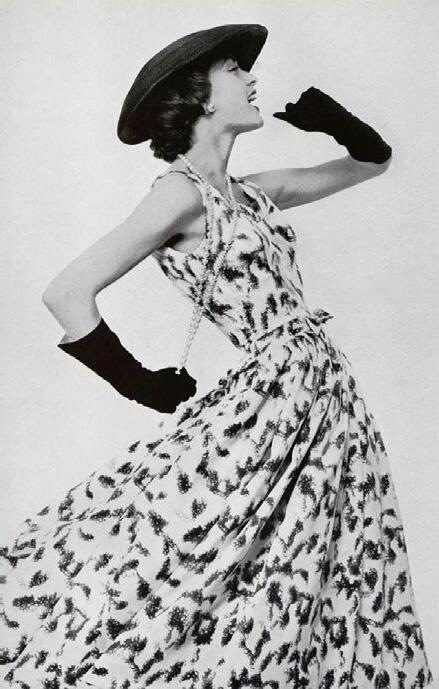
Post-war utility; practicality and selfreinvention
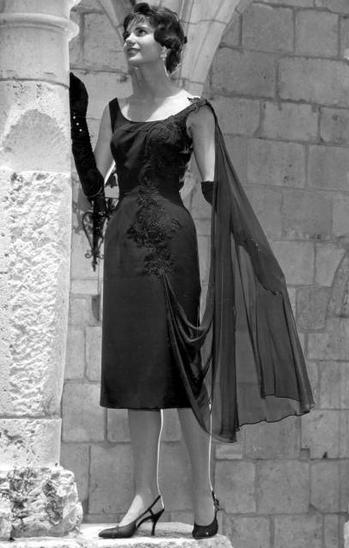
Classic sophistication into bold, mod prints and individualism
Classic conformity; traditional, structured, and a “perfect exterior”
1920’s Flapper woman by Adolf de Meyer.// Photo courtesy of GetArchive via creative commons license.
Glamourous Hollywood woman in the 1930’s.// Photo courtesy of easypeasy.ai via creative commons license.
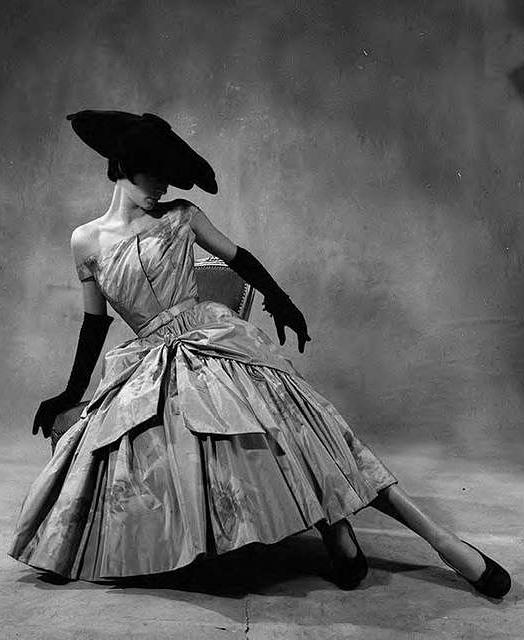
A woman posing in a 1950’s style black and white dress and black sun hat.// Photo courtesy of Wikimedia Commons via creative commons license.
Stylish Reasoning
1975 1985 1995 2005
2015 2025 mixed-and-matched bohemian style; self-expression and anti-establishment
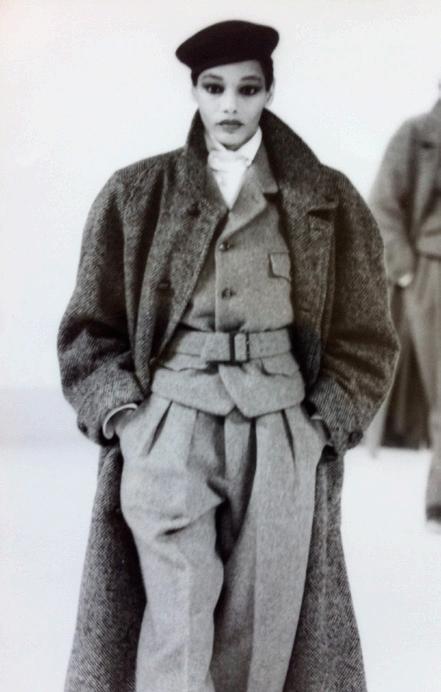
bigger is better; ambition, confidence and economic success neutrals & minimalism; simplicty and effortlessness
rise of the internet & influencer era; celebrity, gossip & trends
tech awakening; fast fashion, filters and heavy aesthetic parameters reflects hyperindivisulaism; based on mood, internal state and personal story
A fashion model in a black dress poses by Ancient Spanish Monastary in North Miami Beach, Florida.// Photo courtesy of garystock via creative commons license.
American fashion model walks a runway in a vintage tailored suit.// Photo courtesy of Wikimedia Commons via creative commons license.
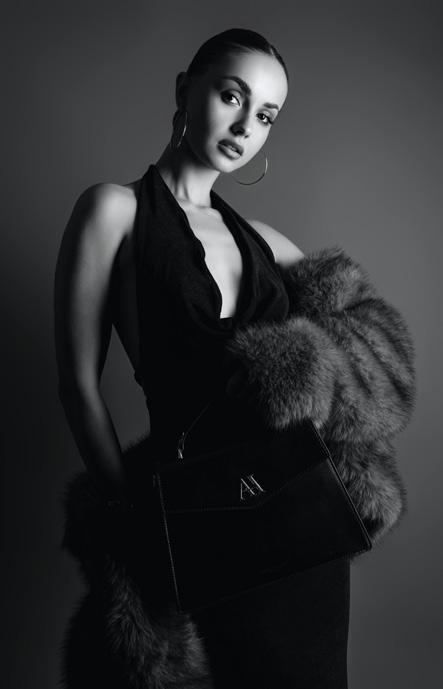
A model poses with a fur coat and black handbag.// Photo courtesy of Pixels via creative commons license.
Embodied cognition is the link between an action’s fitting metaphorical interpretation, and the system of symbols guiding a person while reflecting the individual’s selfhood, outlook on others, and/or notion about the world. Research shows that this social contagion influences not only the standpoints of the subject, but the standpoints and behaviour of the people around them.
Enclothed cognition is a psychological phenomenon where the clothing a person wears influences their thoughts, feelings, and behaviors. Researchers Hajo Adam and Adam D. Galinsky hypothesised that worn attire affects the wearer’s psychological processes due to the activation of abstract concepts through its symbolic meaning.
The idea of embodied cognition is connected with enclothed cognition as both cognitive processes are controlled by the emotions and sensations linked to the body. The reflection of imaginations by real objects as abstract concepts, like putting on clothes which symbolize specific features or positions, can affect a person’s cognition, therefore their behavior. Research notes that the symbolic meaning is only realized once the individual actually puts on the garment, where they can now physically embody the meaning.
Adam and Galinsky’s research illustrates the effects of the physical experience wearing clothing, as well as its symbolic
meaning on the wearer’s psychological processes.Their first experiment showed that participants wearing a white lab coat had higher selective attention than people wearing their own clothing. Sustained attention only increased when participants were told they were wearing a doctor’s coat. As they performed more experiments they continued to find strong evidence that enclothed cognition significantly depended on both wearing the attire and its particular meaning. Therefore, Adam and Galinsky concluded that the principle of enclothed cognition relies on the co-occurrence of physically wearing clothing and how significant its symbolic meaning is.
“You can have anything you want in life as long as you dress for it.”
Edith Head
Semiotics of Fashion
Semiotics is the study of signs and just as we can interpret signs and construct meaning from text we can also construct meaning from visual images such as fashion. Fashion is a language of signs that non-verbally converse meanings about individuals and groups. It holds a symbolic and communicative role having the capacity to express one’s unique style, identity, profession, social status, and gender or group affiliation. Clothing is a non-verbal sign that can be interpreted differently depending on the context, situation or culture. It’s in this way that
the semiotics of fashion can be linked to social semiotics. Specific dress codes are identified by individuals within a culture and convey a message to help categorize and create meaning. The meanings that are constructed through fashion largely depend on the culture.
The fashion system is not static, and as society and social interests change, so do trends and styles in dress. Pants were originally a garment worn by men and signified masculinity, but society evolved and pants became an acceptable garment for both men and women. Pants are no longer confined to signifying masculinity. Society changes and as individuals in that society adapt so do their dress codes and fashion choices. Fashion is a system of signs, whose meanings and significations are constantly shifting and changing depending on the time, place, and culture.
Socio-Psychological Impact
The clothing a person chooses can reflect their mental and emotional state. According to Mary Lynn Damhorst, a researcher in this field, clothing is a systematic method of conveying information about the person who wears it. From a psychological standpoint, fashion can serve to communicate values or ideas of the wearer, as well as a shield of identity- something that hides, rather than shows, the wearer’s beliefs and social standing. Furthermore, research suggested that one of the functions of fashion is to actualise a ‘fantasy,’ whereby the wearer seems to state something at a conscious level which, upon deeper investigation, is contradicted.
The Culture Significance of Trends
Fashion choices can have a profound impact on self-perception, the image a person projects to others, and consequently, the way people interact. In fact, they can influence a wide range of scenarios, from the result of a sporting event to how an interviewer perceives capability to perform well in a job role. Fashion psychology holds significant relevance for marketers as they strive to comprehend the variables that enhance the likelihood of a product’s adoption by a consumer group. Additionally, marketers must predict the duration for which the product remains fashionable. Hence, a segment of fashion psychology is dedicated to analyzing the shifts in acceptance of fashion trends over time.
Fashion choices can have a profound impact on self-perception, the image a person projects to others, and consequently, the way people interact.
In fact, they can influence a wide range of scenarios, from the result of a sporting event to how an interviewer perceives capability to perform well in a job role. Fashion psychology holds significant relevance for marketers as they strive to comprehend the variables that enhance the likelihood of a product’s adoption by a consumer group. Additionally, marketers must predict the duration for which the product remains fashionable. Hence, a segment of fashion psychology is dedicated to analyzing the shifts in acceptance of fashion trends over time.
People of all ages are keen to keep up with the latest fashion trends. According to a survey by Statista, 67% of consumers in the United States follow fashion trends to some extent. This desire to stay updated is not limited to any specific age group; both young and old are equally invested in looking fashionable.
The fashion industry is continually evolving, with trends changing rapidly, whether it’s size, color, pattern, or style- the options are endless. And sustainability is becoming a significant focus, with more brands adopting eco-friendly practices. According to a report by the Global Fashion Agenda, 75% of fashion companies have improved their environmental and social policies in recent years.
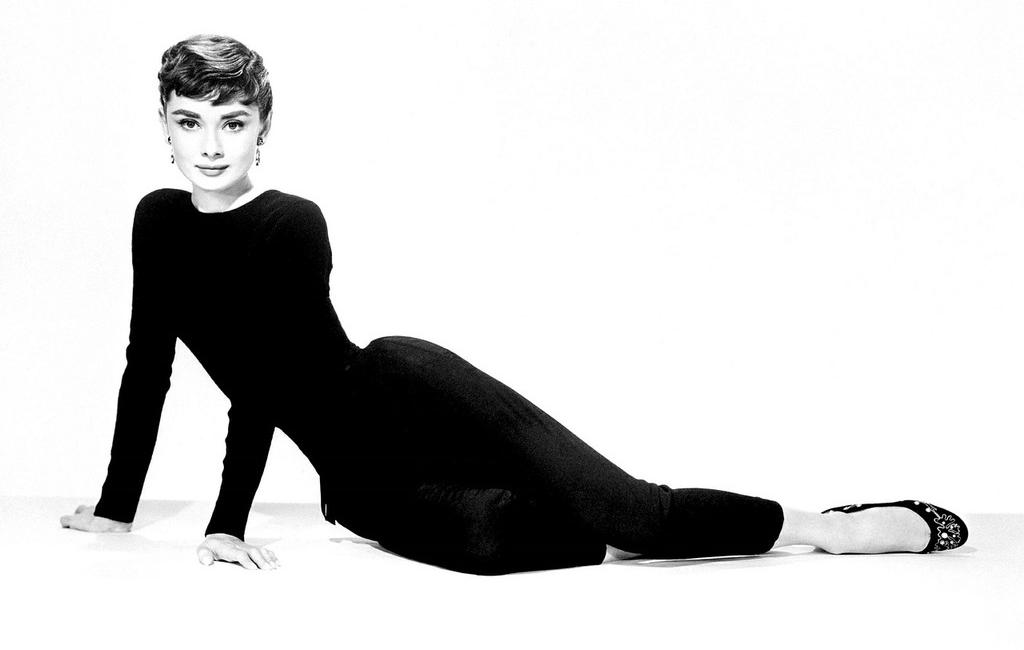
Audrey Hepburn circa 1957 poses for ‘Funny Face.’ Photo courtesy of PICRYL via creative commons license.
Article Attributes: Fashion Pyschology: Wikipedia contributors. (n.d.). Fashion psychology. In Wikipedia. Retrieved December 3, 2025, from https:// en.wikipedia.org/wiki/Fashion_psychology
Enclothed Cognition: Wikipedia contributors. (n.d.). Enclothed cognition. In Wikipedia. Retrieved December 3, 2025, from https:// en.wikipedia.org/wiki/Enclothed_cognition
Semiotics of Fashion: Wikipedia contributors. (n.d.). Semiotics of fashion. In Wikipedia. Retrieved December 3, 2025, from https:// en.wikipedia.org/wiki/Semiotics_of_fashion
Trends: Castro, S. (2024, May 16). The Ever-Evolving World of Fashion Trends. Articles Factory. Retrieved December 3, 2025, from https://www.articlesfactory.com/articles/entertainment/fashion-trends-is-highly-popular.html Articles Factory