Natural Awakenings is a free publication distributed locally and is supported by our advertisers. Please call to find a location near you or if you would like copies placed at your business.
We do not necessarily endorse the views expressed in the articles and advertisements, nor are we responsible for the products and services advertised. Check with a healthcare professional regarding the appropriate use of any treatment.
Publisher’s Letter
Natural living is becoming an increasingly important priority for individuals and families seeking healthier lifestyles and more sustainable homes. This issue explores practical ways to support well-being through mindful choices, beginning with natural skincare recipes that allow readers to create nourishing products using everyday ingredients.
Creating an environmentally conscious home does not have to be expensive. In Green Homes Made Affordable: Sustainable Sanctuaries on a Budget, readers will discover approachable strategies for making their living spaces healthier and more eco-friendly without overspending. From small upgrades to thoughtful design choices, sustainable living can be both practical and attainable.
Seasonal allergies affect millions of people each year, yet the body’s response is closely tied to the nervous system. Allergies and the Nervous System: Calming Herbs for Yearlong Resilience examines how supportive herbs may help soothe stress responses and strengthen the body’s natural balance throughout the year.
The healing power of touch extends beyond humans. Massage for Pets: Healing Through Touch highlights how gentle, intentional massage can help animals relax, ease discomfort, and deepen the bond between pets and their caregivers.
In celebration of Earth Day – April 22, 2026, this issue encourages readers to care for themselves, their homes, their animals and the planet with simple, meaningful choices.
As always, open your mind and read on.
ADVERTISING & SUBMISSIONS
Natural Awakenings is a network of natural lifestyle magazine publishers empowering local communities with knowledge, resources and connections to lead healthier lives on a healthy planet.
HOW TO ADVERTISE
To advertise with Natural Awakenings or request a media kit, please contact us at 727-865-9339 or email dwilson@natampa.com.
Deadline for ads: the 10th of the month
EDITORIAL SUBMISSIONS
Advertisers email articles, news briefs to dwilson@natampa.com.
Deadline for editorial: the 10th of the month.
CALENDAR SUBMISSIONS
Email Calendar Events to: dwilson@natampa.com
Deadline for calendar: the 10th of the month.
NATIONAL MARKETS
Advertise your products or services in multiple markets! Natural Awakenings Publishing Corp. is a growing franchised family of locally owned magazines serving communities since 1994. To place your ad in other markets call 727-865-9339. For franchising opportunities call 239-206-2000 or email Natural Awakenings@ KnoWEwell.com.
∙ BHRT including pellets
∙ Wt-Loss Metabolic with GLP-1s
∙ Type II Diabetes
∙ Adrenal Fatigue
∙ Chronic Fatigue Syndrome
∙ Thyroid
∙ IV Therapy
Tracie Leonhardt, DO Medical Director
Acupuncture
Nutritional Blood Analysis
DNA Analysis
MonaLisa Vaginal Rejuvenation
∙ PRP Injections
∙ Prolozone Therapy
∙ Chronic Infection Treatments
∙ GI Repair
∙ Chelation Therapy
∙ Autoimmune Disorders
EMSCULPT NEO®
EMSELLA®
EMTONE ®
EMFACE®
Fillers & BOTOX®
Liana Kramer, AP, DOM
Stacy Chase, DO, FACOFP, FAOGME
Jeanne Bangtson, DC
Roma Holistic Health Welcomes
Newest Flex Member
RomaHolistic Health welcomes its newest Flex Member, Karola Crawford, BSN, RN, FMACC, CCMH. She offers a compassionate, integrative approach to healing, helping clients restore balance to body, mind and spirit through functional medicine, biohacking, energy healing, Reiki, meditation and astrology. Known as the Shaman of Visions for Healing, Crawford guides clients along a personalized path toward clarity, vitality and overall well-being, supporting them as they reconnect with their inner wisdom and natural healing abilities.
Crawford is a registered nurse with more than 30 years of healthcare experience, including 17 years in psychiatric nursing. Her extensive background provides a strong foundation for understanding the connections between emotional, physical and spiritual health.
In addition to her nursing career, she is a certified functional medicine coach, Reiki practitioner, certified clinical herbalist, energy healer, biohacker and certified astrologer. By bridging science and spirit, she integrates practical medical knowledge with holistic modalities to support meaningful and lasting transformation.
Crawford is honored to walk beside clients on their healing journeys, offering guidance, insight and tools that encourage balance, resilience and personal growth.
To schedule an appointment, call Crawford at (561) 234-6338. See ad, page 33.
International Longevity Center
The Grossgold Clinic International Longevity Center provides a comprehensive, integrative approach to complex health conditions, combining advanced medical technologies with holistic and energy-based therapies to support the body’s natural healing abilities.
The clinic offers integrative care for cancer, autoimmune conditions, and chronic illnesses, including support for patients experiencing toxic mold exposure, chronic inflammation, and immune dysregulation. Personalized treatment programs focus on identifying root causes of illness while strengthening cellular resilience and improving overall vitality.
Care at the clinic blends innovative medical therapies with intuitive and energetic healing modalities. Treatments may include advanced oxygen therapies, cellular and mitochondrial support through epigenetic optimization, and specialized blood purification therapies designed to assist detoxification and promote immune balance.
To support whole-body healing, the clinic also incorporates frequency-based technologies such as the Harmonic Egg® and Theta Chamber, along with other integrative therapies that promote deep relaxation, energetic balance, and nervous system regulation. The Center provides integrative medicine, advanced detoxification, and cellular and energy healing services, serving the Tampa Bay community with innovative and compassionate care.
Location: 609 Lakeview Rd., Clearwater. For appointments, call 727-330-3844 and/or visit TheClinic.org. See ad, page 17.
Tobacco
Free Florida Quit Your Way Program
Tobacco use remains one of the leading causes of preventable illnesses, yet quitting doesn’t have to be a journey taken alone. There are many ways to quit, so with the right tools, support, and mindset, becoming tobacco free is possible.
Tobacco Free Florida offers a variety of FREE Quit Your Way tools and services designed to meet you where you are. We encourage you to explore your options and see which method could work for you. Phone and Web Quit offers personalized coaching and support, tailored to your schedule and preferences. Group Quit offers in-person and virtual sessions that provide peer support and expert guidance to guide you through building a quit plan, managing withdrawal symptoms, and preventing relapses.
Right now, attending a Group Quit Session (in-person or virtual) just got better! For a limited time only, participants can receive $25-$125 in gift cards as an incentive for their commitment. Call 813-974-7889 to register, while supplies last.
Additionally, all tools and services offer FREE nicotine replacement therapy, such as patches, gum, or lozenges, when medically appropriate and for adults 18 years of age or older.
To start your quit journey, visit TobaccoFreeFlorida.com/QuitYourWay. See ad below.
20th Annual National Herb Day Celebration
OnSaturday, May 2nd, from 10 AM to 4 PM, herbalists and supporters of plantbased medicine will gather for Herb Day 2026, a free public event celebrating the role of plants in health and wellness. The event will take place in the West Central Corridor of St. Petersburg and is hosted by Acupuncture & Herbal Therapies and the Traditions School of Herbal Studies at 6340 Central Avenue.
Herb Day is open to the public and includes educational lectures, herb and food tastings, botanical teas, and locally grown medicinal plants for sale. Herb-related vendors from the St. Petersburg area will be present.
Registered Herbalist and Acupuncture Physician Bob Linde notes that Herb Day offers an opportunity to connect with community members and promote herbal education and safety. The event is designed for anyone interested in learning more about herbs and their responsible use.
The St. Petersburg celebration is a collaboration with the Florida Herb Society, the West Coast Chapter of the American Herbalists Guild, and the Traditions School of Herbal Studies, with raffle proceeds benefiting local herbal organizations. Lectures will be held every 30 minutes throughout the day.
For more information, visit AcuHerbals.com, TraditionsHerbSchool.com, or HerBday.org, or call 727-249-1174. See ad, page 29.
Tobacco Free Florida's Group Quit Sessions (in-person or virtual) now offer participants $25 - $125 in gift cards for their attendance.*
Group Quit offers free, expert-led in-person or virtual sessions for all Florida residents regardless of insurance status. Upon class completion, participants are eligible for nicotine replacement therapy such as patches, gum, or lozenges.**
*while supplies last **if medically appropriate for those 18 years of age or older Pre-registration required Call USF AHEC Program today at: 813-974-7889
Earth Day 2026
Our Power, Our Planet
by Sandra Yeyati
Communities worldwide will come together from Saturday, April 18, through Earth Day, the 22nd, to celebrate this year’s theme, “Our Power, Our Planet”—a rallying cry for people everywhere to reclaim their voice, their rights and their future. Since its inception, this event has mobilized international involvement, and this year is no different as more than 1 billion environmental champions are expected to participate.
“All those years ago, in 1970, we were ridiculously confident that we were going to win,” says Denis Hayes, organizer of the first Earth Day and board chair emeritus of the nonprofit EarthDay. org. “We launched a genuine environmental revolution. We proved that an engaged public can be an unstoppable force. It can be again in 2026.”
People working together can change the world. Illustrating this vast scope of influence, an interactive, digital map on EarthDay.org lists
events across all continents. From city parks to coastal villages, volunteers will clean riverbanks, plant trees and host workshops on recycling and sustainable living. Families will involve their children by crafting bird feeders from recycled materials and painting murals of forests and wildlife. New opportunities for fun and service are continually coming online, and anyone can add their event to the map.
At Action.EarthDay.org/our-power-our-planet-pledge individuals can formally resolve to stand up for environmental protections in local communities, support the transition to clean energy and green jobs, demand that leaders prioritize human and planetary health, and take eco-friendly action throughout the year and beyond. Now is the time to be part of the solutions.
According to organizers, “Since 1970, people from every walk of life—farmers and ranchers, faith leaders and scientists, health professionals and first responders, students and families, and communities on the front lines of climate disasters—have driven action that prevented countless illnesses and saved millions of lives worldwide. Economic prosperities and environmental protections are not competing goals. They are on the same path forward. Clean energy and sustainability have already created millions of jobs, lowered costs and delivered healthier air and water.”
There are many ways to get involved and celebrate Earth Day right here in our community.
Conservation Connections: Earth Day – Party for the Planet Saturday, April 18, 2026, 9:30 AM – 2:30 PM
This conservation-focused Earth Day celebration features educational activities and interactive exhibits highlighting wildlife protection and environmental sustainability. Visitors can explore conservation stations, learn about wildlife care and habitat protection, and participate in activities designed to inspire environmental awareness for all ages. Zoo Tampa at Lowry Park, 1101 W Sligh Ave, Tampa, FL 33604. Contact: Zoo Tampa | https://zootampa.org.
Earth Day Every Day: Party for the Planet Saturday, April 18, 2026, 7:00 PM, $33.85
This Earth Month celebration combines environmental awareness with music, art, and community engagement. The event features immersive eco-art, live music, and interactive activities with environmental organizations. Proceeds support local environmental action projects in the St. Petersburg area. St. Petersburg Distillery, 800 31st St S, St. Petersburg. Contact: IDEAS For Us,IdeasForUs.org.
Earth Day Cleanup: Blackthorn Skyway Wednesday, April 22, 2026, 8:30 AM – 11:30 AM
Join volunteers in cleaning the mangroves and shoreline near the Sunshine Skyway. Organized by Keep Pinellas Beautiful, the cleanup is part of the Great American Cleanup initiative and helps protect local wildlife and waterways while bringing the community together for Earth Day action. Blackthorn Memorial Sunshine Skyway Rest Stop. Cleanup check-in will be located near restrooms. St. Petersburg. Contact: Megan Jackson, Keep Pinellas Beautiful | mjackson@kpbcares.org. 727-533-0402.
Blooming Through Perimenopause
Herbal Wisdom for a Season of Change
by Tricia Streit Perez, MS, Clinical Chinese and Western Herbalist
Perimenopause is often framed as a hormonal storm to survive. But what if it is actually a message?
The years leading up to menopause are not simply about declining estrogen. They are about communication. Reproductive health serves as a barometer for overall health, and perimenopause amplifies that signal.
Hot flashes, mood swings, sleep disturbances, weight gain, vaginal dryness, and brain fog are not random betrayals. They are signs that stress, nutrition, detoxification, and lifestyle patterns are interacting with a shifting hormonal landscape.
Hormones begin in the brain. The hypothalamus signals the pituitary gland, which instructs the ovaries to produce estrogen and progesterone. These hormones travel through the bloodstream and are eventually cleared by the liver. When stress is high, sleep is poor, or nutrient reserves are low, this delicate orchestra can become chaotic.
Chronic stress is particularly disruptive. When the body perceives threat, it prioritizes survival over reproduction. In a fightor-flight state, reproductive hormones are muted. This is why stress management is not optional during perimenopause—it is foundational.
Lifestyle medicine remains powerful: strength training to protect bone health, cruciferous vegetables to help clear older estrogen metabolites, mineral-rich foods for resilience, and time in nature to regulate the nervous system.
Herbal medicine offers another layer of support. Adaptogens such as maca, ashwagandha, and ginseng help buffer stress and support adrenal function. Nervines like milky oats and motherwort soothe the nervous system while indirectly supporting hormone balance. Reproductive tonics such as vitex, black cohosh, red clover, and shatavari work not by supplying hormones, but by improving how the body produces and eliminates them.
This distinction matters. Conventional hormone therapy can be life-changing and appropriate for many women. Herbs function differently—they act more like amplifiers than drivers. Rather than overriding the body, herbs support its natural direction and strengthen its rhythm.
Nutrition also remains central. Iron, B vitamins, and adequate protein help rebuild the body after years of menstruation. Calcium, vitamin D, and weight-bearing exercise help protect bone as estrogen declines. Two servings daily of cabbage-family vegetables can assist the liver in clearing older, less balanced estrogen metabolites that tend to accumulate with age.
Perimenopause is not an ending—it is a recalibration.
Many women describe this phase as a time of deeper truth. Sleep becomes nonnegotiable. Stress becomes intolerable. The body insists on being heard.
Instead of suppressing symptoms, what if the message is worth listening to?
Perimenopause can be seen not as a story of loss, but as a season of refinement—an invitation to bloom in a new way by nourishing, strengthening, and re-centering the body.
With the right tools and support, this chapter can become one of vitality, clarity, and empowerment. Consider it a fuller flowering, not a decline.
About the Author
Tricia Streit Perez, MS, is a clinical herbalist and practitioner at Acupuncture and Herbal Therapies, and director of the Traditions School of Herbal Studies, located at 6340 Central Avenue in St. Petersburg. With more than 20 years of experience in health sciences, sports medicine, and wellness coaching, she specializes in supporting women through perimenopause, menopause, thyroid imbalance, and stress-related conditions using evidence-informed herbal and lifestyle medicine.
She works with clients in St. Petersburg, Florida, and also offers virtual consultations for individuals anywhere.
To learn more or schedule an appointment, visit MamasEssentials.org and Acuherbals.com/ tricia-streit-perez-ms-cpt/. See ad, page 29.
Rising Cancer Rates Among Younger Generations
Despite a decline in cancer mortality rates over the past 30 years, the American Cancer Society’s (ACS) annual report on cancer trends reported an increasing incidence of cancer among younger people, particularly younger women. The rates among women under the age of 50 are 82 percent higher than men, up from 51 percent in 2002.
A higher number of younger individuals are being diagnosed with colorectal, breast, prostate and uterine cancers. One study estimates that individuals born after the 1980s are four times more likely to be diagnosed with rectal cancer than those born around 1950. This trend prompted the ACS to modify its recommended age for colorectal cancer screening from 50 to 45 years old.
Research suggests that a combination of environmental exposures, changes in the gut microbiome, increased rates of obesity and consumption of ultra-processed foods are to blame for earlier-onset cancers. Additional contributors being investigated include early-life environmental exposures, sedentary lifestyles and chronic sleep disruption.
Sharing Meals Boosts Happiness and Well-Being
The World Happiness Report 2025 underscores the pivotal role of social connections in human well-being, happiness and prosperity. Individuals with strong social ties tend to experience greater happiness, reduced stress levels, heightened life satisfaction, diminished susceptibility to depression and increased community engagement. These connections are associated with improved health outcomes, enhanced creativity, elevated income levels and extended lifespans.
The report presents new evidence on a measurable and cross-cultural indicator of social connection and well-being: sharing meals. The authors discovered that across various demographics, including age, gender, nationality, culture and region, individuals engaging in more frequent meal sharing exhibited significantly higher levels of life satisfaction and positive emotional states, while simultaneously experiencing lower levels of negative emotional states.
The prevailing hypothesis is that while these factors may influence all instances of cancer, their bioaccumulation from an early age exacerbates cancer risks and potentially accelerates disease progression. Lifestyle changes such as managing diabetes and obesity through a balanced diet; reducing exposure to microplastics, “forever chemicals” and unnecessary antibiotics; engaging in regular exercise; and liming sugar, alcohol, smoking and sun exposure may be the most effective strategies for young people to reduce their cancer risk.
Countries that reported higher levels of shared meals also demonstrated greater social support and lower levels of loneliness. Meal sharing is influenced by cultural and social practices. In Latin America and the Caribbean, people share most of their meals with others, but in South Asia, individuals primarily consume meals alone. In the United States, approximately one in four people reported eating alone, a 53 percent increase since 2003. This trend is particularly pronounced among younger people and may reflect broader shifts in social and community engagement.
The Link Between Soft Drinks and Liver Damage
Metabolic dysfunction–associated steatotic liver disease (MASLD), formerly known as nonalcoholic fatty liver disease, is a group of chronic liver diseases characterized by the accumulation of excessive fat deposits within the liver. It is estimated that more than 30 percent of the global population is affected by MASLD. Without appropriate treatment, the condition can lead to more serious liver diseases.
A study published in the Annals of Hepatology examined the association between drinking soft drinks and MASLD. The study analyzed the weekly consumption of more than 1,700 Mexican healthcare workers and their risk of liver dysfunction. The researchers discovered that consuming even a single soft drink a week was associated with an elevated risk of MASLD, with the risk increasing with increased consumption. Notably, the association was more pronounced in men compared to women. The study attributed this to soda’s excessive fructose content, which overloads the liver and leads to fat buildup and inflammation.
Vitality
Her Way
Coming in May
Singing Bowls To Soothe Anxiety
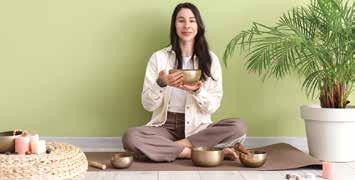
A 2023 study published in the European Journal of Investigation in Health, Psychology and Education compared the anxiety-relieving effects of a Tibetan singing bowl sound-based treatment to a progressive muscle-relaxation session that involves tensing and releasing muscles. A third control group did not receive any treatment. Fifty adults experiencing high anxiety without a diagnosed anxiety disorder were randomly assigned to one of the three groups.
Before and during each 45-minute session, the researchers monitored each participant’s heart rate variability (HRV) and brain wave patterns, and they also collected self-reported anxiety assessments. The singing bowl group showed the strongest physiological signs of relaxation, including brain activity associated with calmness and increased HRV, which indicates the body is in a relaxed, restorative state. Both the singing bowl and musclerelaxation groups reported feeling less anxious than the control group, but the singing bowl group experienced the biggest reduction in self-reported anxiety. The study suggests that even one short session with a Tibetan singing bowl can create measurable psychological and physical relaxation.
Pormezz/shutterstock
Yellowstone’s Supervolcano
Yellowstone National Park sits atop a giant “supervolcano” known as the Yellowstone Caldera, spanning parts of Wyoming, Idaho and Montana, where the magma is just three to eight miles below the surface. Though rare, past eruptions have been massive, with the largest two occurring millions of years ago. The 30-by-45-mile caldera (defined as a large, cauldron-like hollow formed when a volcano collapses inward) has been undergoing episodes of uplift (rising) and subsidence (sinking) for thousands of years, resulting in ground deformations that significantly alter the Earth’s surface.
Scientists believe this activity is a type of natural pressure release, and the chances of an eruption are extremely low. Nevertheless, they continually monitor the area for seismic activity using radar maps, GPS satellites and 17 ground stations. About 1,500 to 2,000 earthquakes are documented annually, and a 19-mile-wide dome was recently discovered at the northern rim of the Yellowstone Caldera, in northwest Wyoming. While this bulge is expected to reverberate for years, experts believe it is unlikely to erupt.
Global Water Bankruptcy
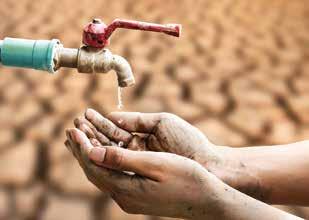
The United Nations University Institute for Water, Environment and Health recently issued a report, Global Water Bankruptcy: Living Beyond Our Hydrological Means in the Post-Crisis Era, asserting that many regions are living beyond their water means and experiencing irreversible losses of natural water supplies. Explaining the situation in economic terms, the report notes that these societies are water bankrupt—persistently over-withdrawing from surface and groundwater sources relative to renewable inflows and safe levels of depletion.
Many societies have not only overused renewable water resources from rivers, soil and snowpacks, but also depleted water from aquifers, glaciers, wetlands and natural reservoirs. Water bankruptcy hot spots include regions in the Middle East and North Africa, parts of South Asia and the American Southwest along the Colorado River.
The report also found that 50 percent of the world’s large lakes have lost water since the early 1990s; 50 percent of water is pumped from underground; 410 million hectares of wetlands (the size of the European Union) have disappeared in the past five decades; more than 30 percent of glacier mass has been lost since 1970; dozens of major rivers fail to reach the sea for part of the year; and 4 billion people face severe water scarcity at least one month a year.
The report’s lead author, Kaveh Madani, points out that water bankruptcy crosses national boundaries and therefore needs to be addressed and solved together globally. He stresses that an investment in water is an investment in mitigating climate change, biodiversity loss and desertification.
Alla Khananashvili/shutterstock
Killer Whales Using Tools
A 2025 study published in Current Biology reports the first documented use of tools by marine mammals. Scientists have been studying three pods of killer whales, also known as orcas, in the Pacific Northwest for decades. Using unmanned drones, they observed the whales biting off the stalk ends of bull kelp and using them as tools to massage and scrub each other’s bodies—an activity scientists call allokelping. Thirty sightings of this activity among three pods were documented over the span of 12 days, involving different ages and sexes. The scientists believe allokelping may be a form of social, tool-assisted skin grooming. They also hypothesize that the behavior is unique to this killer whale society.
Loss of Tree Diversity Threatens Forests
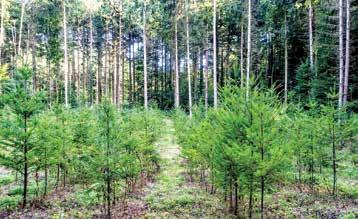
Scientists from Aarhus University, in Denmark, analyzed the growth of more than 31,000 tree species around the world. Their study, published in Nature, found an increasing incidence of fast-growing trees that dominate slower, long-lived species, resulting in a loss of diversity and forest resilience. Slower growing species have been the mainstay of forest ecosystems and a key to biodiversity and carbon storage, especially in tropical regions. Now, many face possible extinction.
Faster growing species have lighter leaves, softer wood, lower wood density and shallower root systems that make them vulnerable to die-offs. Although they recover more quickly from wildfires and are preferred by the timber industry, these forests can be destroyed more easily by storms, droughts and pests. Even when a forest looks healthy, the lack of native, slow-growing tree species can put the entire ecosystem at risk.
Dietrich Leppert/shutterstock
Monika
Wieland Shields/shutterstock
Killer whale from allokelping pod breaches off coast of Washington state.
Natural Skincare Recipes
by Natural Awakenings staff
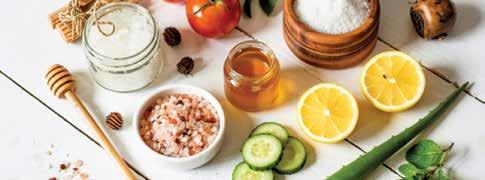
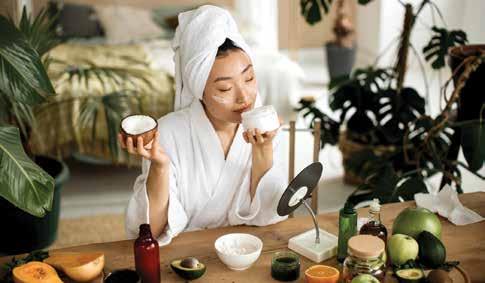
Sustainable skin care is achievable without costly products or lengthy routines. Creating quick, easy and affordable formulas at home reduces our reliance on single-use plastics, petroleum-derived agents, irritating alcohol and other harsh chemicals found in many store-bought items. By storing them in glass containers and buying ingredients at bulkrefill stores, wasteful packaging can be virtually eliminated.
DIY scrubs, facial masks, bath crystals, moisturizers and toners are made with simple pantry ingredients such as oats, honey, sea salt and olive oil, which are packed with antioxidants and anti-inflammatory properties. Applied topically, aloe vera gel from a houseplant effectively treats burns and soothes chronic conditions like rosacea. Two specialized ingredients with beneficial properties are fractionated coconut oil, which is processed to be clear, colorless, long-lasting and always liquid, regardless of temperature; and pure culinary rosewater made by simmering rose petals.
Even with natural ingredients, the American Academy of Dermatology recommends doing a patch test on an inside arm. Leave the product on for as long as it would be used on the face, monitoring for swelling, redness or itching.
Vanilla Sugar Scrub: Combine one-third cup brown sugar, one-quarter cup olive oil or fractionated coconut oil and one-half teaspoon alcohol-free vanilla extract. Store the mixture in a small jar and use one teaspoon at a time to exfoliate the skin, applying gentle, circular motions by hand, then rinsing with warm water.
Soothing Oatmeal Mask: In a blender, pulse one-half cup rolled oats into a fine powder. In a bowl, combine with one tablespoon honey, one tablespoon olive oil and two teaspoons warm water until it thickens into a creamy paste. Gently massage onto a dampened face and leave on five to 10 minutes before rinsing with warm water.
Fragrant Bath Salts: Combine three cups Epsom salt, one-and-a-half cups sea salt or Himalayan pink salt, one-half cup baking soda and 20 drops of one or more essential oils such as pine needle, rose, lavender or eucalyptus. The yield is enough for five to 10 baths; keep in a glass jar for up to six months. Add one-half to one cup to the bath. Can also be used for a foot spa.
Rosewater Facial Toner or Spritzer: Pure culinary rosewater can be a gentle toner that hydrates, soothes, controls excess oil and tightens pores. Apply straight from the bottle with a soaked cotton ball. May also be refrigerated in a spray bottle for a refreshing facial spritz.
Lip Balms: For cracked lips, apply a thin layer of raw honey overnight for its hydrating and antibacterial benefits. Other soothing ingredients that can be used as needed throughout the day are aloe vera and coconut oil.
Dream BIG, CHANGE Lives
It Takes a Circle
Building Greener Lives Together
by Hannah Tytus
In nature, nothing stands alone. Permaculture design—the art of creating sustainable landscapes—mirrors this by building resilience through integration rather than separation. It organizes life into “zones” that circle outward from the home to the wider community.
Conservation efforts are likewise woven together when Earth-conscious individuals form circles of community that grow and reach, stretching their tendrils to interweave with other circles, strengthening the protective, nourishing roots of homegrown actions.
Cultivating a Better Future
Working directly with permaculture, Brandi Mack strives to spark collective change and build lasting legacies of justice and well-being. Influenced by her grandfather, who farmed the fertile soils of Oakland, California, she is a holistic health educator, permaculture designer and co-founder of The Butterfly Movement. Describing the work of this nonprofit, she explains, “We focus on cultivating sovereignty, healing and personal development through land, food and art for Black women and girls.”
“My grandfather said, ‘If you build the soil, you can grow anything,’” Mack recalls. “We facilitate spaces for Black youth and their mothers to reconnect with the land through gardening, learning about food as medicine and reclaiming a relationship with the natural world. Our focus is on our beloved sisterhood—the feminine—as Black women and girls. If we can elevate that, the world will elevate. That is justice.”
Mack envisions the collective potential of the next generation, knowing that they have gifts to share. She has raised her daughters by example, teaching them that it is okay to experiment and grow, and she also encourages older generations to let go of antiquated narratives and let the youth lead.
Regenerating What Is Good
Marvin Hayes is a spoken word artist and executive director of the Baltimore Compost Collective. When he founded this youth-led initiative 11 years ago, he wanted to address what is known as the “sacrifice zone” of waste incineration that blew pollutants all over South Baltimore, threatening the health of his community.
Research published in the Australian and New Zealand Journal of Public Health suggests that living near waste incineration facilities is associated with higher risks of certain cancers, birth defects and other negative health outcomes. In the United States, such health burdens are not evenly distributed because 80 percent of municipal solid waste incinerators are located in communities where more than a quarter of residents identify as people of color, live below the federal poverty line, or both.
“The wind doesn’t segregate or discriminate,” says Hayes, noting that air pollution from sacrifice zones blows equally to all neighborhoods, becoming a collective public health concern. Today, he serves 400 households and diverts 2,000 pounds of weekly waste from the incinerator. He uses his business to improve public health,
educate local youth about entrepreneurship and advocate for environmental justice in the community.
Instead of going to a trash incinerator, household waste can become an agent of regeneration. According to Hayes, composting nourishes nutrient-depleted soil, making it excellent “black gold” for growing food. It also remediates soil that may be contaminated with lead or other metals and diverts waste from air-polluting incinerators, while providing an opportunity for the community to come together, he explains.
Traveling Lightly
“Composting is critical, because when food ends up in a landfill, it chemically degrades differently than it would in a compost pile, producing methane gas that is 28 times worse than CO2,” says Samuel McMullen, co-founder of ZeroWaste.org alongside his sister, Lydia McMullen-Laird. “The hardest thing to do in living a zero-waste lifestyle is addressing food and food packaging,” he shares, adding that one-third of global greenhouse gas emissions are linked to the making, transport and refrigeration of food.
According to the U.S. Environmental Protection Agency, food waste is the number one component in landfills, accounting for one-quarter of their mass. The average American sends approximately 350 pounds of food waste to the landfill each year, with a family of four losing $1,500 annually to uneaten food, according to the U.S. Department of Agriculture.
To address this issue through prevention, McMullen runs the Zero Waste Challenge—an invitation to produce as little
waste as possible for a week, while reflecting on the garbage created. On Earth Day, a similar challenge can be accessed virtually from anywhere in the world at ZeroWaste.org
“Learning follows action. Take action first,” advises McMullen, who sees zero-waste habit-building as a practical entry point for broader change. Holding corporations accountable for climate change and focusing only on institutions to make a difference can make people feel powerless, he observes. By tracking their trash, choosing reusables and making small sustainable swaps, individuals can begin to build tangible skills for activism efforts in systems change.
“The beauty of the [Zero Waste] Challenge is that you confront your own waste footprint,” McMullen says, adding that participants are invited to examine their trash from a place of curiosity, rather than criticism. “It’s easy to cut your waste in half. The last 10 percent is very challenging, but that’s okay. The goal is progress, not perfection.”
McMullen relates that even eating at a restaurant can be an opportunity to practice zero-waste principles by bringing a reusable container and bag for leftovers to reduce single-use packaging and opening playful dialogue with restaurant staff to make a game of reducing waste throughout the meal. “Don’t be annoying about it,” he quips, noting that reducing our personal waste footprint is secondary to building a social culture of sustainability and teamwork.
Tankhorn_GenAI/AdobeStock
“The main function is to build awareness with other people—to create common ground and to show that there is another way.”
Sharing Stewardship
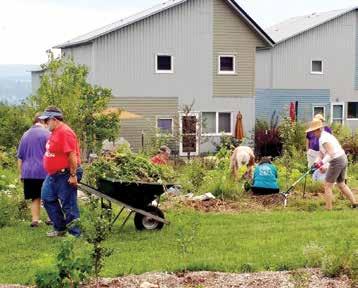
For three years, Jen Myers, Ph.D., has called the EcoVillage at Ithaca (EVI) home. This upstate New York community is designed to be socially, culturally, economically and ecologically sustainable, integrating human life harmoniously with nature. Members rely on renewable energy, shared spaces, local food production and pooled resources to make sustainable living feasible.
According to Myers, EVI shares 175 acres of land—far more than a single homeowner could handle—including farms, forests and scenic natural spaces that are diligently stewarded by community members. Since its modest 30-household beginnings in the 1990s, it has grown into a lively community of 100 households. Living in community promotes sustainability by reducing individual environmental footprints and encouraging collaborative eco-friendly practices.
“I live in a net zero home, and it’s really rewarding having the infrastructure to make sustainable living easy,” says Myers, project director of the Thrive Ithaca EcoVillage Education Center. “I don’t have to do as much consuming as I would as an individual running a household in a typical suburban neighborhood.” Lawnmowers, playground equipment, compost bins and more are all shared and enjoyed together.
Myers likes to highlight the recreational opportunities available at EVI, including hiking trails and ponds for swimming and ice skating, as well as EVI’s communal dining spaces that make togetherness easy. The community also models multi-generational sustainability. “It is such a joy to know I am modeling conservation behaviors in my household with my daughter,” she says.
Everyone at EVI shares leadership responsibilities, meeting monthly to make decisions on critical issues. Residents commit two to
four hours a week to facilitate the community, contributing based on their strengths in areas like administration, cooking, gardening, compost management and recycling. Myers appreciates this skill sharing, saying, “I’ve been so pleasantly surprised with how much value living in community brings to my life.”
Building a Resilient Culture
Sustainability is not a checklist but a culture shaped by what we normalize and celebrate. McMullen urges joyful modeling of alternatives, reminding us that “your actions are not really about you.” Visible practices—solar panels, reusable mugs, composting—ripple outward and shift norms over time. Myers calls this “ground-up design,” a liminal space where communities create the world they want by sharing resources and celebrating seasonal food, redistributing power and reducing isolation. Hayes centers youth leadership, cultivating agency and business skills in food systems so that youth are equipped to shape their own futures.
Embracing Life’s Reciprocity
Drawing from permaculture’s lessons, Mack says, “The soil is loyal. When you study permaculture, you are reminded that we are all connected. The only way we’re going to fix the planet is by remembering we are connected. When you know you’re doing something that affects someone else, you’ll stay committed. The reality is we are one species on a planet in the middle of the universe. We learn everything from nature. We are nature. It’s important for us to understand right now that we go fast alone and far together.”
Hannah Tytus is an integrative health coach, former writer at the National Institutes of Health and host of the Root Shock podcast, exploring cultural underpinnings of health.
Frank Muller
The EcoVillage at Ithaca bustles with collective husbandry.
Our One Wild and Precious Life
by Marlaina Donato
Protecting Earth’s precious gifts, helping a neighbor in their new garden or teaching a child to weather life’s storms can be wildly rewarding. Yet, even while living consciously, we can deplete our energy, feeling guilty to have to place ourselves on the kindness list. In these moments, we must remember that everything
we cherish relies on our well-being. If the foundation crumbles, the house falls.
“Self-care is giving the world the best of you, instead of what’s left of you,” said mental health advocate Katie Reed. Our health and sanity will eventually falter if we always put ourselves last. Neglecting to value our
Buianskyi/shutterstock
emotional energy, time, physical strength, talents and compassion as much as Earth’s oceans or human rights endangers our life force. Like nature’s resources, we are finite. It is imperative to love ourselves as we love our favorite causes, making difficult decisions for our own sake.
By learning to say “No,” asking the kids to do the dishes, letting someone else bake for a fundraiser or resting instead of pushing through fatigue, we invest in our own presence on this planet. When ready, we will have more to offer. Seeing beauty in the mirror instead of flaws, scheduling joy into our days, abandoning perfectionism and embracing our humanity allow us to breathe fully and remember our passions and purpose. “Tell me, what is it you plan to do with your one wild and precious life?” asks Mary Oliver in her poem The Summer Day. Let us all ask ourselves this vital question every morning, for we are worthy of the answer.
Marlaina Donato is an author, painter and composer. Learn more at WildflowersAnd WoodSmoke.com.
Dmytro
Allergies and the Nervous System
Calming Herbs for Yearlong Resilience
by Hannah Tytus
Seasonal allergies are often framed as a localized immune problem—something that happens in the nose, sinuses or lungs. But holistic practitioners see them as a whole-body experience shaped by stress, nourishment and environment. Linda Conroy, a bioregional herbalist with more than three decades of experience, uses native medicinal plants in a three-tiered approach that focuses on prevention, tonification and support. Tonification aims to nourish, strengthen and restore balance to the body’s vital energy.
“You’re not going to take one herb and have it fix everything,” explains the founder of Moonwise Herbs. “You have to work on diet, lifestyle, relationships and stress reduction. It has to be multilayered.” Rather than suppressing symptoms, Conroy works to strengthen the body’s baseline resilience so that when pollen counts rise or seasons shift, it is equipped to respond.
The Role of Stress
All parts of the body are interconnected. When the nervous system is stressed, other systems are affected. We see this with asthma, says Conroy, citing research that links prenatal and early-life stress to respiratory vulnerability later in childhood. “When someone’s
respiratory system is in distress, we have to work with all the systems of the body to address it,” she explains.
A major player in immune system robustness is the endocrine system—a network of glands and organs that produce and release hormones into the bloodstream to regulate various bodily functions, including the stress response and mood. According to Conroy, hormonal imbalances can increase vulnerability. “Many people live their lives as if they are in danger all the time and this chronic alertness can make immune responses overactive,” she observes. “We also see a significant number of people with thyroid problems. When the pituitary or thyroid glands are weakened, people tend to be more reactive overall.”
To calm the nervous system, Conroy recommends a calcium-rich diet with ample leafy greens and dairy, as well as a longsteeped tea made with oatstraw—the dried green stalks and leaves of the oat plant, which is rich in calcium, magnesium and B vitamins. She also champions small rituals for stress relief such as always turning off the phone before bedtime or regularly enjoying a rosemary facial steam to rejuvenate the skin and feel restored. “Stay committed to something consistently,” she advises, recommending that people find their rhythm with their modalities of choice. Together, these practices reflect a holistic approach, relieving stress and improving allergy
symptoms simultaneously, while building resilience year-round.
“Sleep, digestion and stress regulation form a feedback loop,” says Joanna Helms, founder of Mama Jo’s Sunshine Herbals. With more than 30 years of experience in Chinese, Western, Native American, Scottish, Unani-Tibb and Japanese herbalism, she defines her practice as a way to support the body in being the healer.
Helms recommends year-round herbal support to strengthen the body and reduce allergy vulnerability with calming herbs like oatstraw, lemon balm and holy basil. She also suggests regular exercise, adequate sleep and meditation. Evening rituals like massaging herbal salves into the feet before bed can calm the heart and settle the body.
Herbal Allies for Allergy Season
Conroy recommends nettle infusions, which she says have an antihistamine effect. Stronger than tea, infusions are made by steeping one ounce of nettle in boiling water for four to eight hours, then straining. This savory medicine keeps for up to three days in the refrigerator and can be enjoyed warm or cold, sometimes added to soups or paired with miso. Nettle can be overly drying for individuals in arid climates. In such cases, Conroy suggests marshmallow root to soothe dry, irritated mucous membranes.
Mullein is traditionally used to prevent or alleviate respiratory distress caused by colds and flu, and Conroy recommends it to strengthen the lungs. Mullein’s flavor profile pairs well with a sweetener of
choice. Her favorite recipe combines warm mullein tea with steamed milk and maple syrup for a delicious herbal latte.
Both experts celebrate the antimicrobial and antibacterial properties of goldenrod, which has garnered a bad reputation when it is mistakenly associated with the allergy-inducing ragweed. In fact, goldenrod relieves allergies. Conroy calls it a tonifier that supports the whole system, “helping dampen the body’s overreaction, easing symptoms and reducing the intensity of the allergic response.”
“Goldenrod is one of my favorites for drying things up, especially in the eyes,” says Helms, adding that people in arid climates may find it too drying. In such cases, she recommends mixing goldenrod with licorice for a harmonizing blend.
Locally Sourced Herbs
According to Conroy, “We will get way more benefit from plants that grow around us. Try to source herbs as close to home as possible. It’s a relationship. I don’t think of herbs as a drug or pill. These are my allies; they’re going to support me. We need to care about the plants, and they will care about us.”
Helms encourages her clients to grow their own herbs, observe them as they grow from season to season or even draw them in a field journal. Such practices that foster listening, meditation and relationship remind us that plants can be healing even when we do not ingest them.
Hannah Tytus is an integrative health coach, former writer at the National Institutes of Health and host of the Root Shock podcast., exploring cultural roots of health.
Tatevosian Yana/shutterstock
Spring Bowl Inspirations
Sustainable, Delicious and Flexible
by Maya Whitman
Food bowls are popular because of their vibrant versatility, inventive flavor combinations and health-conscious appeal. Served warm or cold, they begin with a base of grains, salad greens or broths, followed by layers of veggies, fresh herbs and protein sources, then finished with a drizzle of flavorful sauce. Assembling these well-balanced, nourishing meals offers an opportunity to practice mindfulness, creativity and even joy,
making it a truly multi-layered experience for the mind, body and soul.
Sustainable Eats
Spring enables us to add another enriching layer to the experience with sustainable, plant-forward bowls that celebrate local, in-season produce—reducing shipping and supporting the local economy. Fruits, vegetables, grains, nuts, seeds, beans and lentils require less land, water and energy
to produce than meat and dairy. Weekend trips to farmers markets become extra special with the arrival of annual delicacies like garlic scapes, ramps (wild leeks) and earthy mushrooms such as morels and porcinis.
Making spring bowls throughout the week is also a great way to minimize food waste by incorporating peels to make broth, repurposing leftovers and buying grains and other pantry staples in bulk with minimal plastic packaging. To save time, grains and beans can be cooked once a week and used, as needed, in a variety of bowl combinations.
The Basics
“Thoughtful choices—both in what we eat and how we shop—help nourish our bodies and our communities,” says Gwen Eberly, a chef and instructor at Zest Cooking School, in Lititz, Pennsylvania. Her favorite bowls feature a foundational layer of leafy greens like spinach or arugula, followed by crunchy textures such as radishes, carrots,
sprouts and microgreens, and a layer of crispy tofu for the protein. Additional flavors may include roasted vegetables (asparagus) and fresh notes (snap peas or green onions).
“After winter, many people naturally want meals that feel energizing, colorful and lighter, which is why plant-based meals are so great,” says Annemarie Ranallo, the owner of Forest Greens Juice Bar, in Lake Bluff, Illinois. Some of her favorite ingredients for spring bowls are leafy greens, roasted or fresh vegetables such as broccoli, Brussels sprouts, sweet potatoes, cucumbers and tomatoes, as well as plant-based proteins like chickpeas and lentils. She underscores the importance of including different textures in a bowl by combining something crunchy, something creamy and something fresh.
Part of the fun of creating a spring bowl
is discovering which flavors and textures pair well. Gluten-free options like quinoa, kasha (buckwheat), wild rice and amaranth make any bowl satisfying without being heavy, and they are especially delicious with sautéed mushrooms, roasted eggplant or white beans. Lentils serve to accentuate the earthy depth of oven-roasted root vegetables like rainbow carrots and beets.
Savory bowls embellished with creamy dressings are wonderful for lunch and dinner, but the introduction of sweetness with layers of yogurt, fruit, nut butters and crunchy seeds opens up possibilities for dessert and breakfast.
Sauce Magic
Eberly notes that a good, homemade sauce can tie a bowl together. Her favorites include sesame-ginger, lemon tahini, parsleymint, chive yogurt and zesty lime-cilantro.
“A well-chosen dressing can redefine familiar plant-based ingredients, steering flavors toward whatever you’re craving that day—bright and citrusy, earthy and rich, or fresh and herby,” she explains.
Homemade dressings can be whipped up in minutes, offering wonderful flavor without excessive sodium or packaging waste. Spring bowls become memorable experiences with citrus vinaigrettes or creamy sauces featuring vegan mayo or plain yogurt and spicy wasabi, Dijon mustard or horseradish. Conjuring exotic sauces is easy with ingredients like tahini, miso paste, ground peanuts, coconut milk and spices. Bowls also wake up in the presence of robust herbs like cilantro, parsley, mint and basil.
Finishing Touches
Championing the element of surprise, Eberly recommends textural finishes like sesame or pumpkin seeds, peanuts, sprouts or kale chips. These garnishes add a final burst of flavor, taking a meal over the top. Ranallo, on the other hand, cautions against adding too many competing flavors. For her, simplicity is the key. Whether embellished or straightforward, the answer lies in personal preference and experimentation. Spring is the time to embrace our creative side and build a balanced, one-bowl meal that mixes textures and flavors to our heart’s (and tastebuds’) content.
Maya Whitman is a frequent writer for Natural Awakenings.
FALAFEL SPRING BOWLS
YIELD: 3 TO 4 SERVINGS
1 garlic clove
¼ cup red onion, roughly chopped
⅓ cup fresh cilantro leaves
⅓ cup fresh parsley leaves
1 15-oz can chickpeas, drained and rinsed
1 egg
¾ cup breadcrumbs (divided)
½ tsp cumin seeds
½ tsp ground coriander seeds
½ tsp salt
Preheat the oven to 400° F. Line a baking sheet with parchment.
In a food processor, finely chop the garlic by pulsing. Add the onion, cilantro and parsley and process until minced. Add the chickpeas and process to form a coarse dough. Add the egg, ¼ cup breadcrumbs, cumin, coriander and salt. Pulse until combined.
Shape the mixture into small patties using about 1 tablespoon each. Coat the patties with the remaining breadcrumbs, pressing each side into the crumbs so they stick.
Place the falafel patties on the baking sheet and bake until golden brown, approximately 30 minutes, flipping once halfway through the baking time.
Layer a bowl with any cooked grain of choice and/or various spring greens, followed by a few falafels. Top with Sesame Ginger Dressing, Lemon-Tahini Dressing or a favorite homemade dressing.
SESAME GINGER DRESSING FOR FALAFEL SPRING BOWLS
4 Tbsp rice vinegar
1 Tbsp soy sauce
1 tsp chili sauce
1 tsp maple syrup
1 Tbsp freshly grated ginger
2 Tbsp sesame oil
⅓ cup olive oil
Place all ingredients in a jar and shake well before each use. Keep any remaining dressing in the refrigerator.
LEMON-TAHINI DRESSING FOR SPRING BOWL FALAFELS
1 garlic clove
¼ cup tahini
2 Tbsp lemon juice
3 Tbsp nutritional yeast
2 Tbsp olive oil
2 Tbsp water
1 Tbsp pure maple syrup
½ tsp salt
In a food processor, pulse the garlic to mince. Add the tahini, lemon juice, nutritional yeast, oil, water, maple syrup and salt and process until smooth. Place any remaining dressing in a jar and refrigerate.
Recipe courtesy of chef Gwen Eberly.
SPRING AMBROSIA BOWL
YIELD: 1 SERVING
¾ cup unsweetened dairy or plant-based yogurt
1 Tbsp whole golden flaxseeds or 1 Tbsp ground regular flaxseeds
⅓ cup fresh or unsweetened canned pineapple chunks
Small handful of golden raisins
1-2 dried Calimyrna (Turkish) figs, chopped
1 Tbsp shelled pistachios (halves or pieces; can be substituted with pecans)
¼ cup unsweetened dried coconut chips or flakes, toasted or untoasted
1 tsp pure maple syrup or honey
1 tsp flower pollen (bee pollen)
Spoon dairy or plant-based yogurt into a cereal-sized bowl. Sprinkle flaxseeds over yogurt. Add a layer of pineapple chunks, then a layer of golden raisins and chopped figs. Top with pistachios or pecans and coconut before drizzling with maple syrup or honey. Sprinkle flower pollen on top and serve immediately.
Note: Those suffering from moderate-to-severe seasonal allergies should omit the flower pollen.
Recipe courtesy of Marlaina Donato.
Home Sweet Sustainable Home
Strategies for Saving Money and the Planet
by Marlaina Donato
Adding eco-friendly elements to a home transforms it into a true sanctuary, yet many homeowners and renters feel shut out of the conversation when it centers around high-end remodels, expensive appliances or eco-luxury upgrades. Even the budget conscious have low-cost options that empower them to reclaim sustainability and slow climate change on their own terms.
“Behavioral adjustments are some of the most affordable changes people can make to green their homes. Many of these modifications can be made in a rental home, too,” says Marla Esser Cloos, a green-home coach in Oklahoma City, Oklahoma, and St. Louis, Missouri.
Approachable practices include using programmable thermostats that save energy; shopping in bulk to cut down on waste and plastic packaging; swapping out chemical cleaners and pesticides for effective, eco-friendly alternatives; and seasonal upkeep that extends the life of household materials and appliances. Many of these measures actually save money. Teaming up with neighbors to share tools, join compost clubs or advance
community solar programs turns environmental stewardship into an even more affordable and enjoyable endeavor that strengthens connections and underscores the power of collective action.
Energy Savers
“Small choices can have a big impact, and greening your home doesn’t have to break the bank. Some of the most affordable ways to make your home more sustainable involve reducing energy use and making smarter choices,” attests Annie Soulsby, a sustainability life coach in the United Kingdom.
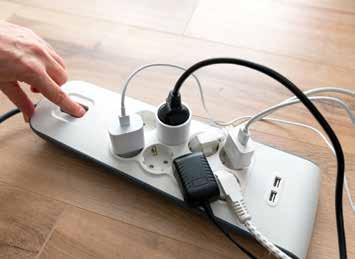
The average home has many devices that sap energy unnecessarily, and unplugging computer equipment, game consoles, DVRs, coffeemakers, televisions and phone chargers when not in use can save up to 20 percent on the monthly electric bill. The U.S. Department of Energy also recommends using surge-protector power strips with on/off switches to easily turn off a set of appliances without having to unplug anything.
Soulsby suggests switching from fossil-fuel heating systems that burn natural gas, oil, propane or coal to renewable solutions like electric heat pumps that transfer thermal energy using eco-friendly refrigerants, or green electricity plans that allow consumers to purchase renewable electricity (wind,
solar or hydro) from their power supplier. She also champions group solar programs, such as solar cooperatives that help renters, homeowners and businesses access solar energy and receive electric bill credits without installing panels on their own roof, translating to reduced monthly costs without high, upfront investment.
Cloos recommends installing or replacing weatherstripping, exterior door sweeps and draft stoppers on all exterior doors and windows. Duck and Frost King brands of shrink film window insulation kits can also provide an extra air barrier. Caulk can be used around doors, windows and other exterior gaps and interior trim joints to reduce cold drafts, increase heat retention in the wintertime and improve energy efficiency year-round.
Sustainable Shifts
Sustainability also means stretching the lifespan of everyday items, but when replacements are unavoidable, Cloos suggests looking for certified labels: WaterSense-certified faucets, toilets or shower heads; Energy Star-certified appliances; and GreenGuardcertified paints for exterior or interior makeovers. She also recommends simple measures like turning off lights when leaving a room to conserve energy and refraining from running the faucet while brushing teeth or washing hands to save water and lower water-heating costs.
A do-it-yourself mindset also minimizes consumerism. “Tool libraries work just like book libraries, but instead of novels, you can borrow tools, DIY equipment or sports gear,” explains Soulsby. “They solve the problem of owning rarely used items like an SDS [slotted drive system] drill for a bathroom project or a paddleboard for a weekend adventure. Borrow it, use it and return it in good condition.” Many U.S. cities maintain tool libraries through MakerSpace.com, community centers or nonprofits that can be located with a quick internet search.
For pest control without chemicals, Soulsby suggests sealing entry points, removing food and shelter sources, and keeping homes
clean and dry. Pungent essential oils like citronella, peppermint and eucalyptus, as well as strong-smelling herbs such as lavender, mint, basil and rosemary help deter pests naturally. Adding natural cedarwood chips or essential oils to wardrobes and closets can help to repel moths. Lining drawers and thresholds with cinnamon and cayenne, or introducing beneficial insects like ladybugs, praying mantises and lacewings in the garden, can naturally control insects.
“We often place a barrier of First Saturday Lime around the outside of our home. Lime is an easy-to-use, environmentally friendly alternative to pesticides that is safe for children and pets when used as directed on the manufacturers’ package,” explains Cloos.
Seasonal initiatives like Veganuary, Plastic-Free July or No-Mow May are great starting points to incorporate changes into everyday life. “The real power comes when you then carry these habits year-round,” says Soulsby. “Swap meat for plant-based options beyond just one month; extend plastic-free choices to every purchase decision; and rethink horticulture by letting your garden flourish naturally every day.”
Marlaina Donato is an author, painter and composer. Connect at WildflowerAndWoodSmoke.com.
Proxima
Going Zero Waste
A Conversation With Kathryn Kellogg
by Sandra Yeyati
Kathryn Kellogg is the founder of GoingZeroWaste.com, a lifestyle website dedicated to helping people live a healthier and more sustainable life. She is the author of 101 Ways To Go Zero Waste, Zero Waste Kids and 101 Tips for a Zero-Waste Kitchen.
With an active and engaged following on Instagram, TikTok and YouTube, Kellogg has also been featured on legacy media outlets, including CNN, NBC Nightly News, Women’s Health, The Oprah Magazine, Good Morning America, NPR and The Guardian. She has led sustainability workshops at numerous business organization such as Google, Salesforce, Slack, Amazon and Skillshare.
What inspired you to start your zero-waste journey?
I fell into zero-waste living a little backwards. I first started reducing my waste when I was a full-time working actor. It was more for financial reasons than environmental ones in the beginning. And then when I learned about the zero-waste movement, I realized that I had already been practicing many of the principles. I started my advocacy online and in my books because I wanted to use my storytelling skills to inspire people to make easy swaps that are better for the wallet and the planet.
What is considered a zerowaste life?
There’s no one definition. I think anyone who’s interested in reducing waste can consider themselves to be participating in a zero-waste lifestyle. So many people think they have to get to zero or to produce no trash at all, but it’s really about reducing the amount of trash you send to the landfill—first, by buying only what you need; then, by recycling and composting; and last, by throwing away whatever you have left over.
What are the personal benefits of this lifestyle?
It’s so peaceful not having to deal with as much trash. I’ve been able to build really good systems, so everything has a place in my home. When you step outside of that consumer mindset, you’re able to focus
Courtesy of Kathryn Kellogg
on the things that are truly important, like your hobbies and the people you love.
What are your top tips for improving a household’s sustainability?
One of the best things that you can do is to stop buying as much. In the U.S., we tend to overconsume to the extreme. Check the secondhand markets first before buying anything new. Try to be a bit more mindful about food packaging—avoiding plastic and Styrofoam whenever possible. Swap out your paper towels for reusable rags. If you have a zero-waste or bulk-refill store nearby, go check it out.
And then, of course, there’s composting. On average, 50 percent of household waste is organic matter that could otherwise be composted. Most people think that food scraps will break down in a landfill, but they won’t because landfills are designed for storage, not decomposition.
What are your favorite reusable products or tools?
I have so many! I have to give a shout-out to my Kayaness reusable period underwear. You could not pay me to go back to using disposable pads. I also love my bidet attachment and my stainless steel safety razor, which have saved me so much money.
How has your zero-waste worldview evolved?
We live in a linear economy in which we take resources from the planet, turn them into products and then, at the end of their life, throw them into a giant hole in the ground. It’s not a very smart system, especially when everything else in nature lives without creating trash. So, what if we could move toward a circular economy where all of the resources could be reused over and over again? Take, for example, a cotton T-shirt that could be given back to the manufacturer after we’ve used it, where they would compost it and use it to grow more cotton.
This very effective form of recycling would have to start with better designs, so that products would be engineered from the outset to be easily separated, recycled and transformed into new, high-quality materials. An aluminum can, for example, can go from your curbside bin back to store shelves in 90 days. It is an incredibly tight, closed-loop process. How can we reimagine more of the things we buy like this?
What other environmental causes do you champion?
I highly recommend that people get plugged into a local group or organization that’s fighting waste or another environmental issue that they might be passionate about, like conservation with the Sierra Club or clean water with The Surfrider Foundation.
How do you stay motivated and avoid burnout in your environmental advocacy work?
I think it’s really important to allow myself to be a multifaceted human being. For about seven years, I read books only about environmentalism, and I was feeling really burned out. So I picked up a book just for fun, and it reminded me that I can be more than one thing, and I can enjoy more than one thing. It’s important to balance our interests.
Sandra Yeyati is national editor of Natural Awakenings.
To read a longer version of this conversation, visit TinyURL.com/KelloggWW or scan the QR code.
The Minimalist Workout
Build Strength, Skip the Gear
by Zak Logan
Although regular workouts at the gym and two-mile runs boost cardiovascular health and improve mental outlook, brief, low-impact exercises throughout the day can also offer a world of benefits, including more stable blood pressure. A 2022 study published in JAMA Internal Medicine estimated that approximately 110,000 deaths per year could be prevented if U.S. adults aged 40 to 85 increased their physical activity by just 10 minutes of exercise a day. Greater benefits were associated with the addition of longer periods of exercise—approximately 210,000 preventable deaths with 20 minutes of exercise, and about 270,000 with 30 minutes.
“While we love working out at the gym, some days we’re too busy. The most important thing is that we keep our bodies moving every single day, and adding some exercises at home will also help keep our bones and muscles strong,” says personal fitness trainer Hannah McDonald, coowner and manager of Complete Fitness LHP, in Lighthouse Point, Florida, adding, “Always listen to your body. It’s always better to start a little slow until you know how your body responds.”
No-Fuss Fitness
Getting in some moves at home can be fun and doesn’t require sophisticated equipment. Bags of rice, half- or full-gallon jugs of water and cans of food can replace hand
weights. Towels, rope or clothing suspenders can double as resistance bands. Activities such as light-to-moderate housework and gardening prompt us to bend, squat and work with our hands. Low-impact practices like tai chi, yoga, Pilates, walking, swimming, recreational dance, rowing and cycling can also provide effective, short workouts without stressing the joints.
Modern sedentary lifestyles and busy schedules demand flexibility, and “movement snacks” can help us stay in condition—a few calf raises and shoulder rolls while waiting for water to boil, wall pushups between Zoom meetings or towel stretches for arm tone after stepping out
of the shower. Although McDonald values traditional workouts for specific performance goals, she believes in the power of movement snacks to reset a person’s metabolism, which often shuts down during prolonged sitting.
“You can do most low-impact exercises in moderation every day,” says Bruce Boyd, a wellness coach and owner of 4 Infinite Life Center, in Dallas, Texas. “Doing single moves and engaging muscles several times a day can help boost metabolism. It can also increase energy and diminish afternoon slumps.”
Get Moving
Boyd recommends the following exercises.
• Single Leg Curl and Press: Balance on one leg while holding full, 24-ounce water bottles. Combine a bicep curl with an overhead shoulder press using both arms simultaneously or alternating them. This exercise enhances core stability, balance and strength. Aim for three sets of eight to 12 repetitions per leg.
• Low-Lunge Arm Swings: While holding a low lunge, with the back knee on or off the ground, bend the elbows at 90 degrees and mimic a running motion by alternating arm swings. This exercise combines lower-body strength with
upper-body mobility and core stabilization. Aim for a timed set of 20 to 30 seconds or 10 repetitions per side.
• Chair Squats: Stand with your back in front of a sturdy, non-rolling chair positioned against a wall. Slowly lower the hips to lightly touch the chair before standing back up. To intensify the workout, hold canned goods. Repeat for 30 seconds to one minute every couple of hours. This exercise improves balance, mobility and lower-body strength.
McDonald suggests the following fun workouts.
• Mopping to Music: Put on some fun music and grab a mop. Pretend to mop or mop the floor with intention by emphasizing sweeping and scrubbing motions. Go a bit faster to get the heart rate up a little.
• Laundry Detergent Workout: For bicep curls, stand straight, engage the core and curl the detergent jug slowly. For triceps, hold the jug overhead with both hands, lower it behind the head, then extend the arms upward. For squats—if knees are healthy—hold the jug in front with arms slightly bent and slowly bend the knees into a 90-degree squat. Hold briefly, then repeat. Aim for 10 to 15 repetitions of each exercise.
• Squats: Stand two steps from a wall and press the back against it with feet hip-width apart. Slowly slide down the wall until it feels like sitting in an imaginary chair, while keeping the lower back firmly against the wall. Hold for 20 seconds, or a full minute if legs are strong enough. Repeat three to four times with a one-to-two-minute rest in between.
Zak Logan is a freelance health writer dedicated to natural living.
"Like so many families, I have been deeply affected by Alzheimer's, so I was thrilled to become a part of this film when I realized that there's hope, and it's not just a death sentence."
- Michael Bublé
Dr. Dale Bredesen
Bredesen
A DOCUMENTARY FILM BY HIDEYUKI TOKIGAWA
NARRATED BY MICHAEL BUBLÉ
At-Home Pet Massage
Tips and Techniques for a Happier Animal
by Ruth Roberts, DVM, CVA, CVH, CVFT, NAN
Massage therapy does more than pamper pets—it provides hands-on care with real physical and emotional benefits. For dogs, cats and horses, regular massage improves comfort, mobility and overall wellness. Pet parents can learn key techniques, understand the benefits and follow safety guidelines to ensure massages are safe and effective.
Physical Healing
A 2025 article in the Journal of Feline Medicine and Surgery defines massage as the systematic application of manual pressure and movement to soft tissues, including skin, tendons, ligaments, fascia and muscle. Integrative emergency veterinarian and end-of-life practitioner Lynda Loudon calls massage “one of the most accessible yet profoundly therapeutic tools
we have for supporting our pets’ physical health.”
Gentle massage improves circulation, delivering oxygen and nutrients to tissues while clearing metabolic waste. It also supports lymphatic flow, which depends on movement and manual stimulation. This is especially beneficial for senior pets, those recovering from injury or animals with limited mobility.
Massage improves joint mobility and flexibility. Pets with arthritis, hip dysplasia or age-related stiffness often maintain better range of motion when connective tissue stays supple. Massage relaxes muscles, eases pain and supports movement. Loudon notes that it “works with the body’s natural healing mechanisms rather
than imposing external interventions,” making it a gentle, non-invasive therapy.
Emotional and Behavioral Benefits
Massage is equally powerful emotionally. “Touch is one of the most primal forms of communication and comfort,” says Loudon, noting that it activates the body’s natural rest-and-relax response, lowering stress hormones, slowing heart rate and supporting calm breathing.
Anxious pets often visibly relax during massage. Addressing pain and physical discomfort can improve emotional and behavioral challenges, Loudon says. In end-of-life care, massage can provide both physical relief and emotional reassurance. It strengthens the human-animal bond.
Mark and Marci Trotta of St. Petersburg share this photo of their 2½-yearold Golden Retriever, Dolly. Known for her joyful personality, Dolly loves meeting people and truly doesn’t know a stranger. Her favorite pastimes include chasing bubbles and lizards. When it’s time to relax, she enjoys playing with her favorite toy—a stuffed llama.
Email your favorite pet picture to Debbey at dwilson@natampa.com for inclusion in the magazine.
Common Techniques
According to Michael Daly, a certified canine and equine massage therapist and holistic pet health coach, each massage technique serves a purpose.
• Effleurage, gentle circular motions with the palm , begins most sessions, helping pets relax.
• Petrissage, a kneading action, loosens muscles and fascia.
• Friction techniques target deeper tissue to release knots and tension with circular or cross-fiber motions.
• Vibration techniques release tension in the connective tissue. As Daly explains, “When tension develops in the fascia surrounding a specific muscle, it can cause that muscle to tighten. Applying vibrations helps release the tension, and pets love it.”
• Passive stretching, which gently moves a pet’s limbs to loosen joints and muscles, is often used to finish a session.
Pet parents can perform these massages themselves. Daly recommends starting with effleurage, followed by vibration techniques. Stressing that the calming effect often begins with the person, he explains, “When you feel calm and centered, they do, too.”
He encourages keeping routines simple and consistent. Massage works well any time of
day, but Daly especially recommends brief effleurage and vibration sessions when pets wake up. Gentle strokes across the body can help prepare muscles for activity. It is important to read a pet’s body language. “Dogs will tell you when strokes are too hard and when they are done,” says Daly.
Safety Concerns
Dogs often hide pain. Daly warns that limping usually means discomfort is already advanced. Watch for more subtle signs such as difficulty standing, hesitation with jumps, circling before lying down, excessive licking, nighttime restlessness or persistent panting.
Loudon emphasizes that while massage is generally safe, it should be avoided when there are active infections, fractures, recent surgical sites or areas of acute inflammation. Pets with cancer, clotting disorders, fever or severe pain should receive massage only under veterinary guidance.
When done thoughtfully alongside veterinary care, massage is a safe and valuable part of holistic wellness. Loudon suggests starting gently and monitoring the pet’s response. A relaxed posture, soft eyes and leaning in indicate comfort, while tensing, moving away, pinned ears or vocalizing means it is time to stop.
Ruth Roberts, an integrative veterinarian and holistic health coach for pets, is the creator of The Original CrockPet Diet. Learn more at DrRuthRoberts.com.
Printed calendar is a gratis feature for advertisers. Non-advertisers: get your Mark Your Calendar event listed for $50/listing. Email dwilson@natampa.com for more information. On line version of Calendar of Events gratis at NATampa.com.
Calendar of Events
Wednesday, April 1
Pink Moon 2026 Full Moon Fire Ceremony6:30 pm. Join us for a transformative, heartopening experience. Under the luminous light of spring’s first full moon, participants gather to evoke the energy of renewal within themselves and for all beings. Located at the Fire + Stone Shamanic Healing Center, 1217 Ewing Ave, CLW, FL 33756, $33, 727-446-3021, Registration at https://fireandstonehealing. com/events.
Thursday, April 2
TCM: Yin-Yang Theory - 6-8pm. The concept of Yin-Yang stands as the cornerstone of Traditional Chinese Medicine, shaping the understanding of physiology, pathology, and treatments. It is a deceptively simple yet profoundly versatile framework that provides ongoing insights into both clinical practice and daily life. Delve into the essence of YinYang theory, explore its connections to Qi, Blood, and Body Fluids, and discover its practical applications for a deeper appreciation of its role in everyday well-being. To register for this class visit: TraditionsHerbSchool.com/ community-classes-2025. 6340 Central Ave, St. Petersburg. 727-249-1174.
Sunday, April 5
Thursday, April 9
Anatomy for the Herbalist - Nervous System - 6-8pm. Discover the intricacies of the nervous system, a sophisticated network that orchestrates and regulates bodily functions by transmitting signals among the brain, spinal cord, and peripheral nerves. This system is essential for processing sensory information, managing responses, and ensuring homeostasis throughout the body. Together, we’ll explore its structure and functions while applying our insights to common disorders that impact the nervous system. To register for this class visit TraditionsHerbSchool. com/2026-classes and apply discount code NA10 for 10% off. 6340 Central Ave, St. Petersburg. 727-249-1174.
Friday, April 10
Healing Foods Series - Liver Loving Foods to Relax the Liver - 6-8pm. The liver plays a vital role in detoxification, hormonal balance, and emotional regulation—especially anger and stress. In this class, we’ll explore foods, herbs, and recipes that gently support and relax the liver, with an emphasis on springtime renewal. You’ll learn how sour flavors, leafy greens, and cooling ingredients help the liver do its best work. You’ll leave the session with recipes, inspiration, and lots of yummy foods to try! To register for this class visit TraditionsHerbSchool. com/2026-classes and apply discount code NA10 for 10% off. 6340 Central Ave, St. Petersburg. 727-249-1174.
Wednesday, April 15
Health & Wellness Business Mastermind – 6pm. Join Roma Holistic Health and Brain Train Centers St. Pete for this supportive community of wellness entrepreneurs focused on growth, marketing, client retention, and accountability. Beyond business strategies, this mastermind aligns mission with daily practices, creating balance and confidence in leadership. Free. Victoria@Roma Holistic Health, 727-692-7154 or Katie@Brain Train Centers. St. Pete. 727-273-7514.
FREE Hypnosis-NLP Webinar “Pivotal Response Conditioning” – 7:30-8:30pm – Interactive webinar hosted by Board Certified Medical Hypnotherapist, Master Trainer & NLP Master Practitioner, Patricia V. Scott Ph.D. Patti shares 34 years of experience with practical, easy to use concepts & techniques with Q&A. All welcome 3rd Wednesday monthly w/various topics. 1 CEU (Hypnotist/Hypnotherapist). Register for log-in details: UPHypnosis@yahoo. com, UPHypnosis.com.
Thursday, April 16
Business of Herbalism Part 4 - Let’s Make It Grow - 6-8pm. Sustain and scale the business with confidence. Explore tools for time management and sales tracking systems, time management strategies, staying organized and productive, sleeting clear goals and measuring progress, scaling your offerings (new products, classes, consults), and client and community engagement—while learning how to avoid burnout and stay inspired as an herbal entrepreneur. To register for this class visit: TraditionsHerbSchool.com/communityclasses-2025. 6340 Central Ave, St. Petersburg. 727-249-1174.
Friday, April 17
Mushroom Medicine Making SeriesTurkey Tail - 6-8pm. Turkey tail mushrooms (Trametes versicolor) are valued for immune support, antioxidants, and gut health through prebiotic fibers. Join Ruthie for a hands-on class exploring this powerful mushroom. Participants will enjoy tea, sample a dish, and create herbal medicine blends. Register at TraditionsHerbSchool.com/community-classes-2025. 6340 Central Ave, St. Petersburg. 727-249-1174.
Saturday, April 18
NLP FUNdamentals 2-Day Training Online – 1-6pm – Fun interactive class gives you basic knowledge and skills in NLP (Neuro Linguistic Programming) principles & techniques with NLP Master Practitioner & Trainer (since 1992), Patricia V. Scott, PhD. Learn by experiencing to help yourself and others achieve goals, overcome limits and make positive, permanent changes. Includes Workbook, Video replay & Hypnosis MP3 for only $95 or $75 (UPHI Mbr). Register: UPHypnosis.com/nlp-2-day-training.
Thursday, April 23
The Pillars of Health with Ayurveda Series - Sleep and Nervous System Support - 6-8pm. In Ayurveda, sleep is one of the three pillars of life, essential for restoring body and mind. Participants learn about doshic imbalances that contribute to sleep disturbances and ways to guide the body back into balance. The class introduces nervine herbs that nourish and calm the nervous system. Participants explore their properties, taste them, and learn how to create calming evening rituals. Ideal for those experiencing stress, anxiety, or poor sleep, the class offers practical herbal and lifestyle tools to support deeper rest and long-term resilience..To register for this class visit: TraditionsHerbSchool. com/community-classes-2025. 6340 Central Ave, St. Petersburg. 727-249-1174.
Saturday, May 2
2nd Annual Naked Olympics- A clothing optional day of fun and games! $10 per person. Bare RV Resort, 6901 Caliente Blvd., Land O Lakes, FL 34637. Call 813-9966008 for more information.
Thursday, May 14
The 5 Seasons of TCM Series- Wood Season - 6-8pm. In Traditional Chinese Medicine, the year is viewed as five seasons—each influencing body, mind, and spirit. Spring aligns with the Wood element, symbolizing growth, renewal, and creativity. This class guides participants
in exploring herbs that support the Liver and Gallbladder, aiding detoxification and emotional balance. Seasonal foods, herbal preparations, and lifestyle practices will be introduced to help align with Spring’s energy and support overall wellness. Register at TraditionsHerbSchool.com/2026classes. 6340 Central Ave, St. Petersburg. 727-249-1174.
Thursday, May 21
Anatomy for the Herbalist - Endocrine System - 6-8pm. Dive into the endocrine system, a complex network of glands that produce and release hormones essential for regulating key bodily functions like metabolism, growth, and mood. By secreting chemical messengers into the bloodstream, the endocrine system plays a crucial role in maintaining homeostasis and coordinating processes throughout the body.. Participants will explore its structure and functions while also examining common disorders that impact this vital system. To register for this class visit: TraditionsHerbSchool.com/2026-classes. 6340 Central Ave, St. Petersburg. 727-249-1174.
Saturday, May 30
Hypnosis International Certification begins – Get 3 Certifications, International Association of Counselors & Therapists, International Hypnosis Federation & UP Hypnosis Institute with Patricia V. Scott, Ph.D, On-line (ZOOM) w/some possible “Live” for locals (Oldsmar). Basic & advanced techniques, NLP, medical uses, regression, parts-integration, Time-line, Smoke-FREE, weight control & more. Enroll by 5/4 for Early Discount. Pay-Over-Time available. UPHypnosis.com.
Saturday June 13
4th Anniversary Pool Party and BBQ at bare RV Resort - Help bare RV Resort celebrate our 4th anniversary! A clothing optional pool party with live music, a BBQ and lots of fun. Ladies, $15, Gentlemen $30, Couples $35. Bare RV Resort, 6901 Caliente Blvd Land O Lakes, FL 34637. Call 813-996-6008 for more information.
Saturday, July 11
Medical Hypnotherapy Specialty Certification (on-line) – 1:00-6:00pm. Four interactive weekends plus outside assignments. Prerequisite: 200 hours prior hypnosis training. Patricia V. Scott, PhD, Certified Master Trainer for the International Medical & Dental Hypnotherapy Association teaches medical applications to work with referrals. Dates: July 11-12, 25-26; Aug. 8-9, 22-23. Early registration discount before 6/15. Pay-Over-Time option available. UPHypnosis.com.
Ongoing Events
Sunday
Unity North Tampa – 11am. A spiritual home for all. This welcoming spiritual community celebrates the power of positive thinking and prayer as pathways to spiritual and physical well-being. Everyone is invited to join us on Sundays to enjoy inspiring guest speakers who share wisdom on expanding consciousness and living with intention. Unity North Tampa Spiritual Center, 19520 Holly Lane, Lutz. 813-948-4884. UnityNorthTampa.org.
ACIM Group Discussion Sessions – 1pm. A Course in Miracles (ACIM) is a unique spiritual self-study program designed to awaken us to our true nature as Love. Join us for discussion each week to be spiritually fed and inspired. $10 Love Offering. Unity North Tampa Spiritual Center, 19520 Holly Lane. 813-948-4884.
Monday
Meacham Urban Farm – 3-7pm Mon. & Fri. Homegrown and high quality, all-organic produce onsite. What they do not produce themselves, they source from other local farmers, ranchers, bakers and artisans, including a variety of vegetables, fruits, breads, meats, eggs, honey, ferments, raw dairy, soaps, flowers, plants and more. The Farm Store is open to the public every weekend, no membership needed! 1108 E Scott St. (downtown), Tampa. Learn more: MeachamFarm.com.
Qigong for the Heart – 6pm. Discover the body mechanics and alignment of each Qigong exercises plus the essential theory, behind each movement, Development healing energy to achieve inner power and balance. Receive the teaching of a qualified master like Shifu Orlando Schiaffino who has 40 years of experience in Taichi ,Qigong & internal Arts. Take advantage of our summer special, Your first month $59.99. One class $15. All levels are welcome. Fire Stone Shamanic Healing Center, 1217 Ewing St, Clearwater. FireStoneHealing.com. 727-2253990.
Email your favorite pet picture to Debbey at dwilson@ natampa.com for inclusion in the magazine.
Wednesday
Yoga Session: Hatha Yoga with a Therapist – 6:30-7:30ish pm. Join Elizabeth Rice, LCSW ACE CFI, for a yoga session that will not only strengthen your mind-body connection, but will help you to get in deeper touch with your inner calm. Space is limited, reserve now. $15/per session. 6251 Park Blvd, Ste 9, Pinellas Park. 727-346-5875.
Qigong for Bone Density & Taichi – 7:15pm. Discover the body mechanics and alignment of each Qigong exercises plus the essential theory, behind each movement, Development healing energy to achieve inner power and balance. Receive the teaching of a qualified master like Shifu Orlando Schiaffino who has 40 years of experience in taichi ,qigong & internal arts. Take advantage of our summer special, Your first month $59.99. One class $15. All levels are welcome. Fire Stone Shamanic Healing Center, 1217 Ewing St, Clearwater. FireStoneHealing.com. 727-225-3990.
Saturday
Meacham Urban Farm – 9am-1pm Sat. 10am-1pm Sun. Homegrown and high quality, all-organic produce onsite. What they do not produce themselves, they source from other local farmers, ranchers, bakers and artisans, including a variety of vegetables, fruits, breads, meats, eggs, honey, ferments, raw dairy, soaps, flowers, plants and more. The Farm Store is open to the public every weekend, no membership needed! 1108 E Scott St. (downtown), Tampa. Learn more: MeachamFarm.com.
The activist is not the man who says the river is dirty. The activist is the man who cleans up the river.
—Ross Perot
Connecting you to the leaders in natural healthcare and green living in our community.
Airbnb
THE SUITES @ BEMUS POINT
15 Main St., Bemus Point, NY 410-570-0980
Evolve.com/vacation-rentals/486873
The Suites Vacation Rentals, located at 15 Main Street in Bemus Point, NY, offers modern, lake-view accommodations just steps from local shops, dining, and Chautauqua Lake’s vibrant waterfront attractions. The property features three unique suites. See ad page 6.
Alternative Medicine
LIFEWORKS WELLNESS CENTER
Dr. David Minkoff, M.D.
Dr. Griselle Figueredo, M.D.
Dr. Neena Iyer, M.D., Dr. Dawn Frankwick M.D.
Sue Morgan, APRN, Karima Redouan, APRN
Rose Tyler, APRN
301 Turner St, Clearwater
727-466-6789
LifeWorksWellnessCenter.com
Specializing in Ozone Therapy, IV Therapy, Heavy Metal Detoxification, Neurological Issues, Bioidentical Hormone Replacement Therapy, Gut Issues, Thyroid Issues and IPT for Cancer treatment. See ad inside front cover.
ORTHOMOLECULAR NUTRITION & WELLNESS
9225 Ulmerton Rd, Ste 312, Largo 727-518-9808
OrthoLiving.com
We address the underlying root cause of disease by using a variety of modalities such as Nutrient IV’s, Chelation, Weight loss, HRT, PEMF, Ozone Therapy and more. To see if you qualify for Medical Marijuana go to OrthoMMJ.com.
Dr. Grossgold practices internal medicine and pediatrics with an integrative approach to detoxification, anti-aging medicine, functional medicine and nutrition. His clinic offers Integrative Cancer Treatment, Cryotherapy, Hyperbaric, EBOO, MHA, UVBI, Theta Chamber and more! See ad, page 17.
Clinical herbalist and massage therapist offering consultations, extensive line of Eastern/Western Herbs, Teas, Essential oils, CBD, Supplements, and learning workshops. Visit your neighborhood apothecary today! See ad, page 25.
Second-generation astrologer and Soul Evolutionist practitioner. Over 25 years of experience. Insightful, unique perspective on goals and issues. “Together we will unveil your soul’s purpose.”
Colon Hydrotherapy
RENEW LIFE
Bonnie Barrett 28469 US Hwy 19 N, #402, Clearwater 727-461-7227
RenewLifeFla.com
#MA14802, #MM35406
30 years experience. Expert in colon hydrotherapy using pressure points, abdominal massage, essential oils, and lymphatic drainage. All disposable tubing used. Very comfortable and relaxing room with private bathroom. See ad, page 17.
PROFESSIONAL LYMPHATIC THERAPY AND COLONICS, LLC
Laura M. Turley, LMT and Owner
9371 US 19N, Ste. B, Pinellas Park 727-492-0060
ProfessionalLymphaticTherapy.com MM39888, MA88928
Complementing detoxification via “Lymphatic Therapy” (see listing), now offering Gravity Method colonics (closed system method), known to be gentler and more effective than other methods. See ad, page 18.
THE GROSSGOLD CLINIC
Lisa Harris-Dalton, Bonnie Barrett 609 Lakeview Rd, Clearwater 727-330-3844
TheGClinic.org
#MA27502, #MA14802, #MM43949,
Compassionate therapist with 26+ years’ experience in massage therapy and open and closed colon hydrotherapy systems, including the Angel of Water system. Skilled in collaborating with clients/ physicians to optimize wellness goals. See ad, page 17.
Counseling
ELIZABETH RICE, LCSW 6251 Park Blvd, Ste 9C Pinellas Park 33781 727-300-9382
esLifeCoach.com, License SW15178
Heal the whole being including body, mind, spirit and emotions. Increase your quality of life; facilitate emotional healing. Specializing in Anxiety, Mood, Behavior, Trauma, Family. See ad, page 27.
Dentists
BEATA CARLSON, DDS
1825 Sunset Point Rd, Clearwater 727-888-6523
NaturalAndCosmeticDentistry.com
Natural, Holistic, Aesthetic Dentistry. Careful Silver filling removal. Nonmetal crowns and bridges. Be pampered in our Spa-like atmosphere. See ad back cover.
CARLO LITANO, DMD
Natural Smiles of Tampa Bay 132 Mirror Lake Dr, Ste 101, St. Petersburg 727-300-0044, Natural-Smiles.com
Offering Holistic/Biological dentistry. Swiss dental protocols, ceramic implants, safe mercury removal, ozone cleaning and on site sedation. See ad, page 4.
THERESA RODEGHERO, DMD
Clearwater Family Dental
215 S Myrtle Ave, Clearwater 727-442-3363
MyClearWaterFamilyDental.com
We are a full service family dental practice that stresses metal free restorations, safe mercury removal, ozone and laser dentistry. We welcome patients of all ages and can handle any concern that you may hAve, See ad, pages 3 and 7.
ROBERT J. YU, DMD
Tampa Bay Dental Implants & Periodontics
6700 Crosswinds Dr, Ste 200-B, St. Pete 727-384-9122
TBPerio.com
The only board certified periodontist and implant surgeon in Tampa Bay offering ceramic/zirconia non-metal implants. State-of-the-art treatments include CBT imaging, LANAP and digital intraoral scanner, eliminating messy impressions. See ad, page 9.
Harmonic Egg®
ROMA HOLISTIC HEALTH
6161 Dr. Martin Luther King, Ste, 100 St. Pete 727-692-7154
RomaHolisticHealth.com
Supporting chronic pain management and stress reduction utilizing natural, non-invasive alternative modalities, including: Harmonic Egg; PEMF/ Frequency Therapy; Energy Healing; Biomagnetism; Neurofeedback & more. See ad, page 33.
THE GROSSGOLD CLINIC
Andressa Junqueira #FS944298
609 Lakeview Rd, Clearwater 727-330-3844
TheGClinic.org
Rebalance the body’s energy, activate natural healing, and enhance your wellness journey. Utilizing sacred geometry, the resonance chamber will envelop you with sound frequencies, light therapy, and vibration. See ad, page 17.
Holistic Nutrition
NATURE-BASED HEALTH & NUTRITION
Collin Gow, C.N.C.
813-377-7705
collingowcnc@gmail.com
Certified nutritional consultant of 17 years offering holistic, personalized supplement recommendations, meal plans, lab tests and analysis, facial blood flow scans, earthing sessions and plant and mushroom ID hikes.
Hypnosis
UNLIMITED POSSIBILITIES HYPNOSIS, INC.
Patricia V. Scott, President 727-943-5003
UPHypnosis@yahoo.com, UPHypnosis.com
Professional Hypnosis & NLP Certification Training, Weekly classes & Private sessions (Smoking, Weight, Stress, Sports, Habits), Clinical/ Medical Hypnotherapy available w/ referral. Speaking Services & Corporate Programs. See ad, page 21.
Integrative Medicine
INTEGRATIVE THERAPEUTICS
Dr. Prudhvi Karumanchi 8320 Stone Run Ct, Tampa 33615 813-322-6171
IntTherapeutics.com
Committed to finding the root cause, Holistic MD offers: IV Nutrition, Regenerative Treatments, Functional Medicine, Heavy Metal Detox, Energy Healing, Weight Loss, Anti-aging, Ozone Therapy, Acupuncture, PRP & Stem Cell Therapy. Out-of-Network Provider.
INTEGRAL URGENT CARE
130 Island Way, Clearwater 727-233-1933
IntegralUrgentCare.com
Integral Urgent Care & Wellness prioritizes patient centered care, providing wellness and walk-in Urgent Care services weekdays 9am-3pm.
PEAKS OF HEALTH METABOLIC MEDICAL CENTER
Tracie Leonhardt, DO 1120 Belcher Rd S, Ste 2, Largo 727-826-0838
PeaksOfHealth.com
Dr. Leonhardt is Board Certified & Fellow of the American Academy of Anti-Aging and Regenerative Medicine. Offers a personalized program for each individual patient. Hormone replacement therapy, weight loss, thyroid, GI issues, Diabetes, infrared sauna, IV nutrition, Anti-aging, Chronic fatigue, adrenal fatigue, and toxicities. See ad, page 11.
SUCCESS BY DESIGN
9095 Belcher Rd, N, Pinellas Park 727-548-0001
SBDWellness.com
A Wellness Center for Age-Management, Functional Medicine and Medical Weight Loss. Specializing in Bio-Identical Hormone Replacement including Pellet Therapy, Gut Health/Food Allergies, Detoxification, Nutritional Evaluations, Acupuncture, Massage therapy and more. See ad, page 10.
Lymphatic Therapy
PROFESSIONAL LYMPHATIC THERAPY AND COLONICS, LLC
Laura M. Turley, LMT, and Owner 9371 US 19N, Ste B, Pinellas Park 727-492-0060
ProfessionalLymphaticTherapy.com MM39888, MA88928
Specializing in manual lymphatic drainage (MLD) and lymphatic enhancement therapy (LET). Professional Lymphatic helps those with challenging conditions including inflammation, mold toxicity; auto-immune conditions, post chemo healing, etc. See ad, page 18.
CManual and Assisted Lymphatic Therapy & Colon Hydrotherapy with I-ACT Training. Longtime health and wellness advocate with 24+ years’ experience in massage and colonic therapies. See ad, page 17.
Reflexology
REED ‘NAHAM’ MYLES
Certified Reflexologist and LMT 727-543-3048 by appointment Clearwater, MA0028171
Whether you need deep therapy, a tuneup or just a relaxing treatment, I can help you. Just call me.
RV Resort
BARE RV RESORT
6901 Caliente Blvd
Land O’Lakes 34637 813-996-6008
BareRVResort.com
A clothing optional oasis, resort and campground perfect for first-time nudists. Women owned/operated, offering a welcoming and relaxing environment to be at one with nature.
Schools
TRADITIONS SCHOOL OF HERBAL STUDIES
2 Year Clinical Certification
6340 Central Ave, St. Petersburg 727-249-1174
TraditionsHerbSchool.com
Experience natural healing with immersive herbalism classes covering medicine making, Traditional Chinese Medicine, Anatomy, Physiology, Ayurvedic practices, and more. Suitable for all levels, the program offers a twoyear Clinical Certification and weekly Community Classes. Grow and thrive with us. See ad, page 29.
Spiritual Intuitive
UNIVERSOULLIGHT CONSULTING
Rev. Amanda Segovia, Reiki Master
Certified SRT Personal Consultant
UniverSoulLight.com
UniverSoulLight@gmail.com
Private sessions using various healing, clearing & spiritual modalities. Akashic Records, Intuitive Medium, Astrologer, Personalized Astrology Reports, Numerologist, Meditation, Chakra-Balancing, Tarot/Oracles, Candles, EOL Transition, Teacher/ Mentor & more.
Thermography
GREENPOINT THERMOGRAPHY
John D. Bartone MD
7901 4th St, N, Ste 316
St. Petersburg, FL 33702
727-576-0100
GreenPointThermography.com
The only physician owned and operated thermography practice in Tampa Bay – serving Pinellas, Hillsborough, and Pasco counties. Accredited by the American College of Clinical Thermology. See ad, page 33.
FLORIDA MEDICAL THERMOGRAPHY
June Drennon, CCT 2008
JuneDrennon@
FloridaMedicalThermography.com 727-729-2711
FloridaMedicalThermography.com
Certified Clinical Thermographer 2008. Mindful Wellness with Thermography! Knowledge is power: Know your risk factors to make corrections and avoid developing pathology. Call for location convenient for you. See ad, page 8.
Veterinarian
HEALTHY PAWSIBILITIES NATURAL PET WELLNESS CENTER
Dr. Cathy Alinovi, DVM 2189 Cleveland St, Clearwater, FL 33765
727-510-3665
HealthyPawsibilities.com
Offering only holistic health options. Nutrition, herbal support, body balancing, canine fitness, reiki and more. See ad, page 41.
SUPPORT LOCAL ADVERTISING
PAWSITIVE VETERINARY CARE
Shawna L. Green, DVM 11125 Park Blvd, Ste 108, Seminole 727-299-9029
Compassionate health care catered toward the needs of your pet, offering preventative medicine, surgery, dentistry, senior wellness, and more. See ad, page 41.
We
—Thomas Fuller
Natural Awakenings is a monthly publication for our community to pick up free of charge, made possible by the ongoing support of the advertisers you see within the pages of this magazine. If you enjoy the content provided within this publication, please support the advertisers who make this free magazine possible.