sartor-ium
volume 1, issue 1
sartor-ium
a space for essays, articles, photography, and creative projects pertaining to fashion discourse, body politics, gender, race, and expression of the self through the visual
volume 1, issue 1
TABLE OF
Politics of Taste: Phe Material Disco
Boobs
Brunettes Can Between the Binary? Constructio Amalg
Deliberating Discourse: Perceptio
Don’t Worry
CONTENTS
nomenology and the urse of Identity in Art
Be Dumb Too
Alexander McQueen & ns of Gender amation
Fiona Anderson Edition
n is Reality
...It’s the 1950s
THE MATERIAL DISCOURSE
natalie mell on establishing
I have never been a proponent of defining myself, or truly anything, through the lens of a binary distinction because I believe no one person can be defined through a singularity, but rather an amalgamation of their experiences. When I first came to Gallatin School of Individualized Sttudy, in the middle of the pandemic, the initial conceptualization of my major was graphic design and business, which felt sensible, and criminal justice, which I found more passion in – allowing me to interrogate facets of the individual in relation to how they fit into the constructs and “rules” of society that pertained to morality through the formation of what is considered right and wrong.
However, I had always had a love for fashion, which I owe entirely to my mom who raised my sisters and me on a love for vintage sweaters and coordinated color schemes. She introduced us to a world of individual expression but instilled the importance of conscious consumption and the value of physical material. It was my primary outlet through which I felt I could control my external appearance to match my internal sense of self, or rather manipulate the external to mask my internal displacement. Until I came to Gallatin, a career in fashion was always an elusive aspiration, rather than a reality.
I always explain the program as not teaching me what to think but how to think. Through my outlets in writing, passion for visual expression through design and fashion, and curiosity in understanding what constitutes the individual in the context of the environments through which they have lived, I came to define
my concentration as The Politics of Taste: Phenomenology and the Material Discourse of Identity.
While the focus of my concentration is fashion, my approach is situated in understanding its semiotics through the lens of phenomenology and embodied experience, a means through which invisible, intangible phenomena can be visualized, which is situated in a theoretical and historical framework.
I aim to understand how identity is constructed, drawing on disciplines of anthropology, sociology, philosophy, linguistics, and psychology to understand the individual in terms of classifications of social existence such as nationhood, culture, gender, and race. If these categorizations are merely social constructions, arbitrary “rules” and binaries set by society that people must act in accordance with, how were they created? Who or what determined them? If they do not really exist, but simultaneously give meaning to the individual, constituting their “identity”, how do we conceptualize social existence? What, if anything, really gives meaning to the individual? To approach finding answers to these questions, I had to take a historical perspective, but with faced with the
POLITICS OF TASTE: PHENOMENOLOGY
PHENOMENOLOGY AND DISCOURSE OF IDENTITY
an academic concentration
need to interrogate what history is – what really happened versus what is said to have happened, the problems of ever truly knowing what happened as pertaining to erasure, who we have given the power to tell historical narratives and how this has skewed our perspective, and the way we experience and interpret historical artifacts as relating to the archive and context period through which we decipher it. How has the way we perceive history been affected by our own embodied cognition? This has also led to an emphasis in my concentration on the politics of objectivity and subjectivity.
I understand the manifestation of these ideas as being articulated, more obviously through language, but more specifically through fashion and aesthetics.
Here I make a distinction of the word aesthetics as pertaining to the philosophical study of taste, beauty, and art in isolation rather than aesthetics in fashion. I am interested in understanding the power that the visual has in shaping our social world and addressing the questions pertaining to social classifications and the multi-faceted conversation it produces between its physical context and the semiotic histories it enacts. In particular, my concentration focuses on the relationship between fashion and the individual and the impact that it has on constituting identity through the narration of history. Fashion holds power in enacting history, culture, gender, sexuality, and race, creating and upholding social hierarchies, and shaping body
politics. I do not aim to try and define or conceptualize fashion from a onedimensional perspective, and rather interpret it through a link with history and identity. The individual does not exist in modernity without an acknowledgment of history – of the nation, culture, and environments they occupy – which is necessary to appropriately take action in the present, and therefore create social change in the future.
The only thing that can be categorized as the “present” is the formation of identity through the multiplicities of social construction, as created to rationalize abstract social relations, best understood through post-structuralism.
Fashion is a visual representation of identity, and if the understanding of history impacts an individual’s behavior, whose identity is constantly fluctuating between socially constructed binaries, fashion can be understood as inseparable from history and unstable and cyclical by nature.
Fashion here acts as the figurehead for further exploration of the intersection between visual culture and contextualization through language, identity, and history. While my studies at Gallatin have gotten me to this point so far, I intend to continue to use fashion to interrogate the juxtaposition of the history of an object with the time and space that it occupies. It is impossible for an object to exist in isolation, but even examined through its relation to space and language, it will still never encapsulate reality.
I still find myself often returning to this question:
How do you visualize something that does not exist?
Well, the answer is that you will never be able to.
BOOBS I
Boobs. They’re quite the taboo––according to society. Boobs are unique to everyone who has them. Some are rounder, darker, perkier, etc. Boobs have had their fair share of a journey with the feminist and Free the Nipple movements. Those who have boobs today are not afraid to hide or suppress them but rather celebrate them (whether they choose to show them or not). Boobs do not determine what femininity is.
Today, people all over the world are learning how to love their boobs.
The depictions of boobs in art are a little different, however. The first imagery of boobs in art dates back almost 25,000 years to the stone age ( Brian Loo Soon Hua). The depiction of the female body was not at all “beautiful” by what today’s ideal body type is. These depicted bodies had broader shoulders and hips and fuller breasts; they were viewed more as “child-bearers” than actual people. Though scholars will often challenge this idea by saying that these sculptures were created by women, who had to look down at their bodies to see themselves in full. .The ideal female body has been sought after throughout history. Specifically, the ideal “boobs.’’
Art pieces that featured the bare breasts of women only depicted what was expected to be seen by that period. And most, if not all, of these paintings were done by men.
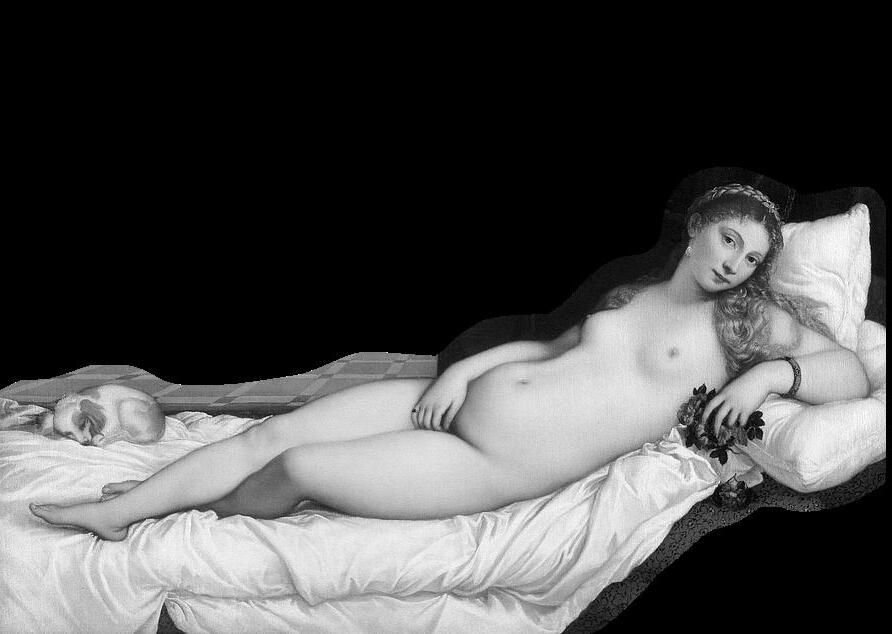
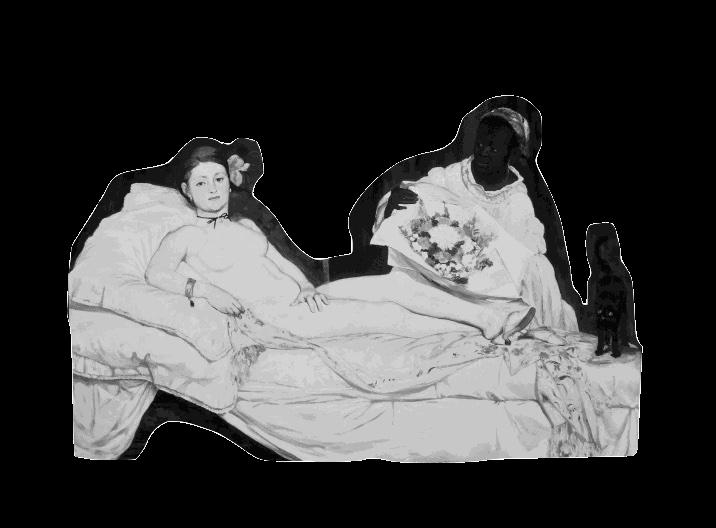
Tiziano Vecillio’s Venus of Urbino, for example, was praised by many fans of art in the 15th century. Venus, who was the woman portrayed, can be seen lustful and inviting. Her body was one of the ideal one’s many women of this time strived for. She was idolized due to her gaze and supple body. Her proportions were sought after and even if she was nude she was in a way she was in a way “modest”. Unlike Tiziano Vecellio, Edouard Manet’s painting of Olympia was highly criticized for many reasons. One of these many reasons was that she did not have the ideal body type of the century. Her body was seen as unclean and uninviting. She seemed a little more on the heavier side and seemed “unfinished” according to critics.
N ART.
MARIA MUNOZ
Olympia was mainly criticized because she did not portray someone from an upper class––she was a prostitute. Manet wanted to highlight this point by depicting her real and raw body. Her boobs in particular seem central to the painting. They aren’t overly painted or overshadowed; they are her real boobs painted. While Manet manages to conserve the rest of her body with her hands’ placements, her boobs are left exposed. Could this be because they were seen as a symbol of lust and mystery? Boobs have always been criticized by men throughout history. Even by the two painters we explored previously. They painted these women through the male gaze. Boobs have been oversexualized to the point where even trying to feed your baby is labeled “inappropriate.” Even today as we board the F or M train at BroadwayLafayette we see huge Skims ads of women wearing their bras. As I walk up the steps from the M train I often feel like I’m invading a private moment as I step on a model’s boobs modeling a skims bra. Seeing these huge ads makes you question everything from marketing tactics today to how different each female body is. The ad isn’t particularly art but in hopes of making you buy skims Kim Kardashian is showing the inclusivity of the brand by detecting all women of different skin tones and boob sizes. The advertising pulls you in because it’s Skims (Kim Kardashian brand) but all of the women shown are only featuring their breasts.
Not their face or the rest of their figure but their boobs.
This really goes to show the overall effect boobs shown in ads have on consumers. When we reflect we see that we have some similarities between us and the 15th century when all of these paintings of these naked women were created they were deemed too vulgar yet left to be seen by the male viewer. Yet they were left to be criticized by their own sex. Today we can see older generations generally seeing these ads and find them as an exploitation of women. Yet many of the younger generation have grown to celebrate boobs in their natural form. In art, the way boobs were painted reflected a lot about the person. What social class they were a part of and what was their culture? Boobs are different and unique to each person who has them. Take for instance the stereotype of Latinas. Latina women are often described to have curves and that “hourglass” figure. In order to be seen beautiful within the culture
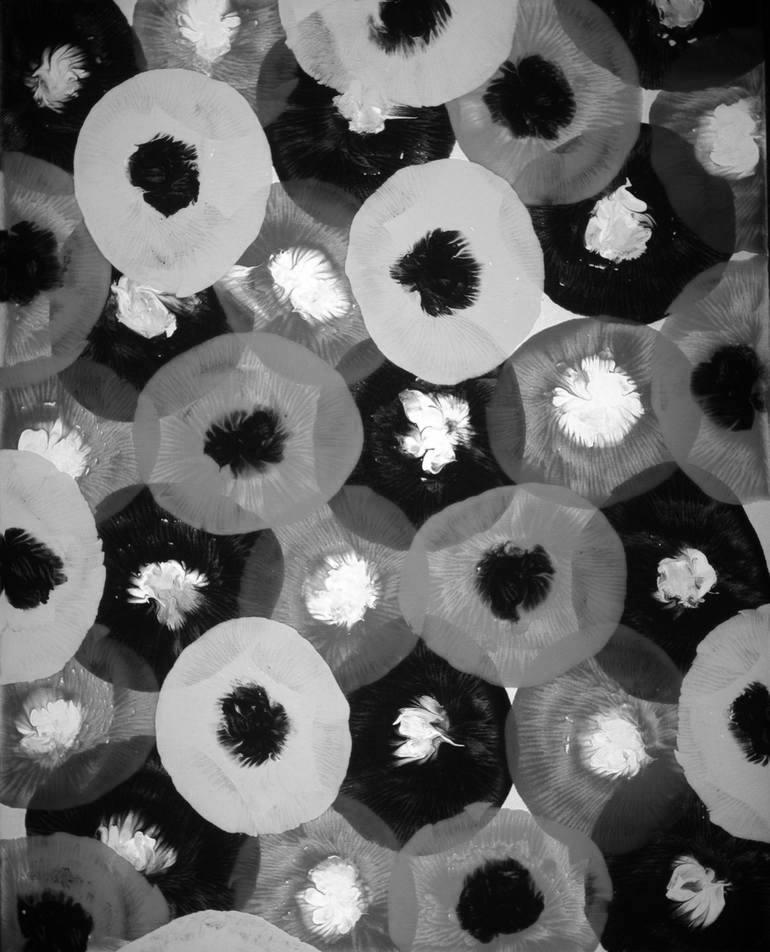
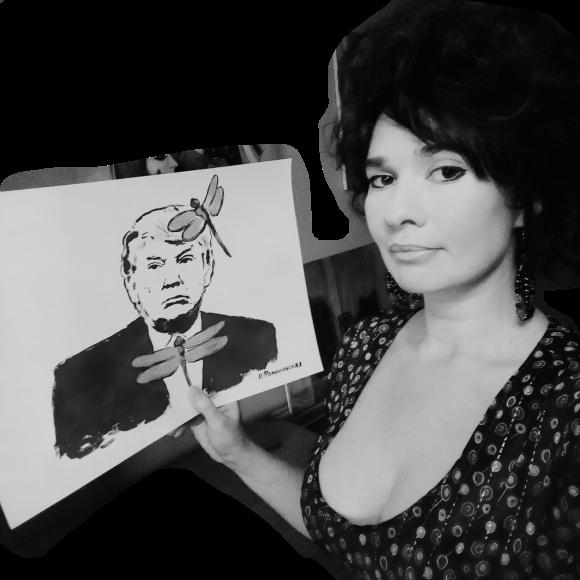
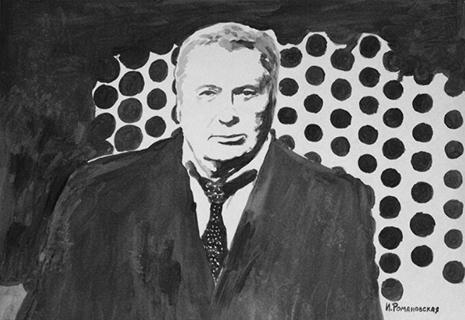
the women must meet these expectations. If they lack in the physical department they are often docked less latina or body shamed.Boobs in art have had their fair share of time to come around and be observed by the world. Today artists not only feature just boobs but also advocate for breast cancer through their paintings. Marcey Hawk, who dips her breast into plaster and sells them to high-ranking celebrities, donates her proceedings to charities that fight against breast cancer. Irina Romanovskay paints world officials with her breast. Today more and more artists are captivated and inspired by boobs and their endless opportunities to create something beautiful.
These and many other female artists are reclaiming how they wish society to perceive boobs and also reclaiming the sexualization of them. They are displaying the fact that they are not only meant to be gazed upon by the opposite sex but also meant to empower the female.
Boobs today are now being celebrated in art and shown for what more they really are.


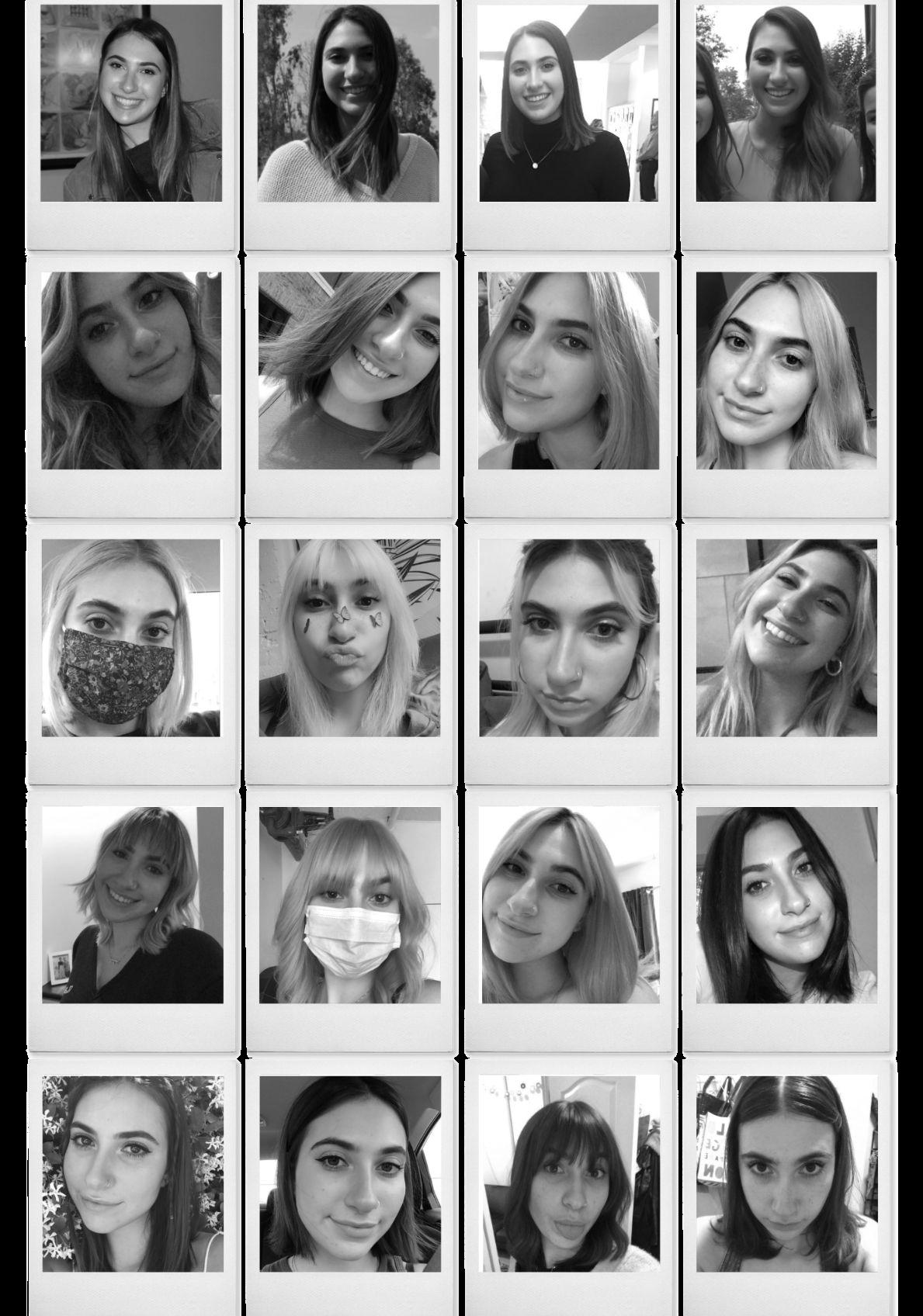
brunnettes can be dumb too
A visual exploration into the history of beauty standards as associated with the sociology of hair color.
-netanya
ronn
Between the Binary?

& Constructions of Gender
- natalie mellI am going to be exploring the influence of the traditional qualities and values of menswear through Alexander McQueen as a brand, but more specifically as a designer. He was able to take qualities of menswear that corresponded to status and rank and manipulate, redefine, and integrate them into his designs to create a new context and blur the binaries of men’s and womenswear. I will do this by first illustrating the history of menswear, the creation of binaries, and how they have been reinforced, touching on the Great Masculine Renunciation and industries such as Saville Row. Then, I will move on to a discussion about fashion as identity, and explain how McQueen leaned into these binaries in order to recontextualize them.
Lee Alexander McQueen was born on March 17, 1969, in London, the youngest of six children, to a working-class family: his father was a taxi driver, and his mother a teacher. His career in fashion started when he was sixteen years old when he dropped out of school to to work on Saville Row, starting first as an apprentice at Anderson & Sheppard and then as a pattern cutter at Gieves & Hawkes. It was here that McQueen developed the training and foundation of his expertise as a cutter and tailor. (Ettedgui)
Looking at Savile Row from a broader lens, it was a mechanism through which modern conceptions about men’s fashion were reinforced. Dating back to the end of the eighteenth century, men’s fashion underwent what psychoanalyst J.C. Flügel describes as the “Great Masculine Renunciation” which was a shift from “brighter, gayer, more elaborate, and more varied forms of ornamentation” to “a plain and uniform costume” (Flügel 110–119), to describe the drastic shift in menswear from the eighteen to nineteenth century. The “Great Masculine Renunciation”, established a set of binaries, a system of highly gendered dress that is still prevalent in the twenty-first century. This shift was primarily influenced by the American and French Revolutions
that contributed to a new neoliberalist movement in fashion based on the rejection of aristocratic ideals and influence of industrialization and capitalism. Especially in America, there was an increased focus on individual control that overthrew ideals of self-reliance on more “extravagant” foreign imports. Ideas of change manifested themselves in the way that men dressed and acted as visual signifiers of revolution. (Chapin) Menswear now embodied ideals about form over function, both in the physical and symbolic sense. The suit worked to de-eroticize the male body and depict the individual as a powerful, serious, self-starter that worked hard for his status in society, as opposed to somebody that was born into wealth as previous generations of the aristocracy indicated. However, through this transformation, or as some may describe as a “renunciation”, men lost the ability to express their own delicacy and flamboyancy through extravagant or colorful dress. Elements such as “high collars, puffed sleeve caps, and exaggerated hourglass forms” were “flattened into broad lapels and boxy silhouettes” and through the dark, serious, and uniform-like qualities that the suit inhabited, men learned “to perform a particularly narrow expression of masculinity”(Chapin). Taking the context of the “Great Masculine Renunciation” into consideration, this new standard of menswear was reinforced in Britain’s Savile Row, and therefore into McQueen’s foundational understanding of fashion. The tailoring houses on Savile Row were established during the 1700s when the Earl of Buckingham sold the land behind Burlington House, and it was the consequences of the French Revolution that allowed London’s tailors to establish their supremacy in men’s fashion and set the standard for menswear. The rejection of flamboyance and transition towards simplicity was manifested in British tailoring practices as the model for bespoke trailers was that of the country gentleman’s riding attire (RadclyffeThomas). Not only do tailors on Savile Row work to create the finest suits in Britain, but also aid in making uniforms for the military, further establishing a tradition of masculine homogeneity. McQueen was bored with the rigidity and monotony of Savile Row, and it is rumored that while working on a suit for Prince Charles he inscribed profanities in the lining.
Seeking a more creative outlet for his talents in tailoring, he sought out an MA in fashion design at University of Arts London: Central Saint Martins.
McQueen explained that,
you’ve got to know the rules to break them. that’s what i’m here for, to demolish the rules but to keep the tradition.
He works within the binaries of fashion to better understand how to deconstruct it.
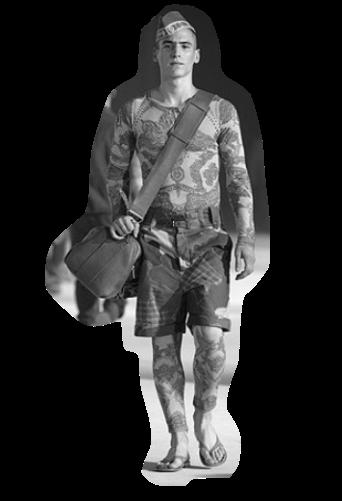
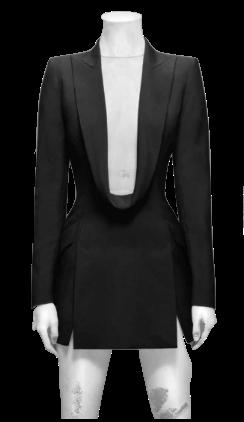
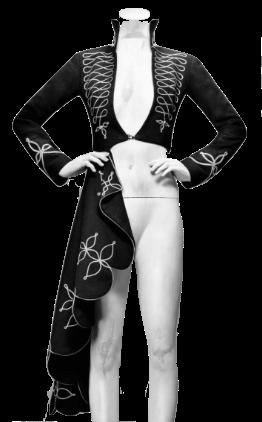
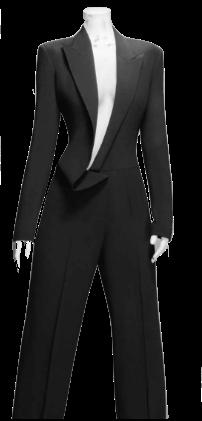
McQueen did not necessarily aim to escape gender or prove that the binaries between menswear looked for ways to manipulate them. In this sense, instead of trying to do away with the suit, his designs is about subtlety. It’s about good style and good taste.” However, he reconceptualizes them by bringing example, in his first menswear collection for spring 2005 (Blanks), he brings qualities such as bright suit. McQueen maintains the integrity of the suit, but contrasts “feminine” qualities, reinforcing uniform, tying it back to his career on Savile Row, as associated w ith traditional forms of masculinity. pattern challenges the very notion of a man in uniform, as we understand it in today’s historical the male body. He did this by removing the fabric from the back blades, making the shoulders
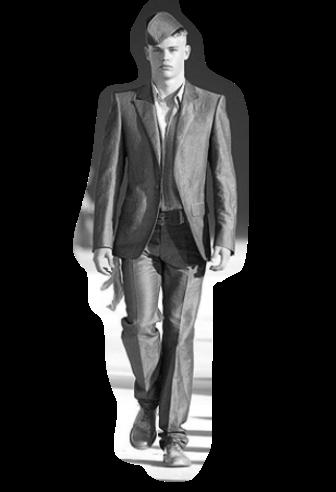
traditional English tailoring and encouraging the eye towards to a conventionally female erogenous zone. (Icon) McQueen’s take on binaries is in line with Judith Butler’s theories about gender, in particular the concept of the “heterosexual matrix” in her book Gender Trouble. Bulter illustrates that we can only understand gende throughheterosexuality and that the binary divide between the masculine and the feminine is merely a social construction that is built on a binary divide between men and women, which is also a social construction. Instead of defining McQueen
through a binary label such as “menswear designer” or “womenswear designer”, he can be seen as a designer who aimed to transcend the binary by visually communicating stories about different facets of identity. He often stated that his work is like a biography of his own personality, explaining that “I speak so loudly in my work itself.
I think everything I do is personal…If you want to know me just look at my work” (Ettedgui) If you look at McQueen isolated from his work, he does not visually emanate the same beauty and poetry his designs do. His personal aesthetic is more in line with
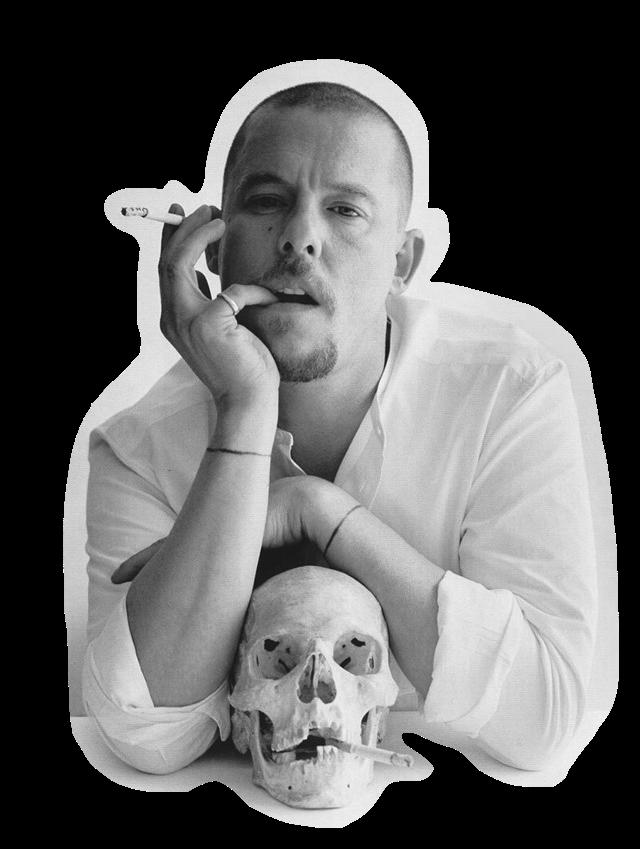
that of skinhead fashion (Ettedgui), with his closeshaven hair and wearing of T-shirts and button-downs (Photo Courtesy of Tim Walker). Whether it was a conscious or unconscious decision in doing so, it can be seen as a nod to his childhood, coming from a working-class background. McQueen’s collections were an extension of himself, a creative outlet where he could express his own narrative and his own history, with many collections having a direct correlation to his own genealogy. His art was a separate entity from him as an individual, but an integral part of his personality and identity.
and womenswear did not exist. He took aspects that the suit traditionally encapsulates and designs conform to gender norms as defined by the garment, explaining himself that “Menswear bringing aspects of the traditionally feminine into the traditionally masculine, and vice versa. For bright colors and patterns traditionally associated with female dress, in collaboration with the reinforcing what is traditionally associated with each gender. This collection is a play on the idea of the masculinity. The power of the tailored suit is unequivocally evident, but his use of bright color and context. In his suits, he hoped to stray from the Anderson & Sheppard drape-cut and elongated shoulders narrower, flaring the skirts, and drawing attention to the spine, rejecting the conservatism of
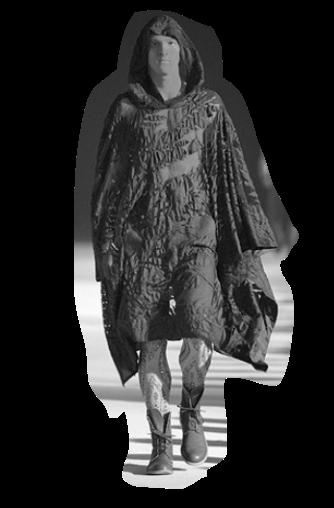
Not only did he work to visually articulate his own personality, but worked with many celebrities and artists to help articulate their own. He may not have labeled and commercialized himself as a menswear designer until 2005, but that doesn’t mean that he wasn’t designing for men. McQueen didn’t try to prove that binaries didn’t exist, but he took what already existed and recontextualized the meaning. If the men’s suit was a demonstration of power and status, he was going to take the preexisting meaning and place it in a context where it did not usually exist to bring power to femininity,
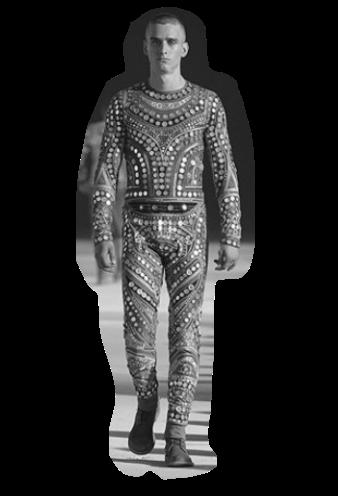
expanding the scope of masculinity. McQueen talks about a “psychological way of dressing”, when discussing his approach to fashion, and alludes to these preconceived notions about conventional gender norms that are institutionalized in our modern society, and how he can use qualities of menswear that are associated with power, strength, and stature to manipulate people into associating these qualities with women. As illustrated earlier, this does not just apply to the way that he dressed women, this same phenomenon is also used in his integration of femininity in menswear.
In Cressida J. Heyes’s Feminist Solidarity after Queer Theory: The Case of Transgender, she explains that “one cannot ‘escape’ gender by switch-ing roles or performances and thereby confuse the binary logic, because that logic defines the possibility of the switching in the first place.‘Tran-scending’ gender (Raymond’s words) involves a more critical project, as well as the possibility of unsettling the stability of those who see themselves ‘normally sexed.” Heyes eloquently illustrates the essence of how McQueen challenges conventional notions of masculinity. He does not try and convey the idea
menswear
that the binary does not exist or aims to completely create a new binary. Instead, he confronts the social construction of menswear as understood through the qualities of power, and masculine binary, submitting his designs to notions about gender roles, taking the conventionally associated status, and recontextualizing them to blur the binary of what menswear & womenswear have been historically defined as.
Blanks, Tim. “Alexander McQueen Spring 2005 Menswear Collection.” Vogue, Vogue, 28 June 2004, https://www.vogue.com/fashion-shows/spring-2005-menswear/alexandermcqueen.
Bolton, Andrew, et al. Alexander McQueen: Savage Beauty. The Metropolitan Museum of Art ; New Haven and London, 2014.
Chapin, Chloe. “Masculine Renunciation or Rejection of the Feminine?: Revisiting J.C. Flügel’s Psychology of Clothes.” Fashion Theory: The Journal of Dress, Body & Culture, Oct. 2021, pp. 1–26. EBSCOhost, https://doi.org/10.1080/1362704x.2021.1952919.
Ettedgui, Peter. McQueen. Lionsgate, 2018.
Flügel, J. C. Psychology of Clothes. Leonard & Virginia Woolf at The Hogarth Press and the Institute of Psycho-Analysis, 1930.
Fotografi Associati. Alexander McQueen Spring 2005 Menswear, Vogue, 27 June 2004, https://www.vogue.com/fashion-shows/spring-2005-menswear/alexander-mcqueen.
Heyes, Cressida J. “Feminist Solidarity after Queer Theory: The Case of Transgender.” Signs, vol. 28, no. 4, 2003, pp. 1093–120. JSTOR, https://doi.org/10.1086/343132.
“Kinky Suits: The True Tailoring Legacy Left by Alexander McQueen.” ICON, 15 Apr. 2018, https://icon.ink/articles/alexander-mcqueen-kinky-suits/.
Radclyffe-Thomas, Natascha. “Intangible cultural heritage in fashion marketing: From number 1 Savile Row to the world.” IFFTI 2016 conference proceedings. China Textile & Apparel Press, 2016.
Simmel, Georg. “Fashion.” American Journal of Sociology, vol. 62, no. 6, 1957, pp. 541–58. JSTOR, http://www.jstor.org/stable/2773129. Accessed 16 Oct. 2022.
Sundsbo, Solve. Alexander McQueen: Savage Beauty. The Metropolitan Museum of Art ; New Haven and London, 2014.
Walker, Tim. “Alexander McQueen with Skull and Cigarettes, Clerkenwell, London, 2009”. London, https://www.artsy.net/artwork/tim-walker-alexander-mcqueen-with-skulland-cigarettes-clerkenwell-london.
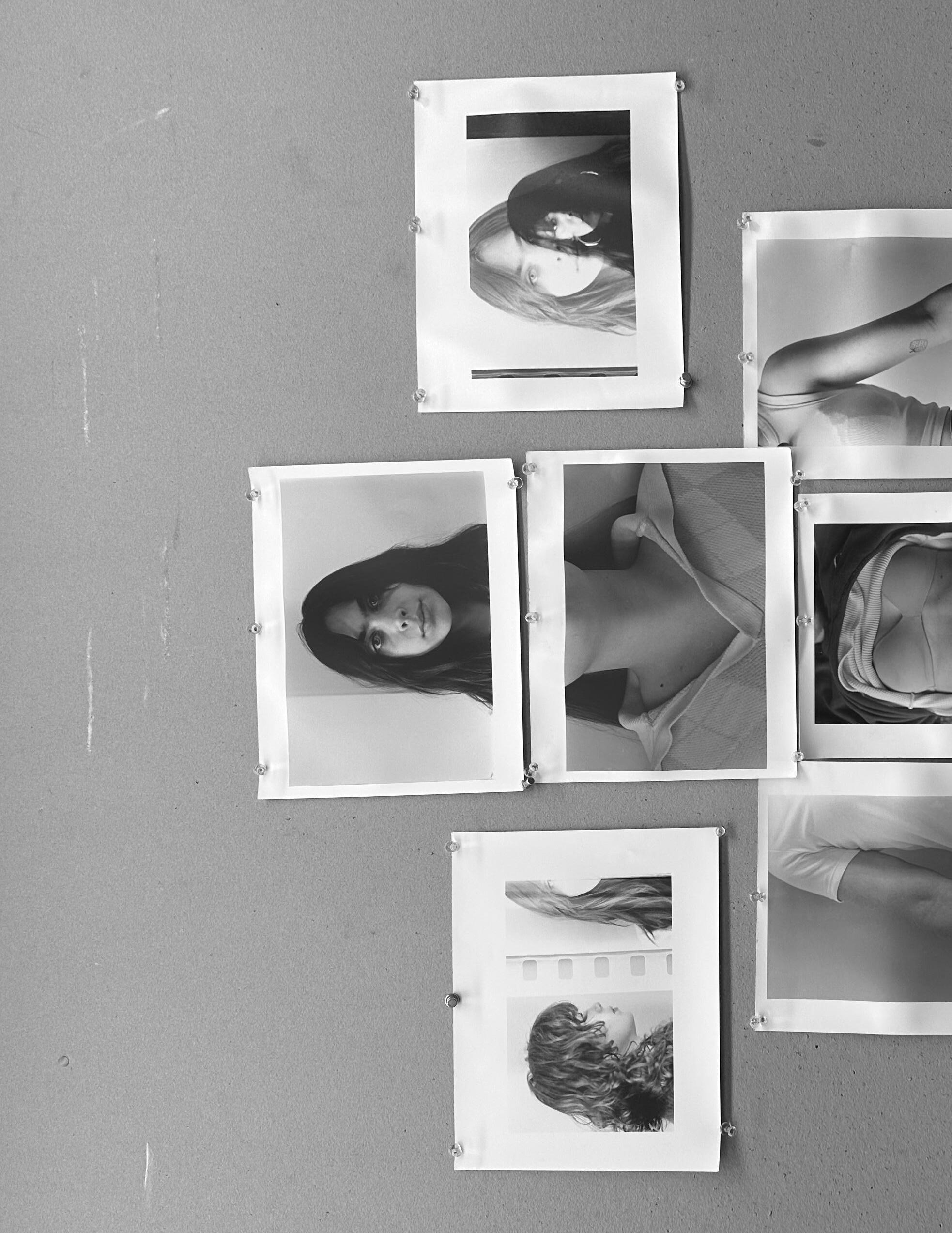
While identity is often thought of as individual or specific to a singular person, in reality, it’s the product of the individual’s greater environment. Identity is not created in a vacuum. You are a sum of the people you surround yourself with, a combination of different people in one body.
amalgamation kayla fineza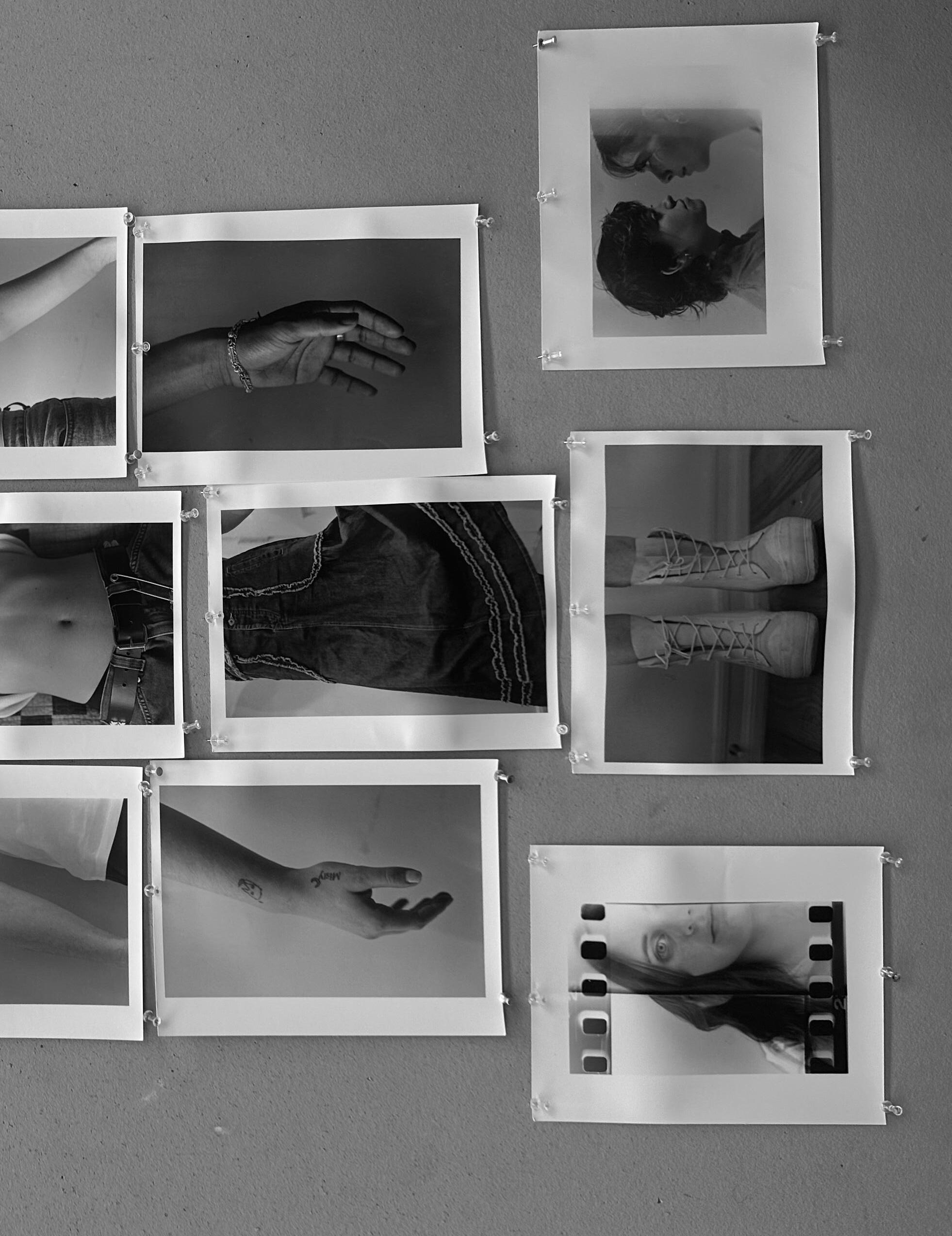
deliberating
discourse
Fiona Anderson
kamYRon westby AND natalie mell DISSECT IDENTITY AND MEANING: EXPLORING VISUAL
USING SIMILAR SOURCES TO CONTEXTUALIZE THEIR ABOUT ANDERSON’S WORK THROUGH THE OWN ANALYSIS
EACH ISSUE, NEW PEOPLE WEIGH
berating
iscourse
DISSECT ANDERSON’S IDEAS FROM FASHION: STYLE CULUTRE: DEFINITIONS, CONCEPTS, CONTEXTS.
THEIR IDEAS, THEY WILL MAKE THEIR OWN ARGUEMENT ANALYSIS OF A CULTURAL TEXT OF THEIR CHOICE.
WEIGH IN ON NEW THEORISTS.
Anderson Edition
“Adorning the body provides a means of connecting with others, but it may also be used to exclude them if their appearance indicates that they do not belong to the appropriate social group for a specific context.”
(Anderson, 2005: 72)
perception is reality
GENDER, IDENTITY, TIME, AND KINKY BOOTS
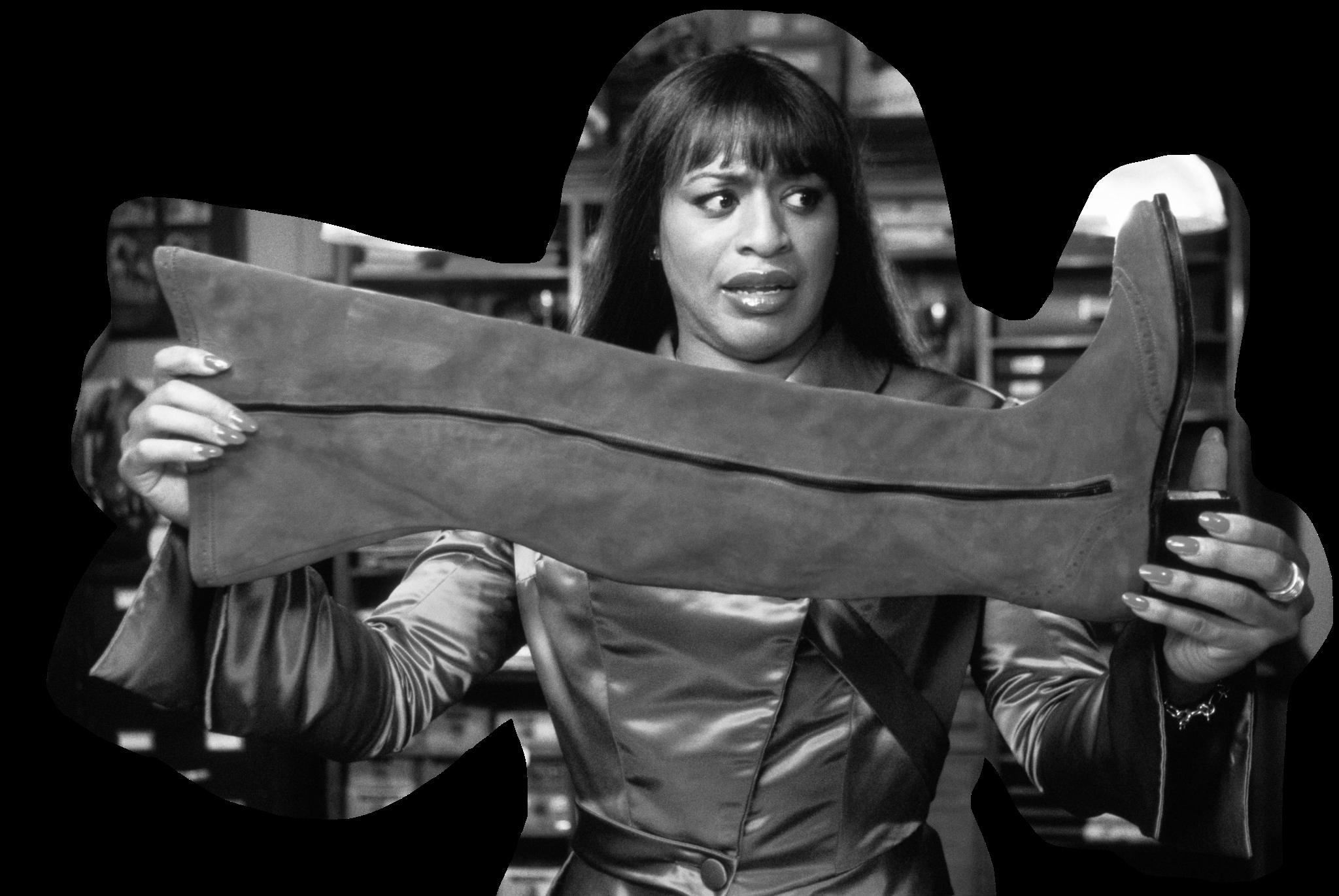
In the dead of the London night, Charlie Price, the protagonist of the 2005 film Kinky Boots, witnesses a gaggle of men harassing a woman. “Covering something princess? Where do you think you’re going? Don’t worry, I’m not gonna harm you. Just want to chat,” the men say (“Kinky Boots”). Price goes to intercede only to be accidentally clobbered unconscious by the titular highheeled kinky boot of the unidentified wearer as the individual attempts to escape the men. After falling to the cobblestone, he is next shown gaining consciousness in the dressing room of the unidentified individual as the individual sarcastically regales Price as “Prince Charming,” and then says, “Pass me my boobs, will ya!” (“Kinky Boots”). Later
- kamyron westbyintroduced as Lola during an elaborate cabaret number, the damsel in distress self-identifies as “not merely a transvestite, sweetheart,” but “also a drag queen” (“Kinky Boots”). Lola utilizes popular culture and adornment as devices in a simple equation elucidating the two terms. Lola says, “A drag queen puts on a frock, looks like Kylie [Minogue]. A transvestite puts on a frock, looks like . . . Boris Yeltsin in lipstick. There, I said it” (“Kinky Boots”).
In other words, drag utilizes an acute awareness and subversion of gender and sexuality to dress up and put on a show to appeal and to entertain like Kylie Minogue.
It is customary to refer to a drag queen using she/her. A transvestite connotes a maleidentifying individual wearing adornments traditionally gendered female as an expression and fulfillment of oneself rather than for the purpose of being spectated. Both identities are othered from society based on their transgression of gender roles through sartorial display, neither fall neatly into the binary system of social context — male and female. Concerning gender
and identity, in the context of Kinky Boots, Fiona Anderson’s statement is affirmed only when operating under the present social and political discourse of gender which operates under the binary or the idea of ‘normalisation’— the idea that there is a normal set of genders to be included or excluded from and the power dynamics of the two. The social discourse emboldened by the power structures of institutions easily acquires the docile body.While Lola’s highly politicized adornment in the aforementioned introduction scene of the titular object gives way to an advanced framework of gender and gender expression called for in a progressive society. The men react by excluding Lola from the social group of women by including her in the perceived appropriate social
group as a man in a pair of heels. Charlie reacts by including Lola in the perceived appropriate social group of a woman in need of a man. In turn, he excludes her from the male social group. Nonetheless, Lola perceives herself as someone “who has yet to make up . . . [their] mind” (“Kinky Boots”). Therefore, either categorization for her is the appropriate group for a social context.
Why decide if each individual’s PERCEPTION becomes REALITY?
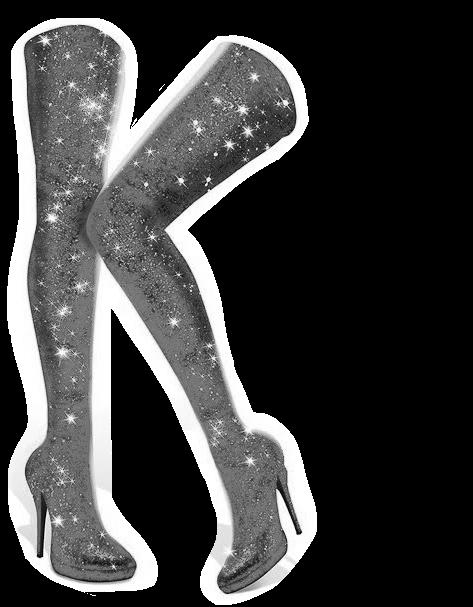
Gender as a subjective reaction to a perception and the resistance to deciding within the figment of the binary stem is a pillar of postmodernism/ poststructuralism
Analyzing the history of Lola’s prized accessory the high-heeled shoe highlights what could be by illuminating what has always been. In this essay, I will explore Lola’s ambiguous approach to gender identity and her sartorial display,
in particular, her choice of high heels, concerning the body as a metaphor for a future poststructuralist/ postmodernist society as per the ideas of Michel Foucault synthesized by Jane Tynan and Susan Bordo. Afterwards, I will consider how high heels apply to Foucault’s concept of the docile body.rench philosopher Michel
Foucault’s famed works did not concern fashion or fashion history and made little mention of women or gender. Although fashion and fashion systems are universal and consumed by nearly every individual throughout history, only since the mid-1980s has fashion “enjoyed a higher profile within academic thought, international exhibitions, and popular media’’ (Andersen 67).
Primarily, Discipline and Punish: The Birth of the Prison, The History of Sexuality, “Panopticism,” and Foucault: Beyond Structuralism and Hermeneutics consider the relationship between knowledge and power in relation to history, societal discourses, and material culture. Foucault emphasizes the role that power plays in the formation
of thought that characterizes modern life. Many disciplines in social sciences and humanities utilize Foucault’s theory.
Cultural historian Jane Tynan bridges the gap between Foucauldian theory and fashion. Philosopher Susan Bordo bridges the gap between Foucauldian theory and gender

through the framework of feminism and women’s bodies.
the same inquiry as a tenant of their
In 2015, digital anthropologist Agnès Rocamora published Thinking Through Fashion: A Guide to Key Theorists with Jane Tynan’s Chapter “Michel Foucault: Fashioning the Body Politic.” Tynan aims to “consider how Foucault’s work might frame the social, political and economic meanings arising from fashion as a cultural system, a discourse, a practice and an industry” in this chapter (184). Using the framework of fashion, she dissects Foucault’s conceptual framework into palatable parcels of information. Curtailing to opulent and privileged notions of sartorial display, the academic study of fashion often forgets the aforementioned universality. The universal nature of fashion enables a range of socioeconomic classes and identities to be subjected to the process that makes the body and identity through adornment. The regulation is of particular interest to Foucault’s “power is enacted through bodies” centrist theory (Tynan 185). The process associated with the body and power constructs social and political discourses. As a posit of modernity, Foucault believes in docile bodies which are unable to consider resistance to the power of discourse. Foucault partly develops his profound concept of discourse in his book The History of Sexuality Vol. 1. Tynan notes discourse refers “to the creation and organization of knowledge, which determines how and what we know, as individuals and as a society” and is “a particularly influential concept for post-structuralists who sought to question positivist views of history” (Tynan 186). Post-structuralists and postmodernists share belief system. Foucault criticizes the materials of society, history, and institutions rather than the individual power players assumed to be in charge as devices utilized to create discourse. His criticism of the constructed history of modern society only serving specific interests opens up his theory to gender studies and queer theory. Tynan notes “material things become articulate only within a field of knowledge, then discourse can demonstrate how these objects become carriers of social and cultural meaning” or metaphors for social and cultural meanings (Tynan 186).

In 1999, Professor Janet
Price and researcher
Margrit Shildrick compiled a reader entitled Feminist Theory and The Body with a section for readings contributing to a discussion of society after the binary. Price and Shildrick select Susan Bordo’s “Feminism, Foucault, and the Politics of the Body” in said section. Bordo aims “to show how the rhetoric of resistance has itself been pressed into the service of such normalisation” by dispelling the notion that the modern society is volatile in nature and has begun ascending to a postmodernist/post-structuralist society — where the historical discourse of gender is questioned bringing light to the idea that gender is a reaction to a perception and there is a resistance to deciding within the figment of the binary system — when viewed through Foucauldian theory (247). “‘Normalisation’ is still the dominant order of the day” (Bordo 246). Tynan expounds that Foucault saw normalistaion in particular the categorization of human behavior as “a sinister feature of modernity, whereby the classification of human life reflects new forms of social control. He sought to uncover how social categories made bodies politically and economically useful” (187). She exemplifies the claim through her discussion of activist Andrea Dworkin’s quote referring to male-female differentiation in relation to the transgression of gender roles and modification of women’s bodies, in particular, transvestites. The activist says, “‘It is commonly and wrongly said that male transvestites through the use of makeup and costuming caricature the women they would become, but any real knowledge of the romantic ethos makes clear that these men have penetrated to the core experience of being a woman, a romanticised construct’” (Bordo 247). Bordo notes her shortcomings to resisting the binary system by not attributing Foucault’s “power is enacted through bodies” centrist theory to the Dworkin’s excerpt about the political and economical useful female body because the social and political discourse of modern society purports theory only applies to the male (Tynan 185). In addition, however, by failing to acknowledge how Dworkin elucidates gender as artifice by showing it is rooted in perception, Bordo also upholds the binary system. Upon a further more in-depth analysis of Dworkin’s excerpt, the transgression of gender roles is not resistance to the binary system. The resistance is not partaking in the sartorial display or processes of the opposite gender in the binary to negate the power of the overall binary system.
Acknowledging the ambiguity and particularly
the ability to transgress gender through sartorial display or processes to elucidate gender as artifice or as a subjective reaction to a perception constitutes the resistance. Although Bordo exemplifies the postmodernism/ poststructuralism idea of the resistance to deciding within the figment of the binary system associated has yet to permeate modern society, Bordo helps frame Lola’s ambiguous approach to gender identity and fashioning her body in high heels as a
metaphor for a potential poststructuralist/ postmodernist society in the future.
In the aforementioned introduction scene of the titular object, Lola exhibits her ambiguous approach to gender identity by her passive nature and occasionally active participation in being included and excluded based on a said figment of the binary system rooted in the dismantled idea of normalisation. Said scene is not the only scene where Lola exhibits her ambiguous approach in relation to the non-gendered
women by including her in the perceived appropriate social group as a man in a pair of heels and doesn’t respect her because he acknowledges her as a lesser male because she assumes characteristics purported by the social discourse associated with the excluded group — female. In an effort to quell the hostile work environment, she asks Don, “what do you think I could do that would make me more of a man?”(“Kinky Boots”). Implying if Lola wins she would be more of a man,
body as a metaphor for poststructuralist/ postmodernist society. fter Charlie Price encounters Lola, he comes up with a plan to save the shoe factory he inherited through his deceased father by hiring Lola to design high-heels to be manufactured to support someone of Lola’s stature. Upon entering the workplace of Price and Son, Lola feels fellow employee Don does not perceive her fondly. Don reacts to Lola’s transgression of gender roles by excluding Lola from the social group of
Don proposes an arm wrestle competition between Lola and him. Don foils Lola being the normal gendered male in the factory vehemently bothered by Lola’s ambiguous approach to gender identity. By asking her to maintain his perception of her gender through exhibiting the traditional power dynamic of the strong male, he is the metaphor for the modern society Bordo notes has yet to be permeated by postmodernism/ poststructuralism.
The scene where Lola shows up to the competition adorning her best signature hyper-fem drag with no concern for how her potential display of strength would relate to her gender perception supports the ideas presented in the introduction scene of the titular object because she revels in resisting to decide within the figment of the binary system and transcending the normal genders of modernity. She is concerned only with winning. Although she
proves herself a worthy opponent, she throws the match so that Don could win. When Don asks her why she let him win, she states, “I wouldn’t want you to walk into the factory and feel that people didn’t respect you, Don, I wouldn’t want anyone else to know what that feels like” (“Kinky Boots”). She utilizes vher acute awareness of gender’s ability to be anything as a subjective reaction to a perception and the symbiotic nature of inclusion and exclusion to reframe his own ideas associated with
normalisation against him. Then, by offering a first-hand experience exhibiting the fickle nature of the line of binary gender and its constructs, she implores Don to look past the binary system of gender and the power dynamics associated to ask. In doing so, she effectively dismantles modern society. In juxtaposition, Lola’s discursive body survives as a metaphor for postmodernism/ poststructuralism.
Next, after Charlie berates Lola for her sartorial display in a fit
of anger caused by the infidelity of his now former fiancė, it does not seem Lola and her fellow transcenders of gender roles will show to walk the high heels down the runway of the major exhibition in Milan. Because their jobs are contingent on the success of the shoe, the team at Price and Son worked so hard on perfecting the high heels for buyers and power players of the universal system enabling a range of socioeconomic classes and identities to be subjected to the process that makes the perceived body and identity through adornment present. In addition, Price has invested his livelihood into funding the new business endeavor and trying to get it off the ground. To save the day, Price attempts to walk down the runway in a pair of high heels only to knock himself unconscious by losing footing and connecting head-first to the ground.
During the climax scene, metaphorically this time, Lola comes to pick up Charlie and carry him to safety by performing an astute
cabaret performance accompanied by her fellow transcenders of gender wearing Price and Son meant to hold the weight heels. Lola excludes herself from the female social group by including herself in the male social group as she exhibits the shoes of holding up a traditionally manly statue. The line of demarcation for modern normal gender categories begins to disintegrate here disproving Andersen’s social context adores the display and partakes in plaudits signaling
economical success. The line of demarcation disintegrates here because this is an example of poststructuralism and postmodernism. While Charlie remains on the floor in bemusement, Lola and her friends stand tall taking delight in the adoration of the individuals populating the social and historical discourse. Charlie foils Lola here as the posit of modernity as an individual who assigns themselves to the modern categorization of gender. Pertinently, in opposition to
Foucault’s observation in accordance to Tynan where he states that social categories are a posit of modernity made for bodies to be politically and economically useful, utilizing the ambiguity of her social category and subsequent transcendence of categories, Lola proves her body is economically useful. Juxtaposed to Price in the scene and gleaning what oucault posits as modernity, explicitly points towards her body as a metaphor for poststructuralist/postmodernist society. Furthermore, the plaudits from the individuals populating the social and historical discourse signal the possibility for a potential ascension to poststructuralist/postmodernism.
Although a true story, the item of adornment that allows Lola to transcend the modern normal gender through embracing ambiguity and makes Lola’s politicized body in Kinky Boots a metaphor for a poststructuralist/ postmodernism society being high heels is serendipitous.
In accordance to Foucault’s idea of docile bodies social discourse alone has categorized high heels as gendered for male and has changed it to female. There has been a narrative on both sides being unable to resist the social and historical discourse presented to them. Even though we live in the same era as Foucault’s observation of modernity.
Viewing history through the post-structuralist and postmodernist framework of questioning positivist views of history allows individuals to see the falsities of history passed through social discourse. Finally, materials of the time will help expunge what could be by illuminating what has always been without the aid of the body as a metaphor.
Anderson, Fiona. “Fashion: Style Identity and Meaning.” Exploring Visual Culture: Definitions,
Concepts, Contexts, edited by Matthew Rampley, Edinburgh University Press, Edinburgh, 2012, pp. 67–84.
Agger, Ben. “Critical Theory, Poststructuralism, Postmodernism: Their Sociological Relevance.”
Annual Review of Sociology, vol. 17, 1991, pp. 105–31. JSTOR, http://www.jstor.org/stable/2083337.
Bordo, Susan. “Feminism, Foucault and the Politics of the Body.” Feminist Theory and the Body, edited by Janet Price and Margrit Shildrick, Edinburgh University Press, 1999, pp. 246–257.
Heyes, Cressida J. “Feminist Solidarity after Queer Theory: The Case of Transgender.” Signs, Vol. 28, no. 4, 2003, pp. 1093–120. JSTOR, https://doi. org/10.1086/343132.
Felski, Rita. “Fin de Siècle, Fin de Sexe: Transsexuality, Postmodernism, and the Death History.” New Literary History, vol. 27, no. 2, 1996, pp. 337–49. JSTOR, http:// www.jstor.org/stable/20057357.
Tynan, Jane. "Michel Foucault: Fashioning the Body Politic." Thinking through Fashion: A Guide to Key Theorists. Ed. Agnès Rocamora and Anneke Smelik. London • New York: I.B.Tauris, 2016. 184–199. Bloomsbury Collections.
“Kinky Boots Script - Dialogue Transcript.” Kinky Boots Script - Transcript from the Screenplay and/or Chiwetel Ejiofor Movie, http://www.script-o-rama.com/ movie_scripts/k/kinky-boots-script-transcript-ejiofor.html
Wang, G. “Kinky Boots: How to Talk About Sex Without Talking About Sex”. The Morningside Review, vol. 10, May 2014, https://journals.library.columbia.edu/index. php/TMR/article/view/5436.
don’t worry... it’s the 1950s
ADORNING THE BODY THROUGH THE CONSTRUCTION OF IDENTITY AND GENDER ROLES
I will address Anderson’s quotation through the analysis of the film Don’t Worry Darling, a feminist psychological thriller that addresses antiquated ideologies of gender. Ultimately, I agree with Anderson’s idea about adorning the body to either fit in or exclude oneself/be excluded from a social group, however, I do believe that there are some exceptions – a person can shift their appearance to fit into these groups, but that does not mean that their actions or personality fit in. Conversely, a person’s appearance may indicate that they do not belong, but their actions and values may align more strongly than someone who “looks the part”.
In this essay, I am exploring the malleable nature of dress in the way it is used to construct social identity and gender roles. Using Fiona Anderson and Anna Lebovic, I will be starting with a discussion on fashion as identity and transitioning to ideas about femininity primarily from the 1950s to the modern day, then, using Michel Foucault and Susan Bordo, I will focus on the ways that people both (are expected to and do) adhere to and aim to stray from gender roles, and the power that dress has in reaffirming these ideas. I am going to first introduce Anderson’s ideas about fashion as identity and definitions of fashion to establish a basis for the analysis of scenes I have chosen from Don’t Worry Darling and further address the question.
Anderson aims to explain how fashion is a language – how people use it symbolically to construct, promote, challenge, and articulate their social and political identities. In terms of the social, this can range from expressing caste, race, gender, moods, emotions, values, and affiliations to different social groups. It allows people the vehicle to visually
-nm
represent aspects of their personalities that may otherwise seem contradictory (Anderson). Fashion is not just about clothing, but part of what Anderson describes as the “fashion system” that involves understanding the business of the industry as an economic concern and its historical and cultural significance (Anderson 75).
Through the rise of urbanization and industrialization, fashion became more prevalent in western society and culture with the increased utilization of marketing, advertising, and retailing techniques (Anderson 77). Especially in the case of fashion magazines, she explains that these images, “....became inseparable from the heady experience of fashion as part of the daily social life…[they] were crucial to the development and promotion of the values of the twentieth-century consumer culture, to which new conceptions of beauty, gender, the body and sexuality were integral” (Anderson 77). Anderson argues that fashion magazines changed the way that consumers interacted with fashion because they put forward an idealized and therefore unrealistic expectation of what a woman should look and act like. These magazines dictated what the body was supposed to be like, and therefore set a standard of social values through images that women were expected to adhere to and strive to be. Clothing was not just about aesthetics anymore but undoubtedly linked to the construction of different types of identities, to uphold a specific view on gender of what a woman should look like, act like, etc. They held social meaning that dictated whether a person fit into and was accepted in various social circles. It is this construction of a binary that allows people to visually interpret another person’s standards of beauty, gender, and the body. Dress allowed people to embody various values of different social groups, and places them in a position of “belonging” regardless of whether or not they actually believed these values.
I will now move on to a discussion of culture in 1950s America as a site for developing binary ideas about gender identity and roles. Anderson cites fashion magazines for integrating social values in clothing, a phenomenon that Anna Lebovic illustrates in ‘How to be in Fashion and Stay an Individual’: American Vogue, the Origins of Second Wave Feminism and Mass Culture Criticism in 1950s America. Postwar America in the late 1940s and early 1950s was a period of upward mobility and a desire for a suburban domestic and corporate lifestyle where the men were expected to go to work and provide
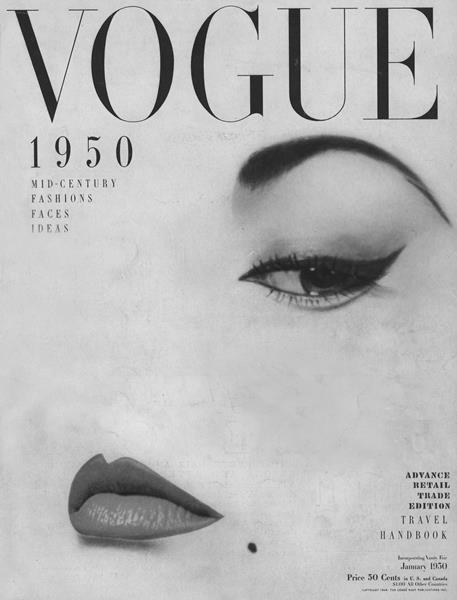
for their families while the wives were to stay at home and care for the children – this established clear roles for each gender that they were expected to fulfill. The homogeneity of these roles was the subject of concern, not only from American intellectuals, such as Lilly Danche but also those outside the culture including Christian Dior who criticized American women for their lack of individuality and retreatment to uniformity in their dress. (Lebovic) During this time, fashion magazines, in this particular case Vogue, aimed to create this uniformity through their rhetoric in order to establish themselves as a kind of “fashion bible” that women were devoted to, necessitating an “autocratic editorial approach” that was “repetitive and heavy-handed” (Lebovic). By the mid-50s, as
concerns had been raised about the massification and conformity of American society, Vogue decided they needed a deeper editorial response to mass society criticism. Changing gears, they urged readers to engage with fashion, and their magazine, to express their own stylistic individualism and autonomy. The very construct that created this feminine binary helped turn the rhetoric around, ultimately aiding in sparking the feminist movement of the 1960s and 70s where women aimed to reclaim their own narratives, going against the uniformity expected of the 50s. For men, magazines such as Playboy and Esquire were the key cultural sites in which ideas about masculinity were discussed, however with the emerging discussions of female autonomy came ideas about the “male crisis”.
In order to understand the social pressure enacted on individuals to adhere to gendered roles, I will introduce Foucault’s Panopticon theory. Panopticism is based on an architectural prison model in which a guard in a watch tower sits in the middle of a peripheric building of prisoners’ cells with transparent walls. The watchman is able to maintain constant surveillance over the prisoners while remaining invisible himself and because the prisoners never know when they are being watched, they are forced to assume they are always being watched. For Foucault, the Panopticon is not about the literal structure, but the structure as a metaphor for surveillance in society, an ever-present, invisible force that exercises power over the individual in their everyday life, causing them to be the governing force of themselves.
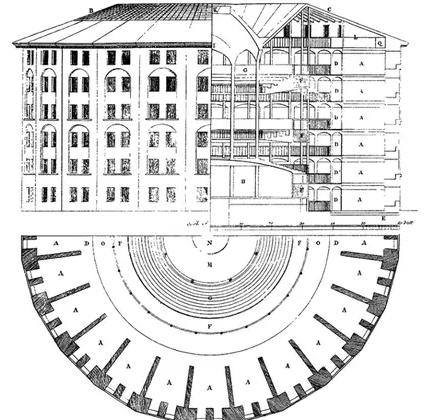
Although Foucault does not say anything specifically about fashion, his ideas about governmentality and power structures can be used to understand the way we manipulate fashion practices and the construction of binaries. His concept of the docile body is one that directly correlates to the embodiment of the feminine experience, being one that is subject to submissiveness as objects under the male gaze (Tynan 190). This is what Susan Bordo, in her book, Feminist Theory and the Body, defines as the “oppressor/oppressed model”.
The first scene that I am analyzing is at the beginning of the film when all of the husbands leave for work, unveiling the daily lives of the Victory wives. The husbands simultaneously leave their houses, pulling out of their driveways down the street. It pans out to reveal all the wives standing in the same spot in their respective driveways and waving goodbye to their partners for the day. Focusing specifically on Alice, it launches into a montage of her going about her daily routine: the audience sees her getting dressed, cleaning the house, and then joining the other ladies in taking the bus, because they are not allowed to drive, to their dance studio where they are all seen wearing black leotards. After their dance class, they return in their day clothes on the bus, and back home to prepare dinner for their husbands before they get home from work. This scene aims to create a standard of uniformity and establish the norms of the daily routine that is expected and required of the wives living in the community of Victory. The women of the community were expected to adhere to the roles of mother and wife that were standard of the time period without question or second thought about how else they may be able to contribute to their communities. It was drilled into their construction of femininity that the sole purpose of their presence here was to maintain the lives and prestige of their husbands. Foucault’s panopticism theory can be clearly seen in effect in this society. The women of the community act as mediums of surveillance for each other, but also for themselves. The pressure to maintain a certain image keeps them disciplined in their bodily practices and daily routines, feeling as if they fail to live up to said expectations that they will be ostracized by the members of their community. The fear of nonconformity is enough to keep them in line. They demonstrate the perfect example of the docile body that is expected to be submissive under the authority of the men they are associated with through which their lives are dictated.
This baseline is established at the beginning of the film so that audiences understand what subsequent actions adhere to the binary and which ones stray from it.
During this scene, you hear mentions of another woman known as Margaret, who, for ambiguous reasons, has failed to maintain the binary and is therefore expelled from society. It depicts deviations from the norm when, during their dance class, Alice’s hallucination of Margaret in the mirror causes her to break away and chase the image she sees – setting her apart from what she and the other women are “supposed to be” doing. Another example of this is when she goes out on the bus alone to clear her head of these hallucinations and gets off to head into the desert, even though she has been explicitly told not to by the driver who explains is not allowed to deviate from his designated path.
As Foucault explains, where there is power, there is also resistance.
Alice exemplifies the resistance to societal norms and expectations enacted on her through Victory. Alice follows a similar path of the transition in the rhetoric of women’s magazines that Lebovic illustrates from uniformity to resistance, and does not take what she is told as fact but dares to understand the whole truth. Shifting to the visual aspects of the women as a whole, although they may vary slightly in their personal style, it is evident that there is a specific uniform that they are required when they are together in public or depending on the task at hand.
This uniform establishes them as part of the same social group, constituted by the historical context that they are in. Looking at Alice, the ways in which she adorns her body, visually constitute her as belonging to this specific social group. At the beginning of the film, the audience believes this to be true. However, her increasingly erratic behavior and resistance to submission, eventually reveal her as being an outlier.
For Alice, fashion is merely a SUPERFICIAL WAY OF BELONGING. When the values of the individual are broken down it is clear that she does not belong.
The next scene is not only an important turning point in the film but integral in understand reality that she is living. She comes to understand that Victory is a simulated world that Jack a surgeon and Jack’s lack thereof. Once Jack realizes that she remembers the truth that he h in their real lives, and that he did this for
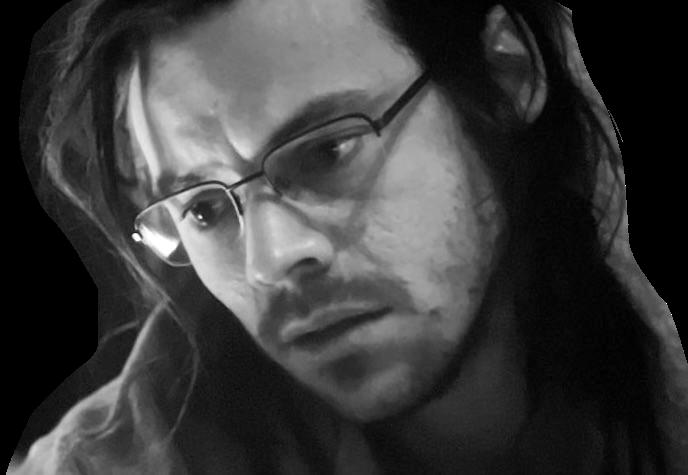
I am first going to examine Jack’s transformation and how his appearance changes his identity, using fashion as a means of embodying ideas of the masculine in order to contrast that of the feminine. Here the body is understood as a series of processes that allow him to express himself as a metaphor for the type of person he wants others to perceive him as. His “before” appearance – long greasy hair, unshaven face, wearing of classes, and unstylish, comfortable clothing – gives the impression of him as an unkept, deadbeat, “loser” type of guy with no ambition or aspirations in life. His body, one that is unkempt, metaphorically tells the story of somebody who is insecure, and not doing well for themselves. On the other hand, his “after” appearance – short, styled, “neat hair, clean shaved face, presumably contacts, and professional clothing – gives the impression of a strong, powerful, self-starter who can provide for his family. His personal body processes are taken out of the private, personal sphere and into that of the political, public sphere. Jack, and presumably the other men in Victory, follow this same mold. They look like they fit into this role, but at their core, in their reality, they are the “before” versions of themselves and are playing dress-up at this traditional masculine provider role. The way that they are presented in Victory for the majority of the film gives audience no indication that these men are actually the opposite of what they appear to be.
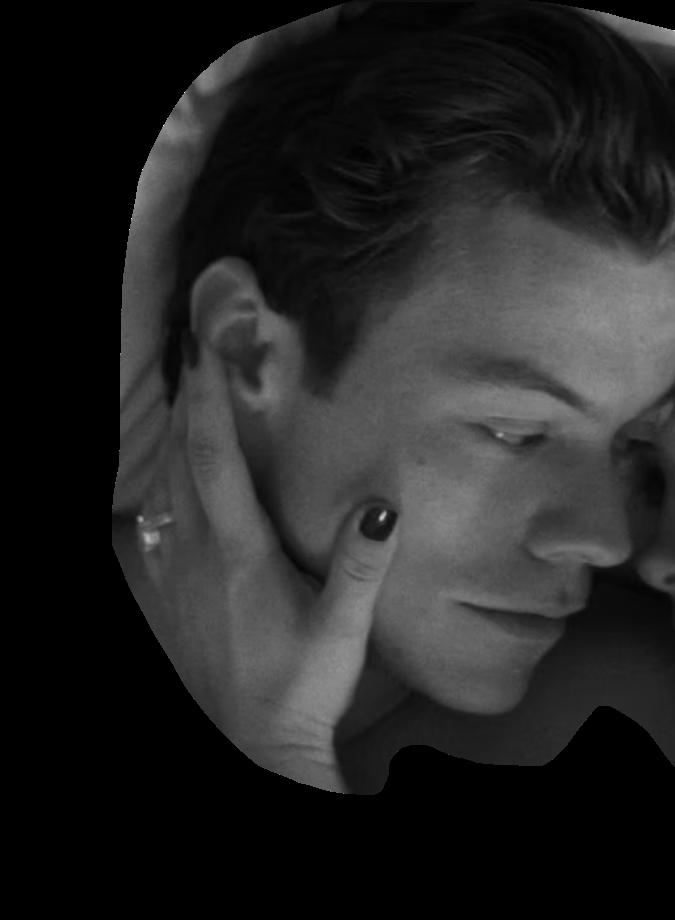
ing how fashion can be used to express different identities. Alice regains the truth about the has involuntarily forced her into and remembers who she and Jack really are – her career as as been hiding from her, a screaming match erupts. He claims that they were both miserable her, that this is the life that she wanted.
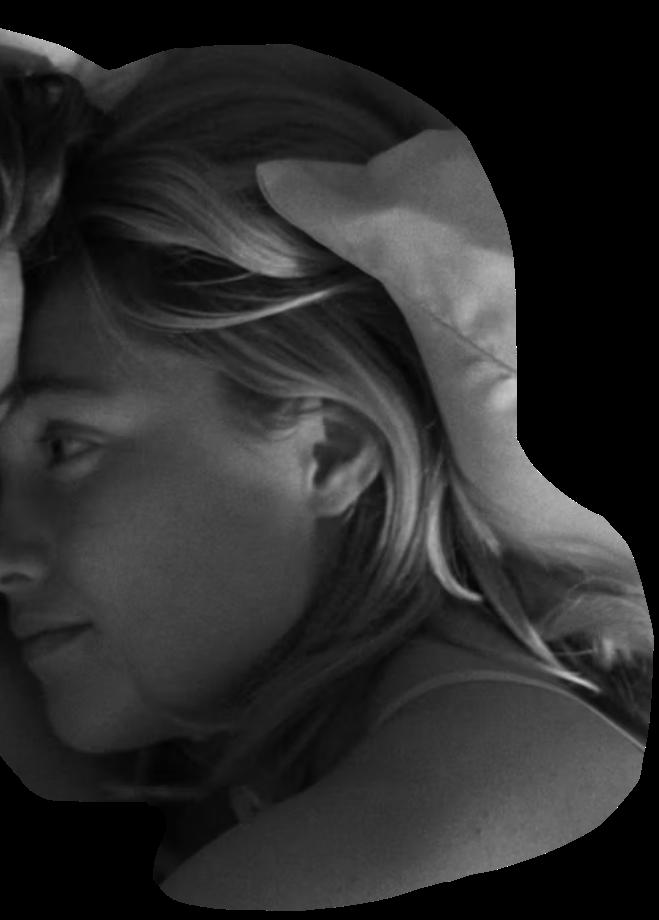
Now looking at Alice’s transformation, the ultimate oppressor/oppressed model (Bordo) becomes apparent. Alice was completely and utterly powerless in Jack’s decision to start a life for them in Victory. She unwillingly transforms from the provider of the family, with a lucrative career as a surgeon, to a simple housewife with absolutely no autonomy over her own life decisions. Heavily influenced by society’s binary ideas of men as the head of the household, Jack felt insecure about his own masculinity in his real-life relationship with Alice. Screaming “You were miserable, you were so unhappy, you hated your life”, he projects his own insecurities about his life onto Alice, gaslighting her into thinking that this was the life she wanted. Jack needed to take away Alice’s autonomy to feel better about his own masculinity. His fragile ego was unable to withstand the changing discourse of the autonomous, working female, and his decision to take the life that she loved away is synonymous with the emerging “male crisis” and traditional constructions of gender roles with men making decisions for their wives because “they know what is best”. Again, Foucault’s theory of panopticism can be applied, illustrating this hyper surveillance of women and the pressure from society to conform to such traditional gender roles.

Although our society has come a long way in blurring the gender binaries prevalent in 1950s America, it is a discourse that has never truly gone away. Don’t Worry Darling may not be entirely unique in its plot, but the reiteration of these ideas and its production in the context of the current political climate is indicative that it is still a prevalent issue in our society. This is further underscored by similar stories such as The Stepford Wives, published in 1972, and adapted as a film in both 1975 and 2004, and The Handmaid’s Tale, published in 1985, and adapted as a TV show in 2017 (and still currently running), that place once successful female characters under oppressive jurisdiction of a patriarchal society. In all of these examples, fashion is used in a way to illustrate competing rhetoric about gender roles.
Therefore, while dress can be used to indicate whether a person does or does not belong to a specific social group it is not the only indicator. Due to its moldable nature, it can be used to portray specific qualities of a person even if they do not actually embody those values.
Anderson, Fiona. “Fashion: Style Identity and Meaning.” Exploring Visual Culture: Definitions, Concepts, Contexts, edited by Matthew Rampley, Edinburgh University Press, Edinburgh, 2012, pp. 67–84.
Bordo, Susan. “Feminism, Foucault and the Politics of the Body.” Feminist Theory and the Body, edited by Janet Price and Margrit Shildrick, Edinburgh University Press, 1999, pp. 246–257.
Foucault, Michel. “Panopticism.” Discipline and Punish: The Birth of the Prison (1975), translated by Alan Sheridan.
Lebovic, Anna. “‘How to Be in Fashion and Stay an Individual’: American Vogue, the Origins of Second Wave Feminism and Mass Culture Criticism in 1950s America.” Gender & History, vol. 31, no. 1, Mar. 2019, pp. 178–94. EBSCOhost, https:// doi-org.proxy.library.nyu.edu/10.1111/1468-0424.12415.
Tynan, Jane. “Michel Foucault: Fashioning the Body Politic.” Thinking through Fashion: A Guide to Key Theorists. Ed. Agnès Rocamora and Anneke Smelik. London • New York: I.B.Tauris, 2016. 184–199. Bloomsbury Collections.
Van Dyke, Shane, et al. Don’t Worry Darling. Warner Bros. Pictures, 2022.