
This report marks an important shared moment for the concept of Ocean Literacy. The focus of the global community of Ocean Literacy researchers and practitioners is shifting – from making space for the ocean in formal education, towards developing critically informed, context-specific initiatives for ocean-literate societies
In section 2, this report reviews methods and approaches in the current Ocean Literacy landscape, as well as research priorities. A set of successful case studies is presented in section 3, which inspires an aspirational checklist for Ocean Literacy initiatives in section 4. Five proposals for critical Ocean Literacy are offered in section 5, to envision a way forward for researchers, practitioners and stakeholders involved in the common goal to advance Ocean Literacy across the globe.
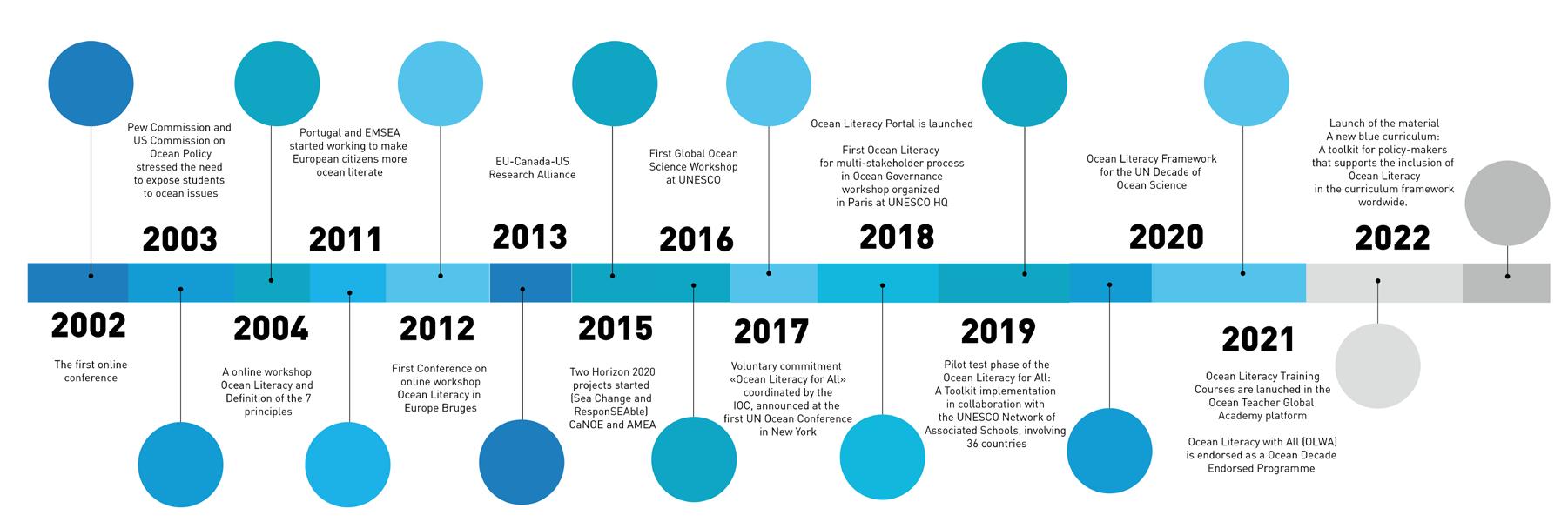
In 2004, a group of marine educators in the USA came together to discuss the lack of ocean topics in the school curriculum. Together they proposed ‘Ocean Literacy’ as a grounding concept for increasing and promoting ocean education, built from 7 essential principles and underpinned by 44 fundamental concepts. Ocean Literacy was collectively defined as “understanding our influence on the ocean and its influence on us”¹ – built on the foundational recognition of the ocean as a ubiquitous, essential part of the Earth system that sustains all life, including humanity. Acknowledging the need to include the ocean in visions and solutions for more sustainable ways of living, efforts to balance the terrestrial bias in school curricula in the USA and across Europe
have gained momentum. At the same time, regional networks and conferences promoting Ocean Literacy have flourished; the timeline in Figure 1 highlights the major events, projects and publications from 2002–2022.
Recognising that sustainable development cannot be achieved without ocean literate societies, the launch of the UN Decade of Ocean Science for Sustainable Development (2021–2030) is further accelerating the global reach of Ocean Literacy, as it has been designated a Decade Action and integrated into the framework for the Ocean Decade2. As a first step to envisioning a way forward, the next section reviews the approaches and methods adopted over the past two decades.
1 Cava, F., Schoedinger, S., Strang, C., & Tuddenham, P. (2005). Science content and standards for ocean literacy: A report on ocean literacy.
2 IOC-UNESCO (2021). Ocean Literacy within the United Nations Decade of Ocean Science for Sustainable Development: A Framework for Action. Available at: https://unesdoc.unesco.org/ark:/48223/pf0000377708
As mentioned in section 1, the idea of Ocean Literacy initially grew from school curricula that urgently needed ‘blueing’.³ As such, the concept was shaped around integrating scientific information about the ocean into forms suitable for teaching and learning. This required structuring scientific content into principles and concepts to be woven into school curricula. Much research has focussed on the scope and
© Alona Cherniakhov/Shutterstock.com
sequence of ocean topics in the school curricula of numerous countries, in addition to innovative cross-cutting programmes designed to link content between subjects and in partnership with local communities, businesses and other organisations. Examples include the Portuguese Blue School network4 and the Japanese Ocean Education Pioneer School Program.5
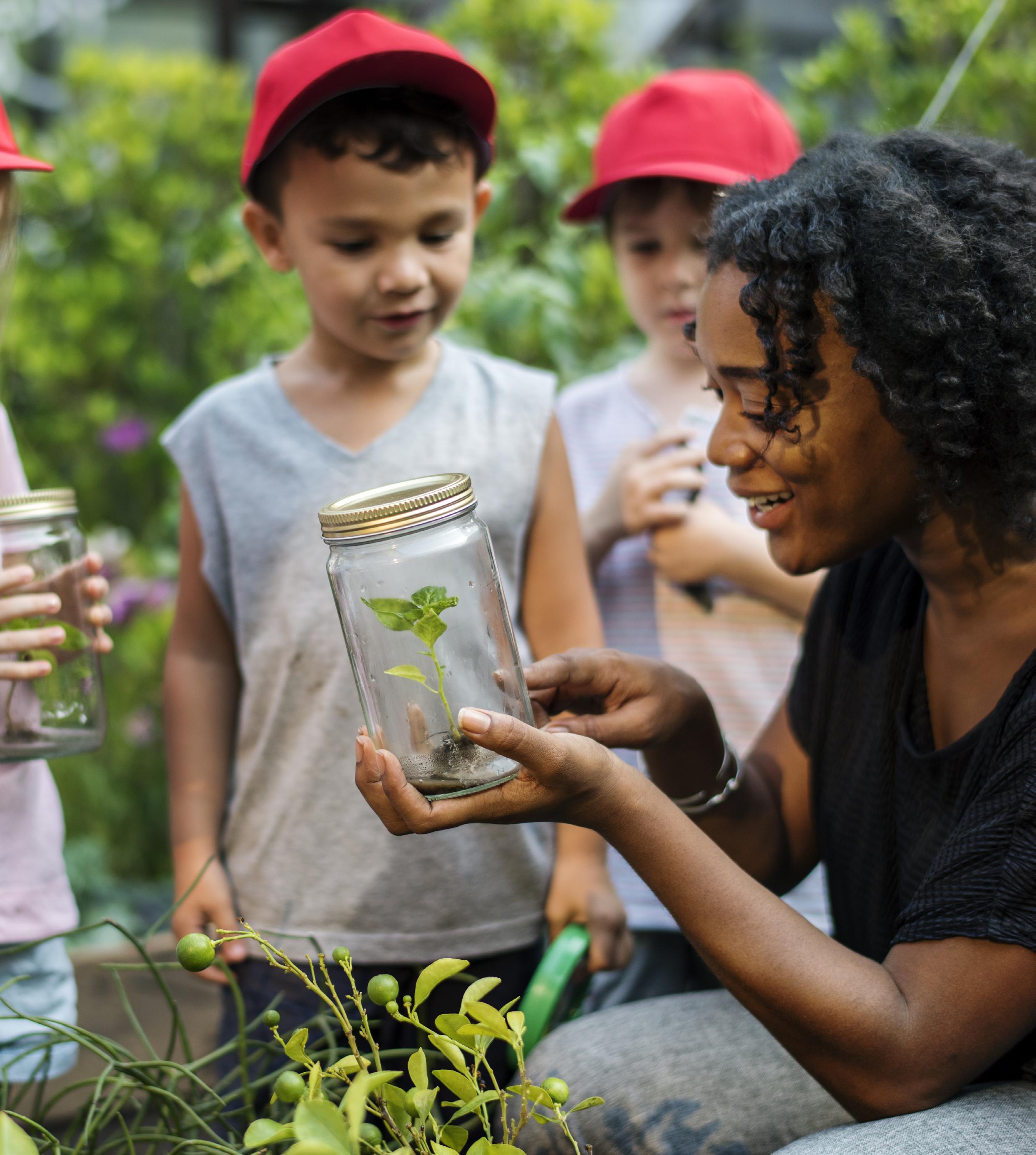
Beyond the curriculum, experiential learning, for instance through field trips and during extracurricular clubs, is also important to foster care and positive attitudes towards the ocean in young people. Digital tools and technologies are constantly opening new avenues for ocean education, made available beyond education systems to learners of all ages. With the explosion of distance and online learning following the Covid-19 pandemic, webinars, Massive Open Online Courses (MOOCs) and online conferences provide unprecedented access to learning regardless of location. Immersive digital environments also allow learners to visualise complex topics and use data to learn in collaborative, playful and interactive ways. The use of social media by marine research institutes to disseminate information opens the possibility to connect with broad audiences outside institutional boundaries.
3 IOC-UNESCO (2022). A New Blue Curriculum – A toolkit for policy-makers. Available at: https://unesdoc.unesco.org/ark:/48223/pf0000380544
4 https://escolaazul.pt/
5 https://oceanpolicy.jp/decade/docs/20210610_JapanInitiatives_v2.pdf
Beyond educational settings, people also become ocean literate through their work, habits and lifestyle. People working at sea, such as fishers, seafarers and others employed in blue careers, regularly interact with the ocean in ways that allow them to develop specific local knowledge and understanding of its properties and life. In coastal communities, including Indigenous communities, those working with the sea often possess traditional knowledge about their area that has been passed down orally through generations. This knowledge should be included in local and global marine governance regimes; for example, customary approaches to marine management found among Pacific Island communities are constructed around sustainability, equity and conservation
Living or spending time close to the ocean is proven to benefit health and wellbeing. Adopting an active lifestyle, spending time in nature, and even enjoying an ocean view promote both physical and mental health. Human and ocean health are intricately linked – a clean and safe ocean brings the greatest benefits.
of marine resources, yet their integration with science-based frameworks proves challenging.6
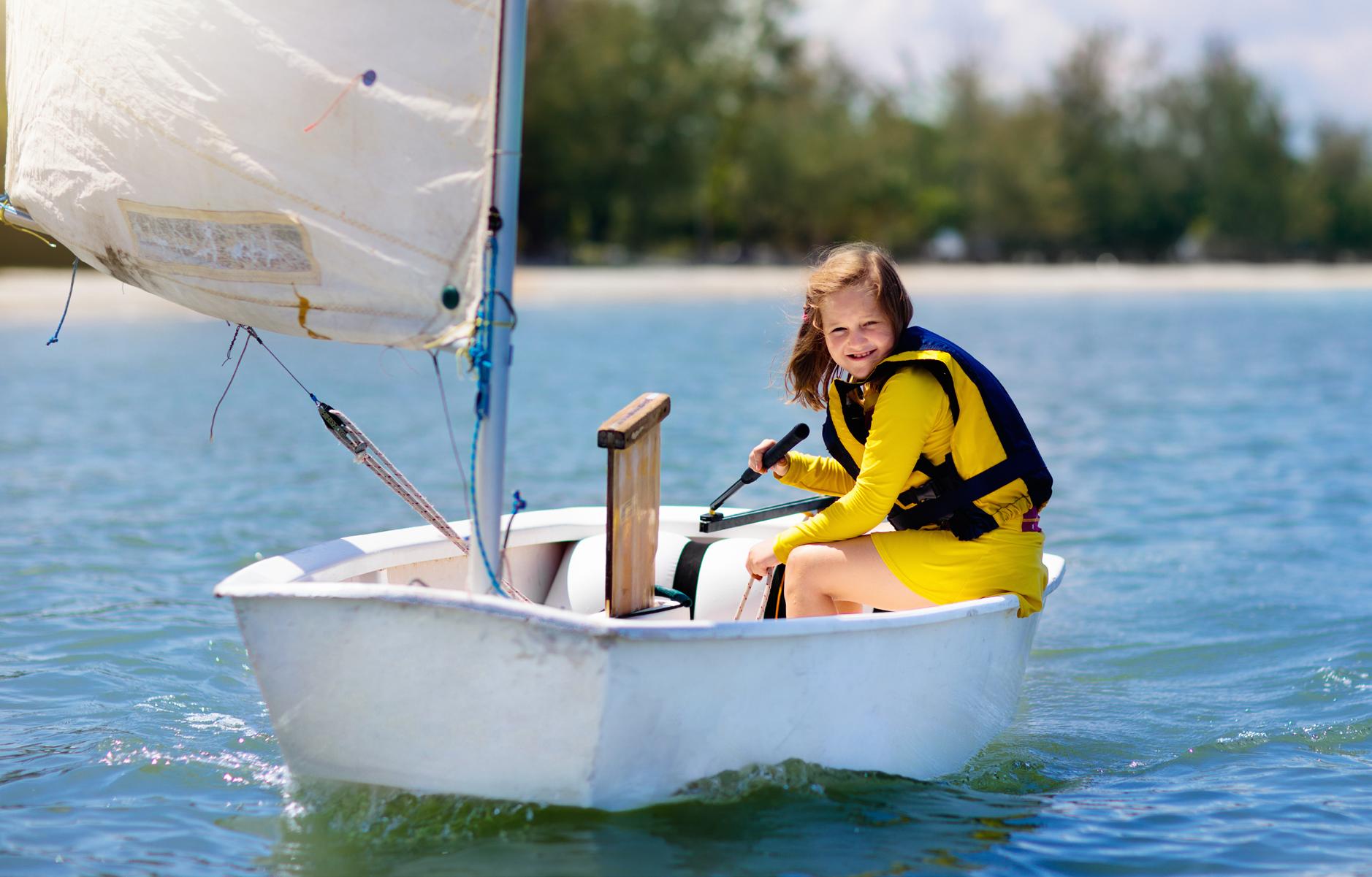
Participatory, community-based forums for discussion and co-creation of policy offer a route to recognise the value and potential of traditional knowledge, which represents an important form of Ocean Literacy.7 Sports and leisure activities at sea like swimming, surfing and sailing also foster understanding of ocean processes and health, and are proven to benefit human health and wellbeing through the ‘Blue Gym effect’ 8 Ocean-based recreational activities are particularly effective at helping young people connect to the ocean through positive and memorable experiences, especially those who are socially vulnerable, from disadvantaged communities or with disabilities.9


6 Tilot, V., Willaert, K., Guilloux, B., Chen, W., Mulalap, C. Y., Gaulme, F., ... & Dahl, A. (2021). Traditional dimensions of seabed resource management in the context of Deep Sea Mining in the Pacific: Learning from the socio-ecological interconnectivity between island communities and the ocean realm. Frontiers in Marine Science, 8, 257.
7 Neilson, A. L., & Seixas, E. C. (2022). Ocean Literacies: Splashing Around on the Beach or Venturing into the Dark Abyssal Sea. In Sustainable PoliciesandPracticesinEnergy,EnvironmentandHealthResearch (pp. 61-77). Springer, Cham.
8 https://sophie2020.eu/wp/wp-content/uploads/2019/09/Health-effects-factsheet.pdf
9 Matos, M. G., Santos, A. C., Fauvelet, C., Marta, F., Evangelista, E. S., Ferreira, J., ... & Mattila, M. (2017). Surfing for social integration: mental health and well-being promotion through surf therapy among institutionalized young people. HSOAJournalofCommunityMedicine&Public Health Care, 4(1), 1-6.
To give people of all backgrounds and abilities the opportunity to become ocean literate, more inclusive methods beyond mainstream education are needed. At present, these are largely developed within Western academic settings and must be expanded to represent a more diverse spectrum of worldviews, abilities and geographic settings. The term ‘Ocean Literacy’ itself is a revealing example, as different cultures use alternative terms that may resist direct translation into English. For instance, the Portuguese term cultura oceânica (directly translated as ‘ocean culture’) used in Brazil connotes a broader spectrum of touchpoints between humanity and the ocean, reflecting cultural customs and values in addition to knowledge.10 Furthermore, it is crucial to involve in the Ocean Literacy conversation marginalised and vulnerable groups and members of society who may not typically be engaged or represented in decision-making, including Indigenous peoples, cultural minorities, women, children, rural communities and people with disabilities.
providing communities with a shared sense of identity and expression. The ocean has been celebrated and revered through customs and rituals for millennia, and coastal cultures are often strongly connected to their marine and maritime traditions. Events and exhibitions of contemporary and fine arts, poetry, theatre, dance and fashion continue this tradition, providing audiences with multisensory experiences that invoke care and wonder. In this sense, arts and culture underline the plurality of values that the ocean holds for humanity beyond the economic: for wellbeing, inspiration, social cohesion and way of life.
©Shutterstock.com
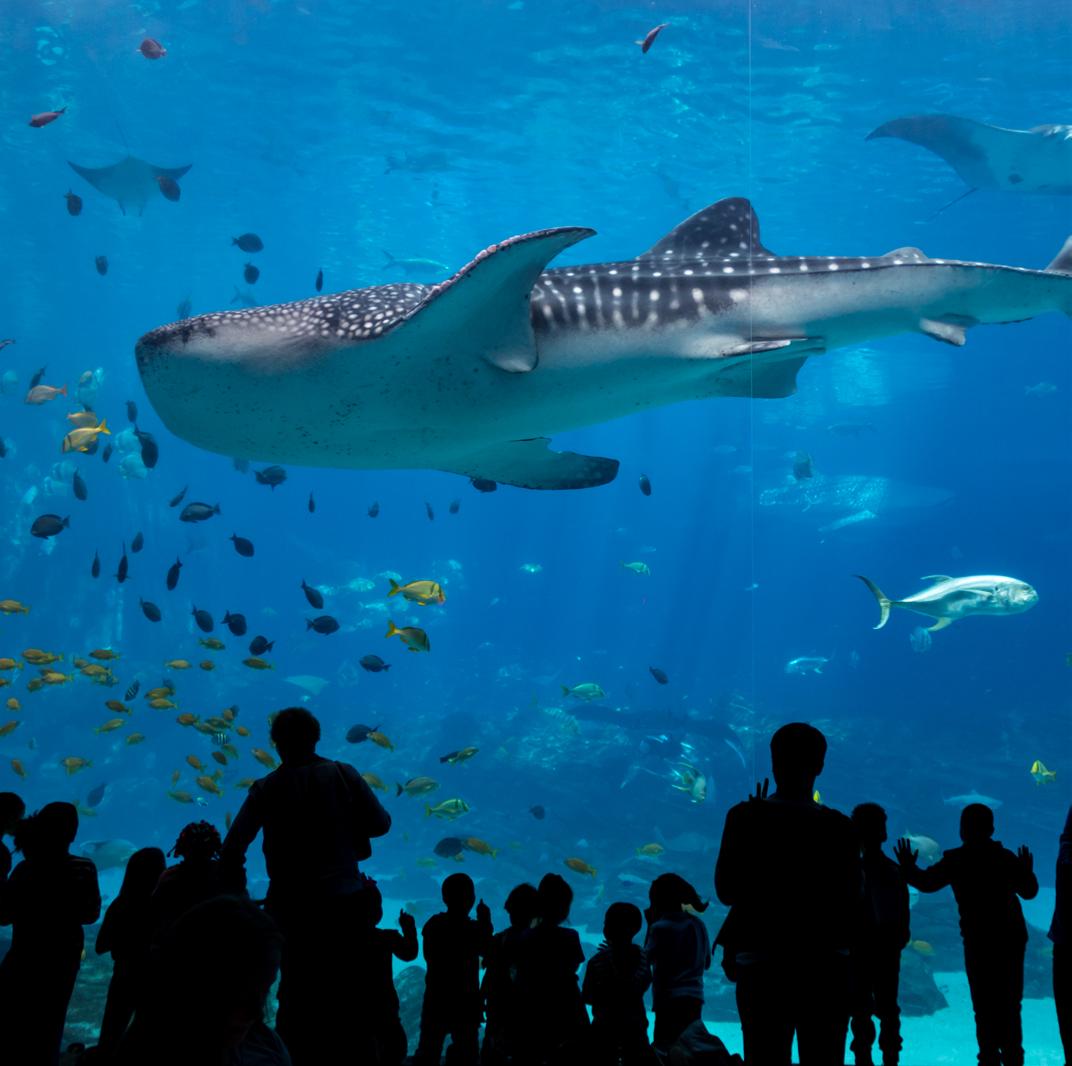
It is increasingly recognised that Ocean Literacy encompasses far more than simply knowing about the ocean, but dwells in emotional, spiritual, poetic and symbolic registers. As arguably the oldest channels for humanity to explore and express our relationships with the ocean, artistic and cultural practices are powerful ways to realise Ocean Literacy. These can be performed alone, nurturing individual connection and passion, or communally,
Acknowledged research gaps in the Ocean Literacy landscape include the concentration of research, including collaborations, in Western and developed countries; lacking methods to measure impact of Ocean Literacy initiatives, including the extent of behaviour change; how to effectively utilise Ocean Literacy at the science-societypolicy interface, and its potential to inform crosscutting policy for sustainable ocean use; working with Ocean Literacy to achieve blue equity and ocean justice; and developing modes and methods of Ocean Literacy that are accessible and inclusive.
The next section highlights a selection of successful Ocean Literacy initiatives held in recent decades, before synthesising ideas and suggestions for ways forward.


10 Worm, B., Elliff, C., Fonseca, J. G., Gell, F. R., Serra-Gonçalves, C., Helder, N. K., ... & Sink, K. (2021). Making ocean literacy inclusive and accessible. Ethics in Science and Environmental Politics, 21, 1-9.
11 Allison, E. H., Kurien, J., & Ota, Y. (2020). The human relationship with our ocean planet. Blue paper, World Resources Institute. Available at: https://oceanpanel.org/blue-papers/HumanRelationshipwithOurOceanPlanet
12 Paredes-Coral, E., Mokos, M., Vanreusel, A., & Deprez, T. (2021). Mapping global research on ocean literacy: Implications for science, policy, and the Blue Economy. Frontiers in Marine Science.
© Rawpixel /Shutterstock.com
The core of the Ocean Literacy concept concerns the relationships between humanity and the ocean, cultivating it through knowledge and awareness, and co-designing solutions to achieve sustainable use of marine resources. The seven case studies in this section were gathered through interviews with Ocean Literacy experts and practitioners, and sketch a picture of the status, settings and diversity of Ocean Literacy initiatives.
Outdoor watersports company Portofino runs several citizen science projects. The Seaweed Garden is a submerged ‘garden’ of the brown seaweed species Ericaria amentacea, located on the coast of Genoa, Italy. The garden is cared for by members of the local watersports community, who work together to restore the local population of this vulnerable seaweed, which previously declined due to the presence of harmful pollution. The presence of healthy Ericaria amentacea in the local ecosystem is vital for fostering biodiversity, as it provides an underwater ‘forest’ for animals to seek shelter and food.
Volunteers are involved at all stages of restoration, from taking seaweed cuttings, overseeing their growth in the lab, and implanting them within the Portofino Marine Protected Area. Monitoring the garden is typically a time-consuming and costly exercise for scientists working on restoration methods to repopulate the species, but mobilising
the local community through citizen science is a successful way to overcome technical challenges and involve local stakeholders.
Oceanliteracyformemeans enthusing,involvingandempowering everyoneaboutourdiverseandvaluable marineecosystems,andplaysapivotal roleinpromotingstewardshipofthe marineenvironmentwhilstaddressing evidencegapswhicharerelevantfor marinepolicy.
Arianna Liconti Science Projects Coordinator, Outdoor Portofino13

A close, dedicated community of water sports enthusiasts.
A local outdoors centre.
A dedicated intern.
Difficult access to the rocky shores where seaweed grows
Slow and challenging communication with local authorities, such as Municipalities and Marine Protected Area coordinators, to obtain authorisation
Initial difficulty to communicate the value of the project to the local community
Guided tours were held with local outdoor centres, an information panel was placed to guide citizen scientists
A channel of communication was opened with the local authorities to facilitate bureaucracy, but this could be further simplified.
The project became known and understood through collaboration between local and boundary organisations.
https://www.outdoorportofino.com/en/portofino-seaweed-garden-eng/
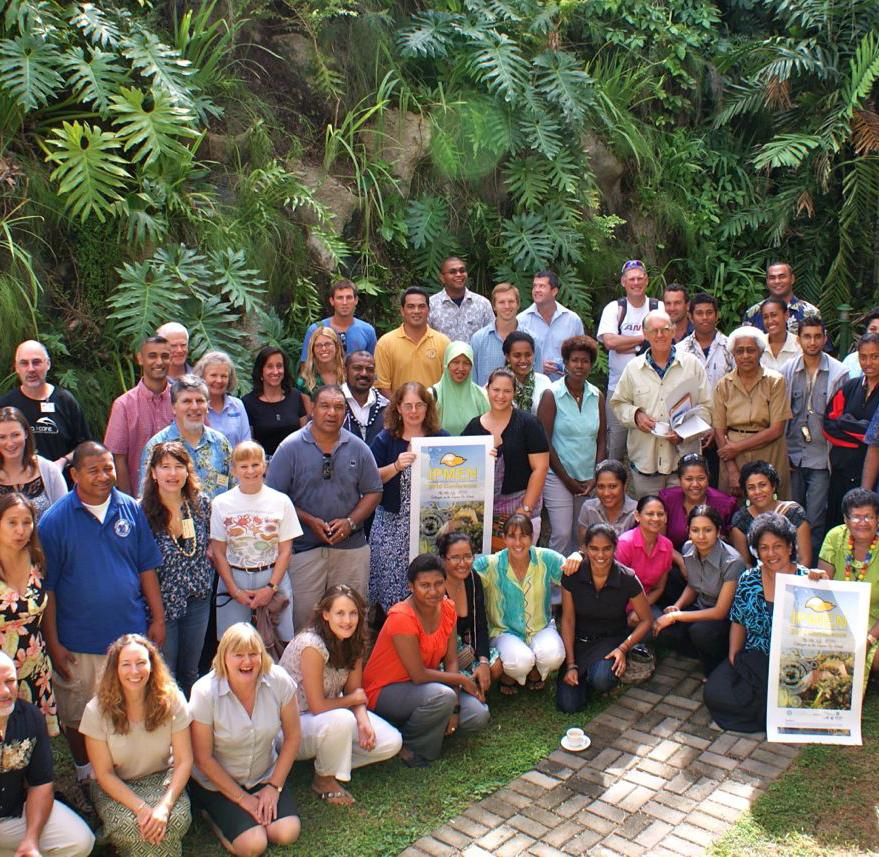
The International Pacific Marine Educators Network (IPMEN) is a Pacific-wide network that aims to nurture and share the knowledge – both traditional and contemporary –, expertise and resources required to foster a fuller understanding of the ocean’s values. IPMEN works to create informed and responsible communities who seek to conserve, manage and restore the integrity of ocean ecosystems.
From 2007 until the present the main IPMEN activities have been biennial international conferences, held at different locations around the Pacific, which usually attract up to 100 international delegates. To date, the conference has been held at the following venues: Hawaii (2007), Australia (2008), Fiji (2010), Chile (2012), Japan (2014), Indonesia (2016) and Taiwan (2018), while our plans for Hawai’i in 2020 were cancelled because of Covid-19. As each conference has moved to a different Pacific venue, IPMEN have aimed to deliver a strong focus on local traditional knowledge and to do so within the context of Ocean Literacy, fostering links between the two. As part of this process the
aim is to present the traditional knowledge components as immersive experiences for all delegates.
Aftermanyyearsworking as a marine educator in Australia I founditeasytoadopttheoriginalUSA definitionofOceanLiteracyinitsfull form. I also believe that the seven OceanLiteracyprinciplesprovide anexcellentframeworkforbuilding anunderstandingoftheoceanthat includestraditionalknowledge.At IPMENwehavefoundcreativewaysto includetraditionalknowledgewithin thesesevenprinciples.
Harry Breidahl Nautilus Educational (Australia), IPMEN committee convenor.14

The early stages of IPMEN were initiated and then supported by two well established marine education organisations – the National Marine Educators Association (NMEA) in the USA and the Marine Education Society of Australasia (MESA) in Australia.
Sponsorship has been provided by a number of organisations, in particular the Western Pacific Regional Fishery Management Council (WPRFMC) and the David and Lucile Packard Foundation. This financial support has been added to by a range of organisations who have generously contributed valuable inkind support.
Each conference is organised locally with the aim of fostering further links between Ocean Literacy and local traditional knowledge.
Developing an administrative structure for an organisation working across a wide region (the Pacific) and many nations
Making conferences inclusive for a wide range of audiences
Establishing an open structure without involving a formally incorporated organisation. IPMEN is administered by a committee of volunteers located in a number of Pacific nations.
Seeking philanthropic funding to provide scholarships for delegates from developing nations. Remote delegates are involved virtually through webcasting, supported by the USA-based College of Exploration, funded by NOAA.
Securing ongoing funding, especially for conferences, even with the time, expertise and administrative supported contributed voluntarily by IPMEN committee members
Inspiring and engaging a new generation of volunteers to take IPMEN forward in the post-COVID world, while maintaining an emphasis on immersive traditional knowledge experiences
Continuing toseek opportunities.The Western Pacific Regional Fishery Management Council (WPRFMC) has provided funding support for each conference to date.
Virtual conference (Talanoa) planned for 2022, based on traditional ocean storytelling across the Pacific.
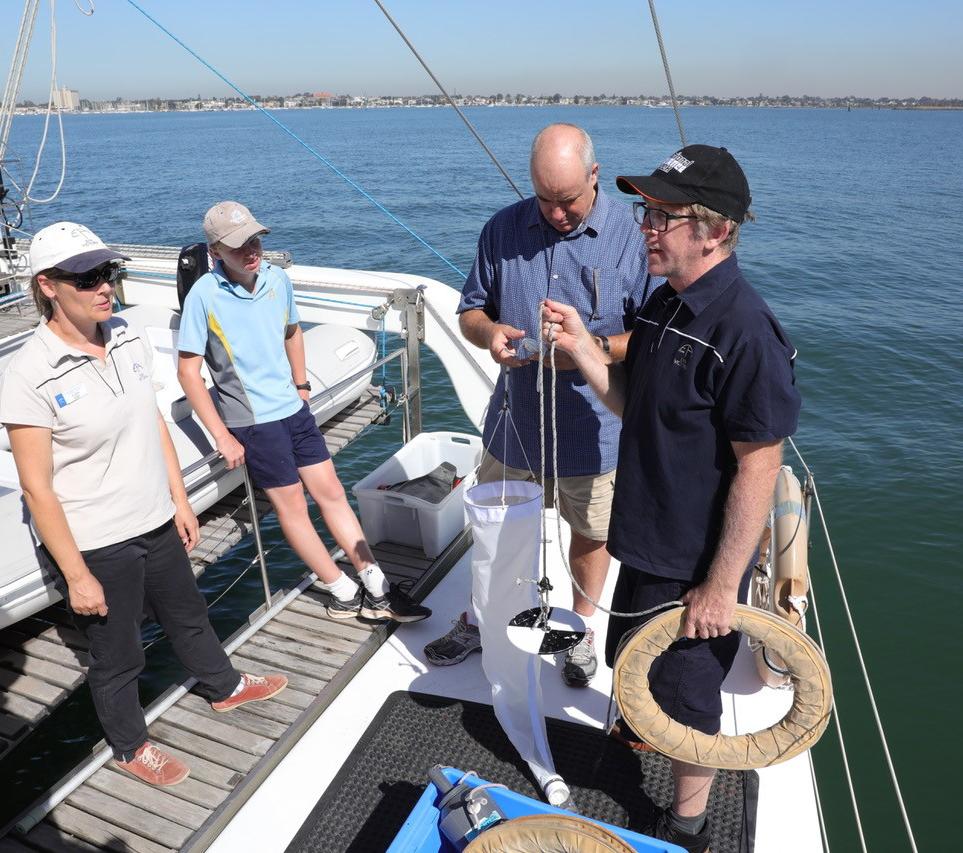
Two Bays is an annual learning at sea programme that has run since 2006 in Port Phillip and Western Port Bays, Victoria. It provides a unique opportunity for bay managers, stakeholders and educators to build Ocean Literacy knowledge by using a vessel as a research platform, a space for ocean dialogue and a sea-based classroom. The programme encourages partnerships between stakeholders to understand and protect bay and ocean health, by developing deep cross-collaboration and knowledge sharing. A unique curriculum has been designed based on the scientific and traditional knowledge of both bays, using Ocean Literacy as a framework for delivery to school groups and coastal communities
Most of the Two Bays work has been conducted on Pelican1, a purpose-built catamaran.
The Hope Vale/Pelican project spanned a decade of collaborative work in Guugu Yimithirr Sea Country and areas North and South of this region in Far North Queensland, Cape York. The project brought together Indigenous community members with researchers, parks managers, Indigenous rangers, marine scientists,
health workers and the broader community as part of a Caring for Sea Country, Ocean Literacy and suicide prevention project. Pelican1 cruised Guugu Yimithirr Sea Country every year and coastal communities were invited aboard to engage with work conducted by a collaborative group of Elders, scientists, teachers, doctors, sailors and researchers who made up the Hope Vale/Pelican team.
MyinitialunderstandingofOcean Literacywasinspiredbyanurgentsense thatcaringforandunderstandingtheocean isessential,particularlyinthelightof globalwarming.MyaffiliationwithIPMEN (InternationalPacificMarineEducators Network)alertedmetotheintellectual frameworkderivedfromtheoriginalUSAbaseddefinitionofOceanLiteracy. TheSaltwaterProjectsteamworkedwith thesevenOceanLiteracyprinciplesas theyprovideaclearstructureforbuilding anunderstandingoftheocean,usingthe scopeandsequencingdevelopedinthe USA,butendeavouringtoincludetraditional knowledgeandlocalknowledgewhen possiblewithintheseprinciples
Natalie Davey Director, Saltwater Projects15
Fostering good relationships with all stakeholders through long-term partnerships, listening to the needs of partners, and cultural literacy.
Filling a gap in ocean education with a unique experiential approach. Each conference is organised locally with the aim of fostering further links between Ocean Literacy and local Traditional Knowledge.
A strong team of marine educators and Elders,passionate about sharing marine and traditional knowledge, who worked inventively and responsively to the conditions at sea and the changing nature of participants.
Funding multidisciplinary programmes, especially based at sea, where work can be expensive and challenging
A group of passionate volunteers, and in-kind support from government agencies that provide key support workers;
Obtaining funding from a variety of sources, including for work with disadvantaged students.
Educating about the ocean and about traditional knowledge, which are not fully integrated into the mainstream curriculum, and in which teachers often have no training
Planning around levels of risk when working at sea
Developing strong partnerships with teachers and education providers to demonstrate the value and uniqueness of the projects;
Providing support back into the classroom to develop relationships with teachers and support them in picking up new streams of knowledge;
Close cooperation with Harry Breidhal (Nautilus Educational) to plan work with teachers and deliver the Ocean Literacy component at sea.
Developed good protocols around risk management, building trust with participants at sea and building their curiosity in an unusual learning space;
Engaged and professional boat crew who contributed their knowledge.
Encounter Edu has designed and held live-streamed STEM lessons for schools since 2014, and in broadcast format since 2018. The two main strands are AXA Arctic Live and AXA Coral Live, exploring these ‘sentinel’ systems that are affected by environmental change more rapidly than the rest of the planet. Each two-week live event is streamed directly from research stations in the field.
Every lesson is designed for a specific age group and geography. Classes can choose to watch just one live lesson or use the live event as a week-long learning focus. Five lesson types offer a multifaceted learning experience: discover lessons introduce students to a new environment; meet lessons host a conversation with a scientist working on site about research and cover STEM careers; investigate lessons see students doing an experiment to
demonstrate a scientific principle relevant to the site; care lessons develop a sense of wonder and responsibility; and finally open Q&A sessions, where students can ask anything.
Literacyisaboutbeingabletotake partmeaningfullyinatopic.Inthecase ofOceanLiteracy,itmeanshavingthe knowledgeandunderstandingtotalkabout howwonderfultheoceanis,whatthreats it’sfacing,whatdecisionsandactionsare needed for its future – and to enable robust decision-making.Literacyalsoallowsyou toaccessknowledgeandskill,tobepart ofsomething;wecan’thaveaconversation about the ocean without a certain level ofOceanLiteracy.This,then,givesus ownershipoverthatconversation.
Jamie Buchanan-Dunlop Founder and CEO, Encounter Edu16
Access to inspiring locations, scientists and research stations.
High-quality streaming to enable direct, unmediated conversations and a frictionless experience: requires good connectivity and a skilled field producer.
Teachers must feel confident and comfortable using the platform.
In early stages, securing the necessary connectivity level
Getting schools involved and engaged, keeping a sense of intimacy during lessons with thousands of young people at once
Avoiding negative framing of environmental discourse, in terms of loss
Now that technology is available to do so, the remaining challenge is to make streaming totally frictionless.
Working to achieve the right ‘pitch’ of lessons to appeal to varied classes and skill levels, with lesson content and structure that meets teachers’ expectations.
Instead aiming to nurture wonder, excitement and adventure, to give students access and agency by introducing them to people helping the ocean and taking positive action.
A participatory project held at Ocean Space in Venice, Italy, Abecedarium (conceived and curated by Valeria Bottalico) aims to support people in the deaf community to participate in conversations about the ocean by co-developing signs about the ocean in sign language. Abecedarium is community-driven, created from within the deaf community for the deaf community. Together with scientists from ISMAR (Istituto di Scienze Marine), led by Angela Pomaro, and linguists, 12 members of the deaf community from across Italy made an assessment of which signs are missing to discuss the ocean; for example, there is no sign for ‘Anthropocene’. Through discussions held around nine themes, the participants began the journey of creating signs, together with expert interpreters and moderators. As well as the signs themselves, a scientific paper and nine
videos will be created, which function as both tools and artworks. The ultimate goal and challenge is a set of outputs that are attractive but also functional as tools that can be used and shared, and circulated around the community to initiate more conversations about the ocean.
IseeOceanLiteracyasaform ofunderstandingandintimacybetween ourlivesandtheplanet.ButI’malways insistingonacriticalOceanLiteracy:there aremanyimplicationsaroundtheoceans incolonialsystems,andwedon’twantto replicatepastmistakes.Theotherpartisto alwaysmakeitabouttheindividual.Ocean Literacyistotallysystemsthinking–it’s abouttheunderstandingofsystemsand usaspartofthosesystems–notaboutan inside and outside.
Markus Reymann Director, TBA21–Academy17
Personal relations and a strong collaborative spirit. As such, personal relations were essential.
Time, commitment and coordination; the participants gave many hours of their own time, and the scientists at ISMAR also committed to this long-running project.
Communication: those involved variously spoke and worked in Italian sign language, international sign language, and spoken Italian and English
Developing the project from within the deaf community, not for them, required a change of perspective from those external to it
Skilled interpreters and translators were required to mediate between languages.
Finding sensitive ways to work together through strong coordination between the three involved institutions.
Blue School is an educational programme of the Portuguese Ministry of the Sea, developed at the Directorate-General for Maritime Policy. By certifying schools that offer an ocean curriculum, the programme creates a community that emphasises the ocean in learning and school culture
The programme also brings schools into contact with municipalities, industry, NGOs and other entities with an active role and commitment to Ocean Literacy. Through cross-sectoral partnerships, schools are engaged in strategies and activities that transform students’ knowledge into changes in attitude and action to deepen their relationship with the ocean. For example, members of student class councils together worked on an exhibition displayed at the Blue School headquarters,’From the river to the sea’. Through creative and innovative methods, the programme encourages interdisciplinary learning about the
ENABLING FACTORS FOR SUCCESS:
ocean in various subjects, such as natural sciences, English, citizenship and development. This is enhanced by the participation of local communities, with the aim to achieve social impact as the students learn to practice critical thinking and make proposals for changing habits and increasing awareness about the ocean.
Forme,OceanLiteracyisa commitmenttoactivelyparticipatewith students,andnotonlywiththerestofthe educationalcommunity,asagentsofchange toadoptpositiveandproactivebehaviours in favour of ocean health. All life forms on theplanetdependonourattitude. Thesalvationoftheoceansbeginsinthe homesofeachoneofus!Itisurgentthat weactforthegoodofallandforfuture generations.
Ilda Carinhas
English Teacher, Coordinator of the Blue Schools Program – Agrupamento de Escolas de Vialonga19
Active participation of stakeholders, including involvement of students and their families.
Strong commitment to interdisciplinary work.
Schools’ focus on academic achievement through traditional teaching methods discouraged them from involvement in alternative methodologies and partnerships
Lack of outreach and networking by institutions on existing Ocean Literacy initiatives, and poor communication between organisations
Setbacks to the programme during the pandemic, due to uncertainty and delayed activities and study visits
Blue School criteria were developed to guide and support schools towards certification.
Cooperation was strengthened to build a structured Ocean Literacy strategy for the schools and partners.
Work was developed in an online format with the support of parents.
18 Costa, R. L., Mata, B., Silva, F., Conceição, P., & Guimarães, L. (2021). Fostering Ocean-Literate Generations: The Portuguese Blue School. In OceanLiteracy:UnderstandingtheOcean (pp. 241-273). Springer, Cham. 19 https://escolaazul.pt/en
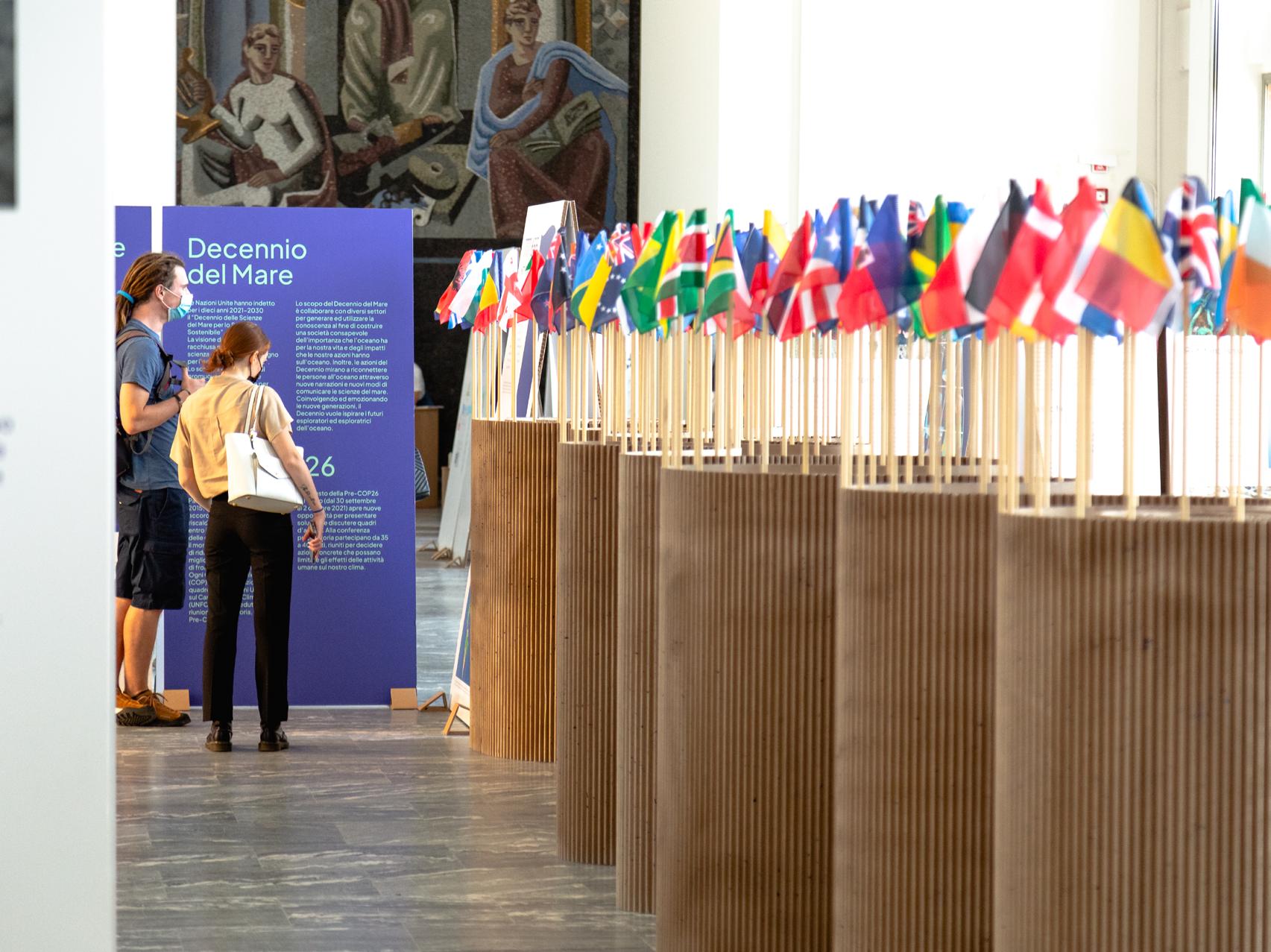
The Ocean&Climate Village is the first travelling exhibition developed by the IOC Project office at the UNESCO Regional Bureau for Science and Culture in Europe, within the framework of All4Climate and Pre-COP26, and in the context of the UN Decade of Ocean Science for Sustainable Development (2021–2030). The Ocean&Climate Village is a multi-sensory experience: a travelling, interactive and formative exhibition designed for cocreation, collaboration and knowledgesharing to reconnect people to the ocean The Ocean&Climate Village is divided into six learning areas designed to deepen knowledge related to climate and the ocean: from the ocean and ecosystem services and marine biodiversity, to the impacts of climate change on marine environments, from the exploitation of marine living and non-living resources to solutions in the field of marine innovation and conservation. The different aspects of the ocean and the past, present and future challenges for climate are depicted in a captivating way thanks to the illustrations made by young artists from the network ‘Design for the Ocean’, which enrich the installations and create engaging storytelling. The Ocean&Climate Village is a place to experiment with different formats
Italy and global
of Ocean Literacy: visitors of all ages are engaged in experimental learning, interact with digital installations and attend artistic performances that advance their learning on the ocean and climate-related topics. Guided tours targeting children of different ages and schools of different grades are led by young Marine Science students and researchers, fostering knowledge transfer with simple language and experiencesharing. Hands-on workshops on marine topics promote a learning-by-doing approach: they stimulate the curiosity of younger visitors while inspiring them to pursue ocean and climate-related careers. Besides being an exhibition area, the Ocean&Climate Village is intended as a gathering platform: a space to foster open debate around different themes, such as the ocean, climate, biodiversity, sustainability, innovation and design. An area of the Village is set up to host talks, debates and interviews where people can meet, discuss and forge new ideas and innovative solutions for climate and ocean-related challenges. The exhibition is constantly evolving and its contents will be updated and shaped for each edition as it travels to several Italian cities and abroad.
OceanLiteracyismorethanjust educatingorinformingthepublicor marine and maritime stakeholders about theimportanceofoceans.Throughthe useofbehaviouralchangemethodsand byadoptingasystemsapproach,Ocean Literacyaimstofacilitatethecreationof anocean-literatesociety.
Francesca Santoro Programme Specialist, IOC-UNESCO20
Collaboration with scientific partners, who support the development of the content, the creation of hands-on activities and provide exhibition materials such as oceanographic tools and biologic samples.
Inviting a range of formats to the exhibition, such as artistic performances and digital installations.
The enthusiasm and involvement of the young illustrators.
Appealing to diverse segments of the audience, which includes people of various ages with different learning preferences and interests
Developed various formats for specific audiences, like guided tours for schools and families, hands-on activities, and artistic performance; Found ways to make the exhibition more inclusive, for example by providing audio tours.
Making the exhibition relevant and accessible to the private sector
Designing a sustainable exhibition
Organising panels and interviews on different topics, such as sustainability, design, resilience and human health.
Partnering with designers and material suppliers who embrace sustainability principles. For instance, the exhibition panels are made of sustainable corrugated cardboard.
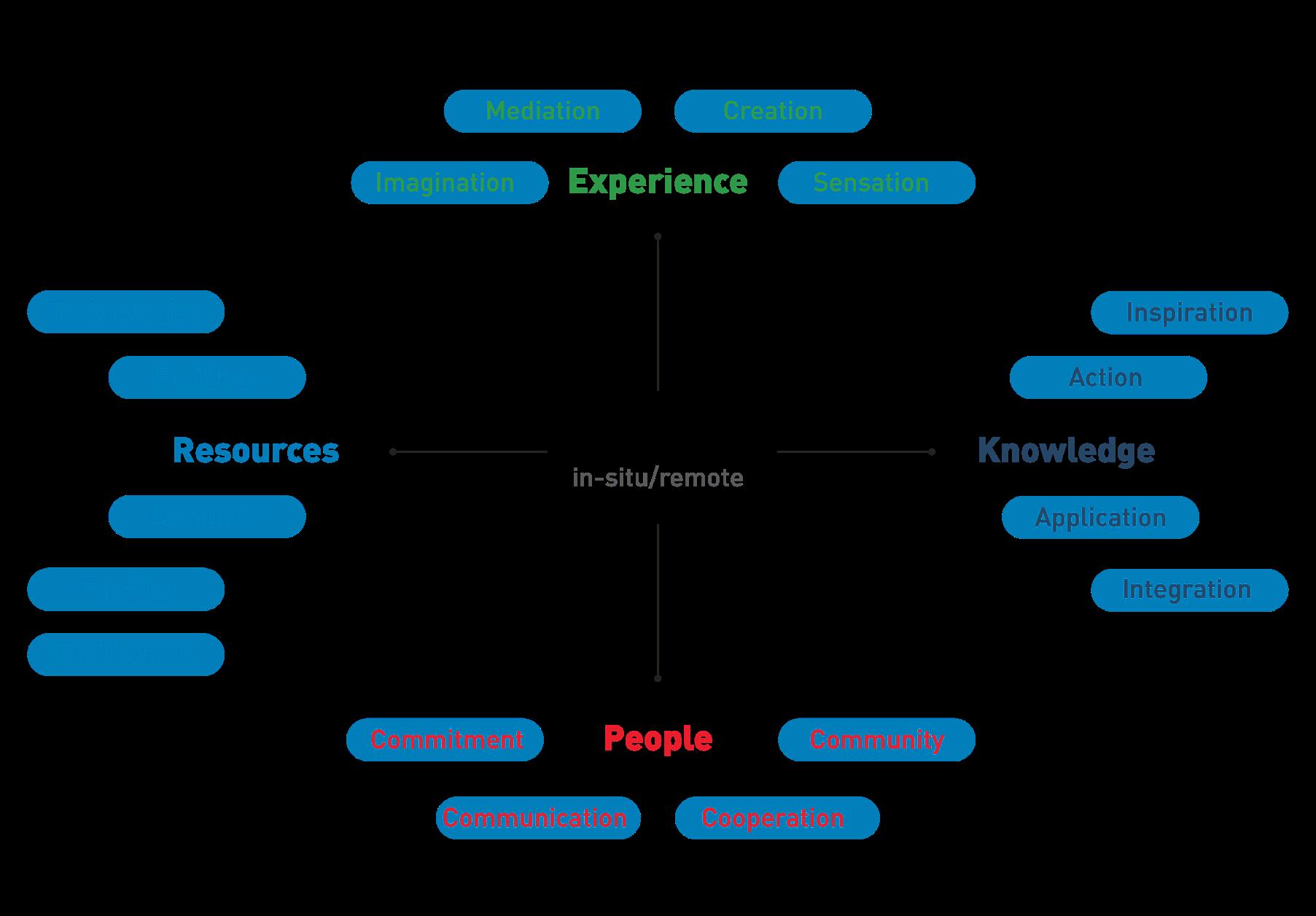
From the state-of-the-art review (section 2) and the case studies (section 3) a number of interconnected factors emerge that support successful Ocean Literacy initiatives. These are illustrated in Figure 2 and formulated as an aspirational checklist for inspiration and planning, which should be consulted with a specific context and audience in mind:
Resources
Facilitators
Technologies
Facilities
Locations
Funding
are there sufficient trained facilitators (educators, experts, crew)? are technologies being used in optimal ways for the audience? are infrastructure and services needed to deliver the project usable? is an appropriate location accessible? are multiple and consistent forms of funding available?
Commitment
Community
Communication
Cooperation
In-situ
Remote
→
is there a strong commitment from people involved?
are the needs and goals of the community considered, and are appropriate community members involved in planning and delivery?
are channels open for consistent communication with all stakeholders? is there strong cooperation between other entities (i.e. individual people, organisations, municipalities)?
is the project taking place in a relevant, inspiring and safe location? is the experience for remote participants smooth and stable, and is connectivity reliable?
Mediation
Imagination
Creation
Sensation
are experts available to mediate for those with additional needs or translate between languages?
is the project inspiring and does it invite imaginative responses? do participants have the opportunity to create something, individually or together? does the project engage multiple senses of participants?
Integration
Inspiration
Application
Action
are multiple forms of knowledge (scientific, traditional, local, Indigenous) valued, respected and used together? is knowledge used in an inspiring way?
is there an opportunity or suggestion to apply knowledge gained during the project? are participants encouraged or supported to take action?


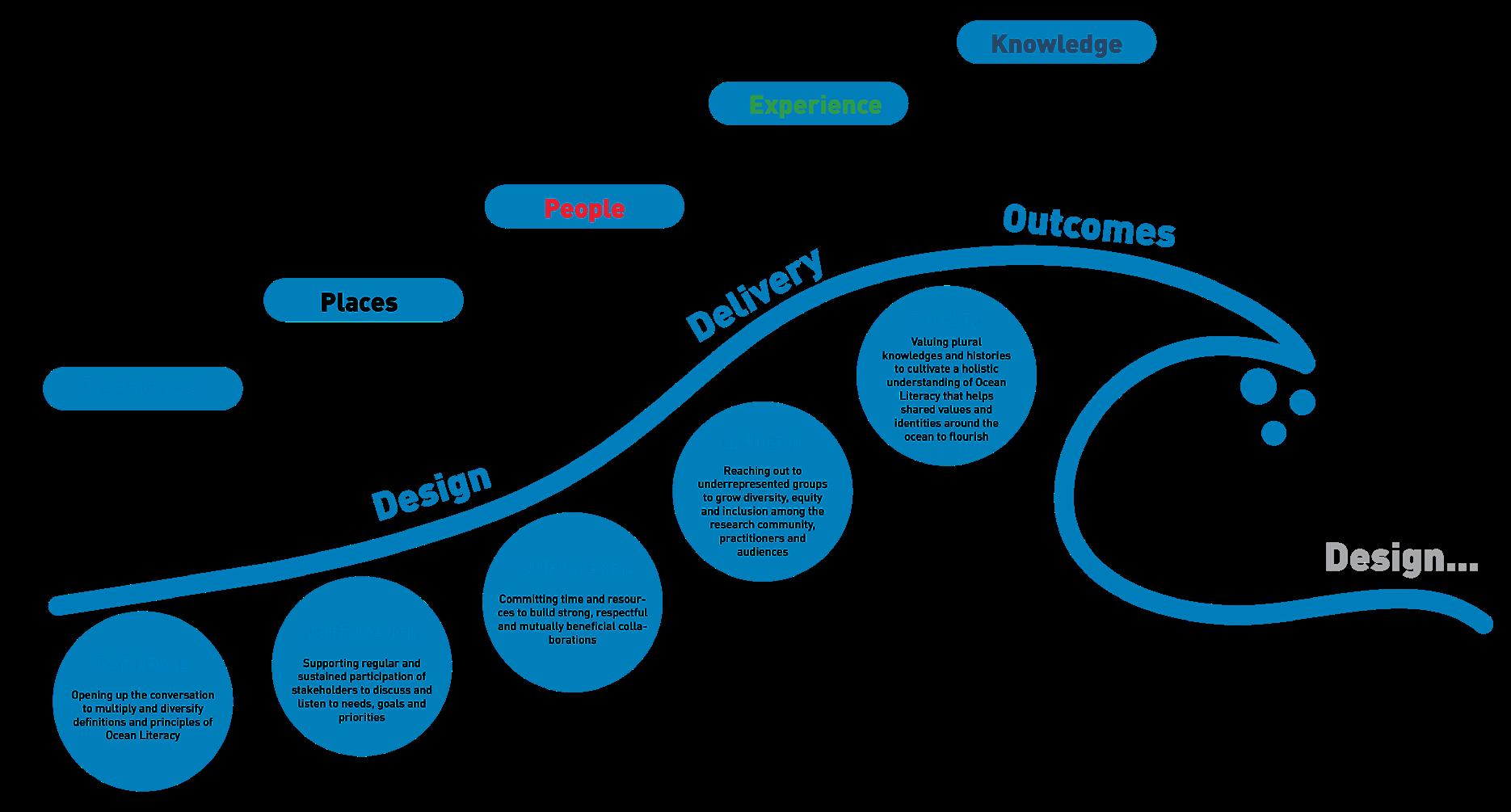
The UN Ocean Decade will present many opportunities to advance Ocean Literacy – from both research and grassroots perspectives – as a concept, tool or practice that is relevant to all areas of human–ocean relations. In blue paper ‘The Human Relationship with our Ocean Planet’, the authors frame human–ocean relations in terms of the multiple ways to value the ocean, namely biophysical; cultural and social; economic; health; holistic and Indigenous and local knowledge, all of which have complex connections to social wellbeing at local to global scales.21 To continue designing and conducting meaningful, impactful Ocean Literacy initiatives with the ultimate goal to enhance social wellbeing, and to humanise the ocean narrative, it is crucial to take a critical approach to consider the who,where and how. On the basis of the state-of-the art and the experiences of the case study interviewees, five proposals for a critical Ocean Literacy are suggested to guide future research and projects.
1

Open up the current definition and principles to inclusive, pluriversal perspectives on Ocean Literacy
There is no one way to be ocean literate: every individual and group of people has their own shared values and uses of the ocean see the diverse Ocean Literacy definitions provided by interviewees
The Ocean Literacy principles can be modified to include traditional forms of knowledge IPMEN, Saltwater Projects
Expand Ocean Literacy research opportunities beyond Western and developed countries state-of-the-art review → → →
2
Invite active participation and discussion to co-practice Ocean Literacy
Encourage and maintain active stakeholder involvement to foster empowerment and responsibility for the marine environment, for example through citizen science Portofino seaweed garden
Create regular opportunities to come together and discuss priorities IPMEN international conferences
Assign spaces for listening and discussion Ocean&Climate Village → → →
21 Allison, E. H., Kurien, J., & Ota, Y. (2020). The human relationship with our ocean planet. Blue paper, World Resources Institute. https://oceanpanel.org/blue-papers/HumanRelationshipwithOurOceanPlanet
3
Engage in meaningful long-term collaborations, considering mutual needs, goals and impacts
Commit time and resources to build trust and respect Abacedarium
4
Engage in continuous and respectful communication to build strong and successful collaboration across sectors, communities and generations Two Bays
Consider the needs, goals and impacts of all parties in the collaboration to ensure mutual benefits Blue School → → →
Engage with underrepresented groups and peoples
Prioritise diversity, equity and inclusion among the Ocean Literacy community and its audiences state-of-the-art review
Include underrepresented groups in the conversation and in education, by designing programmes that are informed by knowledge and understanding Abecedarium
Make use of technology to reach diverse audiences and meet their specific needs Encounter Edu
5 Consider multiple forms of knowledge and values to embrace a holistic vision of Ocean Literacy
Value and promote the use of traditional, local and Indigenous knowledge together with scientific knowledge IPMEN
Integrate the shared values and identities that arise through cultural practices relating to the ocean into frameworks of knowledge and governance state-ofthe-art review
Work from a holistic understanding of Ocean Literacy, as a connecting paradigm that binds humanity and the ocean – without separating the two.
The UN Ocean Decade programme Ocean Literacy With All (OLWA)22 was launched at the start of the Decade by a wide network of marine education and conservation organisations. As suggested by the name, the focus of the programme is to advance participatory Ocean Literacy approaches through research and activities across the globe that are developed by and for diverse stakeholders. By building capacity for such projects to grow from within specific networks and communities, with the support of local and international partnerships, OLWA hopes to see a flourishing of collective action towards ocean-literate societies. The programme will work in close alignment with the five proposals presented above to meaningfully advance the Ocean Literacy agenda.
Coordinated by IOC-UNESCO and implemented by a global network of Ocean Literacy practitioners, in its early years OLWA will focus on charting the status and needs of Ocean Literacy research to identify common research priorities; and grow inclusive networks worldwide. Acting as an umbrella for multiple projects and stimulated by seven working groups, OLWA will also work to ensure the inclusion of Ocean Literacy within all Ocean Decade programmes as an essential aspect to achieve sustainable ocean practices across sectors.
The development of accessible training and learning resources, including in local languages, is another key axis of the programme. By mobilising resources, creating synergies through Ocean Decade Actions, and supporting outreach activities OLWA can grow the Ocean Literacy network to reach diverse stakeholders. Beginning by meeting people and societies where they are, OLWA aims to stimulate innovation, increase knowledge and enhance understanding of the ocean’s importance for sustainable development
22 https://www.oceandecade.org/actions/ocean-literacy-with-all-olwa-the-change-we-need-for-the-ocean-we-want/
As the Ocean Literacy concept reaches two decades of research and development, a shift is taking place from a focus on individual learning towards inclusive, participatory approaches to deepen understanding of the ocean and its importance for societies across the world. To facilitate this ripple effect, a more critical approach to Ocean Literacy is needed among the research community.
From its early development in the marine education setting, Ocean Literacy has been adopted as a tool and a conceptual basis for projects of every nature across the world. It has been used as an inspiration and impetus to form networks and to design new methods for growing knowledge, awareness and action for the ocean. Long-held customs and cultural practices that celebrate the ocean and build a communal identity are also being recognised as Ocean Literacy, expanding and diversifying its definition. The case studies presented in this report highlight the need to extend the geographic and cultural reach of the Ocean Literacy movement. They also underline the importance of including multiple forms of knowledge – local, traditional, Indigenous, scientific – together in our shared understanding of the ocean: the many values of the ocean to humanity can only be captured through such a multifaceted lens.
To go beyond ‘capturing’ this vision, an open, flexible, critically informed paradigm for Ocean Literacy is needed, for use to benefit the wellbeing of human and marine life and environments. This goal drives the Ocean Literacy With All programme, which aims to advance participatory Ocean Literacy approaches through research and activities across the globe that are developed by and for diverse stakeholders. Figure 3 illustrates enabling factors and propositions for guiding principles, which together provide direction towards critical forms of Ocean Literacy in the coming years. Moving towards sustainable relations with the ocean requires broad and generous opportunities to join the Ocean Literacy conversation, to discuss what it means to be ocean literate, and to design and deliver meaningful initiatives with all
The ocean as we know it today has been intensively changed, through its millennia of coexistence with humans and the gradual multiplication of society’s planetary footprints. Although this ocean is undoubtedly anthropocenic, its cultural and spiritual importance has not diminished. More than ever, we are looking to the ocean for answers, for ideas and solutions to enable more sustainable ways of living. Making this search a coordinated and scientifically informed effort is one undercurrent driving the United Nations Decade of Ocean Science for Sustainable Development (2021–2030). Now in its second year, the Ocean Decade is forging new avenues for knowledge and ideas to travel, expanding networks of ocean experts and enthusiasts working towards a common mission: transformative ocean science solutions for sustainable development, connecting people and our ocean. And indeed, the power of Ocean Literacy lies in its ability to connect: people, knowledge, ideas, places.
Together with IOC-UNESCO’s coordinating role for the UN Ocean Decade, advancing Ocean Literacy has been a strong priority since ‘Ocean Literacy For All’ was adopted as a voluntary commitment at the first UN Ocean Conference in 2017. While spearheading its global reach, IOC-UNESCO have met and worked with countless individuals and groups who are passionate about spreading the messages of Ocean Literacy, taking it as inspiration and impetus for projects that bring people together and enrich community life.
IOC-UNESCO and Panerai are delighted to partner on the ‘Ocean Literacy With All’ project, which aims to forefront inclusive and collaborative approaches to Ocean Literacy. Starting from the existing spectrum of Ocean Literacy research and practical initiatives, this paper reviews the development of approaches and methods over the past two decades. Through interviews with a number of leading practitioners in Ocean Literacy, this report presents seven case studies as uplifting examples, each with important lessons to learn for future projects. Drawing on their experiences and wisdom, the report formulates an aspirational checklist for future work, and goes on to propose five ideas for a ‘critical’ Ocean Literacy. This need for a more critically informed approach comes just at the turning point in the tide of humanity’s relationships with the ocean. To support those in the research community and those ‘on the ground’, imagining how to start or strengthen an Ocean Literacy project, setting priorities for the Ocean Decade must be informed by the who, where and how.
Through strong collaboration and communication with each other, with the will to care, Ocean Literacy will help to build bridges towards a better future for the ocean and those who rely upon it. Reaching this point demands many small revolutions in the way we value the ocean. The case studies presented in this report offer glimpses of such revolutions, alongside the networks and the wisdom of those stepping forward to lead such progressive and inspiring projects. We would like to express deep thanks to each of the interviewees for sharing their time and expertise. Their work is empowering communities to decide their own values and priorities for the ocean, and empowering them to take practical steps to live those values.
With the support of: