







Owner/Publisher Shae Marcus
Associate Publisher Monica DelliSanti
Account Executive Therese Howard
Bookkeeper Karen Pabellano
Editors Sara Gurgen
Randy Kambic
Nancy Smith Seigle
Design & Production Suzzanne M. Siegel
Marketing & Media Coordinator Len Camante
Social Media Manager Rickcresan Angkay
Sales: 856-797-2227
Hello@NASouthJersey.com
Publishing/Editing:
230 N. Maple Ave. Ste. B1 #302 Marlton, NJ 08053
Ph: 856-797-2227
Publisher@NASouthJersey.com NASouthJersey.com
CEO Kimberly B. Whittle
COO Michael Bevilacqua
CMO Vee Banionis
Sr. VP Operations Brian Stenzler, DC
National Editor Sandra Yeyati
Editor Brooke Goode
Copy Editor Melanie Rankin
Print Production Specialist Kevin Rankin
Design Director Agnes Mazeikaite
Production Flip180
Executive Admin Julius Frago
Natural Awakenings
Publishing Corporation
350 Main Street, Suite 9B Bedminster, NJ 07921
Ph: 239-206-2000
NaturalAwakenings@KnoWEwell.com
Cover image by by Vlad Kapusta for Adobe Stock
© 2026 by Natural Awakenings. All rights reserved. Although some parts of this publication may be reproduced and reprinted, we require that prior permission be obtained in writing. Natural Awakenings is a free publication distributed locally and is supported by our advertisers. Please call to find a location near you or if you would like copies placed at your business. We do not necessarily endorse the views expressed in the articles and advertisements, nor are we responsible for the products and services advertised. Check with a healthcare professional regarding the appropriate use of any treatment.


It started in a very ordinary moment.
I was standing in my kitchen, making dinner for my family—one of those weeknights where everyone is in and out, and I’m trying to get something on the table before someone asks, “What’s for dinner?” for the third time—and for some reason, I looked down at the pan I was using and thought… how old is this?
Not in a nostalgic way. In a what exactly have I been cooking on all these years? kind of way.
That one question opened a door I didn’t expect to walk through.
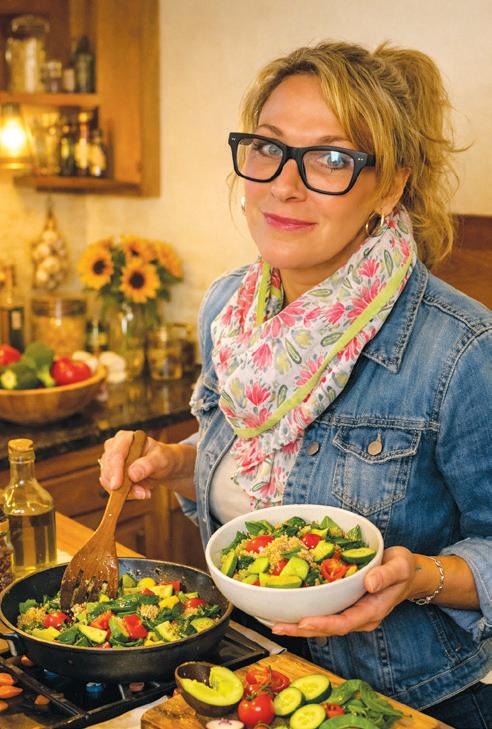
I started reading about cookware—what it’s made of, what happens when it heats, what can quietly make its way into our food over time. And like most things, once you start noticing, it’s hard to stop. Heating leftovers in plastic. That quick microwave moment we barely think twice about. Even my morning coffee from a K-cup— efficient, yes … but suddenly not so simple when hot water meets plastic.
It wasn’t one big, life-altering moment. It was a collection of small realizations that gently—but persistently—asked me to pay attention.
And if I’m being honest, there was a moment where I thought, well… now what?
Because living more consciously can feel like opening a closet you weren’t planning to clean out that day. Once you see it, you see all of it.
I didn’t overhaul everything overnight. (If only it were that simple.)
But I did begin.
For me, that meant slowly replacing my cookware, being more mindful about what I heat food in, and rethinking a few everyday habits that, over time, shape more than we realize.
And that quiet shift—that awareness—is woven throughout this issue.
In “It Takes a Circle,” we’re reminded that sustainable living isn’t a solo journey. It grows through connection, through shared effort, and through communities that strengthen one another in building greener lives together.
You’ll find that same intention in “Spring Bowl Inspirations,” where simple, plant-forward meals reflect how what we choose to eat can nourish both our bodies and the planet.
As the seasons change, so do we. “Allergies and the Nervous System” invites a deeper understanding of how our bodies respond—not just to pollen in the air, but to the pace, stress and rhythms of our everyday lives.
And even our animals are part of this circle. In “At-Home Pet Massage,” we’re reminded that care, connection and healing can be as simple as slowing down long enough to offer a gentle touch.
Each of these articles offers the same quiet invitation: to notice, to choose, to shift—just a little.
Earth Month isn’t about perfection. It’s about presence.
About remembering that the way we live, the way we eat, the way we care—for ourselves, for each other, for this planet—is all connected.


Natural Awakenings is printed on partially recycled and fully recyclable newsprint with black soy ink.
And sometimes, it begins with something as simple as looking down at the pan in your hand… and deciding that even the smallest choices are worth a second look.
Warmly,






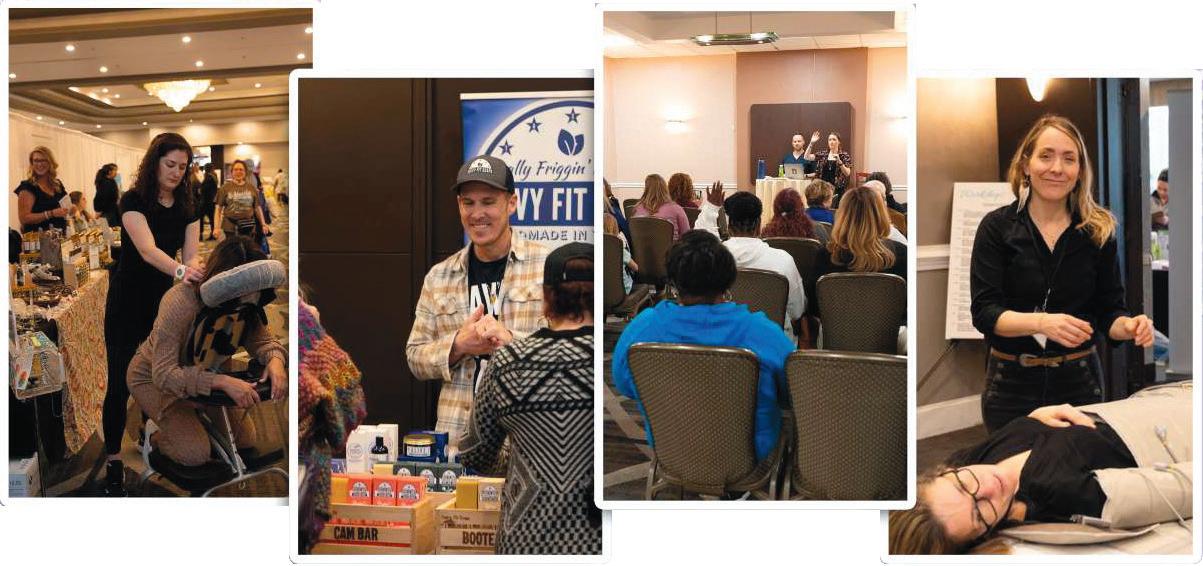
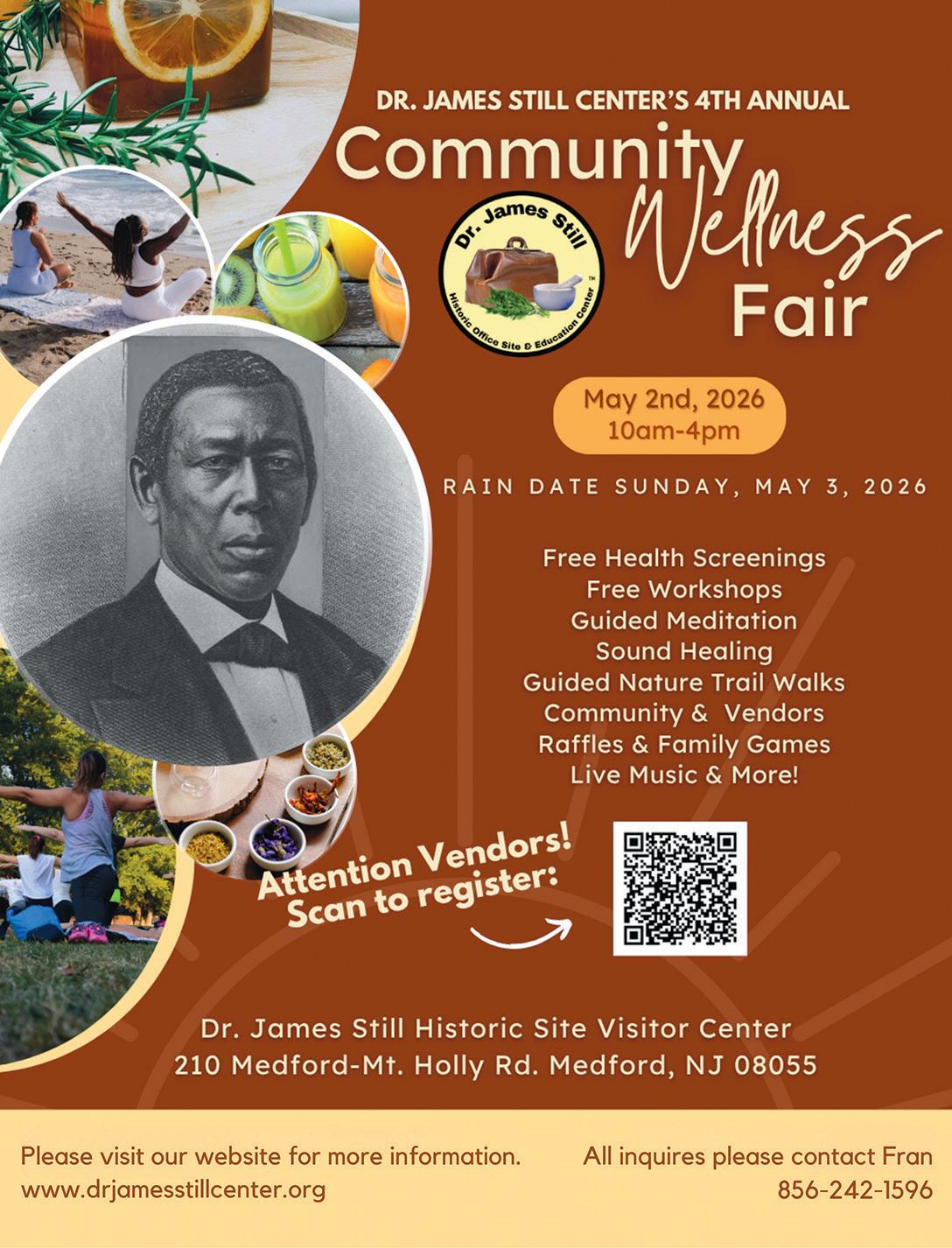
The Dr. James Still Historic Office and Education Center, in Medford, will host its fourth annual Community Wellness Fair from 10 a.m. to 4 p.m. on May 2. This free, family-friendly event features health screenings, workshops, games and a wellness marketplace.

Dr. Still’s historic office stands as a powerful reminder of resilience, healing and self-determination. Known throughout the region as the “Black Doctor of the Pines,” Still was a self-educated herbalist who rose from humble beginnings to become one of the most respected natural healers of the 19th century.
Born to formerly enslaved parents and given only limited formal schooling, Still developed a deep fascination with plants, anatomy and natural medicine. Through years of study and observation, he taught himself the principles of naturopathic healing and created herbal remedies that drew patients from across South Jersey and beyond. In 1855, Still constructed his office in Medford. The building served as both a medical practice and an herbal production center.
Today, the Dr. James Still Historic Office Site Association works to preserve and share this extraordinary legacy.
Location: 210 Medford-Mount Holly Rd. For more information, visit www.DrJamesStillCenter.org.
Yoga practitioners and spiritual seekers are invited to step away from daily routines and reconnect with mind, body and spirit at the annual Holistic Yoga We-Treat, taking place from 3 p.m. on May 17 through noon on May 19 at the Chalfonte Hotel, in Cape May. Hosted by Yoga Cape May, the retreat is designed to offer a supportive and inspiring sacred space for participants of all levels of experience to deepen their personal practice while connecting with a like-minded and spirited community. All levels are welcome and no experience is necessary. “Unplug and plug-in. The destination is within,” say the organizers.

Throughout the weekend, participants will experience a variety of yoga and meditation styles. Each session is thoughtfully designed to help attendees quiet the mind, strengthen the body and cultivate a deeper awareness of their authentic selves while listening with their hearts.
The retreat also includes twilight walking beach meditations and a lively community drum circle; participants are encouraged to bring their own drum or percussion instrument and join in an evening of rhythm, connection and shared energy.
Cost: Registration is $350 per person, with a $100 nonrefundable deposit required to reserve a space. Sacred space is intentionally limited. Full payment is due by April 30. Location: 301 Howard St. For more information or to register, contact Karen Manette Bosna at 609-827-8886 or KBosna28@yahoo.com or visit Facebook or www.YogaCapeMay.com.
Adjust Your Sleep Mattress, in Marlton, is bringing a little extra inspiration to the showroom this spring. From 11 a.m. to 3 p.m. on April 11, the store will welcome Natasha Alvarez, Miss New Jersey Earth USA, for a special in-store appearance focused on wellness, sustainability and better sleep.

The Miss Earth USA organization celebrates women that advocate for environmental awareness and healthy living—values that align naturally with the philosophy behind Adjust Your Sleep Mattress. The showroom is known for its thoughtfully curated collection of high-quality mattresses designed to support deeper, more restorative sleep using natural materials and personalized comfort options.
Visitors will have the opportunity to meet Alvarez, learn more about her environmental initiatives and explore how sleep quality plays an important role in overall well-being. The team at Adjust Your Sleep Mattress believes that the right mattress is not simply a purchase, but an investment in long-term health—supporting proper alignment, reducing discomfort and helping the body recharge each night.
Guests are invited to stop by, say hello and experience the showroom’s relaxed approach to mattress shopping.
Location: 888 NJ-73 N. For more information, call 856-357-3640 or visit www.AYSMattress.com.


Natural Life Wellness Store, in Cherry Hill, continues its mission of community education and natural wellness with three events planned throughout April.

On April 4, the store will co-host a Nutrition and Chronic Disease Workshop with South Jersey Physical Therapy (SJPT) at SJPT’s new Marlton location. This collaborative educational event will explore how nutrition and lifestyle choices can support long-term health and chronic disease management.
Later in the month, Natural Life will host two Free In-Store Sample Days from 9 a.m. to 5 p.m. on April 11 and April 25. Visitors are invited to explore their selection of wellness products, including supplements, vitamins, apothecary-style herbs, hemp-based products and more. Guests will have the opportunity to sample select items, ask questions and learn more about natural approaches to everyday health. Special one-day-only discounts will also be available on featured products.
Natural Life Wellness Store is a family-owned wellness shop dedicated to providing education, quality natural products and a welcoming space for the South Jersey community.
Cost: Free. Workshop location: 270 N. Elmwood Rd., Ste. H100, Marlton. Store location: 480 E. Evesham Rd., Unit 103, Cherry Hill. For more information, call 856-560-0119 or follow them on Facebook and Instagram @NaturalLifeCherryHill.
South Jersey Physical Therapy and Functional Wellness invites the community to a 90-minute educational session exploring a common yet often misunderstood issue—nerve-related discomfort. Titled, “Discover What May Be Causing Burning, Tingling or Numbness in Your Hands & Feet and What to Do Next”, the event will take place at their Marlton clinic, 270 North Elmwood Road, Suite H100 on at 10 a.m. on Saturday, April 25.

Ideal for those experiencing tingling, numbness, burning sensations or changes in balance and confidence, this session offers insight into why symptoms persist and what may be contributing to them.
Attendees will learn practical, approachable strategies to support nerve health, improve mobility and enhance daily comfort—without relying solely on temporary fixes or invasive procedures.
Whether you’re seeking answers or looking for a more natural path forward, this informative session provides guidance in a welcoming, supportive environment.
Register via phone or text: 609-845-3585 or to learn more at SouthJerseyPT.com.
LaRonda Koffi, founder of Alchemy Joy, will offer the Inner Coherence Reset, a seven-week guided program based on the Inner Coherence Method, designed to help participants calm the nervous system and retrain attention. The program will take place in Maple Shade from 5:30 to 6:30 p.m. on Thursdays, April 30 through June 11.

Modern life often keeps the body in a constant state of stress, narrowing perception and making it difficult to recognize new possibilities. The Inner Coherence Reset introduces a structured, accessible approach to developing awareness, regulation and focused attention.
Each weekly session includes a short teaching, a guided coherence practice and reflection prompts that support integration into daily life. Participants will learn practical tools for nervous system regulation, emotional balance and mental clarity.
Cost: $147. For more information, visit www.AlchemyJoy.com/Reset.

Source for Medical and Natural/Organic Skin Care
Medical & Aesthetic Services:
✽ Acne
✽ Warts
✽ Eczema
✽ Psoriasis
✽ Skin Cancer Treatment
✽ Skin Cancer Screening
✽ Fine Lines & Wrinkles
✽ Open Pore Reduction
✽ Age Spots & Melasma
✽ Discolorations
✽ Redness & Rosacea
✽ Acne & Surgical Scarring
✽ Stretch Marks
✽ Skin Tags...etc.
“We are excited to announce that we are the first in NJ to offer the latest Radio Frequency Micro Needling Device
Medical Devices & Cosmetic Products:
✽ Fat Reduction (SculpSure)
✽ Skin Tightening
✽ Total Skin Rejuvenation
✽ Radiofrequency Micro-Needling
✽ IPL & Laser Hair Removal
✽ Botox™ Cosmetics
✽ Juvederm™ Fillers Family
✽ Radiesse
✽ Belotero™
✽ Xeomin™ a highly puri ed alternative for smoothing ne lines and wrinkles
✽ Organic Chemical Peels
✽ Organic Cosmetic Medical Products We o er our own line of Organic Products

Metabolic dysfunction–associated steatotic liver disease (MASLD), formerly known as nonalcoholic fatty liver disease, is a group of chronic liver diseases characterized by the accumulation of excessive fat deposits within the liver. It is estimated that more than 30 percent of the global population is affected by MASLD. Without appropriate treatment, the condition can lead to more serious liver diseases.
A study published in the Annals of Hepatology examined the association between drinking soft drinks and MASLD. The study analyzed the weekly consumption of more than 1,700 Mexican healthcare workers and their risk of liver dysfunction. The researchers discovered that consuming even a single soft drink a week was associated with an elevated risk of MASLD, with the risk increasing with increased consumption. Notably, the association was more pronounced in men compared to women. The study attributed this to soda’s excessive fructose content, which overloads the liver and leads to fat buildup and inflammation.

A 2026 review published in Pharmaceutical Biology investigated how often turmeric products contained unlisted or misleading ingredients. The authors analyzed data from 48 global studies, covering more than 2,200 turmeric samples. They found that approximately one in five products were adulterated.
Turmeric marketed as a culinary spice was frequently diluted with fillers like corn starch or colored with synthetic dyes to enhance its visual appeal, compromising its quality and effectiveness. In parts of South Asia, turmeric powder was colored with lead-based compounds, posing serious health risks, especially for children. Natural turmeric supplements were most commonly tainted with synthetic curcumin. Countries with stricter regulations and enforcement mechanisms had lower rates of adulteration. For example, the adulteration rate in the United States and Canada was 14.9 percent.
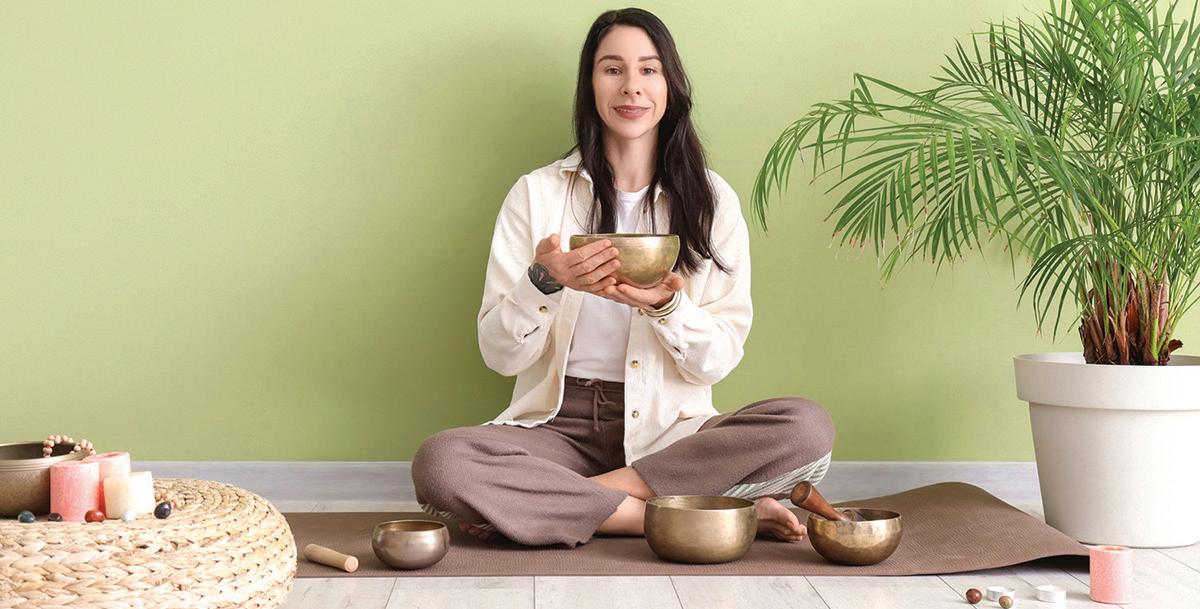
A 2023 study published in the European Journal of Investigation in Health, Psychology and Education compared the anxiety-relieving effects of a Tibetan singing bowl sound-based treatment to a progressive muscle-relaxation session that involves tensing and releasing muscles. A third control group did not receive any treatment. Fifty adults experiencing high anxiety without a diagnosed anxiety disorder were randomly assigned to one of the three groups.
Before and during each 45-minute session, the researchers monitored each participant’s heart rate variability (HRV) and brain wave patterns, and they also collected self-reported anxiety assessments. The singing bowl group showed the strongest physiological signs of relaxation, including brain activity associated with calmness and increased HRV, which indicates the body is in a relaxed, restorative state. Both the singing bowl and muscle-relaxation groups reported feeling less anxious than the control group, but the singing bowl group experienced the biggest reduction in self-reported anxiety. The study suggests that even one short session with a Tibetan singing bowl can create measurable psychological and physical relaxation.

The World Happiness Report 2025 underscores the pivotal role of social connections in human well-being, happiness and prosperity. Individuals with strong social ties tend to experience greater happiness, reduced stress levels, heightened life satisfaction, diminished susceptibility to depression and increased community engagement. These connections are associated with improved health outcomes, enhanced creativity, elevated income levels and extended lifespans.
The report presents new evidence on a measurable and cross-cultural indicator of social connection and well-being: sharing meals. The authors discovered that across various demographics, including age, gender, nationality, culture and region, individuals engaging in more frequent meal sharing exhibited significantly higher levels of life satisfaction and positive emotional states, while simultaneously experiencing lower levels of negative emotional states.
Countries that reported higher levels of shared meals also demonstrated greater social support and lower levels of loneliness. Meal sharing is influenced by cultural and social practices. In Latin America and the Caribbean, people share most of their meals with others, but in South Asia, individuals primarily consume meals alone. In the United States, approximately one in four people reported eating alone, a 53 percent increase since 2003. This trend is particularly pronounced among younger people and may reflect broader shifts in social and community engagement.

7-Week Program to Calm the Nervous System and Retrain
Based on The Inner Coherence Method™

Modern stress narrows perception. When the nervous system settles, awareness expands, and new possibilities become visible
Thursdays 5:30–6:30 PM April 30 – June 11
Maple Shade, NJ
Limited small-group program
Reserve your place today! AlchemyJoy com/reset

A 2025 study published in Current Biology reports the first documented use of tools by marine mammals. Scientists have been studying three pods of killer whales, also known as orcas, in the Pacific Northwest for decades. Using unmanned drones, they observed the whales biting off the stalk ends of bull kelp and using them as tools to massage and scrub each other’s bodies—an activity scientists call allokelping. Thirty sightings of this activity among three pods were documented over the span of 12 days, involving different ages and sexes. The scientists believe allokelping may be a form of social, tool-assisted skin grooming. They also hypothesize that the behavior is unique to this killer whale society.


Citrus greening is a bacterial disease spread by an invasive insect that causes oranges to prematurely drop before they ripen and sweeten. The disease has decimated orange crops around the world, including the reduction of Florida’s output by 90 percent since 2005. Without intervention, experts warn orange supplies could disappear by 2050.
Spring will come and so will happiness. Hold on. Life will get warmer.
—Anita Krizzan
Yellowstone National Park sits atop a giant “supervolcano” known as the Yellowstone Caldera, spanning parts of Wyoming, Idaho and Montana, where the magma is just three to eight miles below the surface. Though rare, past eruptions have been massive, with the largest two occurring millions of years ago. The 30-by-45-mile caldera (defined as a large, cauldron-like hollow formed when a volcano collapses inward) has been undergoing episodes of uplift (rising) and subsidence (sinking) for thousands of years, resulting in ground deformations that significantly alter the Earth’s surface.
Scientists believe this activity is a type of natural pressure release, and the chances of an eruption are extremely low. Nevertheless, they continually monitor the area for seismic activity using radar maps, GPS satellites and 17 ground stations. About 1,500 to 2,000 earthquakes are documented annually, and a 19-mile-wide dome was recently discovered at the northern rim of the Yellowstone Caldera, in northwest Wyoming. While this bulge is expected to reverberate for years, experts believe it is unlikely to erupt.
Coca-Cola has joined forces with the Massachusetts Institute of Technology to lead a global initiative to help fight the disease. They are rallying growers, researchers and scientists to detect, manage and bring an end to citrus greening. The team is hoping to stabilize orange supplies and prices, while protecting citrus farming communities around the world.

Scientists from Aarhus University, in Denmark, analyzed the growth of more than 31,000 tree species around the world. Their study, published in Nature, found an increasing incidence of fast-growing trees that dominate slower, long-lived species, resulting in a loss of diversity and forest resilience. Slower growing species have been the mainstay of forest ecosystems and a key to biodiversity and carbon storage, especially in tropical regions. Now, many face possible extinction.
Faster growing species have lighter leaves, softer wood, lower wood density and shallower root systems that make them vulnerable to die-offs. Although they recover more quickly from wildfires and are preferred by the timber industry, these forests can be destroyed more easily by storms, droughts and pests. Even when a forest looks healthy, the lack of native, slow-growing tree species can put the entire ecosystem at risk.

Prevention is the hallmark of good healthcare. As your proactive partner in health, I am devoted to helping you and your family stay healthy. At The Institute for Medical Wellness, we integrate traditional family care with holistic and complementary medicine to treat the whole person for a healthy heart, mind and body. Our balanced, caring approach empowers you to tap into your body’s natural ability to heal by addressing the root cause of illness – not just medicating symptoms.
We offer:
Direct Primary Care
Compassionate, supportive, nonrushed Office Visits
Nutrition and Supplement
Counseling
Paleo Diet and Lifestyle Counseling
Functional genetic testing and evaluation




Service and Testing:
Advanced Wellness Testing
Low Dose Naltrexone (LDN) for autoimmune disease and the prevention of recurring cancers
Please visit our website to sign up for our free newsletter

by Natural Awakenings staff
Sustainable skin care is achievable without costly products or lengthy routines. Creating quick, easy and affordable formulas at home reduces our reliance on single-use plastics, petroleum-derived agents, irritating alcohol and other harsh chemicals found in many store-bought items. By storing them in glass containers and buying ingredients at bulk-refill stores, wasteful packaging can be virtually eliminated.
DIY scrubs, facial masks, bath crystals, moisturizers and toners are made with simple pantry ingredients such as oats, honey, sea salt and olive oil, which are packed with antioxidants and anti-inflammatory properties. Applied topically, aloe vera gel from a houseplant effectively treats burns and soothes chronic conditions like rosacea. Two specialized ingredients with beneficial properties are fractionated coconut oil, which is processed to be clear, colorless, long-lasting and always liquid, regardless of temperature; and pure culinary rosewater made by simmering rose petals.

Even with natural ingredients, the American Academy of Dermatology recommends doing a patch test on an inside arm. Leave the product on for as long as it would be used on the face, monitoring for swelling, redness or itching.
Vanilla Sugar Scrub: Combine one-third cup brown sugar, one-quarter cup olive oil or fractionated coconut oil and one-half teaspoon alcohol-free vanilla extract. Store the mixture in a small jar and use one teaspoon at a time to exfoliate the skin, applying gentle, circular motions by hand, then rinsing with warm water.
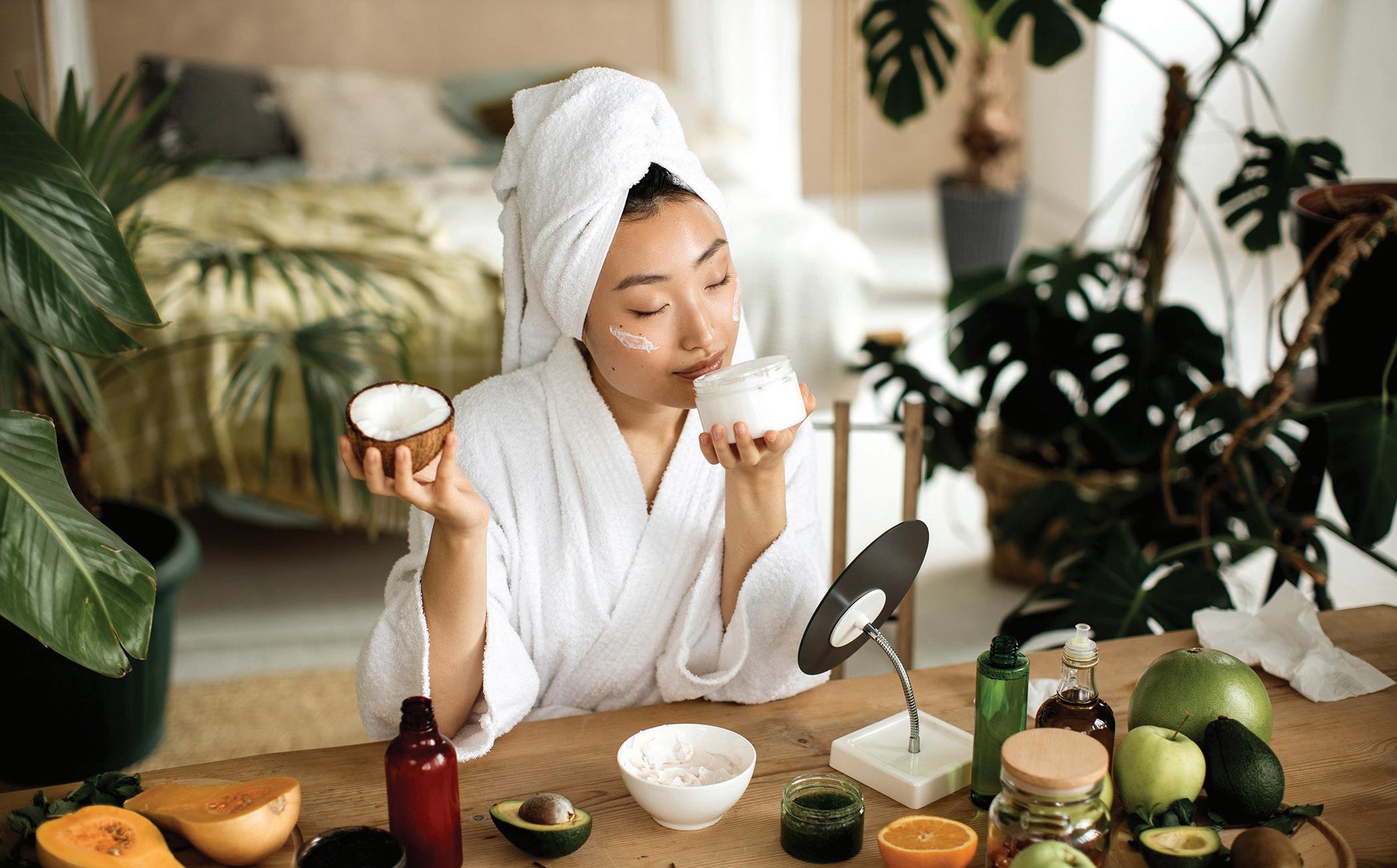
Soothing Oatmeal Mask: In a blender, pulse one-half cup rolled oats into a fine powder. In a bowl, combine with one tablespoon honey, one tablespoon olive oil and two teaspoons warm water until it thickens into a creamy paste. Gently massage onto a dampened face and leave on five to 10 minutes before rinsing with warm water.
Fragrant Bath Salts: Combine three cups Epsom salt, one-and-a-half cups sea salt or Himalayan pink salt, one-half cup baking soda and 20 drops of one or more essential oils such as pine needle, rose, lavender or eucalyptus. The yield is enough for five to 10 baths; keep in a glass jar for up to six months. Add one-half to one cup to the bath. Can also be used for a foot spa.
Rosewater Facial Toner or Spritzer: Pure culinary rosewater can be a gentle toner that hydrates, soothes, controls excess oil and tightens pores. Apply straight from the bottle with a soaked cotton ball. May also be refrigerated in a spray bottle for a refreshing facial spritz.
Lip Balms: For cracked lips, apply a thin layer of raw honey overnight for its hydrating and antibacterial benefits. Other soothing ingredients that can be used as needed throughout the day are aloe vera and coconut oil.
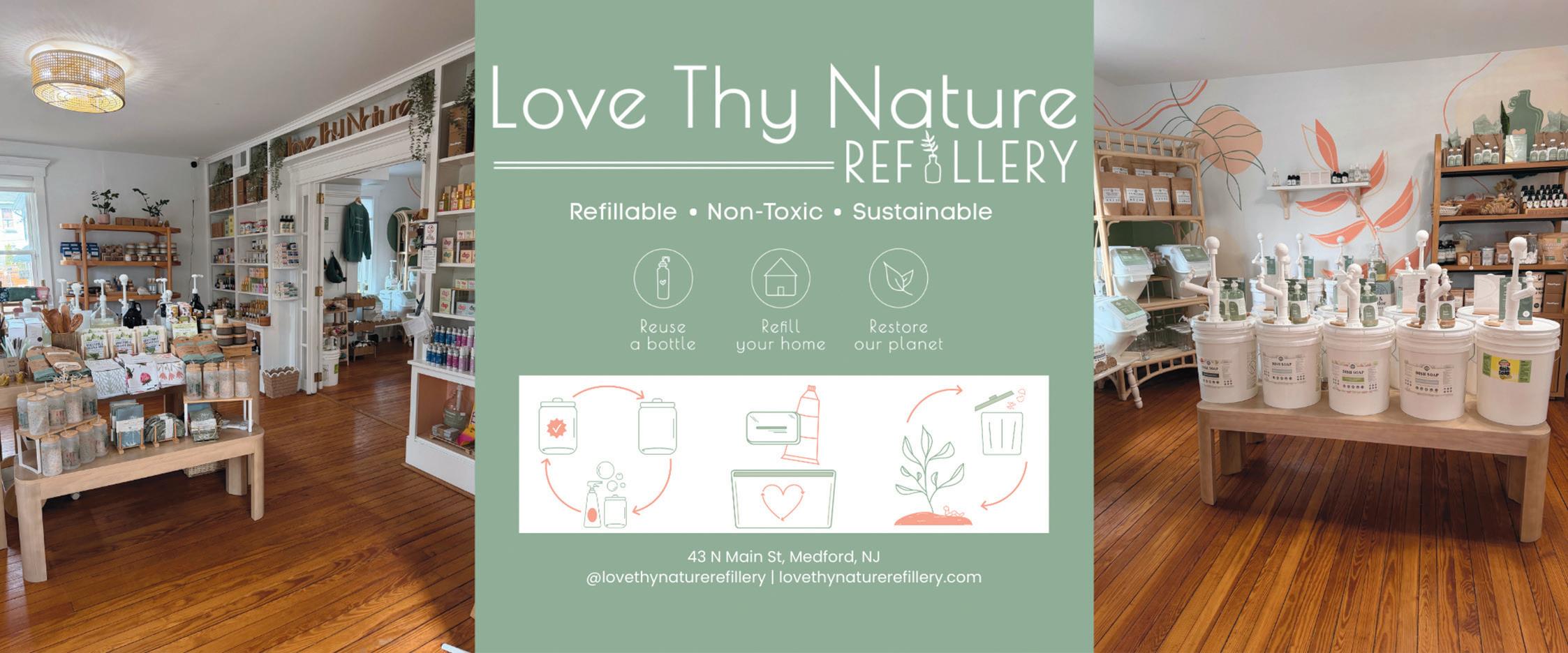
Many of us toss a bottle out without thinking more about it. At Love Thy Nature Refillery, in Medford, owner Dana Jeffas invites the community to pause—and refill instead.
After nearly two decades working in the beauty industry as a licensed skincare specialist, corporate educator and national sales manager, Jeffas began noticing something she could no longer ignore: the endless stream of plastic bottles and packaging attached to everyday personal care products. Behind the polished branding was a growing environmental cost.
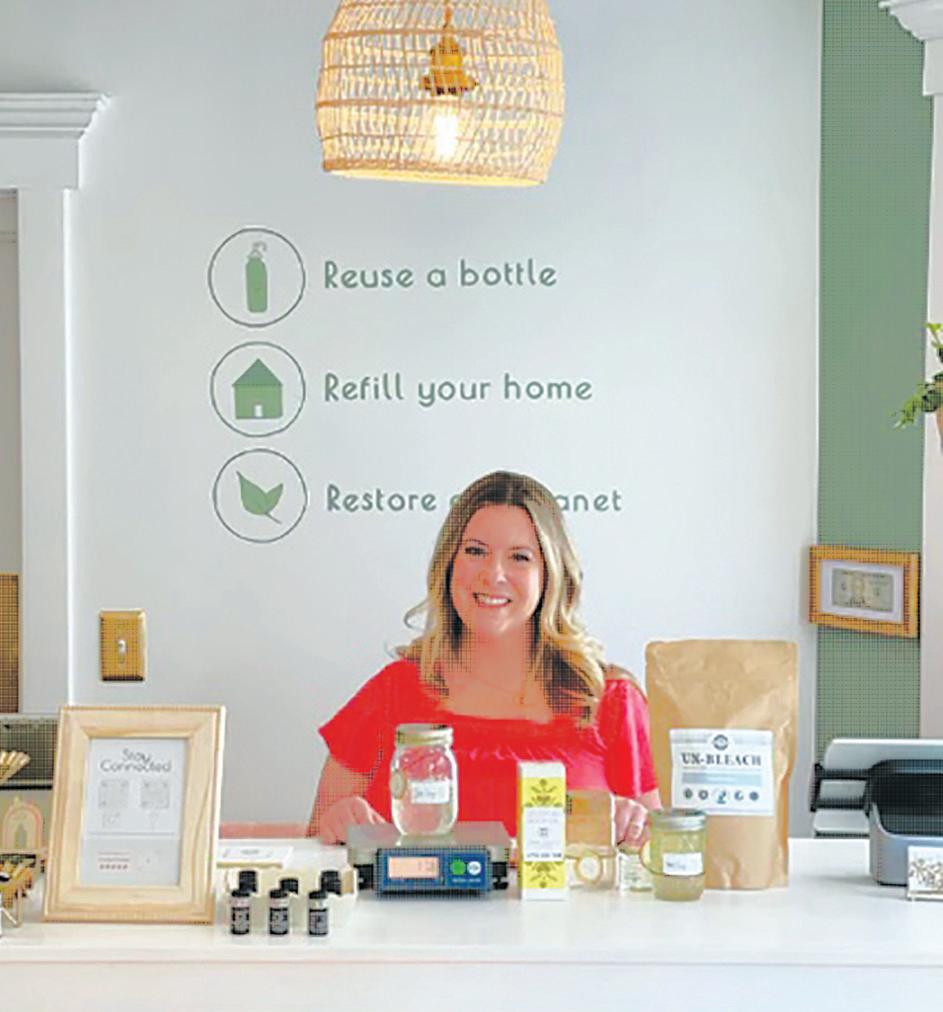
Dana Jeffas
At around the same time, Jeffas faced her own health challenges, which led her to explore more natural ways of living. Working with a holistic practitioner and a functional medicine doctor opened her eyes to the connection between ingredients, environmental exposures and overall wellness. What began as a personal journey toward healing soon sparked a larger realization: The next chapter of her career needed to align with the values she was now living.
Love Thy Nature Refillery was born from that shift.
For those new to the concept, a refill market offers an alternative to the traditional “buy, use, toss” retail model. Instead of purchasing a brand-new plastic bottle each time a product runs out, customers bring their own clean dry containers—or purchase reusable glass ones in the store—and refill them with the amount they need.
At Love Thy Nature, customers step up to refill stations stocked with natural household and body care essentials. Everyday products such as laundry detergent, dish soap, hand soap, body wash and plant-based cleaning solutions can all be replenished without creating additional plastic waste.
Customers simply tear and tag their empty container, fill it with their chosen product and pay for what they pour. The result is less packaging, less waste and greater awareness of what we use in our homes every day.
Sustainability extends beyond the refill stations. Love Thy Nature partners with brands that prioritize responsible production and closed-loop packaging programs designed to keep containers in circulation rather than sending them to landfills. The shop also supports recycling initiatives for harder-to-process items and offers carefully selected products made with safer, toxin-free ingredients.
Equally important to Jeffas is the sense of community that has grown around the store. Conversations across the refill counter often turn to simple lifestyle shifts—switching to safer cleaning products, reducing household waste or making small choices that support both personal and planetary health.
Earth Month is a natural reminder that caring for the environment does not always require sweeping change. Often, it begins with everyday habits.
At Love Thy Nature Refillery, it might start with something as simple—and meaningful—as bringing a bottle back to be filled again.
Love Thy Nature Refillery is located at 43 N. Main St., Medford, NJ. For more information, visit www.LoveThyNatureRefillery.com.

by Hannah Tytus
In nature, nothing stands alone. Permaculture design—the art of creating sustainable landscapes—mirrors this by building resilience through integration rather than separation. It organizes life into “zones” that circle outward from the home to the wider community.
Conservation efforts are likewise woven together when Earth-conscious individuals form circles of community that grow and reach, stretching their tendrils to interweave with other circles, strengthening the protective, nourishing roots of homegrown actions.
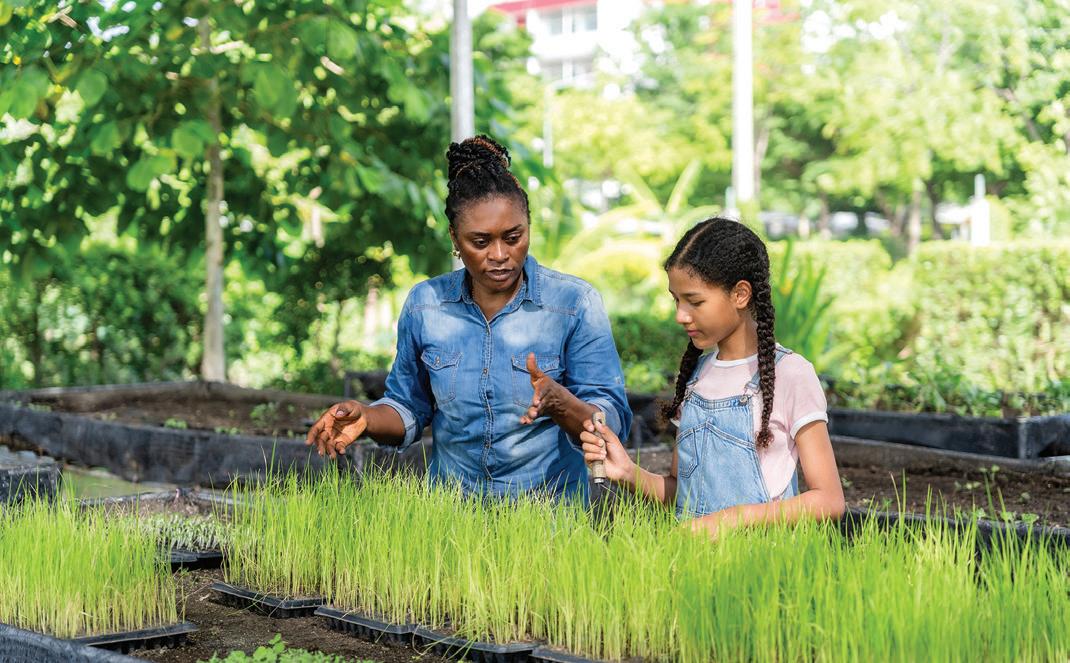
Working directly with permaculture, Brandi Mack strives to spark collective change and build lasting legacies of justice and well-being. Influenced by her grandfather, who farmed the fertile soils of Oakland, California, she is a holistic health educator, permaculture designer and co-founder of The Butterfly Movement. Describing the work of this nonprofit, she explains, “We focus on cultivating sovereignty, healing and personal development through land, food and art for Black women and girls.”
“My grandfather said, ‘If you build the soil, you can grow anything,’” Mack recalls. “We facilitate spaces for Black youth and their mothers to reconnect with the land through gardening, learning about food as medicine and reclaiming a relationship with the natural world. Our focus is on our beloved sisterhood—the feminine—as Black women and girls. If we can elevate that, the world will elevate. That is justice.”
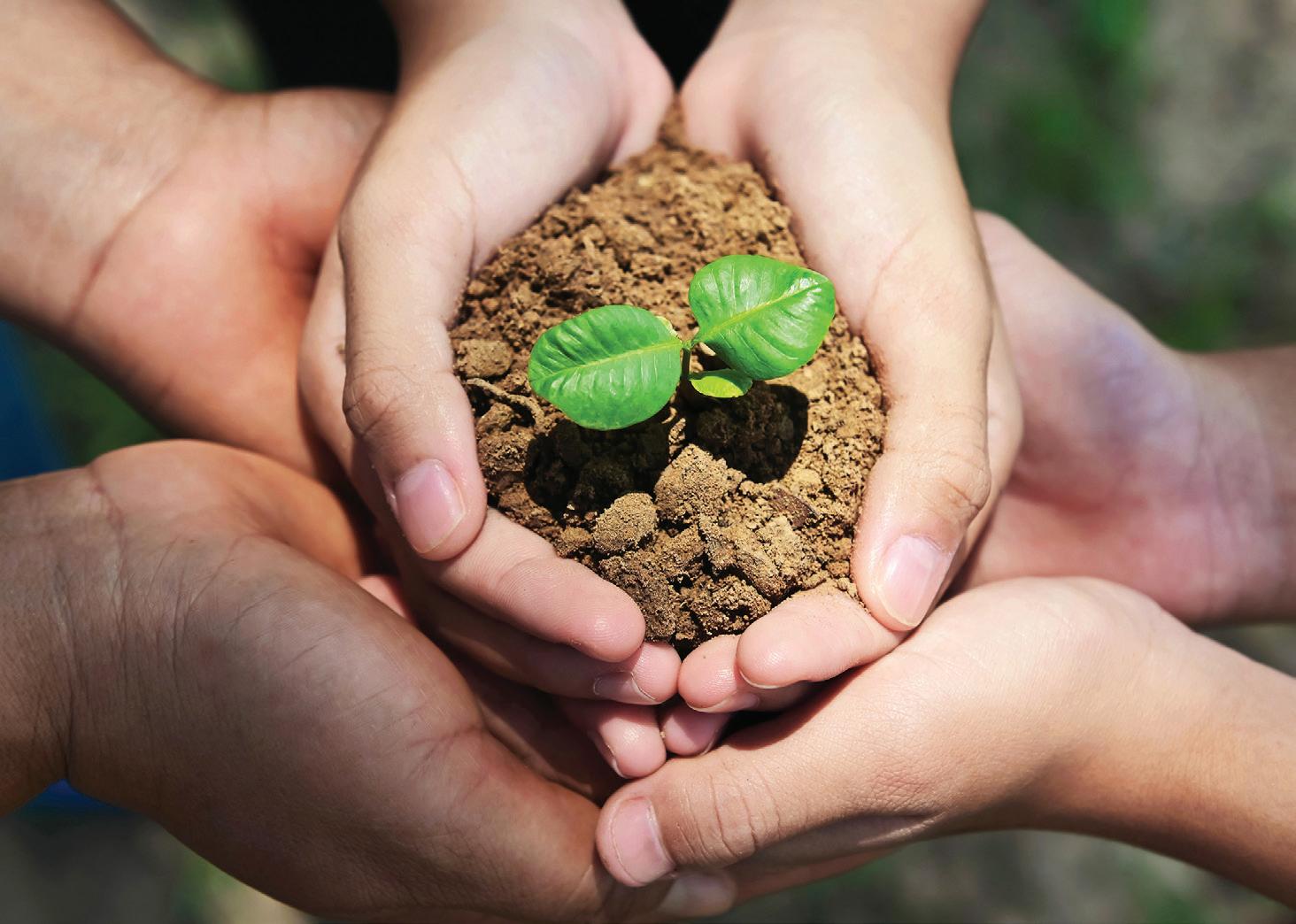
Mack envisions the collective potential of the next generation, knowing that they have gifts to share. She has raised her daughters by example, teaching them that it is okay to experiment and grow, and she also encourages older generations to let go of antiquated narratives and let the youth lead.
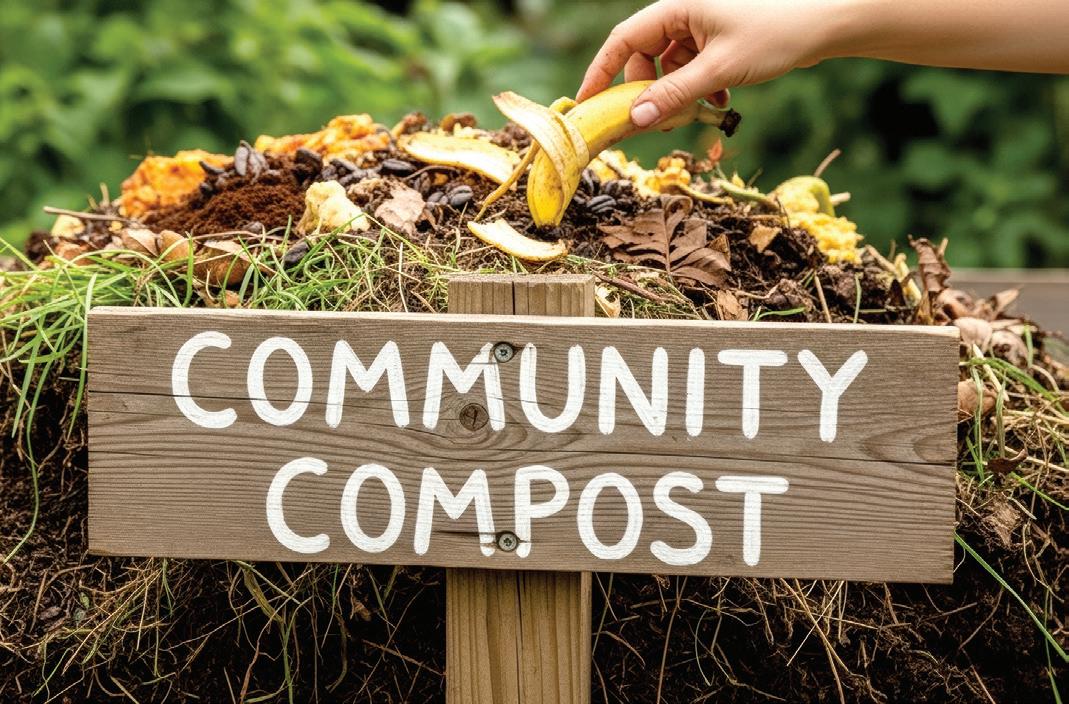
Marvin Hayes is a spoken word artist and executive director of the Baltimore Compost Collective. When he founded this youth-led initiative 11 years ago, he wanted to address what is known as the “sacrifice zone” of waste incineration that blew pollutants all over South Baltimore, threatening the health of his community.
Research published in the Australian and New Zealand Journal of Public Health suggests that living near waste incineration facilities is associated with higher risks of certain cancers, birth defects and other negative health outcomes. In the United States, such health burdens are not evenly distributed because 80 percent of municipal solid waste incinerators are located in communities where more than a quarter of residents identify as people of color, live below the federal poverty line, or both.
“The wind doesn’t segregate or discriminate,” says Hayes, noting that air pollution from sacrifice zones blows equally to all neighborhoods, becoming a collective public health concern. Today, he serves 400 households and diverts 2,000 pounds of weekly waste from the incinerator. He uses his business to improve public health, educate local youth about entrepreneurship and advocate for environmental justice in the community.
Instead of going to a trash incinerator, household waste can become an agent of regeneration. According to Hayes, composting nourishes nutrient-depleted soil, making it excellent “black gold” for growing food. It also remediates soil that may be contaminated with lead or other metals and diverts waste from air-polluting incinerators, while providing an opportunity for the community to come together, he explains.
“Composting is critical, because when food ends up in a landfill, it chemically degrades differently than it would in a compost pile, producing methane gas that is 28 times worse than CO2,” says Samuel McMullen, co-founder of ZeroWaste.org alongside his sister, Lydia McMullen-Laird. “The hardest thing to do in living a zero-waste lifestyle is addressing food and food packaging,” he shares, adding that one-third of global greenhouse gas emissions are linked to the making, transport and refrigeration of food.
According to the U.S. Environmental Protection Agency, food
waste is the number one component in landfills, accounting for one-quarter of their mass. The average American sends approximately 350 pounds of food waste to the landfill each year, with a family of four losing $1,500 annually to uneaten food, according to the U.S. Department of Agriculture.
To address this issue through prevention, McMullen runs the Zero Waste Challenge—an invitation to produce as little waste as possible for a week, while reflecting on the garbage created. On Earth Day, a similar challenge can be accessed virtually from anywhere in the world at ZeroWaste.org.
“Learning follows action. Take action first,” advises McMullen, who sees zero-waste habit-building as a practical entry point for broader change. Holding corporations accountable for climate change and focusing only on institutions to make a difference can make people feel powerless, he observes. By tracking their trash, choosing reusables and making small sustainable swaps, individuals can begin to build tangible skills for activism efforts in systems change.
“The beauty of the [Zero Waste] Challenge is that you confront your own waste footprint,” McMullen says, adding that participants are invited to examine their trash from a place of curiosity, rather than criticism. “It’s easy to cut your waste in half. The last 10 percent is very challenging, but that’s okay. The goal is progress, not perfection.”
McMullen relates that even eating at a restaurant can be an opportunity to practice zero-waste principles by bringing a reusable container and bag for leftovers to reduce single-use packaging and opening playful dialogue with restaurant staff to make a game of reducing waste throughout the meal. “Don’t be annoying about it,” he
quips, noting that reducing our personal waste footprint is secondary to building a social culture of sustainability and teamwork. “The main function is to build awareness with other people—to create common ground and to show that there is another way.”
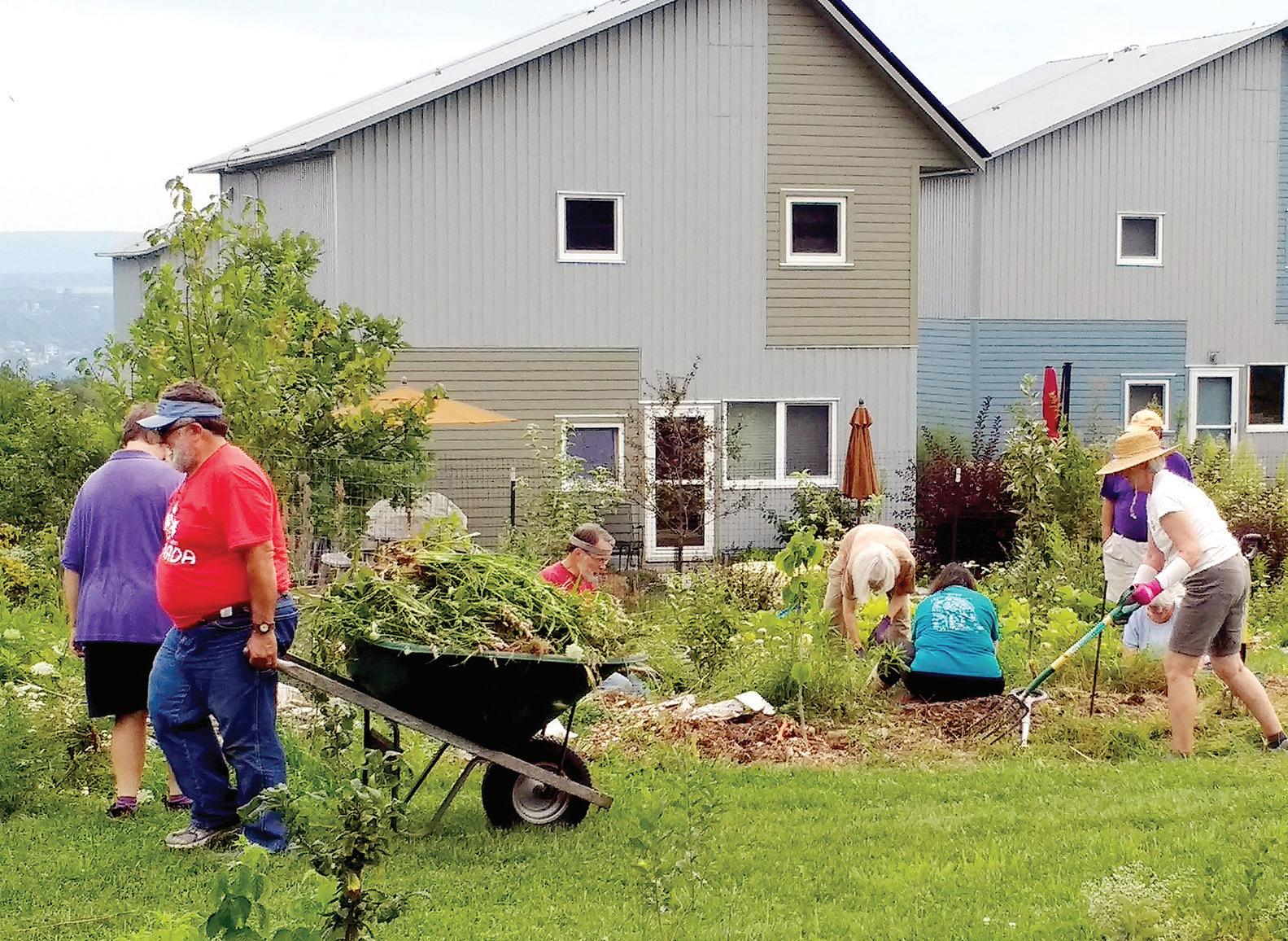
For three years, Jen Myers, Ph.D., has called the EcoVillage at Ithaca (EVI) home. This upstate New York community is designed to be socially, culturally, economically and ecologically sustainable, integrating human life harmoniously with nature. Members rely on

renewable energy, shared spaces, local food production and pooled resources to make sustainable living feasible.
According to Myers, EVI shares 175 acres of land—far more than a single homeowner could handle—including farms, forests and scenic natural spaces that are diligently stewarded by community members. Since its modest 30-household beginnings in the 1990s, it has grown into a lively community of 100 households. Living in community promotes sustainability by reducing individual environmental footprints and encouraging collaborative eco-friendly practices.
“I live in a net zero home, and it’s really rewarding having the infrastructure to make sustainable living easy,” says Myers, project director of the Thrive Ithaca EcoVillage Education Center. “I don’t have to do as much consuming as I would as an individual running a household in a typical suburban neighborhood.” Lawnmowers, playground equipment, compost bins and more are all shared and enjoyed together.
Myers likes to highlight the recreational opportunities available at EVI, including hiking trails and ponds for swimming and ice skating, as well as EVI’s communal dining spaces that make togetherness easy. The community also models multi-generational sustainability.
“It is such a joy to know I am modeling conservation behaviors in my household with my daughter,” she says.
Everyone at EVI shares leadership responsibilities, meeting monthly to make decisions on critical issues. Residents commit two to four hours a week to facilitate the community, contributing based on their strengths in areas like administration, cooking, gardening, compost management and recycling. Myers appreciates this skill sharing, saying, “I’ve been so pleasantly surprised with how much value living in community brings to my life.”
Sustainability is not a checklist but a culture shaped by what we normalize and celebrate. McMullen urges joyful modeling of alternatives, reminding us that “your actions are not really about you.” Visible practices—solar panels, reusable mugs, composting—ripple outward and shift norms over time. Myers calls this “ground-up design,” a liminal space where communities create the world they want by sharing resources and celebrating seasonal food, redistributing power and reducing isolation. Hayes centers youth leadership, cultivating agency and business skills in food systems so that youth are equipped to shape their own futures.
Drawing from permaculture’s lessons, Mack says, “The soil is loyal. When you study permaculture, you are reminded that we are all connected. The only way we’re going to fix the planet is by remembering we are connected. When you know you’re doing something that affects someone else, you’ll stay committed. The reality is we are one species on a planet in the middle of the universe. We learn everything from nature. We are nature. It’s important for us to understand right now that we go fast alone and far together.”
Hannah Tytus is an integrative health coach, former writer at the National Institutes of Health and host of the Root Shock podcast, exploring cultural underpinnings of health.




• Stop Smoking
• Lose Weight
• Eliminate Phobias
• Control: Stress, Anxiety, Depression, Pain & Anger
Also Become a Certified Hypnotherapist through The Institute of Hypnotherapy
Discover the Parts that Keep You Blocked! Learn New Positive Behaviors! Cure Phobias and Deep Seated Trauma.


Dr Jaime Feldman, Hypnotherapist Doctor of Clinical Hypnotherapy
Chairman I.H.F. Medical & Dental Division
Free Phone Consultation: 856-231-0432
214 West Main St - Suite L4
Moorestown, NJ 08057
DrJaimeF@aol.com


by Maya Whitman
Food bowls are popular because of their vibrant versatility, inventive flavor combinations and health-conscious appeal. Served warm or cold, they begin with a base of grains, salad greens or broths, followed by layers of veggies, fresh herbs and protein sources, then finished with a drizzle of flavorful sauce. Assembling these well-balanced, nourishing meals offers an opportunity to practice mindfulness, creativity and even joy, making it a truly multi-layered experience for the mind, body and soul.
Spring enables us to add another enriching layer to the experience with sustainable, plant-forward bowls that celebrate local, in-season produce—reducing shipping and supporting the local economy. Fruits, vegetables, grains, nuts, seeds, beans and lentils require less land, water and energy to produce than meat and dairy. Weekend trips to farmers markets become extra special with the arrival of annual delicacies like garlic scapes, ramps (wild leeks) and earthy mushrooms such as morels and porcinis.
Making spring bowls throughout the week is also a great way to minimize food waste by incorporating peels to make broth, repurposing leftovers and buying grains and other pantry staples in bulk with minimal plastic packaging. To save time, grains and beans can be cooked once a week and used, as needed, in a variety of bowl combinations.
“Thoughtful choices—both in what we eat and how we shop—help nourish our bodies and our communities,” says Gwen Eberly, a chef and instructor at Zest Cooking School, in Lititz, Pennsylvania. Her favorite bowls feature a foundational layer of leafy greens like spinach or arugula, followed by crunchy textures such as radishes, carrots, sprouts and microgreens, and a layer of crispy tofu for the protein. Additional flavors may include roasted vegetables (asparagus) and fresh notes (snap peas or green onions).
“After winter, many people naturally want meals that feel energizing, colorful and lighter, which is why plant-based meals are


so great,” says Annemarie Ranallo, the owner of Forest Greens Juice Bar, in Lake Bluff, Illinois. Some of her favorite ingredients for spring bowls are leafy greens, roasted or fresh vegetables such as broccoli, Brussels sprouts, sweet potatoes, cucumbers and tomatoes, as well as plant-based proteins like chickpeas and lentils. She underscores the importance of including different textures in a bowl by combining something crunchy, something creamy and something fresh.
Part of the fun of creating a spring bowl is discovering which flavors and textures pair well. Gluten-free options like quinoa, kasha (buckwheat), wild rice and amaranth make any bowl satisfying without being heavy, and they are especially delicious with sautéed mushrooms, roasted eggplant or white beans. Lentils serve to accentuate the earthy depth of oven-roasted root vegetables like rainbow carrots and beets.
Savory bowls embellished with creamy dressings are wonderful for lunch and dinner, but the introduction of sweetness with layers of yogurt, fruit, nut butters and crunchy seeds opens up possibilities for dessert and breakfast.
Eberly notes that a good, homemade sauce can tie a bowl together. Her favorites include sesame-ginger, lemon tahini, parsley-mint, chive yogurt and zesty lime-cilantro. “A well-chosen dressing can redefine familiar plant-based ingredients, steering flavors toward whatever you’re craving that day— bright and citrusy, earthy and rich, or fresh and herby,” she explains.
Homemade dressings can be whipped up in minutes, offering wonderful flavor without excessive sodium or packaging waste. Spring bowls become memorable experiences with
citrus vinaigrettes or creamy sauces featuring vegan mayo or plain yogurt and spicy wasabi, Dijon mustard or horseradish. Conjuring exotic sauces is easy with ingredients like tahini, miso paste, ground peanuts, coconut milk and spices. Bowls also wake up in the presence of robust herbs like cilantro, parsley, mint and basil.
Championing the element of surprise, Eberly recommends textural finishes like sesame or pumpkin seeds, peanuts, sprouts or kale chips. These garnishes add a final burst of flavor, taking a meal over the top. Ranallo, on the other hand, cautions against adding too many competing flavors. For her, simplicity is the key. Whether embellished or straightforward, the answer lies in personal preference and experimentation. Spring is the time to embrace our creative side and build a balanced, one-bowl meal that mixes textures and flavors to our heart’s (and tastebuds’) content.
Maya Whitman is a frequent writer for Natural Awakenings.
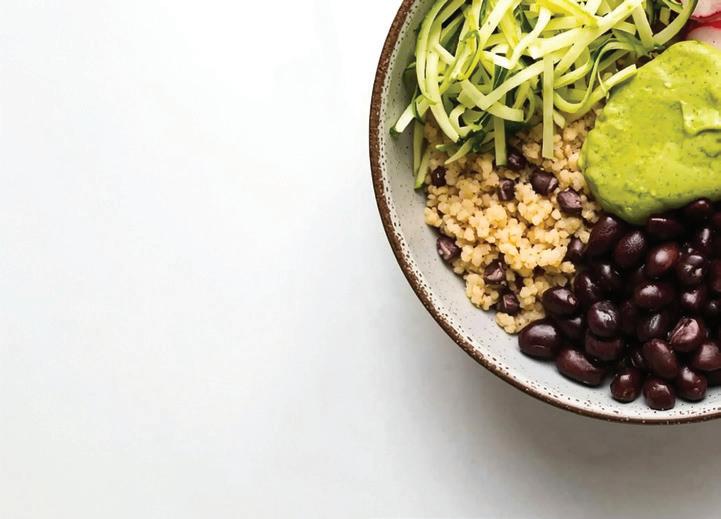



This hearty vegan meal for lunch or dinner includes bright flavors, cool and warm temperature experiences and a protein-packed, creamy dressing.
YIELD: 4 SERVINGS
DRESSING:
1 ripe avocado, scooped out ½ 16-oz package of tofu, drained well
1 Tbsp pure maple syrup
1 Tbsp tamari
1 Tbsp extra-virgin olive oil
1 Tbsp apple cider vinegar
1 Tbsp water
1 large sprig of fresh dill
BOWL:
3 cups cooked plain couscous ¼ can black beans, drained and rinsed
Small handful of fresh raw dandelion greens, chopped
2 scallions, finely chopped
1 medium raw zucchini, shredded
1 medium raw carrot, shredded
2 medium radishes, shredded
A few slices of raw red onion (optional)
To make the dressing, combine the avocado, drained tofu, maple syrup, tamari, extra virgin olive oil, apple cider vinegar, water and dill in a blender and mix until smooth and creamy. Cover and place in the refrigerator until serving.
Cook the couscous according to the label instructions.
To assemble, divide the warm, cooked couscous among four bowls. Cover the couscous with black beans, followed by scallions and dandelion greens. Add a layer of shredded zucchini on one side of the bowl, followed by a layer of shredded carrot on the opposite side. Add shredded radishes down the middle, between the zucchini and the carrot. Top with sliced red onion (optional). Drizzle generously with the creamy avocado-dill dressing. Serve immediately.
Recipe courtesy of Marlaina Donato.
Do you suffer from digestive problems, autoimmune conditions, fatigue, insomnia? Do you have children with eczema, allergies, autism, ADHD, constipation?
Charlotte Nussbaum, MD, a triple board-certified pediatrician and internist can work with you to reclaim your and your family’s health.
Addressing the root cause
Holistic care for people of all ages
Personalized, collaborative treatment
Functional and evolutionary medicine
Safe and natural treatments
Medford Functional Medicine medfordfunctionalmedicine.com 609-969-4844
YIELD: 1 SERVING
¾ cup unsweetened dairy or plant-based yogurt
1 Tbsp whole golden flaxseeds or 1 Tbsp ground regular flaxseeds
⅓ cup fresh or unsweetened canned pineapple chunks
Small handful of golden raisins
1-2 dried Calimyrna (Turkish) figs, chopped
1 Tbsp shelled pistachios (halves or pieces; can be substituted with pecans)
¼ cup unsweetened dried coconut chips or flakes, toasted or untoasted
1 tsp pure maple syrup or honey
1 tsp flower pollen (bee pollen)
Spoon dairy or plant-based yogurt into a cereal-sized bowl. Sprinkle flaxseeds over yogurt. Add a layer of pineapple chunks, then a layer of golden raisins and chopped figs. Top with pistachios or pecans and coconut before drizzling with maple syrup or honey. Sprinkle flower pollen on top and serve immediately.
Note: Those suffering from moderate-to-severe seasonal allergies should omit the flower pollen.
Recipe courtesy of Marlaina Donato.

• Owned and operated by a Nutritionist
• Educating Customers Since 1982
• Special Orders are Our Speciality
• 10% Off All Supplements Every Day
• No Additional Charge for Credit Cards
- We Appreciate Your Business!



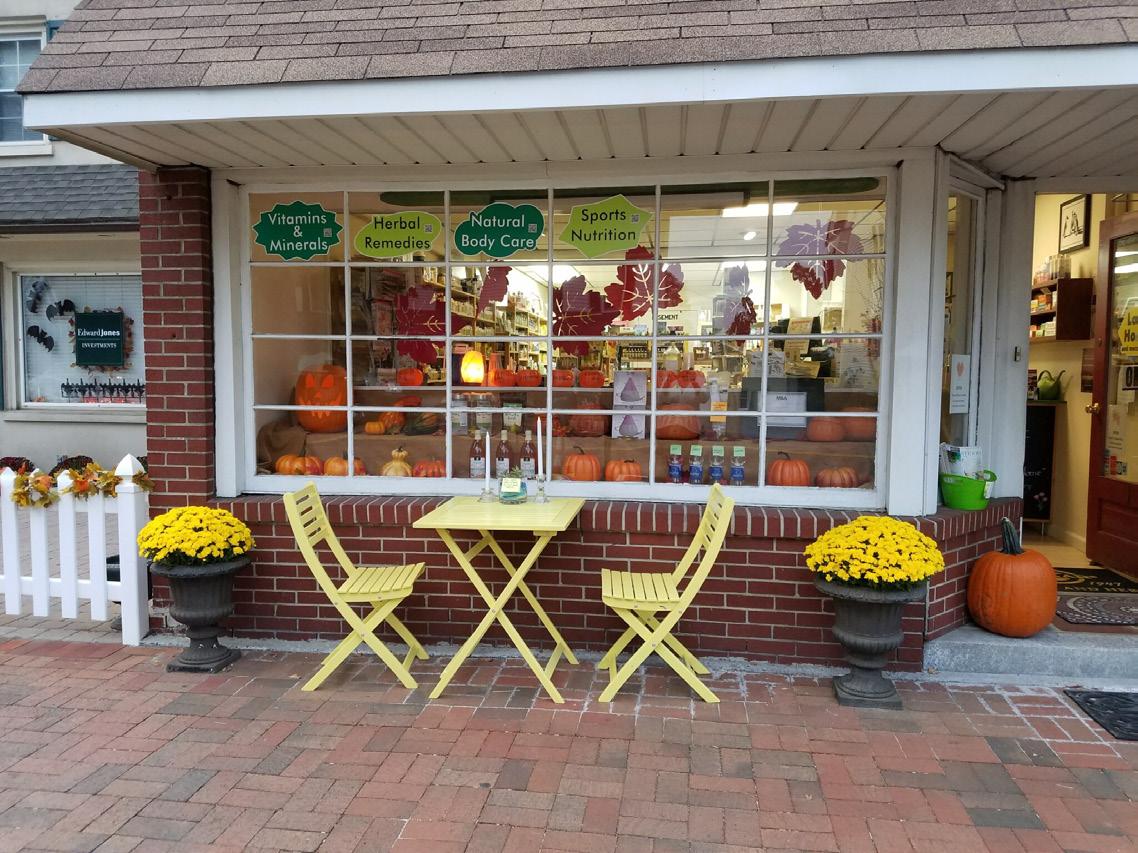
69 E Main St, Moorestown, NJ
by Zak Logan
Although regular workouts at the gym and two-mile runs boost cardiovascular health and improve mental outlook, brief, low-impact exercises throughout the day can also offer a world of benefits, including more stable blood pressure. A 2022 study published in JAMA Internal Medicine estimated that approximately 110,000 deaths per year could be prevented if U.S. adults aged 40 to 85 increased their physical activity by just 10 minutes of exercise a day. Greater benefits were associated with the addition of longer periods of exercise—approximately 210,000 preventable deaths with 20 minutes of exercise, and about 270,000 with 30 minutes.
“While we love working out at the gym, some days we’re too busy. The most important thing is that we keep our bodies moving every single day, and adding some exercises at home will also help keep our bones and muscles strong,” says personal fitness trainer Hannah McDonald, co-owner and manager of Complete Fitness LHP, in Lighthouse Point, Florida, adding, “Always listen to your body. It’s always better to start a little slow until you know how your body responds.”
Getting in some moves at home can be fun and doesn’t require sophisticated equipment. Bags of rice, half- or full-gallon jugs of water and cans of food can replace hand weights. Towels, rope or clothing suspenders can double as resistance bands. Activities such as light-to-moderate housework
and gardening prompt us to bend, squat and work with our hands. Low-impact practices like tai chi, yoga, Pilates, walking, swimming, recreational dance, rowing and cycling can also provide effective, short workouts without stressing the joints.
Modern sedentary lifestyles and busy schedules demand flexibility, and “movement snacks” can help us stay in condition—a few calf raises and shoulder rolls while waiting for water to boil, wall pushups between Zoom meetings or towel stretches for arm tone after stepping out of the shower. Although McDonald values traditional workouts for specific performance goals, she believes in the power of movement snacks
to reset a person’s metabolism, which often shuts down during prolonged sitting.
“You can do most low-impact exercises in moderation every day,” says Bruce Boyd, a wellness coach and owner of 4 Infinite Life Center, in Dallas, Texas. “Doing single moves and engaging muscles several times a day can help boost metabolism. It can also increase energy and diminish afternoon slumps.”
Boyd recommends the following exercises.
• Single Leg Curl and Press: Balance on one leg while holding full, 24-ounce water bottles. Combine a bicep curl with an overhead shoulder press using both arms simultaneously or alternating them. This exercise enhances core stability, balance and strength. Aim for three sets of eight to 12 repetitions per leg.
• Low-Lunge Arm Swings: While holding a low lunge, with the back knee on or off the ground, bend the elbows at 90 degrees and mimic a running motion by alternating arm swings. This can be done with or without canned goods in hand. This


exercise combines lower-body strength with upper-body mobility and core stabilization. Aim for a timed set of 20 to 30 seconds or 10 repetitions per side.
• Chair Squats: Stand with your back in front of a sturdy, non-rolling chair positioned against a wall. Slowly lower the hips to lightly touch the chair before standing back up. To intensify the workout, hold canned goods. Repeat for 30 seconds to one minute every couple of hours. This exercise improves balance, mobility and lower-body strength.
McDonald suggests the following fun workouts.
• Mopping to Music: Put on some fun music and grab a mop. Pretend to mop or mop the floor with intention by emphasizing sweeping and scrubbing motions. Go a bit faster to get the heart rate up a little.
• Laundry Detergent Workout: For bicep curls, stand straight, engage the core and slowly curl the detergent jug. For triceps, stand straight with the core engaged and hold the laundry detergent jug overhead with both hands, then slowly lower it behind the head before slowly extending the arms upward once again. For squats—if knees are healthy and able—hold out the detergent jug in front with arms slightly bent, then slowly bend the knees to form a 90-degree squat. Hold for a few seconds, then repeat. Aim for 10 to 15 repetitions for each exercise. If a full jug is too heavy, begin with a smaller water bottle or can.
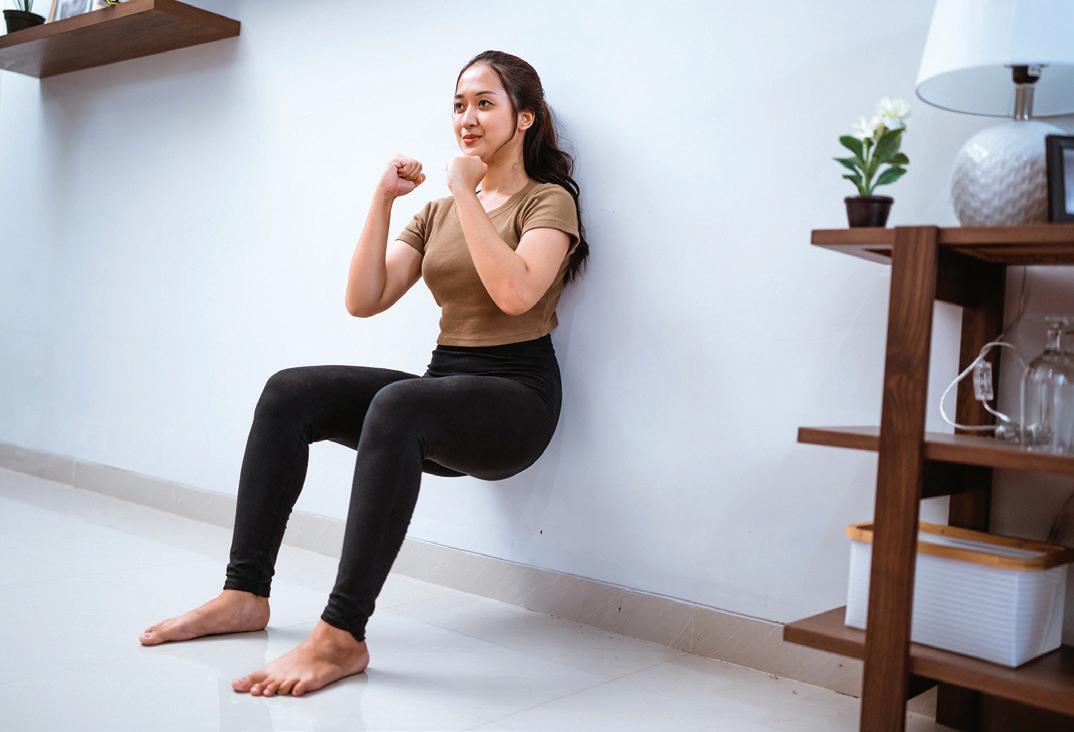
• Squats: Stand two steps from a wall and press the back against it with feet hip-width apart. Slowly slide down the wall until it feels like sitting in an imaginary chair, while keeping the lower back firmly against the wall. Hold for 20 seconds, or a full minute if legs are strong enough. Repeat three to four times with a one-to-two-minute rest in between.
Zak Logan is a freelance health writer dedicated to natural living.






and trained instructors.
by Hannah Tytus
Seasonal allergies are often framed as a localized immune problem—something that happens in the nose, sinuses or lungs. But holistic practitioners see them as a whole-body experience shaped by stress, nourishment and environment. Linda Conroy, a bioregional herbalist with more than three decades of experience, uses native medicinal plants in a three-tiered approach that focuses on prevention, tonification and support. Tonification aims to nourish, strengthen and restore balance to the body’s vital energy.
“You’re not going to take one herb and have it fix everything,” explains the founder of Moonwise Herbs. “You have to work on diet, lifestyle, relationships and stress reduction. It has to be multilayered.” Rather than suppressing symptoms, Conroy works to strengthen the body’s baseline resilience so that when pollen counts rise or seasons shift, it is equipped to respond.
All parts of the body are interconnected. When the nervous system is stressed, other systems are affected. We see this with asthma, says
Conroy, citing research that links prenatal and early-life stress to respiratory vulnerability later in childhood. “When someone’s respiratory system is in distress, we have to work with all the systems of the body to address it,” she explains.
A major player in immune system robustness is the endocrine system—a network of glands and organs that produce and release hormones into the bloodstream to regulate various bodily functions, including the stress response and mood. According to Conroy, hormonal imbalances can increase vulnerability. “Many people live their lives as if they are in danger all the time and this chronic alertness can make immune responses overactive,” she observes. “We also see a significant number of people with thyroid problems. When the pituitary or thyroid glands are weakened, people tend to be more reactive overall.”
To calm the nervous system, Conroy recommends a calcium-rich diet with ample leafy greens and dairy, as well as a long-steeped tea made with oatstraw—the dried green stalks and leaves of the oat plant, which is rich in calcium, magnesium and B vitamins. She also champions small rituals for stress relief such as always turning off the phone before bedtime or regularly enjoying a rosemary facial steam to rejuvenate the skin and feel restored. “Stay committed to something consistently,” she advises, recommending that people find their rhythm with their modalities of choice. Together, these practices reflect a holistic approach, relieving stress and improving allergy symptoms simultaneously, while building resilience year-round.
“Sleep, digestion and stress regulation form a feedback loop,” says Joanna Helms, founder of Mama Jo’s Sunshine Herbals. With more than 30 years of experience in Chinese, Western, Native American, Scottish, Unani-Tibb and Japanese herbalism, she defines her practice as a way to support the body in being the healer.
Helms recommends year-round herbal support to strengthen the body and reduce allergy vulnerability with calming herbs like oatstraw, lemon balm and holy basil. She also suggests regular

exercise, adequate sleep, meditation, journaling and even talking with a friend. Evening rituals like massaging herbal salves into the feet before bed can calm the heart and settle the body.
Conroy recommends nettle infusions, which she says have an antihistamine effect. Stronger than tea, infusions are made by steeping one ounce of nettle in boiling water for four to eight hours, then straining. This savory medicine keeps for up to three days in the refrigerator and can be enjoyed warm or cold, sometimes added to soups or paired with miso. Nettle can be overly drying for individuals in arid climates. In such cases, Conroy suggests marshmallow root to soothe dry, irritated mucous membranes.
Mullein is traditionally used to prevent or alleviate respiratory distress caused by colds and flu, and Conroy recommends it to strengthen the lungs. Mullein’s flavor profile pairs well with a sweetener of choice. Her favorite recipe combines warm mullein tea with steamed milk and maple syrup for a delicious herbal latte.
Both experts celebrate the antimicrobial and antibacterial properties of goldenrod, which has garnered a bad reputation when it is mistakenly associated with the allergy-inducing ragweed. In fact, goldenrod relieves allergies. Conroy calls it a tonifier that supports the whole system, “helping dampen the body’s overreaction, easing symptoms and reducing the intensity of the allergic response.”
“Goldenrod is one of my favorites for drying things up, especially in the eyes,” says Helms, adding that people in arid climates may find it too drying. In such cases, she recommends
mixing goldenrod with chrysanthemum or licorice for a harmonizing blend.
According to Conroy, “We will get way more benefit from plants that grow around us. Try to source herbs as close to home as possible. It’s a relationship. I don’t think of herbs as a drug or pill. These are my allies; they’re going to support me. We need to care about the plants, and they will care about us.”
Helms encourages her clients to grow their own herbs, observe them as they grow from season to season or even draw them in a field journal. Such practices that foster listening, meditation and relationship remind us that plants can be healing even when we do not ingest them.
Hannah Tytus is an integrative health coach, former writer at the National Institutes of Health and host of the Root Shock podcast, exploring the cultural underpinnings of health.


by Shae Marcus
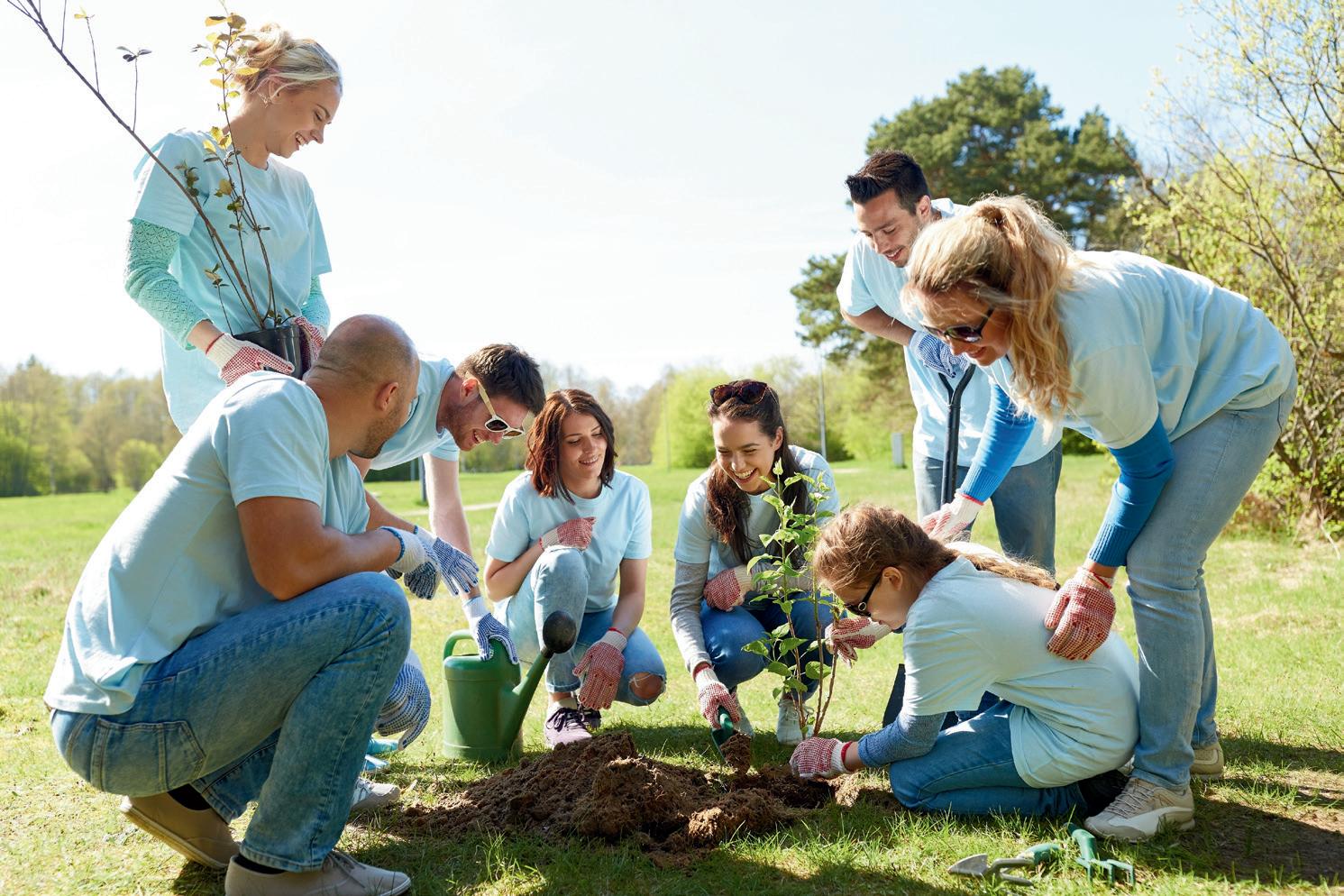
There is a particular stillness that comes when our hands meet the earth. The soil is cool. The air carries the faint scent of green. We press a young tree into place, firm the ground around its roots and step back. What was planted is small—but what it will become is not. It will anchor soil, offer shade, filter air and shelter life long after we’ve walked away.
This is the work beneath our feet.
Each year, the world loses millions of hectares of forest. Forests regulate climate, protect water systems, stabilize soil and sustain biodiversity that supports our food and health. When they disappear, the effects ripple outward—into our weather patterns, ecosystems and daily lives.
Earth Month reminds us that meaningful
change does not begin in theory. It begins in participation.
For more than 50 years, Earthwatch Institute has connected volunteers with scientists conducting environmental research across the globe. Participants assist with wildlife monitoring, marine conservation and climate studies, contributing to research that informs real-world environmental decisions.
Natural Awakenings Chicago Publisher Peggy Malecki first encountered Earthwatch while in college. She spent three weeks off the coast of British Columbia, Canada, assisting a geologist in mapping small islands and documenting native flora and fauna. Years later, the images remain vivid: traveling between rugged shorelines in a small inflatable Zodiac, gliding beneath trees so lush and filled with raptors they felt “heavy

with eagles.” This trip further strengthened a lifetime commitment to supporting our natural world.
Through WWOOF, individuals stay on organic farms practicing regenerative agriculture, exchanging hands-on participation for lodging and education. Compost steams in early morning air. Seeds are pressed into rows. Healthy soil—alive with microbial life—becomes a reminder that land responds when treated with intention.
Reforestation offers another tangible path. Organizations such as One Tree Planted, Trees for the Future and National Forest Foundation are planting native species in regions affected by wildfire and deforestation. Each sapling represents future stability—roots that will hold soil in place, branches that will absorb carbon and canopies that will shelter ecosystems yet unseen.
Even attention is a form of stewardship. The Wild Wonder Foundation promotes nature literacy through observation and journaling, reminding us that when we slow down enough to truly notice the natural world, care naturally follows.
Participation does not require distant travel. It may begin with planting a native species in the yard or volunteering with a local conservation group. But for those planning their next journey, Earth Month poses a powerful question: What if travel became an act of stewardship?
A mindful journey can support scientific research, strengthen regenerative farms or contribute to reforestation in the places we visit. When exploration meets responsibility, travel shifts from consumption to connection.
The work beneath our feet is steady and quiet. Whether close to home or across the globe, the invitation remains the same: choose experiences that give more than they take—and plant something that will endure long after the journey ends.
Shae Marcus, publisher of Natural Awakenings South Jersey and Philadelphia, also hosts global retreats through The 11:11 Experience—proving that luxury and soil can, in fact, coexist beautifully. For more information, visit www.The1111Experience.com.


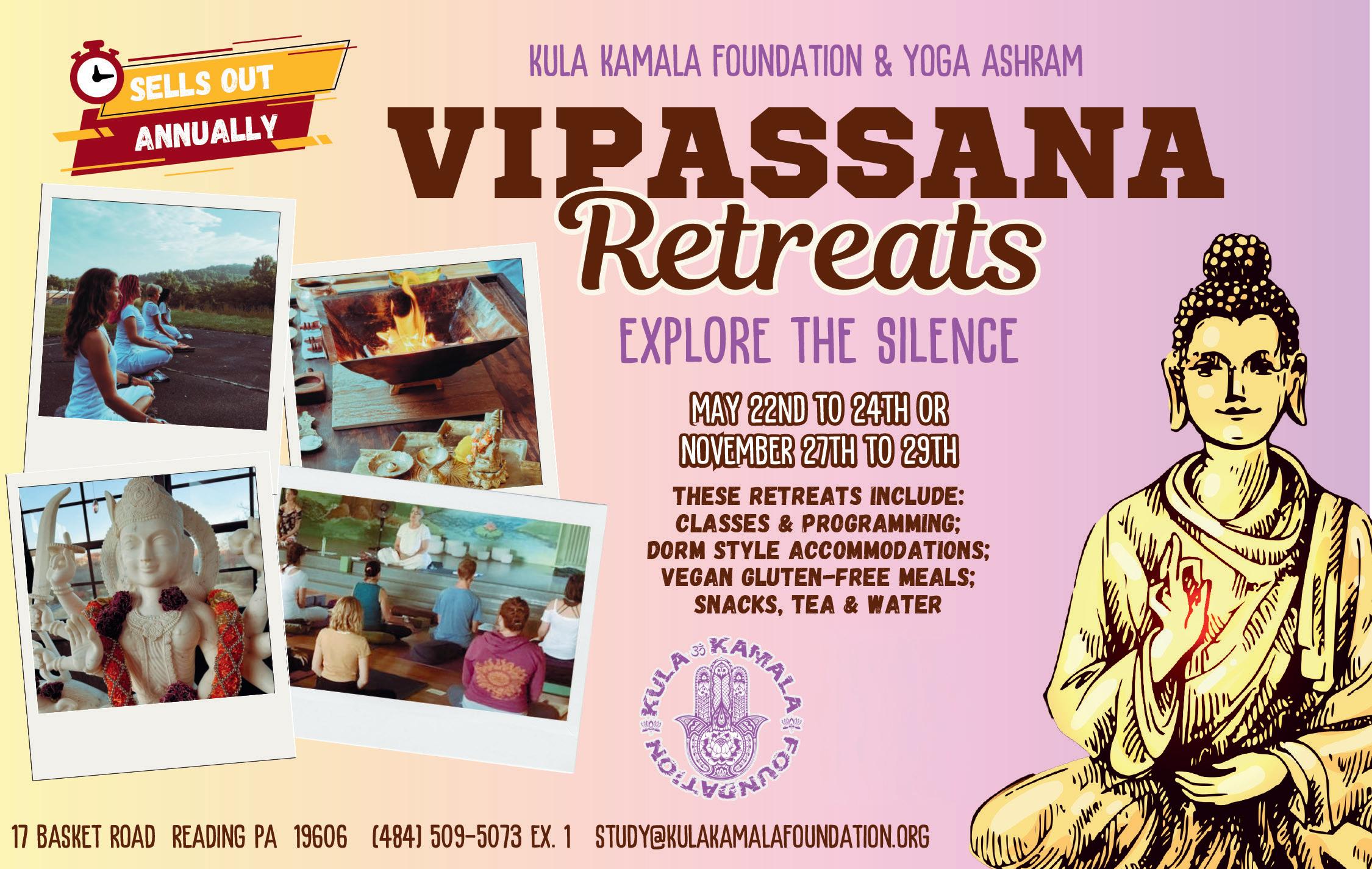
The evolution continues as we explore the Mind, Body, and Spirit … Deepening our experience with Yoga and Meditation. This retreat can help you go deep within yourself to discover your true self and allow you to find your own path to wholeness.
Location: The Chalfonte Hotel Cape May, NJ
For information & reservations contact: Karen Manette Bosna: 609-827-8886 kbosna28@yahoo.com

MAY 17, 18, 19, 2026
Experience guidance in various styles of Yoga and Meditation practices for all levels. Drum Circle - Bring your own drum or percussion instrument.
Retreat registration $350 per person

Deposit of $100 required to reserve your space (Deposits are non-refundable)
Space is limited, Sign up early! Deadline for payment in full: 4/30/2026

The activist is not the man who says the river is dirty. The activist is the man who cleans up the river.
—Ross Perot

by LaRonda Koffi
Many people try to change their lives through discipline—setting goals, building new habits or thinking differently. However, meaningful change often proves difficult to sustain. Increasing research in neuroscience suggests a key reason that it can be so challenging: The nervous system must first shift out of survival mode before the brain can recognize new, more positive possibilities.
When the body experiences ongoing stress, the autonomic nervous system prioritizes protection rather than growth. The sympathetic branch—commonly known as the fight-or-flight response—prepares the body to react quickly to perceived threats. While this response is essential in dangerous situations, remaining in this state for extended periods can narrow perception and reduce cognitive flexibility.
Dr. Stephen Porges’ Polyvagal Theory provides insight into this process. According to Porges, the nervous system continuously evaluates environmental cues for safety. When safety is perceived, the parasympathetic nervous system—particularly the vagus nerve—supports calm states that allow learning, social connection, and reflective thinking. In other words, transformation becomes easier when the body feels safe.
Practices that regulate breathing rhythms,
introduce gentle movement and mindful awareness can help shift the nervous system toward this calmer state. Research from HeartMath suggests that steady breathing rhythms—often around five to six breaths per minute—can promote greater physiological coherence between the heart, brain, and nervous system. When this coordination improves, individuals often report increased emotional stability and clearer mental focus.
As the nervous system settles, perception itself can begin to change. Joseph LeDoux’s work on fear and anxiety explains how the brain’s threat-detection systems strongly influence the way people interpret their environment. When defensive responses dominate the brain, attention tends to focus on problems and potential dangers. When those defensive signals decrease, people often become better able to notice opportunities, solutions, and new possibilities.
These shifts may seem subtle, yet they can profoundly influence how people experience daily life. When the body is regulated, emotional reactivity softens, attention widens, and the mind becomes more receptive to thoughtful action rather than automatic response.
For many individuals that are seeking meaningful
change, the most effective first step may not be pushing harder—but instead be in learning how to calm the body and steady the mind.
LaRonda Koffi is the founder of Alchemy Joy and creator of The Inner Coherence Method, an approach that integrates breath rhythm, gentle movement and attention training to help individuals regulate the nervous system, cultivate calm focus and recognize new possibilities in their lives. For more information, visit AlchemyJoy.com.


—Billy Crystal





































by Christina Connors
Because it is inexpensive, durable and lightweight, plastic is everywhere—from juice pouches to toys and toothbrushes. However, this non-biodegradable, petroleum-based polymer poses significant problems, especially in single-use items that languish in landfills for hundreds of years, breaking up into harmful microplastics and nanoplastics that contaminate the soil, water and air. Beyond the environmental threats, plastic is a public health concern affecting every generation.
These tiny particles have been detected in human organs, with emerging research linking them to chronic diseases. A landmark 2024 study in The New England Journal of
Medicine revealed that patients with microplastics and nanoplastics in the fatty plaques clogging their arteries were four-and-a-half times more likely to experience heart attacks, strokes or death compared to those with plastic-free plaques.
Teaching children how their choices impact the bigger picture doesn’t have to be overwhelming. Spring is a perfect time to establish lasting habits and empower kids to take pride in their contributions. Today’s youth are tomorrow’s leaders, often passionate about the environment and eager to adopt sustainable behaviors, embracing their role as participants that are enabling solutions.

Modeling eco-friendly behaviors is most impactful when kids are very young. “‘Normal’ gets defined in early childhood,” explains Melissa Valliant, communications director for Beyond Plastics, an environmental policy nonprofit based at Bennington College, in Vermont. “Kids don’t care whether a snack comes in a disposable plastic bag or a reusable container. They just accept it for what it is, and it becomes the norm. When reusables are part of a kid’s early life, they grow up recognizing that throwaway isn’t the default.”
Environmental education can be presented in an easy, fun way that empowers kids with solutions rather than instilling anxiety about the challenges. “Let kids know that there are things they can do to help with the problem, being matter-of-fact about how plastic gets into the environment and offering real, doable actions they can take,” counsels Maia McGuire, Ph.D., an associate program leader for the University of Florida Institute of Food and Agriculture Sciences and creator of the Florida Microplastic Awareness Project, which offers K-12 resources and citizen-science outreach materials.
Because single-use plastics are the most common and problematic plastic pollution, reusable alternatives are advised for school lunches, including reusable drink bottles, stainless steel food containers and beeswax wraps for snacks and sandwiches. Plastic toys can be phased out by choosing playthings made of sustainable materials such as Forest Stewardship Certified wood and paper, Global Organic Textile Standard cotton, vegetable inks and water-based paints.
“There’s no need for perfection. Perfection isn’t possible right now when consumer goods companies don’t offer enough plastic-free options,” says Valliant. “Get creative with what you have. If you made spaghetti last night with a jar of pasta sauce, use that glass jar for food storage in the future. Reuse toys, books and clothes from friends and family, and don’t forget about Goodwill or Facebook Marketplace. Don’t buy

individually portioned snacks. Buy in bulk and portion them out into reusable containers yourself or choose loose produce for snacks instead. Reducing plastic is more about refusing plastic than it is purchasing replacements.”
“It’s important for kids to learn where materials come from, where they go and how daily choices add up,” says Valliant. Here are a few activities to help children identify problem areas in the home and brainstorm solutions.
• Count household plastic items that could be swapped for reusables.
• Find products with plastic-free packaging at the grocery store.
• Sort the plastic trash, identifying what goes in the recycling bin and what does not.
• Bring gloves and a trash bag on family walks to collect litter.
“Kids love to help, and they love a good game,” says Valliant. “The main idea is to convey they’re part of the solution, and they matter.” To that end, kids will respond positively when they are invited to choose their own reusable items such as a water bottle that they can decorate with fun stickers, or when they are invited to engage in a Plastic-Free Friday challenge. Committing one
Maria Symchych/shutterstock
day per week to ditching single-use plastics can help shift habits the rest of the week.
“Community events promoting sustainability help teach children that taking care of the planet isn’t something families do alone. It’s something we do together,” explains Valliant. “Cleanups help kids connect the dots between pollution and the environments
they care about, while also showing they can effect change. Swaps normalize reuse, so kids grow up learning the importance of using what already exists.”
Helping children love the natural world creates the foundation for sustainable habits. “I love taking kids outside and letting them explore. I encourage them to ask questions about what they see or hear,” says McGuire.
Valliant echoes this sentiment: “Two words: Get outside! At the risk of sounding 40 going on 80, kids these days don’t get enough of our natural world. Simply interacting with nature helps children form an emotional connection to it, which inspires them to protect it.”
Christina Connors is a writer, singer and workshop facilitator. Learn more at ChristinaConnors.com.

by Marlaina Donato
Adding eco-friendly elements to a home transforms it into a true sanctuary, yet many homeowners and renters feel shut out of the conversation when it centers around high-end remodels, expensive appliances or eco-luxury upgrades. Even the budget conscious have low-cost options that empower them to reclaim sustainability and slow climate change on their own terms.
“Behavioral adjustments are some of the most affordable changes people can make to green their homes. Many of these modifications can be made in a rental home, too,” says Marla Esser Cloos, a green-home coach in Oklahoma City, Oklahoma, and St. Louis, Missouri.
Approachable practices include using programmable thermostats that save energy; shopping in bulk to cut down on waste and plastic packaging; swapping out chemical cleaners and pesticides for effective, eco-friendly alternatives; and seasonal upkeep that extends the life of household materials and appliances. Many of these measures actually save money. Teaming up with neighbors to share tools, join compost clubs or advance community solar programs turns environmental stewardship into an even more affordable and enjoyable

endeavor that strengthens connections and underscores the power of collective action.
“Small choices can have a big impact, and greening your home doesn’t have to break the bank. Some of the most affordable ways to make your home more sustainable involve reducing energy use and making smarter choices,” attests Annie Soulsby, a sustainability life coach in the United Kingdom.
The average home has many devices that sap energy unnecessarily, and unplugging computer equipment, game consoles, DVRs, coffeemakers, televisions and phone chargers when not in use can save up to 20 percent on the monthly electric bill. The U.S. Department of Energy also recommends using surge-protector power strips with on/off switches to easily turn off a set of appliances without having to unplug anything.
Soulsby suggests switching from fossil-fuel heating systems that burn natural gas, oil, propane or coal to renewable solutions like electric heat pumps that transfer thermal energy using eco-friendly refrigerants, or green electricity plans that allow consumers to purchase renewable electricity (wind, solar or hydro) from their power supplier. She also champions group solar programs, such as solar cooperatives that help renters, homeowners and businesses access solar energy and receive electric bill credits without installing panels on their own roof, translating to reduced monthly costs without high, upfront investment.
Cloos recommends installing or replacing weatherstripping, exterior door sweeps and draft stoppers on all exterior doors and windows. Duck and Frost King brands of shrink film window insulation kits can also provide an extra air barrier. Caulk can be used around doors, windows and other exterior gaps and interior trim joints to reduce cold drafts, increase heat retention in the wintertime and improve energy efficiency year-round.

Sustainability also means stretching the lifespan of everyday items, but when replacements are unavoidable, Cloos suggests looking for certified labels: WaterSense-certified faucets, toilets or shower heads; Energy Star-certified appliances; and GreenGuard-certified paints for exterior or interior makeovers. She also recommends simple measures like turning off lights when leaving a room to conserve energy and refraining from running the faucet while brushing teeth or washing hands to save water and lower water-heating costs.
A do-it-yourself mindset also minimizes consumerism. “Tool libraries work just like book libraries, but instead of novels, you can borrow tools, DIY equipment or sports gear,” explains Soulsby. “They solve the problem of owning rarely used items like an SDS [slotted drive system] drill for a bathroom project or a paddleboard for a weekend adventure. Borrow it, use it and return it in good condition.” Many U.S. cities maintain tool libraries through MakerSpace.com, community centers or nonprofits that can be located with a quick internet search.
For pest control without chemicals, Soulsby suggests sealing entry points, removing food and shelter sources, and keeping homes clean and dry. Pungent essential oils like citronella, peppermint and eucalyptus, as well as strong-smelling herbs such as lavender, mint, basil and rosemary help deter pests naturally. Adding natural cedarwood chips or essential oils to wardrobes and closets can help to repel moths. Lining drawers and thresholds with cinnamon and cayenne, or introducing beneficial insects like ladybugs, praying mantises and lacewings in the garden, can naturally control insects.
“We often place a barrier of First Saturday Lime around the outside of our home. Lime is an easy-to-use, environmentally friendly alternative to pesticides that is safe for children and pets when used as directed on the manufacturers’ package,” explains Cloos.

Seasonal initiatives like Veganuary, Plastic-Free July or No-Mow May are great starting points to incorporate changes into everyday life. “The real power comes when you then carry these habits year-round,” says Soulsby. “Swap meat for plant-based options beyond just one month; extend plastic-free choices to every purchase decision; and rethink horticulture by letting your garden flourish naturally every day.”
Marlaina Donato is an author, painter and composer. Connect at WildflowerAndWoodSmoke.com.
Customized holistic treatments to address all aspects of health
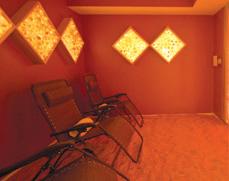
• Himalayan salt room for respiratory, skin conditions and stress relief
• Unique massage therapies including lymph drainage, oncology as well as cupping
• Full spectrum infrared for detox and immune health
• PEMF therapy, energy healing and much more!












Amother recently walked into a mattress showroom looking for help for her teenage daughter who has scoliosis. They had already tried several mattresses, but nothing seemed to provide the comfort or support she needed. As they talked through options, the conversation slowly shifted from firmness and price to something many people rarely think about—what the mattress was actually made of.
Then something unexpected happened.
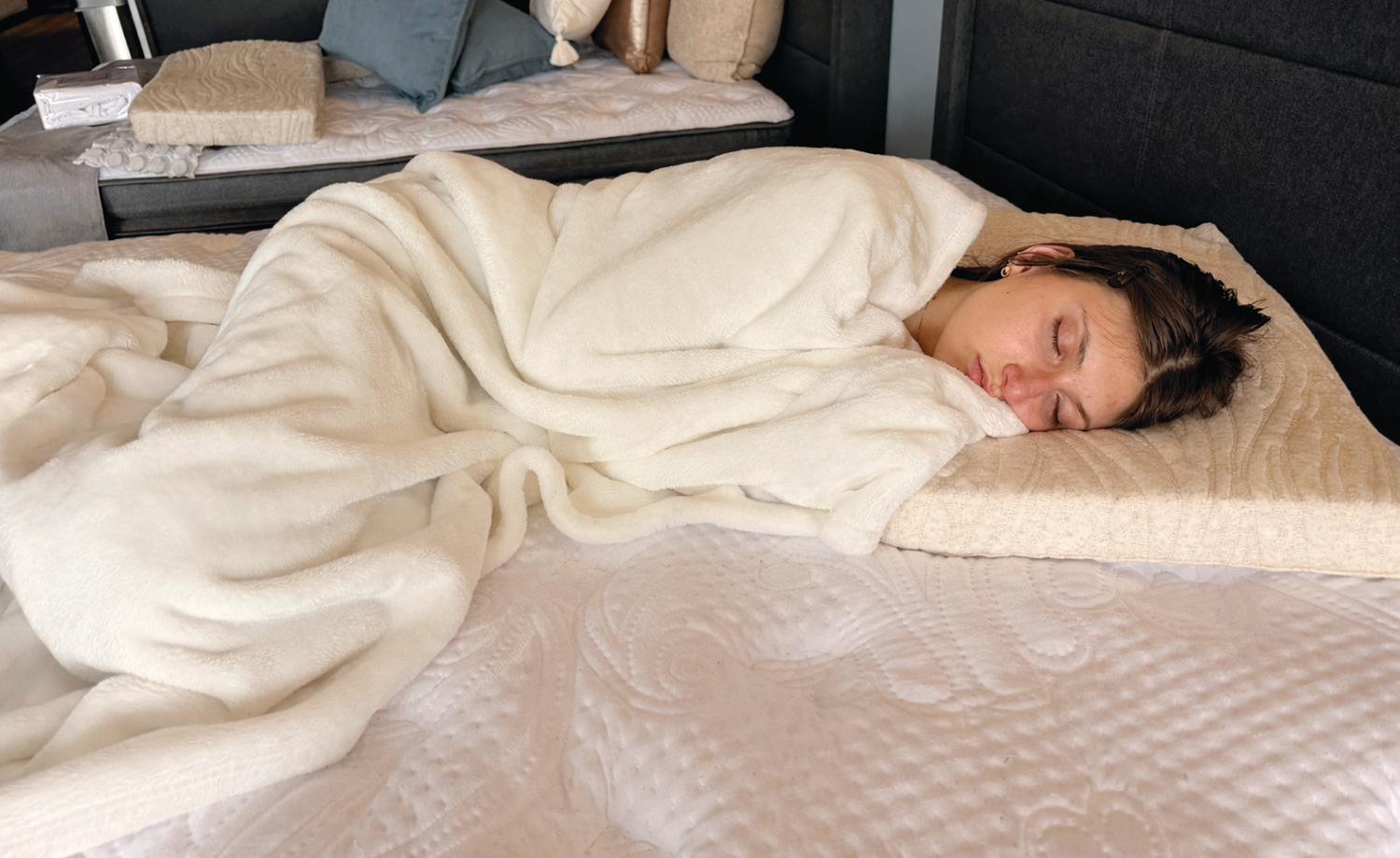
The daughter climbed into one of the beds, the lights were dimmed, and she curled up under the covers to really feel the mattress. Within minutes she had drifted into a short nap right there in the showroom. When she woke up, she smiled and quietly said, “This is the one.”
It was a simple moment, but it reflected something many sleep experts emphasize: the body often knows when a sleep environment feels right.
Considering how much time we spend sleeping, that environment matters more than many people realize. The average person spends nearly a third of their life asleep—close to 30 years. During that time the body repairs tissues, regulates hormones and restores energy. Yet the conditions surrounding our sleep are often overlooked.
According to the U.S. Environmental Protection Agency, indoor air can be two to five times more polluted than outdoor air, largely due to chemicals released from common household materials such as furniture, flooring and mattresses. Because mattresses remain in direct contact with our bodies for seven to eight hours every night, the
materials inside them can influence both comfort and indoor air quality.
Many conventional mattresses are made with polyurethane foam and other synthetic materials that can release volatile organic compounds (VOCs). These chemicals may contribute to headaches, respiratory irritation and can aggravate asthma symptoms in sensitive individuals.
Memory foam, despite its comforting name, is simply another form of polyurethane foam. Some products include small amounts of plant-derived oils such as soybean or castor oil, but the majority of the material is still produced from petrochemicals. Adhesives used to bond mattress layers together can also release VOCs, and some manufacturers add fragrances to mask odors created during production.
Fire safety regulations add another layer to the conversation. Mattresses must meet fire-resistance standards, but the materials
used to achieve this vary. Some rely on chemical flame retardants, while others use fiberglass barriers that may cause irritation if fibers escape from the mattress cover.
As awareness around indoor air quality grows, some consumers are exploring mattresses made with natural materials such as latex, cotton and wool. These materials are often valued for their breathability and ability to regulate temperature, creating a sleep surface that feels cooler and more balanced than many synthetic foams.
For the teenager in the showroom, the answer became clear after one quiet nap. Sometimes the spaces where we rest each night—often overlooked—can quietly shape how well we sleep and how restored we feel the next morning.
Kelly Wernersbach is with Adjust Your Sleep Mattress Boutique LLC. For more information, call 856-357-3640 or visit www.aysmattress.com.
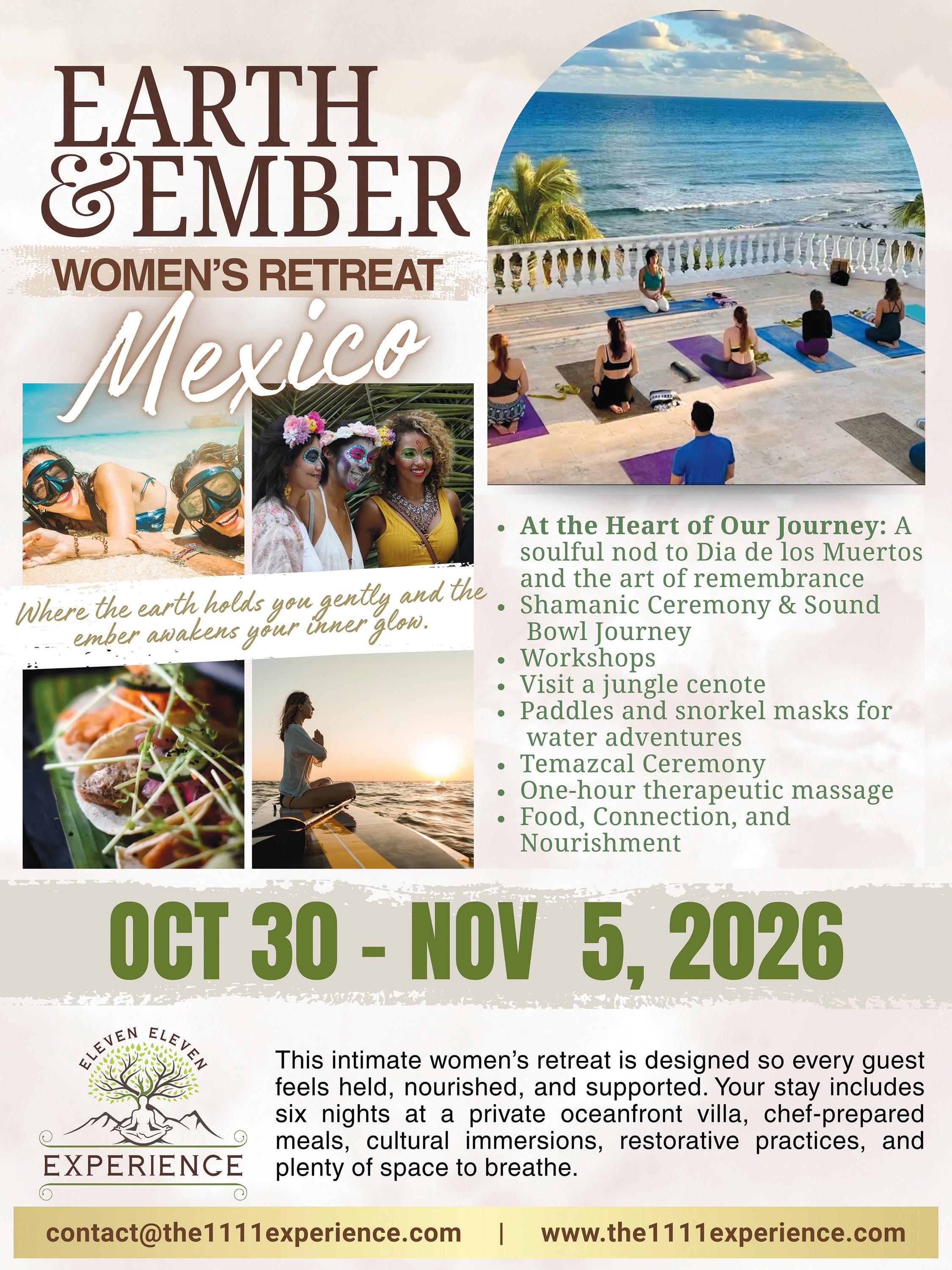
by Ruth Roberts, DVM, CVA, CVH, CVFT, NAN
Massage therapy does more than pamper pets—it provides hands-on care with real physical and emotional benefits. For dogs, cats and horses, regular massage improves comfort, mobility and overall wellness. Pet parents need to learn key techniques, understand the benefits and follow safety guidelines to ensure massages are safe and effective.
A 2025 article in the Journal of Feline Medicine and Surgery defines massage as the systematic application of manual pressure and movement to soft tissues, including the skin, tendons, ligaments, fascia and muscle. Integrative emergency veterinarian and end-of-life practitioner Lynda Loudon calls massage “one of the most accessible yet profoundly therapeutic tools we have for supporting our pets’ physical health.”
Gentle massage improves circulation, delivering oxygen and nutrients to tissues while clearing metabolic waste. It also supports
lymphatic flow, which depends on movement and manual stimulation. This is especially beneficial for senior pets, those recovering from injury or animals with limited mobility.
Massage improves joint mobility and flexibility. Pets with arthritis, hip dysplasia or age-related stiffness maintain better range of motion when inflammation is reduced and connective tissue stays supple. Massage relaxes muscles, eases pain and supports movement. Loudon notes that it “works with the body’s natural healing mechanisms rather than imposing external interventions,” making it a gentle, non-invasive therapy.
Massage is equally powerful emotionally. “Touch is one of the most primal forms of communication and comfort,” says Loudon, noting that it activates the body’s natural rest-and-relax response, lowering stress

hormones, slowing the heart rate and supporting calm breathing.
Anxious pets often visibly relax during massage. Addressing pain and physical discomfort can improve emotional and behavioral challenges, Loudon points out. In end-of-life care, massage can provide both physical relief and emotional reassurance. It strengthens the human-animal bond, encouraging pet parents to slow down, stay present and connect deeply with their animal companions.
According to Michael Daly, a certified canine and equine massage therapist and holistic pet health coach, each massage technique serves a purpose.
• Effleurage, involving gentle circular motions with the palm of the hand, begins most sessions, helping pets relax.
• Petrissage, involving a kneading action, loosens muscles and fascia.
• Friction techniques target deeper tissue to release knots and tension with circular or cross-fiber motions.
• Vibration techniques are used to release tension in a pet’s myofascial structure, which is the connective tissue binding their muscles. As Daly explains, “When tension develops in the fascia surrounding a specific muscle, it can cause that muscle to tighten. Applying gentle to more vigorous vibrations helps release the tension, and pets love it.”
• Tapotement involves gentle rhythmic tapping or cupping. Daly, who has been
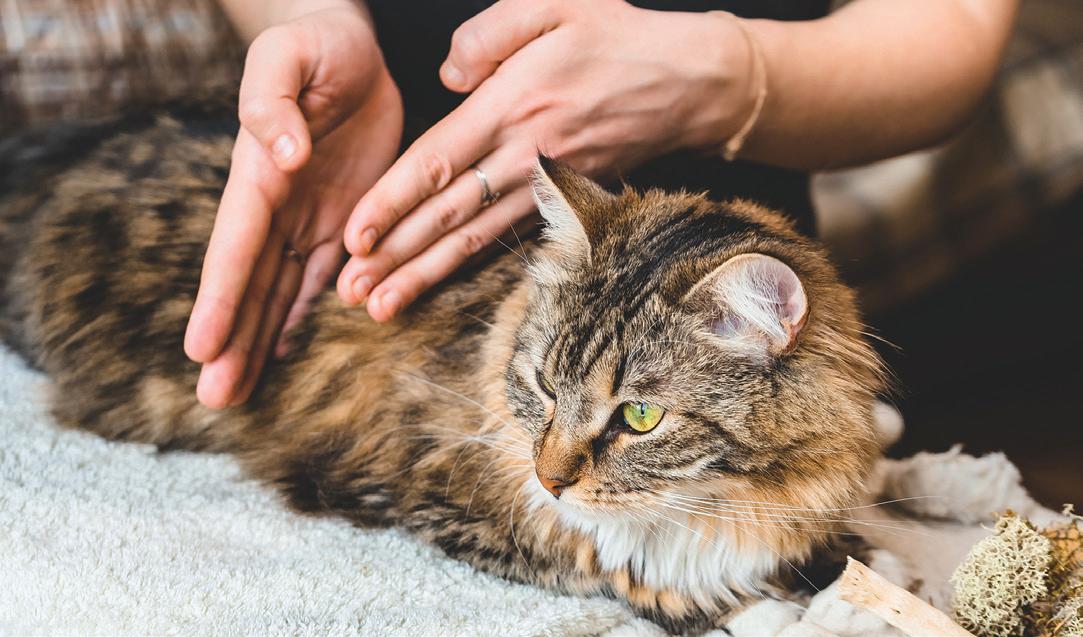
practicing animal massage for 15 years, generally avoids this technique with dogs because they either dislike it or want to play, but he finds the technique effective with horses.
• Passive stretching, which gently moves a pet’s limbs to loosen joints and muscles, is often used to finish a session.
Pet parents can perform these massages themselves. Daly recommends starting with effleurage, followed by vibration techniques. Stressing that the calming effect often begins with the person, he explains, “When you feel calm and centered, they do, too.”
He encourages keeping routines simple and consistent. Massage works well any time of day, but Daly especially recommends brief effleurage and vibration sessions when pets wake up. Gentle strokes across the body can help prepare muscles for activity, which is particularly helpful for older pets transitioning from rest to movement. It is important to read a pet’s body language. “Dogs will tell you when strokes are too hard and when they are done,” says Daly.
Dogs often hide pain. Daly warns that limping usually means discomfort is already advanced. Watch for more subtle signs such as difficulty standing, hesitation with jumps, circling before lying down, excessive licking, increased thirst, nighttime restlessness or persistent panting. These symptoms warrant evaluation by a professional massage therapist or veterinarian.
Loudon emphasizes that while massage is generally safe, it should be avoided when there are active infections, fractures, recent surgical sites or areas of acute inflammation. Pets with cancer, clotting disorders, fever or severe pain should receive massage only under veterinary guidance.
When done thoughtfully alongside veterinary care, massage is a safe and valuable part of holistic wellness. Loudon suggests starting gently and monitoring the pet’s response. A relaxed posture, soft eyes and leaning in indicate comfort, while tensing, moving away, pinned ears or vocalizing means it is time to stop.
Ruth Roberts, an integrative veterinarian and holistic health coach for pets, is the creator of The Original CrockPet Diet. Learn more at DrRuthRoberts.com.
Paws & Feet Doggie Fun Day And 5k Walk/Run!
& Feet Doggie Fun Day And 5k Walk/Run!
Sat, May 30th @ Cooper River Park, 9 am - 2 pm
Sat, May 30th @ Cooper River Park, 9 am - 2 pm


Doses for Dogs
Doses for Dogs
Activities for Kids
Activities for Kids
Doggie Activities
Doggie Activities
Basket Raffle
Basket Raffle
5 /5
50/50
... And so much more!
... And so much more!





Saturday, April 4
Venus Moon Crystal Egg Hunt – 10am7pm. Hop on over for an egg hunt and a day of magic, mystery and moonlit mayhem. Venus Moon Crystal Warehouse, 226 Chestnut St., Glendora. www.TheVenusMoon.com
Nutrition and Chronic Disease Workshop
- Natural Life Wellness Store and South Jersey Physical Therapy are co-hosting an educational workshop together at SJPT’s new location in Marlton. 270 North Elwood Rd., Suite H100, Marlton. Facebook & Instagram @NaturalLifeCherryHill for more information.
Nutrition & Chronic Health: A Holistic Path Forward - Understanding the connection between nutrition and long-term health is at the heart of this educational seminar hosted by Dr. Abigail Arculeo, DCN, a practitioner dedicated to natural, rootcause wellness. Cost: free. South Jersey Physical Therapy, 270 North Elmwood Rd., Suite H-100. To reserve a seat, email info@ SouthJerseypPT.com or call 609-845-3585.
Tuesday, April 7
Journey Circle with Liza – 7-8pm. In this journeying circle, we’ll create sacred space through smudging and rattling in the spirits. Cost: 35. Halo Wellness Center, 968 Route 73 S., Marlton. www.ElevateYourHealth.com
Saturday, April 11
Free In-Store Samples - 9am-5pm. Explore health and wellness solutions including supplements, apothecary-style herbs and hemp. Enjoy product samples plus oneday-only discounts on the featured items. Cost: Free. Natural Life Wellness Store, 480 E Evesham Rd., Unit 103, Cherry Hill. Facebook & Instagram @NaturalLifeCherryHill for more information.
Tuesday, April 14
Farmhouse Tasting: Tea 101, The Basics –6-8:30pm. Burlington County Agricultural Center and Tea for All Tea Shoppe will help you discover what tea is all about, where it is grown and the many different property each tea holds. Cost: $35. Farmhouse Kitchen, 500 Centerton Rd., Moorestown. www.BurlCoAGCenter.com
Sounds in a Forest Crystal Bowl Sound Bath – 7-8pm. Experience a multi-sensory immersion to help remove disharmony and tension from your body, mind and spirit while raising your energetic vibration and promoting relaxation, rejuvenation and healing. Cost: free. Mount Laurel Library,100 Walt Whitman Ave., Mt. Laurel. www.MountLaurel.library.com
Saturday, April 18
8-Hour Rooted through Recovery: Trauma and Addiction Training – 9am-5pm. Explore and learn about nervous system adaptation, surviving trauma, shame cycles, somatic tools, attachment wounds and much more. $222. Rooted Holistic Center, 308 White Horse Pike, Haddon Heights. www.RootedYogaAndWellness.com
Sunday, April 19
Soap Making Workshop – 11am-1pm. Learn how to create nourishing, all-natural soaps using herbs and essential oils and nourishing fats. Mystic Ginger Wellness Collective, 36 South Black Horse Pike, Blackwood. www.MysticGingerApothecary.com.
Springtacular Psychic Fair – 12-4pm. Enjoy a fun, high-energy afternoon featuring psychic readings, artisan vendors, food trucks and live music. Cost: $20. Autumn Lake Winery, 896 W. Malaga Rd., Williamstown. www.AutumnLakeWinery.com
Saturday, April 25
Free In-Store Samples - 9am-5pm. Explore health and wellness solutions including supplements, apothecary-style herbs and hemp. Enjoy product samples plus oneday-only discounts on the featured items. Cost: Free. Natural Life Wellness Store, 480 E Evesham Rd., Unit 103, Cherry Hill. Facebook & Instagram @NaturalLifeCherryHill for more information.
Sunday, April 26
Clover Open Market – 10am-4pm. Featuring 100 carefully curated handmade and vintage vendors, food trucks, live music and more. Cost: free. Clover Market, 735 N. Atlantic Ave., Collingswood. www.TheCloverMarket.com

Thursdays, April 30—
June 11
Inner Coherence Reset™ – 7-Week Guided Program – 5:30-6:30pm. Discover a simple daily practice designed to help calm the nervous system and cultivate greater clarity in everyday life. This small-group program introduces The Inner Coherence Method™, integrating breath rhythm, gentle movement and attention practices. Cost: $147. Learn more and reserve your place: American Combat Aikido Dojo, 2941 Route 73 S., Maple Shade. www.AlchemyJoy.com
Saturday, May 2
Dr. James Still Center Community Wellness Fair
10am-4pm
Join in another year of learning, sharing and growth at our 4th annual Community Wellness Fair. This is a free, family-friendly event with health screenings, workshops, games, raffles, wellness marketplace and more! 210 Medford-Mount Holly Road, Medford www.DrJamesStillCenter.org
October 11-20
Vaishno Devi/Shakti Peetham India Pilgrimage – Join a small group pilgrimage from Delhi to Kantra, India, and receive darshan at many sacred temples along the way, including and culminating in the Vaishno Devi Temple in Katra. Cost: $3,900. For information and further details, visit KulaKamalaFoundation.org or speak to Casey at 484-509-5073 ext. 1. To sign up: Call or Text 609-845-3585.
Thursday
YBarre with Jenna – 5:30pm. If your goals for 2026 include feeling stronger, more toned, more stable, and more energized—this is your class. And it supports your yoga practice by strengthening what yoga asks for most: control, steadiness and presence. Cost: $25. Balanced Planet Yoga, 795 E. Rt. 70, Suite F, Marlton. www.BalancedPlanetYoga.com
NOW HIRING PART-TIME position for Massage Therapist at South Jersey Osteopathic Care Center, Moorestown. Extra skills preferred. Send resumes or inquiries to frontdesk@sjosteopathic.com
































































































































































Connecting you to the leaders in natural health care and green living in our community. To find out how you can be included in the Community Resource Guide, email Publisher@NASouthJersey to request our media kit.
DR. SEAN C. INSELBERG, DAC, MSC, CNS Nutritional Wellness Center 1 Cinnaminson Ave, Ste 206 Palmyra, NJ 08065
856-499-2160
www.NutritionalWellnessNJ.com

Offering simple, effective solutions for optimal health for the whole family. Includes: Functional Medicine testing, Othromolecular energy medicine, Neuro-Emotional Technique, Psycho neurobiology, autonomic response testing, Theta Healing.
MARYANN PINO MILLER, M.ED. Certified Heal Your Life® Teacher Emotion Code Practitioner 520 Stokes Road, Suite C-4 Medford, NJ
856-912-2087
MP.Miller1945@gmail.com www.MaryannPinoMiller.com
Become aware of your true nature, meet your inner child waiting for your love, become aware of the and unload the baggage weighing you down, become aware of the depth of love that exists within you and gain the understanding of the importance of your relationship with yourself and how that can be fostered.

SUSAN DESIDERIO, BA, LMT
Ayurvedic Wellness Coach Pitman, NJ
856-535-7478
BlueHavenMassage@gmail.com BlueHavenMassage.MassageTherapy.com
With over 20+ years’ experience in the Wellness industry, Susan specializes in holistic lifestyle management. She offers Ayurveda coaching, mindful movement classes, massage/reiki sessions.
STEPHANE PONCELET

570-449-2219 calwl2022@gmail.com www.Create-A-LifeWorthLiving.com/ Clients learn to observe and respond to deep-seated emotions of conflict, emptiness, and loneliness that often arise from family dysfunction. Guided in mourning the unchangeable aspects of their past, helped to own their truths and grieve their losses, clients are encouraged to show themselves the love, patience, and respect they truly deserve. A transformative process which creates a life that is truly worth living.
ALLAN MAGAZINER, DO
Magaziner Center for Wellness
1907 Greentree Road
Cherry Hill, New Jersey 08003
856-424-8222
MagazinerCenter@DrMagaziner.com www.DrMagaziner.com

With nearly 40 years of excellence in patient care, the Magaziner Center for Wellness is the area’s premier center for integrative and function medicine. We solve complex medical problems naturally.
SAGE & SAND MYSTIC
Kristina@SageAndSandMystic.com
Sage & Sand Mystic offers one-to-one intuitive energy healing rooted in grounded mysticism. Sessions support clarity, alignment, and deeper self-connection through personalized, responsive energetic work.
CHARLOTTE NUSSBAUM, MD
Medford Functional Medicine 103 Old Marlton Pike, Suite 203 Medford, NJ 08055
609-969-4844
www.MedfordFunctionalMedicine.com

Board-certified pediatrician and internist Charlotte Nussbaum is a founder of Medford Functional Medicine where we partner with people of all ages to reclaim their health.
NICOLE L. KITZITAFF, RDN
TriUnity Nutrition & Wellness 1060 Kings Highway N., Ste. 301 Cherry Hill, NJ 08034
856-667-6805
Info@TriUnityNutrition.com www.TriUnityNutrition.com

TriUnity Nutrition & Wellness, led by Nicole Kizitaff, RDN, uses functional nutrition, muscle testing, and holistic remedies to address root causes and optimize your health.
APRIL WILLARD
The Zen Den on Main 25 East Main St, Marlton, NJ 08055
609-975-8379
www.TheCenterLifeInBalance.com

Ordained Minister (all denominations), Art Therapy (all ages), Sound Healing, Reiki II, Guided Meditation and Letting Go Ceremonies. Supporting holistic and emotional coaching. Contact: YogiCaresNJ@gmail.com or 215-205-2786 for bookings and inquiries.
DR. JAIME FELDMAN, DCH
Chairman, Medical & Dental Division, International Hypnosis Federation 214 W Main St, Ste L4 Moorestown, NJ 08057
856-231-0432 • DrJaimeF@aol.com www.PartsTherapy.com

Dr. Jaime Feldman, one of the pioneers in an advanced technique called “Advanced Parts Therapy,” has been able to unlock the subconscious and remove unwanted behaviors: stop smoking (guaranteed), weight loss, stress, depression, pain and anger management, and more. Outstanding success in curing phobias and deep-seated trauma, and treating the immune system to put cancer into complete remission.
Suzy West, CMS-CHt, FIBH
Board Certified Medical Support Clinical Hypnotherapist
Fellow, International Board of Hypnotherapy 194 NJ-70 Suite 2, Medford 609-668-1217
Suzy@SuzyWestHypnotherapy.com www.SuzyWestHypnotherapy.com

Suzy West Hypnotherapy offers compassionate, client-centered hypnotherapy to reduce anxiousness, transform limiting beliefs, break unwanted habits, improve sleep, and support personal healing for lasting, positive change in your daily life.
DR. STEVEN HORVITZ
Institute for Medical Wellness
110 Marter Ave, Ste 408, Moorestown, NJ
856-231-0590
www.DrHorvitz.com

Board-Certified Family Medicine blending traditional family care with a holistic focus and preventive, nutritional and integrative approach. We look for causes and triggers for disease before reaching for the prescription pad. Same and next day appointments are available.
POLINA KARMAZIN, MD
Board certified in Integrative Medicine & Acupuncture
2301 E Evesham Rd, Bldg 800, Ste 219 Voorhees, NJ 08043
856-528-2258
www.SouthJerseyHolistic.com
Our practice treats each person individually by addressing the root cause of the problem. Dr Karmazin employs holistic therapies, such as acupuncture, biopuncture, homeopathy and nutritional counselling for a variety of ailments. We also specialize in holistic pain management and do not use narcotics, NSAIDs or steroid injections.
SUSAN COSTANTINO DRUMMOND
Reiki Master & Intuitive Medium Offices in Medford & Manahawkin 609-923-3154
Susan@NJBalance.com
www.NJBalance.com

Susan is an Intuitive Medium and Reiki Master. She specializes in intuitively enhancing the mind, soul and physical body with healing energy for your highest well-being. Susan can connect you to your loved ones in spirit for healing and peace.
PRIME IV HYDRATION & WELLNESS
900 Rte 73 N, Ste 890, Marlton
856-386-3251
www.PrimeIVHydration.com/locations/ new-jersey/marlton-08053

Prime IV Hydration & Wellness is the nation’s leader in vitamin-infusion therapy. They offer a spa-like environment and utilize only the latest in cutting-edge intravenous (IV) therapies.
DR. ANAMARIA NEWPORT, DMS, DMD, MHS, PAC
17 White Horse Pike, Ste 10B Haddon Heights, NJ 08035 856-323-8885

Dr. Newport is a discerning artist, highly experienced master cosmetic injector and renowned dermatology speaker with 10+ years of extensive medical training. Her continuous dedication for skincare, surgery, dentistry, and cosmetic procedures are enhanced by combining the use of the latest technology and her unique homeopathic style. As an artist, she is genuinely passionate about bringing out the unique beauty in each one of her patients. Look no further for your organic skincare specialist, offering the purest treatments achievable with our personalized natural products.
KELLY WERNERSBACH
Adjust Your Sleep Mattress Boutique LLC 888 NJ-73, Marlton, NJ Kelly@aysmattress.com

Offering a personalized, educational approach to mattress selection, we focus on your comfort and health needs to ensure a perfect sleep system—because quality rest is essential for overall well-being and daily vitality.
TRACI ROSENBERG, MA
Numerologist & Empowerment Coach 609-417-4526 TraciRosenberg@gmail.com www.SoulTalkWithTraci.com

Join the region’s leading numerologist as you discover your life’s purpose. Encoded in your name and birth date are your lessons, talents and desires. Traci will help you realize your full potential.




DR. JOCELYN FLAY, DAC
Nutritional Wellness Center
1 Cinnaminson Ave, Ste 206 Palmyra, NJ 08065
856-499-2160
www.NutritionalWellnessNJ.com

Open to the flow of reiki that is before you and experience the divine life force energy that is innate to all of us. You can heal, grow, process trauma, change your beliefs, create new experiences, and shift into a life that you love, and reiki can guide you. Individual reiki sessions and reiki courses are provided at the Nutritional Wellness Center.
BETH O’BRIEN
Spiritual Healing Through Guidance
The Center Life in Balance, 520 Stokes Rd., Building A Medford, NJ
BethOB67@yahoo.com

Beth, a psychic/medium, can give you spiritual and intuitive guidance from your loved ones. Beth is also a Reiki Master and an ordained minister to officiate your wedding. She also is a paranormal investigator and does private and public homes. She also does house blessings and cleansing.
TRUSTED HEALING HANDS AT THE CENTER FOR LIVING 639 Stokes Rd., Ste. 203, Medford 609-752-7675
www.TrustedHealingHands.com
Twenty years of experience mixing Eastern modalities with Western massage therapy to assist with pain, injuries, stress and wellbeing. Also offering Skin Therapy Facials and Bodyology Yoga. See website for more information.
NATURAL LIFE –WELLNESS BEGINS HERE
480 E. Evesham Road, Unit 103, Cherry Hill, NJ 08003
856-560-0119
www.ShopNaturalLife.com

Natural Life offers personalized, natural wellness solutions for sleep, pain, stress, energy, focus and pet health, combining holistic products with expert guidance. Co-owned by the Arculeo sisters, Olivia Arculeo and Dr. Abbi Arculeo, Doctor of Clinical Nutrition, bringing evidence-based insight to whole-person wellness.
WILDFIRE WELLNESS
Kathryn Farrell, MSN, MS, RN, FNP-BC Halo Wellness Center
968 Route 73 S, Marlton, NJ 08053
Telehealth: NJ, PA, CT, FL www.WildFireWellness.com

Functional medicine for women’s fatigue, hormone imbalance, brain fog and chronic symptoms. Root-cause care through advanced testing, nutrition, lifestyle, and bioidentical hormone support.
RISE AND THRIVE WELLNESS YOGA
Terry Veit-Harmening
714 E Main St, Moorestown 609-923-5782
www.RiseAndThriveWellnessYoga.com
Terry Veit-Harmening is a certified Yoga Therapist, a certified Ayurvedic Lifestyle Educator and a brain longevity specialist with the Alzheimer’s Research Association. Yoga Therapy is a holistic approach to health care using postures, movement, stretches, lifestyle choices, relaxation and breathing practices to address your specific issues.