H E A LT H Y L I V I N G | H E A LT H Y P L A N E T
FREE
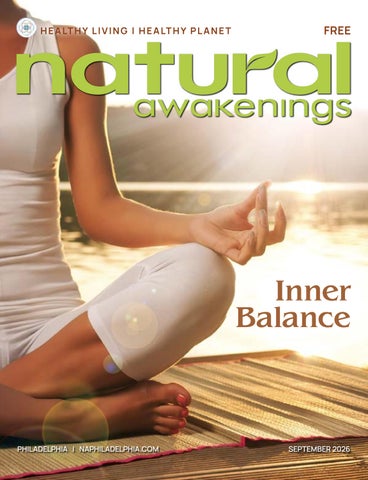
Inner Balance
PHILADELPHIA | NAPHILADELPHIA.COM
SEPTEMBER 2026
Contents Departments 5 News Briefs 7 Health Briefs 9 Global Briefs 10 Feature Story 14 Conscious Eating 16 Fit Body 18 Healing Ways 20 Mindful Journeys 22 Wise Words 26 Healthy Kids 30 Calendar 31 Resource Guide
10
14
18
26
10 Introduction to Somatic Therapies 14 Nutritious Nachos 16 Functional Yoga for Everyday Mobility 18 The Ancient Drone
OCTOBER 3RD CHERRY HILL, NJ
NJ.HHHEXPO.COM
20 Cultivating Space for Renewal 22 Mindful Interdependence 24 The Weight We Carry 26 The Power of Movement
Be sure to let our advertisers know you found them in
September 2026
3
HEALTHY LIVING HEALTHY PLANET
Publisher’s Letter
Friends, PHILADELPHIA EDITION Owner/Publisher Shae Marcus Associate Publisher Monica DelliSanti Account Executive Therese Howard Editors Sara Gurgen Randy Kambic Nancy Smith Seigle Design & Production Suzzanne M. Siegel Marketing & Media Coordinator Len Camante Social Media Manager Len Camante
CONTACT US Sales: 856-797-2227 Publisher@NAPhiladelphia.com Publishing/Editing: 230 N. Maple Ave. Ste. B1 #302 Marlton, NJ 08053 Ph: 856-797-2227 Publisher@NAPhiladelphia.com NAPhiladelphia.com
NATIONAL TEAM
CEO Kimberly B. Whittle COO Michael Bevilacqua CMO Vee Banionis Sr. VP Operations Brian Stenzler, DC National Editor Sandra Yeyati Editor Brooke Goode Copy Editor Melanie Rankin Print Production Specialist Kevin Rankin Design Director Agnes Mazeikaite Production Flip180 Executive Admin Julius Frago
CONTACT US Natural Awakenings Publishing Corporation 350 Main Street, Suite 9B Bedminster, NJ 07921 Ph: 239-206-2000 NaturalAwakenings@KnoWEwell.com Cover image courtesy of
Adobe Stock
© 2026 by Natural Awakenings. All rights reserved. Although some parts of this publication may be reproduced and reprinted, we require that prior permission be obtained in writing. Natural Awakenings is a free publication distributed locally and is supported by our advertisers. Please call to find a location near you or if you would like copies placed at your business. We do not necessarily endorse the views expressed in the articles and advertisements, nor are we responsible for the products and services advertised. Check with a healthcare professional regarding the appropriate use of any treatment.
September has a certain energy to it. It’s not quite a new year, but definitely is a reset. The air begins to shift, routines return, and there’s a sense that it may be time to get a little more intentional about how we are living—not just how much we are getting done. That is why this month’s theme, Inner Balance, feels especially timely. So much of wellness is focused on what we do: how we eat, how we move, how we sleep, what we take and what we avoid. All of that matters. But I think there is another part we do not always give quite as much attention to—how we are actually feeling underneath all of it.
Publisher Shae Marcus
What are we carrying? What helps us feel grounded, connected and a little more like ourselves? “Introduction to Somatic Therapies” looks at the connection between emotional experiences and what we carry physically. “The Quiet Weight We Carry” continues this conversation in a very human way, exploring mental load, emotional overload and that familiar habit of saying “I’m fine” because everything is still getting done. It’s a good reminder that taking care of ourselves can also mean recognizing when we need rest, support, a boundary or simply permission to carry a little less. “Mindful Interdependence” reminds us of something I think is easy to forget: We are not meant to do all of this alone. Connection matters. Community matters. Having people in our lives who make us feel seen and supported matters. There are practical pieces, too. “Functional Yoga for Everyday Mobility” reminds us that movement does not need to be complicated or impressive to be valuable. “The Power of Movement” looks at movement and self-regulation in children as they return to more structured school days. And because taking care of ourselves should still leave room for food that makes us happy, “Nutritious Nachos” made the cut, too. This feels like a wellness philosophy I can fully support. What I love about this issue is that it’s not asking us to become perfectly calm, perfectly organized or perfectly anything. It is simply asking us to pay attention. To what feels heavy. To what feels good. To the people and practices that restore us. To what we may need more of—and what we may finally be ready to put down. As we move into fall, I hope something in these pages gives you a reason to pause, try something new, reconnect with someone you love or simply check in with yourself. We do not need to have everything figured out. We just need to keep finding our way back to what feels right for us.
Natural Awakenings is printed on partially recycled and fully recyclable newsprint with black soy ink.
4
Philadelphia Edition | NAPhiladelphia.com
Support the Small Businesses that Advertise in NAP
News Briefs
Discover a Deeper Connection With Your Soul Soul Shamanism: A Journey With Your Soul, an advanced shamanic practice led by shaman Janet StraightArrow, will be offered via Zoom from September 24 through November 5, with sessions held from 7 to 9 p.m. on Thursdays. The seven-week program is designed to help participants develop a deeper connection with their soul while exploring spiritual growth, healing and practices for living more authentically. “Meet your soul—learn to access the love, wisdom and truth of who you are,” says StraightArrow. “Learn how to heal deeply and walk your journey with understanding and powerful spiritual connections, tools and energy. Bring all forward into your life today.” StraightArrow explains that the program is offered over seven weeks to allow participants time to deepen their connection and establish a regular practice. For more information or to register, call 973-647-2500 or visit www.BeTheMedicine.com.
Peace, Clarity & Healing are within reach — One Step at a Time Feeling stuck?
Explore
Janet’s warm blend of ancient wisdom and practical tools helps you reconnect with your true self – gently, deeply, and with purpose.
Awaken
Reiki & Shamanic Healing & Training Retreats Body, Spirit & Soul Connections
Inner Love and Purpose Experience complete healing and practical spiritual living.
Ready to Begin?
Visit BeTheMedicine.com or call me 973-647-2500
Shaman Reiki Master Yogi Sage Astrologer
Your next step starts here . . .
Workshops, Spiritual Coaching, Energy Healing, Private Sessions / Remote, Virtual, In Person Be sure to let our advertisers know you found them in
September 2026
5
News Briefs
Sedona Retreat Blends Vortex Hikes, Breathwork and Inner Transformation
Tano Jones Revelry Brings Music and Community Impact to 118 North
Five sacred vortex hikes, breathwork, ceremony and energy practices will come together this November during Vessel of the Vortex: A Sedona Alchemy Retreat, a four-night experience set among the red rocks of Sedona, Arizona.
Detroit-born Americana and soulrock collective Tano Jones Revelry will bring its summer tour to 118 North, in Wayne, on September 20, combining live music with meaningful community outreach.
Taking place November 6 through 10, the coed retreat will be facilitated by Lindsay Mackay of Pegasus Holistic and Missy Bailey. The experience is designed for participants seeking personal transformation, greater self-trust and a deeper connection to the qualities they want to bring into their lives. Throughout the retreat, guests will explore breathwork, Earth-based practices, shadow alchemy, energy work, ritual and guided reflection. The program also includes an abundance ritual and five sacred vortex hikes, offering participants opportunities to consider what they are ready to release while cultivating qualities such as courage, confidence and intentional living. The retreat centers on the idea of moving beyond simply setting an intention and instead learning to embody it in daily life. As the facilitators ask, “What changes when self-trust becomes something you live?”
Led by singer, songwriter, guitarist and producer Tano Jones, the band is known for blending soulful melodies, rock ’n’ roll energy and heartfelt storytelling. Its debut album, Spinning North, has surpassed 40 million streams worldwide, while singles including Daisy, Light It and What About Me have received airplay on more than 125 radio stations across North America and internationally. The Philadelphia-area concert will also support Philabundance through the band’s Soup and Seeds initiative. At each tour stop, Tano Jones Revelry partners with a local food bank or nonprofit organization to raise awareness about food insecurity and encourage fans to donate, volunteer and advocate within their communities.
Each day will also include nourishing meals, spiritual practices, time for connection and space to explore Sedona’s natural surroundings.
“Music has always been about bringing people together,” says Jones. “If we can leave a community a little stronger than we found it, then we’ve accomplished something meaningful.”
For more information or to register, visit www.VesselOfTheVortex.my.canva.site/sedona-retreat-2026.
Location: 118 N. Wayne Ave. For more information or to purchase tickets, visit www.TanoJonesRevelry.com/tour.
Holistic Health & Healing Expo Returns to Cherry Hill October 3
goods, card readers, intuitive practitioners and other unique services and products.
The Holistic Health & Healing Expo returns to South Jersey on Saturday, October 3, for a full day of education, connection and discovery at the DoubleTree by Hilton, in Cherry Hill.
Educational workshops and seminars will take place throughout the day, giving visitors the opportunity to learn directly from local experts, ask questions and discover approaches they may not have explored before.
Held from 11 a.m. to 5 p.m., the free event will Sponsored by Natural Awakenings Philadelphia & bring together a wide variety of practitioners, SATURDAY, OCTOBER 3 South Jersey, the Holistic Health & Healing Expo businesses and resources focused on healthier, CHERRY HILL, NJ is designed to be welcoming whether someone is more conscious living. Attendees can explore inalready part of the holistic wellness community or simply curious tegrative and functional health services, energy work, natural and organic products, organic skincare, healthy foods and sustainable about what is available locally. living options. Free admission. Location: 2349 Marlton Pike W., Cherry Hill, NJ. The expo also offers plenty for those drawn to the metaphysical side For more information including on being an exhibitor, visit of wellness, including crystals, gemstones, handcrafted spiritual www.NJ.HHHExpo.com. 6
Philadelphia Edition | NAPhiladelphia.com
Support the Small Businesses that Advertise in NAP
Health Briefs
Brief, Frequent Movement Breaks Support Better Health
Regular exercise is important, but a morning workout may not completely counteract the effects of sitting uninterrupted for the rest of the day. Research suggests that brief, frequent movement breaks can help the body manage blood sugar, insulin and circulation— without requiring another full workout.
In one study published in Diabetes Care, overweight and obese adults interrupted prolonged sitting every 20 minutes with two minutes of either light- or moderate-intensity walking. Both types of movement reduced the rise in blood glucose and insulin following meals compared with uninterrupted sitting. Other research involving adults with Type 2 diabetes found benefits from periodically performing light walking or simple resistance movements. These “movement snacks” can be surprisingly manageable. Walk while taking a phone call, climb a flight of stairs, refill a water bottle, perform several chair squats or stretch between tasks. Setting a reminder to move for two to five minutes every 30 to 60 minutes may help prevent hours from disappearing into a desk chair. Movement breaks don’t replace recommended exercise, but they offer a practical way to make sedentary days healthier. The goal is not to turn every break into a fitness session. It’s simply to remind the body that it was built to move.
Screen-Free Meals Encourage More Mindful Eating
Phones, televisions and tablets frequently join us at the table, but eating while distracted may interfere with our awareness of the meal. Research suggests that screens can make it harder to notice hunger, satisfaction and how much food has been consumed. A systematic review found that distracted eating was associated with greater food intake later in the day, although findings regarding how much people eat during the distracted meal were less consistent. Researchers believe distraction may weaken memory of the meal, leaving people less aware that they have recently eaten. A separate study involving young adults found that smartphone use during meals increased caloric intake and appeared to interfere with the cognitive processes that help regulate eating. Screen-free meals may also create space for slower eating and greater awareness of flavor, texture and fullness. For families, putting devices aside offers another potential benefit: uninterrupted conversation and an opportunity to reconnect. Creating a more attentive meal does not require an elaborate ritual. Silence notifications, place phones beyond reach and turn off the television. Take a moment to notice the food before beginning, then pause occasionally to check whether hunger has eased. The occasional movie-night dinner is unlikely to undo healthy habits. The greater concern is allowing distracted eating to become the automatic setting for every meal.
Be sure to let our advertisers know you found them in
September 2026
7
Health Briefs
Microplastics Linked to Heart Disease
A subsequent cross-sectional study published this year in the European Heart Journal further evaluated the relationship between plastic pollution and cardiovascular health. The study involved 61 participants suspected of having coronary artery disease who underwent coronary angiography—a specialized X-ray test that uses contrast dye to visualize blood flow through the arteries. The participants were categorized into three groups based on the angiography results: severe, life-threatening heart attack caused by coronary artery blockage; chronic coronary disease (CCD); and normal coronary arteries (control group).
Andrii Avram/shutterstock
Researchers measured the concentration of MNPs in the coronary and surrounding blood of each patient. MNPs were detected more frequently, in higher concentrations and with greater diversity, in the heart attack group (84.2 percent) compared to the CCD (40 percent) and control (31.8 percent) groups. Detection of MNPs was also associated with elevated inflammatory markers. Notably, MNPs were more frequently detected in smokers and those exposed to air pollution. The co-authors of the study noted the significant impact of lifestyle choices and exposure to pollutants on heart health.
8
Philadelphia Edition | NAPhiladelphia.com
Black Chokeberry and Bee Pollen for Athletes
Oxidative stress is caused by an imbalance between unstable free radicals and antioxidants, leading to cell and tissue damage, potentially increasing inflammation and the risk of chronic conditions. Intense physical activity generates high levels of free radicals, and antioxidant supplementation is often recommended for athletes. A 2024 study in the journal Sports investigated whether oxidative stress could be managed by a combination of black chokeberry and bee pollen, a natural formulation with a balanced ratio of macro- and micronutrients rich in proteins and polyphenols. The study divided 29 combat fighters into a supplementation group that consumed 40 grams of black chokeberry and bee pollen daily in a ratio of two-to-one for four weeks and a control group that received no supplementation. Although the supplementation group exhibited no significant changes in inflammatory markers, body composition, maximum aerobic capacity, glycemic index, hemoglobin or red blood cell line, they did demonstrate a statistically significant increase in plasma antioxidant capacity. The researchers concluded that the black chokeberry and bee pollen supplement was a good source of antioxidants, proteins and carbohydrates for an athlete’s diet.
KWW-GenAI/CanvaPro
A 2024 study in The New England Journal of Medicine involving more than 300 participants revealed a significant association between carotid artery plaque containing micro- and nano-plastics (MNPs) and an increased risk of heart attack, stroke or death.
Support the Small Businesses that Advertise in NAP
Global Briefs
Mushroom-Based Packaging Offers an Alternative to Plastic Foam
Mushrooms may soon play a larger role in sustainable packaging. Researchers and manufacturers are developing materials made from mycelium, the rootlike network of fungi, as an alternative to petroleum-based foam. Mycelium is grown through agricultural waste such as straw, sawdust or plant husks, naturally binding the fibers into a lightweight material. It can be molded into protective shapes for shipping and packaging, then heated to stop further growth. Studies suggest mycelium packaging may reduce environmental impacts compared with expanded polystyrene, while also giving agricultural waste a second use. Challenges remain, including moisture sensitivity, production speed and cost. Still, the ability to grow biodegradable packaging rather than manufacture it from fossil fuels makes mycelium a promising example of circular design.
Native Seed Banks Preserve Plant Diversity
Native seed banks collect and preserve seeds from wild plants, including rare and threatened species, to support conservation and ecological restoration. Unlike agricultural seed banks, which primarily protect crop varieties, native seed banks focus on plants adapted to specific regions, soils and climates. These seeds may later be used to restore habitats damaged by wildfires, flooding, development or invasive species. Seeds are generally collected from multiple healthy plants to preserve genetic diversity, then cleaned, dried and stored under carefully controlled conditions. Germination testing helps determine whether they remain viable over time. Seed banks cannot replace habitat protection, but they provide an important safeguard. By preserving locally adapted plant material, they help ensure that the right seeds are available when damaged ecosystems need assistance recovering.
Ancient DNA Reveals Koalas’ Path to Survival
CraigRJD from Getty Images Signature/CanvaPro
A study published in Molecular Biology and Evolution revealed that koala faced a near-extinction event approximately 100,000 years ago, long before humans migrated to Australia. Using genomic analysis, researchers counted the number and rate of gene mutations within four parent-offspring trios and applied this mutation rate to 457 koala genomes. This analysis enabled scientists to trace the expansion and contraction of the koala population over thousands of years. They concluded that contemporary koalas in Eastern Australia are all descended from a single population that survived the intense glacial conditions of the late Pleistocene age. The results of the research will help scientists analyze current population changes and improve conservation strategies. Koalas are listed as endangered in Queensland, New South Wales and the Australian Capital Territory.
Be sure to let our advertisers know you found them in
September 2026
9
Feature Story
Introduction to Somatic Therapies Reconnecting Mind and Body in an Overstimulated World by Sheldon C. Baker
W
e are often told to “just breathe” when we feel distressed, overreactive, overstimulated, hyper-vigilant, exhausted or digitally overloaded. Stress is a common consequence of modern life, and sometimes, a few deep breaths can provide relief. However, when stress becomes ever-present and deep-seated, we may need a bit more help to release the tension in our muscles and to lower our heightened blood pressure out of fight-flight-or-freeze mode.
too long, they increase muscle tension, fire up inflammation and contribute to chronic pain. They also disrupt sleep, impair digestion and can even reduce blood flow to the brain, making you feel anxious, exhausted or mentally foggy.”
Somatic healing practices can provide a reset through movement and body awareness. According to Gina Nick, Ph.D., a naturopathic physician with 25 years of experience and an integrative medical practice in Los Angeles, “Somatic therapies are designed to address physical tension and release the stored emotions and stressors housed in the body.” These practices—which can be performed at home or with the help of a professional—forge a healthy, fluent connection between the mind and body by creating heightened self-awareness and boosting recovery and resilience. The result is sustained calmness and an improved ability to achieve serenity, focus and cognitive clarity.
Somatic therapy relies on interoception— awareness of body sensations—to identify and release stress and trauma. These sensations originate from the autonomic nervous system, which governs involuntary bodily functions like heart rate and digestion. Examples of negative body sensations include clenching muscles, racing pulse, stomach churning, temperature fluctuations, tightness around the chest and tingling.
Noticing the Body’s Messages
Matej Kastelic/shutterstock
“Chronic stress doesn’t just affect your thoughts. It changes your biology,” explains Daniel Amen, M.D., a double board-certified psychiatrist, neuroscientist and author of multiple national bestsellers, including Change Your Brain, Change Your Pain: Breaking the Doom Loop to Heal Chronic Physical and Emotional Pain. “When stress hormones stay elevated for
10
Philadelphia Edition | NAPhiladelphia.com
Steven Bradshaw, a psychologist, somatic experiencing practitioner and founder of Beyond Psychology Center, in Los Angeles, explains that the autonomic nervous system features two sub-systems that regulate safety: the sympathetic nervous system that mobilizes the body for action in dangerous situations and the parasympathetic nervous system to promote calmness and recovery. Chronic stress or trauma can get stuck in the sympathetic nervous system, causing a state of constant alertness. “The body is safety for the mind,” he remarks. “I use a mind-body approach that engages your inner healer to move from states of anxiety, burnout, disconnection and pain into states of goodness, flow and a deep sense of belonging in your own body.” Aimie Apigian, M.D., MS, MPH, founder of
Support the Small Businesses that Advertise in NAP
Trauma Healing Accelerated and author of The Biology of Trauma: How the Body Holds Fear, Pain, and Overwhelm, and How to Heal It, explains, “Somatic therapies are body-based approaches that work at the level of sensation. Sometimes that means creating a sensation of safety in the body, and sometimes it means creating the sensation of overcoming a moment of powerlessness from the past, often through movement, by finally doing the self-defense movement you were not able to do when the real event happened. The benefit is that we uncouple a sensation from the meaning of danger it got paired with. That can be an internal sensation, like the twisting of your gut, or an external one, like a particular sight or smell. The sensation stops automatically signaling danger, and the body gets to learn a new response rather than only understanding the old one.”
“As anyone who has ever danced knows, our feelings can be more readily accessed through movement and getting in touch with our body’s sensations, which is what somatic therapy does,” says Jacob Teitelbaum, M.D., a board-certified internist specializing in chronic fatigue syndrome, fibromyalgia, sleep and pain, as well as the author of several books, including Pain Relief in 4 Simple Steps: Eliminating the Root Causes of Chronic Pain. While conventional talk therapy focuses on using the rational mind to release embedded stress, daily body-awareness activities can help people learn to process their tension while building emotional resilience.
Yevhen Titov/shutterstock
PeopleImages/shutterstock
Mind-Body Practices
Relax · Nurture · Restore Located inside :
2403 Main St, Lower Level, Narvon, PA
Enjoy fresh & healthy foods & drinks and shop for healthy lifestyle & natural, sustainable products at our Blue Door mercantile and cozy cafe!
We educate, encourage, support, and advise our clients to achieve health and wellness holistically! Services include:
Organic menu options include vegan foods, specialty teas/coffee & alternative beverages.
· Bioenergetic Scans · Emotional Release · EESystem · Far Infrared Sauna · Lymphatic Bodywork · Nutritional Counseling · Organic Skincare · Rife Therapy ...and more
Come and find your ideal destination for thoughtful holiday gifts & community support.
484-262-9020 TwinValleyHealthAndWellness.com
Be sure to let our advertisers know you found them in
September 2026
11
Giuseppe Lombardo from Getty Images Signature/CanvaPro
Feature Story
Amen recommends starting with basic practices, including slow diaphragmatic breathing, daily body movements, good quality sleep and time spent in nature. One of his favorite calming strategies is the butterfly hug to soothe the brain and body. “Simply place your hands on your opposite shoulders and gently stroke them downward,” he explains. Other self-somatic therapies can calm the body and mind, creating a sense of safety, which quiets racing thoughts and brightens the person’s outlook. “The aim of a daily practice is to create a sensation of internal safety or a felt sense of support in the body,” Apigian counsels. Four-Count Breath: An excellent tension reliever and mental refresh, the four-count breath can be performed anywhere at any time. Inhale fully while counting to four, hold for four, exhale for four and pause for four. Repeat up to five times. Body Scan: This exercise is all about interoception and is done by noticing sensations from head to toe while sitting or lying down comfortably. Full-Body Shake: Standing up and shaking arms, legs and shoulders for 30 seconds not only loosen limbs but also relieves pent-up stress. Rolling the head in a circular motion can also release knotted tension at the base of the neck. Humming: The vibrations from humming (either a tune or single note like an “Om”) physically calms the vagus nerve, which bidirectionally carries information via electrical and chemical messages to and from the brain. A 2023 study published in the medical journal Cureus involving 23 participants revealed that humming significantly lowered stress biomarkers compared to physical activity and sleep, with positive impacts on the parasympathetic nervous system to reduce the fight-or-flight response. Mindful Movement: Moving with intention and body awareness can deepen in-the-moment joy and appreciation while also 12
Philadelphia Edition | NAPhiladelphia.com
reducing anxiety, releasing tension and improving mood. Start with deep breathing, then turn attention inward for a head-to-toe body check while moving. This can be practiced while washing the dishes or participating in a fitness class. Guided Imagery: A technique that can be performed alone or with a therapist, guided imagery utilizes breathwork and meditation while envisioning an object or scene, using all of the senses. Capitalizing on the mind-body connection, multi-sensory visualization reduces stress and relaxes muscles.
Guided Therapies
Long-term, somatic therapies with the help of expert practitioners can result in creating healthier habitual emotional patterns, which contribute to repairing mood imbalance and creating sustained well-being. Craniosacral therapy is a gentle, hands-on approach that releases physical tension to enhance relaxation. It focuses on the skull, spine and craniosacral system, which includes the cerebrospinal fluid, fascia and soft tissues surrounding the central nervous system. A 2023 study published in Behavioral Sciences (Basel, Switzerland) involving male firefighter cadets found that five weekly sessions of craniosacral therapy significantly reduced cortisol levels, a primary stress hormone. Rolfing somatic movement is a touch-based technique designed to unblock or release protective posture patterns such as shrugged shoulders, bent postures and clenched jawlines from unresolved stress, anxiety and trauma. According to the Dr. Ida Rolf Institute, Rolfing resets the body’s stress response by releasing restrictions in the fascia—the connective tissue network that surrounds, separates and holds together the body’s muscles, bones, organs, blood vessels and nerve fibers. Trauma-sensitive yoga or trauma-informed yoga is designed to cultivate a compassionate awareness of what is happening in the body in the present moment and to develop the ability to take effective action based on that knowledge. It empowers individuals to reconnect with their bodies in a safe, non-judgmental environment and regulate the nervous system. A 2018 qualitative analysis published in International Journal of Stress Management identified key emotional themes that emerged from engaging in trauma-sensitive yoga, including gratitude, compassion, relatedness, acceptance, centeredness and empowerment. Somatic experiencing is a specialized therapy designed to retrain the nervous system by processing trauma in small, manageable sessions. Instead of focusing on the story of the trauma, the therapist guides the client to notice physical sensations, while providing a feeling of safety and well-being. This treatment approach releases vestigial negativity and creates a new, intuitive, more deeply self-aware and empowered way of sustaining emotional well-being. Support the Small Businesses that Advertise in NAP
Fotema/AdobeStock
A 2021 literature review published in European Journal of Psychotraumatology reported that somatic experiencing positively impacts symptoms related to post-traumatic stress disorder, notably reducing affective and somatic complaints while improving overall well-being.
Eye-Movement Therapies
Eye movement desensitization and reprocessing (EMDR) centers on moving the eyes in a specific manner while being guided to process traumatic or stressful memories, which are stored differently than normal or happy ones. Reprocessing helps to repair mind injury caused by the traumatic event. Brainspotting (BSP), a newer neuro-based therapy, uses eye position or “brainspots” to access and release unresolved emotional energy stored in the limbic system and subcortical region of the brain. Compared to EMDR, BSP is more somatic and intuitive. In a 2022 study published in the International Journal of Environmental Research and Public Health, just one 40-minute session of EMDR or BSP was found to have beneficial effects in processing distressing memories.
Finding Relief and Resolution
“Somatic therapies recognize that many emotional and physical symptoms are protective responses rather than a mental disorder, weakness or failure,” says Annie Wright, a licensed psychotherapist and relational trauma specialist. Acknowledging and observing our discomfort paves the way for a healing conversation with ourselves. Sheldon C. Baker is a contributing editor to numerous health, wellness and lifestyle publications. Be sure to let our advertisers know you found them in
September 2026
13
Conscious Eating
Nutritious Nachos
you to use less but still feel like it is prevalent in the overall dish.”
Yummy Ideas Everyone Will Love by Maya Whitman
N
achos are a classic favorite for fall gatherings, sports parties, game nights and cozy weekends, but traditional versions can quickly become overloaded with oversized portions, excess sodium, unhealthy fats and highly processed ingredients. To make nachos a healthier option, consider making a few simple changes that balance favorite toppings with nutrient-dense ingredients. “It can be tempting to cover everything in cheese or really pile on the meat, but you can actually dial down these indulgent elements and add so much flavor in healthier ways,” says James Rayner, senior editorial manager of FoodFaithFitness, an online resource for simple and healthy recipe ideas.
It all begins with a chip base, protein source, colorful vegetables and fiber-rich toppings such as avocado, fire-roasted tomatoes, fresh salsas, homemade slaws, pickled onions, tangy citrus splashes or fresh chiles. Whalen, also a food blogger and the founder of the online recipe hub The Food in My Beard, reminds us that switching things up doesn’t require eliminating our favorite fixings. “One secret to using indulgent toppings is to make sure everything is chopped up small,” he explains. “You always want to do this anyway, so each chip can hold a mix of all the different ingredients. Doing this with more indulgent nacho toppings allows
Steak or pulled pork lovers can opt for shredded leaner cuts, while seasoned, sautéed ground turkey or chicken breast serves as an excellent substitute for ground beef. Vegans can enjoy meaty textures with sautéed, crumbled tempeh or tofu. And everyone can enjoy the flavorful, hearty protein provided by pinto, black or red kidney beans. Rayner notes, “Whatever protein you’re going for, don’t forget to add plenty of seasoning. You can also try toasted pepitas [pumpkin seeds] or crushed almonds for added taste and texture.” Whalen suggests upgrading the chips, explaining, “Using crispy plantain chips cuts out the extra carbs and fat in traditional tortilla chips. You can even use dehydrated or baked plantains instead of fried.”
Ethnic Inspirations
Although traditionally Tex-Mex, nachos can be most exciting with creative variation. For Rayner, the use of Indian spices can tantalize taste buds and broaden the possibilities. “Think generously spiced tandoori chicken
Mouthwatering Upgrades
Dan Whalen, a lifelong enthusiast for this popular comfort food, authored the cookbook Nachos for Dinner: Surprising Sheet Pan Meals the Whole Family Will Love. “What I love about nachos is that you can make them with leftovers. Just open your fridge and find a combo of things,” he says. 14
Philadelphia Edition | NAPhiladelphia.com
CASTALDOstudio.com/shutterstock
Traditionally, nachos are served as an appetizer, but they can easily be elevated to main meal status. Cumin-spiced mushroom and walnut vegan nachos, chicken nachos with zesty Greek yogurt crema, sheet pan sweet potatoes and black beans, or Mediterranean-based whole-grain pita chips with smashed garbanzos and feta are only a few inspiring examples.
Support the Small Businesses that Advertise in NAP
Middle Eastern green shatta can add an exhilarating element to any nacho dish.
with red onion, cilantro and a creamy sauce made from Greek yogurt and mint,” muses the editor. He also favors the idea of a deconstructed Greek gyro with “thinly sliced lamb or beef, charred bell peppers, chopped herbs and a garlicky Greek yogurt drizzle to finish.”
Assembly Tips
For optimal tortilla nachos every time, Rayner recommends briefly toasting the chips in the oven for two to three minutes to unlock nutty flavors and enhance the crunch. “After that, layer your toppings. Veggies can release a lot of moisture, so scatter your protein over your chip base first, then cheese and vegetables afterward. Repeat the layers if you want to go all out.”
Whalen embraces Italian flavors, recreating a loaded sandwich. “I use all the typical meats, and when it comes out of the oven, I add a ‘salad’ of romaine lettuce, roasted red peppers and pepperoncini.” Drizzling punchy sauces such as sweet yet savory Mexican chamoy made from pickled apricots, plums or mangoes, or bright and spicy
ro Dop vaP sy3d from Dopsy 3D/Can
Maya Whitman is a frequent writer for Natural Awakenings.
Life is a nacho. It can be yummy-crunchy or squishy-yucky. It just depends on how long it takes for you to start eating it. —John Updike
OPEN 7 DAYS
NATURAL HEALTH YOUR HEALTHY SUPERMARKET
100's of organic herbs, local honey, spices, nuts, seeds, grains, flours, granolas in bulk or packaged. Now Stocking a Full Variety of Sea Moss Products; Including 15 varieties of Gel, Smoothies. Vegan, Vegetarian, Keto and specialty products. Largest selection of essential oils and aromatherapy in South Jersey. Hard to find items including vitamins, supplements, herbs and sea moss products. Organic produce delivered daily.
856-784-1021
Organic Produce!
2001 College Drive - Gloucester Township Laurel Hill Plaza- (Just minutes away from Philly off Rt. 42 and the Walt Whitman Bridge in South Jersey on Blackwood – Clementon exit )
Bring this ad in to receive 10% off our already below internet prices.
Be sure to let our advertisers know you found them in
September 2026
15
Fit Body
Functional Yoga for Everyday Mobility Simple Poses for Real-Life Strength and Stability by Marlaina Donato
Y
oga is often regarded as a practice reserved for the ultra-flexible, deeply spiritual or highly athletic—but at its core, it can simply be a practical tool for helping the body move and feel better. Individuals with compromised mobility can greatly benefit from intentional movements that incorporate stretching, balance and breath awareness. Rather than focusing on achieving perfect poses or extreme flexibility, functional yoga emphasizes sustainable movement patterns that improve joint health, posture, stability and body awareness.
most powerful things a person can do to stay functional and pain-free at any age. It gives us a daily opportunity to counter all the sitting, screen time and repetitive patterns that compress the body over time. The body is remarkably intelligent. Yoga helps us get out of its way and meets you where you are.”
Yoga-inspired movements can reduce stiffness, support recovery, improve balance and help prevent injury—regardless of age, fitness level or experience. The goal is not performance or perfection; it is about maintaining freedom of movement and helping the body function more comfortably in daily activities such as walking, lifting, reaching, driving, cleaning and gardening.
Noting that non-demanding yoga postures like Tree Pose and Mountain Pose encourage ankle, hip and core stability over time, Senesi points out, “We’re lengthening tissues under load and teaching the body to own the space it’s moving into. As we age, this becomes critical.”
Non-Demanding Postures
Images by Kris Han/CanvaPro
Tim Senesi, a Southern California yoga instructor who offers instructional videos for beginners on his Yoga With Tim YouTube channel, says, “Loss of mobility is one of the primary drivers of injury and physical decline later in life. A consistent yoga practice is one of the
16
Philadelphia Edition | NAPhiladelphia.com
For beginners, he recommends less intensive types of yoga such as hatha or vinyasa slow flow. “Aim for consistency over intensity, and don’t underestimate short sessions,” he counsels. “Ten to 20 minutes done consistently every day will take you further than a long class once a week. The nervous system learns through repetition, not duration, and short, frequent practice is where real change happens.” Senesi recommends the following poses, adding that notable mobility improvements are possible within two to three weeks of consistent practice: Cat-Cow for spinal mobility and low-back health: On hands and knees, inhale as the belly drops and chest lifts, then exhale as the spine rounds up. Let the breath lead the movement.
Support the Small Businesses that Advertise in NAP
Koldunov from Getty Images/CanvaPro
pixs4u/shutterstock
Low Lunge to counteract the effects of prolonged sitting by opening the hip flexors: Step one foot forward, lower the back knee to the floor and breathe. Hold for 20 to 30 seconds per side. Reclined Supine Twist to improve rotational mobility: Lying on the back, draw one knee to the chest and guide it across the body. Hold each side at least 60 seconds. Legs Up the Wall for recovery, improved circulation and calming of the nervous system: Sit sideways as close to a wall as possible before lying down and extending the legs vertically against the wall. Rest in this position for five to 10 minutes.
I support learning to work with how your body is now, not how you think it should be,” she says. Here are a few moves in her arsenal; aim for 10 to 20 repetitions per side: Side Bends: Stand tall with feet hip-width apart and place hands on the hips. Slowly bend the upper body to the right, return to the center and then bend the upper body to the left. Focus on lengthening the spine on each inhale and deepening the stretch on each exhale. Seated Ankle on Thigh: Sit straight up in a chair, lift one ankle and place it on the
opposite thigh. Use one hand to gently press down on the knee of the crossed leg to open the hip. Then cup the crossed knee with the opposite hand and draw it across the body toward the opposite shoulder to stretch the gluteus muscle. Hold for 20 to 30 seconds while breathing normally. Head Twist: Gently and slowly turn the head over each shoulder to release neck tension, keeping eyes level. Marlaina Donato is an author, painter and composer. Connect at www.WildflowersAndWoodSmoke.com.
Living Room Yoga
Tamantha Yanders, a yoga instructor and owner of Living Room Yoga, in Emmaus, Pennsylvania, notes that poor posture is a learned habit, suggesting that rounded shoulders, forward head positions and tight hips can improve with yoga-inspired routines. “Every time you access a joint with movement, you are lubricating the mechanism and supporting mobility,” she notes, adding that even individuals that are not very flexible can benefit from such movements. As a starting point for those with limited mobility, Yanders recommends a gentle or chair yoga class, or even a few private classes for personalized attention. “Most importantly, Be sure to let our advertisers know you found them in
September 2026
17
Healing Ways
The Ancient Drone What the Didgeridoo Can Teach Us About Sound and Healing
T
here’s a moment, a few seconds into a didgeridoo’s low, rolling drone, when the sound stops being something that’s heard and becomes something that’s felt, moving through the chest before it registers in the ears. A drone is a single sustained tone held without melody or rhythm change, and that steadiness may be why this instrument has endured as a tool for well-being longer than almost any other one on Earth.
“rest and digest” response. A study on Tibetan singing bowls, built on that same droning principle, found that participants reported less tension, anger and depression after a single passive session, and separate heart rate variability research found similar calming effects after gong and singing bowl sessions. One proposed explanation is brainwave entrainment, the idea that the brain can synchronize with a steady external rhythm and shift toward calmer brainwave patterns. While the scientific community continues to explore this mechanism, many studies have consistently found that participants experience deep relaxation during and after sound-based interventions.
The didgeridoo, known as yidaki in some Aboriginal languages, originated with Indigenous Australians and has been part of ceremony and healing practice for at least 1,500 years. Traditionally carved from eucalyptus branches hollowed out by termites, it produces a continuous, resonant drone, played using circular breathing so the sound never breaks. Oral tradition holds that its healing role went beyond ceremony. Stories passed down through the centuries describe the device being used to treat broken bones and torn muscles, with the sound directed over or near the injured area. These accounts belong to oral history rather than clinical documentation, yet they reveal an ancient intuition that sound could affect the body in ways modern research continues to investigate. This unbroken circular breathing pattern used to play the digeridoo matters medically, not just spiritually. The results of a 2006 randomized controlled trial published in the The British Medical Journal were that patients with moderate sleep apnea that took didgeridoo lessons and practiced daily for four months saw measurable improvements in daytime sleepiness, sleep quality and partner-reported snoring than a control group, likely because sustained breathing strengthened the upper airway muscles. A separate 2019 study found didgeridoo sessions lowered blood pressure and reduced salivary amylase, a stress biomarker. However, playing the instrument is only one way to access its benefits. The passive route means sitting within its drone rather than producing it, as in a sound bath or resonant chamber, like the Harmonic Egg. That same sustained, low frequency, roughly 40 to 150 hertz in instruments like the didgeridoo and gong, is within a range that researchers are exploring for its potential effects on the vagus nerve, the body’s main regulator of the parasympathetic
18
Philadelphia Edition | NAPhiladelphia.com
The didgeridoo isn’t alone in providing benefits. Cultures worldwide arrived at similar drone-based tools: the Indian tambura, the Tibetan singing bowl and the gong, used in meditation across China and Southeast Asia for centuries. What unites them is not geography but acoustics: resonant, overtone-rich tones that the body seems to respond to regardless of culture. Whether it’s ancient or modern, played or simply absorbed, the appeal is fairly simple. It’s a sound old enough to have reverberated through the centuries, meeting a body that still knows how to listen. Karen Arnone offers sound-based sessions in the Harmonic Egg, featuring the didgeridoo and other ancient healing sounds, at The Wellnest Bucks County, in Newtown, PA. For more information or to register for a session, call 215-694-3624 or visit www.TheWellnestBucks.com.
Support the Small Businesses that Advertise in NAP
Be sure to let our advertisers know you found them in
September 2026
19
Mindful Journeys
Cultivating Space for Renewal: The Restorative Power of Retreat by Sara Gurgen
I
n a world of constant notifications, responsibilities and overstimulation, intentionally stepping away for moments of peace and quiet can seem almost impossible. Yet, according to Swamini Shraddhananda Saraswati, founder and director of Kula Kamala Foundation & Yoga Ashram, in Reading, Pennsylvania, “stepping away for spiritual retreat may be exactly what we need to balance and reconnect.”
“This hectic, fast-paced world can take a toll on our nervous system, inhibiting our health and happiness,” says SwaminiJi, as she is affectionately known. From phone alerts and social media to responsibilities and financial pressures, “our nervous system often suffers from overload, leading to a chronic state of fatigue, fight or flight, freeze or fawn, and severe illnesses.” Retreat offers a way to counter such imbalances by creating space to pause, reset and reconnect. It can be an opportunity to support physical, mental and emotional well-being while renewing a connection with what is sacred. “Chaos brings chaos and balance brings balance,” notes SwaminiJi. A spiritual retreat provides an opportunity to disconnect from everyday demands and “empowers us to nourish balance” through teachings, practices, silence or simply being present. “We cannot pour from an empty cup,” she adds. Retreat allows us to replenish rather than continually giving from an exhausted place. More than simply a vacation or getaway, “a retreat provides a deliberate pause from daily stressors—an opportunity to reset the nervous system, shift perspective, and reconnect with the sacred and with the self,” explains SwaminiJi. That intentional break can be transformative, even when it lasts only a day or two. Stepping outside familiar routines can create room to notice what has been overlooked and see life with greater clarity. One of the most common changes she observes in retreat-goers is “the discovery of, or the return to, peace and joy,” along with relief from the guilt many feel for wanting to take time for themselves. Participants are surprised that even a short retreat away from familiar routines can be refreshing and transformative, describing the experience as “a breath of fresh air” or “just what I needed to see things more clearly.” Kula Kamala offers several ways to take part in spiritual retreats. Local day retreats provide a brief respite for those with limited time to devote to themselves; weekend retreats offer a short-term reset; and extended retreats allow for deeper immersion in “learning, practice, stillness, quiet and peace.”
20
Philadelphia Edition | NAPhiladelphia.com
Support the Small Businesses that Advertise in NAP
International pilgrimages to destinations such as Ireland and India add another dimension, inviting participants to explore spirituality, culture and self-discovery. She notes, “While in India, participants experience yoga and meditation from within the cultural and spiritual tradition from which they emerged.” To SwaminiJi, a retreat is not simply travel or vacation. “A spiritual retreat or pilgrimage, at its very core, sets the intention of spiritual exploration and self-inquiry.” Over the years, her commitment to her own time in retreat has deepened. “I am a more peaceful, happier, healthier person when I retreat regularly—when I take time to go inward,” shares SwaminiJi. Retreat helps her remain “energized, inspired and purposefully engaged in the sacredness” of her own life. For anyone feeling “a desire to recenter, to go deeper or to be more peaceful,” SwaminiJi offers a simple invitation: “Come and retreat.” In doing so, she says, people can discover space to “pause, reflect,
SELLS OUT ANNUALLY
recover and return to what truly matters.” Kula Kamala Foundation & Yoga Ashram is located at 17 Basket Rd., in Reading, PA, with a second ashram location in Galway, Ireland. For more information, call 484-509-5073 or visit www.KulaKamalaFoundation.org. See ad on this page. Sara Gurgen is a frequent contributor to Natural Awakenings.
KULA KAMALA FOUNDATION & YOGA ASHRAM
VIPASSANA Retreat Retreat explore the silence
NOVEMBER 27th to 29th THese Retreats include: Classes & Programming; Dorm Style Accommodations; Vegan Gluten-Free Meals; Snacks, Tea & Water
17 BASKET ROAD READING PA 19 0
(484) 509-5073 ex. 1
STUDY@KULAKAMALAFOUNDATION.ORG
Be sure to let our advertisers know you found them in
September 2026
21
Wise Words
Mindful Interdependence A Conversation With Jeremy David Engels by Sandra Yeyati
J
eremy David Engels is a liberal arts endowed professor of communication arts and sciences at Penn State University, co-founder of Yoga Lab and a mindfulness and yoga teacher. He has authored six books, including his latest two published this year: On Mindful Democracy: A Declaration of Interdependence to Mend a Fractured World and Living Namaste: A Practical Guide to Mindfulness, Yoga, and Building Community. Engels holds a master’s degree (2003) and doctorate (2006) in rhetoric from the University of Illinois at Urbana-Champaign. He has also studied Sanskrit, yoga philosophy, pranayama (breathing techniques) and
chanting at the prestigious Krishnamacharya Yoga Mandiram. After a pilgrimage to India and Nepal in 2018, following the Buddha’s footsteps, he became a devoted student of mindfulness meditation as taught by Zen master and peace activist Thích Nhất Hạnh. He was certified to teach mindfulness after completing an intensive, two-year training program under Tara Brach and Jack Kornfield.
is inherent and influenced by my environment, deeply ingrained in my personality. In high school, I first encountered the works of Martin Luther King, Gandhi, Tolstoy and Thoreau’s writings on civil disobedience and nonviolence. These books spoke to my soul and became a part of who I am. I identify as a peacemaker and relationship builder.
Why did you aspire to be a teacher and peace advocate as a child, and how did you uphold those ideals into adulthood?
My Ph.D. is in rhetoric, which focuses on the power of language to build and break worlds, bring people together and push them apart, incite wars and foster peace. My classes reflect this focus. I teach communication ethics, looking at how people can communicate better to build stronger communities and healthier relationships. I teach a big lecture class on propaganda, exploring how we are manipulated and how to resist it. And, I teach classes on how to deliberate, debate or argue without devolving into a fight.
I grew up surrounded by shouting and naturally became the peacemaker. This trait
What subjects do you teach at Penn State?
Courtesy of Jeremy David Engels
How do you incorporate mindfulness in your college classes?
22
Philadelphia Edition | NAPhiladelphia.com
Historical writings by the founders of the United States assumed citizens were capable of paying attention without distraction. We can’t make that assumption anymore, given our current world of distractions. Mindfulness is a wonderful practice for this. Everything I teach is better absorbed when students have mindfulness skills.
What do you propose in your book, Living Namaste?
Support the Small Businesses that Advertise in NAP
those relationships becoming combative. One word I like is “friends”. It’s an invitation to a certain kind of relationship. Instead of preparing for battle, perhaps we should be getting ready for a conversation.
Courtesy of Jeremy David Engels
How can we become more interconnected when our society seems to keep us distracted and divided?
We often say “namaste” to each other at the end of yoga practice, but for me, it doesn’t mark an end but rather a moment of continuation, when we take the practice from the mat into the world. Namaste means, “I bow to you. I honor you. I recognize you. I honor the dignity of you.” Over time, it has become associated with bowing or honoring the divine in someone else. The philosophy of namaste is that every time you say hello to someone, you acknowledge their dignity, worth, beauty and miraculousness, even when you disagree on fundamental things. Our relationships transform when we are willing to meet people on that common ground of shared divinity.
We have never been more connected to news and information in the history of the world. Social media gives us access to more people than ever before, but we feel lonelier because those are not genuine relationships. Real relationships with embodied human beings make life worth living and nourish the spirit. A key motivation behind my books is to encourage people to open up to others and recognize our deep interdependence.
What do you mean by interdependence?
Interdependence is an insight, not just a concept to understand intellectually. It’s something you have to feel in your body. Meditation is one path to this understanding, but not the only one. Many religions, science, theoretical physics and ecology all teach interdependence. A forest exemplifies it. It’s not just that we have to collaborate
with people we may have written off, dislike or rarely consider. It’s that we are already working together in unseen ways. Think about prescription medication: from research and development to your medicine cabinet, it’s staggering to think about the countless individuals that have touched that pill or shot—scientists, medicine developers, trial participants, ingredient harvesters and assemblers, plant operators, label designers, bottle makers, shipping workers, truck drivers and pharmacists. That’s interdependence. I hope my work helps to awaken people to our inherent connection. Imagine how much stronger we would be if we acknowledged this interdependence and actively devoted our attention and energy to building things together. There is such profound untapped power in the human species. Even little bits of awakening to this power will go a long way. Sandra Yeyati is the national editor of Natural Awakenings. To read a longer version of this conversation, visit TinyURL.com/EngelsWW or scan the QR code.
As a rhetorician, in the spirit of namaste, which words should we use more frequently and which should we reduce?
My next book will include a chapter on the mindfulness of words and noticing how often we bring violent words into everyday conversations. We talk about fighting this or fighting that, going to war, having a battle. We need to become more conscious of this because describing our relationships with others as a war increases the likelihood of Be sure to let our advertisers know you found them in
September 2026
23
Wise Words
The Quiet Weight We Carry How to Recognize Emotional Overload Before You Reach Burnout
S
ummer has a rhythm all its own. Longer nights. A little less structure. Fewer alarms, fewer places everyone needs to be at the exact same time, and at least the illusion that life has slowed down a bit. And then September arrives. Suddenly, the calendar looks like a game of Tetris. Pick someone up here. Drop someone off there. A game. A meeting. A deadline. A reminder on our phone so we don’t forget the reminder we already set. School schedules change, activities begin again, and work starts ramping up as we head into the fourth quarter. And somehow, three things on one day starts to feel completely normal. Most of us are pretty good at managing the logistics of life. We make the lists, answer the emails, care for the people we love, keep up with work and move on to whatever is next. And because everything is still getting done, we assume we are fine. But “fine” and “doing well” are not always the same thing. There is a quiet weight that comes with carrying too much for too long. The mental load. Caregiving. Work. Parenting. Constant information. Remembering what everyone needs, where everyone must be and what still has not been crossed off the list. Sometimes, that overload shows up as exhaustion. Sometimes it looks like irritability, feeling unusually emotional, disconnected, resentful, numb or simply too tired to make one more decision. Burnout doesn’t always announce itself dramatically. Often, it builds quietly. And not everyone has the luxury of simply 24
clearing the calendar. Responsibilities are real. Caregiving is real. Work demands are real. For many people, there are seasons when there truly is a lot to carry.
Am I tired, or am I emotionally exhausted?
This is why taking care of ourselves cannot always mean doing less. Sometimes it means noticing sooner.
Do I need to keep pushing, or do I need to let something go?
Noticing when the weight is starting to feel too heavy. Noticing when rest is no longer optional. Noticing when “I’m fine” has really become “I’m running on empty.” Taking care of ourselves can be simple and practical. It can mean asking for help. Setting a boundary where we can. Leaving something for tomorrow. Turning off the phone. Going to bed earlier. Saying no without feeling obligated to build a legal case for why. It can also mean asking some honest questions.
Philadelphia Edition | NAPhiladelphia.com
Am I saying yes because I want to, or because I feel guilty saying no?
When someone asks how I am, am I really fine? There is nothing wrong with a full life. Busy seasons are part of life, and fall seems especially talented at delivering several of them at once. The goal may not be to create a perfectly balanced schedule. For most of us, that is probably a little fictional. Maybe the better goal is to stay connected to ourselves while life is full. To recognize when we are depleted before we become completely exhausted. To ask for help before everything feels impossible. To
Support the Small Businesses that Advertise in NAP
rest before our bodies and minds force us to. We are so quick to give the people we love permission to slow down, take a break, say no or admit they are overwhelmed. Maybe we need to get a little better at offering ourselves the same grace. Because taking care of ourselves should not be something we finally do when there is nothing left to give. It should be part of how we keep going. Shae Marcus is the publisher of Natural Awakenings South Jersey and Philadelphia, mom of two very active teenagers that don’t have driver’s licenses, but somehow have fuller social calendars than most adults. Between work, family and the daily transportation department that she also runs, she is still working on taking her own advice.
Be sure to let our advertisers know you found them in
September 2026
25
Healthy Kids
The Power of Movement
staying at the edge of recess. Neither pattern is a character flaw; both are nervous systems expressing different needs.
Supporting Healthy Childhood Development Through Balance by Christina Connors
B
alance is about far more than standing on one foot. From climbing the monkey bars to sitting still at circle time, this foundational motor skill influences how children move, learn, feel and interact with the world around them, often in unexpected ways. While most of us know the five senses—sight, sound, touch, taste and smell—there is a sixth, less obvious sense doing constant work behind the scenes: the vestibular system. Located in the inner ear, it monitors every tilt, spin, jump and turn of the head, sending this information directly to the brain. Pediatric occupational therapist Dr. Chanie Messinger describes it as our movement and balance system, likening it to an internal global positioning system (GPS). Before a child can focus on reading, writing or sitting through a lesson, the brain must first understand where the body is in space.
movement and self-regulation are interconnected aspects of childhood development.
Each Child’s Movement Experience Is Unique Not all children experience movement the same way. Occupational therapist Crae Akerson, with a private practice in Stamford, Connecticut, explains that children have varying neurological “ceilings” for vestibular input. In other words, their nervous systems are able to process balance, spatial orientation and movement in unique ways before they become overwhelmed. A child with a high ceiling constantly seeks movement, which may appear as restlessness or getting into trouble. A child with a low ceiling quickly reaches their limit and avoids movement altogether, often seeming shy or
Proprioception, the body’s sense of pressure and position, can help regulate these patterns. Akerson recommends activities like crab walks, wheelbarrow walks, jumping, cartwheels and leapfrog. As she explains, any activity that applies pressure on the body tends to calm and organize the system, supporting focus, motor planning and emotional regulation.
Screens Are Not the Enemy
Messinger emphasizes that digital screens are not inherently bad. “The bigger question is how we are using them and whether we are creating healthy boundaries around them,” she explains. Prolonged periods in one position—head down, body still—are simply crowding out the climbing, crawling and balancing that growing bodies need. “You can learn about riding a bike by watching videos,” she points out. “But eventually, you have to get on the bike.”
Encourage Purposeful Boredom
Unstructured free play is as important as organized activities. Messinger has watched children choose a cardboard box over an
A 2025 feasibility study published in the International Journal of Environmental Research and Public Health tracked preschoolers in four Massachusetts childcare centers through a 10-week program focused on physical literacy, pairing short, playful lessons with active free play. Children in the intervention group showed significant improvements in gross motor skills and behavioral self-regulation compared to peers that maintained their usual routines. These findings add to a growing body of evidence that 26
Philadelphia Edition | NAPhiladelphia.com
Robert Kneschke/shutterstock
Movement and Self-Regulation Work Together
Support the Small Businesses that Advertise in NAP
Robert Kneschke/shutterstock
Balance is not a skill children master once and move past. It is a practice they revisit repeatedly, in bodies that are always growing and changing. Organized sports, gymnastics or swim lessons each build their own type of coordination and confidence, but they are most effective alongside ample unscheduled time to simply move. When children's bodies feel steady, their minds tend to follow. Christina Connors is a burnout prevention specialist, keynote singer and author. Learn more at ChristinaConnors.com.
expensive toy time and again. During open-ended play, kids develop creativity, negotiation skills, confidence and body awareness simultaneously, and such lessons endure well into adulthood.
Recognizing the Need for More Movement
alinabuphoto/shutterstock
Signs such as difficulty sitting still, frequent clumsiness, poor posture, trouble winding down at bedtime and constant sensory-seeking (crashing, chewing and fidgeting) may indicate a child's need for more movement. Messinger advises, “I always encourage parents to ask, 'I wonder what my child’s body is trying to tell me?’”
Simple Ways To Build Balance at Home
Movement activities can be fun for the entire family, inviting creative play and a sense of accomplishment. They are designed to build core strength, coordination and body awareness. None of these require perfection, equipment or a therapy clinic in the basement. They simply need snippets of time throughout the day dedicated to swinging, spinning, climbing and resting. • Animal Walks: Invite kids to travel sideways like a crab, leap like a frog or waddle like a duck. • Pillow Obstacle Course: Create a safe sequence of challenges across the living room, using blankets, bed pillows and couch cushions to construct stepping stones, a crawl tunnel, a small mountain and even a jumping area with built-in crash pad for safe falling. • Balance Beam: Using a fallen log in the backyard or a line of painter’s tape on the patio, invite kids to walk a straight light and maintain their balance. • Dance Break: A five-minute dance break between homework subjects is a great way to keep kids active while helping to develop their balance and spatial skills. • Stretch and Breathe: A few stretches and deep breaths before bed can help calm the nervous system and signal the brain to wind down. Be sure to let our advertisers know you found them in
September 2026
27
SPONSORED CONTENT
Homeopathy Under the Microscope An Evidence-Based Look at a Controversial Therapy by Athena Eamon
Rawf8 from Getty Images Signature/CanvaPro
Reviewed by Lauri Grossman, DC, CCH, RSHom(NA)
T
o evaluate evidence-based research for a health treatment, it is important to comprehend the research methodology, study design, included and excluded evidence, and the potential existence of bias in the study’s design, execution or funding. This understanding is essential before drawing any conclusions. Randomized controlled trials (RCTs) are the gold standard for evaluating the efficacy of medical treatments with minimal bias and determining if an intervention surpasses placebo effects. However, individualized homeopathy poses unique methodological challenges that differ 28
from testing a standardized pharmaceutical drug. Unlike conventional RCT drug trials, where all participants with the same diagnosis typically receive the same medication and dose and are evaluated uniformly over specified time periods, classical homeopathy is tailored to the individual patient rather than the disease diagnosis. Two patients with migraines, seasonal allergies or arthritis may receive different remedies based on their physical symptoms, emotional state, sleep patterns, food cravings, environmental sensitivities, personality traits and constitution. As a result, researchers designing
Philadelphia Edition | NAPhiladelphia.com
and conducting homeopathy trials face the following challenges that hinder the use of testing models developed for single pharmaceutical compounds: • Participants with the same diagnosis often receive different remedies, making it difficult to standardize interventions across a trial. • Homeopaths frequently adjust remedies as symptoms evolve, whereas conventional RCTs require treatments to remain fixed throughout the study. • Homeopathic care includes lengthy consultations, individualized assessments,
Support the Small Businesses that Advertise in NAP
SPONSORED CONTENT follow-up visits and therapeutic relationships that may independently contribute to outcomes beyond the remedy itself.
conditions and post-surgical recovery, but the certainty of evidence remains low to moderate due to study limitations.
• Patients may seek improvements in well-being, energy, resilience or quality of life in addition to symptom relief, yet clinical trials measure only disease-specific endpoints.
The Scientific Debate Extends Beyond Clinical Trials
What Clinical Studies Demonstrate
Many studies on homeopathy exist, but their quality differs greatly. Some treatments, such as Arnica montana for pain management, show more promising evidence than others. Systematic reviews, which are toptier research tools that compile, evaluate and synthesize empirical studies, find the evidence on homeopathy inconclusive due to issues like small sample sizes, inconsistent study designs, varying prescribing methods, difficulty blinding individualized treatments, publication bias and poor methodologies. These limitations prevent the determination of whether benefits are due to specific homeopathic effects, nonspecific therapeutic effects, placebo responses or a combination of all three.
Some Reviews Reach Divergent Conclusions
Systematic reviews can reach different conclusions due to varying inclusion criteria. One review might include all studies regardless of quality, while another might focus only on larger trials or low-riskof-bias studies. These design differences affect the conclusions. For example, the Australian National Health and Medical Research Council found no reliable evidence supporting homeopathy for any health condition after analyzing only studies with strict methodological criteria. By contrast, a meta-analysis conducted by the University of Bern in Germany specifically focused on individualized homeopathy. The analysis concluded that statistically significant effects may exist for treating conditions such as childhood diarrhea, respiratory
Perhaps the greatest controversy about homeopathy pertains to its mechanism rather than its clinical outcomes. Many homeopathic medicines are diluted beyond Avogadro’s limit, leaving no measurable molecules of the original substance. Conventional chemistry and pharmacology struggle to explain how these highly diluted remedies could produce biological effects. Homeopathy researchers argue that these findings, along with advances in understanding complex biological systems, justify further investigation into mechanisms involving nanostructures, water organization, electromagnetic signaling and other physical processes that are not yet fully understood.
A Growing Consensus for More Research Arises
Scientists on both sides of the homeopathy debate agree that future research must combine the methodological rigor of randomized trials with study designs that more accurately reflect clinical practice. This requires larger sample sizes, transparent
reporting, standardized outcome measures, longer follow-up periods and independent replication across multiple research centers. Additionally, homeopathy study designs should better align the research methodology with the intervention being studied without sacrificing scientific rigor. The goal is to maintain the standard for evidence while formulating research questions that accurately represent the personalized nature of homeopathy practice. This approach will yield clearer insights into where homeopathy offers meaningful benefits, where it falls short and how it can best contribute to evidence-informed, patient-centered integrative healthcare. Athena Eamon is a researcher and parent with nearly two decades of experience studying and using homeopathy, integrative health and whole-person wellness. Dr. Lauri Grossman has more than 30 years of experience as an integrative care expert, chiropractor, classical homeopath and global educator. Underwritten by Grato Health, in operation since 1987, dedicated to advancing health and wellness through natural, holistic solutions that support the body’s ability to heal.
Join us in Washington, DC
26TH ANNUAL
WISE TRADITIONS CONFERENCE October 16-18, 2026 • wisetraditions.org
CONNECT
1200 attendees 75 exhibitors
LEARN
40 speakers
NOURISH
5 farm-to-table meals
A vibrant weekend of talks, socializing and delicious food SPEAKERS: Josh and Adam Bigelsen, Del Bigtree, Natasha Campbell-McBride, Laura Delano, Ben Edwards, Catherine Austin Fitts, Chris Knobbe, Joseph Ladapo, Thomas Massie, Sally Fallon Morell, Thaddeus Owen, Toby Rogers, Joel Salatin and many others! Volunteer Opportunities • Children’s Program • Saturday Night Banquet Special Rates for 13-20 Year Olds • Continuing Education Units • Farm Tour
3 Days with 5 Meals: $500 wisetraditions.org (703) 820-3333 $50 off registration Sept 1-18. Use code: NA
Be sure to let our advertisers know you found them in
September 2026
29
Calendar of Events
Ongoing Events
Email Publisher@NAPhiladelphia.com for guidelines. We advise confirming in advance directly with the business or organization.
Monday
Wednesday, September 2
Richmond Library Yoga – 5:30pm. Transition into your evening with an all-levels yoga flow. Donation: $10. Richmond Library, 2987 Almond St., Philadelphia. www.MishanaYoga.com.
Align & Unwind Goodnight Yoga – 7:308:30pm. Flow into a peaceful night. Cost: $22. Arlinda’s Asanas, 1335 Market St., Philadelphia. www.ArlindAsasanas.com.
Thursday, September 10 Monarchs & Memorial Campfire at Pennypack – 5-9:30pm. Join us at a casual, mindful campfire. Cost free. Pennypack Environmental Center, 8602 Verree Rd., Philadelphia. www.PEC@phila.gov.
Friday, September 18 Charmed and Chilled – 6-10pm. Featuring a charm bar, permanent jewelry, readings and much more. Celtic Cross Tavern, 9041 Ashton Rd., Philadelphia. https://the-celticcross.edan.io. Sound Bath Meditation – 7:30-8:30pm. Experience deep relaxation and rejuvenation during this reiki-enhanced sound bath. Atlas Yoga and Movement, 429 S. Oxford Valley Rd., Fairless Hills. www.AtlasYogaAndMovement.com.
Tuesday Introduction to Herbalism – Every Third Thursday – 5:30pm. Explore the world of herbalism and herbal teas for physical and emotional well-being. Donation: $10. Richmond Library, 2987 Almond St., Philadelphia. www.MishanaYoga.com.
Wednesday
Thursday, September 24 Saturday, September 12 Thursday, November 5 Virtual Soul Shamanism-A Journey & Saturday, with Your Soul – 7-9pm. Experience an advanced level shamanic practice to September 26 assist in these times of ascension. Im-
Sunrise Fitness Hike – 6-9am. Take a mid-week break to greet the sun, clear your mind and get your heart rate. Cost: free. Pennypack Environmental Center, 8600A Verree Rd., Philadelphia. https://linktr.ee/explore_pec.
Get Fresh Daily’s Black Farmers Market – 10am. Rooted in community, it’s a celebration of well-being for all. 5200 Pine St., Philadelphia. www.GetFreshDaily.org.
mediate healing, wisdom, and connection. Guided on Zoom by Shaman, Janet StraightArrow. Call 973-647-2500 or https://BeTheMedicine.com.
Wednesday, September 16
Sunday, September 27
Friday
Jenkintown Festival of the Arts – 1-6pm. Browse and shop original works from talented local and regional artists, enjoy live music, food and more. Town Square, 1252 Greenwood Ave., Jenkintown. https://FestivalOfTheArts.jenkintown.net/.
Weekly Garden Tours at Andalusia – 1-2pm Enjoy a leisurely walk learning about what plants are in bloom. Cost: free. Andalusia Historic House, Gardens & Arboretum, 1237 State Rd., Bensalem. www.AndalusiaPA.org.
Tantra Wisdom: Chakra Ecstasy – 7-9pm. Explore the sensual journey of movement and Tantra dance. Cost: $30. Center City Breathe, 1425 Federal St., Philadelphia. www.centercitybreathe.com.
Weekly Produce Distribution – 10am. No ID, registration or referral required. Bring shopping bag. Cost: free. Temple Health, 1300 W. Lehigh Ave., Philadelphia. www.TempleHealth.org/about/ events/2026-free-weekly-wednesday-produce-distribution.
Editorial Calendar Three-Month Planner
How Healing Works October
30
Philadelphia Edition | NAPhiladelphia.com
Rooted in Gratitude November
Living Generously December
Support the Small Businesses that Advertise in NAP
Community Resource Guide Connecting you to the leaders in natural health care and green living in our community. To find out how you can be included in the Community Resource Guide, email Publisher@NAPhiladelphia.com to request our media kit.
Bodywork
Energy Healing Arts
NANCY WALTON Awaken & Restore Massage and Wellness Center 716 N. Bethlehem Pike, Suite 204A Ambler, PA 19002 267-221-7160
MERYL HAYTON Inner Peace Specialist, Advanced Certified EFT Practitioner, Energy Healer 973-879-9333 MerylHayton@gmail.com https://MerylHayton.com
At Awaken and Restore, Reiki Master Nancy Walton offers natural healing methods for body, mind and spirit. Reiki, individual Sound Baths, Chakra clearing and alignment with (optional Soul Star for personal direction) Tuning Fork sessions. As a Certified Reflexologist (since 1989), Foot Acupressure is also available. By appointment only.
Meryl Hayton is a trauma-informed Inner Peace Specialist focused on nervous system regulation and removing stress-response patterns. Through EFT, somatic approaches and energy healing, she supports women in reducing chronic stress and cultivating lasting calm, clarity and emotional resilience. Free consultations.
Coaching
SAGE & SAND MYSTIC Kristina@SageAndSandMystic.com
STEPHANE PONCELET 570-449-2219 calwl2022@gmail.com www.Create-A-LifeWorthLiving.com Clients learn to observe and respond to deep-seated emotions of conflict, emptiness, and loneliness that often arise from family dysfunction. Guided in mourning the unchangeable aspects of their past, helped to own their truths and grieve their losses, clients are encouraged to show themselves the love, patience, and respect they truly deserve. A transformative process which creates a life that is truly worth living.
Complementary/ Functional and Regenerative Medicine ALLAN MAGAZINER, DO Magaziner Center for Wellness 1907 Greentree Road Cherry Hill, New Jersey 08003 856-424-8222 MagazinerCenter@DrMagaziner.com www.DrMagaziner.com
Sage & Sand Mystic offers one-to-one intuitive energy healing rooted in grounded mysticism. Sessions support clarity, alignment and deeper self-connection through personalized, responsive energetic work.
Health and Wellness Shop NATURAL LIFE WELLNESS STORE CHERRY HILL Cher Dr. Abigail Arculeo, DCN, CNS Short Hills Town Center 480 E. Evesham Rd., Unit 103 Cherry Hill, NJ 08003 856-560-0119 Facebook & Instagram @NaturalLifeCherryHill Family-owned natural health and wellness store with supplements, herbs and holistic products. Dr. Abigail Arculeo provides personalized functional nutrition care through her practice, Root & Restore.
Natural Mattress KELLY WERNERSBACH Adjust Your Sleep Mattress Boutique LLC 888 NJ-73, Marlton, NJ Kelly@aysmattress.com Offering a personalized, educational approach to mattress selection, we focus on your comfort and health needs to ensure a perfect sleep system—because quality rest is essential for overall well-being and daily vitality.
Psychoenergetic Therapy HEALERS UNIVERSE Andrea Regal 856-904-5566 www.HealersUniverse.com Rediscover your True Nature through a unique psycho-energetic process that transmutes deeply rooted patterns, restoring your innate relationship with Soul, Earth, Nature, and Self while shaping the New Earth.
Registered Naturopathic Doctor JULIE LACHMAN, ND PA registration #10 1432 Easton Rd., Suite 3G Warrington, PA 18976 Phone: 267-406-0782 www.DrLachman.com Naturopathic doctors are experts in chronic, complex cases and use advanced testing and safe and effective methods to help adults and children. Dr Lachman has consistently been voted Best in Family Medicine.
With nearly 40 years of excellence in patient care, the Magaziner Center for Wellness is the area’s premier center for integrative and function medicine. We solve complex medical problems naturally.
THE1111EXPERIENCE.COM Be sure to let our advertisers know you found them in
September 2026
31