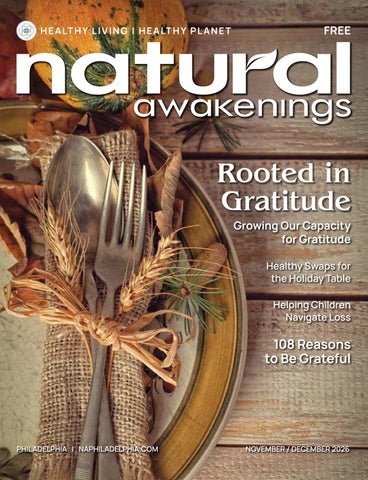
H E A LT H Y L I V I N G | H E A LT H Y P L A N E T
FREE
Rooted in Gratitude Growing Our Capacity for Gratitude Healthy Swaps for the Holiday Table Helping Children Navigate Loss
108 Reasons to Be Grateful
PHILADELPHIA | NAPHILADELPHIA.COM
NOVEMBER / DECEMBER 2026
you thanks
our growing
COLLABORATIVE PARTNERS For Transforming Healthcare Together in the
REGENERATIVE WHOLE HEALTH HUB
KnoWEwell.com
Contents Departments 6 Health Briefs 8 Global Briefs 10 Eco Tip 12 Feature Story 16 Conscious Eating 18 Fit Body 20 Mindful Journeys 22 Healthy Kids 24 Natural Pet 26 Inspiration 27 Resource Guide
12
16
20
24
10 Green Gift Guide for the Holidays 11 Homeopathy Myths 12 Growing Our Capacity for Gratitude 16 Healthy Swaps for the Holiday Table 18 Building Strength for Life 20 Gratitude in a Season of Less 22 Helping Children Navigate Loss 24 Safe Havens for Happy Dogs and Cats 26 108 Reasons to Be Grateful
Be sure to let our advertisers know you found them in
November / December 2026
3
HEALTHY LIVING HEALTHY PLANET
Publisher’s Letter
Friends, PHILADELPHIA EDITION Owner/Publisher Shae Marcus Associate Publisher Monica DelliSanti Account Executive Therese Howard Editors Sara Gurgen Randy Kambic Nancy Smith Seigle Design & Production Suzzanne M. Siegel Marketing & Media Coordinator Len Camante Social Media Manager Len Camante
CONTACT US Sales: 856-797-2227 Publisher@NAPhiladelphia.com Publishing/Editing: 230 N. Maple Ave. Ste. B1 #302 Marlton, NJ 08053 Ph: 856-797-2227 Publisher@NAPhiladelphia.com NAPhiladelphia.com
NATIONAL TEAM
CEO Kimberly B. Whittle COO Michael Bevilacqua CMO Vee Banionis Sr. VP Operations Brian Stenzler, DC National Editor Sandra Yeyati Editor Brooke Goode Copy Editor Melanie Rankin Print Production Specialist Kevin Rankin Design Director Agnes Mazeikaite Production Flip180 Executive Admin Julius Frago
CONTACT US Natural Awakenings Publishing Corporation 350 Main Street, Suite 9B Bedminster, NJ 07921 Ph: 239-206-2000 NaturalAwakenings@KnoWEwell.com Cover image courtesy of
Circleps for Adobe Stock © 2026 by Natural Awakenings. All rights reserved. Although some parts of this publication may be reproduced and reprinted, we require that prior permission be obtained in writing. Natural Awakenings is a free publication distributed locally and is supported by our advertisers. Please call to find a location near you or if you would like copies placed at your business. We do not necessarily endorse the views expressed in the articles and advertisements, nor are we responsible for the products and services advertised. Check with a healthcare professional regarding the appropriate use of any treatment.
November always brings conversations about gratitude. We gather around tables, count our blessings and remind ourselves of everything we have to be thankful for. Yet lately, I’ve been thinking about the gratitude that doesn’t come wrapped in a holiday or tied up with a pretty bow. Rather, my thoughts have been on the kind that shows up on an ordinary Tuesday, in an unexpected conversation, a small act of kindness or even a difficult moment that teaches us something we didn’t know we needed to learn. Sometimes, the things we end up being most grateful for aren’t what we would have chosen in the first place.
Publisher Shae Marcus
As I get older, I’m learning that gratitude isn’t about pretending life is perfect. It’s about appreciating the messy, beautiful, unpredictable life happening right in front of us—and perhaps most importantly, recognizing that some of our greatest gifts aren’t things at all. This thought is woven throughout this month’s issue. Our feature story, “Growing Our Capacity for Gratitude,” explores how thankfulness can become more than a passing feeling. With a little intention and practice, it can change how we experience everyday life, including the challenging parts. In “Gratitude in a Season of Less,” Molly Swan offers a beautiful reminder that sometimes having less on our calendars, fewer expectations and more time outdoors can help us reconnect with what truly matters. It’s a message worth remembering as the holiday rush begins. And in “108 Reasons to Be Grateful,” we explore the ancient tradition of mala beads and how one bead, one breath and one mindful moment can remind us that gratitude is often found in the simplest things. Speaking of the holidays, we’re sharing fresh ideas for healthier Thanksgiving favorites, along with thoughtful, sustainable gift-giving inspiration. You’ll also find articles on building strength for the years ahead, helping children navigate loss, and creating safe, loving spaces for our four-legged family members. Different topics, perhaps, but all connected by a simple idea: Living well means caring for ourselves, one another and the world around us. Before the holiday rush begins, I also want to say thank you—to our readers that pick up this magazine month after month, our advertisers that believe in what we do, and the wellness community throughout Philadelphia and the surrounding suburbs. You are the reason these pages exist. My wish for you this Thanksgiving is that you find joy in the big celebrations, but even more gratitude in the little moments between them. Because sometimes the ordinary days turn out to be the extraordinary ones. With gratitude,
Natural Awakenings is printed on partially recycled and fully recyclable newsprint with black soy ink.
4
Philadelphia Edition | NAPhiladelphia.com
Support the Small Businesses that Advertise in NAP
Relax · Nurture · Restore Located inside :
2403 Main St, Lower Level, Narvon, PA
Enjoy fresh & healthy foods & drinks and shop for healthy lifestyle & natural, sustainable products at our Blue Door mercantile and cozy cafe!
We educate, encourage, support, and advise our clients to achieve health and wellness holistically! Services include:
Organic menu options include vegan foods, specialty teas/coffee & alternative beverages.
· Bioenergetic Scans · Emotional Release · EESystem · Far Infrared Sauna · Lymphatic Bodywork · Nutritional Counseling · Organic Skincare · Rife Therapy ...and more
Come and find your ideal destination for thoughtful holiday gifts & community support.
484-262-9020 TwinValleyHealthAndWellness.com
Peace, Clarity & Healing are within reach — One Step at a Time Feeling stuck?
Explore
Janet’s warm blend of ancient wisdom and practical tools helps you reconnect with your true self – gently, deeply, and with purpose.
Awaken
Reiki & Shamanic Healing & Training Retreats Body, Spirit & Soul Connections
Inner Love and Purpose Experience complete healing and practical spiritual living.
Ready to Begin?
Visit BeTheMedicine.com or call me 973-647-2500
Shaman Reiki Master Yogi Sage Astrologer
Your next step starts here . . .
Workshops, Spiritual Coaching, Energy Healing, Private Sessions / Remote, Virtual, In Person Be sure to let our advertisers know you found them in
November / December 2026
5
Health Briefs
Anhedonia, the inability to feel joy or pleasure, is a common and dangerous symptom of depression that develops when the brain’s reward system (a network of neural structures) becomes less responsive to positive experiences. A recent study in JAMA Network Open reports that positive affect treatment (PAT), a 15-week psychotherapy targeting this reward system, effectively treats depression and anxiety. Training patients to find joy, connection and meaning significantly outperformed negative affect treatment (NAT), which focuses on reducing negative emotions.
Daniel Megias/shutterstock
During the study, 98 patients with moderate-to-severe depression and anxiety, along with severe anhedonia, were randomly assigned to receive weekly sessions of either PAT or NAT. PAT patients were instructed to initiate and deeply savor pleasurable activities, while NAT patients focused on threat processing and reducing negative emotions. Participants provided weekly reports on behavioral, physiological, reward and threat measures. The results demonstrated that PAT’s reward-focused intervention led to greater reductions in depression and anxiety symptoms than NAT.
Kateryna Onyshchuk/ shutterstock
Pleasant Experiences Relieve Depression
Why Women’s Pain Lasts Longer
Adult men and women experience pain for different durations, and research in Science Immunology reveals why women’s pain persists longer than men’s. The study analyzed data from 172 women and 73 men that had visited the emergency room for traumatic injuries, primarily from car accidents. Patients rated their pain at the time of injury and again at eight and 12 weeks post-injury. Blood samples were also examined. The researchers found that men reported faster pain relief compared to women, and that the men’s blood contained higher levels of interleukin-10 (IL-10), a signaling protein that reduces swelling and tissue damage during an immune response. Lab experiments on mice by the same researchers indicated that higher levels of male sex hormones, specifically testosterone, directly boosted IL-10 production. When female mice had their ovaries replaced with dihydrotestosterone pellets, their IL-10 levels increased, and their pain recovery time significantly shortened. Using testosterone patches or other methods to enhance IL-10 production could potentially strengthen the body’s innate immune system to alleviate pain more quickly. Additional research and development are needed.
Doing all the “right” things and still not feeling well? Do you suffer from digestive problems, autoimmune conditions, fatigue, insomnia? Do you have children with eczema, allergies, autism, ADHD, constipation? Charlotte Nussbaum, MD, a triple board-certified pediatrician and internist can work with you to reclaim your and your family’s health. 6
Philadelphia Edition | NAPhiladelphia.com
Addressing the root cause Holistic care for people of all ages Personalized, collaborative treatment Functional and evolutionary medicine Safe and natural treatments Medford Functional Medicine
medfordfunctionalmedicine.com 609-969-4844
Support the Small Businesses that Advertise in NAP
Health Briefs
Yo-Yo Dieting and Health
Yo-yo dieting is a global phenomenon. About half of adults are trying to lose weight, but many regain substantial weight once they stop dieting, leading to repeated cycles of loss and gain. A comprehensive review published this May in The Lancet Diabetes & Endocrinology analyzed decades of observational data, clinical trials and animal models. The findings showed no evidence that weight cycling permanently slows metabolism, causes disproportionate muscle loss or results in long-term harm to obese patients. Mike Orlov/shutterstock
The researchers noted that regaining weight typically returns health and metabolic markers to pre-dieting levels, causing dieters to lose the temporary health improvements they experienced when they were lighter. Professor Faidon Magkos, of the University of Copenhagen, a co-author of the study, stated that the benefits of attempting weight loss outweigh the theoretical risks of weight cycling.
November arrives with a grateful heart, harvest’s abundance, a season’s art. —Catherine Pulsifer
NATURAL HEALTH YOUR HEALTHY SUPERMARKET
OPEN 7 DAYS
100's of organic herbs, local honey, spices, nuts, seeds, grains, flours, granolas in bulk or packaged. Now Stocking a Full Variety of Sea Moss Products; Including 15 varieties of Gel, Smoothies. Vegan, Vegetarian, Keto and specialty products. Largest selection of essential oils and aromatherapy in South Jersey. Hard to find items including vitamins, supplements, herbs and sea moss products. Organic produce delivered daily.
Organic Produce!
856-784-1021
2001 College Drive - Gloucester Township Laurel Hill Plaza- (Just minutes away from Philly off Rt. 42 and the Walt Whitman Bridge in South Jersey on Blackwood – Clementon exit )
Bring this ad in to receive 10% off our already below internet prices.
Be sure to let our advertisers know you found them in
November / December 2026
7
Global Briefs
Better Outlook for Organic Honey
A Cornell University study published in Science of the Total Environment established 72 organically managed bee colonies across six large organic farms in the Northeast. Each colony was surrounded by 56 to 93 percent natural or semi-natural spaces, including forests, wetlands and fallow fields within an approximate two-mile radius. The researchers found that the bees foraged a median distance of less than half a mile from their hives.
Valentyn Volkov/shutterstock
After testing the nectar for 96 pesticide residues and comparing it to 20 store-bought brands, researchers determined that the pesticide content was low and comparable to the certified-organic honeys, while residue levels were much higher in the conventional products. The study demonstrated that it is possible to produce clean honey even in relatively small organic farms and that strict buffer mandates may be unnecessarily large.
ArtMari/shutterstock
Stringent regulations by the U.S. Department of Agriculture dissuades many farmers from participating in the organic honey market, but new research may lead to an easing of these restrictions, paving the way for an influx of new organic-honey manufacturers. Currently, apiaries must provide a nearly four-mile buffer zone of organic-certified or natural, undeveloped and uncultivated land for bees to forage, which can be difficult to locate. However, new research suggests that bees need only a fraction of that buffer to produce honey with extremely low or undetectable pesticide residues.
Burying Underwear for Science
Soil supports food production; stores water, carbon and nutrients; and provides habitats for more than half the world’s biodiversity, which is precipitously declining. To raise awareness about the importance of soil health and its biological activity, Swiss scientists recruited 1,000 volunteers to bury more than 2,000 pairs of cotton underwear and 12,000 tea bags across Switzerland. After two months, the materials were dug up, photographed and sent for analysis. The findings, published in Plants, People, Planet, reported that the underwear decomposed faster in healthy, microbe-rich soils. Gardens with large amounts of organic matter showed the fastest breakdown and lawns the slowest, while farm fields and meadows were in the middle. Biological activity was affected by the soil’s nutrient levels, temperature and moisture levels. “Our results show that how soil is managed can significantly affect both soil life and soil quality,” said Marcel van der Heijden, a study leader and professor of agroecology.
Recycling PVC Into Motor Oil
A recent study published in Nature reports on the development of a mild chemical process to upcycle PVC waste into polyalphaolefin, an ingredient used in various lubricants. This approach offers two potential environmental benefits: reducing plastic waste and sustainably producing high-performance base oils for industrial lubricants and engine oils. 8
Philadelphia Edition | NAPhiladelphia.com
Onder Ortel/shutterstock
Polyvinyl chloride (PVC), a durable and versatile plastic that can be rigid or flexible, is used in many products, including pipes, vinyl flooring, electrical wire insulation, synthetic leather and shrink-wrap. Sixty million tons of PVC are produced each year, and because it can take more than 450 years to biodegrade, it contaminates soil and groundwater for centuries.
Support the Small Businesses that Advertise in NAP
Soru Epotok/shutterstock
North American Bird Losses Are Accelerating
A 2026 study published in Science showed that declines in North American bird populations are speeding up year after year in regions with rising temperatures and intensive agriculture. According to the researchers, these accelerating declines were strongly associated with three factors: the heavy use of chemical pesticides and fertilizers, which destroy local insects, wiping out the birds’ main food source; the replacement of native plants and grasslands with massive crop fields, eliminating nesting grounds; and rising temperatures that compound the problem, adding environmental stress to these altered landscapes. The scientists noted strong statistical correlations between agricultural intensity/rising temperatures and faster bird losses, though they stressed that correlation does not strictly prove single-factor causation. The researchers used data from the North American Breeding Bird Survey, covering more than 261 species in the U.S. and Canada, rather than tracking other variables such as migratory routes or wintering locations. In the U.S., the highest overall net declines in bird numbers occurred in warmer regions such as Florida, Texas and other Southern states. The fastest acceleration of losses, was most prominent in the Midwest, Mid-Atlantic and California.
Be sure to let our advertisers know you found them in
November / December 2026
9
Eco Tip
Green Gift Guide for the Holidays by Natural Awakenings staff
D
uring the holidays, the familiar rush of gift-shopping can often overshadow the true spirit of the season. For Earth-conscious people, rampant over-commercialization can feel overwhelming. Eco-friendly gifting is a thoughtful alternative that not only reduces waste but also supports local communities, small businesses and conservation efforts. Carefully chosen eco-friendly gifts prioritize sustainability over excess, while celebrating their usefulness, beauty and benefits for the planet. This style of giving can make the holidays more purposeful and memorable while supporting a healthier lifestyle. Here are some inspiring gift ideas: For home chefs that want to reduce waste and single-use plastics, a reusable starter set for the kitchen can include produce bags, beeswax wraps, cloth napkins, bamboo utensils, dishcloths, silicone storage bags and stainless-steel straws. Explore options at PapayaReusables. com, Blueland.com, BambuHome.com, KleanKanteen.com or Grove.co. For those that enjoy pampering themselves, consider sustainable, non-toxic personal care products such as refillable deodorants, shampoo and hair conditioner bars, concentrated cleaners and natural soaps. Look for products approved by the Environmental Working Group (ewg.org). Take a look at WeAreWild.com or AttitudeLiving.com.
AnikonaAnn/shutterstock
For travelers that want to leave a smaller footprint, carry-on reusables such as a stainless-steel water bottle, bamboo toothbrush,
10
Philadelphia Edition | NAPhiladelphia.com
travel utensil set, reusable coffee cup and cloth shopping bag are thoughtful choices. Visit AkamaiBasics.com or EarthHero.com. For experiences that create lasting memories without adding clutter, a nature center membership, botanical garden pass, kayak rental or gardening class make wonderful gifts, allowing the recipient to connect with nature and enjoy the outdoors. For more relaxing activities, outdoor yoga or meditation sessions, a state park annual pass or birdwatching tour promote well-being while fostering a deeper appreciation for the natural world. To tantalize the tastebuds, homemade herbal tea blends, infused olive oils, spice mixes or handcrafted granola—all packaged in reusable glass jars—encourage a more sustainable lifestyle. For art lovers, upcycled arts and crafts made from recycled glass, fabric remnants, bicycle tires, reclaimed wood or repurposed materials are unique, creative gifts that support local artists while reducing waste and giving new life to old materials. For animal lovers, a symbolic animal adoption through organizations like WorldWildlife.org, OceanicSociety.org and Endangered.org supports endangered species and includes educational materials so the recipient can learn about the animal they are supporting. For outdoor lovers, planting a tree in the recipient’s name is the perfect gift. Organizations like ArborDay.org and OneTreePlanted. org allow donors to dedicate a tree, support reforestation or contribute to habitat restoration. For gardeners and homeowners, pollinator kits include native wildflower seeds, herbs or pollinator-friendly starter plants that support bees, butterflies, birds and other local wildlife. They can be purchased through online retailers, specialty native plant nurseries and conservation organizations. Visit BulkWildflowers.com or Eden Brothers.com. For those that enjoy fresh local produce, a community supported agriculture (CSA) subscription is a thoughtful gift that supports local growers and encourages seasonal healthy eating while reducing the carbon footprint of food transportation. Support the Small Businesses that Advertise in NAP
SPONSORED CONTENT
Homeopathy Myths Refuting the Most Common Misconceptions by Christina Donka, CCH Myth: Homeopathy is just another name for herbal medicine. Homeopathic remedies come from natural sources, including plants and minerals. While an herbal tincture relies on measurable amounts of a plant or plants, a homeopathy remedy follows homeopathic principles and is prepared through a specific process of dilution and vigorous shaking. Myth: The pellets are nothing but sugar. Most homeopathic remedies come in the form of a tiny sugar pellet that dissolves under the tongue; this is simply the carrier. During manufacturing, the pellet is infused with the prepared homeopathic remedy.
NataKor/shutterstock
Myth: Nobody regulates these products. Under U.S. federal law, homeopathic remedies are classified as drugs, and the U.S. Food and Drug Administration oversees their manufacture, marketing and sale. Myth: More is better. The opposite is true. The “minimum dose” principle dictates taking only enough of a remedy to spark a healing response. If
symptoms return, then the dose can be repeated, although it is best to check with a homeopathic practitioner. Myth: Homeopathy is only good for the sniffles. Colds, flu, sore throats, earaches, bumps and bruises are where most families begin, and that’s where a homeopathy home kit really shines. But homeopathy goes well beyond first aid. Myth: There is no research behind homeopathy. Thousands of studies on homeopathy have been published in medical journals, including clinical trials and laboratory research into the biological activity of highly diluted substances. This article is based on information in HomeopathyCenter.org. Christina Donka is executive director of the National Center for Homeopathy, providing education, resources and advocacy since 1974. To read an expanded version, visit TinyURL.com/ HomeopathyMythsNA or scan the QR code. Underwritten by Grato Health, in operation since 1987, dedicated to advancing health and wellness through natural, holistic solutions that support the body's ability to heal.
gratohealth.com
®
Be sure to let our advertisers know you found them in
November / December 2026
11
Feature Story
Growing Our Capacity for Gratitude How to Practice Thankfulness Every Day by Megy Karydes
G
ratitude comes in various forms. It can be stealthy (that sense of warmth when the sun breaks through after a gray week) or hard won (appreciating a short-tempered teenager). But researchers and practitioners agree that gratitude must be cultivated to become part of our daily routine. “Gratitude as a passing feeling is spontaneous,” says Brendan Cournane, a certified professional development coach specializing in well-being and mindfulness, and author of Seeking Serenity: Finding Happiness by Embracing Your Present Attitude. “Anybody who practices mindfulness or meditation has moments of gratitude daily, even several times a day, but that’s not the same as developing a practice.”
Build New Pathways in the Brain According to David R. Hamilton, Ph.D., a bestselling author and speaker on the science
Serlena Bessonova/shutterstock
The distinction matters most, he emphasizes, during times when gratitude doesn’t come
naturally, such as when we’re late for work, blindsided by an angry spouse or absorbing someone else’s bad day. “By developing gratitude as a practice and as a part of our lives, we allow ourselves to pause and acknowledge that no matter how challenging this moment is, there is something to be grateful for.”
12
Philadelphia Edition | NAPhiladelphia.com
Support the Small Businesses that Advertise in NAP
and the waves along the shore. I feel her hand’s touch. I smell the air from the water or trees in the park.”
Rido/shutterstock
Another powerful shift suggested by Cournane is saying, “I’m grateful my sister called when I felt overwhelmed and she reminded me I wasn’t alone,” instead of “I’m grateful for my family.” This specificity enhances the gratitude practice and its benefits.
of kindness and well-being, whose newest book is The Joy of Actually Giving a F*ck: How Kindness Can Cure Stress and Make You Happy, the key to turning any practice into a consistent habit is neuroplasticity—the brain’s capacity to reorganize itself based on repetition.
positive moods, greater optimism and less worry. Additional research summarized by the American Brain Foundation indicates that practicing gratitude activates the brain’s reward system, reduces the amygdala’s stress reactivity and, with repeated practice, reorganizes neural pathways between neurons.
“Anything that is consistent can shape your brain networks and build a habit. That’s when a gratitude practice becomes a habit,” he explains, comparing the concept to cutting a new trail across a cornfield. “There’s already a path that’s been made. But suppose you decide to walk another path. Initially, that takes a little bit of work. But as you walk it daily, it becomes a habit. The old path begins to overgrow because the brain doesn’t want to waste energy.”
Be Specific, Not General
Both experts agree that gratitude must be specific to truly resonate. “‘I’m grateful for my wife’ is too generic,” says Cournane. “Instead, ‘I’m grateful for my wife because we walked along the lakefront holding hands and enjoying the sunset’ is specific and activates more brain receptors.” Sensory details are key: “I see the sunset. I hear the wind
Gratitude Is Not Forced Positivity
Neither Hamilton nor Cournane suggests that gratitude replaces grief or hardship. “When challenging things have happened, it’s like, ‘I’ve made it through this day. I managed to get out of bed this morning,’” says Hamilton. After his father’s death, his gratitude practice shifted. “I could remember all these great things about him, and that became something I could hold onto. We tend to only turn inside when we’re faced with difficulties and challenges in our life because there’s nothing else in the outside world that’s giving us any happiness. So all you’re left with is: ‘I’m still here.’” Cournane offers a psychological perspective on why gratitude helps during conflict or stress. “The brain cannot hold two opposite feelings or thoughts or emotions simultaneously. I can’t be angry and grateful
Cournane observes a similar transformation in his coaching work: “We know through neuroplasticity that our brain waves can change, and by forming a gratitude practice, we can transform all of our circumstances into something more positive.” Hamilton and Cournane’s experiences align with research findings. A 2023 systematic review and meta-analysis published in the einstein (São Paulo) journal, which analyzed 64 randomized clinical trials, found that gratitude interventions were associated with greater life satisfaction and significantly reduced anxiety and depression symptoms. The participants also reported more Be sure to let our advertisers know you found them in
November / December 2026
13
Feature Story
ORION PRODUCTION/shutterstock
and soon half an hour or an hour will feel manageable,” counsels Cournane, who begins his daily gratitude practice by drinking a glass of water. “I appreciate having clean, fresh water, which not only is healthy for me but also reinforces the positive benefits I’m experiencing.”
Turn Thankfulness Into Action
Gratitude does not have to remain private, according to both practitioners. Hamilton points to research showing that people consistently misjudge the impact of a compliment. “We underestimate how grateful people would be if we paid them a compliment,” he says. “At the same time, we overestimate how much we think it will annoy them.” Voicing appreciation, he notes, can even have a physical effect: Connection triggers a release of oxytocin—the kindness hormone—that helps regulate blood pressure.
For families looking to build this habit together, Hamilton recommends a gratitude jar. Everyone writes what they’re thankful for on slips of paper throughout the year, then opens the jar on a meaningful date. This can become a very emotional bonding experience that the family may want to repeat every year.
Start Small, Stay Committed
Growing our capacity for gratitude requires practice. “Begin with 30 seconds or a minute,
Cournane shares a smaller, more recent example. When ordering a sandwich, the woman behind the counter said, “It looks like you’ve been working hard today, so you deserve a nice sandwich.” He returned the compliment and saw her face light up. “There’s a mutual respect, a mutual giveand-take that stimulates gratitude and other positive emotions within us,” he says.
14
Philadelphia Edition | NAPhiladelphia.com
Habits Can Lead to Real Change
• The One-Memory Journal: Write three sentences about a specific moment of support, kindness or relief. • The Specific Thank-You: Clearly tell someone what they did and why it
PeopleImages/shutterstock
feelings or thoughts or emotions simultaneously. I can’t be angry and grateful at the same time,” he remarks, adding that seeking gratitude in difficult moments isn’t about denying the challenge. It’s about avoiding taking it out on the nearest person.
Psychologist Robert A. Emmons, Ph.D., professor emeritus at the University of California, Davis, has dedicated much of his career to this field. In Gratitude Works!: A 21-Day Program for Creating Emotional Prosperity, he describes sustained practice as a journey toward emotional prosperity—not the absence of hardship, but an inner richness and resilience regardless of circumstances. When practiced consistently and with specificity, gratitude is more than a mood; it is an infrastructure built one small, repeatable moment at a time until it becomes a natural path, like a well-trodden trail across a field.
Support the Small Businesses that Advertise in NAP
mattered. We underestimate how much it will mean to them. • The Gratitude Reframe. When stressed, ask, “What is still here to support me?” • The Gratitude-to-Behavior Step. Choose one thing to be grateful for and let it guide an action. This could be a text, a call, a note or a moment of patience. • Start Small. A daily and consistent practice, even if imperfect, is more effective than sporadic efforts. Megy Karydes is a Chicago-based writer and author of 50 Ways to More Calm, Less Stress.
GLP-1 Specialist Doctor
CUSTOM BLEND VITAMIN BOOSTER SHOT MENU n The Skinny Shot n Crush Cravings Shot n Hello Gorgeous Shot n Hollywood's Secret Shot n Ripped Fitness Shot n Jacked Fitness Shot n Immunity Strong Shot
856.318.4100
n Super B12 n MIC Lipotropic n Glutathione n L-Carnitine n L-Arginine n L-Lysine n Taurine
Medical Weight Loss Anti-Aging Treatment Vitamin & Peptide Therapy Mens Health Specialist Testosterone Replacement Therapy
www.drfortino.net
215.336.8000
As you awaken to your divine nature, you’ll begin to appreciate beauty in everything you see, touch and experience. —Wayne Dyer
Wellness Begins Locally. Natural Awakenings Can Help Them Find You. Ask us about the many advertising options and opportunites with NA Philadelphia! Be sure to let our advertisers know you found them in
For Ad Rates and more information: EMAIL
Publisher@ NAPhiladelphia.com OR CALL 856-797-2227
NAPhiladelphia.com November / December 2026
15
Conscious Eating
Healthy Swaps for the Holiday Table Thanksgiving Never Tasted So Good by Marlaina Donato gut-brain connection and inflammation regulation. The American Heart Association recommends using olive oil instead of butter, even in mashed potatoes; herbs and spices like rosemary and cloves instead of butter and salt; and whole-grain bread and pasta instead of white flour.
M
Marcos Castillo/shutterstock
Improving a Good Thing
aking the Thanksgiving meal healthier does not mean sacrificing the flavor and traditions families and friends look forward to all year. Swapping in nutritious ingredients is an act of love, a way to care for the people gathered around the table while still honoring the dishes and memories that make the holiday meaningful. With a little planning, delicious culinary adjustments are simple to execute. Ingredient replacements should be viewed as a celebration of abundance rather than deprivation, as they add colors, herbs, textures and more energy after the meal. Ideas include blending cauliflower into mashed potatoes, using Greek yogurt instead of sour cream, brightening dishes with herbs and citrus zest instead of heavy gravies, adding crunchy greens and seasonal salads, and sweetening desserts with fruit, monk fruit, stevia or smaller amounts of honey or maple syrup.
Good Vibes and a Healthy Heart
A balanced holiday plate that combines lean protein, fiber and complex carbohydrates can support increased energy, mood, mental clarity and emotional regulation, especially during a time that can bring stress, along with joy. According to Harvard Health Publishing, diet directly impacts mood and brain function through the 16
Philadelphia Edition | NAPhiladelphia.com
“Food and recipes are meant to be adapted, and just because grandma made it one way doesn’t mean you can’t give it your own spin,” says Kathryn Doherty, in Charlotte, North Carolina, a recipe creator, cookbook author and founder of FamilyFoodOnTheTable.com. “I happily put my lightened-up twist on old favorites and find ways to adapt classic recipes to work for my family.” Jesse Lane Lee, from Toronto, a holistic nutritionist, corporate wellness educator, cookbook author and founder of JesseLaneWellness.com, has the perfect healthy replacement for a dish most Americans wouldn’t dream of forgoing. “Mashed cauliflower is much faster and easier to make than traditional mashed potatoes,” she explains. “If you aren’t a big fan of cauliflower, try swapping the sour cream you add to your mashed potatoes with plain Greek yogurt. The yogurt adds a satisfying tang, as well as extra protein.” Sara Tercero, from Massachusetts, a plant-based chef, cookbook author and founder of BetterFoodGuru.com, welcomes the opportunity to surprise and delight guests with flavorful substitutions, noting, “These switches can shave off hundreds of calories and make meals more balanced, while barely changing a recipe’s taste or texture.” She relies on spices and vinegars to bring out the flavor of vegetables, helping them take center stage at the holiday table. Stuffing made with gluten-free grains and brown lentils can be surprisingly delicious without the carb crash of a traditional bread-based recipe. Instead of calorie-laden mac and cheese, add puréed butternut squash to high-protein or whole wheat pasta for a delightful, nutrient-rich twist. And a buttery, white flour-thickened gravy pales in comparison to a creamy sauce made with roasted carrots, parsnips, onions and celery blended in a low-sodium broth with sage, thyme and black pepper. Support the Small Businesses that Advertise in NAP
Dessert Reimagined
Topping a sweet potato casserole with a nut streusel instead of marshmallows is one of Doherty’s holiday favorites. By combining chopped pecans with a touch of butter, modest amounts of brown sugar and cinnamon, she is able to replace the empty calories of the traditional topping with healthy fats and antioxidants while also adding satisfying texture and complexity to the dish. Doherty is also strategic about her homemade cranberry sauce. “Adding fresh orange juice and some honey helps add sweetness and flavor and allows you to use less granulated sugar. Start small, taste as you go and see how much sugar you really need,” she advises, adding that honey or naturally sweet fruit such as bananas or dates are healthier choices for desserts. Pure maple syrup is Tercero’s go-to sweetener. “I also like to add in something that will make the dessert moist, like apple sauce or tahini, because it gives more depth of flavor than oil and sugar,” she says, noting that chia or flax seeds with water (instead of eggs) and avocado (instead of butter or shortening) can also keep vegan baked goods moist and fluffy while adding nutrition. Marlaina Donato is an author, painter and composer. Connect at WildflowersAndWoodSmoke.com.
PECAN APPLE CRISP YIELD: 4 TO 6 SERVINGS FOR FILLING 4 cups thinly sliced apples, 3 to 4 apples ½ lemon, juiced 2 Tbsp maple syrup ¼ cup almond flour 1 tsp cinnamon FOR TOPPING
GARLIC CAULIFLOWER MASH YIELD: 4 TO 6 SERVINGS 1 large head of cauliflower, cut into florets 2 cloves of garlic 2 Tbsp olive oil ¼ tsp sea salt black pepper to taste Steam the cauliflower and garlic for 8 to 10 minutes until soft. Transfer to a food processor with olive oil, salt and pepper. Blend until smooth.
Preheat the oven to 350° F. Place the sliced apples in a bowl and toss with lemon juice and maple syrup. Add the almond flour and cinnamon, and toss once more. Mix all the topping ingredients together in a separate bowl and set aside. Place the filling into a baking dish and top with the topping. Bake for 30 minutes until the apples have softened and the juices have released. Remove from the oven and serve with whipped cream, à la mode or with Greek yogurt. Recipe courtesy of Jesse Lane Lee and JesseLaneWellness.com.
Recipe courtesy of Jesse Lane Lee and JesseLaneWellness.com. Be sure to let our advertisers know you found them in
November November // December December 2026
Courtesy of Jesse Lane Lee
Courtesy of Jesse Lane Lee
1 cup oats ½ cup chopped raw pecans ¼ cup almond flour ¼ cup coconut oil, softened 3 Tbsp maple syrup 1 tsp cinnamon ½ tsp vanilla
17
Fit Body
Building Strength for Life
exercises that seemed harmless in your 30s carry a higher risk profile in your 50s.” Because bone density loss often begins in the spine, she recommends replacing crunches and sit-ups with functional movements that are both safer and more effective at targeting core strength. These include engaging the core while lifting weights, and doing pull-ups, push-ups and balance poses. A simple exercise is to hold a light weight at chest height, slowly extend the arms forward and then bring the weight back to the chest. Keep the core muscles tightened to prevent the back from arching as the arms extend.
Why Resistance Training Is a Key to Aging Well by Brian Stenzler, MSc., DC, FCCA, FICA
S
trength training is essential for everyone, not just athletes and bodybuilders. Regardless of age—from 25 to 75—the body has a remarkable capacity to become stronger. Research confirms that resistance exercise reduces the risk of many chronic conditions and becomes more important with age as muscle mass naturally declines. In older adults, maintaining strength supports independence while minimizing the risk of falls and fractures. Resistance can come from bodyweight exercises, bands, free weights or machines, with adaptations for all ages and fitness levels. In addition to building muscle, regular strength training improves bone density, supports metabolic and cardiovascular health, enhances balance and mobility, and contributes to better cognitive function and emotional well-being. By promoting a stronger and more stable neuromusculoskeletal system, resistance training enables the body to better handle physical stressors, reducing excessive strain on the spine and joints, and supporting biomechanics and optimal nervous system function.
Protect the Spine and Bones
Rido/shutterstock
Muscle and bone health are interconnected, so strength training must adapt to changes in bone density. Debra Atkinson, a fitness educator and founder of Flipping 50, states, “The
18
Philadelphia Edition | NAPhiladelphia.com
The Bone Health & Osteoporosis Foundation advises those with osteoporosis to maintain an upright posture, spinal extension and core stability during strength training, while avoiding repeated forward bending that can harm spinal integrity.
Employ the Correct Movements
Heavier weights do not always yield better results. Effective training prioritizes movement quality over load, focusing on neutral spinal alignment, controlled movement, proper breathing and core stability. Progressive overload, which involves gradually increasing resistance as the body adapts, enables muscles, bones and connective tissues to build strength and endurance without unnecessary strain. Dr. Peter A. Gratale, founder of Energy Chiropractic & Pilates, in New Jersey, and former co-host of ESPN’s BodyShaping, believes that one of the most valuable uses of chiropractic by athletes and workout enthusiasts is performance enhancement. He explains, “Chiropractic is the bullseye on the target of a well-conceived training program that includes core strengthening, strength training, high-intensity interval training and self-myofascial release [the use of gentle, sustained pressure to relieve tension in connective tissues].” Because efficient movement and function depend on coordinated communication
Support the Small Businesses that Advertise in NAP
PeopleImages/shutterstock
Research is ongoing, with evidence supporting reduced pain and improved function for certain conditions, especially PRP for knee osteoarthritis, while evidence for BMAC and other applications is limited. For selected patients, these treatments may provide another option before surgery, reflecting a philosophy of using the least invasive approach to restore function and support a safe return to strength training
between the nervous system and the body’s other systems, Gratale advocates for a whole-body training approach. Restrictions in spinal or joint motion, muscular imbalances and asymmetrical movement patterns can disrupt efficient movement and lead to compensation. Optimal performance requires more than just muscle strength; it involves mobility, breathing mechanics, core stability, coordinated muscle activation and cardiovascular function, all of which influence the body’s response to exercise.
Get Started
Focus on proper form and gradual progression over lifting heavy weights too soon. Beginners and those returning after injury should allow adequate recovery, differentiate between normal muscle fatigue and pain indicating injury, and consult qualified professionals if health conditions or previous injuries exist. Whether starting with resistance bands at 70 or lifting a barbell for the first time at 35, building strength preserves mobility, independence and quality of life for years. Dr. Brian Stenzler is vice president of operations and chief health officer for KnoWEwell and the Natural Awakenings Publishing Corporation.
Strategically Restart Exercise After Injury
Instead of resting until an injury feels better or diving back into unrestricted exercise, functional training progressively reinforces improved movement patterns with squatting, hinging, pushing, pulling, carrying and rotating exercises. When conservative care has plateaued, but surgery is not yet necessary, regenerative and interventional orthopedics may offer additional options for suitable patients. “The goal is not simply pain reduction; it is creating a more favorable biologic environment so that progressive strength and movement training can resume productively,” explains Torrance.
Africa Studio/shutterstock
Injuries can disrupt strength-training routines. While it is essential to allow the body to heal, returning to training after injury involves more than just waiting for pain to subside. Dr. Ronald Torrance II, a board-certified sports medicine physician at New Regeneration Orthopedics, in Florida, states, “Many patients stop exercising after an injury because pain and protective movement patterns create a cycle of de-conditioning, compensation and fear of re-injury. Dynamic neuromuscular stabilization and progressive functional movement training interrupt that cycle by first rebuilding the nervous system’s control of posture and stability, then layering strength onto those corrected movement patterns.”
I am grateful for being alive today. It is my joy and pleasure to live another wonderful day. —Louise Hay
Image-guided orthobiologic procedures may use a patient’s own biologic agents, such as platelet-rich plasma (PRP) or bone marrow concentrate (BMAC) to promote the healing of affected areas. Be sure to let our advertisers know you found them in
November / December 2026
19
Mindful Journeys
Gratitude in a Season of Less
A walk through November woods offers reminders that beauty doesn’t disappear when the leaves fall. Birds move through bare branches and the scent of damp earth fills the air. Slowing down to notice these details can become a practice of gratitude, one that extends beyond the woods. It might mean noticing the last herbs in the garden and turning them into infused oil for a friend, gathering fallen seed pods and responsibly collected evergreen clippings for handmade decorations, tucking a handwritten note inside a book or arriving at someone’s door with a pot of homemade soup. Each gesture is meaningful and made with intention.
An Invitation to Let Go, Get Outside and Rediscover What Really Matters
Photo by Andre-Furtado for www.Pexels.com
by Molly Swan
N
ovember has a way of reminding people that change is inevitable. Mornings grow cooler, daylight fades and trees reveal themselves as their last leaves fall to the ground. There is something beautiful about a tree standing bare. Without its leaves, its character becomes visible. The twists and turns of its branches, shaped by years of growth, leave nothing hidden. Perhaps there is something to be learned from a tree that stands bare, without anything to hide. While the natural world sheds what it no longer needs, society seems to demand the opposite. The quiet rhythm of the season gives way to expectations of picture-perfect gatherings, elaborate decorations and endless obligations. Behind carefully curated images are people quietly wondering whether they’ve done enough. Someone may 20
spend weeks preparing for a gathering, only to find themselves exhausted in the kitchen while everyone else enjoys the evening. Somewhere along the way, the simple pleasure of being together has become overshadowed by the performance of togetherness. Perhaps it’s time to let some of that go. Not because decorating is wrong or giving someone a beautiful gift isn’t meaningful, but because when generosity becomes an obligation, something essential gets lost. Gratitude, a word repeated throughout the season, can become buried among the traditions intended to celebrate it. Yet gratitude begins with noticing what is already there, shifting attention from what’s missing toward what remains meaningful, even amid life’s difficulties. Maybe the natural world is a good place to begin.
Philadelphia Edition | NAPhiladelphia.com
Communities have long gathered around food, music, storytelling and handmade gifts. Perhaps returning to these traditions means remembering that authentic connection doesn’t require a perfect home, an elaborate meal or a reason to impress. It means making room for the people and experiences that matter rather than the expectations that so often fill the calendar. Imagine a potluck picnic beneath a maple shedding its last leaves. Mismatched dishes, homemade food and picnic tables decorated with treasures gathered along the trail set the scene. Friends share stories and laughter as warm cups of cider are passed around a fire. Nothing elaborate. Just the pleasure of showing up and being together. As the last leaves fall from the maple, its branches become visible against the November sky. Nothing to hide. Nothing to prove. Just the quiet beauty of standing exactly as it is. Molly Swan is the founder of Living Wild Collective, a nature-based travel and experience company rooted in connection, curiosity and reciprocity. A certified forest therapy guide, licensed South African field guide and wildlife tracker, she leads immersive journeys through Southern Africa and nature-centered experiences closer to home in Pennsylvania. Through her work, she encourages people to slow down, reconnect with the natural world and rediscover a sense of belonging. Connect with her at LivingWildCollective.com.
Support the Small Businesses that Advertise in NAP
Be sure to let our advertisers know you found them in
November / December 2026
21
Healthy Kids
Helping Children Navigate Loss Gentle Grief Activities for Young Hearts by Christina Connors
I
t is said that grief is love with nowhere to go—a hard truth for adults to sit with and an even harder one for a child. While youngsters grieve the passing of a loved one, they also experience intense emotions if they change schools, move to another home, say goodbye to a best friend or even if they have to change a familiar routine. Parents often want to fix the sadness or rush kids past it, but a better choice is to give them the tools to hold both sadness and love.
altanaka/shutterstock
“Children grieve very differently than adults,” says Geralyn Cappabianca, a board-certified chaplain, teacher and author of Memoirs of a Hospital Chaplain. “Their emotional and cognitive development is not mature enough to process the intense feelings that grief brings. Many times, it is years later when they can emotionally grieve the loss.” At 14, Cappabianca lost her father, and her family sold their home and moved to another country, forcing her to leave her friends, extended family and school. “Whatever the type of loss, whether it’s the loss of a person, a move, loss of a pet or changing schools, the grief process is the same,” she believes. Child development experts have observed that youngsters process fear, loss and confusion far more naturally with play and hands-on activities than with conversation alone. Dr. Nancy Carlsson-Paige, an early-childhood development expert and professor emerita at Lesley
University, has researched and written about how young children use creative play to make sense of potentially overwhelming events, reduce anxiety and cope with trauma. Activities like building a memory box, listening to a story or singing a song allows them to begin to experience grief or trauma even before they have the words to name it. Connection can come before conversation.
Rawpixel.com/shutterstock
The Gratitude Memory Box
22
Philadelphia Edition | NAPhiladelphia.com
Creating a gratitude memory box is a simple, tangible way to honor a beloved person, pet, place or chapter of life. To make one, choose a container such as a shoebox, small wooden chest or tin container and invite the child to decorate it with paint, stickers or drawings. Gather meaningful items like photos, toys,
Support the Small Businesses that Advertise in NAP
that shared, side-by-side activity, something unexpected may happen. “While looking for birds, a child might begin talking about the person they miss,” Murphy notes, although she’s careful to add, “All of those responses can be okay,” including not talking about the loss at all.
ock erst hutt ics/s h p a agr pict
leaves or dried flowers, a collar or pet tag, and handwritten recollections. For parents worried about pushing a child before they are ready, Cappabianca advises that they take cues from the child. A parent may want to build their own memory box first, and then invite the child to help. “Children learn how to grieve from watching those around them,” she notes. According to Cappabianca, a memory box allows children to begin grieving early and safely. It provides a creative outlet for kids to express their emotions, validating their grief, even if the loss feels small to an adult. It teaches the child that love and gratitude can coexist alongside sadness. The memory box provides the child with a private space to revisit memories whenever they want. The family may choose to gather together in
a shared ritual to add items to the box, sit quietly together or talk about memories associated with the contents of the box.
Music can play a similar role. Murphy points to David Friedman’s song It’s Not Bad to Be Sad as one that “gives sadness a place rather than treating it as something that needs to be immediately fixed or pushed away.” Another Friedman song, Help Is on the Way, is built around reassurance and hope. Together, Murphy says, the two songs offer a grieving child the message that “It is okay to be sad, and you don’t have to face that sadness alone.”
The Power of Song and Stories
Starting the Conversation
A trusted adult might invite the child outside to look for a real chickadee together, and in
Christina Connors is a professional singer, a burnout prevention specialist, and CEO and executive director of Soulful Forest, Inc. Learn more at SoulfulForestInc.org.
Sometimes, direct questions about the loss—such as “Are you sad?” or “Do you want to talk about it?”—are hard for a child to answer. That is the thinking behind The Healing Chickadee (HealingChickadee. com), a program built around a plush bird, music and story, co-founded by Terry Murphy. “The child doesn’t necessarily have to sit across from an adult and answer questions about grief,” she writes. “Instead, they can cuddle the chickadee, talk about the bird, tell a story about it or simply sit quietly with it.”
Be sure to let our advertisers know you found them in
Invite, rather than force, the conversation. Try open-ended questions like: What do you want to remember most? What would you like to say thank-you for? What do you think the bird in the story is feeling? Would you rather draw this memory or listen to a song about it instead of talking? A memory box, story or song will not take away a child’s grief, but each can give them somewhere to put it and something to hold onto while they carry it.
November / December 2026
23
Natural Pet
Safe Havens for Happy Dogs and Cats Designing a Stress-Free Space for Our Pets by Ruth Roberts, DVM, CVA, CVH, CVFT, NAN
I
magine the relief of stepping through the front door after a long day, taking a deep breath and feeling the weight of the world lift. For humans, home is a sanctuary, but for pets, it is their entire universe. The constant noise, unpredictable schedules and lack of control over daily routines can leave dogs and cats feeling overwhelmed. Because pets rely so completely on the humans around them, a household’s atmosphere tends to become their anchor. Therefore, pet wellness often begins by creating a calm, appreciative environment.
Pets Absorb Their Caregivers’ Stress
Companion animals are highly sensitive to the emotional currents inside a home, often acting like mirrors, reflecting the vibe of their
surroundings. A 2019 study published in Scientific Reports measured cortisol, a stress hormone, in the hair of 58 dog and owner pairs. The results show that long-term stress levels are synchronized in dogs and their owners. And a 2015 study in PLOS ONE involving 1,508 dog owners found that dogs of emotionally distant owners were more likely to exhibit separation-related disorder, showing severe distress when left alone. Marlene Siegel, an integrative veterinarian and owner of Pasco Veterinary Medical Center, in Florida, views this mirroring as information rather than a reason to assign blame. On the Healing Tails podcast, she explained that pets are “showing us something that we need to learn,” and that it is up to us to pay attention, become aware of it and “shift the energy.” A 2026 article in Biological Reviews notes that city dogs face chronic stress because their environments and routines are overwhelming. Living in busy urban areas can overstimulate a dog’s senses, and because they rely entirely on humans, they rarely get to make their own choices. This affects the hypothalamic-pituitary-adrenal axis—the body’s main stress alarm system. In normal settings, the alarm turns on during danger and turns off when the danger passes. But for these dogs, the alarm never shuts off, causing cumulative damage to their physical health and changes in behavior.
PixelonMe/shutterstock
Emotional distress can also affect a pet’s appetite. For example, a senior, mixed-breed dog stopped eating from his bowl, even avoiding his favorite foods, months after his longtime canine companion passed away. Bloodwork indicated a physical issue requiring its own investigation, but the fear at the bowl was something tests alone could not explain. Offering food wherever he felt safe, before adding supplements, helped stabilize him within days.
24
Philadelphia Edition | NAPhiladelphia.com
Practical Steps to Create a Calmer Home
A supportive home is built on appreciation, where caregivers strive to understand a pet’s instincts, rather than expecting the animal to navigate a human world unguided. A 2021 study from University of California, Davis, published in Frontiers in Veterinary Science, found that dogs displayed signs of fear in response to household Support the Small Businesses that Advertise in NAP
Svetlana Rey/shutterstock
chirping.” She believes the shift reaches pets too: “You’re going to reset them while you reset yourself.”
sounds, especially high-pitched beeps like smoke-detector chirps, while owners responded with amusement in about 46 percent of the videos analyzed. A 2023 study in Applied Animal Behaviour Science found that cat owners with misconceptions about feline behavior were more likely to respond with yelling, hitting or water sprays. Because the stress levels of pets and their caregivers tend to synchronize, quiet shared moments such as mindful petting offer a calmer counterpoint to a busy day. Siegel suggests a simple routine: “Put yourself in a state of gratitude every morning, midday and every night.” The moments do not need to be grand. “You open your eyes and you may see the sun coming through. You may hear birds
Be sure to let our advertisers know you found them in
Establishing a safe haven, such as a quiet corner away from foot traffic and appliances, provides a pet with a place to retreat. Small, safe choices—like choosing which bed to sleep on—can restore a sense of autonomy. Sniffing walks suit many dogs; vertical space and separate litter boxes suit many cats. A calm, appreciative home supports behavioral well-being, but does not replace veterinary care. Sudden behavior changes, such as a spike in aggression or a loss of appetite, can signal a physical issue that requires prompt veterinary evaluation. Siegel’s rule of thumb is “Test, don’t guess.” Creating a calm household does not require perfection every day. Noticing how an owner’s presence and emotional energy ripple outward to their animals is a meaningful start. Note also that emotional support is a two-way street. An analysis of 1,421 primary caregivers in the peer-reviewed journal Anthrozoös found that as family conflicts rose, so did people’s attachment to the family pet, suggesting that animals offer comfort to humans during hard times. The connection is mutual. Ruth Roberts is an integrative veterinarian and holistic pet health coach. Learn about The Original CrockPet Diet and her coach certification program at DrRuthRoberts.com.
November / December 2026
25
Inspiration
108 Reasons to Be Grateful The Ancient Tradition of Mala Beads and Their Modern Meaning
C
onsider how 108 tiny beads can teach us about slowing down. For many centuries, Buddhist monks and spiritual practitioners have passed these beads between their fingers, using repetition to steady the mind and deepen awareness. Known as malas, these seemingly simple strands hold centuries of spiritual tradition—and a surprisingly practical lesson for modern life.
The number 108 is considered sacred across several Eastern traditions. In some Buddhist teachings, it represents mental afflictions practitioners seek to overcome on the path toward enlightenment. Although malas have distinct roots in Hindu and Buddhist traditions, prayer beads are also found in Christianity and Islam, reflecting a shared human desire to bring rhythm and focus to spiritual practice. 26
Begin by sitting comfortably and taking several slow breaths. Hold the mala gently, starting with the bead beside the guru bead. Choose a mantra, prayer or affirmation, moving one bead with each repetition.
When the mind wanders—and it inevitably will—the next count or bead becomes an invitation to begin again. The goal isn’t to stop thinking, but to practice returning.
A Bead of Gratitude
The word mala comes from Sanskrit, meaning “garland.” Originating in ancient Indian spiritual traditions, malas became important in Hindu and Buddhist practices, particularly for japa, the repetition of sacred mantras or prayers.
According to the Tibetan Nuns Project, traditional Tibetan Buddhist malas contain 108 counting beads and a larger guru bead, which holds spiritual significance and marks the completion of a cycle.
How to Use a Mala
Some meditation techniques involve silently counting from one to three before beginning again, while traditional mala practices may continue through all 108 beads. Upon reaching the guru bead, practitioners may reverse direction rather than crossing over it.
The History Behind the Beads
Buddhist monks and practitioners use malas to maintain concentration while reciting mantras, moving from bead to bead without the distraction of keeping count mentally.
While full malas commonly contain 108 beads, shorter versions with 54 or 27 beads are also used.
Beyond traditional mantra practice, mala beads can inspire a daily gratitude ritual.
More Than Beautiful Beads
With each bead, acknowledge something worthy of appreciation. A loved one. A beautiful sunrise. An unexpected kindness. Even life’s smallest moments can become reminders of everyday blessings.
Sandalwood: Valued for its gentle fragrance and association with calmness and spiritual practice.
Finding 108 reasons to be grateful may seem challenging, particularly during difficult times. Yet, gratitude isn’t about pretending life is perfect. It’s about recognizing that beauty and kindness can exist alongside life’s challenges.
Traditionally crafted from natural materials, malas carry symbolic meanings associated with their origins.
Rudraksha Seeds: Sacred in Hindu traditions, particularly those devoted to Shiva, symbolizing spiritual discipline and protection. Bodhi Seeds: Connected to the Buddha’s enlightenment beneath the Bodhi tree, representing awakening and wisdom.
Perhaps the wisdom of the mala isn’t found in completing 108 repetitions, but in what happens between the first bead and the last: a wandering mind returning, a breath becoming steadier, and an ordinary moment receiving our full attention—one bead, one breath, one moment of gratitude at a time.
Gemstones: Amethyst, rose quartz and other stones are popular in contemporary malas, often associated with tranquility, compassion and intention.
April Willard is the owner of Zen Den on Main, located at 25 E. Main St., in Marlton, NJ. For more information, visit www.ZenDenOnMain.com.
Philadelphia Edition | NAPhiladelphia.com
Support the Small Businesses that Advertise in NAP
Natural Mattress
Community Resource Guide Connecting you to the leaders in natural health care and green living in our community. To find out how you can be included in the Community Resource Guide, email Publisher@NAPhiladelphia.com to request our media kit.
Alternative and Complementary Medicine
Complementary/ Functional and Regenerative Medicine
DR. SEAN C. INSELBERG, DAC, MSC, CNS Nutritional Wellness Center 1 Cinnaminson Ave, Ste 206 Palmyra, NJ 08065 856-499-2160 www.NutritionalWellnessNJ.com
ALLAN MAGAZINER, DO Magaziner Center for Wellness 1907 Greentree Road Cherry Hill, New Jersey 08003 856-424-8222 MagazinerCenter@DrMagaziner.com www.DrMagaziner.com
Offering simple, effective solutions for optimal health for the whole family. Includes: Functional Medicine testing, Othromolecular energy medicine, Neuro-Emotional Technique, Psycho neurobiology, autonomic response testing, Theta Healing.
Bodywork AWAKEN & RESTORE MASSAGE AND WELLNESS CENTER 716 N. Bethlehem Pike, Suite 204A Ambler, PA 19002 267-221-7160 www.HeartMindSpiritConnection.com Nancy Walton, Reiki Master offers Sound baths, Tibetan healing tones, Color Light Vibrational sessions and Solfeggio Tuning Forks to release energy imbalances to restore your body. She’s also a Foot Reflexologist (Ingham Method) to optimize your energy and health.
Coaching
STEPHANE PONCELET 570-449-2219 calwl2022@gmail.com www.Create-A-LifeWorthLiving.com Clients learn to observe and respond to deep-seated emotions of conflict, emptiness, and loneliness that often arise from family dysfunction. Guided in mourning the unchangeable aspects of their past, helped to own their truths and grieve their losses, clients are encouraged to show themselves the love, patience, and respect they truly deserve. A transformative process which creates a life that is truly worth living.
With nearly 40 years of excellence in patient care, the Magaziner Center for Wellness is the area’s premier center for integrative and function medicine. We solve complex medical problems naturally.
Energy Healing Arts MERYL HAYTON Inner Peace Specialist, Advanced Certified EFT Practitioner, Energy Healer 973-879-9333 MerylHayton@gmail.com https://MerylHayton.com Meryl Hayton is a trauma-informed Inner Peace Specialist focused on nervous system regulation and removing stress-response patterns. Through EFT, somatic approaches and energy healing, she supports women in reducing chronic stress and cultivating lasting calm, clarity and emotional resilience. Free consultations.
Health and Wellness Shop NATURAL LIFE WELLNESS STORE CHERRY HILL Cher Dr. Abigail Arculeo, DCN, CNS Short Hills Town Center 480 E. Evesham Rd., Unit 103 Cherry Hill, NJ 08003 856-560-0119 Facebook & Instagram @NaturalLifeCherryHill Family-owned natural health and wellness store with supplements, herbs and holistic products. Dr. Abigail Arculeo provides personalized functional nutrition care through her practice, Root & Restore.
Be sure to let our advertisers know you found them in
KELLY WERNERSBACH Adjust Your Sleep Mattress Boutique LLC 888 NJ-73, Marlton, NJ Kelly@aysmattress.com Offering a personalized, educational approach to mattress selection, we focus on your comfort and health needs to ensure a perfect sleep system—because quality rest is essential for overall well-being and daily vitality.
Psychoenergetic Therapy HEALERS UNIVERSE Andrea Regal 856-904-5566 www.HealersUniverse.com Rediscover your True Nature through a unique psycho-energetic process that transmutes deeply rooted patterns, restoring your innate relationship with Soul, Earth, Nature, and Self while shaping the New Earth.
Registered Naturopathic Doctor JULIE LACHMAN, ND PA registration #10 1432 Easton Rd., Suite 3G Warrington, PA 18976 Phone: 267-406-0782 www.DrLachman.com Naturopathic doctors are experts in chronic, complex cases and use advanced testing and safe and effective methods to help adults and children. Dr. Lachman has consistently been voted Best in Family Medicine.
Spiritual Healing Teaching BE THE MEDICINE Janet StraightArrow 973-647-2500 BeTheMedicine.com Remote mentoring healers teachers-therapists, spiritual seekers, Catskill retreats, trainings, classes, profound healing, clearing, reiki, Shamanic Intuitive Energy Sessions. Soul Retrievals. Past, Ancestral, current life healing. Business, home, land clearings. Get unstuck. Discover purpose. 33 years experience. Shaman, Master Healer-Teacher, Sage, Astrologer.
November / December 2026
27
Nutritional Wellness Center Integrative & Holistic Medicine for Optimal Health 1 Cinnaminson Ave. Suite 206 Palmyra, NJ 08065
856-499-2160 Holistic Healing Body, Mind & Spirit Anti-Inflammatory Balance Hormones Boost Mood Healthy Skin Pain Relief Regulate Stress Sound Sleep Dr. Flay DAc, Ellen, Samantha, Dr. Sean DAc, MSc, CNS
Holistic, Integrative Care
Allergies, Autism, Auto-Immune Conditions, Cancer, Chronic Fatigue Syndrome, Colds, Covid/Flu,
Digestive Diseases,
Diabetes, Fibromyalgia, Headaches, Lyme Disease, Mood Disorders, PTSD, Skin Conditions, Thyroid Disorders, Tinnitus, Weight Gain and more.
Acupuncture Reiki
Nutrition Response Testing NET
Deep Tissue Massage
Shockwave Therapy SCAN ME
PEMF Therapy
(856)499-2160
Functional Medicine Cupping / Guasha Red Light Therapy
Wellness
www.nwcnj.com