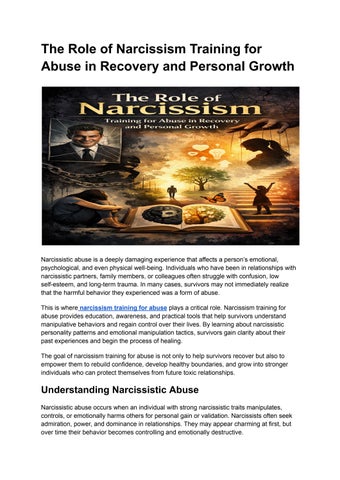
The Role of Narcissism Training for Abuse in Recovery and Personal Growth
Narcissistic abuse is a deeply damaging experience that affects a person’s emotional, psychological, and even physical well-being Individuals who have been in relationships with narcissistic partners, family members, or colleagues often struggle with confusion, low self-esteem, and long-term trauma In many cases, survivors may not immediately realize that the harmful behavior they experienced was a form of abuse
This is where narcissism training for abuse plays a critical role. Narcissism training for abuse provides education, awareness, and practical tools that help survivors understand manipulative behaviors and regain control over their lives By learning about narcissistic personality patterns and emotional manipulation tactics, survivors gain clarity about their past experiences and begin the process of healing
The goal of narcissism training for abuse is not only to help survivors recover but also to empower them to rebuild confidence, develop healthy boundaries, and grow into stronger individuals who can protect themselves from future toxic relationships
Understanding Narcissistic Abuse
Narcissistic abuse occurs when an individual with strong narcissistic traits manipulates, controls, or emotionally harms others for personal gain or validation. Narcissists often seek admiration, power, and dominance in relationships They may appear charming at first, but over time their behavior becomes controlling and emotionally destructive
Common patterns of narcissistic abuse include manipulation, gaslighting, blame-shifting, and emotional neglect. Victims may feel confused, anxious, or constantly responsible for problems in the relationship.
Because narcissistic abuse is often subtle and psychological rather than physical, it can be difficult to recognize. Many survivors spend years questioning their own perception of reality. Narcissism training for abuse helps people identify these hidden patterns and understand that the abuse was not their fault
What Is Narcissism Training for Abuse?
Narcissism training for abuse is a structured educational and healing approach designed to help individuals understand narcissistic personality traits and the effects of narcissistic relationships The training typically includes psychological education, self-awareness exercises, boundary-building techniques, and emotional recovery strategies
Through narcissism training for abuse, survivors learn how narcissists manipulate others and why these behaviors occur More importantly, the training teaches survivors how to regain emotional independence and rebuild a strong sense of self.
This form of training may include:
● Education about narcissistic personality traits
● Identifying manipulation tactics such as gaslighting and love bombing
● Learning emotional boundaries
● Developing self-confidence and self-worth
● Recognizing red flags in future relationships
By gaining knowledge and practical skills, survivors can move from confusion to clarity and from emotional pain to personal growth
Why Narcissism Training for Abuse Is Important for Recovery
Recovery from narcissistic abuse is often complex because the damage is primarily psychological Survivors may feel trapped in cycles of guilt, fear, or self-doubt even after leaving the abusive relationship.
Narcissism training for abuse provides a clear framework for understanding these emotional struggles When survivors learn about narcissistic behavior patterns, they begin to realize that the manipulation they experienced was intentional and part of a larger pattern.
This realization can be incredibly empowering Instead of blaming themselves, survivors start to see the situation more objectively. This shift in perspective is often the first major step toward healing.
Additionally, narcissism training for abuse offers practical tools for rebuilding emotional stability. Survivors learn how to manage triggers, cope with trauma responses, and rebuild trust in themselves
Recognizing Manipulation and Toxic Behavior
One of the most valuable aspects of narcissism training for abuse is learning how to identify manipulation tactics used by narcissists. These tactics often leave victims feeling powerless and confused
Some of the most common manipulation strategies include:
Gaslighting
Gaslighting is a psychological tactic where the narcissist denies or distorts reality to make the victim doubt their own memory or perception.
Love Bombing
At the beginning of a relationship, narcissists may overwhelm their partner with affection, praise, and attention. This intense admiration creates emotional dependency.
Blame Shifting
Narcissists rarely accept responsibility for their actions Instead, they blame others for problems in the relationship.
Emotional Withholding
They may withdraw affection, communication, or support as a way to punish or control their partner.
Narcissism training for abuse helps survivors recognize these behaviors so they can avoid falling into similar patterns in future relationships.
Rebuilding Confidence After Narcissistic Abuse
Many survivors of narcissistic abuse struggle with self-esteem issues Constant criticism, manipulation, and emotional neglect can slowly erode a person’s confidence
Narcissism training for abuse focuses heavily on rebuilding self-worth and personal identity Survivors learn to reconnect with their own values, beliefs, and strengths
This process often includes:
● Self-reflection and emotional awareness
● Rebuilding personal identity
● Developing positive self-talk
● Learning to trust one’s own judgment
As survivors regain confidence, they begin to see themselves as capable, resilient individuals rather than victims of past abuse
Learning to Set Healthy Boundaries
A major component of narcissism training for abuse is boundary development Many people who experience narcissistic abuse struggle with boundaries because narcissists often ignore or violate them
Healthy boundaries protect emotional and psychological well-being They define what behaviors are acceptable and what behaviors are not.
Narcissism training for abuse teaches survivors how to:
● Recognize boundary violations
● Communicate limits clearly and confidently
● Avoid people who repeatedly disrespect boundaries
● Prioritize personal well-being
Establishing boundaries allows survivors to regain control over their lives and relationships
Emotional Healing and Trauma Recovery
Emotional healing is a gradual process that requires patience and self-compassion. Narcissistic abuse can leave deep psychological wounds, including anxiety, depression, and trust issues
Narcissism training for abuse supports trauma recovery by helping survivors process their experiences and understand their emotional responses
Many survivors find comfort in learning that their reactions such as fear, anger, or sadness are normal responses to prolonged emotional abuse
Training programs often encourage practices such as:
● Mindfulness and emotional awareness
● Journaling and reflection
● Support groups and counseling
● Stress management techniques
These strategies help survivors rebuild emotional resilience and inner stability.
Personal Growth Through Awareness
While narcissistic abuse is a painful experience, many survivors eventually discover that the recovery process leads to profound personal growth Narcissism training for abuse plays a key role in this transformation.
By gaining knowledge and self-awareness, survivors develop stronger emotional intelligence and a deeper understanding of healthy relationships
They often become more confident in recognizing toxic behaviors and protecting their mental well-being This increased awareness allows survivors to create healthier, more balanced relationships in the future.
Personal growth may include:
● Greater emotional resilience
● Stronger decision-making skills
● Improved self-respect and confidence
● Clearer understanding of healthy relationship dynamics
Through narcissism training for abuse, survivors move beyond survival and begin building a more empowered and fulfilling life