
We’re bullish on your future. When we work together, you get personalized guidance, insights and financial planning — all designed to connect your life with your finances and to help make the path toward your goals even clearer.
Let’s have a conversation.
The Gonzales Group
Eric F. Gonzales
Merrill Lynch Wealth Management
Senior Vice President
Senior Resident Director-Wealth Management Advisor
707.254.4606
eric_gonzales@ml.com fa.ml.com/gonzales_group
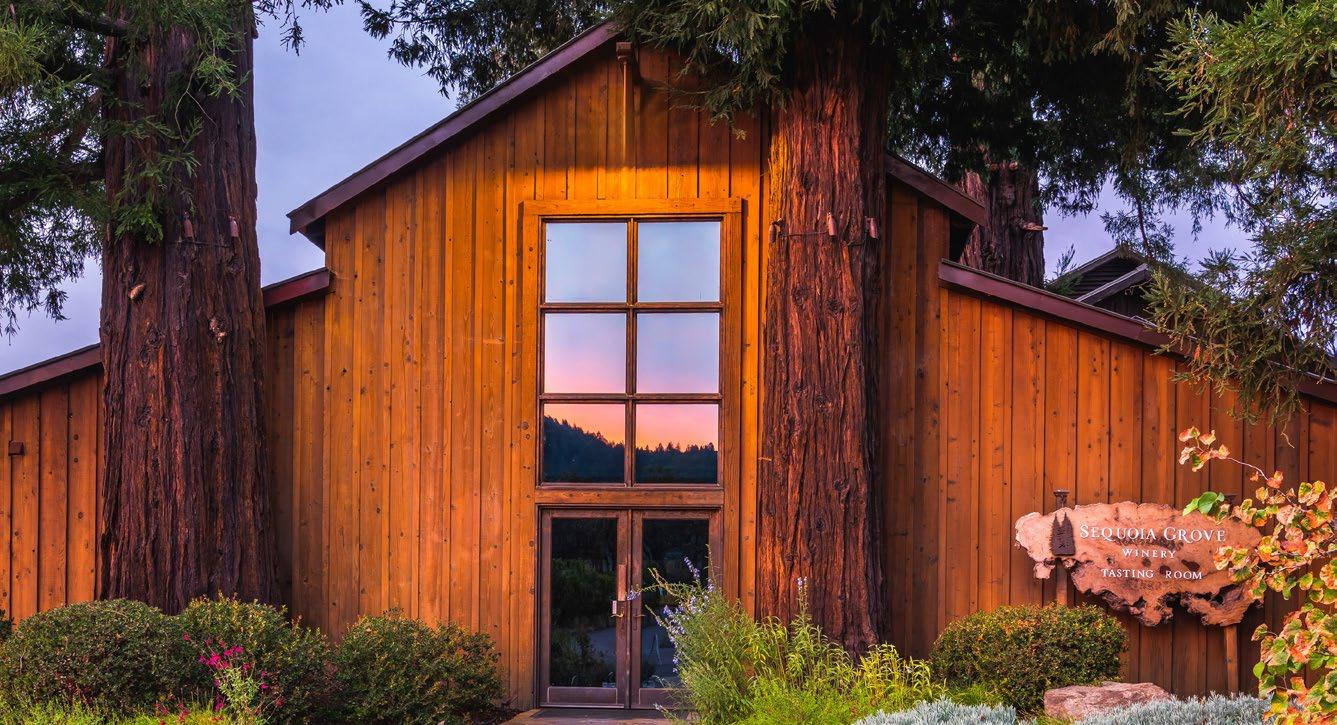
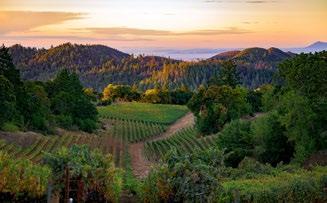
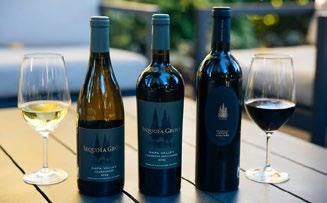
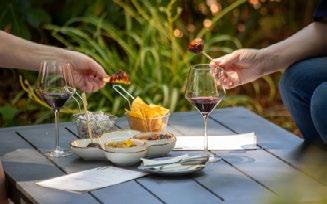
Discover why Sequoia Grove has been honored as “The Best Napa Valley Tasting Room’” and “The Best Signature Winery” for the sixth time. Sequoia Grove is dedicated to crafting wines of


38
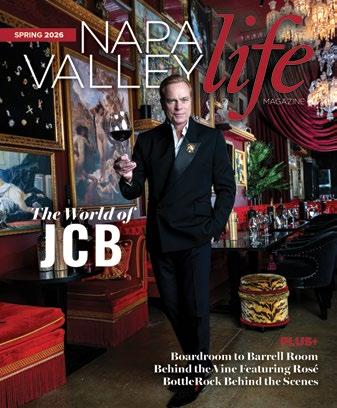
55 Cover Story
The world according to Jean-Charles Boisse Behind the Scenes BottleRock: From Vine to Vinyl The Art of the Barrel From Boardroom to Barrel Room Side Trip: Sonoma County Beyond the Bottle


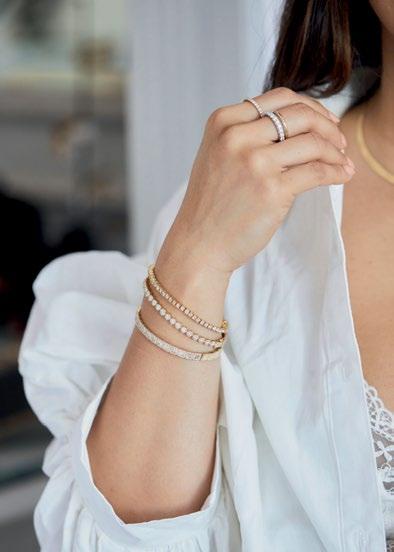
Fashion Jewelry
unique pieces and popular styles.
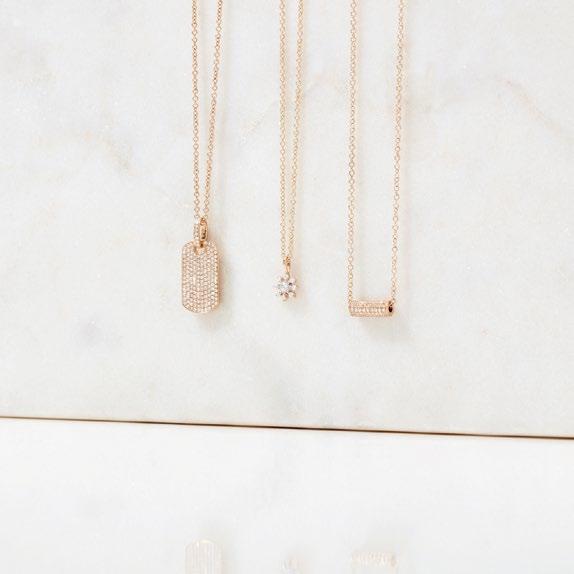
Discover our collection of unique pieces and popular styles.
Discover our collection of unique pieces and popular styles.

We provide fair market offers for your gold and appraise silver pieces.
Cleaning & Inspections
Cleaning & Inspections
Cleaning & Inspections
Professional cleaning, inspection, and repair services by our in-store experts, available to everyone.
Professional cleaning, inspection, and repair services by our in-store experts, available to everyone.
Professional cleaning, inspection, and repair services by our in-store experts, available to everyone.
Bring an inspiration photo or explore our showroom to begin
Bring an inspiration photo or explore our showroom to begin your design journey.
Whether parting with cherished pieces or discovering new treasures, our jewelers provide free appraisals and generous offers.
1300 1st St. Suite 365
Napa, California 94559
1300 1st St. Suite 365
1300 1st St. Suite 365 Napa, California 94559

Voted Best Golf Course in the Napa Valley
Voted Best Golf Course in the Napa Valley
Voted Best Golf Course in the Napa Valley



Membership
Membership
Membership
Membership
Membership opens the door to elevated play, meaningful connection, and a resort experience that feels like home.
Discover Membership
Discover Membership
Discover Membership
Discover Membership
Discover Membership
CHIEF EXECUTIVE OFFICER
CHIEF EXECUTIVE OFFICER
CHIEF EXECUTIVE OFFICER
Derek Wright
Derek Wright
Derek Wright
PRESIDENT
PRESIDENT
PRESIDENT Kevin Evans
Kevin Evans
Kevin Evans
VICE PRESIDENT OF OPERATIONS
VICE PRESIDENT OF OPERATIONS
VICE PRESIDENT OF OPERATIONS
Nicole Branning
Nicole Branning
Nicole Branning
INTERIM EDITOR
EDITOR
EDITOR
Kevin Evans
Laura Larson
Laura Larson
CREATIVE DIRECTOR
CREATIVE DIRECTOR
Martin Cosme
CREATIVE DIRECTOR
Erin Hayden Seal
Erin Hayden Seal
PRODUCTION MANAGER
Hans Garcia
ADVERTISING SALES
ADVERTISING SALES
Doris Hobbs doris.hobbs@napavalleylife.com
Doris Hobbs doris.hobbs@napavalleylife.com
ADVERTISING SALES
Doris Hobbs doris.hobbs@napavalleylife.com
CONTRIBUTING WRITERS
CONTRIBUTING WRITERS
Fran Miller
CONTRIBUTING WRITERS
Fran Miller
Layne Randolph
Fran Miller
Layne Randolph
Jillian Dara
Layne Randolph
Jillian Dara
Melissa Vogt
Jillian Dara
Melissa Vogt
Laurie Jo Miller Farr
Melissa Vogt
Laurie Jo Miller Farr
Laurie Jo Miller Farr
Karen Crouse
CONTRIBUTING PHOTOGRAPHERS
CONTRIBUTING PHOTOGRAPHERS
Art & Clarity – Lowell Downey
CONTRIBUTING PHOTOGRAPHERS
Art & Clarity – Lowell Downey
Art & Clarity – Lowell Downey
ABOUT THE COVER
ABOUT THE COVER
ABOUT THE COVER
Barb and Bart O'Brien at their family
Barb and Bart O'Brien at their family
winery, O'Brien Estate
winery, O'Brien Estate
Photo by Art & Clarity
Photo by Art & Clarity
The Visit Napa Valley Team From Left to Right: Nichole Peterson, Director of Partnerships and Events; Linsey Gallagher, President and CEO; Janette Maack, Associate Director of Marketing; Rachel Miers, Director of Community and Industry Relations; Teresa Coleman, Controller.
Photo by Lowell Downey, Art & Clarity
Napa Valley Life Magazine is published six times a year.
Napa Valley Life Magazine is published six times a year.
We have four quarterly publications and two annual publications.
We have four quarterly publications and two annual publications.
Copyright 2025 by Napa Valley Life Magazine. All rights reserved.
Copyright 2025 by Napa Valley Life Magazine. All rights reserved.
Napa Valley Life Magazine is published six times a year.
No part of this publication may be reproduced without the written permission of the publisher. Subscriptions are available for $12/year by visiting napavalleylife.com and clicking on subscriptions at the top.
No part of this publication may be reproduced without the written permission of the publisher. Subscriptions are available for $12/year by visiting napavalleylife.com and clicking on subscriptions at the top.
Copyright 2026 by Napa Valley Life Magazine. All rights reserved. No part of this publication may be reproduced without the written permission of the publisher. Subscriptions are available for $12/year by visiting napavalleylife.com and clicking on subscriptions at the top.
Corporate Headquarters:
Corporate Headquarters:
314 E. Highland Mall Blvd., Suite 125, Austin, TX 78752
314 E. Highland Mall Blvd., Suite 125, Austin, TX 78752
Corporate Headquarters: 314 E. Highland Mall Blvd., Suite 125, Austin, TX 78752
/NVLife @napavalleylifemag
/NVLife @napavalleylifemag
/NVLife @napavalleylifemag

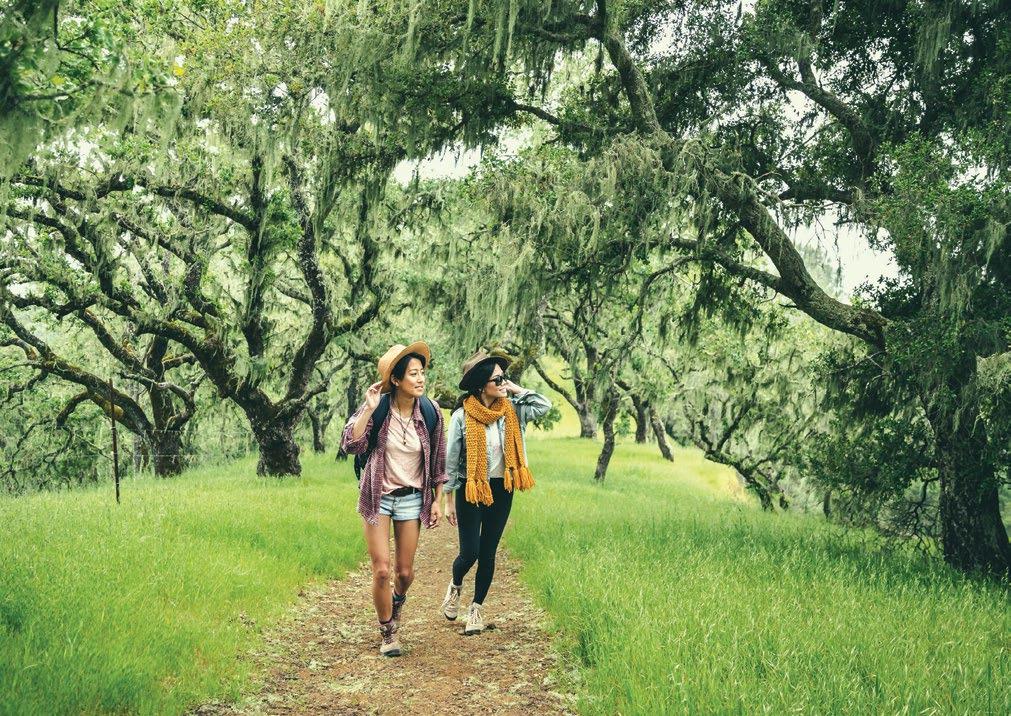
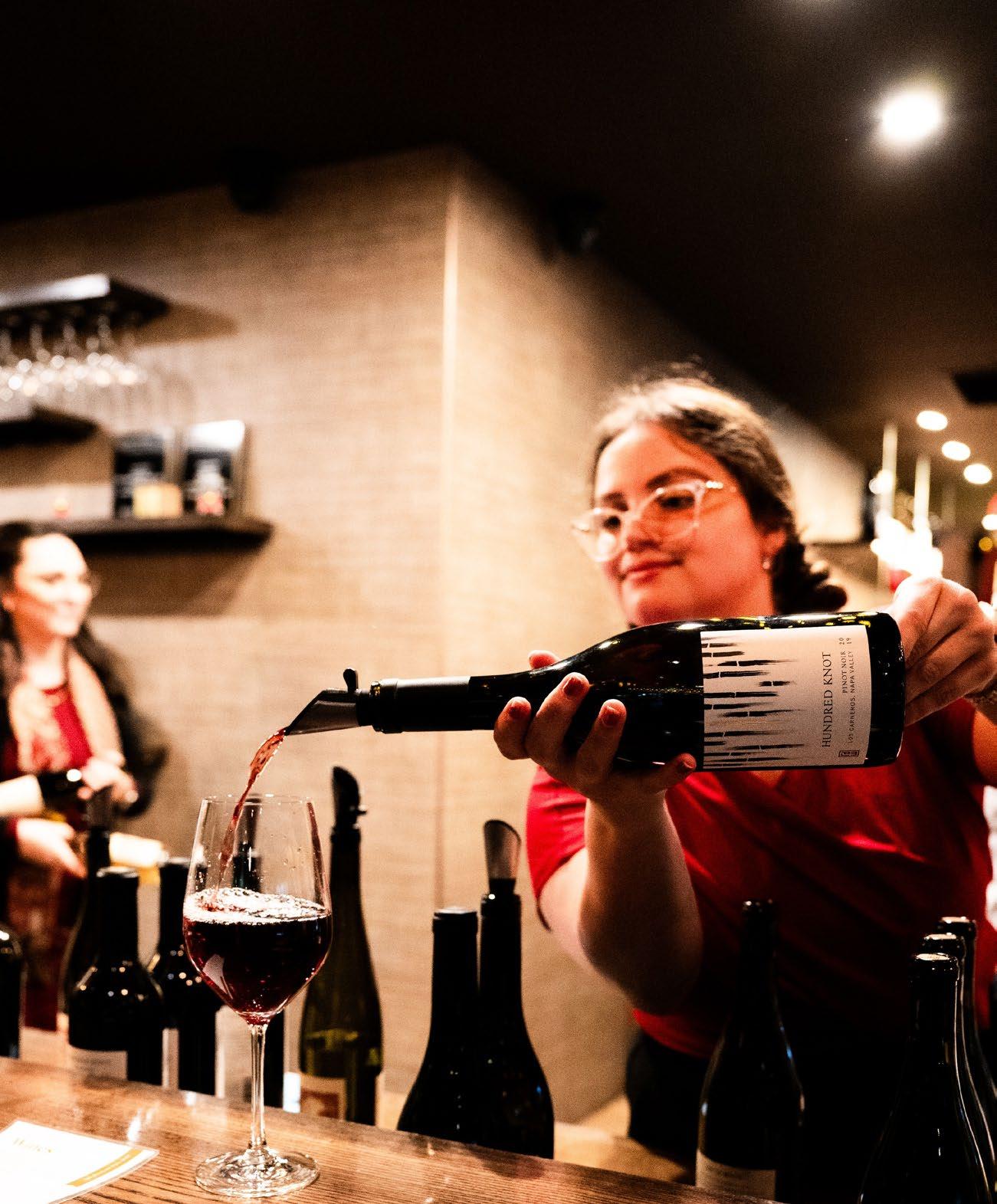

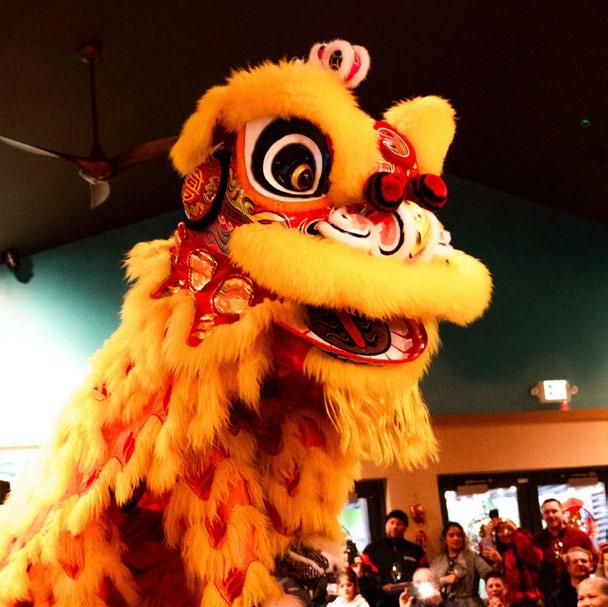
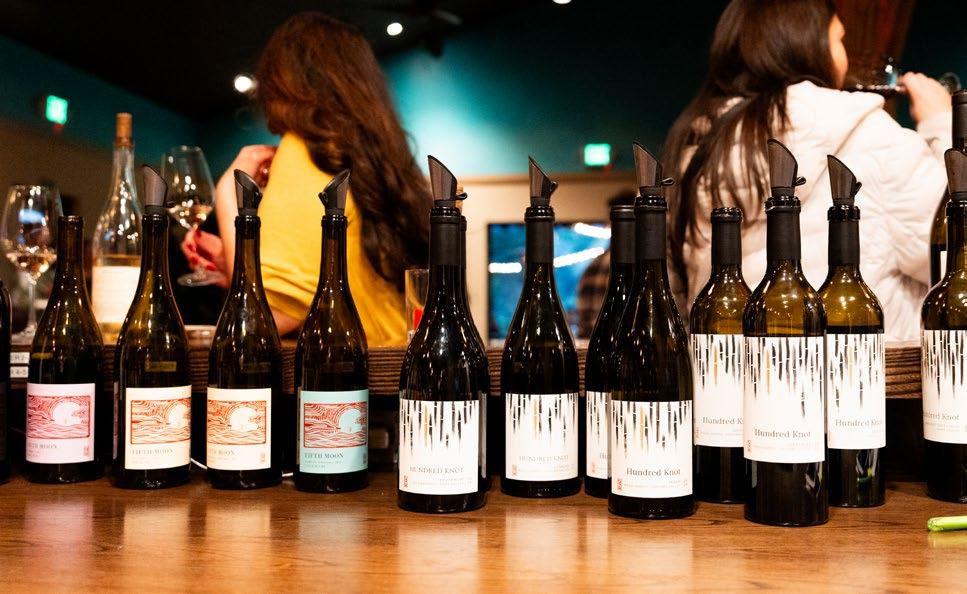
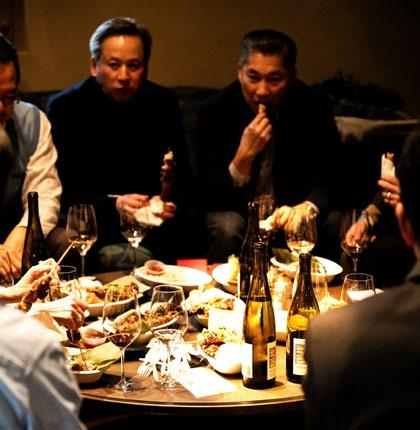
RD Winery welcomed the Lunar New Year with a beautiful evening of wine, culture, and celebration. Guests enjoyed a curated selection of estate wines, festive décor, and traditional elements symbolizing prosperity and renewal. Set in the heart of Napa Valley, the event brought together community, tradition, and refined hospitality, creating a memorable and meaningful start to the new year for all who attended.
FOR MORE INFORMATION www.rdwinery.com
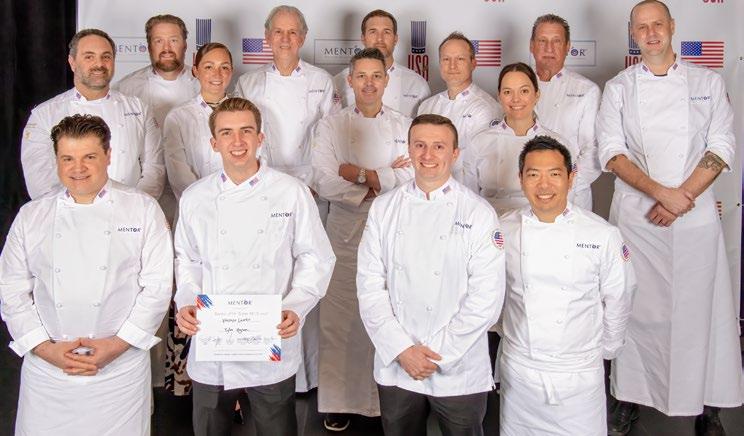
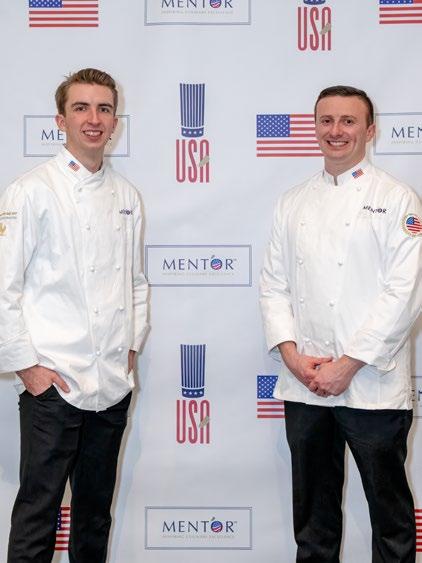
Team USA 2027 Ceremony at CIA at Copia Team USA was honored at a special ceremony held at CIA at Copia in Napa, celebrating the athletes selected to represent the United States in the 2027 international competition. Set against the iconic backdrop of Copia, the event brought together chefs, supporters, and community leaders for an evening of recognition, inspiration, and national pride. The ceremony marked a meaningful moment as Team USA officially began its journey toward the global stage.
FOR MORE INFORMATION foodleadership@culinary.edu
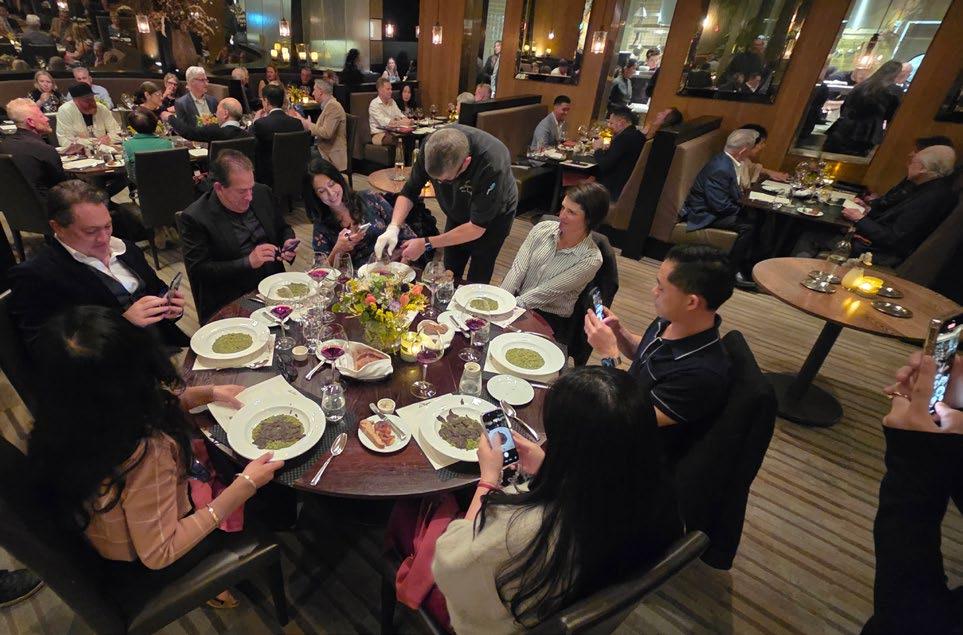
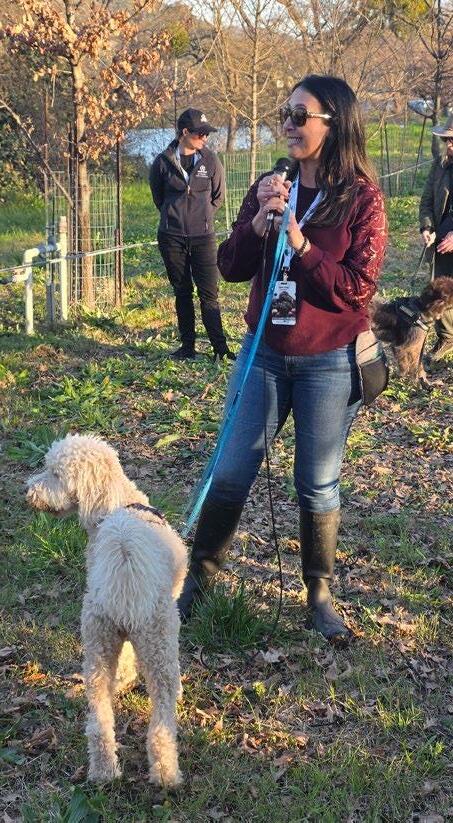
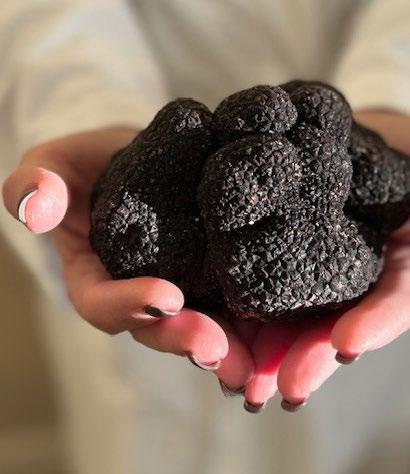
Whether you're a foodie with a passion for truffles, or a food voyager with a curiosity about one of the most exclusive foods in the world, the Napa Truffle Festival offers something for everyone through programs featuring truffle explorations and experiences with experts on the gastronomy, science, history, mystery, and hunting and harvesting of the highly prized Périgord black truffle, plus truffle dogs, one big free Truffle Marketplace and fresh Périgord truffles for sale
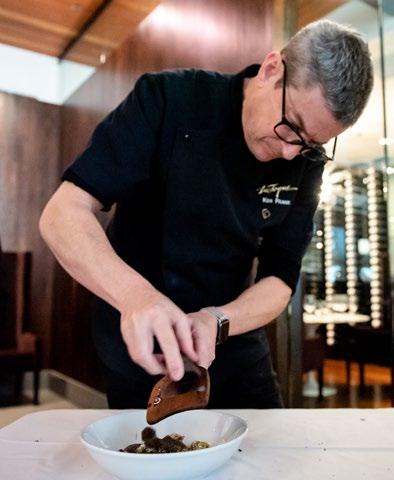
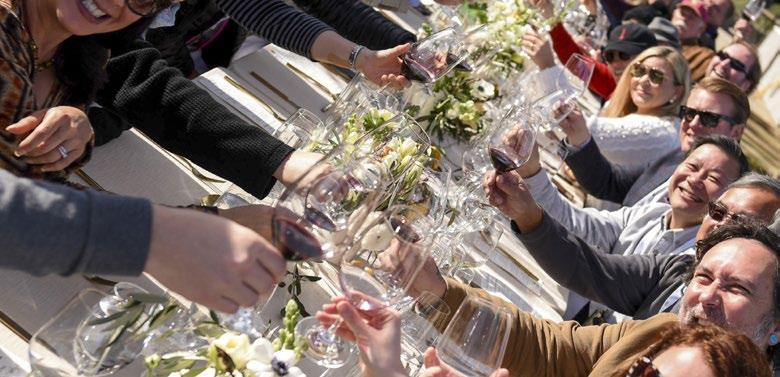
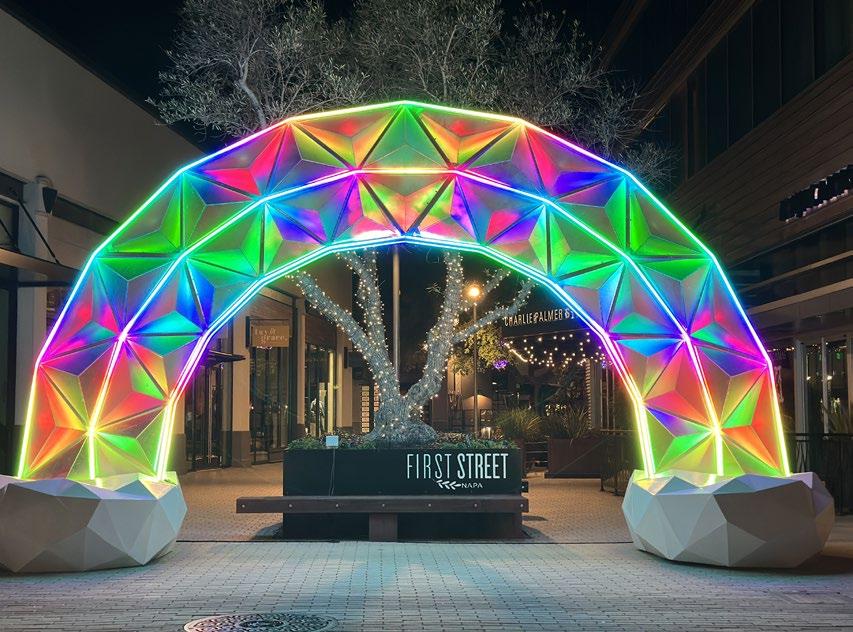

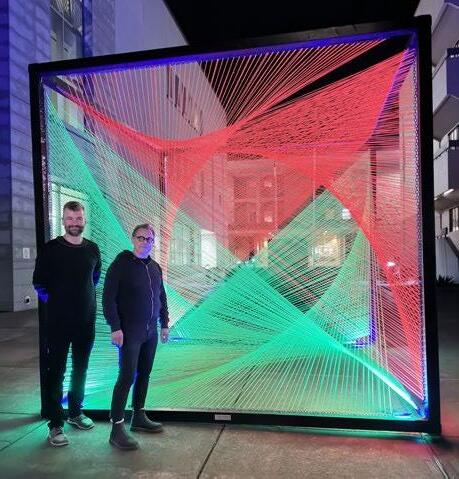
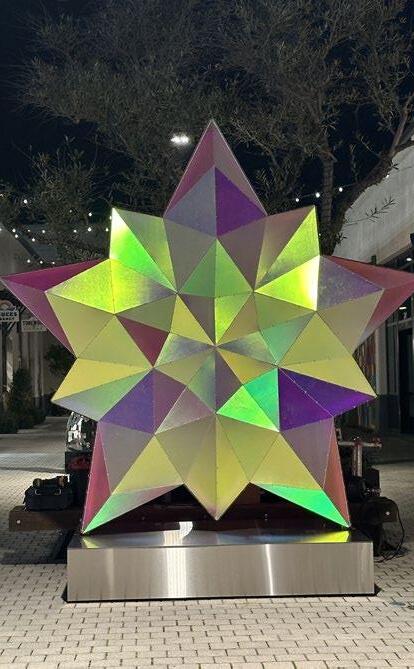
The Napa Light Festival was an unforgettable celebration of art, innovation, and community. Attendees were treated to stunning light installations, interactive exhibits, and immersive experiences that transformed downtown Napa into a glowing wonderland. Local artists and creators showcased their talents, while visitors enjoyed live music, food, and familyfriendly activities. The festival highlighted the city’s vibrant creative scene and brought people together to share in the magic of light, art, and connection. It was truly a dazzling experience.



The Napa Valley scene of upcomng Parties, Concerts, Celebrations and Events
For up-to-date calendar listings visit napavalleylife.com and click on EVENTS at the top of the page
April 17, 2026
Celebrate spring at V. Sattui Winery with an old-fashioned, Napa-style Lobster Fest. Set amid vine-lined lawns and vineyards, this gourmet dining event features fresh Maine lobster and seafood, Italian sausage, corn, artichokes, red potatoes, and a surprise dessert, all paired with exceptional V. Sattui wines. Live music by DJ Tony and dancing under the stars follow the feast, along with special winetasting stations and some of the best discounts of the year.
Info: www.vsattui.com/events/lobster-fest
May 10, 2026, Sunday, 10:00 a.m. to 1:00 p.m. A MOTHER’S DAY HIGH TEA FÊTE!
Clif Family Tasting Room, 709 Main Street, St. Helena, CA
Join Clif Family Winery & Farm for A High Tea Fête!, a charming Mother’s
Day celebration. Seasonal preserves crafted from fruit grown on Clif Family’s organic Napa Valley farm will be featured throughout the experience. The culinary team will present a high tea extravaganza featuring handmade scones, biscuits, tea sandwiches, and more. These delightful bites will be paired with Clif Family wines, as well as tea and coffee from local roaster Naysayer Coffee, plus sweets from local favorites Madeleine’s Macarons and Rory’s Bakehouse. Limited seating is available, and this popular annual event sells out quickly. Book early.
Info: www.cliffamily.com
May 22–24, 2026
BottleRock Napa Valley returns to the Napa Valley Expo for a weekend of music, food, wine, and a luxury festival atmosphere in the heart of Wine
Country. Over Memorial Day weekend, guests can enjoy live performances by more than 75 artists across multiple stages, along with gourmet culinary experiences, acclaimed local wines, craft cocktails, and immersive lifestyle activations. BottleRock blends world-class entertainment with Napa Valley’s vibrant food and wine culture for an unforgettable kickoff to summer.
Info: www.bottlerocknapavalley.com
April 23–26, 2026
Napa Valley StreamFest is a four-day immersive celebration redefining the festival experience for today’s content lovers. Set in downtown Napa, the event brings together live podcasts, exclusive series and film screenings, panel discussions, and social content experiences in one dynamic setting.
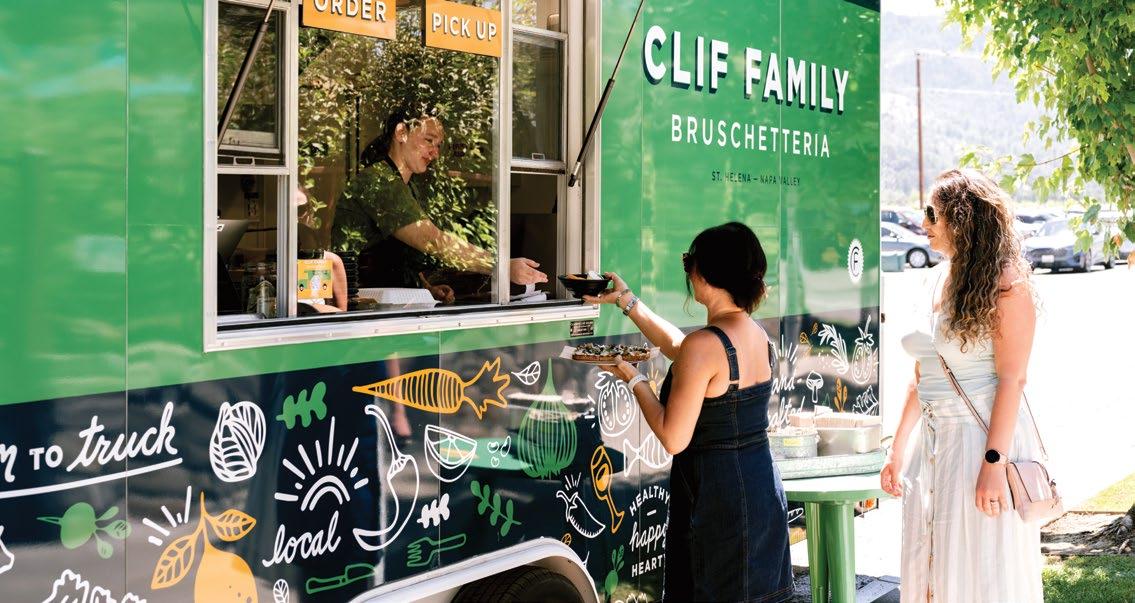
Attendees can meet creators, hear industry insights, and enjoy Napa’s world-class wine, cuisine, and hospitality alongside cutting-edge storytelling. It is a must-visit weekend for fans, creators, and lovers of modern media.
Info: www.napavalleystreamfest.com
April 24–26, 2026
A celebrated spring tradition, Vineyard to Vintner invites guests behind the scenes of the legendary Stags Leap District for an intimate weekend of wine and culinary discovery. Enjoy exclusive winery tastings, curated food pairings created in collaboration with renowned Yountville restaurants, and rare opportunities to connect directly with acclaimed winemakers. This immersive experience offers a deeper look at the artistry, heritage, and craftsmanship that define one of Napa Valley’s most iconic wine regions.
Info: www.stagsleapdistrict.com/V2V
May 1, 2026
Camp Groth invites guests to a rejuvenating wine and lifestyle experience that pairs the beauty of Yosemite with the elegance of Groth Vineyards & Winery wines. Set at AutoCamp Yosemite amid granite cliffs and spring meadows, this weekend adventure blends nature, luxury, and community, featuring guided activities, shared meals, and opportunities to explore the iconic landscape at your own pace. It is a memorable way to savor wine, scenery, and spirited conversation. Info: grothwines.com/camp-groth-yosemite
May 7, 2026, 11:00 a.m.
At Honig, balance is at the heart of everything—from daily life to wellness to community. Guests are invited to gather on the back lawn of the Honig House for a 90-minute sound healing class led by Jenny Raffield, owner of Choose Happy Wellness, followed by a social gathering in the garden. Relax amid sweeping vineyard and mountain views in the heart of the valley, then enjoy a splash of Honig’s signature Sauvignon Blanc and Cabernet Sauvignon. It is the perfect blend of selfcare and self-indulgence.
Info: www.honigwine.com
May 30–31, 2026
LA ONDA
Celebrate Latin music, culture, and community at La Onda, a vibrant two-day festival taking place at the Napa Valley Expo the weekend after BottleRock Napa Valley. Featuring live performances by major Latin artists, DJ sets, immersive cultural activities, and delicious Latin and regional cuisine, La Onda blends sensational rhythms with lively festival energy. Guests can enjoy fare from local vendors, specialty beverages, a silent disco, spa experiences, dance activations, and more amid a spirited celebration of Latin heritage.
Info: www.laondafest.com/
May 31, 2026, Sunday, 11:00 a.m. to 2:00 p.m.
VINEYARD WALK & LUNCHEON
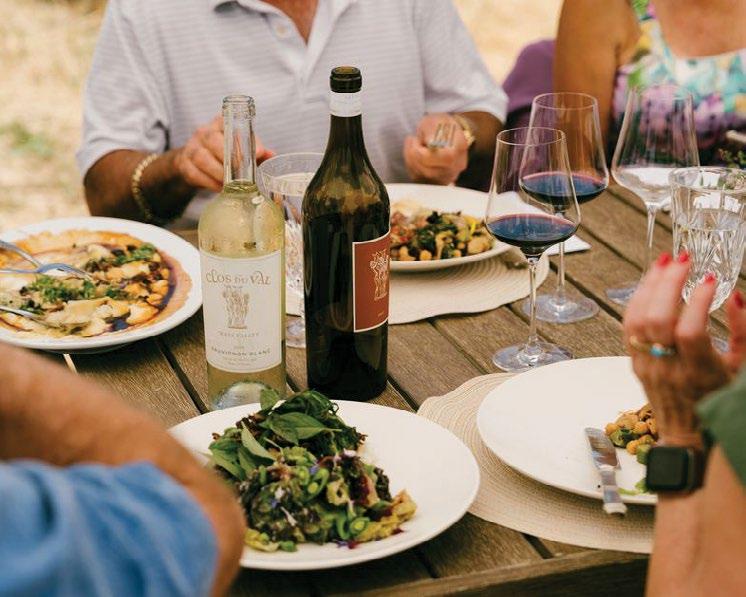
Return to the elements with a leisurely lunch in the embrace of the vines.
Guided by Viticulturalist Ryan Decker and Winemaker Carmel Greenberg, the day begins with a walk through the Hirondelle Estate, followed by a familystyle luncheon set within the vineyard itself. With just one glass, guests may find themselves transported, if only for a moment, to Bordeaux. $125 per person
Info: www.closduval.com
June 5–6, 2026
AUCTION
Auction Napa Valley returns as Napa Valley’s premier charitable wine auction and weekend celebration, bringing together world-class wines, gourmet cuisine, and philanthropy. Over two unforgettable days, guests can attend vintner-hosted dinners, the exciting Barrel Auction featuring rare and exclusive wines, and the high-energy Live Auction and Dinner Celebration. Every bid supports vital health and wellness programs for local youth, making this a compelling blend of luxury, community, and giving back in the heart of Napa Valley.
Info: www.collectivenapavalley.org
June 7, 2026
Celebrate the flavors of Napa Valley’s up-valley region at Calistoga Food & Wine, a lively walk-around tasting featuring nearly 30 local wineries. Guests can savor handcrafted wines alongside gourmet bites from some of the area’s top restaurants, making it an ideal earlysummer getaway. Enjoy live music, meet passionate winemakers, and explore the charm of Calistoga while indulging in an unforgettable day of culinary and wine discoveries in one of Napa Valley’s most picturesque locales.
Info: www.calistogawinegrowers.com
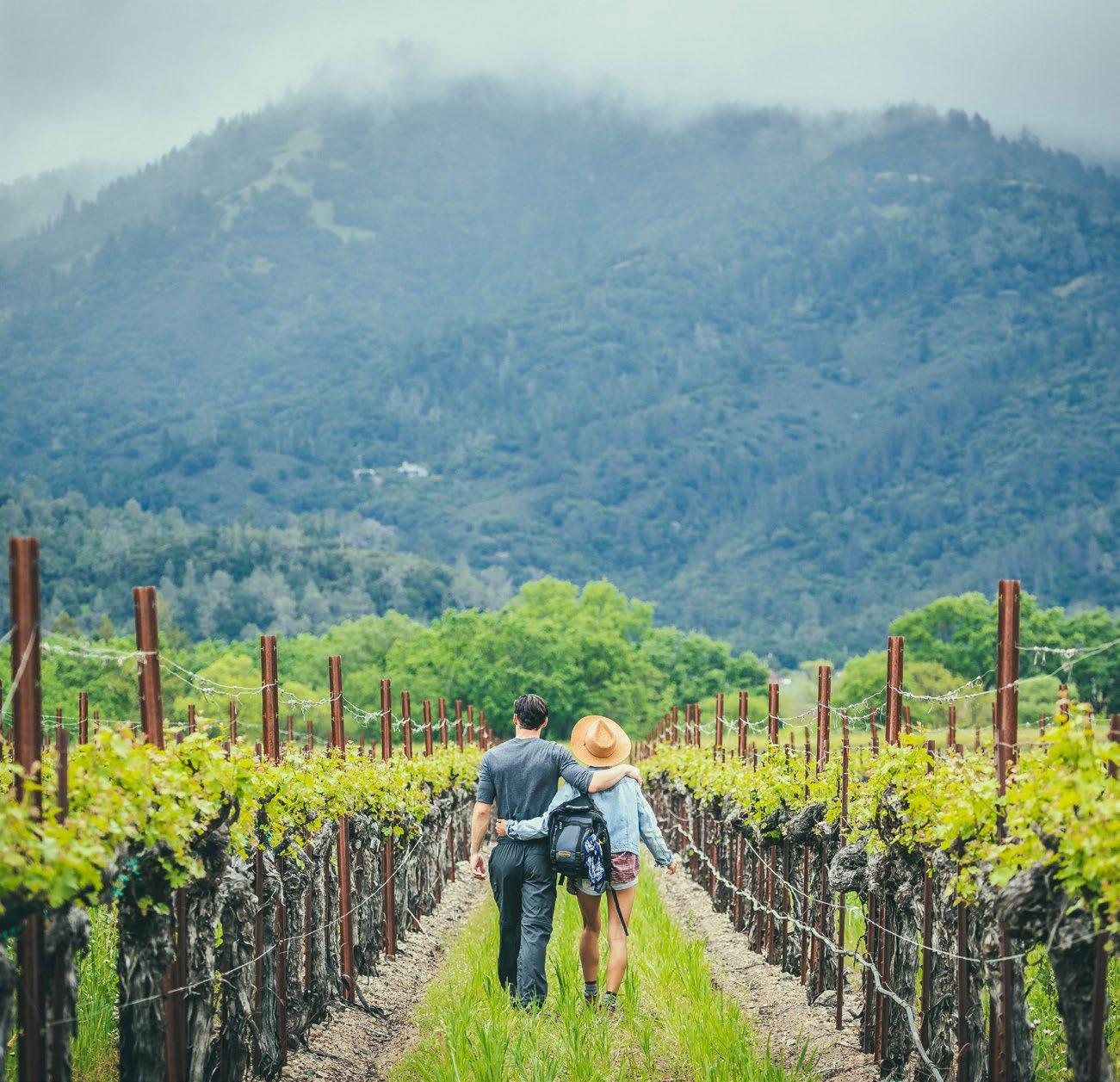
Spring is arguably the best time of year to be a local in Napa Valley. The mustard is blooming, the hills are impossibly green, and golden hour seems to stretch just a little longer each evening. It is the calm before harvest— the sweet spot when the valley feels vibrant yet unhurried.
For those lucky enough to call Napa Valley home, spring is also the perfect excuse to step out of routine and rediscover our own backyard. Whether you are a lifelong resident or a recent transplant, here is a reminder: you do not have to wait for out-of-town guests to play tourist.
It is time to live a little.
Despite splashy headlines about luxury price tags, Napa Valley remains wonderfully accessible—if you know where to look. In fact, more than 110 wineries offer tasting experiences under $50, and
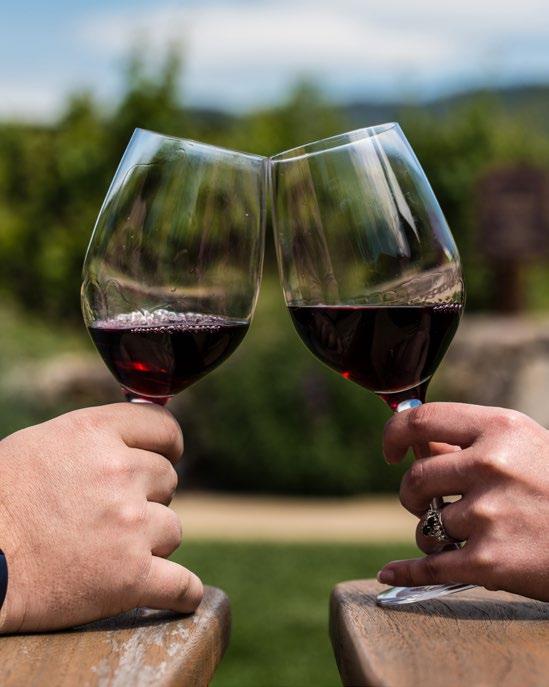
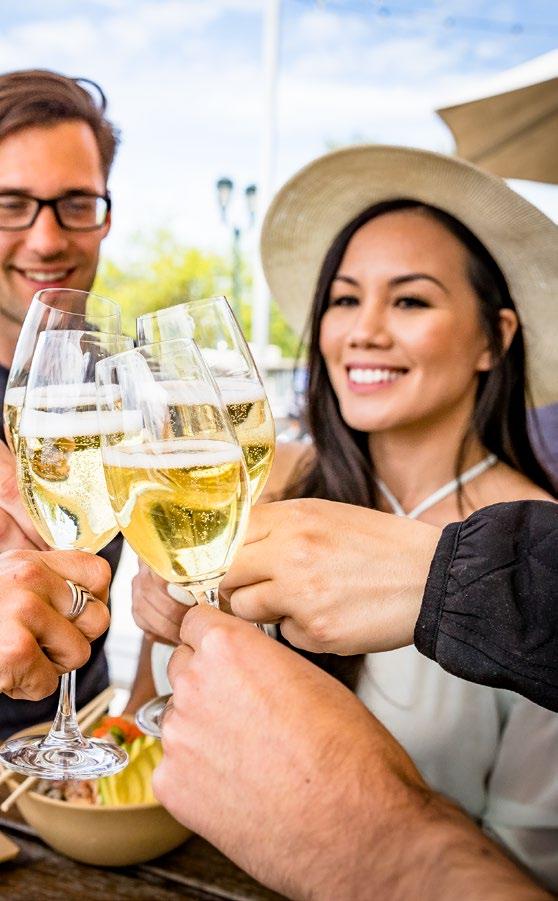
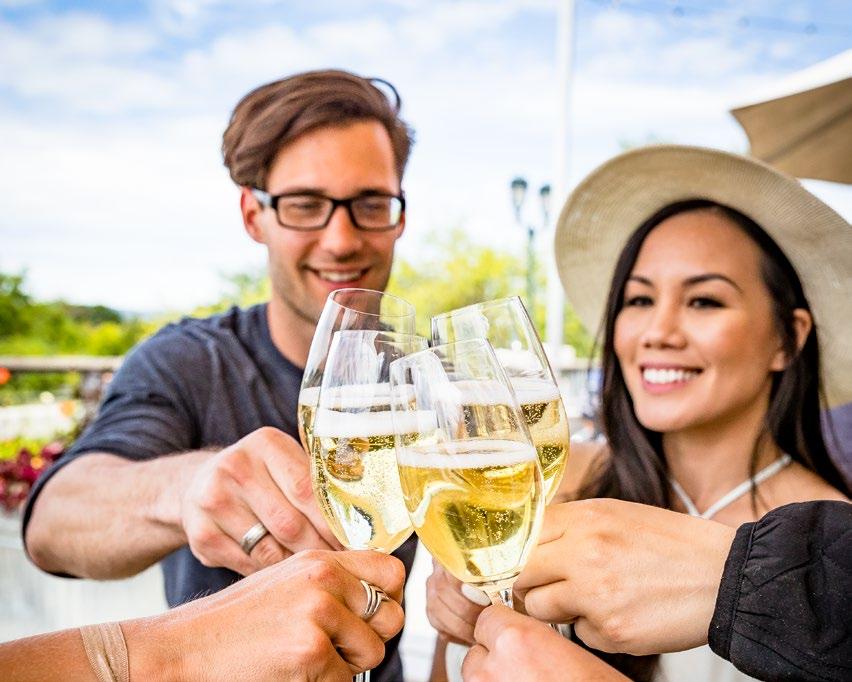
some are even bringing back complimentary tastings. The full list can be found online at visitnapavalley.com/ tastings-under-50.
In Calistoga, ease into the day at Picayune Cellars or Bennett Lane Winery, where relaxed vibes meet approachable pours.
In St. Helena, revisit Napa Valley’s rich winemaking legacy at Beringer Vineyards— California’s oldest continuously operating winery—or at Charles Krug Winery, a cornerstone of the valley’s history.
Head to Yountville for a little edge at Clif Lede Vineyards, where rock and roll meets Rutherford dust, or settle into vineyard views at Goosecross Cellars.
Closer to downtown Napa, explore modern favorites like Bread & Butter Wines, admire sweeping Carneros views from Cuvaison Estate Wines’ tasting room, or take in the vibrant architecture at Quixote Winery.
At the southern gateway to wine country in American Canyon, discover the new tasting room at RD Winery, where thoughtfully curated tasting flights are paired with Napa Valley’s first all-Asian food and wine pairing menu—a bold, delicious introduction to the region that feels both global and distinctly local.
Affordable tastings are not rare—they are abundant. Sometimes all it takes is a little
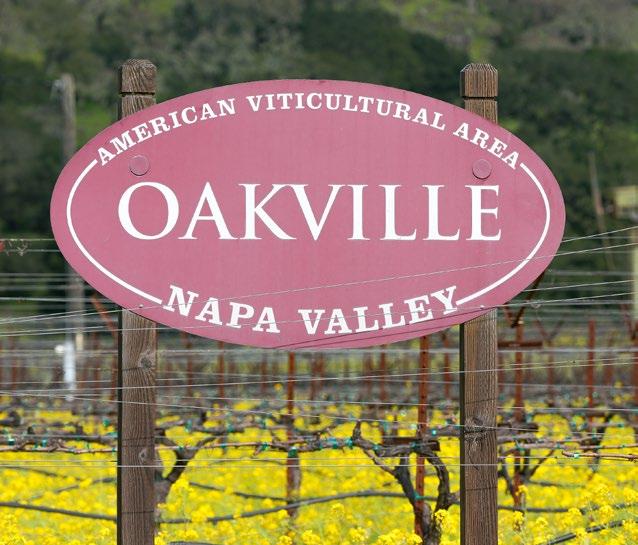
curiosity.
Pack a Picnic
One of the best parts of living here is that the scenery never gets old.
A simple picnic lunch can feel like a mini vacation. Pick up provisions from Oakville Grocery or Sam’s General Store, call a friend, and claim a shady table among the vines.
Wineries such as Rutherford Hill Winery, Tres Sabores, Honig Vineyard & Winery, Tamber Bey Vineyards, and V. Sattui Winery offer ideal picnic settings. Bring the family, make it a midweek reset, or turn it into a spontaneous Friday tradition.
Wine tasting does not have to mean leaving your four-legged friend at home.
Wineries like Laird Family Estate, Chandon, Frog’s Leap, and Raymond Vineyards welcome well-behaved dogs with open arms.
Want to sip for a cause?
Napa Humane’s spring seasonal “Pawsport” program supports life-saving veterinary care in the community while offering complimentary tastings at
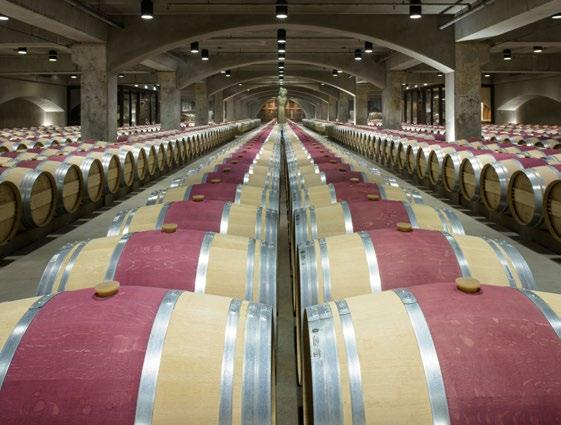
participating dog-friendly wineries. It is a win for you—and a win for local pets.
Beyond the grand estates and polished tasting salons, something special is happening down quiet country roads.
Napa Valley’s microproducers and boutique wineries carry forward the valley’s original spirit—small family farms, hands-on winemakers, and deeply personal hospitality. These are the producers who farm their own vineyards, handlabel bottles, and often pour your tasting themselves.
Discover neighbors such as Lost Valley Wines, Elkhorn Peak Cellars, and Battuello Vineyards. Supporting them is not just delicious—it helps sustain Napa Valley’s agricultural soul.
When was the last time you ventured beyond your daily orbit?
One of the greatest perks of living in Napa Valley is how easy it is to change your scenery without packing a suitcase. If you
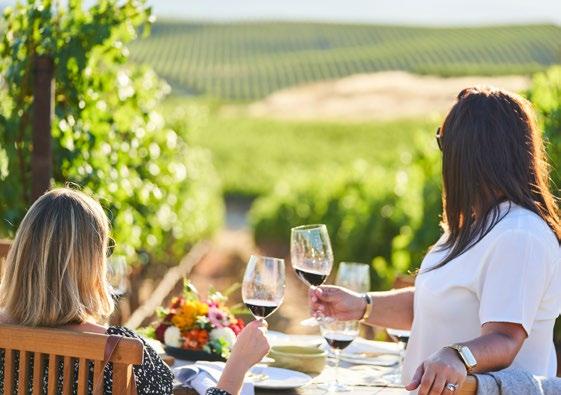
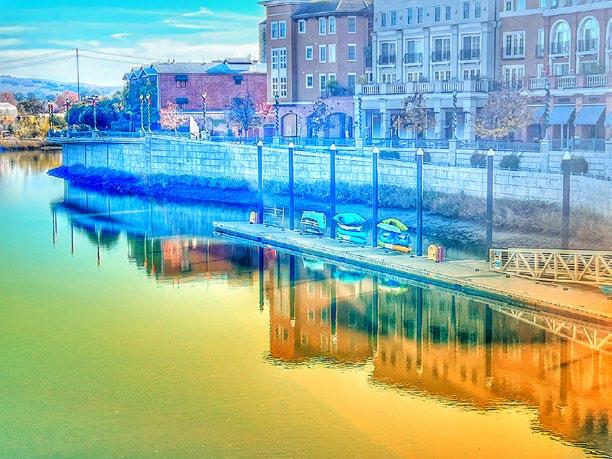
live in Napa, plan a spontaneous day north soaking in Calistoga’s mud baths and relaxed tasting rooms. If you are based upvalley, wander downtown Napa’s riverfront patios and tasting lounges. From American Canyon’s peaceful waterways to Yountville’s walkable charm, each of Napa Valley’s five towns offers its own distinct personality and pace.
Living here is a privilege—but only if we take advantage of it.
And let’s be honest: when you live in Napa Valley, you host. Friends and family will always find a reason to visit, and who can blame them? The good news is that you do not have to surrender your guest room to be the ultimate local guide. There are plenty of lodging options close to the
action, from approachable hotels in American Canyon to charming historic bed-and-breakfasts throughout Napa Valley.
You can curate the perfect weekend itinerary, make the dinner reservations, share your favorite tasting spots—and still retreat to your own sanctuary at the end of the night.
That is the beauty of calling Napa Valley home: you can play tourist, play host, and still sleep in your own bed.
Napa Valley’s music scene has evolved far beyond headline festivals. Intimate live performances now unfold yearround in tasting rooms, wine bars, and boutique venues.

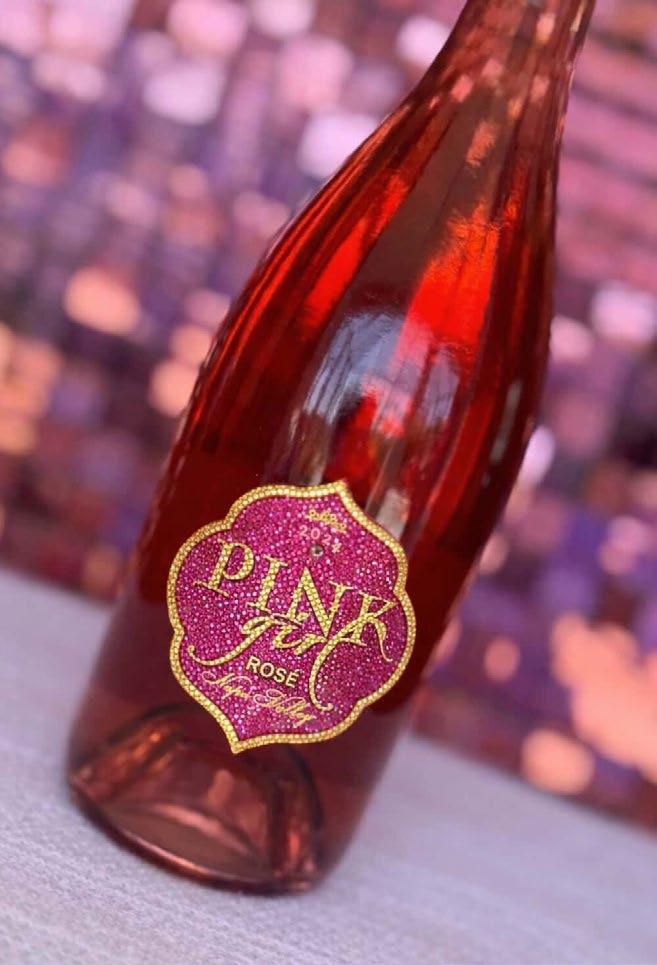
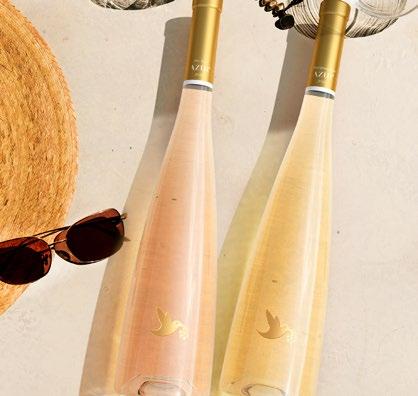
Sparkle at any gathering with Pink Girl’s new sparkly magnum. Pink Girl is Napa Valley’s premier rosé in both fruit and style. She is a fruitforward gem — sassy yet classy — with a real Swarovski crystal handapplied to each bottle. Get ready for sparkle season this spring when Pink Girl introduces her new fully crystaled magnum label, bringing extra bling to any girls’ gathering, pink party, or poolside celebration.
FOR MORE INFORMATION www. pinkgirlwines.co
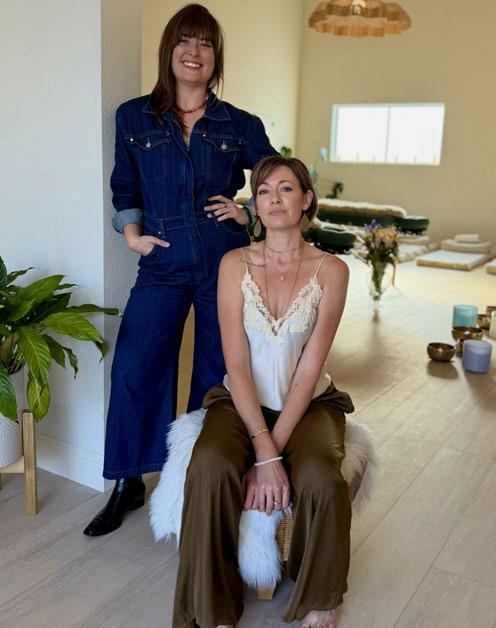
Studio Be Ushers in a New Era of Somatic Wellness. Napa’s Studio Be, founded by Melanie Clampit, welcomes Rachel McKenzie as co-owner, marking a fresh chapter for the valley’s evolving wellness scene. Together, they have built the North Bay’s only center integrating Spinal Flow, Spinal Energetics, and somatic energy work with sound baths, breathwork, and design-driven comfort. Now at 301 Post Street, Studio Be invites the community to experience greater coherence, regulation, and resilience through public classes, private sessions, corporate programs, and events — redefining what holistic, nervous-system-based healing looks like in Napa Valley.
FOR MORE INFORMATION Studio Be Napa, 301 Post Street, Napa, CA 94559 // www.creationsfinejewelers.com
Studio Be has expanded its Spinal Flow and Spinal Energetics offerings, adding community and private sessions of these gentle, body-led somatic techniques designed to support nervous system regulation and the natural release of accumulated stress and tension.
Fieldwork Brewing Napa, located in the vibrant Oxbow District, is a local favorite where craft beer takes center stage. With a rotating lineup of small-batch brews — from crisp lagers to bold IPAs — Fieldwork offers a relaxed, welcoming vibe perfect for casual afternoons in downtown Napa. Sip fresh pours just steps from boutique shops, artisanal food spots, and scenic Napa River views.
FOR MORE INFORMATION www.fieldworkbrewing.com
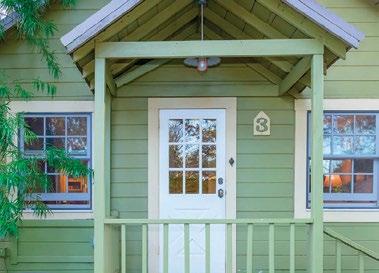
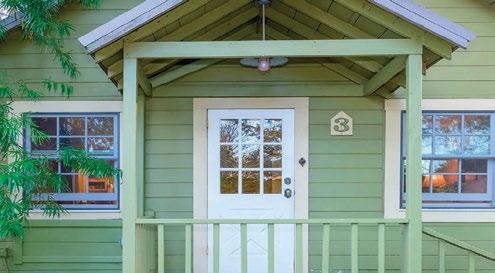
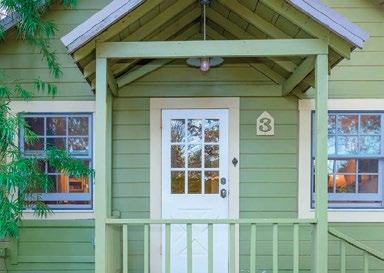
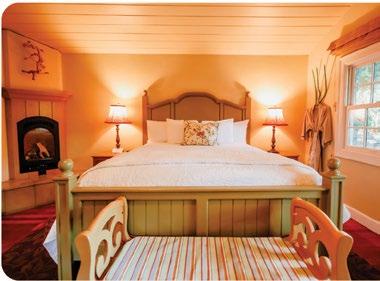
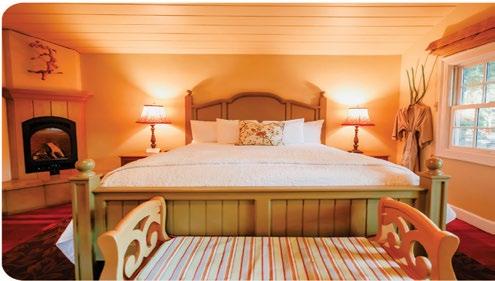
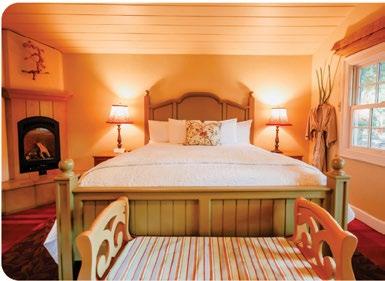
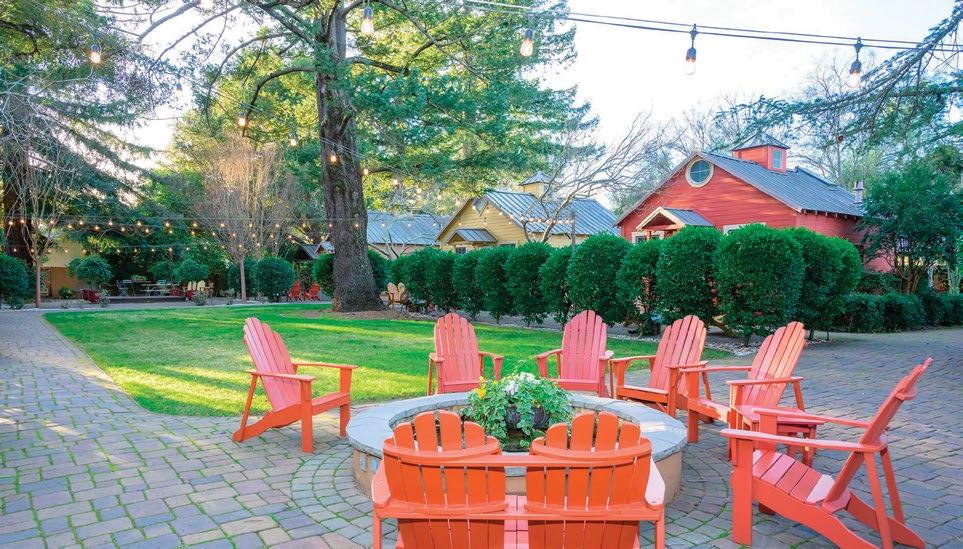
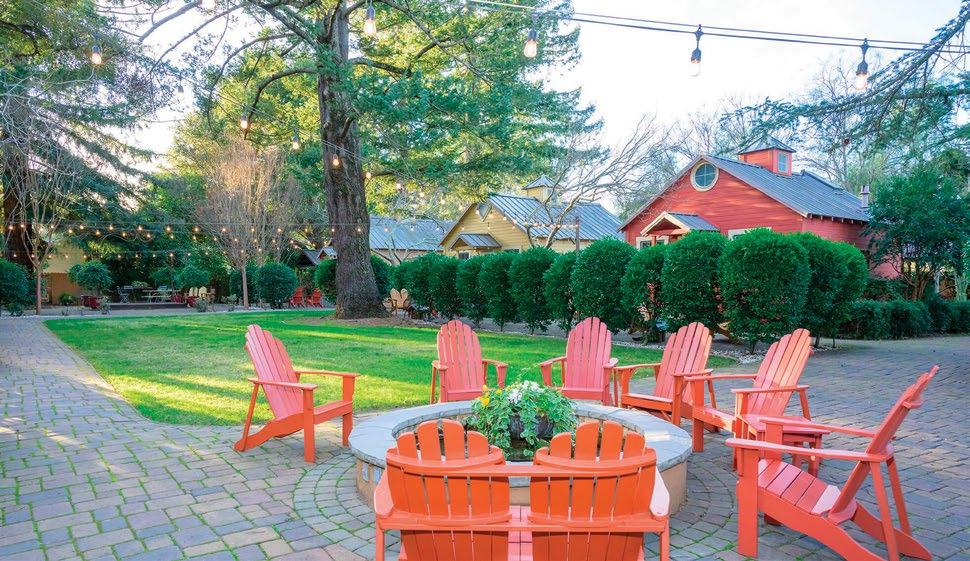
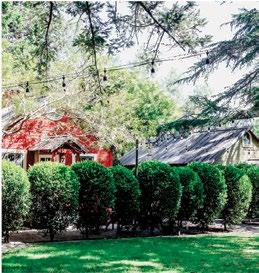
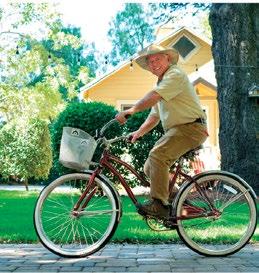
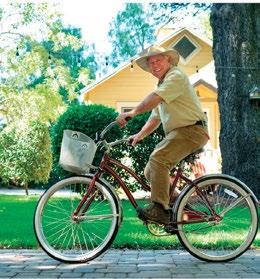
At The Cottages of Napa Valley, there’s more than just a beautiful place to stay; there’s a story of creativity, crafts manship, and passion woven into every detail. That story belongs to Mike Smith, the owner and artistic genius who brings these enchanting cottages to life.
Yountville, this charming retreat is perfect ones over the holidays, treating yourself staycation, or hosting corporate events.
Kitchenette • Complimentary Bikes of Napa Valley , there’s more than just a stay; there’s a story of creativity, craftspassion woven into every detail. That story Smith , the owner and artistic genius who enchanting cottages to life.
At The Cottages of Napa Valley, there’s more than just a beautiful place to stay; there’s a story of creativity, crafts manship, and passion woven into every detail. That story belongs to Mike Smith, the owner and artistic genius who brings these enchanting cottages to life.
At The Cottages of Napa Valley, there’s more than just a beautiful place to stay; there’s a story of creativity, craftsmanship, and passion woven into every detail. That story belongs to Mike Smith, the owner and artistic genius who brings these enchanting cottages to life.
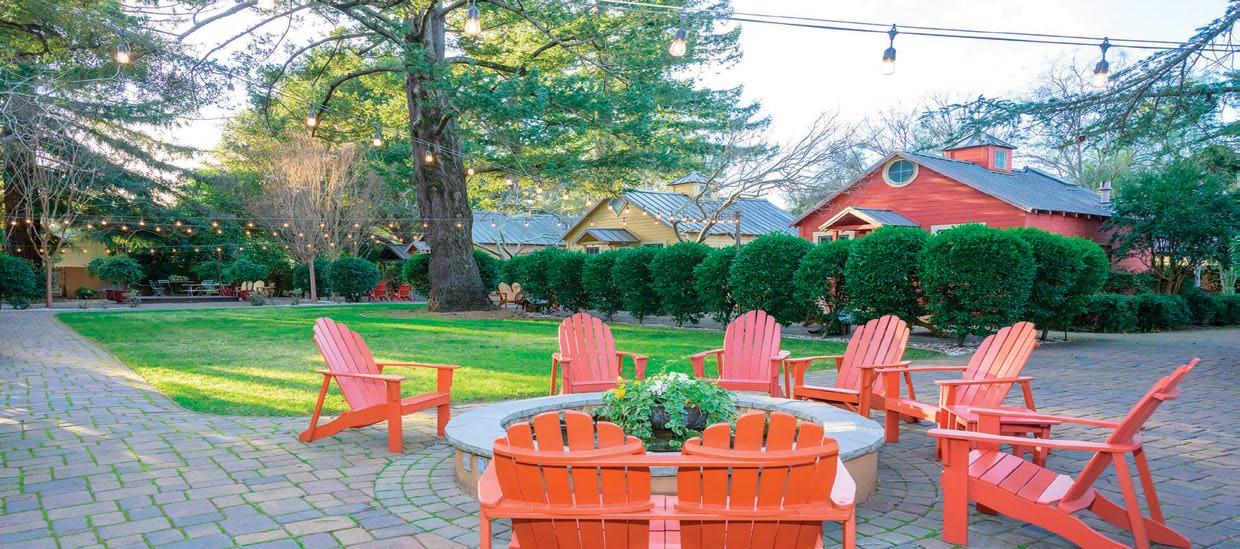
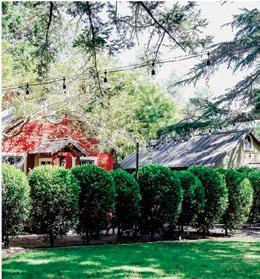
Just 3 miles from Yountville, this charming retreat is perfect for gathering loved ones over the holidays, treating yourself to a romantic staycation, or hosting corporate events.
Just 3 miles from Yountville, this charming retreat is perfect for gathering loved ones over the holidays, treating yourself to a romantic staycation, or hosting corporate events.
Just 3 miles from Yountville, this charming retreat is perfect for gathering loved ones over the holidays, treating yourself to a romantic staycation, or hosting corporate events.
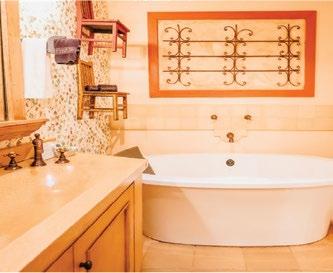
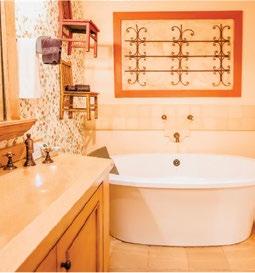
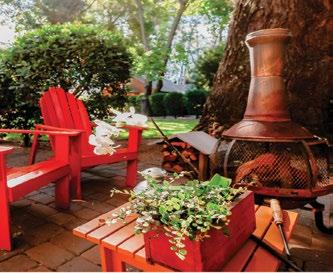
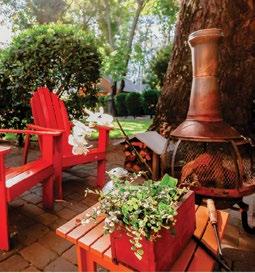
INCLUDE: Spa Menu • Game Room Private Chiminea • Concierge Service Kitchenette • Complimentary Bikes
INCLUDE:
AMENITIES INCLUDE: Spa Menu • Game Room
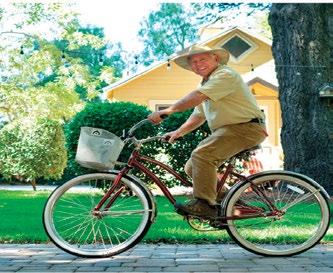
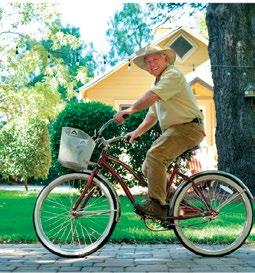
Fresh Breakfast • Private Chiminea • Concierge Service In-Room Kitchenette • Complimentary Bikes


Top1% by TripAdvisor
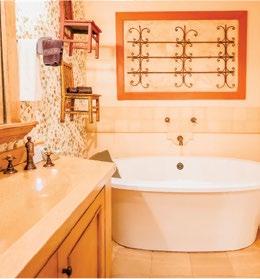
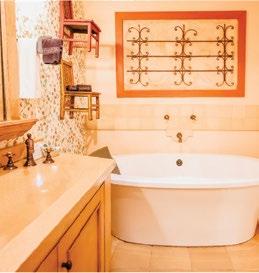
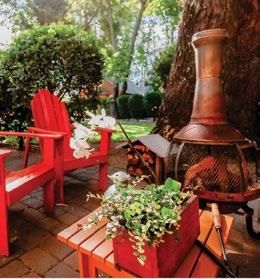
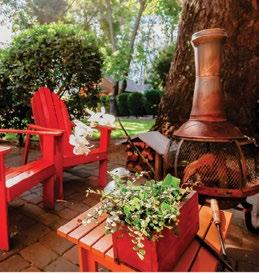



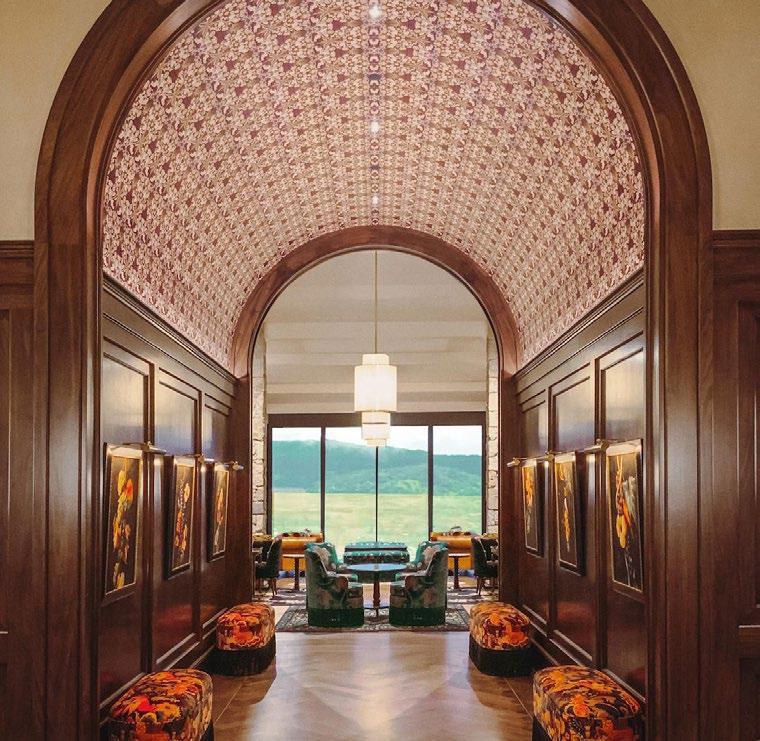
Lewis Cellars’ new tasting room on Napa’s Silverado Trail brings an immersive wine experience to the heart of the Stags Leap District. Located on the site where the winery first made wine more than 30 years ago, the redesigned space blends elegant interiors, art installations, and curated tasting flights. It is an inviting destination for both longtime collectors and first-time visitors exploring Napa Valley’s iconic wine scene. lewiscellars.com
FOR MORE INFORMATION www. lewiscellars.com
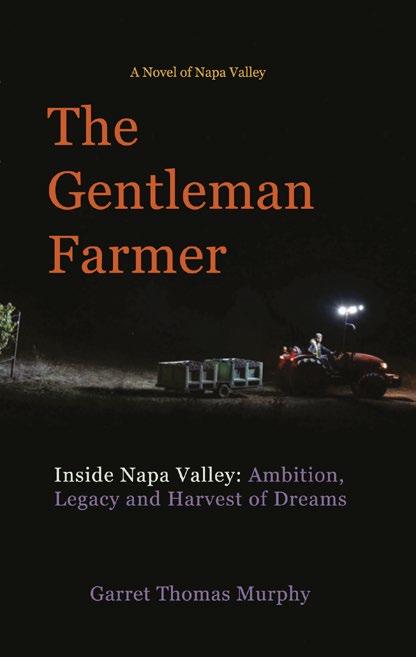
In this fine follow-up to his first book, Garret Murphy returns to the fabled wine region of Napa Valley and beyond. Drawing on both real and fictional characters, as well as familiar locations, Murphy’s broad cast of dramatis personae leads to a surprisingly redemptive ending. Steeped in his knowledge of wine, viticulture, and vinification, this is a mustread for Napa lovers.
“The verisimilitude of the writing showcases an emerging talent.” — Rex Pickett, author of Sideways
Available at local bookstores.
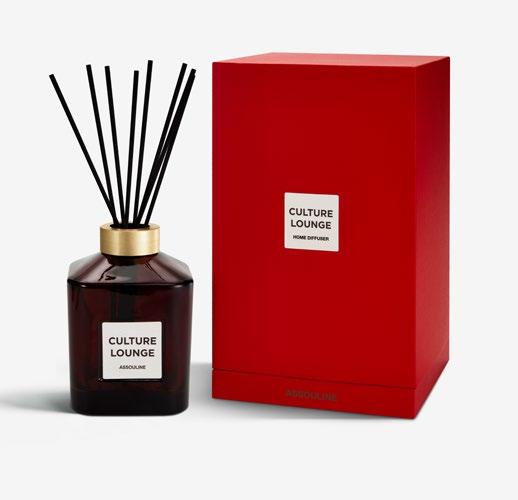
The Assouline signature scent evokes an atmosphere rich with elegance and intellectual depth, where artists, visionaries, and tastemakers come together to exchange ideas. Bright, invigorating notes of fresh lemon and aged rum blend seamlessly into a warm, velvety base of vanilla and soothing musk, enriched by the subtle sweetness of rare sandalwood. These elements create the essence of the Culture Lounge — a sanctuary for reflection and inspiration.

BY FRAN MILLER
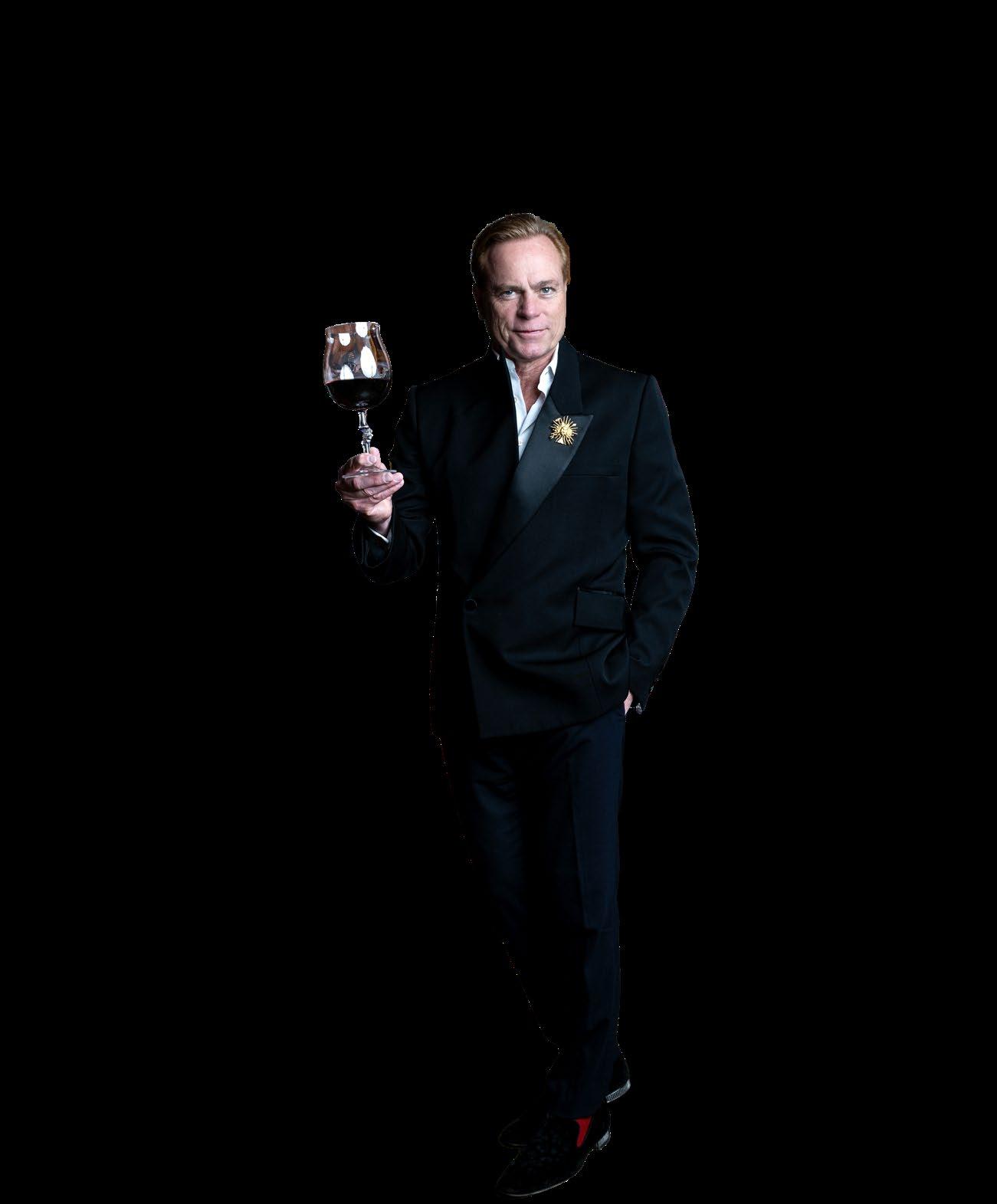
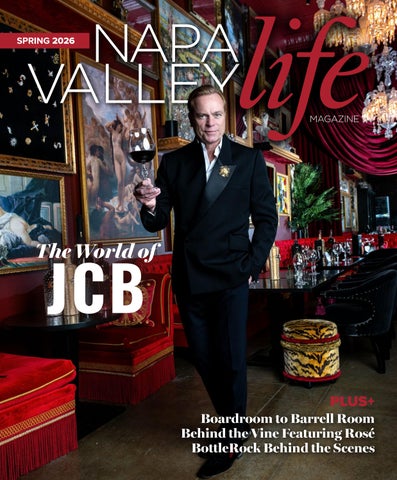
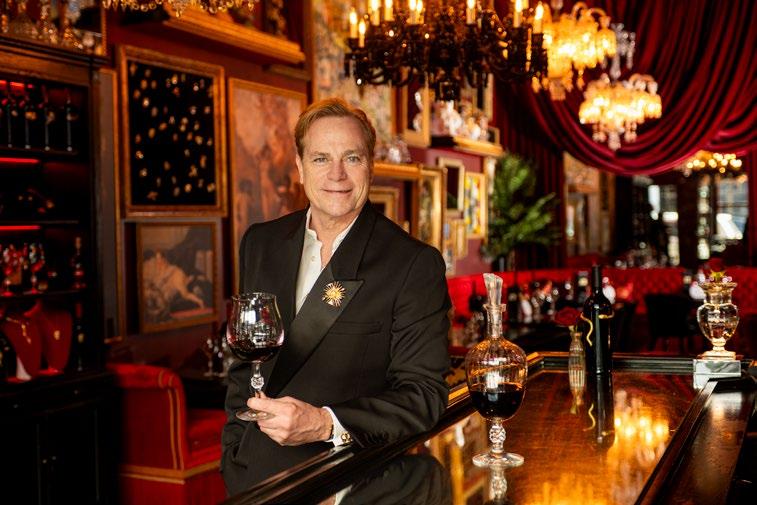
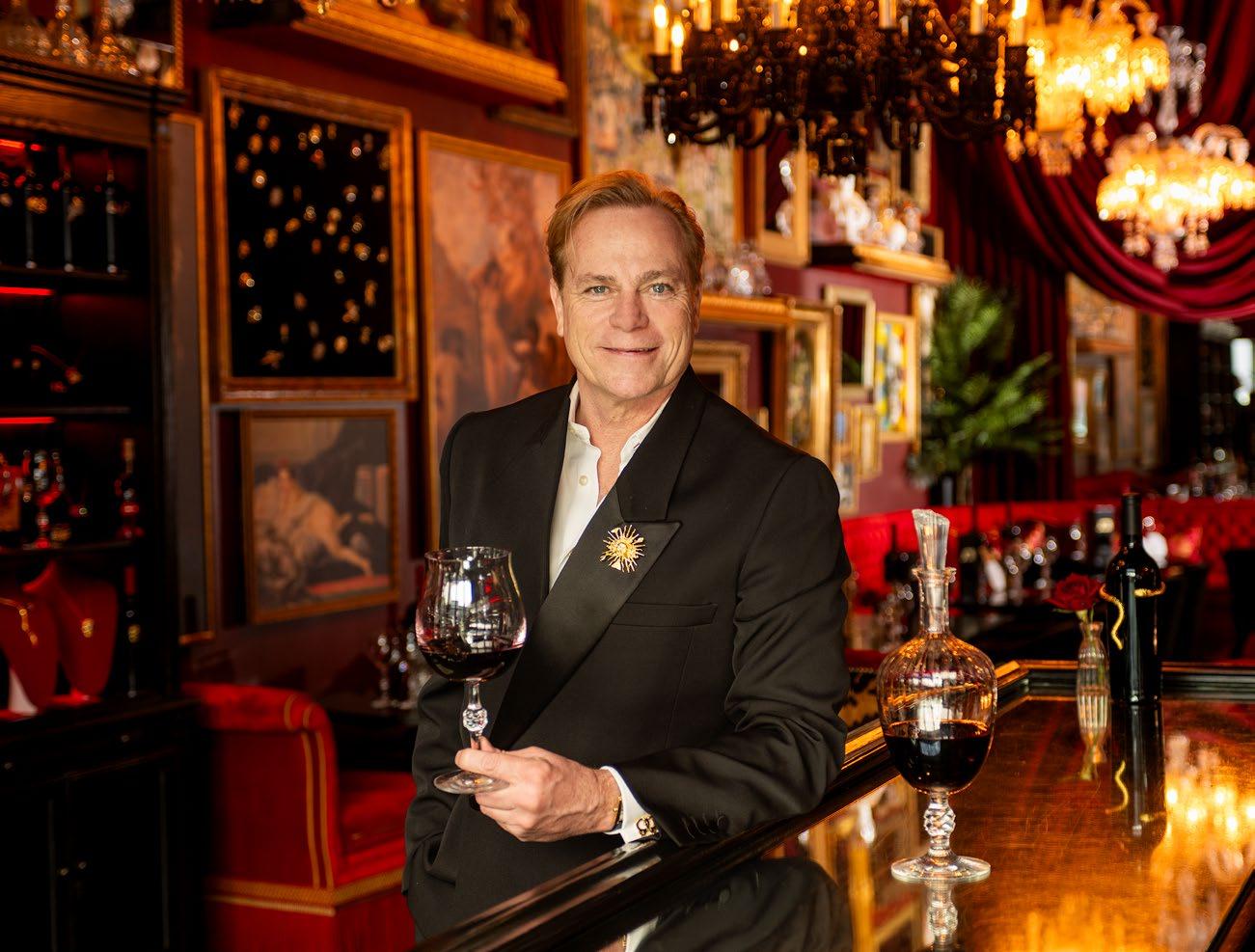
Oh, to live the life of Jean-Charles Boisset.
The French-born vintner carries himself with a sense of theatrical ease and a joie de vivre that does not feel rehearsed so much as instinctive. He is, undeniably, a bon vivant. Yet to dismiss Boisset as merely
indulgent would miss the point entirely. Beneath the velvet, crystal, and couture is a disciplined steward of land, legacy, and experience — someone who understands that luxury, at its best, is never just about excess. It is about intention.
For more than two decades, Boisset has
been shaping Napa Valley not only through wine, but through how people engage with it. His vision has always been immersive. Wine is the anchor, but it is also the invitation — into history, into craftsmanship, into beauty, and increasingly, into a way of life that stretches well beyond the glass.
“In today’s world environment, where tension and difficulties between nations and cultures keep arising,” he says, “it seems more opportune to bring a bottle of wine in the middle of the table and bring people together. Wine is a true connector, because it brings history, heritage, civilization, culture, food, art, architecture — all of it together. At the table.”
Today, that vision is crystallizing across Napa in new and unexpected ways: through JCB St. Helena, the revival and reimagining of Flora Springs, and the debut of Napa Fragrance, a sensory offshoot that feels both surprising and entirely on brand. Each project reflects a different facet of Boisset’s creative identity. Together, they offer a revealing portrait of where Napa’s most flamboyant thinker is headed next.
Boisset’s story begins, as so many wine stories do, in Burgundy. Raised among vineyards in Vougeot, he grew up in a family where farming was not romanticized; it was respected. That grounding remains central to his worldview.
“We feel the stewardship of the land, of the vineyards,” he says. “The key is to
obtain from the soil and from Mother Nature the very best, and to convert those beautiful fruits into the ultimate quality of wine.”
Long before organic and biodynamic practices became industry talking points, Boisset was advocating for them as a matter of responsibility, not trend. Today, through the global Boisset Collection, his portfolio spans continents, yet his philosophy remains rooted in the earth.
He arrived in California in the early
2000s with ambition and curiosity in equal measure. Since then, his footprint has expanded across Napa and Sonoma, anchored by estates such as DeLoach Vineyards, Raymond Vineyards, and Buena Vista Winery, and supported by a philosophy he calls viniculteur — a belief that winemaking begins in the soil and ends in the story. But Boisset has never confined himself to a single lane. Wine, for him, is a starting point. Culture is the destination.
He speaks of Napa Valley with both reverence and optimism. With roughly 47,000 planted acres, the region remains finite, and he views its current recalibration toward quality over quantity as healthy. “Napa Valley is meant to produce the best,” he says, invoking Burgundy and Bordeaux in the same breath. “Not quantitatively, but qualitatively. Balance, equilibrium, elegance, finesse, power — with great respect for what the vineyard has to offer.”
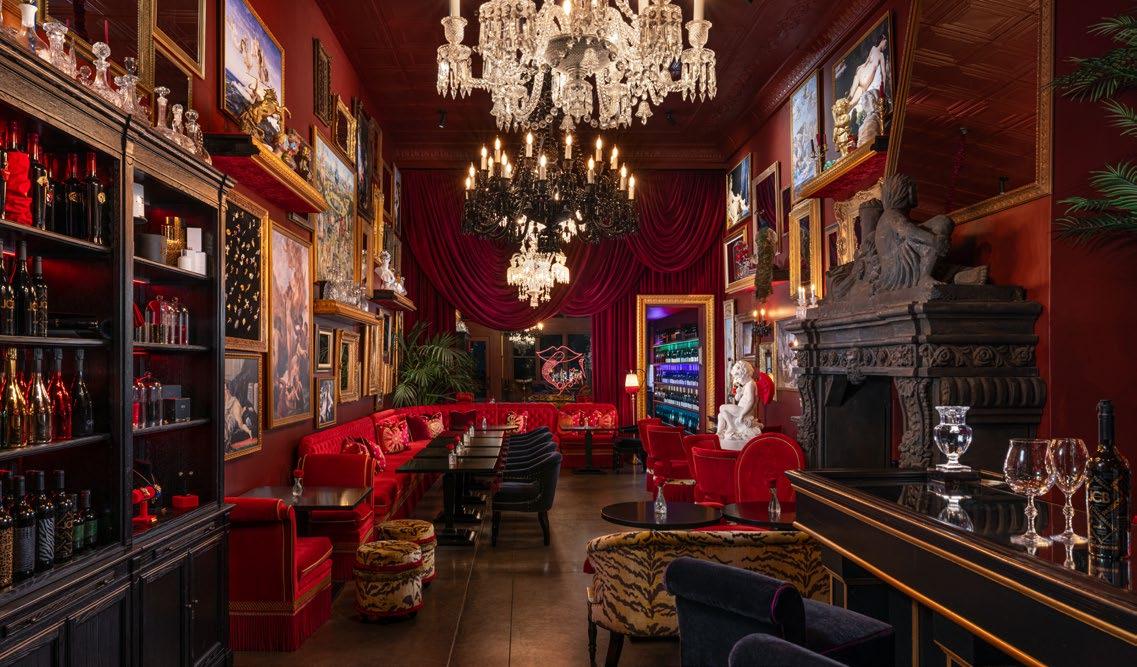
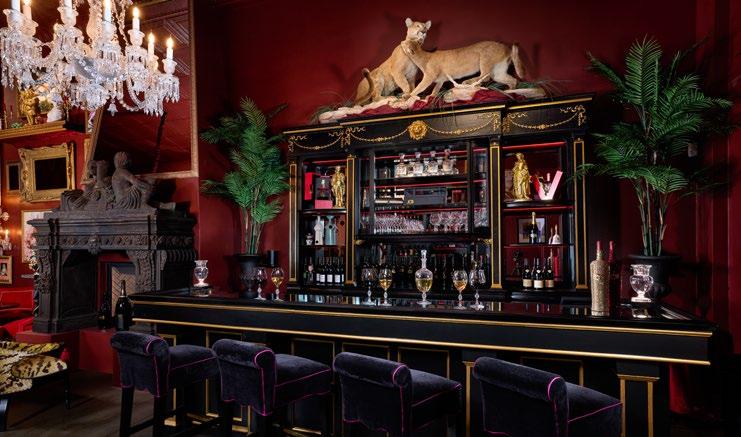
If there is a physical space that best captures Jean-Charles Boisset’s worldview today, it is JCB St. Helena. This is not a tasting room in the traditional sense. It is a salon, a place designed for conversation, provocation, and delight.
“A salon is to share romance, history, literature, conversation, poetry, art, and to meet others in a very safe place,” he explains. “Even if you come by yourself, you are going to meet someone. That is the ultimate objective.”
The space blends French elegance with a Napa vibe, offering an experience that is curated rather than constructed. Guests sit slightly lower than expected, surrounded by art drawn from JeanCharles’ favorite museums. There is warm light, crystal, and layered textures. The effect is transportive. “You want the association of France and Paris and history blended with artistry,” he says. “To be inspired by what you see, what you feel, what you taste.”
Design elements lean expressive. Wine is presented as both craft and character. The atmosphere invites curiosity rather than reverence. It is a subtle but important distinction in a valley that can sometimes take itself too seriously.
JCB St. Helena also signals something else: Boisset’s belief in Main Street Napa Valley. While others might find exclusivity through remoteness, he continues to invest in places where locals and visitors intersect. It is a reminder that luxury does not require isolation; it requires thoughtfulness.
The acquisition of Flora Springs marks a pivotal moment, not just for Boisset, but for Napa Valley. Founded in 1978 in St. Helena and Rutherford, Flora Springs
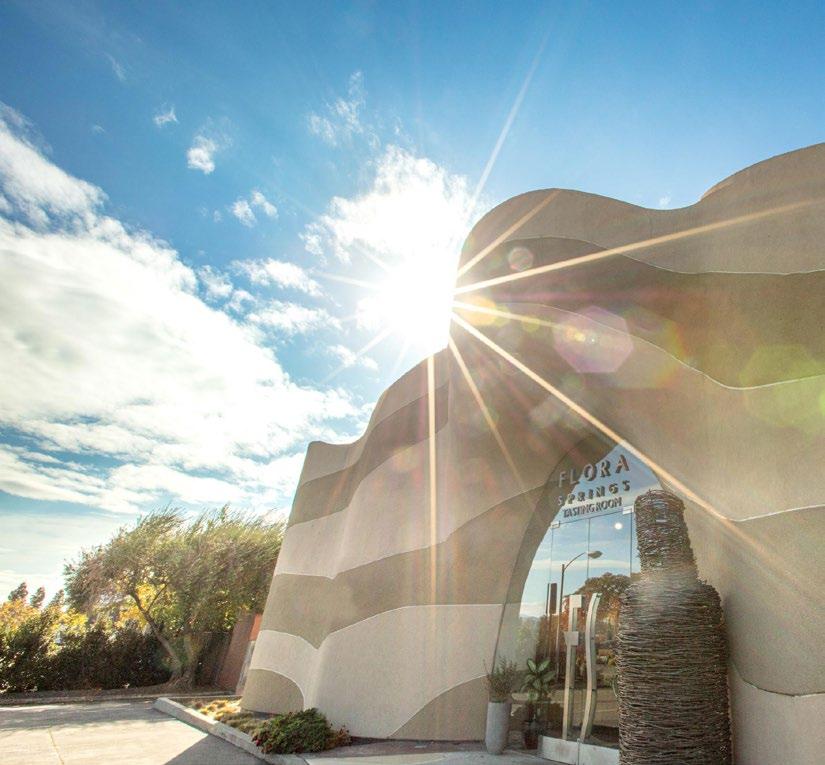
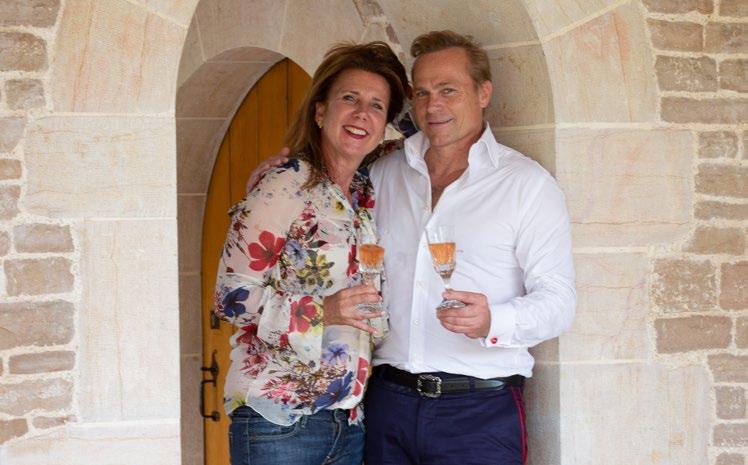
carries deep historical weight. In 1993, its Insignia appeared on the cover of Wine Spectator alongside Opus One — a signal of its place among Napa’s elite.
For Boisset and his wife, Gina Gallo Boisset, stewardship defines this chapter.
“It is an incredible legacy to continue and to build for the future,” he says. “Flora represents the goddess of nature, the
goddess of spring, the transformation and renaissance.”
The mythology resonates. References to Botticelli’s Primavera and The Birth of Venus inform the aesthetic language, but the winemaking focus is grounded: balance, controlled alcohol, and wines meant to be enjoyed with or without food. Trilogy and Soliloquy remain benchmarks, priced for

approachability. “A strong, consistent pricequality ratio,” he emphasizes, “is essential to what Napa should represent.”
Innovation finds its place as well. At the downtown Napa tasting room, wine-based cocktails — personally designed by JeanCharles — have drawn an enthusiastic response. “People want diversity,” he says. “Using wine as a base to enjoy life at large.”
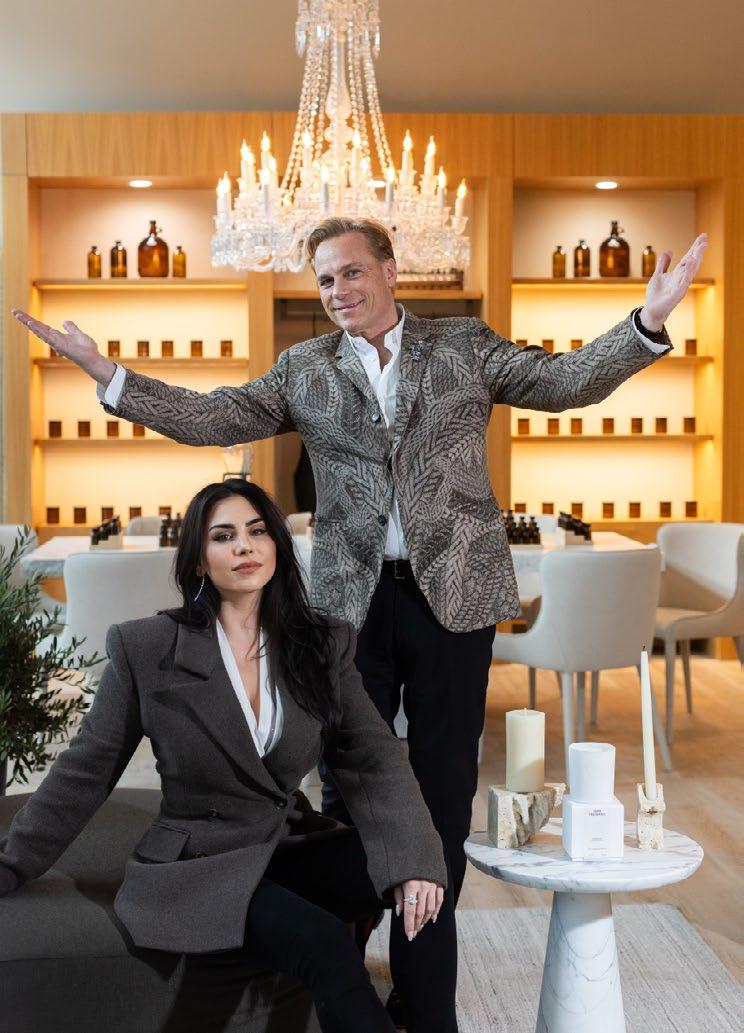
Then there is Napa Fragrance, perhaps the most revealing of Boisset’s current ventures. Now open in downtown Napa, the boutique introduces clean, finely crafted fragrances designed to evoke specific Napa sub-appellations: Napa Valley, Yountville, St. Helena, Oakville, Rutherford, and Calistoga.
“With fragrance, you transcend through molecules,” he explains. “The heart notes, the head notes, the base notes. Wine has aroma, certainly, but fragrance allows you to escape into the pure emotion of smell.”
Each scent pairs symbolic elements: Napa Valley expressed through rose and musk; St. Helena through fig tree and soil. In a nod to wellness alongside artistry, the
formulations are paraffin-free, parabenfree, and phthalate-free, built from soy and coconut. Candles, room sprays, and soaps extend terroir beyond the bottle. It is a bold move, yet entirely consistent. For Boisset, wine has always been part of a broader sensory narrative. Fragrance simply isolates and magnifies one dimension of it.
Jean-Charles Boisset is often described in superlatives: charismatic, extravagant, theatrical. And yes, there is flair. But what is easy to overlook is the discipline beneath the flourish. Every collaboration, every
space, every label is anchored in quality. “I’ve never been so energized,” he says of Napa’s present moment. “The readjustment of a region is always healthy. I’m very optimistic.”
In Napa Valley, Boisset stands as both preservationist and provocateur. His work suggests that the future of wine culture is not narrower; it is broader. What makes him so unique is not that he unabashedly enjoys beauty; it is that he insists on sharing it. Perhaps that is his greatest contribution of all.
FOR MORE INFORMATION: www.jcbcollection.com

BY MICHAEL KANE | PHOTOS COURTESY OF LOWELL DOWNEY OF ART & CLARITY PHOTOGRAPHY
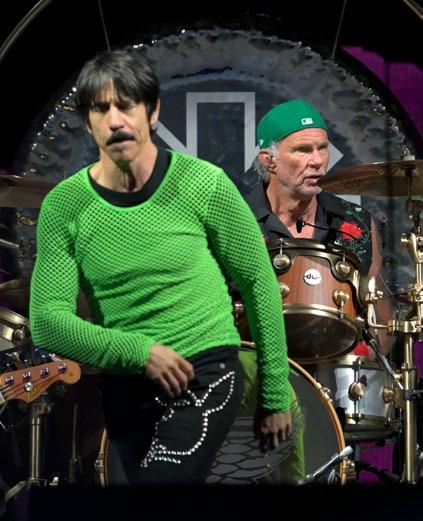
On the surface, BottleRock Napa Valley looks effortless. For three days each Memorial Day weekend, tens of thousands of fans stream into downtown Napa to sip Cabernet, sample gourmet bites, and watch a cross-genre parade of artists take the stage. But what appears to be a seamless celebration of music, food, and wine is, in fact, the product of more than a decade of careful
planning, strategic curation, and regional vision — one that has helped reshape Napa Valley’s cultural identity far beyond the vineyard.
Since its debut in 2013, BottleRock has grown from an ambitious wine-country experiment into one of the nation’s most distinctive destination festivals. While many music festivals focus purely on headliners and crowd size, BottleRock
carved out a different lane early on by leaning into what Napa already does exceptionally well: premium experiences. The result is an event that feels less like a traditional music festival and more like a fully integrated lifestyle weekend.
From the beginning, lineup strategy leaned heavily into diversity. Over the years, BottleRock stages have welcomed an unusually wide spectrum of performers
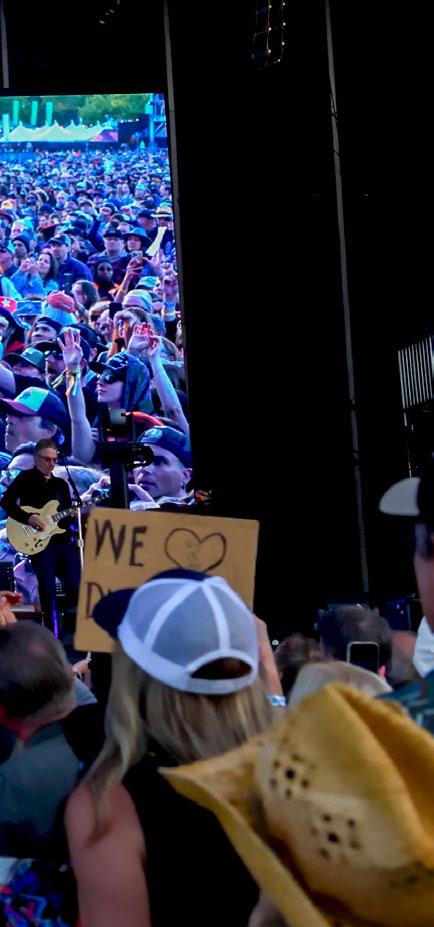


— from legacy icons like Neil Young and Stevie Nicks to pop powerhouses such as Bruno Mars, Miley Cyrus, and Adam Levine’s Maroon 5, alongside crowd favorites including Zac Brown Band and P!nk. That range continues into the current lineup, which features artists as varied as Lil Wayne, Better Than Ezra, Foo Fighters, Chaka Khan, Backstreet Boys, Ludacris, and Lorde. The through-line is intentional: rather than chasing a single genre, BottleRock programs for broad musical discovery across generations.
Festival organizers begin working on lineups more than a year in advance, with teams already looking ahead to future festival cycles. That long planning runway allows BottleRock to compete for major touring acts while also identifying rising performers who help keep the event feeling fresh. It is a behind-the-scenes timeline that most attendees never see, yet it plays a critical role in maintaining the festival’s consistency year after year. Perhaps BottleRock’s most lasting

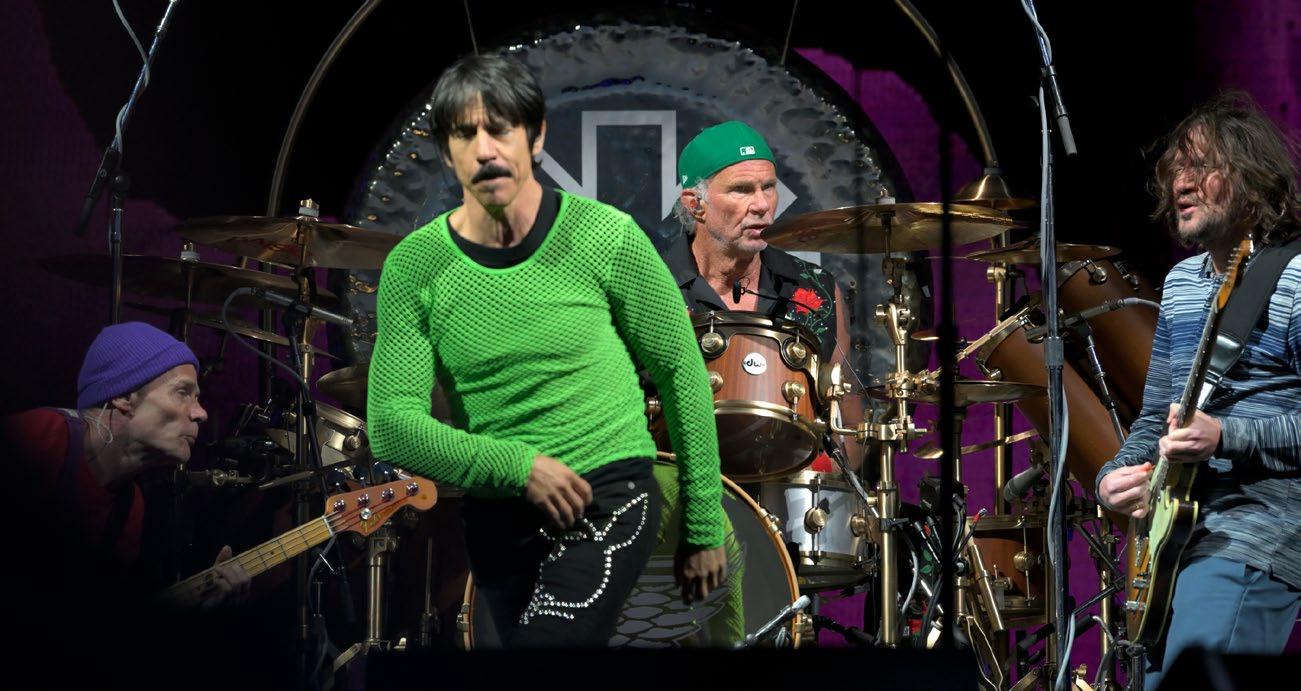


impact has been cultural rather than purely commercial. Before 2013, Napa Valley was globally synonymous with wine, fine dining, and luxury tourism — but not with live music on a national scale. By consistently booking high-profile acts and delivering professional production in the heart of wine country, the festival has gradually repositioned Napa as a legitimate stop on major touring circuits.
That shift has had ripple effects throughout the region. Hotels report Memorial Day weekend demand comparable to peak harvest season. Restaurants and tasting rooms experience an influx of firsttime visitors who often return later for dedicated wine trips. And perhaps most importantly, the festival has broadened Napa’s appeal to a younger, experiencedriven audience that values events blending culture, cuisine, and entertainment.
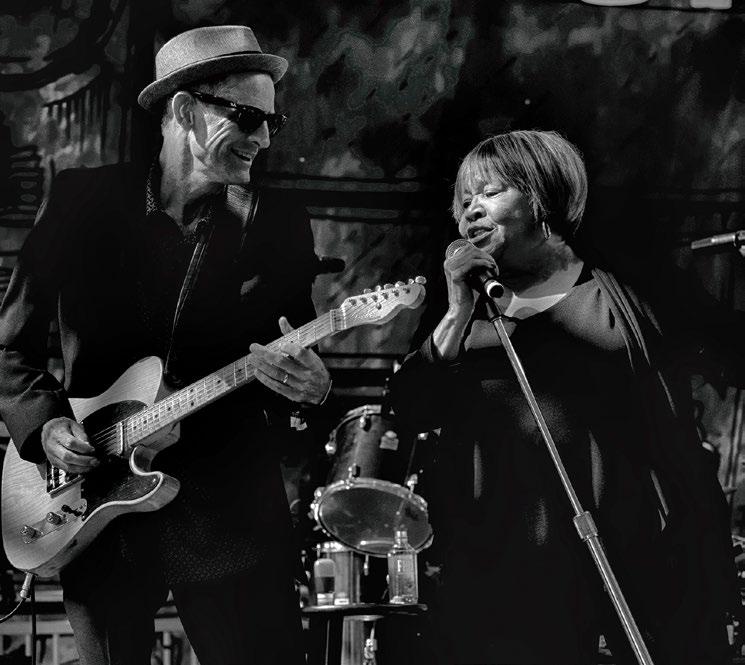
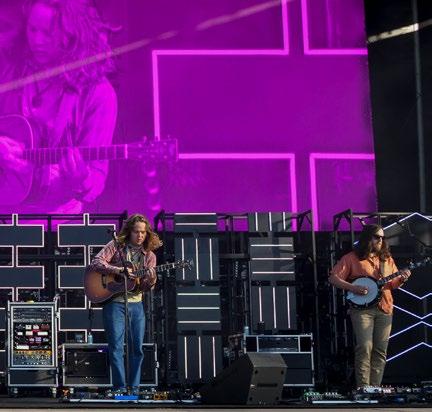
Where BottleRock truly distinguishes itself is in the culinary arena. BottleRock is, in many ways, two festivals in one. Alongside its status as one of the country’s premier music gatherings, the event delivers a culinary program that reflects the sophistication of Napa Valley itself. In a region globally recognized for exceptional food and wine, festival organizers work intentionally to ensure the dining experience rises to the same level as the music on stage.
The Williams Sonoma Culinary Stage has become one of BottleRock’s defining features, pairing celebrated chefs with musicians, athletes, and entertainers in live demonstrations that are equal parts cooking show and live performance. What began as a novel addition has matured into a signature draw, with many attendees planning their daily schedules around
culinary appearances as carefully as the musical lineup.
Beyond the stage, the festival grounds transform into a curated showcase of Napa and Bay Area dining. Acclaimed local restaurants appear alongside nationally recognized culinary talent, creating a walkable, open-air food experience that mirrors the region’s broader hospitality culture. Guests move seamlessly from a headline set to a thoughtfully prepared dish and a glass of Napa Valley wine, reinforcing the sense that BottleRock is not simply a music festival that serves food, but a fully integrated wine-country experience.
That intentional alignment with Napa’s culinary identity is no accident. In a destination where expectations around food and wine run exceptionally high, the festival’s ability to deliver both quality and variety has become central to its reputation. The result is an atmosphere that feels distinctly local yet nationally competitive — a balance few large-scale festivals manage to achieve.
BottleRock’s evolution mirrors a broader shift in the live-events industry. Today’s audiences increasingly seek immersive, multi-dimensional experiences rather than single-focus entertainment. Music alone is no longer enough for many premium consumers. They want
atmosphere, culinary discovery, beverage programs, and social moments that feel curated rather than mass-produced.
In many ways, BottleRock anticipated this shift early. By blending major music acts, celebrity culinary programming, Napa wine culture, and premium hospitality, the festival positioned itself squarely within what industry observers now call the “experience economy.” That positioning helps explain both its staying power and its continued growth in a highly competitive festival landscape.
The festival’s resilience is particularly notable given the broader volatility in the live-events space over the past decade. Weather challenges, pandemic disruptions, and shifting touring economics have forced many festivals to scale back or disappear altogether. BottleRock, however, has largely maintained momentum, aided by its diversified appeal and strong regional partnerships.
Looking ahead, the festival appears well positioned for continued influence in both the music and culinary worlds. Its ability to evolve while staying anchored to Napa’s core identity may ultimately be its greatest competitive advantage. As long as the event continues to balance musical credibility with culinary excellence and a premium guest experience, BottleRock is likely to remain a Memorial Day fixture for years to come.
More than a decade after its launch, BottleRock stands as a case study in how a regional event can grow into a nationally recognized brand without losing its sense of place. What began as an ambitious attempt to bring large-scale live music to wine country has matured into a multi-dimensional lifestyle event that mirrors the modern Napa Valley itself — sophisticated, experiential, and increasingly diverse in its cultural reach.

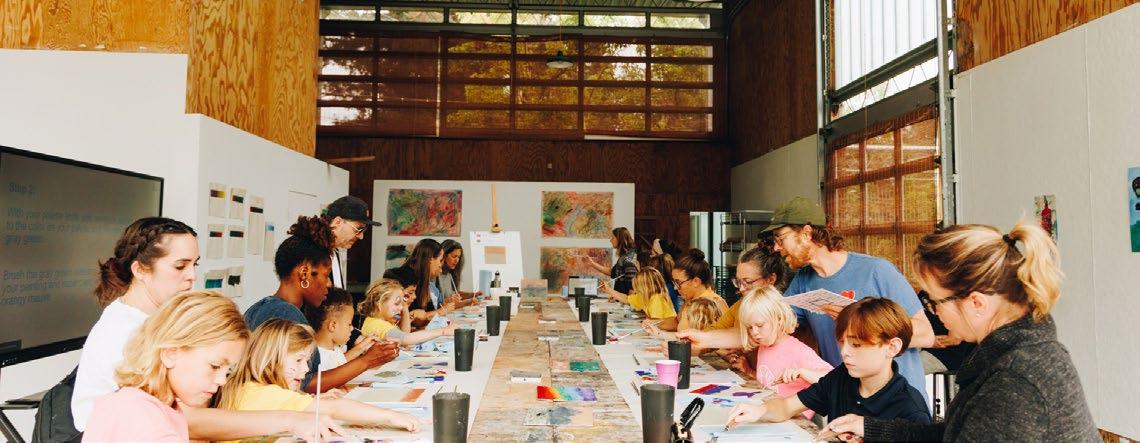
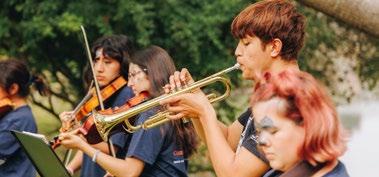

Imagine a place where students can dive into robotics one day, compose music the next, and explore wellness practices that nurture mind and body, all under one roof. That is the vision coming to life at the NVEF Discovery Campus, a two-acre, 20,000-square-foot hub of learning and creativity on 3rd Street in downtown Napa.
Since 1983, NVEF has been a leader in growing and sustaining essential education programs and resources in Napa County schools. With a strategic plan focused on student-centered design and community partnerships, NVEF’s programs now reach across the county, from Calistoga to American Canyon. From embedding wellness centers in schools to providing thousands of musical instruments to students each year, NVEF focuses on access and equity so every child can thrive.
NVEF recently opened the doors of the former Oxbow School to create a community learning hub—the NVEF Discovery Campus —providing a space where youth can explore and create beyond the traditional classroom. The campus features five studios: art, media, music, culinary, and a makerspace for
hands-on experiences that ignite curiosity and build confidence. “A child’s one thing is everything,” says Executive Director Jennifer Stewart. “This is a space for trying new things and for a young person to find that spark that lights them up.”
After the Oxbow School shuttered in 2025, it selected NVEF as the property’s next steward, ensuring that the campus would remain a community asset and keep arts and education alive in the valley. NVEF honors that legacy by gathering input from students and parents to shape new programs. This spring, it is launching a fourth-grade field trip program aligned with grade-level teaching about California history. The Foundation also provides professional development programs for teachers, extending its impact beyond student enrichment.
At NVEF, arts and STEM come alive through partnerships with organizations like Nimbus Arts and the Otterbots Robotics Team. Scholarships and flexible payment options ensure that every child has access, because learning is a right, not a privilege. From coding and robotics to visual arts, music, and culinary exploration, every course is designed to spark curiosity, inspire
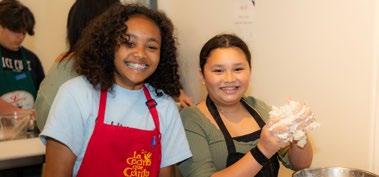
exploration, and cultivate confidence. This spring, the Discovery Campus is buzzing with more than 70 courses for youth and adults.
NVEF relies on Napa Valley’s generosity to make it all possible. One of the most anticipated ways to support the Foundation is the annual Taste for Knowledge fundraiser on May 2, 2026, at the Discovery Campus. Guests can enjoy exceptional wine and cuisine, student performances, and camaraderie in support of Napa County’s 18,000 public school students. Visit NVEF. org/taste for tickets. NVEF also seeks donors and corporate sponsors to join its Founders Circle, allowing for early investment, naming recognition, and participation in strategic partnerships.
More than an education foundation, NVEF is a hub of opportunity and community pride. With its new campus and vibrant programs, it is a place where Napa’s young people can dream bigger, explore further, and grow into capable leaders of tomorrow.
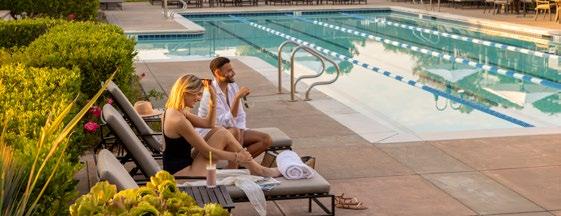
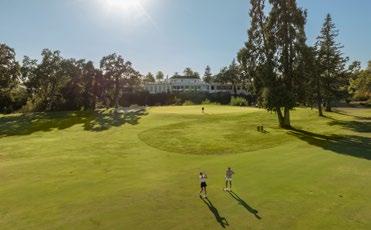
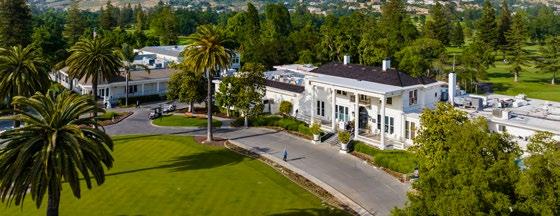
BY FRAN MILLER
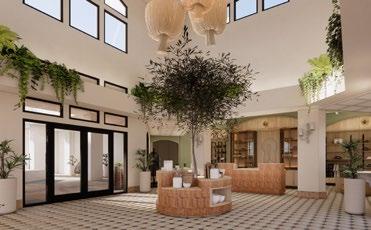
ACalifornia landmark for over 150 years, Silverado Resort has long stood as one of wine country’s most iconic destinations. Set across 1,200 acres and anchored by its picturesque FrancoItalianate Mansion, the storied property has earned its reputation as a cornerstone of Napa Valley hospitality. Now, Silverado is entering an ambitious new chapter, marked by thoughtful upgrades, refreshed spaces, and a renewed focus on serving both visitors and the local community.
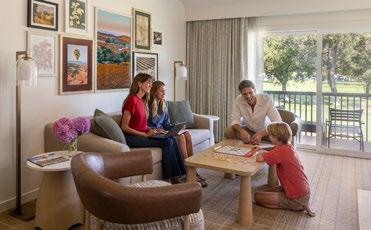
At the heart of the transformation is a notable enhancement of Silverado’s accommodations. A majority of the resort’s rooms have now been upgraded to premium status, featuring refreshed interiors, new fixtures, and a more contemporary look that complements the property’s historic bones. The result is a stay that feels current while remaining grounded in Silverado’s long-established sense of place.
Beyond the rooms, Silverado continues to distinguish itself as a true lifestyle resort. Its Sport & Social Membership offers exceptional value for those seeking regular access to the resort’s spa and fitness facilities, group classes, lap pool, locker rooms, member events, and retail discounts. One of the most compelling benefits of membership is access to Silverado’s championship golf courses. Sport & Social members enjoy a coveted
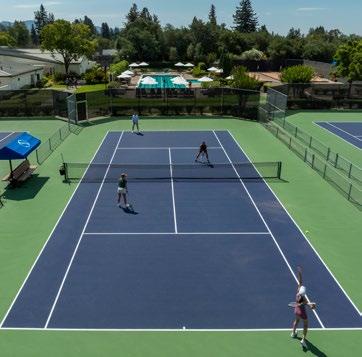
opportunity to reserve tee times on their choice of two 18-hole courses.
Wellness is also receiving a major refresh. The resort spa is currently wrapping up renovations and is slated to reopen with new offerings this spring. Once complete, the spa will be accessible exclusively to resort guests and club members. Silverado will incorporate integrated fitness, spa, and healing experiences, inviting guests to live their fullest lives. For locals, this makes Silverado an especially appealing option for staycations that feel like a true escape without leaving the valley.
Dining is evolving as well. The longtime Grill restaurant is being fully reimagined and will reopen this spring as Matchplay Kitchen + Bar. The new concept, located in
the same yet fully renovated space as the Grill, will feature updated décor and a new culinary vision.
Importantly, Silverado remains a historic property where everyone is welcome. While certain amenities are reserved for members and guests, the public is always invited to enjoy the resort’s dining venues and its calendar of community-focused events. Beloved traditions such as the annual Christmas Tree Lighting, Music on the Terrace every Friday, and the summertime Music on the Lawn concert series continue to welcome locals and resort guests alike.
Looking ahead, plans are underway to construct an all-weather venue at The Grove, further expanding Silverado’s role as a gathering place for celebrations, events, and shared experiences. From corporate retreats and weddings to golf outings and restorative getaways, Silverado Resort continues to check every box as a one-stop destination for renewal, relaxation, and connection.
With its blend of history, reinvention, and genuine openness to the community, Silverado Resort is not simply preserving its legacy. It is thoughtfully redefining it for the next generation.
BY FRAN MILLER
Plenty of wineries talk about sustainability. Fewer build their entire identity around it. Even fewer make it feel effortless. At St. Supéry Estate Vineyards & Winery, stewardship is not a marketing layer; it is the foundation beneath every vine, vintage, and decision.
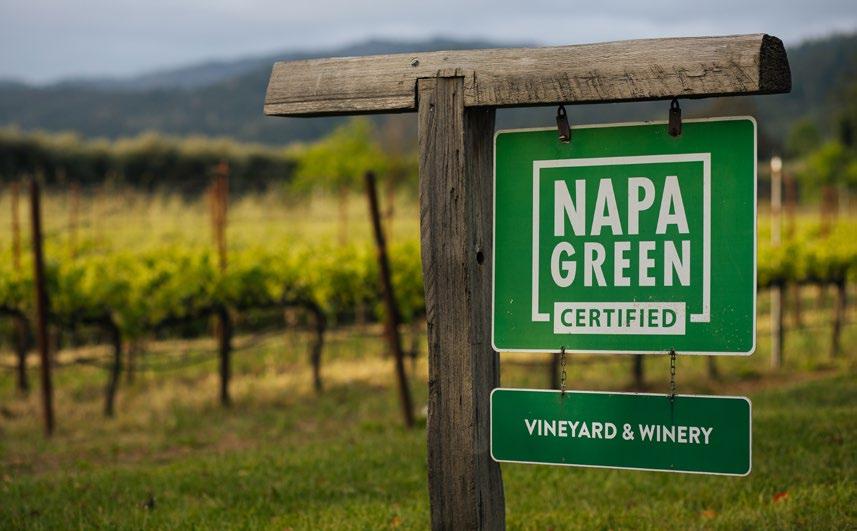
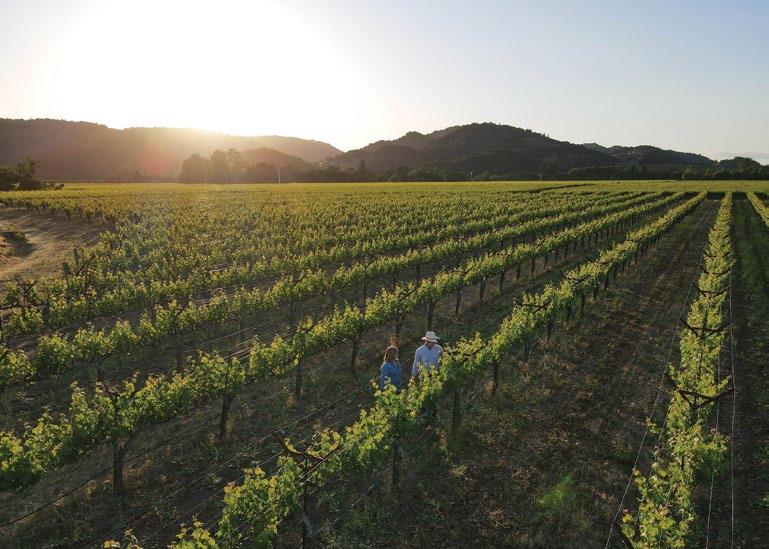
Drive through the Rutherford estate and the first thing you notice is not what is planted; it is what is not. The winery owns and farms three estate vineyards, two in Rutherford and one in the far reaches of northeast Napa Valley. Two-thirds of St. Supéry’s 1,600 acres remain in their natural state, a living buffer that supports biodiversity, wildlife, and healthier vineyards. More than 100 strategically placed boxes shelter owls, bluebirds, and bats. Sheep roam the hillsides of the Dollarhide Estate Vineyard each winter — nearly 900 of them — naturally managing grass for fire prevention while reducing tractor use. This is Napa Green in practice, not theory.
That long-term commitment has quietly earned St. Supéry a reputation as one of Napa Valley’s sustainability leaders. The winery has been Napa Green Vineyard Certified since 2008, Napa Green Winery Certified since 2012, and recently advanced from Silver to Gold member status with the International Wineries for Climate Action, a global benchmark for climate responsibility in wine. Along the way, St. Supéry has received a California Green Medal, international sustainability awards, and recognition for sustainable wine tourism.
But the real story is how these choices add up in the glass. “Sustainability and the pursuit of quality are at the heart of our farming and winemaking philosophy,” says winemaker Brooke
Shenk. “We believe that thoughtful stewardship of the land leads directly to higher-quality wines.”
The numbers support that belief. More than 1,400 metric tons of CO2 are sequestered annually by the estate’s vineyards. Solar arrays offset roughly 80 percent of the winery’s energy use, supplemented by electric Monarch tractors that eliminate thousands of pounds of emissions each year. Water consumption has been reduced by 56 percent in less than a decade, with all process water recycled back into the landscape and rainfall captured for vineyard irrigation. Even the bottles themselves are lighter now, with select wines shedding more than 12 percent of their glass weight.
Behind the scenes, St. Supéry is also helping push the region forward. As an active hub for the North Bay Zero Waste Collective, the winery works with neighboring producers to divert plastics, corks, and packaging from landfills — nearly 700,000 pounds so far. The removal of foil capsules alone eliminated hundreds of thousands of units and nearly three tons of CO2, while kegged wines save tens of thousands of bottles.
Sustainability here extends to the community as well, from raising hundreds of thousands of dollars for Napa Valley charities to partnerships supporting ocean conservation, education, and local schools.
At St. Supéry, sustainability is not just a badge. It is a way of working, refined over decades. The proof is in the wines; they are not only responsibly made, but genuinely delicious.




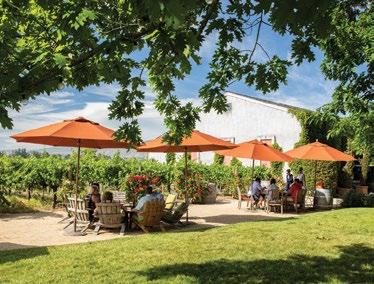
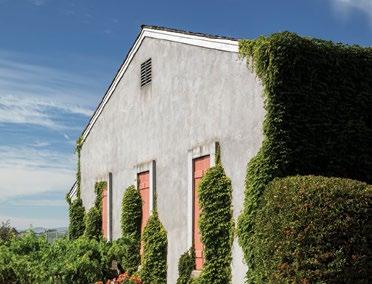
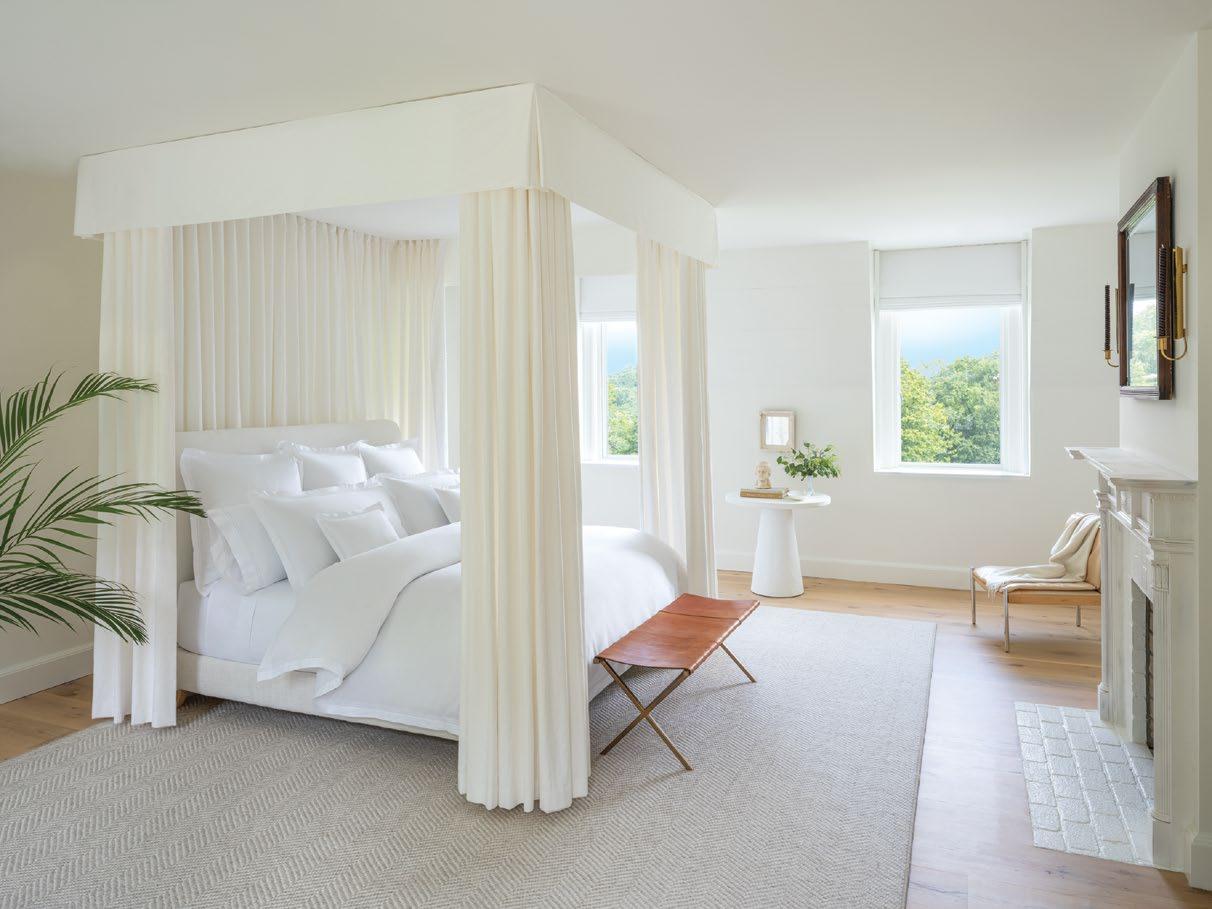
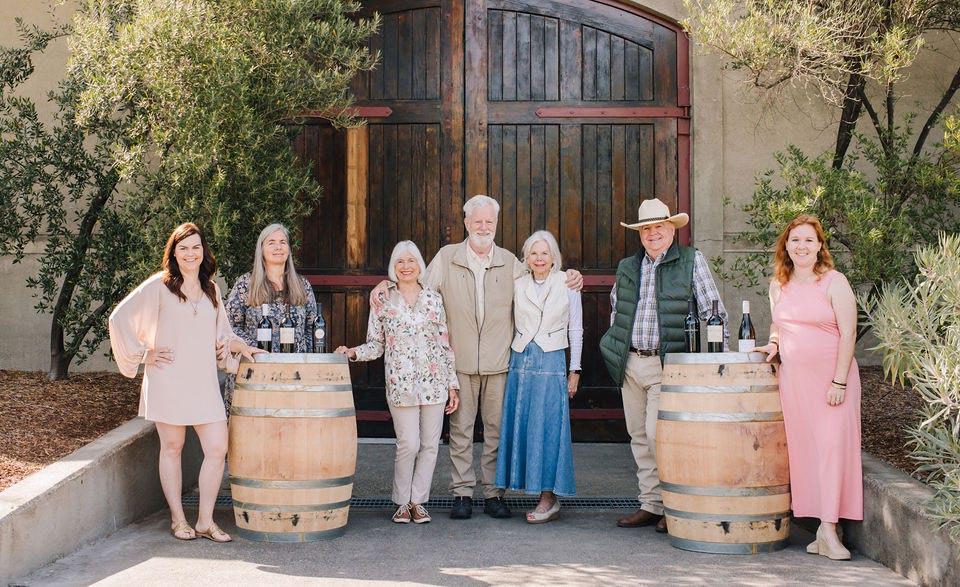
Founded in 1993 by the Hoxsey family, Napa Wine Company occupies a singular place in Napa Valley's winemaking story. The company is rooted in history, shaped by agriculture, and refined through decades of hands-on production experience. For a family known for its celebrated wine labels and a century of organic farming at sites such as Yount Mill Vineyards, the company represents a natural extension of their vineyard-driven philosophy.
The Napa Wine Company site itself predates the modern Napa Valley era. Originally built in 1877 by French vintners Jean Adolphe Brun and Jean Chaix, the Oakville property became California's ninth bonded winery, a distinction it still holds today. In 1991, members of the Pelissa family (multi-generation grape growers connected to the Hoxseys) purchased the historic winery and began an ambitious transformation. Under the leadership of Andrew Hoxsey, the site was reimagined as a modern custom crush facility, blending historical infrastructure with contemporary winemaking technology. By 1993, Napa Wine Company officially opened its doors.
From the outset, the focus was clear: provide serious winemakers with the tools,
flexibility, and technical support needed to produce high-quality wines without owning an estate winery. Early clients included producers such as Volker Eisele Family Estate and Marilyn Merlot, wines that helped establish Napa Wine Company's credibility within the industry. In 1997, that reputation was cemented when three wines produced at the facility were named among Wine Spectator's Top Ten Wines of the Year.
Over time, Napa Wine Company continued to evolve. Investments in stainless steel fermentation tanks, gravity-flow systems, advanced sorting capabilities, and comprehensive compliance services expanded its reach. Today, the facility offers large-scale capacity while maintaining the ability to support small-lot, detail-driven projects — an approach informed directly by the Hoxsey family's own experience as vineyard owners and wine brand stewards. A century of organic farming at Yount Mill Vineyards has shaped the family's understanding of fruit quality, sustainability, and long-term land stewardship, influencing how grapes are handled and how producers are supported vintage after vintage.
Now, Napa Wine Company enters a new chapter. As of April 2025, Priyanka Dhar
French has been appointed General Manager & Winemaker, bringing a new wave of energy and ambition to the operation.
"Napa Wine Company has been a cornerstone of Napa Valley's winemaking community — bringing together craftsmanship, collaboration, and trust," says French. "Today, we're proud to continue that legacy by elevating both the quality of the wines we produce and the level of partnership we offer. Our focus is on creating an environment where winemakers — whether emerging or established — have the tools, precision, and support to bring their highest ambitions to life."
Many brands that began within its walls have gone on to build estates of their own, while others continue long-term partnerships rooted in trust and consistency. For the Hoxsey family, Napa Wine Company remains both foundation and force multiplier. It’s a place where history, farming, and winemaking intersect, and one of the under-the-radar engines powering the wines that define the region's reputation.

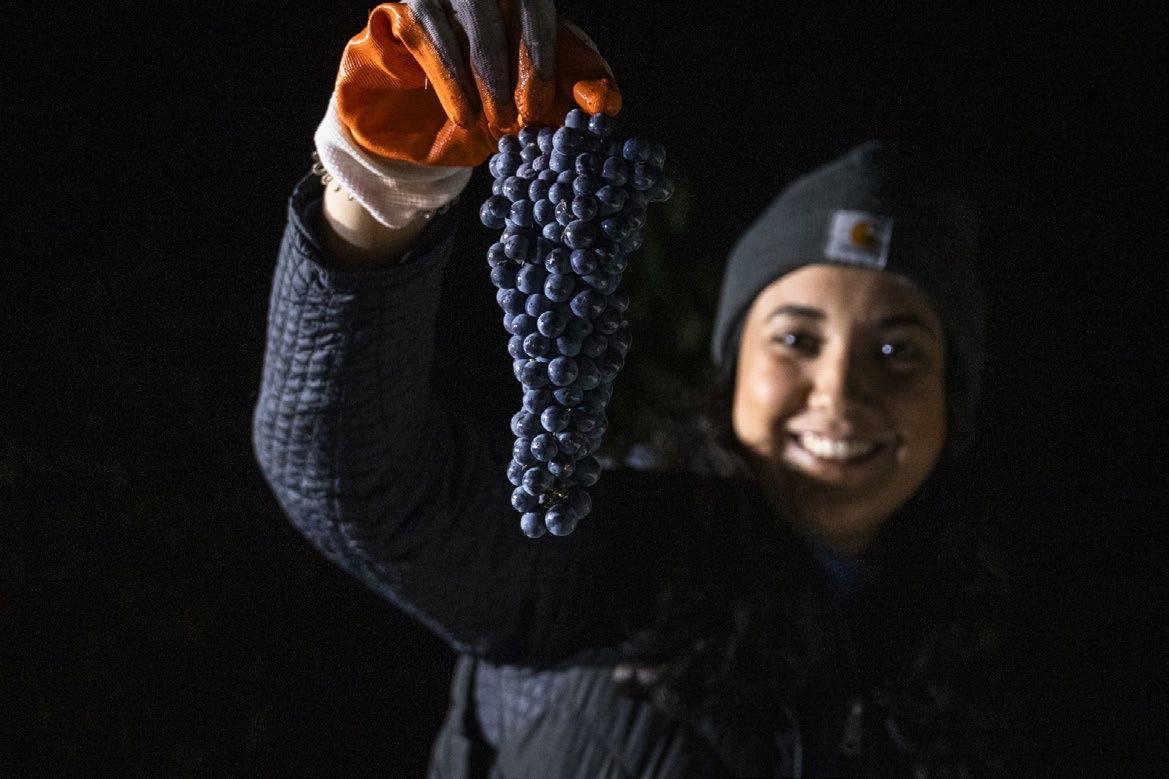
apa Valley produces its share of great wines, but Scalon Cellars has mastered a rarer trick: offering Julien Fayard’s precision winemaking at prices that feel almost implausible. The renowned Fayard, celebrated for his refined, French-influenced approach, leads Scalon’s winemaking with the same precision he brings to some of the region’s top luxury labels. The result is a portfolio that consistently overdelivers, proving that exceptional Napa wine does not have to come with an intimidating price tag.
That value is grounded in substance. Scalon’s three-acre Coombsville estate, home to 36-year-old Cabernet Sauvignon vines, sits on gravelly loam and rocky volcanic soils that naturally concentrate flavor while maintaining freshness. Coombsville’s signature structure — sleek tannins, lifted acidity, and quiet intensity — runs through every bottle, giving the wines a clarity and finesse rarely found at this price point.
The brand’s origin story only adds to its authenticity. Scalon grew not from a boardroom concept but from the shared ambition of two friends who spent decades
working in Napa’s vineyards and wineries. Vineyard manager Jesus Espinoza and winery builder Cruz Calderon met while working at the neighboring Caldwell Vineyard cave, eventually deciding to craft a wine of their own. What began as a small experiment evolved, barrel by barrel, into Scalon Cellars. Fayard’s arrival transformed that seed of an idea into a serious winemaking program. His philosophy — site first, technique in service of terroir — aligns perfectly with the Coombsville fruit Jesus and Cruz know so intimately. Under his guidance, Scalon’s wines gained definition, polish, and a level of sophistication that propelled the brand into the conversation about Napa’s most compelling values.
Priority, the brand’s signature Bordeaux-style blend, embodies the Scalon approach. Garnet-toned and composed of Cabernet Sauvignon, Merlot, and Cabernet Franc, all from the winery’s Coombsville estate, it is layered, balanced, and powerful. It is the kind of wine that surprises even seasoned Napa drinkers: unmistakably crafted by a master, yet priced with generosity.
Today, Scalon remains intentionally small. Production focuses on estate Cabernet Sauvignon and limited lots of distinctive varietals. Guests can explore the wines at Scalon’s tasting room in the historic Sawyer Tannery building near downtown Napa. Overlooking the Napa River and the Vaca Range, the space was designed and built by Cruz and offers an intimate, highly personal experience. Tastings are led by either Jesus, Cruz, or General Manager Tim Goodwin — an unusual opportunity to be guided by the very people who planted the vines, built the facilities, and shaped the winery from the ground up. Each visit is immersive and deeply connected to the heart of the brand.
For those tasting through the valley, Scalon wines also appear at Fayard’s downtown Napa Maison Fayard bottle shop and at beloved valley spots including Bistro Jeanty and Oakville Grocery. Everywhere the wines are poured, the response is the same: these wines deliver far more than their price suggests.
BY MICHAEL KANE
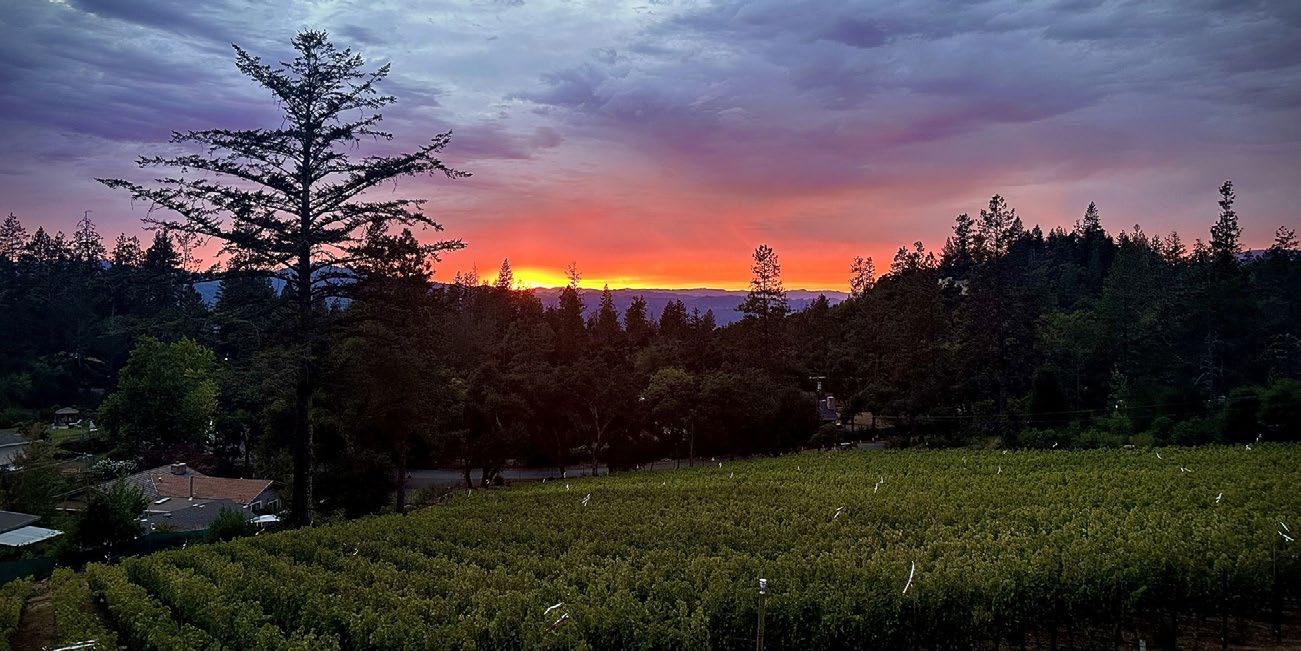
Ron Haber remembers the moment his Napa Valley dream of owning a house and land in the valley for retirement stopped being an idea and became a decision. At the Habers’ direction, a real estate broker had located a house on Howell Mountain—five acres of a house and cleared, rugged hillside overlooking the valley.
But there were complications: Haber
hadn’t seen the property yet, he hadn’t spoken to his wife about it, and he had only three hours to make a decision. Still, the opportunity felt right.
For decades Haber had built a successful career in business back East, but wine had long been part of the background of his life. Over time that quiet interest grew into something bigger - a fascination with Napa Valley, its vineyards, and the idea that
life could move in a completely different direction with the influence of his wife, Sue-Marie.
“East Coasters don’t move 3,000 miles just to retire,” Haber says with a laugh. Instead, he and his wife Sue Marie packed up their lives and headed west, joining a long tradition of professionals who have traded corporate careers for vineyard rows in Napa Valley.
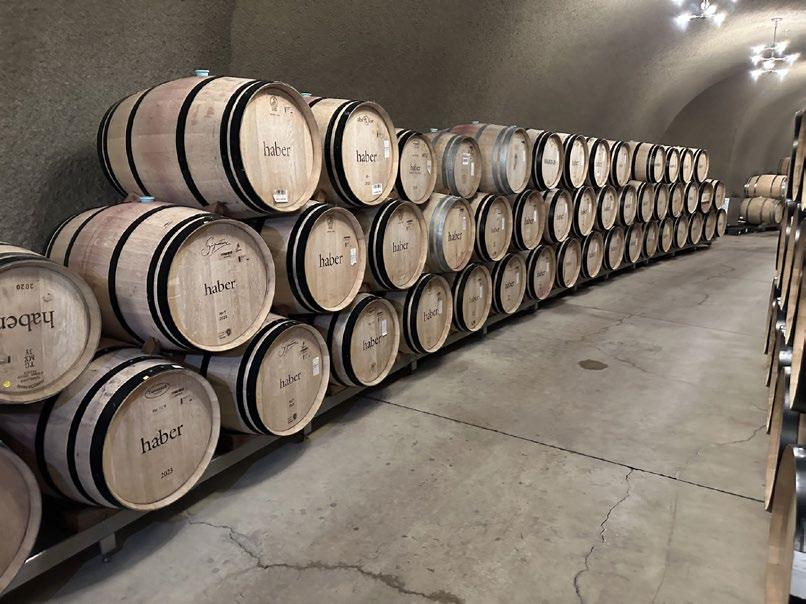
Haber’s path to wine began far from California’s wine country. Raised in Yonkers, New York, he grew up around his family’s glass business, originally making the decision to go into law, but eventually joining the company alongside his brother.
Over time the business expanded beyond its original scope, reaching customers across the United States, Canada, and the Caribbean. Part of that development was specialization in building racquetball and structural glass walls across the country.
By most measures, the corporate world had been good to him. The business provided stability, opportunity, and the chance to work alongside family while learning the realities of entrepreneurship— managing employees, cultivating clients, and adapting when markets shifted.
Spending five years as part of a publiclytraded company gave Ron the added knowledge and ability to start what would be a wine business from scratch.
During college Haber remembers turning his bedroom into a wine room in his fraternity house - a small collection that introduced him to the idea that wine could be more than simply a drink.
“It opened my eyes,” he recalls. What began as curiosity gradually developed into a genuine interest.
Trips to Napa Valley became a regular part of the Habers’ travels. At first the visits were simply opportunities to casually explore wineries, but over time they became something more meaningful.
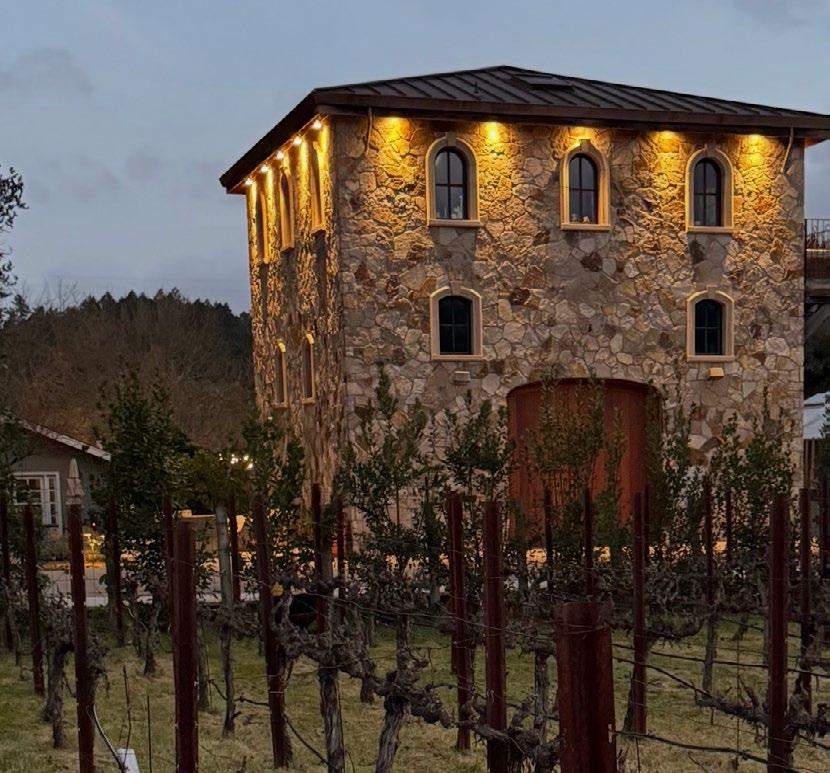
After Haber and his brother sold their respective interests to their children, the opportunity arose to purchase property on Howell Mountain, the couple realized their dream to make the valley home might actually be possible. The rugged terrain and elevated vineyards of Howell Mountain offered both beauty and challenge—qualities that appealed to Haber’s entrepreneurial instincts.
That first year of owning a home in Napa Valley, however, proved to Ron and Sue-Marie that consulting your spouse proved worthwhile. After Sue-Marie saw their first planted acre, she called Ron and said, “Let’s go. Let’s make the label.” That was the point where the entrepreneurial spirit shined through.
Starting a vineyard, however, is very different from enjoying wine as a consumer. The transition from business owner to vineyard proprietor meant entering a world where success depends not only on strategy and planning, but on soil, weather, and patience.
“As the old adage goes, you can farm it, you can hire a winemaker to make it,” Haber says. “But you have to sell it.”
Like many newcomers to the wine world, Haber quickly discovered that vineyard ownership comes with challenges that few people anticipate.
“Not only did we realize that we were
neophytes, but moreover, that Mother Nature rules everything,” he says. Weather patterns, harvest timing, and vineyard conditions all shape the outcome of each vintage.
“We are truly farmers and must constantly adopt to circumstances that are beyond their control.”
Yet those challenges are also part of the appeal. Building a wine brand blends agriculture, business, and craftsmanship in a way few industries can. Each vintage tells a story of the year that produced it.
For those who dream of following a similar path, Haber offers simple advice: spend time in Napa Valley and talk to the people
who have already made the leap.
“Come out here,” he says. “Visit the wineries where you buy wine. Meet the owners. Understand their journey.”
Haber also emphasizes that passion alone is not enough. The wine business requires patience, persistence, and a willingness to learn from those who have already navigated the path.
Those conversations reveal the realities of the industry—the challenges of farming, the unpredictability of harvests, and the long timelines required to build a brand. Because while the idea of owning a vineyard may sound idyllic, the work behind every bottle is anything but easy.
Still, for those willing to embrace both the challenges and the rewards, the experience can be deeply fulfilling.
For Haber, the move from the corporate world to Howell Mountain wasn’t about escaping business life. It was about building something differentsomething rooted in the land and shaped by time. And in Napa Valley, stories like his continue to unfold.
While Ron Haber’s journey to Napa Valley began with a lifetime interest in wine and business experience back East, Steve Goldfarb’s path to vineyard ownership followed a very different trajectory.
For nearly three decades, Goldfarb practiced law in San Francisco, focusing primarily on affordable housing. The work was meaningful and demanding, and it kept him deeply immersed in the professional world of the city.
Wine, at that point in his life, was simply something he enjoyed casually. “I liked to drink it,” he recalls, “but I wasn’t very knowledgeable about it. It was more of an occasion-based cocktail.”
Like many professionals living in the Bay Area, Goldfarb and his wife would occasionally escape the city for a weekend in Napa Valley. The region offered a welcome break from the rhythm of urban life.
The couple appreciated the slower pace, the landscape, and the atmosphere of wine country, but they never imagined becoming part of the industry themselves.
At the time, the Goldfarbs were living in Berkeley and raising four children. Between family life and commuting into San Francisco, their days were full. Napa Valley was simply a place to relax.
Then, one unplanned morning changed everything.
It happened on Goldfarb’s wife’s birthday. Realizing he hadn’t pre-arranged anything special, the couple decided to drive to St. Helena for the day. After finishing their breakfast, they wandered across the street to a local real estate office they had visited before.
As luck would have it, an agent they had previously met recognized them and mentioned a property that was about to come on the market the following day. Curious, the Goldfarbs drove over to see it.
The house was locked and there was no agent present, but after a quick phone call the agent arrived and opened the door. Three hours later, the Goldfarbs owned the property.
“When we bought it,” Goldfarb says, “there were six rows of grapes.” At the
time, those rows seemed more like a charming feature than the beginning of a career.
Goldfarb was still practicing law and initially assumed he could balance the two worlds. He informed his law firm that he would begin commuting to Napa several days each week while continuing his legal work.
The arrangement lasted two weeks. Soon after, he made the decision to retire from law and focus fully on the new venture.
The transition from attorney to vineyard owner was not exactly seamless.
Unlike many entrepreneurs entering the wine industry today, Goldfarb and his wife had virtually no experience in agriculture or winemaking. Their early education came from books. “We bought one of those ‘Dummies Guide’ books on how to make wine,” he says.
Their first attempt produced roughly a barrel of wine. To their surprise, it turned out quite well.
Over time the small vineyard operation gradually evolved into what would become Anomaly Vineyards, a boutique Napa winery known for its Cabernet Sauvignon. The name itself reflects the unlikely
path that led them there. Unlike many Napa producers whose families had farmed vineyards for generations, the Goldfarbs arrived in the wine world almost by accident. Yet their story reflects a pattern that has become increasingly common in Napa Valley.
Many of the region’s wineries were founded by individuals who began their careers in entirely different fields - law, finance, technology, and other professional sectors—before deciding to pursue wine as a second chapter.
The transition can be both exhilarating and humbling. “You realize pretty quickly that you don’t know what you’re doing,” Goldfarb says. But that sense of discovery is also part of the appeal.
Like Haber, Goldfarb emphasizes that the romantic vision of vineyard life often hides the financial realities involved.
When asked what advice he would give someone sitting in a corporate office dreaming about leaving everything behind to start a winery, his response is both practical and honest.
“Look at your bank account,” he says. “And figure out how many years you could go without making any money.”
Still, he doesn’t discourage the idea. For Goldfarb, vineyard life offers something many professionals struggle to find in traditional careers.
“It’s a much better, more fulfilling life,”
Haber and Goldfarb are far from alone. Napa Valley has long attracted entrepreneurs and executives searching for a second act among the vines.
Technology entrepreneur Lauren Ackerman built Ackerman Family Vineyards after a successful career working with dozens of Silicon Valley companies, while Mike Davis transitioned from the technology sector to found Davis Estates in Calistoga.
Together, their journeys reflect a broader pattern: the valley has become a place where experience from one career often leads to an entirely new one rooted in agriculture, craftsmanship, and patience.



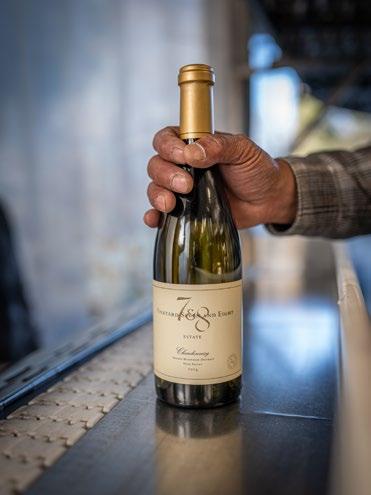
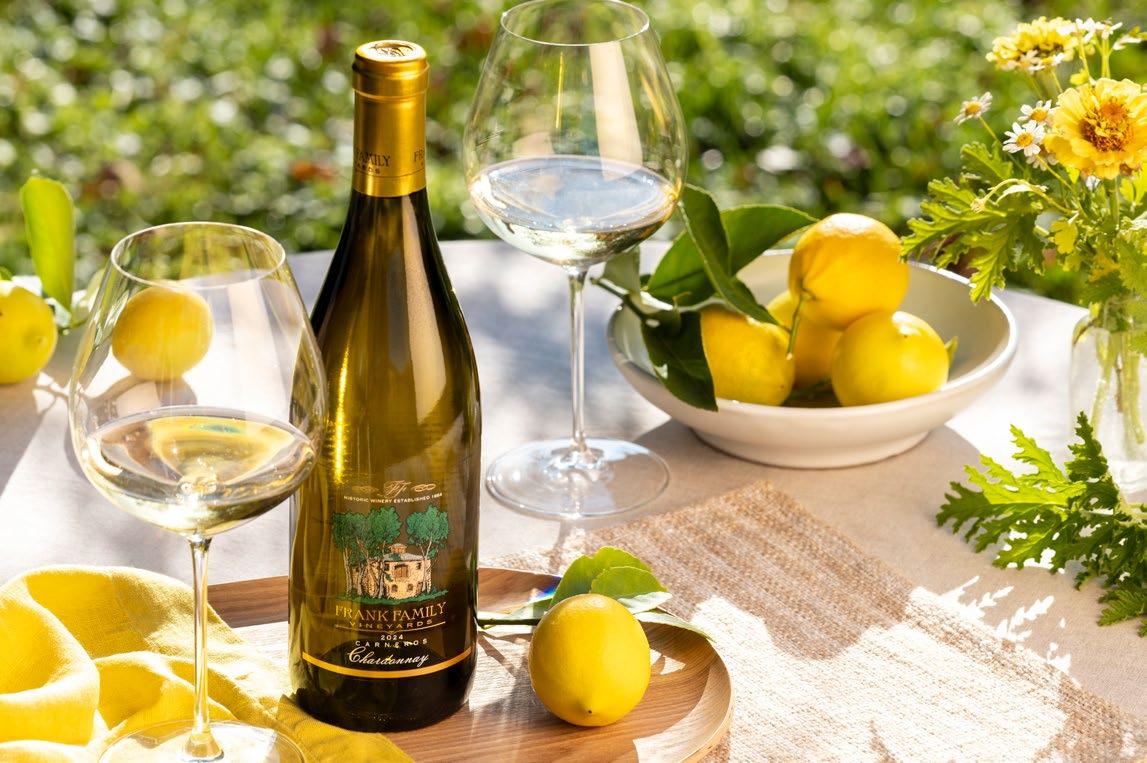
BY FRAN MILLER
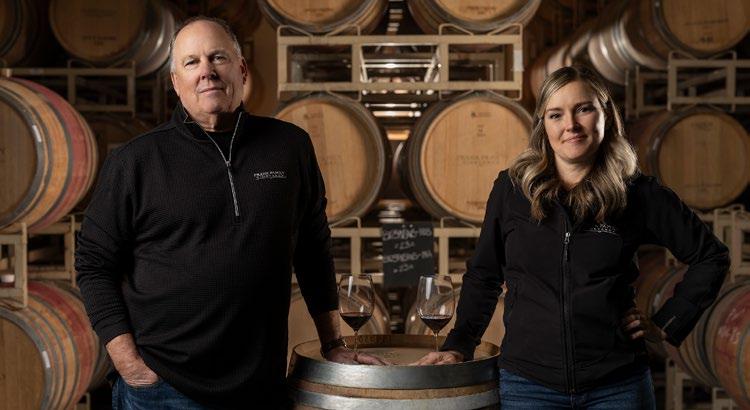
Frank Family Vineyards has become something of a shorthand in Napa Valley. Mention the name and expectations follow: assured quality, gracious hospitality, and wines that have earned lasting loyalty. For lovers of luxury Napa Valley Chardonnay, it is a household name, built through consistency and an intuitive understanding of what Chardonnay drinkers return to again and again.
Situated off Larkmead Lane in
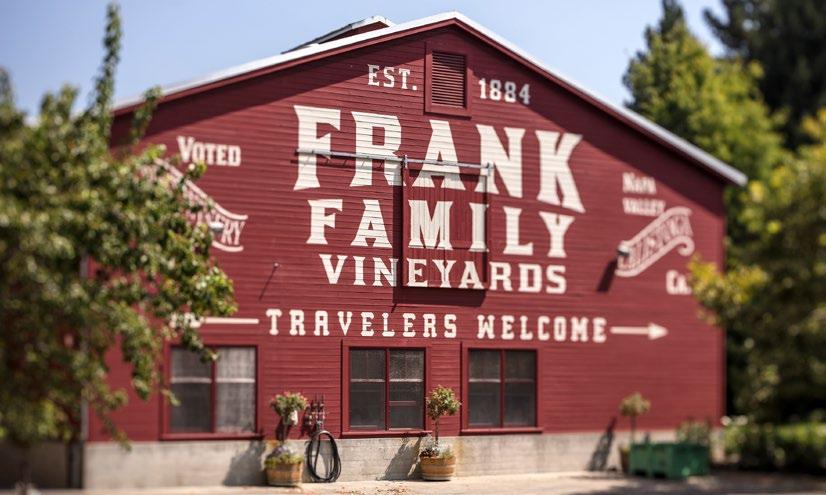
Calistoga, the winery unfolds around a pale yellow 1930s Craftsman home, with sun porches and garden paths that shape one of the valley’s most appealing tasting venues. Visits here are relaxed and social. Guests settle in, and conversations unfold naturally. Founders Rich and Leslie Frank are often present, greeting visitors and reinforcing the sense that this is a family operation. That spirit carries from the tasting rooms to the vineyards, and directly into the glass.
Frank Family produces many varietals, yet Chardonnay is a backbone of the winery’s identity. Its approach emphasizes vineyard specificity, thoughtful sourcing, and a precise house style. For many wine lovers, Frank Family’s Carneros Chardonnay is woven into everyday rituals. It is the bottle that shows up at family gatherings, celebrations, and weeknight dinners. It is
the Chardonnay ordered instinctively when it appears on a restaurant list. Familiar in the best sense, it has earned its place through years of dependable excellence.
The wine resonates because it consistently reflects balance and freshness. Sourced primarily from the winery’s Lewis Vineyard in Carneros, with additional fruit from Beckstoffer Vineyards in NapaCarneros and Sangiacomo Vineyards in Sonoma-Carneros, the wine expresses both site and season. In the glass, Meyer lemon and yellow apple lead, followed by guava and subtle baking spice. The texture is polished, with a finish that invites another sip. It pairs naturally with food and stands comfortably on its own, making it a trusted choice for a wide range of occasions.
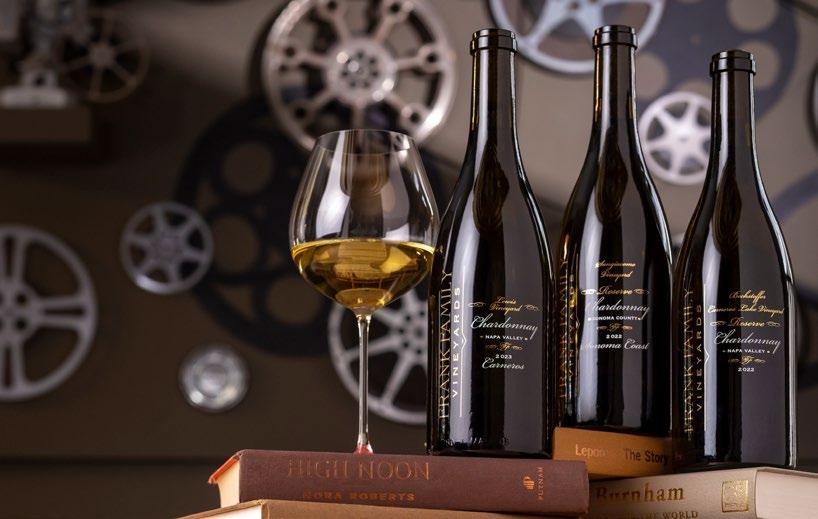
Beyond the Carneros Chardonnay, Frank Family produces a small collection of vineyard-designated and limitedproduction Chardonnays that explore Napa and Sonoma in greater depth. These wines, often reserved for members, offer a more focused look at individual sites and growing conditions.
The Sangiacomo Chardonnay, sourced from the Kiser Vineyard on the Sonoma Coast, highlights energy and definition, shaped by maritime influence.
The Beckstoffer Chardonnay, drawn from Beckstoffer Carneros Lake Vineyard, presents a layered expression, combining elegance with depth and a supple texture.
From the heart of Carneros, the Lewis Vineyard Chardonnay delivers richness and dimension. Grown on the vineyard’s highest knolls and aged for 11 months in 100 percent new French oak, the wine unfolds gradually, revealing structure alongside generosity.
Completing the lineup is Frank Family’s Blanc de Blancs, a sparkling expression rooted in Chardonnay and shaped by the winery’s history with traditional-method wines. Produced in limited quantities and aged extensively on the lees, the wine is crisp and finely textured, reinforcing Chardonnay’s versatility, whether still or sparkling.
work across Europe, Australia, and New Zealand, experience that shaped a measured, site-driven approach grounded in balance, texture, and consistency. His tenure has spanned key milestones for the winery, including expanded vineyard holdings, the development of a modern, sustainable production facility, and the achievement of Napa Green certification for both vineyard and winery operations. Through it all, Chardonnay has remained a focal point, crafted to reflect both place and the expectations of a loyal, nationwide following.
In 2024, Graff was joined by Winemaker Alicia Sylvester, whose experience adds breadth and momentum to the program. A California native, Sylvester grew up immersed in agriculture on her family’s almond farm and Zinfandel vineyard in the Central Valley, an early foundation that
informs her practical, hands-on approach in the cellar.
Much like Graff, Sylvester has worked harvests all over the world, from Australia to Italy, South Africa, and Argentina, before returning to California. Her career has included time at Chateau Montelena, as well as a focused role as a Chardonnay harvest enologist at Sonoma-Cutrer. She later held winemaking positions with Foley Family Wines and Banshee Wines, working extensively with site-specific, cool-climate Chardonnay.
Sylvester works closely with Graff, contributing her global perspective and Chardonnay-focused background while building on an established house style. Together, their complementary strengths shape a Chardonnay program defined by longevity and trust.
Senior Winemaker and General Manager Todd Graff has been a defining presence at Frank Family Vineyards since 2003, guiding the winery through more than two decades of growth while maintaining a clear stylistic throughline, particularly with Chardonnay. His background includes
Sustainability plays a central role in how Frank Family Vineyards approaches its broader portfolio. The winery is certified Fish Friendly Farming, California Sustainable, and Napa Green for both its vineyards and winery operations, reflecting a comprehensive commitment to environmental responsibility, resource efficiency, and long-term land stewardship. In the vineyards, sustainable farming practices prioritize soil health, water conservation, and biodiversity. Thoughtful
canopy management, responsible irrigation, and ongoing soil monitoring support vine balance and consistent fruit quality, all elements essential to Chardonnay’s clarity and freshness. Energy efficiency, water management, waste reduction, and recycling and composting programs are integrated into daily operations. The winery has been powered by 100 percent renewable energy since 2022 through MCE Deep Green and, in 2024, installed 800 solar panels, meeting more than 75 percent of the winery’s electricity needs on site. Additionally, through the winery’s Frank for a Cause initiative, proceeds from select
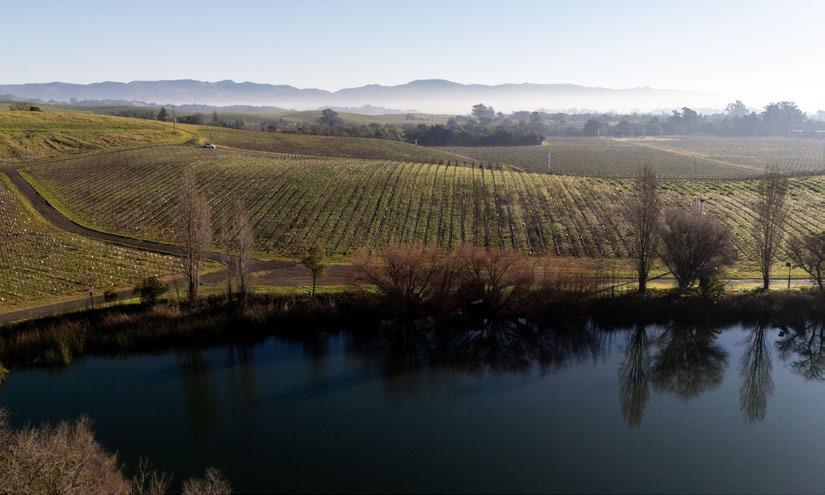
wines — including Carneros Chardonnay — have supported organizations dedicated to environmental conservation and global cleanup efforts, extending stewardship beyond the vineyard.
Frank Family’s hospitality program mirrors its Chardonnay philosophy, and guests interested in exploring the Chardonnay program should look to the Vineyards of Carneros tasting experience, which immerses guests in the winery’s singlevineyard Chardonnays, Pinot Noirs, and méthode champenoise sparkling wines. Tastings unfold within the Craftsman home and surrounding gardens, or within the Miller House, a luxurious venue designed by the late architect Howard Backen and named in honor of Leslie Frank (née Miller). The light-filled space overlooks the members’ lawn and surrounding vineyards, offering an elegant backdrop for the winery’s most elevated experiences.
As Frank Family continues to invest in its vineyards and refine its Chardonnay program, the focus remains on stewardship and clarity. That commitment is underscored by the recent acquisition and redevelopment of Winery Lake Vineyard, a historic 256-acre site in Napa-Carneros long regarded as one of the appellation’s benchmark properties. Originally planted in the 1960s and carefully brought back into production under Frank Family’s direction, the vineyard now spans 162 planted acres across gently rolling terrain, with diverse clones, varied exposures, and a mix of clay, loam, and rocky soils. Planted primarily to Chardonnay, Winery Lake Vineyard is poised to play an increasingly important role in the winery’s future bottlings. Through thoughtful growth, sustainable practices, and a deep understanding of its audience, Frank Family Vineyards has built a Chardonnay legacy defined by trust. These are wines that show up reliably again and again and have earned their place.
BY FRAN MILLER
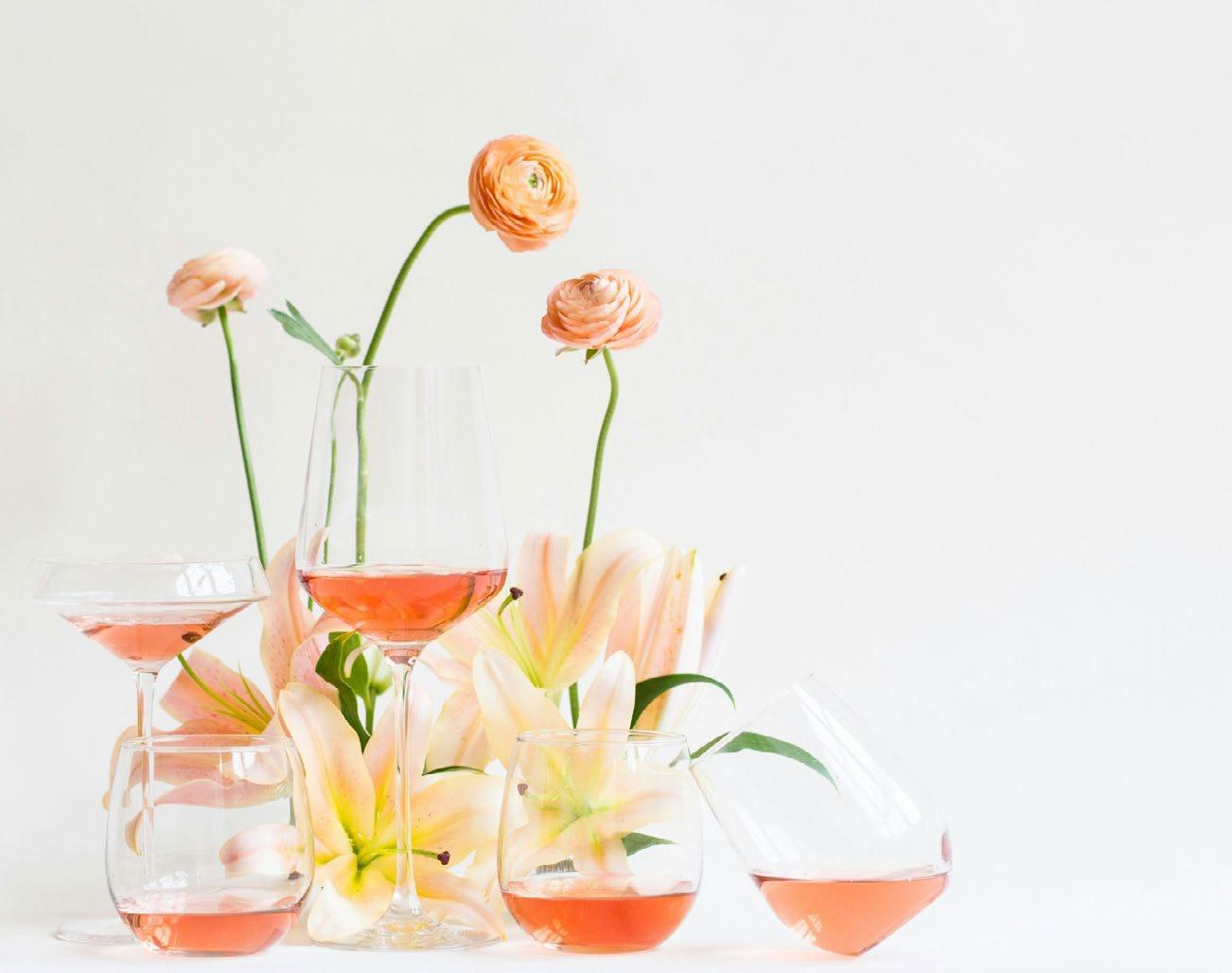
Rosé’s reputation as a “summer wine” is one of the wine world’s most persistent myths. A chilled glass beside the pool is certainly enjoyable, but the category’s range of styles makes it far more versatile than the seasonal stereotype suggests. Crisp, mineral-driven bottlings thrive alongside seafood and salads; deeper, more structured rosés stand up easily to grilled meats, charcuterie, and richly spiced dishes. For cooks and wine lovers alike, rosé offers something many wines struggle to achieve: flexibility across the table and across the calendar.
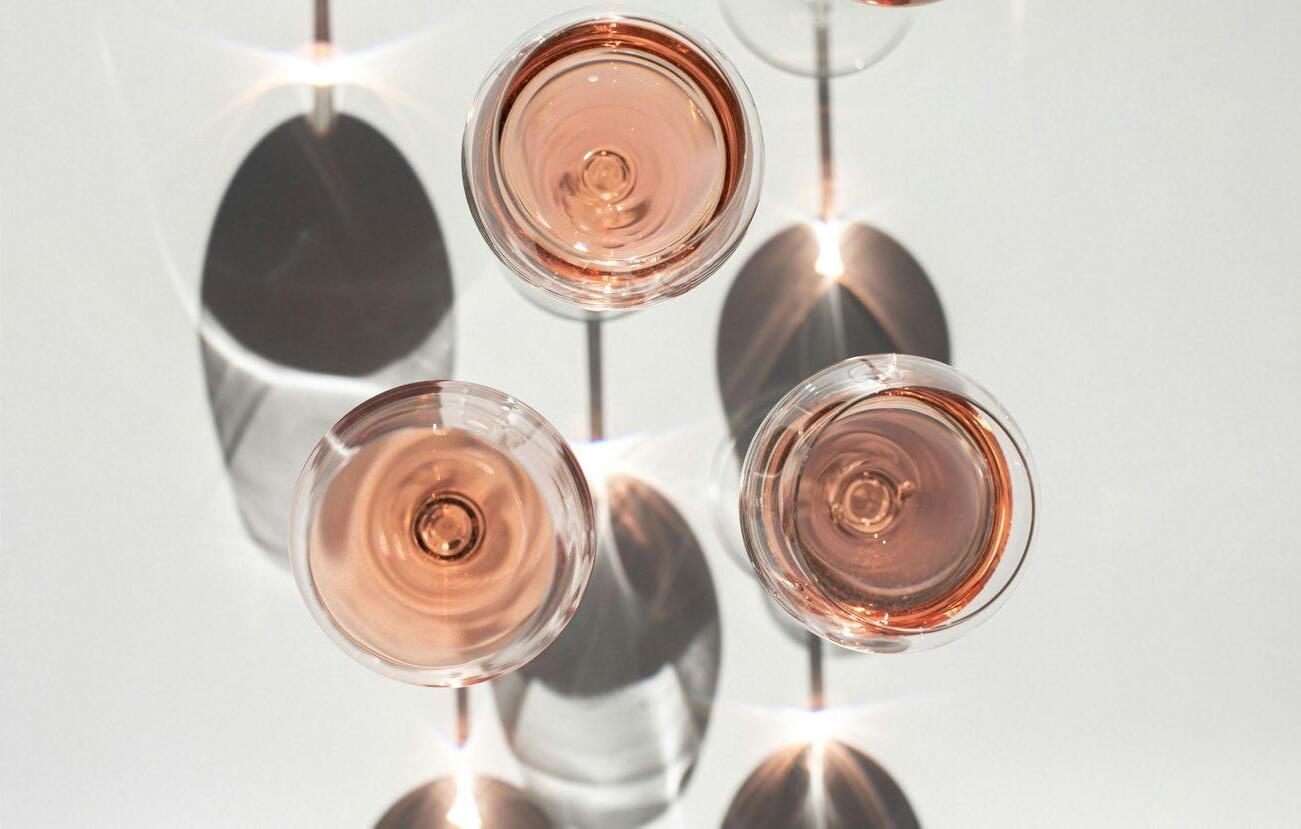
versatility ultimately comes down to balance. Bright acidity, moderate alcohol, and fresh fruit flavors allow it to move comfortably across a meal— from appetizers through the main course.”
Despite its singular color palette, rosé encompasses a wide spectrum of styles, shaped by grape variety, climate, and winemaking technique. Some rosés are produced through brief skin contact with red grapes before fermentation, while others use the saignée method, where juice is “bled” from red wine fermentations to concentrate the remaining wine. The result can range from pale, delicate wines to richly structured examples that drink almost like light reds. Understanding these styles makes pairing rosé with food far easier.
When most wine drinkers picture rosé, they imagine the pale pink wines of southern France. The region surrounding Provence produces the global reference point for the style. Often crafted from blends of Grenache, Cinsault, Syrah, and Mourvèdre, these wines are prized for their pale salmon color, citrus-driven acidity, and subtle notes of strawberry, peach, and Mediterranean herbs.
This style shines with lighter fare. Think
or a platter of summer vegetables drizzled with olive oil. Roast chicken, salmon, and herb-marinated vegetables also make great partners, thanks to the wine’s bright acidity and restrained fruit. Napa producers are increasingly emulating this crisp, mineralforward approach, particularly those working with Rhône grape varieties.
Move away from the Mediterranean, and rosé often becomes more fruit-driven. Wines made from grapes like Zinfandel or Pinot Noir tend to display brighter berry notes like strawberry, raspberry, and watermelon, with slightly fuller texture. Pinot Noir rosé, especially those inspired by styles from Burgundy or Oregon, frequently balances bright red fruit with refreshing acidity. The result pairs beautifully with foods that bridge light and savory: tuna tartare, grilled pork tenderloin, charcuterie, or mushroom dishes.
Zinfandel rosé, sometimes labeled “white zinfandel,” historically leaned sweet, though many contemporary producers now craft
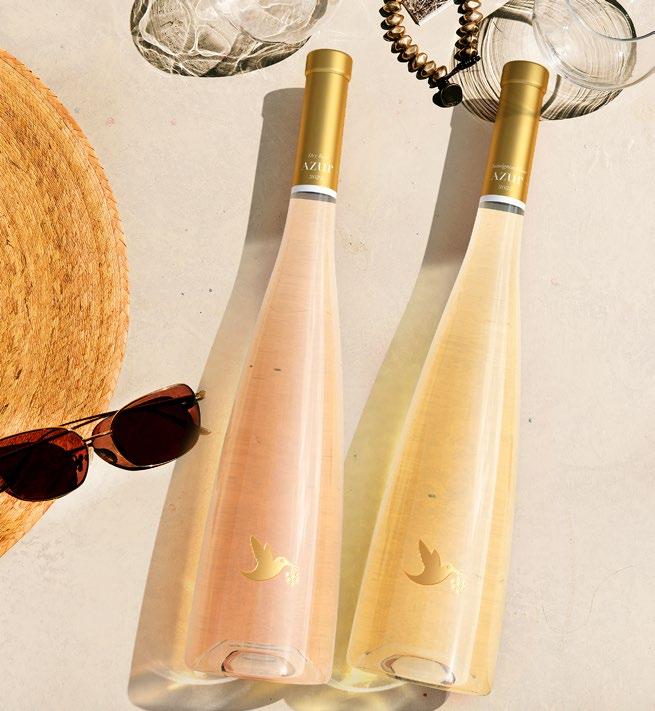
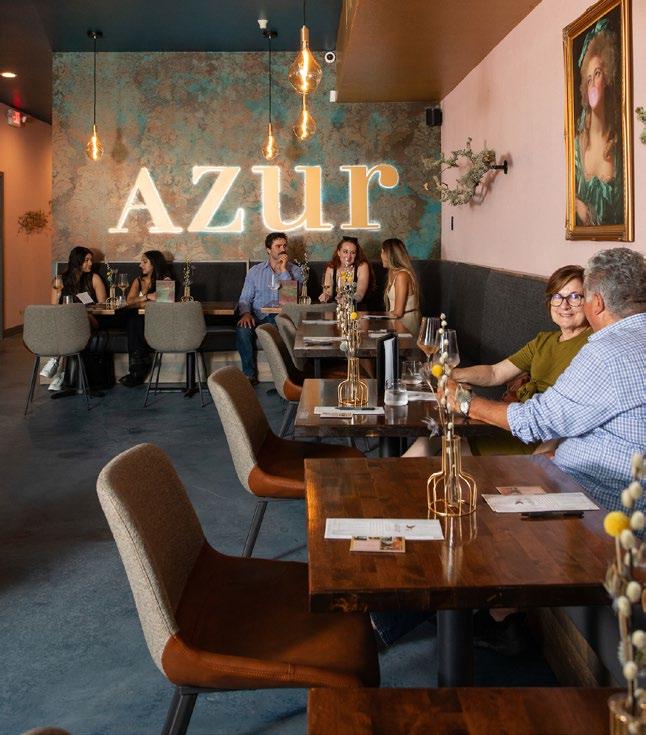
drier, more structured versions. These wines complement lightly spiced dishes particularly well. Try them alongside Thai noodle salads, barbecue chicken, or glazed pork ribs.
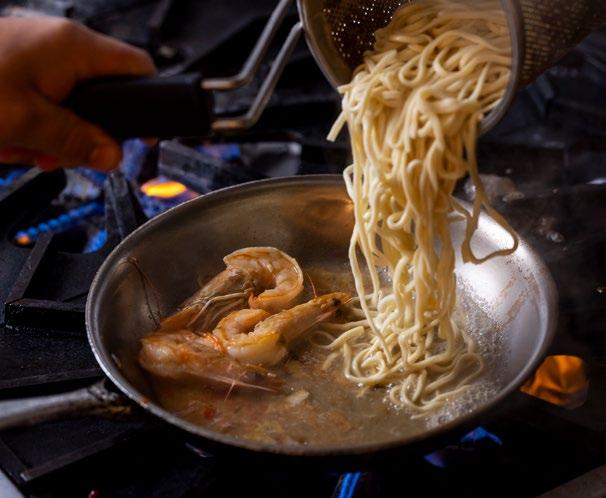
Some rosés carry enough weight to function almost like a chilled red wine. Bottlings based on Syrah, Sangiovese, or Tempranillo often display deeper color and richer flavors like ripe cherry, blood orange, and spice, with enough structure to pair with hearty fare. These rosés excel with grilled meats, lamb burgers, paella, or tomato-driven pasta dishes. A Sangiovese rosé, for example, complements Italian classics such as margherita pizza or pasta pomodoro, where the wine’s acidity mirrors the brightness of the tomato. Served slightly cooler than room temperature but warmer than refrigerator cold, these structured rosés reveal surprising complexity.
Sparkling rosé offers yet another dimension. Made from grapes such as
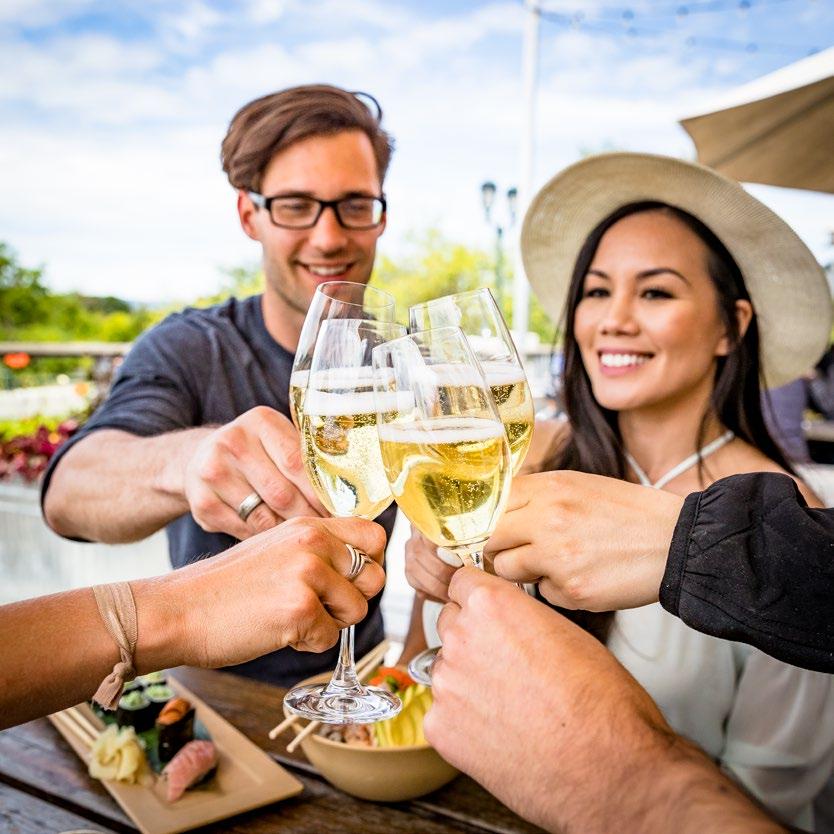
Pinot Noir and Chardonnay, these wines combine red berry flavors with lively effervescence. Classic examples originate in Champagne, where rosé Champagne often carries notes of raspberry, brioche, and citrus zest. Food pairing possibilities are nearly endless. Fried chicken, smoked salmon, sushi, and even potato chips work beautifully. The bubbles cleanse the palate while the red fruit adds depth. Sparkling rosé also shines at the brunch table beside eggs Benedict, smoked trout, or fresh berries.
While rosé historically played a small supporting role in Napa Valley, that dynamic has shifted noticeably in recent years. The valley’s warm days and cool evenings provide an ideal balance for rosé production and as a result, many wineries now treat rosé as a serious winemaking project rather than a seasonal afterthought. Producers are working with grapes traditionally associated with the region such as Cabernet Sauvignon to
create dry rosés that maintain freshness while hinting at Napa’s signature structure. Others draw inspiration from southern France by planting Rhône varieties like Grenache and Mourvèdre.
Rosé’s versatility ultimately comes down to balance. Bright acidity, moderate alcohol, and fresh fruit flavors allow it to move comfortably across a meal—from appetizers through the main course. A chilled Provençal-style rosé alongside spring vegetables and goat cheese feels natural on a warm afternoon. A deeper Napa rosé poured with grilled lamb or tomato-based pasta works equally well during cooler months. Sparkling rosé can anchor celebrations year-round.
That flexibility makes rosé one of the most adaptable wines in any cellar. Seasonal marketing may spotlight it in summer, yet the best bottles earn a place at the table in every season, especially when paired thoughtfully with the right cuisine.
We believe there is a Pink Girl in all of us! Pink Girl is Napa Valley’s answer to rosé, a fruit-forward gem, sassy yet classy with a real Swarovski crystal hand-applied to each bottle - Why? Because, why not? Pink Girl Rosé is a 100% Napa Valley dry rosé, showcasing the beauty of a mountain Malbec. Pink Girl expresses juicy ripe cranberries and pomegranate on the palate, followed by a hint of Asian spice; she is not a shy rosé but ¬irty and fun. Sipping poolside or accompanying a meal with family and friends, Pink Girl will sparkle at your next gathering. // Price: $27 Available at www.pinkgirlwines.com
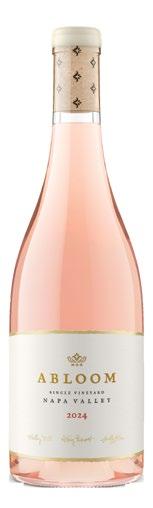
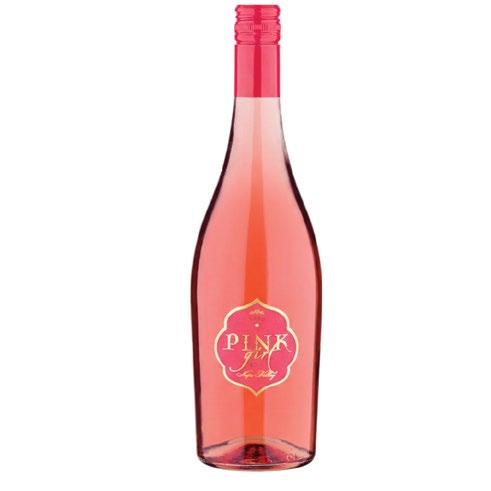
Abloom, Single Vineyard Ros é of Grenache Abloom Ros é is the pinnacle of Napa Valley ros é , crafted with intention, precision, and mastery by three acclaimed winemakers: Molly Hill, Ashley Hepworth, and Sally Johnson Blum. With decades of expertise in Cabernet Sauvignon at Napa’s most prestigious wineries, they set out to challenge the status quo—proving that Napa’s terroir can produce world-class ros é with the same rigor as its finest reds. Abloom is bold, sophisticated, and unapologetically luxurious—a statement wine designed for those who appreciate rarity, craftsmanship, and excellence. This rare, single-vineyard ros é , from historic old vine Grenache, has received high critical acclaim for its debut vintage. // Price: $150, Available at www.abloomwine.com
Azur Rosé is redefining Napa Valley with purpose, elegance, and intention as the original dedicated, intentionally produced Rosé of Napa Valley, crafted by Elan Fayard and recognized as “Best Rosé” by Vogue Magazine. This luminous wine opens with aromatics of wild strawberry, white peach, rose petal, and citrus blossom, followed by a beautifully layered palate of fresh raspberry, blood orange, soft minerality, and a delicate saline finish, delivering vibrant acidity, silky texture, and refined structure. Azur Rosé represents a new legacy for modern Napa. Available at the Azur Wine Lounge in downtown Napa, 1014 Clinton St. // Price: $48 per bottle, Available at www.azurwines.com
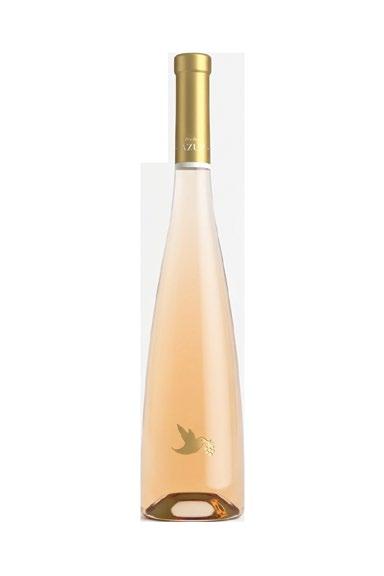
Alex Espinoza’s earliest memory is of his family’s farm in Guatemala, and the bounty that was so easily accessible. Corn, vegetables, milk, and cheese came from the property, and nearly every family meal involved time spent beside his mother and grandmother as they tended open fires, simmered long stews, and made fresh cheeses by hand. Those early lessons, patience, resourcefulness, respect for ingredients, would stay with him long after he left home.
At 15, Espinoza moved to Santa Barbara to live with his uncle and continue school. Like many young immigrants finding their way, he took the first restaurant job available, bussing tables. The work introduced him to the energy of a professional kitchen and a world that felt both demanding and exhilarating. A few years later he relocated to Napa Valley and applied for a front-of-house
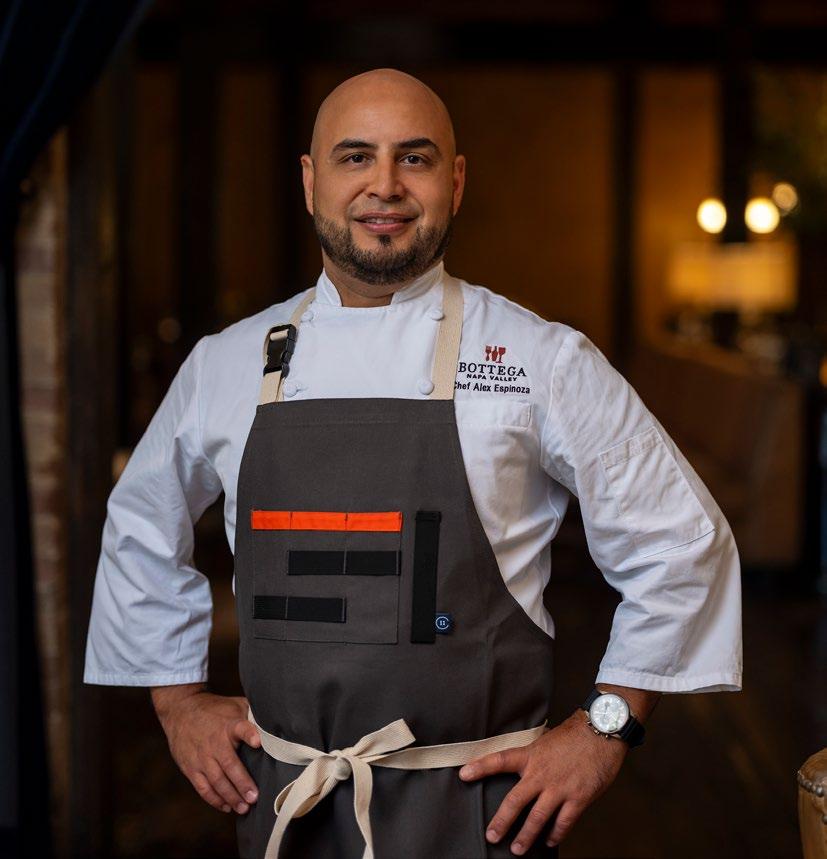
position at Tra Vigne. The chef on duty, Michael Reardon, had another idea and invited him into the kitchen instead. That
decision changed everything. Espinoza spent the next decade at Tra Vigne, one of the valley’s most influential Italian restaurants. The kitchen was
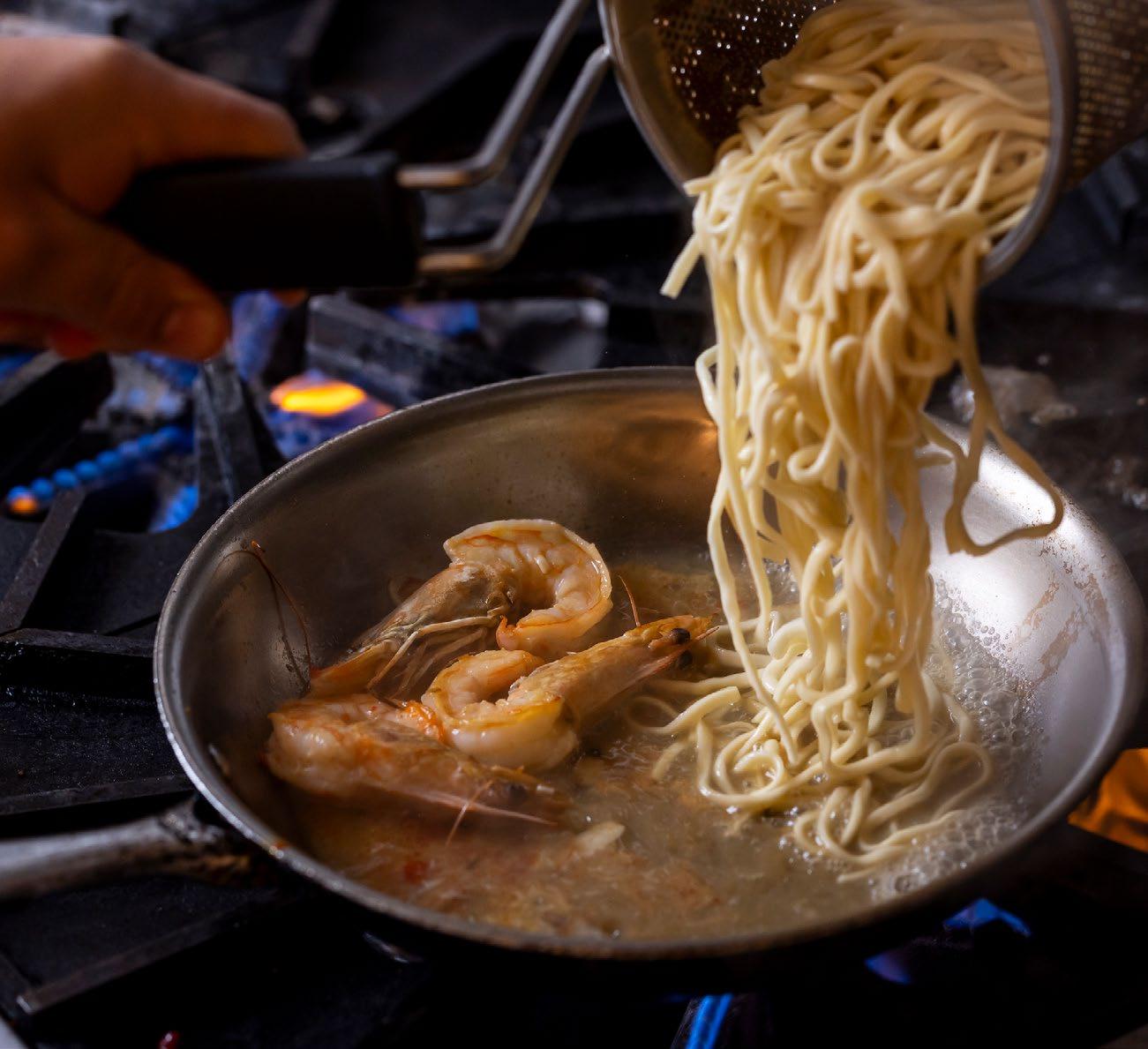
fast-paced and exacting, the standards high. He worked alongside chefs including Eric Torrealba, Francesco Torre, and Anthony “Nash” Cognetti, gradually moving through the ranks while absorbing the mechanics of a serious restaurant operation. At the same time, Espinoza pursued
formal culinary education at the Culinary Institute of America, studied Italian, and completed management training through the restaurant group.
Responsibility came early. By his early twenties, Espinoza was helping run dayto-day kitchen operations at Tra Vigne,
contributing to the consistency that made the restaurant a gathering place for Napa’s vintners, growers, and visiting chefs.
Additional experience followed in several of the region’s most respected kitchens and later became executive chef at Peju Winery, where he embraced
Napa Valley’s farm-driven cooking style and often prepared meals for visiting culinary figures such as Jacques Pépin and Masaharu Morimoto.
In 2021, Espinoza joined the team at Bottega Napa Valley, reuniting with longtime colleague Kellie Magna and working
closely with the restaurant’s founder, Michael Chiarello. Chiarello had built Bottega into a cornerstone of Napa Valley dining—an Italian-inspired restaurant where house-made pastas, seasonal produce, and warm hospitality shaped the experience.
Espinoza arrived during a challenging moment for the hospitality industry. Restaurants across the country were rebuilding teams and redefining operations after the pandemic. Working alongside
Chiarello, he helped stabilize the kitchen while contributing new ideas to the menu. When Chiarello passed away in 2023, Espinoza stepped into a historic role as Bottega’s first executive chef outside its founder.
The responsibility is one he approaches with humility and a clear sense of purpose. Chiarello’s influence remains visible throughout the restaurant, from its housemade pastas to its emphasis on generosity at the table. But Espinoza has gradually added
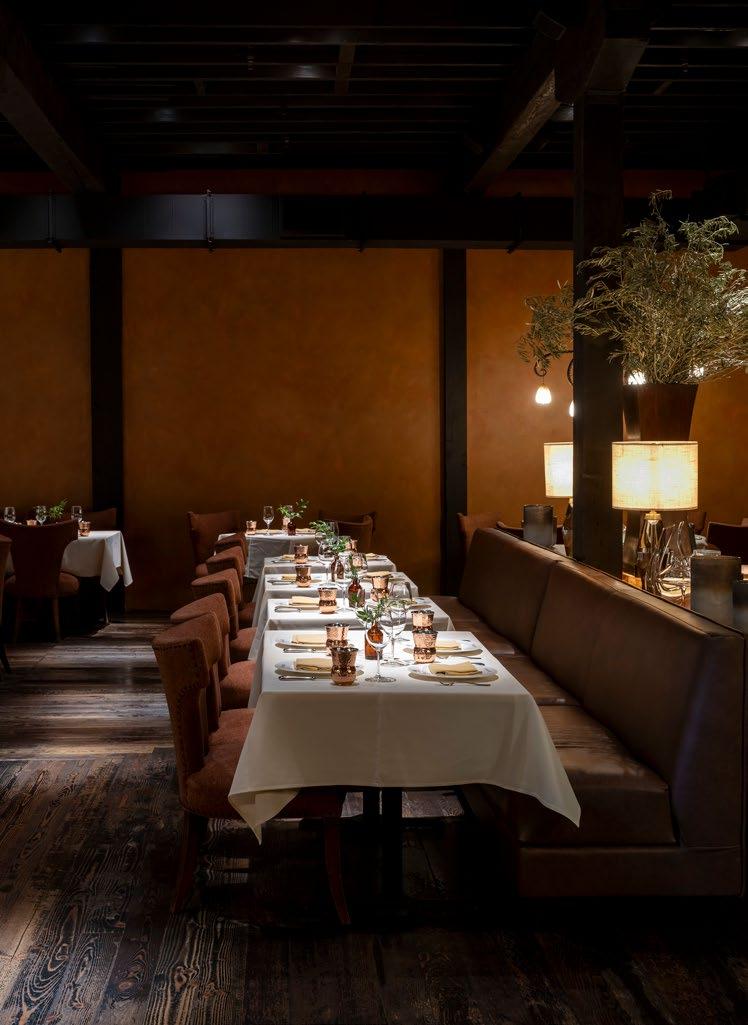
From January through March, Napa Valley springs to life with a vibrant burst of wild mustard blooms, transforming vineyard rows into a golden carpet of color and heralding the start a new growing season. It’s a brilliant time of year—and a perfect reason to celebrate.
Alongside partners like Visit Napa Valley, EPPICHarts, the Downtown Napa Association, countywide Chambers Commerce, and numerous local businesses, the Art Association Napa Valley (AANV) is a proud supporter the annual Napa Valley Mustard Celebration.
his own voice to the menu. Dishes such as lamb ragù cannelloni and a rich carbonara have become guest favorites, alongside longtime Bottega classics. He’s friendly and engaging, and loves conversing with guests, openly sharing cooking techniques as well as suggestions for local activities.
His approach in the kitchen remains grounded in the lessons he learned long before Napa Valley entered the picture.
Growing up on a farm instilled a deep respect for ingredients and seasonality. Years in professional kitchens reinforced discipline and teamwork. Mentorship from chefs like Chiarello emphasized hospitality as much as technique. He leads the Bottega kitchen with a collaborative mindset, encouraging young cooks to develop their own skills while maintaining the standards that have defined the restaurant for nearly two decades. The goal is evolution—honoring a beloved Napa Valley institution while guiding it into its next chapter.
Now in its fifth year since its reimagining, the celebration has become beloved tradition that unites communities across the valley. Jessel Miller, founder and executive director, shares: “It’s been heartwarming to see each community growing its own events and supporting many businesswith their offerings. Both locals and
“Not only is Chef Alex incredibly passionate and talented, but he’s also an absolute delight to work with,” says

Opening Celebration
Saturday, January 17 | 3–6pm
Silverado Resort hosts the inaugural Napa Valley Mustard Celebration Opening Event, kicking off the season in style.
PHOTO FINALE –Photography Exhibit
Exhibit Opening: January 22 | 5:30–7pm
The popular PHOTO FINALE photography showcase returns with an opening reception at the Steve Rogers Gallery in Yountville. The exhibit runs through March 26.
Mustard Celebration Finale: A Festival of Wine, Food & Art
Friday–Saturday, March 27–28
The Downtown Napa Association presents this grand finale at CIA at Copia, highlighting the best in local wine, food, and visual arts.
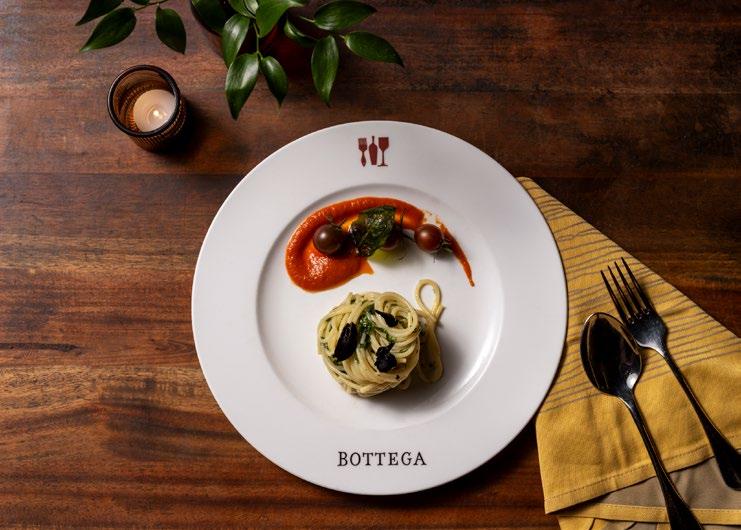
2026 Weekends
September 19 & 20 | 10am–5pm September 26 & 27 | 10am–5pm
Bottega co-owner Rich Frank. “He is loved and respected by his team in the kitchen, and by our long-time customers. Also, Chef Alex never rests on his laurels creatively. He is headed to Italy in the coming weeks to collaborate with some chefs in Rome and beyond, and we can’t wait to see what new dishes he’ll cook up
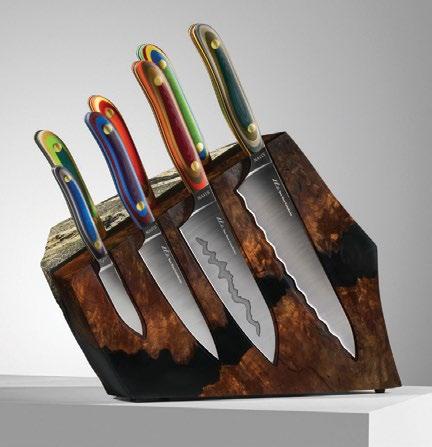
The 2026 celebration is already shaping up to be the most exciting yet, with featured events scheduled throughout the season, and that’s just the beginning. Dozens of addi tional events are planned throughout the valley during this magical season, offering unforgettable experiences for both locals and visitors.
Open Studios Napa Valley, another AANV program, happens annually the last two weekends of September. OSNV is a free, self-guided, art dis covery tour through the creative art spaces of over 60 local artists throughout the Napa Valley.
upon his return.”
The map and artist catalog will available in August 2026 at the Open Studios Napa Valley website. Be sure to save the date for the 2026 dates.
For Espinoza, the path from a Guatemalan farm to one of Napa Valley’s most recognizable dining rooms feels both unlikely and inevitable. Cooking began as a daily ritual shared with family. Today it shapes the experience of every guest who walks through Bottega’s doors.
FOR MORE INFORMATION
www.artgallerynapavalley.org // napavalleymustardcelebration.com/events www.openstudiosnapavalley.org
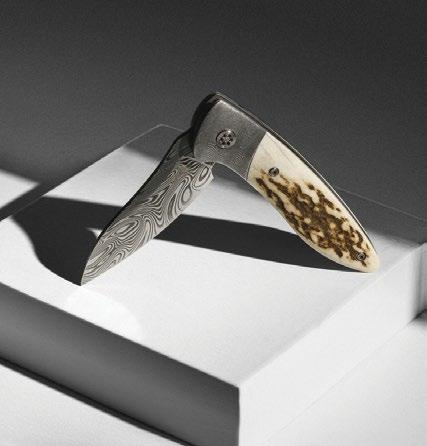


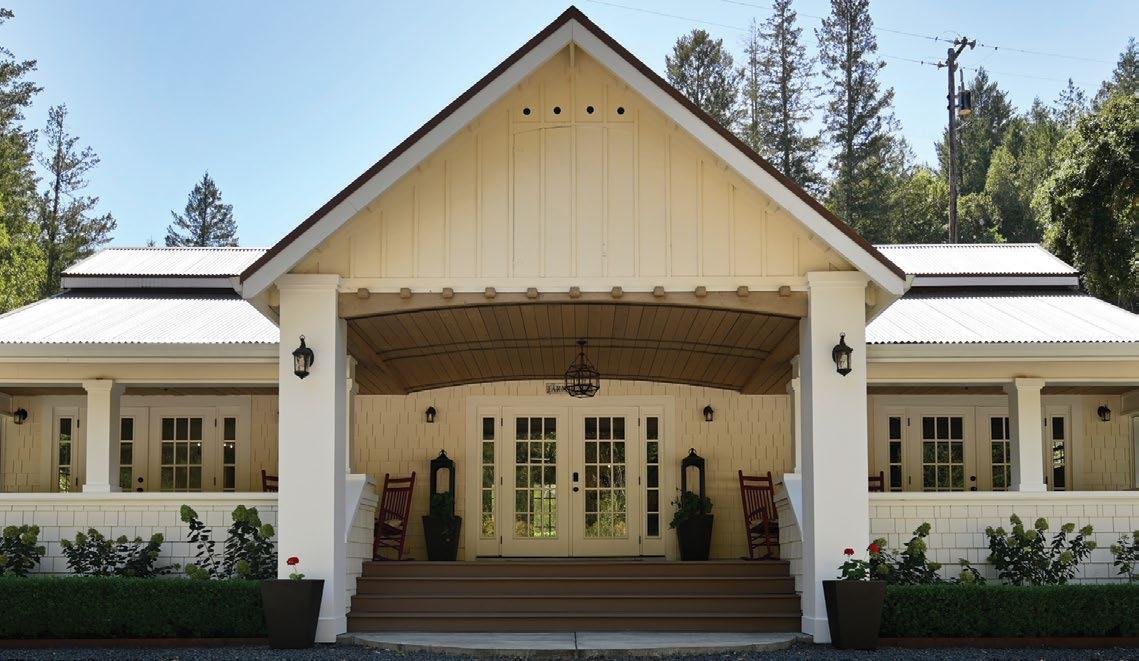
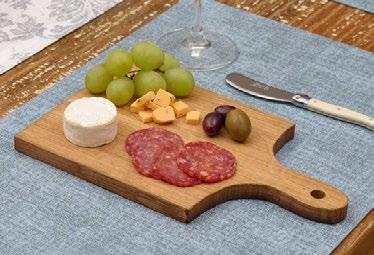
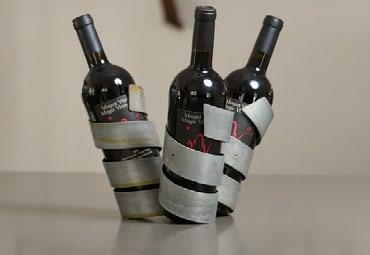
This small collection was made from the French oak barrels that once held my Mount Veeder Magic Vineyards Cabernet Sauvignon—a wine that reflects the care and intention I bring to everything I do.
Once the wine was bottled, I knew I wanted to repurpose the barrels into something lasting. Each piece is designed by me and crafted with purpose—simple, beautiful, and meant to be used and enjoyed.
Only a limited number were made, which makes sharing them with you even more special. I hope they find a meaningful place in your home.
Cheers!


“ My m i s s i o n i s t o i n s pi re , e n t e rt a i n , a nd h a
Karen Crouse
In Napa Valley, spring is green on green, softened by butter yellow mustard, creamy whites, and blush pink blooms. The vines wake up in earnest, and the first canopy growth shows as tendrils of glossy green threading across wired trellises, casting lace-like shadows on the soil below. Longer days bring later sunsets, washing the sky in bright pink and orange, then fading into lavender blue as the first stars appear.
The air is layered too, damp earth in the mornings, grass warmed by the
sun’s glow, with wisteria spilling over fences and citrus blossoms and jasmine twining to the sun. That’s the spring I like to echo on my table, the color, the light, the feeling of what’s in bloom. My favorite detail is floral ice cubes. They catch the light like tiny jewels. Float one in a glass of sparkling water and watch the petals glow…Hello Spring! My favorite combinations and serving ideas are on my website.
YIELD:
24 standard 1-inch portions, about 1/2 to 1 ounce each or 6 large 2-inch portions, about 4 ounces each
EQUIPMENT NEEDED
• Ice cube tray
• Small measuring cup or pitcher
• Paper towels
• Airtight container with lid
INGREDIENTS
• Up to 3 cups Distilled or Filtered water
• Edible, pesticide-free blooms (I like violas and pansies)
• Meyer Lemon or Kumquat, very thin sliced
• Fresh herb tips (such as mint or thyme)
SAFETY NOTE:
Use only edible, pesticide-free blooms. Florist bouquet flowers are not meant for consumption.
PREPARATION
• Gently rinse blooms in a bowl of cool water, not under running water. Swirl lightly, lift out, and place in a single layer on paper towels.
• Dry by lightly blotting the tops with a second paper towel. Do not rub. The blooms must be dry to the touch.
• Fill each ice cube compartment halfway with distilled or filtered water. Add one bloom, one very thin citrus slice, and a small herb tip. Freeze until firm, about 1 to 2 hours.
• Top off each compartment with filtered water and freeze until fully solid, 2 to 3 hours more or overnight.
• Store cubes in an airtight container in the freezer. Use within 1 to 2 weeks for the cleanest flavor and best color.
To serve, float 1 to 2 cubes in a glass of your favorite beverage
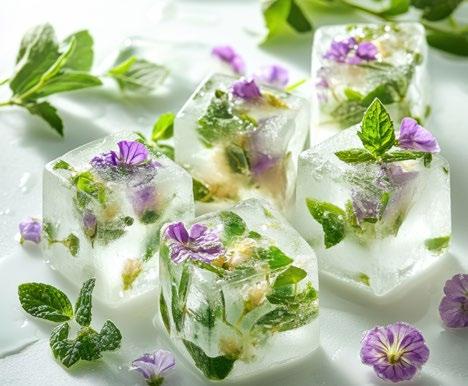
BY FRAN MILLER
You think you’re visiting Sonoma for the wine. And yes, the Pinot Noir is reason enough. But Sonoma County stretches from redwood forests to rugged Pacific bluffs, from vineyard-lined valleys to historic town squares, and somewhere between the trees and the tide, you realize that wine is only part of the story.
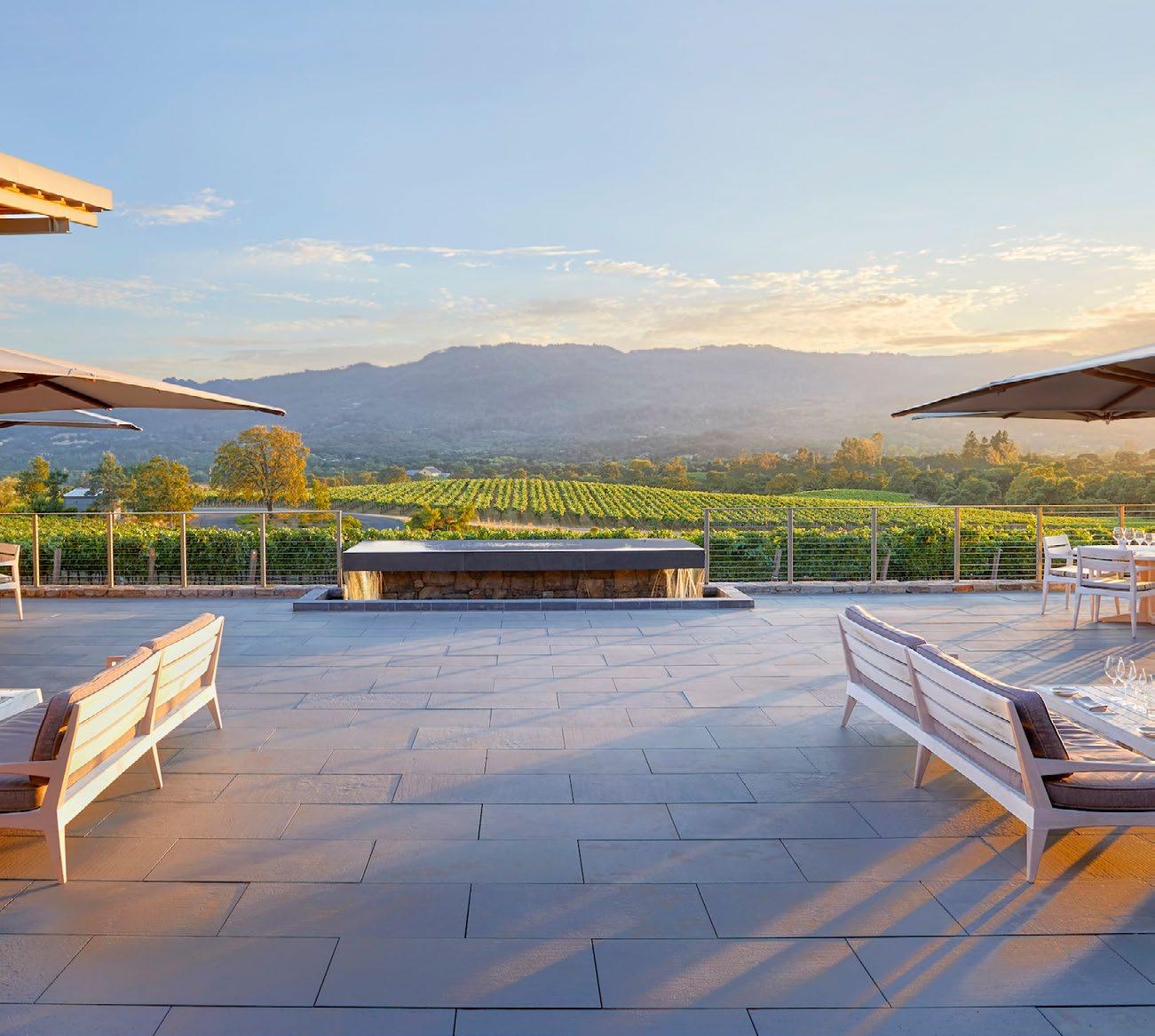
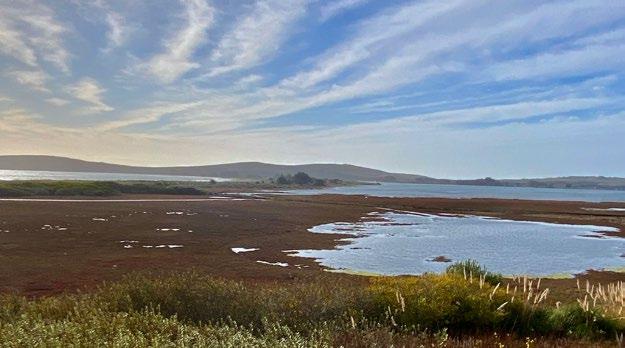
"Gourmands come for restaurants that treat local produce like a religion. Wellness seekers find spas, forest bathing, and coastal hikes that reset the nervous system. Design lovers gravitate toward thoughtfully restored inns and contemporary tasting rooms. Adventurers chase redwood trails, cycling routes, and windswept beaches. The reality is that Sonoma offers enough variety for everyone in your group."
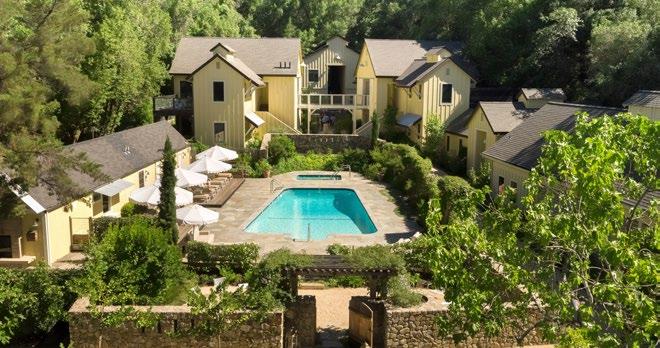
In a single day, you might trace fog rising off empty beaches, breathe deep among towering redwoods, and find yourself in a vineyard beneath the late-afternoon sun. Sonoma County is a series of destinations, each more unique than the last.
At about 1,575 square miles, Sonoma County is one of California’s largest wine regions — and one of its most geographically diverse. It sits about 30 miles north of San Francisco, bordered by Marin County to the south, Napa to the east, Mendocino to the north, and more than 50 miles of Pacific coastline to the west. Within those borders are 19 distinct American Viticultural Areas, elevations that rise from sea level to more than 4,000 feet, and microclimates that can shift dramatically within a short drive.
Wine continues to be a major draw here, but it is far from the only reason to visit. Gourmands come for restaurants that treat local produce like a religion. Wellness seekers find spas, forest bathing, and coastal hikes that reset the nervous system. Design lovers gravitate toward thoughtfully restored inns and contemporary tasting rooms. Adventurers chase redwood trails, cycling routes, and windswept beaches. The reality is that Sonoma offers
enough variety for everyone in your group. And while it is difficult to capture its many personalities within one feature, here are a few favorite things:
Farmhouse Inn offers a casually elegant, country-chic escape. Located in Forestville and set on six acres of gardens with water features and espaliered fruit trees, the inn’s 25 rooms and cottages range from cozy Farmhouse Kings to expansive King Luxury Suites. Each is outfitted with fireplaces, heated floors, spa-like bathrooms, and touches like fresh flowers and personalized chalkboard welcomes. The Wellness Barn offers spa treatments using custom-blended products. Guests will love the poolside fire pits, s’mores, and complimentary wine, as well as turn-down chocolate chip cookies. Dining is a highlight: the restaurant’s seasonal, locally sourced dishes are complemented by expert wine pairings. The more casual FARMSTAND serves breakfast, lunch, and wood-fired pizzas.
Historic MacArthur Place has evolved from a prestigious 19th-century estate into one of Sonoma’s most refined retreats. Located near charming Sonoma Plaza, the six-acre resort offers 69 luxuriously appointed rooms and suites, each outfitted with plush robes,
sumptuous linens, and the coziest slippers. Private patios, some with soaking tubs, make indulgence unavoidable. The pool and deck are the resort’s social heart, framed by chaises, cabanas, and a secluded hot tub, while the Spa at MacArthur provides tailored treatments using organic products that leave a lasting glow. Onsite, Layla offers Mediterranean-inspired menus in a light-filled, barnturned-restaurant setting, with patio seating for sunny days. A nightcap at The Bar, or toasting s’mores by one of the resort’s cozy fire pits, rounds out a stay that blends luxury and approachable Sonoma charm.
The Lodge at Bodega Bay began as a modest motor lodge and has evolved into an elegant shoreline retreat, where the Pacific and the rugged coast remain the true stars. The lodge offers 83 rooms and suites designed to highlight the bay views, with private balconies, wood-burning fireplaces, and spa-like bathrooms. Across its four acres of landscaped grounds, guests will find a heated pool, infinity-edge hot tub, sauna, fire pits, bocce courts, hammocks, and complimentary bikes for easy rides to Doran Beach. The signature Drakes Sonoma Coast serves locally sourced fare, while the Fireside Lounge offers cocktails, Sonoma wines, and cozy fireside seating.
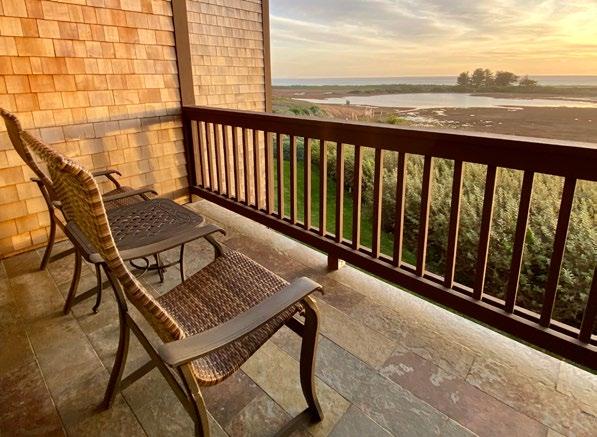
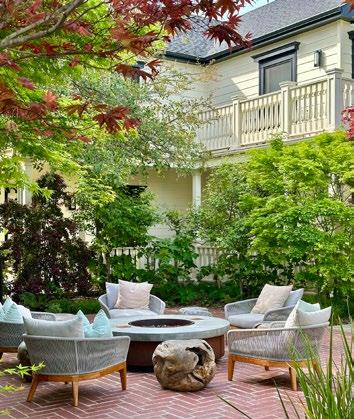
Where to Wine
Sonoma’s winery list stretches endlessly; these three capture varied expressions of the region’s viticultural personality:
Hamel Family Wines is a family-owned, biodynamic, and organic winery where terroir drives every decision. Founded in 2014, the estate spans three vineyards — Nuns Canyon,
to capture minerality, freshness, and elegance. The modern tasting room, with soaring 18-foot windows overlooking Sonoma Mountain, pairs with the 12,000-square-foot wine cave and olive grove to create a sense of place that extends from landscape to glass. Guests can enjoy guided tours, seated tastings of both current and
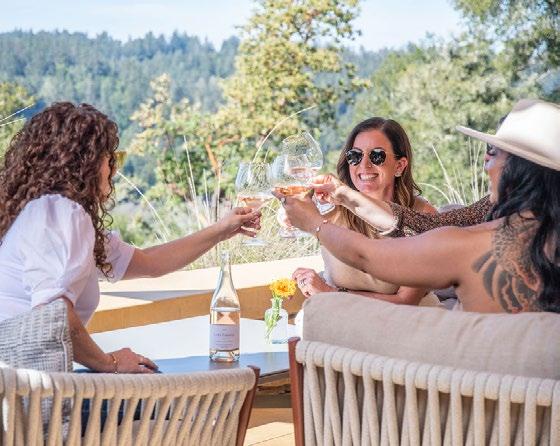
Hamel Estate, and Tres Palmas — each dry-farmed to express the volcanic soils and distinctive microclimates of Sonoma Valley and the Moon Mountain District. Winemaker John Hamel employs a micro-terroir approach, harvesting soilbased polygons individually, then aging wines gently in large oak casks and concrete tanks
library wines, and curated food pairings.
Gary Farrell Winery has long been a benchmark for Russian River Pinot Noir and Chardonnay, combining sitedriven precision with decades of experience. Founder Gary Farrell established the philosophy of nurturing exceptional vineyard sites like Rochioli,
Bacigalupi, Gap’s Crown, and Hallberg long before they became household names, a commitment that continues under winemaker Brent McKoy. Each single-vineyard wine expresses its unique terroir while carrying the signature elegance and balance that make a Gary Farrell bottle instantly recognizable. Visits unfold at a relaxed pace, with panoramic valley views and a welcoming hospitality team that invites guests to relax with a glass in hand. And if the drive home feels ambitious, Farmhouse Inn is right across the road.
Aperture Cellars, founded by Jesse Katz in Healdsburg, blends artistic vision with precise winemaking to create wines that are expressive and age-worthy. Katz, shaped by global experience and a photographic upbringing, emphasizes terroir-driven, layered wines from estate and cool-climate vineyards across Sonoma. The estate tasting room, framed by dramatic skylights and Andy Katz’s photography, offers seated experiences that allow guests to explore a portfolio spanning Bordeaux-style reds, barrelfermented Sauvignon Blanc, and a delicate Chenin Blanc. Despite celebrity clients and top scores, Katz remains focused on the craft — capturing a sense of place, time, and intention in every bottle — while offering visitors a refined, visually striking tasting experience.
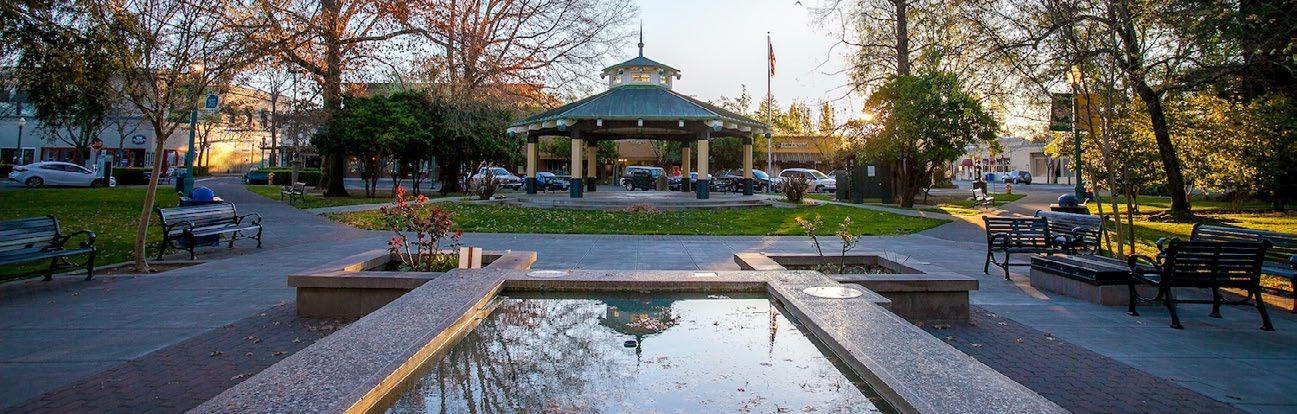
Beyond the Bottle
Sonoma’s natural beauty is its silent centerpiece, and there are countless ways to engage with it, whether your inclination is kinetic or contemplative.
Hiking and Biking
Walk beneath giants at Armstrong Redwoods State Natural Reserve. These ancient trees make even a short hike feel like a pilgrimage. Sonoma Coast State Park features wild, invigorating trails
along the ocean. And Jack London State Historic Park offers forests, hills, and historic homesteads that converge in a network of trails suited to both hikers and mountain bikers.
Hiking and Biking
Walk beneath giants at Armstrong Redwoods State Natural Reserve. These ancient trees make even a short hike feel like a pilgrimage. Sonoma Coast State Park features wild, invigorating trails along the ocean. And Jack
London State Historic Park offers forests, hills, and historic homesteads that converge in a network of trails suited to both hikers and mountain bikers.
Markets, Art, and Quaint Town Squares Downtown squares in Sonoma and Healdsburg are places to wander without an agenda. You’ll find galleries, boutique shops, independent bookstores, and markets offering local honey and heirloom olive oil. On weekends, farmers markets
become community hubs where the air is fragrant with basil, citrus, and fresh bread.
Place to Return Again and Again
It is impossible to experience all that this region offers in just one visit. A few days here simply are not enough, but they are a start. In Sonoma, there is always one more road to explore, and one more vista that promises something new. Visit once, and you will be drawn to return again and again.
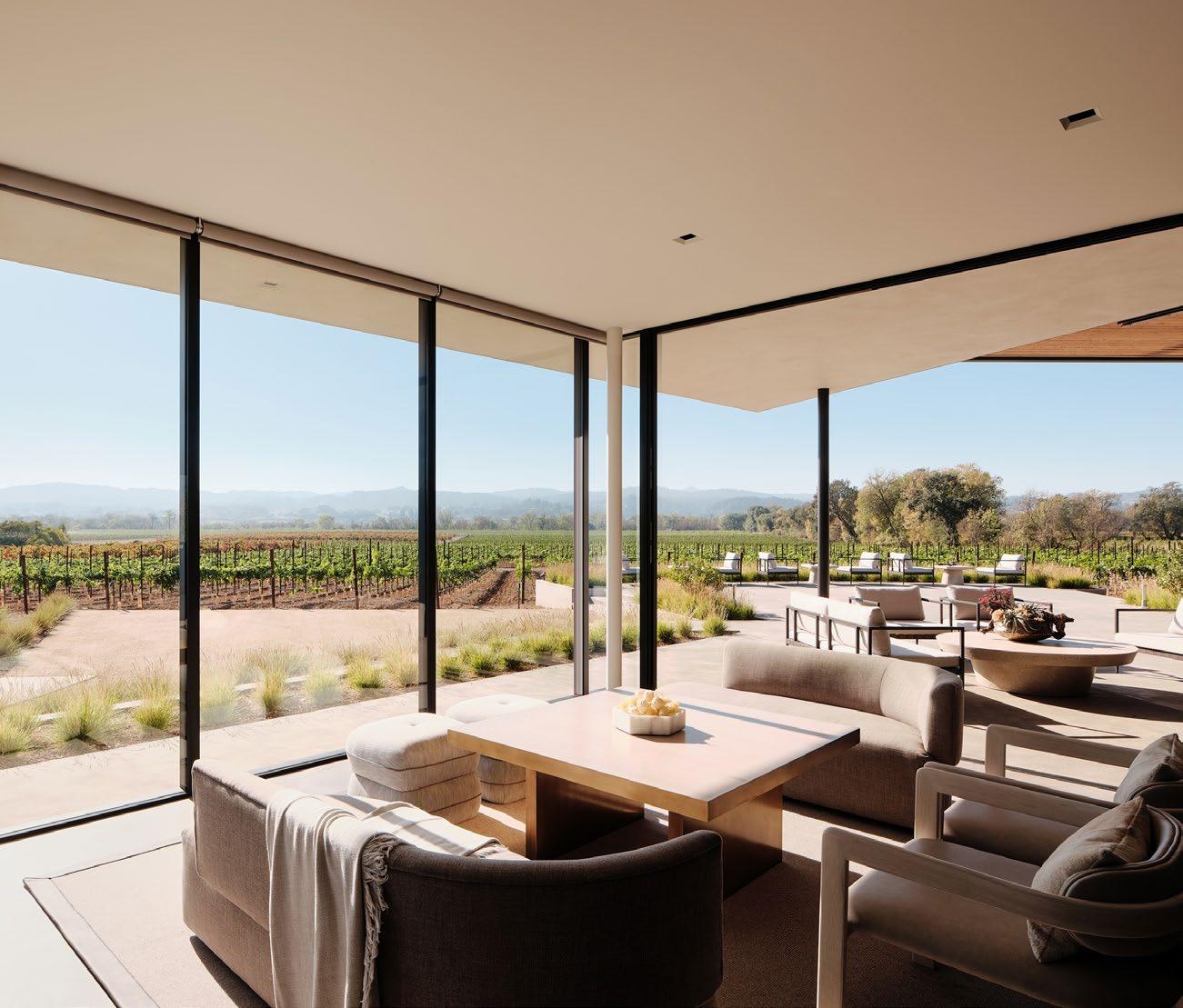

BY FRAN MILLER
For many successful families, wealth brings opportunity—and complexity. Over time, investments multiply, businesses evolve, properties are added, and planning extends beyond one generation. What once felt manageable can start to feel fragmented, even overwhelming.
Not long ago, the idea of a “family office” seemed reserved for billionaire dynasties—a term associated with private staffs, formality, and excess. Today, that perception is changing. Families are realizing that a family office isn’t a building or a title. It’s a way of organizing decisions, responsibilities, and financial strategy so everything works together. In simple terms, family office-style planning means looking at the full picture. Instead of treating investments, taxes, estate planning, and family goals as separate conversations, families begin coordinating them intentionally. WHEN COMPLEXITY CATCHES UP
As wealth grows, so do the moving parts. A family may have operating businesses alongside real estate, investment portfolios, trusts, and charitable interests. Their advisory circle expands as well: accountants, attorneys, and investment managers, each highly skilled but often working independently. Over time, cracks can form. Decisions take longer. Communication becomes disjointed. Important questions linger: Who is overseeing the big picture? How do choices in one area affect everything else? How will this work for the next generation? This is often the moment families pause and reassess, not because something is broken, but because what once worked no longer fits.
What’s different today is that families are choosing to address this complexity proactively. Rather than waiting for a major liquidity event, a crisis, or a generational transition, they are designing systems that support both financial success and family well-being over the long term. Several
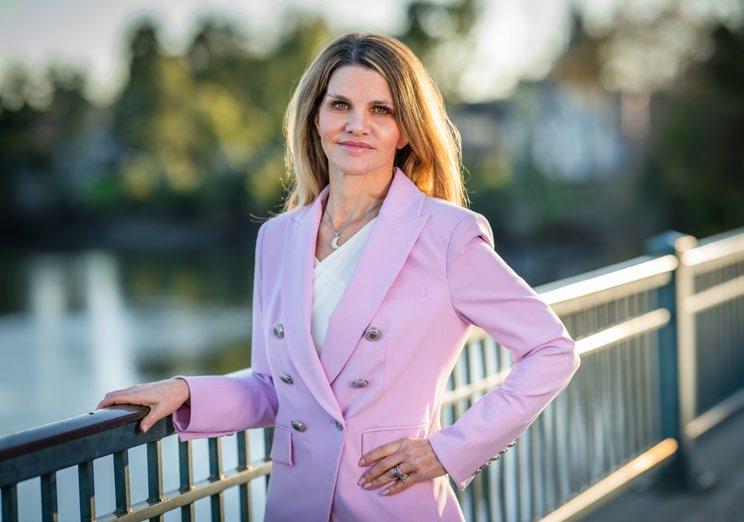
factors are driving this shift. Many families are preparing for multigenerational transitions and want clarity around stewardship and decision-making. Others are responding to increasingly complex tax considerations, which reward thoughtful coordination rather than isolated strategies. Just as important is a desire for simplicity: a clear framework and a trusted point person who understands both the numbers and the people behind them. Importantly, this does not mean every family needs a formal family office. Many choose flexible, outsourced, or hybrid models that provide structure and oversight without unnecessary complexity.
The most effective families focus less on terminology and more on outcomes. They ask practical questions: Who connects the dots? How are decisions made? How do we stay aligned as roles change over time?
As a partner at Summit Trail Advisors, Danielle Louton works with enterprising families to help answer those questions.
Her work centers on organizing wealth, coordinating advisory teams, and creating decision-making frameworks that evolve alongside the family itself. When done thoughtfully, the result is not just financial efficiency, but confidence and peace of mind—benefits that endure well beyond market cycles.
Danielle Louton is a partner at Summit Trail Advisors, where she works with enterprising families on long-term wealth organization, governance, and multigenerational planning. Contact her at 260-615-3662, 415-604-5232, or by email at danielle.louton@SummitTrail. com.
Summit Trail Advisors, LLC (“STA”) is a registered investment advisor. Advisory services are only offered to clients or prospective clients where STA and its representatives are properly licensed or exempt from licensure. Paid advertisement by Summit Trail Advisors, LLC.
FOR MORE INFORMATION www.summittrail.com
BY FRAN MILLER
Janette Brooks built D4 Fiduciary, Business Advisory Services and Family Office Services, Inc. with a clear purpose: to provide steady, experienced fiduciary leadership for families facing meaningful transitions. Based in Napa Valley and approaching its fourth year in business, the firm reflects Brooks’ belief that effective wealth stewardship requires clarity, compassion, and an unwavering commitment to fiduciary standards.
D4 Fiduciary embodies Brooks’ conviction that financial stewardship is as much about people as it is about numbers. “I am now able to fully dedicate my work and experience to the community I love,” she says. “At its core, my work is about helping families move through change — whether planned or unexpected — with clarity, care, and intention.”
Brooks brings more than two decades of experience spanning public
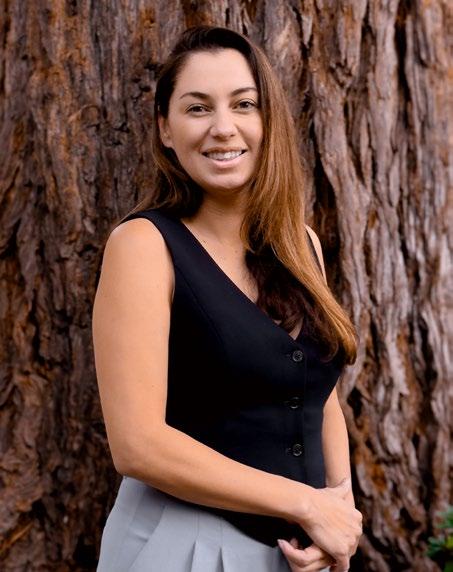

accounting, private banking, family enterprise leadership, and private equity. She began her career as a CPA before moving into private banking, advising business owners through major transition events. She later served as CFO of a family-owned company and subsequently as CFO within private equity. The shift to private practice came easily, with her reputation guiding referring partners to the right client fit from the start. Today, Brooks serves families of all wealth levels as executor and trustee, with particular expertise in complex asset structures. Her work often involves closely held and founder-led businesses, meaningful collections, commercial and residential real estate portfolios, and sophisticated trusts designed for multigenerational planning. She describes her approach as “an iron fist with a silk glove,” capturing her commitment to fiduciary rigor paired with a deep awareness of family dynamics. “Wealth
transitions are never just financial,” Brooks explains. “They’re personal. They involve relationships, identity, and legacy.”
One of her defining strengths is what she calls contagious compassion. Early in the process, she asks clients a simple but insightful question: When you are gone, what do you want your family members to feel? “For some, it’s peace. For others, it’s connection, gratitude, or a sense of being supported,” she says. “Once we understand that feeling, we can design the wealth transition experience to help make it real — not just through documents, but through how decisions are made and communicated.”
Brooks is also a strong proponent of neutral fiduciary leadership. Selecting an independent executor or trustee, she notes, often helps preserve family harmony and reduce emotional friction. “Neutrality ensures decisions are made in alignment with the legacy, not personal agendas.”
A focus of her practice involves forming fiduciary boards for familybuilt businesses, allowing families to separate ownership from management while honoring the founding vision. “Family businesses are built with heart,” Brooks says. “Structure helps them endure across generations.”
Deeply rooted in Napa Valley and guided by a long-term view, Brooks continues to grow D4 Fiduciary with intention, collaborating closely with advisors, attorneys, and CPAs to support families through change. “If I’ve done my job well,” she reflects, “the legacy left behind isn’t just financial. It’s emotional, relational, and grounded in harmony.”
BY FRAN MILLER
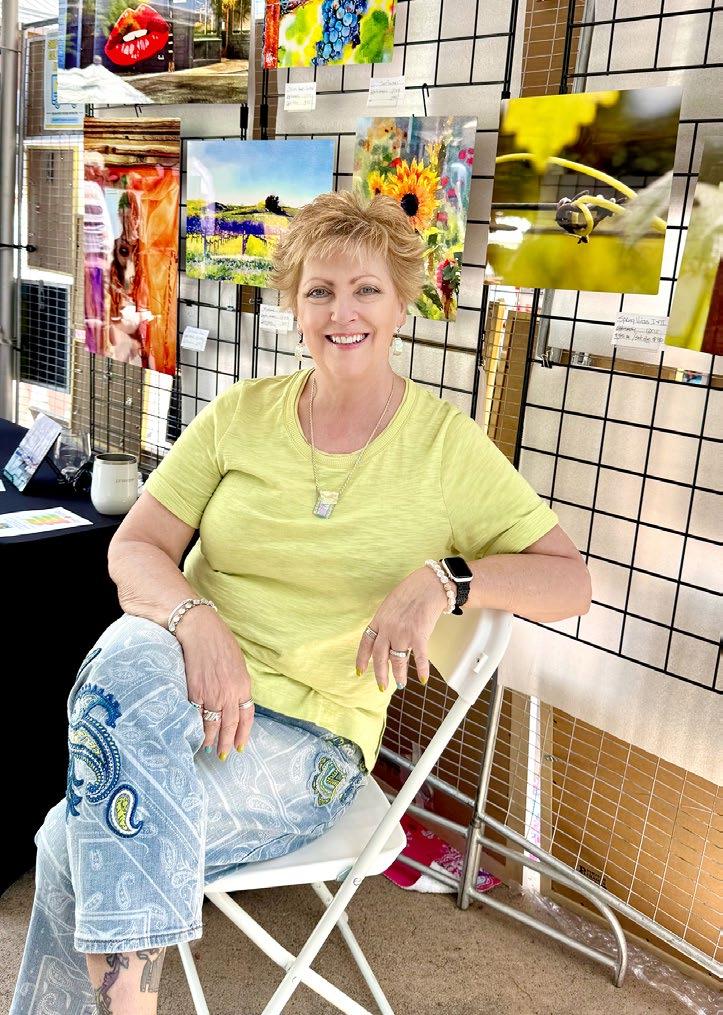
“The power of imagery to continue creating a story as it passes through the lives of its holders captivates me and inspires the fleeting insight of my art."
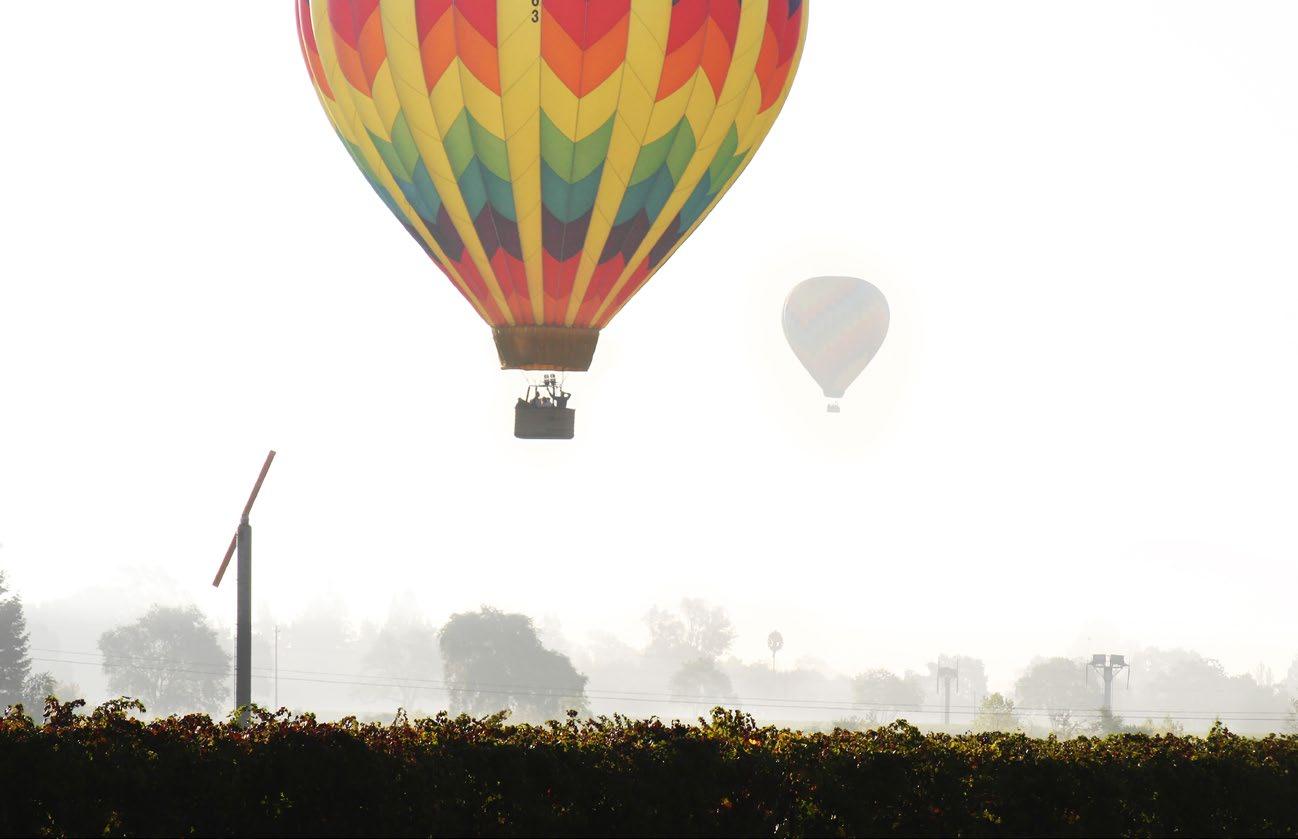
For artist Katherine Zimmer, creativity begins with being present. “I’m always drawn to things in the moment,” she says, describing the instinct that guides both her process and the work that has shaped her artistic life for decades. Her tagline — “in the middle of somewhere” — captures both her spontaneity and her perspective.
Zimmer lives in Napa and works primarily in photography. Although she began photographing seriously in the mid 1990s, her creative life evolved alongside a global career in tourism and marketing. Travel companions quickly learned that she might disappear to photograph something irresistible. Her Mom, Eva, a frequent travel companion, spending countless hours holding the equipment and lingering patiently. Eva once said, “I love losing myself in the gift of time spent waiting for my daughter’s inspiration to be fulfilled in our travels, but it's even more wonderful to discover things about myself through her lens."
Inspiration evolved much later when
she traded her digital camera for the one most of us carry in our pockets. “I found that I could have that in my hand constantly,” she says. “It’s an extension of me really.” With her phone, she can capture the fleeting scenes that spark her curiosity, whether she’s walking down the street, riding in a car, or noticing something that lasts only a second.
She started learning the camera mechanics of creating what she sees by seeking photographic perfection and found her voice in the fringes, often with alternative edges. Her eye is drawn to human environments shaped by change: architectural details, weathered storefronts modified over generations. Zimmer enjoys studying the clues left behind like what she calls “ghost arches,” those bricked - in windows that hint at stories buried within a building’s past. “What was it used for? And why was it bricked up?” she wonders. Markets, too, pull her in: “Any kind of daily life, where people are moving through their day. That really in trigues me.” And, as an avid foodie, she is a contributing
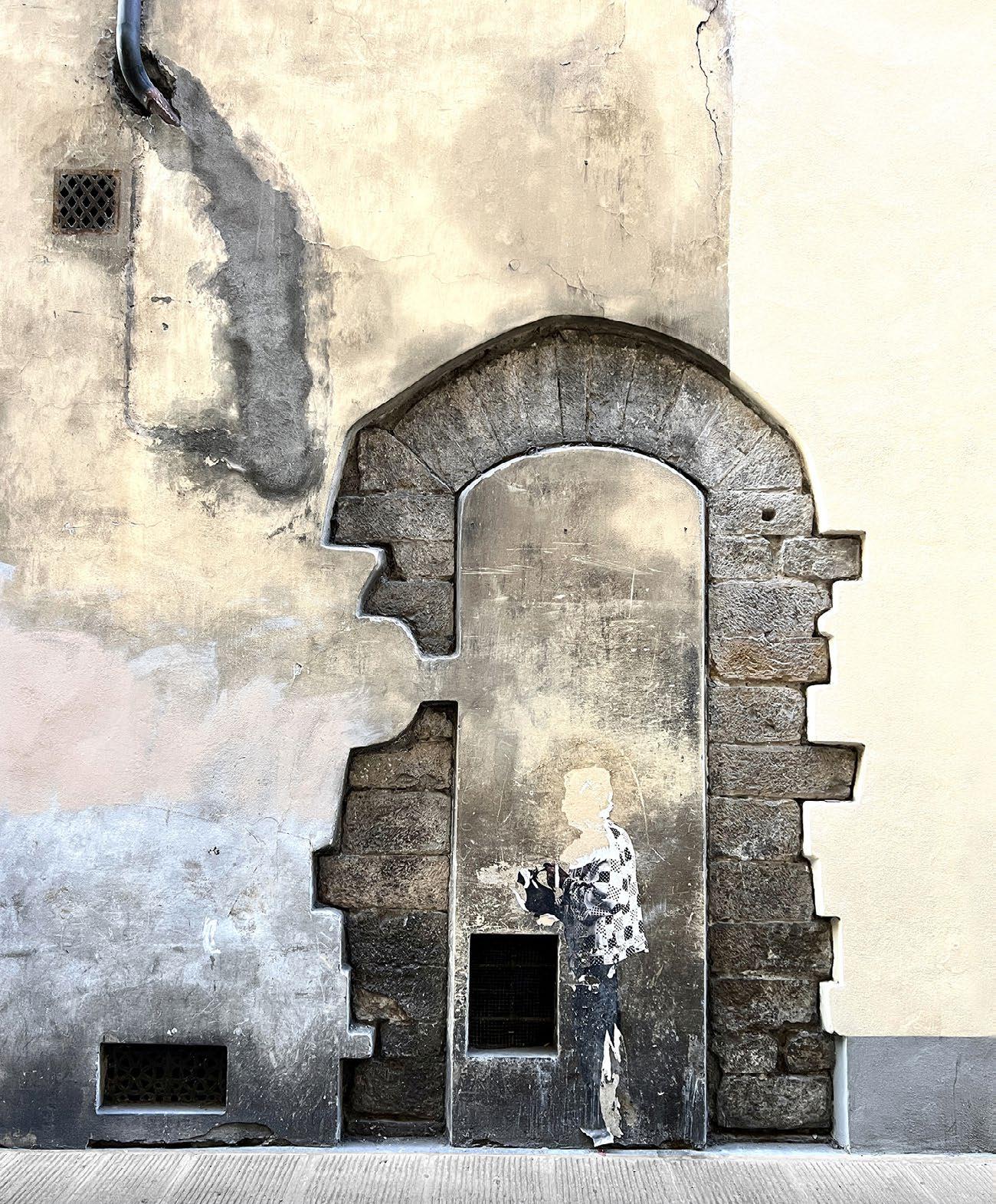
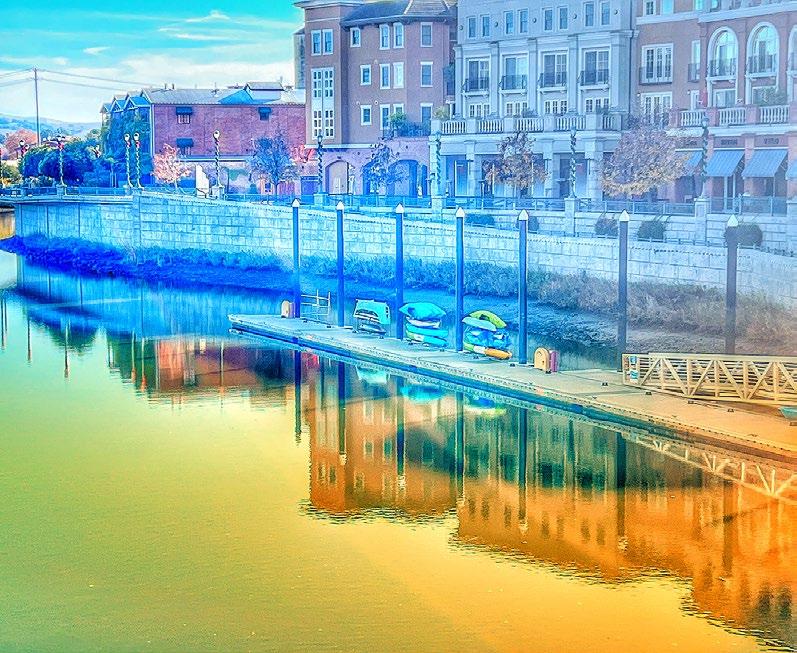
photographer for the annual World Food Championships.
Zimmer’s work has been featured widely in exhibits, as well as private and commercial installations. This spring, she will be the featured artist in her first solo exhibit in Yountville at the Steve Rogers Gallery, April 9 – June 19. She was also selected to create the poster art for the 14th annual Art, Sip & Stroll event happening on May 16. As a past resident of Yountville, Zimmer says, “I’m excited and honored to have my artwork representing this diverse and renowned Bay Area event in the heart of Napa Valley!"
Today, Zimmer remains motivated by curiosity. “If I see something , and I don’t really understand it, then I get to go down the rabbit hole and learn about that,” she says. For her, that’s the real art. It’s the joy of capturing a moment to extend it out just a little bit longer by sharing it in her art.
Katherine exhibits her art at the Art Gallery Napa Valley in downtown Napa, online at katherinezimmer.com and @kz.photo.artist on Instagram and Facebook.
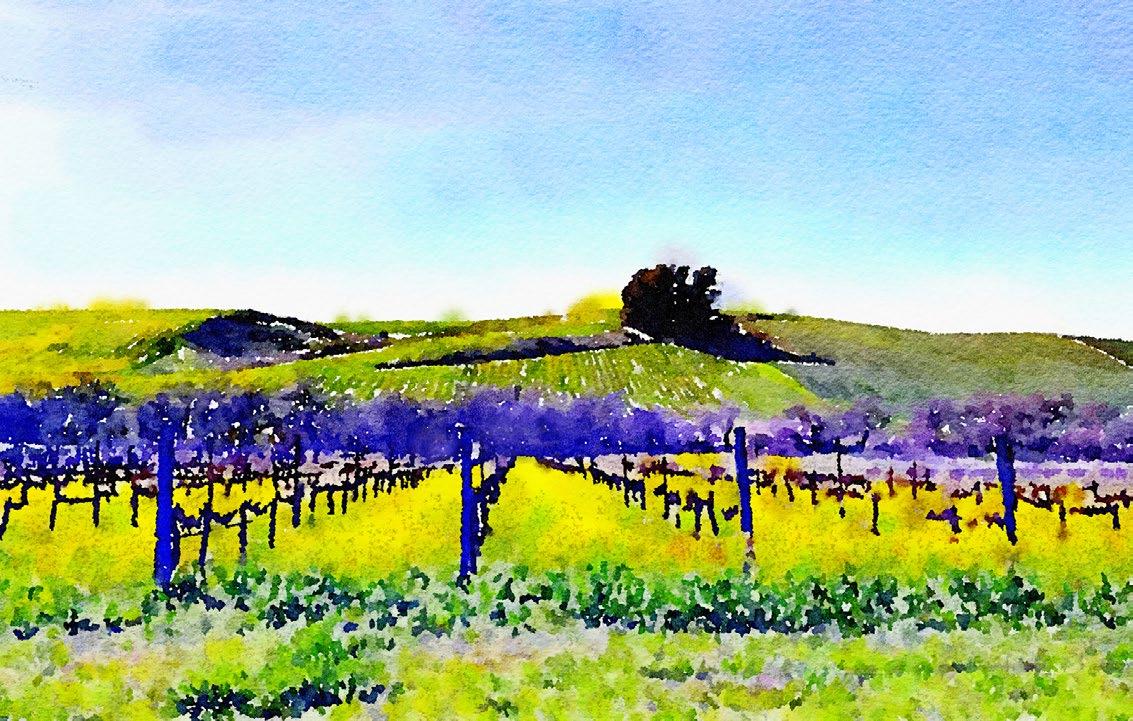
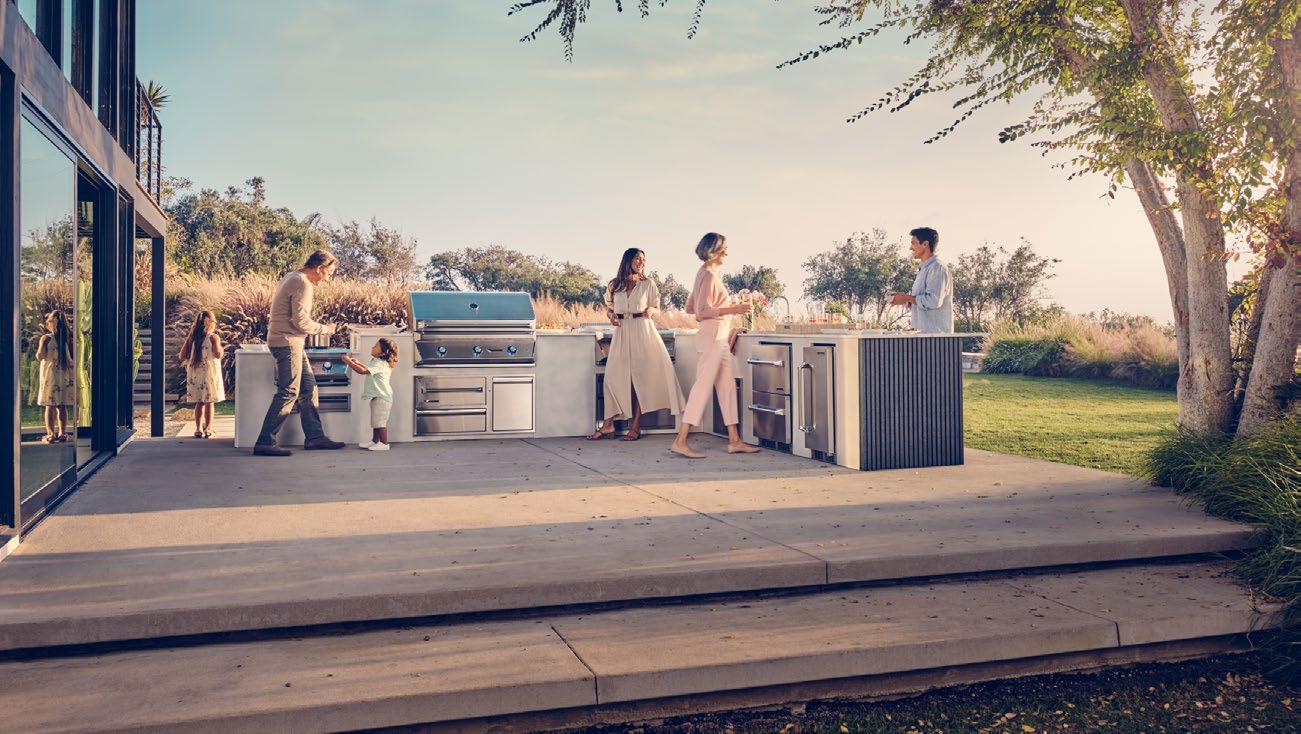
FRAN MILLER
In Napa Valley, where sun-drenched afternoons slip into vine-lit evenings, outdoor living is not an afterthought; it is a way of life. Fulfilling the desire for beautiful, functional outdoor spaces is Napa Outdoor Living & Design, led by principal Maxx Jeffress, a visionary who understands that the places we entertain, relax, and cook outdoors should be as thoughtfully curated as the homes they surround.
“At Napa Outdoor Living & Design, we create outdoor spaces that entertain, nourish, and endure,” says Jeffress. It is more than a slogan; it is a philosophy woven into every project the team undertakes. From the first design consultation to the final installation, the experience feels more like a bespoke studio partnership than a typical buildout. That white-glove approach sets the company apart.
The showroom is a destination in its own right. Here, homeowners can touch and compare luxury grills, wood-fired pizza ovens, artisan-crafted cabinetry, designer fire pits, and patio heaters all in one place. With the broad selection of top-tier brands and finishes on display, clients can visualize how each element functions and feels before making decisions that will shape their
“At Napa Outdoor Living & Design, we create outdoor spaces that entertain, nourish, and endure.”
outdoor experience for years.
But as Jeffress will tell you, the real magic happens when design meets lifestyle.
“We design with the property and lifestyle in mind,” he explains, and that means listening first. Whether the priority is a chef-worthy outdoor kitchen, a cozy fire-pit gathering spot, or elegant storage and cabinetry that conceal necessity behind beauty, every plan begins with a conversation. From there, the team collaborates seamlessly with architects, designers, landscape professionals, and contractors, so homeowners never have to worry about the details.
This turnkey service model is particularly valuable in Napa Valley homes, where the trend toward indoor-outdoor living continues to evolve and expand. Across the region, homeowners are turning patios into fully equipped extensions of their interiors, complete with gourmet kitchens, wood-burning
ovens, integrated wine refrigeration, and lounging areas that take full advantage of the Mediterranean-like climate.
What differentiates Napa Outdoor Living & Design is its concierge-level project management and communication. The team handles scheduling, procurement, installation oversight, and on-site problem-solving — always with impeccable taste and clarity. For owners of primary estates, second homes, or custom builds in wine country, that means peace of mind and projects that arrive on schedule and aligned with the original vision.
And while the offerings are luxurious and curated, the intention is always to enhance life, not just ornament space. Outdoor kitchens become the heart of summer gatherings. Fire features extend evenings into new seasons. Sleek storage and integrated design ensure spaces feel as intentional as they are inviting.
Whether you are hosting friends, savoring a meal with family, or simply enjoying Napa’s golden light, Napa Outdoor Living & Design can elevate the experience by creating environments that feel both timeless and thoroughly personal.

BY FRAN MILLER

Napa Valley may be best known for Cabernet and cuisine, but wellness has become part of daily life here, too. And after a noon wine tasting and luncheon, that is exactly how I found myself at BodyGlam, curious to try two of Europe’s most advanced non-invasive treatments.
Founded by Anya Tatarenko, BodyGlam is the only studio in Napa offering both Endosphères Therapy and the T-Shape 2 system — and Anya is among a very small group of practitioners in Northern California with access to these machines at all. After two decades working in San Francisco’s tech industry, Anya brought her passion for health and innovation closer to home, creating a space where people can access these high-level treatments without heading to San Francisco or Los Angeles. Her studio feels approachable and upbeat. It is pleasant, cheery, and refreshingly unclinical.
While both machines are designed for full-body treatment, I was especially interested in seeing what they could do for the face and neck. We started with the T-Shape 2. The treatment felt less
like a “machine” and more like a facial. A warm wand glided over my face and neck, soothing and relaxing while working beneath the surface. The goal here is lifting and tightening — smoothing skin, refining contours, and encouraging firmness — and it felt indulgent rather than aggressive.
Next came Endosphères Therapy, an award-winning treatment developed in Italy that uses micro-vibration technology to stimulate muscle tone, boost circulation, and encourage natural collagen production. This one felt more active, like a deep workout for muscles we do not usually think about exercising. It is often used on the body to address cellulite and inflammation, but on the face it delivered a noticeable awakening — energizing, purposeful, and surprisingly effective.
The most compelling part? I could see a difference immediately. My skin looked brighter and tighter after just one session. I understand that the most meaningful results come with a series, typically followed by maintenance treatments every few months, but even a single visit made an impact.
At $200 per treatment, it is also far more approachable than injectables, with the added benefit of being completely non-invasive. While the technology is sophisticated, the approach feels natural and non-injurious. There are no needles, no downtime, and no sense of having done anything extreme. I left feeling as if my face had just had a healthy workout, and that, really, is the point. We exercise our bodies regularly, yet rarely think about engaging the muscles in our faces the same way.
Throughout the session, Anya was patient and generous with her explanations, walking me through how each machine works and outlining a thoughtful plan for future treatments without pressure. While I could see immediate improvement, BodyGlam is not necessarily about quick fixes. It is about helping people feel better in their skin, using smart tools and realistic expectations.
Napa now counts wellness among the priorities of its varied guests, and BodyGlam fits naturally into this evolution.
Providing trusted support and companionship from fellow seniors who understand the value of independence and connection.



707- 927- 0270
winecountryseniorcare.com
info@winecountryseniorcare.com


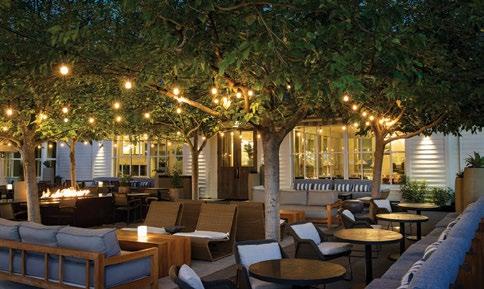
SOLBAR RESTAURANT Solbar divides its menu into light, delicate flavors to stimulate your palate and bold, savory dishes, all with ingredients that showcase the best of what’s fresh and seasonal in the Napa Valley. Enjoy outdoor dining on the sunlit Solbar patio, or the new Picobar, for dining al fresco or relaxing by the firepits overlooking the landmark pool.
SOLBAR RESTAURANT Solbar divides its menu into light, delicate flavors to stimulate your palate and bold, savory dishes, all with ingredients that showcase the best of what’s fresh and seasonal in the Napa Valley. Enjoy outdoor dining on the sunlit Solbar patio, or the new Picobar, for dining al fresco or relaxing by the firepits overlooking the landmark pool.
755 SILVERADO TRL, CALISTOGA // 707- 226-0860 // AUBERGERESORTS.COM
755 SILVERADO TRL, CALISTOGA // 707- 226-0860 // AUBERGERESORTS.COM

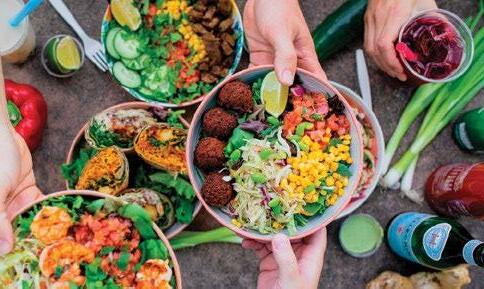
HERITAGE EATS Heritage Eats offers a fast-casual, globally-inspired menu that thinks and acts locally. The popular restaurant serves up tacos, wraps, baos, rice and salad bowls made-to-order with choice of protein, toppings and sauces with unique flavor profiles from all over the world. The Dirty Fries, Papa K’s Burger and Haven Wings are local favorites.
HERITAGE EATS Heritage Eats offers a fast-casual, globally-inspired menu that thinks and acts locally. The popular restaurant serves up tacos, wraps, baos, rice and salad bowls made-to-order with choice of protein, toppings and sauces with unique flavor profiles from all over the world. The Dirty Fries, Papa K’s Burger and Haven Wings are local favorites.
3824 BEL AIRE PLAZA, NAPA // 707-226-3287 // WWW.HERITAGEEATS.COM
3824 BEL AIRE PLAZA, NAPA // 707-226-3287 // WWW.HERITAGEEATS.COM
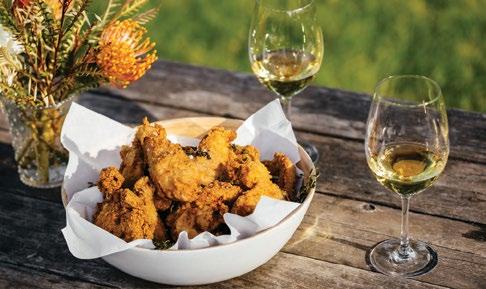

SOUTHSIDE CAFÉ Southside is a community-centered café and coffee bar. They serve a chef-driven menu of authentic California cuisine with a Latin influence, specialty coffee from Wrecking Ball Coffee Roasters, and beer & wine from friends in the Napa Valley. Open daily from 8am to 2pm for breakfast, lunch, coffee, and to-go items.
SOUTHSIDE CAFÉ Southside is a community-centered café and coffee bar. They serve a chef-driven menu of authentic California cuisine with a Latin influence, specialty coffee from Wrecking Ball Coffee Roasters, and beer & wine from friends in the Napa Valley. Open daily from 8am to 2pm for breakfast, lunch, coffee, and to-go items.
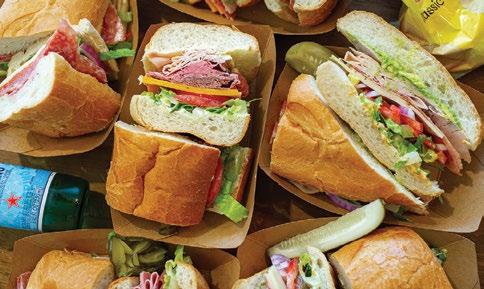
FIRST & FRANKLIN Downtown Napa’s newest Marketplace and Deli features the best of the Napa Valley. The Marketplace offers a full-service deli and a specialty Grocery Store selling local wine and craft beer. The store is filled with grab-and-go or made-to-order sandwiches, salads, and picnic side salads for you to take home or enjoy on either of their two patios.
FIRST & FRANKLIN Downtown Napa’s newest Marketplace and Deli features the best of the Napa Valley. The Marketplace offers a full-service deli and a specialty Grocery Store selling local wine and craft beer. The store is filled with grab-and-go or made-to-order sandwiches, salads, and picnic side salads for you to take home or enjoy on either of their two patios. 1331
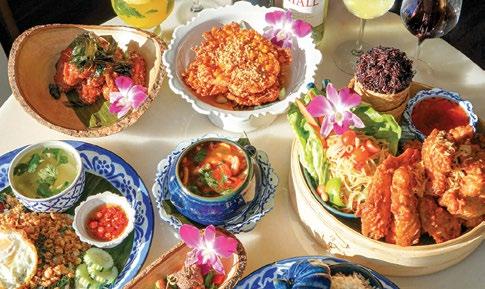
OSHA THAI Led by renowned Chef Lalita Souksamlane, the menu highlights her award-winning flavors and showcases dishes never before tasted at her other restaurants. Sourced with ingredients grown in her own personal garden and partnering with local vendors, Osha Thai provides an authentic farm-totable experience with quintessential wine country flair.
OSHA THAI Led by renowned Chef Lalita Souksamlane, the menu highlights her award-winning flavors and showcases dishes never before tasted at her other restaurants. Sourced with ingredients grown in her own personal garden and partnering with local vendors, Osha Thai provides an authentic farm-totable experience with quintessential wine country flair.
1142 MAIN STREET, NAPA // 707-253-8880 // WWW.OSHATHAI.COM/NAPA
1142 MAIN STREET, NAPA // 707-253-8880 // WWW.OSHATHAI.COM/NAPA

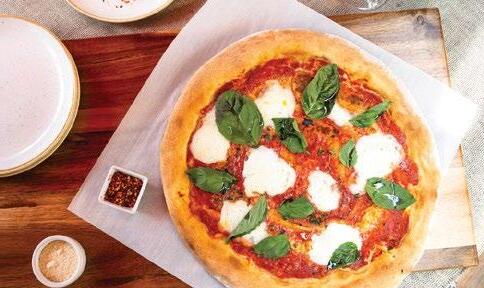
PIZZERIA TRA VIGNE For the past 25 years, Pizzeria Tra Vigne reigns one of St. Helena’s local treasures. Guests of all ages enjoy the pasta, pizza, or a fresh daily special to go at this vibrant, family restaurant. Their pizzas are a crowd favorite to eat in or carry out. There’s plenty of seating outdoors on the beautiful patio, complete with a bocce court, or inside with family and friends.
PIZZERIA TRA VIGNE For the past 25 years, Pizzeria Tra Vigne reigns one of St. Helena’s local treasures. Guests of all ages enjoy the pasta, pizza, or a fresh daily special to go at this vibrant, family restaurant. Their pizzas are a crowd favorite to eat in or carry out. There’s plenty of seating outdoors on the beautiful patio, complete with a bocce court, or inside with family and friends.

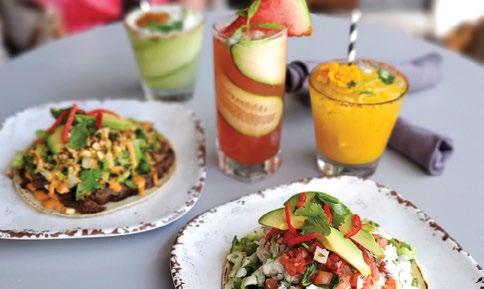
C CASA “Reimagined Mexican Flavors, Globally Inspired Ingredients.” Feast on a menu of innovative tacos featuring housemade white corn tortillas, deliciously nutritious salads, and spice-rubbed rotisserie chickens and woodfired entrées. Enjoy margaritas, craft cocktails, tequila flights, and patio dining. Vegetarian/Vegan offerings, 100% Gluten Free and ROCKIN’ DELICIOUS!
OXBOW PUBLIC MARKET // 610 1ST ST., NAPA // 707-226-7700 // MYCCASA.COM
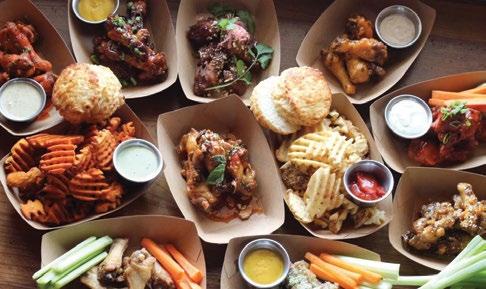
PALISADES SALOON Located in downtown Napa, Napa Palisades is a local gourmet grub pub serving American comfort food with a twist. Their full bar serves up their own Napa Palisades Beer Company house brews, over 30 local craft beers and many guest taps. They boast 16 big screen TV’s, weekend brunch and a popular happy hour.
1000 MAIN ST, NAPA // 707-492-3399 // WWW.NAPAPALISADES.COM
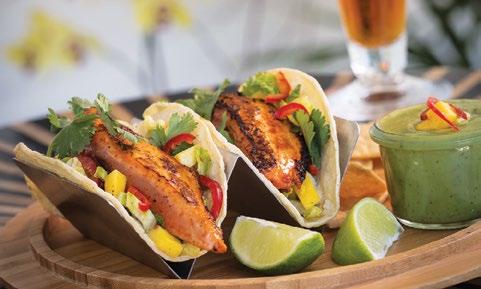
THE GRILL AT SILVERADO A one-of-a-kind Napa Valley restaurant, serving breakfast, lunch, dinner and bar appetizers, The Grill at Silverado features Wine Country Cuisine, emphasizing fresh and sustainable products. Just minutes from downtown Napa, the Grill overlooks one of the most beautiful golf courses on earth and offers a respite from the daily routine for everyone who visits.

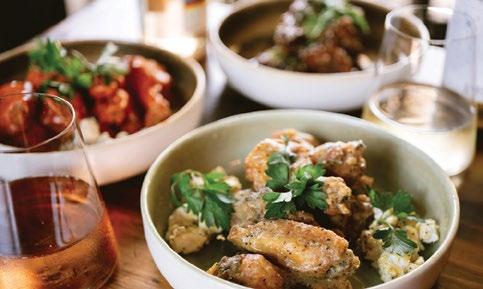
THE LINCOLN An elevated American gastropub in Napa, The Lincoln serves up inspired cocktails and fresh takes on classic dishes, all with scenic views of the Napa River. With late-night hours, cozy firepits, and a welcoming atmosphere, it’s perfect for any party size, offering walk-in availability. Explore a menu filled with comfort food, sandwiches, healthy choices, and a dedicated kid’s menu. 505 LINCOLN AVE., NAPA // 707-699-2276 // WWW.THELINCOLNNAPA.COM
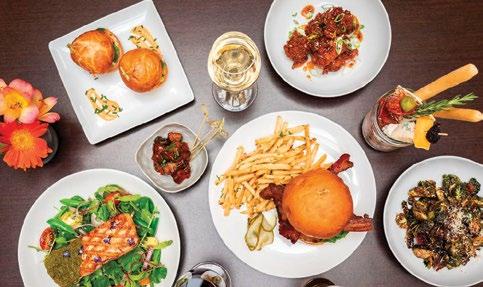
GRILLE 29 Nestled in Embassy Suites Napa Valley, Grille 29 offers a casual, friendly space ideal for a business lunch, after work drinks or dinner with the family. The tall rustic ceiling with chandeliers, sofa seating and beautiful oak bar add an old-world charm to the intimate dining room and lounge. Enjoy delightful entrees using fresh products and herbs grown from its very own garden! 1075 CALIFORNIA BLVD., NAPA // 707-320-9520


NAPA NOODLES Eiko’s sister restaurant, Napa Noodles, is an Asian Pacific Rim-style restaurant that fuses the delicious taste of Asian noodles with Napa Valley cuisine. Specialties include house-made noodles, savory soups, slow-roasted meats, seasonal salads, duck, flavorful rice dishes, Asian beers, Sake, and local wines. 1124 FIRST ST, NAPA // 707- 492-8079 // WWW.NAPANOODLES.COM