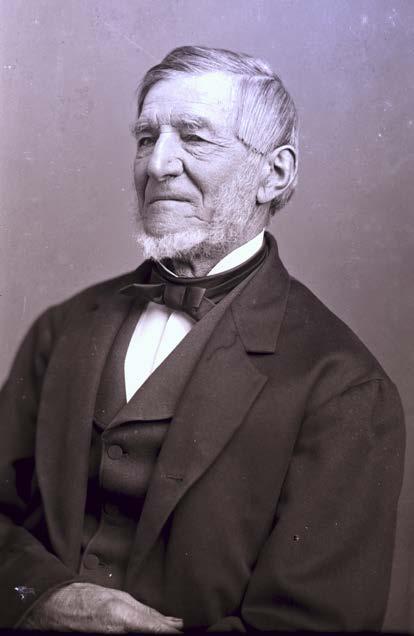
Niles D. Parker, Gosnell Executive Director all photos by nha staff unless otherwise noted.
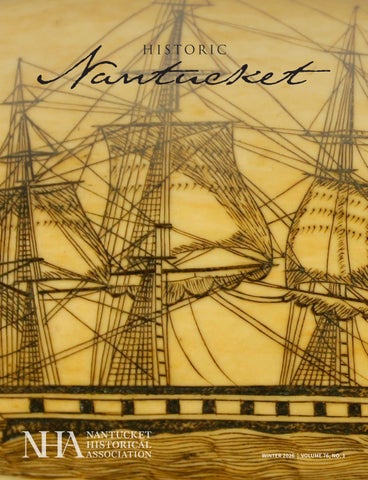
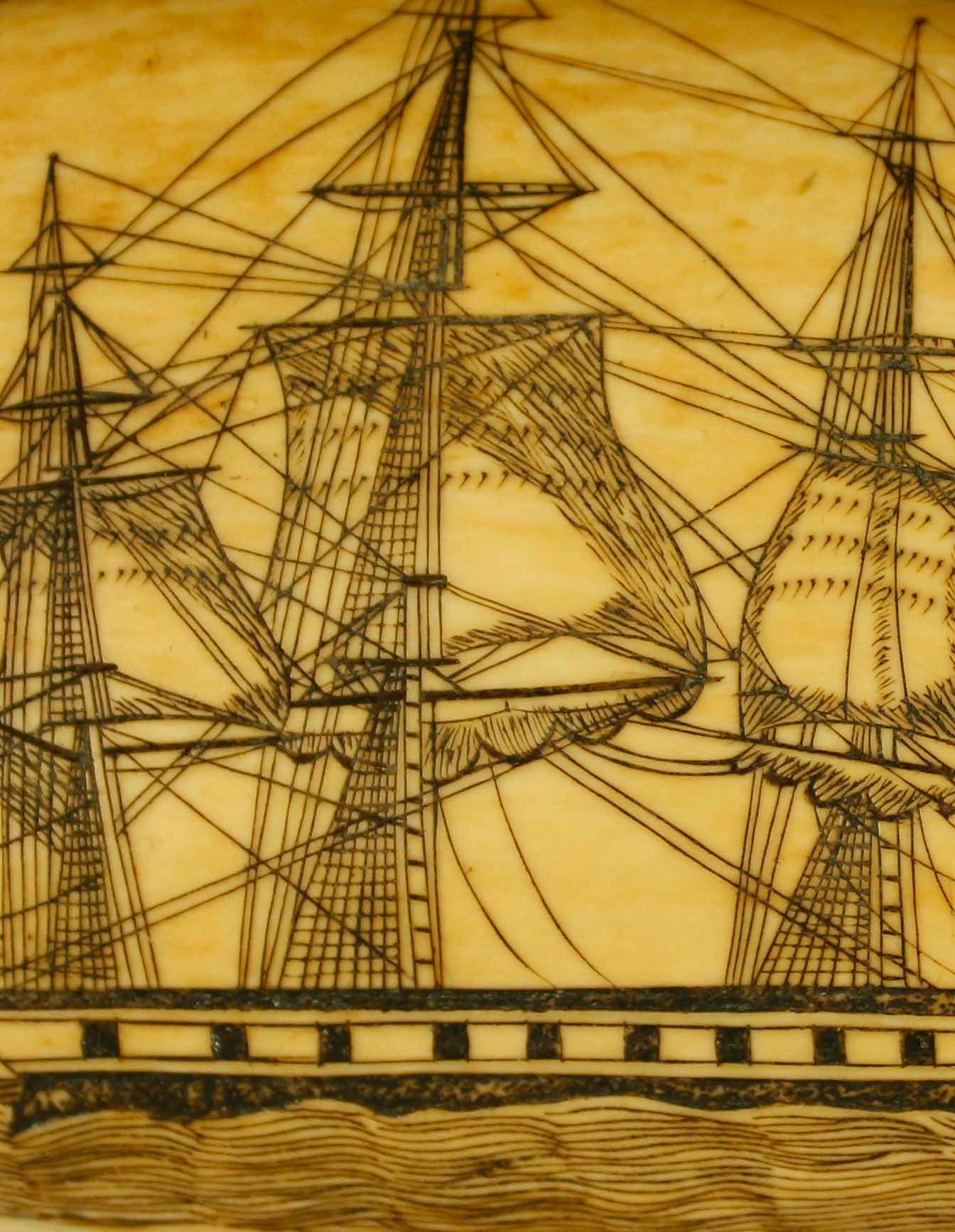
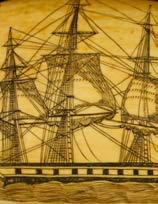
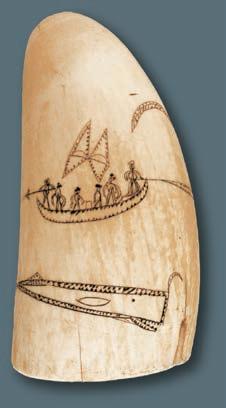
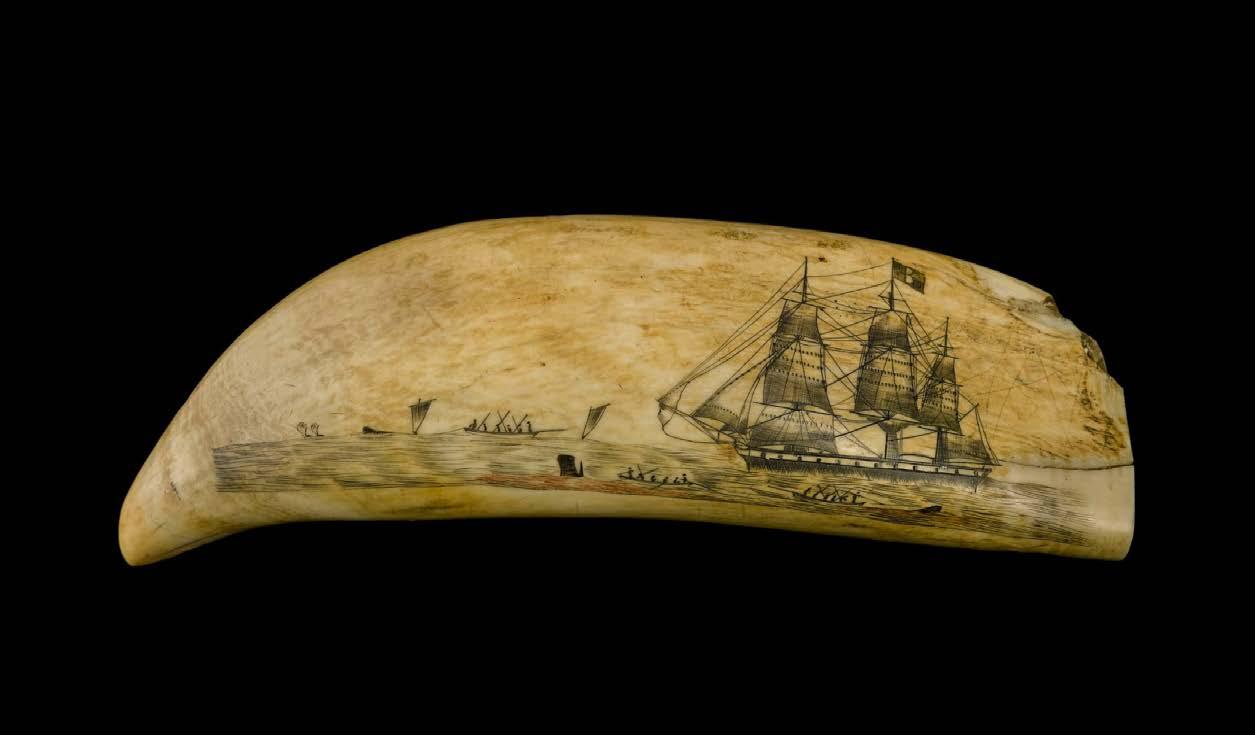
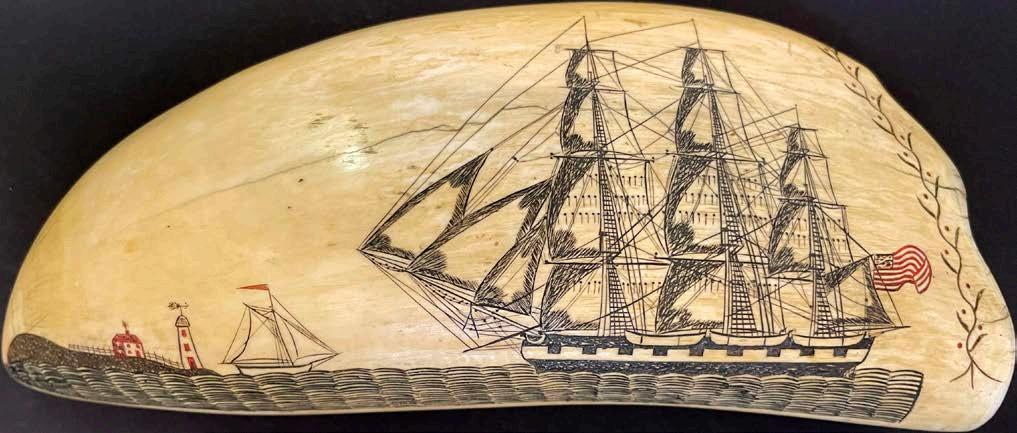
Cover: Detail of Edward Burdett (US, 1805–1833), “William Tell of New York near a headland,” ca. 1830–33. Engraved sperm whale ivory, 2 ¾ x 7 5/8 in. Gift of the Friends of the NHA, 2025.18.1.
2026: A Look Ahead
FROM THE BOARD PRESIDENT AND GOSNELL EXECUTIVE DIRECTOR
We are excited to bring our members this additional winter issue of Historic Nantucket, with four issues hitting your mailboxes this year instead of the traditional three. This will allow us to share more content and keep you up to date on what is happening at the NHA. Our team hit the ground running in January, kicking off what will be a very exciting 2026 season!
During our winter break, we officially began work on the creation of a new gallery space in the Whaling Museum to showcase more of the NHA’s growing collections. Opening in 2027, this gallery will prioritize building for the future, with state-of-the-art climate control, lighting, and technology upgrades to ensure proper care and interpretation of objects, as well as universal design principles to make the space accessible for all. Our maintenance and curatorial teams were also hard at work making upgrades elsewhere around the Whaling Museum.
We’ve announced our featured exhibition, The Wider World & Scrimshaw, opening at the Whaling Museum in April. The Whaling Museum will be the first venue to host this traveling exhibition organized by the New Bedford Whaling Museum with support provided by Art Bridges. Surveying carving traditions that emerged along whaling routes in the Pacific world, the exhibition will showcase over 300 objects and set scrimshaw in conversation with other carved decorative arts and material culture made by indigenous community members from across Oceania, the Pacific, and the Arctic. We also look forward to creating programming and experiences around this year’s exhibition, as we apply a wider lens to our understanding of whaling, exploration, cultural exchange, and the rich creative practices that developed during that time.
Speaking of creativity, we are excited to share how we are transforming our decorative arts program to reflect a deeper commitment to Heritage Crafts. The NHA’s vision for this programming will be rooted in preserving the practice of heritage crafts specific to the island and beyond. We seek to promote this work through hands-on learning while fostering a community among students and craftsmen. We hope you will join us as we focus on this new initiative — all skill levels are welcome!
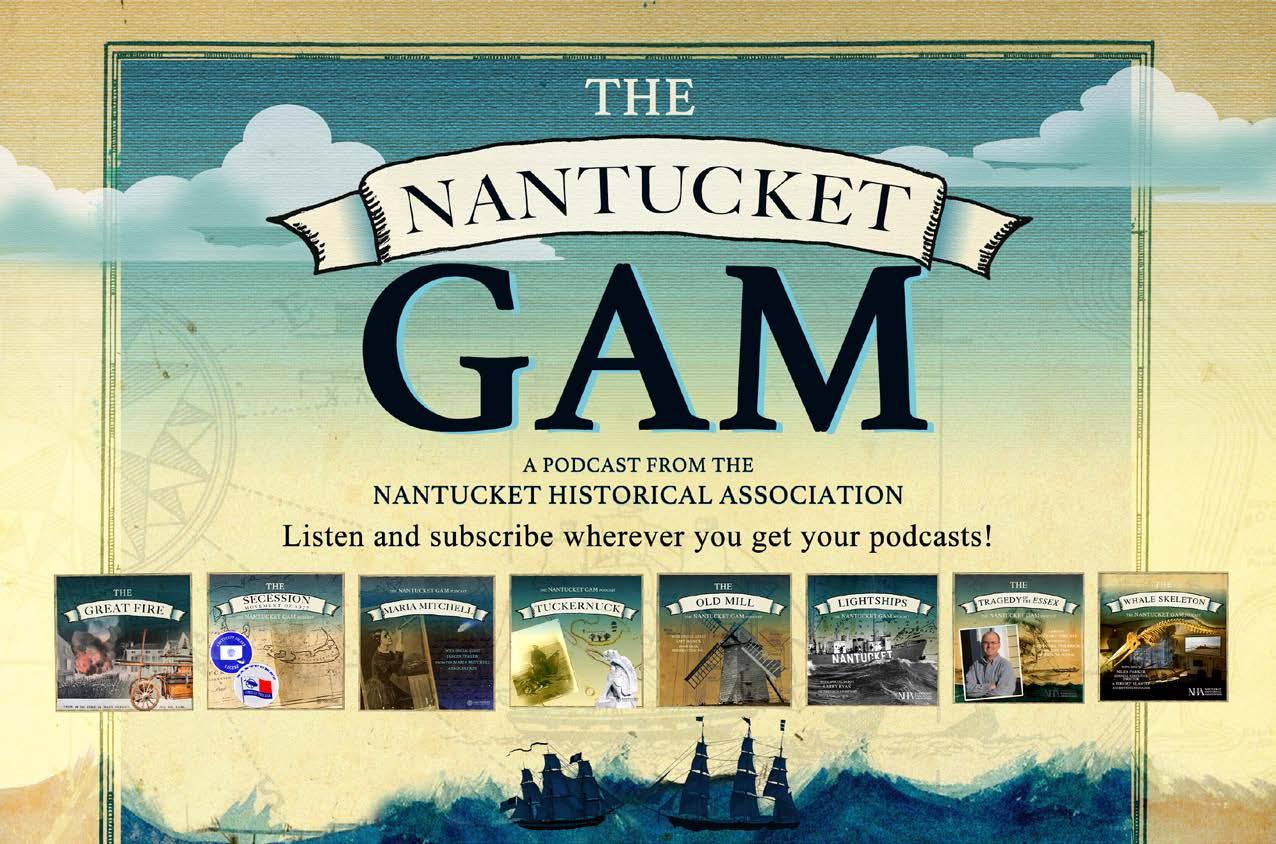
To sneak in a few more exciting notes about this season: learn more in this issue about how we are reinvigorating our research fellows program; season 2 of our Nantucket Gam podcast is already underway with episode 1 diving into the art of Scrimshaw; as well as some highlights of a few incredible maps we have recently collected, and stay tuned for more updates about many of the exciting projects we have going on around our campus.
Here’s to an exciting year ahead! We look forward to gathering with you, sharing these stories, and together, telling more of Nantucket’s history. Thank you!
Lucinda Ballard President, Board of Trustees
Niles Parker Gosnell Executive Director
From April 20 through November 1, 2026, the Nantucket Historical Association’s Whaling Museum will host the traveling exhibition The Wider World & Scrimshaw, organized by the New Bedford Whaling Museum with support from Art Bridges. Surveying carving traditions that emerged along whaling routes in the Pacific world, the exhibition will showcase over 300 objects and set scrimshaw—the folk art made by whalers on the body parts of whales—in conversation with carved decorative arts and material culture made by Indigenous community members from across Oceania, the Pacific, and the Arctic.
In this and the next two issues of Historic Nantucket, we are pleased to reprint selected essays from the exhibition catalog. This catalog, edited by Naomi Slipp and published by the New Bedford Whaling Museum, will be available for purchase at the Museum Shop during the run of the exhibition on Nantucket.
Edward D. Melillo is the William R. Kenan Jr. Professor of History and Environmental Studies at Amherst College. In 2020, Penguin Random House published his book, The Butterfly Effect: Insects and the Making of the Modern World. Melillo is also the author of Strangers on Familiar Soil: Rediscovering the Chile-California Connection (Yale University Press, 2015), which won the Western History Association's 2016 Caughey Prize for the most distinguished book on the American West. He received his PhD and MPhil from Yale University and his BA from Swarthmore College. He is an NHA Research Fellow.
Michael R. Harrison is Chief Curator and Obed Macy Research Chair at the Nantucket Historical Association. He is the author of Collecting Nantucket: Artifacts from an Island Community (NHA, 2018), and co-author of Glasgow Museums, the Ship Models: A History & Complete Illustrated Catalogue (Seaforth, 2019).
The Harpoon Felt Around the World:
Whaling and the Pacific
Ocean
OBy Edward D. Melillo
n March 3, 1789, Archelus Hammond became the first Westerner to harpoon a whale in the Pacific Ocean. The consequences of this act would reverberate all the way into the twenty-first century. At the time, Hammond—who hailed from the island of Nantucket, Massachusetts—was serving as first mate aboard the British ship Emilia. The intrepid vessel and its crew spent nineteen months hunting whales off the west coast of South America. The Emilia returned to England with 139 tons of sperm whale oil, a waxy liquid that lubricated the machinery and lit the lamps of the Industrial Revolution. Samuel Enderby, one of the expedition’s financiers, declared, “From [the captain’s] account, the whales of the South Pacific are likely to be the most profitable; the crew are all in good health, only one man was killed by a whale.”1
As Enderby’s comment suggested, whaling was simultaneously lucrative and hazardous. Multiyear expeditions into the world’s largest ocean to pursue giant, yet elusive, mammals came at a high price. Death and disease were common, and every mariner knew that harpooning
1 Quoted in William John Dakin, Whalemen Adventurers, 2nd ed. (Sydney: Sirius Books, 1963), 1.
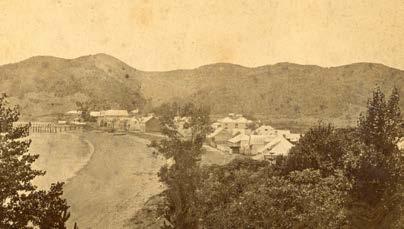
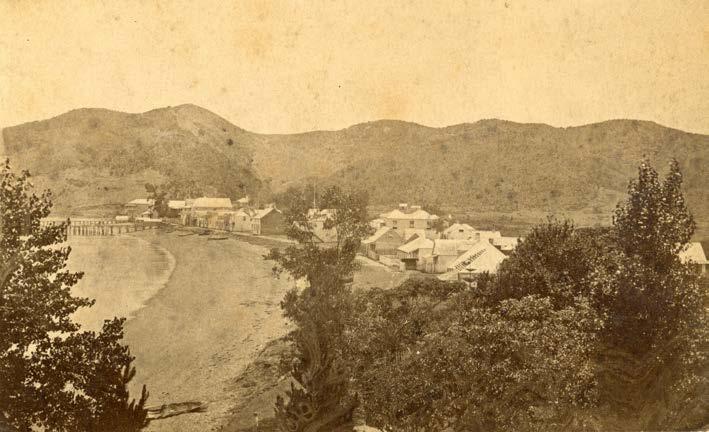
"Kororāreka, Bay of Islands, Aotearoa," ca. 1870. From an albumen print in the New Bedford Whaling Museum, 2009.68.21.3.60
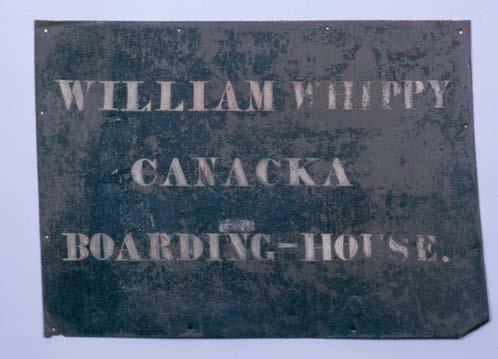
“By the end of the 1820s, the term “kanaka”—Hawaiian for “person”—had become a recurring entry on the crew lists of Nantucket and New Bedford whaling ships. Many of these men labored for years at sea and ended up far from their homelands. On Nantucket, the half-Māori man William Whippy and his wife Maria Ross, the daughter of African-born fugitive slave James Ross, served as the proprietors of a “Canacka Boarding-House” for Pacific Islanders.”
a whale was risky business. Sperm whales (Physeter macrocephalus) can reach up to sixty feet in length (males tend to be considerably larger than females) and can weigh as much as forty-five tons, roughly the equivalent of thirty cars. Occasionally, these giant creatures smashed into the ships that pursued them. The most well-known case of such a maritime calamity occurred on November 20, 1820, when an aggravated sperm whale tore into the bow of the eighty-eightfoot whaleship Essex, one thousand miles west of the Galápagos Islands. The chilling account of this incident by first mate Owen Chase, among the few surviving crew members of the Essex, inspired Herman Melville’s 1851 novel Moby-Dick; or, The Whale.
During the 1800s, whalers pursued their enormous quarry in thirty-foot-long, six-foot-wide open whaleboats that ventured out from the larger mother ship for the final stage of the hunt. From the whaleboat’s bow, a harpooner hurled his weapon at the whale, attempting to hook it at the end of a coiled rope line. The injured whale would then pull the whaleboat and its crew—a punishing ordeal known by Yankee mariners as a “Nantucket sleigh ride”—until the animal bled out or perished from exhaustion. At this point, the
hunting party towed their colossal cargo back to the whaleship, sometimes rowing more than a mile with the whale’s body dragging behind.
A macabre spectacle followed. Sailors carved up their catch with long iron tools, slicing the blubber from the whale’s muscle tissue in a process known as flensing, flinching, or cutting-in. They would then boil this fat in giant kettles called trypots, which sat atop a brick furnace behind the ship’s foremast. Melville described this grisly operation in Chapter 96 of Moby Dick: “With huge, pronged poles they pitched hissing masses of blubber into the scalding pots, or stirred up the fires beneath, till the snaky flames darted, curling, out of the doors to catch them by the feet. The smoke rolled away in sullen heaps.”
Sailors stowed the rendered oil in oak barrels for transport to distant ports. Each crew member was entitled to a fraction of the total profit—known as a “lay”—from the sale of this prized commodity. A seaman’s lay reflected the degree of importance of his duties aboard ship, with a captain receiving the largest portion (sometimes as much as 1/8 of the take) and an inexperienced crewman earning the smallest fraction (as little as 1/350 of the total profit). During the heyday
Portrait of William Whippy, 1885. Gift of an unknown donor, GPN54.
WHALING AND THE PACIFIC OCEAN
of North American whaling, which stretched from the early 1800s to the US Civil War (1861–65), whaleship captains and their financial backers were among the wealthiest residents of their home ports. Towns and cities along North America’s Atlantic Seaboard, such as Nantucket, New Bedford, Salem, New London, Mystic, and Sag Harbor, feature opulent mansions built with nineteenth-century whaling profits.
Other products extracted from whale bodies, such as baleen and ambergris, augmented the revenue from a whaling expedition. Baleen, flexible plates of keratin (the same protein that makes up our fingernails and hair) found in the mouths of filter-feeding whales, was a pliable plastic-like substance used for manufacturing nineteenth-century consumer products such as corset stays, buggy whips, and parasol ribs. Ambergris, a waxy material that accumulates in the digestive tracts of sperm whales, is a powerful fixative that allows perfume makers to extend the longevity of the scents they create. In the 1880s, one pound of ambergris sold for $80,000. To this day, ambergris is so prized that it is often called “floating gold.”
Among the other byproducts of the whale hunt were the thirty-six to forty teeth from the mouth of each
sperm whale. Initially, whalers discarded this flotsam and jetsam, but some found uses for these objects, trading them with Pacific Islanders. Fijians have long regarded sperm whale teeth as tabua, spiritually vital objects exchanged during important cultural rituals like weddings, births, and funerals.
Whalers also began using sperm whale teeth and walrus tusks as surfaces for intricate carvings, engravings, and scrollwork. Scrimshaw, as this practice soon became known, occupied idle sailors during the monotonous hours aboard ship. It also offered sentimental connections to loved ones back home. Men frequently carved domestic articles—such as pie crimpers, crochet hooks, and corset stays—as gifts for lovers and spouses on shore.
The homelands that inspired the lonely whaler’s yearnings could vary considerably, due to the multicultural and multinational composition of the typical whaleship crew. By the 1830s, it was common for Native men from Wampanoag, Mohegan, Pequot, Narragansett, Shinnecock, and other northeastern coastal tribes to have spent many decades aboard such vessels. As historian Nancy Shoemaker has found,
Engraved whale tooth. Naval Engagement Engraver. Gift of Robert M. Waggaman, 1977.126.1
“In the nineteenth century, on average one of six whaleships from the New Bedford area had at least one Native American on board, often two or three, sometimes as many as six or seven on a single voyage.”2 At sea, away from the discrimination they often faced on land, these men could rise to the rank of first mate, or even captain. For example, Amos Haskins, an Aquinnah Wampanoag man from the island of Martha’s Vineyard, Massachusetts, captained the ship Massasoit in the 1850s. By age thirty-five, Haskins was supervising a twenty-twoperson crew, twelve of whom were men of color.
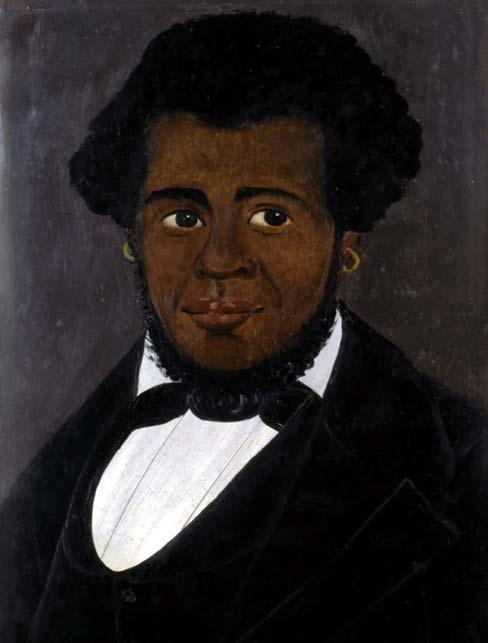
Likewise, Black men discovered unmatched social mobility aboard whaling vessels. In 1859, the Unitarian minister and abolitionist James Freeman Clarke estimated that twenty-nine hundred Black men were working aboard North American whaling ships that year, comprising fully one-sixth of the nation’s whaling workforce. Many of these mariners rose quickly through the shipboard ranks. Peter Green, a young Black man who had signed on as the second mate of the Nantucket whaleship John Adams in 1821, became captain after his superior officers perished at sea. The following year, thirty-
seven-year-old Black man Absalom Boston sailed from Nantucket as captain of the Industry, a schooner with an all-Black crew.3
Despite such opportunities for workplace advancement, sailors of all backgrounds found many reasons to desert their floating factories for the gentler pace of life at a Pacific port of call. Throughout the nineteenth century, places like Aotearoa (New Zealand), Australia, California, Chile, Fiji, Hawai´i, and Tahiti harbored castaways and fugitives from North American and British vessels.
Captains filled these shipboard vacancies with islanders and reprovisioned their vessels at various Pacific ports like Kororāreka (Russell) in Aotearoa (New Zealand); Suva in Fiji; Pape´‘ete in Tahiti; and Honolulu (O´ahu) and Lahaina (Maui) in Hawai´i. British missionary William Ellis arrived in Hawai‘i in 1822 and was surprised to see “upwards of thirty [whaleships] lying at anchor off Oahu at one time.”4
By the end of the 1820s, the term “kanaka”— Hawaiian for “person”—had become a recurring entry on the crew lists of Nantucket and New Bedford whaling ships. Many of these men labored for years at sea and ended up far from their homelands. On Nantucket, the half-Māori man William Whippy and his wife Maria Ross, the daughter of African-born fugitive slave James Ross, served as the proprietors of a “Canacka Boarding-House” for Pacific Islanders. In 1822, the Boston Recorder reported on a “Heathen School at Nantucket” that had “recently been instituted into which 15 natives of Owhyee [Hawai´i] and other islands of the Pacific, have been received.”5
3 See Mary Malloy, African Americans in the Maritime Trades: A Guide to Resources in New England (Sharon, MA: Kendall Whaling Museum, 1990), 5–9.
4 William Ellis, A narrative of a tour through Hawaii, or Owhyee; with remarks on the history, traditions, manners, customs, and language of the inhabitants of the Sandwich Islands (London: H. Fisher, Son, and P. Jackson, 1826), 390.
5 Boston Recorder, as quoted in Religious Intelligencer, May 4, 1822, 779.
2 Nancy Shoemaker, Native American Whalemen and the World: Indigenous Encounters and the Contingency of Race (Chapel Hill: University of North Carolina Press, 2015), 13.
Sign for William Whippy Canacka Boarding House, 1840s. Gift of Mary E. Long, 1992.212.1
“Likewise, Black men discovered unmatched social mobility aboard whaling vessels. In 1859, the Unitarian minister and abolitionist James Freeman Clarke estimated that twentynine hundred Black men were working aboard North American whaling ships that year, comprising fully one-sixth of the nation’s whaling workforce. Many of these mariners rose quickly through the shipboard ranks.”
Meanwhile, the homelands of these Pacific Islanders were undergoing profound changes. The era of commercial whaling in the Pacific Ocean was a period of tremendous cultural and ecological upheaval for many island societies. Whaling vessels began arriving in large numbers at the same time as waves of missionaries from Europe and North America attempted to convert traditional cultures to Christian practices and Western social norms. Political upheavals followed, forever altering customary practices and ways of life for most Pacific Islander societies.
Western colonial expansion in the Pacific was financed by rapacious harvests of products from oceanic environments. In addition to whale oil, baleen, and ambergris, these commodities included copra (dried coconut), sandalwood, mother-of-pearl, tortoiseshell (hawksbill turtle backs), sea cucumbers, seal and otter pelts, walrus hides, and bird guano (avian excrement served as a nutrient-rich crop fertilizer). Although many of these products flooded into New England and Western Europe, China also provided a rewarding destination for transpacific traders who sold their wares
to merchants in Canton (modern-day Guangzhou). A flourishing consumer culture during the Qing Dynasty (1644–1911) generated vast markets for furs, medicinal ingredients, and culinary delicacies from the Pacific Ocean region.
Often, the environmental effects of such large-scale commercial hunting and extraction practices were disastrous. Widespread biodiversity loss, severe habitat destruction, and long-term disturbance of food webs were common throughout the Pacific world. Many Pacific ecosystems are still recuperating from these effects, even after decades of conservation efforts and hunting bans, like the 1986 global moratorium on commercial whaling.
Fortunately, some species of whales—like the humpback whale (Megaptera novaeangliae), the fin whale (Balaenoptera physalus), and the blue whale (Balaenoptera musculus)—have experienced modest recoveries. In many cases, Pacific Islanders have led ecological restoration efforts, blending deeply rooted historical connections to their oceanic environments with forward-thinking intergenerational ethics.
Portrait of Captain Absalom F. Boston, circa 1835. Prior-Hamblin School artist. Gift of Sampson D. Pompey, 1906.56.1
A SURVEY OF WRITING ABOUT SCRIMSHAW
By Michael R. Harrison
SCRIMSHAW SCHOLARSHIP
Ingenious Contrivances, Curiously Carved was the title selected in 2012 for the New Bedford Whaling Museum’s new history of scrimshaw, written by the historian Stuart Frank and illustrated with hundreds of examples from the museum’s collection. This book, while standing as an interpretive catalogue of the museum’s world-class holdings, was also the culmination of a process of increased scholarly study of scrimshaw that began in the 1980s and accelerated when Frank became director of the Kendall Whaling Museum in Sharon, Massachusetts. As Frank has described it, he was able, in collaboration with many colleagues, “to pioneer new approaches to the identification, authentication, and documentation of scrimshaw.” By applying the methodologies of art history and connoisseurship, Frank and others identified artists and discovered important links among scrimshaw examples. They developed procedures for the empirical analysis of scrimshaw that deepened understanding of the materials and techniques used by sailor-artists and made it possible to more effectively distinguish authentic works from modern imitations.1 Much of the original work done at the Kendall found its outlet in the museum’s monographs, whose subjects between 1988 and 2004 included “Edward Burdett, 1805–1833, America’s First Master Scrimshaw Artist”; “The Scrimshaw of Manuel Cunha”; two Frederick Myrick studies; and “Fakeshaw,” a checklist of plastic scrimshaw fakes.
Ingenious Contrivances presented extensive new scholarship, yet it took a taxonomic approach to its subject that echoed previous writing about scrimshaw. After outlining the history of scrimshaw practice among nineteenth-century whalers, the book marched methodically through exhaustive chapters on illustrated teeth and busks in all their variety, tools, canes and crimpers, boxes and baskets, and swifts. Scrimshaw on Nantucket, a catalogue focused on the collection of the Nantucket Historical Association written by Frank in 2019, took nearly the same approach. The two books
1
Stuart M. Frank, Ingenious Contrivances, Curiously Carved: Scrimshaw in the New Bedford Whaling Museum (Boston: David R. Godine, 2012), ix.
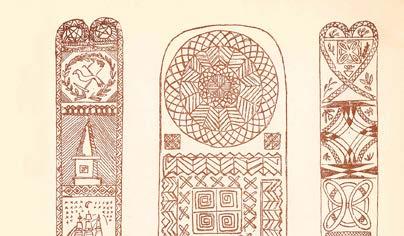
Left: Jane Davenport, sketches of scrimshaw corset busks, from Scrimshaw: Folk Art of the Whalers (Cold Spring Harbor, NY: Whaling Museum Society, 1957). Image courtesy of the Nantucket Historical Association.
Edward Burdett (US, 1805–1833), “William Tell of New York near a headland,” ca. 1830–33. Engraved sperm whale ivory, 2 ¾ x 7 5/8 in. Gift of the Friends of the Nantucket Historical Association, 2025.18.1. Edward Burdett of Nantucket is the earliest American scrimshaw engraver whose name is known.
presented different examples but overlapped in their history-telling. In addition to chapters about the ivory carvings created by Native craftsmen in the Bering Straits region in response to encounters with Western whalers, fishermen, and adventurers, both books foregrounded maker biographies and personal narratives wherever possible. The New Bedford book even devoted an extensive concluding chapter to “Scrimshaw Stories.”2
This focus on biography was a direct result of Frank’s scholarly interests. His Dictionary of Scrimshaw Artists (1991), More Scrimshaw Artists (1998), Scrimshaw and Provenance (2013), and Biographical Dictionary of Scrimshaw Artists (2025) cast a strong light on individual scrimshaw makers and proceed from the proposition that the scrimshaw made by whalers, merchant seamen, and navy sailors “is significant today not only as an intriguing occupational genre, but also as firsthand testimony concerning seafaring life in the age of sail.”3
This idea that scrimshaw, as both art and material culture, is a testament to seafaring life is a constant in treatments of the subject, where the development of scrimshaw is linked to the very nature of nineteenth-century pelagic whaling. Idle time and boredom alternated with periods of intense hard labor on the industry’s years-long
2 Stuart M. Frank, Scrimshaw on Nantucket: The Collection of the Nantucket Historical Association (Nantucket: NHA, 2019). The author of this essay was editor of Scrimshaw on Nantucket and curates the collection featured in the book.
3 Stuart M. Frank, Dictionary of Scrimshaw Artists (Mystic, CT: Mystic Seaport Museum, 1991), ix.
voyages, where weeks or months often passed between whale sightings. “Under such conditions it is only logical to expect a variety of pastimes to have emerged,” Richard Malley wrote in Graven by the Fishermen Themselves (1983), about the Mystic Seaport Museum collection. “Fancy carpentry engaged some; others found an outlet in decorative ropework. But among the whalemen scrimshaw became the most popular channel for pent-up energy, both physical and creative. . . . Scrimshaw required time, and the whaleman had plenty of this to spare.”4 Norman Flayderman explored the same idea in Scrimshaw and Scrimshanders, Whales and Whalemen (1972), where he declared scrimshaw “the product of idle hours on endless cruising searches for the elusive leviathan.”5
Flayderman’s work is arguably the starting point of focused scrimshaw scholarship, as it was the first book to comprehensively contextualize and illustrate the artform; Malley’s book was the first contextual catalogue of a museum’s scrimshaw holdings. Both explored, more fully than previous authors, the occupational origins and the multiple motivations behind the art. Flayderman quoted the whalemen themselves: “One journal states, ‘I am unsettled in mind for the want of work. Saw nothing, and work all dun. An idle head is a workshop for the devil. Employed scrimshan.’ [Michael Cumiskey, aboard ship Abigail of New Bedford, 1836] Another complains, ‘My mind still will wander homewards. . . . I can almost jump overboard. Scrimshawing.’ [John S. Coquin, aboard bark Globe of New Bedford, 1871].”6 As Flayderman explained, “Each crewman shared the heartache of having left behind a mother, a sweetheart, or a wife and children for years on end. . . . A great many of these artifacts mirror the emotions of the men who carved them.”7
STEPPING BACK
The East India Marine Society, one of the predecessors of the Peabody Essex Museum in Salem, Massachusetts, was the first collecting institution to receive donations of scrimshaw, starting with a panbone walking stick with turk’s-head-shaped ivory handle presented before 1821. While such sticks are common in maritime museums today, this one “must have been considered quite unusual at this time in order to have been accepted for the collection at all.” In 1830, the society received additional whalers’ curiosities: four engraved sperm-whale teeth. Two of these were the work of Frederick Myrick, made aboard the ship Susan of Nantucket. These were entered in the society’s catalogue as “Tooth of a Sperm Whale, curiously carved,” and “Another, carved by the same hand.” The other two teeth, probably received the same year, display allegorical
4 Richard C. Malley, Graven by the Fishermen Themselves: Scrimshaw in Mystic Seaport Museum (Mystic, CT: Mystic Seaport Museum, 1983), 18–19.
5 E. Norman Flayderman, Scrimshaw and Scrimshanders, Whales and Whalemen (New Milford, CT: N. Flayderman, Inc., 1972), ix.
6 Flayderman, Scrimshaw and Scrimshanders, 100, quoting Marius Barbeau, “‘All Hands Aboard Scrimshawing,’” American Neptune 12, no. 2 (April 1952), 101–2. The Comiskey quote is misquoted in Flayderman as “Employed scrimshaw.”
7 Flayderman, Scrimshaw and Scrimshanders, xi.
figures and vessel portraits and have complex histories that are only now beginning to come to light. These four teeth are the earliest pictorial scrimshaw for which written documentation exists.8
These donations coincided relatively closely with the beginnings of scrimshaw practice among American and British whalemen. While the activity of making things during idle hours at sea goes well back in time, making things using surplus whale ivory and bone was generally an innovation of the 1810s and 1820s.9 So it is that Crèvecoeur, in his Letters from an American Farmer (published in London in 1783 and in Philadelphia in 1793), wrote, “In the many hours of leisure which [Nantucket whalers’] long cruises
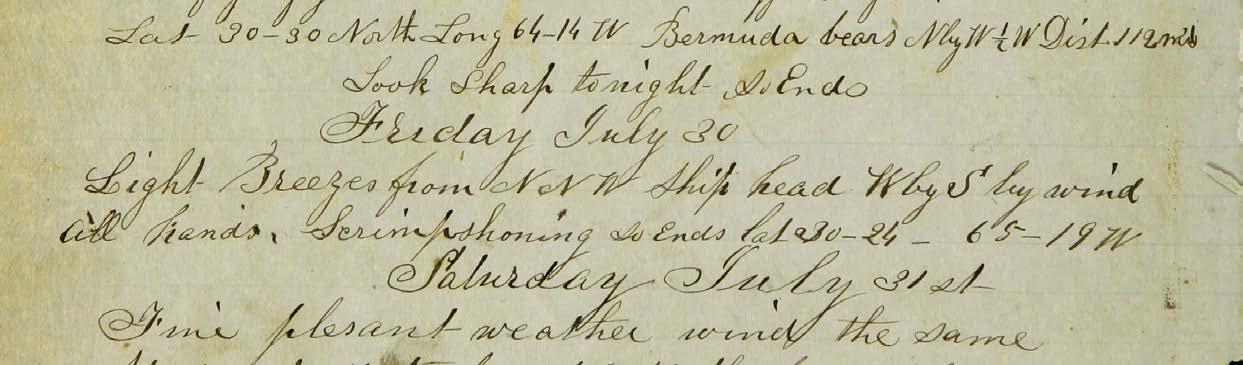
Joseph Ray’s journal entry for July 30, 1858, aboard ship Edward Cary of Nantucket. Logbook, Nantucket Historical Association, Ms. 200, Log 73. Image courtesy of the Nantucket Historical Association.
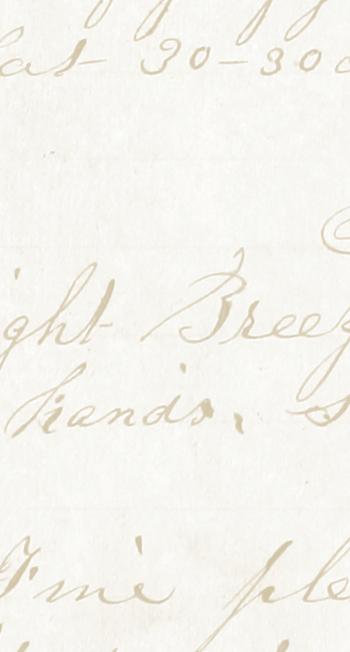
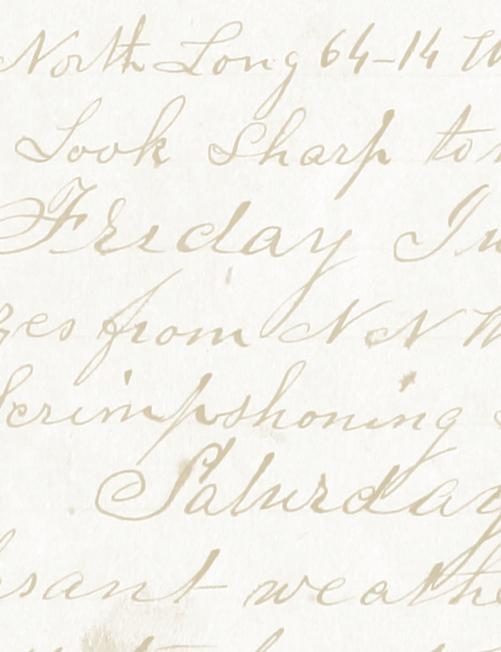
afford them, they cut and carve a variety of boxes and pretty toys, in wood, adapted to different uses; which they bring home as testimonies of remembrance to their wives or sweet hearts.”10 Yet it was not until two decades later that the word “scrimshaw,” in one of its many spellings, was set on paper. The first instance yet found comes from Elias Ludlow aboard an unidentified Sag Harbor whaler. On June 2, 1805, he wrote in his journal, “All hands Scrim Shawnterin.” Twenty years past this, we find the idea again, in the log of the brig By Chance of New Bedford. On May 20, 1826, while cruising in the Atlantic, first mate John E. Coggeshall wrote, “All these twenty-four hours small breezes & thick foggy weather. Made no sale. So ends this Day all hands employed Scrimshonting.”11
8 Daniel Finamore, “‘Curiously Carved’: Early Collections of Susan’s Teeth, 1830–1921,” American Neptune 60, no. 4 (Fall 2000): 372–73. For new scholarship on the important historic teeth mentioned, see Mary Malloy, “The Case for Captain William Buckle,” Scrimshaw Observer 8, no. 1 (Winter 2024): 1–7.
9 “Whaling was old when the word scrimshaw was new, and the art form as we know it does not go back in history much further than the debut of the word in the 1820s.” Stuart M. Frank, Ingenious Contrivances, xx.
10 J. Hector St. John de Crèvecoeur, Letters from an American Farmer (Philadelphia: Mathew Carey, 1793), 151–52.
11 Stuart Frank, Scrimshaw and Provenance (Mystic, CT:, Mystic Seaport Museum, 2013), 320; log of the brig By Chance, New Bedford Whaling Museum logbook ODHS 292, quoted in Arthur C. Watson, “Yankee Whalemen of Yesterday Had Art of Their Own: Scrimshaw,” Boston Globe, October 26, 1924, 60.
References to scrimshanding appeared with increasing frequency in logbooks and personal journals over the following decades. Joseph Dias, aboard the ship Clifford Wayne of Fairhaven, wrote in 1844, “Nothing to do but make canes to support our dignity with when we are home.”12 Harriett Swain, aboard the ship Catawba of Nantucket in 1854, kept herself busy in part by teaching crewmen celestial navigation. Her husband, Captain Obed Swain 2d, made scrimshaw. On May 16 she wrote, “Thick & cloudy, wind in the forenoon, afternoon instructed Jack in working a Lunar, Obed employed in making a Jag knife & scolding at my birds.” The next day she added, “Obed has finished his Jag knife & is now out of business so that he is very troublesome, interferes upon us very much as I am very busy instructing Jack Mr Ney & Manuel in the Lunars.” One day later she records that Obed has moved on to making a wooden weathervane in the shape of a man: “hope it will bring us good luck.”13 In 1857, Joseph E. Ray, boatsteerer in the ship Edward Cary of Nantucket, noted in his private journal while cruising north of New Zealand, “Emp[loyed] scrimshoning” and “All hands Scrimpshoning.”14
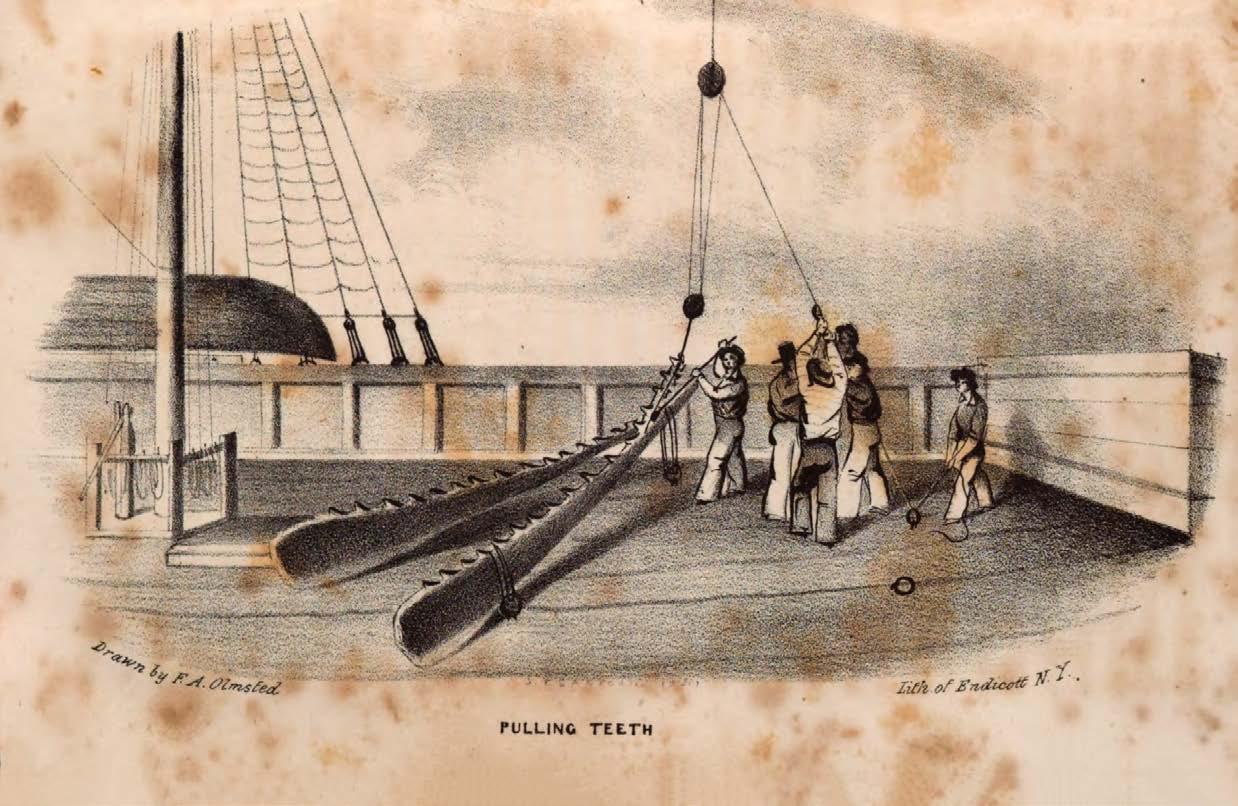
Of course, scrimshanding references in logbooks and journals were not available to the nineteenth-century reading public, who instead received only the briefest glimpses of whalers’ off-hours activities in contemporary books. Francis Olmsted, in Incidents of a Whaling Voyage (1841), wrote, “There are found aboard a whaler a great variety of small tools expressly intended for ‘schrimshawing’ or nice mechanical contrivances for fabricating various articles out of the teeth and jaw bone of the sperm whale.”15 The Reverend Henry T. Cheever, a passenger in the bark Commodore Preble of Lynn in the 1840s, mentioned scrimshaw just twice in the published account of his travels. “We have caught a number [of sharks] on this passage for their skin,” he wrote, “which, cleansed and dry, is an excellent substitute for sand-paper, much used in whale ships to smooth and polish the various things they make up out of whale’s bone and teeth.” Later, he asserted, “Mux and skimshander are the general names by which they express the ways in which whalemen busy themselves when making passages, and in the intervals of taking whales, in working up sperm whales’ jaws and teeth and right whale bone into boxes, swifts, reels, canes, whips, folders, stamps, and all sorts of things, according to their ingenuity.”16
William M. Davis, rewriting his personal journal from a voyage he made out of New London as a boatsteerer in the 1840s or 1850s, described cruising the whaling grounds “with not enough to do to keep a man off a growl. As this habit only cankers the soul, I prefer to scrimshone.” He then described making a model of a brig, its carved-wood
12 Joseph Dias whaling journal, New Bedford Whaling Museum logbook ODHS 201, quoted in Watson, “Yankee Whalemen of Yesterday.”
14 Joseph E. Ray, log of the Edward Cary, 1854–58, Nantucket Historical Association, Ships’ Logs Collection, Ms. 220, log 73.
15 Francis Allyn Olmsted, Incidents of a Whaling Voyage (New York: D. Appleton, 1841), 149.
16 Henry T. Cheever, The Whale and His Captors, or, The Whaleman’s Adventures (New York: Harper & Brothers, 1850), 160, 204.
hull planked with baleen and panbone. “It is my intention, as time is nothing, to give her every appointment of a brig above deck.”17
In the 1834 novel Miriam Coffin, or the Whale-Fishermen, author Joseph Hart gave the oil merchant Jethro Coffin a scrimshaw walking stick, made of hickory and baleen, which he described as “curiously carved by the jack-knife of some ever-busy whalefisherman.”18 Seventeen years later, Herman Melville, in Moby-Dick (1851), gave Captain Ahab a scrimshaw leg and the Pequod a scrimshaw tiller. Furthermore, in a passage quoted ad nauseam by later scrimshaw writers, Melville wrote:
Throughout the Pacific, and also in Nantucket, and New Bedford, and Sag Harbour, you will come across lively sketches of whales and whaling scenes, graven by the fishermen themselves on sperm whale-teeth, or ladies’ busks wrought out of the right whalebone, and other like skrimshander articles, as the whalemen call the numerous little ingenious contrivances they elaborately carve out of the rough material, in their hours of ocean leisure. Some of them have little boxes of dentistical-looking implements, specially intended for the skrimshandering business. But, in general, they toil with their jack- knives alone; and, with that almost omnipotent tool of the sailor, they will turn you out anything you please, in the way of a mariner’s fancy.19
“ CARVED IVORIES, CANES, ORNAMENTED DITTY-BOXES, FANCY BUSKS, ENGRAVED TEETH AND DIPPERS WERE ONLY A FEW OF THE SCRIMSHAW ARTICLES BROUGHT HOME PROUDLY BY THE RETURNING WHALEMEN.”
Melville then claimed that long separation from home made whalemen savages, and it was savages alone that possessed the “wonderful patience of industry” needed to create elaborate folk arts. Perhaps aware of the inherent problems within this prejudiced analogy, Melville concluded, “With the same marvellous patience, and with the same single shark’s tooth, of his one poor jack-knife, [the whaleman] will carve you a bit of bone sculpture, not quite as workmanlike, but as close packed in its maziness of design, as the Greek savage, Achilles’s shield; and full of barbaric spirit and suggestiveness, as the prints of that fine old Dutch savage, Albert Durer.”20
17 William M. Davis, Nimrod of the Sea, or The American Whaleman (New York: Harper & Brothers, 1874), 264–65.
18 Joseph C. Hart, Miriam Coffin, or the Whale-Fishermen, 2nd ed. (New York: Harper & Brothers, 1835), 1:55.
19 Herman Melville, Moby-Dick, chap. 57.
20 Melville, Moby-Dick, chap. 57.
REDISCOVERY
After Melville, scrimshaw received slight attention in print. Among curators and historians of whaling it was hardly acknowledged and, where acknowledged, regarded as trivial. Alexander Starbuck’s seminal History of the American Whale Fishery (1878) included no references to it nor to sailors’ pastimes of any kind. The exhibits sent by the US National Museum to the London Fisheries Exhibition in 1883 included just six unexceptional scrimshaw pieces within a group of twenty-nine whalers’ crafts and souvenirs—a fid, a jig tackle, a ratchet wheel, a ship model, a cane, and a pair of man-rope stanchions, but no engraved teeth.21 The 188-page catalogue of the Marine Room at the Peabody Museum of Salem (1921) devoted one paragraph and two photos to scrimshaw and did not comment on the craft in any significant way.22 Books about whaling for the general reader did a little better, starting with A. Hyatt Verrill’s Real Story of the Whaler (1916). In six paragraphs and one photo, he summarized the craft’s main forms and cursorily considered the whalemen’s motivations. “More numerous than all other articles made by the whalers were the odd ‘jagging wheels’ for crimping the edges of pastry, pies, etc.,” he observed: “No one seems to know just why the whalemen were so fond of making these, but it may have been due to ever-present thoughts of the delicious pies of their New England homes and which for years at a time were but memories of the past or expectations of the future.” Later he concluded, “Looking at these examples of the whalemen’s skill one marvels at the time and patience which must have been required . . . but time was no object and often hung heavy on the whalers’ hands.”23
Arthur C. Watson, in the Boston Globe in 1924, was the first author to clearly explain boredom and homesickness as motivations for scrimshanding:
Hunting for whales was at its best an uncertain, monotonous task. Often weeks and months would go by and none would be sighted, leisure was comparatively plentiful, for the whaling master did not keep his men constantly employed in washing and scrubbing and climbing rigging as did the master of a swiftly-flying merchantman. . . . To escape from ennui, the whalemen taught themselves to make trinkets out of the teeth of sperm whales, out of the long jaw-bones and out of the whalebone from the mouths of right whales and bowheads. Carved ivories, canes, ornamented ditty-boxes, fancy busks, engraved teeth and dippers were only a few of the scrimshaw articles brought home proudly by the returning whalemen.24
21 James Temple Brown, “The Whale Fishery and Its Appliances,” in Descriptive Catalogues of the Collections sent from the United States to the International Fisheries Exhibition, London, 1883 (Washington, D.C.: GPO, 1884), 355.
22 The Marine Room of the Peabody Museum of Salem (Salem, MA: Peabody Museum, 1921), 131.
23 A. Hyatt Verrill, The Real Story of the Whaler (New York: D. Appleton, 1916), 193–94.
24 Arthur C. Watson, “Yankee Whalemen of Yesterday Had Art of Their Own: Scrimshaw,” Boston Globe, October 26, 1924, 60; later reprinted as “The Omnipotent Jack-Knife,” in Watson’s The Long Harpoon: A Collection of Whaling Anecdotes (New Bedford: Reynolds Printing, 1929), 139–44.
Francis A. Olmsted (US, 18191844), “Pulling Teeth,” from Francis A. Olmsted, Incidents of a Whaling Voyage (New York: D. Appleton and Co., 1841).
Image courtesy of the Nantucket Historical Association.
He soon returned to the idea of home, noting, “The trinkets received their share of the sentiment and loving memories by which every true son of the ocean lives. Half of the pictures engraved on sperm whale teeth are sentimental in kind, the other half being whaling scenes and ships.” He imagined a whaleman “earnestly thinking of home” and, almost in reply to Hyatt Verrill, concluded, “It is due to this longing that there are so many jagging-wheels in every scrimshaw collection.”25
“The historians of whaling have given scant space to the subject of scrimshaw,” artist Clifford Ashley observed in his popular 1926 book The Yankee Whaler 26 He took a step toward remedying this by devoting a full chapter to the topic, in which he observed that whalemen made a lot of scrimshaw, in a lot of forms. He personally observed shipmates working whale ivory on a 1904 voyage in the bark Sunbeam. “I have watched them puzzle and plot, pencil-marking a veritable maze of lines which were to be followed in cutting up a tooth. . . . Half a dozen men would stand around the work-bench, giving advice while a tooth was sawed.”27 Considering engraved
25 Watson returned to the themes of boredom and homesickness in “Scrimshaw, the Perfect Hobby,” Technology Review (March 1938), which was later reprinted in Everett U. Crosby, Susan’s Teeth and Much Ado about Scrimshaw (Nantucket: Tetaukimmo Press, 1955), 24–25.
26 Clifford W. Ashley, The Yankee Whaler, 2nd ed. (Garden City, NY: Halcyon House, 1942), 115.
27 Ashley, Yankee Whaler, 113.
pictorial teeth, he asked, “What more natural than to wish to present a distant friend with a trophy of the whale-hunt, a huge tooth that, in actual conflict with a whale, had threatened him and now stood a symbol of his success? . . . There are no choicer bits of Americana lying around to be collected than these records of heroic deeds.”28
Some fifty examples illustrated Ashley’s book, but it was not until the 1950s that other authors made serious attempts to illustrate scrimshaw for readers. Walter K. Earle’s Scrimshaw: Folk Art of the Whalers (1957) reproduced sixteen examples from the collection of the Cold Spring Harbor Whaling Museum, while Edouard Stackpole’s Scrimshaw at Mystic Seaport (1958) showed four dozen. Sketches of scrimshaw corset busks by Jane Davenport, assistant curator of the Cold Spring Harbor Whaling Museum, accompanied Earle’s text. Everett U. Crosby’s Susan’s Teeth and Much about Scrimshaw (1955), privately printed on Nantucket, contained fifty photographic plates displaying 120 examples, most drawn from the Nantucket Historical Association collection. The text in Crosby’s book was not revolutionary, however, as it reproduced a 1924 article by Frank Wood, former curator at the Old Dartmouth Historical Society; a 1938 article by Arthur C. Watson; and the anthropologist Marius Barbeau’s 1952 essay “‘All Hands Aboard Scrimshawing,’” which was valuable for its many logbook quotations and its notes on William Perry, the twentieth-century New Bedford scrimshander.29
It was into this print world that Norman Flayderman’s book arrived in 1972. A wideranging collector and respected dealer, Flayderman was well positioned to understand the scope of the whalemen’s creations and select the finest examples to illustrate. If his book has a fault, it is in echoing earlier writers in imagining a heroic whaling past— “In all of our history and folklore no men were braver nor fought a more dangerous or powerful foe than did the American whalemen”—but if observers today no longer see romance in whale hunting, many may still agree with Flayderman that “these expressive pieces of folk art” capture “the spirit of the men who produced them.”30 As historian Nancy Shoemaker has observed, the practice of scrimshaw was “more than just a means to kill time aboard ship; it became a contemplative act in which men away from loved ones on three- to four-year voyages embodied their emotional attachments to home through gift production.” Unlike the consumable commodities of the whale hunt—oil, spermaceti, baleen, ambergris—“the blank canvas of the whale’s tooth inspired people to transform it in ways that enhanced its value and called for its preservation. It was the meaning, and not the transitory material benefits, of sperm whale teeth that made them objects of human desire of great worth.”31
28 Ashley, Yankee Whaler, 113–14.
29 Crosby, Susan’s Teeth; Walter K. Earle, Scrimshaw: Folk Art of the Whalers (Cold Spring Harbor, NY: Whaling Museum Society, Inc., 1957); Edouard A. Stackpole, Scrimshaw at Mystic Seaport (Mystic, CT: Marine Historical Association, 1958).
30 Flayderman, Scrimshaw and Scrimshanders, ix, xi.
Measuring Climate Change Effects on the NHA’s Historic Properties
By Phoebe Botticelli-Pohl
On January 4, 2018, the confluence of a strong nor’easter and lunar high tides brought intense flooding to Nantucket’s waterfront. As the high water approached its peak (5.27’ NAVD881), it stood more than a foot deep in areas of Broad Street and collected in the lowlying backyard of the Whaling Museum. As the surge continued, water overwhelmed the backdoors of the Museum and began flowing into the historic Hadwen & Barney Oil and Candle Factory.
Fortunately, NHA staff responded quickly, vacuuming up nearly two inches of water from the floor and erecting barriers to prevent further inundation. Because of their efforts, damage to both artifacts and the building itself was minimal. However, the aftereffects of the storm were felt in the form of a multitude of new and unsettling considerations about the safety and protection of Nantucket’s historic buildings. The urgency of these questions increased just two months later when a second 100-year flood struck the island. In the wake of these back-to-back events, the question on everyone’s minds was: how should we care for the island’s aging structures under these increasingly hostile circumstances?
Unfortunately, this dramatic example represents only the most obvious aspects of a much broader and more complex issue. All the NHA’s historic properties are experiencing mounting pressure from climate change, not just those in flood plains and not just during isolated and severe events like winter storms. The everyday environmental contexts of our buildings are shifting at every scale. Surely, stronger storm surges and coastal erosion pose significant risks, but so too do gradual changes like rising air temperatures, precipitation totals, humidity levels, and groundwater
depths, all of which have yet unknown consequences for the material compositions of Nantucket buildings.
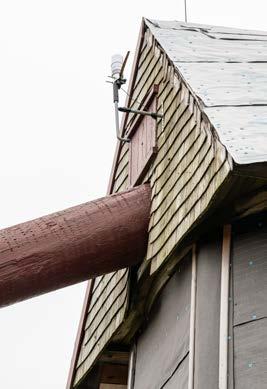
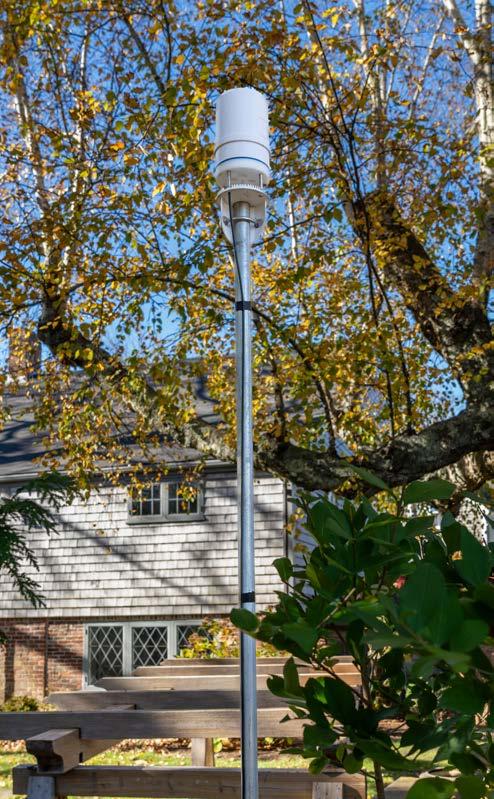
Grappling with the practical effects of these environmental changes, the NHA, with the generous support of Remain, has deployed monitoring systems at a number of our historic properties to gather site-specific data. These systems, which record various factors including wind speed, precipitation, vapor pressure, and solar radiation, give us a better understanding of the microclimates impacting our buildings; when paired with on-site conditions assessments and material research, they may explain certain patterns of deterioration or reveal potential vulnerabilities. These holistic, data-driven understandings can in turn help the NHA make informed, forward thinking, and climate resilient decisions about the preservation and maintenance of our historic properties.
The development of this approach began in the fall of 2022, when the NHA partnered with the National Park Service (NPS), the International Centre for the Study of the Preservation and Restoration of Cultural Property (ICCROM), and Integrated Conservation ResourcesIntegrated Conservation Contracting (ICR-ICC) to host a symposium about the stewardship of cultural heritage in a changing climate. For two days, preservation leaders from the US and abroad presented innovative methodologies and complex case studies addressing this unique confluence of issues. One such presentation, delivered by Frank G. Matero, Gonick Family Professor at the University of Pennsylvania’s Stuart Weitzman School of Design, detailed a pilot project which first identified representative historic structures across New Mexico, and then implemented microclimatic monitoring systems, which gathered data to enhance conditions assessments, identify vulnerabilities, and eventually define the impacts of climate change at each of the selected sites.
1 North American Vertical Datum of 1988, the common point from which orthometric heights are measured in the United States, Canada, and Mexico.
Matero’s project served as a primary inspiration the following summer, when students from the University of Pennsylvania worked with preservation experts Rohit Jigyasu and Glenn Boornazian--from ICCROM and ICR-ICC, respectively--to carry out a similar study on Nantucket. After evaluating a number of historic structures on criteria including uniqueness, community usage, age, construction materials, site topography, and research potential, the team selected the Oldest House, the Candle Factory, the Macy Warehouse, and Greater Light as test cases. At each location, they conducted thorough condition and site assessments to identify pressing hazards and risk factors. From these findings they established which microclimatic metrics they would track and how best to situate relevant sensors.
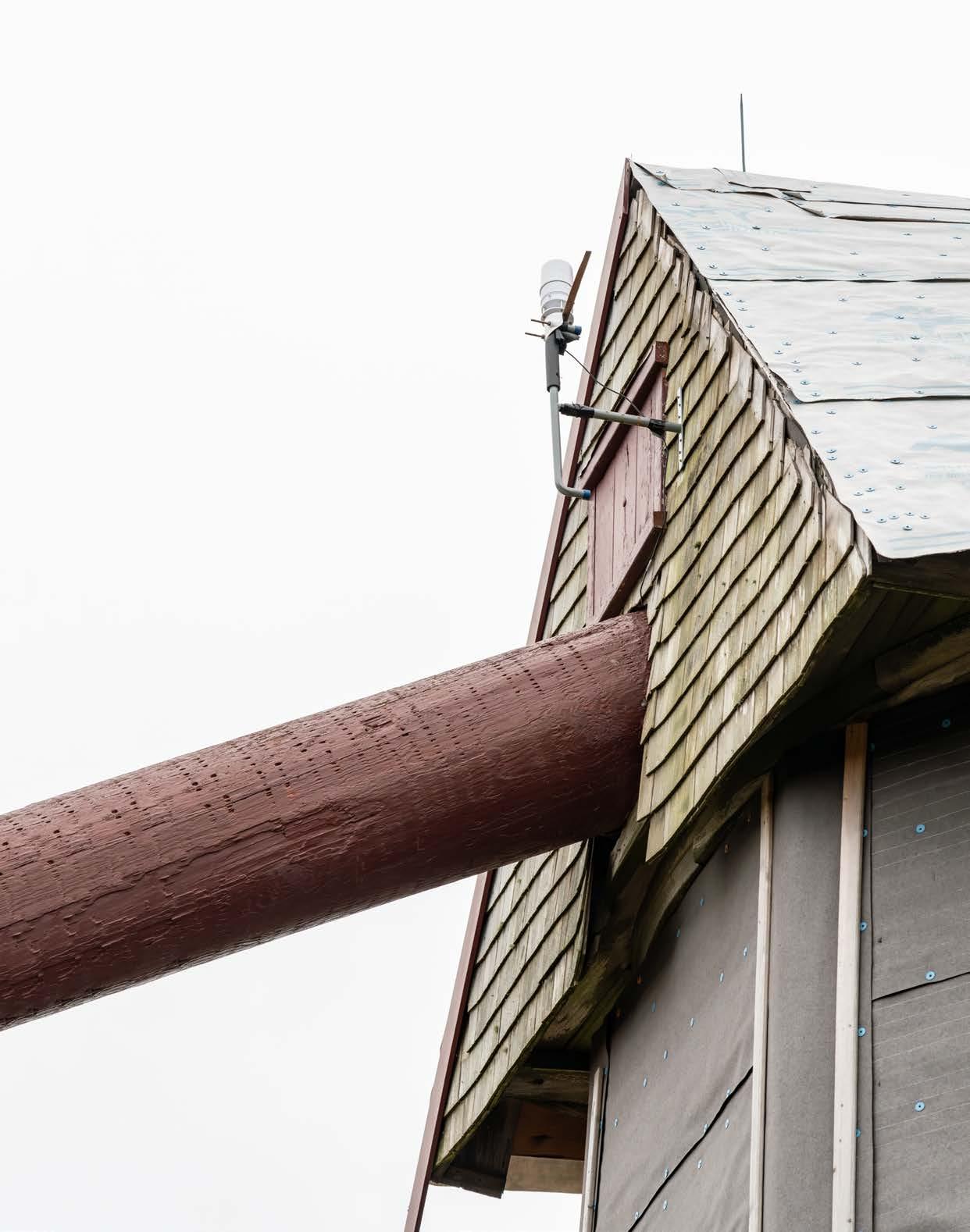
Weather station installed at the Old Mill
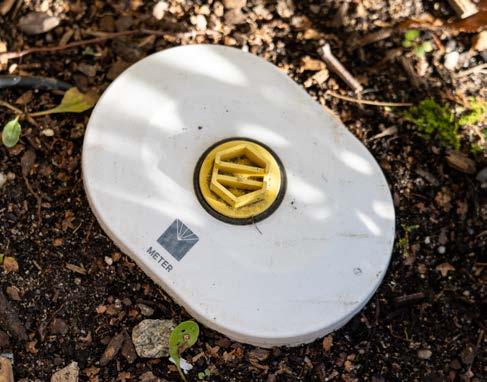
At the Oldest House, for example, the team found evidence of biological growth, poor drainage, and incompatible renovations and repairs. Based on this material evidence, they identified increased humidity, non-coastal flooding, hurricane inundation, and wind as the building’s primary hazards. They chose to install a weather station to record general site conditions adjacent to the well in the front lawn, temperature and humidity sensors in the attic, the crawl space, and set into one of the facades of the central brick fireplace core, and soil probes, measuring moisture content and temperature at six, twelve, eighteen, and twenty-four inches both inside and outside the foundation on the building’s north and west elevations. With these sensors in place, we are able to evaluate several metrics related to the building’s characteristics and primary risks, like the effect of moisture on different material components and the movement of water across the site.
In order to ensure a high quality of data, Boornazian and Jigyasu selected a science-grade system by METER Group. The sensors take readings every fifteen minutes and data can be tracked in real time through ZENTRA Cloud. Boornazian, who has restored several NHA properties as principle of ICR-ICC, now monitors the data day-to-day. Since the original suite was installed, he has been instrumental in adding additional systems at the Pacific Club and Old Mill. Now drawing from six unique contexts, Boornazian emphasizes the layered qualities of the collected data and the ways it can be utilized to examine trends at many different levels, from the island as a whole to the smallest building component.
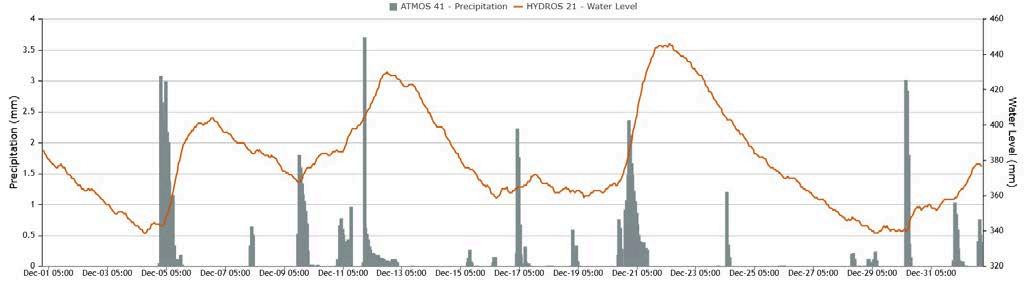
Boornazian has also stressed the importance of patience. As with anything climate-related, trends must be observed and corroborated over time, making findings slow to materialize. That said, even two years into the journey, we are starting to gather fascinating results. At the Pacific Club, it was long believed that the standing water in the basement, sometimes feet deep, was tidal inundation from the nearby harbor. However, after overlaying precipitation and water level data, a clear pattern was discovered. Even rain events with as little as one quarter-inch of accumulation manifested in a
Above: Weather station installed in the back garden at Greater Light
one-inch rise in the standing water. This correlation is further supported by the electrical conductivity (roughly akin to salinity) measurements, which hover around .7 mS/cm, well within the accepted range for potable water. This new understanding of the building is essential to designing targeted and effective preservation strategies to ensure the Pacific Club’s long-term survival.
Our hope is that as we continue to collect data, similar conclusions will reveal themselves for other monitored buildings. The NHA is in a unique position of responsibility as steward to so many of Nantucket’s irreplaceable historic structures. For years now, we have been initiating and engaging in difficult conversations about the realities of protecting this valuable built heritage in the era of rapid climate change. With the implementation of these monitoring systems, we are aiming to take these conversations from the theoretical to the actual by translating our findings into actionable steps and comprehensive strategies for preservation. Because they are extrapolated from rigorous data, we hope that the conclusions we reach can help inform the work of others faced with similar issues, both on island and elsewhere.
Although climate change threatens Nantucket in unique and unprecedented ways, our local shifts exist within a global context--and, thus, any attempts at “solutions,” cannot and should not exist in isolation. Although it may seem counterintuitive, we see the collection of this seemingly minute, microclimatic data as an opportunity to contribute to the observation of larger
trends, the identification of scalable conclusions, and, ultimately, the development of applicable strategies. We look forward to sharing more updates as this project continues to grow and develop.
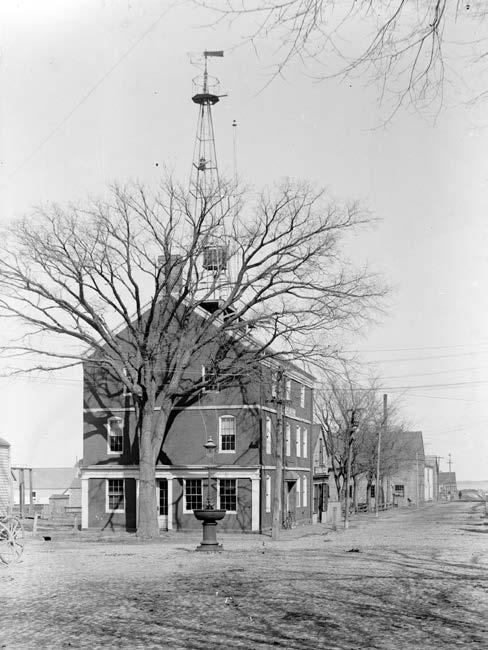
The Pacific Club with weather station instruments on the roof, 1890s, GPN4185.
Millimeters of Standing Water at Pacific Club and Millimeters of Precipitation, December 2024
DIGITIZATION UPDATE
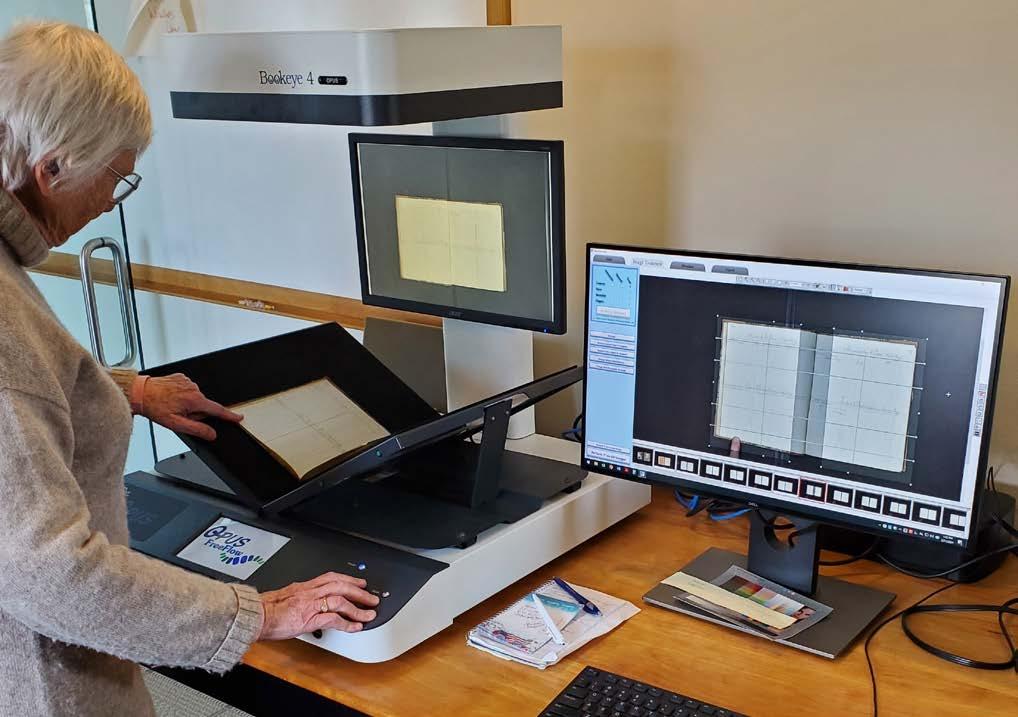
Library Digitization
Manuscript collection
Collections currently in progress
The NHA holds 577 manuscript collections, and as of December 2025, 87 collections have been completely digitized, with five collections currently in progress. In 2025, 2,285 items (33,195 pages scanned, 1.06TB) have been digitized across 26 manuscript collections, including the collections in progress, 22 newly digitized collections, and additional acquisitions to four previously digitized collections.
Artifact Digitization
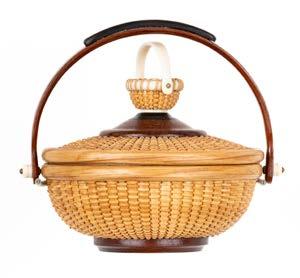
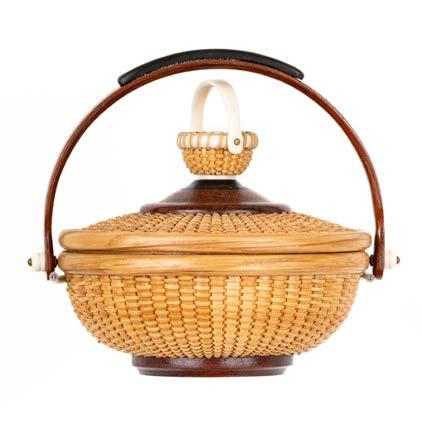
The Nantucket Lightship Basket Museum (NLBM) Collection has now been digitized and is available online through the collections catalog. Containing more than 200 objects, the collection came to the NHA in 2021 as part of the affiliation agreement between the NLBM and the NHA.
2025 Acquisitions to previously digitized collections:
NHA holds
Pagoda basket by Nap Plank. Gift of Susan Zises Green, A2016.3.1.
Transcription Update
The NHA relies on volunteers to transcribe its manuscript collections, increasing their accessibility to the public, with more than 26,000 pages transcribed. In 2025, 114 volunteers transcribed 2,839 pages across seven manuscript collections, completing transcription of the papers of scientist Maria L. Owen and seven whaling logbooks.
Transcription volunteers participate from their homes around the world and are drawn to give their time for a variety of reasons. The transcription team recently interviewed a new volunteer (username: thomasaxel) about his experience transcribing a whaling log:
This work was made possible thanks to visionary gifts from Connie and Tom Cigarran and the HL Brown Jr Family Foundation.
What most piqued your interest as you began to transcribe? I really liked the way it transported me into a whole new world and something I had never seen before.
What did you think of the ship's log you helped transcribe?
I thought it was funny because most days the Captain would say the same thing word for word, but once in a while he would break out into an elaborate story of what happened that day.
What did you find to be most difficult when beginning to transcribe?
The writing and the different sayings took time to pick up on. Also, the many misspellings threw me off at the start.
Did transcription in any way change how you look at Nantucket's history?
It gave me such a cool primary source to see how Nantucket really operated back then opposed to just hearing about it.
What does Nantucket history mean to you?
I have been going to Nantucket for so many years, and therefore, its history is something that surely interests me.
Is there anything about the transcription process that you would like to share with others?
I liked it because it was a fun way to decompress and learn at the same time about something I thought was actually really interesting.
RECENT ACQUISITIONS TO THE COLLECTION
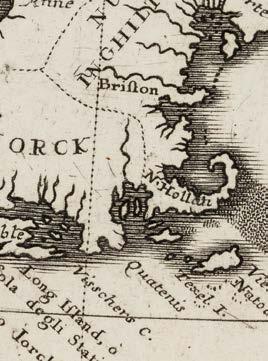
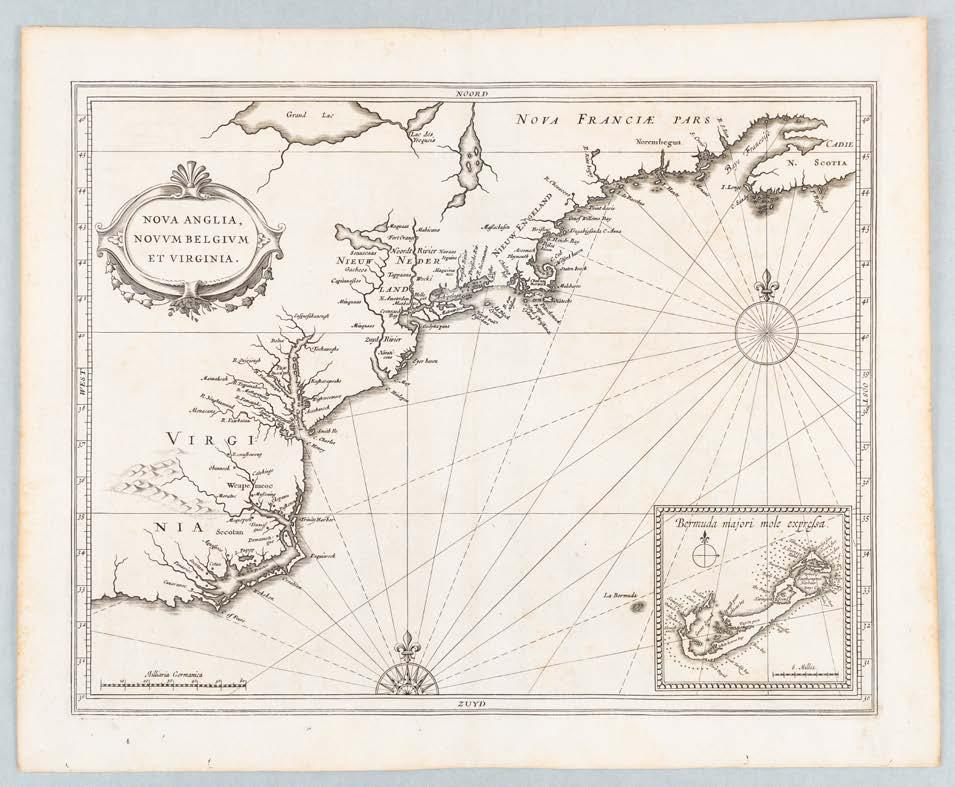
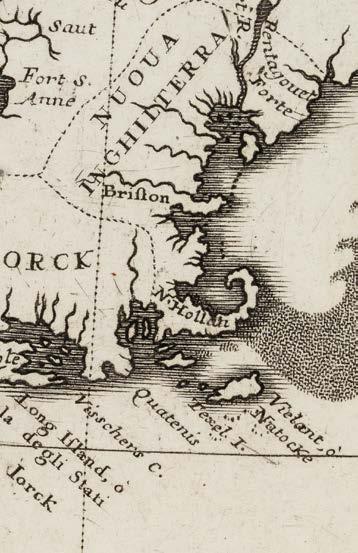
Nova Anglia, Nova Belgium, et Virginia, 1630
Hessel Gerritsz (1581–1632),
Dutch
Hessel Gerritsz was a Dutch engraver, cartographer, and publisher. In 1617, he was appointed as the first official cartographer of the Dutch East Indian Company. In 1628, Gerritsz joined a voyage to Dutch colonies in the Caribbean, which resulted in the production of his seminal maps, including this one, published by Johannes de Laet in the 1630 Beschrijvinghe van West-Indien (Plate 231). This second edition of Beschrijvinghe was published five years after the Dutch acquisition of New Amsterdam and a year after the Company began an active campaign to boost colonization. Although Gerritsz never visited the colonies depicted here, direct correspondence with colonists at both Virginia and Plymouth informed his mapping of the two regions.
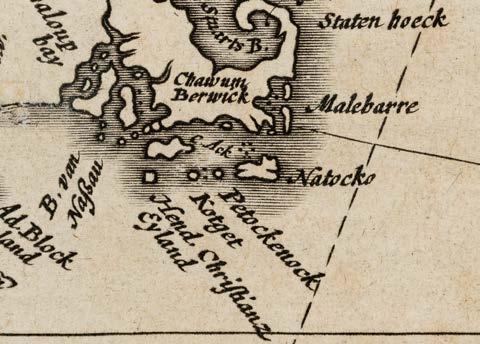
Typically regarded for being the first accurate depiction of the East Coast and the first printed map to use the names Manbattes (Manhattan) and N. Amsterdam (New York). For the NHA, this map is also notable for its naming of Natocko (Nantucket).
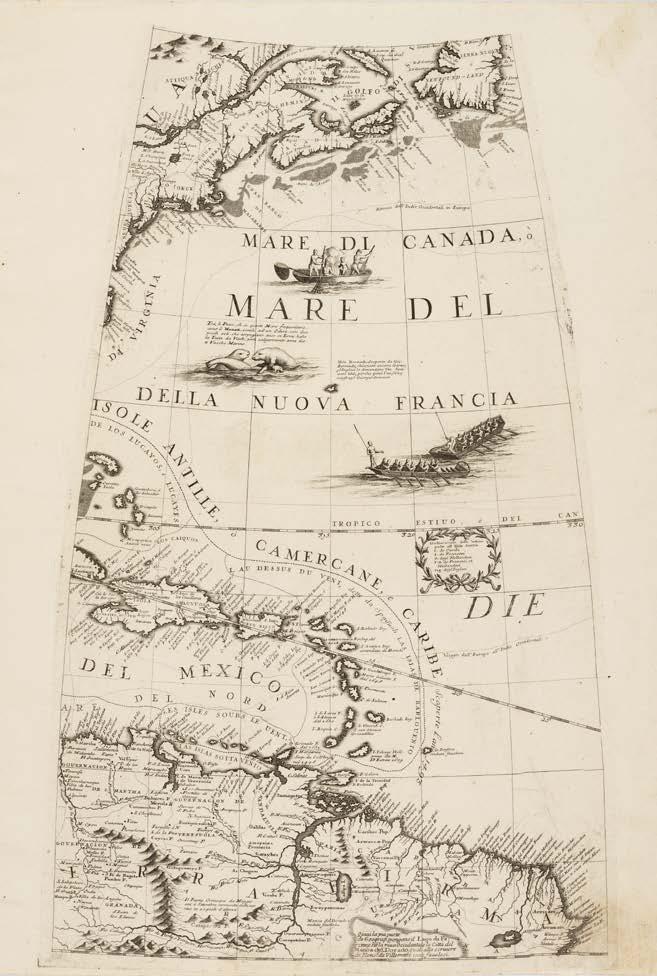
Eastern North America and Caribbean globe gore, 1688 (engraved), 1697 (printed)
Vincenzo Maria Coronelli (1650–1718), Venetian
Vincenzo Maria Coronelli was a notable Venetian friar, cartographer, and cosmographer who is best known for his globes. In 1684, he made a pair of terrestrial and celestial globes for King Louis XIV of France that were twelve feet in diameter, the largest at the time. After completing the globes, he founded the Accademia Cosmografica degli Argonauti in Venice, where he reproduced the globes at a three-and-a-half-foot scale in sections known as gores, tapered strips of paper that serve as the building blocks for quickly constructing a globe.
This engraving is from the terrestrial globe and was masked off for inclusion in one of two bound volumes: the Libro dei Globi, a compilation of all Coronelli’s gores, and the Isolario, the second volume of one of his general atlases.
RECENT ACQUISITIONS TO THE COLLECTION
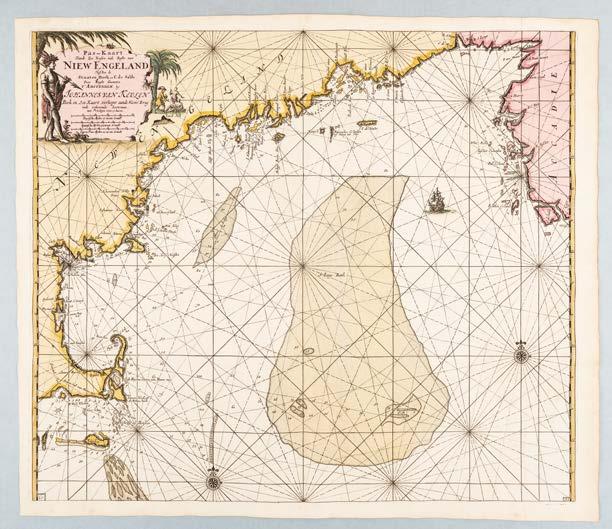
Pas-Kaart, Vande Zee Kusten inde Boght van Niew Engeland…, 1709
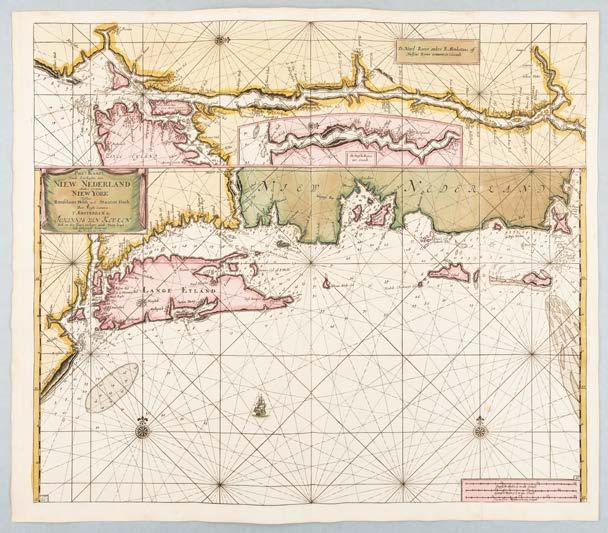
Pas-Kaart Vande Zee Kusten van Niew Nederland…, 1709
Johannes and Gerard van Keulen (1654–1711, 1678–1727), Dutch
In the seventeenth and eighteenth centuries, Amsterdam was at its height as a mercantile and shipping power, leading to its development as the European center of marine cartography. Within this context, Johannes van Keulen established his publishing firm In de Gekroonde Lootsman (In the Crowned Pilot) in 1678, which became the largest private hydrographic chart-publishing agency in the world.
In 1680, van Keulen published the first part of his Zee-Atlas, containing forty charts engraved by Claes Janszoon Vooght. Over the years, the atlas expanded to five parts and was continually published until 1734.
Gerard van Keulen gradually succeeded his father, beginning in 1704. Gerard was recognized for his work as an engraver and chart-maker, eventually appointed Hydrographer to the Dutch East India Company in 1714. Under his leadership, existing charts in the Zee-Atlas were revised and improved, and the 1709 edition of the atlas was expanded to 185 charts.
This pair of adjacent charts, with original color from the 1790 edition of Zee-Atlas, show early hydrographic detail surrounding Nantucket. Early sea charts are inherently rare; they were frequently damaged during their use aboard ships or destroyed as newer versions became available. Many early charts available today come from copies that were kept safely in private libraries at home.
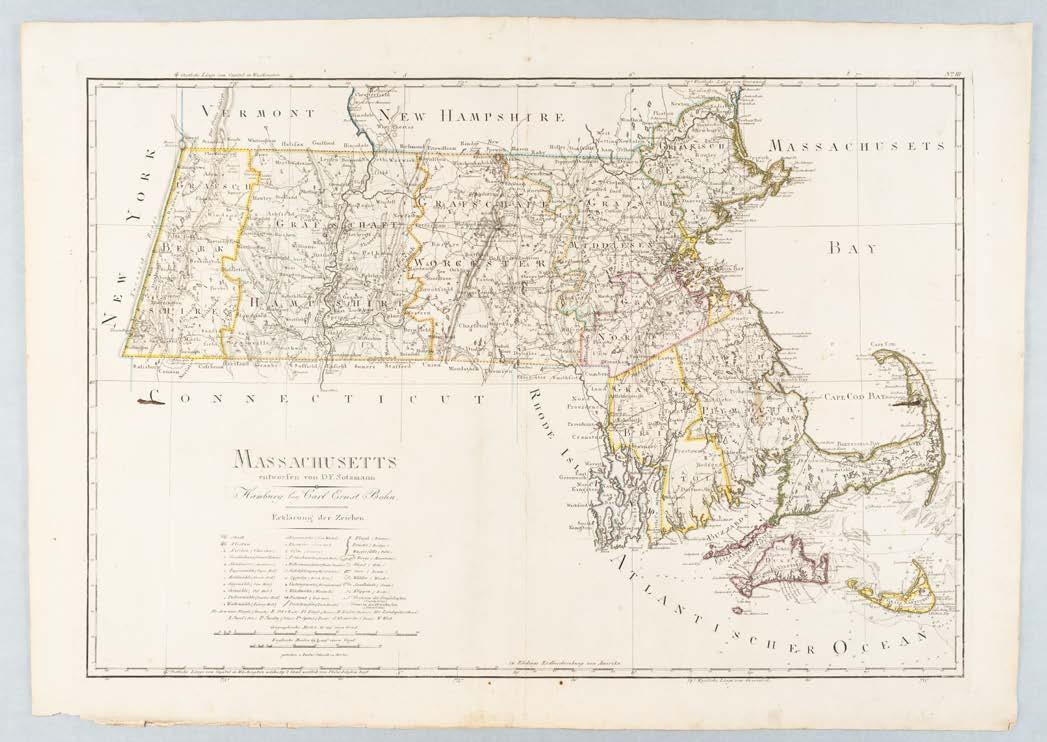
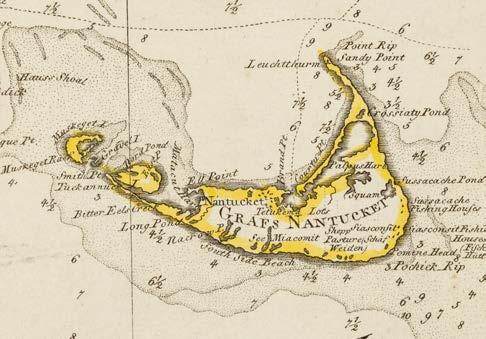
Daniel Friedrich Sotzmann was a German geographer, surveyor, and draftsman as well as one of the most important cartographers of his time. He completed Massachusetts as one of ten maps for an intended atlas to accompany Christoph Daniel Ebeling’s Erdbeschreibung und Geschichte von Amerika. The atlas was never completed, but the project resulted in some of the period’s most accurate and detailed maps of the newly formed United States. In addition to the naming of ponds and beaches, the map includes the Siasconsit Fishing Houses (Fischer Hütten) and Leuchtthurm (Brant Point Lighthouse).
NHA Reinvigorates Research Fellows Program
The NHA is excited to announce the appointment of Judith N. Lund and Mary Lynne Rainey as Research Fellows. Their appointment is part of an effort to reinvigorate the NHA’s Research Fellows program, which recognizes scholars whose work increases understanding of Nantucket history.
“We are thrilled to prioritize this program and re-engage with our existing fellows, as well as welcome new faces. These individuals share a wealth of knowledge about Nantucket’s history, and we feel honored to be able to recognize these individuals in this way.” Said Niles Parker, NHA Gosnell Executive Director.
Established in 1996, the NHA Research Fellows program honors individuals for their significant contributions and service to the Nantucket Historical Association in fields of research directly related to the historical collections and
properties of the NHA, or through independent research that substantially augments the understanding of the history of Nantucket. The NHA currently has twenty-eight research fellows, including Nathaniel Philbrick, Frances Karttunen, Betsy Tyler, Barbara White, and many others who have made significant contributions to sharing the island’s history.
As part of the reinvigoration of this program, the NHA will be working with its Research Fellows to share their research findings more openly through public lectures and research articles, as well as working to identify new projects to increase the NHA’s storytelling across its offerings.
Both new Fellows, Lund and Rainey, will be honored at the NHA's annual meeting in July 2026 and will give public programs about their work during the 2026 season.
Judith N. Lund
Judith N. Lund is one of the leading scholars of North American whaling. From 1985 to 1998, she was the curator of the Old Dartmouth Historical Society/New Bedford Whaling Museum and is a long-time member and former chairperson of the Dartmouth Historical Commission.
Lund was the lead historian and principal organizer of the American Offshore Whaling Voyages (AOWV) and the American Offshore Whaling Logbook (AOWL) databases, which consolidate and synthesize information for all known American offshore whaling voyages undertaken between 1667 and 1927. These two datasets are the foundation of Whaling History, an online initiative that provides free public access to historical data and links to resources documenting the historic whale fishery. Led by Lund, the project brings together the collections, data, and expertise of three participating institutions: the New Bedford Whaling Museum, the Mystic Seaport Museum, and the Nantucket Historical Association.
Lund’s publications include Burials and Burial Places in the Town of Darmouth, Massachusetts (1997); Whaling Masters and Whaling Voyages Sailing from American Ports (2001); and, as co-author, The Ports of Old Rochester: Shipbuilding at Mattapoisett and Marion (2004); American Offshore Whaling Voyages, 1667 to 1927, Volumes 1 &2 (2010); and Ship Models: Art and Artifacts from the New Bedford Whaling Museum (2013).
Judith N. Lund holds a Master’s degree from Yale University and a Bachelor of Arts from Wellesley College.
Mary Lynne Rainey
Mary Lynne Rainey is a professional archaeologist who has managed cultural resource projects across New England and the Middle Atlantic region since 1979. She has directed more than twenty projects on the island of Nantucket and is co-editor of Nantucket and Other Native Places: The Legacy of Elizabeth Alden Little (2012). During the last decade, she has generously assisted the NHA in a number of projects related to the association’s archaeology collections and its interpretation of Wampanoag history.
Rainey is currently an Environmental Protection and Historic Preservation Specialist at the Federal Emergency Management Agency. Previously, she served as Principal Senior Archaeologist at Richard Grubb & Associates, Inc., where she managed regulatory compliance projects across the Northeast, Appalachia, and the Mid-Atlantic. For over seventeen years, Rainey was the Principal Investigator at The Public Archaeology Laboratory, Inc., where she led numerous archaeology projects on the Cape and Islands and throughout New England. Rainey holds a Master's degree in Anthropology from the University of Connecticut and a Bachelor of Arts in Anthropology and Art from West Chester University of Pennsylvania.
NEWS, NOTES & HIGHLIGHTS
Fall Program Highlights
NHA on the Road
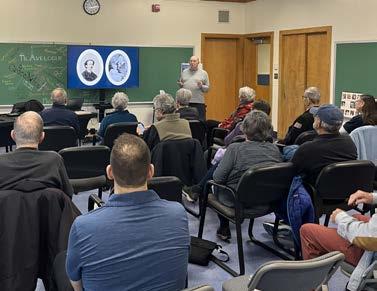
For the past five years, NHA On the Road has continued its effort to bring the island’s history directly to Nantucket’s senior community, but this November was our most rewarding month yet. A new presentation on the history of Tuckernuck drew record-setting enthusiasm leading to the highest turnout for a single talk and the greatest overall turnout the program has had in a single month. During visits to Sherburne Commons, the Homestead, Landmark House, Saltmarsh Senior Center, and Our Island Home, nearly 70 seniors joined us to explore the history of Tuckernuck. As the NHA On the Road program continues, we look forward to offering an even wider range of historical talks, hands-on craft sessions, and partnerships with fellow Nantucket non-profits.
NHA Overseas
Mindful History
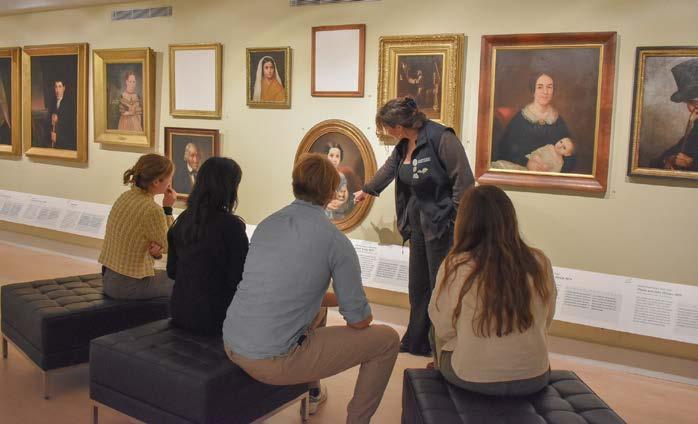
As Mindful History enters its third full year of programming, the Learning, Engagement, and Experience team have enhanced, refined, and reconsidered what these programs mean for the community. The flagship program, Mindful History: Connecting to Art and History through Conversation, invites participants to engage with art and historical objects through guided, reflective discussion. Mindful Wellness remains a core component, offering Qi Gong and Yoga Nidra sessions that encourage calm and connection. Mindful Memories welcomes those with cognitive needs and their caregivers, to engage with history through music, art, and discussion. On Sensory Saturdays, the museum opens an hour early for individuals with sensory or special needs. By providing a quieter and more comfortable environment for those who are sensitive to the crowds and hubbub that can occur during normal operation, the NHA aims to reduce barriers and ensure that all visitors and caretakers feel welcome and able to enjoy what the Whaling Museum has to offer.
The NHA proudly works in partnership with Fairwinds, Palliative & Support Care of Nantucket, and S.T.A.R, who continue to help these programs flourish.
Throughout 2025, the NHA Overseas program has continued to grow. As a companion to NHA On the Road, NHA Overseas sends interpreters and artifacts to senior centers across Cape Cod. This year, we introduced a new presentation about the Great Fire of 1846, which was the first presentation specifically designed for the program. This new talk used a whole new slate of artifacts and historic narratives to explore how nineteenth-century firefighting practices evolved and how they ultimately failed to contain the Nantucket blaze in 1846. This year, the NHA made twelve visits to senior centers and spoke to over 200 seniors. We are on track to visit all fifteen senior centers across Cape Cod in the upcoming seasons and will continue to develop new programming as we move forward
Exhibition Closing Party
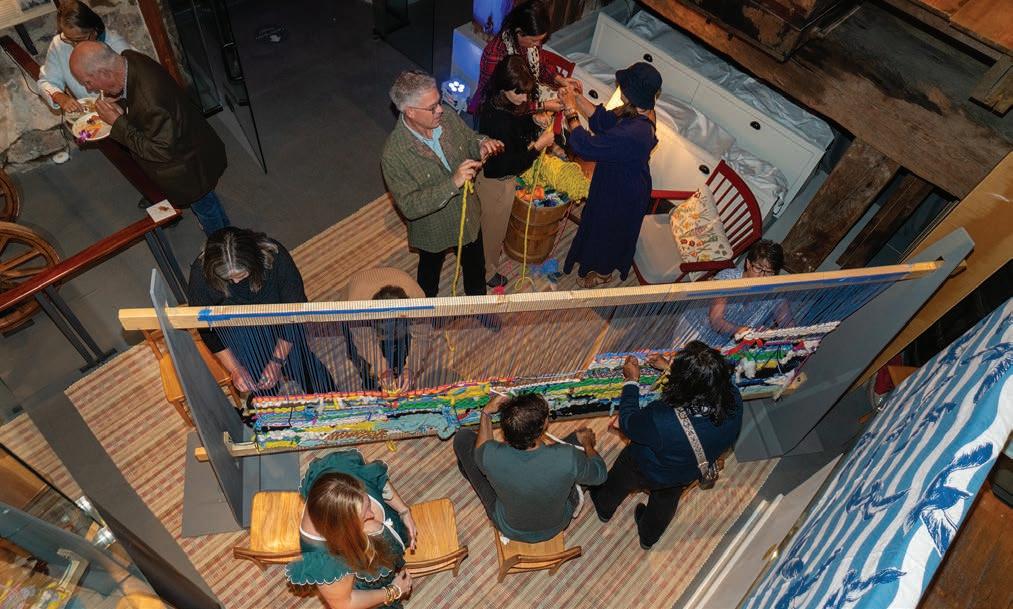
Shortly before the closing of Behind the Seams: Clothing and Textiles on Nantucket, the NHA hosted an exhibition celebrating the history of clothing and textiles on Nantucket. Encouraging guests to wear “iconic Nantucket attire,” nearly 150 guests came to the museum to enjoy gallery tours, weaving demonstrations and live music; bid on handmade Community Quilt panels; and weave on the NHA’s community loom. It was the final public event to celebrate the success of the summer show.
Museum in My School
The Museum in My School program introduced a new learning experience to classrooms on Nantucket this fall. The new lesson, titled What’s in a Name? Exploring Wampanoag Presence on Nantucket, introduced students to the island’s deep Indigenous history through an exploration of Wampanoag place names on Nantucket. Rooted in scholarship around linguistics and archeology, the lesson encouraged students to consider how language shapes our understanding of place and community. The program also covered the contemporary importance of preserving Indigenous languages, including a discussion of the Wopanaak Language Reclamation Project, a non-profit dedicated to preserving and revitalizing the Wampanoag’s ancestral language.
Festival of Trees Community Nights
This December, Community Night at the Festival of Trees offered free admission and extended evening hours for members of the community to enjoy a holiday tradition. Since 1994, the Festival of Wreaths has transformed the museum into a seasonal showcase of trees decorated by local businesses, nonprofits, artists, schoolchildren, and community members, each bringing their own flair to this beloved tradition. Community Night invited guests to enjoy the displays at their own pace, while also taking in lively and festive performances, including a cappella singing, line dancing, and tap dancing by local groups, adding extra cheer to an already festive evening.
NEWS, NOTES & HIGHLIGHTS
Properties
Research Library
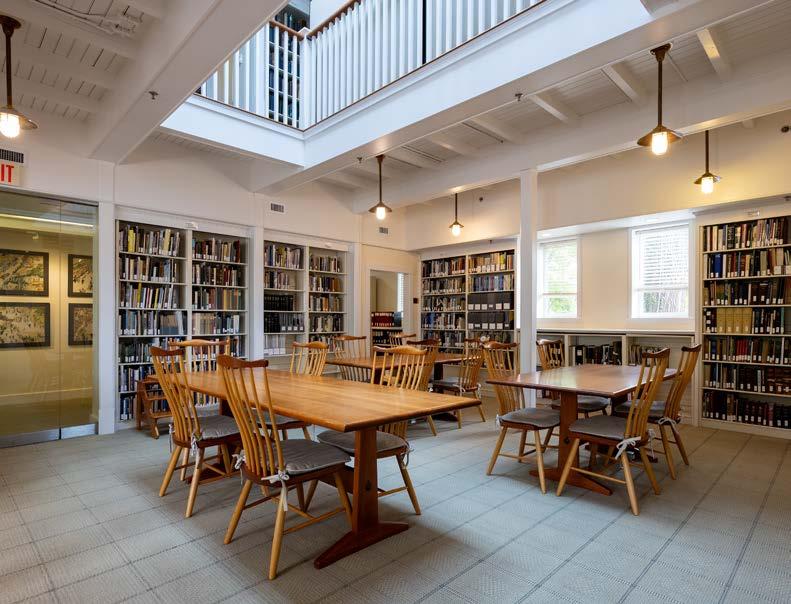
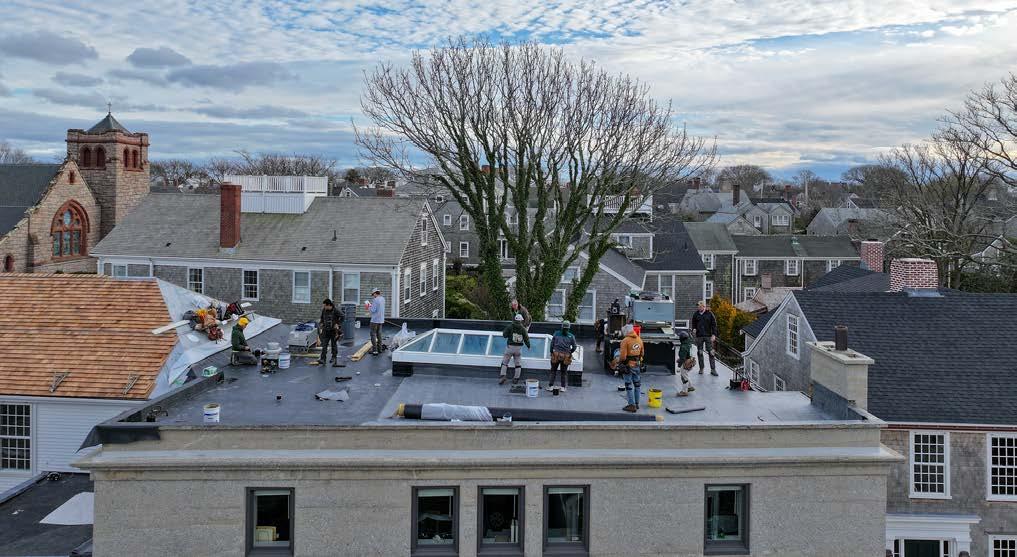
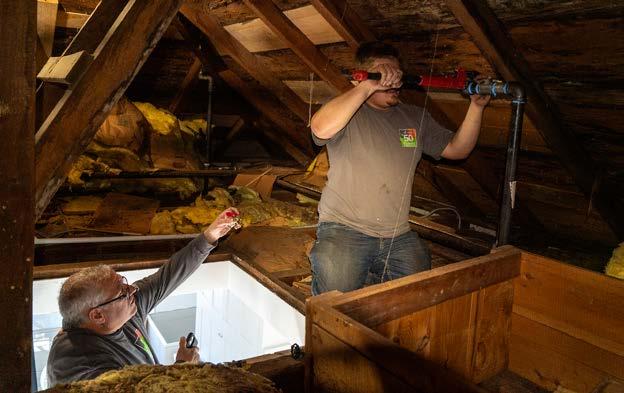
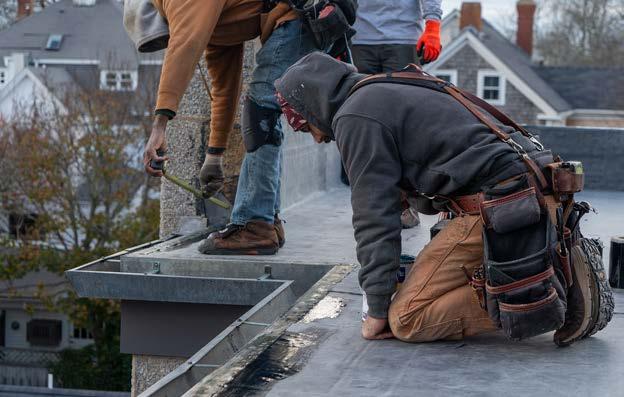
The Research Library recently received a muchneeded refresh to its rooftop. Over the course of two days, the team from James Lydon, Sons & Daughters, expertly installed a new rubber membrane, ensuring the building’s continued protection from the elements. Once that was completed, Grodsky refined the placement of the rooftop air-handling condensers, improving the efficiency of their lines and overall operation. Kenny Howard Electric partnered with Grodsky to complete the electrical work, bringing this thoughtful upgrade to a smooth and successful close.
Greater Light
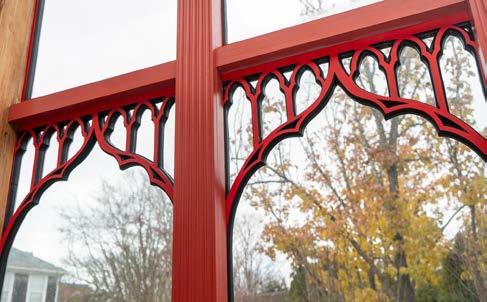
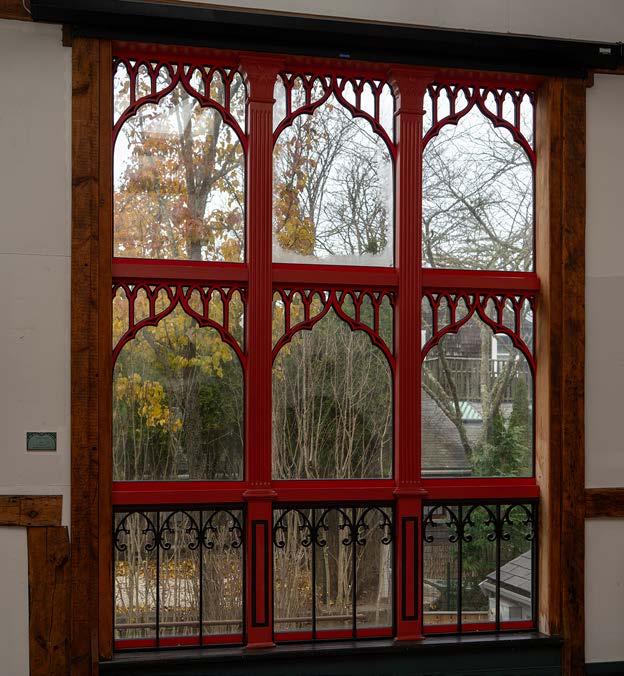
The restoration of several key architectural elements at Greater Light continued this fall. In November, the gothic windows, expertly completed by Ben Moore, were installed with the assistance of local builder Karl Phillips. Moore also finished the restoration of the leaded bow windows, which were set in place in December, returning these distinctive features to their rightful prominence.
Work on the property’s historic gates advanced as well. Geoff Smith transported them to Powder Pro, a New Bedford-based powder-coating firm, for a full restoration worthy of the Monaghan sisters’ original vision. The process began with sandblasting, which removes the old coating and creates a textured surface that allows the new finish to adhere properly. As expected, areas of rust were revealed during this stage and required careful attention from a metal conservator. Once stabilized, the gates moved on to the powder-coating room, where an electrostatic powder was applied to the negatively charged metal. They were then cured in an oven, cooled, wrapped for protection, and transported back to Greater Light, restored with care and ready to welcome visitors once again.
Reinstalled gothic windows at Greater Light after restoration.
Work underway this past December at Research Library.
91 Bartlett Road
In June 2025, the NHA acquired 91 Bartlett Road, a property that has already begun to play a meaningful role in supporting the Association’s work. Since the purchase, the facilities team has been thoughtfully assessing how best to utilize both the interior and exterior spaces.
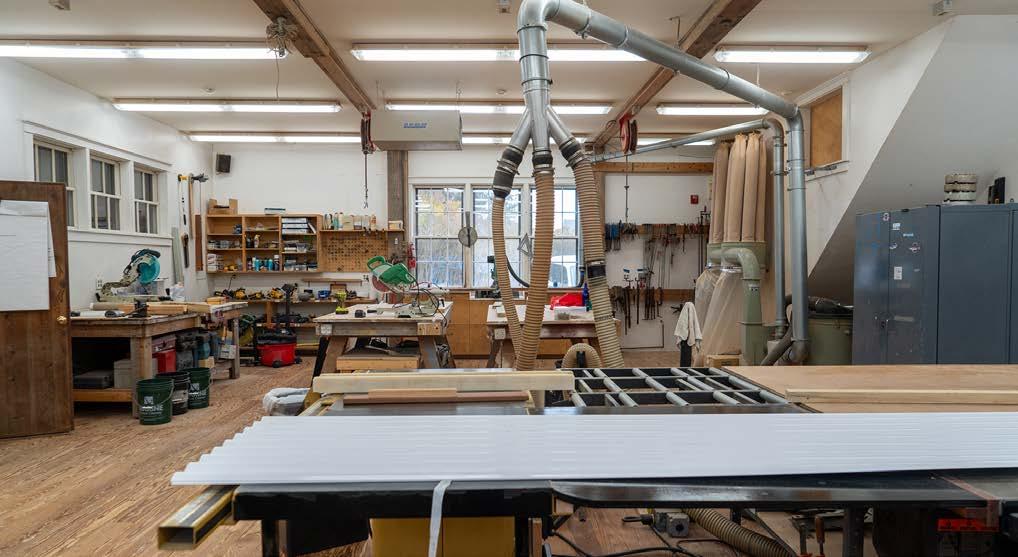
The lower level now serves as an active hub for decorative arts programming, hosting woodworking, letterpress, paper marbling, and large-scale basketmaking classes, with blacksmithing taking place outdoors. Materials for many of these traditional crafts will be stored on-site, allowing for smoother operations and expanded offerings.
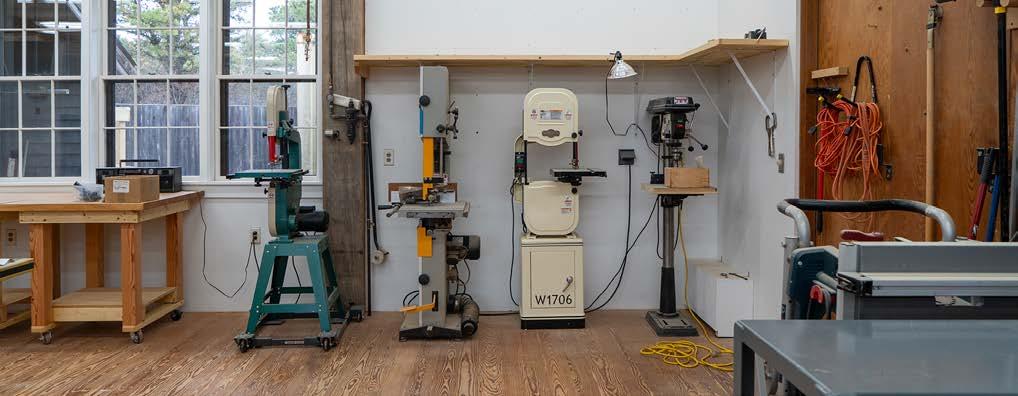
Formerly owned by a building company, the first floor is equipped with state-of-the-art equipment, enabling staff to undertake a range of fabrication and repair projects in-house. On the second floor, existing office space is being complemented by the renovation of an adjacent unfinished storage area, a project underway in partnership with Barber & Sons.
We are also evaluating future housing options for the property, with plans to connect to the town sewer system as part of its continued development over the next two to three years. Together, these improvements are helping transform 91 Bartlett Road into a flexible, well-equipped resource that will support the NHA’s programs and preservation work for years to come.
Whaling Museum Candle Factory
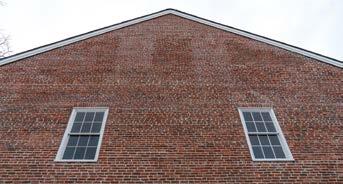
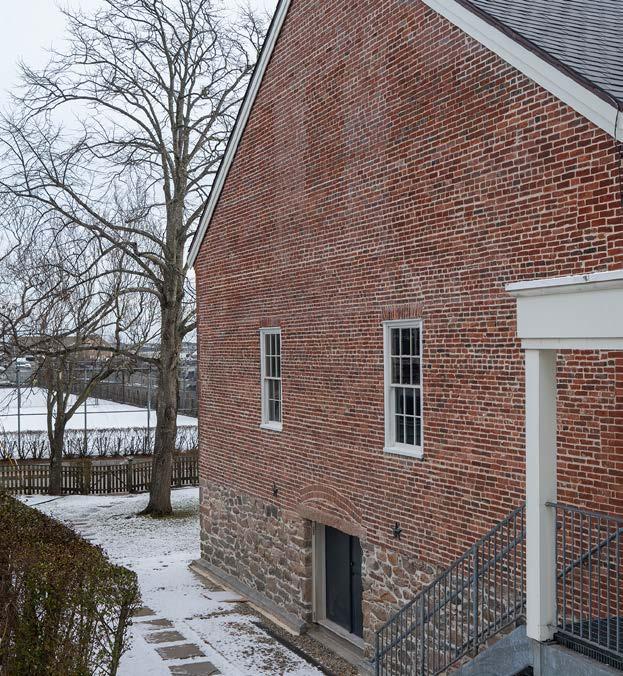
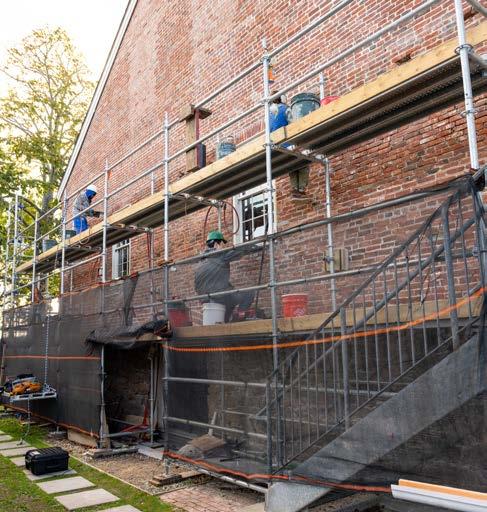
ICR-ICC returned this fall to complete the repointing of the north wall of the Candle Factory. Arriving in early October, their team spent seven weeks carefully restoring the historic masonry. Built in 1847, the wall required attention to ensure a stable interior climate for the collections housed within, as well as to safeguard the long-term integrity of the structure itself. The completed work reflects both meticulous craftsmanship and a continued commitment to the preservation of this remarkable building.
Work room at 91 Bartlett Road, outfitted for hosting decorative arts workshops.
Completed Candle Factory North Wall, January 2026.
NEWS, NOTES & HIGHLIGHTS
4 Gates
Painted all iron work plus side iron gate
Repainted all trim
Replaced gothic windows
Replaced bow windows
Painted Alcove area
Installed Irrigation
4 Whalers
4 Repainted trim and fixed rotting trim work 4 Replaced/added gutters
89/91 Bartlett Road
4 Received site plan from Gryphon Architects 4 Moved woodshop from 89 to 91 Bartlett 4 New Heating System 4 Updated electrical
Installed fiber 4 Updated the woodshop area 4 Added kitchenette
Liberty Street
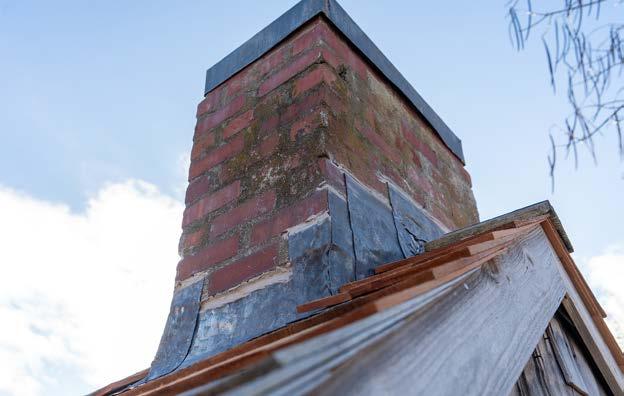
Repainted trim work 4 Repainted front entry deck 4 Cleaned chimney 99 Main Street 4 Repainted areas in need 4 Replaced radiators 4 Replaced outlets in the apartment
Cleaned chimney 4 Repainted front fence
NEWS, NOTES & HIGHLIGHTS
International Training Program
2025 Program Recap
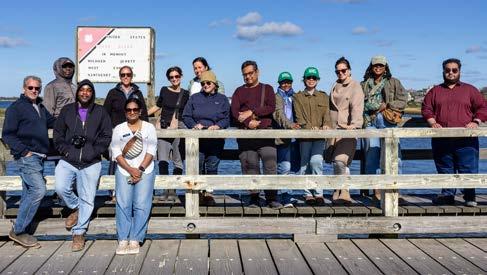
In late October, the NHA concluded the second annual International Training Course on Reducing Risks and Increasing Resilience for Sustainable Built Heritage. This year, the program hosted eleven practicing professionals from around the world for four weeks of intensive study on Nantucket.
The rigorous curriculum, developed in partnership with ICR-ICC and ICCROM and generously supported by Remain, addressed pressing questions about the preservation of historic sites and structures under increasingly hostile climate conditions. Through a combination of classroom and field work, participants developed tactics for assessing risk, designing mitigation strategies, and responding to disasters at at-risk heritage sites.
The program featured thirty-four speakers representing both local and international organizations, including the Town of Nantucket, the Cape Cod Commission, Woodwell Climate Research Center, the National Parks Service, and World Monuments Fund.
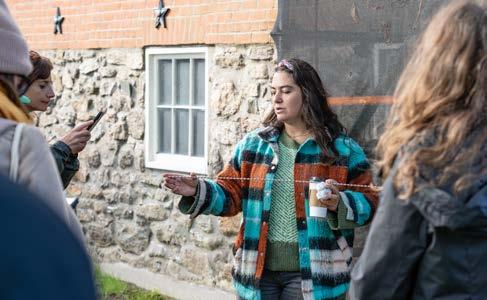
For field work, participants practiced the application of new concepts and methodologies with two case study projects. The first, conducted individually, focused on a site from their home country. The second, worked in teams, addressed three historic brick buildings in downtown Nantucket: the Hadwen & Barney Oil and Candle Factory, the Pacific Club, and the Thomas Macy Warehouse. In both cases, participants were asked to conduct conditions assessments, analyze micro- and macro-climate data, and conduct further research to
identify primary risks and advise on potential mitigation strategies. The collaborative project drew on the varied expertise of the cohort, which included building conservators, geographers, archaeologists, preservation architects, civil engineers, and a fine arts conservator, while the individual project provided opportunities to practice and fine-tune several different evaluation modalities.
The program concluded with final presentations in the Whaling Museum’s Gosnell Hall, followed by a certificate ceremony and closing dinner at Lemon Press.
Since its inception in 2024, the program has brought twenty-two heritage professionals to Nantucket from eighteen countries: Antigua & Barbuda, Australia, Bangladesh, Barbados, India, Italy, Iraq, Jamaica, Japan, Kenya, Kosovo, Poland, Portugal, Saudi Arabia, Spain, South Africa, Thailand, and the United States.
C.L.W. French Society
C.L.W. French Society
The NHA circle of leadership support
The Nantucket Historical Association established the C.L.W. French Society to recognize individuals who contribute to the NHA at the highest levels.
Named after Miss Caroline L.W. French of Boston, one of the earliest major donors to the NHA. Miss French was one of the benefactors of the NHA’s purchase of the Quaker Meeting House in 1894, under the condition that the Association raise a reserve to purchase the Old Mill should it come on the market. By helping to secure two of the NHA’s most iconic properties, Miss French’s support is felt more than a century later.
Through this prominent giving society, the board of trustees acknowledges the generous total annual giving by our top individual donors to the NHA’s operations.
C.L.W. French Society members contribute $5,000 or more annually to the annual fund, membership, fundraising events, as well as for exhibitions, educational programs, and other special initiatives.
For more information about the C.L.W. French Society, please contact the Development Department at (508) 228-1894 or giving@nha.org.
Qualifying donors are entitled to the following benefits:
$5,000 – $9,999
• A family-level membership
• Unlimited guest passes
• Invitations to exclusive C.L.W. French events
• VIP early entry to Exhibition Openings
• Recognition on C.L.W. French Society donor board
• C.L.W. French Society merchandise
$10,000 – $24,999
• All above benefits
• Invitation to an intimate coffee and conversation with NHA directors
$25,000 – $49,999
• All above benefits
• Private tour or Decorative Arts workshop for up to 6 people, tailored to your interests
$50,000 – $99,999
• All above benefits
• 10% off an NHA event rental
$100,000 and Above
• All above benefits
• Call ahead parking spot for general admission, programs, and special events