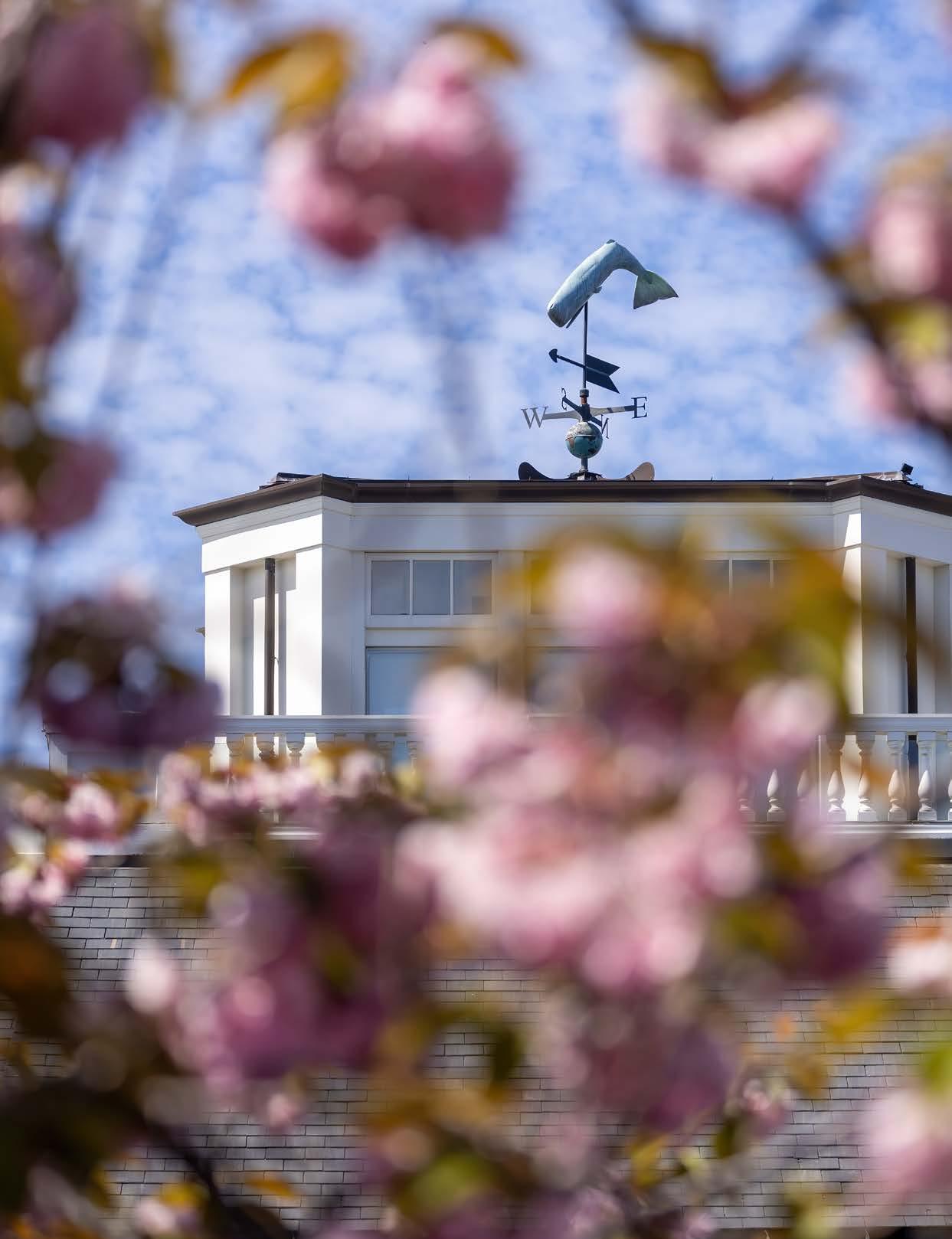
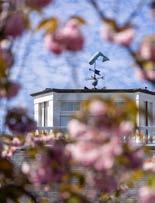
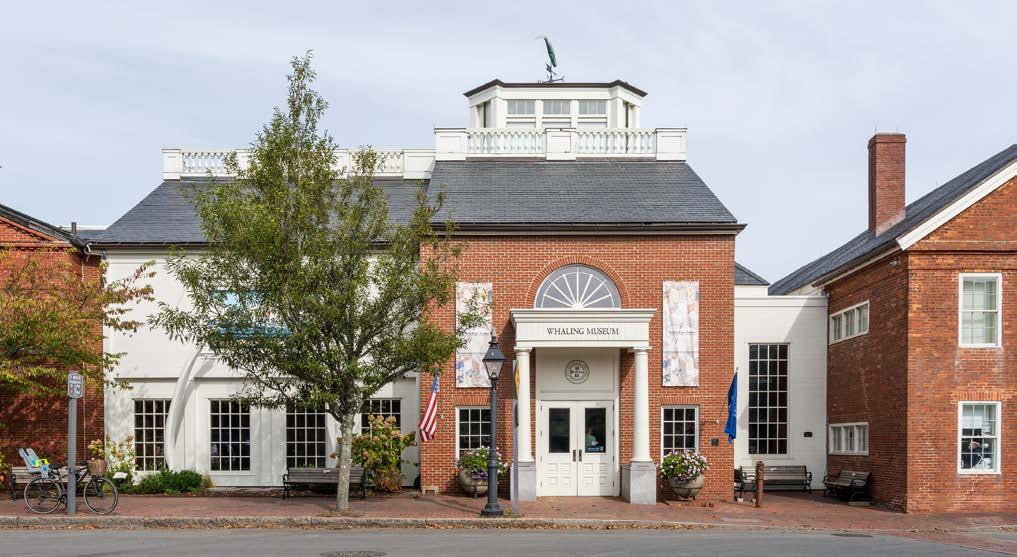
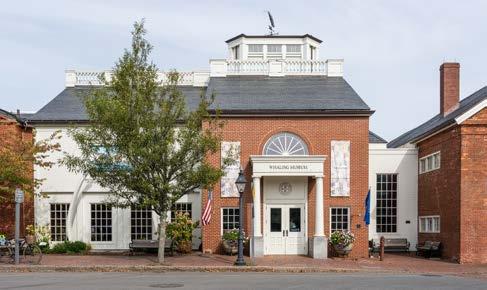
Cover: Spring cherry blossoms outside the Whaling Museum by Bill Hoenk Photography.
Spring Forward: A Look at the NHA Season Ahead
FROM THE BOARD PRESIDENT AND GOSNELL EXECUTIVE DIRECTOR
As the cover image suggests, Spring has finally arrived on Nantucket, and a new season is very much underway. Our featured exhibition, The Wider World & Scrimshaw, opened in April, giving visitors the opportunity to view the exhibit a month earlier than our typical late May opening.
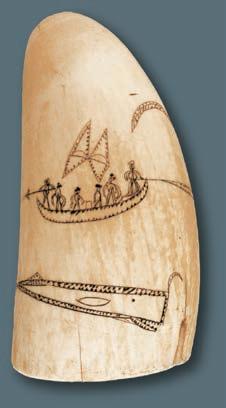
The NHA is the first venue to host the traveling exhibition, The Wider World & Scrimshaw, organized by the New Bedford Whaling Museum, with support provided by Art Bridges. This exhibit showcases over 300 objects and sets scrimshaw—the folk art made by whalers on the body parts of whales—in conversation with carved decorative arts and material culture made by Indigenous community members from across Oceania, the Pacific, and the Arctic.
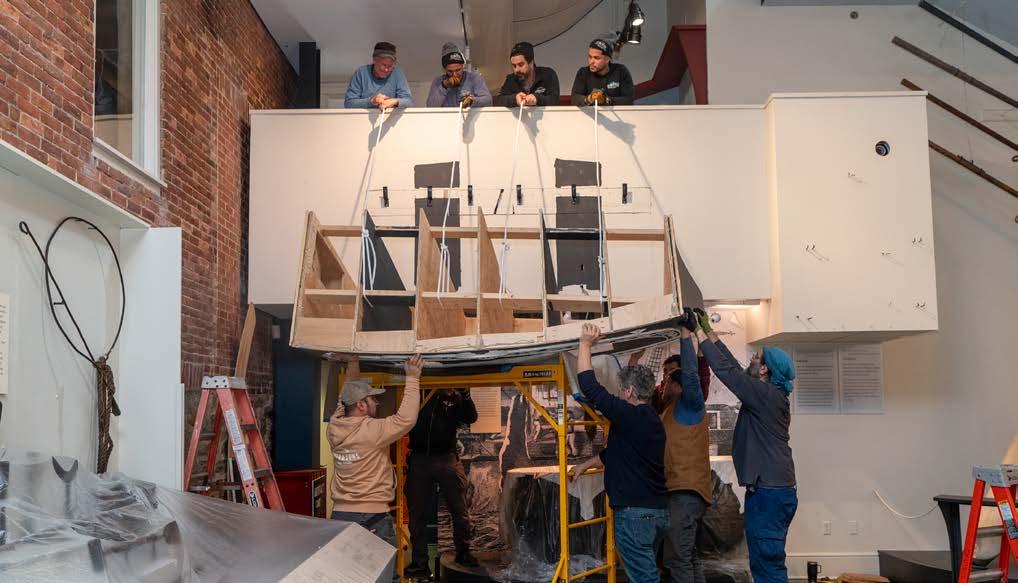
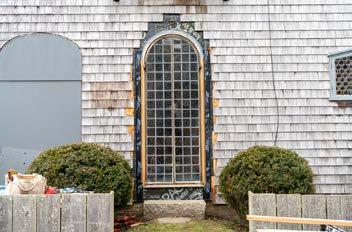
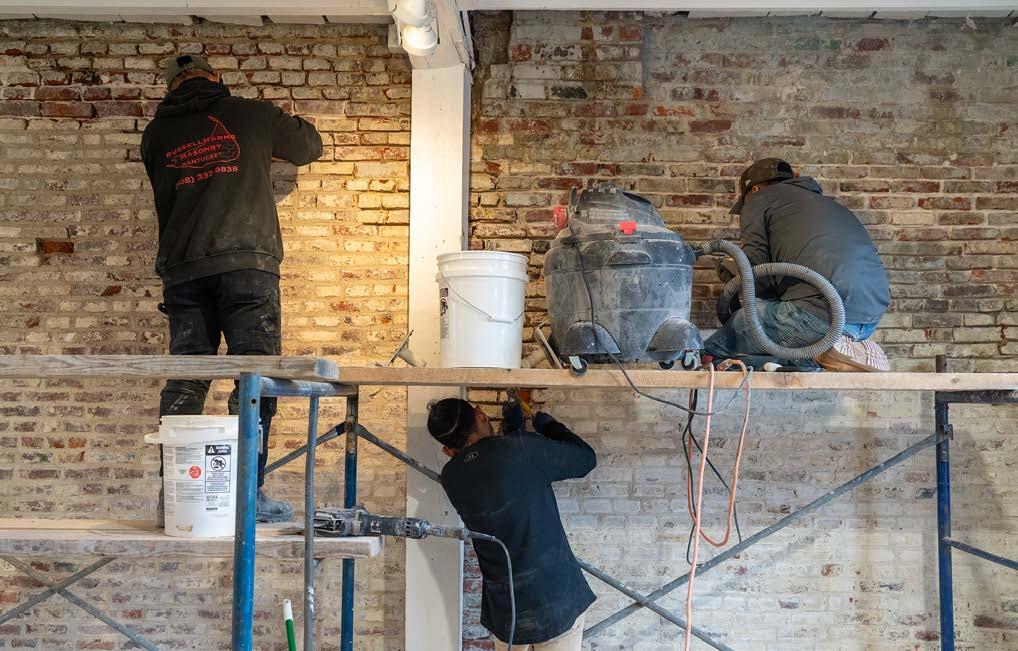
Preparation for this early opening was not the only activity underway at the museum during the winter, as work continues on our new fine arts gallery expansion. Enjoy a few more updates on this exciting project and its progress later in this issue.
Our Learning, Engagement, and Experience team is also hard at work creating programming and experiences around this year’s exhibition theme, so stay tuned for many offerings to mark on your calendar, including the return of our third annual Community Day this August (save the date for Wednesday, August 5).
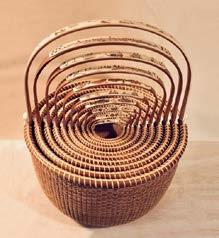
We also want to take a moment to highlight our Heritage Craft program offerings, which are thriving and provide opportunities for all audiences to learn and engage with handmade experiences. From the iconic craft of lightship baskets to newer offerings like paper marbling, we are excited to put even more of a spotlight on preserving these art forms for generations to come.
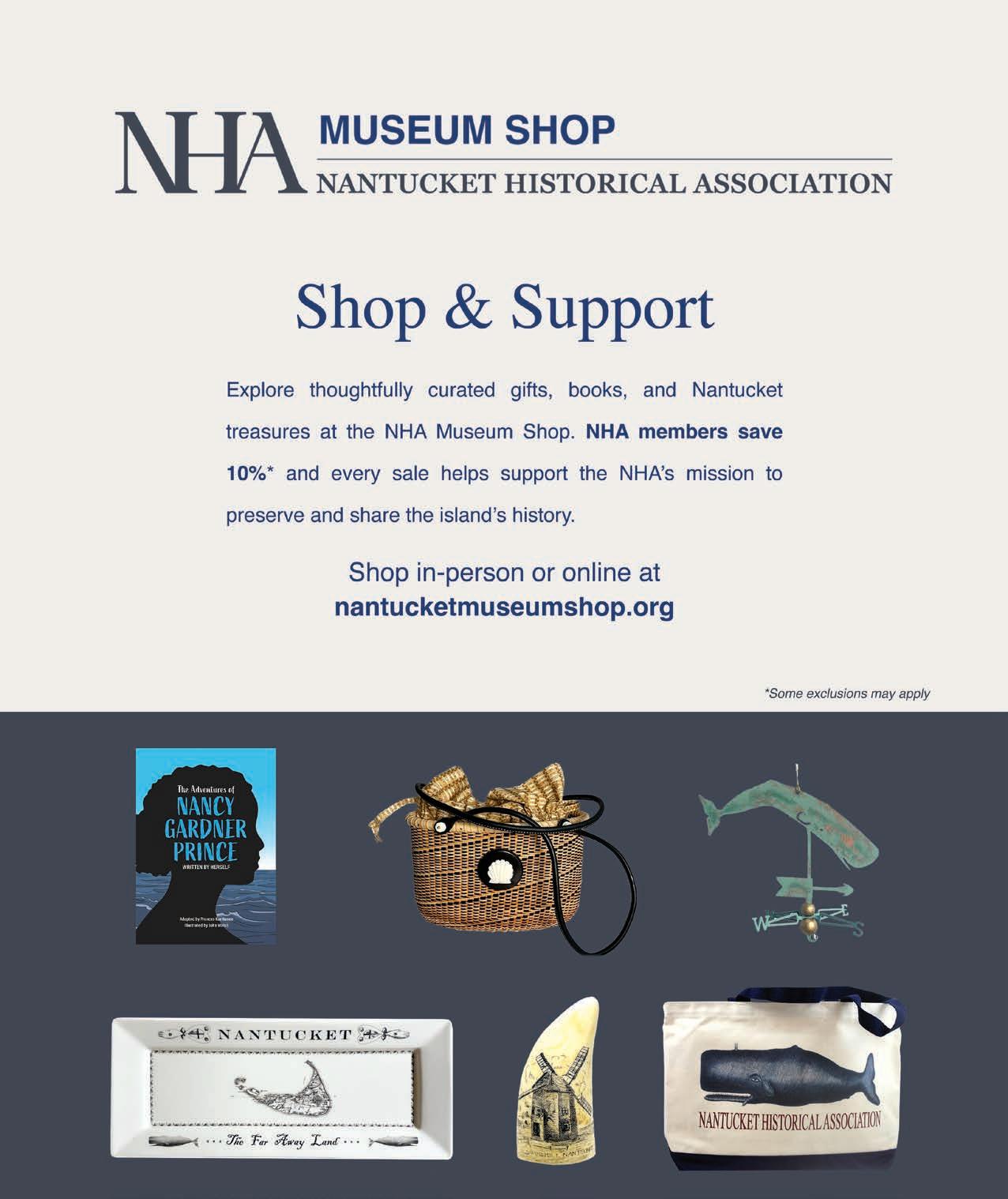
This summer will also be a celebration of three important publications we have been developing. From The Adventures of Nancy Gardner Prince, which was released
this past fall, and two new publications coming this summer: Jump on Board, A Magical Voyage to Nantucket; and Nantucket’s California Adventure, An Island Community Goes To The Gold Rush, 1848-1860. With these publications reaching different audiences, from children to adults, the NHA is proud to publish books that engage all readers and explore different elements of Nantucket’s heritage. Please be sure to read more about each book in this issue and grab a copy in person at the Museum Shop or online!
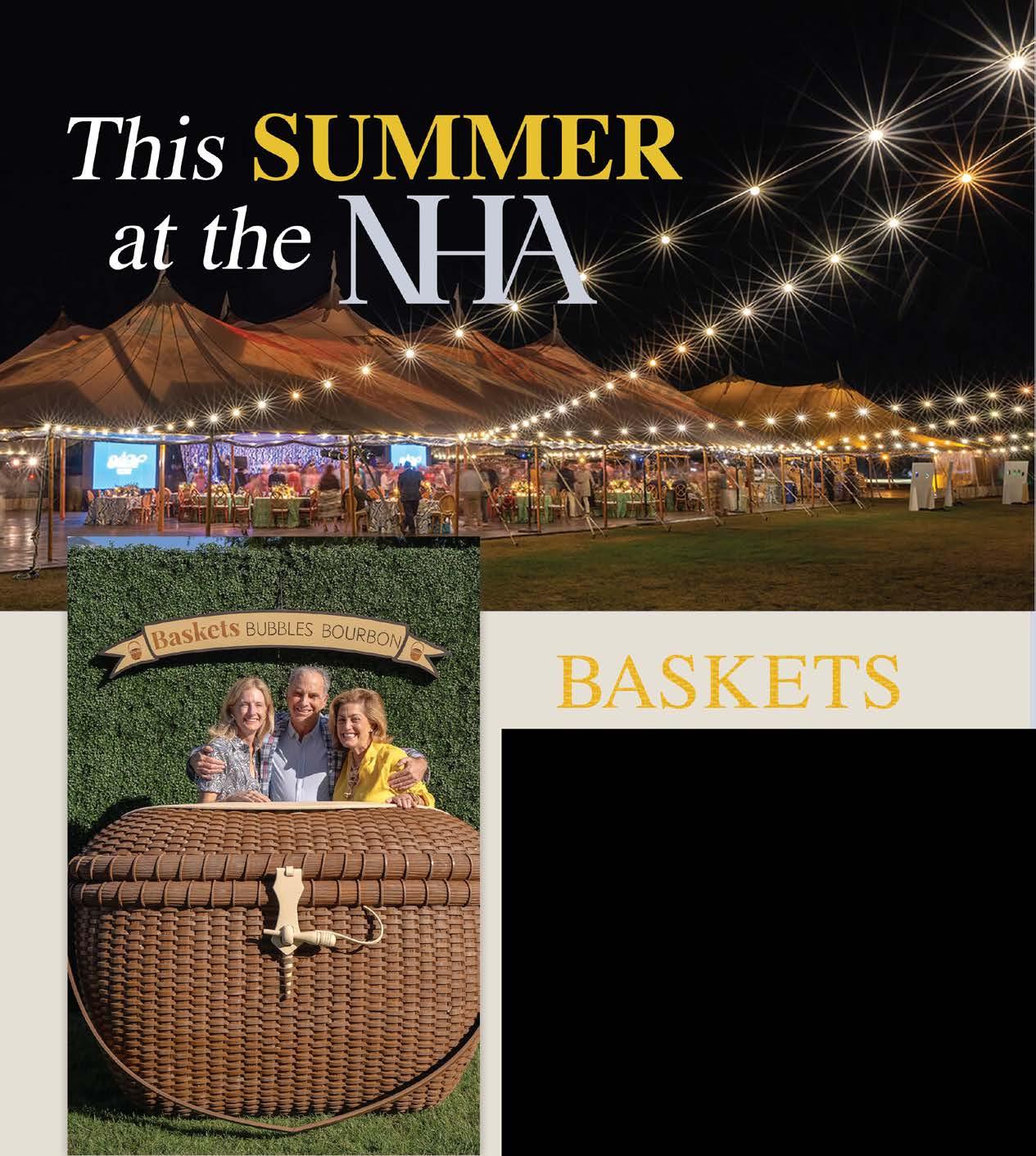
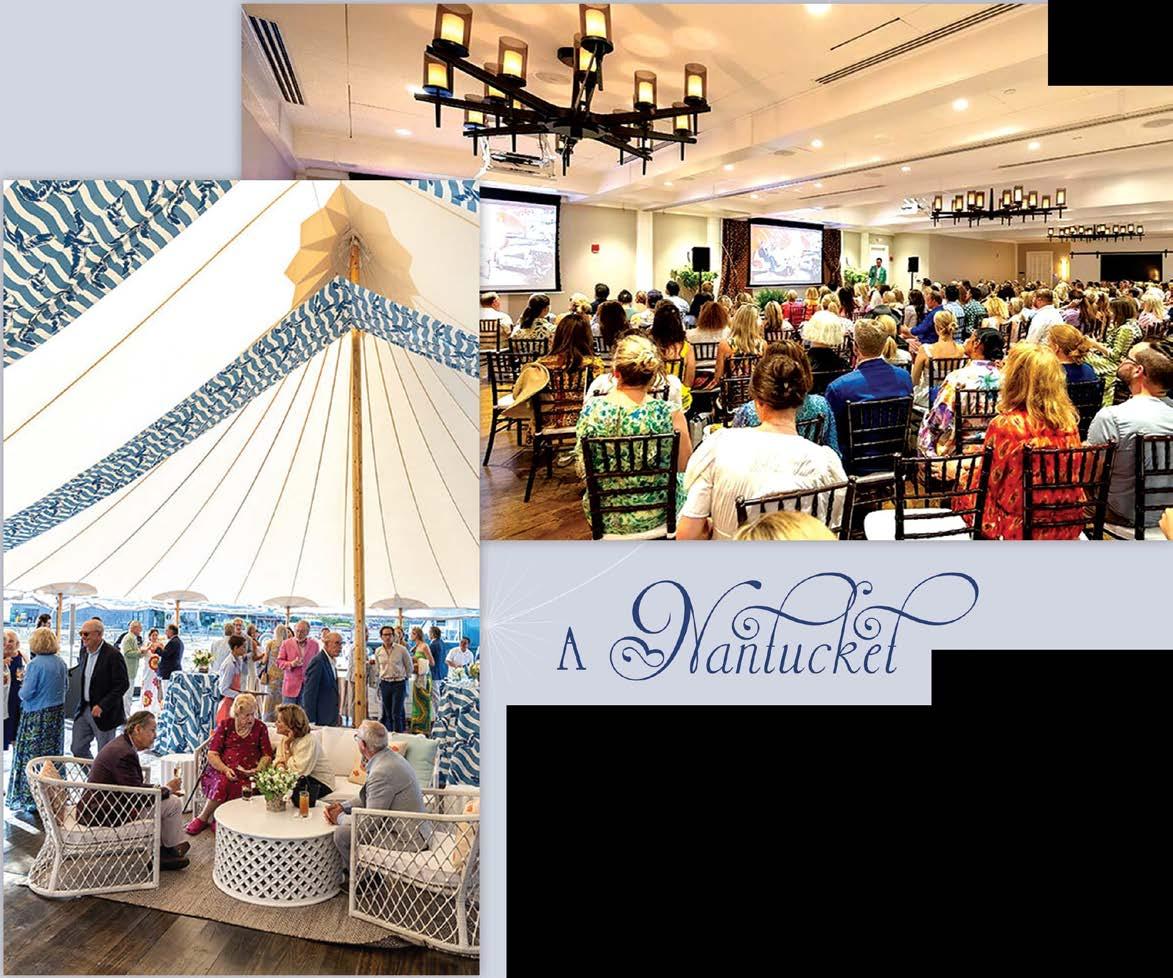
In addition to our robust slate of yearlong public programs connected with the exhibition, our summer benefit events present an array of entertainment. This includes the return of Baskets, Bubbles & Bourbon, a celebration of the iconic Nantucket Lightship Basket craft; Nantucket by Design, which will be celebrating its 10-year anniversary with an outstanding slate of speakers; and lastly, A Nantucket Night, a stand-out gala at the Oldest House celebrating our scrimshaw collection.
To sneak in a few more exciting notes about this season, grab your bikes and join us for the second year of our Historic Bike Tour, and tune in for our second season of The Nantucket Gam podcast, which is off and running with a new episode each month.
We look forward to gathering with you, sharing these stories, and together, telling more of Nantucket’s history. Thank you!
Lucinda Ballard, President, Board of Trustees
Niles D. Parker, Gosnell Executive Director
From April 20 through November 1, 2026, the Nantucket Historical Association’s Whaling Museum will host the traveling exhibition The Wider World & Scrimshaw, organized by the New Bedford Whaling Museum with support from Art Bridges. Surveying carving traditions that emerged along whaling routes in the Pacific world, the exhibition will showcase over 300 objects and set scrimshaw—the folk art made by whalers on the body parts of whales—in conversation with carved decorative arts and material culture made by Indigenous community members from across Oceania, the Pacific, and the Arctic.
In this issue of Historic Nantucket, we are pleased to reprint selected essays from the exhibition catalog. This catalog, edited by Naomi Slipp and published by the New Bedford Whaling Museum, will be available for purchase at the Museum Shop during the run of the exhibition on Nantucket.
THE WIDER WORLD & SCRIMSHAW IS GENEROUSLY SUPPORTED BY:
Charina Endowment Fund
Annabelle & Gregory Fowlkes
The H. L. Brown Family Foundation
Franci Neely
Kerry & Bradley Peterson
Denise & Andrew Saul
Nancy & Doug Abbey
Lindsey & Merrick Axel
Ann & Stephen Bartram
Anne Marie & Doug Bratton
Connie & Tom Cigarran
Connie Anne & Jeremiah Harris
Nicole & William Lynch
Katie & Matt Paige
Katherine & Derek Prill
Mary & MacGregor Read
Laura & Bob Reynolds
Ani & Alex Sacerdote
Patricia & Barrett Burns
Robyn & John Davis
Patricia & Tom Anathan
Lucinda C. Ballard
Anne & Toby Broadus
Lorena & Graham O’Brien
ON GENDER AND SCRIMSHAW
By Marina Dawn Wells
Marina Dawn Wells is Assistant Curator of History and Culture at the New Bedford Whaling Museum. Wells holds a doctorate in American Studies from Boston University and has held fellowships at the Winterthur Museum, Mystic Seaport Museum, and the NHA. At New Bedford, Wells’s exhibition “Look pleasant, please”: Early Photo Portraiture in New Bedford is on view through September 7, 2026.
The whaling experience was defined by gender. In the northeastern United States, where so many shipping agents turned an “accustomed eye” to prospective sailors who wandered the docks, the industry’s workers had monetary motivations for reinforcing particular types of masculinity.1 Clearly, vessels plied through storms and calms with the help of men navigating diverse material circumstances and gendered identities. However, with the help of societal reinforcements like the printed periodicals they loved to read, people who whaled bought into particular ideas about what it meant to be a man—in particular, a man who whaled. Men created scrimshaw within whaling’s particular homosocial circumstances, so the medium has much to say about the conceptions of manhood that circulated in and around whaling. Worked whale ivory and bone show how visual art constructed an advantageous maritime masculinity—expressing men’s desires to be seen in a certain light. They also endorse different ideas about their heterosexual relationships and more illicit sexual desires at sea. In doing so, they expose the impossibility of any singular, stoic, masculine identity, and complicate the associations historically tethered to so-called “Yankee” whalemen.
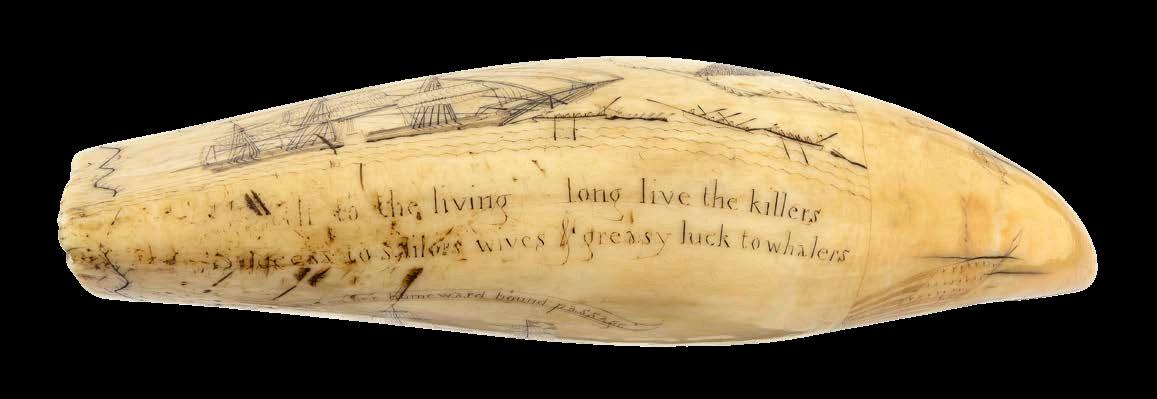
By the time Frederick Myrick (1808–1862) engraved whale ivory on the ship Susan in 1828–1829, whaling scenes had accrued masculine cultural purchase. Sea stories glorified maritime men who had the intrepidity, strength, skill, and expertise to navigate the ocean’s perils, and this set of traits translated easily to whalemen’s ideas of themselves in the nineteenth century.2 Since the days when colonial candle boxes were marked with illustrations of men killing whales, whaling scenes also exuded romantic notions about the power of nature. They advanced the idea that men would ultimately prevail in the face of natural dangers, such as the danger presented by whales
1 Charles Nordhoff, Whaling and Fishing (New York: Dodd, Mead, 1855), 14.
2 Margaret Cohen, The Novel and the Sea (Princeton: Princeton University Press, 2010).
in all their unfathomability. By the 1820s, American whalemen engraved their own visions of the most important moments in their lengthy voyages: the gory “Nantucket sleigh ride,” when an injured whale towed the hunters’ boat, and the subsequent factory ships that smoked as they boiled down blubber. These images of industrious masculinity preyed on working-class men in an era when economic precarity prevailed. They also protected the interests of agents, owners, and captains, who normalized and glorified their butchery by linking it to masculine adventure and conquest. Myrick’s scrimshawed inscription makes plain whaling’s gendered expectations: “Death to the living / Long live the killers / Success to sailors wives & greasy luck to whalers.” Separated from their wives, sailors were killers who sought the “greasy luck” of whale
Above: Susan’s Tooth, 1829, by Frederick Myrick (1808–1862). New Bedford Whaling Museum, 1973.37.16.
“ AMERICAN WHALEMEN ENGRAVED THEIR OWN VISIONS OF THE MOST IMPORTANT MOMENTS IN THEIR LENGTHY VOYAGES...”
oil and profit. Paired with patriotic symbols, this repeated imagery even envisioned whaling as nationalistic violence. Akin to the political work of of paintings and prints that glorified naval battles, whaling scenes linked masculinity to valiant destruction. As one 1835 advertisement for a whaling print shows, the industry imagined itself as “war with the huge monsters of the deep.”3
Scenes like Myrick’s repeatedly appeared in scrimshaw, prints, and paintings in the first half of the nineteenth century. Yet they told only a partial story of whaling’s gendered life, emphasizing whaling’s most exciting times. If whaling meant excitement, it also meant boredom, injury, isolation, disease, poor wages, violence, pain, and discomfort. Sticky with sweat, oil, and sea salt, sailors lived in dark, cramped quarters where some were said to strain cockroach-infested coffee through their beards.4 Absent were the many comforts of home, including loved ones. Women companions were painfully distant, save for the occasional captain’s wife. Some whalers found sexual solace in Indigenous women they exploited when visiting the women’s home ports,
3 New York Evening Post, February 3, 1835, 2.
4 John F. Martin, Journal of the Lucy Ann Voyage, ed. Kenneth R. Martin (New Bedford, Mass.: New Bedford Whaling Museum, 2016), 43.
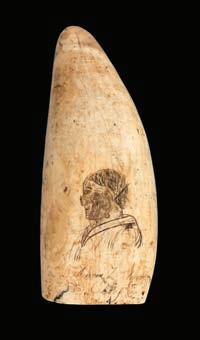
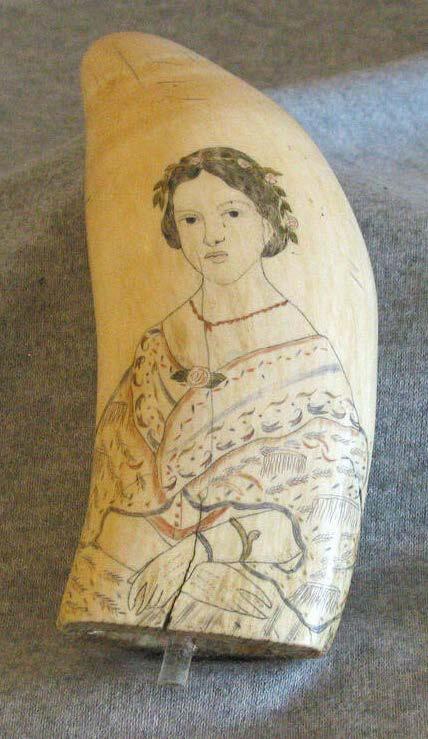
Above right: Scrimshaw tooth depicting a woman wrapped in a shawl with flowers in her hair and a serpent bracelet on her wrist, by an unidentified artist, 1840s?. New Bedford Whaling Museum, 1948.30.38
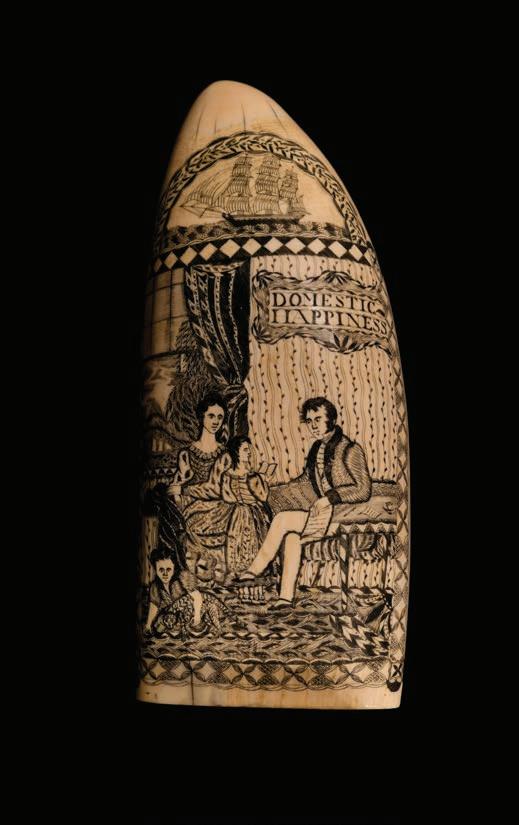
Below right: This sperm whale tooth by William Gilpin (1805–ca. 1834), with the words “DOMESTIC HAPPINESS,” imagines one nineteenth-century ideal of gender dynamics. New Bedford Whaling Museum, 2001.100.1406.
in sex workers they sought during periods ashore, or in each other. While those relationships left little evidence, longings deemed more acceptable frequently surfaced in journals and scrimshaw. There, sailors could imagine a White, middle- or upper-class “bosom friend.” Throughout one voyage, William Wells Eldredge daydreamt in his journal such passages as “My wife has been verry [sic] near to me this day in imagination,” and “My wife + child have been in my mind + how I should like to hold them to this loving hert.”5
Physical and temporal distance meant that whalers relied heavily on their imaginations, and much of their fantasizing played out on the surfaces of scrimshaw where they engraved imagined versions of women . Many scrimshanders translated illustrations from popular periodicals, especially Godey’s Lady’s Book, which envisioned women and children in fashionable upper-class society. Numerous others traced illustrations from the entertaining or instructional reading materials they had at sea. One representation—explicitly labeled “DOMESTIC HAPPINESS”—imagines a nineteenth-century ideal of gender and sexual dynamics. The image articulates the cultural ideal of a White family’s elaborately patterned interior, with a husband, wife, and two children. Scrimshander William A. Gilpin (formerly known by the moniker “Ceres A Artisan”) copied the scene directly from the frontispiece of Martina Charles Spaulding’s text entitled Domestic Happiness Portrayed (1831). This and similar engravings have much to say about how gender functioned among maritime men when they mapped their ideas onto whale ivory. The book communicated normative ideas about gender and sexual identity, which Gilpin literally copied from its pages. In this way, Gilpin makes literal how these ideas are not natural facts but were learned and even studied. The longings experienced by Gilpin and men like him were constructed, as were those ideas they rejected as unacceptable.
Scrimshaw did far more than repeat ideals, however. It also enacted bodily relationships across space and time. Scrimshanders created myriad household tools intended as gifts that enforced gender ideals. In their generous gift-giving, whalemen leaned on reductive ideas about women’s lives, particularly that they were synonymous with the domestic sphere. Many of their gifts fell into the categories of tools for cooking or for working with textiles—pie crimpers, rolling pins, bodkins, boxes, yarn swifts, and knitting needles. These reinforced men’s own ideas about femininity, about whom they supposed women to be. They also acted as physical “forget-me-nots” that touched and extended the woman’s body.
5 Journals accessed through Bill Bourne, descendant, June 13 and 14, 1869.
The most intimate instance of this was the corset busk, an object that pressed flush against the torso inside of a woman’s corset. Worn beside the bosom and the heart, busks held physical and metaphorical meaning. Although antebellum corsetry helped make women mobile as they navigated the public realm with confidence in contemporary fashions, its structuring quality also lent itself to the metaphor of restraint. European precedents to romantically inscribed busks alluded to territorial ownership, sexual desire, and even phallic proxy.6 Busks might have been gifts for women, but they also functioned as stimulating, imaginative tools for men who were sexually confined on ships. One can imagine that during the act of engraving, whalemen envisioned the future moment when a lover would wear (and then remove) their gifted busk.
As small tokens with imaginative significance, some scrimshaw surely had a sexual function. Occasional evidence suggests that sailors had pornographic reading materials, such as an allusion in Herman Melville’s novel White-Jacket (1850). Furthermore, in the desperate conditions at sea, unlikely or tame materials could become sexually stimulating—and this lens lends new meaning to reading material carried aboard, such as copies of Godey’s or a medical guide to women’s anatomy. Sexually explicit scrimshaw is now rare, but that doesn’t mean it didn’t exist. Scrimshaw depictions of women intended as mythological or ethnographic representations could have been sexualized, especially when the women were bare-breasted. In a related example, a number of scrimshaw artists were evidently taken with images of so-called “female pirates,” stories and their illustrations that flirted with same-sex sexuality and gender’s malleability. Given this conflation of factors, it is possible to speculate that whalemen utilized scrimshaw to imaginatively fulfill sexual needs. Societal expectations prohibited same-sex sexuality, transgressing gender assigned at birth, romantic and sexual relationships across race, as well as self-pleasure—but scrimshaw helps paint a fuller picture of how men explored their gender and sexuality in these different ways amid whaling’s restrictive social circumstances.
On the other end of heteronormative relationships, women in northeastern ports lived complex lives of their own while they were tightly entwined with the maritime world. Their lives expanded far beyond the reductive traits and interests that men’s scrimshaw
6 Sarah Anne Bendall, “To Write a Distick upon It: Busks and the Language of Courtship and Sexual Desire in Sixteenth- and Seventeenth-Century England,” Gender and History 26, no. 2 (August 2014): 199–222.
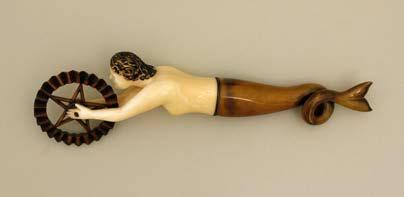
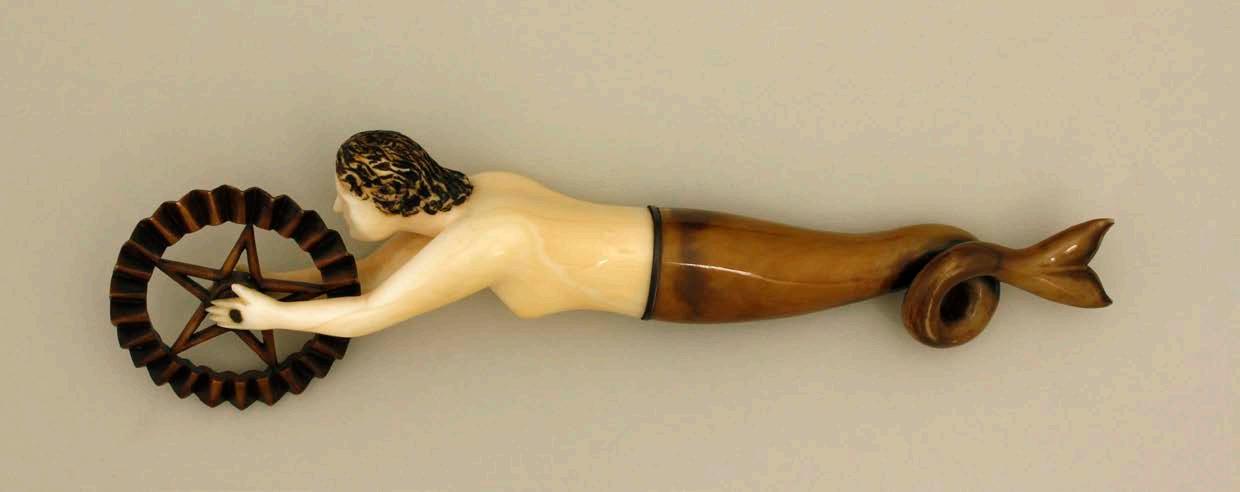
Above: Mermaid pie crimper, 1871–76, attributed to James H. McKenzie. New Bedford Whaling Museum, 2001.100.706.
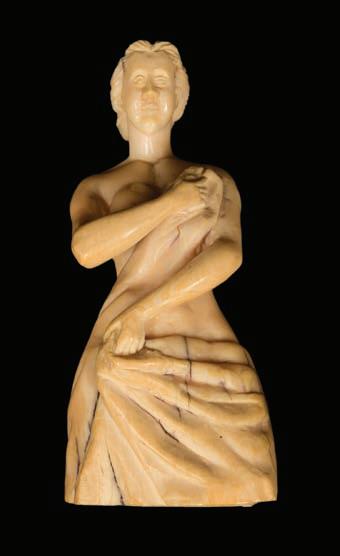
Female figure carved from whale ivory. New Bedford Whaling Museum, 00.216.1.
and back
GENDER AND SCRIMSHAW
“ SEEN THROUGH THE LENS OF GENDER, SCRIMSHAW SAYS FAR MORE ABOUT THE LIVES OF WHALEMEN THAN THEY PERHAPS EVEN INTENDED TO CONVEY."
assigned to them. Those women who supported whaling communities performed every task that was typically left to men: they chopped wood, balanced checkbooks, raised children, and maintained the family economy both in and outside the home.7 They also had sexual needs of their own, although it is unclear to what extent this was on the minds of whalemen who worked at their scrimshaw gifts. According to oral history on Nantucket, during whalemen’s absences, their wives and lovers were accompanied by “he’s-at-homes,” scrimshaw or plaster phallic forms they used for their own pleasure.8
Seen through the lens of gender, scrimshaw says far more about the lives of whalemen than they perhaps even intended to convey. Their desire to be seen as particularly skilled, violent, and productive appears in the portraits of whaleships and their auxiliary boats in the gory hunt for whales. In carving pie crimpers and sewing bodkins, it is easy to discern how they also fantasized about far-off love in all its acceptable heterosexuality, even as many of their relationships could seem directly contradictory to their constructed domestic virtues. Additional glimpses of sexuality appear in their readings, their copied portraits of women, and their busks’ long, straight forms. Beyond expressing binaristic ideas about gender, scrimshaw also revealed more intimate desires about how whalemen wanted others to see them, and how they wanted to see themselves.
7 Lisa Norling, Ahab Had a Wife: New England Women and the Whalefishery, 1720–1870 (Chapel Hill: University of North Carolina Press, 2000).
8 Ben Shattuck, “There Once Was a Dildo in Nantucket,” Literary Hub (October 16, 2015), https://lithub.com/ there-once-was-a-dildo-in-nantucket/.
Front
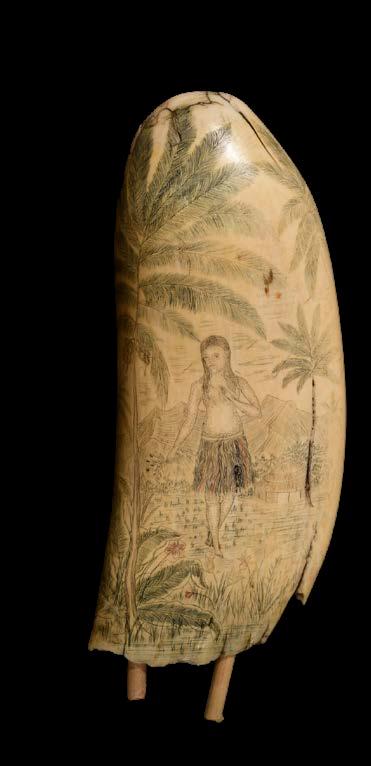
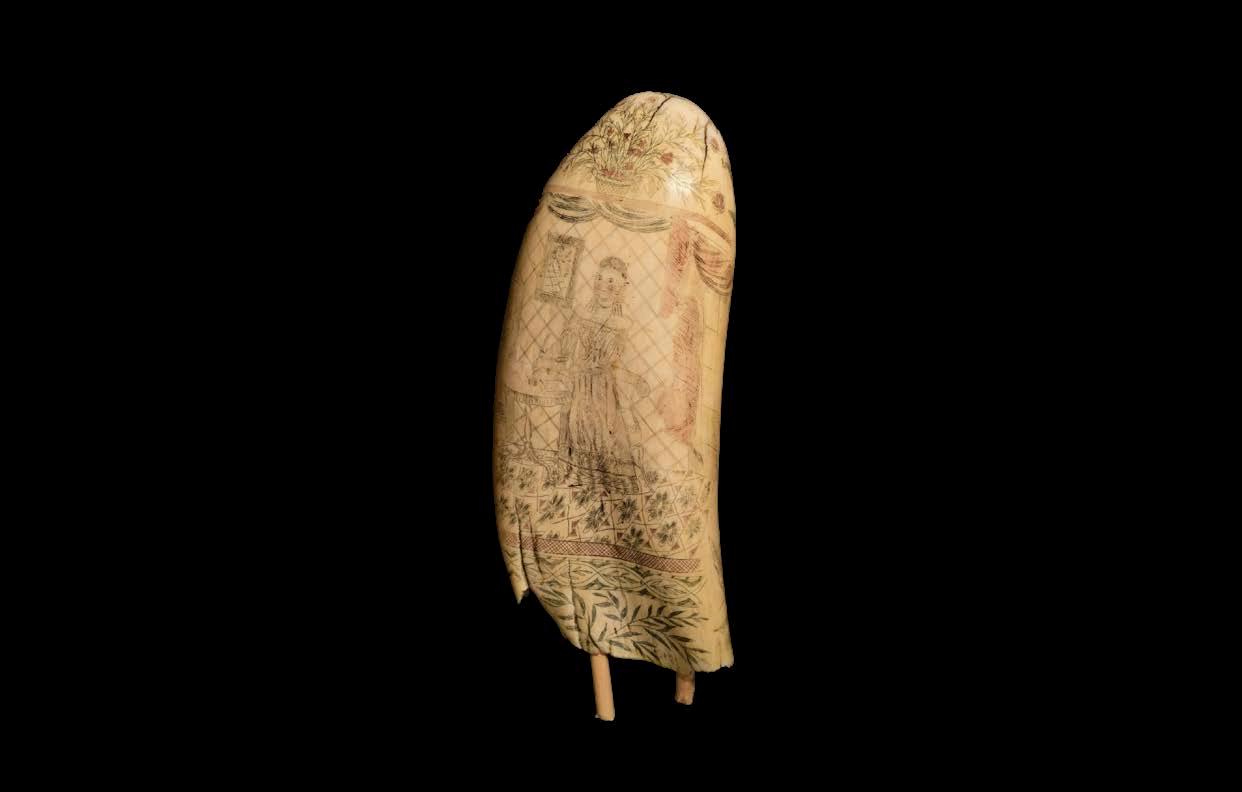
of an engraved tooth by George Hiliott. The Polynesian woman in her tropical setting that appears on the one side of the tooth is intentionally compared with the American or European woman in her parlor on the other side. New Bedford Whaling Museum, 2001.100.151.
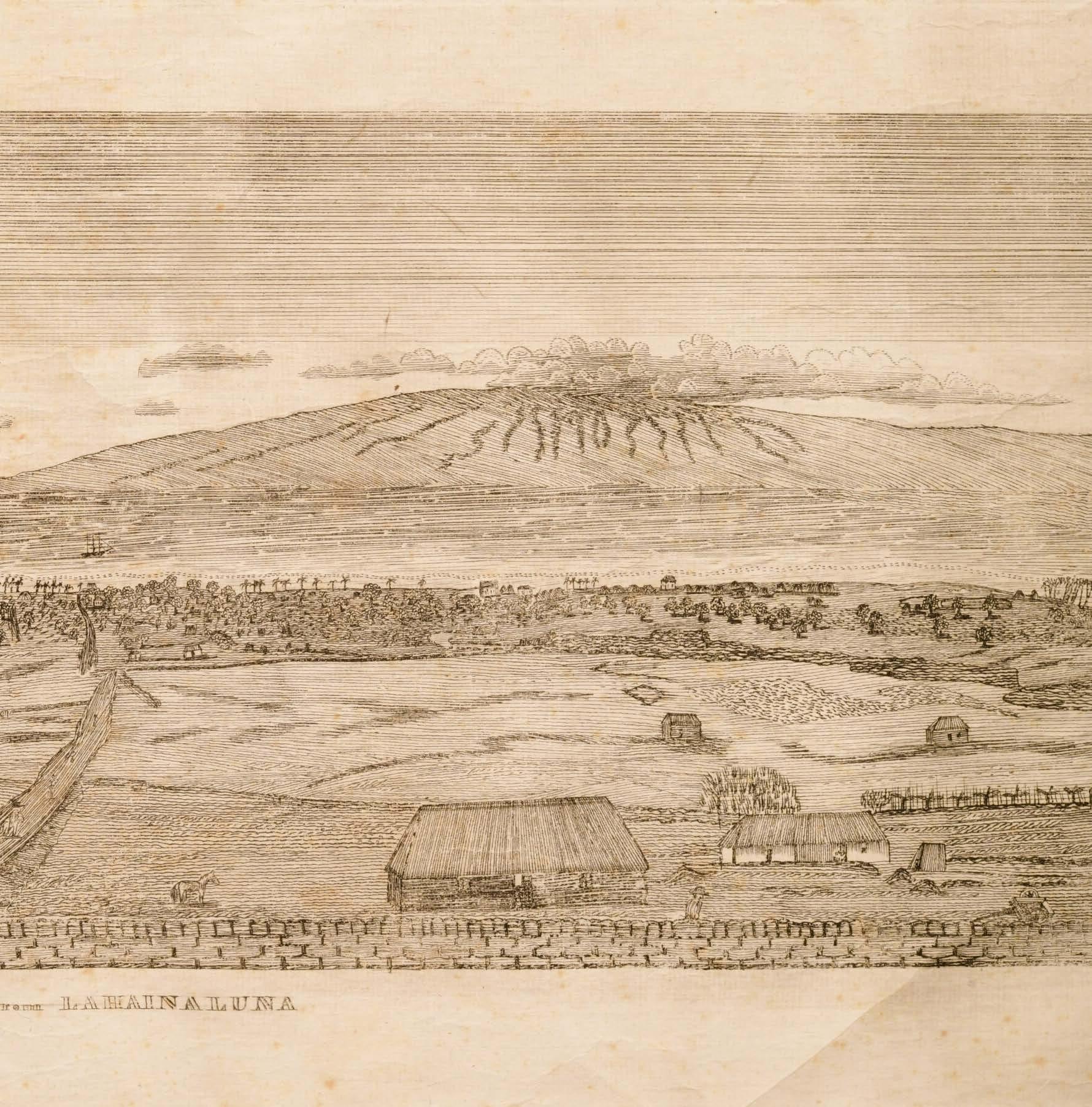
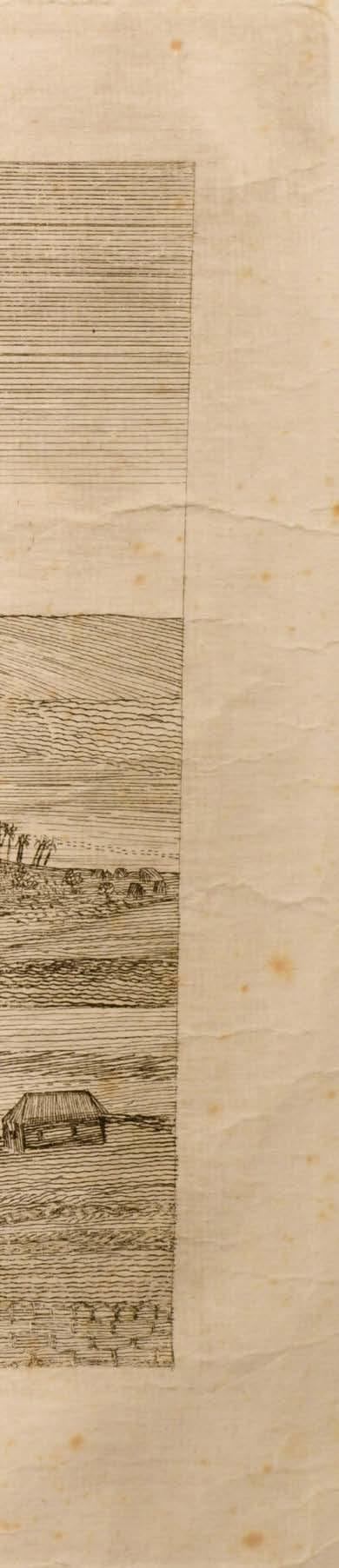
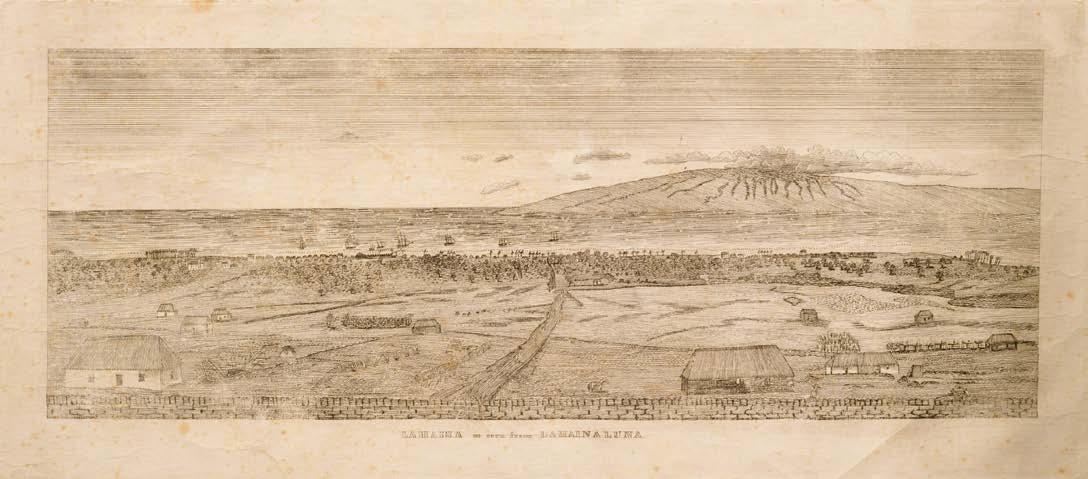
Lahaina, Hawai‘i as seen from Lahainaluna, ca. 1840, copperplate engraving by Kepohoni from a painting by Persis Goodale Thurston. New Bedford Whaling Museum, 2001.100.7309.
YANKEE WHALERS, THE PACIFIC, AND THE WORLD
By Ryan Tucker Jones
Ryan Tucker Jones is Ann Swindells Professor of Global Environmental History at the University of Oregon. He is author of Empire of Extinction: Russians and the North Pacific’s Strange Beasts of the Sea (2014) and Red Leviathan: The Secret History of Soviet Whaling (2022), as well as coeditor of a number of works of environmental history.
American whalers hunted their prey in every ocean of the world, but nowhere was more important than the Pacific. In many corners of that vast ocean, whalers found abundant, nearly untouched populations of large whales. In pursuit of these whales, Americans played central roles in the histories of environmental change, cultural contact, and colonialism that reshaped Pacific societies. Pacific whaling was not just the celebrated source of shanties and scrimshaw, it also tilted the axis of world history, creating through its many cruises of destruction the beginnings of our globalized planet.
“Pacific whaling” actually comprised many different theaters of whaling, all of which would in time be connected by the migrations of ships and whales. American whaleships— often called “Yankee” whalers—first entered the Pacific in 1791, when they sailed from the small island of Nantucket and rounded Cape Horn. Their first destination was what they would call the “on-shore” grounds, which consisted of the islands off the shores of Latin America, especially Chile and Ecuador. The targets there were sperm whales, deepwater creatures who fed on abundant squid drawn to the nutrient-rich Humboldt Current. After the War of 1812 temporarily halted the Yankee advance, their ships returned and pushed further west into the tropical Pacific.1
1 Arrell Morgan Gibson, Yankees in Paradise: The Pacific Basin Frontier (Albuquerque: University of New Mexico Press, 1993), 137.
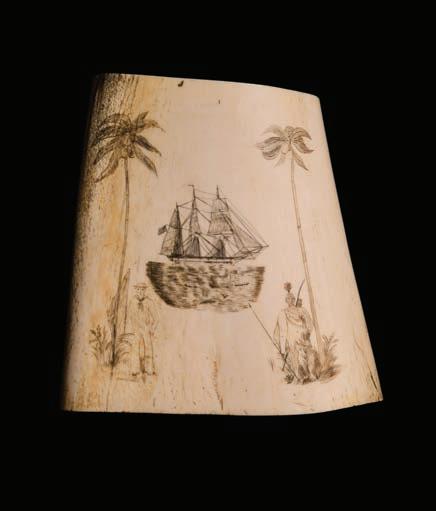
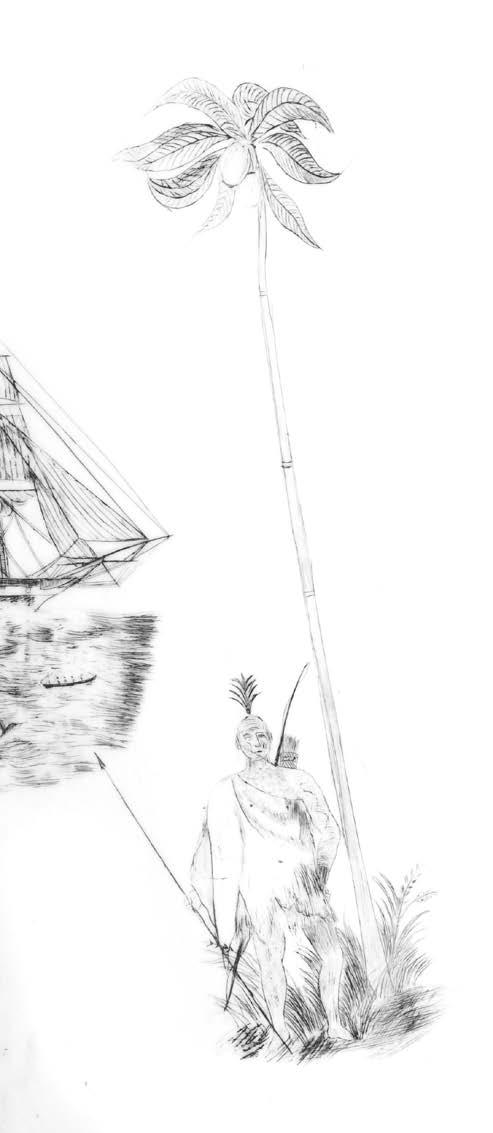
Whale panbone plaque with a whaling bark and two figures. New Bedford Whaling Museum, 00.195.73.
Lahaina, Hawai‘i as seen from Lahainaluna, ca. 1840, copperplate engraving by Kepohoni from a painting by Persis Goodale Thurston. New Bedford Whaling Museum, 2001.100.7309.
The “off-shore ground” or “on-the-line” fishery again focused on sperm whales, this time in equatorial waters dotted with small islands such as the Gilberts. It was in these grounds that, in 1820, an enraged sperm whale sank the American whaleship Essex. Its shocked crew, afraid of rumored cannibals on nearby islands, made a desperate attempt to reach the South American coast. Most died—and some turned to cannibalism themselves—before being rescued by other ships. The story inspired Herman Melville’s Moby-Dick, whose name came from another famous sperm whale, Mocha Dick, often encountered in the Chilean “on-shore” grounds. Meanwhile, in 1819, an American fur trader spotted numbers of whales near Japan, and by 1821 whaleships were visiting the fertile waters of the Kuroshio Current, where the Japanese had also long pursued whales.2 The ocean-spanning Americans quickly bankrupted local whalers, killing their migratory prey before they reached Japan, the first of many impacts Yankee whalers would have on Pacific shores.
At more than fourteen thousand miles by boat from Massachusetts, trips to Japan strained whalers beyond the limits of their provisions. Some tried landing there but were met with a hostile reception. Instead, the islands of Hawai‘i, put on European maps by Captain James Cook in 1778, became the whalers’ favorite reprovisioning rendezvous.3 By the 1830s, the ports of Hilo on the Big Island of Hawai‘i, Lahaina in Maui, and Honolulu on Oahu had become particularly important. As American historian and son of a great Nantucket whaling family Alexander Starbuck put it: “It has been said, and probably with a very great degree of truth, that the ‘whaling fleet made Honolulu.’”4 Whalers joined missionaries, fur traders, and beachcombers there as powerful agents of cultural change for the Hawaiian Kingdom, which embraced these new opportunities while at the same time trying to strengthen traditional forms
2 Alexander Starbuck, History of the American Whale Fishery from its Earliest Inception to the Year 1876 (Waltham, MA: Published by the Author, 1878), 96.
3 Gibson, Yankees in Paradise, 143.
4 Starbuck, History of the American Whale Fishery, 111.
of Hawaiian culture. Just as importantly, thousands of Hawaiian men found berths on the whaleships, sometimes looking for a taste of adventure, sometimes looking for alternatives to increasing poverty and the proletarianization that was occurring in tandem with Hawai´i’s economic changes. During the peak decades of Pacific whaling that followed, some thirty to fifty young whalers left Hawai‘i’s shores every month.5 They celebrated whaling’s ability to bring “value from distant parts of the ocean into Hawaiian hands.” Honolulu’s population boomed and Lahaina prospered by growing newly introduced crops such as pineapples and papayas, even as the population of Native Hawaiians declined from disease.
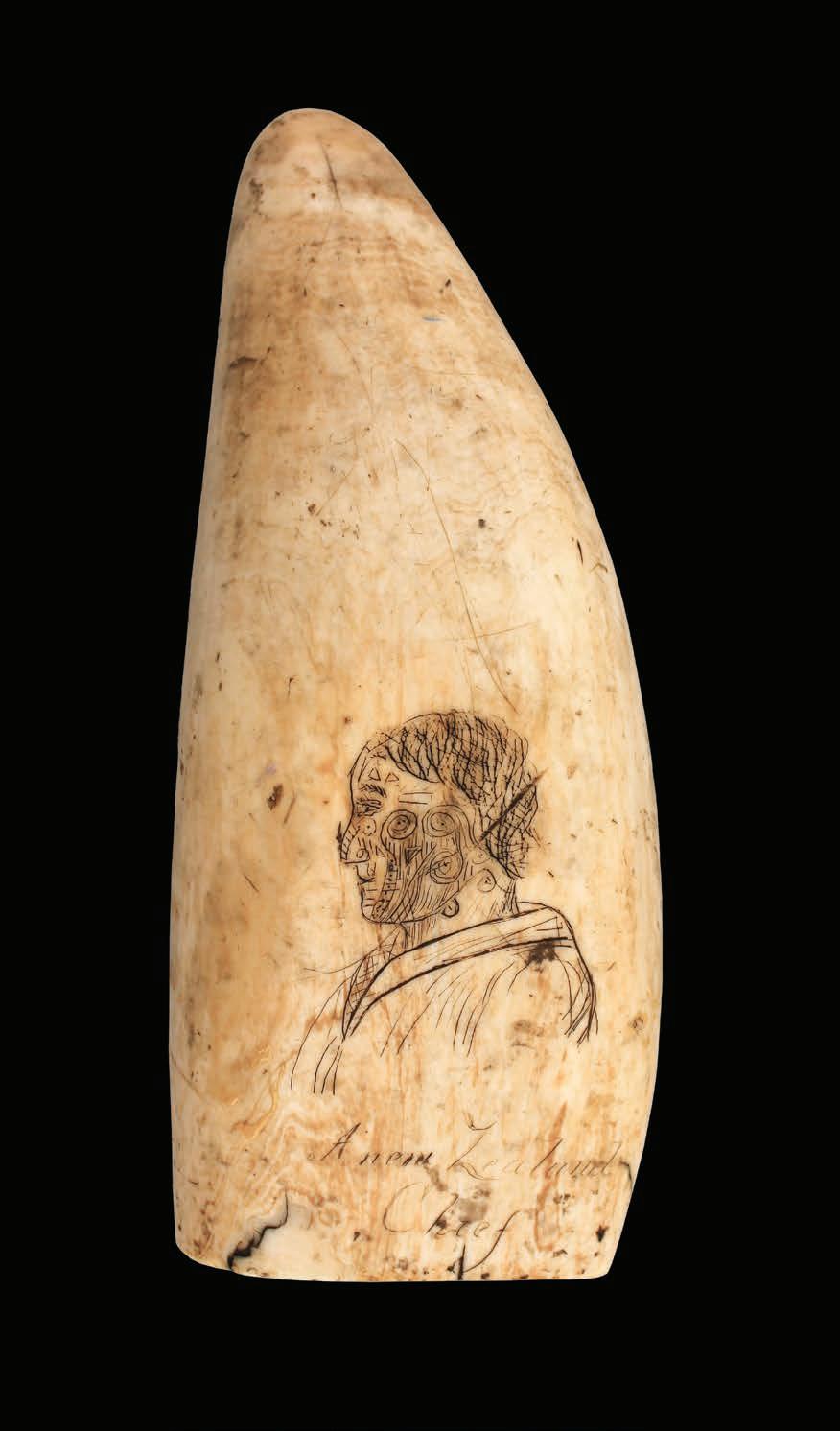
As Hawai‘i was being remade by whaling, so were Hawaiians remaking the industry. Hawaiian whalers were particularly well represented in crew lists from the 1840s, but they were hardly the only non-Americans to participate in what was becoming “Yankee” whaling in name only. Portuguese seamen had been important sources of labor for decades, and as whaling exploded through the Pacific, men from every corner of the ocean joined the hunt. The tattooed Queequeg from Moby-Dick is likely fashioned after a Māori whaler, or just as possibly from a Fijian or another South Sea Islander, whose numbers aboard American whaleships rapidly increased from the 1840s.6 Two scenes carved on whale ivory and bone, reproduced here, which may show a Seminole Indian and a Māori warrior; they give some idea of how fascinating, and also disorienting, this cosmopolitanism could be for Americans in the Pacific.
The growing presence of Māori signaled the addition of another whaling ground, one which from the 1830s targeted both sperm whales and Southern right whales off the coast of New Zealand. The New Zealand ground saw Americans competing with British and other colonial whalers, while also integrating many into local communities. There, Māori women played a particularly important role, brokering deals between White whalers, whom they sometimes married, and their local communities, who supplied desperately needed food and labor.7 For many Māori communities, especially on New Zealand’s South Island, the whaling era remains a foundational moment. The Southern right whales that migrated along the New Zealand and Australian coastlines were not nearly as resilient, and their numbers declined quickly. Thus, the American stay in the New Zealand grounds was not lengthy, but their move into the Southern Hemisphere gave an even more pronounced Polynesian cast to what was becoming a truly global enterprise.
On board the whaleship, far from all land as they sailed to or hunted in one of the grounds, these polychromatic crews forged their own, unique maritime society. In this floating world, in what one historian has called a grand “dance” of labor and cultural change, Hawaiians could work side by side with African Americans, Native Americans
5 Greg Rosenthal, Beyond Hawaiʻi: Native Labor in the Pacific World (Berkeley: University of California Press, 2018), 41.
6 Geoffrey Sanborn, “Whence Come You, Queequeg?,” American Literature 77, no. 2 (2005): 227–57.
7 Angela Wanhalla and Kate Stevens, “Māori Women and Shore Whaling in Southern New Zealand,” in Across Species and Cultures: Whales, Humans, and Pacific Worlds, ed. Ryan Tucker Jones and Angela Wanhalla (Honolulu: University of Hawaiʻi Press, 2022), 9–29.
Tooth depicting “A New Zealand Chief.” New Bedford Whaling Museum, 2002.37.
YANKEE WHALERS,
with Portuguese, and all with the White Americans who occupied positions along the entire hierarchy from ship captain down to cabin boy.8 Non-Whites often received less pay and fewer advancements, but there were numerous examples of workers from every ethnicity ascending to the privileged positions of harpooner and even captain.9 Whalers of similar backgrounds often found support from each other in the sometimes cruel shipboard conditions, but they also leaned across the cultural divides to find themselves transformed in the process of a voyage, or multiple voyages. Many specimens of sperm whale teeth provide wonderful examples: Tabua (pronounced “tambua”), as they were called in Fiji, had traditionally been highly valued in many Pacific Islands as symbols of chiefly power. American whalers used the teeth of their main prey first as a useful trade item, but in the form of scrimshaw increasingly as powerful talismans and mementos. As Pacific Islanders learned to see sperm whales as commercial units and sources of profit, so did Americans learn to value their teeth as something that might also transcend capitalist notions of value, capturing something of the ineffable experience of inhabiting a distant ocean, butchering its creatures, and doing it all alongside shipmates half-feared, half-understood, and fully essential for your survival.10
“ AS PACIFIC ISLANDERS LEARNED TO SEE SPERM WHALES AS COMMERICAL UNITS AND SOURCES OF PROFIT, SO DID AMERICANS......"
After the 1840s, the already wide world of the Pacific got even wider. In 1845, American whalers had first entered the Baja California birthing lagoons of the gray whale to kill them and their calves. The Baja hunt for grays was more disastrous for whales than the open-ocean hunt for sperm whales had been. Gray whales, which then numbered perhaps twenty thousand, were confined by their shallow-water diet to the coasts of North America, Siberia, and East Asia. When whaleships attacked them in the confined, windy lagoons of Mexico, or off the shores of Korea and China, they struck them at their most vulnerable point, at their moment of reproduction. Whalers targeted calves to lure in mothers, or just as often killed pregnant whales. The whales fought back so fiercely that they acquired the nickname “devilfish,” but they were facing a human foe that could replenish every year and return for another slaughter. Whalers knew the toll they were taking on the population, but pressed on until gray whales became so scarce that many considered them extinct. Those that migrated between Mexico and Siberia were not—and today they have recovered to something
8 Rosenthal, Beyond Hawaiʻi, chap. 4.
9 Nancy Shoemaker, Native American Whalemen and the World: Indigenous Encounters and the Contingency of Race (Chapel Hill: University of North Carolina Press, 2015).
10 Nancy Shoemaker, “Whales’ Teeth: A Niche Commodity of the Nineteenth-Century Pacific Sperm Whaling Industry,” in Jones and Wanhalla, Across Species and Cultures, 50–70.
" THE ERA OF AMERICAN WHALING HAS PASSED, A WAVE THAT CRASHED WITH SUDDEN VIOLENCE OVER MANY PACIFIC SHORES, AND THEN RECEDED WITH THE WHISPER OF WHITEWATER."
approaching their previous numbers—but the so-called Western gray whales of the Asian coast may have been destroyed completely.11
A common itinerary from the 1850s saw whalers leave the Mexican lagoons in winter, provision in Hawai‘i, and then spend the summer in Alaskan and Siberian waters, where new whaling grounds had recently been discovered. There, for the first time, Yankee whalers encountered other humans who also frequently killed whales. Iñupiat, Yupik, Chukchi, Aleuts, Nuu-chah-nulth, Makah, and others had for centuries built cultures closely connected with whales and whaling. As a Northwest Coast mortar demonstrates, they used the creatures—mostly humpbacks, gray whales, right whales, and bowhead whales—for food and tools as well as for inspiration for ceremony and legend. Amongst the Nuu-chah-nulth only the highest-ranked possessed the privilege of killing whales, an echo of Fijian associations of chiefly and whale power. For the Iñupiat, humans and whales forged a sometimes explicit contract, where the whales “gave themselves” to particularly worthy hunters, thereby ensuring the continued survival of human communities in the rich but precarious Arctic environment.12
Tragically, then, it was precisely in this last major theater of Pacific whaling that the
11 David Henderson, Men and Whales at Scammon’s Lagoon (Los Angeles: Dawson’s Bookshop, 1972).
12 Karen Brewster, ed., The Whales, They Give Themselves: Conversations with Harry Brower, Sr. (Fairbanks: University of Alaska Press, 2004).
Tabua by an unidentified Fijian maker, marked “Eliaser Bainima.” New Bedford Whaling Museum, 2004.2
YANKEE
American ships brought the most destruction. When they killed bowhead and right whales there without limit, they were stealing both food and community members from those at home in this cold corner of the Pacific. Thus, while Americans also added Iñupiat to their global crews, they often met resistance, and their visits sometimes ended in violence matching what they were doing to the oceans. As gray whales declined precipitously thanks to their hunting in Mexico, their migrations to Alaska and Siberia stopped. By the 1890s, Arctic communities were hit with fatal diseases abetted by the starvation that came with the Yankee whalers’ arrival and the whales’ disappearance.13 Entire communities perished, the existence of whole nations in doubt.
Arctic people, however, survived the era of America’s Pacific whaling, and whales never lost their centrality in local cultures and foodways. For whales, too, survived this era. Some species, like California gray whales, humpbacks, and bowheads, have rebounded spectacularly. Others, like right whales in New Zealand and in Alaska, remain scarce. The era of American whaling has passed, a wave that crashed with sudden violence over many Pacific shores, and then receded with the whisper of whitewater. Its traces remain in both the broken wrack of lost societies and ecosystems as well as the new cosmopolitan, interconnected worlds of humans and whales that still cross and recross the boundless Pacific.
13 Bathsheba Demuth, Floating Coast: An Environmental History of the Bering Strait (New York: W. W. Norton, 2019), 57.
CIVIC PARTICIPATION ON NANTUCKET 1900–1930
By Barbara Ann White
Barbara White is a local historian, retired educator, and NHA Research Fellow. She wishes to thank town clerk Nancy Holmes, assistant town clerk Laura Raimo, and now-retired secretary Gale Holdgate for their generous assistance pulling town records for her, even during the Pandemic.
For the past three years I have been reading the minutes of the Board of Selectmen and the records of the Nantucket annual and special town meetings for the three decades spanning 1900 to 1930. This was a period of great social and technological change, and the records of town government are a rich field for understanding the island’s history during this time. Thexse records are often overlooked in studying island history because they can only be read at the Town Building and their handwritten pages can be tedious to decipher. The records, though, open a window into issues the island faced in the past that are instructive for issues it faces today.
Then, as now, the town’s Board of Selectmen, now called the Select Board, had five elected members. The annual town meeting was held in February with special town meetings called as needed. Many town officials, such as town clerk, tax collector, and the assessors were identical to those of today, but there was also an inspector of slaughtering, agent of the poor, superintendent of the moth and tree department, inspector of animals, sealer of weights and measures, fence viewers, keeper of the lock up, caretaker of the town clock, and a town nurse. The largest expenditures at the annual town meetings went to education, health, and welfare; at the turn of the century, spending on education and on the poor was almost even. For example, in 1902, the town spent $6,800 for the poor and for Civil War veterans and their families, and $8,000 for the public schools. That relative parity had changed by 1930, when the annual town meeting voted $11,000 for the poor and veterans, which then included veterans of World War I, and $57,600 for the public schools, including $600 for an “Americanization School” to teach English to the increasing number of immigrants on the island.
Taking care of the poor
The amount of money and effort that Nantucket town government expended in taking care of the poor in the first decades of the twentieth century was impressive, and the island took pride in taking care of its own. Responsibility for the poor rested with the agent of the poor, who ascertained who qualified for state and local aid, including food and fuel assistance, and noted recipients by name in the meeting minutes. Citizens with mental illnesses who were deemed insane were sent to asylums off island at public expense, and the town paid to bury indigent soldiers and sailors. The town consistently allocated money for the almshouse and for the keeper and matron who looked after its residents. The place, which was not just for the elderly at that time, was first referred to by the name “Our Island Home” in town records in 1906, when the BOS authorized fixing its heating. When the facility was inspected by the state Board of Charity in 1911, the selectmen boasted that it was “not only a Town Almshouse, but a County Almshouse as well. We have no bordering towns or any temporary home for our children or sick poor which we have to provide for in case of emergency.” The state inspector wrote, “Your almshouse is a home and is a good one and is a credit to the taxpayers of the town.”
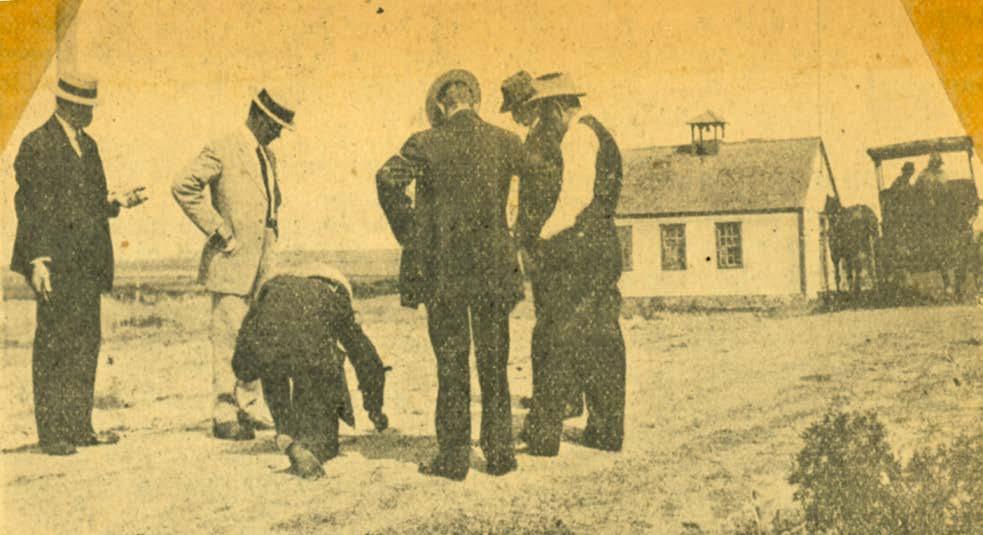
Above: The Nantucket Board of Selectmen inspect a road in Polpis, August 31, 1913. William T. Swain, the chairman, appears in the light-colored suit. Clipping from the Inquirer and Mirror in Polpis Farm Scrapbook (A115), gift of the Nantucket Atheneum in 2013.
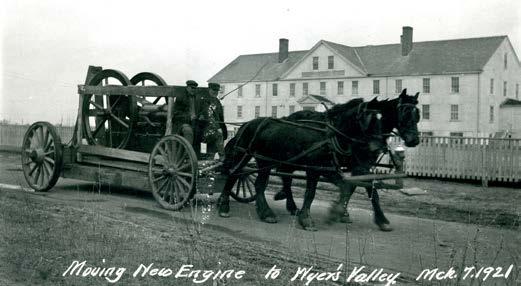
Below: Delivery of the new pumping engine for the Wannacomet Water Company passes in front of Our Island Home, March 7, 1921. A17-60.
Health Care
Even before the flu epidemic of 1918, there was fear of infectious diseases and sources of infection on the island. For example, in July 1916, a delegation of citizens asked that measures be taken to prevent a possible epidemic of infantile paralysis (polio). The BOS assured them that precautionary measures would be taken. During the same period, there was a paid town doctor and a public health nurse, and the town eventually provided a car for the latter.
When the epidemic struck Nantucket, state doctors and a U.S. Navy health officer visited the island and instructed local doctors about handling flu cases. The selectmen voted on October 30, 1918, to take over Nantucket Cottage Hospital and appointed William Wallace as a special agent “with full power to act in all matters pertaining to the present sickness.” The town banned all public meetings and closed the schools. A week later, Wallace reported to the Board of Health the steps he had taken to keep the epidemic in check, including the appointment of William Prentiss Parker as superintendent of the hospital. Mrs. George W. Burgess (Lizzie Burgess),
to the good work that had been performed by the hospital keeping the flu in check, partly by separating flu patients from other patients. Two days later, the ban on public meetings was lifted.
The board thanked those who had helped in the emergency, including naval reservists who had helped with ambulance work. A week later, a special town meeting was held, referring to the “recent scourge of influenza” which had “exhausted” the town’s funds. Voters appropriated $1,200 to cover the costs.
Other significant health related developments during this period included, seven years after the flu epidemic, the Board of Health signing a contract with Barnstable County for the care of seriously ill tuberculosis patients at the Bourne Asylum. In 1930, town nurse Clementine Platt met with the state Department of Health about nine tuberculosis cases. Two were transferred to New Bedford, the others received treatment locally.
proprietor of the Nesbitt House on Broad Street, provided the visiting doctors and nurses with an office and accommodations without charge.
On November 11, 1918, the selectmen held a special meeting. While less than two weeks had passed, Wallace and Parker recommended the hospital be returned to superintendent Hanson Barney due
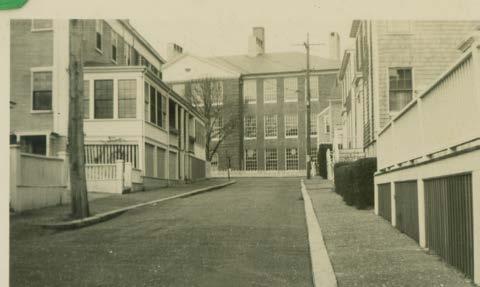
The town recognized the role of sanitation in public health. In 1912, the selectmen received communication from the state Board of Health concerning polluted drinking water at several hotels in Siasconset. The Board of Health inspected privies and publicly told citizens to improve them. Seven years later, the Board of Health recommended that seven houses be connected at public expense to the sewer system because they were in low-lying areas and subject to flooding, creating “very unhealthful” conditions.
The Nantucket Cottage Hospital on West Chester Street, ca. 1930. P19471.
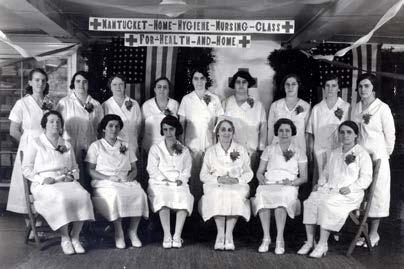
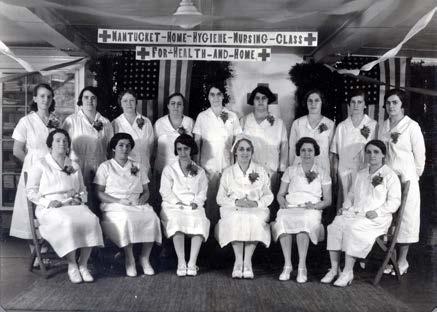
Nantucket Home Hygiene Nursing Class. Clementine Platt sits in the front row, fourth from left. Gift of Suzanne Gardner in 2004, P21695.
The town nurse was on the frontline of health care, especially for the poorer residents. She made house calls and reported the number to the selectmen every month. She was kept busy: as a typical example, in May 1926 Nurse Platt made 304 bedside calls. Families initially paid a slight charge for the calls, but in 1926, the selectmen voted that those in need would be given free services.
During her tenure, Clementine Platt was proactive in preventative care. She attended state conferences to keep up with the most current information. One
of her most significant contributions concerned the care of young mothers and their babies, having noted many underweight children. In 1927, she and Nancy S. Adams of the local American Red Cross, convinced the Board of Selectmen to rent a room at the Hosier House on Federal Street to be used as a weighing station. Platt reported that they recorded 643 weights during their first year of operation. In 1930, she opened a summer camp for the health of the island children called Camp David Gray. A state inspector visited the camp and wrote that it was one of the outstanding health projects on the island. Platt’s end-of-year report in 1930 noted many overtime calls. She stated that her next goal was working with local physicians and the school nurse on preventative care for pre-school children. The report noted how busy the weighing station continued to be due to the desire of mothers to keep their babies’ weights normal, especially that year due to increasing unemployment as the Depression
impacted the island. She called for donations of food, clothing, and old linen. That year, she made an astonishing 2,680 calls on 112 families.
Education
Another purview of the selectmen was education; then, as now, there was controversy about what constituted adequate funding. Appropriations for the schools increased substantially between 1900 and 1930, a trend decried by some. In 1900, $7,500 was voted for the public schools; in 1912, $14,000. Ten years later, the schools received $27,700, and, in 1930, $57,000. At the annual town meeting in 1919, it was noted that school funding had been increasing due to the rising cost of living and teachers’ salaries. The next year, when the schools requested $23,500, the Board of Finance declared this amount “excessive,” although the request was ultimately funded.
At the 1921 annual town meeting, the Board of Finance warned:
We deprecate the rapidly growing cost of this department, which unless checked threatens to soar [to] heights the limits of which no one can foresee. In our first report, six years ago, we deplored the increasing cost of our public schools and urged the school board to strive to keep within the recommendations then named of $15,000. Today the estimated cost for the ensuing year is upwards of $30,000.
The board further criticized the number of teachers (nineteen for 450 students), as well as their salaries, while at the same time noting the difficulty the island had attracting teachers, a situation familiar today. However, the town voted for the entire amount requested by the schools, ignoring the board’s recommendations. Later that year, a special town meeting approved an additional $1,000 for “‘unforeseen’ expenditures,” and, the following year, another special town meeting approved an additional $1,400 for the schools.
Voters also tended to fund building requests related to education, regardless of the Board of Finance’s critiques: in 1910, for example, the town spent $500 to paint the high school, and in 1911, $500 went to improve the primary school in Siasconset. At
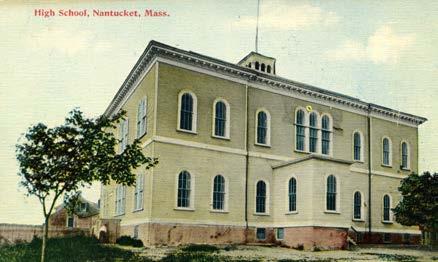
Nantucket High School seen in a 1910s postcard. Scan courtesy of Nancy and Peter Rodts, SC670-40.
the 1927 annual town meeting, a School Building Committee was created, and, at the next town meeting, $180,000 was approved to construct a new school at Academy Hill. The existing wood school was taken down and replaced by a new three-story brick building, which opened in 1929.
By 1930, the school budget had increased to $57,000. The following year, the town auctioned the South Street School and voted $65,000 to purchase land and construct a new school on Atlantic Avenue, which became the Cyrus Peirce School.
Diversity
While the population of the island did not grow significantly between 1900 and 1930, it did become more diverse. Town records give only a few glimpses of that diversity, often by reading between the lines. For example, the names of the original Black families of New Guinea, dating back over 200 years, begin to disappear. References to three elderly Civil War veterans—Sampson Pompey, Hiram Reed, and Benajah C. Boston—appear a few times relative to aid to which they were entitled. Despite having full citizens’ rights of citizens, no discernible Black names appear on the jury lists for the entire period.
Christine Porte, granddaughter of Christina Pompey and William Porte, was appointed as a public weigher in 1916, making her one of the earliest people of color to hold office on the island, and likely the first woman of color to do so. In 1927, her brother, Lincoln Porte, and Carlton West were appointed as special police officers.
As the old Black families disappeared, names of Black people from off-island begin to appear in the 1920s, many who came as domestic help to the summering wealthy. The 1930 census lists sixty-nine people as “Negro.”
The country was in the midst of the Roaring Twenties with its jazz, swing, blues, and ragtime music. Dance halls were popular, and Black people had their own hangouts. In 1929, a “committee representing the Siasconset colored people” consisting of Frank A. Scott, Lester Gordon, James Hall, and Moses Ford requested and received a
permit from the Board of Selectmen to hold “dances and entertainments” in a hall near Sankaty Golf Course; the board announced that “Inasmuch as Mr. Scott is a reliable man, the Board unanimously voted to grant the Committee a permit to hold their dances and entertainments in Scott’s Hall on Tuesday and Saturday evenings during the summer.”
Racism can be detected occasionally in the records. In 1923, the Board of Selectmen received a complaint about “gangs of colored people . . . monopolizing the sidewalks as a loafing place” on lower Main Street. The board took no action, but the use of the loaded words “gang” and “loafing” is telling. In 1925, R. B. Stevens complained about Black people congregating near the post office and the board asked the chief of police to ensure the doorway was kept clear. And in the summer of 1927, Mrs. Macomber complained of Black people congregating on the beach below her house on the Cliff. The chair of the selectmen agreed to interview her, and, at the next meeting, the board decided that no action was necessary because the beach was public.
During this period the demographics of the island were changing due to immigration. Portuguese speakers made up a significant portion of the newcomers, hailing from Portugal, Cape Verde, and the Azores. A variety of Portuguese organizations began to appear in town records, where we can see their business-permit applications as well as their applications to hold parades and festivals.
The records are a roll of newcomers’ names. In 1916, Mr. Shimileovitch applied for a junk dealer’s license.
The new high school on Academy Hill, seen at the end of Gay Street. Scan courtesy of Phyllis Visco, SC801-A2.
In 1922, Max Doroff was granted a permit for a bootblacking stand in ’Sconset. In 1926, John Gomes was appointed a special police officer, and Frank Oddo was given permission to keep his shoeshine business open on Sunday mornings. George Gebo and Eugene Viera submitted applications in 1927 to caretake the dump. And, in May, the Nicoleto brothers were licensed to have a piano in their ice cream parlor at 40 Main Street. Beatrice Gebo received a permit to take charge of a hall in ’Sconset and Arne P. Pedersen was appointed a special police officer for the Nantucket Yacht Club. That same year, Vincent Lopes was granted an ice cream permit for his store on New Street. In 1928, Manuel Correia obtained a common victualler’s license for 4 North Water Street. (the license to prepare and sell food) In 1930, L. A. Souza was appointed special police officer to serve at the Catholic Church, and Manuel Cosmo, representing the Cape Verde Association, received a permit for a dance at Chase Hall.
Women
There are few mentions of women in town records between 1900 and 1920, although women were consistently elected to the school committee. Women began to be appointed by the Board of Selectmen to a limited number of positions, notably that of public weigher—all scales, weights, jars, and other measuring devices had to be checked for accuracy to be sure that customers got what they paid for.
In 1912, Blanche H. Coffin was appointed a public weigher, and, in 1914, two of the thirteen weighers were women, E. W. Gardner and Helen Smith.
In 1918, a referendum to amend the Massachusetts Constitution asked voters whether women should be allowed to be public notaries; the men of Nantucket voted soundly against it.
The Nineteenth Amendment granted women the right to vote in 1920, and, unsurprisingly, women began to appear in town records more frequently. In 1901, only eleven women were on the voting rolls; by the year before the right to vote passed, that number had dwindled to eight. There was simply little reason for them to bother: for over forty years, their votes had only been tallied for school
committee elections. It took time to bring women into the fold: in 1922, only two women were elected and still only for the school committee.
Women were, however, increasingly appointed to town committees by the Board of Selectmen. During the 1920s, the board appointed three women to the seven-person committee to consider building a new school. They appointed Grace Barnes secretary of the Bathing Beach Committee and several women to the Publicity Committee.
In 1925, another state referendum was voted upon, this one proposing to strike the word “male” as a qualification to hold certain state offices. Men and women both participated in this election; Nantucket voters approved the referendum by with 334 votes. However, an astonishing 533 people submitted blank ballots, meaning a majority declined to voice their opinion.
In 1924, Mary M. Gardner became Nantucket’s tax collector, appointed to serve out the remainder of her husband’s term after his death. She held the position until 1927 when she resigned due to ill health.
The same year, Anna F. Huff was elected as a town assessor for three years, giving the town two women in salaried town positions, one elected. Finally, in 1926, the town voted in its first woman to serve on the Board of Selectmen: Anne Ring served from 1926 to 1929.
But it was in the sphere of granting licenses for businesses where women’s presence was most visible. Many of the licenses seen in the records were for businesses we would expect to see—hair salons, dress shops, tea rooms, and inns. One woman followed a less traditional path. In 1918, Shirley E. Nickerson was granted a fish trap to be operated between Madaket and Tuckernuck for a period of five years. Two years later, she was granted a license for a floating fish trap on the north side of the island.
Entrepreneurial women show up in the records in increasing numbers after 1919, as the island became more involved in tourism and the nation entered a time of relative prosperity. Ruth Burchell, Juliette Currier, and Emma Quartz received licenses for manicuring, reflecting the increasing demand
for services catering to the women of leisure who summered on the island.
Tea rooms proliferated throughout the 1920s, indicating women had the time to take afternoon tea. At least seven tea rooms run by women were licensed in 1922, including one in Surfside owned by Mrs. Irving Sandsbury, one on the Polpis Road opened by Harriet B. Hollister, one in ’Sconset operated by Minnie Nichols, and Katherine Morris’s tea room on North Water Street.
Women also owned and operated inns. In 1927, at least thirteen women registered as inn keepers, including Elizabeth Temple Ludwig, proprietor of the White Elephant; Anna Ward, proprietor of the Wonoma Inn on Centre Street; Eudora Pearl Parker of the Parker House on North Water Street; and Frances E. Scharf, proprietor of the Sea Moor Inn in ’Sconset.
In 1927, at least ten women received permits for restaurants. These included Maud Stovell, who owned the Wood Box; Edna Prentice, who ran the Skipper on Steamboat Wharf; Sarah Folger, who operated Wander Inn restaurant in ’Sconset; and Gwendolyn Gouin’s Dine-A-Mite, also in ’Sconset.
Infrastructure and Tourism
The town promoted Nantucket’s popularity as a summer resort, and money was increasingly spent to advertise the benefits of an island holiday and to sponsor summer band concerts and July Fourth celebrations. In 1927, for instance, Fourth of July festivities included a bonfire near the dump, refreshment sales on Hummock Pond Road, and a parade of “horribles” with prizes awarded.
Improvements in town infrastructure increasingly began to appear on the Board of Selectmen agendas. The board devoted hours to discussion of the placement of telephone poles. They earmarked money for more bicycle paths and for public bathrooms. In 1930, the board allocated $500 to employ a “matron” for these comfort station. The town created an Information Bureau under the direction of a Publicity Committee.
There was initial reluctance to allow automobiles on the island, but their exclusion was repealed at a special town meeting in 1918. Regulating cars became a major topic over the next decade as the town government struggled to create parking regulations, designate one-way streets, and place stop signs. There was debate at several meetings about how to properly warn motorists about the “dangerous” curve at Consue Springs.
Automobiles were a challenge for those who wanted to keep the island from becoming too modern. A town-meeting article in 1922 that proposed concreting part of Main Street brought out such a huge crowd that it was withdrawn before it was even read. Stoplights were overwhelmingly defeated more than once. An article at the 1928 annual town meeting that proposed a four-way, three-color traffic light at the junction of Centre and Pearl (India) streets, as well as a three-way, three-color traffic light at Main and Federal streets, was defeated, as was a similar article two years later. The island still has no traffic lights.
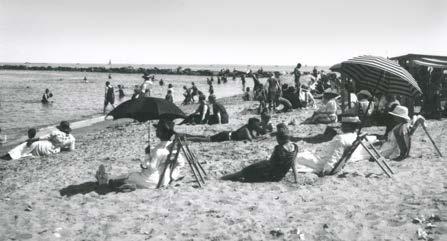
The board often focused attention on the island’s beaches, especially Children’s Bathing Beach, which received town funding. As it does now, the board leased the Cliff Bathing Beach, now called Jetties Beach, to concessionaires. A special town meeting in 1924 voted to lease the beach to Leon Royal for fifteen years for $3,300 per year. The town also began to employ lifeguards at some beaches.
In 1928, a year before the start of the Great Depression, the town funded three major construction projects. Voters allocated $20,000 to build a new central fire station on South Water Street and $175,000 to build a new Town and County Building on the corner of Broad, Federal, and
Sunbathers at Jetties Beach, August 20, 1920. F4673.
South Water streets. Thirdly, they funded the new Academy Hill school. All three still stand.
In 1930, the annual town meeting included a warrant to spend $5,000 for a municipal airport, and a committee was appointed to purchase land and report back at a future meeting. In June, William F. Smith represented the Air Port Committee at a meeting of the Board of Selectmen. He advised securing an option on a piece of land between Nobadeer and Siasconset. It became the Nantucket Airport several years later.
History and Preservation
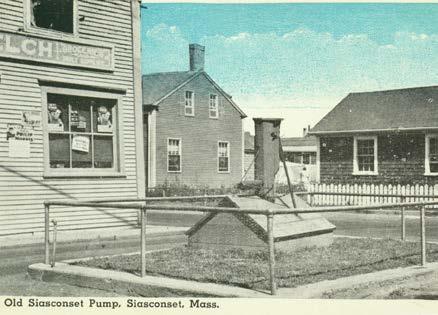
Nantucketers realized early that the island’s rich history was a selling point. The Nantucket Historical Association (NHA), founded in 1894, played an increasing role in preserving and promoting the island’s history. The NHA and the town sometimes worked together. In 1922, the Board of Selectmen voted that the NHA be the custodian of the ’Sconset Pump and “its immediate surroundings.” In 1923, the town took charge of Old North Cemetery and appointed the NHA as the cemetery’s custodian. Board of Selectmen minutes from July 1930 noted the board’s invitation to attend the dedication of the new Whaling Museum.
The board also took numerous steps to promote the island’s history. In 1900, for example, the selectmen approved a tablet marking the site of the birthplace of Abiah Folger Franklin, mother of Benjamin
Franklin. In 1928, the board approved placement of a bronze tablet on Altar Rock, purchased by Henry Coffin Everett in memory of his grandfather. In 1930, $150 was voted at the annual town meeting to mark “historic sights” for the upcoming state tercentenary.
The Board of Selectmen also recognized the significance of the paper records held at the Town Building which date to the 1600s. In 1901, money was allocated to index some records at the town clerk’s office, projects that continue today as records are bound and sometimes digitized.
The Environment
Environmental concerns, especially relating to animals, have been top of mind for the town government as far back as 1900. In the 1880s, prairie dogs had been introduced to the island, to be hunted for sport. They proliferated and became a nuisance; in1900, the town embarked on a successful campaign to eradicate them. Not one has been seen since. Moths were another nuisance, and the town employed William Voornevelt as the tree and moth superintendent in 1922, although money was allocated for aspects of this role at annual town meetings as early as 1907, indicating that it was a part of some town official’s job. In 1922, beach plums were sprayed to destroy tent caterpillars. By the 1926 annual town meeting, the town was spending $2,000 annually on trees and moths, and at the 1930 annual town meeting, a whopping $7,500 was voted to eradicate mosquitos. A special town meeting that summer voted an additional $2,500 to exterminate mosquitos at Hummock Pond and its tributaries.
Hunting of ducks and other birds for sport was permitted back then, including brants, coots, whistlers, and other seabirds, many of which are now protected. In 1912, the town voted to extend the season for hunting shorebirds. Money was voted every year to exterminate crows; it is still legal to shoot crows several months each year.
The town was also aware that the natural beauty of Nantucket was a draw for summer tourists, and, as the decades unfolded, there was increasing interest in preserving that beauty and ensuring that future generations had access to it.
Postcard view of the ’Sconset pump, 1920s. Scan courtesy of Sheila Todd, SC660-6.
In 1922, the Board of Selectmen instructed the town’s attorney to take steps to “prevent the closing of the Path along the Bluff at Siasconset,” making sure that it remained a public way. Six years later, at the 1928 annual town meeting, the board recommended that the town buy Pocomo Point through eminent domain for “use of the public for all time . . . as a public park.” That year, the meeting also created a five-person Planning Board to develop plans to include zoning as well as creating parks.
In 1928, Alice O. Albertson and Grace B. Gardner wrote to the Board of Selectmen in opposition to expanding the ’Sconset Dump because the nearby swamp “contains some of the rarest flowers on Nantucket,” including rare orchids and sundews. The ’Sconset Dump, officially closed in 1971, is now the property of the Nantucket Conservation Foundation. An important wetland, it is the home to a variety of rare plants.
A Place to Complain
The Board of Selectmen has long been the recipient of citizen complaints, and reading those complaints makes for interesting reading in the town records. The board heard dozens of complaints about people’s dogs, sometimes ruling that some had to be muzzled or the chief of police would be instructed “to shoot the dog when found running at large.”
People complained about the youth of the town, especially boys. In 1914, the Board of Selectmen voted to place a notice in the Inquirer and Mirror warning “against the use of air rifles and ‘sling shots’ in and about the town” and instructed the police to arrest any boys doing so. And in 1923, there were complaints about damage done by boys at Halloween, again referred to the police.
In 1926, there was an upsurge of complaints about boys. Residents of Fair Street presented a petition requesting action against boys playing “base-ball and causing disturbances.” This was echoed the next month by a resident of North Water Street about boys playing baseball there. A week later, a complaint was heard about boys loitering around Coffin’s Drug Store and the post office being “rude to passers-by.” And, two months later, Mrs. M. E.
Staples complained that pupils from the South Street School were trespassing on her property. It was also voted that the bylaws against expectorating (spitting) in public be enforced and public notices posted to that effect.
Not all complaints concerned boys and dogs. Some were levied against cultural changes as the younger generation’s mores clashed with those of their elders. The Twenties shocked some people with its jazz, energetic dances like the Charleston, and short skirts. Not surprisingly, complaints were voiced regarding the dance halls. While alcohol was outlawed, there is no doubt that alcohol was readily available in and around the halls. In 1924, Gladys Wood complained about “noises and disturbances” caused by dancers in Red Men’s Hall. In 1926, the board notified dance halls that they had to close by midnight and declared that dancing the Charleston was strictly prohibited on all second floors for fear of damaging the buildings.
The staid sensibilities of some islanders were upset by new fashions which exposed more skin than they thought appropriate. In 1926, the Board of Selectmen published a warning in the Inquirer and Mirror prohibiting the wearing of bathing suits in town unless covered up. The police were also ordered to patrol Children’s Bathing Beach and instruct men that the beach was not for their pleasure.
Prohibition
These changes took place against the backdrop of Prohibition. In 1920, the Eighteenth Amendment prohibited the sale and importation of alcohol. It did not, however, prevent drinking, and the law was often ignored. Nantucket, for its part, had a long history of temperance societies dating back to 1817 and had periods when the island was “dry.” One of the jobs of town government was to decide who would receive permits to sell alcohol. In some years, licenses were limited to medicinal use. In 1913, the Board of Selectmen refused to permit the Nantucket Railroad from carrying “intoxicating liquors.”
In July 1919, a few months before the Eighteenth Amendment went into effect, a special town meeting was convened asking voters whether “to regulate alcohol not containing over 4%” and to define such
alcohol as “non-intoxicating.” The town voted to keep low-alcohol drinks available and legal. In the general election in November, a state referendum put the question to voters as to whether to enforce the Eighteenth Amendment. On Nantucket, 256 voted in favor of enforcement, 209 voted against enforcement, and 207 submitted blank ballots. Clearly, voters were ambivalent on the issue.
For such a controversial topic, discussion of Prohibition is strangely absent from town records.
At the 1923 annual town meeting, the town voted to allow licenses for the “sale of certain nonintoxicating beverages in this town” by a vote of 318 to 256, which meant that weakened beer, often known as 3.2 beer, could be sold. The same question passed the next two years, but by slimmer margins. Rum running in the waters off Nantucket kept the U.S. Coast Guard busy, but this did not come under the purview of the selectmen. There was some controversy concerning a conflict between the Coast Guard and local bootleggers in the fall of 1925. According to the selectmen’s minutes, bootleggers in Nantucket had been stirring up lies about the Coast Guard, likening it to conducting a “reign of terror.”
The truth, according to the board, was that the men at the base were “very well behaved.”
At that meeting, the board instructed the chief of police to clean up alleged moonshine joints around town. He was instructed to get a list from the town clerk of all businesses that had licenses for denatured alcohol and to inform anyone selling such alcohol without a proper license to procure one immediately: denatured alcohol has additives to make it undrinkable, but bootleggers found ways to use it.
This meeting’s minutes include a letter from Rear Admiral Philip Andrews of the U.S. Navy, who expressed concern about the conduct of those under his orders, writing, “Should any member of such Radio Stations be under the influence of liquor, or misbehave so as to offend the community or bring discredit on the Naval Service at any time, I will be obliged if you will at once inform me.”
Two years later, a letter of appreciation was received by the selectmen from Corporal Raymond R. Cook,
at the state police office on Martha’s Vineyard for “services rendered by Fred Chambers, mate of the Nobska in connection with a seizure of liquor at Vineyard Harbor.”
Prohibition was not repealed until the end of 1933, but during the Massachusetts general election in November 1928, a referendum was put to voters about whether the state’s senators should vote to repeal the Eighteenth Amendment. On Nantucket, the vote was 471 to 349 in favor of repeal. Again, their ambivalence was clear as 498 voters cast blank ballots.
Conclusion
There are evident trends across these three decades of the town records. Tourism was recognized as the economic driver of the island’s future. In some cases, the foresight of the town government is impressive, including planning for an airport while land was still readily available.
Change was in the air then, but many topics remain on the town’s agenda today. The island continues to argue how much to allocate to education as the island’s school-age population has grown and diversified. Teachers are still hard to recruit. Health care has remained important, as was revealed by the COVID pandemic, and mental health is an ongoing issue. Sanitation, including maintaining the municipal landfill, monitoring the health of the harbor, inspecting septic systems, and insuring clean drinking water remain important. Nantucket grapples with providing affordable housing for those who live and work here year-round, as well as for those who have no permanent address. Infrastructure requires attention due to ever-increasing development, which puts pressure on the sewers as well as roads that were not designed for large numbers of vehicles. Pollution threatens our waters, and sea level rise must be addressed.
All these issues have threads leading back to the past. The challenges have only increased within a system of town governance that has not fundamentally changed over the centuries, continuing to rely on five elected officials and citizens gathering in the town meetings to tackle these existential threats.
RECENT ACQUISITIONS
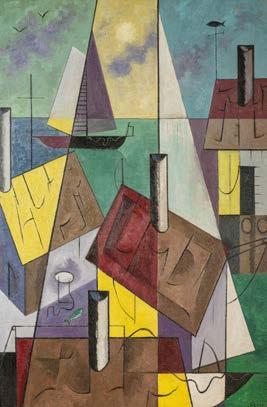
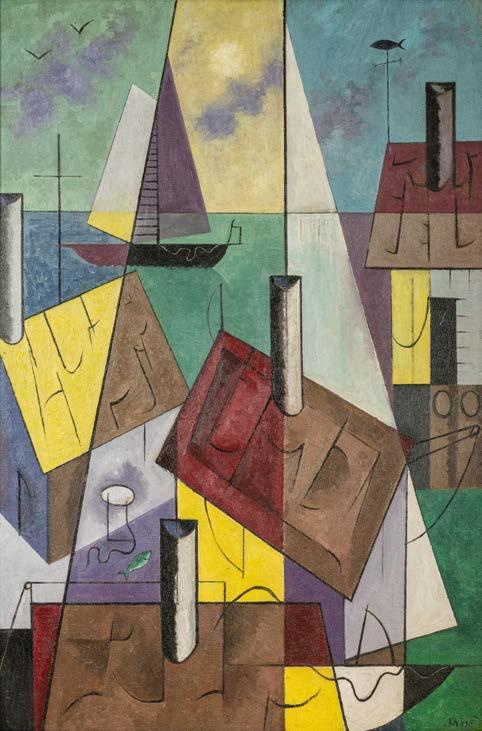
Nantucket Waterfront, Number Four, 1947
Charles Green Shaw (1892–1974)
Oil on Masonite. Gift of the Friends of the NHA, 2025.51.1
Through the generosity of the Friends of the Nantucket Historical Association, the NHA has acquired a painting by the twentieth-century abstract expressionist artist Charles Green Shaw (1892–1974). Titled Nantucket Waterfront, Number Four, the painting captures a view of the harbor over the culstered buildings of the waterfront. Shaw studied art as a youth but was not serious about painting until the 1930s when he became involved with a group of New York artists interested in the tenets of European Cubism and Constructivism. He painted on Nantucket seasonally beginning in 1947, the year he created this work. His island paintings share a sense of space and emotion that reflect his love for, and enjoyment of, the island.
William Wood account book, 1751–1791
NHA purchase underwritten by Nathaniel and Kendra Walton
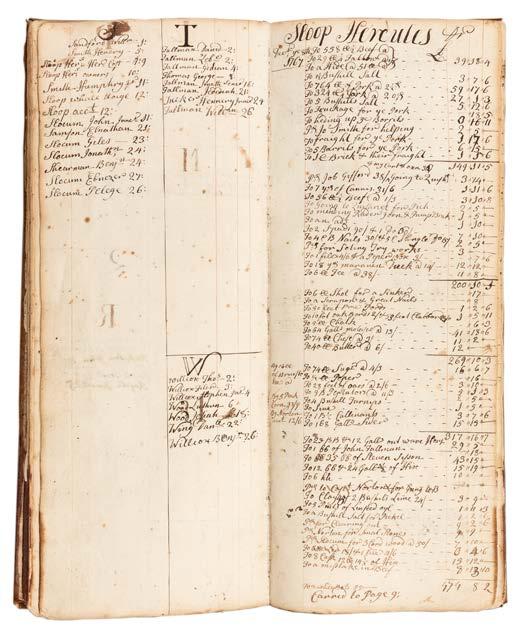
The NHA has acquired a rare account book documenting eighteenth-century coastal whaling voyages from southeastern Massachusetts. The book begins with the sales accounts from the dry-goods store of William Wood, a merchant and handyman in Dartmouth in Bristol County, covering transactions from 1751 to 1758. His numerous clients came to him for hardware, cloth, notions, spices, and food stuffs. Interspersed with and following these accounts are the financial records of at least four whaling voyages made by the sloop Hercules. These document in detail the cost of preparing the vessel for whaling and the types and amounts of supplies purchased. They name crewmen and show the men’s accounts with the captain and owners. The book is a trove of rare data ready to be mined by future researchers
The NHA’s purchase of the account book has been made possible through a generous donation from Nathaniel and Kendra Walton.
DIGITIZATION UPDATE
New Collections Available to Transcribe
Help us transcribe historical materials from the NHA manuscript collection! The following collections have recently been digitized and are now available to transcribe on From the Page.
Log of the ship Atlantic, volume 1, 1846–1849
This log, kept by Second Mate Franklin Tobey, follows a whaling voyage from Martha's Vineyard to the South Pacific and includes illustrations as well as detailed accounts of life abroad the ship, including the work of sailing and breaking down whales, illnesses, finding a stowaway, and examples of crimes and punishments.
Logs of the bark Anahuac and the bark Cumberland, 1849–1853
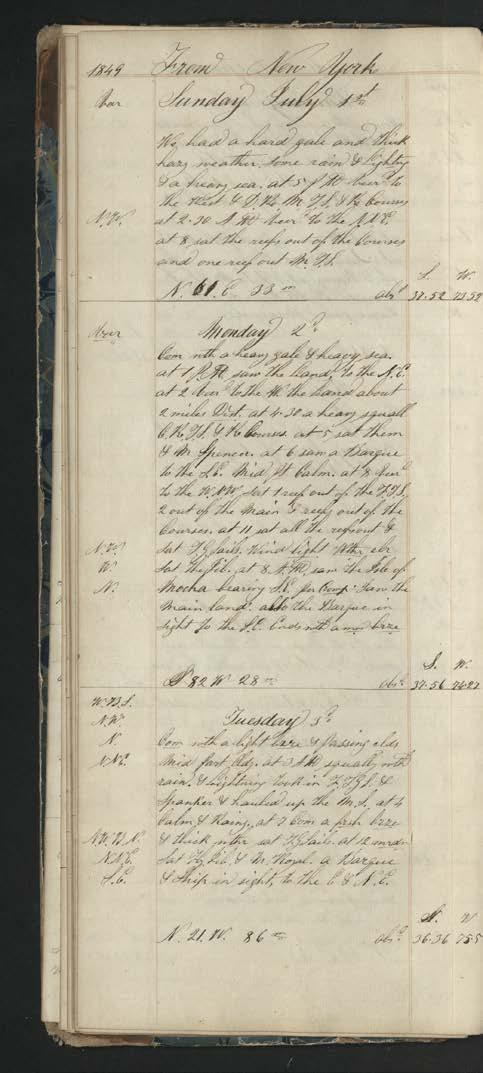
This log by an unknown keeper tracks two trading voyages of the bark Anahuac between New York and Central and South America as well as a passenger voyage of the bark Cumberland out of Liverpool, England, in the mid-nineteenth century.
Dr. John B. King Papers, 1832–1872
The Dr. John B. King papers chiefly consist of a case book kept by Dr. King, recording symptoms and treatments of diseases and injuries of local and transient patients. Collection also includes a character reference letter, King's medical degree, and a few memberships.
Dr. John Shackford Grouard Medical Record Book, 1915–1916
The Dr. John Shackford Grouard Medical Record Book collection contains one book kept by Dr. Grouard reporting names, diagnoses, and records of treatment for patients residing in Nantucket and Siasconset, Mass., from 11 November 1915 until 31 May 1916. Diseases as well as births and miscarriages are included. A few cases are recorded by Dr. Frank Lewis.
Allen Family Letters, 1869–1944, undated, bulk 1869–1875
This collection contains letters from Captain Charles E. Allen (1822–1883) and Hannah Maria Farnham Allen while aboard bark Sea Ranger, 1869-1874, to their daughters Emma (1857–1904) and Lillian (1864–1941) in Nantucket, Mass. Also includes letters from Captain George W. Allen to his brother Charles. Transcriptions created for the Allen Family Letters will be used by the curatorial and visitor experience teams in developing a new daily program for the Whaling Museum.
The NHA’s transcription program is made possible thanks to support from Connie and Tom Cigarran and the H.L. Brown Jr Family Foundation.
Help us transcribe historical materials from the NHA manuscript collection! As we upload our collection to the crowdsourcing manuscript transcription service From the Page, transcript and explore the collections from the comfort of your own home! Learn more at NHA.org/research/the-collections/transcribe-the-collections/
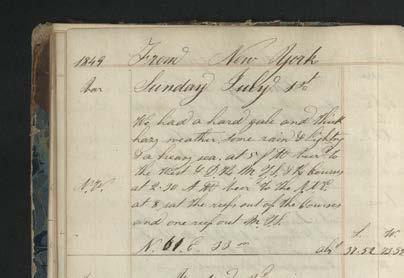
A page from the log of the bark Anahuac, documenting its journey from New York in July 1849. MS220 Log 14
NHA PUBLICATIONS
New Publications Coming this Summer
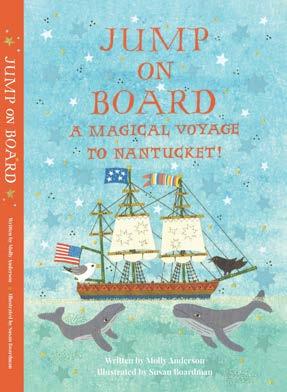
We are excited to share that the NHA will publish a new book, Jump on Board: A Magical Voyage to Nantucket! Written by former Nantucket Atheneum Executive Director Molly Anderson and beautifully illustrated by Island artist Susan Boardman
Set during the Gold Rush era, this engaging chapter book for readers ages 8-12 is the tale follows Hannah, a Nantucket seagull, and her friend Silas, a clever San Francisco crow, as they embark on a twofold mission: to return to Nantucket aboard the former whaleship Joy and to spread the word that the whaling era is drawing to a close.
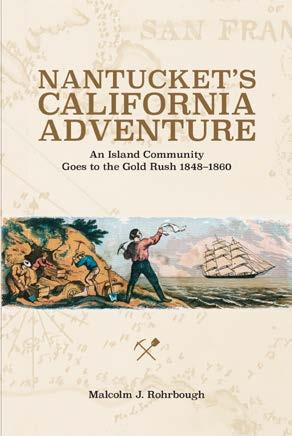
Another new publication, which was previewed in our fall issue, is: Nantucket’s California Adventure: An Island Community Goes to the Gold Rush, 1848–1860 by Malcolm J. Rohrbough. In 1849, six hundred Nantucketers set out for California to join the rush for gold. Most of them traveled by sea, and many voyaged around Cape Horn in repurposed whaling ships. This book will examine what propelled them to go west in such numbers, what they experienced when they got there, and how their prolonged absence affected the families and community they left behind.
The NHA is thrilled to be releasing these two complementary publications centered around Nantucket’s tie to the Gold Rush, on the heels of releasing The Adventures of Nancy Garden Prince, adapted by Frances Karttunen and illustrated by John Walsh this past fall.
The Abbey Family
Molly Anderson
Anonymous
Janet Bailey
Lucinda C. Ballard
Mary Randolph Ballinger
Charles Bartlett
Susan and Bill Boardman
Maureen and Edward Bousa
Elizabeth Clyne
Amanda Cross
Lisa Dawson
Caroline Ellis
Tracy and John Flannery
Tyrrell Flawn and John Howe
Cece & Mack Fowler
Nan Geschke
Lexi & Matt Gibbs
Claire and Bob Greenspon
Barbara and Edmund Hajim
Barbara and Amos Hostetter
Helen Lynch
Nantucket Looms
William Richards & Gary McBournie
Ann and Craig Muhlhauser
Melissa & Nat Philbrick
Ellen and David Ross
Denise and Andrew Saul
Susan R. Shapiro
Janet & Rick Sherlund
Happy and Sam Shipley
Claire & Holden Spaht
Melinda and Paul Sullivan
Jane A. Tyler
Kim and Finn Wentworth
Kelly Williams and Andrew Forsyth
NEWS, NOTES & HIGHLIGHTS
Learning, Engagement & Experience
NHA Launches Social Impact Research Study
The NHA has launched a Measurement of Museum Social Impact (MOMSI) research study, a year-long research project developed to measure how museums impact their communities through education and engagement. This project will be conducted over the course of the year, recruiting local and seasonal residents to participate in the study.
The MOMSI survey was built through trial studies at 38 museums across the United States by the Utah Division of Arts & Museums and Thanksgiving Point Institute with funding from the Institute for Museum and Library Services (IMLS). Following these case studies, IMLS created and published the Museum Social Impact Toolkit, a resource that allows museums to conduct studies and assess the ways they are positively impacting the visitors that engage with them.
“The NHA is excited to utilize this comprehensive toolkit to understand the impact we have on our visitors and community. As the NHA continues to grow our outreach programs, this assessment will be significantly beneficial so we can shape our efforts to best serve our many audiences,” said NHA Gosnell Executive Director, Niles Parker.
The NHA aims to recruit 100+ volunteer study participants to visit the Whaling Museum three separate times throughout the year. Participants will then complete a survey reporting on how their engagement with the NHA influenced different aspects of their lives, including continued learning, increased health and well-being, valuing diverse communities, and strengthening relationships.
These findings will help the NHA measure the organization’s current social impact, while also informing the NHA’s future engagement initiatives. The data acquired through this survey will also support the NHA’s candidacy for reaccreditation as a certified member of the American Alliance of Museums, the primary non-profit organization representing the entire scope of the museum field in the U.S. The NHA’s application for AAM reaccreditation is being compiled over the course of 2026, to be submitted in 2027.
Participant recruitment for the MOMSI research study is underway. To learn more, please reach out to Jocelyn Wong, NHA Director of Community Engagement at jwong@nha.org
NEWS, NOTES & HIGHLIGHTS
Learning, Engagement & Experience
There and Back
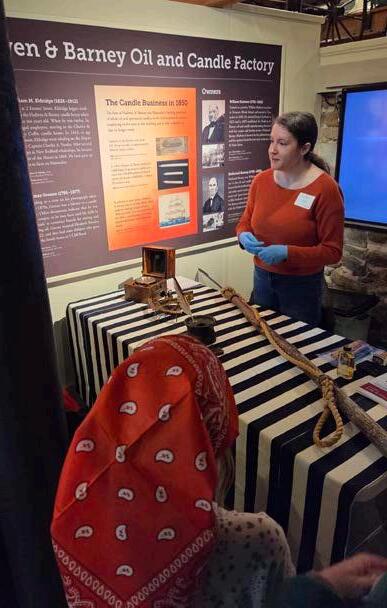
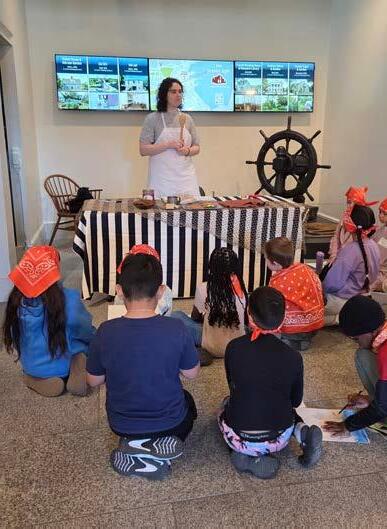
This March, the NHA continued the tradition of welcoming the Nantucket Intermediary School’s third grade to join a mock whaling voyage as part of their unit on Massachusetts history. Over the course of two days, 115 students were divided into whaling ‘crews’, where they and their NHA ‘captains’ set sail on an interpretive journey around the Whaling Museum. Every few minutes, the crews would make a stop to learn about life aboard a whaleship. Stops on their journey included an Azorean trading post, where students learned words in Portuguese; a chance to restock food and learn about the diet onboard a whaleship; a station to learn and sing sea shanties; and a visit with collections, where they examined authentic artifacts from the age of Nantucket whaling.
NHA Visits STEAM Fair
This year, the Maria Mitchell Association hosted their annual Nantucket STEAM Fair on March 14, perhaps better known as Pi Day. The NHA leaned into the pi(e) theme and presented historic scrimshaw pie crimpers, known as jagging wheels, highlighting a fascinating connection between pie and Nantucket’s whaling past. Many of the historic pie crimpers in our collection were made on whale parts furnished by the whaling industry. They were often given as gifts when whalers returned home, presumably to say, “I missed you and thought of you while I was away,” but also probably that they’d like a fresh pie after years at sea! While the intricate scrimshaw artifacts were displayed, kids could get hands on with modern pie crimpers: visitors to the table could experiment with different patterns and practice using the tool in playdough.
There and Back program held at the Whaling Museum this past March.
Heritage Craft Lightship Basket Workshop Taking Place Aboard Nantucket
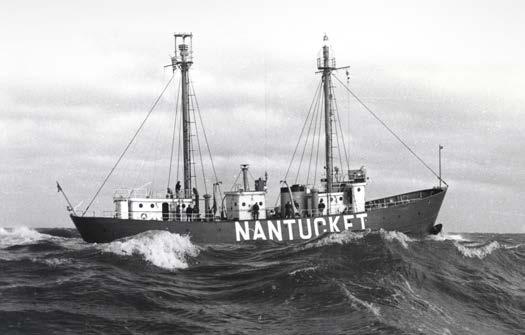
Lightship LV-112
The NHA is all aboard the Nantucket Lightship LV-112 to host a Heritage Craft Nantucket Lightship Basket Workshop. This destination workshop will be held over three days aboard the lightship docked in Boston Harbor from Friday, September 11, through Sunday, September 13, 2026. This program offers a meaningful connection to Nantucket’s maritime past—and the opportunity to create a basket that carries the spirit of its origins. Master basket maker Kathleen Myers will guide participants through the weaving process, share the history of the baskets, and showcase examples from the NHA collections originally made on the South Shoal Lightship near Nantucket. “Nantucket lightship baskets hold a significant place in the history, culture, and economy of Nantucket Island. We are excited to board the Nantucket LV-112, learn more about the vessel, weave baskets, and bring this legendary craft back to its roots in such a unique way. This program will advance our mission to preserve historic crafts at risk of disappearing due to a lack of training opportunities and visibility. We are thrilled to be a part of preserving and sharing history that is embedded in Nantucket. We continue to strive to be a place of learning and making, and this workshop brings us another step closer to that goal,” explained Niles Parker, NHA Gosnell Executive Director.
Program instructor Kathleen Myers has been weaving baskets for 30 years. In 2021 and 2022 Myers guest curated the basket exhibitions at the NHA’s Hadwen House; previous to that she had assisted with the annual exhibitions at the Nantucket Lightship Basket Museum. She works alongside other notable Nantucket basket makers, including Tim Parsons, Nap Plank, Karol Lindquist, and Alan Reed. Myers’ skill set runs deep, and she is known for her elaborate basket nests.
There are four distinctive elements that define a Nantucket lightship basket. The basket is woven on a mold; the staves are made of hardwoods or reed; the weavers are cane; and the basket has a solid wood base. When well-made, lightship baskets were practical as storage and carrying baskets. Like basket-weaving workshops held at the NHA’s 1800 House on Nantucket, participants will begin baskets on the first day of the workshop and end with a finished product on the last. White oak materials will be used to follow a traditional design from the nineteenth century.
The Nantucket South Shoals were hazardous, and a lightship—a floating lighthouse—was first stationed there in 1854. Nantucket mariner Thomas S. James became first mate of the lightship in the 1860s, and he is traditionally credited with introducing the practice of basketweaving among the lightship’s crew. Duty on the lightship was filled with dull routine, and the men filled their time with many side activities. Basketweaving took hold, giving rise to the iconic name. Most of the men hired to work the South Shoal Lightship were Nantucketers, and many continued to weave baskets after their time aboard.
The last lightship to mark the Nantucket Shoals was the LV-112, built in 1936. It was positioned 50 miles southeast of Nantucket and 100 miles from the U.S. mainland, according to the United States Lighthouse Society. The LV-112 was the largest lightship ever built in the United States and the longest-serving lightship on the Nantucket Shoals, with over 39 years of service.
To learn more about Heritage Craft destination workshops, please contact HeritageCraft@nha.org
Lightship Nantucket LV-112 on station in swells, circa 1960s. Nantucket Historical Association collection, f201.
NEWS, NOTES & HIGHLIGHTS
Properties
New Fine Arts Gallery
Work is well underway on the addition of the H.L. Brown, Jr. Family Foundation Gallery as part of the Williams-Forsyth expansion. Earlier this year, the curatorial team carefully relocated paintings from the existing gallery to 89 Bartlett Road, where newly installed racks provide appropriate storage. Additional works were thoughtfully redistributed to the museum’s second floor and to the Whitney Gallery at the NHA Research Library, ensuring continued access and care during the transition.
When the galleries reopen in 2027, visitors can look forward to a reimagined presentation of Island People, which will be reinstalled, expanded, and updated. The Fine Arts Gallery will also broaden its scope to include decorative arts, creating new opportunities to highlight objects that complement and deepen the stories told through the collection.
Demolition of the existing gallery space began in February and is now ongoing. Designed by Emeritus and carried out by the Andersen Company, the project has already seen ceilings removed, exploratory work completed, and walls opened to reveal the full potential of the space. As the galleries begin to take shape, the architectural vision is becoming increasingly visible, offering a glimpse of the expanded opportunities to present art and to share the stories of Nantucket’s people in new and compelling ways.
Staff formerly based in the building’s administrative offices have been relocated to 4 Whalers Lane, where new first-floor workspace was completed by Barber & Sons, Inc.
New Fine Art Gallery work underway at the Whaling Museum with ceiling removal.
Gosnell Hall
At the beginning of 2026, several long-standing visual elements within the gallery were removed as part of an ongoing effort to refine the visitor experience. Originally built by local craftsman Karl Phillips, these interpretive features have found new life through donation to local organizations, ensuring their continued use and appreciation within the community. Among the changes, the whaleship, Georgia, along with the hull and bow elements that extended from the second floor, were carefully deinstalled. The gallery was subsequently repainted in collaboration with Barber & Sons, Inc. and ACK Colors Painting, resulting in a more cohesive and visually unified space.
In its current form, the gallery more prominently highlights the whaleboat, along with both media and guide-led interpretations, allowing for a clearer and more focused visitor experience. These updates represent an early phase of a broader, multi-year initiative to develop a new core whaling exhibition, scheduled to open in 2028. The forthcoming installation will introduce new objects and interpretive graphics, offering a more comprehensive and nuanced exploration of Nantucket’s whalers and the families who remained on the island, focusing on the turn of the whaling industry into tourism.
Greater Light
Following the discovery of deterioration in the sill surrounding the two street-facing bow windows at Greater Light, the NHA undertook a careful restoration effort in collaboration with Ben Moore. The project involved rebuilding both the sash and sill, with particular attention to preserving the original appearance while subtly improving performance. Moore incorporated slight adjustments to the design, introducing angles that allow water to shed more effectively and prevent future moisture accumulation, and also restoring the ability to fully use the windows.
Once the restoration was complete, local builder Karl Phillips reinstalled the windows in their original location, returning these distinctive features to the façade. The work concluded with painting by ACK Colors Painting, providing a cohesive finish and ensuring the longevity of the repair.
Work underway transforming Gosnell Hall in the Whaling Museum.
Bow window restoration completion in March.
NEWS, NOTES & HIGHLIGHTS
Thomas Macy Warehouse
After the appearance of efflorescence along the interior walls of the Thomas Macy Warehouse, it became clear that the building’s brickwork required attention. This white, powdery residue, formed by salt deposits, had begun to emerge through the masonry, collecting on the walls and settling onto the floor below. While not harmful in itself, its presence signaled that moisture was moving through the bricks rather than the mortar, indicating an imbalance between the two materials.
From February through March, the warehouse underwent a focused interior repointing project, led by Russell Harms with guidance from Pen Austin. Following a thorough assessment, it was determined that portions of the brickwork on both the first and second floors required repair, including selective brick replacement and repointing, to address current deterioration and prevent future issues.
Over the course of several weeks, Harms and his team carefully removed compromised mortar, replaced weakened bricks, and introduced a specially prepared mortar mix, developed through a process of sifting and drying to achieve proper consistency and performance. Once applied, the new mortar was kept damp to ensure a controlled curing process before being brushed and finished to match the surrounding masonry.
This work has strengthened the structural envelope of the building, corrected areas where the original pointing had reached the end of its lifespan, and restored a more unified appearance to the interior brickwork. Through these efforts, the longevity of the Thomas Macy Warehouse has been meaningfully extended.
Looking ahead, exterior repointing will also be necessary. As this work requires consistently warm temperatures for proper installation, it is planned for a future season.
Masonry repair work inside the Thomas Macy Warehouse.
Staff Update
New Faces and New Roles at the NHA
Ava Lanza, Social Media and Events Coordinator
Ava was born and raised in East Lyme, Connecticut, and spent much of her childhood visiting Nantucket, which quickly became her home away from home. She earned her undergraduate degree in Health Science from Sacred Heart University in Fairfield, Connecticut, in 2024 and completed her Master of Public Health in 2025. During her time at Sacred Heart University, Ava served as Director of Philanthropy for the Zeta Tau Alpha chapter, managing fundraising initiatives and coordinating events in support of charitable causes. With a longstanding interest and keen eye for digital content creation, brand storytelling, and visual communications, this role felt like a natural fit—even beyond the scope of public health, as Ava is deeply passionate about philanthropic initiatives and community engagement. Outside of work, she enjoys spending time with family and friends, reading, skiing in the wintertime, and anything to do with being by the ocean.
Sara Westbrook, Director of Retail and E-Commerce
Sara Westbrook joined the Nantucket Historical Association as Director of Retail and E-Commerce, bringing a strong background in both for-profit and nonprofit retail environments. With a focus on thoughtful merchandising, storytelling, and customer experience, she is excited to grow the Museum Shop’s offerings while deepening connections to Nantucket’s history and community.
Sara is especially passionate about supporting local artists and makers and looks forward to expanding collaborations that reflect the island’s unique heritage. She is thrilled to be part of the NHA team and to help create a vibrant and engaging retail experience for visitors and members alike.
Sara Williams, Marketing Coordinator & Staff Photographer
Sara Williams joined the Nantucket Historical Association in a full-time position in November 2025 as the Marketing Coordinator & Staff Photographer. She is a multimedia storyteller specializing in photography, videography, and digital strategy. Graduating from the University of Missouri with a BA in International Convergence Journalism, she focused on all mediums and began her photography journey. Now her photographs are exhibited internationally. She is a certified drone pilot and is actively working to become a private pilot. Stepping into this new role, Sara is so excited to be part of the NHA team. She earnestly looks to tell the stories of the NHA and illustrate the importance of its mission in the Nantucket community.
Manny is described by many as ‘a salt of the earth’ kind of man. He shared his carpentry knowledge with many over the years. He felt woodworking was a lost art and loved passing his knowledge and expertise down to others.
Manny at his favorite NHA property, the Old Mill.
Manuel “Manny” R. Sylvia Jr. 1948–2026
Manuel “Manny” R. Sylvia Jr., 78, passed away peacefully on March 7, 2026 with his family by his side. Whether the “R” was for “Richard” or “Rezendes” has been a family mystery for decades and will now endure forever.
Manny was born at Nantucket Cottage Hospital on January 14, 1948. He was the youngest of three children, and the only son. Manny graduated from Nantucket High School in 1967, then served in the Army, being stationed in Colorado. While in the service, he enjoyed photography and horseback riding during his free time. Ever selfless, Manny always told his children that he would volunteer to stay on base during any big holidays. He did this because he was single and without kids at the time, and wanted the servicemen who had families of their own to spend the time with their children.
On June 14, 1975, he married Sarah “Sally” Bodman in a small ceremony at the First Congregational Church of Nantucket. They had three children whom he loved with all of his heart. His family was his world, and he never wasted an opportunity to talk about his kids and grandkids. Manny was always willing to lend a helping hand, especially to those he loved. When not running his own carpentry and caretaking business, Manny could often be found volunteering his carpentry skills at the family’s church or chaperoning all three of his children on their school trips to Washington DC. However, Manny found his true professional passion at the Nantucket Historical Association, helping to maintain the various historic buildings and sites across the island. He knew the Old Mill like the back of his hand, and continued to help with it even after retirement.
A memorial stone in honor of Manny will be laid at the Old Mill historic site this spring. The NHA also holds a wonderful oral history conducted with Manny and his wife, Sally, in 2004. Manny is also remembered for his voice-over in the video “John Sylvia: The Last Miller at the Old Mill on Nantucket,” which can be viewed on the NHA YouTube channel and showcases Manny’s thorough knowledge and love for the Old Mill.
He was also a long-time member of the local Freemasons’ lodge. One of the highlights of his time in the lodge, and indeed his life, was watching his son, Justin, become the Worshipful Master of the Lodge. He spent countless hours helping Justin prepare and study, and watched with pride as he served.
Manny is described by many as ‘a salt of the earth’ kind of man. He shared his carpentry knowledge with many over the years. He felt woodworking was a lost art and loved passing his knowledge and expertise down to others. At the end of the day, he could always be found in his recliner with a can of Budweiser in his hand while sharing stories of days gone by with his family. Manny is predeceased by his parents, Manuel and Zelmira Sylvia, and his sisters Helen Juliano and Margo Wiechens.Manny is survived by his wife, Sally (Bodman) Sylvia, his son Justin Sylvia, and his daughters Danielle Ochoa and Celeste Ikolodo. He also leaves behind two sons-in-law (David Ochoa and Wilfred Ikolodo), his grandchildren (Nicolaus Ochoa, Lucas Ikolodo, Ofelia Ochoa, and Noelle Ikolodo), along with a brother-in-law, cousins, nieces, and nephews.
BUBBLES w BOURBON
Friday, June 26
Co-Chairs:
Annabelle & Gregory Fowlkes
Connie Anne & Jeremiah Harris
John Sylvia
Showcasing distinguished basket collectors, featuring their treasured pieces, as well as a highly anticipated auction featuring a curated selection of one-of-a-kind pieces. Enjoy a bourbon tasting alongside our signature bubbles, craft cocktails, and light bites to kick off the summer season.
Presenting Sponsor: n Ure�SURAN CE
nantucket by design
Exclusive Presenting Sponsor: \VILLIAM RAVEIS
July 13-16
Co-Chairs: Marla Sanford & Bill Richards Nantucket by Design brings together world-renowned designers, artisans, and craftspeople to celebrate the island's enduring design heritage. Through panels, keynotes, master classes, and social events, participants explore how modern style is shaped by Nantucket's iconic history.
NIGHT
Saturday, August 1
Co-Chairs: Annabelle Fowlkes & Mary Read
Evenings such as A Nantucket Night help bring the NHA's mission to life by generating essential support for ongoing storytelling through its collections, properties, programs, and research.
Presenting Sponsor: nure �SURANC
2026 MEMBER EVENTS
Mark your Calendars!
Whaling Museum Featured Exhibition Preview Reception
Thursday, May 21 | 5:30 – 7 pm | 4:30 – 5:30 VIP
Join us for a special kick-off to the summer season while getting a first look at the opening of our featured exhibition, Wider World & Scrimshaw
Exclusive-Member Hours at the Whaling Museum
Wednesday, June 3 | Wednesday, July 1
9 – 10 am | 96 Main Street
Join us for some quiet time as members get the Whaling Museum to themselves. Great if you have a busy beach day ahead of you.
Exclusive: Member Hour at the Hadwen House Wednesday, June 10 | Wednesday, July 8 | Wednesday, August 12
Early evenings from 4 – 5 pm
Explore an exhibit of Nantucket Lightship Baskets as well as exhibitions highlighting the NHA’s decorative arts collection. Don’t forget to take a stroll through the gardens.
Behind the Scenes at the Collections Center
Wednesday, June 17 | Wednesday, July 15 | Wednesday, August 19
Early evenings from 4 – 5 pm
Gosnold Center, 89 Bartlett Road
Ever wonder what’s in the NHA Collections that aren’t on display for the public? Join our curatorial team for a behindthe-scenes tour of our special collections of paintings, furniture, and Nantucket artifacts.
Behind the Scenes at the Research Library
Wednesday, June 24 | Wednesday, July 29 | Wednesday, August 26
Early evenings from 4 – 5 pm | 7 Fair Street
Join us for a behind-the-scenes of the Research Library’s closed-stacks vault and digitization lab. Members will also have the opportunity to see rare materials from the NHA’s archival collections.
C.L.W. French Society
C.L.W. French Society
The NHA circle of leadership support
The Nantucket Historical Association established the C.L.W. French Society to recognize individuals who contribute to the NHA at the highest levels.
Named after Miss Caroline L.W. French of Boston, one of the earliest major donors to the NHA. Miss French was one of the benefactors of the NHA’s purchase of the Quaker Meeting House in 1894, under the condition that the Association raise a reserve to purchase the Old Mill should it come on the market. By helping to secure two of the NHA’s most iconic properties, Miss French’s support is felt more than a century later.
Through this prominent giving society, the board of trustees acknowledges the generous total annual giving by our top individual donors to the NHA’s operations.
C.L.W. French Society members contribute $5,000 or more annually to the annual fund, membership, fundraising events, as well as for exhibitions, educational programs, and other special initiatives.
For more information about the C.L.W. French Society, please contact the Development Department at (508) 228-1894 or giving@nha.org.
Qualifying donors are entitled to the following benefits:
$5,000 – $9,999
• A family-level membership
• Unlimited guest passes
• Invitations to exclusive C.L.W. French events
• VIP early entry to Exhibition Openings
• Recognition on C.L.W. French Society donor board
• C.L.W. French Society merchandise
$10,000 – $24,999
• All above benefits
• Invitation to an intimate coffee and conversation with NHA directors
$25,000 – $49,999
• All above benefits
• Private tour or Decorative Arts workshop for up to 6 people, tailored to your interests
$50,000 – $99,999
• All above benefits
• 10% off an NHA event rental
$100,000 and Above
• All above benefits
• Call ahead parking spot for general admission, programs, and special events