14 Hidden in plain sight 33 From trial to traction 66 A stacked deck 78 Evolving expectations
Broking the right deal for your client
is just a phone call away
Search HSBC UK Commercial Brokers or scan the QR code to find out more.
Or come and speak to us at Stand C08 at the NACFB Expo on 10 June.
Shawbrook: Bridging the
Avamore Capital: The new tempo
Atom bank: Small but mighty
NatWest: AI in 2026 28 Siemens Financial Services, UK: Smart upgrades
YouLend: A new era
33 The big interview: HSBC UK’s Ian Coulson
38 MSP Capital: One thing’s for
41 NACFB: Reasons to attend NACFB Expo 2026
Industry insights
52 CHL Mortgages: All grown up
Charles Street Finance: Green gains
Haydock Finance: Shifting gears 58 Landbay: Built on preparation
60 Purbeck Insurance: Reframing the conversation
62 Albatross Lending Group: From lifeline to liability
64 Factored: A new toolkit
Opinion & commentary
66 Cornerstone Commercial Finance: A stacked deck
68 Castle Trust Bank: Step by step
70 Redwood Bank: Efficiency rules
72 Ultimate Finance: Debt dominoes
74 Reward Funding: Traditional vs alternative
76 Allica Bank: The critical link
78 Bluecroft Finance: Evolving expectations
80 Together: Navigating change
82 Five minutes with: Steve Griffiths, Keystone Property Finance
Jim Higginbotham Chief Executive Officer NACFB
See you there?
There is a strong chance you are reading this in the days before the NACFB Expo. If you have not yet registered, and your diary does not currently place you in Hall 3A at Birmingham’s NEC on Wednesday 10th June, then may I warmly suggest you reconsider.
For the first time, we have commissioned a dedicated NACFB Expo edition of Commercial Broker for the largest event our industry hosts. Across these pages, you will find many reasons to attend: insight from lenders and suppliers, sector commentary, conference theatre previews, exhibitor highlights, and a reminder of why the day continues to matter.
Now in its sixteenth year, the NACFB Expo can risk feeling like part of the industry wallpaper – something of a familiar fixed point in the calendar. But familiarity should not be mistaken for routine. I’ve spoken with hundreds of our industry’s key actors this year and I can assure you the commercial finance market is moving quickly. More lenders are looking seriously at the broker channel, new propositions are emerging, and the role of the intermediary is being tested, sharpened, and redefined.
You may, of course, be reading this during a quieter moment at the NEC itself. If so, I would draw your attention to my piece inside on trading and broker and lender agreements. It explores a subject that really warrants deeper reflection: what fair lender agreements should look like, where risk is shifting, and which clauses brokers may need to challenge.
This special edition is also a showcase for the lenders, suppliers, brokers, and experts helping to shape the day. Please do read their insight, visit their stands, speak to their teams, and make the most of having so much of the market gathered in one place.
For anyone seeking to understand what the NACFB does best, the NACFB Expo offers a clear answer. It brings together our purpose, our Members, our Patrons, and the energy of a community central to UK business growth. We are proud to serve that community, and proud to welcome it back to Birmingham
Last chance to enter Commercial Broker Awards
Member brokers urged to submit before 5pm deadline on Monday 15th June
NACFB Member brokers have until 5pm on Monday 15th June to submit their entries for this year’s NACFB Commercial Broker Awards, with the deadline fast approaching.
Now in their seventh year, the awards recognise broking excellence across the NACFB’s broker community, recognising firms, teams and individuals across the intermediary-led commercial finance sector.
Entry is completely free of charge and open exclusively to NACFB Member brokers, with 26 award categories available this year. Members are strongly encouraged to enter as many categories as they feel reflect their achievements, with each submission kept to a concise 300-words.
These categories have been designed to recognise the breadth of the modern broker market. Product specialist awards cover key areas such as asset finance, bridging finance, buy-to-let, commercial mortgages, development finance, invoice finance and short-term lending, with many split between smaller firms and larger brokerages to ensure businesses of different sizes are judged on a fairer footing.
Other categories recognise standout firms, networks and regional specialists,
including awards for brokers in Scotland, Wales and Northern Ireland. Individual achievement is also firmly represented, with categories celebrating rising stars, unsung heroes, industry specialists and senior figures who are helping to shape the direction of the market.
This year’s programme also places renewed emphasis on wider contribution and market leadership, with categories recognising service excellence, intermediary professionalism, pioneering firms and individuals or businesses championing the advancement of women within the commercial finance industry.
Commenting on the refreshed categories, NACFB CEO Jim Higginbotham said: “We are always looking to refresh our categories to accurately reflect the evolving dynamic of our Members. I believe that, whoever the winners may be, all will be delighted by the accolade and the recognition these awards provide.”
Leading on this year’s awards, NACFB events manager Imogen Wright said: “The awards are always one of the most rewarding moments in the NACFB calendar because they give us the chance to properly recognise the firms, teams and individuals setting the standard across our community. Every year we see the quality of entries rise,
and we’re looking forward to seeing the stories, successes and people our Members put forward this time.”
To support entrants, the NACFB has published its top ten tips for writing a compelling, award-winning entry. Brokers are also welcome to contact the membership team for guidance on selecting the most suitable categories.
This year, an expert judging panel will review submissions fairly and individually, with entries assessed anonymously to maintain impartiality. The shortlist will be revealed in late July, after which NACFB Patron lenders and Partner suppliers will be invited to vote. Judges’ scores will then be combined with the votes to determine the winners and highly commended entries.
Winners will be announced at an in-person ceremony on the afternoon of Friday 11th September at Lancashire Cricket Club, Manchester.
Full category details, entry criteria and terms and conditions are available via commercialbrokerawards.co.uk
NACFB Summer Party returns
Trade body to bring back exclusive summer event after two-year break
The NACFB will revive its popular Summer Party next month after a two-year hiatus, bringing its community back together for an afternoon of networking, celebration and conversation.
Hosted at The Sunken Garden in Bloomsbury from 12pm on Thursday 9th July 2026, the event will welcome NACFB Member brokers, Patron lenders and Partner suppliers to a hidden central London venue, offering a more relaxed backdrop for catching up, making connections and spending time together.
Set away from the usual conference environment, the Summer Party has been designed to give the Association’s community space to connect in a more relaxed and quieter setting. With quality food, drinks and curated entertainment included within the ticket price, the afternoon will combine the value of professional networking with the easy atmosphere of a summer garden party.
For Patron lenders, the Summer Party offers an ideal setting to recognise high-performing brokers within their channel, strengthen key relationships and spend time with the firms helping them reach more SME clients. For Member brokers, it provides a chance to reward teams, celebrate standout individuals and step away from the day-to-day pressures of dealmaking in a more relaxed and social environment.
Early-bird tickets are still available exclusively to NACFB Members at £95 +VAT until Monday 15th June, after which prices will rise to £125 +VAT. Patron tickets are priced at £195 +VAT, with a maximum allocation of five tickets per Patron. Partner suppliers are also invited to attend, with places available through the NACFB events team.
The NACFB’s senior events manager Becky McGarrity said: “We’re delighted to be bringing back our Summer Party after two years – we know how much people
Key dates for 2026
have missed it. This year, we’re especially excited to open the gates to a secret garden in the heart of Bloomsbury. It’s a rare chance for our community to step away from the everyday and into a hidden space where conversations can flourish as naturally as the setting around them. We wanted to create something that felt special, relaxed and genuinely useful for the people who make up the NACFB community.”
Tickets are available exclusively to NACFB Members, Patron lenders and Partner suppliers via nacfbsummerparty.co.uk
A tailored approach
Structured working capital solutions: meeting clients where they are
Ian Coulson Head of CMB Brokerage HSBC UK
In today’s market, “working capital” rarely means a simple overdraft top-up. For many SMEs, cashflow pressure is driven by longer supply chains, uneven demand, and customers who expect generous payment terms. As lenders and brokers, we’ve got a shared responsibility to move beyond one-size-fits-all funding and deliver structured solutions that match how businesses actually trade.
At HSBC UK, we approach working capital holistically rather than focussing on a single product. The aim is straightforward – help clients release cash tied up in the operating cycle, reduce friction in paying suppliers, and create headroom for growth. The value sits in the structure: aligning funding to the timing of invoices, inventory turns, and settlement patterns, while keeping the solution practical to implement and easy to govern.
How we approach structured solutions
We start with understanding how a business trades, not the facility request. That means mapping the working capital cycle: who gets paid when, where the pinch points sit, and what “good” looks like for the client over the next six–18 months. We’ll typically assess concentration risk (a small number of large buyers), seasonality, and margin resilience – because a facility that works in a strong quarter but breaks in a weak one isn’t a solution, it’s a postponement.
From there, we structure around three principles:
1. Fit to purpose – funding should mirror the underlying transaction. If the need is supplier payment timing, we focus on payables solutions; if it’s receivables, we consider invoiceled structures; if it’s both, we design a blended approach.
2. Simplicity with control – clients need speed and clarity, while lenders need visibility and risk discipline. We favour structures with clean operational processes, clear eligibility, and reporting that supports early intervention.
3. Scalability – the best working capital solutions grow with the business, supporting new suppliers, new markets, and changing volumes without constant re-papering.
Where TradePay fits
Our digital finance solution, TradePay, is a strong example of structured working capital in action. It helps clients pay suppliers promptly while extending their own time to pay – supporting supplier relationships, improving negotiating power, and smoothing cashflow without disrupting day-to-day operations. For brokers, it can be particularly effective where a client’s business is fundamentally healthy but constrained by timing mismatches between paying suppliers and collecting from customers.
Structured working capital is most effective when we collaborate early, share insight, and design around the client’s trading cycle. Done well, it strengthens businesses, protects supply chains, and creates sustainable growth – exactly what our market needs now.
Across the UK, our business development managers are on hand to help brokers navigate working capital and international trade, so businesses can thrive – no matter what the future holds. Together, we can help businesses succeed locally, nationally, and internationally.
To find out more about how we could support you, email uk.broker.scheme@hsbc.com
The test of time
Where longevity meets loyalty
Stuart Hughes Head of Broker Sales Investec Asset Finance
Positive and long-lasting business relationships rely on getting the small details right. That’s why at Investec Asset Finance we continually ask our broker network what they want from us – and make sure we deliver it.
In 2026, we’re 20 years young and going strong. Two decades in asset finance is a meaningful milestone, but it’s also a reminder of the responsibility that comes with longevity. Many of our broker partners have worked with us since the very beginning, and those relationships remain just as important today as they were in 2006. Over that time, we’ve grown from supporting around 50 brokers to working with more than 250, scaling carefully to ensure we never lose sight of what matters: service, consistency and partnership.
Our journey has been shaped by a simple principle – putting SMEs and brokers at the centre of everything we do. It’s a focus that has helped us support over 210,000 individual deals since inception and process around 25,000 proposals a year. While the scale of the business has evolved, the fundamentals haven’t changed. We continue to prioritise accessibility, open communication and a relationship-driven approach that allows brokers to pick up the phone and speak directly to decision-makers when it matters most.
That approach has been tested during challenging periods. During the financial crisis, clear and proactive communication set us apart, ensuring brokers understood changes and felt
supported. More recently, during the pandemic, we took decisive action by offering immediate forbearance to clients who needed it, recognising early on that flexibility would be critical. These moments define partnerships far more than the everyday – and they continue to shape how we operate today.
Our commitment to brokers is reflected in independent feedback. In 2025 an independent consultant surveyed 20 leading UK asset finance brokers. Respondents highlighted our service quality, speed of decision-making and payout efficiency, as well as our willingness to help shape deals. That recognition matters because it comes directly from the people we work with every day. It reinforces our belief that strong broker focus delivers better outcomes for everyone involved.
Delivering that level of service depends on our people. Our Reading-based team, now more than 160 strong, brings deep experience and continuity, with many long-standing colleagues who live and breathe our culture. It’s this consistency that underpins the “refreshingly human” approach we’re known for – combining expertise with a genuine commitment to doing the right thing.
Strong broker focus delivers better outcomes for everyone involved
Supporting SMEs remains central to our purpose, as does helping brokers meet the changing needs of their clients in a dynamic economic landscape
At the same time, we recognise that service today is about more than just relationships. Brokers increasingly expect efficient, intuitive digital tools that complement, rather than replace, personal interaction. That’s why we’ve invested heavily in developing our Broker Portal, working collaboratively with brokers to ensure it meets real-world needs.
The result is a platform with over 90% adoption, offering a suite of features designed to simplify processes and save time. Brokers can access real-time proposal tracking, generate instant settlement quotes, create auto populated documentation and benefit from seamless integration with Companies House. What sets the Portal apart isn’t just its functionality, but the way it was built – shaped through continuous feedback, testing and refinement with the people who use it every day.
Technology also plays a growing role behind the scenes. From AI-driven checks on documentation to enhance fraud prevention, to streamlined workflows that support faster payouts, innovation is embedded where it adds tangible value. But it never replaces the human element – it enhances it. Digital and personal support work hand-in-hand to strengthen broker relationships, not dilute them.
As the market evolves, choice and complexity continue to increase. New lenders and alternative models bring different
approaches, which can make navigating options more challenging for brokers. In that environment, our role is to provide clarity and consistency, working closely with brokers to find the right solutions for their clients.
Looking ahead, our strategy remains focused but progressive. We’ll continue to expand our offering across asset classes and explore opportunities in areas such as renewable energy and specialist lending. Supporting SMEs remains central to our purpose, as does helping brokers meet the changing needs of their clients in a dynamic economic landscape.
Ultimately, success for us isn’t just about growth in numbers – whether that’s deal size, which has increased from an average of £4,000 in the early days to around £40,000 today, or the breadth of our product offering. It’s about maintaining the trust and confidence of our broker network while continuing to evolve.
After 20 years, that balance between consistency and innovation is what defines us. We’re proud of the partnerships we’ve built and the role we’ve played in supporting UK businesses. And as we look to the future, our focus remains unchanged: delivering a service that is both digitally advanced and distinctly human.
Jim Higginbotham CEO NACFB
Hidden in plain sight
How the small print shapes the big picture
Broker and introducer agreements rarely receive the attention they deserve. They are often signed at the start of a lender relationship, separate from any individual client transaction, and then left in the background while the day-to-day focus shifts to placing deals and supporting customers.
But these agreements set the terms of the relationship between broker and lender. They shape responsibilities, disclosure expectations, liability, clawback provisions, data handling, termination rights and, in some cases, the commercial incentives that sit behind the market.
Having worked on both sides of that relationship, as a lender and a broker, I have seen how easy it is for these documents to be treated as administrative necessities rather than live commercial frameworks. That only changes when something goes wrong. At that point, the detail matters enormously. That is why broker and introducer agreements deserve a more central place in how we think about risk, responsibility and professionalism across the intermediary market.
Times have changed
For many years, these agreements changed very little. They were relatively stable documents, shaped by precedent and familiarity. But that stability has been disrupted. The increased scrutiny around commission disclosure, evolving case law, and a broader regulatory tightening have all had a knock-on effect. Lenders, quite understandably, are revisiting their agreements – often with the support of external legal advice – and strengthening them to better protect their own position.
The result is something of a noticeable shift. Agreements are
becoming more detailed, more prescriptive, and in some cases, more onerous.
Here at the NACFB, we continue to review these documents and challenge where we see imbalance. But it is important to be clear: our review does not guarantee that every risk has been removed or even reduced. Nor can it. In the current environment, lenders are less inclined to amend standard terms unless there is a compelling reason to do so. This reality places greater responsibility on brokers to understand exactly what they are signing up to.
Where the risks now sit
What has changed is not just the wording, but the direction of travel. Risk is, increasingly, being pushed towards the intermediary. Take indemnities. Once relatively contained, they are now often broader in scope. It is no longer unusual to see provisions extending beyond direct losses to include indirect losses or even loss of profit. That shift alone can materially increase potential exposure.
Layer onto that the evolving legal framework around fraud. Brokers may be considered an ‘associated person’ under new legislation, meaning that actions taken in the course of business could create liability for the lender. The response, predictably, is for lenders to strengthen contractual protections – and for brokers to demonstrate that their own controls are robust.
Then there is the question of fiduciary duty, brought sharply into focus by recent rulings. Whether a broker is deemed to be acting in a fiduciary capacity is not always clear-cut, but the implications are significant. If such a duty exists, commission
disclosure moves from good practice to essential protection. In simple terms, transparency is no longer optional.
Commission clauses themselves are also evolving. Clawback periods remain a key feature, but the detail is key – particularly where terms extend beyond the traditional 12-month window or where rights to ongoing commission are restricted over time. These are not theoretical considerations; they have direct implications for cash flow and business resilience.
Representations and warranties, meanwhile, are becoming more expansive. Each drawdown effectively reaffirms compliance, and any breach can trigger termination or a claim. These sections require careful, deliberate reading – not a quick scan. And in certain areas, such as asset finance, newer provisions around merchantable quality are introducing risks that many brokers may not have historically carried – sometimes regardless of whether they sit within the invoice chain.
Finally, the issue of re-solicitation is becoming more visible. While trust has long underpinned broker-lender relationships, some agreements are now formalising the lender’s ability to re-engage customers after a defined period – or, in some cases, without restriction. Silence on this point is no longer neutral; it is ambiguity.
A more deliberate approach
None of this is to suggest that the direction of travel is wrong. Lenders are responding to a more complex and scrutinised environment. That is entirely reasonable. But it does mean that the balance of responsibility has shifted.
For brokers, the implication is clear: agreements can no longer
be treated as background documentation. They are operational documents that shape risk, dictate obligations, and, in some cases, determine the viability of a transaction over time. Reading them carefully is not just prudent – it is essential. Understanding where risk sits, how it might crystallise, and whether your internal processes are sufficient to manage it is now part of doing business.
If there is a positive in all of this, it is that the market is being nudged towards greater clarity and professionalism. Clearer agreements. More explicit expectations. Better-defined responsibilities. These are not, in themselves, negative developments. But they do require a more engaged and informed response from all sides.
At the NACFB, we will continue to play our role – reviewing, challenging, and guiding wherever possible.
But the most effective protection sits within your own business: in the time taken to understand these documents, in the processes you build around them, and in the standards you uphold.
Because, ultimately, the strength of this market is not just defined by the deals we complete, but by the frameworks that underpin them. And increasingly, those frameworks are written in the small print.
A redefined role
How AI is reshaping what it means to be an asset finance broker
Artificial intelligence is reshaping asset finance broking by improving efficiency, speed and customer experience. As automation streamlines more processes, brokers’ roles are evolving, with increasing focus on advisory expertise, relationships and strategic value. We spoke with Jason Hurwitz, sales director Europe at NACFB Partner NETSOL Technologies, about how AI is transforming the sector and what brokers need to do to remain competitive.
Will AI replace asset finance brokers?
AI will not replace asset finance brokers, but it will fundamentally reshape what it means to be one. The core value of a broker has never been purely transactional – it’s advisory. Brokers interpret client needs, structure deals creatively and navigate complex lender criteria. AI can enhance parts of that process by automating initial credit assessments, improving approval rates and ultimately accelerating the lending process. However, it lacks the nuanced judgment, relationship-building and trust that sit at the heart of broker-client interactions.
What we’re seeing is a shift from “broker as intermediary” to “broker as strategic advisor.” AI will handle repetitive, data-heavy tasks, freeing brokers to focus on higher-value activities such as portfolio strategy, customer experience and complex deal structuring. Brokers who embrace AI will become more competitive because they
can move faster and deliver better-informed recommendations.
Where will AI have the biggest impact on brokers?
AI’s biggest impact will be in efficiency, decisioning and customer experience. Today, brokers spend significant time gathering information, re-keying data and navigating multiple lender systems. AI can streamline this by automating data capture, standardising applications and matching deals to the most suitable lenders in real-time.
On the customer side, AI enables more personalised journeys. Brokers can anticipate needs, tailor financing structures, and respond faster. However, balance is critical. Over-automation risks losing the personal touch that differentiates brokers from other channels.
Ultimately, AI will compress timelines and raise expectations. Clients will expect near-instant responses and tailored solutions and brokers who integrate AI effectively will be best positioned to meet those demands.
What should brokers do now to stay competitive in an AI-driven market?
The first step is mindset. Brokers need to view AI as an enabler of growth, not a threat. Those who resist it risk falling behind as the market becomes faster and more data-driven. At the same time, brokers should invest in their
Jason Hurwitz Sales Director Europe NETSOL Technologies
advisory capabilities. As automation takes over routine tasks, differentiation will come from insight, relationships and the ability to structure complex deals. Understanding client needs and providing strategic guidance will become even more important.
Collaboration is also essential. Working with technology providers, lenders and ecosystem partners helps brokers stay ahead of innovation and access better tools. Those who combine technology with human expertise will ultimately win.
How will AI change the relationship between brokers, lenders and dealers?
AI will make the ecosystem faster, more connected and transparent, but it won’t remove the need for brokers. It will likely redefine their role. Some platforms will use AI to attempt to instantly match deals to lender appetites. Regardless of whether successful, this will raise borrower expectations. Brokers will need to (and many already do) act as orchestrators of value, to provide clear explanation of options and alternatives, plus stand tall and transparent on the value they are bringing as a broker. AI improves alignment, but brokers provide context, relationships and strategic direction.
Great expectations
Being brave and having tough conversations
Alan Fletcher Partnership Director Invest&Fund
You can be reasonably sure that a conversation is happening in brokers’ offices across the country this summer, and it’s likely not a comfortable one. A developer client appears on the radar, sometimes very experienced, sometimes not, but they will likely have a scheme they have been working on for months. They have the site, outline planning is in place, and they’re armed with an agent’s opinion on the GDV and a build cost figure that made sense when they first ran the numbers. The problem is that the market has moved, and volatility has increased.
Managing that conversation, honestly, without the client immediately leaving in a temper, is one of the defining skills of a development finance broker; it’s the reason that so many mortgage industry brokers avoid development finance, or dilute their ability to monetise it, nobody wants to be the person attempting to say to the perceived expert, you’re wrong. So, our advice to the intermediary market is simple: be brave.
This is where the expectation management becomes acute, and where the best brokers amongst you in our sector earn your positions. Those folks you see at the award shows, on the stages, with the smiles and the trophies, they don’t do this next bit. The temptation, particularly when an important relationship is at stake, is to soften the message. Present the deal to the lender first with what you have, and see what comes back before having the difficult conversation. This is the wrong approach for several reasons. Initially it wastes capacity on deals that are not yet ready. It creates a false
sense of progress for the client. And when the feedback comes on the model, and it will, it arrives as a rejection rather than a constructive intervention.
The best approach, and this is what all those folks in the tuxedos at the industry awards do, is to rebuild the appraisal before it goes anywhere. The hardest conversation is often about land. When build costs rise, and GDV does not move proportionately, something has to give, and in a residual valuation model, that something is usually the land. For developers who have already purchased their site, this is cold comfort. For those yet to transact, it creates an opportunity, but only if they are willing to renegotiate with the vendor or walk away.
A broker who can articulate this dynamic clearly and help a developer model the sensitivity of their scheme to different cost assumptions provides genuine value beyond just placing debt, and a multitude of things can happen.
One, your clients love you for it. Two, lenders will love you for it. Three, do enough of them, and it’s tuxedo time.
Managing that conversation, honestly, without the client immediately leaving in a temper, is one of the defining skills of a development finance broker
A SMARTER WAY TO BRIDGE
Flexible bridging finance, built with a clear route to term
At Cambridge & Counties Bank, we offer prompt, flexible residential, commercial and mixed‑use bridging loans, supported by experienced relationship managers, common‑sense underwriting and a clear transition to term finance, where appropriate.
No upfront valuation fees and one set of legal documentation.*
Flexible payment options.
Including serviced or rolled interest, or a combination of the two.
Our transparent interest calculation means interest is calculated daily and charged monthly.
Stephen Parr Head of Bridging
07485 314 192 bridging@ccbank.co.uk
2% arrangement fee.
Transition to a longer term loan following the bridge.
No exit fee when refinancing with our bridge-to-term facility.
Flexible arrangement fee on the bridge to-term loan.
Discover our range of products by scanning the QR code.
Mid-sized businesses are not looking for lifelines; they are looking for partnership
Bridging the gap
Why
development finance must evolve for the UK’s mid-market
Terry Woodley Managing Director, Development Finance Shawbrook
The UK’s mid-sized businesses are in a powerful yet often overlooked position. They are scaling at pace, investing with confidence, and playing a critical role in driving regional growth. Nowhere is this more evident than in the development sector, where ambition remains high despite ongoing economic uncertainty.
Yet as our recent research, conducted by Censuswide from 15th to 27th October 2025 with a sample of UK mid-sized business decision-makers, highlights, these businesses are often underserved by traditional finance models. They sit between two worlds – too complex for standard SME solutions but not always suited to large corporate lending. For developers in this space, that mismatch can have real consequences.
A sector ready to build – but constrained
The appetite for growth among mid-sized businesses is clear. Four in five intend to invest in the year ahead, many planning significant capital expenditure. In development finance, this is evident in experienced operators with strong pipelines and clear strategies. However, ambition alone is not enough. Access to funding that is timely and appropriately structured is critical.
Too often, developers face delays, generic solutions, or facilities that fail to reflect project nuances. In a market where timing is everything, this can lead to missed opportunities, higher costs, or stalled schemes. One in four businesses report delays in funding decisions, with nearly a quarter losing opportunities as a result. In development, that could mean a site lost or a project no longer viable.
The complexity behind modern development
Development finance has always required a specialist approach, but today’s environment is more demanding. Rising build costs, planning challenges, ESG considerations and shifting buyer demand all add complexity.
At the same time, many mid-sized developers are pursuing more sophisticated strategies – from multi-phase residential schemes to mixed-use developments. These are not simple, single-loan transactions. They require flexible structures, sector expertise, and the ability to adapt as projects evolve.
Our research reinforces this: businesses are not just seeking capital, but partners who understand structuring, execution, and the wider context of growth. Funding must often be tailored around phasing, cash flow, exit strategies, and risk management.
The “Goldilocks” challenge in funding
A key finding is the sense of being caught in a “Goldilocks” gap. Nearly two-thirds of mid-sized businesses feel locked out of suitable financial support – too large for SME products yet not aligned with corporate lending models.
For developers, this can mean limited flexibility from traditional lenders, while smaller-scale products lack the scale or sophistication required. The result is often compromise –accepting less suitable terms, seeking multiple funding sources, or delaying projects.
This is not just a financing issue; it is a growth constraint.
Expecting the unexpected
While ongoing challenges like labour shortages and planning delays are better understood, recent global events have introduced more sudden disruptions. From Covid to geopolitical instability, developers must adapt quickly and reassess plans.
Working with a specialist lender to map finance options and build resilient strategies can help mitigate unexpected shocks.
The role of specialist development finance
This is where specialist lenders play a crucial role.
Development finance, when delivered effectively, should do more than provide capital. It should enable developers to execute strategies with confidence – supporting acquisitions, funding build phases, and adapting as projects progress. Speed and flexibility are critical. Businesses value faster decisions, tailored structures, and dedicated expertise – not as added benefits, but as essentials.
Equally important is the relationship. Developers benefit from partners who understand their track record, pipeline, and long-term ambitions, enabling more proactive support.
Supporting growth beyond the transaction
Mid-sized businesses are not looking for lifelines; they are looking for partnership. In development finance, this means moving beyond transactional lending towards a more strategic approach – understanding how projects fit into broader growth plans and aligning funding with evolving needs.
Mid-sized developers also play a vital role in delivering housing, regenerating communities, and supporting local economies. Ensuring access to the right finance is therefore critical to the UK’s broader growth agenda.
Closing the gap
The opportunity is clear. Mid-sized developers are ambitious and ready to invest, but to unlock their full potential, the finance market must evolve.
That means designing solutions that reflect modern development, combining flexibility with expertise, and recognising mid-sized businesses as a distinct segment.
For brokers, lenders, and advisers, the message is simple: better alignment between finance and the needs of mid-sized developers can accelerate delivery, unlock value, and support growth across the UK’s built environment.
Adam Butler Director of Sales & Marketing
Avamore Capital
The new tempo
A
fresh operating system for SME finance
The greatest source of friction in SME finance is not pricing, but timing. For brokers and borrowers, prolonged uncertainty carries a real cost. A “maybe” stretched over weeks can be far more damaging than a decisive “no” delivered quickly. Yet the industry continues to rely on processes that prioritise caution over clarity, leaving borrowers navigating moving goalposts and unpredictable outcomes.
This challenge is rooted in legacy operating models. SME lending has traditionally functioned on a fragmented, best-efforts basis where information is requested in stages, decisions are delayed by incomplete visibility, and stakeholders operate in isolation. In a stable environment, this inefficiency was tolerable. In today’s more volatile landscape, it has become a structural constraint on growth, limiting the ability of businesses to act with confidence and speed when opportunities arise.
Many lenders believe they have modernised by digitising paperwork, but this is often little more than surface-level change. Replacing paper forms with PDFs does not address underlying inefficiencies; it simply accelerates them. True transformation requires a shift toward integrated, data-driven systems that replace static snapshots with dynamic, real-time insight and connectivity across the full lifecycle of a deal.
At the core of this shift is live data. Instead of relying on historical documents, lenders should be able to access continuous updates on cashflow, project progress, and risk indicators. This aligns underwriting with a more adaptive process, reducing uncertainty while supporting faster, better-informed decisions. Transparency must also become standard. Borrowers and intermediaries should not need to chase updates; real-time visibility into progress, risks, and next steps should be embedded within the process itself.
However, the solution is not full automation. SME lending, particularly in complex areas such as development finance,
For brokers and borrowers, prolonged uncertainty carries a real cost
cannot be reduced to a purely algorithmic exercise. Each deal carries distinctions that require human judgement. The real opportunity lies in enhanced intelligence, where technology handles repetitive administrative tasks while experienced underwriters focus on structuring, context, and risk. By removing operational noise, lenders can apply expertise where it has the greatest impact.
Collaboration must also evolve. Lending is inherently multiparty, involving brokers, valuers, solicitors, and surveyors, yet these participants often operate in silos. The next phase of the market will be defined by shared platforms where information flows seamlessly, milestones trigger actions automatically, and potential issues are identified before they become blockers. This alignment reduces delays, prevents miscommunication, and keeps transactions moving with greater certainty.
Ultimately, the industry must rethink what it delivers. The future of SME lending is not just capital, but certainty delivered through transparency, tailored solutions and intelligent collaboration.
Small but mighty
Stepping up on modest loans
Tom Renwick Head of Business Lending Atom bank
There is often no shortage of options for businesses looking to raise significant sums of capital from external sources, with a proliferation of lenders active in the £250,000+ commercial mortgage range.
The landscape shifts significantly, however, for companies seeking more incremental or modest growth capital. For these smaller sums, the pool of available lenders shrinks, and the remaining options often come with more strings attached. Borrowers frequently find that access to these funds is restricted to existing bank customers or those having significant ancillary business with the bank.
The added challenges of raising these funds stifle business ambition. The desired sums may be smaller, but they are no less important to the business and may have the potential to have a transformative impact on their long-term prospects.
Yet those ambitions cannot be realised without sufficient access to external funding.
A real problem
There can be a temptation to downplay such concerns, to argue that only a minority of businesses are impacted by higher minimum loan sizes or indeed overlook them because they don’t move the needle enough for commercial lenders striving to hit annual completion targets.
This doesn’t line up with broker experiences, however. When we surveyed brokers on the small loans environment last year, 53% of the 47 respondents reported that at least a quarter of the enquiries they received fell within the £100,000 to £250,000
bracket. More than half of brokers also reported the primary barrier to funding was an insufficient number of lenders active within the space.
That’s a substantial number of cases where brokers may find accessing funding unnecessarily difficult, and a lot of businesses who may feel put off even proceeding with their plans because of a lack of competitive funding options. The demand is there, but lenders can do more to meet it.
The need for speed
Wider availability of funding in the small loan space is just the start; as an industry we also need to ensure borrowers enjoy the same rapid service seen when raising more substantial sums.
When we surveyed brokers, many reported being frustrated with the time taken to secure an answer from the lender. Indeed, the vast majority said they would prioritise speed, certainty and a smooth process over securing the absolute lowest rate on offer.
This is the feedback lenders need to take on board from brokers; SME borrowers need access, and quickly, to the funds which will allow them to take the next step. They can’t afford to sit on their hands.
As an industry, we talk a lot about delivering for small and medium sized businesses. But unless there is more flexibility around minimum loan sizes, then we risk underserving the S in SME. Brokers are clear that their clients need more access to smaller loans; now is the time for lenders to show they are listening.
Dave Furnival Head of Broker NatWest
AI in 2026
What it means for your competitive advantage
Artificial intelligence (AI) is no longer an emerging concept for financial services. For most brokers, AI is already part of the conversation – embedded in platforms, analytics and operational tools. The more pressing question in 2026 is not what AI is, but how it reshapes day-to-day working practices and competitive positioning.
From understanding AI to using it differently
AI’s most immediate impact will be on how work gets done. Tasks that once absorbed significant professional time – data aggregation, document review, client research and scenario modelling – are increasingly automated or augmented.
The result is not fewer brokers, but different ones. Time shifts away from information gathering and towards interpretation, judgment and client engagement.
Why speed and insight are becoming differentiators
This shift matters because competitors are moving at different speeds. Firms that use AI to shorten turnaround times, share better insights and support faster decision-making will feel different to clients.
Responsiveness becomes a differentiator. Being “good” is no longer enough if others are demonstrably quicker, more tailored and more predictive in how they serve customers.
A new economics of advice
Crucially, AI changes the economics of advice. Advanced analytics can interrogate volumes of data well beyond human capacity, identifying patterns in client behaviour, risk exposure or portfolio performance that would previously have gone unnoticed. Brokers who know how to challenge, validate and contextualise these insights can operate with greater confidence – and credibility –in complex conversations.
Human judgment matters more, not less
However, competitive advantage does not come from technology alone. AI elevates the importance of human skills rather than replacing them. Client trust, ethical judgment, accountability and relationship management become more valuable, not less. As AI handles increasing amounts of analysis, clients will expect clearer explanations, stronger recommendations and more considered trade-offs from their advisers.
Rethinking roles, governance and ways of working
Ways of working will need to adapt accordingly. This includes redefining roles within teams, investing in AI literacy at leadership level, and building confidence in when to rely on automated outputs – and when not to. Governance, data transparency and ethical use are no longer abstract concerns; they are central to reputation, regulation and client confidence.
Turning AI adoption into competitive advantage
Adoption does come with challenges, however. Integration costs, data quality and security remain live issues, and AI tools are only as effective as the frameworks around them. Firms that succeed will be those that treat AI as a strategic capability, not a tactical experiment. Looking ahead, the question for brokers is simple: does AI give us more time to deliver higher value outcomes for clients – and are we organised to use that time well? Those who can answer yes will be better placed to compete in a market where speed, insight and trust increasingly determine who wins.
it’s
Offer (subject to valuation) within 5 working days For BTL deals under £3m
Smart upgrades
SMEs and sustainability: where to start?
George Littlewood Head of Sales, Vendor Finance
Siemens Financial Services, UK
Sitting at the heart of the UK economy, small and medium-sized enterprises (SMEs) will be central to achieving the country’s 2050 net zero ambition. Their individual footprints are often relatively small. Collectively, however, SMEs may be responsible for over half of business greenhouse gas emissions, with one analysis estimating a range of 43-53%. Without meaningful progress in this segment, the UK’s net zero pathway simply does not add up.
The scale of the money-saving opportunity is significant. Proven cost efficiency measures – such as LED lighting, improved HVAC systems and charging infrastructure for electric vehicles – can deliver substantial and permanent reductions when deployed at scale. For many SMEs, these improvements begin with “small ticket” investments: modest, practical upgrades, below £500,000, that can quickly reduce emissions while lowering running costs.
Finance has a critical role to play in making these sustainability assessments viable. Spreading upfront capital costs over a realistic asset life allows repayments to be aligned with expected energy savings, transforming sustainability from a deferred aspiration into an operational decision.
In practice, this often means fixed, stepped or even seasonal repayment profiles, designed around how and when energy savings are realised. When structured effectively, these repayments feel closer to OPEX like monthly costs than a disruptive CAPEX outlay. Crucially, this approach can effectively make the investment net zero cost from a cashflow perspective, with savings offsetting repayments over time.
However, a confidence and awareness gap continues to suppress uptake. The NACFB Annual Report highlights that while more than a third of SMEs would consider sustainability linked or green finance, only a small minority feel familiar with how such funding works or how to access it in practice. The Federation of Small Businesses also reports low awareness of available grants, let alone alternative finance pathways.
This is where brokers and finance providers can make the greatest difference. Brokers already play a dominant role in SME finance origination and are widely recognised as the primary growth channel for lenders. When it comes to investing in sustainability equipment, the challenge is not convincing SMEs that this is a good thing to do – the issue is helping them invest affordably. And one of the most persuasive strategies is to embed finance options and discussions right from the start –alongside the technology as part of the whole value proposition. That helps SMEs to “understand what needs to be done, with digestible information” – a key decision factor, according to a UK Finance survey.
Finance providers can reinforce this by simplifying processes. Digital platforms, automated credit decisions and fast payouts help ensure that sustainability conversations lead to action rather than delay. When finance feels accessible and predictable, SMEs are far more likely to invest.
SMEs will be central to achieving the country’s 2050 net zero ambition
Reliance Bank wins Community Lender
Award from NACFB of the Year
We
Reliance Bank won “Community Lender of the Year” - in both 2024 and 2025 at the NACFB Commercial Lending Awards.
This award recognises our commitment to providing loans to organisations supporting their local communities. Examples of our lending include faith organisations providing practical help for people experiencing poverty or hardship, health and social care providers, affordable housing projects and treatment centres that help people affected by gambling related harm.”
Reliance Bank prioritise business lending to organisations that deliver positive social impact in the UK.
Helping good people do great things with money
Reliance Bank has been at the forefront of socially responsible banking since 1890, when we were founded as the bank for The Salvation Army.
Loans for refinancing Loans for business acquisition Loans for property purchase Loans for refurbishment Loans for business expansion
Max Shave Head of Broker and Intermediaries YouLend
A new era
Why the SME funding landscape is changing –and what it
means for brokers
Bank-to-business lending growth is expected to halve to just 3.5% this year, driven by global trade tensions, higher funding costs and ongoing economic uncertainty. For commercial finance brokers, that figure is more than a macroeconomic headline. It describes the conditions their SME clients are already feeling.
When bank lending slows, the pressure falls on small businesses first. These are clients that need capital at short notice: to cover a cashflow gap, place a stock order ahead of a busy period, or take on a contract they couldn’t otherwise resource. The problem is rarely ambition. It’s access – at the right moment, on terms that reflect how the business actually operates.
UK Finance data shows that while gross SME lending rose for the second consecutive year in 2025, approval volumes have begun to flatten and average loan sizes are trending downward. The market is tightening, and brokers are likely to see a growing share of their pipeline struggle to find a straightforward route through traditional channels.
Much of the difficulty stems from how traditional credit decisions are made. Banks assess SMEs through historical data – audited accounts, credit files, asset registers. These tools work well for businesses with stable, predictable profiles. They are less suited to the businesses that now make up a significant share of the SME landscape: growth-stage companies, seasonal traders, sole traders with multiple revenue streams.
A hospitality business applying in January looks very different on paper to the same business in July. A marketplace seller with three concurrent revenue streams may have strong overall performance that a single-source underwriter simply cannot see.
Traditional credit scoring, applied uniformly, approves the businesses any lender would approve and declines the ones that
require more contextual assessment. The result is a structural gap between SME demand and available supply – one that late payments widen further, costing the UK economy an estimated £11 billion annually.
The scale of adoption reflects genuine demand. Global embedded finance transactions are projected to exceed $7 trillion by the end of 2026 (Juniper Research), driven in part by e-commerce platforms, payment providers and business software companies that have become significant distribution channels for SME capital.
For brokers, this matters because the range of credible lenders available to an SME client has genuinely broadened. These are not fringe providers. They carry increasing institutional backing and regulatory maturity, and they are best positioned to serve borrowers who have traditionally struggled with conventional credit.
The question is not whether alternative finance is relevant to broker clients. The more useful question is whether the broker community understands these products well enough to recommend them with confidence.
The lenders available to an SME client in 2026 are not the same as those available in 2021. The criteria being applied to assess eligibility are not the same either. Brokers who understand that shift will be better placed to serve clients the traditional system is increasingly leaving behind.
Service You Can Trust
From trial to traction
Ian Coulson discusses leadership, scale and HSBC UK’s growing conviction in the broker-led SME
market
We meet Ian Coulson on a Friday afternoon at HSBC UK’s Birmingham headquarters, opposite the city’s central library. HSBC UK’s decision to move its UK headquarters from London to Birmingham back in 2018 was something of a statement of intent, and the building still carries that sense of purpose: centrally placed, modern and quietly confident. It is a setting that suggests not only a shift in geography, but a different kind of anchoring too – one that is strategic, connected and somewhat removed from the habits of a more London-centred banking culture.
Coulson is, by his own description, an “accidental banker”. He joined HSBC UK after university almost by misdirection: an initial application to its accountancy graduate scheme gave way to a role that made better use of his instincts with people, relationships and commercial momentum. More than two decades on, he remains with the bank, though not in the manner of someone who simply stayed put. His account of that career is less about grand strategy than about movement: a readiness to keep going, to test himself, to follow the next horizon rather than settle too comfortably into the last one.
There is something of a quiet fluency to the way he talks about work and ambition. Raised in the north-east, he
is thoughtful on the subject of progression: what drives it, what complicates it, and the personal development that comes with it. He speaks without much sentimentality, but with enough candour to make clear that his career has been shaped as much by temperament as by opportunity.
That same combination of steadiness and momentum runs through the broker proposition he has helped to build. What began as a COVID era Midlands pilot, backed in its earliest form by the NACFB, has expanded into a national model with serious intent. In its first phase, Coulson says, HSBC UK approached the market with a challenger mindset: a large incumbent trying to learn quickly in a space it had not fully understood. Now, the language is subtly different. The operation has found its footing; the ambitions are larger; and the task is no longer simply to enter the market, but to matter within it.
In person, Coulson is polished but not remote. He is measured, warm and plainly reflective, with none of the brittle over-rehearsal that can flatten senior bankers into type. What comes across instead is a kind of contained drive: clear pride in the team around him, genuine care in how he leads, and a distinct sense that, having built something meaningful, he is still only part way through the job.
Let’s start right back at the beginning. What kind of environment did you grow up in, and how do you think it shaped your outlook on work and ambition?
I had a fairly typical upbringing. Both my parents worked hard and progressed in their careers. So, from quite an early age, university was always there in the background as something to aim for. Growing up in the north-east in the 1980s and 1990s, you were conscious there perhaps weren’t endless opportunities lying around, even if personally we were comfortable enough and had a good family life.
One constant for me from childhood was the outdoors. The Lake District was always the family destination, and I fell in love with fell walking at quite a young age. It is still probably the thing I come back to when I need to switch off. I think some of those early experiences stay with you. If things get difficult, you look for the outlet that has always made sense to you. For me, that has always been getting outside.
What did you think you were going to be before banking entered the picture?
Honestly, I had no idea. When you are really young you say something like gardener, which would have been a terrible career for me given how little gardening I do. But by 16 or 17 I knew I wanted to go to university, and more than that, I wanted to go away and experience a different part of the UK. That was probably the main driver. It was not just the academic part of it. It was wanting a different culture, a different place, a different horizon. Leicester, coming from Newcastle in the 1990s, felt very different.
I had always worked as well. Paper round from 13, McDonald’s in the Metrocentre from 16, then bar work at university, which is where I met my wife. I have always wanted to work. I would not say I have ever been driven by money particularly, but I have always been driven by success, by doing things properly, by pushing myself. Even the
year travelling after university was like that. The point was not just to go travelling; it was to go as far away as possible, do it properly and do it for a full year. I think that progression piece, that instinct to keep expanding the horizon, has always been there.
What changed most for you as you moved into leadership?
I think one of the big inflection points was being asked to go into a regional people leadership role in the Midlands. I went from managing a portfolio of customers in Coventry to helping run a commercial banking team of around 300 people. It was a very different scale, covering a wide range of leadership responsibilities. That was probably the first time I realised leadership itself was the journey I wanted to go on.
What I also learned over time was where I am at my best. I am OK at taking over a decent business and making it incrementally better. But I am better when I can go in and change something – where there is a problem to solve, a culture to reshape, something to build. That is where I personally thrive, and probably where the bank gets the best out of me too. That is why brokerage suited me. It started as a pilot, but it was something I could really make something of.
Let’s come on to the broker proposition itself. Take me back to the beginning – what were you trying to achieve, and how did HSBC UK’s understanding of the broker market evolve as you got closer to it?
Fundamentally, we wanted to win more business and grow faster in the
SME segment. We were becoming increasingly aware that there was a meaningful part of the market we were not fully accessing because we were not yet active in the broker space. So, the question became: were we missing an opportunity here, and if we stepped into the market, how could we do it in a way that worked for the bank and for the clients we wanted to support?
As we started to look at it more closely, what became clear quite quickly was the scale, maturity and importance of the channel. As with any new market entry, our understanding of the broker space deepened considerably as we engaged more closely with it. I remember going to the NACFB Expo when we were first exploring a pilot and realising very quickly that this was not some peripheral part of the market – it was a serious, well-established route to businesses seeking finance, with lenders across the market investing real time, effort and resource into it. That was probably the point where the opportunity really came into focus.
What followed was a much better understanding internally of the role brokers play: not simply as introducers, but as a major route to market, with real reach, strong relationships and an increasingly important role in helping businesses access the right funding. Once that became clearer, the conversation shifted from whether we should be paying attention to the channel to how we could build a proposition that genuinely added value within it.
How did you build internal momentum behind the proposition – and did it ever feel as though you were shaping it in real time as it grew?
A lot of it was about bringing colleagues across the bank with us. Whenever you develop a proposition like this inside a large organisation, there is naturally a process of building understanding: helping people see how the market works, where the opportunity sits, and how it aligns with the clients and sectors you want to
support. So much of the early work was about giving internal stakeholders real visibility of the quality of business coming through the broker channel and the role it could play in our wider growth ambitions.
As that understanding deepened, momentum built quite quickly. We saw it across SME, corporate, trade and invoice finance, and now again as we look at asset finance. The more people could see the opportunity in practical terms, the more naturally the proposition found its place within the wider bank.
At the same time, there was a real advantage in building it in a live environment. We were able to take a test-and-learn approach – starting with a focused model, learning quickly, and adapting as the proposition gained traction. That has helped us stay responsive and evolve in line with what the market actually needed.
Now that the proposition has reached a different level of scale, the emphasis is on ensuring the structure around it continues to evolve too. That is part of the natural progression of any growing business: making sure the framework, support and clarity develop alongside the momentum.
A few years ago you talked about approaching the broker channel with a challenger mindset. Has that changed?
It has evolved. The challenger mindset was useful for us at the start because it gave people permission to think differently. We might be HSBC UK, over 160 years old, global brand – but in this market we were new. That helped us externally because it stopped us behaving as though size alone
entitled us to success. It also helped internally because it framed this as something we needed to learn, not simply take for granted.
Now I think we have moved beyond that first stage. We are no longer just the newcomer trying to prove we belong. We are established and continuing to grow. The next step is to deepen our presence further and become a trusted, long-term partner in this space. For me that is about scale, yes, but not just scale. It is about being a lender that continues to bring strong products, ideas and support to the brokers we work with, and that plays a constructive role in their development.
As HSBC UK has become more established in the broker channel, what have you come to value most about good brokers – and where do you see the greatest opportunity for the market to evolve?
The thing I’ve probably come to appreciate most is just how skilled good brokers are. At their best, they are doing a very important part of the job: understanding the client properly, shaping the requirement, and then matching that need to the right lender or the right combination of products. The strongest brokers are not simply introducing deals; they are adding real value through judgement, relationships and a deep understanding of how the market works. That is a big part of why the channel is so important.
What stands out in practical terms is a willingness to work collaboratively. The best brokers are open to a conversation around structure, around what the client is really trying to achieve, and around how a deal can be shaped in the
What stands out in practical terms is a willingness to work collaboratively
right way. That is where you move beyond a straightforward introduction and towards something much broader. It becomes less about passing something across the line and more about working together to find the right outcome for the client.
In terms of where the market can evolve, I think the opportunity is in that broader broker advisory role continuing to deepen. There is already a great deal of expertise in the channel, but as client needs become more complex, there is real scope for brokers to think even more holistically – not just in terms of a single lending product, but in terms of the wider funding picture, whether that is working capital, sector-specific needs, international trade or a more rounded financing solution. That is good for the client, good for the lender and, ultimately, good for the broker as well.
For us, that is where the most exciting part of the market lies: brokers who combine strong relationships with real commercial understanding, and who want to work with lenders in a way that delivers the right long-term outcomes.
Looking ahead, what does success look like for HSBC UK in the broker channel – and how will the proposition evolve to support that growth?
Success for HSBC UK in the broker channel won’t be measured by scale alone. It’ll be about bringing more of HSBC UK into the broker conversation: a broader range of products and services, more routes to market, and stronger digital journeys that make it easier for brokers and their clients to access our capabilities.
The ambition is to be a valued, long-term partner that supports brokers in building their expertise and growing their businesses.
To support that growth, the proposition will continue to develop into areas where HSBC UK can add value. We are exploring opportunities across a
range of product areas, subject to the usual internal approvals and market conditions.
The next phase is about deepening and broadening relationships: not just increasing volumes, but making more of the bank’s strengths available to brokers in a way that’s practical, relevant, and easy to use.
And what does the national BDM model unlock that simply was not possible before?
Consistency, first of all. Relationship managers are always balancing different priorities. There will be times when they are out developing business and times when they are more focussed on executing deals. A BDM does not have that same ebb and flow. Their job is to originate, to be in the market every day, to keep the message moving. That creates consistency.
The other thing it unlocks is breadth. A relationship manager will naturally tend to talk about the things they know best or the areas they most want to grow. A BDM’s job is to bring the whole of HSBC UK to life — the sectors, the specialist strengths, the wider products, the routes into the bank. That is a very
different role. Over time I want our BDMs to be subject-matter experts not just in HSBC UK, but in the sectors and product areas where we can really add something distinctive.
Finally, what keeps you grounded now? How do you switch off, and has your view of success changed?
I try to keep fit. I like sports that are almost white noise and let you switch off – running, swimming, walking. I also get a lot from just being present with people: friends, family, nice food, a drink, the outdoors. That matters more and more. Family life is a big part of that. We are a close-knit unit and support each other really well.
And if there is one thing I probably think more now than I used to, it is: enjoy the journey. Earlier in my career I probably spent too much time thinking about what was next. What I have tried to do over the last two or three roles is just enjoy the role you are in, especially if you really love what you do. The best advice I have ever had is probably: be patient. Things do tend to fall into place if you are doing the right things and focusing on the right areas – even if you do not always want to hear that at the time.
Ian (front row centre) and HSBC UK’s broker BDM team
One thing’s for sure
Why certainty of funds should be a broker’s number one priority in 2026
Conor Knight Business Development Associate MSP Capital
This year we celebrate 45 years in business. While much has changed over the past 45 years, our core purpose remains the same. We are here to support developers who need flexible, reliable funding when other routes are not available. Our ambition is to become the lender of choice for specialist property finance in the UK.
Certainty in lending has become the defining standard in today’s market. While many lenders are aggressively pursuing new deals and issuing quick approvals, these initial “yes” decisions are too often diluted into “maybe” or even reversed entirely.
This shift usually stems from a lack of experience in navigating the increasing complexity of transactions in the current economic climate, or from internal processes that introduce additional hurdles after approval. As a result, borrowers are frequently left facing delays, uncertainty, and, ultimately, disappointment when funding fails to materialise.
A lender’s credibility is no longer measured by how quickly they can say yes, but by their ability to follow through with confidence and precision
In contrast, true value now lies in reliability – doing exactly what you say you will do. A lender’s credibility is no longer measured by how quickly they can say yes, but by their ability to follow through with confidence and precision. With 45 years of history, deep market knowledge, and a team structured around in-house expertise, we are equipped to assess opportunities thoroughly and act decisively. This allows us to underwrite deals with both speed and certainty, eliminating unnecessary surprises.
Ultimately, certainty of funds is what matters most. Backed by a funding line of £500 million from JP Morgan, the world’s largest bank, we provide clients with the assurance that when we commit, we deliver.
But it is not just experience that makes the difference. Alongside our growth plans, we are focused on enhancing our proposition for brokers by continually improving our rates and ensuring we remain competitive in a fast-moving market. We are also investing in expanding our team with experienced professionals who share our property-first mindset, strengthening our ability to support clients at every stage. At the same time, we are committing to new technology and systems that will streamline processes, improve speed of decision-making and deliver an even better experience for brokers and borrowers alike.
To mark our 45th year, we’ll be hosting a series of events with our clients, brokers and colleagues – celebrating how far we’ve come and looking ahead to what’s next. For more information on MSP Capital including details on lending criteria, terms and loan options, call 01202 743400 or email info@mspcapital.co.uk
It will be the biggest NACFB Commercial Finance Expo yet!
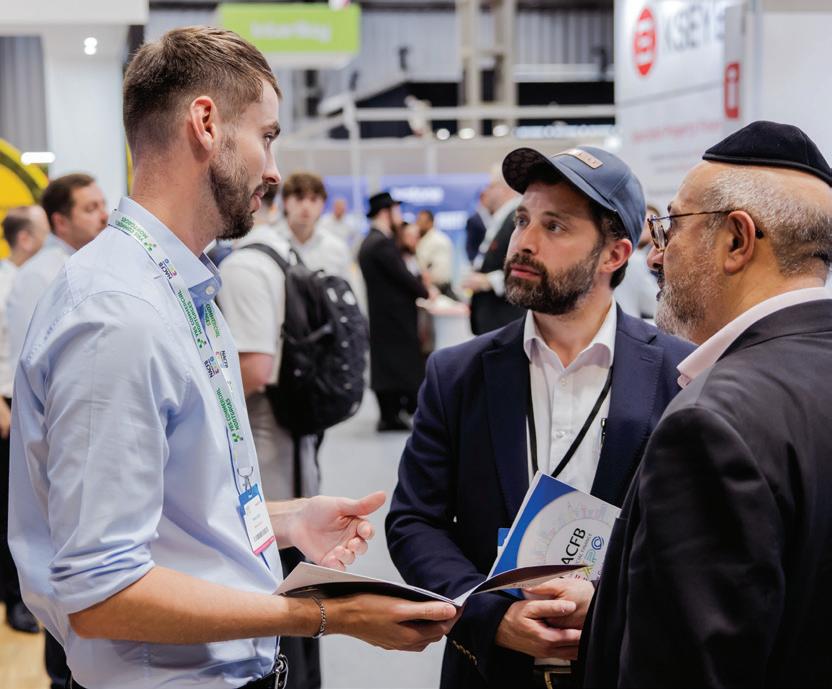
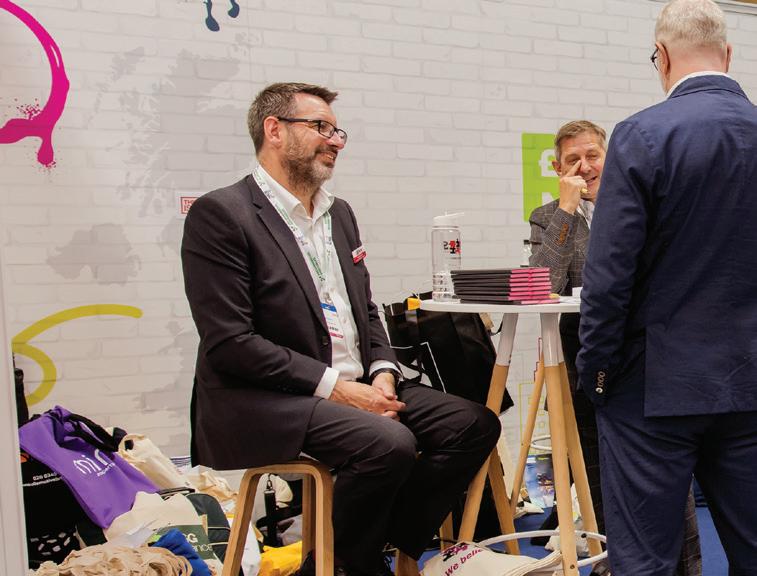
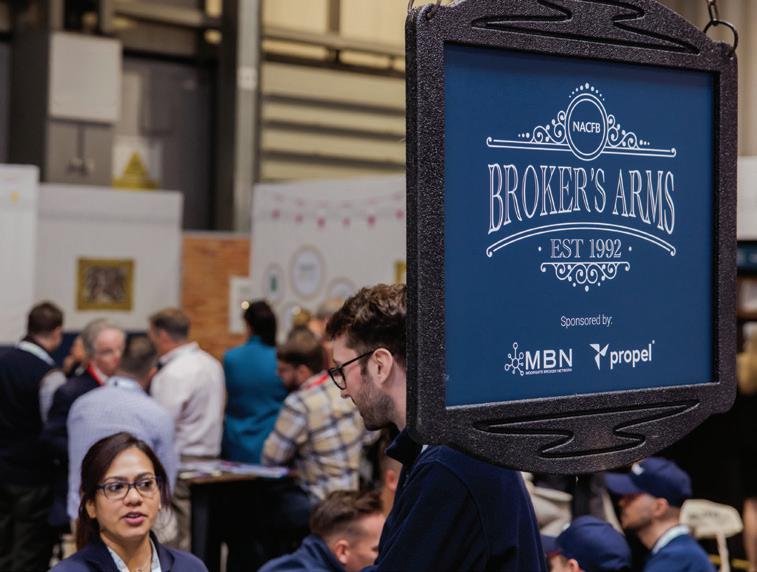
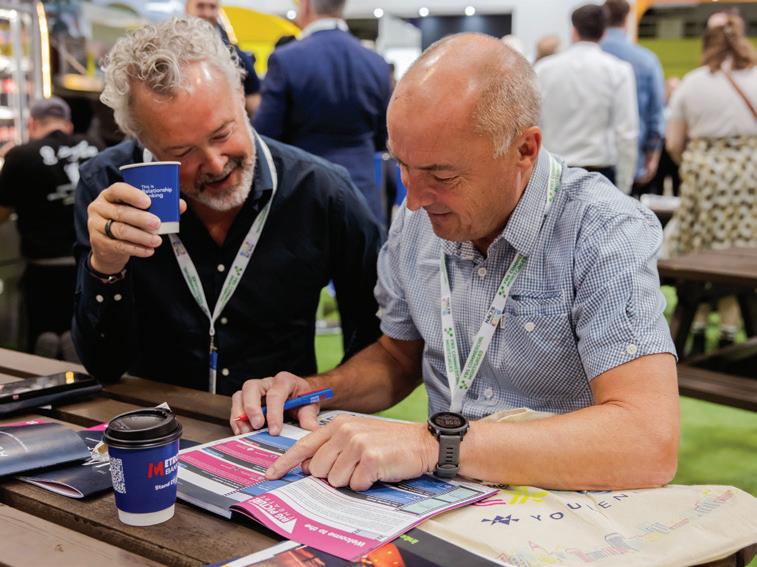
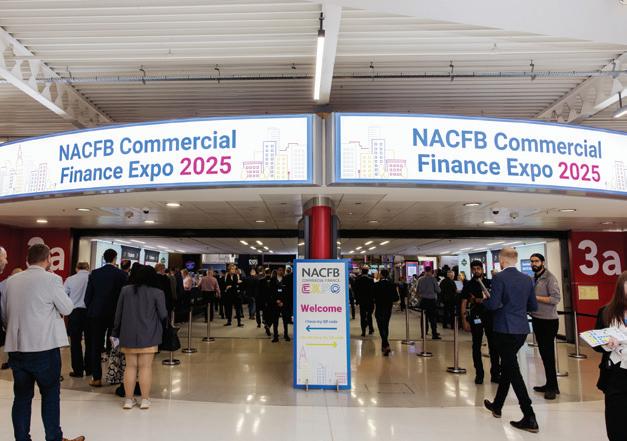
From a modest event with 400 commercial finance professionals and 46 lenders in 2010, to an immersive experience with more than 150 exhibitors, seven features and an expected 2,000 attendees, the sixteenth NACFB Commercial Finance Expo is set to be one for the record books! Don’t miss out on the opportunity to network with brokers, lenders and suppliers all under one roof on Wednesday 10th June.
A chance to meet your trade body
Every city has a beating heart, and at this month’s NACFB Expo, that’s the trade body’s stand. Come say hello to the friendly faces behind the team – we’re here to chat, help, and point you in the right direction on everything from membership perks and compliance support to exciting events and professional development opportunities.
The best things in life are free
The value you’ll get from the NACFB Commercial Finance Expo is priceless, which is why our event is completely free to attend. Step onto our streets for industry insights, unrivalled networking opportunities and the chance to learn more about the lenders and suppliers exhibiting on the day.
Lights. Camera. Action.
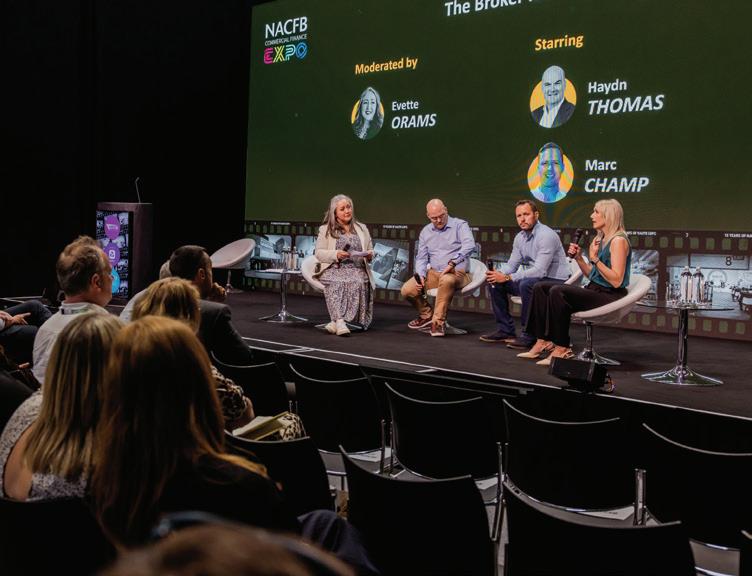
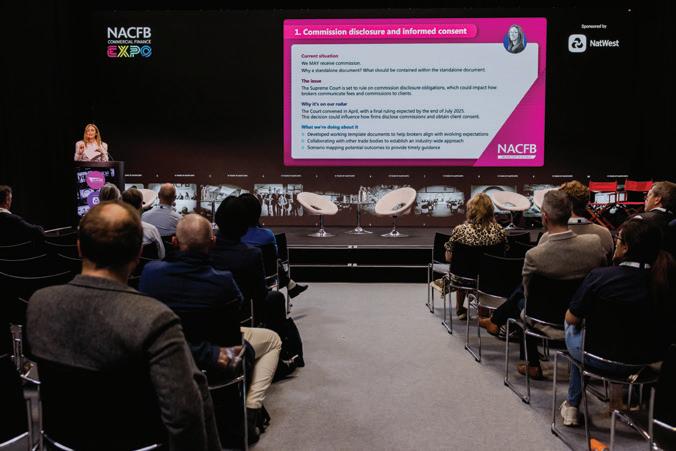
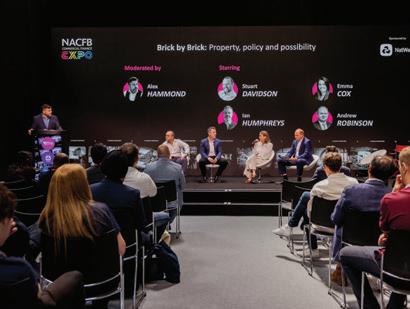
In our cinema-style theatre, finance meets the big screen as industry stars take to the stage to debate, discuss, and dissect the most pressing topics in commercial finance. Grab your popcorn and get ready for sharp insights from expert panels, thought-provoking discussions on the trends shaping the industry, and an unmissable line-up of sessions designed to inspire and inform.
Discover how we can help your firm grow
From lender access and referral opportunities to data, insight, and practical business support, NACFB membership is designed to help brokers build stronger, more resilient firms. Visit the team on stand S17 to explore how we can support your next stage of growth.
HSBC UK is bringing the energy
Our headline sponsor has levelled up their stand experience and will be bringing their full team. The brokerage team looks forward to seeing you at stand C08. Drop by for a quick hello or a deeper chat on how HSBC UK can support your clients and what’s changing in the market. Expect energy, expertise, and a genuinely collaborative approach.
Don’t skip the opening credits…
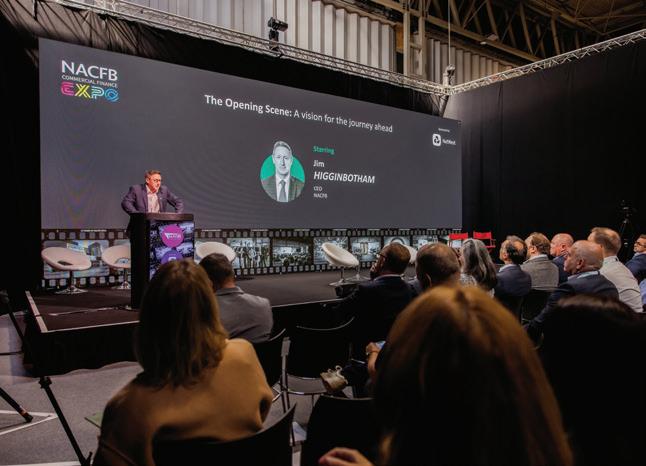
Jim Higginbotham raises the curtain in the NACFB Expo 2026 conference theatre, previewing the day’s key debates, spotlight sessions, and the major Association initiatives set to shape the broker and lender community in the year ahead.
Download the NACFB Expo app
Your pocket guide to the NACFB Expo, the official app features everything you need for the day – from exhibitor details and a handy digital map to conference theatre updates, speaker information, directions, and your QR code ticket.
Network with your peers
More than 2,000 commercial finance professionals are expected to visit the event from across the industry’s many sectors, including asset finance, invoice finance and property development. Be part of the conversation and be in the room this month.
It’s one jam-packed day!
With time being so precious the NACFB Commercial Finance Expo has become THE event to catch up with so many existing industry relationships all on the same day. A MUST attend.
Adrian Stalley, Reward Funding
Connect through the NACFB
The NACFB brings together brokers, lenders, suppliers, policymakers, and industry peers across the UK commercial finance market. Speak to the team on stand S17 to discover how membership can open doors to new relationships, better conversations, and wider opportunities.
Explore the state of play
Back in the show’s conference theatre, Emma Wilks from HSBC UK reassesses an economic landscape shaped by geopolitical tensions, tariff uncertainty, and shifting rate expectations – and what it all means for SME confidence, funding demand, lender appetite, and broker decision-making.
Pick up the printed show guide
Prefer something more tangible than the NACFB Expo app? The event’s bumper show guide brings the event to life in print, with exhibitor profiles, key event information, feature highlights, stand details, and everything you need to navigate the day the old-school way.
Unlock potential with funding from Aldermore
Visit stand C10 for conversations with specialist colleagues from the Aldermore team across their commercial lending solutions.
A chance to diversify your offering
With 38% of NACFB Member brokers diversifying their offering in 2025, the NACFB Expo offers the perfect forum to explore new markets, meet new lenders and broaden the support you provide to SME clients. With 150 exhibitors under one roof, brokers can connect directly with funders from across the full commercial finance spectrum, discover new product areas, and identify fresh opportunities for growth. Register today to see where diversification could take your brokerage next.
It’s a truly immersive experience
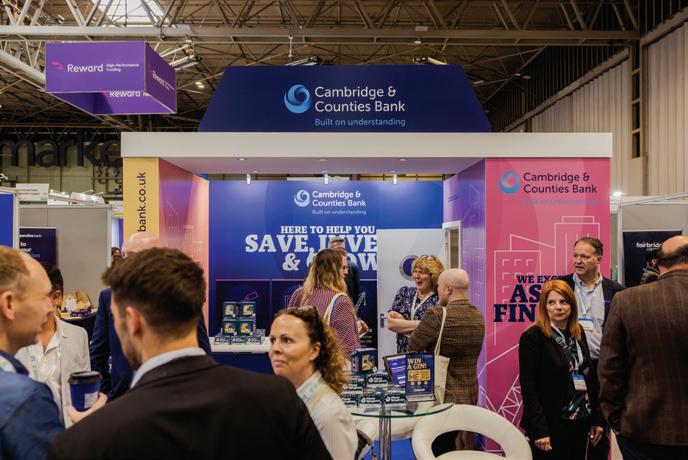
Step into a vibrant cityscape that embodies the energy, diversity, and ambition of the NACFB community. Much like the towns and cities you’ll be travelling from, the NACFB Expo isn’t just an event – it’s a destination.
Find out how we can help protect your firm
Good firms need strong support around them. From compliance guidance and template documents to policy alerts, assurance, and practical risk support, visit the NACFB team on stand S17 to discuss how we can help protect your business, clients, and reputation.
It’s dedicated to small business lending
The NACFB Expo is one of the “go to” events of the calendar, bringing together thousands of brokers and hundreds of lenders. To see so much creativity in one room dedicated to supporting UK business never fails to impress and motivate. For NatWest it is a staple event where we bring the full team to support brokers in their quest to grow knowledge and discover details on products, old and new.
Dave Furnival, NatWest
Check into the compliance clinic
Are your clients caught in a funding trap?
Taking to the Expo conference theatre, this solutions-led session asks when fast, short-term finance becomes strain rather than support – and how brokers, lenders, platforms, and policymakers can help prevent harmful debt cycles.
Focus
on real estate finance with Cambridge & Counties Bank
The senior real estate finance team from Cambridge & Counties Bank will be on stand S40 for in-depth, collaborative discussions with a specific focus on development and bridging finance.
New for this year, the NACFB compliance clinic gives brokers the chance to book a free 15-minute expert consultation with the Association’s team. Drop in for practical guidance on live business issues, Assurance queries, and everyday regulatory challenges.
You can go for more with Hampshire Trust Bank
HTB is keen to make each conversation at the NACFB Expo count. Visit stand C05 for a considered view of your specialist mortgages and bridging finance deals, with the right members of the HTB team on the day to help you move things forward.
Drink at our very own pub!
Step off the bustling streets into The Brokers’ Arms, an exclusive Members-only pub, where you can unwind, catch up with colleagues over a free pint, and take a well-earned breather in more relaxed surroundings.
Discover new sector opportunities
On stage in the NACFB Expo conference theatre, HSBC UK brings together specialists from healthcare, agriculture, and international trade to explore the real-world dynamics shaping SME finance, helping brokers identify sector-specific pressures, risks, and growth ambitions.
Support a small but mighty charity
On the NACFB stand, you’ll have the opportunity to discover more about our 2026/27 charity partner, The Sam West Foundation, and learn how this inspiring organisation is raising awareness of mental health in children and young people – with opportunities to support their vital work.
See how we champion your value
The NACFB works to ensure the broker voice is heard by lenders, regulators, policymakers, and the media. Come to stand S17 to learn how we represent the intermediary community and champion the value brokers bring to UK SMEs.
Sit through the waiting game
In a practical conference theatre discussion, valuers, lenders, and industry voices explore why delays can stall momentum, frustrate clients, and put viable deals at risk – and how brokers can better manage expectations and progression.
Be part of industry progress
Momenta are excited to be part of the NACFB Expo 2026. It’s become such an important event for our industry, and we’ve seen it grow year after year into a real hub for ideas, connections, and progress. We’re looking forward to catching up with peers and being part of the next chapter in its development.
Jeremy Crinall, Momenta Finance
Learn how we can help you stay ahead
In a changing market, knowledge matters. Through CPD-accredited training, daily briefings, lender updates, market insight, and practical resources, the NACFB helps brokers make sharper decisions. Visit stand S17 to explore how we can support your firm’s development.
A breath of fresh air
We know NACFB Expos tend to bring the heat, so we’ve recreated a parkland setting indoors, giving you the perfect spot to grab lunch, network, or take a break from the urban buzz. Take a moment to unwind under leafy trees and pull up a pew on one of our park benches.
You can stay on top of work!
The Workspace provides a space where you can take calls, check emails, and reflect on the connections you’ve made. Inspired by collaborative workspaces, it provides a shared, functional area to seamlessly manage day-to-day tasks without leaving the event.
Meet your lender panel under one roof
The NACFB Commercial Finance Expo really is the only event like it in the industry, a non-negotiable permanent fixture in my diary for years. There is no other time that almost every lender on our panel is in one room together. Also, a great place for discovering new up and coming specialist lenders. Unmissable for anyone in our industry!”
Marcus Wright, Bolton Business Finance
View the shape of things to come
Inside the show’s conference theatre, this forward-looking fireside chat explores how AI, automation, embedded finance, and platform-led distribution are reshaping the broker’s role – and where human expertise still matters most.
Discover the NACFB Mutual
Find out more about the NACFB’s trusted A-rated PI cover and why four in five eligible Members choose the Mutual to save money, strengthen their protection and secure cover designed around the needs of commercial finance brokers.
Discuss how we can enhance your operation
NACFB membership gives firms access to added-value services designed to help them work smarter. From discounted partner solutions to client-facing tools, marketing support, and operational resources, speak to the team on stand S17 about enhancing your business.
Pick up your complimentary delegate bag
Grab your free tote bag – perfect for carrying your essential NACFB show guide, exciting freebies, and maybe even a few new business cards!
Hit the back of the net with
Reward Funding
Attendees can expect a high-performance stand from Reward Funding (S39) with every detail shaped around their 2026 theme – all focused on being on target, without moving the goalposts.
Meet NACFB Partner suppliers
This is one of the biggest and best events of the year and Square 1 Media will be out in force, as we have many clients exhibiting, plus we will have conversations with many potential clients over the course of the day. A fantastic event and we are looking forward to it!
Paul Hunt, Square 1 Media
Assess the good, the bad and the compliant
From the NACFB Expo conference theatre, Sarah Cunningham shares five practical changes firms can make now to strengthen records, disclosures, risk controls, and everyday compliance confidence – without making compliance more complicated than it needs to be.
Take a reality check
Bringing SME voices into the conference theatre, this grounded session explores what the market feels like for businesses seeking finance today, from cashflow pressure and rising costs to funding access, decision speed, and support gaps.
Discover the power of CDFIs
This year’s CDFI Community Centre brings together members of the NACFB’s Community Development Finance Institution network in one dedicated space, giving visitors the chance to explore how these transformative lenders can help brokers unlock vital funding solutions for start-ups and small businesses.
Connect with the wider industry
The NACFB Expo brings together more than brokers and lenders. It provides a forum for the wider commercial finance industry to connect, collaborate and be seen. This year, the Finance & Leasing Association, UK Finance and the Bridging & Development Lenders Association (BDLA) will all have a presence at the show, reflecting the NACFB’s convening role across the sector and giving attendees access to a broader range of voices, perspectives and opportunities from across asset finance, banking, bridging, development finance and beyond.
You’ll want to come back for more
With the 2025 NACFB Commercial Finance Expo being rated 4.5/5 overall, 96% of attendees wanted to return to the event after attending last year. Don’t just take our word for it, your peers think it’s worth the trip!
Debate who really owns the client?
Closing the conference theatre programme, this session explores client ownership in a referral economy shaped by brokers, lenders, accountants, networks, introducers, and platforms –asking who really holds the relationship in today’s market.
Refuel with a British favourite Driven in especially for the day, attendees can purchase fish and chips to keep them going on the busiest day in the commercial finance calendar. Not your thing? You’ll also be able to purchase delicious food from our Central Park food kiosks.
Your peers will be there, will you?
96% of 2025 NACFB Commercial Finance Expo attendees would recommend the event to their peers. Be part of the conversation and secure your free ticket today.
Meet the dedicated experts from YBS Commercial Mortgages
From first conversation through to completion, stand C02 brings together YBS Commercial Mortgages’ business development managers alongside teams handling applications and valuations, credit underwriting, lending and completions. Visitors can also connect with colleagues supporting existing customers, as well as product, propositions and marketing teams, all in one place.
So, what’s stopping you from joining us?
The NACFB Expo remains free to attend and brings the commercial finance community together for one unmissable day at Birmingham’s NEC. Search NACFB Expo to register your place today.
...purpose led the interest rate
Where the majority of rental income in a semi-commercial property comes from residential tenants, we can offer residential interest rates.
Semi-commercial case study
A two-property refinance with a 56% LTV, 15-year interest-only term and fixed for 5 years at 6.49 per cent.
Property 1
• Former fire station
• Developed into 12 residential units, commercial unit and office
• Residential units let to supported living provider
• £2.805m loan.
Property 2
• Grade II Listed
• 9 commercial units and 13 residential above
• Established tenancy base
• £1.122m loan.
Morris Group Distribution Director CHL Mortgages
All grown up
The evolution of short-term lets
When people talk about short-term lets, the image that often comes to mind is a beachside apartment or a countryside cottage. But that stereotype is getting harder to justify. The market looks very different now, especially in towns and cities.
Increasingly, short-term lets are about serviced accommodation in city centres, filled midweek by people travelling for work. Consultants, contract staff, professionals splitting their time between home and the office. These guests aren’t on holiday, they’re commuting, just differently to how they used to.
Hybrid working has changed the rules. People still need to be in the office, but not necessarily five days a week. That’s created demand for flexible accommodation that sits somewhere between a hotel room and a long-term rental. A place that feels comfortable, functional and familiar, even if someone is only there for a couple of nights at a time.
For landlords, this has opened up a different kind of opportunity. City centre serviced accommodation often benefits from steady, year-round demand driven by business needs rather than tourism. Monday to Thursday can be the strongest part of the week, which is a complete reversal of the old holiday led model.
It’s also a more professional market than it once was. Properties are purpose furnished, pricing is actively managed and guest expectations are higher. This isn’t accidental letting, it’s a deliberate strategy built around how people actually use cities today.
The problem is that funding has not always caught up. Shortterm lets are still sometimes treated as a niche or seasonal
This isn’t accidental letting, it’s a deliberate strategy built around how people actually use cities today
option, when in reality, many urban properties behave more like core housing for a mobile workforce. That disconnect can make it harder for experienced landlords to secure finance that reflects what they’re doing on the ground.
Cities are not becoming obsolete, far from it. If anything, they’re becoming more dynamic. People come and go more often, stay for shorter periods and expect more from where they stay. Shortterm lets have adapted to meet that need.
The idea that this sector is just about holidays belongs in the past. Short-term letting today is about mobility, flexibility and how people choose to work. It’s a grown-up market now, and it deserves to be treated that way.
Roger
Carl Graham Corporate Relationship Director
Charles Street Finance
Green gains
EPC upgrades could be a commercial advantage for proactive investors
For the past decade, energy efficiency has largely sat at the fringes of the commercial property conversation. With clarity on future Minimum Energy Efficiency Standards (MEES) changes slow to emerge, many investors have opted to hold off major decisions until their compliance obligations are more clearly defined.
In contrast, a growing cohort of proactive property professionals has already acted. By upgrading existing assets or embedding energy efficiency at the heart of new developments, they are beginning to see tangible rewards. As tenant priorities evolve, lending criteria become more stringent and quality stock grows scarcer, these early movers are better positioned to attract demand, secure funding and protect long-term value.
The ‘prime’ opportunity
Since the gradual return to the workplace after the pandemic, expectations of commercial property have shifted materially.
The ‘flight to quality’ has seen the prioritising of prime and grade A premises as companies look for facilities that can attract and retain top talent, support ESG targets and reduce energy bills. Industry data suggests that ‘green premium’ properties, such as offices with Building Research Establishment Environmental Assessment Method (BREEAM) certification, could see rental yields six to 10% higher than those with lower EPC credentials and experience fewer voids.
At Charles Street Finance, we’ve seen an increasing trend in investors with older, inefficient stock refurbishing their portfolios to meet tenant expectations, with EPC upgrades high on the list as they look to futureproof against upcoming regulation.
Staying ahead of the regulatory rush
Currently, it’s illegal to rent out a commercial property that
doesn’t meet a minimum EPC rating of E. However, regulation will become more stringent, with a minimum EPC rating of B proposed for new commercial lettings and renewals by 2030.
This could leave an estimated 80% of commercial properties unlettable unless brought up to standard. As deadlines approach, rising demand for energy efficient materials and installation labour is likely to push costs higher, while noncompliance could result in fines of up to £150,000 per property. Acting early allows investors to manage costs more effectively and spread works across larger portfolios.
Tightening lending criteria
As energy performance expectations rise, lenders are becoming increasingly selective. Weaker EPC ratings, particularly where there’s no clear upgrade plan, can result in tighter underwriting, lower loan-to-value ratios or closer scrutiny at refinance. By contrast, assets already compliant, or on a path to compliance, are seeing stronger lender appetite and more competitive terms, including access to green mortgage products.
Where more risk averse institutions step back, specialist lenders are increasingly filling the gap where there’s a clear business plan and scope to add value through refurbishment. For investors, improving energy efficiency is no longer just about tenant demand or regulation, but about preserving access to finance in a more selective lending market.
Shifting gears
The forces reshaping prestige vehicle finance
Scott Riley Head of Prestige Vehicles Haydock Finance
The prestige vehicle (PV) finance market is entering a new phase of maturity, where growth is being shaped as much by structural shifts in demand as by the strength of lender propositions. Haydock Finance’s 30% year-on-year increase in PV lending is a clear indicator of market momentum, but it also reflects a deeper alignment with emerging trends that are redefining how high-value vehicles are bought, financed and positioned within wider portfolios.
At the core of this evolution is a change in buyer behaviour. Prestige vehicles are no longer viewed solely as discretionary purchases; they are increasingly considered part of a broader asset strategy. This is particularly evident at the top end of the market, where limited production models are being prioritised by collectors who already hold “blue-chip” vehicles such as Ferrari and Porsche. Rarity, provenance and long-term value potential are now key decision drivers, shifting demand away from standard production models and towards more curated acquisitions.
Alongside this, the market is experiencing a transitional moment in automotive technology. The acceleration towards hybrid and electric vehicles has created a window of opportunity for internal combustion engine (ICE) and manual transmission cars. These vehicles are fast becoming perceived as finite assets, prompting a surge in demand from buyers seeking to secure what they see as the final generation of traditional performance motoring.
This dynamic is introducing a scarcity premium that lenders and brokers must increasingly factor into deal structuring and residual value considerations.
At the entry point to the PV market, a different but equally important trend is emerging. A new generation of buyers is being drawn in by modern classics from the 1980s and 1990s. These vehicles offer a compelling combination of accessibility, cultural relevance and early-stage appreciation potential. As a result, the prestige market is broadening, with first-time collectors entering at lower price points but with a clear trajectory towards more significant acquisitions over time. This widening of the customer base is reshaping the pipeline of future high-value transactions.
Meanwhile, certain segments continue to demonstrate resilience irrespective of wider shifts. High-performance SUVs, including models such as the Lamborghini Urus and Mercedes G63, remain consistently strong. Their appeal lies in their dual role as
Prestige vehicles are no longer viewed solely as discretionary purchases; they are increasingly considered part of a broader asset strategy
both status symbols and practical, everyday vehicles, ensuring sustained demand across a diverse customer demographic.
For lenders, these trends are placing greater emphasis on specialism, agility and the ability to interpret market nuance. Recent performance highlights how a broker-centric model, underpinned by strong service levels and enhanced valuation tools, can unlock growth in a complex environment. Confidence in pricing, speed of execution and the ability to structure deals that reflect real-world asset behaviour are becoming critical differentiators.
Ultimately, the prestige vehicle finance market is becoming more
sophisticated, more data-informed and more closely aligned with investment thinking. Growth is no longer just a function of demand, but of insight. The ability to recognise where value is being created, how buyer motivations are shifting, and how finance structures can evolve accordingly.
Visit Haydock Finance at stand N17 at NACFB Expo
Built on preparation Getting buy-to-let cases over the line in
a more complex market
Rob Stanton Sales and Distribution Director Landbay
The buy-to-let market has evolved significantly in recent years, and while demand from landlords remains, the way cases are assessed and approved has become more detailed and, at times, more exacting.
For brokers, this means that packaging a case is no longer just about meeting the headline criteria, but about presenting a clear, well-structured application that answers the lender’s questions before they are even asked.
One of the most common issues we continue to see is incomplete or inconsistent information at submission stage, which can lead to delays, re-queries, and in some cases missed opportunities for clients. Ensuring all elements of the case, from income and assets to property details and portfolio background, are aligned and clearly evidenced can make a significant difference to both speed and certainty of outcome.
Presenting portfolio landlords with clarity
Portfolio landlords remain a core (and growing) part of the market, but they also tend to bring added layers of complexity which require careful handling. Lenders will typically look beyond the individual property being financed and assess the wider portfolio, including overall gearing, rental coverage, and exposure across different property types and locations.
For brokers, this means taking the time to present a full and accurate picture of the landlord’s position, rather than just focusing on the transaction in hand. A well-prepared portfolio schedule, supported by consistent figures and a clear narrative,
can help underwriters assess risk more efficiently and avoid unnecessary back-and-forth during the process.
Navigating structures and property types
The continued growth in limited company borrowing, alongside a wider range of property types such as small HMOs and multi-unit blocks, has created more options for landlords but also more variables for brokers to manage. Each structure and property type brings its own considerations, whether that is tax treatment, affordability assessment, or specific lending criteria.
Brokers who are able to identify the most suitable route early, and match that to lenders with the right appetite, will be better placed to progress cases smoothly. This is particularly important in a market where criteria can differ meaningfully between lenders, even for what may appear to be similar cases on the surface.
Using lender support and technology to improve outcomes
Finally, it is worth recognising the role that lender platforms and support teams now play in helping brokers get cases over the line. Access to clear criteria, responsive systems, and knowledgeable underwriting teams can significantly reduce friction in the process.
In a more complex environment, the combination of strong case preparation and the right lender support can make all the difference in delivering timely and successful outcomes for landlord clients.
Reframing the conversation
Personal Guarantee Insurance demand surges as SME borrowing rebounds
Todd Davison Managing Director Purbeck Insurance Services
The first quarter of 2026 delivered a clear signal to commercial finance brokers: SME borrowing appetite is returning, but so too is the need for robust risk advice. Purbeck Insurance Services’ analysis of personal guarantee backed lending showed a 65% increase in applications for Personal Guarantee Insurance (PGI) from business owners and directors, compared to Q4 2025, marking the strongest quarterly growth we have ever recorded.
This surge reflects two key dynamics currently at play when it comes to SME lending. On the one hand, businesses continue to feel the strain of elevated operating costs, driving demand for working capital. On the other, there are early signs of renewed confidence, with more firms seeking finance to support growth.
Working capital remains the primary driver of personal guarantee backed loans, accounting for 35% of PGI applications. However, growth-related borrowing has climbed to 20% – the highest proportion we have ever recorded – indicating that SMEs are beginning to look beyond survival and towards expansion.
In reality, as commercial finance brokers know, personal guarantees are fundamental to unlocking lending
However, as highlighted in previous articles for Commercial Broker, there remains a persistent perception gap around personal guarantees, often viewed by small business owners as a barrier rather than an enabler of finance. In reality, as commercial finance brokers know, personal guarantees are fundamental to unlocking lending, particularly in the unsecured market, which accounted for 49% of PGI applications in Q1 2026.
The good news is that company owners and directors are increasingly aware of the personal exposure that comes with signing a personal guarantee and are actively seeking ways to mitigate it. This is driving demand for PGI and placing brokers at the centre of more informed, risk-aware conversations.
Sector data reinforces this trend. Applications for PGI from the construction sector rose by 87% in Q1, while manufacturing saw a 136% increase, rebounding strongly after a weaker end to 2025. In both sectors, borrowing is still heavily weighted towards working capital, but growth and asset investment are becoming more prominent.
NACFB Members are uniquely positioned to support clients that are not just looking for access to finance but guidance too. Personal Guarantee Insurance is becoming an increasingly important tool in that advisory process. It enables brokers to reframe the conversation from risk avoidance to managed risk and confident decision-making, with the comfort of knowing that if they do get into financial distress, Purbeck has their back.
With borrowing activity accelerating, those commercial brokers who can combine funding expertise with risk mitigation advice will be best placed to support their clients – and to build deeper, longer-lasting relationships in the process.
From lifeline to liability
Why Britain must rethink short-term SME finance
Lewis Casserley Co-Founder & Principal Albatross Lending Group
Across the SME landscape, a troubling pattern has taken hold. Businesses are increasingly reliant on high-cost, short-term lending – not as a one-off intervention, but as a recurring feature of how they operate. What begins as a pragmatic response to a cash flow gap is, in too many cases, becoming a structural dependency on expensive capital. The long-term impact on profitability, resilience and sustainable growth is often quite corrosive. Understanding why this happens requires looking beyond individual borrowing decisions to the conditions that produce them.
Why dependency develops
Short-term, high-cost lending fills a gap that more appropriate finance has failed to reach. The retreat of relationship banking has left many SMEs assessed by algorithm rather than by someone who understands the business cycle or sector. When a business doesn’t fit a standardised risk model, it is declined regardless of its underlying health – and turns to whoever will lend, often at a significant cost.
Compounding this is a simple reality: most business owners are navigating these decisions alone. Most business owners are not finance professionals. They are making borrowing decisions under pressure, without the time or support to evaluate alternatives. When a lender promises a decision in four hours and funds in 24, the friction of proper due diligence simply isn’t a part of the process. Convenience wins by default, not by merit.
How the harm compounds
The immediate appeal of short-term facilities obscures a structural misalignment between debt structure and business
model. High-cost facilities are repaid in weeks; most SMEs operate on cash flow cycles measured in months. When a business cannot meet its next repayment from operational cash flow, the path of least resistance is to refinance – and each cycle typically comes at higher cost as the balance sheet deteriorates and options narrow. What began as a short-term bridge can, over 18 to 24 months, become a cycle the business cannot exit without intervention.
The broker’s role
The structure of the short-term lending market has historically made it difficult for brokers to operate as true advisers. Product proliferation, speed-to-completion pressure, and the volume economics of certain distribution models have all pushed toward a transactional dynamic, one that doesn’t always serve the underlying needs of the business borrower.
That’s shifting. As SME lending matures and businesses become more sophisticated about their funding options, the demand for genuine advisory input is growing. Brokers who engage with the underlying business problem, asking not just “how much do you need?” but “what does your funding structure look like in three years?” are finding that clients respond to it. Recommending consolidation of existing debt where it reduces total cost of capital, even where that’s a harder conversation, is increasingly where the value of a broker relationship is felt.
Access to fast capital has been a genuine positive for underserved businesses. But the next stage of the market’s development is one where speed is one input into a lending decision, not the only one, and brokers are well-placed to lead that shift.
David Rabee Director Factored
A new toolkit
Why a shrinking market is creating bigger opportunities for landlords
Something significant is happening in landlord finance, and most brokers have not yet caught up with it. The private rented sector is contracting. An estimated 93,000 buy-to-let landlords exited the UK market in 2025, up from 65,000 the year before (Homenicom, 2025). For the landlords who remain, that is not bad news. It is a structural opportunity. Less competition, stronger tenant demand, and a market consolidating around professional operators who are prepared to invest in their portfolios and play the long game.
The landlords who win from here will be the ones who can move. That means having capital available when it is needed, not weeks later when a longer process completes. And this is where the conversation gets interesting, because the toolkit available to landlords is quietly but meaningfully expanding.
Bridging finance has long been the go-to solution for landlords with short-term capital needs, and for good reason. The sector is thriving, with West One Loans forecasting total lending volumes of up to £12.2 billion in 2025. It is a powerful, flexible product that serves landlords well across a wide range of scenarios: acquisitions, refurbishments, portfolio restructuring, and chain breaks. Brokers who can place bridging confidently are already adding real value for their landlord clients.
What is now emerging alongside bridging is a complementary layer of landlord lending built around income rather than assets. The underlying logic is simple: if a landlord has strong, consistent rental income, that income itself can be the basis for a capital advance. Verified net rent, a multiple applied to it, funds available quickly, repaid over a short term. The model borrows from the merchant cash advance world, which has long served businesses with reliable recurring revenue, and applies the same thinking to landlords, who have arguably the most predictable income stream in the SME universe.
At Factored, we are seeing this demand first-hand, from landlords managing a handful of tenancies through to those
The sector is changing fast, and it is changing in favour of landlords who are prepared
running portfolios of 50 or more, all looking for a faster, simpler way to access working capital without disrupting what they have already built.
The timing could hardly be better. Only 55% of rental properties currently meet the incoming EPC C standard, with average upgrade costs estimated at between £6,100 and £6,800 per property (LendLord, 2025). Landlords who move early on compliance will be better positioned than those who wait.
For brokers, this expanding toolkit represents a genuine opportunity to deepen client relationships. The landlords worth backing right now are running their portfolios like businesses. They are thinking about liquidity, operational cashflow, and having the financial flexibility to act when opportunity or obligation arises.
The sector is changing fast, and it is changing in favour of landlords who are prepared. For brokers who understand the landscape and can help clients navigate it, this is one of the more interesting moments the landlord finance market has seen in years.
For your clients starting a new business or growing an existing one, using equity in their home can open up new frontiers.
Borrow , repay over 1 to
Choice of payments for up to five years
Low cost
Guarantee required and security over
£25,000 to £250,000 15 years interest-only early settlement residential or BTL property
With a Finsec Secured Business loan to power their business ambitions, the sky really is the limit.
For a decision within hours (not days) call us on
A stacked deck
The hidden cost of getting the deal done
Kevin Morgan Managing Director
Cornerstone
Commercial Finance
There is no shortage of capital in the SME finance market. What remains in shorter supply is the discipline to apply it well.
This is an important distinction, and one which we don’t talk about enough. It’s important because we are seeing an increasing number of businesses brought to the edge not by a lack of funding, but by the way it has been structured.
High-cost, short-term lending has a legitimate place. It can provide speed where it is genuinely needed and can act as a bridge in the right circumstances. The difficulty arises when that same capital becomes the default response rather than a considered choice. When decisions are driven by immediacy rather than suitability, the consequences tend to surface quickly in cashflow pressure and, in some cases, in the erosion of the business itself.
What we’re seeing
One recent case we worked on involved a client carrying multiple short-term loans, all within three years and priced between 18% and 36%, totalling £250,000. Each facility had been arranged in isolation, without a full view of the business’ position. Cashflow had tightened to the point where failure was a real prospect. What made the situation more difficult to understand was that the business owned an unencumbered trading premises valued at £400,000. The option of a commercial mortgage, which would have provided a more stable and affordable structure, had not been pursued. By the time we became involved, the financial position was sufficiently strained that securing that outcome required careful work with a high street lender. It was achievable, but only just.
A second case followed a similar pattern. A retail client approached us with four separate £25,000 facilities, all arranged on the same day and over one to two
Where a facility fails to deliver the intended outcome, the relationship is unlikely to endure
years, each priced above 18%. Two had been taken out directly by the business owner and two through a broker. On paper, each loan could be justified. In combination, they created a repayment profile the business could not sustain. Within two months, pressure was evident. In this instance, we were able to refinance into a single facility over five years at a lower rate, restoring a degree of stability. The outcome was positive, but it should not have required correction.
These situations are often described as examples of ‘loan stacking’, but that phrase risks understating the underlying issue. The problem is not simply the presence of multiple facilities; it is the absence of a single, coherent view of the client’s position. When funding is arranged in fragments, no-one takes responsibility for the overall structure, and the cumulative impact on cashflow is not properly assessed.
The wider context
It is worth reiterating that access to finance is not the constraint here. The range of products available to SMEs has
expanded considerably, and in many respects that is a strength of the market. The challenge is that access to guidance has not kept pace. Knowing what can be done is not the same as knowing what should be done.
For brokers, this is where the role becomes more exacting. Placing a facility is rarely difficult in itself. The more demanding task is to step back and consider how that facility interacts with the rest of the client’s position, both now and over time. That may involve advising against additional borrowing, or at least against borrowing in a particular form. It may involve taking a longer route to a solution which is less immediately convenient but ultimately more sustainable.
There is also a commercial reality to this. Transactions completed quickly and without that level of scrutiny tend to be one-off in nature. Where a facility fails to deliver the intended outcome, the relationship is unlikely to endure. By contrast, when advice is grounded in a full understanding of the business and leads to a structure that genuinely supports it, the result is usually an ongoing relationship. Repeat business and referrals follow not from volume, but from outcomes.
The cases I have outlined are not unusual, and that in itself should give us pause for thought. Each one represents a business that could have taken a different path with the right advice at the right time. The expectation from clients is not simply that we can access capital, but that we can apply it with judgement. That is a higher bar, but it is also the one that defines the difference between broking that is transactional and broking that endures.
The problem is not simply the presence of multiple facilities; it is the absence of a single, coherent view of the client’s position
Step by step
Helping clients borrow more efficiently
Anna Lewis Commercial Director Castle Trust Bank
In any lending, it’s the headline rate that often gets most of the attention. But, when it comes to bridging, structuring how and when funds are released can be just as important as the price itself – particularly for refurbishment projects.
Often, when working on a refurbishment project, borrowers don’t need the full loan on day one as works are often carried out in phases, with spending rising as the project progresses. Under a traditional bridging structure, the entire facility is commonly released at loan completion, meaning the borrower starts paying interest on the full amount immediately, whether they are using it or not.
A drawdown facility offers a more efficient alternative. Instead of taking the whole loan upfront, the borrower accesses funds in stages as the project moves forward. Crucially, interest is only charged on the amount that has actually been drawn.
For investors, that can mean lower borrowing costs, stronger cashflow and better overall project profitability. For brokers, it creates an opportunity to deliver more tailored advice and add value beyond simply sourcing the cheapest rate.
The benefits of a drawdown facility are particularly pronounced where refurbishment works follow a clear schedule. Heavy refurbishment cases are an obvious fit, especially where a project involves structural works, reconfiguration or conversion. In these scenarios, capital may be needed at different points for demolition, first fix, specialist works and final fit-out.
They can also be highly relevant on lighter refurbishment projects. An investor improving a property ahead of refinance, upgrading kitchens and bathrooms, or completing energy efficiency works may still benefit from staged funding if costs are spread over several months rather than incurred all at once.
Here’s a worked example of how the savings can stack up:
A borrower requires a £600,000 bridging facility over 12 months, with interest charged at 0.75% per month.
If they draw the full £600,000 at loan completion, the interest cost is straightforward: £4,500 per month, or £54,000 over the 12-month term.
Now compare that with a staged drawdown approach. The borrower takes £250,000 on day one, a further £200,000 at month five, and the remaining £150,000 at month nine, aligning funding with the pace of the refurbishment.
The interest bill would then look like this:
• £250,000 for months one to four = £7,500
• £450,000 for months five to eight = £13,500
• £600,000 for months nine to twelve = £18,000
Total interest cost = £39,000
That is a saving of £15,000 versus drawing the full facility from the outset.
For an investor, these savings could help cover professional fees, contribute towards a kitchen or bathroom installation, support EPC improvement works, or simply provide valuable contingency if costs rise elsewhere in the scheme.
In a market where investors are watching margins closely, brokers who understand how drawdown facilities work can play an important role in improving cost efficiency. Sometimes the smartest way to support a client is not by helping them borrow more, but by helping them borrow better.
Efficiency rules
EPC and MEES reform – what it means for brokers
Energy efficiency has moved firmly up the agenda in property finance and, for brokers, it is quickly becoming impossible to ignore. What was once treated as a compliance tick-box is now shaping lending decisions, influencing valuations and changing how investors think about their portfolios. Energy Performance Certificate (EPC) and Minimum Energy Efficiency Standards (MEES) reform sits at the centre of that shift.
The key distinction starts with how requirements differ by property type. In the residential private rented sector, the current minimum EPC rating remains at E. However, the Government has signalled a move to Band C by October 1st 2030, alongside wider EPC metric reform expected from 2027. While that deadline may appear distant, lenders are unlikely to wait. Increasingly, underwriting is factoring in future compliance risk today, particularly where loan terms extend beyond key milestones.
For commercial property, the timeline is more immediate. Since April 2023, it has been unlawful to let most non-domestic property below EPC E without a valid exemption. Proposed changes indicate a move to EPC C by 2027 and EPC B by 2030. This creates a shorter window for action and explains why lenders are already applying closer scrutiny to commercial assets.
Where complexity increases significantly is in mixed-use property. These assets are often misunderstood, yet they present some of the most material risks. The EPC rating of a mixed-use building is not a single blended rating. Instead, they are assessed by use and by demised area. Residential units fall under domestic rules, while commercial elements are assessed separately under non-domestic standards. Compliance in one part of the building does not compensate for non-compliance in another.
This is important for brokers and their clients to understand, because a mixed asset with a poorly rated commercial unit can limit a property’s ability to be let, reduce its value and
EPC awareness is becoming part of a broader conversation about asset resilience
make refinancing more difficult, even if the residential element performs strongly, or vice versa.
Property landlords who have positioned their portfolios to meet future requirements, not just today’s standards, will likely have a wider choice of lenders available to them and greater ability to negotiate deals that support and fuel the growth of their business.
For brokers, there is a clear opportunity to add value. Those who understand the direction of travel and can interpret how lenders are responding are well placed to guide clients through early planning, phased improvement strategies and funding structures that support transition.
EPC awareness is becoming part of a broader conversation about asset resilience. Brokers who can connect regulation with real-world lending outcomes will not only help clients protect value but also strengthen long-term relationships. As the market continues to evolve, that advisory role is likely to become a defining differentiator.
Tom Worbey
Senior Lending Manager
Redwood Bank
Debt dominoes
When quick fixes start to stack up
Lawrence Wood Head of Working Capital Origination Ultimate Finance
Over the last six years, UK businesses have had to navigate one shock after another – from the pandemic and supply chain disruption to inflation, higher interest rates and persistent cost pressures. More recently, the ongoing conflict in the Middle East has added further uncertainty and disruption to global markets, with its effects still unfolding.
In that environment, planning becomes more difficult and borrowing can become reactive by default. Funding decisions are driven by timing, not strategy – a late-paying customer, an unexpected VAT bill, a seasonal stock requirement, or a contract that needs fulfilling before cash arrives.
That urgency, coupled with finance application success rates remaining 18 percentage points below pre-2020 levels (BVA BDRC SME Finance Monitor Q4 2025), is contributing to a concerning trend: loan stacking – where businesses take multiple short-term facilities one on top of another, to solve immediate cashflow gaps. Each facility might make sense on its own – the problem is they’re rarely assessed as part of a wider financial plan – and there are often alternatives to “another quick loan”, including asset-based lending solutions such as invoice finance, asset finance or a structured facility.
Short-term funding can be a smart tool when it’s structured properly. But as the loan stack grows, strain tends to show
As the loan stack grows, strain tends to show up in day-to-day cashflow
up in day-to-day cashflow: overlapping deductions, repayment dates that clash, and higher interest rates that lead to a cumulative cost that’s hard to see until it starts restricting working capital.
Introducers are uniquely placed to take a step back and a wider view to strengthen and protect the client’s longer-term position:
• What’s the funding for – and what is the right product for it?
• What existing commitments are already coming out of the account, and when?
• What does the full repayment picture look like over 12-24 months?
• Can we simplify, consolidate, or restructure to restore flexibility?
By partnering with the right lender, introducers can help combine and structure debt funding into asset-based solutions that not only reduce the overall cost of borrowing but also unlock working capital and restore cashflow. Their wider market perspective enables them to identify tailored funding options that truly fit the business’s needs, rather than simply plugging another gap with a rushed facility.
Instead of defaulting to another quick loan, introducers can assess whether an existing lender might offer a more efficient solution – such as a top-up, a term loan alongside an existing facility, or a temporary increase to cover a known pinch point. Often, the most effective outcomes arise from consolidation or refinancing: reducing the number of facilities, simplifying repayment schedules, and creating more headroom for growth.
When you replace speed-led borrowing with a clear funding structure, you’re not just arranging finance – you’re protecting working capital, restoring flexibility, and helping clients make decisions they’ll still be happy with in 12 to 18 months’ time.
Nick Smith CEO Reward Funding
Traditional vs alternative
Why SMEs deserve more
Today’s economy is built on speed, instinct and decisive action. For brokers operating at the front end of SME finance, that reality is felt every single day. Clients are not just looking for funding, they’re looking for answers, certainty and pace.
Yet too often, the finance system that supports the economy is stuck in the past. Access to capital has always been the lifeblood of growth, but increasingly brokers are finding themselves caught between ambitious clients ready to move and traditional lenders who are unable, or unwilling, to keep up. This mismatch creates more than just frustration, it causes opportunities to be missed.
In today’s economy, hesitation can be compared to losing possession in the final third of a football match, the chance to win is gone before you’ve even had time to react.
This is where alternative lenders, like Reward Funding, step in to fill the gap. Traditional lenders see risk as something to avoid. We see it as something to understand. Where others see a red flag, we see an opportunity – if you know how to structure the deal right. That’s a mindset built for growth, not caution.
The growing disconnect brokers are navigating
For brokers working with clients in sectors unfairly considered high-risk, such as hospitality, securing funding from traditional avenues can be a huge hurdle. More and more, we’re seeing a culture clash between traditional lenders and the fast-paced reality of running a business in today’s climate. Whether it’s demanding every single receipt before making a decision, or a reluctance to properly understand a business, the system presents unnecessary obstacles to funding.
It’s the financial equivalent of playing against a team that refuses to leave its own half, cautious, predictable and difficult to progress with. While this type of approach may protect lenders, it certainly doesn’t serve brokers or their clients.
The problem with traditional lending
Banks have long been the first port of call for businesses seeking finance, and although they remain an important part of the funding ecosystem the landscape has shifted significantly. Since the 2008 financial crash, and more recently in shocks like COVID and global instability, risk appetite has hugely tightened. Add to this economic uncertainty, regulatory lending and stricter compliance frameworks, and it’s clear that lending has become slower and less adaptable.
For brokers, this creates clear challenges. You are expected to deliver solutions in real time but are often reliant on institutions that are not set up to move at speed. Tighter compliance means longer approval processes, rigid policies lead to entire sectors being deemed too difficult to fund and slow turnaround times cause businesses to miss opportunities.
The ability to move quickly and structure a deal can be the difference between completion and collapse
It’s about the ability to see beyond the surface and recognise potential where others may not – not too dissimilar from spotting a run before the pass is made
The result is more than frustration, it’s lost deals and strained client relationships. Imagine being asked to play a high-pressing, attacking game against a team that insists on just passing sideways. The intent is there, but the system in place doesn’t support it.
Alternative lending flips the status quo
Alternative lenders have emerged to meet the needs of businesses overlooked by traditional finance.
We know alternative lending is about more than speed. It’s about alignment with how brokers actually work. This means decisive underwriting, tailored structures, sector openness and a certainty around execution. We believe in the philosophy that funding should move at the speed of opportunity.
For brokers, this provides something increasingly valuable, opportunity. When you bring forward an opportunity, timing is everything. The ability to move quickly and structure a deal can be the difference between completion and collapse. It’s about playing on the front foot, reading the game and acting decisively.
Giving brokers and SMEs a stronger platform
In an increasingly automated world, there is a tendency to default to systems and models. Whilst these have their place, they are not a substitute for judgement. The best brokers know this, as do the best lenders. Understanding a deal requires context, experience and instinct. It’s about the ability to see beyond the surface and recognise potential where others may not - not too dissimilar from spotting a run before the pass is made. If you wait for everything to be perfectly in place, you’re already too late.
The role of the broker has never been more important, but they need lenders who can operate at the same level. Traditional finance will continue to play a role, but it is no longer the only option in a market that demands speed and flexibility. When an opportunity presents itself, brokers need funding partners who are ready to move.
The critical link
How brokers are pulling businesses out of the lending gap
Michael Mann Broker Business Development Director Allica Bank
Established businesses across the UK are ready to grow. But too often, they can’t access the finance to do it. This is not a new issue. In fact, it’s compounded over the last 20 years. Last year, our CEO Richard Davies started a research project to uncover what he called the SME lending gap. The headline is that bank lending to SMEs is about £65 billion behind historic trends.
The UK now has the lowest level of business investment in the G7. For most businesses, no investment means no growth.
All of this shows up in the day-to-day lending experience for established businesses and their brokers. You’ll know better than most that the lending process has become increasingly impersonal and inflexible. Strong, viable businesses get rejections for any non-standard element in an application. For many business owners, the process is harder to navigate and less transparent than it should be.
Brokers are the critical link between business owners and lenders. The right funding is often out there. But without a broker, many businesses won’t find it.
Ideally, lenders would prioritise relationships and understand nuance. Change is happening, but not quickly enough for many established businesses. For now, brokers are crucial to bridging the gap.
Our quarterly survey of brokers shows that demand for finance is on the up. Businesses are looking to invest, refinance, and unlock sustainable growth. That’s increasingly difficult without the guidance of a broker.
I can think of two recent deals that typify this. The first is Holm House in Penarth. The iconic spa hotel has entertained stars like Daniel Craig in the past, but struggled to recover post-pandemic. “High-street banks didn’t even give us a look in”, new co-owner Kashif Ahmed said. It was only through their broker that they found a lender who was “willing to listen and understand our vision.”
11 miles up the A48, The Three Horseshoes in Peterston-super-Ely was put up for sale. Having only held the license for one year, landlady Monika managed to crowdfund a deposit for the pub. Her short trading history and unusual source of funds gave her no chance with big lenders. Her broker and Allica Bank business development manager worked together to get the deal over the line and secure the future of a great Welsh pub.
The support of skilled and attentive brokers pulled these two ambitious businesses back from the edge of the lending gap. Not every business is so lucky.
Closing the lending gap will take time. But one thing is clear: brokers will continue to play a central role in making sure established businesses can access the finance they need to grow.
Meet Triodos Bank at NACFB Expo, Stand W02
A better match makes better finance
For brokers placing purpose‑led deals.
Relationship‑led funding for social care and impact‑driven organisations, backed by robust financial plans.
Our specialist sectors include:
Elderly & adult social care • Children in care •
Supported living • SEN education • Affordable housing •
Evolving expectations Artificial intelligence and the future of bridging finance
Ross Gandy Head of Business Development Bluecroft Finance
Speed and certainty have always mattered in bridging, but the way we deliver them is changing fast, and AI is at the centre of that shift. As brokers, you are already feeling it in your clients’ expectations: if everything else in their lives is instant and digital, waiting days for basic answers on a time-sensitive deal simply does not land anymore.
AI has moved quickly from “interesting” to “everyday” in our market. A recent survey suggested more than four in five brokers have used tools such as ChatGPT or Copilot in the last few months, yet many still feel undertrained and unsure how these tools really work. 2026 is being described as the tipping point where AI stops being optional and becomes part of the core infrastructure of mortgage and specialist finance advice. From my conversations with brokers, that feels accurate: curiosity has given way to pragmatism, and the question is no longer “if” but “how” and “how safely”.
From a lender’s side, the most powerful AI use cases are not glamorous, but they are valuable to you. AI-driven document analysis can read bank statements, company accounts and ID documents in seconds, pulling out key data points and spotting discrepancies that would have taken an underwriter much longer
to find. Intelligent case triage can route enquiries to the right team, identify urgent deals and highlight where information is missing before it ever turns into a last-minute query. Done well, this means fewer emails asking for “one more document”, faster terms, and a more honest early “yes, no, or here’s what needs to change”.
For brokers, AI is not just something happening in the lender’s back office; it is starting to sit on your desk too. Criteria tools powered by AI can show which lenders might fit a quirky bridging case, and assistants can help you structure enquiries, summarise client portfolios and generate clientfriendly explanations of options. Used well, these tools reduce rekeying and admin and help you submit cleaner, more complete cases that move through credit more smoothly. There is also growing use of AI in lead qualification and client communication, so you spend more of your time on serious borrowers rather than chasing.
The opportunity is clear, but so are the risks if we are complacent. Central banks and regulators have warned about overreliance on a small number of providers and the potential for model bias and herd behaviour if everyone uses the same “black boxes”. At firm level, the risks are more immediate: data privacy, questionable outputs that look authoritative, and the temptation to let an AI system draft advice without sufficient human oversight.
Your value as a broker is not in typing information into forms, it is in judgment, structuring, advocacy for your client and maintaining relationships with the lender. Used thoughtfully, AI can enhance that value: giving you faster access to information, richer analysis and more time for the conversations that really matter with both clients and lenders.
The opportunity is clear, but so are the risks if we are complacent
Michelle Walsh Intermediary Sales Director Together
Navigating change
How commercial brokers have helped landlords diversify
When it comes to finance, the only constant is change. And over the last decade, our industry has found itself navigating unprecedented political, social and environmental changes, including significant ‘black swan’ events ranging from the COVID pandemic, Liz Truss’ disastrous mini-budget, a continuing war in Ukraine, conflict in Gaza and escalating tensions between the US and Iran.
If uncertainty in the market due to external forces was not enough, landlords and property investors also had to contend with a changing environment caused by factors created much closer to home in the form of increased regulation via the Renters’ Rights Act.
Though the promise of a Renters’ Rights Act has been looming since 2019, the introduction of the Bill to Parliament on 11th September 2024 saw the Labour government delivering on its manifesto promise of better protections for tenants. The years in the run up to the Act coming into effect on 1st May 2026 have seen brokers provide a vital service to landlords and investors as they took stock of the situation and reappraised their investment strategies.
For many landlords, a move into commercial and mixed-use property, where risk, income and control can be more clearly defined, could help them find stability. Defined lease terms, contractual income and reduced exposure to residential regulation are all proving increasingly compelling, particularly for experienced landlords who already understand property fundamentals but want greater certainty.
Brokers have been guiding the transition, helping landlords take their first step into semi-commercial property with assets like shops with flats above or small mixed-use buildings where landlords can benefit from diversified income, while staying close to what they already know. Fully commercial investments have also been attracting attention, especially among portfolio landlords looking to rebalance exposure and think longer term.
One positive thing that a changing environment brings for brokers is business
One positive thing that a changing environment brings for brokers is business. Customers looking to diversify from residential to commercial finance need expert knowledge and advice backed by partnerships with trusted lenders to make sure that opportunity does not pass them by.
As lenders respond by introducing new product sets to cater for emerging niches, brokers are first to understand and take advantage of these innovations in their pursuit of best outcomes for customers. From understanding consolidation, refinancing options or thoughtful diversification, ultimately this period of change has reinforced just how important commercial brokers are.
And as another NACFB Expo takes place, attended by the industry’s leading brokers and lenders, 2026 marks another year of funders and peers navigating change in unprecedented times. It marks another year of making opportunities happen for individuals, SMEs and investors through the dedication of brokers honing their craft and working with lenders to identify new funding needs.
More power for you
Unlock potential where others see limits
Powering your clients’ growth with our flexible lending and expert team:
Î Asset finance
Î Invoice finance
Î Commercial and residential mortgages
Î Property development
Find out more here
FOR INTERMEDIARY USE ONLY.
Subject to status. Security may be required. Any property or asset used as security may be at risk if you do not repay any debt secured on it.
Aldermore Bank PLC is authorised by the Prudential Regulation Authority and regulated by the Financial Conduct Authority and the Prudential Regulation Authority (Financial Services Register number: 204503). Registered Office: Apex Plaza, Forbury Road, Reading, RG1 1AX. Registered in England. Company No. 947662. Invoice Finance, Commercial Mortgages, Property Development, Buy-To-Let Mortgages and Asset Finance lending to limited companies are not regulated by the Financial Conduct Authority or Prudential Regulation Authority. Asset Finance lending where an exemption within the Financial Services and Markets Act 2000 (Regulated Activities) Order 2001 applies, is exempt from regulation by the Financial Conduct Authority or Prudential Regulation Authority.
Five minutes with:
Steve Griffiths Commercial Director, Keystone Property Finance
What do you like to do to relax?
I love to travel and enjoy regular days out or weekends away. They really help me to switch off and stop thinking about writing a to-do list.
If you could speak any language, what would it be?
I’ve bragged about the fact that I’m a quarter Italian to my mates ever since we watched The Godfather as kids, so being able to get past Ciao would definitely be top of my list!
What was your favourite artist or band when you were at school? What’s your favourite now?
I was always a bit of a Soul Boy so mostly digging around for Northern Soul
or Disco, but The Jam/Style Council were my go-to band. For newer stuff Chappell Roan was top of my Spotify listening last year and this year I reckon it will be Fontaines DC.
What is your biggest fashion regret?
I was around for Mullet version 1.0. I can’t believe the kids fell for that one again!
What is the laziest thing you have done out of convenience?
In my younger days I had the odd late night that would require putting my head through an already buttoned shirt with tie in place the next morning to make sure I wasn’t late.
What was your first car? Did you name it?
A yellow and black Ford Escort with grey fluffy seats that got called loads of names as it tended to stop working at the end of my road. Unfortunately, I can’t repeat what those names were here.
What is the oldest item in your wardrobe?
I’ve still got a very loud Body Glove T-shirt from my teenage clubbing days that I held on to as it was pretty rare even in 1989. It turns out Will Smith wore the same one in The Fresh Prince of Bel- Air, and it’s now worth a few quid.
What was your first job?
Travel agent. It was a great way as a teenager to learn how to deal with people – and to get a few free holidays.
What attracted you to work for Keystone?
I’ve known David since my BDM days and have always had a great deal of respect for him. There are hardly any examples of a successful broker building a successful lender and that’s a powerful proposition for brokers, knowing that they are dealing with a business that really understands them.
What is the best part of your current role?
That I get to pull together the three business functions that really need to work well together – product, marketing and business development. Having the same team look at taking a product from design, to how we communicate it and then to how we support our broker relationships is so important and it’s great to see a plan come together.
What is the most valuable career advice you’ve been given?
That there are two parts to doing a good job. Doing it to the best of your ability and being able to show how you did it. That really helps to understand what is working and what isn’t, what you should be doing more of, and what maybe you need to change or stop.
What development might disrupt commercial finance and how should we, as an industry, respond?
I know everyone says AI – but … AI. The ability to automate more vanilla transactions will inevitably lead to an increase in B2C for larger institutions. It’s essential that intermediaries have a deep understanding of the more specialist end of their target market and the lenders that support them.