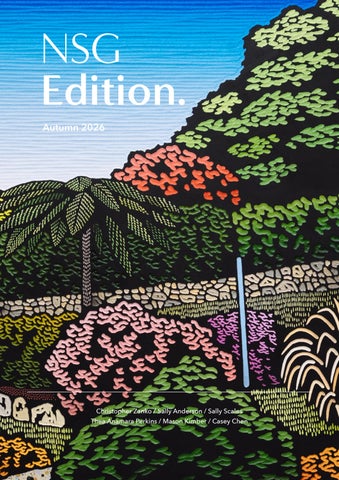
NSG Edition.
Autumn 2026
Christopher Zanko / Sally Anderson / Sally Scales
Thea Anamara Perkins / Mason Kimber / Casey Chen
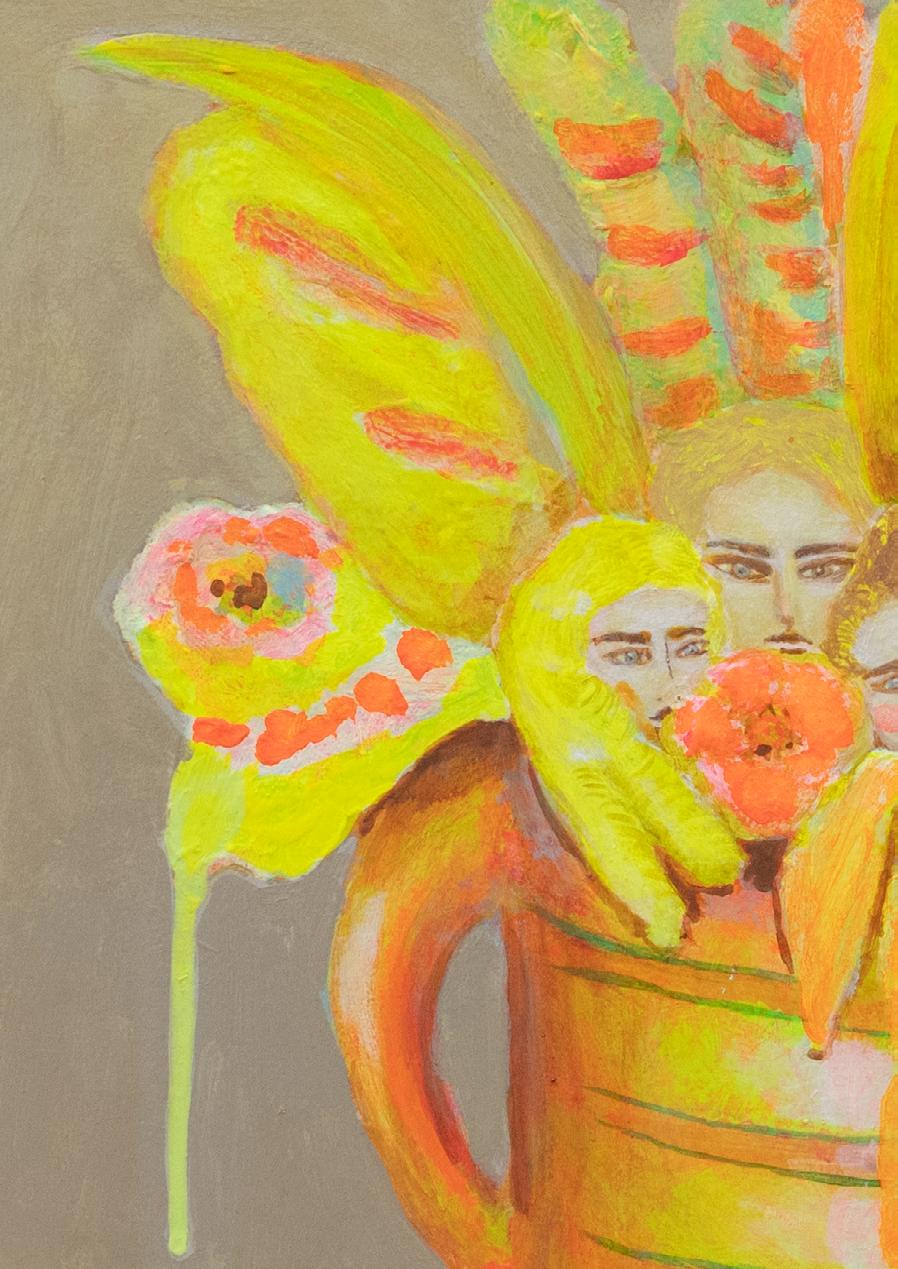
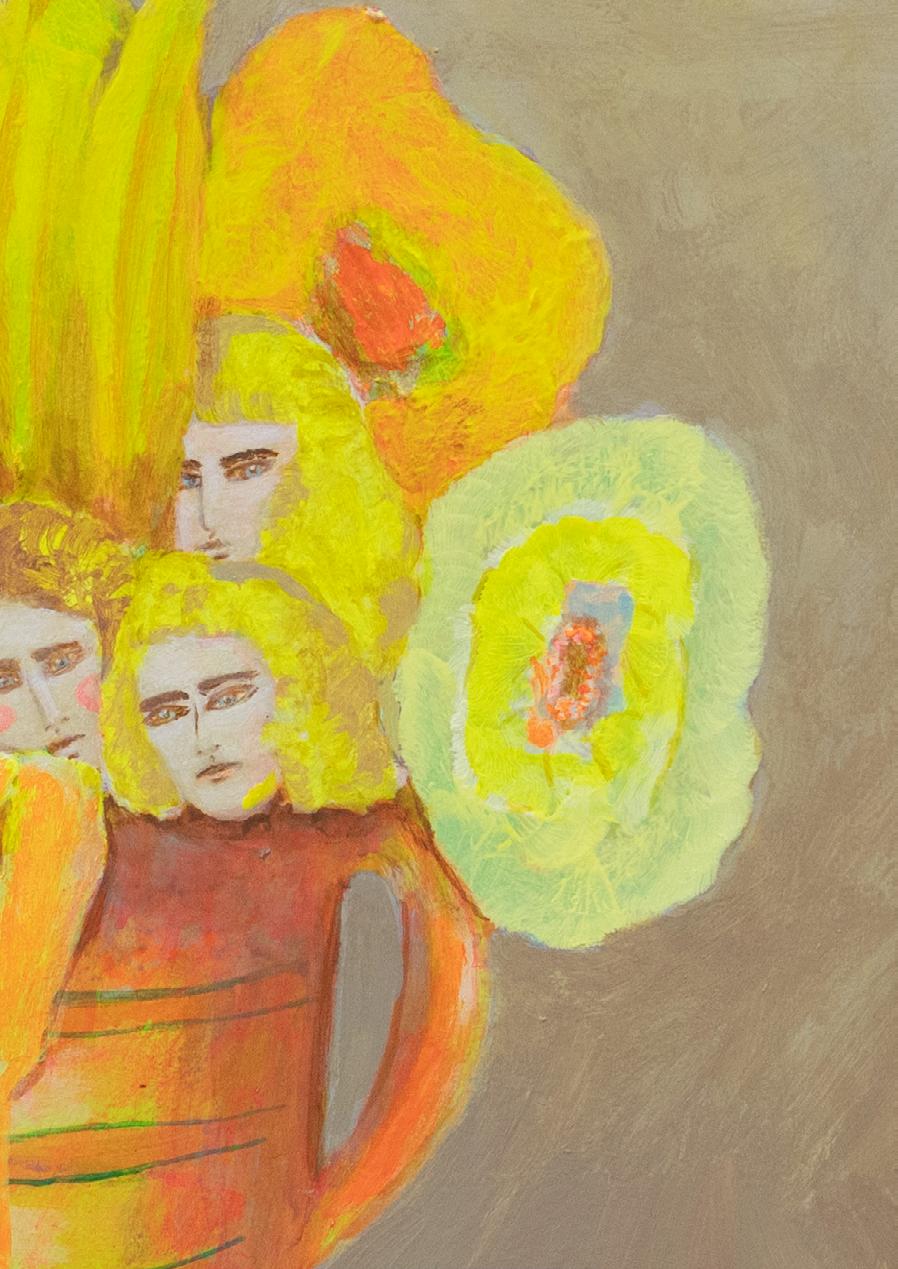
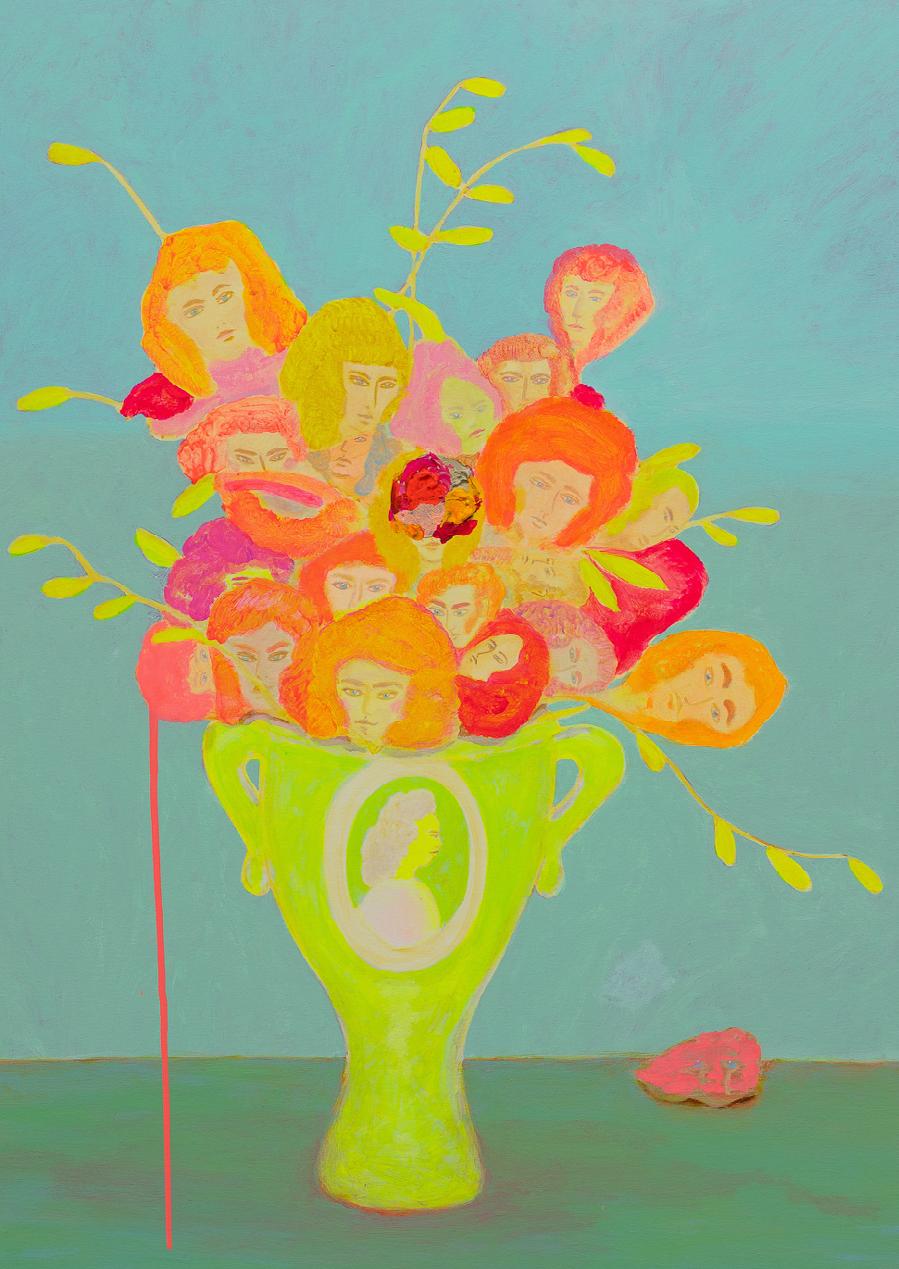
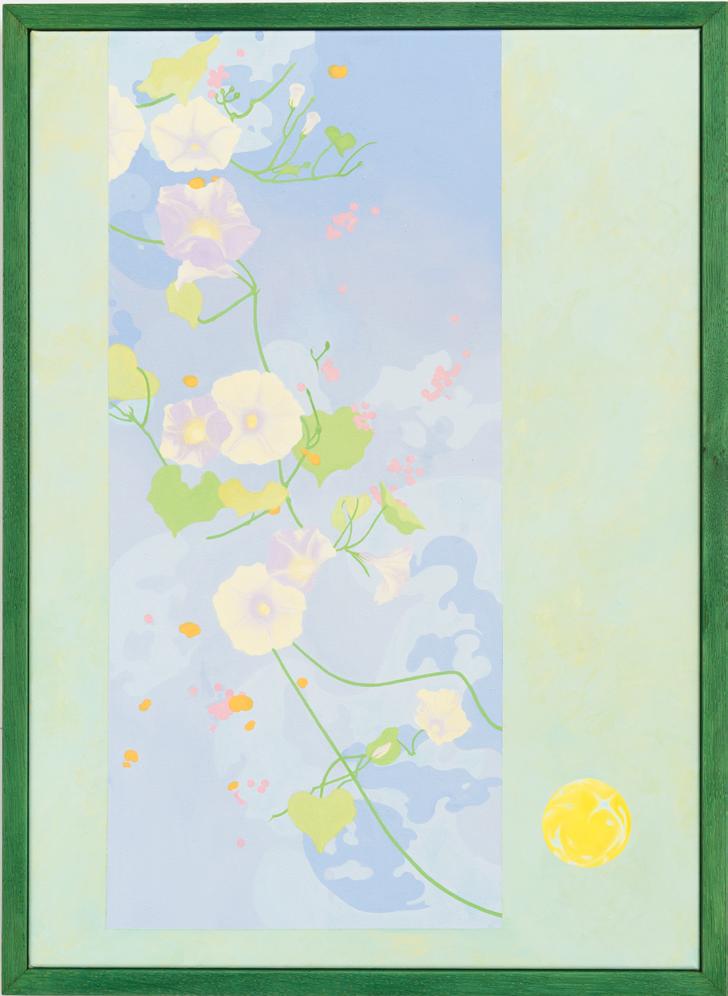
Joan Ross Subterfuge, 2026
acrylic on board
51 x 40.5 cm
Ode:
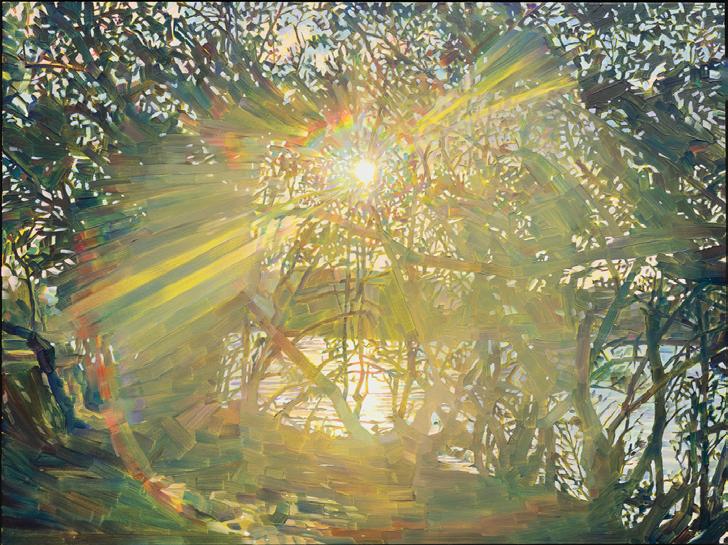
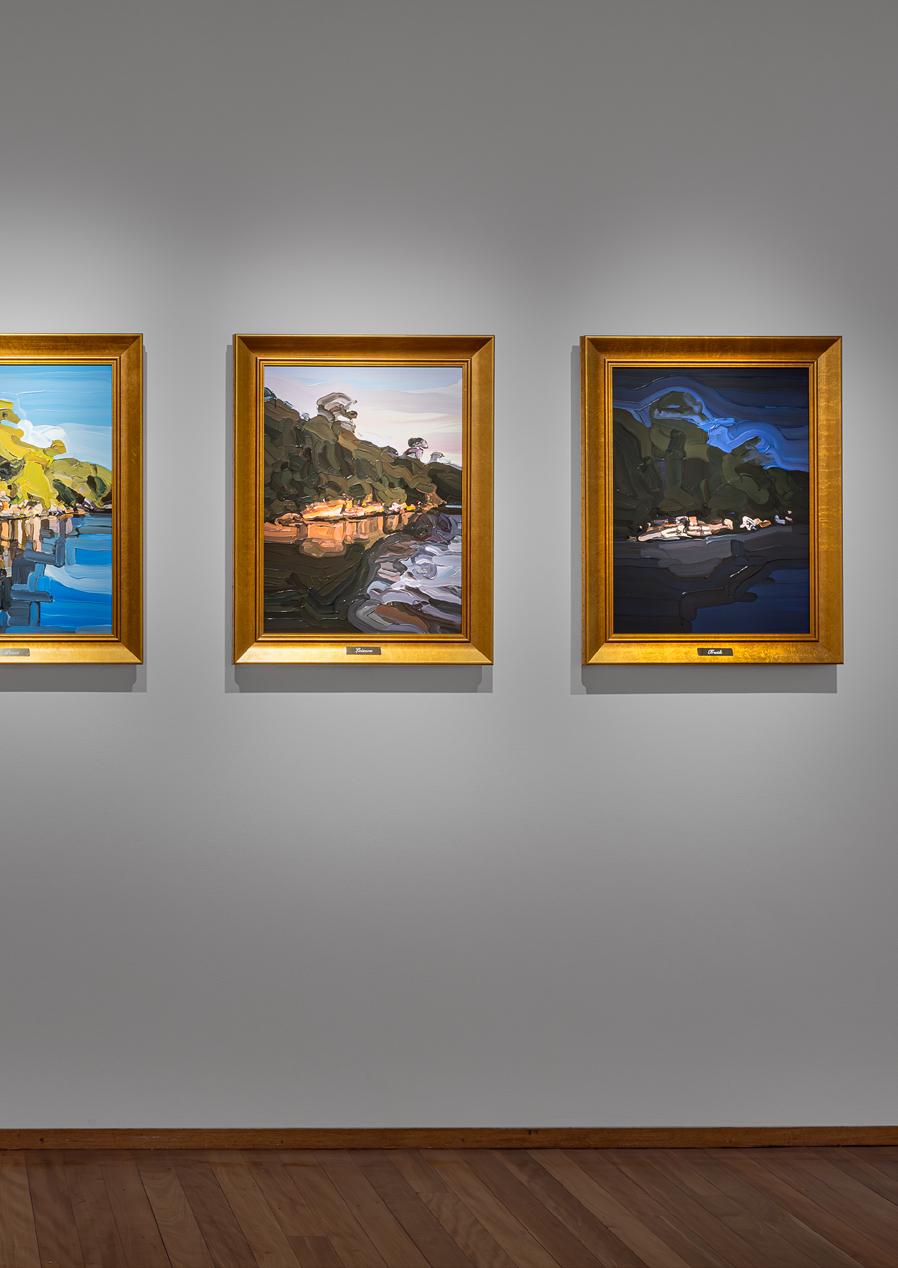
Holly Anderson Gold, 2026 oil on panel
30.5 x 40.5 cm
CONTRIBUTORS
N.Smith
Charles Rice
Lisa Slade
Dylan Batty
PUBLISHING COORDINATOR
Rosy Leake
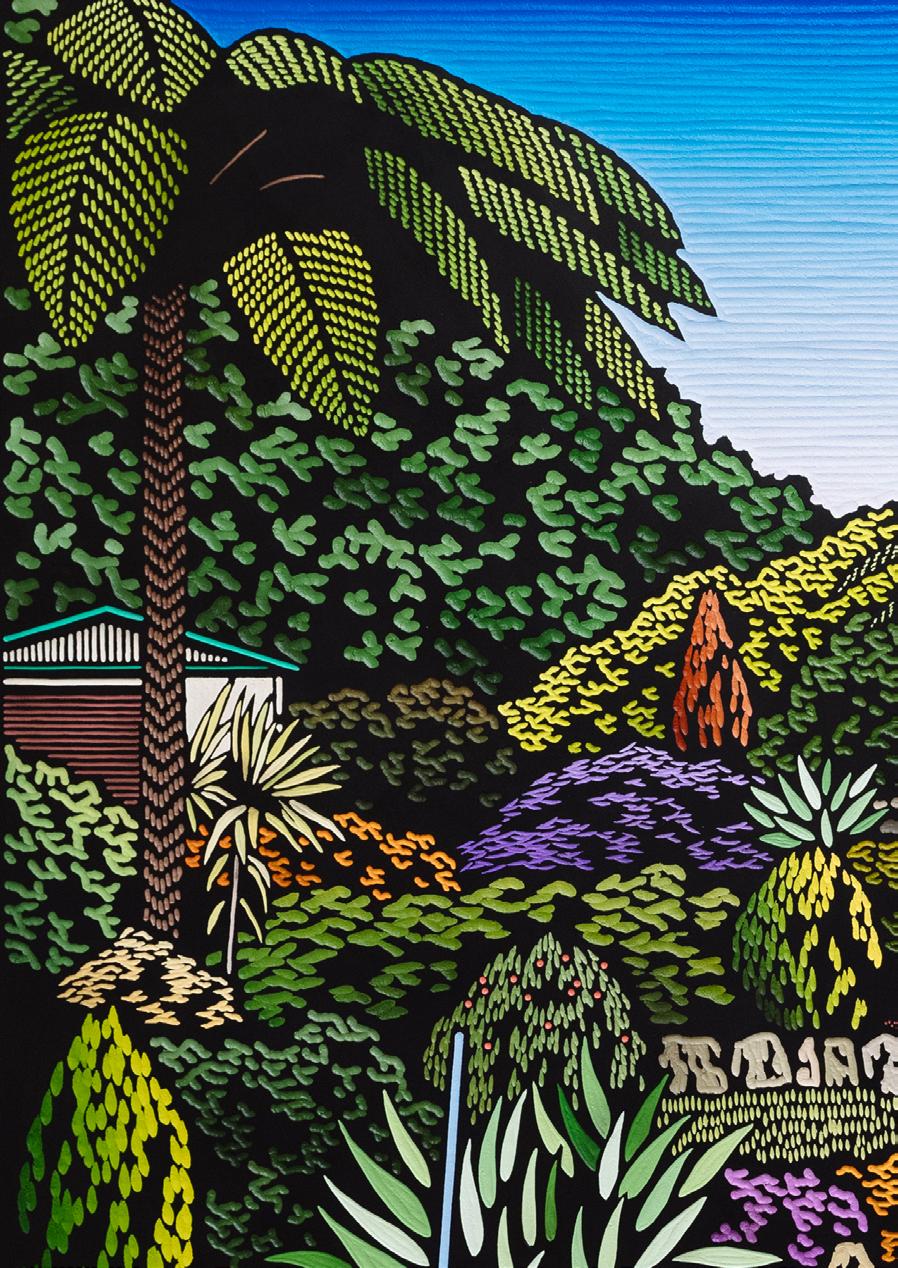
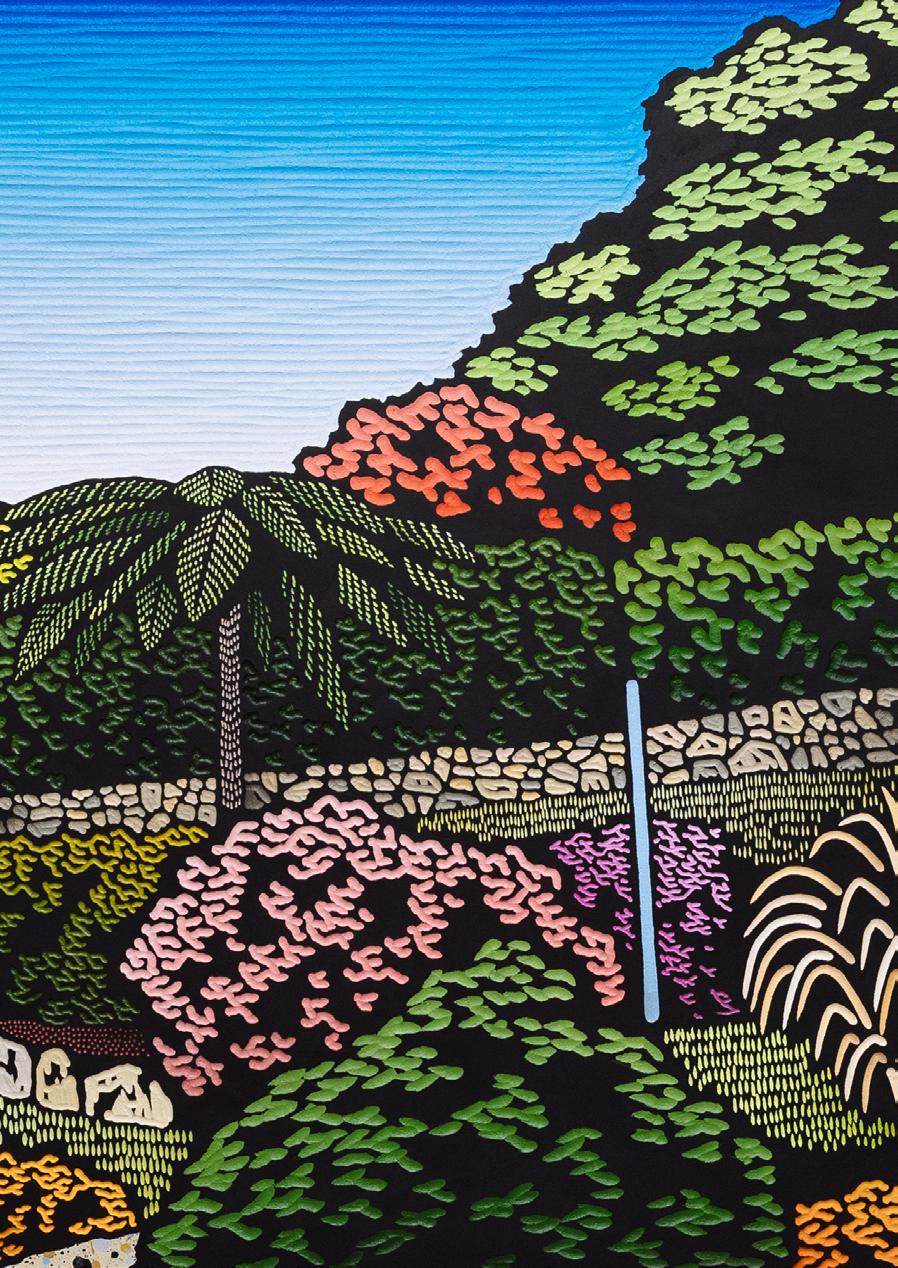
COVER ARTWORK
Christopher Zanko
Grounding Zone, 2026
acrylic on carved woodblock, acrylic rinestones
122 x 176 cm
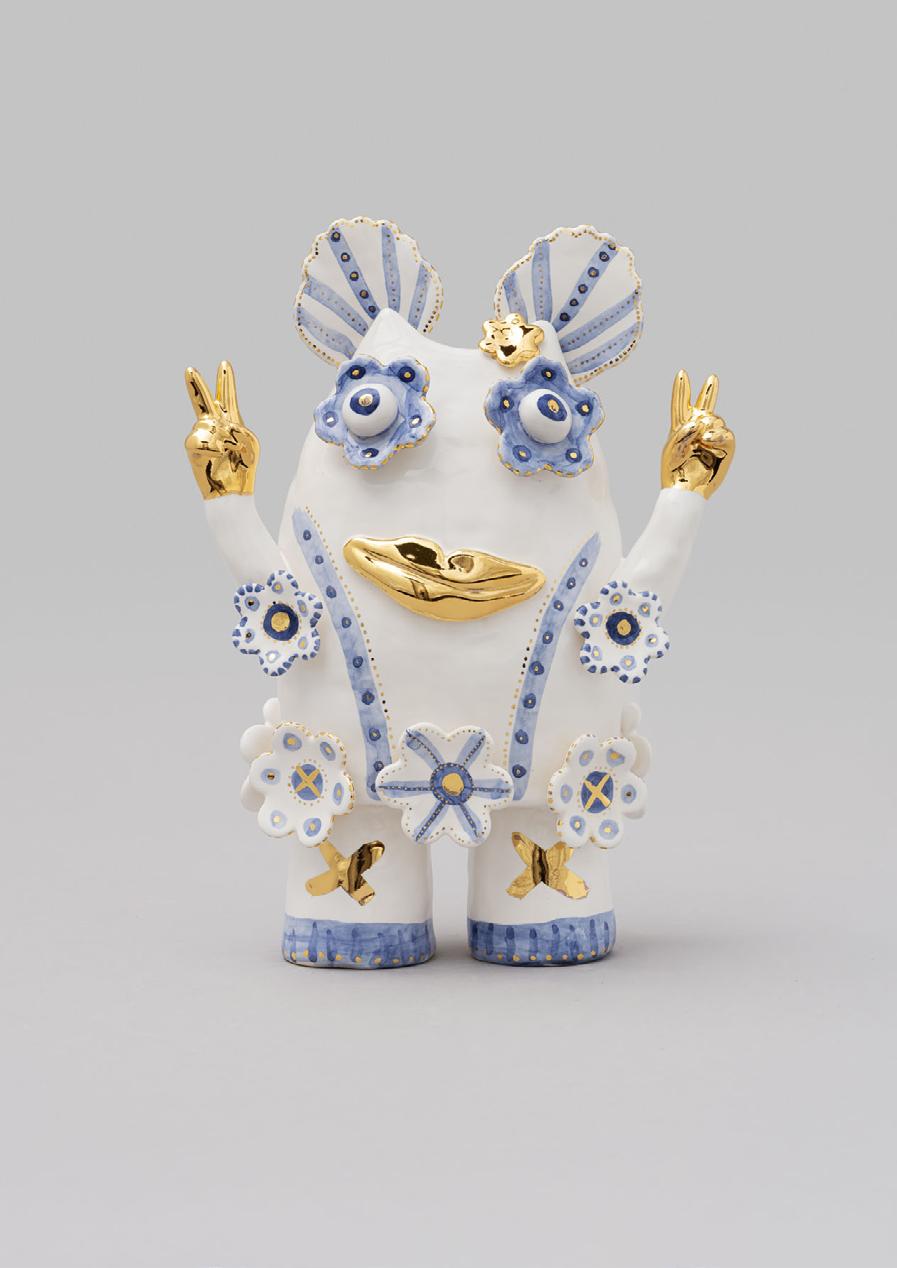
The Circle Keeper, 2026 glazed earthenware, cobalt pigment with gold lustre 22 × 16 x 8 cm
Vipoo Srivilasa
Letter from the Director.
Autumn 2026
The year has already brought a series of frsts, and with them, a renewed sense of energy across the gallery. We began with Lunar New Year, inviting a group of guest artists to exhibit alongside those we work with more closely. It was a simple but important gesture, creating space for new voices and giving their work a platform to be seen within the gallery.
Not long after, we returned to Melbourne Art Fair, where we presented Natasha Walsh’s work for the frst time at a fair. Natasha painted live in the space – a considered move, and one that felt aligned with the direction of her practice and its growing audience. Return to Sender also travelled for the frst time, landing in Adelaide and opening up the project to a new audience. Seeing it take on a different life in another city was a reminder of how these ideas continue to evolve through context and conversation.
Back in Sydney, Christopher Zanko’s frst exhibition with the gallery opened in March. His work, centred on an autumnal garden, anchors this edition as our cover. There’s a quietness to the paintings that invites a slower way of looking, and it has been a pleasure to share them with new audiences. At the same time, Sally Anderson is preparing for her frst exhibition with the gallery, which will open in April. It’s been a privilege to spend time with her and her work in the lead up. We are now preparing to return to Aotearoa Art Fair, with a presentation of Joan Ross, Fiona Lowry, and Holly Anderson, each showing in New Zealand for the frst time. It feels like a strong and considered moment to bring their work into that context.
This autumn edition of NSG Edition brings together writing, conversation, and refection from across the extended community around the gallery. I hope you fnd something here that stays with you.
Warmest,
Nick Smith Founder & Director
N.Smith
Gallery
IG: @nw.smith
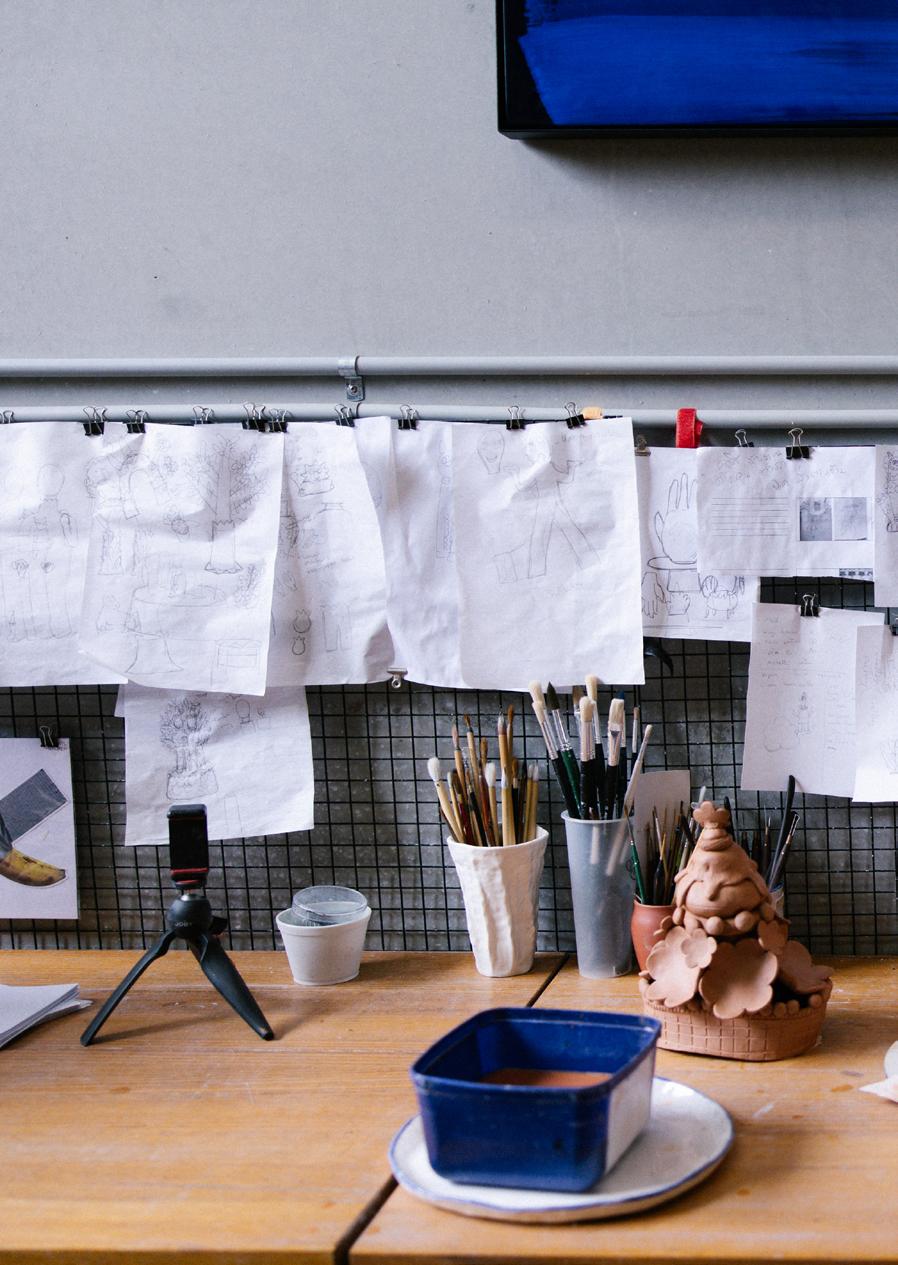
IN THE STUDIO.
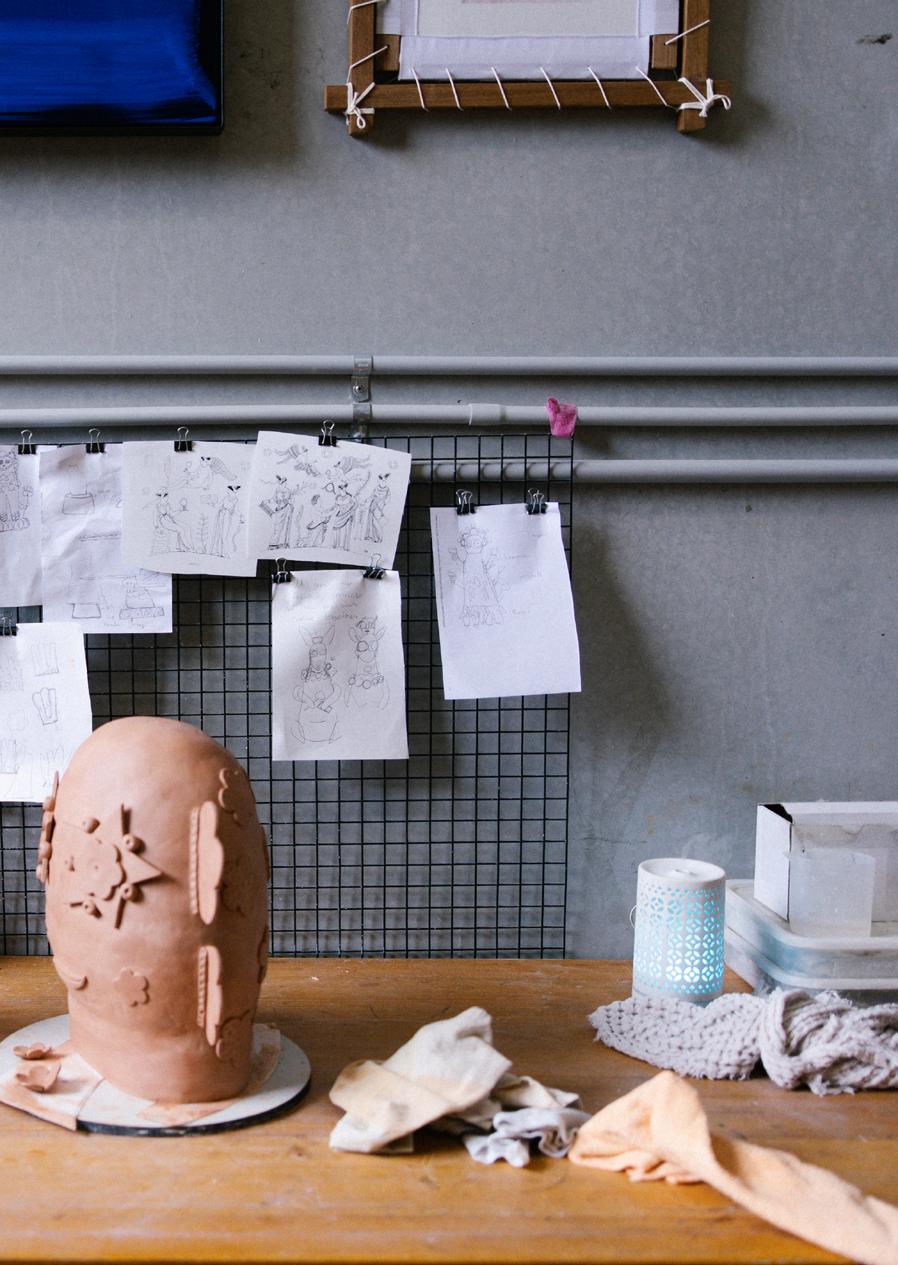
Inside the studio of Vipoo Srivilasa.
CHRISTOPHER ZANKO.
Developing a new body of work in his studio in the Illawarra/Dharawal region of the New South Wales south coast, Christopher Zanko continues his interest in disappearing architectural homes across the Australian landscape. Drawing on a visual language shaped by geometry, repetition, and surface, Zanko documents buildings that sit at the threshold of use and obsolescence, structures marked by time, weather, and shifting social priorities.
Among them are the modest forms that once defned suburban life: sheds, garages, and backyard structures that formed the backdrop to everyday routines. As the familiar rhythm of the Australian backyard gives way to denser urban development, these spaces are increasingly disappearing from view.
Christopher Zanko's solo exhibition The Traps opens at N.Smith Gallery 5 March 2026.
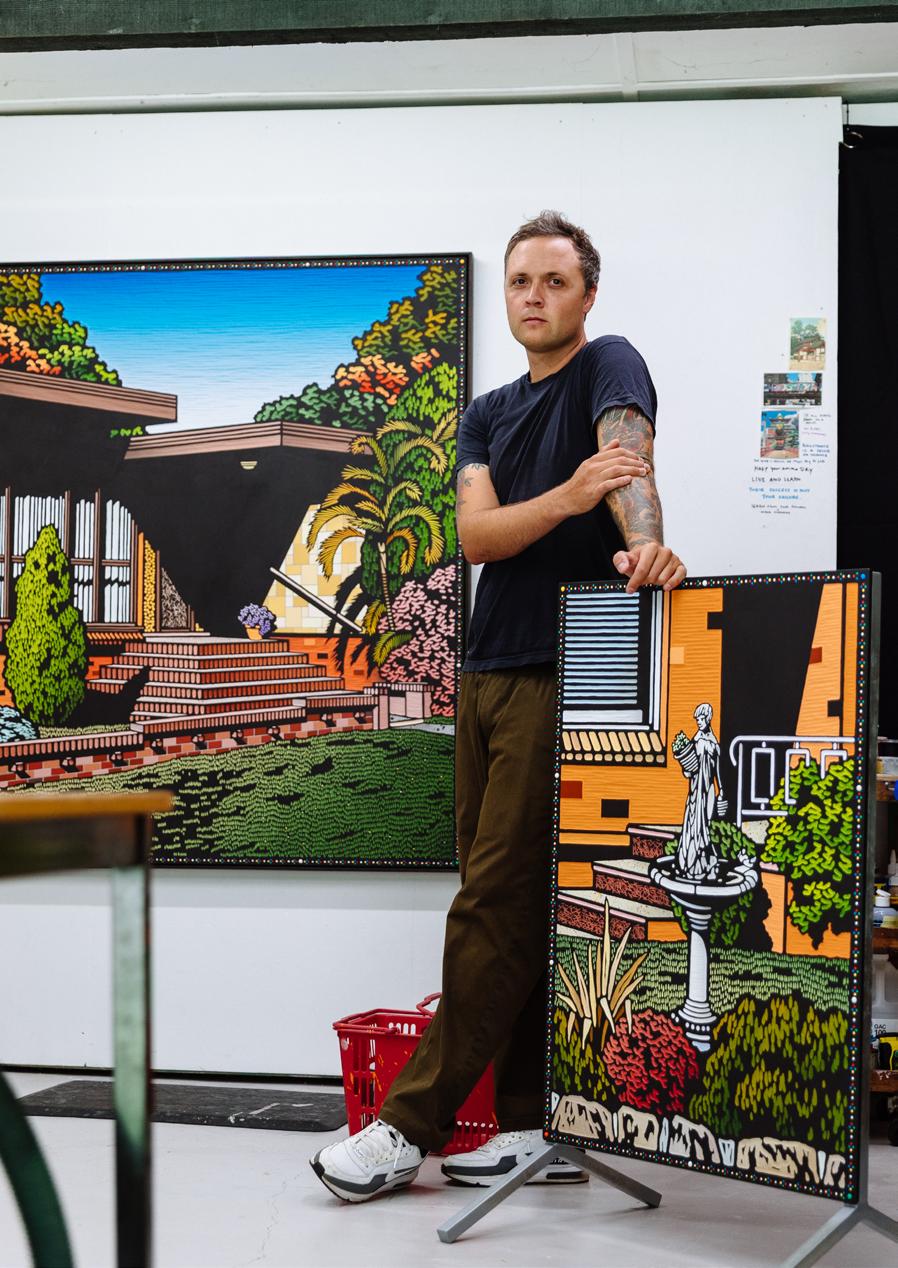
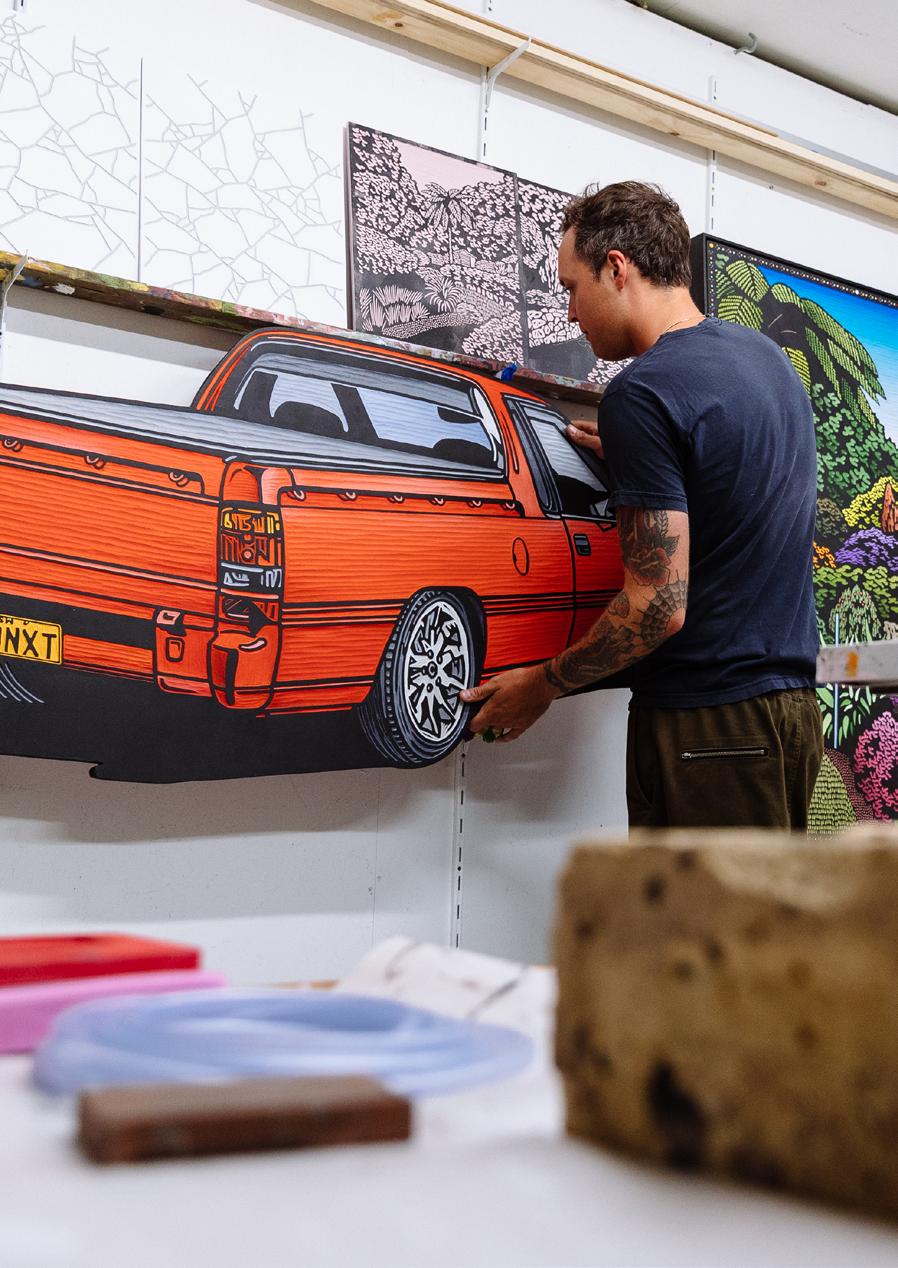
In the studio with Christopher Zanko, 2026.
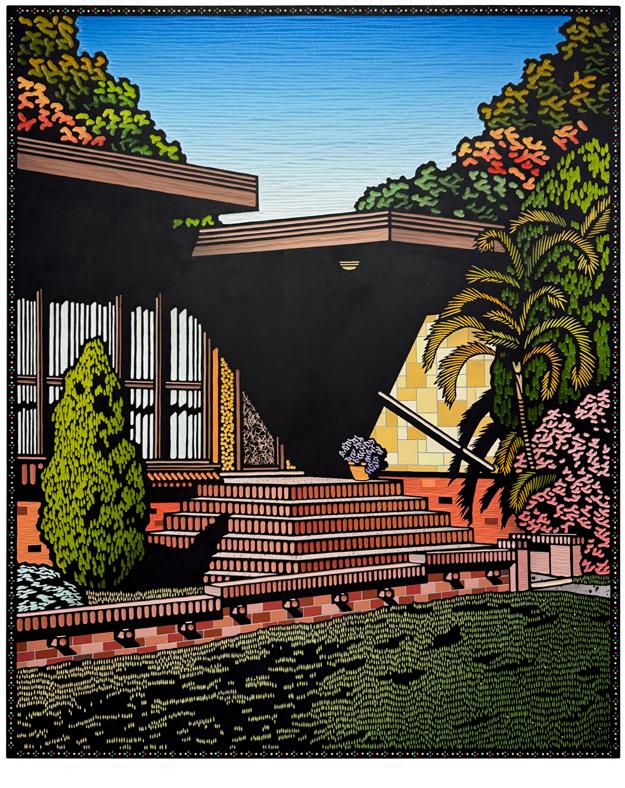
Christopher Zanko
The Traps, 2025
acrylic on wood relief carving
150 x 122 cm
SALLY ANDERSON.
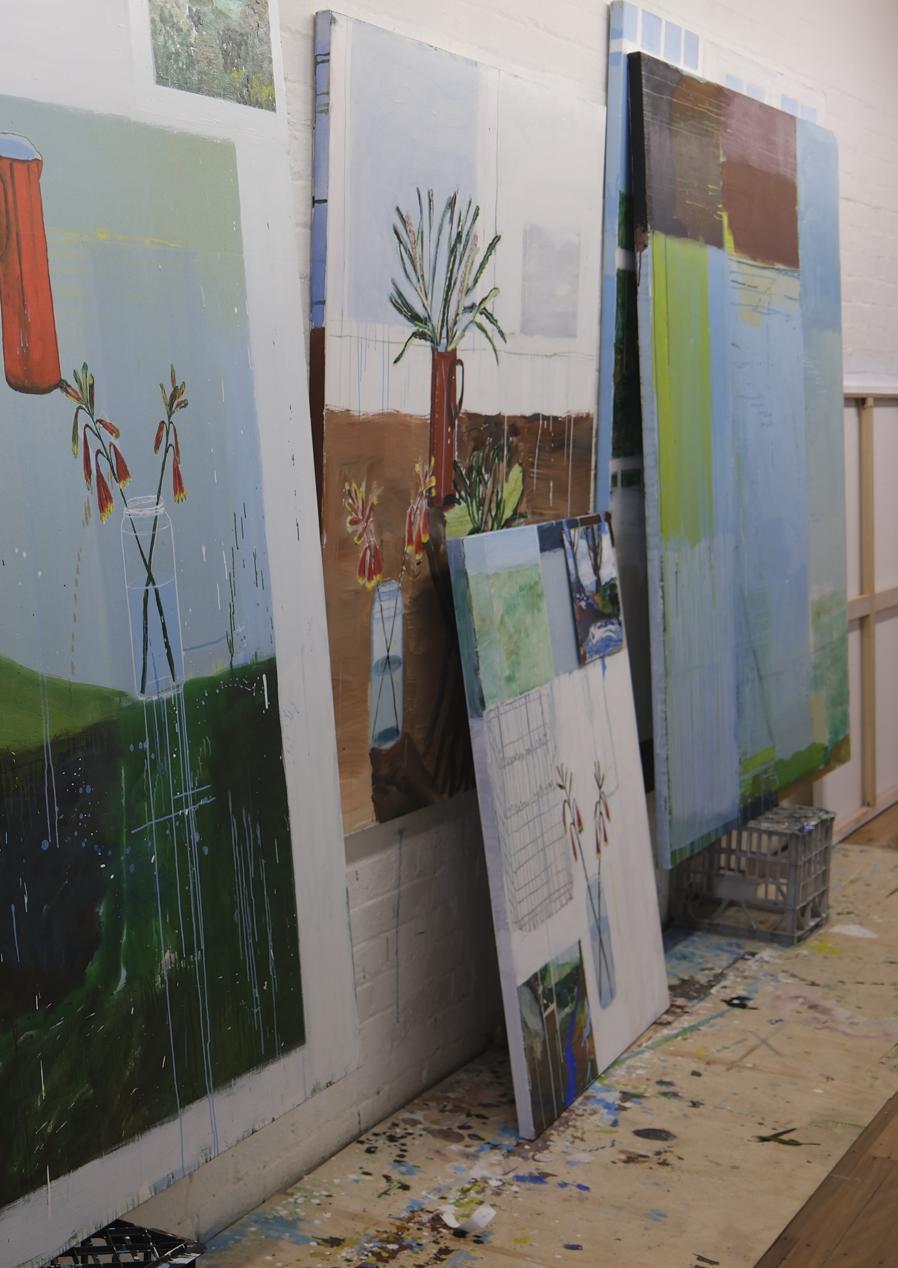
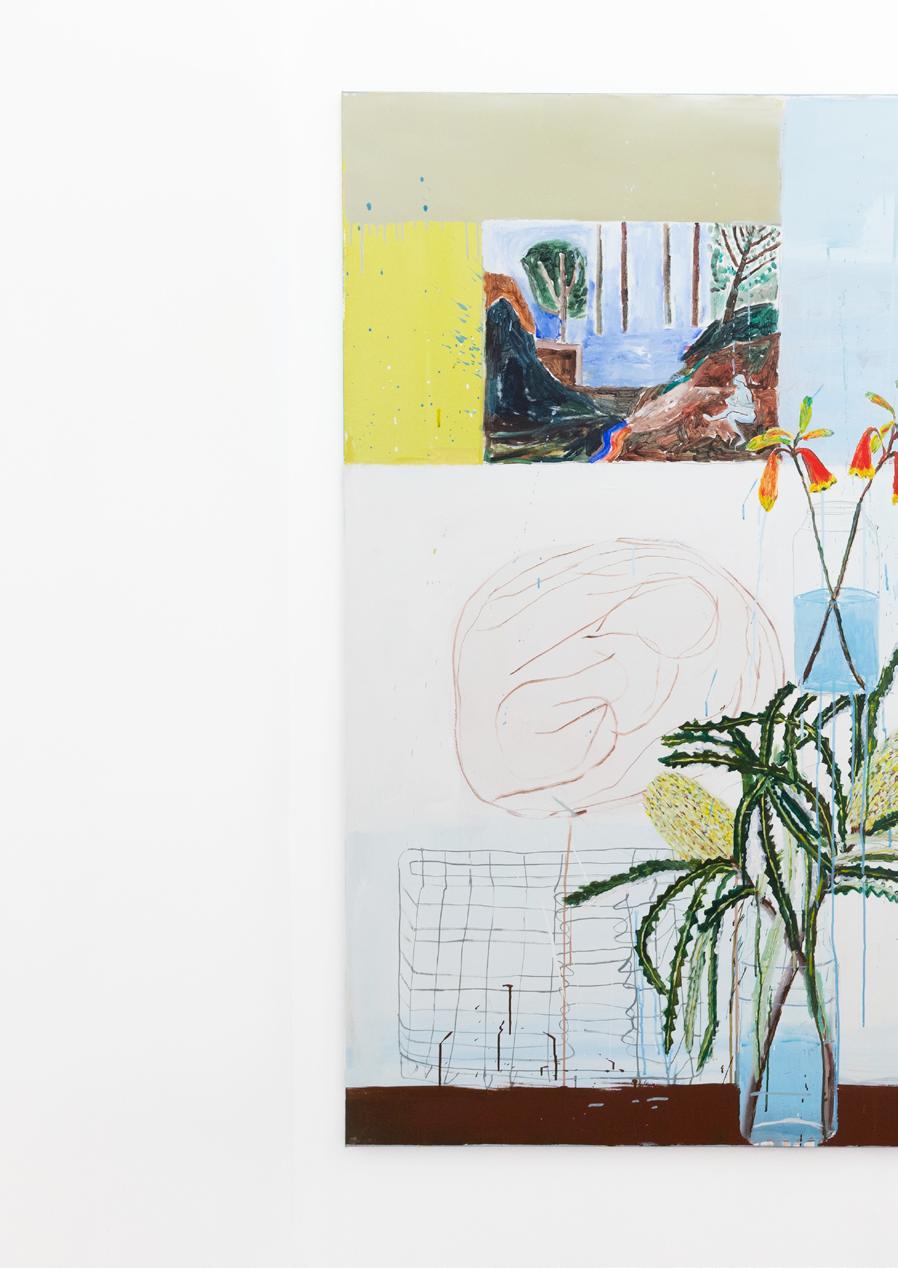
In Sally Anderson's studio, painting becomes a container: for loss, for love, and for the ongoing act of holding it all together.
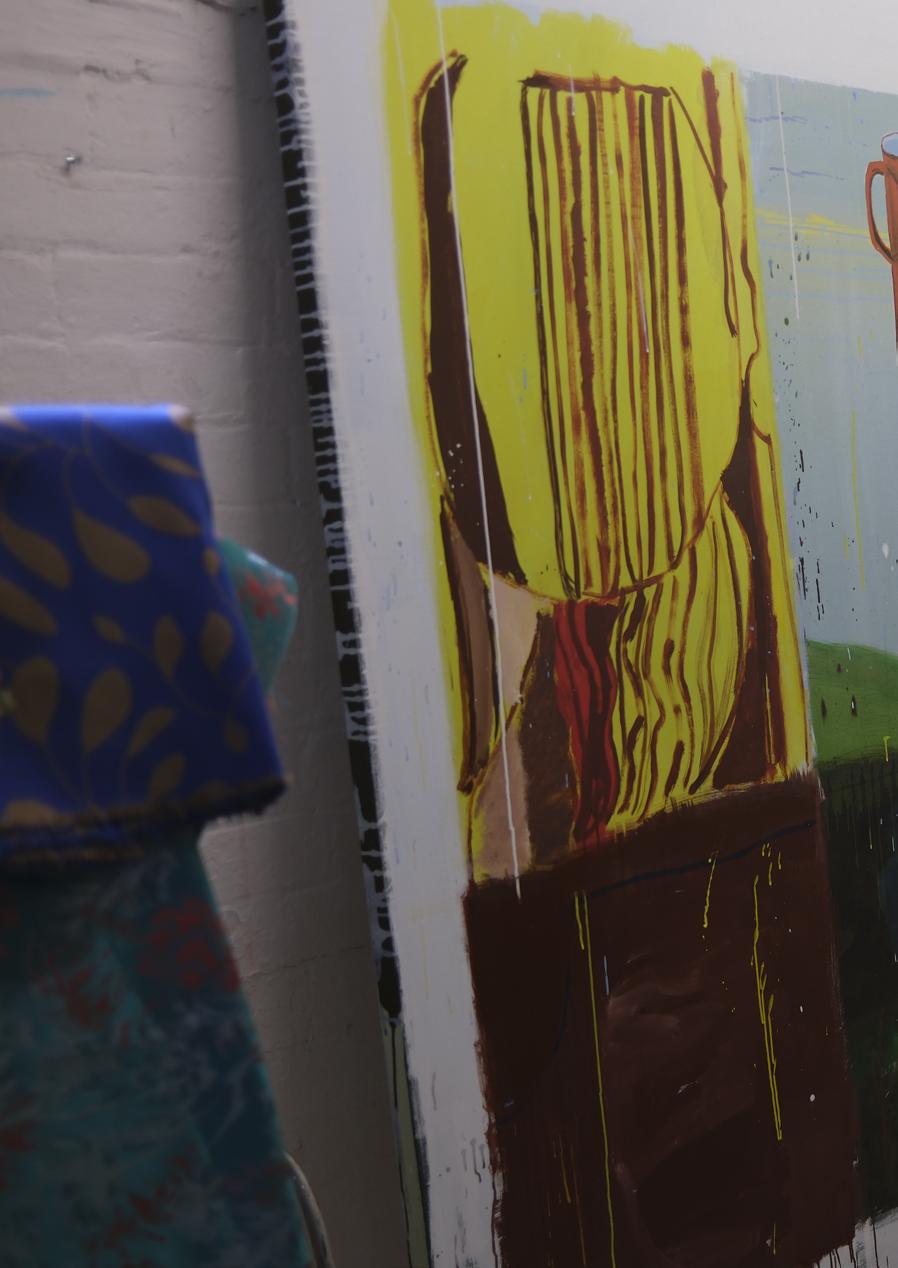
Drawing from her own experience of motherhood, domestic space, and profound personal change, Anderson's latest body of work brings together painting, still life, and art historical reference to explore what it means to hold and be held. Objects drawn from daily life: jugs, dish racks, bead mazes act as quiet vessels, carrying the weight of labour, repetition, and tenderness.
Sally Anderson's solo exhibition Holding Pattern, River Hug opens at N.Smith Gallery 9 April 2026.
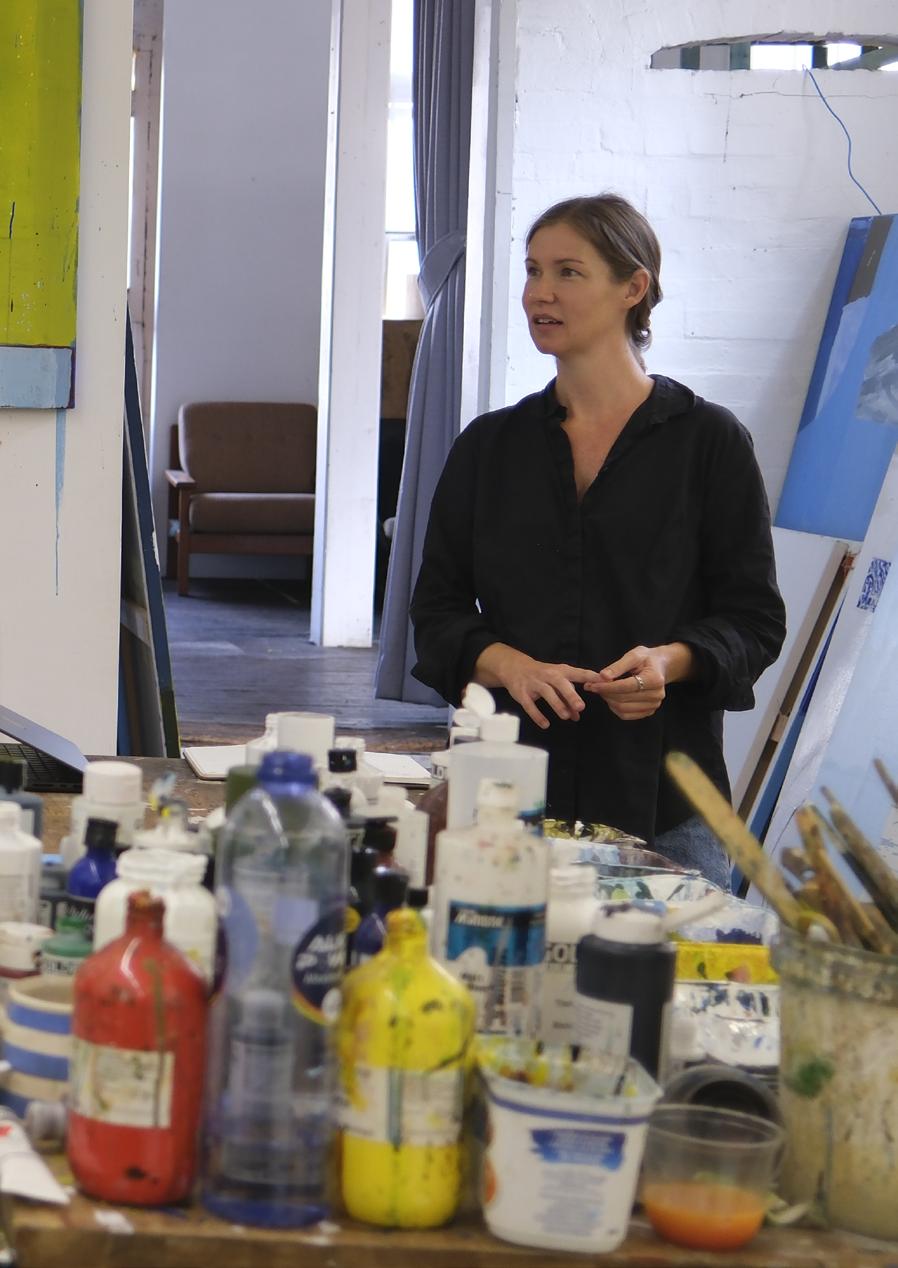
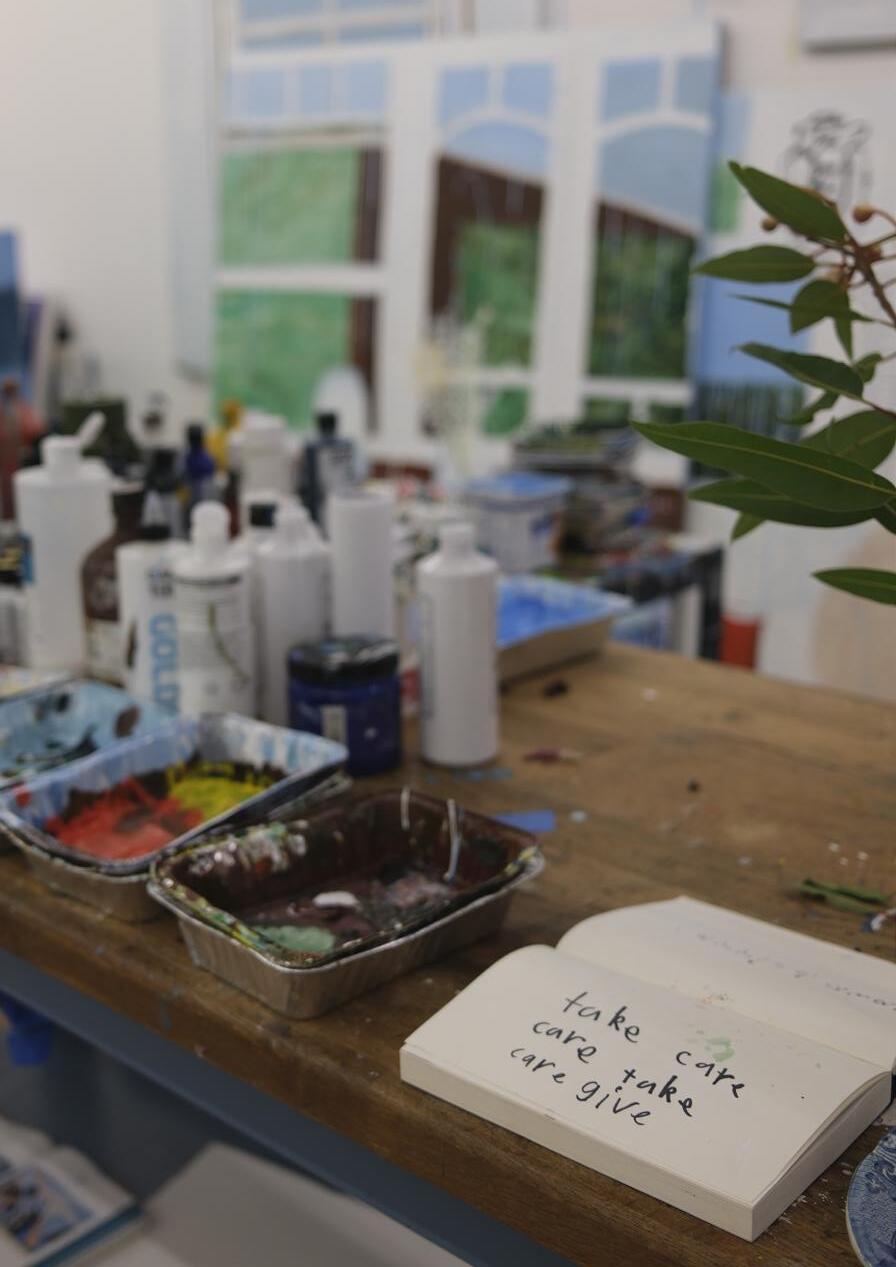
In the studio with Sally Anderson, 2026.
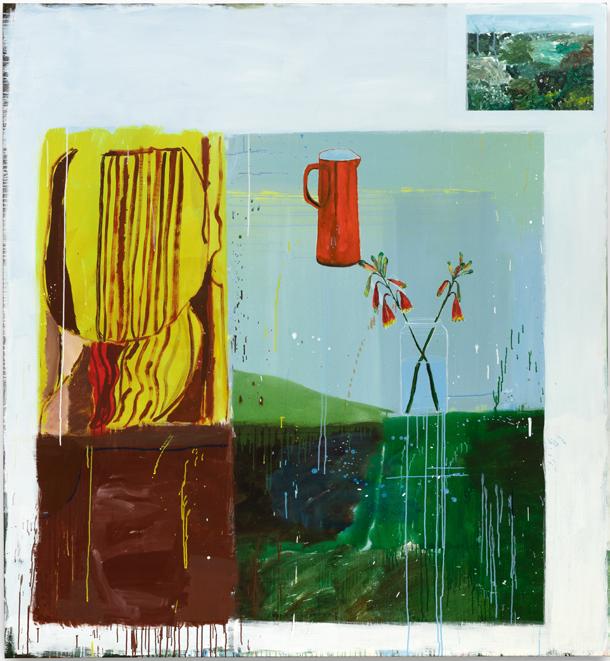
Sally Anderson
Masking, multitasking (M house view, MH view), 2026
acrylic on polycotton
198 x 183 cm
SALLY SCALES.
‘We
grew up knowing we had to use our voices for our families and communities.
It’s go time.’
– Sally Scales
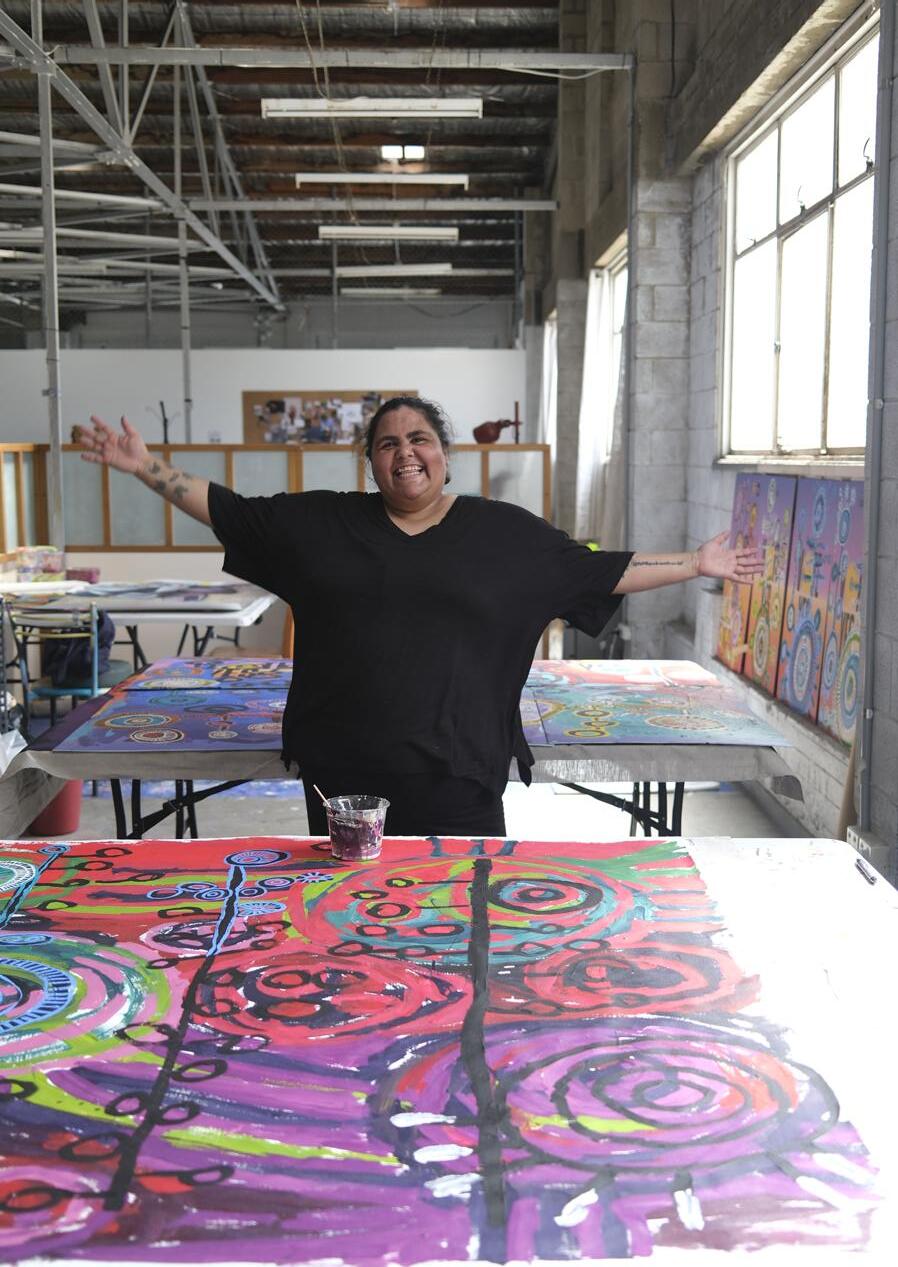
A proud Pitjantjatjara woman from far west of the Anangu Pitjantjatjara Yankunytjatjara (APY) Lands in remote South Australia, Sally Scales has used her recent time in her studio in Tarntanya/Adelaide, to develop vibrant large-scale landscapes that represent her ancestral home and tjukurpa.
Sally Scales: New Works opens at N.Smith Gallery 7 May 2026.
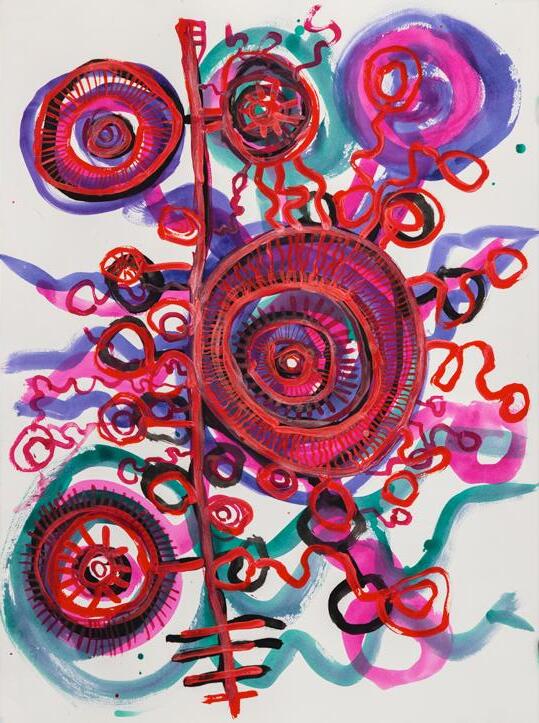
Sally Scales
Untitled, 2025
acrylic on paper
76 x 56 cm
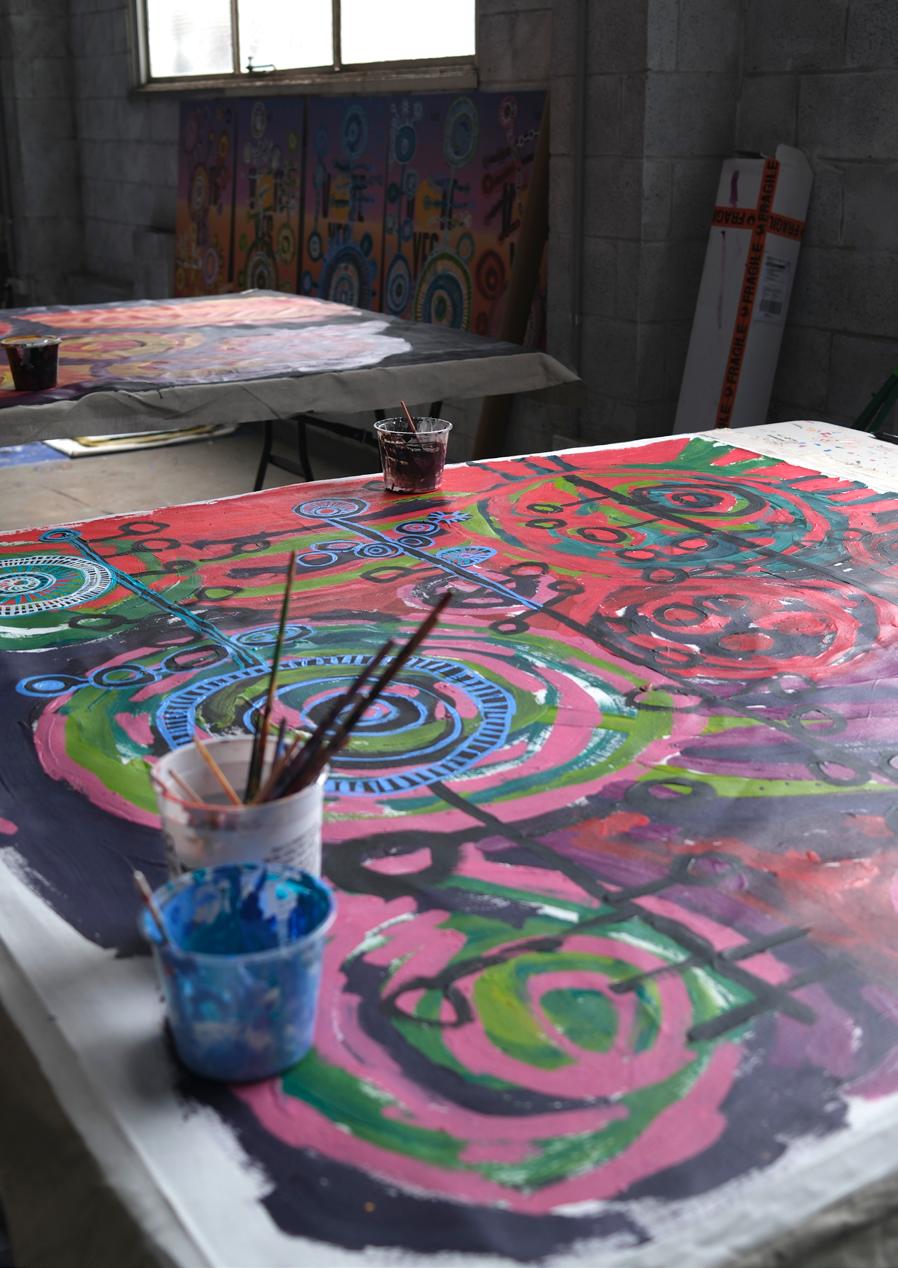
In the studio with Sally Scales, 2026.
IN THE GALLERY.
Installation view — Kindling. N.Smith Gallery, Sydney.
20 Nov – 13 Dec 2025
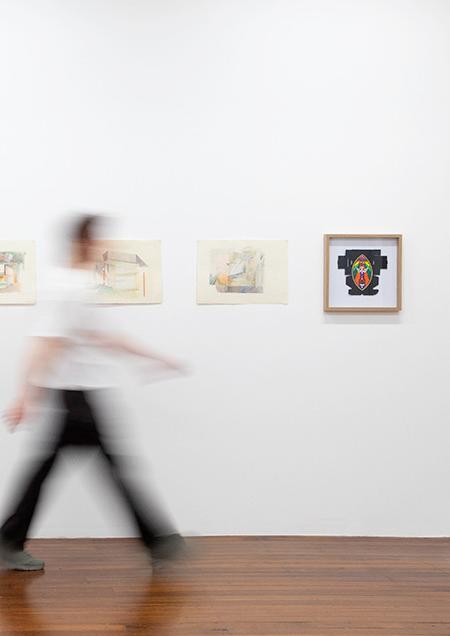
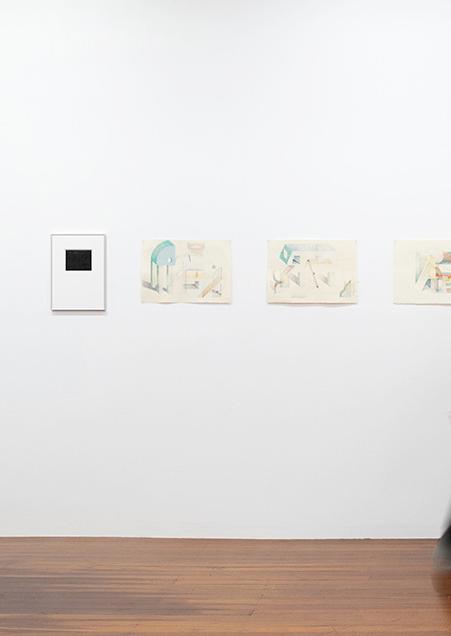
Installation view — Folio. N.Smith Gallery, Sydney.
Folio: Contemporary Australian Drawing & Print brings together a cross-section of Australian artists whose works on paper reveal the continued relevance and range of the medium today.
Alongside guest artists Tuppy Ngintja Goodwin and Kate Vassallo, the exhibition features artists long associated with drawing alongside others not typically known for working on paper. Together, they expand what drawing can be – a structural framework, a performative act, or an experiment in texture and tone.
Included artists are Holly Anderson, Tom Blake, Joshua Charadia, Claire Healy & Sean Cordeiro, Neva Hosking, Savannah Jarvis, Mason Kimber, Fiona Lowry, Kyra Mancktelow, Joan Ross, Sally Scales, Darrell Sibosado, Vipoo Srivilasa, James Tylor, Natasha Walsh, and Christopher Zanko.
For some of these artists, drawing and paper come into the process from the very beginning, such as with Tom Blake who explains ‘Most of the work I do starts with drawing’. These drawings are then fragmented and redrawn, with the new compositions forming the basis of cyanotypes and works on paper, or used to inform hand-etched de-silvered mirrors, mobiles and installations. In his practice, drawing is tied to the gesture and movement of hands, a process that he explains as intuitive, but also vulnerable. “Once that line is done, it’s done… there’s no hiding,” he says.
For others in the exhibition, paper is a medium with its own physical qualities – qualities that can be manipulated and pushed to their limits. With a practice exploring Australian environment, culture and social history, James Tylor uses the historical 19th century photographic process of the Becquerel daguerreotype, creating new and contemporary daguerreotypes with the aid of modern technology. Manually hand-colouring digital prints, or applying physical
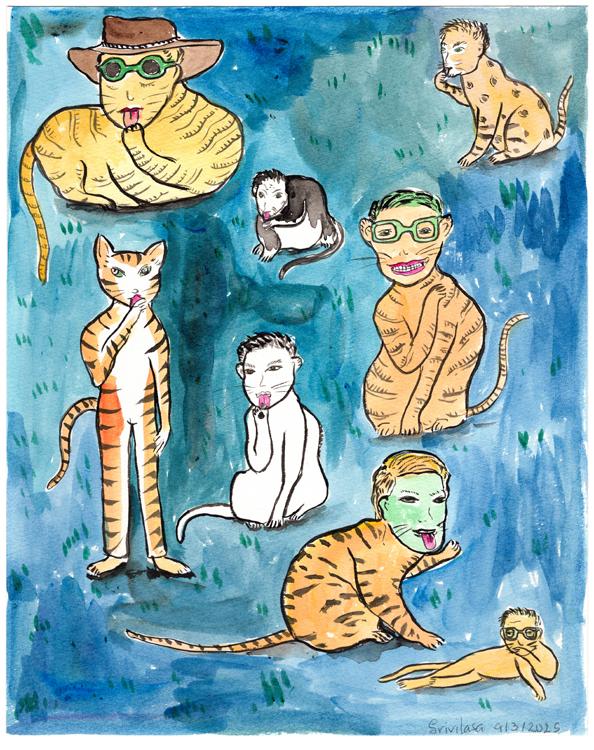
Vipoo Srivilasa
Self Portrait as Magic Cats, 2025 ink and acrylic on paper
34 x 28 cm
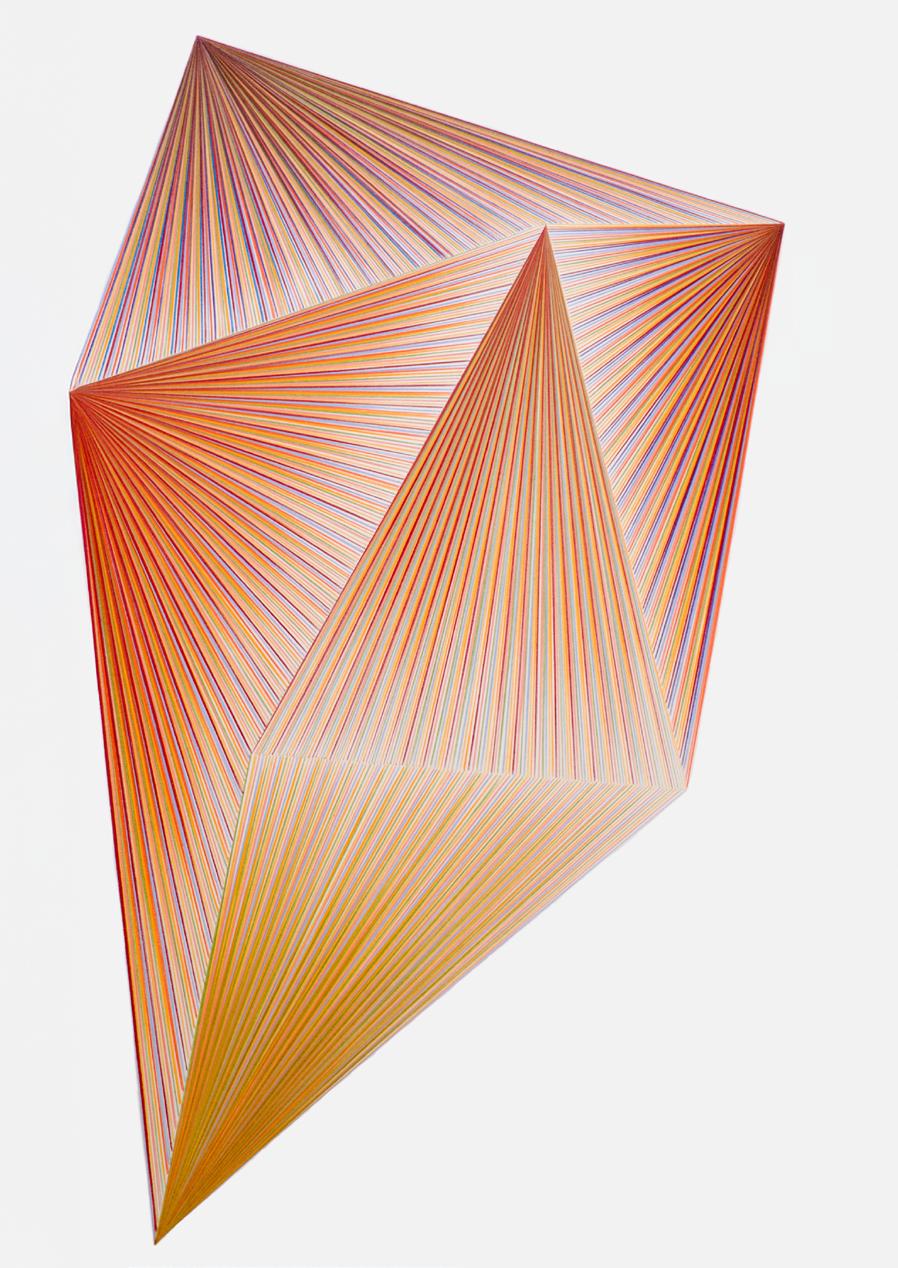
interventions to the surfaces of digital prints, he uses a hybrid of analogue and digital photographic techniques to create works on paper that are experimental, yet deeply rooted in historical methods and techniques.
In many of these artist’s practices, paper comes in quite naturally as a surface adjacent to the canvas or wooden board, however for others paper presents an entirely new material challenge. Thai-born Australian artist Vipoo Srivilasa – recognised as a leader in the feld of ceramics – uses paper to experiment with visual motifs, characters and aesthetics. With a practice that engages with complex questions of queerness, migration and spiritual meaning, his works on paper continue the ambitions of his ceramics to be accessible, uplifting and beautiful.
Through graphite, pastel, ink, and collage, Folio seeks to elevate works on paper from the periphery of artistic practice to its centre. These pieces are not studies or sketches, but complete and considered works that carry the immediacy, intimacy, and vulnerability of direct mark-making. By gathering new and established voices across generations and disciplines, Folio reaffrms drawing as a vital and evolving language — one that continues to shape the future of Australian art.
Kate Vassallo Daydreaming 2, 2025 coloured pencil on paper 56 x 38 cm (sheet)
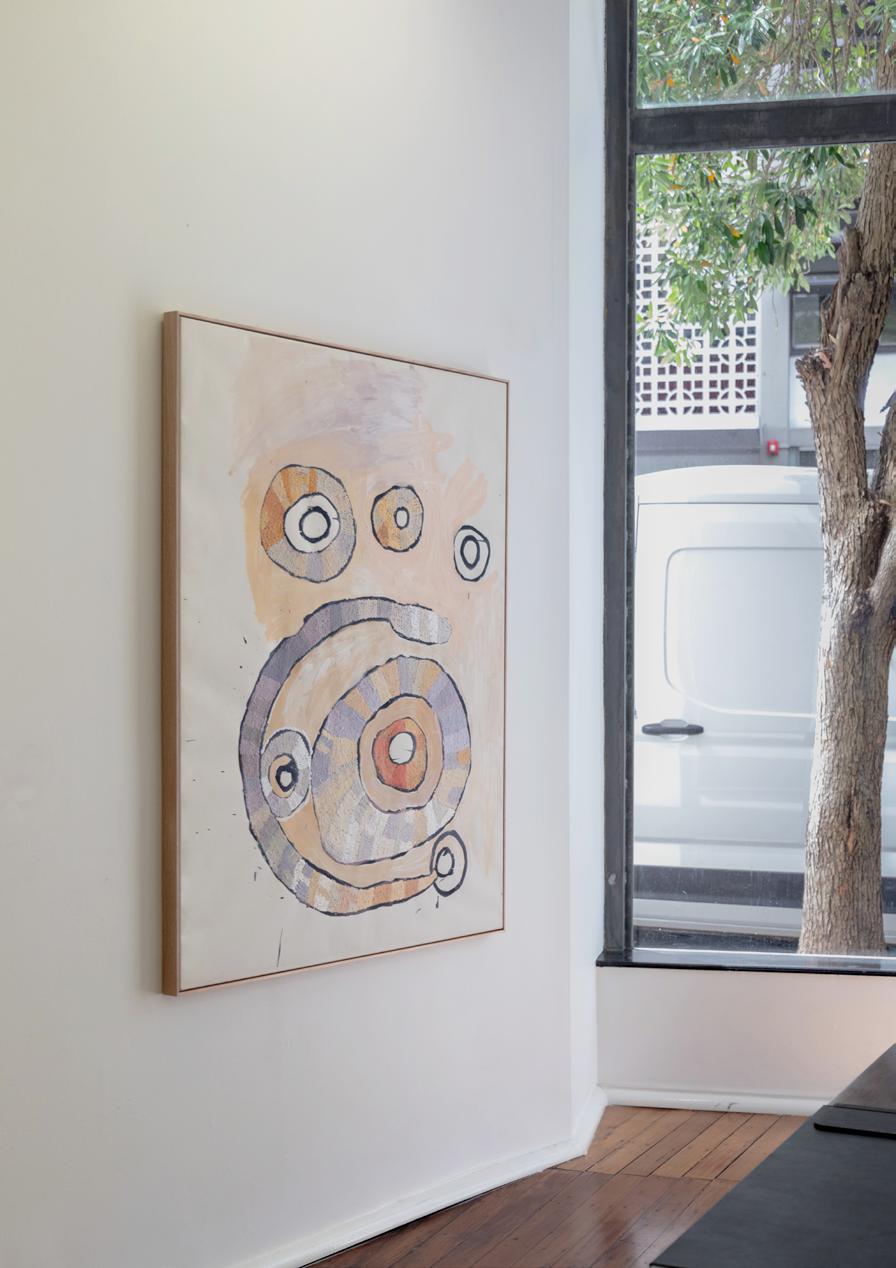
152 x 122 cm
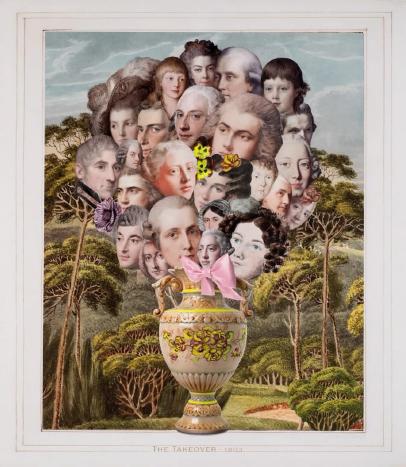
The Takeover - 1803, 2025
hand-painted digital print on cotton rag paper
60 x 52.5 cm (image)
edition of 15 + 2 AP
Left: Tuppy Ngintja Goodwin
Antara, 2025
synthetic polymer paint on paper bonded canvas
Above: Joan Ross
Left:
Kyra Mancktelow
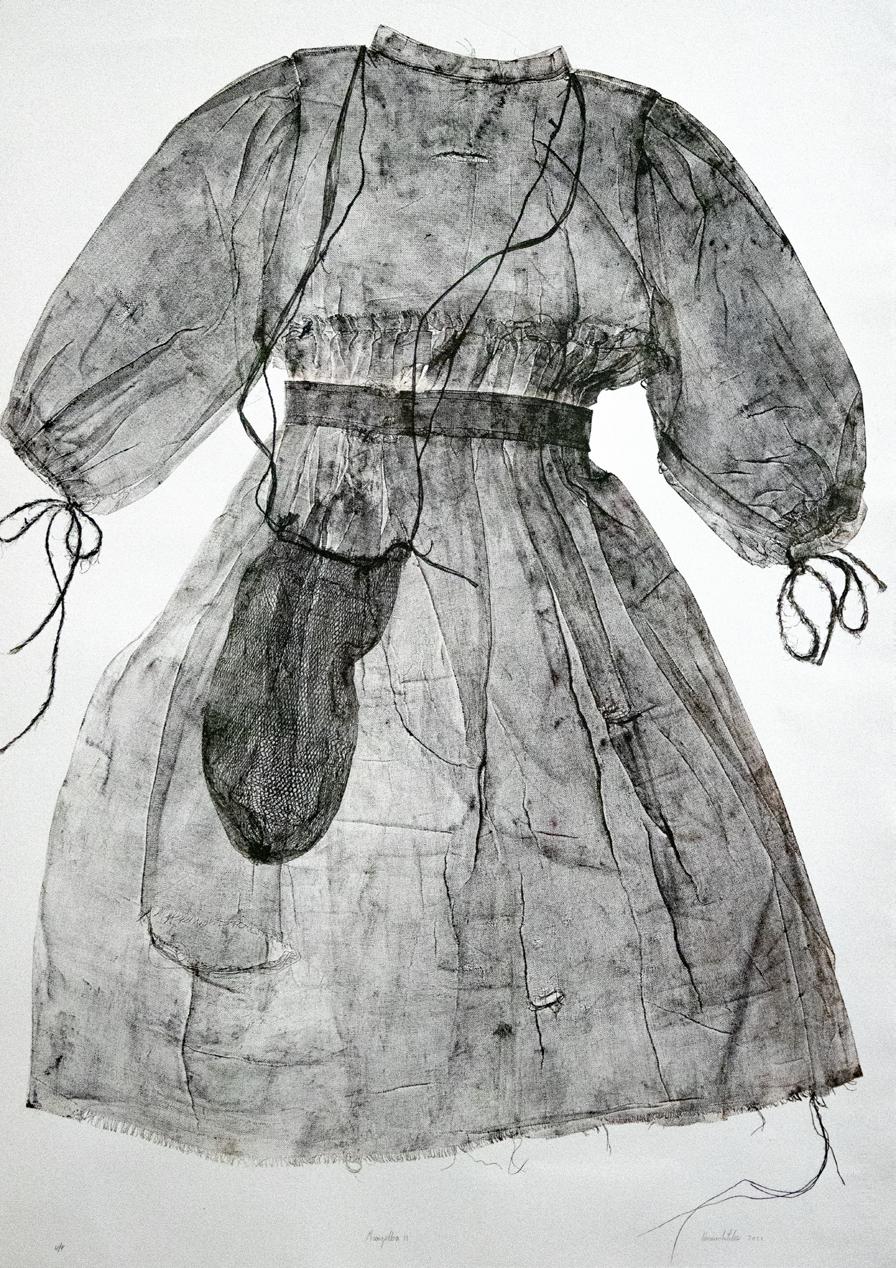
Moongalba II (detail), 2021
unique monoprints on 350gsm Hahnemühle paper
120 x 80 cm
Above:
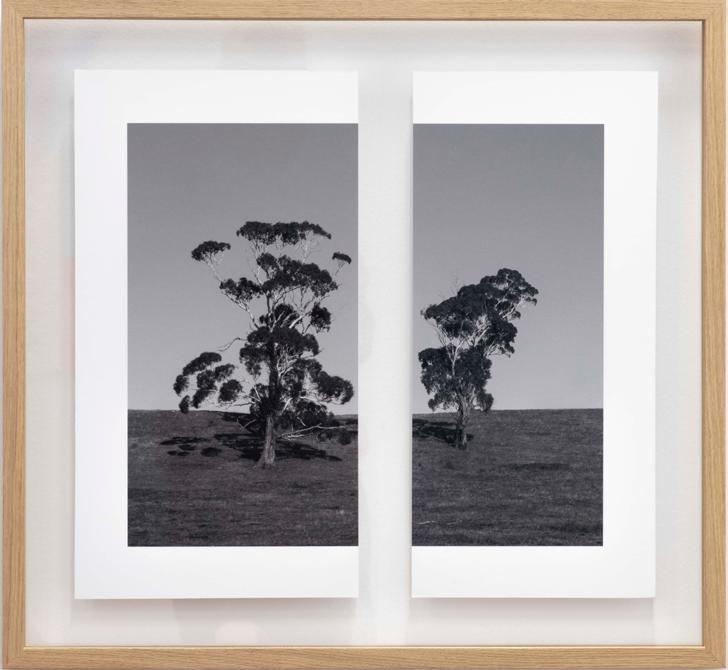
James Tylor
Tapa-arra Through the Landscape 7, 2024
cut photograph in glass frame
50 x 55 cm
edition of 5 + 2 AP
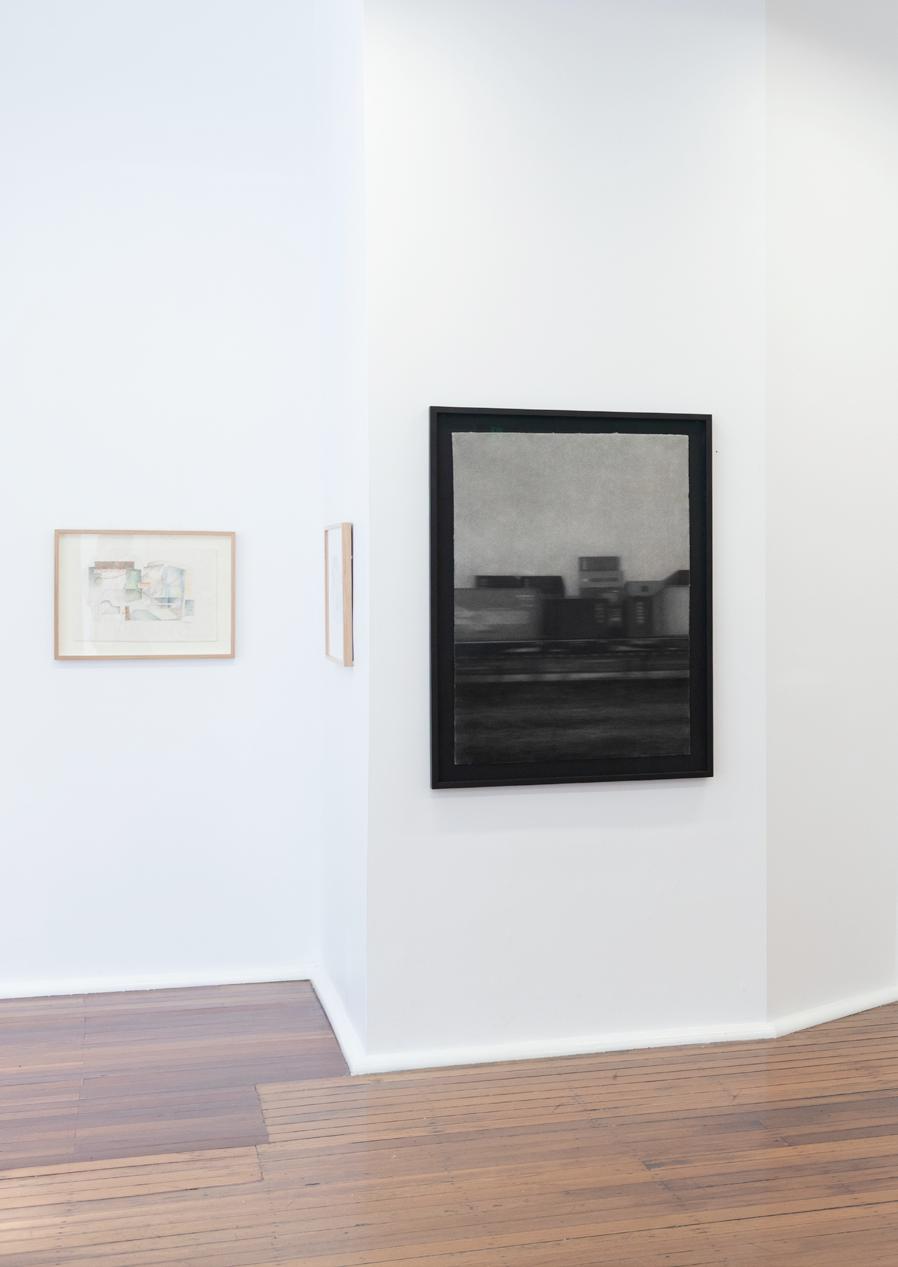
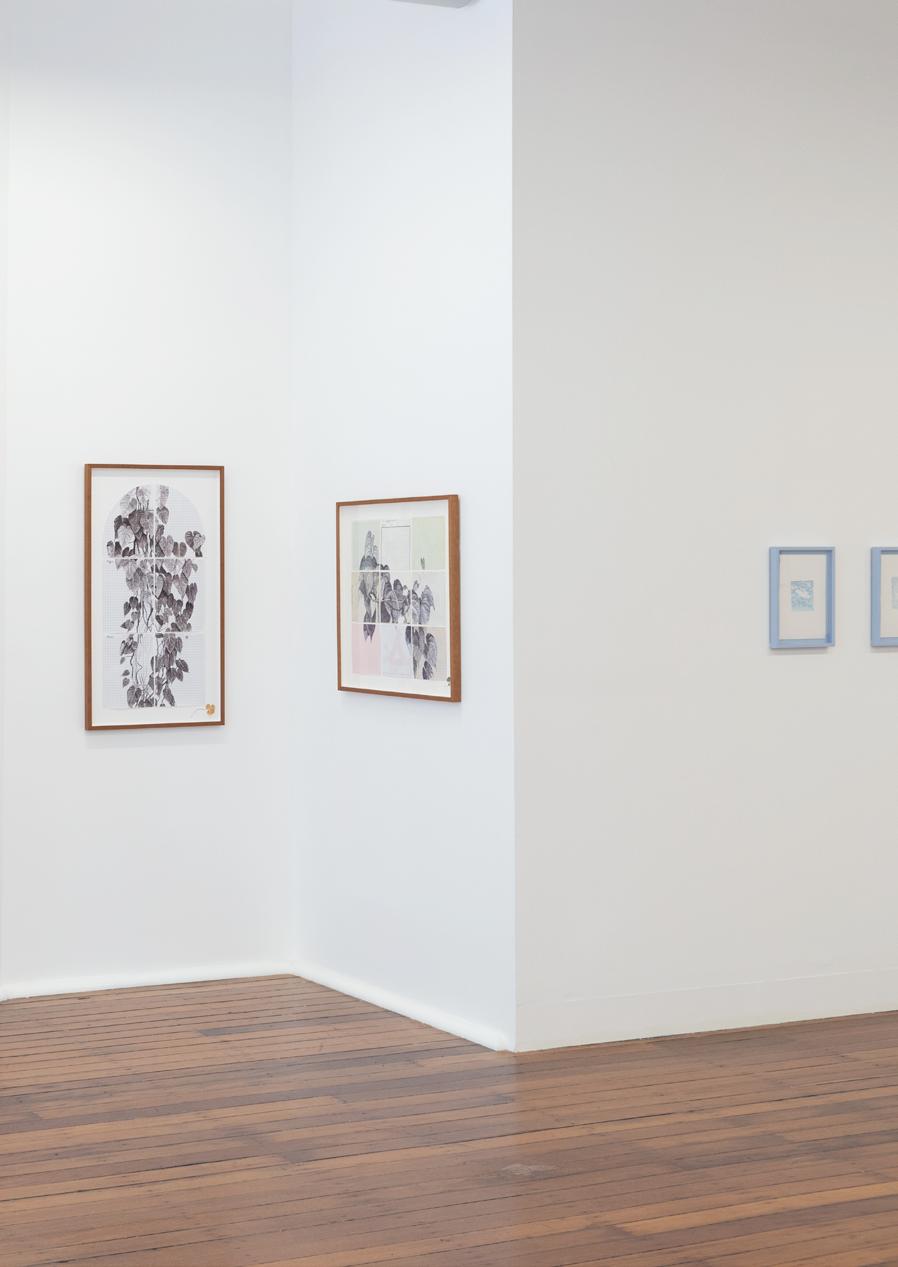
Installation view — Folio. N.Smith Gallery, Sydney.
Su mmer ’26.
18 Dec 2025 –24 Jan 2026
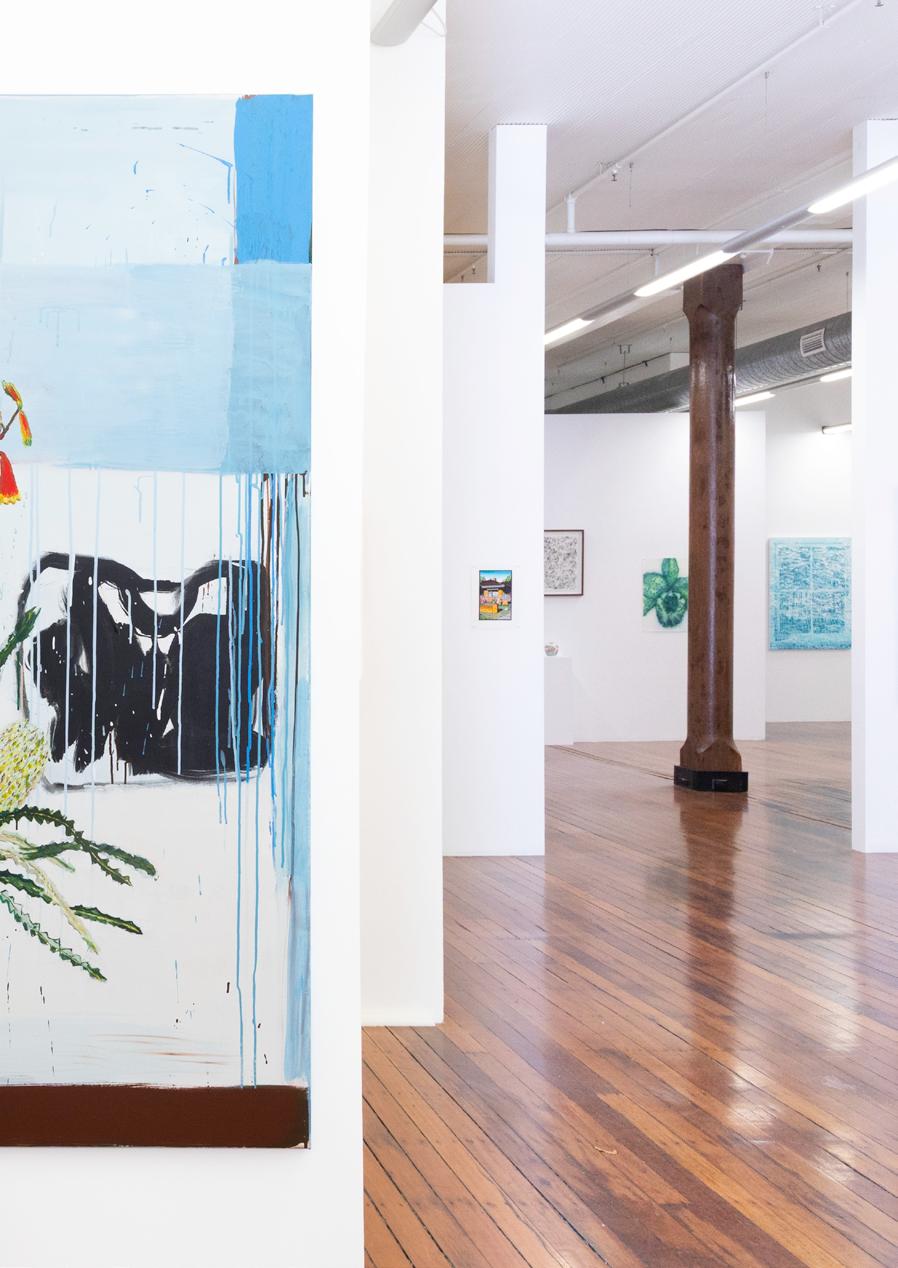
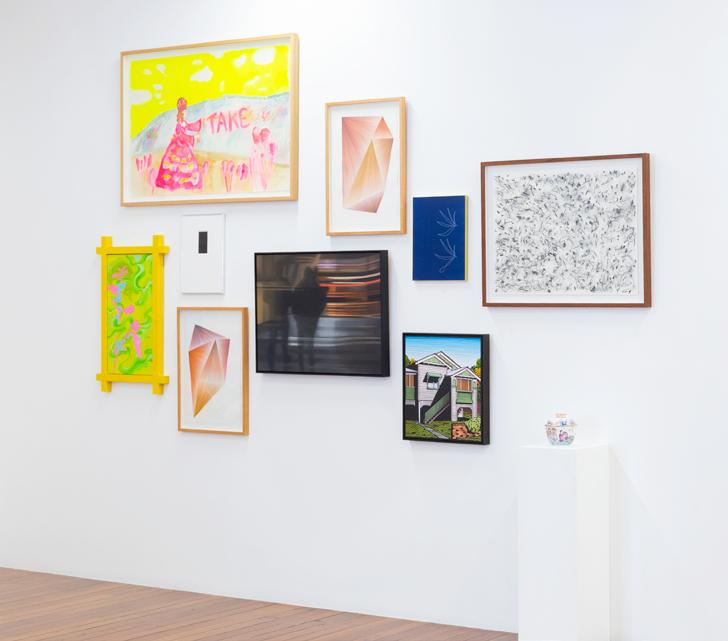
Summer ’26 marks the gallery’s return, and an early glimpse of the year we’re building together — one shaped by curiosity, ambition, and the energy of making.
Each summer, N.Smith Gallery reopens with a moment to reset and to gather momentum for the year ahead. Summer ’26 brought together artists from across the gallery community in a shared opening gesture: works that don’t close a chapter, but set the tone for what’s next.
Rather than looking back, the exhibition projected forward, holding space for new ideas, fresh conversations, and the projects still to come. Each artwork represented a point of departure, inviting renewed attention from collectors, artists, arts workers, and the wider communities who sustain contemporary art.
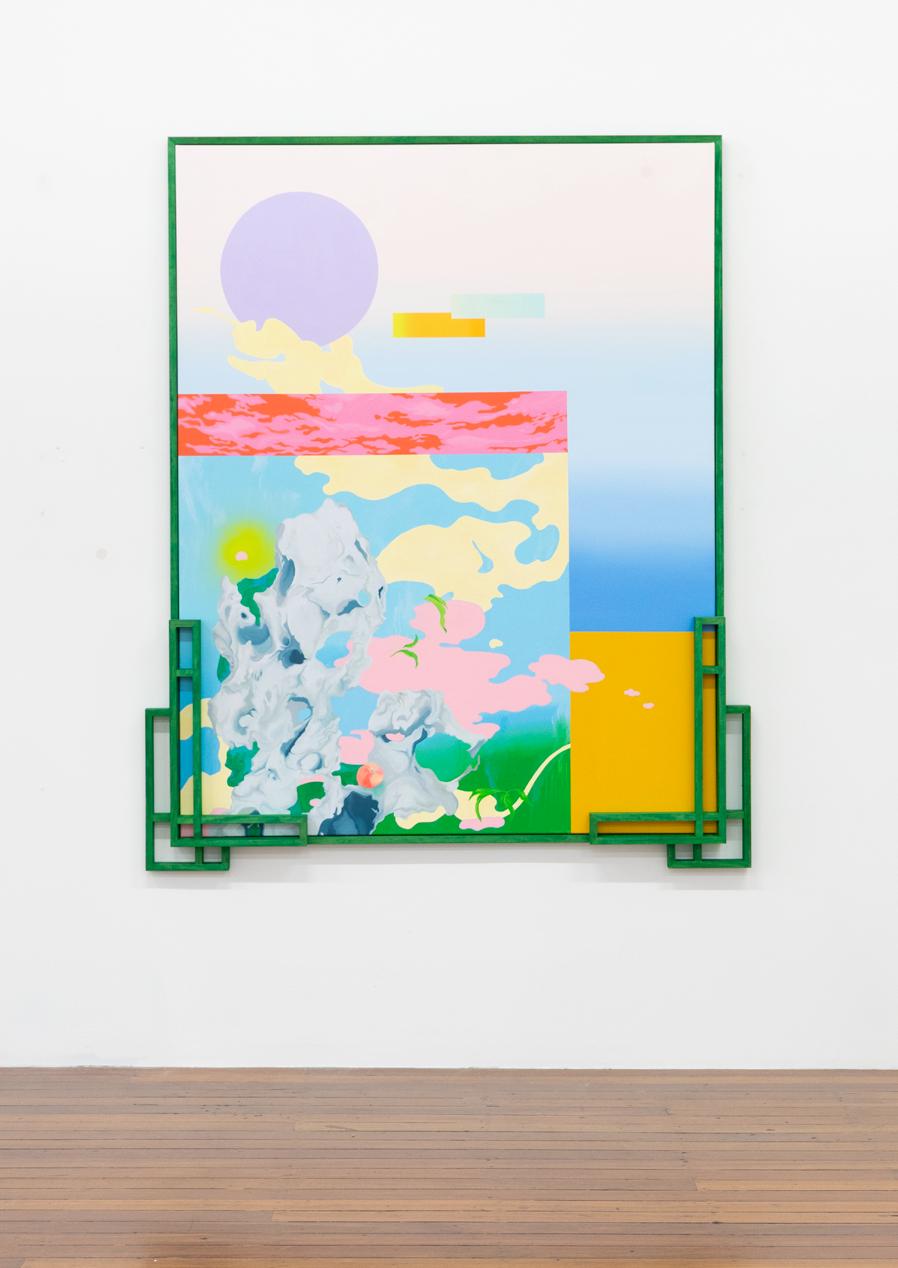
Louise Zhang
Apple resting on stone, 2025
acrylic and oil on canvas, stained timber frame
160.5 x 195 x 104.5 cm
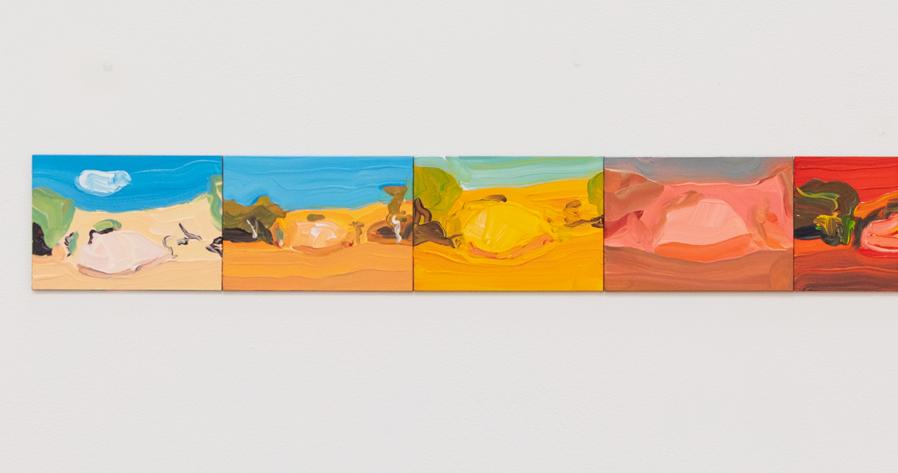
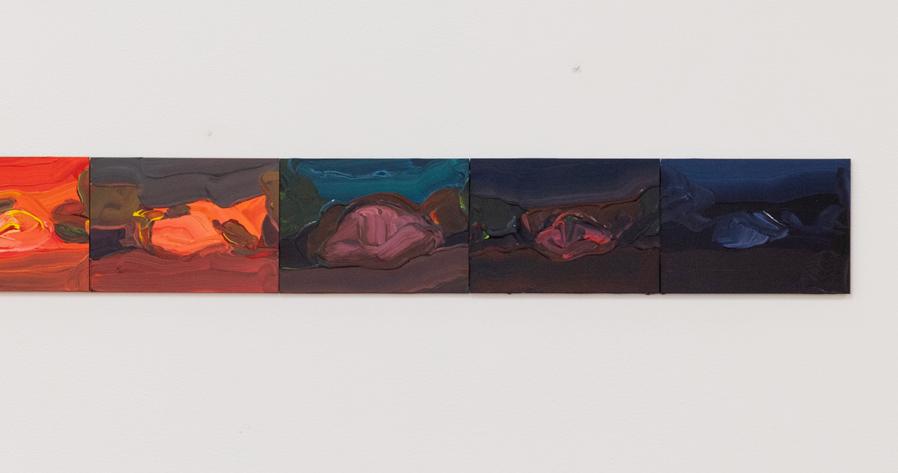
Above: Thea Anamara Perkins Sunset sequence II, 2025 acrylic on board 12.5 x 160.5 cm
Right: Installation view –Summer '26. N.Smith Gallery, Sydney
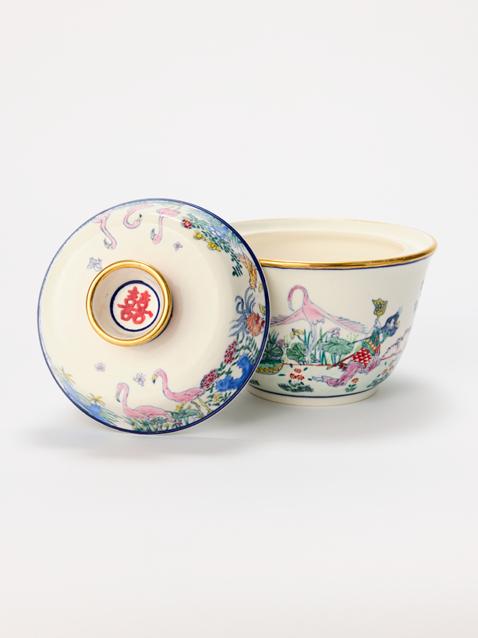
Left: Casey Chen Princess iron fan, 2024 glazed porcelain, ceramic colourants, enamels, and gold lustre; fred 5 times 14.5 x 15 x 15 cm
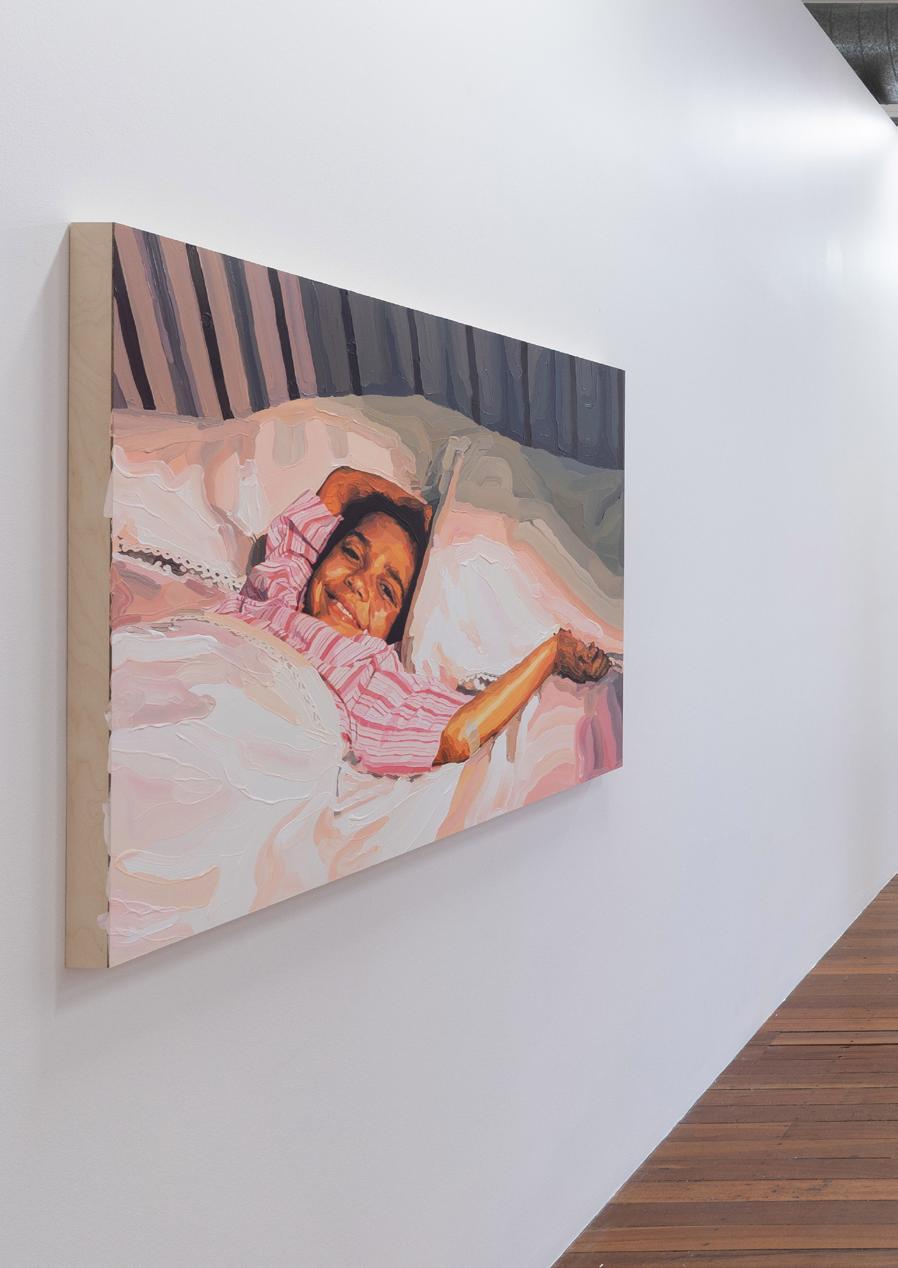
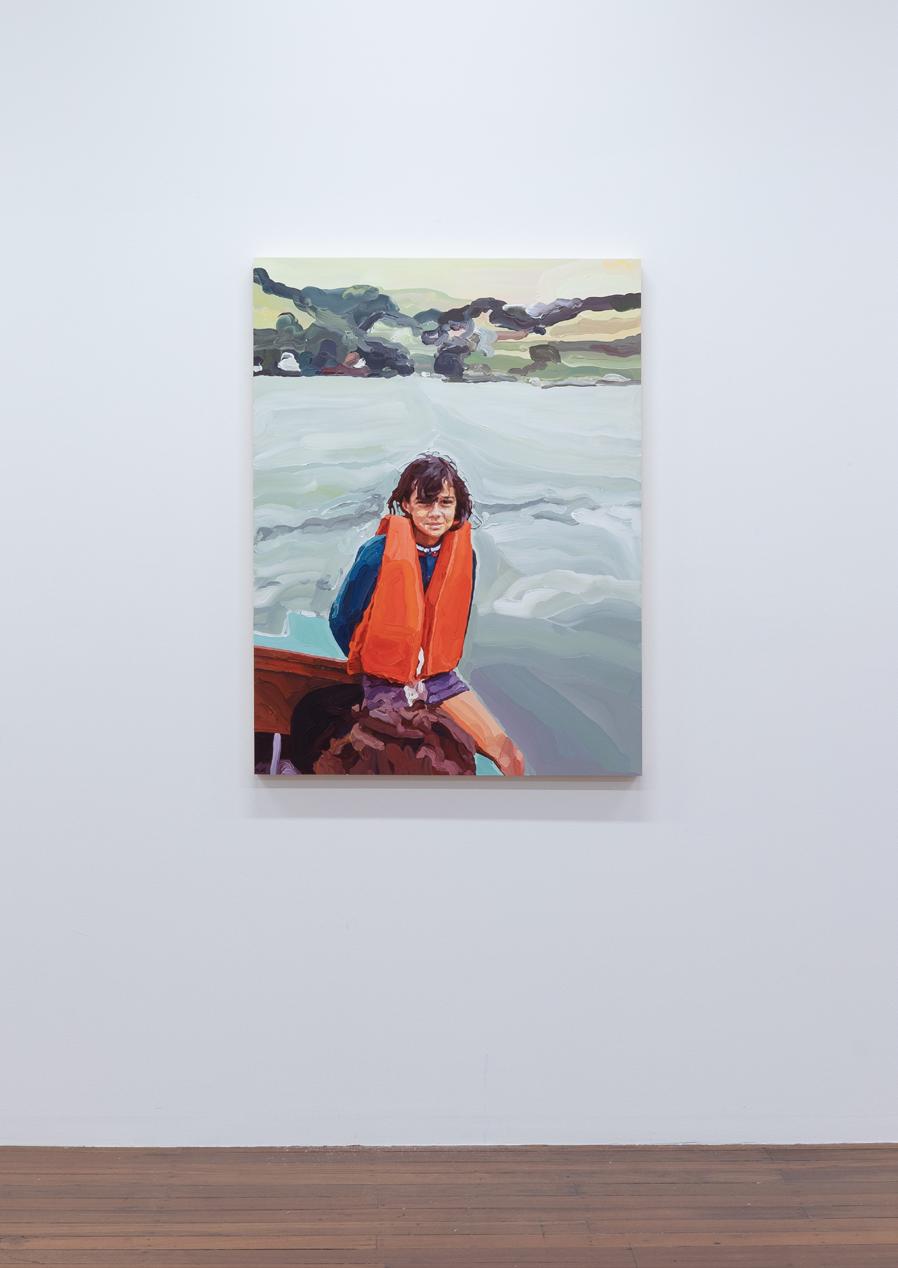
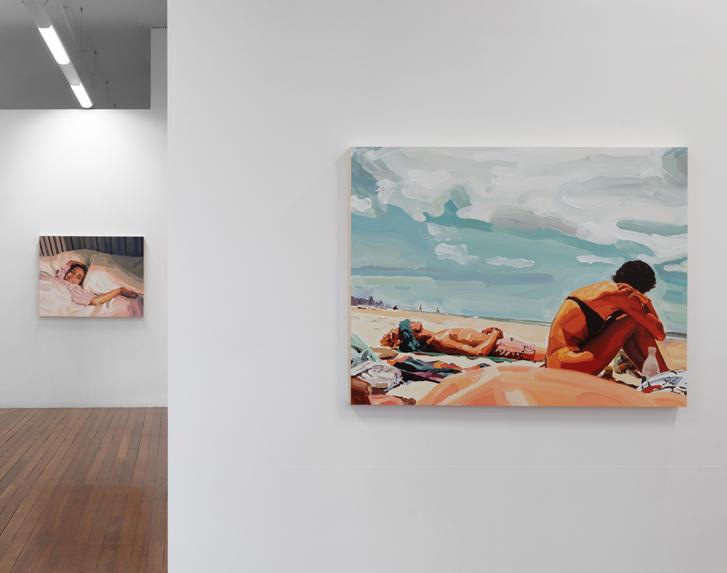
Installation view — Reveire. N.Smith Gallery, Sydney. Featuring (left) reverie 2, 2025. Acrylic on board, 90 x 120 cm; (right) reverie 3, 2026. Acrylic on board, 120 x 90 cm.
Thea
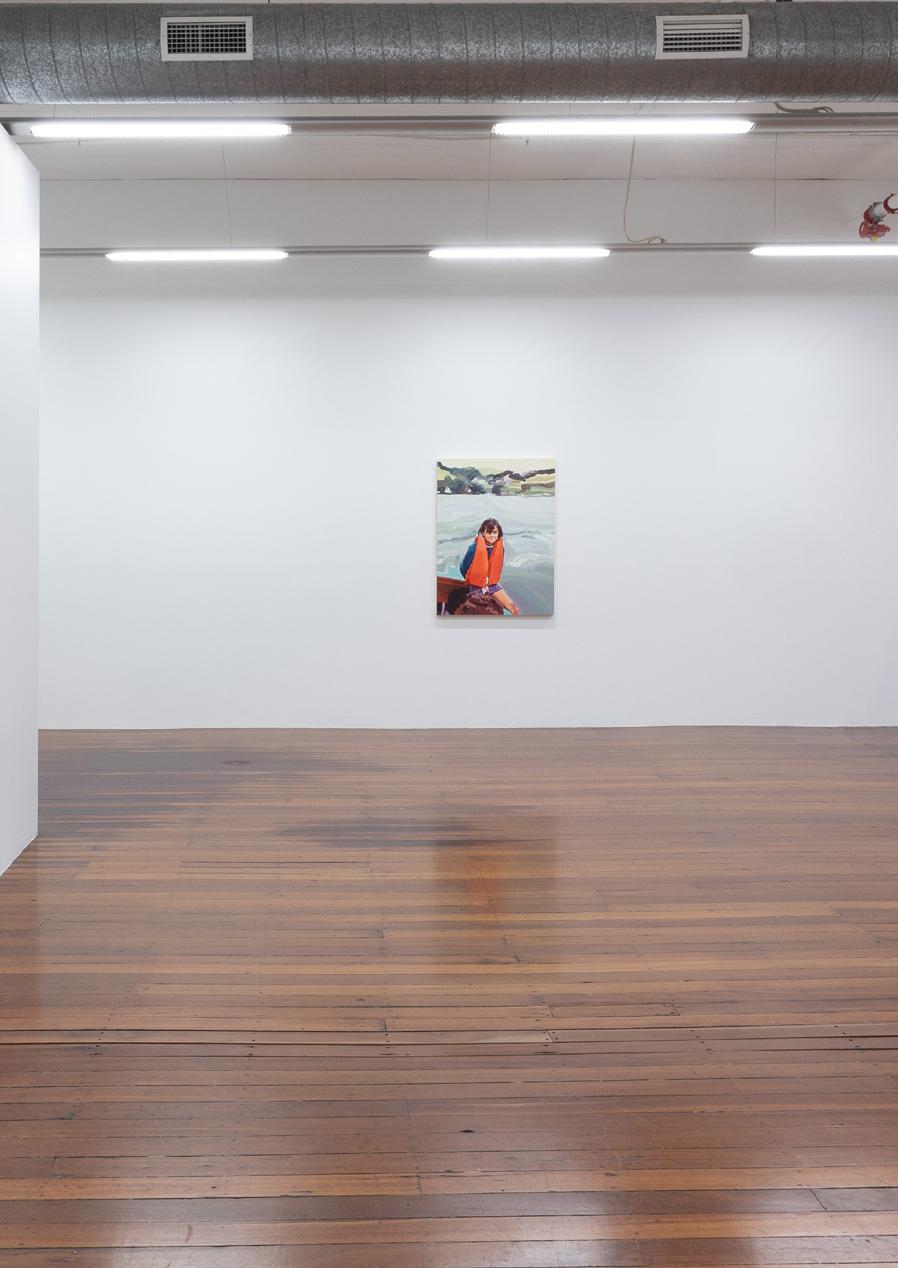
Anamara Perkins Reveire. 30 Jan – 7 Feb
Reverie evokes the state of daydreaming, of being adrift between dreams and wakefulness.
The work draws on an archival image of my mother Hetti on a beach in the Gold Coast in the 1980s. There is a contemplative air to the fgure, as well as the nascent state of young adulthood – I wondered if she was dreaming of her future in her reverie?
It continues my interest as an Arrernte and Kalkadoon artist in appropriating the visual vernaculars of the Western art canon and melding them with the languages of Central Desert art. Harnessing fgurative language to communicate as readily as possible and investigating the historical, cultural and technical interactions of paint. It also continues an exploration of the collective imagination in this country, and the confuences of what is unique and what is shared. In this case evoking the pilgrimage to the beach in high summer and iconic imagery like Max Dupain’s Sunbaker
I often delve into my family’s archives as something I have direct experience of – treating the photograph as a threshold rather than a fxed record. The work is a ‘glimmer', a central motif in my practice, the opposite of a trigger – an instance of belonging and safety. This work extends this idea and centres a First Nations woman in repose and in a moment of peace. Refecting, imagining, dreaming.
It considers how we inherit images, and how the past returns, altered, and alive. As well as the agency of memory, emotion and love within the process of refection.
– Thea Anamara Perkins
Thea Anamara Perkins reverie3, 2026 acrylic on board
120 x 90 cm
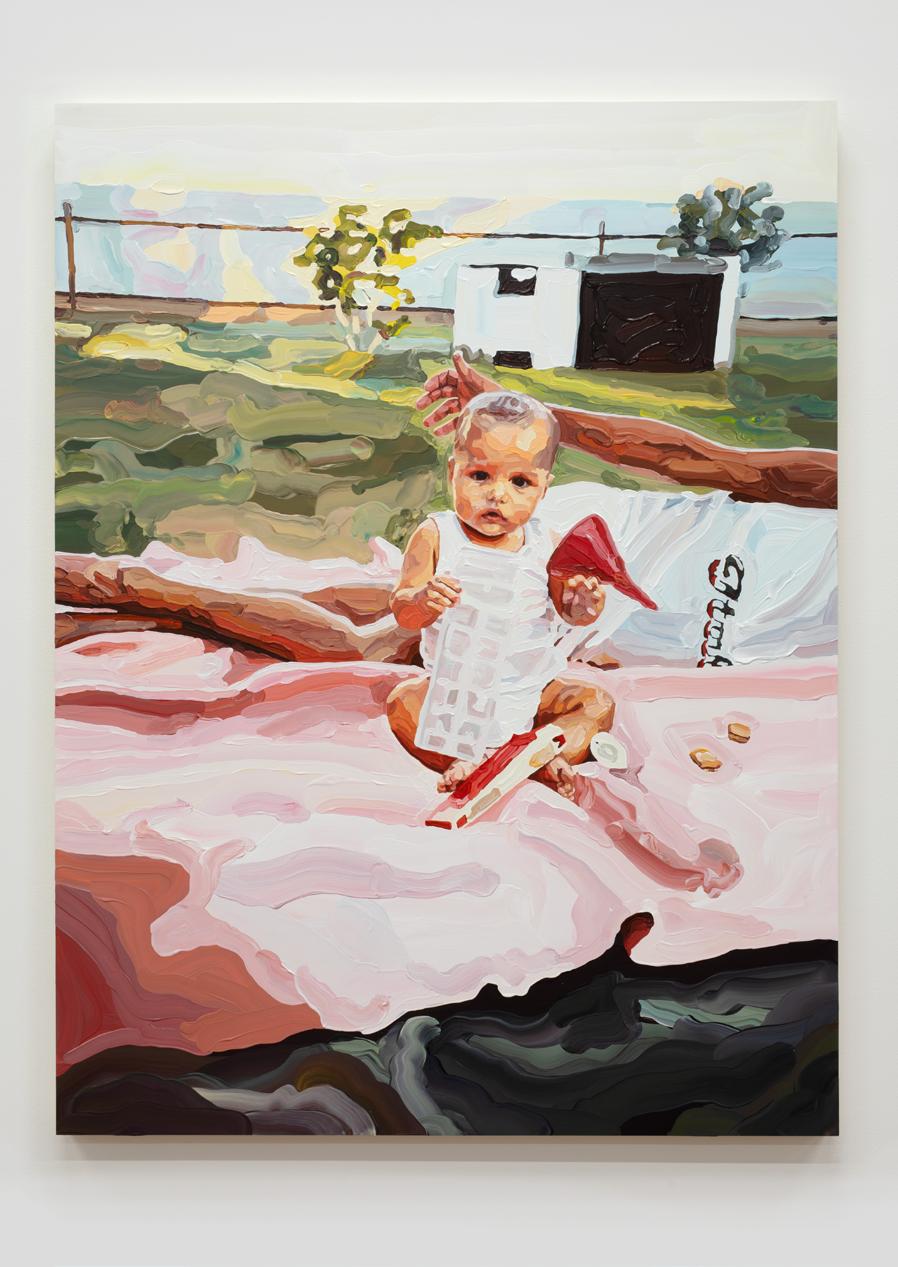
reverie 1, 2026
on board
120 x 90 cm
Above:
reverie, 2025
acrylic on board
90 x 120 cm
Left:
Thea Anamara Perkins
acrylic
Thea Anamara Perkins
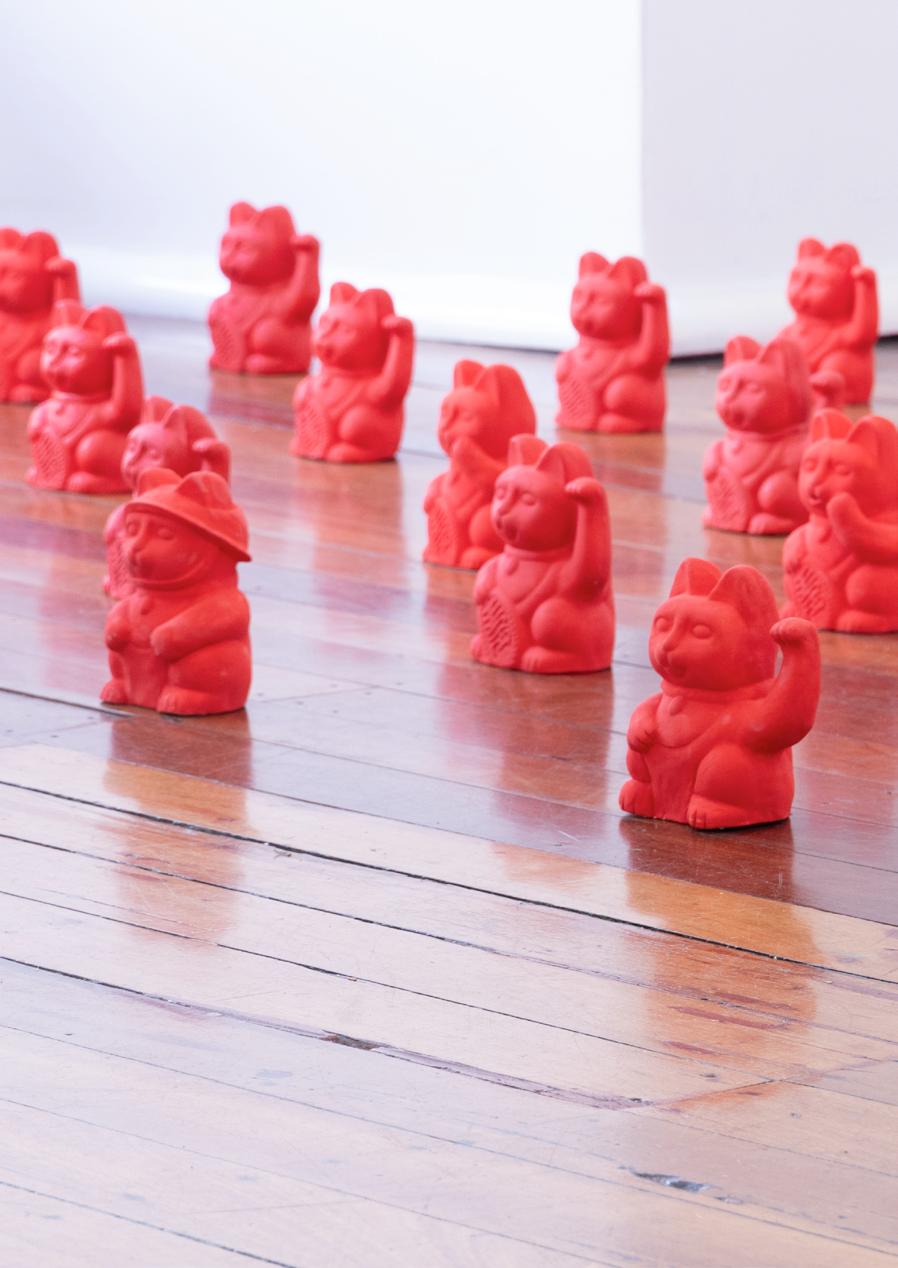
Between Earth and Moon
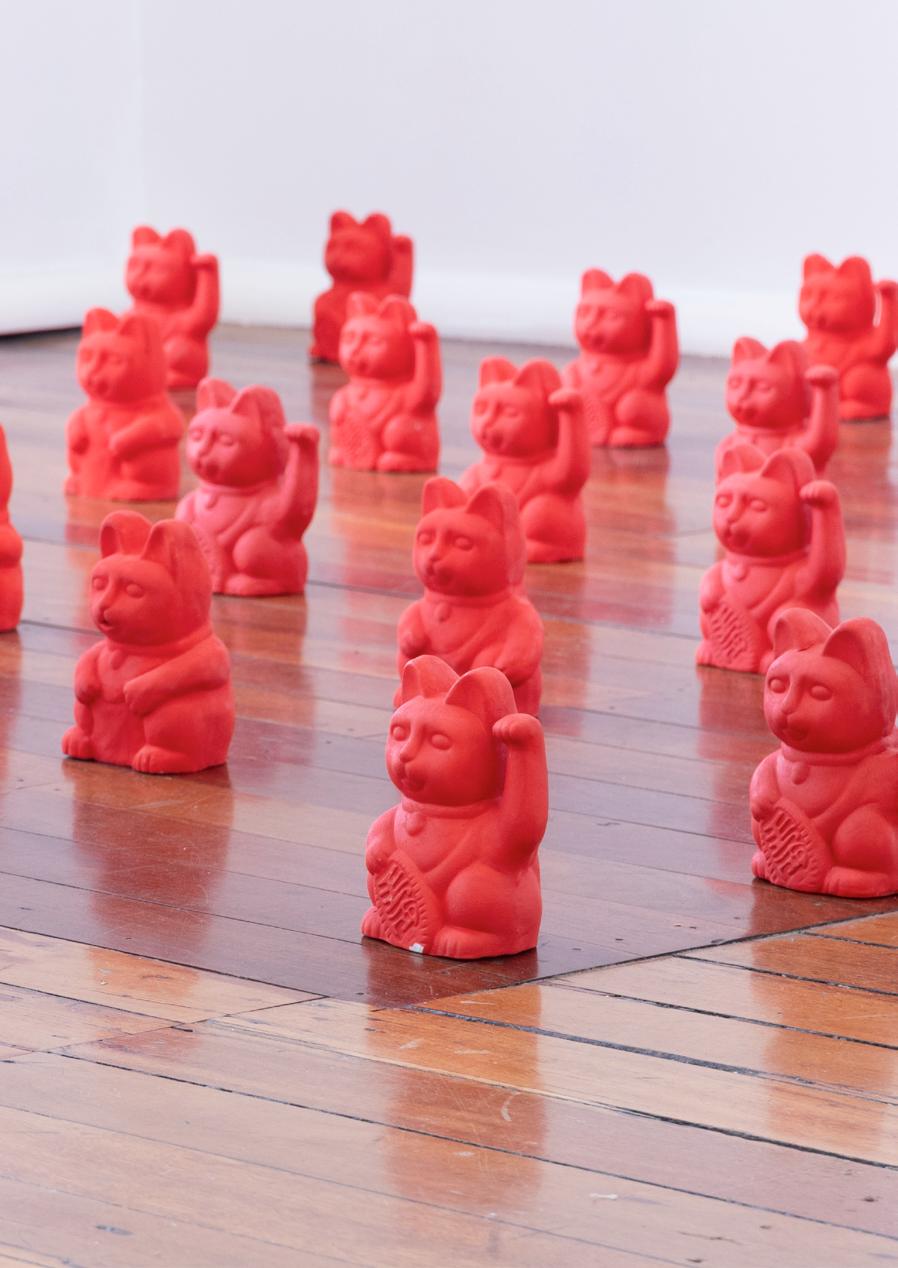
A Lunar New Year Exhibition 12 – 28 Feb
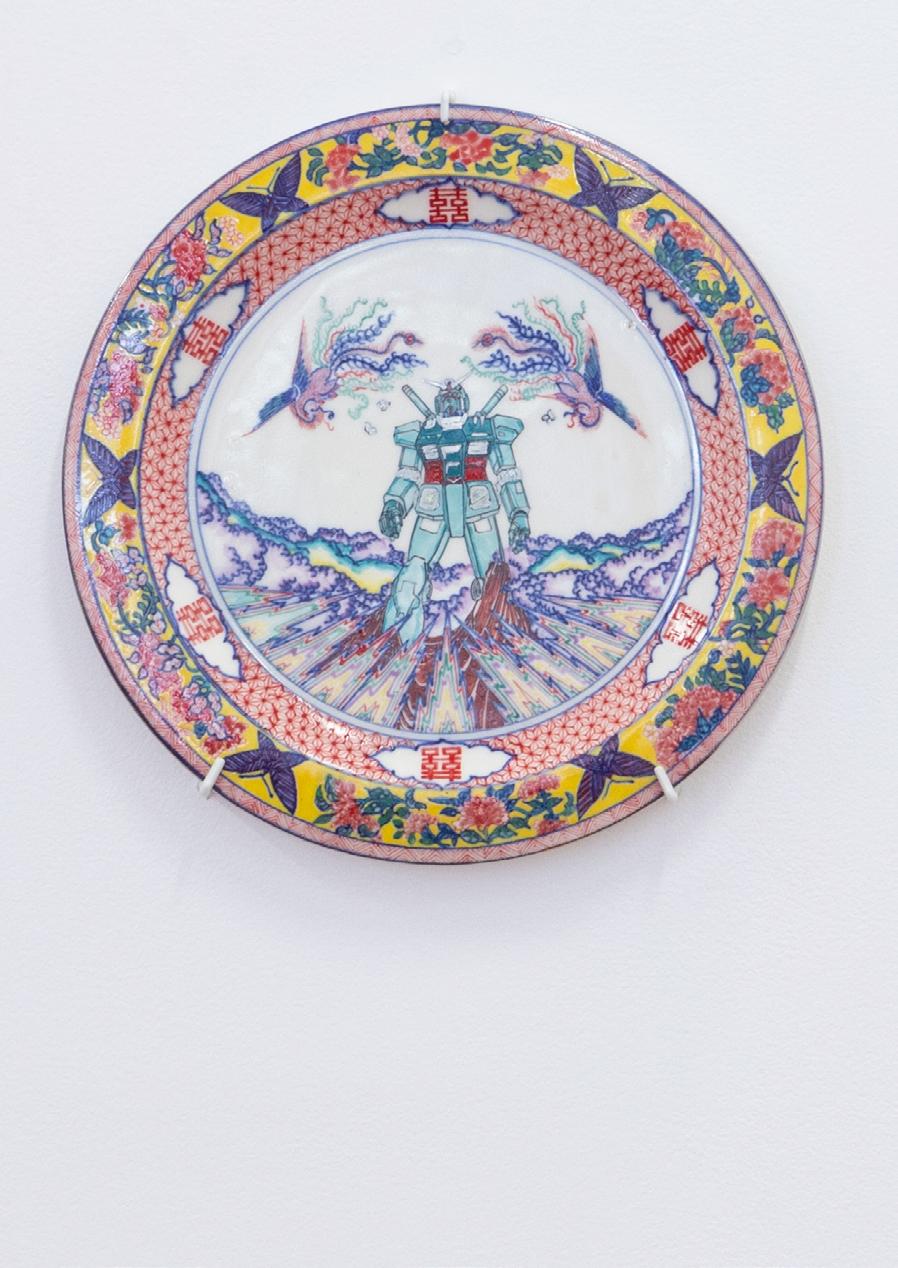
Casey Chen
The RX-78 is my daily drive, 2026 glazed porcelain with overglaze enamel and platinum lustre; fred fve times
32.5 x 32.5 x 3 cm
The Year of the Fire Horse is a season of restless energy and forward motion. It is a time defned by gut-level ambition, by the instinct to make decisive moves and leave the static safety of the past behind in favour of something more kinetic. Between Earth and Moon inhabits this charged space, exploring the tension between where we come from and where we are compelled to go. It is a meditation on momentum, and on the resolve required to bridge the distance between the present moment and future possibility.
In the spirit of renewal and “new life,” the exhibition brings together a considered mix of emerging voices and established artists from the N.Smith Gallery program. This is not simply a group presentation, but a deliberate convergence of perspectives. New artists are placed alongside foundational fgures of the gallery, creating a dynamic exchange that oscillates between harmony and friction. Within this dialogue, tradition meets experimentation, and visual languages shift between reverence and disruption.
While the Fire Horse provides the symbolic spark, the exhibition itself is fuelled by the diversity of our community. Between Earth and Moon intentionally includes both Asian and non-Asian artists, refecting the layered, interconnected cultural landscape in which these works are made and received. Across painting, sculpture, and installation, the artists engage with auspicious imagery, inherited symbolism, and subtly political undercurrents, allowing personal histories and collective narratives to intersect.
What emerges is a visual language that feels familiar at frst glance, yet quietly subverts expectation. The works resist singular readings, instead revealing complexity through contrast, proximity, and exchange. Between Earth and Moon ultimately serves as a reminder that growth is rarely linear. It is a continual navigation between the weight of history and the pull of what lies ahead, between grounding and aspiration, between earth and moon.
Words by Dylan Batty
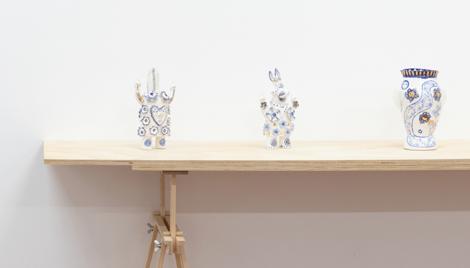
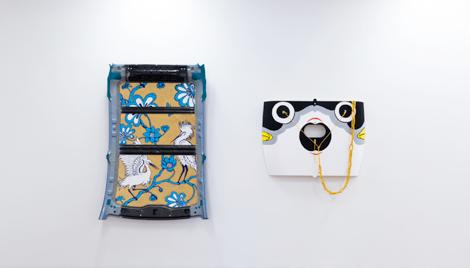
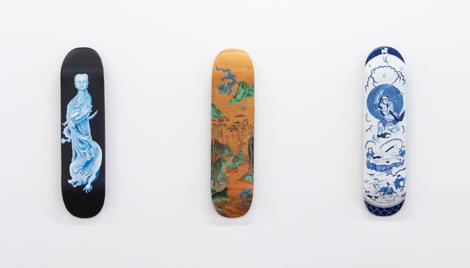
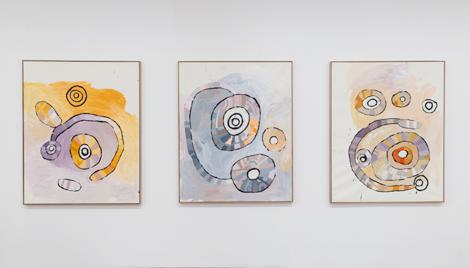
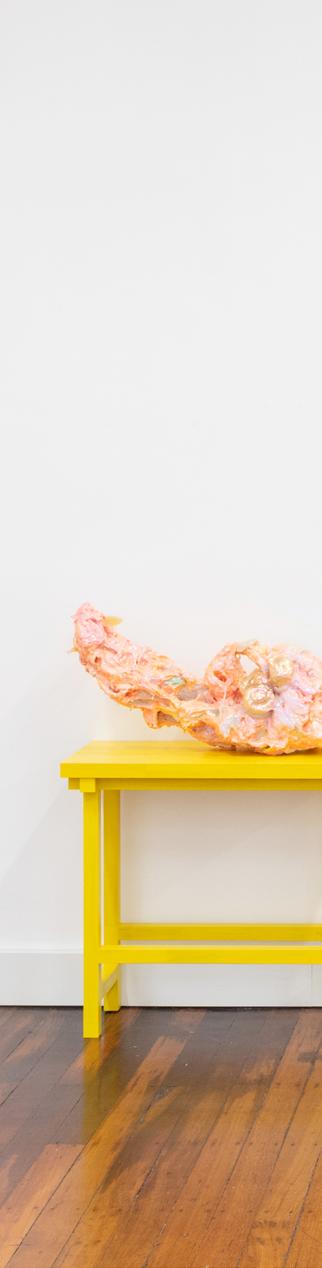
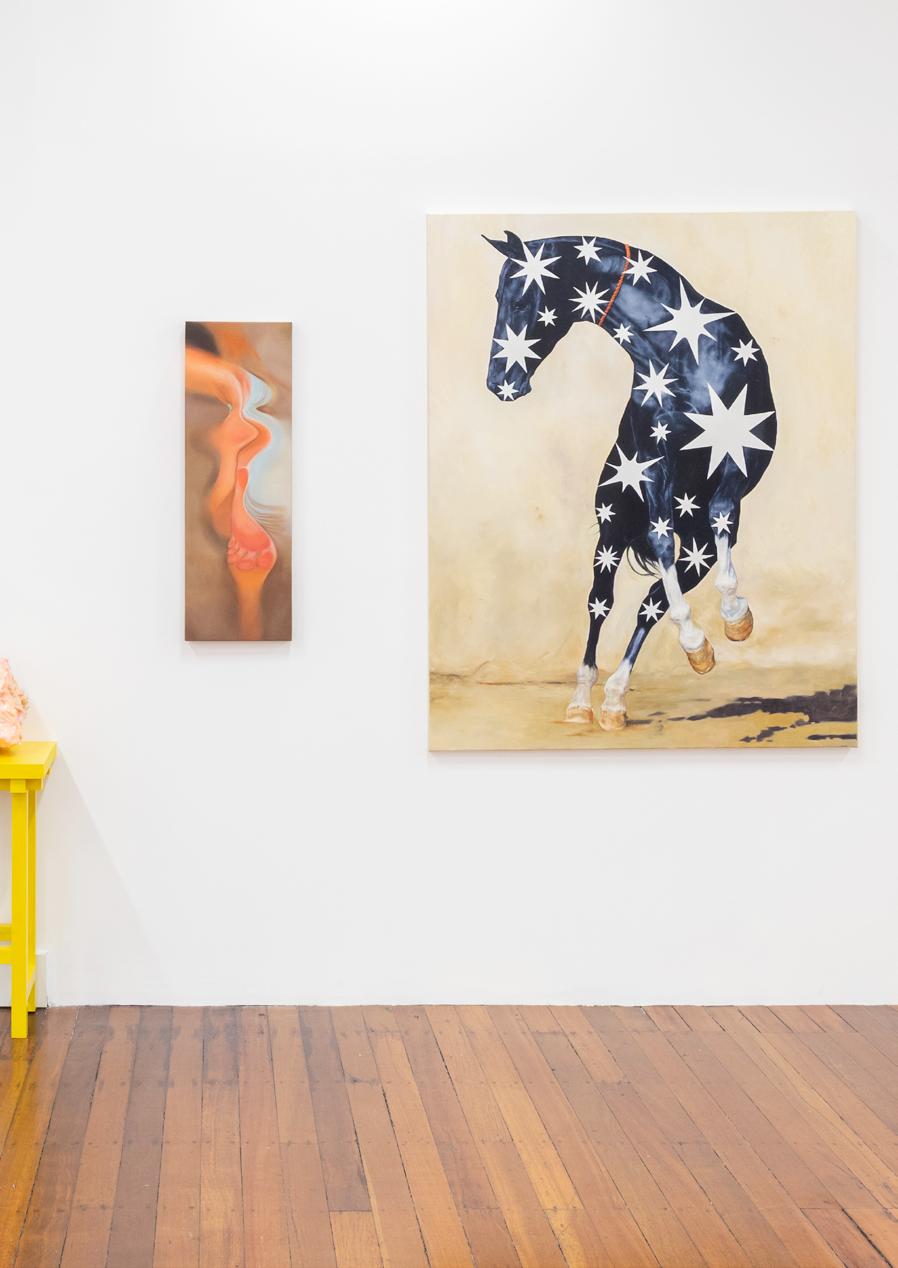
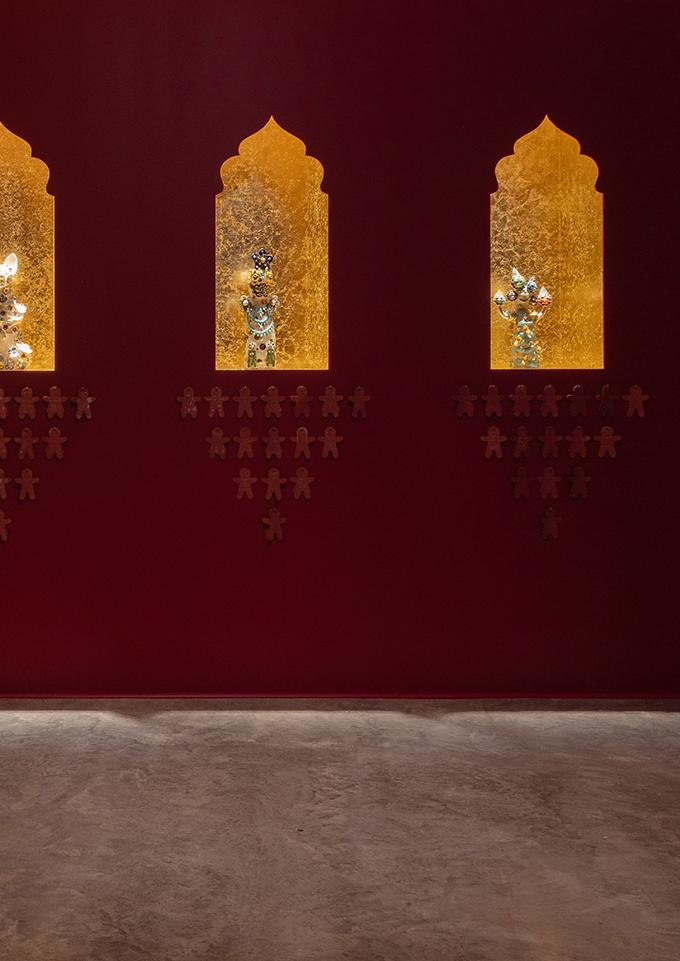
Installation views — Between Earth and Moon. N.Smith Gallery, Sydney.
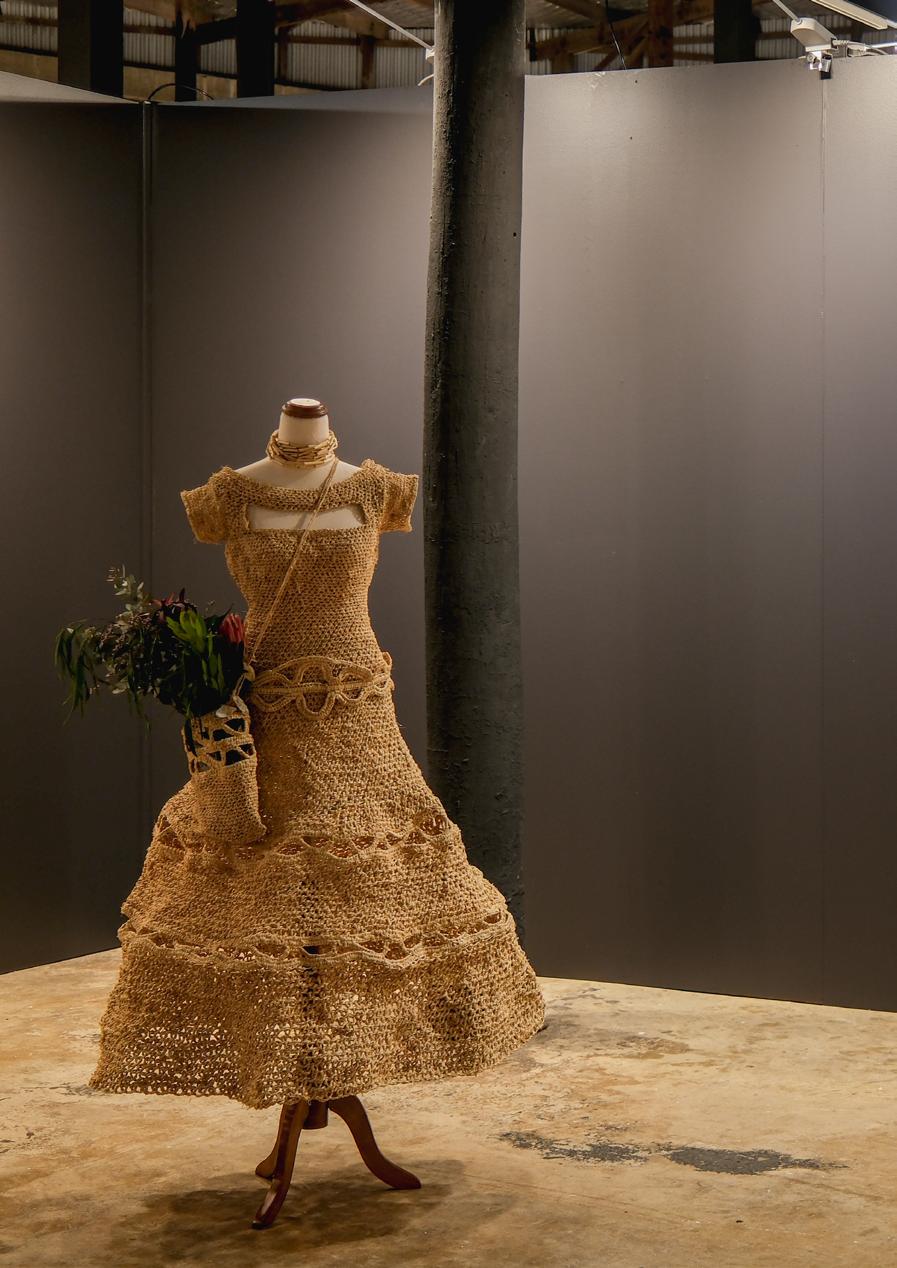
N.Smith Gallery at Cairns Indigenous Art Fair, 2025, with Kyra Mancktelow.
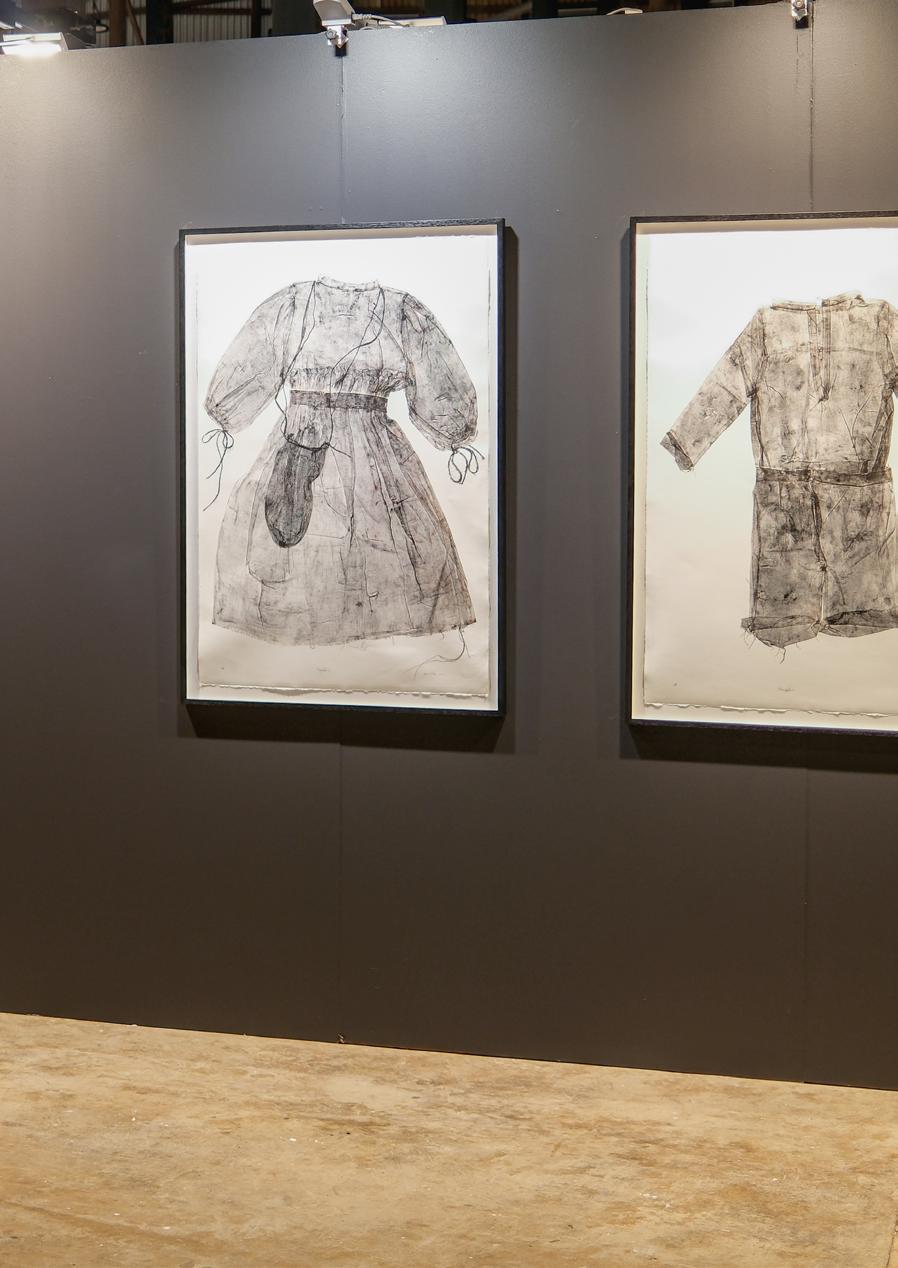
IN THE BOOTH.
Aotearoa Art Fair
Viaduct Events Centre
30 Apr – 3 May 2026
Joan Ross, Fiona Lowry, and Holly Anderson are included in Aotearoa Art Fair 2026, Aotearoa/New Zealand’s premier contemporary art fair.
Presented together, their practices trace three generations of Australian painting, each grounded in a distinct visual language yet connected through a shared commitment to reimagining how images hold meaning. The presentation moves between Joan’s incisive interrogation of colonial histories, Fiona’s psychologically charged, atmospheric scenes, and Holly’s luminous studies of light and surface, creating a dialogue that is both temporal and material.
Joan Ross We were everywhere, 2026 acrylic on canvas 100 x 80 cm
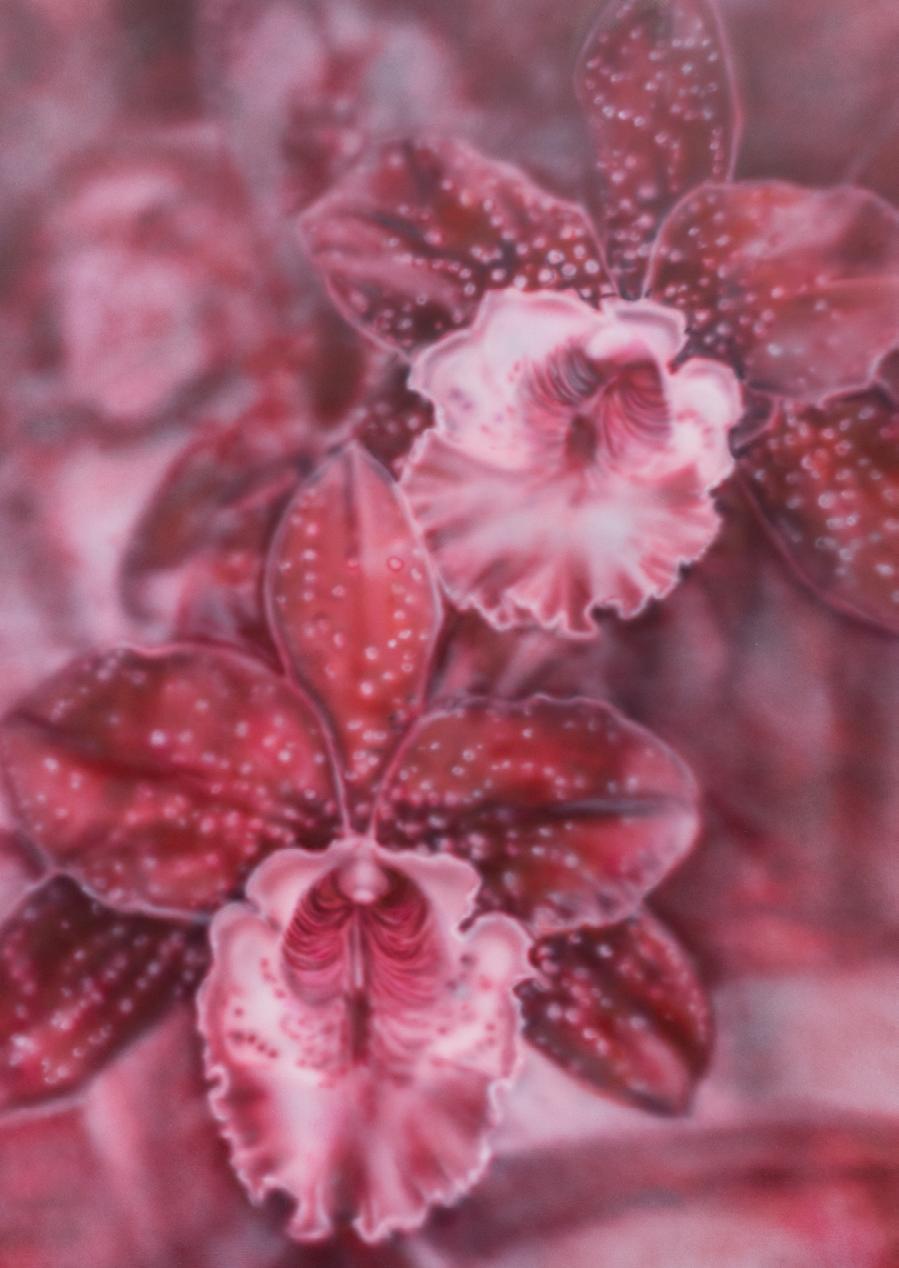
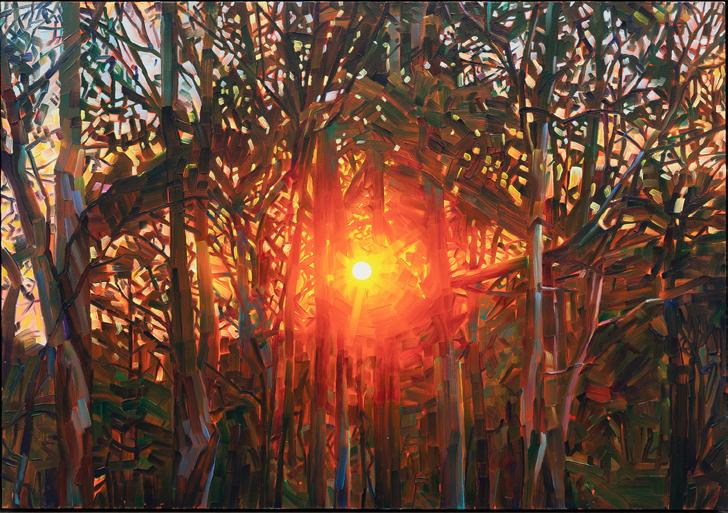
Gaping red fowerheads, 2026
183 x 142 cm
Beacon, 2025
oil on panel
35 x 50 cm
Left: Fiona Lowry
acrylic on canvas
Above:
Holly Anderson
アートフェア東京 / Art Fair Tokyo
Tokyo International Forum
12 – 15 Mar 2026
N.Smith Gallery was delighted to return to Japan for Art Fair Tokyo 2026.
Presenting works by Holly Anderson, Tom Blake, Claire Healy & Sean Cordeiro, Vipoo Srivilasa, Natasha Walsh, and Christopher Zanko, each artist brought a distinct voice to the presentation, refecting the breadth of practices within the gallery’s program.
International fairs like Art Fair Tokyo are an important part of our commitment to expanding opportunities and markets for the artists we represent, introducing their work to new audiences, collectors, and institutions across the region. As the largest art fair in Japan and the oldest in Asia, Art Fair Tokyo continues to bring together leading galleries from across Japan and around the world.
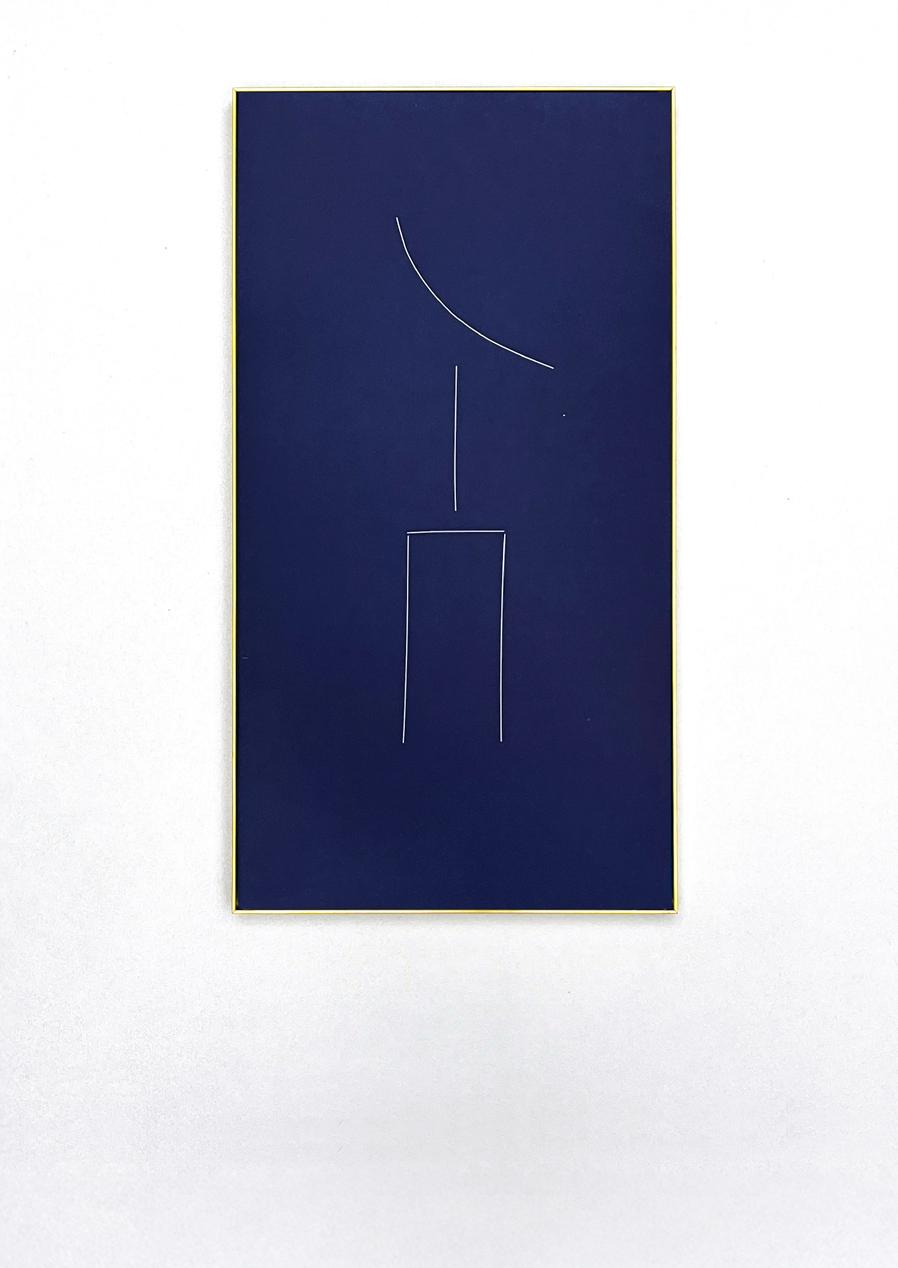
Tom Blake index, moon (II), 2025 cyanotype, artist-made brass frame 41 x 21 cm
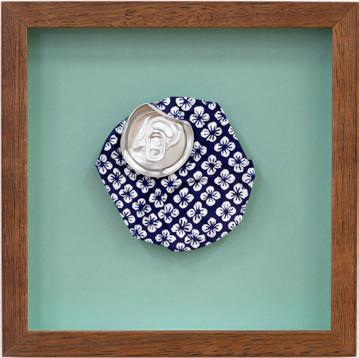
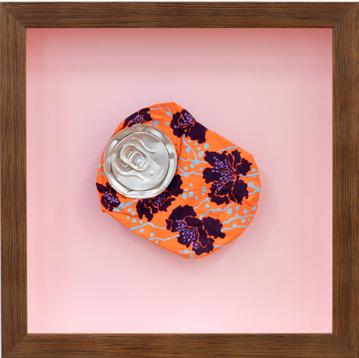
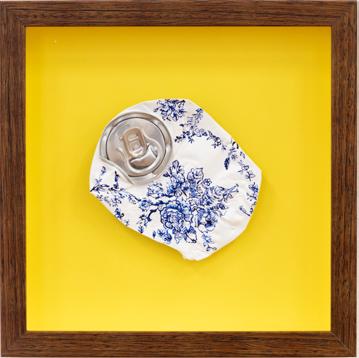
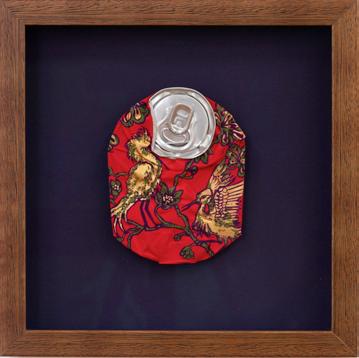
Claire Healy & Sean Cordeiro
Clockwise from top left: バーコード人; 口寂しい; 変態百出; バックシャン, all 2026
acrylic gouache on repurposed aluminium can 26 x 26 cm (framed)
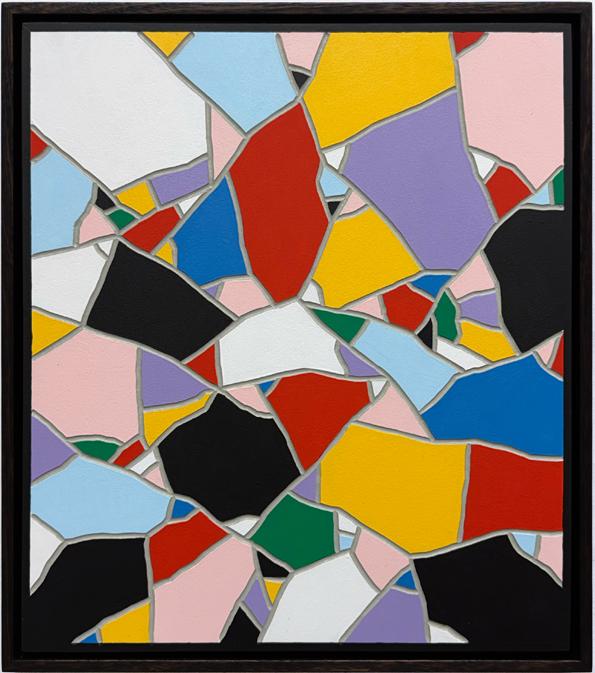
Christopher Zanko RESOLVE II, 2026
acrylic on wood relief carving
40 x 35 cm
Art Central Hong Kong
Hong Kong
24 – 29 Mar 2026
N.Smith Gallery was delighted to be exhibit at Art Central Hong Kong for the frst time, presenting the work of Holly Anderson, Joshua Charadia, Casey Chen, Thea Anamara Perkins, Vipoo Srivilasa, Christopher Zanko, and Louise Zhang.
Hong Kong is a city that brings together people, ideas, and cultures from across the world, making it an exciting place to share the practices of the artists we represent and connect with new audiences. Off the back of a successful presentation at Art Central Hong Kong, we're looking forward to continuing to build an international market for the gallery, and to seeing how the artists' practices resonate in new contexts.
Louise Zhang
And The Vines Remembered, 2026
acrylic and oil on canvas, stained oak frame
75.5 x 55 cm
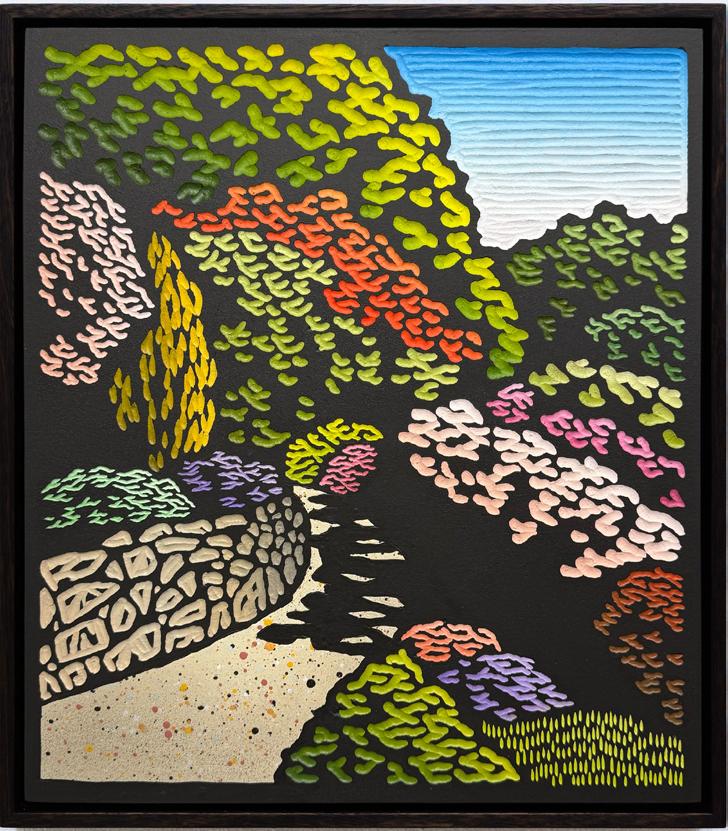
Christopher Zanko
BOWER PORTAL, 2026
acrylic on wood relief carving
40 x 35 cm
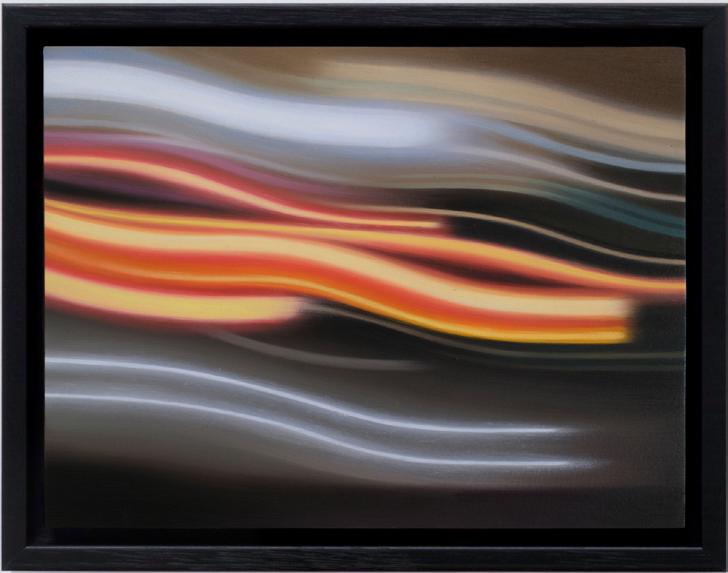
Charadia Fragment 10, 2025 oil on board 15 x 20 cm
Joshua
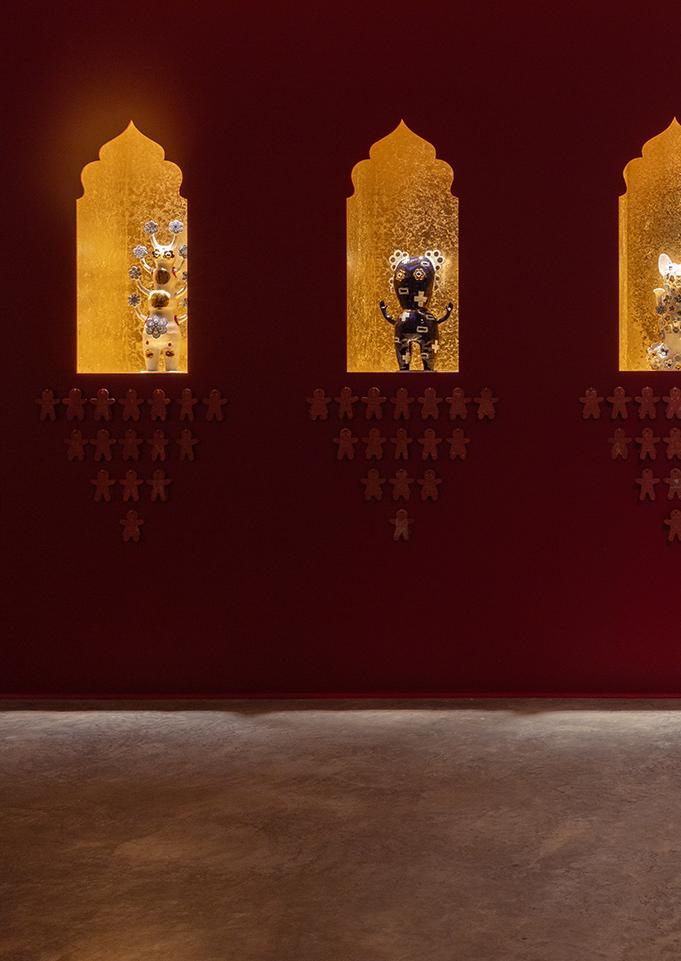
Installation view — Mud to Masterpiece, Maitland Regional Art Gallery, NSW, 2026.
IN THE MUSEUM.
Mason Kimber A Caressing Gaze
29 Aug – 16 Nov 2025
Rubrics: Fragments, Frames, Walls, Sets, Interiors
Mason Kimber’s oeuvre raises what might initially seem to be a banal question: when are artworks fnished? There might be a relatively simple answer: they are fnished when they are encountered in a gallery and seen as a body of work. And yet, something about Kimber’s work refuses this answer, even though in a gallery it certainly appears as a unifed body. To understand this refusal, I want to try to get behind the work, though not in the sense of getting closer to some sort of truth or meaning. Rather, this sense of ‘behind’ is spatial and temporal. What is on the other side of these works? What preceded them? What do they suggest is ahead? .
Fragments
It seems straightforward to say that Kimber works with fragments, and the works he produces are themselves fragmentary. In each of them, there is some larger whole that is absent; each work is an attempt to indicate that absence while also creating something original.
Fragments describe a relationship between the studio and the world outside of it. While out and about, Kimber might take a cast of an object or texture and then bring that back to the studio. It might lie around in the studio until he decides to use it in a work.
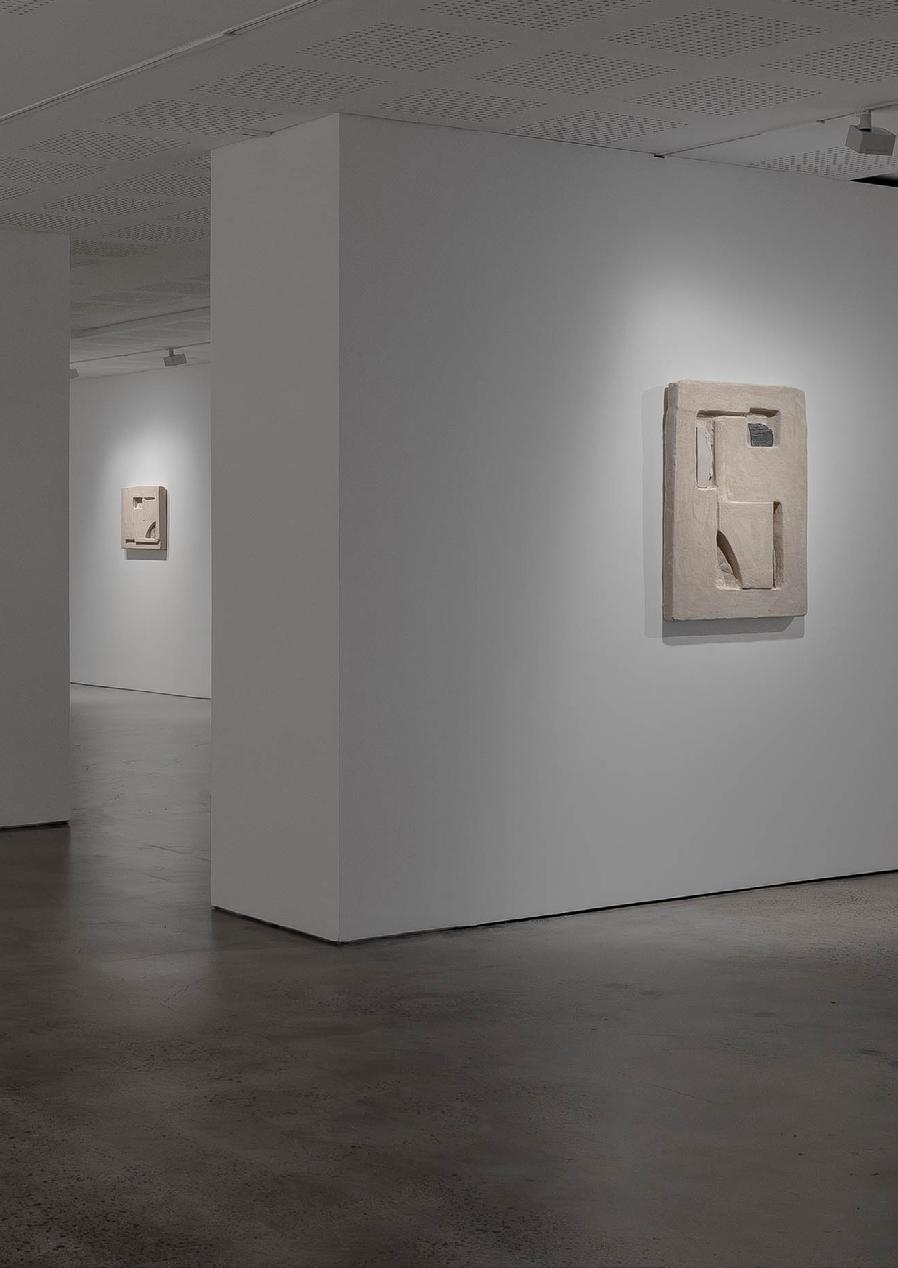
Kimber uses fragments in two modes: either a selection of them is brought together to form a surface, or fragments, which might be pieces of material or partial images, are placed within frames. In the frst mode, the fragment doesn’t simply sit on the surface; it becomes part of it. The fragment constitutes the surface, together with other fragments. These fragments are bound together by a layer of material, which unifes them as a surface. A colour or tone might be used to emphasise this unity. In the second mode, a frame contains a fragment. The fragment, often coloured, sits within a shallow niche that appears to have been carved into the frame. In some works, there may be several of these niches in one frame, and they may contain fragments or be left empty. These two modes can also be described as part of a continuum; sometimes, the frame becomes an extensive surface, coincident with the work itself. At other times, works seem to have lost their frames, being fragments in the sense of not being framed.
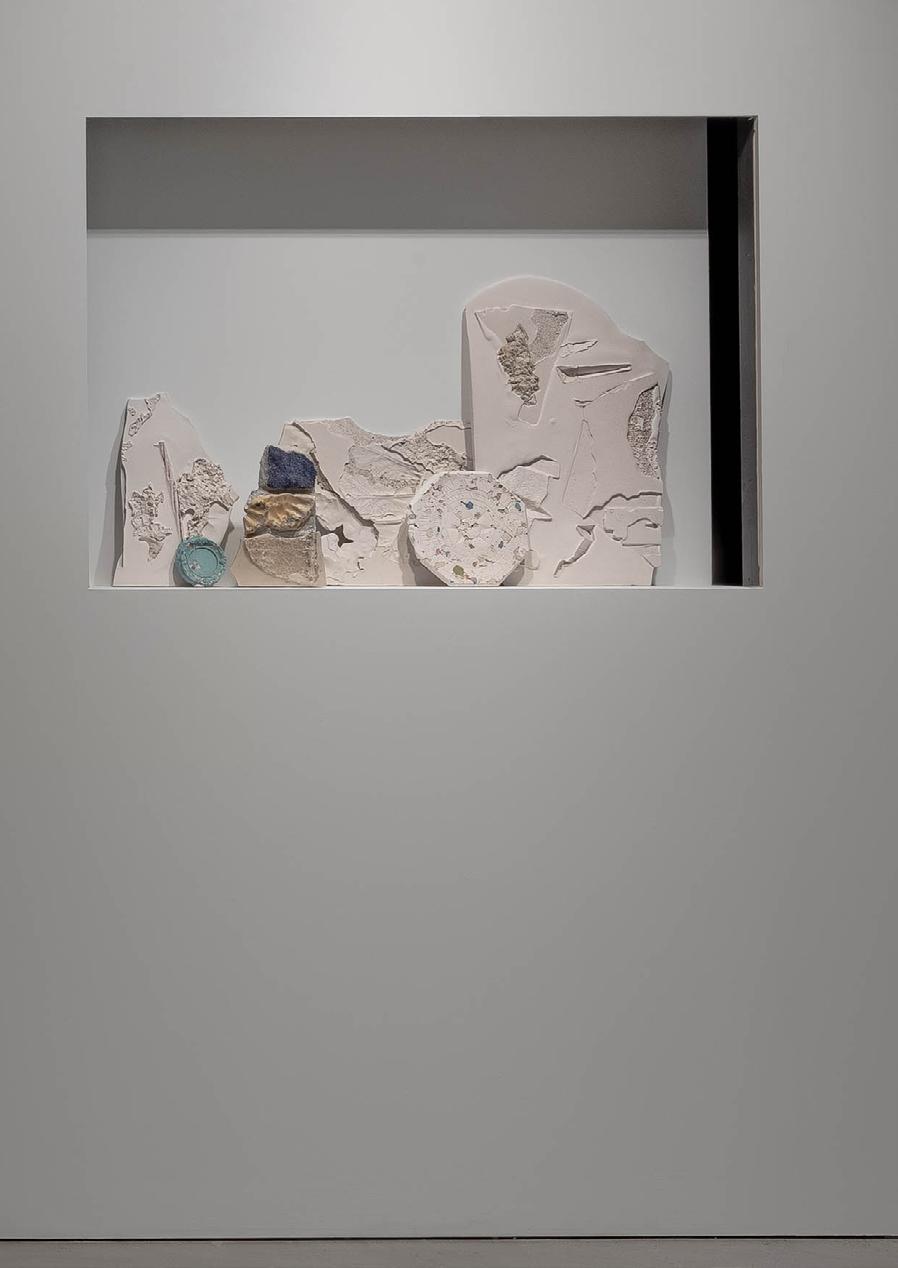
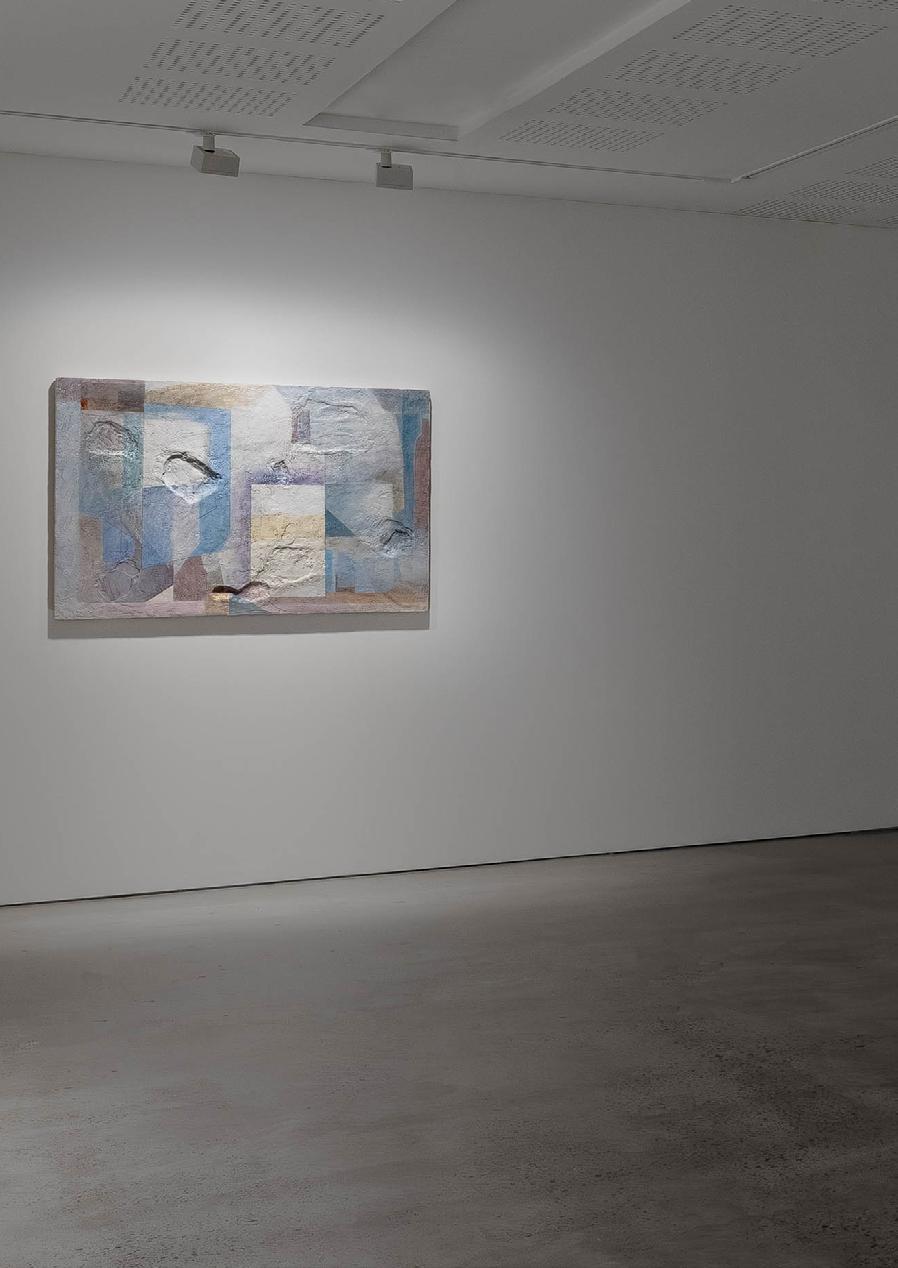
Installation view – Mason Kimber: A Caressing Gaze, UNSW Galleries, Sydney.
Photo by Jacquie Manning.
Frames
Kimber’s frames are thick and object-like and are generally not orthogonal. They appear to have been made by subtraction, as if material has been carved away from a larger whole. Though they often appear like fragments themselves, the frames exist to carry fragments within them. In many works, it is unclear if a fragment has been selected for a frame because it can be ftted to the contours of a niche, or if the niche and the frame itself have been made for the fragment. Frame and fragment share a relationship that challenges the conventional division between the frame and what is framed. Lines often move between fragment and frame, or impressions or carvings into the frame highlight similar shapes or contours in the fragment. Frame and fragment are thus symbiotic and specifc to one another regardless of the found or imported nature of the fragment.
Walls
Works that are formed of surfaces have a relationship to the wall. Kimber often employs fresco painting techniques whereby a walllike surface is prepared to receive pigment that then becomes part of the surface. Pencil outlines transfer shapes and images from preparatory drawings, providing a scaffolding for the painting. The prepared wall surface often contains fragments. The whole surface will then be painted over—or, rather, painted into. The painted images are architectural, though not in the sense of representing buildings. Rather, coloured shapes and planes overlap and interpenetrate to articulate depth and surface. Different levels of transparency and opacity modulate these effects. Projection from the surface and regression into it are both physical (an effect of the prepared surface, with its fragments) and illusory (an effect of the painting). Through being layered into the surface, the painted elements become part of the physical surface. The painted and the material surface continually exchange qualities. While the fragment–frame relationship is one of juxtaposition, the surface–image relationship is one of superimposition; surface and image spread across each other and constitute each other. Again, however, these frescoes are fragments. It appears as if Kimber might have removed them from a real wall, just as he takes casts of real objects and surfaces. The preparatory sketches appear more fnished than the fnal painted images, which are more like studies.
Sets
Kimber uses set-construction techniques to make works. Frames are made from pieces of extruded polystyrene, with expanding foam
binding them together and providing literal and formal cohesion. Mismatched pieces give the surface an unevenness, with lines, grooves and niches appearing. The resultant form is coated in render to unify the surface and to give the impression of solidity. Surfaces constructed from fragments involve the transfer of silicone moulds of objects to a material such as plaster. Hessian and paper pulp enable walllike surfaces to be built up for the purposes of painting.
Set construction makes something ‘fake’ look real or convincing under certain conditions. Ordinary materials are made to look or perform like something more solid or signifcant. The work’s relationship to an outside is staged in this way. Fragments and images are transferred through ordinary materials to take their place on a set. Sets are stages for play, for combination and recombination, make-believe, and reinterpretation.
Interiors
In all its modes and variations, Kimber’s work interacts with two kinds of interiors: the interior of the studio and that of the gallery. In the studio, quite obviously, works are in the making. Fragments are arranged loosely in groups on the foor, on tables, or stacked against walls. Surfaces are in the process of being constructed and painted. Casts of objects are made and juxtaposed. Preparatory sketches are pinned up. The studio holds together relationships between materials, surfaces and ideas. It is a spatial substrate, an enveloping surface from which individual works emerge.
Work in progress is drawn out of this enveloping context to be mounted on the studio walls at eye level. Fragments and surfaces are arranged around the studio and elevated to the status of a work through the act of display, rather than through the completion of a process of fabrication. This act is theatrical; the work is being staged. The fragment’s initial ‘staginess’ will be disavowed through the processes of set construction that render it materially complete and believable. It will be freed from the studio to represent itself.
In the gallery, completed works are arranged to keep their distance from each other. They are self-contained, asserting their own wholeness and completeness, no matter how fragmentary their nature. As an interior, the studio appears to be more whole and integrated, the gallery more fragmented. And yet, the gallery presents what the studio stages. A curtain has been drawn back and a body of work revealed.
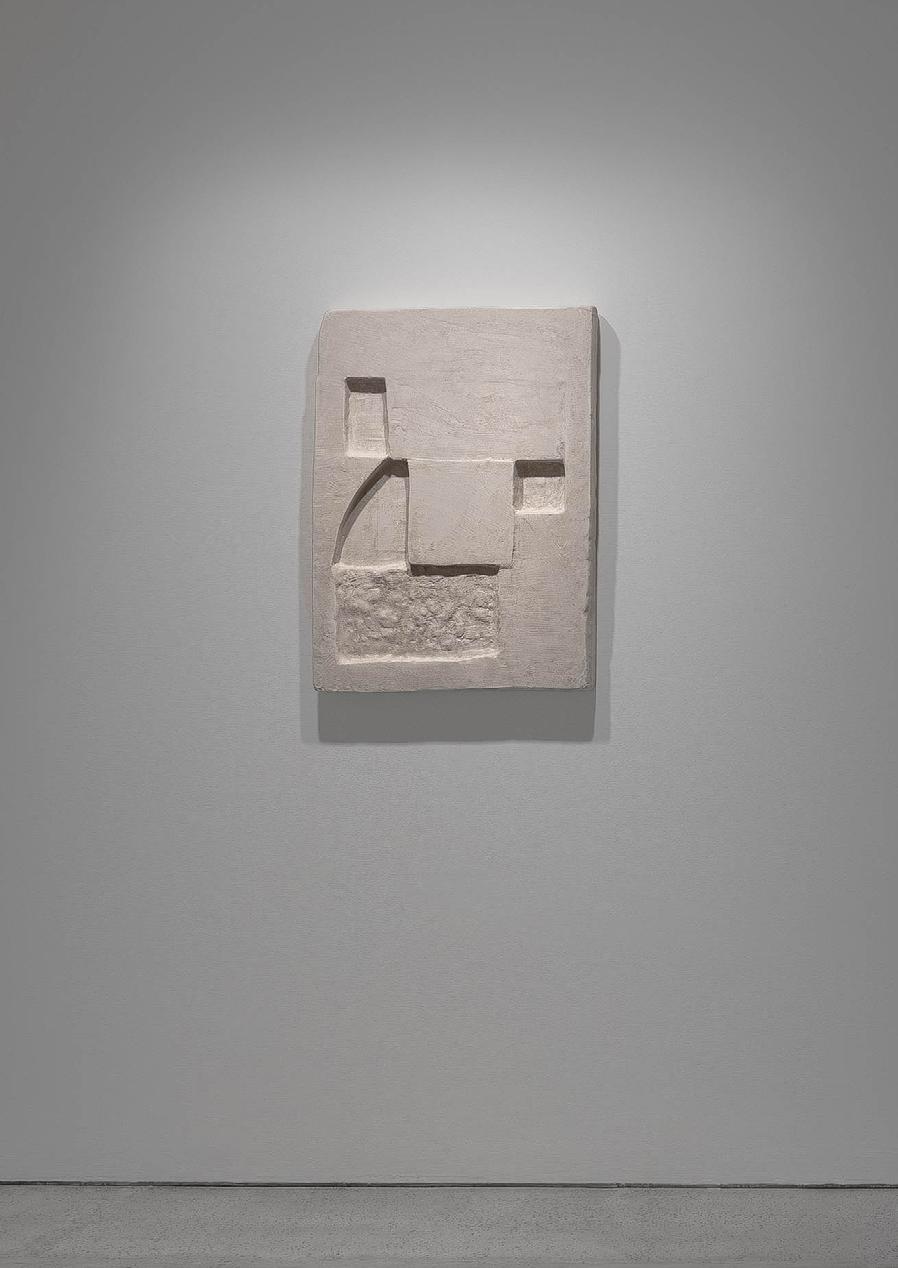
Installation view – Mason Kimber: A Caressing Gaze, UNSW Galleries, Sydney.
Photo by Jacquie Manning.
Rubrics
In writing a text such as this, one always needs to think in two directions: towards the work and towards writing about the work. The writing is not simply the outcome of the thinking, nor does it (nor should it be taken to) explain the work or its meaning in a general sense. Rather, it sets out a relationship to the work—in this case, my relationship. To make this happen, one needs to fnd a device to order fragments of thinking, to see how they might go together, heading towards a whole, just as Kimber does. In the foreword to his analysis of Francis Bacon’s oeuvre, Gilles Deleuze plainly describes the structure (and method) of his book as a series of rubrics.1 Each of these delimits a particular facet visible in Bacon’s paintings. These rubrics overlap, but there is a logic to their sequence—the ‘logic of sensation’ that is the subtitle of the book and the horizon of Deleuze’s analysis. I admire the structure of that book as much as I do Deleuze’s analysis of the paintings.
However, I have never been completely sure about how to use a rubric. I know it functions as a title, and it can also be a kind of framework. It’s a shorthand, or at least a shortened form of something longer that would unfold from it, and which it would structure. There is also the sense that a rubric is handed along; it has a degree of authority, but it must be actioned or put into practice. I realise now that the rubrics I have used are inherited or at least preexisting. Perhaps Deleuze would say they are immanent (as, indeed, is his thinking in the kind of formal analysis I have attempted). They structure my thinking in a way that might become visible only in the act of writing, which is an act of sequencing and ordering, two concepts that Deleuze also uses in prefacing his work. Rubrics come to the fore when I encounter things in the world and try to make sense of them. Becoming conscious of them was generative for me. It enabled me to get behind Kimber’s work, and it was a way of delimiting my interest in it. ‘Fragments’ was given by the work, but ‘frames’, ‘walls’, ‘sets’ and ‘interiors’ are the rubrics I think with daily. With them in hand, I walk around Kimber’s exhibition more aware of what it means for the work to be fnished, and what constitutes the ordering of my own thinking.
Essay by Charles Rice
1. Gilles Deleuze, Francis Bacon: The logic of sensation, trans. Daniel W Smith, Continuum, London, 2003, p ix.
This essay was frst published by UNSW Galleries for Mason Kimber: A Caressing Gaze, August 2025.
Tweed Regional Gallery
12 Sept 2025 – 8 Mar 2026
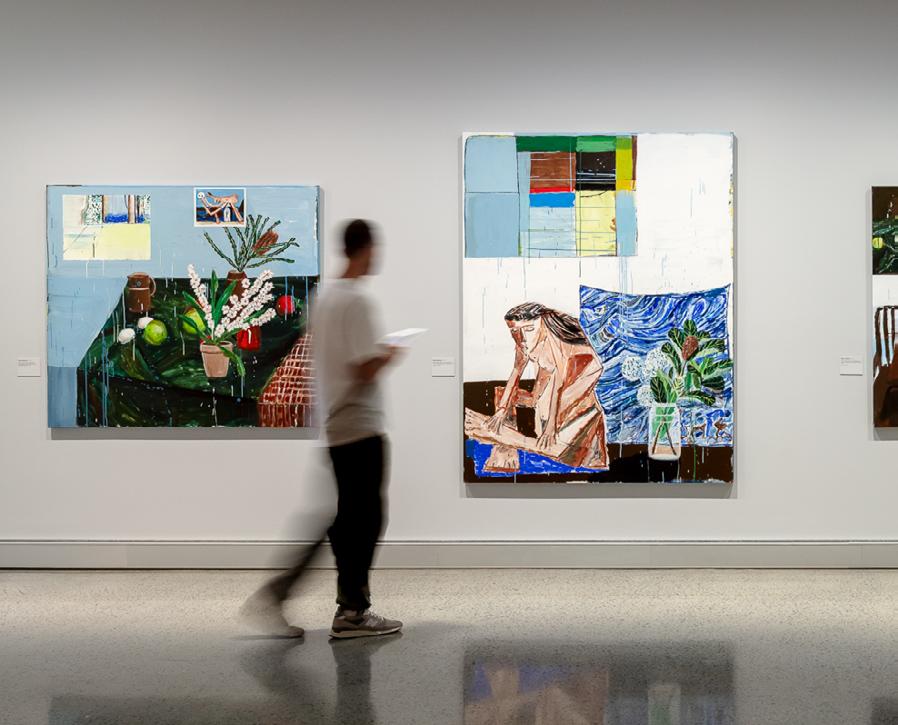
Ode: Margaret Olley and Sally Anderson
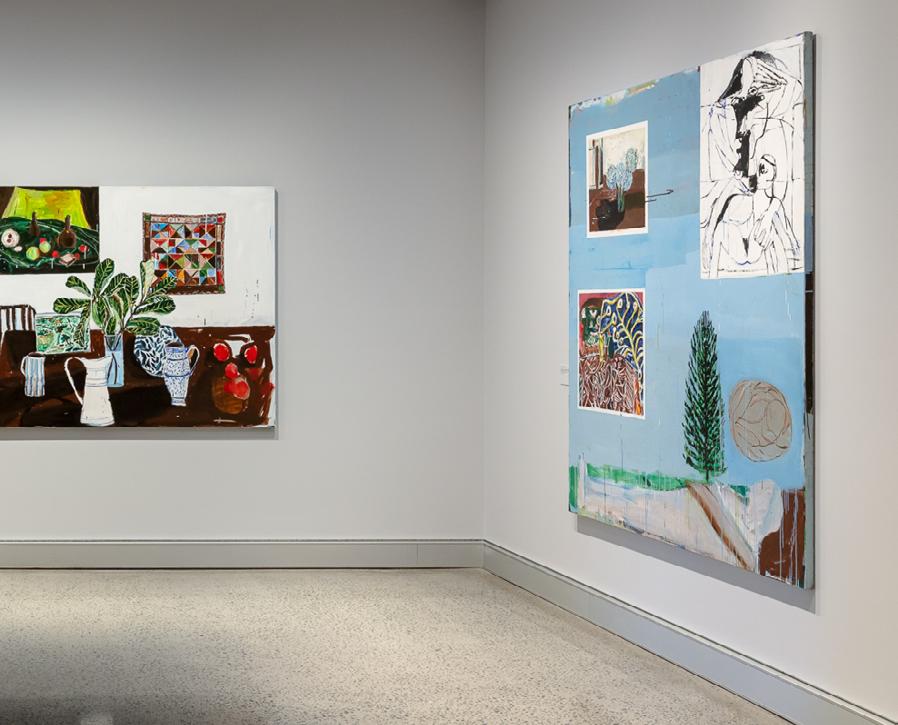
Call it kismet. Sally Anderson and Margaret Olley were both born in Lismore on Bundjalung Country, albeit 67 years apart. Here, through their work, they are meeting for the frst time and their shared language is still life painting. For both painters, still life offers a world in which to hold other worlds. For Anderson, landscape is never far away — place punctuates her pictures. For Olley, other artworlds rush in as painted postcards, pinned to the walls of her still life salon. For both artists these vignettes offer a haven between dream and memory, between the outside world and the intimate interior.
It was still life that Olley credited as establishing her voice, or in her words, her handwriting. And it was specifcally her 1948 Still life with pink fsh, included here on loan from the Art Gallery of
Installation view – Ode: Margaret Olley and Sally Anderson, Tweed Regional Gallery, NSW. Photo by Aaron Chapman.
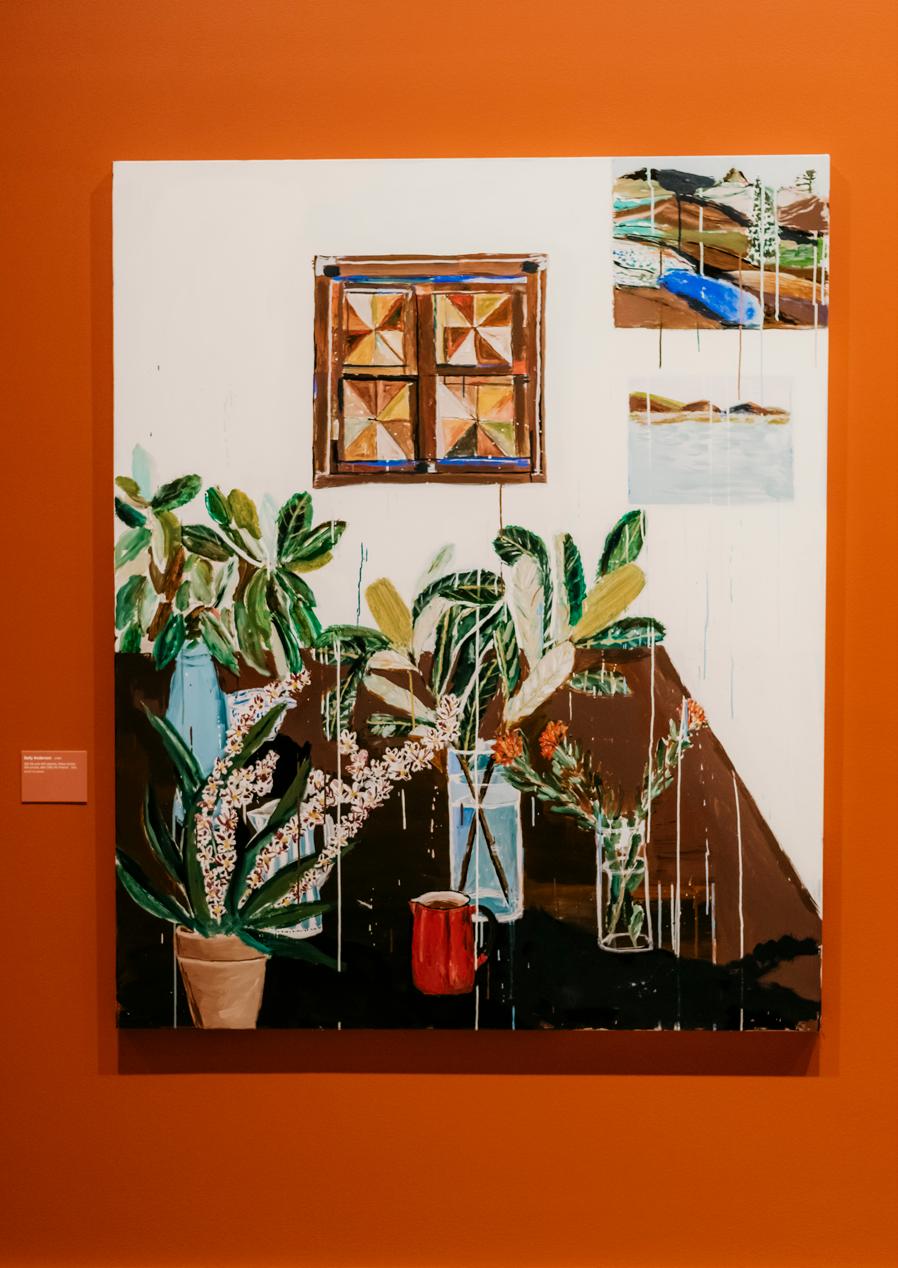
New South Wales, that she cites as a milestone moment in her beginning as an artist. In this table top arrangement, the world tilts towards us, offering us fruit, fowers and two fresh fsh.1948 was a big year for Olley. In addition to being the year that she became reconciled with the idea of being an artist, it was also the year she frst visited Hill End; the year of her frst solo exhibitions at Macquarie Galleries in Sydney and the Moreton Galleries in Brisbane; and the year her work was frst acquired by the Art Gallery of New South Wales (yes, Still life with pink fsh). She was 25.
1948 was also the year that William Dobell asked Olley, whilst the pair were travelling home together on a Sydney tram, to sit for his Archibald Prize-winning portrait. In that same year she was runner-up for the New South Wales travelling arts scholarship and, although not awarded the prize, it was this recognition that catapulted Olley into the next chapter of her life.
For Anderson, 2017 was her watershed year. Her son was conceived while her former partner was artist-in-residence at the Nancy Fairfax studio, offered by Tweed Regional Gallery through the Margaret Olley Art Centre. Anderson won the Brett Whiteley Travelling Art Scholarship and three-month residency at the Cité Internationale des arts in Paris, the same scholarship Olley had awarded to Ben Quilty in 2002, which she completed in 2018. She also held her frst solo exhibitions in this year — with the frst at Olsen Gallery in Sydney and the second at Edwina Corlette in Brisbane.
In Paris, Anderson, like Olley, spent her days inside museums and galleries, including the house-museums of Picasso, Bourdelle and Rodin with their heady mix of the private and the public. The trace of these days can be found here in Sally Anderson
Still life with MO objects, Rosie orchid, GM orchid, after Olley for Francis, 2025 acrylic on canvas
168 x 137 cm
Anderson’s work Study of MO’s still life in green 1947 with a banksia for dad, GM orchid and PP Bathers postcard. This re-creation is both an ode to Olley and her frequent inclusion of art historical snippets, and a wrestling with the leviathan Pablo Picasso through her quotation of Picasso’s 1928 Bathers with a ball on the beach. Anderson cites her initial discomfort referencing his work which gave way to a feeling of reclamation for the women in his pictures, and for herself.
In Still life with MO objects, Rosie orchid, GM orchid, after Olley for Francis 2025 many worlds converge. A re-creation of Olley’s 1970 masterwork, Banksia, from the Maitland Regional Art Gallery, shares a tilted tabletop with native orchids that belong to her former partner and father of her child, GM. The painting also includes crucifx orchids from her new beau and Olley’s blue vase from Still life with leaves c.1960. Above the table top arrangement, an embroidered cushion from Olley’s studio is recast as a portal, while the top right-hand corner holds a westerly view onto the Northern Rivers’ landscape, as experienced by Anderson during her visits.
The travelling that happens in Anderson’s painting speaks not only to the conversations between her work and Olley’s but also to her own personal journeys. These include her travels between Sydney and the Northern Rivers where her family have remained, including her father whose recent death is rendered as a gentle entombment in the work titled Olley’s yellow room Matisse, hydrangeas for Sally (GM), PP mother and child, Dad, Tweed Tree and BT horse 2025. Metaphoric references abound too, with Anderson’s remaking of Olley’s swamp banksias an allusion to her son whose placenta lies beneath said species of banksia in her Marrickville backyard.
For both artists, the abiding quest is how to house ideas in a painting in order to make sense of this life and whatever has come before and will follow. Through the lens of Anderson and Olley, the Dutch still life painters of the seventeenth century may not have given us the full picture. Still life is not only a call to remember one’s mortality and to live life well. It is also a beckoning to the next life and a reminder that while life is short, art is long.
Essay by Professor Lisa Slade
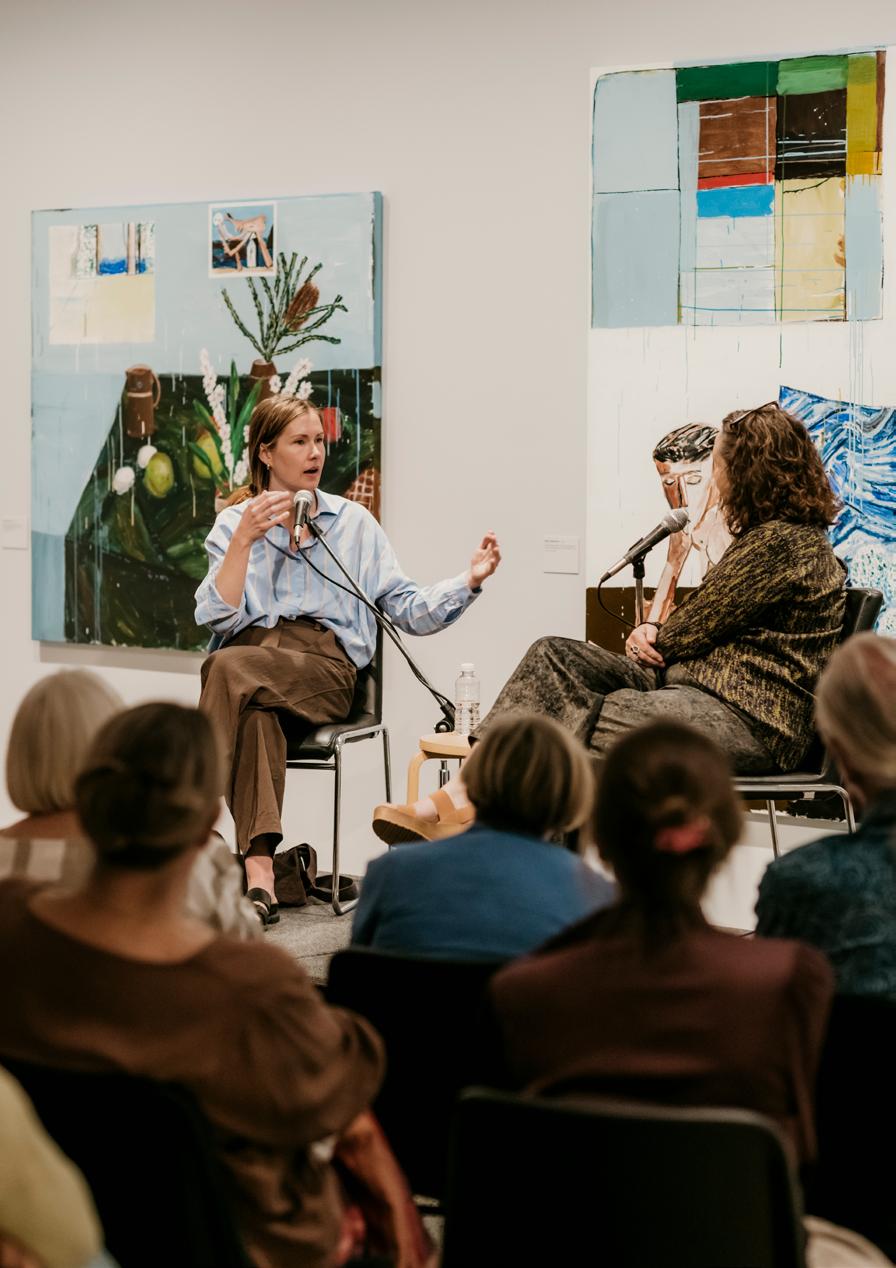
Sally Anderson in conversation with Lisa Slade, Tweed Regional Gallery, NSW.
Photo by Sally Singh.
IN FOCUS.
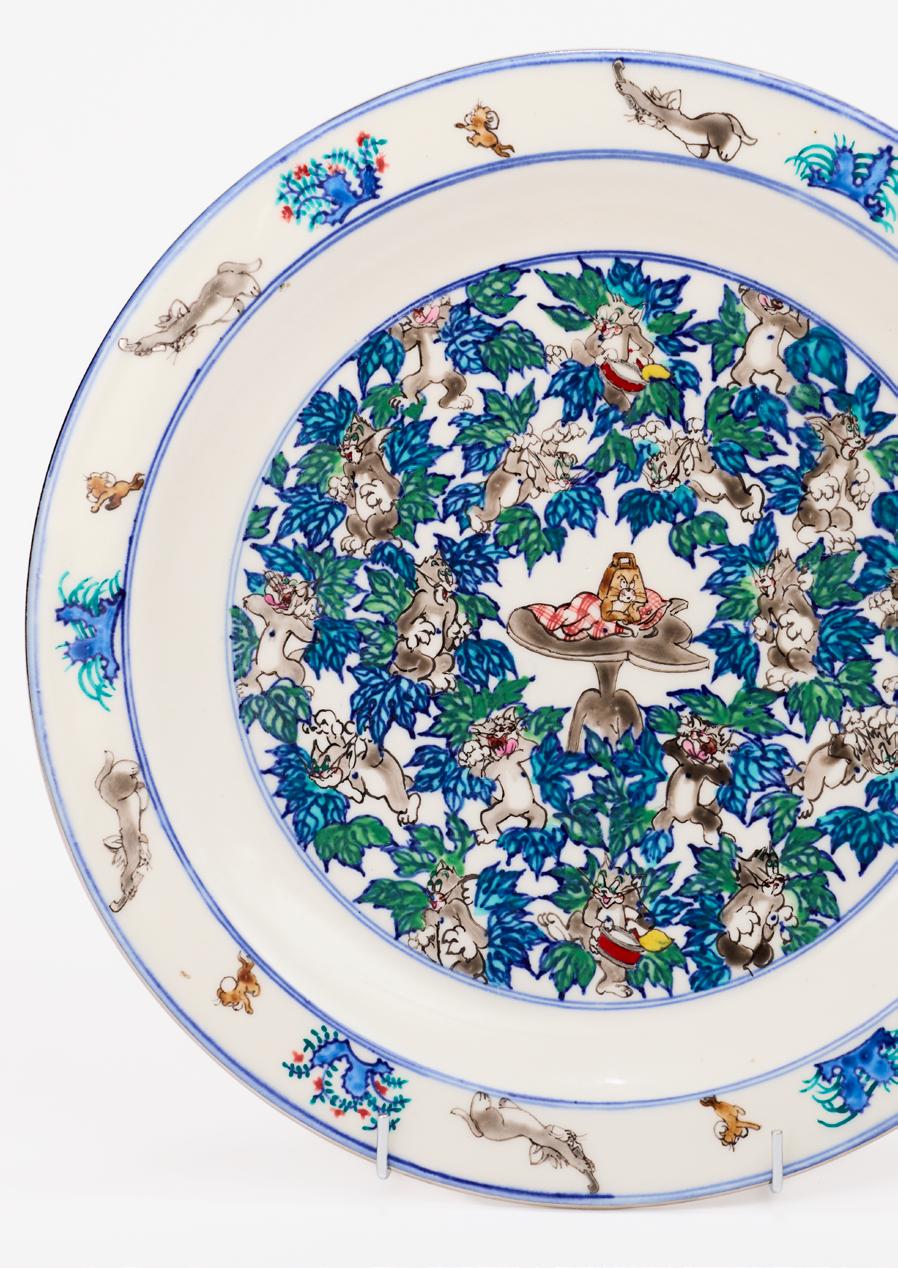
Casey Chen, Dreams on a fat iron pancake, 2026
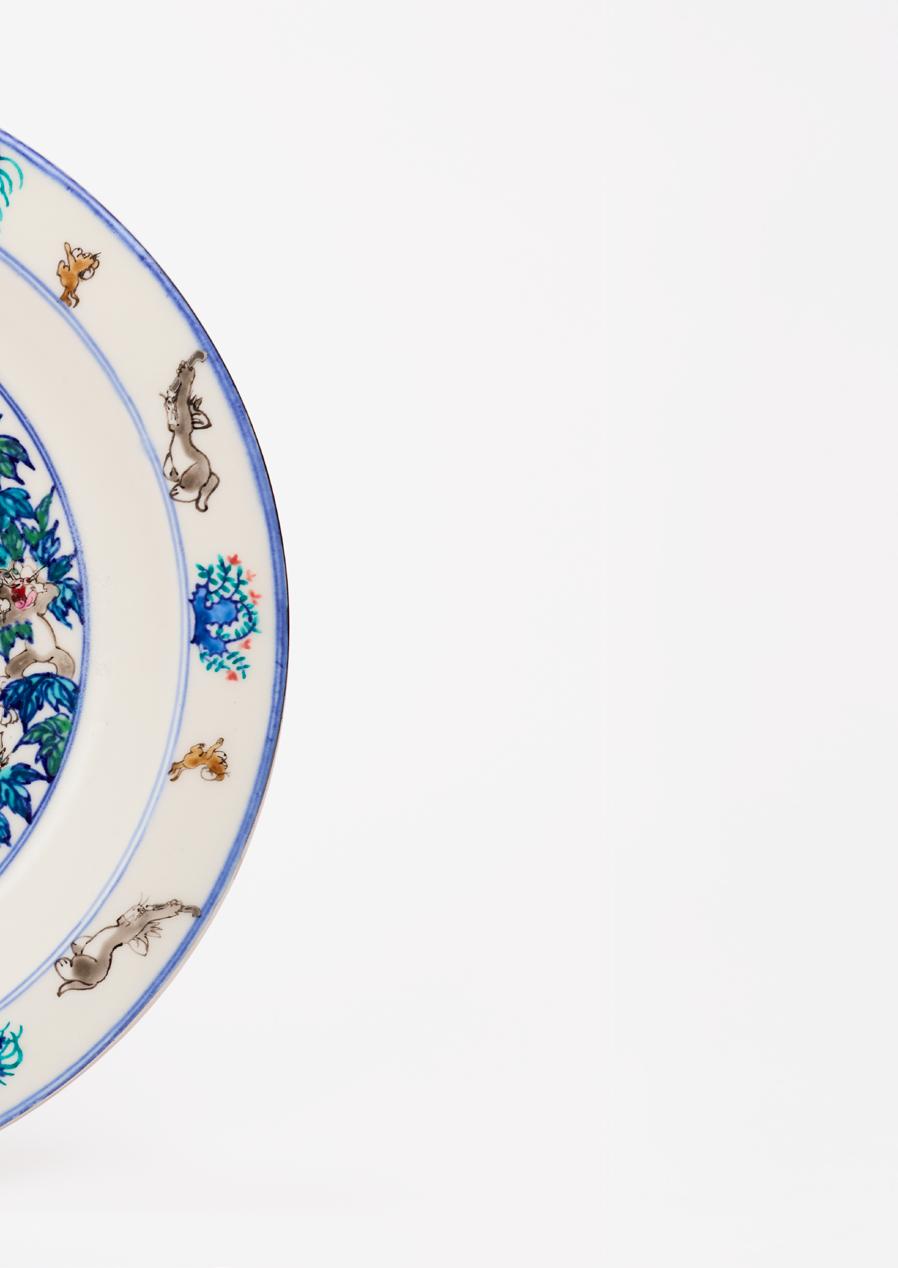
Most of us will know Tom and Jerry, the classic American cartoon running since the 1940s featuring comic and often mayhemic duels between a grey cat (Tom) and a brown mouse (Jerry). Absurdly violent, Tom employs axes, machetes, explosives and poison in attempts to kill Jerry, while Jerry in turn retaliates by decapitating, disembowelling or crushing Tom. Tom never succeeds in killing Jerry, in fact in some episodes they set aside their rivalry and unite for a common goal. Nonetheless, the premise of the cartoon relies on the eternal chase, the comic taunt, and the impossibility of death. Tom, Jerry and their violent escapades are an unsurprising subject in Casey Chen’s ceramic works, that is if you are familiar with his blending of cultural pastiche, traditional craft, and contemporary perspective. Dreams on a fat iron pancake, 2026, form part of a larger series by Chen drawing upon imagery and motifs from the archetypal tales of the four great classic novels of Chinese literature: Romance of the Three Kingdoms, Journey to the West, Water Margin, and Dream of the Red Chamber.
Romance of the Three Kingdoms, a 14th-century historical novel attributed to Luo Guanzhong, is set during the turbulent fnal years of the Han dynasty and the subsequent Three Kingdoms period, and follows the lives of three rival warlords as they battle for dominance. Detailing political strategy and military campaigns among personal feuds, the part-historical, part-fctionalised text was revised numerous times, with the Mao Dynasty adding the now famous opening line: ‘The empire, long divided, must unite; long united, must divide. Thus it has ever been.’
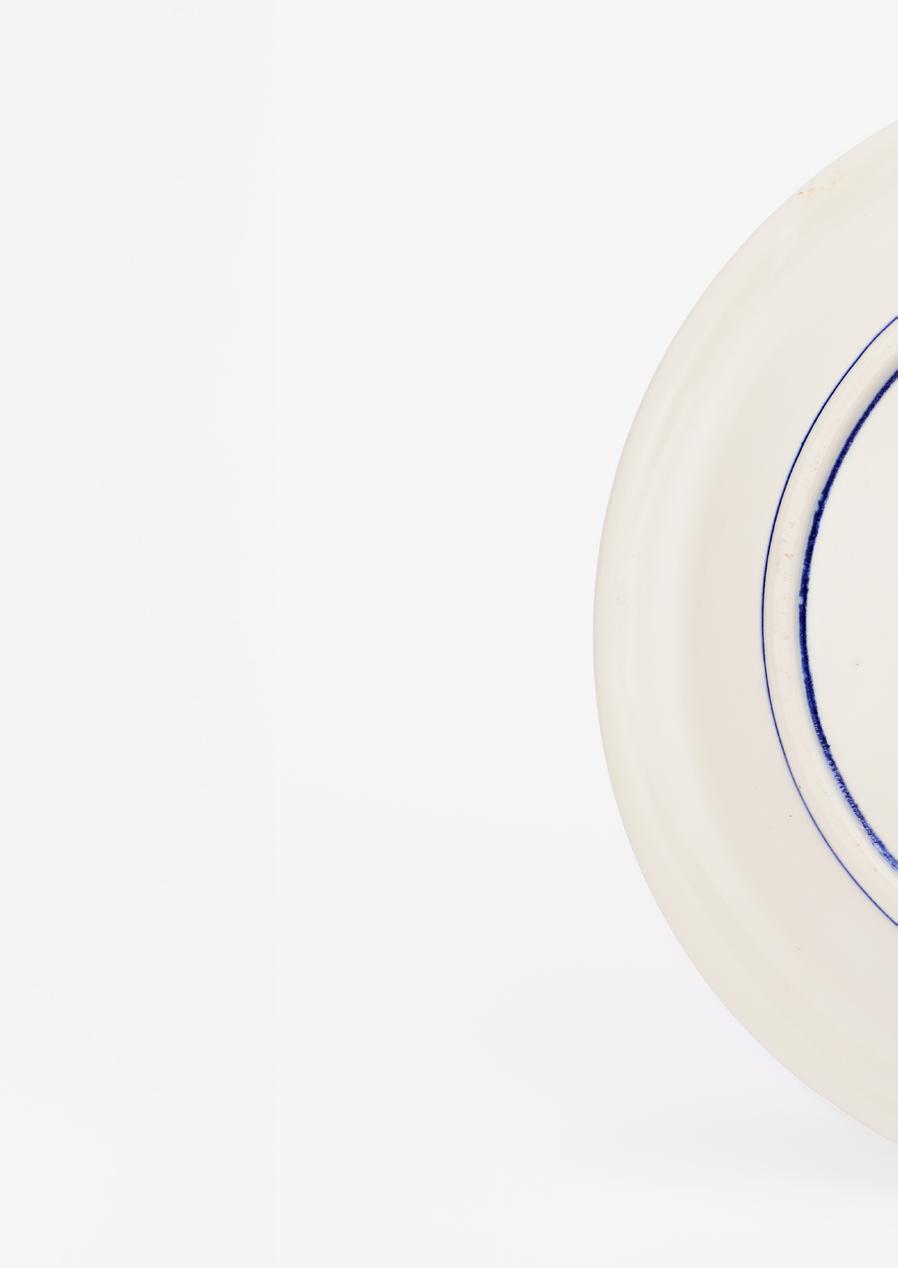
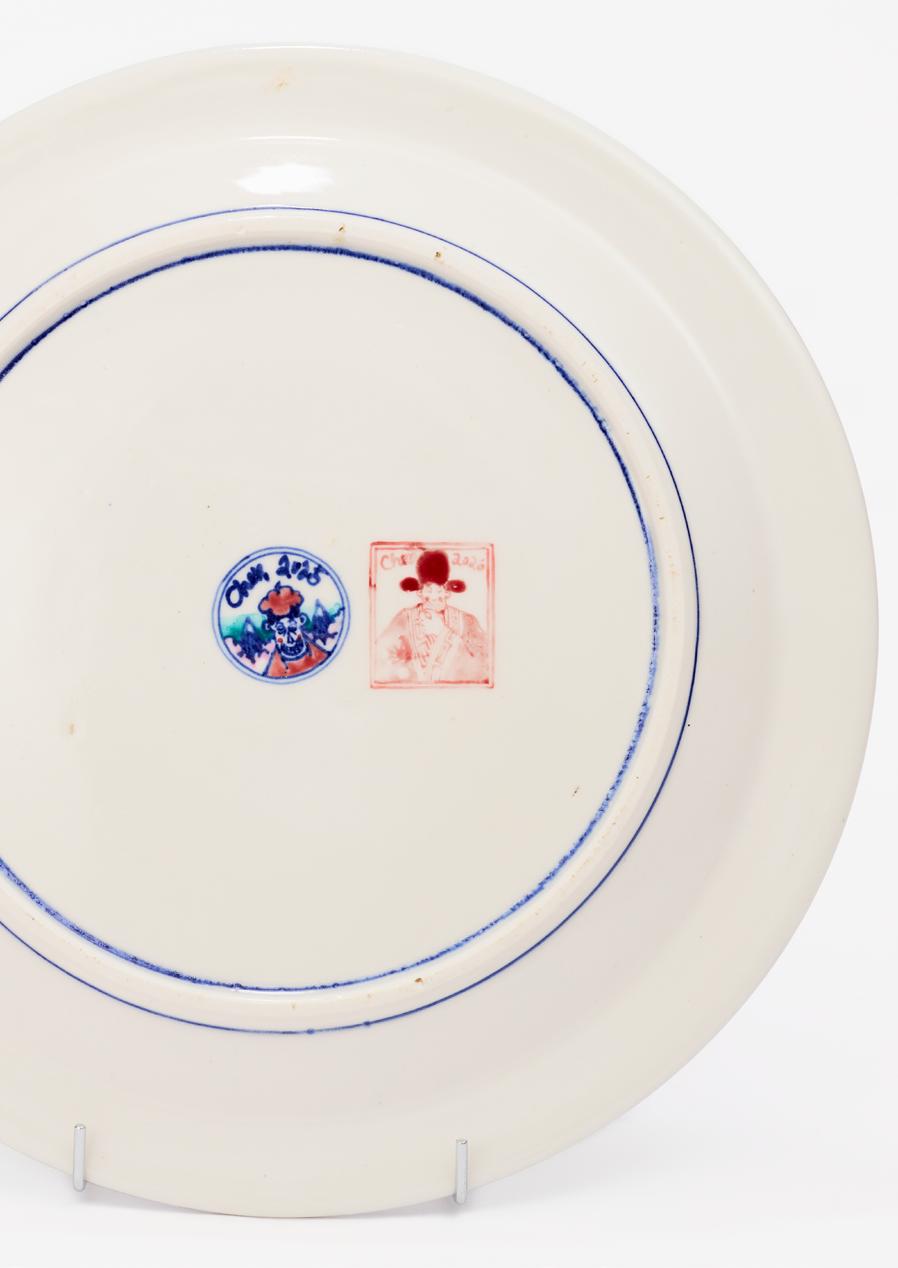
This dependence on the enemy – the rival warlord, the Tom to the Jerry –offers a lens with which to view Chen’s speculative worlds in which the past seamlessly entangles with the present. While his techniques are rooted in tradition – his forms are hand-thrown and his decorative patterning adopts Chinese Doucai porcelain painting techniques, involving the application of cobalt underglaze and enamel overglaze painting – his imagery often plays with the stereotypes, characteristics and absurdity of pop-cultural icons. At frst glance Tom and Jerry seem as if they belong, chasing circles around one another along the rim of the plate, a placement traditionally reserved for auspicious symbols, foral patterns, or geometric designs in Chinese pottery. The centre – depicting Jerry lounging on a pillow atop a very fattened Tom – forms the focal point of some kind of manic dream in which eighteen Toms taunt a clearly fed-up Jerry.
In collapsing cartoon violence, literary epic, and ceramic tradition into a single restless surface, this work presents confict – whether mythic, historical, or cartoonish – as less of a narrative to be resolved than a cyclical condition to be endlessly rehearsed and reimagined, and reanimated.
Words by Rosy Leake
Casey Chen
Dreams on a fat iron pancake, 2026 glazed porcelain with overglaze enamel and platinum lustre, fred fve times
32.5 x 32.5 x 4 cm
FEATURED MUSEUM ACQUISITION.
Artist: Thea Anamara Perkins
Institution: Mosman Art Gallery, NSW
Work: To Know You Is To Love You, 2025
NSG Shop.
Discover NSG Shop – a platform with a range of items perfect for any arts lover.
Whether you’re looking for the perfect gift or something to inspire your own curiosity, browse through our exclusive books, prints, and collectibles.
With worldwide shipping on all items, explore in person at the gallery or browse online.

Scan to shop online
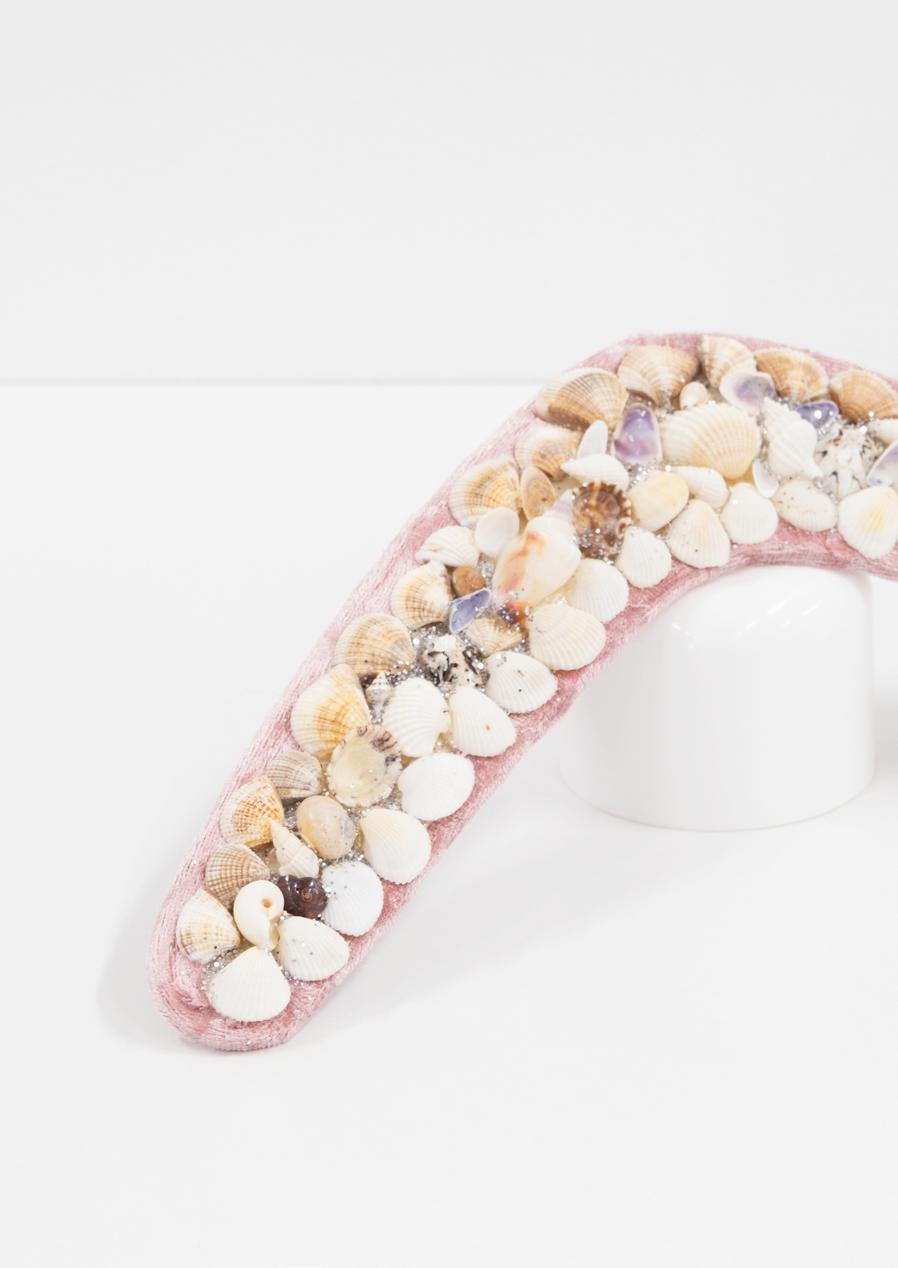
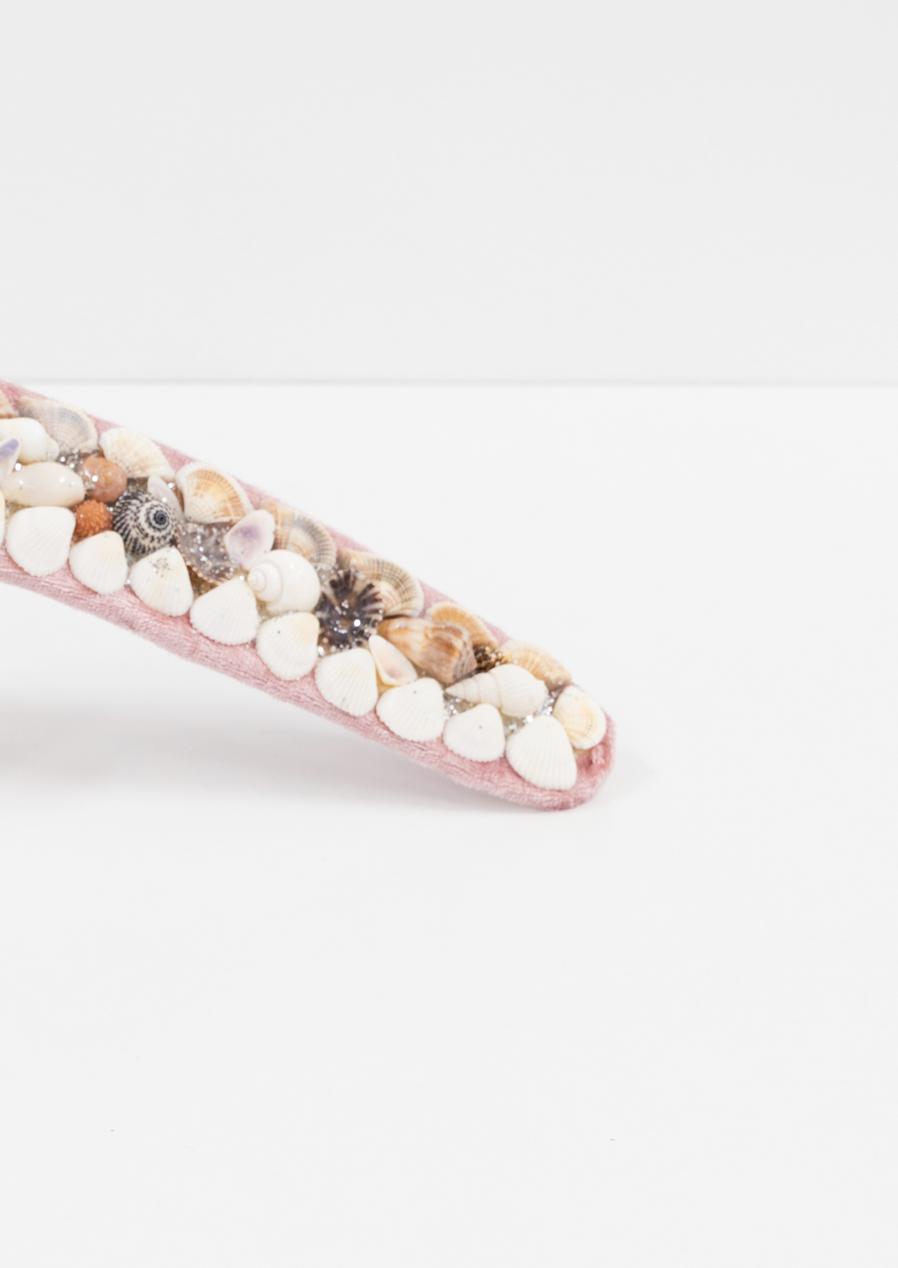
Marilyn Russell Shellwork Boomerang
NSG EXHIBITION GUIDE.
N S W
Searcher: Graffti and Contemporary Art
National Art School, Sydney, until 11 Apr 2026
No place for mannequins: Remaking the fashion archive. UTS Gallery, Sydney until 24 Apr 2026
Sally Anderson: Holding Pattern, River Hug
N.Smith Gallery 9 Apr - 2 May 2026
Vipoo Srivilasa re/JOY
Shoalhaven Regional Gallery until 2 May 2026
The Interior II
N.Smith Gallery
7 - 30 May 2026
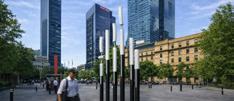
Darrell Sibosado at Vivid Circular Quay & The Rocks
22 May - 13 Jun 2026
Under the Same Constellation
N.Smith Gallery
4 - 27 June 2026

High Colour
Dylan Mooney
Art Gallery of NSW until 9 Aug 2026
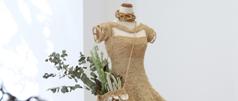
And Still I Rise
Kyra Mancktelow
Art Gallery of NSW until 10 Jan 2027
Aidan Hartshorn
Yiribana Mayiny
Art Gallery of NSW until 31 May 2026
V I C
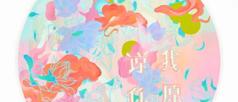
Louise Zhang: You are forgiven (Lotus)
National Gallery of Victoria until 20 Dec 2026
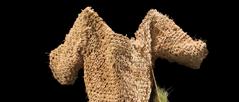
MOTHER: Stories from the NGV Collection
National Gallery of Victoria until 12 Jul 2026
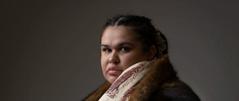
NGV Triennial
National Gallery of Victoria 13 Dec 2026 - 11 Apr 2027
A C T
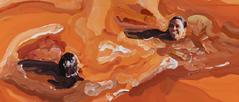
After the Rain:Thea Anamara
Perkins & Dylan Mooney
National Gallery of Australia
6 Dec – 26 Apr 2026
S A
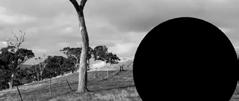
James Tylor: Turrangka...in the shadows
Art Gallery of South Australia
31 Jul - 1 Nov 2026
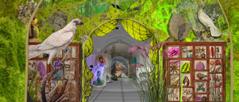
AGSA Screen Wavelength
Art Gallery of South Australia
until 4 Jul 2027
Q L D
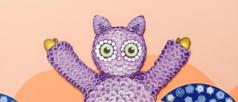
Vipoo Srivilasa: Express Yourself
QAGOMA Children's Art Centre, until13 Sep 2026
Snap Blak: James Tylor QAGOMA
until 13 Sep 2026
NATIONAL
Archibald 2025
Touring Nationally until 13 Sept 2026
Wynne Prize 2025
Touring Nationally until 21 June 2026
INTERNATIONAL
Exposition générale
Fondation Cartier pour l’art contemporain, Paris unti 23 Aug 2026
Aotearoa Art Fair
Viaduct Events Centre
30 Apr - 3 May 2026
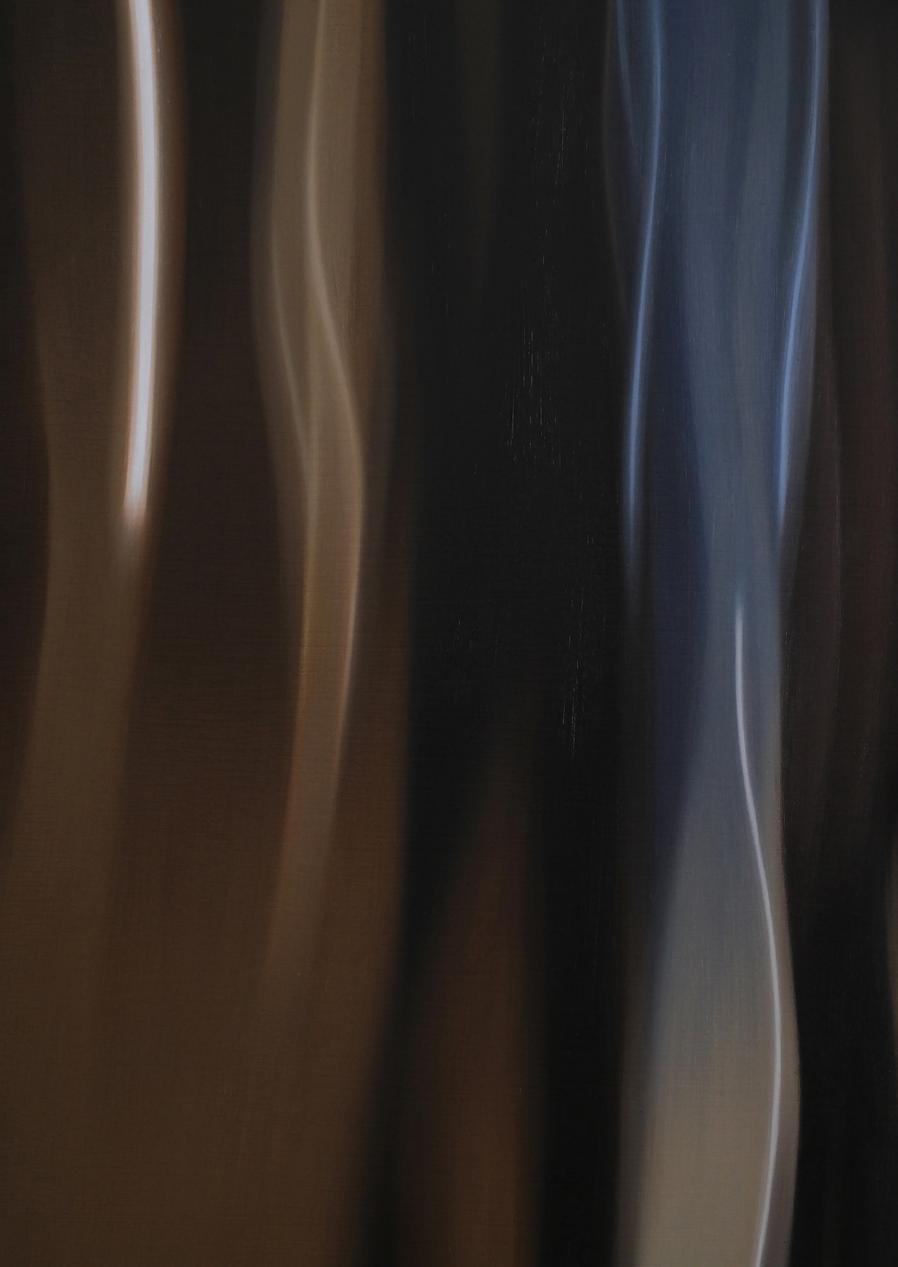
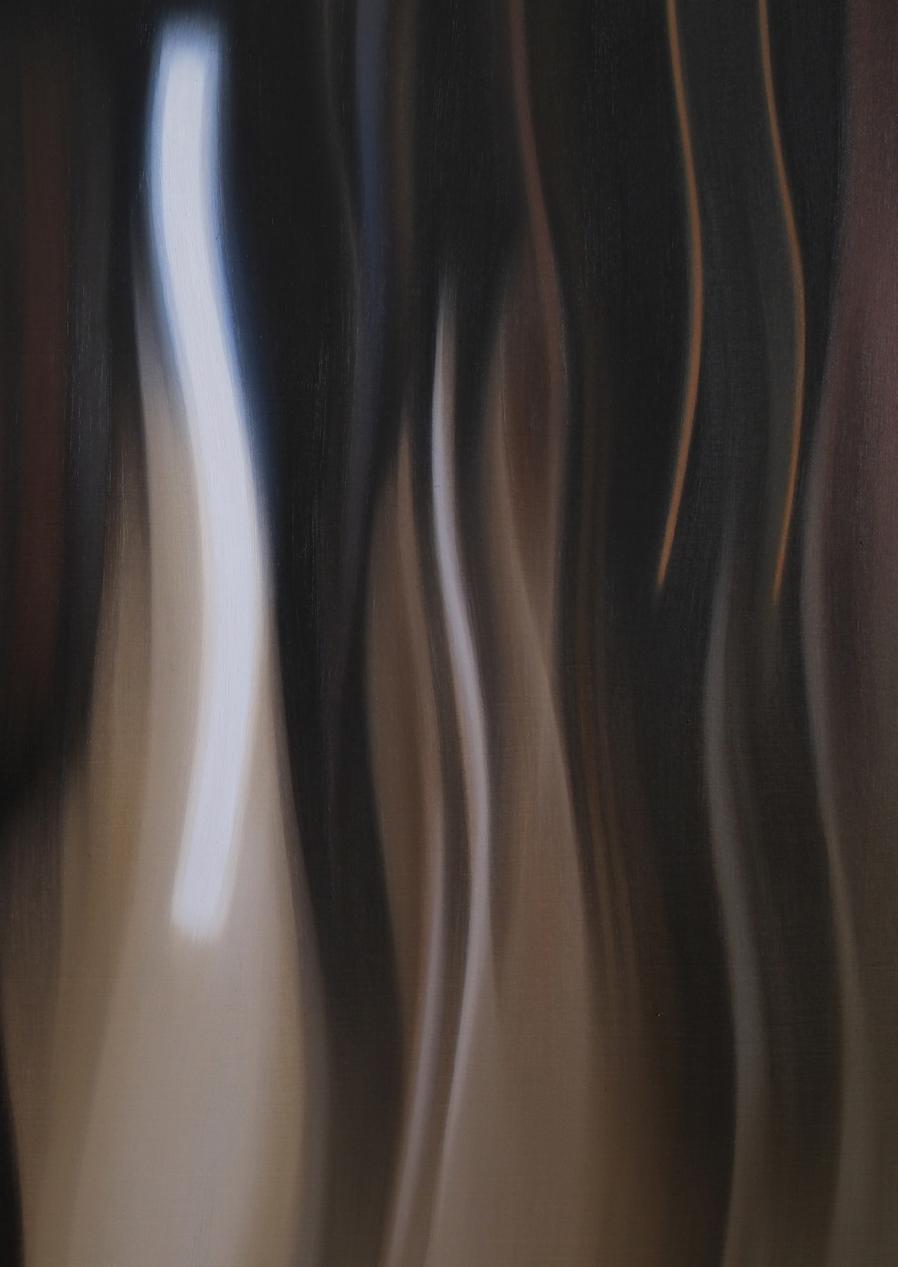
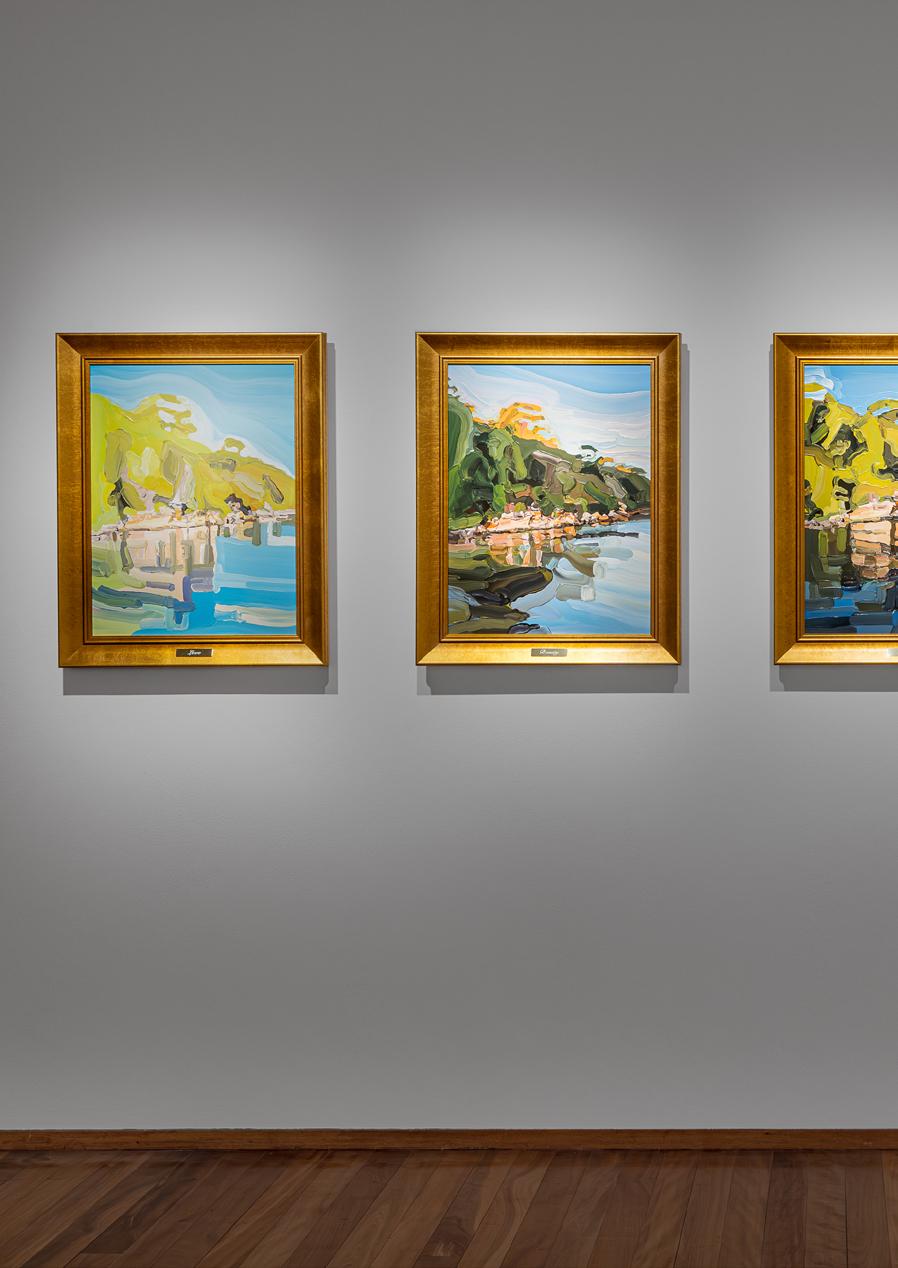
Everything else fell away, 2025 oil on board
30 × 40 cm
Joshua Charadia