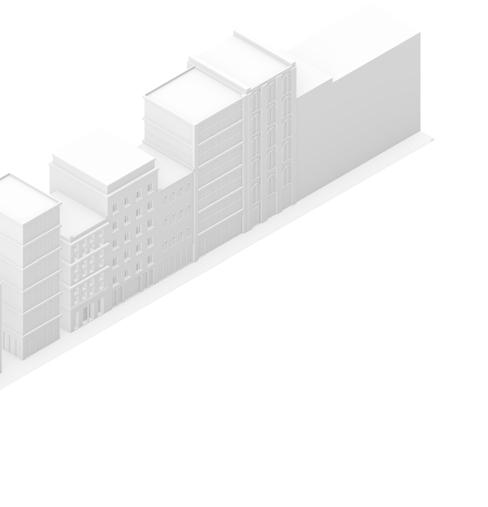
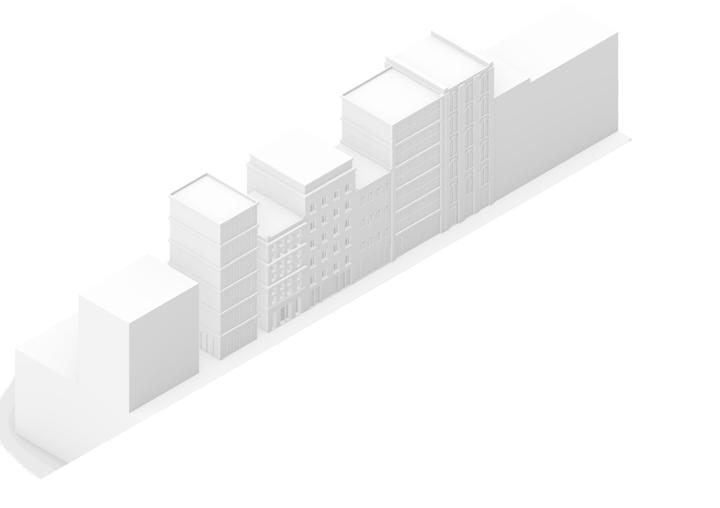
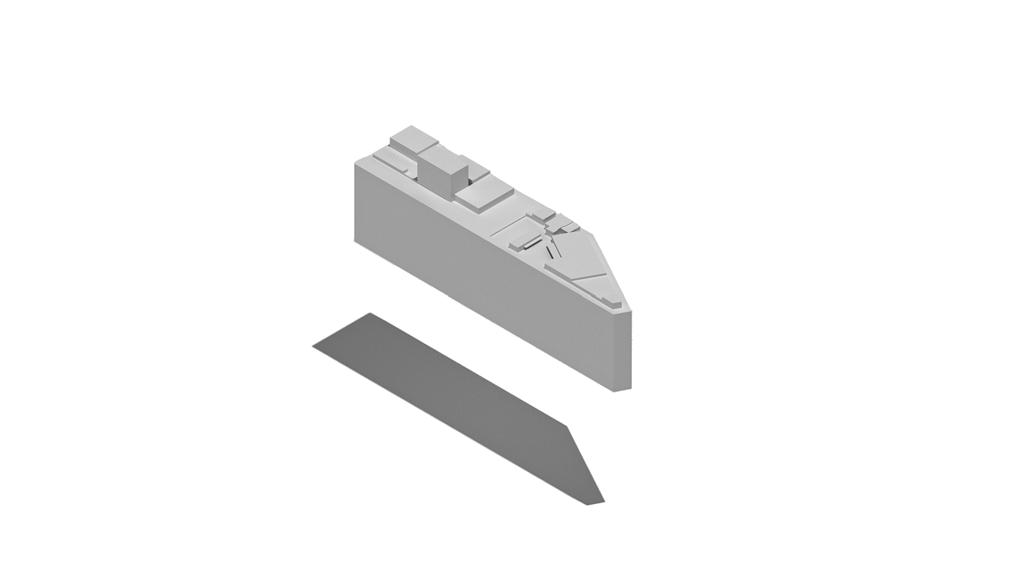
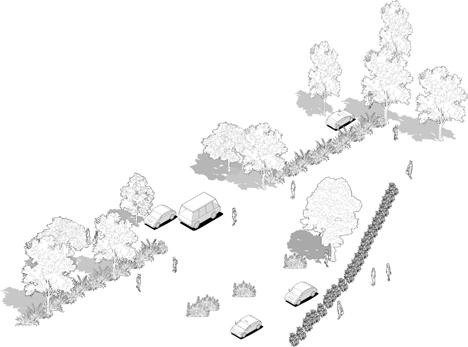
Architecture student at the University of Pennsylvania Stuart Weitzman School of Design graduating May 2028 with a Masters in Architecture.
Working in small local firms and student-led organizations for the past 3 years, I bring a diversity of interdisciplinary design knowledge to the table and have become a nimble team player that can quickly develop skills in any areas that require assistance.
contact | heller1@upenn.edu | 410 375 9814
Spatializing Waste
Reimagining waterfront futures in Brooklyn.
Prioritizing the next generation through design education. i. ii. iii. iv. v. vi. [interlude] [conclusion] p./18 p./18 p./18 p./18 p./18
Linum Usitassimum
Developing a biogenic alternative to concrete.
Bodies and By-Products
Extending the ICA through formal explorations derived from the human body.
We’re
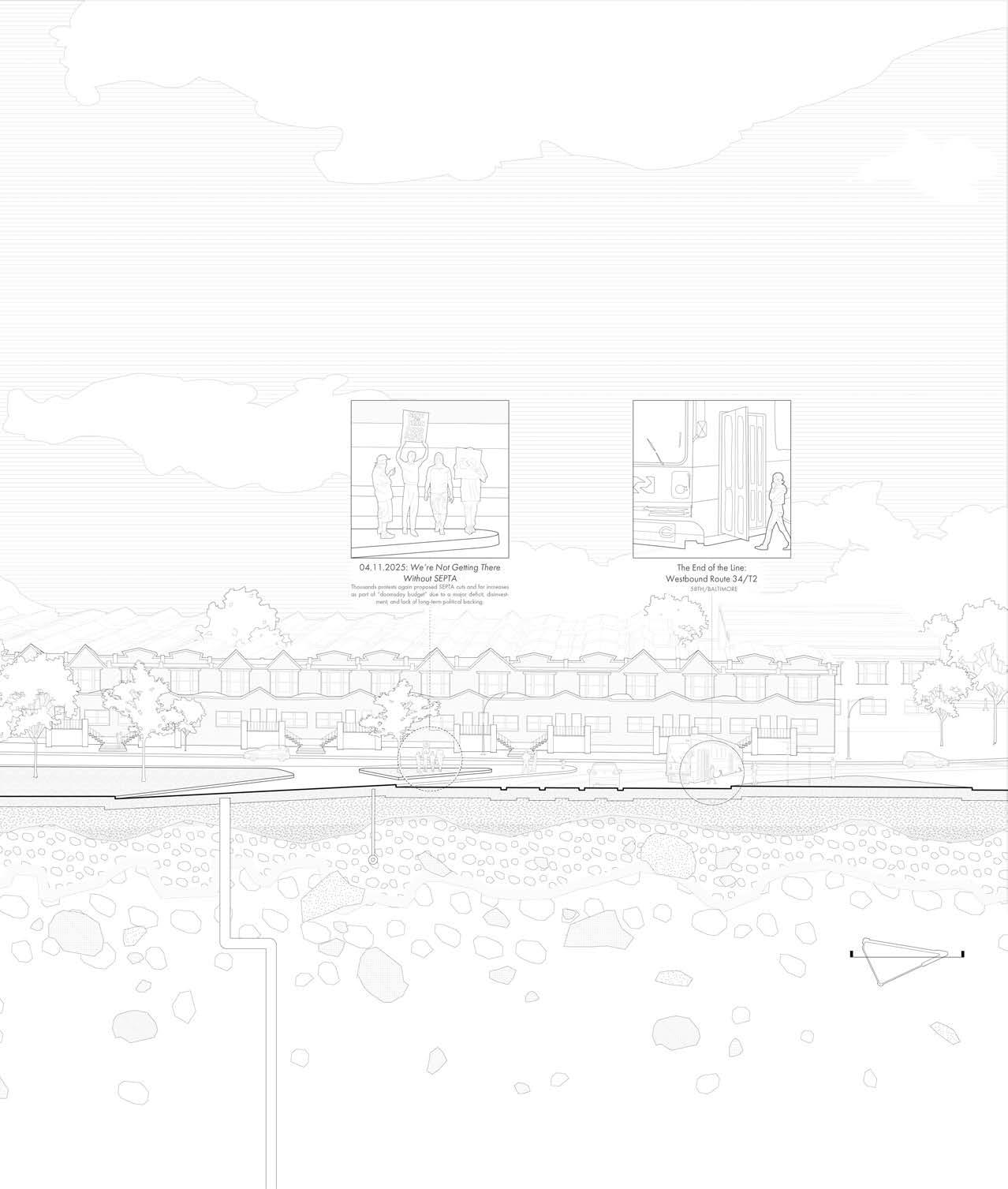
Not Getting There Without SEPTA
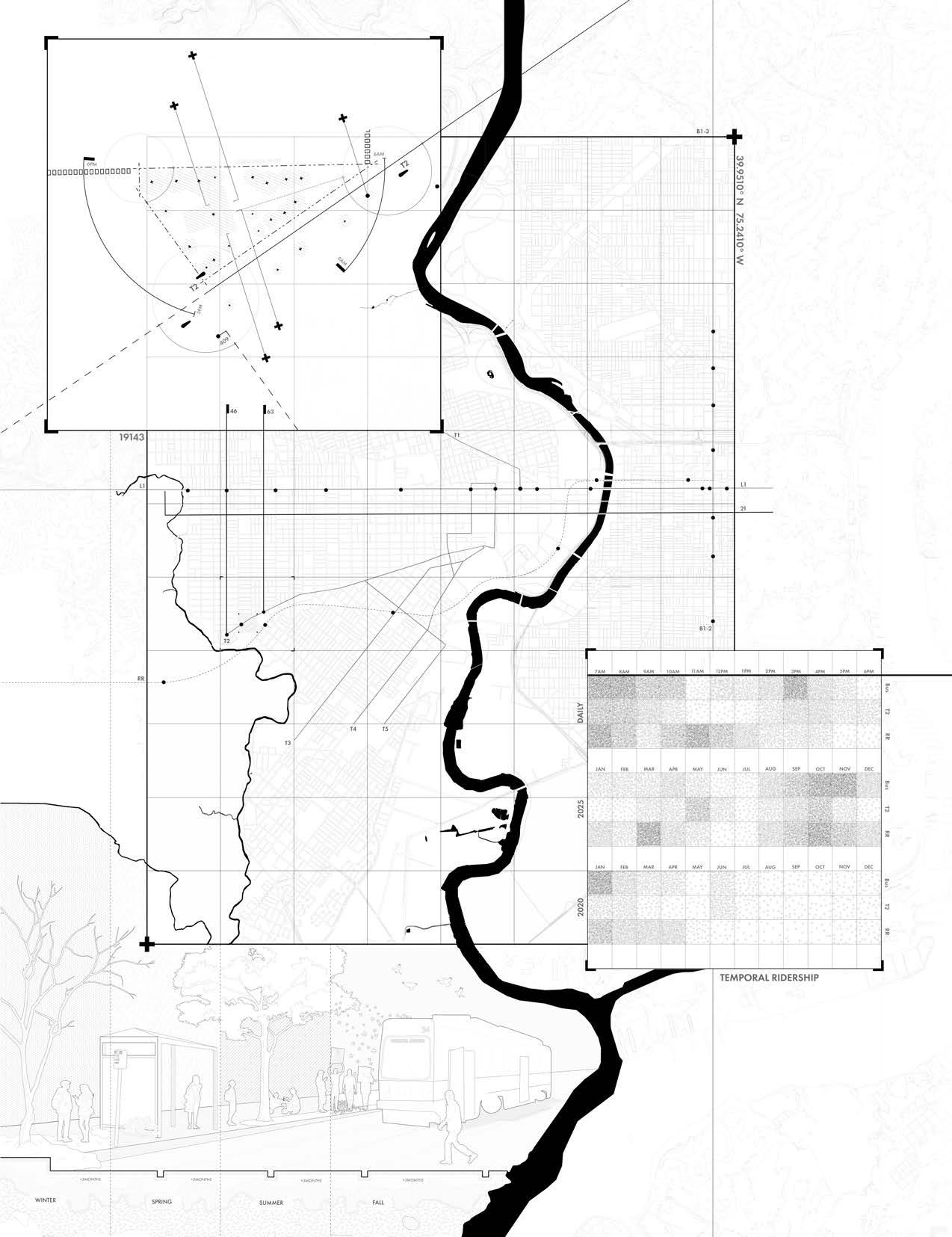
Preliminary site analysis focusing on Philadelphia’s public transit.
Origami House
A new rowhome typology emerging in a historic city.
Aggregating Adjacencies
A third space for both introspection and engagement..
Common Ground
Temporary pavilion for a library in construction.
Defining Architecture
p./ 04 p./ 12 p./18
i.Spatializing Waste
Integrating New Material Economies
brooklyn, nyc
Typology: Urban Design
Critic: Jeffrey S. Nesbit
Undergraduate Year 4
09.01.2024 - 12.03.24
Collaborator: Ella Horvat
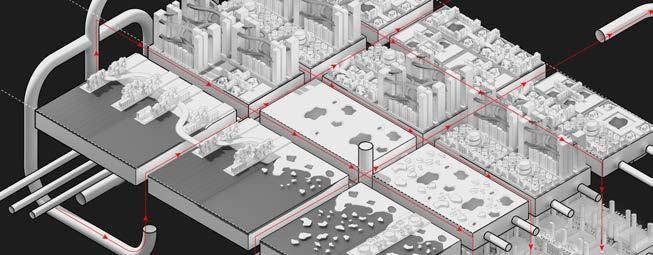
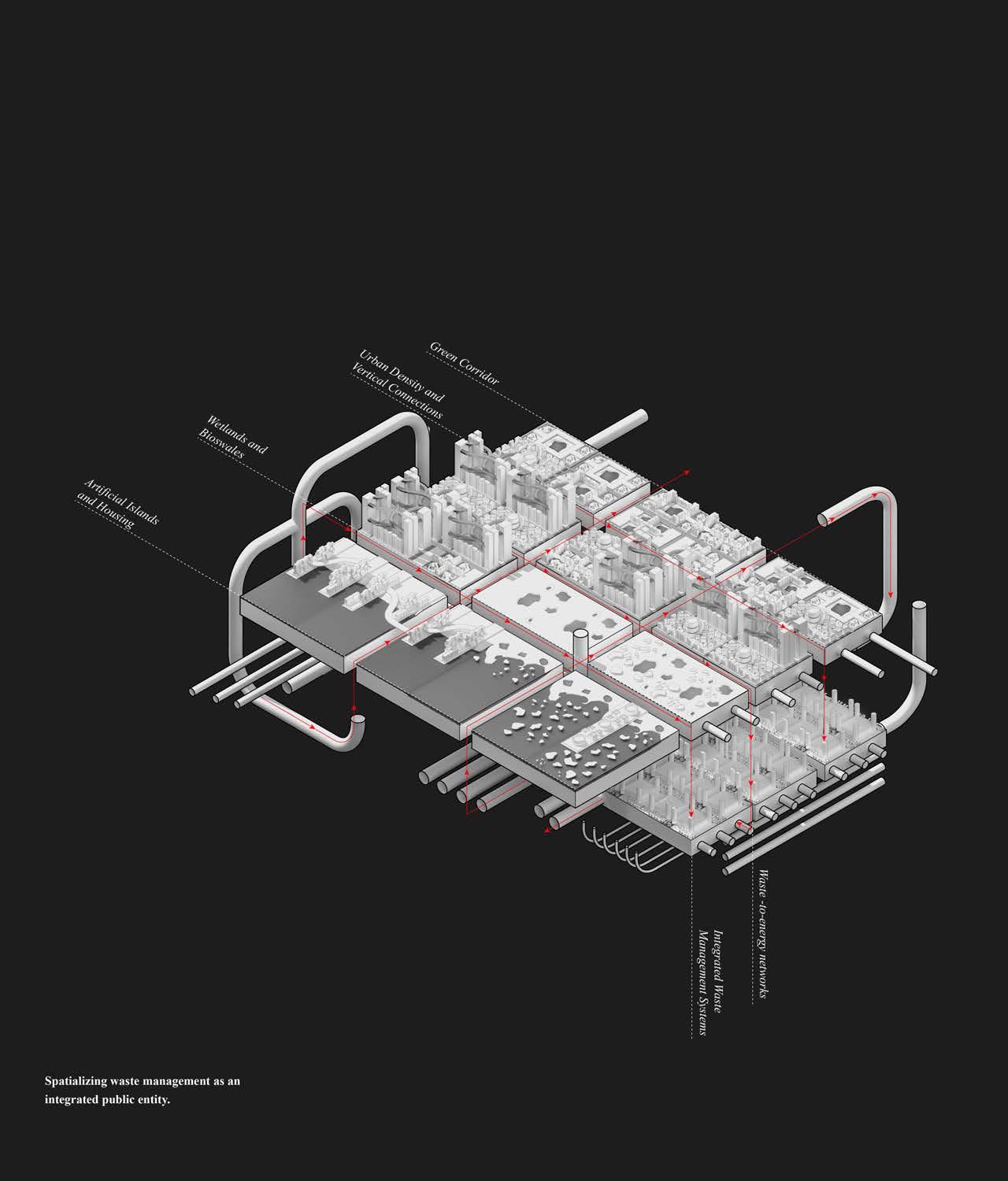
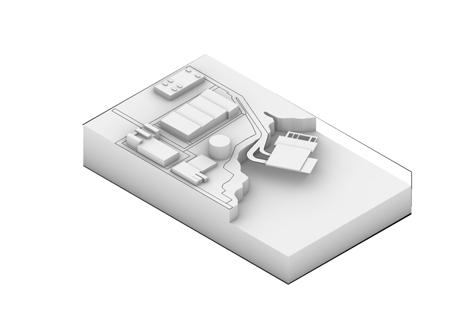
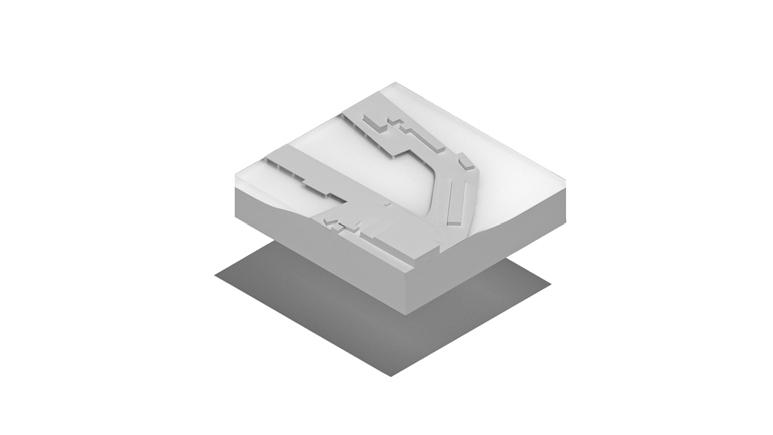
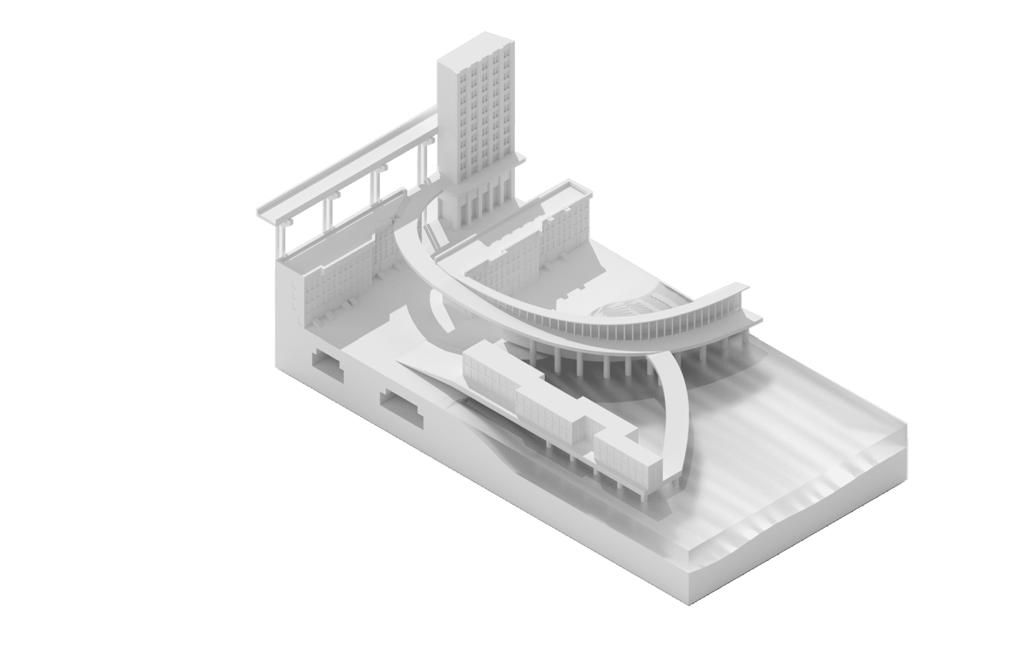
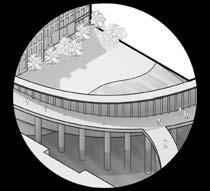
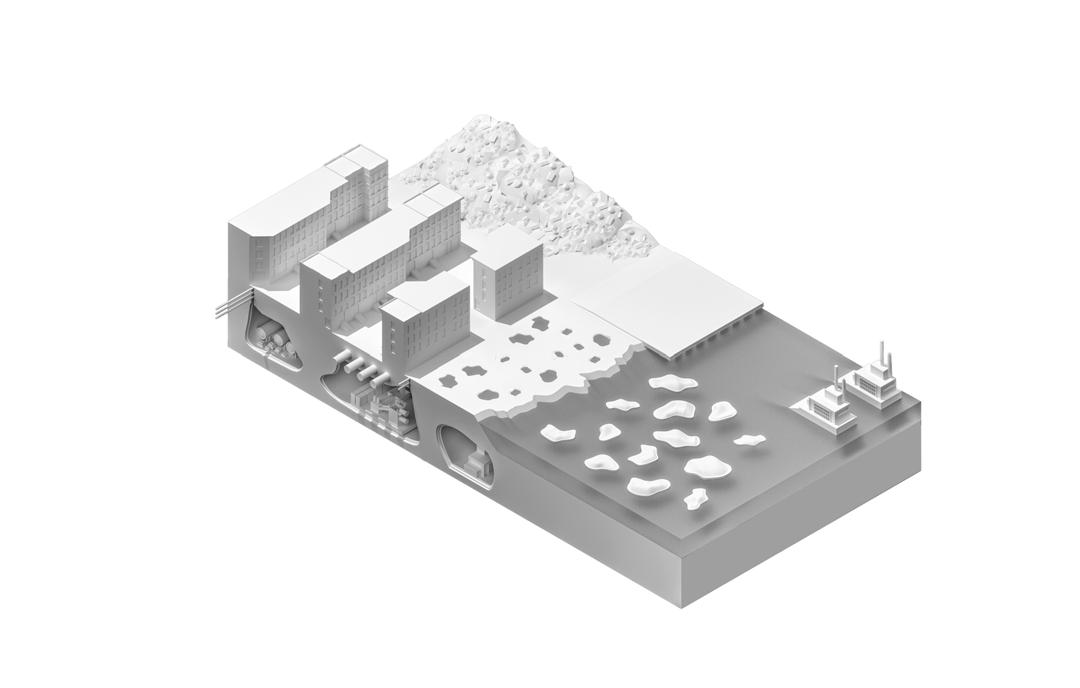
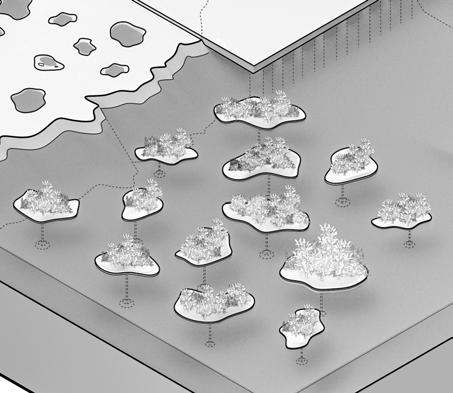
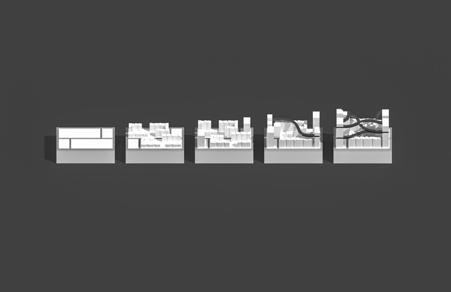
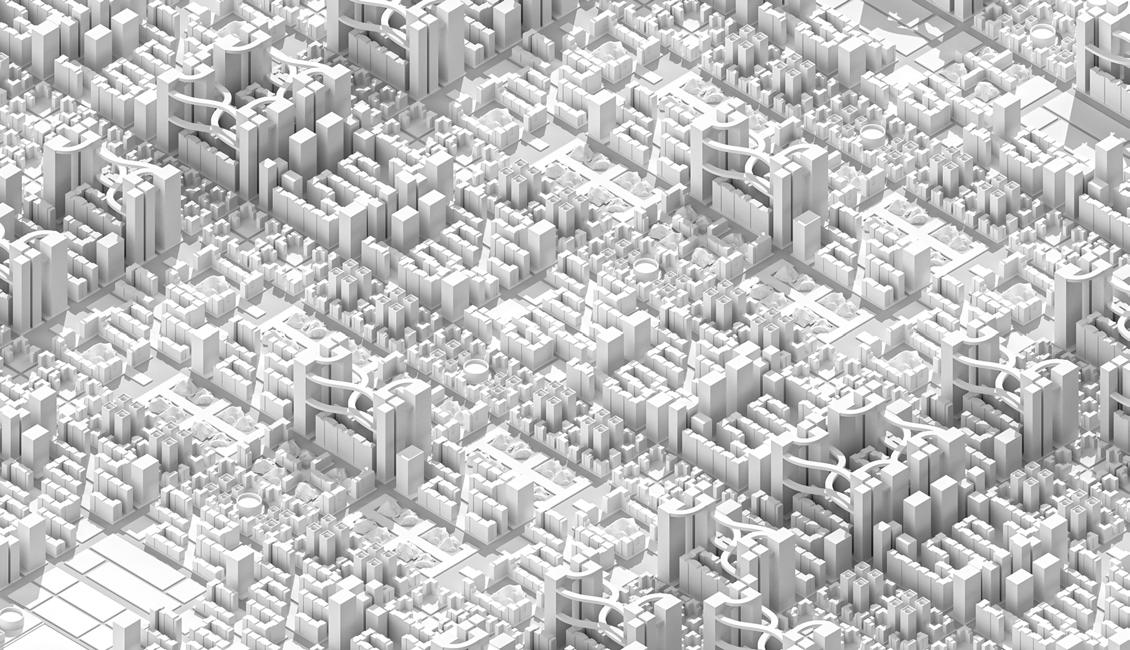
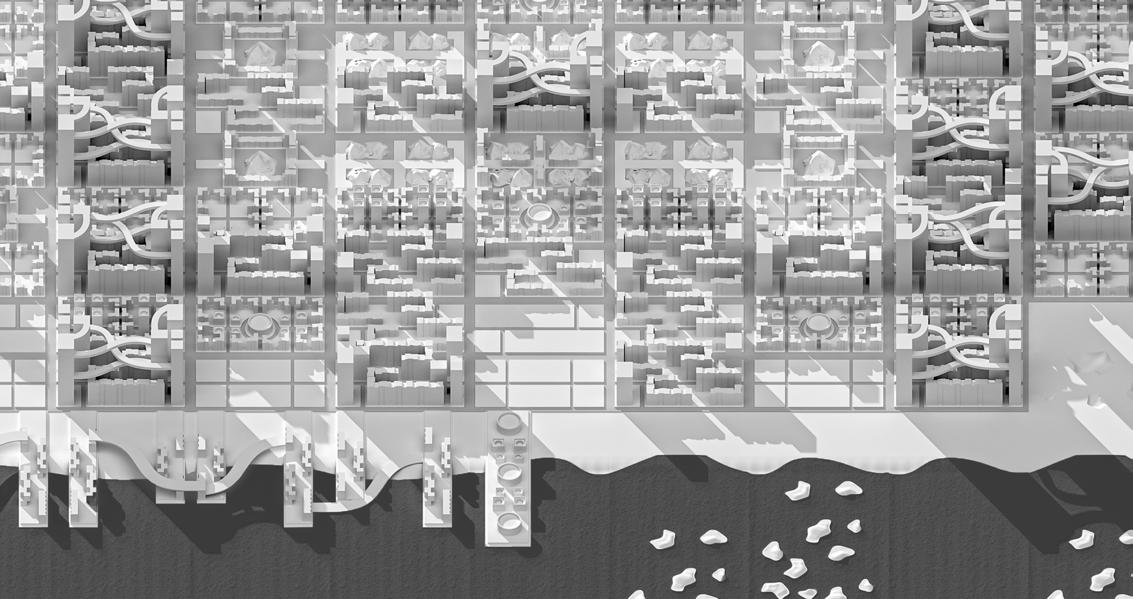
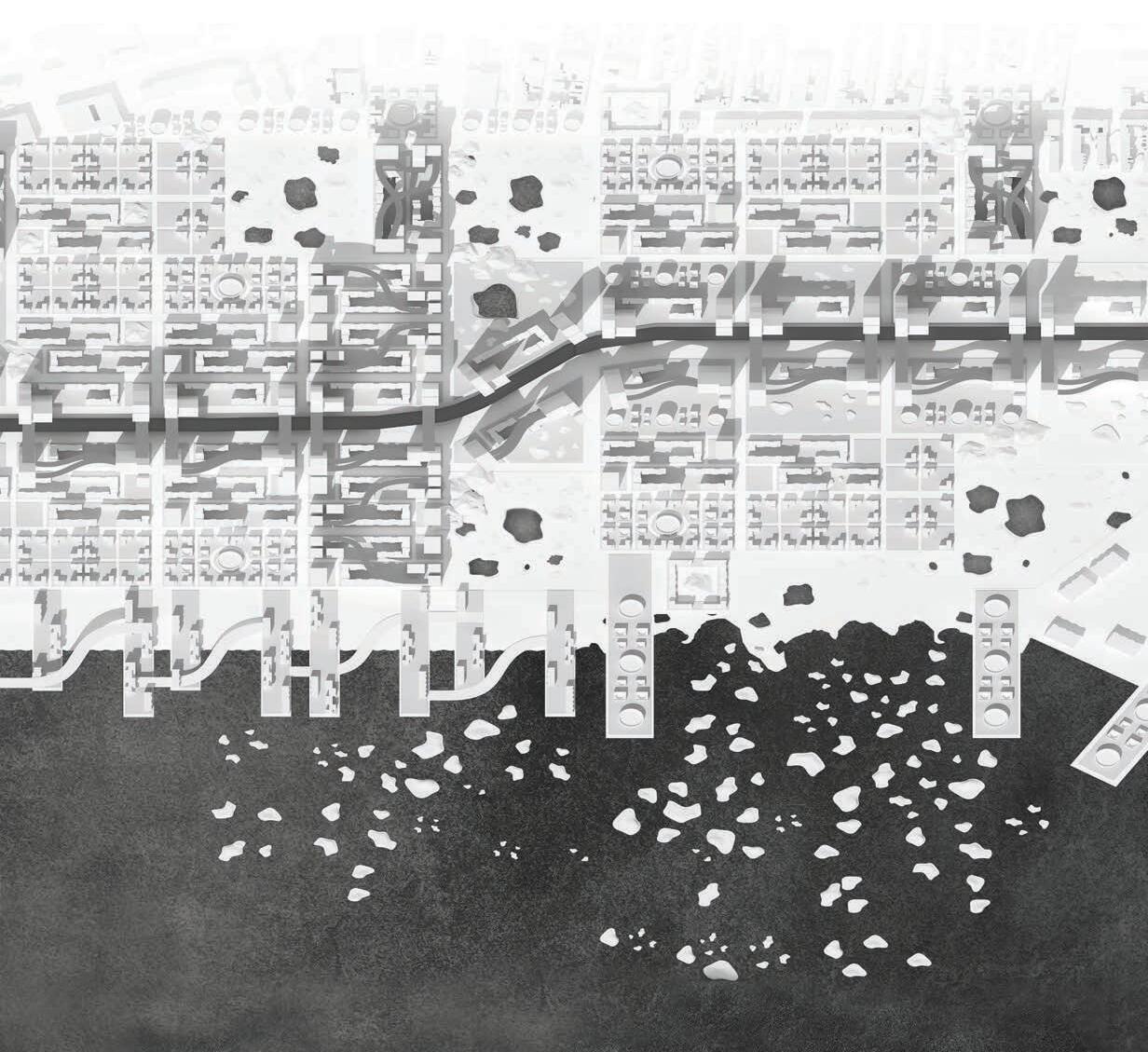
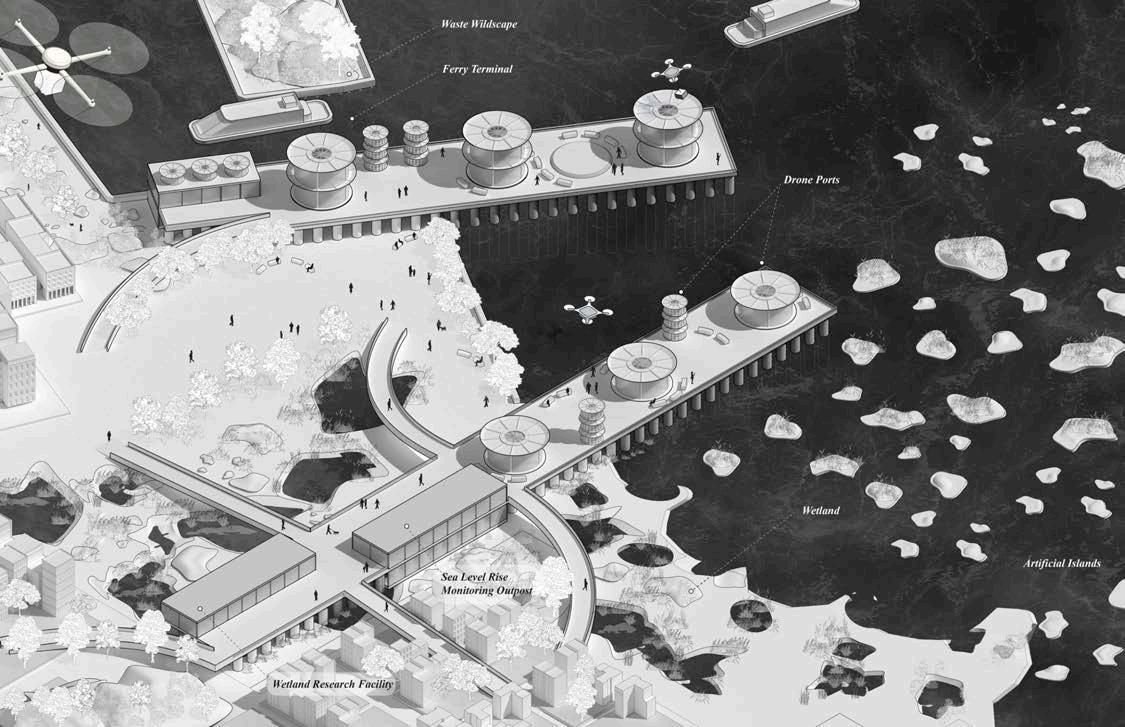
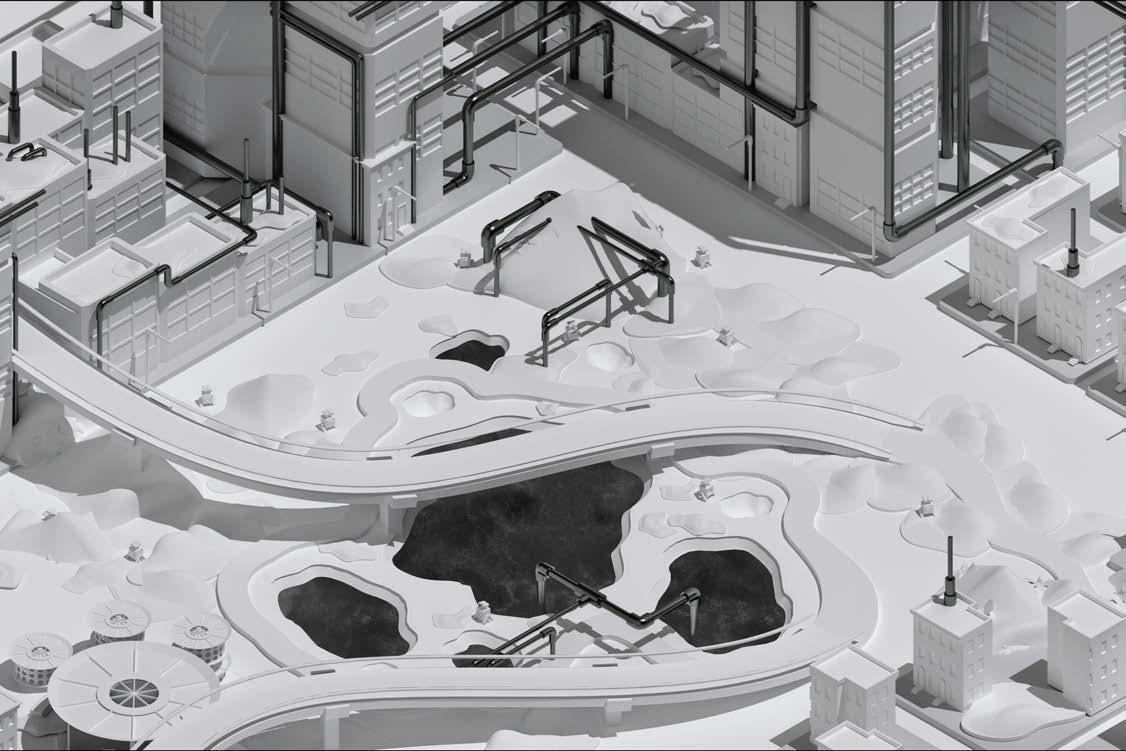
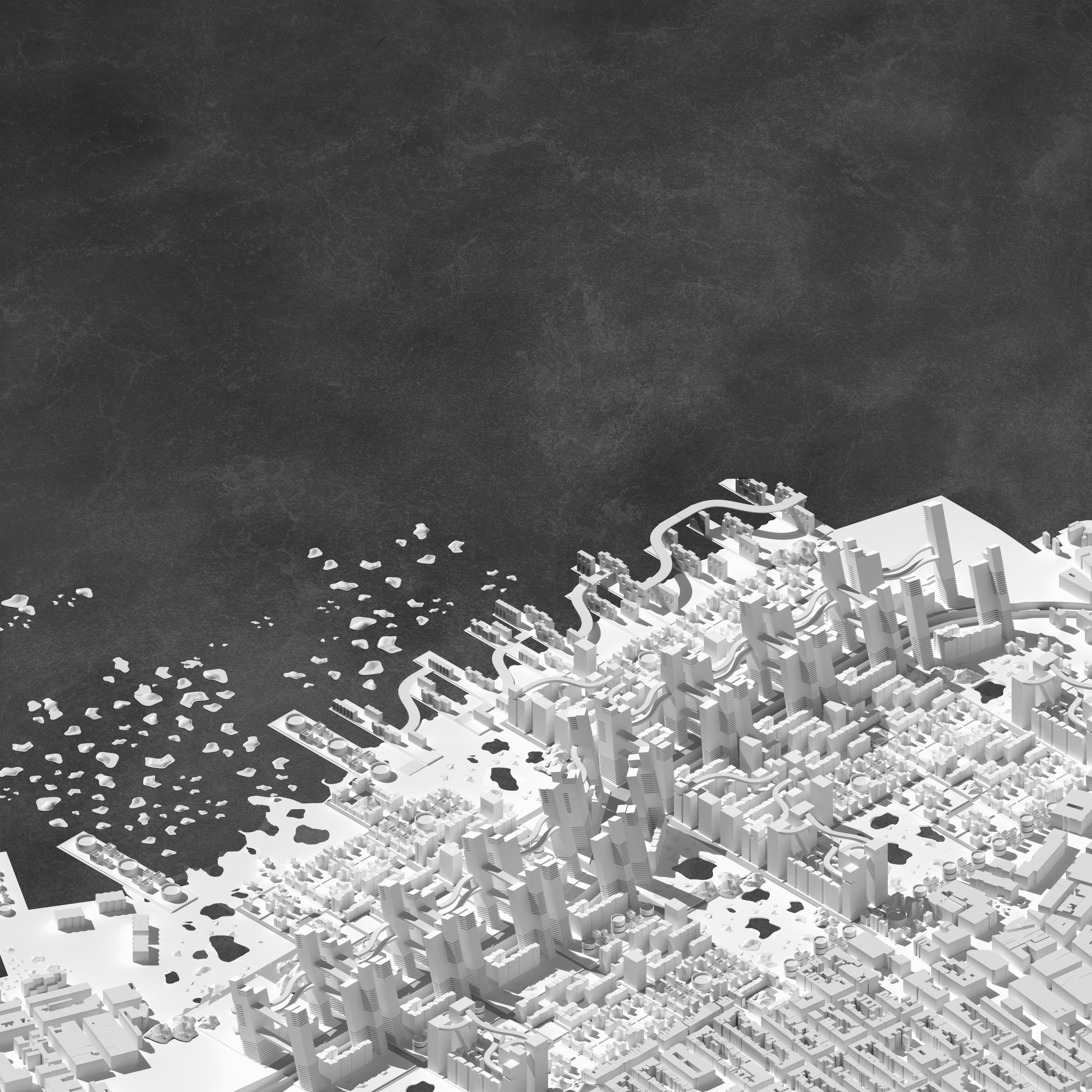
How can humanity deal with our growing pile of waste? The future of the Brooklyn Marine Terminal (BMT) must address failed waste by introducing a circular materials economy which will extend the lifecyle of consumer products and elevate the quality of public space. In order to change our climate future, we must come to terms with the infrastructural systems that are hidden away. Waste management can become a valuable and beautiful public amenity.
Spatializing waste management as an integrated public entity.
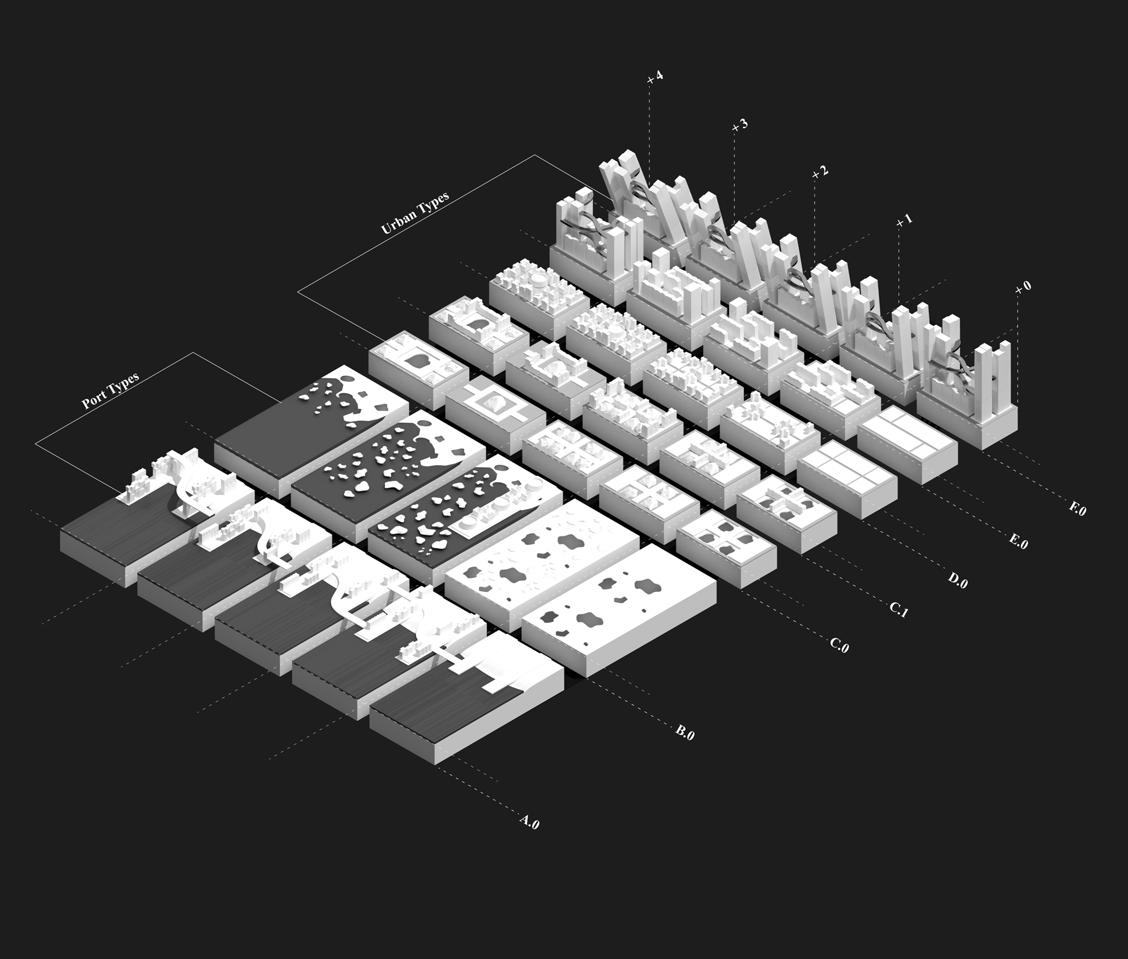
Existing Port Block Types
Design Studies: Instances of Above (Elevated Highways)
Existing City Block Types
Stormwater Management
Delicate Disassembly
Rewilding and Pedestrian Walkways
Hybrid Block Type: Connecting Corridors
Hybrid Block Type: Addressing Waste Management
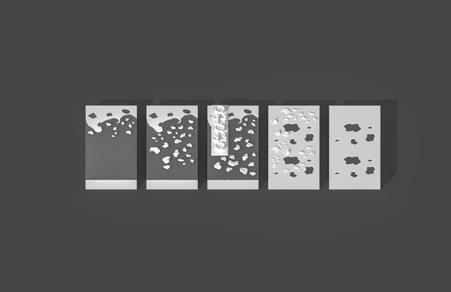
Softening the edge using fill and void strategies.
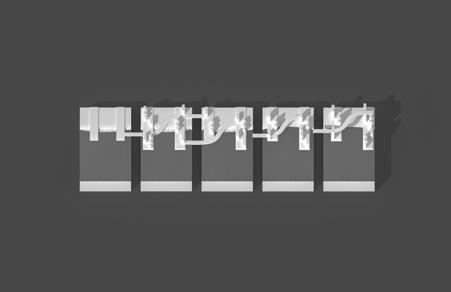
Areas of greater vertical density connect to elevated pedestrian pathways.
Path connectivity increases in vertical height. High density towers lean in response to heliomorphic conditions.
The urban edge holds waste versus waste holds the urban edge.
Courtyard and drone port density increases, public space is established in drone ports.
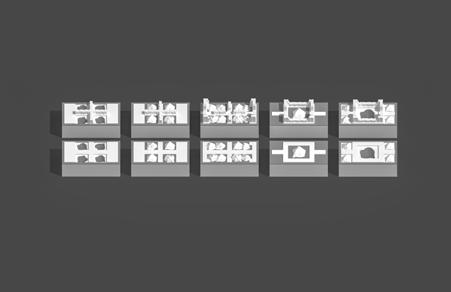
Siteless Array: Axonometric
Siteless Array: Plan Oblique
Coded matrix denominating degrees of block typologies.
The lifecycle of our refuse, its consumption, degradation, and accumulation, is perhaps one of the biggest issues facing our urban and climate futures. But to face our futures with hope, we must see waste as an instrument
of change, not just as by-product, but as capital. The capital of waste is not just economic, but is a new program of public, a return to non-human landscapes, and a driver of innovation and growth.
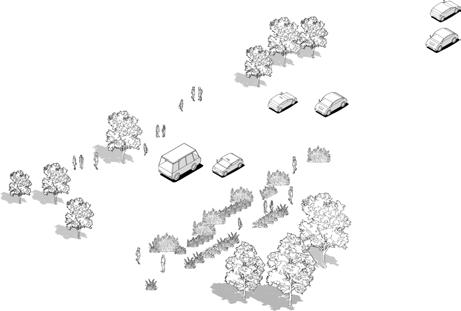
Wildscapes
Wildscape Walkway
Detail 1: Drone Ports and Wetlands
Detail 2: Urban Waste Wildscapes
ii. Linum Usitassimum
Developing a Biogenic Building Material
ambler, pennsylvania
Typology: Design-Build
Critic: Jeff Richards
Undergraduate Year 4
01.25.2025 - 06.15.25
Collaborators:
Ella Horvat Ryan MacMurray, Siah Thach, Graham Thomas, Lorenzo Trevino
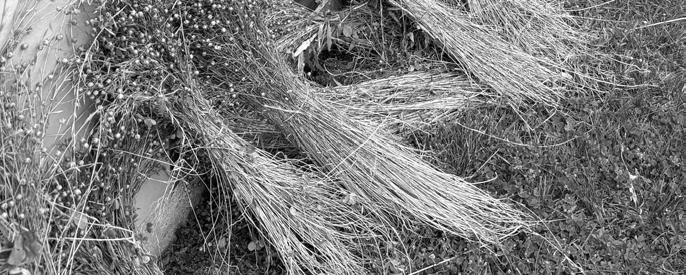
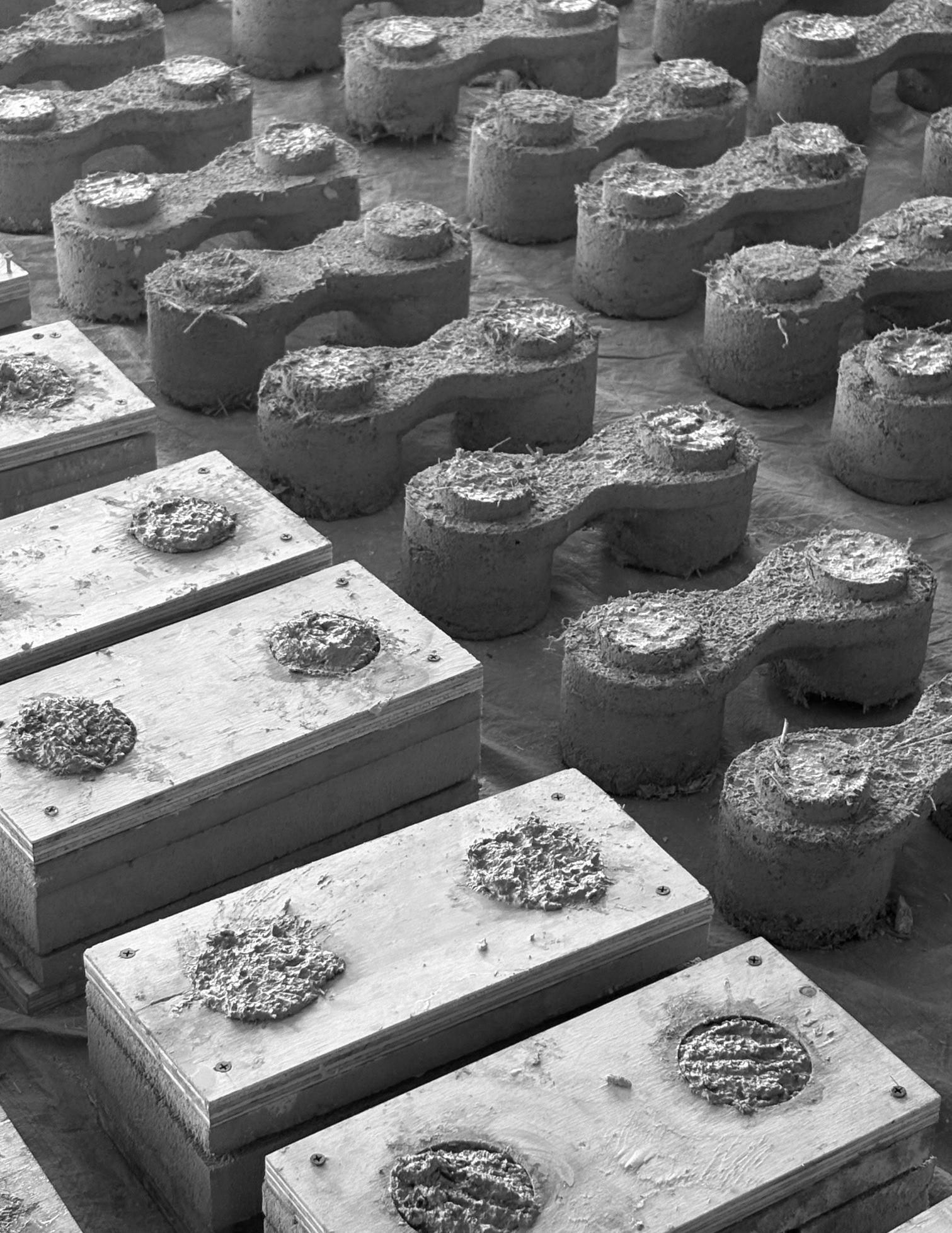
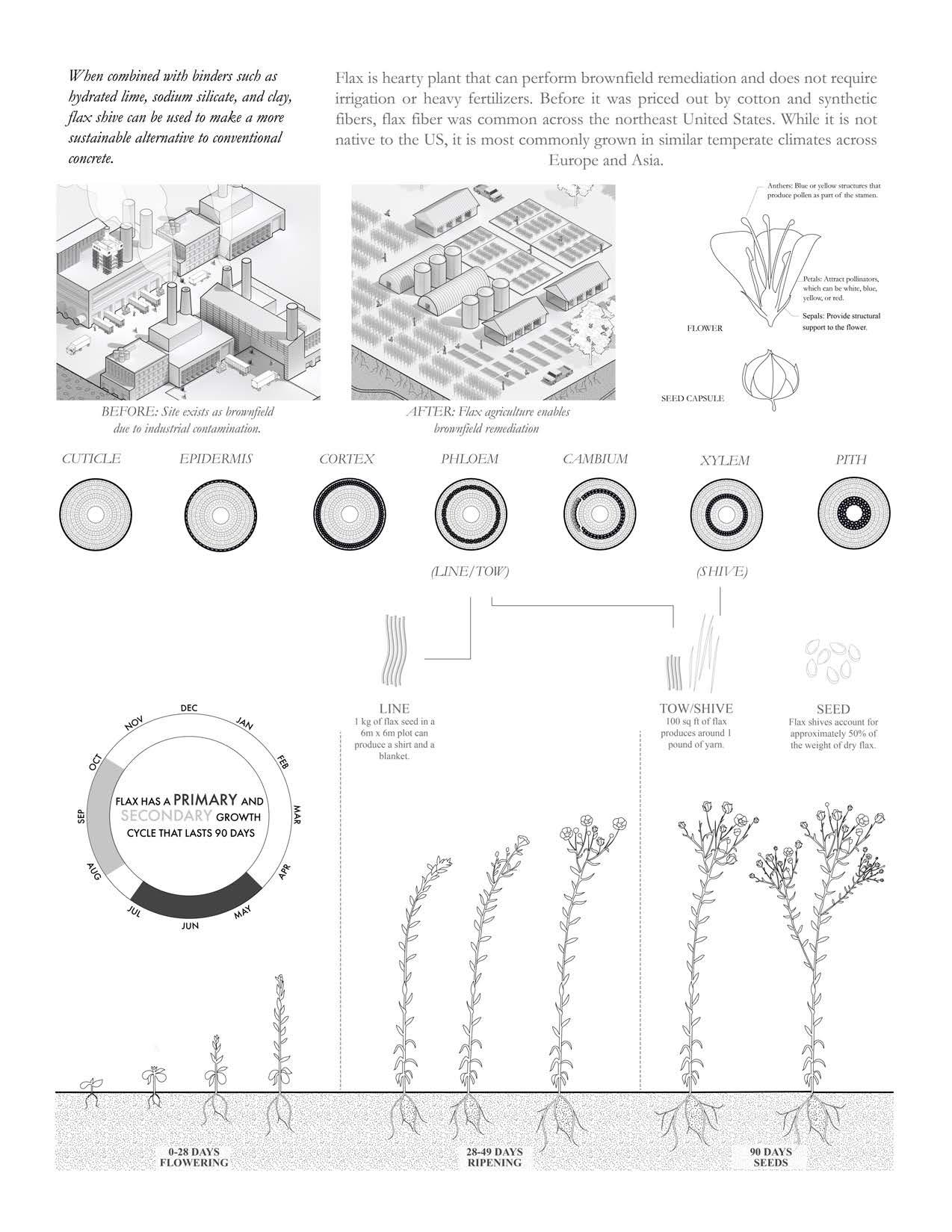
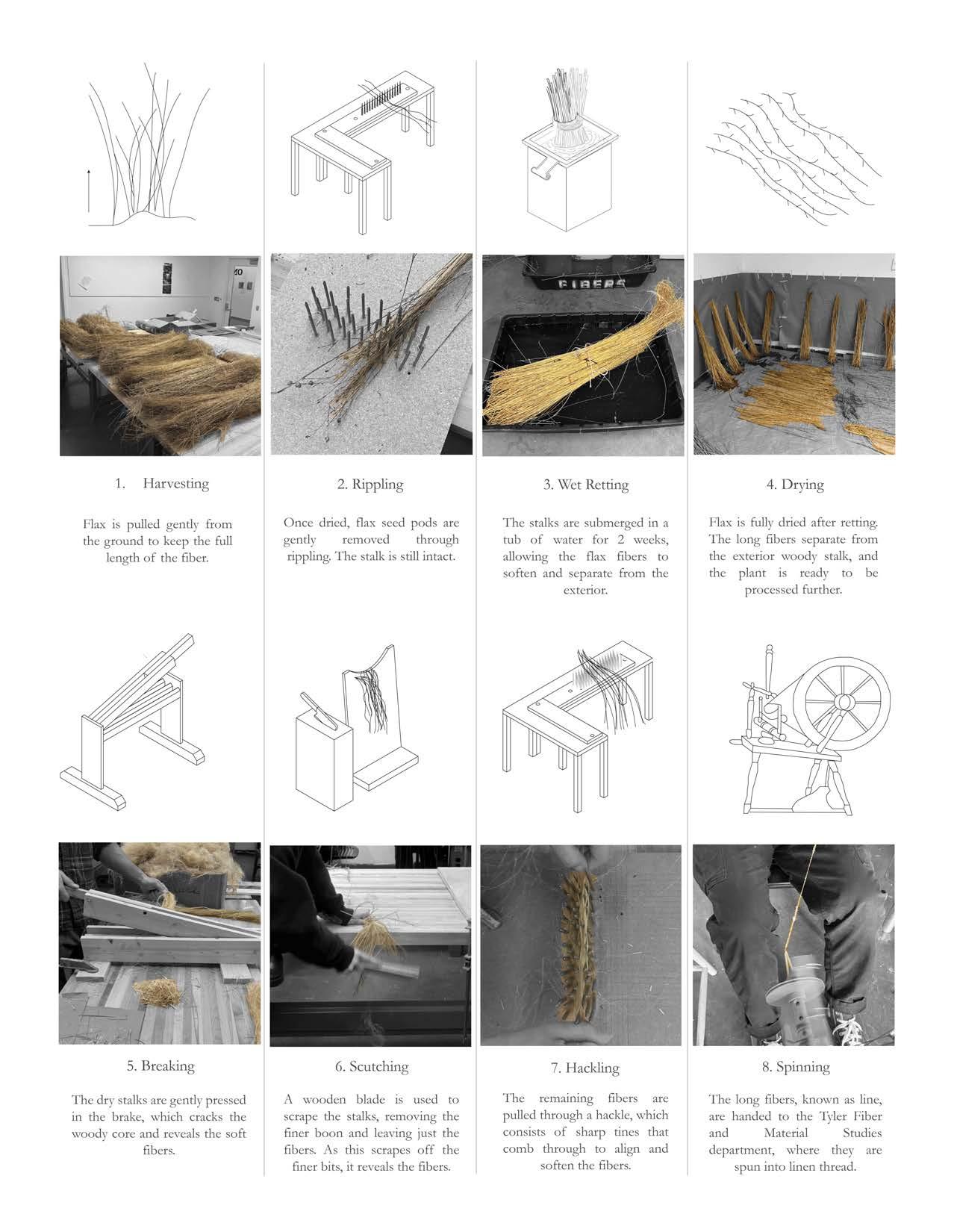
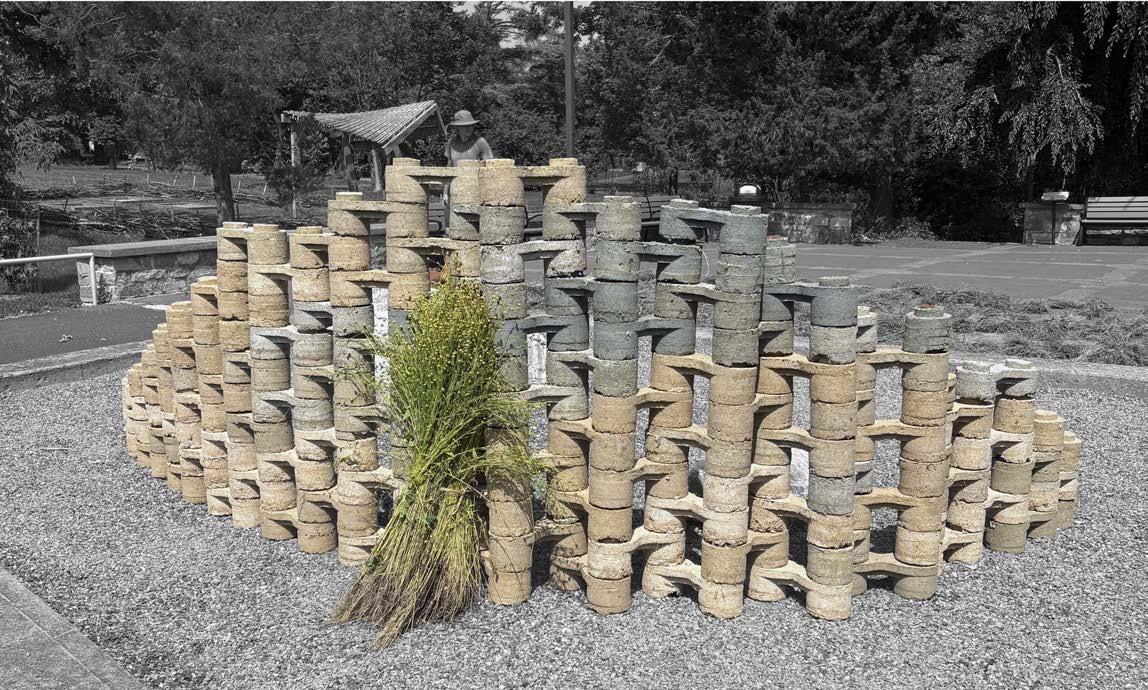
In the spring and summer of 2025 Tyler Architecture students and faculty, in a multi-disciplinary collaboration with horticulture, engineering, city and regional planning and community development, and fibers and materials, developed a new biogenic building material made from flax, the latin term for which is “linum usitatissimum.”
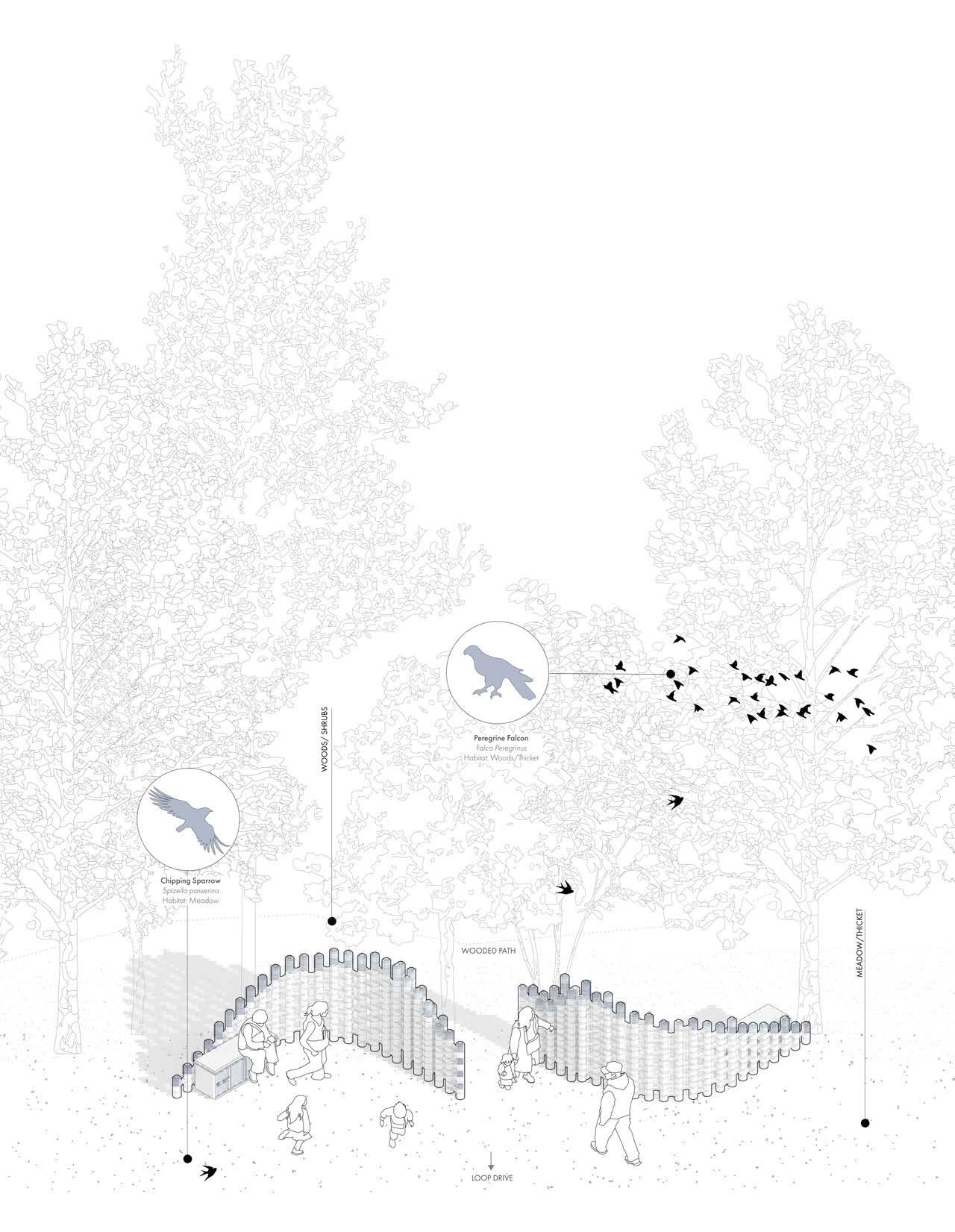
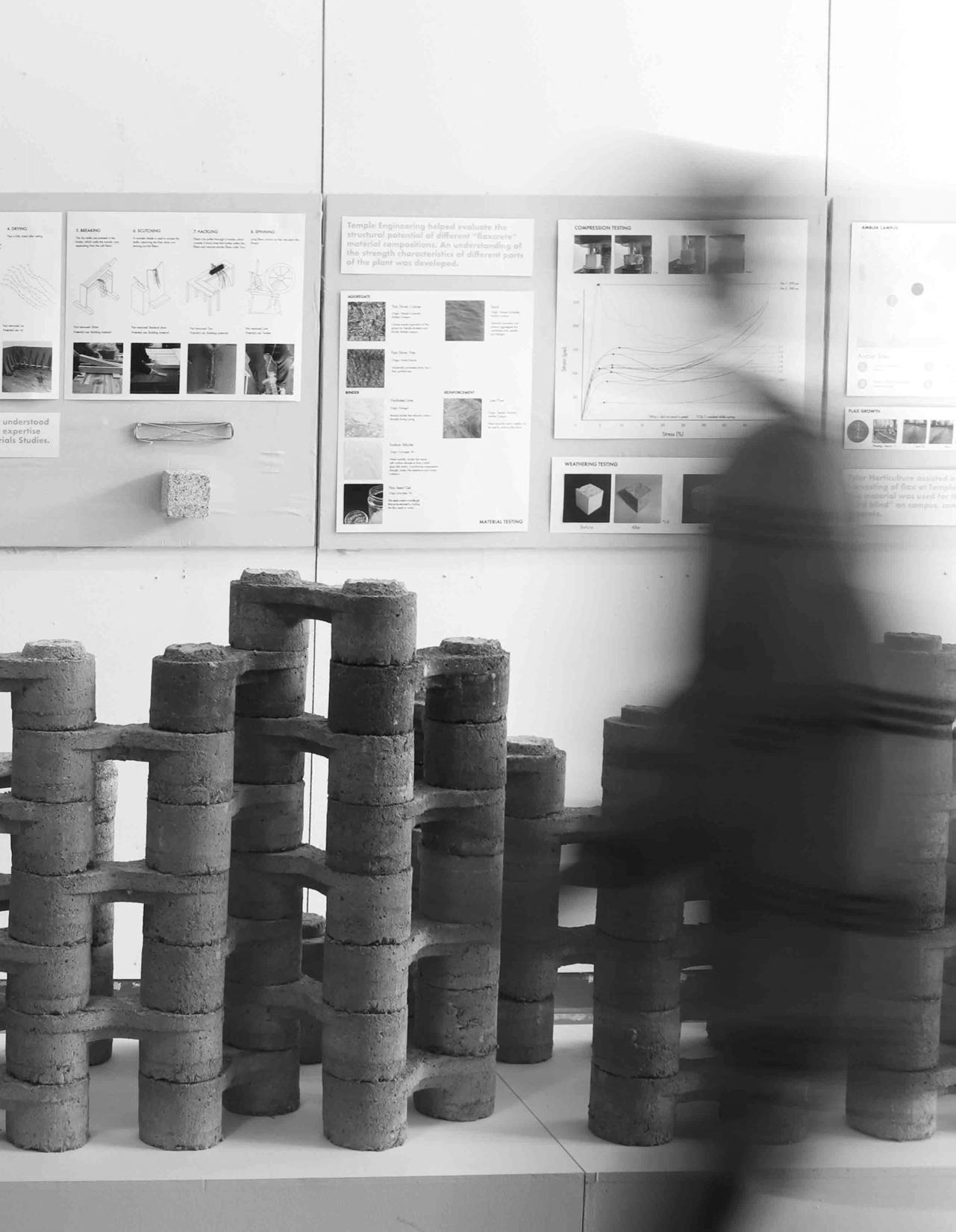
What began as a study into carbon positive, biogenic building materials, grew into an investigation at a range of scales from the planetary, to urban, to material. This investigation of this new material, “flaxcrete,” culiminated in the installation of a “bird blind” at Temple’s Ambler Campus and an exhibition at Main Campus.
Physical Model on Exhibition
Plan
Elevation
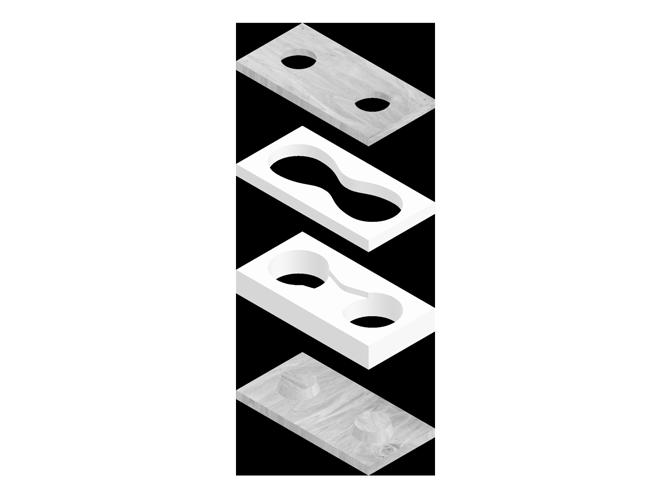
6 - 1.5” Screw
Fastened .5” from border of 13“x 6.5” board
3/4” Plywood
3” circular voidsPositive
1” XPS Foam
Laminated with Tape
2” XPS Foam Block Axonometric
Lightly glued onto base
3 ” chamfered cuts utilized on negative and positive boards
How can we develop a singular object that in a sum of parts can be capable of taking on many formal identities? How can we make that block that doesn’t require any blueprints during assembly? Using natural dye extracts, the header blocks are dyed in various colors and stacked upon the established structure by users passing by. In this way, the structure becomes a reflection of its users and can become a valued piece of the community.
iii.
philadelphia, pa
Typology: Museum Extension
Critic: Danielle Willems
Graduate Year 1
09.01.2025 - 12.08.25
Collaborators: Individual
Bodies & By-Products
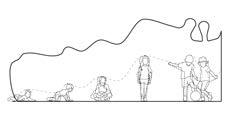
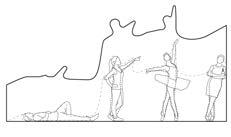
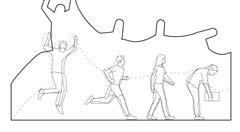
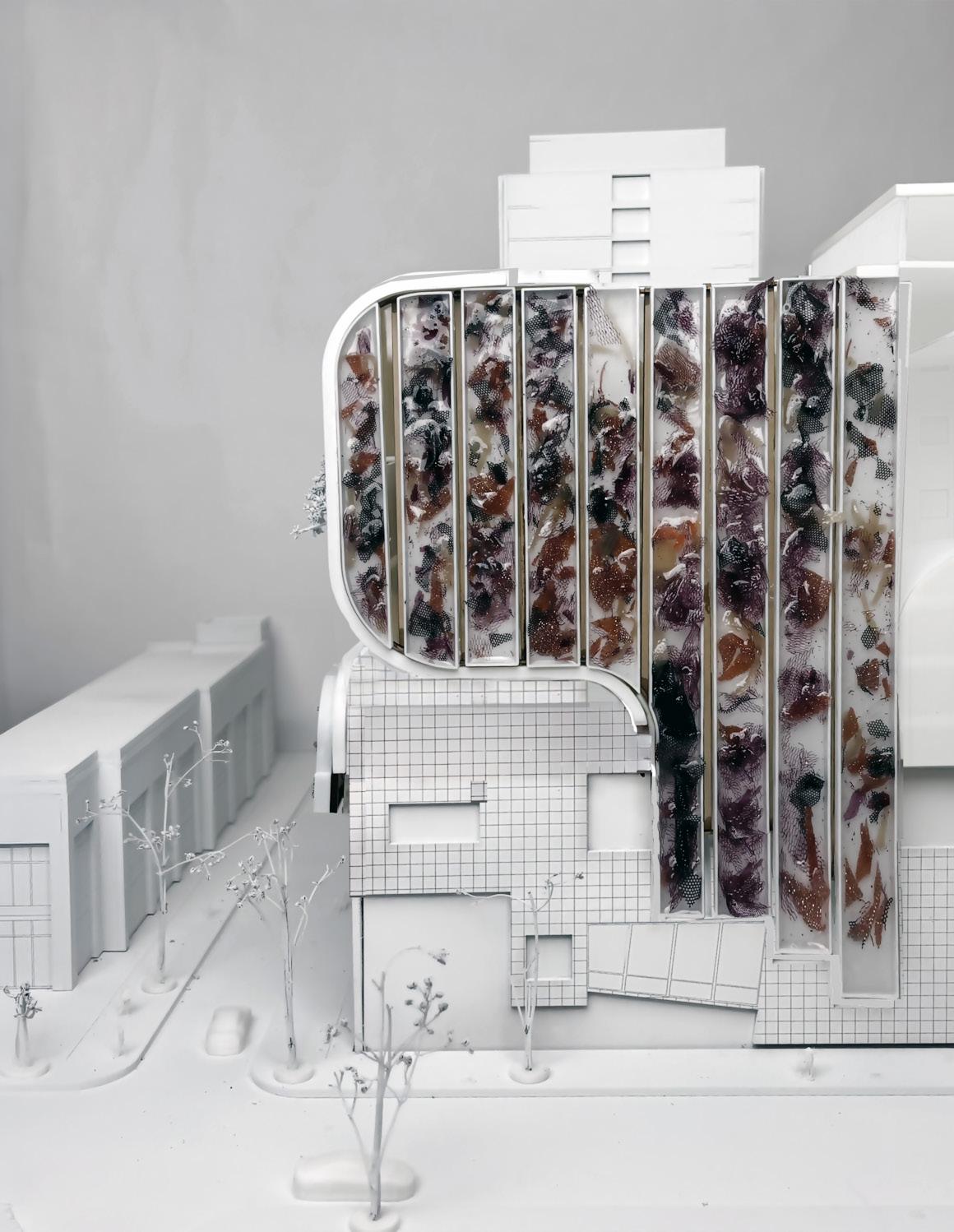
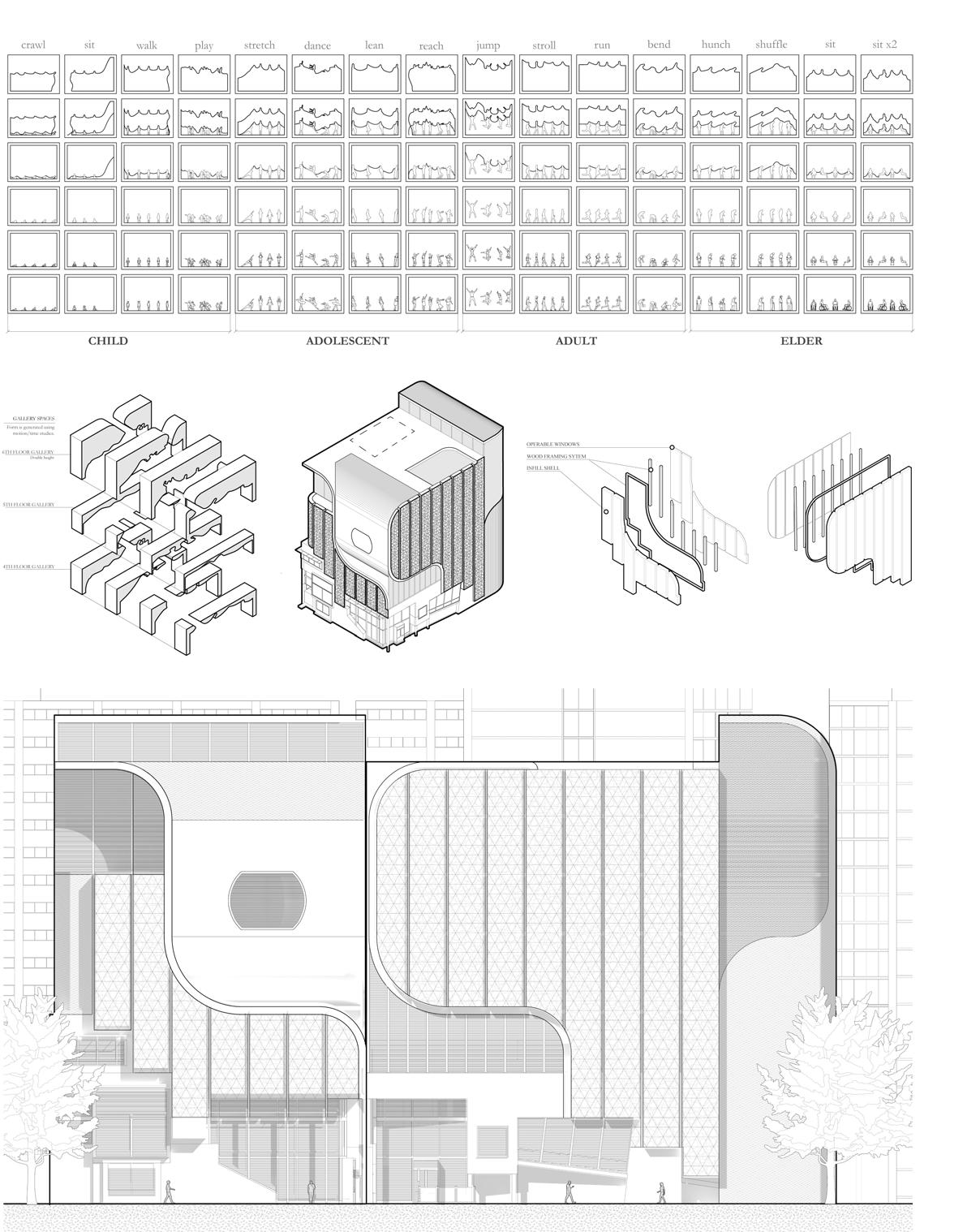
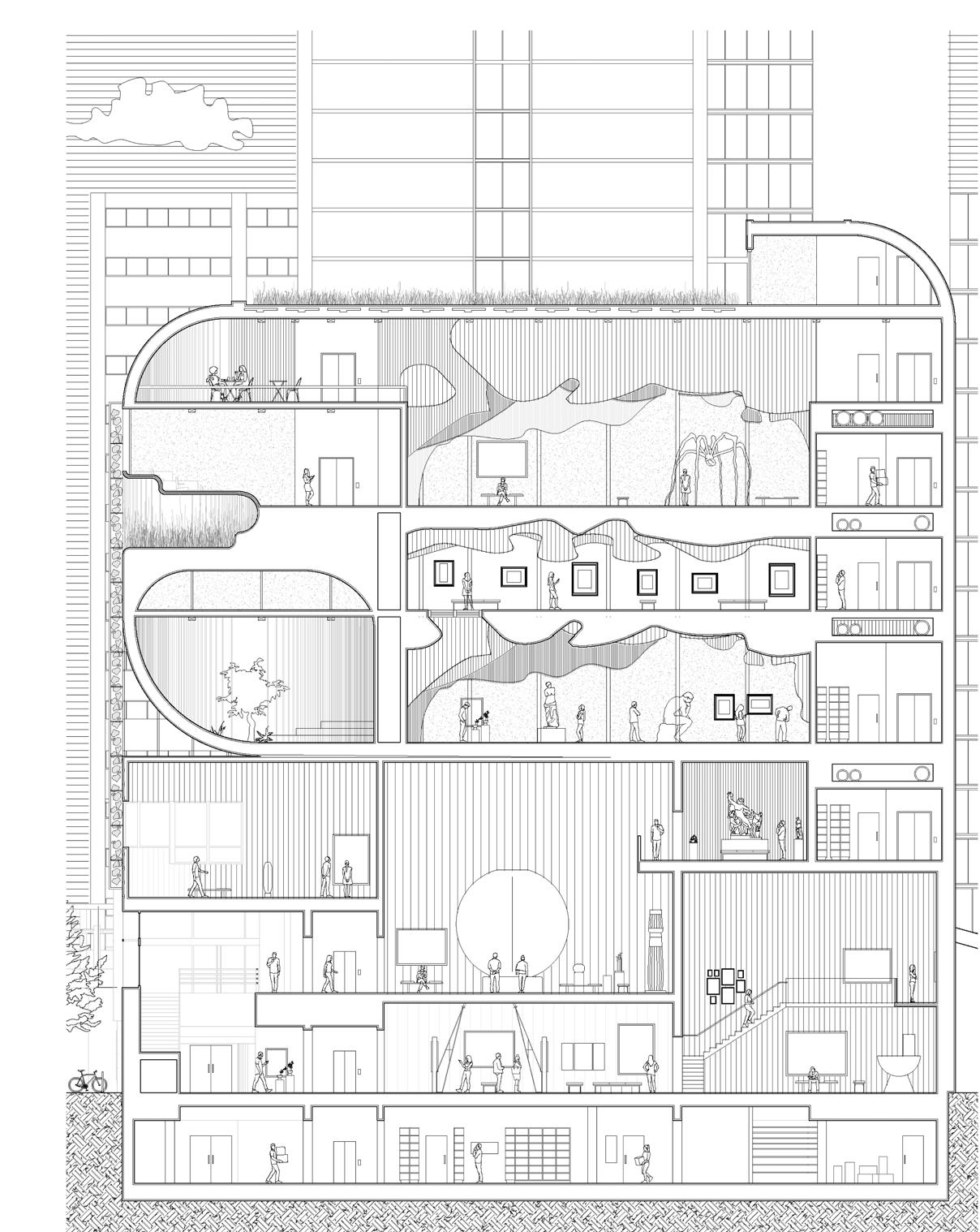
Bodies and By-Products proposes an extension of the existing Institute of Contemporary Art. The semester builds itself upon three different projects, each moving up in scale. Projects 1 and 2 were influenced by the concept of humanism present in Alvar Aaltos works and seen through scale, softness, and the experiential. Building on Projects 1 and 2, the final project uses the abstraction of the human body across movement and different life stages as a generator of temporal and scalar shifts. This language manifests primarily in the gallery’s spaces, but the large curving language of the museum exterior is a continuation of these concepts. By turning waste into a visible, curatorial layer, the façade challenges the idea of the museum as a pristine, exclusionary container.
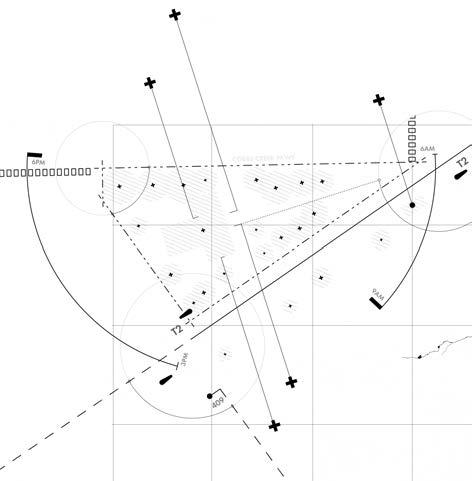
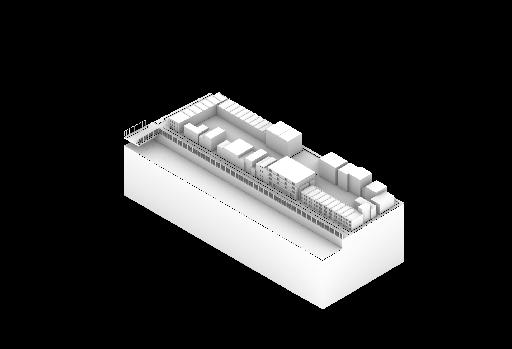
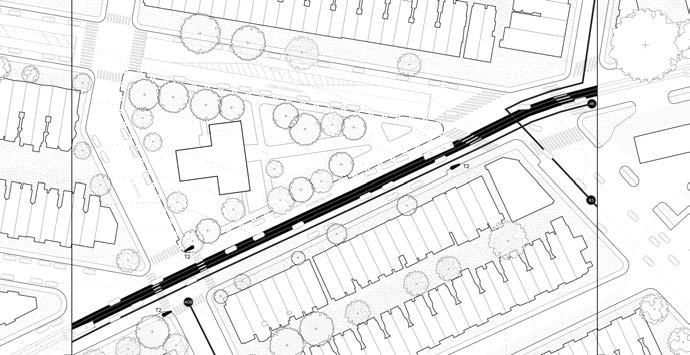
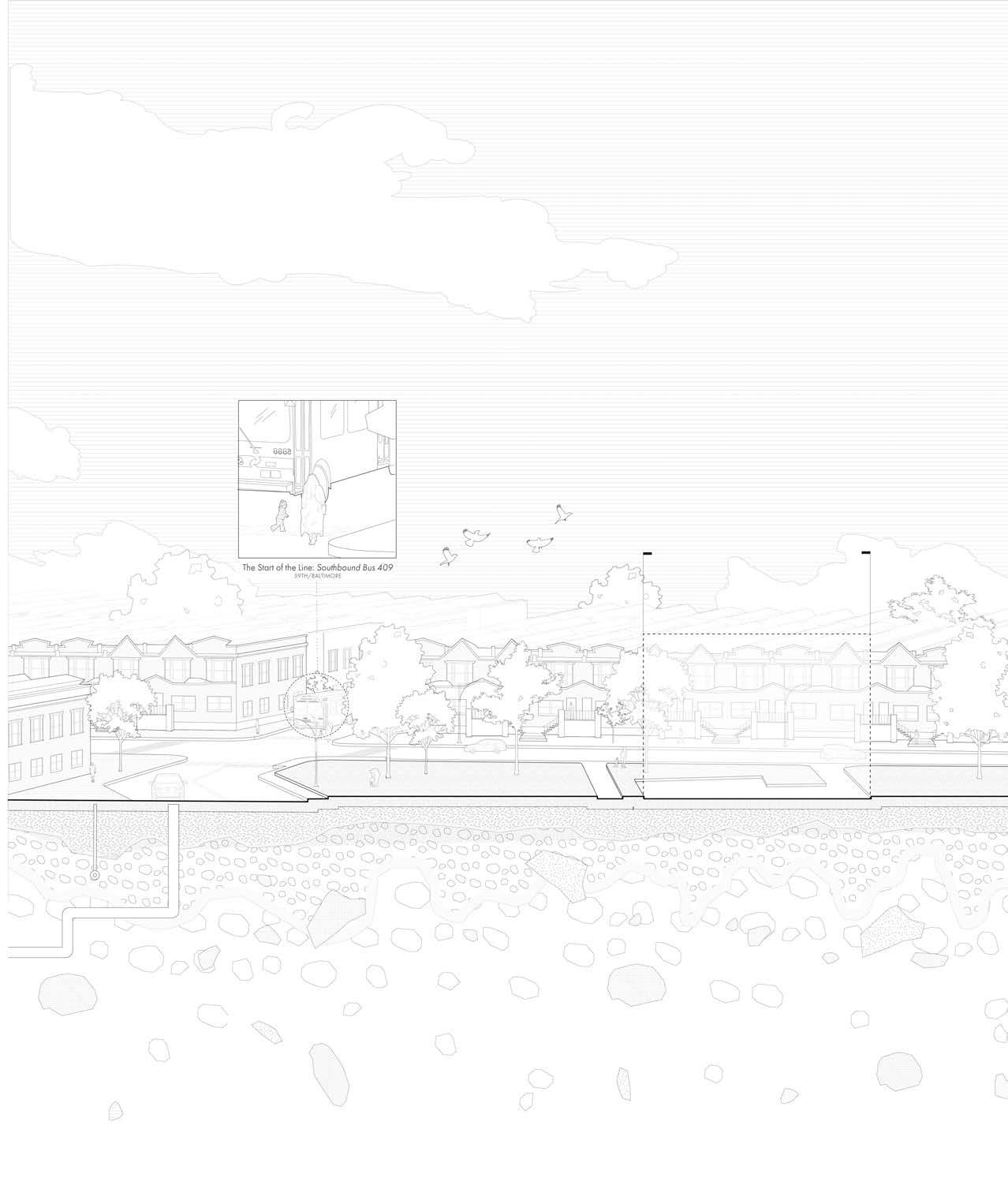
This two- week preliminary site research focuses around analyzing seasonality and transportation. Our site, located at the Cobbs Creek Blanche A. Nixon library, sits adjacent to public transit routes including buses, trollies, and a heavy rail line. This connecting infrastructure is deeply integrated into the Cobbs Creek urban fabric as its population heavily relies on SEPTA to get to school, work, and Center City. As Philadelphia’s public transit faces continued budget and operational cuts, it feels extremely important to develop a deep understanding of how our site and its community are impacted and responding.
Section Analysis of Existing Site: With a Focus on Transportation
PROGRAM Site boundary is divided into three programmatic spaces
TRIANGULATION
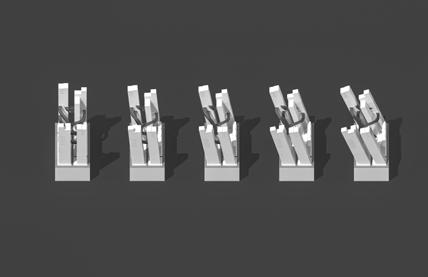
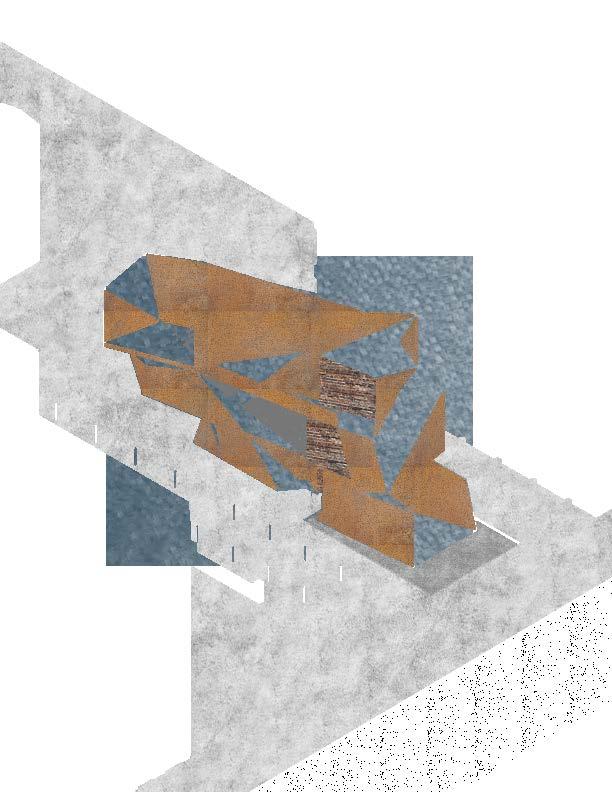
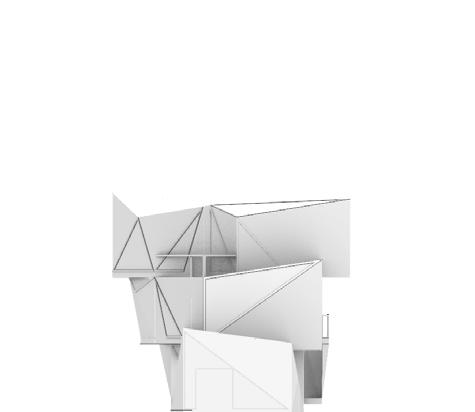
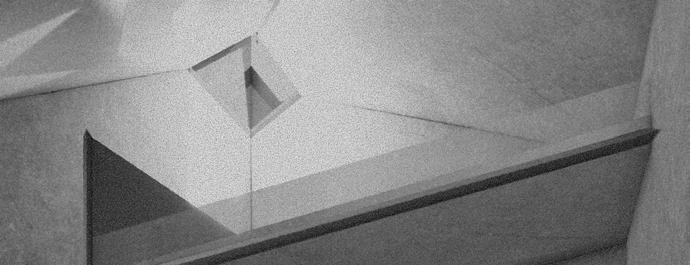
Triangulation of volume vertexes and edges opens opportunities for light wells from above
iv. Origami House
philadelphia, pa
Typology: Multi-Generational Single Family Residential
Critic: Andrew Wit
Undergraduate Year 3
010.28.2023 - 12.08.23
Collaborators: Individual
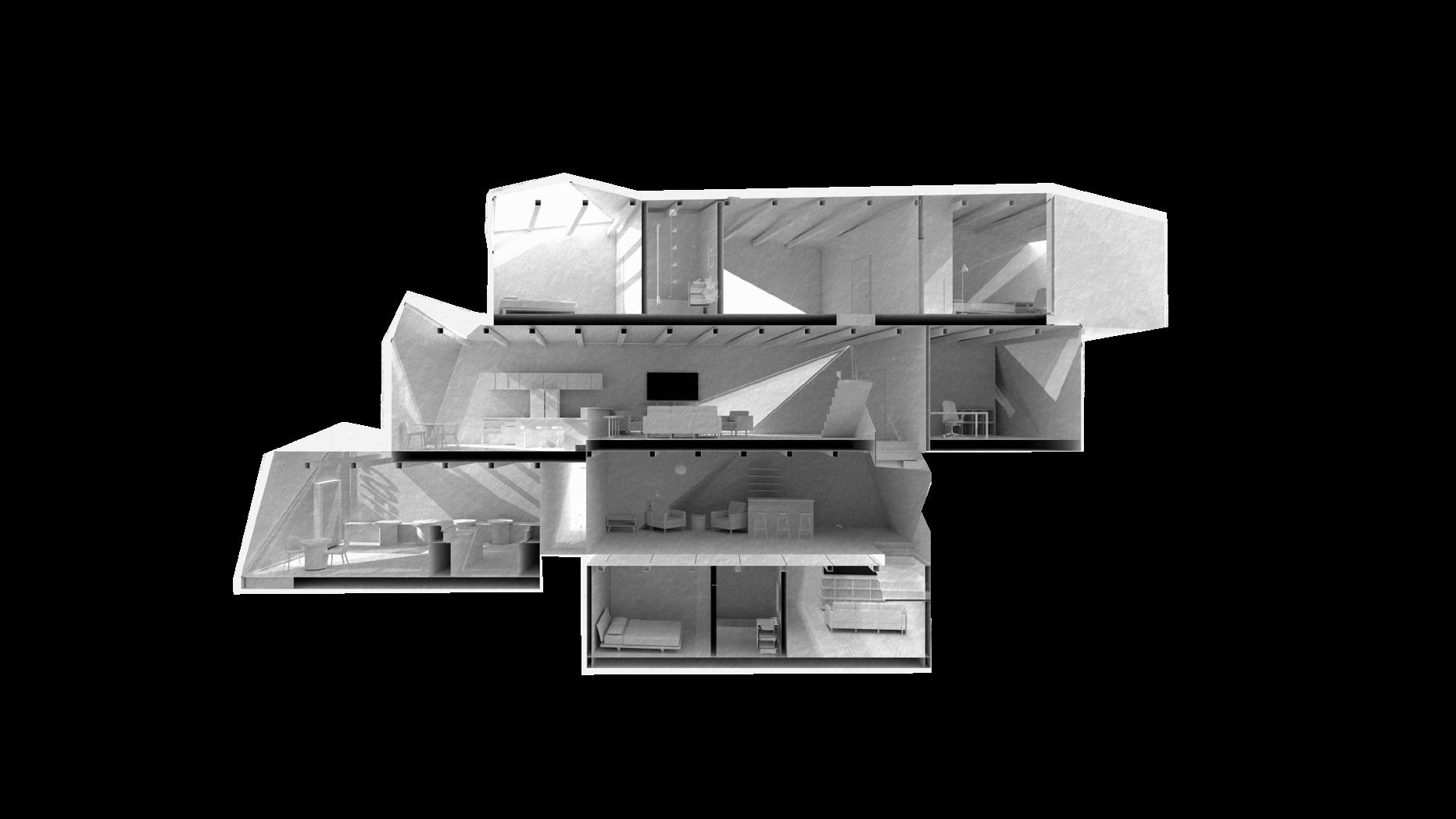
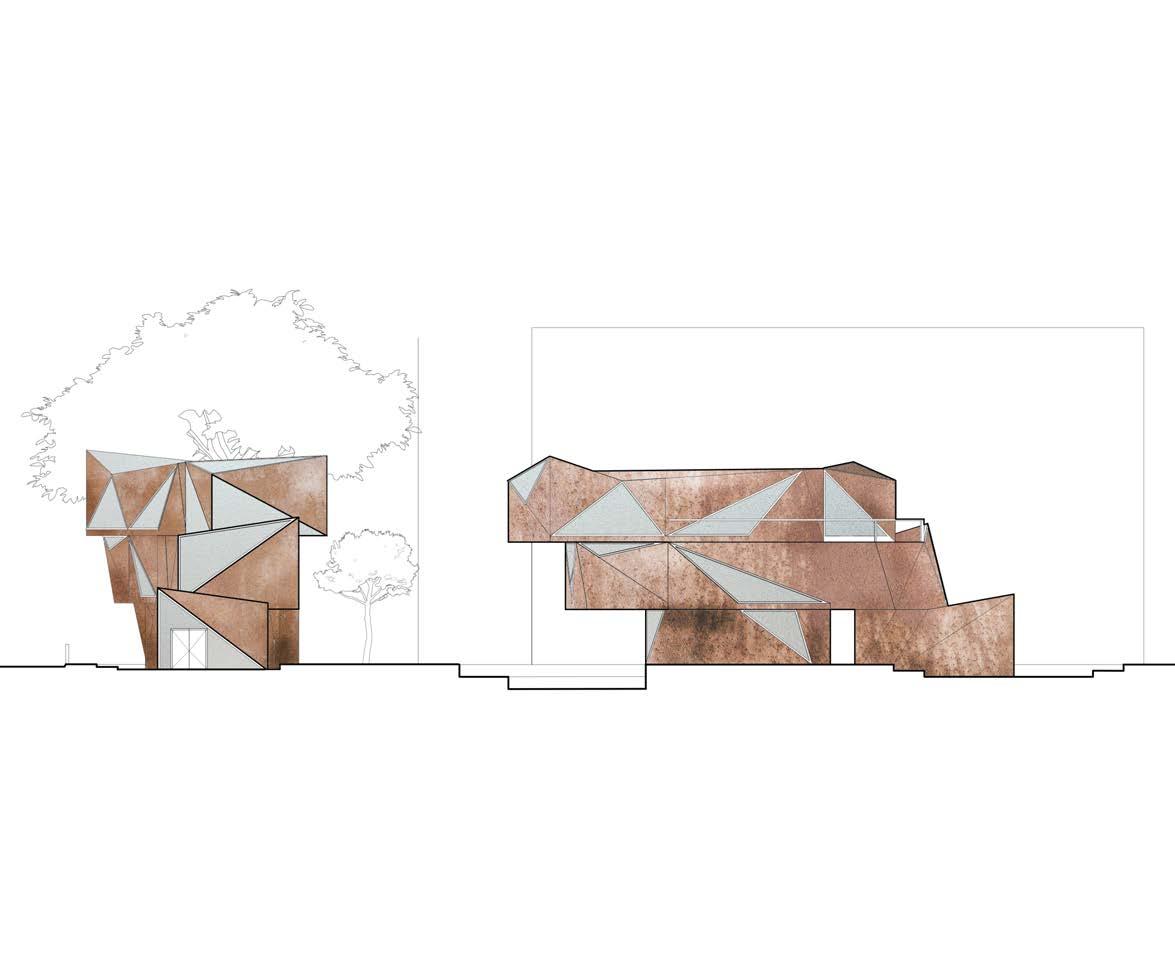
Philadelphia holds a rich historic and industrial past. How can we build new rowhome typologies that acknowledge this history while introducing a new future? In this project, a multigenerational home sits at the corner of Elfreth’s Alley and 2nd St, one of the oldest parts of Philadelphia. The form of the building is triangulated to draw in light from above on an otherwise overshadowed site. The triangular panels are made from recycled cor-ten steel, a sustainable choice of material that pays homage to Philadelphia’s industrial past. Recycled brick is also used in moments throughout, as brick is the predominant material of the area.
PROGRAM Site boundary is divided into three programmatic spaces
PROGRAM Site boundary is divided into three programmatic spaces
PRIVACY Volumes are pulled back from the street to create privacy
PRIVACY Volumes are pulled back from the street to create privacy
TERRACES
Rotations enable views and terrace space
TERRACES
TRIANGULATION
TRIANGULATION
Rotations enable views and terrace space
Triangulation of volume vertexes and edges opens opportunities for light wells from above
Triangulation of volume vertexes and edges opens opportunities for light wells from above
PROGRAM boundary is divided into three programmatic spaces
PRIVACY
Volumes are pulled back from the street to create privacy
PRIVACY
Volumes are pulled back from the street to create privacy
TERRACES Rotations enable views and terrace space
TERRACES
TRIANGULATION
TRIANGULATION
Rotations enable views and terrace space
Triangulation of volume vertexes and edges opens opportunities for light wells from above
Triangulation of volume vertexes and edges opens opportunities for light wells from above
South Elevation
West Elevation
Third Floor
Second Floor
First Floor
2nd Street
Mom
Age: 46
• Writer, author of best-selling childrens novel
• Likes plein air painting and biking in her free time
Grandma Age: 73
• Owner and caretaker of the coffee shop
• Enjoys having guests over to play board games
Dad Age: 48
• Architect and avid horticulturist
• Enjoys running, biking, and swimming
Son Age: 14
• Wants to become a chef, cooks for the family often
Daughter Age: 16
• Bookworm, often found in her room reading sci-fi
Elfreth’s Alley
v. Aggregating Adjacencies
philadelphia, pa
Typology: Library
Critic:
Allen Pierce & Patrick Till
Undergraduate Year 3
01.28.2024 - 03.28.24
Collaborators: Individual
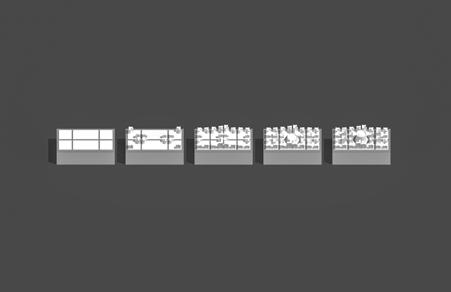
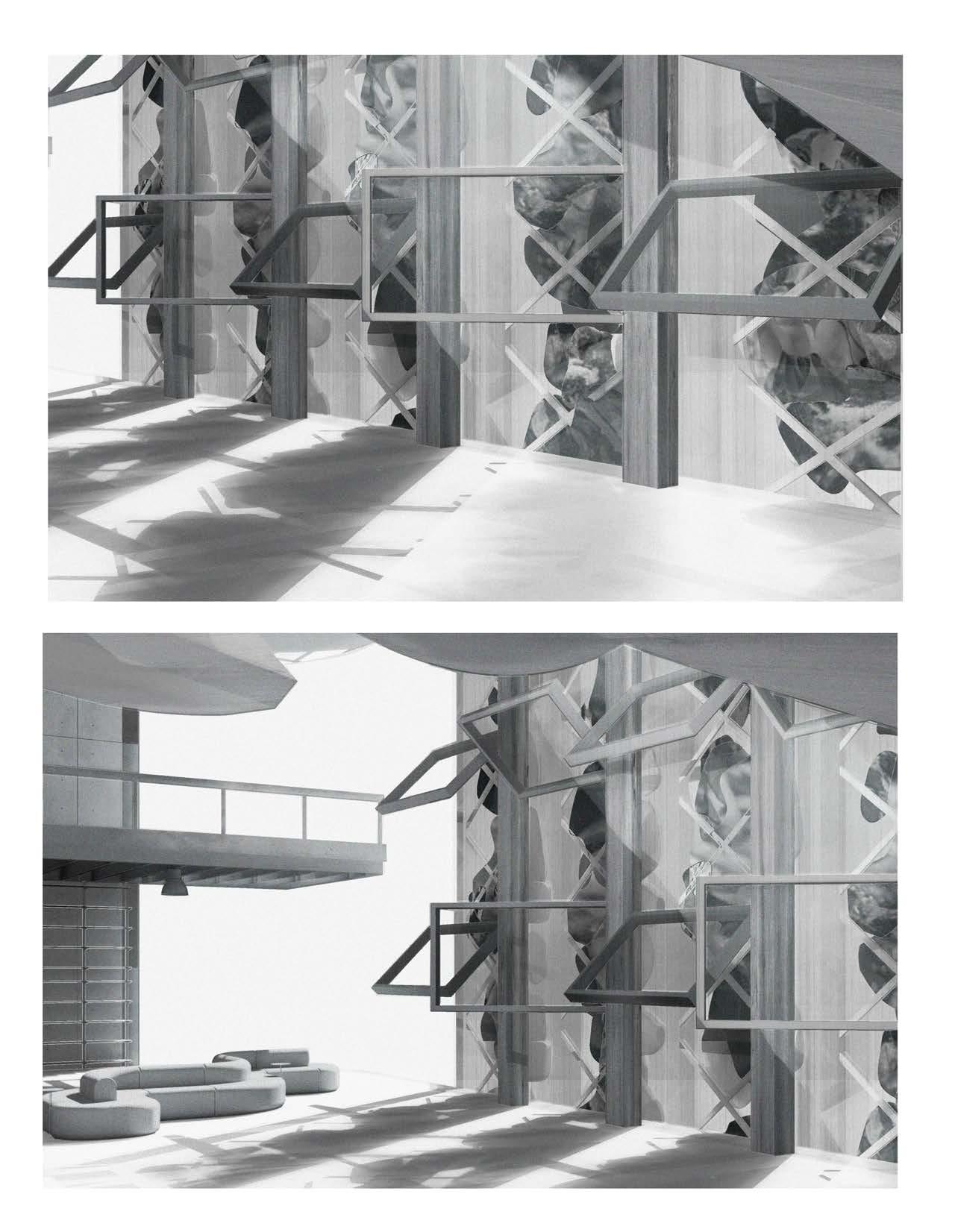
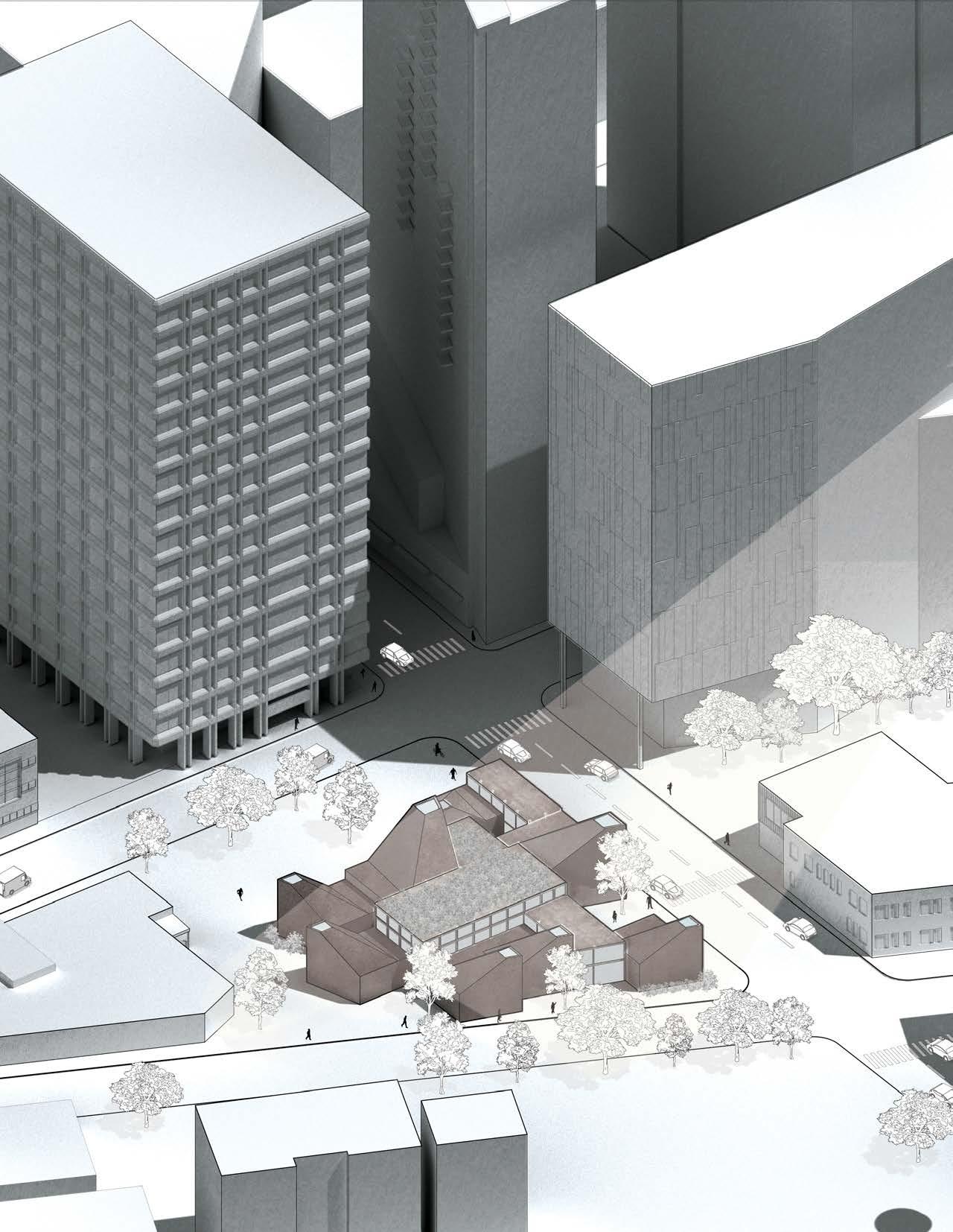
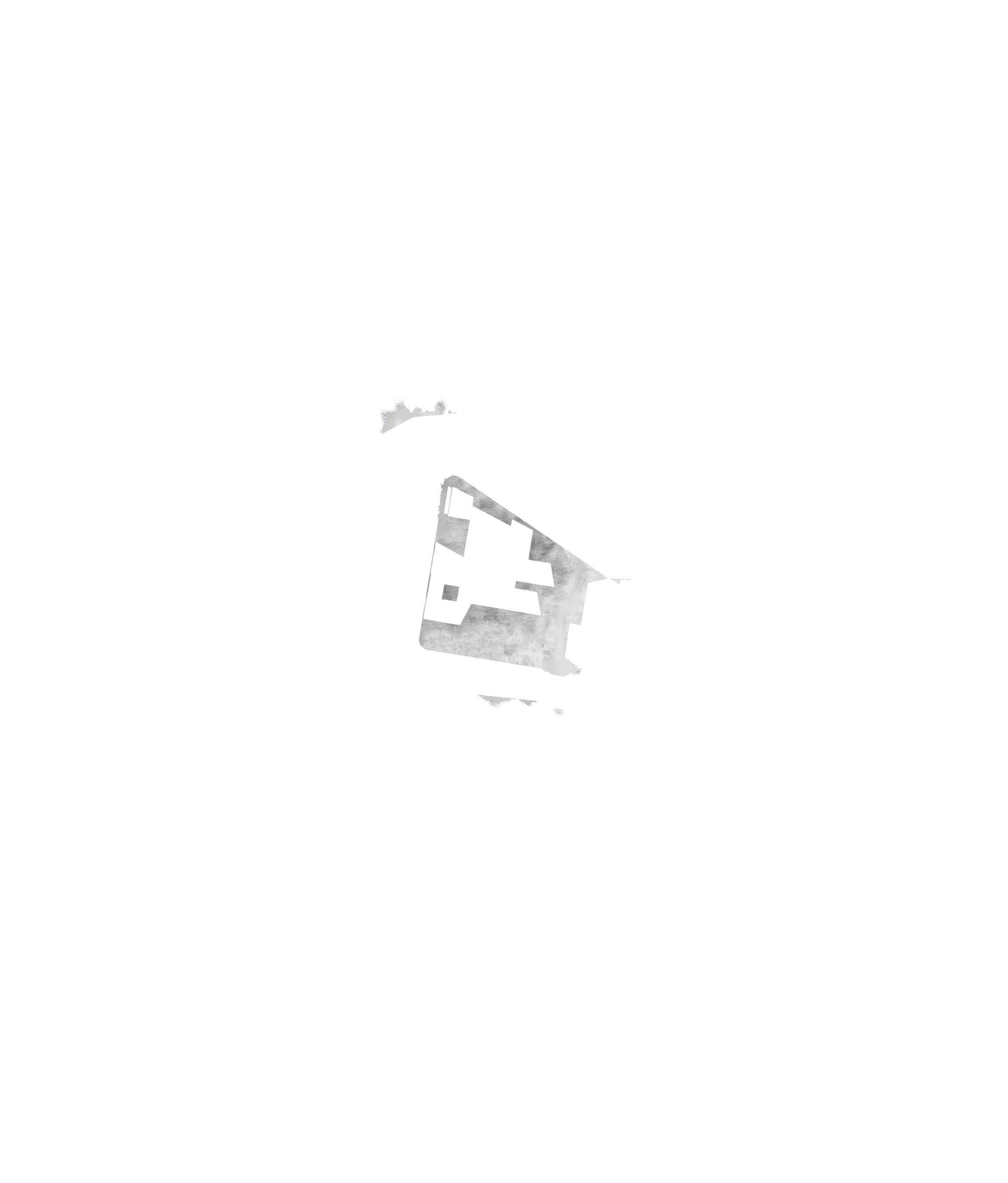
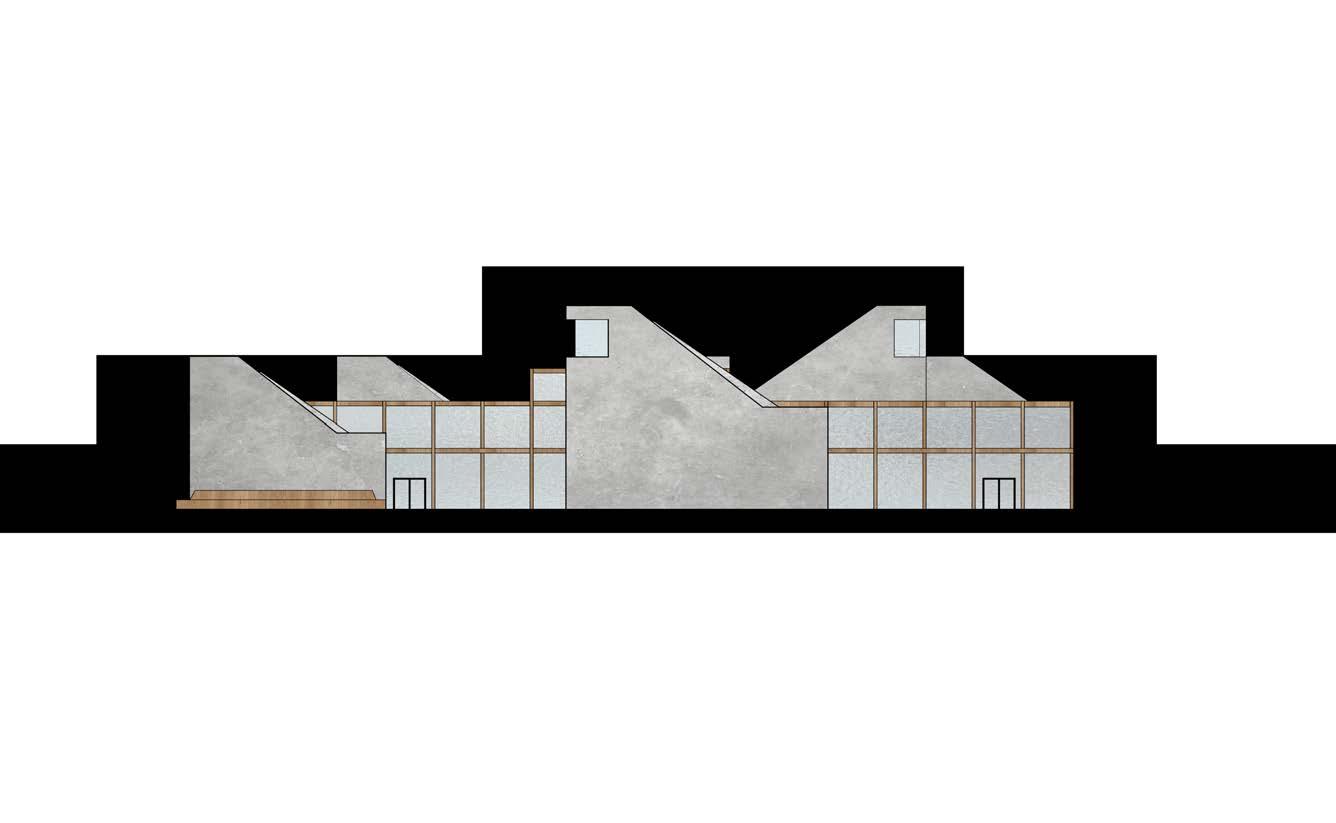
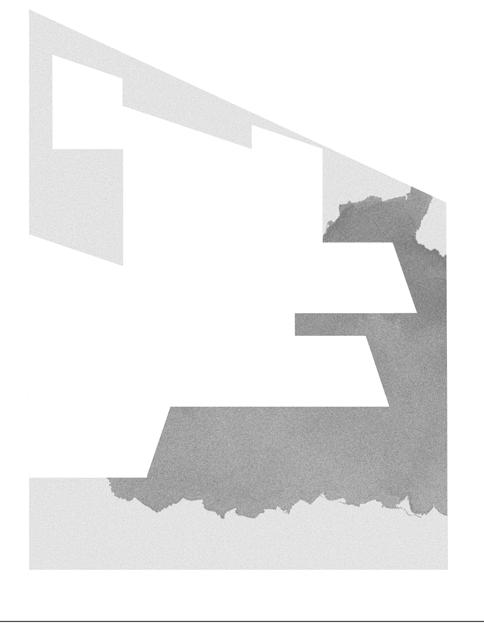
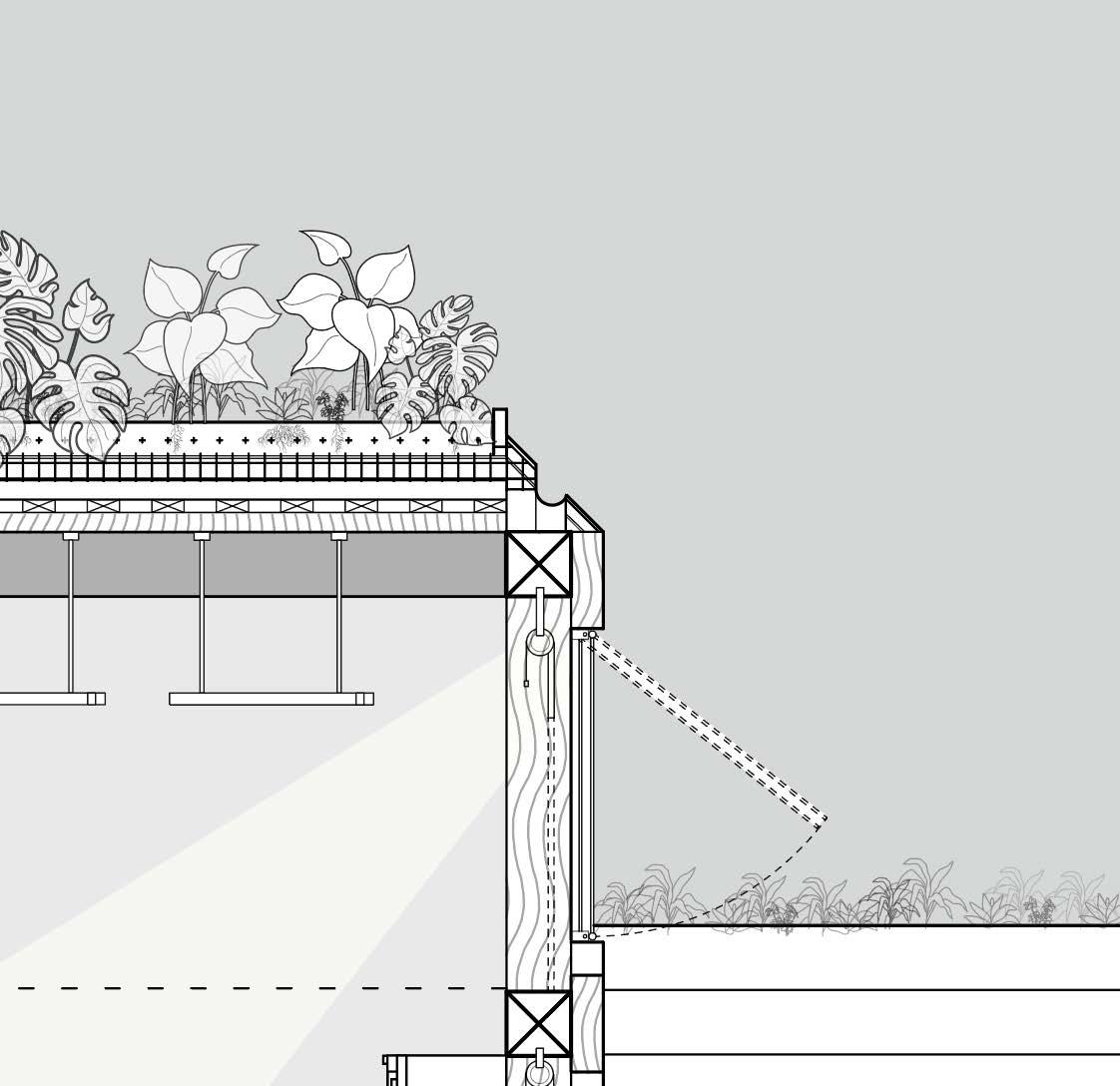
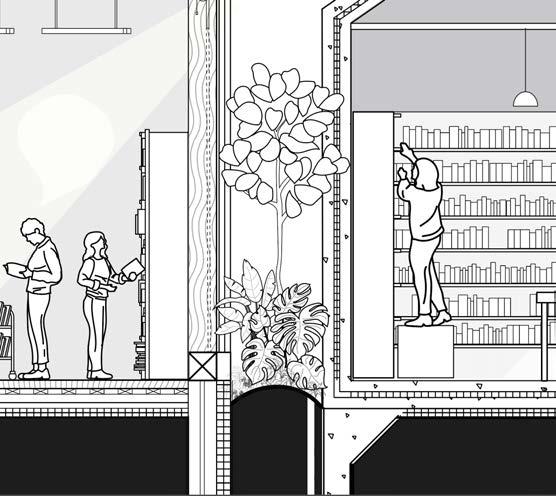
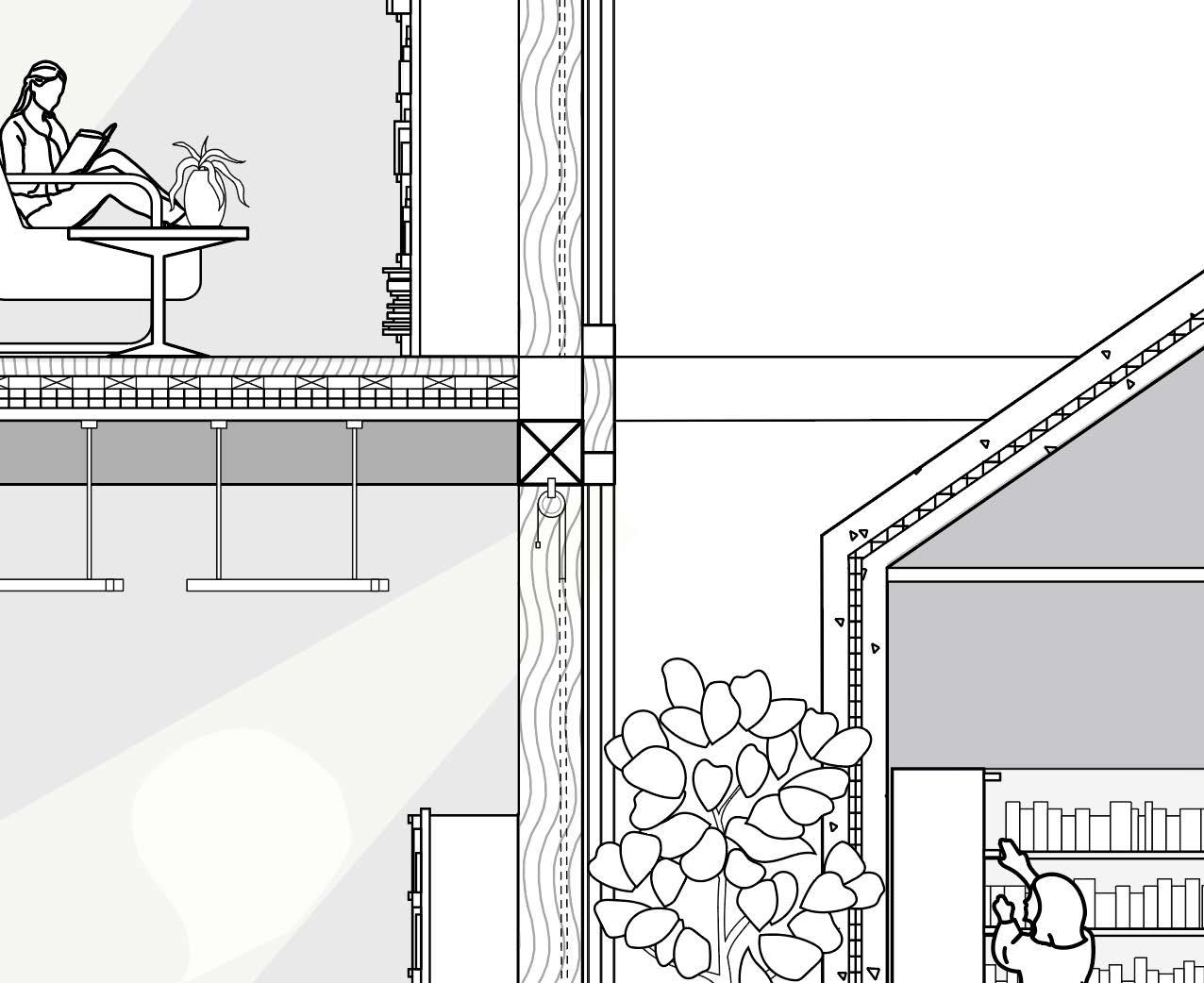
On a site surrounded by tall buildings and privatized spaces, how can a library become a human-centric space that engages a diverse public audience? Modular program elements are arranged on the site and vary in size and orientation in response to their local conditions (sun, program adjacencies). The introverted form and function of the modules is reflected in its material choice of a heavy concrete, while the open and engaging form of the connective pieces (connective tissue) is reflected in its light timber frame construction and operable glass panel window elements. A library is simultaneously a space for introspection and engagement.
FILBERT ST WARRENST
Module
Tissue
Aggregation
Second Floor
First Floor
East Elevation
FULL SUN VEGETATION
SLEEPERS
2x4 LUMBER, 2” THICK
HORIZONTAL STRUCTURE
1’x1’ CLT BEAMS
THERMAL SCREEN OPERABLE WINDOW
EXTERIOR VERTICAL CLADDING TRIPLE PANEL GLAZING
VERTICAL STRUCTURE
1’x1’ CLT COLUMNS
3’ GAP
SHADE TOLERANT VEGETATION
SOLAR PANELS SOUTH FACING
CAST-IN-PLACE
CONCRETE WALL
2 1/2” THICKNESS
RIGID INSULATION
CONCRETE FOUNDATION
WATERPROOF MEMBRANE
CONCRETE FOUNDATION
FOOTING
vi. Common Ground
philadelphia, pa
Typology: Pavilion
Graduate Year 1
01.18.2026 - 01.24.26
Collaborators: Rob Haller, Nancy Liu
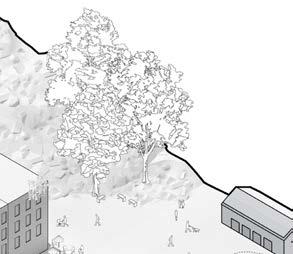
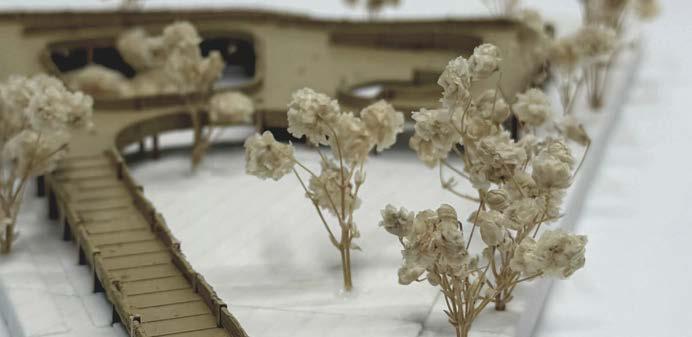
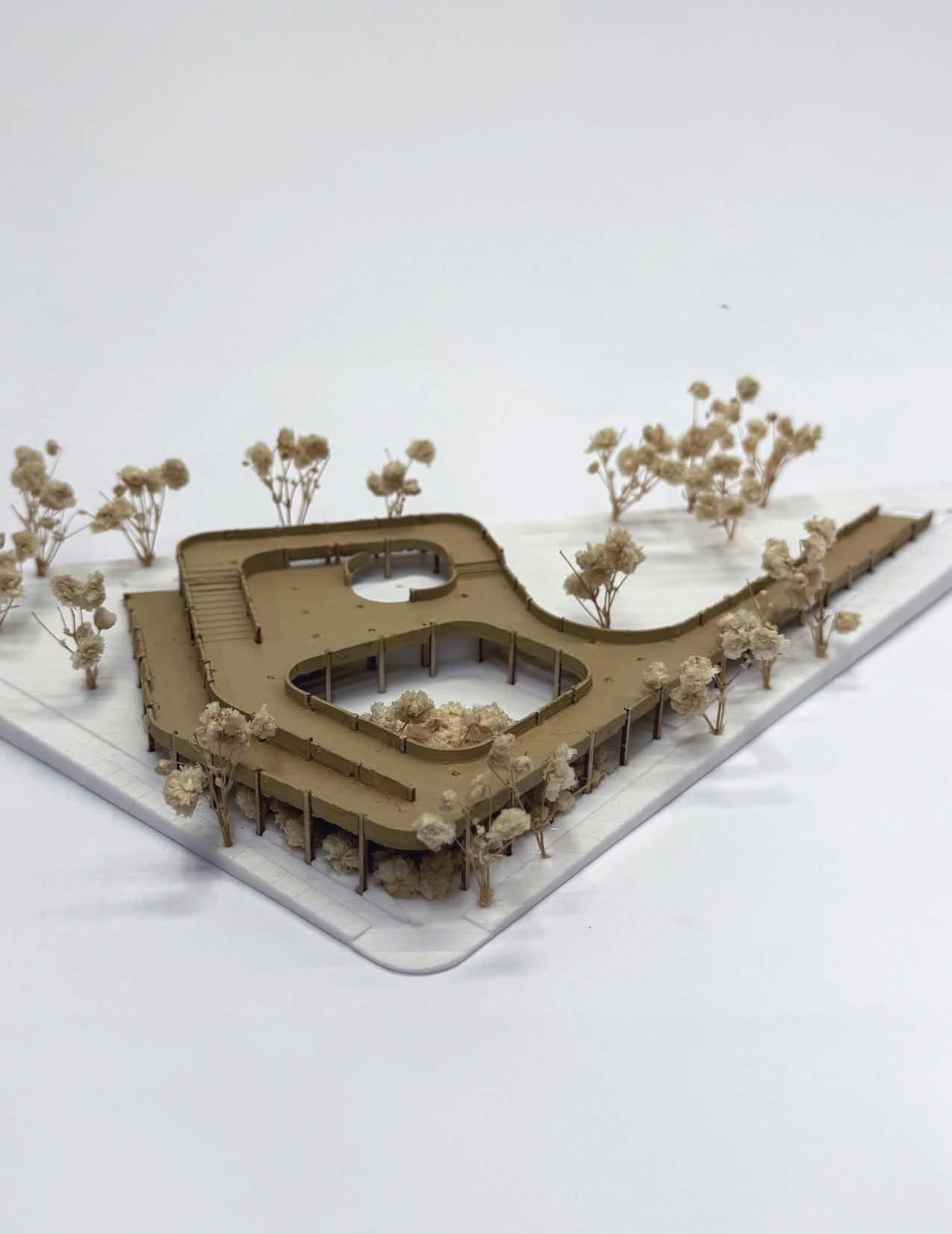
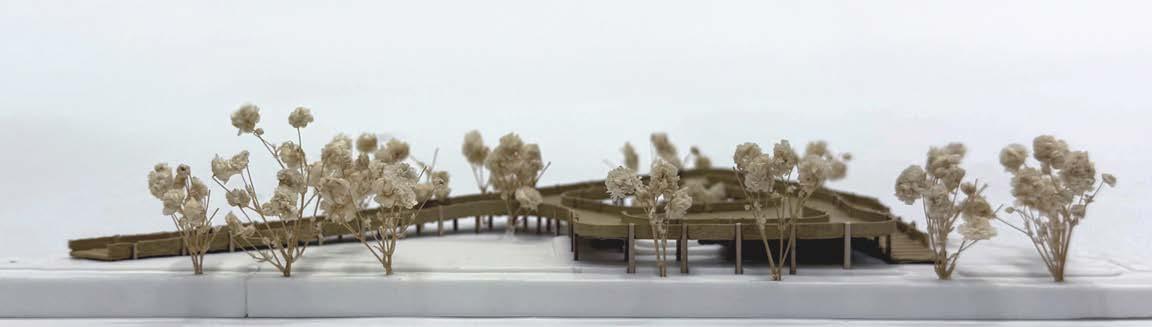
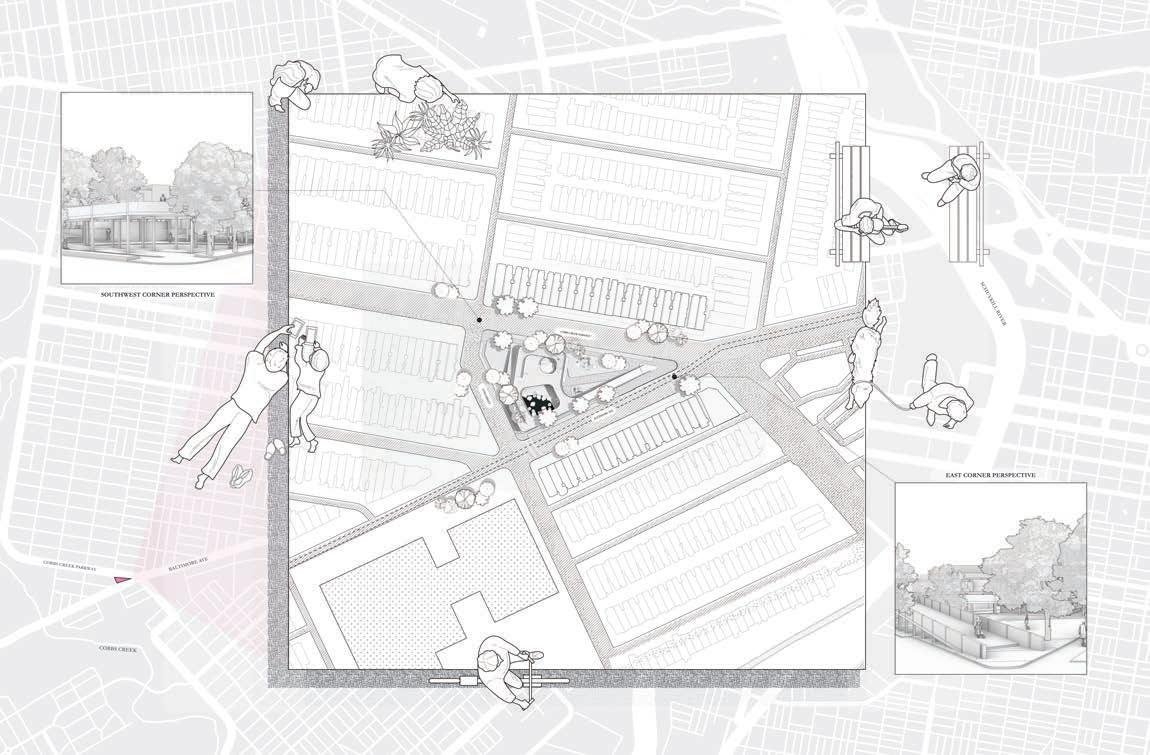
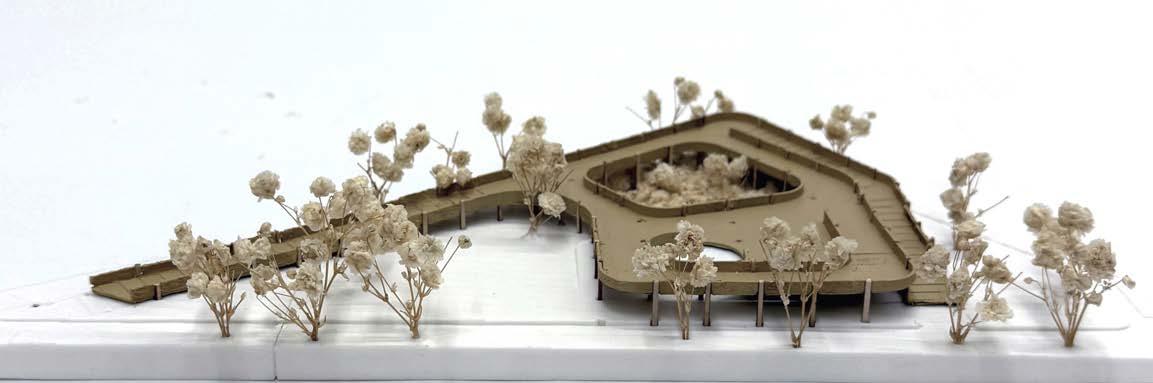
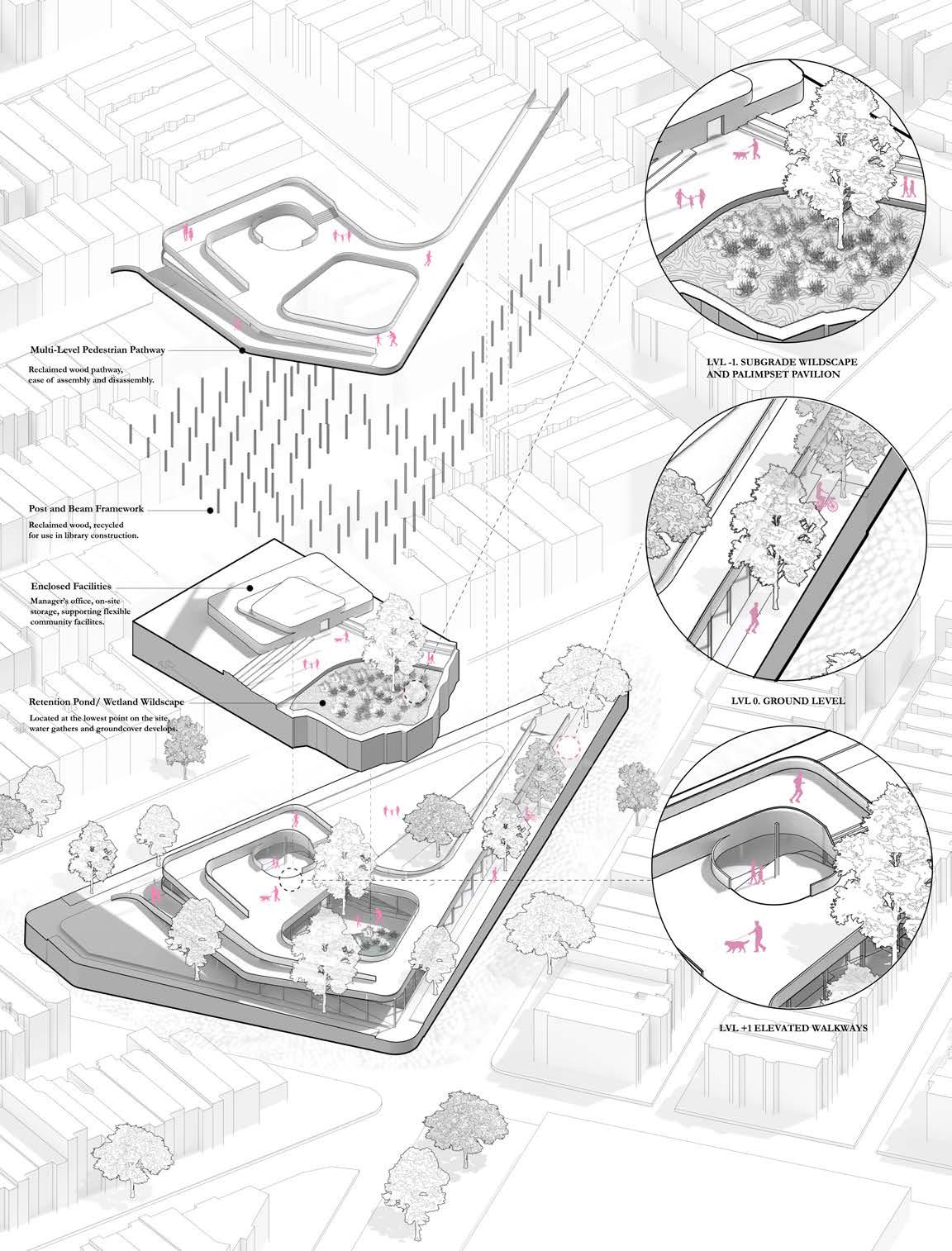
The pavilion responds to the layered history of the sight becoming a canvas for play, gathering, and exploration. A simple pathway rises from the sloping ground of the site, creating a multilayered structure aligned with the rhythms of the surrounding rowhouses, while weaving through the existing trees. The palimpsest of the existing library is used to inform shifting elevation changes and embedded indoor service spaces. The southwest corner of the site becomes a water retention wildscape underneath the structure. The northwest corner of the site serves as an informal playground structure taking place underneath and on top of the pavilion.
[conc.] Design Education
philadelphia, pa
Typology:
Volunteer Experience
DesignPhiladelphia
01.28.2024 - 03.28.24
Collaborators: Catherine Connolly, Umar Mahmood
How can we prioritize design for future generations?
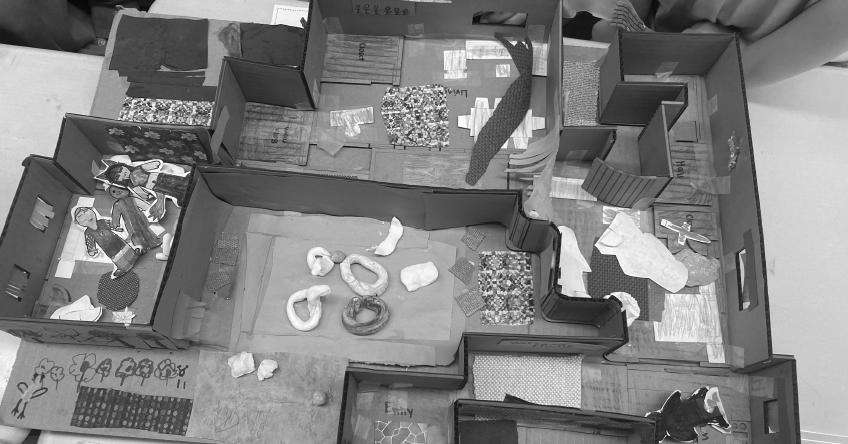
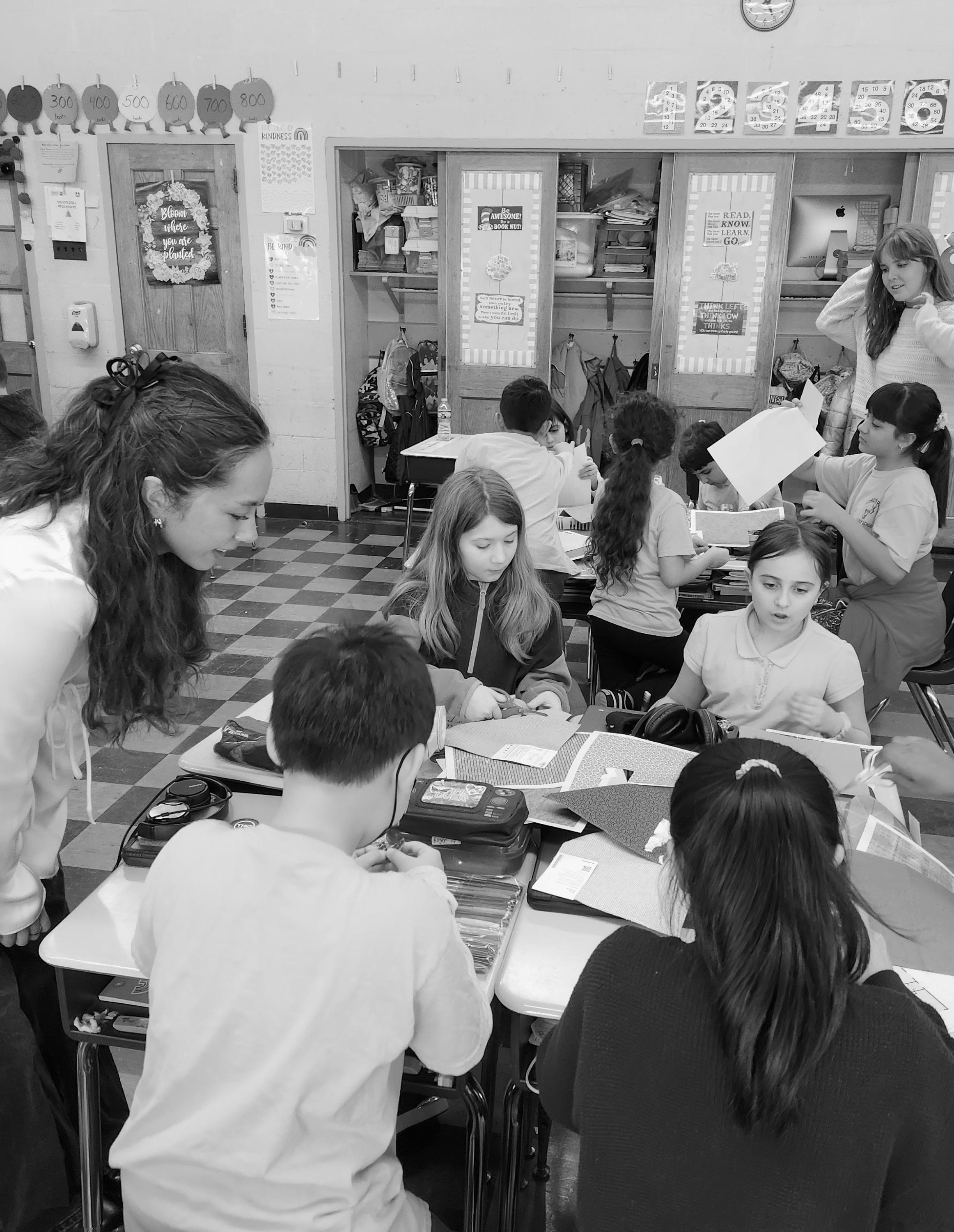
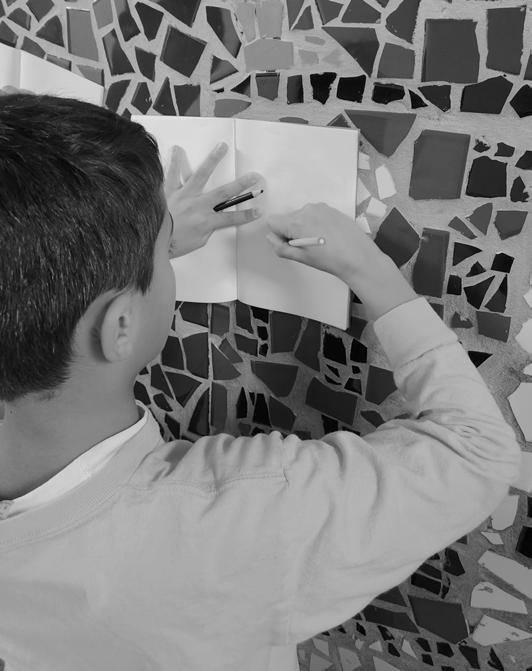
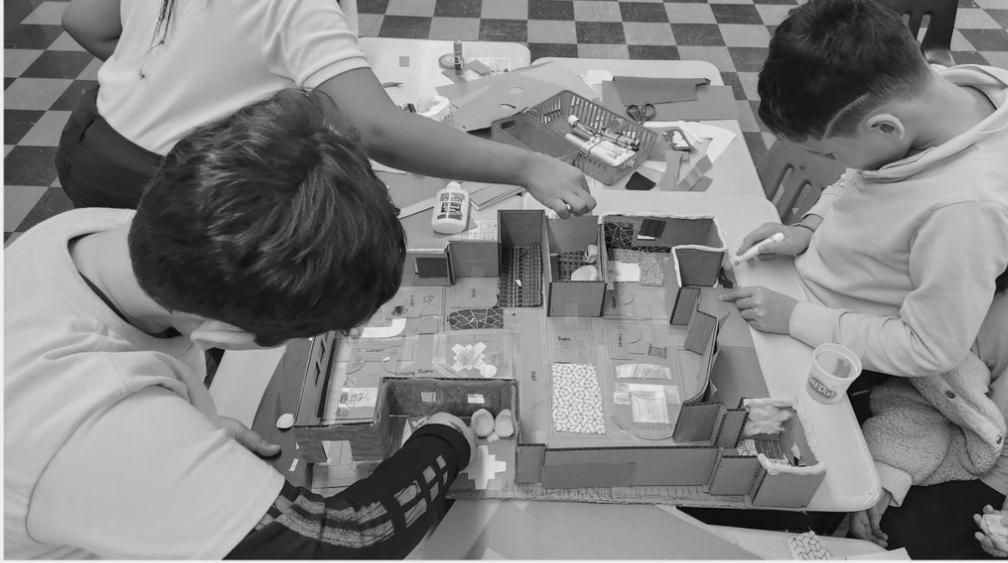
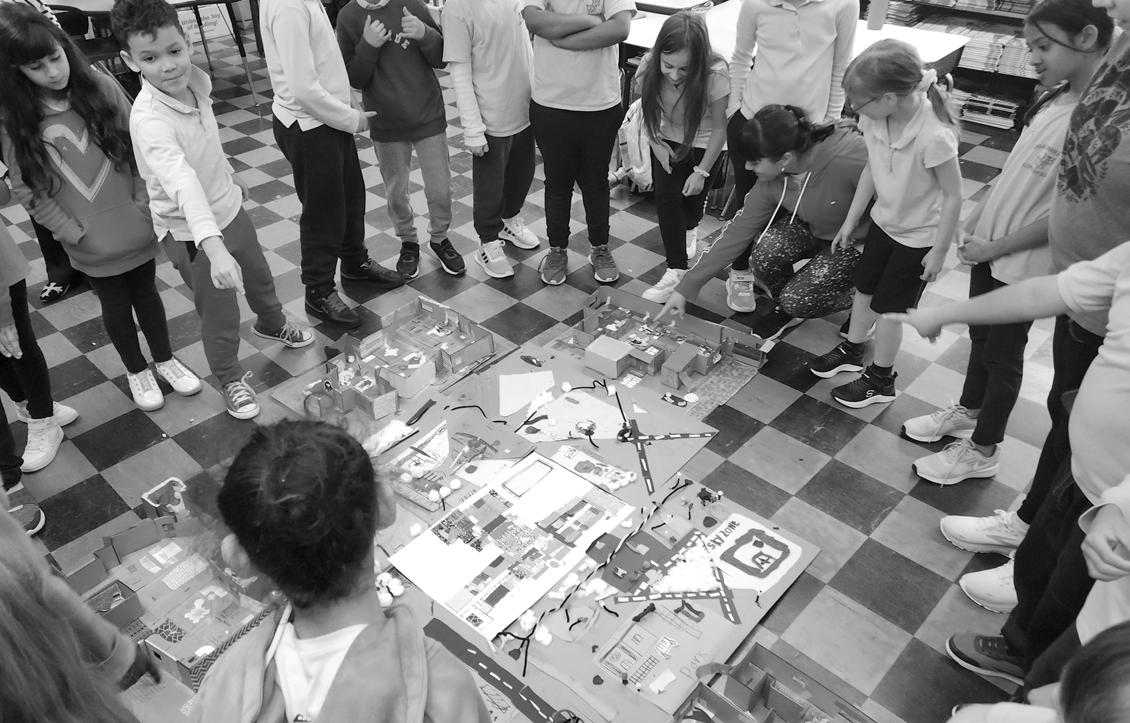
During the spring of 2024, I had the opportunity of volunteering as a Design Intructor at Rhawnhurst Elementary in Philadelphia. Over a five- month period, along with a design professional and fellow classmate, I formulated an original lesson plan that taught architecture, design, and creative problem-solving skills to 3rd- grade students. Our lesson plan built upon itself; starting with collage techniques, students worked in groups of five to build a cumulative end product of their own unique 3d sectional floor plan.