Since May 2007 PRESORT STANDARD US POSTAGE PAID CHARLESTON, SC PERMIT NO. 137 POSTAL PATRON
Volume 22 • Issue 11
FREE
June 12, 2026
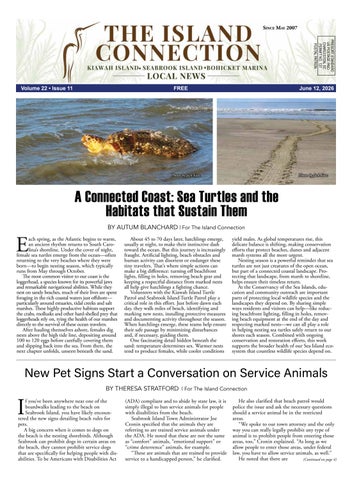
Photos by Jack Kotz.
Photos by Jack Kotz.
A Connected Coast: Sea Turtles and the Habitats that Sustain Them BY AUTUM BLANCHARD | For The Island Connection
E
ach spring, as the Atlantic begins to warm, an ancient rhythm returns to South Carolina’s shoreline. Under the cover of night, female sea turtles emerge from the ocean—often returning to the very beaches where they were born—to begin nesting season, which typically runs from May through October. The most common visitor to our coast is the loggerhead, a species known for its powerful jaws and remarkable navigational abilities. While they nest on sandy beaches, much of their lives are spent foraging in the rich coastal waters just offshore— particularly around estuaries, tidal creeks and salt marshes. These highly productive habitats support the crabs, mollusks and other hard-shelled prey that loggerheads rely on, tying the health of our marshes directly to the survival of these ocean travelers. After hauling themselves ashore, females dig nests above the high tide line, depositing around 100 to 120 eggs before carefully covering them and slipping back into the sea. From there, the next chapter unfolds, unseen beneath the sand.
About 45 to 70 days later, hatchlings emerge, usually at night, to make their instinctive dash toward the ocean. But this journey is increasingly fraught. Artificial lighting, beach obstacles and human activity can disorient or endanger these tiny travelers. That’s where simple actions can make a big difference: turning off beachfront lights, filling in holes, removing beach gear and keeping a respectful distance from marked nests all help give hatchlings a fighting chance. Volunteers with the Kiawah Island Turtle Patrol and Seabrook Island Turtle Patrol play a critical role in this effort. Just before dawn each day, they walk miles of beach, identifying and marking new nests, installing protective measures and documenting activity throughout the season. When hatchlings emerge, these teams help ensure their safe passage by minimizing disturbances and, if necessary, guiding them. One fascinating detail hidden beneath the sand: temperature determines sex. Warmer nests tend to produce females, while cooler conditions
yield males. As global temperatures rise, this delicate balance is shifting, making conservation efforts that protect beaches, dunes and adjacent marsh systems all the more urgent. Nesting season is a powerful reminder that sea turtles are not just creatures of the open ocean, but part of a connected coastal landscape. Protecting that landscape, from marsh to shoreline, helps ensure their timeless return. At the Conservancy of the Sea Islands, education and community outreach are important parts of protecting local wildlife species and the landscapes they depend on. By sharing simple ways residents and visitors can help—like reducing beachfront lighting, filling in holes, removing beach equipment at the end of the day and respecting marked nests—we can all play a role in helping nesting sea turtles safely return to our shores each season. Combined with ongoing conservation and restoration efforts, this work supports the broader health of our Sea Island ecosystem that countless wildlife species depend on.
New Pet Signs Start a Conversation on Service Animals BY THERESA STRATFORD | For The Island Connection
I
f you’ve been anywhere near one of the boardwalks leading to the beach on Seabrook Island, you have likely encountered the new signs detailing beach rules for pets. A big concern when it comes to dogs on the beach is the nesting shorebirds. Although Seabrook can prohibit dogs in certain areas on the beach, they cannot prohibit service dogs that are specifically for helping people with disabilities. To be Americans with Disabilities Act
(ADA) compliant and to abide by state law, it is simply illegal to ban service animals for people with disabilities from the beach. Seabrook Island Town Administrator Joe Cronin specified that the animals they are referring to are trained service animals under the ADA. He noted that these are not the same as “comfort” animals, “emotional support” or “crime deterrence” animals, for example. “These are animals that are trained to provide service to a handicapped person,” he clarified.
He also clarified that beach patrol would police the issue and ask the necessary questions should a service animal be in the restricted areas. “We spoke to our town attorney and the only way you can really legally prohibit any type of animal is to prohibit people from entering those areas, too,” Cronin explained. “As long as we allow people to enter those areas, under federal law, you have to allow service animals, as well.” He noted that there are (Continued on page 4)