PRIMARY TEACHER GUIDE is published by Gospel Publishing House, 1445 N. Boonville Ave., Springfield, MO 65802-1894.
PRIMARY TEACHER GUIDE is also available in Spanish from Gospel Publishing House. Mis Amigos Maestro (order number 62-2321) includes lessons for September 2026 through February 2027.
Evangelism is a privilege. There’s nothing quite so exciting as helping a child accept Jesus as Savior. As you teach, look for opportunities to lead children to Christ. When a child responds to a salvation invitation, use this plan to guide them as they accept Jesus as Savior.
Admit you are a sinner.
• Read Romans 3:23 (NLT) with the child:
“Everyone has sinned; we all fall short of God’s glorious standard.”
• Say, “Everyone disobeys God. That is sin.”
• Ask, “Do you understand that you have sinned?”
Believe in Jesus.
• Read John 3:16 (NLT) with the child:
“‘This is how God loved the world: He gave his one and only Son, so that everyone who believes in him will not perish but have eternal life.’”
• Say, “God hates sin but loves each of us—even though we all sin. He loves us so much that He gave Jesus, His Son, to die and take the punishment for our sins.”
• Lead the child in the sinner’s prayer:
“Dear Jesus, I am a sinner. I have disobeyed You. Please forgive me. Come into my heart and life. Help me love and follow You. Thank You for the gift of salvation. Amen.”
Confess that Jesus is your Lord.
• Read Romans 10:9 (NLT) with the child:
“If you openly declare that Jesus is Lord and believe in your heart that God raised him from the dead, you will be saved.”
• Say, “Asking Jesus into your heart is the start of a new life, a life where Jesus is your Leader, your Lord. He will never leave you alone.”
• Ask, “What has happened to you?” Let the child respond.
• Encourage the child to tell someone about his or her new life with Jesus.
What Now?
• Encourage the child to
4 Talk to Jesus every day in prayer, asking Him for help to live for Him.
4 Readers: Read the Bible every day. Start by reading the Gospel of Mark.
4 Non-readers: Ask someone to read Bible stories to you.
4 Ask yourself, “What would Jesus do?” when you’re not sure what to do.
4 Go to church.
Steps to a Successful Sunday School Class 5
1 2
Start with Curriculum
You’ve made the right choice in choosing this curriculum. It provides solid biblical teaching that your students will enjoy and understand. Lessons are designed for easy preparation, and the activities will keep your
students interested as the lesson is reinforced. As you begin lesson preparation, list all the curriculum pieces you will be using:
❏ Primary Teacher Guide 13 easy-to-use lessons, plus helpful hints and tips
❏ Primary Resource Packet— lesson helps for your classroom
❏ Primary Bible Visuals— fun-to-use Bible characters bring the story to life
❏ Primary Lesson Pages— lesson activities for students
❏ Primary Handwork Packet— creative crafts for hands-on learners
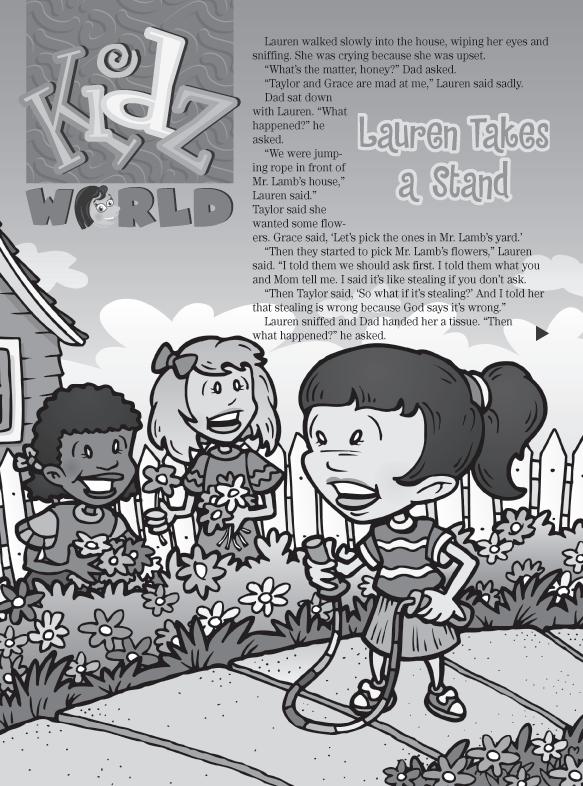
❏ Kidz World— take-home paper that reinforces the lesson through the week
Think about Your Class
Next, consider what you already know about your class.
4 Time—How much class time do you have? Consider total time (after greeting, transitions, etc.) as well as actual teaching time. Estimating the time it will take for each activity will help you decide which ones to use.
4 Setting—What is your classroom setting? Do you have a table and chairs, or is your room arranged in centers? Is there a kitchen nearby? Are the bathrooms close? If you have to trek down the hall for a drink or bathroom break, include this in your estimated time.
4 Teachers—How many teachers and helpers do you have? Choose or modify activities based on the amount of supervision required.
4 Students—Who are your regular attendees? How do they learn best? Do you frequently have visitors? It’s a good idea to plan your lesson for the regular attendees, but be prepared in case of visitors.
Now consider what you know about your regular students. You may want to keep notes (see sample) on each student describing how he or she learns best.
If your regular students cover all the learning styles (like the sample note), you won’t have to plan other activities for less frequent attendees. If your class has primarily one or two learning styles*, you will want to have variations or additional activities ready for visitors.
Miguel—boy, 6 years old
Learns by hearing. He gets in trouble for talking, is always the first to answer a question, and loves to listen to and tell stories, etc.
Michaela—girl, 8 years old
Learns by seeing & touching. She loves pretty things, getting dressed up, and colors and writes neatly.
Austin—boy, 8 years old
Learns by moving. He’s athletic, enjoys energetic—even rough—play, rarely sits down, etc.
Amber—Girl, 7 years old
Learns primarily by moving & touching. She is always moving, talking, and touching!
*To learn more about learning styles see page 5.
Plan Your Lesson
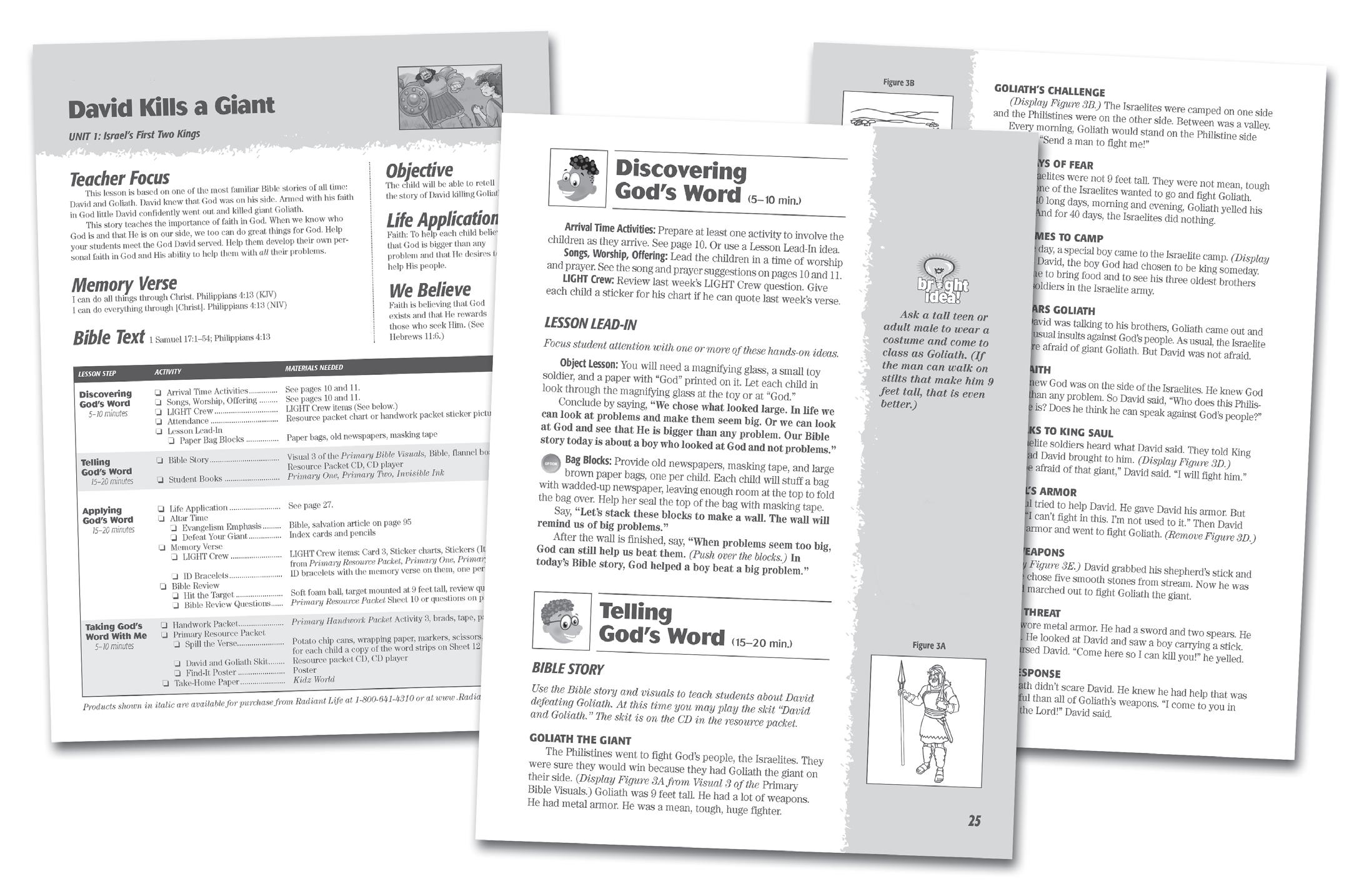
At this point, sit down with your Primary Teacher Guide and adapt the lesson to fit the needs of your class. Highlight, circle, or mark the activities that your students will enjoy and, most important, will meet their learning styles. Here is a sample lesson overview of one way to teach the lesson.
The Teacher Focus will help you become familiar with the lesson and how it relates to your students. “Life Application”and “We Believe” will show you how to apply to your students’ lives the doctrine that the lesson teaches.
A. Bag Blocks
Targets Michaela & Amber (touching)
You may have a standard way you begin class. For example, allowing the children to play with blocks or another game helps them get comfortable quickly. Use the activity to introduce the lesson and then begin the Bible story.
B. Songs, Worship, Offering
Primary curriculum is flexible so you can rearrange the activities to best suit the needs of your classroom.
C. Telling God’s Word
Targets Miguel & Michaela (hearing & seeing)
*Have Michaela pass out visuals.
Telling the Bible story will interest students who learn by hearing. Using visual aids like the Bible Visuals will target those who learn by seeing. By allowing the students to participate in displaying the visuals, you keep them interested and involved in the story.
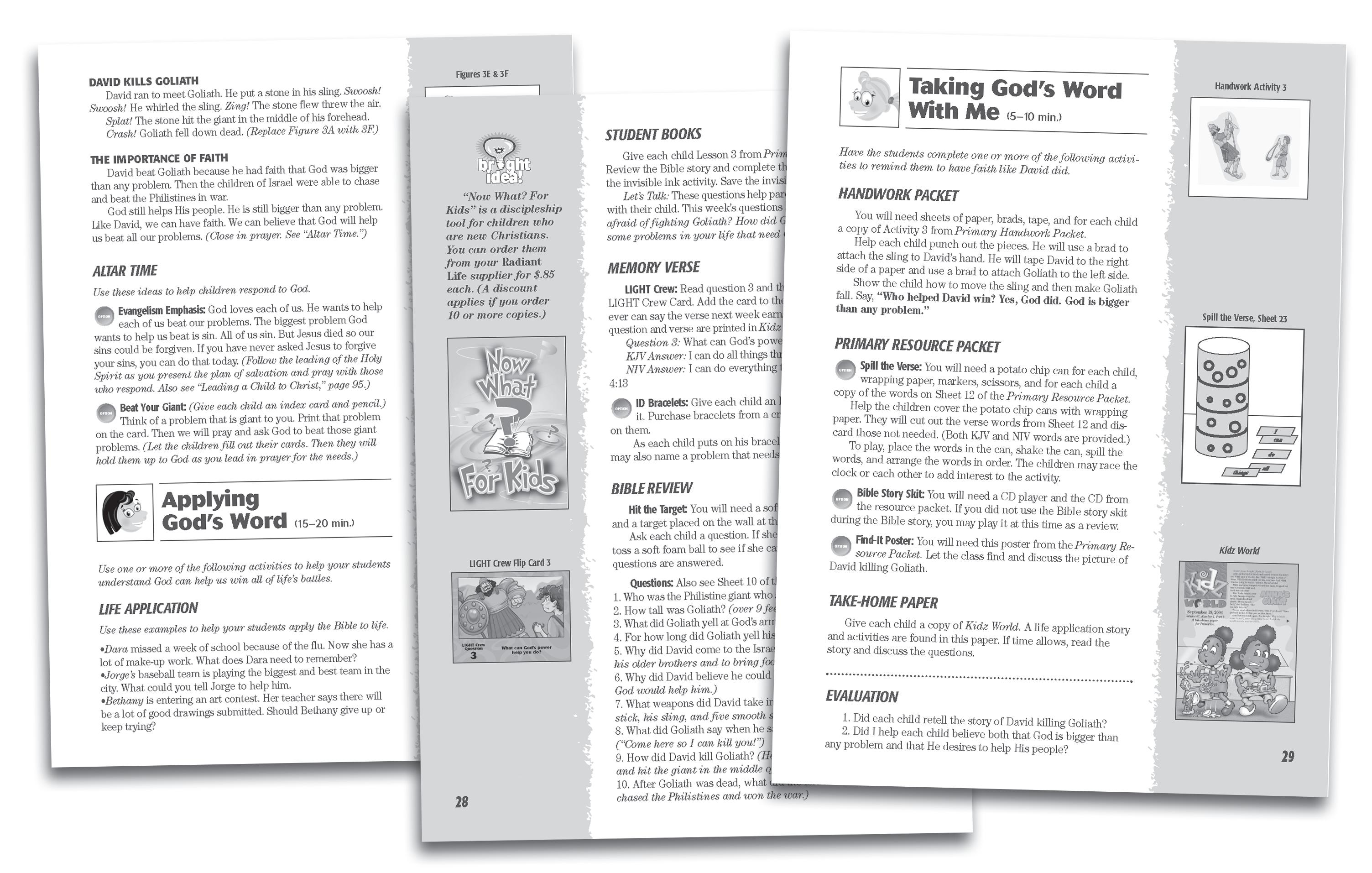
Plan Your Lesson cont.
If you have students who have not made a commitment to Christ, or you are not sure of the spiritual walk of visitors, it’s a good idea to present the plan of salvation and give them the opportunity to accept Christ. You never know when a student might be ready to make this life-changing decision.
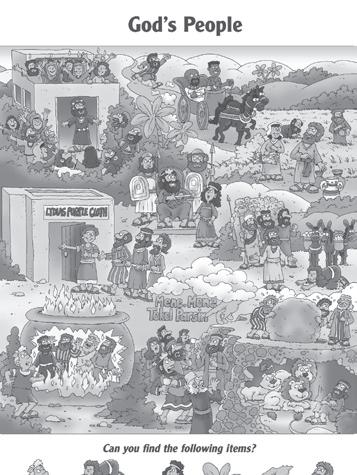
GDOptions for Extra Time: Bible Story Skit Find-It Poster
Have additional activities prepared in case you have additional time or need to recapture their interest.
D. Student Books Targets Michaela (seeing & touching)
Using activities, like this one, from the Lesson Pages will appeal to students who learn by sight and touch. These activities will help them better retain the lesson.
E.
Games are a great way to review. Activities that get students moving will keep your movement learners involved and help them better retain the lesson.
HG.
Craft activities will target your touch learners, while keeping your sight learners involved as well. Movement learners may not be interested in doing crafts. You might want to have an optional activity available for them. (Have a helper available to oversee that activity.)
H. Take-Home – Ask these questions as parents pick up children.
*What problem did David face?
*How did God help David?
*Why was he not afraid?
Asking leading questions as parents pick students up can help the students share about the lesson. It can also help parents ask about the lesson as they look at the handwork and read Kidz World during the week.
F. LIGHT Crew Targets Michaela (seeing & touching)
Hit the Target Targets Austin, Michaela, & Amber (moving & touching)
Handwork Targets Michaela & Amber
4 5
Teach the Lesson
As you teach the lesson, constantly evaluate
• Your students—What things are you discovering about them and how they learn?
• Your lesson—Are the children grasping the concept and objective presented in the lesson?
• The activities—Are they working well? Is the order flowing like you’d hoped?
• The time—Is service running late? Do you have extra activities or games planned? Are you keeping your students’ attention? What fun activities can you do to reinforce the lesson?
Evaluate
After each class, evaluate the lesson as a whole using the questions from step four.
Evaluation
* The lesson went well.
* Service ran late—glad I had the bonus option activity!
* The students loved the Bible review game. Note: Any option to get them up and moving is a winner!
There’s no “secret formula” for a successful Sunday School class, and there’s no guarantee that all your students will remember what you teach them and apply it to their lives. But God promises that His Word will not return void. And by following these five simple steps, you can teach biblical principles so many of your students remember and apply them . . . and that’s what teaching is all about.
Take a closer look at . . . LEARNING STYLES
SEEING (visual)
Michaela likes to “see” her world. She enjoys colors, contrast, bulletin boards, and videos. She gets bored when there are no visuals.
HOW TO TEACH MICHAELA:
• Display posters from the Resource Packet
• Show the Bible Visuals with the story
• Use object lessons
HEARING (auditory)
Miguel “hears” his world. He loves to hear stories and listens when you tell him to do something. He becomes bored when he hears information he already knows.
HOW TO TEACH MIGUEL:
• Tell Bible and life-application stories
• Use listening and sharing activities
• Sing songs and listen to skits from the Resource Packet downloadable files
TOUCHING (tactual)
Amber likes to “feel” and “feel good about” her world. She needs to “get in touch” with new concepts and learns best when she can feel and compare information.
HOW TO TEACH AMBER:
• Use interactive posters from the Resource Packet
• Make crafts and use play dough or finger paints
• Use role play with puppets to explore feelings
MOVING (kinesthetic
)
Austin loves to experience his world through movement. He moves a lot during class and loves participating in things like dramas, action songs, and plays.
HOW TO TEACH AUSTIN:
• Act out the Bible story
• Utilize activity centers
• Play movement games for review or memory work
• Sing action songs
Inductive Bible Study
by LeRoy Bartel
At what point in your teaching preparation do you pick up your Bible? Tragically, many who teach children rarely actually study the Bible. They spend almost all of their preparation time reading the lesson guide. In fact, when they teach their lesson they often hold their lesson guide—not the Bible. Yet in Sunday School we claim to teach the Bible. And, indeed, it should be our primary textbook!
That’s why we, as Sunday School teachers, should use the inductive method of Bible study as we prepare to teach.
Why use the inductive method?
An inductive approach to Bible study is important because it places emphasis on the Bible itself. Although teachers who use the inductive method of Bible study recognize the value of commentaries and other books about the Bible, they study the Bible first—even before their teacher guide.
Teachers who practice inductive Bible study begin with the Bible. Once they know the Bible passage that a particular lesson is based on, they seek to lay aside all preconceived notions about what a passage teaches and come to it with innocence of eye—looking at it as though they were seeing it for the very first time.
What are the stages of inductive Bible study? How can those who teach children use it to enrich and give direction to their teaching?
Observation—
Look at the passage
In observation, the first stage of inductive study, we look closely at a Bible passage and seek to answer some fundamental questions: What does the passage say? How does it say it? How does the passage fit in its Bible context?
What is the main focus of the Bible passage? To answer this question, the teacher recognizes that a passage teaches one primary truth—one “big idea”—and then seeks to find that truth in the words used in the Bible text.
The “big idea” is usually a word or phrase in the Bible text itself that summarizes the emphasis of the passage. The teacher assumes that although there may be several supplementary truths, there is only one major, central truth.
How is the main truth developed in the passage? The second thing a teacher does is pay attention to how this “big idea” is developed in the Bible passage. This calls for analysis— evaluating how the biblical writer makes his point.
In the great stories of the Bible this is usually expressed in a series of scenes or episodes— snapshots, if you please. In the Epistles we try to follow the writer’s train of thought—his chain of logic.
How does the passage fit into a wider context? At this stage we also pay attention to how the passage we’re studying fits into the broader context before and after the passage.
A wise and effective teacher will be sure the teaching focuses on the central truth emphasized in the passage. The teacher will try to find creative ways to get students to learn what the Bible actually teaches, to explore the Bible passage, not a story told about that passage.
Interpretation— Look back in time
At this stage, the teacher looks for clues in the passage that tell what was happening back then and there. What was the situation? What were the circumstances? What did Bible people feel? What human problems did they face?
What was the Bible context? The clues to answer these questions are to be found in the passage itself or in the broader context around the passage. The teacher then looks at what the passage says against this backdrop. In doing this, what the passage teaches often comes to life!
How can I help children experience the world of the Bible passage? This is such an important stage for those who teach children! The teacher will seek to move children back to the world of “then and there.”
Teachers will seek to let them students hear the sounds, smell the odors, taste the food, feel the emotions, and wrestle with the problems Bible characters faced. They will try to find creative ways to let students hear God’s Word and experience His power.
Application—Look ahead
In application, teachers ask, “How does this passage apply to my students, here and now?” They seek to identify situations and circumstances in the passage that are similar to the ones children face every day.
How does this Bible passage relate to my students? Did a Bible character face an impossible problem? What seems impossible to children today? How did God solve the Bible story problem? How might He solve a modern problem?
help her students understand how the truth of the passage relates to their daily lives.
Response—Look within
During response time the effective teacher attempts to lead the children to personally respond to the truth of the Bible passage. The key question is, “What does God want us to do as a result of what this passage teaches?”
It is at this stage that the intended meaning of the passage becomes personally real to the children. During response time the children experience the power and authority of the Bible. They hear God speaking to them personally through His Word! It is at this point that God’s Word changes and transforms children’s lives.
The Bible is central
We must never simply teach about the Bible. We must teach the Bible itself. As valuable and helpful as teaching materials are, we cannot afford to let children think we simply teach the lesson manual. We must clearly and evidently teach the Bible to them.
An inductive approach to Bible study best prepares a teacher of children to teach God’s Word so it results in changes in the children’s lives.
How can I enhance life application in my class? answered, a teacher should select appropriate life-application stories and/or activities to
Lesson Plan Date:
Discovering God’s Word
Telling God’s Word
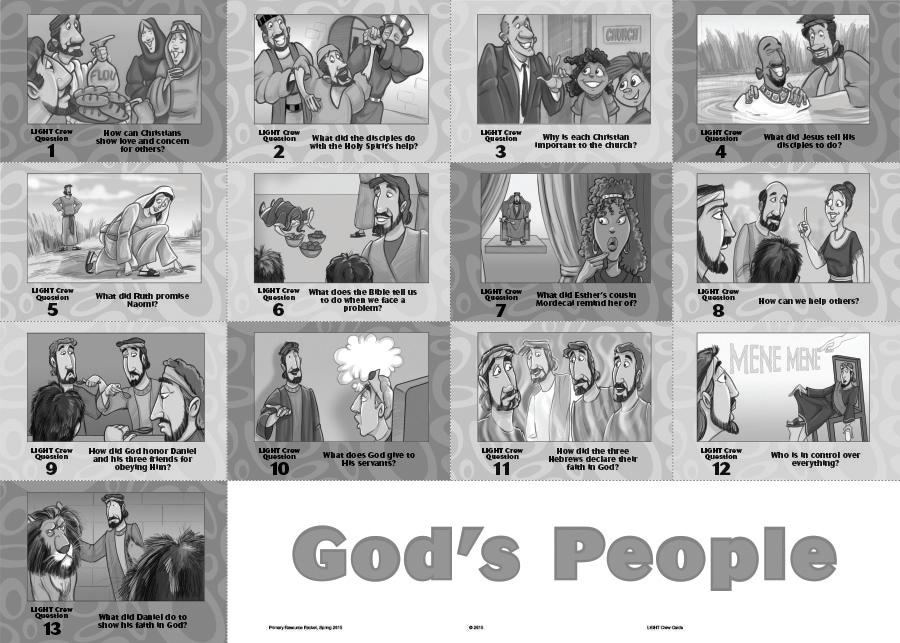
LIGHT Crew
What is it? How do I use it?
The Name & Purpose
“LIGHT” is an acrostic for “Looking Into God’s Holy Truth.” LIGHT Crew projects are designed to motivate children to learn the weekly memory verses.
The Format
Each lesson contains a weekly LIGHT Crew question and verse answer. These are located in the “Applying God’s Word” lesson section. Each week take class time to memorize the verse and to introduce the LIGHT Crew question.
Encourage the children to review the verse and question during the week. To aid review, the questions and verses are printed in Kidz World, the takehome paper.
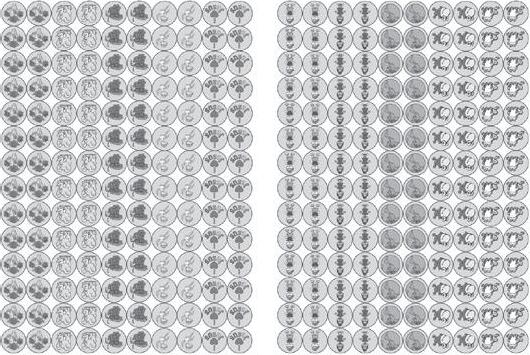
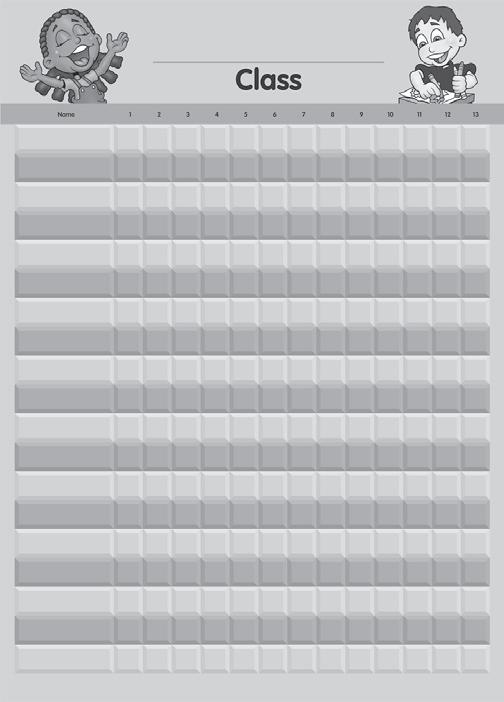
The next week, as each child arrives for class, ask him last week’s question. After he quotes last week’s verse, record his memorization. Be sure to keep track of each child’s memorization since you will award certificates at the end of the quarter. Use the chart poster and chart stickers from the Primary Resource Packet to keep track of each student’s memorization.
to the wall so it may be flipped up. Each card has a lesson picture and the LIGHT Crew question on the front. The memory verse answers are printed on the back in both KJV and NLT versions.
LIGHT Crew Items
Flip Cards: Prominently display these colorful cards at the children’s eye level. Each week display that lesson’s card. Tape the top of the card
Certificate: A photocopy master for a reward certificate is provided in the resource packet. Duplicate a copy for each child and fill in the blanks. Present the certificates the first Sunday of the next quarter after the children have said the final memory verse.
God’s People
Unit 1 Overview
The Church
These four lessons describe the First Church as well as the role of the Church in today’s world. The Church today is to be the body of Christ, just as that first Church in Jerusalem was. The Church today is to be loving, growing, and missionary-minded like the Church in the Book of Acts.
God’s plan for His Church and His people has not changed. Help your students desire the baptism in the Holy Spirit, enjoy participation in their local church, and enjoy supporting missions around the world.
Unit 1 Objectives
By studying these four lessons, the child will • discover stories about the Church, then and now, • feel glad he is a part of the Church, • and participate in his local church.
Room Decorations
Find-It Theme Poster: The resource packet contains this colorful poster for your classroom. Display it at children’s eye level.
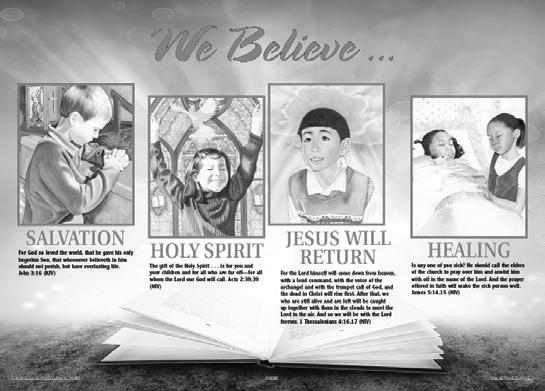
Doctrines Poster: This poster reinforces the four key beliefs of Spirit-filled Christians.
My Church: On a poster or newsprint, print “My Church” in large outline letters. Encourage the children to draw inside the letters. They will draw pictures of things, people, and activities from church.
This project may be completed in one sitting
or added to on a weekly basis. Hang the poster at the children’s eye level.
Light Crew Review
Each week, ask each arriving child the LIGHT Crew question from the previous week. The child can flip up the appropriate LIGHT Crew card to read the verse and check his memorization. Use the Chart Poster and Stickers from the resource packet to track each child’s memorization efforts each week.
A recognition certificate, downloadable Sheet 6, is provided to encourage memorization. Award these certificates on the first Sunday of December, after the children have recited all verses from the fall lessons.
Arrival Time Ideas
Peanut Butter Clay: Use homemade peanut butter clay to make lesson-related shapes such as a church, a world globe, a body shape, etc. Here’s the recipe:
• Mix together 1 cup creamy peanut butter, 1 cup corn syrup, 11⁄4 cups nonfat dry milk, and 11⁄4 cups powdered sugar.
• Add powdered sugar and dry milk by the spoonful to reach desired consistency. Have extra dry ingredients on hand to ensure you can achieve the desired consistency,
• Add food coloring as desired.
Safety Note: Before bringing peanut butter clay to your classroom be sure no child who uses your classroom is allergic to peanuts.
Balloon Throw: You will need a large, round balloon. To play, a child throws the balloon up and says something she is thankful for before the balloon hits the floor.
Adapt the game by letting the children say the memory verse, name a job to do in the church, or name a way to help a missionary.
Church Leaders: You will need items that church workers use. For instance, offering bags for ushers, a blanket for nursery workers, an instrument for musicians, a Bible for pastors and teachers, a baking pan for meal preparation, a broom, etc.
Let the children play with the items. As they play, discuss the different jobs and why each is important in our church.
Song Suggestions
The following songs are provided in the Primary Resource Packet downloadable files. These songs complement the unit lessons. Printable music is also provided in the downloadable files.
“Many Ways to Worship”
“I Worship You”
“So Glad”
“Women of Faith”
“Everything I Do”
Worship Ideas
Make Music: Give each child a rhythm instrument. Explain that each instrument makes a specific sound. As each sound is important to a band, so each person is important in the church. Let each child play his instrument alone. Then have the entire class play a song together.
Follow the Leader: Explain, “There were many great leaders in the Early Church. God wants us to learn to be leaders too.”
Choose a child to be the worship leader for one song. Then let another child lead the next song. Let several students lead.
Church Prayer Bag: See the instructions for a church offering bag below. Use the bag for prayer request slips instead of for offerings. You may wish to take home the slips after each class so you can pray for the requests.
Unit Offering Ideas
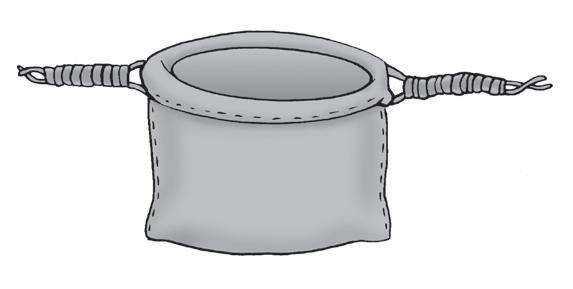
Offering Bag: Make an offering bag. You will need an 8- by 16-inch fabric strip and two 18-inch
lengths of wire. (Wire is coathanger weight.)
Fold a 1-inch hem in each end of the fabric. Stitch the hem edges in place. Fold the fabric in half with the hems out. Stitch the sides, stopping below the hems. Turn the pocket inside out.
Run a wire through each hem. Curve the wires to shape the bag. Twist the ends together and cover with colorful plastic tape.
Share with the class how our money is given in the church. Then explain that it is used to do God’s work.
Adaptation: Borrow an offering bag or plate used in your adult church services.
Church Offering Container: Locate a churchshaped offering box at a Christian bookstore. Or make one from a half-pint milk carton painted white. Add a steeple made from toothpicks and clay. Cut a slot in the carton for coins. Use this as the offering container for Unit 1.
Snacks: Ask parents about food allergies. Never serve any snack to your students unless you are certain that it is safe for all of them.
JBQ & Bible Fact-PakTM
You may use the Bible Fact-Pak Question Cards to learn and review questions related to the lessons in this unit. The questions that apply are these:
Lesson 1: 16
Lesson 2: 233, 499
Lesson 3: 419, 420, 425, 426, 428
Lesson 4: 424, 560
Unit 3 Overview
Daniel and His Friends
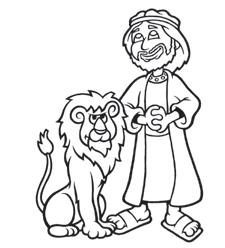
In this unit, children will learn about Daniel, Shadrach, Meshach, and Abednego. These four men, even though prisoners of war, didn’t waver in their faith. They served God faithfully. In return, God faithfully guided and protected them.
These men chose to obey God in small things like diet, as well as large things such as refusing to bow to an idol or pray to a king. God miraculously rewarded their faithfulness. And to Daniel, God gave the ability to understand dreams and to interpret God’s handwriting on the wall.
Help your students follow the examples of Daniel, Shadrach, Meshach, and Abednego. Help them love, trust, and obey God no matter what. Help them always choose to trust and obey God.
Unit 3 Objectives
By studying these five lessons, the child will
• learn about four men who trusted and obeyed God despite of difficult circumstances,
• believe God wants every believer to trust and obey Him,
• and choose to obey and trust God in every circumstance.
Room Decorations
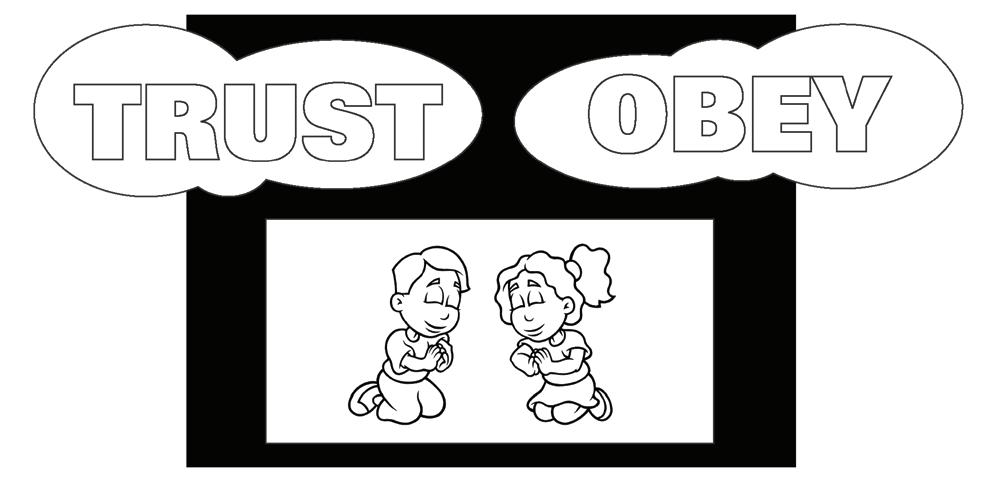
Student Art Display: Let each child create a trust and obey poster for your classroom walls. You will need construction paper, chenille
wires cut in quarters, scissors, tape, markers or crayons, and for each child a copy of downloadable Sheet 16 from the Primary Resource Packet.
Each child will color and cut out the items on downloadable Sheet 16. He will tape the children praying to the center of a sheet of construction paper. Then he will wrap two lengths of chenille wire around a large pencil. He will remove the chenille wires from the pencil and tape one end of each wire to the back of a word cloud. He will tape the other wire ends to the construction paper so the clouds stand out from the paper.
Babylon Mural: Attach newsprint to a wall, close to the floor. Draw and color a great city to represent Babylon. Include a palace in the city.
Door Title: Cut large letters from construction paper for the title “Trust and Obey God.” Attach the title to your classroom door.
Arrival Time Ideas
Bible Story Building: Provide building blocks. As the children arrive, have them build near the Babylonian wall art. They will build lessonrelated items. For example, when the Bible story is Daniel interpreting the king’s dream, they could build a throne. When Shadrach, Meshach, and Abednego face the fiery furnace, the students could build the image or the furnace.
Play Dough Creations: (See peanut butter clay recipe on page 10.)
Let the children use their imaginations to make creations fitting the week’s theme or the theme from the prior week. They might make “food” for Daniel and his friends, the image the king built, a furnace, or a lion. Other options include people, dishes, musical instruments, crowns, fire, or a hand.
Bag Puppets: Provide lunch-size paper sacks and markers. Allow the students to turn their sacks into puppets. The flap formed by the folded bottom is the mouth of the puppet. Students may create a person or an animal puppet.
Consider allowing the students to use their puppets to help tell or retell the Bible story.
My Week: Cover a wall with newsprint and provide markers.
Each week invite the students to write or draw on the sheet something significant from their week to share with the class. Take a few minutes to let each student talk about what he has written or drawn.
This will help you become better acquainted with your students and help them feel valued.
Song Suggestions
The following songs are provided in the Primary Resource Packet downloadable files These songs complement the unit lessons. Printable music is also provided in the downloadable files.
“Many Ways to Worship”
“I Worship You”
“So Glad”
“Women of Faith”
“Everything I Do”
Worship Ideas
I Know: Let each child describe one thing he knows and likes about God. For example, a child may know God loves him; God is good; God takes care of him; or God made the world.
Thank You Prayers: Help each child say a sentence prayer thanking God for something He has done. Examples might include these: Thank You, God, for my family. Thank You, God, for taking care of me. Thank You, God, for healing my grandma.
Prayer Chair: Place a chair at the front of the room. Explain that this is the prayer chair. Each week invite the students to share needs. Let volunteers who want prayer for a need sit in the chair. Then lead the other children in praying for that child’s needs. Occasionally sit in the chair yourself and let the students pray for your needs.
Singing: Use variety during music times. At times merely lead the class in singing. At other times have them sing or play rhythm instruments
as music is played. You may encourage clapping and raising hands as the children sing.
If songs lend themselves to it, create pictures or other graphics. Let volunteers hold signs, pictures, or objects as the other students sing. Explain what each item represents and how it helps the children worship.
Also make use of songs that may be sung in praise or in prayer. Encourage the children to close their eyes and sing directly to God.
Unit Offering Ideas
Giving Mural: Create a mural showing pictures of people, classrooms, buildings, and ministries of your church.
Each week point out pictures on the mural and explain how their offerings relate to that picture.
Crown Container: Make a paper crown to fit around the offering container.
This unit of Bible stories includes the kings of Babylon who reigned during the time of Daniel and his friends.
Sorting Bank: Provide a bank that shows the coins being separated.
Remind the students that just as the coins go into different coin slots, so their money goes into different ministries of the church that help people love and trust God.
Snacks: Ask parents about food allergies. Never serve any snack to your students unless you are certain that it is safe for all of them.
JBQ & Bible Fact-PakTM
You may use the Bible Fact-PakTM Question Cards to learn and review questions related to the lessons in this unit. The questions that apply are these:
Lesson 9: 374, 531
Lesson 10: 162
Lesson 11: 163, 164, 165
Lesson 12: 166
Lesson 13: 163, 164, 165
Four Friends Stand for God
UNIT 3: Daniel and His Friends
Teacher Focus
This lesson is based on the story of Daniel and his three friends choosing to obey God at the risk of their lives. Although prisoners of war in Babylon, they held a privileged position as future employees of the king. By refusing the king’s food and drink, they risked their careers and their very lives. However, Daniel and his friends chose to obey God and eat only foods specified by God. We often face choices which place us at odds with others. But when we honor God, we find His ways are best. Help children develop complete trust in God’s ways when they choose to obey Him, even in the face of resistance.
Memory Verse
As for these four children, God gave them knowledge and . . . wisdom. Daniel 1:17 (KJV) God gave these four young men an unusual aptitude for understanding. Daniel 1:17 (NLT)
Bible Text
Daniel 1:3–20
Discovering
❏ Arrival Time Activities ................ See pages 62 and 63.
God’s Word ❏ Songs, Worship, Offering ........... See page 63.
5–10 minutes
❏ LIGHT Crew
Objective
The child will be able to tell how Daniel and the three Hebrews honored God by the foods they ate.
Life Application
Obedience: To help each child believe that obeying God is always the best idea.
We Believe
God is pleased when we obey Him despite opposition.
LIGHT Crew Card 8, stickers, chart
❏ Attendance Handwork packet sticker pictures
❏ Lesson Lead-In
❏ Mystery Box ............................
❏ “Snap” Game
Open box, yarn, tape, eight labeled paper squares, four smile faces, four frown faces
You will need to create a list of actions for this game.
Telling ❏ Bible Story .................................... Visual 9 of the Primary Bible Visuals, Bible
God’s Word ❏ Altar Time 15–20 minutes
❏ Evangelism Emphasis ........... Bible, “The ABCs of Salvation” on page 1
❏ Choose Obedience No supplies needed
Applying ❏ Life Application ............................ See page 67.
❏ Bible Review Questions Downloadable Sheet 7 or questions on page 68
Taking God’s ❏ Primary Handwork Packet ...... Activity 9, sticker, tape, yarn, scissors Word with Me
❏ Primary Resource Packet 5–10 minutes
❏ Food Pyramid Puzzle............. Downloadable Sheet 17, markers or crayons, scissors, construction paper, glue or tape
❏ Daniel Game Prepared game items from Daniel Game Posters 1 and 2, downloadable Sheet 7
..................... Kidz World
Discovering God’s Word
(5–10
min.)
Arrival Time Activities: Prepare at least one activity to involve the children as they arrive. See pages 62 and 63, or use a Lesson Lead-In idea.
Songs, Worship, Offering: Lead a time of worship and prayer.
LIGHT Crew: Review last week’s LIGHT Crew question. Give each child a sticker if he can quote last week’s verse.
LESSON LEAD-IN
Focus student attention with one or more of these hands-on ideas.
Mystery Box: You will need an open box, yarn, four smiling paper faces, four frowning paper faces, eight paper squares, and tape.
On each square list one of these actions: lie, tell the truth, steal, respect other’s property, be kind, be mean, obey parents, and disobey parents. Tape yarn to each square. To the other end of each length of yarn tape a face. Tape smiling faces to actions that please God and frowning faces to the rest. Drape the yarn over the top of the box so the actions are outside and the faces are inside.
Let each child select a square and pull on the yarn to see whether this choice is good or bad.
Say, “We can choose good or bad actions. Today we will learn about four friends who chose to do good.”
OPTION
”Snap” Game: You will name two actions. If both are good, the students say “Snap!” and snap their fingers. If one or both actions are bad, the students remain quiet.
Say, “Some things we do are good; others are bad. Today we will learn about four friends who chose to do good.”
Telling God’s Word (15–20
min.)
BIBLE STORY
This Bible story is from Daniel 1:3–20. Use the Bible text, this printed story, and the visuals to teach students about Daniel, Shadrach, Meshach, and Abednego honoring God with their diet.
FOUR FRIENDS FROM ISRAEL
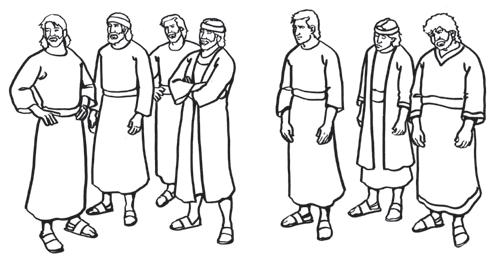
How would you feel if a king took you far, far from home? That happened to Daniel, Shadrach, Meshach, and Abednego. (Display Figures 9A and 9B from Visual 9 of the Primary Bible Visuals.)
The four friends were from Israel. They were from the king’s family. They were smart and good looking.
Teacher Tip
Babylonian names were part of the king’s assimilation plan. The Hebrew names of Daniel’s three friends were Hananiah, Mishael, and Azariah. For clarity’s sake they are referred to in this lesson by their better-known Babylonian names: Shadrach, Meshach, and Abednego.
Daniel was renamed Belteshazzar, but he is best known by his Hebrew name.
Teacher Tips
Bold type indicates words for the teacher to say to the students.
Paragraph headings provide an outline for use in telling the story.
Figures 9A & 9B
A SPECIAL SCHOOL
That’s why the king of Babylon chose them. He wanted smart, good-looking young men to work for him. But first, the young men had to be trained for three years by the king’s men. (Display 9C.)
SPECIAL FOOD
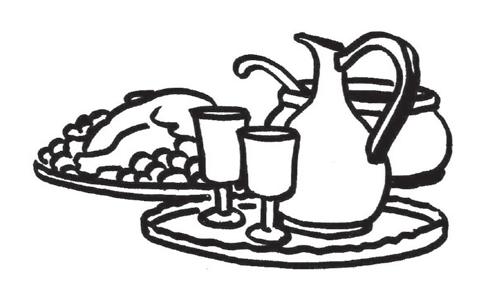
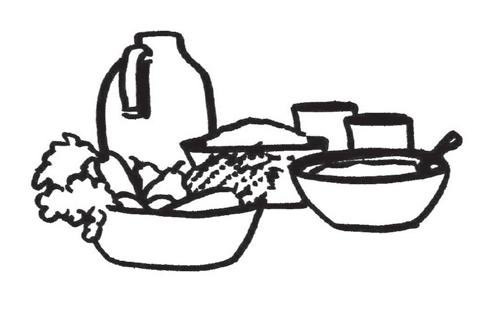
The king wanted the young men to eat food and wine from his table. (Display Figure 9D.) Eating food from the king’s table was an honor to most people.
A PROBLEM
But to Daniel, Shadrach, Meshach, and Abednego, the king’s food and wine was a problem. The four friends knew that eating the king’s food and wine would not please God.
DANIEL’S REQUEST
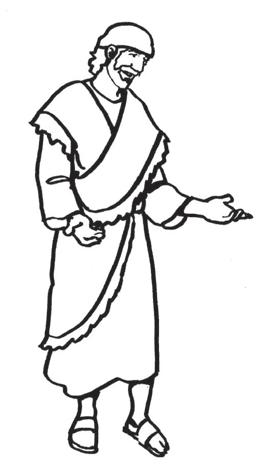
Daniel, Shadrach, Meshach, and Abednego wanted to please God. So Daniel asked for a favor. He asked if he and his friends could drink water and eat only vegetables. (Display Figure 9E.)
DANIEL PROPOSES A TEST
“I’m afraid,” the official in charge said. “The king told me to give you his food and wine. If you look bad, he’ll punish me.”
Daniel did not want to get the official into trouble. But he also didn’t want to eat food that wouldn’t please God. He had an idea. Daniel said, “Test us. Give us vegetables and water for 10 days. Then see how we look.”
THE TEST IS A SUCCESS
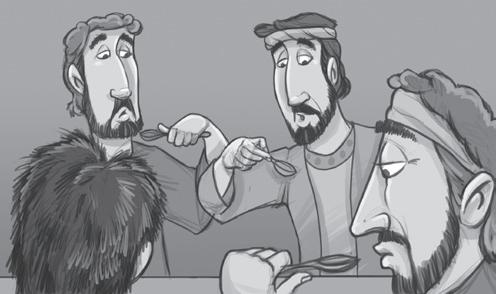
So for 10 days the four friends had only vegetables and water. At the end of 10 days, Daniel, Shadrach, Meshach, and Abednego looked better than all the other young men. (Display 9F beside 9A.)
A NEW DIET
From that time on Daniel and his friends only ate the food that pleased God. (Remove Figure 9D.) They could please God and please the official too.
THE KING IS PLEASED
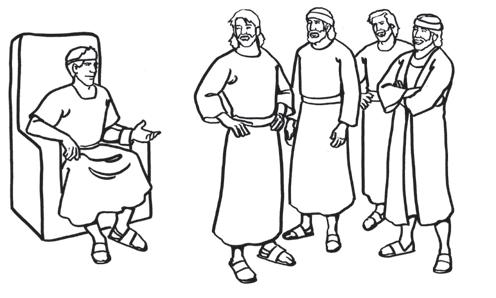
At the end of the three years of training, Daniel, Shadrach, Meshach, and Abednego went to see the king. (Remove 9C and 9E. Display 9A and 9B.) The king was pleased. They were smarter than all the other young men who had been trained.
WISDOM FROM GOD
God had given the four friends wisdom. (Display 9G.) That is our verse. “As for these four children, God gave them knowledge and . . . wisdom” (Daniel 1:17, KJV). (Say the verse in unison.)
NEW JOBS
The king asked Daniel, Shadrach, Meshach, and Abednego to work for him. Because the four friends had obeyed God, God helped them. Obeying God paid off for the four friends.
Figure 9D
Figure 9E
Figures 9A & 9F
Figure
Figures 9A & 9B
Figure 9G
GOOD CHOICES
Was it easy for Daniel and his friends to refuse to eat the king’s food and wine? No, it wasn’t. But the four friends knew that obeying God was the only right choice. So they obeyed God. We can choose to be like Daniel and his friends. We can choose to obey God. Choosing to obey God is always best.
ALTAR TIME
OPTION Evangelism Emphasis: Daniel and his friends obeyed God because He was most important to them. Is God most important to you? Have you asked His Son Jesus to live in your life? You can do that today. (Present the plan of salvation. See page 1.)
OPTION Choose Obedience: Choosing to obey God is always best. But sometimes it is not easy to obey. Can you think of some time when it is hard for you to obey God? Let’s pray and ask God to help us obey Him—even when it is hard. (Close in prayer.)
Applying God’s Word (15–20 min.)
Use one or more of the following activities to help your students understand that God will help us as we choose to obey Him.
LIFE APPLICATION
Use these examples to help your students apply the Bible to life.
• Julie is riding bikes with her friend. They are only allowed to ride to the end of the block. Julie’s friend wants to ride farther this time. Nobody will know. What should Julie decide to do?
• Brandon received a Bible for his birthday. His best friend laughed at him for reading it. Should Brandon keep reading his Bible?
• Neil feels like laughing at his soccer teammate who can’t play very well. Why should Neil be kind?
STUDENT BOOK
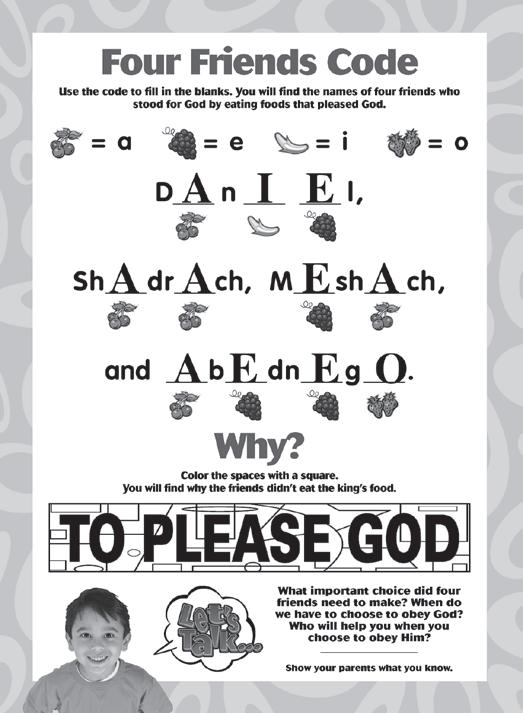
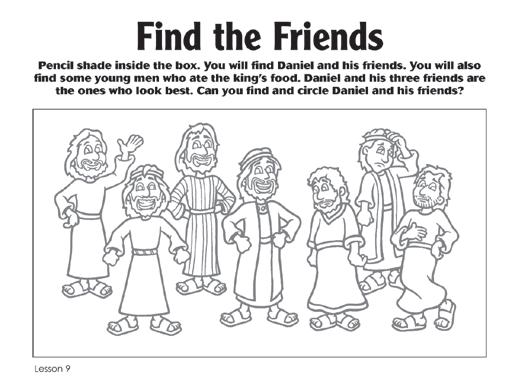
Give each child Lesson 9 from Primary Lesson Pages. Review the Bible story and complete the activities. Also let the class work the invisible ink activity. Save the invisible ink page for Lesson 10. Let’s Talk: This week’s questions are these: What important choice did four friends need to make? When do we have to choose to obey God? Who will help you when you choose to obey Him?
MEMORY VERSE
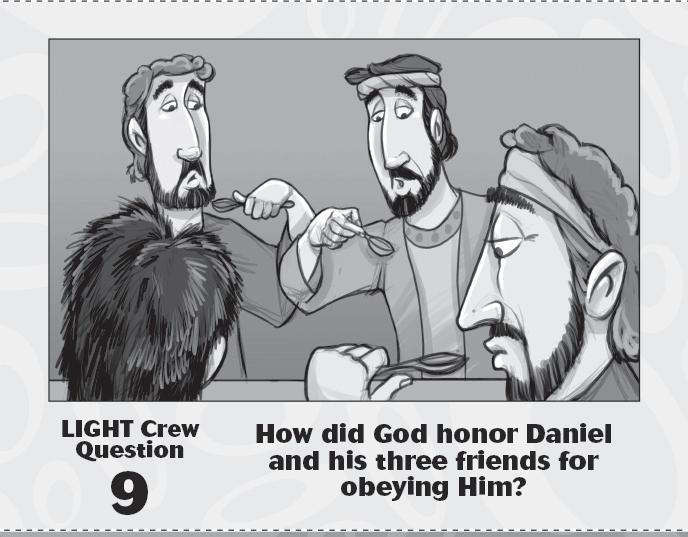
LIGHT Crew: Read question 9 and the verse answer from the LIGHT Crew Card. Add the card to the display. Explain that whoever can say the verse next week earns a sticker.
Teacher Tip
Daniel and his friends learned obedience to God in their youth. Children who learn faithfulness to God are likely to stand for God later in life.
Primary Lesson Pages Answers
Invisible Ink
Teacher Tip
Help the students follow directions by reminding them of four steps:
1. Look at the person giving instructions.
2. Listen to the instructions.
3. Remember the instructions.
4. Follow the instructions.
Question 9: How did God honor Daniel and his three friends for obeying Him?
KJV Answer: As for these four children, God gave them knowledge and . . . wisdom. Daniel 1:17
NLT Answer: God gave these four young men an unusual aptitude for understanding. Daniel 1:17
OPTION
Verse Motions: Use actions to teach the verse. For the first phrase, hold up four fingers. Point up for “God gave.” For “knowledge,” touch your head. For “understanding,” nod and fold your arms. Say the verse in unison several times with the motions. Then let individual children say the verse for you.
BIBLE REVIEW
Memory Game: Make two sets of cards numbered from 1 to 10. Shuffle the cards and place them facedown. Let each child answer a review question, then flip two cards. If they match, the child keeps the cards. If not, they should be placed facedown again.
Questions: Also see downloadable Sheet 7.
1. Can you name the four friends from Judah? (Daniel, Shadrach, Meshach, Abednego)
2. Where did the king take the four friends? (Babylon)
3. Why did the king bring the four friends to his country? (He wanted smart, good-looking young men to work for him.)
4. What did the king want the young men to eat and drink? (food and wine from the king’s table)
5. Why did the four friends not want to eat the king’s food? (Eating the king’s food would displease God.)
6. What favor did Daniel ask? (He asked permission for he and his friends to drink water and eat vegetables.)
7. Why was the official afraid to grant Daniel’s request? (The king would be angry if the four friends looked worse than the others.)
8. What test did Daniel ask the official to try? (Let the men eat vegetables for 10 days and see how they looked.)
9. What happened when the four friends ate vegetables? (They looked stronger and healthier than the other men.)
10. At the end of training how did the four friends compare to the other young men? (They were better than all the others.)
Taking God’s Word with Me
(5–10 min.)
Have the students complete one or more of the following activities to remind them to honor God as Daniel and his three friends did.
HANDWORK PACKET
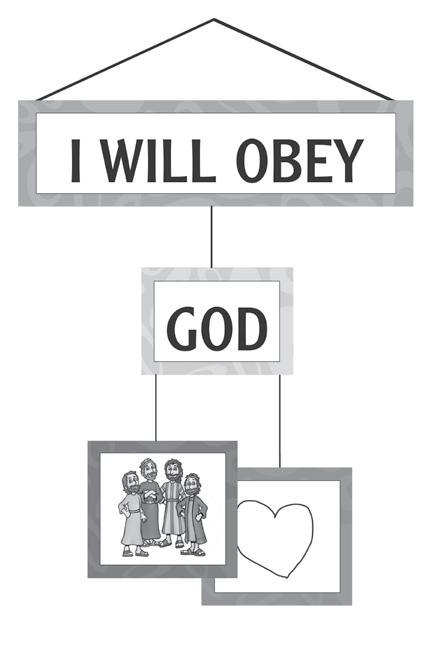
You will need yarn, scissors, tape, and a copy of Primary Handwork Packet Activity 9 and the matching sticker for each child .
Handwork Packet Activity 9
LIGHT Crew Card 9
Give each child an activity. Help her punch out the pieces, add the sticker, and assemble the mobile.
RESOURCE PACKET
OPTION
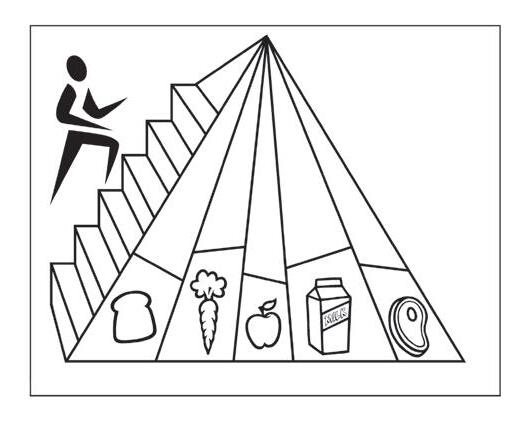
Food Pyramid Puzzle: You will need markers or crayons, scissors, glue or tape, construction paper, and for each child a copy of downloadable Sheet 17 from the Primary Resource Packet
Let the children cut out the pieces and tape them to a sheet of paper to form a food pyramid. Then they may color the pyramid. Say, “God gave Daniel, Shadrach, Meshach, and Abednego instructions about foods to eat. They chose to obey God even though it wasn’t easy. Obeying God is always right.”
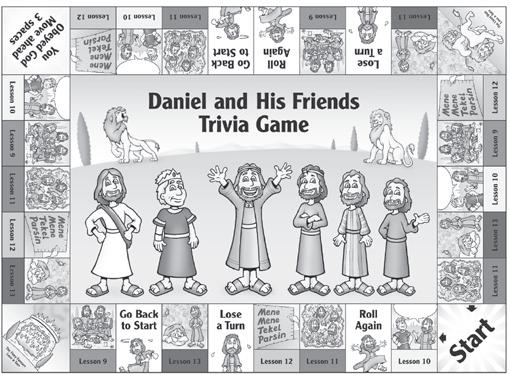
OPTION Daniel Game: You will need the review questions on downloadable Sheet 7 as well as the game board, number cube, playing pieces, and cards from the two posters in the Primary Resource Packet.
Cut out the number cube, game pieces, and game cards. Fold and tape the number cube. Fold the game pieces so they stand up.
To play, each child will choose a game piece and place it on the start space. (If you have more than four children, play with teams.)
To play, a child rolls the number cube. Then he moves his game piece forward that number of spaces. If his playing piece lands on a lesson space, ask him a review question from that lesson. If he answers the question correctly, he collects a card for that lesson. If he lands on a non-lesson space, he will follow the instructions on the space.
Play until all cards are collected. Recognize the child with the most cards.
Save the game items for Lessons 10 through 13.
TAKE-HOME PAPER
Give each child a copy of Kidz World. A life-application story and activities are found in this paper. If time allows, read the story and discuss the questions.
EVALUATION
1. Was each child able to tell how Daniel and his three friends honored God by the foods they ate?
2. Did I help each child believe that obeying God is always the best idea?